Category: Politics

Political news and coverage

  • Mikie Sherrill supports enshrining N.J.’s existing sanctuary policy into law as immigrant rights groups push for an expanded version

    Mikie Sherrill supports enshrining N.J.’s existing sanctuary policy into law as immigrant rights groups push for an expanded version

    New Jersey Gov. Mikie Sherrill supports cementing the state’s sanctuary state policy into law — as it’s already written.

    The Immigrant Trust Directive, commonly called a sanctuary policy, restricts state law enforcement from cooperating with U.S. Immigration and Customs Enforcement (ICE). Enshrining the policy into law would ensure future governors of either party could not unilaterally take it away. As of now, the directive could be undone with a flick of a pen.

    Immigrant rights groups in New Jersey have pushed for several years to make the policy permanent with a new law, a move they say is increasingly urgent amid President Donald Trump’s immigration crackdown in Minneapolis, which has reverberated across the country. But those activists want to expand protections, which could clash with Sherrill’s approach.

    “Gov. Sherrill supports a bill to codify the directive,” her spokesperson Sean Higgins said. “What she does not support is anything that undermines the ability to defend our protections in court, which puts people at risk.”

    Sherrill has said making changes to the directive while making it law could invite lawsuits and risk the whole policy, which was enacted during Trump’s first presidency and has survived federal judges appointed by both Trump and former President George W. Bush.

    “New Jersey’s directive has already withstood judicial review — and that additional action, if not precise, could undo important protections which we cannot risk under the Trump administration,” Sherrill said during her primary campaign.

    Higgins said those concerns “have not changed.”

    Immigrant rights groups nearly reached the finish line late last year after the state legislature passed a bill that included some of the changes they wanted to make.

    But former Gov. Phil Murphy rejected the bill in his final hours in office. Like Sherrill, he said the policy could be in jeopardy if it changed and could invite lawsuits.

    Amol Sinha, the executive director of ACLU New Jersey, disagrees.

    The bill Murphy vetoed — which Democratic lawmakers have already signaled they will reintroduce in the new session would remove an exception for law enforcement to work with federal immigration authorities on final orders of removal and prohibit law enforcement from providing money to federal immigration authorities.

    Sinha and others who support the bill say those changes would be on solid legal ground. Since the courts previously found federal law does not preempt the state’s immigration policy, and the state has the right to determine where its resources go, he said, he believes Murphy’s veto was overly cautious.

    “We cannot be in a situation where we’re constantly afraid of lawsuits and therefore we don’t pass any laws,” Sinha said. “There is legal risk to every law that passes in New Jersey. You’re going to get sued, and if you don’t want to get sued, then you shouldn’t be in government.”

    Sherrill’s stance on the matter has, at times, been ambiguous.

    After a general election debate in late September, she said she was “going to focus on following the law and the Constitution” when pressed by reporters on whether she would keep the directive in place. In October, she said she supported aspects of the policy but also suggested she wanted to revisit it.

    During the primary contest, her spokesperson said Trump “is changing the rules rapidly” and Sherrill would “address the circumstances as they exist,” but she had also signaled support for keeping the policy.

    Since taking office last week, Sherrill has taken other steps to try to shield the state from ICE. She announced Thursday that her administration plans to launch a state database for New Jerseyans to upload videos of ICE operations in the state after two fatal shootings in Minnesota.

    But the pressure to work with legislators on making the sanctuary directive law remains.

    Assemblymember Balvir Singh, a Burlington County Democrat and cosponsor of the bill Murphy rejected, said part of the urgency is concern over Trump’s threats to withhold federal funding from Democratic-led states over policy disagreements.

    Even though Sherrill has kept the policy in place, a directive carries less weight than a statute backed by two branches of government.

    “Our executive can be put under a tremendous amount of pressure where they have to figure out how they’re going to fund our social services systems that rely on federal funding,” Singh said.

    Just last week, Trump directed federal government agencies to review funding for several Democratic states, including New Jersey, almost all of which were on a list of sanctuary jurisdictions produced by his administration.

    The one exception was Virginia, where new Democratic Gov. Abigail Spanberger rescinded a directive that instructed law enforcement to work with ICE. The previous week, Trump said he planned to cut off federal funding for states with sanctuary cities.

    Singh, whose district includes communities with large immigrant populations, said preserving the seven-year-old policy through law is “the very minimum.”

    ‘I take Gov. Sherrill at her word’

    Sherrill declined to comment on the specifics of the bill that reached Murphy’s desk, and the question will be whether lawmakers are able to enact changes to the current directive or if she will only sign a carbon copy of what already exists.

    The sanctuary bill was one of three pieces of legislation aimed at protecting immigrants that Murphy weighed in his final days in office. He signed one about creating model policies for safe spaces in the state and vetoed another aimed at limiting data collected by government agencies and health centers, citing a “drafting oversight.”

    As she waited anxiously for Murphy’s decisions on the bills earlier this month, Nedia Morsy, the executive director of immigrant advocacy group Make the Road New Jersey, said that New Jersey should not “make policy based on fear” and that immigrants in the state were experiencing a “collective feeling of suffocation.”

    She criticized Murphy’s vetoes, saying legal experts had already vetted the bills.

    Sherrill has repeatedly promised to fight Trump and recently said that ICE agents are “occupying cities, inciting violence, and violating the Constitution” and need to be held accountable “for their lawless actions.”

    Her comments have given some activists hope that she will be willing to work with them.

    And while a single bill cannot stop ICE from sweeping New Jersey communities, Sinha said, the state can “put up safeguards and guardrails” through policies like the ones Murphy rejected.

    “I take Gov. Sherrill at her word that she wants to push back against authoritarianism,” he added, “and to me, that means doing whatever we can to protect immigrants in our state.”


  • Gov. Mikie Sherrill says N.J. will create a database for uploading videos of ICE: ‘Get your phone out’

    Gov. Mikie Sherrill says N.J. will create a database for uploading videos of ICE: ‘Get your phone out’

    New Jersey Gov. Mikie Sherrill said her administration will create an online database for people to upload videos they record of ICE.

    “If you see an ICE agent in the street, get your phone out,” she urged New Jerseyans in an appearance on The Daily Show on Wednesday night with host Desi Lydic in New York City.

    Sherrill, a Democrat and former member of Congress, said her administration will set up an online portal “so people can upload all their cell phone videos and alert people.”

    Cell phone video from onlookers has been used to rebut the narrative of President Donald Trump’s administration after federal agents fatally shot Renee Good and Alex Pretti in Minneapolis.

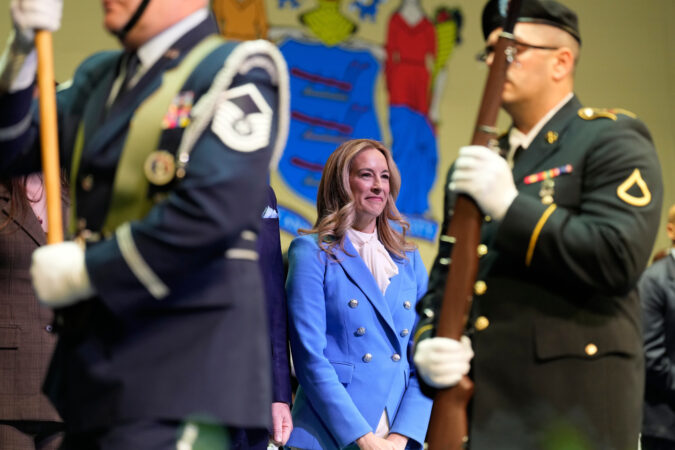
    Sherrill outlined her plan just eight days after she was sworn into office. She became the second woman to lead the state and the first female veteran governor in the country.

    “They will pick people up, they will not tell us who they are … they’ll pick up American citizens. They picked up a 5-year-old child,” she said on the show. “We want documentation, and we are going to make sure we get it.”

    The policy announcement was not featured in the television broadcast, but it was posted to YouTube shortly afterward by The Daily Show.

    New Jersey residents routinely report ICE activity and arrests around the state, including recently in Bridgeton and Princeton. The Garden State is home to about the seventh-largest undocumented population in the country, an estimated 476,000 people, according to the Migration Policy Institute in Washington.

    Amy Torres, executive director of the New Jersey Alliance for Immigrant Justice, said Sherrill needs to do more.

    “We don’t need to see more evidence of what ICE is doing,” Torres said. “They’ve arrested a New Jersey mayor. They’ve gone after a sitting member of Congress. They’ve opened up a 1,000-bed facility in our state’s largest city and they’re ripping our families apart. New Jersey doesn’t need more evidence, we need leadership who is going to act.”

    She said the governor should work to pass additional immigrant protections, like those contained in two bills former Gov. Phil Murphy rejected in his final day in office that would have safeguarded immigrants’ data and expanded the state’s sanctuary policy.

    Sherrill, meanwhile, also said her administration plans to put out information to help New Jerseyans know their rights in the state. And she said she will not allow ICE raids “to be staged from state properties.”

    Sherrill, a former Navy helicopter pilot, compared U.S. Immigration and Customs Enforcement to secret police forces she observed in foreign nations during her service.

    “I knew where this was headed when we started to see DHS people taking loyalty oaths to the president, not the Constitution,” she said. “We saw people in the street with masks and no insignia, so not accountable at all, hiding from the population.”

    New Jersey has become a key state in the Trump administration’s plan to arrest and deport millions of immigrants, and has been slated for an expansion of ICE detention.

    A facility in Elizabeth was for a time the only detention center in the state. But the 1,000-bed Delaney Hall in Newark was reopened for detention in May, and the administration recently announced plans to hold 1,000 to 3,000 detainees at Joint Base McGuire-Dix-Lakehurst, which spans parts of Burlington and Ocean Counties.

    The specific details surrounding that South Jersey undertaking remain unknown.

    In Wednesday night’s television appearance, Sherrill denounced the Minneapolis shootings, calling Good “a mother of three, who drops her 6-year-old off in her Honda Pilot and then gets shot and killed.”

    And she noted that Pretti worked at the Minneapolis VA as an ICU nurse.

    “I saw his official photo, and I’ve seen a million of those … with the flag in the background, I know those guys,” Sherrill said.

    Pretti was fatally shot by a Border Patrol agent, while Good was shot and killed by an ICE agent. Both agencies fall under the Department of Homeland Security.

    The new governor also said on The Daily Show that she called Trump to discuss his decision to freeze funding for the planned Gateway Tunnel in North Jersey, a project championed by Sherrill that would connect New York and New Jersey under the Hudson River.

    New Jersey Gov. Mikie Sherrill does her best New Jersey “Oh!” and “C’mon!” impressions on The Daily Show with host Desi Lydic.

    “I haven’t heard back from him yet to flag for him that this is about 100,000 jobs in the region, and by the way, his numbers aren’t looking so good in that area,” she said.

    Sherrill said the president “should listen to me because I just won back all his voters,” citing her victory in November of more than 14 percentage points, outperforming her Democratic predecessors and reversing rightward shifts in 2024.

    But she also said it is time to “rethink” the federal government’s relationship with states because of attacks from Trump.

    “We need to start looking at expanding,” she said. “This is a time when I think we’re going to see a large expansion of state power, because the states are the rational actors in this space.”

    Sherrill also played a game with Lydic where she picked which things were most New Jersey, choosing Tony Soprano over Snookie; hating New Yorkers over hating Pennsylvanians; diners over Wawa; and “C’mon!” over “Oh!”

  • Philly City Council members will soon consider seven ‘ICE Out’ bills. Here’s what the proposals would do.

    Philly City Council members will soon consider seven ‘ICE Out’ bills. Here’s what the proposals would do.

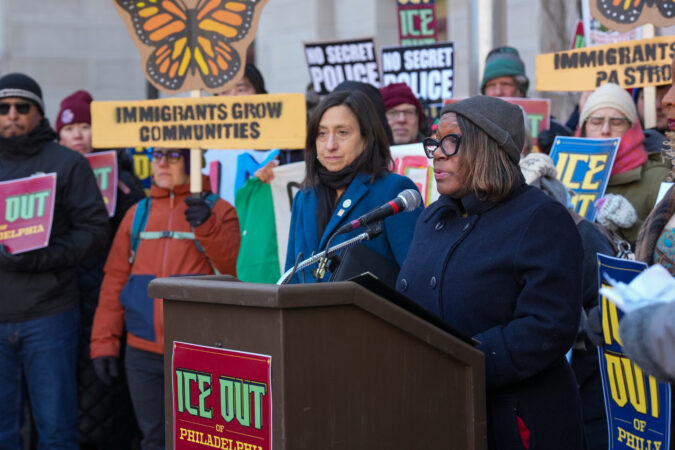
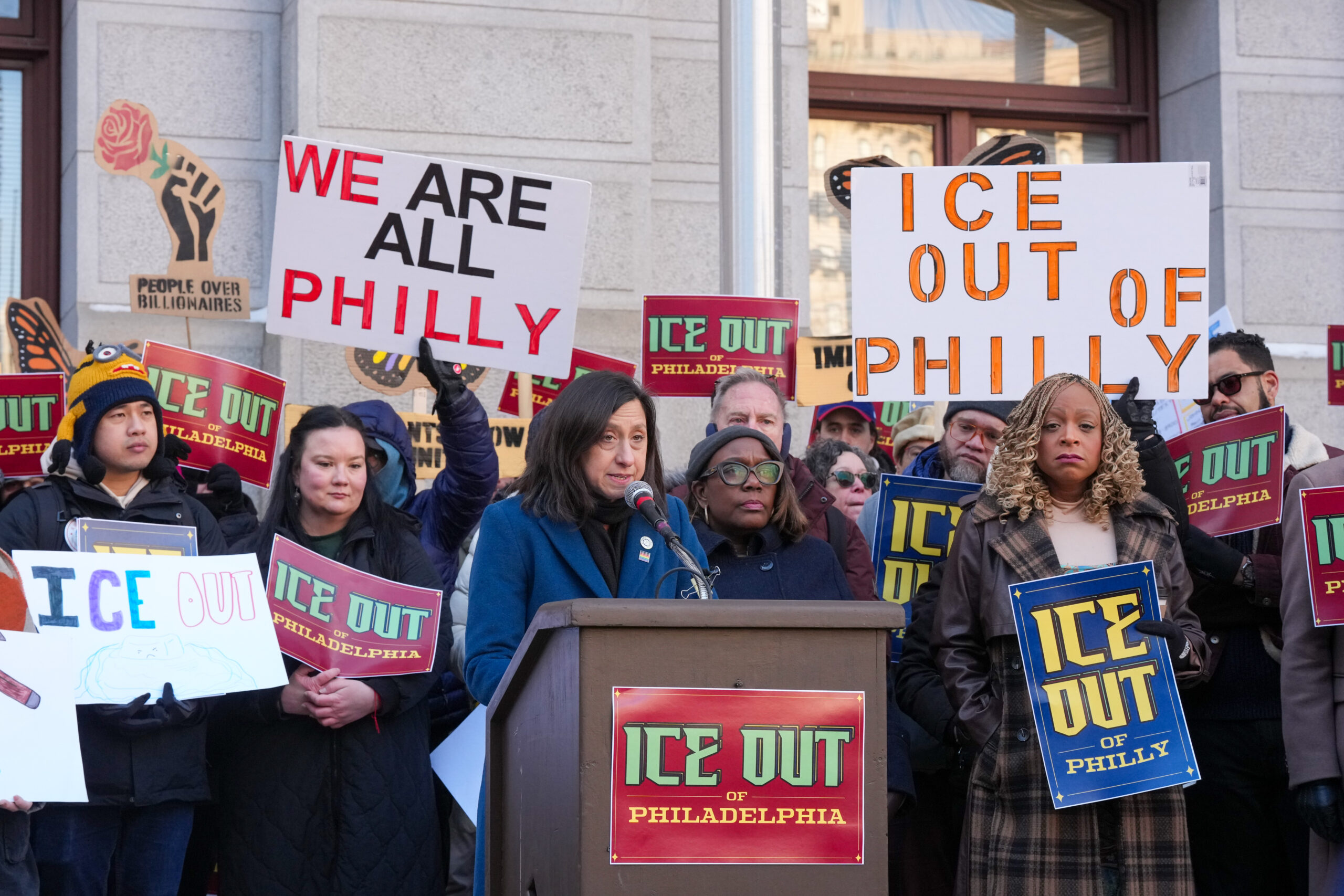
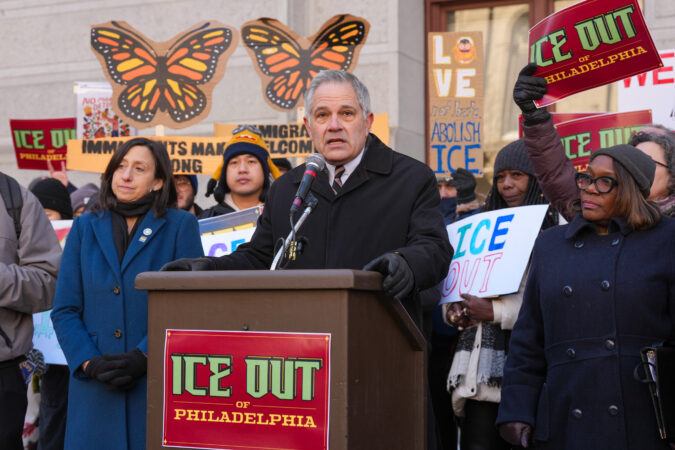
    City Councilmembers Kendra Brooks and Rue Landau on Thursday plan to formally introduce their “ICE Out” legislative package, which aims to place restrictions on federal immigration enforcement operations in Philadelphia.

    The seven bills range from codifying into law Philadelphia’s existing “sanctuary city” policies to a controversial ban on law enforcement officers wearing masks. Almost all of the bills contain exceptions noting that they do not apply if Immigration and Customs Enforcement agents secure judicial warrants for their activities or are acting under superseding federal laws.

    If all of the legislation becomes law, Philadelphia would have some of the nation’s most stringent local restrictions on federal immigration-enforcement operations.

    It’s likely that several of the bills will face legal questions, such as whether the mask ban is constitutional and whether Council has the authority to enact some of the rules the proposals seek to establish.

    After the bills are introduced Thursday, Council President Kenyatta Johnson will refer them to committee. One or more hearings will likely be scheduled in the spring.

    At that point, officials from Mayor Cherelle L. Parker’s administration, stakeholders, and experts will testify. Lawmakers could then amend the bills and vote on them in committee. If they advance, they would head to the Council floor for a final vote.

    In a sign that the bills are likely to gain traction, Majority Leader Katherine Gilmore Richardson on Wednesday praised Brooks’ and Landau’s efforts.

    “My heart breaks for everyone who has been impacted by ICE’s violent and dangerous actions and for everyone who feels afraid and unsafe in their communities,” Gilmore Richardson said, adding that she will work with other Council members “to protect our residents.”

    If approved on final passage, the bills would head to Parker’s desk. The mayor can veto them, sign them into law, or allow them to become law without her signature.

    Parker so far has largely avoided confrontation with President Donald Trump’s administration over his aggressive deportation campaign. The “ICE Out” bills may force her to engage more directly.

    Here’s what you need to know about each of the bills.

    Banning ICE agents from wearing masks

    Author: Brooks.

    Key excerpt:A law enforcement officer is guilty of criminal concealment if the law enforcement officer, while performing official duties and interacting with the public …. wears a mask, facial covering, disguise or any other garment that obscures the identity of the law enforcement officer, or fails to identify themselves to a subject of arrest, holding or detention.”

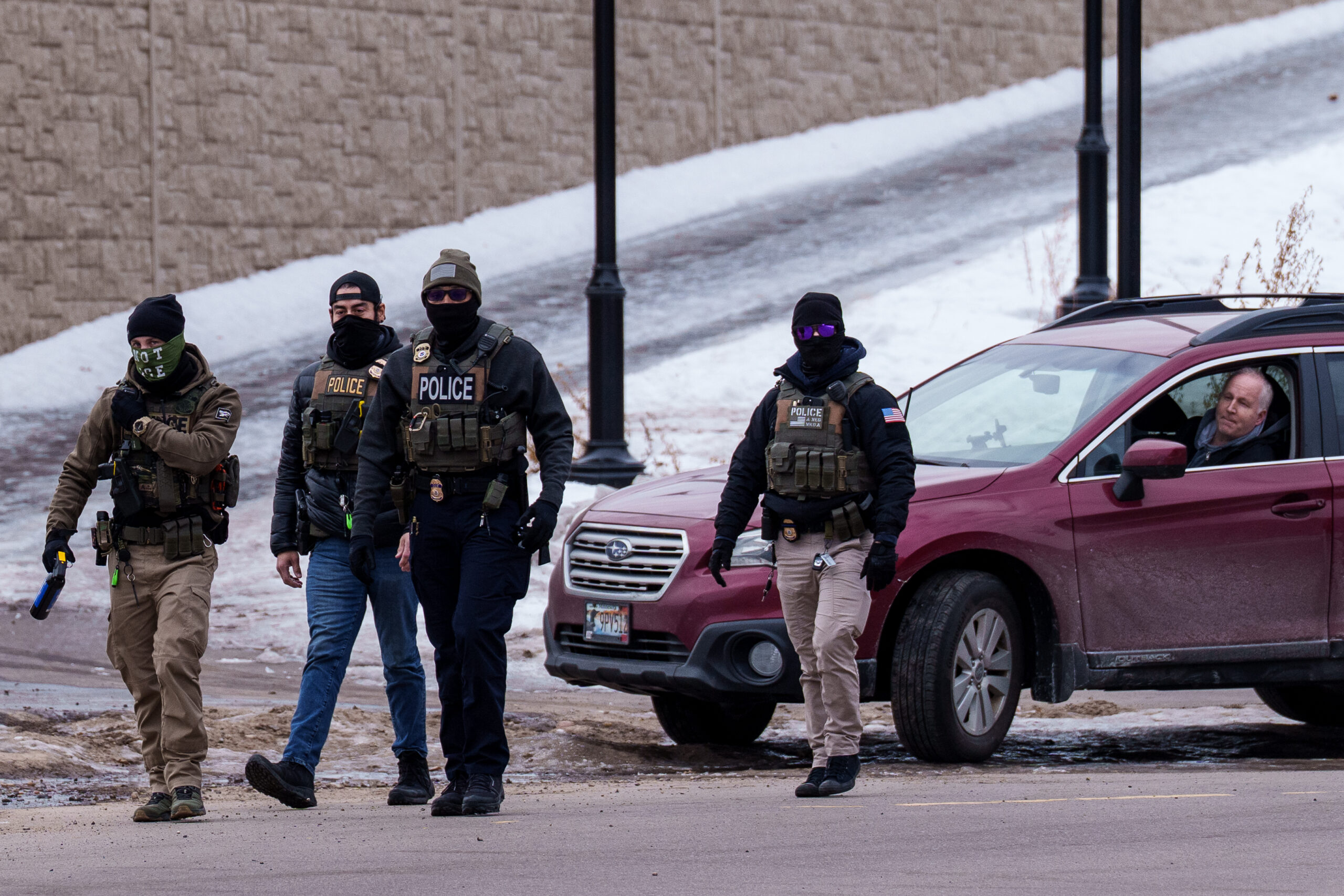
    A person looks out of their vehicle as Immigration and Customs Enforcement (ICE) agents walk away, Thursday, Jan. 15, 2026, in Richfield, Minn. (AP Photo/Adam Gray)

    What it does: The bill would ban law enforcement officers from obscuring their identities with masks. It also would require officers to wear badges, and would make it an offense to conceal badges or to decline to provide identifying information if requested by people they are arresting. Additionally, the bill would ban officers from using unmarked vehicles.

    Exceptions: The bill includes exceptions for undercover assignments, medical or religious masks, SWAT teams, and smoke-filtering masks worn during fires or similar emergencies.

    How it would be enforced: The district attorney would be able to charge an officer with a summary offense, the lowest level of crime in Pennsylvania. If found guilty, the officer would pay a fine of $300 for each day the law was violated or face up to 90 days in prison.

    Additionally, the bill would give any individual “aggrieved by a violation” the right to sue an agent for wearing a mask, with fines up to $2,000 per offense if a judge sides with the plaintiff.

    Twist: This bill applies to all law enforcement officers, not just ICE agents. That includes city police. It is likely that the Philadelphia Police Department, which sometimes uses unmarked cars, will have something to say about the proposed rules once the bill gets a committee hearing.

    Stopping Philly from coordinating with ICE

    Author: Brooks.

    Key excerpt:No City Agency or Employee shall enter into, renew, or participate in a 287(g) Agreement with the federal government.”

    What it does: The primary objective of this bill is to ensure the city never enters into a 287(g) agreement, in which local law enforcement officers are trained to perform immigration enforcement duties. (The agreement refers to a section of the U.S. Immigration and Nationality Act.) Philadelphia is not currently in a 287(g) agreement, so that provision would not have a significant impact in the near term.

    But the bill includes several other notable provisions, such as prohibiting city employees from assisting immigration enforcement in any way, and requiring them to report requests to assist ICE to their superiors.

    How it would be enforced: The city solicitor, Philadelphia’s top lawyer, would be responsible for suing city agencies or employees who violate the bill’s provisions. Potential consequences include a $2,000 fine and termination.

    Kendra Brooks shown here during a news conference at City Hall on Tuesday to announce a package of bills aimed at pushing back against ICE enforcement in Philadelphia.

    Prohibiting discrimination based on immigration status in city services

    Author: Landau.

    Key excerpt: “No City agency, official, employee, contractor or subcontractor shall …

    • “request information about a person’s citizenship or immigration status …
    • “condition the provision of City benefits, services, or opportunities on a person’s citizenship or immigration status or national origin …
    • “threaten, coerce, or intimidate a person based on their actual or perceived citizenship or immigration status [or] …
    • “initiate an investigation or take law enforcement action based on a person’s actual or perceived citizenship or immigration status.”

    What it does: This bill aims to protect individuals from being treated differently based on their immigration status when dealing with city government services.

    How it would be enforced: The city solicitor or anyone aggrieved by violations of the bill would be able to sue the offending city employee or agency.

    Banning employment discrimination based on immigration status

    Author: Landau.

    Key excerpt: “It shall be an unlawful employment practice to deny or interfere with the employment opportunities of an individual based upon … citizenship or immigration status.”

    What it does: The bill would add “citizenship or immigration status” to Philadelphia’s Fair Practices Ordinance, which prohibits employers from discriminating against workers based on characteristics including race, ethnicity, gender, and sexual orientation.

    How it would be enforced: If the bill is approved, Philadelphians who feel their employers have discriminated against them based on their immigration status will be able to file complaints to the Philadelphia Commission on Human Rights, which adjudicates alleged violations of the Fair Practices Ordinance.

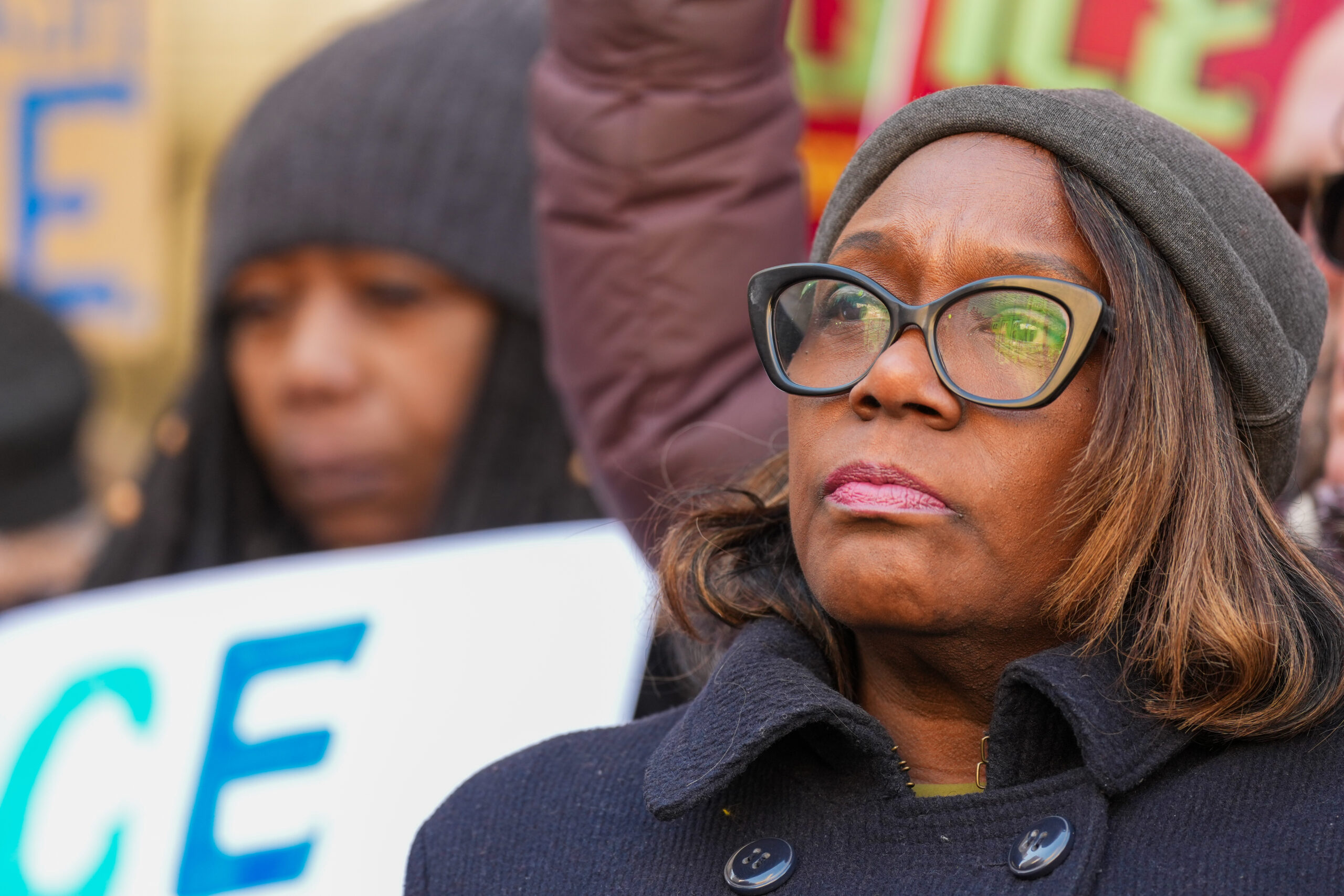
    Rue Landau shown here at the Tuesday news conference.

    Withholding data on citizenship and immigration status

    Author: Landau.

    Key excerpt: “No City agency … shall enter into any contractual agreement or arrangement with a federal agency or federal contractor to provide access to any data, database, or dataset where the purpose of such access includes assisting or supporting immigration enforcement operations.”

    What it does: This bill aims to prevent the federal government from accessing city data that could help immigration agents determine individuals’ citizenship status.

    It also would require the city to produce an annual report tallying federal data requests related to immigration status and any violations of the bill.

    How it would be enforced: The city solicitor or any individual aggrieved by violations of the bill would be able to sue the offending city employee or agency.

    Prohibiting immigration enforcement on city-owned property

    Author: Brooks.

    Key excerpt:It is unlawful to use City-owned or controlled property for the purposes of staging, conducting or assisting federal immigration enforcement activities.”

    What it does: The bill prohibits immigration enforcement operations on city-owned land, such as federal agents making arrests in city parks or ICE staging raids on municipally owned parking lots.

    The bill also allows city agencies to post signs on municipal property stating: “This property is owned and controlled by the City of Philadelphia. It may not be used for immigration enforcement activities.”

    How it would be enforced: The city solicitor may file a lawsuit to ask a judge to order the federal government to cease and desist from using city property.

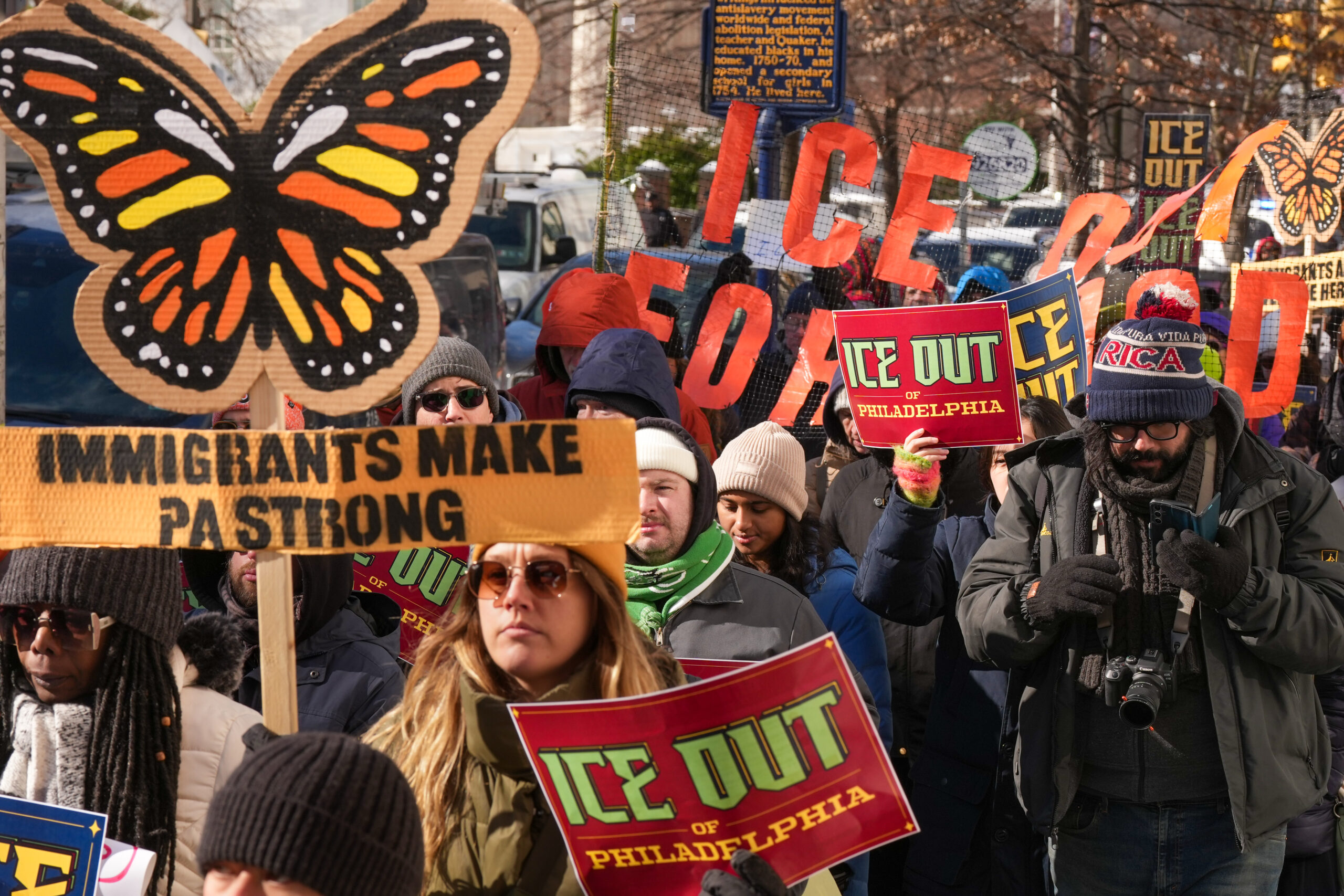
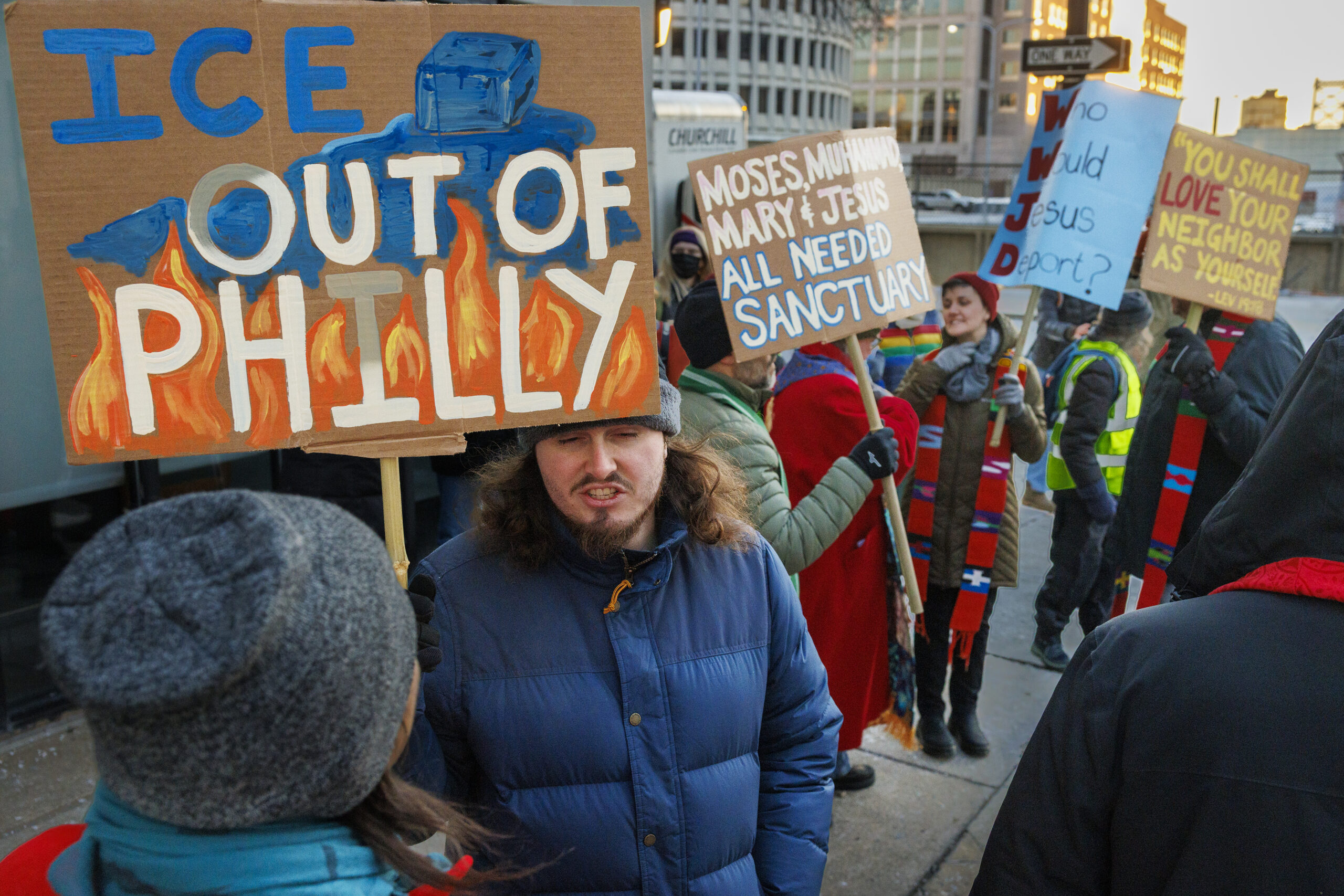
    Advocates and protesters on Tuesday in Center City call for ICE to get out of Philadelphia.

    Requiring warrants for nonpublic areas of ‘Safe Community Spaces’

    Author: Brooks.

    Key excerpt:No employee or agent engaged in official duties at a Safe Community Place shall have the authority to consent to permitting a law enforcement officer to enter a nonpublic area of the facility … to identify, arrest or otherwise impose a penalty upon a person for purposes of federal immigration enforcement.”

    What it does: The bill would effectively require immigration agents to secure judicial warrants to access nonpublic areas in “Safe Community Spaces,” including city-owned or -controlled hospitals, libraries, courthouses, recreation centers, and other city facilities. Currently, agents can access those areas if they get permission.

    The proposal also would also require judicial warrants for instances in which law enforcement seeks access to nonpublic areasto identify or impose civil or criminal liability upon a person” exercising protected rights such as the freedom of speech, assembly, and petitioning.

    Lastly, the bill would require city agencies to “identify property that has been, and is likely to be used by, immigration enforcementand mark it with signage stating: “In nonpublic areas of this property, a judicial warrant is required for law enforcement activities and no voluntary consent may be solicited from any employee.”

    How it would be enforced: Only the city solicitor can sue to enforce the bill’s provisions. Such a suit would not be filed against a federal agent. Instead, it would be filed against a staffer at a “Safe Community Space” who gave federal agents permission to access nonpublic areas at the facility.

    Staff writers Anna Orso and Jeff Gammage contributed to this article.

  • Trump signals interest in easing tensions, but Minneapolis sees little change on the streets

    Trump signals interest in easing tensions, but Minneapolis sees little change on the streets

    MINNEAPOLIS — President Donald Trump seemed to signal a willingness to ease tensions in Minneapolis after a second deadly shooting by federal immigration agents, but there was little evidence Wednesday of any significant changes following weeks of harsh rhetoric and clashes with protesters.

    The strain was evident when Trump made a leadership change by sending his top border adviser to Minnesota to take charge of the immigration crackdown. That was followed by seemingly conciliatory remarks about the Democratic governor and mayor.

    Trump said he and Gov. Tim Walz, whom he criticized for weeks, were on “a similar wavelength” following a phone call. After a conversation with Mayor Jacob Frey, the president praised the discussion and declared that “lots of progress is being made.”

    But on city streets, there were few signs of a shift. Immigration enforcement operations and confrontations with activists continued Wednesday in Minneapolis and St. Paul.

    A group of protesters blew whistles and pointed out federal officers in a vehicle on a north Minneapolis street. When the officers’ vehicle moved, a small convoy of activists followed in their cars for a few blocks until the officers stopped again.

    When Associated Press journalists got out of their car to document the encounter, officers with the federal Bureau of Prisons pushed one of them, threatened them with arrest and told them to get back in their car despite the reporters’ identifying themselves as journalists. Officers from multiple federal agencies have been involved in the enforcement operations.

    From their car, the AP journalists saw at least one person being pepper sprayed and one detained, though it was unclear if that person was the target of the operation or a protester. Agents also broke car windows.

    Attorney General Pam Bondi, who is visiting Minnesota, said 16 people were arrested Wednesday on charges of assaulting, resisting or impeding law enforcement in the state. She said more arrests were expected.

    “NOTHING will stop President Trump and this Department of Justice from enforcing the law,” Bondi said in a social media post.

    Messages seeking comment were left with Immigration and Customs Enforcement and the Border Patrol.

    Woman tells agents knocking on door: ‘They’re good neighbors’

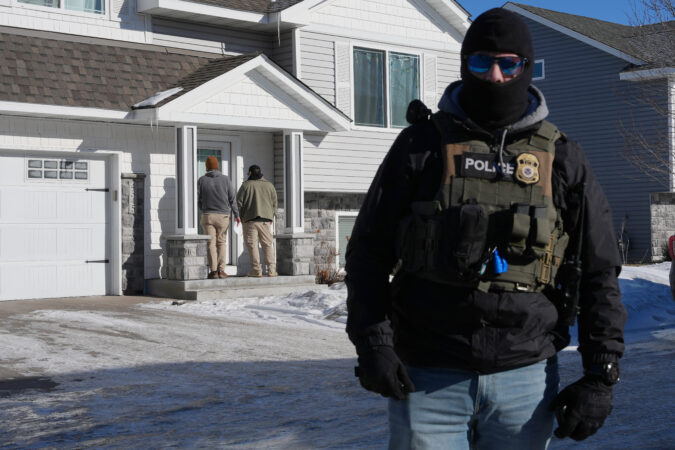
    On Wednesday afternoon in the Minneapolis suburb of Brooklyn Center, half a dozen agents went to a house in a small residential neighborhood.

    One agent knocked on the door of the home repeatedly. Another told the AP they were seeking a man who had been twice deported and was convicted of domestic abuse. The agent said the man had run into the home and the agents lacked a judicial warrant to get inside.

    Some federal immigration officers are asserting sweeping power to forcibly enter people’s homes without a judge’s warrant and instead are using a more narrow administrative warrant to arrest migrants considered illegally present or otherwise deportable. The key difference is whether agents can forcibly enter a private property to make an arrest, as they were captured on video doing in Minneapolis earlier this month.

    A handful of activists blew whistles at the agents in Brooklyn Center. One agent said: “They’d rather call the police on us than to help us. Go figure.”

    As the agents were preparing to leave, a woman called out to them saying, “You need to know they’re good neighbors.”

    Kari Rod told the AP that she didn’t know these neighbors well, but they had come to her garage sale, kept their yard clean, and waved hello when she drove by. She didn’t believe enforcement agents to be speaking the truth about whom they arrest, including another neighbor whom she said was deported to Laos last summer.

    “I don’t trust a single thing they said about who they are,” Rod said. “From my interactions, I know them way better than anyone else does, any one of those federal agents.”

    Immigrants are ‘still very worried’

    Many immigrant families are still fearful of leaving their homes, and Latino businesses are still closed, said Daniel Hernandez, who owns the Minneapolis grocery store Colonial Market. He also runs a popular Facebook page geared toward informing the Hispanic community in the Twin Cities.

    While Colonial Market is open, all but one of the dozen immigrant-run businesses that rented space inside to sell clothes, jewelry, and toys have closed since late December, and none has plans to reopen, Hernandez said.

    “The reality is the community is still very worried and afraid,” Hernandez said.

    Hernandez referenced Border Patrol commander Gregory Bovino, who helped lead the administration’s crackdown in the Twin Cities and who has reportedly been assigned elsewhere.

    Bovino “was removed, but the tactics so far are still the same,” Hernandez said. “Nobody now is trusting the government with those changes.”

    The federal enforcement extended to the city’s Ecuadoran consulate, where a federal law enforcement officer tried to enter before being blocked by employees.

    Judge warns ICE about not complying with federal orders

    In Minnesota federal court, the issue of ICE not complying with court orders came to the fore as Chief Judge Patrick Schiltz said the agency had violated 96 court orders in 74 cases since Jan. 1.

    “This list should give pause to anyone — no matter his or her political beliefs — who cares about the rule of law,” he wrote. “ICE has likely violated more court orders in January 2026 than some federal agencies have violated in their entire existence.”

    Schiltz earlier this week ordered ICE’s acting director to personally appear in his courtroom Friday after the agency failed to obey an order to release an Ecuadorian man from detention in Texas. The judge canceled the order after the agency freed the man.

    The judge, who was appointed by President George W. Bush, warned ICE that future noncompliance may result in future orders requiring the personal appearances of Acting Director Todd Lyons or other government officials.

    ICE didn’t immediately respond to an email seeking comment.

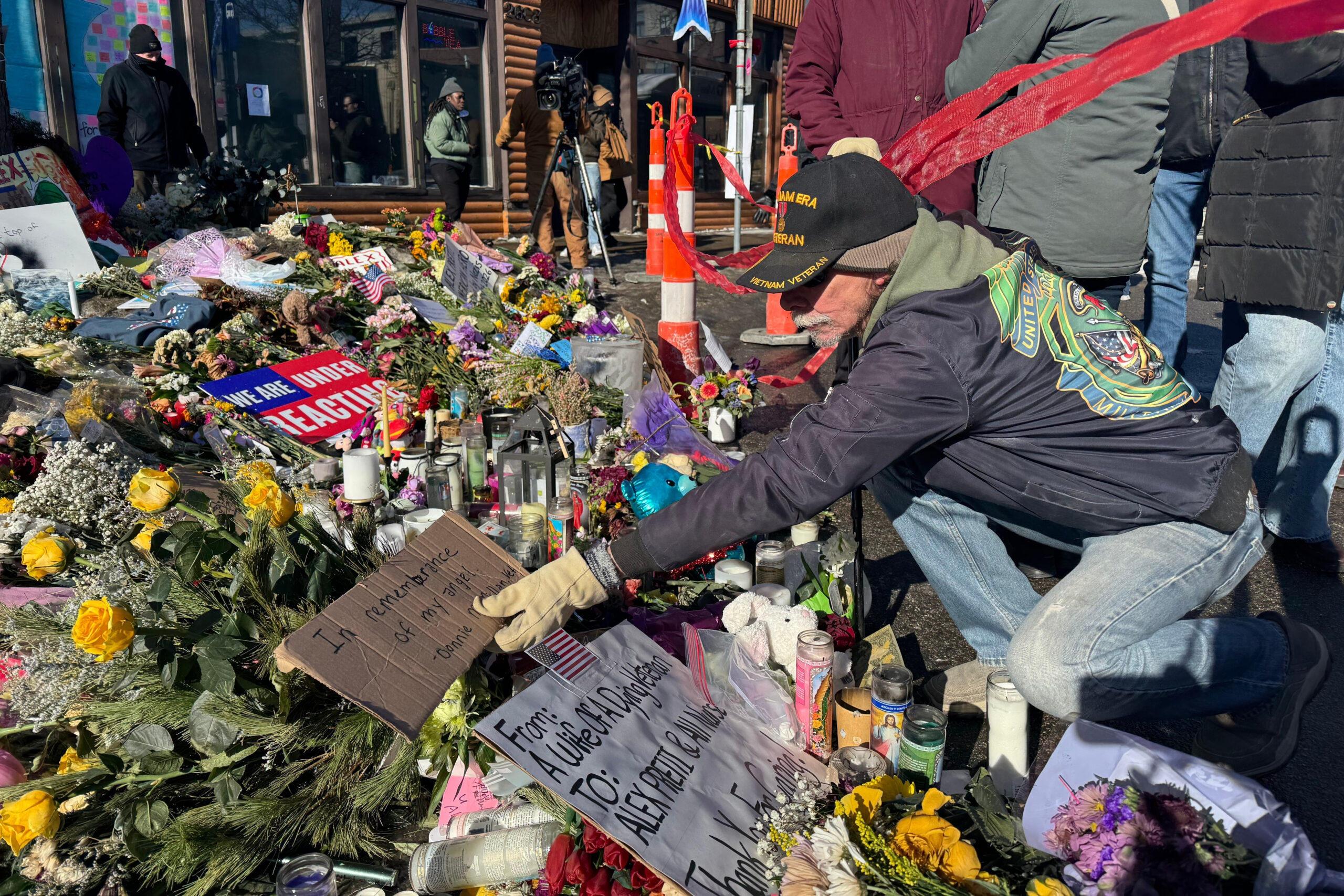
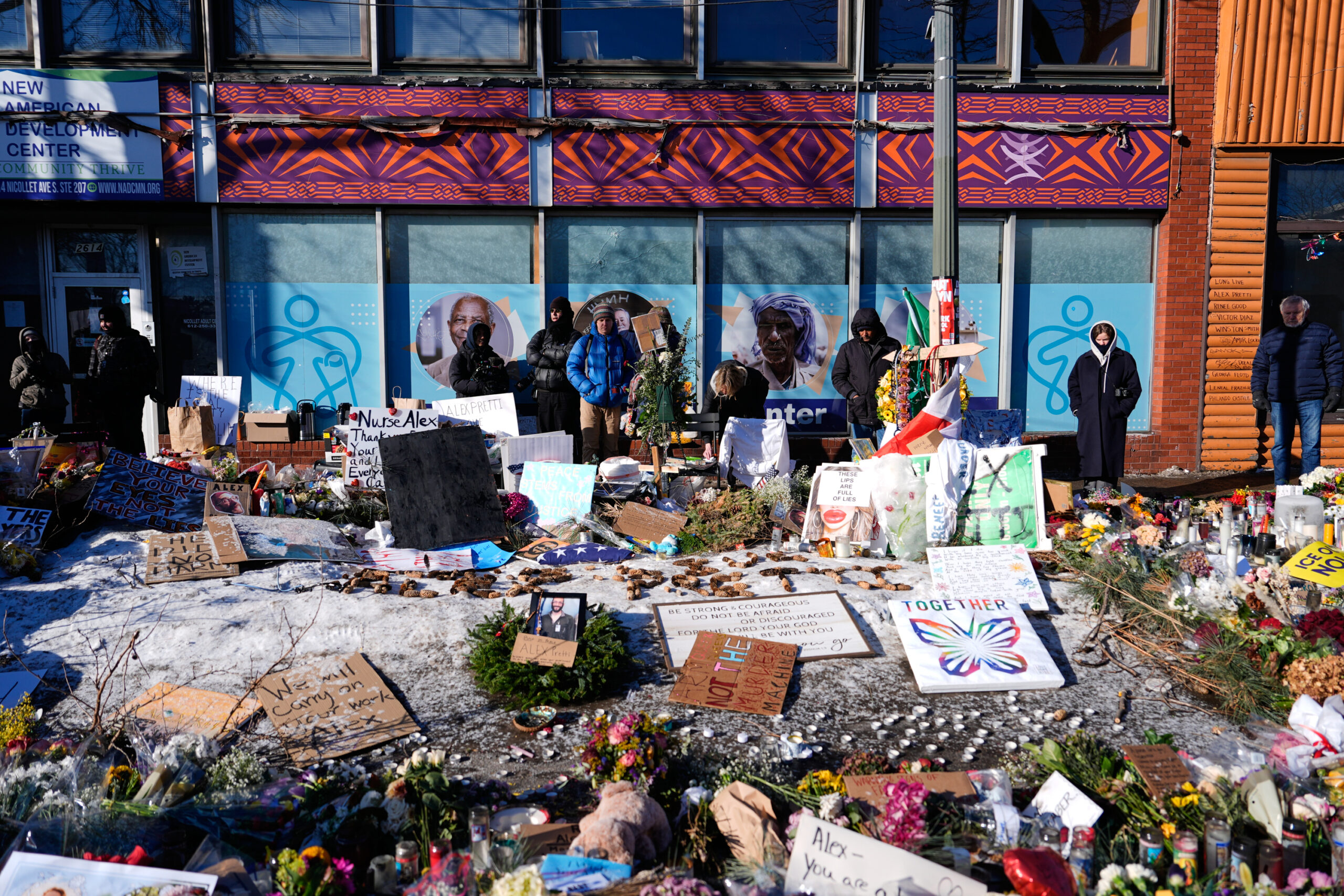
    Vietnam War veteran Donnie McMillan places a sign that says “In remembrance of my angel” at a memorial set up at the location where VA nurse Alex Pretti was shot by federal agents in Minneapolis.

    Veteran visits sidewalk memorial

    Elsewhere on Wednesday, Donnie McMillan placed a cardboard sign reading “In remembrance of my angel” at the makeshift memorial where Alex Pretti was shot.

    The Vietnam veteran knelt to pay his respects and saluted to honor the nurse whom he said he remembered seeing during his frequent visits to the VA hospital where Pretti worked.

    “I feel like I’ve lost an angel right here,” McMillan, 71, said, pointing to the growing sidewalk memorial covered in flowers, candles, and signs.

    “This is not the way we should operate,” McMillan said. “I respect everybody, but I respect my angel more, and now he’s no longer with us.”

    Also Wednesday, the Department of Homeland Security said two federal agents involved in Pretti’s death have been on leave since Saturday, when the shooting happened.

    U.S. Rep. Ilhan Omar, a Democrat, spoke to journalists one day after a man attacked her during a town-hall meeting by squirting a strong-smelling substance on her as she denounced the Trump administration.

    “What is unfolding in our state is not accidental. It is part of a coordinated effort to target Black and brown, immigrant and Muslim communities through fear, racial profiling, and intimidation,” Omar said. ”This administration’s immigration agenda is not about law enforcement — it is about making people feel they do not belong.”

  • Justice Dept. charges 16 Minneapolis protesters with assault, interference

    Justice Dept. charges 16 Minneapolis protesters with assault, interference

    The Trump administration on Wednesday announced criminal charges against 16 people in Minneapolis whom it accused of assaulting officers or interfering with federal immigration enforcement operations as tensions in the city continue to escalate.

    Attorney General Pam Bondi announced the Justice Department prosecutions in a social media post, naming those who were charged and indicating she expects more arrests.

    “I’ve said it before and I’ll say it again: NOTHING will stop President Trump and this Department of Justice from enforcing the law,” Bondi wrote on X, adding that she was in Minneapolis.

    Already this month, federal prosecutors had charged 17 people in Minneapolis with crimes tied to protests or related to the administration’s surge in immigration enforcement.

    Bondi’s defiant posture came despite what appeared to be a shift in tone from President Donald Trump and other senior aides amid widespread outrage over immigration officers’ fatal shootings of two U.S. citizens in the city this month. Authorities said the two federal agents who fired at Alex Pretti, 37, on Saturday have been placed on administrative leave, per standard agency protocol.

    Those developments came a day after the Department of Homeland Security provided the first official timeline of the deadly encounter in a statement sent to some members of Congress. The document, which was based on preliminary review, made no mention of Pretti brandishing a weapon, contradicting Trump administration comments in the immediate aftermath of the shooting, when senior officials described Pretti as a direct threat to federal agents and officers.

    The Trump administration has begun to back away from some of its inflammatory rhetoric about the shooting and replaced Greg Bovino, the Border Patrol commander who was overseeing the Minneapolis operation, with border czar Tom Homan.

    “I think the whole thing is terrible,” Trump said Tuesday in an interview with Fox News when asked about events in Minnesota over the past week and Pretti’s killing. “I don’t like the fact that he was carrying a gun that was fully loaded. … Bottom line, it was terrible.”

    The news that two immigration agents involved in Pretti’s shooting are on leave undercuts Bovino’s previous claim that “all agents that were involved in that scene are working, not in Minneapolis, but in other locations.”

    The broader shift in the White House’s tone on Pretti’s killing comes as a growing number of Republicans challenge the Trump administration’s handling of the shooting and become more critical of Homeland Security Secretary Kristi L. Noem. It also reflects concern that without a significant course correction, Republicans are likely to lose control of Congress in November’s midterm elections.

    Stephen Miller, Trump’s White House deputy chief of staff, called Pretti an “assassin” in the immediate aftermath of his killing. On Tuesday, Miller said the administration was evaluating whether Customs and Border Protection “may not have been following” official protocol before the shooting.

    Noem also initially portrayed the circumstances surrounding the fatal shootings of both Pretti and Renée Good in Minneapolis as assaults on federal law enforcement, despite video evidence to the contrary.

    A woman who said she filmed Pretti’s shooting rebutted DHS’s initial claims that Pretti had brandished a weapon or was acting in a threatening manner.

    Speaking to CNN’s Anderson Cooper on Tuesday, Stella Carlson, who estimated she was no more than 10 feet from Pretti when he was shot, said he was filming immigration enforcement personnel and trying to direct traffic.

    Carlson said she got out of her car and started filming Pretti, whom she had never met, as he directed traffic. She said that Pretti was acting “calm” and “definitely without threat,” and that she did not see him brandish a weapon. “If I had, I maybe wouldn’t have stayed so close” to him, she said.

    Pretti’s death has prompted bipartisan calls for an independent investigation. Top Justice Department officials said previously that they saw no basis for a civil rights investigation into Good’s Jan. 7 shooting. The department, however, has sought to pursue an investigation into Good’s partner, the Washington Post has reported.

    On Tuesday, Rep. Ilhan Omar (D., Minn.), a frequent target of the Trump administration, was attacked during a town-hall meeting and Immigration and Customs Enforcement agents tried to enter the Ecuadoran Consulate before being turned away.

    A man used a syringe to spray an unknown liquid in Omar’s direction, police said, shortly after Omar called on Noem to “resign or face impeachment.” The man, later identified as 55-year-old Anthony Kazmierczak, was immediately tackled and arrested, and Omar later said she was “OK.”

  • More ‘No Kings’ protests planned for March 28 as outrage spreads over Minneapolis deaths

    More ‘No Kings’ protests planned for March 28 as outrage spreads over Minneapolis deaths

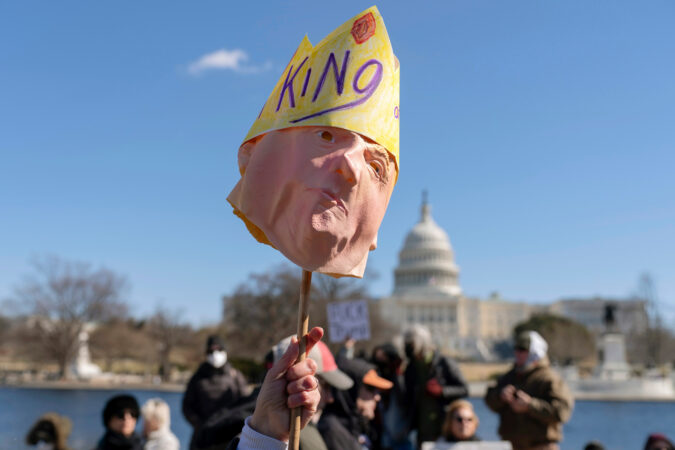
    A third round of “No Kings” protests is coming this spring, with organizers saying they are planning their largest demonstrations yet across the United States to oppose what they describe as authoritarianism under President Donald Trump.

    Previous rallies have drawn millions of people, and organizers said they expect even greater numbers on March 28 in the wake of Trump’s immigration crackdown in Minneapolis, where violent clashes have led to the death of two people.

    “We expect this to be the largest protest in American history,” Ezra Levin, co-executive director of the nonprofit Indivisible, told the Associated Press ahead of Wednesday’s announcement. He predicted that as many as 9 million people will turn out.

    “No Kings” protests, which are organized by a constellation of groups around the country, have been a focal point for outrage over Trump’s attempts to consolidate and expand his power.

    “This is in large part a response to a combination of the heinous attacks on our democracy and communities coming from the regime, and a sense that nobody’s coming to save us,” Levin said.

    Last year, Trump said he felt attendees were “not representative of the people of our country,” and he insisted that “I’m not a king.”

    ‘No Kings’ shifts focus after Minneapolis deaths

    The latest round of protests had been in the works before the crackdown in Minneapolis. However, the killing of two people by federal agents in recent weeks has refocused plans.

    Levin said they want to show “support for Minnesota and immigrant communities all over” and oppose “the secret police force that is murdering Americans and infringing on their basic constitutional rights.”

    “And what we know is, the only way to defend those rights is to exercise them, and you do that in nonviolent but forceful ways, and that’s what I expect to see in ‘No Kings’ three,” Levin said.

    Trump has broadly defended his aggressive deportation campaign and blamed local officials for refusing to cooperate. However, he’s more recently signaled a shift in response to bipartisan concern over the killing of Alex Pretti in Minneapolis on Saturday.

    Previous ‘No Kings’ protests have drawn millions across the U.S.

    In June, the first “No Kings” rallies were organized in nearly 2,000 locations nationwide, including cities, towns and community spaces. Those protests followed unrest over federal immigration raids and Trump’s deployment of the National Guard and Marines to Los Angeles, where tensions escalated with protesters blocking a freeway and setting vehicles on fire.

    They were organized also in large part to protest a military parade in the nation’s capital that marked the Army’s 250th anniversary and coincided with Trump’s birthday. “No Kings” organizers at the time called the parade a “coronation” that was symbolic of what they characterized as Trump’s growing authoritarian overreach.

    In response, some conservative politicians condemned the protests as “Hate America” rallies.

    During a second round of protests in October, organizers said demonstrations were held in about 2,700 cities and towns across the country. At the time, Levin pointed to Trump’s sweeping immigration crackdown, his unprecedented promises to use federal power to influence midterm elections, restrictions on press freedom and retribution against political opponents, steps he said cumulatively represented a direct threat to constitutionally protected rights.

    On social media, both Trump and the official White House account mocked the protests, posting computer-generated images of the president wearing a crown.

    The big protest days are headline-grabbing moments, but Levin said groups like his are determined to keep up steady trainings and intermediate-level organizing in hopes of growing sustainable resistance to the Trump administration’s actions.

    “This isn’t about Democrats versus Republicans. This is about do we have a democracy at all, and what are we going to tell our kids and our grandkids about what we did in this moment?” Levin said. ”I think that demands the kind of persistent engagement. ”

  • Trump administration reveals location of dismantled slavery exhibits from the President’s House in new legal filing

    Trump administration reveals location of dismantled slavery exhibits from the President’s House in new legal filing

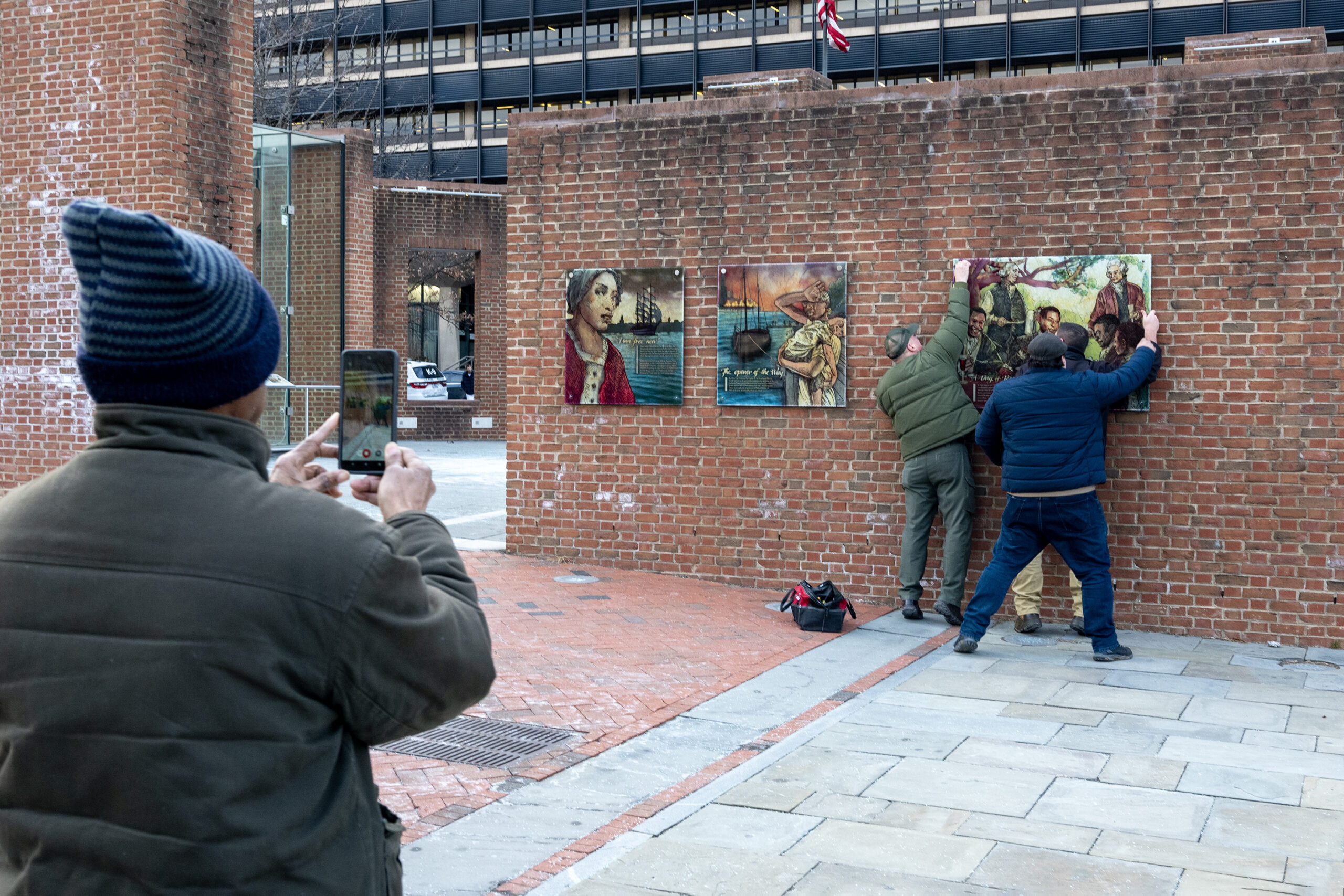
    Informational exhibits about slavery removed by the National Park Service from the President’s House Site last week are being kept in storage at a facility adjacent to the National Constitution Center, according to a legal filing from the Trump administration.

    The exhibits will remain in the park service’s custody at the center, down the street from the President’s House, pending the outcome of the City of Philadelphia’s federal lawsuit against the Department of Interior and the National Park Service for taking down the exhibits.

    But the center said it has no role in storing the exhibits.

    “The storage facility [where the exhibits are being kept] is entirely under control and operation of the Park Service,” said a spokesperson for the Constitution Center, adding that the center does not have possession of or access to the space.

    Mayor Cherelle L. Parker’s administration is seeking an injunction to return the exhibits to the President’s House, which aims to educate visitors on the horrors of slavery and memorializes the nine people George Washington enslaved at the site during the founding of the United States.

    Jali Wicker records NPS workers remove interpretive panels at the President’s House site in Independence National Historical Park Thursday, Jan. 22, 2026. More than a dozen educational displays and illustrations about slavery were removed from the site, which serves as a memorial to the nine people George Washington enslaved there during the founding of America.

    The location of the removed exhibits was revealed Wednesday in a motion objecting to the city’s injunction. The motion was filed by U.S. attorneys and assistant Attorney General Brett Shumate, representing Interior Secretary Doug Burgum, acting National Park Service Director Jessica Bowron, and their respective agencies.

    The legal filing also provides further details into what transpired last Thursday when park service employees removed exhibits about slavery at the President’s House.

    Park service employees dismantled the exhibit after Bowron ordered Steve Sims, the park service’s acting regional director, to have workers remove the panels and turn off video displays at the site, according to the filing. Sims said the takedown was carried out the same day that Bowron requested it.

    There is also a remaining sign made of wood in a metal structure that was not removed last week because additional tools were needed.

    “When and if NPS removes the sign, it will be stored with the other panels,” Sims said in a declaration included in the legal filing.

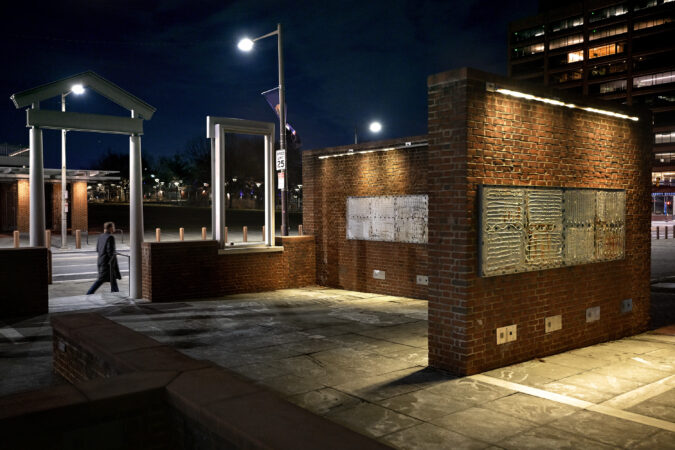
    The footprints embedded in the site and the Memorial Wall featuring the names of the nine people Washington enslaved will stay at the President’s House, he said.

    Last year, Burgum and President Donald Trump ordered content at national parks that could “inappropriately disparage Americans past or living” to be reviewed and potentially removed.

    In addition to the actions in Philadelphia, the National Park Service has reportedly removed signage about the mistreatment of Native Americans from the Grand Canyon, among other changes implemented under the orders.

    Tuesday’s filing previews the Trump administration’s legal argument for a hearing scheduled Friday on Philadelphia’s suit, which could be used in other cases around the country.

    The attorneys claim in the filing that this case is “fundamentally a question of Government speech,” and they accuse the city of trying to “censor” the federal government.

    “Such interests are especially weighty where, as here, the City effectively seeks to compel the Federal government to engage in speech that it does not wish to convey,” the attorneys wrote.

    The city’s suit has received legal backing from Gov. Josh Shapiro and the Avenging the Ancestors Coalition, an advocacy group that helped establish the President’s House in the early 2000s.

    The exhibit takedown has been a heartbreak for those who helped develop the site and for Philadelphians who have left artwork memorializing what the site used to be.

    In a video posted to social media Tuesday, Parker said that her administration would keep “fighting” to have the panels restored to the site as the city prepares to play a central role in the nation’s 250th anniversary celebrations in July.

    “This history is a critical part of our nation’s origins, and it deserves to be seen and heard, not just by the people of Philadelphia, but by every person who comes to Philadelphia from around our nation and the world to see and learn from, especially as we celebrate our Semiquincentennial 250th birthday, I want the world to know you cannot erase our history,” she said.

    This story has been updated to include a comment from the National Constitution Center.

  • Search warrant FBI served at elections office near Atlanta seeks records tied to the 2020 elections

    Search warrant FBI served at elections office near Atlanta seeks records tied to the 2020 elections

    ATLANTA — The FBI on Wednesday searched the election office of a Georgia county that has been central to right-wing conspiracy theories over President Donald Trump’s 2020 election loss, acting just one week after the Republican leader predicted prosecutions over a contest he has baselessly insisted was tainted by widespread fraud.

    The search at Fulton County’s main election facility in Union City sought records related to the 2020 election, county spokesperson Jessica Corbitt-Dominguez said. It appeared to be the most public step by law enforcement to pursue Trump’s claims of a stolen election, grievances rejected time and again by courts and state and federal officials, who found no evidence of fraud that would have altered the outcome.

    It also unfolds against the backdrop of FBI and Justice Department efforts to investigate perceived political enemies of Trump, including former FBI Director James Comey and New York Attorney General Letitia James.

    Trump has for years focused on Fulton, Georgia’s most populous county and a Democratic stronghold, as a key example of what he claims went wrong in the 2020 election. His pressure campaign there culminated in a sweeping state indictment accusing him and 18 others of illegally trying to overturn the vote.

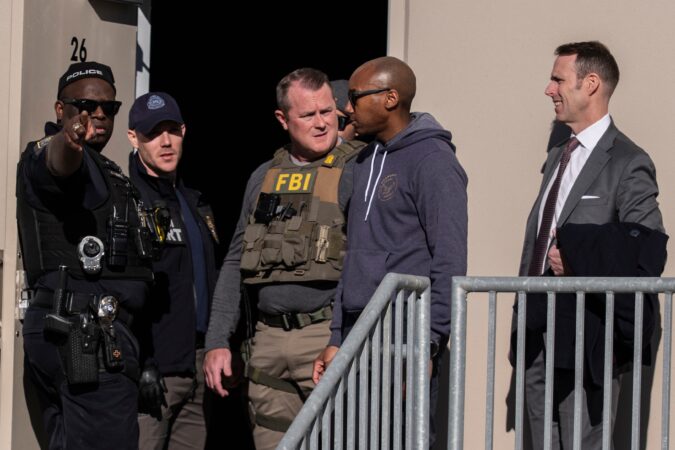
    An FBI spokesperson said agents were “executing a court authorized law enforcement action” at the county’s main election office in Union City, just south of Atlanta. The spokesperson declined to provide any further information, citing an ongoing matter.

    Corbitt-Dominguez said a warrant “sought a number of records related to 2020 elections,” but declined to comment further because the search was still underway.

    The Justice Department had no immediate comment.

    Trump has long insisted that the 2020 election was stolen even though judges across the country and his own attorney general said they found no evidence of widespread fault that tipped the contest in Democrat Joe Biden’s favor.

    The president has made Georgia, one of the battleground states he lost in 2020, a central target for his complaints about the election and memorably pushed its secretary of state to help “find” enough votes to overturn the contest.

    Last week, in reference to the 2020 election, he asserted that “people will soon be prosecuted for what they did.” It was not clear what in particular he was referring to.

    Fulton County District Attorney Fani Willis in August 2023 obtained an indictment against Trump and 18 others, accusing them of participating in a wide-ranging scheme to illegally try to overturn the results of the 2020 presidential election. That case was dismissed in November after courts barred Willis and her office from pursuing it because of an “appearance of impropriety” stemming from a romantic relationship she had with a prosecutor she had hired to lead the case.

    The FBI last week moved to replace its top agent in Atlanta, Paul W. Brown, according to people familiar with the matter who spoke on condition of anonymity to discuss a nonpublic personnel decision. It was not immediately clear why the move, which was not publicized by the FBI, was made.

    The Department of Justice last month sued the clerk of the Fulton County superior and magistrate courts in federal court seeking access to documents from the 2020 election in the county. The lawsuit said the department sent a letter to the clerk, Che Alexander, but that she had failed to produce the requested documents.

    Alexander has filed a motion to dismiss the suit. The Justice Department complaint says that the purpose of its request was “ascertaining Georgia’s compliance with various federal election laws.” It also says the attorney general is trying to help the State Election Board with its “transparency efforts under Georgia law.”

    A three-person conservative majority on the State Election Board has repeatedly sought to reopen a case alleging wrongdoing by Fulton County during the 2020 election. It passed a resolution in July seeking assistance from the U.S. attorney general to access voting materials.

    The state board sent subpoenas to the county board for various election documents last year and again on Oct. 6. The October subpoena requested “all used and void ballots, stubs of all ballots, signature envelopes, and corresponding envelope digital files from the 2020 General Election in Fulton County.” A fight over the state board’s efforts to enforce the 2024 subpoena is currently tied up in court.

    The Justice Department sent a letter to the county election board Oct. 30 citing the federal Civil Rights Act and asking for all records responsive to the October subpoena from the State Election Board. Lawyers for the county election board responded about two weeks later, saying that the records are held by the county court clerk. They also attached a letter the clerk sent to the State Election Board saying that the records are under seal in accordance with state law and can’t be released without a court order.

    The Justice Department said it then sent a letter to Alexander, the clerk, on Nov. 21 requesting the documents and that she failed to respond.

    The department is asking a judge to declare that the clerk’s “refusal to provide the election records upon a demand by the Attorney General” violates the Civil Rights Act. It is also asking the judge to order Alexander to produce the requested records within five days of a court order.

    The State Election Board in May 2024 heard a case that alleged documentation was missing for thousands of votes in the recount of the presidential contest in the 2020 election. After a presentation by a lawyer and an investigator for the secretary of state’s office, a response from the county and a lengthy discussion among the board members, the board voted to issue a letter of reprimand to the county.

    Shortly after that vote, there was a shift in power on the board, and the newly cemented conservative majority sought to reopen the case. The lone Democrat on the board and the chair have repeatedly objected, arguing the case is closed and citing multiple reviews that have found that while the county’s 2020 elections were sloppy and poorly managed there was no evidence of intentional wrongdoing.

  • DA Larry Krasner forms coalition of progressive prosecutors committed to charging federal agents who commit crimes

    DA Larry Krasner forms coalition of progressive prosecutors committed to charging federal agents who commit crimes

    District Attorney Larry Krasner on Wednesday announced the formation of a new coalition of progressive prosecutors committed to charging federal agents who violate state laws.

    Krasner joined eight other prosecutors from U.S. cities to create the Project for the Fight Against Federal Overreach, a legal fund that local prosecutors can tap if they pursue charges against federal agents.

    The abbreviation for the group, FAFO, is a nod to what has become one of Krasner’s frequent slogans: “F— around and find out.”

    The move places Krasner at the center of a growing national clash between Democrats and the Trump administration over federal immigration enforcement and whether local law enforcement can — or should — charge federal agents for actions they take while carrying out official duties.

    It is also the latest instance in which Krasner, one of the nation’s most prominent progressive prosecutors, has positioned himself as Philadelphia’s most vocal critic of President Donald Trump. He has made opposing the president core to his political identity for a decade, and he said often as he was running for reelection last year that he sees himself as much as a “democracy advocate” as a prosecutor.

    Krasner has used provocative rhetoric to describe the president and his allies, often comparing their agenda to World War II-era fascism. During a news conference Tuesday, he said federal immigration-enforcement agencies are made up of “a small bunch of wannabe Nazis.”

    The coalition announced Wednesday includes prosecutors from Minneapolis; Tucson, Ariz.; and several cities in Texas and Virginia. It was formed to amass resources after two shootings of U.S. citizens by federal law enforcement officials in Minnesota this month.

    Renee Good, 37, was shot and killed in her car by an ICE officer on Jan. 7 as she appeared to attempt to drive away during a confrontation with agents. The FBI said it would not investigate her killing.

    People visit a memorial for Alex Pretti at the scene in Minneapolis where the 37-year-old was fatally shot by a U.S. Border Patrol officer.

    Then, on Saturday, Alex Pretti, 37, was killed after similarly confronting agents on a Minneapolis street. Video of the shooting, which contradicted federal officials’ accounts, appeared to show Border Patrol agents disarming Pretti, who was carrying a legally owned handgun in a holster. They then shot him multiple times. Federal authorities have attempted to block local law enforcement from investigating the shooting.

    Krasner said that, despite Vice President JD Vance’s recent statement that ICE officers had “absolute immunity” — an assertion the Philadelphia DA called “complete nonsense” — prosecutors in FAFO are prepared to bring charges including murder, obstructing the administration of justice, tampering with evidence, assault, and perjury against agents who commit similar acts in their cities.

    “There is a sliver of immunity that is not going to save people who disarm a suspect and then repeatedly shoot him in the back from facing criminal charges,” Krasner said during a virtual news conference Wednesday. “There is a sliver of immunity that is not going to save people who are shooting young mothers with no criminal record and no weapon in the side or back of the head when it’s very clear the circumstances didn’t require any of that, that it was not reasonable.”

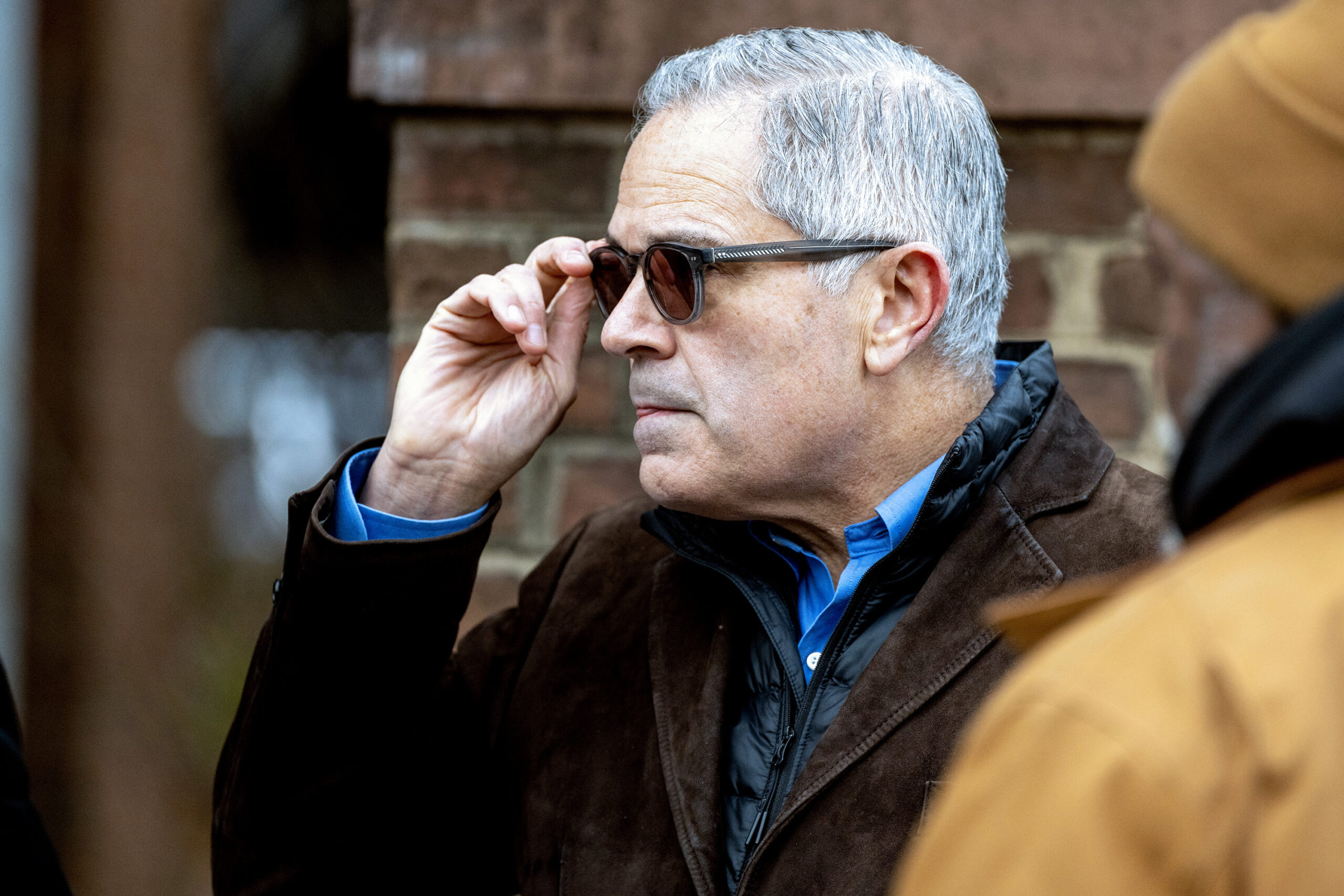
    Philadelphia District Attorney Larry Krasner attends an event at Independence National Historical Park on Dec. 21, 2025.

    How will FAFO work?

    The coalition has created a website, federaloverreach.org, and is soliciting donations.

    Prosecutors who spoke during the news conference said those donations would be toward a legal fund that would allow prosecutors to hire outside litigators, experts, and forensic investigators as they pursue high-profile cases against federal agents.

    “This will function as a common fund,” said Ramin Fatehi, the top prosecutor in Norfolk, Va., “where those of us who find ourselves in the tragic but necessary position of having to indict a federal law enforcement officer will be able to bring on the firepower necessary to make sure that the federal government doesn’t roll us simply through greater resources.”

    The money raised through the organization will not go to the individual prosecutors or their political campaigns, they said Wednesday.

    Scott Goodstein, a spokesperson for the coalition, said the money will be held by a “nonpartisan, nonprofit entity that is to be stood up in the coming days.” He said the prosecutors are “still working through” how the fund will be structured.

    Krasner said it would operate similarly to how district attorneys offices receive grant funding for certain initiatives.

    Most legal defense funds are nonprofit organizations that can receive tax-deductible donations. Those groups are barred from engaging in certain political activities, such as explicitly endorsing or opposing candidates for office.

    Goodstein said the group is also being assisted in its fundraising efforts by Defiance.org, a national clearinghouse for anti-Trump activism. One of that group’s founders is Miles Taylor, a former national security official who, during the first Trump administration, wrote under a pseudonym about being part of the “resistance.”

    Demonstrators from No ICE Philly gathered to protests outside the U.S. Immigration and Customs Enforcement, office at 8th and Cherry Streets, on Jan. 20.

    ‘Who benefits?’

    In forming the coalition, Krasner inserted himself into a national controversy that other city leaders have tried to avoid.

    His approach is starkly different from that of Mayor Cherelle L. Parker, a centrist Democrat who has largely avoided criticizing Trump. She says she is focused on her own agenda, and has not weighed in on the president’s deportation campaign.

    Members of the mayor’s administration say they believe her restraint has kept the city safe. While Philadelphia has policies in place that prohibit local officials from some forms of cooperation with federal immigration enforcement, the Trump administration has not targeted the city with surges of ICE agents as it has in other jurisdictions — such as Chicago and Los Angeles — where Democratic leaders have been more outspoken.

    Parker and Police Commissioner Kevin Bethel have at times been frustrated with Krasner’s rhetoric, according to a source familiar with their thinking who spoke on the condition of anonymity to discuss internal communications.

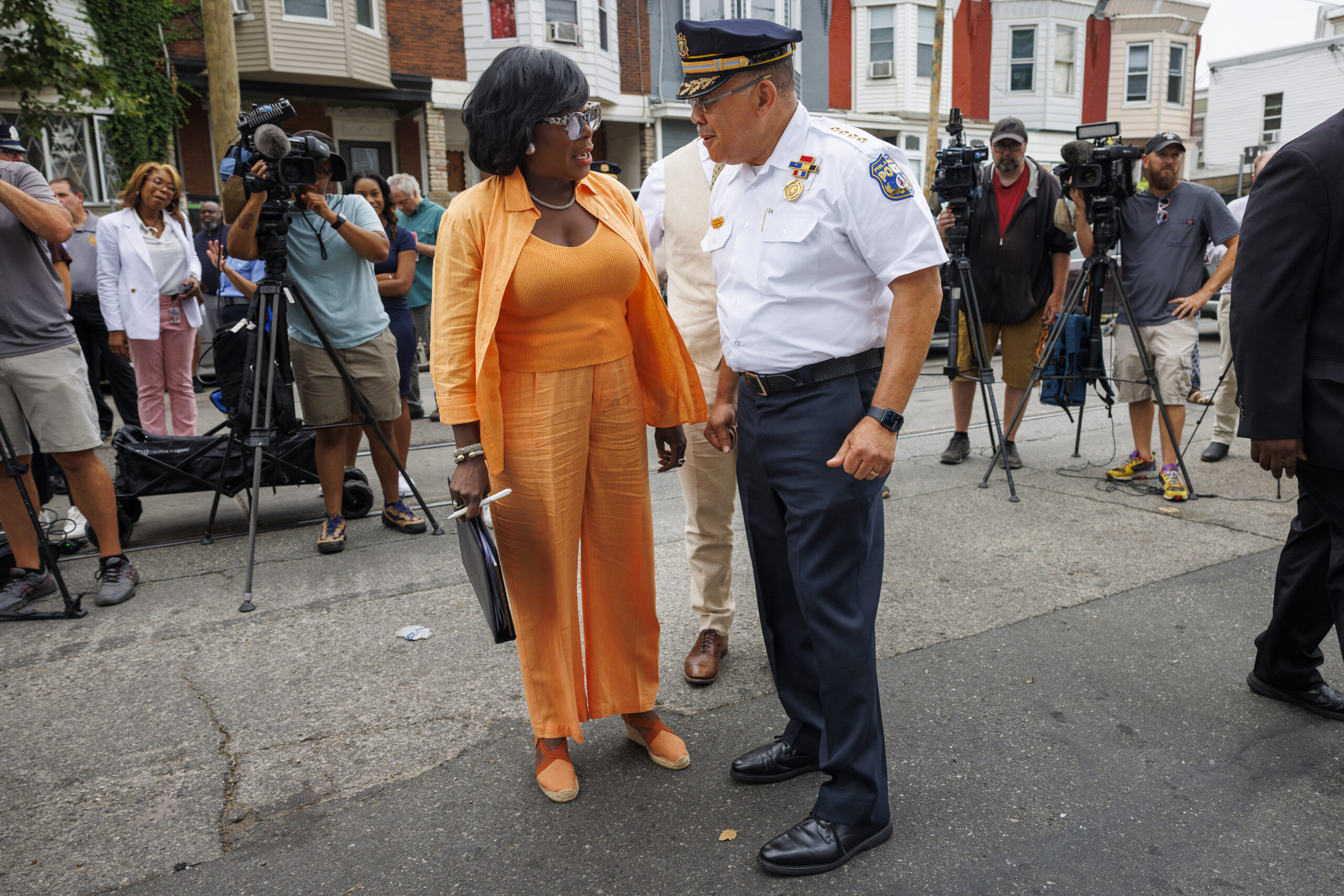
    Philadelphia Mayor Cherelle Parker and Police Commissioner Kevin Bethel speaking ahead of a July 2024 press conference.

    That was especially true this month when Krasner hosted a news conference alongside Sheriff Rochelle Bilal. The pair made national headlines after Krasner threatened to prosecute federal agents — something he has vowed to do several times — and Bilal called ICE a “fake” law enforcement agency.

    Bethel later released a statement to distance the Police Department from the Sheriff’s Office, saying Bilal’s deputies do not conduct criminal investigations or direct municipal policing.

    The police commissioner recently alluded to Parker’s strategy of avoiding confrontation with the federal government, saying in an interview on the podcast City Cast Philly that the mayor has given the Police Department instruction to “stay focused on the work.”

    “It is not trying to, at times, potentially draw folks to the city,” Bethel said. “Who benefits from that? Who benefits when you’re putting out things and trying to… poke the bear?”

    As for Krasner’s latest strategy, the DA said he has received “zero indication or communication from the mayor or the police commissioner that they’re in a different place.”

    “I feel pretty confident that our mayor and our police commissioner, who are doing a heck of a lot of things right,” he said, “will step up as needed to make sure that this country is not invaded by a bunch of people behaving like the Gestapo.”

  • Rubio defends Trump on Venezuela while trying to allay fears about Greenland and NATO

    Rubio defends Trump on Venezuela while trying to allay fears about Greenland and NATO

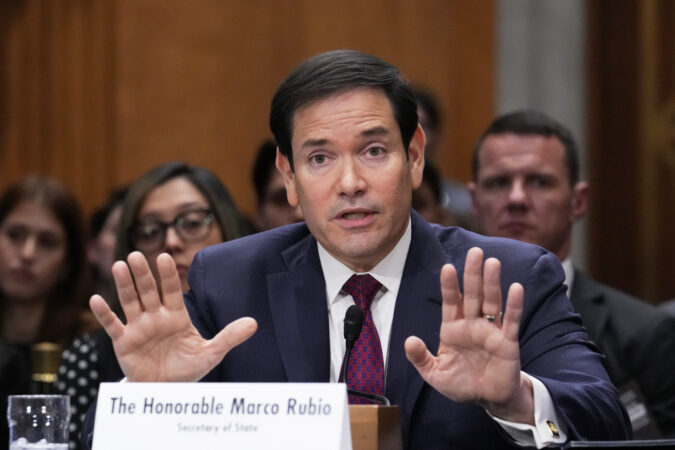
    WASHINGTON — Secretary of State Marco Rubio gave a full-throated defense Wednesday of President Donald Trump’s military operation to capture then-Venezuelan President Nicolás Maduro, while explaining to U.S. lawmakers the administration’s approach to Greenland, NATO, Iran, and China.

    As Republican and Democratic members of the Senate Foreign Relations Committee offered starkly different readings of the administration’s foreign policy, Rubio addressed Trump’s intentions and his often bellicose rhetoric that has alarmed U.S. allies in Europe and elsewhere, including demands to take over Greenland.

    In the first public hearing since the Jan. 3 raid to depose Maduro, Rubio said Trump had acted to take out a major U.S. national security threat in the Western Hemisphere. Trump’s top diplomat said America was safer and more secure as a result and that the administration would work with interim authorities to stabilize the South American country.

    “We’re not going to have this thing turn around overnight, but I think we’re making good and decent progress,” Rubio said. “We are certainly better off today in Venezuela than we were four weeks ago, and I think and hope and expect that we’ll be better off in three months and six months and nine months than we would have been had Maduro still been there.”

    The former Florida senator said Venezuela’s current leaders are cooperating and would soon begin to see benefits. But he backed away from remarks prepared for the hearing that Washington would not hesitate to take further military action should those leaders not fully accept Trump’s demands.

    “I can tell you right now with full certainty, we are not postured to nor do we intend or expect to have to take any military action in Venezuela at any time,” Rubio said. “I think it would require the emergence of an imminent threat of the kind that we do not anticipate at this time.”

    He said Venezuela soon will be allowed to sell oil that is now subject to U.S. sanctions, and the revenue would be set aside to pay for basic government services such as policing and healthealthcare proceeds will be deposited in a U.S. Treasury-controlled account and released after the U.S. approves monthly budgets to be submitted by Venezuela, he said.

    Pushback against skepticism from Democrats

    Republican senators, with few exceptions, praised the operation in Venezuela. Among Democrats, there was deep skepticism.

    They questioned Trump’s policies in Venezuela and their potential for encouraging moves by China against Taiwan and Russia even more so in Ukraine, as well as his threats to take Greenland from NATO ally Denmark and his insults about the alliance’s contributions to U.S. security.

    Rubio played them all down.

    He said the uproar over Greenland within NATO is calming and that talks are underway about how to deal with Trump’s demands. The Republican president insists the U.S. needs Greenland to counter threats from Russia and China, but he recently backed away from a pledge to impose tariffs on several European countries that sent troops to the semiautonomous Danish territory in a show of solidarity.

    “I think we’re going to get something positive done,” Rubio said.

    Rubio dismissed criticism that Trump was undermining the alliance, while repeating the long-running American complaint that member nations need to boost their defense budgets.

    “NATO needs to be reimagined,” Rubio said. “I just think this president complains about it louder than other presidents.”

    He said China’s stated goal to reunify Taiwan with the mainland would not be affected by any other world event, including the Maduro operation.

    “The situation on Taiwan is a legacy project” that Chinese President Xi Jinping has made ”very clear that that’s what he intends to do and that’s going to be irrespective anything that happens in the world,” Rubio said.

    As Trump once more threatens Iran with military action, Rubio said there was no current plan to attack. Asked about the potential for a change of government in Tehran, Rubio said that would require “a lot of careful thinking” because it would be “far more complex” than ousting Maduro.

    He noted that the increased military presence in the Middle East — an aircraft carrier and accompanying warships arrived this week — is “to defend against what could be an Iranian threat against our personnel.”

    More details about the raid in Caracas

    The Republican committee chairman, Idaho Sen. Jim Risch, offered new details on the operation in the Venezuelan capital, saying it involved “only about 200 troops” and a “firefight that lasted less than 27 minutes.”

    “This military action was incredibly brief, targeted and successful,” Risch said, adding that the U.S. and other nations may have to assist Venezuela when it seeks to restore democratic elections.

    ”Venezuela may require U.S. and international oversight to ensure these elections are indeed free and fair,” he said.

    Sen. Jeanne Shaheen of New Hampshire, the committee’s top Democrat, questioned whether that operation was worth it, considering most of Maduro’s top aides and lieutenants still run the Venezuela and the economic situation there remains bleak.

    “We’ve traded one dictator for another, so it’s no wonder that so many of my constituents are asking, why is the president spending so much time focused on Venezuela instead of the cost of living and their kitchen table economic concerns?” she asked. “From Venezuela to Europe, the United States is spending more, risking more and achieving less.”

    Call for eventual democratic elections in Venezuela

    Rubio delivered his strongest statement yet of support for democracy in Venezuela, while concerns persist that the administration’s stabilization efforts are narrowly focused on oil and U.S. national security interests.

    “What’s the end state? We want a Venezuela that has legitimate democratic elections,” said Rubio, who met Venezuelan opposition leader María Corina Machado at the State Department after the hearing.

    Machado reiterated her intention to return to Venezuela. “Dear Venezuelans, we are moving forward with firm steps,” she posted on X. “I will return to Venezuela very soon to work together on the transition and the building of an exceptional country.”

    Before that, Rubio faced tough questioning from Sen. Cory Booker (D., N.J.) about cooperating with interim leaders who had been part of Maduro’s authoritarian government. Maduro’s vice president, Delcy Rodríguez, is now the acting president.

    The U.S. has said its demands for Rodriguez include opening Venezuela’s energy sector to U.S. companies, providing preferential access to production, using oil revenue to purchase American goods, and ending subsidized oil exports to Cuba.

    Neither Rodríguez nor her government’s press office immediately commented on Rubio’s remarks. She said Tuesday that her government and the U.S. “have established respectful and courteous channels of communication.” So far, she has appeared to acquiesce to Trump’s demands and to release prisoners jailed by the government under Maduro and his predecessor, Hugo Chávez.

    In a key step to the restoration of diplomatic relations, the State Department said it intends to begin sending additional diplomatic and support personnel to Caracas to prepare for the possible reopening of the U.S. Embassy, which shuttered in 2019.

    Fully normalizing ties, however, would require the U.S. to revoke its decision recognizing the Venezuelan parliament elected in 2015 as the country’s legitimate government.