Category: Politics

Political news and coverage

  • Sen. Dave McCormick says Chester County proves the need for national election rules. But the GOP proposal wouldn’t have solved the county’s problems.

    Sen. Dave McCormick says Chester County proves the need for national election rules. But the GOP proposal wouldn’t have solved the county’s problems.

    When Sen. Dave McCormick stood on the Senate floor to call for nationwide rules mandating proof of citizenship and photo identification for voters, he invoked a drama that had played out three months earlier in Chester County.

    The county had mistakenly left all third-party and unaffiliated voters off the Election Day voter rolls, creating a chaotic scene in which more than 12,000 voters were forced to cast provisional ballots, which take more time to count as officials must verify the eligibility of each voter. A subsequent investigation by a law firm hired by the county attributed the issue to human error and insufficient oversight.

    “Every time Americans hear about election problems like Chester County’s, they rightly question the integrity of our electoral process,” McCormick said.

    But in his recounting of events, the Pennsylvania Republican gave incomplete and inaccurate information about Chester County’s election error.

    What did McCormick say about Chester County?

    Americans, he said, overwhelmingly believe there are problems with U.S. elections, and he argued that has been demonstrated for them on multiple occasions, including in November when Chester County omitted more than 70,000 third-party and unaffiliated voters from its Election Day pollbooks.

    “Registered voters were turned away at the polls. And an unknown number of unverified voters cast regular ballots,” McCormick claimed.

    But there is no evidence that voters were turned away or that ineligible voters cast ballots. McCormick’s office did not respond to questions.

    Were voters turned away?

    According to county officials, no voter who wanted to vote was turned away.

    Instead, for most of the day voters were offered the opportunity to vote by provisional ballot while county and state officials worked to get supplemental pollbooks distributed to polling places across the county.

    Some voters did testify at county election board meetings that they voluntarily left their polling place when their name was not in the pollbook but that they returned later in the day when they could vote on machines.

    Did unverified voters cast ballots?

    There is no evidence that ineligible voters cast ballots. The identity and eligibility of all voters who cast ballots were verified, county officials said.

    When the pollbook issue was discovered on Election Day, Chester County officials initially recommended that poll workers ask voters not included in the pollbook to sign the pollbook manually and vote as normal, according to the independent investigation of the incident.

    To ensure those voters were eligible to vote, county officials said, poll workers were instructed to follow a detailed process that included verifying voters’ eligibility in the full voter list and verifying their identity with photo identification.

    The Chester County Republican Committee has disputed the county’s version of events, contending that photo ID was not checked for all voters who wrote their names into pollbooks and that poll workers were unable to verify voters’ identities using signature matching.

    Around 7:40 a.m., less than an hour after polls opened, Pennsylvania Department of State officials recommended the county shift to asking voters to cast provisional ballots to eliminate the risk of an ineligible voter casting a ballot, thereby invalidating the election.

    A county spokesperson said there is no evidence that ineligible voters cast ballots during November’s election.

    Whether voters wrote their names into a pollbook or cast a provisional ballot, “the identity and eligibility of each individual was verified by the poll workers,” said Chester County spokesperson Andrew Kreider.

    Would the SAVE Act have changed anything?

    The SAVE Act is a collection of election policies proposed by congressional Republicans that would require proof of citizenship to register to vote and mandate all voters show photo ID at the polls.

    Such requirements would not have prevented Chester County’s error, which investigators determined was a clerical error resulting from inexperienced staff with insufficient training and oversight.

    “Sen. McCormick was ignoring the facts and feeding into this larger narrative that our elections can’t be trusted and just feeding into the president’s narrative that there’s something wrong with Pennsylvania elections,” said Lauren Cristella, the CEO of the Committee of Seventy, a Philadelphia-based civic engagement and good-government organization.

    In addition to Chester County, McCormick pointed to his own experience in close elections — both his 2022 primary loss and his 2024 general election win — as a reason he supports the bill’s proof of citizenship and voter ID requirements.

    The policy, which passed the Republican-led U.S. House, still faces an uphill battle in the U.S. Senate, where it would need 60 votes to advance. It has faced significant opposition from Democrats who say it would needlessly make it harder for people to vote.

    The proof of citizenship requirement, critics say, would place a higher burden on married people whose last names no longer match their birth certificates.

    Speaking to reporters last week, Democratic Gov. Josh Shapiro said he was “vehemently opposed” to the policy, arguing it would nationalize elections.

    “We are not going to turn our elections over to Donald Trump,” he said.

  • SNAP cuts are taking a toll on the thousands of Pennsylvanians losing benefits: ‘I fell into a downward spiral’

    SNAP cuts are taking a toll on the thousands of Pennsylvanians losing benefits: ‘I fell into a downward spiral’

    Enrique Fuentes counted on the $250 he received monthly in federal nutrition assistance to cover the cost of groceries. That changed last month.

    Fuentes works three days a week as a technician assisting therapists who help autistic children and adults, ages 3 to 22. He is one of an estimated 3 million able-bodied Americans who do not work enough hours to qualify for the Supplemental Nutrition Assistance Program (SNAP) under a law signed by President Donald Trump.

    “They cut me off because you need to work more than 20 hours a week to get benefits, and I didn’t have those hours,” said Fuentes, 27, who lives in Philadelphia. “I wasn’t even aware of that stipulation.”

    Roughly 4 million Americans are expected to lose SNAP benefits in 2026 under the One Big Beautiful Bill Act. Many of them do not meet work requirements added to the anti-hunger program under the legislation, which paid for Trump’s tax cuts with cuts to SNAP and Medicaid.

    In Pennsylvania, around 144,000 SNAP recipients could see benefits cut this year — an estimated 45,000 in Philadelphia and 12,000 in its collar counties, according to Pennsylvania Department of Human Services estimates.

    Without enough food, Fuentes, who has an associate’s degree in psychology, felt overwhelmed, he said. He is consulting Community Legal Services, which serves people in poverty, for help.

    “I fell into a downward spiral. It’s been upsetting,” he said.
    “Lots of people didn’t know the rules, thinking the winds of Washington don’t affect them. But they do.”

    Since January, advocates say, they have begun to hear from increasing numbers of people suddenly being removed from the program.

    “The White House is rifling through our pockets for lunch money,” said George Matysik, executive director of the Share Food Program, a major provider of food to hundreds of pantries in the region. The cuts constitute “a rounding error for the federal government but [the money is] a lifeline for working-class families,” he added.

    Asked for comment on criticism of the SNAP cuts, a White House spokesperson did not address the program. Instead, the spokesperson praised Trump for helping U.S. families by “fixing” former President Joe Biden’s “broken economy.”

    The spokesperson said that benefits meant for American citizens are “no longer supporting illegal aliens.” But undocumented immigrants have never been eligible to receive SNAP benefits, according to the American Immigration Council, a group that provides legal services to immigrants.

    Policy changes under Trump’s law

    Because the new law revises categories of SNAP recipients — many of which will go into effect at different times — people are uncertain about what they may lose and when. Others who have already seen reductions say they are growing apprehensive because they don’t know whether the law is the reason, or whether bureaucratic adjustments or errors are the cause.

    “Will all this change result in mass panic?” wondered Cailey Tebow, an education outreach coordinator for AmeriCorps VISTA, a national service program designed to alleviate poverty. Tebow works with low-income individuals in Northeast Philadelphia. “It’s scary to think what will happen when people realize what’s being taken from them.”

    Hoa Pham, deputy secretary of the Office of Income Maintenance in the Pennsylvania Department of Human Services, which administers SNAP in the state, is more hopeful. She said she believes the efforts her department has been making will help Pennsylvanians understand SNAP revisions and will “avoid chaos.”

    One category of potential confusion is the change in work requirements.

    Until Trump’s spending plan rewrote the rules, groups of low-income people in Pennsylvania and other states were exempt from a long-standing requirement that childless adults without disabilities and under the age of 54 work, volunteer, or go to school 20 hours per week in order to be eligible for SNAP benefits.

    The work stipulation had been waived for decades because of high levels of poverty and hunger, as well as diminished job opportunities in Philadelphia and elsewhere in the state.

    Under the new policy, childless, able-bodied adults — whose age limit has now been increased to 64 — can be exempt from the work requirements only in areas with at least 10% unemployment — a rate of joblessness considered catastrophic, experts say. In November, Philadelphia’s unemployment rate was 4.8% and other areas in the region saw similar or lower rates.

    “Work requirements in SNAP will put forward a substantial amount of bureaucracy that Pennsylvanians have to contend with,” Pham said. “It could kick many people off SNAP. The impact to people could be severe.”

    She added that reducing SNAP rolls should not be construed as a savings for taxpayers, as Trump and other Republicans have long argued. That is because food insecurity exacerbates health problems, which will add other costs in the long term, Pham said.

    “That will just drive up healthcare and insurance costs,” she said.

    ‘Life is already crumbling’

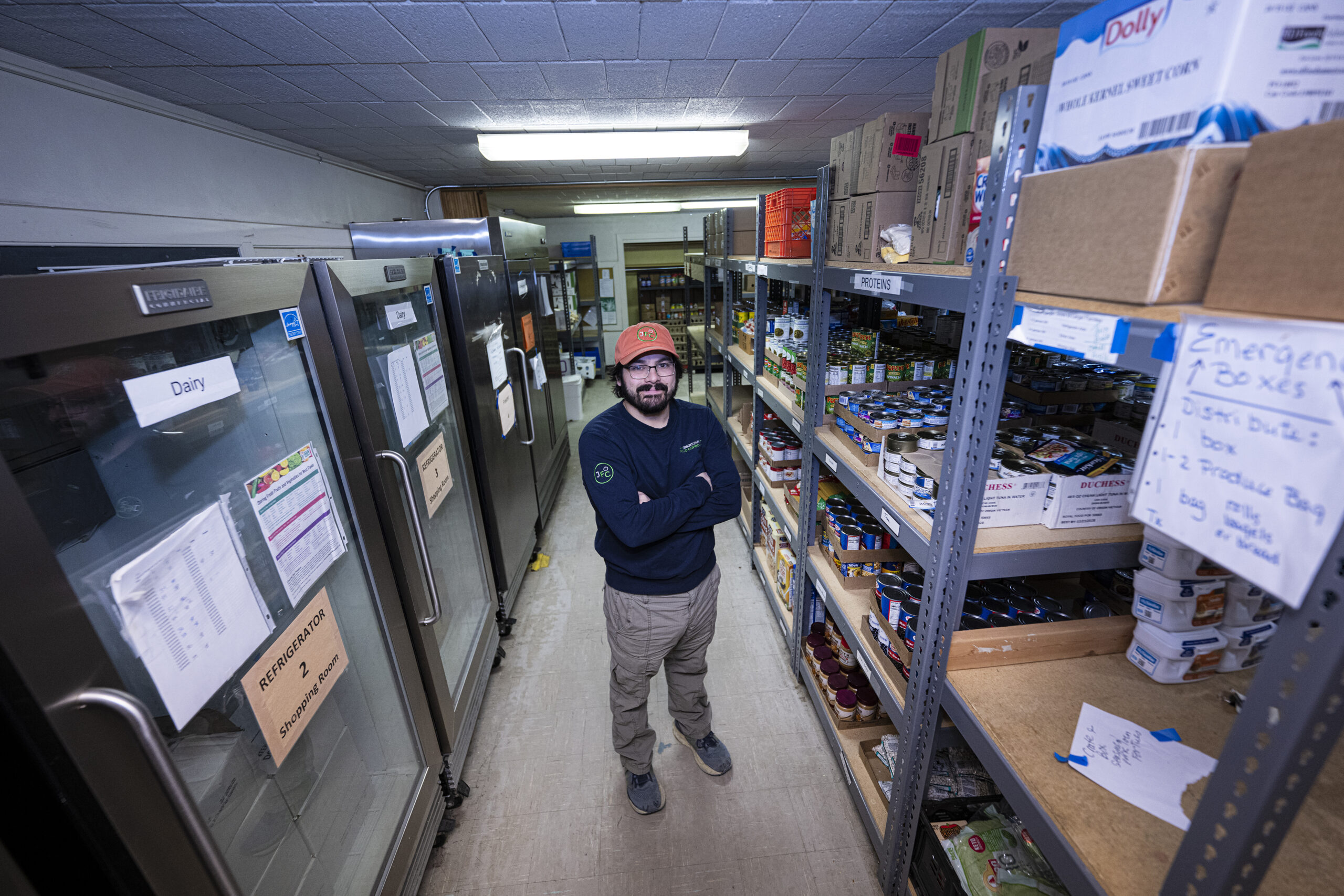
    At the Jenkintown Food Cupboard last week, “anxiety about what will happen is growing,” said Nicolino Ellis, the executive director. “But bellies are already aching from hunger. Life is already crumbling today.”

    Nicolino Ellis, executive director of the Jenkintown Food Cupboard, in the warehouse.

    Outside the cupboard at the Jenkintown United Methodist Church, food was distributed in a driveway to clients who drove up in cars. A phalanx of volunteers slid bags of perishables and shelf-stable foods into trunks and back seats.

    As SNAP benefits dry up while food prices soar, cupboards like this one become overburdened. But they are a less efficient means of feeding Americans in need, according to Stuart Haniff, CEO of the nonprofit Hunger-Free Pennsylvania.

    “For every single meal distributed at a food pantry,” he said, “SNAP provides nine. And need in Philadelphia increased 140% over the last two years.”

    A Jenkintown Food Cupboard volunteer works to set up food distribution.

    Shelley Gaither is one of the hundreds of people receiving groceries from the pantry.

    Gaither, 51, is a former data analyst with an MBA who suffered a disability that caused her to stop working at a Malvern finance company 13 years ago. She now collects Social Security Disability Insurance and lives with her three sons, ages 6, 9, and 18, in Cheltenham.

    Gaither said that in January, her SNAP payment dropped from $400 to $200. “I don’t know if it was a new formula from the government cutting me back, or some other reason,” she said in a phone interview. “No one told me why. It’s not supposed to happen when you have a disability. It’s crazy.”

    Whatever caused the cut, Gaither said, she is in trouble, and worried the benefit will shrink even further.

    “Now, the money I used to pay for electricity and water has to go for food,” she said. “This makes surviving more difficult.”

  • Trump administration appeals judge’s ruling over President’s House slavery exhibits

    Trump administration appeals judge’s ruling over President’s House slavery exhibits

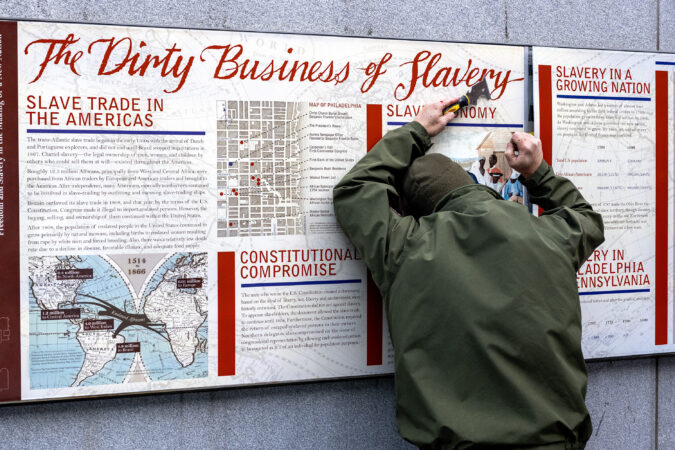
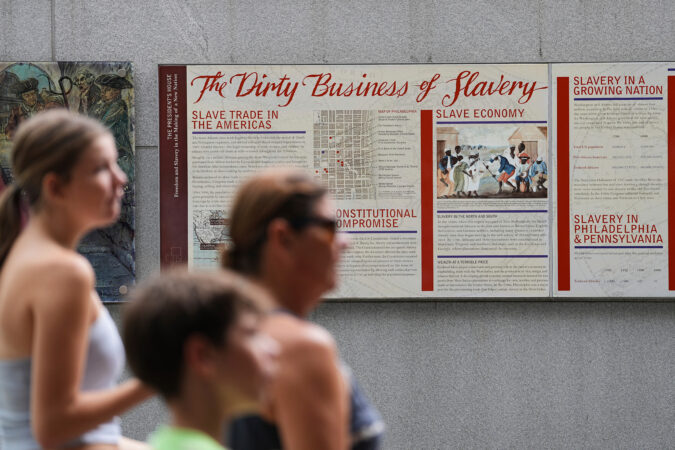
    The Trump administration has appealed a federal judge’s order requiring that the National Park Service restore all the slavery-related exhibits it abruptly removed last month from the President’s House Site in Center City.

    The U.S. attorneys representing the federal government argued previously that the White House has full discretion over the exhibits in national parks, an argument U.S. District Judge Cynthia M. Rufe called “dangerous” and “horrifying” during last month’s hearing.

    The notice of appeal to the U.S. Court of Appeals for the Third Circuit at this stage does not require a brief arguing what the government says the judge got wrong when she issued the injunction. But the Department of the Interior and the National Park Service said in a statement Tuesday that the agencies “disagree” with the injunction.

    “The National Park Service routinely updates exhibits across the park system to ensure historical accuracy and completeness,” the statement said. “If not for this unnecessary judicial intervention, updated interpretive materials providing a fuller account of the history of slavery at Independence Hall would have been installed in the coming days.”

    Neither agency responded to a request for more information on the plan for alternative panels. The White House did not respond to a request for comment.

    Rufe on Monday granted Philadelphia’s request for an injunction requiring the full restoration of exhibits removed from the President’s House on Jan. 22. She further enjoined the federal government from making any changes to the site without the agreement of the city.

    The panels that tell the stories of the nine enslaved African people who lived in President George Washington’s house must be displayed again swiftly, the judge said in her 40-page opinion.

    The order directs the agencies to comply “immediately” and “forthwith” but does not include a specific deadline.

    “Each person who visits the President’s House and does not learn of the realities of founding-era slavery receives a false account of this country’s history,” wrote Rufe, who was appointed by former President George W. Bush.

    In addition to the appeal, the federal government will need to ask for a stay on the order or risk not complying with Rufe’s injunction.

    But though the panels have not been restored, the ruling marked a victory for Mayor Cherelle L. Parker’s administration and the advocates who pushed to create the exhibit.

    Parker addressed the injunction in a video Tuesday celebrating the ruling as a “huge win for the people of this city and our country.”

    “This summer Philadelphia will lead a litany of Semiquincentennial celebrations in honor of America’s 250th birthday, and please know that we will do so with a great deal of pride,” Parker said. “A pride that comes from acknowledging all of our history, and all of our truth, no matter how painful it may be.”

    Philadelphia’s lawsuit was the first in the nation challenging the removal of exhibits from national parks in accordance with President Donald Trump’s March 2025 executive order, which instructed the Interior Department to remove any content or displays that “inappropriately disparage Americans past or living.”

    The federal government violated a 2006 cooperative agreement between the National Park Service and the city when it dismantled the exhibits without notice in what amounted to an unlawful “arbitrary and capricious” act, Philadelphia’s lawsuit said. Rufe found that the agreement is still binding.

    As the city’s litigation proceeds following the injunction, it is not the only effort to address changes to historic exhibits on federal parks.

    A lawsuit filed Tuesday by park conservation advocacy groups in Massachusetts federal court says that removals of the type that took place in Philadelphia violate “Congress’s clear instructions.”

    The National Parks Conservation Association’s lawsuit notes that in addition to the slavery signs removed from the President’s House, the Trump administration removed signs about climate change from Maine’s Acadia National Park and a creative exhibit about the women’s role in the history of Muir Woods National Park, among other examples.

    The suit asks a federal judge to order the Interior Department and National Park Service to “cease all unlawful efforts to remove up-to-date and accurate historical or scientific information from the national parks, and order that interpretive materials that have been removed pursuant to the unlawful Order be restored.”

  • CBS kills Stephen Colbert’s interview with a Democratic candidate. So why was Josh Shapiro allowed on the show?

    CBS kills Stephen Colbert’s interview with a Democratic candidate. So why was Josh Shapiro allowed on the show?

    A defiant Stephen Colbert blasted CBS on Monday for killing an interview with a Texas Democrat, blaming arcane rules being enforced by the Trump administration.

    “He was supposed to be here, but we were told in no uncertain terms by our network’s lawyers, who called us directly, that we could not have him on the broadcast,” Colbert said of State Rep. James Talarico, who is running in the Democratic primary for a U.S. Senate seat in Texas.

    CBS issued a statement claiming they didn’t prohibit him from running an interview.

    The Late Show was not prohibited by CBS from broadcasting the interview with Rep. James Talarico,” the statement read. “The show was provided legal guidance that the broadcast could trigger the FCC equal-time rule for two other candidates, including Rep. Jasmine Crockett, and presented options for how the equal time for other candidates could be fulfilled. The Late Show decided to present the interview through its YouTube channel with on-air promotion on the broadcast rather than potentially providing the equal-time options.”

    The decision comes down to something known as the equal-time rule, a federal requirement put into law in 1934 that requires broadcast stations like CBS to provide comparable airtime to political opponents during an election. Cable networks like Fox News and Comedy Central, home to The Daily Show, are not bound to those rules, allowing them to be as partisan as they choose.

    News programs on broadcast TV (such as Meet the Press and Face the Nation) are exempt from the rule, and the Federal Communications Commission has not enforced it on late-night shows since 2006, when it ruled then-California gubernatorial candidate Arnold Schwarzenegger’s appearance on The Tonight Show with Jay Leno qualified as a “bona fide news interview.”

    But that is changing under the Trump administration. FCC chairman Brendan Carr, who pressured affiliates to take ABC late-night host Jimmy Kimmel off the air in September, issued a notice to broadcasters last month stating that late-night and daytime TV talk shows may no longer be exempt from the rule, claiming some were “motivated by partisan purposes.”

    The move was criticized by FCC commissioner Anna Gomez, a Democrat appointed by former President Joe Biden, who called it “an escalation in this FCC’s ongoing campaign to censor and control speech.”

    Colbert said CBS prohibited the interview with Talarico from airing Monday night. Instead, it was posted in its entirety on Colbert’s YouTube channel.

    “At this point, [Carr has] just released a letter that says he’s thinking about doing away with the exemption for broadcast for late night. He hasn’t done away with it yet,” Colbert said. “But my network is unilaterally enforcing it as if he had.”

    Talarico told Colbert that Trump and Republicans ran against cancel culture during the last election, but now the current administration is “trying to control what we watch, what we say, what we read.”

    “And this is the most dangerous kind of cancel culture, the kind that comes from the top,” Talarico said. “Corporate media executives are selling out the First Amendment to curry favor with corrupt politicians.”

    Bill Carter, who covered late-night television for decades at the New York Times and currently writes for the website LateNighter, called CBS’s capitulation “shameful,” especially since the FCC has not moved yet to enforce the rule.

    “Trump’s intention is to mute free speech of his critics, and he’s found the rule in the FCC and decided he can do this,” Carter said. “And he’s got the broadcasters cowed a bit.”

    “Let’s just call this what it is: Donald Trump’s administration wants to silence anyone who says anything bad about Trump on TV, because all Trump does is watch TV,” Colbert added.

    How was Josh Shapiro able to appear on Colbert’s show?

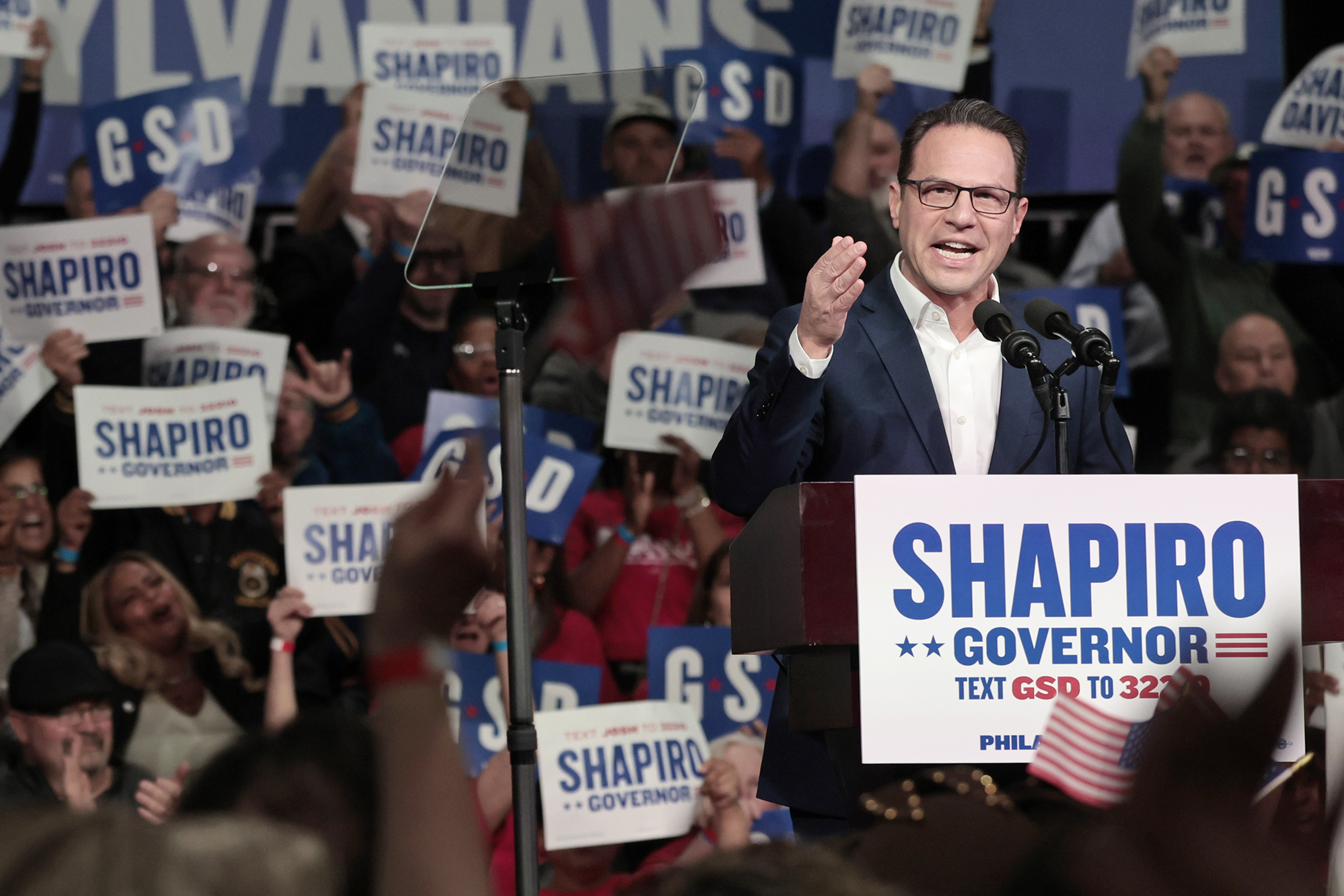
    Governor Josh Shapiro announced his re-election campaign weeks before appearing on Colbert’s show last month.

    Despite the FCC’s threat to crack down on networks, Pennsylvania Gov. Josh Shapiro was able to appear on The Late Show last month, using his time to bash Trump’ immigration crackdown in Minneapolis as “pure evil” and Vice President JD Vance as a “sycophant” and a “suck-up.”

    So why didn’t CBS ban Colbert from airing Shapiro’s interview?

    The FCC’s equal-time rule applies strictly to a “legally qualified candidate for any public office.” Despite announcing his reelection campaign in Philadelphia on Jan. 8, Shapiro did not become an official candidate until Tuesday, when the state’s official filing period opened. It runs through March 10.

    Shapiro was able to appear not only on Colbert’s show, but also on ABC’s daytime talk show The View, which has also found itself a target of the FCC under Carr.

    “I think it’s worthwhile to have the FCC look into whether The View, and some of these other programs that you have, still qualify as bona fide news programs and therefore are exempt from the equal opportunity regime that Congress has put in place,” Carr said in a September interview with conservative CNN commentator Scott Jennings.

    It’s also why U.S. Sen. Jon Ossoff’s forthcoming interview with Colbert is still slated to air on the network Wednesday. While Ossoff (D., Ga.) has announced he is running for reelection in Georgia, the window for candidates to officially file paperwork for their primaries does not open until March 2.

    Neither CBS nor Ossoff’s campaign has commented on the interview.

    The equal-time rule also applies to radio broadcasts, where conservative talk shows are among the most dominant formats and regularly feature Republican candidates for office during election years. Then-candidate Trump did multiple interviews on 1210 WPHT in Philadelphia during the 2024 election.

    Carr has said he does not plan to enforce a stricter equal-time rule on radio stations the way he has for television networks, claiming in a news conference last month there wasn’t a similar bona fide news exemption “being misconstrued on the radio side.”

  • ‘He loved Philadelphia, and Philadelphia loved him’: Jesse Jackson in Philadelphia through the years

    ‘He loved Philadelphia, and Philadelphia loved him’: Jesse Jackson in Philadelphia through the years

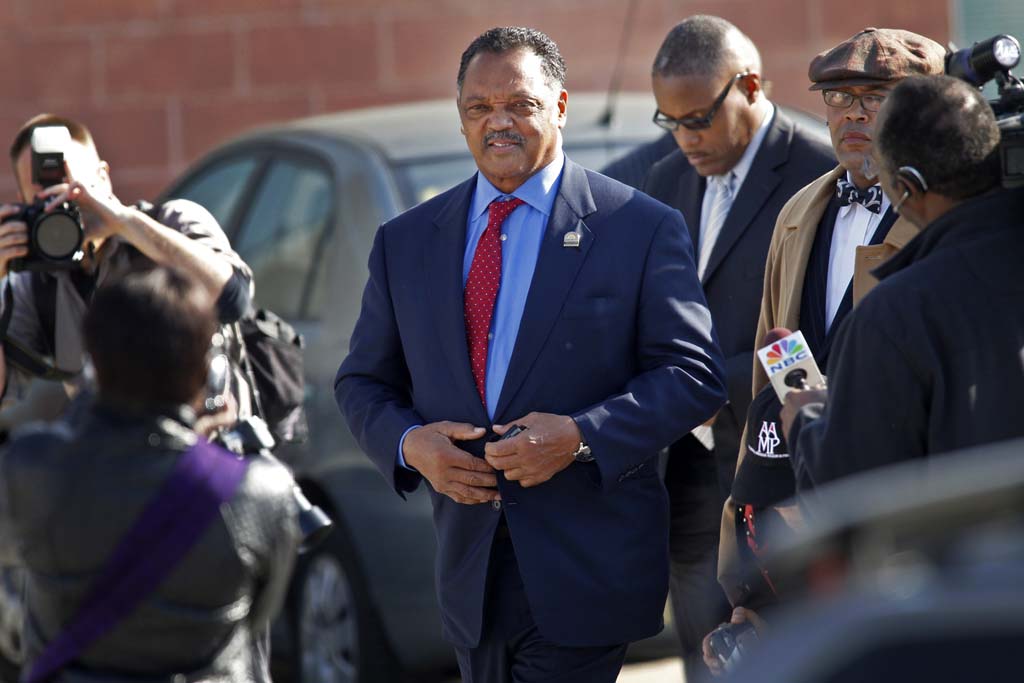
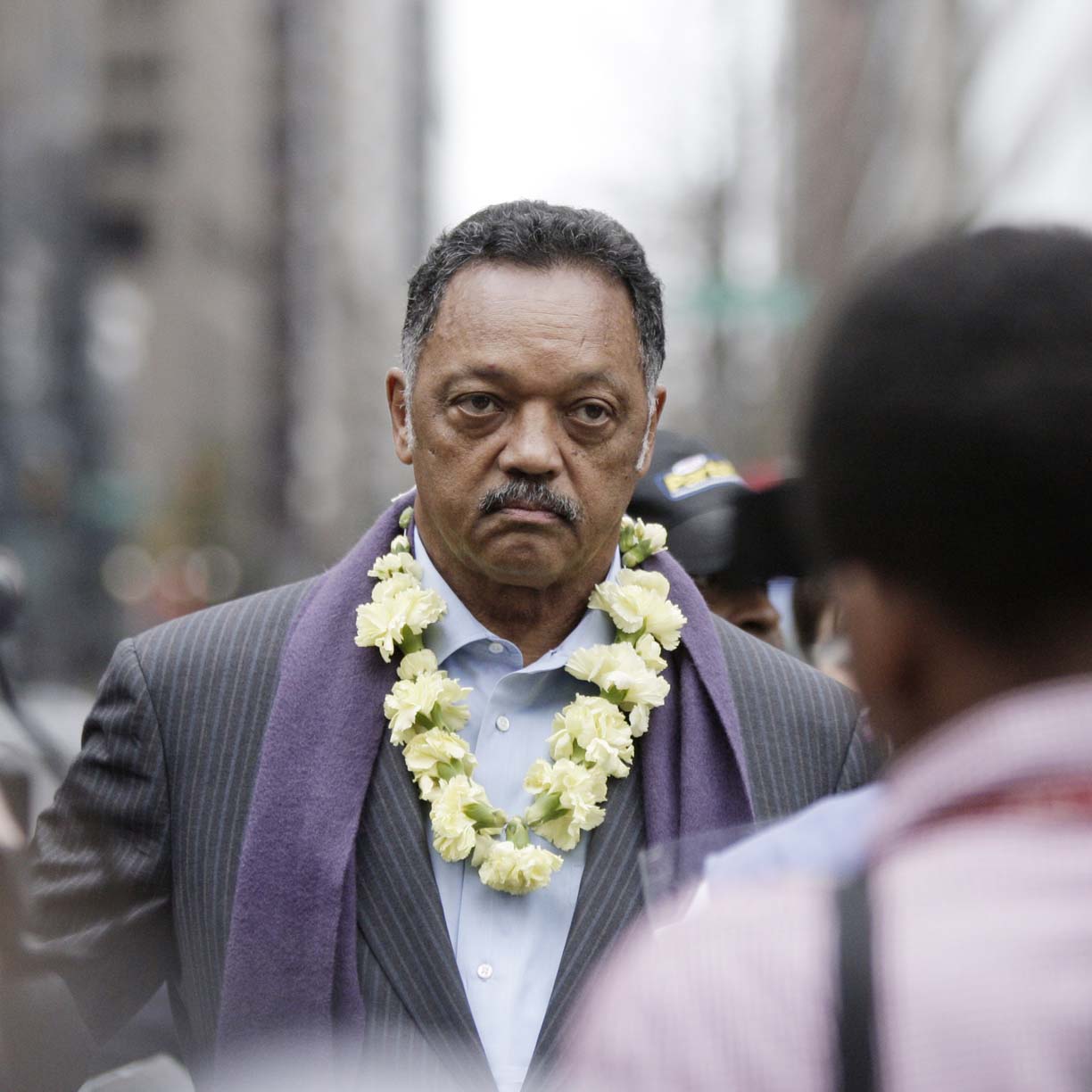
    The Rev. Jesse L. Jackson, a civil rights icon and a regular presence in Philadelphia who energized Black voters both locally and nationally for more than five decades, died Tuesday at his home in Chicago following a prolonged battle with a rare neurological disorder. He was 84.

    “Jesse Jackson will be remembered in Philadelphia as a civil rights hero, and a leader in terms of independent Black politics nationwide,” said former Councilmember W. Wilson Goode Jr., the son of Philly’s first Black mayor, W. Wilson Goode Sr. “He loved Philadelphia, and Philadelphia loved him.”

    A native of Greenville, S.C., Rev. Jackson initially rose to prominence in the mid-1960s, when he joined the 1965 voting rights march that the Rev. Dr. Martin Luther King Jr. led from Selma to Montgomery, Ala. In the years following King’s assassination in 1968, Rev. Jackson largely came to be considered his successor.

    Rev. Jackson would go on to become a prominent Black political and cultural leader in his own right, with his lengthy time in the public eye including presidential runs in 1984 and 1988. His visits to Philadelphia date back to the 1970s, and run the gamut from time in town supporting his own presidential campaigns — though neither of which were successful in the ‘80s — to appearances at the Democratic National Convention in 2016.

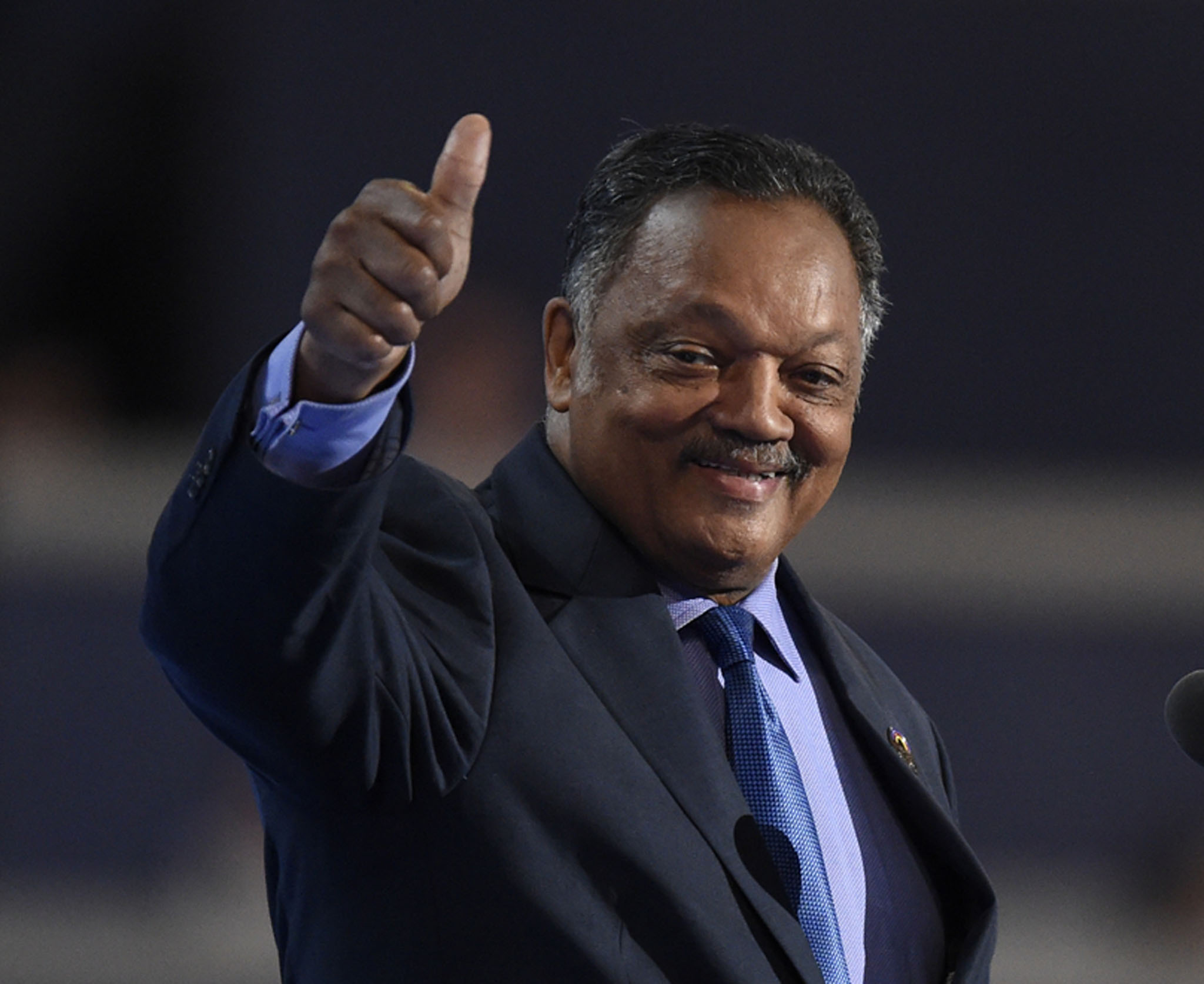
    The Rev. Jesse Jackson, founder and president of the Rainbow/PUSH Coalition, acknowledges the cheers of delegates as he walks to the podium to deliver remarks on the third night of the Democratic National Convention in Philadelphia on July 27, 2016.
    Hillary Clinton supporters and the Rev. Jesse Jackson (right) on the fourth day of the Democratic National Convention at the Wells Fargo Center on July 28, 2016.
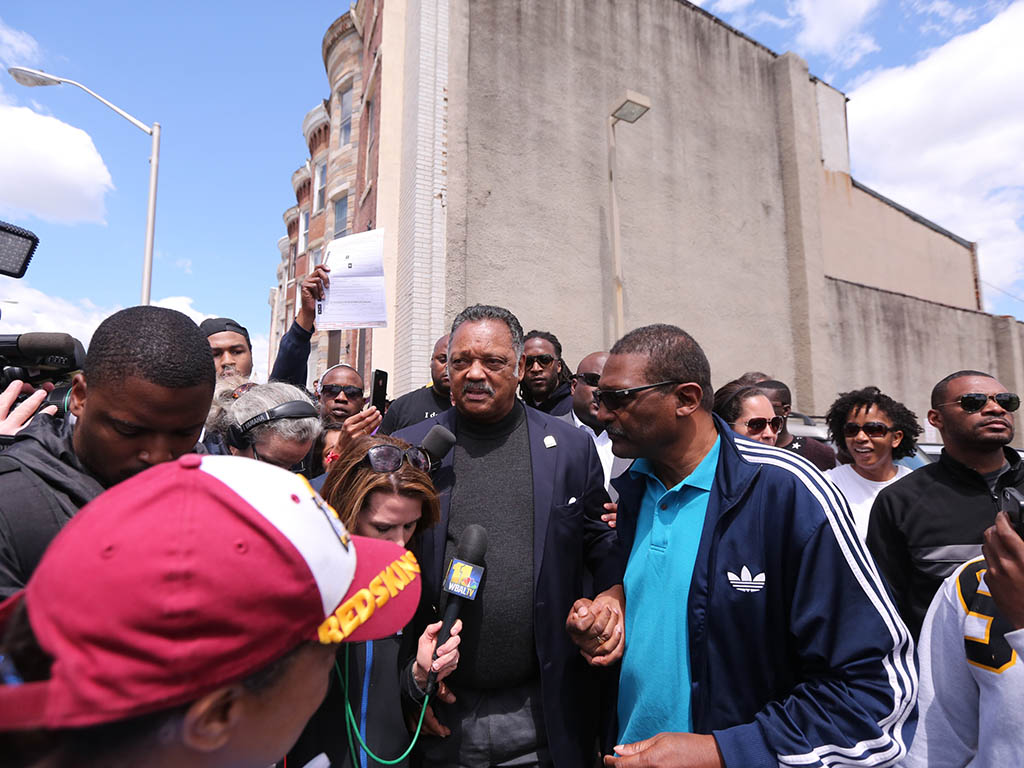
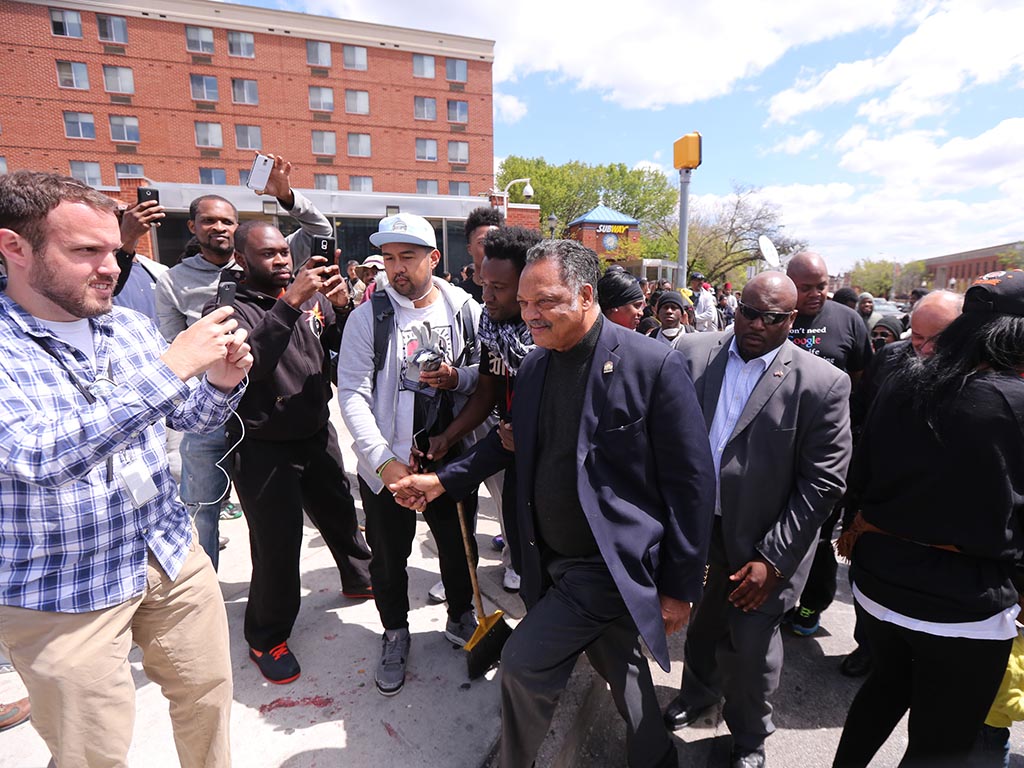
    The Rev. Jesse Jackson visits Baltimore’s turbulent intersection of West North Avenue and Pennsylvania Avenue on April 28, 2015.

    Across that time, Rev. Jackson served as a sort of rallying figure for Black Philadelphians at large, who largely supported his candidacy during his presidential runs, despite him failing to secure the Democratic nomination statewide. Still, his impact for Black voters both in Philadelphia and nationally remains everlasting.

    “That was the Rosetta stone to everything Jackson was trying to achieve,” said former Daily News scribe Gene Seymour, nephew of legendary People Paper columnist Chuck Stone. “We aren’t to be ignored or dismissed or cast aside — we matter.”

    In that sense, Goode Jr. said, Rev. Jackson will remain a political icon who inspired the nationalization of Black political empowerment.

    “Jesse Jackson is also a cultural icon in terms of telling people to be proud of being Black, and telling themselves, ‘I am somebody,’” Goode Jr. said, referencing Rev. Jackson’s famed refrain. “That is something that was indelible in the soul of Black people across the nation and world, and in Philadelphia here as well.”

    The Rev. Jesse Jackson visits the turbulent intersection of West North Avenue and Pennsylvania Avenue in Baltimore on April 28, 2015.
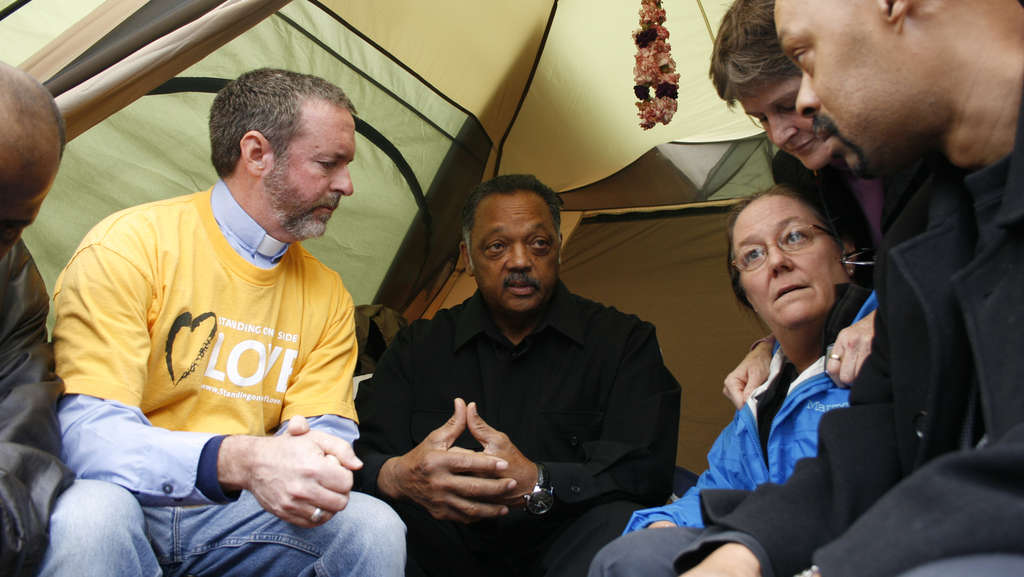
    The Rev. Jesse Jackson visited Occupy Philadelphia protesters on Nov. 13, 2011. He told them to “never surrender.”
    The Rev Jesse Jackson at Joe Frazier’s funeral at Enon Tabernacle Baptist Church on Cheltenham Avenue in Philadelphia on Nov. 14, 2011.
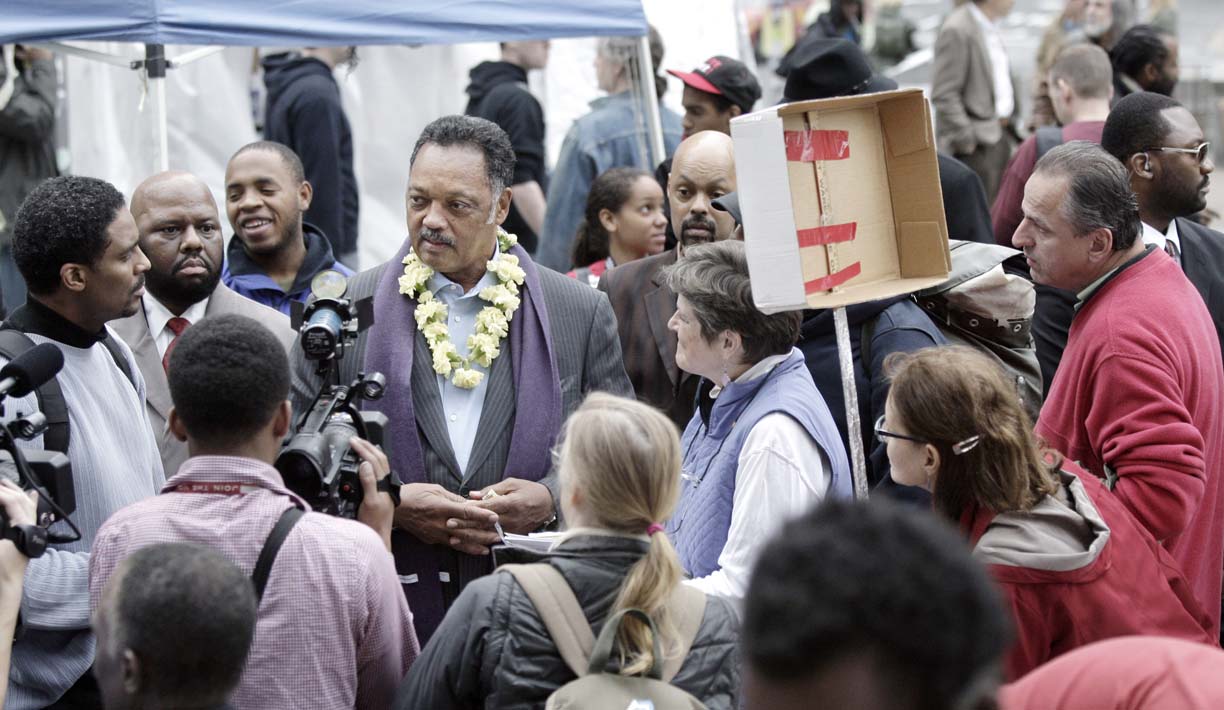
    The Rev. Jesse Jackson (center) visits the Interfaith tent, donated by Quakers, to talk to the Rev. Peter Friedrich (left) and (from right) Phillip Hall, Hollister Knowlton, and Joyce Moore in 2011.

    Though Philadelphia’s Black community generally was supportive of and receptive to Rev. Jackson’s messaging historically, Seymour said, he maintained something of a complicated relationship with the city’s prominent politicians. Wilson Goode Sr., for example, officially supported Walter Mondale and Michael Dukakis for president in the 1980s. At least in 1988, Seymour said, Rev. Jackson likely had “the people’s hearts,” despite lacking the official nomination.

    Wilson Goode Sr. was not immediately available for comment.

    “His presidential campaigns in 1984 and 1988 reshaped American politics,” said the Rev. Gregory Edwards, of the Philly-based POWER Interfaith, in a statement. “Those campaigns widened the political imagination of this country and helped cultivate a generation of Black elected leaders.”

    Rev. Jackson’s relationship with Goode Sr. was somewhat complicated following the 1985 MOVE bombing, which brought the civil rights leader to tour the ruins of the 6200 block of Osage Avenue in its aftermath. Rev. Jackson urged a congressional investigation into the incident, which he called “excessive force,” but avoided criticizing Goode directly in subsequent meetings. Goode, meanwhile, said that the city would cooperate with any groups investigating the incident, The Inquirer reported at the time.

    “He was not happy with what happened in ‘85 with MOVE,” Seymour said.

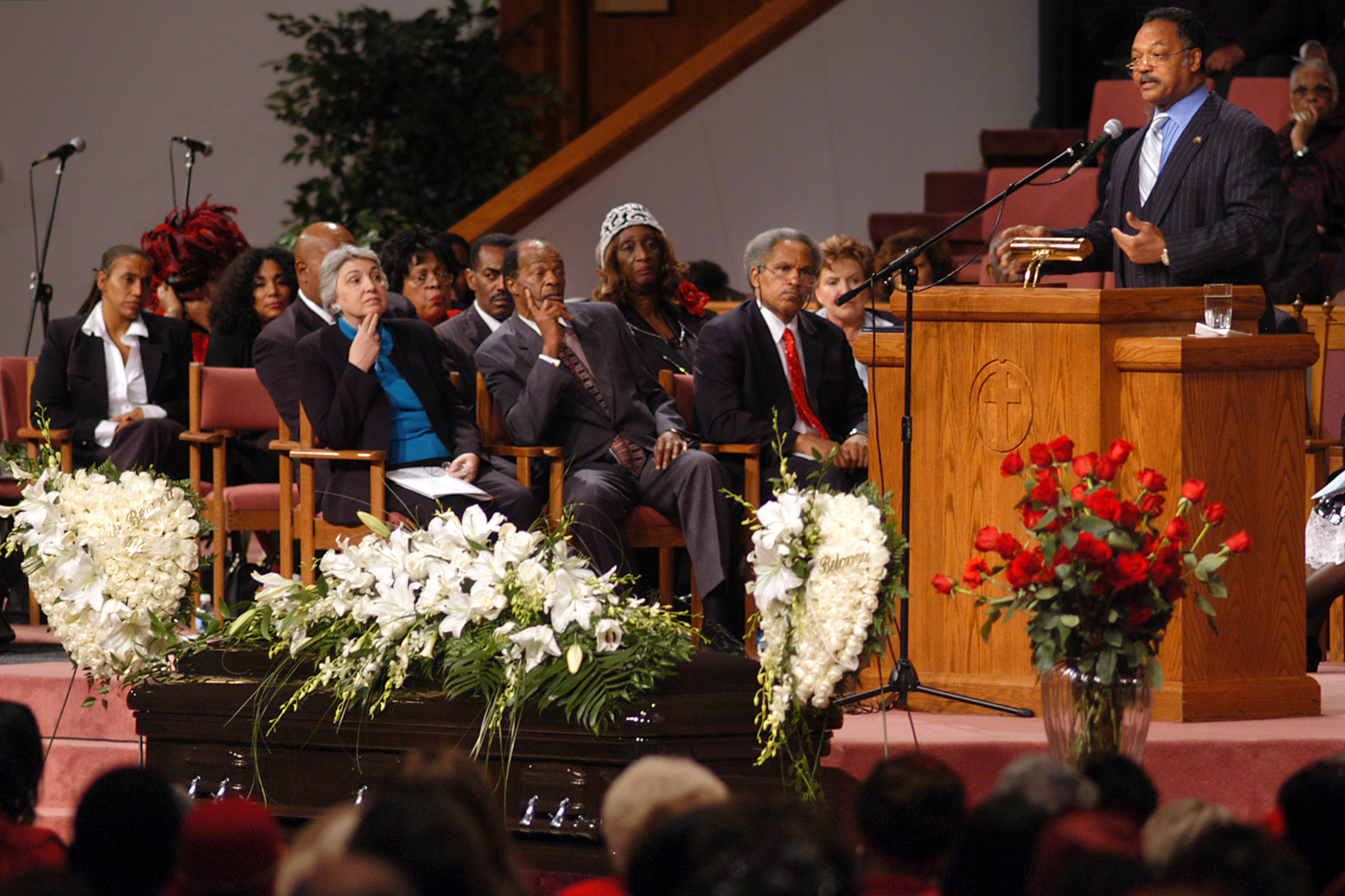
    The Rev. Jesse L. Jackson speaks during during funeral services for civil rights activist C. Delores Tucker at Deliverance Evangelistic Church on Oct. 21, 2005. Seated in front row behind him, left to right are Eleanor Smeal, president of the Feminist Majority Foundation; Marion Barry, former mayor of Washington, and Philadelphia Mayor John Street.
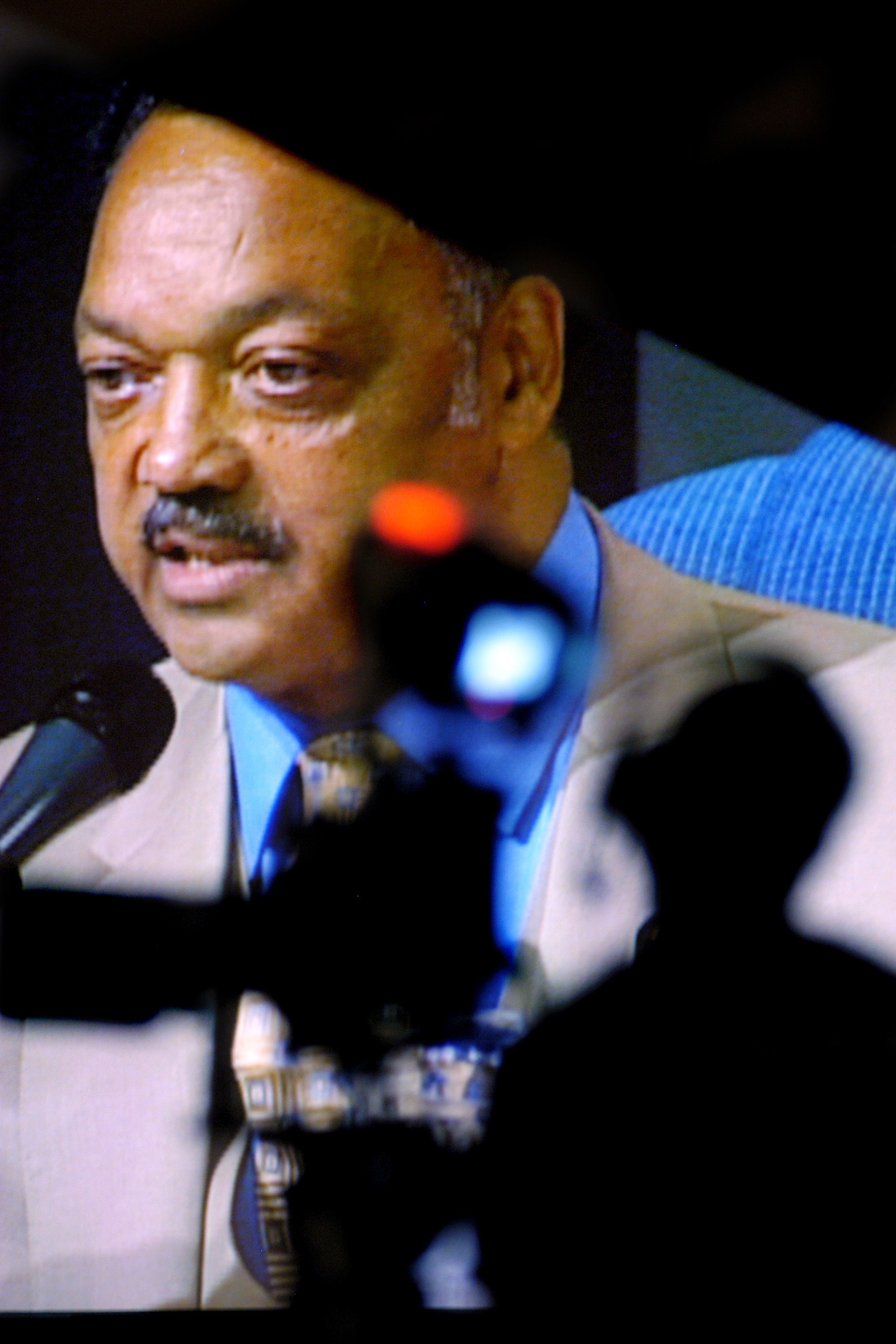
    Rev. Jackson is projected live on a large screen monitor (camera operator in foreground) as he participates in a panel discussion laying out a legal and political strategy for fulfilling Brown v. the Board of Education, at the annual NAACP meeting on July. 14, 2004 at the Convention Center.
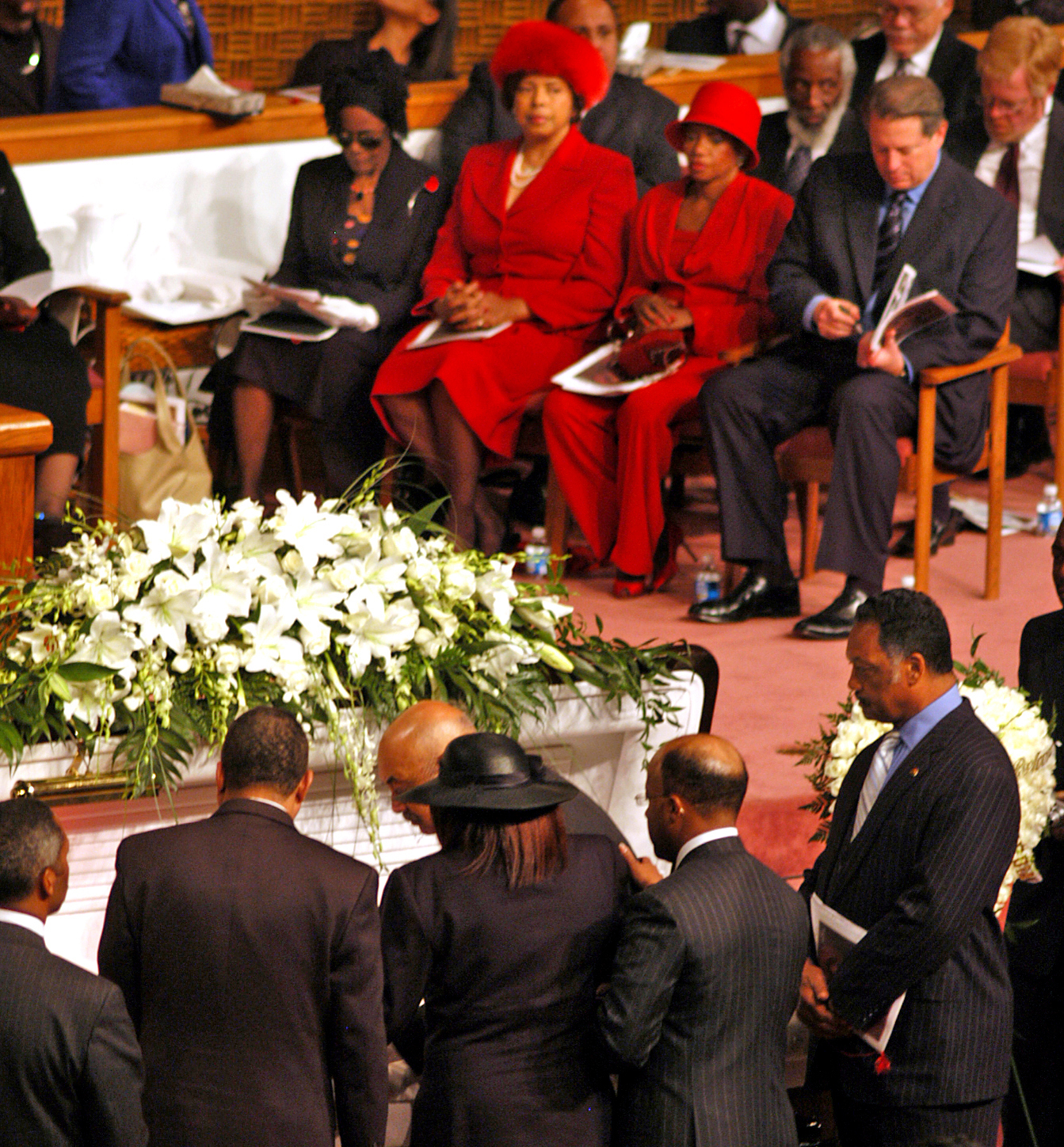
    Her family stands by as husband (partially hidden) William T. Tucker covers the body of civil rights activist C. Delores Tucker in her casket at the beginning of funeral service at Deliverance Evangelistic Church on Oct. 21, 2005. At right is the Rev. Jesse L. Jackson, founder and president of the Rainbow Coalition/PUSH, who later delivered the eulogy. Seated in rear at right is former Vice President Al Gore.
    AIDS quilt panels flank the podium as the Rev. Jesse Jackson speaks at an African American AIDS conference at the Wyndham Franklin Plaza Hotel on Feb. 28, 2005.

    Still, Rev. Jackson often served as a defender of Philadelphia’s famed Black figures. In 2011, for example, Rev. Jackson spoke at the funeral of legendary world heavyweight boxing champion Joe Frazier, who had long competed with the fictional Rocky Balboa for recognition. As Jackson put it at the time, Frazier was the “real champion,” not the “Italian Stallion.”

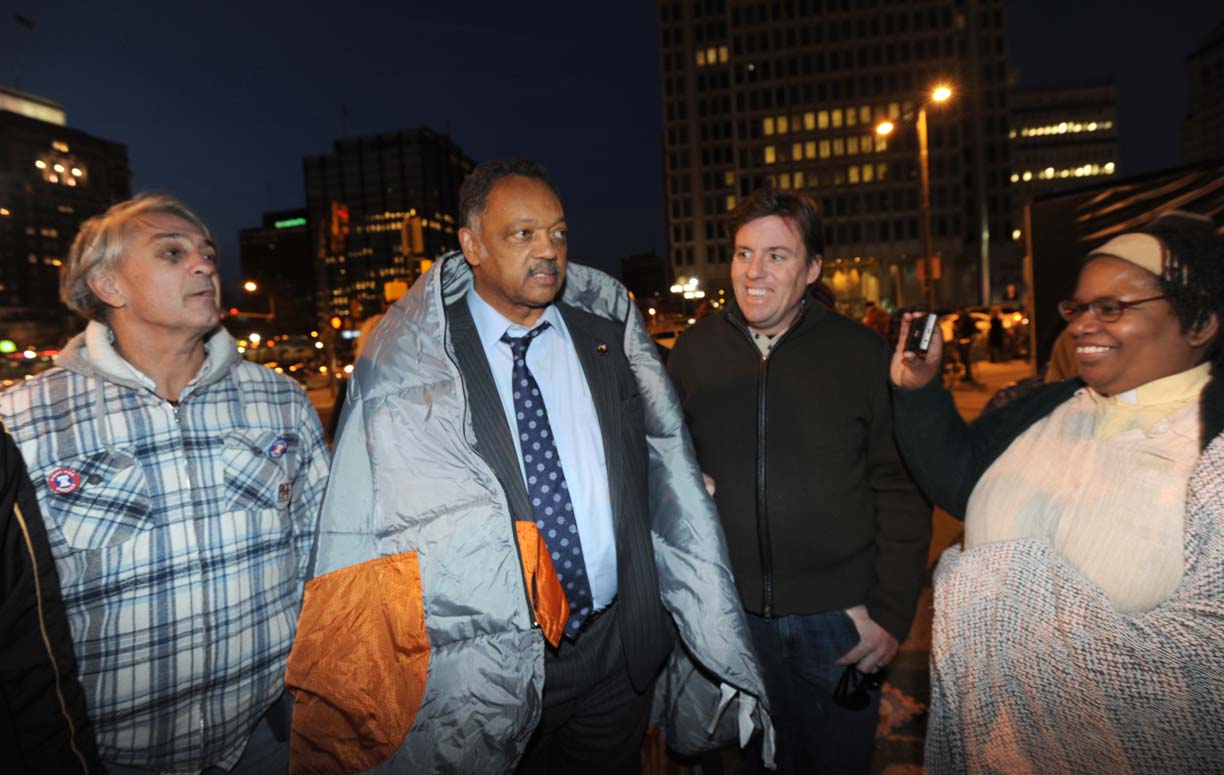
    The Rev. Jesse Jackson, who has a sleeping bag draped around his shoulders, is talking and praying with Occupy Philadelphia demonstrators: Brad Wilson (from left); the Rev. Bill Golderer, pastor of Broad Street Ministry; and Donna Jones, pastor of the Cookman Baptist Initiative.

    “If you were of importance as a Black person in America during the time [Jackson] was in the public eye,” Seymour said, “he was there to speak on your behalf.”

    Goode Jr.’s most prominent memory of Rev. Jackson, meanwhile, dates back to the mid-1980s, when he was a student at the University of Pennsylvania. At the time, he said, Rev. Jackson attended a National Black Student Union conference following an invitation from its organizers, Goode Jr. included. It was, Goode Jr. said, an inspiration.

    “It meant a lot to us,” Goode Jr. said. “Not just Black leaders at Penn, but across the nation, who were gathered there.”

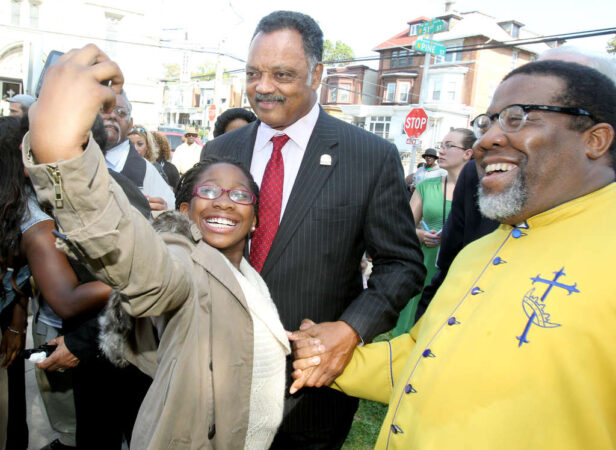
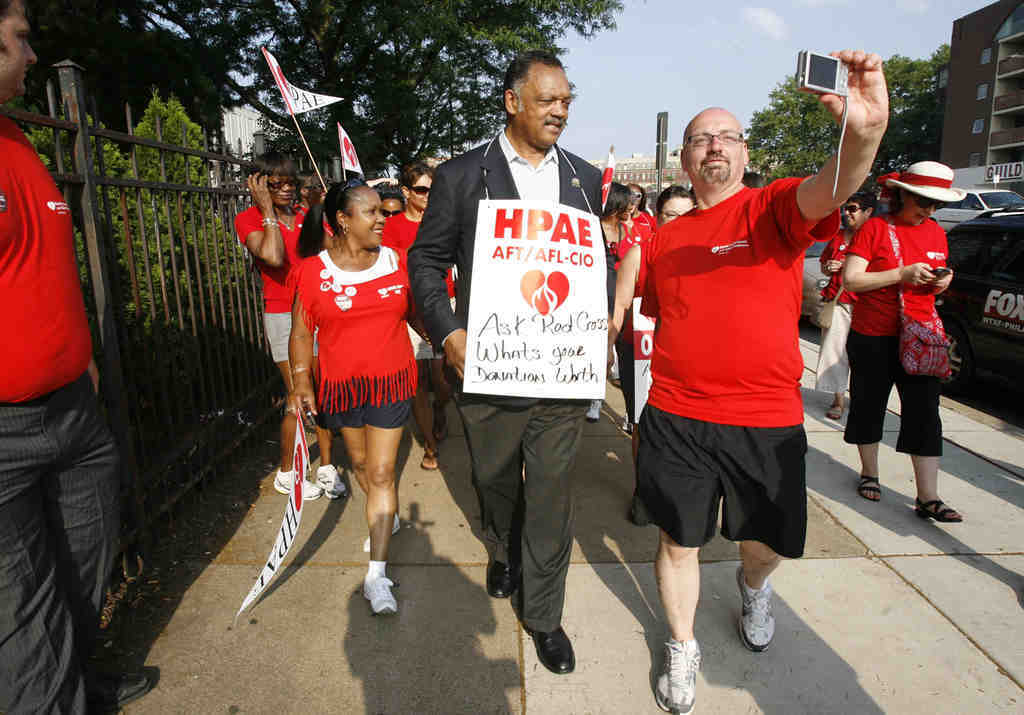
    Striking Red Cross worker Lenny Lerro takes a picture of himself with the Rev. Jesse Jackson as they walk the picket line in 2011 on Spring Garden Street in Philadelphia.
    Rev. Jesse Jackson visits with folks at Occupy Philadelphia, just outside City Hall on Nov. 20, 2011.
    The Rev. Jesse Jackson visits with folks at Occupy Philadelphia, just outside City Hall on Nov. 20, 2011.
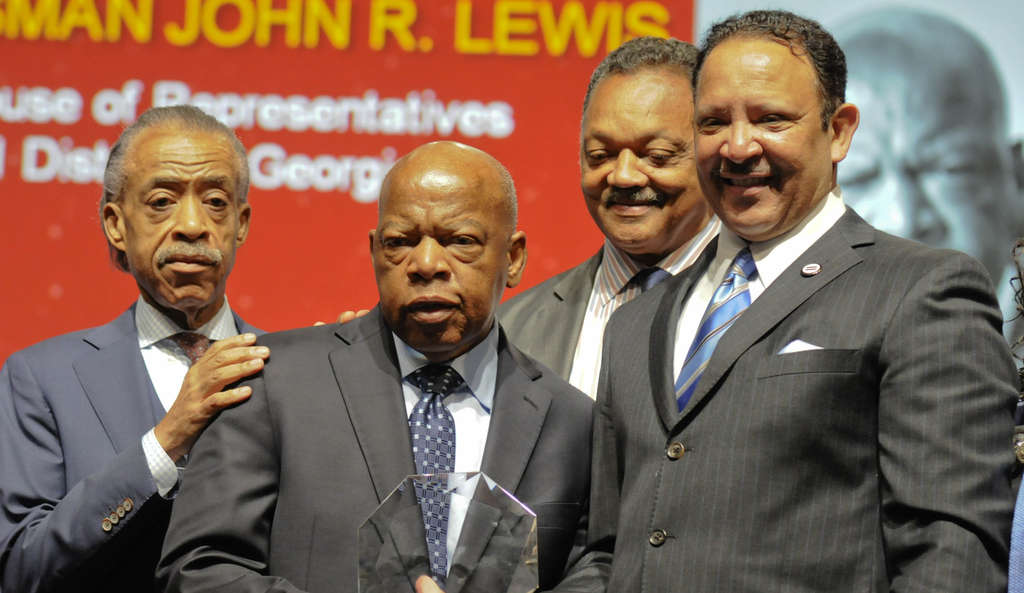
    U.S. Rep. John Lewis (second from left) is presented with the Civil Rights Champion Award in 2013 by (from left) the Rev. Al Sharpton, the Rev. Jesse Jackson, and Marc Morial, president of the Urban League.
  • Philly bars open past 2 a.m.? A new push for late-night bars amid FIFA World Cup

    Philly bars open past 2 a.m.? A new push for late-night bars amid FIFA World Cup

    A new push to let Philadelphia bars stay open past 2 a.m. is being mounted by local trade groups and bars as the largest global sporting event arrives in the city in June.

    The Pennsylvania Restaurant and Lodging Association, which represents restaurants, bars, and other hospitality businesses, wants state lawmakers to create a temporary permit that allows Philadelphia bars to serve alcohol until 4 a.m. during the 2026 FIFA World Cup, which will come to Philadelphia and 15 other cities in North America from June 11 to July 19.

    “When we’re trying to attract tourists from all over the world to a destination in the United States to enjoy the World Cup, we want to make sure that Philadelphia is offering at least the same amenities as the other host cities,” said Ben Fileccia, senior vice president for strategy for the restaurant and lodging association.

    Many of the most popular U.S. host cities allow bars to serve alcohol past 2 a.m., including New York, Miami, and Kansas City. Other popular international destinations, such as Mexico City and Toronto, also allow it.

    Philadelphia officials did not immediately return a request for comment.

    Any changes to bar closing times would have to come from new legislation, as the Pennsylvania Liquor Control Board does not have the authority to change the liquor code to allow bars to sell alcohol after 2 a.m., said PLCB spokesperson Shawn Kelly.

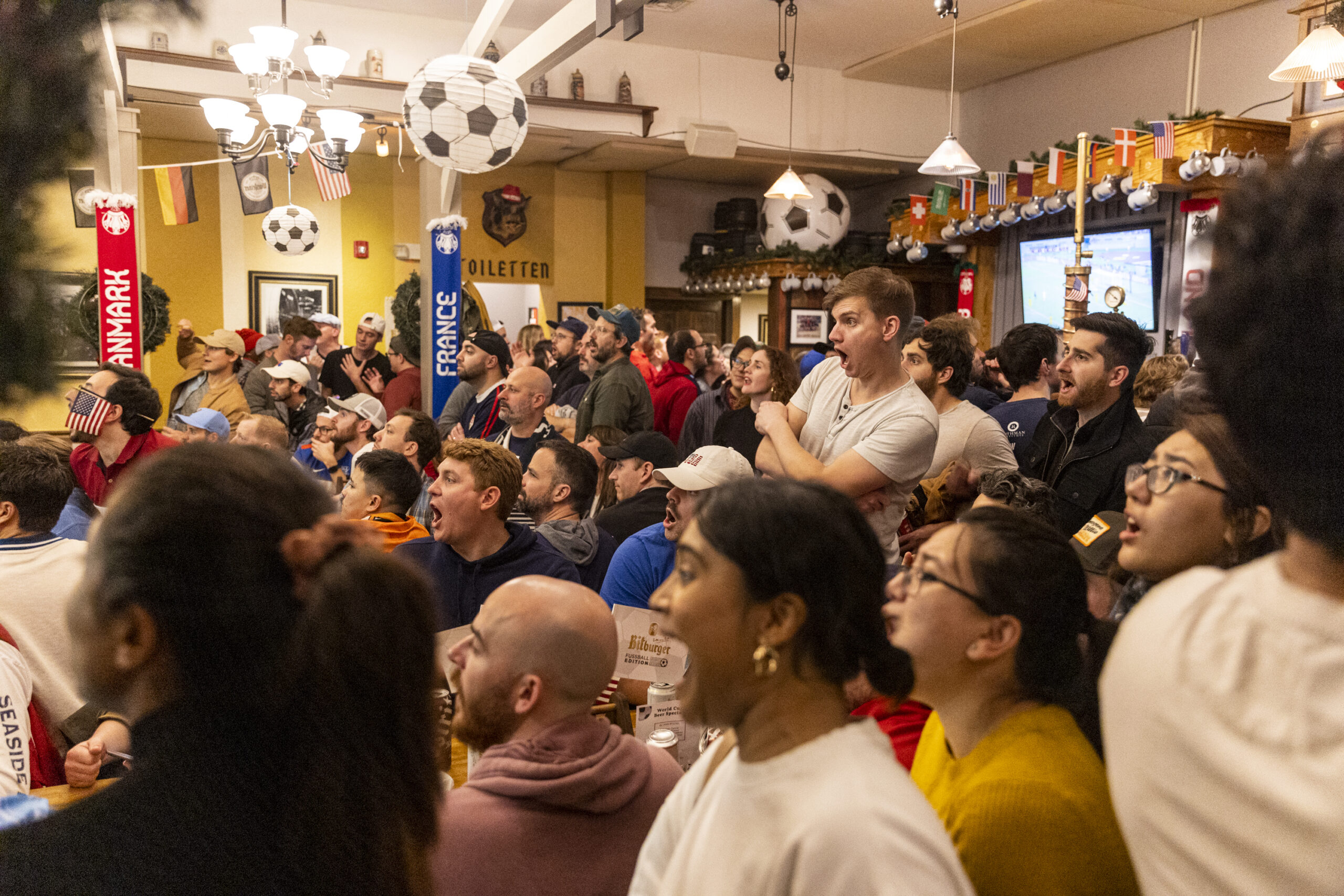
    The crowd cheers and celebrates USA’s first goal against the Netherlands in the World Cup at Brauhaus Schmitz bar in Philadelphia, Pa., on Saturday Dec. 3, 2022.

    Philly’s chance to prove 4 a.m. closing times work

    Fileccia said this permit would allow bars to take advantage of the estimated 500,000 soccer fans expected to stay in Philadelphia for the six matches being played at Lincoln Financial Field.

    Zek Leeper, co-owner of Founding Fathers sports bar in Southwest Center City, does not see this just as a way to earn more revenue with a surge of tourists coming to Philadelphia.

    “This is our chance to prove that 4 a.m. nightlife can work in Philadelphia. Setting up a temporary license also allows the city and state to pull it back, depending on how it goes,” Leeper said. “With the amount of tourists this year, when is this opportunity going to come up again to justify giving this a try?”

    It doesn’t hurt that an estimated 1.5 million people, including the half million soccer fans, are expected to stay overnight in Philadelphia this summer as the city also hosts America’s 250th celebration and the MLB All-Star Game.

    Leeper and other local bar owners feel confident that the crowds will show up for late-night matches. “We host soccer games from leagues around the world, and those fans are committed. They have consistently shown up whenever the game is on,” Leeper said.

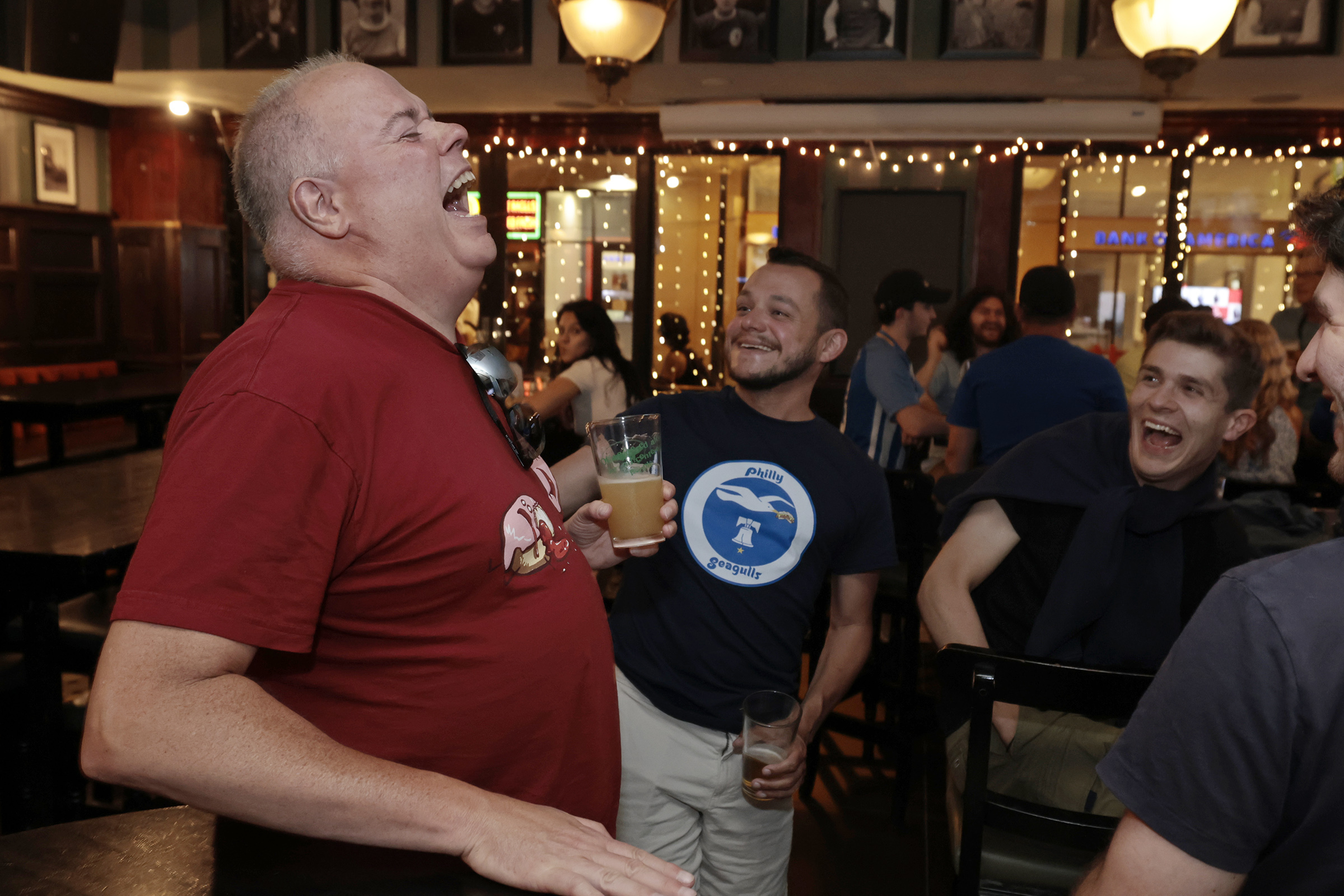
    Steve Maehl (left) of Oconomowoc, Wisconsin laughs as Philly Seagulls President John Fitzpatrick and Dan Peck of Brighton, England (right) look on during the supporter meetup, to kickoff the summer series weekend, at Fadó Irish Pub in Phila., Pa. on Thursday, July 20, 2023.

    Philadelphia soccer fans are already known to work deals with local bars to open as early as 7 a.m. Leeper said upward of 50 people will pack into the bar at sunrise to watch games. While there are no games being played in Philadelphia past 9 p.m. during the World Cup, at least eight of the group stage matches in June will be broadcast on the East Coast starting at midnight or 11 p.m.

    With a 90-minute match, plus halftime and added time, there could be a handful of cases where bartenders have to face down a packed crowd of fans and ask them to leave before the final whistle, Leeper said.

    There’s also the element of international tourists coming from cities that do not have a 2 a.m. cutoff, such as London and Tokyo, leading some visitors to find ways to late-night party outside of licensed establishments, Fileccia said.

    Philly bars were allowed to close later during the 2016 DNC

    Lawmakers allowed bars to stay open until 4 a.m. during the 2016 Democratic National Convention in Philadelphia. Bars and restaurants with contracts or association with the convention could apply for $5,000 special-event permits to serve alcohol past 2 a.m.

    Fileccia said the details for a similar permit in 2026 are not available yet, as the effort is just underway. But he and others at PRLA want to bring the Philadelphia Police Department, the Philadelphia Department of Commerce, and other stakeholders to the table to find out the best resolution, he said.
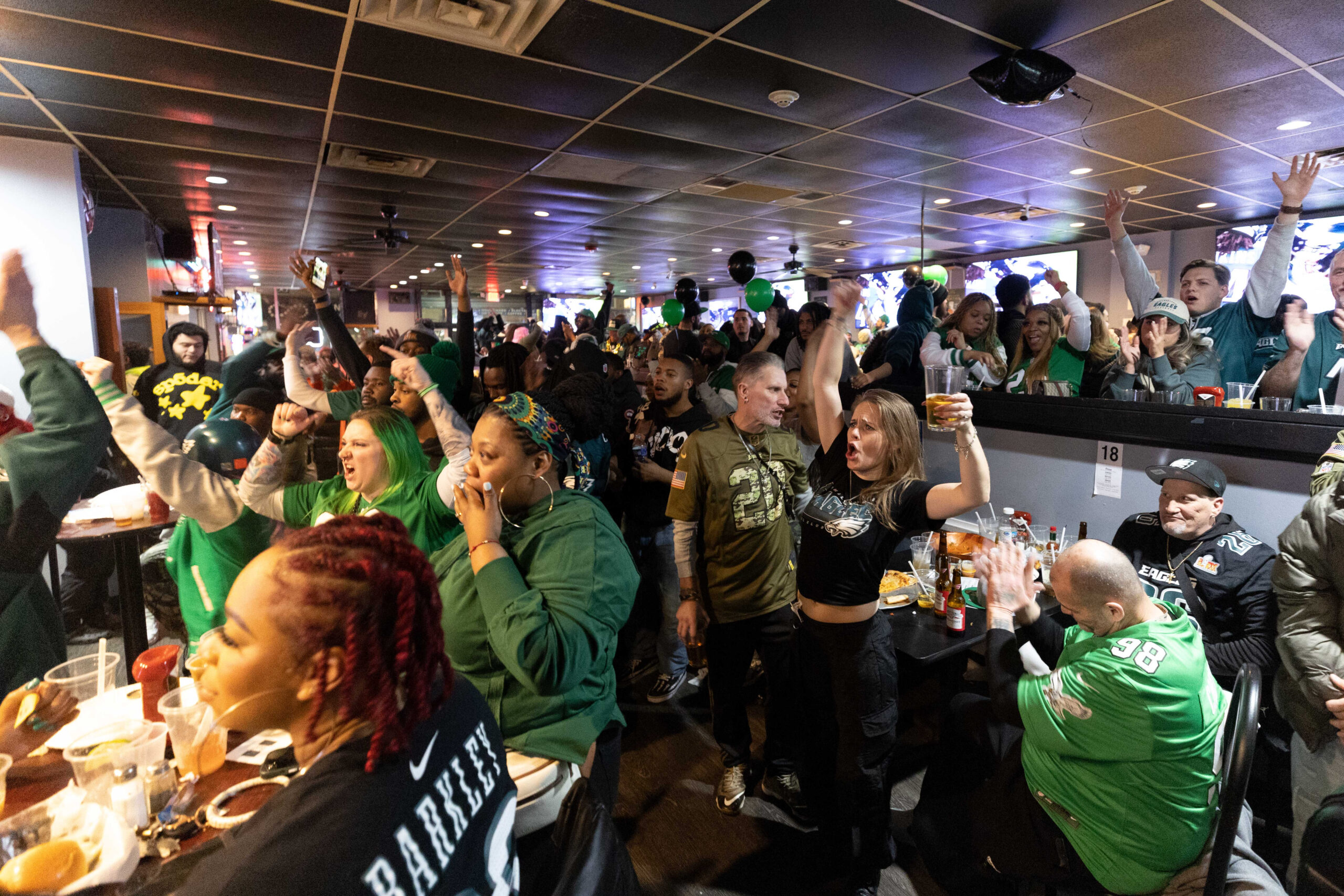
    Fans react to the Eagles play the Chiefs in the NFL Super Bowl LIX, in a bar near Frankford and Cottman Aves., Saturday, Feb. 8, 2025, in Philadelphia.

    Will there be enough interest in late-night partying?

    With millions of tourists in Philadelphia this year for the international and national events, there will be increased foot traffic throughout the city, but will there be a late-night crowd to meet the moment?

    That is the question Chuck Moran, executive director of the Pennsylvania Licensed Beverages and Taverns Association, is asking despite his support for temporarily keeping bars open later.

    “The one thing that I’ve been hearing across the state is that ever since COVID, the late-night crowds have left,” Moran said. “There could also be issues with finding staff who want to work till 4 a.m. in a bar.”

    Moran said he would rally behind the cause but would look to other measures to maximize revenue for local restaurants and bars, such as allowing liquor-license holders to operate a “satellite location,” letting them serve liquor at a second establishment under their original license. That would open the door to partnerships with restaurants without liquor licenses, Moran said. State Rep. Pat Gallagher, a Philadelphia Democrat, introduced a bill to do just that last June.

    No legislation on keeping Philly bars open later has been introduced yet, but Fileccia hopes to get the ball rolling with lawmakers in the coming months before the first match in Philly on June 14. Even with the window closing on getting new rules passed, Kelly said the PLCB turned around special-event permits in less than two weeks before the start of the 2016 DNC.

  • DHS spokeswoman who became a face of Trump deportation campaign steps down

    DHS spokeswoman who became a face of Trump deportation campaign steps down

    The Department of Homeland Security’s top spokesperson is leaving the Trump administration, officials said Tuesday, a departure that comes amid falling public approval ratings for the president’s mass deportation agenda.

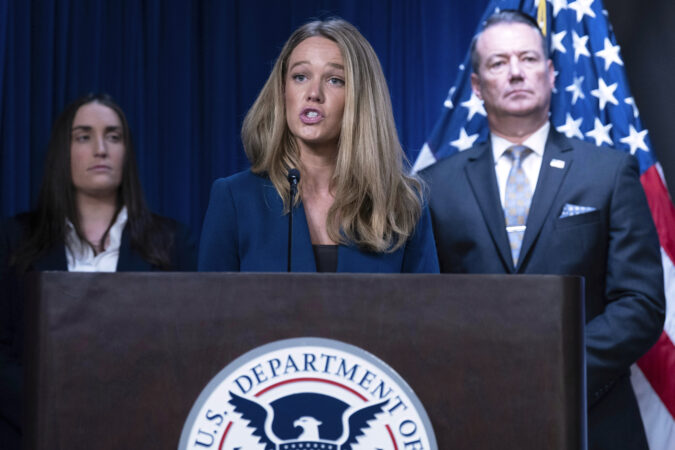
    Tricia McLaughlin, whose regular Fox News appearances made her a face of the administration’s hard-line immigration agenda, is leaving just over a year into Homeland Security Secretary Kristi L. Noem’s tenure leading the agency. The move comes after DHS and the White House have scrambled to tamp down public outrage over the killings of two U.S. citizens by federal immigration agents in Minneapolis last month.

    McLaughlin informed colleagues Tuesday of her departure. She had begun planning to leave in December but extended her stay to help the administration deal with the fallout of the fatal shootings of Renée Good and Alex Pretti in Minneapolis, according to people briefed on her exit. Politico first reported on McLaughlin’s departure.

    Confirming McLaughlin’s decision in a post on X on Tuesday, Noem cited her “exceptional dedication, tenacity, and professionalism” and said she “has played an instrumental role in advancing our mission to secure the homeland and keep Americans safe.”

    In a statement, McLaughlin thanked Noem and President Donald Trump, saying she is “immensely proud of the team we built and the historic accomplishments achieved by this Administration and the Department of Homeland Security.”

    McLaughlin said she will be replaced by her deputy, Lauren Bis, and DHS’s public affairs team is adding Katie Zacharia, a Fox News contributor.

    Noem’s chief spokeswoman built a reputation as a fierce defender of the administration’s handling of immigration and of the secretary’s leadership, frequently sparring with reporters on social media and appearing on cable news programs. But her forceful pronouncements have drawn criticism from Democrats and immigrant rights groups, who point to incidents in which statements she made were later contradicted in court or in video footage recorded by witnesses.

    McLaughlin joined other administration officials in quickly declaring that Good had committed “an act of domestic terrorism” before she was shot to death by an immigration officer. McLaughlin also said a Venezuelan immigrant had “mercilessly beat” a federal law enforcement officer in Minneapolis. The charges against that man were dropped after the U.S. attorney in Minneapolis said that “newly discovered evidence” was “materially inconsistent with the allegations” the officers had made.

    In those and other incidents, McLaughlin quickly made statements supporting actions by officers before investigations had transpired — something that Democrats and some Republicans have also criticized Noem for doing.

    Christopher Parente, an attorney for Marimar Martinez, a U.S. citizen shot multiple times by a Border Patrol agent in Chicago in the fall, asked a federal judge for permission to release body-camera footage and other evidence that he said was necessary to demonstrate that McLaughlin and other senior administration officials had falsely accused Martinez of being a domestic terrorist and of doxing federal agents.

    Martinez was indicted on federal charges of assault and attempted murder of a federal employee with a deadly or dangerous weapon after the shooting. But a federal judge dismissed the case in November after prosecutors in the Northern District of Illinois requested that the charges be dropped. Prosecutors didn’t state a reason for the dismissal, although attorneys for the defendant criticized the weakness of the government’s case from the start.

    Under McLaughlin, critics say, the DHS public affairs office has produced a skewed view of immigration enforcement. Officials have refused to publish detailed reports of how many immigrants have been arrested and deported. The agency’s messaging has mainly publicized the arrests of immigrants who commit crimes, even though public records show that a majority of migrants who have been detained do not have criminal records.

    “We are pleased with this resignation,” Parente told the Washington Post when asked about McLaughlin’s departure. “Unless Pinocchio is applying for the position, we believe her replacement will be a great improvement and hopefully work to start repairing the credibility of DHS.”

    Critics said that DHS’s public affairs office has refused to publish detailed reports of how many immigrants have been arrested and deported. The agency’s messaging has mainly publicized the arrests of immigrants who commit crimes, even though public records show that a majority of migrants who have been detained do not have criminal records.

    McLaughlin also has repeatedly attacked federal judges who have ruled against the administration, calling them “unhinged,” “deranged” and “disgusting and immoral.” In some cases, she has accused judges of endangering immigration agents or the public through their rulings.

    David Lapan, a DHS spokesman in Trump’s first administration, said he hopes McLaughlin’s replacement “stays away from the belligerent, attacking approach that she took.”

    “The mis- and disinformation that comes out hurts the trust and credibility of the organization, and they can’t afford to have that continue,” Lapan said.

    But McLaughlin’s combative approach won public praise from Trump last month.

    “Great job by wonderful TRICIA MCLAUGHLIN, DHS Assistant Secretary, on the Sean Hannity Show,” Trump posted on social media. “Many Illegals from around our Nation charged with serious crimes this week. Tricia really knows her ‘STUFF!’”

    Democrats have criticized DHS’s posts on social media for disparaging immigrants and posting paintings that depict scenes of a predominantly White America. One post featured an ICE recruitment promotion that stated, “We’ll Have Our Home Again,” a phrase that has been associated with a song embraced by white nationalists.

    McLaughlin defended that promotion, telling the Post in a statement last month: “The fact that people would like to cherry pick something of white nationalism with the same title to make a connection to DHS law enforcement is disgusting.”

    McLaughlin was still posting on X on Tuesday — disputing an NBC News report of growing tensions between DHS leadership and Coast Guard officials over Noem’s use of the military branch’s resources, which she oversees. The Post has also reported on the strained relationship between DHS and the Coast Guard, including Noem’s decision to spend $200 million on new Coast Guard jets for use by senior DHS officials and her move into military housing typically reserved for the Coast Guard commandant.

    Before her tenure at DHS, McLaughlin was a senior adviser and communications director for Vivek Ramaswamy’s 2024 presidential campaign. She joins other senior DHS officials who have left the department in recent weeks, including Madison Sheahan, who last month stepped down from her role as Immigration and Customs Enforcement’s deputy director to mount a campaign against Democratic Rep. Marcy Kaptur in Ohio.

  • City Council members grill school district officials on plan to close 20 schools — and superintendent says he could have closed 40

    City Council members grill school district officials on plan to close 20 schools — and superintendent says he could have closed 40

    Philadelphia City Council may not have a vote on Superintendent Tony B. Watlington Sr.’s sweeping facilities plan, but it indicated Tuesday that it will have a say in school closings.

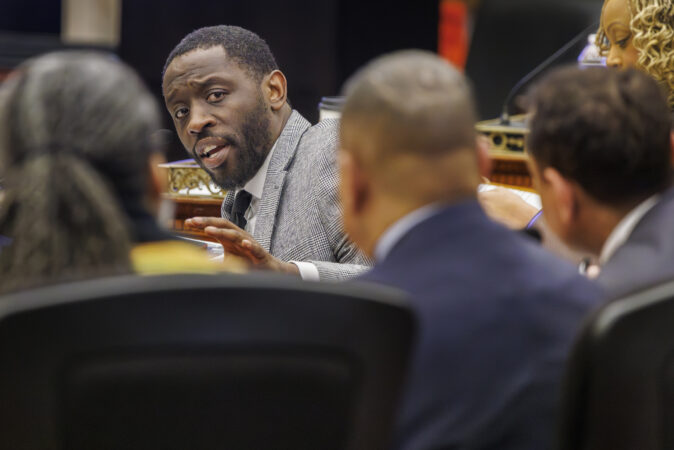
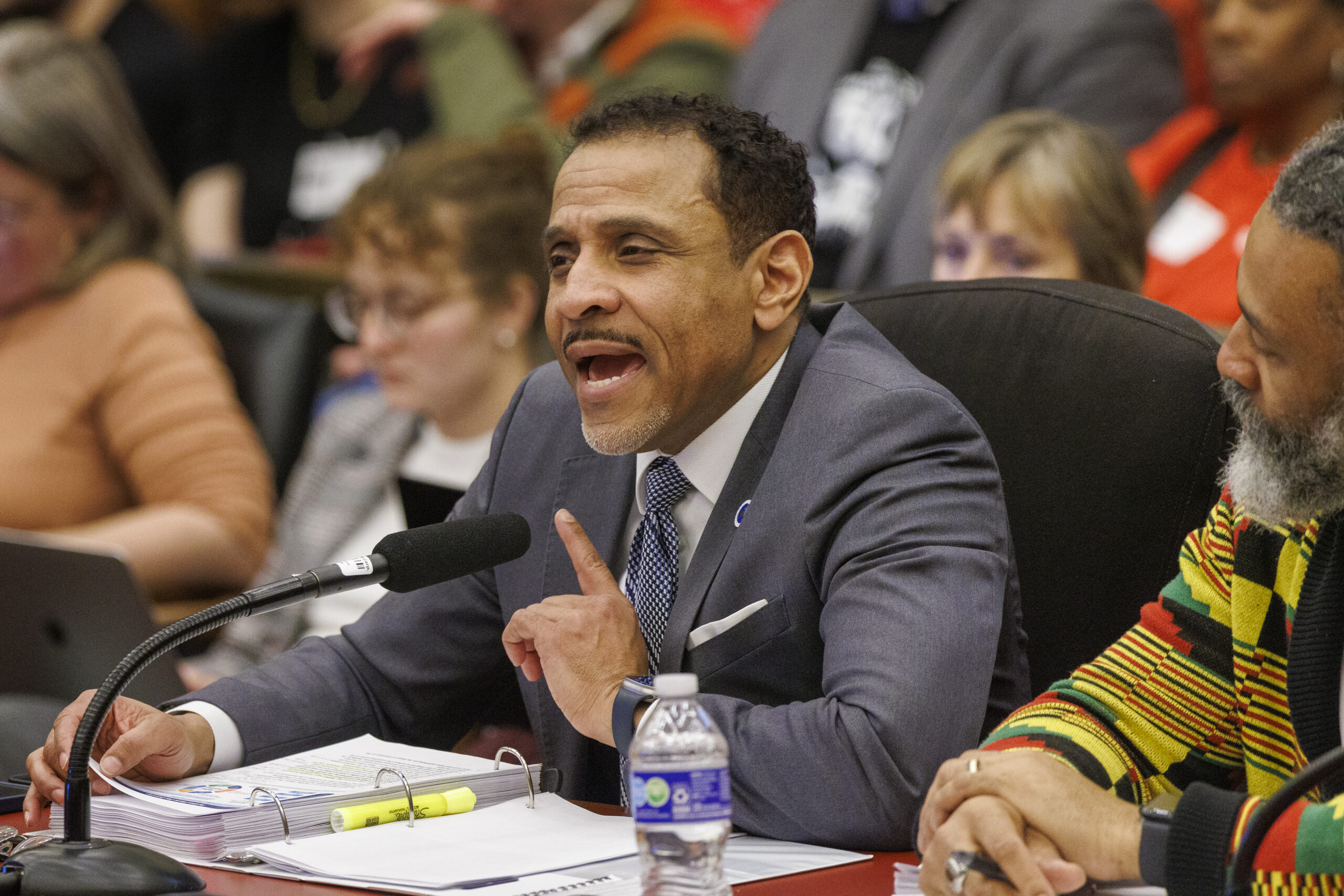
    As a packed hearing began in Council’s chambers Tuesday morning, both Council President Kenyatta Johnson and Isaiah Thomas, chair of the Education Committee, said Council refused to be a “rubber stamp” to Watlington’s proposal to close 20 schools, colocate six, and modernize 159.

    Though only the school board gets to vote directly on the plan, Johnson has indicated he is willing to hold up city funding to the district over the school closure plan. And his colleagues echoed that sentiment Tuesday.

    “I’m infuriated that we don’t get a say,” Councilmember Jimmy Harrity said, warning the district officials who appeared before him. “But, Council president, you and I both know we do get a say, because budget’s coming. And we will be looking. Mindful is the word I would use for today — be mindful.”

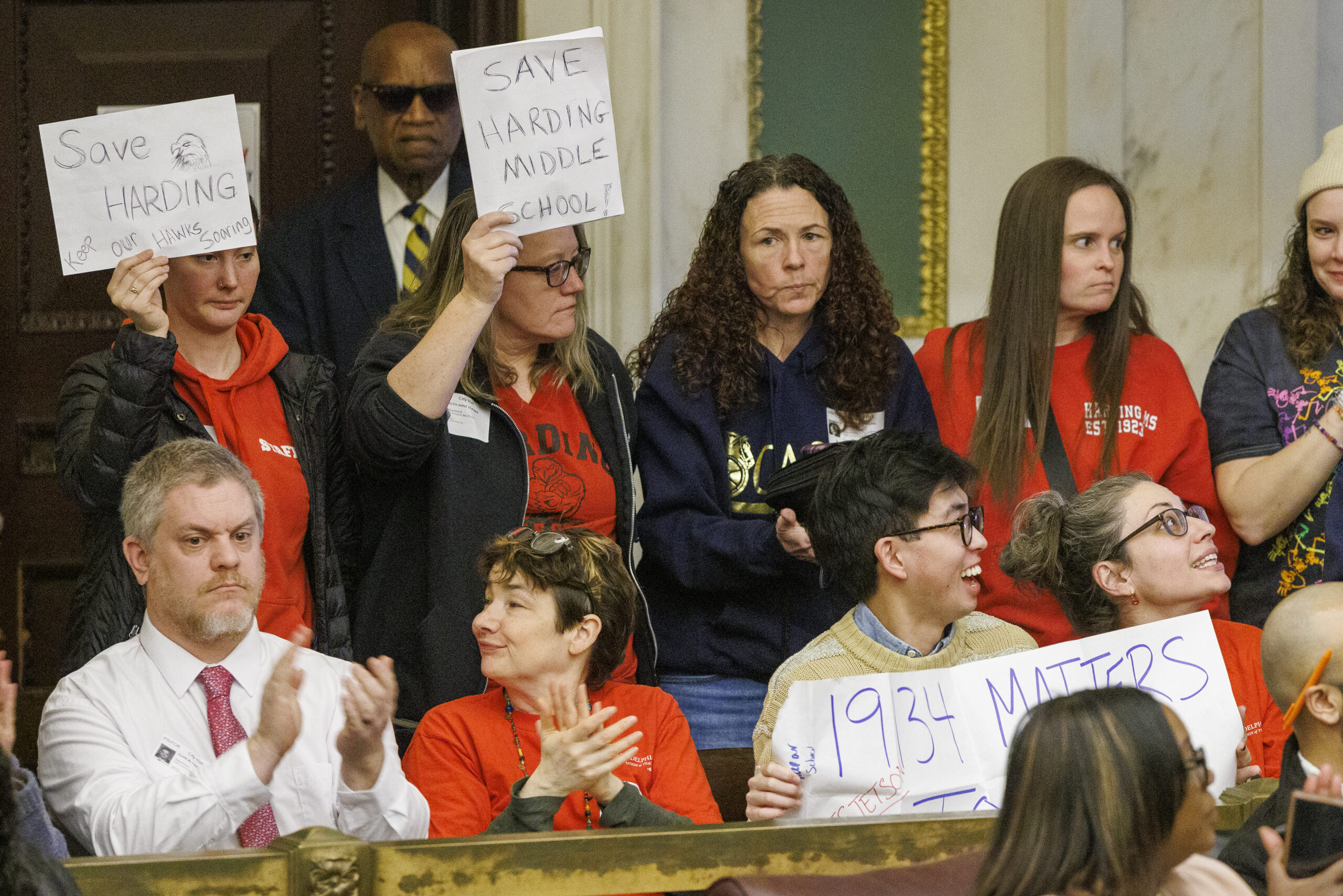
    Concerned citizens stand with signs in support of Harding Middle School before the start of a Philadelphia City Council hearing Tuesday at City Hall on the school district’s plan to close 20 schools.

    About 40% of the district’s nearly $5 billion budget comes from local revenue and city funding, which City Council and Mayor Cherelle L. Parker must approve in the annual city budget by the end of June.

    Harrity, an at-large Council member, said he was “tired that every time cuts come, they come from a certain neighborhood. You know, I live in Kensington, in the 7th District. I talk to these kids. They’re good kids. They deserve everything that other kids in other neighborhoods are getting. … You can see that this isn’t what our people want.” Watlington has proposed closing four schools in the 7th District.

    More than 100 community members holding babies and waving signs opposing the facilities plan filled Council chambers on the fourth floor of City Hall on Tuesday as Council members spent hours grilling Watlington and other district officials.

    Watlington, meanwhile, stood by his plan in testimony to Council on Tuesday, saying that 20 closings was a much smaller number than he could have settled on.

    “We could have come here and presented a plan that closed twice as many schools and been able to defend it,” Watlington said.

    A once-in-a-lifetime opportunity?

    District officials have said the facilities process is not about saving money, but about optimizing education and equity for the city’s 115,000 students.

    But it was clear Tuesday that finances played a part: The district has lost 15,000 students in the last 10 years, and over 80,000 since 1997, when charter schools were first authorized in Pennsylvania. It has 300 buildings, many of them 75 years and older and in poor repair, and some schools with more than 1,000 empty seats, while others are overcrowded.

    Tony B. Watlington Sr., superintendent of School District of Philadelphia, speaks at a City Council hearing Tuesday on his proposal to close 20 schools.

    “We’ve got to be very careful with our limited resources in a historically underfunded district,” Watlington told Council.

    Watlington and board president Reginald Streater, who also testified, pitched the plan as a way to add things the district cannot now offer — Advanced Placement courses in every high school, the opportunity for all eighth graders to take algebra, more prekindergarten, and career and technical education programs.

    “I do not believe we’ll get this opportunity again in our lifetime,” Watlington said.

    The superintendent dropped a few previously undisclosed facts about the facilities road map, indicating that his recommendations could shift slightly before he presents the plan to the school board on Feb. 26. No date has been set for the board’s final vote, which is expected later this winter.

    “It’s premature to say how the final recommendations will land,” Watlington said.

    But, the superintendent said, “if there are schools that Council wants me to take off the list, and add others on that list, we are open to you telling me what those are, but we cannot get to a place where we address our 35% non-utilization rate in buildings if no changes are made.”

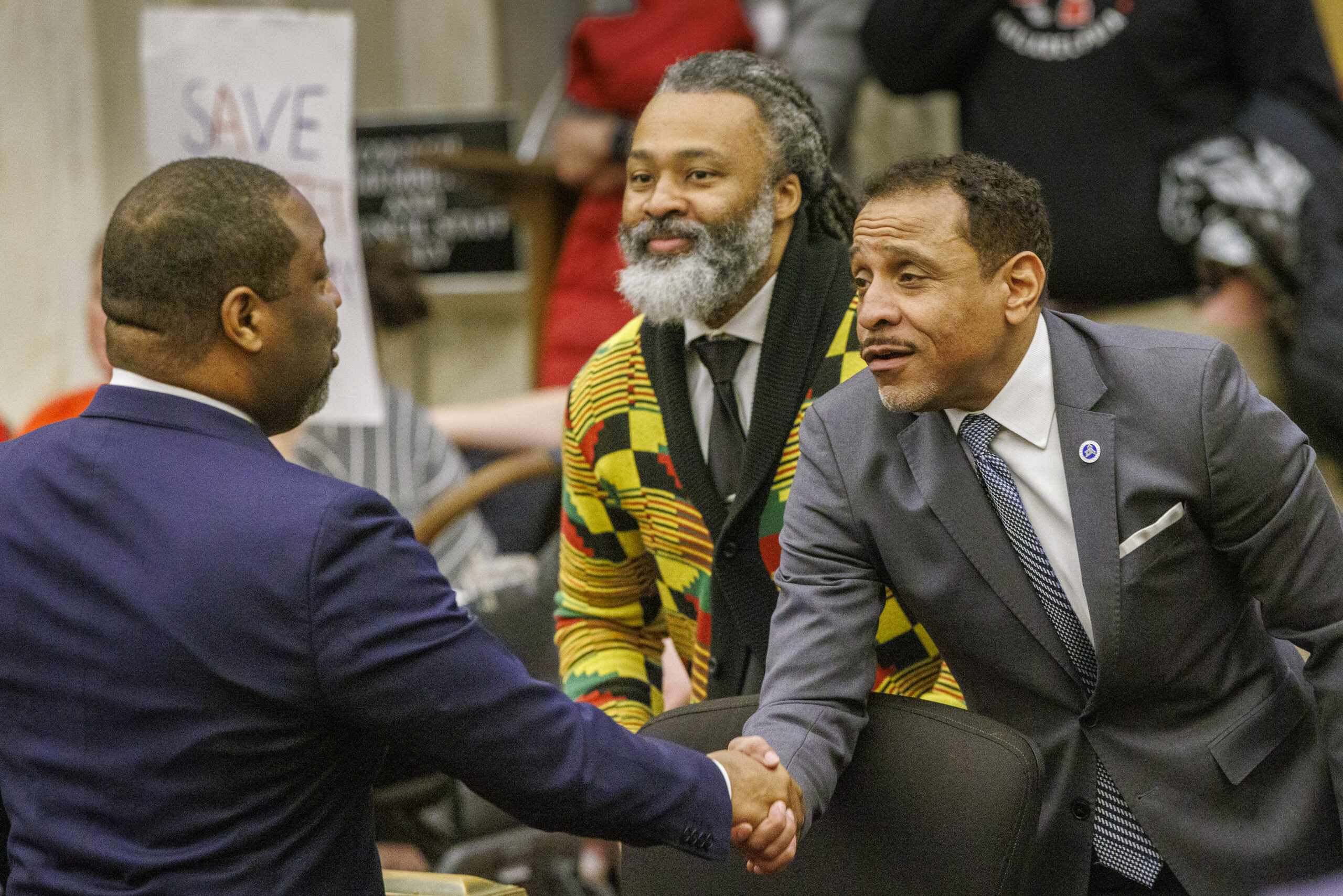
    Philadelphia City Council President Kenyatta Johnson (left) greets Dr. Tony Watlington, Superintendent of School District of Philadelphia Philadelphia City Council holds hearing with board members of School District of Philadelphia, Tuesday, Feb. 17, 2026. Reginald L. Streater, Esq., President Board of Education. (center)

    Debora Carrera, the city’s chief education officer, who spent three decades as a district teacher and administrator, told Council that Parker believes “the current district footprint is unsustainable.”

    Carrera said her own experience as principal of Kensington High School for Creative and Performing Arts shows that it is right for the district to focus resources on neighborhood high schools.

    “My high school was a small high school,” Carrera said. “I could only offer my children two AP courses, when other schools like Central — where my son went — could offer them over 20-plus AP courses.“

    ‘Breaking down of public education’

    The hearing got tense at times.

    “I feel like this is the breaking down of public education in Philadelphia,” said Councilmember Cindy Bass, who said some of the district’s own decisions had led to closures.

    Several members of Council raised questions about the plan’s price tag. Prior district and city estimates put the cost just under $8 billion, but members of Watlington’s team said they could they could actually do the work for $2.8 billion — $1 billion from district capital funds, and $1.8 from yet-unpromised state and philanthropic sources.

    In the past, the district had made public detailed facilities condition assessments for every school in the district, Councilmember Rue Landau noted.

    Residents could look up their school and see exactly what the condition of every system in the building was, and how much money would be required to fix those that needed repair.

    “We don’t have any of those details,” said Landau, who went so far as to say she believed the district should be spending more than $2.8 billion on the plan. “What is the increased investment, and why don’t we have any of those details? They are not out there in the public for us, so none of us have any understanding as to why this is happening, This should all be public so all of the public can see.”

    Jerry Roseman, the Philadelphia Federation of Teachers’ longtime environmental director, who has had a first-row seat to district facilities conditions for decades, said he believed the $2.8 billion figure was not realistic.

    “You need much more money than that,” Roseman told Council. “We need more money than this plan comes close to.”

    Some Council members pushed the district and the board on the plan’s timing.

    The city has been asking for a long-range facilities plan for years, Councilmember Quetcy Lozada pointed out.

    “It’s taken us all this time,” Lozada said. “Now, you guys have come up with a plan, and now we want to rush through it. Now all of a sudden there’s this urgency to get through this plan, which I don’t understand.”

    Streater said the board is moving forward with hearing Watlington’s plan on Feb. 26, but won’t vote until it hears more feedback.

    But ultimately, he said, the board will vote on “a plan that is dynamic, that can evolve over time. … I think that we all understand that things change, facts change, funding changes, enrollment trends change.”

    And, Streater said, there will also likely be policy changes based on redrawing some catchment areas, or boundaries that determine which neighborhood schools children attend.

    Streater, who introduced himself at the beginning of the hearing as “Reggie from Germantown,” underscoring his history as a graduate of two district schools that closed — Germantown High and Leeds Middle School — said that changes must be made.

    “I think if we continue doing the same thing, expecting a different result — which I would argue is chronic underachievement — we are doomed.”

  • History and conservation groups are suing the Trump administration over censorship at national parks

    History and conservation groups are suing the Trump administration over censorship at national parks

    A new lawsuit filed by a group of conservation and history organizations is challenging President Donald Trump’s executive order to remove historic information from national parks.

    It comes a day after a federal judge ordered restoration of the slavery exhibits at the President’s House in Philadelphia and marks the latest chapter in a showdown between historical transparency versus censorship.

    On Tuesday, the National Parks Conservation Association filed a lawsuit in Massachusetts federal court against the Department of Interior, challenging Trump’s 2025 executive order that forced national parks to change or strip displays tied to topics ranging from slavery and racism to LGBTQ+ rights and climate change.

    “Plaintiffs are organizations committed to protecting the national parks, preserving history, promoting access to high quality scientific information, and providing high quality interpretive materials — including exhibits, signs, brochures, and other educational materials — that bridge the gap between physical objects and human understanding for park visitors,” the lawsuit says.

    “They and their members — including avid users of national parks and historians whose research is being erased — have been injured by these actions and seek to ensure that the administration does not wash away history and science from what the National Park Service has recognized is ‘America’s largest classroom.’ ”

    The coalition, which includes the American Association for State and Local History, the Association of National Park Rangers, the Coalition to Protect America’s National Parks, the Society for Experiential Graphic Design, and the Union of Concerned Scientists, is asking the court to declare Trump’s executive order unlawful and to order removed materials to be restored.

    “In filing this litigation together, we are taking a stand for the soul of our national parks,” Alan Spears, senior director of cultural resources at the National Parks Conservation Association, said. “Censoring science and erasing America’s history at national parks are direct threats to everything these amazing places, and our country, stand for.”

    In Philadelphia, U.S. District Judge Cynthia M. Rufe issued a ruling Monday requiring the federal government to restore the President’s House site to its original state. The removed exhibits paid tribute to the enslaved people who lived in George Washington’s home during his presidency.

    In her 40-page opinion, Rufe — who is a George W. Bush appointee — does not mince words. She compared the federal government’s argument that it can unilaterally control the exhibits in national parks to the dystopian totalitarian regime in George Orwell’s 1984.

    The plaintiff’s group for the Massachusetts suit is being represented by Democracy Forward, a progressive nonprofit that challenges government actions it views as harmful.

    “You cannot tell the story of America without recognizing both the beauty and the tragedy of our history,” Skye Perryman, Democracy Forward’s president and CEO said in a statement. “The president’s effort to erase history and science in our national parks violates federal law, and is a disgrace that neither honors our country’s legacy nor its future.”

    Beyond Philadelphia, the lawsuit also mentions other examples of Trump’s executive order in action, including the removal of an interactive display mentioning climate change at Fort Sumter in South Carolina, short films on labor history being scrapped at Lowell’s National Historical Park in Massachusetts, and the removal of displays discussing negative impacts tourists, settlers, and cattle ranchers have on the Grand Canyon National Park.

    The lawsuit goes on to point out the irony of Trump’s executive order aiming to avoid “disparaging Americans,” despite the president’s own new signage at the White House, which takes jabs at former President Joe Biden and others along his West Wing “Walk of Fame.”

    The parties are asking a judge to order that national parks must be allowed to present the full historical and scientific picture without censorship and for their court costs to be paid for.

  • Stephen Colbert says CBS blocked interview with Texas Democrat over FCC concerns

    Stephen Colbert says CBS blocked interview with Texas Democrat over FCC concerns

    CBS late-night host Stephen Colbert rebuked his own network Monday night, claiming that lawyers for parent company Paramount Skydance prohibited him from airing an interview with Texas State Rep. James Talarico, a Democratic candidate for the U.S. Senate, over concerns it would violate the Federal Communications Commission’s equal time rule.

    “You know who is not one of my guests tonight?” Colbert asked his audience. “That’s Texas state representative James Talarico. He was supposed to be here, but we were told in no uncertain terms by our network’s lawyers, who called us directly, that we could not have him on the broadcast.”

    In response, the studio audience booed.

    “Then I was told, in some uncertain terms, that not only could I not have him on, I could not mention me not having him on,” Colbert continued. “And because my network clearly does not want us to talk about this, let’s talk about this.” A representative for Paramount Skydance did not respond to a request for comment.

    Colbert launched into a segment about the FCC’s equal time rule, which requires broadcasters to provide equal opportunity to political candidates. News and talk show interviews have traditionally been exempt from the mandate. But in January, the FCC, issued a public notice saying that daytime and nighttime talk shows would have to apply for a exemptions to the equal time rule for each of their programs.

    “Importantly, the FCC has not been presented with any evidence that the interview portion of any late night or daytime television talk show program on air presently would qualify for the bona fide news exemption,” the FCC’s notice read.

    At the time, Anna M. Gomez, the FCC’s lone Democrat, called the notice “misleading” and said nothing has changed about the FCC’s requirements.

    In a statement Tuesday, Gomez wrote that CBS’s decision is an example of “corporate capitulation in the face of this Administration’s broader campaign to censor and control speech” and said that the FCC has “no lawful authority to pressure broadcasters for political purposes.”

    “CBS is fully protected under the First Amendment to determine what interviews it airs, which makes its decision to yield to political pressure all the more disappointing,” she said.
    In a statement Tuesday afternoon, CBS defended itself and pushed back against Colbert’s account.

    “THE LATE SHOW was not prohibited by CBS from broadcasting the interview with Rep. James Talarico,” a spokesperson for the network said in a statement. “The show was provided legal guidance that the broadcast could trigger the FCC equal-time rule for two other candidates, including Rep. Jasmine Crockett, and presented options for how the equal time for other candidates could be fulfilled. THE LATE SHOW decided to present the interview through its YouTube channel with on-air promotion on the broadcast rather than potentially providing the equal-time options.”

    Colbert is already on his way out of CBS, set to depart the network in May when his show goes off the air. CBS announced over the summer that it is canceling The Late Show, the long-running talk show once hosted by David Letterman, which it claimed is “purely a financial decision.”

    Led by Chairman Brendan Carr, the FCC in President Donald Trump’s second term has remade itself as a speech enforcer tackling perceived liberal bias in the media industry. Carr’s speech agenda has been marked by investigations of media companies and threats to take action against broadcasters that do not follow rarely enforced FCC rules. He has frequently invoked a little-used “news distortion” policy as justification, a practice condemned by a bipartisan group of former FCC chairs and commissioners in a November letter.

    Following on-air comments in September by ABC’s Jimmy Kimmel in the wake of conservative activist Charlie Kirk’s killing, Carr suggested on a podcast that the agency could take action against the network and its parent company Disney, which owns broadcast licenses across the country.

    “We can do this the easy way or the hard way,” Carr told conservative podcast host Benny Johnson about Kimmel. “These companies can find ways to change conduct and take actions on Kimmel, or there’s going to be additional work for the FCC ahead.” Carr drew bipartisan criticism for his role in the episode, with Sen. Ted Cruz (R., Texas) likening him to a cinema mafioso. ABC suspended Kimmel for several days in September.

    Last summer the FCC approved an $8 billion deal for David Ellison’s Skydance to buy CBS parent company Paramount after a series of concessions. Skydance pledged to conduct a review of CBS’s programming and agreed to refrain from diversity, equity and inclusion initiatives. It also appointed an ombudsman with Republican Party ties to handle claims of bias.

    In July, CBS also settled a lawsuit from Trump, who claimed that a 60 Minutes interview with political rival Kamala Harris was “deceitful” in its editing. Colbert claimed the $16 million settlement was a “big, fat bribe.” The network canceled The Late Show three days later.

    Colbert’s criticism also comes amid another corporate pursuit for Paramount Skydance.

    The company is trying to persuade Warner Bros. Discovery to accept its hostile bid to buy the company rather than sell to Netflix. It’s unclear whether the FCC would have a role in such a deal, even if Paramount is involved, because no broadcast spectrum licenses would be changing hands. Still, any deal of this size would need government approval, probably from Trump’s Justice Department, where antitrust chief Gail Slater just resigned.

    In December, Trump has said he would be “involved” in vetting the Netflix-Warner Bros. deal, which has massive implications for Hollywood, movie theaters and streaming. More recently, Trump backtracked, saying he is “not involved” in the deal.

    Talarico, 36, has been a member of the Texas House of Representatives since 2018 and more recently has been a rising star in the Democratic Party. He is running for a U.S. Senate seat in Texas, which is holding its primary contests on March 3.

    Though Colbert’s interview with Talarico didn’t broadcast over the airwaves, it was made available on YouTube.

    “This is the party that ran against cancel culture,” Talarico told Colbert. “Now they’re trying to control what we watch, what we say, what we read. And this is the most dangerous kind of cancel culture — the kind that comes from the top.”