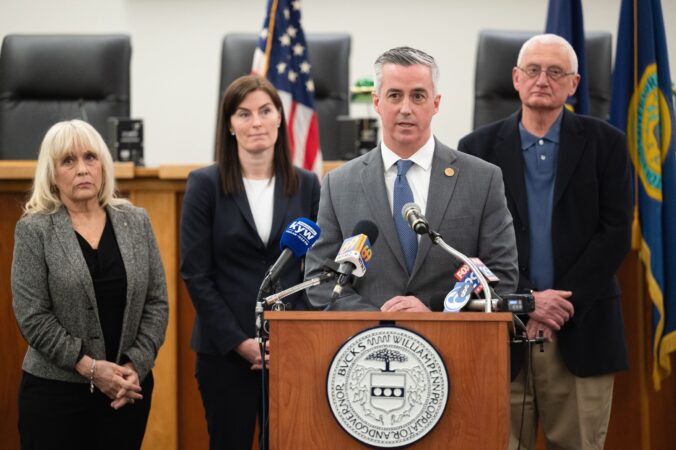
County staff had requested a 7.2% tax increase to fill the budget hole, but Democratic Commissioners Bob Harvie and Diane Ellis-Marseglia voted to increase that hike to 8%, citing inflation and uncertainty in state and federal dollars.
“It’s leaving us with a very, very small surplus in a very uncertain time,” Harvie, a candidate for Congress, said of the original request.
Republican Commissioner Gene DiGirolamo voted against the tax increase but did not say why.
The tax boost will translate to an increase of around $72 annually for the owner of a home assessed at the Bucks County average, county officials said.
Chester County’s commissioners voted Wednesday to approve a budget without a tax increase. Bucks County was the only one of Philly’s collar counties not to raise property taxes in 2025.
In this year’s budget, Bucks County committed additional funds to the local community college and library systems, officials said. And, Ellis-Marseglia said, the cost of providing services to county residents had only increased.
“It’s reasonable to think that it costs more to take care of the people in our nursing home, the people in our jail,” she said.
As a result, Ellis-Marseglia and Harvie argued for a slightly larger tax increase this year to provide a cushion for the county to lean on.
“I see things as getting really dark in the future in terms of money,” Ellis-Marseglia said.
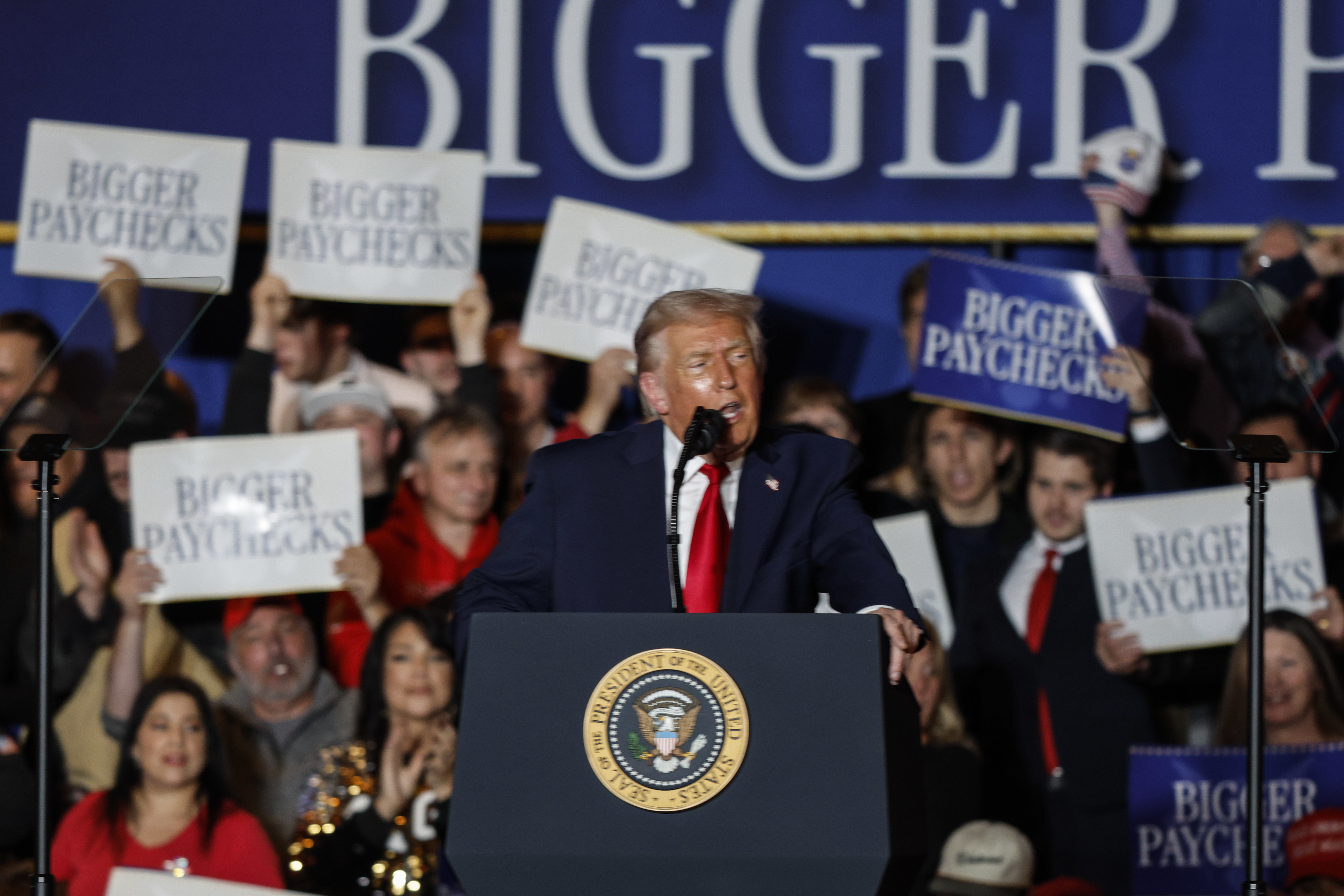
With the midterm elections 11 months away, Vice President JD Vance visited one of the most closely watched swing districts in the country to ask Pennsylvania voters to aim their anger over the economy at Democrats rather than the Trump administration.
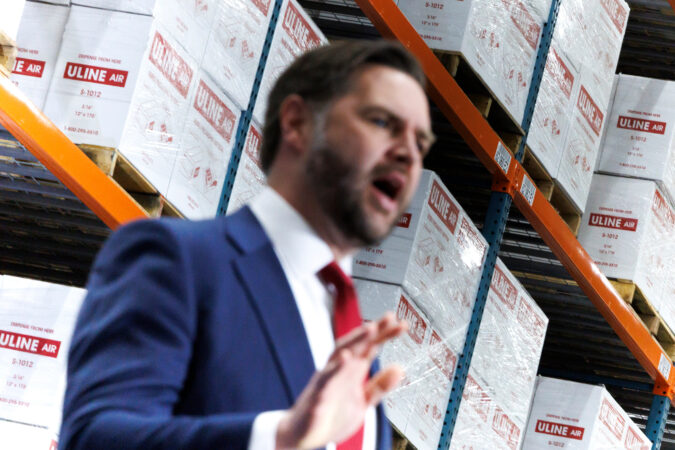
During a speech at Uline Shipping Supplies in Alburtis in the Lehigh Valley, Vance blamed immigrants for the housing shortage and invoked the name of notorious killer and cult leader Charles Manson as he doubled down on President Donald Trump’s rhetoric from the week before in the Poconos.
Vance’s visit was to U.S. Rep. Ryan Mackenzie’s district, while Trump’s speech last week at the Mount Airy Casino Resort was in U.S. Rep. Rob Bresnahan’s district. Both freshman Republicans won their seats by roughly a percentage point last year and are among the most vulnerable incumbents in Congress headed into 2026.
Both speeches were billed as being focused on the economy — as Trump and Vance seek to counter Democrats’ message on affordability ahead of next year’s election. But both delved into an assortment of topics.
Though Vance’s remarks were wide-ranging, the vice president hewed to the White House message that while the price of eggs might still be high, the administration is working to improve pocketbook issues and restore confidence in the economy.
“Even though we’ve made incredible progress, we understand that there’s a lot more work to do, and the thing that I’d ask from the American people is a little bit of patience,” Vance said.
Affordability
Vance didn’t say the affordability crisis is a “Democratic hoax,” as Trump did.
He just said it’s the Democrats’ fault.
“When I hear the Democrats talk about the affordability crisis they created,” Vance said, “it’s a little bit like … Charles Manson criticizing violent crime. Look in the mirror, my friend, you are the cause of the problem.”
It’s a variation of Trump’s line from last week that “Democrats talking about affordability is like Bonnie and Clyde preaching about public safety.”
Democrats started criticizing the price of eggs when Trump was in office for less than a week, Vance said.
A woman asked Trump about it, and according to Vance, the president responded, “’Lady, we’ve been here for three days. It takes a little bit of time to fix something that was so fundamentally broken.’”
Every “single affordability crisis” in the United States — food, housing, medicine, gas — is because we “inherited a nightmare of an economy from Joe Biden,” Vance told the crowd.
In an unusual explanation of how Biden sent housing costs soaring, for example, Vance explained that the previous administration’s immigration policies were to blame.
Vance said “20 million illegal immigrants … took homes that, by all rights, go to American citizens, and to the people of this great state.”
It’s a line that he’s used before, which fact-checkers have flagged. Politifact pointed out that there are around 12 million to 14 million undocumented immigrants living in the United States. And the housing shortage comes from a lack of construction of a sufficient supply of affordable homes, experts say.
Beyond that, Politifact said, immigrants often share housing with friends or relatives, making their average housing consumption “far smaller than is typical.”
Democratic Gov. Josh Shapiro, who is up for reelection next year, hit back at Vance on social media and made the case that Trump’s policies, including cuts to Medicaid and tariffs, are exacerbating the cost-of-living headaches for Pennsylvanians.
“Donald Trump and JD Vance’s economic policies are hurting Pennsylvania. They have raised prices at the grocery store, screwed over our farmers, and gutted healthcare funding,” Shapiro said on X. “I know this Administration thinks the cost of living is a ‘hoax’ — but it’s not, and Pennsylvania families know it.”
Firing federal workers
In his speech, Vance made much of the just-released November jobs report, delayed by the government shutdown. Around 64,000 jobs were added to the economy, an improvement over the more than 100,000 jobs lost in October.
Putting a good face on the big October job loss, Vance told a reporter after his speech that those were federal government jobs eliminated by the Trump administration — with a plan in mind.
“That is, in a lot of ways, what we’re trying to do under President Trump’s leadership,” Vance said. “We wanted to fire bureaucrats and hire these Americans out here,” Vance said to applause.
As he spoke, Vance praised Mackenzie for his “dedication to American workers.”
Asked about the 4.6% November unemployment rate, the highest since 2021 during the pandemic, Vance was able to put a good spin on that as well.
Many of the unemployed may have lost their jobs two years ago, under Biden, and stopped looking for work, Vance said. Those people aren’t counted in the official unemployment statistics. Now, however, as we see wages rise and more investment into the United States, Vance said, the people sitting out the job search under Biden are getting “off the sidelines” and once again seeking jobs. As they do, they’re being counted as unemployed.
The high unemployment rate, then, is “exactly what we want,” Vance said. “That is happening under President Trump’s leadership.”
As he spoke, Vance explained Trump’s ideas to help Americans get by, including omitting taxes on tips and overtime, as well as creating a tax deduction for interest on auto loans.
These will lead to significant tax refunds, Vance said, adding that middle-class Pennsylvanians will see “the best tax season in 2026 that you’ve ever had.” That’s a result of Americans having “a president and Congress fighting for you for a change,” Vance said.
Vance responds to Vanity Fair article
In a tough question from a reporter, Vance was asked about a Vanity Fair article in which Trump’s chief of staff, Susie Wiles, described some of the people in the administration in less-than-flattering ways.
She said Trump has an “alcoholic’s personality”; Elon Musk is an ”avowed ketamine user” and an ”odd, odd duck”; Budget Director Russell Vought is “right-wing, absolute zealot”; and that Attorney General Pam Bondi ”completely whiffed” in handling the Epstein files.
As for Vance, Wiles said he’s “been a conspiracy theorist for a decade,” and that Vance’s crossover from a Trump critic to an ally was based on political expediency.
While Vance didn’t address the latter description, he agreed that he “sometimes” is a conspiracy theorist, but that he only believes “in conspiracies that are true.”
As an example, he said, he believed in “this crazy conspiracy theory that the media and government were covering up the fact that Joe Biden was clearly unable to do the job.”
Vance said it turns out that such conspiracy theories are just things that he discovered to be true “six months before the media admitted it.”
He hastened to add that if anyone in the Trump administration learned a lesson from the Vanity Fair article, it’s that “we should be giving fewer interviews to mainstream media.”
More than two years ago, a Chester County Voter Services employee made a dire prediction.
In an eight-page grievance against Voter Services Director Karen Barsoum, the employee described a hostile work environment in which election workers were subjected to “bullying” from the department’s director.
At the time of the complaint, the employee wrote, 15 people had left the 25-person department since Barsoum was hiredin 2021.
“I have very legitimate fears that there will be a mass exodus from voter services in the coming months,” the employee, who asked not to be named for fear of retaliation, wrote in the grievance document he provided to The Inquirer. “My concern is how this will impact the 370k voters of Chester County.”
Two years later, it appears that his prediction had come true. The number of staff departures since Barsoum took over grew to 29 by November of this year, according to a Chester County spokesperson.
Election offices across the nation have experienced a high level of turnover and staff burnout in recent years in the face of election denialism and threats, but Chester County’s churn-rate is nearly double the number of departures in Montgomery and Delaware Counties’ elections departments that have lost 16 and 15 people respectively in the same time period. Both departments are larger than Chester County’s election office.
Accounts and records from three former staffers at Chester County Voters Services Department, two of whomasked not to be named, paint a picture of a hostile work environment where employees were often made to feel as though management had placed a target on their back.
These concerns have been raised to elected and non-elected county leaders for more than two years.
Barsoum saidin an interview that she couldn’t respond to allegations from employees but described her management style as collaborative.
Employees, she said, had left for a variety of reasons including jobs in other Southeast Pennsylvania election offices that pay better than Chester County. Others, she said, left to pursue other opportunities or for family reasons.
Some, she said, left because of the increased pressures of election work as state law changes and the intensity increases.
“I encourage everyone to do what is the best for them,” Barsoum saidThursday.
Though Barsoum acknowledged it was challenging for the office when people left, she said she and other managers were very hands-on in training staff and ensuring that staff members knew the ins and outs of various positions.
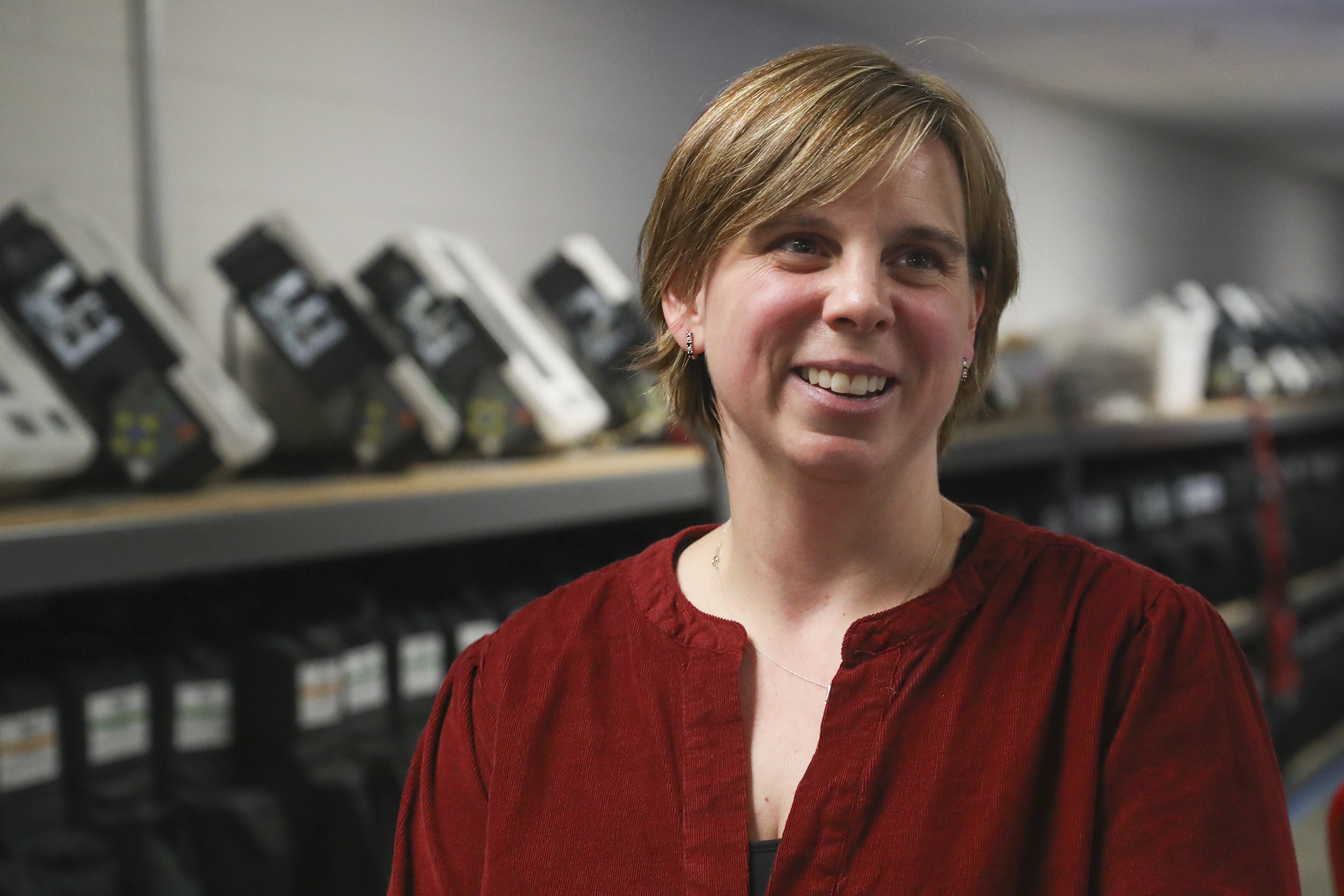
Karen Barsoum, Chester County’s director of voter services, at the Chester County Government Services Building in 2022.
The employee who filed the grievance said he feared that the attrition would leadto mistakes during the 2024 presidential election, when the eyes of the nation were on Pennsylvania.
Ultimately, everyone who wanted to vote was able to, county officials said. But the error created a chaotic scene as the county kept polls open two additional hours and more than 12,000 voters were asked to cast provisional ballots — which require more steps from election workers and voters to be counted.
The county hired a WestChester law firm to investigate how and why the poll book error occurred.
Chester County’s CEO David Byerman, the county’s top unelected official, said that turnover across all departments can be attributed to a variety of factors in the county including pay and managers.
He described working in elections today as a “pressure cooker” as a result of the political climate.
The investigation, he said, would look closely at management in the department and whether factors existed that would have hindered staff from identifying or reporting concerns.
“The very fact that we’re doing an investigation into what happened last month … indicates that we want to learn more about what happened in this particular election,” Byerman said. “Part of that investigation is looking at the performance of our management team in voter services.”
It’s unclear at this stage whether the error can be attributed to the turnover and environment in voter services, but Paul Manson, a professor at Portland State University who researches challenges faced by election workers, said the turnover seen in Chester County is unusual and alarming.
Often, Manson said, staff tends to be relatively stable in election offices because they care deeply about the work. Stressors of reduced staffing and the toxic environment described by threeformeremployees, he said, could create a dynamic that makes mistakes more likely.
“When we have these periods of turnover local election officials really sort of grit their teeth because they worry about these small errors turning into big errors,” he said.
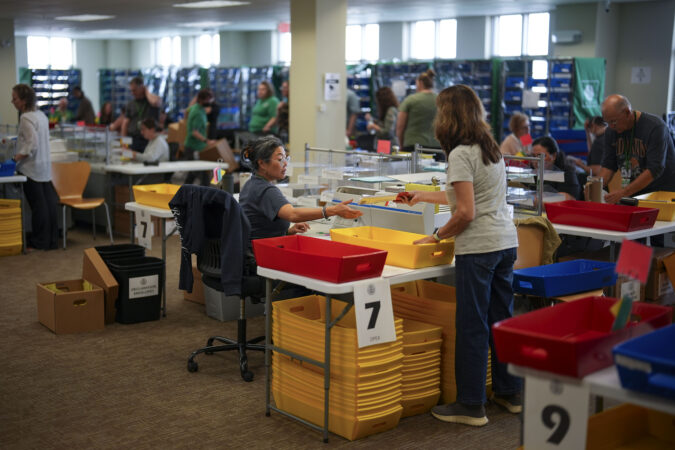
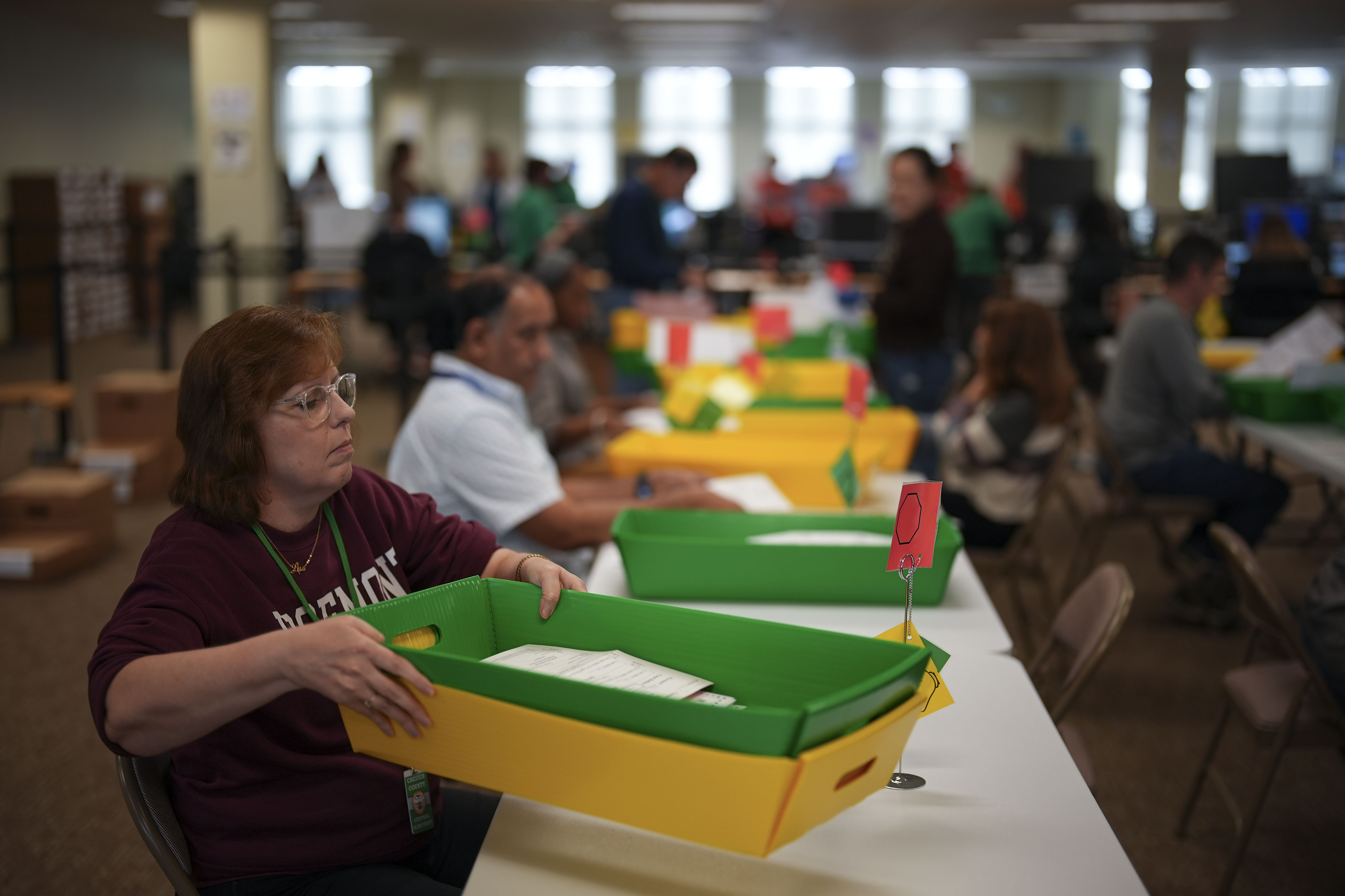
Election workers process mail ballots for the 2024 general election at the Chester County, administrative offices in West Chester. (AP Photo/Matt Slocum)
Allegations of ‘hostility’ toward staff
Barsoum, who came to Chester County from Berks County in 2021, has earned respect in the election field nationally and within Pennsylvania. Barsoum had been the assistant director in the Berks election office.
“Karen Barsoum has an extraordinary knowledge that is a resource both statewide here in Pennsylvania and has been a resource nationally. I don’t think anyone doubts her knowledge of election processes,” said Byerman, the Chester County CEO.
“At the end of the day I think any manager needs to combine two abilities. An ability to manage an office effectively and an ability to be knowledgeable and an expert.”
Byerman said each manager in the county is evaluated on these criteria regularly, but when asked whether Barsoum possessed both qualities, Byerman did not respond.
Former county employees said Barsoum’s high reputation outside Chester County did not align with what they experienced in their jobs.
The employee who filed the grievance against Barsoum said he got along with her well when she started and he received high marks on performance reviews, according to documents provided to The Inquirer.
But after a reorganization in the department in 2022, he said, he noticed that more and more staff members were leaving. The employee was promoted to a new role and during the 2022 election did that job while maintaining responsibilities from his prior role.
He said he expressed concern about being overworked and received little support in the new role. After the employee said he dropped the ball on a minor item and reported it to Barsoum, she began treating him differently.
“In Karen’s eyes you’re either 100% right or 100% wrong,” he said in an interview.
The employee filed his grievance in August of 2023 after a meeting where, he said, Barsoum listed accomplishments of staff members and refused to acknowledge any of his work.
Barsoum’s “hostility” toward him in the meeting was so noticeable, he wrote in the complaint, that eight colleagues approached him afterward to say they noticed it.
“After so many months of mistreatment and disrespect in such a hostile work environment, it eventually gets to the point that something needs to be said. If the Presidential Election were to not run smoothly next year and ChesCo voters were disenfranchised due to the Voter Services, I would forever regret not sending this grievance,” the employee wrote in his grievance.
That employee left the department the next year. He was placed on a performance-improvement plan weeks after submitting his grievance, and, after completing that plan, he was placed on another as a result of a low performance review and quit before he could be terminated.
Elizabeth Sieb, who worked at the election office for eight years before leaving in 2022, said she had similar experiences with Barsoum to those detailed in the grievance. For the past year and a half she has been telling county officials about her concerns.
In 2022, Barsoum reorganized the office to respond to the new stressors of elections and new responsibilities that come with mail voting. Since then, she said, she and staff work to evaluate after each election what worked and what didn’t so adjustments can be made.
But Sieb said Barsoum didn’t take constructive criticism well when changes were made and stifled discussion among staff members.
Sieb was fired from the department in 2022. She said she was placed on a personal-improvement plan that demanded that she seek mental health treatment and subsequently placed on a three-day unpaid suspension.
Following the suspension, Sieb said, she was directed not to speak to her colleagues if it was not directly related to her work. She said she was fired for violating that rule when she reported to a lower-level manager concerns about another manager speaking disparagingly about a job applicant in earshot of other employees.
Sieb, who at times questioned Barsoum’s decisions, said she felt that the director was threatened by long-term staff and was prone to outbursts when employees would correct her.
“She was slowly but surely wearing down and getting rid of all the people that had been there a long time,” Sieb said.
Jennifer Morrell, the CEO of the Elections Group, a company that assists local election officials, said turnover in election offices happens for a variety of reasons — including the long hours and relatively low pay civil servants receive.
She noted that training programs from state agencies and associations are designed to help prevent errors as a result of turnover and that a larger department, like Chester County, may be able to fill rolls with election workers from other counties.
“Karen is highly respected in the election community, super professional,” Morrell said. “Our hearts just ached with what happened because it could have happened to anybody.”
Commissioners respond to concerns
After leaving the department, Sieb said, she believed she suffered from PTSD related to her experience.
Beginning in 2024 she began reaching out to Republican Commissioner Eric Roe with her concerns. Roe, Sieb said, investigated the complaints and brought them to the other commissioners, Democrats Josh Maxwell and Marian D. Moskowitz. The commissioners also serve as the county’s election board.
“I have had a lot of people come to me with various concerns throughout county government, and voter services is certainly one of them,” Roe told The Inquirer, explaining that his role as minority party commissioner makes him a frequent recipient of workforce complaints.
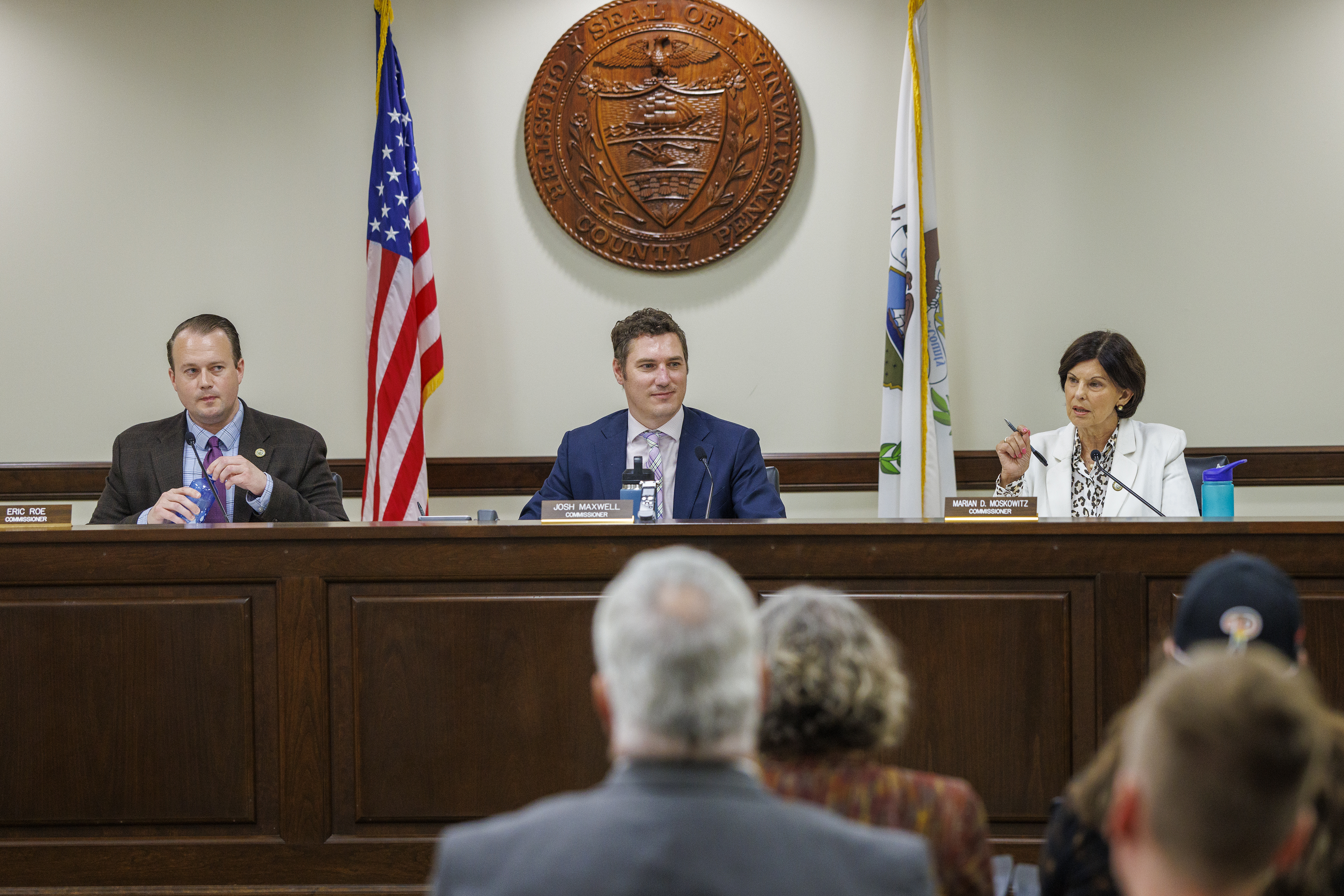
Chester County Commissioners (from left) Eric M. Roe, Josh Maxwell, and Marian D. Moskowitz at a board meeting in September.
But a year and a half later, Barsoum remained in her role and Sieb continued to hear from her former colleagues with concerns. Twice this year, Sieb went before the Chester County Election Board to raise public concerns about turnover under Barsoum.
Maxwell, who chairs the Chester County Election Board, said the county reviews reports from departments when they receive them. He said he was unable to comment on specific departments or personnel matters but said the county needed to do everything it could to support its election workers.
“We need to do a better job, I think, making sure that people feel valued. Including the folks that unfortunately we’ve lost,” he said.
Election work in Pennsylvania and elsewhere has gotten increasingly fraught. The work itself is more intense than it once was with more mail voting, and workers now deal with threats, longer hours, and a camera on them when they’re working with ballots.
“We were seen as clerical people, maybe, in the past; now we are wearing many different hats,” Barsoum said.
Moskowitz attributed much of the turnover in the county to burnout and noted the threats that election employees have faced in her years on the job.
Barsoum became emotional as she said she had worked to ensure that her staff had the resources they needed to feel safe, including mental health resources through the Human Resources department, team building outside election cycles, and a space for workers to step off camera.
“We can count on each other; we lean on each other. It’s a strong bond, a camaraderie,” she said.
When hiring new staffers, Barsoum said she warns them of what’s to come — that they’re not walking into a normal 9-to-5 job, that they won’t be able to plan vacations through about half of the year, and that they’ll be asked to take phone calls from irate people.
It’s a lifestyle, she said, that isn’t right for everyone — including some parents.
“If you’re leaning on a daycare and that is your sole, the go-to, it will be very hard to work in the department because there is 24/7 operations, and there are so many things that are going off and beyond the regular work schedule.”
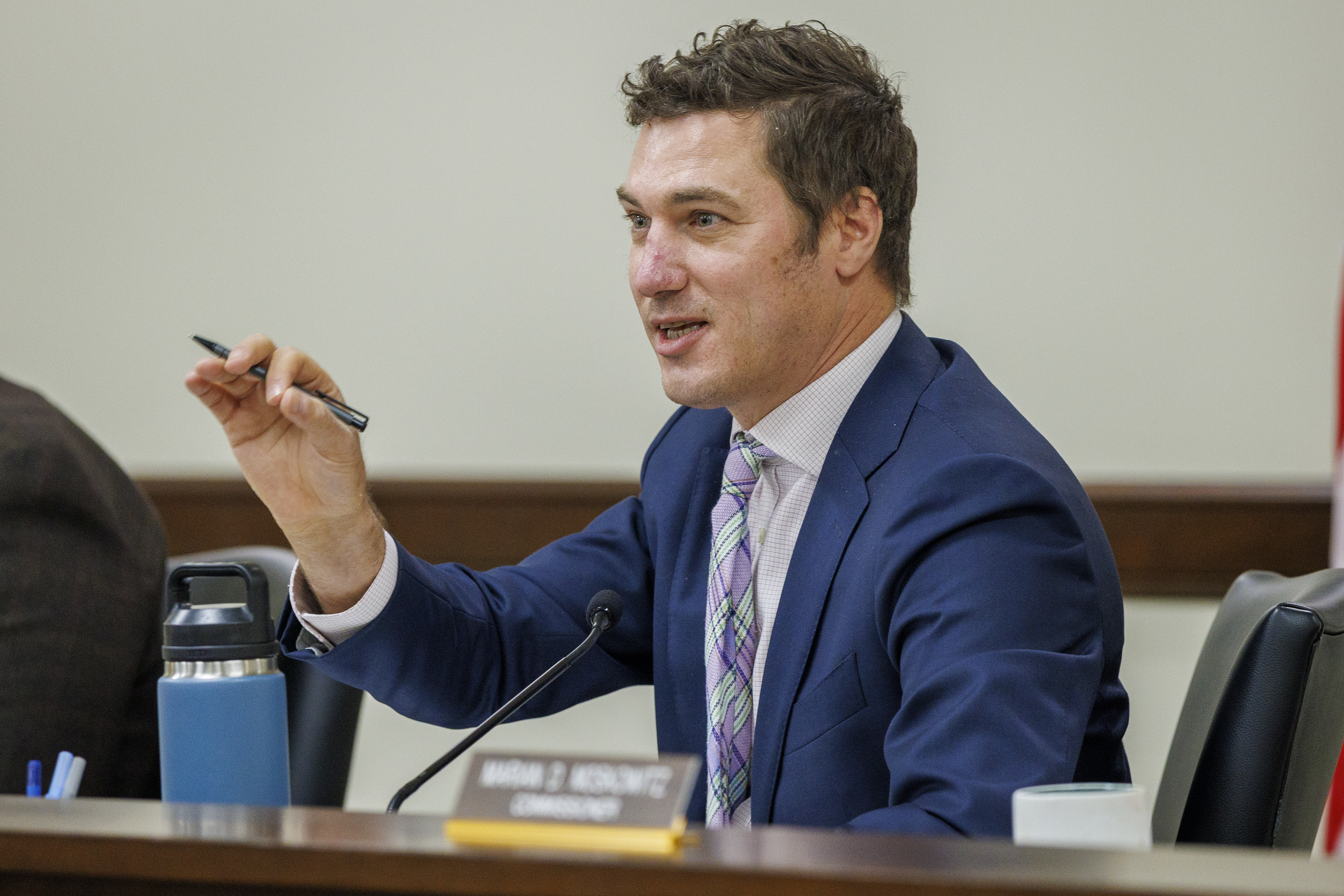
Josh Maxwell, chair of Chester County Commissioners and the county Elections Board, presides over a September commissioners meeting.
Maxwell and Moskowitz declined to comment specifically when asked if they were confident in Barsoum’s leadership, but Maxwell has repeatedly asked residents to direct their anger at November’s error at him rather than Barsoum or her staff.
“I think it’s important that we protect these folks and we empower them to make the best decisions possible,” Maxwell said at an election board meeting last week.
Speaking to The Inquirer, he reiterated that point.
“We want to make sure that people feel welcomed and empowered and are in a working environment they appreciate,” Maxwell said in an interview.
“Elections have changed so much in five years it’s not surprising to me that some people want to find something new to do.”
This suburban content is produced with support from the Leslie Miller and Richard Worley Foundation and The Lenfest Institute for Journalism. Editorial content is created independently of the project donors. Gifts to support The Inquirer’s high-impact journalism can be made at inquirer.com/donate. A list of Lenfest Institute donors can be found at lenfestinstitute.org/supporters.
The same week Republican National Committee chair Joe Gruters said history predicted “almost certain defeat” for his party in the 2026 midterms, Pennsylvania Republicans partying in Midtown Manhattan projected relative calm about the election cycle.
Gruters, President Donald Trump’s handpicked chair to run the party, said on a conservative radio station last week: “It’s not a secret. There’s no sugarcoating it. It’s a pending, looming disaster heading our way. We are facing almost certain defeat.”
He added that the goal is to win and he “liked our chances in the midterms,” but noted “only three times in the last hundred years has the incumbent party been successful winning a midterm.”
Pennsylvania could decide which party controls the U.S. House next year, as Democrats eye four congressional districts that Republicans recently flipped while the GOP fights to maintain its majority.
But Pennsylvania Republicans in New York City for the annual Pennsylvania Society glitzy gathering of politicos last weekend had a less hair-on-fire view.
“At this point when I was running [for Senate in 2024], the betting market said there was a 3% chance I was going to win,” Sen. Dave McCormick (R., Pa.) said after addressing a bipartisan audience at the Pennsylvania Manufacturer’s Association luncheon on Saturday.
“We’re a million miles from Election Day, and we’ve got a great track record of things to talk about and a great vision for how the president’s policies are going to make life better for working families,” McCormick said. “We just got to go out and make that message happen, but also continue to make the policies that are going to make that a reality happen.”
The political environment was, of course, far more favorable to Republicans in 2024, when Trump won Pennsylvania by a larger margin than he did in 2016. But with Republicans in power and popular Democratic Gov. Josh Shapiro on the ballot for reelection, the headwinds in 2026 in the Keystone State are different.
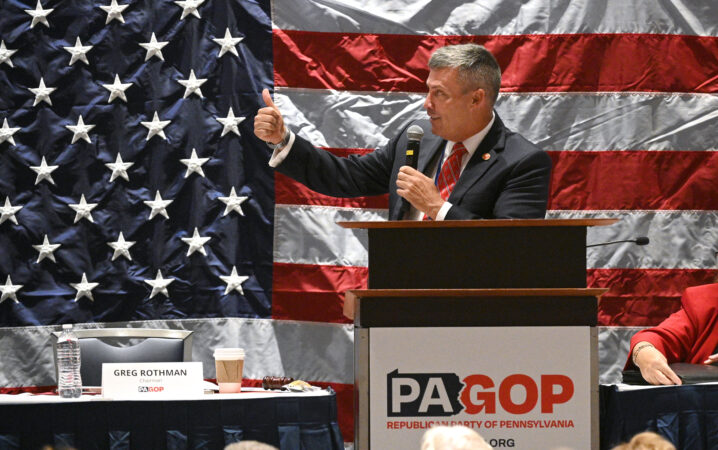
Pennsylvania GOP chair Greg Rothman, in an interview outside the PMA event on Saturday, called Shapiro “one of the greatest politicians of my generation” but noted that upsets have happened across various political environments in state history.
“Anything can happen and the voters are smart, and all I can do is prepare the party to ride the waves and ignore the crashes, but I’m optimistic,” he added.
Meanwhile, Rothman predicted that the four Pennsylvania congressional incumbents running for reelection in swing districts will sink or swim based on how Trump and his policies land with voters come November.
“They will be judged by the national economy and by immigration,” he said, and by Trump’s ability to end some international conflicts.
But U.S. Rep. Rob Bresnahan, a GOP incumbent running for reelection in Pennsylvania’s Eighth Congressional District, which includes Scranton, had a more local view of how to win in 2026.
“Everything about our job as a member of Congress is about northeastern Pa.,” Bresnahan said.
“Northeastern Pennsylvania has always been our North Star. We know our district. We are out in our district. We’ve done over 250 public events. Our constituency case work is, in my opinion, one of the best offices in the country.”
Bresnahan appeared at a rally with Trump in Mount Pocono last week. He was also one of just 20 House Republicans to sign a successful discharge petition to force a vote for collective bargaining to be restored for federal workers.
“At the end of the day that might have been going against party leadership, but it was what’s right for northeastern Pennsylvania,” he said.
Democrats have begun a full court press. That was evident at the Pennsylvania Society, where attendees seen mingling with other politicians included: Janelle Stelson, who is running for a second time against U.S. Rep. Scott Perry in the 10th Congressional District, as well as firefighter Bob Brooks and former federal prosecutor Ryan Croswell, both of whom are running for the Democratic nomination to take on U.S. Rep. Ryan Mackenzie in the Seventh.
Bresnahan’s challenger, Scranton Mayor Paige Cognetti, also attended the soiree and walked through the Rainbow Room atop Rockefeller Center with U.S. Sen. Chris Coons (D., Del.) on Friday night. Coons said the time is now for Democrats to get involved in these races.
“Given the margin, if there were to be four new Democrats in the House this cycle, as there were in 2018, that’d be the difference maker for the country,” Coons added.
Staff writer Gillian McGoldrick contributed to this article.
NEW YORK — Pennsylvania’s political class schmoozed their way across Midtown Manhattan this past weekend, bouncing from cocktail parties to swanky receptions organized to woo the elite ahead of a big midterm election year.
Four Inquirer political writers were among those who traveled to the Pennsylvania Society gathering, chatting with lawmakers and interviewing candidates inside the moody bars and penthouse parties. Here are our takeaways.
Maybe Shapiro doesn’t need Pa. Society anymore
Gov. Josh Shapiro this year has hosted fundraisers in New Jersey and Massachusetts for his unannounced reelection campaign.
But he didn’t need to make the rounds this weekend among Pennsylvania’s political elite as he emerges as a top contender for the 2028 Democratic nomination for president.
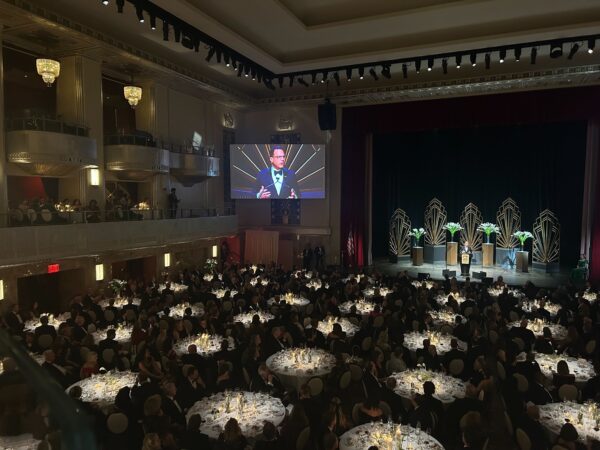
Shapiro traveled to New York City only to deliver his annual speech to the Pennsylvania Society and honor former U.S. Ambassador to Canada, David L. Cohen, who received the society’s top award.
Instead of handshaking and fundraising like most incumbent governors would, Shapiro has largely avoided Pennsylvania Society mingling during his time as governor. His reelection campaign did not appear to change that.
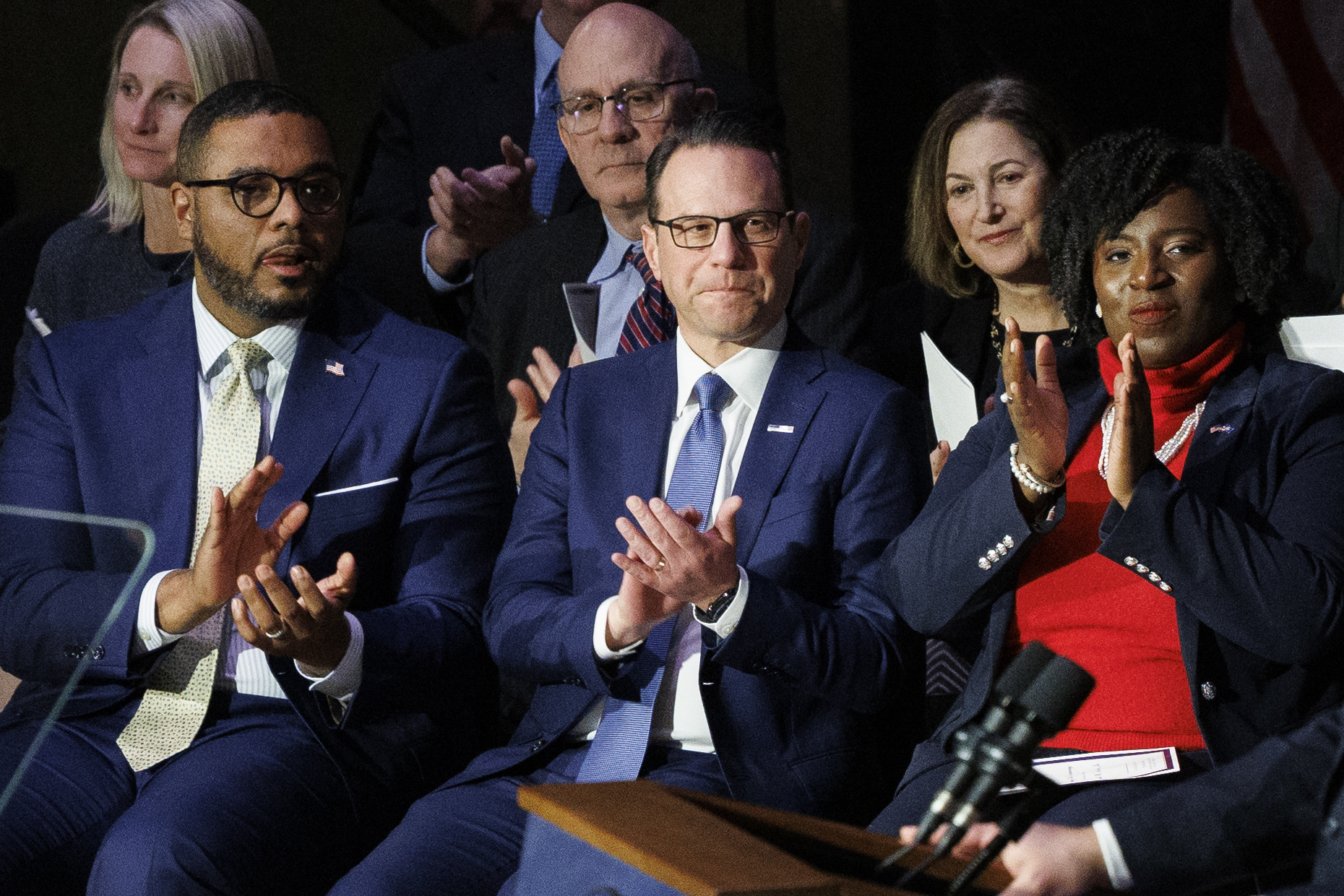
Pennsylvania politicians (from left) Lt. Gov. Austin Davis, Gov. Josh Shapiro and State House of Representatives Speaker Joanna E. McClinton last January attending the swearing-in ceremony of Attorney General David W. Sunday, Jr. in Harrisburg.
Instead, Lt. Gov. Austin Davis hosted a solo fundraiser for their joint reelection ticket.
“There’s a lot of demands on the governor’s time,” Davis said following a speech at the annual luncheon hosted by the Pennsylvania Manufacturers’ Association.
The Third Congressional District race was the talk of the town
Three of the candidates vying to replace retiring U.S. Rep. Dwight Evans in the Third Congressional District had a busy weekend in New York. State Sen. Sharif Street, pediatric surgeon Ala Stanford, and State Rep. Morgan Cephas made the rounds.
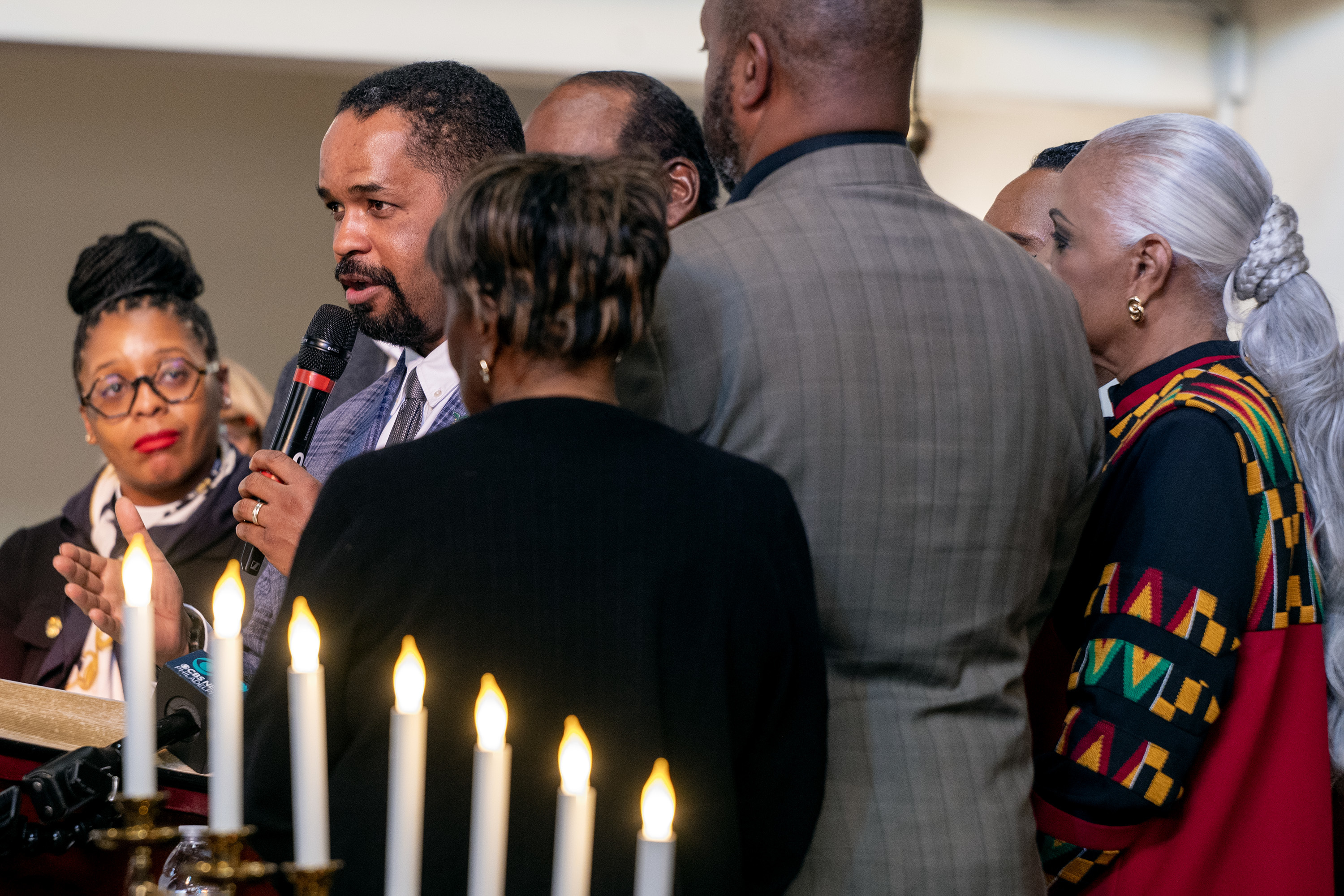
Sharif Street speaks from the pulpit of Mother Bethel A.M.E. church Sunday, Nov. 2, 2025 as the Black Clergy of Philadelphia and Vicinity holds a press conference with other community and political leaders to discuss the negative impacts of the ongoing government shutdown. Mother Bethel Pastor Rev. Carolyn Cavaness is at left.
Stanford held a somewhat star-studded fundraiser Thursday evening, hosted, according to a posted listing for the private event, by Hamilton actor Leslie Odom Jr. (who did not attend but lent his name).
Not spotted: StateRep. Chris Rabb, who is running as an anti-establishment progressive.
“That’s not really my thing,” he said in a text message.
The Parker-Johnson relationship was a hot topic
Philadelphia City Council wrapped up its final meeting of the year the day before the Pennsylvania Society began, and the lawmakers gave the chatterati plenty to talk about in Manhattan, with a dramatic close to the session.
One major topic of conversation in New York: What did Council’s recent conflict with Mayor Cherelle L. Parker over her housing plan mean for the unusually tight relationship between Council President Kenyatta Johnson and the mayor?
The consensus: Mom and Dad were fighting, but they’ll probably patch things up.
“Disagreements between Council and mayor — it happens,” said Larry Ceisler, a Philadelphia-based public affairs executive whose firm hosted a packed party in Midtown on Saturday. “It’s the way the system is set up.”
City Council president Kenyatta Johnson speaking with Philadelphia Mayor Cherelle Parker in June 2024.
Johnson, he said, likely improved his standing with members by holding firm against a last-minute amendment Parker proposed to alter Council’s version of the housing plan’s budget.
Parker and Johnson both made the trek to Manhattan, along with Councilmembers Rue Landau, Nina Ahmad, Jamie Gauthier, Jeffery “Jay” Young Jr., Kendra Brooks, Katherine Gilmore Richardson, Jim Harrity, Cindy Bass, and Quetcy Lozada.
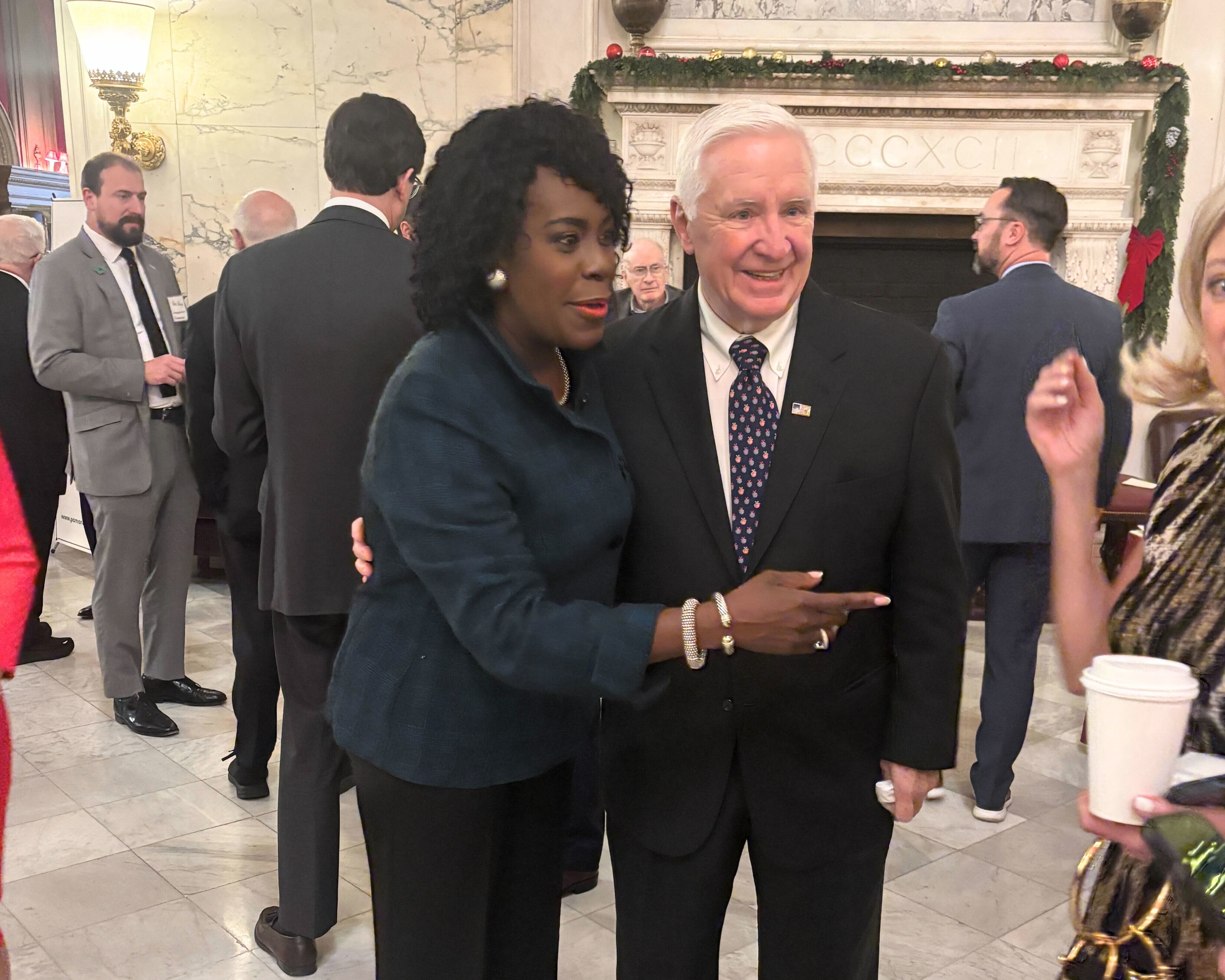
At the PMA luncheon, Parker embraced former Gov. Tom Corbett and gave a warm greeting to Auditor General Tim DeFoor, both Republicans.
Mayor Cherelle L. Parker (left) and former Gov. Tom Corbett at the luncheon hosted by the Pennsylvania Manufacturers’ Association on Saturday in New York.
At the same event, Republican U.S. Sen Dave McCormick shouted out Parker multiple times during his prepared remarks. The pair have forged a working relationship despite their partisan differences.
“We talk about challenges in the city that we’re facing right now, and the hope is that we can count on some folks as allies,” Parker said of meeting with members of the GOP.
She added: “It’s great to try to maintain those lines of communication.”
Special interests woo political elite
Many of the events were hosted by special-interest groups and corporations that have business with the government and are looking to win influence over glasses of Champagne.
There were the usual suspects and big law firms: Duane Morris always hosts a marquee late-night event on Friday in the sprawling Rainbow Room atop Rockefeller Center. Other firms including Cozen O’Connor, Ballard Spahr, and Saul Ewing also hosted cocktail parties.
The company, which has spent millions on political contributions and lobbying, threw a cocktail reception Thursday night at an Italian restaurant attended by a sizable contingent of state lawmakers.
But solutions seemed possible at the Pace-O-Matic party, as Central Pennsylvania Republicans and Philadelphia Democrats milled about the bar in an unlikely alliance.
Another bipartisan event — this one in a sunny room atop the vintage Kimberly Hotel — was hosted by Independence Blue Cross and AmeriHealth Caritas, insurance companies that have Medicaid contracts with the state.
Lawmakers often credit the weekend of partying in New York as a time for civil conversations in a neutral territory that ultimately benefit a philanthropic cause at the Pennsylvania Society’s annual dinner.
But Rabbi Michael Pollack, who leads the government accountability group March on Harrisburg, said the civility seems to come only when special interests are footing the bill.
“It’s absolutely embarrassing that our legislators can only interact with each other when a lobbyist sets up a playdate for them,” he said.
A Christmas budget ballad by DJ Ward
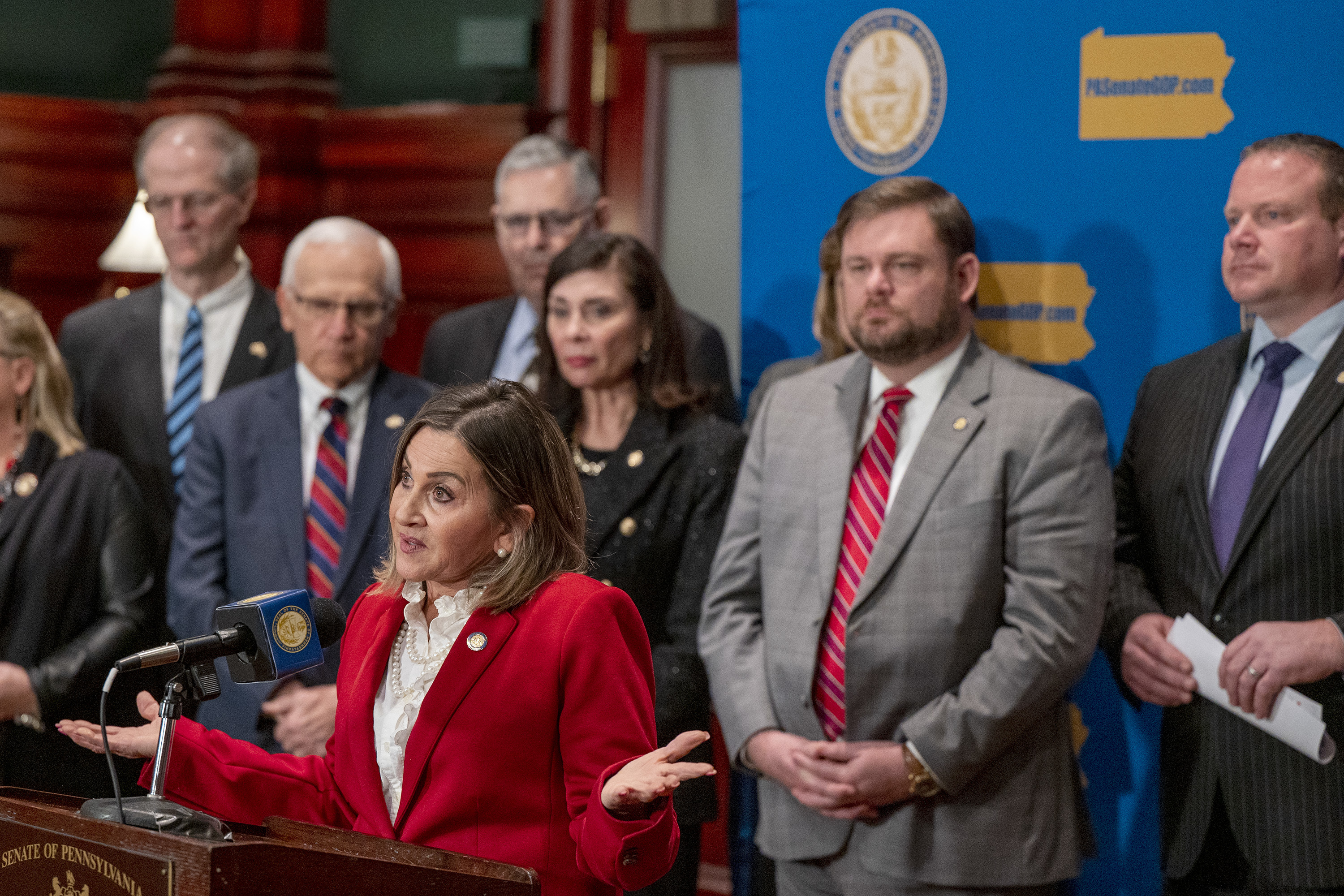
Senate President Pro Tempore Kim Ward debuted a hidden musical talent on stage at the annual bipartisan Pennsylvania Chamber of Business and Industry breakfast: She canwrite a Harrisburg holiday hit.
“I did live in Nashville for six years and no one discovered me,” she joked, before launching into a three-minute budget balladto the tune of “Deck the Halls.”
Ward (R., Westmoreland) debuted her song after an ugly budget battle that lasted 135 days and ended just last month. Punctuated by fa-la-las, she called out each of the top leaders who were in the closed-door budget talks.
Senate President Pro Tempore Kim Ward (R., Westmoreland) speaking in February 2024 at the Capitol in Harrisburg.
Ward is among Shapiro’s top critics. The two had hardly spoken since 2023 until Ward joined in-person budget negotiations at the end of October.
Shapiro will propose a new budget in February, restarting the budget negotiation process.Ward urged the group of leaders to take a break from fighting during the holiday season.
It’s Christmas and we’re all here together
Republicans and Democrats, and all who matter
Let’s celebrate the birth of Jesus
For the next three weeks, let’s not be egregious
Perhaps next budget season will inspire a mixtape.
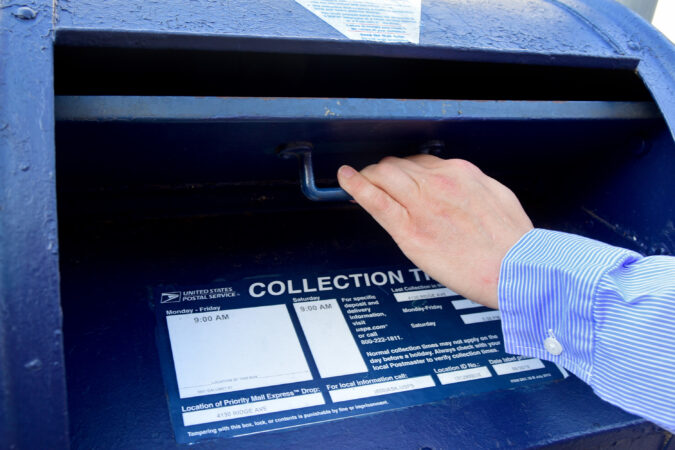
Approximately 3.4 million state agency letters intended for Pennsylvania residents — including some detailing whether they are eligible for health benefits or food assistance, or need to renew them — were not delivered to residents from Nov. 3 through Dec. 3, officials said Friday.
Late last week, Pennsylvania state officials discovered that a month’s worth of mail had never been sent to residents by a government-contracted vendor, resulting in a pileup of millions of unsent state communications. Once the issue was discovered, the state fired the vendor, Harrisburg-based Capitol Presort Services, and hired another vendor for a $1 million emergency contract to work through the backlog.
Now, the state says 1.7 million letters sent by DHS, which oversees the care of Pennsylvania’s most vulnerable residents and the delivery of critical public benefits, were not delivered because of the vendor issue, said spokesperson Brandon Cwalina.
Residents may not have received letters detailing whether they need to renew their health benefits or if they are required to submit additional information to continue receiving SNAP food assistance, Cwalina confirmed. Administrative hearing notices — which could determine someone’s eligibility for public benefits, appeals about alleged elder abuse, or approvals of new foster homes — as well as child abuse clearances were also among the affected mail, he said.
Cwalina said the contents of some of the letters were also communicated to some intended recipients virtually, if they had opted to receive email or text notifications. Child abuse clearances are available online.
SNAP cutoffs, which are administered by DHS, were set to begin under the federal government’s new work requirements in December and must be appealed within 15 days. The federal government has said it will not count the month of November as part of its three-month timeline to implement SNAP cutoffs, so eligibility didn’t “occur during the period affected by the mail delay,” Cwalina added.
It remains unclear whether any Pennsylvania residents lost access to their benefits due to the vendor issue that went unnoticed for a month, or if they are at risk of missing deadlines to maintain their benefits. It’s also still unclear how many DHS hearings had to be rescheduled — and the impact of those delays on the care of Pennsylvania’s most at-risk residents.
Another 1.6 million letters from the state Department of Transportation were not delivered last month, including driver’s license and vehicle registration renewal invitations, driver’s license camera cards, vehicle registration cards, and address card updates, said Paul Vezzetti, a spokesperson for the Department of General Services.
Driver’s license suspensions were not impacted by the stalled mail. Vehicle registration and license renewal registrations are sent three months in advance, so anyone who was due to receive one at the start of November will have until February to submit it, Vezzetti said earlier this week.
All of the unsent letters from PennDot and DHS were successfully mailed by a new vendor this week and should reach residents within a few days, Vezzetti said.
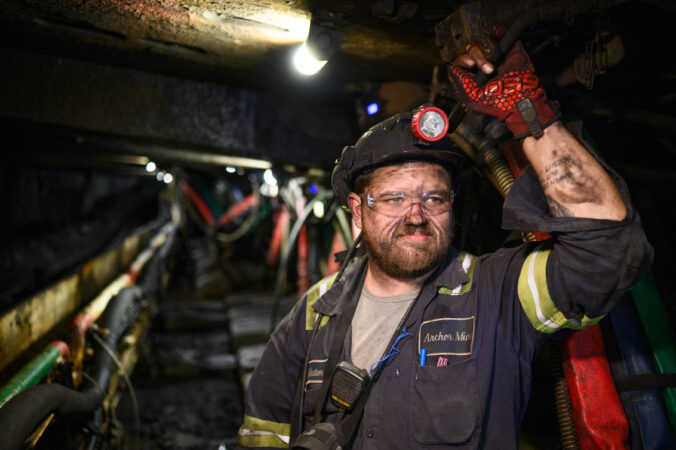
President Donald Trump professed his admiration of miners Tuesday night at his Poconos rally, contending the brave workers are so enamored of their profession that Trump wouldn’t be able to convince them to swap jobs with anyone — including himself.
“I love miners. … They wouldn’t trade jobs with me if I gave them a beautiful, magnificent penthouse in the middle of Manhattan, where I used to live — if I gave them the most beautiful penthouse — they wouldn’t take it,” Trump told the crowd at the Mount Airy Casino Resort in Mount Pocono.
“They’d rather go 10,000 feet underground and dig. That’s what they want.”
Can that be true?
Trump has long extolled the virtues of “beautiful, clean coal,” as he calls it, during nearly a decade of campaigning in the Keystone State.
President Donald Trump makes his first stop on an “economic tour,” in Mt. Pocono Pa., Tuesday, December 9, 2025 .
But would miners really prefer to toil in the damp darkness, somewhere between the buried dead and the devil, rather than run the free world in a clean blue suit, with access to a lavish high-rise in the gorgeous sunshine they forsake eight hours a day?
“Yes, of course,” said Edmund Neidlinger, 75, a fourth-generation coal miner who dug black Pennsylvania anthracite in Schuylkill County and its environs for 40 years. He now works as mine foreman at the Lackawanna Coal Mine Tour, a Scranton tourist attraction.
“If I was offered any other job when I was mining, I would have turned it down,” he said. “And I wouldn’t have traded the life I led for a penthouse. No way.”
There is, Neidlinger believes, a passion just a few special people hold toward working with a band of headlamped brothers, risking entrapment, methane explosions, black lung from dust, and cave-echoing machine noise down in an inky coal seam to perform the ninth-most-dangerous job in the world (logging is the riskiest), as the Occupational Safety and Health Administration tells it.
“You fall in love with this job,” Neidlinger said. “Very few people can do it. Most miners feel like it’s in their blood.”
While it’s not in his veins, Trump has made coal mining a big part of his energy policy. The industry is declining, experts say, but he has signed executive orders to expand it, and has opened up new land for mining while directing agencies to scotch regulations that “discriminate against coal production or coal-fired electricity generation,” as one presidential order reads.
Not everyone agrees that tempting miners to abandon their coal mines would be all that difficult.
“I’m sure the average miner would turn down a jet plane, private island, and gold-plated toilet, too!” said a sarcastic Mark Ferguson, cofounder of Woodshed: An Appalachian Joint, an online magazine dedicated to the culture of the region responsible for an immensity of U.S. coal mined over the centuries.
Cautioning people not to romanticize the lore and lure of mining, Ferguson pointed out that “folks here literally had to go war with mining companies to be paid in real U.S. currency, not scrip that could only be used at the company store.
“They know the value of a dollar, and sure as hell wouldn’t turn a penthouse down.”
The thing about mining you have to understand is, for most people, it starts out as a job you have to do, said Bob Black, 68, who dug coal for half a century in Allegheny County.
As a young man, Black wanted to be a teacher, but after his father died, Black set the dream aside and descended into the earth to work at the higher-paying job to support the family.
“You go into the mine, blink your eyes, and you’ve been doing it for 30 years,” Black said. “By then, you can’t imagine doing anything else.”
There were “days you hate, and days you love,” said Black, who ultimately became a mine manager. “Every ex-miner would tell you they miss fighting Mother Nature — like when the roof falls in, or when you’re dealing with water coming in,” he said. “You can’t run to Ace Hardware for help. You find solutions.”
What you remember most, though, is the company of soot-faced guys, he said.
“It’s like a city down there, with 250 men working, spread out over 15 miles,” Black said.
“The camaraderie. That’s what I miss most.”
So does Black think Trump was right? Would he have refused to trade 50 years of fellowship and labor in perpetual midnight for anything in the world?
“Oh, no,” Black said. “I’d have taken the penthouse. For sure.”
Staff writer Julia Terruso contributed to this article.
Last year, the council voted to increase taxes 23% as federal COVID-19 relief dollars that had filled the county’s longstanding structural deficit began to run dry. That hike took effect in January.
The new 19% increase, which will take effect next month, will place Delaware County on stable financial footing, members of the council argued.
“Our primary responsibility is to ensure that this county is on solid financial footing. Make no mistake, absent this increase tonight that would not be the case. We would run out of money,” said Councilmember Kevin Madden, whose term on the board runs out this year.
The budget, Council Chair Monica Taylor said, would be the first truly balanced budget for the county in more than a decade.
The tax increase will translate to an additional $188 annually for the county’s average assessed home value of $255,000.
Taylor and the other council members said they didn’t take the increase lightly, but that it was a necessary step. Their Republican predecessors, they argued, went too long without substantially increasing taxes and left the county in dire straits when Democrats took control in 2020.
Amid inflation and shrinking federal funds, they said the last two years of increases were needed. And after increasing taxes 19% in 2026, they predicted taxes could be kept level in the future.
“If it comes down to it, next year rather than raise taxes I am going to be looking at cutting discretionary spending,” Councilmember Christine Reuther said Wednesday.
The proposed budget increased spending by just under 6% with the majority of new spending attributed to increased costs for employee health benefits, increased court costs, employee pay, and increases to the county’s SEPTA contribution.
“Our strategy is not just to increase revenue but to decrease expenses,” County Executive Barbara O’Malley said.
Over the course of several meetings and hearings ahead of the vote Delaware County residents showed frustration with the increase and doubt that 2026 would be the end of the hikes. They urged council members to find ways to cut the budget or to spread the increases out over more years.
“I own my home but I’m behind on my taxes because the taxes are so high,” resident Maureen Mitchell said in a Monday budget hearing. “Something’s gotta give for the seniors, we’re losing our homes.”
Although Democrats inherited a deficit when they took control of the council, residents pointed out that they also made significant expenditures in recent years, including the decision to deprivatize the prison, spending more on legal fees, and launching a health department. The majority of the health department is funded by state and federal dollars.
“Find some cuts and give taxpayers a break, then hold the line on future spending,” said Michael Straw, the chair of the Media Borough Republican Committee.
Cynthia Sabatini, an Upper Providence resident, asked council members to release a full list of what spending is discretionary and to spread the increase out over several years.
“Why does it have to be done in one fell swoop?” she asked Monday.
Councilmember Elaine Schaefer voted against the increase because she said she couldn’t justify such a steep hike during hard economic times.
“We do need to raise the revenue but in my opinion it’s too abrupt and causes too much of a hardship to do two really significant increases in a row,” Schaefer said Wednesday.
Delaware County is one of three of Philadelphia’s collar counties considering a tax increase this year. Montgomery County is poised to vote on a 4% tax increase next week while Bucks County is contemplating a tax increase to fill a $16 million deficit.
A Montgomery County Democratic Committee leader has set his sights on unseating a Republican state senator in the suburbs — part of a larger effort by Pennsylvania Democrats to flip the state Senate for the first time in 31 years.
Chris Thomas, the former executive director of the Montgomery County Democratic Committee, who lefthisroleatthe end of November to run for Senate, launched his bid on Wednesday to challenge State Sen. Tracy Pennycuick, a first-term senator representing parts of Montgomery and Berks Counties.
Thomas, 29, is also an Upper Frederick Township volunteer firefighter andtaught in a Philadelphiapublicschool for a year prior to his jump into politics. His campaign is focused on increasingpublicschoolfunding, finding a newfundingstream for masstransit, and making Pennsylvania more affordable for working people.
Pa. state Rep. Tracy Pennycuick (R., Montgomery County). (Photo: Pa. House of Representatives)
Thomas announced his campaign with dozens of endorsements from state and local elected officials, including five sitting senators from the Philadelphia suburbs. He also secured the endorsement of House Majority Leader Matt Bradford (D., Montgomery), another driving force behind the Democratic efforts to flip the state Senate in the 2026 midterm election in attempts to control all three branches of Pennsylvania’s government.
Pennsylvania is one of few divided legislatures in the country, where Democrats hold a narrow majority in the state House, 102-101, and Republicans control the Senate, 27-23.
Gov. Josh Shapiro, a Democrat, and House Democrats frequently butt heads with GOP Senate leaders. By flipping two seats next November, Democrats would tie the chamber 25-25 and Democratic Lt. Gov. Austin Davis would act as a tiebreaker. But Democrats are targeting four GOP-held seats, three of which are in the Philadelphia suburbs, in hopes of gaining control in the upper chamber for the first time in 31 years.
The GOP-controlled state Senate has been a thorn in the side of Shapiro and House Democrats, as the more conservative members of the GOP Senate caucus have objected to most spending increases and rejected top Democratic priorities, like a long-term revenue source for mass transit. The state budget, passed in November, was 135 days late, requiring school districts, counties, and social service providers to take out loans or lay off staff to continue operating during the monthslong standoff.
Mirroring national efforts to win control of congressional seats, Pennsylvania Democrats are targeting GOP-held districts that President Donald Trump won in 2024 but Shapiro carried in 2022. With Pennsylvania’s popular first-term governor and potential 2028 contender back at the top of the ticket — and a methodical, behind-the-scenes effort by Shapiro to orchestrate a decisive year for Democrats in 2026 — Democrats see it as possible this time around.
Thomas’ first order of business if he is elected to Harrisburg and Democrats flip the chamber: electing Democratic floor leaders in the chamber.
“No meaningful legislation moves in Harrisburg unless we fix who’s in charge, and right now Sen. Pennycuick is supporting a Senate leadership that’s failed working people,” Thomas said.
Pennycuick said she “welcomes this campaign as an opportunity” to talk about the successes she has achieved while serving in the state Senate, such as her support for public education funding, reducing overreaching regulations, and her bipartisan proposal to create safeguards around artificial intelligence.
Kofi Osei, a Towamencin Township supervisor and Democrat, has also announced his bid for Senate District 24, which stretches along the northwestern parts of Montgomery County and into parts of Berks County.
The state Senate Democratic Campaign Committee does not endorse candidates in a primary election, and will support whoever wins the Democratic nomination in Pennsylvania’s May 19 primary. However, State Sen. Vincent Hughes (D., Philadelphia), who chairs the SDCC, said Thomas’ candidacy is “the right time and the right moment.”
“I’m really excited about having a young person in there, generating young people and getting young people motivated,” Hughes added.
The state Senate Republican Campaign Committee, meanwhile, is fundraising off Democrats’ efforts to flip the state’s upper chamber, warning voters that Democratic special interest group dollars are already pouring in.
“State Democrats have made it clear their goal is to have a blue trifecta in Pennsylvania in 2026,” the SRCC wrote in a fundraising email Tuesday. “They know Senate Republicans are the last line of defense against Josh Shapiro and PA House Democrats far-left agenda.”
Thomas was a public school teacher for one year at the Northeast Community Propel Academy, teaching seventh-grade math and science. He comes from a family of educators, he said, but quickly realized he needed to get more involved to improve the education system and government services to better serve these students. He made the jump to politics to try to make change.
“I was sitting there, trying to feed my kids in the morning to make sure they had full stomachs to learn, having supplies to make sure they’re fully equipped for the day,” Thomas added. “I saw a system that wasn’t working for our students.”
If elected, Thomas would be Pennsylvania’s youngest sittingstate senator, and would join State Sen. Joe Picozzi (R., Philadelphia), 30, as part of a new generation of leaders hoping to shape the state’s future.
“Our generation has grown up during economic crashes, school shootings, endless wars, and now we’re watching our parents and grandparents struggle to retire with dignity,” Thomas said.
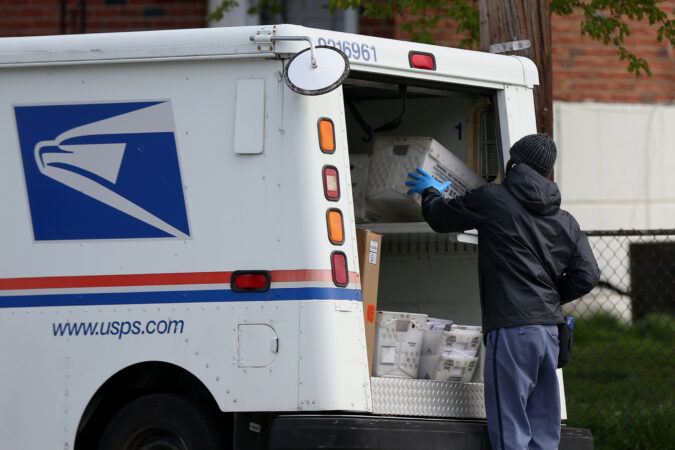
HARRISBURG — Approximately 2.7 million pieces of state agency mail never reached Pennsylvania residents last month after a state-contractedvendor failed to send them, affecting outgoing correspondence from the state Department of Human Services and the Department of Transportation, officials said Tuesday.
From Nov. 3 through Dec. 3, officials said, the affected state agency mail was never presorted and delivered by the vendor to the U.S. Postal Service, resulting in a backlog of millions of unsent state communications.
Late last week, Pennsylvania state officials discovered that a month’s worth of mail had never been sent to residents by the outside vendor, Harrisburg-based Capitol Presort Services LLC. Once the issue was discovered, the state fired the vendor for failing to fulfill its contract and hired another vendor to work through the backlog.
The state Department of Human Services, which oversees the care of the state’s most vulnerable residents and children, is still determining “the exact volume and categories of delayed mail,” said Paul Vezzetti, a spokesperson for the state Department of General Services. However, DHS was able to confirm that some services were not interrupted: residents waiting on Electronic Benefit Transfer (EBT) cards for receiving food assistance, mail sent by county assistance offices, and notices about suspended benefits duringthe federal government shutdown were not affected, Vezzetti added.
PennDot driver’s license and vehicle registration renewal invitations, driver’s license camera cards, vehicle registration cards, and address update cards are all among the routine correspondences that were never sent to residents over the last month, Vezzetti said. Driver’s license suspensions were not impacted by the stalled mail.Vehicle registration and license renewal registrations are sent three months in advance, so anyone who was due to receive one at the start of November will have until February to submit it, the agency said.
It was not clear on Tuesday which other state agencies’ mail had been impacted by the lapse in service.
All of the recently discovered unsent state agency mail was transported to USPS on Monday by the state’s new vendor and will be promptly delivered to residents by the Postal Service, officials said. PennDot customers should receive any expected mail from the time period of Nov. 3 to Dec. 3 within the next 7-10 days, Vezzetti added.
On Friday, the state secured a $1 million emergency contract with another mail presorting company, Pitney Bowes, to handle the multimillion-letter backlog.
The state had contracted with Capitol Presort Services since May 1, 2021. The company filed for bankruptcy in 2022, but had continued its work for the state until last week, when the agency mail pileup was uncovered.
It remained unclear Tuesday why it took a full month for officials to determine that 2.7 million pieces of state agency mail had not been reaching residents. It was also unclear how the issue was discovered by officials last week.
The unsent mail may prove to be a major headache for Gov. Josh Shapiro’s administration, depending on which state communications were not delivered to residents. The backlog could include critical correspondence relating to state services, such as health benefits or food assistance, among others.
State agencies regularly send communications by mail about an individual’s eligibility for services or benefits, renewals and appeals, and whether a person is due to appear at a hearing about that eligibility, and more.
“Agencies across the Commonwealth continue to evaluate any potential negative effects of this mail delay and are taking proactive steps to mitigate potential impacts on Pennsylvanians,” Vezzetti added.
A spokesperson for Gov. Josh Shapiro declined to comment.
According to the state’s contract with Capitol Presort Services from 2021, the vendor was responsible for delivering more than 16 million pieces of state agency mail each year. Almost all of this mail was to be for the delivery of the state’s First Class and Next-Day mail, which are among the U.S. Postal Services’ fastest delivery options.
Philip Gray, the president and owner of Capitol Presort Services, did not immediately respond to questions about his company’s bankruptcy and how the backlog of mail came about.
Capitol Presort Services advertises itself as a way for “companies to maximize postal discounts while improving their mail delivery,” according to its website. Mail presorting allows organizations to prepare mail with the proper bar codes and trays needed for easy delivery by USPS, which USPS offers to companies at a discounted rate.