Category: Pennsylvania Politics

  • Trump came to a Pa. casino to promise prosperity. Gamblers here had a mixed view of the economy.

    Trump came to a Pa. casino to promise prosperity. Gamblers here had a mixed view of the economy.

    A smattering of people pushed their luck Tuesday at the Mount Airy Casino Resort, tapping neon slot buttons, flipping dice onto felt craps tables, and wandering the rows of glowing, dinging machines.

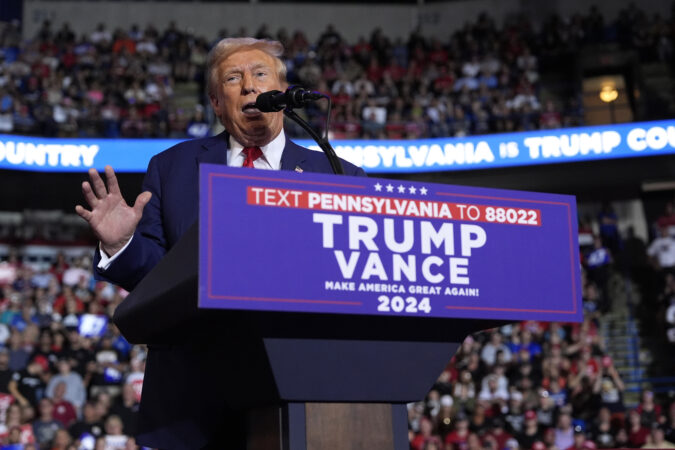
    A floor below, President Donald Trump was set to speak in a sprawling ballroom, where event staff hung a huge blue banner: LOWER PRICES, BIGGER PAYCHECKS.

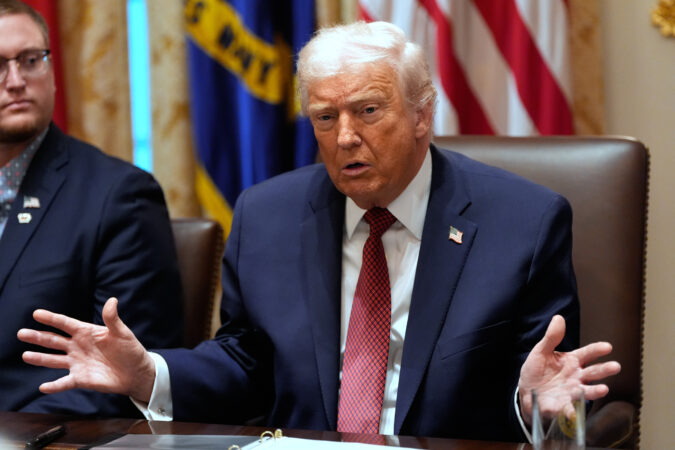
    Trump picked this casino in the Pocono Mountains to deliver the first big economic speech of his presidency as polls show Americans are feeling the pain of high prices — and many are blaming him.

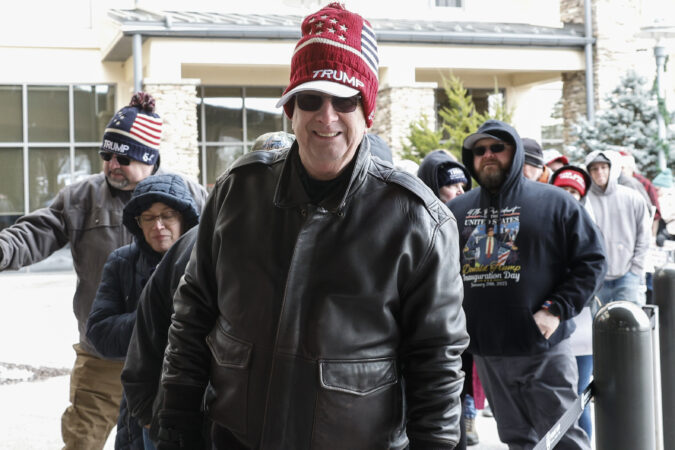
    Politically, the setting made sense. This northeastern corner of the state is where Trump saw the largest swing from 2020 to 2024, and it will be a key congressional battleground next year. It’s also a region home to a large population of aging, non-college-educated voters — the core of Trump’s comeback coalition.

    But the contrast at the casino was hard to miss: the steady slot machine chimes of financial risk and uncertainty above and a president’s promises of stability and revival on the floor below.

    How’s the economy working for Rosemary Migli?

    “It could be better,” said the 73-year-old retired bartender from Tobyhanna, taking a puff of a cigarette before winning 35 cents on a spin.

    Despite a frenzy of police and Secret Service, many gamblers, focused on their own troubles or celebrations, did not realize the president was coming. An older retired couple enjoyed an afternoon together with no obligations. Nearby, a recently widowed woman said the monotony of the slots helps her cope with her loss.

    Peter Jean-Baptiste celebrated his 33rd birthday at the casino with his fiancee. The Philadelphia-based couple are saving for a wedding next year.

    “It’s tough for everyone just trying to make a living, honest people trying to make a living,” Jean-Baptiste said. “One day you feel like [Trump’s] got your back, the next day he doesn’t.”

    Jean-Baptiste, who works in property insurance, said he has also seen housing prices rise. And, as a child of Haitian immigrant parents, he is struggling with how Trump’s anti-Haitian verbal attacks and immigration crackdowns have affected his family.

    “He does a bunch of hot takes and causes division between American citizens,” Jean-Baptiste said. “When, I feel, we really all just want to get along and get by.”

    Mount Pocono is a region with mixed fortunes: Wealthy retirees have second vacation homes here, while lower-income workers are employed in warehouses and hold up the tourism industry. The area is also a hub for New York City commuters who moved here for more affordable housing.

    “We live on a fixed income. We watch what we spend,” said Julie Dietz, sitting beside her husband, Glenn, as she played a buffalo-themed slot game. The Toms River, N.J., couple gamble for a few hours every now and then. She was a paralegal and he worked evaluating industrial facilities for safety before they retired.

    “We know what our limitations are,” Dietz, 71, said. “Yes, food prices have gone up, but I’ve also seen some things come down — gas prices in our area. And the economy took so many years to get to this point.”

    Dietz, who supported Trump in the last election, thinks an economic rebound is just going to take more time.

    “He’s been in office 11 months. Eleven months. So I feel full confidence that he is going to do what he said he’s going to do. Everybody wants things immediately.”

    Kathy F., who didn’t want to give her last name talking about politics and gambling, joined her husband at the casino Tuesday, despite her misgivings about losing money at a time when prices are going up.

    “I go to Costco and everything is $5 more than it used to be. That’s a lot,” she said, bundled in a puffy black coat as her husband gambled nearby.

    “I really don’t understand politics,” said the retired New York City civil servant, who voted for then-Vice President Kamala Harris last year. “It seems like they just fight with each other nonstop when all people want is to be able to afford to live.”

    As he stretched his legs between games, Stephen Miller — “not that Stephen Miller,” he clarified — laughed off the notion of going to see Trump in person a floor below.

    “If I want to see him, all I have to do is turn on the TV. He’s on at 12, he’s on at 3, he’s on at 5, seven days a week.”

    The 75-year-old retired contractor supports Trump, though, and called the economy “half-decent.” He said food prices are high but eggs have gone down.

    “The economy is glacial, so it moves slow. Democrats are definitely locked onto the affordability. But affordability means, what? It means whatever you want it to mean.”

    Miller glanced down at a few vouchers in his hand to set off for the next set of machines.

    “I’m not winning yet, but I will be and the Donald will be,” he said. “Give it time.”
  • President Trump is traveling to Pennsylvania Tuesday. Here’s what to know.

    President Trump is traveling to Pennsylvania Tuesday. Here’s what to know.

    President Donald Trump is expected to visit Northeast Pennsylvania today, promoting his economic agenda — including affordability and gas prices.

    The trip — which the White House confirmed with The Inquirer last week — will include stops in Scranton and a rally in Mount Pocono.

    Trump is no stranger to northeast and north-central Pennsylvania. He visited the region 13 times, including stops in Wilkes-Barre Township and Scranton on his second-term campaign last year. He had a particularly strong performance in Northeast Pennsylvania last year, with some of his top gains compared to the 2020 election coming from Lackawanna and Luzerne counties.

    It’s part of an expected national tour where Trump will tout his efforts to lower inflation ahead of the 2026 midterm elections in battleground areas. Those races, including ones in northeastern and north-central Pennsylvania, will determine whether Democrats or Republicans control Congress.

    Trump’s visit Tuesday appears to be his first to Pennsylvania since attending an energy summit in Pittsburgh in July.

    Affordability — a concept Trump has rebuked in the past, calling it a “fake narrative” — remains a top issue for voters, including locals. Trump continues to claim that prices have fallen since he took office in January, despite reports of the opposite. A CNN fact-checking report from November said prices and inflation have increased. Trump’s tariff policies have contributed to those increases, according to experts.

    When and where will Trump be in Pennsylvania?

    Trump has obligations at the White House and in D.C. until at least 3:15 p.m. according to his public schedule.

    His first publicly visible scheduled appearance in Pennsylvania is at 6:10 p.m. at the Mount Airy Casino Resort in Mount Pocono. As of Tuesday morning, registration to attend the remarks were still open.

    This story will be updated. Staff reporter Fallon Roth contributed to this article.

  • Gov. Josh Shapiro’s administration just fired a vendor for failing to send state agency mail, impacting an unknown number of residents

    Gov. Josh Shapiro’s administration just fired a vendor for failing to send state agency mail, impacting an unknown number of residents

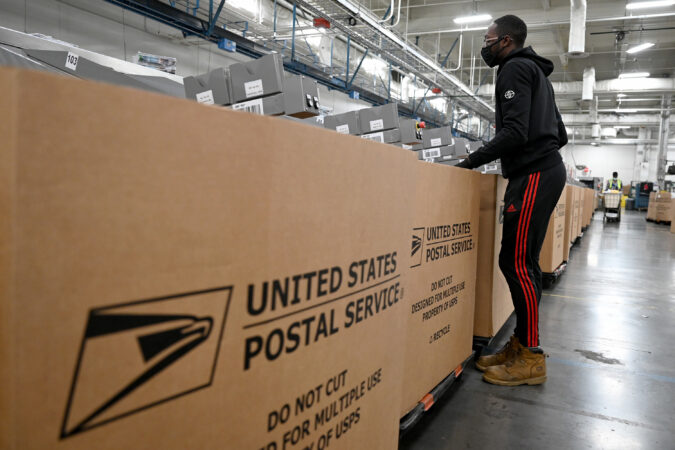
    HARRISBURG — An unknown amount of mail from Pennsylvania state agencies to residents has gone undelivered, Gov. Josh Shapiro’s administration discovered this week.

    The Pennsylvania Department of General Services said in a statement Friday that it has ended its contract with an unidentified vendor that pre-sorts state agency mail before delivering it to the U.S. Postal Service to be sent to residents around the state. The department discovered in the last 48 hours that the vendor “had been failing to deliver Commonwealth mail to constituents,” said Paul Vezzetti, a spokesperson for the department.

    The state is still determining how much and what type of mail was not delivered to Pennsylvania’s residents. It was unclear Friday why the vendor failed to send the state’s mail, where the mail was located when it was not in the state’s possession, how long the mail went unsent, and how the failure was not identified sooner.

    The unsent mail could prove to be a major headache for Shapiro’s administration, depending on the magnitude of the issue and which state communications were not delivered to residents.

    After discovering the backlog, the Department of General Services rapidly hired a new vendor to sort and deliver the unsent mail “as quickly as possible,” Vezzetti said. The unsent mail has already been transferred to the new vendor and the state estimates that it will be mailed by early next week.

    According to an emergency contract made public Friday, the state hired technology solutions company Pitney Bowes for $1 million, citing its preparedness to process and resume mail operations. If the services were not immediately restored, it “could result in missed deadlines, loss of services, delayed benefits, legal exposure, and operational disruptions for multiple agencies and constituents,” according to contract.

    The unsent mail from unspecified state agencies could include critical communications relating to state services, such as health benefits or food assistance, among other potential communications. State agencies send communications by mail about an individual’s eligibility for services or benefits, renewals and appeals, and whether a person is due to appear at a hearing about that eligibility, and more.

    Vezzetti declined on Friday to confirm which agencies were impacted by the stalled mail, or to name the vendor that had been fired.

    Pennsylvania lawmakers last month ended a 135-day-long state budget impasse that required counties, schools and social service organizations to take out loans or limit their services during the protracted budget fight.

    The state is now taking steps to “carefully assess and mitigate impacts” of the mail delay and adjust deadlines for impacted residents.

    Staff writer Ximena Conde contributed to this article.

  • Montco immigration advocates urge all towns to limit collaboration with ICE as the agency creates ‘a crisis in our neighborhoods’

    Montco immigration advocates urge all towns to limit collaboration with ICE as the agency creates ‘a crisis in our neighborhoods’

    Montgomery County immigration advocates renewed calls for more municipalities to approve policies that would limit police and local government cooperation with U.S. Immigration and Customs Enforcement as President Donald Trump’s administration ramps up enforcement.

    Advocates have been calling for welcoming policies across the county for months but advocates estimated that as of Wednesday, only six of Montgomery County’s 62 municipalities had enacted policies. Even those, they argued, were lackluster.

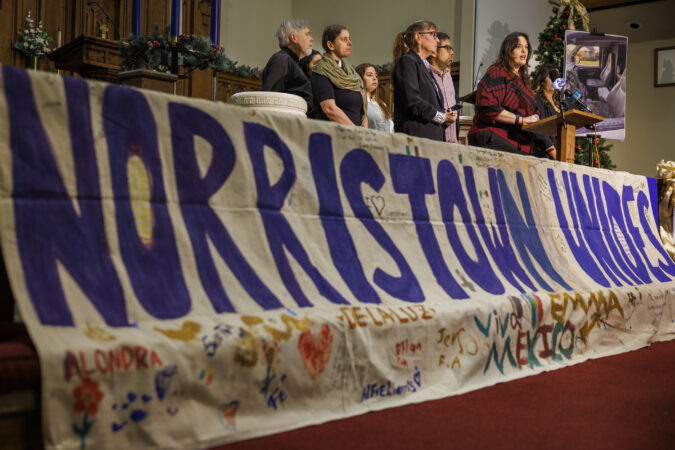
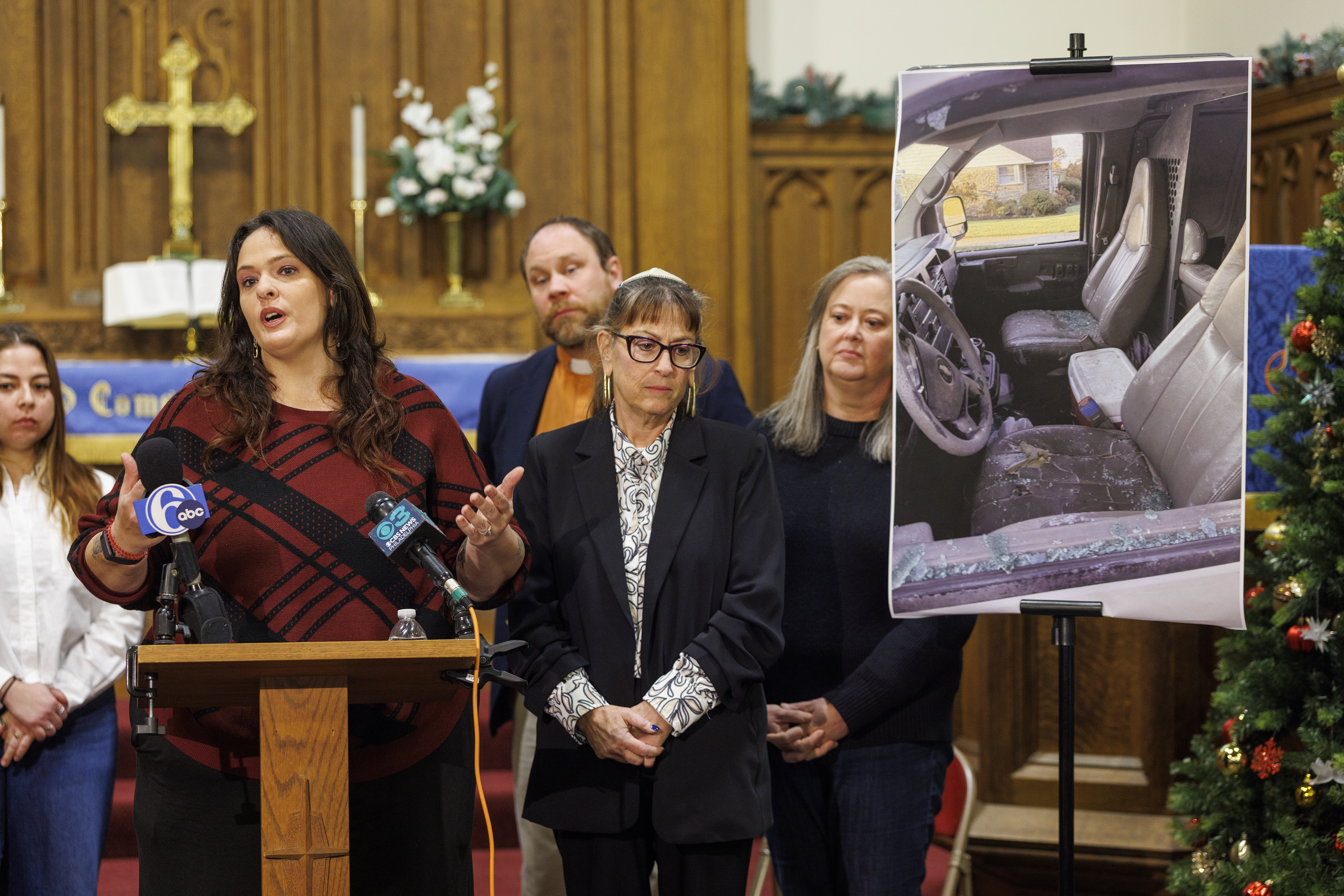
    Montco Community Watch, a grassroots group of activists who track and document ICE enforcement, said Thursday during a news conference at a West Norriton church that the need for more local governments to set their own is dire.

    “ICE has created a crisis in our neighborhoods, and we cannot afford silence, mixed signals, or leadership that only reacts once harm has already happened,” said Stephanie Vincent, a leader of Montco Community Watch.

    Ambler, Springfield, West Norriton, Abington, Norristown, and Cheltenham had approved policies, advocates said, though they are mostly internal policies that advocates say don’t do enough to protect immigrants.

    Stephanie Vincent, the leader of Montco Community Watch, speaks at a news conference about ICE activity in Montgomery County at Ascension Church in West Norriton Thursday.

    The sense of urgency was palpable Thursday as ICE dramatically expands its presence and visibility, both in the Philadelphia region and across the United States.

    Montco Community Watch has documented at least 97 detentions and 30 suspected ICE detentions in Montgomery County, and “there are likely more detentions that we have not heard about,” Vincent said.

    The group was joined Thursday by representatives for Indivisible Greater Jenkintown, a progressive advocacy group, and the Pennsylvania Immigration Coalition at Ascension Church. Advocates said that strong welcoming policies, sometimes referred to as sanctuary policies, would outline that police will not honor ICE detainer requests without a judicial warrant, that local government resources will not be spent on ICE, and that communities will feel safe to access resources without fear of federal agents.

    The policies that advocates are striving for are often referred to as sanctuary policies, and Trump has threatened to strip federal resources from local governments that do not cooperate with ICE.

    Advocates had been working since the summer to encourage municipalities across Montgomery County to approve policies limiting cooperation with ICE. The county, particularly the Norristown area, had become a hot spot for ICE enforcement in the early months of the Trump administration.

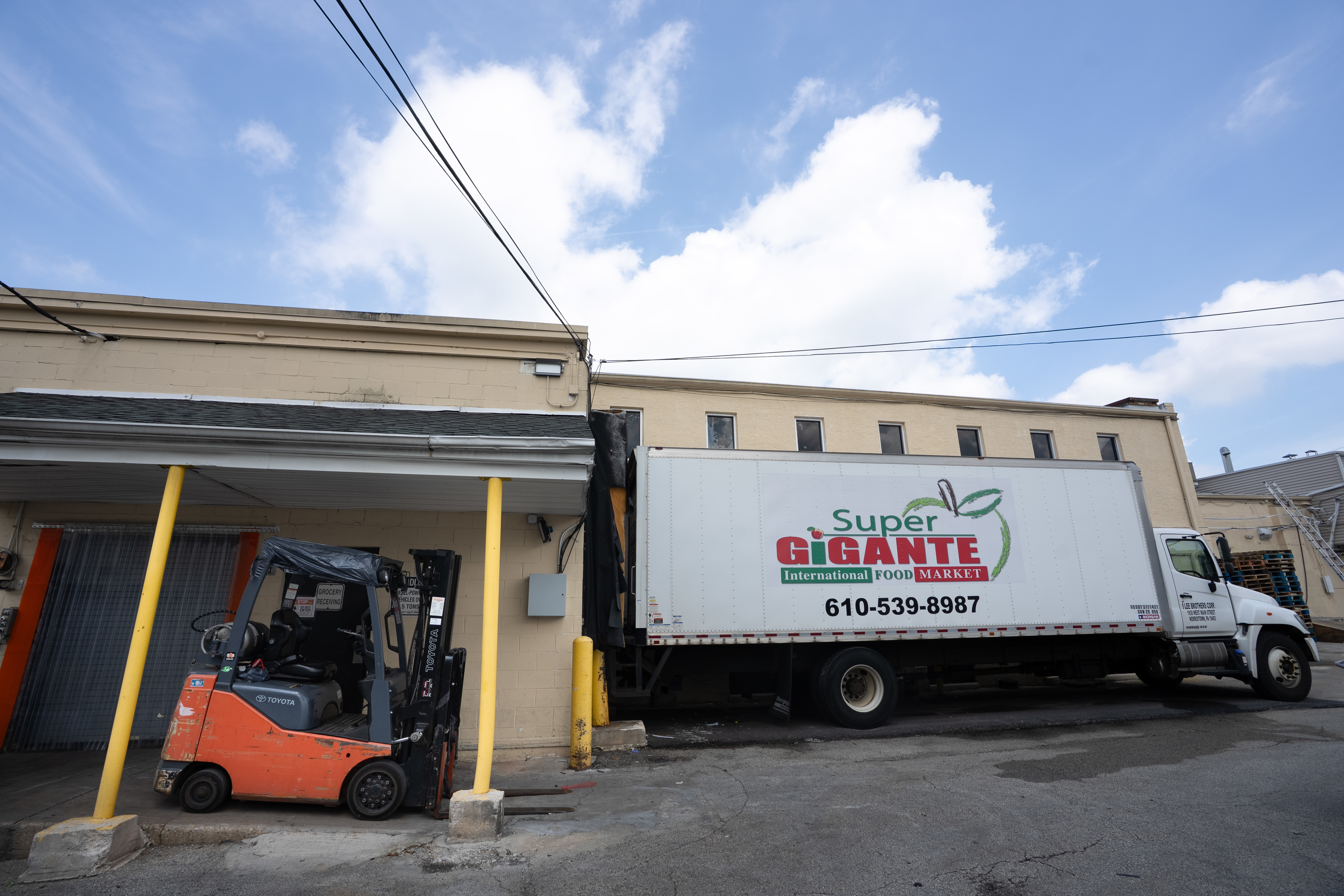
    In July, video of a raid at a West Norriton grocery store appeared to show local police assisting the federal agency; the township said federal authorities had sought assistance to retain order while they served a warrant for tax evasion.

    Super Gigante International Food Market, 1930 W. Main St., in West Norriton on July 16.

    Advocates pushed county leaders to enact a welcoming resolution, but officials consistently reiterated that they lacked any control over local police forces.

    Despite months of requests, Montgomery County has not passed a formal ordinance or resolution declaring itself a welcoming county. The county’s Democratic commissioners have cited limits to their power, concern about creating a false sense of security, and a preference for internal policy changes.

    Earlier this year, county officials approved a policy limiting communication between county employees and ICE and said they would not honor prison detainer requests without warrants.

    Advocates said Thursday that they strongly prefer limitations on local collaboration with ICE to be enshrined in ordinances rather than enacted through internal policies or statements, which can lack transparency and accountability and are not always enforceable.

    “None of [the six municipalities’ policies] are complete and the most visible problem on all of them is a lack of any accountability,” said Rabbi Elyse Wechterman, of Indivisible Greater Jenkintown.

    Julio Rodriguez, from the Pennsylvania Immigration Coalition, added that a lack of clear boundaries between local policies and federal agents creates more confusion and worry in the community.

    “It reinforces that fact the people just don’t know what’s happening,” Rodriguez said.

    Staff writer Jeff Gammage contributed to this article.

  • Donald Trump will visit Northeast Pa. on Tuesday to promote his economic agenda ahead of 2026 midterms

    Donald Trump will visit Northeast Pa. on Tuesday to promote his economic agenda ahead of 2026 midterms

    President Donald Trump will visit Northeast Pennsylvania on Tuesday to promote his economic agenda, including efforts to lower inflation, the White House confirmed to The Inquirer on Thursday.

    The trip will kick off what is expected to be a national tour of Trump touting his economic policies ahead of the 2026 midterms, when Democrats and Republicans will battle for control of Congress.

    The specific location for Trump’s visit has not yet been made public, but Northeast Pennsylvania will be a major battleground in next year’s midterms.

    Democrats believe that they can oust freshman Republican U.S. Rep. Rob Bresnahan, of Lackawanna County, threatening the GOP’s slim House majority. Democrats are also specifically targeting the districts of U.S. Reps. Brian Fitzpatrick, of Bucks County; Ryan Mackenzie, of Lehigh County; and Scott Perry, of York County.

    Trump endorsed Bresnahan and most of Pennsylvania’s GOP delegation on his social media platform, Truth Social, last month. Scranton Mayor Paige Cognetti, a Democrat, is mounting a campaign to unseat Bresnahan, who won by roughly a percentage point last election.

    Affordability — which Trump called a “fake narrative” used by Democrats — has been a top issue for voters, including during November’s blue wave when Democrats won local contests throughout Pennsylvania, in addition to the gubernatorial races in Virginia and New Jersey.

    The president has repeatedly claimed that prices have fallen since he took office in January, but a CNN fact-checking report from November said prices and inflation have increased. Many experts have pointed to Trump’s tariff policies as contributing to increased prices.

    Tuesday’s visit appears to be the president’s first to the Keystone State since attending an energy summit in Pittsburgh in July. In November 2024, Trump defeated former Vice President Kamala Harris and won the presidency with the help of battleground Pennsylvania, garnering more votes than any statewide Republican candidate in history.

    The president had a particularly strong performance in Northeast Pennsylvania. last year, making some of his top gains compared with his 2020 performance in Lackawanna and Luzerne Counties.

  • Delaware County approves a nondiscrimination ordinance protecting LGBTQ+ residents

    Delaware County approves a nondiscrimination ordinance protecting LGBTQ+ residents

    Delaware County became the third of Philadelphia’s collar counties to enact a local policy protecting LGBTQ+ residents from discrimination.

    The suburban county’s all-Democratic council voted unanimously Wednesday evening to empower a human relations commission established earlier in the year to adjudicate claims of discrimination based on sexual orientation and gender identity and expression, barring discrimination against LGBTQ+ residents among a wide list of protected classes.

    The vote comes after Chester and Montgomery Counties approved similar policies earlier this year as President Donald Trump targets the LGBTQ+ community through policy and rhetoric.

    Delaware County had been working toward the ordinance for months, introducing the policy in August before hitting pause as county council members and attorneys worked through the details.

    At least 79 local governments across Pennsylvania, including Philadelphia, have enacted nondiscrimination ordinances, according to the Pennsylvania Youth Congress, which advocates for LGBTQ+ youth.

    “Now almost an entire half of the state is now protected by a [local] human relations commission,” Kyle McIntyre, the organizer of Delco Pride, said in an interview Thursday.

    The ordinance mirrors a state policy barring discrimination and establishing a human relations commission to adjudicate complaints.

    While regulations for the state commission bar discrimination based on gender identity and sexual orientation, Delaware County’s policy goes a step further to specifically prohibit such discrimination in law.

    The ordinance provides Delaware County residents a local venue to bring complaints before taking concerns to the Pennsylvania Human Relations Commission.

    “This ordinance reflects what good local government should be,” Monica Taylor, a Democrat who chairs the county council, said Wednesday.

    Some residents, including Delaware County Controller Joanne Phillips, a council member-elect, raised concerns that the ordinance could become expensive in a county that is already looking at a potential 19% tax increase for next year.

    Phillips, a Democrat, said she supported the concept of the commission but worried it would cost more than anticipated once a board began adjudicating cases.

    County officials estimated the commission would cost the county just $3,000 annually and said adjustments could be made to the commission’s role if enforcement of the ordinance became too costly.

    Critics of the policy on Tuesday claimed, without evidence, that the ordinance would dampen free speech in the county, allowing fines against those who say offensive things.

    Charlie Alexander, a far-right activist who unsuccessfully sought the GOP nomination for the county council earlier this year, arrived in a dog costume with a rainbow blanket draped over his head. He argued the ordinance was an unconstitutional infringement on First Amendment rights.

    “Don’t infringe on our rights and you won’t be made to feel very uncomfortable in your homes and neighborhoods,” he threatened the council members.

    The ordinance, however, does not regulate private speech. It bars discrimination in housing, employment, education, healthcare, and public accommodations.

    “This is not infringing on speech. It’s really clear what practices are deemed unlawful,” council member Kevin Madden, a Democrat, said.

    Taylor said the commission, which was first approved over the summer, will be staffed with volunteers early next year and prepared to take cases by next summer.

    “This ordinance provides a fair, reliable, and community-focused way to address concerns,” she said.

    This story has been updated to clarify the name of the commission.

  • The political operatives who powered Mamdani’s and Fetterman’s campaigns are trying to win back House seats in Pa.

    The political operatives who powered Mamdani’s and Fetterman’s campaigns are trying to win back House seats in Pa.

    Eric Stern drove out to Erie last January and got a slice of pizza with Christina Vogel at Donato’s, the downtown shop she has owned for nine years.

    The small-business owner and political novice was interested in running for county executive against a vulnerable Republican incumbent. Stern, a longtime Democratic political operative, was part of a newly founded firm looking for candidates to help flip Republican-held seats.

    “It all started with trying to find candidates who were, frankly, better messengers for the values we had and the things we cared about,” Stern said. “She was someone who understood the urgency of this moment as a small-business owner and mom but just as critically was not part of this broken system that had Democrats losing in the past.”

    A year later, Vogel is the newly elected Democratic county executive after flipping one of the most famously swingy counties in the nation, widely seen as a presidential bellwether. And Stern’s firm, FIGHT, a national Democratic media consulting agency based in Pennsylvania, could play a critical role in elevating other Democratic challengers in 2026, when control of Congress is up for grabs.

    FIGHT is working with Scranton Mayor Paige Cognetti in Northeast Pennsylvania and firefighter Bob Brooks in the Lehigh Valley. U.S. Rep Rob Bresnahan and U.S. Rep. Ryan Mackenzie, the freshman Republicans who represent those areas, each won by about a percentage point in 2024, making them two of the most vulnerable incumbents in next year’s elections.

    This past year FIGHT’s six-person team helped Zohran Mamdani win the New York mayoral race, the buzziest contest of the cycle. The Philadelphia-based agency had a hand in the Pennsylvania Supreme Court slate’s retention, county executive wins in Lehigh and Erie, and two successful Democratic judicial campaigns in the state.

    The firm was cofounded by Rebecca Katz, a Central High graduate who lives in New York; Philadelphia ad-maker Tommy McDonald; and Julian Mulvey, an architect of Sen. Bernie Sanders’ 2016 presidential campaign.

    “New York isn’t Pennsylvania and Pennsylvania isn’t New York,” Katz said of lessons learned from Mamdani’s win, also noting primaries and generals are extremely different. “But there’s a universal desire for authentic candidates laser-focused on the affordability crisis.”

    The strategists started the firm in January 2025 after Democrats suffered across-the-board losses in 2024, a year she helped Sen. Ruben Gallego defy that trend and win an open seat in Arizona.

    Stern, a Pittsburgh native and resident, and McDonald both quit their jobs to sign on with the agency.

    Their most basic strategy is creating authentic campaigns that reflect the communities the candidates are running in, clear economic messaging, and trying different things across media platforms to win back working-class voters, Katz said.

    “We try to think about what makes an ad pop, what makes people look up from their phone, or, if they’re on their phone, what makes them stay there,” Katz said. “It can’t look like everything else on TV.”

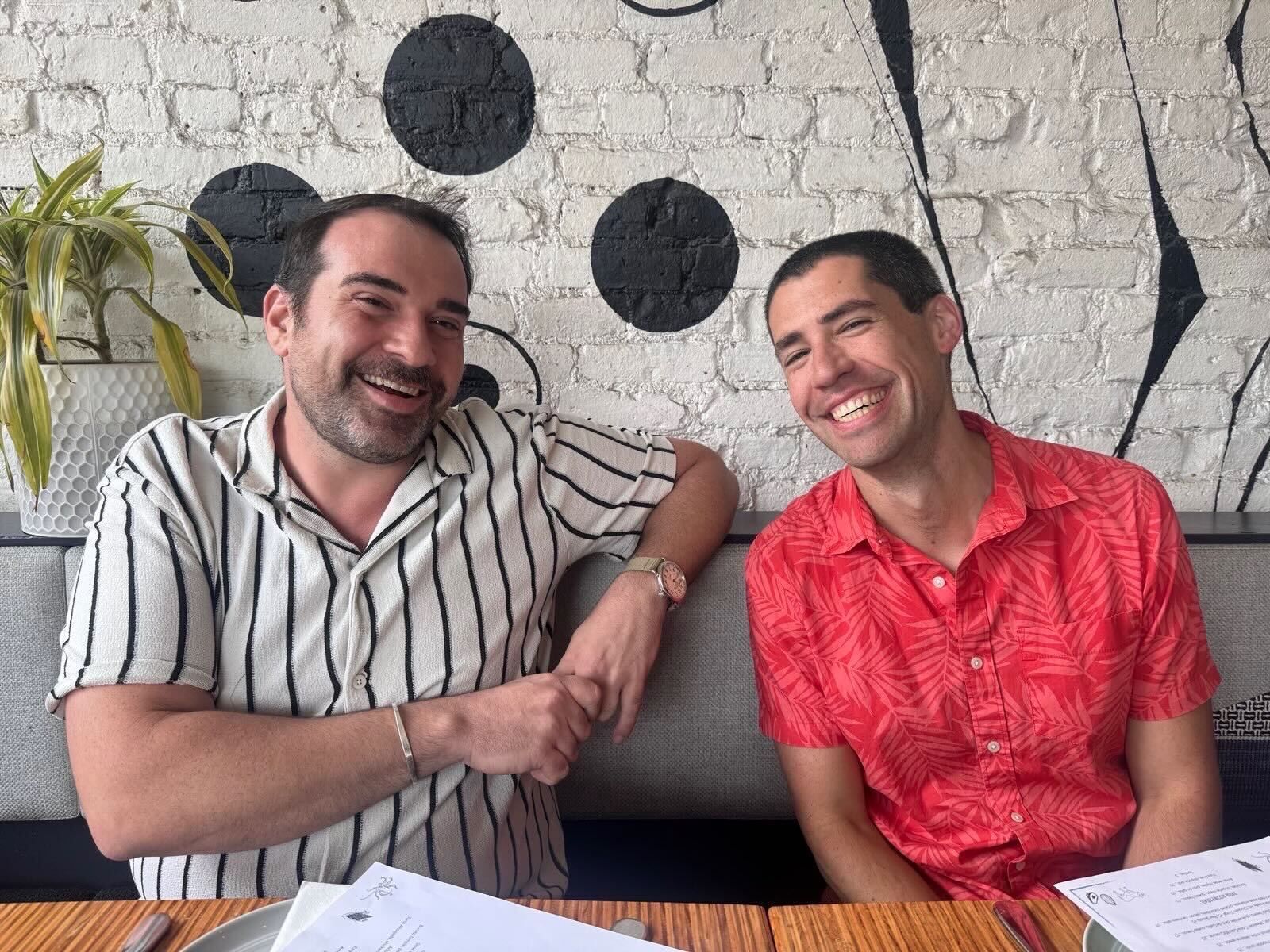
    Tommy McDonald (left), and Eric Stern (right), are longtime Democratic media consultants now with FIGHT, a Philly-based agency working on two key Congressional races in Pennsylvania in 2026.

    ‘A new road map’

    In the November election, standing out meant ads about the state Supreme Court race that featured Pennsylvanians talking directly to the camera about how they felt their rights had been protected by the three justices on the ballot, who were all first elected as Democrats. Sixteen Pennsylvania counties that Vice President Kamala Harris lost wound up voting to retain the judges in the most expensive judicial contest in state history.

    The victory provided a blueprint for Gov. Josh Shapiro and other Democrats running in Pennsylvania in 2026, said McDonald, who made the ads for the retention race.

    “These are the typical working-class voters that Democrats are bleeding,” McDonald said. “It’s Beaver County. It’s where the New York Times visits diners. It showed us there’s a new road map for how to get persuadable voters in Pennsylvania. We know where they are now.”

    Stern, Katz, and McDonald all worked on Fetterman’s 2022 campaign, a race that included the unprecedented challenge of navigating a candidate’s stroke days before the primary and running a general election campaign as he recovered.

    They wound up winning awards for the campaign, which featured bright yellow and black branding and creative trolling of Republican nominee Mehmet Oz’s New Jersey ties. McDonald had the idea to fly a banner plane along the Jersey shoreline: “HEY DR. OZ, WELCOME HOME TO NJ! ♥ JOHN,” it read.

    They called that July, which also included Jersey Shore cast member Nicole “Snooki” Polizzi making a surprise cameo, “New Jersey Summer.”

    “We all learned politics here,” McDonald said of his home state. “The idea is to try to do things differently, redefine Democratic campaigns.”

    This year, political headwinds certainly helped Democrats, but hyperlocal messaging did, too, the strategists argue.

    Stern worked with Vogel’s campaign in Erie to create ads that looked like a pizzeria’s commercials, to stand out from the cookie-cutter format.

    ”In Erie County, we know good things start with the right ingredients,” the ad says as a hand scatters toppings atop a pie.

    Another ad showed Republicans and self-proclaimed three-time Donald Trump voters on-camera saying they were supporting Vogel over the incumbent, Republican Brenton Davis. A Democrat cannot win in the county without some independent and Republican support.

    “They were all people I met on the campaign trail,” Vogel said of the ad. “We really focused on what matters most with affordability, how stretched thin people are across the U.S., and just focused relentlessly on the same message and reminding people why voting matters.”

    And in Lehigh County, a slightly bluer but still purple region, Stern worked with State Rep. Josh Siegel’s campaign for county executive. That was more of an offensive against Republican Roger MacLean, a former Allentown police chief, whom ads described as a “grifter and a disgrace,” highlighting his multiple beach houses amid an affordability crisis.

    “We came up with an ad strategy that basically determined the most important thing was to beat the crap out of this guy,” Stern said.

    “I think Democrats have pulled their punches for way too long,” he added. “There’s a difference between fighting dirty and fighting back, and we have to be in a position where we’re willing to say, ‘We’re here to fight.’”

    Siegel, 32, soon to become the youngest county executive in Pennsylvania history, credited the agency with urging him to be specific in his pitch to voters.

    “For me, the problem with the way we communicate as Democrats is part of the professional consultant class has created this art form of saying a lot and saying nothing,” he said. “I think people have a particularly adept bulls— detector and they are tired of what is just the most inoffensive, poll-tested, style-over-substance speak we’ve perfected.”

    As they look to next year, Stern thinks anti-corruption will be the key issue in the race against Bresnahan in the Northeast. Bresnahan has faced criticism for stock trading while in Congress. Cognetti, his opponent, has been the mayor since 2020, when she won on an anti-corruption platform.

    While affordability runs across races, Stern said campaigns cannot make the mistake of being too general in their messaging. “There’s no one right message that cuts across all these districts,” he said.

    “Too many folks are running the same ads or calling the same plays they would have a decade ago. We are in a different world. Things have totally changed in a million different ways.”

  • Trump admin threatened to withhold SNAP funds in Pa. and N.J.  unless recipient data is released. N.J. AG called stance ‘immoral’

    Trump admin threatened to withhold SNAP funds in Pa. and N.J. unless recipient data is released. N.J. AG called stance ‘immoral’

    The Trump administration’s threat to withhold money that Democratic-run states use to administer the SNAP food aid program unless officials release personal information about individual recipients puts 2 million people in Pennsylvania and more than 800,000 in New Jersey at risk of food insecurity.

    On Wednesday, New Jersey Attorney General Matthew Platkin called the administration’s stance “deeply immoral.”

    “The past few weeks have shown that the Trump administration is willing to sacrifice millions of Americans’ most basic needs in service of a political agenda,” he added.

    In a cabinet meeting Tuesday, Agriculture Secretary Brooke Rollins said that data describing Supplemental Nutrition Assistance Program recipients’ names, addresses, Social Security numbers, and immigration status are necessary to ferret out fraud, the Associated Press reported. The Department of Agriculture runs the SNAP program.

    Twenty-two states, including New Jersey, have sued the administration over its demand for personal information, which states have never shared with the federal government. Representing Pennsylvania, Gov. Josh Shapiro joined the lawsuit. A California federal court issued a preliminary injunction on Oct. 15, allowing all parties until next Monday to respond.

    The federal government splits the cost of running SNAP with states, and the Trump administration said it is not planning to take SNAP benefits from individuals, but rather to pull funds it sends to the states to run the program..

    Individuals could nonetheless see their payments disrupted, said Joel Berg, CEO of Hunger Free America, in an interview. The agency is a national nonprofit that fights hunger.

    “People in the Philadelphia region could go hungry,” he said. “Even people in rural Pennsylvania and South Jersey in counties that supported Trump who are highly dependent on these programs could be hurt.

    “This is an authoritarian intrusion of big government. It’s a way to bully Democratic states.”

    Around 500,000 of the 2 million people in Pennsylvania who receive the federal food aid are in Philadelphia.

    Neither Shapiro nor New Jersey Gov. Phil Murphy offered comments. The White House referred requests for comment to the USDA, which released a statement Wednesday evening complaining that blue states “choose to protect illegals, criminals, and bad actors over the American taxpayer.”

    The statement added that the USDA recently sent an additional request to Democratic-run states for data. However, the statement warned, “if they fail to comply, they will be provided with formal warning that USDA will pull their administrative funds.”

    Lately, the SNAP program has played a significant role in aspects of how the Trump administration governs, advocates say.

    During the shutdown, the Trump administration paused SNAP benefits in early November, and then went to the Supreme Court to fight orders by federal judges to release the funding.

    The way SNAP has been thrust into the White House’s partisan battles irks George Matysik, executive director of the Share Food Program, which provides food to hundreds of Philadelphia-area pantries. “We have a serious food affordability crisis developing and it requires a focused response, not continuous political sideshows,” he said Wednesday.

    Temple University sociologist Judith Levine agreed. “It’s extremely disturbing that because of political games, people may lose this very basic benefit needed for survival,” she said. “Being food insecure has nothing to do with infighting between political parties.”

    Loss of SNAP places an inordinate strain on the charitable food system, primarily food pantries, which in turn hurts families, said Eliza Kinsey, a professor in the department of family medicine and community health at the University of Pennsylvania’s Perelman School of Medicine.

    “There’s tons of evidence that stoppages of SNAP can disproportionately affect households with children,” she said. “Cutting SNAP could be disastrous.”

  • Gov. Josh Shapiro says Kamala Harris’ descriptions of him were ‘blatant lies’ intended to sell books

    Gov. Josh Shapiro says Kamala Harris’ descriptions of him were ‘blatant lies’ intended to sell books

    Gov. Josh Shapiro lashed out over former Vice President Kamala Harris’ portrayal of his interview to become her 2024 running mate, calling Harris’ retellings “complete and utter bulls—” intended to sell books and “cover her a—,” according to the Atlantic.

    Shapiro, Pennsylvania’s first-term Democratic governor now seen as a likely presidential contender in 2028, departed from his usual composed demeanor and rehearsed comments in a lengthy Atlantic profile, published Wednesday, when journalist Tim Alberta asked the governor about Harris’ depiction of him in her new book.

    In her book, titled 107 Days, Harris described Shapiro as “poised, polished, and personable” when he traveled to Washington to interview with Harris for a shot at becoming the Democratic vice presidential candidate during her historic campaign against Donald Trump.

    However, Harris said, she suspected Shapiro would be unhappy as second-in-command. He “peppered” her with questions, she wrote, and said he asked questions about the vice president’s residence, “from the number of bedrooms to how he might arrange to get Pennsylvania artists’ work on loan from the Smithsonian.” The account aligns with reporting from The Inquirer when Harris ultimately picked Minnesota Gov. Tim Walz over Shapiro, in part, because Shapiro was too ambitious to serve in a supporting role if chosen as her running mate.

    But Shapiro, the Atlantic reported, was taken aback by the portrayal.

    “She wrote that in her book? That’s complete and utter bull—,” Shapiro reportedly told the Atlantic when asked about Harris’ account that he had been imagining the potential art for the vice presidential residence. He added: “I can tell you that her accounts are just blatant lies.”

    The governor’s sharp-tongued frustration depicted in the Atlantic marked a rare departure for the image-conscious Shapiro, whose oratory skills have been compared to those of former President Barack Obama, and who has been known to give smiling, folksy interviews laced with oft-repeated and carefully told anecdotes.

    The wide-ranging, nearly 8,000-word profile in the Atlantic also detailed Shapiro’s loss of “some respect” for Harris during the 2024 election, including for her failure to take action regarding former President Joe Biden’s visible decline.

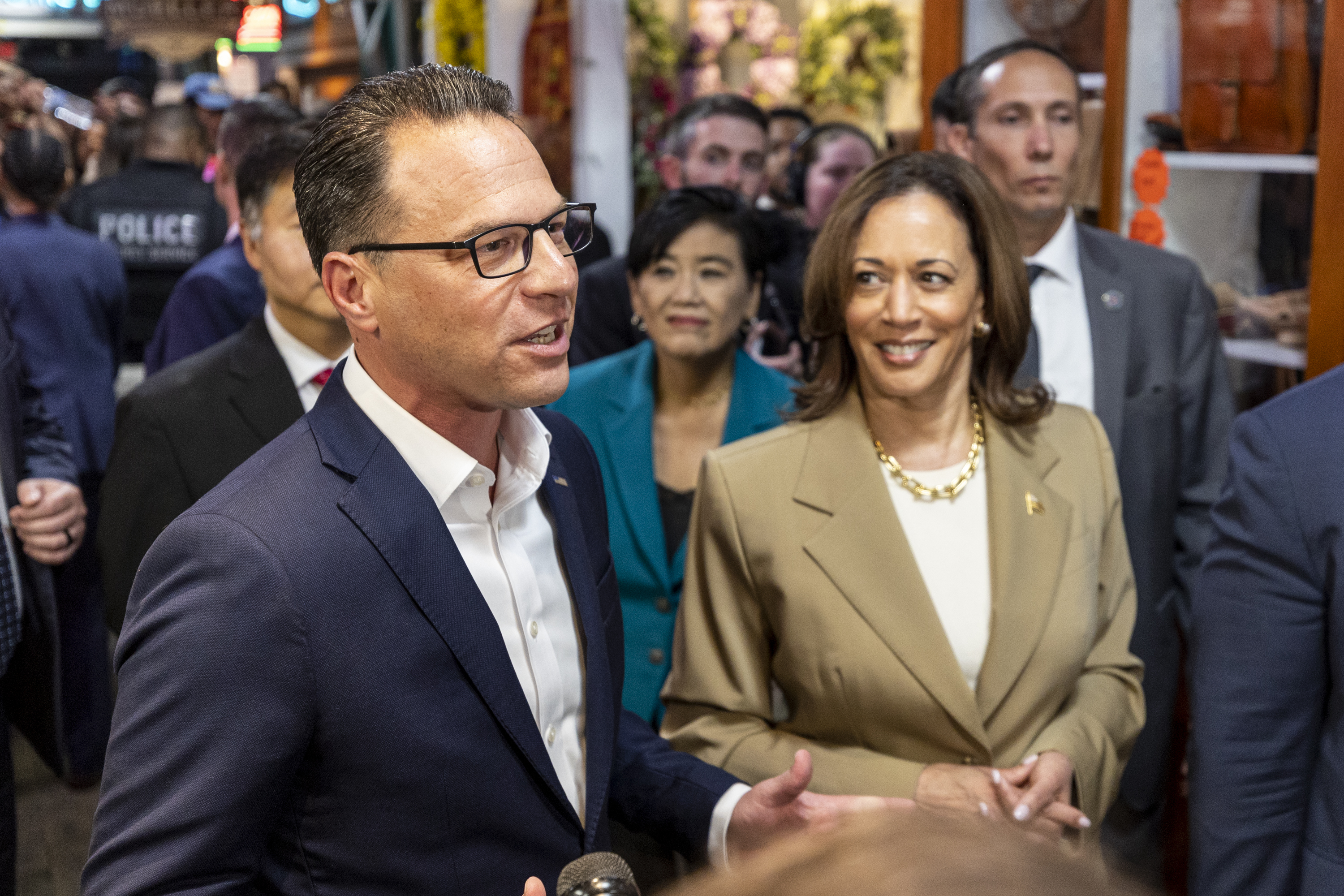
    Governor Josh Shapiro speaks with press along with Vice President Kamala Harris during their short visit to Little Thai Market at Reading Terminal Market after she spoke at the APIA Vote Presidential Town Hall at the Pennsylvania Convention Center in Philadelphia, Pa., on Saturday, July 13, 2024.

    When Shapiro was asked by the Atlantic whether he felt betrayed by Harris’ comments in her book about him, given that the two have known each other for 20 years, he said: “I mean, she’s trying to sell books and cover her a—.”

    He quickly reframed his response: “I shouldn’t say ‘cover her a—,’ I think that’s not appropriate,” he added. “She’s trying to sell books, period.”

    The Atlantic piece, titled “What Josh Shapiro Knows About Trump Voters,” presented Shapiro as a popular Democratic governor in a critical swing state that went for Trump in 2024, and as a master political operator who has carefully built a public image as a moderate willing to work across the aisle or appoint Republicans to top cabinet positions. That image was tested this year during a protracted state budget impasse that lasted 135 days, as Shapiro was unable to strike a deal between the Democratic state House and GOP-controlled state Senate for nearly five months past the state budget deadline.

    The Atlantic piece also outlined common criticisms of Shapiro throughout his two decades in Pennsylvania politics, including those from within the Democratic Party: He is too ambitious with his sights set on the presidency, and his pragmatic approach often leaves him frustrating all sides, as evidenced in his 2023 deal-then-veto with state Senate Republicans over school vouchers. It highlighted some of the top issues Shapiro will face if he chooses to run for president in 2028, including a need to take clearer stances on policy issues — a complaint often cited by Republicans and his critics. If he rises to the presidential field, Shapiro will also have to face his past handling of a sexual harassment complaint against a former top aide that Shapiro claimed he knew very little about despite the aide’s long-held reputation.

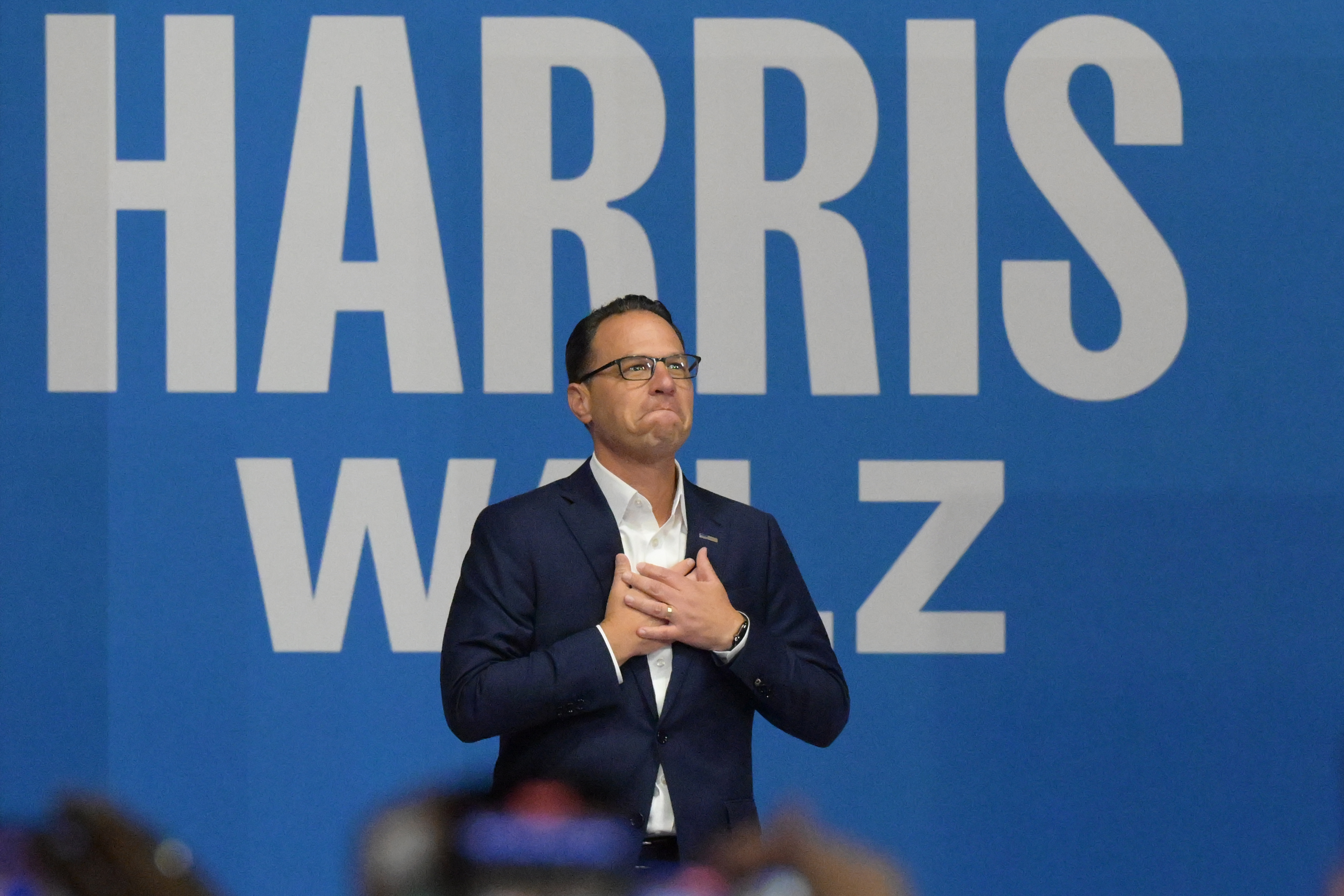
    Gov. Josh Shapiro takes the stage ahead of U.S. Vice President Kamala Harris and Gov. Tim Walz at a rally in Philadelphia’s Liacouras Center on August 6, 2024.

    “The worst-kept secret in Pennsylvania politics is that the governor is disliked — in certain cases, loathed — by some of his fellow Democrats,” the Atlantic reported. Further, Alberta noted that when an unnamed Pennsylvania lawmaker received a call from a member of Harris’ vetting operation, the member said they had never seen “so many Democrats turning on one of their own.”

    Shapiro has been featured in several other prominent national media outlets in recent weeks, including in the New Yorker, which ran a profile about his experience with political violence. He has become vocal on that issue in the months since a Harrisburg man who told police he wanted to kill Shapiro broke into the governor’s residence in April and set several fires while Shapiro and his family slept upstairs. As one of the most prominent Jewish elected officials in the nation, Shapiro has frequently said that leaders must “bring down the temperature” in their rhetoric, and has tried to refocus his own messaging on the good that state governments can do to make people’s lives easier, such as permitting reforms and infrastructure improvements.

    “The fact that people view institutions as incapable or unwilling to solve their problems is leading to hyper-frustration, which then creates anger,” Shapiro told the Atlantic. “And that anger forces people oftentimes into dark corners of the internet, where they find others who want to take advantage of their anger and try and convert that anger into acts of violence.”

  • Chester County might be the only Philly suburb not raising taxes next year

    Chester County might be the only Philly suburb not raising taxes next year

    Chester County may be the only county in Philadelphia’s suburbs that will avoid a property tax hike next year.

    In the proposed 2026 budget, released last month, Chester County’s commissioners projected $666.3 million in operational spending, roughly 4.7% more than the county budgeted for 2025. The budget is expected to pass the three-member board of commissioners with bipartisan support.

    Despite the increased spending and more limited state and federal resources, county officials said, they expected to avoid a tax increase next year thanks to budget cuts across nearly every department and delayed projects.

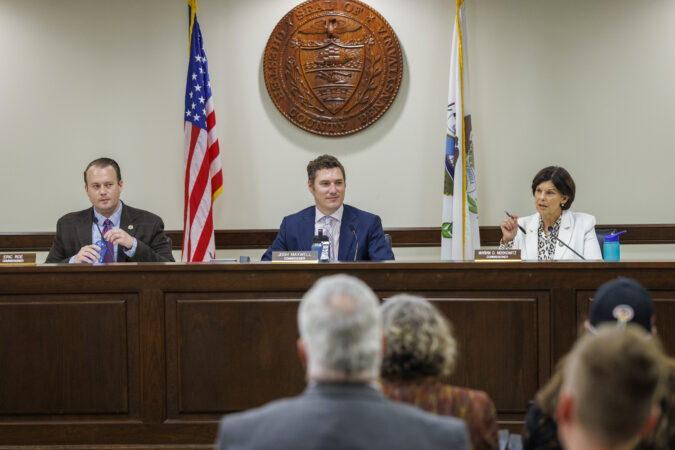
    “This budget was really difficult for us, but we did what we had to to keep it at zero,” said Chester County Commissioner Marian Moskowitz, a Democrat.

    David Byerman, the county’s CEO, described the county as being in a “defensive crouch” financially.

    “We are in a very unpredictable environment in which we have a lot of conflicting information that we’re dealing with,” Byerman said, citing federal funding uncertainty under President Donald Trump. “We were charged by our commissioners in Chester County with crafting a budget that held the line in terms of tax increases.”

    How does Chester County compare with the rest of the region?

    The decision sets Chester County apart from its peers in a year that has been marked by budget uncertainty at the state and federal levels. In recent weeks, Delaware County’s executive director proposed a 19% property tax hike to address the county’s structural deficit. Montgomery County’s commissioners are proposing a 4% increase. Bucks County’s commissioners have floated a tax increase to address a deficit in next year’s budget.

    But on the heels of a 13% property tax increase that took effect in January, Chester County’s commissioners said they were eager to keep taxes flat for residents.

    “This is a pared-down budget because we didn’t know what the federal and state government were going to do,” said Josh Maxwell, a Democrat, who chairs the county board of commissioners.

    The biggest cost increases, he said, came in the form of employee and inmate healthcare.

    How did Chester County cut its budget?

    In the first quarter of this year, Chester County officials asked each county department to reduce non-personnel spending by 5% for the 2026 budget. By and large, officials said, they responded to the call, freeing up significant funds even as overall personnel costs increased.

    “We asked them to cut back, and some of them really did,” said Eric Roe, the lone Republican on the board of commissioners. “I’m really happy with how they helped us get to this point.”

    In this year’s budget, officials said, they opted to delay projects like park maintenance and computer system upgrades that could be put off.

    “The cuts are giving us an opportunity to prioritize and rethink our discretionary spending,” Maxwell said. “They may have to go to some of the things that the federal and state government used to do that they’re getting out of the business of doing.”

    Additionally, Byerman said, the county instituted a soft hiring freeze by requiring all new hires to be approved by top-level management.

    Can Chester County avoid tax increases in future years?

    Heading into next year, Maxwell said, he is bracing for cuts to federal social service programs that will result in larger expenditures from the county to serve its neediest residents.

    For example, anticipated cuts to the U.S. Department of Housing and Urban Development’s Continuum of Care program could leave 70 more families on the streets in Chester County, Maxwell said.

    “This is a year where we’re going to look at all of our programs and make sure that we’re investing in the areas that the community wants us to,” Maxwell said.

    This suburban content is produced with support from the Leslie Miller and Richard Worley Foundation and The Lenfest Institute for Journalism. Editorial content is created independently of the project donors. Gifts to support The Inquirer’s high-impact journalism can be made at inquirer.com/donate. A list of Lenfest Institute donors can be found at lenfestinstitute.org/supporters.