Category: Pennsylvania Politics

  • Pennsylvania’s Working Families Party pledges to support a primary challenger against Sen. John Fetterman

    Pennsylvania’s Working Families Party pledges to support a primary challenger against Sen. John Fetterman

    Pennsylvania’s Working Families Party is recruiting candidates to run against Pennsylvania’s Democratic senator, John Fetterman.

    Fetterman has not announced whether he will run for reelection in 2028, but the progressive party put out a public declaration Tuesday pledging to endorse — and, if necessary, recruit and train — a challenger.

    The announcement, first reported by The Inquirer, is a remarkable step for the left-leaning organization to take more than two years before an election and speaks to the degree of frustration with Fetterman among progressives.

    “At a time when Donald Trump and Republicans in Congress are doing everything they can to make life harder for working people, we need real leaders in the Senate who are willing to fight for the working class,” Shoshanna Israel, Mid-Atlantic political director for the Working Families Party, said in a statement.

    “Senator Fetterman has sold us out, and that’s why the Pennsylvania Working Families Party is committed to recruiting and supporting a primary challenge to him in 2028.”

    Fetterman did not immediately return a request for comment about the Working Families Party’s announcement.

    The Working Families Party is a progressive, grassroots political party that is independent from the Democratic Party, but it often endorses and supports Democratic candidates.

    Israel noted in her statement that Fetterman voted last week in support of the Republican plan to end the government shutdown — along with seven other Senate Democratic caucus members who crossed the aisle.

    Democratic lawmakers in the House, including several from Pennsylvania’s delegation, railed against the decision as caving to the GOP and President Donald Trump without any substantive wins on healthcare, rendering a 35-day shutdown pointless.

    Though he supports extending federal healthcare subsidies, Fetterman has long said he is against government shutdowns as a negotiating tactic and will always vote to get federal coffers flowing and federal employees paid.

    “I’m sorry to our military, SNAP recipients, gov workers, and Capitol Police who haven’t been paid in weeks,” Fetterman said in a post on X after the vote. “It should’ve never come to this. This was a failure.”

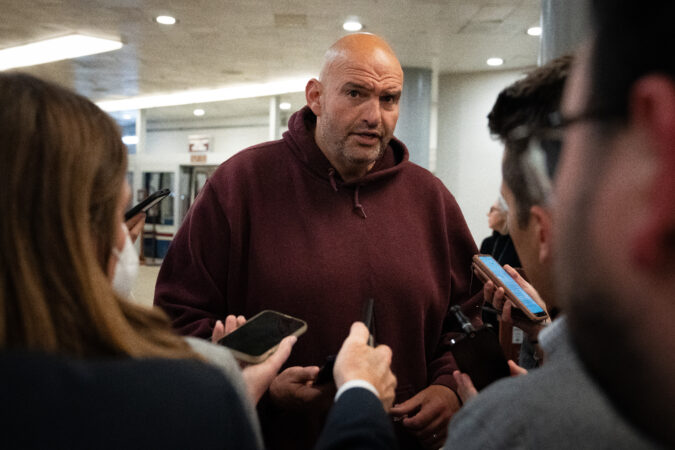
    Already one of the most well-known and scrutinized senators in Washington, Fetterman was back in the spotlight this week as he returns to work following a hospitalization after a fall near his home in Braddock. His staff said he suffered a “ventricular fibrillation flare-up” and hit his face, sustaining “minor injuries.”

    Ventricular fibrillation is the most severe form of arrhythmia — an abnormal heart rhythm — and the most common cause of sudden cardiac death.

    It’s the latest in a string of serious health incidents that have marked the Democratic senator’s time in the public eye. The fall comes three years after he recovered from a near-fatal stroke just days before he won the 2022 Senate primary, which was caused by a blood clot that had blocked a major artery in his brain.

    He spent Thursday and Friday in the hospital and was released Saturday, saying he was feeling good and grateful for his care with plans to be back in the Senate this week.

    Working Families on the offensive

    Israel said in addition to the online portal, the party will hold a number of recruitment events across Pennsylvania in the coming months to train candidates and campaign staff on the basics of running for office and managing a campaign with hopes of finding quality candidates for a variety of races ahead of 2028.

    The party is also pledging a robust ground game and fundraising for a potential challenger it supports.

    It wouldn’t be the first time the Working Families Party has opposed Fetterman. In the 2022 Democratic Senate primary, WFP endorsed State Rep. Malcolm Kenyatta (D., Philadelphia) over Fetterman, who was lieutenant governor at the time.

    The Working Families Party has grown its influence in the region since then. In 2023, WFP became the minority party on Philadelphia’s City Council, defeating Republicans in seats the party had held for over 70 years by electing Councilmembers Kendra Brooks and Nicolas O’Rourke.

    Fetterman has been promoting his book, Unfettered, recounting his stroke during the 2022 Senate run, subsequent struggles with depression, and adjustment to life in the U.S. Senate.

    The book makes no mention of a reelection bid but laments the ugly politics he experienced in both the Democratic primary and his general election race against Mehmet Oz.

    Fetterman said in the book that Oz’s attacks during his rehabilitation from his stroke became so mentally crushing he felt he should have quit the race.

    And he grapples with criticism he faced during the primary surrounding a 2013 incident in which he wielded a shotgun and apprehended a Black jogger he suspected of a shooting. Fetterman calls the backlash an early trigger of his depression.

    Fetterman has said he will remain a Democrat even as Republicans have lauded his independent streak and willingness to work with the GOP.

    Earlier this year, Fetterman was the first Senate Democrat to support the Laken Riley Act, a Republican immigration bill that requires U.S. Immigration and Customs Enforcement to detain and take into custody individuals who have been charged with theft-related offenses, even without a conviction. Critics of the law say it severely cracks down on due process for immigrants.

    Fetterman was the sole Senate Democrat to vote to confirm Attorney General Pam Bondi, who was one of Trump’s attorneys when he tried to overturn the results of the 2020 election.

    And he has been the Senate’s most outspoken defender of Israel during its war in Gaza, sponsoring a resolution with Sen. Dave McCormick (R., Pa.) against antisemitism and appearing for the first time since his fall at an event hosted by the Jewish Federations of North America in Washington on Monday.

    He also received recognition from Israeli Prime Minister Benjamin Netanyahu, who called him the country’s “best friend” and gifted him a silver pager inspired by Israel’s attack on Hezbollah in Lebanon that exploded pagers.

    “He has repeatedly shown disregard for the rights of Palestinians,” the Working Families Party release said. “Refusing to support a two-state solution and breaking with the rest of the Democratic caucus on Israel’s illegal annexation of the West Bank.”

    Staff writer Aliya Schneider contributed to this article.
  • Citing extraordinary circumstances, Chester County will count the vast majority of provisional ballots cast after Election Day chaos

    Citing extraordinary circumstances, Chester County will count the vast majority of provisional ballots cast after Election Day chaos

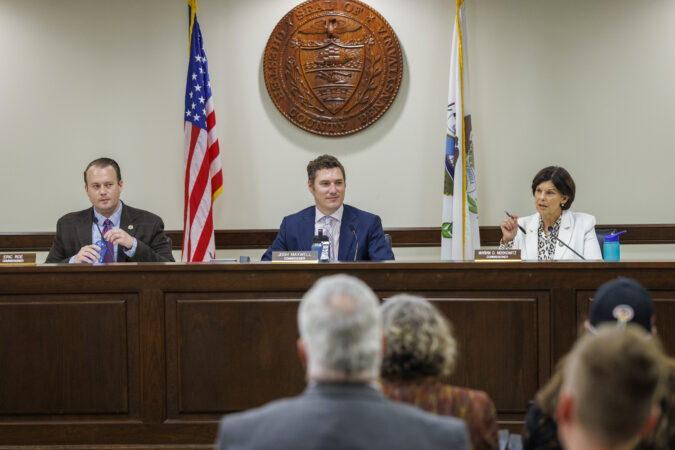
    The Chester County Board of Elections rejected Republican challenges to provisional ballots Monday as the board prepares to launch an investigation into a poll book error that forced thousands of independent and third-party voters to cast provisional ballots during this month’s election.

    In a nearly six-hour meeting, the Democratic-led board heard from dozens of voters and poll workers who described the chaos they endured on Nov. 4 during the high-turnout municipal election. The election resulted in more than 12,000 provisional ballots being cast primarily by independent and third-party voters blocked from voting on machines — an unusually high amount.

    The election board, which is made up of the county’s commissioners, voted to count the vast majority of the provisional ballots, arguing that the county’s mistake allowed the board to accept ballots that would be rejected under normal circumstances.

    “People’s ballots deserve to be counted in this circumstance,” said Josh Maxwell, a Democrat who chairs the three-member board. “If we make a mistake, we have to remedy it.”

    The error was caused when officials mistakenly sent poll books to precincts that did not include the names of independent and third-party voters. Until supplemental poll books were provided to precincts late in the day, those voters were asked to cast a provisional ballot.

    Provisional ballots are cast when voters are unable to vote by machine on Election Day, most often because they already requested a mail ballot or are at the wrong polling place.

    The ballots require an additional level of review before they are counted. Provisional ballots are often more likely to be rejected than mail ballots or ballots cast on voting machines in person because voters are less familiar with the voting method and are required to place ballots in a secrecy envelope and sign in two places.

    The Chester County Republican Committee objected to the counting of more than 1,000 ballots ahead of Monday’s meeting. That number whittled down as the committee withdrew objections to ballots where the error was likely caused by election workers. But the GOP committee’s attorney argued that it would be illegal to count ballots missing the first required voter signature or a secrecy envelope.

    By allowing the votes to count, she argued, the board was setting a dangerous precedent.

    “These votes are not going to change the outcome of elections, but what they do is they change the way the law is interpreted. They give someone the ability to bypass the safeguards that are in the law,” said Dolores Troiani, an attorney for the county GOP.

    The ballots, the party argued, needed to be rejected to preserve voter confidence in county elections. In a letter to the commissioners, the party argued that voter confidence had dropped after the poll book error, the office’s failure to include a county row office on the primary ballot, and high turnover in the county election office.

    In response, the letter said, county officials should not certify the November election.

    Democratic officials rejected all the GOP challenges.

    “We should not, especially when it is of no fault of their own, be disenfranchising voters,” said Democratic Commissioner Marian Moskowitz.

    Republican Commissioner Eric Roe voted against counting the ballots, arguing that there was no legal basis to do so.

    “If the legislature wanted to make exceptions, it should have and would have said so,” Roe said. “I will be relying on what the law says and not what I wish it says.”

    Voters on Monday voiced frustration and confusion at having learned their ballot, which they were told would count, would be rejected for an error they were not aware of at the polling place. Several were angry that the county GOP asked for eligible voters’ ballots to be rejected.

    Edith Jones, a poll worker, approached the podium nearly in tears Monday to tell commissioners that she worried she’d caused more than a dozen voters to have their ballots thrown out. As the day began, she said, she directed voters to fill out their provisional ballots but forgot to provide them with the required secrecy envelope.

    “I gave them instructions, but when somebody in authority tells you what to do, who’s going to read all those words on the paper?” Jones said.

    Throughout testimony, voters and the Republican Party questioned how the error could occur and demanded remedy moving forward.

    “We have no guarantee they’ll fix it,” Troiani said in an interview after the meeting. However, the attorney said the party would not appeal the board’s decisions.

    Last week, the county announced plans to hire an outside firm to investigate the poll book error.

    This suburban content is produced with support from the Leslie Miller and Richard Worley Foundation and The Lenfest Institute for Journalism. Editorial content is created independently of the project donors. Gifts to support The Inquirer’s high-impact journalism can be made at inquirer.com/donate. A list of Lenfest Institute donors can be found at lenfestinstitute.org/supporters.

  • John Fetterman returns to D.C. after hospitalization, speaks at conference for Jewish leaders

    John Fetterman returns to D.C. after hospitalization, speaks at conference for Jewish leaders

    Sen. John Fetterman is back to work after recovering from a fall that required hospitalization.

    Fetterman (D., Pa.) was hospitalized last week following a fall after he experienced a heart issue, an unnamed spokesperson announced Thursday. On Saturday, Fetterman shared a selfie after being released from the hospital with a coffee in hand.

    Come Monday he was back in the public eye, appearing at an event hosted by the Jewish Federations of North America (JFNA) in Washington. His presence sent the message that he’s back in commission.

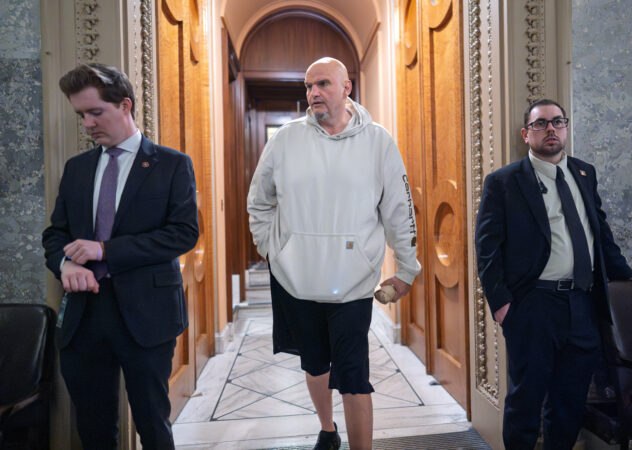
    Photos posted by attendees on social media show the senator wearing his signature hoodie and shorts.

    His face is still healing from the fall after what he described in his Saturday post as “20 stitches later and a full recovery.”

    “See you back in DC,” he said on X.

    Fetterman’s Monday appearance was part of the JFNA’s General Assembly — which began on Sunday and will continue through Tuesday. The three-day event is described on the group’s website as a gathering for Jewish community leaders, professionals, philanthropists, and community partners to “address pressing issues, explore best practices, and cultivate innovative solutions.”

    Fetterman sat on stage during a session called “Monday Morning Plenary: Protecting Our Communities Today.” It was advertised as giving attendees the opportunity to “hear from leaders on the front lines who are building stronger systems of protection and trust.”

    Other guests listed alongside Fetterman for the morning program included Annie Sandler, president of the Joint Distribution Committee; the Rev. Juan Rivera, president of the Hispanic Israel Leadership Coalition; Zibby Owens, founder of Zibby Media; and Olivia Reingold, staff writer at the Free Press. The Free Press is a center-right outlet that Fetterman had provided an exclusive excerpt of his book to ahead of its release.

    Steven Schimmel, executive director of the Jewish Federation of Central Massachusetts, said in a post on X that Fetterman shared on the JNFA stage that his wife Gisele’s free store “has been vandalized by anti-Israel activists.”

    Fetterman, who is not Jewish, has been an outspoken supporter of Israel and sponsored a resolution with Sen. Dave McCormick (R., Pa.) against antisemitism. Fetterman has received recognition from Israel Prime Minister Benjamin Netanyahu, who called him the country’s “best friend” and gifted him a silver pager inspired by Israel’s attack on Hezbollah in Lebanon that exploded pagers.

    Fetterman was also given a high honor by Yeshiva University whose honoree last year was the creator of Israel’s Iron Dome missile defense system and he received the Defender of Israel award from the Zionist Organization of America.

    His unnamed spokesperson had said his fall last week was due to a ventricular fibrillation “flare-up.” Ventricular fibrillation is a life-threatening heart issue. The incident comes after the senator suffered a near-fatal stroke in 2022.

    As a Democrat known for working across the aisle, Fetterman was flooded with well-wishes from Republicans last week.

    The medical incident came just two days after he released his new memoir, Unfettered, in which he discusses his recovery from the stroke and his battle with depression that followed.

    Last week, Fetterman was also one of eight Senate Democratic caucus members to vote for a Republican plan to end the federal government shutdown, a move that angered some Democrats because the legislation lacked the extension of federal health subsidies that the party had pushed for.

  • ‘More needs and less money’: Philly’s collar counties are preparing for tight budgets, tax increases

    ‘More needs and less money’: Philly’s collar counties are preparing for tight budgets, tax increases

    Across the Philadelphia suburbs, county leaders are tightening their budgets, and looking toward potential tax increases.

    Counties are required by law to complete their budget for next year by Dec. 31. But they entered this year’s budget season facing uncertainty with federal funding and a lack of clarity over state dollars as lawmakers remained locked in a monthslong budget impasse that ended only Wednesday when the Pennsylvania General Assembly and Gov. Josh Shapiro approved a $50.1 billion budget.

    “We were preparing for more needs and less money,” said Josh Maxwell, a Democrat who chairs the Chester County Board of Commissioners. And even as Washington and Harrisburg resolved their budget woes this week, they did little to resolve concerns at the county level.

    The state budget included no funding for transit, a 2% cut to mental health spending, and stagnant funding on other services like 911 fees — frustrating local officials.

    “I don’t think if the General Assembly had sent us a gold-plated demand or invitation to raise property taxes it could have been any clearer,” said Delaware County Council member Christine Ruether, a Democrat.

    Counties in Pennsylvania can only increase their revenue by raising property taxes. By failing to provide additional funds for social services, county officials argued, the state had created a situation where counties would immediately or eventually have to raise property taxes.

    “The people we serve … all their problems don’t suddenly go away because there’s a lack of funding to address the problem,” said Bob Harvie, a Democrat who chairs the Bucks County Board of Commissioners and is running for Congress.

    “It will likely mean that this county will have to consider a tax increase because we need to meet the needs of those people.”

    Bucks County has not yet released its proposed budget for 2026. But residents in Montgomery and Delaware Counties are likely facing tax increases.

    On Thursday morning, Montgomery County unveiled its proposed budget for 2026, which included a 4% property-tax increase.

    Delaware County’s executive director Barbara O’Malley told the all-Democratic council last week that the county would need to increase property taxes 19% to eliminate the county’s structural deficit. A healthy financial setting, she argued, was especially important as state and federal funding streams have become less reliable.

    Both budgets were crafted before the state budget was released but county officials said they wrote the documents assuming stagnant funding from the state despite inflation.

    “We kept it status quo,” said Dean Dortone, Montgomery County’s chief financial officer.

    Chester County officials said they’ve taken a similar approach. The county, Maxwell said, had also looked for budget cuts throughout the year as federal grant cancellations created uncertainty.

    “We’ve been cutting all year because we know that the federal and state governments are going to be flat or less funding,” Maxwell said, but if the state continues to leave funding flat for social services it will eventually have an impact.

    “Over time it’s going to mean property taxes are … going to go up more than they would have otherwise.”

    Meanwhile, counties have spent the last several months backfilling for state funds that did not come during the impasse.

    In Montgomery County, officials estimated the county had spent between $40 and $50 million from budget reserves to maintain services. Chester County officials estimated the county spent $40 million, while Delaware County officials reported spending $12 million monthly until October when the county was forced to reduce payments to social services providers.

    Counties expect to be reimbursed by the state for those expenses, but it’s unclear how quickly those payments will come.

    Delaware County declared a state of emergency Wednesday allowing them to more quickly distribute funds to local food pantries while the organizations wait for state and federal dollars to come through.

    “It’s going to take a while for the money to trickle down and in the meantime if somebody can’t get food on the table it’s an issue,” Reuther said during the county’s board meeting.

    This suburban content is produced with support from the Leslie Miller and Richard Worley Foundation and The Lenfest Institute for Journalism. Editorial content is created independently of the project donors. Gifts to support The Inquirer’s high-impact journalism can be made at inquirer.com/donate. A list of Lenfest Institute donors can be found at lenfestinstitute.org/supporters.

  • Pa. lawmakers and Gov. Josh Shapiro have approved a $50.1 billion state budget, officially ending monthslong impasse

    Pa. lawmakers and Gov. Josh Shapiro have approved a $50.1 billion state budget, officially ending monthslong impasse

    HARRISBURG — The contentious — and, at times, bitter — Pennsylvania budget stalemate has finally ended.

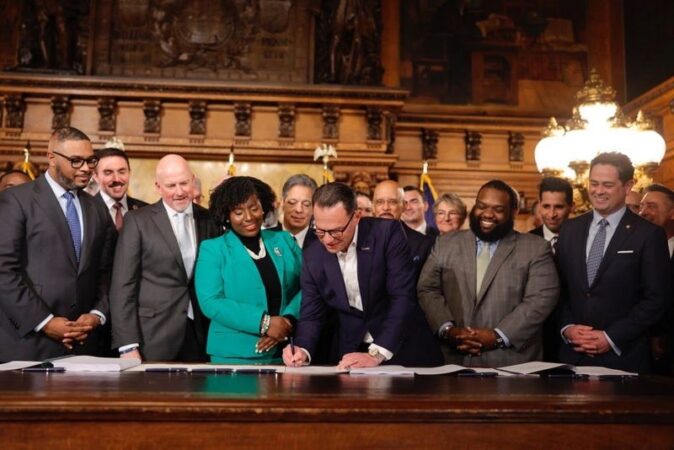
    Gov. Josh Shapiro signed the nearly $50.1 billion state budget Wednesday, as part of a breakthrough bipartisan deal that ends a key climate initiative and increases public school funding. Schools, counties, and social service providers will soon receive four months of withheld state payments, lapsed after the budget deadline passed at the start of the new fiscal year on July 1, providing the much-needed relief that some say will come too late.

    The long-awaited budget deal involving Shapiro, House Democrats, and Senate Republicans marks the first time Pennsylvania’s state budget has topped $50 billion. State spending and revenue earnings have skyrocketed in the post-COVID-19 years due to federal cash infusions. The budget is a 4.7% increase in spending over the prior fiscal year and includes no new tax increases. Lawmakers and Shapiro agreed to tap into underutilized special funds and use the state’s surplus to address a budget shortfall, as Pennsylvania is on track to spend more than it brings in this fiscal year and in the future.

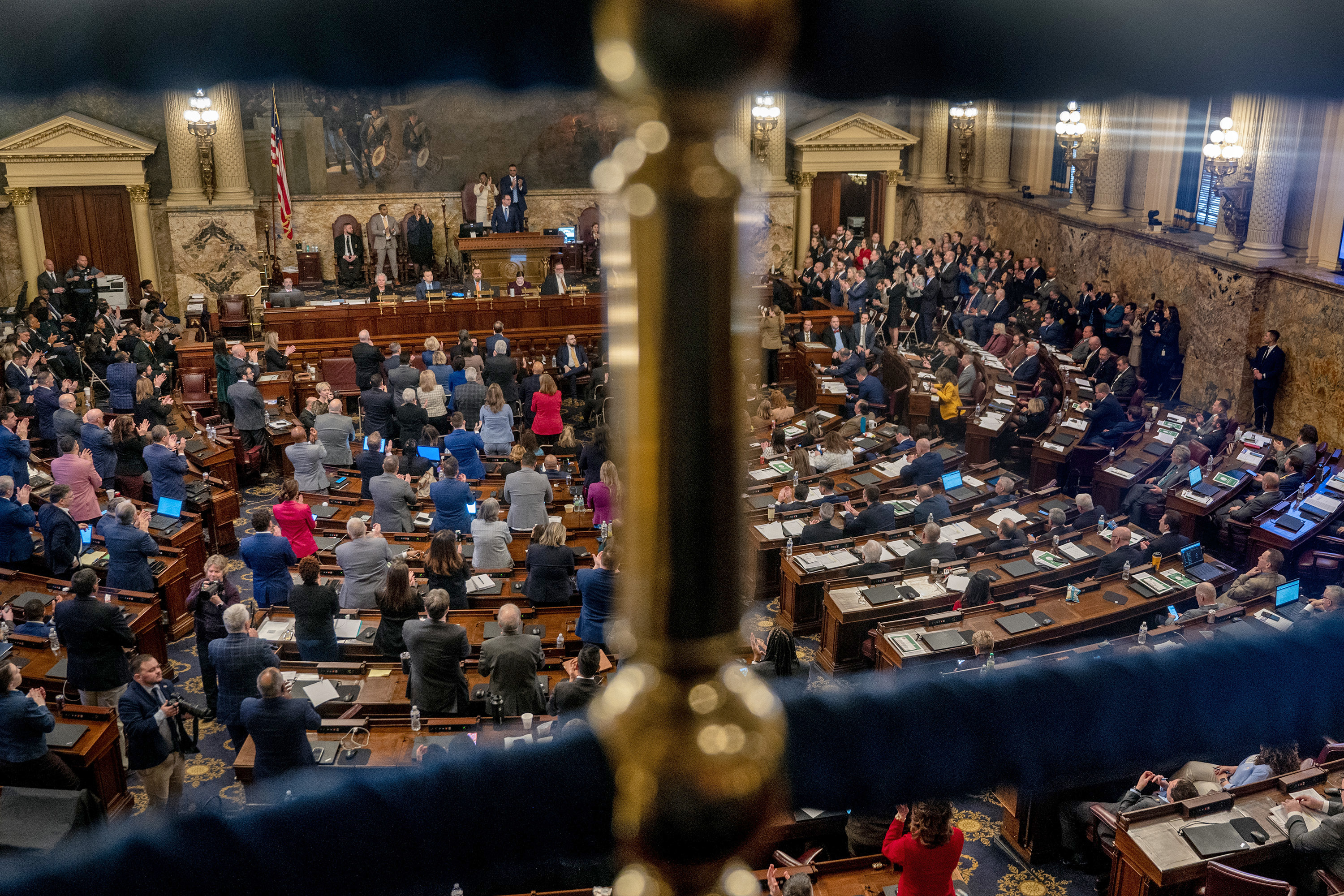
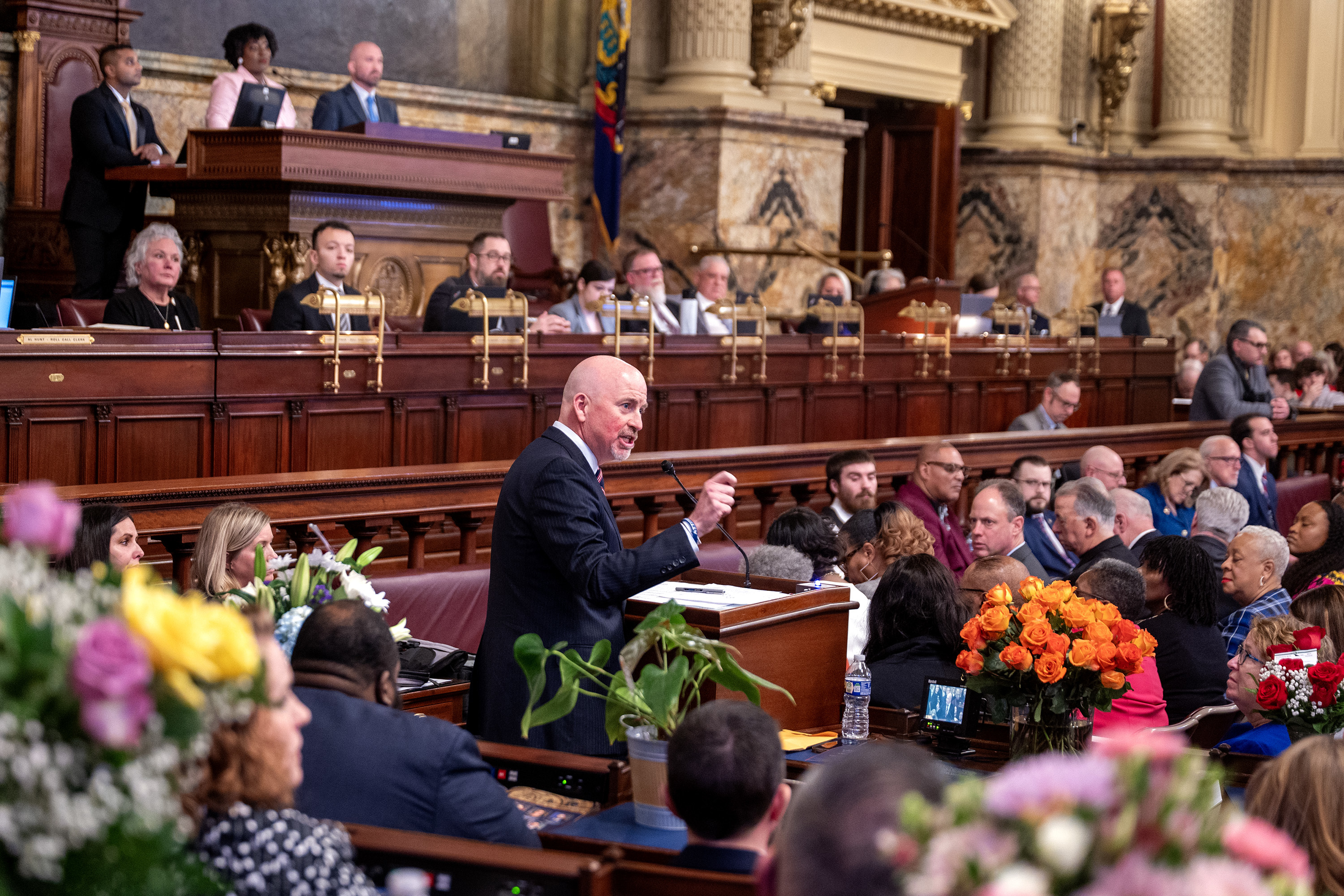
    Democrats (left) stand to applaud a tax cut proposal while Republicans (right) remain seated as Gov. Josh Shapiro delivers his third budget address to a joint session in the House chambers at the State Capitol Tuesday, Feb. 4, 2025. Shapiro, a Democrat, will need to negotiate with a split legislature.

    Both Republican and Democratic leaders celebrated the budget’s passage as a “true compromise,” noting that neither party got everything it wanted in the final deal. The spending plan includes significant energy and permitting changes cheered by Republicans and an earned-income tax credit and revisions to cyber charter funding long sought by Democrats, among other policy wins revealed Wednesday.

    “Today is a good day,” Shapiro said, opening his remarks before signing the budget bills into law in the Capitol building, flanked by Democratic lawmakers.

    “I would have loved to have stood here in this room with all of you on June 30, but as you know, Pennsylvania is just one of only three states in the country with a divided legislature,” Shapiro, a Democrat, said. “It requires all of us to compromise, to have tough conversations, and, ultimately, to find common ground.”

    Several leaders said the budget deal approved Wednesday would not have been possible months ago, as debate had devolved into partisan finger-pointing over who was responsible for the budget deadlock and who might benefit politically from it.

    Big GOP win: An end for RGGI

    Among the top wins for Senate Republicans is the end of the state’s efforts to join the Regional Greenhouse Gas Initiative, which former Democratic Gov. Tom Wolf entered without legislative approval in 2019 and has been tied up in litigation ever since. The program has drawn the ire of Republicans, and in floor remarks Wednesday, House Minority Leader Jesse Topper (R., Bedford) called it the “No. 1 issue holding Pennsylvania back from economic growth.” The 12-state program, known as RGGI, is an interstate cap-and-trade initiative that charges power plants for the amount of carbon emissions they release into the air.

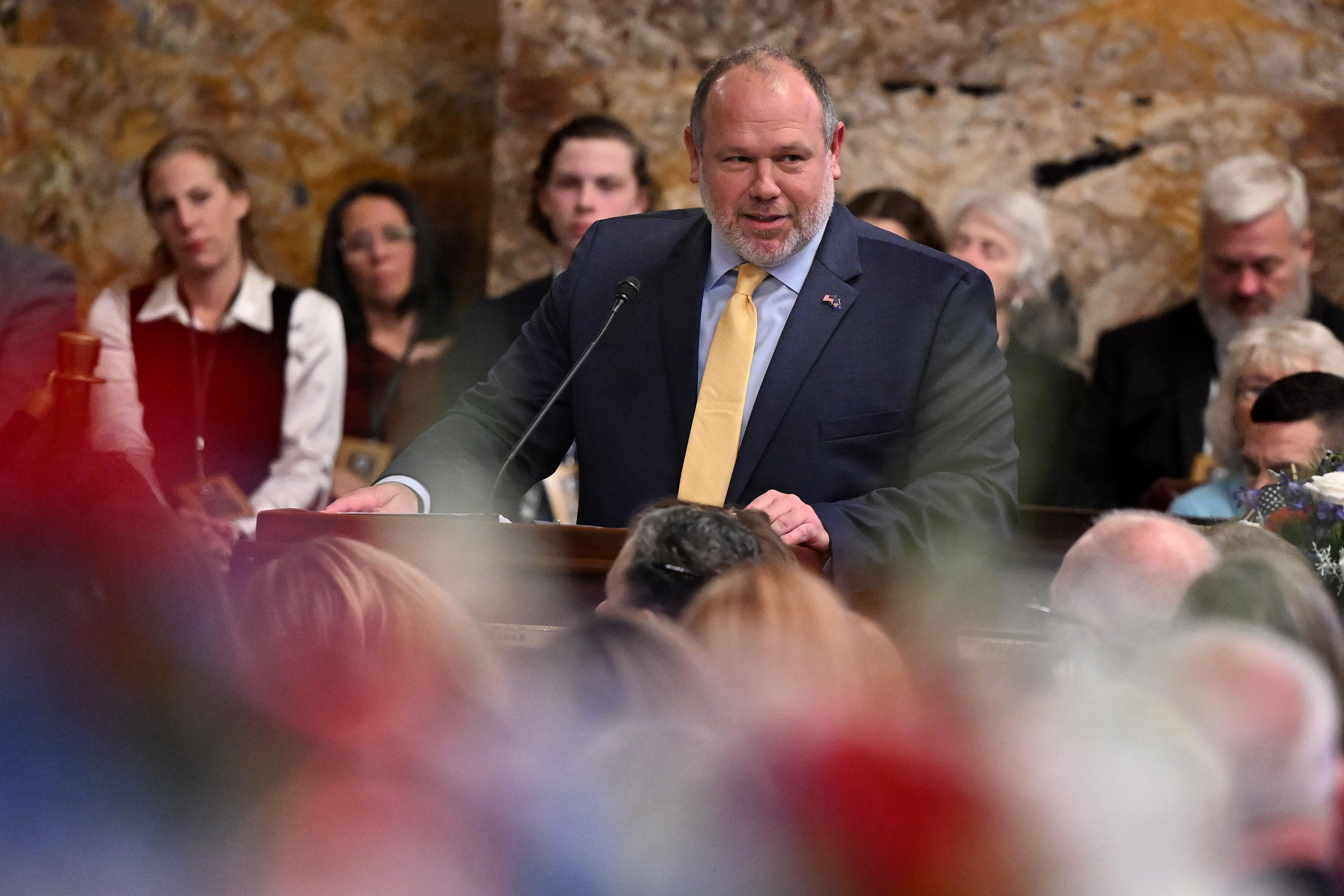
    House Minority Leader Jesse Topper (R., Bedford) speaks on Jan. 7, 2025, on the first day of the 2025-2026 legislative session.

    Ahead of a final budget deal, some Democratic lawmakers and environmental groups spoke out against ending Pennsylvania’s involvement in RGGI as a threat to the environment. In the end, most Democratic lawmakers voted in favor of the omnibus budget bill that ended the state’s pursuit to join the initiative.

    House Majority Leader Matt Bradford (D., Montgomery), a top negotiator of the budget deal, told The Inquirer on Wednesday that Democrats’ agreement to leave RGGI was part of a broader compromise to end the impasse.

    “I’m one who believes there should be a price on carbon, but I recognize the reality of the situation and compromise is required,” Bradford added.

    House Majority Leader Matt Bradford (D., Montgomery) speaks on the first day of the 2025-2026 legislative session.

    Shapiro and Democratic leaders were able to persuade Republicans, in turn, to spend more than they had wanted to this fiscal year. That additional spending allowed Democrats to invest more in public education, a new earned-income tax credit targeted toward working Pennsylvanians, and more.

    “It’s much more money than we want to spend, and it took a lot longer than we wanted, but I think it was worth the wait,” said Senate President Pro Tempore Kim Ward (R., Westmoreland) in floor remarks Wednesday. “I am actually excited to vote for this budget.”

    Dems win new funding for schools, but not mass transit

    The budget deal includes more than $665 million in new funding for public schools, approximately $562 million of which would be funneled through the state’s adequacy and tax equity formulas as part of an effort to close what experts call a $4 billion “adequacy gap.“ These formulas were created last year in response to a 2023 court ruling that found Pennsylvania’s public education funding system unconstitutionally deprives students from poorer districts of an adequate and equitable education.

    Senate Minority Appropriations Chair Vince Hughes (D., Philadelphia) applauded the budget agreement for its investments in public school funding, gun violence prevention, and the student-teacher stipend, among other things.

    “This budget has good work in it that helps address … the issue of affordability, which sang loud and clear in the most recent election as a predominant issue that Pennsylvanians want us to address,” Hughes said on the Senate floor Wednesday.

    In addition, the budget includes changes long sought by Democrats to how Pennsylvania funds and oversees its cyber charter schools. Cyber charter school leaders warned that the changes might lead to closures and mass layoffs for the virtual schools, which often serve the state’s most vulnerable populations, but they were resoundingly celebrated by Democrats and public education experts.

    “We finally reformed our cyber charter school system,” Shapiro said to boisterous applause. “If a parent wants to send their child to a cyber school, that’s fine. That’s their prerogative. But we shouldn’t be overfunding them at the expense of Pennsylvania’s public schools.”

    The deal, however, does not include any additional funding for mass transit, another major Democratic priority. Democrats removed mass transit from the budget negotiation table in September, after a lawsuit required SEPTA to undo its service cuts and Senate Republicans appeared unwilling to make a long-term investment in mass transit. Instead, Shapiro approved SEPTA’s use of its capital funds to help fill the budget deficit of the state’s largest mass transit agency for the next two years.

    Bradford told reporters that securing a long-term revenue stream for transit agencies remains a top priority for his caucus in future budgets.

    Inflamed, in part, by the mass transit debate, negotiations over the budget had been stalled for months until the end of October, when Shapiro convened top legislative leaders to return to talks. The renewed budget negotiations included House Speaker Joanna McClinton (D., Philadelphia) and Ward, who are the highest-ranking officials in their respective chambers but had usually stayed out of the budget talks led by Bradford and Senate Majority Leader Joe Pittman (R., Indiana).

    Counties are still hurting from the late budget

    Unlike the federal government, Pennsylvania’s state government does not entirely shut down when a budget has not been approved. Lawmakers and state employees continued to be paid throughout the 135-day impasse. But the late budget had significant impacts on school districts, counties, and social service providers — all of which are awaiting billions in expected state payments that should begin flowing again soon.

    The lack of state funding has required schools, counties, and service providers to cut jobs, take out expensive loans, or stop services altogether.

    Over the course of the more than four-month impasse, Pennsylvania’s counties spent millions to make up for the loss of state dollars. In Montgomery County, officials estimated the county had spent between $40 million and $50 million from budget reserves to maintain services. Chester County officials estimated they spent $40 million in reserves, while Delaware County officials spent $12 million each month until October, when they had to reduce payments on some of their bills in the absence of state funding. Counties expect to be reimbursed for those expenses, but it is unclear when the reimbursements will come.

    “Counties are at the breaking point, financially speaking,” said Kyle Kopko, the executive director of the County Commissioners Association of Pennsylvania. If reimbursements are not delivered swiftly, Kopko added, it could force additional nonprofits that provide social services to shutter.

    Even as county leaders were grateful for an end to the impasse, some expressed frustration over the contents of the final budget deal. The agreement, Kopko said, included a 2% cut to mental health services statewide, though he said the cut likely would not affect payments to counties. And it left other funds counties rely on to pay their bills — like 911 fees — stagnant, despite inflation.

    Counties in Pennsylvania can increase their revenue only by raising property taxes. By failing to provide additional funds for social services, county officials argued Wednesday, lawmakers had created a situation in which counties would immediately or eventually have to raise property taxes.

    The combination of the cuts and the failure to increase funds for public transit and other needs, Delaware County Councilmember Christine Reuther said, meant the state had essentially passed the buck to the counties.

    “They’re not solving problems. They’re not saving people from tax increases,” she said. “They’re just making somebody else do their dirty work.”

    This suburban content is produced with support from the Leslie Miller and Richard Worley Foundation and The Lenfest Institute for Journalism. Editorial content is created independently of the project donors. Gifts to support The Inquirer’s high-impact journalism can be made at inquirer.com/donate. A list of Lenfest Institute donors can be found at lenfestinstitute.org/supporters.

  • Delaware County may get a 19% property tax increase in 2026 after a 23% hike this year

    Delaware County may get a 19% property tax increase in 2026 after a 23% hike this year

    Delaware County’s executive director is asking the all-Democratic Council to raise property taxes 19% — just days after an election centered on the county’s double-digit increase this year.

    The proposed increase, which would take effect in January if approved, comes on the heels of this year’s 23% property tax hike. Voters overwhelmingly supported Democrats in Tuesday’s council elections, despite GOP messaging focused on the rising tax rate.

    Barbara O’Malley, the county’s executive director, delivered a draft budget to council members Friday. The $340 million budget increases overall county spending by just under 6% and calls for a 19% property tax increase to ensure the county can fund all operating expenses without relying on onetime funding sources.

    The increase would translate to an additional $185 annually for the average Delaware County homeowner, a spokesperson for the county said. That is the same dollar amount of this year’s increase.

    “This revenue enhancement is required to close the gap and maintain our reserves at the minimum standards,” O’Malley said in her memo. “We recognize these are challenging economic times for our residents and do not make a tax enhancement recommendation lightly.”

    Tax increases in future years, O’Malley said, should be minimal if the council agrees to the 19% hike.

    The Delaware County Council will introduce its own budget on Dec. 3 and vote on a budget on Dec. 10. Members of the all-Democratic five-member council could reject all or parts of the executive director’s recommendations.

    On Monday, the county’s budget task force, formed to allow citizen input following the latest tax increase, will present to the board.

    Council Vice Chair Richard Womack said he hoped the final budget could have a smaller tax increase than 19% and would review the task force’s proposals while seeking ways to cut spending.

    “The last tax increase I voted no because I felt like we did not do a significant dive to really see where we can actually make some cuts,” Womack said. “We’re doing everything possible to make sure we don’t have that type of budget tax increase again.”

    County officials released the 369-page draft budget just days after voters overwhelmingly voted to reelect Womack and elect County Controller Joanne Phillips to the council Tuesday, retaining unanimous Democratic control of the board, which the party has controlled since the 2019 election.

    Republicans had leaned into last year’s 23% tax increase, arguing Democrats were overspending and warning of future double-digit increases, as they sought to win two minority seats on the board.

    Michael Straw, chair of the Media Borough Republican Committee, called the potential hike “unfair” to residents and criticized the county for not releasing the draft budget earlier.

    “Voters, in my opinion, deserved the right to know whether their taxes were going up and spending was going to be increased, and I think that would have changed some more individuals’ minds,” Straw said.

    Democrats argue the tax increases have been a necessary response to decades of underinvestment under Republicans. When Democrats took office in 2020, they say the county was facing challenges because prior leadership had gone too long without raising taxes and had underinvested in county infrastructure and services. Democrats avoided substantially raising taxes in their early years in office, instead relying on COVID-19 relief funds.

    But as those funds run out, and as inflation continues, the county is facing structural deficits that officials argue must be solved with tax increases.

    “Providing stable funding for mandated services that our residents need and deserve is essential for sound government,” O’Malley said in a memo to council. “This county had minimal revenue enhancements over the last decade, necessitating these increases for the last two years.”

    This year’s spending increases, O’Malley said, were due to increased court system costs, employee health benefits, and increases to the county’s SEPTA contribution and employee pay.

    The need to ensure the county is financially stable, O’Malley said, was underscored by the state budget impasse, which had forced the county to curtail funding for some services while temporarily footing the bill for state-funded services.

    Despite the GOP warnings, voters opted to keep Democrats in office, in some cases calling the tax increases necessary to maintain and improve county services.

    “They should go up,” said Chester City voter Nicole Porter, explaining that she supports increases as long as they reinvest in parts of the community that need it most.

    “If it costs a little more to get the roads fixed … I’m OK with that,” she said.

    Staff writer Nate File contributed to this article.
    This suburban content is produced with support from the Leslie Miller and Richard Worley Foundation and The Lenfest Institute for Journalism. Editorial content is created independently of the project donors. Gifts to support The Inquirer’s high-impact journalism can be made at inquirer.com/donate. A list of Lenfest Institute donors can be found at lenfestinstitute.org/supporters.

  • After big wins Tuesday, Democrats think they can oust Brian Fitzpatrick. But the Bucks Republican is resilient.

    After big wins Tuesday, Democrats think they can oust Brian Fitzpatrick. But the Bucks Republican is resilient.

    Should last week’s election results make Brian Fitzpatrick nervous?

    Bucks County Democrats think so.

    The Republican lawmaker has been like Teflon in the 1st Congressional District, which includes all of Bucks County and a sliver of Montgomery County. He persistently outperforms the rest of his party and has survived blue wave after blue wave. First elected in 2016, he has remained the last Republican representing the Philadelphia suburbs in the U.S. House.

    But Democrats pulled something off this year that they hadn’t done in recent memory. They won each countywide office by around 10 percentage points — the largest win margin in a decade — and for the first time installed a Democrat, Joe Khan, as the county’s next top prosecutor.

    Now they are looking to next year, hopeful that County Commissioner Bob Harvie, the likely Democratic nominee, succeeds where Fitzpatrick’s past challengers have failed.

    “This year was unprecedented, and sitting here a year before the midterm, you have to believe that next year is going to be unprecedented as well,” State Sen. Steve Santarsiero, who is also the county party’s chair, said Wednesday.

    Eli Cousin, a spokesperson for the Democratic Congressional Campaign Committee, predicted a “perfect storm brewing for Democrats” to beat Fitzpatrick. “He and Trump’s Republican Party are deeply underwater with Bucks County voters; he has failed to do anything to address rising costs, and we will have a political juggernaut in Gov. Josh Shapiro at the top of the ticket,” Cousin said.

    There are several reasons Democrats may be exhibiting some premature confidence: Despite a spike in turnout for an off-year election, far fewer voters turn out in such elections than do in midterms. Fitzpatrick is extremely well-known in Bucks, where his late brother served before he was elected to the seat. He has won each of his last three elections by double digits.

    Just last year, President Donald Trump narrowly won Bucks County, becoming the first Republican presidential candidate to do so since the 1980s, and Republicans overtook Democrats in voter registrations last year.

    But Tuesday was a sizable pendulum swing in the bellwether. Some of the communities, like Bensalem, that drove Trump’s victory flipped back to blue.

    The last time Democrats had won a sheriff’s race in the county was 2017, a year after Trump was elected the first time. That year, Democrats won by smaller margins, and a Republican incumbent easily won reelection as district attorney. The following year, Fitzpatrick came the closest he has yet to losing a race, but still won his seat by 3 percentage points.

    This year’s landslide, Democrats say, is a warning sign.

    “There were Democratic surges in every place that there’s a competitive congressional seat, and that should be scaring the s— out of national Republicans,” said Democratic strategist Brendan McPhilips, who managed Democratic Sen. John Fetterman’s campaign in the state and worked on both of the last Democratic presidential campaigns here.

    “The Bucks County seat has always been the toughest, but it’s certainly on the table, and there’s a lot there for Bob Harvie to harness and take advantage of.”

    Bucks County Democratic Commissioner Bob Harvie speaks during an Oct. 5 rally outside the Middletown Township Police Department and Administrative Offices in Langhorne.

    Harvie, a high school teacher-turned-politician, leapt on the results of the election hours after races were called, putting out a statement saying, “There is undeniable hunger for change in Bucks County.”

    “The mood of the country certainly is different,” Harvie said in an interview with The Inquirer on Thursday. “What you’re seeing is definitely a referendum.”

    Lack of GOP concern

    But Republicans don’t appear worried.

    Jim Worthington, a Trump megadonor who is deeply involved in Bucks County politics, attributes GOP losses this year to a failure in mail and in-person turnout. Fitzpatrick, he said, has a track record of running robust mail voting campaigns and separating himself from the county party apparatus.

    “He’s not vulnerable,” Worthington said. “No matter who they run against him, they’re going to have their hands full.”

    Heather Roberts, a spokesperson for Fitzpatrick’s campaign, noted that the lawmaker won his last election by 13 points with strong support from independent voters in 2024 — a year after Democrats performed well in the county in another off-year election. She dismissed the notion that Harvie would present a serious challenge, contending the commissioner “has no money and no message” for his campaign.

    Fitzpatrick is also a prolific fundraiser. He brought in $886,049 last quarter, a large amount even for an incumbent, leading Harvie, who raised $217,745.

    “Bob Harvie’s not going to win this race,” said Chris Pack, spokesperson for the Defending America PAC, which is supporting Fitzpatrick. “He has no money. He’s had two dismal fundraising quarters in a row. That’s problematic.”

    Pack noted Harvie’s own internal poll, reviewed by The Inquirer, showed 57% of voters were unsure how they felt about him.

    “An off-off-year election is not the same as a midterm election,” Pack said, adding he thinks Fitzpatrick’s ranking as the most bipartisan member of Congress will continue to serve him well in Bucks County.

    “He’s obviously had well-documented breaks on policy with the Republican caucus in D.C., so for Bob Harvie to try to say Brian Fitzpatrick is super far right, no one’s gonna buy it,” Pack said. “They haven’t bought it every single election.”

    On fundraising, Harvie said he had brought in big fundraising hauls for both of his commissioner races, and said he would have the money he needed to compete.

    Of the four GOP-held House districts Democrats are targeting next year in the state, Fitzpatrick’s seat is by far the safest. That raises the question: How much money and attention are Democrats willing to invest in Pennsylvania?

    “Who’s the most vulnerable?” asked Chris Nicholas, a GOP consultant who grew up in Bucks County. The other three — U.S. Rep. Scott Perry and freshman U.S. Reps. Rob Bresnahan, in the Northeast, and Ryan Mackenzie, in the Lehigh Valley — won by extremely narrow margins last year. “If you’re ranking the four races, you have Rob Bresnahan at the top and Fitzpatrick at the bottom,” Nicholas said.

    National Democrats seldom invest as much to try to beat Fitzpatrick as they say they will, Nicholas said. And he pointed to 2018, a huge year for Democrats, when they had a candidate in Scott Wallace who was very well-funded, albeit far less known than Harvie, and still came up short.

    Democrats see Harvie as the best shot they have had — a twice-elected commissioner, with name ID from Lower Bucks County, home to many of the district’s swing voters. And the 1st District is one of just three in the country that is held by a Republican member of Congress where Vice President Kamala Harris won last year.

    And then there’s Shapiro, who Democrats think will give a boost to candidates like Harvie as he runs for reelection next year. Shapiro won the district by 20 points in 2022.

    Following the playbook used by successful candidates this year, Democrats are likely to argue to voters that Fitzpatrick has done little to push back on Trump — while placing cost-of-living concerns at the feet of the Republican Party.

    “A lot of people are, you know, upset with where we are as a nation,” Harvie said. “They grew up expecting that if you worked hard and played by the rules, you’d be able to have all the things you needed and have a good life. And that’s not happening for them.”

    The Trump effect

    Democrats won races in Bucks County, and across the country, this year by tying their opponents to Trump — a tactic that was especially effective in ousting Republican Sheriff Fred Harran, who partnered his office with U.S. Immigration and Customs Enforcement. In recent cycles, that strategy has not worked against Fitzpatrick.

    “The big thing Democrats throw against Republicans is you’re part and parcel of Trump and MAGA, and Fitzpatrick voted against Trump,” Nicholas said.

    Over nearly 10 years in Congress, Fitzpatrick has been a rare Republican who pushes back on Trump, though often subtly. Fitzpatrick, who cochairs the bipartisan Problem Solvers Caucus, was the lone Pennsylvania Republican to confirm former President Joe Biden’s electoral victory in 2020. A former FBI agent who spent a stint stationed in Ukraine, he is among the strongest voices of support for Ukraine in Congress, consistently pushing the administration to do more to aid the country as it resists a yearslong Russian invasion.

    Fitzpatrick was also one of just two House Republicans to vote against Trump’s signature domestic policy package, which passed in July. He voted for an earlier version that passed the House by just one vote, which Democrats often bring up to claim Fitzpatrick defies his party only when it has no detrimental impact.

    “He’s good at principled stances that ultimately do nothing,” said Tim Persico, an adviser with the Harvie campaign. “That is what has allowed him to defy gravity in the previous cycles. … Now the economy is doing badly. … People feel worse about everything, and Fitzpatrick isn’t doing anything to help with that. I think it makes it harder to defy gravity.”

    Trump has endorsed every Republican running for reelection in Pennsylvania next year except Fitzpatrick. While the Bucks County lawmaker has avoided direct criticism of the president, in an appearance in Pittsburgh over the summer, Trump characterized the “no” vote on the domestic bill as a betrayal.

    Fitzpatrick has faced more conservative primary challengers in the past, but no names have surfaced so far this cycle, a sign that even the more MAGA-aligned may see him as their best chance to hold onto the purple district.

    Keeping his distance from Trump, and limiting Democrats’ opportunities to tie the two together, may remain Fitzpatrick’s best path forward.

    “Anybody who wants to align themselves with an agenda of chaos and corruption and cruelty ought to be worried,” said Khan, Bucks County’s new district attorney-elect.

    This suburban content is produced with support from the Leslie Miller and Richard Worley Foundation and The Lenfest Institute for Journalism. Editorial content is created independently of the project donors. Gifts to support The Inquirer’s high-impact journalism can be made at inquirer.com/donate. A list of Lenfest Institute donors can be found at lenfestinstitute.org/supporters.

  • Democrats sweep Delaware County Council election centered on rising property taxes

    Democrats sweep Delaware County Council election centered on rising property taxes

    Democrats swept Delaware County Council elections for the fifth consecutive election, further solidifying their dominance in the former Republican stronghold in the suburbs.

    Council member Richard Womack won a second term Tuesday, while his running mate, County Controller Joanne Phillips, was elected to her first term on the council. The Democrats overcame a Republican campaign focused on rising taxes under the council’s current leadership.

    In statements early Wednesday morning, the Democrats thanked their supporters.

    “I will continue to work hard and fight for the residents in our County. I look forward to working together with all parties to make Delaware County one of the strongest counties in the Commonwealth,” Womack said in a statement.

    With all but one precinct reporting Wednesday, Republican challengers Brian Burke and Liz Piazza each trailed Womack and Phillips by roughly 50,000 votes.

    In a statement Wednesday, Frank Agovino, the chair of the Delaware County GOP, said it appeared local issues were a “secondary concern” for Democrats this year.

    “The State wide retention initiative was uncharted waters and it feels as though Dem turnout was positively impacted. Additionally, the Unrealistic disdain for the President from the majority of Democrats was also an undeniable factor,” Agovino wrote.

    Democrats have held all five seats on the Delaware County Council since 2020, when the party took control of the county for the first time since the Civil War. Democrats flipped the county as part of a national trend of suburbs shifting left, which was accelerated during President Donald Trump’s first term in office. With Tuesday’s results, they will keep their supermajority for the next two years.

    In the years since Democrats took control in Delaware County, they say they have worked to enhance county services and repair infrastructure. That has included establishing a health department — Delaware County was the largest county in Pennsylvania without one at the onset of the COVID-19 pandemic — and de-privatizing the county prison following a series of scandals.

    Last year, the county increased property taxes 23%, citing the loss of federal pandemic relief dollars and inflation driving up salaries. Republicans made that increase the base of their campaign, telling voters that the Democrats were overspending and that more tax increases were on the way.

    Republicans wanted voters to give the GOP a voice on the board, even though the party wouldn’t have the majority, to push back on budgetary decisions and hold the Democrats accountable.

    But in the heavily Democratic county, that message was not enough to sway the independent and Democratic voters Republicans needed to win seats. Instead, voters demonstrated continued trust in the current county leadership.

    “I truly respect Richard and Joanne as members of Council and hope they will listen to the voices of our residents and help bring to light some of their concerns,” Piazza said in a statement Wednesday.

    On Election Day, Donald and Esther Newton, a Chester couple who have been married for more than 55 years, said they believed it was about time their city received more care and investment through property taxes.

    “Our infrastructure needs to be fixed, and that takes money,” Esther Newton said.

    Democrats swept all countywide races Tuesday. District Attorney Jack Stollsteimer, who was among the first Democrats to win countywide office in Delaware County, won a seat on Delaware County Court. He will have to step down from his current role to take the seat.

    Staff writer Nate File contributed to this article.
    This suburban content is produced with support from the Leslie Miller and Richard Worley Foundation and The Lenfest Institute for Journalism. Editorial content is created independently of the project donors. Gifts to support The Inquirer’s high-impact journalism can be made at inquirer.com/donate. A list of Lenfest Institute donors can be found at lenfestinstitute.org/supporters.

  • Bucks Sheriff-elect Danny Ceisler says he’ll act quickly to end controversial ICE alliance

    Bucks Sheriff-elect Danny Ceisler says he’ll act quickly to end controversial ICE alliance

    Bucks County voters on Tuesday did what protest and legal action could not, halting a controversial sheriff’s office alliance with ICE by electing a Democrat who has pledged to end the partnership.

    Sheriff-elect Danny Ceisler said Wednesday that he will issue a moratorium barring deputies’ cooperation with ICE on his first day in office. From there, he said, he will figure out how to disentangle the sheriff’s office from the agreement signed by his predecessor.

    Ceisler beat incumbent Republican Fred Harran by more than 10% of the vote in unofficial returns.

    Ceisler and a cadre of immigration activists ― who saw an ACLU-led lawsuit falter ― had portrayed the election as the last chance to kill the affiliation, after a Bucks judge ruled last month that it had been legally implemented and could proceed.

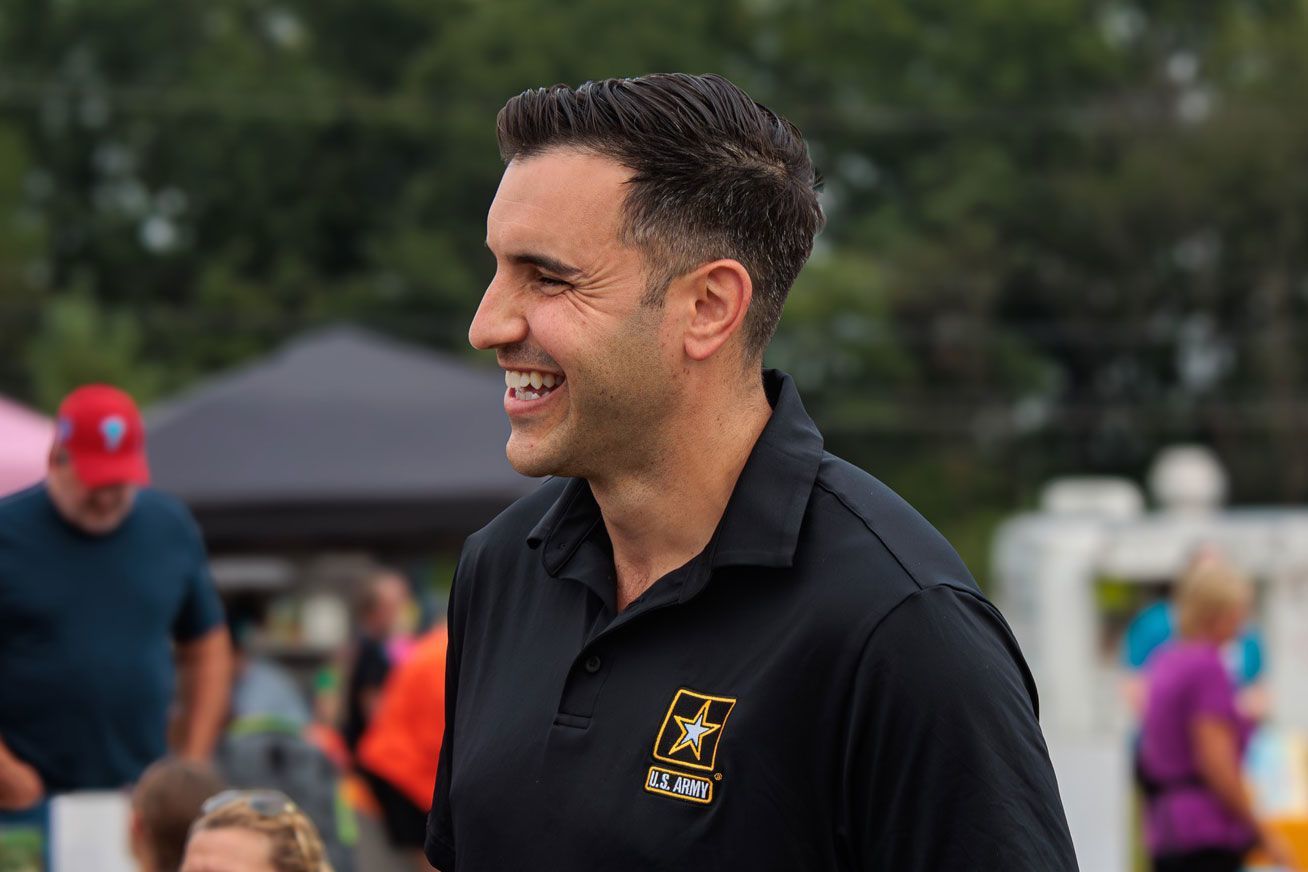
    Ceisler, an Army veteran who held a public-safety leadership post in Gov. Josh Shapiro’s administration, pledged during his campaign to “end this deportation partnership once and for all” if elected.

    Army veteran Danny Ceisler won the hotly contested Bucks County sheriff race Tuesday night.

    Harran, who led the Bensalem Police Department before being elected sheriff four years ago, said Wednesday that Ceisler will “have to answer for a person who becomes victimized by an individual that should have been deported. And he’ll have to sleep with that, and it’ll be on his head, not mine.“

    His said his plans around the program had been misrepresented.

    “Everyone knows my intentions. It was never making car stops on people who were dark-colored. My career speaks for itself in terms of my partnerships with the community.”

    He had staunchly defended his decision to assist ICE, insisting it would make residents safer and even potentially bring new funding and police equipment to the county.

    Ceisler called immigration the single biggest issue in this election.

    “My goal was to provide an alternative which was a no-nonsense, reasonable approach to public safety,” Ceisler said Wednesday, noting that it was now “my responsibility to deliver on that.”

    Officials with U.S. Immigration and Customs Enforcement declined to comment.

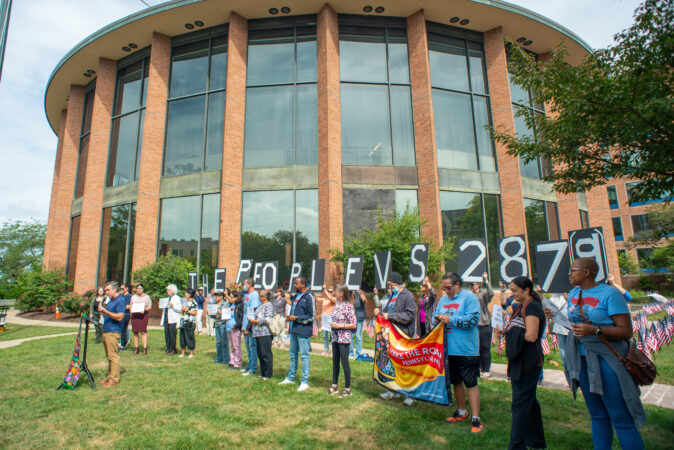
    The partnership, which recently became active after months of planning, provoked backlash, including the lawsuit, public demonstrations outside the courthouse, and a repudiation by the Democratic-led Bucks County Board of Commissioners.

    Nationally, only a few police agencies that signed on with ICE have dropped out of those agreements.

    Ceisler’s victory was part of a Democratic sweep of county positions in a critical swing county that narrowly voted to elect President Donald Trump last year.

    “I am walking on air,” said Laura Rose, a leader of Bucks County Indivisible, which supports immigrants and progressive causes. “Bucks County voters soundly rejected Sheriff Harran and his plan to turn county deputies into de facto ICE agents.”

    In the spring, Harran and ICE officials signed what is called a 287(g) agreement, named for a section of a 1996 immigration law. It enables local police to undergo ICE training, then assist the agency in identifying, arresting, and deporting immigrants.

    “Ceisler’s victory proves what we’ve always known ― 287(g) agreements don’t make us safer, they divide our community,” said Diana Robinson, co-executive director of Make the Road Pennsylvania, a plaintiff in the lawsuit.

    The agreement with ICE “put Bucks County at risk,” and the election showed that “voters reject fear-based policies,” she said Wednesday.

    Robinson and other opponents insist that turning local officers into immigration agents breaks community trust with the police and puts municipal taxpayers at risk of paying big legal settlements. ICE officials, however, say the program helps protect American communities, a force-multiplier that adds important staff strength to an agency workforce that numbers about 20,000 nationwide.

    The number of participating police agencies has soared under Trump, with ICE having signed 1,135 agreements in 40 states as of Wednesday. Seven states, including New Jersey and Delaware, bar the agreements by law or policy.

    The number of new agreements increases almost every day, and Trump has pushed hard for greater local involvement. On his first day in office he directed the Department of Homeland Security to authorize local police to “perform the functions of immigration officers” to “the maximum extent permitted by law.”

    Shortly before the government shutdown, ICE was poised to begin backing its recruitment efforts with money, announcing that it would reimburse cooperating police agencies for costs that previously had been borne by local departments and taxpayers.

    But activists focused on the difference between what Harran said he intended to do and the much broader powers conferred within the agreement with ICE.

    Harran signed up for the “Task Force Model,” the most far-reaching of the three types of 287(g) agreements. It allows local police to challenge people on the streets about their immigration status and arrest them for violations.

    Harran said his deputies would not do that. Instead, he said, they would electronically check the immigration status of people who have contact with the sheriff’s office because of alleged criminal offenses. Those found to be in the country illegally would be turned over or transported to ICE, if the federal agency desires, he said.

    This suburban content is produced with support from the Leslie Miller and Richard Worley Foundation and The Lenfest Institute for Journalism. Editorial content is created independently of the project donors. Gifts to support The Inquirer’s high-impact journalism can be made at inquirer.com/donate. A list of Lenfest Institute donors can be found at lenfestinstitute.org/supporters.

  • Downingtown elects Erica Deuso, Pennsylvania’s first openly transgender mayor

    Downingtown elects Erica Deuso, Pennsylvania’s first openly transgender mayor

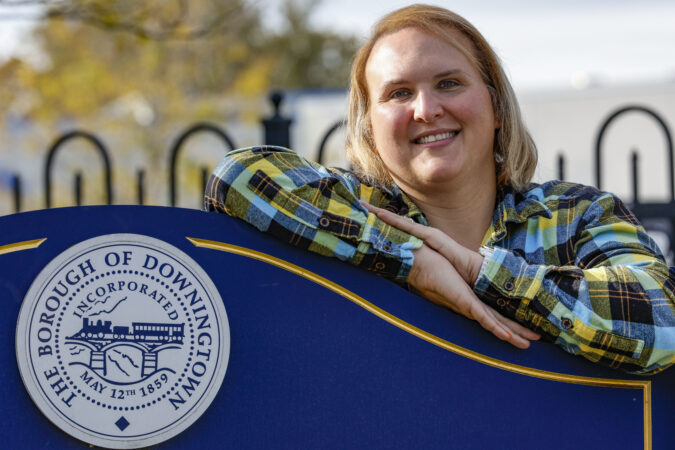
    Erica Deuso will be Pennsylvanias first openly transgender mayor. She won Tuesday’s contest to lead Downingtown after a campaign focused on bread-and-butter local issues in the face of attacks to her identity.

    The longtime Democratic advocate who works in management at a pharmaceutical company earned 64% of the vote as of Wednesday morning defeating Republican Rich Bryant who had 35% of the vote to serve as the next mayor of Downingtown, a Chester County borough of roughly 8,000 people.

    “Voters chose hope, decency, and a community where every neighbor matters,” Deuso said in a statement at 1:30 a.m. Wednesday. “I am honored to be elected as Pennsylvania’s first openly transgender mayor. I carry that responsibility with care and with purpose.”

    Deuso joins a small but growing rank of transgender officials in Pennsylvania and nationwide. There are 52 out transgender elected officials across the United States and three in Pennsylvania, all who govern at the local level , according to the Victory Institute, the research arm of the Victory Fund, which supports LGBTQ+ candidates and backed Deuso.

    While her gender identity attracted attention, and online vitriol, Deuso’s campaign didn’t dwell on it. Instead she prioritized public safety, sustainable growth and community in the historic borough now home to Victory Brewing.

    She ran with the support of the borough’s last two mayors, Democrats Phil Dague and County Commissioner Josh Maxwell.

    Bryant, a retired cybersecurity expert, argued he was better experienced for the job, which primarily leads the borough police department. But Bryant faced accusations of bigotry as Deuso posted screenshots online of her opponent making misogynistic and transphobic remarks on X, (Bryant said 90% of the posts were AI-generated, but offered no proof.)

    In a statement, Bryant congratulated Deuso and pledged to continue working to serve the community.

    “To those who voted differently, I respect your decision and share your hope for a stronger, safer, and more united Downingtown. I will continue to serve, to listen, and to advocate for responsible growth, fiscal transparency, and accountable local leadership,” he said.

    This suburban content is produced with support from the Leslie Miller and Richard Worley Foundation and The Lenfest Institute for Journalism. Editorial content is created independently of the project donors. Gifts to support The Inquirer’s high-impact journalism can be made at inquirer.com/donate. A list of Lenfest Institute donors can be found at lenfestinstitute.org/supporters.