In June 1776, before the Declaration of Independence was signed, a group of leaders from Philadelphia and its surrounding 10 counties — Bucks, Berks, Chester, Lancaster, York, Cumberland, Bedford, Northampton, Northumberland, and Westmoreland — met in Carpenters Hall for the Pennsylvania Provincial Conference. There, the Commonwealth of Pennsylvania was born.
Carpenters Hall, a hidden landmark just two blocks from Independence Hall in Philadelphia’s Old City, is the true birthplace of Pennsylvania, where the state declared its independence from Britain — jump-starting the framework of the state’s influential constitution that would serve as a model for the U.S. Constitution.
Now, the little-known and privately owned historic site is celebrating Pennsylvania’s 250th birthday — which coincides with America’s Semiquincentennial — by holding commemorative events across the state to reflect on Pennsylvania’s history and ask residents how the state constitution should be strengthened in 2026 and beyond.
“It’s the piece of the story we should own and celebrate and use as a platform for civic engagement,” said Michael Norris, the executive director of Carpenters Hall.
Executive director Michael Norris makes remarks at the reopening ceremony at Carpenters Hall on July 3, 2023.
Last week, Norris and others from Carpenters Hall traveled from Philadelphia — the state’s first capital— to Harrisburg to announce their yearlong schedule of events celebrating Pennsylvania’s founding, including those about the state’s constitution and its past and future.
At a news conference last week, Rep. Mary Isaacson (D., Philadelphia) noted that she occupies the seat once held by former Pennsylvania House Speaker Benjamin Franklin. She said she sees the Carpenters Hall events as “more than learning about a key moment in Pennsylvania history.”
“It’s also about exploring the vital importance of our state constitution in our democracy today and what citizens can do to engage,” she added.
The commemorative events include an interactive town hall series hosted in Philadelphia, Pittsburgh, Harrisburg, and Erie to discuss the importance of the Pennsylvania Provincial Conference in the United States’ founding. The group will also host several events at Carpenters Hall, including the installation of a blue historical marker outside the hall on June 18, in addition to a three-part virtual lecture series on Pennsylvania’s constitution.
The events, funded by America 250 PA and the Landenberger Family Foundation, are open to the public and intended to reach Pennsylvania’s “lifelong learners” who are interested in history and civics,as well as the legal community, who will be eligible for Continuing Legal Education credits for attending the virtual lectures, Norris said.
“To me, 250 is about reflection and engagement,” Norris said. “It’s not about parties and buildings. It’s really a moment to reflect and say, ‘What are we doing here? Do we still want this democracy, and how do we protect it and keep it going?’”
The Carpenters’ Company — the nation’s oldest craft guild, which built and still owns Carpenters Hall — will also conduct polling about how Pennsylvania’s constitution, as well as the U.S. Constitution, should be changed to better represent citizens in a modern time, Norris said. The poll results will be made public at an in-person event in Philadelphia on Sept. 28, the 250th anniversary of when the state constitution was ratified.
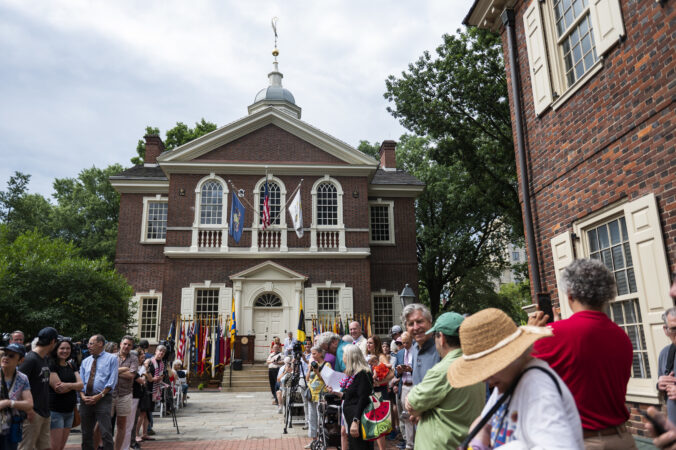
Historic flags are displayed outside at the reopening ceremony at Carpenters Hall on July 3, 2023. The building opened for the first time to the public since April 2022.
Rhode Island was the first colony to declare independence from England in May 1776, and Delaware became the first state in December 1787. Pennsylvania followed days after, and its constitution influenced the country’s founding documents. Pennsylvania’s expansive constitution — viewed as radical at the time — focused on personal freedoms and liberties in its “Declaration of Rights,” after which the Bill of Rights was modeled.
Carpenters Hall was the nation’s first privately owned historic landmark, and remains owned by the Carpenters’ Company today, which offers free admission for 150,000 visitors each year. Because it is privately owned, it is not overseen by the National Park Service, which has in recent weeks dismantled exhibits about slavery at the nearby President’s House Site in Independence National Park thatPresident Donald Trump’s administration contends “inappropriately disparage” the United States.
In the suit, filed in U.S. District Court for the Eastern District of Pennsylvania, the Shapiros’ neighbors in Abington Township, Jeremy and Simone Mock, accuse the governor and his wife, Lori Shapiro, of illegally occupying part of the Mocks’ yard to build an eight-foot security fence last summer in what they claim in the lawsuit is an “outrageous abuse of power.”
In short, they asked a federal judge to order the Shapiros off their property.
The Shapiros quickly filed a countersuit in Montgomery County Court of Common Pleas on Monday against the Mocks, asking a judge to declare that the disputed chunk of the property has been theirs for years.
The attempt to build the new fence is part of a larger security upgrade for Shapiro and his family, following the April firebombing of the state-owned governor’s residence in Harrisburg, when a man broke in to the mansion and set off Molotov cocktails that quickly engulfed part of the home. Cody Balmer, 38, pleaded guilty in October to attempted murder and was sentenced to 25 to 50 years in prison.
The Mocks, whose property is adjacent to the Shapiros’ Montgomery County property, say the planned location of the fence is on their property unlawfully and violates their rights, according to the lawsuit.
The couple is represented by Wally Zimolong, a Delaware County attorney who is described as “the ‘go-to’ lawyer in Pennsylvania for conservative causes and candidates” on his firm’s website. He previously represented the political campaigns of President Donald Trump and U.S. Sen. Dave McCormick (R., Pa.), according to his website.
“The Governor looks forward to a swift resolution and will not be bullied by anyone trying to score cheap political points, especially at the expense of his family’s safety and wellbeing,” Will Simons, a spokesperson for Shapiro, a Democrat running for reelection, saidin a statement.
According to the Mocks’ lawsuit, the Shapiros approached their neighbors in July to discuss the construction of a security fence near where their yards meet. The Shapiros were interested in purchasing a portion of the Mocks’ property for the fence, and also discussed a lease option. But the couples couldn’t agree on the price, according to the suit.
Things took a turn in late August, when, according to the lawsuit, the Shapiros’ attorney told the Mocks they would obtain the chunk of land through “alternative actions.”
“What followed was an outrageous abuse of power by the sitting Governor of Pennsylvania and its former Attorney General,” the complaint says. (Shapiro served as Pennsylvania’s attorney general before he was elected governor in 2022.)
The Shapiros told the Mock family, according to the neighbors’ lawsuit, that they owned the land through adverse possession, a legal mechanism through which a person can gain ownership of a property they’ve actively used for at least 21 years. The Shapiros have lived in their Montgomery County home for 23 years.
The governor and first lady then began planting arborvitae-type trees and other plants on the Mocks’ property, flying drones over it, threatening to remove healthy trees, and “chasing away” contractors who came to work in the Mocks’ yard, the lawsuit claims.
The complaint also accuses Shapiro of directing state police to patrol the property. Troopers instructed the Mocks to leave the area of the yard multiple times, calling it a “disputed” area or “security zone,” the suit says.
The Mocks purchased the house in 2017, according to property records, and their lawsuit says they have paid taxes on the property over the time period. The offer to purchase the land shows the Shapiros knew it wasn’t theirs, according to the complaint.
“The Shapiros continue to occupy the Mock Property without permission or any legal justification whatsoever,” the lawsuit says.
The security fencing for the Shapiros’ home was purchased but ultimately never installed, and is being repurposed at the Pennsylvania State Police training academy, Spotlight PA previously reported.
Zimolong declined to comment on the lawsuit Monday.
The Shapiro’s countersuit
The Shapiros’ lawsuit doesn’t dispute many elements of the Mocks’ suit, but casts them in a different light.
As the Shapiros tell it, a land surveyor discovered in summer 2025 that the Mocks actually owned about 2,900 square feet of land that the Shapiros had believed was a part of their property since they bought the home in 2003. That time period, 22 years, satisfies Pennsylvania’s adverse possession law.
The Mocks didn’t consider that part of the property to be theirs, according to the complaint, until the Shapiros told them.
But after negotiations fell apart when the Shapiros attempted to purchase the land, the Mocks sought a permit to erect their own fence and include the disputed area on their property, the suit says.
Shapiro’s security detail denied a tree-removal contractor access to the area, according to the complaint, because the first couple believe they possessed the land.
And the state police troopers the Mocks saw were part of Shapiro’s security detail, which after the April attack have conducted review of his Abington home.
The governor and his wife are asking a judge to find that they are the “legal and equitable owners” of the area in dispute.
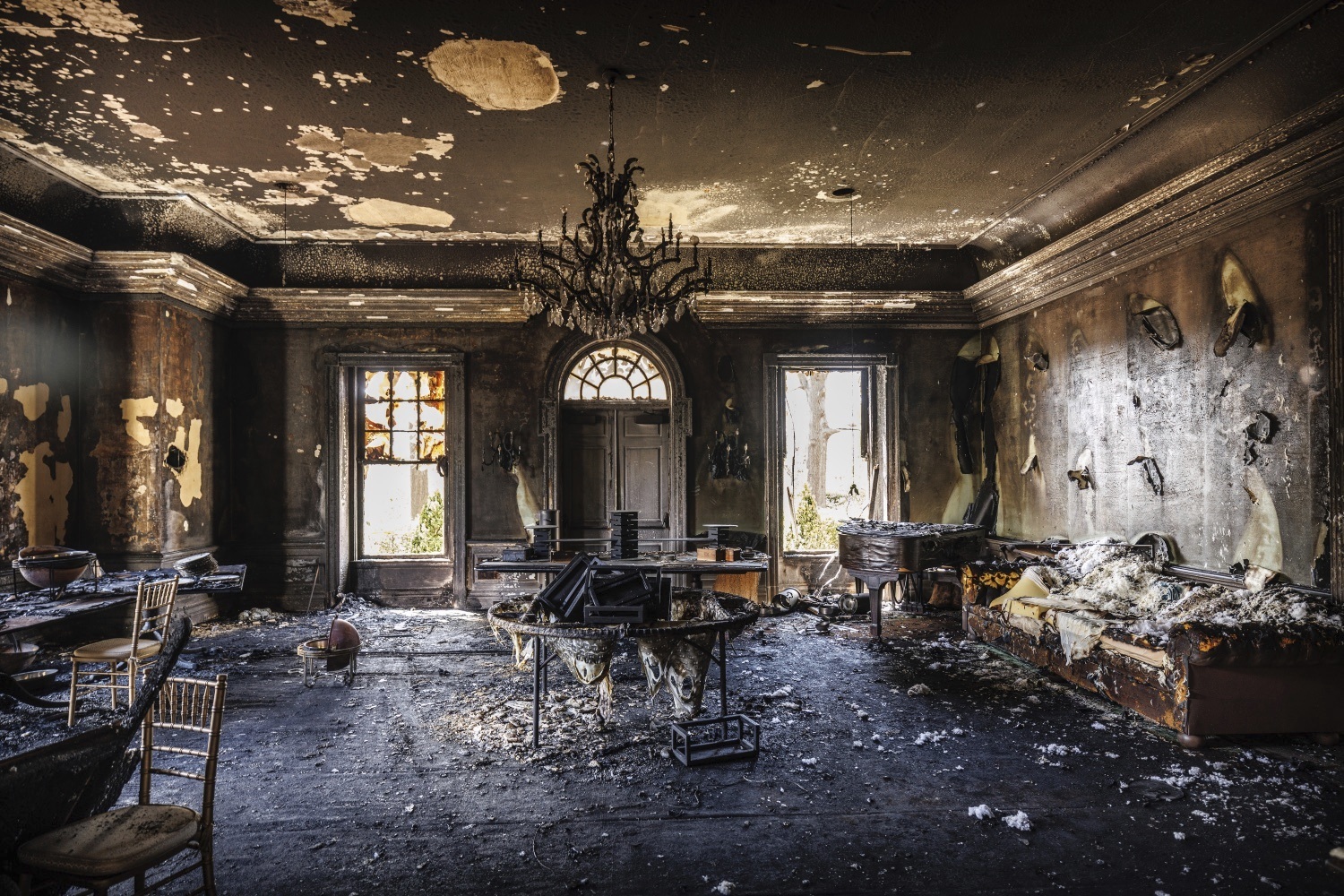
This image provided by Commonwealth Media Services shows damage after a fire on April 13, 2025, at the Pennsylvania governor’s mansion while Democratic Gov. Josh Shapiro and his family slept inside.
Scrutiny over security
Shapiro has faced scrutiny for using taxpayer dollars with little transparency to upgrade the security of his personal home, which is the primary residence for two of his four children, who are school-aged. State Police spent at least $1 million to upgrade security on his Abington Township property, in addition to more than $32 million in upgrades and repairs to the Harrisburg governor’s mansion.
The GOP-controlled Senate Intergovernmental Operations Committee in December took the rare step of subpoenaing Shapiro for access to records about how taxpayer dollars were spent to upgrade the Shapiro property and home, including a new security system and landscaping work previously reported by Spotlight PA. Sen. Jarrett Coleman (R., Lehigh), who chairs the committee, argued the subpoenas were necessary because the Shapiro administration did not turn over the requested documents, or turned over incomplete records.
As the Democratic governor of the nation’s fifth most-populous state, Shapiro continues to face threats to his safety. Police arrested a Carlisle man last week for allegedly sending messages to the governor’s office, that said “I do plan on stalking and hurting your family, before adding “metaphorically speaking of course.” The man, George R. Brown Jr., later told police they were “fake threats” and he was trying to get help with an eye injury he suffered while at Cumberland County Prison, PennLive reported.
Philadelphia’s Democratic Party has endorsed State Sen. Sharif Street for the city’s open congressional seat.
The endorsement Monday came as no surprise, given Street’s insider connections. He previously chaired the Pennsylvania Democratic Party and is close to party leaders in the city. And Bob Brady, who chairs the Democratic City Committee, said last fall that he expected his fellow ward leaders to vote to endorse Street.
But it nonetheless strengthens Street’s status as the favorite in the race among the local Democratic establishment. Street, the son of former Mayor John F. Street, was endorsed by the politically powerful unions in the Philadelphia Building & Construction Trades Council last year.
“I am deeply honored to have received the overwhelming support of the grassroots leaders who power our party,” Street, who represents a North Philadelphia district in the state Senate, said in a statement. “This endorsement is more than just a vote of confidence — it is a demonstration that we are building a broad-based coalition.”
Street has also emerged as the front-runner in the financial race. Recently disclosed campaign reports showed he raised $348,000 from donors in the last quarter of 2025, the largest haul among the candidates.
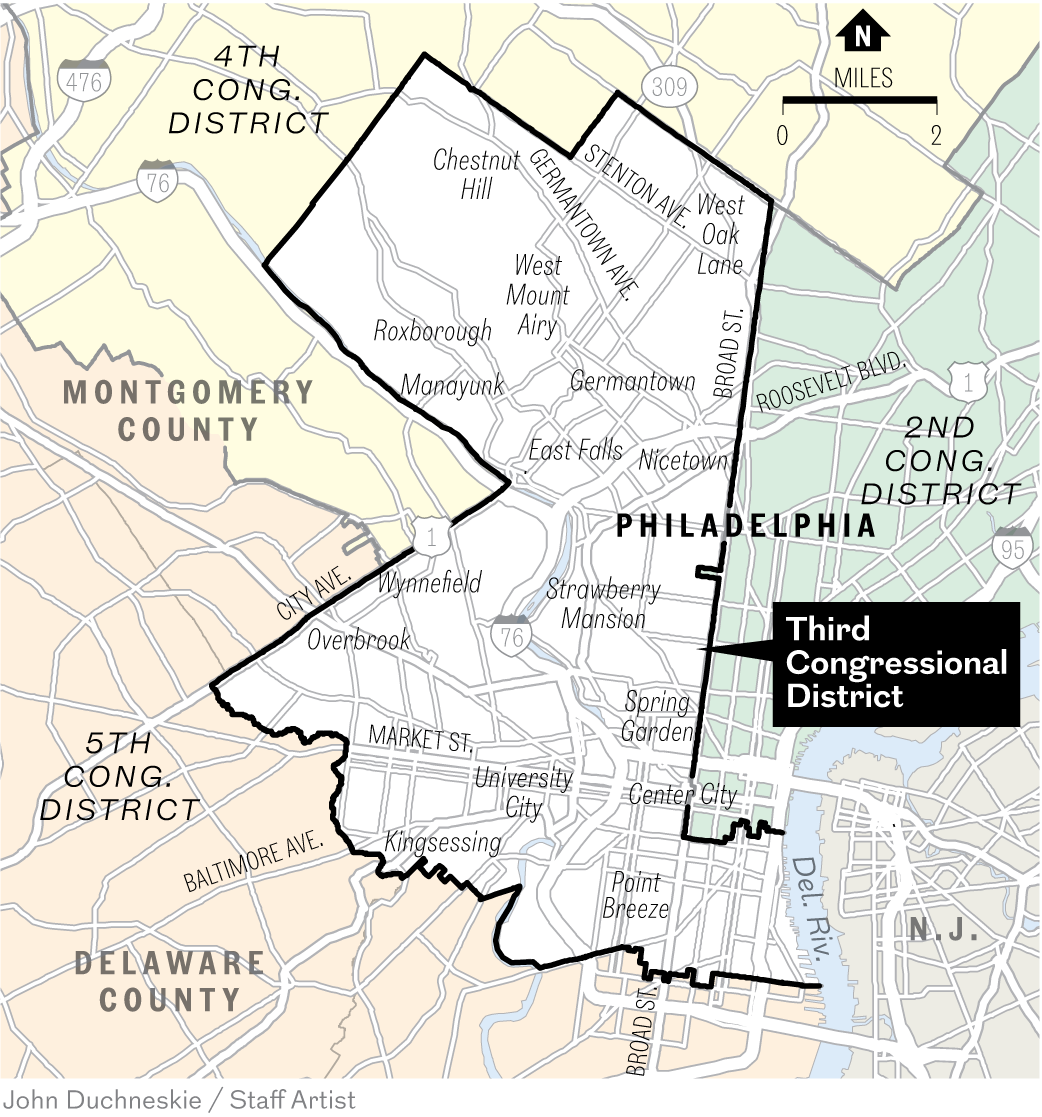
The 3rd Congressional District is, by some measures, the most heavily Democratic district in the U.S. House, and includes West and Northwest Philadelphia and parts of Center City, Southwest, South, and North Philadelphia.
The winner of the Democratic primary in May is all but guaranteed victory in November. Democrats hold a 7-to-1 voter registration edge over Republicans in Philadelphia.
Map of Pennsylvania’s Third Congressional District.
Earning the party nod may help Street stand out in a crowded field and will bolster his ground game for campaigning, activating the party’s hundreds of committeepeople to get out the vote for him.
But it doesn’t guarantee victory. Insurgent candidates have defied the party’s dominance several times in recent city elections, and the district includes several progressive pockets that could open the door for a candidate who can coalesce the left against Street.
The endorsement followed a vote by the Democratic ward leaders in the district. A candidate must receive at least 50% of the vote to win the party endorsement.
If no candidate reaches that mark, each ward prints its own sample ballots with its preferred candidates, which often happens in open contests like this year’s primary.
The party’s endorsement of Street means all ward leaders are now encouraged to include him in the literature distributed to voters before and on election day. Some wards, however, choose to print their own slates anyway.
The party did not immediately disclose the final vote tally at the endorsement meeting.
Northwest Philadelphia’s 50th Ward, which is led by Mayor Cherelle L. Parker, has not yet made an endorsement in the race, said Aren Platt, executive director of the mayor’s campaign, People for Parker.
Top candidates in the race, including Street, were scheduled to face off at a candidates forum hosted by the Center City Residents Association on Monday night.
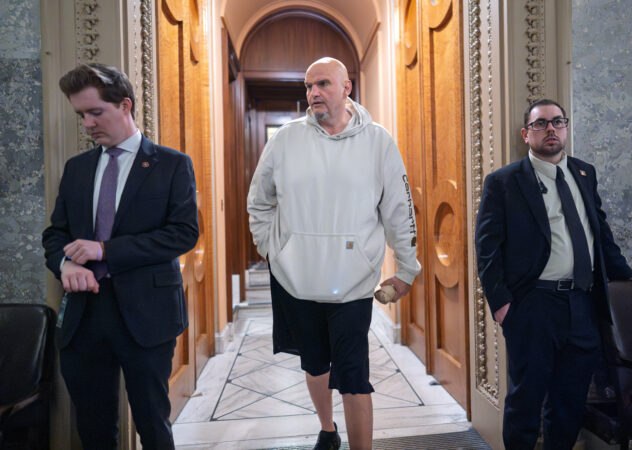
U.S. Sen. John Fetterman said Sunday that he expects the Department of Homeland Security to shut down Friday as negotiations over immigration enforcement have stalled, an outcome that could impact air travel and emergency response across the nation.
“I absolutely would expect that it’s going to shut down,” the Pennsylvania Democrat said during an interview on Fox News’Sunday Morning Futureswith Maria Bartiromo.
Funding for DHS is scheduled to lapse Friday, a deadline that lawmakers set after separating the agency’s funding from other parts of the federal budget and approving a two-week extension to continue talks.
At the center of the impasse is Democrats’ insistence on overhauling federal immigration enforcement. The party’s leaders drafted a list of 10 policies they want Republicans to agree to in exchange for their support in funding DHS, which includes U.S. Immigration and Customs Enforcement.
Among Democrats’ demands are banning immigration enforcement agents from wearing masks and requiring DHS officers to obtain a warrant signed by a judge before entering a home.
House Minority Leader Hakeem Jeffries (D., N.Y.) said Sunday during an interview on CNN’s State of the Union that “at this point” he was not willing to accept a deal that didn’t include President Donald Trump’s administration implementing Democrats’ full list of ICE changes.
“We know that ICE is completely and totally out of control,” Jeffries said. “They’ve gone way too far, and the American people want them reined in.”
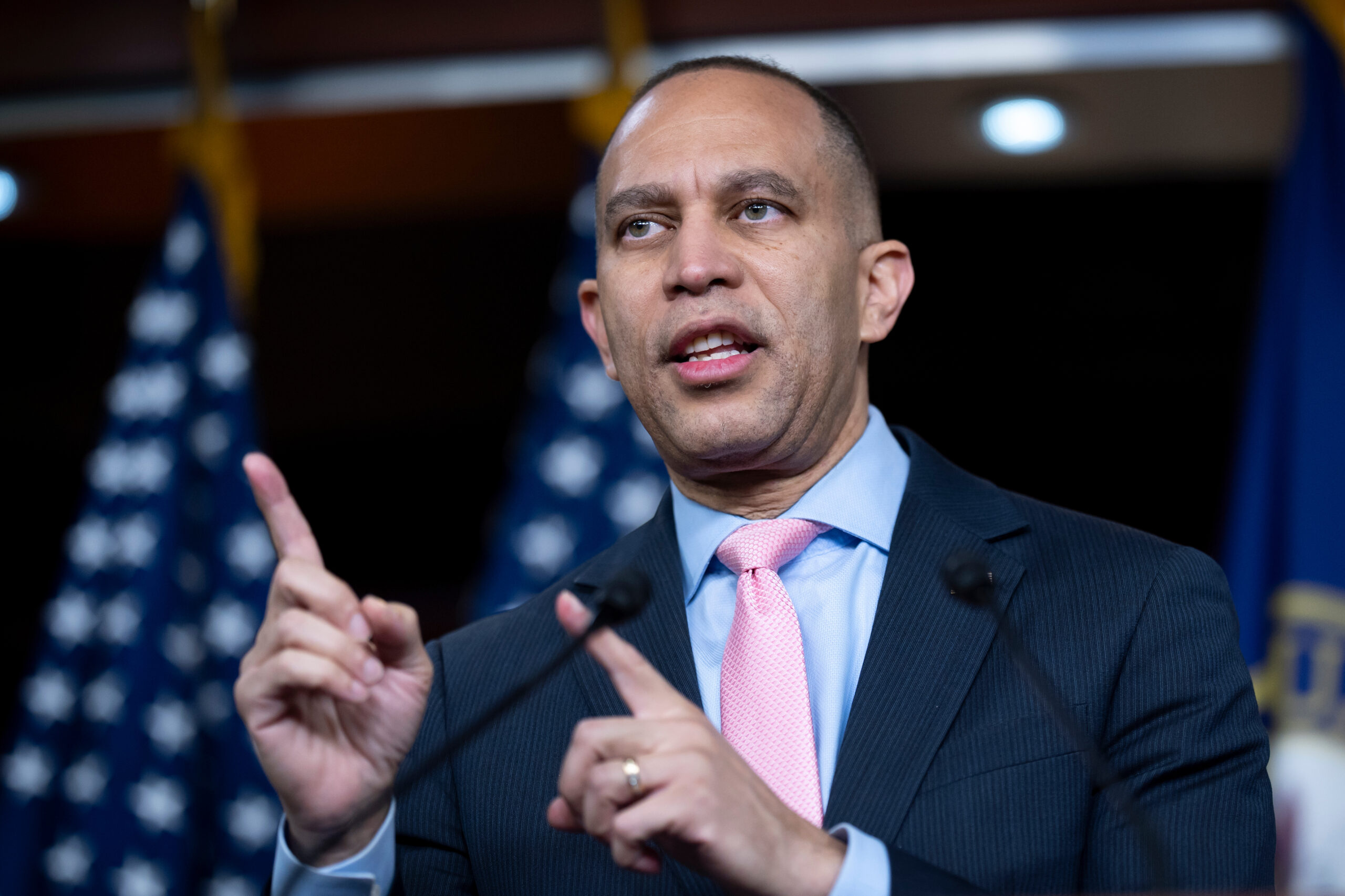
House Minority Leader Hakeem Jeffries (D., N.Y.) speaks to reporters about Venezuela, the ICE shooting in Minneapolis, and affordability ahead of a vote in the House to extend the Obamacare subsidies for three years at the Capitol on Jan. 8. (AP Photo/J. Scott Applewhite)
“We, the Democrats, we provided 10 kinds of basic things, and then the Republicans pushed back quickly saying, ‘That’s a Christmas wish list,’ and that they’re nonstarters,” Fetterman, a member of the Senate Homeland Security Committee, said. “I truly don’t know what specifically are the Democrats’ red lines that it has to be — certainly not going to get all 10.”
Fetterman generally opposes any measure that would shut down the government and has been the only Senate Democrat to vote for some Republican budget proposals. He added that he is concerned about federal workers, including TSA agents, not being paid amid a funding lapse.
“Every American deserves to be paid for the work that they’ve done,” he said. “That’s real lives, and they’re not wealthy if they’re TSA folks. They’re allowing us to fly safe here in America, and that’s part of that conversation now, too.”
U.S. Sen. John Fetterman (D., Pa.) is calling on the Department of Homeland Security to hit the brakes on its plan to develop two Immigration and Customs Enforcement detention centers in Pennsylvania, saying they would have a negative impact on local communities.
“While I have been clear in my support for the enforcement of federal immigration law, this decision will do significant damage to these local tax bases, set back decades-long efforts to boost economic development, and place undue burdens on limited existing infrastructure in these communities,” Fetterman wrote in a letter addressed to DHS Secretary Kristi Noem and posted online Saturday.
A 1.3-million-square-foot former Big Lots warehouse in Tremont, Pa., has been bought by U.S. Immigration and Customs Enforcement for $119 million. The agency plans to detain up to 7,500 immigrants there.
The Tremont Township detention center would house as many as 7,500 people, Fetterman noted, while the Upper Bern Township one would be capable of detaining 1,500 people.
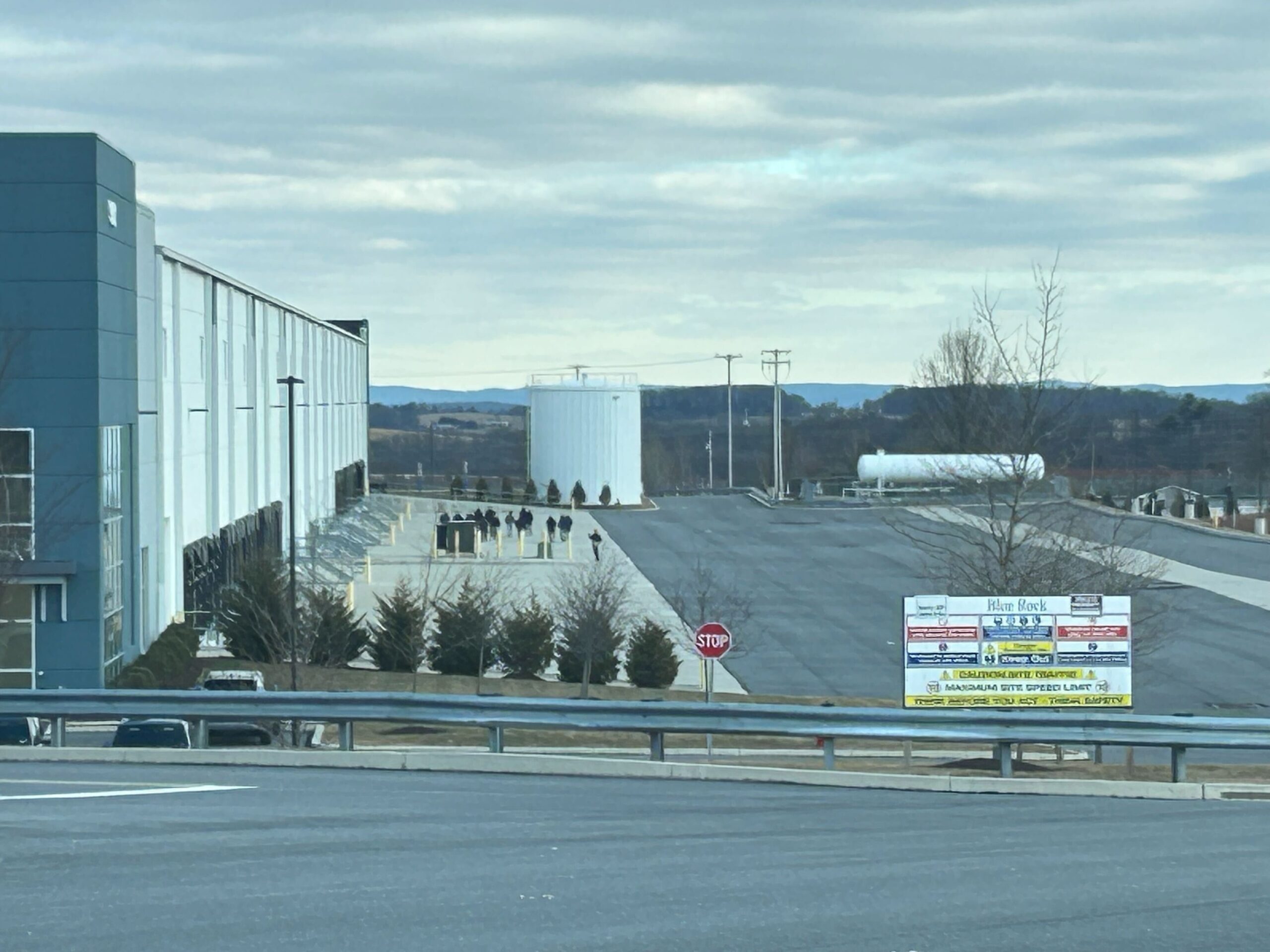
Upper Bern Township has 1,606 residents, according to the U.S. Census Bureau, and is about 30 minutes northwest of Reading. The facility is near an Amazon warehouse and the Mountain Springs Camping Resort.
Tremont Township — where the much larger detention center is set to be built — has just 283 residents and is next to the 1,670-resident Tremont Borough. Tremont is in a rural area northeast of Harrisburg, near the Appalachian Trail, state game lands, and Fort Indiantown Gap, an Army National Guard training center.
In his letter, Fetterman said local and state officials did not have a chance to weigh in on how these massive facilities would affect everything from sewer systems and the electrical grid to hospitals and emergency medical services.
“Both townships do not currently have the capacity to meet the demands of these detention centers, with Tremont Township officials specifically stating the proposed 7,500-bed detention facility would quadruple the existing burden on their public infrastructure system,” Fetterman said.
A warehouse in Upper Bern Township, Berks County, Pa., was purchased by ICE and the Trump administration.
The letter maintains Fetterman’s stance as someone who supports ICE operations in general while criticizing the federal government’s recent handling of them. After federal agents shot and killed two U.S. citizens in Minneapolis last month, Fetterman called on the Trump administration to fire Noem. A few days later, Fetterman said he supports ICE agents wearing face masks.
Fetterman was among 23 Senate Democrats to cross the aisle last month to vote for a compromise bill funding the federal government through September, while granting just two weeks of funding for DHS.
Fetterman said the Pennsylvania facilities would result in a tax loss of $1.6 million to the communities. He asked DHS to agree to several conditions before proceeding further with the sites.
He requested an “impact assessment,” details on the criteria used to select these facilities, an agreement that federal funds be used to upgrade them, and “a commitment to a period of public engagement and dialogue with these communities.”
“Due to these significant concerns, it is my fear that DHS and ICE did not perform any due diligence, spending more than $200 million in tax dollars for warehouses that cannot be adequately converted and further eroding trust between Pennsylvanians and the Federal government,” Fetterman wrote.
The Department of Homeland Security and Immigration and Customs Enforcement did not immediately respond to a request for comment.
This story has been updated to correct the location of one of the proposed detention centers to Upper Bern Township.
As Chris Scafario sees it, Philadelphia’s reputation as an “eds and meds” region, referring to its plethora of colleges and hospitals, could grow a third leg.
It could also become the defense industrial base region,said Scafario, CEO of the Delaware Valley Industrial Resource Center.
President DonaldTrump wants to increase defense spending, with $1.5 trillion proposed for 2027. This could mean more research and workforce development training opportunities — and local universities are positioned to take advantage of it, Scafario said.
Chris Scafario, CEO of the Delaware Valley Industrial Resource Center
“A lot of that investment is going to be targeted toward university and innovation-based relationships because they need help getting stuff done,” said Scafario, who is talking to local colleges to help get them ready to capitalize. “They need access to brilliant people, whether they’re faculty or the faculty’s work products, the students.”
The move comes as colleges face potential cuts in research funding under the Trump administration in other areas, such as the National Institutes of Health. Both Princeton University and the University of Pennsylvania in the last month announced cutbacks to cope with potential financial fallout from federal policies.
Scafario’s center, which is based at the Navy Yard and was founded in 1988, aims to foster economic development and local manufacturing.
The Philadelphia region has been involved in defense contracting on and off for years, with major hubs in naval and aerospace manufacturing, and local universities say they worked with the Department of Defense in the past. Rowan University in New Jersey says it has $70 million in defense-related research projects underway.
But Scafario sees the opportunity for major expansion.
Drexel University, Temple University, Penn, Rowan, and Villanova University, which is already a top producer of naval engineers, are among the schools that are “in a great spot to leverage the opportunities that are going to be coming through the defense industrial base,” Scafario said. “In the next year, people are going to start realizing that we are meds, eds, and a defense industrial base region. It’s going to bring a lot of investment, a lot of economic opportunities, and some really, really great employment opportunities in the region.”
The Philadelphia region could become a national anchor for shipbuilding or other maritime industrial-based activities, he said.
Scafario hopes to bring colleges together with other partners for more discussions in the spring when the timeline for those federal investments starts to become clearer, he said.
Amanda Page, Warfighter Technologies Liaison for the Delaware Valley Industrial Resource Center
Colleges could help with efforts to accelerate production capacity of naval ships and work on initiatives such as how to make submarines less traceable and more durable. Or they could help improve medical equipment and training for the battlefield. The treatment standard in the military used to be the “golden hour”; now it’s about “prolonged field care,” said Amanda Page, a retired active-duty Army medic who serves as warfighter technologies liaison for the center.
“Medical personnel need to be prepared mentally, physically, emotionally, and electronically to keep those patients for 96 hours,” Page said. “That’s going to require a ton of research and technology.”
Page was hired by the center in October to help build relationships between the center, the Department of Defense (which the Trump administration has rebranded the Department of War), local higher education systems, and the city.
“I’m super excited about what it will bring to the region and what the region can prove to the Department of War about its legitimacy,” she said, “as a manufacturing and technology powerhouse.”
Local colleges say they are reviewing potential collaborations.
“There are a lot of opportunities we are looking at,” said Aleister Saunders, Drexel’s executive vice provost for research and innovation, declining to provide specificsfor competitive reasons.
In addition to opportunities with the Navy and the Navy Yard, he noted major local companies involved with aerospace and aviation, including Lockheed Martin and Boeing. There are also opportunities around materials and textiles with the Philadelphia-based Defense Logistics Agency Troop Support, which provides many of the supplies to the military.
“Those are really valuable assets that we should find a way to leverage better than we are,” he said.
Key opportunities are available in advanced manufacturing and workforce development, he said.
“There could be folks who are already working in manufacturing who need [upgraded skills] in advanced manufacturing techniques,” he said.
Temple University president John Fry said increasing research opportunities and impact — the school’s research budget now exceeds $300 million — is a priority in the school’s strategic plan. Temple offers opportunities around medical manufacturing, healthcare, and health services, he said.
“The key to doing that is going to be partnerships,” he said.
Josh Gladden, Temple’s vice president for research, said he has met with folks from Scafario’s group and they are talking about some opportunities, but declined to discuss them because they are in early development.
He noted that the Navy is interested in working with Temple’s burn unit.
Temple has also been getting to know the workforce needs of businesses at the Navy Yard and looking at how to align its educational programs, Fry said.
“Those are relationships I would love to pursue,” he said. “Part of our mission is to develop the future workforce and grow the regional economy, and that’s one way of doing it.”
Rowan has been a longtime research partner with the U.S. military, said Mei Wei, the school’s vice chancellor for research.
“It’s encouraging to know there could be more funding available for research,” Wei said. “These projects give our undergraduate and graduate students the opportunities they need to develop their research skills with close guidance from our faculty and our external partners.”
HARRISBURG — The Pennsylvania Republican and Democratic Parties locked in their endorsements for the 2026 governor’s race Saturday at dueling committee meetings in the state’s capital, as they present different visions of the future for Pennsylvania and America.
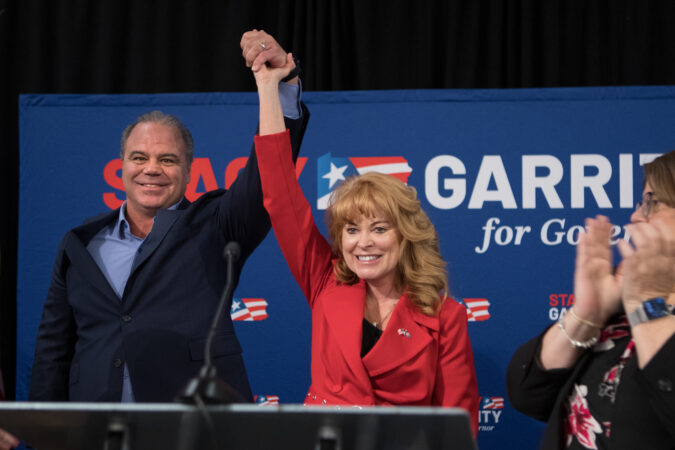
The state GOP endorsed Jason Richey, a longtime Pittsburgh attorney and chair of the Allegheny County Republicans, for lieutenant governor to run alongside its endorsed gubernatorial candidate, Treasurer Stacy Garrity. On the other side of town, the state Democratic Party resoundingly endorsed Gov. Josh Shapiro and Lt. Gov. Austin Davis for reelection to a second term.
By finalizing their endorsements for governor and lieutenant governor, the November election is all but officially set. The candidates are expected to be formally nominated by their parties in the May 19 primary.
Garrity would be the state’s first female governor and would be a strong conservative leader who will protect the state from becoming “California East,” Richey said as he described another term under Shapiro in his acceptance remarks.
State Republicans took the unprecedented step to endorse Garrity in September 2025, in an effort to give her six additional months to campaign for governor and coalesce support. However, Garrity did not announce Richey as her choice for running mate until last month. Several candidates had turned down the job, as Garrity faces an uphill battle to challenge Shapiro, a popular moderate Democratic governor, in a midterm election already advantageous to Democrats.
There was no shortage of attacks on Shapiro at the state GOP meeting.
“[Shapiro] is a charlatan. He is a phony who tries to talk like [former President Barack] Obama and has done nothing to help move this state forward,” Richey said. “Today is not just another meeting. Today is not just another endorsement. Today is the moment that the Pennsylvania Republican Party stands together and resolves to take back our commonwealth.”
Garrity last month received the coveted nod from the leader of the Republican Party, President Donald Trump, who called her an “America First Patriot.”
Meanwhile, for state Democratic Party committee members, their attention was not on Garrity and Richey. They want to make Trump a lame-duck president by flipping four congressional seats and secure Shapiro a Democratic trifecta by retaining control of the state House and flipping the state Senate for the first time in more than 30 years.
“These are people who are lawless. They are without a conscience, without a backbone, without any sense of right and wrong,” said U.S. Rep. Madeleine Dean (D., Pa.), describing the GOP colleagues she wants to unseat. “Four seats. That will be the U.S. House majority. We can get the gavels in our hands, and we can make Trump an even lamer duck than he already is, and we can move on with impeachments, convictions, whatever we can do.”
Different outlooks on Pennsylvania and the U.S.
To Republicans, Pennsylvania is falling behind, citing its U.S. News & World Report rankings as 41st in Best Overall States, 38th for its economy, and 39th for education. Trump’s White House, alternately, is heavily invested in Pennsylvania’s success, often inviting its GOP county commissioners to visit, said Lancaster County Commissioner Josh Parsons, delivering the GOP commissioners’ update to the state committee.
“We’re going to keep Republicans in the majority in Congress, because if not, we’ve seen this show before. We know what’s going to happen: investigations, impeachments, and, worst of all, they will stop the agenda that Trump has created,” said state GOP chair Greg Rothman, noting Trump’s efforts to lower prices, end the war in Gaza, and more.
For Democrats, it’s America that’s on the wrong track, while Pennsylvania is succeeding despite the “chaos in Washington,” as Shapiro described in his endorsement acceptance speech.
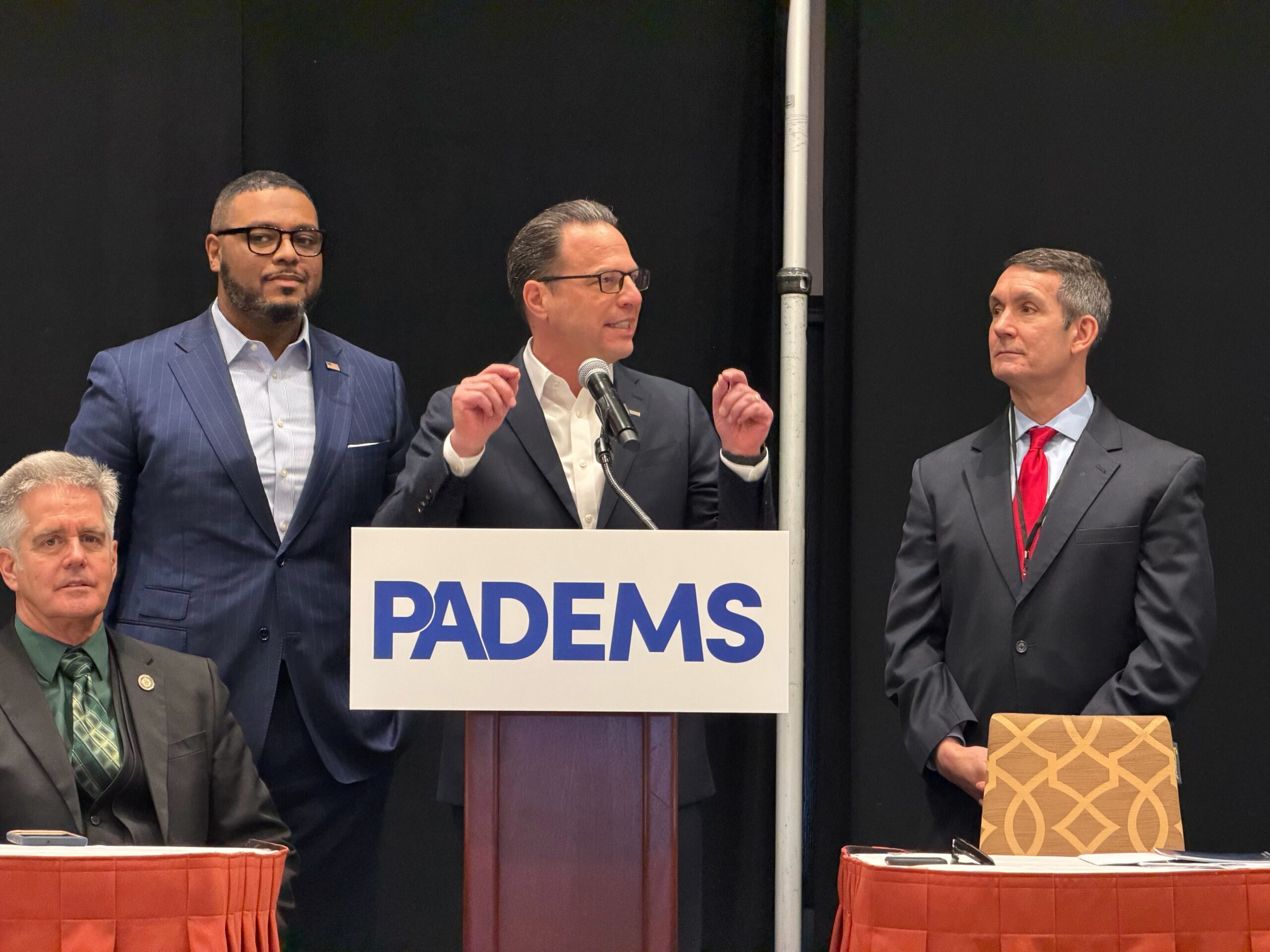
Pennsylvania Gov. Josh Shapiro accepts the endorsement for a second term as governor at the state Democratic Party’s winter meeting in Harrisburg on Feb. 7, 2026. With him are Lt. Gov. Austin Davis (second from left) and Pennsylvania Democratic Party chair Eugene DePasquale (right).
That positive view of Pennsylvania is due to Shapiro’s leadership in the state, said Pennsylvania Democratic Party chair Eugene DePasquale.
“You look at the polls today, Donald Trump is at his historic low mark, while the governor is at a historic high mark,” DePasquale added. “Why is he at that high mark? They see the state heading in the right direction. They see him fighting the Trump administration to protect Pennsylvanians.”
Candidates will begin circulating petitions later this month to secure a spot on the ballot. No candidates are expected to challenge Shapiro or Davis in the primary. There is at least one write-in campaign being run, for State Sen. Doug Mastriano (R., Franklin), who declined to challenge Shapiro for a second time. He lost to Shapiro by more than 15 percentage points in 2022.
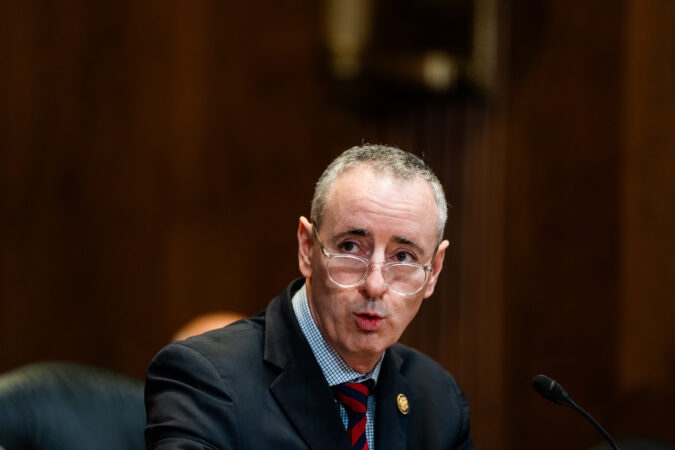
U.S. Rep. Brian Fitzpatrick (R., Bucks)called on President Donald Trump to apologize for sharing a racist video Thursday night on Truth Social that depicts former President Barack Obama, the country’s first Black president, and former first lady Michelle Obama, as apes.
“Whether intentional or careless, this post is a grave failure of judgment and is absolutely unacceptable from anyone — most especially from the President of the United States. A clear and unequivocal apology is owed,” Fitzpatrick wrote in a post on X Friday afternoon.
The Bucks County Republican, who will be defending a key swing district this fall, joined a bipartisan ensemble of lawmakers who are condemning Trump’s post, which was deleted Friday after the widespread backlash.
“Donald Trump is a bigoted, small-minded man who has long spewed racist remarks and tried to whitewash our nation’s history. Today he finds a new low,” said U.S. Rep. Dwight Evans (D., Philadelphia), a member of the Congressional Black Caucus, in a post on X. “His recent post is vile, disgusting, and abhorrently racist. Every elected official should speak up and condemn this hate.”
Sen. John Fetterman (D., Pa.) in a statement to The Inquirer, called the president’s post “indefensible and horrendous.”
“That garbage came from, and should forever remain in, the twisted and grotesque corners of the internet,” he said.
Fitzpatrick, a moderate representing a purple county, has disagreed with Trump before but the lawmaker’s comments Friday serve as one of his strongest rebukes yet.
“Racism and hatred have no place in our country — ever. They divide our people and weaken the foundations of our democracy,“ Fitzpatrick wrote. “History leaves no doubt: when division is inflamed by those in positions of power, the consequences are real and lasting.”
The White House blamed a staffer for the video, which was posted just fivedays into Black History Month, The Associated Press reported. This came after White House press secretary Karoline Leavitt said there was “fake outrage” over the post and that it was a meme inspired by The Lion King.
In addition to the Obamas, other Democratic leaders, including former President Joe Biden, were depicted as various animals in the video, which was set to “The Lion Sleeps Tonight” and features Trump as the “King of the Jungle.” The clip of the Obamas appears to have originally come from a conservative user on X, The New York Times reported.
In addition to the election officials reacting with horror, Rt. Rev. Daniel G.P. Gutiérrez, bishopof the Episcopal Diocese in Pennsylvania, said that he was “repulsed and sickened” by Trump’s post and called on the president toresign.
U.S. Sen. Dave McCormick (R., Pa) condemned the video late Friday afternoon after the White House had blamed it on a staffer.
“Posting this video is unacceptable and thankfully it has been taken down. It should never have been posted and does not represent who we are as a nation. Racism has no place in America,” McCormick said in a post on X.
Other Republican senators moved faster to publicly condemn Trump’s post.
U.S. Sen. Tim Scott (R., S.C.), the only Black Republican in the U.S. Senate, said Friday morning, “It’s the most racist thing I’ve seen out of this White House. The President should remove it.”
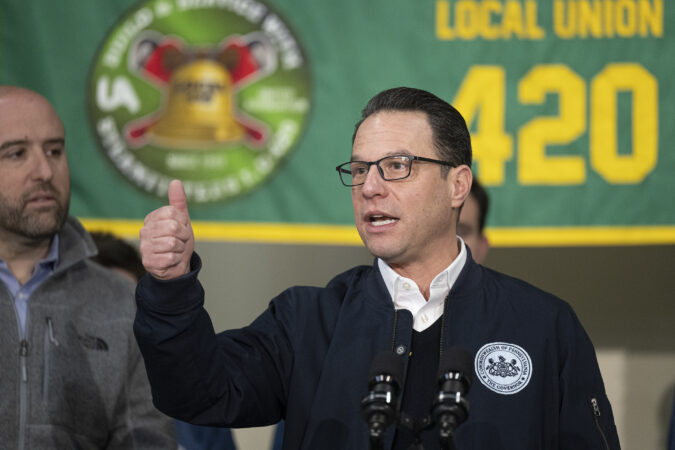
Gov. Josh Shapiro blasted U.S. Immigration and Customs Enforcement (ICE) Friday for buyinga Berks County warehouse that may be used to detain people.
“I’m strongly opposed to the purchase,” Shapiro said after speaking at an event at the Steamfitters Local 420 in Northeast Philadelphia.
Shapiro said the facility is “not what we need anywhere in Pennsylvania,” adding that he was not alerted ahead of time of ICE’s $87 million acquisition of the warehouse on 64 acres in Upper Bern Township.
“The secretive way the federal government went about this undermines trust,” Shapiro said.
Shapiro has grown increasingly vocal in his criticism of ICE and President Donald Trump in recent weeks as he’s toured the East Coast promoting his new memoir. In addition to voicing his opposition to the warehouse, Shapiro criticized Trump for sharing a racist video attacking former President Barack Obama and former first lady Michelle Obama.
The Democratic governor, who is widely seen as a contender for the White House in 2028, is in the midst of a reelection campaign against Trump-endorsed Republican Stacy Garrity, who has urged cooperation with ICE.
He said the commonwealth is exploring “what legal options we may have to stop” the ICE procurement, but he acknowledged “those options are very slim, given that the federal government is the purchaser.”
Shapiro told this audience of union workers and apprentices that the Berks County building would be better used for economic development.
At the same event, Shapiro announced a new $3 million Redevelopment Assistance Capital Program (RACP) grant to expand the Steamfitters Local Union 420 Training Center, which he said would help “train the next generation of workers.”
Shapiro criticizes Trump over racist anti-Obama video
Duringthe union hall event, Shapiro also leveled criticism at the Trump administration for sharing on social media a racist video depicting Obama, the first Black president, and his wife, as apes.
When asked for a reaction, Shapiro said, “I actually agree with [Republican] Sen. Tim Scott of South Carolina that it’s racist.”
Scott, the only Black Republican in the Senate, called the video “the most racist thing I’ve seen out of this White House,” after Trump shared it to his Truth Social account Thursday evening.
Shapiro said thatTrump “seems to always find a lower and lower common denominator. We’re not going to get sucked down into the depths that this president seems to reach for each day.”
Trump took down the video early Friday afternoon.
The governor also strongly chided Trump for recently saying the federal government should be in charge of elections.
Specifically, Trump named Philadelphia, along with Detroit and Atlanta, as cities where the federal government should step in to run elections. The predominantly Black cities are in swing states and have long been targeted with Trump’s false claims of voter fraud.
“The president of the United States doesn’t run our elections,” said Shapiro. “County officials run our elections, Republican and Democrat alike.”
“We’re not going to have interference from the White House,” added the governor, who served as attorney general when Trump tried to overturn Pennsylvania’s election results in 2020.
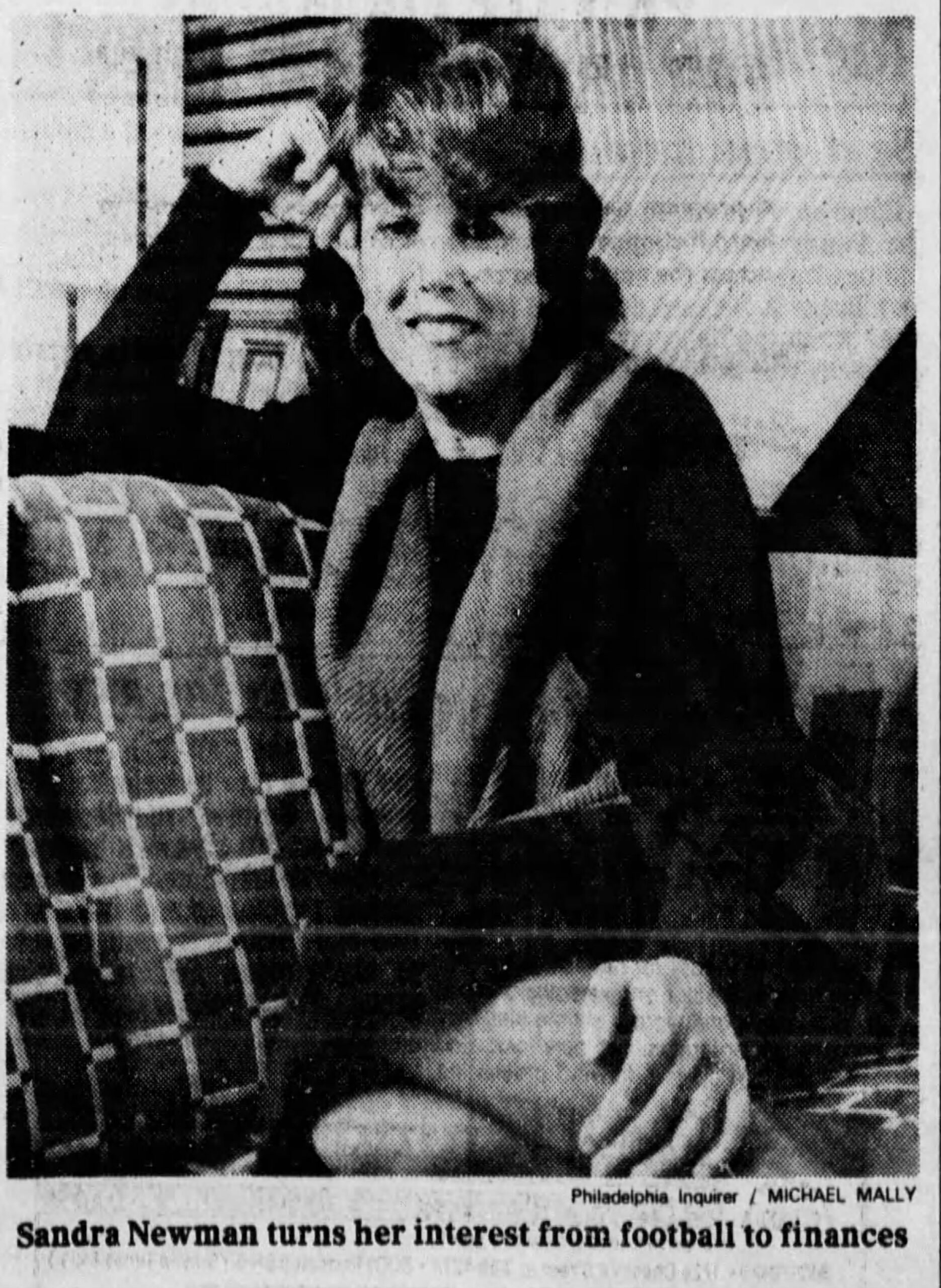
Sandra Schultz Newman, 87, of Gladwyne, Montgomery County, the first woman elected to the Pennsylvania Supreme Court, the first female assistant district attorney in Montgomery County, the first woman named to the board of directors of the old Royal Bank of Pennsylvania, longtime private practice attorney, role model, mentor, and colorful “Philadelphia icon,” died Monday, Feb. 2. Her family did not disclose the cause of her death.
Reared in South Philadelphia and Wynnefield, and a graduate of Drexel, Temple, and Villanova Universities, Justice Newman, a Republican, was elected to the Commonwealth Court of Pennsylvania in November 1993 and to the state Supreme Court in 1995. She won a second 10-year term on the Supreme Court in 2005 but, having to step down in just two years due to a mandatory retirement age, left at the end of 2006.
“I love the court. I love my colleagues. The collegiality was great, and I’m going to miss that,” Justice Newman told The Inquirer. “But I just felt like I wanted to move on.”
During her 10-year tenure, Justice Newman was chair of the Supreme Court’s Judicial Council Committee on Judicial Safety and Preparedness and the court’s liaison to Common Pleas Court and Municipal Court in Philadelphia. She ruled on hundreds of issues and wrote opinions about all kinds of landmark cases, from environmental protections to school funding to clergy privilege to the Gary Heidnik and John E. du Pont murder cases.
She had worked in criminal and family law and handled many divorce and custody cases as a private attorney in the 1980s, and was praised later by court observers for her attention to Philadelphia Family Court matters. Lynn Marks, of Pennsylvanians for Modern Courts, told the Daily News in 2005: “She’s been a wonderful justice, and she’s made herself accessible to the public interest community.”
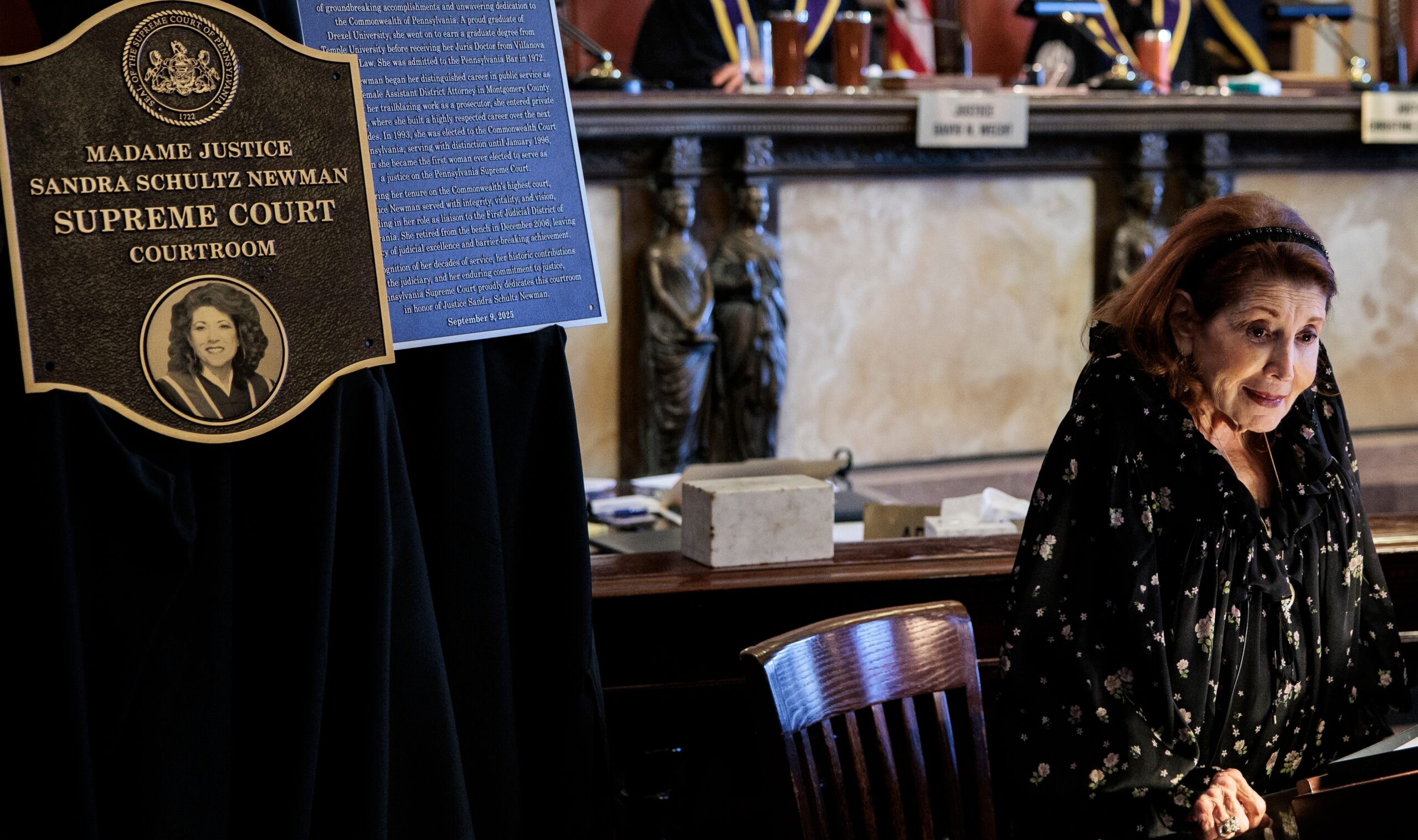
In 2025, her colleagues on the Supreme Court named their Philadelphia courtroom after her. “She was a remarkable jurist, public servant, and trailblazer for women, whose work and impact will leave a legacy beyond the bench,” Supreme Court Chief Justice Debra Todd said in a tribute.
News outlets across the state covered Justice Newman’s election to the Supreme Court as she campaigned in 1995, and she easily collected more votes in the Nov. 7 election than any of the other three candidates, all men. She told the Daily Item in Sunbury, Pa., in September ’95: “I don’t think anyone should be elected solely on their gender. But I don’t think anybody should not be elected because of it, either.”
Justice Newman touted her collegiality and feminine life experience during the 1995 campaign and told The Inquirer she wanted to be a “role model for everyone in Pennsylvania.” She told the Press Enterprise in Bloomsburg, Pa.: “I think I can bring a sensitivity and understanding on many issues, such as criminal issues like rape. I have a deep sense for the need of a safe society.”
Justice Newman speaks in 2025 during the ceremony in which the Supreme Court named its Philadelphia courtroom after her.
After her election, Inquirer staff writer Robert Zausnersaid: “Wealthy yet down-to-earth, Newman talked often during the campaign about her grandchildren and insisted that people ‘call me Sandy’ once she was outside her courtroom.”
Former Gov. Tom Ridge called Justice Newman a “pioneering legal giant” and said she “inspired generations of legal professionals across the Commonwealth.” Ezra Wohlgelernter, chancellor of the Philadelphia Bar Association, noted her “pathbreaking career” and “valuable service to our city and to the Commonwealth” in a tribute.
Either “the first” or “the only” in many of her professional pursuits, Justice Newman was called a “Philadelphia icon,” “a force of nature,” and a “beautiful and radiant star” in online tributes. She flirted with running for political office several times and was colorfully profiled in Philadelphia Magazine in 1988. In that story, writer Lisa DePaulo called her “part woman/part tigress.”
She famously endorsed a controversial cosmetic product on TV in 2006 and attended many galas and charity auctions, and her name appeared in the society and opinion pages nearly as often as the news section. In a 1983 feature, Inquirer writer Mary Walton described Justice Newman as “beautiful … with tousled auburn hair and a slender figure that she liked to cloak in expensive designer clothes.”
Justice Newman was the only woman on the state Supreme Court in 2002.
A friend said online she was “irrepressible in an Auntie Mame sort of way.” Another said: “The world has become a little quieter.”
Justice Newman served as the first female assistant district attorney in Montgomery County from 1972 to 1974 and was an in-demand, high-profile partner at Astor, Weiss & Newman from 1974 to 1993. She returned to private practice in 2006 and handled mostly alternative dispute resolution cases until recently.
She told the Press Enterprise in 1995 that colleagues in the Montgomery County District Attorney’s Office had adorned her desk with a green plant on her first day in 1972. “It was marijuana from the evidence room,” she said.
She wrote papers and book chapters about trial practice, death penalty statutes, and the electoral system in Pennsylvania. She spoke about all kinds of legal topics at seminars, conferences, and other events.
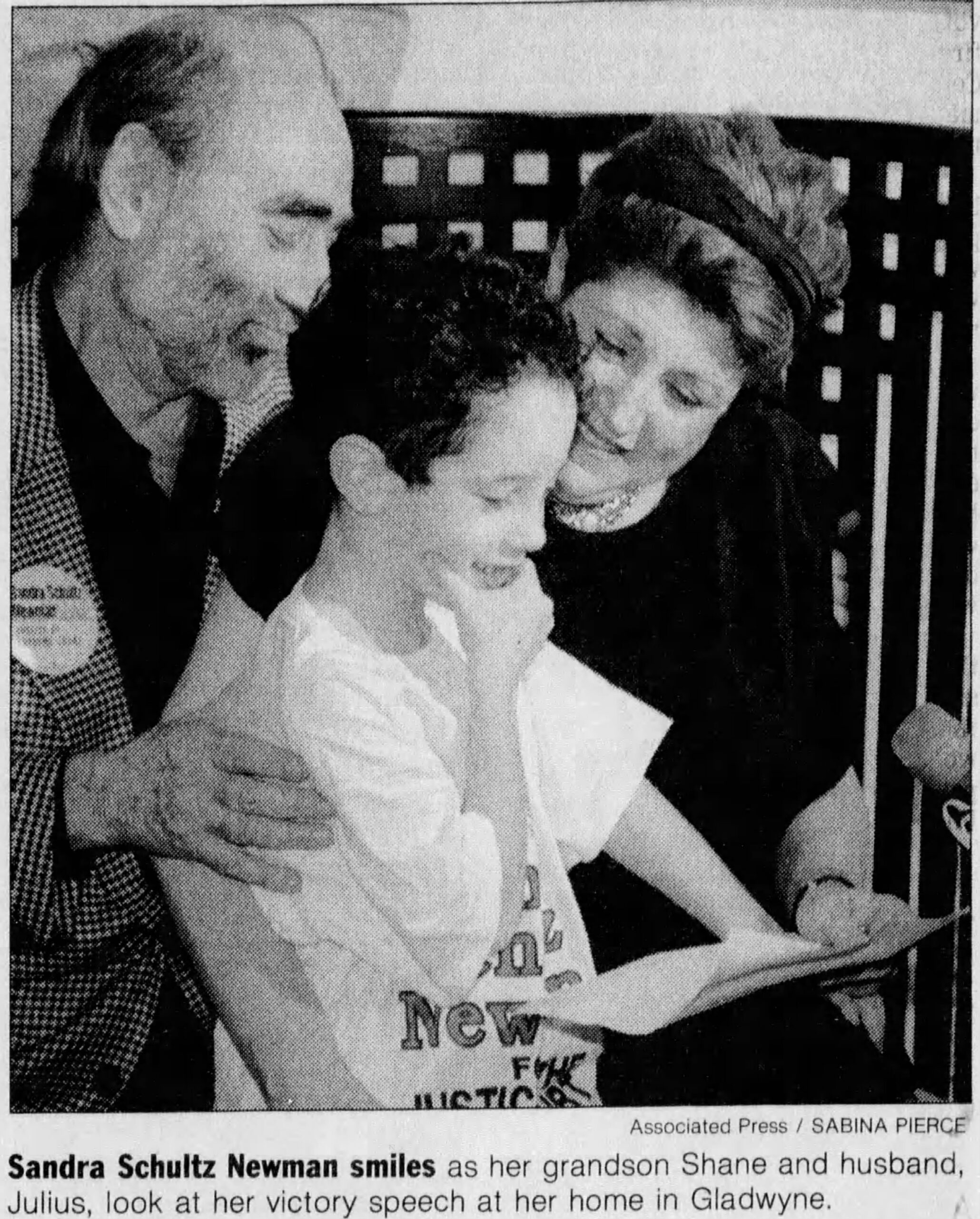
This photo of Justice Newman, her husband, Julius, and grandson Shane was taken for The Inquirer after she won on Election Day in 1995.
She cofounded what is now the Drexel University Thomas R. Kline School of Law in 2006, was a trustee for Drexel’s College of Medicine, and received dozens of service and achievement awards from Drexel, Villanova, the Pennsylvania and Philadelphia Bar Associations, the Women’s Bar Association of Western Pennsylvania, the Pennsylvania Association for Justice, and other groups.
She was the president of boards, chair of many committees, and active with the National Association of Women Justices, the Juvenile Law Center, the American Law Institute, and other organizations. She taught law classes at the Delaware Law School of Widener University in 1984 and ’85, and at Villanova from 1986 to 1993.
She earned a bachelor’s degree at Drexel in 1959 and a master’s degree in hearing science at Temple in 1969. In 1972, she was one of a handful of women to get a law degree at what is now Villanova’s Charles Widger School of Law. Later, she received four honorary doctorate degrees and was named a Distinguished Daughter of Pennsylvaniaby then-Gov. Ridge in 1996.
Outside the courtroom, Justice Newman volunteered for charities and legal associations. She was part of a group that tried unsuccessfully to buy the Eagles from then-owner Leonard Tose in 1983, and she was criticized in the early 2000s for her financial involvement in a bungled long-running effort to fund a new Family Court Building in Philadelphia.
Justice Newman chats with philanthropists and business leaders Raymond G. Perelman (middle) and Joseph Neubauer at the gala opening of the new Barnes Museum in 2018.
“Justice Newman filled every room she entered with her strength, energy, and exuberance for life and for the law,” Supreme Court Justice P. Kevin Brobson said in a tribute. “She lived with intention and spent her entire career focused on creating and expanding opportunities for future generations of legal professionals, especially women.”
Sandra Schultz was born Nov. 4, 1938. She graduated from Overbook High School and married cosmetic surgeon Julius Newman in 1959. They had sons Jonathan and David, and lived in Wynnefield, Penn Valley, and Gladwyne.
Her husband and son David died earlier. She married fellow lawyer Martin Weinberg in 2007, and their union was annulled 11 months later.
Justice Schultz was a longtime fashionista. She reveled in shopping trips to New York, and DePaulo reported in 1988 that her closet in Gladwyne was 800 square feet. She was also funny, generous, and kind, friends said.
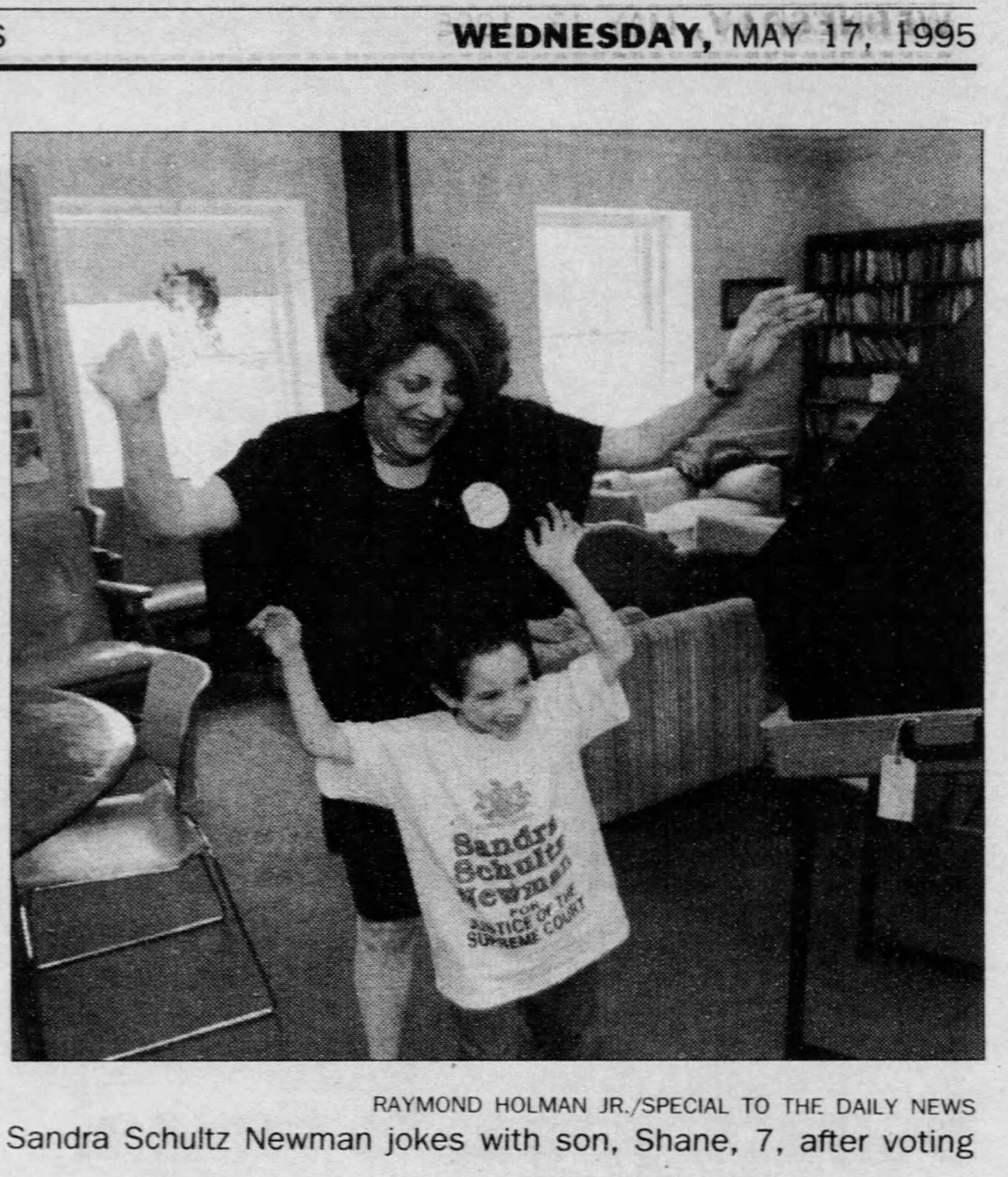
Justice Newman dances with her grandson on Election Day in 1995. This photo appeared in the Daily News.
She funded several college scholarships, collected art, owned racehorses, cooked memorable matzo balls, enjoyed giving gifts, and tried to have dinner every night with her family. Sometimes, DePaulo reported, in the 1970s, she took her young sons to her law school classes at Villanova.
“Despite how busy she was, her family was always her priority,” said her brother, Mark. “She was also a true bipartisan who fought for equal rights and preserving our democratic institutions.”
In 2003, she was asked by Richard G. Freeman, editor in chief of the Philadelphia Lawyer, to describe her judicial decision-making process. She said: “There are beliefs that you have to put aside. One of the wonderful things about being on our court is that you can make new law where your beliefs fit into the law.”
In addition to her son Jonathan and brother, Justice Newman is survived by four grandchildren and other relatives. A grandson died earlier.
This photo of Justice Newman appeared in The Inquirer in 1983.
Services are private.
Donations in her name may be made to the Crohn’s and Colitis Foundation, 733 Third Ave., Suite 510, New York, N.Y. 10017.
Correction: One of the communities that Justice Schultz grew up in has been corrected.