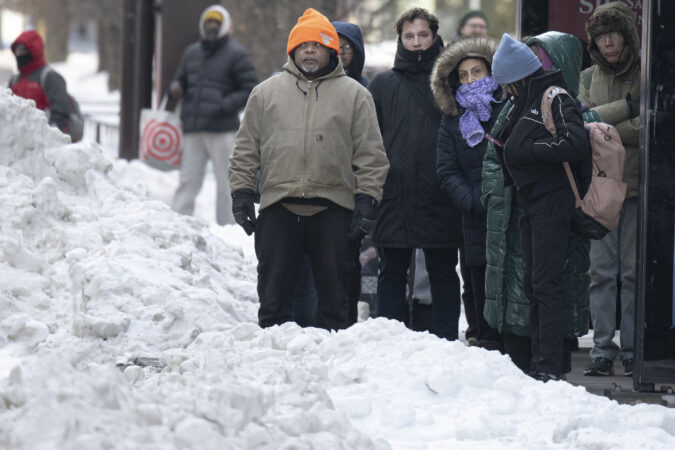
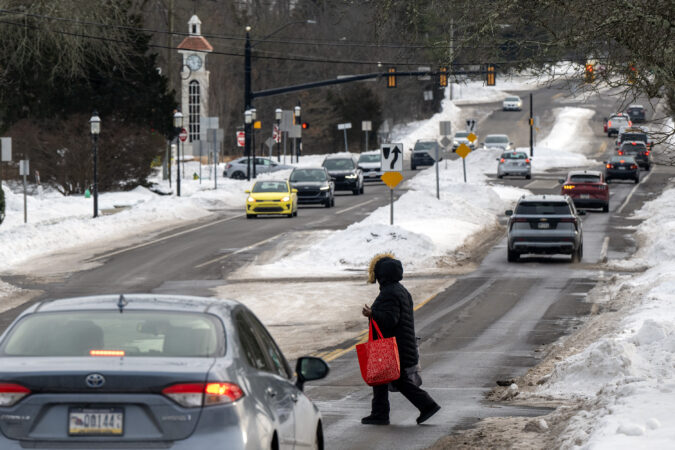
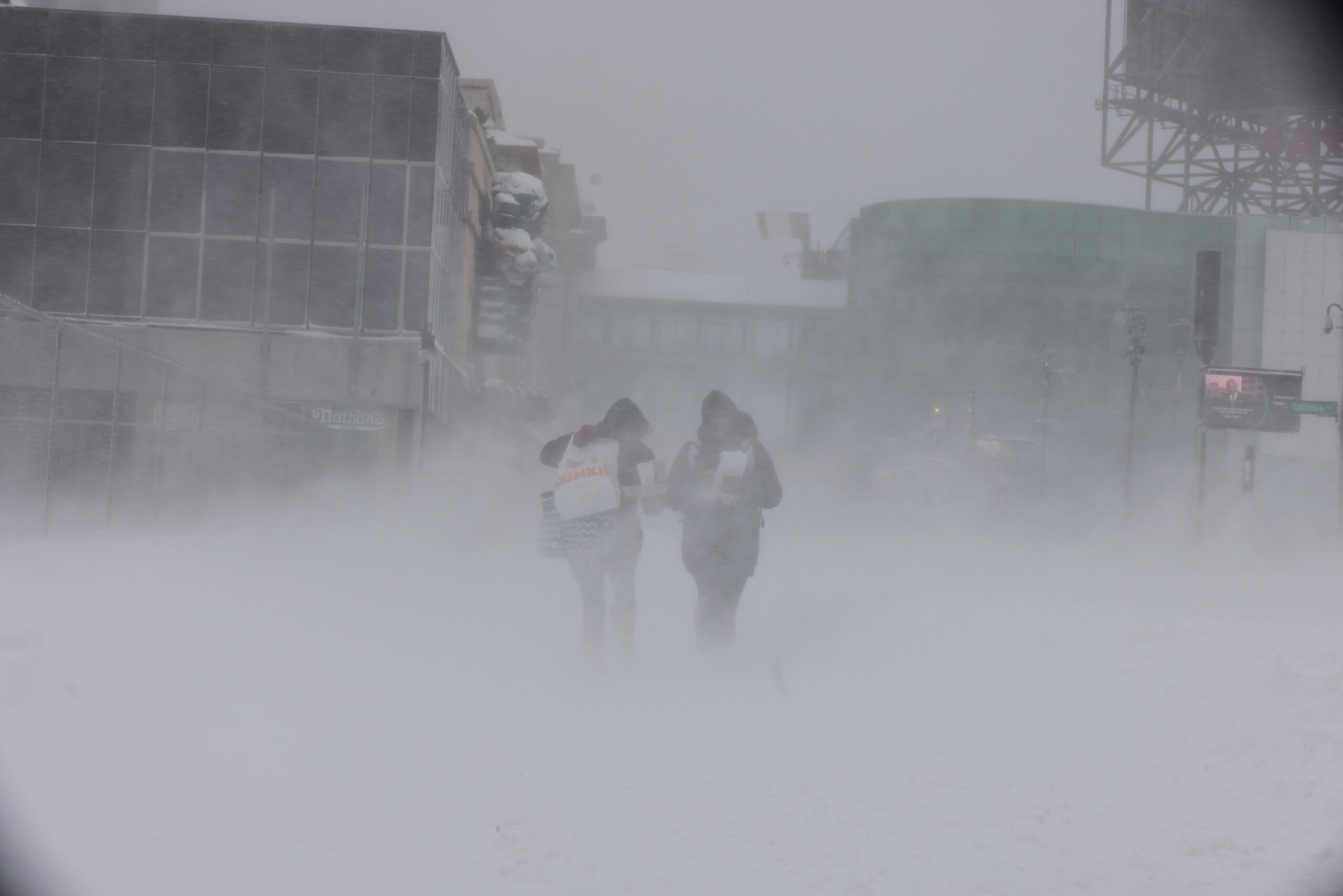
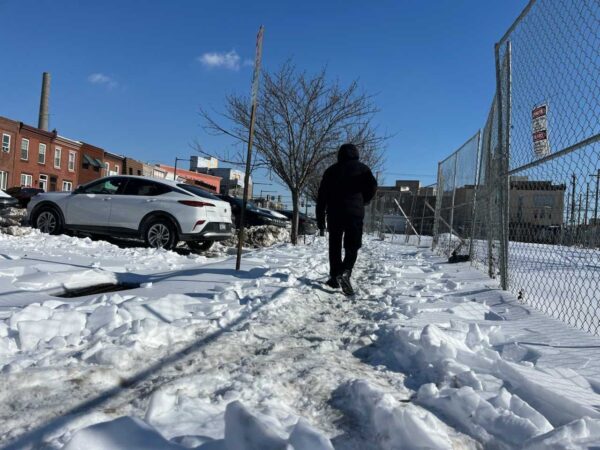
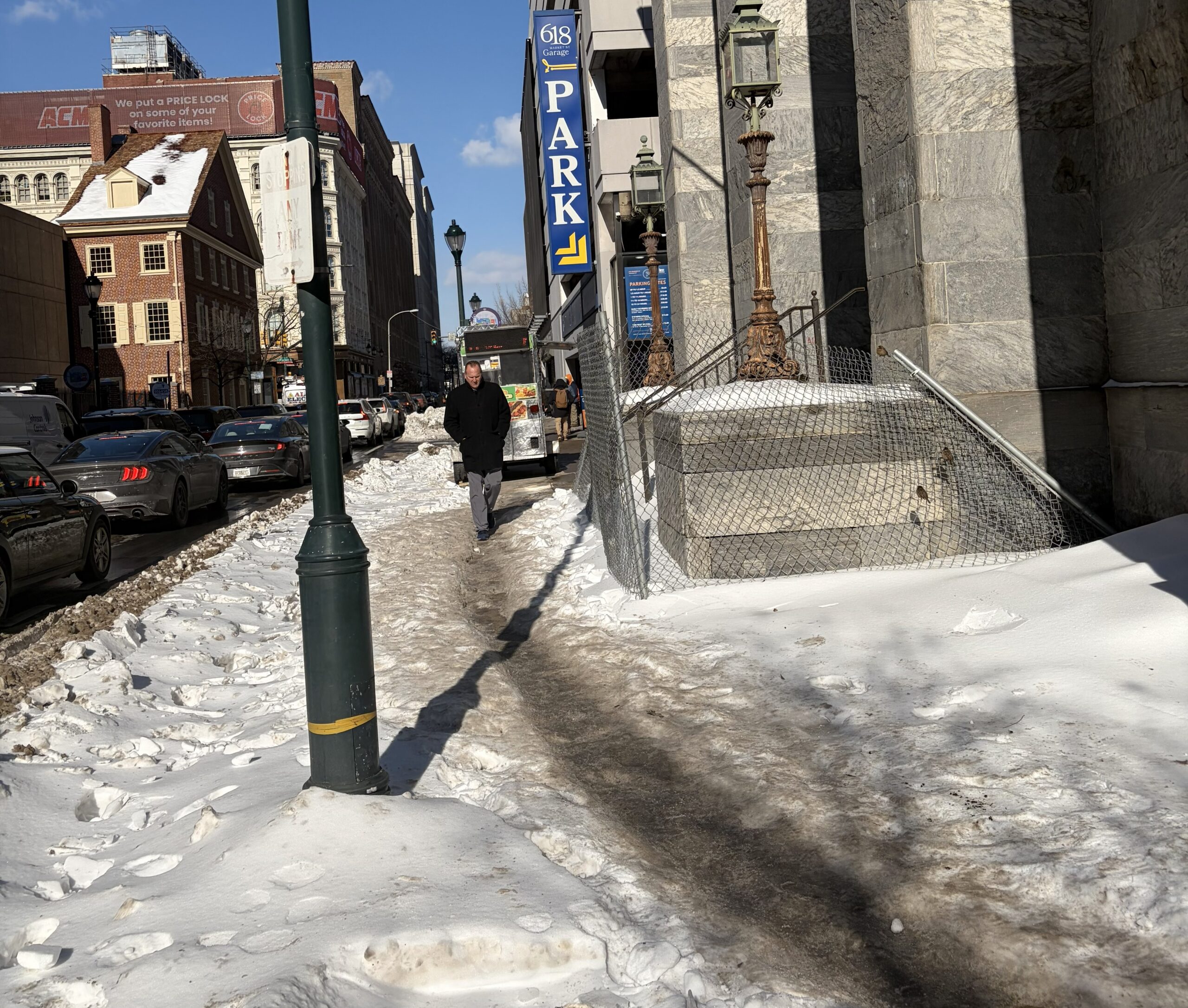
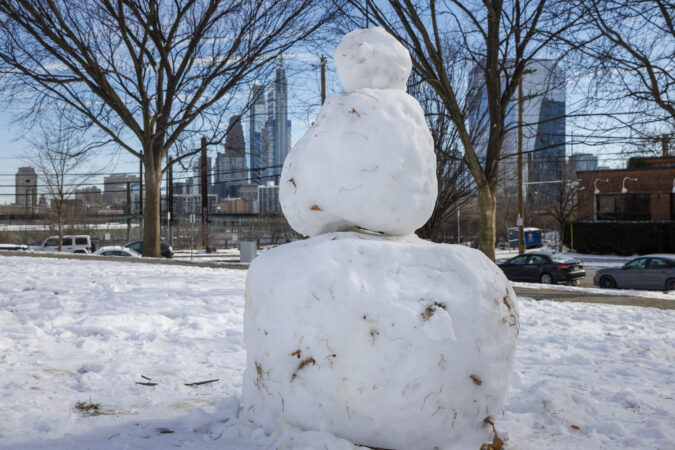
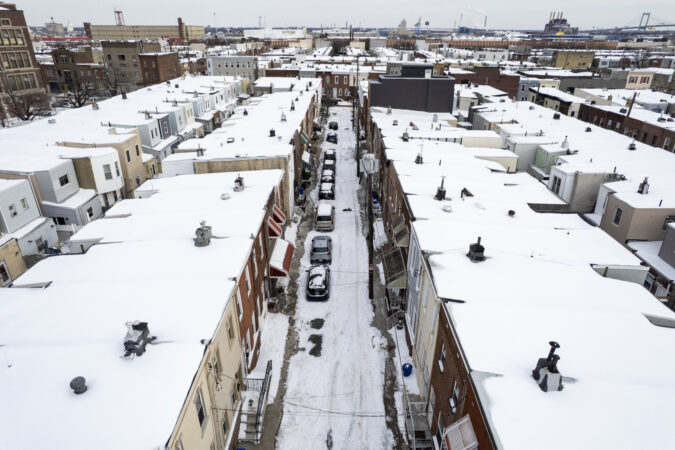
If it appears that the tenacious meringue of snow and ice that landed on the region two weekends ago hasn’t budged, it hasn’t.
Among Philadelphia winters, this one is approaching a rarefied status.
Not long after Phil predictably saw his shadow in Punxsutawney, the National Weather Weather Service contractor at Philadelphia International Airport reported a snow depth of six inches on Monday.
That marked the eighth consecutive day of a snow cover of at least six inches, a streak unmatched since February 2010 — which included a five-day period in which 44 inches of snow had fallen.
And what’s out there now may get a fresh frosting on Tuesday night that could affect the Wednesday morning commute, and perhaps snow squalls on Friday with the approach of another Arctic front as the freezer reopens.
Don’t be surprised if next Monday morning looks a lot like this one.
“The snowpack is not going anywhere,” said Amanda Lee, meteorologist at the weather service office in Mount Holly.
What explains the durability of the snow cover
The primary factor locking in the regional glacier has been the obvious — the cold. Sunday marked the ninth consecutive day that temperatures failed to surpass freezing, the longest stretch since 2004. The temperature did reach above freezing at Philadelphia International Airport on Monday.
Temperatures since Jan. 24 have averaged 14 degrees below normal in Philly. January temperatures ended up finishing 2.2 degrees below normal, even though the month had a nine-day warm spell in which the highs went past 55 on five days.
In addition to the cold, the icy layers of sleet that have put a cap and a patent-leather sheen on the several inches of snow that fell Jan. 25, have limited melting. Ice is way slower to melt than snow.
Eight days after an official 9.3 inches of snow and ice was measured officially, about two-thirds of it has survived.
The forecast for the next several days
The region is in for a modest — very modest — warming trend. Readings cracked freezing Monday, reaching 35 degrees at 4 p.m. and are forecast to top out near 32 on Tuesday and Wednesday, and hold in the upper 20s Thursday. Those readings still would be several degrees below normal.
Some light snow is possible Tuesday night, “maybe up to an inch,” Lee said. The weather service on Monday was listing a 72% probability of something measurable — defined as 0.1 inches or more — falling in Philly.
Given the cold and the solidly frozen paved surfaces, “it could make things slippery for the morning commute on Wednesday,” said Matt Benz, senior meteorologist with AccuWeather Inc.
Friday afternoon, he said, the region could see snow squalls — brief, mini-blizzards that can come on without notice and reduce visibility dangerously.
Then it’s back to the freezer with expected weekend lows in single digits and highs struggling to reach 20.
For those ready for something completely different, NOAA’s Climate Prediction Center on Monday suggested the potential for significant pattern change, although this may require a little patience around here.
Its extended outlook for the six-to-10 day period that begins Sunday has most of the nation warmer than normal, with odds strongly favoring below-normal readings in the Philadelphia-to-Boston corridor. But a “rapid warmup” in the Philly region is possible around mid-month, the climate center says.
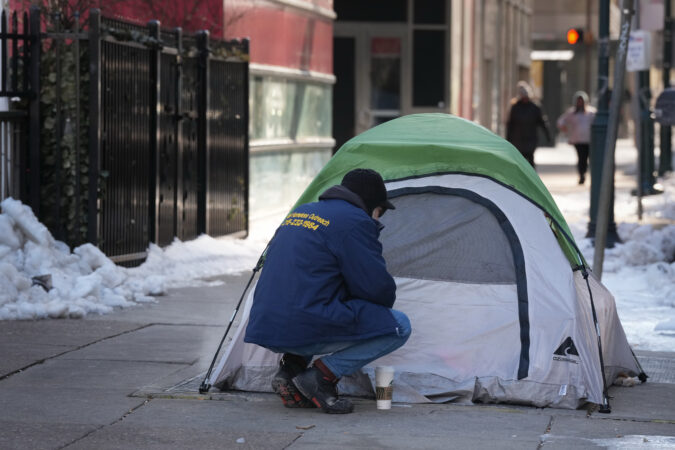
As Philadelphia endured another day of historically frigid temperatures, outreach workers on Friday fielded hundreds of calls for shelter as warming centers filled with people seeking respite from the cold.
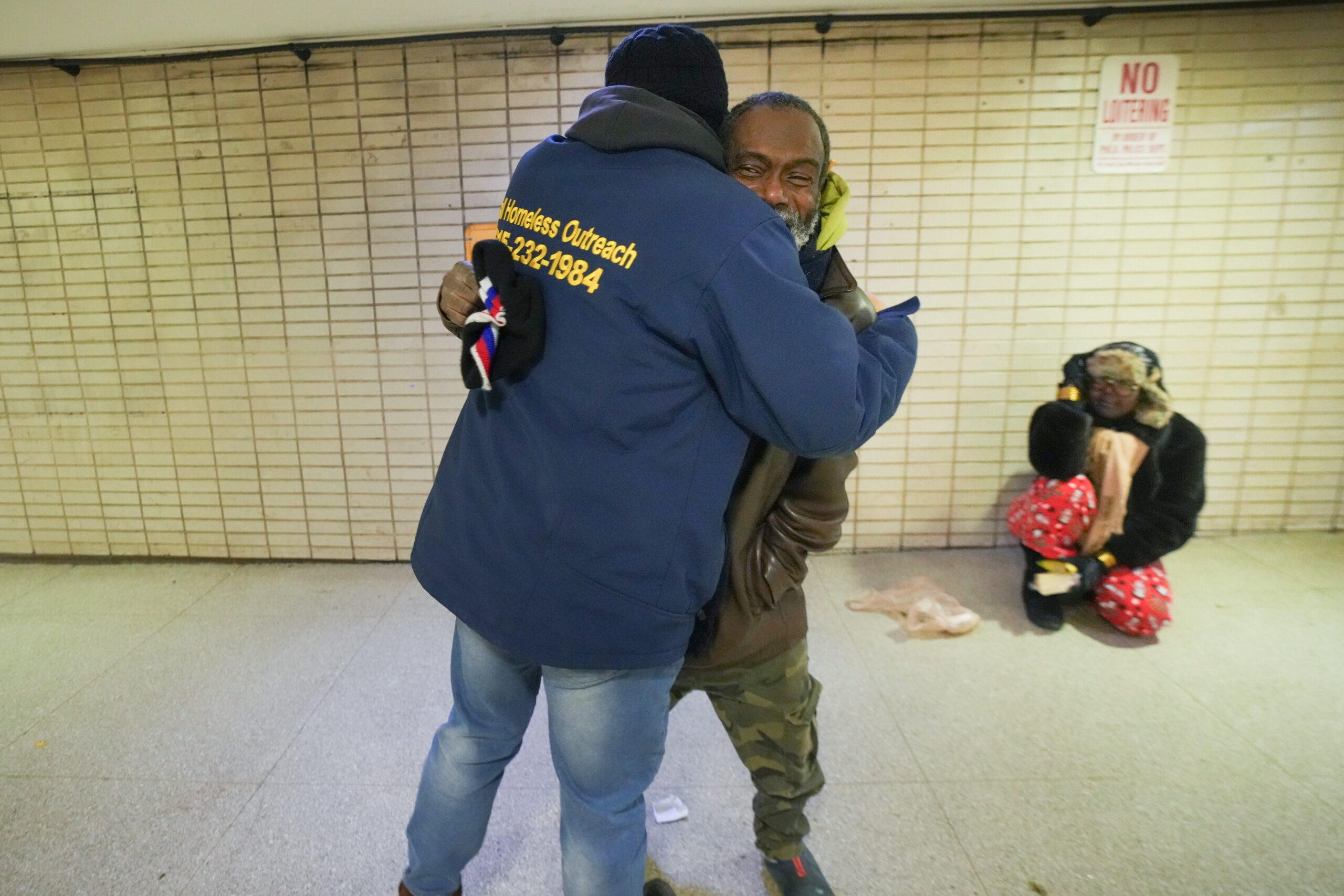
In the mazelike concourse at Suburban Station, a Project HOME outreach worker hugged clients and encouraged them to head inside.
At the Hub of Hope, the nonprofit’s drop-in center in the concourse for people experiencing homelessness, dozens lined up for hot meals. Later that night, as they had for the last several days, staff would set up cots for up to 80 people with nowhere else to go.
Typically, the Hub closes in the early evening. But amid the ongoing freeze, it’s open 24-7 as city officials and homeless services providers work to keep vulnerable Philadelphians safe.
Last month, the city declared a “Code Blue,” a designation that opens additional shelter beds and other resources. Ever since, the nonprofit’s hotline has fielded more than 6,000 calls, an average of more than 500 a day.
Normally, it receives about 140 a day.
“Many calls are concerned citizens who see someone who is homeless and want a team to go and check on them. Some are people who are literally homeless right now and need a place to go. Some are facing eviction and scared, reaching out for their options,” said Candice Player, the nonprofit’s vice president of advocacy, public policy, and street outreach.
“The extreme cold challenges us and pushes us even harder.”
City officials navigate a lengthy cold snap
When the wind chill makes it feel like it’s 20 degrees outside or lower for more than three days, the city can declare what is called an enhanced Code Blue. The distinction opens up furtherresources, including daytime and nighttime warming centers.
Cheryl Hill, executive director of the Philadelphia Office of Homeless Services, describes these periods as an all-hands-on-deck situation. Hill said that “every city entity can be outreach” during this time, and that work can also be aided by members of the public, who have been quick to call for help.
“We are all basically helping our neighbor, in essence — we see them out on the street, we want to help,” Hill said. “As a result, outreach is getting a lot more calls to go and check on those individuals.”
Philadelphia declared an initial Code Blue on Jan. 18 and an enhanced Code Blue on Jan. 20.
The city has about 3,500 shelter beds, which can become open as people get placed in longer-term housing.
If the beds reach capacity, the city has additional overnight spaces at warming centers, primarily in recreation centers. People who spend the day at warming centers that close overnight can receive transportation to a nighttime center.
People who need a ride to a warming center can ask for transportation at their local police district, city officials said.
On average, the overnight warming centers have provided shelter to about 300 to 400 people across the city per night. Last Monday night, after 9.3 inches of snow had blanketed Philly, warming centers sheltered just shy of 450 people.
Last year, peak usage of warming centers hovered around 150 people, Hill said.
Still, helping the city’s most vulnerable off the streets can be difficult even in the best of circumstances.
On Friday afternoon, a sign posted at the South Philadelphia Library informed people visiting to get out of the cold that they could eat and sleep in a section designated as a warming center. Librarians and community support groups collect and provide snacks, along with hand-warmers and other essentials, for those who need them.
Even so, only a handful of people sat in the area. A woman yelped in pain as she rubbed a blackened toe. Children played with blocks in another corner of the library as others checked out books.
The homeless services office tries to have medical staff at warming sites, but more serious cases get sent to the hospital.
In extreme cold, as a last resort, people with serious mental illnesses who refuse to come inside and are underdressed could be involuntarily committed.
Homeless services providers said they are working around the clock to care for clients exhausted by the struggle of simply staying warm.
“The experience of being homeless in this brutal cold is awful, and the folks who come in are just worn down,” Playersaid.
At shelters run by the Bethesda Project, staff are trying to keep residents’ spirits up and encouraging them to stay inside as much as possible, said director of shelter Kharisma Goldston. “One of our guests was doing haircuts last night,” she said. “We try to do a lot so guys don’t feel like they’re trapped inside.”
Staffers set up additional beds to accommodate more clients, she said.
“We do our best to set up however many beds we can,” she said. “When it’s this cold, it takes a very short amount of time for hypothermia to set in.”
Rachel Beilgard, Project HOME’s senior program manager for outreach, said that outreach teams have encountered several people suffering from frostbite who were involuntarily committed. Some, she said, risked limb amputations if they had stayed outside any longer.
But many people who typically refuse offers for shelter from outreach teams are now accepting help, Beilgard said. “We’ve had a lot of folks this winter who say, ‘Once it starts snowing, come find me,’” she said.
Tim Neumann works with people experiencing housing instability, in Philadelphia.
The count, taken every year at the behest of federal housing officials, happens over one night in January; city workers and volunteers fan out across the city to physically count people sleeping on the street and those in shelters. Federal officials use the count to gauge funding allocations, and city officials look to it to understand the needs on the streets.
The Jan. 22, 2025, count was also taken during a Code Blue, although temperatures were not as frigid as they were last week. It found that homelessness rose by about 9% between 2024 and 2025, after a 38% jump the year before. In Kensington, the number of homeless, unsheltered people dropped by about 17%.
The number of people experiencing chronic homelessness rose by 49%. This is a designation tightly defined by the federal government as a homeless person with a disability who lives in a shelter or in a place that is not meant for habitation, and who has been homeless for a full year, or homeless at least four times in the last three years for a total of 12 months.
The category also includes people who fit these criteria but have entered jail, rehab, or another care facility in the last three months. Most of Philadelphia’s chronically homeless residents were living in emergency shelters.
City officials and providers said a number of factors likely contributed to the increase.
People with substance use disorder and mental health issues are vulnerable to becoming chronically homeless, especially in Philadelphia, where a toxic drug supply causes wounds and intense withdrawal that keep many from seeking shelter. But a lack of affordable housing, low wages, job loss, or a major health issue can also put residents at high risk for homelessness, stressed Crystal Yates-Gale, the city’s deputy managing director for health and human services.
Hill also said that in recent years, Philadelphia has lost bids to receive competitive housing funds from the federal government.
“We’ve been working really intentionally to make sure that our programs will get funded” in the future, Hill said.
Yates-Gale also pointed to Mayor Cherelle L. Parker’s December executive order directing city officials to add 1,000 beds to the shelter system by the end of January. As of last week, the city had added 600 winter shelter beds that are crucial during the enhanced Code Blue and will eventually become available year-round, she said.
Anecdotally, neighborhoods have reported decreases in homelessness since last year, Hill said, although officials will have to wait until February to conduct the count this year.
The count had originally been set for Wednesday, but the city canceled it due to the cold — and because too many outreach staffers were at work getting people inside.
Editor’s note: This article has been updated to reflect that library staff and supporters provide people using daytime warming centers with snacks.
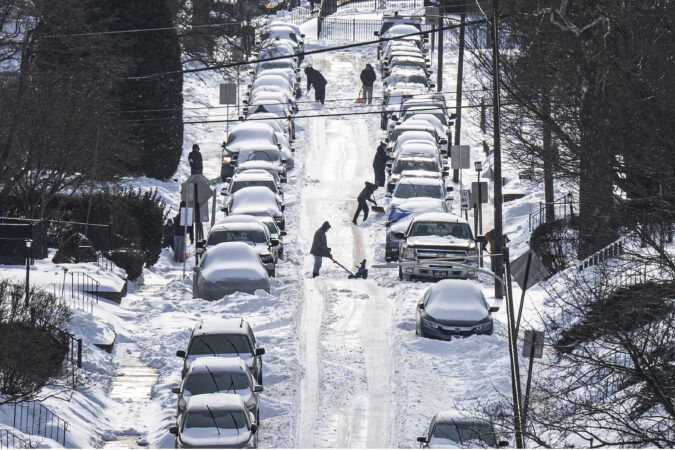
Denise Bruce paid a stranger $75 to shovel out her Hyundai Venue, which was encased in snow and ice outside her East Kensington rowhouse.
“My car was really badly packed in on all sides,” said Bruce, 36, who works in marketing. “I just didn’t have the strength honestly to dig it out myself.”
The West Coast native also didn’t have a shovel.
So she was elated to find a woman on Facebook who agreed to dig out her compact SUV for between $40 and $60. After the endeavor took four hours on a frigid evening, Bruce thought it was only fair to pay more.
After Bruce forked over the money — digitally via Cash App — she asked herself: What should one pay to outsource the onerous task of shoveling?
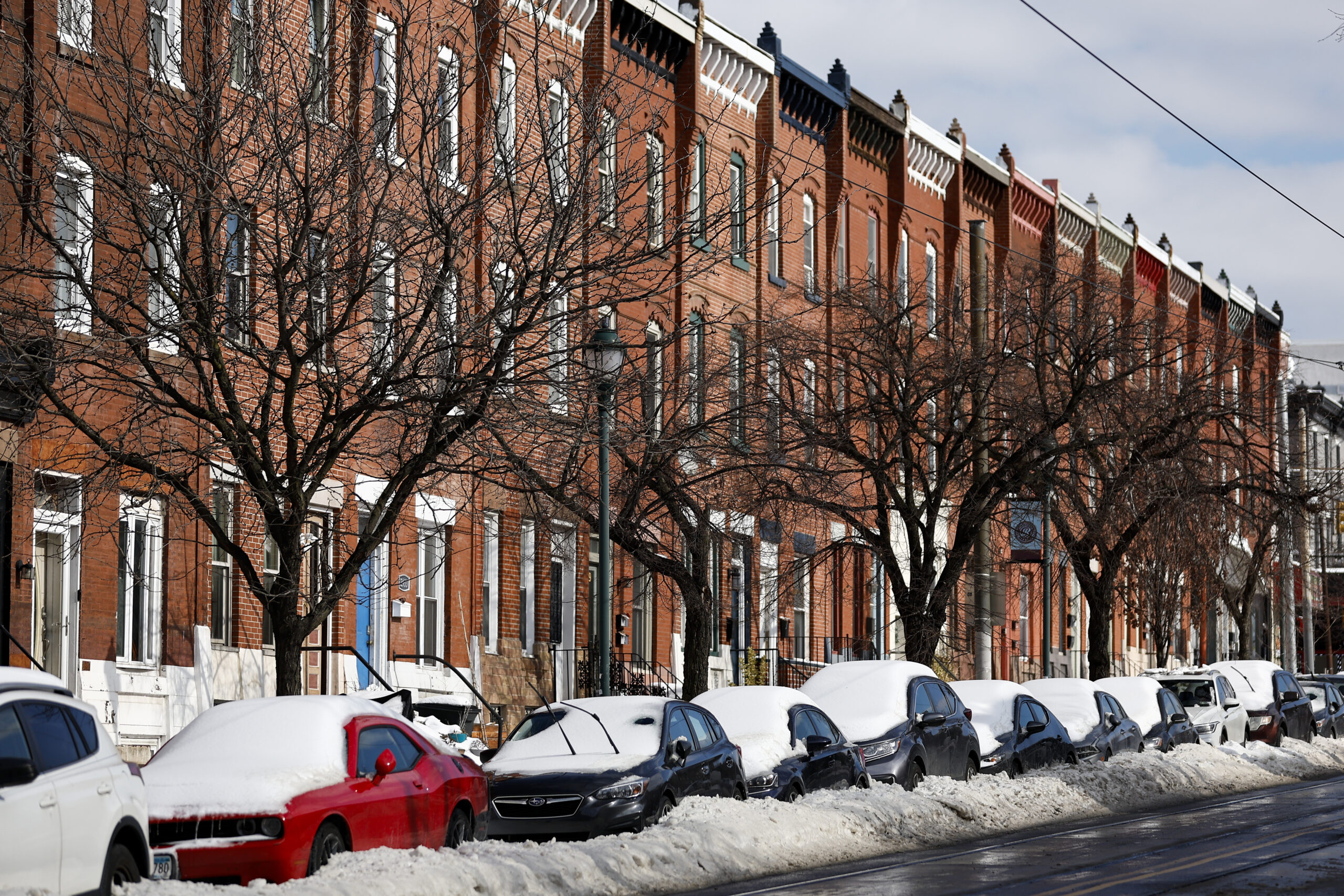
Snow-covered cars lined Girard Avenue in Brewerytown on Monday.
While some shoveled themselves or hired professional snow removal companies with fixed rates, others turned to an ad hoc network of helpers who hawked shoveling services on neighborhood Facebook groups, the Nextdoor app, and the online handyman service TaskRabbit.
On online forums, strangers agreed to dig out the cars of folks like Bruce, who didn’t have the strength, tools, or time to do so on their own. Others signed up to clear the driveways and sidewalks of older people, for whom shoveling such heavy snow can increase the risk of heart attacks.
Prices per job vary from $20 to $100 or more. Some freelance shovelers are upfront about their rates, while others defer to what their customers can afford.
Higher prices now for ‘trying to dig through concrete’
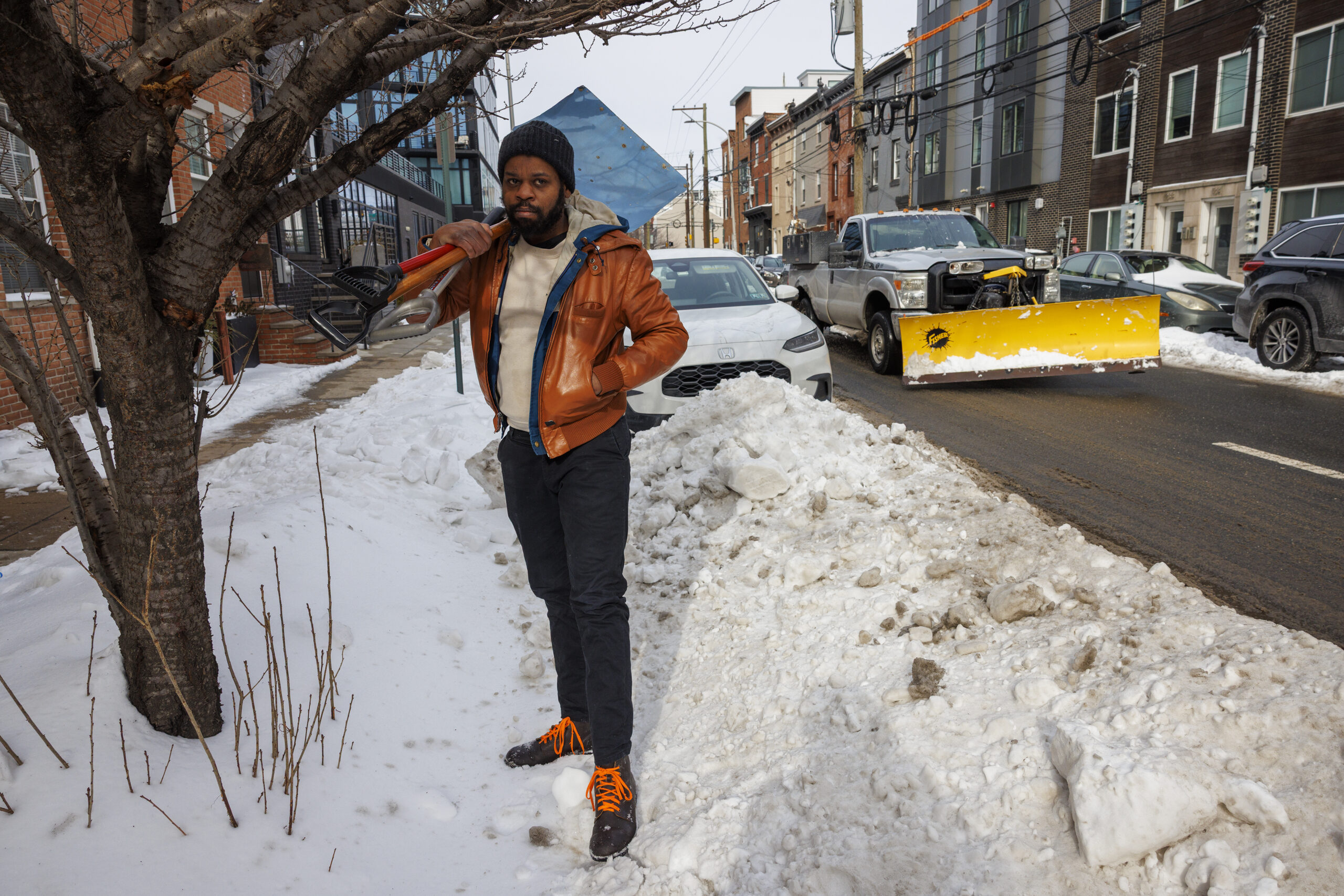
Alex Wiles stands on North Second Street on Tuesday before taking the bus to another snow-shoveling job.
On Monday, the day after the storm hit, Alex Wiles, 34, of Fishtown, shoveled out people’s cars, stoops, and walkways for between $30 and $40 per job. As the week went on, he increased his rate to about $50 because the work became more physically demanding.
“At this point, it feels like trying to dig through concrete,” Wiles said. As of Thursday, he had shoveled for nearly 20 people across the city and broken three shovels trying to break up ice. He said most people tip him an additional $5 to $20.
“I want it to be an accessible service,” he said, “but I also want to be able to make money doing it and remain competitive with other people,” including teenagers who often shovel for less.
For Wiles, who works in filmmaking and photography, his shoveling earnings go toward paying rent.
He said he sees his side hustle as essential service, especially since the city did “a terrible job,” in his opinion, with snow removal.
“A lot of the city looks like a storm happened 10 minutes ago,” Wiles said Thursday.
Shoveling is “necessary and people are just otherwise going to be stuck where there are,” he said. “They aren’t going to be able to get to work easily. They aren’t going to be able to walk down the street.”
Some adults see themselves filling in for ‘the young kids’
When Max Davis was a kid in Hopewell, N.J., he’d compete with his neighbors to see who could shovel the most driveways during snowstorms.
Now, the 28-year-old said he seldom sees or hears of kids going door to door when it snows.
That was part of the reason Davis got off his Northern Liberties couch on Monday and started shoveling out cars for a few neighbors who posted on Facebook that they needed help.
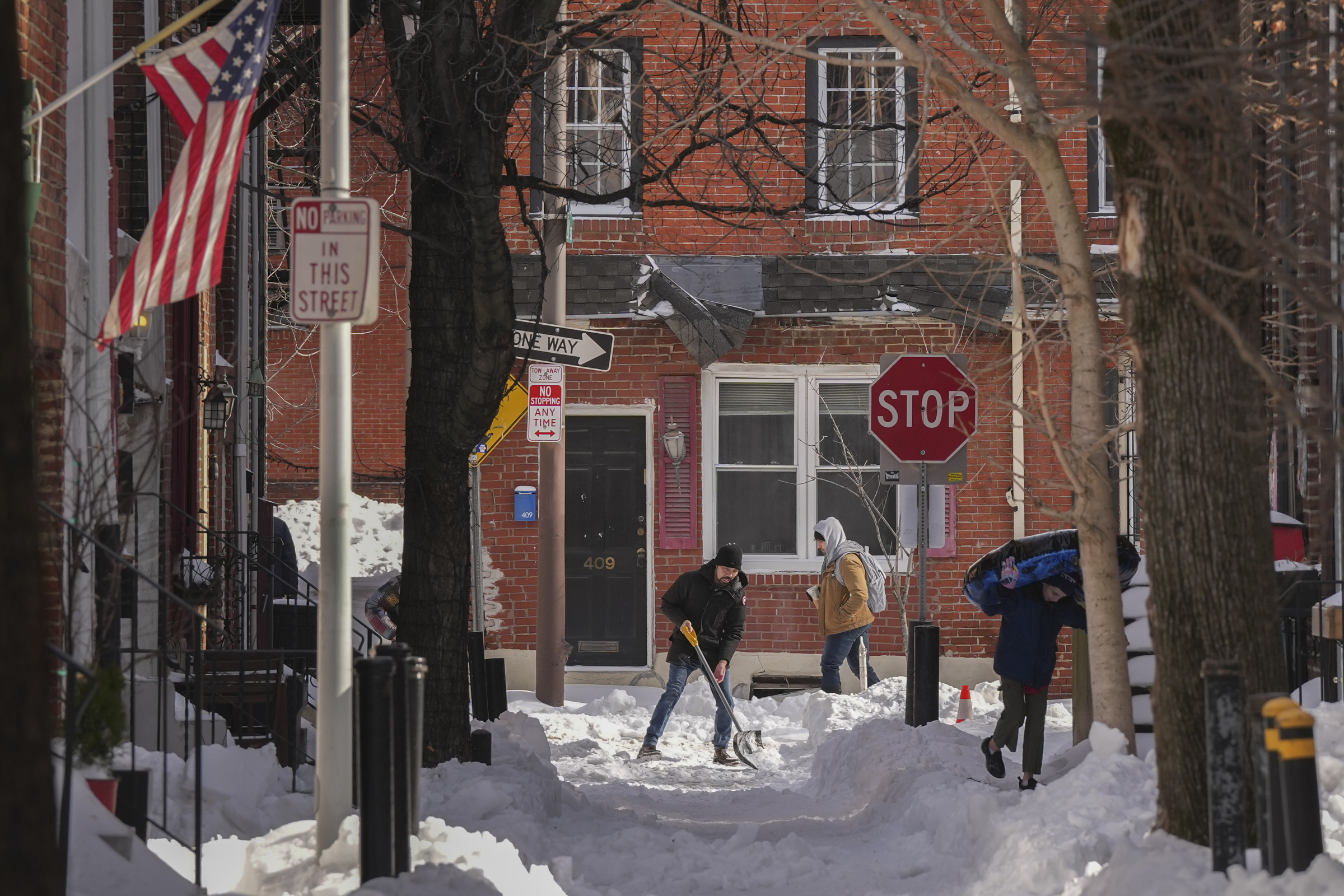
A snow shoveler on Waverly Street on Monday.
Davis, a founding executive at an AI startup, said he didn’t need the money, so he accepted however much his neighbors thought was fair. He ended up making about $40 to $50 per car, money he said he’ll likely use for something “frivolous” like a nice dinner out in the city.
If there is another snowstorm this winter, he said, he’d offer his shoveling services again.
“Why not?” Davis said. “I’d love to see the young kids get out there and do it. I think they’re missing out.”
In Broomall, Maggie Shevlin said she has never seen teenagers going door to door with shovels, but some of her neighbors have.
During this most recent storm, the 31-year-old turned to Facebook to find someone to clear her mother’s driveway and walkway in neighboring Newtown Square. Shevlin connected with a man who showed up at 6:30 a.m. Monday, she said, and did a thorough job for a good price.
“I figured it would be somewhere around $100. He charged me only $50,” said Shevlin, who works as a nanny and a singer. “Oh my god, [my mom] was so thankful.”
How a professional company sets snow removal prices
A snow removal contractor clears the sidewalk in front of an apartment building in Doylestown on Wednesday.
Some Philadelphia-area residents, especially those with larger properties, use professional snow removal services. They often contract with these companies at the start of the winter, guaranteeing snow removal — at a price — if a certain amount falls.
In Bristol, Bucks County, CJ Snow Removal charges $65 to $75 to remove two to four inches of snow from driveways, walkways, and sidewalks at a standard single-family home, said co-owner John Miraski.
The cost increases to $95-$115 for a corner house, he said, and all rates rise about $25 for every additional two inches of snow.
Last week, he said, several people called him asking for help shoveling out cars, but he was too busy to take on the extra customers. He passed those requests to other companies, he said, and recommended they charge “nothing less than $50 to $60, because you’re dealing with [nearly] a foot of snow plus a block of ice.”
Miraski said he recommends professionals because they are insured. That’s especially important, he said, in storms that involve sleet or freezing rain, as Philly just experienced.
“You start throwing ice, who knows where it is going and what it is hitting,” Miraski said.
Professionals are more expensive, he acknowledged, but often more thorough. “Some of my properties we went back to two or three times to make sure they were cleared.”
And sometimes, regardless of who shovels, a resident can find themselves unexpectedly stuck in the snow again.
In Northeast Philadelphia, J’Niyah Brooks paid $50 for a stranger to dig out her car on Sunday night. But when she left for her job as a dialysis technician at 3 a.m. Monday, her car had been plowed in.
“I was out there kicking snow,” said Brooks, who was eventually able to get to work.
I invited two other Inquirer fathers to discuss this submitted question, which is haunting the slight slopes of our region as the snow sticks around.
Have a question of your own? Or an opinion? Email me.
Evan Weiss, Deputy Features Editor
OK, the question is…
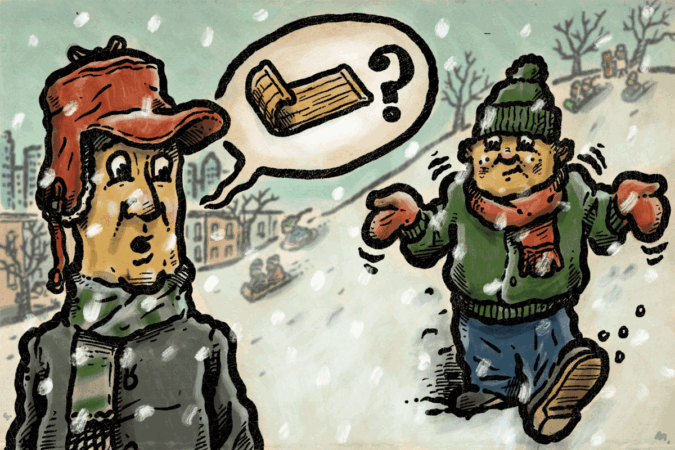
Every time we go sledding, my kids somehow inevitably lose a sled. And every time, there seem to be extra, unclaimed sleds lying around. Is taking one of those stealing (from a child!), or just part of the karmic redistribution of sleds?
Mike Newall, Life & Culture Reporter
Nark is a woodsman. He probably whittles sleds while eating tins of premade forest food.
Jason Nark, Life & Culture Reporter
Ha. When I think of sledding, as a child, it was rough business. No parents around. There were fights. Blood. Nothing worse than an older kid asking to “borrow” your sled.
I sled at the same place for years, so I never would have thought of taking a sled.
Mike Newall
Same. I’m pretty sure the old wooden sled in my house growing up first appeared in It’s a Wonderful Life. Ancient. Wooden. Rusted. We did the garbage can lid thing too. We sled in an enclosed grassy area adjacent to a belt parkway off-ramp. No parents. Chaos.
Jason Nark
Later I moved to a golf-course community (I didn’t want to) that was also one of South Jersey’s biggest sledding destinations. There were lots of sleds left behind after a few days but most were broken.
I don’t think I would have ever considered taking one, unless it was very nice… then I’d probably post it in a Facebook group to try to find the owner.
Mike Newall
I’m a city parent myself now. Every big storm, I inevitably wake up in a panic and think, “Oh no, we don’t have a sled. Where and how shall my boy sled?” So I run to five stores, buy the only sled available, rush him to some grassy lot with an incline, and push him down. Boom. My boy sleds. If the sled makes it home, it’s a bonus.
Those sleds were left for a reason. Either the kid was crying and hated it. Or the parents left it. Either way, look at it like one of those free library stands, except for sleds.
Evan Weiss
But I can’t imagine taking one home. What if, as you’re walking away, a little kid yells, “Hey, that’s my sled!”
Mike Newall
I just mean, if there are a few clearly discarded sleds, then use away. Like if there’s an old ball at the playground. Use it!
We live in a tiny rowhouse. Who wants a $14 plastic sled eating up valuable basement space? I’m not naturally wasteful. But no problem group-sharing sleds. Just use it and leave it.
Evan Weiss
So leave it? Don’t take it?
Jason Nark
I think so, yeah.
Mike Newall
Yeah, that would be plain-old sled-stealing.
Evan Weiss
Borrow for the hill, not for the home.
Mike Newall
(Unless, it’s a really nice sled that you just have to have. Kidding. Maybe.)
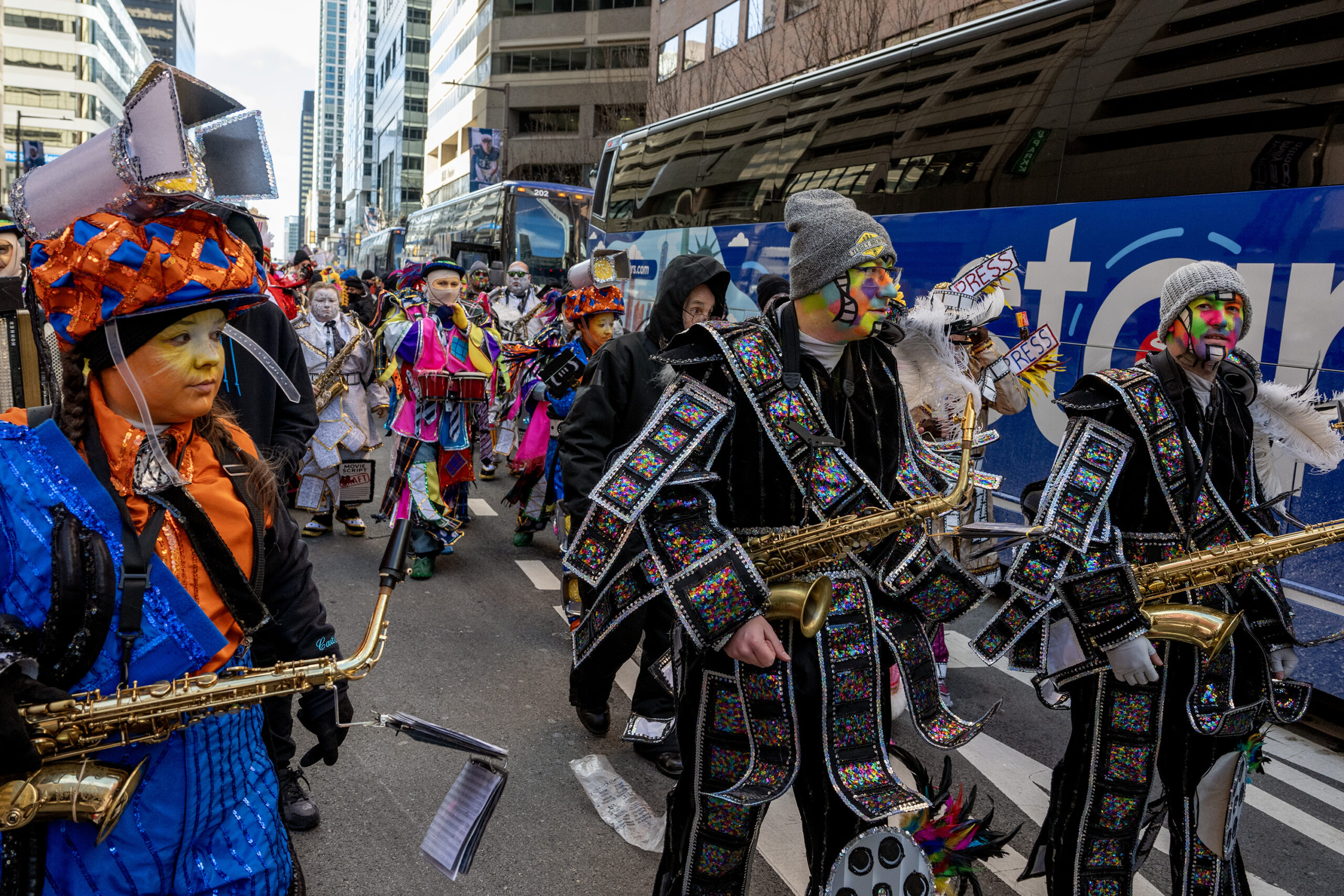
A month after dangerous winds led Mummers string bands to cancel their New Year’s Day Parade competition, one string band says it’ll be too cold to play a makeup show Saturday.
“With extreme cold predicted for this weekend, our top priority is the health and safety of our members, and the forecasted conditions may put them at risk,” the Avalon String Band said on Facebook.
The band was set to join other groups at the 2026 String Band Spectacular at Lincoln Financial Field Saturday afternoon.
The Philadelphia Mummers String Band Association scheduled the event after the string bands canceled their New Year’s Day performances this year, when high winds destroyed props and sent five people to the hospital.
Musicians with the Uptown String Band arrive on buses for the Mummers Parade Thursday, Jan. 1, 2026, after the String Band competition was suspended because of high winds that destroyed props and caused injuries during morning setup. The bands still marched and played their music, but did not carry props, and were not judged. The Uptown theme was “From Script to Screen.”
Saturday a coastal “bomb cyclone” is expected to douse New Jersey and Delaware with snowfall, though forecasting models say Philadelphia won’t get hit. However, stinging winds and Arctic air will push temperatures down to zero Saturday morning, with windchills dipping as low as 10 degrees below 0.
It’s unclear whether other bands will follow the Avalon String Band’s lead. A total of 14 bands make up the Philadelphia Mummers String Band Association, according to its website.
Twelve organizations are set to perform Saturday, said Philadelphia Mummers String Band Association President Sam Regalbuto Friday afternoon. He said workers are getting the stages and props ready.
“Everyone’s on board,” Regalbuto said. “Everyone’s here. We’re good to go.”
The event will begin a 2 p.m. Saturday with the Philadelphia Gay Men’s Chorus singing the national anthem. The event will be broadcast on WDPN-TV (MeTV2) at 8 p.m. and will be streamed on WFMZ.
It looks like the Philly region will evade any snow generated by that coastal “bomb cyclone” during the weekend, but the disruptive snowpack on the ground continues to melt at a glacial pace. Maybe ever slower.
“For now, it’s not budging,” said David Robinson, the New Jersey state climatologist who is an international expert on snow cover.
And, ironically, that has a whole lot to do with what happened in the hours right after the snow stopped around 11:30 a.m. Sunday.
Add one of the more signifiant Arctic cold spells in Philadelphia’s period of record, and the entire region has endured a white and wintry week rarely experienced around here.
As of Friday morning, the official snow depth at the airport still was 6 inches, about two-thirds of what was measured when the storm ended five days before.
The cold won’t be as harsh during the workweek, but a thaw isn’t imminent, and some snow is possible Wednesday.
Temperatures are forecast to drop deep into the single digits Saturday morning, flirting with records. It is not due to get into the 20s until Sunday, when backlash winds from the potent coastal storm are expected to drive wind chills below zero.
Those winds may contribute to significant flooding at the Shore, where they could gust to 50 mph.
About last Sunday in Philly
About 7.5 inches of snow had fallen officially by 11:30 a.m. Sunday at Philadelphia International Airport, more in some other places, when it yielded to several hours of sleet that accumulated 2 to 3 inches, coating the snow with a sparkling, icy veneer.
“You can’t help but recognize the beauty of it,” said Robinson, a Rutgers University geography professor and keeper of the Rutgers Snow Lab.
While it may be an aesthetic pleasure, especially at night under the full “snow moon” rising this weekend, it has had a profoundly chilling effect on cleanup efforts.
The sleet, liquid that freezes before it lands, literally put an ice cap on the snow. “Ice pellets are tougher to melt,” said PennDot’s Thomas Rogal, a maintenance supervisor for the Philadelphia district. In a melting race, a homely sleet ball wouldn’t have a chance against a six-sided snowflake.
On Sunday, said Rogal, the sleet was a game-changer for the road crews. Instead of just plowing, crews were “scraping the road surfaces,” he said. Sleet added a stubborn stickiness to the mass of frozen material.
It also contained about as much liquid as several inches of snow, said Robinson.
The surprisingly cold temperatures, in the lower 20s and teens, inhibited the effectiveness of salt on Sunday. “The material just didn’t function,” said Rogal.
In the city, the glacial mass has been especially disruptive, a royal, inconvenient pain for people living on side streets, for street crews, for anyone who has tried shoveling, and for the schools.
A thermometer in a Central High School classroom on Friday read 39 degrees. That’s colder than the normal high for the date in Philly — outdoors.
When will all this go away?
Philly hasn’t had a stretch of days like this in which the temperature has failed to reach 30 degrees since 1979, according to records tracked by the Pennsylvania state climatologist.
And it likely is going to finish in the top 10 for consecutive days in which readings didn’t get past freezing, said Mike Silva, a meteorologist with the National Weather Service in Mount Holly.
Low temperatures Thursday and Friday morning, 13 and 11, respectively, were several degrees above the forecasts. That probably was related to the winds at the airport, he said.
It also may be related to the sleet, said Robinson: Ice doesn’t have quite the same chilling effect as fresh snow.
Conditions Saturday morning — clear skies and lighter winds — should be more conducive for daytime heating (we use the term loosely) to radiate into space. Morning lows could approach the record of 3 degrees, set in 1948.
Some moderation is expected with the workweek, but not much. “We were hoping to get to the mid-30s,” said Sliva, but “it looks like we may barely get to freezing.”
Even at those temperatures, some melting should occur.
The total daily solar energy beaming toward Philly now is about 30% higher than it was on Jan. 1, according to NASA’s calculations, and the sunrise-to-sunset time is increasing by about two minutes a day.
Even the cold has a bright side, said PennDot’s Rogal. Potholes, it turns out, have something in common with a lot of humans: “They aren’t particularly fond of this weather.”
“The freeze-thaw is what always gets us,” he said. “We’re actually in better shape when the cold sets and stays.”
Even if it snows next week — “There’s a couple of systems that could affect us,” said Silva — based on 150 years of official record-keeping for Philly, it is going to warm up and the ground will reappear.
It remains a long shot that a fresh layer of frosting will coat the hardening and tenacious snowpack, but evidently that street-congesting frozen mass isn’t exiting in the near future.
As of Friday morning, it appeared that a potent coastal storm that is expected to qualify as a meteorological “bomb” was going to spare the Philadelphiaregion from another snowfall.
But it is expected to have serious impacts on the New Jersey and Delaware beaches, with a combination of onshore gales and a tide-inciting full moon, forecasters are warning.
On the mainland, it is poised to generate winds that would add sting to what has been one of the region’s most significant outbreaks of Arctic air in the period of record.
Lows at Philadelphia International Airport both Thursday and Friday mornings — 13 and 11, respectively — were several degrees above what was forecast.
But they are to drop into single digits Saturday morning, and flirt with a record. Wind chills during the weekend are expected be in the 10-below range, said Mike Silva, a meteorologist with the National Weather Service in Mount Holly.
“Even though there might not be much or any snow in Philly,” he said, “it’s going to be cold, and we’re still going to have the wind impacts.”
window.addEventListener(“message”,function(a){if(void 0!==a.data[“datawrapper-height”]){var e=document.querySelectorAll(“iframe”);for(var t in a.data[“datawrapper-height”])for(var r,i=0;r=e[i];i++)if(r.contentWindow===a.source){var d=a.data[“datawrapper-height”][t]+”px”;r.style.height=d}}});
But “it wouldn’t take much of a jog west to really mess up the forecast,” said Tom Kines, senior meteorologist with AccuWeather Inc. It’s been known to happen.
On Friday morning, the National Weather Service was posting a 30% chance that Philly would get something measurable — technically 0.1 inches — Saturday night into Sunday, with about a 10%shot at an inch.
The weather service was expecting an inch at the Shore, but with a slight chance of several inches.
Forecasters are certain that a storm is going to blow up off the Southeast coast as frigid air that is penetrating all the way to Disney World interacts with the warm waters of the Gulf Stream.
Gusts at the Shore during the day Sunday might be as high as 40 mph as the storm could reach “bomb” status.
What exactly is a ‘bomb?’
Two brave souls endure the snow and winds from a meteorological bomb cyclone in Atlantic City in January 2022.
The technical definition of a meteorological bomb is a drop in central barometric pressure of 0.7 inches in a 24-hour period, about a 2% to 3% change in the weight of the air. That might not seem like much, but it’s a big deal if you’re a column of air.
Such a drop in pressure indicates a rapidly developing storm. Air is lighter in the centers of storms, as precipitation is set off by lighter warm air rising over denser cold air.
As a weather term, bombfirst appeared in an academic paper in 1980 by atmospheric scientists Frederick Sanders at the Massachusetts Institute of Technology and John Gyakum at McGill University.
They found that the western Atlantic, in the proximity of the Gulf Stream, was one of two regions on the planet most prone to bombs. The other was the area near the Kuroshio Current in the far northwestern Pacific.
Both are massive reservoirs of warmer waters that interact with cold air coming off land masses. Some of the European settlers in the colonial era learned about the effects the hard way, experiencing mega-storms that were alien to areas in England.
Gyakum, who was Sanders’ graduate student at MIT, recalled Thursday that the duo took some blowback for using the word bomb.
But with a cyclone of such ferocity, the term was worth using to draw the public’s attention to potential impacts, which sometimes exceed those of hurricanes, Gyakum said.
He said he had no doubt this weekend’s storm would reach bomb status.
While any heavy snows from this storm are likely to bypass the Philly region, some accumulating snow is possible the middle of next week, Kines said, although nothing in a league with what happened Sunday.
When can Philly expect a thaw?
Temperatures during the coming workweek are due to moderate, at least slightly, with highs around freezing Monday through Thursday, 10 to 12 degrees warmer than what is expected this weekend.
The cold “certainly eases up,” Kines said.
But that 9.3 inches of snow and sleet that accumulated Sunday evidently has taken a particular liking to the region. As for when it will disappear, he said: “It’s going to take a while.”
The overall cold upper-air pattern looks to persist, said Paul Pastelok, AccuWeather’s long-range forecaster. And the extensive snow cover is going to have a refrigerant effect on temperatures.
So when will it warm up and go away?
“We’ll find out Monday,” Kines said. He was referring to Groundhog Day, of course, when Punxsutawney Phil will issue his extended forecast.
Nevertheless, he said, meteorologists will be on call if needed.
“It never hurts to get a second opinion,” he said.
Before 9.3 inches of snow and sleet blanketed Philadelphia, in the biggest snowfall the city has seen in a decade, officials were adamant: Shovel or face a fine.
In a news conference last week, Director of Clean and Green Initiatives Carlton Williams said residents would have six hours to shovel after the last bit of snow fell. Failure to do so could result in a $300 fine.
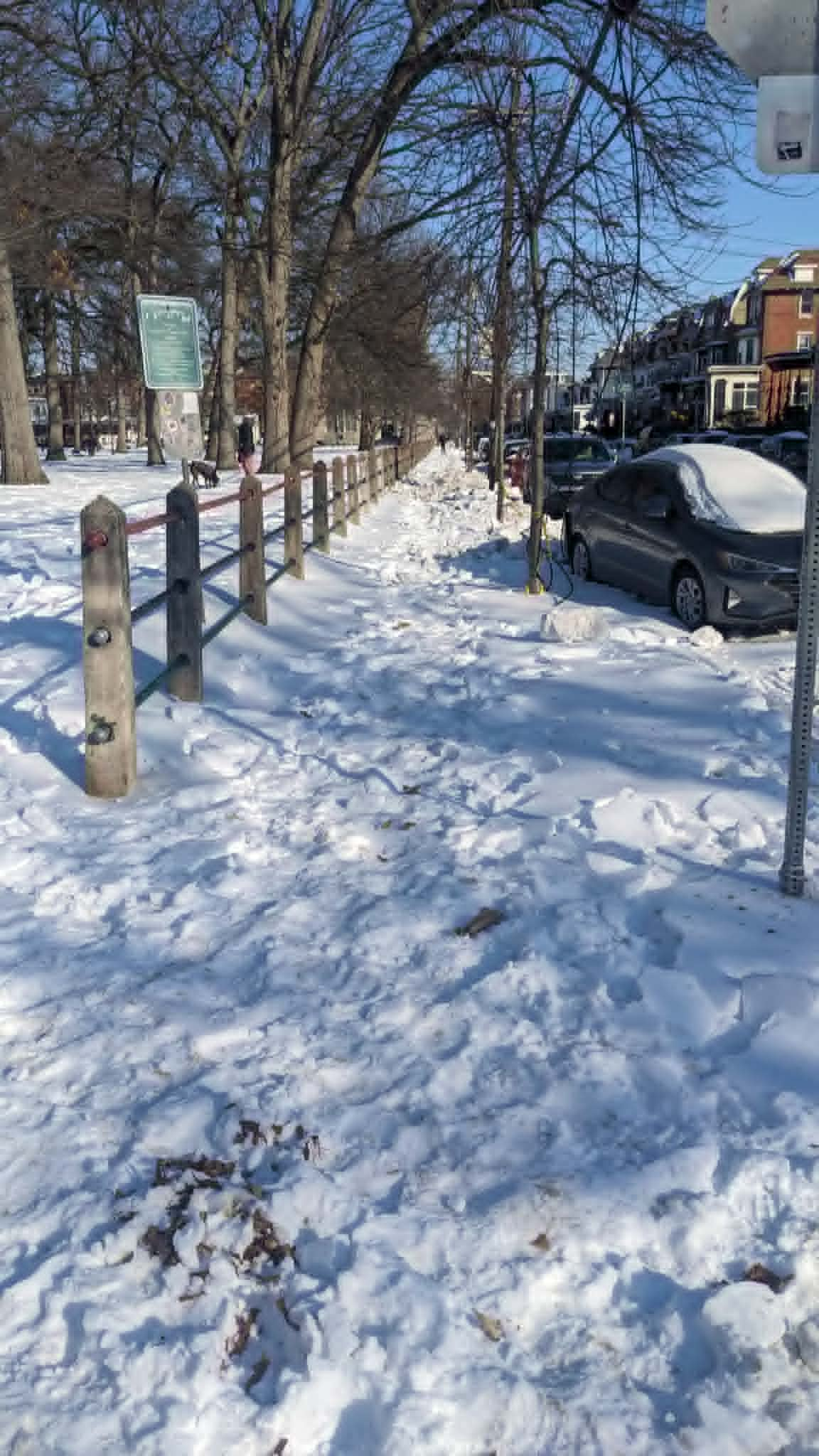
But four days after the last icy flake fell, residents across Philadelphia say the city has set a bad example on the shoveling front, noting various city-owned properties, many of them parks, remain inaccessible for people with strollers, wheelchairs, and those who have limited mobility, and a frigid obstacle for even the most nimble.
“It feels emblematic of the city’s attitude towards its residents, where it’s like they have rules and laws for everybody, but if they can’t manage to do something, it’s like, ‘We don’t have the resources. People need to be patient. We’re trying,’” said Coryn Wolk of Cedar Park.
The 36-year-old said she does have some sympathy for the city, as do many others, because it isresponsible for so many sidewalks and buildings, and the icy weather isn’t helping cleanup efforts. But as she walked through Malcolm X Park Thursday, frustration set in as she trudged through a sidewalk of tightly packed, icy snow.
The city did not respond to a request for comment regarding shoveling issues but its rules say paths on sidewalks must be three feet wide. Those on streets with sidewalks less than three feet wide can carve out paths that are one foot wide.
A sidewalk of Malcom X Park in West Philadelphia on Thursday, Jan. 29, 2026.
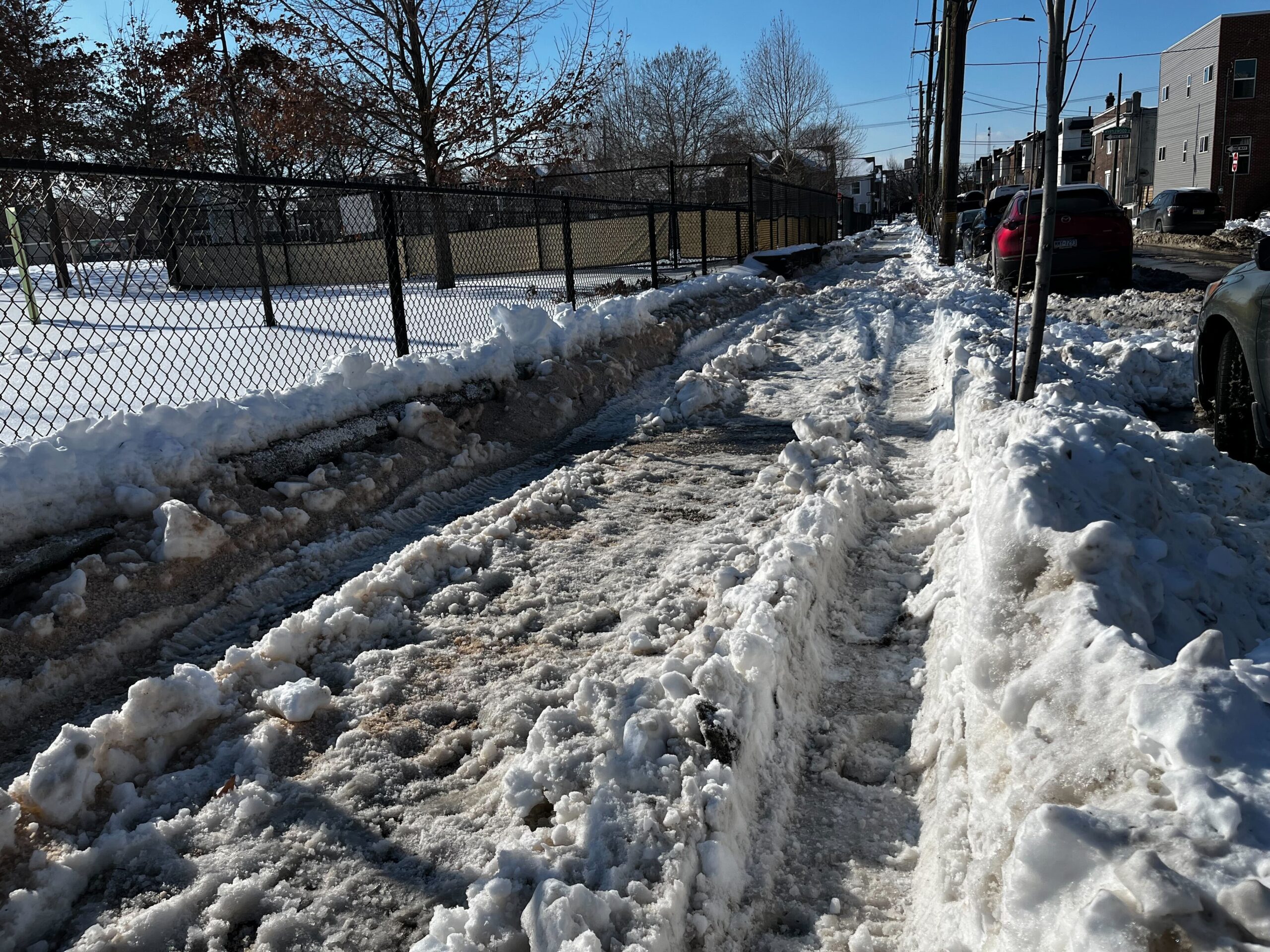
Still, Greys Ferry’s Lanier Park, Ridgeway Park in the Hawthorne section of the city, and Cobbs Creek Park also had sidewalks covered by a trampled layer of gray and yellow snow Thursday. In Center City, outside the former Philadelphia History Museum, another city-owned property, passersby had molded a narrow path that should have been shoveled.
A sidewalk along Lanier Park in Grays Ferry on Thursday, Jan. 29, 2026.
Residents say the problem extends to trolley and bus stops that line streets, describing large mounds of snow they need to climb like athletes to reach their modes of transportation.
Chase Howell, 29, described a herculean snow trudge through Center City with the child she nannies Wednesday. In one instance, she tried to catch the Route 4 bus along Broad and Spruce Streets only to find there was “no way to access the bus lane” because of snow pileups. To her disappointment, the next bus shelter north “was halfheartedly shoveled a foot wide but incredibly slippery.”
In the process of lifting and pushing the stroller, Howell hurt her back, but she said that’s secondary in herwhole ordeal.
The city owes residents who use wheelchairs more than this, she said. “City curbs should be shoveled three feet wide just as the requirement is for residences and businesses.”
Those stops and bus shelters are not under SEPTA’s purview. The responsibility of cleanup falls to the city and others who own property next to the stops, according to the agency’s spokesperson Andrew Busch. SEPTA, however, is responsible for the bus stops at the major transit hubs and clearing platforms, entrances, lots, and other areas at train stations.
Walking around West Philadelphia, Razan Idris has seen plenty of businesses and properties that have also neglected to clear their sidewalks. But she thinks the cleanup is part of a larger issue that can be applied to property owners who don’t pick up trash or who let their buildings rot.
“I see it as kind of the same thing, like there is little to no accountability for whoever is owning a building or an area or a lot,” said the 30-year-old.
But ultimately, the buck stops with the city, said Idris.
The former Philadelphia History Museum, which is city-owned, on Thursday, Jan. 29, 2026.
By failing to care for public sidewalks surrounding parks and municipal properties, other residents feel the city is sending a message that the rules on shoveling aren’t being enforced.
In South Philly, pedestrians trudged through crusty snow on the sidewalk along West Passyunk Avenue next to the former Melrose Diner. The sidewalk looked like it hadn’t been shoveled since the storm hit last week.
The property is owned by M R Realty Limited Partnership, state records show. Business owner Michael Petrogiannis did not respond to a request for comment.
A passerby, who only identified himself as Derek, complained about how some property owners leave their neighbors with the responsibility of making the sidewalks safe for use.
“They don’t come out and shovel,” he said. “So I’m the one shoveling for them.”
Staff writers Henry Savage and Max Marin contributed to this article.
Another weekend snow chance and more cold are in the forecasts. But the big difference between last week and this one in the Philadelphia region is a matter of degrees — about 10 of them.
A coastal “bomb cyclone” could form during the weekend with significant impacts, at least at the Shore. Computers were still sorting out what effects, if any, it would have in Philly. On Thursday, however, they favored snow staying to the south and east, with only a 40% chance they got to I-95.
In the meantime the cold will be epical by Philly standards.
If the forecast holds, in addition to coming close to ending a 32-year zero-less streak, Philadelphia would have daily minimums of 5 degrees Fahrenheit or lower on the next two mornings.
And it appears the city will have its first nine-day stretch in which the temperature failed to reach 30 degrees since 1979, based on analysis of temperature data from the Pennsylvania state climatologist.
In issuing a cold weather advisory for wind chills as low as 10 below zero, the National Weather Service in Mount Holly noted that “it is exceedingly rare to get this combination of length and magnitude of an arctic airmass for this area.”
Heading into the weekend, that subtly laminated lunar landscape with the one-horse-open-sleigh look in the fields and parks is almost certain to persist while bedeviling road-clearing efforts.
Some snow is possible late Saturday or Sunday — and this is becoming a habit — in time for the rising of the full “Snow Moon,” which may be a problem for the Jersey Shore. The full moon will likely contribute to tidal flooding.
Snow removal contractor Jordan Harlow clears the sidewalk in front of an apartment building on Main Street in Doylestown Wednesday, Jan. 28, 2026, following Sunday’s snowstorm. He said the layer of ice made it twice as difficult to use the snow blower.
The snow outlook for the weekend
On Wednesday only two things were certain about the latest threat: A major coastal storm is going to blow up during the weekend, and it’s not going to rain.
“Everything looks like it’s going to come together,” said Paul Pastelok, the long-range forecaster for AccuWeather Inc.
AccuWeather said it may intensify enough to qualify as a “bomb cyclone.”
An early consensus among computer models was that the storm would stay too far offshore to generate a major snowfall in the immediate Philly area. Pastelok said it was looking for Philly to get “sideswiped” with a 1- to 3-inch event. However, that was very much subject to change.
The weather service would not be making a first guess at potential accumulations until Thursday afternoon, said Alex Staarmann, a National Weather Service meteorologist in Mount Holly. In its forecast discussion Wednesday, it said that based on a consensus of the models, the Shore had a 35% to 50% chance of 6 inches of snow or more, with a 20% chance along I-95.
More certain was the potential coastal flooding threat at the Shore with potent onshore winds coinciding with Sunday’s full moon.
And while it may seem the atmosphere enjoys ruining weekends, it’s not uncommon for weather systems to fall into 3½- and seven-day cycles. That has to do with the spacing between weather systems, meteorologists say.
Regardless of what happens during the weekend, the region is going to begin the workweek with snow on the ground.
The snow is going to have more staying power than the average computer-model snow forecast.
It’s not going to get a whole lot warmer anytime soon
Even though it’s ice cold, as if developing a slow leak, the depth of the snow pack is actually decreasing, but ever so ponderously.
That 9.3 inches of snow and sleet that accumulated Sunday was down to 6 inches at Philadelphia International Airport on Wednesday morning, Staarmann said.
Compaction and sublimation, which is similar to evaporation, are lowering the depth, despite the cold. But Wednesday’s depth report was the same as Tuesday’s.
And after what does or doesn’t happen Sunday, temperatures are forecast to remain below freezing at least until Feb. 4.
No significant warm-up is in sight, and the National Oceanic and Atmospheric Administration’s Climate Prediction Center has odds strongly favoring below-normal temperatures until Feb. 11.
The upper-air pattern continues to favor cold pouring into the Northeast.
And more cold air is possible later in the month with a visit from the polar vortex, Pastelok said.
Average temperatures in Philly finished 3.6 degrees below normal in December, and despite a 10-day warm spell earlier in the month, January is projected to finish at least 2 degrees below long-term averages.
With more than 60 hours since the last bit of snow descended upon Philadelphia, the widespread complaints about the conditions of secondary and tertiary streets have reached a fever pitch.
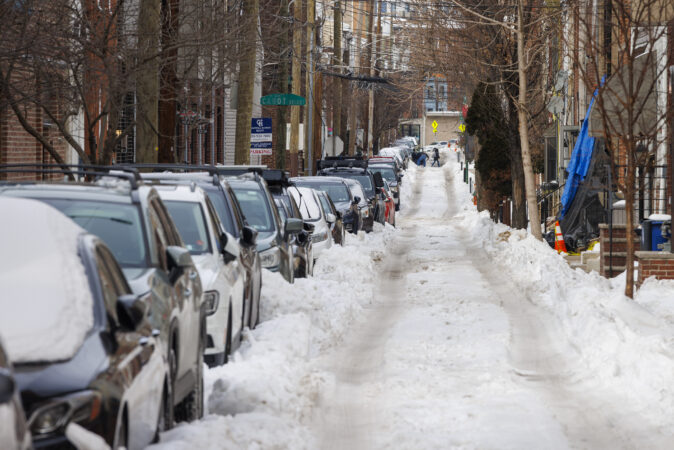
The Philadelphia Streets Department has tried to quell the public’s concerns with daily videos of excavators diligently filling dumpsters with snow. Yet evidence of icy streets and snow banks blocking lanes dominate social media, with city data showing the street conditions vary block by block.
Between 3 p.m. Tuesday and 3 p.m. Wednesday, the city’s GPS data show, about 30% of city streets had been visited by plows. Some areas, like Center City and South Philadelphia west of Broad Street, saw most numbered streets and cross streets hit by plows during that time. Meanwhile, South Philly and Center City neighborhoods east of Broad Street saw little to no reported activity.
The same was true for large swaths of North and West Philadelphia. And neighborhoods like Overbrook, Wynnefield, and Nicetown, which have seen the fewest reported visits from city plow trucks since the storm began, saw only a handful of streets plowed between Tuesday and Wednesday afternoon, according to city data.
On the neighborhood line of Grays Ferry and Devil’s Pocket, Dani Hildebrand was one resident who felt forgotten as the streets around him were plowed and garbage picked up. Hildebrand’s block was supposed to have trash collection come through Tuesday with the one-daydelay announced by the city. But on Wednesday, bags of garbage lined his block.
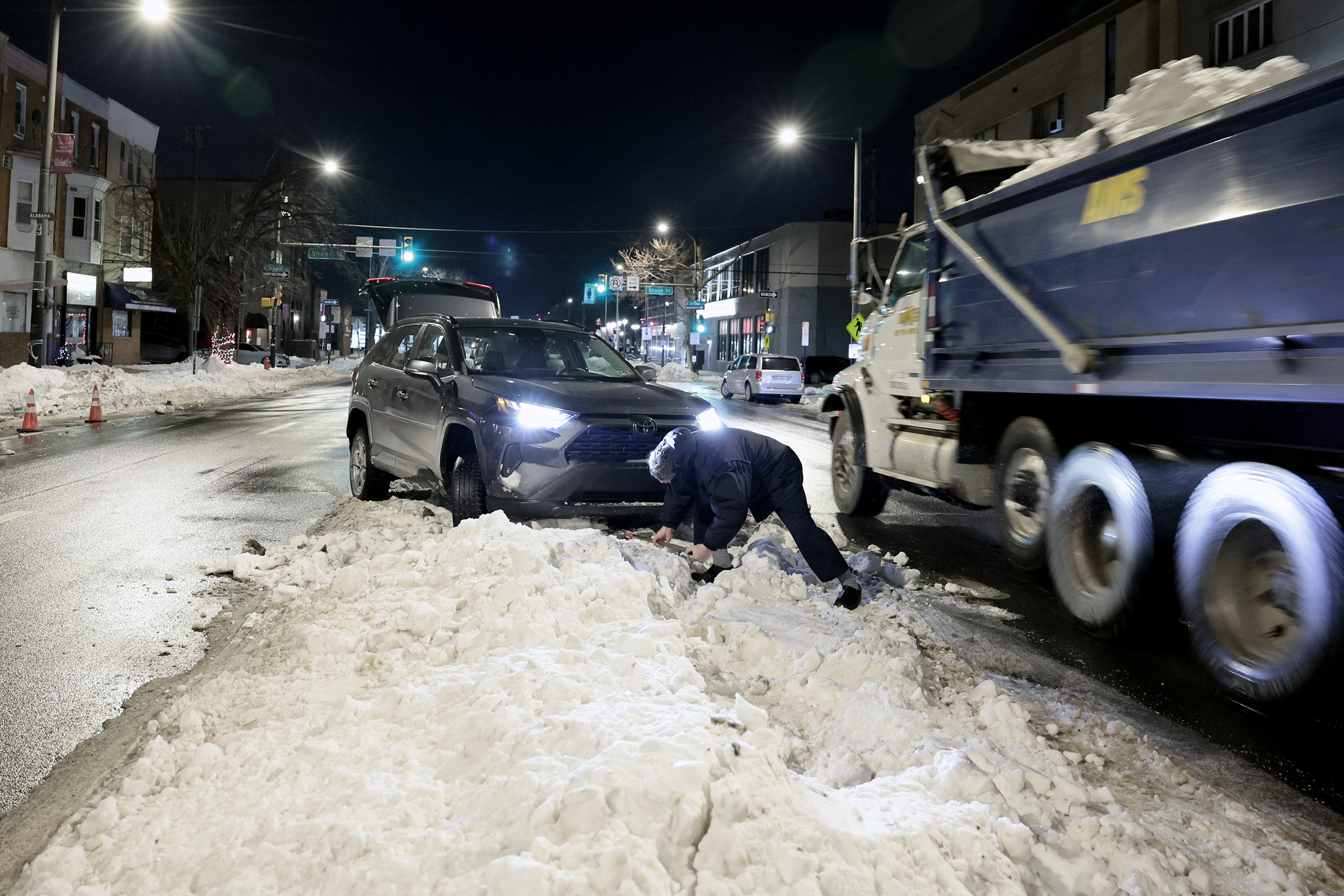
An unidentified man shovels snow from underneath his car after it became hung up when he was trying to park in the middle of South Broad Street in Philadelphia in the early morning hours of Wednesday, Jan. 28, 2026. Dump trucks filled with snow from the city’s snow removal operations were zooming by as he worked to get his car free.
The 41-year-old father of three said his school-age children yearn to leave the house, even if for an errand, but it’s not in the cards.
“Between piles of snow, trash, and dog pee and poop, it’s not ideal,” he said. “We’ve been stuck in since Sunday, and while I’m close to a market, it’s not safe to walk there with my three kids and I can’t get my car out.”
The city, for its part, has said the snow clearing would take as long as it needs to and the work would continue until all roads are dug out. Residents should expect trash-collection delays as crews navigate the snow and ice. At the same time, officials have consistently asked for patience, noting that the frigid temperatures were not aiding snow-removal efforts.
They have pointed to the 14 teams with more than 200 vehicles and excavators that are trying to move the snow and ice into storage facilities using dumpsters. Future Track trainees with the Philadelphia Streets Department have also taken up shovels to help clear crosswalks in the city.
But, the city notes, this is time-consuming work.
Wanted: Private plowers
Chris DiPiazza, owner of the Passyunk Square bakery Mighty Bread, could not afford to wait for city plows and paid for a private service to clear his street Tuesday afternoon.
After the storm, the bakery was unable to make or receive deliveries because the city had not plowed Gerritt Street, the narrow road it’s on. Adding to frustrations, DiPiazza said, snowplows that had come through the adjacent 12th and 13th Streets had left giant snow piles on both ends of the block.
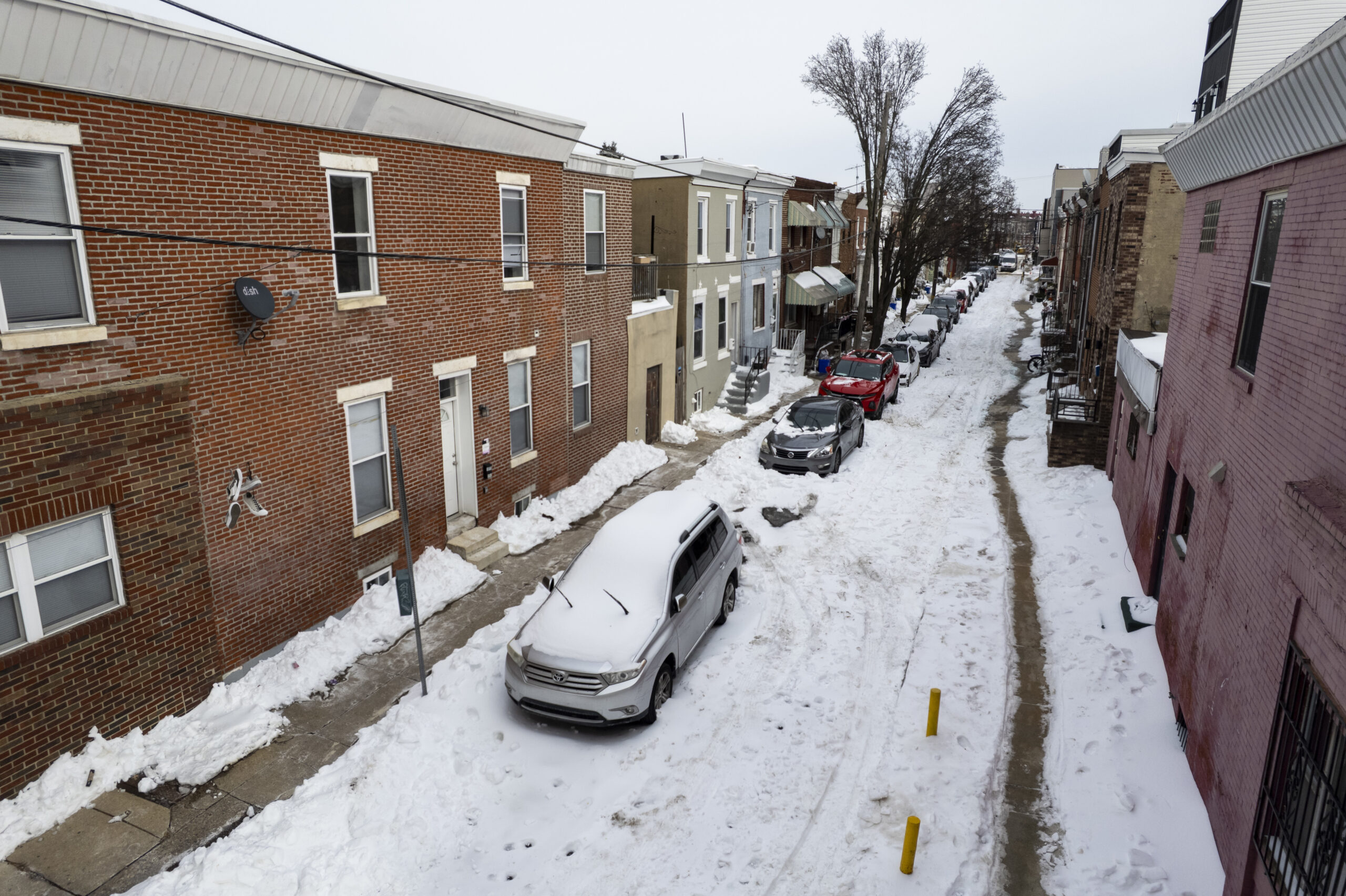
The 700 block of Hoffman is still covered in snow on Wednesday, Jan. 28, 2026 in South Philadelphia.
A 311 operator said it could take upward of three days for plowing to occur, DiPiazza said.
That news was especially frustrating when residents are expected to do their part by shoveling sidewalks in front of their homes within six hours of snowfall stopping, but the city is not fulfilling its own end of that promise, DiPiazza said.
“The city’s responsibility is to make the streets safe for people to drive, and they didn’t do that,” he said.
SEPTA vs. ice
For SEPTA’s size and reach, the organization is not so different from the average Philadelphian living without a plowed street.
The snow-covered roads were especially difficult for bus routes through secondary and tertiary streets after the storm, SEPTA spokesperson John Golden said.
“Those streets are hard to navigate on a good day,” he said.
The lagging plow service made SEPTA pause service for many bus routes.
“Some of our buses just aren’t able to navigate the streets because of lack of plowing,” Golden said.
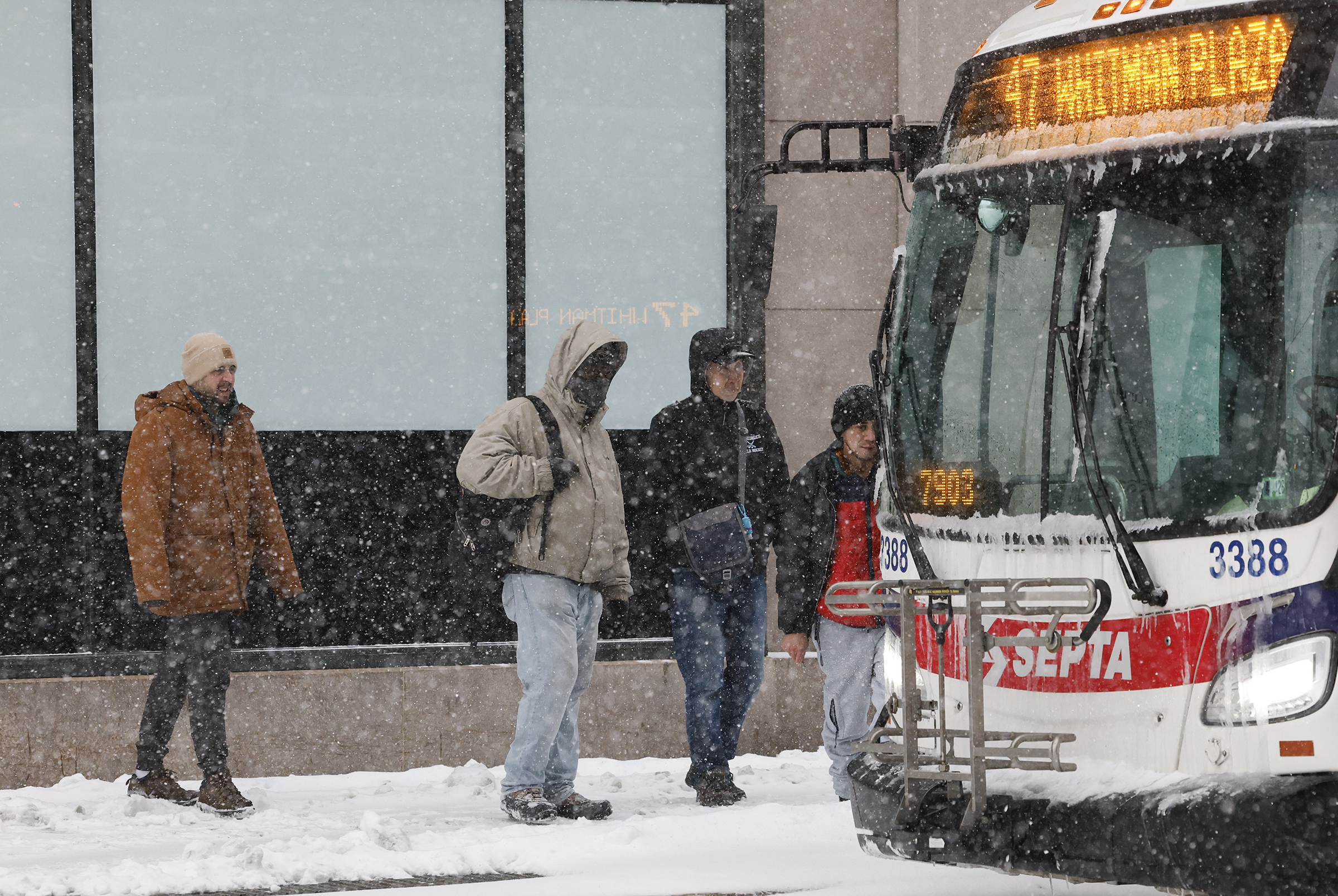
SEPTA riders board the 47 bus at 8th and Market Streets with the snow falling on Sunday, January 25, 2026.
But service had returned to all but a handful of routes by Wednesday afternoon. The weekend storm was not particularly onerous for SEPTA compared with other large storms in years past, Golden said,but he noted the frigid temperatures in the days following have made things difficult. Ice is not melting as quickly as it usually does, leaving the roads treacherous.
Golden said that while SEPTA officials have been in frequent contact with the streets department about problem spots, they don’t have any special recourse besides waiting for the city to clear the streets.
How does 2026 compare with 2016?
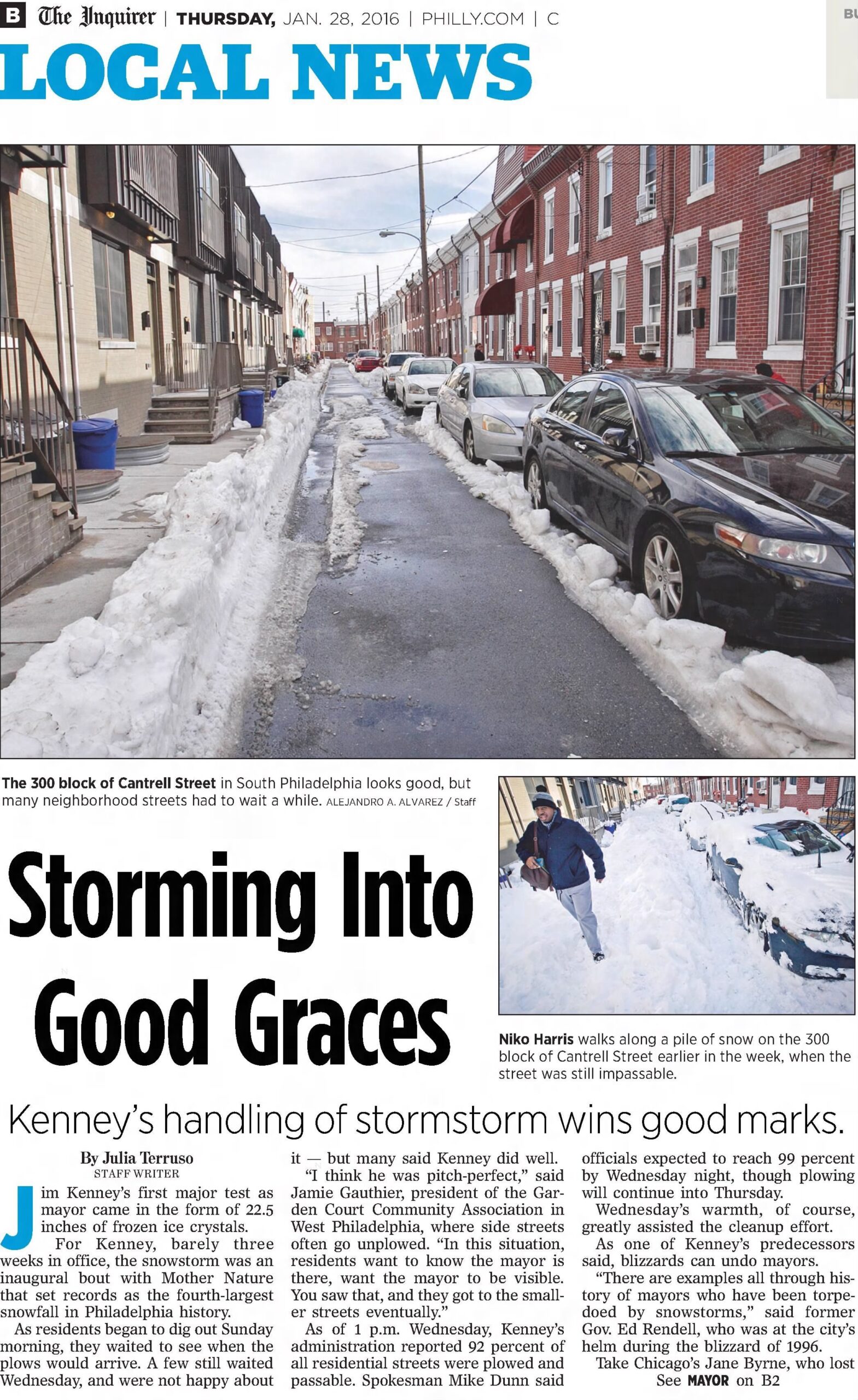
When the city was smacked with 22.5 inches of snow in January 2016, it was the fourth-largest snowfall in Philly history, and newly sworn-in Mayor Jim Kenney’s first major test in office.
At the time, many side street residents issued the same complaints heard with this most recent storm — they were the last to be dug out, and entire blocks were locked in.
But by the fourth day of storm cleanup, a Kenney spokesperson claimed 92% of all residential streets “were plowed and passable” and the administration was taking in kudos for what many — though not all — said was a job well done.
The front page of The Philadelphia Inquirer’s B section in January 2016, following a major snowstorm that was similar to the January 2026 storm. The article reported some complaints of snow plow delays, but residents were largely complimentary of then new Mayor Jim Kenney’s handling of the storm.
Though 9.3 inches fell this time around, city officials have said the conditions were very different. The temperature drop has been the largest hurdle so far, providing no help in melting the ice. The city still urges patience and says teams are working nonstop.
For parents whose children took part in virtual learning Wednesday and residents who were sick of parking wars and icy crosswalks with another potential snowfall on the way, patience was almost gone.
Residents in North and West Philly shared frustrations on social media of parking shortages because mounds of ice left people nowhere to go; some were even parking at an angle in parallel spots, to the chagrin of others. Bus stops were piles of dirty, frozen ice, and crosswalks remained icy.
For Hildebrand, it was all very discouraging.
“A plan could have been made and implemented, since the city knew about this a week before it happened, but it truly seems like bare minimum effort,” he said.