Category: Weather

  • Winter is about to return in Philly. Will snow join the party?

    Winter is about to return in Philly. Will snow join the party?

    As it approaches halftime, the meteorological winter around here so far has been about as inconsistent as the Philadelphia Eagles’ offense, but it is about to get decidedly colder, if not snowier.

    Temperatures on Thursday are due to hover around freezing with a brisk westerly wind gusting up to 30 mph (sympathies to all bikers and runners and those who are navigating those Center City wind tunnels), and then drop into the 20s after sunset with windchills in the teens.

    Then, after a modest warmup Friday and Saturday, the forecast turns decidedly colder and potentially more intriguing, as computer models have been going back and forth on snow potential for the Philly region.

    Philly’s coldest stretch of the winter so far to begin Sunday

    Readings are expected to warm into the 40s on Saturday, but then drop off dramatically during the holiday weekend and may not reach freezing again until Thursday.

    They may not get out of the 20s on Tuesday — when wind chills could fall to 0 in Philly — and Wednesday, with overnight lows in the teens.

    This is called January.

    Will the cold lock in a snow cover?

    A few alarm bells went off Wednesday afternoon when the main U.S. computer model suggested potential major snowstorms along the coast all the way to the I-95 corridor on Sunday.

    However, other computer guidance wasn’t buying it, nor were forecasters. The computer food fight continued Thursday.

    The U.S. model, said Paul Pastelok, longtime seasonal forecast specialist with AccuWeather Inc., “goes wacky all the time.” Maybe not all the time, but a subsequent run of the European model kept the storm offshore.

    “We’re kind of in a waiting game,” said Pastelok.

    Opined the National Weather Service Office in Mount Holly in its afternoon forecast discussion, the potential system has “high-end potential but also could end up being nothing.”

    In other words, situation normal.

    The winter so far in Philly and United States

    Oddly, the raw stats for the first half of the meteorological winter — that’s the Dec. 1-Feb. 28 period — are not too far from normal for snowfall and temperature.

    But that’s the result of quite a cold start to an eventful December, followed by a benign and uneventful January around here.

    December temperatures finished at 3.6 degrees below normal at Philadelphia International Airport. And in the first two weeks of 2026, they were 3.6 degrees above normal. Snowfall in December was about an inch above average, but with a paltry 0.3 inches so far this month, the 4.8 total is very close to where it should be.

    The early season coolness in Philly and much of the rest of the East was a surprise, said Owen Shieh, warning coordination meteorologist with NOAA’s Weather Prediction Center, in College Park, Md. The West, conversely, was quite warm.

    The contrasts were the result of “pattern persistence,” said Tony Fracasso, a weather center meteorologist.

    In the East, “This winter started quite strong,” he added, compared with recent winters. “It was not record cold,” but, “it sure felt cold for us.”

    What’s ahead the rest of the winter of 2025-26

    That likely will be the case early next week, and NOAA’s Climate Prediction Center has chances favoring below normal temperatures and above-normal precipitation in the Jan. 22-28 period.

    Pastelok said that upper-air patterns are aligning in such a way that favors importing cold air from northwestern Canada.

    The Climate Center’s Laura Ciasto said she does not see a major invasion of the polar vortex in the next few weeks. The vortex circles the Arctic, imprisoning the planet’s coldest air. But on occasion, the winds weaken, the freezer opens, and the contents spill southward.

    She said the vortex winds are slightly weaker than normal but are expected to strengthen.

    It is possible that lobes of the vortex may stretch on occasion, resulting in short-lived periods of cold in the Northeast, said Judah Cohen, research scientist with the Massachusetts Institute of Technology.

    A period to watch would be the first week in February, when a significant disruption of the vortex is possible, Pastelok said.

    A sudden stratospheric warming in the high atmosphere in the Arctic, which can lead to cold outbreaks in the contiguous United States “is not out of the question” late in the winter, Ciasto said.

    Philadelphia’s peak snow season typically occurs in late January through mid-February.

    Of the 10 biggest snowfalls in the city’s history, only three have occurred before Jan 22.

  • Wind gusts of 40 mph are possible during the Eagles’ playoff game Sunday. Kickers beware.

    Wind gusts of 40 mph are possible during the Eagles’ playoff game Sunday. Kickers beware.

    Eagles kicker Jake Elliott has had some issues this season, and on Sunday he may be confronting a formidable foe — the atmosphere.

    While a “soaking rain” is due on Saturday, the precipitation is expected to shut off before game time Sunday, when a strong cold front is forecast to incite winds perhaps gusting 40 mph during the Eagles-49ers playoff game at Lincoln Financial Field.

    The winds evidently won’t be taking sides: The stadium’s orientation is more or less north-south, and the winds will be blowing from the west and then “swirling around in the Linc,” said Matt Benz, a senior meteorologist with AccuWeather Inc.

    In any event, they won’t be much help to the quarterbacks or the kickers — San Francisco’s Eddy Piñeiro or Elliott, whose 74.1% field goal percentage this season was the second-lowest of his nine-year career. Piñeiro hit on 28 of 29 attempts.

    Temperatures at the 4:30 p.m. kickoff are expected to be in the mid-40s and drop into the upper 30s during the game, and steady winds of 20 mph may drive wind chills into the upper 20s.

    “At least it will be dry,” said Benz.

    That won’t be the case around here Saturday.

    The winds are to follow some drought-easing rains

    After temperatures again climb well into the 50s on Friday, showers are possible at night, but the rains will be more “widespread” on Saturday, said Zach Cooper, a meteorologist with the National Weather Service office in Mount Holly.

    No severe weather is expected, although rumbles of thunder are at least possible, he said.

    Said Benz, “It’s going to be soaking rain Saturday afternoon into the evening.”

    While rainfall amounts remain uncertain, about an inch was likely, the weather service said. Given the local rain deficits and the low water levels in the streams, no flooding was expected.

    In the interagency U.S. Drought Monitor weekly update posted Thursday, the entire region is classified as either “abnormally dry” or in “moderate drought.” A drought warning remains in effect for all of New Jersey.

    In the last 60 days, precipitation deficits across the region range from 20% to nearly 40%, according to data from the Middle Atlantic River Forecast Center.

    The only precipitation measured this month at Philadelphia International Airport, all of 0.1 inches, came from a dusting of snow on New Year’s Day.

    Snow prospects are not exactly robust

    Rain is possible the middle of next week, but the extended forecast remains flakeless, in least in the reliable range.

    Temperatures on Monday will top out near 40 degrees, close to normal for the date, and reach the mid and upper 40s Tuesday and Wednesday. Another cooldown is expected late next week.

    NOAA’s Climate Prediction Center has chances favoring below-normal temperatures in the Northeast in the Jan. 16-22 period, which would be approaching the season’s climatological peak snow season.

    As for winter storm potential, its Thursday afternoon discussion that accompanied the extended outlook foresaw “an overall more active pattern.”

  • A snow record is officially on the books in New Jersey … 30 years later

    A snow record is officially on the books in New Jersey … 30 years later

    NOAA announced this week that a New Jersey weather station set a state record for seasonal snowfall.

    It just took awhile to confirm. The season in question was the eventful winter of 1995-96.

    What took so long?

    “There’s nothing nefarious about it,” said David Robinson, the longtime state climatologist. “You can blame me.”

    Robinson, a Rutgers University professor and snow expert, said he was aware at the time of the 122-inch total measured at High Point in North Jersey during the eventful winter of 1995-96.

    The High Point total finally was confirmed in March 2022 by the National Oceanic and Atmospheric Administration’s State Climate Extremes Committee, of which Robinson is a member and whose mission it is to validate records, a sometimes complicated process.

    The findings, released Tuesday, were published in a 60-page memorandum authored by Chris Stachelski, an official with the National Weather Service’s Eastern Regional Headquarters.

    The report included several pages of images and discussion of the 1995-96 winter during which Philadelphia experienced its biggest snow in its 140-year period of record.

    As state climatologist, Robinson said he long had intended to vet the 122-inch figure.

    He said he was well familiar with the observer who was measuring all that snow and that he is “someone who is meticulous.”

    Robinson said one might ask why he didn’t seek to verify the record sooner.

    “I didn’t. It was too far on the back burner for far too long.”

    Robinson said the impetus was a national effort a few years back to assemble snowfall records for every state, and that prompted him to look again at the High Point record.

    He said the weather service ultimately took the lead in the investigation, and after a meeting with Stachelski, the committee decided 10 feet of snow truly fell upon High Point that winter.

  • 30.7 inches of snow fell in Philly on this week in 1996. Don’t bet against an encore some winter soon.

    30.7 inches of snow fell in Philly on this week in 1996. Don’t bet against an encore some winter soon.

    The plows and shovels haven’t had a whole lot of action in the region in recent winters, and it looks like the rulers will be at rest at least for a while. It may even hit 60 degrees Friday.

    Perhaps the atmosphere over the I-95 corridor is still catching its breath and awaiting a second wind after an unprecedented sequence of megastorms that began 30 years ago.

    It was on Jan. 7-8, 1996, that an unreal 30.7 inches of snow fell officially* (we’ll come back to that asterisk) at Philadelphia International Airport, the biggest snowfall on record, and a total so astounding it precipitated a federal investigation. The region wasn’t shut down so much as entombed in road-closing heaps of snow.

    Philly snow records date to the winter of 1884-85, and in the first 100 years, the city would experience a single snowfall of 20 inches or more only twice.

    In the 20-winter period that began in 1996, it happened four times. Three of those winters rank in the top three snowiest.

    This, during a time when planetary warming was picking up steam. Rather than paradox, some atmospheric scientists see symmetry.

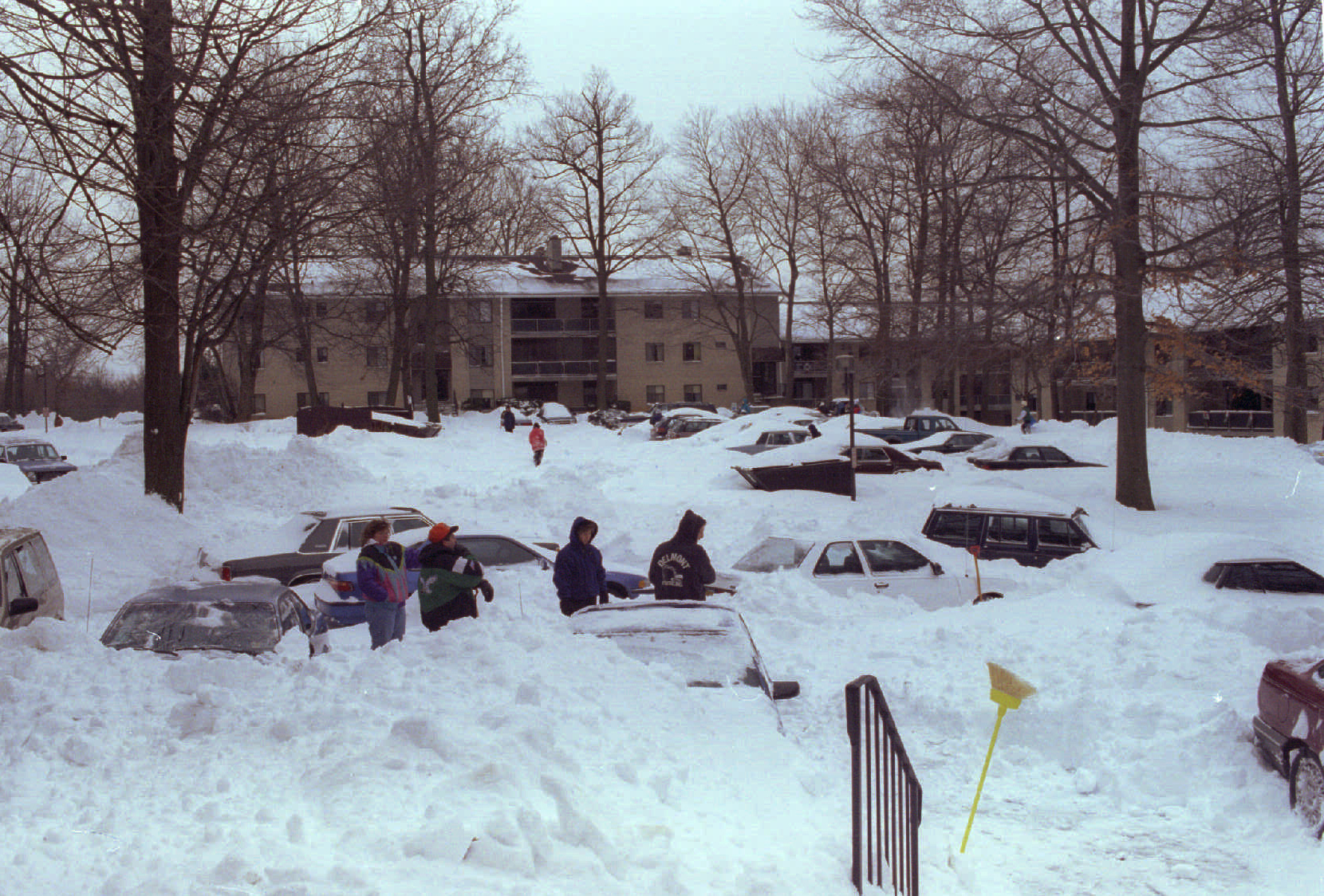
    A view looking out over the snow covered parking lot in Malvern.

    How warming may be affecting snowstorms

    Warming has resulted in more evaporation, filling the air with more moisture, “and the potential for more extreme precipitation,” said Kyle Imhoff, a Pennsylvania State University professor who is the state climatologist.

    Said Louis Uccellini, former head of the National Weather Service and one of the nation’s most prominent storm experts, “if conditions are right … that would include the potential for more snowfall within an individual storm.”

    Proximity to bodies of water, primary sources of moisture, may be making a difference, said Imhoff. In Erie, in recent decades warming appears to be prolonging the lake-effect snow season as waters have been less prone to freezing.

    In recent decades, snowfall from coastal lows has “become more frequent,” he said. Philly’s biggest snows typically are generated by nor’easters that import moist air from the Atlantic, where sea-surface temperatures have been above normal consistently. That warmth may be giving a jolt to coastal storms, according to a paper published in July by a group of researchers, including the University of Pennsylvania’s Michael E. Mann.

    It ain’t necessarily snow

    That wouldn’t necessarily mean more snow. Ocean temperatures typically are several degrees above freezing in winter, and onshore winds often have turned snow to rain in Philly.

    “The trick is getting enough cold air for snowfall,” said Imhoff.

    Snowfalls of a foot or more require a highly unlikely alignment of circumstances, a meeting of opposites: Cold air that holds its ground near the surface, forcing warm moist air to rise and generate snowflakes.

    Philly’s normal seasonal snowfall is 23.1 inches, but a “normal” season is hardly the norm. The totals have varied from nothing (1972-73) to 78.7 (2009-10). The region has experienced decades of robust snow totals, and snow scarcity.

    Sarah Johnson, the warning coordination meteorologist in Mount Holly says she hasn’t yet seen the fingerprints of climate change on snowfall patterns.

    “My hypothesis: It’s probably just the luck of the draw,” she said.

    Tony Gigi, retired weather service meteorologist, said he wondered if some overarching pattern might explain the decadal variability of snowfall in the region.

    About the 1996 storm

    Gigi was working the overnight on the morning of Jan. 7, a Sunday, when the snow began. He somehow made it to his Mount Laurel home after work, only to be called back Monday to relieve stranded colleagues.

    Overall, the storm was a forecasting triumph, but Gigi said the European model well outperformed its U.S. counterpart. But no one was predicting 30 inches for Philly.

    It was an astounding total for a variety of reasons, including the fact that it predated the region’s peak snow season by about three weeks. Of the total, 27 inches fell on the 7th; the previous record for the date was 5 inches.

    The 30.7 total became a source of controversy. The reason: “The snow wasn’t measured,” said Gigi.

    The total was inferred from a formula using the melted liquid equivalent of the snow and the air temperatures, which were in the teens and 20s during the snowfall. “It was in the realm of possibility,” said Gigi.

    But that’s not quite the standard method, said Johnson. Ideally, she said, snow should be measured once with a ruler (or yardstick) at the point that the snow stops.

    In this case, the total was so suspect that it wasn’t entered into the climate record for four years. The weather service commissioned then-Franklin Institute meteorologist Jon Nese and New Jersey state climatologist Dave Robinson, an international snow expert, to conduct a forensic investigation. They concluded the total was legitimate, given similar nearby snow reports.

    It remains unclear whether it was truly an all-time record, since no official measurements are available before 1884. The late weather historian David Ludlum quoted a visiting Swedish author as having witnessed snow “a yard deep” in Philadelphia in March 1705. However, Ludlum pointed out that it was unclear whether that was the result of a single snowfall.

    The future of snow

    As of Wednesday, at 4.8 inches, Philly’s official seasonal snowfall total is exactly “normal.”

    Highs are expected to climb into the 50s through Saturday, perhaps reaching 60 on Friday before a cool-down early next week. Not a flake sighting is in the extended outlooks.

    One factor in the lack of snow in recent years has been consistently cool waters in the tropical Pacific that tend to affect west-to-east upper-air patterns that are unfavorable to East Coast storms.

    For the Philly region, “The pattern has not been kind to snow lovers,” he said.

    Of note, the 1995-96 winter came at the end one of the most snowless 10-year periods in Philly on record.

  • As 2026 arrives, Philly is in for a cold — but less windy — New Year’s

    As 2026 arrives, Philly is in for a cold — but less windy — New Year’s

    After Tuesday’s blustery weather, the Philadelphia region is in for calmer weather on New Year’s Eve and New Year’s Day — but if you’re heading out to celebrate the holiday, be sure to bundle up.

    As 2025 gives way to 2026, temperatures are expected to top out in the low to mid-30s Wednesday and Thursday, running roughly 5 to 10 degrees below normal for this time of year, said Alex Staarmann, a meteorologist at the National Weather Service office in Mount Holly. Wind chills from expected breezy weather midweek, meanwhile, will make it feel even colder, likely down into the 20s.

    “It will be cold and breezy for the [Mummers] parade on Thursday, but nothing significant otherwise,” Staarmann said. “Just dress warmly.”

    That’s something of a relief following Monday and Tuesday’s windy weather, which saw wind gusts topping 50 mph amid a wind advisory that was extended until at least 4 p.m. The strongest winds came late Monday, with gusts hitting 60 mph at Philadelphia International Airport just after 8 p.m., according to weather service data.

    Wind on Wednesday — New Year’s Eve — is expected to abate significantly, with sustained speeds up to 15 mph and gusts topping out at 25 mph, Staarmann said. Thursday — New Year’s Day — will be similarly breezy, with gusts topping out at 30 mph on top of sustained wind in the 15- to 20-mph range.

    That cold and wind will be accompanied by slight chances of snow showers or flurries, though no accumulation is expected. The best chance for snow showers comes overnight Wednesday into Thursday, when forecasters give Philadelphia about a 40% chance of snow. But as of midday Tuesday, the possibility of any snow was somewhat unlikely.

    There was likewise a small possibility of some flurries early Wednesday morning, but Staarmann pegged the potential there at about 20%. Likewise, no accumulation was expected.

    “We could maybe get a small chance of a dusting, but there are not great chances of that, and nothing significant,” Staarmann said. “If anything, just flurries to maybe a light dusting.”

    Lacking any significant winter weather, holiday revelers heading to Philadelphia’s first New Year’s Eve concert Wednesday are likely in the clear, aside from the cold. The concert, set to begin at 8 p.m. on the Benjamin Franklin Parkway, will feature performances by LL Cool J, DJ Jazzy Jeff, Los Angeles rock band Dorothy, and Philadelphia High School for Creative and Performing Arts graduate Adam Blackstone.

    Folks heading to Thursday’s Mummers Parade are likely to see similar weather. Those festivities are set to kick off at 9 a.m., as more than 10,000 performers hit Philly’s streets for the day’s celebrations.

    As the week wears on, the weather for the first days of 2026 is expected to be “fairly uneventful,” according to weather service forecasts. Cold weather, however, is likely to stick around, with highs mostly in the 30s and lows in the teens and 20s.

  • Strong winds are expected around Philly in the final days of 2025

    Strong winds are expected around Philly in the final days of 2025

    A soggy, gloomy Monday was expected to give way to a blusterous Tuesday that brings a wind advisory as gusts of up to 50 mph blow their way into the Philadelphia region ahead of the New Year.

    Strong winds arrived behind a cold front that descended upon the Philly area Monday afternoon, dropping temperatures from the 50s into the 30s. The gusts arrived amid a wind advisory issued by the National Weather Service office in Mount Holly in effect through 1 p.m. Tuesday, with sustained wind speeds of up to 25 mph expected.

    “There could be some lulls in the morning, but there is no clear signal as to when we will see the lowest lulls” in wind speed Tuesday, said Sarah Johnson, a meteorologist with the weather service. “It will pretty much be windy all through the morning into midday.”

    With gusts potentially reaching into the 50-mph range, Johnson said, the primary concern for Philly-area residents was power outages caused by downed trees and broken tree limbs. That element will especially be a possibility following Monday’s rainy weather, which softened the ground in the area and primed it for potential treefall that could also bring down power lines.

    Peco, meanwhile, has said that it is aware of the wind advisory, and that its crews are actively monitoring weather conditions while remaining ready to respond to potential outages. The company on social media also advised residents to steer clear of downed power lines and report outages on its website.

    Johnson also noted that the high winds posed a risk to loose objects outdoors, such as holiday decorations and light furniture. Those items, she said, should be secured or taken indoors to keep them from potentially being lost or causing damage should they be taken away in a strong wind.

    Additionally, Tuesday’s forecast strong winds could create challenges for drivers — particularly those behind the wheels of “high-profile vehicles” like SUVs, trucks, and other large cars. Essentially, the larger a vehicle is, or the higher off the ground it sits, the more it is apt to be pushed around in high winds, she said.

    “The closer you are to the ground, the less likely you are to be impacted by high winds,” Johnson said.

    Tuesday’s windy weather, meanwhile, is not an uncommon occurrence for December in the Philadelphia region, Johnson added. Strong cold fronts are known to bring with them windy conditions as temperatures drop — and the cold is likely to remain throughout the week as New Year’s Eve and New Year’s Day come and go.

    “It is normal for us to have the strongest temperature gradients — the biggest difference in temperature — in the winter seasons,” she said. “We tend to see those from late fall through early spring — pretty much prime season.”

    The strongest winds are likely to move out later Tuesday, but Wednesday is expected to remain somewhat breezy, with gusts possibly reaching up to 20 mph. Those winds, however, fall well short of the wind forecast for Tuesday.

    That may be welcome news for New Year’s Eve revelers set to ring in 2026 at Philadelphia’s first New Year’s Eve concert Wednesday. The concert, set to kick off at 8 p.m. on the Benjamin Franklin Parkway, will feature performances by LL Cool J, DJ Jazzy Jeff, Los Angeles rock band Dorothy, and Philadelphia High School for Creative and Performing Arts graduate Adam Blackstone.

    Though Tuesday’s windy weather will likely abate in time for the holiday, colder temperatures with a high around 32 degrees are expected Wednesday, so attendees ought to bundle up. New Year’s Day on Thursday fits a similar description, with highs hovering near freezing and breezes up to 20 mph, Johnson said. There is only a slight chance of “lingering light snow or flurries,” according to weather service forecasts.

    “It’s likely to be dry, but cold and maybe breezy” the first day of 2026, Johnson said.

  • Winter storm brings blizzard conditions and dangerous wind chills

    Winter storm brings blizzard conditions and dangerous wind chills

    A potent winter storm threatened blizzard-like conditions, treacherous travel and power outages in parts of the Upper Midwest as other areas of the country braced Monday for plunging temperatures, strong winds and a mix of snow, ice, and rain.

    The snow and strengthening winds began spreading Sunday across the northern Plains, where the National Weather Service warned of whiteout conditions and possible blizzard conditions that could make travel impossible in some areas. Snowfall totals were expected to exceed a foot (30 centimeters) across parts of the upper Great Lakes and as much as double that along the south shore of Lake Superior.

    “Part of the storm system is getting heavy snow, other parts of the storm along the cold front are getting higher winds and much colder temperatures as the front passes,” said Bob Oravec, a lead forecaster at the National Weather Service office in College Park, Maryland. “They’re all related to each other — different parts of the country will be receiving different effects from this storm.”

    About 350,000 customers were in the dark Monday morning, with about a third of those outages in Michigan, according to Poweroutage.us. There were more than 1,600 flight delays and more than 450 cancellations at U.S. airports on Monday, according to the flight tracking site FlightAware.

    Blizzard conditions continued in some parts of northern Iowa on Monday morning, especially in open rural areas, according to the weather service’s office in Des Moines. Blowing snow was expected to continue through the morning.

    The National Weather Service warned of 1 to 3 feet (about 30 to 91 centimeters) of lake-effect snow from Monday through Thursday and high winds, with gusts up to 75 mph (121 kph), in western New York on Monday. Similar conditions were expected along Lake Erie in Michigan and Ohio.

    New York Gov. Kathy Hochul said in a social media post that travel in the Buffalo area could become dangerous beginning at 11 a.m. Monday because of potential whiteout conditions and urged people to avoid driving.

    The very strong cold front meant parts of the central U.S. woke up Monday to temperatures up to 50 degrees F colder than a day earlier, according to the weather service’s Weather Prediction Center. The cold front was accompanied by strong gusty winds.

    The weather service warned of “dangerous wind chills” as low as minus 30 degrees Fahrenheit (minus 34.4 degrees Celsius) in North Dakota and into Minnesota from Sunday night into Monday.

    In the South, meteorologists warned severe thunderstorms are likely to signal the arrival of a sharp cold front — bringing a sudden drop in temperatures and strong north winds that will abruptly end days of record warmth throughout that region.

    The high temperature in Atlanta was around 72 F (22 C) on Sunday, continuing a warming trend after climbing to 78 F (about 26 C) to shatter the city’s record high temperature for Christmas Eve, the National Weather Service said. Numerous other record high temperatures were seen across the South and Midwest on the days after Christmas.

    But the incoming cold front was expected to drop rain on much of the South late Sunday night into Monday, and a big drop in temperatures Tuesday. Forecasters said the low temperature in Atlanta to 25 F (minus 3.9 C) by early Tuesday morning. The colder temperatures in the South are expected to persist through New Year’s Day.

    In Dallas, Sunday temperatures in the lower 80s (upper 20s C) could drop down to the mid 40s (single digits Celsius). In Little Rock, high temperatures of around 70 (21 C) on Sunday could drop down to highs in the mid-30s on Monday.

    “We’re definitely going back towards a more winter pattern,” Oravec said.

    The storm is expected to intensify as it moves east, drawing energy from a sharp clash between frigid air plunging south from Canada and unusually warm air that has lingered across the southern United States, according to the National Weather Service.

  • Residents were unable to request plowing services via Philly 311’s online portal during weekend’s wintry weather

    Residents were unable to request plowing services via Philly 311’s online portal during weekend’s wintry weather

    Philadelphians were unable to request street plowing online earlier this weekend, as wintry precipitation Friday gave way to a slippery Saturday.

    The link to request plowing on Philly 311’s online portal became “inoperable and experienced technical difficulties” officials learned during Friday’s ice and sleet storm, Philadelphia Managing Director Adam Thiel said in a statement. Residents can call 311 for basic city services — from graffiti cleanup to pothole removal — on weekdays, 8 a.m. to 8 p.m., but the portal is available after-hours.

    It’s unclear how long the link was offline, but the issues have since been resolved, Thiel said, and options to request salting and plowing appeared on the portal Sunday. Crews continued to treat the city’s thruways during the inclement weather, despite the downed site.

    “Our Streets Department is on the front lines of responding to any weather event, including this one,” Thiel said, “and Streets crews, along with many other city workers, have been working 24/7 since [Friday], treating and clearing all roadways in every neighborhood. That critical work continues.”

    Warming temperatures forecast Sunday and Monday should thaw any remaining ice, sleet, and snow remnants.

  • Snow, sleet, and rain moved into Philly overnight, with icy roads a concern on Saturday

    Snow, sleet, and rain moved into Philly overnight, with icy roads a concern on Saturday

    Friday’s snow, sleet, and rain brought a cold mix of precipitation to Philadelphia and surrounding areas, leaving behind slippery conditions Saturday.

    “Today looks quiet compared to last night, but watch out for the icy roads,” said Joseph DeSilva, a meteorologist in the National Weather Service’s Mount Holly office.

    Saturday looks to be mostly cloudy, with a high of 34 degrees, a low of 25, and no precipitation on the horizon, DeSilva said.

    While roads continue to be treated, the Pennsylvania Department of Transportation has already removed a 45 mph temporary speed-limit reduction for major highways in the five-county Philadelphia region, including on Interstates 76 and 95, as well as I-476, I-676, and I-295.

    The wintry mix of snow, sleet, and intermittent rain moved into the region overnight, with temperatures hovering in the mid-30-degree range.

    Regional accumulation totals varied, from .2 inch in Rittenhouse Square to .3 at Philadelphia International Airport, .4 in Mt. Holly and 1 inch in Skippack.

    window.addEventListener(“message”,function(a){if(void 0!==a.data[“datawrapper-height”]){var e=document.querySelectorAll(“iframe”);for(var t in a.data[“datawrapper-height”])for(var r,i=0;r=e[i];i++)if(r.contentWindow===a.source){var d=a.data[“datawrapper-height”][t]+”px”;r.style.height=d}}});

    Ray Martin, a meteorologist in the National Weather Service’s Mount Holly office said Friday that even without especially high accumulations, conditions would remain hazardous.

    Sleet tends to be more compact than snow, demanding more effort when it comes to shoveling or plowing it off sidewalks, entryways, and garages.

    For Martin, this is: “a lot of little ice balls, basically frozen raindrops, covering the ground. It will be like shoveling sand.”

    If possible, he recommended waiting to drive until later Saturday, when temperatures were expected to rise above freezing.

    In Northeast Philadelphia, icy roads have already claimed a life.

    A 45-year-old woman was killed when her car was struck head-on by a pickup truck, police said. The crash occurred around 2 a.m., when thepickup was traveling north on the 3500 block of an ice-covered Aramingo Avenue when the driver lost control of the truck, police said.

    The pickup was moving at an “unsafe speed for the wintry conditions,” police said, crossing into the southbound lanes and striking the woman’s car head-on.

    Fire Department medics transported both drivers to local hospitals. The cwoman was transferred to Temple University Hospital, where she was pronounced dead at 2:35 a.m. Meanwhile, the pickup driver is considered stable at Jefferson Hospital.

    A third person, a 29-year-old passenger in the truck, was taken to Temple University Hospital with non-life-threatening injuries.

    And the snowy, icy conditions aren’t just affecting Philadelphia.

    Accumulation totals were higher north of the area, with anywhere from 2 to 6 inches in northern New Jersey.

    window.addEventListener(“message”,function(a){if(void 0!==a.data[“datawrapper-height”]){var e=document.querySelectorAll(“iframe”);for(var t in a.data[“datawrapper-height”])for(var r,i=0;r=e[i];i++)if(r.contentWindow===a.source){var d=a.data[“datawrapper-height”][t]+”px”;r.style.height=d}}});

    Due to the slippery conditions, acting New Jersey Gov. Tahesha Way declared a state of emergency across her state Friday morning, urging people to monitor official updates, remain off the roads unless necessary, and stay safe.

    As of Saturday afternoon, 27 flights at Philadelphia International Airport were cancelled, and 164 were delayed, due to the storm. Those with holiday traveling around the corner, can track flight statuses at Philadelphia International Airport.

    The storm came ahead of the 30th anniversary of Philly’s massive 1996 snowfall, when the city registered 30.7 inches between Jan. 7 and Jan. 8.

    So far this season, Philadelphia has already seen more than half the snow last winter brought. This year’s seasonal total stands at 4.2 inches, while the city saw 8.1 inches during the entire 2024-25 winter.

    Slight melting is expected through Saturday, but refreezing will come overnight, bringing a rainy Sunday with a high of 43 and a low of 37 degrees.

    Conditions are set to improve in Philadelphia by early next week, with Monday expected to bring a high of 58 degrees and a low of 28, and the year waving farewell Wednesday with a high of 38 degrees and a low of 30, according to AccuWeather.

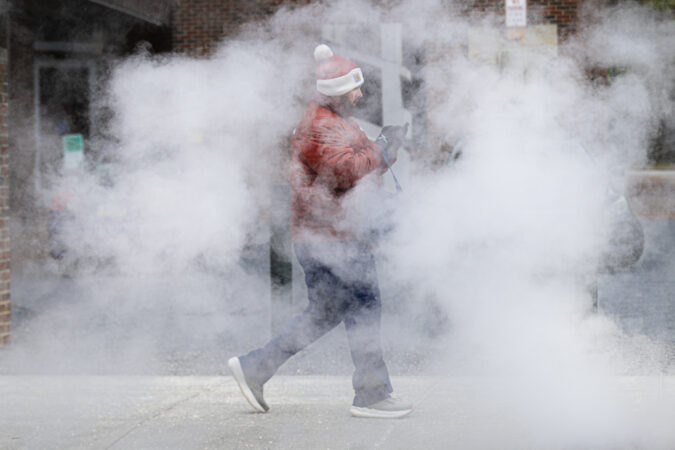
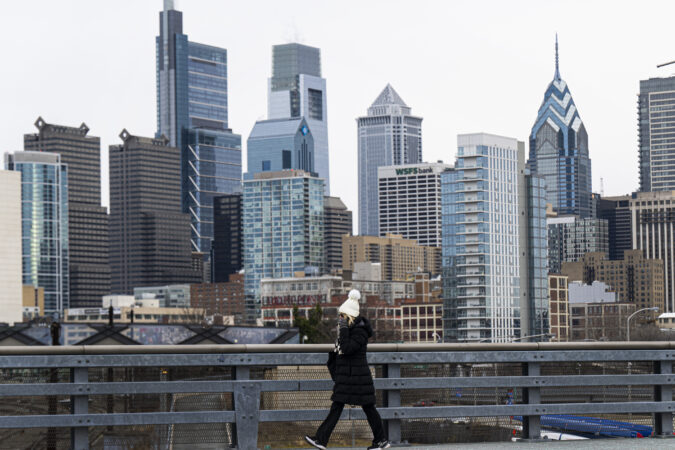
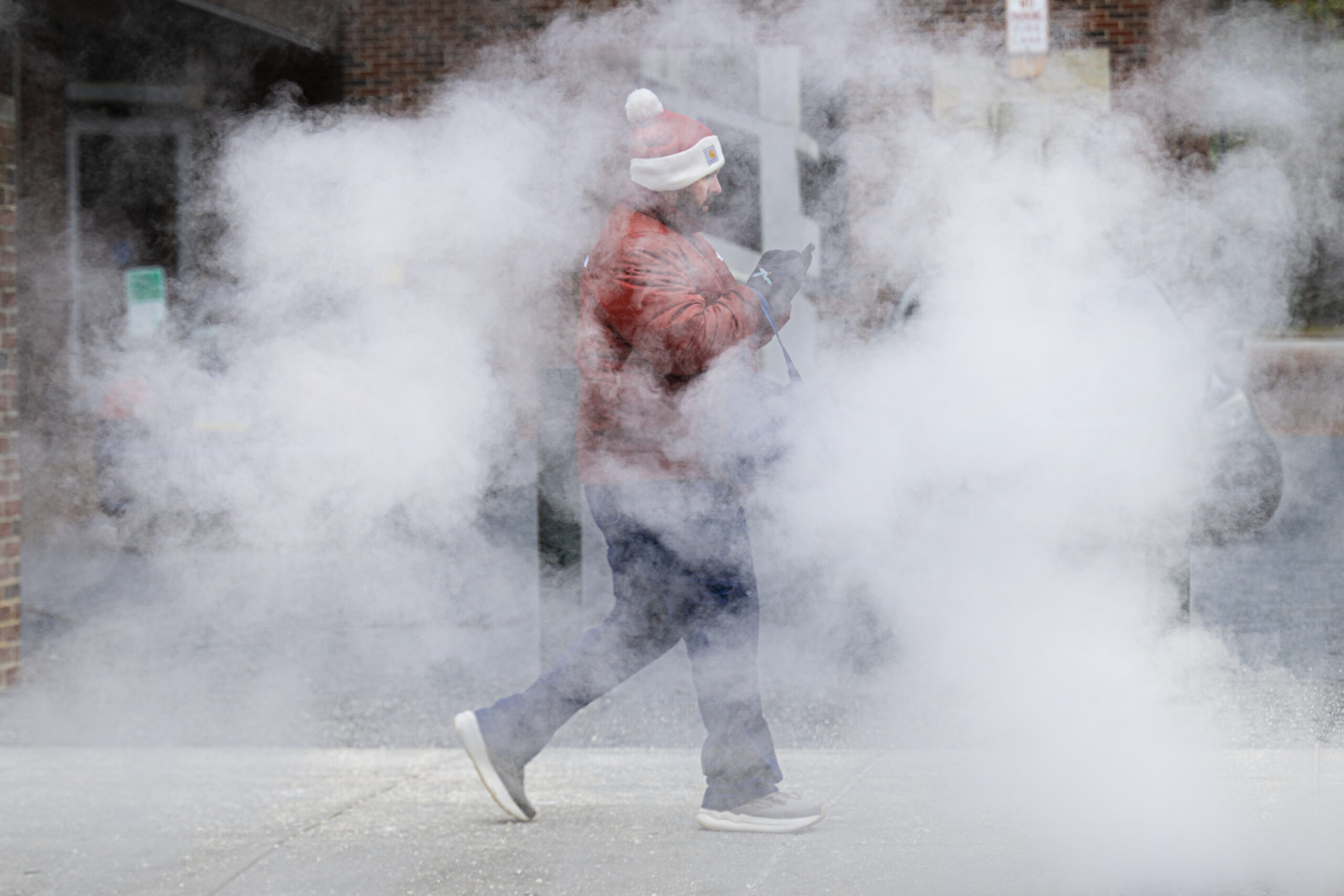
    A pedestrian walks through a cloud of steam on a cold winter day in West Philadelphia, Friday, Dec. 26, 2025, as snow and a wintry mix are forecast for the area through Saturday morning.
  • New storm hitting waterlogged Southern California could cause more flooding and mudslides

    New storm hitting waterlogged Southern California could cause more flooding and mudslides

    WRIGHTWOOD, Calif. — Another powerful storm system threatening to soak Southern California with its wettest Christmas in years rolled into the region on Thursday, bringing the potential for more flooding and mudslides a day after heavy rain and gusty winds were blamed for at least two deaths.

    Forecasters warned the additional rain could increase the risk of debris flows in waterlogged areas scorched by wildfires in January. Those burn scar zones have been stripped of vegetation by fire and are less able to absorb water.

    Outside of California, a major storm system was moving toward the Midwest and Northeast and was expected to interfere with travel, according to the National Weather Service.

    A mix of freezing rain and sleet could create icy conditions across much of Pennsylvania and parts of Michigan and Maryland. Forecasters warned significant ice accumulation on tree limbs and power lines could cause outages. Heavy snow was expected to blanket the Northeast early Friday.

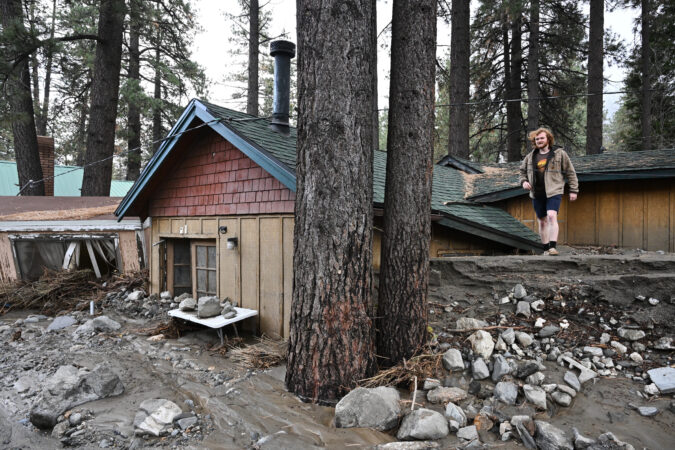
    The San Bernardino County Sheriff’s Department in Southern California issued an evacuation warning for Wrightwood, a mountain town about 80 miles northeast of Los Angeles, due to a risk of mudslides.

    County firefighters on Wednesday said they rescued people trapped in cars when mud and debris rushed down a road leading into Wrightwood. It was not immediately clear how many people were rescued.

    Roads in the town of about 5,000 people were covered in rocks, debris, and thick mud on Thursday. With power out, a local gas station and coffee shop running on generators were serving as hubs for residents and visitors. Statewide, more than 80,000 people were without power Thursday evening, according to PowerOutage.us.

    “It’s really a crazy Christmas,” said Jill Jenkins, who was spending the holiday with her 13-year-old grandson, Hunter Lopiccolo.

    Lopiccolo said the family had almost fled the previous day, when water washed away a chunk of their backyard. But they eventually decided to stay and still celebrated the holiday. Lopiccolo got a new snowboard and e-bike.

    “We just played card games all night with candles and flashlights,” he said.

    Resident Arlene Corte said roads in town turned into rivers, but her house was not damaged.

    “It could be a whole lot worse,” she said. “We’re here talking.”

    With more rain on the way, more than 150 firefighters were stationed in the area, said San Bernardino County Fire spokesperson Shawn Millerick.

    “We’re ready,” he said. “It’s all hands on deck at this point.”

    Deaths and heavy rain

    A falling tree killed a San Diego man Wednesday, news outlets reported. Farther north, a Sacramento sheriff’s deputy died in what appeared to be a weather-related crash.

    Residents around burn scar zones from the Airport Fire in Orange County were under evacuation orders.

    Areas along the coast, including Malibu, were under a flood watch until Friday afternoon, and wind and flood advisories were issued for much of the Sacramento Valley and the San Francisco Bay Area.

    The storms were the result of multiple atmospheric rivers carrying massive plumes of moisture from the tropics during one of the busiest travel weeks of the year.

    Southern California typically gets half an inch to 1 inch of rain this time of year, but this week many areas could see between 4 and 8 inches with even more in the mountains, National Weather Service meteorologist Mike Wofford said.

    Snow at higher elevations

    More heavy snow was expected in the Sierra Nevada, where wind gusts created “near white-out conditions” in places and made mountain pass travel treacherous. Officials said there was a “high” avalanche risk around Lake Tahoe and a winter storm warning was in effect through Friday.

    Ski resorts around Lake Tahoe recorded about 1 to 3 feet of snow overnight, said Tyler Salas, a National Weather Service meteorologist in Reno, Nev. Forecasters expect to see up to another 3 feet of snow through Friday, Salas said. The area could see 45 mph gusts of wind in low elevation areas and 100 mph winds along mountain ridges.

    Gov. Gavin Newsom declared a state of emergency in six counties to allow state assistance in storm response.

    The state deployed emergency resources and first responders to several coastal and Southern California counties, and the California National Guard was on standby.