Category: Weather

  • As cold-stunned invasive iguanas fall from trees, Floridians scoop them up for killing

    As cold-stunned invasive iguanas fall from trees, Floridians scoop them up for killing

    Ryan Izquierdo woke up on a recent morning groggy, cold and most of all ready — to go iguana hunting.

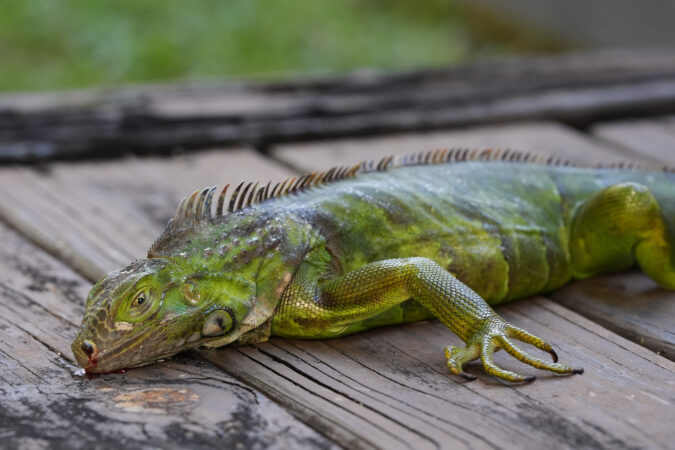
    Temperatures in Jupiter, Fla., where the 27-year-old social media star lives, had dipped well below 50 degrees, as a cold front swallowed much of the East Coast in snowfall and record-breaking low temperatures. As flurries fell on parts of the state, residents braced for the inevitable: Cold-stunned green iguanas — one of Floridians’ most reviled invasive pests — began to lose consciousness and fall out of trees.

    The dry, scaly deluge is a familiar forecast in those parts. These cold-blooded reptiles’ nervous systems shut down when temperatures dip into the 40s and below. They become paralyzed and fall from their leafy perches. This time, for some unlikely conservationists, as well as state officials, that meant killing season.

    In a first, officials capitalized on the paralyzed pests and told residents they could bring them in for disposal.

    “This is the first time we have organized a removal effort of invasive iguanas,” said Shannon Knowles, communications director for the Florida Fish and Wildlife Conservation Commission (FWC).

    “South Florida has not experienced this level of cold weather in many years,” she added. “So we used this opportunity to remove this invasive non-native species from the landscape.”

    The commission issued an executive order that allowed people without permits to gather and transport the iguanas to one of several offices to be humanely killed, “or, in some cases, transferred to permittees for live animal sales.”

    Typically people can themselves humanely or painlessly do away with green iguanas when they see them, but they’re not allowed to transport them. Knowles added that people lined up, cloth bags and bins brimming with the lizards, to drop them off Sunday and Monday. While she said the commission did not yet have an official estimate, Izquierdo was floored by what he saw.

    “It was a madhouse,” Izquierdo said of the FWC site near Fort Lauderdale where he deposited about 100 iguanas Monday. “There were iguanas that were pushing six to six-and-a-half feet long. They look like dragons, absolutely crazy.”

    Green iguanas are a scourge of South Florida. First documented in the 1960s, their population has since exploded to, by some estimates, more than 1 million. They’ve wreaked havoc on the region’s infrastructure, burrowing holes around homes, sidewalks and seawalls. They’ve chewed through some of the state’s most crucial native plants such as nickerbean, which helps sustain the endangered Miami Blue butterfly.

    Izquierdo has been catching iguanas since he was 10 years old. In his grandmother’s backyard, he found them to use as fishing bait for peacock bass.

    “I’ve always loved nature and the outdoors,” he said.

    Now, he makes a living out of it as a content creator, documenting his fishing excursions around the world. But as the dipping temperatures created a new opportunity last weekend, he decided to temporarily pivot to the quest he dubbed “a Florida man Easter egg hunt for dinosaurs.”

    He jumped into his pickup truck and began hunting.

    In warm temperatures, iguanas are almost impossible to nab. You need either a gun or a 15-foot-long pole with an invisible lasso attached to it, Izquierdo said.

    “If you want to do iguana management, this is a good time to do it because they’re very vulnerable to removal,” said Frank Mazzotti, a professor of wildlife ecology at the University of Florida.

    But in the cold, chase proved easy and bountiful. “This is the most I’ve ever found,” he said. “We were practically almost stepping on them.”

    Despite the fun and viral Instagram reels, he’s not immune to the difficult decisions that come with maintaining a balanced ecosystem.

    “They’re animals, so people do have a soft spot in their heart for them and so do I because they’re really cool, especially the little baby ones,” Izquierdo said. “But you have to look at the bigger picture of things.”

    He’s passionate about making the most of a dead green iguana. On Monday night, he and his friends baked an iguana pizza, (delicious, he said, they’re nicknamed “chicken of the trees”) and he plans to use the skin and some meat for fishing lures and bait.

    On Tuesday morning, as the temperatures in Florida finally began to creep up to milder levels, Izquierdo sat in his truck, filled with about a dozen stunned iguanas, knowing his hours of hunting were numbered.

    “As the temperature starts climbing back up, it’s going to get back to normal,” he said. Two motionless lizards, a male and a female, lay in his lap. “Yeah, these iguanas will be back about their business.”
  • The Schuylkill is frozen, but that doesn’t mean you can ice fish on it

    The Schuylkill is frozen, but that doesn’t mean you can ice fish on it

    Have you been looking longingly at your fishing gear during the Philadelphia winter? Are Deadliest Catch reruns not hitting the same?

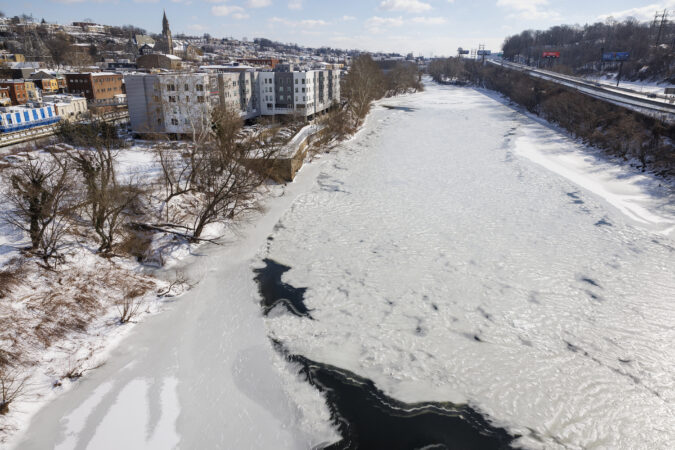
    With the surface of the Schuylkill River still frozen solid and frigid temperatures returning this weekend, a reader asked through Curious Philly, The Inquirer’s outlet for answering questions, whether they were allowed to ice fish on it.

    Ice fishing, after all, is a practice that began with subarctic Indigenous peoples thousands of years ago, well before the advent of the modern fishing rod in the late 1700s. Fishing along the Schuylkill is accepted and celebrated in warmer temperatures, so what about its frozen cousin?

    Unfortunately for those Philadelphians dreaming about an Arctic lifestyle, the answer is no.

    “Ice fishing is illegal in Philly,” Philadelphia Police Department spokesperson Sgt. Eric Gripp said by email. The practice is not explicitly outlawed, but walking out onto the ice in order to carve a hole and cast a line underneath violates city rules.

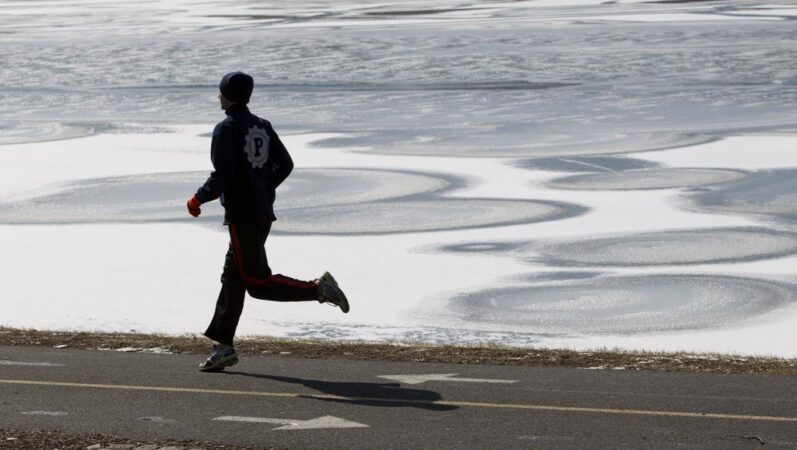
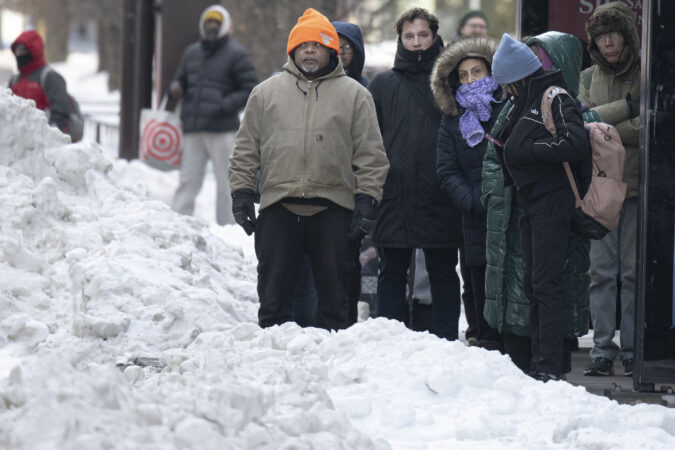
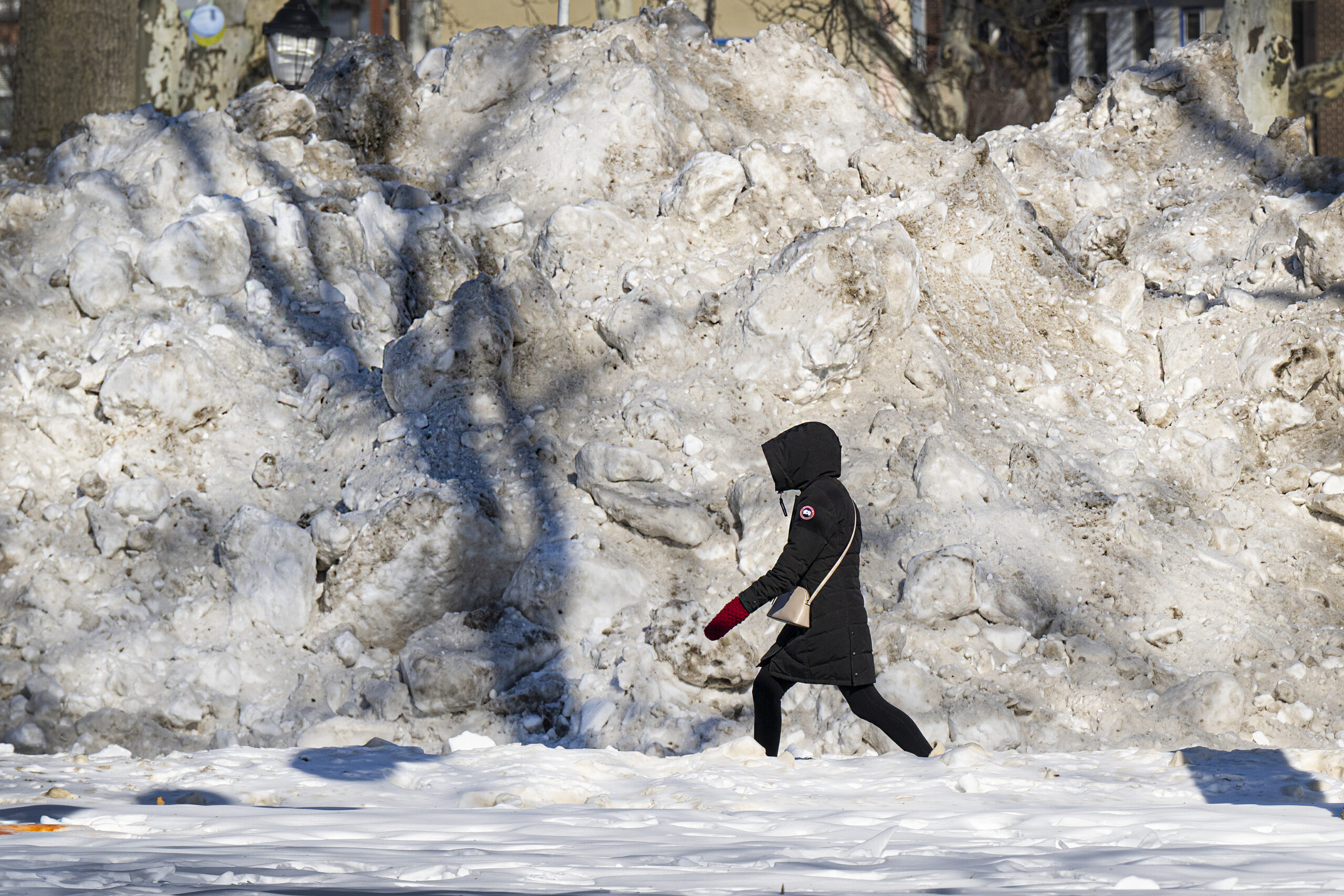
    A pedestrian walks past a large pile of snow and ice along the Benjamin Franklin Parkway on Monday.

    “You can’t walk, swim, or be in/on the waterway — unless in a vessel — regardless as to whether or not it’s frozen,” Gripp said.

    Philadelphia police began spreading the message to not venture out onto the frozen Schuylkill this week, after local CBS News video captured several adults and children walking across it Sunday. The Police Department’s directive on code violation notices lists ice skating, skiing, and sledding in some areas of Fairmount Park as potential offenses.

    Ice fishing could put you in violation of a few city ordinances, too. While you would likely be subject only to a summary offense and a $25 fine for each violation, police say you would be breaking rules about using areas managed by Parks and Recreation outside of their approved use, and risk violating the ban on “swimming” or wading out onto any Philadelphia creek, lake, river, or stream.

    » ASK US: Have something you’re wondering about the Philly region? Submit your Curious Philly question here.

    Even though the Schuylkill’s frozen surface may be several inches thick in certain locations, ice’s integrity can’t be judged based upon only how it looks, how fresh it is, or the temperature outdoors, according to the Pennsylvania Fish and Boat Commission. Ice’s strength is also informed by several other factors, including the depth of the water underneath the ice, and nearby fish activity.

    “Anyone that walks onto the Schuylkill River, … they’re taking their life into their own hands. It’s not a smart thing to do,” said commission spokesperson Mike Parker. Parker said the commission highly advises against walking on top of or fishing on the frozen surface of any moving body of water, like a river.

    “There’s no such thing as safe ice,” in those cases, he said.

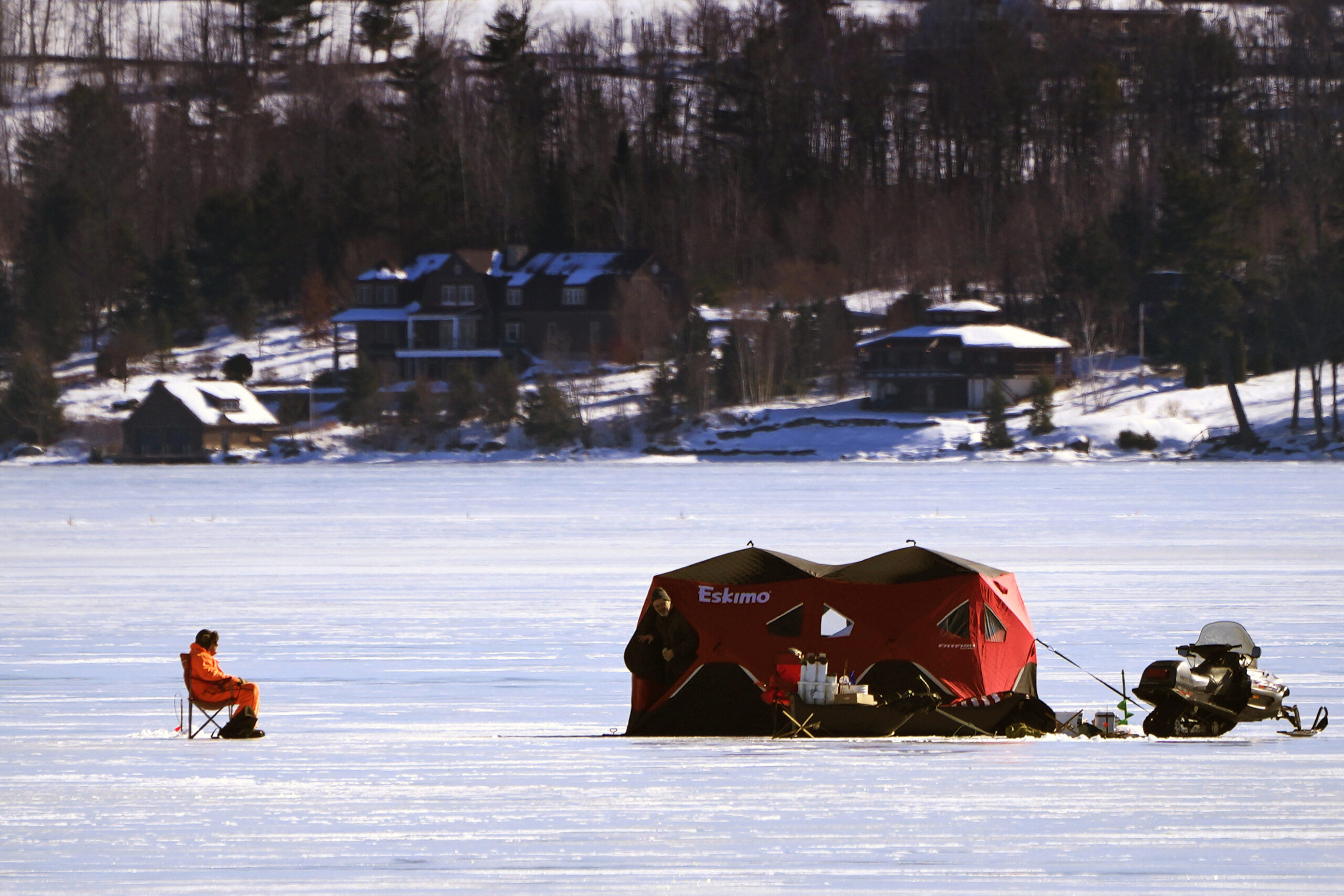
    A fisherman sits in the sun outside a pop up shelter while ice fishing on frozen Lake Wentworth in Wolfeboro, N.H.

    But ice fishing can be relatively safe on still bodies of water, like lakes and ponds. As general guidelines, the fish and boat commission advises that anglers fish only on those bodies of water when ice is at least five inches thick, and never to go out onto ice alone.

    If you are still interested in ice fishing during the region’s cold spell, the Fish and Boat Commission offers a map of approved ice fishing destinations across the state.

    The closest ones to Philadelphia include Deep Creek Dam in Montgomery County; Marsh Creek Lake, in Chester County; and Lake Galena in Bucks County.

  • A ‘significant’ portion of the Schuylkill is frozen. Don’t do anything stupid.

    A ‘significant’ portion of the Schuylkill is frozen. Don’t do anything stupid.

    It should go without saying, perhaps, but city officials this week are saying it anyway:

    Just because temperatures have dipped into the teens (or lower) in recent days, doesn’t mean it’s safe to walk, skate, or drive across the area’s frozen lakes, rivers, and waterways.

    “We’re getting reports of people walking and ice skating on Philadelphia’s rivers,” the Philadelphia Police Department said in a post to X on Sunday. “This is illegal for a reason. River ice is not as thick as it looks — moving water underneath weakens it and conditions can change fast. Please stay safe and stay off the ice!”

    Though the Philadelphia Police said Monday there had been no rescues at this point, the department has fielded more than a dozen calls already, according to Capt. Anthony LaSalle of the city’s police Marine Unit.

    LaSalle said a “significant” portion of the Schuylkill was currently frozen over, something that hasn’t happened in a decade.

    “In some areas, it could be thicker than other areas, and you’ve got to realize that water is flowing underneath it,” LaSalle said. “You can have six inches in some areas and one inch in another area. And if there’s debris, that makes the ice even weaker.”

    It’s a sentiment echoed by City Hall, which this week also urged residents to stay off all frozen waterways for the safety of both themselves and first responders.

    “Police and medical staff have been advising residents and visitors to stay off all frozen rivers, lakes and waterways,” a city spokesperson said in an email. “Ice conditions are unpredictable, and walking, skating, or driving on frozen surfaces is extremely dangerous.

    “Falling through ice can become fatal within minutes and places both the public and first responders at serious risk. For everyone’s safety, the City is asking everyone to stay on solid ground and avoid all frozen waterways.”

  • 300 ‘ambassadors’ to chip away at ice on Philly’s crosswalks

    300 ‘ambassadors’ to chip away at ice on Philly’s crosswalks

    Those stubbornly frozen crosswalks with mounds of snow and ice across Philadelphia are getting chipped away with the assist of a 300-person workforce, starting Tuesday.

    The 300 ambassadors, as they are called, are tasked with manually breaking up ice at crosswalks and streets in residential neighborhoods, according to Mayor Cherelle. L Parker.

    “We are not resting and stopping until every street in the city of Philadelphia is walkable and drivable, and that people feel it when they are driving it and they see it in their neighborhoods,” she said Monday, highlighting the nonstop work municipal workers had been doing since the largest snowfall in a decade blanketed the city with 9.3 inches on Jan. 25.

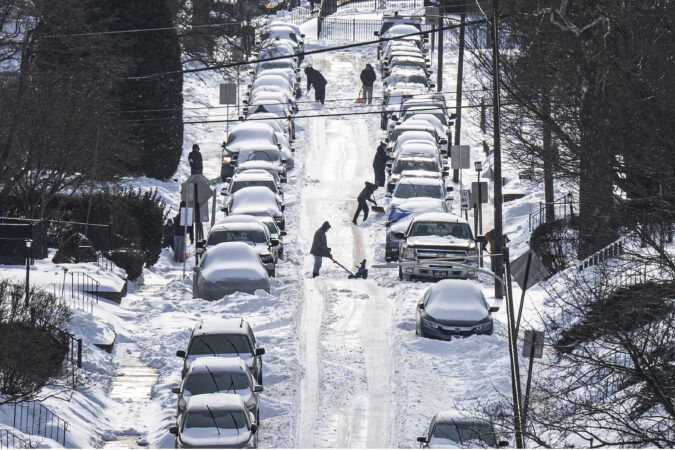
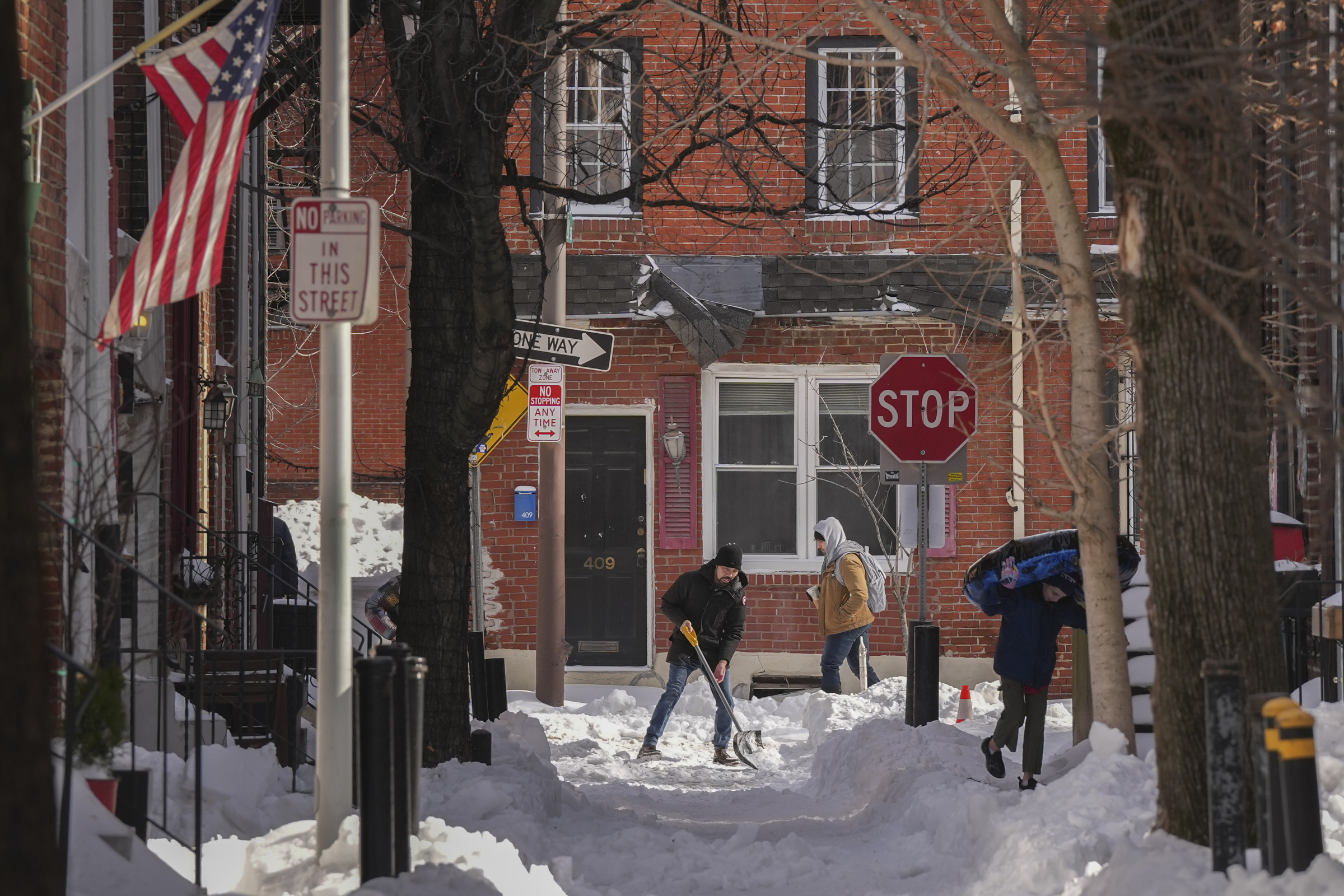
    The dayslong cold snap that followed, however, has complicated dig-out efforts for the city and led to widespread complaints from residents. Photos of commercial corridors with piles of ice on crosswalks, unplowed side streets, untreated SEPTA bus and trolley stops, and unshoveled sidewalks next to public parks and recreation centers flooded social media after the storm as the city asked for patience.

    Still, Parker said Monday that the city has melted 4.7 million pounds of snow, put down 15,000 tons of salt on streets and roadways, and treated at least 85% of streets at least one time.

    The city has deployed snowplows, compactors, front-end loaders, backhoes, and a snow melter that came from Chicago, the mayor said. And just this weekend, the city made a “coordinated pedestrian safety push,” working across city agencies as well as SEPTA and the Philadelphia School District to clear bus stops, school crossings, crosswalks, and ADA ramps.

    The Philadelphia Streets Department has also tapped into its Future Track Program for snow-removal efforts. The trainees are typically at-risk young adults who are not enrolled in higher education and are unemployed. They get job experience, as well as other services, and they help in beautification projects. In the snow cleanup, Parker said, the trainees cleared more than 1,600 ADA ramps.

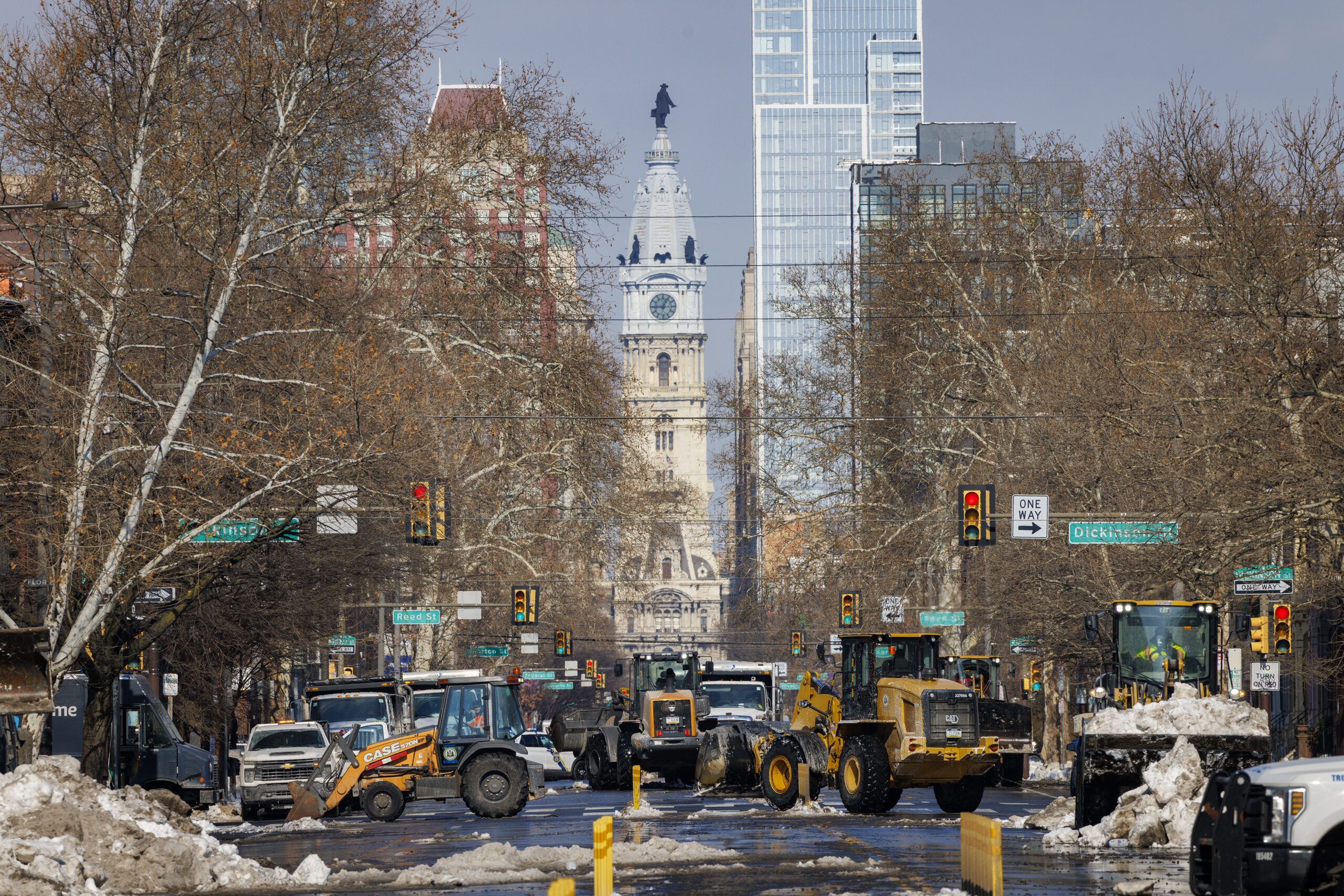
    Heavy equipment clearing snow along S. Broad Street at Dickinson Street.

    Carlton Williams, the city’s director of clean and green initiatives, said the hundreds of workers aiding in the cleanup have made significant progress in areas like North Philadelphia; South Philadelphia, which was the epicenter of 311 complaints days after the snowfall; and Manayunk, which posed a challenge because of its hills.

    He noted the complexity of the city’s narrow residential streets, which required bringing in specialized equipment, and where he previously said cleanup was further complicated by illegal parking.

    Throughout the week, the city had also conducted lifting operations where machines dumped snow and ice into dumpsters to be hauled to storage sites across the city.

    A Facebook video on the mayor’s social media page, along with responses to clips of the dig-out update shared online, offered a glimpse of how residents feel. Parker, many said rising to her defense, cannot control the freezing temps. Others were less forgiving, listing their blocks as forgotten sections in the cleanup.

    Philly is far from alone in the continued cleanup efforts hampered by below-freezing temperatures. At the request of Washington, D.C., officials, 50 National Guard members were deployed over the weekend to help clear schools of snow. Baltimore was able to get a snow melter on loan from D.C. this week, a machine officials told WBAL-TV the city had not needed in a decade.

    Even New York Mayor Zohran Mamdani, who received generally good marks on cleanup from the media in the early days after the storm, was pressed by reporters Monday on lingering snowbanks and delays in trash pickup.

    In Philadelphia on Tuesday, the city conducted a snow-clearing operation along a 1.5-mile stretch of Broad Street through 6 p.m., towing cars along the street in South Philly to make way for equipment on the major corridor.

    City workers received the slightest respite as they continued snow-clearing efforts as temperatures reached the mid-30s Monday and Tuesday.

  • Parking restrictions planned for snow removal Tuesday on South Broad Street

    Parking restrictions planned for snow removal Tuesday on South Broad Street

    Parking restrictions along a 1½-mile stretch of South Broad Street will take effect at 7 a.m. Tuesday so the Streets Department can begin removing piles of curbside snow, the city said.

    Snow removal has gone slowly since the storm more than a week ago because of the ongoing deep freeze across the region.

    Parked vehicles must be moved from Broad between Washington and Oregon Avenues ahead of 7 a.m. to clear the way for a Streets Department “lifting operation” that will remove the snow, the city said.

    Free off-street parking will be available at lot U near Citizens Bank Park between 7 a.m. and 6 p.m. Tuesday, the city said. All vehicles must be moved from the parking lot by 6 p.m.

    The operation, which will involve excavators and loaders, may temporarily disrupt traffic, the city said.

    “The Streets Department urges everyone traveling near this lifting operation, and others taking place across Philadelphia, to plan extra travel time, slow down, and help keep our crews safe by giving them plenty of space to do their work,” the department said.

  • It’s ‘Groundhog Day’ in Philly this week as snow and ice persist

    It’s ‘Groundhog Day’ in Philly this week as snow and ice persist

    If it appears that the tenacious meringue of snow and ice that landed on the region two weekends ago hasn’t budged, it hasn’t.

    Among Philadelphia winters, this one is approaching a rarefied status.

    Not long after Phil predictably saw his shadow in Punxsutawney, the National Weather Weather Service contractor at Philadelphia International Airport reported a snow depth of six inches on Monday.

    That marked the eighth consecutive day of a snow cover of at least six inches, a streak unmatched since February 2010 — which included a five-day period in which 44 inches of snow had fallen.

    And what’s out there now may get a fresh frosting on Tuesday night that could affect the Wednesday morning commute, and perhaps snow squalls on Friday with the approach of another Arctic front as the freezer reopens.

    Don’t be surprised if next Monday morning looks a lot like this one.

    “The snowpack is not going anywhere,” said Amanda Lee, meteorologist at the weather service office in Mount Holly.

    What explains the durability of the snow cover

    The primary factor locking in the regional glacier has been the obvious — the cold. Sunday marked the ninth consecutive day that temperatures failed to surpass freezing, the longest stretch since 2004. The temperature did reach above freezing at Philadelphia International Airport on Monday.

    Temperatures since Jan. 24 have averaged 14 degrees below normal in Philly. January temperatures ended up finishing 2.2 degrees below normal, even though the month had a nine-day warm spell in which the highs went past 55 on five days.

    In addition to the cold, the icy layers of sleet that have put a cap and a patent-leather sheen on the several inches of snow that fell Jan. 25, have limited melting. Ice is way slower to melt than snow.

    Eight days after an official 9.3 inches of snow and ice was measured officially, about two-thirds of it has survived.

    The forecast for the next several days

    The region is in for a modest — very modest — warming trend. Readings cracked freezing Monday, reaching 35 degrees at 4 p.m. and are forecast to top out near 32 on Tuesday and Wednesday, and hold in the upper 20s Thursday. Those readings still would be several degrees below normal.

    Some light snow is possible Tuesday night, “maybe up to an inch,” Lee said. The weather service on Monday was listing a 72% probability of something measurable — defined as 0.1 inches or more — falling in Philly.

    Given the cold and the solidly frozen paved surfaces, “it could make things slippery for the morning commute on Wednesday,” said Matt Benz, senior meteorologist with AccuWeather Inc.

    Friday afternoon, he said, the region could see snow squalls — brief, mini-blizzards that can come on without notice and reduce visibility dangerously.

    Then it’s back to the freezer with expected weekend lows in single digits and highs struggling to reach 20.

    For those ready for something completely different, NOAA’s Climate Prediction Center on Monday suggested the potential for significant pattern change, although this may require a little patience around here.

    Its extended outlook for the six-to-10 day period that begins Sunday has most of the nation warmer than normal, with odds strongly favoring below-normal readings in the Philadelphia-to-Boston corridor. But a “rapid warmup” in the Philly region is possible around mid-month, the climate center says.

    In the short term, it appears that Philly is in for a repetitive sequence evocative of the 1993 movie classic Groundhog Day.

    “We’ve had lots of very similar days,” Lee said.

    We’ve noticed.

  • Many Philadelphians shelled out for shoveling help last week. What’s a fair price?

    Many Philadelphians shelled out for shoveling help last week. What’s a fair price?

    Denise Bruce paid a stranger $75 to shovel out her Hyundai Venue, which was encased in snow and ice outside her East Kensington rowhouse.

    “My car was really badly packed in on all sides,” said Bruce, 36, who works in marketing. “I just didn’t have the strength honestly to dig it out myself.”

    The West Coast native also didn’t have a shovel.

    So she was elated to find a woman on Facebook who agreed to dig out her compact SUV for between $40 and $60. After the endeavor took four hours on a frigid evening, Bruce thought it was only fair to pay more.

    After Bruce forked over the money — digitally via Cash App — she asked herself: What should one pay to outsource the onerous task of shoveling?

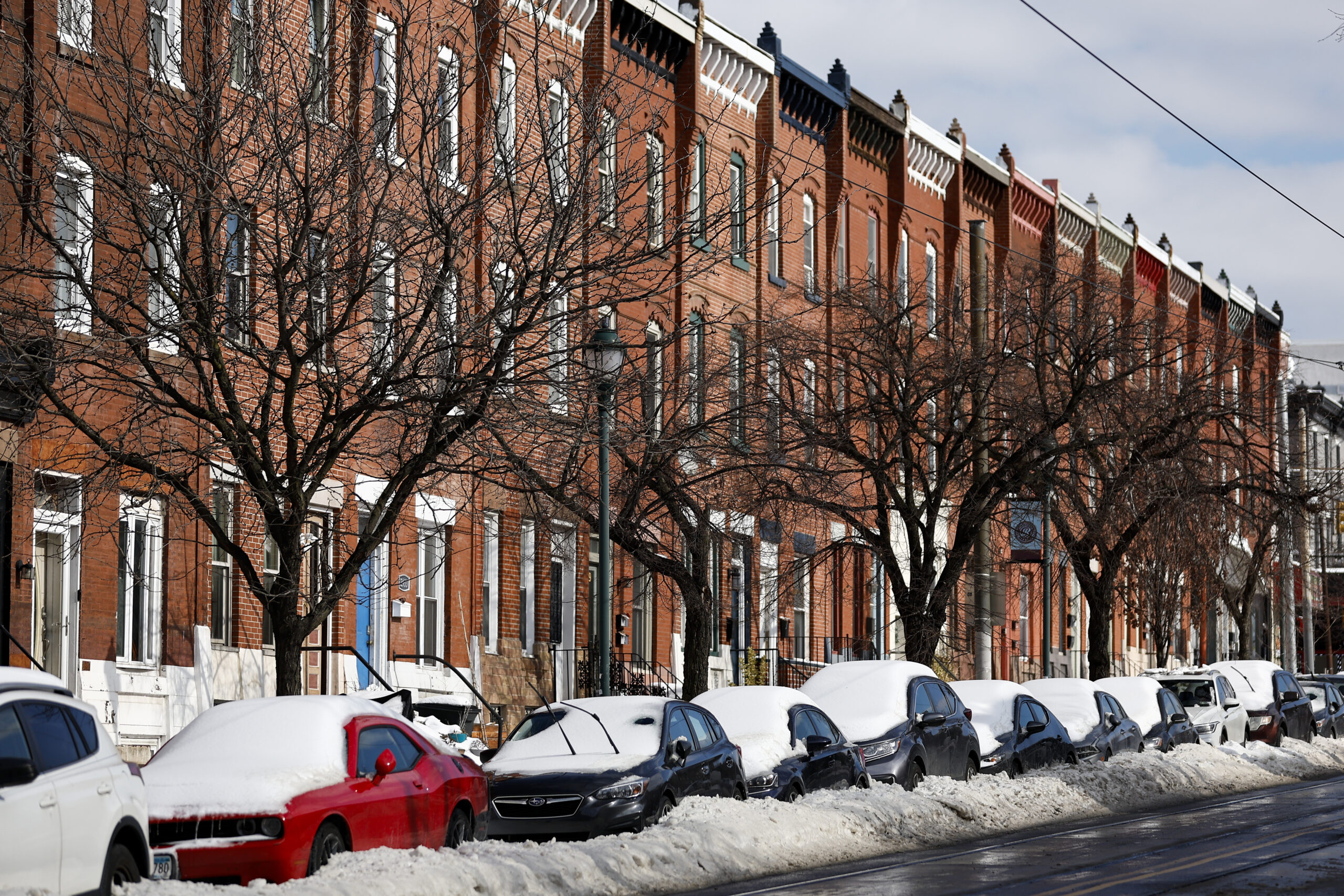
    Snow-covered cars lined Girard Avenue in Brewerytown on Monday.

    As the Philadelphia region shoveled out from the city’s biggest snowfall in a decade, many residents were asking the same question.

    While some shoveled themselves or hired professional snow removal companies with fixed rates, others turned to an ad hoc network of helpers who hawked shoveling services on neighborhood Facebook groups, the Nextdoor app, and the online handyman service TaskRabbit.

    On online forums, strangers agreed to dig out the cars of folks like Bruce, who didn’t have the strength, tools, or time to do so on their own. Others signed up to clear the driveways and sidewalks of older people, for whom shoveling such heavy snow can increase the risk of heart attacks.

    Prices per job vary from $20 to $100 or more. Some freelance shovelers are upfront about their rates, while others defer to what their customers can afford.

    Higher prices now for ‘trying to dig through concrete’

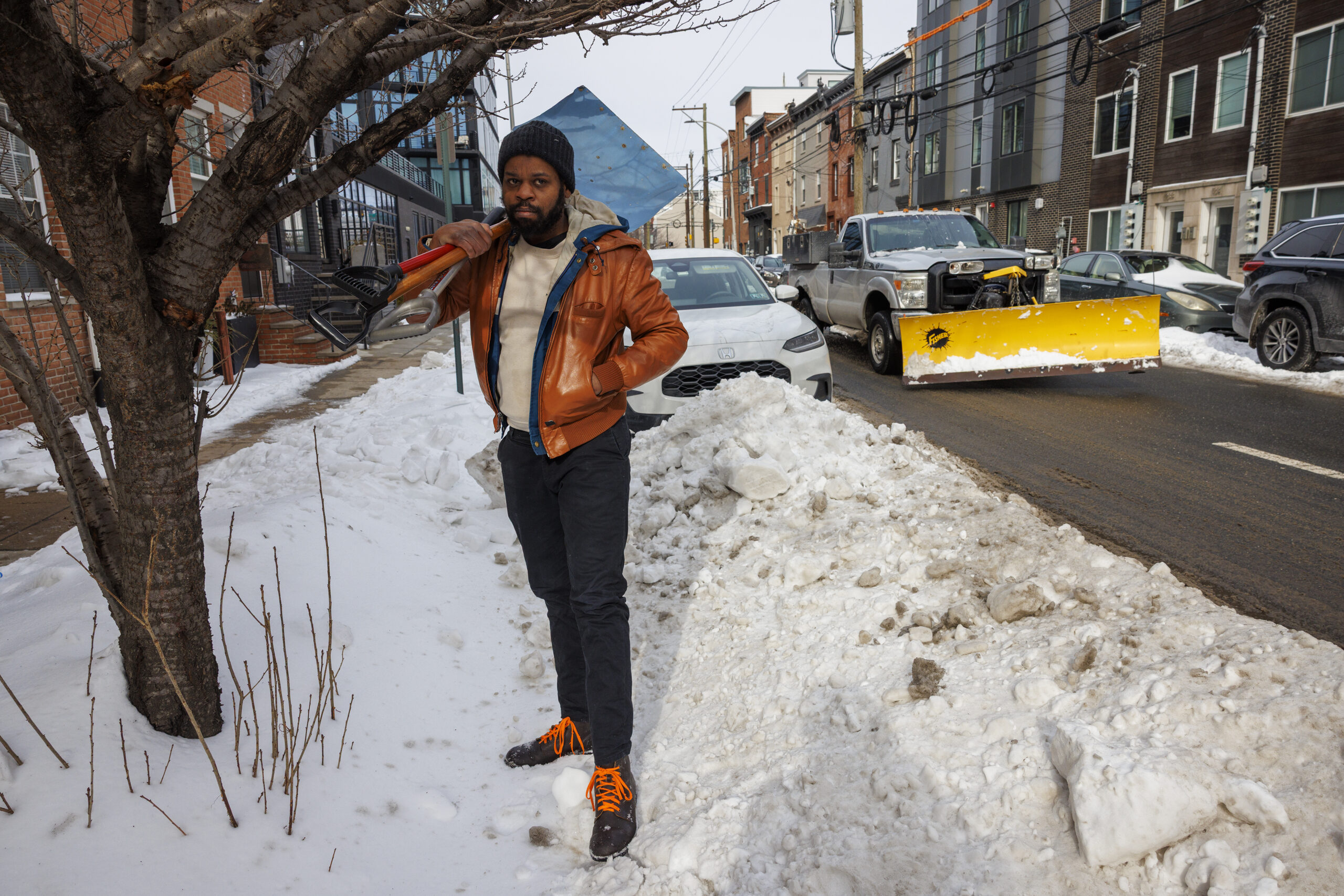
    Alex Wiles stands on North Second Street on Tuesday before taking the bus to another snow-shoveling job.

    On Monday, the day after the storm hit, Alex Wiles, 34, of Fishtown, shoveled out people’s cars, stoops, and walkways for between $30 and $40 per job. As the week went on, he increased his rate to about $50 because the work became more physically demanding.

    “At this point, it feels like trying to dig through concrete,” Wiles said. As of Thursday, he had shoveled for nearly 20 people across the city and broken three shovels trying to break up ice. He said most people tip him an additional $5 to $20.

    “I want it to be an accessible service,” he said, “but I also want to be able to make money doing it and remain competitive with other people,” including teenagers who often shovel for less.

    For Wiles, who works in filmmaking and photography, his shoveling earnings go toward paying rent.

    He said he sees his side hustle as essential service, especially since the city did “a terrible job,” in his opinion, with snow removal.

    “A lot of the city looks like a storm happened 10 minutes ago,” Wiles said Thursday.

    Shoveling is “necessary and people are just otherwise going to be stuck where there are,” he said. “They aren’t going to be able to get to work easily. They aren’t going to be able to walk down the street.”

    Some adults see themselves filling in for ‘the young kids’

    When Max Davis was a kid in Hopewell, N.J., he’d compete with his neighbors to see who could shovel the most driveways during snowstorms.

    Now, the 28-year-old said he seldom sees or hears of kids going door to door when it snows.

    That was part of the reason Davis got off his Northern Liberties couch on Monday and started shoveling out cars for a few neighbors who posted on Facebook that they needed help.

    A snow shoveler on Waverly Street on Monday.

    Davis, a founding executive at an AI startup, said he didn’t need the money, so he accepted however much his neighbors thought was fair. He ended up making about $40 to $50 per car, money he said he’ll likely use for something “frivolous” like a nice dinner out in the city.

    If there is another snowstorm this winter, he said, he’d offer his shoveling services again.

    “Why not?” Davis said. “I’d love to see the young kids get out there and do it. I think they’re missing out.”

    In Broomall, Maggie Shevlin said she has never seen teenagers going door to door with shovels, but some of her neighbors have.

    During this most recent storm, the 31-year-old turned to Facebook to find someone to clear her mother’s driveway and walkway in neighboring Newtown Square. Shevlin connected with a man who showed up at 6:30 a.m. Monday, she said, and did a thorough job for a good price.

    “I figured it would be somewhere around $100. He charged me only $50,” said Shevlin, who works as a nanny and a singer. “Oh my god, [my mom] was so thankful.”

    How a professional company sets snow removal prices

    A snow removal contractor clears the sidewalk in front of an apartment building in Doylestown on Wednesday.

    Some Philadelphia-area residents, especially those with larger properties, use professional snow removal services. They often contract with these companies at the start of the winter, guaranteeing snow removal — at a price — if a certain amount falls.

    In Bristol, Bucks County, CJ Snow Removal charges $65 to $75 to remove two to four inches of snow from driveways, walkways, and sidewalks at a standard single-family home, said co-owner John Miraski.

    The cost increases to $95-$115 for a corner house, he said, and all rates rise about $25 for every additional two inches of snow.

    Last week, he said, several people called him asking for help shoveling out cars, but he was too busy to take on the extra customers. He passed those requests to other companies, he said, and recommended they charge “nothing less than $50 to $60, because you’re dealing with [nearly] a foot of snow plus a block of ice.”

    Miraski said he recommends professionals because they are insured. That’s especially important, he said, in storms that involve sleet or freezing rain, as Philly just experienced.

    “You start throwing ice, who knows where it is going and what it is hitting,” Miraski said.

    Professionals are more expensive, he acknowledged, but often more thorough. “Some of my properties we went back to two or three times to make sure they were cleared.”

    And sometimes, regardless of who shovels, a resident can find themselves unexpectedly stuck in the snow again.

    In Northeast Philadelphia, J’Niyah Brooks paid $50 for a stranger to dig out her car on Sunday night. But when she left for her job as a dialysis technician at 3 a.m. Monday, her car had been plowed in.

    “I was out there kicking snow,” said Brooks, who was eventually able to get to work.

  • In frigid temperatures, service providers work to get Philadelphians out of the cold

    In frigid temperatures, service providers work to get Philadelphians out of the cold

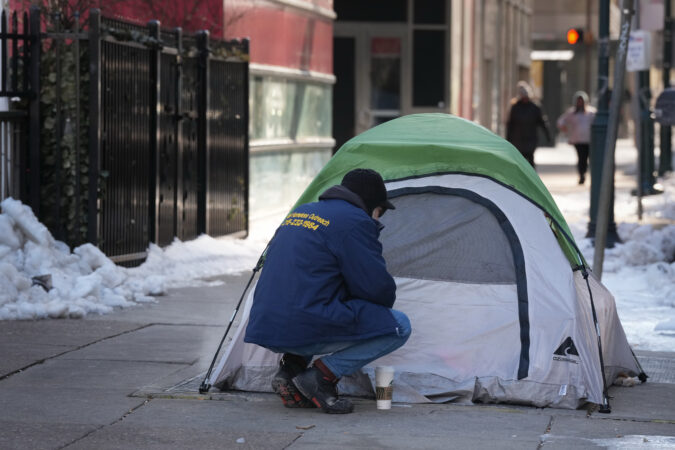
    As Philadelphia endured another day of historically frigid temperatures, outreach workers on Friday fielded hundreds of calls for shelter as warming centers filled with people seeking respite from the cold.

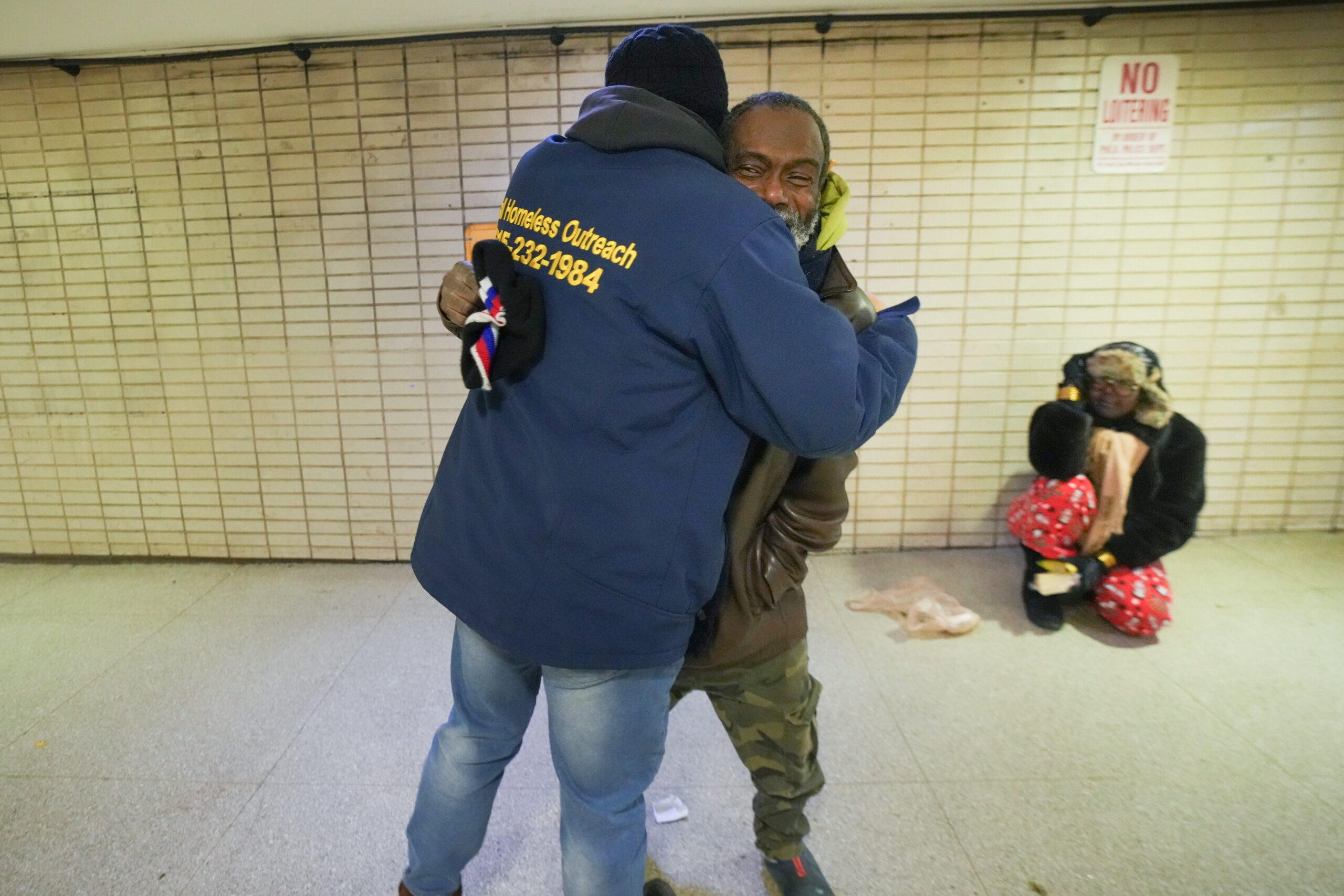
    In the mazelike concourse at Suburban Station, a Project HOME outreach worker hugged clients and encouraged them to head inside.

    At the Hub of Hope, the nonprofit’s drop-in center in the concourse for people experiencing homelessness, dozens lined up for hot meals. Later that night, as they had for the last several days, staff would set up cots for up to 80 people with nowhere else to go.

    Typically, the Hub closes in the early evening. But amid the ongoing freeze, it’s open 24-7 as city officials and homeless services providers work to keep vulnerable Philadelphians safe.

    Last month, the city declared a “Code Blue,” a designation that opens additional shelter beds and other resources. Ever since, the nonprofit’s hotline has fielded more than 6,000 calls, an average of more than 500 a day.

    Normally, it receives about 140 a day.

    “Many calls are concerned citizens who see someone who is homeless and want a team to go and check on them. Some are people who are literally homeless right now and need a place to go. Some are facing eviction and scared, reaching out for their options,” said Candice Player, the nonprofit’s vice president of advocacy, public policy, and street outreach.

    “The extreme cold challenges us and pushes us even harder.”

    City officials navigate a lengthy cold snap

    When the wind chill makes it feel like it’s 20 degrees outside or lower for more than three days, the city can declare what is called an enhanced Code Blue. The distinction opens up further resources, including daytime and nighttime warming centers.

    Cheryl Hill, executive director of the Philadelphia Office of Homeless Services, describes these periods as an all-hands-on-deck situation. Hill said that “every city entity can be outreach” during this time, and that work can also be aided by members of the public, who have been quick to call for help.

    “We are all basically helping our neighbor, in essence — we see them out on the street, we want to help,” Hill said. “As a result, outreach is getting a lot more calls to go and check on those individuals.”

    Philadelphia declared an initial Code Blue on Jan. 18 and an enhanced Code Blue on Jan. 20.

    The city has about 3,500 shelter beds, which can become open as people get placed in longer-term housing.

    If the beds reach capacity, the city has additional overnight spaces at warming centers, primarily in recreation centers. People who spend the day at warming centers that close overnight can receive transportation to a nighttime center.

    People who need a ride to a warming center can ask for transportation at their local police district, city officials said.

    On average, the overnight warming centers have provided shelter to about 300 to 400 people across the city per night. Last Monday night, after 9.3 inches of snow had blanketed Philly, warming centers sheltered just shy of 450 people.

    Last year, peak usage of warming centers hovered around 150 people, Hill said.

    Still, helping the city’s most vulnerable off the streets can be difficult even in the best of circumstances.

    On Friday afternoon, a sign posted at the South Philadelphia Library informed people visiting to get out of the cold that they could eat and sleep in a section designated as a warming center. Librarians and community support groups collect and provide snacks, along with hand-warmers and other essentials, for those who need them.

    Even so, only a handful of people sat in the area. A woman yelped in pain as she rubbed a blackened toe. Children played with blocks in another corner of the library as others checked out books.

    The homeless services office tries to have medical staff at warming sites, but more serious cases get sent to the hospital.

    In extreme cold, as a last resort, people with serious mental illnesses who refuse to come inside and are underdressed could be involuntarily committed.

    Homeless services providers said they are working around the clock to care for clients exhausted by the struggle of simply staying warm.

    “The experience of being homeless in this brutal cold is awful, and the folks who come in are just worn down,” Player said.

    At shelters run by the Bethesda Project, staff are trying to keep residents’ spirits up and encouraging them to stay inside as much as possible, said director of shelter Kharisma Goldston. “One of our guests was doing haircuts last night,” she said. “We try to do a lot so guys don’t feel like they’re trapped inside.”

    Staffers set up additional beds to accommodate more clients, she said.

    “We do our best to set up however many beds we can,” she said. “When it’s this cold, it takes a very short amount of time for hypothermia to set in.”

    Rachel Beilgard, Project HOME’s senior program manager for outreach, said that outreach teams have encountered several people suffering from frostbite who were involuntarily committed. Some, she said, risked limb amputations if they had stayed outside any longer.

    But many people who typically refuse offers for shelter from outreach teams are now accepting help, Beilgard said. “We’ve had a lot of folks this winter who say, ‘Once it starts snowing, come find me,’” she said.

    Tim Neumann works with people experiencing housing instability, in Philadelphia.

    New data show rise in homelessness

    Amid the cold snap, the city released new data from its annual point-in-time count that suggest homelessness rose between 2024 and 2025, even as the New York Times reported homelessness had dropped in several other major cities.

    The count, taken every year at the behest of federal housing officials, happens over one night in January; city workers and volunteers fan out across the city to physically count people sleeping on the street and those in shelters. Federal officials use the count to gauge funding allocations, and city officials look to it to understand the needs on the streets.

    The Jan. 22, 2025, count was also taken during a Code Blue, although temperatures were not as frigid as they were last week. It found that homelessness rose by about 9% between 2024 and 2025, after a 38% jump the year before. In Kensington, the number of homeless, unsheltered people dropped by about 17%.

    The number of people experiencing chronic homelessness rose by 49%. This is a designation tightly defined by the federal government as a homeless person with a disability who lives in a shelter or in a place that is not meant for habitation, and who has been homeless for a full year, or homeless at least four times in the last three years for a total of 12 months.

    The category also includes people who fit these criteria but have entered jail, rehab, or another care facility in the last three months. Most of Philadelphia’s chronically homeless residents were living in emergency shelters.

    City officials and providers said a number of factors likely contributed to the increase.

    People with substance use disorder and mental health issues are vulnerable to becoming chronically homeless, especially in Philadelphia, where a toxic drug supply causes wounds and intense withdrawal that keep many from seeking shelter. But a lack of affordable housing, low wages, job loss, or a major health issue can also put residents at high risk for homelessness, stressed Crystal Yates-Gale, the city’s deputy managing director for health and human services.

    Hill also said that in recent years, Philadelphia has lost bids to receive competitive housing funds from the federal government.

    “We’ve been working really intentionally to make sure that our programs will get funded” in the future, Hill said.

    Yates-Gale also pointed to Mayor Cherelle L. Parker’s December executive order directing city officials to add 1,000 beds to the shelter system by the end of January. As of last week, the city had added 600 winter shelter beds that are crucial during the enhanced Code Blue and will eventually become available year-round, she said.

    Anecdotally, neighborhoods have reported decreases in homelessness since last year, Hill said, although officials will have to wait until February to conduct the count this year.

    The count had originally been set for Wednesday, but the city canceled it due to the cold — and because too many outreach staffers were at work getting people inside.

    Editor’s note: This article has been updated to reflect that library staff and supporters provide people using daytime warming centers with snacks.

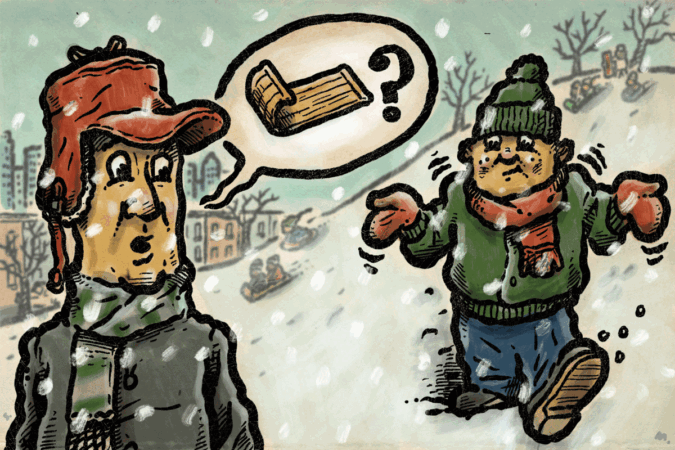
  • Can I take a loose sled from the bottom of the hill?

    Can I take a loose sled from the bottom of the hill?

    I invited two other Inquirer fathers to discuss this submitted question, which is haunting the slight slopes of our region as the snow sticks around.

    Have a question of your own? Or an opinion? Email me.

    Evan Weiss, Deputy Features Editor

    OK, the question is…

    Every time we go sledding, my kids somehow inevitably lose a sled. And every time, there seem to be extra, unclaimed sleds lying around. Is taking one of those stealing (from a child!), or just part of the karmic redistribution of sleds?

    Mike Newall, Life & Culture Reporter

    Nark is a woodsman. He probably whittles sleds while eating tins of premade forest food.

    Jason Nark, Life & Culture Reporter

    Ha. When I think of sledding, as a child, it was rough business. No parents around. There were fights. Blood. Nothing worse than an older kid asking to “borrow” your sled.

    I sled at the same place for years, so I never would have thought of taking a sled.

    Mike Newall

    Same. I’m pretty sure the old wooden sled in my house growing up first appeared in It’s a Wonderful Life. Ancient. Wooden. Rusted. We did the garbage can lid thing too. We sled in an enclosed grassy area adjacent to a belt parkway off-ramp. No parents. Chaos.

    Jason Nark

    Later I moved to a golf-course community (I didn’t want to) that was also one of South Jersey’s biggest sledding destinations. There were lots of sleds left behind after a few days but most were broken.

    I don’t think I would have ever considered taking one, unless it was very nice… then I’d probably post it in a Facebook group to try to find the owner.

    Mike Newall

    I’m a city parent myself now. Every big storm, I inevitably wake up in a panic and think, “Oh no, we don’t have a sled. Where and how shall my boy sled?” So I run to five stores, buy the only sled available, rush him to some grassy lot with an incline, and push him down. Boom. My boy sleds. If the sled makes it home, it’s a bonus.

    Those sleds were left for a reason. Either the kid was crying and hated it. Or the parents left it. Either way, look at it like one of those free library stands, except for sleds.

    Evan Weiss

    But I can’t imagine taking one home. What if, as you’re walking away, a little kid yells, “Hey, that’s my sled!”

    Mike Newall

    I just mean, if there are a few clearly discarded sleds, then use away. Like if there’s an old ball at the playground. Use it!

    We live in a tiny rowhouse. Who wants a $14 plastic sled eating up valuable basement space? I’m not naturally wasteful. But no problem group-sharing sleds. Just use it and leave it.

    Evan Weiss

    So leave it? Don’t take it?

    Jason Nark

    I think so, yeah.

    Mike Newall

    Yeah, that would be plain-old sled-stealing.

    Evan Weiss

    Borrow for the hill, not for the home.

    Mike Newall

    (Unless, it’s a really nice sled that you just have to have. Kidding. Maybe.)

  • With ‘extreme cold’ expected Saturday, one Mummers band has already pulled out of the String Band Spectacular

    With ‘extreme cold’ expected Saturday, one Mummers band has already pulled out of the String Band Spectacular

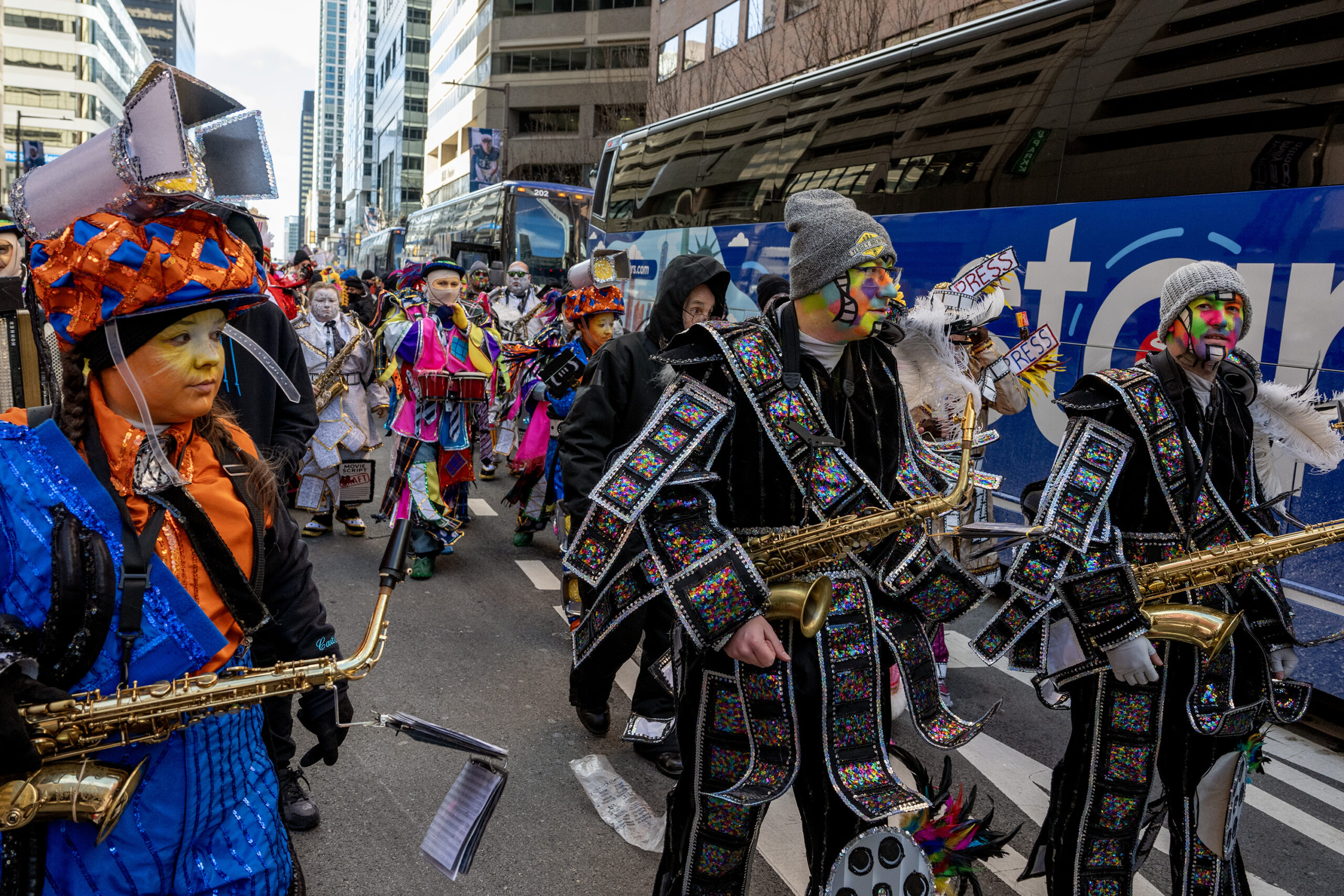
    A month after dangerous winds led Mummers string bands to cancel their New Year’s Day Parade competition, one string band says it’ll be too cold to play a makeup show Saturday.

    “With extreme cold predicted for this weekend, our top priority is the health and safety of our members, and the forecasted conditions may put them at risk,” the Avalon String Band said on Facebook.

    The band was set to join other groups at the 2026 String Band Spectacular at Lincoln Financial Field Saturday afternoon.

    The Philadelphia Mummers String Band Association scheduled the event after the string bands canceled their New Year’s Day performances this year, when high winds destroyed props and sent five people to the hospital.

    Musicians with the Uptown String Band arrive on buses for the Mummers Parade Thursday, Jan. 1, 2026, after the String Band competition was suspended because of high winds that destroyed props and caused injuries during morning setup. The bands still marched and played their music, but did not carry props, and were not judged. The Uptown theme was “From Script to Screen.”

    Saturday a coastal “bomb cyclone” is expected to douse New Jersey and Delaware with snowfall, though forecasting models say Philadelphia won’t get hit. However, stinging winds and Arctic air will push temperatures down to zero Saturday morning, with windchills dipping as low as 10 degrees below 0.

    It’s unclear whether other bands will follow the Avalon String Band’s lead. A total of 14 bands make up the Philadelphia Mummers String Band Association, according to its website.

    Twelve organizations are set to perform Saturday, said Philadelphia Mummers String Band Association President Sam Regalbuto Friday afternoon. He said workers are getting the stages and props ready.

    “Everyone’s on board,” Regalbuto said. “Everyone’s here. We’re good to go.”

    The event will begin a 2 p.m. Saturday with the Philadelphia Gay Men’s Chorus singing the national anthem. The event will be broadcast on WDPN-TV (MeTV2) at 8 p.m. and will be streamed on WFMZ.