Category: Business Wires

  • How Americans are using AI at work, according to a new Gallup poll

    How Americans are using AI at work, according to a new Gallup poll

    American workers adopted artificial intelligence into their work lives at a remarkable pace over the past few years, according to a new poll.

    Some 12% of employed adults say they use AI daily in their job, according to a Gallup Workforce survey conducted this fall of more than 22,000 U.S. workers.

    The survey found roughly one-quarter say they use AI at least frequently, which is defined as at least a few times a week, and nearly half say they use it at least a few times a year. That compares with 21% who were using AI at least occasionally in 2023, when Gallup began asking the question, and points to the impact of the widespread commercial boom that ChatGPT sparked for generative AI tools that can write emails and computer code, summarize long documents, create images, or help answer questions.

    Home Depot store associate Gene Walinski is one of the employees embracing AI at work. The 70-year-old turns to an AI assistant on his personal phone roughly every hour on his shift so he can better answer questions about supplies that he is not “100% familiar with” at the store’s electrical department in New Smyrna Beach, Fla.

    “I think my job would suffer if I couldn’t because there would be a lot of shrugged shoulders and ‘I don’t know’ and customers don’t want to hear that,” Walinski said.

    AI at work for many in technology, finance, education

    While frequent AI use is on the rise with many employees, AI adoption remains higher among those working in technology-related fields.

    About 6 in 10 technology workers say they use AI frequently, and about 3 in 10 do so daily.

    The share of Americans working in the technology sector who say they use AI daily or regularly has grown significantly since 2023, but there are indications that AI adoption could be starting to plateau after an explosive increase between 2024 and 2025.

    In finance, another sector with high AI adoption, 28-year-old investment banker Andrea Tanzi said he uses AI tools every day to synthesize documents and data sets that would otherwise take him several hours to review.

    Tanzi, who works for Bank of America in New York, said he also makes uses of the bank’s internal AI chatbot, Erica, to help with administrative tasks.

    In addition, majorities of those working in professional services, at colleges or universities or in K-12 education, say they use AI at least a few times a year.

    Joyce Hatzidakis, 60, a high school art teacher in Riverside, Calif., started experimenting with AI chatbots to help “clean up” her communications with parents.

    “I can scribble out a note and not worry about what I say and then tell it what tone I want,” she said. “And then, when I reread it, if it’s not quite right, I can have it edited again. I’m definitely getting less parent complaints.”

    Another Gallup Workforce survey from last year found that about 6 in 10 employees using AI are relying on chatbots or virtual assistance when they turn to AI tools. About 4 in 10 AI users at work reported using AI to consolidate information or data, to generate ideas, or to learn new things.

    Hatzidakis started with ChatGPT and then switched to Google’s Gemini when the school district made that its official tool. She has even used it to help with recommendation letters because “there’s only so many ways to say a kid is really creative.”

    Benefits and drawbacks of AI adoption

    The AI industry and the U.S. government are heavily promoting AI adoption in workplaces and schools. More people and organizations will need to buy these tools in order to justify the huge amounts of investment into building and running energy-hungry AI computing systems. But not all economists agree on how much they will boost productivity or affect employment prospects.

    “Most of the workers that are most highly exposed to AI, who are most likely to have it disrupt their workflows, for good or for bad, have these characteristics that make them pretty adaptable,” said Sam Manning, a fellow at the Centre for the Governance of AI and co-author of new papers on AI job effects for the Brookings Institution and the National Bureau of Economic Research.

    Workers in those mostly computer-based jobs that involve a lot of AI usage “usually have higher levels of education, wider ranges of skill sets that can be applied to different jobs, and they also have higher savings, which is helpful for weathering an income shock if you lose your job,” Manning said.

    On the other hand, Manning’s research has identified some 6.1 million workers in the United States who are both heavily exposed to AI and less equipped to adapt. Many are in administrative and clerical work, about 86% are women, and they are older and concentrated in smaller cities, such as university towns or state capitals, with fewer options to shift careers.

    “If their skills are automated, they have less transferable skills to other jobs and they have a lower savings, if any savings,” Manning said. ”An income shock could be much more harmful or difficult to manage.”

    Few workers are concerned about AI replacing them

    A separate Gallup Workforce survey from 2025 found that even as AI use is increasing, few employees said it was “very” or “somewhat” likely that new technology, automation, robots, or AI will eliminate their job within the next five years. Half said it was “not at all likely,” but that has decreased from about 6 in 10 in 2023.

    Not worried about losing his job is the Rev. Michael Bingham, pastor of the Faith Community Methodist Church in Jacksonville, Fla.

    A chatbot fed him “gibberish” when he asked about the medieval theologian Anselm of Canterbury, and Bingham said he would never ask a “soulless” machine to help write his sermons, relying instead on “the power of God” to help guide him through ideas.

    “You don’t want a machine, you want a human being, to hold your hand if you’re dying,” Bingham said. “And you want to know that your loved one was able to hold the hand of a loving human being who cared for them.”

    Reported AI usage is less common in service-based sectors, such as retail, healthcare, or manufacturing.

    Home Depot did not ask Walinski to use AI when he got a job at the store last year, after a decades-long career in the car business. But the home improvement giant also did not try to stop him and he is “not at all worried” that AI will replace him.

    “The human interface part is really what a store like mine works on,” Walinski said. “It’s all about the people.”

  • Iran’s Revolutionary Guard commander warns U.S. his force has its ‘finger on the trigger’

    Iran’s Revolutionary Guard commander warns U.S. his force has its ‘finger on the trigger’

    DUBAI, United Arab Emirates — The commander of Iran’s paramilitary Revolutionary Guard, which was key in putting down recent nationwide protests in a crackdown that left thousands dead, warned that his force is “more ready than ever, finger on the trigger,” as U.S. warships headed toward the Middle East.

    Nournews, a news outlet close to Iran’s Supreme National Security Council, reported on its Telegram channel that the commander, Gen. Mohammad Pakpour, warned the United States and Israel “to avoid any miscalculation.”

    “The Islamic Revolutionary Guard and dear Iran stand more ready than ever, finger on the trigger, to execute the orders and directives of the Commander-in-Chief,” Nournews quoted Pakpour as saying.

    Tension remains high between Iran and the U.S. in the wake of a bloody crackdown on protests that began on Dec. 28, triggered by the collapse of Iran’s currency, the rial, and swept the country for about two weeks.

    Meanwhile, the number of people reported by activists as having been arrested jumped to more than 40,000, as fears grow some could face the death penalty.

    Trump’s warnings

    U.S. President Donald Trump has repeatedly warned Tehran, setting two red lines for the use of military force: the killing of peaceful demonstrators and the mass execution of people arrested in the protests.

    Trump has repeatedly said Iran halted the execution of 800 people detained in the protests. He has not elaborated on the source of the claim, which Iran’s top prosecutor, Mohammad Movahedi, strongly denied Friday in comments carried by the judiciary’s Mizan news agency.

    On Thursday, Trump said aboard Air Force One that the U.S. was moving warships toward Iran “just in case” he wants to take action.

    “We have a massive fleet heading in that direction and maybe we won’t have to use it,” Trump said.

    A U.S. Navy official, who spoke on condition of anonymity to discuss military movements, said Thursday that the aircraft carrier USS Abraham Lincoln and other warships traveling with it were in the Indian Ocean.

    Trump also mentioned the multiple rounds of talks American officials had with Iran over its nuclear program before Israel launched a 12-day war against the Islamic Republic in June, which also saw U.S. warplanes bomb Iranian nuclear sites. He threatened Iran with military action that would make earlier U.S. strikes against Iranian uranium enrichment sites “look like peanuts.”

    Airline jitters

    The tension has led at least two European airlines to suspend some flights to the wider region.

    Air France canceled two return flights from Paris to Dubai over the weekend. The airline said it was “closely following developments in the Middle East in real time and continuously monitors the geopolitical situation in the territories served and overflown by its aircraft in order to ensure the highest level of flight safety and security.” It said it would resume its service to Dubai later Saturday.

    Luxair said it had postponed its Saturday flight from Luxembourg to Dubai by 24 hours “in light of ongoing tensions and insecurity affecting the region’s airspace, and in line with measures taken by several other airlines.”

    It told the AP it was closely monitoring the situation “and a decision on whether the flight will operate tomorrow will be taken based on the ongoing assessment.”

    Arrivals information at Dubai’s international airport also showed the cancellation of Saturday flights from Amsterdam by Dutch carriers KLM and Transavia. The airlines did not immediately respond to requests for comment.

    Some KLM flights to Tel Aviv in Israel were also canceled on Friday and Saturday, according to online flight trackers.

    Rising death toll and arrests

    Although there have been no further demonstrations in Iran for days, the death toll reported by activists has continued to rise as information trickles out despite the most comprehensive internet blackout in Iran’s history, which has now lasted more than two weeks.

    The U.S.-based Human Rights Activists News Agency on Saturday put the death toll at 5,200, with the number expected to increase. The group’s figures have been accurate in previous unrest and rely on a network of activists in Iran to verify deaths. That death toll exceeds that of any other round of protest or unrest there in decades, and recalls the chaos surrounding Iran’s 1979 Islamic Revolution.

    Iran’s government offered its first death toll on Wednesday, saying 3,117 people were killed. It said 2,427 were civilians and security forces, and labeled the rest as “terrorists.” In the past, Iran’s theocracy has undercounted or not reported fatalities from unrest.

    The activist agency on Saturday also increased the total number of people arrested to 40,879 — a significant jump from the more than 27,700 people in its previous update.

    There have been fears Iran could apply the death penalty to arrested protesters, as it has done in the past.

    Iranian judiciary officials have called some of those being held “mohareb” — or “enemies of God” — a charge that carries the death penalty. It had been used along with other charges to carry out mass executions in 1988 that reportedly killed at least 5,000 people.

    At a U.N. Human Rights Council special session on Iran held in Geneva Friday, Volker Türk, the U.N.’s high commissioner for human rights, expressed concern over “contradictory statements from the Iranian authorities about whether those detained in connection with the protests may be executed.”

    He said Iran “remains among the top executioner states in the world,” with at least 1,500 people reportedly executed last year — a 50% increase over 2024.

  • Trump threatens Canada with 100% tariffs over its new trade deal with China

    Trump threatens Canada with 100% tariffs over its new trade deal with China

    WASHINGTON — President Donald Trump on Saturday threatened to impose a 100% tariff on goods imported from Canada if America’s northern neighbor went ahead with its China trade deal, intensifying a feud with Prime Minister Mark Carney, a rising voice in the West’s pushback to Trump’s new world order.

    Trump said in a social media post that if Carney “thinks he is going to make Canada a ‘Drop Off Port’ for China to send goods and products into the United States, he is sorely mistaken.”

    While Trump has waged a trade war over the past year, Canada this month negotiated a deal to lower tariffs on Chinese electric vehicles in return for lower import taxes on Canadian farm products.

    Trump initially had said that agreement was what Carney “should be doing and it’s a good thing for him to sign a trade deal.”

    Carney’s office did not immediately respond to a request for comment.

    Trump’s threat came amid an escalating war of words with Carney as the Republican president’s push to acquire Greenland strained the NATO alliance. Trump had commented while in Davos, Switzerland, this week that “Canada lives because of the United States.” Carney shot back that his nation can be an example that the world does not have to bend toward autocratic tendencies. “Canada doesn’t live because of the United States. Canada thrives because we are Canadian,” he said.

    Trump later revoked his invitation to Carney to join the president’s “Board of Peace” that he is forming to try to resolve global conflicts.

    Trump’s push to acquire Greenland has come after he has repeatedly needled Canada over its sovereignty and suggested it also be absorbed the United States as a 51st state. He posted an altered image on social media this week showing a map of the United States that included Canada, Venezuela, Greenland, and Cuba as part of its territory.

    In his message Saturday, Trump continued his provocations by calling Canada’s leader “Governor Carney.” Trump had used the same nickname for Carney’s predecessor, Justin Trudeau, and his first use of it toward Carney was the latest mark of their soured relationship.

    Carney has emerged as a leader of a movement for countries to find ways to link up and counter the U.S. under Trump. Speaking in Davos before Trump, Carney said, “Middle powers must act together because if you are not at the table, you are on the menu” and he warned about coercion by great powers — without mentioning Trump’s name. The prime minister received widespread praise and attention for his remarks, upstaging Trump at the World Economic Forum.

    The prime minister even spoke of a “rupture” between the U.S. under Trump and its Western allies that would never be repaired.

    Trump, in his Truth Social post Saturday, also said that “China will eat Canada alive, completely devour it, including the destruction of their businesses, social fabric, and general way of life.”

    Carney has not yet reached a deal with Trump to reduce some of the tariffs that he has imposed on key sectors of the Canadian economy. But Canada has been protected from the heaviest impact of Trump’s tariffs by the Canada-U.S.-Mexico Agreement. That trade agreement is up for a review this year.

    In the fall, the Canadian province of Ontario aired an anti-tariff ad in the U.S. that prompted Trump to end trade talks with Canada. The television ad used the words of former President Ronald Reagan to criticize U.S. tariffs. Trump pledged to increase tariffs on imports of Canadian goods by an extra 10%. He did not follow through.

    As for China, Canada had initially mirrored the United States by putting a 100% tariff on electric vehicles from Beijing and a 25% tariff on steel and aluminum. China had responded by imposing 100% import taxes on Canadian canola oil and meal and 25% on pork and seafood.

    But as Trump pursued pressure tactics, Canada’s foreign policy has been less aligned with the U.S., creating an opening for an improved relationship with China. Carney made the tariff announcement earlier this month during a visit to Beijing.

    “The China trade deal is quite limited as is the U.S. deal with China on (semiconductor) chips. The China deal may grow, however. I expect Chinese interest in funding a pipeline to northern British Columbia,” said Nelson Wiseman, professor emeritus of political science at the University of Toronto.

    Carney has said that Canada’s relationship with the U.S. is complex and deeper and that Canada and China disagree on issues such as human rights.

    Canada is the top export destination for 36 U.S. states. Nearly $3.6 billion Canadian (US $2.7 billion) worth of goods and services cross the border each day. About 60% of U.S. crude oil imports are from Canada, as are 85% of U.S. electricity imports.

    Canada is also the largest foreign supplier of steel, aluminum, and uranium to the U.S. and has 34 critical minerals and metals that the Pentagon is eager for and investing in for national security.

  • TikTok finalizes a deal to form a new American entity

    TikTok finalizes a deal to form a new American entity

    TikTok has finalized a deal to create a new American entity, avoiding the looming threat of a ban in the United States that has been in discussion for years on the platform now used by more than 200 million Americans.

    The social video platform company signed agreements with major investors including Oracle, Silver Lake, and the Emirati investment firm MGX to form the new TikTok U.S. joint venture. The new version will operate under “defined safeguards that protect national security through comprehensive data protections, algorithm security, content moderation and software assurances for U.S. users,” the company said in a statement Thursday. American TikTok users can continue using the same app.

    President Donald Trump praised the deal in a Truth Social post, thanking Chinese leader Xi Jinping specifically “for working with us and, ultimately, approving the Deal.” Trump add that he hopes “that long into the future I will be remembered by those who use and love TikTok.”

    Adam Presser, who previously worked as TikTok’s head of operations and trust and safety, will lead the new venture as its CEO. He will work alongside a seven-member, majority-American board of directors that includes TikTok’s CEO Shou Chew.

    The deal ends years of uncertainty about the fate of the popular video-sharing platform in the United States. After wide bipartisan majorities in Congress passed — and President Joe Biden signed — a law that would ban TikTok in the U.S. if it did not find a new owner in the place of China’s ByteDance, the platform was set to go dark on the law’s January 2025 deadline. For a several hours, it did. But on his first day in office, President Donald Trump signed an executive order to keep it running while his administration sought an agreement for the sale of the company.

    “China’s position on TikTok has been consistent and clear,” Guo Jiakun, a Chinese Foreign Ministry spokesperson in Beijing, said Friday about the TikTok deal and Trump’s Truth Social post, echoing an earlier statement from the Chinese embassy in Washington.

    Apart from an emphasis on data protection, with U.S. user data being stored locally in a system run by Oracle, the joint venture will also focus on TikTok’s algorithm. The content recommendation formula, which feeds users specific videos tailored to their preferences and interests, will be retrained, tested and updated on U.S. user data, the company said in its announcement.

    The algorithm has been a central issue in the security debate over TikTok. China previously maintained the algorithm must remain under Chinese control by law. But the U.S. regulation passed with bipartisan support said any divestment of TikTok must mean the platform cuts ties — specifically the algorithm — with ByteDance. Under the terms of this deal, ByteDance would license the algorithm to the U.S. entity for retraining.

    The law prohibits “any cooperation with respect to the operation of a content recommendation algorithm” between ByteDance and a new potential American ownership group, so it is unclear how ByteDance’s continued involvement in this arrangement will play out.

    “Who controls TikTok in the U.S. has a lot of sway over what Americans see on the app,” said Anupam Chander, a professor of law and technology at Georgetown University.

    Oracle, Silver Lake, and MGX are the three managing investors, each holding a 15% share. Other investors include the investment firm of Michael Dell, the billionaire founder of Dell Technologies. ByteDance retains 19.9% of the joint venture.

  • Iconic Coney Island hot dog hawker Nathan’s Famous is sold for $450 million

    Iconic Coney Island hot dog hawker Nathan’s Famous is sold for $450 million

    Nathan’s Famous, which opened as a 5-cent hot dog stand in Coney Island more than a century ago, has been sold to packaged meat giant Smithfield Foods in an all-cash $450 million deal, the companies announced Wednesday.

    Smithfield, which has held rights to produce and sell Nathan’s products in the U.S. and Canada and at Sam’s Clubs in Mexico since 2014, will acquire all of Nathan’s outstanding shares for $102 each.

    Like almost every food company, Nathan’s has been under significant inflationary pressure. Nathan’s sales costs of branded products rose 27% compared with last year in its most recent quarter, the company said in a filing with the U.S. Securities and Exchange Commission. There was a 20% increase in the average cost per pound of hot dogs, it said.

    Nathan Handwerker opened the first Nathan’s hot dog stand on Coney Island in 1916 with a $300 loan, according to the company. After opening a handful of other locations around New York over the years, the Handwerker family sold the Nathan’s Famous business to investors in 1987. The franchise has continued to expand.

    Nathan’s has an outsized cultural presence in the U.S. both because of its history and the famous, or infamous, hot dog-eating contest held at its flagship Coney Island shop, where contestants from around the world gather every July 4 to see who can down the most hot dogs in 10 minutes.

    The restaurant sits on the same lot where Handwerker opened his first hot dog stand.

    American Joey Chestnut is the reigning Nathan’s hot dog-eating champion after eating 70.5 hot dogs and buns last year. Chestnut has won 17 of the last 19 events, setting a record in 2021 after wolfing down 76 hot dogs and buns.

    While the first recorded hot dog-eating contest was held in 1972, Nathan’s says informal contests began the year the stand opened early in the 20th century. It says the 2025 contest was its 103rd.

    Smithfield said Wednesday that the event, which has been televised on ESPN with a crowd estimated at 30,000 at Coney Island each year, will continue.

    Smithfield said it expects to achieve annual savings of about $9 million within two years of closing the deal.

    “As a long-time partner, Smithfield has demonstrated an outstanding commitment to investing in and growing our brand while maintaining the utmost quality and customer service standards,” said Nathan’s CEO Eric Gatoff.

    Nathan’s board of directors, which own or control nearly 30% of the outstanding shares of Nathan’s Famous common stock, approved the buyout and agreed to recommend to its shareholders to vote in favor of the deal.

    Smithfield, which also owns the Gwaltney bacon and Armour frozen meat brands, rang up more than a billion dollars in operating profit in 2024 on sales of $14.1 billion.

    Smithfield shares closed down 1.1% Wednesday.

    In fiscal 2025, Nathan’s reported profit of $24 million on revenue approaching $150 million. Its acquisition is expected to close in the first half of this year.

  • Trump pushes for lower rates and ban on investor home purchases in bid to make homes more affordable

    Trump pushes for lower rates and ban on investor home purchases in bid to make homes more affordable

    President Donald Trump‘s plans for bringing homeownership within reach of more Americans involve pushing for lower interest rates on home loans and credit cards, and banning large institutional investors from buying single-family homes.

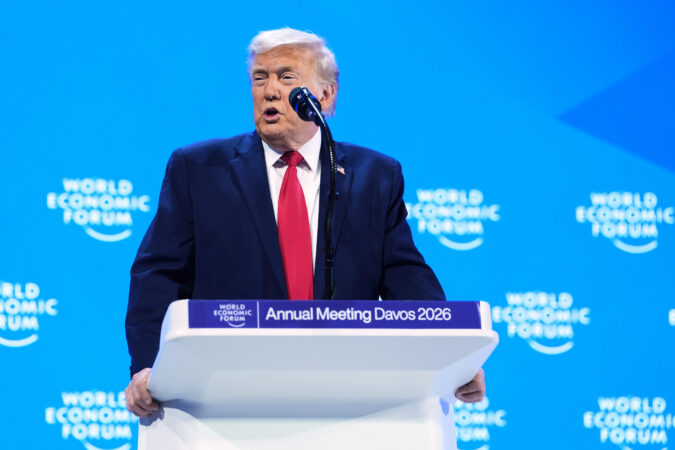
    In his address Wednesday at the World Economic Forum in Davos, Switzerland, Trump outlined four policies his administration is pursuing in a bid to make homeownership more affordable. Each had been previously mentioned by him or his administration in recent weeks, part of a broader push to address affordability generally, a hot-button issue with voters heading into the midterms.

    The U.S. housing market has been in a sales slump dating back to 2022, when mortgage rates began to climb from pandemic-era lows. The combination of higher mortgage rates, years of skyrocketing home prices and a chronic shortage of homes nationally following more than a decade of below-average home construction have left many aspiring homeowners priced out of the market. Sales of previously occupied U.S. homes remained stuck last year at 30-year lows.

    In his remarks, Trump stressed the need to lower interest rates on home loans and credit cards in order to give aspiring homebuyers more financial flexibility to save up for a down payment on a home and more purchasing power when it comes time to buy.

    “We can drop interest rates to a level, and that’s one thing we do want to do,” said Trump. “That’s natural. That’s good for everybody. You know, the dropping of the interest rate, we should be paying a much lower interest than we are.”

    Trump noted that he has directed the federal government to buy $200 billion in mortgage bonds, a move he said would help reduce mortgage rates. Trump said earlier this month that Fannie Mae and Freddie Mac have $200 billion in cash that would be used to buy mortgage bonds. However, some economists have said such a move would likely have only a minimal impact on mortgage rates.

    Trump, who spent much of last year demanding that the Federal Reserve lower interest rates, also reiterated that he will be announcing a new Fed chair soon to replace Jerome Powell, whose term as chair is due to end in May.

    “I think they’ll do a very good job,” he said.

    Still, Fed rate cuts don’t always translate into lower mortgage rates. That’s what happened in the fall of 2024 after the central bank cut its main rate for the first time in more than four years. Instead of falling, mortgage rates marched higher, eventually cresting above 7% in January this year. At that time, the 10-year Treasury yield was climbing toward 5%.

    More recently, the average rate on a 30-year mortgage was at 6.06% last week, its lowest level in more than three years, according to mortgage buyer Freddie Mac.

    While lower mortgage rates help boost homebuyers’ purchasing power, the biggest hurdle many aspiring homeowners face is being able to save up for a down payment.

    To that end, Trump said he is asking Congress for legislation that would mandate credit card issuers cap interest rates at 10% for one year — after the industry ignored his demand earlier this month that they implement the cap by Jan. 20. The average rate on credit cards is around 21%, according to the Federal Reserve Bank of New York.

    Trump also reiterated that he wants to block large institutional investors from buying single-family homes, so that Americans don’t have to compete with such well-funded rivals when they shop for a home.

    “Homes are built for people, not for corporations, and America will not become a nation of renters,” he said.

    While touting his plans to open up the housing market to more Americans, Trump stressed that he didn’t want to take any actions that would tip the housing market too far in favor of buyers at the expense of millions of homeowners who have benefited from strong home equity gains.

    “Every time you make it more and more and more affordable for somebody to buy a house cheaply, you’re actually hurting the value of those houses, obviously, because the one thing works in tandem with the other,” he said, adding: “Now, if I want to really crush the housing market, I could do that so fast that people could buy houses, but you would destroy a lot of people that already have houses.”

    Trump didn’t specify which policies would cause that to happen.

    Trump issued an executive order late Tuesday directing his administration to review the laws that govern how big institutional investors make large purchases of single-family homes and determine whether such investors are engaging in anti-competitive practices.

    The order, which exempts companies that build homes for rent, also includes provisions to give ordinary home shoppers the opportunity to buy foreclosed homes before investors do and bars government housing agencies from guaranteeing, insuring, or otherwise facilitating large institutional investors from buying single-family homes.

    Still, it’s unclear how the administration will define a large investor. And while some metro areas, like Atlanta and Phoenix, have a larger share of corporate-owned single-family homes for rent, the vast majority of rental houses are owned by small individual investors, which wouldn’t be barred from buying more homes.

    “It probably won’t make a noticeable impact on the housing market,” said Daryl Fairweather, chief economist at Redfin.

    Trump was expected to give more details about his housing policy in the speech, but devoted most of it to other subjects. Kevin Hassett, director of Trump’s National Economic Council, told Bloomberg that Trump was just “foreshadowing” an upcoming policy announcement. The White House is reportedly considering a new way for Americans with a 401(k) retirement savings plan to fund the down payment on a home, among other policies.

  • Trump cancels tariff threat over Greenland, says NATO agreed to ‘framework’ of future Arctic deal

    Trump cancels tariff threat over Greenland, says NATO agreed to ‘framework’ of future Arctic deal

    DAVOS, Switzerland — DAVOS, Switzerland — President Donald Trump on Wednesday scrapped the tariffs that he threatened to impose on eight European nations to press for U.S. control over Greenland, pulling a dramatic reversal shortly after insisting he wanted to get the island “including right, title and ownership.”

    In a post on his social media site, Trump said he had agreed with the head of NATO on a “framework of a future deal” on Arctic security, potentially defusing tension that had far-reaching geopolitical implications.

    He said “additional discussions” on Greenland were being held concerning the Golden Dome missile defense program, a multilayered, $175 billion system that for the first time will put U.S. weapons in space.

    Trump offered few details, saying they were still being worked out. But one idea NATO members have discussed as part of a compromise with Trump was that Denmark and the alliance would work with the U.S. to build more U.S. military bases on Greenland.

    That’s according to a European official familiar with the matter but not authorized to comment publicly. The official, who spoke on condition of anonymity, said it was not immediately clear if that idea was included in the framework Trump announced.

    Trump has backed off tariffs before

    The president has threatened tariffs before only to back away. In April, after first saying he would slap massive import levies on nations from around the world, which prompted a sharp negative market reaction, Trump eased off.

    But his change of heart this time came only after he used his speech at the World Economic Forum in the Swiss Alps to focus on Greenland and threatened to upend NATO, an alliance that has been among the globe’s most unshakable since the early days of the Cold War.

    In his address, Trump said he was asking for territory that was “cold and poorly located” and that the U.S. had effectively saved Europe during World War II while declaring of NATO: “It’s a very small ask compared to what we have given them for many, many decades.”

    “We probably won’t get anything unless I decide to use excessive strength and force, where we would be frankly unstoppable. But I won’t do that, OK?” Trump said.

    But Trump has also said repeatedly that, while the U.S. will defend NATO, he wasn’t convinced the alliance will backup Washington, if needed, and suggested that was at least part of the reason for his aggressive stance toward Greenland. That prompted NATO Secretary General Mark Rutte, in a post-speech event with Trump, to say that the alliance would stand with the U.S. if it is attacked.

    “You can be assured, absolutely,” Rutte said. A short time later came Trump’s post canceling the tariffs.

    Danish Foreign Minister Lars Løkke Rasmussen said he welcomed Trump ruling out taking “Greenland by force” and pausing ”the trade war with Europe.”

    “Now, let’s sit down and find out how we can address the American security concerns in the Arctic while respecting the red lines of the Kingdom of Denmark,” he said in a statement.

    President cites national security

    Trump argues that the U.S. needs Greenland for national security and to counter threats from Russia and China in the Arctic region, despite America already having a large military base there. He threatened to impose steep U.S. import taxes on Denmark and seven other allies unless they negotiate a transfer of the semi-autonomous territory.

    The tariffs were to have started at 10% next month and climb to 25% in June.

    Trump often tries to increase pressure on the other side when he believes it can lead to a favorable agreement. His threats at Davos appeared on the verge of rupturing NATO, which was founded by leading European nations, the U.S. and Canada to counter the Soviet Union.

    The alliance’s other members were steadfast in saying Greenland is not for sale and cannot be wrested from Denmark, while angrily rejecting Trump’s promised tariffs.

    A Danish government official told The Associated Press after Trump’s speech that Copenhagen was ready to discuss U.S. security concerns. But the official, who was not authorized to comment publicly and spoke on condition of anonymity, underscored the government’s position that “red lines”— namely Denmark’s sovereignty — must be respected.

    It was not immediately clear how Trump’s canceling of tariffs might change such calculations.

    Greenland tells citizens to prepare

    In the meantime, Greenland’s government responded by telling its citizens to be prepared. It has published a handbook in English and Greenlandic on what to do in a crisis that urges residents to ensure they have sufficient food, water, fuel and supplies at home to survive for five days.

    “We just went to the grocery store and bought the supplies,” said Tony Jakobsen in Greenland’s capital Nuuk said, showing off the contents of bags that included candles, snacks and toilet paper.

    Jakobsen said he thought Trump’s rhetoric toward Greenland was “just threats… but it’s better to be ready than not ready.”

    Before backing down, Trump had urged Denmark and the rest of NATO to stand aside, adding an ominous warning.

    “We want a piece of ice for world protection, and they won’t give it,” Trump said. “You can say yes, and we will be very appreciative. Or you can say no, and we will remember.”

    He also called for opening “immediate negotiations” for the U.S. to acquire Greenland. In subsequent comments to reporters, he declined to name a price that might be paid, saying only, “There’s a bigger price, and that’s the price of safety and security and national security and international security.”

    His arrival in Davos was delayed after a minor electrical problem on Air Force One forced a return to Washington to switch aircraft. As Trump’s motorcade headed down a narrow road to the speech site, onlookers — including some skiers — lined the route, some making obscene gestures.

    Financial markets that had fallen sharply on Trump’s threatened tariffs bounced back Wednesday. Also breathing a sigh of relief were a number of U.S. officials who had also been concerned that Trump’s hard-line stance and bellicose rhetoric toward Greenland, Denmark and other NATO allies could harm other foreign policy goals.

    Trump’s Davos speech was originally supposed to focus on how to lower U.S. housing prices — part of a larger effort to bring down the cost of living. Greenland instead carried the day, though Trump mistakenly referred to it as Iceland four times during his speech.

    “This enormous unsecured island is actually part of North America,” Trump said. “That’s our territory.”

    When he finally did mention housing, Trump suggested he did not support a measure to encourage affordability. He said bringing down rising home prices hurts property values and makes homeowners who once felt wealthy because of the equity in their houses feel poorer.

    ‘Now there’s another threat’

    Before Trump announced that he was abandoning the tariffs and potentially easing international pressure, his speech left people in Nuuk preparing for the worst.

    Resident Johnny Hedemann said it was “insulting” that Trump “talks about the Greenlandic people and the Greenlandic nation as just an ice cube.” He spoke while heading out to buy a camping stove and instant mashed potatoes.

    “Living in this nature, you have to be prepared for almost anything. And now there’s another threat — and that’s Trump,” Hedemann said.

  • Iranian state TV issues first official death toll from recent protests, saying 3,117 were killed

    Iranian state TV issues first official death toll from recent protests, saying 3,117 were killed

    DUBAI, United Arab Emirates — Iranian state TV on Wednesday issued the first official death toll from recent protests, saying 3,117 people were killed, while the foreign minister issued the most direct threat yet against the United States after Tehran’s bloody crackdown, warning the Islamic Republic will be “firing back with everything we have if we come under renewed attack.”

    State television carried statements by the Interior Ministry and the Martyrs Foundation, an official body providing services to families of those killed in wars, stating the toll and saying 2,427 of the dead in the demonstrations that began Dec. 28 were civilians and security forces. It did not elaborate on the rest.

    The U.S.-based Human Rights Activists News Agency said the death toll was at least 4,560. The agency has been accurate throughout the years on demonstrations and unrest in Iran, relying on a network of activists inside the country that confirms all reported fatalities. The Associated Press has been unable to independently assess the death toll.

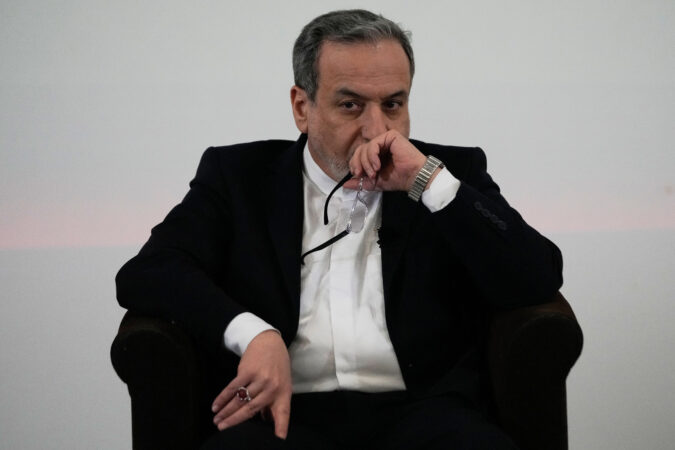
    The comments by Foreign Minister Abbas Araghchi, who saw his invitation to the World Economic Forum in Davos rescinded over the killings, came as a U.S. aircraft carrier group moved west toward the Middle East from Asia. U.S. fighter jets and other equipment appeared to be moving in the Mideast after a major U.S. military deployment in the Caribbean saw troops seize Venezuela’s Nicolás Maduro.

    Araghchi makes threat in column

    Araghchi made the threat in an opinion article published by The Wall Street Journal. The foreign minister contended “the violent phase of the unrest lasted less than 72 hours” and sought again to blame armed demonstrators for the violence. Videos that made it out of Iran despite an internet shutdown appear to show security forces repeatedly using live fire to target apparently unarmed protesters, something unaddressed by Araghchi.

    “Unlike the restraint Iran showed in June 2025, our powerful armed forces have no qualms about firing back with everything we have if we come under renewed attack,” Araghchi wrote, referring to the 12-day war launched by Israel on Iran in June. “This isn’t a threat, but a reality I feel I need to convey explicitly, because as a diplomat and a veteran, I abhor war.”

    He added: “An all-out confrontation will certainly be ferocious and drag on far, far longer than the fantasy timelines that Israel and its proxies are trying to peddle to the White House. It will certainly engulf the wider region and have an impact on ordinary people around the globe.”

    Araghchi’s comments likely refer to Iran’s short- and medium-range missiles. The Islamic Republic relied on ballistic missiles to target Israel in the war and left its stockpile of the shorter-range missiles unused, something that could be fired to target U.S. bases and interests in the Persian Gulf. Already, there have been some restrictions on U.S. diplomats traveling to bases in Kuwait and Qatar.

    Mideast nations, particularly diplomats from Gulf Arab countries, had lobbied U.S. President Donald Trump not to attack Iran after he threatened to act in response to the killing of demonstrators. Last week, Iran shut its airspace, likely in anticipation of a strike.

    The USS Abraham Lincoln, which had been in the South China Sea in recent days, had passed through the Strait of Malacca, a key waterway connecting the sea and Indian Ocean, by Tuesday, ship-tracking data showed.

    A U.S. Navy official, speaking on condition of anonymity, said the aircraft carrier and three accompanying destroyers were heading west.

    While naval and other defense officials stopped short of saying the carrier strike group was headed to the Middle East, its current heading and location in the Indian Ocean means it is only days away from moving into the region. Meanwhile, U.S. military images released in recent days showed F-15E Strike Eagles arriving in the Mideast and forces in the region moving a HIMARS missile system, the type used with great success by Ukraine after Russia’s full-scale invasion in the country in 2022.

    Protest death toll rises

    The death toll exceeds that of any other round of protest or unrest in Iran in decades, and recalls the chaos surrounding the 1979 revolution that brought the Islamic Republic into being. Although there have been no protests for days, there are fears the toll could increase significantly as information gradually emerges from a country still under a government-imposed shutdown of the internet since Jan. 8.

    The first indication from authorities of the extent of casualties came Saturday from Iran’s Supreme Leader Ayatollah Ali Khamenei, who said the protests had left “several thousand” people dead and blamed the United States. The protests began over economic pressures but quickly broadened to take on the theocracy.

    The Interior Ministry statement Wednesday asserted that “terrorists used live ammunition that led to the deaths of 2,427 people and security forces.”

    The Martyrs Foundation said Iran would pursue what it called “terrorists” who it claimed were tied to Israel and “supported, equipped and armed” by the U.S.

    Nearly 26,500 people have been arrested, according to the Human Rights Activists News Agency. Comments from officials have led to fears of some of those detained being put to death in Iran, one of the world’s top executioners.

    That and the killing of peaceful protesters have been two red lines laid down by Trump in the tensions.

    Kurdish exiles claim Iranian attack in Iraq

    The National Army of Kurdistan, the armed wing of the Kurdistan Freedom Party, or PAK, claimed Iran launched an attack against one of its bases near Irbil, some 200 miles north of Baghdad. It said one fighter had been killed, and released mobile phone footage of a fire in the predawn darkness.

    Iran did not immediately acknowledge the attack, which would be the first foreign operation Tehran has launched since the protests started.

    A handful of Iranian Kurdish dissident or separatist groups — some with armed wings — have long found a safe haven in northern Iraq’s semiautonomous Kurdish region, where their presence has been a point of friction between the central government in Baghdad and Tehran. The PAK has claimed it launched attacks in Iran as a crackdown on the demonstrations took place, something reported by semiofficial Iranian news agencies as well.

  • Trump in Davos says NATO should allow the U.S. to take Greenland but he won’t use force

    Trump in Davos says NATO should allow the U.S. to take Greenland but he won’t use force

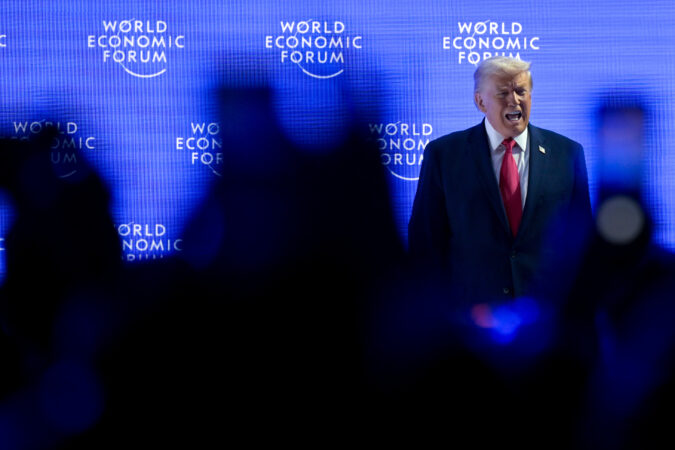
    DAVOS, Switzerland — President Donald Trump insisted Wednesday that he wants to “get Greenland, including right, title and ownership,” but said he would not use force to do so while repeatedly deriding European allies and vowing that NATO should not try to block U.S. expansionism.

    In an extraordinary speech at the World Economic Forum, the president said he was asking for territory that was “cold and poorly located.” He said the U.S. had effectively saved Europe during World War II and even declared of NATO: “It’s a very small ask compared to what we have given them for many, many decades.”

    The implications of his remarks were nonetheless enormous, potentially rupturing an alliance that has held firm since the dawn of the Cold War and seemed among the globe’s most unshakable pacts.

    NATO was founded by leading European nations, the U.S. and Canada. Its other members have been steadfast in saying Greenland is not for sale and cannot be wrested from Denmark. That means the Davos meeting could be just the beginning of a larger standoff that may eventually reshape geopolitics worldwide.

    A Danish government official told The Associated Press after Trump’s speech that Copenhagen is ready to discuss U.S. security concerns in the Arctic. But the official, who was not authorized to comment publicly and spoke on condition of anonymity, underscored the government’s position that “red lines”— namely Denmark’s sovereignty — must be respected.

    Trump urged Denmark and the rest of NATO to stand aside, adding an ominous warning.

    “We want a piece of ice for world protection, and they won’t give it,” Trump said. “You can say yes, and we will be very appreciative. Or you can say no, and we will remember.”

    Despite that, he also acknowledged: “We probably won’t get anything unless I decide to use excessive strength and force where we would be frankly unstoppable. But I won’t do that, OK?”

    “I don’t have to use force,” he said. “I don’t want to use force. I won’t use force.”

    Instead, he called for opening “immediate negotiations” for the U.S. to acquire Greenland.

    “This enormous unsecured island is actually part of North America,” Trump said. “That’s our territory.”

    Trump suggests Europe is fizzling while U.S. booms

    The president has spent weeks saying that the U.S. will get control of Greenland no matter what it takes, arguing that Washington should be in charge there to counter threats in the surrounding Arctic sea by Russia and China. His Davos remarks articulated what that push for control might entail more clearly than before, however.

    Danish Foreign Minister Lars Løkke Rasmussen said he was encouraged by Trump’s comment about not using U.S. military force but called other parts of the speech “a way of thinking about territorial integrity that does not match the institutions we have.”

    “Greenland is part of NATO. Denmark is part of NATO, and we can exercise our sovereignty in Greenland,” Løkke Rasmussen said.

    In his remarks, Trump also argued that the U.S. is booming and its economy is strong, in sharp contrast to Europe.

    “I want to see Europe go good, but it’s not heading in the right direction,” said Trump, who also noted, “We want strong allies, not seriously weakened ones.” He said of European economies, “You all follow us down, and you follow us up.”

    Trump turned the Davos gathering upside-down even before he got there.

    His arrival was delayed after a minor electrical problem on Air Force One forced a return to Washington to switch aircraft. As Trump’s motorcade headed down a narrow road to the speech site, onlookers — including some skiers — lined the route. Some made obscene gestures, and one held up a paper cursing the president.

    Billionaires and top executives nonetheless sought seats inside the forum’s Congress Hall, which had a capacity of around 1,000, for Trump’s keynote address. When he began, it was standing room only. Attendees used headsets to listen in six languages besides English, and the reaction was mostly polite applause.

    More than 60 other heads of state are attending the forum. After the speech, Trump met with the leaders of Poland, Belgium and Egypt and again repeated that the U.S. would not be invading Greenland.

    “Military is not on the table. I don’t think it will be necessary,” Trump said, suggesting that the parties involved would use better judgment.

    Tariff threat looms large

    Potentially deepening the crisis are Trump’s threats to impose steep U.S. import taxes on Denmark and seven other allies unless they negotiate a transfer of the semi-autonomous territory — some European say they won’t do.

    Trump said the tariffs would start at 10% next month and climb to 25% in June.

    The president in a text message that circulated among European officials this week linked his aggressive stance on Greenland to last year’s decision not to award him the Nobel Peace Prize. In the message, he told Norway’s prime minister, Jonas Gahr Støre, that he no longer felt “an obligation to think purely of Peace.”

    Even before his speech, Trump’s Greenland ambitions were rankling Europe.

    British Prime Minister Keir Starmer vowed during his weekly questioning in the House of Commons, “Britain will not yield on our principles and values about the future of Greenland under threats of tariffs, and that is my clear position.”

    French President Emmanuel Macron, in his address to the forum, urged rejecting acceptance of “the law of the strongest.” European Commission President Ursula von der Leyen warned that should Trump move forward with the tariffs, the bloc’s response “will be unflinching, united and proportional.”

    The U.S. stock market, meanwhile, recovered on Wednesday from its worst day since October, as Trump’s talk of Greenland-related tariffs spooked investors.

    Trump’s housing plan overshadowed

    The White House had insisted Trump would focus his Davos address on how to lower housing prices in the U.S. That was part of a larger effort to bring down the cost of living, which continues to rise and threatens to become a major liability for the White House and Republicans ahead of November’s midterm elections.

    Greenland instead carried the day, with Trump lashing at Denmark for being “ungrateful” for the U.S. protection of the Arctic island during the World War II. He also mistakenly referred to Iceland, mixing up that country with Greenland four times during his speech and for the fifth time since Tuesday.

    When he finally did mention housing in his speech, Trump suggested he did not support a measure to encourage affordability. He said bringing down rising home prices hurts property values and makes homeowners who once felt wealthy because of the equity in their houses feel poorer.

    Meanwhile, experts and economists are warning that Trump’s Greenland tariff threat could disrupt the U.S. economy if it blows up the trade truce reached last summer between the U.S. and the EU.

    Promoting the ‘Board of Peace’

    On Thursday, Trump plans to attend an event focused on the “Board of Peace,” meant to oversee a U.S.-brokered ceasefire in the Israel-Hamas war in Gaza. It could possibly take on a broader mandate, potentially rivaling the United Nations. Some European nations have so far been non-committal about participating.

    “You know, the United Nations should be doing this,” Trump said Wednesday of his efforts to halt the fighting in Gaza and other conflicts around the world.

  • U.S. forces seize seventh sanctioned tanker linked to Venezuela in Trump’s effort to control its oil

    U.S. forces seize seventh sanctioned tanker linked to Venezuela in Trump’s effort to control its oil

    WASHINGTON — U.S. military forces boarded and took control of a seventh oil tanker connected with Venezuela on Tuesday as part of the Trump administration’s broader efforts to take control of the South American country’s oil.

    U.S. Southern Command said in a social media post that U.S. forces apprehended the Motor Vessel Sagitta “without incident” and that the tanker was operating in defiance of President Donald Trump’s “established quarantine of sanctioned vessels in the Caribbean.”

    The military command did not say whether the U.S. Coast Guard took control of the tanker as has been the case in prior seizures. The Pentagon did not immediately respond to a request for more details. Southern Command said it had nothing to add to its post.

    The Sagitta is a Liberian-flagged tanker and its registration says it is owned and managed by a company in Hong Kong. The ship last transmitted its location more than two months ago when exiting the Baltic Sea in northern Europe.

    The tanker was sanctioned by the U.S. Treasury Department under an executive order related to Russia’s invasion of Ukraine in 2022.

    The post from U.S. Southern Command indicated the ship had taken oil from Venezuela. It said the capture of the tanker “demonstrates our resolve to ensure that the only oil leaving Venezuela will be oil that is coordinated properly and lawfully.”

    The military command posted what appeared to be aerial footage of the Sagitta sailing on the ocean, but unlike in prior videos the clip did not show U.S. forces flying toward it in helicopters or landing on the deck of the ship.

    Since the U.S. ouster of Venezuela President Nicolás Maduro in a surprise nighttime raid on Jan. 3, the Trump administration has set out to control the production, refining and global distribution of Venezuela’s oil products.

    Officials in Trump’s Republican administration have made it clear they see seizing the tankers as a way to generate cash as they seek to rebuild Venezuela’s battered oil industry and restore its economy.

    Trump met with executives from oil companies nearly two weeks ago to discuss his goal of investing $100 billion in Venezuela to repair and upgrade its oil production and distribution. He said at the time that the U.S. expected to sell at least 30 million to 50 million barrels of Venezuelan oil.

    Trump told reporters on Tuesday that the U.S. already has taken 50 million barrels of oil out of Venezuela.

    “We’ve got millions of barrels of oil left,” he said at the White House. “We’re selling it on the open market. We’re bringing down oil prices incredibly.”

    The first tanker was seized off the coast of Venezuela on Dec. 10. Most of the other tankers also have been captured in the waters near Venezuela, with the exception of the Bella 1, which was captured in the North Atlantic.

    The Bella 1 had been cruising across the Atlantic and nearing the Caribbean when on Dec. 15 it abruptly turned and headed north, toward Europe. The ship was ultimately captured on Jan. 8.