Category: Wires

  • First major protests since capture of Maduro test Venezuela’s new leader

    First major protests since capture of Maduro test Venezuela’s new leader

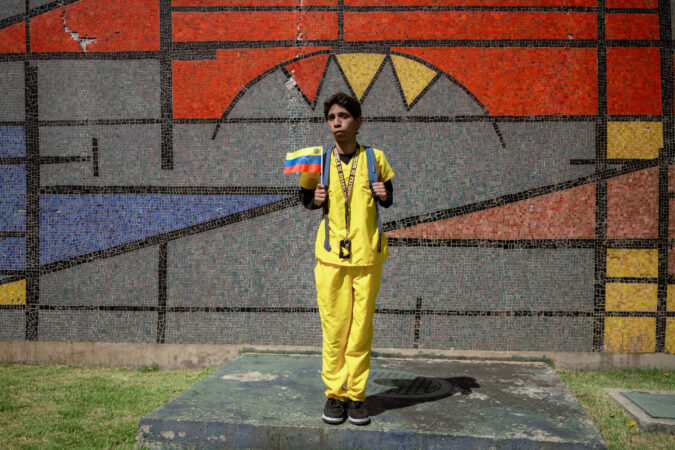
    CARACAS, Venezuela — Hundreds of protesters took to the streets in Venezuela’s capital and across the country last week for Youth Day, asserting their right to demonstrate and calling for acting president Delcy Rodríguez to release political prisoners.

    Thursday’s rallies, which proceeded peacefully, were seen as a test for the new government — the first major show of opposition in the streets since the U.S. capture Jan. 3 of President Nicolás Maduro, and since security forces made thousands of arrests in a large-scale crackdown on dissent in 2024, after Maduro claimed victory in an election that evidence shows he lost.

    “We are not afraid anymore,” Zahid Reyes, 19, a student leader at the Central University of Venezuela in Caracas, said as he was getting ready to join a campus rally. “Venezuela has changed.”

    “Amnesty now,” read banners at campus entrances.

    An air of excitement prevailed, among the hundreds of students looking to give new voice to an opposition that faced increasingly harsh repression in recent years. Police and security forces cordoned off the area.

    Miguel Angel Suarez, also from the Central University of Venezuela, said he was proud of students for claiming their right to protest. After Jan. 3, an opportunity opened, he said. “The fight will continue until we are heard.”

    Venezuelan lawmakers are debating a mass amnesty of political prisoners, under pressure from the United States. Hundreds have been released since U.S. forces seized Maduro in a surprise raid that left at least 32 people dead — in what Venezuela’s government condemned as an illegal attack — and brought him to New York to face narco-terrorism charges, but an even larger share remain behind bars.

    “I am filled with hope,” said Aryeliz Villegas, 22, a student at the university. “Whenever the country breaks down, the youth rise up.”

    The demonstrations come as U.S. and Venezuelan relations are undergoing a fundamental change: President Donald Trump has forged ahead with plans to work with the authoritarian, socialist government of Maduro’s successor, Rodríguez, to open the country’s oil sector to the U.S. — while keeping at arm’s length the opposition, including Nobel laureate María Corina Machado, the key opposition leader in exile.

    Many young activists say Maduro’s ouster feels like a fundamental shift, even if the opposition remains far from power. Andrea Isea, 33, a law student at the university, said the events of recent months have given her a new sense of purpose in her chosen profession. “I used to think about why I was going to all this trouble to study law in this country, but after January 3rd, I can see that there can be a future here for us students,” she said.

    In downtown Caracas, Maduro loyalists held their own Youth Day celebration, with government support, calling for his return. Demonstrators said he had been kidnapped and remained the rightful president. Music from the Puerto Rican artist Bad Bunny blared from speakers, as organized groups — many of them teenagers in school uniforms — danced, drummed, and marched under a warm sun.

    Rodolfo Machado, 24, a city official focused on youth employment, said he thought Venezuela should continue “fighting against Westernism,” and that the U.S. exploits South America. “Delcy Rodríguez carries Nicolás Maduro’s mandate because she is a person who is prepared to continue fighting,” he said.
  • Cuba postpones its annual cigar fair as a U.S. oil siege causes severe fuel shortages and blackouts

    Cuba postpones its annual cigar fair as a U.S. oil siege causes severe fuel shortages and blackouts

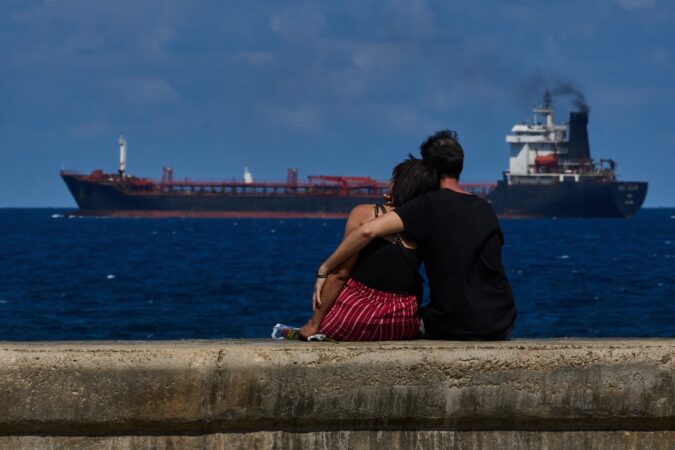
    HAVANA, Cuba — Cuba’s annual cigar fair, which was set to be held the last week of February, has been postponed, organizers said Saturday, as the island faces blackouts and severe fuel shortages brought about by a U.S oil embargo.

    In a statement, the cigar fair’s organizer, Habanos S.A., said it decided to postpone the iconic event to “preserve its high standard of quality.”

    Habanos S.A., a joint venture between the state-owned company Cubatabaco and international firm Altadis, holds the global monopoly on Cuban cigar sales.

    Every year, the company hosts the annual Habanos Festival, a key event for cigar aficionados and distributors worldwide, where attendees tour tobacco plantations, participate in auctions, and witness the latest in craftsmanship.

    The statement by Habanos S.A. did not set a new date for the 26th edition of the cigar fair.

    Last year, the event closed with an auction in which $18 million was paid for a batch of highly coveted, hand-rolled cigars. The company last year also reported record sales of $827 million.

    Several cultural events, including a book fair, have been postponed in Cuba this month as the island grapples with the most severe fuel shortages and power blackouts in years.

    In late January, U.S. President Donald Trump threatened to impose tariffs on any country that sold oil to Cuba, as Washington puts more pressure on the island’s communist leadership to implement political and economic reforms.

    Cuba imports about 60% of its energy supply, and had long relied on Venezuela and Mexico for much of its oil.

    But shipments from Venezuela were canceled in January following the removal of that nation’s then-president Nicolas Maduro in a U.S. military raid, a move that also resulted in greater U.S. oversight over Venezuela’s oil industry.

    Shipments from Mexico stopped in mid-February following Trump’s tariff threat.

    Earlier this week, three Canadian airlines canceled flights to Cuba after the island’s government announced there would be no jet fuel for planes seeking to refuel at Cuba’s airports. Other airlines have maintained their flights to the island but will be refueling their planes with stopovers in the Dominican Republic.

    The fuel shortages have also hurt tourism on the island, with some agencies canceling trips as the government shuts down some hotels, and relocates tourists in a bid to save electricity.

    Tabacuba, a state-run tobacco company, lamented the postponement of this year’s cigar fair in a statement, saying it had come about due to “the complex economic situation that the nation is facing, as a result of the intensification of the economic, commercial and financial blockade” imposed by the United States.

  • Zelensky says questions remain for allies over security guarantees for Ukraine

    Zelensky says questions remain for allies over security guarantees for Ukraine

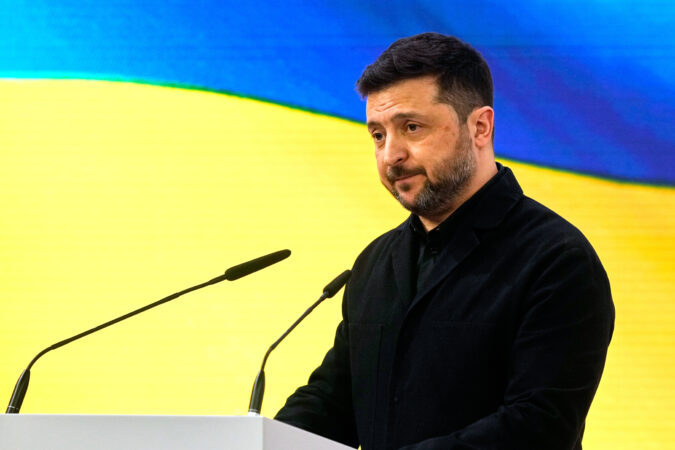
    KYIV, Ukraine — Ukraine’s President Volodymyr Zelensky thanked his international allies for their support but suggested there was still questions remaining over the future security guarantees for his country.

    Speaking at the Munich Security Conference in Germany, Zelensky repeatedly thanked American and European allies for helping Ukraine by providing air defense systems that protect infrastructure like power plants and “save lives.”

    Previous U.S.-led efforts to find consensus on ending the war, most recently two rounds of talks in Abu Dhabi, the capital of the United Arab Emirates, have failed to resolve difficult issues, such as the future of Ukraine’s Donbas industrial heartland that is largely occupied by Russian forces.

    Later with reporters, Zelensky questioned how the concept of a free-trade zone — proposed by the U.S. — would work in the Donbas region, which Russia insists Kyiv must give up in order to get peace.

    He also said the Americans want peace as quickly as possible and that the U.S. team wants to sign all the agreements on Ukraine at the same time, whereas Ukraine wants guarantees over the country’s future security signed first.

    European nations, including the U.K. and France, have already said they will commit troops to Ukraine to guarantee its future security. The U.S. is also expected to be involved and discussions are currently ongoing about the nature of America’s support.

    Russian officials are opposed to any foreign troop presence in Ukraine, Zelensky suggested, because Russian President Vladimir Putin wants to have the opportunity to attack Ukraine again.

    Zelensky also said he was surprised that Moscow had replaced the head of its negotiating team before another round of U.S.-brokered talks and suggested the move was deliberately aimed at delaying negotiations.

    The talks take place against a backdrop of continued fighting along the roughly 750-mile front line, relentless Russian bombardment of civilian areas of Ukraine and the country’s power grid, and Kyiv’s almost daily long-range drone attacks on war-related assets on Russian soil.

    During negotiations, Russian officials have insisted Ukraine give up more territory in the east of the country to end the war. But Zelensky told the Associated Press that it was “a little bit crazy” to suggest Ukraine withdraw from its own territory or exchange it.

    Thousands of Ukrainians have been killed defending the country’s Donbas region, he said, pointing out that 200,000 people also live there and it would not be acceptable to effectively hand them over to Russia.

    Zelensky also questioned how the concept of a free economic zone would work.

    “Imagine,” he said, if foreign soldiers patrolled the zone and Putin provoked them and they left. In that case, he said, there could be a “big occupation” of Ukraine and a lot of losses.

    If Putin is given any opportunity for victory “we don’t know what he will do next,” Zelensky said.

    Such a model, Zelensky told the AP, would have “big risks” for Ukraine and for any country which committed to guaranteeing Ukraine’s security. But he said he was ready to discuss it as it could be important as a compromise in exchange for securing support to reconstruct Ukraine.

    During negotiations, Moscow has to accept monitoring of a ceasefire and return some 7,000 Ukrainian prisoners of war in exchange for more than 4,000 Russian prisoners held by Ukraine, Zelensky said.

    Earlier on Saturday, drone strikes killed one person in Ukraine and another in Russia, Ukrainian officials said, ahead of fresh talks next week in Geneva aimed at ending the war.

    An elderly woman died when a Russian drone hit a residential building in the Black Sea port city of Odesa, Ukraine’s State Emergency Service said.

    In Russia, a civilian was killed in a Ukrainian drone strike on a car in the border region of Bryansk, regional Gov. Alexander Bogomaz said.

    Russia-installed authorities said a Ukrainian airstrike on a village Saturday wounded 15 people in Ukraine’s partially occupied Luhansk region.

    The attacks came a day after a Ukrainian missile strike on the Russian border city of Belgorod killed two people and wounded five, according to regional Gov. Vyacheslav Gladkov.

  • How Jeffrey Epstein used the glamour of the Nobel Peace Prize to entice his global network of the powerful

    How Jeffrey Epstein used the glamour of the Nobel Peace Prize to entice his global network of the powerful

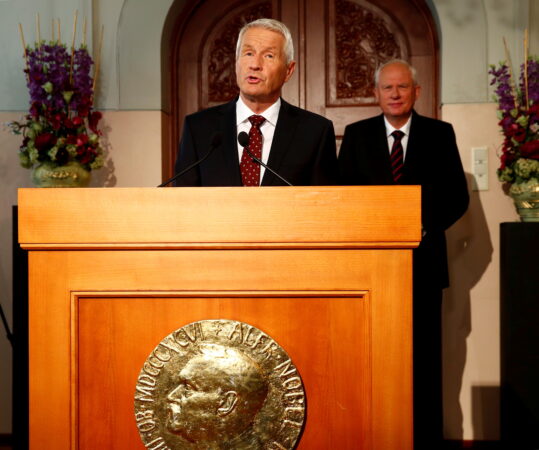
    STAVANGER, Norway — Jeffrey Epstein repeatedly played up his ties to the former head of the Nobel Peace Prize committee in invitations to and chats with powerful men like Richard Branson, Larry Summers, Bill Gates, and Steve Bannon, a top ally of President Donald Trump, the Epstein files show.

    Thorbjørn Jagland, who headed the Norwegian Nobel Committee from 2009 to 2015, turns up hundreds of times in the millions of documents about the former U.S. financier and convicted sex offender that were released by the U.S. Justice Department last month.

    Since the release, Jagland, 75, has been charged in Norway for “aggravated corruption” in connection with an investigation prompted by information in the files, the economic crime unit of Norwegian police Økokrim said.

    Økokrim has said it would investigate whether gifts, travel, and loans were received in connection with Jagland’s position. Its teams searched his Oslo residence on Thursday, plus two other properties in Risør, a coastal town to the south, and in Rauland to the west.

    His attorneys at Elden law firm in Norway said Jagland denies the charges, and was questioned by the police unit on Thursday.

    While there is no evidence in the documents seen so far of any outright lobbying for the Nobel Peace Prize, Epstein repeatedly played up hosting Jagland at his properties in New York and Paris in the 2010s.

    From an ‘interesting’ guest to subject of banter with Bannon

    In September 2018, during Trump’s first term and in an apparent allusion to his interest in the peace prize, Epstein had a varied text-message exchange with Bannon, at one point writing, in one of many messages with untidy grammar: “donalds head would explode if he knew you were now buds with the guy who on monday will decide the nobel peace prize.”

    “I told him next year it should be you when we settle china,” he added, without elaborating.

    In one email from 2013, mixing in investment tips and praise for PR tips, Epstein told British entrepreneur and magnate Richard Branson that Jagland would be staying with Epstein in September that year, adding: “if you are there, you might find him interesting.”

    A year after she left a job as White House counsel to President Barack Obama, in 2015, Kathy Ruemmler got an email from Epstein saying: “head of nobel peace prize coming to visit, want to join?”

    In 2012, Epstein wrote former Treasury Secretary and Harvard University president Larry Summers about Jagland, saying “head of the nobel peace prize staying with me, if you have any interest.”

    In that exchange, Epstein referred to Jagland — also a former Norwegian prime minister and former head of the Council of Europe, a human rights body — as “not bright” but someone who offered a “unique perspective.”

    The financier wrote Bill Gates in 2014, saying that Jagland had been reelected as head of the Council of Europe.

    “That is good,” the Microsoft co-founder and formerly the world’s richest man, wrote. “I guess his peace prize committee job is also up in the air?”

    During Jagland’s tenure as chair of the committee, it gave the peace prize to Obama, in 2009, and the European Union in 2012.

    Jagland was brought into Epstein’s orbit by Terje Rød Larsen, a Norwegian diplomat who helped broker the Oslo Peace Accords between Israel and Palestinians.

    Larsen and his wife are also facing corruption charges in Norway due to their association with Epstein.

  • Europeans push back at US over claim they face ‘civilizational erasure’

    Europeans push back at US over claim they face ‘civilizational erasure’

    MUNICH — A top European Union official on Sunday rejected the notion that Europe faces “civilizational erasure,” pushing back at criticism of the continent by the Trump administration.

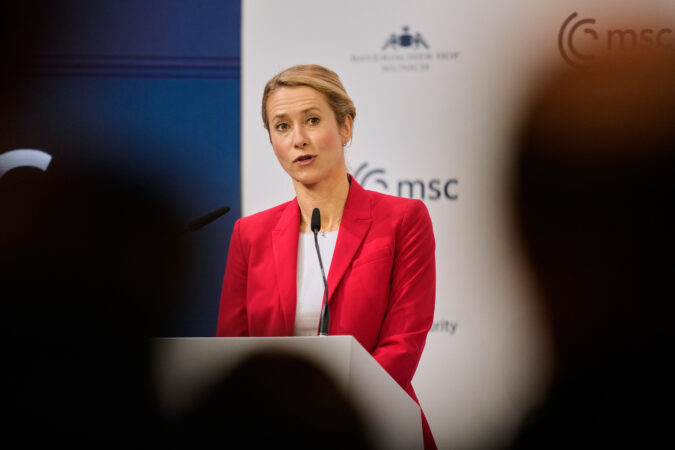
    EU foreign policy chief Kaja Kallas addressed the Munich Security Conference a day after U.S. Secretary of State Marco Rubio offered a somewhat reassuring message to European allies. He struck a less aggressive tone than Vice President JD Vance did in lecturing them at the same gathering last year but maintained a firm tone on Washington’s intent to reshape the trans-Atlantic alliance and push its policy priorities.

    Kallas alluded to criticism in the U.S. national security strategy released in December, which asserted that economic stagnation in Europe “is eclipsed by the real and more stark prospect of civilizational erasure.” It suggested that Europe is being enfeebled by its immigration policies, declining birth rates, “censorship of free speech and suppression of political opposition,” and a “loss of national identities and self-confidence.”

    “Contrary to what some may say, woke, decadent Europe is not facing civilizational erasure,” Kallas told the conference. “In fact, people still want to join our club and not just fellow Europeans,” she added, saying she was told when visiting Canada last year that many people there have an interest in joining the EU.

    Kallas rejected what she called “European-bashing.”

    “We are, you know, pushing humanity forward, trying to defend human rights and all this, which is actually bringing also prosperity for people. So that’s why it’s very hard for me to believe these accusations.”

    In his conference speech, Rubio said that an end to the trans-Atlantic era “is neither our goal nor our wish,” adding that “our home may be in the Western hemisphere, but we will always be a child of Europe.”

    He made clear that the Trump administration is sticking to its guns on issues such as migration, trade, and climate. And European officials who addressed the gathering made clear that they in turn will stand by their values, including their approach to free speech, climate change, and free trade.

    British Prime Minister Keir Starmer said Saturday that Europe must defend “the vibrant, free and diverse societies that we represent, showing that people who look different to each other can live peacefully together, that this isn’t against the tenor of our times.”

    “Rather, it is what makes us strong,” he said.

    Kallas said Rubio’s speech sent an important message that America and Europe are and will remain intertwined.

    “It is also clear that we don’t see eye to eye on all the issues and this will remain the case as well, but I think we can work from there,” she said.

  • Teen daughter of Chicago man detained in an immigration case dies from a rare cancer

    Teen daughter of Chicago man detained in an immigration case dies from a rare cancer

    CHICAGO — A Chicago teen who spoke out for her father’s release after he was detained last fall by immigration officials in a deportation case has died after battling a rare form of cancer.

    Ofelia Giselle Torres Hidalgo, 16, died Friday from stage 4 alveolar rhabdomyosarcoma, the family said in a statement. Funeral arrangements are private.

    The teenager had been diagnosed in December 2024 with the aggressive form of soft tissue cancer and had been undergoing chemotherapy and radiation treatment.

    An immigration judge in Chicago ruled three days before Ofelia’s death that her father, Ruben Torres Maldonado, was conditionally entitled to receive “cancellation of removal” due to the hardships his deportation would cause his children, who were born in the United States and are U.S. citizens, according to the statement sent by an attorney representing Torres Maldonado.

    The ruling provides Torres Maldonado with a path to becoming a lawful permanent resident and eventual U.S. citizenship, the statement said.

    Ofelia was present via Zoom at last week’s hearing.

    “Ofelia was heroic and brave in the face of ICE’s detention and threatened deportation of her father,” said Kalman Resnick, Torres Maldonado’s attorney. “We mourn Ofelia’s passing, and we hope that she will serve as a model for us all for how to be courageous and to fight for what’s right to our last breaths.”

    Torres Maldonado, a painter and home renovator, was detained Oct. 18 at a Home Depot store in suburban Chicago as the area was at the center of a major immigration crackdown dubbed “Operation Midway Blitz,” which began in early September.

    Ofelia was undergoing treatment when she appeared in October in a video posted on a GoFundMe page set up for the family.

    “My dad, like many other fathers, is a hard-working person who wakes up early in the morning and goes to work without complaining, thinking about his family,” she said in the video. “I find it so unfair that hardworking immigrant families are being targeted just because they were not born here.”

    In a wheelchair, she attended a hearing for her father in October. The family’s attorneys told a judge at that time that she was released from the hospital just a day before her father’s arrest so that she could see family and friends. They added that Ofelia had been unable to continue treatment “because of the stress and disruption.”

    Torres Maldonado’s attorneys petitioned for his release as his deportation case went through the system. A judge ordered a bond hearing after ruling in October that his detention was illegal and violated Torres Maldonado’s due process rights.

    A judge later cited Torres Maldonado’s lack of criminal history while allowing his release on a $2,000 bond.

    Lawyers said Torres Maldonado entered the U.S. in 2003. He and his partner, Sandibell Hidalgo, also have a younger son.

    The Department of Homeland Security had alleged he had been living illegally in the U.S. for years and has a history of driving offenses, including driving without a valid license, without insurance, and speeding.

  • No clear path to ending the partial government shutdown as lawmakers dig in over DHS oversight

    No clear path to ending the partial government shutdown as lawmakers dig in over DHS oversight

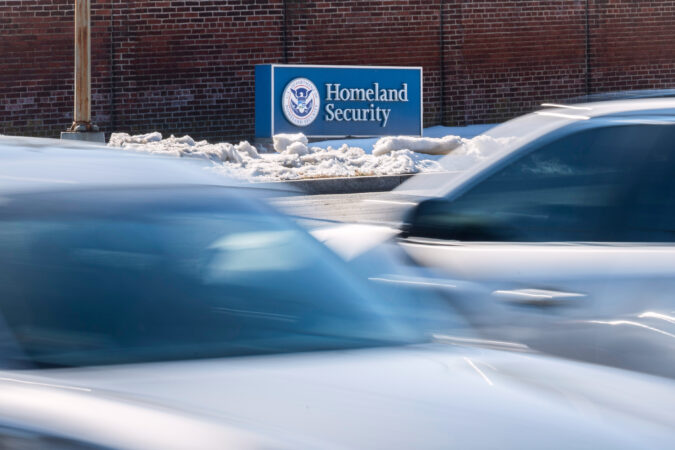
    WEST PALM BEACH, Fla. — Lawmakers and the White House offered no signs of compromise Sunday in their battle over oversight of federal immigration officers that has led to a pause in funding for the Department of Homeland Security.

    A partial government shutdown began Saturday after congressional Democrats and President Donald Trump’s team failed to reach a deal on legislation to fund the department through September. Democrats are demanding changes to how immigration operations are conducted after the fatal shootings of U.S. citizens Alex Pretti and Renee Good by federal officers in Minneapolis last month.

    Congress is on recess until Feb. 23, and both sides appear dug into their positions. The impasse affects agencies such as the Transportation Security Administration, the Federal Emergency Management Agency, U.S. Coast Guard, the Secret Service, U.S. Immigration and Customs Enforcement, and U.S. Customs and Border Protection.

    The work at ICE and CBP goes on unabated because Trump’s tax and spending cut law from 2025 provided billions more to those agencies that can be tapped for deportation operations. About 90% of DHS employees were to continue working during the shutdown, but do so without pay — and missed paychecks could mean financial hardships. Last year there was a record 43-day government shutdown.

    White House border czar Tom Homan said the administration was unwilling to agree to Democrats’ demands that federal officers clearly identify themselves, remove masks during operations, and display unique ID numbers.

    “I don’t like the masks, either,” Homan said, But, he said, “These men and women have to protect themselves.”

    Homan also said Sunday that more than 1,000 immigration agents have left Minnesota’s Twin Cities area and hundreds more will depart in the days ahead as part of the Trump administration’s drawdown of its immigration enforcement surge.

    A “small” security force will stay for a short period to protect remaining immigration agents and will respond “when our agents are out and they get surrounded by agitators and things got out of control,” Homan said. He did not define “small.”

    He also said agents will keep investigating fraud allegations as well as the anti-immigration enforcement protest that disrupted a service at a church service.

    “We already removed well over 1,000 people, and as of Monday, Tuesday, we’ll remove several hundred more,” Homan said. “We’ll get back to the original footprint.”

    Democrats also want to require immigration agents to wear body cameras and mandate judicial warrants for arrests on private property.

    Senate Minority Leader Chuck Schumer (D., N.Y.) said Democrats are only asking for federal agents to abide by rules followed by law enforcement agencies around the country.

    “And the question that Americans are asking is, ‘Why aren’t Republicans going along with these commonsense proposals?’” Schumer said. “They’re not crazy. They’re not way out. They’re what every police department in America does.”

    Sen. Markwayne Mullin (R., Okla.) said he could back Democrats calls to equip immigration officers with body cameras and would support efforts to bolster training. But he balked at their demands that federal officer remove masks and clearly identify themselves, noting some officers taking part in immigration enforcement operations have faced doxing and other harassment.

    “What are you going to do, expose their faces so you can intimidate their families?” Mullins said. “What we want is ICE to be able to do their job. And we would love for local law enforcement and for states to cooperate with us.”

    Republican Sen. Katie Britt of Alabama, a Trump ally who had pushed for a two-week extension of DHS funding while negotiations continued, said it was “shortsighted of Democrats to walk away” from talks.

    Trump made enforcement of the nation’s immigration laws a centerpiece of his 2024 campaign for the White House and he promised to be aggressive in detaining and deporting people living in the United States without legal permission.

    DHS reports it has deported more than 675,000 migrants since Trump’s return to office last year and claims some 2.2 million others have “self-deported” as the Republican president has made his immigration crackdown a priority.

    “President Trump is not going to back away from the mission, the mission that American people said they wanted him to complete, and that is securing our border and making sure that we actually do interior enforcement,” Britt said.

    Homan was on CBS’ Face the Nation, Schumer and Mullin appeared on CNN’s State of the Union, and Britt was interviewed on Fox News Sunday.

  • Israel will begin contentious West Bank land registration in new step to deepen control

    Israel will begin contentious West Bank land registration in new step to deepen control

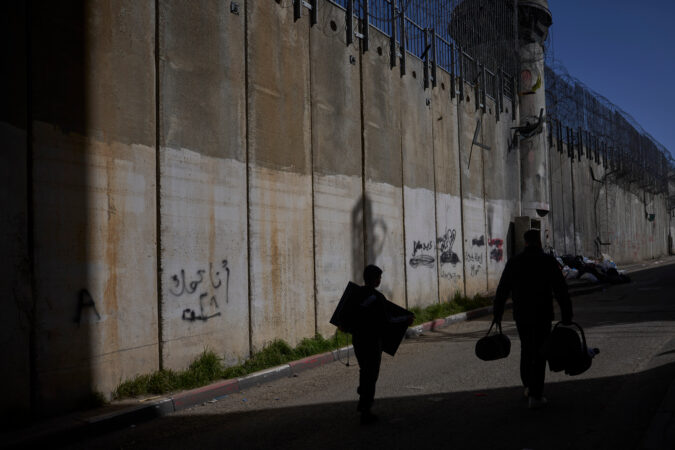
    TEL AVIV, Israel — Israel will begin a contentious land regulation process in a large part of the occupied West Bank, which could result in Israel gaining control over wide swaths of the area for future development, according to a government decision on Sunday.

    It paves the way for the resumption of “settlement of land title” processes, which had been frozen in the West Bank since the Mideast War in 1967. It means that when Israel begins the land registration process for a certain area, anyone with a claim to the land must submit documents proving ownership.

    The Israeli anti-settlement group Peace Now said the process likely amounts to a “mega land grab” from Palestinians.

    “This move is very dramatic and allows the state to gain control of almost all of Area C,” said Hagit Ofran, the director of Peace Now’s Settlement Watch program. Area C refers to the 60% of the West Bank that is under full Israeli military control, according to agreements reached in the 1990s with the Palestinians.

    Israeli steps in recent months

    The decision is the latest step to deepen Israeli control over the West Bank. In recent months, Israel has greatly expanded construction in Jewish settlements, legalized outposts, and made significant bureaucratic changes to its policies in the territory to strengthen its hold and weaken the Palestinian Authority.

    Israel’s Foreign Ministry in a statement claimed, without offering evidence, that the Palestinian Authority was “advancing illegal land registration procedures in Area C” and said Sunday’s decision was taken for greater transparency.

    The decision was first announced last May but required further development before it was approved in this week’s Cabinet meeting. Under the decision, Israeli authorities will announce certain areas to undergo registration, which will force anyone who has a claim to the land to prove their ownership.

    Ofran said the process for proving ownership can be “draconian” and is rarely transparent, meaning any land that undergoes the registration process in areas currently owned by Palestinians is likely to revert to Israeli state control.

    “Palestinians will be sent to prove ownership in a way that they will never be able to do,” Ofran told the Associated Press. “And this way Israel might take over 83% of the Area C, which is about half of the West Bank.”

    The registration process could start as soon as this year, she said.

    The proposal had been put forward by some of Israel’s far-right members of the ruling coalition, including the Minister of Justice Yariv Levin. “The government of Israel is committed to strengthening its grip on all its parts, and this decision is an expression of that commitment,” he said.

    A ‘dangerous escalation’

    Palestinian Authority President Mahmoud Abbas’ office in a statement called the decision “a grave escalation and a flagrant violation of international law,” which amounts to “de facto annexation.” It called on the international community, especially the U.N. Security Council and the United States, to intervene immediately.

    Previous U.S. administrations have sharply condemned an expansion of Israeli activity and control in the West Bank, but Prime Minister Benjamin Netanyahu has a particularly close relationship with President Donald Trump. The two met last week in Washington, their seventh meeting in the past year.

    And yet Trump has opposed annexation, Ofran with Peace Now noted.

    Palestinians are not permitted to sell land privately to Israelis, though measures announced last week aim to nullify this. Currently, settlers can buy homes on land controlled by Israel’s government. Last week’s decision also aimed to expand Israeli enforcement of several aspects of in the West Bank, including environmental and archaeological matters in Palestinian-administered areas.

    More than 700,000 Israelis live in the occupied West Bank and east Jerusalem, territories captured by Israel in 1967 from Jordan and sought by the Palestinians for a future state. The international community overwhelmingly considers Israeli settlement construction in these areas to be illegal and an obstacle to peace.

    Jordan’s Foreign Ministry in a statement called on the international community to “assume its legal and moral responsibilities, and to compel Israel, the occupying power, to stop its dangerous escalation.”

    Over 300,000 Palestinians are estimated to live in Area C of the West Bank, with many more in surrounding communities dependent on its agricultural and grazing lands, including plots for which families retain land deeds or tax records dating back decades.

  • Gaza’s Nasser Hospital condemns MSF decision to suspend most services

    Gaza’s Nasser Hospital condemns MSF decision to suspend most services

    CAIRO — One of Gaza ‘s last functioning large hospitals condemned the decision by Doctors Without Borders to pull out of operations over concerns about armed men, claiming on Sunday that the facility had installed civilian police for security.

    The rare public friction between two well-known health care providers in Gaza came as the Palestinian death toll since the current ceasefire surpassed 600. At least 11 Palestinians were killed by Israeli fire in the last 24 hours, hospitals said.

    Doctors Without Borders, also known by its French acronym MSF, said in a statement Saturday that all its noncritical medical operations at Nasser Hospital were suspended due to security breaches that posed “serious” threats to its teams and patients. MSF said there had been an increase in patients and staff seeing armed men in parts of the compound since the U.S.-brokered October ceasefire was reached.

    Nasser Hospital said Sunday the increase in armed men was due to a civilian police presence aimed at protecting patients and staff and said MSF’s “allegations are factually incorrect, irresponsible and pose a serious risk to a protected civilian medical facility.”

    One of Gaza’s few functioning hospitals

    Hundreds of patients and war wounded have been treated daily at Nasser Hospital in the southern city of Khan Younis, and the facility was a hub for Palestinian prisoners released by Israel in exchange for Israeli hostages as part of the current ceasefire deal.

    MSF said its teams had reported “a pattern of unacceptable acts including the presence of armed men, intimidation, arbitrary arrests of patients and a recent situation of suspicion of movement of weapons.” The suspension occurred in January but was only recently announced.

    Nasser Hospital staff say that in recent months it has been repeatedly attacked by masked, armed men and militias, which is why the presence of an armed civilian police force is crucial.

    Hamas remains the dominant force in areas of Gaza not under Israeli control, including the area where Nasser Hospital is located. But other armed groups have mushroomed as a result of the war, including groups backed by Israel’s army in the Israeli-controlled part of the strip.

    Israel’s military said it had intelligence that Nasser Hospital is being used as a headquarters and military post for senior Hamas officials, without providing evidence. It called MSF’s move “an important decision, but one that comes too late.”

    Throughout the war, which began with the Hamas-led attack on Israel on Oct. 7, 2023, Israel has repeatedly struck hospitals, including Nasser, accusing the militant group of operating in or around them. Hamas security men often have been seen inside hospitals, blocking access to some areas.

    Some hostages released from Gaza have said they spent time during captivity in a hospital, including Nasser Hospital.

    11 Palestinians killed in strikes across Gaza

    At least 11 Palestinians were killed Sunday by Israeli fire in Gaza, hospital authorities said.

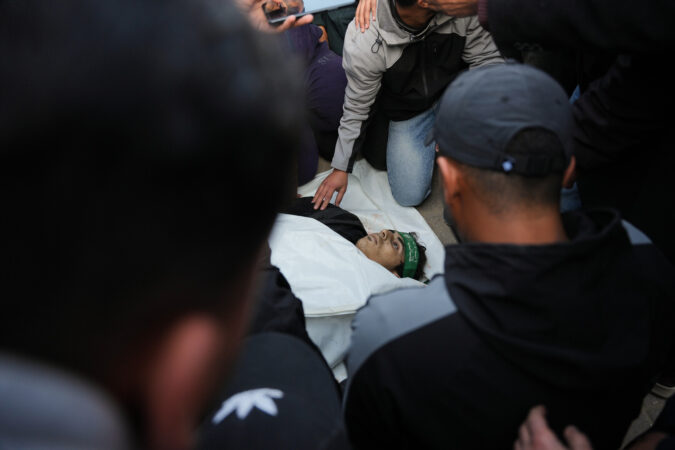
    The dead include five men in their 20s who were killed in the eastern part of Khan Younis, according to Nasser Hospital, which received the bodies. The strike hit a group of people close to the Yellow Line that separates Israeli-controlled areas from the rest of Gaza, it said.

    Rami Shaqra said his son, al-Baraa, was among the militants securing the area from potential attacks by Israeli forces or Israeli-backed armed groups when they were hit. He said they were killed by an airstrike.

    “They were in the area they say is safe,” Shaqra said.

    Associated Press footage from the morgue showed at least two of the men had headbands denoting membership in the Qassam Brigades, the militant arm of Hamas.

    In northern Gaza, a drone strike hit a group of people in the Falluja area of Jabaliya refugee camp, killing five people, according to Shifa Hospital. A separate drone strike killed a man in Gaza City, according to the hospital.

    Israel’s military said it had carried out multiple strikes in response to several ceasefire violations near the Yellow Line, including militants attempting to hide in debris and others who attempted to cross the line while armed.

    The U.S.-brokered ceasefire deal that took effect Oct. 10 attempted to halt more than two years of war between Israel and Hamas. While the heaviest fighting has subsided, the ceasefire has seen almost daily Israeli fire.

    Israeli forces have carried out repeated airstrikes and frequently fire on Palestinians near military-held zones, killing 602 Palestinians, according to Gaza health officials. The ministry, which is part of the Hamas-led government, maintains detailed casualty records that are seen as generally reliable by U.N. agencies and independent experts. It does not give a breakdown of civilians and militants.

    Militants have carried out shooting attacks on troops, and Israel says its strikes are in response to that and other violations. Four Israeli soldiers have been killed.

    Two Israeli soldiers attacked by ultra-Orthodox Jews

    In Israel, two female Israeli soldiers were rescued from riots in the ultra-Orthodox city of Bnei Brak. Footage shows two soldiers being hurried away by police from thousands of ultra-Orthodox men running after them and yelling.

    Many in Israel’s ultra-Orthodox community are furious over laws that may force them to serve in the Israeli military, holding frequent protests.

    Israeli police said the soldiers were performing a welfare visit but had not coordinated it with police. At least 22 people were arrested as protesters set police motorcycles on fire, attacked officers, threw trash, and overturned a police car, police said.

    Prime Minister Benjamin Netanyahu strongly condemned the attack on the soldiers but blamed an “extremist minority” for the violence.

    Roughly 1.3 million ultra-Orthodox Jews make up about 13% of Israel’s population and oppose enlistment because they believe studying full time in religious seminaries is their most important duty. The broad exemptions from mandatory military service have reopened a deep divide in the country and infuriated much of the general public, especially during the war in Gaza.

  • Indonesia says 8,000 troops ready for possible peacekeeping mission in Gaza by June

    Indonesia says 8,000 troops ready for possible peacekeeping mission in Gaza by June

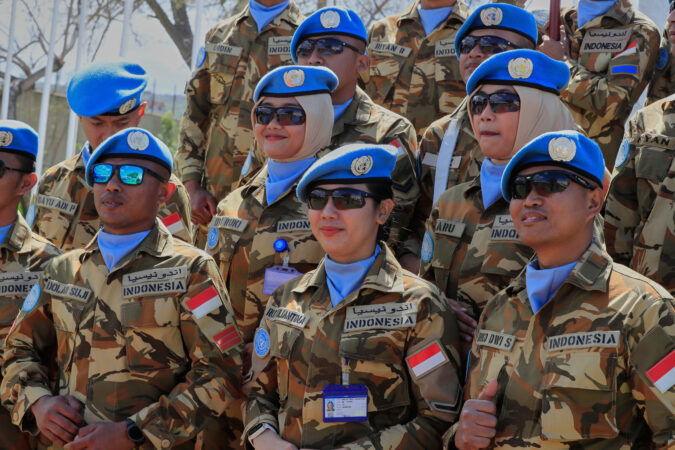
    JAKARTA, Indonesia — Indonesia’s military said Sunday that up to 8,000 troops are expected to be ready by the end of June for a potential deployment to Gaza as part of a humanitarian and peace mission, the first firm commitment to a critical element of U.S. President Donald Trump’s postwar reconstruction plan.

    The Indonesian National Armed Forces, known as TNI, has finalized its proposed troop structure and a timeline for their movement to Gaza, even as the government has yet to decide when the deployment will take place, army spokesperson Brig. Gen. Donny Pramono said.

    “In principle, we are ready to be assigned anywhere,” Pramono told the Associated Press, “Our troops are fully prepared and can be dispatched at short notice once the government gives formal approval.”

    Pramono said the military prepared a composite brigade of 8,000 personnel, based on decisions made during a Feb. 12 meeting for the mission.

    Under the schedule, troops will undergo health checks and paperwork throughout February, followed by a force readiness review at the end of the month, Pramono said. He also revealed that about 1,000 personnel are expected to be ready to deploy as an advance team by April, followed with the rest by June.

    Pramono said that being ready does not mean the troops will depart. The deployment still requires a political decision and depends on international mechanisms, he said.

    Indonesia’s Foreign Ministry has repeatedly said any Indonesian role in Gaza will be strictly humanitarian. Indonesia’s contribution would focus on civilian protection, medical services, and reconstruction, and its troops would not take part in any combat operations or actions that could lead to direct confrontation with armed groups.

    Indonesia would be the first country to formally commit troops to the security mission created under Trump’s Board of Peace initiative for Gaza, where a fragile ceasefire agreement between Israel and Hamas has held since Oct. 10 following two years of devastating war.

    Indonesia, the world’s most populous Muslim majority nation, does not have formal diplomatic relations with Israel and has long been a strong supporter of a two-state solution. It has been deeply involved in providing humanitarian aid to Gaza, including funding a hospital.

    Indonesian officials have justified joining the Board of Peace by saying it was necessary to defend Palestinian interests from within, since Israel is included on the board but there is no Palestinian representation.

    The Southeast Asian country has experience in peacekeeping operations as one of the top 10 contributors to United Nations missions, including in Lebanon.