Category: Wires

  • CDC website changed to contradict scientific conclusion that vaccines don’t cause autism

    CDC website changed to contradict scientific conclusion that vaccines don’t cause autism

    NEW YORK — A Centers for Disease Control and Prevention website has been changed to contradict the longtime scientific conclusion that vaccines do not cause autism, spurring outrage among a number of public health and autism experts.

    The CDC “vaccine safety” webpage was updated Wednesday, saying “the statement ‘Vaccines do not cause autism’ is not an evidence-based claim.”

    The change is the latest move by the U.S. Department of Health and Human Services to revisit — and foster uncertainty about — long-held scientific consensus about the safety of vaccines and other pharmaceutical products.

    It was immediately decried by scientists and advocates who have long been focused on finding the causes of autism.

    “We are appalled to find that the content on the CDC webpage ‘Autism and Vaccines’ has been changed and distorted, and is now filled with anti-vaccine rhetoric and outright lies about vaccines and autism,” the Autism Science Foundation said in a statement Thursday.

    Widespread scientific consensus and decades of studies have firmly concluded there is no link between vaccines and autism. “The conclusion is clear and unambiguous,” said Dr. Susan Kressly, president of the American Academy of Pediatrics, in a statement Thursday.

    “We call on the CDC to stop wasting government resources to amplify false claims that sow doubt in one of the best tools we have to keep children healthy and thriving: routine immunizations,” she said.

    The CDC has, until now, echoed the absence of a link in promoting Food and Drug Administration-licensed vaccines.

    But anti-vaccines activists — including Robert F. Kennedy Jr., who this year became secretary of Health and Human Services — have long claimed there is one.

    It’s unclear if anyone at CDC was actually involved in the change, or whether it was done by Kennedy’s HHS, which oversees the CDC.

    Many at CDC were surprised.

    “I spoke with several scientists at CDC yesterday and none were aware of this change in content,” said Dr. Debra Houry, who was part of a group of CDC top officials who resigned from the agency in August. “When scientists are cut out of scientific reviews, then inaccurate and ideologic information results.”

    The updated page does not cite any new research. It instead argues that past studies supporting a link have been ignored by health authorities.

    “HHS has launched a comprehensive assessment of the causes of autism, including investigations on plausible biologic mechanisms and potential causal links. Additionally, we are updating the CDC’s website to reflect gold standard, evidence-based science,” said HHS spokesman Andrew Nixon, in an email Thursday.

    A number of former CDC officials have said that what CDC posts about certain subjects — including vaccine safety — can no longer be trusted.

    Dr. Daniel Jernigan, who also resigned from the agency in August, told reporters Wednesday that Kennedy seems to be “going from evidence-based decision making to decision-based evidence making.”

    U.S. Sen. Bill Cassidy, a Louisiana Republican, earlier this year played a decisive role in approving Kennedy’s nomination for HHS secretary. Cassidy initially voiced misgivings about Kennedy, but in February said Kennedy had pledged — among other things — not to remove language from the CDC website pointing out that vaccines do not cause autism.

    The new site continues to have a headline that says “Vaccines do not cause autism,” but HHS officials put an asterisk next to it. A note at the bottom of the page says the phrasing “has not been removed due to an agreement with the chair of the U.S. Senate Health, Education, Labor, and Pensions Committee that it would remain on the CDC website.”

    Cassidy’s spokespersons did not immediately respond to a request for comment.

  • Trump administration threatens to withhold $75 million from Pennsylvania over immigrant truck drivers

    Trump administration threatens to withhold $75 million from Pennsylvania over immigrant truck drivers

    The Trump administration threatened Thursday to withhold nearly $75 million in funding if Pennsylvania does not immediately revoke what the administration claims are illegally issued commercial driver’s licenses to immigrants.

    The move by U.S. Transportation Secretary Sean Duffy to target Pennsylvania follows similar action against California. Both states are run by Democratic governors who have criticized President Donald Trump’s administration and who are viewed as potential top-shelf contenders to be the party’s 2028 presidential nominee.

    Duffy has made it a priority to scrutinize how the licenses are issued since August, when a tractor-trailer driver not authorized to be in the U.S. made an illegal U-turn and caused a crash in Florida that killed three people. That incident thrust the issue into the public’s consciousness.

    In a statement Thursday, DOT spokesperson Danna Almeida said all states were being reviewed.

    It’s unclear how many people would be affected in Pennsylvania. In any case, Pennsylvania Gov. Josh Shapiro ‘s administration said the federal government didn’t identify a single commercial driver’s license issued to someone who wasn’t eligible.

    Still, a letter Thursday from the Republican administration to Shapiro cited an audit that found two out of 150 people whose licenses exceeded their lawful presence in the country.

    In four cases it had reviewed, the federal government said Pennsylvania provided no evidence that it had required noncitizens to provide legitimate proof that they were legally in the country at the time they got the license.

    The Trump administration called on Pennsylvania to stop issuing new, renewed and transferred commercial driver’s licenses and permits, as well as conduct an audit to identify those licenses whose expirations exceed the driver’s lawful stay in the U.S.

    It is also asking the state to void noncompliant licenses and remove those drivers from the road. The administration said approximately 12,400 noncitizen drivers hold an unexpired commercial learner’s permit or commercial driver’s license issued by Pennsylvania.

    The governors of California and Pennsylvania — Gavin Newsom and Shapiro — are tough critics of Trump, and both have been repeated targets of Trump’s administration.

    Shapiro’s administration said the state transportation department ceased issuing commercial driver’s licenses to noncitizens after the Federal Motor Carrier Safety Administration published a regulation in late September that would severely limit which immigrants can get one.

    A federal court has put the rule on hold for now, but Shapiro’s administration said its transportation department still hasn’t resumed issuing what are called “non-domiciled CDLs.”

    Pennsylvania’s transportation department said Thursday that it follows federal rules for verifying an immigrant applicant’s lawful presence in the country by checking the U.S. Department of Homeland Security’s database.

    But Shapiro this week suggested that DHS was falling short by failing to properly maintain that database, which states use to check an immigrant’s legal status before issuing a driver’s license to a noncitizen.

    His comments came after DHS said it had arrested an Uzbek national with a commercial driver’s license issued by Pennsylvania. The man, who had a work authorization granted in 2024, was wanted in his home country for belonging to a terrorist organization, the department said.

    But Shapiro said the state transportation department checked the federal database over the summer before issuing a CDL to the man, and he was authorized to get one. The state rechecked the database this week, and it still listed him as qualified to get a CDL, Shapiro said.

    “They clearly are not minding the shop, and they’ve gotta get better, because every single state in the country relies on this database when making a determination as to who qualifies for a CDL. We relied on the feds before issuing this one,” Shapiro said.

    California, which said it would revoke 17,000 licenses, is the only state the administration has acted against because it was the first one where an audit was completed. The government shutdown delayed reviews in other states, but the Transportation Department is urging all of them to tighten their standards. ___ Catalini reported from Trenton, New Jersey, and Levy from Harrisburg, Pennsylvania. Associated Press writer Josh Funk contributed.

  • Respect and remembrance for Cheney from Bush, Biden and past vice presidents as Trump is excluded

    Respect and remembrance for Cheney from Bush, Biden and past vice presidents as Trump is excluded

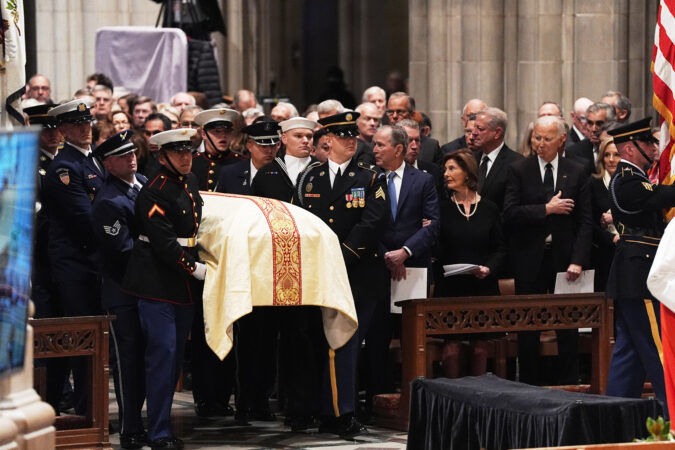
    WASHINGTON — They gathered at the Washington National Cathedral on Thursday — former presidents, vice presidents, sworn political foes and newfound friends — in a show of respect and remembrance for Dick Cheney, the consequential and polarizing vice president who became an acidic scold of President Donald Trump.

    Trump, who has been publicly silent about Cheney’s death Nov. 3, was not invited to the memorial service.

    Two ex-presidents came: Republican George W. Bush, who eulogized the man who served him as vice president, and Democrat Joe Biden, who once called Cheney “the most dangerous vice president we’ve had probably in American history” but now honors his commitment to his family and to his values.

    “Solid and rare and reliable,” Bush said at the service of his vice president, praising a man whose “talent and restraint” exceeded his ego. “Smart and polished, without airs.”

    Former President George W. Bush, speaks a tribute during the funeral service for former Vice President Dick Cheney at the Washington National Cathedral on Thursday.

    Bush and others noted the understated demeanor of a man who nevertheless wielded great influence in government. “Above all,” Bush said, “I wanted someone with the ability to step into the presidency without getting distracted by the ambition to seek it.”

    Among the eulogists, Liz Cheney, the eldest daughter, only obliquely addressed what amounted to a father-daughter feud with the president — a man her dad had called a “coward” for trying to overturn his loss in the 2020 election.

    She spoke of her father’s conviction that when confronted with a choice between defending the country and a political party, the country must come first. “Bonds of party must always yield to the single bond we share as Americans,” she said.

    Liz Cheney is a former high-ranking House member whose Republican political career was shredded by a MAGA movement angered by her investigation of the Jan. 6, 2021, riot at the Capitol. Thursday, she chose not to speak directly of Trump.

    She spoke of seeing clouds in the shape of angels just before her father died.

    A Who’s Who of Washington, minus you know who

    Moments before the service began, figures of recent but now receded power mingled: Bush and Biden and their wives sitting in a row together, former Vice Presidents Kamala Harris and Mike Pence chatting side by side in their pew with Al Gore and Dan Quayle together behind them.

    Biden greeted Republican Sen. Mitch McConnell, the former longtime Senate leader, and his wife, former labor and transportation secretary Elaine Chao. Behind them sat Democratic Rep. Nancy Pelosi, who spent time talking with another former House speaker, Republican John Boehner. All gathered among the soaring interior columns of the grand cathedral known as “a spiritual home for the nation.”

    Others delivering tributes at Thursday’s funeral were Cheney’s longtime cardiologist, Dr. Jonathan Reiner; former NBC News correspondent Pete Williams, who was Cheney’s spokesman at the Pentagon; and several of the former vice president’s grandchildren.

    “I’m happy to report that I haven’t given many eulogies,” Reiner said in his remarks. “Nobody wants a doctor who is great at funerals.”

    Reiner recalled doctors telling Cheney decades ago, after the first of multiple heart attacks, that he should abandon his political ambitions then. Yet he kept winning elections as a Wyoming congressman for years after that.

    Cheney, he said, was always the “calmest person in the room.”

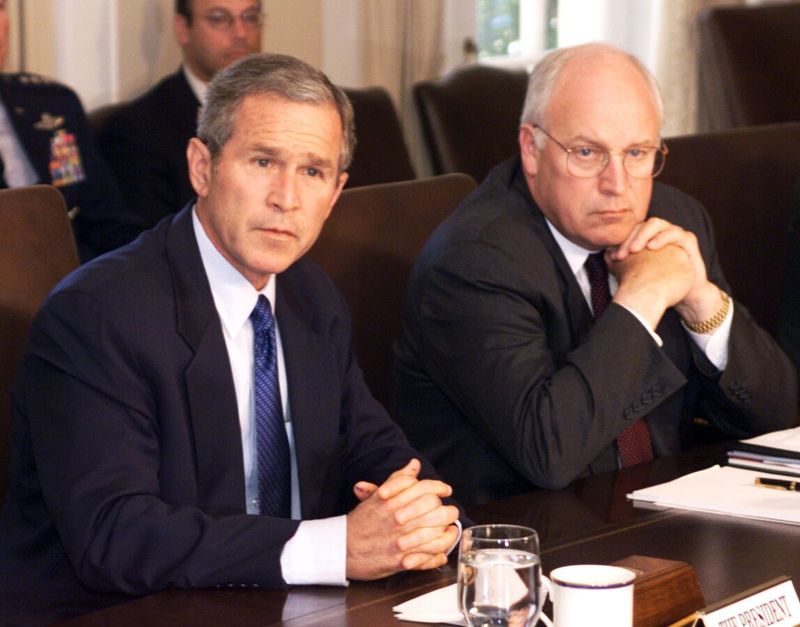
    President George W. Bush and Vice President Dick Cheney meet in Washington, D.C., on Sept. 12, 2001, with members of the president’s national security team in the Cabinet room.

    Cheney had lived with heart disease for decades and, after the Bush administration, with a heart transplant. He died at age 84 from complications of pneumonia and cardiac and vascular disease, his family said.

    Trump’s vice president, JD Vance, on stage at another event in the morning, was asked about Cheney and said: “Obviously there’s some political disagreements there but he was a guy who served his country. We certainly wish his family all the best in this moment of grieving.”

    Vance was also not invited to the funeral, according to a person familiar with the details who was not authorized to speak publicly and spoke on condition of anonymity.

    The White House lowered its flags to half-staff after Cheney’s death, as it said the law calls for, but Trump did not issue the presidential proclamation that often accompanies the death of notable figures, nor has he commented publicly on his passing.

    The deeply conservative Cheney’s influence in the Bush administration was legendary and, to his critics, tragic.

    He advocated for the U.S. invasion of Iraq on the basis of what proved to be faulty intelligence and consistently defended the extraordinary tools of surveillance, detention and inquisition employed in response to the Sept. 11, 2001, attacks. Bush credited him with helping to keep the country safe and stable in a perilous time.

    Bad blood between the Cheneys and Trump

    After the 2020 election won by Biden, Liz Cheney served as vice chair of the Democratic-led special House committee that investigated the Jan. 6 Capitol riot. She accused Trump of summoning the violent mob and plunging the nation into “a moment of maximum danger.”

    For that, she was stripped of her Republican leadership position and ultimately defeated in a 2022 Republican primary in Wyoming. In a campaign TV ad made for his daughter, Dick Cheney branded Trump a “coward” who “tried to steal the last election using lies and violence to keep himself in power after the voters had rejected him.”

    Last year, it did not sit well with Trump when Cheney said he would vote for the Democrat, Harris, in the presidential election.

    Trump told Arab and Muslim voters that Dick Cheney’s support for Harris should give them pause, because he “killed more Arabs than any human being on Earth. He pushed Bush, and they went into the Middle East.”

  • What’s next now that Trump has signed bill releasing the Epstein files

    What’s next now that Trump has signed bill releasing the Epstein files

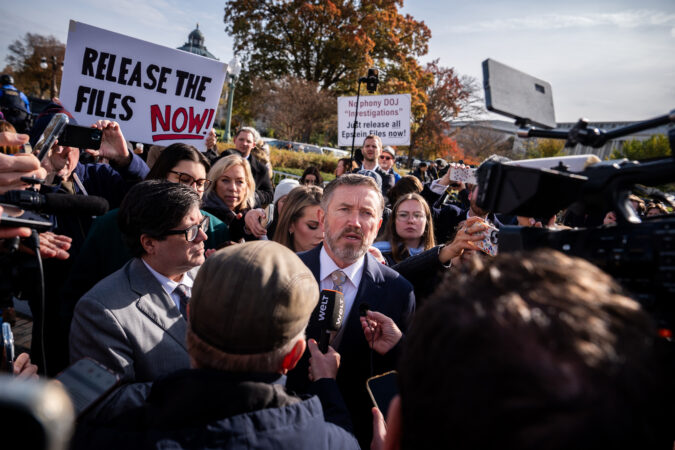
    WASHINGTON — President Donald Trump has signed a bill to compel the Justice Department to make public its case files on the convicted sex offender Jeffrey Epstein, a potentially far-reaching development in a yearslong push by survivors of Epstein’s abuse for a public reckoning.

    Both the House and Senate passed the bill this week with overwhelming margins after Trump reversed course on his monthslong opposition to the bill and indicated he would sign it. Now that the bill has been signed by the president, there’s a 30-day countdown for the Justice Department to produce what’s commonly known as the Epstein files.

    “This bill is a command for the president to be fully transparent, to come fully clean, and to provide full honesty to the American people,” Senate Democratic Leader Chuck Schumer of New York said Wednesday.

    Schumer added that Democrats were ready to push back if they perceive that the president is doing anything but adhering to “full transparency.”

    In a social media post Wednesday as he announced he had signed the bill, Trump wrote, “Democrats have used the ‘Epstein’ issue, which affects them far more than the Republican Party, in order to try and distract from our AMAZING Victories.”

    The swift, bipartisan work in Congress this week was a response to the growing public demand that the Epstein files be released, especially as attention focuses on his connections to global leaders including Trump, former President Bill Clinton, Andrew Mountbatten Windsor, who has already been stripped of his royal title as Prince Andrew over the matter, and many others.

    There is plenty of public anticipation about what more the files could reveal. Yet the bill will most likely trigger a rarely seen baring of a sprawling federal investigation, also creating the potential for unintended consequences.

    What does the bill do?

    The bill compels Attorney General Pam Bondi to release essentially everything the Justice Department has collected over multiple federal investigations into Epstein, as well as his longtime confidante and girlfriend Ghislaine Maxwell, who is serving a 20-year prison sentence for luring teenage girls for the disgraced financier. Those records total around 100,000 pages, according to a federal judge who has reviewed the case.

    It will also compel the Justice Department to produce all its internal communications on Epstein and his associates and his 2019 death in a Manhattan jail cell as he awaited charges for sexually abusing and trafficking dozens of teenage girls.

    The legislation, however, exempts some parts of the case files. The bill’s authors made sure to include that the Justice Department could withhold personally identifiable information of victims, child sexual abuse materials and information deemed by the administration to be classified for national defense or foreign policy.

    “We will continue to follow the law with maximum transparency while protecting victims,” Bondi told a news conference Wednesday when asked about releasing the files.

    The bill also allows the Justice Department to withhold information that would jeopardize active investigations or prosecutions. That’s created some worry among the bill’s proponents that the department would open active investigations into people named in the Epstein files in order to shield that material from public view.

    Rep. Marjorie Taylor Greene, a longtime Trump loyalist who has had a prominent split with Trump over the bill, said Tuesday that she saw the administration’s compliance with the bill as its “real test.”

    “Will the Department of Justice release the files, or will it all remain tied up in investigations?” she asked.

    In July, the FBI said in a memo regarding the Epstein investigation that, “we did not uncover evidence that could predicate an investigation against uncharged third parties.” But Bondi last week complied with Trump’s demands and ordered a federal prosecutor to investigate Epstein’s ties to the president’s political foes, including Clinton.

    Still, Rep. Thomas Massie, a Kentucky Republican who sponsored the bill, said “there’s no way they can have enough investigations to cover” all of the people he believes are implicated in Epstein’s abuse.

    “And if they do, then good,” he added.

    The bill also requires the Justice Department to produce reports on what materials it withheld, as well as redactions made, within 15 days of the release of the files. It stipulates that officials can’t withhold or redact anything “on the basis of embarrassment, reputational harm, or political sensitivity, including to any government official, public figure, or foreign dignitary.”

    Who could be named?

    There’s a widely held expectation that many people could be named in case files for investigations that spanned over a decade — and some concern that just because someone is named, that person would be assumed guilty or complicit.

    Epstein was a luminary who kept company with heads of state, influential political figures, academics and billionaires. The release of his emails and messages by a House Oversight Committee investigation last week has already shown his connections with — and private conversations about — Trump and many other high-powered figures.

    Yet federal prosecutors follow carefully constructed guidelines about what information they produce publicly and at trial, both to protect victims and to uphold the fairness of the legal system. House Speaker Mike Johnson raised objections to the bill on those grounds this week, arguing that it could reveal unwanted information on victims as well as others who were in contact with investigators.

    Still, Johnson did not actually try to make changes to the bill and voted for it on the House floor.

    For the bill’s proponents, a public reckoning over the investigation is precisely the point. Some of the survivors of trafficking from Epstein and Maxwell have sought ways to name people they accuse of being complicit or involved, but fear they will face lawsuits from the men they accuse.

    Massie said that he wants the FBI to release the reports from its interviews with the victims.

    Those reports typically contain unvetted information, but Massie said he is determined to name those who are accused. He and Greene have offered to read the names of those accused on the House floor, which would shield their speech from legal consequences.

    “We need names,” Massie said.

  • Is my husband a narcissist? He’s self-centered and lacks empathy. | Expert Opinion

    Is my husband a narcissist? He’s self-centered and lacks empathy. | Expert Opinion

    Q: I’ve been married for only two years, and I’m already wondering if I made a bad decision. When we were dating, my husband was incredibly charming and thoughtful, and in many ways, much more sensitive and dialed in than most of the men I had dated. And since my track record hasn’t been great, I dated him for at least a year before getting engaged so I had time to really get to know him. Or so I thought, because the warm and charming man he once was started going away almost as soon as our wedding was over. And far from being the considerate person who charmed me, he’s incredibly self-centered, moody and angry most of the time. When the topic is on him, it’s all good; but as soon as I want to talk about what’s going on in my life, he gets bored, annoyed, or downright mean. Did I marry a narcissist?

    A: It’s not uncommon for people to wonder whether a partner’s self-centeredness, emotional volatility, or lack of empathy points to narcissism. The term gets thrown around so often that it can lose meaning — but for those who live with a truly narcissistic partner, the experience is anything but trivial.

    Recent research shows that while full narcissistic personality disorder (NPD) is relatively rare, its impact on intimate relationships can be profound. People with NPD share a cluster of traits centered on grandiosity (believing they’re superior or above the rules), entitlement, and impaired empathy, expressed through an exaggerated need for admiration, a fragile and easily threatened sense of self, and a tendency to exploit or dismiss others’ needs. They often oscillate between inflated self-importance and deep insecurity, react poorly to criticism, and rely on defenses such as blame-shifting, minimization, or rage to protect a vulnerable self-image.

    Studies of couples in which one partner has elevated narcissistic traits or NPD have found patterns of low empathy, high conflict, and poor responsiveness to a partner’s needs, often driven by the narcissistic partner’s fragile self-esteem and heightened sensitivity to criticism.

    This means that the distress you feel is not imagined — NPD reliably predicts greater marital dissatisfaction, more emotional volatility, and higher rates of separation.

    Researchers today also distinguish between grandiose and vulnerable narcissism. Grandiose narcissists tend to be dominant, entitled, and attention seeking. They’re also more likely to be difficult in romantic relationships, less empathic, and more prone to infidelity.

    Vulnerable narcissists, on the other hand, tend more toward hypersensitivity and fears of being shamed. Like grandiose narcissists, vulnerable narcissists crave validation, but withdraw or attack when criticized. Both forms undermine romantic relationships, but in different ways: one through arrogance, the other through insecurity.

    However, whether he is narcissistic doesn’t necessarily mean that you should leave him. Research suggests that narcissistic traits can soften over time, particularly when life experiences challenge the person’s grandiosity.

    Therapy can also help partners by getting them to focus less on “fixing” the narcissist and more on clarifying boundaries, recognizing manipulation, and reclaiming one’s own sense of reality.

    Psychotherapy can also help if he is motivated, but genuine change requires confronting shame, entitlement, and fear of dependency — tasks many with NPD tend to resist.

    It may not be just narcissism

    In addition to narcissism, there are other potential diagnoses and dynamics that could be operating. Perhaps your husband is depressed. Research shows that men often externalize depression through irritability, defensiveness, or emotional shutdown rather than sadness. This occurs in part because of cultural expectations that discourage vulnerability in men. What can look like indifference or hostility may, in some cases, be a form of masked distress — an effort to manage feelings that are too threatening to acknowledge directly.

    On the other hand, he may have issues with drugs or alcohol, which can also lead to moodiness, self-centered behavior and, in the case of stimulants, grandiosity.

    Perhaps he has intense fears of losing you and that causes him to defend against how weak or vulnerable it makes him feel. Instead, he diminishes your value so you’re not as important in his heart or mind.

    None of these make him easy to live with, but they all suggest a different response from you or a different treatment strategy if he or you were to enter therapy.

    The pull of the familiar

    Since you said that your track record with choosing men isn’t great, it may be useful to do some reflection or therapy around why you’re drawn to certain types. Sometimes we have blind spots in who we’re attracted to because they have much in common with parental figures who made us feel unloved or unseen. Familiarity can be a serious attractor because of the kind of predictability it seems to offer.

    In addition, someone who appears to “have it all” may promise to heal all the broken or wounded places inside us and blind us to the reality that they’re a little too good to be true.

    We don’t fall for people at random — we choose those who make us feel like ourselves. The trouble is, if our self-view isn’t great, we’re vulnerable to choosing partners, even friends, who bruise us in familiar ways. Psychologists call this self-verification: the drive to confirm what we already believe about ourselves, however irrational or negative that self-image.

    Whatever the diagnosis, you’ll need additional support to navigate what you’re facing. A good couples therapist can be particularly helpful because they can assess what’s driving his behavior and identify whether referrals to other therapists or agencies are warranted.

    Meanwhile, regardless of the diagnosis, your needs for empathy, care, and reflection are just as important as his. If he does carry the diagnosis of NPD, the following principles can help:

    1. Stop arguing with reality. People with NPD often distort facts to preserve their self-image. Trying to prove your version of events can leave you frustrated and drained. Instead of debating every detail, focus on what’s true for you: your boundaries, feelings, and choices.

    2. Set limits early and consistently. Boundaries aren’t punishments; they’re forms of self-respect. If he’s responding to you with hostility, try saying the following: “I won’t be talked to in that way. If you have something you’d like to tell me, I’m happy to listen, but I won’t tolerate being criticized or demeaned by you or anyone else.” If you find yourself close to the edge of divorce, tell him before it’s too late. His self-centeredness may blind him to the possibility of losing you. You can say, “If this doesn’t change, I’m not sure I can stay married to you.” Narcissistic partners may test limits repeatedly, so consistency matters more than explanation. Calm, brief, and predictable responses are more effective than emotional appeals.

    3. Don’t take the bait. Narcissistic partners often escalate conflict to reassert dominance or control. When you stay centered and refuse to match their reactivity, you deprive the dynamic of its usual fuel. This isn’t submission — it’s strategy. Use the technique of “gray rocking.” If he begins provoking you with criticism or baiting you into an argument, try responding in a neutral, minimally reactive way, such as: “I understand that you’re upset.” No counteraccusations, defending, or emotional escalation. You keep your tone flat and your answers brief, and you avoid being pulled into the cycle. The goal isn’t to be cold; it’s to not reward the behavior with the intensity or engagement it’s designed to elicit, which often helps de-escalate the interaction.

    4. Protect your self-esteem. Over time, living with a narcissistic partner can make you question your value. Remind yourself that their inability to empathize isn’t proof that you’re unworthy — it’s evidence of their disorder. Surround yourself with people who mirror your strengths and kindness, not your partner’s distortions.

    5. Plan for safety — emotional and physical. If manipulation turns to threats, intimidation, or physical aggression, take it seriously. Reach out to trusted friends, a therapist, or a domestic violence hotline. Protecting yourself isn’t betrayal; it’s survival.

    You didn’t cause your husband’s behavior, nor can you cure it — but you can respond with clarity and care. Whether the problem is narcissism, depression, or something else, healthy relationships require mutual accountability, empathy, and respect. If he’s willing to work on those qualities, change is possible. If not, your task isn’t to fix him — it’s to protect your own stability and make choices that restore safety and dignity. Sometimes the healthiest outcome is renewed and deepened understanding; other times, it’s learning to let go without bitterness. Either way, your safety and sanity are nonnegotiable.

    Joshua Coleman, PhD, is a clinical psychologist in the Bay Area, keynote speaker and senior fellow with the Council on Contemporary Families. His newest book is “Rules of Estrangement: Why Adult Children Cut Ties and How to Heal the Conflict.” His Substack is Family Troubles.
  • The cost of Thanksgiving dinner dropped this year, agriculture group says

    The cost of Thanksgiving dinner dropped this year, agriculture group says

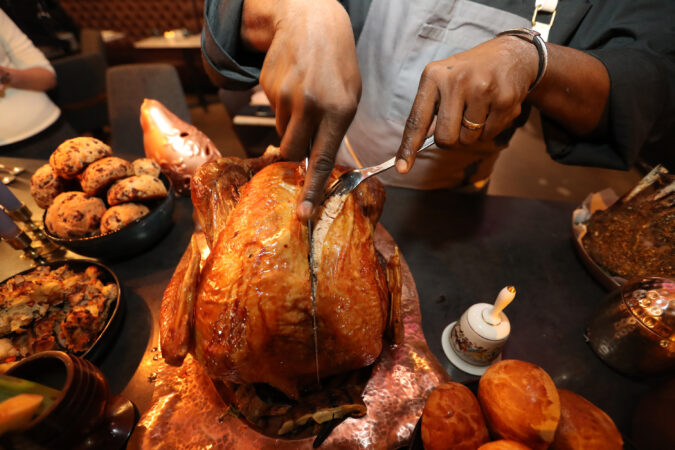
    Here’s one thing to be grateful for this holiday season: A typical Thanksgiving dinner is more affordable this year than last, according to the American Farm Bureau Federation.

    The average cost of a Thanksgiving feast for 10 people — including turkey, stuffing, sweet potatoes, rolls, peas, cranberries, a veggie tray, and pumpkin pie with whipped cream — will cost $55.18, or $5.52 per person, the group found.

    That number varies by region. The Thanksgiving grocery haul was cheapest in the South, at $50.01, and most expensive in the West, at $61.75.

    This is the third year in a row the price has declined after reaching a historic high of $64.05 in 2022.

    The farm group, which has tracked Thanksgiving meal prices for 40 years, compiled data from grocery stores in all 50 states and Puerto Rico. It did not take into account promotional coupons or deals found online or in-store.

    The star of Thanksgiving — the turkey, of course — helped bring down the overall cost of dinner this year. The average price of a 16-pound frozen bird decreased by 16 percent from last year to $21.50, or $1.34 per pound. The report said that its volunteers tracked prices during the first week of November but noted that grocery stores have been featuring Thanksgiving deals to draw in customers and are likely to lower prices further ahead of the holiday.

    “Farmers are still working to rebuild turkey flocks that were devastated by avian influenza, but overall demand has also fallen,” Faith Parum, an economist at the American Farm Bureau Federation, said in a statement. “The combination will help ensure turkey will remain an affordable option for families celebrating Thanksgiving.”

    Low wheat prices helped bring down the cost of items requiring flour, such as dinner rolls, stuffing mix and frozen pie crusts. But the cost of vegetables shot up, the farm group found. A a one-pound veggie tray of carrots and celery increased more than 60 percent, while sweet potatoes increased by 37 percent. The AFB attributed those increases to hurricane damage in North Carolina, the country’s largest producer of sweet potatoes, and possible supply-chain disruptions, such as from weather or labor shortages.

    The Thanksgiving holiday comes right after more than 41 million people were left without food stamps this month because of the government shutdown. Many Americans are reporting higher grocery prices, while also feeling the financial pinch from increases in electricity bills and housing costs.

  • Energy Department loans $1B to help finance the restart of nuclear reactor on Three Mile Island

    Energy Department loans $1B to help finance the restart of nuclear reactor on Three Mile Island

    HARRISBURG — The U.S. Department of Energy said Tuesday that it will loan $1 billion to help finance the restart of the nuclear power plant on Pennsylvania’s Three Mile Island that is under contract to supply power to data centers for tech giant Microsoft.

    The loan is in line with the priorities of President Donald Trump’s administration, including bolstering nuclear power and artificial intelligence.

    For Constellation Energy, which owns Three Mile Island’s lone functioning nuclear power reactor, the federal loan will lower its financing cost to get the mothballed plant up and running again. The 835-megawatt reactor can power the equivalent of approximately 800,000 homes, the Department of Energy said.

    The reactor had been out of operation for five years when Constellation Energy announced last year that it would spend $1.6 billion to restart it under a 20-year agreement with Microsoft to buy the power for its data centers.

    Constellation Energy renamed the functioning unit the Crane Clean Energy Center as it works to restore equipment, including the turbine, generator, main power transformer, and cooling and control systems. It hopes to bring the plant back online in 2027.

    The loan is being issued under an existing $250 billion energy infrastructure program initially authorized by Congress in 2022. Neither the department nor Constellation released terms of the loan.

    The plant, on an island in the Susquehanna River just outside Harrisburg, was the site of the nation’s worst commercial nuclear power accident, in 1979. The accident destroyed one reactor, Unit 2, and left the plant with one functioning reactor, Unit 1.

    In 2019, Constellation Energy’s then-parent company Exelon shut down the functioning reactor, saying it was losing money and Pennsylvania lawmakers had refused to subsidize it to keep it running.

    The plan to restart the reactor comes amid something of a renaissance for nuclear power, as policymakers are increasingly looking to it to shore up the nation’s power supply, help avoid the worst effects of climate change, and meet rising power demand driven by data centers.

  • Sixers can’t overcome Raptors’ third quarter surge in 121-112 loss

    Sixers can’t overcome Raptors’ third quarter surge in 121-112 loss

    Brandon Ingram and RJ Barrett each scored 22 points and the Toronto Raptors won their fifth straight game, surging in the third quarter to beat the 76ers 121-112 on Wednesday night.

    Jakob Poeltl scored 19 points, and Immanuel Quickley had 18 — hitting two three-pointers in the final two minutes — to help the Raptors (10-5) win for the ninth time in 10 games. Scottie Barnes added 16 points, nine rebounds, and five assists.

    Tyrese Maxey led the Sixers (8-6) with 24 points. VJ Edgecombe and Quentin Grimes had 21 points each.

    The 76ers led 56-53 at halftime behind 15 points from Maxey. Toronto took the lead with an 18-7 run to start the third quarter, powered by seven points from Ingram. The Raptors outscored the Sixers 44-28 in the period.

    Toronto shot 2-for-15 from three-point range in the first half, then went 5 for 6 from deep in the third quarter. Toronto is 7-3 on the road and 9-2 against Eastern Conference teams.

    Sixers center Joel Embiid (right knee injury management) missed a fourth straight game and his ninth out of 14 this season. Paul George, who made his season debut Monday, was held out as part of management of his left knee injury. The Sixers announced before the game that Kelly Oubre Jr. will miss at least two weeks with a sprained LCL in his left knee.

    Sixers’ Dominick Barlow (left) is defended by Toronto Raptors’ Scottie Barnes during the first half of Wednesday’s game.

    Raptors rookie forward Collin Murray-Boyles missed the game because of right knee soreness.

    Up next

    The Sixers will make the trip to Milwaukee to face the Bucks on the second night of a back-to-back on Thursday (8 p.m., NBCSP).

  • Trump signs bill to release Jeffrey Epstein case files after fighting it for months

    Trump signs bill to release Jeffrey Epstein case files after fighting it for months

    WASHINGTON — President Donald Trump signed legislation Wednesday that compels his administration to release files on convicted sex offender Jeffrey Epstein, bowing to political pressure from his own party after initially resisting those efforts.

    Trump could have chosen to release many of the files on his own months ago.

    “Democrats have used the ‘Epstein’ issue, which affects them far more than the Republican Party, in order to try and distract from our AMAZING Victories,” Trump said in a social media post as he announced he had signed the bill.

    Now, the bill requires the Justice Department to release all files and communications related to Epstein, as well as any information about the investigation into his death in a federal prison in 2019, within 30 days. It allows for redactions about Epstein’s victims for ongoing federal investigations, but DOJ cannot withhold information due to “embarrassment, reputational harm, or political sensitivity.”

    It was a remarkable turn of events for what was once a farfetched effort to force the disclosure of case files from an odd congressional coalition of Democrats, one GOP antagonist of the president, and a handful of erstwhile Trump loyalists. As recently as last week, the Trump administration even summoned one Republican proponent of releasing the files, Rep. Lauren Boebert of Colorado, to the Situation Room to discuss the matter, although she did not change her mind.

    But over the weekend, Trump did a sharp U-turn on the files once it became clear that congressional action was inevitable. He insisted the Epstein matter had become a distraction to the GOP agenda and indicated he wanted to move on.

    “I just don’t want Republicans to take their eyes off all of the Victories that we’ve had,” Trump said in a social media post Tuesday afternoon, explaining the rationale for his abrupt about-face.

    The House passed the legislation on a 427-1 vote, with Rep. Clay Higgins, R-La., being the sole dissenter. He argued that the bill’s language could lead to the release of information on innocent people mentioned in the federal investigation. The Senate later approved it unanimously, skipping a formal vote.

    It’s long been established that Trump had been friends with Epstein, the disgraced financier who was close to the world’s elite. But the president has consistently said he did not know of Epstein’s crimes and had cut ties with him long ago.

    Before Trump returned to the White House for a second term, some of his closest political allies helped fuel conspiracy theories about the government’s handling of the Epstein case, asserting a cover-up of potentially incriminating information in those files.

  • Larry Summers takes leave from teaching at Harvard after release of Epstein emails

    Larry Summers takes leave from teaching at Harvard after release of Epstein emails

    Former U.S. Treasury Secretary Larry Summers abruptly went on leave Wednesday from teaching at Harvard University, where he once served as president, over recently released emails showing he maintained a friendly relationship with Jeffrey Epstein, Summers’ spokesperson said.

    Summers had canceled his public commitments amid the fallout of the emails being made public and earlier Wednesday severed ties with OpenAI, the maker of ChatGPT. Harvard had reopened an investigation into connections between him and Epstein, but Summers had said he would continue teaching economics classes at the school.

    That changed Wednesday evening with the news that he will step away from teaching classes as well as his position as director of the Mossavar-Rahmani Center for Business and Government with the Harvard Kennedy School.

    “Mr. Summers has decided it’s in the best interest of the Center for him to go on leave from his role as Director as Harvard undertakes its review,” Summers spokesperson Steven Goldberg said, adding that his co-teachers would finish the classes.

    Summers has not been scheduled to teach next semester, according to Goldberg.

    A Harvard spokesperson confirmed to The Associated Press that Summers had let the university know about his decision. Summers decision to go on leave was first reported by The Harvard Crimson.

    Harvard did not mention Summers by name in its decision to restart an investigation, but the move follows the release of emails showing that he was friendly with Epstein long after the financier pleaded guilty to soliciting prostitution from an underage girl in 2008.

    By Wednesday, the once highly regarded economics expert had been facing increased scrutiny over choosing to stay in the teaching role. Some students even filmed his appearance in shock as he appeared before a class of undergraduates on Tuesday while stressing he thought it was important to continue teaching.

    Massachusetts Sen. Elizabeth Warren, a Democrat, said in a social media post on Wednesday night that Summers “cozied up to the rich and powerful — including a convicted sex offender. He cannot be trusted in positions of influence.”

    Messages appear to seek advice about romantic relationship

    The emails include messages in which Summers appeared to be getting advice from Epstein about pursuing a romantic relationship with someone who viewed him as an “economic mentor.”

    “im a pretty good wing man , no?” Epstein wrote on Nov. 30, 2018.

    The next day, Summers told Epstein he had texted the woman, telling her he “had something brief to say to her.”

    “Am I thanking her or being sorry re my being married. I think the former,” he wrote.

    Summers’ wife, Elisa New, also emailed Epstein multiple times, including a 2015 message in which she thanked him for arranging financial support for a poetry project she directs. The gift he arranged “changed everything for me,” she wrote.

    “It really means a lot to me, all financial help aside, Jeffrey, that you are rooting for me and thinking about me,” she wrote.

    New, an English professor emerita at Harvard, did not respond to an email seeking comment Wednesday.

    An earlier review completed in 2020 found that Epstein visited Harvard’s campus more than 40 times after his 2008 sex-crimes conviction and was given his own office and unfettered access to a research center he helped establish. The professor who provided the office was later barred from starting new research or advising students for at least two years.

    Summers appears before Harvard class

    On Tuesday, Summers appeared before his class at Harvard, where he teaches “The Political Economy of Globalization” to undergraduates with Robert Lawrence, a professor with the Harvard Kennedy School.

    “Some of you will have seen my statement of regret expressing my shame with respect to what I did in communication with Mr. Epstein and that I’ve said that I’m going to step back from public activities for a while. But I think it’s very important to fulfill my teaching obligations,” he said.

    Summers’ remarks were captured on video by several students, but no one appeared to publicly respond to his comments.

    Epstein, who authorities said died by suicide in 2019, was a convicted sex offender infamous for his connections to wealthy and powerful people, making him a fixture of outrage and conspiracy theories about wrongdoing among American elites.

    Summers served as treasury secretary from 1999 to 2001 under President Bill Clinton. He was Harvard’s president for five years from 2001 to 2006. When asked about the emails last week, Summers issued a statement saying he has “great regrets in my life” and that his association with Epstein was a “major error in judgement.”

    Other organizations that confirmed the end of their affiliations with Summers included the Center for American Progress, the Center for Global Development and the Budget Lab at Yale University. Bloomberg TV said Summers’ withdrawal from public commitments included his role as a paid contributor, and the New York Times said it will not renew his contract as a contributing opinion writer.