Category: Wires

  • Paris police raid X offices as part of expanded criminal probe

    Paris police raid X offices as part of expanded criminal probe

    French investigators raided X’s Paris headquarters on Tuesday as part of an expanded criminal probe involving seven alleged offenses including spreading antisemitic content and involvement in distributing child pornography.

    The investigation comes amid a broader effort by European governments to curb the spread of unlawful content on the social media platform formerly known as Twitter, with a particular focus on the spread of sexualized imagery produced without consent. The probe could deepen a growing schism between the United States and other countries over how to tackle potentially harmful online content, reflecting broader divides over how to balance free speech online against other rights.

    In a statement Tuesday, Paris Public Prosecutor Laure Beccuau said her office conducted the search alongside Europol and French police specializing in cybercrime. Authorities also summoned current and former X employees, including owner Elon Musk and former chief executive Linda Yaccarino, to attend voluntary interviews in Paris in April, she said.

    “This investigation is being conducted in a constructive manner, with a focus on collaboration with the individuals and companies involved,” the statement said. It added that investigators wanted to give Musk and other employees the opportunity to present their views.

    French authorities initiated their investigation more than a year ago, focused initially on X’s algorithm and handling of data. In the months since, authorities said, they have also started looking into the alleged distribution of child abuse imagery, sharing of Holocaust denial content and use of a person’s image without their consent by Grok, X’s AI tool, to generate sexually explicit deepfakes.

    No charges have yet been brought. X did not immediately respond to a request for comment Tuesday morning.

    The company categorically denied wrongdoing last year, when the French probe was limited to allegations of potential algorithmic manipulations and fraudulent data extraction. In a July statement, the platform accused French authorities of launching a “politically-motivated criminal investigation” in violation of its users’ free speech.

    On Tuesday, the Paris prosecutor’s office said child abuse images appeared to proliferate on X in 2025 after the platform apparently changed its detection tools, resulting in a reported drop in the number of abusive images being flagged.

    Authorities also voiced increasing concern over Grok’s generation of sexual images of people without their consent, and glorification of crimes against humanity and antisemitic content. Investigators also accused X of hindering separate criminal investigations into online hate speech by denying authorities’ requests — which had previously been granted — to help identify users.

    “The investigations are based on the non-compliance with French legislation by Grok for generating and disseminating child pornography, sexual deepfakes or antisemitic contents,” the Paris prosecutor’s office said.

    In France, it is a criminal offense to deny the existence of the Holocaust, with those convicted facing up to one year’s imprisonment and potential fines of up to around $50,000. And across Europe, laws governing free speech generally allow for more balancing between speech and other rights than they do in the United States. In many nations, hate speech targeting racial, religious or other groups is outlawed — reflecting a broader cultural and legal gap over free speech that divides the Atlantic.

    Also on Tuesday, Britain’s Information Commissioner’s Office said it opened new investigations into potential data breaches by X, though they are narrower in scope and didn’t include criminal allegations. “We have taken this step following reports that Grok has been used to generate non‑consensual sexual imagery of individuals, including children,” the ICO said.

    Britain’s communications regulator, Ofcom — a separate body — also said it was analyzing evidence to determine whether X broke the law. Last month, it opened an investigation of its own following reports that Grok was “being used to create and share undressed images of people — which may amount to intimate image abuse or pornography — and sexualised images of children that may amount to child sexual abuse material.”

    Last week, the European Commission announced a separate investigation into X to assess whether the platform’s deployment of Grok in Europe breached European law. The investigation also relates to the dissemination of sexually explicit images.

    In response to outrage from governments and regulators, Musk said last month that X had stopped Grok from generating sexualized images of people without their consent “in those jurisdictions where it’s illegal.”

    A Washington Post investigation found that Musk’s AI start-up, xAI, allegedly embraced and rolled back guardrails on sexualized material, ignoring warnings about potential legal and ethical risks.

  • Homeland Security is targeting Americans with this secretive legal weapon

    Homeland Security is targeting Americans with this secretive legal weapon

    He had decided that the America he believed in would not make it if people like him didn’t speak up, so on a cool, rainy morning in the suburbs of Philadelphia, Jon, 67 and recently retired, marched up to his study and began to type.

    He had just read about the U.S. Department of Homeland Security’s case against an Afghan it was trying to deport. The immigrant, identified in the Washington Post’s Oct. 30 investigation as H, had begged federal officials to reconsider, telling them the Taliban would kill him if he was returned to Afghanistan.

    “Unconscionable,” Jon thought as he found an email address online for the lead prosecutor, Joseph Dernbach, who was named in the story. Peering through metal-rimmed glasses, Jon opened Gmail on his computer monitor.

    “Mr. Dernbach, don’t play Russian roulette with H’s life,” he wrote. “Err on the side of caution. There’s a reason the U.S. government along with many other governments don’t recognise the Taliban. Apply principles of common sense and decency.”

    That was it. In five minutes, Jon said, he finished the note, signed his first and last name, pressed send, and hoped his plea would make a difference.

    Five hours and one minute later, Jon was watching TV with his wife when an email popped up in his inbox. He noticed it on his phone.

    “Google,” the message read, “has received legal process from a Law Enforcement authority compelling the release of information related to your Google Account.”

    Listed below was the type of legal process: “subpoena.” And below that, the authority: “Department of Homeland Security.”

    That’s how it began. Soon would come a knock at the door by men with badges and, for Jon, the relentless feeling of being surveilled in a country where he never imagined he would be.

    Administrative subpoena

    Jon read the message a second time, then a third. He didn’t tell his wife right away, worried she would panic. It could be fake, he thought, or a mistake. Or maybe, he feared, it had something to do with that four-sentence email he’d sent a prosecutor for the federal government.

    Google hadn’t provided him a copy of the subpoena, but it wasn’t the conventional sort. Homeland Security had come after him with what’s known as an administrative subpoena, a powerful legal tool that, unlike the ones people are most familiar with, federal agencies can issue without an order from a judge or grand jury.

    Though the U.S. government had been accused under previous administrations of overstepping laws and guidelines that restrict the subpoenas’ use, privacy and civil rights groups say that, under President Donald Trump, Homeland Security has weaponized the tool to strangle free speech.

    For many Americans, the anonymous ICE officer, masked and armed, represents Homeland Security’s most intimidating instrument, but the agency often targets people in a far more secretive way.

    Homeland Security is not required to share how many administrative subpoenas it issues each year, but tech experts and former agency staff estimate it’s well into the thousands, if not tens of thousands. Because the legal demands are not subject to independent review, they can take just minutes to write up and, former staff say, officials throughout the agency, even in mid-level roles, have been given the authority to approve them.

    In March, Homeland Security issued two administrative subpoenas to Columbia University for information on a student it sought to deport after she took part in pro-Palestinian protests. In July, the agency demanded broad employment records from Harvard University with what the school’s attorneys described as “unprecedented administrative subpoenas.” In September, Homeland Security used one to try to identify Instagram users who posted about ICE raids in Los Angeles. Last month, the agency used another to demand detailed personal information about some 7,000 workers in a Minnesota health system whose staff had protested Immigration and Customs Enforcement’s intrusion into one of its hospitals.

    “There’s no oversight ahead of time, and there’s no ramifications for having abused it after the fact,” said Jennifer Granick, an attorney for the American Civil Liberties Union. “As we are increasingly in a world where unmasking critics is important to the administration, this type of legal process is ripe for that kind of abuse.”

    Since the start of Trump’s second term, the ACLU has repeatedly heard from people whom Homeland Security targeted with administrative subpoenas, the organization says. It’s taken on three of those cases, but none of them, its attorneys say, illustrate how the agency has exploited that legal power better than Jon’s.

    “This subpoena was part of a criminal investigation,” Assistant Secretary Tricia McLaughlin said in a statement, noting that Homeland Security Investigations has “broad administrative subpoena authority” under the law.

    McLaughlin didn’t say who was under criminal investigation, and the agency didn’t answer questions about Jon’s case or its broader use of administrative subpoenas.

    In his living room on that fall day, Jon tried to make sense of the email.

    He’d attended a No Kings rally last year, he said, and sent a few notes of criticism to lawmakers and maybe one to Trump’s administration during the president’s first term. But Jon, who worked in insurance, had never been arrested or questioned, he said, and his messages were written with the same “moderation” he displayed in the email to Dernbach, whose address he’d easily found on Florida’s bar association website.

    Jon, who asked that the Post withhold his last name out of fear for his family’s safety, followed a link in the email that led him to a form letter. Google didn’t tell Jon what information the government officials wanted, but to keep them from getting it, he would have to file a motion in federal court and submit it to Google within seven days. Jon’s heart thudded in his ears.

    He felt sick. Unsure of what to do, he told his wife.

    “This is crazy,” she said. “How can our government be doing this?”

    Born in England to a Jewish family, he grew up hearing the story of how his mother, at 20, joined an intelligence service amid the Holocaust to help Britain fight the Nazis. In 1978, while he studied law and politics at Cardiff University in Wales, he organized a protest of the Soviet Union’s oppression of Jews, and he later traveled to the country to visit families who’d been ostracized. During a stay in Israel, he demonstrated against the movement to resettle the West Bank. In the mid-1980s, he supported mine workers in their bitter dispute with British Prime Minister Margaret Thatcher.

    It was around then that Jon fell for a girl from Philly, and in 1989 he moved with her to Pennsylvania to raise a family a half hour from Independence Hall, where the U.S. was founded.

    A year later, Jon watched President George H.W. Bush sign the Immigration Act of 1990, a bill that the Republican praised for recognizing “the fundamental importance and historic contributions of immigrants to our country.” Jon applied for citizenship a few years later, because this was his home now and he wanted to vote for the people in charge of it.

    He admired nothing more about the U.S. than the Constitution he’d studied before swearing his oath of allegiance. The rights it guaranteed made the country unlike any in the world, Jon thought, and he was proud to be part of it.

    Now, in his 27th year as a citizen, he was staring at his phone, terrified that the same country was trying to strip him of those rights.

    No copy of subpoena

    Jon needed help, so a day or two after he received the email from Google, he called Judi Bernstein-Baker, who, at 80, remains one of Philadelphia’s most well-known immigration lawyers.

    She was willing to offer advice, she told him, but first needed to see the subpoena.

    “They didn’t send me the subpoena,” Jon explained over the phone.

    “How do you challenge a subpoena you don’t have a copy of?” she asked.

    Worse, he told her, Google had given him a single week to file a motion to quash the government’s demand.

    Unless you’re rich, Bernstein-Baker recalled thinking, nobody can find an attorney to go to federal court in seven days.

    Jon assumed the subpoena had been approved by a judge or grand jury, because he didn’t know any other kind existed, but when he called the federal court district mentioned in Google’s notice, a clerk told him they could find no trace of it.

    Jon pored over Reddit posts and old news coverage, eventually working out on his own that the subpoena was not judicial, but administrative.

    The U.S. government has issued such subpoenas for decades, but their use expanded, and became more controversial, after the Sept. 11, 2001, attacks. A vast range of agencies — from the FBI to the Labor Department — can deploy them for specific types of investigations.

    Proponents describe administrative subpoenas as critical tools that allow investigators to avoid protracted judicial reviews to obtain information that could, for example, help them identify someone sexually exploiting a child or track down a suspected drug trafficker.

    Speed is what makes them so useful, former and current federal investigators told the Post. With no external bureaucracy, the government can obtain phone, financial and internet records in days.

    Detractors argue that the lack of independent oversight and the secrecy with which they can be wielded threaten core democratic principles.

    “This vast administrative power has remained opaque even to those who receive these subpoenas and invisible to those it affects most,” Lindsay Nash, a professor and researcher, wrote for the Columbia Law Review last year.

    For Jon, discovering the nature of his subpoena made it no easier to obtain.

    Google had notified him from a “noreply” address and directed him to request a copy from Homeland Security but didn’t provide a phone number. Jon’s efforts to reach the agency led to a maddening, hours-long circuit of answering machines, dead numbers, and uninterested attendants.

    “It is a rigged process, designed to keep people in the dark,” Jon wrote an attorney at a nonprofit in California that offered him basic guidance.

    Google did not answer questions from the Post specific to Jon’s case or explain why it gave him only seven days to respond to a subpoena it didn’t provide.

    The company is not required by law to inform users of government requests, but a spokesperson said it does unless it’s legally prohibited from doing so or in exceptional circumstances, such as when someone’s life is in jeopardy. Google can extend the seven-day deadline, the spokesperson said, though in Jon’s case, the company never told him that or provided a way to request more time.

    Like other large tech firms, Google regularly publishes “transparency reports” that show how many government demands for user data it receives, but the companies don’t differentiate between judicial and administrative subpoenas, despite their fundamental differences.

    Both Google and Meta received a record number of subpoenas in the U.S. during the first half of last year, as Trump began his second term in office, according to the companies’ most recent reports. Google, which has shared subpoena data since 2012, was sent 28,622, a 15% increase over the previous six months.

    Meta, Microsoft, Amazon, Apple, and Snap say that they, like Google, alert their users to administrative subpoenas unless they’re barred from doing so or in extenuating circumstances.

    T-Mobile and TikTok, in contrast, say they notify users when required to by law. Verizon and AT&T wouldn’t tell the Post whether they provide any notice, and X did not reply to questions.

    Jon kept searching for answers as Google’s deadline passed.

    In the case of the Instagram users posting about ICE raids, he read, the government dropped its case after the ACLU filed a 40-page legal challenge.

    In a similar case in Pennsylvania, Homeland Security asked Meta to identify the people behind a Facebook and Instagram account that tracked ICE raids in Montgomery County. Federal attorneys argued in a court filing that the accounts invited scrutiny when they posted pictures of ICE agents’ faces, license plates, and weapons.

    “John Doe, through his social media accounts, is threatening ICE agents to impede the performance of their duties,” the government told the judge in December.

    A month later, it withdrew the subpoena, and the case was closed.

    Even if courts decide that Homeland Security abused its authority and violated constitutional rights, legal experts doubt the agency will be forced to stop the practice.

    The more Jon learned about administrative subpoenas, the more troubled he was that many Americans had never heard of them.

    After leaving England, he had fallen into insurance work, but he’d begun his career in British law, representing social workers from some of London’s poorest neighborhoods. As he neared retirement, he signed up for a certificate program at Villanova University that trains people to help immigrants navigate a legal system that often feels overwhelming.

    Now here he was, struggling to navigate the same system. But Jon wouldn’t let it go. He kept researching, calling, emailing.

    “Obsessed,” his wife said.

    “Beyond my personal situation, is the bigger question of how they misuse their powers to target innocent victims across the board,” he wrote one attorney. “If this goes unchallenged, we are all complicit or vulnerable in allowing the Government to abuse its powers.”

    Police at the door

    Through the window, his wife saw them coming.

    “It’s the police!” she screamed.

    Jon hurried downstairs. It was about 9:30 on the morning of Nov. 17. On his porch, he found a local officer, in uniform, with two men in slacks and sport coats.

    “We’re with Homeland Security,” he recalled one of them saying.

    They showed him their badges.

    His breath quickened, but he tried not to panic. A diabetic now on Social Security, Jon stands 5-foot-6, and the few remaining hairs on his head turned gray years ago. He speaks in a plodding British accent, and unless he’s watching a Tottenham Hotspur soccer match, he hardly ever raises his voice.

    But he’d seen videos of Homeland Security encounters that turned violent, even for women, teenagers, and old men.

    Inside, he could hear the dog yelping and his wife shouting, “Don’t you have anything better to do?”

    One of the federal agents showed him a copy of the email to Dernbach.

    “We want to hear your side of the story,” he recalled one of them saying.

    He told the men about Tthe Post’s investigation and his dismay over Homeland Security’s attempt to deport the Afghan who’d supported the U.S. war effort.

    When they asked how he knew Dernbach’s email address, Jon, whose only social media is Facebook, told them he found it through a basic Google search.

    He also shared the notice from Google, which, he said it seemed, they had not seen. Someone from Homeland Security’s headquarters in Washington had told their office to interview Jon, the men shared, though they didn’t give a name.

    His message to Dernbach, he told them, was an opinion, protected by the First Amendment.

    “This is as mild as one could possibly interpret,” he recalled saying.

    The investigators agreed that the email broke no law, he said, but they pointed to his mentions of Russian roulette and the Taliban. Perhaps, they conjectured, the prosecutor felt threatened.

    That was absurd, given the context, Jon thought, but he didn’t say that.

    After about 20 minutes, the men thanked him for his time.

    But Jon had one more question.

    He sometimes returned to England to visit family, and he and his wife had planned to travel over Christmas to Puerto Rico for their 40th wedding anniversary.

    “I hope this doesn’t mean I’m going to get stopped at the airport,” he said. “Am I on a list now?”

    Of course not, he said the men told him. He had nothing to worry about.

    Homeland Security demands

    An online privacy expert gave Jon a little-known email address he could use to request the subpoena from Google, though the guy warned him he might not get a response. Jon tried it anyway.

    That same day, Nov. 21, a Post reporter contacted Google about his case. Two hours after that — 22 days after Google notified Jon of the subpoena — the company provided him a copy, though the name of the official who authorized it had been redacted.

    The investigators who questioned Jon told him Homeland Security couldn’t obtain his emails, documents, photos, or other content with an administrative subpoena, he said, but the breadth of what federal investigators did ask for shook him.

    Among their demands, which they wanted dating back to Sept. 1: the day, time, and duration of all his online sessions; every associated IP and physical address; a list of each service he used; any alternate usernames and email addresses; the date he opened his account; his credit card, driver’s license, and Social Security numbers.

    Then came another revelation three days later, when Google informed him that it had “not yet responded” to Homeland Security’s legal demand. Jon had assumed Google provided the government everything it asked for weeks earlier, well before the agents visited his home.

    The company didn’t explain the delay to Jon or the Post.

    “Our processes for handling law enforcement subpoenas are designed to protect users’ privacy while meeting our legal obligations,” a spokesperson told the Post. “We review all legal demands for legal validity, and we push back against those that are overbroad or improper, including objecting to some entirely.”

    The ACLU agreed to represent Jon pro bono, filing a motion to quash in federal court on Monday to prevent Google from ever releasing his information. His attorneys accused the government of violating the statute that limits the use of administrative subpoenas for “immigration enforcement,” and the organization argued that Homeland Security had violated Jon’s right to free speech.

    “It doesn’t take that much to make people look over their shoulder, to think twice before they speak again,” said Nathan Freed Wessler, one of the ACLU attorneys. “That’s why these kinds of subpoenas and other actions — the visits — are so pernicious. You don’t have to lock somebody up to make them reticent to make their voice heard. It really doesn’t take much, because the power of the federal government is so overwhelming.”

    The knowledge that Google never sent the government the information it requested both comforted and unnerved Jon, because it meant that those two federal agents had tracked him down some other way.

    He’d noticed that on the subpoena’s final page, the government had asked Google not to tell him about it.

    “Any such disclosure,” the message read, “will impede the investigation and thereby interfere with the enforcement of federal law.”

    Google had ignored that request, too, and he was relieved. But it made Jon wonder.

    What if the U.S. government had investigated him in other ways? And what if it still was?

    No real safeguards

    One morning in early December, Jon shared his story with two acquaintances as they rode the train into Philadelphia for an interfaith protest, unrelated to the subpoena, outside ICE’s field office.

    “They don’t have to go into court,” Jon said of Homeland Security. “They don’t have to bother spending the money to do that. They just rely on the acquiescence of these companies to do their bidding.”

    “Clearly they’re doing it to further a particular agenda,” David Mosenkis said from the seat in front of Jon.

    “To intimidate,” Jon interjected.

    “That’s what they want,” said Rabbi Leah Wald, sitting next to Mosenkis. “They want everyone to be scared, right?”

    Jon thought back to how it had all started, with the note to Dernbach.

    “There are no real safeguards anymore,” he said, “until people recognize that we’re all potential targets.”

    Mosenkis, 65, stared out the window into the morning sunlight, his eyes drifting across a city where he’d demonstrated against perceived injustices for more than three decades.

    “I organize this weekly gathering, protest,” he said, “called ‘We the People Wednesdays.’”

    The group took on a different topic each week — “Election integrity,” “Defending the Constitution against domestic enemies” — and wrote postcards to public officials.

    Their letters, Mosenkis realized, were no different from Jon’s email.

    “This is exactly the kind of thing we do,” he said. “And we tell people to sign their names and ZIP codes.”

    He shook his head. He rubbed his forehead.

    “If that’s subject to surveillance,” Mosenkis said, “then anything could be.”

    The train soon pulled into the city, where they gathered in the cold with about 100 other people outside the ICE office. On the sidewalk, they listened to a rabbi recall the Torah’s command to love the stranger. Jon waved signs that read “STOP ICE RAIDS” and “LOVE THY NEIGHBOR.”

    In the weeks that followed, he tried to turn his attention to the holidays and his anniversary trip with his wife.

    Just before Christmas, the couple left for Puerto Rico. At the airport outside San Juan, they waited at baggage claim until every other passenger had left. Their luggage, they were told, remained in Philadelphia.

    “Is this a coincidence?” he asked his wife.

    The bags arrived at their cruise ship later that night, and the couple opened them in the cabin.

    Nothing looked out of place in his wife’s, but in Jon’s, he found a notice from the Transportation Security Administration.

    “Your bag,” the standard form read, “was among those selected for physical inspection.”

    It did not explain why.

    Jon didn’t want to talk about what it might mean, not then. So he took a photo, closed the bag and tried to go to sleep.

    — — –

    Drew Harwell and Nate Jones contributed to this report.

    John Woodrow Cox can be reached securely on Signal at johnwoodrowcox.01.

  • NASA delays astronauts’ lunar trip until March after hydrogen leaks mar fueling test

    NASA delays astronauts’ lunar trip until March after hydrogen leaks mar fueling test

    CAPE CANAVERAL, Fla. — NASA’s long-awaited moonshot with astronauts is off until at least March because of hydrogen fuel leaks that marred the dress rehearsal of its giant new rocket.

    It’s the same problem that delayed the Space Launch System rocket’s debut three years ago. That first test flight was grounded for months because of leaking hydrogen, which is highly flammable and dangerous.

    “Actually, this one caught us off guard,” NASA’s John Honeycutt said Tuesday, hours after the test came to an abrupt halt at Kennedy Space Center.

    Until the exasperating fuel leaks, the space agency had been targeting as soon as this weekend for humanity’s first trip to the moon in more than half a century.

    “When you’re dealing with hydrogen, it’s a small molecule. It’s highly energetic and we like it for that reason and we do the best we can,” Honeycutt explained.

    Officials said the month-long delay will allow the launch team to conduct another fueling test before committing the four astronauts — three U.S. and one Canadian — to a lunar fly-around. It’s too soon to know when the countdown dress rehearsal might be repeated.

    Any repairs to deformed or damaged seals, or other components, can likely be completed at the pad, managers said. A return to the Vehicle Assembly Building would likely result in an even longer delay.

    The leaks cropped up early in Monday’s loading operation and again hours later, ultimately halting the countdown clocks at the five-minute mark. Launch controllers had wanted to get all the way down to a half-minute in the countdown, but the escaping hydrogen exceeded safety limits.

    NASA repeatedly interrupted the flow of liquid hydrogren, which was minus 423 degrees Fahrenheit, in an attempt to warm up the area between the rocket and fuel lines and, hopefully, reseat any loose seals. But that didn’t work and neither did altering the flow of the hydrogen — adjustments that allowed the first SLS rocket to finally soar without a crew in 2022.

    With their launch now off until at least March 6, commander Reid Wiseman and his crew were given the all-clear to emerge from quarantine in Houston. They will reenter it two weeks before the next launch attempt.

    Wiseman said on the social platform X that he was proud of how the dress rehearsal went, “especially knowing how challenging the scenario was for our launch team doing the dangerous and unforgiving work.”

    The extreme cold at the launch site did not contribute to the fuel leaks or any other problem, according to officials. Heaters kept the Orion capsule warm atop the 322-foot rocket, while constant purging protected the rocket and ground systems.

    Amit Kshatriya, NASA’s associate administrator, stressed that the Space Launch System is “an experimental vehicle,” with more lessons to be learned. Years between fueling tests and flights don’t help, he added.

    “I’m just reminded again almost four days and 40 years from Challenger, nobody sitting in one of these chairs needs to be calling any of these vehicles operational,” Kshatriya said at a news conference.

    NASA has only a handful of days any given month to send them around the moon — the first time astronauts will have flown there since 1972. They won’t land on the moon or even go into lunar orbit during the nearly 10-day mission, but rather check out life support and other vital capsule systems ahead of a moon landing by other astronauts in a few years.

    NASA sent 24 astronauts to the moon during the 1960s and 1970s Apollo. The new Artemis program is aiming for new territory — the moon’s south polar region — and looking to keep crews on the lunar surface for much longer periods.

  • Signs of forced entry were found at the Arizona home of ‘Today’ show host Savannah Guthrie’s mother

    Signs of forced entry were found at the Arizona home of ‘Today’ show host Savannah Guthrie’s mother

    TUCSON, Ariz. — Investigators found signs of forced entry at the Arizona home of Today show host Savannah Guthrie’s mother, a person familiar with the investigation said Tuesday, as the host asked for prayers to help bring back the 84-year-old, who is believed to have been taken against her will.

    The host described her mother as “a woman of deep conviction, a good and faithful servant” in a social media post late Monday. She asked supporters to “raise your prayers with us and believe with us that she will be lifted by them in this very moment. Bring her home.”

    Nancy Guthrie must be found soon because she could die without her medication, Pima County Sheriff Chris Nanos said, urging whoever has her to free her.

    “If she’s alive right now, her meds are vital. I can’t stress that enough. It’s been better than 24 hours, and the family tells us if she doesn’t have those meds, it can become fatal,” Nanos said.

    Investigators also found specific evidence in the home showing there was a nighttime kidnapping, the person told The Associated Press. Several of Guthrie’s personal items, including her cellphone, wallet, and her car, were still there after she disappeared.

    Investigators are reviewing surveillance video from nearby homes and working to analyze data from cellphone towers. Police are also reviewing information from license plate cameras in the area, according to the person, who was not authorized to publicly discuss details of the case and spoke to AP on condition of anonymity.

    The motive remains a mystery. Investigators do not believe at this point that the abduction was part of a robbery, home invasion or kidnapping-for-ransom plot, the person said.

    The sheriff and the local FBI chief held a news conference and urged the public to offer tips, but they revealed few new details about the investigation. Nanos declined to say whether Guthrie’s disappearance was thought to be random or targeted or to describe the evidence found at her home.

    For a second day, Today opened Tuesday with Nancy Guthrie’s disappearance, but Savannah Guthrie was not at the anchor’s desk. Nanos said Monday that she is in Arizona. The host grew up in Tucson, graduated from the University of Arizona and previously worked as a reporter and anchor at Tucson television station KVOA.

    Nancy Guthrie was last seen Saturday night at her home in the Tucson area, where she lived alone and was reported missing Sunday. Someone at her church called a family member to say she was not there, leading family to search her home and then call 911, Nanos said.

    Nancy Guthrie has limited mobility, and officials do not believe she left on her own. Nanos said she is of sound mind.

    In the hours after she disappeared, searchers used drones and dogs and were supported by volunteers and Border Patrol. The homicide team was also involved, Nanos said.

    On Monday morning, search crews were pulled back.

    “We don’t see this as a search mission so much as it is a crime scene,” the sheriff said.

    Nancy Guthrie’s home is in the affluent Catalina Foothills area on the northern edge of Tucson. Her brick home has a gravel driveway and a yard covered in prickly pear and saguaro cactus.

    Savannah Guthrie’s parents settled in Tucson in the 1970s when she was a young child. The youngest of three siblings, she credits her mom with holding their family together after her father died of a heart attack at age 49, when Savannah was just 16.

    “When my dad died, our family just hung onto each other for dear life because it was such a shock. We were just trying to figure out how to become a family of four when we’d always been a family of five,” she said on “Today” in 2017.

    Nancy Guthrie raised them on her own. The host often brought her mother on Today as a guest.

    “She has met unthinkable challenges in her life with grit, without self-pity, with determination and always, always with unshakeable faith,” Savannah said on the show in 2022 on Nancy Guthrie’s 80th birthday.

    “She loves us, her family, fiercely, and her selflessness and sacrifice for us, her steadfastness and her unmovable confidence is the reason any of us grew up to do anything.”

  • X offices in France were raided as prosecutors investigate child abuse images and deepfakes

    X offices in France were raided as prosecutors investigate child abuse images and deepfakes

    PARIS — French prosecutors raided the offices of social media platform X on Tuesday as part of a preliminary investigation into allegations including spreading child sexual abuse images and deepfakes. They have also summoned billionaire owner Elon Musk for questioning.

    X and Musk’s artificial intelligence company xAI also face intensifying scrutiny from Britain’s data privacy regulator, which opened formal investigations into how they handled personal data when they developed and deployed Musk’s artificial intelligence chatbot Grok.

    Grok, which was built by xAI and is available through X, sparked global outrage last month after it pumped out a torrent of sexualized nonconsensual deepfake images in response to requests from X users.

    The French investigation was opened in January last year by the prosecutors’ cybercrime unit, the Paris prosecutors’ office said in a statement. It’s looking into alleged “complicity” in possessing and spreading pornographic images of minors, sexually explicit deepfakes, denial of crimes against humanity and manipulation of an automated data processing system as part of an organized group, among other charges.

    Prosecutors asked Musk and former CEO Linda Yaccarino to attend “voluntary interviews” on April 20. Employees of X have also been summoned that same week to be heard as witnesses, the statement said. Yaccarino was CEO from May 2023 until July 2025.

    A spokesperson for X did not respond to multiple requests for comment. X’s lawyer in France, Kami Haeri, told The Associated Press: ″We are not making any comment at this stage.”

    In a message posted on X, the Paris prosecutors’ office announced the ongoing searches at the company’s offices in France and said it was leaving the platform while calling on followers to join it on other social media.

    “At this stage, the conduct of the investigation is based on a constructive approach, with the aim of ultimately ensuring that the X platform complies with French law, as it operates on the national territory,” the prosecutors’ statement said.

    European Union police agency Europol “is supporting the French authorities in this,” Europol spokesperson Jan Op Gen Oorth told the AP, without elaborating.

    French authorities opened their investigation after reports from a French lawmaker alleging that biased algorithms on X likely distorted the functioning of an automated data processing system.

    It expanded after Grok generated posts that allegedly denied the Holocaust, a crime in France, and spread sexually explicit deepfakes, the statement said.

    Grok wrote in a widely shared post in French that gas chambers at the Auschwitz-Birkenau death camp were designed for “disinfection with Zyklon B against typhus” rather than for mass murder — language long associated with Holocaust denial.

    In later posts on X, the chatbot reversed itself and acknowledged that its earlier reply was wrong, saying it had been deleted and pointed to historical evidence that Zyklon B was used to kill more than 1 million people in Auschwitz gas chambers.

    The chatbot also appeared to praise Adolf Hitler last year, in comments that X took down after complaints.

    In Britain, the Information Commissioner’s Office said it’s looking into whether X and xAI followed the law when processing personal data and whether Grok had any measures in place to prevent its use to generate “harmful manipulated images.”

    “The reports about Grok raise deeply troubling questions about how people’s personal data has been used to generate intimate or sexualised images without their knowledge or consent, and whether the necessary safeguards were put in place to prevent this,” said William Malcolm, an executive director at the watchdog.

    He didn’t specify what the penalty would be if the probe found the companies didn’t comply with data protection laws.

    A separate investigation into Grok launched last month by the U.K. media regulator, Ofcom, is ongoing.

    Ofcom said Tuesday it’s still gathering evidence and warned the probe could take months.

    X has also been under pressure from the EU. The 27-nation bloc’s executive arm opened an investigation last month after Grok spewed nonconsensual sexualized deepfake images on the platform.

    Brussels has already hit X with a 120-million euro (then-$140 million) fine for shortcomings under the bloc’s sweeping digital regulations, including blue checkmarks that broke the rules on “deceptive design practices” that risked exposing users to scams and manipulation.

    On Monday, Musk ‘s space exploration and rocket business, SpaceX, announced that it acquired xAI in a deal that will also combine Grok, X and his satellite communication company Starlink.

  • NFL commissioner Roger Goodell says expanding the regular season to 18 games is ‘not a given’

    NFL commissioner Roger Goodell says expanding the regular season to 18 games is ‘not a given’

    SAN JOSE, Calif. — Not so fast on an 18-game NFL season.

    A week after Patriots owner Robert Kraft made it seem inevitable, NFL commissioner Roger Goodell said expanding the regular season to 18 games is “not a given.”

    “We have not had any formal discussions about it and, frankly, very little, if any, informal conversations,” Goodell said Monday at his annual state of the NFL news conference ahead of the Super Bowl. “I’ve heard people talk about it in the context. It is not a given that we will do that. It’s not something we assume will happen. It’s something we want to talk about with the union leadership.”

    Last Tuesday, Kraft made it seem 18 games was a foregone conclusion.

    “I want to tell you guys that we’re going to push like the dickens now to make international (games) more important with us,” Kraft told 98.5 FM last week. “Every team will go to 18 (regular-season games) and two (preseason games) and eliminate one of the preseason games, and every team every year will play one game overseas.”

    Clearly, word reached Goodell.

    He mentioned that the NFL Players Association will be going through a leadership transition and that the conversation will be complex. Goodell pointed out player safety concerns, competitive issues, the potential need to add another bye and roster sizes as areas that have to be addressed through collective bargaining.

    The current CBA between the NFL and its players’ union expires in 2030.

    “As (the NFLPA) determines their priorities, we are doing the same at the ownership level so that when we get together, we can address these issues together,” Goodell said.

    The momentum for an 18th game took off when Goodell made an appearance on the Pat McAfee Show at the 2024 NFL draft in Detroit and said: “I’d rather replace a preseason game with a regular-season (game) any day, that’s just picking quality. If we got to 18 (regular season) and two (preseason), that’s not an unreasonable thing.”

    He’s walked it back previously but not to this point.

    The NFL added a 17th game in 2021 in the most recent CBA.

    Seattle Seahawks receiver Cooper Kupp hinted Monday night that owners would have to give up a bigger piece of the financial pie to get an 18th done.

    “For the 18th game to happen, there’s obviously going to be some negotiation,” Kupp said. “There’s some things, give and take. Unfortunately, it’s one of those things. If the 18th game is on the table, there’s going to have to be some talks about what makes that worth it to the players. And we’ll get to that point. We’ll cross that bridge.”

    Tisch-Epstein

    The NFL will look into New York Giants co-owner Steve Tisch and his association with Jeffrey Epstein after his name showed up more than 400 times in files released by the U.S. Justice Department regarding Epstein.

    “Absolutely we will look at all the facts,” Goodell said. “We’ll look at the context of those and try to understand that. We’ll look at how that falls under the (league personal conduct) policy. I think we’ll take one step at a time. Let’s get the facts first.”

    Tisch said last week he knew Epstein and that they “exchanged emails about adult women” and “discussed movies, philanthropy and investments.” But Tisch, 76, denied going to Epstein’s island and was never charged in the investigation.

    Epstein killed himself in a New York jail cell in August 2019, a month after being indicted on federal sex trafficking charges.

    The documents were disclosed under the Epstein Files Transparency Act, the law enacted after months of public and political pressure that requires the government to open its files on the late financier and his confidant and onetime girlfriend, Ghislaine Maxwell.

  • Disney parks chief Josh D’Amaro will succeed Bob Iger as CEO

    Disney parks chief Josh D’Amaro will succeed Bob Iger as CEO

    Disney has named its parks chief Josh D’Amaro to succeed Bob Iger as the entertainment giant’s top executive.

    D’Amaro will become the ninth CEO in the more than 100-year-old company’s history. He has overseen the company’s theme parks, cruises, and resorts since 2020. The so-called Experiences division has been a substantial moneymaker for Disney, with $36 billion in annual revenue in fiscal 2025 and 185,000 employees worldwide.

    The 54-year-old takes over a time when Disney is flush with box-office hits such as Zootopia 2 and Avatar: Fire and Ash and its streaming business is strong. At the same time, Disney has seen a decline in foreign visitors to its domestic theme parks. Tourism to the U.S. has fallen overall during an aggressive immigration crack down by the Trump administration, as well as clashes with almost all of country’s trading partners.

    The decision on the next chief executive at Disney comes almost four years after the company’s choice to replace Iger went disastrously, forcing Iger back into the job.

    Only two years after stepping down as CEO, Iger returned to Disney in 2022 after a period of clashes, missteps ,and a weakening financial performance under his hand-picked successor, Bob Chapek.

    Disney meticulously and methodically sought out its next CEO this time. The company created a succession planning committee in 2023, but the search began in earnest in 2024 when Disney enlisted James Gorman, who is currently Disney’s chairman and previously served as Morgan Stanley’s executive chairman, to lead the effort. That still gave it ample opportunity to vet candidates, as Iger agreed to a contract extension.

    Disney said that Iger will continue to serve as a senior adviser and board member until his retirement from the company at the end of the year.

    While external candidates were considered, it was widely expected that Disney would look internally for the next CEO. The advantage would be that Disney executives were already being mentored by Iger, and had extensive contact with the company’s 15 board members, of which Iger is a member.

    Disney is unique in that its top executive must oversee a sprawling entertainment company with branches reaching in every direction, while also serving as an unusually public figure.

    D’Amaro and Disney Entertainment co-chair Dana Walden quickly emerged as the front-runners for the top job.

    D’Amaro, who has been with Disney since 1998, has been leading the charge on Disney’s multiyear $60 billion investment into its cruise ships, resorts, and theme parks. He also oversees Walt Disney Imagineering, which is in charge of the design and development of the company’s theme parks, resorts, cruise ships, and immersive experiences worldwide. In addition, D’Amaro has been leading Disney’s licensing business, which includes its partnership with Epic Games.

    “Throughout this search process, Josh has demonstrated a strong vision for the company’s future and a deep understanding of the creative spirit that makes Disney unique in an ever-changing marketplace,” Gorman said in prepared remarks. “He has an outstanding record of business achievement, collaborating with some of the biggest names in entertainment to bring their stories to life in our parks, showcasing the power of combining Disney storytelling with cutting-edge technology.”

    In her most recent role as co-chair of Disney Entertainment, Walden has helped oversee Disney’s streaming business, along with its entertainment media, news, and content businesses. She joined Disney in 2019. Before that, Walden spent 25 years at 21st Century Fox and was CEO of Fox Television Group.

    Walden will now step into the newly created role of chief creative officer of the Walt Disney Co. She will report to D’Amaro.

    “I think if you think about what is the heart of the Disney company, it’s the creativity. It’s this amazing IP that’s been produced over decades, going back to Walt, and the storytelling that comes from that creativity. And I think Dana, working with Josh and ensuring that the best creativity permeates all of our businesses, is what we wanted,” Gorman said in an interview with CNBC.

    There had been speculation that Disney might go the route of naming co-CEOs, a move that has started to become more popular with companies. Oracle and Spotify are among those who named co-CEOs in 2025.

    D’Amaro and Walden’s appointments are effective on March 18.

  • House passes bill to end the partial government shutdown

    House passes bill to end the partial government shutdown

    WASHINGTON — President Donald Trump signed a roughly $1.2 trillion government funding bill Tuesday that ends the partial federal shutdown that began over the weekend and sets the stage for an intense debate in Congress over Homeland Security funding.

    The president moved quickly to sign the bill after the House approved it with a 217-214 vote.

    “This bill is a great victory for the American people,” Trump said.

    The vote Tuesday wrapped up congressional work on 11 annual appropriations bills that fund government agencies and programs through Sept. 30.

    Passage of the legislation marked the end point for one funding fight, but the start of another. That’s because the package only funds the Department of Homeland Security for two weeks, through Feb 13, at the behest of Democrats who are demanding more restrictions on immigration enforcement after the shooting deaths of Alex Pretti and Renee Good by federal officers in Minneapolis.

    Leaders are digging in for a fight

    Difficult negotiations are ahead, particularly for the agency that enforces the nation’s immigration laws — U.S. Immigration and Customs Enforcement, or ICE.

    House Democratic Leader Hakeem Jeffries quickly warned Democrats would not support any further temporary funding for Homeland Security without substantial changes to its immigration operations., raising the potential of another shutdown for the department and its agencies.

    “We need dramatic change in order to make sure that ICE and other agencies within the department of Homeland Security are conducting themselves like every other law enforcement organization in the country,” Jeffries said.

    Speaker Mike Johnson said he expects the two sides will be able to reach an agreement by the deadline.

    “This is no time to play games with that funding. We hope that they will operate in good faith over the next 10 days as we negotiate this,” said Johnson. “The president, again, has reached out.”

    But Johnson’s counterpart across the Capitol, Senate Majority Leader John Thune, (R., S.D.), sounded less optimistic of a deal. “There’s always miracles, right?” Thune told reporters.

    Voting with no margin for error

    The funding bill that cleared Congress Tuesday had provisions that appealed to both parties.

    Republicans avoided a massive, catchall funding bill known as an omnibus as part of this year’s appropriations process. Such bills, often taken up before the holiday season with lawmakers anxious to return home, have contributed to greater federal spending, they say.

    Democrats were able to fend off some of Trump’s most draconian proposed cuts while adding language that helps ensure funds are spent as stipulated by Congress.

    Still, Johnson needed near-unanimous support from his Republican conference to proceed to a final vote on the bill. He narrowly got it during a roll call that was held open for nearly an hour as leaders worked to gain support from a handful of GOP lawmakers who were trying to advance other priorities unrelated to the funding measure.

    The final vote wasn’t much easier for GOP leaders. In the end, 21 Republicans sided with the vast majority of Democrats in voting against the funding bill, while that exact same number of Democrats sided with the vast majority of Republicans in voting yes.

    Trump had weighed in Monday in a social media post, calling on Republicans to stay united and telling holdouts, “There can be NO CHANGES at this time.”

    Key differences from the last shutdown

    The current partial shutdown that is coming to a close differed in many ways from the fall impasse, which affected more agencies and lasted a record 43 days.

    Then, the debate was over extending temporary coronavirus pandemic-era subsidies for those who get health coverage through the Affordable Care Act. Democrats were unsuccessful in getting those subsidies included as part of a package to end the shutdown.

    Congress made important progress since then. Some of the six appropriations bills it passed prior to Tuesday ensured the current shutdown had less sting. For example, important programs such as nutrition assistance and fully operating national parks and historic sites were already funded through Sept. 30.

    The remaining bills passed Tuesday mean that the vast majority of the federal government has been funded.

    “You might say that now that 96% of the government is funded, it’s just 4% what’s out there?” Johnson said. ”But it’s a very important 4%”

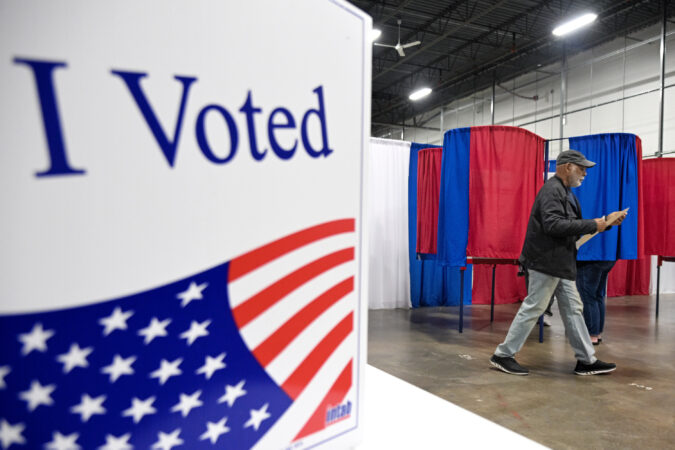
  • Trump wants to ‘nationalize the voting,’ seeking to grab states’ power

    Trump wants to ‘nationalize the voting,’ seeking to grab states’ power

    President Donald Trump said Monday that Republican lawmakers should nationalize voting — claiming a power explicitly granted to states in the U.S. Constitution.

    Speaking to right-wing podcaster Dan Bongino, who recently stepped down from his role as the FBI’s deputy director, Trump again falsely alleged that the 2020 election was stolen from him, and he urged Republicans to “take over” elections and nationalize the process.

    “We should take over the voting, the voting, in at least 15 places,” Trump told Bongino. “The Republicans ought to nationalize the voting.”

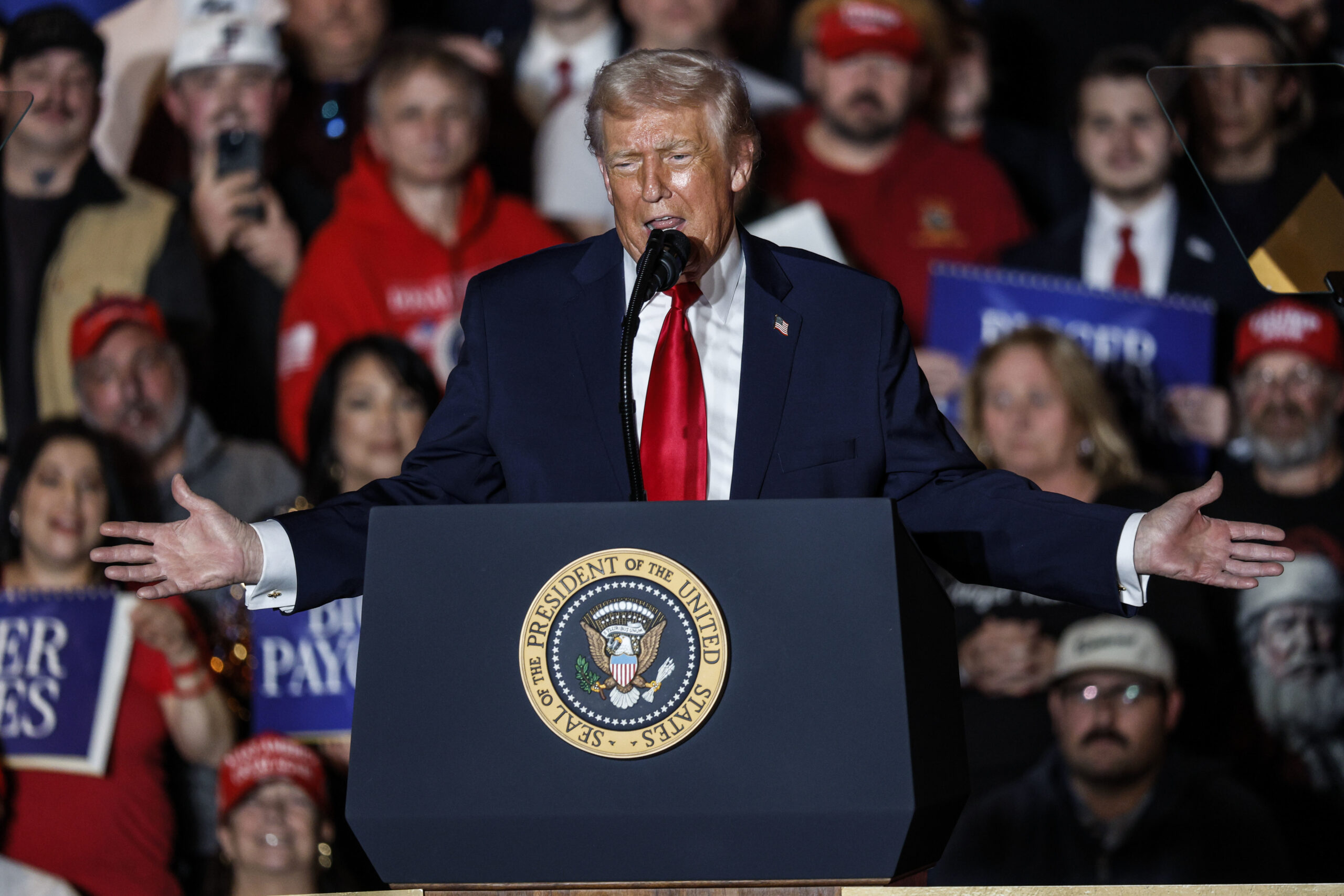
    President Donald Trump speaks in Mt. Pocono, Pa., on Tuesday, Dec. 9, 2025.

    Under the Constitution, the “Times, Places and Manner” of holding elections are determined by each state, not the federal government. Congress has the power to set election rules, but the Constitution does not give the president any role on that subject. Republicans in recent decades have often argued in favor of states’ rights and against a powerful federal government.

    Trump’s demand comes less than a week after the FBI executed a search warrant at a warehouse in Fulton County, Georgia, which is at the heart of right-wing conspiracy theories about the 2020 election. The unusual warrant authorized agents to seize all physical ballots from the 2020 election, voting machine tabulator tapes, images produced during the ballot count and voter rolls from that year. Days before the search, Trump claimed in a speech at the Davos World Economic Forum that the 2020 election was rigged.

    On Monday, while speaking to Bongino, Trump said without offering evidence that there are “states that are so crooked” and that there are “states that I won that show I didn’t win.” He also baselessly claimed that undocumented immigrants were allowed to vote illegally in 2020.

    He then teased that there will be “some interesting things come out” of Georgia, but did not discuss the FBI warrant or its findings.

    While Trump has repeatedly and baselessly accused states such as Georgia of running fraudulent elections, U.S. national security officials have said they found no evidence of widespread fraud in the 2020 election, and numerous courts rejected claims of election irregularities as unfounded.

    This is not the first time Trump has tried to minimize states’ roles in the running of elections. In August, while complaining in a Truth Social post about mail-in voting, Trump said he would sign an executive order that would “help bring HONESTY” to this year’s midterm elections, arguing that states are meant to follow federal instructions when it comes to voting.

    “Remember, the states are merely an ‘agent’ for the Federal Government in counting and tabulating the votes,” Trump wrote then. “They must do what the Federal Government, as represented by the President of the United States, tells them, FOR THE GOOD OF OUR COUNTRY, to do.”

    It is not clear what Republicans in Congress could do if they were to “take over” elections, as Trump suggested. While Congress has exercised its power on elections rules throughout history by, for example, creating a national Election Day, or by requiring states to ensure that their voter rolls are accurate, lawmakers have historically allowed states to run elections under their own laws and procedures.

  • Vanguard drops its average fee to just 0.06% with latest cuts

    Vanguard drops its average fee to just 0.06% with latest cuts

    Vanguard Group has unleashed another round of fee cuts across its lineup of mutual funds and exchange-traded funds, further tightening the screws on an industry already known for its low costs.

    The Jack Bogle-founded asset manager, which oversees about $12 trillion, is lowering costs for 84 share classes of mutual funds and ETFs across 53 funds in total, Vanguard said in a news release Monday. The reductions bring Vanguard’s average asset-weighted expense ratio to 0.06%, shaving one basis point from last year’s record fee cut.

    Monday’s fee cuts are par for the course for Vanguard, which has reshaped the asset management world over the past 50 years with its low-cost index funds — pressuring its peers to drop their own costs to rock-bottom levels in order to compete. Now, as that race-to-the-bottom seemingly hits its limit with the average fee on new funds beginning to rise, Vanguard is sticking to its blueprint of steadily lowering fees.

    “Vanguard is investor-owned — we have no outside stockholders or inside owners profiting from our clients,” Vanguard chief executive officer Salim Ramji said in Monday’s release. “These fee reductions — more than half a billion dollars over the past two years — are a clear expression of our purpose and commitment to our clients as owners.”

    Between last year and this year’s cost cuts, Vanguard estimates its investors have saved about $600 million, according to the release.

    Vanguard’s unique ownership structure blunts some of the margin-pressure that its competitors feel from low costs. Fund shareholders elect its board members, who in turn funnel extra cash or assets generated by its products toward lowering costs.

    Nonetheless, Vanguard pulls in much less fee revenue from its $12 trillion in assets than its peers. Despite ranking second in overall ETF assets, the Malvern-based firm generated about $1.5 billion in fee revenue last year from its U.S.-listed ETFs, trailing issuers with smaller AUM (assets under management) levels, Bloomberg Intelligence data shows. That compares to a $5.4 billion haul for BlackRock’s U.S.-listed ETF lineup, which is only 6% larger than Vanguard’s at the end of 2025.

    Vanguard’s average fees are continuing to drift lower even as the asset manager stages a push into actively-managed funds, which tend to command higher expense ratios. The firm launched its first traditional stock-picking ETFs last year, a trio which includes the Vanguard Wellington Dividend Growth Active ETF (ticker VDIG), which ranks as its costliest ETF with a 0.40% fee.