Category: Washington Post

  • Should your therapy session be outdoors? More therapists are trying it.

    Should your therapy session be outdoors? More therapists are trying it.

    Jennifer Udler has been a practicing therapist for 25 years. A little over a decade ago, she started training for a marathon, running with a group near her home in Montgomery County, Maryland.

    “I noticed that people were more comfortable, less inhibited, opening up and talking during our group training runs,” Udler said. “And I started to wonder if there was a way to do a practice where people are moving.”

    Udler sees children and adolescents as well as adults, and she suspected that her younger clients especially might feel more comfortable talking while walking on a nature trail rather than sitting in a therapist’s office. She decided to try it with one of her young clients with his mom’s permission.

    “We met at a park, and we walked around, and he was a different kid,” Udler said. “He was running around, and he was showing me stuff in nature. And he talked.” She said they made more progress in one session outside than they had in two years meeting in her office.

    “That was in the snow in February,” she added. “So I was like, it’s only going to get better.”

    Udler started reading more about outdoor therapy, which is also known as walk-and-talk or nature-informed therapy. At that time she couldn’t find any formal training or certification programs, but she did learn that other therapists had tried it and found many of the same benefits she had.

    “You’ve got the movement, you’ve got nature, which is extremely grounding and stabilizing for people, and you have the co-regulation, walking side-by-side,” Udler said. For her younger clients or anyone uncomfortable with therapy, it also helped to be walking while talking about difficult topics because they didn’t always have to make eye contact with her.

    She wrote her own informed consent for her clients, establishing the additional risks of outdoor therapy and how confidentiality would work in a public park. She started a practice called Positive Strides, specializing in walk-and-talk therapy sessions outdoors in nature.

    “As I did the work and saw different types of people with different kinds of mental health issues, I realized how amazing it is,” Udler said.

    Trading the couch for the great outdoors

    In March of 2020, when many therapists moved their practices online, a smaller number brought their practices outside. The benefits were not felt only by the clients. Nature acts as a sort of “buffer against burnout,” said Heidi Schreiber-Pan, the executive director and founder of the Center for Nature Informed Therapy, where she trains clinicians in how to bring their practices outdoors.

    “What we’re hearing from people is that they can see more clients when they have outdoor sessions or nature-informed sessions,” Schreiber-Pan said.

    The American Psychological Association put out new guidelines this past fall for how clinicians can implement walk-and-talk therapy into their practice.

    The number of therapists working outside is still small. Shreiber-Pan believes that’s in part because therapists don’t realize that nature is all around us. One of the first questions she asks in her trainings is: When you think of nature, what comes to mind?

    “They talk about, like, these beautiful national parks or the mountains or the ocean,” Shreiber-Pan said. “And where is your therapy office? Not there.” She said that part of the training is helping practitioners recognize that nature is all around us — even in a city park.

    Miki Moskowitz is a clinical psychologist who practices in a primary care setting, which means she sometimes sees a patient only a couple of times.

    “We’re trying to make a difference, even in one single session,” she said.

    For Moskowitz, practicing outside has improved her own mental health and increased her capacity, but she also sees the immediate impact for her patients.

    “What I’ve seen that’s so encouraging is that sometimes just that first session we go for the walk, and patients are, like: ‘Wow, I didn’t know this trail was here. This is so beautiful. This feels so great. This is totally something I can do on my own,’” Moskowitz said. “That is so much more powerful than if we’re sitting in my office, which has no windows, just talking about the idea of going outside.”

    The brain benefits of getting outside — even when it’s freezing

    When Marc Berman was doing research at the University of Michigan, he helped devise a study to look at the brain benefits of time in nature. Participants did a challenging task testing their memory and attention, and then they were sent on a walk either through downtown Ann Arbor or in the area arboretum. Those who walked in nature showed a 20% improvement in their short-term memory, while those who walked in an urban environment did not.

    Berman and his colleagues did this experiment in June and January. In the winter, the nature walk was less enjoyable — but just as beneficial.

    “That was pretty cool because it suggested that you didn’t have to enjoy the nature walk to get these cognitive benefits. There was something deeper going on,” Berman said.

    One explanation for why nature is so good for our brains is called the attention restoration theory. The idea is that our ability to pay attention is finite, and spending time in nature can replenish our capacity. Nature is also “softly fascinating” — it captures our attention without overwhelming our senses.

    “I can kind of mind-wander and think about other things when I’m looking at a waterfall,” Berman said. “I can’t really mind-wander or think about other things when I’m in Times Square.”

    Berman is now a psychology professor at the University of Chicago and author of the new book Nature and the Mind: The Science of How Nature Improves Cognitive, Physical, and Social Well-Being.

    How to make the most of time outdoors

    Whether or not you are in therapy, your brain can benefit from a dose of nature, especially during the colder months when many of us are inclined to stay indoors. Here are some science-backed tips for how to get the benefits.

    • Nature can be found anywhere. You just have to look for it. Research has shown that noticing nature and paying attention to it can have positive effects even in an urban environment. Psychologists recommend noting the bird song you hear on the walk to your car, looking at the leaves on the trees and the clouds in the sky, and just taking a moment to appreciate nature’s beauty — even if it’s just a small plant poking through the sidewalk.
    • You don’t have to like it. Nature can be an acquired taste, especially when it’s cold. But you don’t have to be a backpacker or love camping to benefit from time outside. Berman and others have found in their research that we get the brain benefits whether or not we enjoy a walk in the woods.
    • Try a mindfulness exercise. Many people struggle to sit still and meditate, despite its benefits — but Moskowitz said that mindfulness practices can come more easily outside. “Just look up at the treetops and notice what you see, notice what you hear,” Moskowitz said. “Look for something that’s moving, and watch the branches sway in the breeze. Look at something close up, or look at something far away. You’re doing a mindfulness practice, and you’re tuning into your senses, and you are focusing your attention, but it’s not hard work.”
    • Bring nature inside. If you aren’t able to get outside as often as you would like, you can still get some of the benefits. Put a plant in your office — even a fake one — or look at pictures of beautiful landscapes. Listen to bird songs at your desk. “It’s not as strong as the real thing, but you can get benefits from the simulated nature,” Berman said.
    • Embrace the winter. When it’s cold and snowy outside, our impulse is to stay inside. But less time outside can contribute to seasonal depression. Schreiber-Pan recommends following the Scandinavian practices of “friluftsliv” — or “open-air living,” getting outside no matter the weather — and hygge, or embracing the cozy indoors when you come back in. “The happiest people on this planet are the Scandinavians,” Schreiber-Pan said. “They also have the longest winters.”
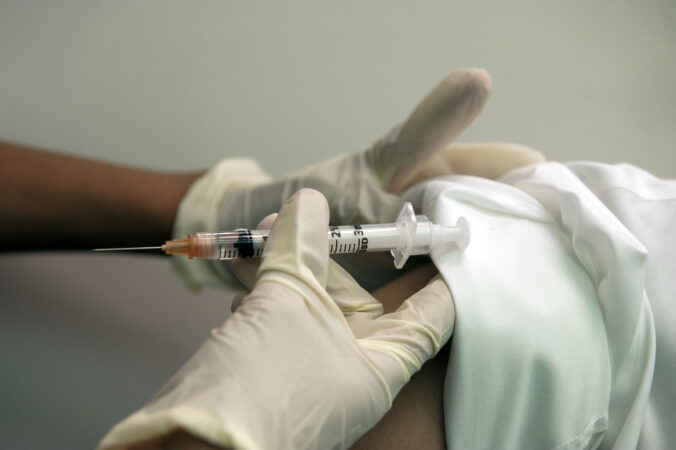
  • FDA reverses course and will review Moderna’s mRNA-based flu shot

    FDA reverses course and will review Moderna’s mRNA-based flu shot

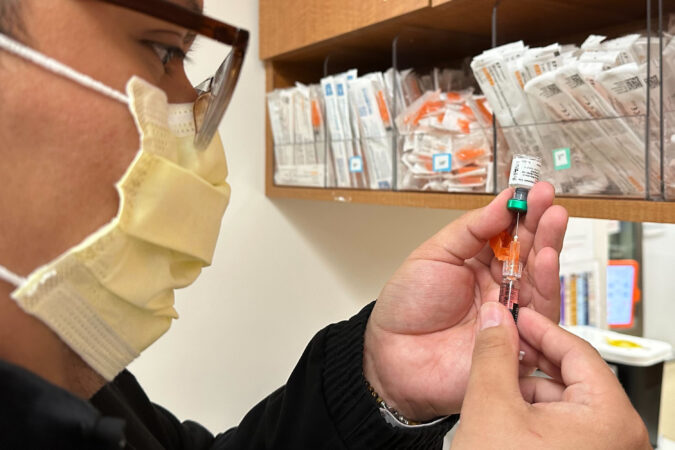
    The Food and Drug Administration has reversed course and agreed to review Moderna’s application for the first mRNA-based flu vaccine under a revised approach, company and federal officials said Wednesday.

    Last week, Vinay Prasad, the agency’s top vaccine regulator, declined to review the vaccine, a rare move that shocked the company and that public health experts saw as the latest example of the Trump administration’s hostility toward immunization. Federal health officials argued that Moderna lacked an “adequate and well-controlled” study and should have used a high dose flu shot for adults 65 and older in a large clinical trial.

    The company met with the FDA and proposed seeking full approval for the vaccine for adults 50 to 64 years of age and accelerated approval for adults 65 and older, along with a requirement to further study the vaccine in older adults, according to Moderna.

    “We appreciate the FDA’s engagement in a constructive Type A meeting and its agreement to advance our application for review,” Moderna CEO Stéphane Bancel said in a statement. “Pending FDA approval, we look forward to making our flu vaccine available later this year so that America’s seniors have access to a new option to protect themselves against flu.”

    The target date for completing the review and making a decision is Aug. 5, according to Moderna. If approved, the vaccine could be on the market for the next flu season.

    The Department of Health and Human Services confirmed it held a formal meeting with Moderna, and it had accepted the company’s new approach.

    “FDA will maintain its high standards during review and potential licensure stages as it does with all products,” Andrew Nixon, an HHS spokesman, said in a statement.

    FDA Commissioner Marty Makary personally sought a quick resolution but was not involved in the regulatory decision for the new approach, according to a person familiar with the matter who spoke on the condition of anonymity to share private details.

    Katalin Karikó and her Penn colleague Drew Weissman won the 2023 Nobel Prize in medicine for their messenger RNA research, which paved the way for COVID-19 vaccines that are credited with saving millions of lives.

    MRNA vaccines are faster to develop than traditional vaccines. Medical experts hope such technology could help vaccine makers respond more rapidly to changes in the flu strain. Flu vaccines are updated annually, and their effectiveness varies every season depending on the quality of the match.

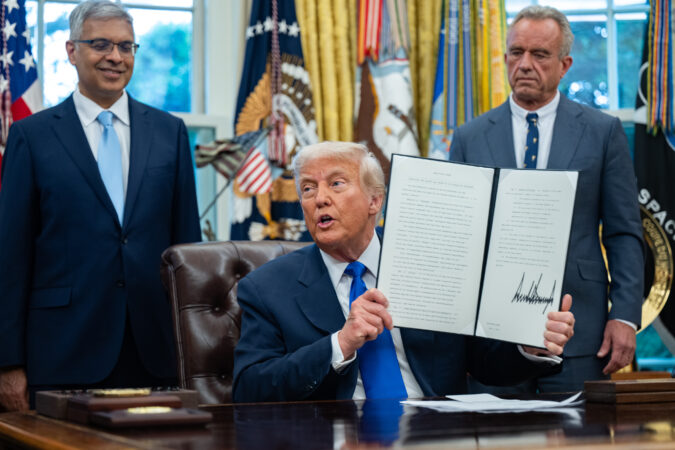
    But Health Secretary Robert F. Kennedy Jr. and other health officials in the Trump administration have criticized the use of the technology for respiratory virus immunization and have pulled federal funding for mRNA research, including for flu vaccines.

    Vaccine experts had raised concerns over Prasad’s initial decision to refuse to review the vaccine, saying that shifting guidance from the FDA could deter future investments in pricey clinical trials. For the Moderna vaccine, Blackstone, a private equity company, invested $750 million into conducting a large-scale clinical trial and potential licensure of the vaccine.

    Companies conduct clinical trials in consultation with the FDA. According to Moderna, the FDA in April 2024 told the company that its trial design for the mRNA flu vaccine compared with a standard flu shot was “acceptable.” The FDA recommended comparing the mRNA flu vaccine against a higher-dose flu shot for those 65 and older, but the recommendation was not binding.

    Moderna conducted two late-stage trials — one of the final steps before seeking approval of its mRNA flu vaccine — enrolling more than 43,000 adults ages 50 or older. In one trial, more than 40,000 participants received either a dose of the experimental mRNA flu vaccine or a standard dose of an existing flu shot. In a smaller trial, participants received a dose of the mRNA vaccine, a standard shot or a high-dose influenza shot recommended for adults 65 and older.

    The administration had defended the decision to decline to review the shot. In a statement last week, Nixon said that “Moderna exposed participants aged 65 and over to increased risk of severe illness by giving them a substandard of care against the recommendation of FDA career scientists.”

    In an interview last week, Moderna president Stephen Hoge said the company was “surprised” and “confused” by the refusal. He said the agency had not identified any issues around the safety or efficacy of its product.

    At an event Tuesday held by the major industry lobby organization PhRMA, Makary said the company was given “pretty clear guidance.”

    “The application was reviewed, and that letter, in my mind, is part of a conversation where you’ll see a dialogue between the company and the agency,” he said.

  • Trump officials limit FEMA travel to disaster areas amid funding lapse, emails show

    Trump officials limit FEMA travel to disaster areas amid funding lapse, emails show

    The Department of Homeland Security has halted almost all travel amid the ongoing standoff over its funding, restricting the ability of hundreds of Federal Emergency Management Agency staff members to move in and out of disaster-affected areas, according to emails and documents obtained by the Washington Post.

    Much of the department ran out of money over the weekend after negotiations stalled between the White House and Democratic lawmakers over restrictions on federal immigration enforcement. It is normal for the department to stop employees from traveling across the country for various assignments, such as trainings, during a funding lapse, 10 current and former FEMA officials said. But it is unusual for a government shutdown to impede ongoing disaster recovery efforts, the officials explained, saying it further reflects sweeping policies instituted under Homeland Security Secretary Kristi L. Noem.

    Typically, FEMA staffers who work on disasters are able to travel to and from ongoing recovery projects regardless of DHS funding issues. And a current veteran officials said that disaster travel is always allowed because it is mission-critical.

    In a statement, DHS criticized Democratic lawmakers over the stalled funding negotiations and said the department and FEMA are coordinating closely to “ensure effective disaster response under these circumstances.”

    “During a funding lapse, FEMA prioritizes life safety and property protection. FEMA continues mission-essential operations for active disasters, including immediate response and critical survivor assistance,” FEMA spokesperson Daniel Llargués said in the statement. “While some non-essential activities will be paused or scaled back, FEMA remains committed to supporting communities and responding to incidents like Hurricane Helene.”

    Congressional Democrats have demanded new restrictions on federal immigration agents after federal personnel killed Alex Pretti and another U.S. citizen, Renée Good, in Minneapolis in January.

    On Tuesday night, DHS sent out an email ordering a stop to all travel, including for disaster-related work, sparking confusion across FEMA as teams continue to respond to 14 ongoing disaster declarations as a result of brutal winter storms that hit parts of the country last month. In another message obtained by the Post, a FEMA official said that “ALL travel stopped” and noted that 360 people who were slated to go to trainings and other assignments had to stand down. People who were supposed to deploy could begin some work virtually, but DHS now had to sign off on their in-person assignment, the message said.

    The next morning, officials within DHS and FEMA had to scramble and negotiate guidance for how disaster-specific workers could continue to travel, according to an official familiar with the situation.

    “In most cases, FEMA’s ability to deploy staff to active disaster response and recovery operations is not impacted by a DHS funding lapse,” said former FEMA administrator Deanne Criswell. “Those personnel are funded through the Stafford Act’s Disaster Relief Fund, which is specifically designed to ensure continuity of operations during emergencies. If DHS experiences a shutdown, FEMA employees supported by the Disaster Relief Fund should still be able to travel and carry out response missions.”

    Emails and documents obtained by the Post show that FEMA officials must submit a justification to DHS headquarters explaining why a staffer needs to travel during the funding lapse, including employees who are paid through the Disaster Relief Fund. Officials also have to state whether the travel is “mission essential,” meaning it involves the “safety of human life or protection of property.”

    “DHS imposing restrictions on FEMA’s ability to deploy our response/recovery workforce slows us down and limits our ability to respond quickly and effectively to the needs of impacted states and communities,” said one official in a region still cleaning up from the heavy onslaught of sleet and snow.

    According to one email sent Tuesday night, agency staff members currently deployed in another region that was hit particularly hard can continue assisting communities. But those who were slated to travel to these locations after Thursday can no longer do so. Employees who were on a rotation — perhaps home for a week to see family or go to the doctor — are not able to return to their job under the order.

    These rotations are critical to disaster work because they enable people who have been working nonstop to take a break and then come back to their work. FEMA is also required to relieve employees who have been working too long in a state where they do not live.

    In the email, FEMA staff members who had not yet begun their deployments or returns from rotation were directed to cancel their travel and notify their point of contact to “receive updated reporting instructions.”

    “Additional agencywide information will be forthcoming,” it read.

    The snag with some FEMA employees being unable to travel for disaster work, take breaks or relieve their colleagues adds to the beleaguered agency’s long list of operational issues since President Donald Trump took office for a second time and his appointees implemented significant changes in how the agency functions.

    The travel pause has also halted some of FEMA’s other critical work, such as leading exercises and assessments for emergency plans and procedures at nuclear facilities, and flood-mapping meetings with communities, according to an email obtained by the Post and an agency official familiar with the situation. That “will delay flood map updates, which directly impacts people waiting on new maps for any number of reasons,” the official said.

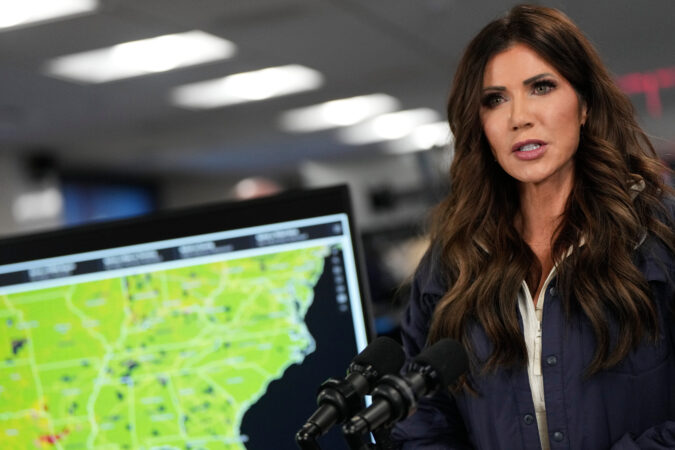
    As the winter storms barreled in last month, Noem, who has been spearheading many of FEMA’s staffing reductions and reforms, was particularly hands-on, embedding at the agency’s headquarters, hosting a call with governors to show her support and holding news conferences with FEMA staff members in front of maps laying out where the weather would hit.

    DHS also made a big push to pre-position teams, millions of ready-made meals and liters of water, blankets, and hundreds of generators in several states that were expected to be slammed.

    That’s why instituting travel restrictions when staffers are still working on these storm responses is even more frustrating, several current employees said.

    “They are just trying to make it hurt, and the only people they are hurting are survivors and FEMA employees,” one veteran official said. “They just pull new rules out every day.”

  • White House taps Jay Bhattacharya, CDC critic, to lead agency for now

    White House taps Jay Bhattacharya, CDC critic, to lead agency for now

    Jay Bhattacharya, a top Trump administration health official and an outspoken critic of the Centers for Disease Control and Prevention’s response to the coronavirus pandemic, will lead the CDC on an acting basis, according to four people who spoke on the condition of anonymity to describe personnel moves.

    Bhattacharya, who will continue his role as director of the National Institutes of Health, replaces Jim O’Neill, who had served as the CDC’s acting director. O’Neill, who had also served as the deputy secretary of the Department of Health and Human Services, will be nominated to run the National Science Foundation after he declined a potential ambassadorship to the Organization for Economic Cooperation and Development, two of the people said.

    The installation of Bhattacharya at the CDC is the latest move by the White House and Health Secretary Robert F. Kennedy Jr. to shake up HHS’s leadership team ahead of the midterms, as the Trump administration seeks to stabilize a department rattled by internal fights and controversial messages.

    The New York Times first reported that Bhattacharya would serve as the acting head of CDC, which is charged with protecting Americans from health threats and issues recommendations on vaccines and other public health matters. Trump officials have said they are planning to find a full-time CDC director, a post that requires Senate confirmation. Susan Monarez, who was confirmed as CDC director in July, was ousted less than a month later after clashing with Kennedy over his plans to change vaccine policies.

    Bhattacharya, a Stanford University physician and economist, rose to prominence during the pandemic by arguing that the government’s response to the outbreak was too harsh, a stance that put him at odds with public health leaders who said his proposals would imperil the most vulnerable Americans. He co-wrote the Great Barrington Declaration, which was published in October 2020 and called for an end to coronavirus shutdowns. The declaration drew rebukes from government officials — a clash that ultimately boosted his profile and helped draw the support of Kennedy, a fellow critic of the government’s pandemic response.

    “The CDC peddled pseudo science in the middle of a pandemic,” Bhattacharya wrote on X in 2024, criticizing agency leaders’ past claim that widespread masking could end the coronavirus outbreak.

    As CDC’s acting head, Bhattacharya is poised to oversee the agency’s vaccine recommendations, which have emerged as a political flash point as Kennedy has worked to roll them back over the objections of public health leaders. A KFF poll published this month found that 47% of U.S. adults now trust CDC for reliable information on vaccines, down from 85% in early 2020.

    Bhattacharya has said he supports vaccination for childhood diseases.

    “I think the best way to address the measles epidemic in this country is by vaccinating your children for measles,” Bhattacharya said at a Senate hearing this month.

    Bhattacharya and other NIH leaders in January also published a commentary in the journal Nature Medicine that criticized the public health response to the pandemic led by other agencies.

    “Many of the recommended policies, including lockdowns, social distancing, school closures, masking, and vaccine mandates, lacked robust confirmatory evidence and remain the subject of debate regarding their overall benefits and unintended consequences,” they wrote. “Where enforced, vaccine mandates contributed to decreased public confidence in routine voluntary immunizations.”

  • Ousted South Korean president faces death penalty in insurrection case

    Ousted South Korean president faces death penalty in insurrection case

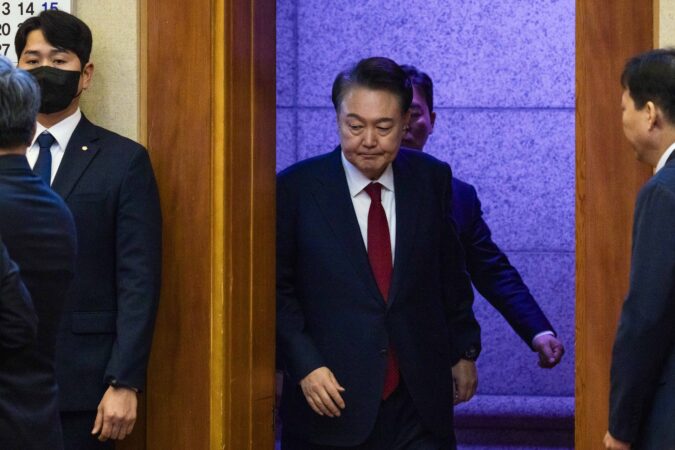
    SEOUL — A South Korean court is set to issue its verdict Thursday in the insurrection case against the country’s impeached president, who declared martial law in an alleged power grab in late 2024, and now faces the death penalty or life imprisonment if convicted.

    The impeached president, Yoon Suk Yeol, has been on trial for his failed attempt to install a military-led government in the democratic country late one night in December 2024. Yoon is charged with numerous crimes, including organizing an insurrection — which under South Korean criminal law carries possible sentences of life imprisonment, with or without labor, or death.

    Prosecutors have requested the death sentence.

    The case marks a pivotal moment in South Korea’s relatively young democratic history, which dates to 1987 after a democratic uprising toppled a brutal military-led government under Chun Doo-hwan. Chun was sentenced to death in 1996 after being convicted on similar insurrection charges for seizing power during a coup in 1979. On appeal, the sentence was commuted to life imprisonment, and he was later pardoned.

    Yoon’s conviction would uphold the rule of law and reaffirm the nation’s democratic system and principles, democracy advocates and experts say.

    “The conviction of an ex-president demonstrates that no one is above the law,” said Andrew Yeo, a senior fellow at Brookings Institution’s Center for Asia Policy Studies in Washington, adding: “The conviction of Yoon through the judicial process reflects South Korea’s democratic resilience.”

    If convicted, Yoon, too, ultimately could be spared execution.

    South Korea has not carried out an execution since 1997 and is widely regarded as a country where, for all practical purposes, the death penalty is banned.

    A death sentence for Yoon, nonetheless, would be highly symbolic as delivering accountability for a head of state who went rogue and attempted to use military force to halt operations of the legislature, seize control of the National Election Commission and arrest political opponents.

    “In practical terms, a death sentence would almost certainly remain symbolic, but the symbolism would be immense,” said Hannah Kim, a political scientist at Sogang University in Seoul. “It would reflect a judicial judgment that a ‘palace coup’ led by the constitutional guardian of the state is not just political misconduct, but a direct attack on constitutional sovereignty and the democratic order.”

    A lesser sentence of life in prison would still convey the seriousness of Yoon’s actions but would reflect “a degree of pragmatism among the justices,” Yeo said, especially in a deeply polarized country still reeling from the fallout of the declaration of martial law.

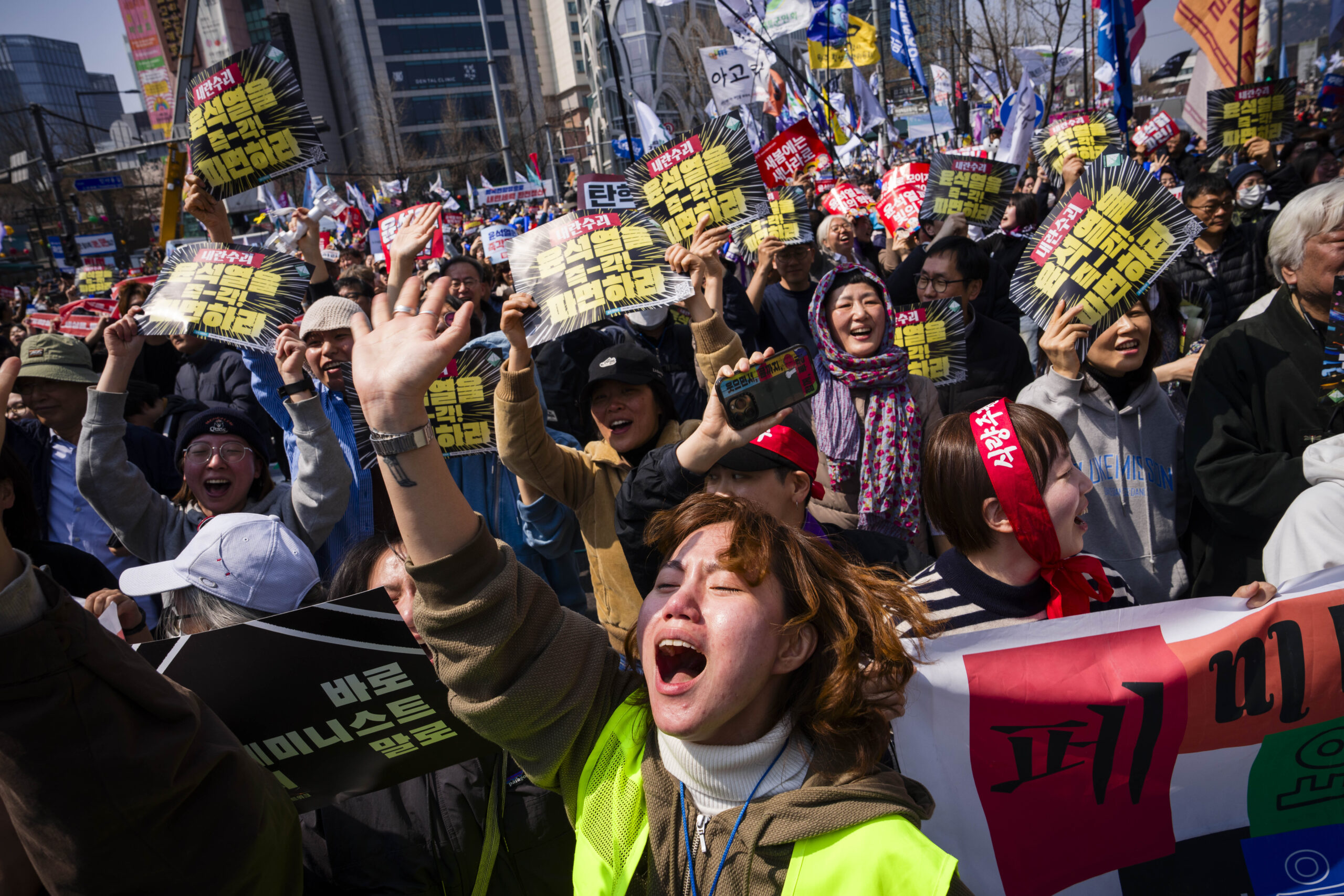
    Jeong Hye-won (center) and other protesters celebrate on April 4, 2025, in Seoul after the removal of Yoon from power by South Korea’s Constitutional Court.

    Two top aides to Yoon have been convicted on charges related to the decree of martial law. Former Prime Minister Han Duck-soo was sentenced last month to 23 years in prison for his role. Han is appealing the ruling. And former Interior Minister Lee Sang-min last week was sentenced to seven years in prison. He is also appealing the ruling, according to national media reports.

    In both cases, the court deemed the declaration of martial law an act of insurrection, which legal experts said was a key determination that could seal Yoon’s conviction Thursday.

    Yoon is facing eight separate trials stemming from his decree, but the insurrection case to be decided Thursday is the most consequential. Last month, a Seoul court sentenced him to five years in prison for abuse of power, obstruction of justice and falsifying documents, meaning Yoon will not go free even if acquitted.

    For many South Koreans, Yoon’s insurrection trial may feel familiar.

    Yoon is expected to stand in Courtroom 417 of the Seoul Central District Court, the same room where Chun, wearing a light blue prison jumpsuit, was sentenced to death nearly 30 years ago.

    During their sentencing request last month, prosecutors argued Yoon deserved the harshest possible penalty, citing the need to stop “history from repeating itself.” They referred to Chun’s case and South Korea’s authoritarian past.

    Yoon has denied all charges and contends that martial law was a legitimate exercise of the president’s emergency powers. Yoon has said that he declared martial law to confront the opposition-controlled National Assembly, which he said was paralyzing his administration through repeated efforts to impeach top officials. He has denied that the brief deployment of troops to the National Assembly was an act of insurrection.

    Yoon’s late-night decree on Dec. 3, 2024, made in a televised address, prompted thousands of protesters to mass outside the National Assembly and demand a return to democratic governance.

    As soldiers and police surrounded the National Assembly complex, lawmakers scaled the walls to bypass them. In defiance of the decree’s ban on political activity, they voted to reverse Yoon’s decision. And despite a gag order on the press, reporters from traditional and independent media alike flooded the scene and delivered live reports.

    Yoon lifted his order six hours later, but the incident shocked and outraged the nation — now a thriving democracy where political protests and marches of all stripes are a weekly occurrence — and it spurred South Korea’s most harrowing political crisis in decades.

    Yoon was impeached with his presidential powers suspended less than two weeks later, and ultimately removed from office.

    Yoon, formerly the nation’s top prosecutor, was a divisive president during his more than 2½ years in power. Rather than seeking to unify the deeply divided nation, Yoon instead appealed to his conservative base, exacerbating polarization and often deadlocking with opposition lawmakers.

    South Korean presidents are often disgraced. Nearly every president since South Korea’s democratization has become embroiled in scandals involving corruption, bribery, embezzlement, or abuse of power.

    Yoon’s downfall, however, stands apart even by South Korean standards, as the first democratically elected president to impose martial law and the first sitting president to face a criminal investigation.

  • Should you feed a cold and starve a fever? Here’s what experts say.

    Should you feed a cold and starve a fever? Here’s what experts say.

    Most of us have heard the adage “Feed a cold, starve a fever.”

    It comes from an outdated theory that a cold makes your body cooler and eating can help warm it up, and that a fever makes your body warmer and fasting can help cool it down. The premise itself is flawed: While fevers do raise your body temperature, colds don’t make your body cold. You might even get a fever when you have a cold.

    As for whether you should eat more or less, in most cases, there’s no convincing evidence that limiting food intake when you’re sick plays a meaningful role in recovery, experts said.

    There may be a more accurate approach. “Feed a cold. Feed a fever, too,” said Roy Gulick, the chief of the infectious-disease division at Weill Cornell Medicine and an attending physician at New York-Presbyterian Hospital.

    Experts recommend staying hydrated and eating healthy foods — at least when your stomach will allow it — to support your body when you’re sick. The advice holds true whether you’re dealing with a cold, which is an upper-respiratory infection that can be caused by more than 200 viruses, or a fever, which can be caused by viral and bacterial infections, autoimmune issues, and reactions to medications, among other things.

    “If you are truly not feeling hungry, you don’t necessarily have to eat more than you feel like eating,” said Geeta Sood, an assistant professor in the infectious-disease division at Johns Hopkins University. However, you do want to make sure you’re getting enough calories, protein, and nutrients — and hydration — to help support your body as it heals, she said.

    What does the research show?

    Research in this area is limited — and mostly in animals. For example, in a 2016 study, mice were infected with either a bacterium that causes gastrointestinal illness or a virus that causes influenza. In mice with the bacterial infection, fasting was protective while nutritional supplementation was detrimental, the authors found. The pattern was reversed in mice with the flu and viral sepsis. While interesting fodder for further research, these results can’t be applied directly to humans, experts said.

    In humans, researchers who conducted a 2021 review concluded that there is some evidence that nutrients such as vitamins and minerals can help support the body’s immune response and help fight infections in general. And a 2024 review that included newer studies that were conducted during the pandemic suggested that nutritional needs may depend on the specific pathogen you’re fighting and other variables, such as the duration and severity of your illness — not simply on whether it’s a bacterium or virus.

    The reality is that most studies on how nutrition affects infections have looked at only a handful of pathogens, said David Schneider, a professor of microbiology and immunology at Stanford University. To further complicate matters, when you’re experiencing symptoms such as a runny nose or fever, you may not know whether you’re sick with a bacterium or virus, he said. Both of these things make it difficult to give generalized recommendations about what might be best for every cold or every fever, he said.

    Why do I lose my appetite when I’m sick?

    There is some rationale to the adage, because it’s common to lose your appetite when your body is fighting off an infection. As your immune system ramps up, it releases chemical messengers, known as cytokines, to rally immune cells to fight infection, and those same signals also tell the brain that eating isn’t a priority, said Sharon Bergquist, an internal medicine physician and associate professor at the Emory University School of Medicine.

    While not well understood, one theory states that a drop in calorie and protein intake triggers a process called autophagy, which helps recycle damaged cell parts and may play a role in immune defense, she said.

    That said, the process of fighting an infection is “metabolically really costly,” Bergquist said, explaining that although you can skip food for a day if you aren’t hungry, going longer than that may leave you without adequate nutrition. “It takes so much energy and calories that there’s a rationale for us needing to increase our food and our hydration during times of illness so that we can support our immune system,” she said.

    What can I do if I have an infection?

    Vaccines are the first-line defense to help prevent and lessen the severity of some viral infections, including COVID and the flu. If you get sick, however, you can try some medications that may help you recover faster.

    • Antibiotics target specific kinds of bacteria such as those that cause strep throat, pneumonia, or urinary tract infections.
    • Antiviral medications can help treat certain viral infections, including the coronavirus and influenza. Three antivirals — Paxlovid, remdesivir, and molnupiravir — are available by prescription to treat COVID in people who are at high risk of serious complications, and four antivirals are approved to treat the flu.

    There are also a few other things you can do to help support your body.

    • Stay hydrated. Losing water and electrolytes through sweat when you have a fever, as well as through diarrhea and vomiting, can put you at risk for dehydration, so it’s important to drink plenty of water and make sure you’re getting enough electrolytes, Gulick said. Pediatric beverages and sports drinks with added sodium and potassium can help you stay hydrated, and warm liquids such as soups, broths, and caffeine-free herbal teas can help ease symptoms such as congestion, body aches, and chills, Sood said. Avoid alcohol and caffeinated drinks because they are diuretics and can make dehydration worse.
    • Eat, when possible. Listen to your body, but when you have an appetite, eat healthy, whole foods rich in vitamins, minerals, and antioxidants such as fresh fruits and vegetables. One strategy is to make smoothies or soups, Bergquist said. Avoid foods high in saturated fats and processed carbohydrates.
    • Get rest. Take time to rest as your body does much of its repair work while you sleep, Bergquist said. “Don’t push your body because you want to dedicate that energy to your immune system,” she said.
    • Take hot showers or baths. The steam can help break up congestion and clear airways.
    • Try zinc. Zinc may help shorten a cold by a day or two. In a 2024 review, researchers found some evidence that zinc might reduce the duration of symptoms by about two days compared with a placebo, though the mineral was associated with mild side effects such as nasal and oral irritation, problems with taste, stomach pain, constipation, diarrhea, and vomiting. Most other supplements have no real advantage for colds, including vitamin C, which, when started at the onset of symptoms, doesn’t help lessen the duration or severity, research shows.
    • Use honey for a cough or sore throat. Adults and children older than 1 year can add honey to warm tea or water to help soothe sore throats and calm coughs.
  • The Atlantic’s essay about measles was gut-wrenching. Some readers feel deceived.

    The Atlantic’s essay about measles was gut-wrenching. Some readers feel deceived.

    When Kelly McBride read Elizabeth Bruenig’s essay in the Atlantic about a child’s death from measles complications, she was moved and quickly shared the story on her Facebook account. She hadn’t realized that Bruenig’s family had been ravaged by virus and the well-known journalist had lost a child.

    McBride, a media ethicist and senior vice president at the Poynter Institute, also didn’t realize the story was a hypothetical scenario — and the child a composite character based on the author’s research — until a friend alerted her to an editor’s note at the bottom of the story. Then, McBride felt duped.

    “I feel deceived,” McBride said. “I spent all weekend talking about this story to my friends as if the reporter had experienced it.”

    Bruenig’s stirring account of a mother’s experience learning her child will die of the long-term effects of measles has remained one of the Atlantic’s most read stories since it was published Thursday, receiving more than 700 comments. Written in the second person, some readers have called the essay a visceral and gut-wrenching exposé of the human impacts of the measles epidemic.

    It has also generated controversy. Readers and media experts have condemned the story as breeching journalistic ethics by informing the reader that the story is fictionalized through a short editor’s note at the end of the 3,000-word essay. Some public health experts argued the story was a dangerous writing exercise that could evoke backlash and confusion as vaccine skepticism hits an all-time high across the country.

    “Grateful to @ebruenig for sharing her and her family’s ordeal,” Gabby Stern, a former World Health Organization communications director, wrote on X shortly after the story published. “Friends, please ensure that your children receive vaccinations against preventable diseases like measles.”

    She followed up soon after: “I missed the disclaimer at the bottom. Others did, too. You get to the end and you’re shattered, not looking for caveats and fine print. Disappointed in the magazine. The topic is too high-stakes for such shenanigans.”

    Adrienne LaFrance, executive editor at the Atlantic, told The Washington Post in a statement that the magazine was “pleased that so many people are reading and praising Liz’s remarkable essay.”

    “We trust our readers to understand all different kinds of writing and writerly devices,” she said. “And while we included a note about Liz’s methods for transparency’s sake, we’re finding that most readers already understand the second-person well enough to know that the ‘you’ referenced throughout the piece is not literally ‘you,’ the reader.”

    The Atlantic, one of the most popular American magazines with 1.4 million subscribers, has become a destination for health reporting in recent years. The Atlantic is among a cohort of outlets that have reported on rising measles cases across the United States, as well as the role that misinformation and shifting government guidelines have on childhood vaccinations. Once eliminated in the country, outbreaks have led to the highest count of measles cases in more than three decades. Atlantic staff writer Tom Bartlett was first to find and interview the parents of a child who died of measles in Texas, the first such death in a decade.

    Bruenig, a former Post opinion writer, has twice been a finalist for the Pulitzer Prize for feature writing, one of the industry’s top honors for narrative journalism. (This reporter worked for the Atlantic from 2017 to 2019.)

    Bruenig wrote the essay in the second person, detailing a scenario where two unvaccinated children attend a birthday party and catch measles from an infected-but-asymptomatic child. “Your daughter behaves normally over the next week while the virus slowly spreads inside her, infecting immune cells that carry it to the lymph nodes, where it replicates and spreads at a rapid pace.”

    It includes a short disclaimer at the bottom of the 3,000-word piece: “This story is based on extensive reporting and interviews with physicians, including those who have cared directly for patients with measles.”

    Reported hypotheticals have been used in other grim chronicles such as Outside Magazine’s 1997 story “Frozen Alive,” about freezing to death; a passage of Kathryn Schulz’s 2015 New Yorker essay “The Really Big One” about the risks of a large earthquake; and the 2024 Annie Jacobsen book “Nuclear War: A Scenario,” about how nuclear warfare could transpire. The first two stories also are written in second person.

    Many readers, including physicians, praised the Atlantic essay, writing that its evocative writing and storytelling forced readers to grapple with the impact of vaccine hesitancy. “Read this while holding my almost-one-month-old, and it absolutely wrecked me. What a powerful and important piece,” one commenter wrote. “Tragically realistic story exquisitely described by Ms. Breunig,” wrote another. “I’m a pediatrician who has never seen a case of measles but am awaiting my first one.”

    Others, however, expressed their confusion in the essay’s comments. “The fact that readers in the discussion are unsure of whether this is a true story or fiction highlights a fundamental failure on the part of the author, and the editor,” one reader wrote.

    “I know the internet is full of made up stuff, but I trusted the Atlantic,” another reader wrote. “I feel foolish that I told my husband about this as if it were the truth. Glad I didn’t share it with my sisters. We are all pro vaccines, and I’m concerned this story masquerading as a first person memoir will encourage people on the edge to blow off vaccines.”

    Tom Rosenstiel, a professor at University of Maryland’s Philip Merrill College of Journalism and former executive director of the American Press Institute, felt the piece did the reader a disservice by not being fully transparent about they were about to read. He said the Atlantic needed to clearly explain the unusual choices in the story upfront, avoiding deception.

    “Any time you’re answering questions about why you did something in the story after you’ve published it, you’re in a bad place,” he said.

    Some physicians argued the uncertainty around the essay could fan distrust of vaccines. Angela Rasmussen, a virologist at the University of Saskatchewan who edits the journal “Vaccine,” said she found the essay scientifically sound but extremely confusing. She initially believed the essay was about Bruenig’s real child and felt the essay could backfire. “We need effective communicators like this,” she said. “But if that effective communication is being presented in such a way that it actually diminishes trust further, then we’re in real trouble.”

    Rachael Bedard, a physician and writer, called herself an admirer of Bruenig, but expressed similar concerns in a series of posts on X.

    “One of the things that people who have actually interacted [with] anti-vaxxers know is that they often think the liberal media is lying to them about how bad measles is,” she wrote, writing that the Atlantic’s presentation of this essay as anything other than fiction “affirms all of those concerns.”

    Bruenig, in an interview with the website Nieman Lab, defended the structure of her essay. “It is a hypothetical account of a very real phenomenon based on careful reporting,” she said. “I would place it somewhere on the creative nonfiction spectrum.” She said that she interviewed doctors for her piece, and based the character of the mother on herself.

    “I have no doubt that there are a lot of people out there who are unhappy with the story or reject its premises, and they are entitled to their interpretations. I get it,” she said. “But my job is to report the truth about the world — and I use all kinds of literary, and narrative devices to do that. I do it because telling the truth is important in its own right, whether or not anyone finds it persuasive.”

  • Talks end in Geneva with no end to Russia’s war or hard-line demands

    Talks end in Geneva with no end to Russia’s war or hard-line demands

    U.S.-mediated talks between Moscow and Kyiv in Geneva, Switzerland, broke off on Wednesday without any significant progress or indication that Russia was ready to step back from its maximalist demands for subjugating Ukraine.

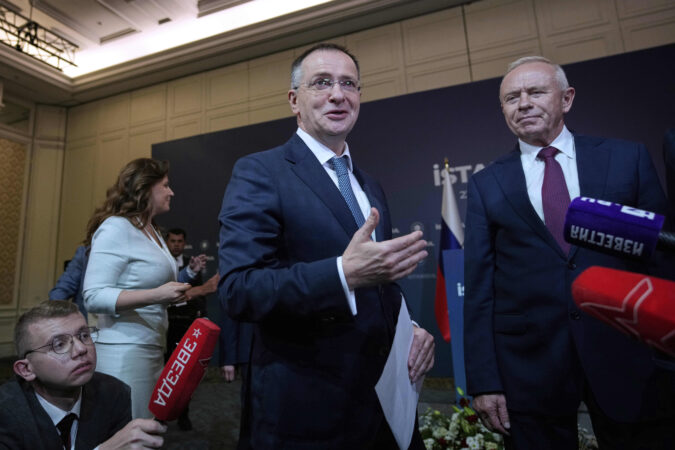
    The head of the Russian delegation, Vladimir Medinsky, tersely said the talks had been “difficult but businesslike” and had ended after just two hours of discussions on Wednesday following longer conversations the previous day.

    The reappearance of Medinsky, known to be a hard-line aide to Russian President Vladimir Putin, as head of the Kremlin’s delegation had signified that Russia was digging in its heels on core demands — including significant cuts to the Ukrainian military, the dismantling of Ukrainian President Volodymyr Zelensky’s government and guarantees for Ukraine’s neutrality, analysts said.

    Moscow has insisted that these steps are required to address what it describes as the “root causes” of the war. Ukraine’s position is that Russia’s invasion was unprovoked and that Moscow should end its illegal war of aggression and remove its troops that are occupying Ukrainian territory.

    Russian analysts said Moscow’s demands encompassed a far wider spectrum of issues than the territorial swaps proposed by President Donald Trump’s administration as a path to end the war.

    “As long as there is an armed anti-Russia on Ukrainian territory, there can be no peace,” said Sergei Markov, a pro-Kremlin political analyst. “I don’t think anyone had any big hopes that the talks would end in success. The positions are very, very far from each other.”

    “The idea of territorial swaps for peace is not Russia’s idea,” Markov added. “It is Trump’s.”

    Proponents of territorial exchanges envision that Russia would withdraw from some areas it occupies in Ukraine in exchange for Ukraine withdrawing its military from parts of the heavily fortified Donbas area, which Putin has failed to capture during four years of full-scale war.

    Zelensky’s administration has previously said it could agree to withdraw troops from the Donbas area. But Kyiv has said it would agree to a pullback only if the region becomes a demilitarized zone and if the United States first provides legally watertight security guarantees.

    Zelensky told reporters on Wednesday that the talks on “political” issues such as Russian demands for Ukraine to withdraw its forces from “the east” were “not easy” and that differences remain. But Zelensky also sought to put a positive spin on some of the trilateral discussions between Russia, the United States and Ukraine in Geneva, saying they had been “constructive” on ways to monitor any potential ceasefire.

    Zelensky appealed again at the Munich Security Conference over the weekend for U.S.-backed guarantees before he signs on to any deal with Russia to end the war. “Those guarantees answer the main question: how long there will be no war again,” he said then.

    The direct talks between Russia and Ukraine have stalled for weeks over core differences, namely territorial concessions, control of Europe’s largest nuclear power plant, which is occupied by Russia in Ukraine’s Zaporizhzhia region, and questions about Western guarantees for Kyiv, according to two European diplomats who spoke on the condition of anonymity to discuss sensitive diplomacy.

    “So far the Russian position is no boots on the ground from NATO allies, so there are outstanding points: territory, security guarantees and the future of the Zaporizhzhia plant,” one of those diplomats said. “Those are the big sticking points, so we need to see if it really happens.”

    In meetings with U.S. officials late last year, Ukraine’s chief European backers were encouraged by the U.S. interest in playing a role in securing a settlement to the war. France and Britain have led a coalition of allies planning ways to provide Ukraine with a U.S.-backed bulwark against future attack, including with some European troops and air or sea power.

    Still, the Trump administration appeared to want to sign a deal before fully committing, while Kyiv has maintained it needs the Western protection baked into any settlement, the diplomats said. Russia, meanwhile, has ruled out any presence of Western soldiers in Ukraine.

    Zelensky, who met with Secretary of State Marco Rubio over the weekend, has stressed Kyiv’s refusal to cede territory in the east that Russia does not militarily control and said Ukraine could only hold elections if there is a ceasefire.

    Analysts said it was clear the Kremlin had no intention of making any concessions.

    “As long as Putin is in power, Russia isn’t paralyzed by widespread protests, and there is at least some money left in the budget for weapons, the war will continue,” said Tatiana Stanovaya, a senior fellow at Carnegie Russia Eurasia Center, in a post on X. “The Kremlin will not make significant concessions even if faced with a protracted financial and economic crisis.”

    “That means there will be no final settlement either now or in the foreseeable future,” Stanovaya added. “Negotiations may intensify, a short-term ceasefire is possible, and documents may even be signed. But overall, this simulation of negotiations can only lead to the simulation of a ceasefire and the simulation of a settlement.”

    Russia has been facing increasing economic pressure after the U.S. administration imposed tough new sanctions on Russia’s two biggest oil companies, Rosneft and Lukoil, in October.

    The measures caused Russian oil revenue to plummet as Moscow was forced to accept discounts of more than $20 per barrel on its exports. Economists have warned of a nonpayment crisis as the economy grinds to a halt amid high inflation and high interest rates of 15.5% imposed by the Central Bank.

    Analysts say there are concerns in the Kremlin that Moscow could face a narrowing window to reach an advantageous deal because the Trump administration could grow distracted as midterm elections near — and then potentially could be weakened by the results.

  • Russia swaps cash for crosses in bid for African influence

    Russia swaps cash for crosses in bid for African influence

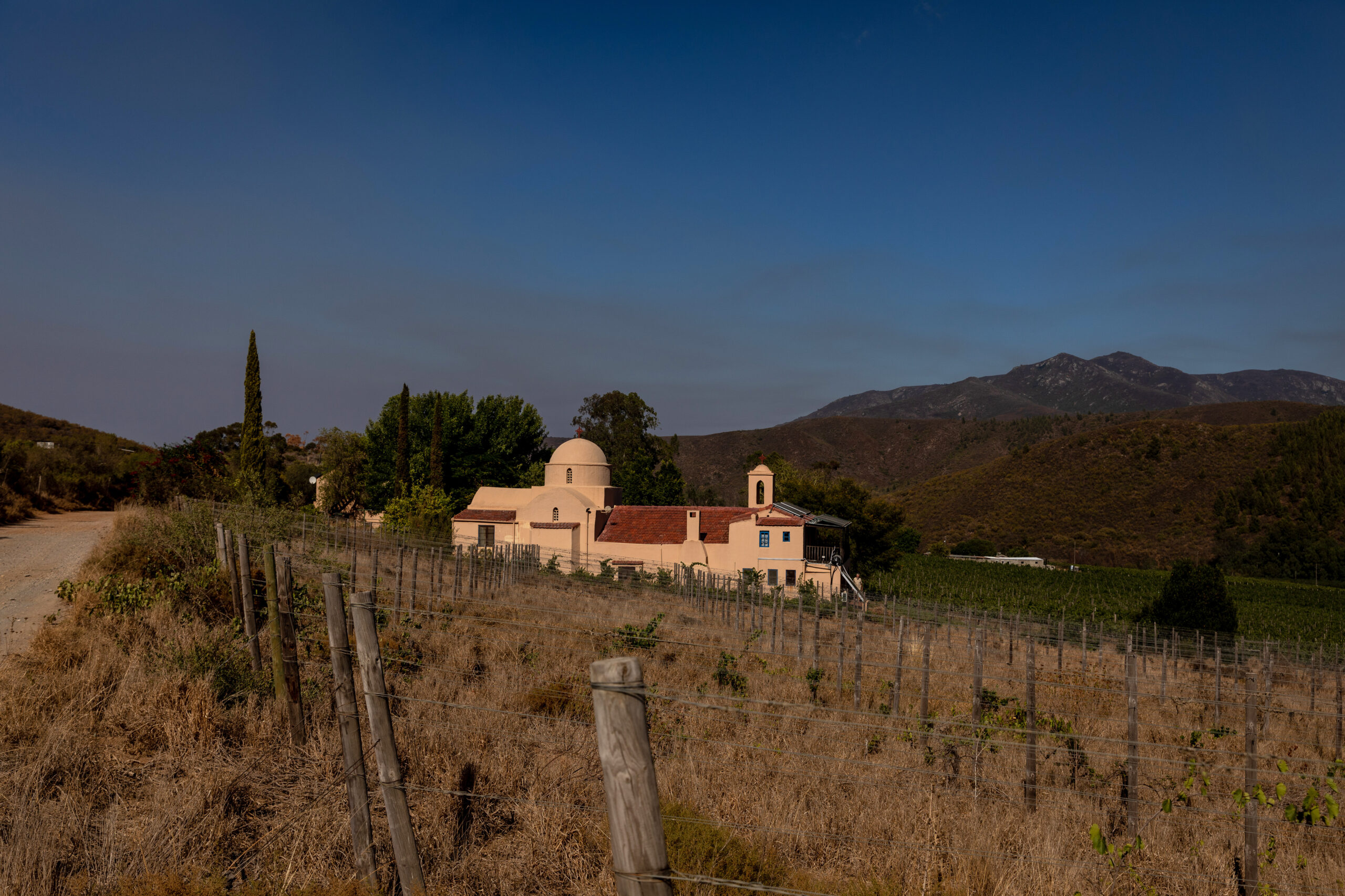
    Deep in South Africa’s wine country near the town of Robertson, past rows of tin shacks and up a gravel road where barefoot children play, sits a little piece of Russia.

    The apricot-hued building with its curved dome proclaims its affiliation with the Moscow Patriarchate of the Russian Orthodox Church on a sign in Afrikaans. The interior is adorned with icons, rugs, and candle stands, things more familiar to a place of worship in, say, St. Petersburg than South Africa’s Western Cape. But the outpost is just one of hundreds of similar churches that have spawned across Africa.

    The continent has long been a target for Russia. The Soviet Union supported decolonialization and aided new independent states during the Cold War while the West engendered mistrust with policies such as doing little to oppose apartheid in South Africa.

    Now, faced with more sanctions over its war in Ukraine and a new geopolitical era, Moscow is trying to leverage its old, soft power ties again in the absence of any significant economic hard power.

    Recent years have seen China dominate, becoming Africa’s biggest trading partner and investing in roads, railways, and ports. The broader aim might be diplomatic, to garner international support from a continent with 54 votes at the United Nations. The Kremlin and its proxies, though, are also leaning on African countries for recruits to bolster its army and the workforce making munitions it uses in Ukraine.

    “Russia is trying to develop its policy of influence in all African countries,” said Thierry Vircoulon, coordinator of the Observatory of Central and Southern Africa at the French Institute of International Relations, known as IFRI. “They want to project the image of a great country that is friendly to all Africans.”

    A Chinese destroyer and Russian and Iranian corvettes at Simon’s Town harbor in Cape Town on Jan. 9 ahead of multinational naval exercises.

    President Vladimir Putin recently created a Kremlin department to coordinate Russia’s interactions and policies with nations personally selected by him. There will be a special team to look after Africa policy, two people familiar with the situation said.

    Early on in its war against Ukraine, there were donations of a small amount of fertilizer and grains to African nations to help alleviate shortages caused by the full-scale invasion in February 2022. More recently, Putin ordered ships to sail around Africa, ostensibly to help countries such as Morocco and Senegal map out their stocks of fish.

    What’s increasingly visible is the linguistic and cultural push. Russia has opened seven centers known as Russian Houses across the continent and plans more, holding talks over a new site in Namibia in early December. Russian, meanwhile, is being introduced at universities in cities including Abidjan in Ivory Coast and Harare in Zimbabwe.

    In 2024, the foundation led by Putin’s daughter Katerina Tikhonova opened a lecture hall at Cheikh Anta Diop University in Dakar, Senegal, to facilitate the teaching of the language.

    More than 32,000 students from Africa are currently studying at Russian universities, Russian Foreign Minister Sergey Lavrov said in December. Since 2020, the number of scholarships allocated to the African continent in Russia has nearly tripled, reaching more than 5,300 places. They are following in the footsteps of African leaders, many of whom had military or academic training in the USSR.

    The Russian embassy in South Africa posted an advertisement for them in December and a politician in Lesotho facilitated sending students to Moscow-based Synergy University earlier in the year.

    And, of course, there’s religion — a way of wielding influence going back to Christian missionaries in colonial times. In less than three years, the Russian Orthodox Church expanded to at least 34 countries in Africa from four, grew the number of clergy to 270 and registered 350 parishes and communities as of June 2024, the latest figures available from the church.

    The geographical expansion might be the most significant in the Russian Orthodox Church’s history, Yuri Maksimov, chairman of the Africa Exarchate’s mission department, wrote in a 2025 academic paper.

    The Russians attracted priests with better salaries, promises of church construction and rapid promotion, according to a study by Father Evangelos Thiani, an academic and Kenyan priest in the Greek Orthodox Church.

    Russian orthodoxy welcomed Alexey Herizo, a Madagascan priest in the capital, Antananarivo, with “open arms.” He did online training with a seminary in Moscow, then practical training on site in 2023 for three months before being ordained as a deacon and then a priest within a few days.

    That was after years of waiting for the Greek Orthodox Church to accept him, said Alexey, his religious name. The salaries provided by the Russian church allow us “to live decently, take care of our family’s health, and provide for our children’s education,” he said.

    The church in Robertson affiliated with the Moscow Patriarchate of the Russian Orthodox Church.

    Expanding outreach

    It’s hard to estimate the number of worshipers the church has now in communities where religion and social conservatism play a large role in everyday life. The church on the outskirts of Robertson, a town named after a Scottish protestant, switched to the Russian branch of the Orthodox faith in 2022. It’s now home to a small congregation of largely white, Afrikaans-speaking South Africans.

    While Russian Orthodox churches in South Africa have mainly recruited from Afrikaans communities, with its conservative values appealing to elements of that group, they have also been seeking to add to their numbers with outreach programs to rural, Black communities.

    The expansion is aimed at “trying to pull more countries into their orbit,” said Tom Southern, director of special projects at the Centre for Information Resilience, who has looked at the growth. “It’s like spiritual colonialism.”

    Russia’s longstanding ties with Africa loosened following the collapse of communism as the country turned to the West. The continent came back into focus after Putin annexed Crimea in 2014 and relations with the United States and Europe soured.

    A report by the European Parliament said Moscow has military cooperation agreements with 43 African countries and is a key supplier of arms. Wagner Group paramilitaries were active trying to fight rebels in places like Mali, though the group has since been disbanded and folded into the government’s Africa Corps. Companies linked with Wagner, meanwhile, had contracts across the continent in security, oil services, and gold mining.

    African countries have vast economic and human potential and are playing an increasingly significant role in global politics, Putin said in a written address to the plenary session of the Russia-Africa Partnership Forum conference in Cairo in December. Lavrov, his foreign minister, told the event that Russia plans to have trade missions operating in 15 African countries by the end of 2026.

    A Russian warship in January joined naval exercises held off the coast of South Africa along with vessels from China, Iran, and the United Arab Emirates. The Russian embassy said they focused on maritime security.

    Russia’s renewed push into Africa lacks the financial resources of its geopolitical rivals, though. While China is sub-Saharan Africa’s biggest trade partner, Russia ranks 33rd and is superseded by the UAE, U.S., Japan, and eight European nations.

    China has built infrastructure in nations from Cameroon to Kenya while the UAE and other wealthy gulf states have become major sources of foreign money in recent years. The European Union is the biggest investor in South Africa and 600 American companies operate in the country.

    Putin hosted a Russia-Africa summit in 2019 attended by 43 heads of state, while the second one in 2023 attracted just 17. The Kremlin blamed the low attendance on “unprecedented pressure” from the U.S. and its allies.

    There’s an increasing effort to counter that. With President Donald Trump upending the world order with trade tariffs, rivalry with China and more recently the capture of Venezuela’s president, Russia is trying to assert its narratives in Africa.

    The state-owned Sputnik news service is hiring South African journalists and in 2026 plans to open a bureau in the country. It would be the second in Africa, following Ethiopia in early 2025, said Viktor Anokhin, who will run the operation. “Our main goal, as it always has been, is to provide an alternative source of news,” Anokhin said when called by Bloomberg. “A balanced offering.”

    Recruiting manpower

    Russia has sponsored disinformation campaigns and stoked instability in conflict-ridden nations, according to research groups including the European Council on Foreign Relations. The country is also accused of using Africans to aid its war effort in Ukraine.

    One of them was Alabuga Start, a recruitment arm of Russia’s Alabuga Special Economic Zone in Tatarstan. It set itself a target of hiring thousands of African women between the ages of 18 and 22, saying they will work in fields such as hospitality and construction.

    Most of the young women end up in a military equipment factory, according to the authors of three reports from organizations including the Institute for Science and International Security.

    “African women typically don’t have access to as many opportunities in life, opportunities to get a well-paying job, opportunities to get an education, opportunities to travel,” said Spencer Faragasso, a senior research fellow at Washington-based ISIS. “The Alabuga Start program really provides on the surface all those benefits. But in reality, they’re working in a drone production factory.”

    Alabuga didn’t respond to requests for comment, while the Russian embassy in South Africa said in August it had no evidence that the rights of those recruited by Alabuga were being violated, describing reports as “biased.”

    On the battlefield, Ukraine estimates that more than 1,400 Africans are fighting for Russia. Kenya’s foreign minister said in November at least 200 Kenyans had been recruited to Russia’s military, often after being told they would work as security guards or drivers.

    A report this month by All Eyes on Wagner, a nonprofit research group, said Russia has recruited from about 35 African countries and provided the names of about 300 Africans killed while fighting for Russia.

    In South Africa, where fighting for a foreign military or assisting it is a crime, a daughter of former President Jacob Zuma is being investigated by the police for allegedly helping to recruit about 20 men for Russia’s military. She told them they were going on a bodyguard training course.

    Separately, South Africa arrested and charged state radio presenter Nonkululeko Mantula and four men she allegedly recruited for the Russian military. Her trial is due to start in April. Bloomberg reported on Jan. 7 that Russia targeted South African video gamers as part of the recruitment drive, according to documents involving two men who left to fight.

    South Africa, Kenya, and Botswana have announced investigations into how their nationals became involved in fighting for Russia. South Africa and Lesotho have publicly warned against accepting some job opportunities and scholarships in Russia.

    Worshipers enter the Cathedral of St. Sergius of Radonezh on the outskirts of Johannesburg.

    Religious leaders

    The widening footprint of the church is symbolic of Russia’s desire to sway Africans to its cause.

    In a 2022 news conference to celebrate the first year of work in Africa, Leonid Gorbachov, the then Patriarchal Exarch of Africa, said the church works with Russian government agencies and was in talks with the government about the exarchate’s needs.

    “It is religious leaders in Africa who remain the most trusted and respected, with religion taking center stage in politics, elections and developmental concerns,” Father Thiani, the Kenyan priest and academic, wrote in the July 2024 paper published by Studies in World Christianity. “The use of religion for entering Africa is therefore an ideal form of Russian soft power.”

    Churches now range from rural outposts in Kenya, Madagascar and the one in Robertson to the St. Sergius of Radonezh cathedral on the outskirts of Johannesburg, which is adorned with grand golden cupolas. Founded in 2003, it was — until the establishment of the Africa Exarchate — the only Russian Orthodox Church in sub-Saharan Africa.

    The activities of the Russian Orthodox Church have raised concerns in a number of countries outside Africa.

    The Czech government placed Patriarch Kirill of Moscow on its sanctions list in April 2023. It cited his support for the invasion of Ukraine, a country who’s church declared full independence from the Moscow patriarchate in 2022.

    In Moldova, a former Soviet state with eyes on EU membership, the government has described the Moscow-linked church as a tool of Russian influence aimed at spreading propaganda and causing instability.

    Priests spoken to by Bloomberg denied the church expansion in Africa was related to Russia’s political objectives.

    Nicholas Esterhuizen, who runs the Saint John of The Ladder Church above a café in Cape Town, said ties with Russia were spiritual and “transcend the current political climate.”

    “If the state is the problem, if the state is at war, why do you need to draw the church into the state? The president is not a leader of the church,” said Daniel Agbaza, a Russian Orthodox priest in Nigeria, where a new church is being built in Benue State. “Because it is called Russian does not mean that it is a Russian government church.”

  • DHS spokeswoman who became a face of Trump deportation campaign steps down

    DHS spokeswoman who became a face of Trump deportation campaign steps down

    The Department of Homeland Security’s top spokesperson is leaving the Trump administration, officials said Tuesday, a departure that comes amid falling public approval ratings for the president’s mass deportation agenda.

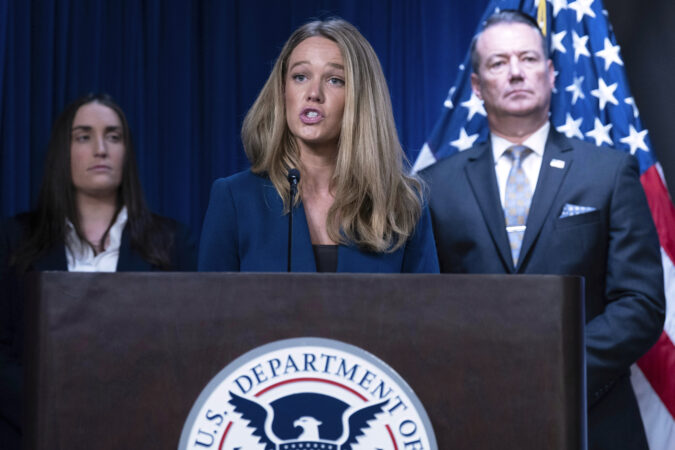
    Tricia McLaughlin, whose regular Fox News appearances made her a face of the administration’s hard-line immigration agenda, is leaving just over a year into Homeland Security Secretary Kristi L. Noem’s tenure leading the agency. The move comes after DHS and the White House have scrambled to tamp down public outrage over the killings of two U.S. citizens by federal immigration agents in Minneapolis last month.

    McLaughlin informed colleagues Tuesday of her departure. She had begun planning to leave in December but extended her stay to help the administration deal with the fallout of the fatal shootings of Renée Good and Alex Pretti in Minneapolis, according to people briefed on her exit. Politico first reported on McLaughlin’s departure.

    Confirming McLaughlin’s decision in a post on X on Tuesday, Noem cited her “exceptional dedication, tenacity, and professionalism” and said she “has played an instrumental role in advancing our mission to secure the homeland and keep Americans safe.”

    In a statement, McLaughlin thanked Noem and President Donald Trump, saying she is “immensely proud of the team we built and the historic accomplishments achieved by this Administration and the Department of Homeland Security.”

    McLaughlin said she will be replaced by her deputy, Lauren Bis, and DHS’s public affairs team is adding Katie Zacharia, a Fox News contributor.

    Noem’s chief spokeswoman built a reputation as a fierce defender of the administration’s handling of immigration and of the secretary’s leadership, frequently sparring with reporters on social media and appearing on cable news programs. But her forceful pronouncements have drawn criticism from Democrats and immigrant rights groups, who point to incidents in which statements she made were later contradicted in court or in video footage recorded by witnesses.

    McLaughlin joined other administration officials in quickly declaring that Good had committed “an act of domestic terrorism” before she was shot to death by an immigration officer. McLaughlin also said a Venezuelan immigrant had “mercilessly beat” a federal law enforcement officer in Minneapolis. The charges against that man were dropped after the U.S. attorney in Minneapolis said that “newly discovered evidence” was “materially inconsistent with the allegations” the officers had made.

    In those and other incidents, McLaughlin quickly made statements supporting actions by officers before investigations had transpired — something that Democrats and some Republicans have also criticized Noem for doing.

    Christopher Parente, an attorney for Marimar Martinez, a U.S. citizen shot multiple times by a Border Patrol agent in Chicago in the fall, asked a federal judge for permission to release body-camera footage and other evidence that he said was necessary to demonstrate that McLaughlin and other senior administration officials had falsely accused Martinez of being a domestic terrorist and of doxing federal agents.

    Martinez was indicted on federal charges of assault and attempted murder of a federal employee with a deadly or dangerous weapon after the shooting. But a federal judge dismissed the case in November after prosecutors in the Northern District of Illinois requested that the charges be dropped. Prosecutors didn’t state a reason for the dismissal, although attorneys for the defendant criticized the weakness of the government’s case from the start.

    Under McLaughlin, critics say, the DHS public affairs office has produced a skewed view of immigration enforcement. Officials have refused to publish detailed reports of how many immigrants have been arrested and deported. The agency’s messaging has mainly publicized the arrests of immigrants who commit crimes, even though public records show that a majority of migrants who have been detained do not have criminal records.

    “We are pleased with this resignation,” Parente told the Washington Post when asked about McLaughlin’s departure. “Unless Pinocchio is applying for the position, we believe her replacement will be a great improvement and hopefully work to start repairing the credibility of DHS.”

    Critics said that DHS’s public affairs office has refused to publish detailed reports of how many immigrants have been arrested and deported. The agency’s messaging has mainly publicized the arrests of immigrants who commit crimes, even though public records show that a majority of migrants who have been detained do not have criminal records.

    McLaughlin also has repeatedly attacked federal judges who have ruled against the administration, calling them “unhinged,” “deranged” and “disgusting and immoral.” In some cases, she has accused judges of endangering immigration agents or the public through their rulings.

    David Lapan, a DHS spokesman in Trump’s first administration, said he hopes McLaughlin’s replacement “stays away from the belligerent, attacking approach that she took.”

    “The mis- and disinformation that comes out hurts the trust and credibility of the organization, and they can’t afford to have that continue,” Lapan said.

    But McLaughlin’s combative approach won public praise from Trump last month.

    “Great job by wonderful TRICIA MCLAUGHLIN, DHS Assistant Secretary, on the Sean Hannity Show,” Trump posted on social media. “Many Illegals from around our Nation charged with serious crimes this week. Tricia really knows her ‘STUFF!’”

    Democrats have criticized DHS’s posts on social media for disparaging immigrants and posting paintings that depict scenes of a predominantly White America. One post featured an ICE recruitment promotion that stated, “We’ll Have Our Home Again,” a phrase that has been associated with a song embraced by white nationalists.

    McLaughlin defended that promotion, telling the Post in a statement last month: “The fact that people would like to cherry pick something of white nationalism with the same title to make a connection to DHS law enforcement is disgusting.”

    McLaughlin was still posting on X on Tuesday — disputing an NBC News report of growing tensions between DHS leadership and Coast Guard officials over Noem’s use of the military branch’s resources, which she oversees. The Post has also reported on the strained relationship between DHS and the Coast Guard, including Noem’s decision to spend $200 million on new Coast Guard jets for use by senior DHS officials and her move into military housing typically reserved for the Coast Guard commandant.

    Before her tenure at DHS, McLaughlin was a senior adviser and communications director for Vivek Ramaswamy’s 2024 presidential campaign. She joins other senior DHS officials who have left the department in recent weeks, including Madison Sheahan, who last month stepped down from her role as Immigration and Customs Enforcement’s deputy director to mount a campaign against Democratic Rep. Marcy Kaptur in Ohio.