Category: Washington Post

  • Stephen Colbert says CBS blocked interview with Texas Democrat over FCC concerns

    Stephen Colbert says CBS blocked interview with Texas Democrat over FCC concerns

    CBS late-night host Stephen Colbert rebuked his own network Monday night, claiming that lawyers for parent company Paramount Skydance prohibited him from airing an interview with Texas State Rep. James Talarico, a Democratic candidate for the U.S. Senate, over concerns it would violate the Federal Communications Commission’s equal time rule.

    “You know who is not one of my guests tonight?” Colbert asked his audience. “That’s Texas state representative James Talarico. He was supposed to be here, but we were told in no uncertain terms by our network’s lawyers, who called us directly, that we could not have him on the broadcast.”

    In response, the studio audience booed.

    “Then I was told, in some uncertain terms, that not only could I not have him on, I could not mention me not having him on,” Colbert continued. “And because my network clearly does not want us to talk about this, let’s talk about this.” A representative for Paramount Skydance did not respond to a request for comment.

    Colbert launched into a segment about the FCC’s equal time rule, which requires broadcasters to provide equal opportunity to political candidates. News and talk show interviews have traditionally been exempt from the mandate. But in January, the FCC, issued a public notice saying that daytime and nighttime talk shows would have to apply for a exemptions to the equal time rule for each of their programs.

    “Importantly, the FCC has not been presented with any evidence that the interview portion of any late night or daytime television talk show program on air presently would qualify for the bona fide news exemption,” the FCC’s notice read.

    At the time, Anna M. Gomez, the FCC’s lone Democrat, called the notice “misleading” and said nothing has changed about the FCC’s requirements.

    In a statement Tuesday, Gomez wrote that CBS’s decision is an example of “corporate capitulation in the face of this Administration’s broader campaign to censor and control speech” and said that the FCC has “no lawful authority to pressure broadcasters for political purposes.”

    “CBS is fully protected under the First Amendment to determine what interviews it airs, which makes its decision to yield to political pressure all the more disappointing,” she said.

    In a statement Tuesday afternoon, CBS defended itself and pushed back against Colbert’s account.

    “THE LATE SHOW was not prohibited by CBS from broadcasting the interview with Rep. James Talarico,” a spokesperson for the network said in a statement. “The show was provided legal guidance that the broadcast could trigger the FCC equal-time rule for two other candidates, including Rep. Jasmine Crockett, and presented options for how the equal time for other candidates could be fulfilled. THE LATE SHOW decided to present the interview through its YouTube channel with on-air promotion on the broadcast rather than potentially providing the equal-time options.”

    Colbert is already on his way out of CBS, set to depart the network in May when his show goes off the air. CBS announced over the summer that it is canceling The Late Show, the long-running talk show once hosted by David Letterman, which it claimed is “purely a financial decision.”

    Led by Chairman Brendan Carr, the FCC in President Donald Trump’s second term has remade itself as a speech enforcer tackling perceived liberal bias in the media industry. Carr’s speech agenda has been marked by investigations of media companies and threats to take action against broadcasters that do not follow rarely enforced FCC rules. He has frequently invoked a little-used “news distortion” policy as justification, a practice condemned by a bipartisan group of former FCC chairs and commissioners in a November letter.

    Following on-air comments in September by ABC’s Jimmy Kimmel in the wake of conservative activist Charlie Kirk’s killing, Carr suggested on a podcast that the agency could take action against the network and its parent company Disney, which owns broadcast licenses across the country.

    “We can do this the easy way or the hard way,” Carr told conservative podcast host Benny Johnson about Kimmel. “These companies can find ways to change conduct and take actions on Kimmel, or there’s going to be additional work for the FCC ahead.” Carr drew bipartisan criticism for his role in the episode, with Sen. Ted Cruz (R., Texas) likening him to a cinema mafioso. ABC suspended Kimmel for several days in September.

    Last summer the FCC approved an $8 billion deal for David Ellison’s Skydance to buy CBS parent company Paramount after a series of concessions. Skydance pledged to conduct a review of CBS’s programming and agreed to refrain from diversity, equity and inclusion initiatives. It also appointed an ombudsman with Republican Party ties to handle claims of bias.

    In July, CBS also settled a lawsuit from Trump, who claimed that a 60 Minutes interview with political rival Kamala Harris was “deceitful” in its editing. Colbert claimed the $16 million settlement was a “big, fat bribe.” The network canceled The Late Show three days later.

    Colbert’s criticism also comes amid another corporate pursuit for Paramount Skydance.

    The company is trying to persuade Warner Bros. Discovery to accept its hostile bid to buy the company rather than sell to Netflix. It’s unclear whether the FCC would have a role in such a deal, even if Paramount is involved, because no broadcast spectrum licenses would be changing hands. Still, any deal of this size would need government approval, probably from Trump’s Justice Department, where antitrust chief Gail Slater just resigned.

    In December, Trump has said he would be “involved” in vetting the Netflix-Warner Bros. deal, which has massive implications for Hollywood, movie theaters and streaming. More recently, Trump backtracked, saying he is “not involved” in the deal.

    Talarico, 36, has been a member of the Texas House of Representatives since 2018 and more recently has been a rising star in the Democratic Party. He is running for a U.S. Senate seat in Texas, which is holding its primary contests on March 3.

    Though Colbert’s interview with Talarico didn’t broadcast over the airwaves, it was made available on YouTube.

    “This is the party that ran against cancel culture,” Talarico told Colbert. “Now they’re trying to control what we watch, what we say, what we read. And this is the most dangerous kind of cancel culture — the kind that comes from the top.”


  • Trump picks his White House assistant for panel reviewing ballroom

    Trump picks his White House assistant for panel reviewing ballroom

    When Congress created the Commission of Fine Arts more than a century ago, its members were intended to be “well-qualified judges of the fine arts” who would review and advise on major design projects in the nation’s capital, lawmakers wrote. The initial slate of commissioners included Daniel Burnham and Frederick Law Olmsted Jr., architects and urban planners who designed much of Washington.

    Now, the 116-year-old commission is set to include its newest, youngest member: Chamberlain Harris, a 26-year-old White House aide and a longtime executive assistant for President Donald Trump, who is slated to be sworn in at the panel’s next public meeting on Thursday.

    Trump’s selection of Harris — who was known as the “receptionist of the United States” during the president’s first term and has no notable arts expertise — comes amid the president’s push to install allies on the arts commission and another panel, the National Capital Planning Commission. Both commissions are reviewing Trump’s planned White House ballroom and are expected to review his other Washington-area construction projects, such as his desired 250-foot triumphal arch.

    Trump has said he hopes to complete the projects as quickly as possible, despite complaints about their size, design, and potential impact on Washington. A historical preservation group has sued the administration over the ballroom project, saying that Trump should have consulted with the federal review panels before tearing down the White House’s East Wing annex and beginning construction on his planned 90,000-square-foot, $400 million ballroom.

    A federal judge weighing whether to halt the ballroom project in December had instructed the White House to go through the commissions before beginning construction.

    Asked about Harris’s qualifications to serve on the fine arts commission, the White House on Tuesday touted her as a “loyal, trusted, and highly respected adviser” to the president.

    “She understands the President’s vision and appreciation of the arts like very few others, and brings a unique perspective that will serve the Commission well,” Steven Cheung, the White House communications director, said in a statement. “She will be a tremendous asset to the Commission of Fine Arts and continue to honorably serve our country well.”

    Harris, who holds the title of deputy director of Oval Office operations, received a bachelor’s degree in political science in 2019 from the University at Albany, SUNY, with minors in communications and economics, according to an archived copy of her resumé on LinkedIn. She continued working for Trump as an executive assistant when he was out of office.

    Harris was one of seven fine arts commissioners Trump appointed during a 19-day spree in January. The president had left the commission empty for months after firing all six members in October but raced to restock the panel ahead of the agency’s January meeting when the ballroom project was first added to the agenda.

    Former fine arts commissioners said they could not recall a commissioner in the panel’s history with as little prior arts experience as Harris. Several former commissioners also noted that Trump has installed multiple appointees with minimal arts and urban planning expertise on both panels set to review his construction projects remaking Washington.

    “It’s disastrous,” said Alex Krieger, an architect and professor at the Harvard Graduate School of Design, who was chosen for the commission in 2012 by President Barack Obama and served a second term in the first Trump administration. “Some of these people just have no qualifications to evaluate matters of design, architecture, or urban planning.”

    Past commissioners have included Billie Tsien, an architect currently working on Obama’s library, and Perry Guillot, a landscape architect who redesigned the White House Rose Garden during Trump’s first term.

    Witold Rybczynski, an architect who was chosen for the Commission of Fine Arts by President George W. Bush and served a second term under Obama, wrote in an email that President Joe Biden also reshaped the panel by firing Trump appointees before their terms had concluded. He also noted that past presidents installed some political appointees and lesser-known experts to the panel, too.

    “The degree of expertise … has varied,” Rybczynski wrote in an email. He is the Martin and Margy Meyerson Professor Emeritus of Urbanism at the University of Pennsylvania.

    The fine arts commission on Thursday is slated to review the latest ballroom designs and may vote to advance the project. The White House has said it hopes to win formal approval from both review panels by March and begin aboveground construction of the ballroom as early as April.

  • What 42 massive and decaying presidential heads say about America

    What 42 massive and decaying presidential heads say about America

    CROAKER, Va. — George Washington’s chin is crumbling. His cheeks are streaked with sooty grime. His blackened nose is peeling, an apparent victim of frostbite and sunburn. Still, America’s first leader looks nicer than usual. In the winter months, wasps aren’t nesting in his eyes.

    “Just beautiful,” observed Cesia Rodriguez, a 32-year-old massage therapist gazing up at the Founding Father — or what remained of him.

    She’d pulled on rain boots, driven about an hour and trudged through the mud of what her tour guide called “an industrial dump” early Saturday with dozens of other tourists to see “The Presidents Heads,” a private collection of every ex-POTUS’s sculpted likeness from Washington to George W. Bush. They’re arranged in haphazard rows, with Andrew Jackson occupying a prime front spot simply because the owner likes his hair. The vibe is Stonehenge-meets-The Walking Dead.

    Before they started sinking into the ground, the busts fashioned from concrete, plaster, and rebar — was that Styrofoam poking through some cranial holes? — stood about twice the height of a basketball hoop. They each weighed at least 5 tons. Time has not been kind. Chester A. Arthur’s entire jaw is missing. Ulysses S. Grant has lost a chunk of his right eyebrow. And Franklin D. Roosevelt was “scalped” in transit, the tour guide noted, by a Route 199 overpass.

    These commanders in chief weren’t supposed to spoil. They were carved with patriotic love by a Texas sculptor who studied in Paris under a French modern master. They were the polished centerpieces of a $10 million park that in 2010 went bankrupt after six years. Not enough admirers wanted to see them back when they were pristine.

    Now the wait list stretches into the hundreds. Demand didn’t spike, their owner said, until the heads were rotting. Not that their misfortune attracted haters. Quite the opposite. In the wreckage, guests said they could see their country and themselves with more tenderness than judgment. “That one’s me,” a 20-something chirped at jawless Arthur.

    Rodriguez didn’t mull the symbolism when she learned about the spectacle on Facebook. Seeing spooky historical art, she figured, was a fun way to spend Presidents’ Day weekend. Up close, though, the oddities stirred something familiar.

    She thought of the America she loved: her clients, who came from everywhere with stiff necks and bad backs. The nurses, teachers, soldiers, and everyone else on her massage table, resting up to go at it again.

    “It’s the imperfections, for me,” she said.

    The late sculptor, David Adickes, was an Army veteran who’d wanted his stony visages to gleam. On an early-aughts trip to Mount Rushmore, he’d contemplated the granite mugs of Washington, Jefferson, Roosevelt, and Lincoln and thought: Why stop at four?

    Adickes, who died last year at 98, hoped the 42 statues he chiseled at his Houston studio would land in the nation’s capital, he said on a 2022 podcast, but real estate was too costly. So in 2004, he and a business partner settled on a plot near Colonial Williamsburg, aiming to draw history buffs and stroller-pushing families. The Great Recession, overpriced tickets, and poor marketing dashed that vision.

    After the busts went bust, a rental car company purchased Presidents Park and hired local builder Howard Hankins to help flatten it into a parking lot.

    “I just couldn’t see crushin’ ’em,” Hankins recalled.

    Instead, he loaded the abandoned dignitaries onto a fleet of flatbed trucks and escorted them (minus their pedestals) to his farm-slash-industrial dump. Storing them in a muddy field was meant to be temporary, he insisted. A presidential fanatic, Hankins envisioned building a new museum. But the 11-mile move alone cost him $50,000, he said. A decade and a half later, the idea exists only on drawings.

    By 2019, Virginia photographer John Plashal caught wind of what was disintegrating on Hankins’ out-of-the-way acres. He pitched himself as a tour guide to the introverted contractor, and the two hatched a fresh back-road attraction. A few times per year, guests can pay $28.35 to marvel at what the website deems “neglect and decay.” As word spread on social media, Ozzy Osbourne stopped by. So did producers of a certain hit zombie series (though they filmed nothing on site). And the heads just kept deteriorating.

    “Now they look like they’ve got leprosy,” Plashal told the Saturday crowd. “In the summer, they all have an active wasp nest in their eyeballs.”

    Yet the place, he continued, has only grown more popular. Nearly 600 people showed up over the weekend, coming from as far as Germany and the Dominican Republic.

    So what, he asked the group, is the rationale for rolling in now?

    Up shot the arm of 10-year-old Evelyn Price.

    “Because they are falling apart,” the Norfolk fourth-grader offered, “but, um, life is kind of like that.”

    Mess is part of our heritage, her mother added, so wading through muck to engage with the past felt right.

    “America is really, really good at getting things very, very wrong,” mused 41-year-old Treloar Price, a clinical psychologist, “and then working hard to try to fix it.”

    The behemoth noggins reflected the transience of American power to Doug Tempest, a 46-year-old Navy veteran from Richmond.

    Dictators overseas have clung to power for decades, but here, so far — though our current leader has riffed about a third term — no president has defied the Constitution or the will of voters to stay in the White House. Every four years, a new victor can shake things up, while the old Oval Office occupant’s influence tends to fade.

    “One of the superpowers that our country has is we can change direction,” Tempest said.

    For Caren Bueshi, a 62-year-old retired teacher from Naples, Fla., witnessing the sculptures sag into the dirt conjured what she feared the nation was losing. Constitutional literacy, for one. Recent reports of federal agents detaining immigrants with the right papers and clean criminal records disturbed her.

    “We’re forgetting the foundation,” she said, wandering past Jackson’s splintering mane. “It’s a challenging time.”

    “It always is,” interjected her mother, 91-year-old Pat Duke, clutching her arm. “From the beginning.”

    Mom leaned right. Daughter leaned left. But they didn’t want to get into politics. The nonagenarian looked at the presidents and saw men. She saw mortality.

    “My life is getting short now,” she said, “so I’m just enjoying it.”

    A few heads over, Andrea Cote, a 44-year-old consultant, tried to turn the eerie scene into a history lesson for her 9-year-old daughter, June.

    “This is Chester A. Arthur missing his jaw,” she said, pausing in front of the gaping mouth. The rebar inside looked like rusted braces without teeth.

    “Scary,” June said.

    “And Thomas Jefferson was the one who didn’t like to publicly speak,” Cote deadpanned.

    Jokes aside, the derelict skulls touched her. So many families braved the chill that day, she noticed, for a glimpse at American history, no matter what shape it was in. They were interested. They cared. They were coming together.

    So Cote smiled when a fellow tourist with a fancy camera approached.

    “If you squat right here,” he told her kid, “you can get a picture of the sun coming right through his mouth.”

    June grabbed her mom’s phone and aimed it just so.

    “Whoa!” she squealed.

    “See,” he said, “now there’s something positive.”

  • Ukraine detains ex-energy minister as high-level corruption case widens

    Ukraine detains ex-energy minister as high-level corruption case widens

    KYIV — Ukrainian authorities opened a criminal case against the country’s former energy minister German Galushchenko one day after he was caught at the border trying to flee the country — the latest charges in a $100 million corruption probe that has ensnared some of Ukraine’s highest-ranking officials and shaken the office of President Volodymyr Zelensky.

    Galushchenko, who served as energy minister for four years before becoming justice minister for a short period last year, was arrested Sunday by anti-corruption authorities on the Ukrainian-Polish border. On Monday, authorities said he was charged on suspicion of “money laundering and participation in a criminal organization.”

    The arrest is part of an investigation into high-level graft, code-named “Midas.” Other suspects include Timur Mindich, a close friend and former business partner of Zelensky, and Oleksiy Chernyshov, a former deputy prime minister. Authorities allege the group ran a kickback scheme tied to contracts signed with Ukraine’s state nuclear energy company, Energoatom.

    Zelensky’s top aide, Andriy Yermak, resigned in November, hours after authorities searched his home and office as part of the corruption probe. However, Yermak has not been charged, officials said.

    The investigation has placed the issue of Ukraine’s seemingly never-ending battle with corruption front and center, and it has rattled Kyiv’s European supporters as the country struggles to defend against Russia’s invasion, which will reach its fourth anniversary next week.

    Corruption in the country’s energy sector is a particularly sensitive subject, as millions of Ukrainians are enduring frigid, dark apartments this winter because of Russia’s campaign of missile and drone strikes against the power grid.

    On Monday, Ukraine’s air force said Russian forces attacked locations throughout the country overnight with more than 60 drones and six missiles. At least one missile and nine drones pierced air defenses, the air force said in a social media statement.

    Some 1,500 buildings in Kyiv are without heat, of which more than 1,000 are expected to remain so until the end of winter because of significant damage to the power grid, Kateryna Pop, spokesperson for the Kyiv military administration, said on Ukrainian television on Monday.

    In November, investigators at Ukraine’s two main anti-graft bodies, the National Anti-Corruption Bureau and the Specialized Anti-Corruption Prosecutor’s Office — or NABU and SAPO — said they had uncovered a sprawling kickback scheme at Energoatom.

    At that point, NABU and SAPO officials said they had worked for 15 months on the case and compiled evidence that included some 1,000 hours of audio recordings. The alleged scheme involved a 10% to 15% surcharge on Energoatom contracts “to avoid blocking payments for services rendered … or to avoid losing their status as suppliers,” an NABU statement said.

    Members of the group adopted aliases for their communications such as “Che Guevara,” “The Professor,” “Rocket,” and “Sugarman.”

    Some of the contracts involved building installations to protect energy facilities from Russian air attacks, investigators said.

    NABU and SAPO detectives searched Galushchenko’s home in November. Shortly after, Zelensky called for the resignations of Galushchenko and Svitlana Grynchuk, who served as his deputy energy minister and succeeded him when he moved to the Justice Ministry. At the time of the search, officials filed no charges against Galushchenko.

    He has not issued any statements since his arrest. Other suspects in the case have denied their guilt.

    Mindich, 46, fled the country in November and was filmed by the Ukrainian Truth news outlet in Israel. Sunday’s arrest of Galushchenko, 52, prevented him from doing the same. Under martial law, Ukrainian men under the age of 60 are barred from leaving the country without special permission.

    NABU and SAPO did not name Galushchenko in a statement posted on their Telegram channels, but referred to the suspect in the case as “the former energy minister (2021-2025)” — the years that Galushchenko led the ministry.

    The statement said that the suspects of the “criminal organization” uncovered by the Midas operation had registered “a fund” in February 2021 on the island of Anguilla, a self-governing British protectorate in the Caribbean.

    “The fund was headed by a longtime acquaintance of the participants,” the statement said, “a citizen of the Seychelles and Saint Kitts and Nevis,” who laundered the proceeds. The statement did not name the fund head.

    In total, some $112 million was siphoned off from the energy sector while Galushchenko served as energy minister and the money “legalized through various financial instruments, including cryptocurrency and ‘investment’ in the fund,” NABU and SAPO alleged.

    Galushchenko and his family received some $12 million of the money, NABU and SAPO said.

    “Part of these funds were spent on paying for children’s education in prestigious institutions in Switzerland and placed in the accounts of his ex-wife,” the statement said. “The rest was placed on a deposit, from which the high-ranking official’s family received additional income and spent it on their own needs.”

  • Rubio seeks to boost Hungary’s Orban as he faces tough election

    Rubio seeks to boost Hungary’s Orban as he faces tough election

    BUDAPEST — Secretary of State Marco Rubio sought to throw Viktor Orban a political lifeline on Monday, as the Hungarian prime minister trails in most polls ahead of an election this spring that could see Europe’s most pro-Russian and longest-ruling prime minister voted out of power.

    The top U.S. diplomat praised Orban’s leadership, signed a civilian nuclear cooperation agreement with his government, and defended issuing Hungary an exemption from U.S. sanctions despite Orban’s decision to continue buying Russian energy.

    “We want this country to do well,” said Rubio standing alongside Orban during a news conference in Budapest, “especially as long as you’re the prime minister and the leader of this country.”

    “President Trump is deeply committed to your success, because your success is our success,” Rubio added.

    Rubio’s support for Orban marks the latest example of the Trump administration working to keep in power right-wing populist leaders who have praised President Donald Trump and are seen as ideologically aligned. In summer, political neophyte Karol Nawrocki narrowly won a presidential runoff in Poland after being invited to the White House by Trump.

    In a post on Truth Social last week, Trump endorsed Orban for the April elections and called him a “truly strong and powerful Leader” and “a true friend, fighter, and WINNER.”

    Whether the efforts by Trump and Rubio will help Orban prevail in the election remains far from clear in part because Orban’s opponent, Peter Magyar, is also conservative and has gained traction with an anti-corruption message.

    Most polling shows Magyar’s party with a significant lead. “We’re standing on the threshold of victory with 56 days left to go,” Magyar said Sunday, as he formally launched his party’s election campaign in Budapest, vowing to crack down on corruption, return Hungary to its Western European orientation, and end Orban’s nearly 16-year reign.

    Magyar took control of the center-right Tisza party in 2024, the same year the party won about 30% of the vote in European Parliamentary elections. Before he pivoted to the center, he belonged to Orban’s Fidesz party.

    Orban and his Fidesz party are considered by a growing cohort of U.S. conservatives as the intellectual vanguard of policies they seek to replicate in the United States, including hard-line immigration policies and Christian nationalism.

    U.S. conservatives have praised Orban for establishing a fence on Hungary’s southern border in 2015 to keep out refugees fleeing from the Middle East and Africa. They have also praised him for cracking down on LGBTQ+ rights, such as banning the Budapest Pride celebration and approving facial recognition technology to identify scofflaws of the ban.

    Hungary regularly plays host to U.S. conservatives at its Conservative Political Action Conference events, which will again convene in March.

    Orban and the prime minister of neighboring Slovakia, whom Rubio visited on Sunday, are lonely voices in Europe in offering enthusiastic praise for Trump, who has angered traditional U.S. allies by imposing tariffs on them, threatening to take Greenland by force, and attacking European digital regulations.

    Both Hungary and Slovakia have hailed Trump’s efforts to engage Russia and have expressed skepticism about Western support for Ukraine. Orban underscored that point on Monday, using the same hypothetical scenario Trump routinely brings up in his own remarks.

    “If Donald Trump had been the president of the United States, this war would never have broken out,” Orban said. “And if he were not the president now, then we would not even stand the chance to put an end to the war.”

    Rubio expressed exasperation that Washington’s efforts, criticized in some parts of Europe for prioritizing Moscow’s demands over Kyiv’s, weren’t being hailed more widely.

    “This is one of the few wars I’ve ever seen where some people in the international community condemn you for trying to help end a war, but that’s what we’re going to do as long as our role and engagement is a positive one,” Rubio said.

    Orban also thanked the Trump administration for allowing Hungary to continue purchasing “cheap energy” from Russia despite significant efforts by the European Union to stop purchasing Russian oil and gas following the country’s full-scale invasion of Ukraine.

    Critics of Trump’s rapprochement with Hungary question how it serves U.S. interests.

    “Hungary now buys a greater percentage of its oil from Russia than it did at the start of the invasion,” said Jeff Rathke, the president of American-German Institute and a former State Department official. “So it is unclear how Orban contributes to any U.S. objectives aside from the ideological project of supporting right-wing, anti-European, would-be autocrats.”

    When asked about Hungary’s deepening business ties with China and Russia, Rubio said it shouldn’t surprise anyone that Budapest is pursuing its own national interests and emphasized the importance of Orban’s personal relationship with Trump.

    “I’m going to be very blunt with you,” Rubio said. “The prime minister and the president have a very, very close personal relationship and working relationship, and I think it has been incredibly beneficial to the relationship between our two countries.”

  • Mitch McConnell is taking a beating in the race to replace him

    Mitch McConnell is taking a beating in the race to replace him

    One Republican candidate to succeed Sen. Mitch McConnell introduced himself with an ad that shows a cardboard cutout of the longtime Senate majority leader in the trash.

    Allies for a rival hit back with ads that noted the first candidate gave McConnell money.

    And Daniel Cameron, the former Kentucky attorney general once considered a McConnell protégé, is now keeping his distance.

    “I’m my own man,” Cameron said in an interview, later suggesting McConnell donors prefer one of his opponents.

    The Senate primary to replace 83-year-old McConnell shows how profoundly the GOP base in his home state has soured on one of the most powerful and significant political figures in Kentucky history. McConnell drew low approval ratings for years but fended off challengers by flexing his raw clout and ability to deliver for his state.

    While he at times expressed frustration or anger with President Donald Trump, McConnell used his political muscle to cement much of the president’s first-term legacy, including a 6-3 conservative majority on the Supreme Court that has helped pave the way for an even more disruptive second term.

    But many in the MAGA movement still view him as the embodiment of the GOP establishment that sought to hold Trump back. Three former interns for McConnell have distanced themselves while running to succeed him, pitching themselves as “America First” Republicans in Trump’s mold.

    Cameron says voters don’t want a candidate who is “just bashing an old man” — a rebuke of his opponent Nate Morris, a businessman backed by national MAGA stars whose vociferous attacks on McConnell have alienated some Republicans in the state. Many operatives argued his initial assault went too far.

    Still, it’s clear that ambitious Republicans have diverged from the towering conservative figure, who is set to retire next year after four decades in Congress.

    “This is a fight for the future of the Republican Party … Donald Trump’s Republican Party,” said Morris, a friend of Vice President JD Vance, in an interview. “And certainly, if you’re with Mitch McConnell, you’re not part of that future.”

    Terry Carmack, McConnell’s chief of staff, said the senator has secured more than $65 billion in extra federal funding for Kentucky over his career — for military bases, hospitals, law enforcement and more — and added that the state “deserves a Senator who will fill those shoes.”

    “As Kentucky’s longest-serving Senator and the nation’s longest-serving Senate leader, Senator McConnell’s job stayed the same: ensuring Kentucky always punched above its weight,” Carmack said in a statement.

    The primary is effectively a three-way race between Morris, Cameron and Rep. Andy Barr, who touts that he was the Kentucky chairman of Trump’s 2024 campaign. Whoever wins the May 19 GOP contest is likely to represent the solidly red state.

    The fact that all three have ties to McConnell reflects how much in Kentucky GOP politics traces back to the senator. The state Republican Party headquarters bears his name, and he has helped many other GOP officeholders over the years.

    “I challenge anybody who takes this seat to do what he’s done,” said Frank Amaro, the GOP vice chair for Kentucky’s 1st Congressional District.

    The campaign jabs at McConnell have been frustrating to many who have worked with him over the years and say he deserves respect, pointing to his hardball tactics that pushed the courts nationwide to the right and the money he has steered toward Kentucky. The state got nearly $2.6 billion in extra federal funding this fiscal year, according to McConnell’s office.

    “You don’t have to like someone for them to be your go-to to deliver results,” said Iris Wilbur Glick, a former political director for McConnell who called candidates’ positioning on the senator “very disappointing.”

    But many Republicans are critical — especially of his relationship with Trump. Trump has repeatedly attacked him. McConnell held Trump “practically and morally responsible” for the mob that stormed the U.S. Capitol on Jan. 6, 2021, though his vote against impeachment helped enable Trump’s comeback.

    After Trump won in 2024 and McConnell stepped down as majority leader, he opposed some of Trump’s most controversial Cabinet picks — casting the only GOP vote against Robert F. Kennedy Jr. for secretary of health and human services.

    A December Economist-YouGov poll found that 21 percent of Republicans nationally had a favorable view of McConnell, while 55 percent had an unfavorable view. In interviews, Kentucky voters often knew little about the Senate race or the candidates — but knew they didn’t like McConnell.

    “I want him out of there,” said Julie Jackson, a 56-year-old Republican.

    Cameron, who once worked as McConnell’s legal counsel and rose in politics with his mentorship, launched his Senate campaign last year with an attempt to separate himself. Days after announcing, he put out a video rebuking McConnell for opposing Trump’s Cabinet picks.

    “What we saw from Mitch McConnell in voting against Pete Hegseth, Tulsi Gabbard and RFK was just flat-out wrong,” Cameron said in the video. “You should expect a senator from Kentucky to vote for those nominees to advance the America First agenda.”

    A year later, one of Cameron’s biggest challenges is raising money — a struggle some Republicans in the state attribute in part to his break with McConnell.

    “Daniel Cameron relied heavily on his connections to McConnell-world in his previous races for fundraising, and that’s simply not an avenue that’s available to him for this race, and it shows in his fundraising reports,” said Tres Watson, a Republican strategist in Kentucky.

    Cameron notes that some McConnell donors have backed Barr — who leads the pack on fundraising. Attack ads on Barr from a group affiliated with the conservative Club for Growth featured old footage of Barr calling McConnell a “mentor.”

    Barr has kept his distance from McConnell, too, however, tying himself to Trump.

    “Thank you for giving me a chance to work with this president to make America great again,” he said to close his speech at recent GOP dinner. His team declined an interview request.

    Trump has stayed out of the Senate race and often avoids weighing in on primaries absent a personal grudge or clear polling leader. But prominent Trump allies have lined up behind Morris, the businessman and friend of Vance. Morris said the vice president called him last year encouraging him to jump into the Senate race, saying that “we’re going to need somebody in that seat that’s not going to stab our president in the back.” Vance allies work on Morris’s campaign and a supportive super PAC.

    Charlie Kirk, the late conservative activist, endorsed Morris before he was killed in September. Morris “is not going to be beholden to the McConnell machine,” said Andrew Kolvet, a spokesman for Kirk’s group Turning Point, who called McConnell a “relic.”

    Elon Musk, the billionaire tech CEO who has become a major force in GOP politics, rocked the primary by putting $10 million behind Morris this year after a meeting where he came away impressed in part by Morris’s anti-McConnell message, according to a person familiar with the matter who spoke on the condition of anonymity to discuss private conversations.

    “[McConnell] has had a stranglehold on Kentucky for 40 years, and it is not the easiest thing to challenge the McConnell mafia right here in the Bluegrass State,” Morris said last month on the podcast of Trump’s eldest son, Donald Trump Jr. — where he also launched his campaign. “But we’ve done it and we’ve gone straight for the jugular of Mitch and his cronies.”

    The message hasn’t always gone over well. Morris was roundly booed last year at an annual Kentucky political picnic where the former garbage company CEO declared he would “trash Mitch McConnell’s legacy.”

    “A lot has changed in politics, but you still have to introduce yourself, and he started out just attacking people,” said Adam Koenig, a former GOP state lawmaker.

    Morris dialed back his attacks at a recent event in northern Kentucky, mentioning McConnell only in passing. But he made his antipathy clear.

    “We cannot go back to what we’ve had the last 40 years,” he said.

  • First major protests since capture of Maduro test Venezuela’s new leader

    First major protests since capture of Maduro test Venezuela’s new leader

    CARACAS, Venezuela — Hundreds of protesters took to the streets in Venezuela’s capital and across the country last week for Youth Day, asserting their right to demonstrate and calling for acting president Delcy Rodríguez to release political prisoners.

    Thursday’s rallies, which proceeded peacefully, were seen as a test for the new government — the first major show of opposition in the streets since the U.S. capture Jan. 3 of President Nicolás Maduro, and since security forces made thousands of arrests in a large-scale crackdown on dissent in 2024, after Maduro claimed victory in an election that evidence shows he lost.

    “We are not afraid anymore,” Zahid Reyes, 19, a student leader at the Central University of Venezuela in Caracas, said as he was getting ready to join a campus rally. “Venezuela has changed.”

    “Amnesty now,” read banners at campus entrances.

    An air of excitement prevailed, among the hundreds of students looking to give new voice to an opposition that faced increasingly harsh repression in recent years. Police and security forces cordoned off the area.

    Miguel Angel Suarez, also from the Central University of Venezuela, said he was proud of students for claiming their right to protest. After Jan. 3, an opportunity opened, he said. “The fight will continue until we are heard.”

    Venezuelan lawmakers are debating a mass amnesty of political prisoners, under pressure from the United States. Hundreds have been released since U.S. forces seized Maduro in a surprise raid that left at least 32 people dead — in what Venezuela’s government condemned as an illegal attack — and brought him to New York to face narco-terrorism charges, but an even larger share remain behind bars.

    “I am filled with hope,” said Aryeliz Villegas, 22, a student at the university. “Whenever the country breaks down, the youth rise up.”

    The demonstrations come as U.S. and Venezuelan relations are undergoing a fundamental change: President Donald Trump has forged ahead with plans to work with the authoritarian, socialist government of Maduro’s successor, Rodríguez, to open the country’s oil sector to the U.S. — while keeping at arm’s length the opposition, including Nobel laureate María Corina Machado, the key opposition leader in exile.

    Many young activists say Maduro’s ouster feels like a fundamental shift, even if the opposition remains far from power. Andrea Isea, 33, a law student at the university, said the events of recent months have given her a new sense of purpose in her chosen profession. “I used to think about why I was going to all this trouble to study law in this country, but after January 3rd, I can see that there can be a future here for us students,” she said.

    In downtown Caracas, Maduro loyalists held their own Youth Day celebration, with government support, calling for his return. Demonstrators said he had been kidnapped and remained the rightful president. Music from the Puerto Rican artist Bad Bunny blared from speakers, as organized groups — many of them teenagers in school uniforms — danced, drummed, and marched under a warm sun.

    Rodolfo Machado, 24, a city official focused on youth employment, said he thought Venezuela should continue “fighting against Westernism,” and that the U.S. exploits South America. “Delcy Rodríguez carries Nicolás Maduro’s mandate because she is a person who is prepared to continue fighting,” he said.

  • Trump claims victory on affordability as public anxieties persist

    Trump claims victory on affordability as public anxieties persist

    The White House is declaring victory on turning around the economy, after months of aides’ urging the president to find a more empathetic tone on Americans’ financial struggles.

    But public attitudes about the economy have not risen to match the record-breaking stock market and expectations-beating inflation and jobs report, defining the challenge for the president’s party in November’s midterms. Most Americans say the economy is on the wrong track and disapprove of Trump’s handling of it, recent surveys show.

    The gap between macroeconomic indicators and public sentiment echoes the dynamic that encumbered Trump’s predecessor, which the current president is similarly hoping to overcome through direct appeals to voters.

    “I think we have the greatest economy actually ever in history,” Trump said in an interview with Fox Business’s Larry Kudlow that aired on Tuesday. “I guess I have to sell that because we should win in a landslide.”

    Since the fall, advisers sensitive to the persistent pinch of higher prices urged Trump to modulate his tone on the economy by acknowledging the pain, blaming the conditions on former President Joe Biden, and highlighting his efforts to tame inflation. White House spokespeople and surrogates proved more faithful to that message than the president himself, who largely continued to insist that the economy was great and he deserved more credit.

    Trump’s preference has now prevailed thanks to a record-high stock market, surprisingly strong January job numbers, and easing prices for gas, groceries, and housing.

    “President Trump is absolutely right to celebrate inflation finally cooling and real wages finally growing for everyday American workers,” White House spokesperson Kush Desai said.

    “While Biden downplayed and ignored this reality, President Trump has been focused on ending the Biden economic disaster since Day One with policies that work. That’s why inflation has cooled, real wages are up, and GDP growth has far surpassed expectations.”

    The Dow Jones Industrial Average closed at about 50,000 points for the first time on Tuesday, and the S&P 500 is also trading at all-time highs. The economy added 130,000 jobs in January, more than double economists’ forecast. A gallon of gas averaged $2.94 on Wednesday, the lowest for this time of year since 2021, according to AAA. And inflation in January dropped to a low last seen in May, before Trump raised tariffs.

    “We’re hitting all-time-high stock numbers,” Trump said Friday in a speech to troops at Fort Bragg in North Carolina. “All I know is forget about the stock market, forget about Wall Street, your 401(k)s are doing very well. I don’t have to ask you, ‘Is anybody doing poorly with their 401(k)?’ If they were, you’re a pretty bad investor.”

    But the positive signs are unevenly felt, and skew toward the wealthy. About 40% of adults in the U.S. do not have a 401(k) or any other retirement savings account, according to a 2025 Gallup survey. Consumer sentiment among people without stock holdings remained near its lowest level since at least 2018, and the overall average was about 20% lower than in January 2025, according to the University of Michigan’s benchmark survey.

    Desai said the stock market highs reflect pro-business policies that are driving investment and will create jobs and increase wages. Most business spending and stock market increases are driven by investments in artificial intelligence by tech companies such as Microsoft, Google, Amazon, and Meta. The data centers they’re building demand electricity and produce fewer jobs than traditional factories, and some members of Trump’s coalition, such as Tucker Carlson, argue that AI will reduce American jobs in the future.

    Fifty-nine percent of Americans disapprove of Trump’s handling of their cost of living, 43% strongly, according to a Reuters-Ipsos poll conducted Jan. 23-25. He performed better on employment and jobs, though half of respondents still disapproved. The survey found only 28% of Americans said the economy is on the right track.

    White House officials also pointed to a four-year low in median national rents and a four-year high in the Intercontinental Exchange’s measure of mortgage affordability. But those measures offer only a partial snapshot. To return to pre-pandemic affordability levels, household incomes would need to rise more than 15% while home prices remain flat, the exchange reported this month. Grocery prices remain volatile, with some falling and others rising — a mix that has made day-to-day food costs uneven for consumers.

    “I brought prices way down,” Trump said in response to a question from the Washington Post last week. “You don’t hear it anymore — when I first came in, the Democrats were screaming ‘affordability.’”

    Mark Mitchell, the head pollster at the conservative Rasmussen Reports, has been critical of the Trump administration’s emphasis on a surging stock market while young Americans are experiencing difficult job and housing markets. “Let them eat S&P,” he wrote repeatedly on X in response to videos of Trump and top administration officials touting stock performance.

    White House officials acknowledged that voters are hard to persuade about their own personal financial circumstances. Since the start of the administration, economic advisers regularly met to focus on policy actions that would deliver benefits Americans would feel in time for the midterms, one of the officials said. The White House was determined to adopt tax cuts earlier than in Trump’s first term to ensure refunds would begin reaching households in 2026.

    The White House is also counting on more momentum, including interest rate cuts from Trump’s new pick to chair the Federal Reserve, Kevin Warsh, and cheaper prescription drugs available through government-negotiated deals on a website called TrumpRx. The website currently lists 43 medications. Desai said the administration is working to add more pharmaceuticals from companies with existing deals and through negotiations with other drugmakers.

    “There’s reason for some hope” now for Republicans in Congress, said Gregg Keller, a GOP strategist working for a super PAC supporting Texas Attorney General Ken Paxton in the state’s Senate race. “If the economy rolls this year and if voters give Trump and Republicans credit for it, that bodes well [for] us avoiding a drubbing in the elections.”

    Voters say Trump’s economy is better than Biden’s, but they want to hear more about what the administration is doing to ease everyday costs of living, according to Mitch Brown, a partner at the Republican polling firm Cygnal. Only 30% of voters can handle an unexpected expense of $1,000 or more, heightening their anxiety, Brown said.

    “President Trump knows this and his administration is working to not only address these concerns with policy, but getting the rest of the GOP to hit this message hard that we have done great work but will continue to fight hard to lower costs in the midterms,” Brown said. “Democrats don’t hold a majority of voters’ trust on a single issue, so the opportunity to keep the majority is well within the GOP’s grasp.”

    Whit Ayres, a longtime Republican consultant specializing in polling, said while people with “substantial resources invested in the stock market” are satisfied with a surging Dow, the data suggest “most Americans are still not happy” with progress on inflation and the strength of the economy.

    “Presidents who’ve done a good job capturing the sentiments of the American people are those who articulate a message that is consistent with what most people feel,” Ayres said. “Bill Clinton was probably the best of anyone at that, but it’s very difficult to persuade Americans to believe something they’re not feeling in their daily lives.”

    House Republicans need Trump to use the full weight of his presidency to make the case that his administration has brought down the cost of living, said longtime GOP strategist Ron Bonjean.

    “House Republicans are entering a really dangerous phase. They have to defy history. They need everything,” he said. “They need a president who has the loudest megaphone in the country’s history.”

  • South Koreans are shunning dangerous shipbuilding jobs envied by Trump

    South Koreans are shunning dangerous shipbuilding jobs envied by Trump

    South Korea has promised to help “Make American Shipbuilding Great Again,” pitching its world-leading shipyards to President Donald Trump as a model to revive U.S. manufacturing and create desirable blue-collar jobs. But in reality, the sector is reliant on low-paid migrants and plagued by a high accident rate. Shipbuilding is among the country’s most dangerous industries, killing dozens of people each year, prompting more South Korean workers to shun those jobs — a growing problem for Lee Jae Myung, the nation’s leader.

    “If we bring in foreign workers on around 2.2 million won ($1,500) a month to fill shipyard jobs, we have to ask what happens to domestic employment, and whether that truly helps the long-term development of the industry,” Lee said at a cabinet meeting Tuesday.

    At first glance, the country’s shipyards are formidable: fast, cheap, and relentlessly efficient. Seoul made the industry an integral part of a $350 billion trade agreement with the U.S., and has also sought to leverage it into contracts for military vessels and permission to build nuclear-powered submarines. Yet a closer look reveals a more complicated picture. South Korea’s occupational fatality rate is almost 4 deaths per 100,000 workers, vs. an OECD average of roughly 3, according to International Labour Organization data compiled by Bloomberg. Risks are especially acute in shipbuilding, where the fatality rate in 2024 was more than four times the national average, government data showed.

    South Korean President Lee Jae Myung (center) and Pennsylvania Gov. Josh Shapiro (left) visited the Hanwha Philly Shipyard in August 2025 in Philadelphia. The event marked the christening of the NSMV State of Maine and highlighted growing industrial and strategic cooperation between South Korea and the United States.

    The safety record helps explain why many skilled Korean workers have deserted the yards. To keep up production as big orders roll in, shipbuilders have turned to foreign workers, often using layers of subcontracting to keep costs low.

    As of April 2025, more than 23,000 migrant workers hold the main work visas used in South Korea’s shipyards, industry data shows. The government has repeatedly eased strict quotas, now allowing foreigners to make up as much as 30% of the workforce in certain skilled shipbuilding roles — one of the highest rates of any sector. The data point to a central contradiction: The productivity Washington admires is sustained by jobs many Koreans no longer take, filled instead by workers with far fewer options to refuse them. This sits uneasily with Seoul’s $150 billion pledge to support a revival of U.S. shipbuilding and U.S. manufacturing jobs.

    Modern servitude

    “What worries me most is that we’re exporting a shipbuilding model whose reality is barely sustainable at home,” said Kim Hyunjoo, head of the Ulsan Migrant Center. “If this industry is being kept afloat by highly constrained foreign labor, it’s hard to see how that model can simply be transplanted to the U.S., where regulations and scrutiny are far stricter.”

    Aslam Hassan, a migrant worker from Sri Lanka, was injured while working at a shipyard in Ulsan, South Korea. “When you look closely at migrant worker visas, it feels like they were designed to create a kind of modern servitude.”

    Three years ago, while working at a shipyard in Ulsan, a sudden blast from a high-pressure spray machine knocked Sri Lankan worker Aslam Hassan to the ground, shattering his protective gear and shooting toxic paint into both eyes.

    “As I fell, I thought, ‘So this is how I die, without even seeing my baby,’” said Hassan, who was working as a subcontractor at the time. His vision never fully recovered.

    His experience reflects the dangerous conditions that underpin South Korea’s shipbuilding efficiency. Government data show nonaffiliated workers, including subcontracted and dispatched labor, make up about 63% of shipbuilding employment, far above the economy-wide average of roughly 16%.

    “When you look closely at migrant worker visas, it feels like they were designed to create a kind of modern servitude,” said Hassan, who now works for an auto parts company after his injury. “During the contract period, we can’t move even in unfair conditions.”

    Safety rules are enforced more strictly during regular shifts for directly employed workers, one migrant worker told Bloomberg News, asking not to be identified as he’s not authorized to speak publicly. More hazardous tasks are often pushed to subcontractors, who are called in early, late, or overnight, when oversight is looser.

    Demand is growing as the industry enjoys a new boom that puts further strains on its workforce. Fresh orders last year reached nearly $36 billion for HD Korea Shipbuilding & Offshore Engineering Co., Hanwha Ocean Co., and Samsung Heavy Industries Co., accounting for about 20% of global new ship orders by volume, according to SK Securities.

    Shipbuilding ties have also bolstered Seoul’s security goals. President Lee has received Trump’s conditional approval to pursue nuclear-powered submarines, a long-standing ambition. But the growing strategic role has raised the stakes.

    Tensions have also become more acute in recent weeks, with Trump warning that the U.S. could again raise tariffs on South Korean goods, citing frustration over what he sees as slow or uneven follow-through on trade commitments. The threat has pushed senior officials back to Washington to explain delays and reassert Seoul’s promises.

    Further straining ties is South Korea’s probe into a massive data breach at Coupang Inc., the Seattle-headquartered e-commerce firm known as the “Amazon of South Korea.” Vice President JD Vance has framed Seoul’s actions as an assault on the U.S. tech sector.

    With the trade deal still very much up in the air, shipbuilding — as one of the highest-profile deliverables — is under the microscope. And any failure to deliver what has been promised could derail the entire agreement.

    Ignoring rights

    The sector’s heavy reliance on migrant workers on restrictive contracts is also likely to pose problems in any wholesale export of the model stateside, experts say. South Korea is painfully aware of Trump’s anti-immigrant drive after Hyundai and LG workers were detained in a massive Immigration and Customs Enforcement sweep at a battery plant in Georgia last year, just weeks after Lee first met Trump.

    Sri Lankan welder Manoj Wijesekara paid a broker to secure a skilled-worker visa and a job at HD Hyundai Heavy Industries Co. When the pay turned out to be far lower than expected, Wijesekara resigned — only to discover that his visa effectively tied him to HD Hyundai, leaving him unemployed and at risk of deportation.

    In the shipyards, many South Korean companies rely on a visa regime that binds overseas workers to a single employer, limiting their ability to change jobs, experts say. Sri Lankan welder Manoj Wijesekara paid a broker about 20 million won to secure a skilled-worker visa and a job at HD Hyundai Heavy Industries Co., hoping the move would allow him to support his two children.

    When the pay turned out to be far lower than expected, Wijesekara resigned — only to discover that his visa effectively tied him to HD Hyundai, leaving him unemployed and at risk of deportation. He says the company misled him. The company says he resigned of his own accord. The dispute is pending before South Korea’s National Labor Relations Commission.

    “I am terrified to speak out for fear of being deported,” said Wijesekara, who missed his mother’s funeral in November but said he was determined to hold his former employer to account. “People tell me it’s foolish to fight a company this big.”

    But this broken labor model doesn’t just hurt migrant workers, said Kim Doona of Korean Lawyers for Public Interest and Human Rights, if it continues “it will hurt Korean shipbuilders.”

    “Ignoring labor rights in an industry built on high-skilled work ultimately weakens global competitiveness,” she said. “Once companies fall short of international human rights standards and domestic labor laws, that risk can weigh on exports.”

  • LaMonte McLemore, 90, 5th Dimension singer and Jet photographer, has died

    LaMonte McLemore, 90, 5th Dimension singer and Jet photographer, has died

    Touring the world with the 5th Dimension, LaMonte McLemore liked to say he had a microphone in one hand and his camera in the other.

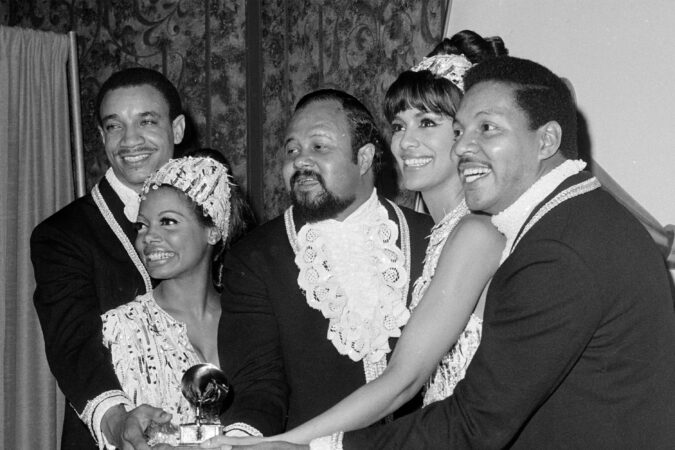
    Mr. McLemore, who died Feb. 3 at age 90, was best known as a founding member of the 5th Dimension, the genre-blending vocal group behind cheery, chart-topping hits like 1969’s “Aquarius/Let the Sunshine In,” a medley from the rock musical Hair. In an era of political violence and racial unrest, he and his fellow singers honed a fizzy style they called “champagne soul,” reaching a post-hippie audience — “This is the dawning of the Age of Aquarius,” they sang — while fusing jazz, pop, and R&B.

    Between 1967 and 1973, the group won six Grammy Awards, landed 20 songs on the Top 40 of the Billboard Hot 100, and performed in Las Vegas with Frank Sinatra and at the White House for President Richard M. Nixon. Mr. McLemore was a key part of that run, singing bass on hits like “One Less Bell to Answer” and “(Last Night) I Didn’t Get to Sleep at All,” in addition to serving as an occasional emcee, introducing his bandmates onstage by their zodiac sign.

    He was the only Virgo of the bunch.

    “LaMonte would be the first to tell you he may not have been our group’s strongest lead singer,” his former bandmates Marilyn McCoo and Billy Davis Jr. said in a statement. Yet it was Mr. McLemore “who brought us all together,” they said, adding that it was also Mr. McLemore who helped keep the group whole for 10 years, persuading the singers to postpone solo careers that ultimately led the original lineup to split apart in 1975.

    “Every time you hear a 5th Dimension harmony, every time you hear an Original 5th Dimension melody, pause and give thanks for our beloved friend,” McCoo and Davis said. “Without his grace, the egos of everyone else might have kept that dream from ever coming true.”

    Mr. McLemore, a onetime medical photographer for the Navy, toured with the 5th Dimension even as he pursued his other vocation, photography. He took pictures of fellow musicians including Marvin Gaye and Stevie Wonder; contributed to Harper’s Bazaar, where he was said to be the first Black photographer the magazine ever hired; and freelanced for publications including Ebony, Playboy, and People.

    For more than four decades, his photos were also a mainstay of Jet magazine, which once reached more than 1 million print subscribers each week. Mr. McLemore photographed more than 500 women — most of them nonprofessional models — for the publication’s “Beauty of the Week” feature, a reader favorite designed to showcase Black style and beauty from around the world.

    “LaMonte had a good eye. He was a sure shot,” said Sylvia Flanagan, a former Jet senior editor who worked with Mr. McLemore for 35 years. “And I knew that if LaMonte was shooting it, it was going to be perfect.”

    That was partly because Mr. McLemore was able to put his subjects at ease, Flanagan said. It was also because Mr. McLemore knew the assignment: “If a person was more voluptuous on the top, not so much on the bottom, LaMonte would put them in water. Because that magnifies everything.”

    Jet’s “Beauty of the Week” subjects were everyday women — college students, nurses, postal workers — confidently posing in a swimsuit or stockings. A brief caption identified them by name, noting their profession and hobbies along with their measurements.

    “They looked like someone whom you might catch a glimpse of at the Jersey Shore one day,” Jennifer Wilson wrote in the New Yorker in 2024, in an essay that praised the column for having “democratized the thirst trap.” “’Hey, did I see you in Jet?’ was a pickup line someone once tried on my aunt.”

    According to Flanagan, some of Mr. McLemore’s subjects were women he encountered while on tour with the 5th Dimension. Others were more personal: Mr. McLemore photographed his daughter, Ciara McLemore, 23 years after he photographed her mother, Lisa Starnes, wearing the same leopard-print swimsuit.

    Many of his Jet photographs were collected in a 2024 book, Black Is Beautiful, which he prepared with Washington gallerist Chris Murray. Artist Mickalene Thomas, who cited Mr. McLemore as an inspiration, wrote in an introductory essay that the pictures “served as a radical depiction of the Black female body as both effortlessly beautiful and exceedingly powerful.” Mr. McLemore’s images also “provided a much-needed space for Black women to see themselves represented as desirable,” she wrote.

    “To me, women are the miracle of life,” Mr. McLemore told Ebony in a 1989 interview. “As mysterious as they are, I got tired of trying to figure out the mystery. It’s better enjoyed than understood.”

    ‘A rare mixture’

    The first of four children, Herman LaMonte McLemore was born in St. Louis on Sept. 17, 1935. His first love was baseball, although he sang doo-wop ever since he was a boy, harmonizing on street corners with friends.

    When Mr. McLemore was 5, his father, a janitor and sometime musician, left the family. He was raised by his mother and maternal grandmother, who taught him a lesson that Mr. McLemore adopted as his motto: “We are only in this world to help one another.”

    After graduating from high school, Mr. McLemore enlisted in the Navy, buying his first 35 mm camera while stationed in Alaska. He went on to play minor league baseball, pitching in the Los Angeles Dodgers’ farm system before breaking his arm in a car crash, he said.

    In the offseason, he took pictures, working as a freelance photographer whenever he could. His assignments took him to the Miss Bronze California beauty pageant, where he photographed two contestants, McCoo and Florence LaRue, who became founding members of the 5th Dimension.

    Formed in 1965, the group was originally known as the Versatiles, and also included two of Mr. McLemore’s friends from St. Louis, Billy Davis Jr. and Ron “Sweets” Townson.

    “I pulled them together as friends,” Mr. McLemore told the Stuart News of Florida in 2004. “Ron happened to sing opera, Billy sang rock and roll, me and Marilyn were singing jazz and Florence was singing pop. It was just a rare mixture, but it blended.”

    The group had success almost immediately, scoring their first Top 40 hit with a cover of the Mamas & the Papas’ “Go Where You Wanna Go.” Later in 1967, they released their first million-selling record, “Up — Up and Away,” written by Jimmy Webb, a rising songwriter and pianist who backed them in the studio. The song’s title, usually rendered with a comma instead of a dash, became a national catchphrase, and the group went on to find repeated success with Webb and songwriter Laura Nyro, who crafted their hits “Stoned Soul Picnic” and “Wedding Bell Blues,” which went to No. 1.

    Their music resonated even behind the Iron Curtain. When the 5th Dimension embarked on a State Department cultural tour in 1973, performing in Eastern Europe and Turkey, they stopped to chat with admiring fans at embassies and elementary schools. “A lot of soul in Czechoslovakia,” Mr. McLemore observed on his return.

    His death — at his home in Henderson, Nev., a few years after suffering a stroke — was confirmed by Murray and by Robert-Allan Arno, who co-wrote Mr. McLemore’s memoir, From Hobo Flats to the 5th Dimension.

    In addition to his daughter, Ciara, survivors include his wife, the former Mieko Tone, whom he married in 1995; a son, Darin; a sister; and three grandchildren.

    Mr. McLemore and the 5th Dimension received renewed attention in 2021, when they were featured in Summer of Soul (… Or, When the Revolution Could Not Be Televised), Questlove’s Oscar-winning documentary about the 1969 Harlem Cultural Festival.

    Intended to promote Black pride and unity, the concert series featured acts including Nina Simone and Sly & the Family Stone. The 5th Dimension headlined the series’s first weekend, though, as the film noted, the singers had a mixed reputation among Black audiences. Hearing echoes of pop and folk rock acts like the Mamas & the Papas, some listeners mistakenly assumed that Mr. McLemore and his bandmates were white.

    Ebony magazine summed up the confusion in a 1967 cover story headlined, “The Fifth Dimension: White sound in a black group.”

    “Black people, when we first started … they didn’t understand what we were doing at all,” Mr. McLemore told an interviewer in 2017. He and his fellow singers were put off — “We said, ‘How can you color a sound? This is our sound. And it’s different and we ain’t gonna change it’” — but were gratified when the mood began to shift, just as the group notched its first No. 1 hit with “Aquarius.”

    “All of a sudden,” he said, “all the Black people came up and said, ‘We were with y’all all along!’”