Category: Washington Post

  • Trump administration misled Congress before Maduro raid, Democrats say

    Trump administration misled Congress before Maduro raid, Democrats say

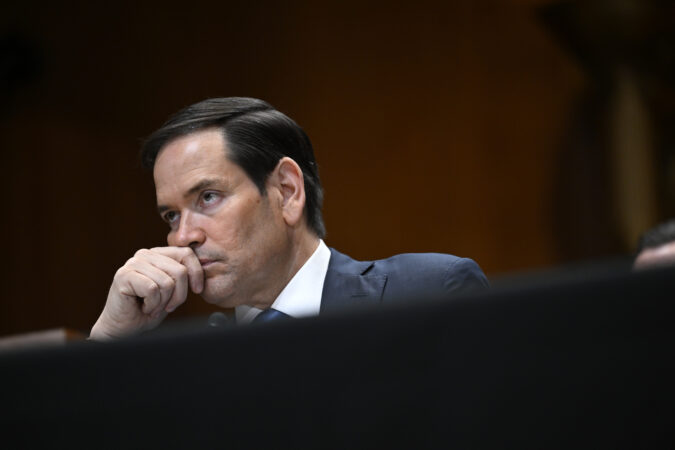
    In early November, hours before the Republican-led Senate rejected bipartisan legislation to block the Trump administration from conducting a military attack on Venezuela, Secretary of State Marco Rubio sought to reassure lawmakers it didn’t intend to.

    He told them that the U.S. lacked legal authority to invade the South American country and oust its president, Nicolás Maduro, and said that doing so would carry major risks, according to two people who attended the classified briefing.

    In the aftermath of Saturday’s raid to capture Maduro and his wife at a fortified military compound in Caracas, top Democrats are accusing Rubio of deliberately misleading Congress.

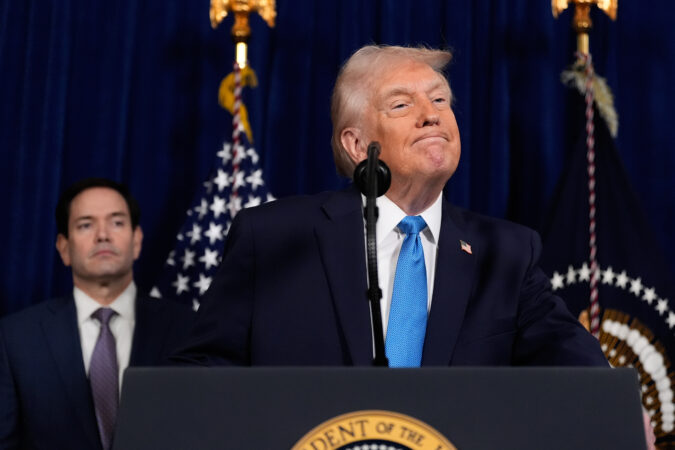
    During a news conference at President Donald Trump’s Mar-a-Lago Club in Florida, Rubio, who also serves as White House national security adviser, told reporters that he and other top officials had planned the Maduro operation for months. The acknowledgment led some on Capitol Hill to conclude that the administration was readying assets for the assault while having told lawmakers that the military buildup in the region was not meant to force a regime change.

    “Rubio said that there were not any intentions to invade Venezuela,” Rep. Gregory W. Meeks of New York, the House Foreign Affairs Committee’s top Democrat, told the Washington Post. “He absolutely lied to Congress.”

    In an interview with the Post later Saturday, Rubio rejected the assertion. He argued that Maduro is under indictment from a U.S. court, and neither the United States nor the European Union recognized him as the legitimate leader of Venezuela. So rather than an invasion, he cast the attack as a “law enforcement operation” that required military assets to conduct.

    Lawmakers previously asked whether the administration “would be invading Venezuela,” Rubio said. “This was not that,” he added.

    Democrats were incredulous at the argument.

    “It absolutely is one hundred percent regime change,” said Rep. Adam Smith of Washington state, the senior Democrat on the House Armed Services Committee.

    Smith said that he had asked Rubio directly whether the administration’s military buildup in the region would result in attacks on Venezuelan territory and that the secretary had said no.

    The Trump administration did not notify key members of Congress of the operation until late Saturday morning, sending a short notice that said the president had approved a “military operation in Venezuela to address national security threats posed by the illegitimate Maduro regime.”

    The operation, the notice said, came in response to the Justice Department’s warrant against Maduro, who was transported to New York to await trial.

    Sen. Mark R. Warner of Virginia, the top Democrat on the Senate Intelligence Committee, said that Rubio tried to reach him after the raid had begun in the early morning hours but that they were unable to connect.

    Warner, who has had multiple briefings with Rubio over the past few months, declined to say whether he felt the administration had misled Congress but noted that the timing for the operation — with lawmakers days away from returning to Washington after a holiday break — was not “idle chance.”

    “Doing this during a congressional break raises huge questions,” he said in an interview.

    Senior Republicans called on the administration to brief lawmakers even while expressing near-unified support for the operation. Senate Majority Leader John Thune (R., S.D.) and House Speaker Mike Johnson (R., La.) said in separate statements that they had spoken with senior officials early Saturday and wanted the administration to brief Congress in the coming week.

    Senate Minority Leader Charles E. Schumer (D., N.Y.) and House Minority Leader Hakeem Jeffries (D., N.Y.) demanded far more information.

    “We want to know the administration’s objectives, its plans to prevent a humanitarian and geopolitical disaster that plunges us into another endless war — or one that trades one corrupt dictator for another,” Schumer told reporters.

    The Senate is set to vote this week on another war powers resolution that, if passed, would block the administration from conducting further military action in Venezuela. Trump said Saturday that the U.S. could carry out a larger “second wave” of attacks but that he did not think doing so would be necessary because Venezuela’s interim leader was cooperating with U.S. demands.

    Sen. Tim Kaine (D., Va.) said he hoped the new measure would get more Republican support. He, too, accused the administration of lying to lawmakers and the public.

    At least two of the Republicans who considered supporting the measure that was narrowly defeated in November received calls from Rubio on Saturday, according to their public statements.

    “Congress should have been informed about the operation earlier and needs to be involved as this situation evolves,” said Susan Collins (R., Maine), one of the lawmakers who signaled that they might support the last resolution but ultimately opposed it.

    Shortly after news of the attack broke Saturday morning, Sen. Mike Lee (R., Utah), a skeptic of expansive U.S. military commitments abroad, posted on social media that he wanted to know “what, if anything, might constitutionally justify this action in the absence of a declaration of war or authorization for the use of military force” from Congress.

    Hours later, Lee posted again that he had spoken with Rubio and was satisfied that the attack “likely” was within the president’s authority.
  • How Trump’s foreign intervention could shake up the midterm elections

    How Trump’s foreign intervention could shake up the midterm elections

    President Donald Trump’s intervention in Venezuela will test Americans’ appetite for regime change, inserting a new and unpredictable element ahead of midterm elections this year that have so far been dominated by domestic issues.

    Democrats immediately began arguing that overnight action on Saturday was an abandonment of Trump’s promise to focus on improving lives at home, while many Republicans insisted it was an expansion, rather than a shift, in Trump’s “America First” mantra.

    Trump on Saturday said the United States had captured Venezuelan President Nicolás Maduro and his wife and planned to “run the country” during a transition period, an action Trump cast as part of a new era of “American dominance in the Western Hemisphere.” The president touted the operation as a boost to U.S. interests: a blow to the drug trade, an opportunity for American oil companies, and a show of strength.

    But his argument drew skepticism on both the right and the left, as critics warned against dragging the U.S. into regime change and costly wars. Recent polls suggest there is significant political risk for Trump, who is already facing discord within his base. A CBS News poll in November found that 70% of Americans opposed U.S. military action in Venezuela and that the vast majority did not view the South American country as a major threat to national security. Americans in both parties have grown increasingly skeptical of foreign intervention in recent decades.

    Republican leaders mostly backed the president, but some expressed doubts as Trump outlined a potentially expansive U.S. role in Venezuela and said he is “not afraid of boots on the ground.” Many Democrats framed the attack as a violation of Trump’s campaign promises to “get rid of all these wars starting all over the place” and to avoid the type of foreign entanglements that bedeviled many of his predecessors and bred cynicism within his base.

    While foreign policy does not always play a central role in domestic elections, it often informs broader opinions about competence and focus. President Joe Biden’s botched withdrawal from Afghanistan undermined his argument that he was restoring faith and effectiveness in government that had been hampered by the COVID-19 epidemic. President George W. Bush’s decision to invade Iraq with faulty intelligence claims, and the attempts at nation-building that followed, damaged his party’s credibility and helped pave the way for Trump’s takeover of the GOP.

    “What Americans want is an American president that’s going to care about them … and I think what this shows is the president’s more concerned about what’s going on in Venezuela, what’s going on in Argentina than he is on what’s going on in Pennsylvania and Ohio,” said Rep. Ro Khanna (D., Calif.) in an interview.

    The politics of the intervention are hard to assess immediately, some strategists said, as details of the U.S.’s plans remain unclear and the situation in Venezuela is still unfolding. The issue’s relevance to voters could change based on the ultimate extent of the U.S.’s involvement and Venezuela’s stability in the months to come. Trump on Saturday said Venezuela’s vice president, Delcy Rodríguez, appeared “willing to do what we think is necessary to make Venezuela great,” but she later criticized the U.S.’s actions as “barbarity.”

    Trump had been ramping up pressure on Maduro for months, but the action in Venezuela probably caught many Americans off guard, given that it did not follow a provocation like the Sept. 11, 2001, terrorist attacks.

    Republicans embracing his latest action in Venezuela are betting that the fallout there will be limited, and even some staunch critics of foreign intervention on the right declined to criticize Trump on Saturday. But a few echoed the concerns from Democrats.

    Rep. Marjorie Taylor Greene (R., Ga.), a proponent of America First policies who has become one of Trump’s biggest critics from the right, questioned his justifications for the attack — noting that the fentanyl responsible for most U.S. drug deaths comes primarily from places other than Venezuela — and reiterated her worry that he is veering from principles on which he campaigned.

    “This is what many in MAGA thought they voted to end,” she wrote on X. “Boy were we wrong.”

    Rep. Thomas Massie (R., Ky.), who has long been at odds with Trump, said the president, at his news conference, had undercut earlier suggestions from administration officials that the action in Venezuela was a limited effort to apprehend Maduro. Stephen K. Bannon, the former Trump adviser turned MAGA commentator, initially hailed Maduro’s capture as a “stunning overnight achievement” on his show — but after Trump’s news conference expanding on the U.S. role in Venezuela, he wondered if the plan would “hark back to our fiasco in Iraq under Bush.”

    Sen. Todd Young (R., Ind.) called the Venezuela operation “successful” but added in a statement online, “We still need more answers, especially to questions regarding the next steps in Venezuela’s transition.”

    Other Republicans echoed Trump’s points about U.S. interests in the region. Raheem Kassam, a political strategist who is editor of the conservative National Pulse, suggested Trump’s MAGA base will “warm” to the idea that the Venezuela action is America First and noted that many supporters also embraced Trump’s long-shot ambitions to annex Greenland.

    Kassam doesn’t see the issue playing into the midterms much yet — but “if it turns into a disaster, certainly.”

    “These things are very risky,” he acknowledged. Trump “will know what risk he’s taking and people know what it means if Caracas suddenly overnight turns into a complete powder keg.”

    Some Republicans were skeptical that the U.S. would be as involved as Trump suggested Saturday was possible. “The president gets a lot of leeway up to a certain point,” said GOP strategist David Urban, “and I think that point would be, having U.S. soldiers in some meaningful capacity in Venezuela. I don’t think you’ll see that.”

    Democrats, meanwhile, questioned the legality of the military action in Venezuela. Some also sought to use it to build their longtime case that Trump is distracted from the issues that matter most to voters.

    “The American people don’t want to ‘run’ a foreign country while our leaders fail to improve life in this one,” wrote Pete Buttigieg, the former transportation secretary and potential Democratic 2028 presidential candidate, on social media, arguing that Trump was “failing on the economy and losing his grip on power at home.”

    Buoyed by victories in November’s elections in New Jersey and Virginia, Democrats are focusing intensely on the issue of affordability heading into the 2026 midterms. Trump’s advisers signaled after those elections that they would be refocusing on the economy, and Trump began to tout his economic achievements at rallies. Now, many Democrats say the operation in Venezuela could undercut that effort.

    “His biggest problem is that costs are continuing to go up, and he promised people they would go down, and whenever people see him creating some other kind of a problem, rather than buckling down and trying to un-break that key promise, they turn against him more,” argued Andrew Bates, a Democratic strategist and former White House communications official under Biden.

    Whit Ayres, a longtime GOP pollster, emphasized that it’s hard to predict the politics of Trump’s actions in Venezuela without more data.

    “What I can say based upon polling is that one of Trump’s strengths in public opinion polls is that he’s viewed as strong, and not indecisive or weak, and in that sense this plays to his strength,” he said of the Venezuela operation.

  • Maduro, wife to face drug charges, court appearance in coming days

    Maduro, wife to face drug charges, court appearance in coming days

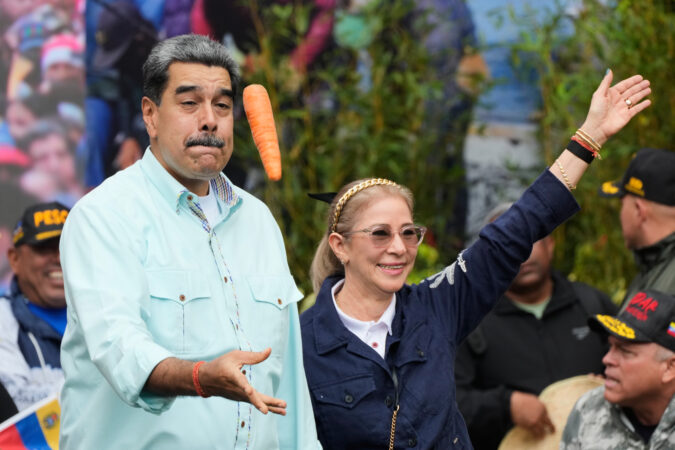
    Venezuelan President Nicolás Maduro and his wife could appear in federal court in Manhattan within days to face narco-terrorism charges, which, if accepted by a jury, could put them behind bars on American soil for decades.

    A plane carrying Maduro arrived at a suburban airport outside New York on Saturday evening. He was expected to be processed by Drug Enforcement Administration officials and will be held at the Metropolitan Detention Center in Brooklyn until a court appearance, most likely on Monday, according to people familiar with the plans who spoke on the condition of anonymity because they were not authorized to speak on the record.

    Maduro’s capture and indictment have drawn protests from some lawmakers and scholars, who say international law does not allow President Donald Trump to unilaterally attack a foreign country and bring its leader to the U.S. to face charges.

    Even those critics, however, concede that under Supreme Court precedent, those arguments are unlikely to have much impact on federal legal proceedings once Maduro gets to U.S. court.

    Trump and his top aides defended the decision to capture Maduro. They noted that the U.S. and many other countries have long viewed Maduro as an illegitimate leader who has remained in power despite losing the country’s most recent election. Officials sought to portray the extraordinary military action against Venezuela as a straightforward law enforcement operation, with the military backing up the Justice Department as they sought to bring someone to U.S. court.

    “At its core, this was an arrest of two indicted fugitives of American justice,” Secretary of State Marco Rubio said at a news conference with Trump on Saturday.

    A sweeping four-count indictment against Maduro was unsealed in the Southern District of New York on Saturday. It alleged that he, his wife, Cilia Flores, and members of their inner circle illegally enriched themselves as they conspired to flood the United States with cocaine. Among the charges: narco-terrorism conspiracy, cocaine importation conspiracy, and possession of machine guns and destructive devices.

    “The defendants, and other corrupt members of the regime facilitated the empowerment and growth of violent narco-terrorist groups fueling their organizations with cocaine profits,” the indictment reads. “These narco-terrorist organizations not only worked directly with and sent profits to high-ranking Venezuelan officials, but also reaped the benefits of the increased value of that cocaine at each transshipment point along the way to the United States, where demand and thus the price of cocaine is highest.”

    The remarkable prosecution of a foreign leader in American federal court was the result of Trump’s deployment of the U.S. military to strike Venezuela overnight and capture Maduro and his wife, bringing them to New York to face charges.

    Trump at the Saturday news conference gave reporters a more expansive set of reasons for Maduro’s capture, saying that the U.S. attack was justified, in part, because Venezuela stole U.S. oil — claims that are not included in the indictment. He also said the United States will “run” the South American country until a succession plan is determined.

    Critics said Trump’s arguments raised more legal questions.

    “If the United States asserts the right to use military force to invade and capture foreign leaders it accuses of criminal conduct, what prevents China from claiming the same authority over Taiwan’s leadership?” Sen. Mark R. Warner (Va.), the top Democrat on the Senate Select Committee on Intelligence, said in a statement. “What stops Vladimir Putin from asserting similar justification to abduct Ukraine’s president? Once this line is crossed, the rules that restrain global chaos begin to collapse, and authoritarian regimes will be the first to exploit it.”

    International law experts, however, said that while those issues may be debated in Congress and international bodies, they are unlikely to affect the legal proceedings against Maduro and his co-defendants in U.S. court.

    A line of Supreme Court cases starting in the late 19th century makes clear that “you can’t claim that you were abducted and therefore the court should not be allowed to assert authority over you,” said Geoffrey Corn, who heads the Center for Military Law and Policy at Texas Tech University and is a former top legal adviser to the U.S. Army.

    “Maduro is not going to be able to avoid being brought to trial because he was abducted so to speak, even if he can establish it violated International law.” Corn said, adding that in his view the administration’s overnight military operation lacked any “plausible legal basis.”

    Jack Goldsmith, a Harvard Law professor who previously headed the Justice Department’s Office of Legal Counsel in the George W. Bush administration, noted on Substack that similar arguments were raised after U.S. forces deposed Panamanian leader Manuel Antonio Noriega on Jan. 3, 1990. Courts upheld the government’s right to try Noriega, who was convicted on drug charges in 1992 and sentenced to 40 years in federal prison.

    The charging document against Maduro unsealed Saturday — known as a superseding indictment — is an update to charges filed against him and his associates during the first Trump administration in 2020. At the time, U.S. leaders conceded that they couldn’t go into Venezuela and arrest Maduro. The charges essentially made him an international fugitive, who risked arrest if he traveled outside his country.

    The superseding indictment contains the same four charges as the original 2020 indictment. But the new indictment also names Flores, who was not a co-defendant in the 2020 case. Some of the other co-defendants — all part of Maduro’s inner circle — are also different, including Maduro’s son, Nicolás Ernesto Maduro.

    The younger Maduro does not appear to have been captured.

    U.S. authorities have alleged that Maduro and his inner circle worked with international drug trafficking groups to transform Venezuela into a transshipment hub for moving massive amounts of cocaine to the United States. Maduro and his associates created a culture of corruption in which the Venezuelan elite made themselves rich through drug trafficking, the indictment alleged. Drug traffickers, the document said, gave these leaders a portion of their profits in exchange for protection and aid.

    “In turn, these politicians used the cocaine fueled payments to maintain and augment their political power,” the indictment states.

    Jeremy Paul, a law professor at Northeastern University, said the Trump administration had no legal authority to stage the military intervention, but he agreed that it probably would not derail Maduro’s prosecution.

    The administration’s justification is “a terrifying theory, because, as I have been saying to people, you’re basically saying that U.S. prosecutors and a grand jury is all you need as justification for sending the military into another country,” Paul said. “That can’t be the law.”

    Trump also faced criticism Saturday from Democratic lawmakers for striking Venezuela and capturing Maduro just a month after he pardoned former Honduran president Juan Orlando Hernández, who was convicted in a U.S. court last year on drug trafficking charges.

    Maduro’s case in the Southern District of New York was randomly assigned to U.S. District Judge Alvin Hellerstein, a 92-year-old jurist appointed by President Bill Clinton and who last year was among a group of judges who prohibited the Trump administration from using the Alien Enemies Act to deport Venezuelan immigrants. Those findings are under appeal.

    Hellerstein did not take any action in the case against Maduro on Saturday, and an appearance in court has not yet been publicly announced. But public officials, including New York Mayor Zohran Mamdani, have said that officials are arranging this weekend to transport Maduro and his wife to New York.

  • China condemns U.S. strike in Venezuela after top diplomat met with Maduro

    China condemns U.S. strike in Venezuela after top diplomat met with Maduro

    China strongly condemned the overnight U.S. strike on Venezuela and the capture of President Nicolás Maduro, which came just hours after a Chinese special envoy met with the Venezuelan leader to reaffirm Beijing’s support for the imperiled regime, calling the action “deeply shocking” and a serious violation of international law.

    Shortly before the surprise U.S. attack unfolded, a delegation of Chinese officials arrived in Caracas, led by Beijing’s special envoy for Latin American and Caribbean affairs, Qiu Xiaoqi, and met with Maduro to discuss the rising tensions with the United States. It was Maduro’s last publicly reported official meeting before he and his wife were captured by U.S. forces and flown out of the country.

    President Donald Trump on Saturday said that the United States will now “run” Venezuela for an unspecified amount of time, following the operation that saw over 150 U.S. military aircraft marshal for a spectacular extraction mission.

    Maduro’s exit marked an abrupt end to a monthslong effort by China to support the embattled leader, as fears grew in Beijing that the United States would soon attempt to seize Chinese-flagged oil tankers as part of its blockade of the country. Beijing has been the regime’s most influential global ally and Venezuela’s primary financial lifeline through loans and oil purchases, accounting for around 80% of the country’s total oil exports.

    At 7:30 p.m. Friday, Maduro shared a final message on his Telegram channel, lauding his meeting with Qiu as reaffirming “the strong bonds of brotherhood and friendship between China and Venezuela. A relationship that stands the test of time!” It was accompanied by a video set to triumphant music showing Qiu — a vice-minister level diplomat — and his team walking through what appeared to be the hallways of the presidential palace and shaking hands with Maduro.

    Just 6½ hours later, Chinese officials in Caracas were stunned when the U.S. strike began, setting off a furious string of missives back to Beijing, according to one Chinese diplomat familiar with the situation. “It was completely shocking,” the official said, speaking on the condition of anonymity because they are not authorized to speak to media.

    On Saturday, China’s Foreign Ministry issued a sharp rebuke, strongly condemning the U.S. raid. “Such hegemonic acts of the U.S. seriously violate international law and Venezuela’s sovereignty, and threaten peace and security in Latin America,” it said in a statement. Separately, the Foreign Ministry and China’s embassy in Venezuela warned citizens to avoid traveling to the country.

    “China employed rare, forceful language previously reserved for political assassinations and mass casualty events,” sail Neil Thomas, a fellow at Asia Society Policy Institute’s Center for China Analysis.

    According to Venezuelan reports and the Chinese official, Qiu met with Maduro to review the roughly 600 political and economic agreements between the two countries and address concerns over the rising threat of a U.S. military intervention and potential threats to Chinese oil tankers.

    Chinese leader Xi Jinping met with Maduro in May last year on the sidelines of Russia’s Victory Day celebrations. According to the Chinese readout of the meeting, Xi described the two countries’ relationship as an “all-weather strategic partnership” and reaffirmed China’s support for Venezuela’s sovereignty.

    Asked on Saturday how the takeover would affect U.S. relations with major oil buyers including China, Trump said that “in terms of other countries that want oil, we’re in the oil business, we’re going to sell it to them. We’re not going to say we’re not going to sell it to them.”

    China has long viewed Venezuela as a key political ally in Latin America as it seeks to expand its influence in the region. This month, Beijing released its first major Latin America strategy update in nearly a decade, more explicitly incorporating security cooperation — including military exchanges — into its framework and reaffirming support for the sovereignty of regional partners.

    Republican lawmakers focused on China policy welcomed the move Saturday, saying it curtailed Chinese influence in the region. “The Trump Administration’s decisive action against Nicolás Maduro removes a Chinese ally from power and makes the world a safer place. China’s partnership with Maduro propped up an authoritarian ruler who worked with our nation’s adversaries and hurt the American people,” said Rep. John Moolenaar (R., Mich.), chairperson of the House Select Committee on China.

    Analysts say that the potential seizure of Venezuela’s government by the United States is unlikely to seriously undercut Beijing’s broader efforts to expand its regional presence.

    “Left-leaning governments in the region will likely lean further toward Beijing as a preferred economic partner and diplomatic alternative to Washington. This strike is unlikely to dissuade China’s regional trade and investment; Beijing requires booming exports to sustain growth, and Washington currently lacks a competitive economic diplomacy strategy to match its security presence,” said Thomas.

    Trump on Saturday lambasted Maduro’s regime for facilitating the growing influence of U.S. adversaries in the region, but stopped short of naming China explicitly. “Venezuela was increasingly hosting foreign adversaries in our region and acquiring menacing offensive weapons that could threaten us,” said Trump. “They used those weapons last night.”

    In recent months, Maduro has called on China, as well as Russia and Iran, to provide weapons and other assistance amid rising U.S. pressure. According to documents obtained by the Washington Post, Maduro drafted a letter appealing to Xi for “expanded military cooperation” in the face of U.S. escalation, including a request to expedite the production of radar detection systems by Chinese companies.

  • Tim Walz was a Democratic hopeful. Now, he’s a Republican punching bag.

    Tim Walz was a Democratic hopeful. Now, he’s a Republican punching bag.

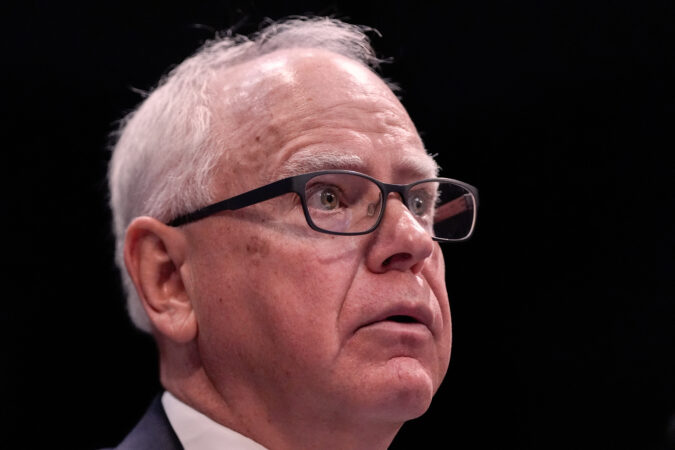
    MINNEAPOLIS — Just a few months ago, Larissa Laramee would have encouraged Minnesota Gov. Tim Walz to run for president. She admired the man who helped lead the Democratic presidential ticket in 2024 — and who once taught her social studies.

    But Laramee’s feelings have changed as a yearslong welfare fraud probe in Minnesota becomes a national maelstrom. Prosecutors say scammers stole brazenly from safety net programs, taking hundreds of millions of dollars in government funding — potentially billions — for services they never provided while Walz led the state.

    “I like him as a person. He’s fantastic,” said Laramee, 40, who works at a Minnesota nonprofit for people with disabilities. Walz, as her high school teacher, helped inspire her career, she said. “But with all of this that’s happened, I’m struggling with seeing a path forward for him.”

    Laramee’s doubts show how the sprawling fraud cases in Minnesota now hang over Walz — even as it’s too soon to tell how they will ultimately affect his political future. A year and a half after he vaulted onto the national stage as Kamala Harris’ running mate, Walz is back in the spotlight, this time for a controversy that Republicans around the country view as political gold.

    Republicans are betting the fraud saga will hurt Walz, a staunch liberal and potential 2028 presidential candidate who is seeking a third term as governor this year. GOP officials say it will be one of their top campaign issues in Minnesota as they try to reverse many years of statewide losses and navigate through tough national headwinds in the midterms.

    But many of the attacks on Walz are geared just as much toward riling the GOP’s national base, using the issue and Walz’s prominence to validate broader anger within the party over immigration and a social welfare system that President Donald Trump and others have long argued is out of control.

    How much blame Walz should bear for the state’s response to the fraud is a matter of a debate. He has said that, as state executive, he takes ultimate responsibility. Walz has said officials have “made systematic changes to state government” over the past few years as prosecutions were underway. The governor’s critics say the changes were insufficient and came too late.

    Democrats say Republicans are risking a backlash by fixating on the fraudsters’ nationality — most people charged in the schemes are of Somali descent — and by freezing some federal childcare funding in response. Trump has lobbed broad attacks on Somali immigrants that Walz denounced as “racist lies,” and many on the right have called for deportations, even though officials say most of the fraud defendants are U.S. citizens.

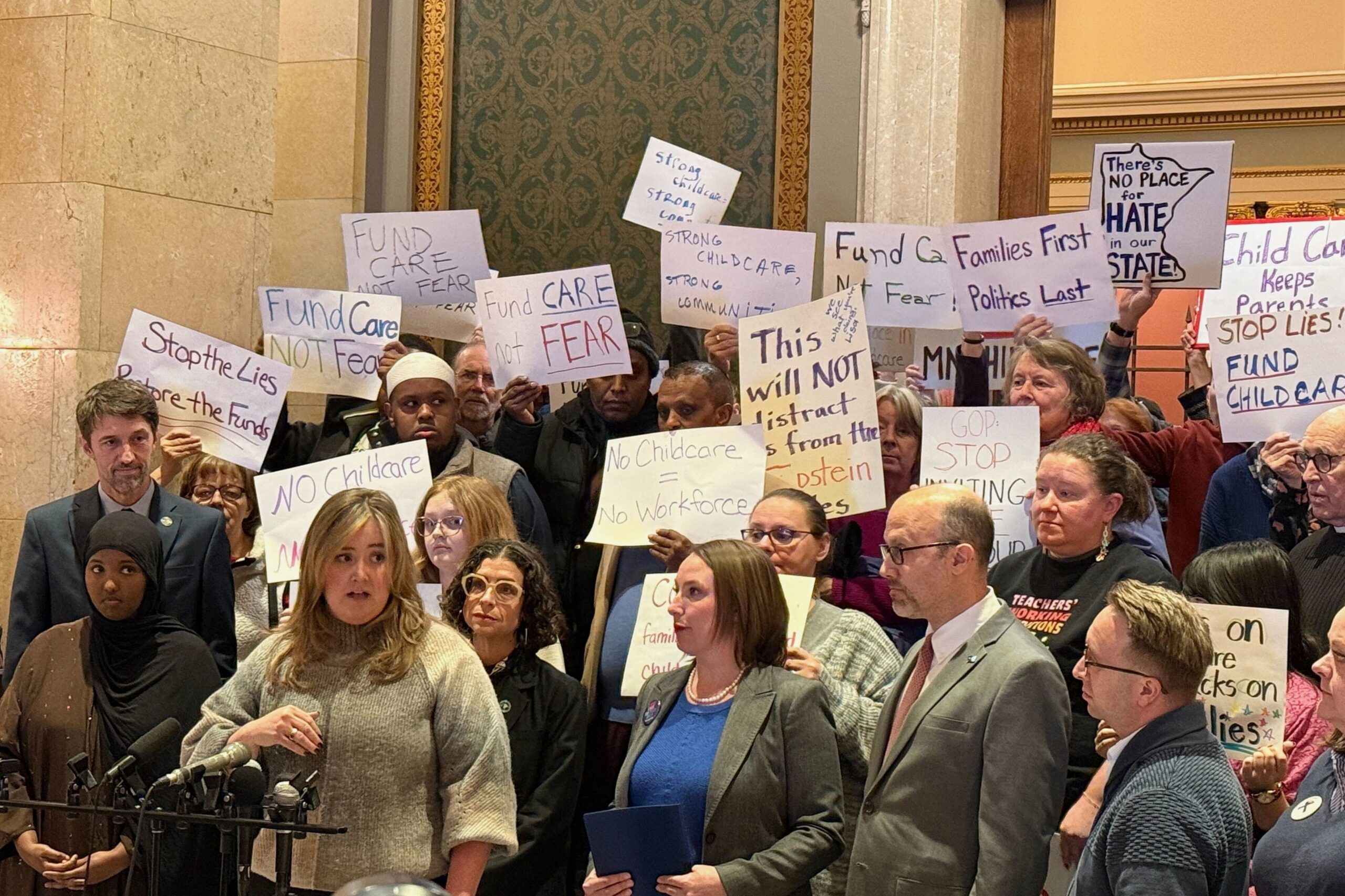
    Maria Snider, director of the Rainbow Development Center and vice president of advocacy group Minnesota Child Care Association, speaks as people gather for a news conference at the state Capitol on Wednesday in St. Paul.

    Democrats are favored to win the governor’s race in 2026; Republicans have not won a statewide election in Minnesota since 2006. Walz won reelection by about 8 percentage points in 2022, when some of the fraud cases had already surfaced, and it’s not clear that the new attention to the issue has affected his approval in the state. There are no clear recent shifts in available surveys.

    Some Democrats remain worried the fallout threatens to blunt Walz’s attacks on Trump, as well as the economic issues the party has sought to highlight.

    “The anti-fraud message is going to be very strong. … I fear that message will dominate or drown out the affordability message,” said Ember Reichgott Junge, a former Minnesota state senator who is now a Democratic political analyst.

    Junge said she’s heard many Democrats express concern about Walz’s reelection campaign and noted that his performance could affect lower-profile races on the ballot. Democrats are defending a one-vote majority in the state Senate and trying to retake the House, where Republicans hold a two-seat advantage amid two vacancies.

    “He is a riskier candidate than any other Democrat” would have been, she said of Walz, who has not drawn primary challengers so far.

    Walz has accused Trump of politicizing the probes. Walz appointed a statewide “director of program integrity” to prevent fraud in mid-December, among other changes, and the state shut down one fraud-plagued housing program this fall.

    “We have made significant progress. We have much more to do. And it’s my responsibility to fix it,” Walz wrote in a recent op-ed for the Minnesota Star Tribune.

    His office did not make him available for an interview.

    Other Democrats dismissed Republicans’ chances in the governor’s race, said the GOP response to the fraud has overreached and accused Trump — who has pardoned people convicted on fraud charges — of hypocrisy. Trump and others on the right have also attacked Walz in highly personal terms that many call cruel; Trump recently called Walz “seriously retarded,” and videos of people yelling “retard” outside Walz’s house have circulated online. (Walz has spoken about his son’s learning disability).

    “Republicans are overplaying their hand, and this is what’s going to turn off a lot of voters,” said Abou Amara, a former adviser to Democratic leadership in the state legislature. “They have made this not just about fraud, but they’ve made it about xenophobia.”

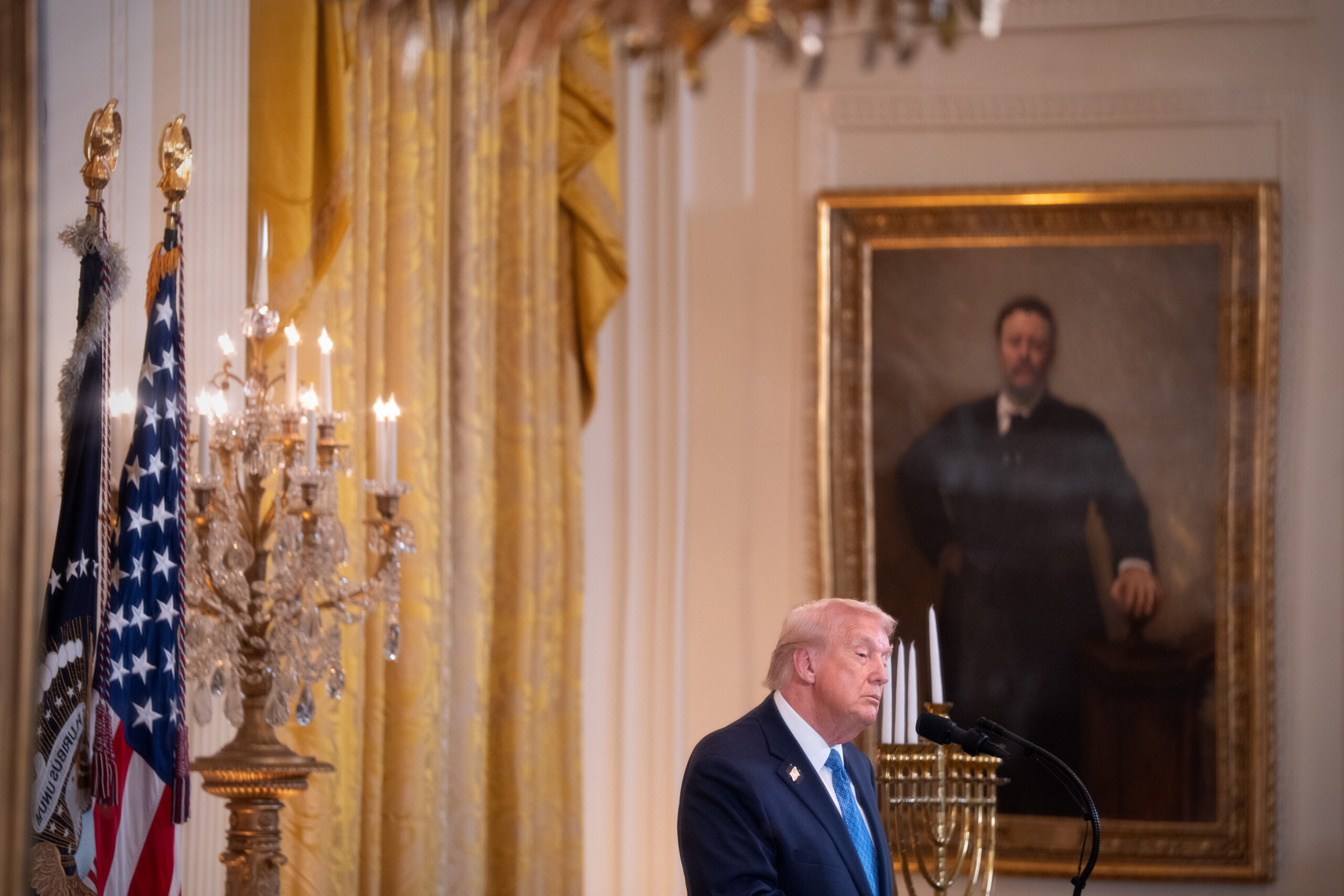
    President Donald Trump on Dec. 16 at the White House.

    Federal authorities in Minnesota have been investigating the sweeping abuse of safety net programs for years and brought many of the charges in 2022, accusing 47 people of misusing $250 million — meant to feed children during the pandemic — on luxury cars and property as far away as Kenya and Turkey.

    News reports, a viral video and a flood of criticism from right-wing influencers and politicians have drawn new national attention to the issue in recent weeks. Federal investigators also suggested last month that the problem could be much bigger than previously known.

    Joe Thompson, a prosecutor with the U.S. Attorney’s Office in Minnesota, said at a news conference last month that authorities have identified “significant fraud” in 14 state Medicaid programs — and said fraud may account for more than half of the $18 billion that went to those programs since 2018.

    “Every day we look under a rock and find a new $50 million fraud scheme,” Thompson said.

    Republican leaders including Vice President JD Vance and House Speaker Mike Johnson (R., La.) have weighed in this past week, sharing a video posted on social media on Dec. 26 by a 23-year-old YouTuber, Nick Shirley, who joined a roundtable with Trump last year. In the 42-minute video, Shirley claimed daycare centers were not caring for children because he could not see them on-site. Regulators, however, saw children on their visits within the last 10 months, according to officials and records.

    Shirley’s video has accumulated more than 130 million views on X and triggered a flood of GOP interest — and criticism of Walz. House Republicans said they would call Walz to testify before Congress next month. Right-leaning billionaire Elon Musk, who owns X, suggested Walz should go to prison.

    “Minnesotans are finally much more aware of the extent of the fraud and how deep it is and how it’s gone unchecked, and it is going to play favorably for Republicans on every level of government in the ’26 election,” said state House speaker Lisa Demuth, one of many candidates seeking the GOP nomination to challenge Walz.

    Another GOP gubernatorial candidate, Minnesota Rep. Kristin Robbins — who chairs a House committee on fraud — called it the top issue in the race. “We are still, sadly, at the tip of the iceberg,” she said.

    A 2024 report from the nonpartisan Minnesota Legislative Auditor found that the state education department, which administered nutrition programs at the center of many fraud cases, “failed to act on warning signs” and “created opportunities for fraud.” It did not point specifically at Walz.

    Michael Brodkorb, a former deputy chair of the Minnesota GOP who has crossed the aisle in the past to vote for Walz, said he isn’t sure how he’ll vote in the coming gubernatorial race, and argued that the Walz administration could have been more responsive. Voters, he said, will have to decide if state officials “have the credibility to be a part of the solution when maybe a lot of Minnesotans think they’re part of the problem.”

    But he also warned that Trump’s rhetoric isn’t helping local Republicans. The president railed against Somali immigrants in a cabinet meeting last month, saying “they contribute nothing” and declaring, “Their country stinks, and we don’t want them in our country.”

    Some Republicans in Minnesota want to leave race out of the debate — though they argue sensitivities about racism helped enable the fraud. (A nonprofit behind much of the fraud once accused a state agency of racial discrimination while pushing back on skepticism).

    “We want to stay focused on the fraud and just the act itself, not on the culture or the people behind it,” Minnesota GOP chair Alex Plechash said in an interview, adding later, “I’m not at all into dividing the people by race or by socioeconomic status or any other way.”

    At a Somali mall in Minneapolis, Kadar Abdi, a student at a nearby mosque, said he believes Trump is trying to turn attention away from his own political challenges. “Because of these failures, as a distraction tactic, you want to blame a marginalized group” he said. “It’s as old as American society.”

    An hour away in Owatonna, an exurb of the Twin Cities, diners at the Kernel represented the full gamut of opinions. Trump voter Michael Haag, 54, said Walz “should be in prison” and that he plans to leave the state if Walz is reelected.

    He “should resign, and I also think he should be charged, because he’s for the Somalis,” Haag said. “He should have been looking out for us, vs. them.”

    Another patron wearing a pink Carhartt hat and sipping coffee disagreed.

    “I find him honest,” said Joan Trandem, who is retired. “He cares about the small guy.”

    Given the drama that’s surrounded Walz, Trandem said she’s surprised he wants to run for a third term. But if he continues with the campaign, she plans to vote for him. In the rural part of Minnesota where Trandem lives, the fraud probe doesn’t get much play anymore, she said. “I’m tired of talking about it.”

  • Trump says Venezuela stole U.S. oil, land and assets. Here’s the history.

    Trump says Venezuela stole U.S. oil, land and assets. Here’s the history.

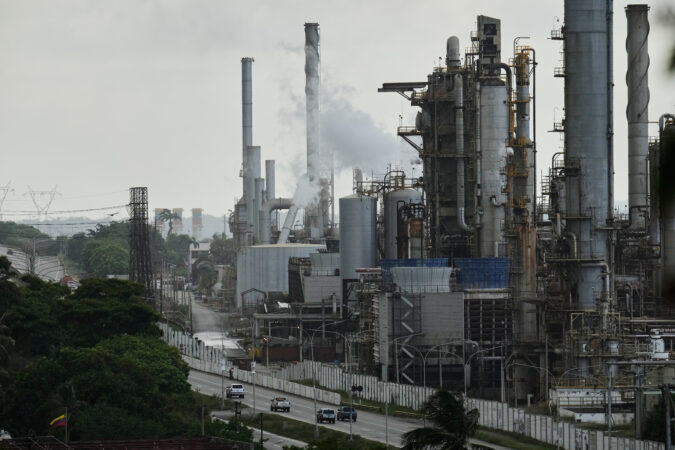
    In 1976, the government of oil-rich Venezuela assumed control of the country’s petroleum industry, nationalizing hundreds of private businesses and foreign-owned assets, including projects operated by the American giant ExxonMobil.

    In 2007, Hugo Chávez, the founder of Venezuela’s socialist state, assumed control of the last privately run oil operations in the Orinoco Belt, home to the country’s largest oil deposits.

    President Donald Trump said in December that the expropriation of American oil company assets justified a “total and complete blockade” of oil tankers arriving and leaving Venezuela in defiance of U.S. sanctions. The blockade will remain, he wrote on Truth Social, until the South American nation returns “to the United States of America all of the Oil, Land, and other Assets that they previously stole from us.”

    “They’re not going to do that again,” Trump told reporters. “We had a lot of oil there. As you know they threw our companies out, and we want it back.”

    But U.S. companies never owned oil or land in Venezuela, home to the world’s largest proven reserves of crude, and officials didn’t kick them out of the country.

    “Trump’s claim that Venezuela has stolen oil and land from the U.S. is baseless,” said Francisco Rodríguez, a Venezuelan economist at the University of Denver.

    Nationalization was the culmination of a decades-long effort by administrations of both the right and the left to bring under government control an industry that an earlier leader had largely given away.

    The right-wing strongman Juan Vicente Gómez, the military dictator who ruled Venezuela from 1908 until his death in 1935, granted concessions that left three foreign oil companies in control of 98% of the Venezuelan market. The country became the world’s second-largest oil producer and largest exporter; oil accounted for over 90% of the country’s total exports.

    Gómez’s successors tried to seize greater control over the country’s economy. Under President Isaías Medina Angarita, authorities approved a law in 1943 that required foreign oil companies to relinquish half their profits to the government. A 1958 pact signed by Democratic Action, the Democratic Republican Union, and the Independent Political Electoral Organization Committee ensured the country’s major political parties had access to oil profits.

    By the time Venezuelan lawmakers began debating nationalization legislation in 1975, Rodríguez said, the “writing was on the wall.”

    “Nobody was going to resist Venezuela carrying this nationalization to its end, and the U.S. was much more interested in having Venezuela be a provider of oil — relatively cheap oil — than to have a production collapse in Venezuela,” Rodríguez said. The change, consequently, was “relatively uncontroversial.”

    President Carlos Andrés Pérez, a social democrat, signed the bill into law that August. In January 1976, Venezuelan state oil company Petróleos de Venezuela S.A. took over the exploration, production, refining, and export of oil.

    The country followed Mexico, Brazil, and Saudi Arabia in a wave of resource nationalism aimed at trying to wrest control of energy resources, primarily from the United States, to achieve economic sovereignty.

    American oil companies, including Exxon and Mobil, which merged in 1999, and Gulf Oil, which became Chevron in 1984, were hit hardest. The Dutch giant Shell was also affected. The companies, which had accounted for more than 70% of crude oil production in Venezuela, lost roughly $5 billion in assets but were compensated just $1 billion each, according to news reports from that period.

    But they didn’t seek larger sums, Rodríguez said, and “felt that it didn’t make sense to press it more.” They also lacked “a mechanism that would have allowed the companies in 1976 to actually take these cases to court.”

    (A 1991 bilateral investment treaty between Venezuela and the Netherlands created a legal pathway for investors to sue a foreign government for unfair treatment. Cases go before private arbitration panels rather than courts.)

    In January 2007, Chávez called for the nationalization of the natural gas industry — part of his plan to redistribute oil wealth and transform the poverty-stricken nation into a socialist state.

    When PDVSA assumed control of oil operations in Venezuela’s Orinoco Belt, ExxonMobil and ConocoPhillips were unable to agree to new contract terms and sought up to $40 billion in compensation through arbitration.

    Several oil companies, including Chevron and Spanish-owned Repsol, remained in Venezuela under new contract terms. Chevron is the only American company still operating there.

    In 2012, the International Chamber of Commerce awarded ExxonMobil $908 million in compensation, less than the $1 billion that Venezuela had offered. The tribunal awarded ConocoPhillips $2 billion in 2018. The World Bank’s International Center for Settlement of Investment Disputes awarded ExxonMobil $1.6 billion in 2014 and ConocoPhillips $8.7 billion in 2019.

    Venezuela has yet to pay the full amounts. The economy is struggling under hyperinflation, government corruption, and U.S. sanctions. Under Chávez’s successor, Nicolás Maduro, oil exports, once 3 million to 4 million barrels a day, are now estimated at no more than 900,000 barrels per day. Most of it goes to China.

    “American sweat, ingenuity and toil created the oil industry in Venezuela,” Stephen Miller, Trump’s deputy chief of staff and homeland security adviser, wrote in a post on X. “Its tyrannical expropriation was the largest recorded theft of American wealth and property.”

    Rodríguez said the administration’s position “just doesn’t have any logic.”

    “It’s kind of like an odd argument,” he said. “You owe me some money. We both went to court. The court said, ‘You pay me this.’ You start paying me, then I — by force, by the imposition of sanctions — make it impossible for you to continue paying me, and then I accuse you of stealing something from me.”

  • Trump’s Venezuela move pushes the limits of ‘America First’

    Trump’s Venezuela move pushes the limits of ‘America First’

    President Donald Trump on Saturday demonstrated how expansively he is willing to exert U.S. power abroad, removing a foreign leader who had not threatened military force against America and declaring that Washington could assume long-term control in Venezuela.

    The operation echoed those by past hawkish U.S. presidents to overthrow leaders in Iraq and Panama, raising questions about whether Trump’s “America First” doctrine is being redefined as he authorizes successive foreign attacks and pursues regime change in the South American nation.

    “We’re going to run the country until such time as we can do a safe, proper, and judicious transition,” Trump said in a news conference at Mar-a-Lago. The remark contrasted with Trump’s past criticism of U.S. leaders who, he has argued, acted as “the policemen of the world,” and stood to sharpen tensions inside his political movement, which has long been skeptical of overseas entanglements. He did not say how long the United States would seek to control Venezuela.

    But Trump described the operation as part of a broader effort to reassert “American dominance in the Western Hemisphere,” language that echoed Cold War-era interventionism more than the restraint he once championed.

    “We’re not afraid of boots on the ground,” Trump said, adding that the United States would be “replacing” the country’s oil infrastructure. The remarks pointed to a scope of involvement that could extend beyond the limited, short-term actions Trump has previously championed.

    In a wide-ranging news conference, Trump pointed to multiple justifications for the action, citing drugs, dictatorship, and regional dominance. Taken together, the shifting explanations suggest not a single rationale for the operation, but a broader assertion of presidential authority — one in which the White House claims latitude to act first and justify later.

    Trump’s approval of a “large scale strike” on Venezuela early Saturday to capture President Nicolás Maduro and his wife marked the latest in a series of U.S. military actions since Trump returned to office, following strikes on Iranian nuclear facilities in June and attacks against the Islamic State in Nigeria on Christmas that underscore his expanding use of force abroad.

    Despite branding himself a “peace president” who ran on a promise of “no new wars” and openly coveted the Nobel Peace Prize, Trump has increasingly relied on military force abroad — a turn that has unsettled parts of his MAGA base even as it has not yet produced prolonged U.S. involvement. The approach reflects a gamble Trump appears willing to take as he seeks to project strength and test the limits of presidential authority, even if doing so strains the anti-interventionist identity once central to his political brand.

    Asked how taking control of a South American country was “America First,” Trump told reporters it is because he wanted to “surround” America with “good neighbors” and “stability.”

    “We have tremendous energy in that country,” Trump said. “It’s very important that we protect it. We need that for ourselves. We need that for the world.”

    Trump rose to power in 2016 in part because of his willingness to break sharply with previous Republican interventionism, especially the 2003 invasion of Iraq, which his Democratic rival Hillary Clinton supported.

    Throughout his first term, he focused on reducing U.S. presence abroad, including setting in motion the pullout from Afghanistan ultimately carried out by President Joe Biden in 2021.

    But Trump has been willing to be sharply more interventionist in his second term, declaring a desire to take over Gaza and again threatening Iran this week — saying the U.S. is “locked and loaded” to take action if the government harms more protesters in a 3 a.m. social media post Friday.

    The president said he had watched the Venezuela mission in real time from his Mar-a-Lago estate in Palm Beach, Fla., surrounded by military generals, and compared the feed to an action-packed “television show.” The “massive number” of aircraft — helicopters and fighter jets — and “steel all over the place” that didn’t stop the U.S. team from snatching Maduro in the dead of night.

    Calling into Fox News’ morning show, Trump touted “the speed, the violence” employed by the military personnel assigned to the mission.

    “‘Violence.’ They used that term,” Trump said, describing accounts of the operation relayed to him. “It was just an amazing thing.”

    As he spoke with the conservative news channel, his first extensive public remarks about the operation since he had announced it hours earlier on Truth Social, Trump offered shifting rationales for why the apprehension of Maduro had occurred, suggesting that he is still testing how to sell the operation to American voters.

    On the one hand, Trump said, preventing Venezuela from being “run by a dictatorship” was important, asserting that the United States has a role in shaping the country’s political future — a claim he framed as serving Venezuelan citizens’ interests.

    “We can’t take a chance of letting somebody else run it and just take over what he left off,” Trump said. “We’ll be involved in it very much. And we want to do liberty for the people … I think the people of Venezuela are very, very happy because they love the United States. You know, they were run by, essentially, a dictatorship or worse.”

    “But look,” Trump said as he returned to the antidrug message he has emphasized for months, “Tremendous numbers of people were being killed through drugs. And what they did to our country in sending prisoners and mental people, people from mental institutions and drug lords and everything — they sent them by the hundreds of thousands of people into our country — and that is just unforgivable.”

    An Economist/YouGov poll conducted Dec. 20-22 found that 52% of respondents opposed using the U.S. military to overthrow Maduro, while just 22% said they supported doing so. Another 26% of adults, meanwhile, said they were not sure.

    Vice President JD Vance, who has privately urged restraint in some foreign-policy decisions, said on social media Saturday that Trump had “offered multiple off-ramps” to Maduro before apprehending him, framing the operation as chiefly a law enforcement mission. He cited U.S. indictments of Maduro “for narco-terrorism.”

    “You don’t get to avoid justice for drug trafficking in the United States because you live in a palace in Caracas,” Vance wrote.

    He was not among the senior officials flanking Trump during a news conference at Mar-a-Lago on Saturday — a notable absence given his past criticisms of excessive military action abroad. A spokesperson for Vance said the vice president “was deeply integrated in the process and planning of the Venezuela strikes and Maduro’s arrest,” and remotely took part in several late-night meetings ahead of and during the operation. Vance “briefly” met with Trump at his West Palm Beach golf club Friday to discuss the strikes, the spokesperson said, but steered clear of Mar-a-Lago as the operation took place for fear of signaling an attack was imminent.

    Trump gave little indication this week that his administration was preparing the strike, declining to answer reporters’ questions about Venezuela as he entered his glitzy New Year’s Eve party Wednesday. He spent Friday shopping for marble for his planned White House ballroom project and spending time at his West Palm Beach golf club.

    Photos released by Trump on Truth Social showed that the administration had stood up a makeshift situation room where the president, Defense Secretary Pete Hegseth, and Secretary of State Marco Rubio — a longtime proponent of regime change in the South American country — monitored the attack. Black fabric draped the room, where the president and administration officials sat on golden chairs.

    Trump at the news conference Saturday embraced the “Donroe Doctrine” — a play on former president James Monroe’s declaration that the Western Hemisphere is Washington’s sphere of interest and that U.S. leaders would not tolerate unfriendly nations in their backyard.

    Despite a flurry of recent declarations from right-wing commentators and online influencers criticizing the Trump administration for focusing too much on foreign affairs, many MAGA-aligned voices were largely silent Saturday morning, a sign that they were waiting to see the scope of the strike and potential fallout.

    Stephen K. Bannon, a former Trump adviser and prominent MAGA commentator who has been sharply critical of the prospect of the United States pushing for regime change in Iran, initially spoke favorably about the operation in Venezuela.

    Before Trump’s news conference, during his War Room show, Bannon called it “a stunning and dazzling overnight strike by U.S. forces.” But after Trump declared the United States would “run” the country, Bannon withheld further endorsement.

    While Trump appeared to have the backing of traditional, hawkish Republicans, there were signs that his staunchest supporters may remain uneasy about open-ended control.

    MAGA-aligned pollster Rich Baris warned that any brief “rally around the flag” effect from Trump’s announcement would fade if the Venezuela mission expanded. “Unless Trump can pull off the first ever successful regime change in a non-Western European nation since WWII,” Baris wrote on social media, “this will consume much of the year and voters will get more pissed he isn’t focused on them.”

    So far, however, resistance inside Trump’s coalition has been limited. Congressional Republicans largely praised the strike despite Trump not seeking authorization or briefing lawmakers in advance, while only two House Republicans publicly raised concerns. Democrats, by contrast, warned the move amounted to an overreach of executive authority that could set a dangerous precedent.

    Trump has declared ambitions over the Western Hemisphere so sweeping that they would reshape world affairs — and maps — for generations. He has said he wants to turn Canada into the 51st state, an effort that would require military force.

    He evinced interest in annexing Greenland from Denmark, a close ally, and has tapped a top Republican as a special envoy to the territory. He has tied military action in Latin America to his top domestic priorities of reducing immigration and stopping the flow of drugs into the United States.

    On Saturday, he left the door open to further military action against the leaders of Cuba and Colombia, who have also opposed Trump and his policies.

  • Trump says the job market is booming for U.S.-born. The data don’t show it.

    Trump says the job market is booming for U.S.-born. The data don’t show it.

    President Donald Trump and White House leaders say that American workers are winning because of his immigration crackdown. But the data don’t back that up.

    Since the summer, Trump officials have been trumpeting the idea that job creation is booming for U.S.-born workers. Trump said so, too, during a prime-time address last month aimed at assuaging Americans’ concerns about the economy.

    “In the year before my election, all net creation of jobs was going to foreign migrants. Since I took office, 100% of all net job creation has gone to American-born citizens,” Trump declared. “One hundred percent.”

    Trump administration officials also said recently that more than 2.5 million U.S.-born workers gained jobs in 2025 as 1 million immigrants left the workforce.

    But economists on both sides of the political aisle say they have seen no evidence that American-born workers are getting jobs by the millions or moving en masse into positions abandoned by deported immigrants.

    In fact, data show that U.S.-born workers are doing moderately worse under Trump than they were under President Joe Biden because the labor market has weakened — partly due to a sharp slowdown in immigration.

    “The unemployment rate has been rising for both native-born and foreign-born adults,” said Jed Kolko, a senior fellow at the Peterson Institute for International Economics and a former Commerce Department economist.

    Taylor Rogers, a White House spokesperson, said in a statement to the Washington Post that “mindless nitpicking doesn’t change the simple fact that President Trump has done more for American workers than any president in history by cracking down on visa program abuses, successfully negotiating new trade deals, securing our border, and carrying out the largest mass deportation of illegal aliens.”

    Those policies ensure “American-born workers can finally benefit from our new economic resurgence,” Rogers said.

    Here’s what to know about how U.S.-born workers are faring under Trump’s immigration crackdown.

    Fewer immigrants are in the workforce

    Immigrants are leaving the U.S. labor market, economists agree.

    The Trump administration prioritized deportations in 2025, with immigration officials deporting about 579,000 people, according to a Dec. 7 social media post by Trump border czar Tom Homan.

    Meanwhile, admissions under refugee and other humanitarian programs have been slashed, and illegal border crossings declined sharply last year. And the Trump administration has moved to strip legal status from more than 1 million immigrants with temporary protections.

    After years of labor market growth fueled by immigration, 2025 could mark a turning point, with more immigrants leaving the United States than arriving. That could result in a net drop in migration for the first time in at least 50 years, economists say.

    But economists don’t know yet how many fewer immigrants there were in 2025 compared to 2024, and they say they won’t have good estimates for a while.

    What is clear is the share of immigrants with jobs has fallen since hitting longtime highs earlier in the Biden era. But there has been little change compared with a year ago, at the end of Biden’s term.

    U.S.-born employment is not surging

    The Trump administration said in December that 2.57 million U.S.-born citizens had obtained jobs last year, while about 1 million immigrants lost work. And officials have repeatedly said some variation of that since August.

    These claims are based on Bureau of Labor Statistics data derived from the U.S. Census showing large gains in employment for native-born workers and falling employment for immigrants.

    But economists warn against using counts of native-born workers derived from census population estimates — or comparing those numbers with figures from previous years. Doing so would be “a multiple-count data felony,” Jed Kolko wrote in August.

    That’s because the census data were hemmed in by a population estimate set by the Census Bureau last January, before any new immigration policy had gone into effect.

    Basically, the number of foreign-born and native-born workers in Bureau of Labor Statistics data have to add up to a total based on the U.S. Census population estimate that is set at the beginning of the year, according to several economists consulted by the Post.

    When the monthly responses from foreign-born households drop, which has been happening, then the math takes over: The native-born population totals automatically increase, so responses in the monthly household survey reflect the population controls. That’s why it looked like the United States had so many more native-born workers in 2025.

    Any drop in foreign-born workers artificially boosts the number of native-born workers reported each month. And currently, fewer immigrants are responding to these surveys. (More on that below.)

    “The main thing [the Trump administration] has been saying is that 2 million people left the country and 2 million native-born workers have joined the labor force as a result,” said Stan Veuger, a senior fellow in economic policy studies at the American Enterprise Institute, a conservative think tank. “That’s the incorrect analysis of the [government data] that has been plaguing us all year.”

    As an extreme illustration, Kolko has said that if the entire foreign-born population vanished, this dataset would show the population of native-born residents skyrocketing by tens of millions of people.

    Trump’s prime-time speech assertion last month that “100% of all net job creation has gone to American-born citizens” also relies on misuse of the same dataset, according to Kolko.

    “Their claim is based on looking at the change of the level in employment for native and foreign-born workers,” Kolko said. “And you cannot use that dataset to look at those levels.”

    Immigrants are disappearing from the data

    There are a few reasons fewer immigrants are responding to the Current Population Survey. First, the number of immigrants in the United States likely did go down last year because of deportations, a closed border, and immigration restrictions.

    Immigrants who are still here could also be reluctant to respond to government surveys for fear of becoming targets of heightened immigration enforcement. Or they could be responding inaccurately to surveys because of the same fears, several economists said.

    “If there’s a sudden drop in immigration, or if fewer foreign-born residents respond to the survey, then, by design, the number of native-born workers would almost certainly go up,” Kolko said. “The way the calculation is set up, it’s not like you can lower the population of foreign-born workers without raising the population of native-born.”

    Unemployment rate for U.S.-born is on the rise

    So how are U.S.-born workers doing?

    Economists say the best real-time measure of how U.S.-born workers and immigrants are doing in the labor market is the unemployment rate. And that rate climbed for native-born workers last year as job creation slowed, while changing little compared to a year ago for foreign-born workers.

    The unemployment rate for native-born Americans was 4.3% in November, up from 3.9% the previous year, which economists say is the strongest indication that the labor market has worsened for U.S.-born workers, though it’s still strong compared to recent decades.

    “We know that it’s just been harder for native-born workers to find work because more of them are unemployed,” Veuger said.

    Meanwhile, job growth for all workers in the United States has slowed significantly in recent months, and the unemployment rate has climbed to the highest level in four years.

    “The labor market is not in a better place than it was a year ago,” said Dean Baker, senior economist at the Center for Economic and Policy Research. “It is harder to find a job.”

    U.S.-born are not rushing into jobs left by immigrants

    There is little evidence that millions of U.S.-born workers rushed into jobs typically worked by immigrants in 2025, as Trump officials have suggested, several economists told the Post.

    Trump economic adviser Kevin Hassett said on CBS’s Face the Nation last month: “When foreign-born workers depart, then it creates jobs for people who are native-born.”

    There are likely cases of U.S.-born workers stepping up for jobs previously worked by immigrants. But the rising unemployment rate for native-born workers indicates that native-born Americans are not moving in large numbers into those jobs.

    “We don’t know what’s happening definitively, but the fact that the native-born unemployment rate is rising — and over the past year has risen faster than the foreign-born unemployment rate — suggests that it is not simply that native-born workers are taking the jobs of foreign-born workers,” Kolko said.

    Immigration restrictions and deportations also could be pushing U.S. citizens out of work. Research on the construction industry has shown that the deportation of immigrants working in lower-skilled positions, such as roofers and laborers, can lead to the disappearance of work for native-born construction workers, especially those in higher-skilled jobs, such as electricians and plumbers.

    “A lot of immigrants take low-wage, generally less-skilled jobs in construction on projects that wouldn’t otherwise go forward,” said Baker, the economist at the Center for Economic and Policy Research. “You have native-born workers in higher-skilled jobs, but when the immigrants aren’t there, they aren’t able to do it.”

  • FBI says undercover operation thwarted ISIS-inspired terror attack

    FBI says undercover operation thwarted ISIS-inspired terror attack

    Federal authorities said Friday they disrupted a plan by an 18-year-old, inspired by the Islamic State, to attack patrons at a grocery store and fast-food restaurants outside Charlotte.

    Christian Sturdivant had drawn up detailed plans for what he described as a New Year’s Eve “martyrdom op” to target patrons with hammers and knives, officials said. He was charged with attempting to provide material support to a foreign terror organization after he discussed his intentions last month with two undercover law enforcement officers posing as Islamic extremists.

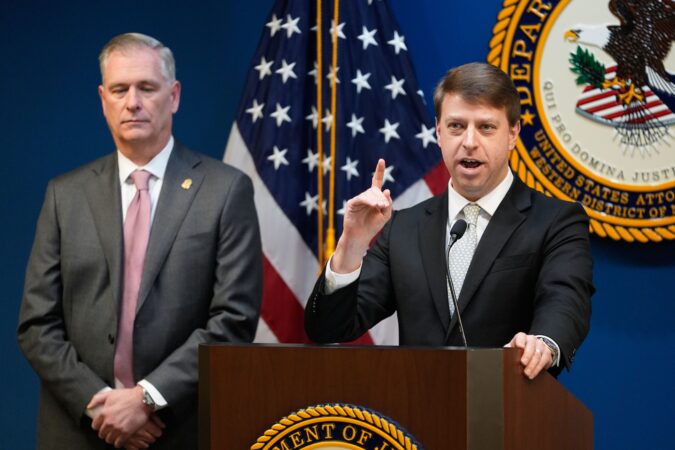
    “It was a very well-planned, thoughtful attack,” Russ Ferguson, the U.S. attorney for the Western District of North Carolina, said at a news conference announcing the arrest. “He was preparing for jihad, and innocent people were going to die.”

    Ferguson stressed that FBI agents had Sturdivant, a Burger King employee and grandson of a Christian minister, under surveillance for days leading up to his arrest Wednesday. At no point during that period did authorities believe he posed an immediate danger to public safety, Ferguson said.

    Authorities also believed Sturdivant suffered from sufficiently serious psychiatric problems that they sought earlier in the week to have him involuntarily committed for care, Ferguson said. A North Carolina state judge’s denial of that request prompted the decision to charge him with a crime and arrest him instead, Ferguson said.

    Sturdivant remains in federal custody late Friday pending a bail hearing next week. A defense attorney listed in public court filings did not immediately return calls for comment.

    In recent weeks, the FBI has arrested a number of other individuals alleged to have been plotting terrorist attacks in Texas, California, and Louisiana. Many of those investigations, like the one that led to the charges against Sturdivant, involved undercover agents or officers offering encouragement and in some cases suggestions on carrying out those attacks.

    Critics say those tactics run the risk of targeting vulnerable people for prosecution who may not have had the means or the immediate thought to carry out an attack on their own. The bureau has defended its methods, saying the tactic is one of the few that can help investigators prevent threats of terrorist violence before they result in deaths.

    In Sturdivant’s case, authorities said he began communicating online three weeks ago with a person he believed to be a member of the Islamic State and repeatedly expressed his support for the extremist organization. That individual was actually an undercover New York Police Department employee.

    “I will do jihad soon,” Sturdivant told him during a Dec. 13 exchange, according to an arrest affidavit filed in his case.

    The officer encouraged Sturdivant to prove his commitment through an act of violence, the document states. The teen later repeated his intentions to attack a grocery store in Mint Hill, near the Burger King restaurant where he worked, in separate conversations with an undercover FBI agent also posing as an Islamic State sympathizer, officials said.

    During a raid on Sturdivant’s family home Monday, authorities found two butcher knives and a hammer hidden under his bed — weapons officials said he intended to use to kill as many as 11 people.

    They also discovered writings in a trash can in which they say Sturdivant laid out detailed plans for his assault, including the text message he intended to send his family during the attack and his plan to take his own life afterward by attacking responding police.

    In one of the handwritten messages, titled “The Way of the Lion (The Martyr’s Notes),” Sturdivant said his goal was “pure destruction of America and the West,” according to the arrest affidavit.

    Ferguson said Friday that while investigators believe Sturdivant had been planning his intended New Year’s Eve strike for a year, he was planning to undertake some form of attack “for far longer than that”

    The arrest affidavit described another incident in 2022 when Sturdivant, dressed in black, had attempted to attack his neighbor with hammers, acting upon instructions he’d received online from an Islamic State member in Europe.

    Sturdivant’s grandfather restrained him at the time, thwarting that attack. James C. Barnacle Jr., special agent in charge of the FBI’s Charlotte field office, said Friday that Sturdivant had received psychiatric care after that incident and that his grandfather had taken steps since then to keep household objects that could be used as weapons out of his grandson’s reach.

    Barnacle said that before last month Sturdivant was not on the FBI’s radar, as the investigation into that previous incident had been closed years ago.

  • He exposed myth of the South’s ‘Lost Cause.’ His death shook Richmond.

    He exposed myth of the South’s ‘Lost Cause.’ His death shook Richmond.

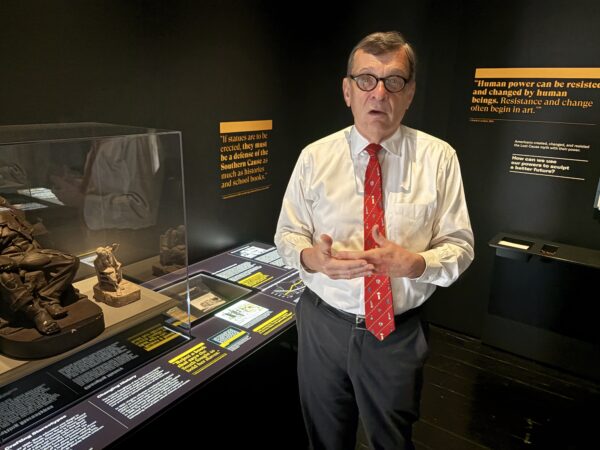
    RICHMOND — In a cavernous gallery of the Valentine museum filled with marble busts and giant images of maps, Bill Martin gestured at a humble 1950s school history textbook in a display case.

    “This is where it gets personal for me,” Martin said one day last August.

    That book taught generations of young Virginia fourth graders — including Martin — that slavery was benign and enslaved people were happy. Now, as the director of a history museum, he had featured it in an exhibit that exploded the lies of the Southern “Lost Cause” mythology.

    Martin has been one of the most beloved and influential figures in the movement to retell the story of Richmond — and, by extension, Virginia and the nation — in a more honest and clear-eyed fashion.

    Over the weekend, Martin, 71, was struck by a vehicle and killed while crossing a street near the Valentine in downtown Richmond.

    His sudden loss has brought an outpouring of grief and shock from a wide swath of the community, ranging from historians to activists to politicians.

    “He stood in the gap for so many — helping to connect some of the very most complicated corners of the city through arts, culture, and history,” Sesha Joi Moon, co-leader of the JXN Project’s effort to commemorate a historic Black neighborhood, said in a written statement. Moon has been nominated as state director of diversity by Gov.-elect Abigail Spanberger.

    “No one was more dedicated to fostering a deep understanding of Virginia’s complicated history than Bill Martin,” Sen. Tim Kaine (D., Va.) posted on X this week.

    A bespectacled white man from rural Culpeper County with a soft Southern accent and a wit as sharp as his penchant for neckties, William J. “Bill” Martin was an unlikely agent of reform in the former capital of the Confederacy.

    He graduated from Virginia Tech and had worked at museums in Georgia and Florida before landing in Petersburg, Va., in 1987 to run that city’s museums and tourism effort. Martin joined the Valentine, which is dedicated to Richmond history, in 1994, just in time to see it nearly sink from depleted finances and low attendance.

    Over time, Martin became known as the “dean” of Richmond’s many museums, a one-man welcoming committee for new directors and a clearinghouse for collaborative efforts.

    He was a congenial force for change as the city wrestled with its complicated history. As recently as 2020, giant statues of Confederate leaders still loomed over busy intersections and enthusiasts waving the rebel battle flag regularly greeted traffic outside the national headquarters of the United Daughters of the Confederacy.

    Martin led a long process to reorganize the Valentine, using community input to focus its collections and slowly homing in on a story he felt it was uniquely positioned to tell: the origins of the Lost Cause, the romanticized view of the South that took hold in the years after the Civil War. After all, one of the primary creators of the images that fueled the myth was sculptor Edward Valentine, first president of the museum that bears his family’s name and the artist behind some of the iconic statues of Confederate leaders.

    When Martin’s changes to the museum’s message provoked hate mail and even death threats, he was known to invite his critics to lunch, as recounted last year by Richmond’s StyleWeekly magazine in naming him Richmonder of the Year for 2024. “You can’t do history and sit on the sidelines,” Martin told the magazine.

    That philosophy was put into action in 2020 when Richmond’s streets erupted in racial justice protests over the killing of George Floyd by Minnesota police. One night in early June, Martin stayed alone at the Valentine in case there was rioting or vandalism. Police broke up demonstrations with chemical sprays and trapped protesters in a warren of downtown blocks, arresting them by the dozens.

    As he described in an interview with the Post that year, Martin heard voices whispering outside a museum window and found several young protesters hiding in the bushes. He hustled them inside, helped wash the chemical spray out of their eyes with milk, and kept watch until it was safe for them to leave without being arrested. The next morning, he gathered rubber bullets and signs from the streets to display in the museum.

    Only a few days later, protesters dragged down a statue of Confederate president Jefferson Davis from stately Monument Avenue. That touched off a series of events that saw city and state officials eventually remove almost all Confederate monuments from public spaces in the city.

    Martin had quietly been angling to get Davis into the Valentine for several years, at least since the deadly Unite the Right rally in Charlottesville in 2017 began turning the tide of public opinion against the monuments. The Davis figure was an Edward Valentine creation — the former Confederate had posed for his likeness in the carriage house studio that now sits on the grounds of the museum.

    While the rest of Richmond’s statues went into storage, the Davis — dented and spattered with paint — went on display at the Valentine. The museum convened community meetings to discuss how to remake the sculpture studio to better tell the story of what Valentine’s body of work had created.

    On Aug. 19 of this year, reporters descended on the Valentine to see the Davis statue removed from the museum to be loaned to a gallery in Los Angeles. Martin was there, of course, and pulled a few reporters aside individually to show them something he considered more profound: the remade sculpture studio, located across a courtyard from the main gallery.

    Where floor-to-ceiling shelves once held hundreds of pieces of Valentine’s work — studies of hands, heads, other body parts — now a black screen covered the far wall. A multimedia display would occasionally illuminate sculptures behind the screen, bringing them out of darkness to tell the story of how the South constructed a new narrative for itself after the Civil War.

    Or, as Martin put it, “How does fiction become accepted truth?”

    He emphasized that the answer to that question came not with lecturing or preaching but with facts. Around the room, quotes highlighted in orange signified primary sources — figures from the postwar era stating, clearly and in their own words, that they were devising a massive publicity campaign to burnish Southern honor.

    “All that is left of the South is the ‘war of ideas,’ ” author Edward Pollard wrote in his 1866 book The Lost Cause, which was published in Richmond.

    “If statues should be erected, they must be defensive of the Southern cause, as much as histories and school books,” sculptor Valentine wrote in a letter around 1900. He was a chief image maker of the movement, creating everything from the noble statue of Gen. Robert E. Lee that until recently represented Virginia in the U.S. Capitol to caricatures of happy, simpleminded Black people.

    With an animated map, Martin demonstrated how grand monuments proliferated across Richmond — not in the immediate aftermath of the Civil War, but in the 20th century during the repression of Jim Crow, when the statues made the same intimidating point as the Ku Klux Klan Christmas parade that’s also depicted in the gallery. Similar tales played out across the South.

    “Richmond is the only place” to tell that story, Martin said, “because you have every part of the history here.”

    Martin spent more than 30 years investing in that belief. On Saturday, Dec. 27, he stopped by the Valentine to check in — as he often did on weekends, staffers said. He left around 2 p.m. and was just two blocks away, crossing Broad Street, when he was struck by a vehicle. Martin died the next day in a hospital.

    Police have released little information about the incident, other than to say the driver remained at the scene and that the investigation is ongoing.

    Martin’s leadership “helped shape the museum into the place it is today, and his impact will be felt for generations to come,” Meg Hughes, who will serve as acting director while the Valentine’s board seeks a replacement for Martin, said in a written statement to museum members. “We remain committed to serving our community and honoring the legacy that he leaves behind.”