Category: Washington Post

  • Ben Nighthorse Campbell, Native American senator, has died at 92

    Ben Nighthorse Campbell, Native American senator, has died at 92

    Former Sen. Ben Nighthorse Campbell of Colorado, who overcame a hardscrabble childhood to become the first Native American chairman of the Senate Committee on Indian Affairs and a leader of the effort to build the National Museum of the American Indian in Washington, died Dec. 30. He was 92.

    Mr. Campbell died surrounded by his family, his daughter, Shanan Campbell, told the Associated Press. A cause of death was not provided.

    Mr. Campbell, a member of the Northern Cheyenne tribe, represented the western slope of Colorado for three terms in the U.S. House, starting in 1987, and served two terms in the Senate beginning in 1993. In each chamber, he was the only American Indian in office at the time. He immersed himself in public lands, water, and mining issues but made Indian causes the centerpiece of his legislative career.

    In the button-down environs of Capitol Hill, Mr. Campbell stood out by arriving at work on a motorcycle, wearing a ponytail and a bolo tie with a handmade silver and turquoise clasp. His unusual resumé further set him apart from the many former lawyers in Congress.

    In his youth, Mr. Campbell was a member of the first U.S. Olympic judo team. He became a Teamsters union truck driver, an Air Force military police officer, a trainer of champion quarter horses and a successful jewelry designer before entering public service, by his account, on a whim.

    A fiscal conservative and social liberal, Mr. Campbell was elected first as a Democrat and made a high-profile switch to the Republican Party in 1995. He joined the Republicans, in part, he said, to protest Senate Democrats’ defeat of a GOP-backed proposed constitutional amendment to balance the budget.

    He continued to support abortion rights and opposed attempts by some Republicans to cut spending for the federal school lunch program. The program sometimes accounted for “the only meal I got when I was a kid,” he said, recalling a childhood that also included years in an orphanage during the Depression.

    Republicans had recently taken control of the Senate when Mr. Campbell joined their caucus, and they rewarded him with a seat on the Appropriations Committee, which controls government spending. In 1997, he was selected to chair the Indian Affairs Committee.

    His involvement with the Smithsonian Institution’s National Museum of the American Indian dated to 1989, when he was a sponsor of legislation that authorized construction of a building on the National Mall and that required the Smithsonian to identify Indian remains and sacred objects in its vast collection and repatriate them to tribes requesting their return. The museum opened in 2004.

    Unlike federal laws regarding water rights or tribal boundaries for Native Americans, the museum legislation “was about respecting their humanity,” said Kristen Carpenter, director of the American Indian Law Program at the University of Colorado.

    John Echohawk, executive director of the Native American Rights Fund, a Colorado-based public interest law firm that has worked for decades to secure the return of Indian remains and sacred objects, said the legislation was a “key part of the process of educating” the public about Indian rights and sovereignty.

    Fascination with judo

    Benny Marshall Campbell was born in Placer County, Calif., northeast of Sacramento, on April 13, 1933.

    His father, who dabbled in jewelry-making and ran a country store, tried to hide his Cheyenne Indian heritage in an era of rampant discrimination. “My father insisted we keep our Indian background a secret,” Mr. Campbell told his biographer, Herman J. Viola. “Don’t worry about it, we were told. Just keep your mouth shut. It doesn’t mean anything; don’t have anything to do with it.”

    His mother, a Portuguese immigrant, suffered from tuberculosis and was in and out of healthcare facilities for much of his childhood. She struggled to look after Benny and his sister while their father, an alcoholic, spent long periods away on drinking sprees.

    “It was all she could do, sick and weak herself, to take care of her little family,” Mr. Campbell recalled to Viola. Sometimes the only food in the house was a can of vegetables. “I remember one day, in fact, when my mother opened a can of peas and gave half of them to my sister and half to me,” he said. “All she kept for herself was the juice in the can.”

    Mr. Campbell was 6 when his mother placed her children in an orphanage in Sacramento, an act that he said he never held against her, given the family’s struggles. They occasionally returned to her care when their father was home.

    At roughly age 12, Mr. Campbell began packing fruit at the many farms in the area. He worked alongside laborers of Japanese heritage and, in one heated moment, found himself in a fight with a young man Mr. Campbell assumed he could easily knock to the ground.

    Instead, to his shock, the man put him on the floor with a judo maneuver — and Mr. Campbell became a “convert” to the sport, he said. He joined a judo club established by Japanese residents in Placer County, and the sport became an obsession.

    He left high school in 1950, during his junior year, to enlist in the Air Force at the start of the Korean War. He chose to be a military police officer, in part, because the training included judo lessons.

    He completed his high school equivalency diploma in the Air Force and, after he left the service, used the GI Bill to enroll at San Jose State College (now university), partly because of its winning judo team. His biographer wrote that Mr. Campbell’s first marriage, which was annulled within months, and his second, to Elaine Morgan, ended, in part, because he “put judo first.”

    After graduating in 1957 with degrees in physical education and fine arts, Mr. Campbell taught art and industrial arts at an elementary school near San Jose. When he learned in 1960 that judo would be introduced in the 1964 Tokyo Olympic Games, he quit his job, sold his house and car, and moved to Japan to enroll in a renowned judo program at Meiji University.

    To support himself in Tokyo, he taught English and landed bit parts in Japanese movies. He won a gold medal at the 1963 Pan American Games in Sao Paulo, Brazil.

    The next year, Mr. Campbell was part of a four-man U.S. Olympic team, but a knee injury forced him to drop out during the competition. Stunned and in pain, Mr. Campbell wept openly when he had to forfeit the match, according to his biographer.

    Returning to California, he took a job as a high school physical education teacher near Sacramento.

    In 1966, he married Linda Price, and they had two children, Colin and Shanan. A complete list of survivors was not immediately available.

    Entering politics

    In the late 1960s, a period of protest and cultural resurgence among American Indians, Mr. Campbell joined thousands of Native American young people searching for their roots. He located relatives in the Northern Cheyenne tribe in Montana, became a member of the tribe and took the name Nighthorse.

    Soon, Mr. Campbell moved his family to a ranch in Southwest Colorado and began raising champion show-ring quarter horses. He also made award-winning jewelry with Indian themes, using skills he learned from his father, who taught him how to carve wood and bone and shape metal from coins and tobacco tins.

    With a thriving jewelry business, Mr. Campbell acquired a pilot’s license and purchased a single-engine plane to ease travel to jewelry shows and competitions around the country. One day in 1982, he found himself grounded by weather in Durango, Colo., and met up with a friend who was attending a Democratic Party gathering to nominate a candidate for the state House of Representatives.

    Mr. Campbell, who had not been active in politics, volunteered when no one else agreed to run. He won election that November, with 54% of the vote, and served two terms before narrowly unseating one-term incumbent U.S. Rep. Mike Strang in 1986 in a congressional district that included the cities of Pueblo, Grand Junction, and Durango.

    In the U.S. House, Mr. Campbell successfully co-sponsored legislation to rename the Custer Battlefield National Monument in Montana, which became the Little Bighorn Battlefield National Monument. The change, according to the National Park Service, was intended “to recognize indigenous perspectives” on the American Indian victory over Lt. Col. George A. Custer and his 7th Cavalry in June 1876. The legislation also authorized a prominent memorial to the warriors who died there.

    In 1987, Mr. Campbell generated support to remove from the House Interior Committee hearing room a century-old painting, titled Death Whoop and depicting an Indian holding a bloody knife in one hand and a settler’s scalp in the other.

    “It’s out of touch with the sensitivity of Indians,” Mr. Campbell told the Associated Press at the time. “It plays on the prejudice of man.”

    After three terms in the House, Mr. Campbell ran in 1992 for an open Senate seat and won the general election with support from organized labor, energy interests, ranchers and Hispanic voters.

    He did not seek reelection in 2004, citing poor health. He had been treated for prostate cancer the previous year.

    Yet it was his vigor that most colleagues recalled.

    On one occasion, he chased down a mugger who had accosted him. In 1995, when he was 62, he used his martial arts skills to help subdue a homeless man who had shoved 92-year-old Sen. Strom Thurmond (R., S.C.) and then attacked a Capitol Police officer.

    Alluding to his colleague’s physical prowess, Sen. Mitch McConnell (R., Ky.) wryly observed when Mr. Campbell retired that “many senators became a little more inclined to vote for his amendments after that.”

  • Is anything real anymore? In 2025, even sports fans started to doubt.

    Is anything real anymore? In 2025, even sports fans started to doubt.

    It may be difficult to remember now — here at the end of 2025, with major sports so entwined with gambling as to make you wonder whether our games still exist to crown champions or merely as fodder for young, twitchy-fingered sportsbook customers — but not so long ago, sports leagues spoke of the gambling industry as if it were the devil itself.

    “It’s evil,” Bud Selig, then MLB’s commissioner, said in November 2012 of the dangers of gambling. “It creates doubt, and it destroys your sport.”

    “Gambling,” NFL Commissioner Roger Goodell said that same week when asked about threats to pro football’s integrity, “would be number one on my list.”

    Both statements were made under oath, in depositions pertaining to a lawsuit filed by America’s major sports leagues against the state of New Jersey over its plans to legalize sports gambling. Eventually, that case would wind up before the Supreme Court, which in 2018 handed down a landmark decision, Murphy v. NCAA, that effectively legalized sports betting nationwide.

    Faced with that new reality, those same American sports leagues didn’t merely shake hands with an industry they once regarded as the enemy; they leaped into bed with it — and in the process fundamentally altered the way sports are packaged, marketed, and consumed.

    Stadiums plastered with ads for sportsbooks. Broadcasts filled with gambling commercials and commentary on betting lines and odds. An ever-growing menu of live, in-game microbetting opportunities — effectively giving fans a casino in their pocket. In 2024 alone, Americans legally wagered a record $148 billion on sports, more than 95% of it online, and they will almost certainly surpass that figure in 2025.

    But 2025 may also be remembered as the year a reckoning began over the unholy marriage of sports and legalized gambling. Betting scandals rocked the NCAA, the NBA, and MLB. At the same time, the modern phenomenon of athletes being harassed and threatened online by angry bettors grew into something resembling an epidemic. In both cases, the driving force appeared to be the ubiquity and ease of prop bets — those focusing on a specific player’s events or performance as opposed to the outcome of a game.

    Largely as a result, the integrity of games — perhaps the most precious commodity in sports and the one that once united the leagues’ commissioners against gambling — is increasingly being called into question, a trend some are calling an existential threat to the long-term viability of sports.

    “It doesn’t matter if, as I believe, 99.99% of the competition is untainted by gambling,” longtime sports commentator Bob Costas said. “All you need are a few examples for people to make the leap of logic to ‘I can’t trust any of it.’ You have to literally put [the doubts] aside. You have to compartmentalize all of this stuff to have the same relationship you once had to what you’re watching.”

    This month, a Washington Post-University of Maryland poll of 1,032 American adults found plummeting support for sports gambling nationwide, compared with a similar poll conducted in 2022, and widespread concern about the possibility of fixed or rigged outcomes. Some of the largest drops in support for legalized gambling came from frequent sports consumers and those who bet on sports — the ones who know best the havoc it has wrought.

    Overall, 66% of respondents, including 72% of those who have gambled in the past five years, expressed concern that games could be fixed or rigged. If you think those numbers sound high, try this experiment: The next time you’re watching a big game, search for “rigged” along with one of the teams’ names on social media, and prepare to be amazed by the constant stream of users dropping that term as they decry each misplay or blown call.

    “The integrity of American sports is plummeting in terms of public perception,” Sen. Richard Blumenthal (D., Conn.) said in a telephone interview. Blumenthal co-sponsored a bill, the SAFE Bet Act, that, while focusing largely on the public health issues surrounding gambling, also would restrict some in-game prop bets. “Americans are becoming cynical and disgusted after all these repeated scandals involving big money corrupting sports.”

    ‘People have been too greedy’

    Americans long ago made peace with the post-reality media environment in which we are living. TikTok’s algorithm pumps fake videos into users’ feeds. Spotify is full of AI-generated pop songs interspersed with real ones. The federal government routinely disseminates altered videos. We can even accept feature-length documentaries “enhanced” with so-called “synthetic materials.” The financial success and relative lack of outrage suggest we have stopped trying to discern between real and fake. We have stopped caring.

    But sports are required to be different. Reality, above all else, is what they are selling. It is the last remaining entertainment enterprise that demands to be viewed live. Remove the authenticity of the competition and the credibility of the outcomes, and the whole thing collapses.

    Only in high-level sports — and only in the name of authenticity — would leagues ban specific drugs and even over-the-counter supplements because they might give one side an unfair advantage, or spend five minutes in the replay booth examining a play from seven different angles because it is imperative above all else to get the call right.

    “No matter how unfair life may be in other arenas,” Costas said, “people turn to sports and expect them to be completely fair.”

    The about-face on gambling is staggering. MLB once banned Mickey Mantle and Willie Mays for taking jobs as casino greeters. Now it tacitly accepts David Ortiz serving as a pitchman for DraftKings, offering new customers the chance to “win Big Papi’s money.”

    The major American sports leagues would never acknowledge that aligning themselves with the gambling industry equated to an abandonment of the mission of integrity or even a compromise.

    “Our highest priority has been protecting the integrity of the game” read a memo reportedly sent by the NFL to its 32 teams in the aftermath of this year’s NBA and MLB scandals.

    “Obviously, our number one priority,” MLB Commissioner Rob Manfred told reporters during this fall’s World Series, “is to protect the integrity of the game.”

    One bedrock axiom of the sports industry’s partnership with sportsbooks is the notion that it is far easier to catch cheaters under the regulated system of legalized sports betting than it was when everything was underground. The scandals making headlines, the industry says, only prove the system of regulation and monitoring is working.

    But experts in the field of sports integrity and gambling say the monitoring entities tasked with flagging suspicious activity can be commercially conflicted because they are the same entities providing the data feeds fueling global betting — a case of “the fox guarding the henhouse,” according to Nick Raudenski, a former criminal investigator for the Department of Homeland Security who now runs a sports integrity consultancy firm. “Integrity and independence,” he said, “have to be championed as fundamental sporting objectives, not a form of detrimental risk to be buried far from view.”

    “The people who should be guarding [sports leagues’] credibility are involved in multibillion-dollar deals with the very product that is bringing [the threat]. People have been too greedy, too fast on the legalization of sports gambling,” said Declan Hill, a professor at the University of New Haven and author of “The Fix: Soccer and Organized Crime.” “It desperately needs [enhanced] regulation. It desperately needs sports leagues to take a long step back.”

    ‘So easily lost and so hard to regain’

    With the benefit of hindsight, the current predicament may have been the inevitable result of rushing to deliver a known addictive product, via an addictive personal device, into the hands of a cohort — young, male sports fans — that is predisposed to risky behavior. Imagine if, at the end of Prohibition, the alcohol industry had the data to know which customers were most susceptible to getting hooked on booze and the technology to put it within reach of those customers anytime, anywhere.

    “This is the dance with the devil that the leagues are doing and have done,” Hill said. “It seemed really attractive at first … but now comes the payment. Now comes the cost.”

    Hill believes one problem is that we have not come to terms with the problem of gambling addiction among the athletes themselves — who, after all, largely come from the same demographic as the consumers targeted by the industry. One study found athletes were four times as likely as the general public to become addicted to gambling.

    Jontay Porter, the former NBA center who received a lifetime ban last year in part for feigning injuries to manipulate certain “under” bets on his performance — incidents that were caught in large part because of integrity monitors that flagged suspiciously large wagers on an obscure player — was addicted to gambling and deep in debt at the time of his transgressions, according to his lawyer.

    “Everything that makes an athlete great makes them susceptible to gambling addiction,” Hill said. “They never give up. They isolate themselves and obsess on overcoming great odds, on doing things people wouldn’t believe were possible. That’s great if you’re an athlete. But it makes you a lousy gambler.”

    The problem of “spot-fixing” — manipulating individual prop bets — has proved to be particularly insidious. Throwing a game or tilting a point spread requires scores of machinations, but prop bets can be swung in an almost undetectable manner by a single athlete: Just one missed free throw, one dropped pass or one double fault can make someone a fortune.

    These prop bets, as well as multi-bet parlays in which bettors stack props and get a much larger payoff if they all hit, have become the sportsbooks’ biggest moneymakers — which is another way of saying they are unlikely to be legislated out of existence despite recent efforts such as state bans of college athlete props and MLB convincing sportsbook partners to cap pitch-level props at $200 each.

    It remains to be seen whether 2025 — for all its upheaval, scandal. and shifting public sentiment — represents a turning point in the relationship between sports and gambling. If anything, the sports gambling industry is still growing, still reaching new customers — one study found gambling ads and logos were shown to viewers at a rate of one every 13 seconds during some broadcasts — and still exploring new products. One of the latest: the NHL’s recent partnerships with Kalshi and Polymarket, predictions markets that allow users to bet on yes-or-no outcomes ranging from sporting events to elections to who will win the latest season of “Survivor.” This fast-growing industry operates outside the licensing and regulatory systems that govern sportsbooks.

    But new and bigger industry models undoubtedly will bring new and bigger opportunities for corruption.

    “You ain’t seen nothing yet,” Hill said. “There is a wave of stuff to come.”

    If that’s the case, it’s fair to wonder how close we are to a breaking point. Already, recent polling, such as the Post-UMD one, suggests the accumulation of scandals has led many sports fans to question the legitimacy of what they are watching. Once the possibility of spot-fixing nestles in your mind, it can be hard to shake. Suddenly, every time a pitcher unleashes a fastball to the backstop, it’s only natural to wonder whether it was an honest mistake — or a dishonest one.

    Such questions, Blumenthal said ruefully of his own sports viewing, are “always in the back of my mind. There’s always something there if a pass is dropped or a pitch is missed. Trust and credibility are so easily lost and so hard to regain.”

  • I’m a couples therapist. Here’s how to have a better relationship.| Expert Opinion

    I’m a couples therapist. Here’s how to have a better relationship.| Expert Opinion

    Relationship advice is everywhere — much of it simplistic, contradictory, or disconnected from how partners actually function. After more than four decades as a couples therapist, I’ve found that lasting improvement rarely comes from grand gestures or clever techniques. It comes from a small set of habits that change how partners talk, listen, and take responsibility when things get hard.

    Here are some of the best ways to communicate with your partner — based on my own experience and the scientific research — to help you improve your relationship over time:

    Start with a positive comment.

    Conversations tend to end the way they begin. Starting with something positive about the other person increases the likelihood of a constructive outcome and signals that your goal is to improve the relationship — not to shame or criticize.

    Pick the right time to talk.

    Just because you’ve worked up the nerve to raise an issue doesn’t mean now is the best moment. Let your partner know you would like to work on something together and ask if this is a good time. If they say no, ask when that would be — within the next week. Unless there’s a genuine crisis, don’t accept indefinite postponement.

    Calibrate the intensity of your complaint.

    Rating your concern on a scale from 1 to 10 can help your partner hear you. A “1” says, “This isn’t a big deal, but I’d like us to address it.” A “10” communicates, “If this doesn’t change, I’m not sure I can stay in the relationship.” Giving your partner some context may help reduce their fear and ultimately defensiveness. It can also alert them that they may need to pay much closer attention than they have been in the past.

    Talk about their behavior, not character.

    Instead of saying, “You’re lazy, selfish, mean,” talk about how their behavior affects you. Say: “When you say you’ll be home by 7 and don’t show up till 8:30, and you don’t call to let me know, I feel hurt, resentful, taken for granted,” instead of, “You’re so self-centered and cruel that you didn’t even have the decency to let me know you’d be late!” The former is more effective because it centers the behavior on your reaction and not the other’s character traits.

    Be direct about what you want or need.

    If your partner asks what you would like for a birthday or holiday, don’t turn it into a test of their love. If you want roses instead of tulips, or a tool chest instead of a massage, say so. When they follow through, treat it as evidence of care — not a failure of their paying attention.

    Become more assertive and set limits around hurtful behavior.

    Healthy relationships require the ability to stand up for yourself without becoming aggressive. If assertiveness doesn’t come naturally, therapy, skills training, or targeted reading can help.

    Learn to take timeouts when emotions run high.

    Once conversations become flooded with emotion, productive communication shuts down. Taking a short break — with a clear agreement to return to the issue — can prevent arguments from becoming destructive. Whoever calls the timeout has to reinitiate the conversation within 24 hours. Use the timeout to calm down and figure out what the other person was trying to communicate, not to consider how you’ll prove them wrong when you reengage.

    Practice active listening.

    Feeling understood often matters more than being agreed with. Take turns talking about your perspective for no more than two minutes each. When you’re speaking, be careful in your language, and when it’s their turn, don’t interrupt or talk over them. When you’re listening, try to focus on understanding your partner, not defending yourself. Take a minute to repeat back what you heard to make sure you understood them correctly before giving your perspective.

    Don’t avoid conflict so completely that resentment builds.

    Keeping the peace by staying silent may feel safer in the moment, but over time it creates emotional distance and bitterness. Separations and divorces occur more commonly as a result of deaths by a thousand cuts rather than a huge, one-time blow-up.

    Don’t expect one person to meet all of your needs.

    Strong relationships are supported by friendships, interests, and sources of meaning outside the partnership. Overreliance on a romantic partner for all of your emotional or social needs creates pressure no one can sustain.

    Talk to your partner the way you did when you were dating.

    Many couples stop investing the time, attention, and affection that once came naturally. Courtesy, curiosity, and warmth shouldn’t disappear with familiarity.

    Catch your partner doing something right.

    People are far more motivated by appreciation than criticism. Rather than comment on when they mess up, compliment them when they get it right. Marital researcher John Gottman discovered that in successful couple relationships, there are five positive interactions for every negative one.

    Take more responsibility for the dynamics you help create.

    Conflict persists through feedback loops. Before insisting that you’re not being heard, consider how well you’re listening. Ask yourself how you may unintentionally bring out the worst in your partner. Responsibility isn’t self-blame — it’s seeing how you react in ways that increase the distance rather than the closeness.

    Don’t wait for your partner to change before you show up differently.

    Many people put their own maturity on hold, waiting for the other to become more communicative, less defensive, or more self-aware. But how you show up should reflect your values, not your partner’s limitations. Even if they struggle to communicate well, you don’t have to mirror their avoidance, silence, or reactivity.

    Don’t wait too long to get help.

    Many relationships that feel hopeless can improve with the right couples therapist. Waiting until resentment hardens makes repair harder.

    Most relationships don’t fail for lack of love; they fail from small, repeated moments of misunderstanding, defensiveness, and a failure to appreciate what the other is doing right. Paying attention to how you handle those moments — especially when things are hard — is often the difference between growing apart and finding your way back to each other.

    You can’t force your partner to grow, but you can decide how you speak, listen and take responsibility. Those choices shape not only the relationship’s future, but your own happiness and resilience.

    Joshua Coleman, PhD, is a clinical psychologist in the Bay Area, keynote speaker, author, and senior fellow with the Council on Contemporary Families. His newest book is “Rules of Estrangement: Why Adult Children Cut Ties and How to Heal the Conflict.” His Substack is Family Troubles.

  • Why Trump’s EEOC wants to talk to white men about discrimination

    Why Trump’s EEOC wants to talk to white men about discrimination

    In mid-December, the nation’s leading workplace civil rights enforcer took to social media to pose a question: “Are you a white male who has experienced discrimination at work based on your race or sex?”

    Andrea Lucas, chair of the Equal Employment Opportunity Commission, appeared in the video, urging those who have to contact the agency “as soon as possible.”

    “You may have a claim to recover money under federal civil rights laws,” she says in the video, which has amassed nearly 6 million views on X.

    It was an unusual move, because the EEOC does not typically solicit complaints. But it underscores the sea change at an agency central to President Donald Trump’s civil rights agenda — one that began with executive orders gutting the last vestiges of affirmative action, and buttressed by his purge of the EEOC board and a newly installed Republican majority.

    Now “fully empowered,” the agency will focus on stamping out “illegal discrimination” stemming from diversity, equity, and inclusion (DEI) programs and “anti-American bias,” Lucas said recently in written responses to questions from the Washington Post. Enforcement, including a heightened emphasis on pregnancy and religious bias, will stress “individual rights over group rights,” she said, and eschew identity politics.

    The EEOC’s new priorities come during a year of regulatory uncertainty — it lacked a quorum most of the year, limiting its functions — fueling confusion and uncertainty for employers, workplace experts say. And civil rights advocates contend this pivot detracts from its mission.

    “Chair Lucas has chosen to elevate an asserted concern that lacks empirical support as a significant and widespread problem,” a group called EEO Leaders said in a statement Dec. 23, “diverting scarce enforcement resources from well documented and pervasive forms of workplace discrimination that harm millions of workers in America today.” The group comprises former EEOC and Department of Labor officials.

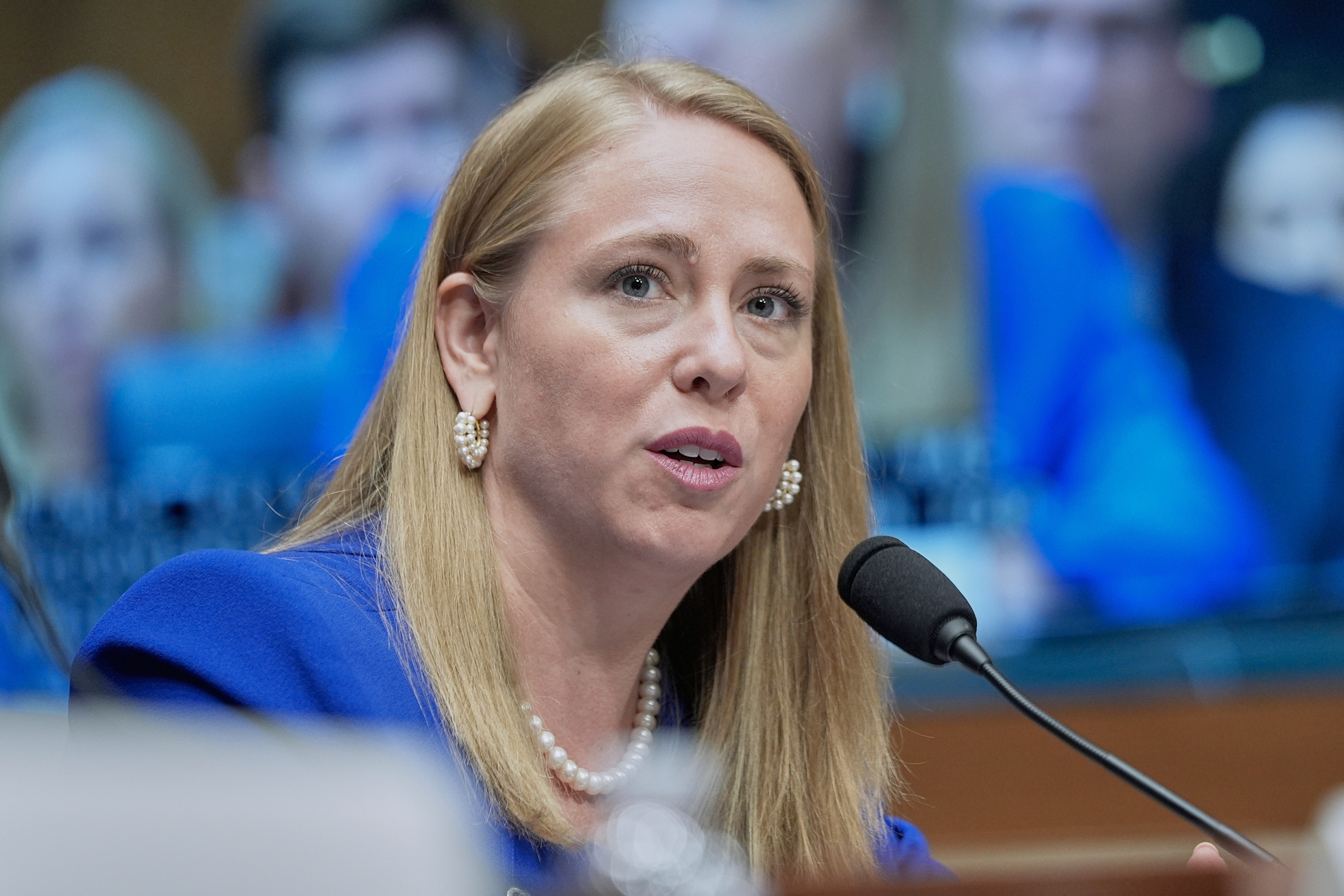
    Andrea Lucas, testifying at a June hearing on Capitol Hill, was designated chair of the Equal Employment Opportunity Commission in November, after a 10-month stint as acting chair.

    Lucas said her X post reflects the agency’s effort to “correct underreporting” of forms of discrimination that were neglected by the past administration, adding that “for too long, many employees thought they weren’t the ‘right’ kind of plaintiff, that our civil rights laws only protected certain groups, rather than all Americans.”

    A restrained year

    Founded in 1964 at the height of the Civil Rights Movement, the EEOC is charged with enforcing federal laws that make it illegal to discriminate against a worker or job applicant on the basis of race, sex, religion, age, disability, and other factors. Most employers with at least 15 employees are bound by EEOC regulations, which apply to such workplace practices as hiring, firing, promotions, and wages. The agency has recouped billions in monetary rewards for victims of workplace bias and harassment during the last decade.

    Days into his second term — in a break from precedent — Trump dismissed two Democratic members of the independent commission. As a result, it lost the quorum needed to pursue certain cases and overhaul guidance. That changed in October with the appointment of Commissioner Brittany Panuccio, who with Lucas gave the panel a 2-1 GOP majority and a quorum. Commissioner Kalpana Kotagal, a Democrat, rounds out the commission.

    In past administrations, the EEOC typically filed 200 to 300 merit lawsuits — those in which the agency determined discrimination exists — a year, said Christopher DeGroff, an employment attorney with the firm Seyfarth Shaw. The 93 merit suits the agency filed in fiscal 2025 marked one of its lowest tallies in three decades, he noted in an analysis of its activity.

    Still, the agency’s new priorities were evident in the cases that reached a public resolution or culminated in a lawsuit, DeGroff said. Merit suits alleging discrimination based on race or national origin — historically one of the EEOC’s busiest enforcement areas — hit a decade low in 2025, his research noted. And two of the three cases filed revolved around anti-American bias.

    Meanwhile, 37 of the 93 merit lawsuits the EEOC brought pertained to sex or pregnancy discrimination. Of those, 10 were filed under the Pregnancy Discrimination Act and/or the newly enacted Pregnant Workers’ Fairness Act, and included lawsuits against Delta Air Lines and meat processor Smithfield alleging they denied accommodations to pregnant employees.

    Religious bias lawsuits were another focus in 2025, with the agency filing 11 merit suits asserting religious discrimination or failure to accommodate religious beliefs. One case was against Apple, over allegations it failed to accommodate a Jewish employee’s request not to work on the weekend due to his faith.

    Apple declined to discuss the case but “strongly denied” the claims in a statement to the Post.

    Disparate impact

    One of the EEOC’s biggest pivots under Trump is to abandon cases filed under disparate impact, a legal theory holding that seemingly neutral policies — such as height or lifting requirements — can have discriminatory outcomes. It stems from the U.S. Supreme Court’s landmark 1971 decision in Griggs v. Duke Power, where attorneys used statistical evidence to show how standardized tests prevented Black employees from advancing at a North Carolina energy company.

    Disparate impact is central to civil rights litigation and a key lens though which the EEOC has tackled systemic discrimination, said Jenny Yang, who served as EEOC chair during the Obama administration and worked to expand the agency’s tool kit for addressing systemic discrimination.

    In 2020 for example, Walmart settled a nationwide discrimination lawsuit brought by the EEOC over a “physical ability test” it used for grocery workers that “disproportionately excludes female applicants.” Walmart agreed to stop using the test and to pay $20 million into a settlement fund for women who were denied grocery order-filler positions because of the testing.

    Disparate impact “advances the core principle that removing unjustified barriers to opportunity helps all Americans thrive,” Yang said.

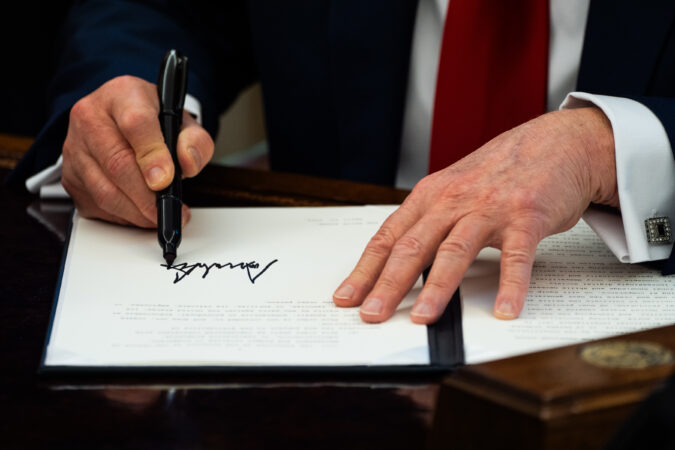
    In April, Trump signed an executive order barring use of disparate impact by agencies, calling it a “pernicious movement” that ignores “individual strengths, effort or achievement.” Dan Lennington, deputy counsel at the Wisconsin Institute for Law and Liberty, a conservative think tank specializing in workplace issues, said the debate reflects the broader ideological divide on how to best protect workers’ civil rights.

    “The minute you start saying all Black people this, all Hispanic people this, all women this, you’re just stereotyping,” he added. “The only thing that matters is the individual in front of you.”

    Yang said it’s been “challenging” to see the Trump administration make such changes to an agency that historically ” really valued its bipartisanship and its independence to interpret antidiscrimination laws.” By moving away from disparate impact and targeting corporate diversity efforts, Yang said, the EEOC has been “weaponized to intimidate employers, to retreat from efforts designed to promote equal opportunity, and to really abandon its historic mission to protect some of our most vulnerable workers.”

    ‘Illegal’ DEI

    Shawna Bray, general counsel at the Center for Equal Opportunity, a conservative think tank, said that Lucas’ EEOC is correcting for past administrations that “used the tools in the toolbox to push things up to, and even over, the line because of their goals,” especially with DEI and other social issues.

    DEI refers to practices companies use to ensure equal opportunity in their ranks, from recruiting and mentorship programs to antibias training and employee resource groups. Many companies began reconsidering such policies after the Supreme Court’s 2023 decision rejecting the use of affirmative action in college admissions.

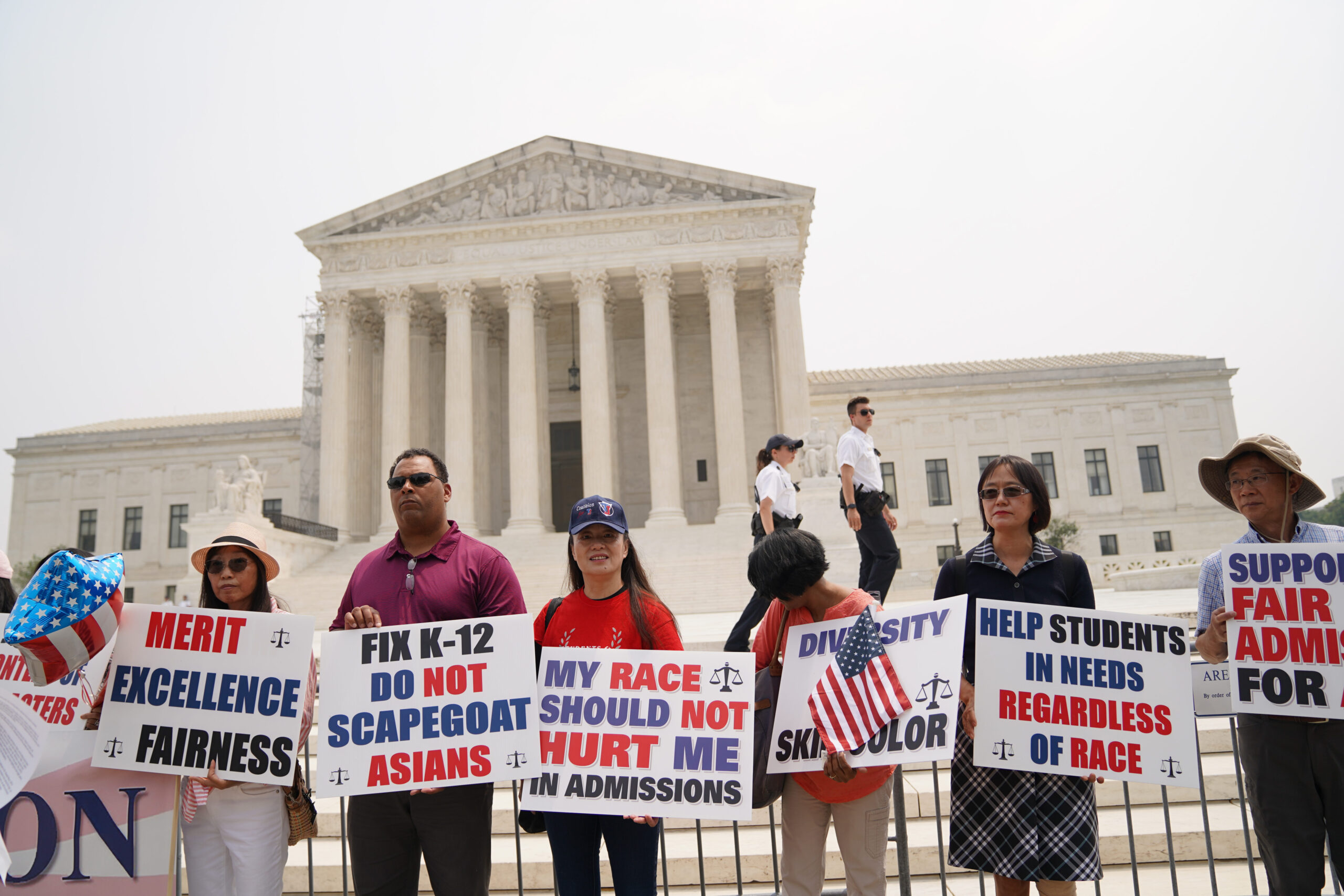
    After the Supreme Court struck down the use of racial considerations in college admissions in June 2023, many companies reassessed their diversity, equity and inclusion (DEI) programs.

    The ruling sparked a wave of activist lawsuits aiming to replicate the order in the employment sphere. Much of corporate America has since opened identity-based programs, such as fellowships and employee resource groups, to people of all backgrounds, ended efforts like antibias training, and rebranded DEI programs with a focus on “belonging.”

    Lucas and others in the Trump administration often refer to “illegal DEI,” but Bray said that she finds the term “a little frustrating” given that such programs only break the law if they show identity-based preference. She also thinks the phrasing has created confusion.

    The EEOC should “have in mind an even application of our civil rights,” regardless of factors such as race, gender, and religious background, Bray said. “The desire to put a thumb on the scale was never consistent with that.”

    While the agency has yet to file a lawsuit over a workplace DEI program under Lucas, DeGroff expects to see such “cases hit the docket” in 2026.

    Valerie Wilson, director of EPI’s Program on Race, Ethnicity, and the Economy, said that priorities like dismantling DEI have “turned the mission of the EEOC on its head, in a way that weaponizes it against the people that it was intended to protect, given the long history of racial discrimination and exploitation” in the United States.

    Lucas contends the EEOC is making up for past administrations that “went hunting for activist matters while closing [their] eyes to overt widespread discrimination occurring against groups it disfavored.” Earlier this year, it issued guidance encouraging workers to challenge DEI policies by their employers.

    Among possible targets are 20 law firms from which the EEOC said it has requested information about their DEI and hiring practices going back nearly a decade.

    Jason Solomon, director of the National Institute for Workers’ Rights, a think tank focusing on private workplace law, wonders whether there is much more for the EEOC to target, given that companies have largely gotten rid of identity-based programs.

    “They may look at the changed landscape and say, ‘We can declare victory because we’ve gotten employers to change a lot of what they’ve done,’” Solomon said.

    Backing away

    Race-discrimination complaints are historically among the most common lodged with the EEOC — 29,000 a year on average since 1997, according to a report from EPI — but 2025 marked “the lowest number of race/national origin-based filings by the EEOC in at least a decade,” Seyfarth’s report states.

    Two of the lawsuits it pursued alleged bias against U.S.-born workers in favor of foreign ones, DeGroff said. One case involved a hotel and resort in Guam, LeoPalace Guam Corp., which agreed to pay $1.4 million to resolve claims that it favored Japanese workers over those from other countries, including the U.S.

    The EEOC also has dismissed cases filed on behalf of transgender workers and stopped processing new gender-identity complaints to comply with Trump’s executive order that prohibits agencies from using federal funds to support gender-identity issues. It also removed “X” as a gender marker option on its discrimination charge intake form, making it harder for workers whose gender identity does not match their sex at birth to file complaints.

    Over the summer, the agency resumed processing some transgender discrimination cases, although the complaints will be subject to a heightened level of review.

  • As rumors swirl after political killings, this GOP lawmaker draws a line

    As rumors swirl after political killings, this GOP lawmaker draws a line

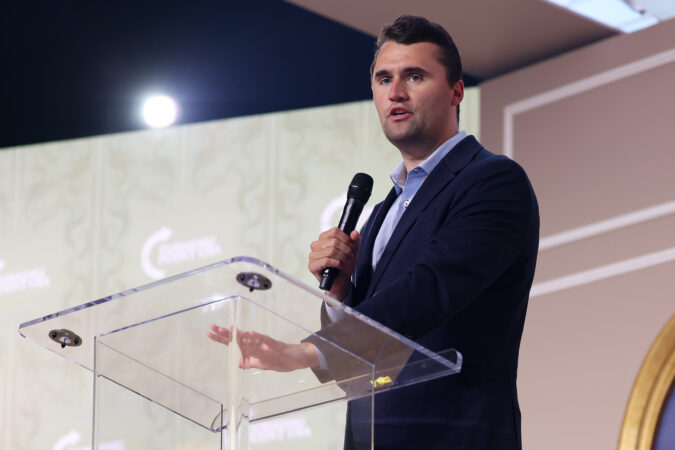
    To Julia Coleman, Minnesota House Speaker Melissa Hortman and Turning Point USA founder Charlie Kirk were just “Melissa” and “Charlie.”

    Coleman, a Republican state senator, knew Hortman, a Democrat, through their work in the Minnesota legislature. The two had discussed reopening the Capitol daycare center, while sitting in Hortman’s office sharing tequila and Milano cookies. Coleman was Turning Point USA’s first Minnesota employee, and Kirk, her first boss, became her friend.

    On June 14, Melissa was shot dead.

    On Sept. 10, so was Charlie.

    Coleman, 34, watched in horror as her social media feeds became clouded with a thickening haze of baseless and speculative ideas about her former colleagues’ deaths.

    “When I see people spreading horrible conspiracy theories that are completely based out of nothing and dishonor the person who passed away, I feel compelled to say something,” Coleman said. “More elected officials have to stop sitting on their hands and start calling it out.”

    That is what she is trying to do.

    On the Sunday after Christmas, Coleman was in her kitchen, making dinner for her family, when she saw a post that infuriated her. The user claimed that Hortman’s assassination was connected to a fraud scandal in Minnesota, and implied that Hortman had known her life was in danger. (There is no evidence supporting either of these claims.)

    “This is sick,” Coleman thought to herself. She began to type.

    “I am a Minnesota Republican legislator. I never agreed with Melissa. Not once. But I’m begging people to stop sharing this conspiracy theory,” Coleman wrote. “Please, unless you have evidence, stop trying to get social media clout off the death of a good person that you know nothing about.”

    Within 24 hours, her post had attracted more than a million views.

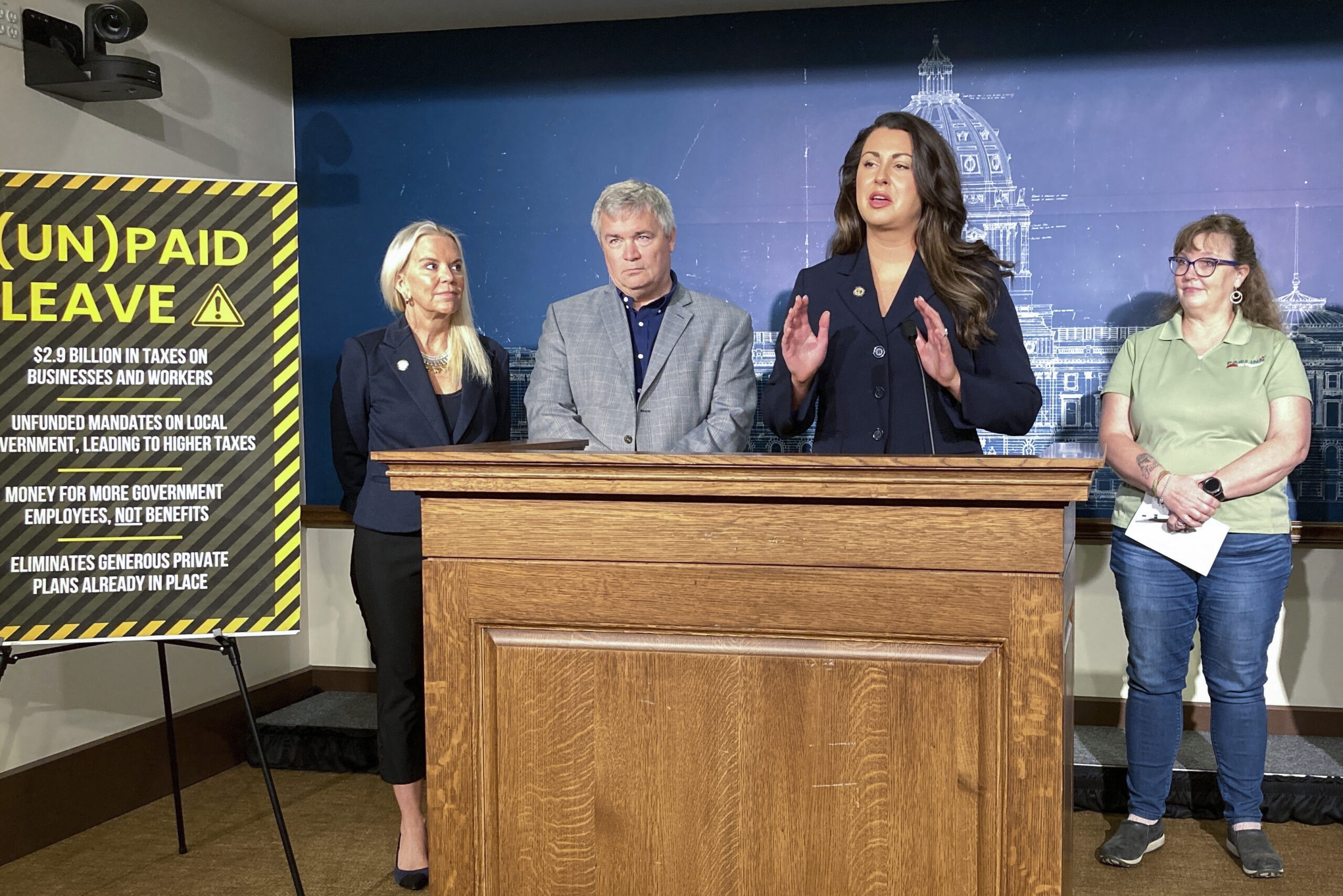
    Republican state Sen. Julia Coleman, of Waconia, speaks at a news conference at the Minnesota State Capitol in St. Paul., Minn., on Monday, May 8, 2023, against a Democratic-backed paid family and medical leave bill that was slated for debate later in the day. (AP Photo/Steve Karnowski)

    Responses have been mostly positive, she said. Coleman sees conspiracies and misinformation trending more on her own side, the political right, but believes the problem transcends partisan loyalties. In Minnesota, traumatized legislators have stayed away from Hortman and Kirk conspiracy theories, and many have been speaking out against them, Coleman said.

    Hours after her first post, Coleman followed up: “I’ve learned two things today 1) invest in tinfoil (for hats on both sides of the aisle) 2) buy a bunch of jumbo crayons and construction paper for explaining basic concepts to people this upcoming year.” Others, including former Minnesota Senate Majority Leader Paul Gazelka, a Republican, have also come out to slam the rumors.

    Legislators have watched as Minnesota Gov. Tim Walz, a Democrat, has borne the brunt of recent attacks, with some people claiming baselessly that Walz was involved with Hortman’s assassination.

    The conspiracists have relied on a video of Hortman in tears after she voted to end a budget deadlock by supporting a spending plan that cut health benefits for people who are in the country illegally. Coleman has said that Hortman was upset because she knew people would lose healthcare, and that there is no evidence of any link between the shooting and the scandal, which involves allegations of improper social services payments to dozens of Somali immigrants.

    The Kirk conspiracies are tied to unproven claims that the political activist’s killing was related to his stance on Israel.

    Coleman saw the governor at a bill signing shortly after Hortman was killed. Walz had lost weight. She noticed pain in his eyes. “It’s got to be hard that people are sitting there thinking he did that or would order that to be done just because a crazy man said it to be true,” Coleman said.

    A spokesperson for Walz did not respond to a request for comment.

    After Hortman and Kirk were killed, Coleman had panic attacks. She questioned whether she should quit her job to protect her three young boys. “It was a rough summer and fall. Losing two people to assassinations — I just never thought that sentence would even come out of my mouth,” Coleman said. “The initial reaction was: I have to get out of this if I want my kids to grow up with a mother.”

    Then Coleman thought about who would be left to speak up if people like her were intimidated out of politics. She said she decided she did not want to let fear drive her from public office — but knows the experience will never be the same.

    “It feels like all the magic that was in this job got sucked out of it on June 14,” Coleman said. “Long-standing grudges have been erased because a lot of us just are in the trenches now together.”

    When legislators walk into the House chamber, they see Hortman’s photo and roses on her desk.

    When the doorbell rings at home, they now check their security camera before answering.

    “I’ve seen some people start to speak up, and I hope that my actions [Sunday], which came from a moment of frustration standing in my kitchen, will encourage others to do the same,” Coleman said.

  • As Russia’s war grinds on, its society is fraying

    As Russia’s war grinds on, its society is fraying

    OLKHOVATKA, Russia — The bus from the front lines ground to a halt outside the roadside kitchen, and the soldiers on board limped out into the winter mud.

    Most were missing feet or a leg.

    A water bottle filled with blood swung precariously from a plastic tube attached to one soldier’s stomach as he was helped toward a bench. Another stared blankly at the bloodied stump where his right hand had once been.

    “I would never have signed a contract if I’d known what it’s like out there. Our television is lying to us,” said Fyodor, a young soldier from Siberia. Like others in this article, he is not being identified by his full name to protect him from repercussions for criticizing the war.

    Fyodor’s lower leg had been blown off by a mine two days previously during an advance on Lyman in Ukraine with what remained of his unit. He said he was one of just 10 people left of the 110-strong unit he joined two years ago.

    He had no regrets over the loss of his leg. “It means that I can finally go home — alive.”

    “We’re fighting for fields that we cannot even take,” interjected a fellow soldier, Kirill, also in his 20s, laughing wryly. “This war will never end. … It feels like it’s only just begun.”

    Scenes like this one remain invisible to most Russians, erased by state propaganda and glossy government projects supporting returning veterans. But inside the country, fatigue and resentment are festering beneath the suppression of dissent.

    There is no outlet for public frustration and no relief from the mounting national exhaustion with a nearly four-year-long war that is corroding the country from within and making society more dysfunctional, broken, and paranoid, according to observers and those interviewed for this article.

    Over the last year, the Russian economy has lurched from spectacular growth to near-stagnation. Russia’s digital repression and isolation are deepening as more apps and platforms are banned. According to Western intelligence, more than a million Russian fighters have been killed or wounded — many in battles for marginal gains. And as Moscow’s search for internal enemies intensifies, its machine of repression is turning on its own children and patriots.

    During Russian President Vladimir Putin’s meeting with his Human Rights Council this month, film director Alexander Sokurov spoke out against censorship, the country’s suffocating foreign agent laws, the rising cost of living, and the lack of opportunities for young people. “If Russia doesn’t change how it works with young people, it faces a dead end,” he said. Putin said he would respond later to his grievances.

    A former senior Kremlin official told the Washington Post that he was “very worried” about the “dark picture inside Russia.”

    “We can’t turn the clock back easily; political will is needed to reverse this, and it simply does not exist,” the former official said, speaking on the condition of anonymity to freely discuss sensitive matters.

    Bearing the brunt

    In Belgorod, a Russian border city that once enjoyed close links to Ukraine’s Kharkiv — just 46 miles to the southwest — the price of this war is particularly tangible.

    Daily drone attacks have long become part of the routine here. Mud-spattered ambulances and camouflaged air-defense units tear through the center of town. The city’s volunteer networks — integral parts of the war effort that have supported the troops with clothing, food, and equipment where the government has failed — continue to work around the clock, with retirees sewing anti-drone netting and 3D-printing plastic bomb casings for drones.

    Despite the suffering and mass destruction taking place just across the border, Belgorod regards itself as the main victim of this war. The city illustrates the widening gap in Russian society between the indifferent, metropolitan majority and the “warring” few.

    On a cold November afternoon, a group of volunteers helping deliver supplies to the army huddled around a table to eat soup. They told the Post that they felt abandoned by Moscow.

    “They have absolutely no idea what is going on here!” exploded Edik, 52. “In Moscow there are parties, people having fun, going on vacations. How is that possible? Here blood is being spilled, and there they’re celebrating. How can they reconcile that?”

    Several volunteers said they had noticed a lull in donations since the start of the year, as many expected the war to end soon. Yevgenia Gribova, 35, who coordinates a center in Belgorod, said the volunteer movement is facing a crisis. In the first year, she said, people were spending the last of their rubles to support the troops, working constantly, without days off or vacation.

    “Now people want to rest. They want to spend money on themselves rather than on materials for the front lines,” she said.

    But while people said they want to see an end to the conflict, some also spoke of their desire to keep fighting and the need to end the war under the “right” conditions.

    “Everyone still wants to take Odesa. It’s a common opinion: People want to go to Odesa on vacation again,” Gribova said. “For us, this is a civil war between Russians and Russians who have forgotten a bit that they are Russians, that’s all.”

    Belgorod and residents of Russia’s regions bordering Ukraine form part of what pro-Kremlin sociologist Valery Fyodorov, the director of VCIOM polling institution, has defined as “warring Russia”: a minority of the country — roughly 20% — consisting of soldiers, their families, patriotic volunteers, and workers in military factories who consider the war vital for Russia’s survival and who are pushing for victory. The rest, he says, are passively loyal, indifferent to the war, opposed to it but taking refuge in their private lives, or living in exile.

    Dmitry, a deputy commander of a grenade-launcher platoon in Russia’s 116th special purpose brigade, said that Russia would fight for a very long time and “with sticks, if necessary.”

    “Everyone wants to go home. Everyone wants all of this to end. But even tired people carry out their tasks,” he said.

    Return of the heroes

    How does a nation sell to its people a war that is destroying the country — and how does it ensure that it continues?

    To keep the war effort rolling and to stave off discontent, the Kremlin has poured money into projects supporting soldiers and veterans, including the nationwide Defender of the Fatherland State Foundation, which was established in 2023 by Putin and is led by his niece, Deputy Defense Minister Anna Tsivaleva.

    For their sacrifice, soldiers are rewarded with financial benefits, social prestige, and significant employment and education opportunities for themselves and their children.

    Denis Poltavsky lost the sight in his right eye after he was swarmed by drones in battle last year. Unwilling to share many details about his time on the front, Poltavsky said he suffered from extreme PTSD, haunted by nightmares and insomnia.

    But without a doubt, he says, his life has materially improved since returning home. “The support is very extensive. The state is doing everything for veterans and soldiers. … They didn’t abandon us. They keep track of you and provide everything.”

    Poltavsky was paid an initial $51,000 for his injury, plus insurance and a military pension. He has access to free transportation, and tickets to museums and theaters. He recently completed Belgorod’s Time of Our Heroes management and leadership training, and hopes to soon receive a grant for his metalworking business.

    Veterans also have access to round-the-clock support from psychologists, doctors, and volunteers; they are given tax breaks and secure employment, even with disabilities. Belgorod’s program is even offering veterans free land on which to build a house.

    Middlebury College professor Will Pyle, who studies Russia’s economy, has found that in some regions a larger share of Russians report being satisfied with their lives than at any time during the decade preceding the February 2022 invasion. The finding is based on analysis of data from the Russian Longitudinal Monitoring Survey, which is maintained by Moscow’s Higher School of Economics.

    According to Pyle’s research, conducted with the Bank of Finland, the increase in reported life satisfaction is especially pronounced in regions whose economies have benefited from wartime and military-adjacent industrial production.

    This mirrors Fyodorov’s research. “The more depressed the region, the more people have noticed their improvement in life,” he said.

    But underneath the lionizing of the soldiers and this temporary uptick in prosperity is the darker impact of returning veterans and the longer-term social consequences of the invasion. Already, horrific crimes including murders and rapes have been committed by returning soldiers, and many of the convicted criminals who signed contracts to win their freedom have returned home to commit more crimes.

    “Every governor in Russia knows that a wave of problems is coming with the soldiers returning home from the front with serious post-traumatic stress disorder,” said a Kremlin insider, speaking on the condition of anonymity because of the sensitivity of the issue. “And they know the responsibility to deal with this will fall to them.”

    The patriots and the teens

    Since the start of the war, Russia has gone after its dissenters, pursuing LGBTQ+ people, artists, and opposition figures, and made criticism of the conflict and the military illegal. But now, some of the state’s most fervent supporters are running into trouble as well.

    The vocal, ultrapatriotic “Z” military bloggers, initially a backbone of support for Putin’s invasion, have gone on to criticize corruption and shortcomings in the army. The most radical of their leaders, such as ultranationalist hawk Igor Strelkov, were initially jailed. But this fall, they saw their ranks swept by an unexpected purge as the whole movement became the focus of repression.

    In September, authorities branded Roman Alyokhin, a prominent blogger with 151,000 subscribers on Telegram, a foreign agent, a label usually reserved for liberal opposition figures. In October, blogger Tatyana Montyan was declared a “terrorist and extremist.” Another, Oksana Kobeleva, was detained by the police. All had publicly criticized senior officials or other propagandists. The Z community has since turned on itself, with bloggers racing to denounce one another.

    “The moment of unity did not last very long, and after almost four years, we are seeing how people begin to oppose each other as well, deciding which of them is more patriotic,” said military blogger Mikhail Zvinchuk, the founder of the Rybar Telegram channel, which has links to the Defense Ministry.

    He added that the movement became corrupt and embezzled funds that were raised to support the troops. “Over the years, there have been a number of crooks who are trying to exploit the war.”

    In Russia’s second city, St. Petersburg, security services have found a different target: teenagers.

    At the Izmailsky courthouse last month, masked police officers escorted two teenage musicians from their hearing to the secret service cars waiting outside. The pair, 18-year-olds Diana Loginova and Alexander Orlov — from the street band Stoptime — had just had their arrest extended for a third time. Orlov, the guitarist, fist-bumped one of his friends as he exited the courthouse. Officially, they stood accused of blocking the entrance to a metro station during an impromptu street concert this autumn, but their true crime was their viral performances of anti-war songs.

    To many, the consequences of Stoptime’s performances were inevitable. But the young musicians’ case sent a chill through this still-liberal Baltic city, where street performances are an integral part of local culture.

    Copycat acts and musicians performing in solidarity with the imprisoned band members in the Urals and other cities in Russia were also arrested and charged as security services moved swiftly to crack down on the slightest flicker of dissent. Now, even singing the wrong kind of music can get you jailed, a development many regard as a return to the days of the Soviet Union.

    The hearing in St. Petersburg was tense, at times Kafkaesque, as the defense lawyer unpacked the details of the performance in question. “There are approximately 47 meters between the entrance to the metro and the spot where they were performing. It is therefore impossible that the people who stood in a circle around Stoptime could have blocked that space,” she said.

    Loginova, known by her stage name, Naoko, spent the last 20 minutes in the courtroom clasping her mother’s hands. “I really hope this is the last time they arrest me,” she whispered. Irina, her mother, smiled and held her daughter close, looking dazed. “Don’t you remember that they said that they would let you go on the first night? It’s now been a month.”

    What made Stoptime’s rebellious music performances so striking was that they came at a time when free, creative spaces and opportunities to escape are fading fast.

    “The very fact that they performed such songs was captivating,” said Ivan, 26, a history teacher, who attended many of their performances. “It was like an echo of normal life in our time. These are songs you want to listen to: They are kind, they’re meaningful, they promote universal human values, they remind that you can overcome things.”

    He said in Russia right now the state is trying to build a strict loyalty based on behaving a certain way “in order to simply exist.” Around him he has watched people accept a situation they were once horrified by and shift into a survival mode.

    On Nov. 23, the Stoptime musicians were secretly and unexpectedly released, and they immediately fled the country. They were spotted in early December in Yerevan, Armenia, performing the same opposition songs that got them arrested.

    Others have not been so lucky.

    Tatiana Balazeikina’s 19-year-old son, Yegor, is three years into his seven-year sentence for terrorism after he attempted to throw a Molotov cocktail at a local military registration office in 2023. Yegor is one of hundreds of teenagers and children arrested for anti-war protests, sabotage, or treason since the war began.

    “Stoptime were singing what so many people already had on the tip of their tongues,” Balazeikina said from her home an hour south of St. Petersburg. “This is dissent. And the only way for this state to remain what it is is to cut off all these signs of dissent right at the root.”

    She believes young people present a special kind of threat to the Kremlin.

    “These young people who essentially have nothing to lose except their freedom are very dangerous,” she said. “And if those young people are not only capable of thinking but can also sing what they think … that’s an even bigger threat.”

  • How RFK Jr. upended the public health system

    How RFK Jr. upended the public health system

    On his way to being confirmed as the nation’s top health official, Robert F. Kennedy Jr. promised lawmakers he would do nothing that “makes it difficult or discourages people from taking vaccines.”

    Almost 100 days into the job, amid rising measles outbreaks and congressional scrutiny of his messaging on vaccines, Kennedy made clear behind the scenes that he wanted to reshape the nation’s immunization system.

    Kennedy, the founder of a prominent anti-vaccine group, presented several top federal health officials with a new vision.

    “Bobby has asked for the following changes,” Kennedy’s deputy chief of staff for policy at the time, Hannah Anderson, wrote to the officials in a May 19 email later reviewed by the Washington Post.

    Among his requests was to replace the entire membership of an influential independent committee of experts that makes recommendations for how and when to vaccinate Americans. Kennedy also asked the panel to reconsider a long-standing recommendation that all newborns get a hepatitis B vaccine and to revisit the use of multidose flu shot vials, which contain a mercury-based preservative.

    Anti-vaccine activists have criticized those vaccines for years, claiming they unnecessarily endanger children. Career federal scientists who learned of Kennedy’s asks said they represented a sea change for shots that have been extensively studied and deemed safe.

    “At that point we were just bracing for upheaval,” said Demetre Daskalakis, who was then the CDC’s top respiratory diseases and immunization official.

    Kennedy would get what he wanted. The May 19 email reveals his previously undisclosed influence on some of these changes in a highly unusual way, according to legal experts and former and current health officials, showing how Kennedy has wielded government power to overhaul a public health system he has blasted as corrupt and ineffective.

    Andrew Nixon, a spokesperson for the Department of Health and Human Services, said of the email: “All this was was a suggestion.”

    “This was a newly reconstituted committee, and the secretary was providing a North Star to make sure suggestions were communicated to the members for consideration,” Nixon said.

    Over the course of the year, Kennedy’s actions have alarmed public health experts, medical associations, and current and former health officials, who say he is eroding trust in science and dismantling confidence in long-standing public health measures.

    “I do feel shocked by how quickly he has been able to implement these things that he has clearly been pretty passionate about for many years,” said Kerry Kennedy Meltzer, Kennedy’s niece and a physician who this year released email exchanges with her uncle in an attempt to foil his Senate confirmation to lead HHS.

    Kennedy has challenged years of public health messaging on vaccines, including instructing the CDC to contradict the long-settled scientific conclusion that vaccines do not cause autism. His once-fringe views have moved to the center of the nation’s health strategy amid a growing distrust in the medical establishment after the coronavirus pandemic.

    “It is now acceptable to talk about all these issues,” said Leslie Manookian, a leader in the “medical freedom” movement, which opposes vaccine mandates. “The person that we have most to thank for that is Bobby Kennedy, together with President Trump.”

    Kennedy has maintained the backing of the White House and a warm relationship with President Donald Trump, whom he speaks to often, as the two aligned on their Make America Healthy Again initiative to encourage better nutrition and address chronic disease and childhood illness, according to two people familiar with the matter.

    Besides his heavy focus on immunizations, Kennedy has also taken on the food industry. Next year will test, ahead of the midterms, whether he can deliver sweeping change on this more broadly popular agenda.

    This account of Kennedy’s ascent and leadership since becoming HHS secretary is based on interviews with almost 100 current and former federal health officials, Kennedy allies, public health experts, and others. Many spoke on the condition of anonymity to detail private conversations or internal deliberations, or out of fear of retaliation.

    In response to an interview request, Kennedy said in a text message: Wapo has been more consistently unfair, biased, and inaccurate, and it’s reporting about me than any other major outlet. Im not inclined to validate that bias with an interview.”

    He referred the request to Stefanie Spear, a top aide, who said Kennedy wanted to share a Substack article with a Post reporter that described the “invisibility of vaccine injury,” adding Kennedy could perhaps do an interview after the first of the year.

    The HHS media relations office did not answer detailed questions for this article but in a statement commented on the email from Anderson and identified what Kennedy has done so far.

    “Under Secretary Kennedy’s leadership, HHS is exercising its full authority to deliver results for the American people,” Nixon said.

    “In 2025, the Department confronted long-standing public health challenges with transparency, courage, and gold-standard science — eliminating petroleum-based food dyes from the nation’s food supply, removing the black box warning for many menopause hormone therapies, lowering drug prices, advancing [Organ Procurement and Transplantation Network] reform, streamlining prior authorization, investing in rural health, accelerating biosimilars, doubling funding for childhood cancer research, launching an agency-wide AI strategy, and increasing transparency in drug advertising,” Nixon added. “HHS will carry this momentum into 2026 to strengthen accountability, put patients first, and protect public health.”

    RFK Jr.’s rise to power

    In August 2024, Kennedy strode onto a stage in Arizona to suspend his long-shot independent presidential bid. Flanked by American flags, he explained why the scion of a famous Democratic family was endorsing a Republican, Trump.

    “I asked myself what choices must I make to maximize my chances to save America’s children and restore national health,” Kennedy said.

    Kennedy quickly became viewed as one of the campaign’s top surrogates, bringing along some voters who might not have backed Trump. Before winning the presidency, Trump promised to let Kennedy “go wild on health.”

    Although some Trump aides had weighed making Kennedy, a lawyer, a White House health czar, Kennedy told Trump he wanted to be considered as HHS secretary, according to three people familiar with the matter. Donald Trump Jr. and Charlie Kirk, the conservative activist who was fatally shot this year, advised Kennedy that he needed to be in charge of an actual bureaucracy to make lasting change and avoid being sidelined, one person said. Trump Jr. and Turning Point USA, Kirk’s organization, did not respond to requests for comment.

    Just over a week after Election Day, Trump tapped Kennedy to helm the nation’s sprawling health department, an almost $2 trillion portfolio responsible for administering health insurance, approving drugs and medical devices, and responding to infectious-disease outbreaks.

    The luxury Florida beach house of Mehmet Oz — a physician and former daytime television star who is now the nation’s Medicare and Medicaid chief — quickly became ground zero for pushing MAHA’s agenda and securing Kennedy’s position in Washington, according to multiple attendees. Those weeks forged an alliance among some who challenged the medical establishment, including Del Bigtree, head of the anti-vaccine group Informed Consent Action Network (ICAN), and Spear, a longtime ally to Kennedy in his environmental and anti-vaccine advocacy, and newer people in Kennedy’s orbit, such as Calley Means, a health entrepreneur.

    One night, several of those at the beach house bonded over listening to the Grateful Dead, according to Michael Caputo, who was Trump’s HHS spokesperson in 2020. They viewed the book Good Energy — a bestseller, written by now-surgeon general nominee Casey Means along with her brother Calley, that promotes healthy eating and exercise to optimize metabolic health — as MAHA’s bible, he said.

    “Food expanded the movement overnight,” Bigtree, who was Kennedy’s communications director during his presidential campaign, said in an interview.It was an easier topic to sell to moms across America.”

    On Capitol Hill, Kennedy’s messaging pushing for healthier, less-processed foods proved far more popular than his views on immunization.

    Kennedy’s confirmation largely hinged on Sen. Bill Cassidy (R., La.), a physician and chair of the Senate health committee, who begged Kennedy to disavow his false claims linking vaccines and autism and raised concerns about Kennedy’s involvement in vaccine safety litigation.

    “[Does a] 71-year-old man who has spent decades criticizing vaccines and who’s financially vested in finding fault with vaccines, can he change his attitudes and approach now that he’ll have the most important position influencing vaccine policy in the United States?” Cassidy asked during Kennedy’s confirmation hearing.

    As Cassidy vacillated, Vice President JD Vance stepped in to help negotiate his eventual support, according to two people familiar with the matter.

    In a speech on the Senate floor, Cassidy detailed the commitments he received from Kennedy in exchange for his vote, including to protect the nation’s vaccine infrastructure. All but one Republican voted yes: Sen. Mitch McConnell of Kentucky, a childhood polio survivor who said he would “not condone the re-litigation of proven cures.” A week later, McConnell announced he would not seek reelection.

    Cassidy’s doubts proved prescient. Within months, Kennedy found ways to bypass some of his pledges.

    A fierce critic becomes the boss

    Kennedy has called for the ouster of what he describes as “corrupt, industry-captured” federal health officials, arguing the health department had failed to keep Americans healthy.

    “I’m not scared to disrupt things,” Kennedy said at a recent event at George Washington University.

    Since February, health agencies have been inundated by continuous waves of departures involving more than 30 high-ranking senior career leaders — representing decades of experience on managing infectious-disease outbreaks, administering billions in research dollars, and overseeing the nation’s drug supply, according to a Post review.

    Thousands more staffers were laid off in what some called the “April Fools’ Day massacre,” a sweeping purge and proposed reorganization of the health agencies. Some including lead poisoning specialists and lab scientists were rehired, but many administrative support staff, communications staffers, and program officers are among those who remain laid off.

    As secretary, Kennedy brought in fierce critics of the public health COVID-19 response and federal health agencies more broadly. Bigtree told the Post that candidates for top health roles were questioned to see whether they agreed with some of Kennedy’s longtime vaccine safety priorities.

    Under Kennedy, prominent figures in the anti-vaccine movement have been working within the department on vaccine safety issues, including Lyn Redwood, a former leader of the anti-vaccine group Kennedy founded, Children’s Health Defense, and David Geier and Mark Blaxill, two longtime proponents of false claims that vaccines can cause autism. The three did not return requests for comment.

    In a statement, White House spokesperson Kush Desai said Kennedy and his team at HHS are restoring “Gold Standard Science and accountability to our public health bodies” after the medical establishment pushed “unscientific lockdowns and mask mandates” during the coronavirus pandemic.

    Kennedy has accused public health agencies of being dishonest during the pandemic. He repeated that criticism, arguing the government overreached on COVID vaccines, when a reporter asked how to avoid the violence the CDC witnessed in August, when a gunman incensed by coronavirus vaccines attacked the agency’s Atlanta campus.

    Public health and medical experts say the turnover in staff and leadership has hollowed out the federal government’s scientific capacity to anticipate and respond to health threats.

    “For people who are still left at the [CDC], there is chaos and confusion, and morale is at an all-time low,” Aryn Melton Backus said at a November rally in support of public health. She was a health communication specialist placed on administrative leave as part of pending layoffs from the CDC’s Office on Smoking and Health, which has funded state tobacco control programs.

    The reduction of CDC staff and programs is being felt across the country. In Georgia, where smoking is the leading cause of preventable death, state officials cut a tobacco control and prevention program. An online concussion training that many school youth sports coaches must complete will no longer be updated with the latest research. Local officials who want to fluoridate their drinking water to improve oral health no longer have access to technical experts who can help calibrate the proper levels.

    As Kennedy upended the public health workforce, he leaned into his more broadly popular messaging around overhauling the food industry. He has posted on social media more than twice as frequently about food than vaccines while in office, according to the Post’s analysis of his personal accounts and official HHS accounts. Last summer, almost 1 in 3 social media posts focused on food.

    He often highlights posts about companies pledging to remove artificial dyes from food products, which has been one of his signature efforts.

    Some in the food sector have been trying to accommodate Kennedy and downplay differences with his initiatives, in hopes of avoiding MAHA criticism, according to two people involved in the industry. That is a stark shift for an industry accustomed to viewing the GOP as an ally.

    “Wanting to eat simpler foods, more real foods, look at the ingredients, all of that is not a Democrat hippie thing anymore,” said Vani Hari, an author, activist, and Kennedy ally who also writes under the name of the Food Babe. “It’s a Republican thing, too, now.”

    Kennedy returns to his core issue: Vaccines

    As Kennedy sought senators’ support to become health secretary, he told them he supported the childhood immunization schedule, including the shot for measles, which he had previously described falsely as increasing the odds of spreading the virus.

    In the past, Kennedy had decried the “exploding vaccine schedule,” claiming that the series of vaccines recommended to children is linked to the rise of autism, chronic disease, and food allergies. Medical experts have argued that these purported links have no basis in evidence and that the increase in vaccinations has successfully combated more disease. He wrote a book in 2014 calling for removal of the mercury-based preservative thimerosal from vaccines. He questioned why newborns should get the hepatitis B vaccine, which health authorities say is safe, claiming on an online show that it “poisoned” kids.

    Kennedy faced his first big test on vaccines soon into his tenure. A measles surge had started in an under-vaccinated region of Texas, driving the country’s largest annual case tally in at least 33 years and threatening to end the nation’s measles elimination status.

    At first, Kennedy downplayed the severity of the outbreak and later, under pressure, acknowledged vaccines prevent the virus’ spread. But he muddled that message by also falsely claiming the vaccines were not safety-tested and contained aborted fetal debris — a stark contrast from the first Trump administration’s unequivocal support for vaccination during a 2019 outbreak.

    He repeatedly offered to send Texas doses of vitamin A, an unproven measles treatment in the U.S. embraced by vaccine skeptics as an alternative to immunization, even though the vitamin is primarily used for malnourished children abroad and public health workers and doctors said their focus was vaccination, according to a top state health official, Jennifer Shuford.

    In June, he fired every member of the Advisory Committee on Immunization Practices, which makes vaccine recommendations, setting in motion plans to remake the vaccine system. Kennedy argued the panel had become “little more than a rubber stamp for any vaccine” with members too closely tied to the pharmaceutical industry. He selected new members, some of whom had histories of criticizing vaccine guidance. The former CDC director, Susan Monarez, said she was fired in August for refusing to be a “rubber-stamp” to the new committee.

    The panel has voted on some of Kennedy’s requests detailed in the May email from Anderson, who is no longer with HHS and did not respond to requests for comment.

    The vaccine panel voted in June to remove thimerosal — which the CDC had concluded is safe but Kennedy and his allies have decried as unnecessarily exposing children to mercury — from the rare multidose flu shot vials that contain it. In that same meeting, they vowed to form a work group to look at vaccines that have not been subject to review in more than seven years, in line with Kennedy’s request.

    The panel over several months grappled with how to revise the guidance for all newborns to receive a hepatitis B vaccine. It ultimately voted in December to stop recommending the shot when the mother tests negative and instead to encourage those parents to consult doctors about whether and when to begin vaccination.

    José Romero, who began serving on ACIP in 2014 and chaired the panel from 2018 to mid-2021, described Kennedy’s asks to the committee as “extremely” unusual.

    “The secretary is within his legal rights to make these suggestions or requests, but it’s unheard of as far as I know,” said Romero, who was a top health official in Arkansas during the pandemic and then at the CDC. He now consults for the pharmaceutical industry on vaccines and is a member of the American Academy of Pediatrics infectious diseases committee.

    An HHS official, who spoke on the condition of anonymity because of legal concerns, said that the career CDC official who oversees ACIP sets its agenda and that members of the committee are ultimately responsible for writing the questions they vote on.

    In reference to the May email, the official said HHS officials worked with the CDC’s administrative officer for the vaccine panel to communicate the suggestions to the members, but those suggestions were not directives.

    Joseph Hibbeln, a neuroscientist who has become a dissenting voice on the vaccine panel, said committee members have not been given clear answers when they have asked who is determining which vaccines they are scrutinizing.

    Robert Malone, a prominent critic of coronavirus vaccines who is now the panel’s vice chair, said that he did not know how the agenda items were developed but that there would be nothing “nefarious” about Kennedy or other top Trump administration officials “contributing” to agenda items because the panel’s job is to provide advice.

    During the panel’s December meeting, Kirk Milhoan, chairman of the vaccine committee, was overheard telling another member that he felt “a little bit like puppets on a string as opposed to really being an independent advisory panel,” according to a transcript of the exchange captured by videoconferencing software and reviewed by the Post. He later told the Post he was referring to pressure from outside groups critical of changes to vaccine recommendations, not the administration.

    ‘Raise the risk, bury the benefits’

    Kennedy and his aides have repeatedly said the Trump administration is not limiting access to vaccines for those who want them, but is instead working to help people make informed decisions. Critics say they are exaggerating the downsides and obfuscating the value of immunization.

    “The secretary and his committee have stopped doing the hard job of balancing the risks and benefits of vaccines,” said Dan Jernigan, who oversaw the CDC’s vaccine safety office. He described their playbook as “raise the risk, bury the benefits, sow confusion, drive down use.”

    In the late summer, Jernigan and two other high-ranking officials resigned in protest over what they called an unscientific and politicized approach to vaccines.

    In one instance that alarmed career staff, Kennedy wanted Aaron Siri, a top lawyer for the anti-vaccine movement, and perhaps Paul Offit, a scientist at Children’s Hospital of Philadelphia who is a prominent proponent of vaccines and critic of Kennedy, to speak publicly during the June meeting of the new vaccine advisers, according to three former health officials familiar with a meeting where a CDC senior adviser relayed the secretary’s request. Siri has been involved in legal challenges to school vaccine mandates and petitioned the government to reconsider its approval of Sanofi’s stand-alone polio vaccine.

    But the plan to invite Siri fell apart after objections from career CDC staff and legal advisers who raised concerns about providing a platform to a man who has repeatedly sued the agency seeking data about vaccine safety on behalf of ICAN, the anti-vaccine group. Kennedy was informed of those concerns, one of the officials said.

    After almost six months and an exodus of CDC leaders, Siri was invited to the agency’s headquarters for the December meeting of the vaccine advisers and spent more than 90 minutes arguing that the history of childhood immunization in the U.S. is marred by insufficient research and improperly performed vaccine clinical trials. HHS did not answer questions from the Post about Siri’s appearance.

    Siri said he has a “significant knowledge base” about vaccines based on his legal work, including regularly suing health authorities and deposing and cross-examining leading vaccinologists. “If you were standing in my office with me right now, you would be looking at a bookshelf that is filled with medical textbooks on vaccinology, immunology, infectious disease, and pediatrics,” he said.

    Cassidy, the Republican senator, reacted with shock to Siri’s appearance at ACIP.

    It was his latest frustration with the health department’s handling of vaccine issues under Kennedy, including the revisions to the CDC website language on autism. The page includes an asterisk after the header “Vaccines do not cause Autism,” explaining that the header was not removed as part of an agreement with Cassidy. But the revised webpage also claims that the assertion that vaccines do not cause autism is not evidence-based and that health authorities ignored studies supporting a link.

    Cassidy’s office declined repeated requests for a formal interview. Approached at the Capitol and asked about Kennedy’s vaccine commitments, Cassidy said, “You can compare those actions to those commitments I enumerated in my floor speech, and I’ll let you draw your own conclusions.”

    But what were his conclusions? “I’ll leave it at that,” he said.

    The looming fight

    Kennedy has spent much of this year laying the groundwork for bigger changes to the nation’s vaccine and food policy.

    Findings from investigations Kennedy commissioned into the causes of autism, the safety of vaccines, and whether fluoridated water harms children are expected to be released.

    The Trump administration is weighing plans to shift the federal government away from directly recommending most vaccines for children and to more closely align with Denmark’s immunization model of suggesting fewer shots, according to two people familiar with the matter.

    Kennedy plans to release revised federal dietary guidelines for healthy eating habits early next year, which will be partly tied to when Americans are making New Year’s resolutions, according to a federal health official. Kennedy has said the guidelines will focus on eating whole foods.

    The health department is also hoping to finalize a plan as soon as next year to require labels on the front of food and drink packages to alert Americans about unhealthy foods. Under Kennedy, health officials are working internally to determine the best approach to the labels, which were first proposed in the Biden administration, according to two people familiar with the matter.

    Meanwhile, Kennedy has crisscrossed the country to support governors who have restricted using food stamps to buy soda and candy and signed bills to remove artificial dyes from school meals. Some MAHA proponents want to see another wave of policies next year that would promote nutrition education and also challenge long-standing public health practices such as vaccine mandates. The nonprofit advocacy group MAHA Action has met with almost 20 top state officials as it pushes for states to embrace the movement.

    “Bobby Kennedy is doing the work he was put on the planet to do,” said Tony Lyons, president of MAHA Action.

    Kennedy’s allies say he’s just getting started. They hope he will be secretary for eight years.
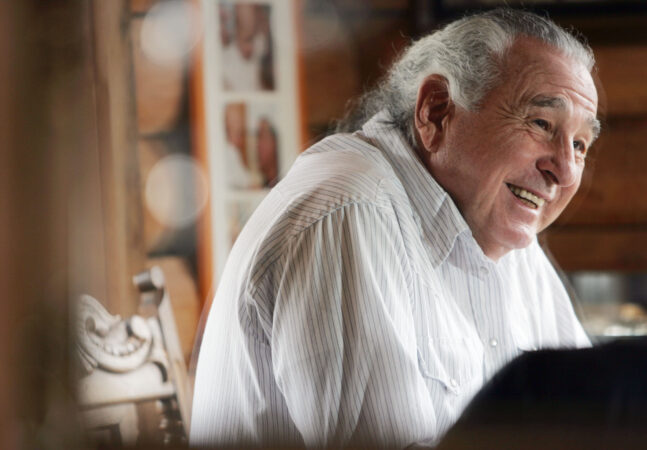
  • Tatiana Schlossberg, journalist and granddaughter of JFK, dies at 35

    Tatiana Schlossberg, journalist and granddaughter of JFK, dies at 35

    Tatiana Schlossberg, 35, a journalist who told stories of the changing climate and the ways humans can help protect the environment, and whose terminal illness and position in the Kennedy family thrust her into the national spotlight late in life, died Tuesday.

    Her family announced the death in a social media post shared by the John F. Kennedy Presidential Library and Museum. The statement did not say where she died.

    Ms. Schlossberg published a New Yorker essay in November revealing that she had been diagnosed with a rare form of acute myeloid leukemia, a cancer of the blood and bone marrow. Between reflections on her family and mortality, she harshly criticized her cousin Robert F. Kennedy Jr., the secretary of health and human services, for his opposition to government-funded medical research and vaccines.

    “I watched from my hospital bed as Bobby, in the face of logic and common sense, was confirmed for the position, despite never having worked in medicine, public health, or the government,” she wrote.

    As an environmental journalist, Ms. Schlossberg was drawn to stories that humanized sprawling and complicated policy issues — often while offering her a chance to participate in the action herself.

    While chronicling the impact of climate change, she jumped in a cranberry bog in Massachusetts. She later spent nearly eight hours skiing the Birkebeiner, a cross-country race in Wisconsin threatened by warm weather and a lack of snow.

    “On the lake, my cross-country skis began to skate in a rhythm, something that had eluded me for much of the day,” she wrote in a dispatch for Outside magazine. “I felt like I was flying.”

    Ms. Schlossberg studied at Yale and Oxford before launching her journalism career at the Record newspaper in North Jersey, covering crime and local affairs. She joined the New York Times in 2014 as an intern and was named a staff writer on the paper’s Metro desk before moving to the science section, where colleagues regarded her as a curious, hardworking reporter who wore her privilege lightly.

    A granddaughter of President John F. Kennedy and first lady Jacqueline Kennedy Onassis, Ms. Schlossberg was the second child of Caroline Kennedy, a former U.S. ambassador to Australia and Japan, and Edwin Schlossberg, an artist and designer.

    “She was a total delight,” said Henry Fountain, a longtime climate and science reporter at the Times. Ms. Schlossberg “just researched her butt off on stories,” he added.

    After leaving the Times in 2017, Ms. Schlossberg began freelancing and, in 2019, published Inconspicuous Consumption: The Environmental Impact You Don’t Know You Have. The book examined the hidden costs of everyday activities — streaming videos, buying jeans, eating burgers — and was honored by the Society of Environmental Journalists.

    “Using history, science and a personal narrative, Schlossberg provides a better understanding of both individual and systemic drivers of ecological destruction,” the judges said in awarding her the Rachel Carson book prize. “Readers will find solace, humor and a route to feeling empowered with possibilities for positive change, rather than drained by an accumulation of bad news.”

    Ms. Schlossberg had been planning to write a second book, on the oceans, when she was found to have cancer in May 2024, while in the hospital for the birth of her second child.

    In her New Yorker essay, she wrote of her shock at getting the diagnosis — “This could not be my life” — and of the turbulent 18 months that followed, in which she received stem cell donations from her sister as well as a stranger in the Pacific Northwest; underwent chemotherapy; and participated in a clinical trial, testing a new type of immunotherapy.

    In recounting her experience, Ms. Schlossberg implicitly acknowledged that her family, and her mother in particular, had dealt with years of grief. Her mother was only 5 when her father, President Kennedy, was assassinated in Dallas in 1963. She was 10 when the same fate befell her uncle, Robert F. Kennedy, while he was campaigning for president in Los Angeles. Her younger brother, John Jr., died in a plane crash in 1999.

    “For my whole life, I have tried to be good, to be a good student and a good sister and a good daughter, and to protect my mother and never make her upset or angry,” Ms. Schlossberg wrote. “Now I have added a new tragedy to her life, to our family’s life, and there’s nothing I can do to stop it.”

    Ms. Schlossberg recalled that she was in her hospital bed when her cousin “Bobby, in the face of logic and common sense, was confirmed” as health and human services secretary, “despite never having worked in medicine, public health, or the government.”

    Kennedy had previously run for president as an independent, in what Ms. Schlossberg called “an embarrassment to me and the rest of my immediate family.” He faced blowback when he acknowledged that he had placed a dead bear in Central Park a decade earlier, a bizarre episode that — in an odd twist of fate — Ms. Schlossberg had reported on for the Times, writing in 2014 that state investigators concluded the bear had died after being struck by a car, but did not know how it ended up in the park.

    “Like law enforcement, I had no idea who was responsible for this when I wrote the story,” Ms. Schlossberg told The Times last year.

    In her New Yorker essay, Ms. Schlossberg wrote that her cousin’s health policy decisions threatened her own survival, and that of “millions of cancer survivors, small children, and the elderly.”

    “I watched as Bobby cut nearly half a billion dollars for research into mRNA vaccines, technology that could be used against certain cancers; slashed billions in funding from the National Institutes of Health, the world’s largest sponsor of medical research; and threatened to oust the panel of medical experts charged with recommending preventive cancer screenings,” she wrote.

    She also noted that the drug misoprostol, which she received to stop a postpartum hemorrhage that nearly killed her, was “part of medication abortion, which, at Bobby’s urging, is currently ‘under review’ by the Food and Drug Administration.”

    “I freeze when I think about what would have happened if it had not been immediately available to me and to millions of other women who need it to save their lives or to get the care they deserve.”

    ‘I was not just a sick person’

    Tatiana Celia Kennedy Schlossberg was born in Manhattan on May 5, 1990. She was raised on the Upper East Side with her older sister, artist and filmmaker Rose Schlossberg, and her younger brother, Jack Schlossberg, who is now running for Congress in New York.

    Ms. Schlossberg studied history at Yale University, where she received a bachelor’s degree in 2012 and served as editor in chief of the weekly Yale Herald. She later earned a master’s in American history from the University of Oxford.

    As a freelance journalist, Ms. Schlossberg contributed to publications including the Washington Post, the Atlantic, and Vanity Fair. She wrote a weekly newsletter, News From a Changing Planet, until 2024.

    Juliet Eilperin, the Post’s deputy futures editor, called her “one of the least pretentious journalists I have ever dealt with.”

    “Tatiana had an intense desire to be out in the field, immersing herself in nature and talking with scientists,” Eilperin said. “She was meticulous and exhaustive in her research, scrutinizing environmental problems and what might be done to fix them.”

    In 2017, Ms. Schlossberg married George Moran at her family’s home on Martha’s Vineyard, in a ceremony officiated by former Massachusetts Gov. Deval Patrick. Moran, a urologist, was a resident at Columbia-Presbyterian when Ms. Schlossberg was diagnosed with cancer at the hospital.

    “He did everything for me that he possibly could,” she wrote in her essay. “He talked to all the doctors and insurance people that I didn’t want to talk to; he slept on the floor of the hospital; he didn’t get mad when I was raging on steroids and yelled at him that I did not like Schweppes ginger ale, only Canada Dry.”

    In addition to her husband, survivors include their two children; her parents; and her brother and sister.

    While battling cancer, Ms. Schlossberg held her profession up as a point of pride. “My son knows that I am a writer and that I write about our planet,” she wrote. “Since I’ve been sick, I remind him a lot, so that he will know that I was not just a sick person.”

  • Is red wine better for you than white? The answer may surprise you.

    Is red wine better for you than white? The answer may surprise you.

    The question: Is red wine healthier than white wine?

    The science: Many people think red wine is better for you than white wine or other types of alcohol.

    The notion was partly born from studies — some of which have been disputed — that suggested that certain compounds found in red wine could improve cardiovascular health.

    Now the evidence suggests that any type of alcohol — including red wine — is unlikely to make you any healthier than drinking no alcohol at all.

    “There’s no isolated health benefit of red wine over white wine over any other beverage containing alcohol,” said George Koob, the director of the National Institute on Alcohol Abuse and Alcoholism. And, he added, “There’s no physical health benefits of which we can attribute to alcohol.”

    While it’s long been known that heavy alcohol consumption can cause serious health problems, the potential benefits and risks of moderate drinking — defined as up to two drinks per day for men and one for women — have been murkier. In the past, some research suggested that people who drank small amounts of alcohol in general might have a health advantage compared with those who didn’t drink at all.

    But as research has evolved over the years, we now know that even modest drinking is linked to a higher risk of developing certain cancers such as breast, colorectal and esophageal cancers, as well as brain changes and dementia, heart problems and sleep problems.

    Dietary guidance has also changed. Current guidelines from the U.S. Department of Agriculture state that “emerging evidence suggests that even drinking within the recommended limits may increase the overall risk of death from various causes.” The American Heart Association recommends limiting or abstaining from alcohol, even though the association published a scientific review in 2025 that concluded that light drinking poses no risk for coronary artery disease, stroke, sudden death and possibly heart failure, and may even reduce the risk of developing such conditions — though not all experts agreed with that conclusion.

    The argument in favor of red wine used to focus on certain compounds.

    Red wine contains more polyphenols — plant compounds with antioxidant and anti-inflammatory properties — because the grape juice is fermented with the grape skins, where these compounds are concentrated. (White wine grapes are pressed, and the skins removed, before the fermentation process.)

    These polyphenols include procyanidins, flavonoids and resveratrol, which is often mentioned in cancer research. Another type, anthocyanins, helps give red wine its rich color and has been studied for potential cardiovascular benefits.

    Most of the health benefits associated with these polyphenols have been observed in studies at much higher doses than what you would get from a couple glasses of wine, so there’s no real advantage, experts said.

    “The concentrations are sufficiently low that you would have to drink more than moderate amounts to truly get that much more benefit from the polyphenols in red wine,” which could lead to health issues, said Eric Rimm, a professor of epidemiology and nutrition at the Harvard T.H. Chan School of Public Health, who has studied the health effects of alcohol.

    Instead, you could add stronger sources of anthocyanins into your diet, including darker berries such as blueberries, apples, onions, black or green tea, and dark chocolate, Rimm said.

    As for other risks and benefits, some people may avoid red wine because it can stain teeth and cause headaches and even allergy-like symptoms. While red wine headaches are not fully understood, some people may be especially sensitive to the tannins in the grapes, histamines or sulfites produced through fermentation, or the additional sulfites added to preserve wine. Some research suggests quercetin, an antioxidant found in grapes, may be responsible.

    In one study, people who had a wine intolerance were more likely to report allergy-like symptoms such as nasal congestion, itching, flushed skin and stomach upset more often after drinking red wine than white wine.

    What else you should know

    While drinking alcohol probably won’t lead to any positive health effects, you may be able to reduce potential negative effects by how you drink it.

    First, speak with your health care provider about whether drinking alcohol is safe for you. People who are pregnant, have certain medical conditions, take medications that interact with alcohol, or have or are recovering from an alcohol-use disorder should not drink, according to USDA. Also, teetotalers, people who don’t already drink, should not start drinking for any health reasons, health officials said.

    Assuming you’re of legal drinking age — 21 years or older in the United States — here are some tips from experts:

    1. Eat first: Food, particularly foods with some protein, fats and carbohydrates, slows the absorption of alcohol into the bloodstream, reducing potential ill effects.
    2. Understand drink sizes: A standard alcoholic drink has 0.6 ounces of pure alcohol. That’s equal to 5 ounces of wine with 12 percent alcohol, 12 ounces of beer with 5 percent alcohol, or a shot — 1.5 ounces — of an 80-proof liquor. When buying alcohol at a store, check the alcohol content. “Beer used to be 4 or 5 percent alcohol. There are a lot of beers now that are 8 to 10 percent. So you may want to drink a little bit less if you have a higher alcohol-containing beer or a higher alcohol-containing spirit,” Rimm said.
    3. Keep in mind that men and women may process alcohol differently: Women generally don’t produce as much of an alcohol-metabolizing enzyme called alcohol dehydrogenase, which means they break down alcohol more slowly and are at a higher risk of alcohol-related health problems.
    4. Drink in moderation: Moderation is defined as up to two drinks per day for men and one for women. Also, space out drinks throughout the week — meaning don’t drink all 7 or 14 drinks in one weekend.
    5. The bottom line: While red wine has more polyphenols, which are associated with cardiovascular benefits, than white wine, they aren’t in a high enough concentration to provide a health advantage. In addition, red wine may be more likely than white wine to cause headaches and allergy-like symptoms in people who are susceptible.
  • The very worst sports decisions of 2025

    The very worst sports decisions of 2025

    The past year in sports was full of choices that worked out swimmingly, such as Anthony Joshua taking a fight on relatively short notice. The fight, of course, was against Jake Paul, it earned Joshua a massive payday, and he finished it with a knockout of someone a lot of people wanted to see get knocked out.

    Other choices didn’t work out quite so well, and a few were unfortunate enough to make this roundup of 2025’s thoroughly regrettable sports decisions. It’s a non-comprehensive list (and by all means, make some additions in the comments), but it should be enough to have us all looking to ring in a less misguided new year.

    The Mavericks trade Luka Doncic for … not much

    Never mind that, in the wake of the Luka Doncic trade, the Dallas Mavericks wound up with Cooper Flagg. They don’t get credit for seeing a piece of outrageous good fortune fall into their collective lap.

    On the other hand, the Mavericks deserved all the criticism they received — a Texas—size mass that didn’t subside for months — and not just because they dealt a massively popular, 25-year-old superstar who already had led them to the NBA Finals. The return for Doncic and a couple of ancillary pieces to make the trade work included an aging and injury-prone Anthony Davis, Max Christie, a first-round draft pick and … actually, that was it.

    The worst part? Well, that’s a tough question, given that the trade came as an out-of-nowhere jolt of shocking news, left the franchise bereft of a long-term centerpiece (again, the subsequent, utterly fluky landing of Flagg doesn’t count) and allowed the Los Angeles Lakers to retain some assets that the Mavericks should have demanded as part of the package. Maybe the most galling aspect was that Nico Harrison, the Mavericks’ general manager, didn’t shop Doncic around the league, a process that almost certainly would have yielded more substantial offers. Instead, Lakers GM Rob Pelinka appeared to use his long-standing friendship with Harrison to pull off a clandestine swindle. Plus, did it have to be the Lakers? You know, the franchise that has lorded over the Western Conference for huge chunks of the past 45 years and whose fans have come to expect the regular arrival of elite players as their birthright?

    None of that sat at all well with Mavericks fans, and ultimately their fury and the team’s lack of success after the trade cost Harrison his job. He’s no longer around, but the frustration of the Doncic trade figures to linger in Dallas for years to come.

    Orion Kerkering throws home

    It might be unfair to say he panicked, but Orion Kerkering was hardly the picture of composure when a ball was hit back to the Philadelphia Phillies’ 24-year-old pitcher in the bottom of the 11th inning of Game 4 of the National League Division Series. Kerkering had trouble fielding the ball, but after he did eventually pick it up, he appeared to have time to turn and throw to first base. Given that there were two outs, a successful throw to the first baseman would have ended the inning, kept the score tied and kept the Phillies alive in their series against the Los Angeles Dodgers.

    Certainly, that was what Phillies catcher J.T. Realmuto wanted. As Kerkering picked up the ball, Realmuto was pointing toward first base. Alas, the pitcher opted to throw home — the bases were loaded, so an inning-ending out also could have been made at the plate — but he had only a split second to beat the runner, and Kerkering’s rushed effort sailed wide of Realmuto. The runner was safe at home, the Dodgers spilled out of their dugout with joy, and the Phillies were forced to contemplate a brutal end to their season. Kerkering defended his decision, saying he thought he could get the ball to home plate faster than if he turned and threw to first, but he acknowledged, “It was just a horses— throw.”

    The Clippers bring back Chris Paul

    When the Los Angeles Clippers signed Chris Paul in July to a one-year contract, it seemed like a solid move, potentially even a heartwarming one — after all, Paul is a franchise icon, and he was poised to help his team return to the playoffs in what could be his final NBA season. Instead, the relationship between Paul — never one to refrain from offering strong opinions on team-related matters — and the Clippers’ coaching staff reportedly curdled almost immediately. Then, barely a quarter of the way through this season, the 40-year-old point guard was banished altogether.

    Paul remains under contract, though, meaning that after getting the heave-ho, he is still essentially getting paid handsomely by the Clippers not to work. Wait, why does that sound familiar? Oh, right — their season began under a cloud of suspicion that they may have circumvented NBA salary cap rules by arranging for Kawhi Leonard to receive a lucrative, no-show job from a team sponsor. At least Leonard is performing his job for the Clippers by putting up good numbers, but he already has missed a chunk of the season with his latest injury and, more ominously, has proved unable to help the Clippers avoid an early-season free fall that has them near the bottom of the Western Conference.

    A guy gets caught stealing a hat from a kid

    Here’s the thing: If you’re going to swipe a cap clearly meant for a kid, don’t do it where loads of cameras are present. Wait, sorry, here’s the thing: Don’t do it at all. Alas, Polish businessman Piotr Szczerek found it as easy in the moment as stealing candy from a baby, only to discover that his misdeed went viral.

    Caught red-handed at the U.S. Open (tennis version), Szczerek subsequently issued an apology, but not before online sleuths found his business and subjected it to damagingly poor reviews. Even in his apology, Szczerek claimed it was “never my intent to steal away a prized memento from the young fan,” leading to another round of criticism.

    Picking upsets in your NCAA bracket

    Everyone knows that if you actually want to win your NCAA tournament pool, you can’t go chalk. While you may not be able to predict which upsets will occur, you know they’re coming, so your best bet is to pick a few and hope you get some hits.

    Unless, that is, you were filling out a bracket for the 2025 NCAA men’s basketball tournament, which turned out to be a chalk show. The top 16 seeds won their first-round games, the only No. 12 seeds to get to the second round promptly lost, the only double-digit seed in the Sweet 16 was a John Calipari-coached SEC squad (No. 10 Arkansas, which promptly lost), and the Final Four was composed solely of No. 1 seeds. At least, at that point, Duke haters got to see the Blue Devils get upset by Houston, but even that unexpected result deprived hoops fans of seeing Flagg in the national title game.

    Tom Brady clones his dog

    In thanking a biosciences company for giving him and his family “a second chance with a clone of our beloved dog,” Tom Brady raised a question of what kind of “second chance” he thought he was getting. Obviously, the first go-round went so well that he decided to have the dog duplicated, so it wasn’t a question of making amends. At the same time, the personality that so endeared the original pooch to the Bradys wouldn’t necessarily be replicated in the clone.

    What Brady could count on, if he cared to get some feedback, was disapproval from animal rights activists and others who happen to be well aware that tons of terrific pups are just waiting at shelters for a loving human to come along. That act of compassion could be accomplished for a fraction of the price of cloning — and without the possibility that several attempts might be discarded before an acceptable look-alike was produced.

    Chauncey Billups plays in shady poker games

    Chauncey Billups, the Portland Trail Blazers coach who was placed on unpaid leave one game into the season after being arrested on money laundering conspiracy and wire fraud conspiracy charges, pleaded not guilty. Perhaps he did nothing wrong and is guilty only of poor judgment — but, hoo boy, did he display some poor judgment in getting involved in an allegedly Mafia-backed scheme to use his celebrity to attract other poker players to illegal games so they could be defrauded with techniques such as rigged card-shuffling machines. In addition, Billups was accused by federal authorities of passing along information about the Trail Blazers’ plans to tank a March game by benching players, which allegedly resulted in big-money bets being placed on the contest.

    If Billups plays his cards right (ahem) with the not-guilty plea and avoids what could be decades in prison, he still might be banned for life by the NBA, particularly if there is compelling evidence that he did indeed share Portland’s tanking plans. At a minimum, he probably can kiss his coaching career goodbye, and his recent Hall of Fame induction could be in jeopardy.

    A marathoner tries to help her maid

    After Ruth Chepngetich eventually provided an explanation for how she came to have a banned substance in her system, the Athletics Integrity Unit described her tale as “hardly credible.” Even if you take her explanation at face value, though, it doesn’t exactly do her any favors.

    Chepngetich, who smashed the women’s marathon world record in October 2024 only to test positive for hydrochlorothiazide (HCTZ) several months later, was said to have told investigators that she fell ill with similar symptoms to those experienced shortly before by her housemaid. According to the AIU, an agency established by track and field’s international governing body to ensure athletes adhere to anti-doping protocols, the 31-year-old Kenyan asked what medication her maid had taken and then promptly ingested it herself. Chepngetich even provided a photo of the medication, which clearly stated “Hydrochlorothiazide” on its packaging, and she was said to have claimed she didn’t know it was on the prohibited list.

    The AIU noted that Chepngetich had multiple opportunities to give her account of events before she provided the explanation and that it still didn’t account for the trace amounts of HCTZ found in a test she took before the episode in question. She accepted a three-year suspension, although her record has been allowed to stand, at least for the time being.

    Bill Belichick agrees to go on camera

    Infamously taciturn during his two-decade run as the New England Patriots’ coach, Bill Belichick invariably gave the impression that he would much rather be left alone to work on game plans in a darkened film room. After taking the North Carolina job, though, he was much more willing to go on camera. By doing so, the 73-year-old Belichick also happened to shine more of a spotlight on his girlfriend, 24-year-old Jordon Hudson. That may have been the plan all along (for at least one of them), but it didn’t always go the way they would have liked.

    Most notably, Hudson’s commandeering of a “CBS Sunday Morning” interview of Belichick in April raised widespread questions about how much of a managerial role she seemed to have taken. When the season started, she became a very visible presence on the Tar Heels’ sidelines, and cameras also caught Belichick conferring with her there shortly before games kicked off. In October, video emerged from an aborted docuseries on Belichick by NFL Films that showed Hudson displaying a high degree of involvement and, at times, casting aspersions on the work of production team members.

    As for the on-field product Belichick produced, he probably wishes that wasn’t filmed, either. In his first season at UNC, he oversaw a 4-8 season that began with an embarrassing blowout loss and included four other defeats by at least 16 points.

    Mississippi fans hope for Lane Kiffin to stay

    Sure, Lane Kiffin’s bolting for LSU just after guiding the Rebels to their best regular season since 1962 made for a messy ending in Oxford, but what did Mississippi fans expect? Kiffin departed almost all of his coaching gigs with a trail of ill will in his wake, and the LSU job has been a generally more coveted position for decades.

    Nonetheless, a lot of Mississippi fans apparently expected Kiffin to stay, and many of them didn’t appreciate getting jilted. Maybe now that he’s with the Tigers, some of those fans will learn that a leopard can’t change his spots.

    FIFA creates a peace prize for Trump

    Maybe, just maybe, if President Donald Trump hadn’t been openly pining for a Nobel Peace Prize, and if FIFA head Gianni Infantino hadn’t been acting so openly obsequious toward Trump, the fact that FIFA’s newly created peace prize just happened to go to Trump wouldn’t seem like such a blatant case of currying favor. Of course, soccer’s international governing body could reasonably have some major concerns about the smooth staging of its 2026 World Cup — much of which will be in the United States, which hasn’t exactly rolled out the welcome mat for foreign visitors this year — that FIFA wants very much to allay.

    We’ll see how it goes next year with the world’s most-watched tournament, just as we’ll see who gets picked by FIFA as the next recipient of what it promises will be an annual honor. Presumably, the pool of candidates will be composed solely of world figures Infantino reckons will actually want to accept an award of such dubious origin.

    FIFA asks Wayne Gretzky to pronounce names of countries

    At the same World Cup draw this month where Infantino handed Trump his hardware, Wayne Gretzky was asked to help read names of countries as they were slotted into pods for group play. While it wasn’t ideal that he pronounced Curaçao as “Cuh-rocco” and North Macedonia as “Mack-a-donia,” in fairness, those probably aren’t places he hears dropped into conversation very often.

    But Jordan? Or as Gretzky put it, “Jor-DAN”? Again, that’s a country not likely to be bandied about frequently in Gretzky’s presence, but you would think he has heard more than enough comparisons to Michael Jordan to just go with that as the default pronunciation.

    NASCAR thinking it could win a court battle against Michael Jordan

    Speaking of Jordan, his latest showdown was in a federal courtroom, not on an NBA court, but the outcome would have been familiar to any number of Jordan’s opponents in hoops: NASCAR was put on the proverbial poster. Jordan and his 23XI racing team, along with co-plaintiff Front Row Motorsports, came away with a settlement of their antitrust lawsuit that pretty much gave them what they wanted. In turn, that amounted to a huge win for all the other Cup Series teams, who also will benefit from the reported settlement terms of permanent charters, greater revenue sharing and more say in how the overall business operates.

    The Charlotte-based judge who presided over the nine-day trial, which began approximately 14 months after Jordan and his partners filed suit, said he wished the settlement could have been reached “a few months ago.” Some NASCAR officials probably felt the same way, given some of the damaging details that emerged during discovery. They reportedly included text messages from NASCAR Commissioner Steve Phelps to a colleague that called team owner Richard Childress a “stupid redneck” who should be “taken out back and flogged.”

    It remains to be seen whether Phelps is able to keep his job, but there is little doubt that the organization he works for got dunked on by His Airness.

    The choice of Keegan Bradley for Ryder Cup captain

    Normally, active PGA Tour players are not chosen for the Ryder Cup captaincy. Keegan Bradley was not only very much still on the tour but, in fact, played so well this year that he might have been a captain’s pick — had he not been the captain himself. Technically, Bradley could have selected himself, but he chose to focus solely on his duties as captain.

    The result of the Ryder Cup — a 15-13 win for Europe on American soil — made it fair to wonder whether it would have been better to pick a captain who could have used the whole PGA Tour season to focus on the event instead of finding time between tournaments to give it thought. Bradley was criticized for his pairings — particularly the duo of Harris English and Collin Morikawa, whose possible partnership ranked dead last out of 132 optimal pairings in a widely cited statistical model — as well as his course setup and other tactics.

    It seems safe to assume that, come 2027, the Ryder Cup captaincy will revert to an accomplished player who has aged out of the PGA Tour. Hmmm … Tiger Woods, anyone?

    Mark Sanchez picks a fight over parking

    Allegedly, anyway. At Mark Sanchez’s trial, which was moved to March, he might be able to present a convincing case that he was the victim in an October incident that left him in a hospital with stab wounds. The bizarre episode resulted in a felony charge being brought against the former quarterback, who can now also be called a former Fox Sports analyst after the network parted ways with him.

    In Indianapolis for an upcoming Colts game, Sanchez was said by prosecutors to have been in a state of public intoxication when he approached a 69-year-old man and allegedly took issue with where the latter had parked his truck. The man was described as an employee of a cooking oil recycling company who had brought his truck to a hotel loading dock to perform his job duties before ending up in a physical confrontation, during which the man allegedly produced a knife to defend himself from further attack.

    Authorities cited surveillance video from a hotel in bringing charges, which indicates Sanchez’s legal team will have some work to do. If he can’t adequately explain his side of things, Sanchez could get prison time.