Category: Washington Post

  • How Vance brokered a truce between Trump and Musk

    How Vance brokered a truce between Trump and Musk

    Vice President JD Vance was doggedly working the phones, trying to quell a rebellion in his midst. Elon Musk had just declared his intention to form a third party this spring, turning a simmering feud into an all-out war against the MAGA movement.

    Backlash to Musk’s radical government cost-cutting campaign, the U.S. DOGE Service, along with his public swipes at President Donald Trump on social media, had damaged the relationship between the president and his billionaire backer. Now, Vance and those around him feared a new party could hurt the GOP in the 2026 midterms and beyond, according to two people familiar with his thinking, who spoke on the condition of anonymity to describe private conversations.

    Vance already had appealed to Musk directly. This time, he urged Musk allies to push him to back off his third party plans. And Vance would later personally lobby lawmakers to support restoring the nomination of Musk ally Jared Isaacman to head NASA, the agency that funds Musk’s space exploration business SpaceX, said the two people.

    The monthslong offensive by Vance and other White House officials, the details of which have not been previously reported, has worked. Having scrapped his third party project, Musk appeared at the White House in November, attending a dinner for Crown Prince Mohammed bin Salman of Saudi Arabia. The killing of conservative activist Charlie Kirk spurred Musk to put support behind GOP campaigns in the midterms, said a person directly familiar with his political operation, who spoke on the condition of anonymity to discuss its inner workings. Privately, Musk is considering reworking his donations by seeding existing groups with cash rather than wielding his own super PAC, the person added.

    But though Trump and Musk are once again on good terms, their truce is fragile, allies of both men say.

    This story is based on interviews with more than a dozen people familiar with the relationship between Musk and the White House and DOGE’s ongoing influence, most of whom spoke on the condition of anonymity to describe the private deliberations.

    The reconciliation offers a glimpse into the next phase of the singular political partnership — one that carries both risk and reward for all involved. Musk and Trump forged their relationship around a set of shared aims: winning an election and trimming back what they saw as government largesse. But there were deep gaps in their mutual understanding, six of the people said. Trump’s camp was surprised at the speed and brazenness with which Musk inserted himself into government, commandeered computer systems and email servers to briskly uproot federal agencies; moved to dismantle the U.S. Agency for International Development; and was willing to take shots at anyone — including Cabinet members.

    Though Musk is unpredictable, he is also a formidable ally. With his nearly unlimited resources and unmatched digital megaphone, Musk could prove a powerful asset to the MAGA movement once Trump leaves the stage.

    Vance in particular stands to benefit. Though the falling-out between Trump and Musk dominated the headlines, Vance’s role in the reunion highlights his own relationship with the billionaire. He talks regularly with Musk, who sees Vance as a viable 2028 candidate, according to one of the people. Musk and Vance, a former Silicon Valley investor, share not just a tech-infused worldview but a fondness for online performance — especially on Musk’s social media platform, X, where Vance has embraced a sharp, “own-the-libs” style that can mirror Musk’s own taste for provocation. Their alliance could further entrench the influence of tech titans in the White House, extending the authority of private entrepreneurs.

    But Vance, who has been dogged by criticism dating back to his 2021 Senate campaign that his close ties to billionaires undermine his populist bona fides, may have to tread carefully. Ties to a tech billionaire of Musk’s stature carry political risk at a moment when skepticism of Silicon Valley runs deep among many Americans — and even within the MAGA movement itself.

    And advisers to both Trump and Vance understand that Musk’s support comes with baggage beyond the usual demands of deep-pocketed donors, with Musk eager at times to command the spotlight — and drive policy toward his own worldview. Republican officials eager for Musk’s financial help are aware of that reality.

    “Obviously, we would love to see [Musk] contribute generously,” said Oscar Brock, a member of the Republican National Committee from Tennessee. “But he brings with him a lot of media attention, and so we want to be careful that he’s spreading the right word … we don’t want him taking sides on issues that aren’t aligned with the party right now.”

    But if a year ago the culture clash between a billionaire used to controlling his corporate fiefdom and a new administration attuned to public opinion came as a shock, now everyone involved understands the stakes.

    “He enjoys kind of that kingmaker role,” said the person familiar with Musk’s political operation. “Part of being a kingmaker is making sure everybody in the world knows you’re the king.”

    Vance and White House AI czar David Sacks, who is close to Vance and Musk, declined to comment. Musk did not respond to requests for comment.

    “President Trump pledged to cut the waste, fraud, and abuse in our bloated government, and the Administration is committed to delivering on this pledge for the American people,” said White House spokesperson Davis Ingle.

    Trump officials, including Vance, Sacks, White House chief of staff Susie Wiles, and Taylor Budowich, a former White House deputy chief of staff, sought a reconciliation on the grounds that it would be better for the country if the right’s two most prominent figures got along, the people interviewed for this story said.

    Musk, for his part, has emerged having learned some lessons, including understanding that the government doesn’t run like his businesses. “Best to avoid politics where possible,” he told podcaster Nikhil Kamath recently, describing it as a “blood sport.”

    Musk has said he is unlikely to take on another project like the U.S. DOGE Service, his signature cost-cutting venture, which fell far short of its promise to cut $2 trillion from the federal budget. The program continues in decentralized form, Trump administration officials and Musk allies have said, with a small number of people in the White House working on streamlining the design of government services — and former DOGE members embedded as full-time workers within an array of federal agencies.

    To some veterans of government reform, Musk’s DOGE is not a failed experiment, but a lasting wound. “The entire development world: crushed,” said Max Stier, the chief executive of the Partnership for Public Service, who described the effort as “Godzilla rampaging through the city.”

    Focusing on the gap between promised savings and actual results, he argued, misses the deeper damage. “It’s the wrong idea to say he promised $2 trillion and didn’t make it,” Stier said. “He promised $2 trillion and blew up the place. … He slammed our whole government into reverse.”

    Yet Musk is buoyed by a chorus in Silicon Valley and among remaining government allies, who argue that his effort achieved a higher goal: fundamentally reforming the workings of government, according to five of the people.

    The effort, they argue, helped eradicate taboos in Washington, normalizing aggressive hiring and firing, expanding the use of untested technologies, and lowering resistance to boundary-pushing startups seeking federal contracts. In short, he made it possible for the government to run more like a company.

    “That’s the cultural shift, the shift in the Overton window,” said Isaiah Taylor, CEO of the nuclear company Valar Atomics, referring to the political theory describing how a radical idea can become acceptable.

    The result, said Taylor, who was close to aspects of DOGE, is “a new urgency injected into government agencies. … We can actually allow American builders to move.”

    From first buddy to a falling-out

    Soon after Trump’s victory, Musk, who put more than $288 million toward electing GOP candidates during the 2024 cycle, began spending his days in Palm Beach, Fla. The billionaire traipsed around Mar-a-Lago, referring to himself as the first buddy while plotting the future Department of Government Efficiency, an effort Trump hailed as the potential “‘Manhattan Project’ of our time.”

    The outside group would be run by Musk and biotech entrepreneur Vivek Ramaswamy and report to budget office director Russell Vought, a White House official who had long advocated for radical government cuts. DOGE was the culmination of an ethos Musk had brought to his companies, where he’d cut large numbers of employees briskly — sometimes achieving wildly ambitious goals as he drew lawsuits and skirted regulatory guardrails.

    Despite that track record, seasoned operators in Washington were skeptical that DOGE could have the same slash-and-burn effect, assuming that Musk would be bogged down by bureaucratic processes and red tape.

    They were wrong. Swiftly after inauguration, DOGE began an unprecedented sweep through federal agencies, culling the federal workforce, hoovering up data, and dismantling entire organizations, including the U.S. Agency for International Development. It turned to creative methods: To end some federal grants, it stopped payments from going out. In February, Musk brandished a chain saw at the Conservative Political Action Conference to brag about his cost-cutting strategy.

    But the Tesla CEO’s work proved deeply unpopular and the company’s stock price plunged amid protests in front of its showrooms. Musk’s hard-charging style alienated those around him, including some of his DOGE recruits, who felt he had gone too far, particularly in breaking policies around extracting and manipulating government information, according to two of the people familiar with the workings of DOGE. His efforts to persuade Congress to issue legislation to support his changes were largely rebuffed.

    “He’s used to being the emperor,” said another Musk associate, speaking on the condition of anonymity to describe the billionaire’s thinking. “But he wasn’t treated with much respect in Congress. And he doesn’t do politicking.”

    He clashed repeatedly with administration officials, some of whom resented Musk’s taking command of personnel and other decisions within their agencies. By the time he left the White House at the end of May, Musk’s private spats with administration officials had leached into the public, with a roster of adversaries including Treasury Secretary Scott Bessent, Secretary of State Marco Rubio, Transportation Secretary Sean P. Duffy, Trade Adviser Peter Navarro, and White House aide Sergio Gor.

    The Gor dynamic would prove the most troublesome. On Musk’s final day as a special government employee, Gor, a White House aide involved in personnel matters, provided Trump with printouts showing that Jared Isaacman, a billionaire with ties to SpaceX whom Musk had pushed to lead NASA, had donated to Democrats, said a person familiar with Musk and Trump’s falling-out. Gor was aware that Trump was sensitive to hires that did not share his political ideology, the person said.

    Trump pulled Isaacman’s nomination, announcing the decision in a Saturday night post on Truth Social. Three days later, Musk railed on X against Trump’s signature tax and immigration legislation, the “One Big Beautiful Bill.”

    Privately, both Wiles and Vance began to back channel to Musk to de-escalate the situation, said two people with knowledge of the conversations. Vance and Musk were friends before the election, but the men had become closer since the billionaire came to Washington for DOGE, three people said. Days into the new administration, Vance invited Musk over for dinner with his family at the Naval Observatory in February, and the two talked multiple times a week in the months that followed. They had shared mutual friends in Silicon Valley, including Sacks, who had introduced the men years earlier. Musk had also lobbied Trump to pick Vance as his running mate, three people said.

    But Musk was undeterred. In June, he accused Trump on X of being in files related to the deceased convicted sex offender Jeffrey Epstein. In July, when Trump’s bill appeared headed for passage, Musk said he would start a new political party “to give you back your freedom.” He dubbed his new venture the “America Party.”

    The third party declaration sent shock waves through MAGA world. Musk’s funding of a party to rival the GOP could splinter the base, White House officials worried, delivering wins to Democrats.

    Vance began making calls to people in Musk’s circle in an effort to get him to back off of the plans, said three people familiar with the calls. Sacks stepped in, too, sharing with Musk his view that a splintering between the right’s two most prominent figures was bad for the country, one of the people said.

    But Musk’s associates say he doesn’t make empty threats. “Whenever Elon talks, there are only two possibilities,” said a longtime associate. “He’s either telling you what he wants you to do — or what he is going to do — or he is trying to be funny.”

    “I didn’t interpret [the third party announcement] as funny,” the person added.

    But a few factors altered Musk’s plans. The political operatives in Musk’s orbit were reluctant to start working on a third party — an effort that they saw as unlikely to be successful and one that could sabotage their own careers which, unlike Musk’s, were rooted in the GOP, according to the person directly familiar with his operation.

    Then in early September, Charlie Kirk was killed during an appearance on a Utah college campus. Musk felt compelled to act by what happened, the person familiar with his operation said. He has increasingly engaged with Republican operatives in recent months, even expressing a desire to return to politics for the 2026 midterm elections.

    Meanwhile, the White House began discussing ways to bring Musk back into the fold. Vance and others knew a top priority for Musk was the confirmation of his friend Isaacman as NASA administrator. Vance pushed for Isaacman to have the position again, speaking with relevant members on the Senate Commerce Committee to make sure Isaacman had the support he needed and would receive a quick confirmation. Wiles also worked behind the scenes to get Isaacman’s nomination restored, despite objections from acting NASA administrator Duffy, the people said.

    Then the White House reassigned Gor, the official who had intervened against Isaacman, to a foreign posting.

    “[Gor’s ouster] made it easier for everyone to go back to liking each other,” said one of the people familiar with the dynamic.

    Before long, Musk was back.

    The bloodstream of the government

    In late November, Musk gathered former DOGE operatives for a reunion of sorts in Bastrop, Texas, home of the Boring Company and other Musk ventures. Beaming in from a videoconferencing screen — Musk said he couldn’t be there in person because he feared an assassination attempt — he predicted the start of a “great 12-year span” of Trump’s second term followed by eight years of a Vance presidency, according to Politico.

    In Washington, people debated what had become of DOGE. “DOGE doesn’t exist anymore,” Scott Kupor, a Silicon Valley venture capitalist serving as director of the White House’s Office of Personnel Management, told Reuters in November.

    But as the headline zinged across the capital, Kupor clarified. Though it no longer had centralized leadership, “the principles of DOGE remain alive and well,” Kupor wrote on X. He named “deregulation; eliminating fraud, waste and abuse; reshaping the federal workforce; making efficiency a first-class citizen” as the principles that were carried forward.

    “DOGE catalyzed these changes,” he added. His team and the agencies would now “institutionalize them.”

    He listed other shifts, such as changes to the federal hiring process and such as a new Merit Hiring Plan, being carried out by his team. Kupor did not reply to a request for comment.

    Many of Musk’s DOGE hires have burrowed throughout government, where they still occupy key positions within federal agencies. And while DOGE must be evaluated based on its financial aims, focusing only on dollars saved misses a broader point, said several Silicon Valley executives with close ties to Vance, Musk and DOGE.

    To Musk and his deputy, Steve Davis, DOGE was primarily about changing the government, not about curtailing costs, said one person. Another said that administration officials deeply misunderstood the lengths that Musk would go to when he sought to destroy the “deep state.”

    “We would never have gotten reusable rockets if Elon hadn’t set a goal to occupy Mars. You have to set an audacious goal to make any incremental steps at all, and Elon is a master of that strategy,” the person said. “If you go in with a soft approach, you will be defeated by a bureaucratic leviathan.”

    Musk set the stage for his protégés as he stepped back from his government work last spring.

    “Is Buddha needed for Buddhism?” he asked then. “Was it not stronger after he passed away?”

  • Here’s what Dry January does to your body

    Here’s what Dry January does to your body

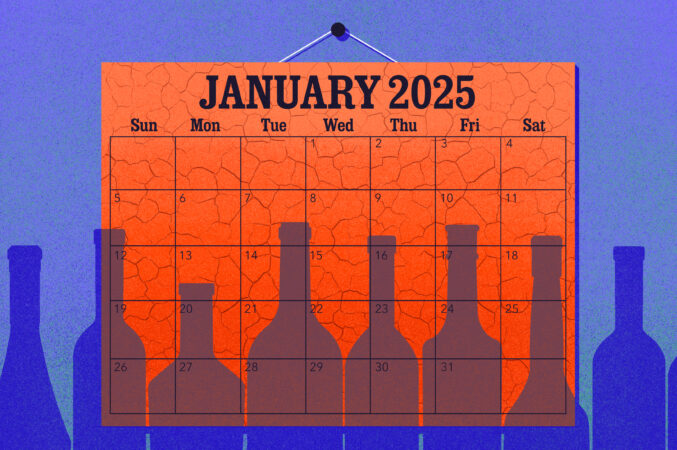
    The booze-free month known as Dry January has surged in popularity, from just 4,000 participants when it launched in 2013 to millions of (at least short-term) teetotalers today. If you are considering giving up alcohol this January, you’ll be happy to hear that new research suggests it may bring you health benefits, including better mood and sleep, as well as lower blood sugar and blood pressure.

    A review of 16 studies on Dry January recently published in the journal Alcohol and Alcoholism found that even a short pause in alcohol use is linked to improvements in physical and psychological health.

    Dry January participants reported better mood, improved sleep and weight loss, and had healthier blood pressure, blood sugar and liver function. And several of the studies found participants experienced some benefits from simply reducing their drinking, also known as “Damp January,” rather than abstaining entirely.

    Health effects of giving up alcohol

    The tradition of abstaining from alcohol in January began in 2013 as a challenge by a charity, Alcohol Change UK, to reduce “alcohol harm.” In 2025, 21 percent of U.S. adults said they planned to participate in Dry January, a YouGov poll found.

    Fewer people in the United States are drinking in general. About 54 percent of U.S. adults say they drink alcohol, according to a 2025 Gallup poll, the lowest that number has been since Gallup started tracking drinking behavior in 1939.

    Alcohol use has been increasingly linked to health problems. In January, the U.S. surgeon general published an advisory report warning that alcohol can cause seven types of cancer, including breast and colorectal cancers.

    And a 2025 study in the journal BMJ Evidence-Based Medicine suggested that no amount of alcohol is safe in terms of dementia risk.

    “Alcohol affects far more aspects of our physical health beyond the commonly cited liver damage,” said Megan Strowger, a postdoctoral research associate at the University at Buffalo and lead author of the new review. (Strowger conducted this research during a postdoctoral fellowship at Brown University’s Center for Alcohol and Addiction Studies.) Strowger and her colleagues were surprised by the wide-ranging health effects of just a month without alcohol, including changes in blood pressure, insulin resistance, blood glucose, liver function and even cancer-related growth factors.

    Even those who didn’t abstain for the full month reported health benefits such as better mental well-being a month later. They also had “decreased drinking frequency, reduced drunkenness, and lower alcohol consumption” six months later, two studies cited in the review found.

    “Given that there weren’t huge reductions in drinking … I thought it was impressive that they found some of those physical health benefits around lowered blood pressure and liver abnormalities,” said Daniel Blalock, a medical associate professor in the department of psychiatry and behavioral sciences at Duke University School of Medicine, who was not involved in the review.

    How to reduce your alcohol consumption

    Strowger sees Dry January as a helpful opportunity. “What really makes Dry January successful is its massive reach and unique, non-stigmatizing approach; it focuses on the positive, accessible health outcomes of taking a break, rather than dwelling on participants’ prior drinking habits or issues of addiction,” she said.

    Here are some ways you can limit your alcohol consumption:

    Try Damp January

    If you’re not quite ready to give up alcohol entirely this January (or for Dry July or Sober October), you might consider Damp January, “where the goal is to reduce consumption rather than attempt full abstinence, making the shift feel more manageable,” Strowger said.

    “It helps prevent what we call the ‘abstinence violation effect,’ where if you fall off the wagon, you say, ‘Forget it, I might as well just get really drunk since I haven’t met my goal of complete abstinence,’” said Blalock, also a clinical research psychologist at Durham Veterans Affairs Medical Center.

    Track your progress

    Write down when you drink and how it makes you feel in a notebook, said George F. Koob, director of the National Institute on Alcohol Abuse and Alcoholism, or the Notes app on your phone. There are also digital tools such as the Try Dry app that make tracking your alcohol use simple, Strowger said.

    Create an environment to drink less

    Try creating a social environment that supports your goal to drink less, Blalock said. For example, if you join a running club for a Saturday morning run, you might be less inclined to drink the night before so you can wake up feeling fresh.

    And while you certainly don’t have to join a running club, exercise is one of Koob’s go-to recommendations for drinking less. It can help you cope with stress, rather than relying on alcohol to take the edge off. “Taking a walk clears your brain, and you come back and you don’t need that drink in order to relax,” he said.

    The researchers noted there’s also little harm in trying Dry January if you’re at all sober-curious – it may even be easier than trying to cut back on drinking at other times of the year.

    Saying you’re participating in Dry January often reduces some of the stigma associated with wanting to drink less alcohol, because so many people do it and can relate to the desire to start the year off a little bit healthier, Blalock said.

    “Dry January really helps you evaluate your relationship with alcohol,” Koob said. It may prompt you to pay more attention to how much and when you’re drinking, and how you feel the next day. “If you feel better when you’re not drinking, you should listen to your body, because it’s telling you something,” he said.

  • This is your teen’s brain on phones and social media, according to science

    This is your teen’s brain on phones and social media, according to science

    University of Pennsylvania researcher Ran Barzilay is a father of three. His first two children received cellphones before they turned 12. But this summer, as early results from his own study on screens and teen health rolled in, he changed course. His youngest? Not getting one anytime soon.

    Barzilay’s analysis of more than 10,500 children across 21 U.S. sites found that those who received phones at age 12, compared with age 13, had a more than 60% higher risk of poor sleep and a more than 40% higher risk of obesity.

    “This is not something you can ignore for sure,” said Barzilay, a professor of psychiatry and a child-adolescent psychiatrist at the Children’s Hospital of Philadelphia.

    For years, the debate over teens and screens has been defined by uncertainty. Parents, teachers, doctors, and policymakers have argued over whether phones and social media were truly harming young people, but the evidence has often been thin, anecdotal, or contradictory.

    That picture shifted dramatically in the second half of 2025.

    A wave of large-scale studies is quantifying how early smartphone access and heavy screen use can harm adolescent minds — and the findings are aligning in a way earlier research rarely did.

    The numbers suggest screens are taking a broader, deeper toll on teens than many expected. Across multiple studies, high levels of screen use are linked to measurable declines in cognitive performance — slower processing speed, reduced attention, and weaker memory. Rates of depression and anxiety climb steadily with heavier social media engagement. Sleep quality deteriorates as screens encroach later into the night, and researchers are finding troubling associations between screen habits and rising adolescent weight gain.

    The debate is shifting from one about whether screens have an impact — to one about how far-reaching that impact might be and what society is willing to do about it.

    Australia this month became the first country in the world to ban social media for children younger than 16; the companies running TikTok, YouTube, Instagram, and Facebook were ordered to block access starting Dec. 10. Malaysian officials said a similar ban is starting next year, and the move is being watched by other countries that are considering adopting their own measures.

    In the United States, several states have passed laws restricting children’s access to social media. Rahm Emanuel, the former Chicago mayor who said he may seek the 2028 Democratic presidential nomination, has said he considers social media use among children a public health crisis and called for the country to follow Australia’s lead.

    Degrees of risk

    Since Steve Jobs marched onto a stage in San Francisco in his trademark black turtleneck and unveiled the first iPhone in 2007, arguments over what smartphones are doing to us — especially to children — have relied heavily on anecdotes. Teachers blame slipping grades on TikTok distractions; parents worry about video game binges; clinicians point to online bullying and rising rates of adolescent self-harm. Yet for all the cultural heat around screens, the science has been slower to coalesce.

    Part of the difficulty is methodological. Researchers can’t evaluate phones the way they might test a drug, in a controlled trial with clear exposures and outcomes. Most studies of teens and screens are observational, sifting through large data sets to detect associations between digital habits and health. These studies can’t prove causation. But they can, over time, illuminate patterns strong enough to be hard to ignore.

    For years, even these efforts were limited by data: small samples, short follow-ups, uneven measures of screen behavior. That began to change over the past few years with the release of data from the Adolescent Brain and Cognitive Development study, a National Institutes of Health initiative tracking almost 12,000 children born between 2005 and 2009. As the ABCD cohort ages, researchers are gaining an unprecedented longitudinal window into how today’s teens are developing — and how technology might be shaping them.

    One striking paper, published in June in JAMA and using that data set, distinguished between sheer screen time and what it called addictive use. The difference proved consequential. Total hours online did not predict suicide risk. But compulsive patterns — distress when separated from a device, difficulty cutting back — did. Teens whose addictive use increased over time had two to three times the risk of suicidal ideation and behaviors compared with those whose use remained low.

    Their work also found differences in the type of online activity and risk. Children who had high and increased use of video games had more internalized mental health challenges such as anxiety and depression, while those with high and increasing social media use tended to have more externalizing behaviors such as rule-breaking and aggression.

    Yunyu Xiao, a professor of population health sciences at Weill Cornell Medicine, said the results suggest that there are groups more susceptible to suicidal ideation and behaviors related to online platforms and that more work needs to be done to figure out what makes one child more vulnerable than another.

    “If kids come into a clinic at age 10, we want to be able to know who is at risk,” Xiao said.

    Cognition, memory, learning, and focus

    This December brought a wave of new analyses from the ABCD data, each probing a different facet of adolescent health.

    A research letter in JAMA examined social media use and cognitive performance in children ages 9 to 13. The authors identified three trajectories — little to no use, low but increasing use, and high and increasing use. Children in the latter two groups showed slightly poorer performance across a range of cognitive tasks, including oral reading recognition, picture-sequence memory, and vocabulary tests. The differences were modest, but consistent. The authors noted that social media might displace activities more directly tied to learning — an idea echoed in earlier work.

    Lead author Jason Nagata, an professor of pediatrics in the division of adolescent and young adult medicine at the University of California at San Francisco, said that while the differences accounted for only a few points on some tests, they can be thought of as similar to teen’s grade going from an A to a B.

    “What was surprising to me was even the low users — those with an hour of social media a day — had worse cognitive performance over time than those with no social media,” Nagata said.

    Another study, posted as a prepublication in Pediatrics, examined attention and found that social media use — unlike gaming or watching shows — was linked to increased symptoms of inattention.

    “Social media provides constant distractions,” said Torkel Klingberg, a co-author of the study and a cognitive neuroscience professor at Sweden’s Karolinska Institutet. “If it’s not the messages themselves, it’s the thought of whether you have a new one.”

    Klingberg noted that the findings align with the idea that cognitive abilities are malleable. “It depends on whether you’re training them or not,” he said. “If you’re constantly distracted, your ability to focus may gradually become impaired.”

    A fourth analysis, led by Barzilay and published online Dec. 1 in the journal Pediatrics, explored whether the age at which U.S. children receive their first smartphones influences later well-being. Its conclusions resonate with a large international study published in July in the Journal of Human Development and Capabilities, which found that receiving a smartphone before age 13 “is associated with poorer mind health outcomes in young adulthood, particularly among women, including suicidal thoughts, detachment from reality, poorer emotional regulation, and diminished self-worth.”

    Barzilay stresses that he and his co-authors “are not against technology.” It offers many benefits, he said, but parents should take the decision of when to give a child a smartphone seriously.

    Managing teen screen habits

    Morgan Cobuzzi first encountered the movement to delay children’s access to smartphones the way many parents do now: on Instagram. Cobuzzi, 40, a former English teacher in Leesburg, Va., and a mother of three, was already uneasy as her oldest daughter approached age 10, with middle school only a year away. She worried less about the device itself than about what came with it — the anxiety teenage girls absorb from social media feeds built on impossible standards.

    About half of her daughter’s fifth-grade classmates have phones, Cobuzzi estimates, and almost all have access to iPads, a dynamic that can leave screen-free children feeling socially excluded. Still, she has watched a quiet counterculture emerge. On snow days and other school-free afternoons, children have been rotating between houses, playing outside and baking cookies — passing the time offline.

    In October, Cobuzzi launched a local chapter of the Balance Project, a national group focused on helping families find a healthier relationship between digital life and the real world. About 40 families have contacted her since. What once might have seemed fringe, Cobuzzi said, is increasingly common — especially among millennials like herself unsettled by how different their children’s childhoods look from their own.

    “Ten years ago we didn’t realize the negative effects of smartphones. Now we do,” she said.

    Jennifer Katzenstein, a pediatric neuropsychologist at the Johns Hopkins University School of Medicine, said the most effective way for parents to manage teens’ screen use is not through bans, but through example. Children closely mirror their parents’ habits, she noted, particularly around nighttime phone use and sleep. Research suggests that gradual reductions — cutting daily screen time by even an hour — are more effective, and more sustainable, than going cold turkey, leading to better long-term well-being and quality of life.

    “The research suggests that just decreasing our device use by one hour per day has better long-term impact, and decreasing overall device use results in higher quality of life than trying to go cold turkey,” Katzenstein said.

    Megan Moreno, co-medical-director of the Center of Excellence on Social Media and Youth Mental Health at the American Academy of Pediatrics, said smartphone use is not a one-size-fits-all approach when it comes to outlining guidelines and rules for preteens and teens.

    “A huge piece of this is having early and ongoing communication, because one of the things that we hear from teens is that adults in their lives are often very reactive to their phone use.”

    In the wake of the recent studies, Barzilay said, friends and relatives around the world have been asking him for guidance. His two older children, now 18 and 14, received phones before they turned 12. But he recently explained to his 9-year-old why he will not be getting one yet.

    “This is to keep you healthy,” Barzilay recalled telling his son. “You have your whole life to use smartphones and technology. We want to introduce them in a responsible way that supports your well-being.”

    He emphasized that parents shouldn’t feel guilty about giving their children phones.

    “It’s very important to me that this isn’t about blaming parents,” he said. “Kids got smartphones at very young ages in the past because we didn’t know. Now we know.”

  • China expands nuclear warhead manufacturing capacity, research finds

    China expands nuclear warhead manufacturing capacity, research finds

    China is rapidly overhauling a network of secret facilities used to manufacture warhead components as it expands its nuclear stockpile faster than any other country, according to an analysis of satellite imagery.

    These changes are taking place as Beijing intensifies efforts to be able to retaliate more quickly against an attack, according to expert assessments of official publications — dramatically raising the stakes of any nuclear standoff.

    “The levels of changes that we’re seeing since around 2019 to today are probably more extensive than anything we’ve ever seen,” said Renny Babiarz, who led analysis of half a dozen key sites for a project by the Vienna-based Open Nuclear Network (ONN) and the London-based Verification Research, Training, and Information Centre (VERTIC).

    China’s rapid expansion of weapons-production facilities continues, even as a Pentagon report last week shows nuclear warhead production has slowed since 2024, with totals in the low 600s, though it’s on track to surpass 1,000 by decade’s end.

    President Donald Trump recently said, when discussing plans to restart U.S. nuclear weapons testing, that China could catch up with U.S. nuclear capabilities within five years.

    Analysts say it’s unlikely that China could match the estimated 3,700 warheads in the U.S. arsenal in the foreseeable future. But the dramatic changes Beijing has made to almost every part of its nuclear weapons program suggest the People’s Liberation Army is preparing for an all-out arms race, they said, even as it claims it does not want one.

    The ONN/VERTIC satellite imagery and expert analysis, shared exclusively with the Washington Post, show that Beijing has sharply accelerated activity at key sites involved in producing nuclear warheads — a burst of expansion since 2021 that could supercharge China’s nuclear ambitions.

    The construction includes major upgrades at facilities thought to design and manufacture plutonium pits — the cores of nuclear warheads — as well as plants that produce the high explosives used to trigger nuclear reactions.

    Chinese military textbooks, internal publications, and articles by military-affiliated scholars further suggest that nuclear brigades are being placed at higher alert levels and might be shifting toward a launch-on-warning posture, meaning that China would be prepared to retaliate as soon as a missile attack were detected. This is a significant departure from Beijing’s strategy of prioritizing its ability to retaliate after an attack, analysts said.

    Together, these changes show how Beijing is developing more versatile munitions and tactics that give it options to threaten the U.S. and its allies, even if it cannot match the size of the U.S. nuclear warhead stockpile.

    Infrastructure surge

    China’s fast-growing arsenal remains one of the world’s most opaque: Detailed glimpses into how Beijing is positioning itself as a leading nuclear power are rare.

    Attention has largely focused on hundreds of missile-silo fields carved into its remote northern deserts since 2021. But satellite imagery of less-scrutinized facilities linked to warhead production indicates that China made significant upgrades across its nuclear weapons supply chain as it built the silos.

    Analysts track these sites by matching reports, including declassified government documents and academic papers, with places that have specific structures — such as blast chambers and specialized chemical storage sites — and comparing them to similar facilities elsewhere in the world. They also review military vehicle movement patterns at the Chinese sites.

    Nuclear warheads thought to be under construction in China contain a core of fissile material — typically weapons-grade plutonium — manufactured into a spherical shape known as a pit and surrounded by conventional high explosives. When detonated, these explosives compress the fissile core and trigger a chain reaction that releases enormous energy in a nuclear explosion.

    Production of pits and high‑explosive components is likely separated across multiple facilities, which have expanded in parallel with testing sites and missile silo fields since around 2020.

    In a mountainous area of China’s Sichuan province near the city of Pingtong, a facility to be used for the production of fissile material pits has undergone vast changes in the past five years, according to Babiarz’s analysis. New security fencing has more than doubled the site’s secured footprint, alongside building upgrades and construction across at least 10 locations, including near the core facility where the pits are thought to be produced, the images show.

    Pingtong is the only publicly identified plant linked to China’s plutonium pit production.

    In research published in the U.S. Air Force-affiliated Journal of Indo-Pacific Affairs, one analyst describes the site as similar to the Pantex plant in Texas, which assembles and maintains U.S. nuclear warheads — but China’s site has additional plutonium pit production capabilities.

    A separate facility in the supply chain — which analysts and previous U.S. government assessments say is probably the primary site for producing the high‑explosive components used to trigger nuclear pits — has also undergone rapid changes. Located in a remote area of Zitong County in Sichuan province, the site has expanded significantly since 2019, according to Babiarz’s analysis of satellite imagery.

    There are sweeping changes across the multisite complex. In one area alone, Babiarz identified an extensive security wall under construction since about 2021, a possible new storage area, and large, newly cleared tracts for additional facilities, probably beginning in 2023. The construction is concentrated near sites that appear to be built for testing explosions, including dome-shaped high-explosive test chambers and a shock-tube test site — a roughly 2,000-foot-long tube used to simulate blasts and assess vulnerabilities in new nuclear warhead designs.

    At Zitong, Babiarz’s team identified a 430,000-square-foot facility, completed last year, that they assess could be used to assemble, handle, and prepare warhead components, possibly for transport to other locations in China for storage and assembly.

    “Based on all the changes that we’re seeing that show a huge investment in these locations, that altogether indicates an improved capability to produce nuclear warheads for the nuclear program,” Babiarz said. While the increased production capacity at the facilities could equate to more warheads, he said it could also mean Beijing is upgrading and modernizing existing warheads.

    China’s main nuclear test site, Lop Nur in far western Xinjiang, has also expanded in recent years, with new underground tunnels and large shafts that might be preparations for renewed nuclear testing.

    Beijing conducted only 46 tests from 1964 to 1996 — the year it signed, but never ratified, the Comprehensive Nuclear-Test-Ban Treaty — far fewer than the 1,000 carried out by the U.S. and Russia.

    China’s initial tests likely resulted in a far greater ability to build a variety of warheads — including smaller and lighter bombs — than was previously recognized, according to a new book by Hui Zhang, a senior research associate at the Project on Managing the Atom at Harvard University, based on little-known accounts from Chinese nuclear scientists.

    Faster retaliation

    At the same time as these production facilities were upgraded, Beijing has gradually signaled its ambitions to field a far more diverse nuclear force at higher alertness levels, giving it more tools to pressure the U.S. in an escalating standoff.

    The Pentagon report last week said Beijing has made significant strides in developing rapid counterstrike capabilities similar to the U.S. Launch on Warning (LOW) system, which can detect ballistic missiles thousands of miles away and launch a counterstrike before they detonate. It also said China has probably loaded more than 100 solid-propellant ICBMs into silos to support the system and refined the ability to launch multiple missiles simultaneously after late-2024 tests.

    Chinese military publications covering the period of the buildup through last year, recently unearthed by Western analysts, suggest that China is readying its nuclear brigades to retaliate as soon as an incoming attack is detected.

    China has already built out infrastructure and command structures to support a launch-on-warning posture, although some of its capabilities remain rudimentary, according to analysis of China’s evolving early warning architecture published by the Pentagon’s Defense Threat Reduction Agency last month.

    “This is one of the most significant and overlooked aspects of ongoing shifts in China’s nuclear forces,” said David Logan, an assistant professor at Tufts University and one of the authors of the analysis. “What states do with their weapons and how they posture them often matters much more than … how many they field.”

    The PLA Rocket Force has “adjusted its nuclear warhead storage and handling practices and training to support regular high alert status” and has now standardized “combat readiness duty” for brigades, according to articles in Rocket Force News, an internal publication, seen by Logan and Phillip Saunders, an expert on the Chinese military at National Defense University.

    It is unclear what this duty involves but it might mean that China has more warheads attached to missiles in peacetime, instead of its traditional practice of keeping most warheads in storage. This change would be “a big deal because it’s a big change from how China operated similar forces in the past,” Logan said. “It’s also much riskier.”

    Beijing now has a sufficient number of early warning satellites and radars to detect incoming missiles, analysts said. It has a command structure designed to quickly disseminate orders — by fiber-optic cables, microwaves, radios, and satellites — to ensure that nuclear-armed intercontinental ballistic missiles can be launched within minutes.

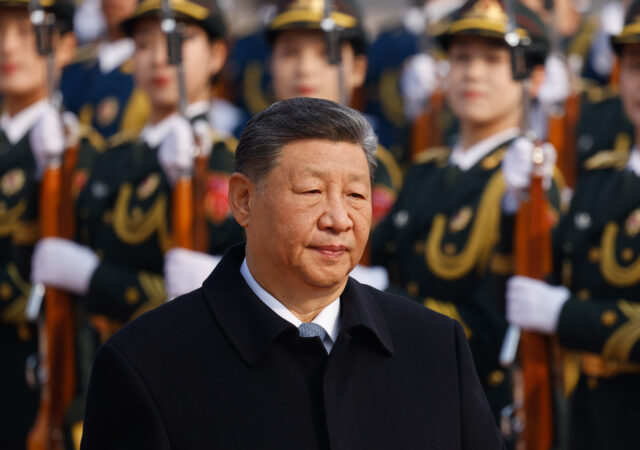
    These changes come as Chinese leader Xi Jinping has overseen a massive purge of top generals, including from the Rocket Force, in an attempt to ensure political loyalty and accelerate military modernization, including of the nuclear forces.

    Recent Chinese military textbooks have described launch-on-warning systems as essential for national security in peacetime and war and for nuclear and conventional conflicts.

    These publications often praise the U.S.’s advanced early warning systems as having strengthened American deterrence and argue that China needs similar capabilities to ensure Washington takes its nuclear forces seriously.

    “Strategic early warning is among decisive factors reflecting a nation’s military strength,” said a textbook published by China’s National University of Defense Technology last year. The text also warned that the systems must be exceptionally accurate to avoid an accidental launch.

    Another textbook, published in 2023, described advanced early warning systems as allowing a country to use “strategic offensive weapons to gain the initiative in combat” and added that a “powerful, responsive, and globally covered strategic early warning system can create a strong deterrent effect on the opposing side.”

    But that ability to deter adversaries comes with additional risks. Throughout the Cold War, technical glitches and human errors in American and Soviet early warning systems created multiple false alarms that nearly ended in disaster.

    “For China to abandon its traditional policy of delayed retaliation and move toward rapid response could significantly increase the risk of misunderstanding, overreaction and even incidental nuclear war,” said Tong Zhao, an expert on China’s nuclear weapons program at the Carnegie Endowment of International Peace, a Washington think tank.

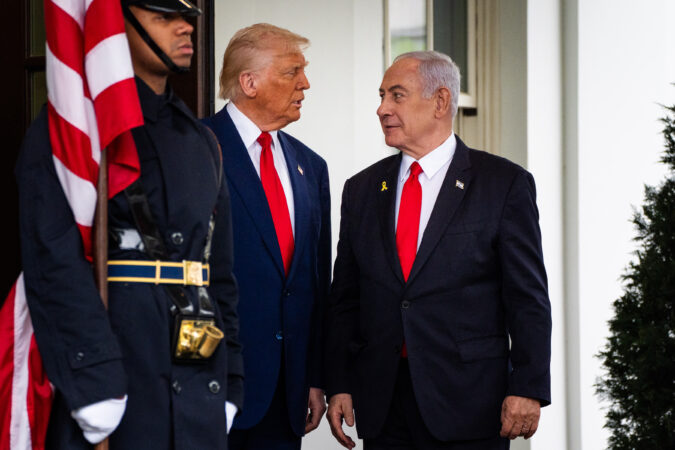
  • Netanyahu’s ties with Trump to be tested amid differences ahead of visit

    Netanyahu’s ties with Trump to be tested amid differences ahead of visit

    JERUSALEM — Three months ago, Israeli Prime Minister Benjamin Netanyahu hailed Donald Trump as the “greatest friend Israel has ever had in the White House.” But that friendship — and Netanyahu’s powers of persuasion — will be tested on Monday at Trump’s Mar-a-Lago estate, where the Israeli leader will meet a U.S. president with increasingly diverging views on practically every Middle East hot spot.

    For Netanyahu, the trip to Florida offers a crucial opportunity to convince Trump to take a tougher stance on Gaza and require that Hamas disarm before Israeli troops further withdraw as part of the second phase of Trump’s 20-point peace plan, Israeli officials say. On Iran, Netanyahu is seeking a green light for another strike against the Islamic Republic’s ballistic missile program, possibly as part of a joint operation with the United States — even though Trump forcefully demanded an end to the 12-day Israel-Iran war in June and declared that Iran’s nuclear program had been “totally obliterated” by U.S. stealth bombers.

    On Syria, the Trump administration has bristled at actions by the Israeli military inside the country that undermine efforts by the new president, Ahmed al-Sharaa, to consolidate control, with Trump publicly warning Israel this month against doing anything “that will interfere with Syria’s evolution into a prosperous State.” And in Lebanon, Israel has repeatedly bombed Hezbollah targets while demanding that the militant group disarm in accordance with a U.S.-brokered ceasefire, but the strikes have threatened to tip the region into another conflagration on Trump’s watch.

    As they meet Monday for the fifth time this year, Netanyahu’s hawkishness will butt up against a U.S. president who has staked his own image and legacy on promoting peace, and Netanyahu may struggle to win Trump’s backing given how the relationship has deteriorated, according to people familiar with the thinking of the two leaders and political observers.

    “This is an emergency summit,” said Dan Diker, president of the Jerusalem Center for Security and Foreign Affairs think tank. “The context is a need to clear or purify the air, because there’s been tensions between the two sides. They have different timelines to get to the same destination, which is a Middle East that is liberated from the Iranian regime and its terror proxies, particularly Hamas.”

    In recent months, Netanyahu has often appeared to undercut Trump’s self-congratulations for making peace in the region. Israel carried out additional airstrikes on Iran after the president had declared the 12-day war with Israel over last summer, prompting an expletive-laden warning from Trump on television.

    Then, following Israel’s airstrike against Hamas negotiators in Qatar as the Gaza peace deal was being hammered out in September, Trump strong-armed Netanyahu into apologizing. “I think he felt like the Israelis were getting a bit out of control in what they were doing and that it was time to be very strong and stop them from doing things that he felt were not in their long-term interests,” Jared Kushner, Trump’s son-in-law and U.S. negotiator, said on CBS’s 60 Minutes in October.

    Now, Israeli officials have indicated that Netanyahu wants to discuss what Israel sees as a dangerous expansion of Iran’s ballistic missile capabilities and the possibility of new joint strikes by Israel and the U.S. This week, the prime minister’s office released an AI-generated video showing Netanyahu and Trump sitting side by side, co-piloting a B-2 bomber — the iconic stealth aircraft that the United States used in June to strike Iran’s nuclear facility at Fordow at Netanyahu’s urging.

    But while Trump continues to see Iran near or at the top of his regional concerns, his administration has launched another attempt to negotiate with Tehran and first wants to see the effort play out, according to several people familiar with the president’s thinking, who spoke on the condition of anonymity about the sensitive issue. Morgan Ortagus, Trump’s deputy special envoy to the Middle East, told a meeting of the U.N. Security Council on Tuesday that Washington “remains available for formal talks with Iran,” while repeating U.S. insistence that “there can be no [uranium] enrichment.”

    Other Trump concerns include Lebanon, where a truce with Israel, brokered by the U.S. and France late last year, is teetering as Netanyahu’s government continues to carry out almost daily bombardments and maintains an army deployment in the southern part of the country, amid charges that Hezbollah has failed to disarm.

    “There are mixed policy currents,” said another person familiar with U.S. administration deliberations. “There are those who believe only Israel [is capable of doing] something that can even begin to change Hezbollah’s calculations. … There are others that think you cannot trust what Israel might do as exploding the situation and creating broader chaos.”

    Gaza takes center stage

    For both Trump and Netanyahu, the most contentious issue will likely be Gaza, not only because of security implications but also its political significance for both leaders. Three months after Trump hailed the peace deal between Israel and Hamas as a “new dawn” for the region, implementation of his 20-point plan has bogged down after the first phase of a ceasefire plan, which has so far seen the release of hostages and prisoners and an increase in humanitarian aid.

    Amid contentious conversations between the two governments over who will have final word on what happens in Gaza, none of the main elements of a second phase — a supervising Board of Peace, a committee of Palestinian technocrats to govern Gaza’s internal affairs, and an International Stabilization Force to oversee in part the demilitarization of Hamas — is yet in place, even as Israel frequently strikes at Hamas targets inside Gaza despite the ceasefire agreement.

    Israel has been reluctant to advance to the deal’s second phase, which could also see Israel eventually withdraw further from the enclave’s interior, without Hamas first disarming. Israeli officials have also balked at the prospect that Turkey — a bitter rival of Israel but an ally of the U.S. — may gain a foothold in Gaza by deploying its troops there as part of the International Stabilization Force.

    On Tuesday, tensions with Washington spiked after Netanyahu’s defense minister, Israel Katz, appeared to flout Trump’s peace plan by declaring that Israel will establish Jewish settlements inside the Gaza Strip, drawing a rebuke from U.S. officials. Two days later, Katz doubled down and reiterated that Israel would never fully withdraw from the Strip.

    Earlier, after Israeli forces killed the Hamas commander Raed Sa’ad in Gaza on Dec. 13, Trump told reporters he was “looking into” whether Israel had violated the ceasefire agreement. U.S. officials, meanwhile, warned Netanyahu that “we won’t allow you to ruin President Trump’s reputation after he brokered the deal in Gaza,” Axios quoted a U.S. official as saying.

    “I’m not sure the Americans will like [the Israeli perspective on] Gaza because it’s not working according to their plan,” said an Israeli government adviser who spoke on the condition of anonymity to discuss internal deliberations. “But for Israel, it has to be total demilitarization, no weapons, no [Hamas] tunnels. And it could take years. We cannot withdraw now.”

    For Netanyahu, the trip to Palm Beach, Fla., is further complicated by his political need ahead of the 2026 Israeli elections to project strength and victory on every front, particularly Gaza. Since Oct. 7, 2023, when a Hamas attack left more than 1,200 Israelis dead and 250 taken hostage, Netanyahu has been lambasted by his political opponents for failing to protect Israel. He has also been criticized by Israel’s far right for not doing enough to destroy Hamas, even though the Israeli military carried out a withering, two-year campaign that left more than 70,000 Palestinians dead in Gaza and much of the Strip in ruins.

    “There’s the potential for a significant clash on Gaza, because for both of them, it’s the most central issue,” said Daniel Shapiro, a former U.S. ambassador to Israel. “For Trump, he wants to show that this grand deal he struck actually gets implemented, even if he has cut some corners. For Bibi, it’s a serious political risk to go into the election with an arrangement in Gaza that looks like Hamas will survive in some form.”

  • ICE shift in tactics leads to soaring number of at-large arrests, data shows

    ICE shift in tactics leads to soaring number of at-large arrests, data shows

    The Trump administration’s mass deportation campaign has led to a significant change in strategy, as federal officers shift away from focusing on arresting immigrants already held in local jails to tracking them down on the streets and in communities, according to a Washington Post analysis of government data.

    The result has been a huge surge of such at-large arrests, with Immigration and Customs Enforcement tallying about 17,500 in September and on pace to exceed that in October. (The data the Post examined had been updated through the middle of that month.) That was far more than any other month included in the data, which dated back to October 2011.

    Before this year, the highest number of at-large arrests came in January 2023, when the Biden administration made more than 11,500. ICE is making more than four times as many at-large arrests per week as it did in President Donald Trump’s first term, the analysis found.

    The Post’s analysis highlights a broader pattern in how the Department of Homeland Security is approaching enforcement, even as authorities insist that immigration officers are focusing on violent criminals who they describe as “the worst of the worst.” Government data shows that more than 60% of the people detained in at-large arrests since June did not have criminal convictions or pending charges.

    Former DHS officials said the effort demonstrates a less targeted approach and reflects mounting pressure from senior White House and DHS officials to boost deportation totals.

    “That is consistent with their mandate to remove anybody in the country who doesn’t have authorization,” said Sarah Saldaña, who served as ICE director under President Barack Obama. “To me, that is a waste of resources.”

    The administration’s new approach began to take shape in June, when federal immigration agents launched a large-scale enforcement operation in Los Angeles. In the ensuing five months, ICE’s at-large arrests in communities nationwide totaled 67,800, more than twice the total number during the previous five months.

    In June, September, and October, such arrests — which include people detained in their homes, at work sites, during immigration check-ins, or in other public spaces — accounted for more than half of ICE’s total number of monthly arrests for the first time since April 2023.

    Administration officials have set a goal of 1 million deportations in Trump’s first year of his second term, and deputy chief of staff Stephen Miller has pressed for 3,000 immigration arrests per day.

    Daily arrests are lagging well behind that number. The highest number of single-day arrests by ICE took place when its officers detained more than 1,900 on June 4.

    The total number of overall arrests, however, rose by 60% in the period from June through mid-October, compared with the first five months of the Trump administration, the data showed. In September, ICE had 21 days in which it made 1,000 or more arrests, the highest number of such days in any month this year.

    “The shift in tactics is related to the ongoing process from the White House to up numbers, and the easiest way to do that is to do broader-brush approaches,” said Claire Trickler-McNulty, a former senior ICE official in the Biden administration.

    ICE is the lead federal agency in charge of immigration enforcement inside the United States, while U.S. Customs and Border Protection (CBP) typically focuses on the border. Historically, ICE officers have detained most immigrants inside prisons or jails after they have been charged with a crime or completed their sentences.

    Many local jails flag undocumented immigrants for removal and contact ICE directly. ICE also has the authority to monitor local arrests through a fingerprint-sharing program. The agency often files a detainer requesting that jails hold potential deportees for up to 48 hours for federal officers to take custody.

    By comparison, at-large arrests typically require more human and financial resources to carry out, immigration experts said. ICE’s website says that such arrests “are unpredictable and can be dangerous to the public.”

    In a statement, DHS spokesperson Tricia McLaughlin said 70% of the immigrants arrested by ICE have criminal convictions or pending criminal charges in the United States and that some have convictions or charges in their home countries.

    The Post’s examination found that from Jan. 20, when Trump took office, through Oct. 15 about 36% of ICE detainees had criminal convictions and 30% had pending charges.

    “This story only reveals how the media manipulates data to peddle a false narrative that DHS is not targeting the worst of the worst,” McLaughlin said. “Nationwide our law enforcement is targeting the worst of the worst criminal illegal aliens — including murderers, rapists, gang members, pedophiles, and terrorists.”

    The DHS data for this story was obtained through a public records request filed by the Deportation Data Project, a group of academics and lawyers that collects and releases immigration enforcement data. The Post used to the data to conduct its own analysis.

    The data does not include information on immigration arrests made by other federal departments, including CBP, whose Border Patrol division has taken on an increasingly prominent role in the Trump administration’s enforcement strategy in recent months. In Chicago, Border Patrol agents came under federal court scrutiny for the deployment of tear gas in response to protesters.

    As the overall number of arrests increased nationally, the number of people without a criminal record arrested by ICE since June nearly tripled, according to the Post’s analysis. (That includes both at-large arrests and arrests at jails.) Since September, more than 40% of those arrested by ICE had no criminal records.

    That trend is continuing. Nearly half of the 79,000 people ICE arrested and placed in detention between Oct. 1 and the end of November did not have criminal convictions or pending criminal charges, according to separate government data obtained by the Post. (Those arrests included CBP arrests, which make up a small percentage of the total.) Of the migrants who do have criminal convictions, nearly a quarter were traffic offenses, that data showed.

    Julia Gelatt, associate director of the U.S. Immigration Policy Program at the Migration Policy Institute, said that the data showing relatively few detainees have committed serious crimes is not surprising.

    “ICE is getting the worst of the worst,” she said. “But they’re also picking up a lot of people who either have no criminal charge … or convictions — or they have relatively minor convictions.”

    Federal data suggests that the administration’s goal of boosting detentions was aided by high-profile targeted enforcement operations that lasted for weeks in large cities, including Los Angeles; Boston; Washington, D.C.; and Chicago; many of which drew significant public protests.

    The District of Columbia experienced the largest spike in arrests, with the number increasing fivefold from June through October as compared with the previous five months, the federal data showed.

    In Illinois, 428 people were arrested between Jan. 20 and May 31 who had no criminal records. That number more than tripled to 1,408 from June 1 through Oct. 15, a period that included a targeted enforcement campaign in Chicago titled Operation Midway Blitz.

    Jason Houser, former ICE chief of staff in the Biden administration, said that the Trump administration is “trying to find the lowest bar of calling somebody a criminal.”

  • Bankruptcies soar as companies grapple with inflation, tariffs

    Bankruptcies soar as companies grapple with inflation, tariffs

    Corporate bankruptcies surged in 2025, rivaling levels not seen since the immediate aftermath of the Great Recession, as import-dependent businesses absorbed the highest tariffs in decades.

    At least 717 companies filed for bankruptcy through November, according to data from S&P Global Market Intelligence. That’s roughly 14% more than the same 11 months of 2024, and the highest tally since 2010.

    Companies cited inflation and interest rates among the factors contributing to their financial challenges, as well as Trump administration trade policies that have disrupted supply chains and pushed up costs.

    But in a shift from previous years, the rise in filings is most apparent among industrials — companies tied to manufacturing, construction, and transportation. The sector has been hit hard by President Donald Trump’s ever-fluid tariff policies — which he’s long insisted would revive American manufacturing. The manufacturing sector lost more than 70,000 jobs in the one-year period ending in November, federal data shows.

    Consumer-oriented businesses with “discretionary” products or services, such as fashion or home furnishings, represented the second-largest group. This contingent usually tops the list and includes many retailers, and its retrenchment is a signal that inflation-weary consumers are prioritizing essentials.

    The S&P data reflects both Chapter 11 and Chapter 7 filings. In the former, also known as a reorganization, the business goes through a court-administered process to restructure its debts while it continues to operate. Under Chapter 7, the company closes down and its assets are sold off.

    Economists and business experts say the trade wars have pressured import-heavy businesses, which are reluctant to raise prices by too much for fear of alienating consumers. The White House did not respond to requests for comment.

    Though inflation is currently lower than many economists expected — prices climbed at an annual pace of 2.7% in November — many businesses still are eating new costs themselves to hold the line on prices for buyers, experts say. That’s leading to a certain culling of the herd as already-fragile companies struggle to keep up.

    “These companies are acutely aware of the affordability crisis confronting the average American,” said Jeffrey Sonnenfeld, a professor at Yale University’s School of Management. “They are doing their best to offset the cost of tariffs and higher interest rates but can only do so much. Those with pricing power will pass on the costs over time. … Others will fold.”

    Among the total was a surge of “mega bankruptcies,” or filings by companies with more than $1 billion in assets, during the first half of 2025. According to the economic consultancy Cornerstone Research, there were 17 such bankruptcies from January through June, the highest half-year number since the COVID-19 outbreak in 2020. Consumer discretionary businesses, including retailers At Home and Forever 21, accounted for several of those filings.

    Matt Osborn, a principal at Cornerstone who wrote the September report, said these large companies cited high inflation and interest rates among the factors that have impinged on consumer demand and made it harder to raise capital. Changing federal policies around renewable energy and international trade also were contributors, he wrote.

    Among industrials, bankruptcies spanned a mix of manufacturers and suppliers, as well as transportation-oriented firms and renewable energy companies. Many of those companies had specific preexisting problems unrelated to tariffs and the economy.

    Louisiana-based PosiGen is among several residential solar companies that filed for Chapter 11, which it attributed to changes in renewable energy policy. The Trump administration has de-prioritized the tax incentives that make solar panels more affordable to homeowners, and imposed “steep tariffs on imported materials that are necessary to construct solar projects, including solar modules, inverters, racking, and structural steel,” the company said in a Nov. 25 filing in U.S. Bankruptcy Court in the Southern District of Texas.

    The effective tariff rate for imported solar cells and panels climbed to roughly 20% after May 2025, compared with less than 5% in prior years, according to federal data analyzed by Jason Miller, a business professor at Michigan State University. U.S. solar importers paid close to $70 million a month in import duties in the second half of the year for the most common type of panel, Miller said.

    “That places a lot of strain on cash flow, especially for smaller importers,” Miller said. “You then combine this with reduced federal incentives that have to be negatively impacting demand, and you have a perfect storm for elevated rates of bankruptcy.”

    In late February, Nikola Corp., an Arizona-based maker of electric trucks, filed for Chapter 11 protection. It started producing battery-powered trucks in 2022 and scaled up to ship more than 200 vehicles last year. But a battery recall resulting from what it called a “battery pack thermal event” cost it an estimated $56 million, according to its February bankruptcy filing. It also agreed to pay an unrelated $125 million civil fine to the Securities and Exchange Commission.

    Spirit Airlines, the budget carrier known for its rock-bottom prices and bare-bones amenities, filed for Chapter 11 bankruptcy in August — its second such filing in less than a year. Verijet, a private jet company based in Florida, filed to liquidate.

    Bankruptcies within this sector reflect the effect tariffs have had on imported raw materials, as well as broader consolidation within the transportation and freight sectors, said Meagan Martin-Schoenberger, senior economist at KPMG.

    Though the government has made some tariff exemptions, they’ve primarily benefited the tech sector, specifically those connected to artificial intelligence, she said, leaving behind some lower-tech industries.

    Surveys have shown consumer sentiment worsening throughout the year. A widely followed survey of consumer sentiment from the University of Michigan tumbled around 28% year over year in November. Many are reticent to spend on nonessentials.

    Retailers have felt this acutely, especially those selling discretionary items such as costume jewelry, crafts, and furniture, which consumers often forgo to afford groceries, utilities, and rent. By one estimate, Americans will spend an additional $1,800 a year because of tariffs.

    The Trump administration’s frequent tariff changes during the peak holiday-ordering period also left some companies off-kilter. Because many rely on imports from China and other Southeast Asian countries, some businesses ended up spending more than they’d budgeted to swiftly move manufacturing and materials to countries with lower tariff rates.

    Others had to cut orders for fear of not having enough cash to pay the levies when their inventory arrived in the United States.

    Claire’s, the mall chain known for its teen and tween accessories, filed for Chapter 11 bankruptcy in August and has moved to shutter hundreds of stores. It, too, faced tariff headwinds, with the majority of its products — including earrings, headbands, and key chains — coming from China, Cambodia, and Indonesia. In September, a private holding company acquired the chain’s North American operations for $140 million and said it would keep as many as 950 stores, or nearly 80% of the chain’s U.S. and Canadian locations.

    Meanwhile, specialty retailers have been struggling for years to keep up with big box chains and online marketplaces as consumers look for convenience and a one-stop-shop for certain items. Fabric and craft chain Joann, for example, went out of business early this year, unable to keep up with online retailers offering lower prices.

    Martin-Schoenberger, the KPMG economist, said the bankruptcies reflect contradictions in the economy. Government data released Tuesday showed the U.S. economy grew at the fastest pace in two years from July through September, with an annualized rate of 4.3%.

    Still, economists caution that this growth is driven by more affluent consumers and corporate spending around artificial intelligence.

    “We have an economy that looks strong on paper, but that might not necessarily be reflected in every single industry,” Martin-Schoenberger said.

  • How to design a new car in 2026

    How to design a new car in 2026

    Automotive design studios are magical places.

    Often found hidden behind two or three levels of locked doors, accessible only to a chosen few with the right credentials, they’re expansive, well-lit, and full of wonder. Mood boards filled with fashion photos, pictures of landscapes and architectural iconography inspire the team. Models of cars sculpted from clay — in various shapes and sizes — fixate the designers.

    Then you smell the sulfur.

    Traditional modeling clays contain sulfur, a reliable binding agent for the waxes and oils used during the sculpting process, and exudes a pungent smell of rotting eggs. For decades, designers just dealt with the smell until their computers started failing.

    “Over 15 years ago, all computer circuit boards switched to a silver compound from lead solder,” said Mark Malewitz, president at Clay Warehouse. “They found out pretty quickly, as any modeler that wore silver jewelry already knew, that sulfur corrodes silver.”

    Over the years, some companies such as Chavant and Staedtler have created different formulations without sulfur to try to eliminate the concomitant odor, but new technology such as augmented and virtual reality is significantly reshaping the auto development process. Virtual reality headsets, when combined with digital modeling software, allow designers and engineers to collaborate more quickly and easily. Besides saving money, the technology also reduces the need to sculpt full-size models of cars with clay.

    “Before we had virtual reality we were building, for a major project, let’s say a new architecture, around about 80 to 100 vehicles,” said Karsten Garbe, plant director at GM’s Artisan Innovation Center in Warren, Mich. Today, that number is closer to 30 or 40 vehicles, and virtual reality is used in the development of every new car.

    From gaming headsets to 3D printing

    Like many other auto manufacturers, General Motors first started experimenting with the computer-gaming-focused HTC Vive headsets in the late 2010s. Today, manufacturers use everything from consumer-grade headsets, like Meta’s $499 Quest 3, to more professional units like the Varjo XR-4, which can cost more than $10,000.

    Garbe’s team is responsible for piecing GM’s prototype cars together for brands such as Chevrolet and GMC, making sure not only that everything fits but that it can be assembled and serviced in a safe, repeatable way. It’s a little like assembling the world’s most complicated model kit, long before the instructions get written.

    Before GM invested in virtual reality, engineers had to wait for prototype components to be manufactured and delivered. Now, they can work from early digital 3D models, checking fit and feasibility months before the first part is cast. Garbe said that this identifies problems early, flagging components that can’t physically be maneuvered into place or that don’t fit properly, dramatically reducing the number of prototype vehicles needed. This process was used to develop GM’s latest electric vehicles, including the Chevrolet Blazer EV and Cadillac Escalade IQ.

    When it comes to visual design — the outright style and appearance of the car — there are considerable advantages, too.

    Jim Conner, director of 3D process delivery at Ford Design, cited the important task of finding the right wheels. He said designers might go through as many as 35 potential wheel designs for a major model like the Mustang. In the old days, all 35 would have to be crafted by hand from plastic, foam, and paint for evaluation.

    Using augmented and virtual reality, designers can narrow it down much more quickly, changing colors, finishes, and shapes instantly. “We’re really getting down to five or six critical ones that really resonated. And then we’ll actually make very nice prototypes of those,” Conner said

    Other technologies, like 3D printing, are changing the game, too, speeding up prototyping and the creation of parts out of plastic, resin, or even metal that previously would be meticulously hand-sculpted. “We used to hand model, in clay, seats, including stitches,” Conner said. “You can imagine the technique and the expertise it takes to model a stitch on a seat in clay.”

    Larger digital designs can also be brought into reality via milling machines that hone giant slabs of clay into a rough shape. The artisan modelers then come in to finesse the final shapes and details.

    “The ability to rapidly mill full-size physical models provides significant advantages in the product development process, primarily by enabling a more dynamic approach to design iteration and validation,” said John Krsteski, senior chief designer for Genesis North America.

    “We still do hand modeling, but we’ve taken our clay modelers and put a lot of technology in their hands now, and basically given them different tools,” Ford’s Conner said. “We’re trying to not say that people are clay modelers. They’re actually a model maker where clay is one thing they’re using.”

    “A lot of the studios were saying, ‘Let’s just go digital,’” Malewitz said. But the results, he continued, weren’t good, with plenty of “angular lines that don’t have the human touch.”

    While the engineers can create near-photo-realistic renderings of objects in augmented and virtual reality, a key part of the process was missing: “The one thing you cannot replace with virtual reality is sunlight,” Malewitz said, echoing a common sentiment among designers that, while they may be investing in fewer models than before, nothing beats a real, full-size clay sculpture for final approvals.

    “Virtual and augmented reality are really fantastic developmental tools, but I do believe there will always be a point where you’re going to see a physical thing,” Conner said. “I don’t think virtual reality will replace that.”

  • Russian attack pummels Kyiv as Zelensky prepares to meet Trump

    Russian attack pummels Kyiv as Zelensky prepares to meet Trump

    KYIV — Russia launched a massive attack on civilian infrastructure in Ukraine early Saturday, targeting the Kyiv region’s energy grid and leaving one-third of the capital without heating, Foreign Minister Andrii Sybiha said, as residents face freezing temperatures and frost.

    The assault, which also triggered power cuts throughout Kyiv, comes just one day before Ukrainian President Volodymyr Zelensky is set to meet with President Donald Trump at his Mar-a-Lago estate in Florida to discuss the latest draft of a peace plan to end the war — a document that Russia has not signaled it is prepared to sign.

    Zelensky told journalists Saturday that he was en route to Canada, where he would meet with Prime Minister Mark Carney and speak via videoconference with European leaders ahead of the Trump meeting.

    The key issues Trump and Zelensky are expected to discuss include territorial control, future U.S. security guarantees for Ukraine, and investment in Ukraine’s reconstruction.

    “Putin deliberately ordered a massive bombing of residential areas and critical infrastructure of Kyiv just as leaders of Ukraine and the US are preparing to meet and advance peace,” Sybiha wrote on X. “ … Putin must realize that further rejection of peace will come at a very heavy price for him and his regime.”

    Zelensky pleaded for European partners to provide new air defense systems to Ukraine and described the Russian attacks as a reaction to “peaceful negotiations between Ukraine and the United States regarding ending Russia’s war against Ukraine.”

    By midmorning Saturday, Russia had launched nearly 500 Shahed drones and 40 missiles at Ukraine, including ballistic Kinzhals, Zelensky said in a post on Telegram. Several residential buildings were hit. Footage showed vehicles on fire on a major road in Kyiv.

    At least one person was killed and 28 people wounded in Kyiv, including two children, Mayor Vitali Klitschko said. One woman was killed in the nearby city of Bila Tserkva. The assault lasted 10 hours — and air raid sirens blared again throughout the afternoon as more drones closed in on Kyiv’s airspace. The attacks followed others elsewhere in Ukraine in recent days, including a glide-bomb strike on Kharkiv, the country’s second-largest city, on Friday night that killed two civilians and wounded a 9-month old girl and her mother.

    Russia has spent months targeting Ukraine’s energy infrastructure in a bid to damage the country’s economy and its people’s resolve in the coldest and darkest months of the year. In many parts of the country, including the capital, scheduled blackouts have been in place that leave civilians without power for much of the day. New emergency outages were implemented Saturday in response to the latest attack.

    The Kremlin refused Ukraine’s request for a Christmas ceasefire. Fierce battles continue across the front line in the country’s east and south. The Russian Volunteer Corps, a group of Russian soldiers fighting for Ukraine, announced Saturday that its commander, Denis Kapustin, was killed in a Russian drone attack in the southeastern Zaporizhzhia region.

    “If Russia even turns the Christmas and New Year’s time into a time of destroyed buildings and burned apartments, ruined power stations, then this sick activity can only be responded to with really strong steps,” Zelensky wrote Saturday on Telegram. “America has this opportunity, Europe has this opportunity, many of our partners have this opportunity. The main thing is to take advantage of it.”

    A frenzied effort to draft a workable peace plan has been in the works since last month, when the White House threatened to cut all aid to Ukraine unless Kyiv signed on to a controversial 28-point proposal by Thanksgiving. That draft made major concessions to Russia, stirring outrage in Ukraine and Europe. Washington eventually backed down on the threat, and delegations from Kyiv and Washington have since met several times to draft a new version, which Zelensky said Friday numbers 20 points and is 90% complete.

    The U.S. has pressured Ukraine to organize elections, including a presidential vote, which has been postponed since last year because of martial law, which has been in place throughout the war. Putin, meanwhile, changed Russia’s constitution to extend his stay in office indefinitely. Zelensky said recently that he would urge lawmakers to discuss how best to organize a presidential election but has insisted that Ukraine will require security guarantees to host any vote.

    Kyiv and European partners have repeatedly warned that Russia will attempt to disrupt any vote in Ukraine. Some elements of the latest draft peace plan, especially those regarding territory, would require a referendum in Ukraine, which also would face challenges with millions of people displaced or serving on the front line.

    “I am not clinging to the chair; we are ready for this,” Zelensky said Saturday of elections. But he insisted that the legal and security framework be established before any vote. “After today’s strikes — again, I repeat, because this happens daily, because Russia attacks us every day — the sky must be safe, and security ensured throughout our territory, at least for the duration of the elections or a referendum.”

    Any U.S. security guarantees, Zelensky said, will depend on Trump — “what he is ready to give, when he is ready to give it, for what term. Without a doubt, I will be grateful to him if his decision aligns with our wishes.”

    Ukraine continues to refuse to cede territory to Russia but has signaled openness to establishing a demilitarized zone in the Donbas region if Russia withdraws its troops — a proposal that Moscow, which remains adamant it wants to control all of Donbas, may refuse.

    Ukraine also rejected an earlier suggestion that its military be restricted to 600,000 troops, which would make it incapable of fighting off any future Russian attack, instead writing into the latest draft that its peacetime military could be capped at 800,000 troops.

    “Where is the Russian response to the proposals to end the war, which were put forward by the United States and the world?” Zelensky wrote on Telegram. “Russian representatives are having long conversations, but in reality, it’s the Kinzhals and Shaheds that speak for them. This is the real attitude of Putin and his entourage. They don’t want to end the war and are trying to use every opportunity to inflict more pain on Ukraine and increase their pressure on others in the world. And this means that the responsive pressure is not enough.”

  • Kennedy Center leader rebukes musician who canceled Christmas concert

    Kennedy Center leader rebukes musician who canceled Christmas concert

    Kennedy Center President Richard Grenell has sent a scathing letter criticizing a musician’s decision to abruptly pull out of a scheduled annual holiday performance at the institution and threatening him with legal action.

    Drummer and vibraphonist Chuck Redd is the longtime host of the center’s Christmas Eve Jazz Jam, which was canceled this year shortly after the board of the John F. Kennedy Center for the Performing Arts announced that it was renaming the storied arts institution after President Donald Trump.

    “Your decision to withdraw at the last moment — explicitly in response to the Center’s recent renaming, which honors President Trump’s extraordinary efforts to save this national treasure — is classic intolerance and very costly to a non-profit Arts institution,” Grenell said in his letter to Redd, a copy of which the center shared Friday with the Washington Post.

    He added, “This is your official notice that we will seek $1 million in damages from you for this political stunt.”

    Redd did not immediately respond to requests for comment late Friday. He told the Associated Press on Wednesday that upon seeing the name change, he had decided to call off the concert, which he described as a “very popular holiday tradition” that it was “very sad to have had to cancel.”

    Grenell, a Trump ally, was appointed to lead the Kennedy Center in February, the same month the president fired the majority of its board and became its chairperson. Grenell formerly served as the U.S. ambassador to Germany and as acting director of national intelligence during the first Trump administration. Under President George W. Bush, he was also a State Department spokesperson to the United Nations.

    His letter to Redd, which is undated, was first reported by the Associated Press.

    In it, he said Redd’s decision “surrenders to the sad bullying tactics employed by certain elements on the left, who have sought to intimidate artists into boycotting performances at our national cultural center.”

    Roma Daravi, the center’s vice president of public relations, added in an emailed statement to the Post: “Any artist cancelling their show at the Trump Kennedy Center over political differences isn’t courageous or principled — they are selfish, intolerant, and have failed to meet the basic duty of a public artist: to perform for all people.”

    The Kennedy Center, which is visited by approximately 2 million people a year, is a public-private institution that was founded to be the nation’s cultural center and was designated in 1964 as a living memorial to President John F. Kennedy following his assassination.

    Its board of trustees voted last week to rename the institution “The Donald J. Trump and the John F. Kennedy Memorial Center for the Performing Arts,” but the move was swiftly challenged by Rep. Joyce Beatty (D., Ohio), who filed a lawsuit Monday arguing that an act of Congress was required to officially change its name.

    Some members of the Kennedy family including Maria Shriver, a niece of John F. Kennedy, and Joe Kennedy, a former Democratic congressman from Massachusetts, expressed disbelief and dismay over the vote.

    The Kennedy Center has experienced a steep decline in ticket sales since Trump’s takeover of the institution compared with the same period last year, the Post reported. Sales for orchestra, theater, and dance performances are the worst they have been since the coronavirus pandemic, according to a Post analysis.

    In the weeks after the February board changes, at least 20 productions were canceled or postponed, with names such as comedian and actor Issa Rae pulling out of planned performances at the center, and musical artist Ben Folds and opera singer Renée Fleming announcing they were stepping down as artistic advisers.