Category: Washington Post

  • Flesh-eating worm in Mexico is squeezing U.S. beef supply

    Flesh-eating worm in Mexico is squeezing U.S. beef supply

    Juan Manuel Fleischer’s ancestors ranched on the borderlands before the United States existed, and the Arizona resident’s business importing Mexican cattle across the modern-day frontier has survived decades of immigration politics and the construction of a towering steel wall.

    But that work has collapsed over the past year as an insidious threat shakes U.S.-Mexico relations and the American beef industry: the New World screwworm, a flesh-eating parasite that has resurged south of the border 60 years after it was mostly eradicated in U.S. livestock.

    Around 1.2 million young Mexican cattle cross each year through a half-dozen entry ports to bulk up in American pastures or feedyards. But the gates have been shut to livestock for most of the past year, since a cow in southern Mexico tested positive in November 2024 for New World screwworm — maggots that burrow into warm-blooded animals, creating foul-smelling wounds and sometimes fatal weight loss. Mexican cattle imports have plunged to about 230,000 in 2025 as additional cases have emerged farther north, including one in September only 70 miles south of the border.

    “We’re hurting,” Fleischer said. “We’re basically going broke.”

    The unprecedented closure, when a shrinking American cattle herd is contributing to near-record-high beef prices, represents both a rare agreement on science and trade between the Biden and Trump administrations and the intense alarm shared by federal officials and the broader U.S. livestock industry. Agriculture Secretary Brooke Rollins has called keeping the parasite out of the country “a national security priority.”

    The blockade, however, has upended cross-border relationships forged over generations and has financially strained Texas cattle feeders, New Mexico importers, and Arizona ranchers.

    “We’re trying to almost beg the USDA to keep our Nogales border open,” said Jorge Maldonado, the mayor of Nogales, Arizona, where the livestock pens are empty at a port of entry that remains busy with produce imports.

    Maldonado has a small cattle operation across the border in the Mexican state of Sonora, and recently he sold about a dozen animals for $10,000 less than he would have fetched in the United States.

    But Maldonado said his larger worry is for his city of 20,000. He estimates that it has collected as much as 15% less in bed taxes this year because of the absence of Americans and Mexicans who typically stay overnight and “wine and dine” while negotiating over cattle that must be quarantined for three days on the Mexican side. And it has been “a catastrophe,” he said, for local businesses that revolve around the industry.

    One belongs to Fleischer, who in a good year brought in 80,000 cattle from small ranches in Mexico. He walked steers and heifers through the dust and through the metal border barrier, where he was known as an expert at sorting the animals by size with just a glance. When he heard about the closure, Fleischer recalled, “I said, ‘Oh, my god, it’s going to kill us. This will break us.’ ”

    Now he is surviving on savings, and his wife and son have taken on substitute teaching jobs.

    New World screwworm was a scourge in the first decades of the 20th century, costing U.S. ranchers tens of millions of dollars a year and killing thousands of deer. The federal government spent millions of dollars more to eradicate it in the 1960s through the breeding and unleashing of sterile flies, which eventually doomed the species domestically. Occasional outbreaks have since occurred among livestock in the Southwest, and, in 2016, among endangered Key deer in the Florida Keys. And in August, a rare human case was reported in a Maryland resident who had traveled to El Salvador.

    The concern today is not that New World screwworm would wipe out American cattle, but that the cost of monitoring and controlling it would be enormous, experts and industry officials said. The Agriculture Department estimates that an outbreak could cost the Texas economy alone $1.8 billion.

    “This would be a very hands-on issue if it were to emerge,” said Hunter Ihrman, a spokesman for the National Cattlemen’s Beef Association. “It makes people very nervous.”

    He said the association is supportive of the border closure and other federal efforts to hold back the pest, though it wants speedier action on plans for an $8.5 million sterile fly production facility projected to open in Texas early next year. The only such facility in North America is in Panama.

    At a meeting with Rollins last month in Mexico City, Mexican President Claudia Sheinbaum again pushed for the reopening of the border, calling it a “top priority.” But the USDA, which did not respond to questions for this article, has made clear that it does not trust Mexico to control the threat.

    Maldonado, the Nogales mayor, said USDA officials who met with him and other Arizona officials and producers last week indicated that it would stay shut at least until the end of the year.

    He and others involved in the trade say they feel confident that the New World screwworm could not slip past import protocols, which involve quarantining in Mexico, anti-parasite treatments, and inspection by U.S. and Mexican government veterinarians. They also argue that the closure is contributing to high American beef prices, which the Trump administration has pledged to address by investigating meatpacking companies and importing Argentine beef.

    Industry watchers are skeptical the blockade has driven up prices. The loss of Mexican cattle, which in typical times represent about 3 to 4% of the American calf herd, has probably had only a “marginal impact” on prices, said Derrell Peel, an Oklahoma State University agricultural economist.

    What is clear, he said, is the hardship on those who depend on the trade. “Regionally, the impacts are very severe,” Peel said.

    Among those affected is Mark Rogers. He started his Dimmitt, Texas feedyards 30 years ago with a few Mexican cattle. When the border first shut a year ago, 90% of his 50,000 animals were Mexican. Rogers found Mexican cattle hardier than domestic, a quality he attributed to the travel and the import process they underwent. After years of almost daily phone calls, he calls the Mexican producers he works with “some of my best friends.”

    These days, Rogers is down to about 27,000 head of cattle, he has cut a third of his workforce, and he says he is breaking even. His neighbors also have vacant pens, he said. “I’ve laid in bed at night thinking, ‘What the heck?’” he said. “But I’ve just got to know that one of these days that border’s got to open back up.”

    Fifteen percent of the feeder cattle in Texas come from Mexico, the state’s agriculture commissioner, Sid Miller, said in an interview. He said he has sent proposals to White House officials, urging them to allow a “test opening” of imported Corriente cattle for rodeos and to deploy a specific fly bait. They have not responded to the first idea, he said; the USDA sternly rejected the latter.

    Discontent is hardly uniform in the industry. Those who breed calves are getting top dollar for their animals. And some who import Mexican cattle say they understand the caution.

    The shift “has been painful on one side of the ledger,” said Kevin Buse, chief executive of Champion Feeders in Hereford, Texas, who runs feedyards and ranches in Texas, Oklahoma, and Nebraska. He has faith in the health surveillance of cattle on both sides of the border but said he also trusts the USDA’s approach. “We need to open slowly, we need to make sure that what we’re doing is good, and make sure we’re not stepping into a bear trap.”

    But the change to Buse’s business is felt by Alvaro Bustillos, president of Vaquero Trading, an El Paso company that before the screwworm blockade generated $400 million in annual revenue importing 250,000 Mexican cattle a year, including for Champion Feeders. Now it is shut down.

    Like many in the trade, Bustillos, who is also chairman of the board of the cattle producers union in Chihuahua, Mexico, said he worries all the American politics around beef prices have made reopening even thornier. In a September letter, Bustillos urged Rollins to reconsider. “This relationship goes beyond numbers: We share traditions, genetics, culture and families that have worked together for generations on both sides of the border.”

    Just over the New Mexico state line, the pens at the Santa Teresa port of entry, the nation’s busiest for livestock, are eerily silent. In a typical year, 500,000 cattle and horses valued at $1 billion cross at the port, according to Daniel Manzanares, who directs the livestock crossing.

    Manzanares has laid off half of the 40 employees. Truckers who transported the cattle are also out of work, he said. “There are people selling homes, people selling semis,” he said. “It’s created such a disaster for so many people.”

    But for now, he sees little reason to hope. “We are a really tiny chip in the poker game between the U.S. and Mexico,” he said.

  • Supreme Court sympathetic to antiabortion center in fight over donor names

    Supreme Court sympathetic to antiabortion center in fight over donor names

    New Jersey Attorney General Matt Platkin issued a subpoena in 2023 — part of an investigation into whether a chain of faith-based, antiabortion pregnancy centers were deceiving clients and donors by falsely suggesting they offered abortion referrals.

    First Choice Women’s Resource Centers Inc. quickly sued in federal court. The broad request for donor information and other material chilled its First Amendment rights and was an act of intimidation by an official hostile to the group’s views on abortion, the organization said.

    Tuesday, the Supreme Court appeared sympathetic to First Choice’s argument, which is backed by other religious and antiabortion groups and also by some free-press advocates. The threat of disclosure was enough to make donors think twice about giving to the group, several justices suggested.

    “You don’t think it might have a future effect on donors if their name, addresses and phone number is disclosed?” Chief Justice John G. Roberts Jr. asked an attorney for New Jersey.

    The case turns on a technical legal issue — whether First Choice has met the bar to challenge the subpoena in federal court rather than state courts — but it has potentially wide implications.

    A range of ideological groups, from LGBTQ+ advocates to firearms rights organizations, have increasingly come under scrutiny by attorneys general armed with broad powers. They say the ability to file suits against subpoenas in federal court at an early stage of litigation will give them a tool to fight politically motivated investigations. The Reporters Committee for Freedom of the Press told the justices in a friend-of-the-court brief that investigative subpoenas could be used to threaten news organizations that investigate official misconduct.

    Erin M. Hawley, an attorney for First Choice, called the subpoena in this case “sweeping,” adding there were 28 categories of documents the attorney general was seeking.

    “That is a death knell for nonprofits like First Choice,” Hawley said.

    The case began after a state probe found some of First Choice’s client-facing websites and donation pages omitted or obscured its antiabortion mission, saying it was “a network of clinics providing the best care and most up-to-date information on your pregnancy and pregnancy options.” First Choice has five centers in New Jersey, where abortion is legally protected.

    First Choice denies any wrongdoing.

    Clinics like First Choice have been operating for decades to persuade women to continue their pregnancies, and they saw a surge of financial support after the Supreme Court struck down a right to abortion in 2022. Antiabortion strategists hoped more women would turn to centers like First Choice if they could not access an abortion. Red-state leaders rushed to fund the clinics to the tune of millions.

    The clinics say they offer valuable services, but critics have accused them of masking their antiabortion mission and using false advertising to lure pregnant women, including patients who need medical care that the clinics are not properly equipped for. There are more than 2,500 pregnancy centers across the United States, according to estimates by researchers at the University of Georgia.

    In 2023, a Massachusetts woman took a pregnancy center to court saying it had failed to catch signs of her ectopic pregnancy — which can be fatal if left untreated. The clinic later settled.

    This is not the first case the Supreme Court has considered in this area.

    In a major 2018 ruling, the high court ruled that pregnancy centers could not be required to tell their clients about abortion services, saying such a mandate would probably be a First Amendment violation.

    Platkin issued his subpoena in November 2023 seeking the names of First Choice’s donors, staff information and more, sparking a protracted and complicated court fight. First Choice argued that disclosing its donors would make them less likely to give money, chilling their free speech and association rights.

    The legal question at the heart of the case is whether First Choice’s claims are “ripe.” To bring legal action in federal court, plaintiffs are required to show they have suffered an actual harm, not a hypothetical one.

    The subpoena that Platkin issued for First Choice’s records requires a state court in New Jersey to order its enforcement. To date, a state judge has told First Choice to respond to the subpoena but has yet to demand it turn over the records. For that reason, Sundeep Iyer, chief counsel to the New Jersey attorney general, said First Choice had not yet suffered a concrete harm.

    Any harm was “wholly contingent on a future court order” that had yet to materialize, Iyer said.

    But several justices pushed back on that idea, including liberal Justice Elena Kagan who said “one of the funders for this organization or for any similar organization presented with this subpoena and then told ‘but don’t worry it has to be stamped by a court’ is not going to take that as very reassuring.”

    Iyer said if the justices embraced First Choice’s arguments, groups might challenge thousands of subpoenas that state governments issue each year, creating a logjam in the courts.

    “The risk would be federal court would be inundated,” Iyer said.

  • RFK Jr.’s vaccine advisers plan biggest change yet to childhood schedule

    RFK Jr.’s vaccine advisers plan biggest change yet to childhood schedule

    Federal vaccine advisers selected by Health Secretary Robert F. Kennedy Jr. are planning to vote on ending the practice of vaccinating all newborns for hepatitis B and to examine whether shots on the childhood immunization schedule are behind the rise of allergies and autoimmune disorders, the newly appointed chair of the group told the Washington Post.

    Kirk Milhoan, a pediatric cardiologist and critic of coronavirus vaccination who recently took over as chair of the influential vaccine panel, said members meeting Thursday and Friday are broadly scrutinizing vaccines recommended for children. The wide-ranging discussions on the timing of vaccines and ingredients could signal major changes to how children in the United States are vaccinated, marking the latest flash point in an accelerating reshaping of immunization policy under Kennedy.

    For decades, the childhood and adolescent immunization schedule has called for administering vaccines at set milestones. But Kennedy, the founder of an anti-vaccine group, has long linked the rise of chronic disease, autism, and food allergies in the U.S. to what he calls the “exploding vaccine schedule” — claims that have been rebutted by medical associations and extensive research into the safety of shots.

    The members of the Advisory Committee on Immunization Practices are preparing to make their most significant change to the childhood vaccine schedule yet since Kennedy purged the panel and replaced members with experts who have largely been critical of public health vaccination practices.

    The new members plan to vote Thursday on scrapping the recommendation to give babies a dose of hepatitis B vaccine within 24 hours of birth if their mothers test negative for the virus. Instead, the panel is weighing a delay in that first dose byan interval that is “still being finalized,” Milhoan said. Vaccine advisers pushed back a vote on hepatitis B vaccine recommendations at their September meeting following disagreement.

    The birth dose has been credited for a 99% drop in infections in children and teens since the 1991 recommendation from the Centers for Disease Control and Prevention and the American Academy of Pediatrics, according to a 2023 study in the official journal of the U.S. Surgeon General.

    Critics of the birth dose, including Kennedy, say that it is unnecessary to vaccinate all children for the virus when the vast majority are not at risk for infection.

    Clinicians say the birth dose acts as a safety net to give infants immediate protection if they acquire the infection from mothers whose infection status is unknown, incorrectly documented or whose test results are delayed.

    ACIP makes recommendations to the CDC director on how approved vaccines should be used. CDC directors have almost always adopted the committee’s recommendations, which compel insurers to pay for vaccines and have traditionally guided pediatricians and medical organizations.

    The committee also plans to begin public discussions on its effort to review the childhood immunization schedule and the cumulative health effects of the dozens of shots children receive.

    “We’re looking at what may be causing some of the long-term changes we’re seeing in population data in children, specifically things such as asthma and eczema and other autoimmune diseases,” Milhoan said in an interview Monday.

    “What we’re trying to do is figure out if there are factors within vaccines,” he said, such as their ingredients or unintended substances contaminating them during manufacturing.

    Milhoan said the panel is focusing on the use of aluminum as an adjuvant, an ingredient added to vaccines to help the body produce an immune response strong enough to protect the person from the disease.

    Aluminum salts are in more than a dozen routinely recommended vaccines such as hepatitis A, hepatitis B, diphtheria-tetanus-containing vaccines, Haemophilus influenzae type B, HPV, and meningococcal B and pneumococcal vaccines. Adjuvants are essential because without them, the vaccine might not be able to trigger adequate immune responses.

    Aluminum salts have been used safely in vaccines for more than 70 years, according to the CDC. Aluminum-adjuvant-containing vaccines have only uncommonly been associated with severe local reactions, according to the Food and Drug Administration, which tests vaccines containing adjuvants extensively in clinical trials before they are licensed. The agency notes that the most common source of exposure to aluminum is food and drinking water.

    Public health and medical experts have raised alarms that the panel is moving toward recommending that only vaccines without aluminum adjuvants be used, a move that health and industry experts have said would be expensive and difficult on a practical level and could lead to shots being pulled from the market. Milhoan said the panel is not calling for the removal of aluminum from vaccines.

    “We’re not saying that at all,” he said. “We’re just starting to have the discussion.”

    The FDA generally has the responsibility to direct manufacturers to remove ingredients from vaccines. Some high-level FDA officials think that it would be infeasible to take aluminum adjuvants out of vaccines and that it cannot be done on any practical timeline, according to a senior federal health official who spoke on the condition of anonymity to be candid.

    Vaccine industry officials said that removing aluminum adjuvants from vaccines would cost billions of dollars and that finding a replacement would take years, according to people involved in the drug industry who spoke on the condition of anonymity to avoid publicly antagonizing the administration. The costs and technical complexities of doing so are enormous, one of the people said.

    The two-day ACIP meeting this week follows intense upheaval in the federal vaccination system.

    The committee has come under intense criticism from public health groups who accused the new members of botching and misstating science to further an agenda to undermine vaccines.

    Sean O’Leary, who chairs the infectious-diseases committee of the American Academy of Pediatrics, said revisions to the childhood immunization schedule by the newly reformulated ACIP “should not be trusted.”

    “Any changes they do make could be devastating to children’s health and public health as a whole,” O’Leary said in a briefing with reporters.

    Andrew Nixon, a spokesman for the Department of Health and Human Services, said in a statement that the vaccine panel “remains committed to evidence based decision making, and will carefully consider all data before any recommendation is made.”

    HHS announced Monday that Milhoan would be chair because his predecessor Martin Kulldorff, a Swedish biostatistician and prominent critic of the public health response to COVID, is joining the health agency in a staff role.

    Milhoan is affiliated with an organization that promoted ivermectin as a coronavirus treatment despite trials finding it is not effective, and in March, he called for mRNA vaccines to be halted.

    Former CDC director Susan Monarez said she was fired in August after refusing to rubber-stamp recommendations from the reformulated committee, and several top CDC officials resigned in protest.

    Last week, the CDC revised its website to contradict its longtime guidance that vaccines don’t cause autism. Kennedy told the New York Times he personally directed the change.

    On Friday, the nation’s top vaccine regulator, Vinay Prasad, announced plans to impose a more stringent approach to approving vaccines, including the annual flu shot, citing his team’s conclusion — without detailing the underlying evidence — that coronavirus vaccines had contributed to the deaths of at least 10 children.

    With the exception of the vote on hepatitis B vaccine, the federal vaccine advisers have not scheduled any other votes on the childhood vaccine schedule this week. According to the draft agenda, there are no presentations about vaccine effectiveness, access, equity or practical consequences of disrupting well-established schedules, which were always included before panel membership changed.

    Milhoan said vaccine benefits are well known and have been extensively discussed.

    “Not enough attention is being paid to risk,” he said.

  • ‘Franklin the Turtle’ publisher slams Hegseth post joking about boat strike

    ‘Franklin the Turtle’ publisher slams Hegseth post joking about boat strike

    The publisher of Franklin the Turtle, a Canadian book franchise aimed at preschoolers, has expressed criticism after Defense Secretary Pete Hegseth appeared to make light of deadly boat strikes in Latin America by posting a doctored image that showed the well-known turtle character attacking the crew of a narcotics vessel.

    The Washington Post reported exclusively Friday that Hegseth gave a spoken order to kill the entire crew of a vessel thought to be ferrying narcotics in the Caribbean Sea, the first of more than 20 such strikes carried out by the administration since early September. When two survivors were detected, a military commander directed another strike to comply with Hegseth’s order that no one be left alive, the Post reported.

    In a post on X over the weekend, Hegseth shared an image of a doctored book cover, titled “Franklin Targets Narco Terrorists,” that depicted the elementary-school-aged turtle firing a rocket-propelled grenade at apparent drug traffickers. “For your Christmas wish list …” Hegseth wrote.

    In a statement late Monday, the cartoon’s publisher, Kids Can Press, issued a statement that did not name Hegseth, but said: “Franklin the Turtle is a beloved Canadian icon who has inspired generations of children and stands for kindness, empathy, and inclusivity. We strongly condemn any denigrating, violent or unauthorized use of Franklin’s name or image, which directly contradicts these values.”

    In an emailed response to a request for comment Tuesday, chief Pentagon spokesman Sean Parnell said, “We doubt Franklin the Turtle wants to be inclusive of drug cartels … or laud the kindness and empathy of narcoterrorists.”

    The Franklin the Turtle franchise began in 1986 and spans over 30 books, as the young turtle embarks on familiar coming-of-age milestones including falling in love, celebrating Thanksgiving and having a sleepover. The series has sold more than 65 million copies in over 30 languages, according to its publisher, and has been made into two educational television series and multiple movies.

    On Monday, Senate Minority Leader Charles E. Schumer described Hegseth’s post as a “sick parody of a well-known children’s book,” and accused Hegseth of being childish and unserious. “This man is a national embarrassment. Tweeting memes in the middle of a potential armed conflict is something no serious military leader would ever even think of doing.”

    Pressure has been mounting on the Pentagon to provide a full accounting of its orders to target alleged narcotics traffickers in the Caribbean Sea with lethal force, in strikes that have killed more than 80 people to date. Following the Post’s report, lawmakers in the House and Senate pledged to open inquiries to see if a war crime was committed during the first strike, where the two survivors were targeted. Legal experts have said the survivors did not pose an imminent threat to U.S. personnel and thus were illegitimate targets.

    On Monday, White House press secretary Karoline Leavitt acknowledged Hegseth had authorized the commander, Adm. Frank M. Bradley, to conduct the Sept. 2 strikes, while saying Bradley had “worked well within his authority and the law, directing the engagement to ensure the boat was destroyed.” Writing on social media Monday night, Hegseth said he stood by the admiral and “the combat decisions he has made.”

    The statements were seen as an attempt to distance Hegseth from the growing fallout from the strikes, with military officials expressing concern that he was attempting to insulate himself from any legal recourse and leave Bradley to face the fallout alone, the Post reported.

  • Trump wants a bigger White House ballroom. His architect disagrees.

    Trump wants a bigger White House ballroom. His architect disagrees.

    President Donald Trump has argued with the architect he handpicked to design a White House ballroom over the size of the project, reflecting a conflict between architectural norms and Trump’s grandiose aesthetic, according to four people who spoke on the condition of anonymity to describe internal conversations.

    Trump’s desire to go big with the project has put him at odds with architect James McCrery II, the people said, who has counseled restraint over concerns the planned 90,000-square-foot addition could dwarf the 55,000-square-foot mansion in violation of a general architectural rule: don’t build an addition that overshadows the main building.

    A White House official acknowledged the two have disagreed but would not say why or elaborate on the tensions, characterizing Trump and McCrery’s conversations about the ballroom as “constructive dialogue.”

    “As with any building, there is a conversation between the principal and the architect,” said the official, who spoke on the condition of anonymity to discuss private conversations. “All parties are excited to execute on the president’s vision on what will be the greatest addition to the White House since the Oval Office.”

    McCrery declined an interview request through a representative who declined to answer questions about the architect’s interactions with Trump in recent weeks.

    Trump’s intense focus on the project and insistence on realizing his vision over the objections of his own hire, historic preservationists and others concerned by a lack of public input in the project reflect his singular belief in himself as a tastemaker and obsessive attention to details. In the first 10 months of his second term, Trump has waged a campaign to remake the White House in his gilded aesthetic and done so unilaterally – using a who’s-going-to-stop-me ethos he honed for decades as a developer.

    Multiple administration officials have acknowledged that Trump has at times veered into micromanagement of the ballroom project, holding frequent meetings about its design and materials. A model of the ballroom has also become a regular fixture in the Oval Office.

    The renovation represents one of the largest changes to the White House in its 233-year history, and has yet to undergo any formal public review. The administration has not publicly provided key details about the building, such as its planned height. The 90,000-square-foot structure also is expected to host a suite of offices previously located in the East Wing. The White House has also declined to specify its plans for an emergency bunker that was located below the East Wing, citing matters of national security.

    On recent weekdays, a bustling project site that is almost entirely fenced off from public view contained dozens of workers and materials ready to be installed, including reinforced concrete pipes and an array of cranes, drills, pile drivers and other heavy machinery, photos obtained by The Washington Post show.

    Plans for the addition as of Tuesday had not been submitted to the National Capital Planning Commission, a 12-member board charged by Congress with overseeing federal construction projects and now led by Trump allies. A preliminary agenda for the commission’s next meeting, scheduled for Dec. 4, does not include the ballroom project under projects expected to be covered at the meeting or reviewed by the body in the next six months. White House officials say that the administration still plans to submit its ballroom plans to the commission at “the appropriate time.”

    The administration’s rapid demolition of the East Wing annex and solicitations from companies and individuals to fund the new construction have caused controversy over the project, which Trump believes the White House needs to host special events. Democrats, historical preservation groups and some architects have criticized the project’s pace, secrecy and shifting specifications. The White House initially said this summer that the ballroom would cost $200 million and fit 650 people, while Trump in recent weeks asserted that it could cost $300 million or more and would fit about 1,000 people.

    McCrery has kept his criticism out of the public eye, quietly working to deliver as Trump demanded rushed revisions to his plans, according to two of the people with knowledge of the conversations. The president – a longtime real estate executive who prides himself on his expertise – has repeatedly drilled into the details of the project in their Oval Office meetings, the people said.

    McCrery has wanted to remain with the project, worried that another architect would design an inferior building, according to a person with knowledge of his thinking.

    McCrery, a classical architect and the founder and principal of McCrery Architects, had designed works like the U.S. Supreme Court bookstore and the pedestal for President Ronald Reagan’s statue in the U.S. Capitol. The ballroom was the largest-ever project for his firm, which has specialized in designing churches, libraries and homes.

    Trump hired McCrery for the project on July 13. Eighteen days later, the White House announced the ballroom project, with officials promising to start construction within two months and finish before the end of Trump’s second term.

    Trump also appointed McCrery in 2019 to serve a four-year term on the U.S. Commission of Fine Arts, which provides advice to the president, Congress and local government officials on design matters related to construction projects in the capital region.

    Democrats have pressed the White House and its donors for more details on the planned construction and what was promised to financial contributors. The ballroom is being funded by wealthy individuals and large companies that have contracts with the federal government, including Amazon, Lockheed Martin and Palantir Technologies. (Amazon founder Jeff Bezos owns The Post.)

    Several donors have cast the decision in statements as an investment in the future of a building that belongs to the American people, pushing back on the suggestion that their largesse sought to curry favor with Trump.

    A donor list released by the White House of 37 businesses and individuals who underwrote the ballroom is not comprehensive, administration officials acknowledged, leaving open the possibility that millions of dollars have been funneled toward the president’s pet project with no oversight.

    “Billionaires and giant corporations with business in front of this administration are lining up to dump millions into Trump’s new ballroom – and Trump is showing them where to sign on the dotted line,” Sen. Elizabeth Warren (D-Massachusetts) said in a statement last week. Warren and her colleagues also introduced legislation that would impose restrictions on White House construction and require more transparency from donors.

  • 5 common mistakes grandparents make, according to a pediatrician

    5 common mistakes grandparents make, according to a pediatrician

    Why is there so often tension between grandparents and parents when it comes to the grandchildren?

    Watching your child turn into a parent — and care for your grandchild — is one of the great joys that life has to offer. And yet, grandparents often give unsolicited opinions on the decisions that parents are making, from bedtime to mealtime to general attitudes about discipline — or pretty much anything else. As a grandparent who’s also a pediatrician of more than 30 years, I understand why it’s tempting to play the parental-experience card (not to mention the medical training card), but the better part of valor is to wait and give advice only when — and if — you’re asked for it.

    We’ve had our innings. We got to make each and every one of those decisions when we were bringing up our own children, and, child-rearing being what it is, we made them over and over, day after day, all those bedtimes, all those mealtimes, all those opportunities to teach, to set limits, to celebrate, to discipline.

    We reared responsible adults, able to take on the complex tasks of parenting, ready to make good choices. So this is our moment to stand back and respect those choices, weigh in when we’re asked to, and recognize that there are many different ways to navigate the complex waters of parenthood.

    Here are a few common mistakes grandparents make and my advice on how to become a respectful and helpful grandparent.

    Failing to accept that parenting patterns change with time

    There are real changes that happen over time in parenting styles. My own parents decided that they would never spank their children, which was a deliberate break from their own upbringings in the 1930s. Their parents would have seen that as moving in a permissive direction. On the other hand, they also would have thought that my parents were too preoccupied with knowing where the children were at any given moment. Still, I was allowed to walk without an adult to second grade in New York City, keeping an eye on my younger brother, which I wouldn’t have allowed my own children to do.

    I couldn’t resist asking my own son, Benjamin Klass, a child and adolescent psychiatrist, who is also the father of my almost 3-year-old grandson, about his perspective. (And you can just imagine the complex dynamics of the pediatrician mother trying to decide how to give advice — or not — to the child psychiatrist son!)

    He told me that even though grandparents worry all the time about how their grandchildren are doing, it can seem to parents like they don’t worry enough or realize how much parents may agonize over small issues of diet or behavior. “It’s understandable why there is a push and a pull all the time,” he said.

    Thus, some grandparents want to be more casual about food treats, screen time, or even supervision, which creates conflict with parents who take them all much more seriously.

    Remember that you are indeed in a different role now and may see things very differently than you did when you were the parent, with all the responsibility resting on you.

    Blaming your child’s partner

    You don’t want to be in conflict with your child over your grandchild. You don’t want to be in conflict with your child over your child’s partner. As much as possible, respect that parental unit, assume that your child is an integral part of the decision-making process, and remind yourself that if you love being a grandparent, you owe a good deal to the partner who made it possible. And if you do find yourself making a suggestion, treat it as a suggestion that you are in fact making to that parental unit — don’t go behind the other parent’s back.

    Assuming it’s the parents’ fault when a grandchild is struggling

    Remember how bad it feels to have a child who isn’t happy or isn’t doing well or is in some other way going through a bad patch? This is not the time to say “I told you so” or to point out that things in the home have been too disorganized or too strictly organized. Given the complexities of parenting, it’s rare to be able to attribute a child’s distress to any one factor, and it’s common for parents to beat themselves up over everything, including things they don’t control. If there’s a grandchild with a problem, be part of that child’s support system and part of the parents’ support system; ask them how you can help and listen when they want to talk.

    Making it a fight instead of a discussion

    You probably saw this coming, but I’m going to give you permission to advocate for regular pediatric care, immunizations and, within reason, to discuss other specific health-related issues. With immunizations, after all, since you’re among the older adults who will be caring for this child, you have a vested interest in knowing that said child is immunized against measles, RSV, influenza, coronavirus, etc.

    You don’t want to see your grandchild sick with measles (the most infectious virus in the world) for lots of reasons. But I also tell you, as a pediatrician, these can be very hard conversations — in the home as well as in the pediatric exam room — and you have to try to stay respectful, be clear that you’re speaking out of love and concern, make your case, leave the question open if necessary, and return to it — and don’t let it dominate the relationship.

    And you should certainly set a good example by making it clear that you’re getting all the recommended vaccines yourself.

    Weighing in too often, especially when you weren’t asked to

    You already know that picking your battles is a big part of parenting. Every parent of a toddler learns this, and every parent of an adolescent really learns it. There may turn out to be issues along the way, but choose those topics carefully — and pick your words with even more care.

    The goal of this entire enterprise is to help your precious grandchild grow into a responsible adult who can make good choices. You did this once, with your own child, so you know it can be done — and the more you recognize and respect those choices as your child makes them, the more you will be honoring your new role and helping everyone involved understand what goes into making a family.

    Perri Klass is a pediatrician and professor of journalism and pediatrics at New York University, and author of “The Best Medicine: How Science and Public Health Gave Children a Future.”

  • ‘The White Lotus’ sparked online interest in risky anxiety pills, study says

    ‘The White Lotus’ sparked online interest in risky anxiety pills, study says

    The latest season of “The White Lotus” delivered big ratings for HBO — and fueled a surge of Google searches for a risky antianxiety prescription drug featured on the show, according to research published this month.

    The paper, published in JAMA Health Forum, highlights Hollywood’s outsize cultural influence and the common use of benzodiazepines, a class of anxiety-relieving medications that can cause physical dependence and agonizing withdrawal symptoms.

    The third season of the show, which depicts well-heeled guests at a luxury resort in Thailand, includes a storyline of a mother hooked on lorazepam pills and her husband who starts to steal and take them as he faces financial ruin and criminal charges.

    Researchers from the University of California at San Diego found that Google searches for lorazepam and two benzodiazepines with different names remained stable for years before the release of the show’s third season in February. Searches for lorazepam skyrocketed for the next 12 weeks, nearly 99% higher than expected — representing 1.6 million additional searches. During that time, searches for similar drugs, alprazolam and clonazepam, remained at expected levels, the study showed.

    Many of the queries asked how to get lorazepam, although that doesn’t mean viewers bought them, said Kevin Yang, the study’s lead author and a psychiatrist specializing in addiction at the UC-San Diego School of Medicine. “But it’s at least a good indicator of public interest in that medication,” he said.

    Yang got the idea for the study on his couch while watching “The White Lotus” with his now-wife. “It almost felt as if it was being glorified,” Yang said.

    A long history

    Benzodiazepines — which include drugs such as Xanax and Valium — are commonly prescribed for anxiety, bouts of panic, and insomnia.

    The sedative drugs are highly effective but should not be used longer than two to four weeks because of the risk of dependence, said Alexis Ritvo, assistant professor of psychiatry at the University of Colorado School of Medicine and a member of the nonprofit Alliance for Benzodiazepine Best Practices.

    “Very rarely are people adequately educated about that before they’re given a prescription for these meds,” Ritvo said.

    The medical community has long known about the dangers of prolonged use of benzodiazepines, or benzos, as they are often called.

    In 2020, the Food and Drug Administration issued stronger warnings for benzodiazepines, detailing the risk of abuse, addiction, and withdrawal symptoms. The updated boxed warning came amid rising concerns about benzodiazepine abuse, with the agency estimating half of prescriptions were for longer than two months.

    Stopping the drugs abruptly after prolonged use can worsen anxiety and insomnia, leading some patients to start again on higher doses. Withdrawals can last months or even years. Nicole Lamberson, a physician assistant who began taking prescription Xanax for anxiety in her early 20s, spent eight years battling withdrawal symptoms. During that time, she became gaunt and bedridden, afflicted by bedsores.

    “I was crippled with panic, anxiety, terror, racing thoughts, suicidality. I was fully dissociated,” said Lamberson, medical director of the Benzodiazepine Information Coalition, a nonprofit aimed at raising awareness about the dangers of the medications.

    Patients have access to other pharmaceutical anxiety medication, including SSRIs and buspirone. Earlier this year, the American Society of Addiction Medicine published new guidelines for reducing doses for patients who have been regularly taking benzodiazepines.

    Long-term benzodiazepine use poses other risks such as memory loss, difficulty concentrating, and brain fog — particularly dangerous for elderly patients susceptible to falls.

    Benzodiazepines can also amplify the effects of other prescription drugs or alcohol. “If you have an opioid problem or alcohol problem, adding benzos to the equation is like pouring gasoline onto a fire,” said Wayne Kepner, a Stanford University addiction researcher involved in the “White Lotus” study.

    (Victoria, the mother taking lorazepam in “The White Lotus,” slurs at dinner while drinking wine.)

    Researchers have also noted cases of “designer” benzos — which are not approved for medical use but can be purchased online — creeping into the illicit drug supply, an added wrinkle to the nation’s drug crisis. Sometimes known as “benzo dope,” the mix of opioids such as fentanyl and benzodiazepines slows breathing and heart rate and lowers blood pressure, increasing the possibility of an overdose.

    Cultural imprint

    Benzodiazepines have long made appearances in popular culture, reflecting their common use as a prescription and recreational drug.

    Books, TV shows, and movies have depicted or hinted at housewives grappling with suburban malaise by taking Valium. The hard-partying stockbroker in “The Wolf of Wall Street” mentions taking Xanax to “take the edge off.” Hip-hop artists rap about them, and not always to glorify — Future’s “XanaX Damage” is about the drug’s harms.

    “We have a culture of, ‘You work hard, keep going, you shouldn’t feel pain, you shouldn’t feel distress,’” said Ritvo, the addiction psychiatrist. “If you feel anxious, if you feel overwhelmed, then you should do something to take that feeling away.”

    An HBO spokesperson did not return a request for comment.

    The visibility of benzodiazepines on “The White Lotus” could serve as a learning moment, the study researchers said.

    In the paper, they noted the surge in Google searches showed “a level of engagement that few public health interventions achieve in such a short time frame.”

    Yang and Kepner, in an interview, suggested that such shows could include disclaimers on benzodiazepine misuse or steer viewers to help lines or websites, as is often done when media touches on suicide, child abuse, or gambling. “There needs to be some discussion on guardrails,” Kepner said.

    On “The White Lotus” (spoilers ahead), Victoria Ratliff appears to be spared excruciating withdrawal as her husband, Timothy, raids her lorazepam supply and descends into a detached, drugged haze. He considers killing himself and his family but eventually runs out of the drug and finds peace.

  • TSA to charge $18 fee for travelers without proper ID

    TSA to charge $18 fee for travelers without proper ID

    A new program from the Transportation Security Administration will charge travelers $18 to pass through airport security if they are not carrying valid identification, such as Real ID or a passport.

    According to the agency, the fee will cover the cost of a “modernized alternative identity verification program” that relies on biometrics instead of documents or interviews.

    A Federal Register notice posted Thursday explained the new initiative. Travelers who arrive at the airport without correct identification can choose to use the automated biometric kiosk. The $18 fee, which will “address the government-incurred costs,” is nonrefundable and valid for 10 days. Even with payment, entry into the secured area is not guaranteed, the register noted.

    The memo did not mention a timeline for the installation and deployment of the kiosks, which airports will participate in the program, or how people will submit their payment. According to the notice, TSA will open registration for the identity-verification program before it begins collecting fees.

    “This notice serves as a next step in the process in REAL ID compliance, which was signed into law more than 20 years ago and finally implemented by Secretary Noem as of May 2025,” the TSA said in a statement. “Additional guidance will be announced in the coming days.”

    The majority of travelers are ID-compliant — around 94%, according to the TSA. However, Caleb Harmon-Marshall, a former TSA officer and founder of the travel newsletter Gate Access, said people are still showing up at security unprepared.

    “Travelers arriving at TSA checkpoints without proper ID is very common,” Harmon-Marshall said. “It’s so common that now the government can capitalize off of it.”

    Gary Leff, founder of the travel blog View From the Wing, said a few hundred people a day are subjected to alternative screening because they lack proper ID.

    “When you don’t have ID, they don’t send you away,” Leff said. “There’s a process where they get commercially available information about you and have you verify your identity with questions like what addresses have you had in the past, where have you worked, and what car have you owned.”

    Leff said the biometric kiosk will replace this more time-consuming method, an advantage echoed by the TSA.

    “The current alternative identity verification process is time and resource intensive, limiting the number of individuals for whom TSA can provide the service,” the Federal Register post said.

    The TSA noted that the $18 fee falls under a congressional directive that allows the agency to “impose a fee for any registered traveler program undertaken by the Department of Homeland Security.” The amount cannot “exceed the aggregate costs associated with the program.”

    According the Federal Register memo, the fee will cover such expenses as information technology infrastructure and services; software development; identity verification and validation; mobile computing; data infrastructure, integration, security and compliance; program management; and customer service and administrative expenses.

    The TSA said it will publish the fees on its website and may “update” the program’s amount and availability in the Federal Register.

  • The job market is heating up — for jobs that people usually don’t want

    The job market is heating up — for jobs that people usually don’t want

    Jobseekers can’t be choosy in today’s stalling U.S. labor market. Even when the job is flagging traffic for 12 hours in the Atlanta sun.

    Two years ago, the chief executive officer of AQC Traffic Control fielded around 10 applications a week for long shifts directing motorists to stop or slow down near construction sites, braving both the summer heat and the winter cold. Today, Marcus Rush is seeing up to 80.

    “When my office phone rings, my ears perk up because I wonder if it’s a new customer,” Rush said. “Now, every time I hear a phone ring, it’s someone calling in to check on a job application. That never used to happen.”

    From substitute teachers to prison guards, staffing agencies and employers are reporting a pickup in applicants for roles often shunned for their low pay, inconsistent hours, or unpleasant conditions. Even the messy work at materials recovery facilities, where people still sort recyclables partly by hand, is fetching more takers.

    With fewer businesses hiring, nearly half of employed Americans in a recent Harris Poll conducted for Bloomberg News said it would take them four months or more to find a job of similar quality if they lost their jobs today. That offers employers who have traditionally struggled to fill roles the upper hand, especially for those still reeling from rampant vacancies and a 27% gain in wages since the onset of the pandemic.

    “In 2022, it was darn near impossible to find workers,” said Rick Hermanns, CEO at staffing firm HireQuest Inc., which recruits for recycling centers among other industries. Today, “that really isn’t the case.”

    The job-hopping days of the COVID-19 era, dubbed the Great Resignation, have given way to the “low hire, low fire” economy. However, a recent rash of layoff announcements suggest companies have lost their fear of firing.

    While overall the jobless rate remained fairly low at 4.3% in August — the latest data available as of mid-November — those out of work are lingering in unemployment for longer. Almost 26% of unemployed workers that month had been out of work for more than half a year, one of the highest shares in a decade, according to data from the Bureau of Labor Statistics.

    After getting laid off last fall, Danielle Norwood, a radio veteran, is now working toward getting her substitute teacher certification.

    Danielle Norwood is among them. The 53-year-old radio veteran spent the last three years of her career hosting a show in Topeka, Kan., until the station let her go last fall. After a brief stint as an Uber driver and countless unanswered job applications, she’s now working toward getting her substitute teacher certification. She’s leery of the horror stories, having recently read about a sub who got “kicked in the gut,” but the pay’s OK at $140 to $200 a day and she’s excited to make a difference.

    “Kids don’t have the boundaries,” Norwood said. “But I think I can handle it. And financially, this is the only way I can see forward.”

    In fact, firms that help school districts fill substitute teacher spots report more applicants per role lately. After a sharp drop in available subs during the pandemic, the pool eventually rebounded to around pre-COVID levels, according to a 2024 blog post by education staffing firm Edustaff. However, shortages persisted because many of the remaining subs cut back on accepting assignments and were turned off by low pay and only sporadic work, Edustaff said. Substitute teachers make about $18.50 an hour, according to the latest median wage data from the BLS.

    Today, the Kansas City area’s Morgan Hunter staffing firm, which has a substitute teaching unit, has seen “our best year for hiring since COVID,” education program director Angela Hunt said in an email. The weak economy is one of a few reasons for the pickup, she said. Staffing giant Kelly Services Inc., which fills almost 6 million substitute teaching assignments a year, has also seen more applications this year, although they attribute it to professionals wanting to try education after tiring of other fields.

    Likewise, firms with jobs that sometimes go begging in stronger job markets are seeing some of the best recruiting in years.

    Waste Management Inc. and some of its competitors have reported better employee retention in recent earnings calls, with the Houston-based firm boasting on a call last month that turnover among garbage truck driver and technician roles “is at an all-time company low.” To be sure, recent automation of certain tasks has allowed it to keep some hard-to-fill jobs vacant.

    And at materials recovery facilities — which sort homeowners’ blue-box recyclables, often using day laborers — interest from jobseekers is also higher. In HireQuest’s division that includes waste management and recycling facilities, the number of job applications per opening is up as much as 50% from a couple years ago. That’s a result of more applicants overall, as well as a reduction in open positions, a spokesperson said.

    “We can fill those roles, where three years ago we would’ve been hard-pressed if a waste company called us and said, ‘We need 30 people,’” HireQuest’s Hermanns said.

    In the notoriously high-turnover corrections industry, one large operator, the Georgia Department of Corrections, reports receiving more than a thousand applications in each of the past three months for all roles, including correctional officers. That’s up more than 40% from a year ago. A spokesperson for the agency attributed the interest to more advertising and job fairs.

    And the U.S. military, which can be a tough sell because of the risk of danger and separation from family, is hitting its recruiting targets again, said Beth Asch, a senior principal economist who specializes in defense manpower at the think tank RAND. In 2022, the Army missed its goal by 25%, but now it and other branches report reaching their marks ahead of schedule.

    “A consistent finding is when the economy gets a little worse, when the unemployment rate rises, you get an increase in enlistments in the military,” Asch said, adding that recent pay raises probably also played a role.

    Nowadays, Rush is able to command employees with traffic flagging experience, whereas a couple years ago he hired almost everyone who passed a drug test and a flagging certification. Among them is Ieshia Jones, 36, a 15-year flagging veteran who joined Rush’s firm six weeks ago.

    Ieshia Jones, a 15-year flagging veteran who joined Rush’s firm recently. She enjoys her job. “I love it, honestly.”

    “A lot of people just can’t stand being outside in the cold or heat,” Jones said. “I love it, honestly. It makes me feel like I’m a part of something.”

    Rush graduated from Stanford University with an MBA in 2020, purchasing AQC Traffic Control a year later. He’s only able to hire 15% of the workers who apply for flagging jobs these days, and chuckled when told he’s almost as selective as Stanford is in selecting first-year students.

    “I never expected we would be in the position we’re in now,” Rush said.

  • The surprising new use for GLP-1s: Alcohol and drug addiction

    The surprising new use for GLP-1s: Alcohol and drug addiction

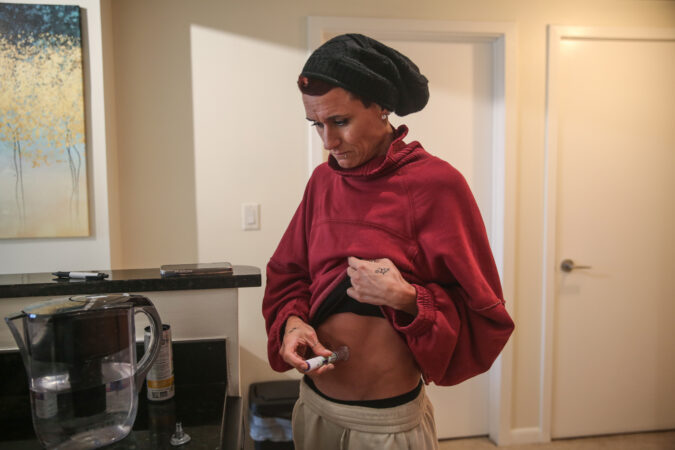
    When Susan Akin first started injecting a coveted weight-loss drug early this year, the chaos in her brain quieted. The relentless cravings subsided — only they’d never been for food.

    The medication instead dulled her urges for the cocaine and alcohol that caused her to plow her car into a tree, spiral into psychosis, and wind up admitted to a high-end addiction treatment center in Delray Beach, Fla.

    Doctors at Caron Treatment Centers tried a novel approach for the slender 41-year-old by prescribing her Zepbound, part of a blockbuster class of obesity and diabetes medications known as GLP-1s. Federal regulators have not approved the drugs for behavioral health, but doctors are already prescribing them off-label, encouraged by studies suggesting that they could reshape addiction treatment.

    Scientists caution that the research remains nascent. Health insurers do not cover the pricey drugs for that purpose. Addiction specialists say the medications might not be a cure but may work as a tool to quell addictive behaviors.

    For Akin, the weekly shot helps her endure a world full of triggers. She can visit a gas station without wanting to buy beer or see sugar without dialing a cocaine dealer. The cravings linger but are muted, she said.

    “I know when I’m due for my shot because I get a little antsy or irritable, or just kind of off,” Akin said. “But it has changed my life.”

    Emerging science

    As GLP-1 drugs for weight loss generate billions for pharmaceutical companies, researchers are exploring their potential for other purposes. Clinical trials have already shown that semaglutide, the active ingredient in Ozempic and Wegovy, can reduce the risk of heart attacks and treat liver disease.

    These drugs appear to reduce cravings for food because they mimic a natural hormone that boosts insulin production, curbs appetite, and slows stomach emptying to create a feeling of fullness. Tirzepatide, the active ingredient in Zepbound, imitates a related hormone that enhances insulin release and amplifies appetite suppression.

    The mechanism of how GLP-1s could also curb alcohol and drug cravings is not entirely understood. The medication may block release of dopamine, the chemical associated with reinforcing pleasurable activities, said Kyle Simmons, a professor of pharmacology and physiology at Oklahoma State University. The medications appear to be “turning down the gain on the reward circuitry in the brain,” Simmons said, possibly explaining why they have a broad effect on behavior.

    The potential has ushered in a wave of research that includes whether the drugs help veterans with moderate to severe drinking problems, diabetic patients who smoke, and people addicted to opioids, among others.

    Federally backed studies of patient records released since early 2024 have shown GLP-1 use in some patients who are diabetic or obese is associated with lower risks of alcohol abuse, cannabis use disorder, and opioid overdoses.

    Associations alone do not prove that the weight-loss drugs are causing those changes, but small early clinical trials have shown promise. In one study published in February in JAMA Psychiatry, researchers found that problem drinkers who received a weekly semaglutide injection drank less and had fewer cravings for alcohol and cigarettes compared with those given a placebo.

    Researchers at the National Institute on Drug Abuse and Simmons are running separate but similar double-blind clinical trials to measure whether the drugs curb alcohol cravings in patients with drinking problems. Researchers are charting brain activity to see how participants respond when exposed to alcohol cues and using virtual-reality headsets to measure how they respond to images of food. In the NIDA study, scientists have built a mock bar to observe how patients react to being near alcohol.

    A spokeswoman for Eli Lilly, which manufactures Zepbound, said the company is considering clinical trials to assess the drug as a treatment for substance use disorders, including for alcohol and tobacco. Novo Nordisk, the maker of Wegovy and Ozempic, declined to say whether it would study the drugs’ effectiveness for addiction.

    Medical treatments lacking

    The use of GLP-1s for unapproved purposes is surging, including micro-dosing to promote longevity and wellness, despite little evidence supporting these lower doses. Researchers also caution that long-term use of the drugs — which can cause unpleasant stomach side effects — remain understudied.

    Still, if GLP-1s prove effective at curbing cravings of different substances — and include behavioral addictions such as gambling and shopping — it “really opens up a whole new sort of therapeutic avenue that’s not been available before,” said Joji Suzuki, an addiction researcher at Brigham and Women’s Hospital in Boston.

    An estimated 48 million Americans had a substance use disorder last year, according to federal researchers. More than 80,000 died of drug overdoses last year while more than 47,000 died from alcohol complications, according to federal estimates.

    There are no approved medications to reduce cravings for other substances including cannabis, cocaine, or methamphetamine. For opioid addiction, medications such as buprenorphine or methadone are considered effective at staving off withdrawal and cravings, but carry stigma.

    While the FDA has approved three drugs to reduce alcohol consumption, only 2 to 4% with alcohol-use disorder get any medication treatment, said Lisa Clemans-Cope, a researcher at the Urban Institute, a nonpartisan economic and social policy research group.

    An affordability problem

    Early research and anecdotal evidence proved enough for Steven Klein, a physician who specializes in addiction at Caron, to begin prescribing GLP-1s to his patients.

    For Klein, the project is more than a professional curiosity: He is a recovering alcoholic who has long struggled with his weight. Three years ago, while in recovery and working as a pediatrician, Klein was prescribed the anti-diabetes drug Mounjaro for weight loss. He found the drug calmed his mind. “The voice that was talking to me about food was very similar to the voice that used to talk to me on drugs and alcohol,” Klein said.

    Moved by his experience, Klein switched to addiction care and joined Caron, a high-end rehab center with facilities near Reading and in Atlanta, Washington, and Delray Beach.

    He spearheads a pilot program that has prescribed GLP-1s to more than 130 patients in Pennsylvania and South Florida, most diagnosed with alcohol-use disorder and some who took stimulants.

    Klein has also partnered with Open Doors, a nonprofit in Rhode Island that helps formerly incarcerated women reenter society, to begin offering GLP-1s through its recovery program.

    “We see how hard it is for people to maintain their recovery long-term after they leave the support of our housing,” Open Doors Co-Executive Director Nick Horton said. “But with this medicine, I’m hopeful.”

    Regina Roberts, a 41-year-old alcoholic in recovery, is living at an Open Doors facility after stints in rehab and a family court program after she lost custody of her teenage son. She has been sober since 2023 with the help of 12-step programs, therapy, and life-skills classes. But she faced frequent reminders of her past: walking past a liquor store, smelling alcohol on someone’s breath, cigarette smoke wafting in the air. When Open Doors told her about the promise of GLP-1s several months ago, she agreed.

    “I figured, why not try it?” Roberts said. “I’ll take anything to help me stay on my road to sobriety.”

    With her cravings dialed back, Roberts hopes to reunite with her teenage son and move out of Open Doors in a few months. But she’s unsure whether she can keep taking the medication; she can’t afford to pay out of pocket and Medicaid might not cover it.

    At Caron’s Wernersville location, staff reduce costs by receiving semaglutides from compounding pharmacies, which can legally produce cheaper versions of name-brand mediations.

    In the Delray Beach facility, most patients receive Zepbound through their insurance by “piggybacking” under FDA-approved uses, or by paying out of pocket with manufacturer discounts, said medical director Mohammad Sarhan. Those costs add to the price of rehab programs that can cost up to $100,000.

    Akin, the Caron patient who is approaching one year sober, said she relies on her inheritance to pay nearly $1,000 every month for prefilled Zepbound shots. Akin could receive a modest discount in the coming months now that Eli Lilly, along with Novo Nordisk, announced they could lower direct-to-consumer prices as part of a deal struck with the Trump administration.

    She considers Zepbound an essential drug like insulin.

    “It’s not a cure. We have to do the work,” Akin said. “But it helps. It slows things down enough to the point where you don’t feel like you have to jump off a bridge or put your head in a cocaine plant to survive.”