Category: Washington Post

  • Is my husband a narcissist? He’s self-centered and lacks empathy. | Expert Opinion

    Is my husband a narcissist? He’s self-centered and lacks empathy. | Expert Opinion

    Q: I’ve been married for only two years, and I’m already wondering if I made a bad decision. When we were dating, my husband was incredibly charming and thoughtful, and in many ways, much more sensitive and dialed in than most of the men I had dated. And since my track record hasn’t been great, I dated him for at least a year before getting engaged so I had time to really get to know him. Or so I thought, because the warm and charming man he once was started going away almost as soon as our wedding was over. And far from being the considerate person who charmed me, he’s incredibly self-centered, moody and angry most of the time. When the topic is on him, it’s all good; but as soon as I want to talk about what’s going on in my life, he gets bored, annoyed, or downright mean. Did I marry a narcissist?

    A: It’s not uncommon for people to wonder whether a partner’s self-centeredness, emotional volatility, or lack of empathy points to narcissism. The term gets thrown around so often that it can lose meaning — but for those who live with a truly narcissistic partner, the experience is anything but trivial.

    Recent research shows that while full narcissistic personality disorder (NPD) is relatively rare, its impact on intimate relationships can be profound. People with NPD share a cluster of traits centered on grandiosity (believing they’re superior or above the rules), entitlement, and impaired empathy, expressed through an exaggerated need for admiration, a fragile and easily threatened sense of self, and a tendency to exploit or dismiss others’ needs. They often oscillate between inflated self-importance and deep insecurity, react poorly to criticism, and rely on defenses such as blame-shifting, minimization, or rage to protect a vulnerable self-image.

    Studies of couples in which one partner has elevated narcissistic traits or NPD have found patterns of low empathy, high conflict, and poor responsiveness to a partner’s needs, often driven by the narcissistic partner’s fragile self-esteem and heightened sensitivity to criticism.

    This means that the distress you feel is not imagined — NPD reliably predicts greater marital dissatisfaction, more emotional volatility, and higher rates of separation.

    Researchers today also distinguish between grandiose and vulnerable narcissism. Grandiose narcissists tend to be dominant, entitled, and attention seeking. They’re also more likely to be difficult in romantic relationships, less empathic, and more prone to infidelity.

    Vulnerable narcissists, on the other hand, tend more toward hypersensitivity and fears of being shamed. Like grandiose narcissists, vulnerable narcissists crave validation, but withdraw or attack when criticized. Both forms undermine romantic relationships, but in different ways: one through arrogance, the other through insecurity.

    However, whether he is narcissistic doesn’t necessarily mean that you should leave him. Research suggests that narcissistic traits can soften over time, particularly when life experiences challenge the person’s grandiosity.

    Therapy can also help partners by getting them to focus less on “fixing” the narcissist and more on clarifying boundaries, recognizing manipulation, and reclaiming one’s own sense of reality.

    Psychotherapy can also help if he is motivated, but genuine change requires confronting shame, entitlement, and fear of dependency — tasks many with NPD tend to resist.

    It may not be just narcissism

    In addition to narcissism, there are other potential diagnoses and dynamics that could be operating. Perhaps your husband is depressed. Research shows that men often externalize depression through irritability, defensiveness, or emotional shutdown rather than sadness. This occurs in part because of cultural expectations that discourage vulnerability in men. What can look like indifference or hostility may, in some cases, be a form of masked distress — an effort to manage feelings that are too threatening to acknowledge directly.

    On the other hand, he may have issues with drugs or alcohol, which can also lead to moodiness, self-centered behavior and, in the case of stimulants, grandiosity.

    Perhaps he has intense fears of losing you and that causes him to defend against how weak or vulnerable it makes him feel. Instead, he diminishes your value so you’re not as important in his heart or mind.

    None of these make him easy to live with, but they all suggest a different response from you or a different treatment strategy if he or you were to enter therapy.

    The pull of the familiar

    Since you said that your track record with choosing men isn’t great, it may be useful to do some reflection or therapy around why you’re drawn to certain types. Sometimes we have blind spots in who we’re attracted to because they have much in common with parental figures who made us feel unloved or unseen. Familiarity can be a serious attractor because of the kind of predictability it seems to offer.

    In addition, someone who appears to “have it all” may promise to heal all the broken or wounded places inside us and blind us to the reality that they’re a little too good to be true.

    We don’t fall for people at random — we choose those who make us feel like ourselves. The trouble is, if our self-view isn’t great, we’re vulnerable to choosing partners, even friends, who bruise us in familiar ways. Psychologists call this self-verification: the drive to confirm what we already believe about ourselves, however irrational or negative that self-image.

    Whatever the diagnosis, you’ll need additional support to navigate what you’re facing. A good couples therapist can be particularly helpful because they can assess what’s driving his behavior and identify whether referrals to other therapists or agencies are warranted.

    Meanwhile, regardless of the diagnosis, your needs for empathy, care, and reflection are just as important as his. If he does carry the diagnosis of NPD, the following principles can help:

    1. Stop arguing with reality. People with NPD often distort facts to preserve their self-image. Trying to prove your version of events can leave you frustrated and drained. Instead of debating every detail, focus on what’s true for you: your boundaries, feelings, and choices.

    2. Set limits early and consistently. Boundaries aren’t punishments; they’re forms of self-respect. If he’s responding to you with hostility, try saying the following: “I won’t be talked to in that way. If you have something you’d like to tell me, I’m happy to listen, but I won’t tolerate being criticized or demeaned by you or anyone else.” If you find yourself close to the edge of divorce, tell him before it’s too late. His self-centeredness may blind him to the possibility of losing you. You can say, “If this doesn’t change, I’m not sure I can stay married to you.” Narcissistic partners may test limits repeatedly, so consistency matters more than explanation. Calm, brief, and predictable responses are more effective than emotional appeals.

    3. Don’t take the bait. Narcissistic partners often escalate conflict to reassert dominance or control. When you stay centered and refuse to match their reactivity, you deprive the dynamic of its usual fuel. This isn’t submission — it’s strategy. Use the technique of “gray rocking.” If he begins provoking you with criticism or baiting you into an argument, try responding in a neutral, minimally reactive way, such as: “I understand that you’re upset.” No counteraccusations, defending, or emotional escalation. You keep your tone flat and your answers brief, and you avoid being pulled into the cycle. The goal isn’t to be cold; it’s to not reward the behavior with the intensity or engagement it’s designed to elicit, which often helps de-escalate the interaction.

    4. Protect your self-esteem. Over time, living with a narcissistic partner can make you question your value. Remind yourself that their inability to empathize isn’t proof that you’re unworthy — it’s evidence of their disorder. Surround yourself with people who mirror your strengths and kindness, not your partner’s distortions.

    5. Plan for safety — emotional and physical. If manipulation turns to threats, intimidation, or physical aggression, take it seriously. Reach out to trusted friends, a therapist, or a domestic violence hotline. Protecting yourself isn’t betrayal; it’s survival.

    You didn’t cause your husband’s behavior, nor can you cure it — but you can respond with clarity and care. Whether the problem is narcissism, depression, or something else, healthy relationships require mutual accountability, empathy, and respect. If he’s willing to work on those qualities, change is possible. If not, your task isn’t to fix him — it’s to protect your own stability and make choices that restore safety and dignity. Sometimes the healthiest outcome is renewed and deepened understanding; other times, it’s learning to let go without bitterness. Either way, your safety and sanity are nonnegotiable.

    Joshua Coleman, PhD, is a clinical psychologist in the Bay Area, keynote speaker and senior fellow with the Council on Contemporary Families. His newest book is “Rules of Estrangement: Why Adult Children Cut Ties and How to Heal the Conflict.” His Substack is Family Troubles.
  • The cost of Thanksgiving dinner dropped this year, agriculture group says

    The cost of Thanksgiving dinner dropped this year, agriculture group says

    Here’s one thing to be grateful for this holiday season: A typical Thanksgiving dinner is more affordable this year than last, according to the American Farm Bureau Federation.

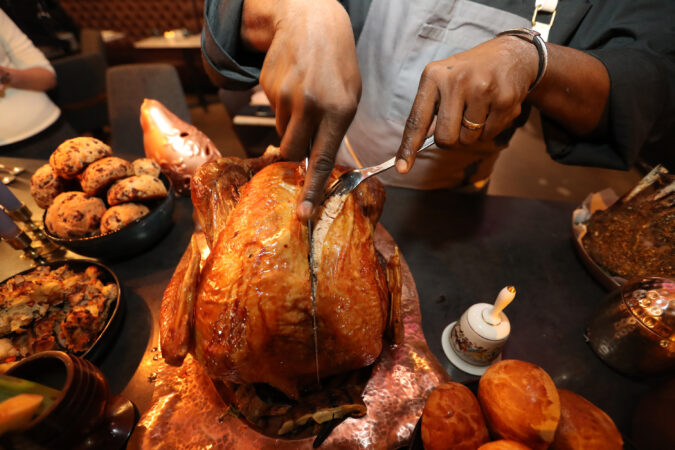
    The average cost of a Thanksgiving feast for 10 people — including turkey, stuffing, sweet potatoes, rolls, peas, cranberries, a veggie tray, and pumpkin pie with whipped cream — will cost $55.18, or $5.52 per person, the group found.

    That number varies by region. The Thanksgiving grocery haul was cheapest in the South, at $50.01, and most expensive in the West, at $61.75.

    This is the third year in a row the price has declined after reaching a historic high of $64.05 in 2022.

    The farm group, which has tracked Thanksgiving meal prices for 40 years, compiled data from grocery stores in all 50 states and Puerto Rico. It did not take into account promotional coupons or deals found online or in-store.

    The star of Thanksgiving — the turkey, of course — helped bring down the overall cost of dinner this year. The average price of a 16-pound frozen bird decreased by 16 percent from last year to $21.50, or $1.34 per pound. The report said that its volunteers tracked prices during the first week of November but noted that grocery stores have been featuring Thanksgiving deals to draw in customers and are likely to lower prices further ahead of the holiday.

    “Farmers are still working to rebuild turkey flocks that were devastated by avian influenza, but overall demand has also fallen,” Faith Parum, an economist at the American Farm Bureau Federation, said in a statement. “The combination will help ensure turkey will remain an affordable option for families celebrating Thanksgiving.”

    Low wheat prices helped bring down the cost of items requiring flour, such as dinner rolls, stuffing mix and frozen pie crusts. But the cost of vegetables shot up, the farm group found. A a one-pound veggie tray of carrots and celery increased more than 60 percent, while sweet potatoes increased by 37 percent. The AFB attributed those increases to hurricane damage in North Carolina, the country’s largest producer of sweet potatoes, and possible supply-chain disruptions, such as from weather or labor shortages.

    The Thanksgiving holiday comes right after more than 41 million people were left without food stamps this month because of the government shutdown. Many Americans are reporting higher grocery prices, while also feeling the financial pinch from increases in electricity bills and housing costs.

  • The Trump administration will announce the dismantling of multiple parts of the Education Department

    The Trump administration will announce the dismantling of multiple parts of the Education Department

    The Education Department plans to announce Tuesday that it will move multiple parts of the agency to other federal departments, an unprecedented and unilateral effort to dismantle an agency created by Congress to ensure all Americans have equal access to educational opportunity and better coordinate federal programs.

    The move was described by three people informed of the plan ahead of the announcement. Two of these people said six offices within the department would be shifted elsewhere; the third person said it was at least two.

    President Donald Trump signed an executive order in March seeking to close the department and asked Education Secretary Linda McMahon to work with Congress to do so. The agency, which was created in 1979, has long been derided by conservatives as unnecessary and ineffective. But Congress has not acted on or seriously considered Trump’s request.

    McMahon has acknowledged that only Congress can eliminate the department but vowed to do everything in her power to dismantle it from within.

    Asked for comment, an Education Department spokeswoman suggested some information provided to The Post about the plan was inaccurate, but did not offer specifics.

    Supporters of the department say that the agency is effective in coordinating multiple aspects of education in one place and keeping priorities important to students, parents and schools high on the federal agenda.

    Offices that could be moved out of the agency include the Office for Civil Rights, which investigates allegations of discrimination on the basis of race, sex and disability; the Office of Special Education and Rehabilitative Services, which administers the $15 billion Individuals with Disabilities Act program; and the Indian Education program; the Office of Elementary and Secondary Education, which administers K-12 grant programs; and the Office of Postsecondary Education.

    Federal law directs that these programs be housed in the Education Department. The Trump administration is employing a work-around, the people briefed on the matter said, whereby other government agencies would run the Education programs under a contract with the Education Department. The people spoke on the condition of anonymity because they were not authorized to discuss the changes.

    The Trump administration laid the groundwork for this change earlier this year when it signed an agreement to move career, technical and adult education grants out of the Education Department to the Labor Department. Under the arrangement, Education retains oversight and leadership while managing the programs alongside Labor, a way of sidestepping the federal statute.

    “We believe that other department functions would benefit from similar collaborations,” McMahon wrote in an op-ed essay published Monday in USA Today.

    More broadly, McMahon has argued that the recently ended government shutdown showed how unnecessary her agency is.

    “Students kept going to class. Teachers continued to get paid. There were no disruptions in sports seasons or bus routes,” she wrote. “The shutdown proved an argument that conservatives have been making for 45 years: The U.S. Department of Education is mostly a pass-through for funds that are best managed by the states.”

  • At 89, she’s a top nutrition expert. Here’s what she eats in a day.

    At 89, she’s a top nutrition expert. Here’s what she eats in a day.

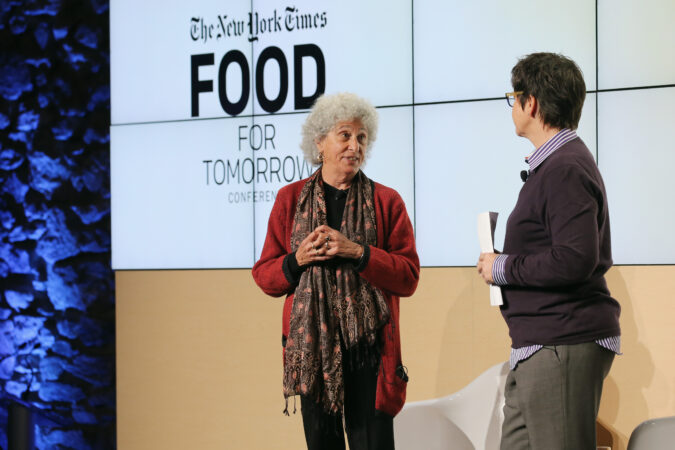
    For more than three decades, Marion Nestle has been telling people what to eat.

    In the late 1980s, she edited the first Surgeon General’s Report on Nutrition and Health, then went on to cowrite the federal government’s Dietary Guidelines for Americans and cofound New York University’s influential food studies program.

    Nestle, now an emerita professor at NYU, says her time in government opened her eyes to the multi-billion-dollar food industry’s enormous influence over Congress. By the early 2000s, she became a critic of the food industry and an advocate for major food reforms, which she made the case for in best-selling books.

    In 2002, Nestle published Food Politics, an exposé that argued that the food industry is at the root of many of the country’s nutritional problems. The industry rakes in ever-growing profits by churning out highly processed foods laden with additives, Nestle wrote, and then aggressively markets those foods to children and adults while lobbying against regulations and trying to co-opt nutrition experts.

    Over the years, Nestle’s blunt nutrition advice, sharp criticism of food companies, and frequent media appearances made her one of the most recognizable names in nutrition. In 2006, she published one of her most popular books, What to Eat, which showed consumers how to navigate supermarkets and improve their health by deciphering food labels.

    At age 89, Nestle, who lives in New York City and Ithaca, is still going strong. In November, she published her latest book: What to Eat Now: The Indispensable Guide to Good Food, How to Find It, and Why It Matters.

    We wanted to know how Nestle’s knowledge of nutrition and the food industry affects her daily food decisions. So we caught up with her to find out what she eats in a typical day, which foods she loves and avoids, which “junk foods” she can’t resist, and whether she takes supplements or has advice on how to navigate grocery stores. This interview has been edited for length and clarity.

    Q: What’s your general approach to food?

    A: I follow Michael Pollan’s famous mantra: Eat food, not too much, mostly plants. And I define food as being unprocessed or as minimally processed as possible. Not ultra-processed. I really think that takes care of it. That doesn’t mean I’m perfect. I’m an omnivore. I eat everything. I just don’t eat very much in part because metabolism drops with age, and I don’t have much metabolism left.

    I eat pretty healthy, but I don’t obsess about it. If I have a bad day of eating, I don’t worry about it. By this time, it’s pretty clear I’m not going to die prematurely. Obviously, what I’m eating is working for me because I’m 89 and I’m still here.

    Q: What do you eat for breakfast?

    A: I start with coffee between 8 and 9 a.m. I’ll have a couple cups of weak coffee with milk, no sugar. And then I’m at work. That’s when I do my writing. I don’t get hungry until about 10:30 or 11 a.m. That’s when I’ll usually have oatmeal or unsweetened Post Shredded Wheat cereal. It basically has one ingredient: wheat. I like the texture of Shredded Wheat and the way that it tastes. I add a little brown sugar, not much. I use a lot less sugar than what’s in presweetened cereals. And then I’ll add blueberries or whatever fruit is in season. That combination to me is really appealing.

    I’ve never believed any of the research on breakfast being the most important meal of the day. Most of that was sponsored by cereal companies.

    Q: What about lunch?

    A: My lunches are totally irregular. Sometimes I’ll have a salad for lunch. Or if I’m having lunch with someone then I’ll eat whatever is in the restaurant. If I’m at home in New York City, I’ll harvest whatever is growing on my terrace. The peaches, cherries, raspberries, and blueberries that I was growing are long gone. But I’ve still got some lettuce and tomatoes, so I’m going to go out and pick those. I might cut up some cheese or have it with peanuts. And I might have some bread with that.

    Q: What about dinner?

    A: It depends. I just don’t eat that much. But I do really like salads. I can have salads twice a day. If I’m at home, I might have an egg. I might have crackers and cheese with that. I kind of like making meals based on what I have available. So, it depends on what I bought, what’s in the house, or what’s on the terrace. That’s my favorite way of cooking. We have a garden in Ithaca, there’s a garden on my terrace, and there’s a farmers market not very far from here.

    I also go to a lot of neighborhood restaurants. I’m going to Mark Bittman’s restaurant this week — the kitchen that he started in the East Village where people pay according to their income. I’ll eat whatever they’re serving. One restaurant that I like a lot is il Buco Alimentari & Vineria. I love going there. They have a particular salad that I adore. It’s always so crisp, and they have wonderful pasta dishes.

    Q: What are some foods that you love?

    A: Fortunately, I like a lot of very simple foods. I like vegetables. I like eggs. I like cheese. I do eat some ultra-processed foods. But not a lot of them. I don’t like ultra-processed foods that have a long list of ingredients. Most of those don’t taste good to me. I do really like vegetables. I like the crunch, the flavors, and the colors. That makes it easy to eat healthy.

    But I recognize that I’m privileged. I weigh basically what I weighed when I was in high school. I don’t have a weight problem. And I have an enormous amount of sympathy for people who do. I consider myself extremely fortunate. Is it genetics? I have no idea. My father died of a heart attack at the age of 47. He was an obese three-pack-a-day smoker. It’s hard to know where genetics fits into this.

    Q: Do you have any favorite treats or desserts?

    A: Ice cream. When I’m at home in New York City, I try to find ginger ice cream, which I like very much. It’s hard to find. But when I find it, I buy it. And then my partner and I make homemade vanilla ice cream in Ithaca. It’s only three or four ingredients. It’s ruined other ice creams for me because a lot of commercial ice creams have all these emulsifiers in them that keep the ice cream sticking together. Real ice cream completely falls apart if it’s left at room temperature and not eaten right away. It separates and liquefies. But I like that. I think it tastes better and has a better texture than the commercial ice creams that have emulsifiers. I like ice cream without the emulsifiers.

    Q: What about snacks?

    A: I like corn chips. Not too salty. Some corn chips are ultra-processed, although most are not. The ones I like are Wegmans. They only have a few ingredients — just corn, oil, and salt basically. I also like candy, particularly See’s Candies. The one See’s candy store in New York is just a couple blocks away from me. I normally get the peanut brittle. Sometimes the lollipops. I can have these things in the house and not feel like I have to eat all of them all at once. Not everyone can do that.

    Q: Can you tell us about your new book?

    A: It’s called What to Eat Now. It’s the updated edition of What to Eat, which was published 20 years ago. It’s a completely rewritten book. I thought it was going to be a six-month project, and it ended up taking me four years because so much has changed in grocery stores. There’s been a huge turnover in products. For example, “functional waters” that contain vitamins, minerals, cannabis, supplements, and other things have replaced Coca-Cola and plain water. Plant milks are new. The only plant milk that existed 20 years ago was soy milk. Now there are tons of others. Plant-based meats did not exist 20 years ago — at least not in the way that they do now.

    Q: What is one takeaway from the book?

    A: It’s not a book about personal diets. It’s a book about how to think about food issues. I think what to eat now boils down to eat food, not too much, mostly plants.

    Q: Do you take any supplements?

    A: I don’t take supplements because I eat a healthy diet. I don’t think I need them. But two out of three Americans take supplements. They make people feel better — and it’s hard to argue with that. Life is tough. If all it takes is a supplement to make you feel better, then I’m not going to argue with that. I used to be much more upset about supplements. But now it’s clear to me that they make people feel better. Whether that’s because they’re doing something or because they’re a placebo, it’s hard to know.

    But I don’t trust what’s in them. There’s so much evidence that what the label says isn’t what’s actually in them. Many studies have found that a remarkable percentage of supplements do not actually contain what’s listed on their labels. I don’t want to put something in my body if I don’t know what’s in it. And there are things in supplements that are not supposed to be there — that’s what so many studies have found. It’s not true of all supplements. But it’s very hard to know which ones are OK and which ones are not. So I don’t take any of them.

    Q: Do you have any advice for our readers?

    A: Eating healthfully in today’s society is very difficult because you’re fighting an entire food industry on your own— and that industry is trying to sell you the most profitable, least healthy foods available. But one thing you can do is read food labels. There’s a lot of information on them. If you’re looking at a packaged food and you can’t recognize the ingredients, or if you can’t purchase the ingredients at a supermarket, then it’s ultra-processed. There are certain ingredients that are indicators of ultra-processed foods. That would be color additives, flavor additives, and emulsifiers such as mono and diglycerides, polysorbates and carrageenan, and texturizers such as agar. I always read food labels. If something has a lot of artificial additives and ingredients that I don’t recognize, then I’m not going to eat it.

  • Ford taps Amazon to let shoppers buy its used cars online

    Ford taps Amazon to let shoppers buy its used cars online

    Ford Motor Co. has struck a deal with Amazon.com Inc. to sell certified used cars through its e-commerce website, becoming the second major automaker to reach customers through the massive online retailer.

    Ford joins Hyundai Motor Co. on the Amazon Autos portal, which allows car buyers to browse, finance, and purchase a used car by clicking on the familiar “add to cart” icon. Hyundai began selling new cars through the platform late last year, but Ford is only offering its “Blue Advantage” certified used cars on the site, the second-largest U.S. automaker said Monday in a statement.

    Car buyers will take delivery of their vehicles through Ford dealers participating in the program. So far, Ford dealers in Los Angeles, Seattle, and Dallas have signed up, but Ford plans to roll out the program nationally in the coming months. The automaker said about 200 of its 2,800 dealers nationwide have expressed interest in selling on Amazon.

    Ford’s move comes as consumers are looking for simpler and faster ways to buy cars and are increasingly patronizing online car sellers such as Carvana Co. and CarMax Inc.

    It also comes at a time when average new car prices have topped a record $50,000 and more mainstream buyers are turning to used car lots to find something they can afford. The average price of a three-year-old used car was $31,067 in the third quarter, the highest in three years, according to automotive researcher Edmunds.com.

    Some auto manufacturers have attempted to emulate Tesla Inc.’s online sales model that bypasses traditional dealers, but Ford is working with its independent retailers to sell on Amazon.

    “Everyone has an Amazon account,” Wendy Lane, senior manager of Ford’s Blue Advantage unit, said in an interview. “Knowing that it is a trusted source for consumers and having our vehicles listed there, we’re really excited to see how it works and how well consumers adopt it.”

    Ford’s goal is to drive traffic to its dealers used-car lots so that car buyers stay in “Ford’s ecosystem” for service and future purchases, Lane said.

    The company will take what it learns from selling certified used cars on Amazon to see if it eventually wants to add new cars to the online retailer’s automotive storefront.

    The used vehicles will be sold at a set price, with no haggling. They will have received multipoint inspections, and Ford will offer limited warranties of up to one year or 12,000 miles. The Amazon search tool enables buyers to see a vehicle’s service history and condition reports.

    “By working with exceptional Ford dealers who share our commitment to customer service, we’re creating a car buying experience that combines trusted vehicle certification with the convenience Amazon is known for,” Fan Jin, global leader of Amazon Autos, said in a statement.

  • For a vegetarian borshch with oomph, bust out the tangy sauerkraut

    For a vegetarian borshch with oomph, bust out the tangy sauerkraut

    One of the most nourishing things about food is the human connection it forges. Food brings us together at the table and beyond, linking us to family history and the larger community.

    The new cookbook Russ & Daughters: 100 Years of Appetizing by Niki Russ Federman and Josh Russ Tupper, written with Joshua David Stein, reflects the deep, multilayered way food unites us and tells our story.

    The authors’ great-grandfather opened his appetizing store in New York City in 1914, and they are the fourth generation to carry on his legacy. The current location of the store, on the Lower East Side of Manhattan, is the last remaining appetizing store in an area that once had dozens like it. These shops, born of Eastern European tradition and often run by Ashkenazi Jews, specialized in ready-to-eat kosher or kosher-style specialties that could fill out a meat-free spread, such as smoked and cured fish, pickles, salads, soups, and more. (They are not to be confused with delis, as the family behind Russ & Daughters notes on its site.)

    I feel a communal bond with these foods, too — my grandfather grew up in that neighborhood, and these dishes were central to the culinary culture he passed down to us.

    The book, which is packed with both traditional recipes and the authors’ more modern takes on the classics, is also full of personal stories and rich historical accounts of the “nearly lost world of appetizing itself,” they write.

    This hot borshch recipe reflects the soup’s history and tradition, with a new-to-me twist. It delivers the key elements you’d expect from a hot red borshch — beets, cabbage, carrot, and onion simmered in an herb-rich broth, fragrant with dill and topped with a cool dollop of sour cream.

    But in this version, the sweetness of the beets is balanced with tangy sauerkraut, which adds a delightfully funky flavor and toothsome texture to the bowl. A squeeze of lemon juice brightens the vegetarian soup further, for a comforting, crimson bowl of goodness that brings plenty of vitamins, minerals, and fiber to the table, along with the essential nutrients of connection and history.

    Vegetarian borshch with sauerkraut

    Tangy sauerkraut, a squeeze of lemon, and a cool dollop of sour cream balance the sweetness of the beets in this hot vegetarian borshch. Packed with hearty root vegetables and cabbage, and flavored with fresh dill, it tastes like ultimate comfort food. The soup’s depth of flavor comes from the sauerkraut and a few hours of simmering, making it a terrific weekend project and make-ahead dish for busy weeknights.

    6 servings

    Active time: 50 minutes. Total time: 4 hours.

    Storage note: Refrigerate for up to 4 days.

    Ingredients

    2 to 3 large red beets (1 pound total), trimmed and scrubbed

    2 tablespoons olive oil

    1 medium yellow onion (8 ounces), diced

    1/4 teaspoon plus 1/8 teaspoon salt, divided, plus more as needed

    1 medium carrot, peeled and diced

    1 small white turnip (8 ounces), diced

    1/4 large head green cabbage, thinly sliced (about 4 cups)

    8 cups low-sodium vegetable broth, divided

    1 1/2 cups sauerkraut, drained (brine reserved)

    5 sprigs fresh thyme, tied with butcher’s twine

    1 tablespoon fresh lemon juice (from 1/2 lemon)

    Freshly ground black pepper

    1/3 cup coarsely chopped fresh dill

    1/2 cup sour cream

    Directions

    Position a rack in the middle of the oven and preheat to 400 degrees. Wrap each beet individually in foil and set on a small sheet pan. Roast for 1 hour 10 minutes to 1 1/2 hours, or until the beets become fork-tender. (The roasting time will depend on the size of the beets.) Let cool for 15 minutes, then remove and discard the skins and dice the beets.

    In a large (5-quart) pot over medium-high heat, heat the oil until shimmering. Add the onion and 1/8 teaspoon of the salt, and cook, stirring occasionally, until softened and starting to brown, 5 to 7 minutes. Add the carrot and turnip, and cook, stirring occasionally, until slightly softened and the turnip is starting to brown, 5 to 7 minutes more. (Reduce the heat to medium, if the vegetables are browning too quickly.) Stir in the cabbage and the remaining 1/4 teaspoon of salt, and cook, stirring frequently, until it softens 3 to 5 minutes. Add 7 cups of the broth, the sauerkraut, and thyme, and bring to a boil.

    Meanwhile, in a blender, combine 1/2 cup of the diced beets and the remaining 1 cup of broth, and puree until smooth. Add the puree to the pot and bring the borshch to a boil. Reduce the heat to the lowest setting and very gently simmer, uncovered, until the liquid has reduced a little (by about 1 cup), the vegetables are tender and the flavors meld, about 2 hours. Discard the thyme sprigs, add the remaining diced beets, and remove from the heat.

    Stir in the lemon juice, then season to taste with pepper, some of the reserved sauerkraut juice and, if desired, more salt. Ladle the borshch into bowls, garnish each with a scant 1 tablespoon of the dill and a generous 1 tablespoon of the sour cream, and serve.

    Substitutions: Yellow onion >> white onion. Instead of roasting beets >> use 1 pound precooked beets (not canned). Fresh thyme >> 1 teaspoon dried thyme.

    Nutritional information per serving (1 2/3 cups borshch, plus generous 1 tablespoon sour cream) | 177 Calories: 25g Carbohydrates, 9mg Cholesterol, 8g Fat, 8g Fiber, 4g Protein, 2g Saturated Fat, 767mg Sodium, 11g Sugar

    This analysis is an estimate based on available ingredients and this preparation. It should not substitute for a dietitian’s or nutritionist’s advice.

    Adapted from “Russ & Daughters: 100 Years of Appetizing” by Niki Russ Federman and Josh Russ Tupper with Joshua David Stein (Flatiron Books, 2025).

  • How China weaponized soybeans to squeeze U.S. farmers — and spite Trump

    How China weaponized soybeans to squeeze U.S. farmers — and spite Trump

    The start of the harvest in September is usually when China, the world’s biggest importer of soybeans, puts in a flurry of orders to the farms of Illinois, Iowa, Minnesota, and Indiana.

    This year, however, Chinese importers aren’t buying. In retaliation for President Donald Trump’s tariffs, Beijing has cut off Midwestern farmers from their largest and most lucrative overseas customer: China accounted for half — or $12.6 billion — of U.S. soybean exports last year.

    For the first time since November 2018, China imported no soybeans from the U.S. in September, data from China’s General Administration of Customs showed Monday.

    “We’re in uncharted territory in terms of a complete absence of Chinese buyers for the harvest that is currently coming in,” said Even Pay, director of agriculture research at Trivium China, a research firm based in Beijing.

    For Beijing, halting U.S. soybean imports has been an easy and relatively cost-free way to pile pressure on Trump ahead of a planned meeting with Chinese leader Xi Jinping in South Korea later this month.

    Trump, speaking to reporters on Air Force One last weekend, said he wanted China to return to its previous level of purchases and that he thought Beijing was ready to make a deal on soybeans.

    But while American farmers lobby Trump to get them back into China, there isn’t similar pressure within China for the government to allow purchases from U.S. suppliers. That “gives Beijing a great deal of negotiating leverage,” Pay said.

    On Tuesday, Trump took to social media to call China’s decision to not buy U.S. soybeans “an Economically Hostile Act” and said the U.S. was considering “terminating” buying cooking oil from China as retribution.

    But Beijing has shrugged off Trump’s threats. Analysts say it is ready to extend the purchasing freeze for the rest of the year.

    Here’s how China has turned its massive market for soy into a trade war weapon.

    Why does China buy so many soybeans?

    China consumes far more soybeans than any other country in the world, but it grows less than a fifth of what it needs — just enough to cover all the tofu and soy sauce used in Chinese cooking.

    It buys everything else from abroad — importing more than the rest of the world combined — and the U.S. has traditionally been one of its top suppliers.

    Those imported beans mostly feed huge numbers of pigs, chickens, and other livestock, as meat consumption by wealthier Chinese families has grown rapidly. Despite efforts to develop alternatives, soybeans accounted for 13% of animal feed in 2023.

    The remaining imported soybeans mostly become cooking oil: soybean oil’s mild taste and ability to withstand high heats make it perfect for stir-fries. Chinese producers favor U.S. or Brazilian imports over more expensive homegrown soybeans.

    For U.S. farmers, it’s hard to find a replacement for Chinese demand. “It’s just an enormous market,” said Phil Luck, director of the economics program at the Center for Strategic and International Studies (CSIS), a Washington-based think tank.

    How has China curbed reliance on American farmers?

    China has worked hard to curb its reliance on U.S. soy imports, especially after the trade conflict of Trump’s first term ended in 2020 when Beijing agreed to buy $200 billion in American products, including soybeans (although it bought far less than it promised.)

    Beijing has since pushed Chinese farms to consolidate and expand domestic output. It has launched trial programs for previously banned genetically modified crops. And it is aiming to lower the ratio of soybeans in animal feed to 10% by 2030, down from 18% in 2017.

    A Ministry of Agriculture report released in May said that these efforts meant import demand would steadily fall over the coming years.

    But thanks to limited farming land and ballooning demand, China is still a long way from its goals to meet half of its soybean needs with domestic crops and will rely on imports for years to come, analysts said.

    So who is supplying China instead?

    Chinese analysts are blunt about their country’s growing preference to buy from anywhere but the U.S.

    “From China’s perspective, the U.S. is an unpredictable supplier,” said Niu Haibin, director of the Center for Latin America Studies at Shanghai Institutes for International Studies.

    Tariffs mean U.S. soybeans no longer have a price advantage and China has already identified alternative suppliers to fill the gap. “The longer we rely on alternative sources, the dimmer the outlook for U.S. soybean exports to China becomes,” Niu said.

    Those suppliers include Argentina, Uruguay, and even Russia. But it is Brazil, the world’s largest soybean exporter, that has been the big winner from China’s U.S. embargo.

    China would typically alternate between hemispheres, buying from Brazil during its March to June harvest season and then from the U.S. for the remainder of each year.

    But this year, instead of switching to American farms, China kept placing orders from Brazil. It imported $4.7 billion in soybeans from the country in August and only $100 million worth from the U.S.

    That continued in September, when China bought 7.2 million tons of soybeans from the South American country — 93% its total exports, according to Anec, Brazil’s national association of grain exporters.

    China’s effort to secure Brazilian soybeans goes far beyond merely placing big orders.

    Chinese state-owned companies have taken stakes in the major Brazilian ports of Paranaguá, Açu, and Santos. COFCO, China’s largest agricultural importer, has the exclusive rights to run a major new terminal at Santos that opened in March and will expand the port’s throughput by 15 million tons per year when it reaches full capacity in 2026.

    And Beijing is still trying to lower barriers for Brazilian exporters to access its vast market. The two countries are working on plans to build a railway connecting Brazil to Peru’s Chancay port that could cut shipping times to Asia dramatically.

    What does this mean for U.S.-China trade talks?

    With plentiful supply from South America, China has been projecting confidence that it can cold-shoulder American farmers for as long as is necessary to reach a trade deal.

    Beijing once worried that U.S. wouldn’t sell China its soybeans, but it is now the U.S. that is anxious for China to buy, declared one widely shared article published on social media app WeChat last week.

    In response to Trump’s recent threat to retaliate by halting cooking oil trade — which Chinese analysts took to mean the U.S. stopping purchases of used oil that can be turned into biodiesel — the state-owned Global Times newspaper declared that “there is no shortage of buyers for China’s used cooking oil.”

    That defiant tone is helped by China’s sizable stockpiles. Its soybean imports hit a record in May and were up 5.3% year-on-year for January to September to reach 95 million tons, according to China’s customs agency.

    Beijing is in a position where it could hold out for months — possibly until new South American crops arrive in early 2026 — without needing to procure U.S. soybeans, said Pay, the Trivium analyst.

    Trump’s focus on soybean purchases has only strengthened Beijing’s belief that this is an easy way to squeeze the U.S. with minimal costs at home.

    In Beijing, “there’s definitely a sense that the U.S. is in chaos and there’s room for putting political pressure on targeted groups,” said Jack Zhang, director of the Trade War Lab at the University of Kansas.

    It also gives Xi something to offer Trump in exchange for what China really wants.

    “Part of the calculation,” Zhang said, “is that the U.S. will negotiate over these small but pressing concerns and relent on some of the larger structural stuff that China’s more worried about.” These include U.S. export controls on advanced computer chips.

    But even if a deal is struck this month, it may be too late for U.S. farmers to make up for orders already lost.

    “China’s in a pretty good position. We really want to resolve this. They don’t need to,” said Luck, the CSIS analyst. Even if China started placing orders the day after Xi and Trump meet, U.S. soybean farmers “still probably lost half of the season, so we’re on the clock here,” he said.

  • The fight between AI companies and the websites that hate them

    A lawsuit by online message board Reddit gives you a glimpse at the knockdown boxing match behind chatbot conversations.

    In one corner are artificial intelligence services that gobble information from across the internet to help you plan a vacation or create silly videos. In the other corner are companies that are sometimes unwilling or overwhelmed sources of that data.

    In its lawsuit, similar to ones against AI companies by news organizations, Hollywood studios, book authors, and others, Reddit alleges that the start-up Perplexity benefited from improperly using its website as AI fuel.

    The claims are an example of warnings from Reddit, Wikipedia, and others that say if the boxing match continues as is, AI services may kill the websites and other source material that we love.

    Dating back at least to the death of Napster a quarter-century ago, there have been constant fights over technology upstarts that remix media and information or deliver it in new ways. AI could be the most intractable fight of all.

    AI ‘bank robbers’ vs. Reddit

    The 20 years of our Reddit debates about the best Welsh restaurants and quiet air conditioners are gold for AI services. They typically need truckloads of online information like that to “train” their computers and serve up responses to your AI queries.

    Reddit knows how valuable it is and laid out ground rules for AI companies that wanted to profit from siphoning Reddit message boards in bulk: AI companies needed a paid contract with Reddit and to respect its guardrails.

    Some companies, including Google and ChatGPT parent company OpenAI, agreed to Reddit’s terms. For AI companies that didn’t agree, Reddit put up digital walls to block AI companies’ spiderlike software that crawls over websites to harvest their information.

    According to Reddit, Perplexity’s CEO promised Reddit’s top lawyer more than a year ago to respect Reddit’s digital walls. Perplexity, which makes what it calls an AI “answer” engine and an AI-specialized web browser, instead found another way to siphon Reddit pages, the company says.

    (The Washington Post has partnerships with Perplexity and OpenAI.)

    Reddit’s lawsuit, filed Wednesday in a New York federal court, said that Perplexity hired at least one data-siphoning middleman to grab many billions of pages of Reddit material indirectly, from Google search results.

    Those middlemen allegedly used technically sophisticated tactics to get around Google’s digital defenses against unwanted siphoning by bots. Reddit said that it obtained this information from a subpoena to Google in a different, secret lawsuit.

    Reddit’s lawsuit compared what Perplexity and the bot-for-hire middlemen did to “bank robbers” who know they can’t get into the bank vault and “break into the armored truck carrying the cash instead.”

    In a post on Reddit, Perplexity said that Reddit is after money. The lawsuit is a “sad example of what happens when public data becomes a big part of a public company’s business model,” Perplexity said.

    Google said that it has “strong technical measures to prevent this type of malicious abuse, because it undermines the choices websites make about who can access their content.”

    What this means for you

    Experts have said that the law generally protects technology companies that take copyrighted materials like news articles, books, and movies and put them to a new, creative use. Many AI companies say that their products meet that legal standard.

    Blake Reid, an associate professor at the University of Colorado Law School, said that Reddit’s case adds an extra wrinkle: The company doesn’t hold the copyright to Reddit posts. The people who created those posts do. Reid said that helps make the lawsuit’s outcome unpredictable.

    Regardless, AI keeps running into a paradox: To be useful, new forms of AI rely on ingesting vast swaths of the past, present, and future internet. But doing so can increase costs and divert users from websites, which imperils the internet we use.

    We’ve heard similar complaints before. Entertainment companies sued YouTube for giving you free access to their creations. Music companies have howled over TikTok letting you create dance videos to Taylor Swift tunes. News organizations have groused that Google and Facebook let you browse the news without buying newspapers or visiting news websites.

    The content companies have typically found ways to grudgingly live with, and even profit from, the technology upstarts. AI is different, said Toshit Panigrahi, CEO of TollBit, which helps websites get paid for AI data collection.

    AI services grab information at warp speed and at industrial scale from so many places, including news and entertainment sites, cruise operators, and furniture sellers. Panigrahi said that the old pattern — technology changes are good for us and the owners of digital creations — may no longer apply.

    “This is changing how the internet works fundamentally,” he said.

  • Think landing a job is hard? Try having ‘DEI’ on your resume

    Think landing a job is hard? Try having ‘DEI’ on your resume

    After seven rounds of grueling interviews, an offer for a recruiting job seemed within reach for David Daniels IV. Until a reference check that Daniels learned had involved wary discussions of his background in diversity, equity, and inclusion. The offer never came.

    Having DEI experience on a resume can feel like a scarlet letter in an already difficult job market, said Daniels, who lives in New York and held roles at companies including yoga wear retailer Lululemon Athletica Inc. “There’s this sense of, if you did DEI, we don’t want to hire you,” he said. For Daniels and others like him, working in diversity made them hot commodities in corporate America just a few years ago. Now it’s a liability. Conservatives have lambasted diversity work as exclusionary, while President Donald Trump’s ire against what he has termed “illegal DEI” has spurred a retrenchment in many companies. Fearing lawsuits and the loss of government contracts, businesses quickly pivoted, downsizing or dismantling their diversity groups.

    That left DEI professionals who lost their jobs stranded, competing for roles in a tight job market. Among the jobless population in the broader economy, about a quarter have been unemployed for a half-year or longer — the highest share since the mid-2010s, excluding the pandemic-era years. DEI specialists say they’re getting less interest from recruiters than they did several years ago and fewer interviews from companies. To bolster their chances, professionals have stripped the three letters from resumes and sought roles in adjacent departments such as in human resources, public affairs, and marketing. Others have weighed changing careers.

    One job hunter is Josue Mendez in New York, who used to work in the diversity group at Ogilvy, an advertising agency owned by WPP PLC. In June, weeks after his team won an industry award for a leadership program for its Black male employees, he was among those let go. Since then, Mendez spends his days scouring job listings and attending job fairs.

    A conversation with a recruiter was going well, he said, until Mendez mentioned his experience in diversity. “It suddenly went very cold,” Mendez recalled. “The second they see any previous work specifically in DEI, they want to stay away.” The call ended ahead of schedule. The recruiter later told Daniels he was out of the running for the job.

    A handful of large corporations remain publicly committed to workplace diversity. Delta Air Lines Inc., Southwest Airlines Co. and Coca-Cola Co. have kept the DEI label on their websites. And others are now emphasizing veterans and disabled employees.

    But there’s been a wave of reversals in the past year. Amazon.com Inc. halted some of its programs, McDonald’s Corp. stopped setting “representation goals” and Goldman Sachs Group Inc. ended a policy of only taking some companies public if they had diverse board members. Corporate fears around legal risks earlier this year overshadowed everything else, said Tynesia Boyea-Robinson, whose firm CapEQ advises companies on diversity and other social issues. “A lot of people basically looked to their legal counsel and asked: What is the way we can protect ourselves from being sued?” Job ads reflect the changed landscape. New postings for diversity roles have approximately halved this year to about 1,500 from 2019 levels, according to Revelio Labs, a firm that analyzes workforces. Postings had almost quadrupled to about 10,000 during the height of the DEI boom in 2022 compared with 2019.

    Since losing her position at a firm advising clients on their diversity efforts late last year, Victoria Person in New Orleans has been attending networking events held by the local Chamber of Commerce to help find clients for her new consulting business while she searches for a job. The moment Person mentions her 15-year career working in diversity, people give an uncomfortable laugh, change the subject or look over her shoulder to find someone else to talk to, she said. “I see and feel people reel back,” Person said. “There’s a lot of fear around this, people don’t want to be associated with it.” Still, in spite of the current malaise, Person said she hopes that diversity programs will reemerge stronger and more inclusive, serving all demographics rather than specific groups.

    Marie — who didn’t want her full named published because she fears online attacks from DEI critics — lost her role as a diversity manager, making $150,000, following Trump’s election win. Her job hunt initially yielded call backs and interviews. Now, responses have all but disappeared. Marie said she noticed some companies had posted the same diversity role multiple times over the course of months only to pull them later on. And in one interview, a chief diversity officer told her that the executive team wasn’t fully sold on workplace diversity, even though the company had posted a role. Given the scarcity of roles in diversity, Marie said she’s considering leaving the field. But returning to public education, her previous field, would mean risking cutting her income in half. In the meantime, she’s joined a group dedicated to professionals laid off from their diversity jobs. Its founder, Michael Streffery, who was let go from his job as director of DEI at Realtor.com earlier this year, says the group’s members have skills that are applicable to many other positions. “They’re systems thinkers, culture shapers, and crisis navigators,” he said.

    Before leaving his job earlier this year, Carlos Ayala experienced a slide. Once a chief diversity and inclusion officer at an energy company, his title was changed and his role downgraded. He stayed at the company for several months to help “de-risk” the department he once ran. That meant watering down or removing diversity policies to help reduce legal risks.

    Ayala quickly experienced firsthand the liability of having worked in DEI. He said he had applied for a role overseeing diversity efforts at a company that appeared, at least publicly, to be sticking with the strategy. Midway through his interviews, Ayala got an email from the recruiter who said the business was “reframing the role’’ and shifting it to a generalist human resources position. “I thought, God, that’s disappointing, they’ve been stringing me along,” said Ayala, whose based in the Chicago area. Weeks later, he’s still waiting to hear whether he got the job. Back in New York, Daniels is continuing his job search. He’s picked up some consulting work including a client in the United Kingdom, where the political backlash to diversity is less severe. He said he’s got more interviews after removing the DEI label from his online profile. In some interviews, Daniels said he’s repeatedly had to reassure hiring managers that he’s still comfortable working for a company even if it’s not focused on diversity. Despite the DEI retrenchment, Daniels is taking the long view. There’s an ebb and flow when it comes to social justice issues, he said. “America has always been this way.”

  • Amazon delivery contractors are bailing amid rising costs, meager profit

    Amazon delivery contractors are bailing amid rising costs, meager profit

    In 2022, Jake Clay started an Amazon delivery firm in Odessa, Texas, after hearing about the company’s program from a friend. He sank $75,000 into the business and earned more than $200,000 in the first year. An Air Force veteran, Clay, 50, felt like he’d joined an elite unit.

    The feeling didn’t last. Before long, rising insurance and other costs began eating into his profit. One of Clay’s drivers was badly bitten by a dog and went on workers’ compensation for a year, while his annual vehicle insurance rates soared fivefold to almost $500,000. Clay mulled laying off all his managers and running the business on his own, figuring he would clear about $75,000. In the end, he decided it wasn’t worth it. He quit last month.

    “I earned significantly less as I got more seasoned, which is the most upside-down business I’ve ever heard of,” Clay said. “Amazon wants a bunch of pawns and they keep a bunch of extra pawns on the bench to replace anyone who leaves.”

    Clay said he rejected an offer to sign an exit contract with Amazon that would have paid him $75,000, but ban him from speaking publicly about the program.

    Amazon.com Inc. launched its Delivery Service Partner program in 2018, offering aspiring entrepreneurs an opportunity to run their own businesses. The world’s biggest online retailer pledged to use its negotiating clout to help them lease vans and hire drivers. All they needed, the company said at the time, was can-do spirit and as little as $10,000 up front to earn as much as $300,000 (now $400,000) in yearly profit.

    Today, some who answered the call fear the best days are behind them. While many prospered during the pandemic-era e-commerce boom, they say their profits are dwindling owing to rising costs for insurance and vehicle maintenance even as Amazon tightens performance metrics that determine how much they earn. Like Clay, several delivery owners told Bloomberg that making money has become so hard they’re getting out — a wrenching decision with the economy slowing and unemployment rising.

    Amid the mounting discontent, Amazon recently announced a 20% hike to 12 cents for each package the firms deliver. It was the first such increase since the company launched the Delivery Service Partner program and an acknowledgment that inflation has driven up costs. But many contract delivery firms said the gesture was too little, too late. And because it doesn’t take effect until January, some saw it as a carrot to keep them working through the holidays when Amazon needs them most.

    Still, they recognize they have little leverage because Amazon can simply replace them. Last month, during the annual Ignite conference for delivery service partners, the company touted its “Road to Ownership” program, which is designed to persuade drivers to start their own delivery companies. Many owners saw the presentation as a reminder that there are plenty of people eager to step in. And a number of newbies attended the Las Vegas conference, looking for tips on how to run their businesses.

    Bloomberg interviewed 23 delivery partners who operate in 11 states around the U.S. Five said they quit the program because they were making less money each year, and several others are contemplating getting out. Four owners said they were happy with the program and that their income was growing. In online forums, delivery contractors have debated how to negotiate larger exit packages with Amazon and tried to establish how many have already quit. One chat room was set up specifically for contractors thinking of shuttering their firms and features more than 100 mostly anonymous members.

    Most of the delivery partners interviewed, including those who quit and one who liked the program, spoke on condition of anonymity because they feared repercussions from Amazon.

    “The anecdotes shared by a small number of DSPs don’t reflect the experience of the vast majority,” Amazon spokesperson Dannea DeLisser said in an emailed statement. “Interest in the program continues to grow as entrepreneurs recognize the opportunity to build their own businesses with Amazon’s support, and we’re proud of the thousands of DSPs that are doing well and making a positive impact in their communities.” Amazon has invested $16.7 billion in the program, which currently encompasses more than 4,400 firms — most of them in the U.S.

    Inflationary pressure

    Contract delivery firms have tangled with Amazon for years, often over what they consider unreasonable delivery targets that are monitored by artificial intelligence. Those concerns remain, but business owners trace their current woes to the inflationary environment and the company’s unwillingness to provide sufficient support at a time when Amazon is focused on cutting costs and boosting profits.

    Tension between the company and its delivery businesses flared earlier this year when the company passed along big bills to repair aging delivery vans. Some contractors said they were getting hit with repair bills of up to $20,000 per vehicle that they couldn’t afford to pay. The delivery firms used an app called Pave to estimate damages based on photos of the vehicle, but Amazon instituted a more rigorous inspection process this year that resulted in repair bills as much as 10 times higher than the app estimate.

    With delivery contractors balking, Amazon in September backpedaled and told them it would cover 20% of van repairs estimated in the Pave app going back to April and that it would send out revised invoices this month.

    The delivery firms are also grappling with the rising cost of insurance. Typically when they start out, insurance rates are reasonable. But the longer they are in business, the more chance there is for accidents, dog bites, and other issues, which in turn push up the costs of covering their operation.

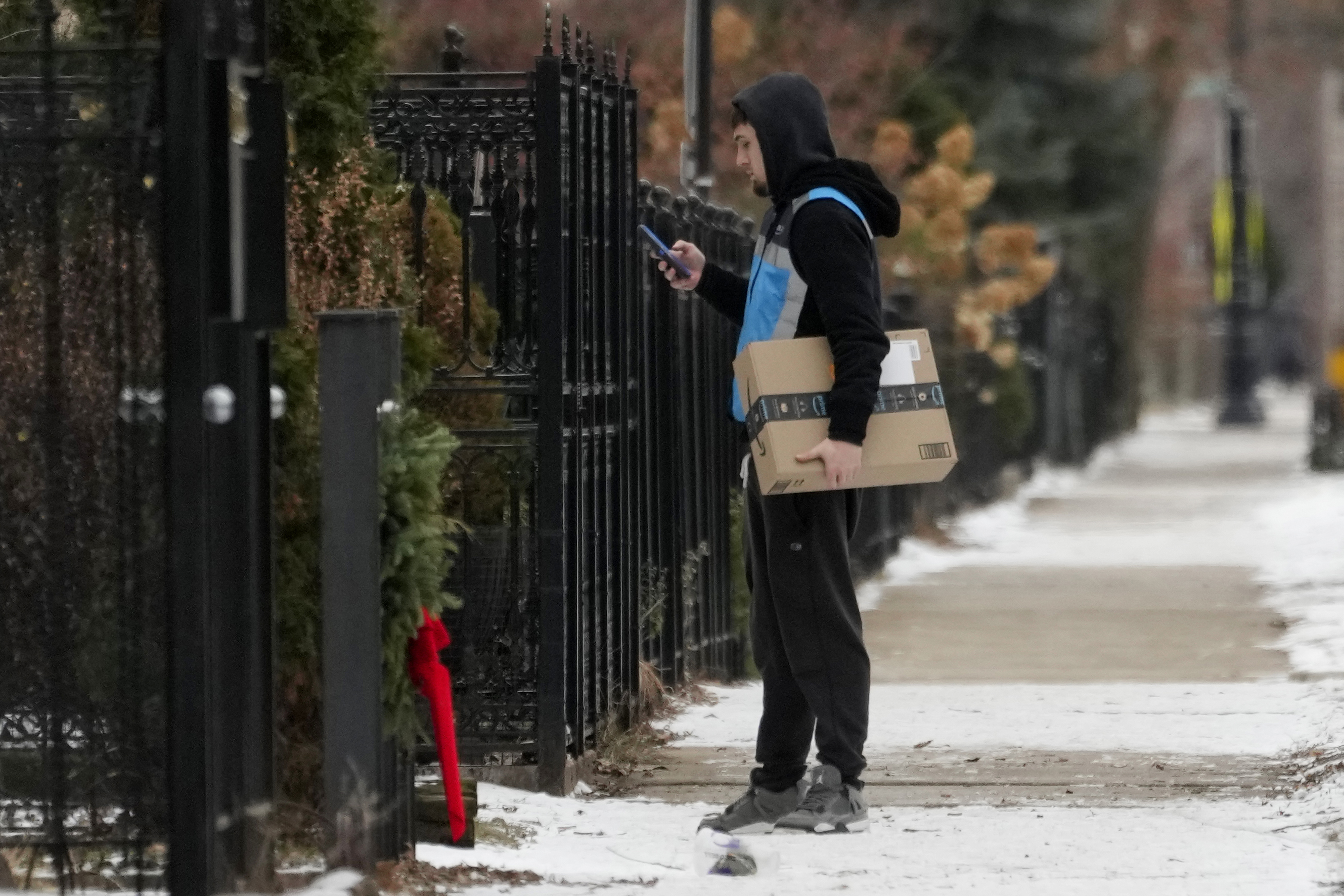
    A person checks an address before making an Amazon delivery in Chicago in January 2025.

    One owner who started an Amazon delivery business in 2019 blames skyrocketing premiums for slashing his annual profit from $400,000 to $150,000. He mostly employs young male drivers, whom insurers consider high-risk. His premiums soared after one driver was involved in a crash with serious injuries. When the case settled out of court for $1.4 million, the owner realized the risk wasn’t worth the reward.

    He went to the Amazon delivery station one Saturday evening to tell them he’d cease operating the next day, leaving the company scrambling to reassign thousands of packages to other firms. “They weren’t happy,” he said.

    Another delivery contractor who started when Amazon launched the program in 2018 said his yearly profits have been trending downward from about $200,000 to $160,000, which he expected to continue. His problems started when Amazon switched 10-hour delivery routes to begin later in the day at 11 a.m., meaning drivers made more deliveries in the dark when it’s harder to see street signs, addresses, and potential hazards like muddy puddles on dirt roads. That drove up his costs since he had to pay drivers overtime to complete routes and hire tow trucks to free vans stuck in mud. Amazon never increased his payments to reflect the increased costs associated with later deliveries.

    Amazon said it conducted a financial performance of 648 delivery contractors last year and found that about 80% of them generated annual profits of at least $100,000. The company said their profits, on average, increased each year. The average business has been operating for five years and fewer than 10% of them quit the program, according to Amazon.

    Some owners accept that running an Amazon delivery firm isn’t necessarily a long-term bet and prepare by diversifying. One delivery contractor in the Midwest started a plumbing franchise and encouraged his hardest-working delivery drivers to work there and learn a trade. Fred Vernon, 36, said starting an Amazon delivery business in 2019 in Houston has been life-changing. It’s hard work and he emphasizes driver safety to keep his insurance costs in line. Meanwhile, Vernon is using his proceeds to pay for law school.

    “We’re doing very well and I’m grateful for the opportunity to pursue other goals,” he said.

    Amazon delivery contractors quickly learn that bailing is no panacea. Unlike many small business owners, they have no hard assets to sell. They lease the vans, and the packages are stored in Amazon facilities. They could try to sell the business but it’s tied to a one-year contract with Amazon, which has veto power over any prospective buyer. So they can either quit with nothing or keep limping along with the knowledge that they could be replaced once the contract expires — perhaps with someone like Shannon Joseph.

    A former driver, Joseph launched her own delivery business in Austin in 2022. She says her experience hauling packages has helped build rapport with her 92 employees. Joseph has heard the complaints from other delivery firms, but is confident she’ll keep making money and growing by outperforming the pack.

    “I want to be one of the delivery partners who makes it for 10 years,” she said.