Category: Washington Post

  • Rubio will visit Gulf allies amid scrutiny of his position on Iran deal

    Rubio will visit Gulf allies amid scrutiny of his position on Iran deal

    ABU DHABI — Secretary of State Marco Rubio will head to the Middle East this week for meetings with Arab Gulf allies, a high-stakes diplomatic assignment for a prominent Iran hawk who largely kept a low profile as the Trump administration pursued its fragile ceasefire deal with Tehran.

    Rubio will travel to the United Arab Emirates, Kuwait, and Bahrain from Tuesday to Thursday. All three countries faced heavy targeting from Iranian strikes after U.S. and Israeli forces began the Iran war in late February, and they suffered some of the most acute economic fallout from Tehran’s move to block traffic through the Strait of Hormuz, a vital shipping lane for export-dependent countries in the region.

    In addition to his bilateral meetings during the three stops, Rubio will meet in Bahrain with the Gulf Cooperation Council (GCC), a regional body for the Arab Gulf nations.

    The secretary’s trip follows Vice President JD Vance’s meeting with Iranian officials in Switzerland on Sunday, beginning a 60-day effort to build upon the ceasefire announced in a controversial memorandum of understanding signed by President Donald Trump last week. The meeting was delayed by several days after Israeli attacks on Lebanon prompted Iran to say it would reimpose its closure of the Strait of Hormuz.

    The outcome of U.S. talks with Iran would have significant impact across the Middle East. As part of the Trump administration’s proposed compromise with Tehran, the Iranian regime would give up its highly enriched uranium, which could be used to make a nuclear weapon, in exchange for a number of economic benefits, including the lifting of sanctions, access to frozen assets, and a $300 billion fund for reconstruction.

    That Vance, and not Rubio, has been the face of the deal has been widely noted in Washington.

    “I think Marco just sees a bad deal when he knows one,” said Sen. Chris Coons, (D., Del.), speaking at a roundtable with journalists hosted by Bloomberg News last week. Coons asserted that Rubio, his former colleague on the Senate Foreign Relations Committee, was not discussing the subject publicly to avoid being associated with a deal that the senator called a “near-total capitulation” to Tehran.

    The State Department dismissed this sentiment as ill-informed speculation. “Secretary Rubio and the entire administration is 100% in lockstep behind President Trump,” said Tommy Pigott, a spokesperson.

    Any public defense of the negotiations with Iran from Rubio could carry weight, as he was a fierce critic of the 2015 nuclear agreement with Iran, the Joint Comprehensive Plan of Action, that was secured by the Obama administration. In one speech before that agreement was struck, Rubio said that “a bad deal [with Iran] almost guarantees war, because Israel is not going to abide by any deal that they believe puts them and their existence in danger.”

    “I think many will be waiting with bated breath to see how one of the most internationalist and hawkish members of this administration will be making sense of this document,” said Behnam Ben Taleblu, an expert at the Foundation for Defense of Democracies, a D.C. think tank that has argued for more aggressive action against Tehran.

    Brett Bruen, who served on the White House National Security Council during the Obama administration, said Vance’s position as the public face of the deal was notable and may be because “the vice president so badly wanted to push peace, having been so ideologically at odds with the war.”

    “But it’s also because Rubio knows a dumb diplomatic deal from a distance and this one with Iran has ‘disastrous’ emblazoned all over,” Bruen added.

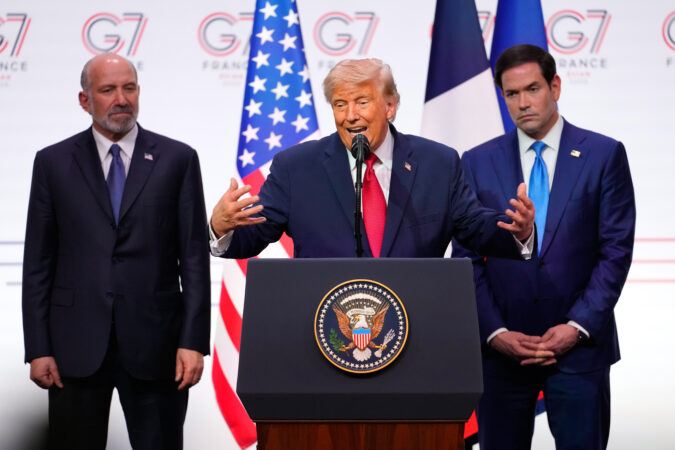
    Officials close to both Rubio and Vance have downplayed the significance of Vance’s role as the public face of the agreement, arguing that much of it was timing. The vice president, these people noted, had a book coming out and was already doing a press tour, whereas Rubio was traveling with Trump to the Group of Seven meetings in France, where naturally his boss took center stage.

    “From what I can tell, he’s supportive of the deal,” said one person familiar with Rubio’s thinking, who spoke on the condition of anonymity because they were not authorized to speak to the media. This person added that the secretary, who also serves as White House national security adviser, was also “clear-eyed about the fact that we are talking about the Iranians here.”

    Vance’s ownership of the issue has political implications, given that he and Rubio are widely expected to become political rivals in the race to succeed Trump as president.

    Jon Hoffman, a policy analyst at the libertarian Cato Institute think tank, said Rubio and Vance represented “the divide between the traditional neoconservative worldview and the growing constituency weary of foreign entanglements,” particularly in the Middle East.

    All three nations that Rubio is visiting were impacted by Iranian military retaliation after it was attacked. Bahrain, the smallest country in the region, saw major damage near the U.S. Navy’s 5th Fleet based in Manama, while the UAE was reported to have seen more attempted strikes than the five other Gulf Cooperation Council nations combined.

    Experts said that while all three appeared to welcome the ceasefire, across Arab Gulf nations there were major concerns about the memorandum of understanding’s lack of provisions addressing nonnuclear threats like Iran’s ballistic missiles and the prospect of large sums of money going to Tehran with few strings attached.

    Rubio will need to “reassure them that this is not some harbinger of a U.S. decision to leave the region or to abandon their security,” said William V. Roebuck, executive vice president of the Arab Gulf States Institute in Washington and a former U.S. ambassador to Bahrain. “In fact, it’s an opportunity to enhance it.”

  • U.K. Prime Minister Starmer to resign as Labour Party seeks reboot

    U.K. Prime Minister Starmer to resign as Labour Party seeks reboot

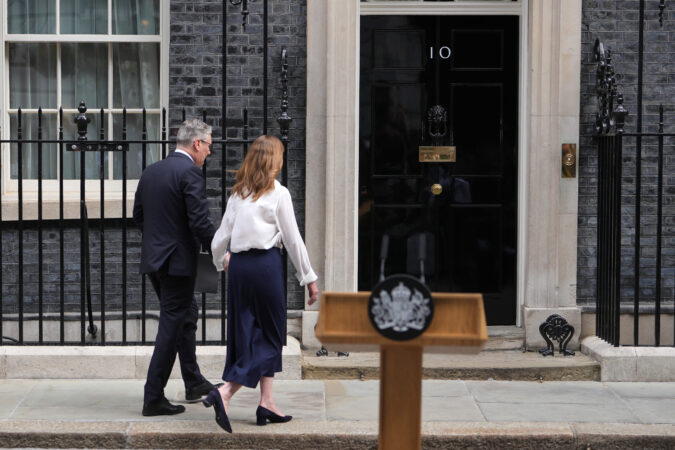
    LONDON — British Prime Minister Keir Starmer announced Monday that he will resign, succumbing to pressure from lawmakers within his own Labour Party, after crushing losses in nationwide local elections last month triggered a mutiny.

    An emotional Starmer said he would leave office after a new Labour leader — and therefore a new prime minister — is selected in a leadership election that will begin in July. Standing outside 10 Downing Street, Starmer recounted his government’s achievements during its two years in office and then grew tearful after saying that he had informed King Charles III of his decision Monday morning and would soon devote himself to his own family.

    “The question my party is asking now is whether I am best placed to lead us into the next general election,” Starmer said with his staff and some — but notably not all — of his cabinet looking on. “I have heard the answer of my parliamentary party to that question, and I accept that answer with good grace.”

    Starmer, 63, had struggled to define his agenda while contending with economic stagnation, fallout from the Epstein scandal, and turbulent relations with President Donald Trump.

    The discord with Trump was punctuated by a final jab on Sunday when the U.S. president proclaimed that Starmer would resign — shoving the British leader to the door before Starmer had made any announcement of his own.

    Starmer’s surrender came fast on the heels of a special parliamentary election in Makerfield on Thursday, in which Greater Manchester Mayor Andy Burnham won a decisive victory, returning him to the House of Commons and positioning him to mount a Labour Party leadership challenge that Starmer seemed all but certain to lose.

    Burnham’s victory gave him momentum in a challenge to Starmer that has been brewing for months. And his status as a front-runner neared shoo-in levels on Monday when another likely candidate for a leadership race, former Health Secretary Wes Streeting, pulled out of contention and threw his support to Burnham.

    To become the new Labour leader, any challenger must first secure the written backing of at least 81 of Labour’s 403 elected members of Parliament. Once that threshold is crossed, the contest goes to a broader vote of party members who rank candidates in order of preference until one of them clears 50%.

    Starmer could have effectively anointed Burnham as his replacement, avoiding what could be a bruising intraparty battle for the top job. But some have argued that Labour, and the country, would be better served by a leadership contest that demanded candidates defend their vision for leadership.

    Starmer opted for an open contest, saying he would instruct Labour’s executive committee to begin accepting nominations on July 9 with an eye to completing the election in time for a new prime minister to take office by the end of parliament’s summer recess in September.

    It was unclear if that schedule would hold given the accelerating support for Burnham among lawmakers.

    “He’s the next prime minister,” said Tim Bale, a professor of politics at Queen Mary University of London. “It’s going to be something like a coronation.”

    Starmer’s resignation extends a remarkable era of political turmoil in Britain and will usher in the country’s seventh prime minister in the past 10 years.

    Starmer spent less than two years at No. 10 Downing Street. His departure ends a troubled tenure marred by failures to deliver on campaign promises, ousters of senior advisers, criticism of his handling of the wars in Ukraine and Iran, and recriminations over his appointment as U.S. ambassador of former Labour power broker Peter Mandelson, whose entanglement with Jeffrey Epstein, the convicted sex offender, is now under investigation by the Metropolitan Police.

    These and other missteps contributed to the undoing of a staid politician who led Labour to a landslide victory in 2024, promising competence and centrist polices that he said would reinvigorate the British economy and shield the country from the polarizing forces tearing other democracies apart.

    After nearly 15 years of Conservative Party rule, Labour also benefited in that race from widespread unhappiness over the economic malaise that followed Brexit, the country’s Tory-led departure from the European Union.

    And yet Starmer soon became caught in the same currents of voter discontent that he had exploited. Starmer, a former prosecutor who lacked the flair of Britain’s most famous prime ministers, faced persistently abysmal approval ratings and barely concealed scheming in the upper ranks of his party.

    More broadly, Starmer’s resignation underscores the extent to which British politics is entering a turbulent new period in which insurgent parties — including Reform UK, whose anti-immigrant posture echoes the MAGA movement in the United States, and the populist Green Party — are gaining strength amid eroded support for the Conservative and Labour parties that have dominated U.K. politics for generations.

    The bloodbath in local elections suffered by Labour on May 7 — a loss of more than 1,500 of the approximately 2,600 seats it held on local councils and other bodies — was widely expected. And with national parliamentary elections not due until mid-2029, Labour retains a strong majority in the House of Commons. But rank-and-file MPs quickly called for Starmer’s head, fearing a potential wipeout if they did not replace him in time for a dramatic turnabout.

    On paper, at least, the looming leadership contest looked to be Burnham’s to lose even before Streeter pulled out Monday.

    Burnham’s decisive win last week in Makerfield, a working-class constituency Labour strategists feared it might lose outright to Reform UK, handed him a fresh mandate as the figure best positioned to blunt the new right-wing party’s advance in the postindustrial seats Labour needs to hold onto power.

    Burnham’s camp has said he has already secured the backing of more than 201 Labour MPs, half the 402-member parliamentary party. That tally, if it holds, would make him the prevailing favorite from the outset. Coming from local politics, he is seen as largely untainted by the compromises of Starmer’s government.

    Streeting, 43, who served as health secretary under Starmer, resigned his cabinet post last month to launch his own leadership bid. His quick endorsement suggested that Burnham was building perhaps insurmountable support.

    Streeting, who hails from the more centrist Labour wing identified with former prime minister Tony Blair, would have challenged Burnham from the right, and had built a profile as a sharp-elbowed media figure willing to break publicly with Starmer’s government. That’s a contrast to Burnham’s more staid, institutional brand of working-class populism, built over three terms as mayor of Greater Manchester and 16 years before that in the House of Commons.

    Streeting has stressed the need for Labour to win back swing voters defecting to Reform UK and had pointed to his record of NHS reform as proof of a pragmatic governing style. In withdrawing, he acknowledged that a divisive leadership contest could prove costly by stressing disagreements rather than unity.

    “We could spend the summer exaggerating small differences, or we can roll up our sleeves and help him to deliver the change our Party and our country needs,” Streeting said in a statement.

    Starmer’s struggles were compounded by strains in the “special relationship” between Britain and the United States.

    Starmer’s early attempts to appease Trump upon his return to the White House — including a trip to Washington in which he carried an invitation from King Charles III for an “unprecedented” second state visit to England — did not shield Britain from steep tariffs imposed by Trump or from a steady stream of insults.

    In recent weeks, Trump has lashed out at Starmer, saying he is “no Winston Churchill,” for his refusal to thrust Britain’s military more directly into the U.S.-Israeli war with Iran.

    Seeking to avoid the fate of Blair, whose support for the 2003 U.S. invasion of Iraq is still seen as a stain on his legacy, Starmer initially refused to allow U.S. forces to stage attacks on Iran from British bases. He later softened that position to allow “defensive” strikes meant to blunt Iran’s ability to retaliate on British territories or allies. Starmer’s shifting positions added to perceptions of him as indecisive.

    Still, it was another U.S. crisis — the Epstein scandal — that seemed most damaging. Starmer has no known direct ties to Epstein but was pilloried for the ambassadorial appointment of Mandelson, who maintained ties with the Epstein long after his 2008 conviction on solicitation of prostitution and shared with him sensitive U.K. government documents, according to U.S. Justice Department files.

    In February, police arrested Mandelson on suspicion of misconduct in public office, raising the pressure on Starmer over his judgment in appointing him. Weeks earlier, a government review had found evidence in the Epstein files that sensitive information about the 2008 financial crash appeared to have been shared with the financier by a government official. Mandelson was a government minister at the time.

    Starmer’s resignation is likely to add to a general sense that the political fallout related to Epstein has been far more severe in Britain and Europe than in the United States, where neither Trump nor other American politicians revealed to have had close ties with Epstein over the years have faced significant consequences.

    In Britain, Starmer faced calls for his resignation. And Andrew Mountbatten Windsor, a brother of King Charles, was stripped of his royal titles and forced to leave his longtime royal residence following new revelations about his own Epstein connection.

    Starmer weathered those initial calls to step down, but ultimately bowed to reality as the numbers among Labour’s rank-and-file turned against him. In his resignation speech on Monday, he claimed credit for bringing Labour back from the dead.

    “Six years ago, I inherited a Labour Party that was politically, financially, and morally bankrupt,” Starmer said. “I was told time and time again that my part was finished, that we were consigned to history, that a majority at the general election let alone a landslide majority was impossible. But we proved those people wrong.”

  • Patrols grow as paint peels at the  Reflecting Pool

    Patrols grow as paint peels at the Reflecting Pool

    WASHINGTON — National Guard service members and U.S. Park Police patrolled the deck around the Lincoln Memorial Reflecting Pool on Monday as President Donald Trump’s administration faces a self-imposed deadline to fix a botched renovation before the nation’s 250th anniversary celebration.

    The patrols came two days after Trump said authorities had made “multiple arrests” of people he insisted were responsible for damage to the peeling coating after an algae bloom occurred. The liner was installed as part of his $14 million-plus project.

    The president has confirmed the problems most likely require draining the pool again for liner repairs and he promised a quick fix. Without offering substantiation, he also said vandals dumped fertilizer in the pool and slashed the coating with a box cutter.

    But the timeline was not clear Monday, and the administration did not immediately respond to questions about a new round of work. Contractors and federal workers in recent days have been using chemicals and ozone nanobubbles to combat the algae.

    Trump pitched the original improvements as intended to clean, beautify and reinforce an iconic site that he said had become dilapidated and dirty because of previous presidents’ neglect. Algae has plagued the pool for a century, and Trump insisted that a newly installed “American flag blue” coating, which he selected himself, would turn the pool into a gleaming expanse along the National Mall.

    Yet within weeks of Trump declaring the rehabilitation completed in time for Independence Day, the water was plagued by a vivid green algae bloom that clouded the pool’s coating. A piece of liner, about 4 square feet, was observed Friday partially floating in the pool. The Associated Press saw additional pieces in the water Monday.

    Via social media, the president has blamed the problems on “SICK, DERANGED PEOPLE!” He asserted Monday on Truth Social that intentional damages include a “300 foot long gash” and that “chemicals have been illegally placed in the water.” A day earlier, Trump posted, “Work will begin immediately on fixing the seriously vandalized Reflecting Pool.”

    At an executive order signing on Monday, the president said five people had been arrested and five more were under suspicion, and he deflected blame for the pool’s maintenance issues: “I can’t help it if somebody goes in with a knife and starts hacking it up.” He has not backed up those claims, and even if anyone has deliberately peeled or cut the lining, that would not explain the algae bloom that appeared more intensely than what typically occurred before the renovation.

    Images showing that Trump’s project had apparently backfired boomeranged across social media last week, drawing crowds of onlookers eager to see the effects themselves. An unknown number ended up being detained by federal authorities.

    One man arrested was David Hearn, 67, of Bethesda, Md. A former Olympic canoe racer, Hearn told the Associated Press that he reached into the pool because he wanted to examine the peeling new coating. He said he briefly touched a chunk that was still attached to the side of the pool, then let go shortly after a park worker told him to. Hearn said he was then detained by National Guard troops and Park Police for five hours before being released Friday night.

    “I’m a curious citizen,” Hearn said in a telephone interview. “I reached down to see what it felt like. It was very rubbery.”

    The Park Police did not immediately respond Monday to AP’s questions about how many arrests were made and whether any charges had been filed. Washington’s Metropolitan Police Department said Monday that the agency is not involved.

    It was not immediately apparent what criminal or civil violation someone might commit reaching into the pool. Trump, in one of his Truth Social posts, cited laws against defacing monuments as grounds for imprisoning anyone harming the pool.

  • For cash-strapped farmers, deal to end Iran fighting comes too late

    For cash-strapped farmers, deal to end Iran fighting comes too late

    NASHVILLE, N.C. – The possible end of the Iran war will not cure the drought that has stunted the wheat crop. It won’t secure soybean export orders caught in the U.S.-China trade war. And it will do nothing to promote competition in agriculture, which would help farmers like Jeff Tyson earn a living.

    Like other growers, Tyson, 55, has seen costs outrun sales this year as the rain grew scarce and government policies added to his burdens.

    Now, the U.S.-Iran agreement to reopen the vital Strait of Hormuz and pursue a lasting peace offers some relief to farmers who have seen their fuel and fertilizer bills soar because of combat in the Persian Gulf. Diesel has not been cheaper since mid-March. Urea fertilizer in recent days sold for less than it did before the fighting began.

    But the financial damage has been done.

    President Donald Trump’s February decision to join Israel in attacking Iran aggravated the farm economy’s struggles. Soybean growers, who were already suffering from the president’s tariffs, are expected to lose money in 2026 for the fourth straight year.

    “There’s no joy left in this farm. When you work 16-hour days and get to the end of the year, and you have to borrow money to pay your taxes, there’s no fun in it. It’s just not worth it anymore,” said Tyson, a fourth-generation farmer, who long ago advised his daughters to look elsewhere for a good life.

    Tough times on the farm are souring some of the president’s most loyal supporters little more than four months before November’s congressional elections. Rural voters backed Trump’s economic policies by a 45% to 43% margin early last year but now disapprove of them 61% to 31%, according to a Reuters-Ipsos poll released this month.

    A separate Purdue University-CME Group survey this month showed that agricultural producers in particular have grown more downbeat. From a high of 75% in December, the percentage of those surveyed saying the country is headed in the right direction fell to 52% in May.

    Farmers represent a key constituency in states that could decide control of the U.S. Senate, including Iowa, Texas, Ohio, and Michigan, as well as North Carolina.

    The president’s signing Wednesday of an agreement that extends the ceasefire with Iran for 60 days follows a lengthy interruption to shipping through the Strait of Hormuz, which curtailed exports from three of the world’s top 10 producers of urea and anhydrous ammonia fertilizer: Saudi Arabia, Qatar, and Iran.

    “We’re not going to solve that just because we open the strait. There is still a very big wound there that is going to take time to heal,” said Josh Linville, vice president of financial services firm StoneX, who expects prices to remain higher than usual through next spring.

    On Saturday, conditions in the strait remained fluid. Iranian authorities declared the channel once again closed in response to Israeli attacks in Lebanon — underscoring the fragility of the agreement signed last week. U.S. Central Command denied there was a closure, and said that shipping had increased, with 55 merchant ships and 17 million gallons of oil reaching global markets. U.S.-Iran peace talks were planned for Sunday in Switzerland.

    About an hour’s drive east of Raleigh, Tyson raises soybeans, cotton, sweet potatoes, tobacco, corn, and sunflowers. He runs the operation from a small white house adjacent to a two-lane road. Several buildings and grain silos dot the property.

    With shoulder-length brown hair and a full beard, Tyson is profoundly disillusioned by Washington. Well-funded business lobbyists and entrenched government bureaucrats thwart the will of the people, necessitating a disruptive figure like Trump, he said.

    “I was involved with the [American] Soybean Association for 16 years. I thought I could make a difference,” he said. “I spent a lot of time in Washington and realized that it doesn’t matter. It doesn’t matter what you say out here or what you do out here.”

    Tyson remains supportive of Trump’s drain-the-swamp brio, though he objects to the double whammy of import tariffs and income taxes.

    Farmers have been among the biggest losers of the president’s trade wars. After China responded to Trump’s first-term tariffs by purchasing soybeans from Brazil rather than the U.S., he gave farmers $23 billion to offset lost export sales.

    Last year, his April decision to raise U.S. tariffs to their highest mark since the 1930s caused China to again retaliate by halting purchases of American soybeans. Annual sales slumped to just $3 billion from a 2022 peak of nearly $18 billion. Trump’s tariffs on steel and aluminum also translated into higher prices for tractors, combines, and harvesters as well as replacement parts. Separate levies first imposed in 2020 on phosphate fertilizer from Morocco were another irritant.

    Under pressure from larger harvests in South America, soybean prices are down by roughly one-third from their 2022 levels. The combination of higher input costs and lower sales prices leave many soybean farmers needing to borrow money.

    For loans in excess of $100,000, farmers face interest rates of nearly 7%, more than twice the figure from four years ago, according to data from the Federal Reserve Bank of Kansas City.

    “The returns for farmers have been really tough on the soybean side the past few years. They just generally haven’t been making much money,” said Scott Gerlt, chief economist for the American Soybean Association.

    Earlier this month, the administration reduced tariffs on agricultural equipment made of steel or aluminum, such as harvesters and combines, to 15% from 25%.

    The president also sought to reassure farmers by staging a White House event in March, where he promised easier environmental regulations and small-business loan guarantees. By then, $12 billion in farm aid designed to counter what the administration called “four years of disastrous Biden Administration policies” and other nations’ “unfair trade practices” was landing in farmers’ bank accounts.

    “We’re going to prove that the golden age of American agriculture is right here and right now,” Trump said.

    But the most consequential move came last fall when Trump and Chinese President Xi Jinping reached a truce in their trade war. In return for lower U.S. tariffs, Xi agreed to resume purchases of American soybeans.

    Almost 100 miles west of Tyson’s farm, Michael McPherson stood in a wheat field where his son-in-law and grandson baled straw. This plot sits among 1,000 acres of soybeans, corn, cattle, and hay that he and his family cultivate.

    McPherson, 57, was another financial casualty of the Iran war. The price of diesel, which powers tractors, jumped by nearly 50% in the weeks before his scheduled April 1 corn planting. Fertilizer costs rose as well. He waited a few days, hoping the market would reset. But crops are not patient. Eventually he had to swallow the extra expense.

    “It’s been a tough year, a tough season so far. Among everything else that’s going on, we’re in the worst drought we’ve ever had this time of year. That’s really putting us in a bind right now. None of our crops are where they’re supposed to be this time of year,” said McPherson, who expects to realize about half his usual harvest from this field.

    Though reluctant to talk politics, he applauds the Trump administration’s efforts to secure better trade terms for U.S. farmers even as he voices frustration with the Iran war.

    Before attacking, he said, the administration should have stockpiled fertilizer to spare farmers crippling price increases. Instead, the war’s costs have eroded profits and forced him to tap his financial reserves.

    “I don’t want to say we’re at crisis levels yet. But something’s got to change,” he said.

    Gary Hendrix, working with his wife and two sons, tills 7,000 acres of corn, cotton, soybeans, peanuts, and wheat in Raeford, about 100 miles east of Charlotte. He failed to turn a profit last year and continues to operate in the red.

    Production costs, including seed and fertilizer, are up about 20% or $100 per acre compared with last year. His last tank of diesel cost $32,000, versus roughly $19,000 in December.

    The Iran war’s end should mean less-expensive fertilizer. But Hendrix worries that the small number of suppliers will use their market power to keep prices high. One of his biggest complaints is the agribusiness consolidation of recent years.

    “It doesn’t really matter whether I’m buying or selling. If I’m trying to buy a tractor or if I’m trying to sell a load of soybeans. You know, I don’t have many places to go,” he said. “They can reserve a four-seat table at any restaurant and decide what my [profit] margin’s going to be.”

    Two companies — Nutrien and Mosaic — account for at least 86% of the phosphate and potash fertilizer market. In March, Bloomberg News reported that the Justice Department was investigating Nutrien, Mosaic, and three other producers for potential antitrust violations. The Federal Trade Commission last month said it had launched a related probe.

    In a statement, Mosaic said fertilizer prices are determined by “a wide range of well‑documented market factors,” not individual companies. Nutrien did not respond to a request for comment.

    Hendrix, a registered independent, said he voted for Trump in 2024. He is undecided about which party he will back in November’s congressional elections. But as the midterms draw near, he sounds lukewarm on the president.

    “He’s done some things that have really been a benefit to ag,” Hendrix said. “And he’s tried some other things that haven’t quite worked.”

  • U.S. intelligence warns Israel is likely to undermine Iran peace deal, officials say

    U.S. intelligence warns Israel is likely to undermine Iran peace deal, officials say

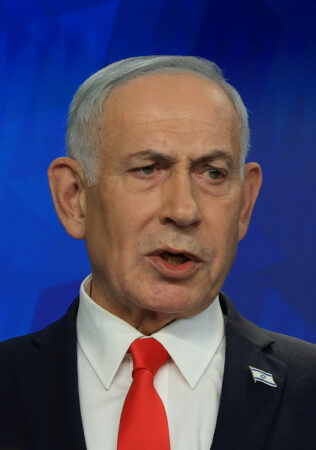
    U.S. intelligence agencies have warned the Trump administration that Israeli Prime Minister Benjamin Netanyahu is likely to take steps that will undermine President Donald Trump’s effort to reach a lasting peace deal with Iran, as the Israeli premier faces intense political pressure to continue waging his country’s war in Lebanon, current and former U.S. officials said.

    Israel appears intent on maintaining military operations against Iran’s proxy Hezbollah in Lebanon, an aim that would flout a core element of the fledgling agreement that calls for an end to hostilities in that country, according to intelligence reports, including one circulated this week, said the officials.

    The analysis comes at a moment of growing tension between Netanyahu’s government and Trump administration officials, who have publicly warned Israel against launching attacks against Hezbollah that might derail Trump’s deal.

    On Friday, Israel launched airstrikes across southern Lebanon in response to a Hezbollah drone strike that killed four Israeli soldiers. As clashes continued, U.S. and Iranian officials said they postponed talks due to begin in Switzerland on Friday. Vice President JD Vance, who was to lead the U.S. delegation, postponed his trip.

    If Netanyahu redoubles his military campaign in Lebanon, he would not only threaten the framework for an agreement signed by the United States and Iran on Wednesday, but he could rupture the relationship with an American president that has been integral to his political fortune.

    Speaking at a news conference in France on Wednesday to announce the U.S.-Iran “memorandum of understanding,” Trump said that he has a “little dispute over Lebanon” with Netanyahu and has urged the Israeli leader to not “knock down a building every time somebody walks into it that’s from Hezbollah.”

    The new U.S. intelligence report concludes that in the face of national elections this fall, Netanyahu’s political survival is linked to showing his domestic audience that he will not withdraw troops from Lebanon and that he is intent on escalating the fighting with Hezbollah, said one U.S. official familiar with the report. The official, like others interviewed, spoke on the condition of anonymity because of the matter’s sensitivity.

    The U.S. intelligence report also describes Israel’s frustration with the terms of the Trump peace memorandum, which undermine its broader objective of maintaining maximum pressure on Tehran, according to a current and former official.

    The report conveys Israel’s perception that the agreement could constrain its ability to defend itself against Hezbollah, one former official said.

    Trump administration officials insist that the terms do not prevent Israel from retaliating against Hezbollah if fired upon and that Netanyahu’s concerns pale in comparison to the need to complete a deal and reopen the Strait of Hormuz to stave off a global economic crisis.

    The report reflected that any suspension of hostilities or withdrawal from Lebanon will be seen in Israel as a defeat for Netanyahu, said the current official.

    “Israeli military activity in Lebanon is for the sole purpose of defending Israeli citizens from continuous attacks by Hezbollah,” said a senior Israeli government official, speaking on the condition of anonymity according to the government’s protocol, in response to a request for comment about the U.S. intelligence analysis.

    Popular opinion in Israel remains highly supportive of efforts to dismantle Hezbollah, the Iranian proxy group that joined its partner, Hamas, in attacking Israel with rockets in October 2023.

    Tens of thousands of Israelis displaced from their homes in the country’s north by drones and missile strikes have demanded that Netanyahu decimate Hezbollah, and he has come under withering criticism from across the domestic political spectrum for failing to eliminate the militant threat.

    Fully 70% of Jewish Israelis support intensifying the fight against Hezbollah, according to a May poll by the Institute of National Security Studies, a leading Israeli think tank, and Israeli political analysts widely say that a military pullback would be interpreted by voters as a sign of defeat.

    Even if Israel does not escalate fighting in Lebanon by bombing the southern suburbs of Beirut, Hezbollah’s seat of power, its refusal to withdraw troops from the country’s south is likely to doom the fragile accord between the U.S. and Iran, a second U.S. official said, offering an independent analysis.

    “Continuing to occupy part of Lebanon is a recipe for disaster,” said the official. “Without a full Israeli withdrawal, the likelihood of resumed hostilities between the [Israeli military] and Hezbollah is all but certain.”

    Israeli cabinet officials are standing their ground. “For every tear shed by an Israeli mother, a thousand Lebanese mothers should cry. All of Lebanon should burn,” National Security Minister Itamar Ben Gvir said Friday on social media.

    Netanyahu is risking “huge friction” with Trump, who undertook the war with Iran on Feb. 28 at the Israeli leader’s urging and soon found himself mired in a conflict that has cost tens of billions of dollars, sent global gas prices soaring, and saw the deaths of 13 U.S. troops, said Danny Citrinowicz, a former Israeli military intelligence analyst.

    “Bibi’s in a very tough situation,” said Citrinowicz, now senior researcher at the Tel Aviv-based Institute for National Security Studies, using the nickname of the Israeli prime minister. “He’s seeing his greatest rival, the Iranian regime, being strengthened by the U.S. administration — and he cannot do anything about it.”

    On two consecutive weekends this month, Netanyahu launched airstrikes against Beirut in response to Hezbollah provocations that threatened to jeopardize Trump’s fragile deal. The strike on June 7 triggered Iran to launch ballistic missiles in retaliation, and tensions were defused only when the White House intervened. Israel struck Beirut again Sunday, hours before the Trump administration pushed through the memorandum of understanding with Tehran.

    Even after the deal was signed, Netanyahu and his allies have remained defiant, insisting they will not withdraw troops from southern Lebanon and would continue carrying out strikes even if that angered Trump.

    The White House threw a brushback pitch.

    “Donald J. Trump is the only head of state in the entire world who is sympathetic to the nation of Israel at this moment in time, and he happens to be the head of state of the world’s superpower,” Vice President JD Vance told reporters in the White House press briefing room Thursday. “If I was in the cabinet of the Israeli government, I might not be attacking the only powerful ally that I have anywhere left in the entire world.”

    The Israel Defense Forces occupy more than 200 square miles of Lebanese territory and have forced more than 1 million residents from their homes — though some have returned — to create what it calls a depopulated “security zone.” More than 3,000 people have been killed by the Israeli campaign since it began in mid-March, according to Lebanese authorities.

    “We will stay in the Lebanon security buffer zone for as long as necessary,” Netanyahu told reporters in Jerusalem this week. On some issues, “we see less eye to eye,” Netanyahu said, referring to his relationship with Trump.

    Harrison Mann, a former U.S. Army officer who served as an analyst at the Defense Intelligence Agency, said the U.S. intelligence reporting captures a key incentive driving Netanyahu’s policy decisions.

    “Permanent war — and territorial expansion — have been the animating forces of Israeli politics for years. It’s no surprise that with elections coming up, Netanyahu has to prove he can do these better than his opponent,” Mann said.

    But Trump has leverage over Israel.

    “The U.S. can cut off munitions, jet fuel, and maintenance support, limiting the scope of any Israeli offensive, freeze critical intelligence sharing, or withdraw U.S. forces currently deployed to project Israeli airspace, raising the cost of any Israeli war,” Mann said.

    U.S. presidents have largely avoided such actions, though some have taken notable steps during moments of tension with the Israeli government.

    President Dwight D. Eisenhower threatened Israel with sanctions if it didn’t remove troops from the Sinai Peninsula in 1956. President Ronald Reagan delayed the delivery of advanced F-16 fighter jets in 1981 in response to Israel’s surprise bombing of an Iraqi nuclear reactor. And President George H.W. Bush withheld housing loan guarantees in an effort to force Israel to stop building new Jewish settlements in the West Bank and Gaza.

    “If you ask me, ‘Has an American president ever threatened to impose real costs and consequences on Israel in real time?’ the answer would be no,” said Aaron David Miller, a senior fellow at the Carnegie Endowment for International Peace who has advised both Democratic and Republican administrations.

    But if Iran does not constrain Hezbollah‘s attacks on northern Israel, “I don’t care what Trump says, Netanyahu is going to respond,” he said.

  • Flu sickens some 160 troops at Lackland Air Force Base in Texas

    Flu sickens some 160 troops at Lackland Air Force Base in Texas

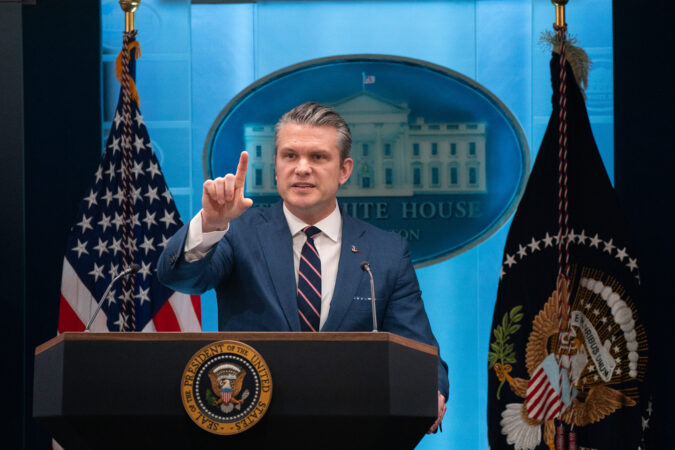
    More than 150 troops at Lackland Air Force Base in Texas have been infected with influenza over the past three weeks — a major outbreak less than two months after Defense Secretary Pete Hegseth said American troops would no longer be required to be vaccinated against the flu.

    The Air Force said in a statement Thursday that the 37th Training Wing, which is at Lackland, “has been managing a localized influenza outbreak among trainees at Basic Military Training.”

    About 160 people have become ill, according to two people familiar with the matter who spoke on the condition of anonymity because of the sensitivity of the issue. More than 36,000 military recruits come through the 37th Training Wing each year.

    The Air Force did not immediately respond to a question about whether the troops who contracted the flu had been vaccinated. The outbreak was first reported by the New York Times.

    People showing symptoms are being isolated and treated, and medical personnel are also monitoring those who were in close contact with sick individuals, according to the Air Force statement. Recruits will return to training once they’re cleared by medical staff.

    The Air Force also said in a news release earlier this week that Keon McDaniel, who was in his sixth week of basic military training, died after experiencing a medical emergency and being transported to nearby Brooke Army Medical Center. The Air Force is investigating whether his death is related to the outbreak, but that review is still underway, a U.S. official said, speaking on the condition of anonymity because of the sensitivity of the issue.

    In April, Hegseth announced he would be rolling back a decades-old mandate requiring U.S. troops to receive the annual flu vaccine. The defense secretary called the requirement “overly broad” and said that soldiers would be able to take the vaccine if they believed it was in their best interest, describing it as an effort to “restore freedom and strength to our joint force.”

    Chief Pentagon spokesperson Sean Parnell said Thursday in a statement that the Department of the Army, Department of the Navy, Department of the Air Force, National Security Agency, and Defense Health Agency had been granted permission to require the vaccines in certain circumstances.

    “The decisions were based upon thorough risk assessments and are designed to maximize operational readiness, lethality, and force generation, while safeguarding at-risk populations,” Parnell said, adding that the military components requesting the exceptions are responsible for their implementation.

    Undersecretary of Defense for Personnel and Readiness Anthony Tata told members of Congress last month that the Pentagon was reviewing exceptions for service members in environments such as basic training, submarines, ships, and Army Ranger School.

    The Times reported Thursday that in the midst of the recent outbreak, the Air Force was granted an exception to the new voluntary vaccine policy, requiring that recruits at Lackland get flu shots. The Air Force did not immediately respond to questions from the Washington Post about whether that exception had been put in place.

    Influenza rates are considered low right now nationally and in Texas, according to tracking by the Centers for Disease Control and Prevention and the Texas state health department. But living in close quarters could exacerbate an outbreak, as flu is spread mainly when people cough, sneeze, or talk.

    The flu vaccine is not a cure-all; it is much less effective in preventing infections than vaccines such as the one for measles, mumps, and rubella, which the CDC says prevents measles in about 97% of cases when patients have received two doses. But multiple studies have shown the flu vaccine reduces the disease’s severity and averts hospitalizations and deaths.

    However, Health Secretary Robert F. Kennedy Jr. has a long history of disparaging vaccines. As health secretary, he stopped a flu awareness campaign and downgraded the recommendation for childhood shots.

    The U.S. military first mandated the flu vaccine in 1945, at the end of World War II — in part to hedge against the threat of biological warfare and because the influenza pandemic of 1918 to 1920 had hindered American troop readiness during World War I, killing more than 26,000 American soldiers. The mandate was briefly withdrawn in 1949 but reinstated in the 1950s.

    Military vaccine mandates were a campaign issue for President Donald Trump, who promised during his 2024 campaign to rehire individuals who had lost their jobs over the military’s requirement that service members be vaccinated against the coronavirus.

    “I will rehire every patriot who was fired from the military with an apology and with backpay,” Trump said at the time, which he went on to do in an executive order in January last year.

  • The blue paint is peeling off the Reflecting Pool

    The blue paint is peeling off the Reflecting Pool

    For days, workers have been trying to rid the Reflecting Pool of algae after a more than $14 million renovation that President Donald Trump said was “done properly” and “could last for 100 years.”

    But now workers have another problem to contend with: peeling paint. On Thursday, a sheet of the pool’s surface — painted in American Flag Blue, a color selected by the president — was seen floating on the north side of the pool. It undulated in the water as curious tourists gathered, some of whom had come to see the green algae.

    At 5:35 p.m. on Thursday, a worker came to remove the sheet of pool surface, telling a Washington Post photographer not to photograph it, despite being on public land.

    The Interior Department did not immediately respond to questions about the paint and why the pool surface is separating. The agency said in a statement on Wednesday that it is treating the pool with hydrogen peroxide and “high-tech nanobubble ozone technology” to effectively cut off the algae’s food supply.

    On Thursday, the Interior Department press office posted on X that “the Reflecting Pool water is crystal clear, and our National Park Service team is now vacuuming up the bottom of some parts of the Reflecting Pool — just like the destroyed Iranian Navy resting on the bottom of the Persian Gulf.”

    Indeed, some areas of the Reflecting Pool were looking cleaner compared with earlier in the week. Workers in chest-high waders stood in the middle of the pool and vacuumed the algae. The neon green-tinted water could be seen pouring out of tubes into nearby drainage grates. The center of the pool, though, was still neon green, and residual algae remained in the cleaned portions of the pool.

    Within days of the renovation’s completion, the Reflecting Pool had more algae in it than at any recorded point in the month of June for at least five years, according to a specialized analysis of satellite data.

    The Reflecting Pool renovation, Trump has said, was prompted by a friend visiting from Germany who called the water “filthy, dirty … disgusting looking.” Algae has been a consistent problem for the pool and quickly reappeared after a $34 million renovation that was completed in 2012.

    But this time would be different, the president promised. He touted his pool-building experience and praised the workmanship of his contractor, who got the job in a no-bid contract.

    “I’m very proud of it,” Trump said in the Oval Office on June 3, saying that his six-week project had finally solved the pool’s yearslong leaking issues. “I’m very good at building things and constructing things.”

    “This was not a paint job,” Trump wrote on Truth Social on June 5. “This was highly sophisticated material, industrial strength, that could last for 100 years, applied by very talented people.”

    On Friday morning, the president reposted an artificial intelligence-generated video showing him filling the Reflecting Pool with what appeared to be critics’ tears (and blue-tinted water) on Truth Social.

    The Cultural Landscape Foundation, a local advocacy organization, sued to stop Trump’s changes to the Reflecting Pool, but the work was completed before a judge could issue a ruling.

    One of the reasons TCLF filed its lawsuit is because the National Park Service did not perform a review as per the National Historic Preservation Act, said Charles A. Birnbaum, the organization’s president and CEO.

    Under that review, they would have been required to consult subject area experts who could “identify potential problems — like algae and exfoliating paint — and, perhaps, suggest solutions,” said Birnbaum in a statement to the Post. “Instead, the Park Service granted themselves a ‘streamlined review,’ which they admitted was done under pressure from ‘White House leadership’ even though the project was ineligible.”

    He concluded: “We can see the result.”

  • World Cup exposes growing global rift over prediction markets

    World Cup exposes growing global rift over prediction markets

    This year’s World Cup is the first since prediction markets such as Kalshi and Polymarket exploded to popularity as a new way to bet on sports.

    Fans in the U.S. are free to collectively wager billions of dollars on the tournament, but a growing number of other countries are making it harder to access the platforms offering those bets. Whether fans can bet on how many goals Kylian Mbappé scores for France or who wins the tournament may depend on where they live. In some cases, fans may not be able to bet at all.

    In just the last few weeks, Spain, Indonesia, and India have joined the growing list of countries — including most of the European Union and large parts of Asia — that have put in place temporary or permanent measures to cut off access to the Kalshi and Polymarket websites and apps.

    Brazil shut down 27 prediction platforms in April, including Kalshi, whose co-founder, Luana Lopes Lara, is Brazilian, leaving the company scrambling shortly after it launched in the country.

    Regulators have intensified their scrutiny of prediction markets as the companies have expanded rapidly around the world, offering a new kind of financial contract that straddles the line between gambling and financial speculation.

    Some countries view the new types of financial contracts offered by the prediction markets as a form of gambling and subject them to betting laws. Others argue that they should fall under securities or derivatives rules. The start-ups have used the legal uncertainty around their new products to offer them to customers even as regulators struggle to catch up.

    “Prediction markets are entering the same phase every novel financial primitive eventually enters: first hobbyist market, then mass attraction, then legitimacy fights,” said Dovey Wan, founding partner of Primitive Ventures, a backer of prediction market platform Opinion Labs. “The recent bans mean the category has become important enough to regulate.”

    Prediction market operators argue their platforms provide valuable information by aggregating collective forecasts on everything from economic indicators to geopolitical events. Critics counter that the contracts can encourage excessive speculation, and also open new opportunities for insider trading, alongside the ethical issues created by making it possible to bet on the war and other matters of life and death.

    “Betting isn’t new,” said Chris Holland, partner at Singaporean consulting firm HM Strategy. “What’s new is the structure.” Because prediction market contracts are typically classified as derivatives, they fall outside gambling licensing frameworks, he added. “That gap is an open invitation to insiders.”

    Though Kalshi and Polymarket are by far the largest prediction companies, many more are expanding globally, including Opinion Labs, which is backed by Binance cofounder Changpeng Zhao’s family office YZi Labs, and Coinbase Ventures-backed Limitless.

    A number of exchanges have cut marketing deals with soccer leagues and teams ahead of the World Cup to increase their visibility around the tournament.

    The markets are big business, and growing. On Monday, Piper Sandl analyst Patrick Moley wrote that the World Cup was “like the Super Bowl every day,” and was driving record daily volumes on Kalshi.

    Polymarket recorded around $2.8 billion in notional trading volume across its international and U.S. exchanges in the first week of June, according to user-compiled data on Dune Analytics, up from $2.1 billion a week earlier. Kalshi reported about $4.5 billion over the same period, up from $4.2 billion.

    Creating a regulatory framework that restricts the sites is proving a challenge for country-specific regulators. The companies have been rapidly expanding around the world, unlike traditional gambling companies that are generally restricted to a specific jurisdiction. The use of virtual private-networks and cryptocurrencies make it easier to operate without going through local financial firms and regulators, and makes it difficult to completely shut the platforms down.

    India’s government said users were able to access “illegal and blocked” prediction markets and said “Polymarket and a few other similar sites” were enabling the use of virtual private networks to circumvent the national ban, The government asked internet providers to cut off access to the platforms.

    Polymarket and Kalshi’s terms of service already prohibit people from signing up in certain countries, including many that have recently taken steps to crack down on the sites. They’ve also strengthened safeguards against insider trading and market manipulation as prediction markets face growing scrutiny.

    Polymarket is partnering with blockchain analytics firm Chainalysis Inc. to help police its platform related to suspicious trades.

    “We welcome the opportunity to collaborate with Spain, Brazil, and other countries on a path forward that supports responsible innovation, transparency, and user protection in prediction markets,” a Polymarket spokesperson said in an email. The firm monitors for insider trading and other illegal activity, consistent with other markets, the spokesperson added.

    Opinion Labs has restricted access for users from various jurisdictions and blocked any sanctioned addresses, said Alex Chan, chief investment officer, in an emailed response. “We are working closely with a number of local authorities toward launching compliant local platforms.”

    Kalshi and Limitless didn’t respond to email seeking comments.

    For now, prediction markets remain legal in a patchwork of jurisdictions, but the direction of travel is becoming clearer: Governments are increasingly unwilling to let platforms operate in a regulatory gray zone.

    Emily Nicolle, Sidhartha Shukla, Alice French, Yian Lee, Betty Hou, Lulu Yilun Chen, and Amanda Wang contributed to this article.

  • Supreme Court limits key provision of the landmark Voting Rights Act

    WASHINGTON — The Supreme Court on Wednesday sharply weakened a key provision of the landmark Voting Rights Act, a ruling that limits the consideration of race in drawing voting maps and could usher in Republican gains in the House.

    The decision is expected to touch off a scramble by Republicans to redraw majority-minority districts, especially in the South. New districts could shift the balance of power in Congress by imperiling the reelection prospects of some Black Democrats, possibly as soon as November’s midterms in some instances. Representatives of color in state legislatures and local offices could also be redistricted out.

    The court’s conservative majority found Louisiana unlawfully discriminated by race when it created a second majority-Black congressional district to comply with the VRA. But the court did not strike down the provision, known as Section 2, as unconstitutional, as many voting rights advocates had feared it would. Still, the court’s liberal justices and voting rights experts said it was effectively gutted.

    The ruling carries significant symbolic weight, scaling back the last major pillar of a 60-year-old law long considered one of the marquee achievements of the civil rights era. The Voting Rights Act bans discriminatory voting practices such as literacy tests and poll taxes, and has helped greatly increase minority representation in state and federal offices.

    In an ideologically divided 6-3 ruling, the conservative justices created a higher bar for the law’s powerful provision that allows states to use race to draw maps that help minority communities elect candidates of their choice. Section 2 is aimed at combating discriminatory gerrymandering that weakens the power of Black, Latino, Native American, and Asian voters.

    States must walk a careful line when drawing maps for voting districts. The Voting Rights Act directs states to consider race to some degree when redistricting to ensure that racial minority groups have an opportunity to elect representatives who reflect their priorities. Maps explicitly drawn along racial lines, however, violate the equal-protection clause of the 14th Amendment and the 15th Amendment’s ban on racial discrimination in voting practices.

    Justice Samuel A. Alito Jr. wrote the opinion for the majority, saying it was time to rework Section 2 given gains in ending racial discrimination, the use of VRA lawsuits for partisan purposes, and advances in technology that have made it easier to draw legislative districts that balance partisan interests and racial considerations.

    Alito wrote that going forward, plaintiffs would have to show that a state intentionally discriminated against a minority group in drawing a map, rather than simply showing that members of the minority group did not have the opportunity to elect a candidate of their choice when certain circumstances are met.

    “Section 2 of the Voting Rights Act … was designed to enforce the Constitution — not collide with it,” he wrote. “Unfortunately, lower courts have sometimes applied this Court’s [Section] 2 precedents in a way that forces States to engage in the very race-based discrimination that the Constitution forbids.”

    The decision came over the sharp objections of the court’s three liberals. Justice Elena Kagan delivered the dissent from the bench, signaling strong disagreement. In her opinion, Kagan lamented that in rulings over the last decade, the court’s conservative justices had carried out a “demolition” of the VRA that was now complete. She predicted a precipitous decline in minority representation in political office.

    “The consequences are likely to be far-reaching and grave. Today’s decision renders Section 2 all but a dead letter. In the States where that law continues to matter — the States still marked by residential segregation and racially polarized voting — minority voters can now be cracked out of the electoral process,” Kagan wrote, referring to the process of drawing maps that break up minority voting blocks.

    The decision continues a trend by the court’s conservative majority to roll back race-conscious efforts to redress discriminatory practices. It comes two years after another major decision to restrict race-based affirmative action in college admissions.

    The ruling lands as a nationwide redistricting war has broken out between Republicans and Democrats, both of which have taken the unusual step of redrawing district lines between censuses to try to secure partisan advantages in this year’s races for Congress. Republicans currently hold a slim majority.

    Professor Richard L. Hasen, an election law expert at UCLA, said Section 2 of the Voting Rights Act still stands but is all but eviscerated.

    “The opinion weakens application of the Voting Rights Act to make it a much weaker, and potentially toothless, law,” Hasen wrote on his blog. “It is hard to overstate how much this weakens the Voting Rights Act.”

    NAACP president Derrick Johnson said in a statement that the ruling was a major strike to minority political power.

    “Today’s decision is a devastating blow to what remains of the Voting Rights Act, and a license for corrupt politicians who want to rig the system by silencing entire communities,” Johnson said. “The Supreme Court betrayed Black voters, they betrayed America, and they betrayed our democracy. This ruling is a major setback for our nation and threatens to erode the hard-won victories we’ve fought, bled, and died for.”

    The Trump administration hailed the ruling in a statement.

    “This is a complete and total victory for American voters,” White House spokesperson Abigail Jackson wrote. “The color of one’s skin should not dictate which congressional district you belong in. We commend the court for putting an end to the unconstitutional abuse of the Voting Rights Act and protecting civil rights.”

    Louisiana Attorney General Liz Murrill called the ruling “seismic” and applauded it in a statement.

    “The Supreme Court has ended Louisiana’s long-running nightmare of federal courts coercing the state to draw a racially discriminatory map,” Murrill said.

    The complicated dispute over the Louisiana voting district has dragged on for years and had been before the court last term.

    The case began in 2022 when Black voters and civil rights groups sued Louisiana under Section 2, saying a new voting map drafted after the 2020 Census shortchanged African American voters. The map had only one Black-majority district out of six. African Americans make up one-third of the state’s population.

    A federal court ruled for the plaintiffs and ordered the state to draw a new map with a second Black-majority district. After further legal wrangling, the Louisiana legislature drafted one in 2024.

    The new map, which was drawn in part to protect the seats of Republican incumbents, including House Speaker Mike Johnson and House Majority Leader Steve Scalise, created a Black-majority district that meandered across the state from Baton Rouge to Shreveport.

    A group of self-described “non-Black voter[s]” sued, arguing the new map was an unconstitutional racial gerrymander that violated the equal-protection clause. A federal district court panel ruled for the non-Black plaintiffs and put a hold on the redrawn map.

    The Supreme Court eventually allowed the map with two Black-majority districts to go into effect for the 2024 congressional election. Voters chose Cleo Fields, a Black Democrat, for the new district.

    The non-Black voters brought their case to the Supreme Court once again. Last term, the justices decided to hold off on a ruling and asked both sides to address whether creation of the second Black-majority district violated the 14th and 15th Amendments, before taking up the case again this term.

    During arguments in October, Louisiana Solicitor General Benjamin Aguiñaga told the justices that any “race-based redistricting is fundamentally contradictory to our Constitution.” He also said that Louisiana had changed in recent decades, so the need for Section 2 had been obviated.

    “It requires striking enough members of the majority race to sufficiently diminish their voting strength, and it requires drawing in enough members of a minority race to sufficiently augment their voting strength,” Aguiñaga said. “Embedded within these express targets are racial stereotypes that this court has long criticized.”

    Kagan asked an attorney for Black voters in Louisiana what impact gutting Section 2 would have.

    “The results would be pretty catastrophic,” said Janai Nelson, the president of the NAACP Legal Defense Fund.

    “We only have the diversity we see across the South because of litigation” under the voting rights law, Nelson said, adding that it had been “crucial to diversifying leadership” in Louisiana and other states. She said no Black person has been elected to statewide office in Louisiana to date.

    The decision follows another by the Supreme Court involving Section 2 in 2023. In that case, the justices ruled Alabama created electoral maps that unlawfully diluted the power of Black residents. That ruling surprised many court watchers because the justices have chipped away at the VRA in recent years.

    In the most significant ruling in 2013, the justices struck down Section 5 of the VRA, which required states with a history of discriminating against minority voters to get changes to electoral law approved by the federal government or a judge. Most of the states covered by the provision are in the South.

    The latest ruling is likely to contribute to the uncertainty surrounding the nation’s electoral maps amid the unprecedented wave of mid-decade redistricting. Ordinarily, states redraw their lines at the beginning of each decade after the U.S. Census Bureau alerts states to population shifts.

    President Donald Trump, concerned Republicans could lose their fragile House majority, began pressing Republican-led states last summer to draw new lines ahead of the midterm elections. Republicans drew better lines for themselves in Ohio, Missouri, North Carolina, and Texas that could give them strong shots at picking up nine more seats.

    Florida Republicans are planning to carve up their districts to give their party up to four more districts, and were debating their plan on the floor of the state House when the court released its decision. Legislators approved the plan Wednesday afternoon.

    In response, voters in California approved a new map that will give Democrats up to five more House seats, and voters in Virginia approved a plan to redraw their map. The Supreme Court turned aside a challenge to the California map in February.

    The Supreme Court’s decision probably gives Republicans an opportunity to draw even more districts in their favor.

    The deadlines for most states to redraw their maps before the midterms have passed, but it is possible some states push to change those rules. Either way, the ruling could set Republicans up for advantages in 2028 and beyond. In the wake of the decision, Sen. Marsha Blackburn (R., Tenn.) called on lawmakers in her state to redraw maps to create an extra Republican seat in Memphis.

    This Supreme Court term is shaping up as a consequential one for election-related law.

    In one major case, the court will decide the constitutionality of counting mail-in ballots that arrive after an election, provided they are postmarked by Election Day. The justices also allowed a lawsuit by a Republican congressman from Illinois who is challenging the state’s mail-in ballot law.

    The justices heard arguments in December over whether to lift restrictions on parties spending money in coordination with candidates, which could be the latest chance for the court to curtail campaign finance limits.

    This article contains information from the Associated Press.
  • Kash Patel’s push against Democratic lawmaker raises concerns within FBI

    Kash Patel’s push against Democratic lawmaker raises concerns within FBI

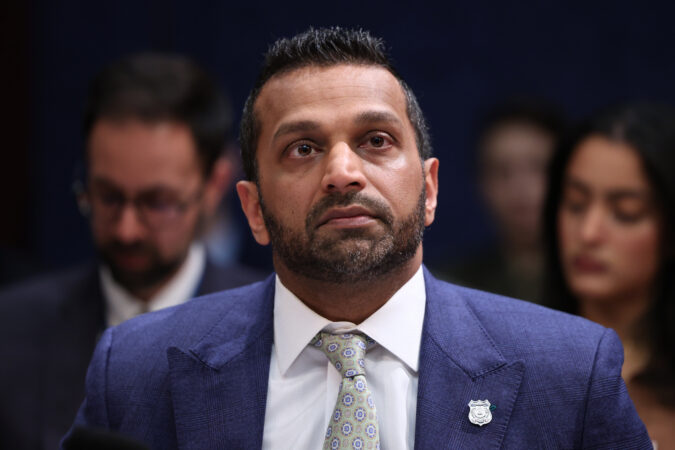
    FBI Director Kash Patel is pressing to release a decade-old investigative file involving Rep. Eric Swalwell (D., Calif.) and a suspected Chinese intelligence operative, recently dispatching agents in the bureau’s San Francisco office to quickly redact the files before they are released publicly despite no evidence of wrongdoing by Swalwell, according to three people familiar with the effort.

    The potential release is part of the Trump administration’s aggressive push to investigate Swalwell, a vocal critic of President Donald Trump and a leading Democratic candidate for California governor, according to the people familiar with the effort. It is highly unusual for the FBI to release case files tied to a probe that did not result in criminal charges.

    As FBI director, Patel has focused on trying to bring a criminal case against the outspoken Democrat, reassigning multiple agents in San Francisco to work on the matter, the current and former officials said. FBI leaders have even discussed sending agents to China to talk to the suspected intelligence operative, believing she could have damaging information about Swalwell, according to two of the people familiar with the investigation. The people familiar with the matter spoke on the condition of anonymity to discuss an investigation that has not been made public.

    The Chinese woman at issue is Christine Fang, also known as Fang Fang, who reportedly courted Swalwell and other California politicians in the United States from 2011 to 2015. She helped with fundraising for Swalwell’s 2014 reelection campaign and even helped place an intern in his congressional office. When federal agents conveyed their concerns about Fang to Swalwell around 2015, he reportedly cut off ties with her and said he helped investigators.

    Swalwell was not accused of any wrongdoing when the FBI investigated his relationship with Fang a decade ago. In 2023, the Republican-led House Ethics Committee closed a two-year investigation into the congressman, deciding to “take no further action.”

    Despite that, FBI leaders have recently suggested in internal discussions that the government could try to arrange for Fang to get a U.S. visa in exchange for speaking with FBI agents about the Democrat, according to the three people with knowledge of Patel’s efforts. It would be highly unorthodox to grant a visa to a person suspected of being an intelligence agent for a foreign superpower.

    An FBI spokesperson disputed any notion of improper motives. “The contentions in this story are incorrect,” the spokesperson said. “This FBI, being the most transparent in history, prepares documents for numerous different reasons, including for release to different agencies and departments to further review investigations that may have been opened under previous administrations.”

    The push to publicly release the investigative files, the people interviewed said, suggests that the FBI has struggled to so far build a criminal case against Swalwell. Even if there is no incriminating evidence in the files, an extensive case file could contain revealing and personal details about Swalwell and his campaign operations.

    The lengths that Patel’s circle is going to in the bid to pursue a political foe of the president has raised alarms within the bureau, where some officials fear that releasing the files — even with redactions — could compromise law enforcement sources and investigatory methods, making it harder for the FBI to gain trust with potential witnesses.

    They also said they feared the repercussions of sending agents to the territory of an adversarial nation to dig up information on a sitting congressman. Such an interview, legal experts said, would be impossible without Chinese interference, and Fang would be considered an unreliable witness.

    “Most troubling about this is that we are now literally at war. We also face threats against the homeland,” Swalwell said in a statement to the Washington Post. “Kash Patel should be spending every moment trying to keep us safe, not scoring political points. A lot of people have bent the knee to this administration. But I will not, and neither will the people of California.”

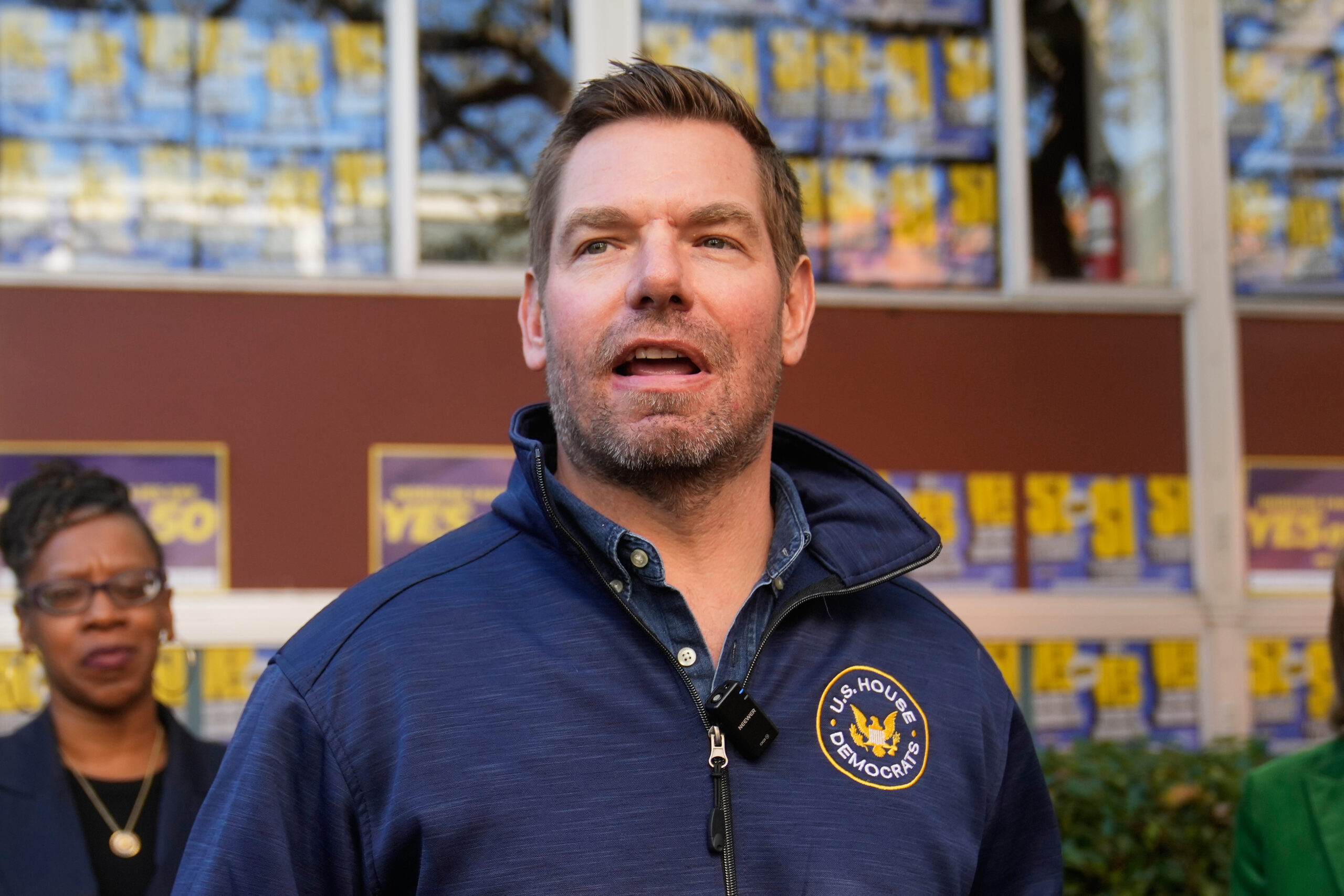
    Rep. Eric Swalwell (D., Calif.) speaks to reporters after a campaign event on Nov. 3, 2025, in San Francisco.

    Swalwell, who unsuccessfully sought the Democratic presidential nomination in 2020, has been an unusually aggressive and colorful critic of the president, frequently criticizing the president in media interviews and on the dais as a member of the House Judiciary Committee. Swalwell also was a House “manager” — essentially, a prosecutor — in Trump’s 2021 impeachment for his role in the Jan. 6, 2021, attack on the U.S. Capitol.

    Swalwell’s district in Northern California includes a large Chinese American population. Republicans and media personalities frequently criticize Swalwell for his ties to Fang and the Chinese community, suggesting that he is improperly working with them.

    But FBI agents typically need a specific investigative reason to reopen a closed investigation. The people familiar with the probe said it is unclear how or why the FBI reopened its examination of Swalwell.

    Internal Justice Department policy has long said that law enforcement should refrain from taking any public investigatory steps against a political candidate in the 60 days before an election, to prevent even the appearance of the department using its power to sway the vote.

    The Justice Department is not legally bound to follow this rule, however, and it is unclear whether it would do so in Swalwell’s case. The California gubernatorial primary is June 2.

    In California’s primaries, the top two vote-getters, regardless of party affiliation, move on to the November general election. Two Republicans currently lead the governor’s race in recent polls, despite the state’s liberal leanings, as a large number of Democrats — led by Swalwell — split the vote. Democratic leaders hope their voters ultimately coalesce around one or two candidates, but the outcome remains uncertain.

    The investigatory files are likely to include numerous interviews with Swalwell, his aides, friends and others about the congressman’s interactions with Fang, details about his campaign and more.

    Under a long-standing legal principle, agencies do not release potentially damaging material about people against whom they were unable to build a case strong enough to take to court.

    The department recently released the investigatory files in the case of sex trafficker Jeffrey Epstein, who had been indicted on federal sex trafficking charges but had not yet faced trial before killing himself. But in that case, the department’s hand was forced by political pressure and ultimately an act of Congress.

    Republicans and Democrats criticized the Justice Department’s handling of the Epstein release, saying the rollout was disorganized with few effective systems in place to ensure that appropriate redactions were made.

    Since Trump took office, his administration has mounted an aggressive campaign to use federal law enforcement agencies to pursue his political adversaries.

    The Justice Department filed criminal cases against former FBI Director James B. Comey and New York Attorney General Letitia James, for example. A judge threw out both indictments in November, ruling that Lindsey Halligan, the prosecutor overseeing both cases, had been unlawfully appointed.

    Federal Housing Finance Agency Director Bill Pulte — a staunch Trump ally — referred Swalwell to the Justice Department for criminal prosecution over mortgage fraud allegations, but the department never indicted Swalwell. Swalwell sued Pulte, saying he unlawfully looked used his position to look through private mortgage fraud documents, but he ultimately dropped the lawsuit.

    The department is also investigating Federal Reserve Chair Jerome H. Powell over the cost of the Fed’s recent building renovations. A federal prosecutor acknowledged in a closed-door hearing this month that the department did not have evidence of wrongdoing, the Post has reported.

    Even against this backdrop, a proposal to release extensive files, send agents to China to interview a suspected intelligence operative and offer her a U.S. visa in exchange for revelations about a U.S. congressman would be extraordinary.

    Patel, who before becoming FBI director was a conservative firebrand who attacked the “deep state” and vowed to “come after” Trump’s adversaries, has long been a critic of Swalwell. In his 2023 book Government Gangsters, Patel published a list of 60 names in an appendix that has been widely viewed by Patel’s critics as a sort of enemies list. It includes Trump foes, Democrats, and FBI agents who were involved in investigations into the president.

    Swalwell was among those named by Patel, who has said that his critics are mischaracterizing the appendix by calling it an enemies list.

    At a congressional hearing last year, Swalwell asked Patel if he would recuse himself from any investigation of people on the list, and Patel said no.