Category: Washington Post

  • Kash Patel’s push against Democratic lawmaker raises concerns within FBI

    Kash Patel’s push against Democratic lawmaker raises concerns within FBI

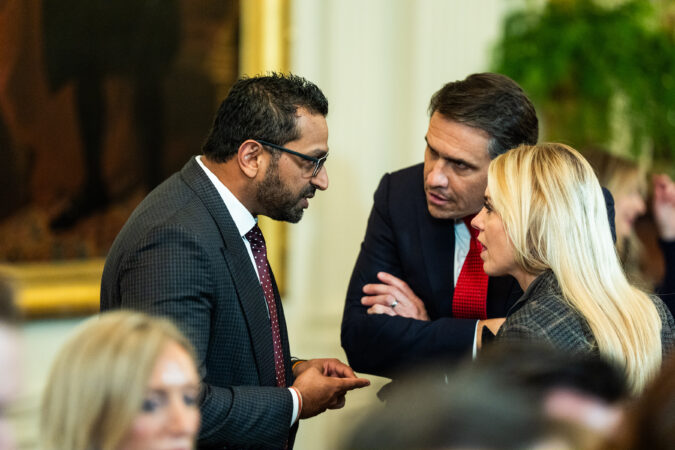
    FBI Director Kash Patel is pressing to release a decade-old investigative file involving Rep. Eric Swalwell (D., Calif.) and a suspected Chinese intelligence operative, recently dispatching agents in the bureau’s San Francisco office to quickly redact the files before they are released publicly despite no evidence of wrongdoing by Swalwell, according to three people familiar with the effort.

    The potential release is part of the Trump administration’s aggressive push to investigate Swalwell, a vocal critic of President Donald Trump and a leading Democratic candidate for California governor, according to the people familiar with the effort. It is highly unusual for the FBI to release case files tied to a probe that did not result in criminal charges.

    As FBI director, Patel has focused on trying to bring a criminal case against the outspoken Democrat, reassigning multiple agents in San Francisco to work on the matter, the current and former officials said. FBI leaders have even discussed sending agents to China to talk to the suspected intelligence operative, believing she could have damaging information about Swalwell, according to two of the people familiar with the investigation. The people familiar with the matter spoke on the condition of anonymity to discuss an investigation that has not been made public.

    The Chinese woman at issue is Christine Fang, also known as Fang Fang, who reportedly courted Swalwell and other California politicians in the United States from 2011 to 2015. She helped with fundraising for Swalwell’s 2014 reelection campaign and even helped place an intern in his congressional office. When federal agents conveyed their concerns about Fang to Swalwell around 2015, he reportedly cut off ties with her and said he helped investigators.

    Swalwell was not accused of any wrongdoing when the FBI investigated his relationship with Fang a decade ago. In 2023, the Republican-led House Ethics Committee closed a two-year investigation into the congressman, deciding to “take no further action.”

    Despite that, FBI leaders have recently suggested in internal discussions that the government could try to arrange for Fang to get a U.S. visa in exchange for speaking with FBI agents about the Democrat, according to the three people with knowledge of Patel’s efforts. It would be highly unorthodox to grant a visa to a person suspected of being an intelligence agent for a foreign superpower.

    An FBI spokesperson disputed any notion of improper motives. “The contentions in this story are incorrect,” the spokesperson said. “This FBI, being the most transparent in history, prepares documents for numerous different reasons, including for release to different agencies and departments to further review investigations that may have been opened under previous administrations.”

    The push to publicly release the investigative files, the people interviewed said, suggests that the FBI has struggled to so far build a criminal case against Swalwell. Even if there is no incriminating evidence in the files, an extensive case file could contain revealing and personal details about Swalwell and his campaign operations.

    The lengths that Patel’s circle is going to in the bid to pursue a political foe of the president has raised alarms within the bureau, where some officials fear that releasing the files — even with redactions — could compromise law enforcement sources and investigatory methods, making it harder for the FBI to gain trust with potential witnesses.

    They also said they feared the repercussions of sending agents to the territory of an adversarial nation to dig up information on a sitting congressman. Such an interview, legal experts said, would be impossible without Chinese interference, and Fang would be considered an unreliable witness.

    “Most troubling about this is that we are now literally at war. We also face threats against the homeland,” Swalwell said in a statement to the Washington Post. “Kash Patel should be spending every moment trying to keep us safe, not scoring political points. A lot of people have bent the knee to this administration. But I will not, and neither will the people of California.”
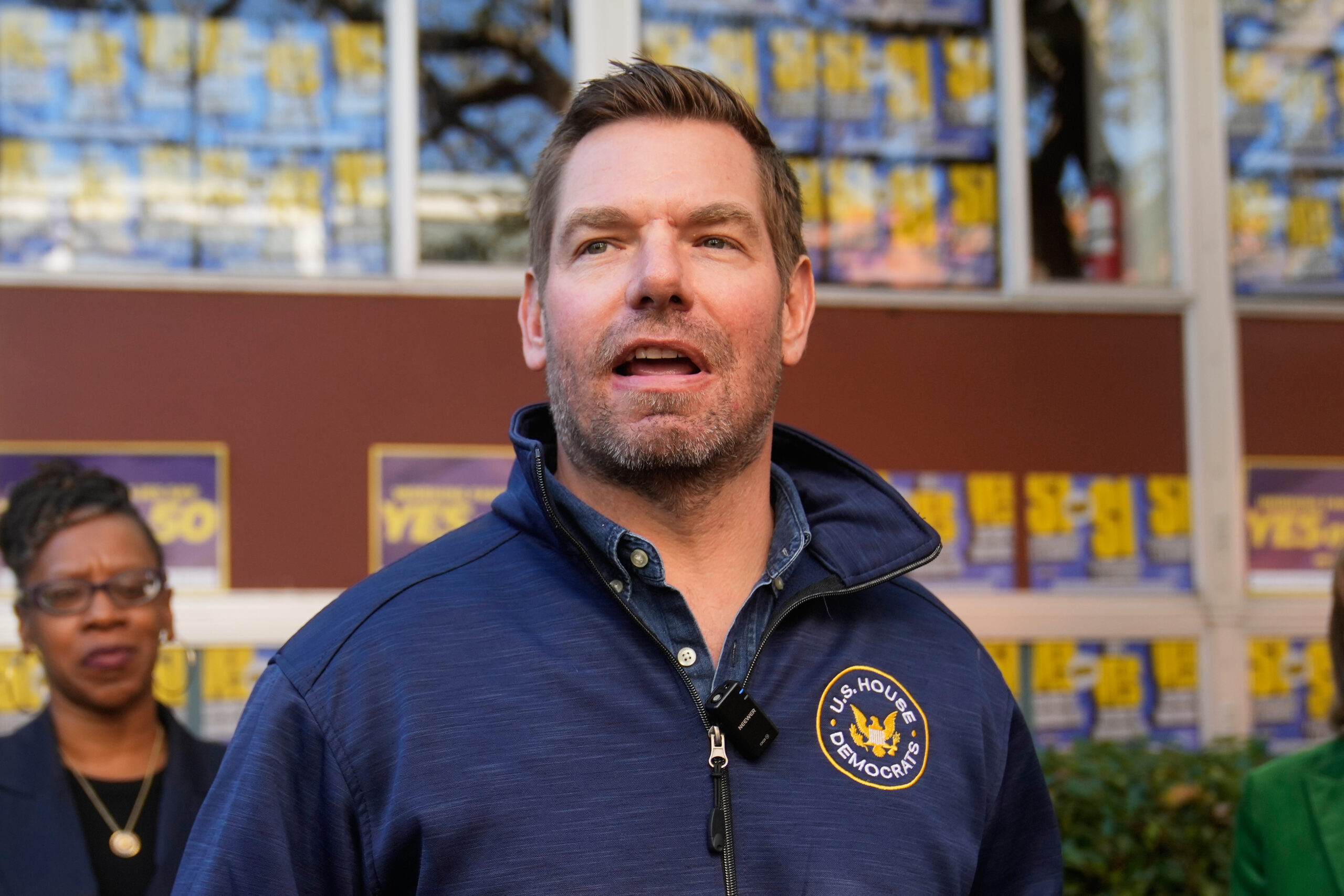
    Rep. Eric Swalwell (D., Calif.) speaks to reporters after a campaign event on Nov. 3, 2025, in San Francisco.

    Swalwell, who unsuccessfully sought the Democratic presidential nomination in 2020, has been an unusually aggressive and colorful critic of the president, frequently criticizing the president in media interviews and on the dais as a member of the House Judiciary Committee. Swalwell also was a House “manager” — essentially, a prosecutor — in Trump’s 2021 impeachment for his role in the Jan. 6, 2021, attack on the U.S. Capitol.

    Swalwell’s district in Northern California includes a large Chinese American population. Republicans and media personalities frequently criticize Swalwell for his ties to Fang and the Chinese community, suggesting that he is improperly working with them.

    But FBI agents typically need a specific investigative reason to reopen a closed investigation. The people familiar with the probe said it is unclear how or why the FBI reopened its examination of Swalwell.

    Internal Justice Department policy has long said that law enforcement should refrain from taking any public investigatory steps against a political candidate in the 60 days before an election, to prevent even the appearance of the department using its power to sway the vote.

    The Justice Department is not legally bound to follow this rule, however, and it is unclear whether it would do so in Swalwell’s case. The California gubernatorial primary is June 2.

    In California’s primaries, the top two vote-getters, regardless of party affiliation, move on to the November general election. Two Republicans currently lead the governor’s race in recent polls, despite the state’s liberal leanings, as a large number of Democrats — led by Swalwell — split the vote. Democratic leaders hope their voters ultimately coalesce around one or two candidates, but the outcome remains uncertain.

    The investigatory files are likely to include numerous interviews with Swalwell, his aides, friends and others about the congressman’s interactions with Fang, details about his campaign and more.

    Under a long-standing legal principle, agencies do not release potentially damaging material about people against whom they were unable to build a case strong enough to take to court.

    The department recently released the investigatory files in the case of sex trafficker Jeffrey Epstein, who had been indicted on federal sex trafficking charges but had not yet faced trial before killing himself. But in that case, the department’s hand was forced by political pressure and ultimately an act of Congress.

    Republicans and Democrats criticized the Justice Department’s handling of the Epstein release, saying the rollout was disorganized with few effective systems in place to ensure that appropriate redactions were made.

    Since Trump took office, his administration has mounted an aggressive campaign to use federal law enforcement agencies to pursue his political adversaries.

    The Justice Department filed criminal cases against former FBI Director James B. Comey and New York Attorney General Letitia James, for example. A judge threw out both indictments in November, ruling that Lindsey Halligan, the prosecutor overseeing both cases, had been unlawfully appointed.

    Federal Housing Finance Agency Director Bill Pulte — a staunch Trump ally — referred Swalwell to the Justice Department for criminal prosecution over mortgage fraud allegations, but the department never indicted Swalwell. Swalwell sued Pulte, saying he unlawfully looked used his position to look through private mortgage fraud documents, but he ultimately dropped the lawsuit.

    The department is also investigating Federal Reserve Chair Jerome H. Powell over the cost of the Fed’s recent building renovations. A federal prosecutor acknowledged in a closed-door hearing this month that the department did not have evidence of wrongdoing, the Post has reported.

    Even against this backdrop, a proposal to release extensive files, send agents to China to interview a suspected intelligence operative and offer her a U.S. visa in exchange for revelations about a U.S. congressman would be extraordinary.

    Patel, who before becoming FBI director was a conservative firebrand who attacked the “deep state” and vowed to “come after” Trump’s adversaries, has long been a critic of Swalwell. In his 2023 book Government Gangsters, Patel published a list of 60 names in an appendix that has been widely viewed by Patel’s critics as a sort of enemies list. It includes Trump foes, Democrats, and FBI agents who were involved in investigations into the president.

    Swalwell was among those named by Patel, who has said that his critics are mischaracterizing the appendix by calling it an enemies list.

    At a congressional hearing last year, Swalwell asked Patel if he would recuse himself from any investigation of people on the list, and Patel said no.
  • Federal judge blocks RFK Jr.’s vaccine policy overhaul for now

    Federal judge blocks RFK Jr.’s vaccine policy overhaul for now

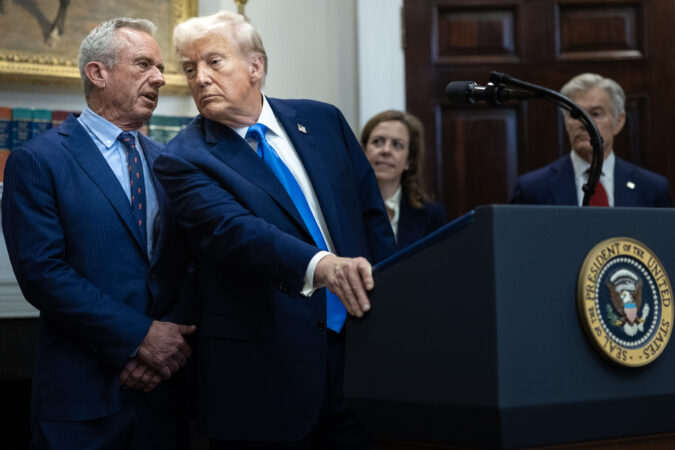
    A federal judge on Monday blocked the Trump administration from implementing sweeping changes to the nation’s childhood immunization schedule, mostly siding with major medical organizations that argue Health Secretary Robert F. Kennedy Jr. unlawfully altered vaccine policy and improperly reconstituted a federal vaccine advisory panel.

    Under Kennedy, the federal government has cut the number of shots routinely recommended to children, including for flu, hepatitis A, rotavirus, and meningococcal disease. Kennedy also dismissed all 17 members of the vaccine advisory panel to the Centers for Disease Control and Prevention last year, installing new members, several of whom have criticized vaccines, especially COVID-19 mRNA shots.

    Several groups, including the American Academy of Pediatrics, the American College of Physicians, and the Infectious Diseases Society of America, sued.

    In his opinion, Judge Brian E. Murphy slammed the administration’s approach to revamping government recommendations for how and when children should be immunized. He said the government has undermined its history of recognizing “the importance and value” of involving independent experts in setting our national public health agenda and relying on “a method scientific in nature” to make such decisions.

    The U.S. District Court judge from Massachusetts wrote that the government bypassed the CDC’s vaccine advisory panel — which is how vaccine recommendations have been made for decades — to change the immunization schedule. He called it a “technical, procedural failure” and a “strong indication of something more fundamentally problematic: an abandonment of the technical knowledge and expertise embodied by that committee.”

    The pause on the administration’s actions are temporary as the dispute is expected to wind through multiple rounds of appeals, raising the prospect of a drawn-out court battle over who ultimately calls the shots on the scientific standards shaping federal vaccine recommendations.

    Andrew Nixon, a spokesperson for the Department of Health and Human Services, said the department “looks forward to this judge’s decision being overturned just like his other attempts to keep the Trump administration from governing.”

    As health secretary, Kennedy — the founder of a prominent anti-vaccine group — has made clear that he wants to overhaul the nation’s immunization system and argued the prior ACIP was plagued with conflicts of interest.

    In early December, President Donald Trump ordered federal health officials to review the childhood immunization schedule, including recommending fewer vaccines to align with other developed countries. The judge wrote that HHS cannot circumvent the long-standing practice of getting advice from the federal panel without offering an explanation “simply because they are following the President’s orders.”

    He also wrote that the government removed every member of the panel and replaced them without undertaking the “rigorous screening” traditionally used to select members.

    The judge also paused all votes taken by Kennedy’s handpicked advisers. Some recent votes include moving from broadly recommending everyone 6 months and older get a coronavirus shot to instead advising Americans to first consult a clinician. The panel also voted to drop a recommendation that all newborns receive a vaccine for hepatitis B.

    In court filings, the medical groups contend that Kennedy’s reconstitution of the vaccine panel was improper and that subsequent votes on vaccine recommendations — including changes affecting COVID-19 and other routine childhood immunizations — were, therefore, invalid. They argued that the administration bypassed established procedure and violated the Administrative Procedure Act, which governs how federal agencies make policy.

    Government attorneys have defended the secretary’s authority to remove and appoint advisory committee members, arguing that federal law grants HHS broad discretion over such panels. They also contend that policy disagreements over vaccine recommendations do not amount to legal violations.

    On Substack, Robert Malone, the committee’s vice chair and a prominent critic of coronavirus vaccines, called the opinion a “judicial overreach.” He wrote that there is a compelling “case for bringing intellectual diversity and fresh expertise” to the panel and for aligning vaccine recommendations with the practices of other nations.

    “In the meantime, the administration should continue its work,” he wrote.

  • Democrats join legal challenge to Trump’s planned 250-foot arch

    Democrats join legal challenge to Trump’s planned 250-foot arch

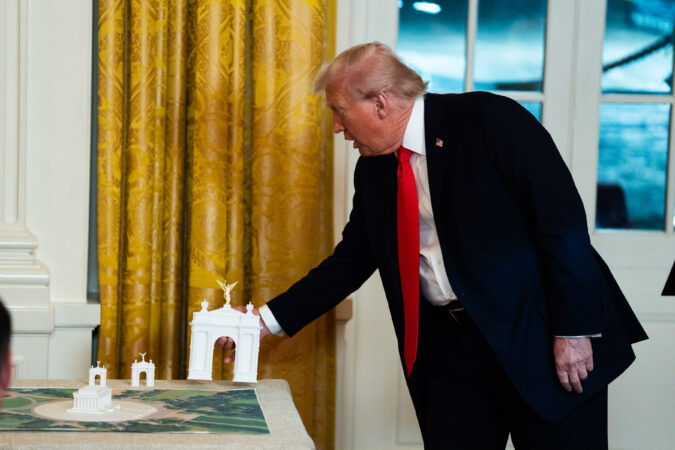
    Congressional Democrats have joined a legal challenge to President Donald Trump’s planned 250-foot triumphal arch, arguing in U.S. District Court that the project must receive congressional approval before moving forward.

    The top Democrats on committees overseeing federal lands and natural resources filed an amicus brief Friday, citing the Commemorative Works Act, a 40-year-old federal law that governs the design and placement of memorials in Washington. Under the law, certain parts of the city — including Memorial Circle, a traffic roundabout near Arlington National Cemetery, which Trump is eyeing for his planned arch — are considered protected land, and monuments built there would require congressional authorization. The circle sits narrowly inside the boundaries of Washington.

    “Washington D.C. is not the President’s backyard to renovate, relandscape, and build in as he sees fit,” Sens. Martin Heinrich of New Mexico, Angus King of Maine, and Jeff Merkley of Oregon and Reps. Jared Huffman of California, Yassamin Ansari of Arizona, and Maxine Dexter of Oregon wrote in their brief. King is an independent who caucuses with the Democrats.

    King also requested a review from the Congressional Research Service, the nonpartisan think tank that serves lawmakers, which independently concluded that an arch built in Memorial Circle would require congressional authorization. King’s office shared the review with the Washington Post.

    “This is a straightforward issue of who’s in charge,” King said in an interview Friday. “The law is clear that any structure in this zone — of which Memorial Circle is certainly part — has to have the express approval of Congress.”

    Huffman said the president’s plans raise “moral and political” questions, including whether the arch is a “vanity project” rather than a necessary monument.

    “This is not Pyongyang,” Huffman said, invoking the capital of North Korea. “Most Americans want to be able to appreciate the view of Arlington Cemetery without a massive eyesore.”

    The White House criticized Democrats’ legal challenge, saying that the party is “opposed to anything that celebrates the greatness of our Country” and mocking them as “America Last losers.”

    “The Triumphal Arch in Memorial Circle is going to be one of the most iconic landmarks not only in Washington, D.C., but throughout the world,” spokesman Davis Ingle said in a statement. “It will enhance the visitor experience at Arlington National Cemetery for veterans, the families of the fallen, and all Americans alike, serving as a visual reminder of the noble sacrifices borne by so many American heroes throughout our 250 year history so we can enjoy our freedoms today.”

    The White House did not respond to questions about whether officials would seek congressional approval of their planned arch.

    Military veterans and a historic preservationist sued the Trump administration last month, arguing that Trump’s planned arch would obstruct key views when visiting Arlington National Cemetery and interfere with the intent of nearby monuments. Public Citizen, a government watchdog organization, is seeking to halt the project until the administration secures approval from Congress and federal review panels.

    The White House has yet to formally propose its arch or seek those approvals, but Trump has repeatedly said that construction will soon begin. He has also tied the arch to the nation’s 250th anniversary, with Freedom 250 — a Trump-aligned group helping plan commemorative activities this year — helping guide the project’s development.

    “We’re doing one that will be more magnificent and larger than the Arc de Triomphe in Paris,” the president said in an interview last month with NBC News, invoking the famous 164-foot-tall arch in France. Trump said that his planned arch would be “about” 250 feet high.

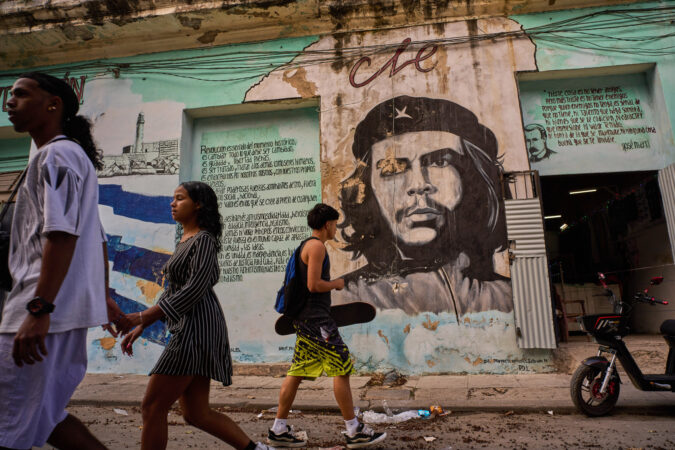
  • Justice Department targets Cuban officials, aims for indictments

    Justice Department targets Cuban officials, aims for indictments

    The Justice Department has formed a working group to examine possible federal charges against officials or entities within Cuba’s government, according to an official familiar with the group.

    The formation of the group could be a significant step in the Trump administration’s public push to topple the regime in Cuba.

    Officials from government agencies including the Treasury Department will be part of the recently formed group. Treasury’s involvement could mean the Trump administration is considering further sanctions against Cuba, already the subject of intense U.S. economic sanctions.

    The working group is exploring potential crimes related to immigration, economics, and more. Another person familiar with the working group said federal prosecutors in Florida are also working with local partners in the state to bring potential charges against Cuban officials.

    The effort to bring charges against Cuban officials coincides with President Donald Trump saying that his administration is eyeing Cuba as the next country whose government might be overthrown, following the capture of Venezuela’s Nicolás Maduro in early January and the killing of Iran’s supreme leader last Saturday.

    “We want to finish this one first,” Trump said Thursday, referring to the current attack on Iran. It “will be just a question of time” before Cuba’s government falls, and “you and a lot of unbelievable people are going to be going back to Cuba, hopefully not to stay,” he told a White House audience that included a large number of Republicans from South Florida, many of Cuban descent.

    “I just want to wait a couple of weeks,” he added. On Friday, in an interview with CNN, he repeated that Cuba “is going to fall very soon.”

    The U.S. Attorney’s Office in the Southern District of Florida — which includes Miami, the center of the Cuban exile community — will be overseeing the prosecution group, according to the official familiar with the matter, who, like others in this article, spoke on the condition of anonymity to discuss an internal plan that has not yet been made public.

    Jason Reding Quiñones, who heads the office, is also overseeing a probe aimed at former officials of the Joe Biden and Barack Obama administrations whom Trump accuses of bringing politically motivated investigations against him.

    “Federal prosecutors from across the country work every day to pursue justice, which includes efforts to combat transnational crime,” a Justice Department spokesperson said in a statement.

    The Cuba prosecution effort could, in part, follow the model the administration used to remove Maduro from power. The Justice Department indicted Maduro in 2020, although the leader was not extradited at the time. In January, the administration launched an attack on Venezuela, capturing Maduro and bringing him to New York to face charges.

    Several former prosecutors from the Miami U.S. attorney’s office told the Washington Post that they were not surprised that the office would be leading an effort specifically focused on Cuba-related prosecutions. The Miami office has a long history of handling high-profile cases involving wrongdoing tied to the Cuban regime.

    The U.S. has, for example, long charged that GAESA, a military business conglomerate that controls vast portions of the Cuban economy, including tourism, foreign imports, and currency flows, is a center of state corruption.

    In 2024, the office secured the conviction of Victor Manuel Rocha, a former U.S. diplomat who admitted to gathering intelligence for Cuba for more than four decades while holding sensitive roles in the U.S. State Department and National Security Council.

    Attorneys in the office also led a significant prosecution in the early 2000s against five Cuban intelligence officers who were arrested in the United States and accused of seeking to infiltrate anti-Castro Cuban American groups. The group, known as the Cuban Five, was convicted at trial. President Barack Obama released several of its members in a 2014 prisoner exchange as part of his administration’s efforts to establish more normalized relations with Cuba.

    Last month, several Republican members of Florida’s congressional delegation urged Attorney General Pam Bondi to reopen an investigation into a 1996 incident, in which Cuban forces shot down two unarmed civilian planes operated by a Miami-based Cuban exile group called Brothers to the Rescue. Four people were killed.

    The group was scouring nearby waters for refugees seeking to escape to the U.S. at the time.

    The U.S. lawmakers, in a Feb. 13 letter, alleged that Raúl Castro, Cuba’s former president and brother of Fidel Castro, ordered the attack while serving as the head of the nation’s military.

    They pushed Trump administration officials to indict him and cited audio recordings of Raúl Castro discussing the incident that they said could help build a case.

    “We believe unequivocally that Raul Castro is responsible for this heinous crime,” read the letter signed by Reps. Mario Diaz-Balart, María Elvira Salazar, Carlos A. Gimenez, and Nicole Malliotakis. “It is time for him to be brought to justice.”

    Last week, the Supreme Court heard arguments on the efforts of two U.S. companies seeking compensation for assets seized by Cuba 65 years ago. Success in those efforts could open the door to a large number of additional lawsuits.

    Officials from South Florida have also urged the Justice Department to take action against the Cuban regime over a recent incident in which Cuban soldiers opened fire on a speedboat registered in Florida as it approached the island. The gunfire killed four of the boat’s armed passengers, including a U.S. citizen, and wounded another six.

    Cuban officials charged the survivors this week, alleging that they and those killed were Cubans living in the United States intent on infiltrating the island to commit acts of terrorism.

    The U.S. attorney for the Southern District of Florida, Reding Quiñones, expressed skepticism about that conclusion in a statement shortly after the shooting, saying: “The facts remain unclear and conflicting.”

    He vowed a thorough investigation.

    “We will follow the facts wherever they lead and pursue answers through every legal and diplomatic channel available,” he said. “We owe that to the victims, their families, and to the rule of law. More to come as we learn more.”

  • Justice Dept. releases missing Epstein documents with Trump allegations

    Justice Dept. releases missing Epstein documents with Trump allegations

    The Justice Department on Thursday publicly posted additional records related to convicted sex offender Jeffrey Epstein, including some that include allegations against President Donald Trump, following sharp criticism of the agency’s handling of the issue.

    The agency said the files, which include details from FBI interviews with a woman who told authorities she had been sexually assaulted by Trump and Epstein, had not been previously released because they were incorrectly determined to be duplicates of other records. The Justice Department has posted millions of pages of Epstein-related records online, including investigative materials, following the passage of a law last year mandating their release.

    The woman, who was interviewed by the FBI in 2019, accused Trump of sexually assaulting her decades earlier when she was a minor. No evidence has emerged publicly to corroborate that accusation. The White House called the allegations against Trump “completely baseless accusations, backed by zero credible evidence.”

    The additional records were posted as Trump and his administration have struggled to combat controversies involving the release of files connected to Epstein, who died in federal custody in 2019 while facing charges of sex-trafficking and abusing girls.

    The Justice Department has faced particular criticism over its response to the Epstein Files Transparency Act, a measure passed by Congress last year that demanded the agency make public a wide array of records by mid-December. While the agency did release more than 100,000 pages by that point, it did not make public most of its files until weeks later, well after the deadline.

    Lawmakers have faulted the Justice Department for missing the deadline, failing to redact some information related to victims’ identities and redacting other information. Last month, after multiple media outlets reported that summaries of the woman’s account had not been included, the Justice Department said it was examining whether it wrongly withheld records containing allegations against Trump, who had been friends with Epstein for years before they had a falling out.

    On Thursday, the Justice Department said in a social media post that it had discovered that “15 documents were incorrectly coded as duplicative.” Among these records were notes from multiple FBI interviews with the woman, who spoke to authorities following Epstein’s arrest in 2019.

    According to the interview notes, the woman told investigators that she had been sexually assaulted by Epstein and Trump during separate incidents in the 1980s, when she was a minor. The Washington Post has been unable to corroborate these allegations or reach the woman.

    Though summary reports of three of her FBI interviews were not included in files previously released by the administration, the Justice Department had already posted a report on one of the interviews as well as a summary file referencing the woman’s allegations against Trump.

    Karoline Leavitt, the White House press secretary, pushed back against the allegations in a statement Friday.

    “The total baselessness of these accusations is also supported by the obvious fact that Joe Biden’s [Justice Department] knew about them for four years and did nothing with them — because they knew President Trump did absolutely nothing wrong,” Leavitt said. “As we have said countless times, President Trump has been totally exonerated by the release of the Epstein Files.”

    The Justice Department this week said it had “not deleted any files from the library,” and a spokeswoman called it “the most transparent Department of Justice in history.”

    In addition to the FBI interviews, the Justice Department said Thursday that federal officials in South Florida had separately concluded that five prosecution memos “initially marked as privileged could be released while still protecting the privileged materials.” Those were also released, the agency said.

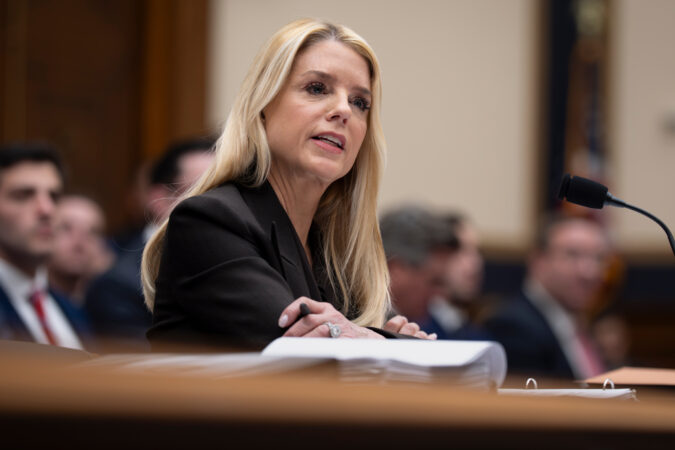
    The release of the FBI interviews and other documents came a day after the House Oversight and Government Reform Committee voted to subpoena Attorney General Pam Bondi, escalating tensions between Congress and the administration.

    Bondi, testifying last month before Congress, said the Justice Department “spent thousands of hours painstakingly reviewing millions of pages to comply with Congress’s law.”

    It was not clear how Bondi intends to respond to the subpoena, which compels her to appear before the committee for a closed-door deposition about the Justice Department’s release of the Epstein records.

  • Army unit’s moves trigger speculation as U.S. plots next steps in Iran war

    Army unit’s moves trigger speculation as U.S. plots next steps in Iran war

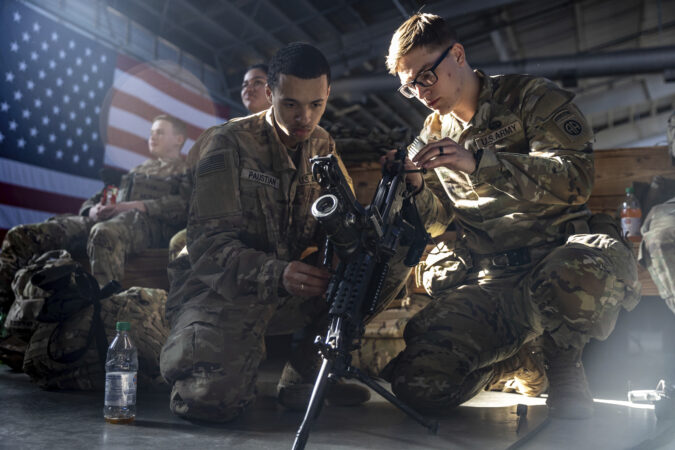
    The Army in recent days abruptly canceled a major training exercise for the headquarters element of an elite paratrooper unit, officials said, fueling speculation within the Defense Department that soldiers specializing in ground combat and a range of other missions may be sent to the Middle East as the conflict with Iran widens.

    The 82nd Airborne Division at Fort Bragg in North Carolina includes a brigade combat team of about 4,000 to 5,000 soldiers ready to deploy on 18 hours notice for missions as varied as seizing airfields and other critical infrastructure, reinforcing U.S. embassies, and enabling emergency evacuations. Its headquarters element is responsible for coordinating how those operations are planned and executed.

    No deployment orders had been issued as of Friday, officials said, speaking like some others on the condition of anonymity to discuss the situation. They noted that the Army is expected to announce soon a previously scheduled Middle East deployment for a helicopter unit with the 82nd, but that won’t happen until later in the spring.

    But the unexpected change of plans — the unit’s headquarters staff was told to stay put in North Carolina instead of joining the training event at Fort Polk in Louisiana — and the 82nd’s high-profile role in past conflicts has heightened expectations that the division’s Immediate Response Force could be called upon.

    “We’re all preparing for something — just in case,” said one official familiar with the issue.

    Army officials referred questions to the Pentagon, which issued a brief statement declining to provide details. “Due to operations security we do not discuss future or hypothetical movements,” the statement said.

    Officials with U.S. Central Command, which oversees operations in the Middle East, declined to comment.

    President Donald Trump has offered shifting explanations for his decision to start the conflict with Iran — and said publicly that U.S. ground troops “probably” would not be needed as part of the ongoing campaign. He and his top aides have repeatedly declined to rule out that possibility, however.

    The Immediate Response Force has been called upon in recent years to reinforce security at the U.S. Embassy in Baghdad just ahead of the military’s killing in 2020 of Qasem Soleimani, the Iranian Quds Force commander blamed for hundreds of deadly attacks on American personnel in the Middle East. It was central also to the evacuation of Afghanistan in 2021 and the show of U.S. force in Eastern Europe as Russia prepared to invade Ukraine in 2022.

    Since hostilities began nearly a week ago, U.S. commanders have relied on airstrikes and naval strikes to target military sites and Tehran’s arsenal of missiles, attack drones and navy vessels. As many Iranian defenses have crumbled, U.S. forces increasingly are flying directly over Iran, dropping munitions with fighter jets, bombers and other aircraft.

    White House press secretary Karoline Leavitt told reporters Wednesday that sending American ground troops into Iran was “not part of the current plan, but I’m not going to remove an option for the president that is on the table.”

    At a Pentagon news briefing earlier in the day, Gen. Dan Caine, the chairman of the Joint Chiefs of Staff, declined to comment when asked about “U.S. boots on the ground,” saying that’s a “question for policymakers.”

    “I don’t make policy,” Caine added. “I execute policy.”

    As the Post reported last week, Caine had warned the White House that munitions shortfalls and a lack of broad military support from other U.S. allies would add considerable risk to any operation in Iran and to the personnel put in harm’s way. The Trump administration has sought to downplay those concerns.

    Caine appeared at Wednesday’s news conference alongside Defense Secretary Pete Hegseth, who earlier in the week also refused to rule out the possibility that ground combat troops could be sent into Iran.

    Adm. Charles “Brad” Cooper, who oversees the campaign as head of Central Command, said in a news conference Thursday in Tampa, Fla., that U.S. combat power in the region is still building as Iran’s declines. Fewer and fewer Iranian missiles and drones have been launched in the past few days, he said.

    By flying directly over Iran, Cooper said, U.S. forces are hitting its “center of gravity directly with overwhelming power and reach.” That includes, he said, B-2 bombers dropping 2,000-pound bombs on underground ballistic missile launchers.

    More than 50,000 U.S. troops are involved in the operation and six U.S. soldiers have been killed as Iran has mounted a ferocious counterattack targeting American positions and interests throughout the Middle East. Trump has said there will “likely be more” U.S. military fatalities before the campaign concludes, adding: “That’s the way it is.”

    The president and his top aides have been noncommittal on a timeline for ending the conflict. Trump has said it could last four to five weeks but “we have the capability to go far longer than that.”

    One prevailing concern, officials say, is the military’s limited stockpile of certain key weapons. The Pentagon is rapidly burning through its supply of precision arms and air-defense interceptors, people familiar with the matter have said. Senior Pentagon officials have denied there are any problems, noting that with Iranian defenses crumbling, U.S. forces are shifting heavily to strikes from manned aircraft with munitions that are plentiful.

    “We’ve got no shortages of munitions,” Hegseth said Thursday, speaking alongside Cooper. “Our stockpiles of defensive and offensive weapons allow us to sustain this campaign as long as we need to.”

    If the administration elects to send ground forces into Iran, one early target, analysts have said, could be Kharg Island. Located about 15 miles from the mainland in the Persian Gulf, the island is home to some of Tehran’s most significant oil infrastructure, with about 90% of the country’s oil exports moving through facilities there.

    A U.S. seizure of Kharg Island would give the Trump administration control of a centerpiece of the Iranian economy but leave U.S. troops vulnerable to attack.

    Michael Rubin, a senior fellow at the conservative American Enterprise Institute, called securing Kharg Island a “no-brainer” and said it appears that the Trump administration appears to be “coming around to the idea that Iran is a much greater problem set than perhaps they went in thinking.”

    While U.S. troops could take incoming fire if deployed there, Rubin said, capturing the island would give the United States significant strategic advantages, including potentially choking off Tehran’s ability to pay its military.

    Securing Iran’s most significant oil infrastructure also would follow a pattern for Trump, who has previously sought to secure oil wealth for the United States through the capture of Venezuelan President Nicolás Maduro in January and intervention in Syria during his first term in office.

    Still, deploying ground forces into Iran could pose significant political risk for the president, who is facing anti-war opposition from Democrats and a wing of his own Republican Party.

    A poll by CNN published Sunday found that 12% of respondents favor sending ground troops to Iran, while 60% oppose it and 28% are unsure.

  • U.S. national security offices, weakened by firings, confront Mideast war

    U.S. national security offices, weakened by firings, confront Mideast war

    Last week, FBI Director Kash Patel fired roughly a dozen agents and staff members who once had ties to an investigation of Donald Trump. Among them were agents who specialized in addressing threats from Iran and its proxies.

    Three days after the firings began, the United States was bombarding Iran.

    The fighting abroad poses a major test for a Justice Department and FBI reeling from mass firings, reassignments, and departures during Trump’s 14 months in office for his second term, according to current and former officials familiar with the matter, most of whom spoke on the condition of anonymity either out of concern about retaliation or to discuss continuing investigations.

    The FBI and Justice Department still have skilled leaders in many key national security positions, the people said, but they warned that the bench of expertise has significantly thinned over the past year, and the number of leaders with deep expertise in handling domestic threats has diminished.

    Thinner ranks, especially of experienced staff members, can matter in multiple ways, the current and former officials said.

    When the U.S. is engaged in conflict abroad, domestic law enforcement goes into high alert. FBI agents with national security experience sift through scores of possible threats, determining which are worth investigating further, which may be tied to terrorist groups — and which do not need to be followed up on.

    For serious threats, FBI agents often coordinate with Justice Department prosecutors to determine whether and how to execute warrants to surveil and arrest people before any possible violence occurs.

    Today, experienced agents and prosecutors are more scarce. At the FBI, the recent terminations came on top of scores of firings of agents and field-office leaders that Patel has ordered during his tenure, often without explanation.

    One former prosecutor, who spoke on the condition of anonymity to broadly discuss an investigation that has not been made public, said he worked last year with more than a half-dozen FBI agents to surveil a man who officials feared may have been planning a violent attack.

    FBI agents surveilled the man 24-7, the former prosecutor said. But Patel reassigned those agents to work on immigration, and the FBI’s capabilities to trail that suspect around-the-clock waned, the prosecutor said.

    As of October, roughly 25% of FBI agents had been assigned to immigration enforcement, stretching thin an already busy workforce.

    Each termination of an experienced agent also rids the bureau of years of source building, the current and former officials said.

    It’s impossible to know for sure what impact such departures have on the ability to track threats, they said. But, they said, each of the Iranian experts the FBI has lost probably had sources in and around Iranian American communities that they used to help monitor specific threats and people. Such source relationships, which are built on trust, cannot easily be transferred and are typically severed when agents leave.

    FBI spokesman Ben Williamson defended the bureau on social media. The recent firing of agents happened because “they acted unethically and violated the mission,” he said, adding that three agents with Iran expertise were ousted. The bureau did not answer questions about how the agents acted unethically or violated the FBI’s mission.

    “While we do not comment on personnel matters, the FBI maintains a robust counterintelligence operation, with personnel all over the country, who delivered record results in 2025 — including a 35% increase in counterintelligence arrests, six of the Ten Most Wanted Fugitives captured, and multiple foiled terrorism plots just in December alone,” Williamson said in a statement. “Our teams remain fully engaged across the country and prepared to mobilize any security assets needed to assist federal partners — as well as state and local law enforcement.”

    There’s no question, however, that the administration’s firings across the Justice Department and FBI have created big gaps in expertise across the law enforcement agency. The staffing losses have been widespread, hitting U.S. attorneys offices, FBI field offices and critical divisions at headquarters in Washington. The Justice Department has struggled to fill many of these slots with qualified people, the Washington Post has reported.

    The firings started on Day One of the Trump administration. Top Justice Department leaders pushed out Bruce Swartz, the deputy for international affairs in the criminal division, who had worked at the department for decades. Michael Nordwall, who headed the FBI’s criminal and cyber investigations division, and Robert Wells, whose portfolio included all of national security for the FBI, were also pushed out.

    At the time, The Post reported that Brian Driscoll — the acting FBI director while Patel was awaiting Senate confirmation — fought to keep Nordwall and Wells, saying their expertise was needed. Driscoll lost that fight. He subsequently was also pushed out by Patel.

    George Toscas — a veteran national security prosecutor who, in previous administrations, would have been overseeing the threats cases — was also ousted.

    Some of the removed leaders have been replaced with others who have years of experience in the department, the people interviewed said. In many cases, however, talented employees were promoted before they otherwise would have been, cutting short their training for senior positions. Others, they said, are unqualified for their jobs.

    Further stretching the national security leadership, Matthew Blue — the chief of the Justice Department’s counterterrorism section — is an Air Force veteran who has been serving in the D.C. National Guard since August. Trump deployed the D.C. National Guard to tackle “out of control” crime in the nation’s capital.

    One of Blue’s deputy chiefs, a longtime Justice Department prosecutor, has been serving as acting chief in his absence.

    Firings in other parts of the Justice Department can also have a ripple effect. Kyle Boynton — a former Civil Rights Division prosecutor and FBI agent who left the Justice Department in 2025 — noted that prosecutors who have reason to fear a person is planning a violent act can sometimes bring charges of an attempt to commit a hate crime before they carry out a violent attack. That can be a critical tool in preventing attacks, he said.

    As a prosecutor in the Civil Rights Division, Boynton said he would receive calls from FBI agents when they were tracking a threat against a synagogue, for example. He would help determine what search warrants or surveillance measures they could legally request. Boynton said he fears that few people remain in the division’s criminal section who have handled such investigations.

    The entire leadership of the criminal section of the Civil Rights Division has departed or been ousted in recent months, two people familiar with staffing in the division said.

    “It requires an enormous amount of manpower to track people before they commit a crime,” Boynton said. “What you are looking for is evidence of intent and evidence that they have taken substantial steps in furtherance of intent. That requires an enormous amount of attention and scrutiny by FBI agents and DOJ prosecutors.”

    Current and former Justice Department attorneys said they are frustrated that the Trump administration, including Patel and Attorney General Pam Bondi, did not appear to carefully consider the long-term ramifications of their staffing decisions.

    “We are now in a heightened-threat situation, not just in the Mideast but also here in the U.S. Iran, acting through its proxies, has long sought to carry out a terrorist attack or assassination inside the country,” said one longtime former senior National Security official.

    “The danger today is that we have lost so much of our capability to uncover and stop such an attack,” the official said. “We have let down our guard at the worst time.”

  • Trump allies expand role in planning America’s 250th anniversary

    Trump allies expand role in planning America’s 250th anniversary

    Two groups — one with the imprimatur of Congress, the other with President Donald Trump’s blessing — are jockeying to host celebrations marking America’s 250th anniversary, sparking confusion, muddled messages, and new scrutiny from Democrats who ask why the Trump-aligned group is receiving federal money.

    America250, led by a bipartisan board created by Congress a decade ago to mark the nation’s Semiquincentennial, has overseen events such as the Army’s 250th anniversary last year. It has also issued grants to state commissions and sponsored initiatives such as a float in this year’s Rose Parade.

    Freedom 250, a public-private partnership launched by the White House in December, has emerged as the more publicized and prolific group, with a flurry of high-profile announcements, including some from the Oval Office.

    “Freedom Trucks,” six customized semitrucks backed by $10 million in federal funds and with educational content crafted by conservative educators, have begun crisscrossing red states. A “Freedom Plane” took flight from Washington this week, beginning a National Archives-led nationwide tour in which the Boeing 737 will ferry an original engraving of the Declaration of Independence and other historic documents. The group is also planning a national prayer event on the National Mall, an IndyCar race around D.C., and a UFC fight hosted outside the White House on Trump’s birthday. The organization is led by Keith Krach, who served in the first Trump administration.

    Both groups are drawing on private funds for their programming, with sponsors such as Exiger, Oracle, and Palantir contributing to both organizations. The groups are also set to share in $150 million appropriated by Congress last year and managed by the Interior Department.

    The rapid rise of Freedom 250, with its Trump-tailored programming, has unnerved some liberals and watchdog organizations, who question whether it is wrongly tapping into funds intended for nationwide anniversary celebrations and promising access to the president at a price. Twelve Senate Democrats on Tuesday pressed the Interior Department to provide a “clear accounting” of money routed to Freedom 250, in a letter sent to the Trump administration and shared with the Washington Post.

    “The Trump administration’s latest venture, Freedom 250, continues to raise serious and troubling questions about whether access to the president or official government events is for sale to the highest bidders,” Sen. Adam Schiff (D., Calif.), who led the letter, said in a statement to the Post. “And if the administration is commingling taxpayer dollars with other funds in an unaccountable private entity run by the president’s allies, it is an open invitation for corruption. We need answers.”

    Public Citizen, a consumer advocacy organization, also has called for congressional investigations, citing a recent New York Times report that donors to Freedom 250 were offered access to Trump if they gave $1 million or more.

    Freedom 250 spokeswoman Rachel Reisner referred questions about its federal funding to the Interior Department. Trump “is deeply grateful for the support of his donors, but unlike the politicians of the past, he can’t be bought,” she said in a statement.

    She added that the organization has reached out to all 50 governors and partnered with a range of organizations, including PragerU and MyAmerica2026.

    “As we approach this historic milestone in our nation’s founding, we will not be deterred by any partisan outrage or political theater,” Reisner said.

    The Trump administration also has touted its approach, and Trump has repeatedly celebrated that he will be the president to oversee the nation’s 250th anniversary — an idea he embraced on the campaign trail.

    Asked about its plans to distribute the $150 million provided by Congress and what share would go toward Freedom 250, the Interior Department declined to comment.

    “The Department of the Interior looks forward to celebrating Freedom 250 and saluting 250 years of American greatness alongside President Donald J. Trump — the most iconic and accomplished President in the history of our great nation,” the department said in a statement.

    America250 and Freedom 250 have publicly touted their shared commitment to the nation’s Semiquincentennial.

    Rosie Rios, the Democrat leading America 250, has repeatedly praised her counterparts in interviews and statements, saying that Freedom 250 will focus on Washington-area events while her group tackles nationwide programming.

    The bipartisan commission “has taken every possible step” to support the Trump administration’s activities, the group said in its report to Congress in January.

    But the tensions between the organizations have grown, according to five people who spoke on the condition of anonymity to describe private conversations. Freedom 250 officials have bristled at the pace of America250’s work and output, and argued that the bipartisan group has been overly bureaucratic and politically correct. They also argue that America250 — which has received more than $100 million in federal funding since 2019 — has little to show for those contributions.

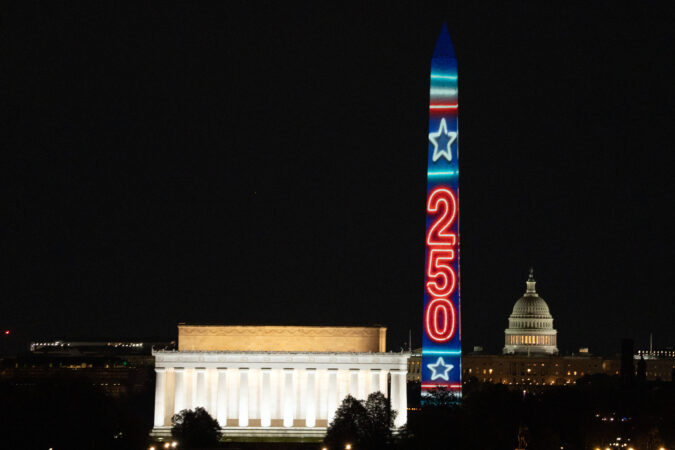
    In comparison, one person familiar with the matter said, Freedom 250 drew on $3 million in federal funds last year to quickly produce a New Year’s Eve light display on the Washington Monument.

    America250 said in a statement that it continues to actively collaborate with the White House task force, Freedom 250 and the full executive branch to plan the celebrations.

    The group has been running a nationwide contest for students to submit perspectives on what America means to them and has been to eight states so far with a storytelling program on identity, service, community, and personal legacy.

    Meanwhile, America250 officials and allies have questioned whether the Trump-backed group is too focused on activities that please the president and say the group threatens to siphon money that could be used for nationwide activities. America250 has received $25 million of the $150 million apportioned by Congress last year for anniversary activities, according to a person familiar with its finances.

    The friction between the groups reached a breaking point in the planning for the Army’s 250th birthday last summer — a military parade in Washington that coincided with Trump’s birthday, said one person familiar with the plans. America250 wanted the celebration to focus on the military, not the president. Freedom 250 wanted Trump, as the commander in chief, to be front and center, the person said.

    Some programming has shifted between the two groups. America250 originally applied for and received a grant from the Institute of Museum and Library Services for the Freedom Trucks, mobile museums inspired by the American Freedom Train that crisscrossed the country from 1975-1976. The institute is a federal agency that provides financial support for museums and libraries. The $10 million grant was later voluntarily transferred to Freedom 250, according to an official of the agency.

    “These mobile museums, which tell the incredible story of our nation’s founding, will be a cherished memory for an entire generation,” Keith Sonderling, a Trump appointee who leads the museum and library agency, said in a statement.

    Marissa Streit, chief executive of PragerU, a conservative media organization, said her company volunteered to produce all video and educational content for the Freedom Trucks after White House officials came up with the vision and worked with Hillsdale College to develop the displays.

    Streit insisted that despite the uniformly conservative credentials of the people involved, the exhibits showed a balanced view of history.

    “I believe we need to teach and talk about both the negative things that have happened in our country as well as the positive,” she said.

    The tensions are a departure from the approach taken during the bicentennial under President Gerald Ford, who sought to make sure the celebrations did not raise questions of impropriety in the wake of the Watergate scandal, said Richard Painter, the chief White House ethics lawyer in the George W. Bush administration.

    “The one thing our taxpayer funds should not be used for is politicizing the 250th anniversary of the founding of the country,” said Painter, co-author of The U.S. Presidency: Power, Responsibility, and Accountability. “One of the things [the founders] were most afraid of is faction and political parties destroying our democracy. The celebrations here shouldn’t be owned by one political party or another.”

  • Iran’s regime maintains its grip, despite devastating losses

    Iran’s regime maintains its grip, despite devastating losses

    The U.S. and Israeli air campaign against Iran has decimated the highest ranks of political and military leadership, destroyed critical military command-and-control infrastructure and fighting capability, and damaged civilian buildings across the country.

    In Tehran, the expanding conflict appears to be frustrating the succession process after Supreme Leader Ayatollah Ali Khamenei was killed. Khamenei’s funeral was postponed after the group charged with choosing his successor was targeted by Israeli strikes. Following that attack, Iranian state media announced that voting for the next supreme leader would be conducted remotely.

    But so far, some six days into a war that has now touched 12 countries across the Middle East, major military operations have not threatened the Iranian regime’s grip on power, according to European and Arab officials briefed on assessments of the regime’s standing since the conflict began.

    Iran, the officials say, was prepared for this conflict. The command structures built to survive a decapitation strike appear to remain substantially intact, allowing Iranian retaliatory strikes against Israel, Qatar, and Bahrain to begin within hours of the initial attacks. And inside the country since the conflict started, Iranians have reported a heavier security presence in city streets, with Basij paramilitary forces patrolling on motorbikes.

    “Iran’s senior leaders are dead; the so-called governing council that might have selected a successor, dead, missing or cowering in bunkers, too terrified to even occupy the same room,” Defense Secretary Pete Hegseth said in a briefing Wednesday touting successes as he outlined how operations would expand.

    President Donald Trump said Tuesday that the strikes killed “most of the people” the United States favored to replace the recently killed regime members.

    But despite the intensity of the strikes and the broad nature of the destruction, so far there are no reports of significant defections within regime ranks or of popular uprisings, according to European and Arab assessments described to the Washington Post by officials from those countries. U.S. intelligence also saw no signs of uprisings or defections in the first days of the campaign, according to a person familiar with the situation who spoke on the condition on anonymity to describe an ongoing operation.

    “There’s not a single sign of anything in the system breaking or defecting. Nothing. Zero,” said a senior European official, speaking on the condition of anonymity to describe government briefings on the latest assessments of the strength of the Iranian regime. “The control is complete,” he said. The official said he was aware of reports of regime security forces failing to show up for duty, but believed that could be because of orders to no longer congregate in compounds and barracks, for fear of being targeted.

    The officials said Iran’s military and political command has proved durable because of the “layered system” the regime built to withstand a crisis, decentralizing leadership by appointing multiple individuals to immediately replace any key figure who might be killed.

    After Iranian Defense Minister Aziz Nasirzadeh was killed in strikes Saturday, Majid Ebnelreza was appointed as the caretaker minister on Monday by Iranian President Masoud Pezeshkian, who himself was rumored to have been targeted in the attack’s initial waves. Since then, media reports have speculated that Ebnelreza was killed in subsequent attacks, but Iranian state media has not responded to the allegations.

    In the lead-up to the conflict, a senior Arab official said, U.S. allies in the Persian Gulf thought that Iran would be more vulnerable to outside military pressure and that the potential killing of the supreme leader would be an early turning point, triggering a mass mobilization against the regime.

    “We were looking for the demonstrations in the streets, but we were surprised by their unity,” he said, speaking on the condition of anonymity to describe sensitive internal planning.

    In January, as the regime buckled under massive anti-government protests across the country and responded with a brutal crackdown, many of Iran’s neighbors assessed a deep weakness within the political and security leadership structures.

    But amid an unrelenting bombing campaign, the governance structure has largely stayed intact and continues to exert unilateral control, surprising seasoned Iran watchers in the region. The European and the Arab officials both cautioned that the Iranian regime remains opaque and regime collapse can be almost impossible to anticipate from the outside.

    Information on the impact of the U.S. and Israeli attacks against Iran is sporadic. The country is under a near-total internet blackout. But initial visual analysis by the Washington Post has revealed extensive damage to military targets, government buildings, and internal security structures. Israel has also recently claimed strikes targeting Iran’s clerical establishment.

    In total, U.S. Central Command says, more than 2,000 targets were hit inside Iran in the space of over four days. The Israel Defense Forces said its planes have dropped more than 4,000 munitions on Iran since Saturday.

    “Undoubtably, Iran has been considerably weakened,” said Gregory Brew, an Iran analyst with the Eurasia Group. Considering Iran’s military losses alone, the United States and Israel destroyed most of the country’s navy, a significant portion of its missile stockpile and its means of producing more missiles, he said.

    “They’re blowing up a lot of buildings, but most of these buildings are probably empty. They’re annihilating the physical edifice of the Islamic republic,” Brew said.

    Meanwhile, Iran’s police force and the Basij have continued to function, according to Iranians inside the country, said the European official. Brew said that’s because these forces don’t operate heavy weaponry and can quickly disperse from buildings easily targeted from the air and then reemerge once the fighting ceases.

    After the 12-day war in June, Iran structured its armed forces in anticipation of further decapitation strikes. Iranian Foreign Minister Abbas Araghchi appeared to reference the reorganization in an interview with Al Jazeera on Sunday, in which he described Iranian military units as “isolated” and acting on “general instructions given to them in advance.”

    It is unclear how long Iran will be able to hold out in the face of U.S. and Israeli attacks. Earlier this week, the tempo of Iranian retaliation dropped, suggesting that Iran is running low on munitions or is unable to access buried stockpiles. However, Thursday saw heavy bursts of Iranian retaliatory attacks against Bahrain, Qatar, and the United Arab Emirates. As the conflict progresses and Iran’s armed forces are forced to adapt and draft new plans, the country’s leadership losses could become more serious.

    But Iranian officials have signaled that they are prepared for a long fight against militarily superior adversaries. Tehran believes that the only way it can prevail is if it can outlast the United States and Israel, according to a second European official briefed on assessments of Iranian regime strength since the outset of the war.

    “They understand that they will not be able to defeat the most powerful army in the world, but with asymmetric warfare they can try to inject as much damage as possible, to make the U.S. seek de-escalation,” he said. This is why Iran has prioritized retaliation against Persian Gulf nations and countries that could begin to pressure the United States to seek an off-ramp, the official said.

    The official said Iran has wagered that its system and its people are more capable of enduring prolonged hardship than those of the Persian Gulf and the United States, but he cautioned that the longer the conflict lasts, the more deadly it is likely to become on all sides.

    “This regime is built to last, and they aren’t going to go quietly,” he said.

  • D.C.’s cherry blossoms will peak between March 29 and April 1, Park Service says

    D.C.’s cherry blossoms will peak between March 29 and April 1, Park Service says

    The iconic cherry trees decorating the nation’s capital will hit peak bloom between March 29 and April 1, the National Park Service predicted Thursday.

    The agency declares peak bloom when 70% of the Yoshino blossoms around the Tidal Basin, the reservoir on the National Mall, have opened.

    Kevin Griess, superintendent of National Mall and Memorial Parks, said the weather could affect peak bloom, noting this winter has been colder.

    “Every spring, the National Cherry Blossom Festival does more than welcome a new season,” David Moran, chair of the board of directors for the National Cherry Blossom Festival, said at a news conference Thursday. “It brings a renewed sense of joy and vitality to our entire region.”

    The annual festival commemorates the 3,000 cherry trees Japan gifted to the United States as a symbol of friendship in 1912.

    Japan will gift an additional 250 cherry trees this year in honor of the United States’ 250th anniversary celebration, Masatsugu Odaira, minister for public affairs for the Embassy of Japan, said Thursday.

    This year’s festival will run from March 20 to April 12 and will feature an opening ceremony of traditional Japanese sword dancers, a parade along Constitution Avenue, a “pink tie” fashion show at Union Station and a street party at Navy Yard.

    The Washington Post’s Capital Weather Gang, which independently estimates peak bloom, predicted it could happen between April 3 and April 7, potentially more than a week later than last year. The last time peak bloom happened this late was April 5, 2018.