Blog

  • Trump and Xi discuss Iran in wide-ranging call as U.S. presses China and others to break from Tehran

    Trump and Xi discuss Iran in wide-ranging call as U.S. presses China and others to break from Tehran

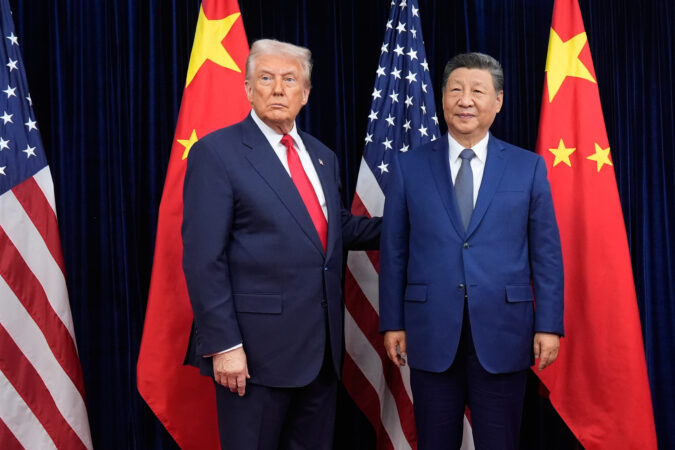
    WASHINGTON — President Donald Trump said Wednesday that he and Chinese President Xi Jinping discussed the situation in Iran in a wide-ranging call that comes as the U.S. administration pushes Beijing and others to isolate Tehran.

    Trump said the two leaders also discussed a broad range of other critical issues in the U.S.-China relationship, including trade and Taiwan and his plans to visit Beijing in April.

    “The relationship with China, and my personal relationship with President Xi, is an extremely good one, and we both realize how important it is to keep it that way,” Trump said in a social media posting about the call.

    The Chinese government, in a readout of the call, said the two leaders discussed major summits that both nations will host in the coming year and opportunities for the two leaders to meet. The Chinese statement, however, made no mention of Trump’s expected April visit to Beijing.

    China also made clear that it has no intention of stepping away from it’s long-term plans of reunification with Taiwan, a self-governing, democratic island operating independently from mainland China, though Beijing claims it as its own territory.

    “Taiwan will never be allowed to separate from China,” the Chinese government statement said.

    Trump and Xi discussed Iran as tensions remain high between Washington and Tehran after the Middle East country’s bloody crackdown on nationwide protests last month.

    Trump is now also pressing Iran to make concessions over its nuclear program, which his Republican administration says was already set back by the U.S. bombing of three Iranian nuclear sites during the 12-day war Israel launched against Iran in June.

    The White House says that special envoy Steve Witkoff is slated to take part in talks with Iranian officials later this week.

    Trump announced last month that the U.S. would impose a 25% tax on imports to the United States from countries that do business with Iran.

    Years of sanctions aimed at stopping Iran’s nuclear program have left the country isolated. But Tehran still did nearly $125 billion in international trade in 2024, including $32 billion with China, $28 billion with the United Arab Emirates and $17 billion with Turkey, the World Trade Organization says.

    Separately, Xi also spoke on Wednesday with Russian President Vladimir Putin.

    Xi’s engagement with Trump and Putin comes as the last remaining nuclear arms pact, known as the New START treaty, between Russia and the United States is set to expire Thursday, removing any caps on the two largest atomic arsenals for the first time in more than a half-century.

    Trump has indicated he would like to keep limits on nuclear weapons but wants to involve China in a potential new treaty.

    “I actually feel strongly that if we’re going to do it, I think China should be a member of the extension,” Trump told The New York Times last month. “China should be a part of the agreement.”

    The call with Xi also coincided with a ministerial meeting that the Trump administration convened in Washington with several dozen European, Asian and African nations to discuss how to rebuild global supply chains of critical minerals without Beijing.

    Critical minerals are needed for everything from jet engines to smartphones. China dominates the market for those ingredients crucial to high-tech products.

    “What is before all of us is an opportunity at self-reliance that we never have to rely on anybody else except for each other, for the critical minerals necessary to sustain our industries and to sustain growth,” Vice President JD Vance said at the gathering.

    Xi has recently held a series of meetings with Western leaders who have sought to boost ties with China amid growing concerns about Trump’s tariff policies and calls for the U.S. to take over Greenland, a Danish territory.

    The disruption to global trade under Trump has made expanding trade and investment more imperative for many U.S. economic partners. Vietnam and the European Union upgraded ties to a comprehensive strategic partnership last month, two days after the EU and India announced a free-trade agreement.

  • Barges with road salt for Philadelphia temporarily blocked by frozen Delaware River

    Barges with road salt for Philadelphia temporarily blocked by frozen Delaware River

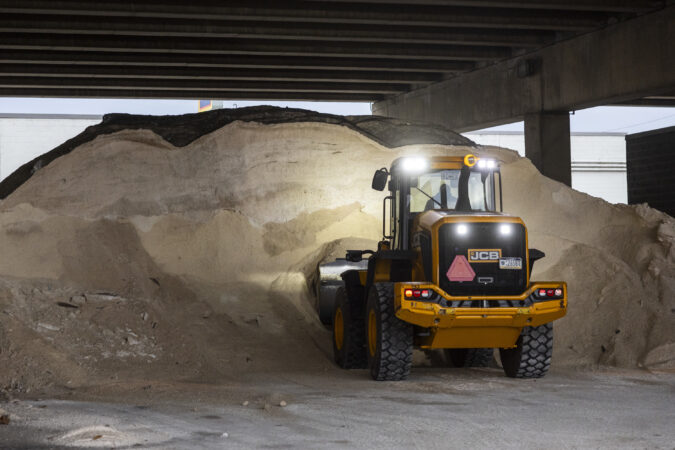
    In a bit of winter irony, two barges carrying 21,000 tons of salt reinforcements for Philadelphia couldn’t get through the frozen Delaware River, according to city officials.

    At the Pelbano Recreation Center in Bustleton on Wednesday, Director of Clean and Green Initiatives Carlton Williams said the city had used more than 30,000 tons in January, which was highlighted by the 9.3 inches of snow and icy sleet on the 25th. The Arctic cold that followed has kept a whole lot of it in place.

    The city still has 15,000 tons on reserve, but Williams said officials are watching salt levels closely and using judgment when dispersing what’s left. He said inspectors are being sent to sites where salting has been requested through 311 to determine whether treatment is warranted, and to ensure the city has enough salt until reinforcements arrive.

    “We definitely need to make sure our salt levels are at a sufficient amount so that if we get another storm like this, we can be out there prepared to fight,” he said.

    By Wednesday afternoon, a city spokesperson confirmed that a barge carrying 15,000 tons of salt was able to redirect and dock in Paulsboro, N.J. That load is slated to reach Philly by truck Thursday.

    The fate of the second barge, with 6,000 tons, meant to go to Philadelphia, remains unclear.

    The delivery is ultimately slated to head to Fairless Hills, which is currently “iced in,” according to Office of Emergency Management Director Dominick Mireles.

    How long the barge has been stuck wasn’t immediately clear, but Mireles said the U.S. Coast Guard continues to perform ice-cutting operations on the river.

    The city uses about 15,000 tons of salt for a significant winter storm, according to a city spokesperson. It tries to keep 45,000 tons on hand.

    City officials noted the frozen sections of the river offer a reminder of how the elements have not done plows and snow cleanup crews any favors in breaking up what have now become dirty, hardened, sometimes rock-solid chunks of ice across the city.

    Mayor Cherelle L. Parker’s administration, like those in other East Coast cities, has received no shortage of criticism for inaccessible crosswalks and SEPTA bus stations that remained icy days after the biggest snowstorm in a decade.

    In the snow cleanup update at Pelbano, Parker assured the public that the city was working nonstop to help it return to normal.

    Still, she said, as seen with the frozen barge, that work isn’t always in the spotlight.

    As for the salt, Parker said the administration is “investigating alternate methods of resupply” as they wait.

    Clarification: This story has been updated to reflect updated information from the city.

  • Why nobody really knows the scale of the U.S. housing crisis

    Why nobody really knows the scale of the U.S. housing crisis

    America faces a serious housing shortage, one that Moody’s estimates would take more than 2 million new homes to resolve.

    But over at Goldman Sachs, analysts put the number at 3 million. Zillow’s estimate tops 4 million, while Brookings projects 5 million, and McKinsey says 8 million. Meanwhile, congressional Republicans insist the shortfall is closer to 20 million.

    Then there are the economists who contend there’s no shortage at all.

    The disparate projections reflect the challenge of quantifying the nation’s housing needs, a puzzle that rests on assumptions about how much a home should cost, how many people it should hold, and how big a footprint it should have.

    With housing affordability a crucial political issue and increasingly out of reach for many Americans, determining the nation’s needs is not merely an academic exercise but is key to devising policies that will solve the problem.

    Vacancy rates and missing households

    The U.S. has 146 million homes, Census Bureau data show. Of those, 8.1 million are “doubled up” households, meaning people are sharing space with nonrelatives. Zillow’s housing estimate assumes most of those people would prefer having their own place. There also are 3.4 million vacant homes available to rent or buy, the real estate website says. So Zillow economists subtracted the number of available homes from the number of doubled-up households and concluded that the nation needs 4.7 million more homes.

    Several analyses zeroed in on two questions: How many homes should be vacant, and how many consumers have delayed striking out on their own because of the cost.

    Though it might seem counterintuitive, a healthy housing market needs vacancies. An empty property could signal it’s between tenants or buyers, for example, or under renovation. Or it could mean the owner is splitting time between properties; according to the National Association of Home Builders, more than 6 million homes — about 1 in 20 — are secondary residences.

    What constitutes a healthy level of vacancies is harder to define, as experts put it anywhere from 3% to 13%. After home construction cratered following the 2008 housing crash, vacancy rates slumped to the lowest level in nearly two decades, falling to less than 1% of owner-occupied dwellings and 5% of rental units. They have yet to fully recover.

    The optimal home number could be as simple as one for every household, plus a certain number of vacancies. But what if we don’t have an accurate count of households?

    When housing costs are prohibitive, adult children tend to reside with their parents longer; in 2023, 18% of adults 25 to 34 were living in a parent’s home, compared with 8% in the 1970s, according to a Pew Research Center report.

    For many economists, that suggests the equation should be: the number of existing households, plus the number of homes that should be vacant, plus the number of households that would naturally come into being if there was enough inventory to lower prices.

    Yet different researchers using this framework still came up with different answers for the housing shortage.

    Moody’s Analytics and PolicyMap say it would take 800,000 homes to reach the equilibrium of the U.S. housing market between 1985 and 2000. Add 1.2 million “pent up households,” those that haven’t formed yet, and the conclusion is the U.S. needs an additional 2 million homes.

    Brookings’s calculation aims to get back to the 2006 vacancy rate of more than 12%, when it was near its historic peak. It used a complex statistical model to tease out how much of the decline in household formation since then is due to home prices instead of other factors, such as young people having trouble finding jobs or marrying later. As a result, it concluded the U.S. needed 4.9 million more houses.

    Other analyses along these lines include Freddie Mac’s, which calls for 3.7 million more homes. Goldman Sachs analysts tried the “vacancies plus pent-up demand” approach, as well as a mathematical model to determine how many homes it would take to make ownership as affordable relative to income as it was in the 1990s. Both equations worked out to between 3 million and 4 million homes. McKinsey added up new households and vacancies, plus enough housing to address homelessness and replace overcrowded homes with more than one person to a bedroom, to get to 8.2 million.

    Envisioning an unconstrained market

    A 2022 congressional report took a different tack. Most analyses attempt to re-create some semblance of the housing market two, three or four decades ago. But Republicans on the Joint Economic Committee argued that the correct number is equal to the number of homes that developers would build had they had no regulatory constraints — no permitting or zoning rules that prohibit them from building what customers want.

    The Republicans’ estimate relied on the reasoning that the value of the land should be about 20% of the home cost. Anything higher would mean the market is artificially constrained; land becomes pricier when it is harder to build something on it. To bring prices in line with that in every U.S. county, they concluded the home shortage stood at 20 million.

    By their math, North Dakota and West Virginia have almost no housing shortage, while California is short 4.5 million homes. Eliminating zoning and building restrictions across the country’s hundreds of jurisdictions might be unfeasible, but they project that any substantial effort would lower prices. For example, they contend that building an additional 2.7 million homes could reduce prices enough to make ownership economically viable for nearly 5 million more consumers.

    “If we relaxed all regulations that concerned supply in every single market in the United States, this is how many homes you would have … . I do think this is the right way to think about how many homes we should have,” said Kevin Corinth, an economist who co-authored the report while he was a Senate staffer and now works at the American Enterprise Institute, a libertarian think tank. “If you really want to bring down home prices to the point where people can actually afford them, you’re going to have to build a lot more houses than people are suggesting.”

    Per capita spending

    Housing analyst Kevin Erdmann did some eye-popping math recently. Adjusted for inflation, per capita spending on housing construction has been falling as a fraction of personal consumption, dropping 23% since 1990. If such spending held to 1990 levels, he said, the U.S. would have an additional 40 million houses. “Almost all professional estimates of the housing shortage are ridiculously low,” Erdmann, who has written two books about the housing market, wrote on his Substack.

    He said the slowdown in construction spending indicates that people are living in smaller homes than they’d prefer because they had no choice, but he shies away from actually saying the country is 40 million homes short. Instead, based on aggressive assumptions about missing households and necessary vacancies, he says the country needs 15 million to 20 million.

    Maybe there’s no shortage at all

    Urban planning professors Kirk McClure and Alex Schwartz examined 900 U.S. metropolitan areas and found that only 19 had added more population than housing since 2000. Before the 2008 recession, they argued, developers built far too many houses, leaving room for underbuilding in some years since.

    “Yes, we have a shortage of units in the low-income price points, but not overall,” McClure said. He contends it would be far less costly for the government to help poor households rent or buy existing units than to build new ones. “The best housing program right now would be an increase in the minimum wage. You get people up to $20 an hour and suddenly life gets better — we can’t build our way out of this problem.”

    This view of the current housing supply transcends partisan lines, with some of the highest and the lowest estimates of the shortage coming from the right. Economists at the libertarian Cato Institute contend that housing production has kept up with population growth. Just because people want to live in big houses in expensive, densely populated areas, they assert, doesn’t mean there’s a shortage.

    “A shortage is literally people don’t have anywhere to live. That’s not what we have,” Norbert Michel, one of the Cato writers, said in an interview.

    In the end, the dispute doesn’t just come down to the choice of mathematical models, but varying interpretations of what a housing shortage even means.

    “If I have a hard time finding an apartment in the area of Washington, D.C., that I like, I can still move to Maryland and find something,” Michel said. “The idea that I’m just completely shut out of all my options and I can’t find any place to live, that’s what a shortage evokes. And the data doesn’t support that.”

    Erdmann views it differently: “There are 28-year-olds living with their parents that wouldn’t be if there were a house. If that’s not a shortage, I don’t know when you could use the word.”
  • Brothers of Renee Good, woman killed by immigration officer, call for action in Congress

    Brothers of Renee Good, woman killed by immigration officer, call for action in Congress

    WASHINGTON — The brothers of Renee Good, one of two U.S. citizens killed by federal immigration officers in Minneapolis, called on Congress to do something about the violence on American streets as a result of immigration operations, warning Tuesday that the scenes playing out are “changing many lives, including ours, forever.”

    Good, a 37-year-old mother of three, was shot and killed Jan. 7. Her death and that of another protester, Alex Pretti, just weeks later have sparked outrage across the country and calls to rein in immigration enforcement.

    Brothers Luke and Brett Ganger spoke during a hearing held Tuesday by congressional Democrats to highlight use-of-force incidents by officers from the Department of Homeland Security as they arrest and deport immigrants. The mood was somber as the brothers spoke, often comforting each other as they talked and listened to others speaking.

    Luke Ganger, speaking of the “deep distress” the family felt at losing their sister in “such a violent and unnecessary way,” didn’t specify what they wanted from Congress but painted his sister’s death as a turning point that should inspire change in operations such as those going on in Minneapolis.

    “The completely surreal scenes taking place on the streets of Minneapolis are beyond explanation. This is not just a bad day, or a rough week, or isolated incidents,” he said. “These encounters with federal agents are changing the community and changing many lives, including ours, forever.”

    The forum was put on by Sen. Richard Blumenthal (D., Conn.) and Rep. Robert Garcia (D., Calif.) to spotlight use-of-force complaints against Homeland Security officers tasked with carrying out President Donald Trump’s mass deportation agenda.

    Trump administration officials said Good tried to run over an officer with her vehicle. State and local officials in Minneapolis, as well as protesters, have rejected that characterization.

    The two brothers didn’t delve into the details of their sister’s death or what the administration has said about her. Instead, they spoke about her life.

    Luke Ganger said the most important thing the brothers could do was to explain to those listening “what a beautiful American we have lost. A sister. A daughter. A mother. A partner and a friend.”

    Brett Ganger shared some of the eulogy he had written for his sister’s funeral service. He compared her to dandelions that grow and bring beauty in unexpected places.

    “She believed tomorrow could be better than today. She believed that kindness mattered. And she lived that belief,” he said.

    The panel also heard from three other U.S. citizens who detailed their treatment by Homeland Security officers.

  • Police searching for ‘armed and dangerous’ suspect in killings of two men in city’s towing industry

    Police searching for ‘armed and dangerous’ suspect in killings of two men in city’s towing industry

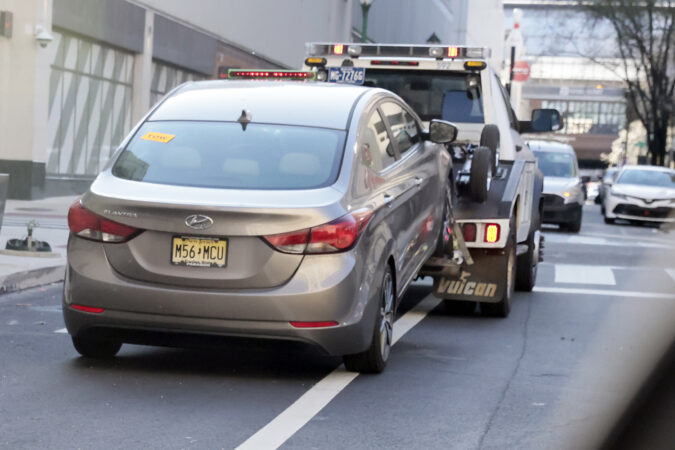
    Philadelphia police are searching for a suspect in connection with the shooting deaths of two tow truck drivers, department officials said Wednesday.

    Najee Williams, 27, is considered armed and dangerous, police said. Homicide investigators say Williams is connected to the fatal shootings of 20-year-old David Garcia-Morales in December and 25-year-old Aaron Whitfield in January.

    Williams faces charges of murder, conspiracy, and related crimes. There is a $20,000 reward for information that leads to his arrest and conviction.

    The killings of Garcia-Morales and Whitfield, who police say worked for the Jenkintown-based towing company 448 Towing and Recovery, rattled the city and put a focus on the competitive business of towing.

    Williams is the owner and operator of N.K.W Towing and Recovery, of North Philadelphia, according to a police source who asked not to be identified to discuss an ongoing investigation.

    A Facebook page for N.K.W features photos of car accidents and messages urging potential customers to call the company.

    “INVOLVED IN A ACCIDENT OR SEE ONE CALL ME” one message says.

    Another post from 2024 says: “Left the streets in a patty wagon, came back home and got right to it! Been home for 2 years now & as I sit here and think how bless I’m to have my freedom back.”

    It was not immediately clear who made the post.

    Staff Inspector Ernest Ransom, commanding officer of the homicide unit, said forensic evidence collected from a stolen Honda used in the shooting of Whitfield led investigators to Williams.

    The department’s fugitive task force and U.S. Marshals are assisting in the search for Williams, whose last known whereabouts were in Montgomery County, authorities say.

    On Dec. 22, police were called to 4200 Torresdale Avenue to find Garcia-Morales shot and injured inside a Ford F-450 towing vehicle. He was struck in the neck and thigh, and died four days later at Temple University Hospital.

    The second shooting, which took place on Jan. 11 on the 2100 block of Knorr Street, left Whitfield dead at the scene after he was struck by gunfire in the head and body.

    Whitfield had also been sitting in a tow truck, according to police. His 21-year-old girlfriend was shot in the leg and survived her injuries.

    Philadelphia’s towing industry is competitive and drivers often traverse the city in search of car accidents, hoping to be the first to arrive at the scene.

    That practice persists despite a city policy that requires police and dispatchers to cycle through a list of approved towing companies to contact when responding to accidents.

  • NBC’s Olympic TV schedule: U.S. women’s hockey team plays a day before opening ceremony

    NBC’s Olympic TV schedule: U.S. women’s hockey team plays a day before opening ceremony

    For as big a deal as the opening ceremony is at the Winter Olympics, it has been a while since that was actually when the Games started.

    That’s the case again this year, as the ice hockey and curling competitions get going before the cauldron is lit in Milan on Friday night.

    Curling’s mixed doubles competition started Wednesday with a few early matchups, and on Thursday, the U.S. women’s hockey team will go into the spotlight.

    The Americans hope to win the gold medal back after perennial rival Canada won in 2022. Either the U.S. or Canada has won every gold since women’s ice hockey became an Olympic sport in 1998 — two for the U.S. (1998 and 2018), and five for Canada.

    On top of that, every gold medal game but one has been a U.S.-Canada clash. Sweden upset the Americans in 2006 in Torino, the last time the Olympics took place in Italy.

    Right now, the widespread expectation is that the Americans and Canadians will meet again for gold this year.

    At 10:40 a.m. Thursday, USA Network will televise the U.S. game against Czechia.

    Sarah Nurse helped Canada top the United States in the 2022 Olympics women’s ice hockey gold medal game.

    How to watch the Olympics on TV and livestreaming online

    There is TV coverage on NBC’s main broadcast network; on cable channels USA, CNBC, and NBCSN; and free-to-air Telemundo and cable channel Universo in Spanish. USA’s coverage is 24/7 every day, with live events when they’re on and replays the rest of the time.

    NBCSN is carrying the Gold Zone whiparound show that was so popular during the Summer Olympics in 2024, with hosts including Scott Hanson of NFL RedZone. It used to be just on Peacock, NBC’s online streaming service, but now is on TV, too.

    Every event is available to stream live on NBCOlympics.com and the NBC Sports app. You’ll have to log in with your pay-TV provider, whether cable, satellite, or streaming platforms including YouTube TV, FuboTV, and Sling TV. On Peacock, the events are on the platform’s premium subscription tier, which starts at $10.99 per month or $109.99 per year.

    NBC’s TV coverage will have live events from noon to 5 p.m. Philadelphia time on weekdays and starting in the mornings on the weekends. There’s a six-hour time difference from Italy to here. The traditional prime time coverage will have highlights of the day and storytelling features.

    The NBC Sports and Peacock apps are available for mobile devices, tablets, and connected-TV devices including Android TV, Apple TV, Google Chromecast, Amazon Fire TV, Roku, Samsung TV, and more. There’s an FAQ page on NBC’s website here with more details.

    If you have a Comcast Xfinity X1 cable box, just say “Olympics” into the remote’s voice control function, and everything will come up, whether it’s on TV or online. Other cable and satellite TV providers may offer similar functions.

    Here is the full event schedule for the entire Olympics, and here are live scores and results.

    Thursday’s Olympic TV schedule

    As a general rule, our schedules include all live broadcasts on TV, but not tape-delayed broadcasts on cable channels. We’ll let you know what’s on NBC’s broadcasts, whether they’re live or not.

    NBC

    8 p.m.: Ice, Snow & Glory: The Winter Olympics, NBC’s preview show for the Games

    USA Network

    8 a.m.: Intro to Milan Cortina show

    8:35 a.m.: Mixed doubles curling — United States vs. Switzerland

    10:40 a.m.: Women’s ice hockey — United States vs. Czechia

    1:05 p.m.: Mixed doubles curling — Italy vs. Canada

    3:45 p.m.: Women’s ice hockey — Finland vs. Canada

  • Data centers pose big challenge for Pa.’s energy future

    Data centers pose big challenge for Pa.’s energy future

    As we settle into the new year, the idea of “leftovers” might not be quite as appetizing as it was a few weeks ago, while we were relaxing with family and friends during the holidays. But 2026 greets us with a challenge that went unmet last year: securing Pennsylvania’s energy future in a way that benefits our economy, environment, and everyday lives.

    Why is this a challenge? Because we are currently facing difficulties of our own making, or perhaps more accurately, the consequences of our own inaction. Like New Year’s resolutions, the solutions will take more than promises.

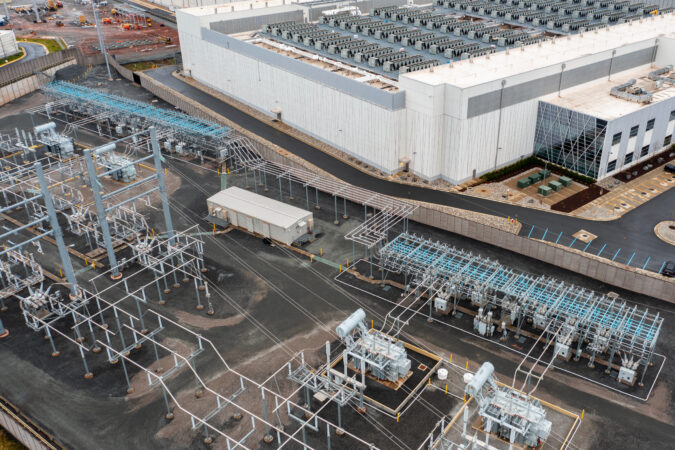
    At the heart of the issue is the remarkable speed and intensity of data center development in Pennsylvania. According to the most recent report from the independent market monitor for the 13-state PJM regional electric grid, data centers have dramatically increased costs for Pennsylvania’s energy consumers by as much as $23 billion across the PJM footprint over the past three years.

    Rising electric costs

    In other words, the primary reason electric costs are going up, and what increasingly worries public officials about grid reliability, is existing and projected future energy demand from data centers. That demand shows no sign of slowing down.

    To be fair, data centers provide vital construction and technology service jobs, can help build local tax bases, and are seen as essential to economic competitiveness and national security. But all this comes at a very real cost borne by citizens — including those who may benefit, and many who do not.

    So, what does this mean for decision-makers?

    First, we need to manage the frenzied rush to build data centers by enacting strong standards to protect communities and energy consumers. These measures include requiring data centers to directly pay for necessary grid connection and expansion costs to accommodate their demand, and securing additional, preferably clean, generation to meet their needs. This is essential to help ensure grid reliability, along with expanding other programs and policies to make our grid more efficient and electrons more abundant.

    Between recent efforts by the state Public Utility Commission to manage large energy user demand and legislation introduced in the General Assembly to address consumer and community concerns, we’re seeing the beginnings of a solution to several of these challenges.

    These are urgently needed and should be advanced as soon as possible. Pennsylvania is not alone in developing these safeguards, so putting reasonable protections in place won’t hinder our competitiveness and will ensure this important industry develops in a sound and sustainable manner.

    Diversifying the grid

    Pennsylvania also needs to do all it can to diversify our electric grid, make it more efficient, and incentivize new, cleaner energy generation. Legislation from Gov. Josh Shapiro’s Lightning Plan (House Bill 501 and Senate Bill 501) to expand our state’s Alternative Energy Portfolio Standards should be front and center, as it would bring new generation technologies like advanced nuclear, renewables, and geothermal to our state and help reduce long-term costs.

    Legislation to modernize existing energy efficiency programs (House Bill 505 and Senate Bill 505) — which have proven to reduce energy demand and save consumers money — should also cross the finish line this year. So should policies that further encourage utilities to deploy advanced transmission technologies to bolster grid resilience.

    Pennsylvania also needs to examine how we can better facilitate project development at the local level, where both a lack of capacity and intentional impediments have stymied the expansion of a clean energy supply. We can have strong protections in concert with fair and efficient review.

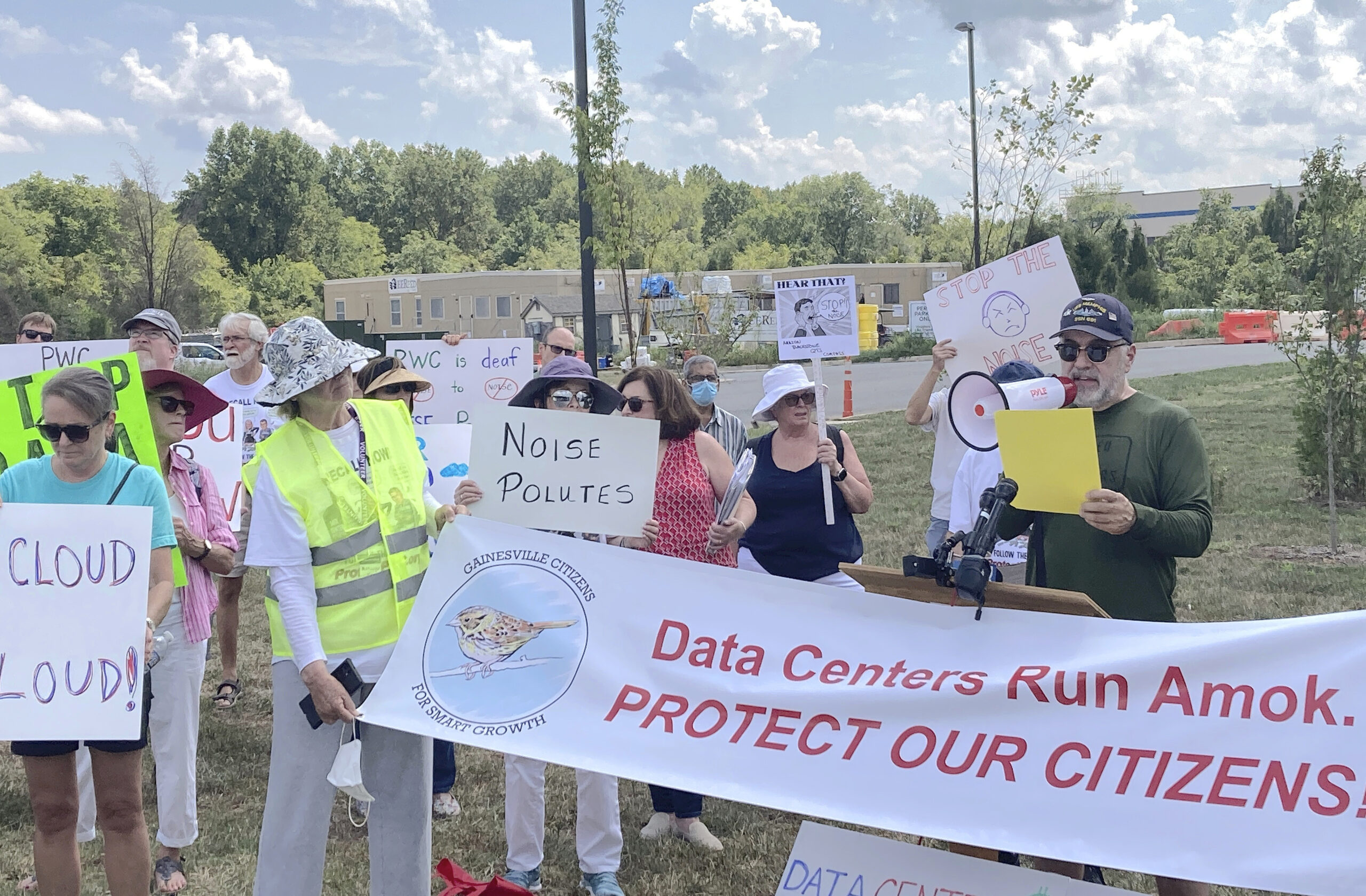
    Protesters rally in Manassas, Va., in 2023 against a newly built data center for Amazon. New data centers are planed nationwide.

    On top of the energy cost considerations, we also need to ensure data centers do not overtax water resources (which could cause similar cost inflation for public water users) or worsen our air quality. On this latter point, data centers should be required to maximize battery storage instead of using polluting backup generators.

    This may sound like a large to-do list, but it’s one Pennsylvania can’t afford to ignore any longer.

    2026 can be the year we move forward together and forge energy solutions that help our communities, economy, and environment. Let’s not lose another moment or any further opportunities to build an affordable, reliable, and prosperous clean energy future.

    Tom Gilbert is president of the Pennsylvania Environmental Council.

  • ‘Jeopardy!’ champ from New Jersey struggled to pronounce Schuylkill

    ‘Jeopardy!’ champ from New Jersey struggled to pronounce Schuylkill

    On Jeopardy!, contestants give their answers in the form of a question. Scott Riccardi’s should’ve been, “How do you pronounce Schuylkill?”

    During Tuesday’s episode, the New Jersey native and his two competitors were given a U.S. geography clue close to home: “Pottsville & Reading both lie on this river that enters the Delaware at Philadelphia.”

    Riccardi answered the clue correctly, but only after host Ken Jennings paused to determine if his pronunciation — “Skol-kull” — was close enough to award him $1,600.

    As least he got the correct river. TJ Fisher, a marketing specialist from San Francisco, guessed “Lackawanna,” nailing the pronunciation but missing the answer by more than 100 miles.

    Paolo Pasco, a puzzle writer originally from San Diego, Calif., didn’t buzz in.

    For the record, it’s pronounced “Skoo-kl.” One 15th century mapmaker just cut to the chase and labeled it the “Scool Kill River,” which would’ve been much easier to say and spell.

    According to Francis Vincent’s 1870 history of Delaware, “Schuylkill” was named by the Dutch; it loosely translates to “hidden creek.” Before Europeans set foot in the region, the native Lenape people called it “Ganshowe-hánne,” meaning “roaring stream,” as recorded by missionary John Heckewelder.

    Viewers should be thankful Riccardi and his competitors weren’t confronted with how to pronounce “Passyunk,” which continues to divide longtime Philly residents (and married couples).

    Jeopardy! is in the finals of its annual Tournament of Champions, which featured the show’s most recent top contestants. Pasco won Monday and Tuesday, and needs just one more victory to win the tournament and collect its $250,000 prize.

    Riccardi, an engineer and Rutgers University graduate born and raised in South Plainfield, Middlesex County, won 16 games during his 2025 run. That was good enough to tie for 10th most in the show’s history, matching Philly rideshare driver Ryan Long’s 2022 run. Riccardi also amassed $455,000 in earnings, the eighth most in regular-season play in the show’s history.

  • Philly music with Brandi Carlile, Turnpike Troubadours & Robert Earl Keen, and a surprise bluegrass and country night

    Philly music with Brandi Carlile, Turnpike Troubadours & Robert Earl Keen, and a surprise bluegrass and country night

    This week in Philly music features a Turnpike Troubadours and Robert Earl Keen double bill, two shows with rising Americana star Kashus Culpepper, a Black History Month celebration of Philly house music, Pulitzer Prize-winning drummer Tyshawn Sorey, and Brandi Carlile in South Philly opening her first-ever arena tour.

    Wednesday, Feb. 4.

    Mdou Moctar

    Nigerian guitarist Mdou Moctar has been a regular in the Philadelphia region, fronting an electric band that showcases his Tuareg guitar music blended with hypnotic modern rock. This show is a rare solo set that will showcase his 2024 album Funeral for Justice in an intimate setting. Philly trumpeter and electronic musician Koof Ibi opens. 8 p.m., Johnny Brenda’s, 1021 N. Frankford Ave., johnnybrendas.com

    Thursday, Feb. 5

    Turnpike Troubadours / Robert Earl Keen

    Oklahoma sextet Turnpike Troubadours sounds as road tested as its band name implies on its seventh album, The Price of Admission. The Shooter Jennings-produced band has steadily risen in popularity with a dependable brand of fiddle- and steel guitar-fueled Red Dirt country.

    Robert Earl Keen opens for Turnpike Troubadours at the Met Philly on Thursday.

    And they get big points for taking Robert Earl Keen out on the road with them on this tour. The wry Texas songwriter, best known for outlaw narratives like “The Road Goes on Forever” and the hard-earned optimism of songs like “Feelin’ Good Again,” retired from touring in 2022 but has thankfully reneged on that vow. 8 p.m., Met Philly, 858 N. Broad St., themetphilly.com

    Friday, Feb. 6

    Kashus Culpepper

    Join the Navy, then become a country and Americana star. That was Zach Bryan’s route to success, and Alabama native Kashus Culpepper has a similar origin story. The soulful singer started getting serious about music during the COVID-19 pandemic, and fronted cover bands before starting to write his own songs in 2023. His new album, Act I, features a guest appearance from Sierra Ferrell and Marcus King. He plays Free at Noon, then heads across town for another gig that night. Noon, World Cafe Live, 3025 Walnut St., xpn.org and 8 p.m., Foundry at the Fillmore, 29 E. Allen St., thefillmorephilly.com

    Takuya Nakamura

    Japanese pianist, trumpeter, and electronic musician Takuya Nakamura has collaborated with artists like Arto Lindsay and Quincy Jones and brings his space ambient mixture of jazz and jungle to Philly this weekend. 9 p.m., Warehouse on Watts, 923 N. Watts St., wowphilly.com

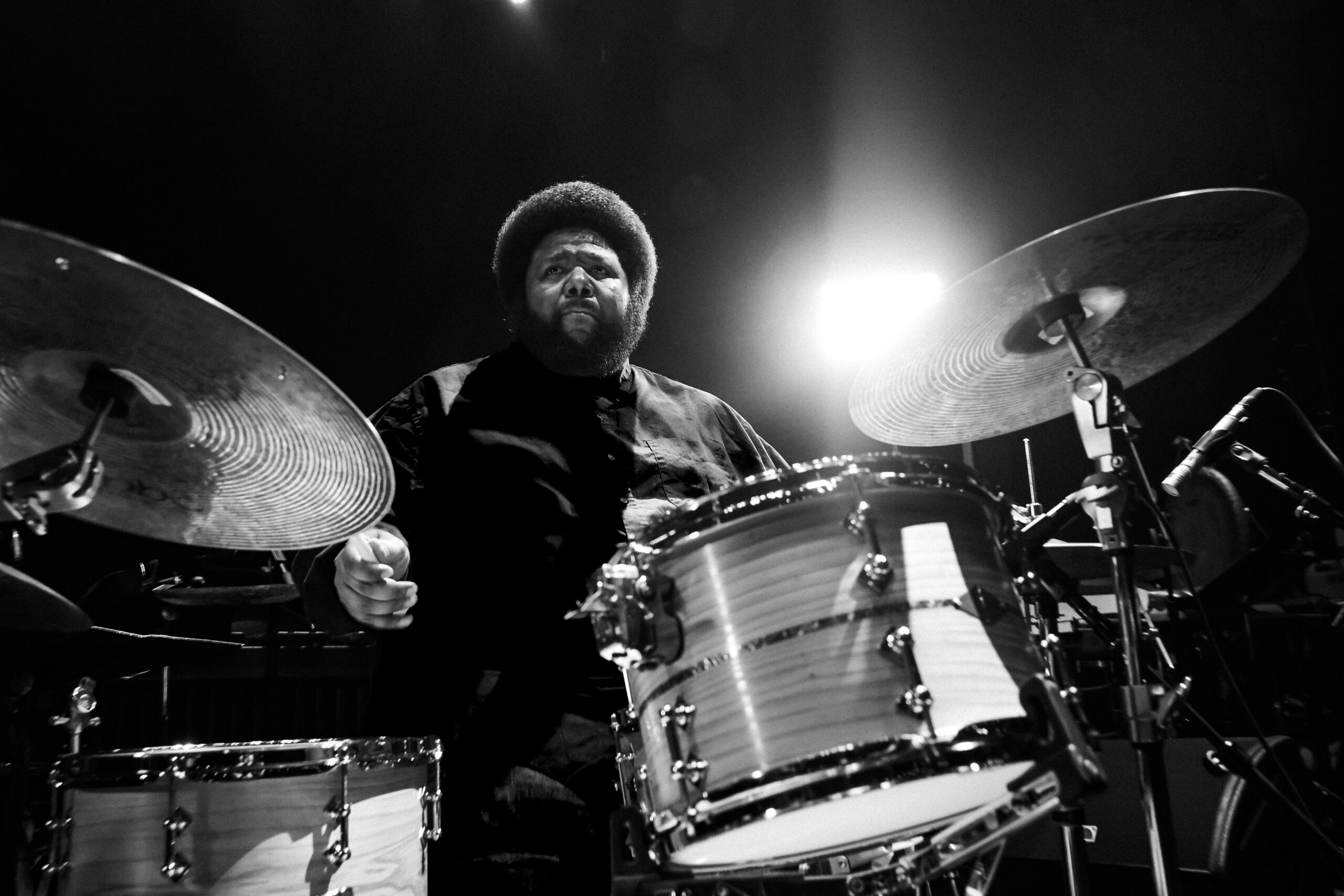
    Tyshawn Sorey pays tribute to Max Roach at the Zellerbach Theatre on Friday.

    Tyshawn Sorey

    Drummer, composer, and Pulitzer Prize-winning Penn professor Tyshawn Sorey won’t have to travel far from the classroom to his Annenberg Center gig on Friday. He’s paying tribute to jazz giant Max Roach and his 1968 album Members, Don’t Git Weary with a band that includes trumpeter Adam O’Farrill. 7:30 p.m., Zellerbach Theatre, 3680 Walnut St., pennlivearts.org

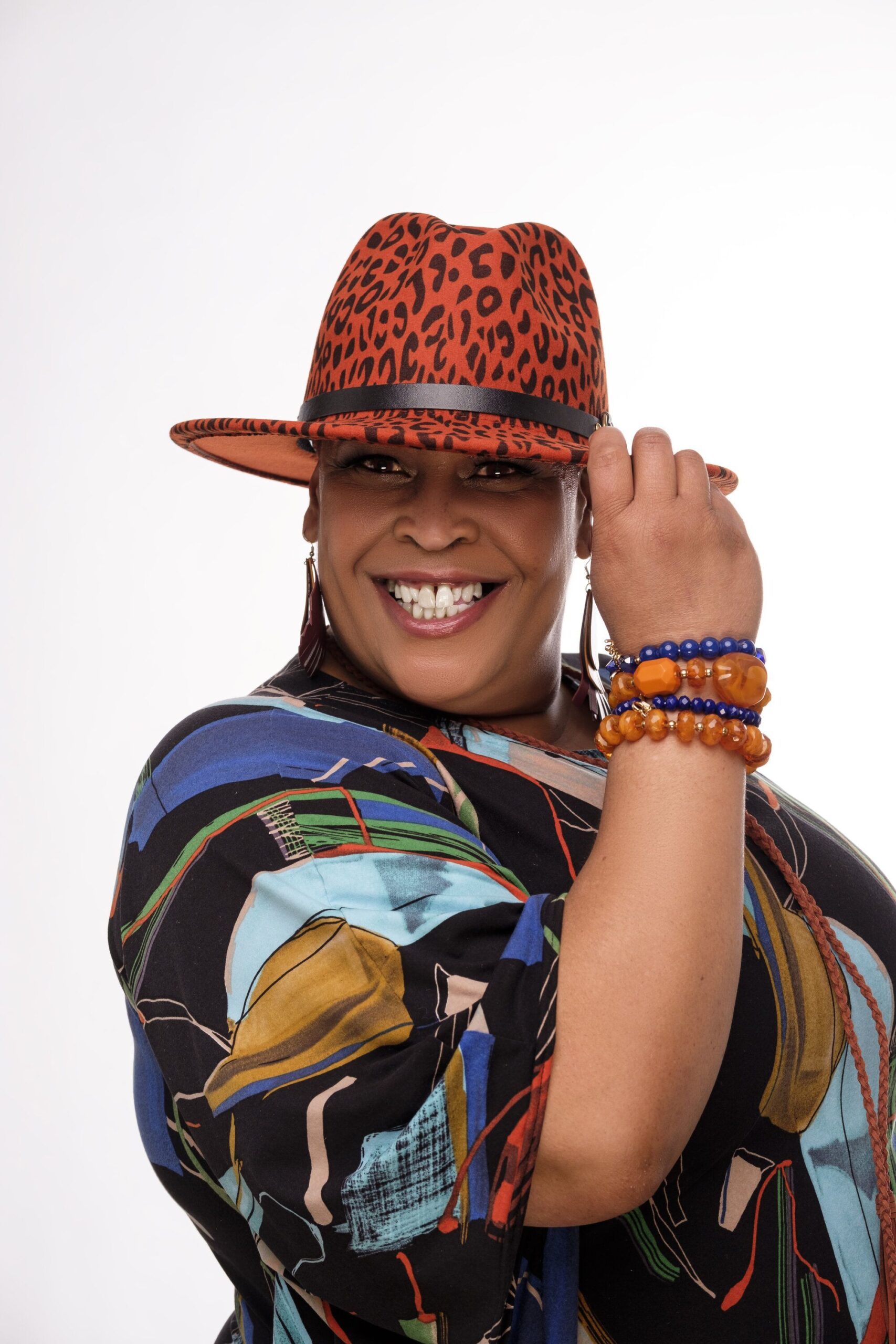
    Lady Alma will perform at the Fallser Club on Saturday as part of the Legacy of Philadelphia House showcase.

    Saturday, Feb. 7

    The Legacy of Philadelphia House Music

    This showcase is part of the Black History Month Celebration of Black Excellence at the Fallser Club. Spoken word poet Ursula Rocker will be joined by dance music diva Lady Alma, singer Carla Gamble, and DJ Sylo. A short film, featuring Sylk 130 creator King Britt, will be screened. 5 p.m., the Fallser Club, 3721 Midvale Ave., thefallserclub.org

    Tom Mindte & Blue Mountain Boys / Midnight Flyer

    A bluegrass double bill spotlighting mandolinist Tom Mindte, a standout of the Washington-Baltimore scene, comes to the Black Squirrel Club, the Fishtown venue that’s also home to a hotly tipped Monday night jazz jam. The night begins with an open-to-all-pickers bluegrass jam. 7 p.m., Black Squirrel Club, 1049 Sarah St., blacksquirrelclub.com.

    Red Tailed Rounders / Ramona and the Holy Smokes

    Saturday is bluegrass and country night, apparently. Philly’s quick-picking ensemble Red Tailed Rounders will be joined by Virginia honky-tonk band Ramona and the Holy Smokes. 8 p.m., MilkBoy Philly, 1100 Chestnut St., milkboyphilly.com

    Antarcigo Vespucci

    The side project of prolific punk rock solo artist and former Bombthe Music Industry! leader Jeff Rosenstock and Chris Warren of Fake Problems hasn’t produced any new music since the 2018 album Love in the Time of E-Mail. But after reuniting last year, the duo is about to tour together this winter. Opener is Philly’s Golden Apples, whose latest is last year’s Shooting Star. 8 p.m., First Unitarian Church, 2125 Chestnut St., r5productions.com

    Electric Guest / Snacktime

    Asa Taccone and Matthew Compton of Electric Guest are in fine funky form on 10K, their first album in six years. Philly’s Snacktime opens the show, so here’s hoping they sit in with the headliners and turn the party up a notch. 8 p.m., Union Transfer, 1026 Spring Garden St., utphilly.com

    Denison Witmer

    In 2020, the proud Pennsylvanian put out a single called “Lancaster County” about carrying the region with him as he traveled the world. This weekend, the singer-songwriter will be back in his hometown supporting his delicate and dreamy 2025 album Anything at All, which is produced by his old pal Sufjan Stevens. Witmer will play with a full band on Saturday, and a solo show on Sunday. 7:30 p.m. Saturday and 3 p.m. Sunday, West Art, 816 Buchanon Ave., Lancaster, westartlanc.com

    Brandi Carlile’s “The Human Tour” opens at the Xfinity Mobile Arena on Tuesday.

    Tuesday, Feb. 10

    Brandi Carlile

    Brandi Carlile will sing ”America the Beautiful” at Super Bowl LX in Santa Clara, Calif., on Sunday, and two days later, she kicks off her “Human Tour” in South Philly. The concert trek is for Returning to Myself, her new album that gets personal after she’s spent much time in recent years working alongside Joni Mitchell and Elton John, the latter of whom she teamed with on last year’s Who Believes in Angels. The Head and the Heart open. 8 p.m., Xfinity Mobile Arena, 3601 S. Broad St., xfinitymobilearena.com

  • City Council seeks to stop demolitions as anti-blight measure

    City Council seeks to stop demolitions as anti-blight measure

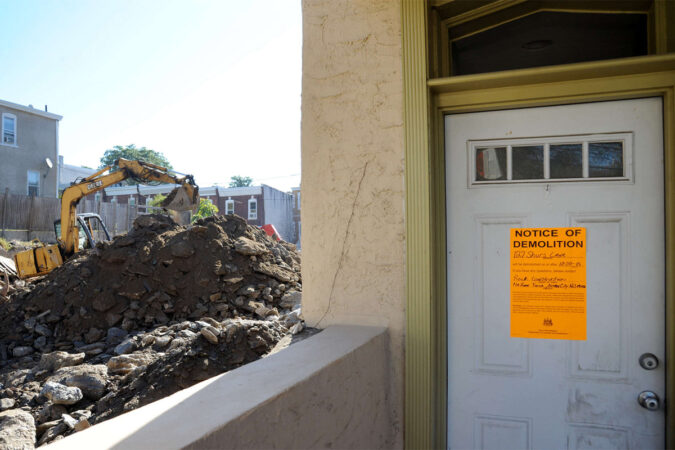
    Late last year, some members of Philadelphia City Council began pursuing legislation to further regulate demolition.

    Philadelphia has many thousands of vacant properties, and historically, some local politicians have sought to encourage razing such structures to prevent fire risks or eliminate drug havens.

    But in the last couple of decades, as real estate development heated up in many neighborhoods, concerns emerged that potentially historic older buildings were being destroyed to make the vacant land more valuable.

    “We know that when these properties are demolished in certain communities, that typically is a sign of gentrification,” Councilmember Jeffery Young, who represents much of North Philadelphia, said at a Tuesday hearing.

    “When you demolish that property and you build up, you’re trying to make more money than the property was originally stated as a shell,” said Young, whose district also includes parts of Center City.

    Young introduced a bill last year that would ban demolition permits from being issued in his district unless a property owner had secured building permits for a new project.

    He said he saw the legislation as a means to encourage property owners to repair existing buildings and to ensure that vacant lots would not scar his district.

    “When you rehab a property, the price is typically lower than a brand-new house, and so we’re trying to keep homes affordable,” Young said, “and prevent blight from our communities.”

    Young’s bill would not apply to buildings deemed imminently dangerous by the Philadelphia Department of Licenses and Inspections.

    Last year Councilmember Jamie Gauthier passed a law containing a similar provision, but for a more tightly proscribed area that covered properties held by large higher education institutions in University City.

    The Building Industry Association (BIA) presented a litany of concerns about Young’s bill at Tuesday’s Rules Committee hearing.

    The BIA feared the legislation would delay projects, as many developers demolish structures while they are waiting for their building permits. The additional months in limbo would increase insurance, security, and financing costs, the group argued.

    The bill could also encourage bad actors to engage in dangerous behavior, the BIA said.

    “To qualify for an exception based on structural danger, certain property owners may be compelled to intentionally incur code violation or enforcement action to demonstrate instability,” said Kenn Penn, a local developer, who spoke on the BIA’s behalf. It “incentivizes the very condition that the city seeks to avoid.”

    Penn also warned about the danger of preserving long-vacant properties.

    “The bill would prevent demolition of vacant and unsecured structures that are highly susceptible to unlawful occupation,” Penn said. “Philadelphia has already experienced multiple fires this winter, many historically linked to squatters and abandoned buildings.”

    Penn asked Young to limit the legislation to properties that do not have a vacant property license.

    But the bill passed from the committee with only technical amendments.

    “I understand the impacts this will have on the development community,” Young said. “But what I think this bill does is ensures that property owners maintain their properties in a prudent manner.”