Blog

  • In Texas, Democrats narrow GOP’s U.S. House majority, win upset in state Senate

    In Texas, Democrats narrow GOP’s U.S. House majority, win upset in state Senate

    Democrats narrowed Republicans’ U.S. House majority and flipped a state Senate seat on conservative terrain in a pair of Saturday special election runoffs in Texas with national implications.

    Democrat Christian Menefee won the special election runoff Saturday for Texas’ 18th Congressional District, paring House Republicans’ slim advantage by securing a long-vacant seat in a heavily Democratic area. In a second election runoff in Tarrant County, which includes Fort Worth, Democrats won a notable upset, with Taylor Rehmet defeating Republican Leigh Wambsganss in a district where President Donald Trump won by 17 points in 2024.

    In special elections and other local races over the past year, Democrats have largely outperformed Republicans. National Democratic leaders have pointed to the results, including Rehmet’s win, along with sweeping victories in last fall’s elections, as reasons for optimism headed into this fall’s midterms. Democrats are hoping in November to capitalize on anger at Trump’s agenda. Republicans will try to defy recent political trends and hold on to their control of Congress.

    The House majority is the marquee prize in the November midterms. Republicans have been clinging to a narrow edge in the chamber, at times complicating their agenda. Because the competition in the Texas House race was down to two Democrats, the effect on the balance of power has been long anticipated. Special elections coming later this year to fill vacancies in Georgia, New Jersey, and California could further alter the partisan breakdown of the chamber.

    Menefee defeated fellow Democrat Amanda Edwards, the Associated Press reported, winning a Houston-area district briefly held by Democrat Sylvester Turner before his death in March. When Menefee is sworn in, Democrats will have 214 House seats. Republicans hold 218, giving House Speaker Mike Johnson (R., La.) a razor-thin margin. To pass legislation, Johnson can lose only one Republican vote if all members are present and otherwise vote along party lines.

    In Texas, the midterms are set to be contested under a new House map backed by Trump that state GOP leaders enacted last year. Both Menefee, a former Harris County attorney, and Edwards, an attorney and former Houston City Council member, will immediately move to an unusual intraparty contest in a newly redrawn district against longtime Rep. Al Green (D). Texas will hold its primaries on March 3.

    Residents of Texas’ 18th District are now set to have representation in the House through the end of Turner’s term after nearly a year of vacancy. For months, Texas Democrats had accused Gov. Greg Abbott (R) of deliberately delaying the special election to fill the vacant seat to help Republicans maintain a slim majority. Abbott blamed Harris County for election administration issues, saying he had to schedule the election for late last year to give officials there time to prepare.

    The 18th District, which covers much of central Harris County, has a predominantly Black and Latino population. The district has been a Democratic stronghold for decades and has been represented by civil rights leaders such as Sheila Jackson Lee and Barbara Jordan.

    Throughout his campaign, Menefee touted himself as a fighter with a record of suing the Trump administration, focusing heavily on healthcare, voting rights, and federal funding to the district.

    Saturday’s runoff took place because no candidate won a majority of the vote in the November special election. Menefee was the top vote getter then, with roughly 29%, while Edwards finished second with roughly 26%.

    The state Senate special election was to replace Republican Kelly Hancock, who became the state’s acting comptroller. With most of the vote in Saturday’s election tallied, Rehmet was ahead by more than 14 percentage points.

    Rehmet, an Air Force veteran and union leader, won nearly 48% of the vote in the November special election to face Wambsganss in the runoff. Wambsganss is an executive at Patriot Mobile, which describes itself as “America’s only Christian conservative wireless provider.”

    Rehmet’s victory is largely symbolic because candidates will have to run for the seat again in November, before the Texas legislature begins its next session in January 2027.

    But strategists and analysts look at special elections as one barometer for measuring the national political mood and voter attitudes. Democrats have tended to do better than Republicans in special elections and other lower-profile races in recent years, while the GOP was successful in 2024 with Trump at the top of the ballot.

    “Senator-elect Rehmet ran an exceptional campaign focused on solutions to the issues that families care most about, from the rising cost of groceries and utilities to the healthcare crisis,” DNC Chairperson Ken Martin said in a statement, adding that this win is “a warning sign to Republicans across the country.”

  • Judge ordered 5-year-old released, but data shows ICE is detaining more kids

    Judge ordered 5-year-old released, but data shows ICE is detaining more kids

    SAN ANTONIO — The 5-year-old boy, in a blue knit bunny hat and Spider-Man backpack, was returning from preschool when immigration officers detained him late last month in Minneapolis. A few days later, officers there took custody of a 2-year-old girl after breaking her family’s car window.

    Liam Conejo Ramos and Chloe Renata Tipan Villacis, along with their fathers, were flown to a family immigration detention center in Dilley, Texas, an hour south of San Antonio, where detainees face long lines for basic supplies and inadequate medical care, according to people who have been housed there. They are among an escalating number of children swept up in the Trump administration’s enforcement dragnet, which has drawn mounting public outrage over its aggressive tactics and increasingly indiscriminate ramifications.

    The U.S. government does not provide direct information about children in immigration custody. But federal data on family detention, and independent analyses of child detentions, suggest immigration authorities are increasingly ensnaring the youngest and most vulnerable lives in President Donald Trump’s effort to deport massive numbers of undocumented immigrants.

    “There are other options, regardless of what you believe about immigrants, but you do not have to put children in detention,” said Dianne Garcia, a pastor at a San Antonio church that serves an immigrant population. She said authorities are trying to instill fear in families so they choose to leave the country voluntarily.

    On Saturday, a federal judge agreed that Liam should not be in federal custody. U.S. District Judge Fred Biery ordered him and his father released and lambasted the Trump administration’s “ill-conceived and incompetently-implemented government pursuit of daily deportation quotas, apparently even if it requires traumatizing children.”

    By Sunday morning, Liam and his father, Adrian Alexander Conejo Arias, had been released and flown home to Minnesota.

    But the numbers of those held are rising quickly. Over the past four months, the average number of people, including children and adults, held each month in family detention has nearly tripled, from 425 in October to 1,304 in January, according to Department of Homeland Security data.

    An independent analysis by the Marshall Project, a nonprofit news organization, concluded that at least 3,800 minors under 18, including 20 infants, were detained in 2025. And ProPublica found that Immigration and Customs Enforcement last year sent approximately 600 children arrested inside the country to federal shelters built to house minors detained at the border. That is more than the entire number of children detained in federal shelters during the four years of the Biden administration.

    Advocates and attorneys contend that hundreds more youth have been affected in cases where authorities have separated families, which are not comprehensively tracked. Those include instances in which parents have been deported but their children remain in the United States in government custody.

    Over decades, the federal government has relied on a patchwork of laws, court rulings, and policies meant to ensure that minors are held in the least restrictive setting possible and released as quickly and safely as possible. Trump aides have instead prioritized his deportation goals and treated children as collateral damage, said Wendy Young, president of the immigrant rights group Kids in Need of Defense.

    “In this past year, we’ve seen a lot of [the protections] dismantled and transformed again into a system that’s really more punitive and aligned with law enforcement goals than it is with child protection,” Young said.

    DHS did not respond directly to questions from the Washington Post asking about the number of children in federal detention and the conditions described by some migrants and their attorneys. In an email, assistant secretary Tricia McLaughlin said the Dilley facility has been retrofitted for families and provides for their safety, security, and medical needs.

    “All detainees are provided with 3 meals a day, clean water, clothing, bedding, showers, soap, and toiletries,” she said.

    Authorities do not separate families, McLaughlin said, as parents are asked if they want to be removed with their children or have them placed with someone the parent designates. In the cases of Liam and Chloe, authorities said they took custody because relatives abandoned or refused to take them. Chloe, like Liam, has been released, returned to her mother in Minneapolis, after the Trump administration belatedly complied with another judge’s order.

    For years, most children in federal custody were those detained at the U.S.-Mexico border. As the administration succeeded in dramatically reducing border crossings, it has ramped up enforcement inside the country and detained more families who have lived here for years — including those whose children attend U.S. schools. Some families were awaiting immigration court decisions on their appeals to remain in the country when they were detained, lawyers said.

    The impact is “just really, really damaging and catastrophic because of how sudden and swift and violent it is,” said Zain Lakhani, director of migrant rights and justice at the Women’s Refugee Commission, “and because it’s targeting a population that is just not prepared for this.”

    Family shelters closed, then reopened

    The South Texas Family Detention Center in Dilley, opened by the Obama administration in 2014 with a capacity of 2,400 detainees, ceased operations during President Joe Biden’s tenure. The Trump administration reopened the facility after authorities began detaining families in spring of last year.

    A second facility, in Karnes City, Texas, has been used to temporarily hold families but has primarily detained single adults in recent months, according to DHS detention data and attorneys representing people in both facilities.

    The administration is moving to purchase and convert up to 23 industrial warehouses into large-scale detention centers, and authorities indicated in a draft document reviewed by the Post that some will include family housing.

    The federal government has long struggled to comply with legal requirements for families and unaccompanied children. Many who are detained at the border seek asylum protections, and a federal court settlement does not permit minors to be held for longer than 20 days.

    Families are buffeted by political winds, with their conditions shifting depending on the administration, said Elissa Steglich, a clinical professor at the University of Texas School of Law.

    “Family detention has always been more a political device to make a statement about either border policy or the asylum system writ large,” she said.

    Amid a border crisis in 2014, the Obama administration scrambled to hold tens of thousands of unaccompanied minors at crowded facilities on military bases, warehouses, and chain-link enclosures. A public backlash prompted federal officials to move to other methods, including releasing the families and using electronic monitoring.

    In his first administration, Trump implemented a zero-tolerance policy in which authorities separated thousands of children from their family members when they arrived at the border and prosecuted parents in an effort to deter more migration. But the administration reversed course amid public outrage.

    The Biden administration closed three of the family detention centers. As the number of migrants crossing the border soared after the COVID-19 pandemic, however, children and families were huddled into cramped tent facilities or housed in hotels at or near the border. The vast majority were released into the United States pending their immigration court proceedings.

    In his second term, Trump has pushed to deport a record number of migrants, and authorities ramped up efforts to arrest families in the spring in Texas after they reported for immigration court hearings or mandatory check-ins at ICE offices. A few months later, immigration advocates said, the administration began detaining families in San Antonio and other major cities.

    The population at the detention facility in Dilley swelled. Immigration lawyers have said children have been held well beyond the 20-day legal threshold established in 1997 under a legal settlement known as the Flores agreement. Many children have been detained at routine immigration check-ins, immigration lawyers said.

    Longing for home

    Most of what is known about the day-to-day conditions inside the federal detention center comes from accounts provided by those who have been held there. In interviews with the Post, migrants and their attorneys described a facility that includes a chapel, library, commissary, infirmary, and pharmacy.

    There are also recreational spaces and a school where children can watch educational videos, said Edward, an immigrant from Colombia who, like others who provided firsthand accounts, spoke on the condition that only their first names be used out of fear of reprisals from the government. He and his two sons, ages 11 and 10, spent 47 days in the facility after being detained during an ICE check-in in December.

    He said the living spaces consist of several corridors labeled by color and animal names and reserved for different kinds of families: the brown bear hall for two parents with their children; the yellow frog hall for single mothers and young children; and the green turtle hall for single fathers and sons.

    Edward, who has an active asylum case, said he slept in a room with 12 bunk beds where the lights stayed on and the tap water tasted like chlorine.

    Two immigration judges held hearings for asylum-seekers to accelerate their proceedings, but they often did not result in a conclusion to their cases. Every Monday, ICE agents reviewed cases with detainees, pressuring them to sign deportation papers, according to recently released detainees.

    Some said they were told that if they refused, the could end up being sent to another country where they had never been.

    “I kept telling them I wasn’t interested,” Edward said.

    His sons had been rehearsing for roles in a Christmas play at their San Antonio-area church and a folkloric dance at school, he said, but instead they spent the holiday lining up for roll calls in the detention center.

    Edward’s lawyer was preparing to challenge his detention in court, but authorities released him and his sons without explanation in January.

    Aury, 25, who also was released in January with her three young children, said she remains in shock over their 50 days in detention. They applied for asylum after entering the country in 2023 and were living in an apartment in San Antonio, as the kids attended school and Aury awaited a resolution to her immigration case.

    “I love my Texas home. Why are they doing this to me?” Aury’s 10-year-old daughter wrote in letters she placed on her mother’s bunk. Authorities offered families a $5,000 payment to sign a voluntary deportation form, Aury said.

    “They wanted us to believe none of us will ever leave that place,” she said.

    Attorney Eric Lee said he saw children all over the facility during a recent visit, some as young as 3 or 4. “What is happening in these detention centers is worse than anybody thinks,” he said. One of his clients, who is 9, drew a picture with crayons of the house she dreams of returning to one day.

    In recent weeks, federal officials have released hundreds of families to a border shelter to make space at the Dilley facility for new arrivals from Minnesota, immigration lawyers said.

    Kristin Etter, an attorney for some of the new families, recently met with an Ecuadorian mother and her 11-year-old daughter who were arrested in Minneapolis while on their way to school. The fourth-grader spends most of her time in the Dilley facility without opportunities for intellectual stimulation, Etter said.

    “We are not talking about jailing criminals or jailing public safety threats,” she said. “It’s cruelty.”

    Yuli, an asylum-seeker from Venezuela, said she got close to agreeing to leave the country after being held in mid-November with her 3-year-old son. She described inadequate medical care for herself and her toddler, who suffered diarrhea, and for the other detainees, who had to wait hours for treatment, even for serious illnesses.

    She and her son were released in mid-January after her attorney sued the government in federal court. Yuli now wears an ankle monitor, and ICE conducts visits to her home.

    “There is a better way,” she said. “This was inhumane.”

  • House speaker ‘confident’ partial shutdown will end by Tuesday

    House speaker ‘confident’ partial shutdown will end by Tuesday

    House Speaker Mike Johnson (R., La.) said Sunday that he is “confident” he will have enough support from Republicans in the House conference to end the partial government shutdown by Tuesday.

    In an interview with NBC News’ Meet the Press, Johnson said the House will vote to reopen the government “at least by Tuesday.”

    “We have a logistical challenge of getting everyone in town, and because of the conversation I had with Hakeem Jeffries, I know that we’ve got to pass a rule and probably do this mostly on our own,” Johnson said, referring to the minority leader as he looked to blame Democrats for the second shutdown of President Donald Trump’s second administration, which began early Saturday.

    After the Trump administration’s aggressive immigration enforcement operation in Minneapolis left two U.S. citizens dead, Democrats have said they would not advance government funding measures unless changes were made to a funding bill for the agencies driving the Trump administration’s immigration policies, including the Department of Homeland Security. The department houses U.S. Customs and Border Protection, Immigration and Customs Enforcement, and the Federal Emergency Management Agency.

    On Friday, Congress missed a midnight deadline to approve six new spending bills because the Senate changed DHS funding measures after the House passed them. The Senate, however, quickly approved a bipartisan agreement backed by Trump to pass five major appropriations bills and a temporary two-week funding extension for DHS to buy time for additional policy negotiations.

    Over the weekend, Johnson remained adamant that the House will move quickly to pass those measures when it returns to Washington on Monday, despite frustrations from conservative members of the Republican caucus and skepticism from House Democrats.

    “We’ll have a lot of conversations to have with individual Republican members over the next 24 hours or so. We’ll get all this done by Tuesday,” Johnson said on Fox News Sunday. “I don’t understand why anybody would have a problem with this, though. Remember, these bills are bills that have already been passed.”

    Johnson will need nearly all of the House GOP majority to pass the bills if Democrats refuse to support DHS funding. The speaker said he believed he could get the backing of his members, emphasizing that Trump “is leading this” and that it “is his play call to do it this way.”

    The president, Johnson added, “has already conceded that he wants to turn down the volume” in the immigration enforcement operations, a change punctuated by his decision to send border czar Tom Homan to Minneapolis last week to take control of the situation.

    Johnson said the Trump administration has acknowledged to Senate Minority Leader Charles E. Schumer (D., N.Y.) that some of the changes and processes that Democrats are demanding “are fine with them,” including a requirement for ICE agents to wear body cameras.

    Johnson, however, said that while some of the proposed DHS revamps are “obviously reasonable,” he doesn’t think House Republicans will support Democrats’ demands that federal agents remove their masks and wear an ID while conducting immigration operations.

    “There’s a lot of details in this, we could get deep in the weeds, but we will do that over the next two weeks,” he said on Meet the Press.

    House Democrats have not committed to supporting the bipartisan agreement struck in the Senate, although they plan to support the other five funding bills. Jeffries (D., N.Y.) told ABC News’ This Week that Democrats would meet Sunday afternoon to discuss “what we believe is the best path.”

    “What is clear is that the Department of Homeland Security needs to be dramatically reformed,” Jeffries said. “Body cameras should be mandatory. Masks should come off. Judicial warrants should absolutely be required consistent with the Constitution, in our view, before DHS agents or ICE agents are breaking into the homes of the American people or ripping people out of their cars.”

    When asked if he believes the administration will enforce the changes if they pass, Jeffries said that this is “an untrustworthy administration” but that the American people are strongly rejecting the violent immigration enforcement actions they’ve seen out of Minneapolis.

  • Trump says feds won’t intervene during protests in Democratic-led cities unless asked to do so

    Trump says feds won’t intervene during protests in Democratic-led cities unless asked to do so

    ABOARD AIR FORCE ONE — President Donald Trump said Saturday that he has instructed Homeland Security Secretary Kristi Noem not to intervene in protests occurring in cities led by Democrats unless local authorities ask for federal help amid mounting criticism of his administration’s immigration crackdown.

    On his social media site, Trump posted that “under no circumstances are we going to participate in various poorly run Democrat Cities with regard to their Protests and/or Riots unless, and until, they ask us for help.”

    He provided no further details on how his order would affect operations by U.S. Immigration and Customs Enforcement and DHS personnel, or other federal agencies, but added: “We will, however, guard, and very powerfully so, any and all Federal Buildings that are being attacked by these highly paid Lunatics, Agitators, and Insurrectionists.”

    Trump said that in addition to his instructions to Noem he had directed “ICE and/or Border Patrol to be very forceful in this protection of Federal Government Property.”

    Later Saturday night, Trump said to reporters as he flew to Florida for the weekend that he felt Democratic cities are “always complaining.”

    “If they want help, they have to ask for it. Because if we go in, all they do is complain,” Trump said.

    He predicted that those cities would need help, but said if the leaders of those cities seek it from the federal government, “They have to say, ‘Please.’”

    The Trump administration has already deployed the National Guard, or federal law enforcement officials, in a number of Democratic areas, including Washington, Los Angeles, Chicago, and Portland, Ore. But Saturday’s order comes as opposition to such tactics has grown, particularly in Minnesota’s Twin Cities region.

    Trump said Saturday night that protesters who “do anything bad” to immigration officers and other federal law enforcement “will have to suffer” and “will get taken care of in at least an equal way.”

    “You see it, the way they treat our people. And I said, you’re allowed, if somebody does that, you can do something back. You’re not going to stand there and take it if somebody spits in your face,” Trump said.

    Minnesota Attorney General Keith Ellison and the mayors of Minneapolis and St. Paul have challenged a federal immigration enforcement surge in those cities, arguing that DHS is violating constitutional protections.

    A federal judge says she won’t halt enforcement operations as the lawsuit proceeds. State and local officials had sought a quick order to halt the enforcement action or limit its scope. Justice Department lawyers have called the lawsuit “legally frivolous.”

    The state, particularly Minneapolis, has been on edge after federal officers fatally shot two people in the city: Renee Good on Jan. 7 and Alex Pretti on Jan. 24. Thousands of people have taken to the streets to protest the federal action in Minnesota and across the country.

    Trump’s border czar, Tom Homan, has suggested the administration could reduce the number of immigration enforcement officers in Minnesota — but only if state and local officials cooperate. Trump sent Homan to Minneapolis following the killings of Good and Pretti, seeming to signal a willingness to ease tensions in Minnesota.

    The president on Saturday night said he intended to speak to Homan and Noem on Sunday and he seemed to endorse the idea of immigration agents wearing body cameras or having their interactions filmed.

    Trump was asked by a reporter if he thought it was a good thing having lots of cameras capturing incidents with law enforcement.

    “I think it would help law enforcement but I’d have to talk to them,” Trump said.

    He went on and added: “That works both ways. But overall, I think it’s 80% in favor of law enforcement.”

  • A not-‘toned down’ Trump regime prepares for ethnic cleansing in Ohio

    A not-‘toned down’ Trump regime prepares for ethnic cleansing in Ohio

    The headline was catnip to a Washington press corps that has spent much of the last decade desperately trying to normalize the mad, mad, mad, mad world of Donald Trump. With his poll numbers reeling after two Minneapolis killings by federal agents, the 47th president was “toning down” his mass deportation drive — perhaps pulling back.

    There were symbolic gestures, for sure. The Nazi-style trench-coated unmasked face of Trump’s secret police force in Minnesota, Border Patrol commander Greg Bovino, was dismissed and slinked home to California in a convoy of shame. His replacement, the alleged Cava bagman Tom Homan, talked of a drawdown of federal forces in the Gopher State, even as no one except Bovino and his inner circle of goons left town. There was an abrupt end to immigration raids in Maine, where the White House finally realized the wildly unpopular arrests might be dooming the GOP’s most vulnerable incumbent, Sen. Susan Collins.

    But you see, there’s just one thing. Just as Ike and Tina Turner used to say that they never, ever did nothing nice and easy, the Trump regime never, ever does nothing nice and “toned down.” What America saw last week was what Richard Nixon’s Watergate coconspirators called a “modified limited hangout” — minor concessions to reality aimed at keeping the larger, diabolical enterprise afloat.

    Toned down? Tell that to a few thousand marchers in a union-led “ICE Out” demonstration on Saturday in Portland, Ore. They were merely exercising their First Amendment protest rights — chanting “ICE out!” as they calmly marched past the federal building — when agents abruptly fired volleys of tear gas, pepper balls, and flashbang grenades into the crowd, which included young children brought by their parents to what had been a peaceful rally.

    “Just experienced the most intense tear gassing of my life …,” journalist Alex Baumhardt of the Oregon Capital Chronicle posted. “There was no fast exit as they indiscriminately threw loads of gas and flash bangs. Children were in the crowd screaming.”

    It sure didn’t look like any kind of “toning down” on a snow-draped road outside rural St. Peter, Minn., where a woman who was legally filming federal agents was blocked off by a car as three masked men brandishing high-powered firearms emerged, screaming, “Get out of the car!” before violently removing her, slamming her to the icy ground, and arresting her.

    That the police chief of St. Peter — a friend of the woman’s husband, it turned out — made a phone call to U.S. Immigration and Customs Enforcement (ICE) that got her promptly returned to town and released was the essence of last week’s modified limited hangout. The main message to would-be citizen ICE observers was unmistakable: There is no major pullback in Minnesota.

    War, children. It’s just a shot away.

    The idea that the irrepressible forward momentum of a historically inhumane mass deportation campaign — powered by more than $170 billion allocated last year to hire more masked goons and convert abandoned warehouses into modern concentration camps — could be so easily reversed was laughable. Even the alleged toner-down-in-chief, Trump, told reporters when he was asked about a Minnesota pullback: “No, no, not at all.

    This week, things could get much, much worse.

    On Tuesday, some 350,000 Haitian refugees are slated — under a Trump regime order — to lose the Temporary Protected Status (TPS) that was granted to them by the Biden administration and has allowed them to stay legally in the United States after fleeing an epidemic of gang violence and murder in their Caribbean homeland.

    Advocates for the large Haitian diaspora are fighting Trump’s revocation in court, so there is a chance the move can be forestalled. However, top officials, including Ohio Gov. Mike DeWine, have said the U.S. Department of Homeland Security has plans in place to immediately swarm the industrial epicenter of Haitian migration — Springfield, Ohio — with a massive force of federal agents to begin deportation raids.

    You probably remember Springfield from its prominence in the 2024 presidential campaign. Over the last decade, a surge of Haitian migrants into a once nearly comatose factory town — some 12,000 to 15,000 people, or now a quarter of the small city’s population — revitalized Springfield, yet triggered a moral panic among some white neighbors who shared utterly unfounded rumors of animal abuse.

    Marie Guillou (front left) hugs and worships with a fellow congregant at the First Haitian Evangelical Church in Springfield, Ohio, on Jan. 26.

    In that fall’s nationally televised debate, opponent Kamala Harris and some in the Philadelphia audience giggled when Trump blurted out, “In Springfield, they’re eating the dogs.” This week, the president and his totally not toned-down minions, like top aide Stephen Miller and DHS Secretary Kristi Noem, want to have the last laugh.

    “The fear has been there” ever since Trump’s debate lies about Springfield, Viles Dorsainvil, executive director of Springfield’s Haitian Community Help and Support Center, told a local TV station. Now, with TPS likely to expire, he predicts the local community “not being able to leave their house, not being able to go to work.” Many are terrified they won’t survive gang violence if deported back to Haiti.

    The giant question hanging over the looming Springfield raids — and, yes, it is largely a rhetorical one at this point — is simply: Why? In every city that’s been flooded with masked secret police, from Los Angeles to Minnesota, over-the-top DHS rhetoric about removing “the worst of the worst” murderers and rapists from America has been undercut by arrests of law-abiding day laborers or restaurant workers. That’s not to mention all of the detainments and the killing of two people.

    In Springfield, Haitian refugees responded to a 2014 plea from business leaders to save a shrinking Rust Belt city, and the majority came here legally during the Joe Biden years — doing everything the right way, and getting a fleeting vision of the American dream. If anything, the crime rate in this hardworking and often deeply religious community is lower than in other areas that are predominantly made up of native-born Americans.

    It’s hard to imagine any reason — economic, legal, or moral — for the mass removal of Haitians to their unsafe and unstable native country other than the color of their skin. And it’s hard to call this proposed operation anything else besides an ethnic cleansing on U.S. soil.

    This is no surprise. It’s been the distinguishing feature of Trump’s mass deportation scheme since the early months of the regime, nowhere more so than most recently in Minnesota.

    A woman and a child hold hands as they walk down a street in the predominantly Somali neighborhood of Cedar-Riverside in Minneapolis in May 2022.

    The DHS “Operation Metro Surge” has heavily targeted two ethnic groups. Are Somali Americans — refugees from a war-ravaged nation that, in a much different time, was the subject of what was supposed to be a humanitarian U.S. intervention in the 1990s — the focus of the raids because of a fraud scheme local authorities seemed to have a handle on? Or is it because Trump called the Somali people “garbage”?

    And even if you buy the seemingly ridiculous argument that the immigration raids are connected to a mid-level fraud scam, what is the explanation for Bovino’s goon squads cruising the Asian American neighborhoods of Minneapolis asking, “Where the Hmong at?” The Hmong people of Laos aided the misguided U.S. war in Southeast Asia and fled communist reprisals to come to America with encouragement from both the federal government and faith leaders. Why target them now, decades later, after Hmong Americans have planted deep roots here?

    For that matter, what on earth is the logic behind zeroing in on so many Venezuelans, who came to America to escape the rule of a man the Trump regime has now arrested as a criminal dictator of a nation the U.S. Department of State has deemed violent and unsafe? Why deport the thousands of Latinos who worked tirelessly to rebuild New Orleans after it was decimated by Hurricane Katrina?

    Not only is Trump’s mass deportation not nabbing many violent criminals, but his unholy war is undoing the very foundation of the story America tells itself to live: that our willingness to accept the huddled masses fleeing political violence or persecution made us an exceptional nation. It was always an uneven narrative, but the regime’s masked men are now erasing it in service of unapologetic white supremacy.

    In Florida, which has also been a migration magnet for Haitians, Jewish residents of the Sinai Residences senior complex in Boca Raton — including many who survived the Nazi Holocaust — are so alarmed that some have volunteered to hide Haitian staff members in their units. The center’s CEO said the crisis “reminds me of Anne Frank.”

    This does not have to happen. Springfield isn’t nearly the size of Minneapolis, and all of us — not just Ohioans — need to begin thinking about what we can do to help avert a humanitarian disaster in the U.S. heartland. More importantly, Congress — which has slowly shown signs of life in response to the January killings of Alex Pretti and Renee Good — needs to fight by any means necessary to make sure ethnic cleansing is prevented in Springfield, and ended everywhere else.

    Then they came for the Haitians. What happens next is up to us.

  • Cavs trade Friends’ Central grad De’Andre Hunter to the Kings in three-team deal

    Cavs trade Friends’ Central grad De’Andre Hunter to the Kings in three-team deal

    The Cleveland Cavaliers acquired guards Keon Ellis and Dennis Schroder from Sacramento in a three-team deal that sends forward De’Andre Hunter to the Kings.

    A person familiar with the trade said Saturday night that the Chicago Bulls will get former 76ers forward Dario Saric from Sacramento along with two second-round picks. The person spoke on condition of anonymity because the teams hadn’t announced the trade.

    ESPN first reported the deal. Hunter grew up in Philadelphia and starred at Friends’ Central.

    The 28-year-old Hunter was the fourth overall pick in 2019 and has spent his career in Atlanta and Cleveland. He is averaging 14 points for the Cavs this season and has been in double-digits in all eight of his seasons in the NBA. Hunter has two remaining years left on his contract worth about $48 million.

    The trade helps Cleveland save salary and money in the luxury tax and gives it more depth with both Ellis and Schroder. The Cavs are currently in fifth place in the Eastern Conference after winning seven of the last nine games.

    Ellis is in the final year of a three-year $5.1 million and gives Cleveland a good defender and three-point shooter. Ellis’ playing time had diminished this season with the Kings but is a 41.6% shooter from three-point range in his career. He is averaging 5.6 points in 17.6 minutes.

    The 32-year-old Schroder signed a three-year, $44.4 million contract this summer. He is averaging 12.8 points and 5.3 assists this season.

    Sacramento currently has the worst record in the NBA at 12-38 and is looking to rebuild in the first year under general manager Scott Perry.

    Saric has played in only five games this season.

  • Opera Philadelphia’s ‘strange little roller-coaster ride’ is rolling into town

    Opera Philadelphia’s ‘strange little roller-coaster ride’ is rolling into town

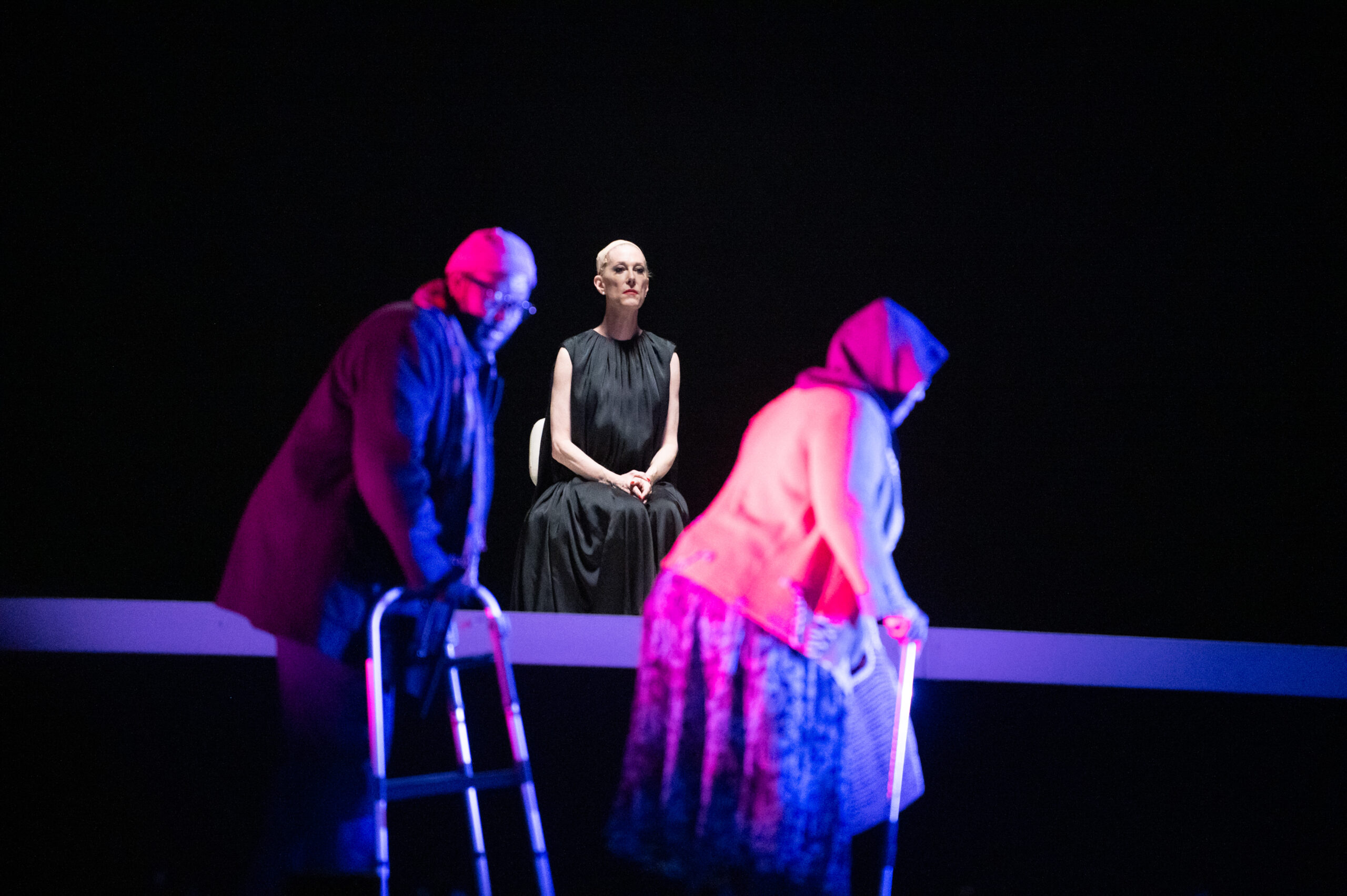
    When Opera Philadelphia announced a new multiauthored work titled Complications in Sue, one was right to ask, “What, exactly, is it?” The piece was written in less than a year and is still in progress, so answers to that question might not be specific until the Academy of Music dress rehearsal.

    “Dress rehearsal if we’re lucky! Try opening night,” said general director and president Anthony Roth Costanzo. “Opera is in a constant state of emergency.”

    Created to commemorate the company’s 50th anniversary, Complications in Sue opens Wednesday with 10 composers commissioned to write eight-minute scenes. These collectively encompass the century-long life of a mythical everywoman named Sue.

    (From left) Director Zack Winokur, producer Anthony Roth Costanzo, and director Raja Feather Kelly pose for a portrait before the first dress rehearsal at the Academy of Music in Center City Philadelphia on Saturday, Jan. 31, 2026. The venue will be showing the new opera “Complication in Sue” from Feb. 4-8.

    She saves Santa Claus from an existential crisis in a nonbelieving world, fends off aggressive shopping algorithms that tell her who she is, and deals with more typical stuff like a lonely ex-husband. Forget any typical narrative. It’s what librettist Michael R. Jackson calls “a fantasia … with some real people but some abstractions.”

    That last part is a Jackson specialty — as seen in his much-awarded fantasy-prone Broadway hit A Strange Loop. What it all means, will be in the mind of the beholder. “The audience isn’t going to be told what to think or how to feel on this strange little roller-coaster ride,” he said.

    Nicky Spence performs in “Complications in Sue” during the first dress rehearsal at the Academy of Music in Center City Philadelphia on Saturday, Jan. 31, 2026. The performance tells the story of one woman’s existence across 10 decades, each chapter scored by a different composer.

    At the center of it all — sort of, at times — is the high-personality cabaret star Justin Vivian Bond, best known as part of the comedy duo Kiki and Herb, but she has enjoyed new respect having been named a 2024 MacArthur Fellow. Bond suggested the title and rough framework of Complications in Sue but has become an unintentionally mysterious factor.

    Kiera Duffy (left) and Justin Vivian Bond perform in “Complications in Sue” during the first dress rehearsal at the Academy of Music in Center City Philadelphia on Saturday, Jan. 31, 2026. The original libretto is based on an idea by Bond, and is playwright Michael R. Jackson’s operatic debut. 

    She plays Sue, speaking and singing at times, functioning within the whole as “a leitmotif … an energy force that tracks through the whole piece,” said Jackson.

    But not a typically operatic force.

    “Vivian has an operatic-scale charisma … She is very funny, very surreal, and very herself,” said Costanzo.

    It all sounds abstract and ambiguous to those who don’t know Bond’s work. But here is what is known: She will look fabulous in a wardrobe designed by JW Anderson (creative director of Christian Dior), not surprising since Bond, who is trans, has described her brand of social commentary as “glamour resistance.”

    Justin Vivian Bond performs in “Complications in Sue” during the first dress rehearsal at the Academy of Music in Center City Philadelphia on Saturday, Jan. 31, 2026. The original libretto is based on an idea by Bond, and is playwright Michael R. Jackson’s operatic debut. 

    Bond has been vague about what she would do within the piece. She has also been strangely absent.

    At a Jan. 16 workshop presentation by Works & Process in New York, Bond was reportedly present but didn’t participate. Rather than being in Philadelphia during down-to-the-wire rehearsal weeks, she was in Paris during Fashion Week Haute Couture Spring (Jan. 26-29). Reportedly, she has stayed in close touch with Costanzo — as he continues to find a midpoint between the majestic tradition of creating opera for the ages and the speedy topicality of the highly collaborative “devised theater.”

    Justin Vivian Bond (left) and Nicky Spence perform in “Complications in Sue” during the first dress rehearsal at the Academy of Music in Center City Philadelphia on Saturday, Jan. 31, 2026. The opera was directed by Zack Winokur and Raja Feather Kelly.

    Opera Philadelphia has previously worked with the drag cabaret group the Bearded Ladies but not on the scale of an Academy of Music production. Multiauthored satirical works have occupied a small but notorious niche on the larger cultural landscape, such as the Jean Cocteau-conceived 1920s ballet The Wedding Party on the Eiffel Tower and, in theater, the Manhattan Theatre Club’s 1988 Urban Blight.

    But the 10-composer count of Complications in Sue may be a record of sorts and one that was engineered in a singular way.

    The lineup could be called “who’s cool in (the broadest definition of) classical music,” including the Opera Philadelphia’s composer in residence Nathalie Joachim, Errollyn Wallen from London, Cécile McLorin Salvant from the jazz world, Metropolitan Opera vet Nico Muhly, and everything vet Missy Mazzoli.

    The cast of “Complications in Sue” performs during the first dress rehearsal at the Academy of Music in Center City Philadelphia on Saturday, Jan. 31, 2026. The performance tells the story of one woman’s existence across 10 decades, each chapter scored by a different composer.

    Had Costanzo asked any one of them for a full-length opera, they’d have probably said “no” to the four- to five-year commitment. But with eight minutes — and a chance to work with a richly talented creative team — “how could they say no?,” he wondered.

    When assigned to their individual scenes, the composers didn’t know what the others were doing — which meant more freedom for those already writing grand operas (such as Mazzoli) and attractive to those newer to the field such as Salvant (“Cécile is really curious about opera,” said Costanzo).

    Rehanna Thelwell (left) and Justin Vivian Bond perform in “Complications in Sue” during the first dress rehearsal at the Academy of Music in Center City Philadelphia on Saturday, Jan. 31, 2026.

    Up-and-coming, Philadelphia-raised Dan Schlosberg, 38, who grew up in the Academy of Music nosebleed seats and now works with the radically revisionist, New York-based Heartbeat Opera, had already written a few student operas but ran with the grander resources available at Opera Philadelphia.

    His segment about Sue’s ex-husband going off the rails is a bit of a mad scene. “I wanted to follow his mental journey … the music goes from contemporary to big-band jazz to Broadway-like torch songs and everything in between,” Schlosberg said. “I wanted to harness the full orchestra, tons of brass … percussion … sirens … as many colors as I could.”

    The cast of “Complications in Sue” performs during the first dress rehearsal at the Academy of Music in Center City Philadelphia on Saturday, Jan. 31, 2026.

    Other composers include Andy Akiho, Alistair Coleman, Rene Orth, and Kamala Sankaram.

    The onstage team includes soprano Kiera Duffy, who has fearlessly starred in new works such as Mazzoli’s Breaking the Waves, as well as the edgy, in-demand U.K.-based tenor Nicky Spence. His reason for coming on board was simple: Anthony Roth Costanzo.

    “I took the call because it was him,” Spence said.

    Costanzo feels that he has hit the lottery with the composers, though one wonders if local audiences are ready for a presence as fierce as Bond.

    “Philadelphia is a fierce town,” Costanzo assured.

    Justin Vivian Bond (left) and Nicholas Newton perform in “Complications in Sue” during the first dress rehearsal at the Academy of Music in Center City Philadelphia on Saturday, Jan. 31, 2026. The venue will be showing the new opera “Complication in Sue” from Feb. 4-8.

    Certainly, he has brought much diversity to mainstream Philadelphia opera venues, especially on the LGBTQ+ front. Amid the shifting political climate, might there be pushback? That’s likely, he admits.

    “But Opera Philadelphia is for everyone.”

    Complications in Sue plays 7 p.m. Feb. 4, 7 p.m. Feb. 5, 8 p.m. Feb. 6, and 2 p.m. Feb. 8. Academy of Music, 240 S. Broad St., Philadelphia. All tickets are Pick Your Price, starting at $11. operaphila.org, 215-732-8400

  • 5-year-old Liam Conejo Ramos and father return to Minnesota from Texas detention facility

    5-year-old Liam Conejo Ramos and father return to Minnesota from Texas detention facility

    A 5-year-old boy and his father detained by immigration officers in Minnesota and held in Texas have been released following a judge’s order. They have returned to Minnesota, according to the office of Texas Rep. Joaquin Castro.

    The two were detained in a Minneapolis suburb on Jan. 20. They were taken to a detention facility in Dilley, Texas.

    Katherine Schneider, a spokesperson for the Democratic congressman, confirmed Adrian Alexander Conejo Arias and his son had arrived home.

    Images of the young boy wearing a bunny hat and Spider-Man backpack and surrounded by immigration officers drew outrage about the Trump administration’s crackdown in Minneapolis.

    Neighbors and school officials say that federal immigration officers used the preschooler as “bait” by telling him to knock on the door to his house so that his mother would answer. The Department of Homeland Security has called that description of events an “abject lie.” It said the father fled on foot and left the boy in a running vehicle in their driveway.

  • Carlos Alcaraz beats Novak Djokovic for Australian Open title

    Carlos Alcaraz beats Novak Djokovic for Australian Open title

    MELBOURNE, Australia — Carlos Alcaraz is 22, he’s the youngest man ever to win all four of the major titles in tennis, and he had to achieve what no man previously has done to complete the career Grand Slam in Australia.

    The top-ranked Alcaraz dropped the first set of the Australian Open final in 33 minutes Sunday as Novak Djokovic went out hard in pursuit of an unprecedented 25th major title, but the young Spaniard dug deep to win 2-6, 6-2, 6-3, 7-5.

    “Means the world to me,” Alcaraz said. “It is a dream come true for me.”

    Djokovic had won all 10 of his previous finals at Melbourne Park and, despite being 38, gave himself every chance of extending that streak to 11 when he needed only two sets to win.

    Alcaraz rose to the challenge.

    “Tennis can change on just one point. One point, one feeling, one shot can change the whole match completely,” he said. “I played well the first set, but you know, in front of me I had a great and inspired Novak, who was playing great, great shots.”

    A couple of unforced errors from Djokovic early in the second set gave Alcaraz the confidence.

    He scrambled to retrieve shots that usually would be winners for Djokovic, and he kept up intense pressure on the most decorated player in men’s tennis history. There were extended rallies where each player hit enough brilliant shots to usually win a game.

    Djokovic has made an art form of rallying from precarious positions. Despite trailing two sets to one, he went within the width of a ball in the fourth set’s ninth game of turning this final around.

    After fending off six break points in the set, he exhorted the crowd when he got to 30-30. The crowd responded with chants of “Nole, Nole, Nole!”

    When Djokovic earned a breakpoint chance — his first since the second set — he whipped up his supporters again. But when Djokovic sent a forehand long on the next point, Alcaraz took it as a reprieve.

    A short forehand winner, a mis-hit from Alcaraz, clipped the net and landed inside the line to give him game point. Then Djokovic hit another forehand long.

    Alcaraz responded with a roar, and sealed victory by taking two of the next three games.

    As he was leaving the court, Alcaraz signed the lens of the TV camera with a recognition: “Job finished. 4/4 Complete.”

    Teamwork

    After paying tribute at the trophy ceremony to Djokovic for being an inspiration, Alcaraz turned to his support team. He parted ways with longtime coach Juan Carlos Ferrero at the end of last season and Samuel Lopez stepped up to head the team.

    “Nobody knows how hard I’ve been working to get this trophy. I just chased this moment so much,” Alcaraz said. “The pre-season was a bit of a roller coaster emotionally.

    “You were pushing me every day to do all the right things,” he added. “I’m just really grateful for everyone I have in my corner right now.”

    Djokovic’s praise

    Djokovic joked about this showdown setting up a rivalry over the next 10 years with Alcaraz, but then said it was only right to hand the floor over to the new, 16 years his junior, champion.

    “What you’ve been doing, the best word to describe is historic, legendary,” he said. “So congratulations.”

    Both players were coming off grueling five-set semifinal wins — Alcaraz held off No. 3 Alexander Zverev on Friday; Djokovic’s win over two-time defending Australian Open champion Jannik Sinner ended after 1:30 a.m. Saturday — yet showed phenomenal fitness, athleticism, and stamina for just over three hours in pursuit of their own historic achievements.

    Djokovic won the last of his 24 Grand Slam singles titles at the 2023 U.S. Open, his push for an unprecedented 25th has now been blocked by Alcaraz or Sinner for nine majors.

    Rafa in the house

    Djokovic and Rafael Nadal played some epic matches, including the longest match ever at the Australian Open that lasted almost six hours in 2012.

    Nadal was in the stands Sunday, and both players addressed the 22-time major winner.

    “He’s my idol, my role model,” Alcaraz said. To complete the career Slam “in front of him, it made even more special.”

    Djokovic, addressing Nadal directly as the “legendary Rafa,” joked that there were “too many Spanish legends” in Rod Laver.

    “It felt like it was two against one tonight,” he said.

    One for the ages

    At 22 years and 272 days, Alcaraz is the youngest man to complete a set of all four major singles titles. He broke the mark set by Don Budge in the 1938 French championships, when he was 22 years and 363 days.

    He’s the ninth man to achieve the career Grand Slam, a list that also includes Djokovic, Nadal and Roger Federer.

    Alcaraz now has seven major titles — his first in Australia along with two each at Wimbledon and the French and U.S. Opens.

  • Vic Fangio is mulling retirement again. The Eagles remain hopeful the defensive coordinator will return.

    Vic Fangio is mulling retirement again. The Eagles remain hopeful the defensive coordinator will return.

    Eagles defensive coordinator Vic Fangio has been talking about retirement since before the end of the season, but the team has yet to receive a final decision on whether he plans to return, sources close to the situation told The Inquirer.

    ”He keeps talking retirement, but he did the same last year,” an Eagles source said last week.

    The 67-year-old defensive coordinator hasn’t responded to questions about his future since the end of the season. Neither has the team. Sources said that the Eagles received a commitment from Fangio that he would return but that he left open the possibility that he could change his mind.

    Linebacker Nakobe Dean said he didn’t know whether Fangio would be back for a third season with the Eagles when asked about his coach at locker clean-out day two weeks ago.

    “I don’t really know,” Dean said to The Inquirer. “Vic always said — well, I won’t say ‘always said’ — but I remember he said he’ll stop coaching when it don’t get fun — or as fun — as it’s been. So that’s TBD.”

    The Eagles considered the possibility of Fangio’s retirement enough that they reached out to former Eagles defensive coordinator Jonathan Gannon, according to a report from Philly Voice. Gannon, who was fired after three seasons as Cardinals head coach last month, was hired by the Packers to be their defensive coordinator last week.

    Eagles defensive coordinator Vic Fangio presided over an elite unit in 2025.

    Philly Voice reported that the Eagles also considered reaching out to another former defensive coordinator: Jim Schwartz. Schwartz was recently passed over for the Browns head coaching job and is deciding whether he wants to stay in Cleveland.

    The Eagles recently lost defensive passing game coordinator Christian Parker to the Cowboys, who hired him to be their defensive coordinator. Parker would have been the likely in-house replacement for Fangio. Defensive line coach Clint Hurtt has previous coordinating experience.

    Fangio cemented an illustrious 40-year coaching career by finally winning an NFL title last year. His defense was instrumental in the Eagles’ 40-22 win over the Chiefs. Fangio devised a scheme that confounded and pressured Kansas City quarterback Patrick Mahomes in Super Bowl LIX.

    The Eagles defense wasn’t as dominating as it was last season, but it was clearly the team’s best unit in 2025. Fangio’s group was among the best in the league in the second half of the season, although there were some breakdowns in the wild-card round playoff loss to the 49ers.

    Coach Nick Sirianni has already made several staffing moves on the offensive side of the ball. He stripped Kevin Patullo of offensive coordinator duties and hired former Packers quarterbacks coach Sean Mannion as his replacement last week. Former Buccaneers offensive coordinator Josh Grizzard was also brought on as passing game coordinator.

    More changes to the offensive staff could be forthcoming.