Blog

  • Sledgehammer-wielding thieves stole $11,000 worth of Lululemon in Ardmore’s Suburban Square

    Sledgehammer-wielding thieves stole $11,000 worth of Lululemon in Ardmore’s Suburban Square

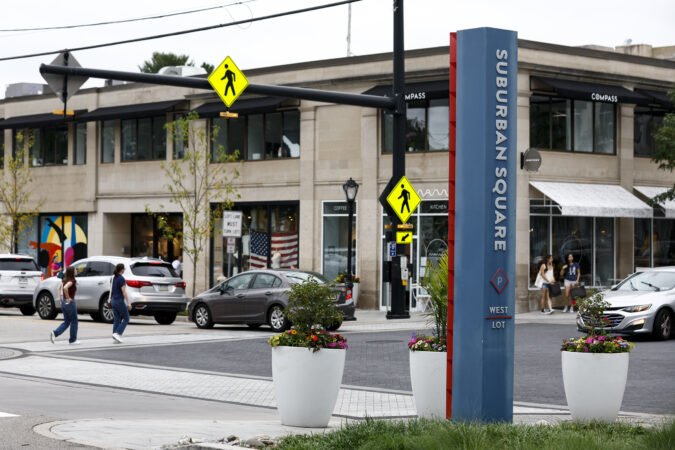
    Two men have been arrested after breaking into a Lululemon store in Ardmore and allegedly stealing nearly $11,000 in merchandise, police said.

    Quran Harmon, 23, and James Jordan, 49, both of Philadelphia, used a sledgehammer to break through the front door of the Lululemon in the Suburban Square shopping center on Jan. 6 at 1:52 a.m., according to the Lower Merion Township Police Department.

    Within five minutes, surveillance footage shows, Harmon and Jordan cased the Lululemon, broke the front door, and grabbed as much clothing from the men’s section as possible, said Lower Merion Police Superintendent Andrew Block. Afterward, police said, they fled the scene in a U-Haul pickup truck.

    Lower Merion detectives soon identified the suspects and, with the help of Philadelphia police, tied them to a similar sneaker burglary at a Famous Footwear store in Philadelphia the night before.

    Police served a search warrant five days after the robbery at a residence in Philadelphia, where merchandise from the Lululemon and Famous Footwear thefts was recovered, authorities said. Harmon turned himself in to Lower Merion police on Jan. 29 and is being held at the Montgomery County Correctional Facility.

    Jordan was arrested on Feb. 6 by Upper Moreland police in connection with a separate theft-related crime and is also being held at the Montgomery County Correctional Facility while awaiting burglary and theft charges in the previous robberies.

  • Philip Korshak returns to South Philly. This time, bagels aren’t on the menu

    Philip Korshak returns to South Philly. This time, bagels aren’t on the menu

    Philip Korshak, the poet-baker who left town after closing his cult favorite Korshak Bagels 2½ years ago, plans to return to South Philadelphia this spring with a new, deliberately modest venture:

    Korshak Picnic Provisions will be a corner shop built around grilled hot dogs, house-made sourdough biscuits, and the idea that food is community.

    “If I had to model this place after something, it’s Mr. Hooper’s store on Sesame Street,” Korshak said. “The weird little corner shop that’s always there.”

    It’s a former animal hospital at the southeast corner of 13th and Reed Streets, across from the old Faragalli’s Bakery and Columbus Square Park. He is targeting a May opening.

    Korshak impressed both the New York Times and Bon Appétit with his bagel shop, which opened in May 2021 at 10th and Morris Streets. But success came at a price. When he closed it in September 2023, he cited financial and personal strain.

    The shop’s popularity brought pressures that clashed with his ideals. Korshak resisted automation and expansion, wary of becoming something other than a neighborhood bakery. His staff was one of the first in the city to unionize at an independent cafe. (Korshak voluntarily recognized the union.)

    “The staff would prefer to continue,” he wrote in his farewell letter, “but the changes to the process in exchange for efficiency … are not changes I think … are on brand for Korshak Bagels.”

    Bagels by Philip Korshak, whose South Philly bagel shop became a gold standard before shuttering in 2023.

    He also wrote that the shop “simply can’t function economically. And provide a living wage. And work/life balance. And reasonable prices.”

    Korshak’s path back to Philly

    After closing Korshak’s Bagels, Korshak first lived in Seattle but relocated to Austin, Texas — his previous stop before Philadelphia. He had no real plans other than working on a memoir and “spinning my wheels,” he said.

    Then the phone rang last fall. It was Pat Duffy, a friend who owned the building where Korshak used to take his pet cat for veterinary care. “He said, ‘I’ve got this spot. The neighborhood misses you. It could use your vibe,’” Korshak said.

    Korshak initially demurred. “I told him I wasn’t in town and I wasn’t ‘doing the thing’ anymore,” he said. “But just to be thought of — in that world of absurdity and hope — meant everything to me.”

    Duffy walked him through the space over FaceTime. The building, which had been outfitted to become a takeout bakery, had little more than a plumbed floor and sinks. There was no ventilation hood or even potential for a sprawling production line.

    Which was exactly what intrigued Korshak.

    “What I already knew how to do wasn’t that interesting to me anymore,” he said. “What I don’t know yet, that’s compelling.” He moved back to Philadelphia on Dec. 20, settling in Conshohocken.

    The idea for a picnic provisions shop, anchored by hot dogs, came quickly. The corner sits near a bike path, a dog run, a playground, and softball fields. Korshak imagined it as a rendezvous point before or after the park: a place to grab a soda, a cookie, a sourdough biscuit with honey from Green Meadow Farm, or a couple of hot dogs “because dinner’s in a couple hours.”

    “I’m an old guy,” the Brooklyn-born Korshak, 58, said. “I’ve had a lot of hot dogs and a lot of picnics. I like both.”

    Korshak’s reasoning is more philosophical than nostalgic. “The hot dog appealed to me because it can’t really be fetishized,” he said. “You can’t put it on a ‘best of’ list in any meaningful way. It’s ubiquitous. It transcends nationality. For me, food is the connector — it’s not the end in itself. A hot dog almost refuses to be the end in itself. It’s silly, fun, quick.”

    Korshak Picnic Provisions will offer four styles of dogs, all grilled: a standard beef or vegan dog with mustard, relish, onion, or kraut; a Coney-style dog with chili, cheese, and onions (with vegan chili available); a Chicago dog with traditional through-the-garden accoutrements on a poppy-seed bun; and a Pacific Northwest dog topped with cream cheese, fish-sauce ketchup, and cabbage. Though he has not yet selected a supplier, he plans to use all-beef dogs.

    He plans to source buns from Mighty Bread Co., around the corner, shifting away from the labor-intensive, in-house production that defined Korshak Bagels. “It’s not about the hot dog I can make — it’s about what happens when we work together,” he said. “I love baking, but I’m not interested in running big production again.”

    Beyond hot dogs, Picnic Provisions will carry crisps, crackers, jams, honeys, sodas, candy, and seasonal produce. Korshak will keep much of the product line local. He said he is talking to Rhonda Saltzman of Second Daughter Artisanal Bakery and Carol Ha of Okie Dokie Donuts about stocking some of their products. He also envisions stocking non-edible picnic goods — kites, blankets, quilts — reinforcing the shop’s central metaphor.

    There will be baking, just not at former volumes. Helen Mirren, his pet name for his long-ferment starter, will inform a sourdough biscuit and a sourdough-spiked cinnamon roll. (Korshak has been testing at the former Conshohocken Bakery, run by longtime friend Danny DiGiampietro, who hosted his first bagel pop-ups.)

    This time around, he says, the sense of risk is different.

    “It’s all exciting to me,” he said of the new venture, which will have three employees. “The only thing that scares me is if this becomes bigger than it’s intended to be — but I don’t think it will.”

    The goal, he said, is durability rather than buzz. “A friend of mine talks about being ‘hot.’ You can only be hot for so long. After that, you’re judged against whether you were hot or not. But the things people truly love aren’t hot — they’re established. They become part of the common language.”

    “I’ve been around,” Korshak said. “Philly doesn’t exist anywhere else. The people here are the reason it’s the way it is. It’s unlike anywhere.”

    He said he found it “unbelievable” that his last name means something positive to Philadelphians. “How do you not keep trying to do something worthy of that?” he asked. “The goal isn’t accolades. It’s helping someone get through their day a little better — even if you never know about it.”

    Sounding more poet than proprietor, he returned to the idea that first drew him back: movement.

    “I’m incredibly lucky,” he said. “And if you’re not moving forward, you’re not moving at all.”

  • Former South Korean president receives life sentence for imposing martial law in 2024

    Former South Korean president receives life sentence for imposing martial law in 2024

    SEOUL, South Korea — Former South Korean President Yoon Suk Yeol was found guilty of leading an insurrection on Thursday and sentenced to life in prison for his brief imposition of martial law in 2024, a ruling that marks a dramatic culmination of the country’s biggest political crisis in decades.

    The conservative leader was ousted from office after he declared martial law and sent troops to surround the National Assembly on Dec. 3, 2024, in a baffling attempt to overcome a legislature controlled by his liberal opponents.

    Judge Jee Kui-youn of the Seoul Central District Court said he found Yoon, 65, guilty of rebellion for mobilizing military and police forces in an illegal attempt to seize the Assembly, arrest political opponents and establish unchecked power for an indefinite period.

    Martial law crisis recalled dictatorial past

    Yoon’s martial law imposition, the first of its kind in more than four decades, recalled South Korea’s past military-backed governments when authorities occasionally proclaimed emergency decrees that allowed them to station soldiers, tanks, and armored vehicles on streets or in public places such as schools to prevent anti-government demonstrations.

    As lawmakers rushed to the National Assembly, Yoon’s martial law command issued a proclamation declaring sweeping powers, including suspending political activities, controlling the media and publications, and allowing arrests without warrants.

    The decree lasted about six hours before being lifted after a quorum of lawmakers managed to break through a military blockade and unanimously voted to lift the measure.

    Yoon was suspended from office on Dec. 14, 2024, after being impeached by lawmakers and was formally removed by the Constitutional Court in April 2025. He has been under arrest since last July while facing multiple criminal trials, with the rebellion charge carrying the most severe punishment.

    Yoon’s lawyers reject conviction

    An expressionless Yoon gazed straight ahead as the judge delivered the sentence in the same courtroom where former military rulers and presidents have been convicted of treason, corruption and other crimes over the decades.

    Yoon Kap-keun, one of the former president’s lawyers, accused the judge of issuing a “predetermined verdict” based solely on prosecutors’ arguments and said the “rule of law” had collapsed. He said he would discuss whether to appeal with his client and the rest of the legal team.

    Former President Yoon claimed in court that the martial law decree was only meant to raise public awareness of how the liberals were paralyzing state affairs, and that he was prepared to respect lawmakers if they voted against the measure.

    Prosecutors said it was clear Yoon was attempting to disable the legislature and prevent lawmakers from lifting the measure through voting, actions that exceeded his constitutional authority even under martial law.

    The court also convicted and sentenced five former military and police officials involved in enforcing Yoon’s martial law decree. They included ex-Defense Minister Kim Yong Hyun, who received a 30-year jail term for his central role in planning the measure, mobilizing the military and instructing military counterintelligence officials to arrest 14 key politicians, including National Assembly speaker Woo Won-shik and current liberal President Lee Jae Myung.

    In announcing Yoon and Kim’s verdicts, Jee said the decision to send troops to the National Assembly was key to his determination that the imposition of martial law amounted to rebellion.

    “This court finds that the purpose of [Yoon’s] actions was to send troops to the National Assembly, block the Assembly building and arrest key figures, including the National Assembly speaker and the leaders of both the ruling and opposition parties, in order to prevent lawmakers from gathering to deliberate or vote,” Jee said. “It’s sufficiently established that he intended to obstruct or paralyze the Assembly’s activities so that it would be unable to properly perform its functions for a considerable period of time.”

    Protesters rally outside court

    As Yoon arrived in court, hundreds of police officers watched closely as Yoon supporters rallied outside a judicial complex, their cries rising as the prison bus transporting him drove past. Yoon’s critics gathered nearby, demanding the death penalty.

    There were no immediate reports of major clashes following the verdict.

    A special prosecutor had demanded the death penalty for Yoon Suk Yeol, saying his actions posed a threat to the country’s democracy and deserved the most serious punishment available, but most analysts had expected a life sentence since the poorly planned power grab did not result in casualties.

    South Korea has not executed a death-row inmate since 1997, in what is widely seen as a de facto moratorium on capital punishment amid calls for its abolition.

    Jung Chung-rae, leader of the liberal Democratic Party, which led the push to impeach and remove Yoon, expressed regret that the court stopped short of the death penalty, saying the ruling reflected a “lack of a sense of justice.”

    Song Eon-seok, floor leader of the conservative People Power Party, to which Yoon once belonged, issued a public apology, saying the party feels a “deep sense of responsibility” for the disruption to the nation.

    The office of current President Lee Jae Myung did not immediately comment on the ruling.

    Other officials sentenced for enforcing martial law

    Last month, Yoon was sentenced to five years in prison for resisting arrest, fabricating the martial law proclamation, and sidestepping a legally mandated full cabinet meeting before declaring the measure.

    The Seoul Central Court had previously convicted two other members of Yoon’s Cabinet in connection with the martial law debacle. That includes Prime Minister Han Duck-soo, who received a 23-year prison sentence for attempting to legitimize the decree by forcing it through a Cabinet Council meeting, falsifying records and lying under oath. Han has appealed the verdict.

    Yoon is the first former South Korean president to receive a life sentence since former military dictator Chun Doo-hwan, who was sentenced to death in 1996 for his 1979 coup, a bloody 1980 crackdown on pro-democracy protesters in Gwangju that left more than 200 people dead or missing, and corruption.

    The Supreme Court later reduced his sentence to life imprisonment, and he was released in late 1997 under a special presidential pardon. He died in 2021.

  • State Rep. Chris Rabb isn’t running for reelection to Harrisburg as he goes ‘all in’ for Congress

    State Rep. Chris Rabb isn’t running for reelection to Harrisburg as he goes ‘all in’ for Congress

    State Rep. Chris Rabb announced Thursday he will not seek reelection to Harrisburg this year while he runs for a seat in Congress.

    State lawmakers are allowed to simultaneously run for two offices. But Rabb, a Democrat, said he is fully committed to his campaign for Pennsylvania’s 3rd Congressional District, which covers roughly half of Philadelphia and is, by some measures, the most Democratic district in the nation.

    “I’m so inspired and overwhelmed by the tremendous outpouring of support we are seeing all across the city, and today I want to send a message loud and clear: I am all in on this race for Congress,” Rabb said in a statement.

    Rabb served five terms in the Pennsylvania House’s 200th District in Northwest Philadelphia, a seat once held by Mayor Cherelle L. Parker. A progressive who often operates as a political lone wolf, Rabb has frequently clashed with the city’s Democratic establishment, especially Parker and her allies in the Northwest Coalition political organization.

    In his first election, Rabb in 2016 defeated Tonyelle Cook-Artis, Parker’s close friend who now serves as an aide in the mayor’s office. Two years later, he bested Melissa Scott, who is now the Parker administration’s chief information officer. In 2022, redistricting forced Rabb to run against fellow incumbent State Rep. Isabella Fitzgerald, and he won again.

    Two other state lawmakers from Philadelphia are running in the crowded Democratic primary for the 3rd Congressional District, which is being vacated by retiring U.S. Rep. Dwight Evans (D., Philadelphia).

    Map of Pennsylvania’s Third Congressional District.

    State Sen. Sharif Street, of North Philadelphia, is not up for reelection this year, meaning he will keep his seat in Harrisburg if he loses the congressional race without having to run two campaigns. Street last year resigned as chair of the Pennsylvania Democratic Party after facing questions about whether his congressional campaign would conflict with his party leadership role.

    State Rep. Morgan Cephas, who chairs the Philadelphia delegation in the state House and represents a West Philadelphia district, is up for reelection this year. Her campaign on Thursday said she intends to simultaneously run for another term while vying for the congressional seat.

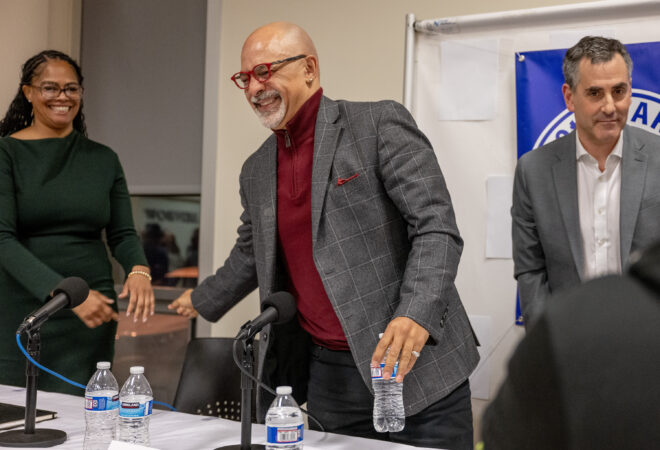
    (left to right) Alex Schnell, physician Dave Oxman, State Sen. Sharif Street, physician Ala Stanford, State Rep. Morgan Cephas, and Pablo McConnie-Saad appear during a candidate forum for the 3rd Congressional District seat at Church of the Holy Trinity on Monday, Feb. 9, 2026 in Philadelphia. The seat vacancy comes from Rep. Dwight Evans’ retirement.

    It is common for state legislators to run two simultaneous campaigns while seeking federal office. Their reelection bids often require little effort, as incumbents rarely face serious challenges. (Rabb’s career as an anti-establishment legislator in the backyard of one of Philadelphia’s most powerful political factions, however, has made him an outlier in that regard.)

    Rabb’s decision to fully commit to the congressional race follows the revelation last week that he let go of his campaign treasurer, Yolanda Brown, and reported her to federal authorities after she made “unauthorized withdrawals” from his campaign bank account.

    He declined to say how much money went missing. In his most recent campaign finance report, Rabb reported raising $127,000 in the last three months of 2025 and entering the year with $99,000 in cash on hand, which at the time represented the fifth-largest reserve among the 3rd District hopefuls.

    Rabb’s decision not to run for reelection means the Northwest Coalition now has its best opportunity in a decade to recapture the 200th District state House seat. Northwest Philadelphia’s liberal voter base, however, also opens the door for another progressive to follow in Rabb’s footsteps.

    “It has been the honor of a lifetime to serve Philadelphia families across the 200th House District for the past 10 years and I look forward to seeing the great candidates who will run,” Rabb said. “In the coming weeks, I’m committed to working with my fellow progressive leaders and advocates across this district to ensure that this seat continues to be held by a true champion for Philadelphia’s working families.”

    Anyone hoping to succeed Rabb in Harrisburg will have to act quickly. Candidates must submit petitions to appear on the ballot. The window to gather signatures opened this week and closes March 10.

    Rabb said Wednesday that his congressional campaign collected the required 1,000 signatures in just 12 hours, which he said makes him the first candidate in Pennsylvania to submit qualifying petitions and shows that his campaign “continues to build strong grassroots support across Philadelphia.”

  • Longtime coach Carl Arrigale leads Neumann Goretti back to the Catholic League final

    Longtime coach Carl Arrigale leads Neumann Goretti back to the Catholic League final

    Neumann Goretti’s Deshawn Yates knew the Catholic League boys’ basketball semifinal game was in his team’s favor at halftime Wednesday night, even though the Saints trailed Bonner-Prendergast by four points.

    “[At] halftime Coach was talking to us like, ‘Stay together. It’s a two-possession game,’” Yates said. “So just Coach telling us, keeping us together.”

    The Saints took their first lead of the game with six minutes to play when Yates made a jump shot and went on to defeat Bonner-Prendie, 64-60, inside a roaring Palestra crowd of 9,000 fans. Yates and teammate Marquis Newson finished with 19 points apiece.

    Neumann Goretti will return to the Catholic League championship for the first time since 2023. The Saints will face Father Judge, the defending PCL champion, on Sunday at 2:30 p.m.

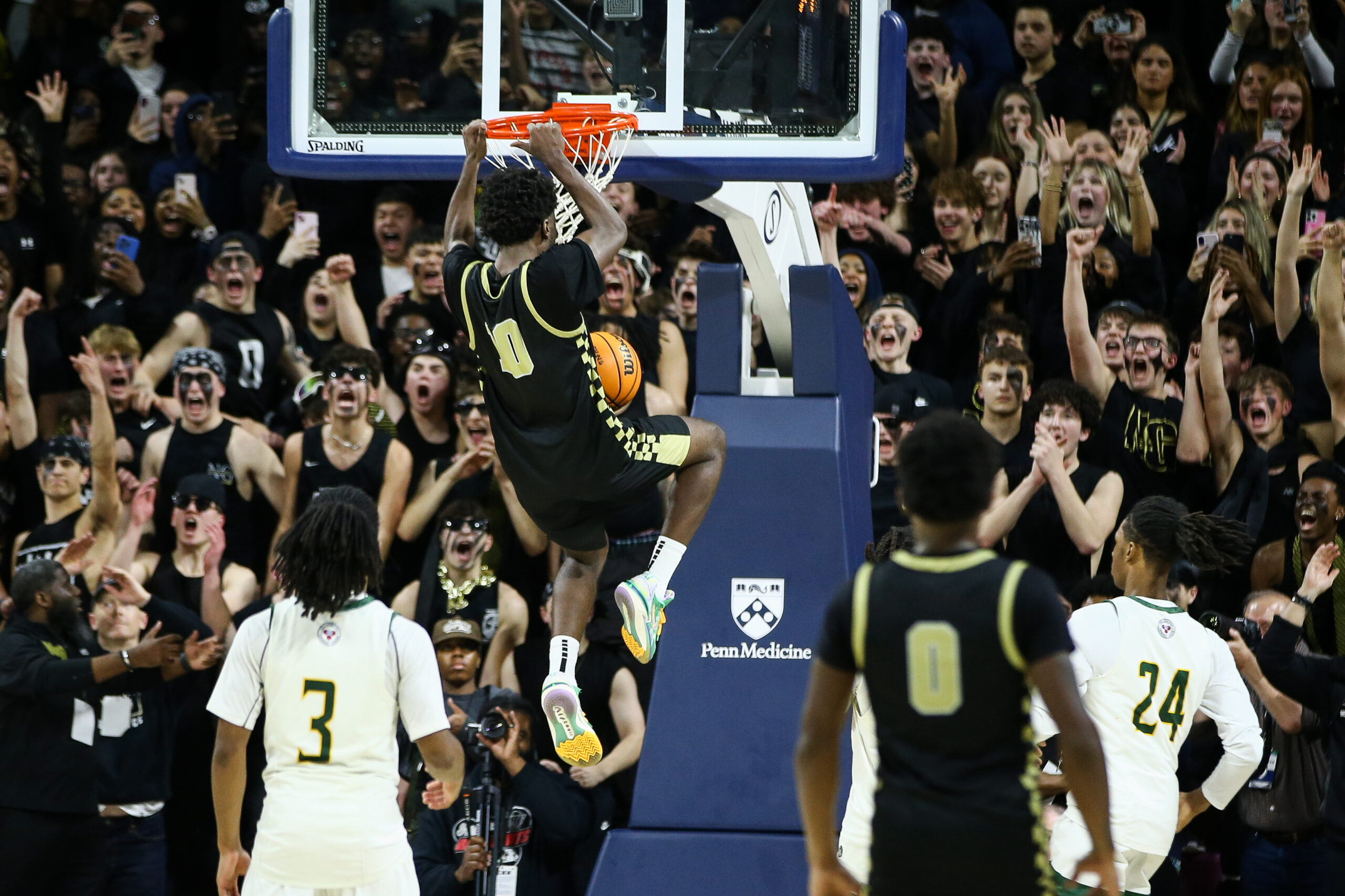
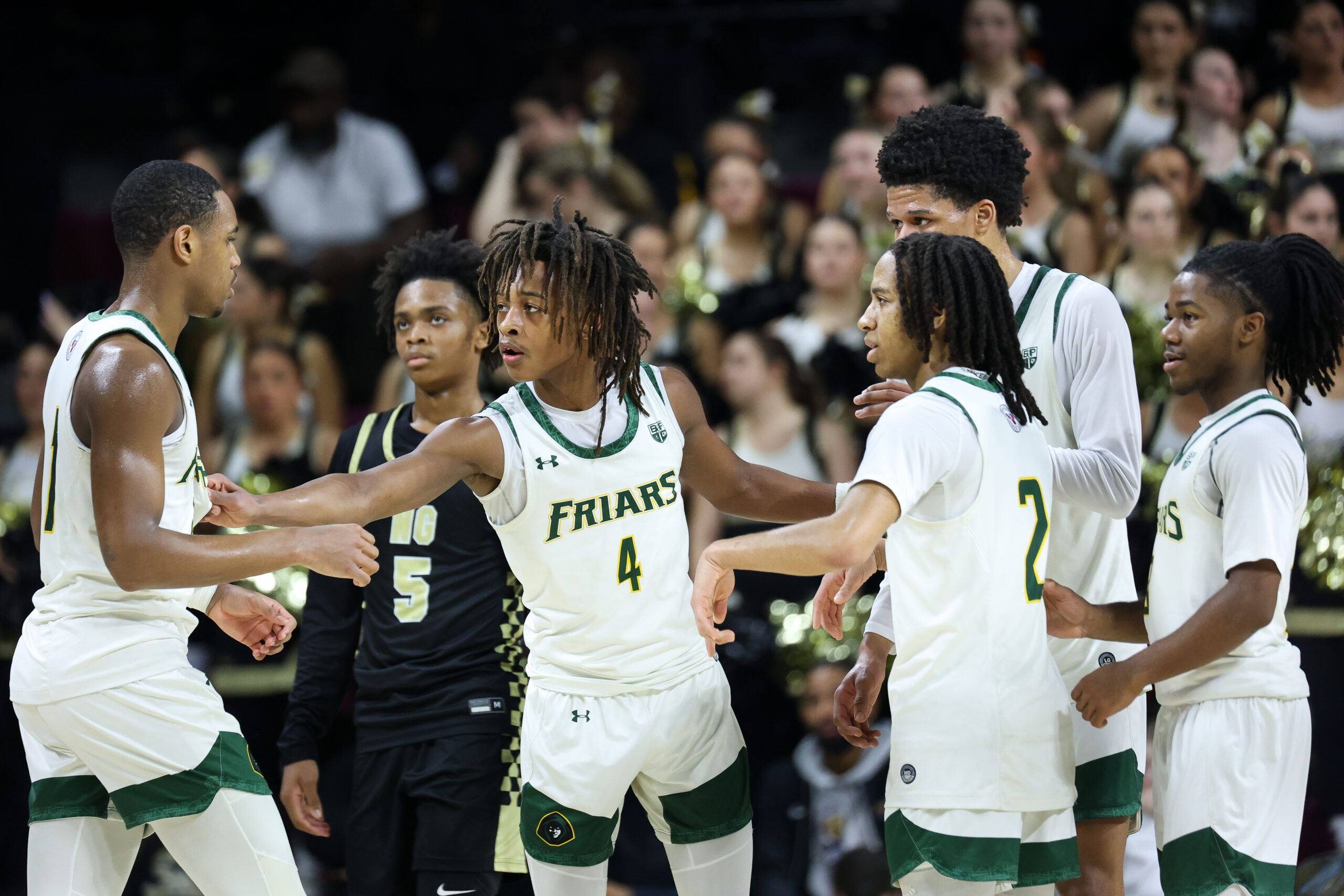
    Neumann Goretti’s Marquis Newson dunks during the final minutes against Bonner-Prendie during the Catholic League boys’ basketball semifinals on Wednesday.

    While Bonner-Prendie led for almost three quarters, it could not separate itself from Neumann Goretti by more than five points. Newson scored 10 points in the fourth quarter, which included a wide-open statement dunk with 30 seconds left to give Neumann Goretti a 62-57 lead.

    However, the lead changed five times before that. Bonner’s Korey Francis, the league MVP, tied the score at 53 with a pair of free throws with 3 minutes, 56 seconds remaining in the fourth quarter. Neumann Goretti then went on a 7-0 run to take command.

    Critical charge

    Bonner-Prendie made four free throws to make it a three-point game with over a minute left. Neumann Goretti led, 60-57.

    Francis, who finished with 18 points, recorded a steal at halfcourt and drove to the basket. As he finished the layup, it was waved off. Francis was given an offensive foul for a charge.

    The Bonner fans erupted in disagreement with the call.

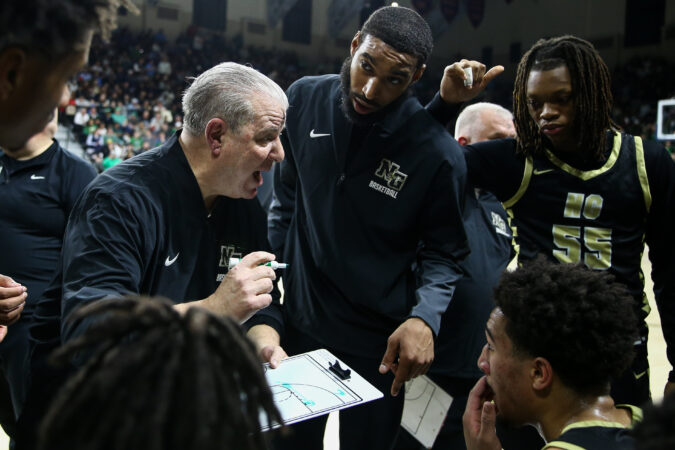
    Bonner & Prendie’s Jakeem Caroll (4) huddles the team against Neumann Goretti on Wednesday.

    “I would say we were really excited,” Newson said when asked about the charging call. “That’s something we practice a lot. Just taking charges. We have a whole drill for that. Knowing that what we practice works in the game, it was just a great feeling.”

    Yates added that the team thought it was going to be a foul.

    Two free throws from Stephon Ashley-Wright put the Saints up, 64-60, and sealed the game with 0.9 seconds remaining.

    “I would say I was just worried about the game, getting the win,” Yates said. “It was more so getting to the next round.”

    Arrigale looks to add to his title count

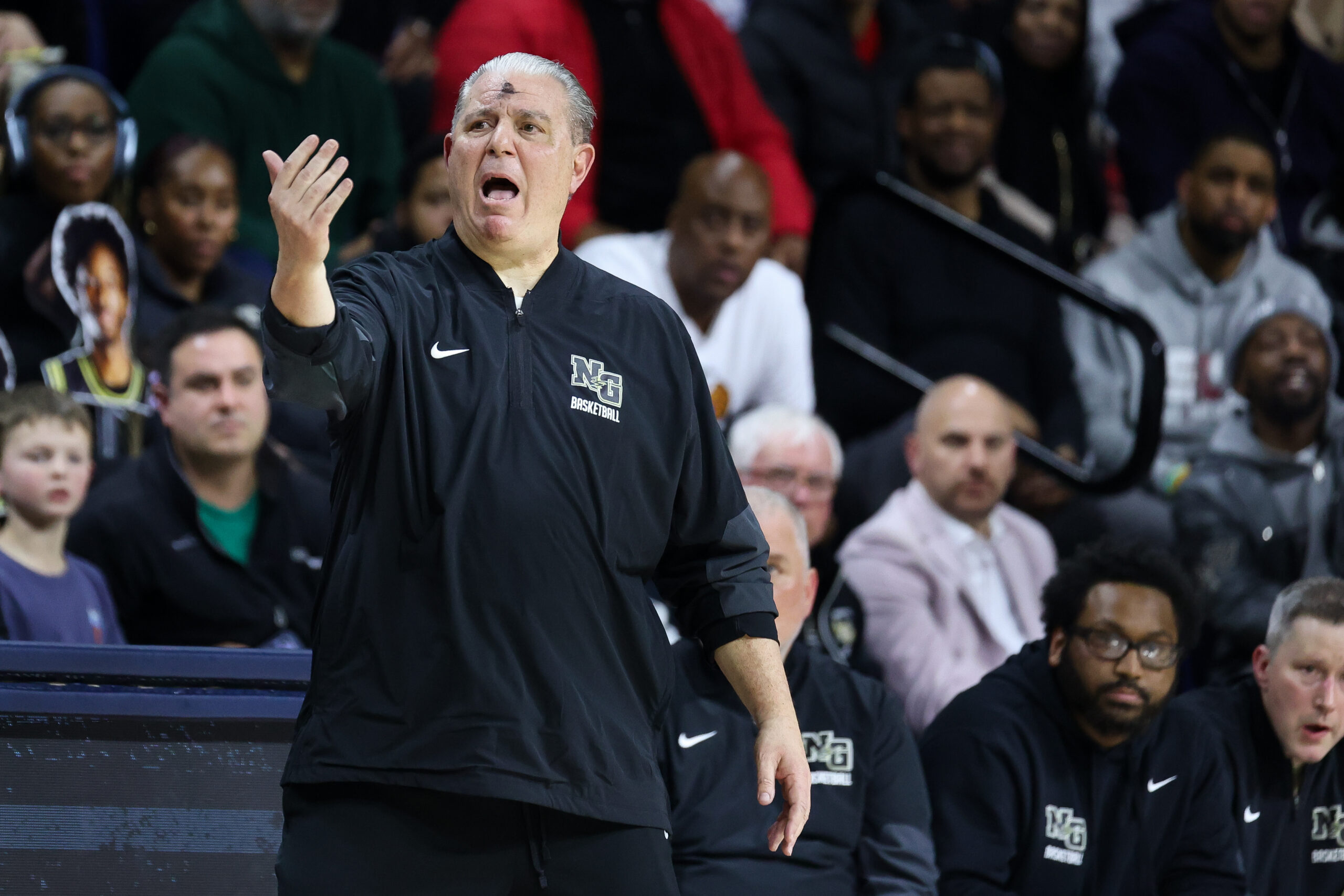
    Neumann Goretti coach Carl Arrigale has the opportunity to extend his all-time PCL title record to 13. He has led the Saints to 19 PCL final appearances since taking the helm in 1999.

    “People ask me about, ‘You’re going back to the Palestra. You’re going back to the Palestra,’ Arrigale said. “This never was about me. It’s never been about me, honestly — I want to do it for these guys to get back. I mean, Deshawn [Yates] played a couple years ago, and we were just banged up beyond belief. One of the worst losses in our history. … I just wanted to have a chance to come back and do it all over again.”

    Neumann Goretti coach Carl Arrigale has made 19 PCL final appearances at the helm.
  • Eagles star tackle Lane Johnson will return to team in 2026

    Eagles star tackle Lane Johnson will return to team in 2026

    Lane Johnson is officially returning for a 14th season with the Eagles.

    The right tackle told The Inquirer on Thursday that he will be back in 2026 after a month of uncertainty about his future following a season-ending injury and significant change in the Eagles’ coaching staff, most notably the departure of offensive line coach Jeff Stoutland.

    Johnson said he would address Stoutland’s sudden resignation and the new staff, led by offensive coordinator Sean Mannion, at his next media availability. But he met with Mannion and new O-line coach Chris Kuper recently and is excited about turning the offense around, sources close to the situation said.

    The return of Johnson, who turns 36 in May, will be key to coach Nick Sirianni’s expressed desire to “evolve” an offense that regressed significantly following a Super Bowl title just a season ago. Mannion is expected to bring with him the “Shanahan” system he both played and coached under as a quarterback and quarterbacks coach.

    There will likely be changes to the Eagles’ blocking schemes, especially in the running game. Stoutland left when it was apparent he would no longer have responsibilities as run game coordinator. Sirianni did want him to return as O-line coach, however, sources told The Inquirer.

    A six-time Pro Bowl player, Johnson was having another strong season until he suffered a Lisfranc foot fracture in Week 11. He had missed parts of other games with various setbacks, but the foot injury shelved him for the final eight games, including the wild-card playoff loss to the San Francisco 49ers.

    Johnson avoided surgery on his foot, but the injury never healed enough for him to return last season. He has continued to rehab and is expected to be at full strength in the near future.

    The Eagles have been a decidedly different team when Johnson is in the lineup vs. when he isn’t over his 13-year career. They are 110-57-1 when he plays and 18-27 when he doesn’t.

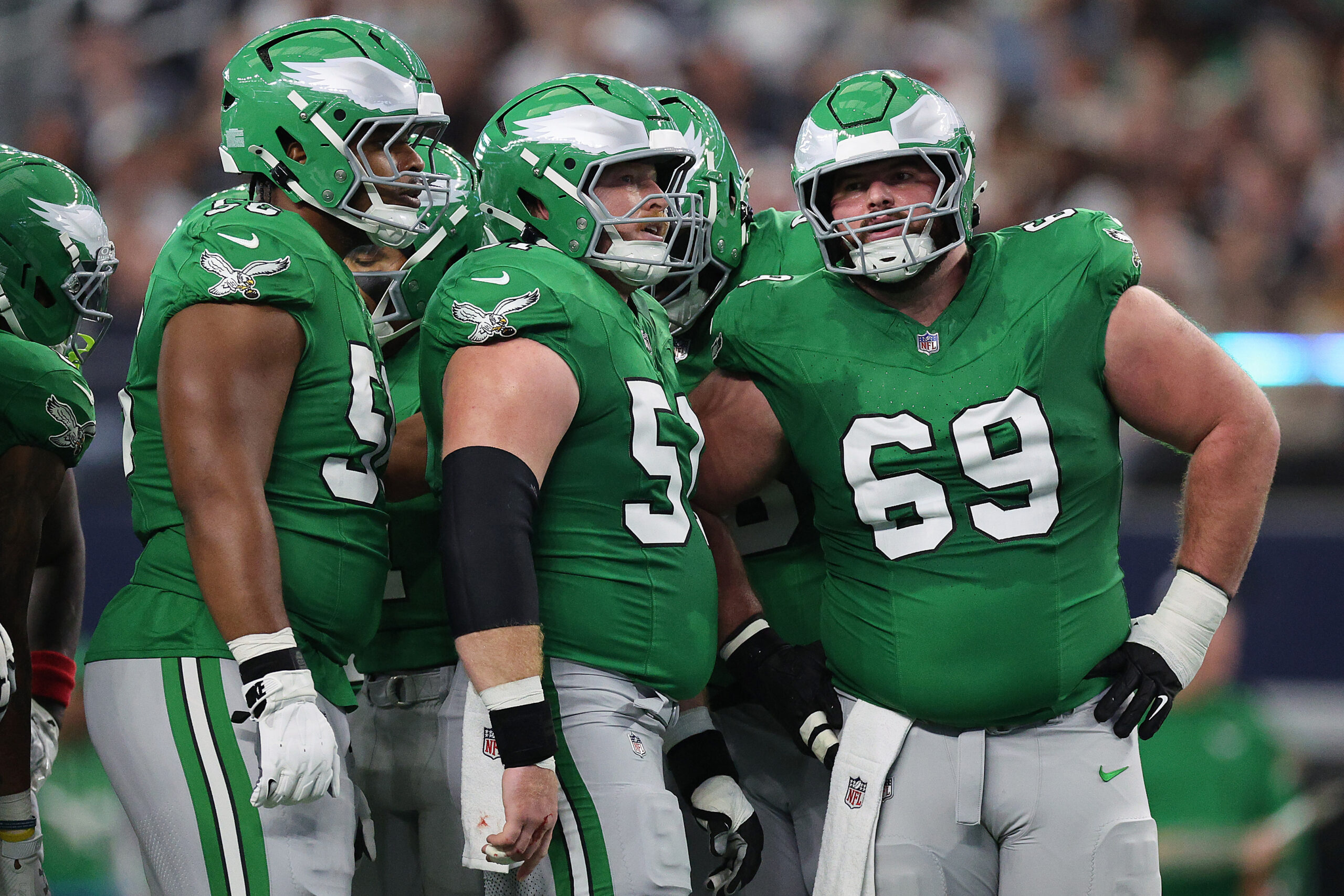
    Center Cam Jurgens, (center) and guard Landon Dickerson (right) are among the other Eagles who were banged up this past season.

    Johnson wasn’t the only offensive lineman who was banged up this past season. Left guard Landon Dickerson missed just two games, but he underwent knee surgery in August and played with multiple injuries throughout the campaign.

    Dickerson, 27, expressed some doubt about his future immediately after the 49ers defeat. He has yet to publicly address his plans, but there have been concerns inside the Eagles organization about his health.

    Recent indications are that Dickerson will return for his sixth season. The Eagles will likely have a clearer understanding of his plans ahead of next week’s NFL combine, when Sirianni and general manager Howie Roseman are expected to be available to reporters in Indianapolis.

    Center Cam Jurgens wasn’t 100% following offseason back surgery, especially early last season. He struggled to return to form, although he was the lone Eagles offensive lineman voted to the Pro Bowl in 2025. Jurgens recently traveled to Colombia for stem cell treatment on his back.

    “I’m excited to get healthy and get ready for this next season, so that’s why I’m down here,” he posted on Instagram, referring to the country in South America.

    Left tackle Jordan Mailata and right guard Tyler Steen didn’t miss time to injury, but the unit was clearly affected by the tenuous health of the O-line, particularly in the running game. The Eagles again had one of the better pass-blocking units, according to most metrics.

  • Murray Wolf, Avalon’s legendary beach patrol captain, has died at 87

    Murray Wolf, Avalon’s legendary beach patrol captain, has died at 87

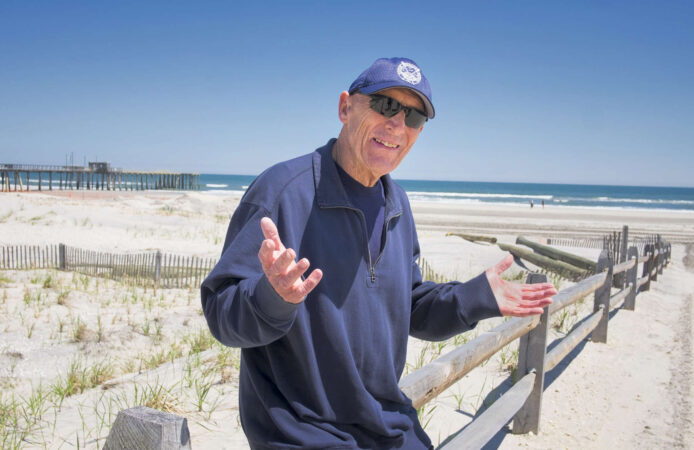
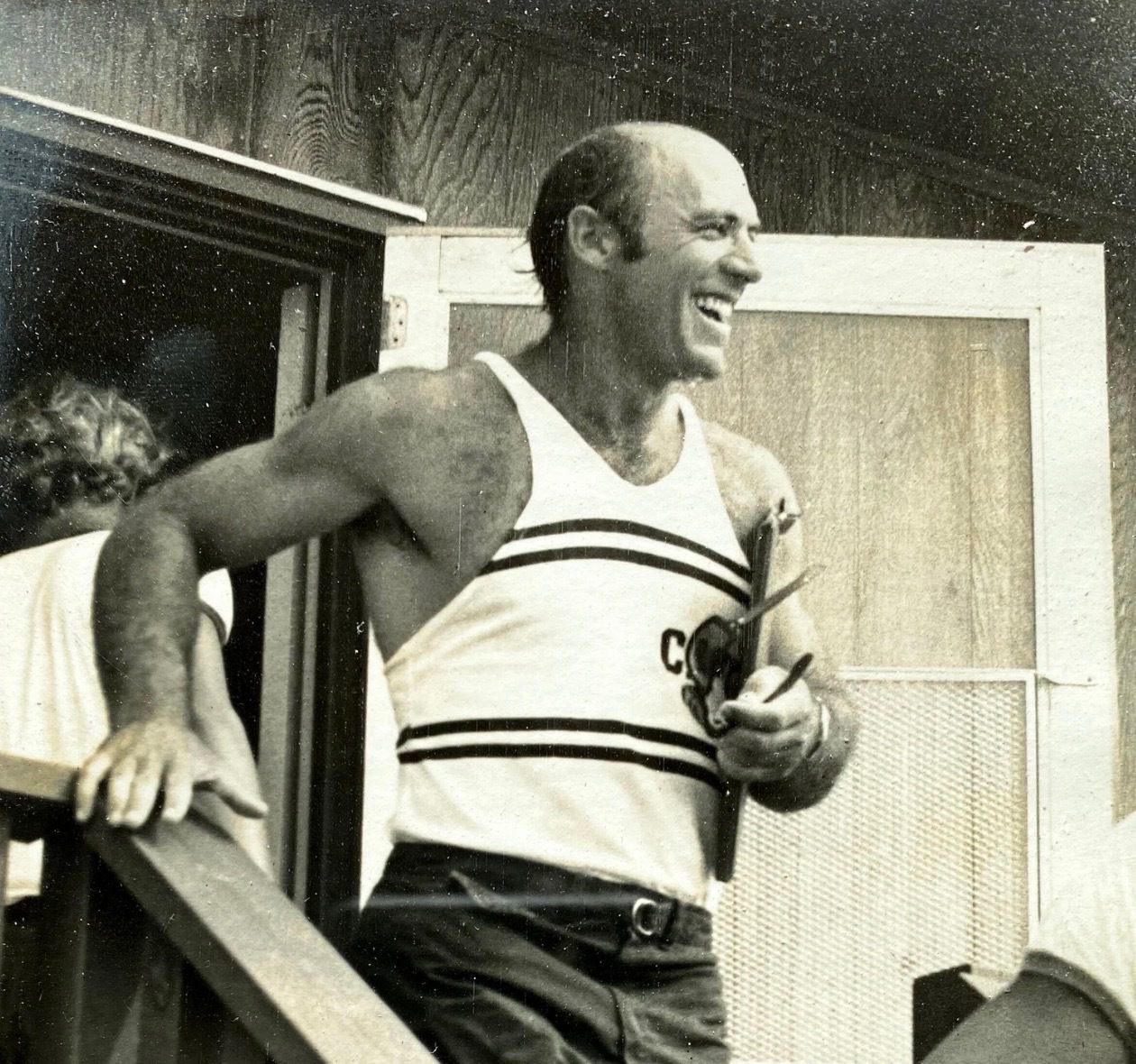
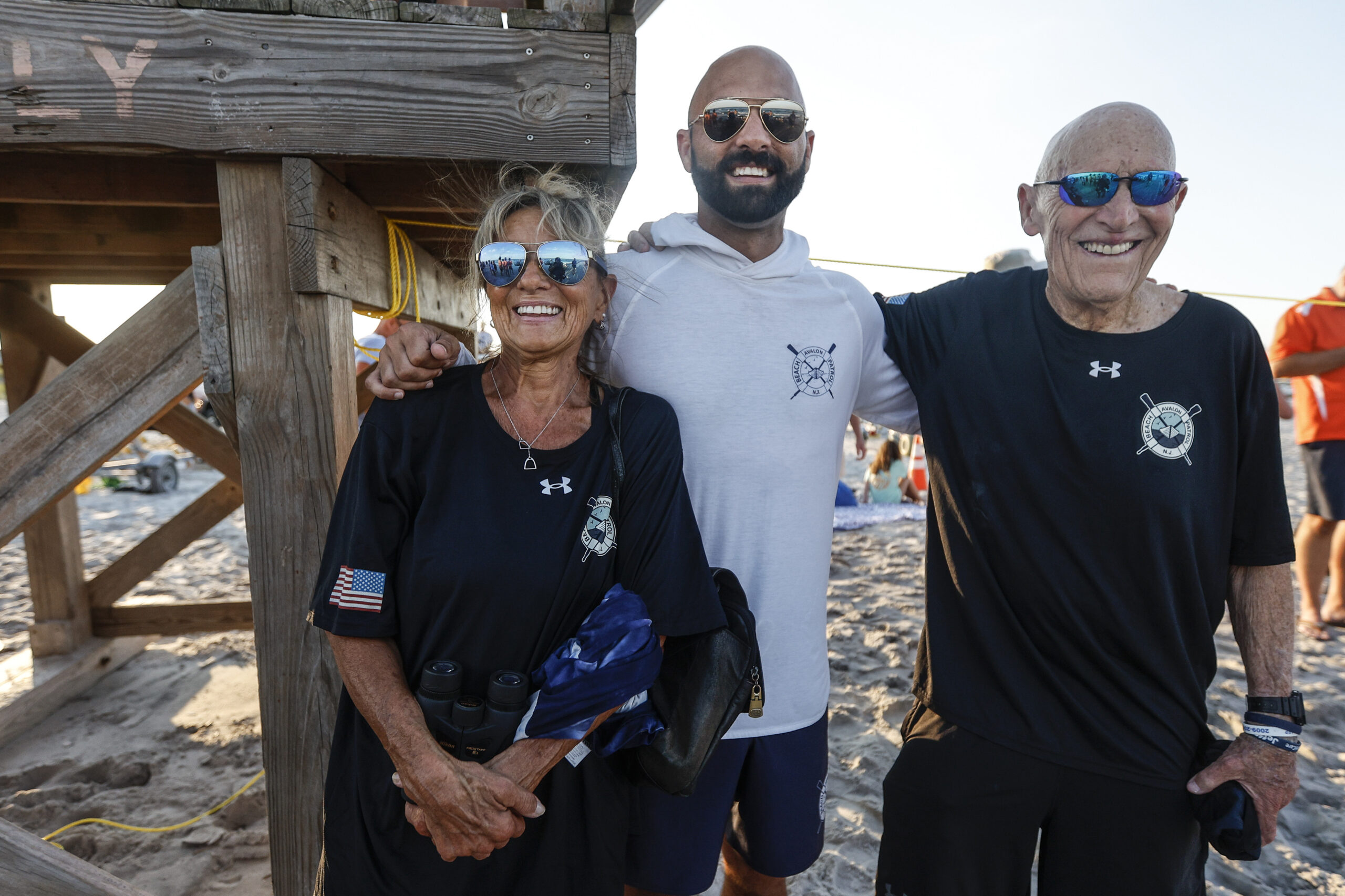
    Murray Wolf, 87, of Avalon, the legendary no-nonsense beach patrol captain whose half-century reign inspired and guided generations of lifeguards, while aggravating some famous and not-so-famous beachgoers along the way, died Monday, Feb. 16, at AtlantiCare Regional Medical Center in Atlantic City following a stroke.

    “He was probably the most loyal person I’ve known in my life,” said his wife of 43 years, Vicki Wolf. “Anybody who came into contact with him, he made them a better person, no question about it.”

    Murray Wolf was captain of the Avalon Beach Patrol for more than a half-century and spent 65 years on the patrol. “He had the highest of standards,” said John Glomb, who served under him for decades.

    “He had the highest of standards,“ said John Glomb, who served under him for decades. ”When the conditions were not favorable, he drove around the beaches and made sure the guards were on top of their bathers, making sure that nobody was in harm’s way. He had a record where in his 65 years, there was never a drowning. That’s a record that is absolutely spectacular.”

    Not everyone appreciated Mr. Wolf’s brand of beach enforcement. In 1999, he famously tangled with then-WIP sports radio personality Angelo Cataldi over a beach tag, showing him no mercy. Cataldi endlessly railed about it on air, and never truly got over it, saying in 2016, as Wolf entered his 61st year on the beach patrol, “I do harbor ill will toward Murray Wolf, and I always will.” Cataldi did not respond to an email following news of Mr. Wolf’s passing.

    Mr. Wolf brushed off the Cataldi encounter like he did most of his encounters on the beach, a place he patrolled with military precision, complete with nightly wave-offs, stand by stand, from his jeep. Rules were meant to be enforced. But he could laugh about it, even if Cataldi couldn’t.

    There was also Frank Wilson, formerly of Chester County, who sued Avalon in 2001 and won $175,000, driven arguably mad after being repeatedly whistled out of the water when he tried to swim after 5 p.m. “We have the right to protect our bathers,” Mr. Wolf said at the time.

    Murray Wolf, shown here rowing with his son, Tyler, during his final year on the Avalon Beach Patrol.

    Within the ranks of his family — wife Vicki, sons Matthew, Erich, and Tyler, and his 10-year-old black Lab, Ruger — Mr. Wolf’s loyalty, kindness, and appreciation for Avalon’s simple pleasures were deeply admired. The same was true for the ranks of lifeguards, wrestling teams, his Pleasantville school district physical education classes, and the multiple championship South Jersey beach patrol teams he coached in Avalon with the utmost of pride.

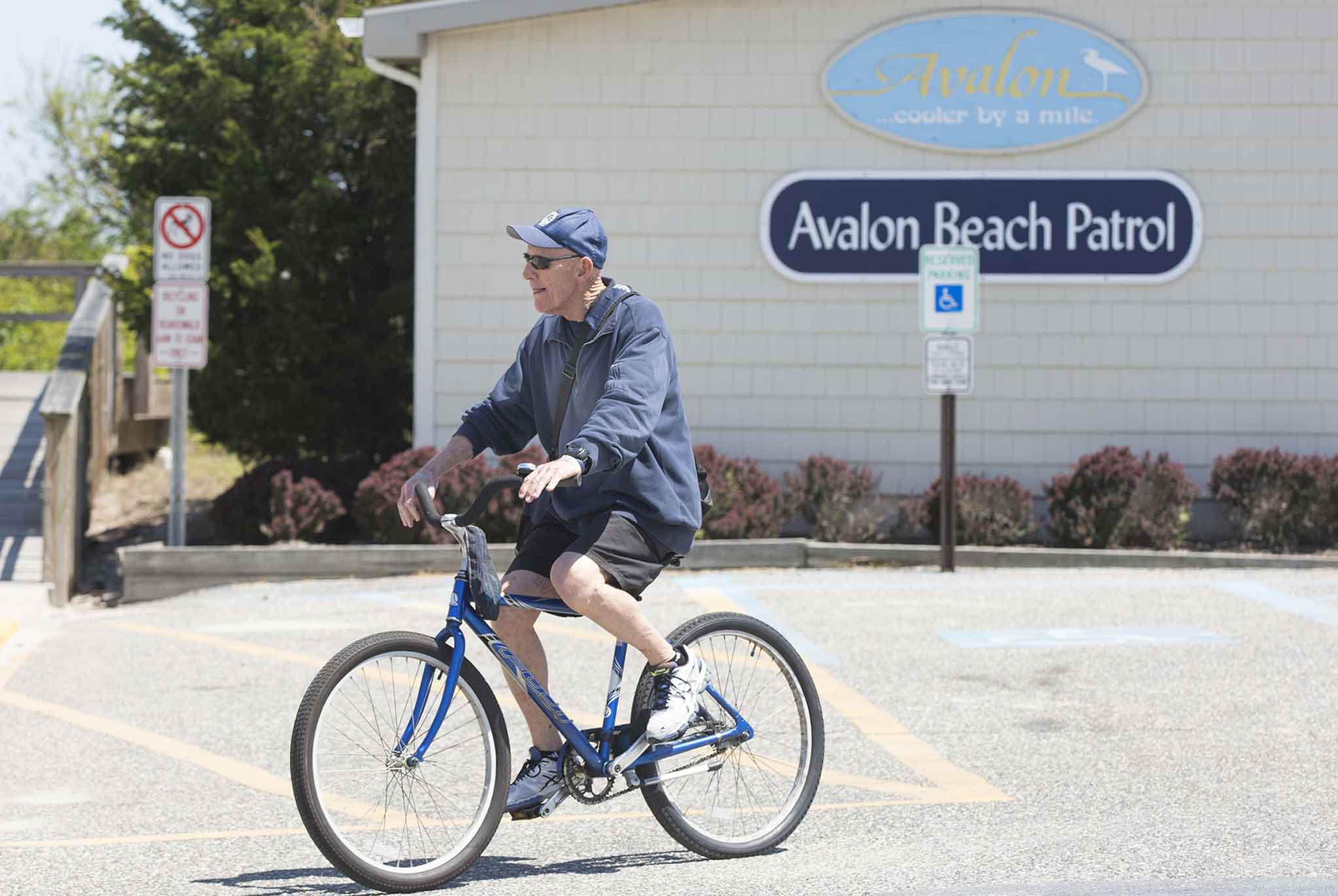
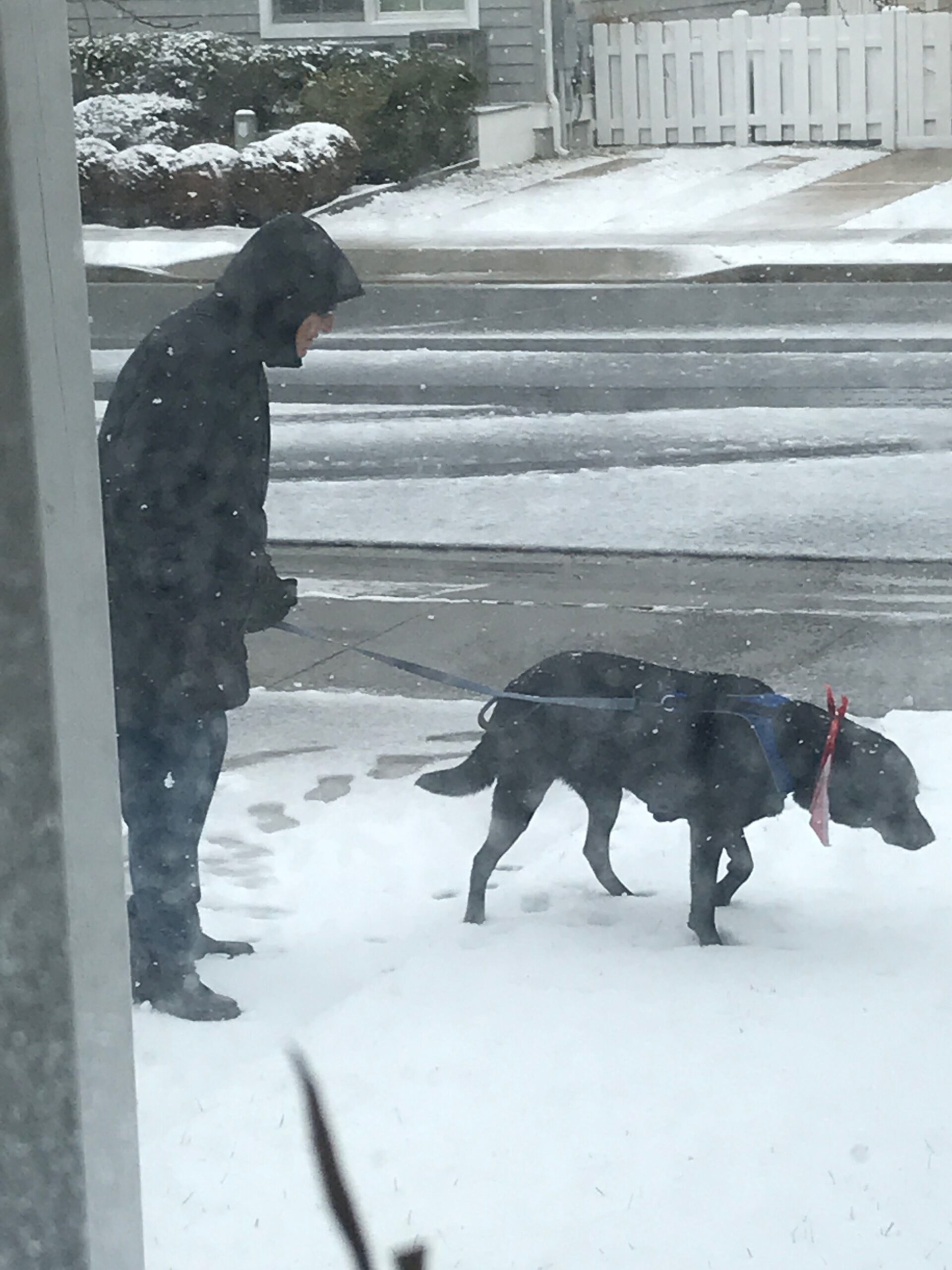
    Mr. Wolf rode his bike around Avalon almost to the end, and walked Ruger in the deepest of snows.

    Murray Wolf, pictured here at age 77, longtime captain of the Avalon Beach Patrol. Here, King takes a break from preseason preparations to watch his son coach his baseball team.

    “He was happy to sit home and watch the football game, sit on the couch, yell at the dog for running in and out,” his wife said. “He loved his Avalon. There wasn’t one time we rode over the bridge into town when he didn’t say, ‘Oh, that was the best decision I made, moving to Avalon.’ He was just a content man, satisfied.”

    His blunt style could rub some the wrong way. Vicki Wolf, who met her husband at the Princeton, Avalon’s iconic bar, spotting at first his muscular arms, she recalled, said she always knew when someone in town had had an uncomfortable encounter with Mr. Wolf when they would veer away from her in the supermarket. He led his patrols through a pandemic, hurricanes, and new technology: He vowed to fire any guard caught with a cell phone on the stand. “It says Lifeguard on Duty,” he said in 2016. “It’s a duty.”

    “There was nothing phony about him,” Vicki Wolf said. “He was never one to take low blows about him. Not everybody liked him. He had enemies, but they respected him.”

    “He took a lot of pride in Avalon doing well — that was in everything Murray did,” Glomb said. “He ran a tight ship. He ran a tight beach.”

    In the offseason, Mr. Wolf coached championship wrestling teams and was a physical education teacher in the Pleasantville school district for 50 years. His son, Matt, took his place as Avalon beach patrol captain in 2021, and also coaches wrestling in Middle Township.

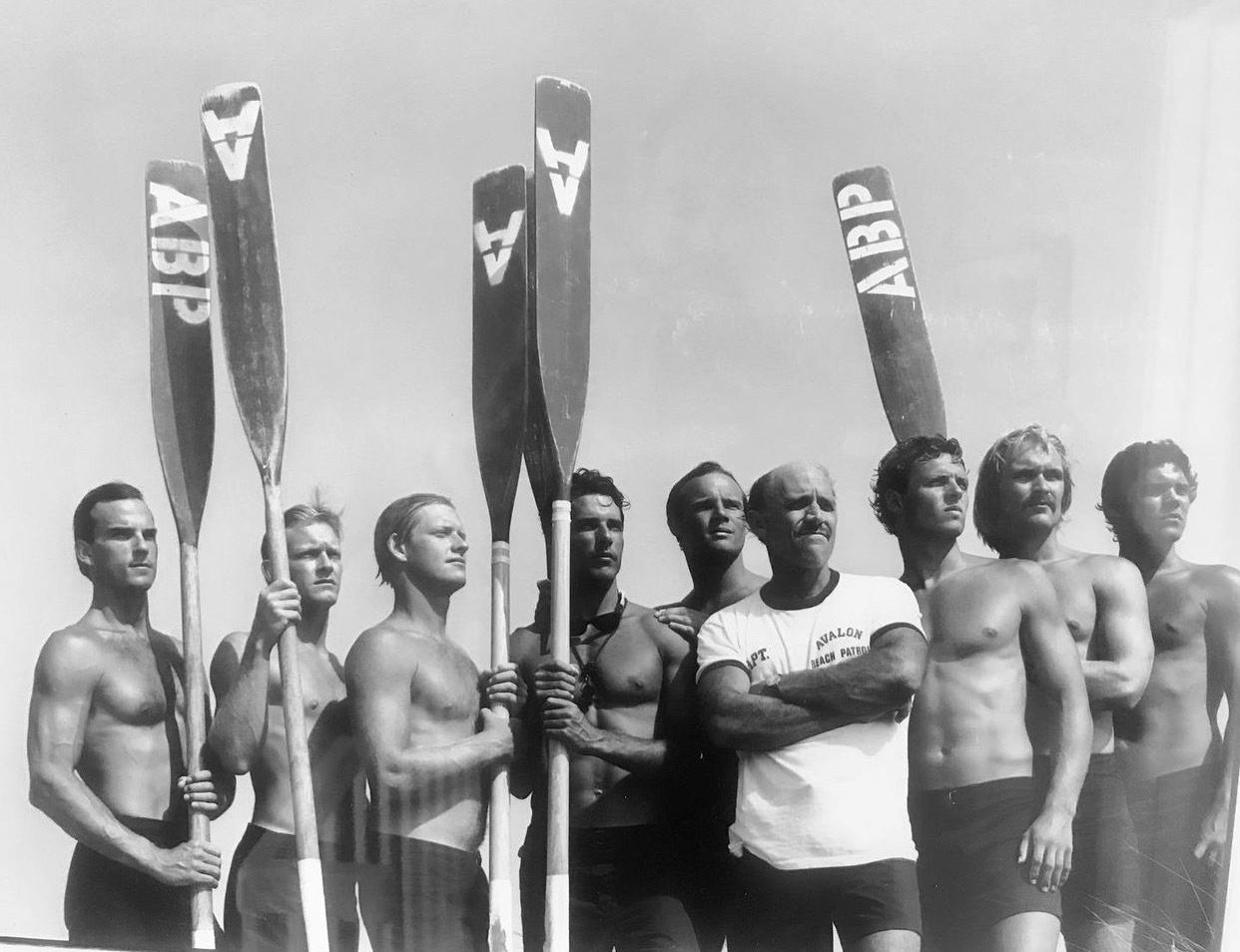
    Murray Wolf, longtime captain of the Avalon Beach Patrol pictured here in 2016 with some of his lifeguards at the patrol’s headquarters. ED HILLE / Staff Photographer

    Matt Wolf said his father had a stroke on Nov. 11 and was hospitalized until his Feb. 16 death. It seemed to so many that he might live forever, given his lifelong physical fitness and vigor, the devotion to his routines of bike riding and dog walking through town. “I think people saw him as very serious when he was in that public spotlight,” Matt Wolf said. “He had a great sense of humor. He didn’t need to be out with a bunch of people. He was happy to be home with his family.”

    The generations of guards who worked under him paid tribute to Capt. Wolf following his passing. “It was an honor to work with The Captain — there’s nobody quite like him,” Ryan Finnegan wrote on Facebook. “He taught his guards countless life lessons over the decades. Thousands of lives were saved because of him. The beaches in heaven are much safer now! Rest easy Capt.”

    Murray Wolf was captain of the Avalon Beach Patrol for more than a half-century and spent 65 years on the patrol. “He had the highest of standards,” said John Glomb, who served under him for decades.

    George Murray Wolf III was born Aug. 16, 1938, in Philadelphia to Elizabeth Gerhard and George Murray Wolf II and was raised on the Main Line. He and his family vacationed in Avalon from the time he was a child.

    He graduated from Conestoga High School and, after briefly working in a steel mill, Mr. Wolf attended Western State College in Gunnison, Colo., where he competed in wrestling and won a team national championship. He graduated with a degree in physical education and later earned a master’s in educational administration from Rider University.

    Mr. Wolf spent more than 50 years teaching physical education in Pleasantville. As head wrestling coach, he led the Pleasantville High School Greyhounds to the 1974 District 32 Championship. “He loved his job working with students and his colleagues at Leeds Avenue School,” his son wrote in the family obituary.

    Avalon Beach Patrol Chief Matt Wolf center, with his dad Murray and mom Vicky at the . Lifeguard Championships in Brigantine New Jersey. Monday, August 12, 2024.

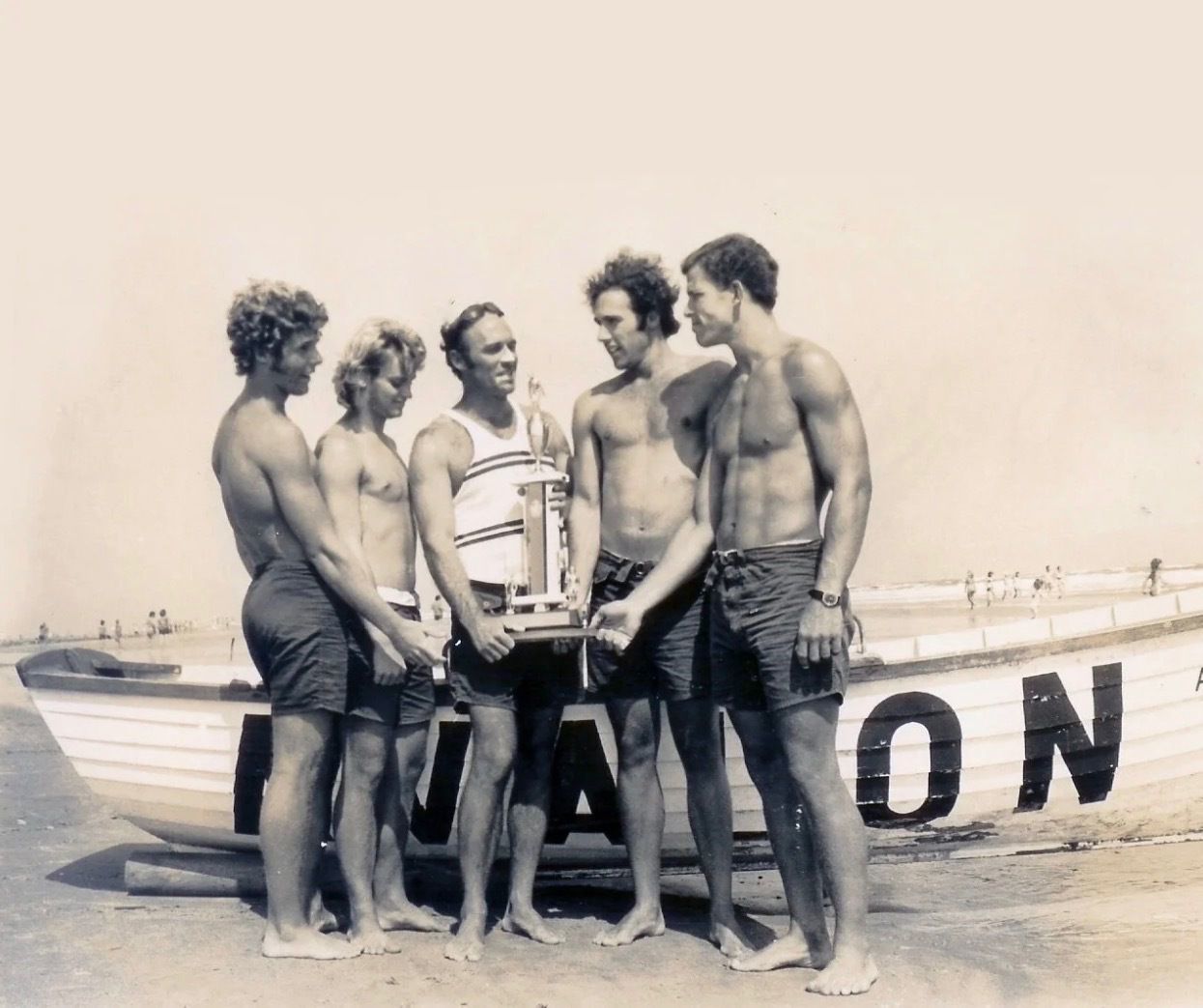
    Mr. Wolf served as captain of the Avalon Beach patrol from 1967 to 2020, and served a total of 65 years on the patrol. His teams, competing in the storied lifeguard races every summer, won nine South Jersey Lifeguard Championships, and Mr. Wolf had the joy of coaching his sons in winning boats.

    Mr. Wolf and his wife were fixtures at their sons’ football, wrestling, baseball, and track and field games and meets, when their sons were competitors and, later, when their sons became coaches themselves.

    Ventnor’s retired beach patrol chief Stan Bergman, himself a legendary chief and coach, has called Mr. Wolf “a warrior.” “He’s battle-tested,” Bergman said in a 2016 interview. “They have a tough beach.”

    Murray Wolf was captain of the Avalon Beach Patrol for more than a half-century and spent 65 years on the patrol. “He had the highest of standards,” said John Glomb, who served under him for decades. He took great pride in his teams winning the South Jersey Lifeguard Championships.

    “He was a very staunch competitor,” said Ed Schneider, chief of Wildwood’s beach patrol and also a wrestling coach. “I was always nervous going up against his teams. He commanded a presence around him. He made people push themselves to be the best.”

    After Matt Wolf took his place as captain of the patrol, he would include his dad as much as possible, taking him in the jeep along the beach. Murray Wolf always attended the lifeguard races, talking to the guards about the David J. Kerr Memorial Races, a competition he began in 1984 to honor a guard who died of cancer.

    In his final weeks, when the family came into his hospital room, his wife said, he would look for his boys, and “always blow a kiss and say I love you.”

    “Every night I would get home, the dog would go sit on the deck and look down the street,” Vicki Wolf said. “It broke my heart. He was looking for Murray.”

    In addition to his wife and their three sons, he is survived by another son, George Murray IV, and a sister. A son, Michael, died earlier.

    Services will be at noon Friday, Feb. 27, at our Savior Lutheran Church, 9212 Third Ave., Stone Harbor, N.J. Visitation will be 10 to 11:45 a.m.

    Donations may be made to the Middle Township Wrestling Program or the Helen L. Diller Vacation Home for Blind Children.

    Murray Wolf was devoted to his three black labs, including Ruger.
  • Temple is sliding in the American standings after its third consecutive loss

    Temple is sliding in the American standings after its third consecutive loss

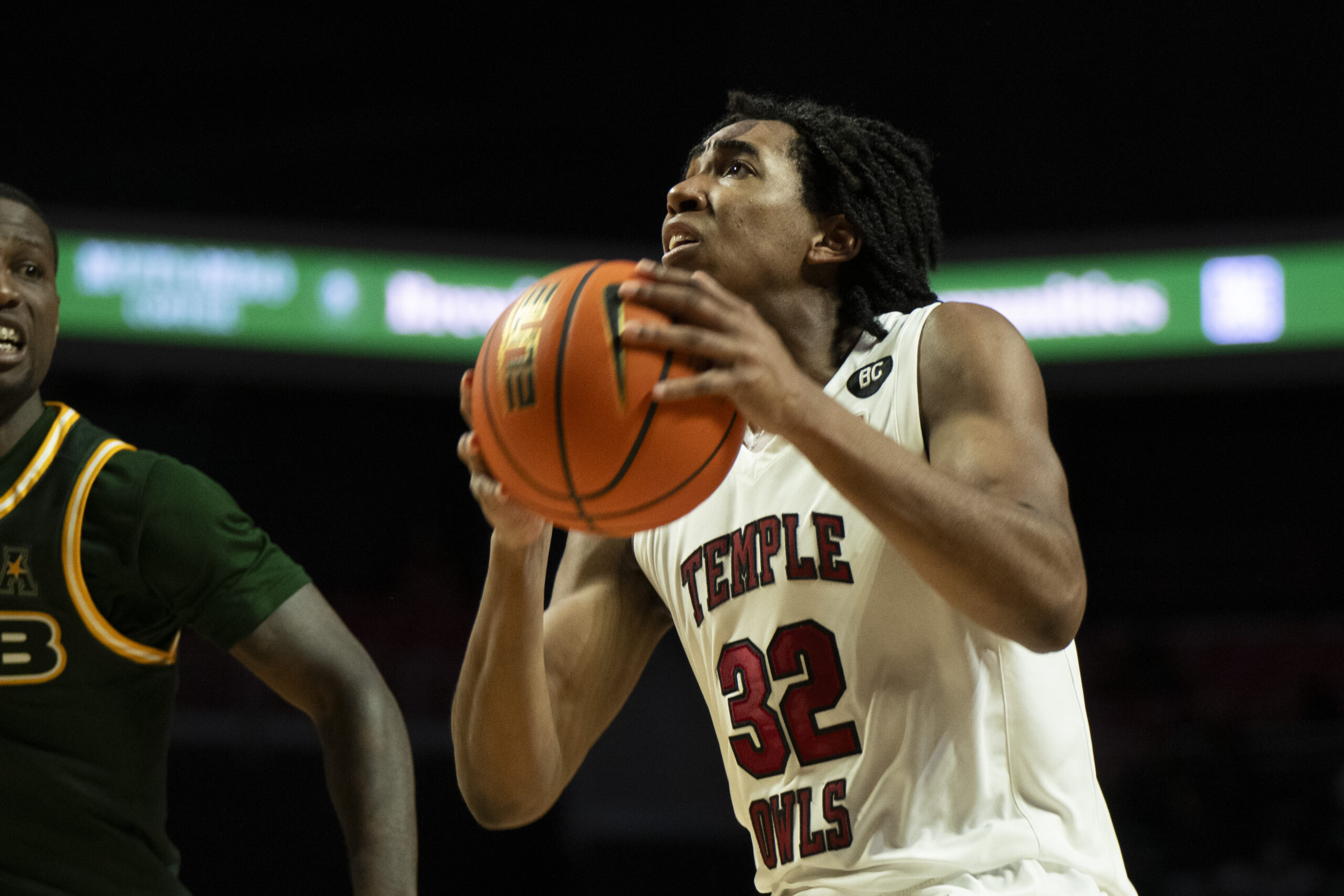
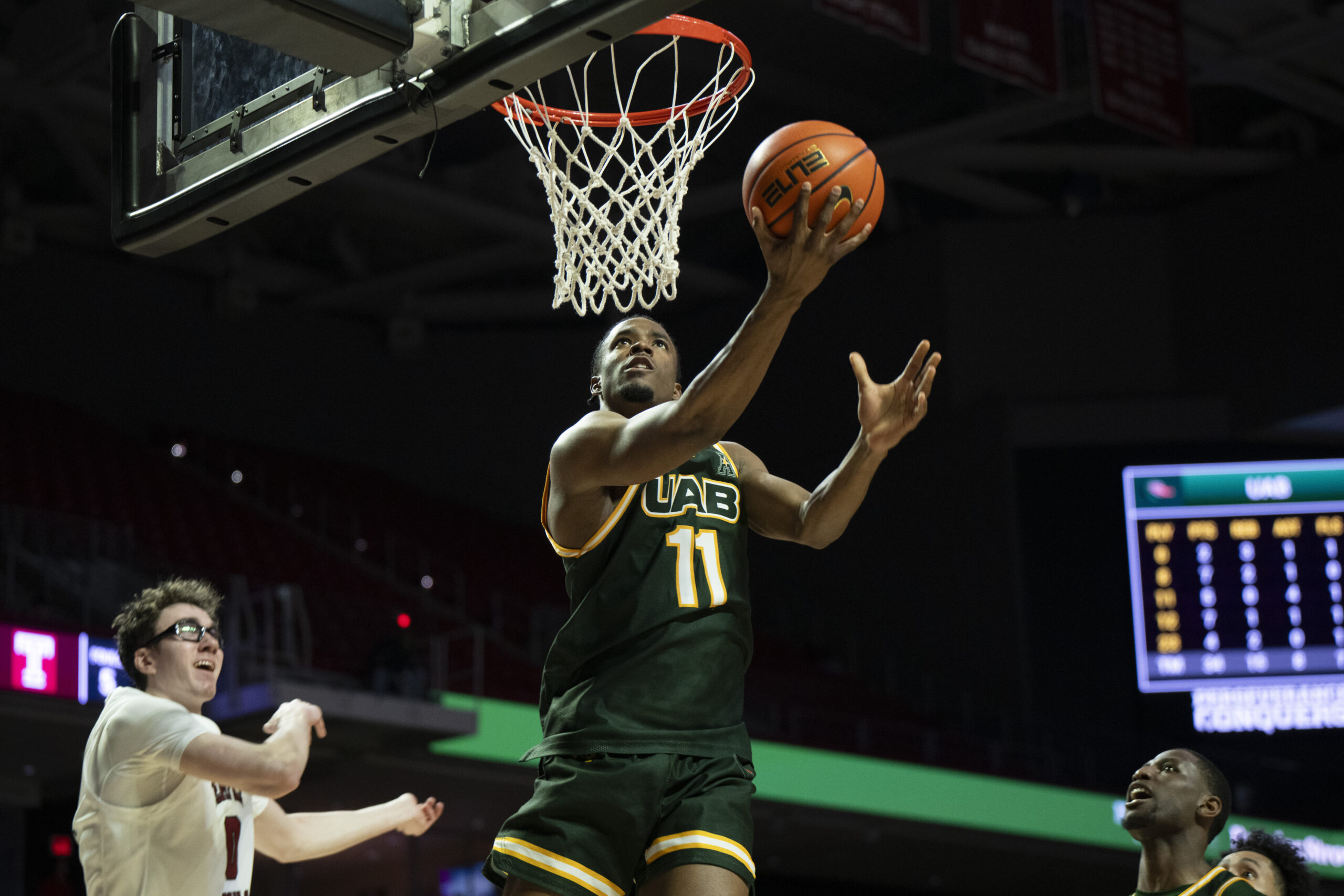
    About a week ago, Temple was in contention for the No. 2 seed in the American Conference. Now, the Owls are on a downward spiral following a 76-71 loss to Alabama-Birmingham Wednesday night at the Liacouras Center.

    Temple (15-11, 7-6) has lost three straight games and is tied for sixth place in the conference standings. The win moved the Blazers (17-10, 8-6) ahead of Temple in the standings.

    Temple coach Adam Fisher noted he was disappointed with the Owls’ execution.

    “Proud of the effort, not the result,” Fisher said. “Effort doesn’t always get it done. You got to execute. Got to be better at home. You see zone for most of the game, you can’t shoot 1-for-15 [from three-point range] at home. Another game with a free throw line [deficiency]. We got to get better there. We got to do some small things.”

    Statistical leaders

    Temple ended the game winning the rebounding battle 37-31 against the second-best rebounding team in the conference. Guards Jordan Mason (18 points) and Derrian Ford (17) led the team in points, while forward Jami Felt had eight points and 10 boards.

    Temple’s Jordan Mason finished with 18 points on Wednesday night.

    The Owls had just five turnovers, following 16 in their last outing against North Texas, but struggled shooting the ball. In addition to their 1-for-15 three-point performance referenced by Fisher, they went 12-for-19 from the free throw line.

    Guard Chance Westry led the Blazers with 24 points and eight assists.

    What we saw

    Temple pushed the pace on the Blazers’ defense for easy points inside the paint.

    Mason, Ford, and Felt got the Owls out to an early 20-16 lead before UAB woke up. The Blazers snatched a 39-33 lead at the half. Temple continued to get points in the paint, but struggled without any points from the perimeter.

    Chance Westry led UAB with 24 points on Wednesday.

    Temple made just one three-pointer the entire game. Westry, however, got hot and scored 17 second-half points.

    “We tried to be in gaps and constructed it a little bit,” Fisher said. “But [Westry] had a really good night.”

    Game changing play

    Felt delivered a dunk to give the Owls a one-point edge with seven minutes remaining. Then, 20 seconds later, he went to the line to give them a chance at a three-point lead.

    Instead, his shot bounced off the rim, and UAB went back to work.

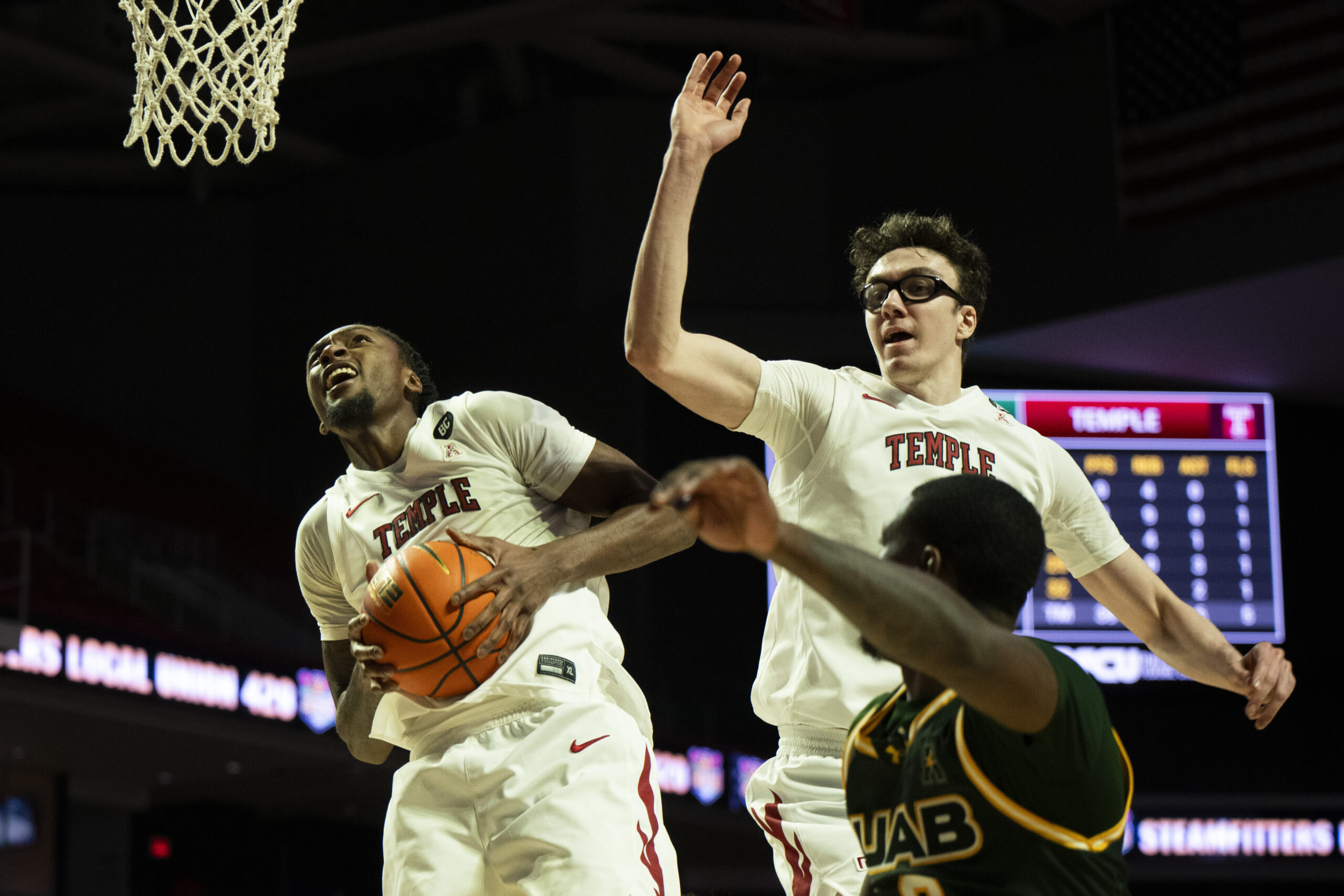
    Temple’s Jamai Felt secures a rebound against UAB on Wednesday.

    Westry capitalized 24 seconds later by drilling a three-pointer to snatch the lead right back for the Blazers. Felt had another chance to tie the game with more free throws, but both missed. Mason also missed a critical three-pointer.

    UAB knocked down five of its last six shots to seal the victory.

    Up next

    Temple will visit Wichita State (17-10, 9-5) on Saturday (ESPN2, 6 p.m.).

  • Some of the California avalanche victims had roots in Lake Tahoe

    Some of the California avalanche victims had roots in Lake Tahoe

    TRUCKEE, Calif. — After days of increasingly brutal conditions in California’s Sierra Nevada, a group of 15 backcountry skiers set out for home. But as they left remote huts at thousands of feet of elevation and trekked back toward the trailhead, they were slammed by a treacherous avalanche that left eight dead and one missing.

    With avalanche warnings in effect through early Thursday, officials were still waiting for the powerful storm to clear so they could recover the bodies of the victims of Tuesday’s avalanche, the nation’s deadliest in nearly half a century. Officials have not yet released the names.

    The ski group involved has deep ties to the alpine recreation community in Lake Tahoe, including the elite Sugar Bowl Academy, which issued a statement late Wednesday mourning the loss of victims with “strong connections to Sugar Bowl, Donner Summit and the backcountry community.”

    It did not say how the skiers, said to range in age from 30 to 55, were connected to the school, which offers alpine and backcountry ski instruction and academics for young athletes.

    “We are an incredibly close and connected community,” Sugar Bowl Academy executive director Stephen McMahon said in the statement. “This tragedy has affected each and every one of us.”

    Four in the group employed by Blackbird Mountain Guides, which offers mountaineering and backcountry ski trips as well as safety courses across the West and internationally. One of them was among the six survivors.

    The three-day tour, which began Sunday, was for intermediate to expert skiers, according to the company’s website.

    The tour company said in a statement Wednesday night that it has launched an investigation and paused field operations at least through the weekend while it prioritizes supporting the victims’ families.

    The guides who led the group were trained or certified in backcountry skiing, and were instructors with the American Institute for Avalanche Research and Education.

    While in the field, they “are in communication with senior guides at our base, to discuss conditions and routing based upon conditions,” founder Zeb Blais said in the statement.

    “We don’t have all the answers yet, and it may be some time before we do,” the company said. “In the meantime, please keep those impacted in your hearts.”

    Mayor Max Perrey of Marin County’s Mill Valley, a small city about 14 miles (22 kilometers) north of San Francisco, confirmed that some in the group were women from his city. He was not able to provide additional details but told The Associated Press via email that more information would be released later.

    One of the victims was married to a member of a backcountry search and rescue team in the area, said Placer County Sheriff Wayne Woo.

    The Sierra Avalanche Center issued an avalanche watch Sunday morning, and that was elevated to a warning by 5 a.m. Tuesday, indicating that avalanches were expected. It is not clear whether the guides knew about the change before they began their return trek.

    Authorities described a harrowing scene as the survivors scoured the snow for the missing and waited six hours for help to arrive in blizzard conditions. They found three of the bodies, Nevada County Sheriff Shannan Moon said.

    The skiers all had beacons that can send signals to rescuers, and at least one guide was able to send text messages. But it was not clear whether they were wearing avalanche bags, which are inflatable devices that can keep skiers near the surface, sheriff’s Capt. Russell “Rusty” Greene said.

    One of those rescued remained hospitalized Wednesday, Moon said.

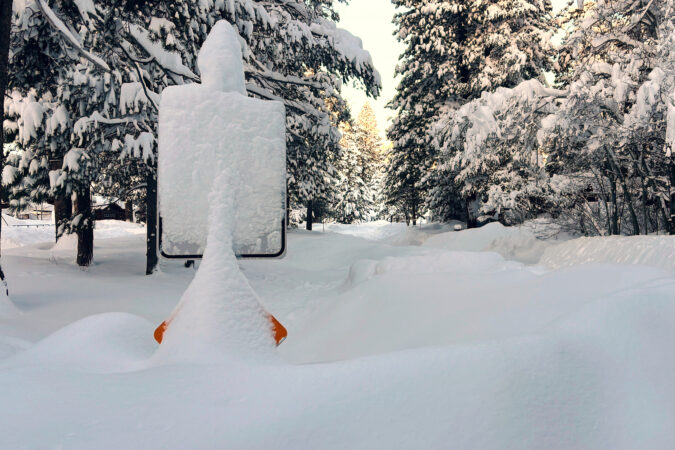
    Three to 6 feet (91 centimeters to 1.8 meters) of snow has fallen in the area since Sunday. The area was also hit by subfreezing temperatures and gale force winds.

    The avalanche is the deadliest in the U.S. since 1981, when 11 climbers were killed on Mount Rainier in Washington state, and the second deadly avalanche near Castle Peak this year, after a snowmobiler was buried January. Each winter the slides kill 25 to 30 in the country, according to the National Avalanche Center.

    The area near Donner Summit, where the ski trip took place, is one of the snowiest places in the Western Hemisphere and until just a few years ago was closed to the public. The summit is named for the infamous Donner Party, a group of pioneers who resorted to cannibalism after getting trapped there in the winter of 1846-1847.

  • Why it’s becoming so expensive to buy a car in America

    Why it’s becoming so expensive to buy a car in America

    It can be a shock shopping for a new car these days.

    The pandemic shortages are over. Dealer lots are stocked. Customers can find the colors and options they want.

    But prices have never been higher — and the auto loans bigger and longer than ever to make it pencil out.

    The average sticker price for a new car or truck now sits above $50,000 — about 30% more than in 2019. Even with incentives and specials, the out-the-door price reached above $50,000 for the first time in September and stood at $49,191 in January — a record for the typically sluggish sales month, according to Cox Automotive.

    That’s helped push the average monthly payment to buy a new vehicle to an all-time high of a little over $800, according to J.D. Power.

    Some customers go further. About 1 in 5 new auto loans have monthly payments of at least $1,000, S&P Global said, projecting that share could double by year’s end.

    “We are approaching a threshold that a lot people don’t want to go over,” said Patrick Manzi, chief economist at the National Automobile Dealers Association.

    The auto industry is increasingly worried how much more consumers can take. Signs of stress are growing. Severely delinquent auto loan rates have soared to levels last seen during the pandemic shutdown. Affordability was a buzzword at the 2026 North American Dealers Association conference in Las Vegas earlier this month. And there is growing talk about the need for automakers to offer more budget-friendly vehicles, especially when little relief is to be found in the used-car market, with average prices of about $25,000.

    “There is no doubt that affordability is front of mind,” said Mike Manley, chief executive of AutoNation, one of the nation’s largest auto retailers, speaking to analysts on an earnings call earlier this month.

    The question that the industry is asking, said Tyson Jominy, senior vice president at J.D. Power for automaker data and insights: “Is there a breaking point where you just push prices past what the average consumer can afford?”

    Sales remain strong, for now. Automakers are coming off their best year since the pandemic, selling 16.2 million vehicles in the United States.

    But sales are projected to slump to 16 million this year, according to NADA.

    One big change is that carmakers have largely abandoned entry-level vehicles in recent years.

    The last car with an asking price under $20,000 — the subcompact Nissan Versa, at $17,390 — ended production in December. Other affordable subcompacts have disappeared in the last couple of years, such as the Mitsubishi Mirage, Kia Rio, Hyundai Accent, and Chevrolet Spark.

    “Americans just don’t want them,” said Jessica Caldwell, head of insights at Edmunds, the car-buying research company.

    They want SUVs and crossovers.

    A decade ago, the American market was about evenly split between cars and light trucks. Today, the light truck category — which includes SUVs — makes up about 8 in 10 of sales. Crossover SUVs, such as the Honda CR-V, account for nearly half of vehicles sold.

    Under $30,000 “is the new threshold for affordability,” said Manzi of NADA.

    That reality surprises many consumers, who might buy a new car every six to eight years.

    “It’s not something you shop for every day and so you come back a few years later and get real sticker shock,” said Erin Keating, executive analyst at Cox Automotive.

    It’s a common complaint, said Caldwell.

    “That’s what we hear from so many consumers,” she said. “People don’t like it. They’re not happy with how much cars costs.”

    Affordability was cited as the biggest obstacle for people who planned to buy a car in the near future, according to a survey recently released from credit reporting agency TransUnion.

    Automakers have managed to pay less attention to the entry-level market because luxury vehicles, with higher profit margins, continue to sell.

    The U.S. economy has seen a widening divide between the fortunes of its top earners and everyone else, creating the so-called K-shaped economy. And cars are no exception.

    At end of last year, vehicles priced over $70,000 were staying about the same amount of time on dealer lots as cars under $70,000. And buyers with household incomes above $150,000 accounted for 29% of all car purchases, up from 18% in 2020.

    “Wealthier customers are driving this,” Manzi said.

    New car buyers are also getting older, another sign of rising costs.

    Nearly half of all new car registrations last year came from people 55 and older, according to S&P Global data.

    A buyer’s average age was 51, according to J.D. Power. It was 50 before the pandemic.

    Twenty-five years ago, the average buyer was a little over 43 years old.

    Meanwhile, the other end of the car-buying market appears to be struggling.

    The average auto loan now runs for 68.8 months — more than five years.

    A growing share of auto loans now go for 84 months or longer. These seven-year loans made up 11.7% of the market last year, nearly double the share in 2019, according to J.D. Power.

    “We’ve already pushed things pretty far,” Jominy said. “How much further can they go?”

    Bad auto loans are becoming more common. The share of auto loans that were 90 days past due, known as severely delinquent, reached 8.6% early last year — levels last seen briefly in 2020 and then after the 2008-2009 financial meltdown, according to Federal Reserve Bank of Philadelphia data. The growth in bad loans is from borrowers with low credit scores.

    “That’s that K-shaped economy. That’s kind of the reality,” Manzi said. “Wages haven’t kept up.”

    Vehicle prices have surged even though carmakers have been absorbing most of the cost of President Donald Trump’s tariffs, auto analysts said. It’s unclear how much longer they can do that.

    “At some point we’ll have to see tariff price increases,” Caldwell said.

    U.S. automakers also need to tackle affordability if they hope to keep out ultra-low-cost Chinese car manufacturers, said Keating of Cox Automotive.

    Auto analysts didn’t think the United States would welcome these foreign carmakers anytime soon. But Canada recently relaxed its tariff rules for Chinese electric vehicles.

    U.S. automakers are slowly starting to pay attention to pricing.

    Chevrolet has been touting its Trax crossover, which starts at $21,700. Car and Driver recently named the 2026 Trax its Best Crossover SUV.

    “It shows that it can be done,” Jominy said.

    The Ford Maverick pickup — which looks like a baby version of the Ford Ranger — starts at $28,145. And Ford announced earlier this month that it planned to offer several more vehicles under $40,000 by 2030.

    Honda also is evaluating its lineup.

    “With average new car prices hitting record highs across the industry, cost is a growing concern, and we want the Honda and Acura brands to continue to be recognized for delivering incredible value to our customers,” said Lance Woelfer, sales vice president for American Honda.

    No one expects a return of the $20,000 car. Instead, carmakers appear to be pinning their hopes on small SUVs.

    “That’s the new front door to the industry,” Tominy said.