Beginning in September, New Jersey public schools must begin teaching cursive writing to students in grades three to five.
A bill signed by Gov. Phil Murphy on Monday makes cursive instruction mandatory for some elementary students. The requirements take effect immediately and apply to the 2026-27 school year.
New Jersey joins Delaware and at least two dozen other states that require cursive writing. Similar legislation proposed in Pennsylvania did not advance.
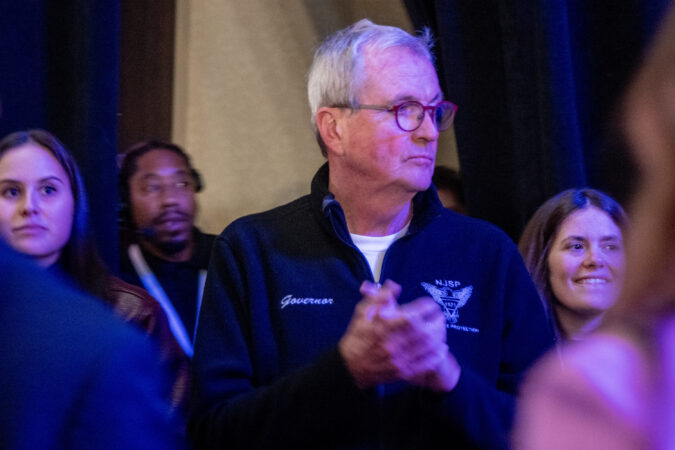
Murphy, who signed the bill on his last full day in office, also cited America’s 250th anniversary this year. Students should also be able to sign a check, he said.
“We owe it to our students to give them a well-rounded education that ensures they have the tools to fully understand our rich history and become competent leaders,” Murphy said in a statement.
Teaching cursive to our students is NOW LAW in New Jersey!
Experts say cursive writing improves fine motor skill development and eye-hand coordination. It is also believed to boost spelling and writing skills and overall learning and to encourage discipline and patience.
However, in 2010, cursive writing was eliminated from the state’s common core standards and many districts stopped teaching it. Many Catholic schools in the region have kept the tradition to promote good penmanship.
Critics believe cursive writing is antiquated and learning should focus more on technology such as AI. They believe incorporating cursive lessons would take valuable time from other subjects.
Some South Jersey districts like Shamong, Cherry Hill and Winslow never stopped teaching cursive writing. .
“Handwriting is something that has always been important,” said Nicole Moore, principal of the Indian Mills School in Shamong. “We never got rid of it.”
Moore said students in her school in Burlington County learn cursive in third and fourth grades. She believes it will be easy to extend the instruction to fifth graders in the middle school.
The biggest challenge facing schools implementing the new mandate will be funding and finding time in the school day to add another subject, Moore said.
“You need resources to teach handwriting,” Moore said Tuesday. “That’s just one more thing as schools we have to figure out how to pay for it.”
Moore said teachers must find creative ways to make learning cursive writing engaging and not simply have students write the same passage several times.
At Indian Mills School, the school year begins with cursive writing instruction twice a week and then shifts to independent learning later in the year. A program called “Handwriting Without Tears” is used to teach students basic strokes and how to connect letters.
McKnight has said cursive could be incorporated during writing or spelling lessons. She first introduced the bill several years ago, but it didn’t get traction.
After Temple football signed the top-ranked high school class in the American Conference last month, coach K.C. Keeler said the program was just beginning its recruiting process.
The Owls started their second phase on Jan. 2 when the transfer portal opened. Temple landed 22 transfers while also retaining most of its core pieces from this season.
“There’s really three phases to this whole recruiting process,” Keeler said. “The first phase is recruiting your locker room. I thought we did a phenomenal job. We’re probably one of the only [non-Power Four] schools in the country that didn’t lose a single starter. … Then the third phase is the portal. The portal’s unique in that it’s not just like who you get in terms of what their ratings are and those things. It’s a lot [of] what your needs are and are you meeting your needs. We graduated a bunch of starters, especially on defense. I thought we did a great job of filling those needs.”
The priority for Keeler was finding a quarterback for next season. Owls starter Evan Simon and backup Gevani McCoy will graduate this spring, and third-stringer Tyler Douglas entered the transfer portal.
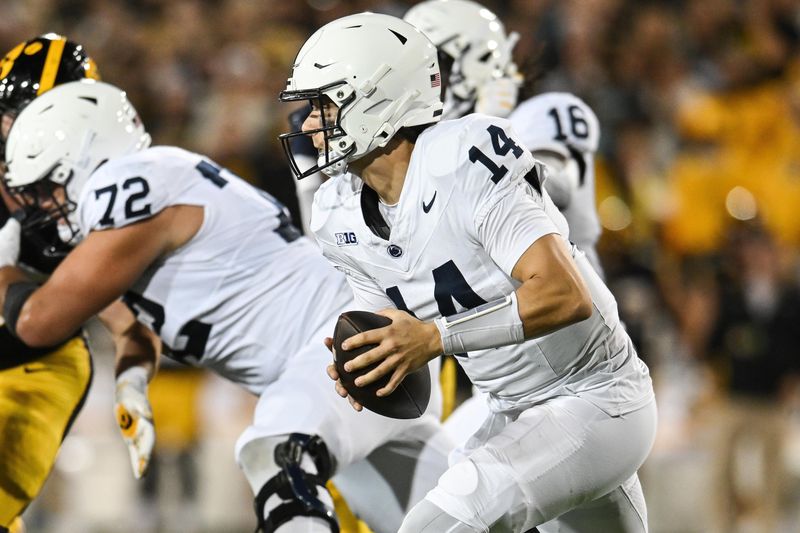
Temple landed two quarterbacks from the transfer portal in Jaxon Smolik from Penn State and Ajani Sheppard from Washington State. They will compete for the starting role. Sheppard spent two seasons at Rutgers before transferring to the Cougars last year and was recruited by the Owls when he was in the portal last season.
Temple general manager Clayton Barnes says former quarterback Jaxon Smolik didn’t get his opportunity at Penn State but has the skill set to be an elite quarterback.
Smolik visited Temple in early January and became friends with tight end Peter Clarke, who hosted him. General manager Clayton Barnes said Smolik has a similar personality to Simon.
“So [Smolik is] a guy that things didn’t time up. He was behind a three-year starter the whole time he was there” at Penn State, Barnes said. “[He] really just needed that opportunity. So when we checked the box from a skill set, personality, all that kind of stuff, he’s a guy that we felt would be a great fit for us and was one of those first few guys we got on campus. And by the time he was there, it was like, ‘Hey, this is our guy.’”
Smolik was one of four players to join Temple from Penn State during the offseason. Since the programs have the same recruiting pool, Temple often uses Penn State coaches to source intel on prospective transfers. Two former Nittany Lions, defensive tackle Kaleb Artis and safety Kolin Dinkins, are among 11 defensive players the Owls brought in.
Artis is among six brought in to bolster the defensive line after Temple lost Sekou Kromah, K.J. Miles, Cam’Ron Stewart, and Charles Calhoun to graduation or the portal.
“So you look at what we graduated from the rush spot this past year,” Barnes said. “We had two seniors that played and another guy that sought other opportunities. We knew we needed to bring in guys to play that position.”
Keeler also wanted continuity along the offensive line after losing starting right tackle Diego Barajas to graduation. Left tackle Giakoby Hills and left guard Eric King stayed with the program on multiyear deals.
The Owls also brought in offensive linemen to add depth. Former Rutgers lineman John Stone will compete for the starting center role with Grayson Mains.
“How do we bring in guys to compete for that right tackle spot? We don’t want to just rest on our laurels,” Barnes said. “We want to get better. So we brought in a couple other guys that have multiple years that not only can push those current starters, but also give us guys that can play for us next year if they don’t end up being the guy.”
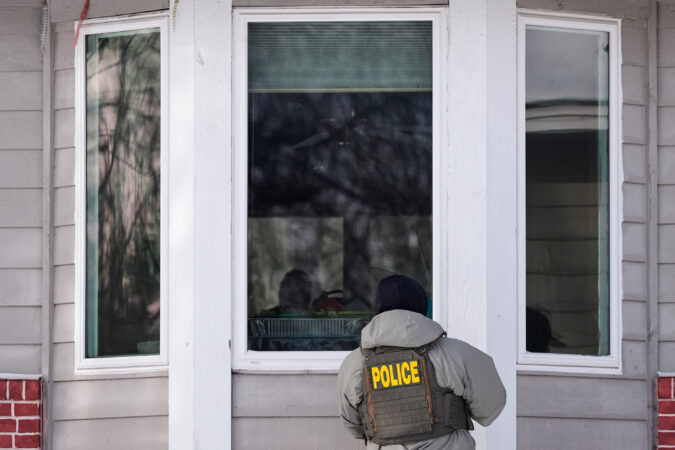
ST. PAUL, Minn. — Federal immigration agents bashed open a door and detained a U.S. citizen in his Minnesota home at gunpoint without a warrant, then led him out onto the streets in his underwear in subfreezing conditions, according to his family and videos reviewed by the Associated Press.
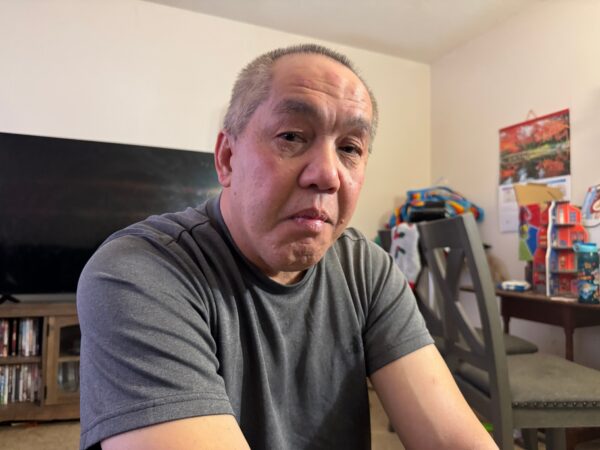
ChongLy “Scott” Thao told the AP that his daughter-in-law alerted him on Sunday afternoon that U.S. Immigration and Customs Enforcement agents were banging at the door of his residence in St. Paul. He told her not to open it. Masked agents then forced their way in and pointed guns at the family, yelling at them, Thao recalled.
“I was shaking,” he said. “They didn’t show any warrant; they just broke down the door.”
“ICE is not doing what they say they’re doing,” St. Paul Mayor Kaohly Her, a Hmong American, said in a statement about Thao’s arrest. “They’re not going after hardened criminals. They’re going after anyone and everyone in their path. It is unacceptable and un-American.”
Encounter is caught on video
Thao, who has been a U.S. citizen for decades, said that as he was being detained he asked his daughter-in-law to find his identification but the agents told him they didn’t want to see it.
Instead, as his 4-year-old grandson watched and cried, Thao was led out in handcuffs wearing only sandals and underwear with just a blanket wrapped around his shoulders.
Videos captured the scene, which included people blowing whistles and horns and neighbors screaming at the more than a dozen gun-toting agents to leave Thao’s family alone.
Thao said agents drove him “to the middle of nowhere” and made him get out of the car in the frigid weather so they could photograph him. He said he feared they would beat him. He was asked for his ID, which agents earlier prevented him from retrieving.
Agents eventually realized that he was a U.S. citizen with no criminal record, Thao said, and an hour or two later, they brought him back to his house. There they made him show his ID and then left without apologizing for detaining him or breaking his door, Thao said.
Homeland Security defends the operation
The Department of Homeland Security described the ICE operation at Thao’s home as a “targeted operation” seeking two convicted sex offenders.
“The US citizen lives with these two convicted sex offenders at the site of the operation,” DHS said. “The individual refused to be fingerprinted or facially ID’d. He matched the description of the targets.”
Thao’s family said in a statement that it “categorically disputes” the DHS account and “strongly objects to DHS’s attempt to publicly justify this conduct with false and misleading claims.”
Thao told the AP that only he, his son, and daughter-in-law and his grandson live at the rental home. Neither they nor the property’s owner are listed in the Minnesota sex offender registry. The nearest sex offender listed as living in the zip code is more than two blocks away.
DHS later released the names and photos of two people it described as “violent illegal alien sexual offenders” that it was seeking to detain in St. Paul. Thao said he had never seen these men before and they did not live with him.
DHS did not respond to an earlier request from the Associated Press asking why the agency believed they were present in Thao’s home.
Thao’s son, Chris Thao, said ICE agents stopped him while he was driving to work before they went to detain his father. He said he was driving a car he borrowed from his cousin’s boyfriend, whose first name matches that of one of the men DHS said it was seeking. Chris Thao said he did not know the boyfriend’s last name.
Family fled Laos after helping U.S.
The family said they are particularly upset by ChongLy Thao’s treatment at the hands of the U.S. government because his mother had to flee to the U.S. from Laos when communists took over in the 1970s since she had supported American covert operations in the country and her life was in danger.
Thao’s adopted mother, Choua Thao, was a nurse who treated CIA-backed Hmong soldiers in the U.S. government’s “Secret War” from 1961 to 1975 against the communists, according to the Hmong Nurses Association website.
Choua Thao, who passed away in late December, “treated countless civilians and American soldiers, working closely with U.S. personnel,” her daughter-in-law Louansee Moua wrote on a GoFundMe page for the family.
ChongLy Thao says he’s planning to file a civil rights lawsuit against DHS and no longer feels secure to sleep in his home.
“I don’t feel safe at all,” Thao said. “What did I do wrong? I didn’t do anything.”
The Supreme Court on Tuesday appeared skeptical of the constitutionality of a Hawaii law that sharply restricts where people can carry firearms — a case that may offer a strong indication of how far the justices will go in theirpush to loosen restrictions on guns.
Hawaii’s law bans people from carrying firearms on private property open to the public unless they have the owner’s consent. The court’s conservatives sharply questioned an attorney defending Hawaii’s law, suggesting it unduly burdened a constitutional right to bear arms.
The decision will reverberate beyond Hawaii because four other states, including California and New York, have enacted similar lawsin response to a landmark 2022 ruling by the high court that made it easier to challenge gun limits.
The default rule in most states is that gun owners can carry firearms onto private property open to the public until they have been told otherwise. The Hawaii law flipped the rule.Property owners generally have the right to restrict guns on land closed to the public.
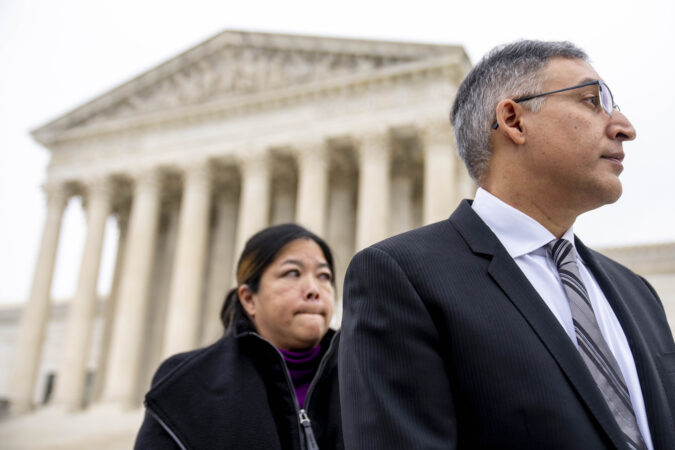
“You are relegating the Second Amendment to second-class status,” Justice Samuel A. Alito Jr. told Neal Katyal, an attorney for Hawaii.
Chief Justice John G. Roberts Jr. said the First Amendment permitted a political candidate to walk up to someone’s door to campaign, and he questioned why Hawaii could place limits on another constitutional right in the same context. He said gun rights are often disfavored.
“You say it’s different for the Second Amendment,” Roberts said to Katyal. “What exactly is the distinction?”
The court’s three liberal justices all indicated they thought Hawaii’s law probably passed constitutional muster. Justice Sonia Sotomayor pointed out that Hawaii had long had some of the nation’s strictest gun-control laws and cited polling that indicates the restriction on public carry is popular.
“Nothing about Hawaii’s customs, tradition or culture creates an expectation that the general public carries guns wherever they go, correct?” Sotomayor said.
A trio of gun owners with concealed-carry permits and a gun rights group challenged the Hawaii law, which was enacted in 2023. The Trump administration is backing the gun owners.
The law also bans the carrying of firearms in 15 sensitive locations, including bars, parks, restaurants that serve alcohol and youth centers. The legality of those restrictions is not at issue in the Supreme Court case.
The petitioners argue Hawaii’s law violates the Supreme Court’s 2022 decision inNew York State Rifle & Pistol Assoc. v. Bruen,which found that “the Second Amendment guarantees a general right to public carry.”
That ruling held that any restriction on firearms must have precedent rooted in American history. The decision has sparked thousands of challenges to gun-control laws across the country, resultingin rulings that have relaxed restrictions on high-capacity magazines, age limits for firearms purchases and other rules. The decision has also created some confusion among judges about how to conduct the historical analysis.
The Supreme Court clarified the Bruen decision last term in a case in which it held that states could bar people with domestic violence restraining orders from obtaining guns. The court found modern gun restrictions need not have a “historical twin” but rather a “historical analogue.”
Justice Brett M. Kavanaugh questioned whether Hawaii’s law was based on precedents deeply rooted in American history. “There’s no sufficient history,” he said. “Case closed.”
The court has largely expanded gun rights since the Bruen ruling, but not in all cases. In one ruling, the justices struck down a federal ban on bump stocks, devices that allow semiautomatic rifles to fire hundreds of rounds a minute. In a major case last term, the justices upheld Biden-era restrictions on ghost guns.
In Hawaii’s case,a federal judge issued a preliminary injunction blocking the statelaw in 2023, but a panel of the U.S. Court of Appeals for the Ninth Circuit sided with the state last year. The appeals court cited historical laws from New Jersey and Louisiana that were “dead ringers” for Hawaii’s statute as it upheld the state law.
The ruling created a split among appeals courts because a Second Circuit panel struck down a similar New York law.
Alan A. Beck, an attorney for the gun owners and the Hawaii Firearms Coalition, said the Ninth Circuit ruling illegally constrains their rights since Hawaii’s law essentially outlaws public carry in much of the state. He also said the historical precedents that the appeals court relied on were outliers that should be discounted.
“There’s a clear body of evidence this law was passed to undermine Bruen and the Second Amendment,” Beck said.
Katyal countered that the state’s law had precedent in anti-poaching laws and — controversially during arguments — a Louisiana “Black Code” statute aimed at preventing African Americans from possessing firearms.
“There is no constitutional right that every invitation to enter property is a right to bear arms,” Katyal said.
The case is not the only Second Amendment challenge the justices will hear this term.
The court will also decide the constitutionality of a federal law that bans habitual drug users from possessing firearms. Hunter Biden, the son of former President Joe Biden, was convicted of violating the law in 2024. Biden later pardoned him.
The Trump administration, which usually supports gun rights, urged the high court to uphold that ban.
“By disqualifying only habitual users of illegal drugs from possessing firearms, the statute imposes a limited, inherently temporary restriction — one which the individual can remove at any time simply by ceasing his unlawful drug use,” Solicitor General D. John Sauer wrote in a friend-of-the-court brief
The governor’s pardon was issued Tuesday even before a jury convicted Harris Jacobs, 28, for a hit-and-run in Atlantic City that killed a pedestrian.
The pardon was one of 97 issued by former Gov. Phil Murphy in his final hours in office. Jacobs’ attorney, Lou Barbone, told the news site BreakingAC that his client was notified even before the jury came back with its verdict on Tuesday.
Harris Jacobs was involved in a fatal hit and run at 3:30 a.m.on Sept. 4, 2022 outside the Dunkin’ Donuts at Atlantic and Indiana in Atlantic City, according to the Atlantic County Prosecutor.
The pedestrian, Orlando Fraga, 76, was pronounced dead at the scene. Both Fraga and Jacobs were from Atlantic City.
Seven hours after the accident, Jacobs was arrested and charged with leaving the scene of an accident. He was initially jailed is in the Atlantic County Justice Facility, but later released pending his trial.
Surveillance video showed Harris stopping at the Dunkin’ Donuts and rushing to the injured man. He told his roommate what happened, according to BreakingAC’s account of the trial, and repeatedly called his father, but did not call police.
A first trial in May ended without a verdict. But the retrial ended in conviction on Tuesday, which was immediately nullified by the governor’s pardon.
Barbone did not immediately return a request for comment. The governor’s office also did not respond to a request.
The second-degree conviction would have carried a sentence of five to 10 years under New Jersey law.
MINNEAPOLIS — Federal prosecutors served six grand jury subpoenas Tuesday to Minnesota officials as part of an investigation into whether they obstructed or impeded federal law enforcement during a sweeping immigration operation in the Minneapolis-St. Paul area, a person familiar with the matter said.
The subpoenas, which seek records, were sent to the offices of Gov. Tim Walz, Attorney General Keith Ellison, Minneapolis Mayor Jacob Frey, St. Paul Mayor Kaohly Her, and officials in Ramsey and Hennepin counties, the person said.
The person was not authorized to publicly discuss an ongoing investigation and spoke to the Associated Press on condition of anonymity.
The subpoenas are related to an investigation into whether Minnesota officials obstructed federal immigration enforcement through public statements they made, two people familiar with the matter said Friday. They said then that it was focused on the potential violation of a conspiracy statute.
Mayor: Subpoenas are to stoke fear
Walz and Frey, both Democrats, have called the probe a bullying tactic meant to quell political opposition. Frey’s office released a subpoena, which requires a long list of records for a grand jury on Feb. 3, including “cooperation or lack of cooperation” with federal authorities and “any records tending to show a refusal to come to the aid of immigration officials.”
“We shouldn’t have to live in a country where people fear that federal law enforcement will be used to play politics or crack down on local voices they disagree with,” Frey said.
Her, a Hmong immigrant and a Democrat, also acknowledged a subpoena, saying she’s “unfazed by these tactics.” The governor’s office referred reporters to a statement earlier Tuesday in which he said the Trump administration was not seeking justice, only creating distractions.
The subpoenas came a day after the government urged a judge to reject efforts to stop the immigration enforcement surge that has roiled Minneapolis and St. Paul for weeks.
The Justice Department called the state’s lawsuit, filed soon after the fatal shooting of Renee Good by an immigration officer, “legally frivolous.”
“Put simply, Minnesota wants a veto over federal law enforcement,” government attorneys wrote.
Ellison said the government is violating free speech and other constitutional rights. He described the armed officers as poorly trained and said the “invasion” must cease.
The lawsuit filed Jan. 12 seeks an order to halt or limit the enforcement action. It’s not known when U.S. District Judge Katherine Menendez will make a decision.
Ilan Wurman, who teaches constitutional law at University of Minnesota Law School, doubts the state’s arguments will be successful.
“There’s no question that federal law is supreme over state law, that immigration enforcement is within the power of the federal government, and the president, within statutory bounds, can allocate more federal enforcement resources to states who’ve been less cooperative in that enforcement space than other states have been,” Wurman told the Associated Press.
Hard to track arrests
Greg Bovino of U.S. Border Patrol, who has commanded the Trump administration’s big-city immigration crackdown, said more than 10,000 people in the U.S. illegally have been arrested in Minnesota in the past year, including 3,000 “of some of the most dangerous offenders” in the last six weeks during Operation Metro Surge.
He did not elaborate, though he highlighted the capture of three people with criminal records from Laos, Guatemala and Honduras.
“These are not technical violations. As I mentioned, these are individuals responsible for serious harm,” Bovino said at a news conference.
Julia Decker, policy director at the Immigrant Law Center of Minnesota, expressed frustration that advocates have no way of knowing whether the government’s arrest numbers and descriptions of the people in custody are accurate.
“These are real people we’re talking about, that we potentially have no idea what is happening to them,” Decker said.
Bovino defends his ‘troops’ as ethical
Good, 37, was killed on Jan. 7 as she was moving her vehicle, which had been blocking a Minneapolis street where ICE officers were operating. Trump administration officials say the officer, Jonathan Ross, shot her in self-defense, although videos of the encounter show the Honda Pilot slowly turning away from him.
Since then, the public has repeatedly confronted officers, blowing whistles and yelling insults at ICE and Border Patrol. They, in turn, have used tear gas and chemical irritants against protesters. Bystanders have recorded video of officers using a battering ram to get into a house as well as smashing vehicle windows and dragging people out of cars.
Bovino defended his “troops” and said their actions are “legal, ethical and moral.”
“What we see when folks get swept up, as you say, oftentimes it’s as agitators, as rioters, and now I call them anarchists,” he told reporters, not “ordinary citizens, Ma, Pa America.”
Police in the region, meanwhile, said off-duty law enforcement officers have been racially profiled by federal officers and stopped without cause. Brooklyn Park police Chief Mark Bruley said he has received complaints from residents who are U.S. citizens, including his own officers.
A 17-year-old Philadelphian turned himself in on Monday in connection with the fatal hit and run of June Rodriguez, a beloved and decades-long presence at Bob & Barbara’s Lounge.
Philadelphia police said they had already obtained a warrant for the teen’s arrest when he turned himself in, accompanied by his mother and attorney.
The teen, whose name is not being released because he is a minor, was charged with multiple felonies, including homicide by vehicle, as well as involuntary manslaughter, reckless driving, driving without a license, and related offenses.
But for the victim’s son, Skye Rodriguez, the arrest brings little solace.
“I feel relieved, but I’m still angry,” he said in between sobs. “I know I’m called to forgive because that’s my faith, I just don’t know how to. It’d be different if this kid hit my dad and went straight to the police station.”
But the teen didn’t.
The younger Rodriguez said his father did everything right as he rode his bike home after a shift at Bob & Barbara’s on Dec. 20.
“My father was very cautious — he even had reflectors on his boots,” said Skye Rodriguez, who learned of the added precaution when the morgue gave him his father’s things.
June Rodriguez, 54, was turning onto North 56th Street from Lancaster Avenue in Overbrook around 3:45 a.m. when the driver of a red SUV swerved into him and drove away, according to Philadelphia police.
Rodriguez’s death devastated Philadelphia’s queer community, where he was a known DJ, and the city’s house music scene. Friends remembered Diaz as a warm, welcoming individual, and a strong ally and presence in the LGBTQ+ community, though he was straight himself.
One remembrance feature on a GoFundMe page for Rodriguez’ funeral expenses said the DJ created “a sanctuary on the dance floor.”
His death also mobilized safe-streets advocates, who noted that stretch of Lancaster Avenue is one of the city’s most dangerous, part of the 12% of city streets that account for 80% of traffic deaths and serious injuries.
Rodriguez’s son said he had yet to watch the surveillance video procured by investigators. Police have told him that his father had his reflectors on and was in the bike lane.
Still, Rodriguez doesn’t know if he wants to see the moment of impact. His father’s belongings were covered with blood, he said. He doesn’t want to see the severity of the impact play out.
For now, he is grateful to have a break in the case.
“If it wasn’t detectives or police making it a big deal, what if it had been swept under the rug?” he said.
There will be times when passionate teammates have heated exchanges.
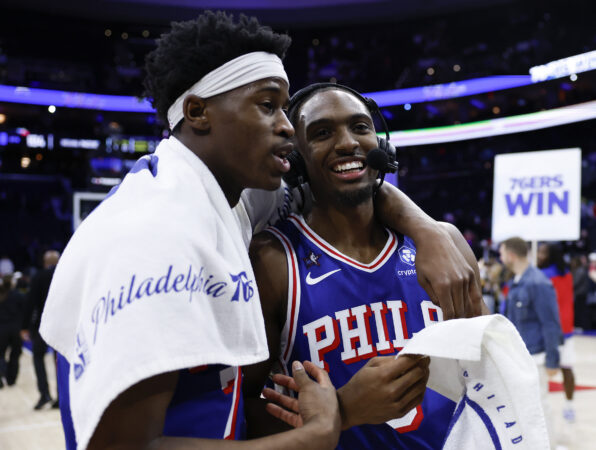
One of those occasions happened Friday night between the 76ers’ backcourt mates, Tyrese Maxey and VJ Edgecombe, during a loss to the Cleveland Cavaliers.
The two were spotted arguing near the bench during a break in action after Edgecombe left Cavs standout Donovan Mitchell wide-open for a three-pointer. Maxey yelled something to Edgecombe after the made basket, and the discussion continued on the sideline during a timeout. The two-time All-Star point guard even rose from the bench to further explain his point to Edgecombe, leading to a spirited discussion in front of teammates, coaches, fans, and cameras.
A video of the exchange, which circulated on social media, has gone viral.
“I was not aware until my dad called me and was like, ‘Hey, you and VJ good?’” Maxey said. “I was like, ‘Uh, yeah. Why?’ A couple of people sent [the video] to me, and I kind of just laughed at it. We want to win so, so bad. And we talked about the scenario of, like, not leaving Donovan Mitchell. … I didn’t want him to leave Donovan Mitchell.”
With Mitchell running down the court, Maxey wanted Edgecombe to switch off Craig Porter Jr., the ball handler. Instead, both players followed Porter, who passed to a wide-open Mitchell.
After catching the pass, the six-time All-Star stepped into a 27-foot three-pointer to knot the score at 16 with 6 minutes, 52 seconds remaining in the first quarter. The Sixers held Mitchell to 13 points on 4-for-13 shooting that night after he tormented them for 35 points two nights before.
Aside from the miscommunication, the Sixers guards did a solid job defending him. However, they struggled offensively. Maxey had 22 points on 9-for-23 shooting. Edgecombe scored 10 points on 4-for-5 shooting. He didn’t attempt a shot in the third quarter and scored three points on 1-for-2 shooting in the fourth.
But a lot of attention went to their exchange in the video.
“I just told him, like, man, in certain scenarios, certain principles go out the window,” Maxey said of wanting Edgecombe to switch on to Mitchell. “Like, this dude is really good, and he had 35 on us last night. I say all that to say, we just want to win. Like, we laughed about it after the game. I was the first person to tell him, like, ‘Dude, you shooting five times in a basketball game is not going to cut it for us. Like, we need you. You’ve got to be up to 10, 12. Like, you’ve got to be aggressive.’
“So, man, that’s fine. That’s my dog. That’s my little brother.”
McConnell’s milestone
On Friday, T.J. McConnell joined another former Sixer, Lou Williams, as the only players in NBA history to record 3,000 assists off the bench.
McConnell, who’s in his seventh season with the Indiana Pacers, reached the milestone with two assists in the first quarter of the Pacers’ 129-117 victory over the New Orleans Pelicans.
Williams, who played a combined 17 seasons with the Sixers, Atlanta Hawks, Toronto Raptors, Los Angeles Lakers, Houston Rockets, and Los Angeles Clippers, recorded 3,262 assists as a reserve and added 527 as a starter.
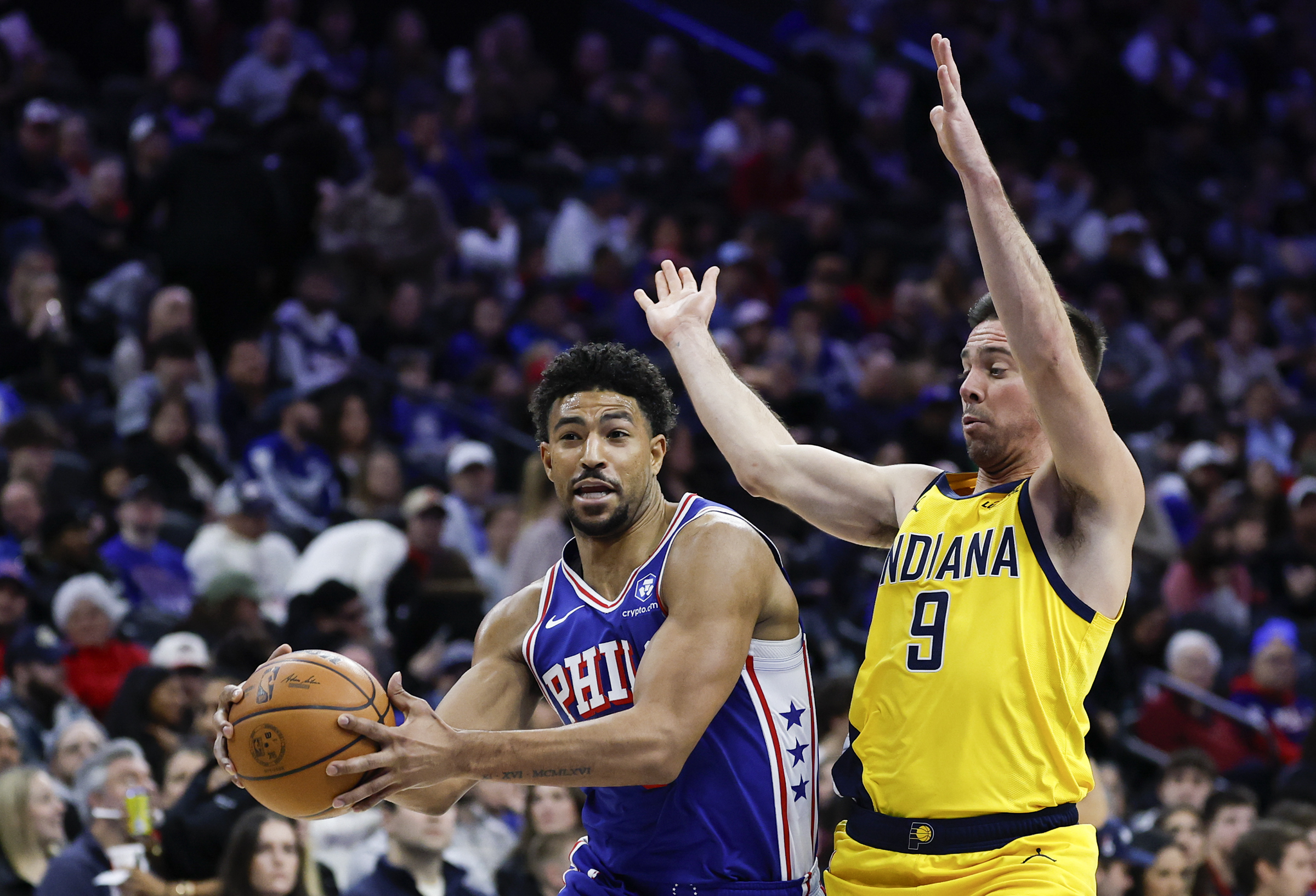
Former Sixers guard T.J. McConnell (9), now with the Indiana Pacers, posted a stat that is unique to only two players who spent time in Philly.
After adding three assists in Monday’s 114-103 loss to the Sixers, McConnell has 3,010 assists off the bench. The 11th-year veteran is just one of five players to reach career marks of 3,000-plus points, 2,000-plus assists, 1,500-plus rebounds, and 500-plus steals as a reserve.
“I feel like my playing here established the player I was going to be throughout my career,” McConnell said of spending his first four NBA seasons with the Sixers. “It established a mindset on how I’m going to play, how I’m going to go about it, and how I’m going to be a pro.
“Obviously, I’m very thankful for my time here, because I wouldn’t have been put in a position to play as many years as I did. For them to take a chance on me and establish the type of player I want to be, I’m thankful.”
Undrafted out of Arizona, McConnell began his NBA journey as the Sixers’ fifth-string point guard during training camp in 2015. At the time, the 6-foot-1, 190-pounder didn’t even have a locker.
The former Sixers fan favorite averaged 6.4 points and 4.7 assists in 314 games with 72 starts before signing a free-agent deal with the Pacers on July 29, 2019.
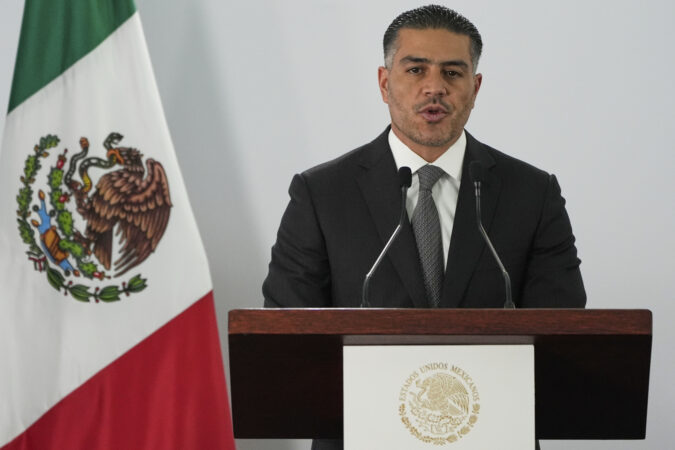
MEXICO CITY — Mexico’s security minister said Tuesday that it had sent another 37 members of Mexican drug cartels to the United States, as the Trump administration ratchets up pressure on governments to crack down on criminal networks it says are smuggling drugs across the border.
Mexican Security Minister Omar García Harfuch wrote in a social media post on X that the people transferred were “high impact criminals” that “represented a real threat to the country’s security.”
It is the third time in less than one year that Mexico has sent detained cartel members to the U.S. as the country attempts to offset mounting threats by U.S. President Donald Trump. García Harfuch said the government has sent 92 people in total.
Video shared by Mexican authorities shows a line of handcuffed prisoners surrounded by heavily-armed and masked officers being loaded onto a military jet at an airport on the outskirts of Mexico City.
“As the pressure increases, as demands from the White House dial up, [Mexico’s government] needs to resort to extraordinary measures, such as these transfers,” said David Mora, a Mexico analyst at the International Crisis Group.
The U.S. State Department and Justice Department did not immediately respond to a request for comment.
Tuesday’s transfer included a handful of important figures from the Sinaloa Cartel, the Beltrán-Leyva cartel, Jalisco New Generation Cartel, the Northeast Cartel, a remnant of the infamous Zetas based in the Mexican border state of Tamaulipas, across from Texas. Mexican authorities said that all had pending U.S. cases.
Among those transferred was María Del Rosario Navarro Sánchez, the first Mexican citizen to face charges in the U.S. for providing support to a terrorist organization, after being accused of conspiring with a cartel.
Trump has publicly entertained the idea of military action on Mexican cartels, language that has only gotten more combative since a U.S. military operation in Venezuela deposed former President Nicolás Maduro earlier this month.
Turning his attention to Mexico shortly after the Venezuela attack, Trump said in an interview with Fox News: “We’ve knocked out 97% of the drugs coming in by water and we are going to start now hitting land, with regard to the cartels.”
Last week, Mexico President Claudia Sheinbaum spoke with Trump, telling him that U.S. intervention in Mexico was “not necessary,” but emphasizing that the two governments would continue to collaborate.
Last February, Mexico sent 29 cartel figures to the U.S., including drug lord Rafael Caro Quintero, who was behind the killing of a U.S. DEA agent in 1985. In August, a second round saw 26 Mexican cartel figures sent to the U.S. None had the profile of Caro Quintero, but spanning multiple cartels, the figures could help U.S. prosecutors build cases.
After the August transfer, García Harfuch said it was a public safety decision, because Mexico did not want them to continue operating their illicit businesses from inside Mexican prisons.
Another transfer of prisoners to the U.S. had been rumored for weeks. Mexico has sought to assure the Trump administration that it continues to be a willing partner in combating drug traffickers.
“For the Trump administration and the Trump base, what is going to matter in the end is some wins that Trump can actually bring back and say ‘Look this is what I’m getting out of Mexico,’” said Mora.
LAS VEGAS ― On Saturday, captain Sean Couturier stood in front of reporters in the Flyers locker room at Xfinity Mobile Arena after a 6-3 loss to the Rangers and said, “We [stunk]. Plain and simple. We can’t show up.”
Fast forward to Monday night at T-Mobile Arena after a 2-1 win against the Vegas Golden Knights, and Couturier said, “Yeah, it was a gutsy win.”
It wasn’t always pretty, but it was a win. Finally, after losing six straight, the Flyers were able to hold off the red-hot Golden Knights.
Here are four stars.
4. The penalty kill
The Flyers’ penalty kill has been dreadful. Since Jan. 1, it entered the game as the league’s second-worst unit at 57.7%. That led to assistant coach Todd Reirden, who is in charge of the penalty kill, calling a meeting on Monday morning. According to Travis Konecny, it was a detailed, long meeting focused on reminding the players what made them so successful early in the season.
“We had a really good meeting this morning, and had a game plan going into their power play,” defenseman Nick Seeler said. “Obviously, they’re a top-10 power play in the league. I thought our pressure was a smart, pressure, right? So, try to take away time and space for [Jack] Eichel, he’s a heck of a player, obviously. We did a good job, obviously. We need to stay out of the box, but, you know, PK was good tonight so that’s a positive.”
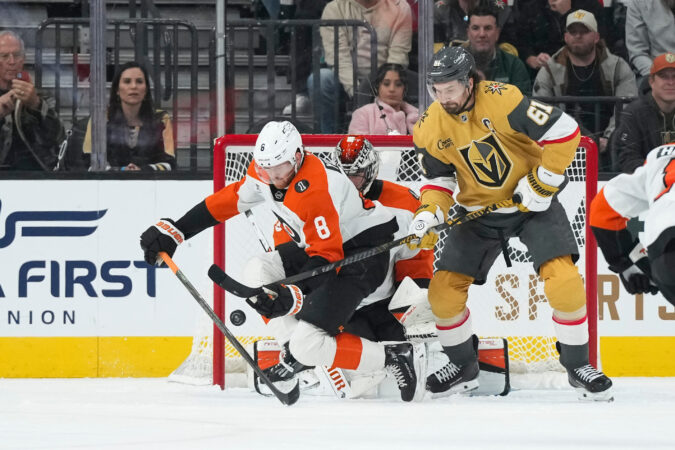
Eichel did help Vegas get its lone goal when he sent a shot-pass to Tomáš Hertl as he glided in front and deflected the puck past goalie Sam Ersson.
Flyers defenseman Emil Andrae and left wing Noah Cates sandwich Golden Knights center Jack Eichel during the second period.
But when you’re facing the fourth-best power play in the NHL, and you allow just one goal on seven power plays, that’s pretty darn good. And one of those penalty kills was in the last 1 minute, 33 seconds of the game when Owen Tippett sent the puck over the glass — in a one-goal game. The Flyers made two big blocks during that kill, one by Seeler and one by Cam York.
The structure was better as they didn’t collapse or shift into the box too often; coach Rick Tocchet likes to employ the diamond on the penalty kill. According to Natural Stat Trick, Vegas had 12 shot attempts, five shots on goal, seven scoring chances, and five high-danger chances. But in the end, the Flyers and Golden Knights each got a goal while the home team was on the man advantage.
“Obviously, on the PK you’re going to have to give up some shots. So just knowing which ones we want to kind of give up and the ones we need help to take away,” Ersson said. “Like a lot of our penalty kill, I think we build on like our urgency and our willingness to block shots. I think that’s huge for us to have success.
“And we did that tonight, and it kind of leads the way and gives so much momentum to the team when guys put their body on the line like that.”
3. Nick Seeler
Speaking of guys who like to lay their body on the line, Seeler came up big in several ways Monday.
Although Tocchet had shown different defensive pairings during recent practices and morning skates, he stuck to his pairings. Seeler was paired with Noah Juulsen and was on the ice during the final 1:33 of the game. Seeler slid and made a massive block with 44 seconds left on a Shea Theodore shot to preserve the win.
But it was earlier in the game when he made the biggest play.
In the second period, he faced a two-on-one when Juulsen pinched down the right boards. Seeler was the lone man back facing two of Vegas’ best in Ivan Barbashev and Mark Stone. He stayed on his feet and blocked the Stone pass intended for Barbashev across the crease.
It was a big moment in the game but also a big moment considering what Tocchet said Saturday after the loss to the Rangers.
“We’re just doing things,” an exacerbated Tocchet said. “Even on two-on-one, the guys on the outside site, why are you leaving your feet and letting them pass [across]? Just hold them; that’s something we’ve really worked on this year and have done a good job.
“But now we’re sliding again, and we’re trying to block a shot now. How many weakside goals have we been giving up lately? That’s something that I’ve been preaching since the start of the year: You cannot give weakside goals up.”
The play was huge as it kept it a one-goal game.
“Yeah, [Tocchet] likes the D to try not to leave their feet,” Seeler said. “Obviously, there’s situations where you need to desperation-wise, but, yeah, it’s good. It’s nice to break those up and get going the other way.”
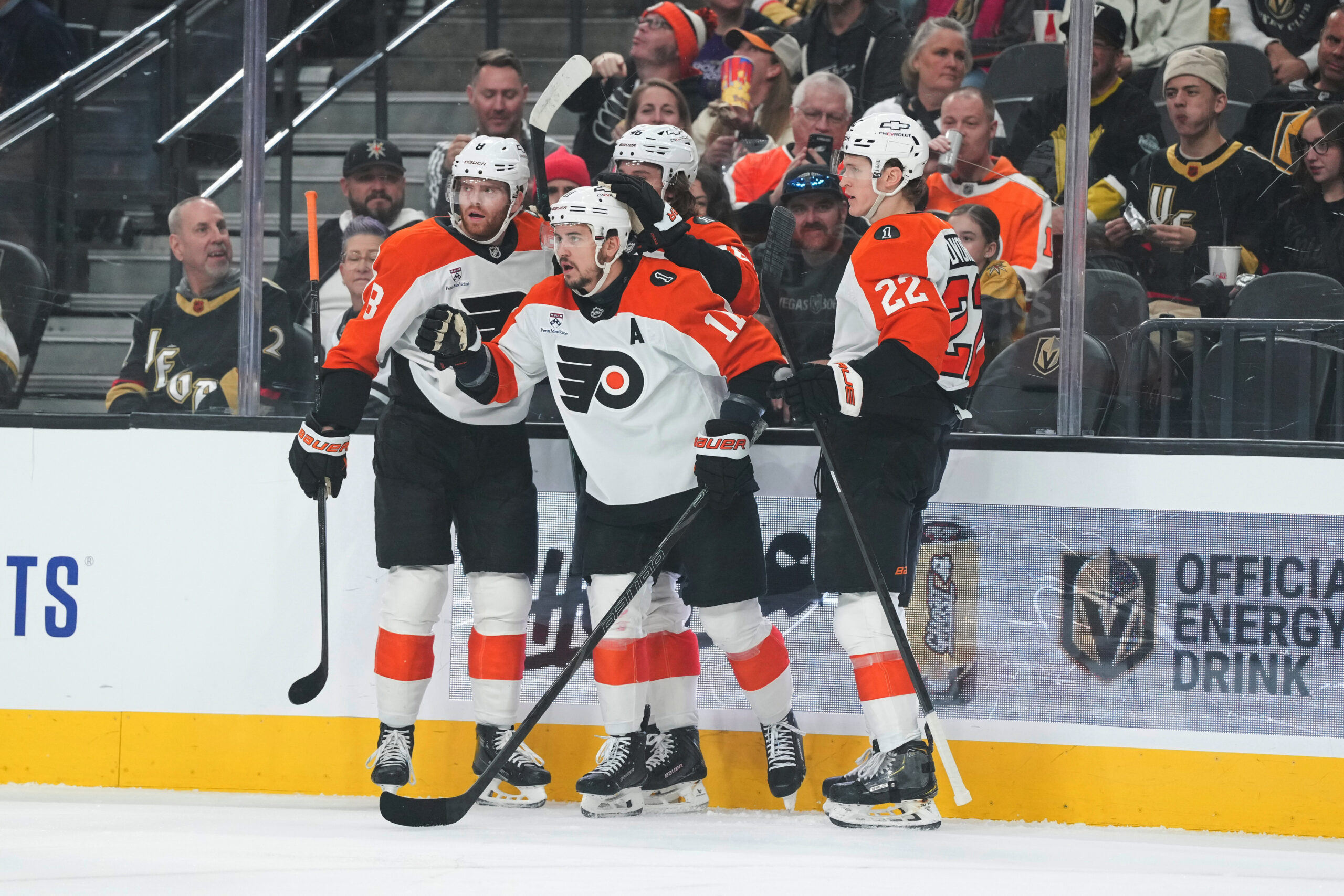
Flyers right wing Travis Konecny (11) celebrates his first goal against Vegas during the first period.
2. Travis Konecny
From the onset, it looked like the alternate captain was determined and focused on ending the losing streak. In the end, he led the way with a pair of goals, each scored off turnovers by the Golden Knights.
His first goal came off a Hertl turnover just inside the Flyers blue line as the Czech center tried to pass to Vegas defenseman Kaedan Korczak. Konecny poked the puck away from Korczak and took off. He skated in one-on-one with goalie Adin Hill and beat him glove side to open the scoring 3:46 into the game.
“I wanted to make sure I had a good start, our line had a good start, because that had been something that was creeping into our game that we were struggling with,” Konecny said.
In the third period, he picked off an errant pass by Eichel during a Vegas power play and took off again. This time he went blocker side because he was “just trying to mess with [Hill’s] head a little bit.” Konecny knows Hill, who was also his teammate at 4 Nations, and his father, as the Flyers forward spends his summers in Calgary, where the Golden Knights goalie grew up.
“Yeah, he’s a great player,” Couturier said. “That’s what he does, he scores goals, uses his speed well. And what I love about it is, his two breakaway goals he’s in the right spot defensively and jumps on loose pucks and reads and reacts the right way and gets rewarded.”
1. Sam Ersson
Nine days ago, after allowing seven goals on 23 shots to the Tampa Bay Lightning, Ersson spoke to The Inquirer. He called his season tough and the loss to Tampa Bay embarrassing. Nineteen games into the season, he was 6-8-4 with a bloated 3.43 goals-against average and an NHL-worst .855 save percentage among goalies who played in at least 15 games.
With Dan Vladař on injured reserve with an undisclosed injury, Ersson got a chance to right the ship on Monday. And it was evident from the jump that this night would be different.
Vegas defenseman Jeremy Lauzon skates with the puck ahead of the Flyers’ Matvei Michkov.
In the first minute of play, he made a confident save on defenseman Noah Hanifin before stopping a Stone tip-in from seven feet out.
“It’s a nice way to get in the game, get in a groove and a flow of the game, getting some shots early, and obviously nice to come up with some big stops,” Ersson said. “So it definitely helps [with confidence].”
The Swedish netminder moved well, tracking the puck and positioning his body well in advance of shots. According to Natural Stat Trick, he stopped 12 of 13 high-danger shots. He finished with 24 saves.
“Awesome. Again, we know it. He just proved us all right,” Konecny said. “He’s an unbelievable guy, unbelievable goalie, and, guys that work hard like him, who are just like the most likable guys, you really want to push for those guys, and I’m just really happy for him. Awesome teammate and stud goalie.”
Ersson earned a lot of praise from his coach postgame.
“Nobody’s going to feel sorry for Sam. He doesn’t have that attitude,” Tocchet said. “It’s almost like he’s got that closer mentality. I’ve given up a bunch of home runs, but I want the ball again. And he took the ball and closed the game for us.”