In a small fictional town in Louisiana, the six women centered in Steel Magnolias have forged a community among — and an ever-deepening relationship with — each other. In a real town in southeastern Pennsylvania, a group of women who have worked together for decades are bringing those characters and those deep bonds to life at People’s Light in Malvern.
“You don’t have to worry about if that familiarity is there,” said Janis Dardaris, who portrays Clairee, the widow of the town mayor. “You just sit on the stage and it’s there. There’s no working at it. I sometimes wonder, what would it be like doing this play with completely different people that I didn’t know?”
As the women portray lifelong friendships, they have been able to find that depth and heart because of their own close connections. They’ve known each other for decades through their work in the arts — up to 50 years, in some cases, with some combination of them overlapping in at least a dozen shows in recent years.
Talking together in a room at the theater days before the Sunday opening, they occasionally finished each other’s sentences, extrapolating thoughts for each other.
Abigail Adams, the production’s director who has directed the women in several other performances, has a sense of how each of them works — how much time it takes for them to process, when to ask for something in their performance and when to hold back.
Claire Inie-Richards, who plays young nurse and newlywed Shelby, and Susan McKey, who plays her mother, M’Lynn, have portrayed a mother-daughter duo three times over 20 years.
Though with each role they learn each other anew, “There’s no substitute for time,” Inie-Richards said.
Marcia Saunders (left) and Brynn Gauthier are part of an all-women ensemble performing “Steel Magnolias.”
Brynn Gauthier, who makes her People’s Light debut in her portrayal of Annelle, is the new addition to a group of women whose history stretches back decades.
At first she thought it might be intimidating to work with people who have known each other and worked together for so long, but it felt like she got to be part of the journey of the cast getting to know each other in a new way through this show.
That familiarity is not without its challenges, though. Marcia Saunders sometimes feels “Marcia” surface in place of “crusty” Ouiser.
“That’s been challenging because of my relationship with these people and this institution, which is like a home to me,” she said.
Told as a series of moments in the women’s life within the safe confines of Truvy’s in-home hair salon, the play opens with Truvy and newcomer Annelle preparing Shelby for her wedding. Shelby and mother M’Lynn discuss wedding preparations, while local grouch Ouiser gripes about their property line.
Clairee arrives, windswept, from a dedication ceremony honoring her late mayor husband. Annelle, originally reluctant to give any information at all about herself, breaks down, admitting to the women that her husband has disappeared — with her money, her car, and her jewelry. She finds immediate support.
It’s just the start of how the relationships evolve and deepen in Robert Harling’s play, set in a southern town in the 1980s.
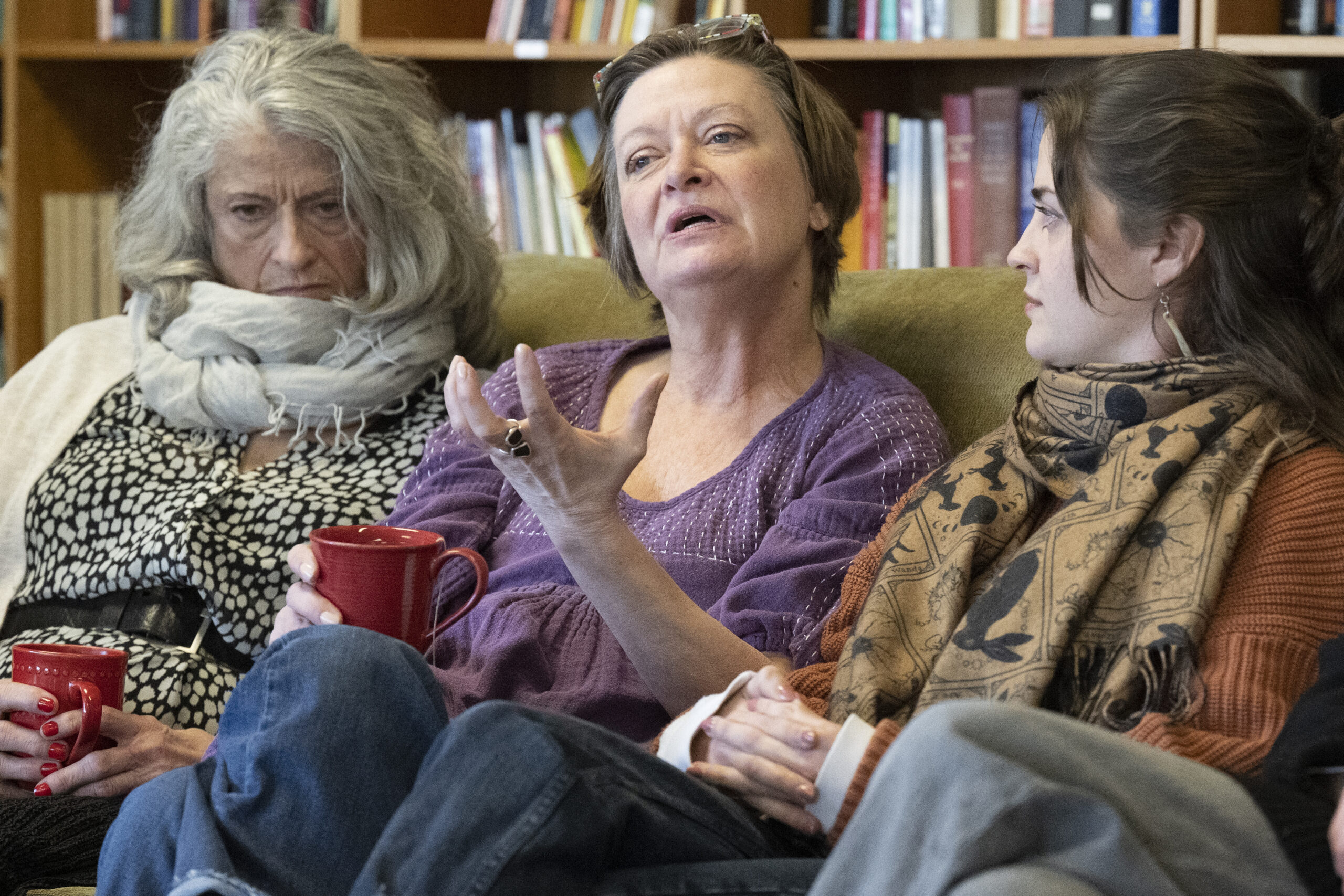
From left, Janis Dardaris, Susan McKey, and Claire Inie-Richards, members of an all-women ensemble performing “Steel Magnolias,” speak about working together for decades — some for more than 50 years — during an interview at People’s Light in Malvern.
Even though the viewer slowly learns more about the women’s external lives and pressures — confronting joys and tragedies — the play never leaves the salon.
“I love how this play – it’s about these women. It’s about this place. It’s about us. And I just think that makes for such a strong story, and I think more poignant than the movie,”McKey said.
Gauthier observed that there’s something inherent to women’s friendships in how they can discern when to tiptoe and when to confront in their care for each other.
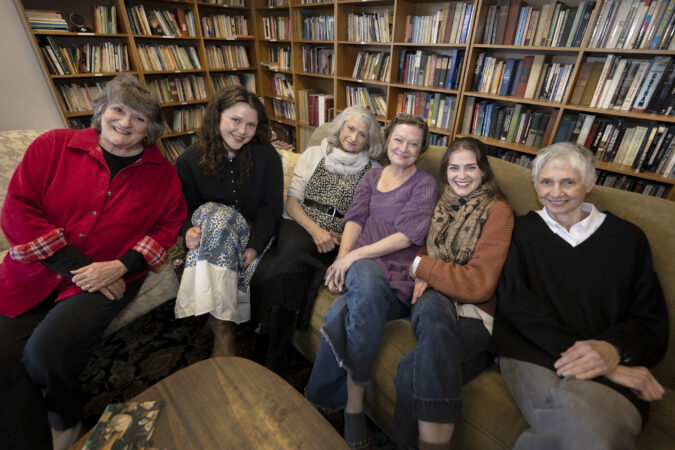
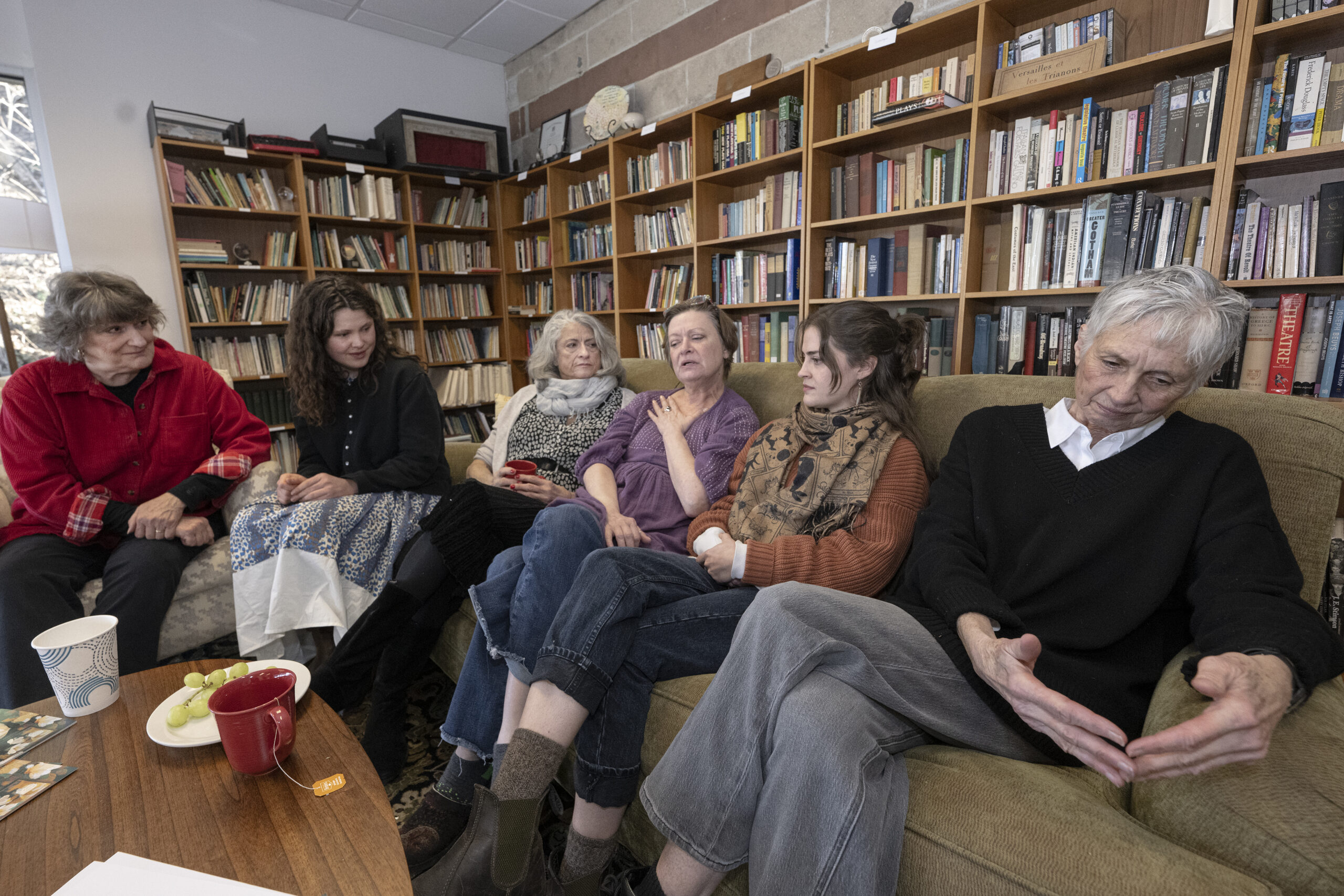
Marcia Saunders (from left), Brynn Gauthier, Janis Dardaris, Susan McKey, Claire Inie-Richards, and Abigail Adams speak of their performing “Steel Magnolias” at People’s Light in Malvern.
“Truvy’s place is the place where they can be fully themselves, and they really can’t be fully themselves in their domestic arrangements, not in the same way,” Adams said. “They can’t be as outrageous, and they can’t be as vulnerable.”
It’s the vulnerability, that unyielding support for each other despite personal differences, that the women think today’s audiences will connect with. Though the story — popularized by a film adaptation released in 1989 starring Julia Roberts, Sally Fields, and Dolly Parton — is often thought about as a sentimental tearjerker, it’s injected with lightness, Gauthier said. .
“It’s kind of like the best episode of like Friends or a TV show you really love, where you just are spending time with these people,” she said.
“There’s always going to be intrigue and interest and drama, but there’s an element of just sitting with these people that you really enjoy and getting to experience them really fully,” Gauthier said. “It’s really nice to just have these characters that are so easy to fall in love with.”
“Steel Magnolias” continues through Feb. 15 at People’s Light, 39 Conestoga Rd. in Malvern. Information: peopleslight.org or 610-644-3500.
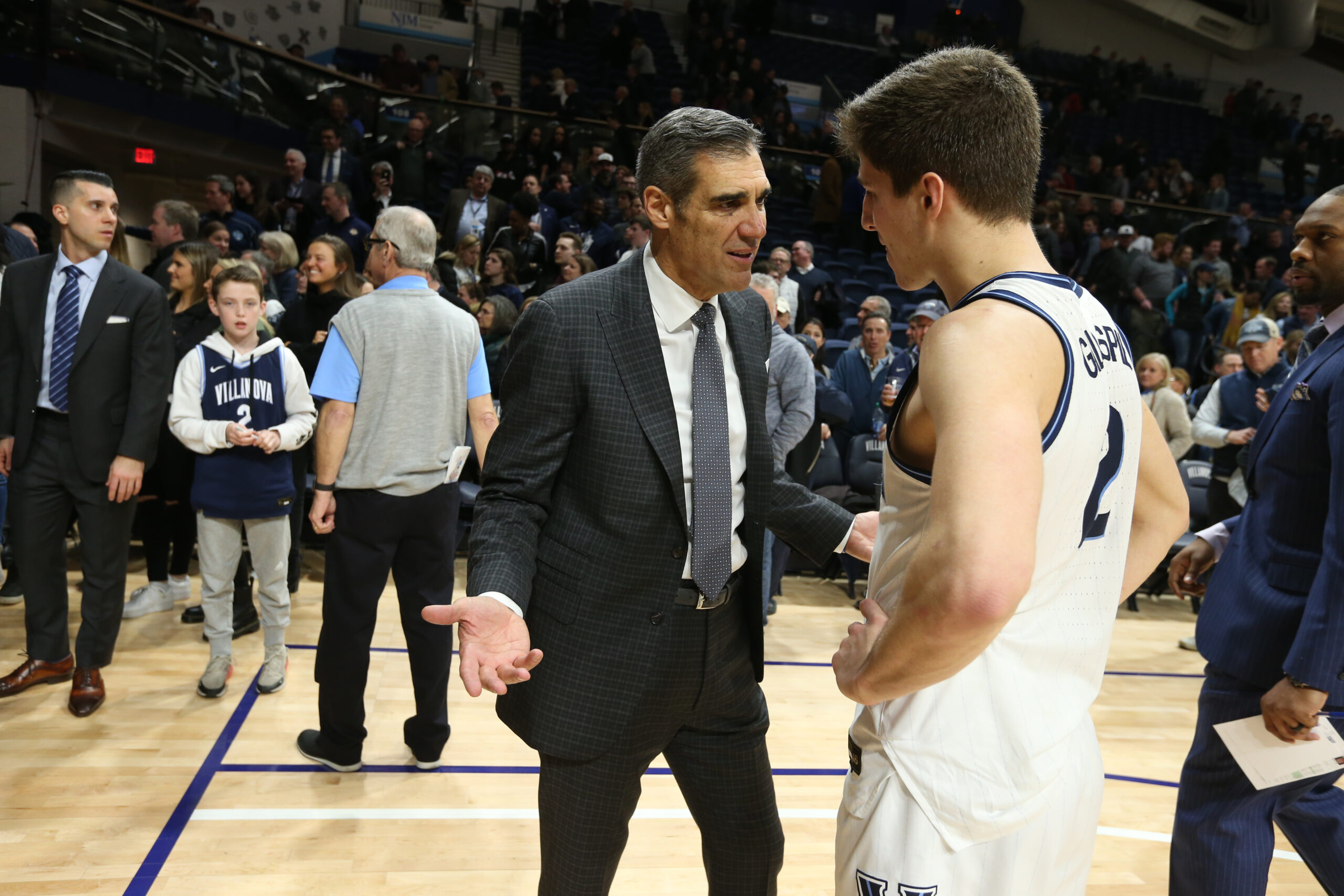
Jay Wright saw enough of Collin Gillespie a few nights before to invite him to Villanova on a Monday in January 2017 and offer him a scholarship. But this was hardly a courtship. Wright told Gillespie that he would redshirt his freshman season, maybe play as a junior, and then have a complementary role as a fifth-year senior.
“I thought he would get his master’s degree and be a great coach one day,” Wright said. “I was thinking ‘I would love to have this guy on my staff.’”
Gillespie — who has molded himself into an NBA starter with the Phoenix Suns after going undrafted in 2022 — nodded along. He didn’t have a Division I scholarship before his senior year at Archbishop Wood and declined to visit Division II schools because he believed bigger programs would eventually see what he already knew: He could play. Redshirt? OK. Bench player? Sure. Coach? Yes, sir.
“I didn’t really believe him,” said Gillespie, who will play against the 76ers on Tuesday night. “I believed in myself. I was just like, ‘Whatever he says, I’ll take it and then prove him wrong.’”
There was Gillespie 15 months later on the court for Wright in the national championship game, taking a charge against Michigan and looking the part. In his fifth year, the kid who had to wait for college scholarships was named the nation’s top point guard in 2022. He went undrafted that June but landed a non-guaranteed contract in July with the Denver Nuggets. He was on track.
Three weeks later, Gillespie suffered a broken right leg while playing in a pickup game at Villanova.
His NBA career — the one that is now flourishing — seemed unlikely then to nearly everyone except the guy who nodded along that day in Wright’s office.
“Everyone has their own journey,” Gillespie, 26, said. “Everyone runs their own race. You just have to stick to what you do, put your head down, and work hard. Don’t compare yourself to anyone else. If you work hard enough, you can probably achieve anything you want to.”
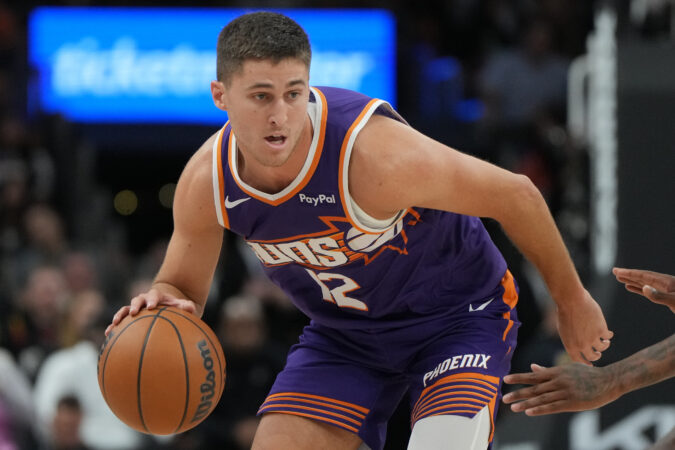
Collin Gillespie (right) became much more than a fifth-year senior role player first envisioned by Villanova coach Jay Wright.
G League to the league
Andre Miller often learned via text messages which players would be flying nearly three hours from Denver to join his G League team that night. He coached the Grand Rapids Gold, the Nuggets’ minor-league affiliate in Michigan that played 1,100 miles from Denver. Those morning flights gave Gillespie a chance to get on the court.
“It wasn’t a good recipe for these guys to be successful, but when he did show up, he didn’t want to come out of the game,” said Miller, who played three of his 17 NBA seasons with the Sixers. “We knew we had to leave him out there because he didn’t have an opportunity with the other team and he took great advantage of it.”
Gillespie feared that the Nuggets would void his contract after he suffered that injury playing at Villanova. That’s the first thing he said to his father, who was in the gym when it happened. But they didn’t. They kept him around that first season while he rehabbed and then split his time the next season between Denver and Grand Rapids.
“There was no ego,” Miller said. “One thing that’s tough to deal with is when your career is in the hands of other people. Some people felt like he wasn’t an NBA player and some people felt like he was an NBA player. The one thing that stood out about him to me is that he’s a competitor. He’s a dog. He’s a guy who enjoys playing basketball. He’s a leader. He plays with a chip on his shoulder.
“I wish I could have coached him more in the G League, but he was an NBA player. I knew that from the first time I saw him on the court with the G League players. I was like, ‘He probably won’t be here much.’”
Gillespie signed before last season with the Suns, again splitting time between the NBA and the G League. The 6-foot-1 guard earned a full-time role this season, starting for the Suns and fitting in with pesky defense and a three-point shot. Just like college, it took time before Gillespie’s game was appreciated.
“You just don’t see it initially. He doesn’t wow you,” Wright said. “But when you see him play over time and you realize this guy is getting to the rim and finishing, he’s elevating on his jumper and shooting over bigger guys, and he’s not getting backed down. You almost need to have time to believe what you’re watching.”
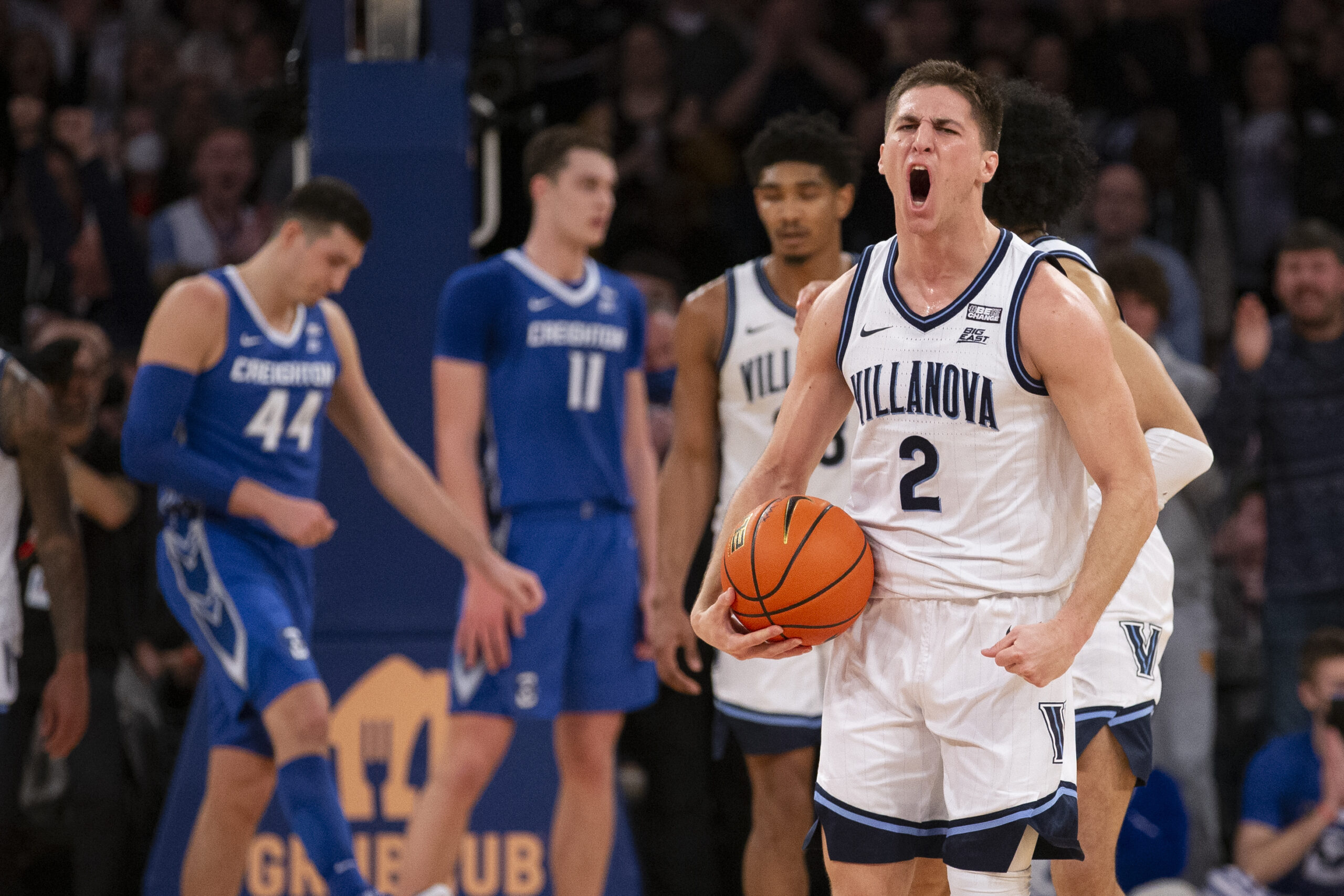
Collin Gillespie is shooting 41.4% from three-point range for the Suns.
Gillespie entered Monday’s game against Brooklyn averaging 13.2 points, 4.9 assists, and shooting 41.4% from three-point range. He hit a game-winner at the buzzer in November, regularly finds ways to create his own shot, and has proved that his game fits in the NBA.
Kevin Durant called him “a dog” and Anthony Edwards said after a loss to the Suns last season that “No. 12 is pretty good at basketball.” Two NBA superstars could see what Gillespie always believed: He belongs.
“He has more heart than talent,” said his father, Jim. “The kid just doesn’t want to lose. When he sets his mind to something, he just does it. And ultimately, he’s a winner. Wherever he’s gone, he’s won. At every level.”
Jay Wright says Collin Gillespie came to Villanova with a “killer mentality and stone face that we try to teach.”
Change of plans
Gillespie was in the stands for a Villanova game as a senior in high school, seated behind the La Salle bench at the Palestra. The Explorers invited him and Gillespie thought a scholarship offer was near.
“But they never offered,” Jim Gillespie said.
Gillespie eventually landed smaller Division I offers as a senior, but he was hopeful a Big 5 school would have a spot for him. None of them did until January when Villanova assistant Ashley Howard urged Wright to watch Gillespie play a game against five-star recruit Quade Green’s Neumann Goretti squad at Archbishop Ryan.
The Northeast Philly gym was packed and the coach couldn’t stay long as he was being hounded. Howard called Wright while he was driving home and told the coach that one kid scored 42 and the other kid scored 31. Wright figured the 42 points belonged to Green, who was already committed to Kentucky. It was Gillespie, the assistant said. Wright was sold.
“Nothing was spectacular, and he’s not bringing any attention to himself,” Wright said. “He just makes the right plays.”
Wright called Gillespie’s father and told him he needed his son at Villanova on Monday. The coach gave Gillespie his pitch that day without any guarantees.
“We left and we were like, ‘What are you going to do?’” his mother, Therese, said. “He said, ‘I’m going to play out my senior [year].’ I said, ‘Collin, it’s Jay Wright.’ He said, ‘Mom, I know what I’m doing.’”
Gillespie committed a week later, simply deciding after a game at Bonner-Prendergast that he had enough of the recruiting trail. He was headed to ’Nova and told a Wood coach without first running it by his parents. Gillespie knew what he was doing.
“He always said, ‘I’ll bet on myself,’” Jim Gillespie said. “He put the work in and the effort in and that’s what he’s always done.”
It took Gillespie just a few weeks to force Wright to rethink the plan that he would redshirt. Every day in practice that June he went up against Jalen Brunson and held his own.
Collin Gillespie (left) got to play in practice against future NBA players Donte DiVincenzo (center) and Jalen Brunson (right) at Villanova.
“He came in with that killer mentality and stone face that we try to teach,” Wright said. “But he came in with that. Then he spent every day with Jalen Brunson and it just became reinforced. It was so obvious. The coaching staff, behind closed doors, was going, ‘This kid is going against Brunson every day. He’s pretty good.’”
Gillespie suffered a minor injury that month and Wright checked with athletic trainer Jeff Pierce to see how the freshman was feeling. He was fine, the trainer said.
“The trainer said, ‘You’re not redshirting this kid,’” Wright said. “I said, ‘Is it that obvious?’ He said ‘Yeah, everyone knows.’ Yeah, it was.”
The guy who nodded along in Wright’s office proved that he belonged. Now, he’s doing it again in the NBA.
“It’s the way I was raised and where I come from,” said Gillespie, who grew up in Pine Valley before moving to Huntington Valley. “My brother is a year older, so I always played a year up. I had to play against older guys and was always smaller. I always had to prove myself and had a chip on my shoulder. My parents always believed in me and my family always believed in me and taught me to believe in myself.”
Pennsylvania is leading the way on breast cancer screening policy. Thanks to Senate Bill 88, a decisive move from the commonwealth, patients with state-regulated health plans will no longer face high out-of-pocket costs when an abnormal screening requires follow-up breast imaging.
Many Americans assume this is already the case, given the Affordable Care Act’s promise of no-cost preventive services. With breast cancer, however, that’s not always true.
Patients whose routine screening mammogram reveals an abnormality require additional imaging for a more detailed look. Those who are at high risk due to family history, dense breast tissue, or a genetic abnormality may need an MRI or ultrasound for their routine screening, rather than a standard mammogram.
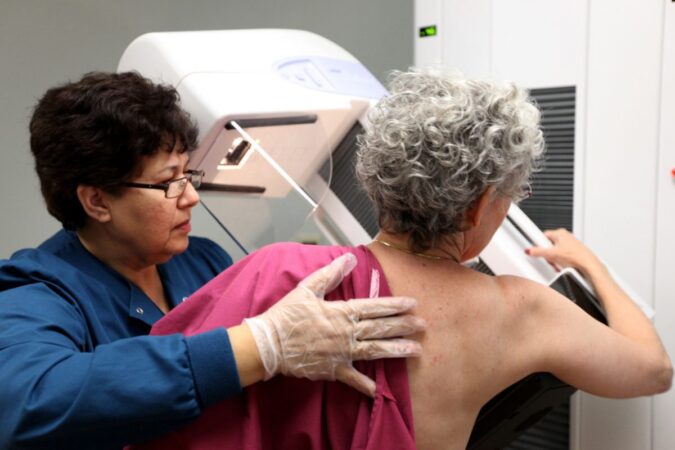
Cultural, economic, and other social factors, including access to health care, may influence the lower rate of breast cancer screening.
Neither meets most health plans’ technical definition of “preventive care.” And, in many parts of the country, both can cost hundreds, even thousands, of dollars out of pocket.
By eliminating out-of-pocket costs for patients, Pennsylvania is establishing itself as a national leader in breast cancer treatment. But this state legislation can only go so far, and many people still face major gaps in coverage when they need breast imaging beyond a screening mammogram.
As it turns out, that lack of coverage doesn’t sit well with voters.
Support for treatment
In a national poll of 1,000 Republican primary voters commissioned by the Alliance for Breast Cancer Policy, sentiment on the topic was clear: If a patient needs breast imaging, they should get it — with the full cost covered by their health plan.
A full 95% of polled voters said insurers should cover the full cost of all recommended breast imaging, not just the standard screening mammogram. After all, preventive care means preventive care. Voters recognize that. When health plans split hairs and argue technicalities, they do so at the patients’ risk.
A bill before Congress would help, covering many in Pennsylvania who will still fall through the cracks even after the passage of SB 88. Known as the Access to Breast Cancer Diagnosis (ABCD) Act (S 1500/HR 3037), the federal legislation would eliminate out-of-pocket costs for patients’ necessary breast imaging.
And 85% of polled voters responded to the legislation’s primary goal: ensuring women get the answers they need before it’s too late. When breast cancer is caught early, treatment is more effective, less invasive, and far more likely to lead to positive outcomes — with five-year survival rates as high as 98%. Early detection saves both lives and dollars.
Respondents expressed support for the ABCD Act, especially given the impact the bill would have on those who often can’t get the help they need: rural, lower-income, Black, Hispanic, and younger women.
With costs for healthcare so high, many, especially younger women who make up 10% of all new breast cancer cases in the U.S., are looking toward high-deductible health plans to lower their monthly costs. But this often comes with less comprehensive coverage before a deductible. Two-thirds of polled voters say the full cost of necessary breast imaging should still be covered for those with high-deductible health plans.
Pennsylvania is proving that bold, patient-centered policy can save lives and reduce costs. Yet, in more than half the country — and still for some in the Keystone State — outdated insurance rules still force patients to choose between lifesaving breast imaging and paying their bills.
It’s time for Congress to follow Pennsylvania’s lead and make comprehensive breast cancer imaging a priority.
Breast cancer doesn’t wait. In 2025, an estimated 43,000 women and men in the U.S. lost their lives to the disease, including 1,800 in Pennsylvania alone. Access to early diagnosis should never hinge on the state you reside in. Congress should take note of Pennsylvania’s recent legislation and ensure lifesaving screenings are within reach for everyone.
Molly Guthrie is vice president for policy and advocacy at Susan G. Komen and leads the Alliance for Breast Cancer Policy.
A six-story apartment project at 2001 E. Lehigh Ave. is moving forward with a new owner after years of delay amid a difficult development environment.
Five-lane Lehigh Avenue divides the southern portion of Kensington, which has experienced development more akin to the boom in Fishtown, from the parts of the neighborhood to the north that are at the heart of the city’s opioid crisis.
But along the northern edge of the avenue, next to the Conrail tracks, a series of auto-oriented and light-industrial properties have been redeveloped as housing in recent years.
“That whole corridor has continued developing. It’s even pushing over the tracks further up north, too,” said Brian Corcodilos, CEO of Designblendz, the architect for the project. “We’re confident that … this area continues to rent up.”
The former owner of 2001 E. Lehigh, developer Isaac Singleton, secured zoning approvals for the project in 2023 and 2024. City records then show the property sold for $2.5 million in January 2025.
A demolition permit for the property was issued this week to an address associated with developer Roman Ovrutsky — whose home The Inquirer profiled last year — and Corcodilos said their team expects construction to begin by early spring.
Ovrutsky’s version of the project will feature 146 apartments, a slightly smaller number than Singleton proposed, and a little over 6,000 square feet of commercial space on the ground floor. The project will also have 54 underground parking spaces.
Designblendz has updated the visual palette for the project by adding darker grays and slate-colored hues.
Corcodilos said that changes in federal tax policy in President Donald Trump’s Big Beautiful Bill have enabled clients to begin building again. A lull in recent years was caused by heightened interest rates and an apartment glut that made it hard for developers to charge the rents necessary to pay back the loans on their projects.
The former design for the building included greens and browns. The new vision features slate-colored hues.
Corcodilos said developers have also found that more projects are making sense if they use either the city’s mixed-income housing zoning bonus — which allows taller or denser construction in exchange for an affordability component — or if they base their financing on catering to some tenants who use federal rent voucher subsidies.
“That’s how a lot of these projects are getting done,” Corcodilos said.
It’s illegal in Philadelphia to discriminate against renters using vouchers, but it’s common for landlords to discourage those tenants, and many buildings owners don’t proactively advertise to subsidized tenants.
But in recent years, increasing numbers of landlords have seen the advantage of tapping into a large tenant base with almost guaranteed payments.
Another property just north of Lehigh Avenue at 2200 E. Somerset St. was sold last year to the Philadelphia Housing Authority, after many of its tenants ended up being voucher holders.
“A lot of these big buildings that are going up, the only way they’re penciling is if there’s some sort of an affordability component to it,” Corcodilos said.
Beyond Kensington, Designblendz is seeing an increase in work this year due to developer-friendly changes in the federal tax code, opportunities in affordable housing provision, and an easing of the overall apartment glut, he said.
“I’m not getting a sense at the moment that clients are worried about not filling their units,” Corcodilos said. “Obviously things slowed down a little bit over the last year and a half for the industry. But what we’re seeing right now, it’s busier than ever.”
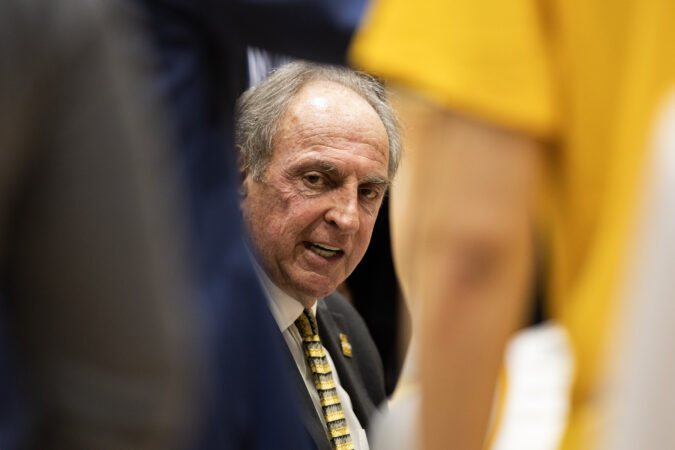
Fran Dunphy sat at a long table inside La Salle University’s athletic center early Monday afternoon, his body turned toward a wide window on the other end of a conference room, as if the difficult discussion topic pained him and he was trying to shield himself from the hurt.
A 70-page federal indictment had dropped Thursday accusing more than 39 college basketball players of fixing games and shaving points during the 2023-24 and 2024-25 seasons. Dunphy had read in disbelief as La Salle was mentioned more than once. One of his team’s games was the target of an alleged fix, and one of his former players, Mac Etienne, appeared in the indictment 28 times for shaving points at DePaul University in ’23-24, the season before he came to La Salle. Etienne reportedly reached a plea agreement with prosecutors on Dec. 8.
La Salle released a statement Thursday noting that no one now connected to the university was charged and that the school would cooperate with any investigation. No one has accused the university’s administrators or coaches of any wrongdoing, and everyone who knows Dunphy knows that his integrity is beyond reproach. Still, there’s no getting around the disturbing implication of the La Salle-related details within the indictment.
Two of the alleged fixers, Jalen Smith and Antonio Blakeney, “attempted to recruit” La Salle players to shave points in a Feb. 21, 2024, game against St. Bonaventure. The Bonnies were favored in the game’s first-half spread by 5.5 points, and the fixers “placed wagers with various sportsbooks totaling at least $247,000 on St. Bonaventure to cover” that spread. The Explorers led, 36-28, at halftime and won, 72-59.
“We did our job that day,” Dunphy, who retired from coaching after last season, said in his first public comments since the indictment’s release. “I felt good about that — that there was nothing there, that we had won the game. I truly liked coaching those guys on that team. That was a good win for us.”
But the fact that the bets failed and the fixers lost doesn’t answer an unsettling question: Why would the defendants have wagered nearly a quarter of a million dollars on a middling Atlantic 10 game if they didn’t already have reason to believe they’d win the bet — if they didn’t think they had someone inside working to help them?
“I couldn’t tell you,” Dunphy said. “Again, I didn’t go down that path even a little bit. I just thought about my team, the fact that we had played fairly well that day, and I was just surprised and disappointed that anybody even thought we were involved in any of that. That was my disappointment.”
Has he been thinking about that team, that season, and asking himself if such a scenario — one or more of his players shaving points — was possible?
“Well, we were about a .500 team,” he said. “It wasn’t like we were superstars. But we had a good group of guys who wanted to work their ass off. That’s how I looked at it. Did I go back to the guys who played a lot of minutes? Yeah. That wasn’t their M.O. That would have been really surprising to me if any of those guys thought that [shaving points] would be something beneficial to them or anybody. …
“Just surprise, disappointment, a bit shocking. Just, how did this happen? Where do we go with it?”
Mac Etienne (21), who began his career at UCLA before transferring to DePaul and then to La Salle, reached a plea agreement with prosecutors on Dec. 8.
As of Monday afternoon, he had neither rewatched the St. Bonaventure game nor reviewed the box score for anything curious or alarming. He hadn’t thought about the incident in those terms, he said, and perhaps he could not bring himself to think about it that way. How many times had he watched one of his players make a silly, stupid mistake during a game, and how many times had he yelled, What the hell are you doing? “I didn’t think twice about it,” he said. Was he supposed to have considered that a player screwing up like that was doing it on purpose, that the kid was on the take?
Hell, in the Explorers’ 81-74 victory last March over St. Joseph’s, in the final win of Dunphy’s career in his final home game, Etienne had scored 13 points and grabbed 11 rebounds in 36 minutes. “Just a phenomenal game for us, and he was very much a part of it,” Dunphy said. “He was a very interesting guy to coach. Talented. A worker. And he seemed to care very much about his teammates. … He never complained about minutes or any of that.” But now Dunphy was remembering Etienne’s recruitment, the coaxing it took to get him to transfer from DePaul to La Salle, with the hindsight that Etienne had thrown games before he ever showed up and settled in at 20th and Olney. Now Dunphy was searching for signs and tells in retrospect.
“You’re running through every guy who’s hitting the portal,” he said. “‘What do we need? This guy, does anybody know him?’ Some of the staff members knew him, knew about him.
“Years ago, the portal wasn’t like it is. You’d recruit a kid in his sophomore, his junior year. You’d get to him. You’d get to know the parents, get to know his coaches. The coaches tell you what the kid is like, some of the idiosyncrasies. We don’t study that much anymore. There’s not as much vetting in today’s world. But that’s the way it is. It’s a challenge, and you try to meet that challenge.”
Fran Dunphy (right) described Mac Etienne (defending St. Joseph’s guard Xzayvier Brown on March 13) as “a worker” in the time he coached him.
College basketball has had plenty of point-shaving scandals throughout its past, of course; one of the biggest, in 1961, involved St. Joe’s. But it’s so easy now for gamblers to contact players and for anyone to place a bet — just a few taps and swipes on a smartphone — that even if law enforcement authorities keep catching the fixers, the credibility of college basketball and sports overall still will be in peril. The more arrests, the less the public will trust what it sees on the field and the court. The corruption can appear total and endless, yet so many stay strangely silent about it.
Look around. Listen. Who are the giants of college basketball, the big-name coaches, who are speaking out about this scandal, who are sounding bells and alarms about the sanctity of their sport? “Nobody ever talked about this among my fellow coaches. Nobody,” Dunphy said. “It’s just not something that you talk about because you don’t believe it’s happening. You hear these stories that tell you it is, but you just say to yourself, ‘I don’t know how this could happen.’”
The rot may have spread to his program, and Fran Dunphy doesn’t have to be the loudest voice calling for everyone to open their eyes, including his own. He just had to do what he did Monday. He just had to be one of the first.
When State Sen. Sharif Tahir Street converted to Islam 30 years ago, he already had a Muslim name.
His father, John F. Street, who would go on to become Philadelphia’s mayor, gave his son a Muslim name when he was born in 1974 despite raising him in the Seventh-day Adventist Church, an evangelical Christian sect in which members of the Street family hold leadership roles to this day.
As the senator tells it, his father initially considered adopting the name Sharif himself — not because he was considering converting to Islam but because he wanted to embrace the movement of Black Americans reclaiming pre-slavery identities.
Instead, the elder Street, who had already built a reputation as a rabble-rousing activist, kept his name and dubbed his son Sharif, which in Arabic means noble or exalted one.
The story would be surprising if it weren’t from the idiosyncratic Street family, which has played a unique outsider-turned-insider role in Philly politics for decades. The late State Sen. Milton Street was the senator’s uncle, and Common Pleas Court Judge Sierra Thomas Street is his ex-wife.
This year, with Sharif Street a frontrunner in the crowded Democratic primary to replace retiring U.S. Rep. Dwight Evans, the family could make more history: If elected, Sharif Street would become the first Muslim member of Congress from Pennsylvania.
A Street win would mark another milestone in political representation for Philadelphia’s large Muslim community, an influential constituency that already includes numerous elected officials and power players.
But in characteristic Street fashion, that potential comes with a twist. Street has relatively moderate views on the conflict in Gaza and would likely stand out from Muslim colleagues in Congress like U.S. Reps. Ilhan Omar (D., Minn.) and Rashida Tlaib (D. Mich.), progressives who regularly denounce Israeli aggression.
To be sure, Sharif Street, 51,is highly critical of Israeli Prime Minister Benjamin Netanyahu and the war in Gaza. But he is also quick to defend Israel’s right to exist as a Jewish state, favors the two-state solution, and counts many prominent Philadelphia-area Jews among his friends and political supporters.
“Guess what? Benjamin Netanyahu is not the only leader of a major country in the world that’s committed war crimes, because Donald Trump has done the same thing,” Street said last week at a Muslim League of Voters event. ”But none of us would talk about getting rid of the United States of America as a country.”
For Muslim voters who view the Middle East crisis as a top political concern, this year’s 3rd Congressional District race sets up a choice between one of their own and a candidate whose politics may more closely align with their views on Gaza: State Rep. Chris Rabb, a progressive who has been endorsed to succeed Evans by the national Muslims United PAC.
“F— AIPAC,” Rabb said at a recent forum, referring to the American Israeli Public Affairs Committee, which has spent large sums and wielded aggressive tactics to unseat lawmakers it views as antagonistic to Israel. “They are destroying candidates’ lives because they don’t like that we’re standing up to them, that we are actively and consistently acknowledging that there is a genocide in Gaza.”
Rabb, who is not religious and said he respects all faiths, is hoping that Muslim voters will embrace his stance on the issues.
“Making history is not the same as being on the right side of history,” Rabb said in a statement.
‘Embrace all of the texts’
Street said his Adventist upbringing immersed him in an Old Testament-rooted Christianity that led to a growing curiosity about all the Abrahamic faiths. As he got older and read more, he realized that he didn’t view Judaism, Christianity, and Islam “as separately as other people do.”
“I do believe that the Abrahamic religions were all correct. In no way were they all supposed to be separate religions,” he said. “Islam allowed me to embrace all of the texts, which I had already decided to do.”
Before converting, Street said he was embraced by the Muslim community in Atlanta when he was a student at Morehouse College. He officially converted after returning to Philly to earn his law degree at the University of Pennsylvania.
Street’s Shahada, the creed Muslims take when joining the faith, was administered by Imam Shamsud-din Ali, his father’s friend. (Years later, Ali was one the elder Street’s associates being targeted by federal investigators when an FBI listening device was discovered in the mayor’s office in 2003. The episode created a firestorm around John Street’s ultimately successful reelection campaign that year, and Ali was later convicted on fraud and racketeering charges.)
For many Muslim converts, the religion’s dietary strictures, such as abstaining from pork and eating Halal food, take some getting used to, Sharif Street said. That wasn’t a problem for him.
“Islam has a lot of rules — unless you were Seventh-day Adventist,” he said, referring to the denomination discouraging followers from eating pork, shellfish, and numerous other foods.
Street said his faith has guided him as an individual and public servant.
“Islam, for me, focuses on my personal responsibility,” he said, and “the idea that man’s relationship with God is and always was.”
His views on the unity of the Abrahamic religions also guide his perspective on the Middle East, he said.
“I recognize that there won’t be peace for the state of Israel without peace for the Palestinian people, but there won’t be peace for the Palestinian people unless there’s peace for the state of Israel at some point,” he said.
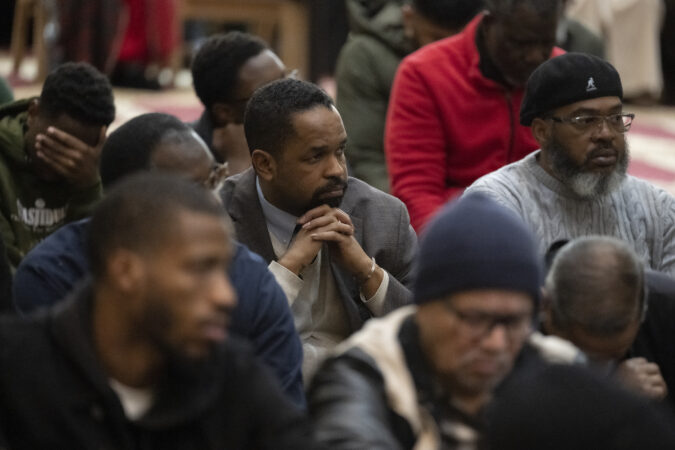
Sharif Street participates in Friday prayer at Masjidullah mosque recently.
Like elected officials of other religions, Street’s politics do not perfectly align with the teachers of Muslim leaders.
On a recent Friday, Street attended Jumu’ah, the weekly afternoon prayer service, at Masjidullah in Northwest Philadelphia. A sign at the entrance reminded Muslims that abortion and homosexuality are against Islam’s teachings.
“Almost every one of Philadelphia’s Muslim political leaders … are all pro-civil rights, including LGBTQ [rights] and pro-choice,” he said. The sign, he said, represented “some members of the faith leadership who are reminding us … that is not the stance of the official religious community.”
For Street, that type of dissidence hits close to home.
His father, he said, became Baptist after being “kicked out” of the Seventh-day Adventist Church for officiating a same-sex marriage in 2007 between Micah Mahjoubian, a staffer for Sharif Street, and his husband, Ryan Bunch.
The Seventh-day Adventist Church in North Philadelphia did not respond to a request for comment.
’One of the most Muslim urban spaces’
Ryan Boyer, who heads the Philadelphia Building and Construction Trades Council and is Muslim, likes to say he’s proud that members of his faith are so integrated into local politics that their religious identities are often overlooked.
“We’re a part of the fabric,” said Boyer, whose politically powerful coalition of unions has endorsed Street. ”To me, it’s not that big of a deal. We’re here.”
For Boyer, that means Muslim candidates like Street are judged based on their merits, not their identities.
“He’s Muslim,” Boyer said of Street. “Well, is he smart? Does he present the requisite skills and abilities to do the job? … The answer is yes.”
Other Muslim leaders in the city include: Sheriff Rochelle Bilal; City Councilmembers Curtis Jones Jr. and Nina Ahmad; former Police Commissioner Sylvester Johnson; and City Commissioner Omar Sabir, who is Boyer’s brother.
Philly has also sent several Muslim lawmakers to Harrisburg, including current State Reps. Keith Harris, Jason Dawkins, and Tarik Khan.
Although the community is less well-known nationally than those in Michigan or Minnesota, Philadelphia has one of the nation’s oldest and largest Muslim populations, with about 250,000 faithful in a city of 1.6 million, according to Ahmet Tekelioglu, executive director of the Council on American-Islamic Relations’ Philadelphia branch.
By some estimates, Philly’s Muslim community has the highest percentage of U.S.-born followers of any major American city, thanks to the conversion of thousands of Black Philadelphians in recent decades. While many came to the faith through the Nation of Islam movement, a vast majority of Black Muslims in Philadelphia now practice mainstream Sunni Islam, Tekelioglu said.
Add in thriving immigrant communities from West Africa and the Middle East, and Philadelphia is “one of the most Muslim urban spaces” in the country, he said.
“Within a few minutes of walking in the city, you come across a visibly Muslim individual,” said Tekelioglu, whose nonprofit group does not make political endorsements. “Halal cheesesteak, ‘the Philly beard,’ and such — these also have overlap with the Muslim community and [the city’s] popular culture.”
The Middle East and the 3rd Congressional District
As a lawmaker, Street has been instrumental in forcing the Pennsylvania Interscholastic Athletic Association to allow Muslim girls competing in sports to wear hijabs and in leading the School District of Philadelphia to recognize Eid al-Adha and Eid al-Fitr as official holidays.
That record is part of why he bristles at the Muslims United PAC’s endorsement of Rabb.
“We cannot allow other people to hijack our community and hijack our issue because it’s Black people, it’s Muslims dying in Philadelphia right now, and some of these candidates don’t have anything to say about that,” Street said at the Muslim League of Voters event. “Some of them even got some fugazi Muslim organizations to endorse them.”
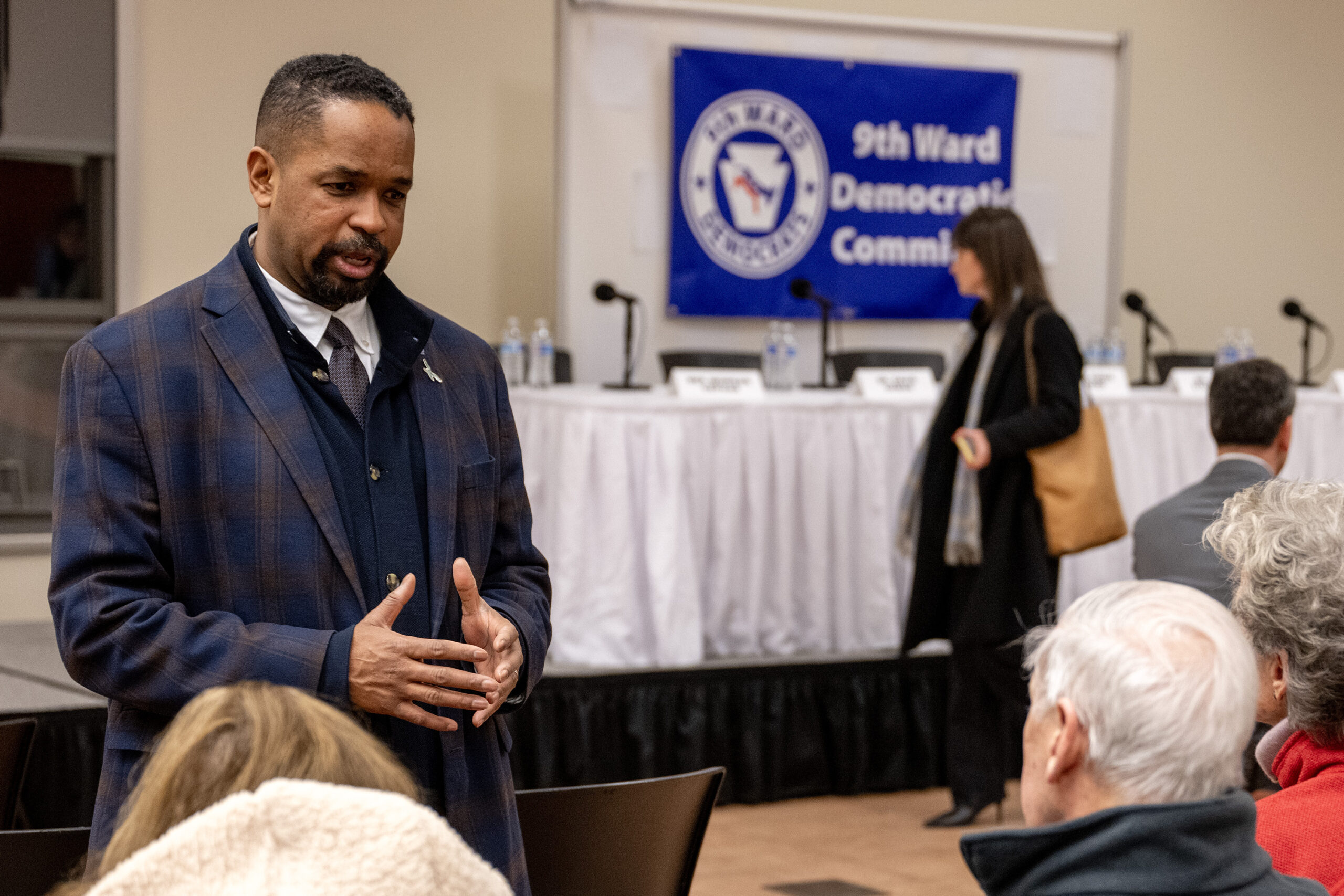
State Sen. Sharif Street appearing at a forum hosted by the 9th Ward Democratic Committee in December.
At another recent forum, the 3rd District Democratic candidates were asked whether they support legislation stopping U.S. weapons shipments to Israel after more than two years of conflict that has seen an estimated 70,000 Palestinians die in Gaza.
Street, who traveled to Israel and Palestine in 2017, said the one-minute response time wasn’t enough to unpack the complicated issues, and none of the other candidates gave straightforward answers — except Rabb, who said he supported the proposal.
“There are no two sides in this when we see the devastation,” Rabb said.
In an interview, Street said his comparatively moderate views on the crisis and his relationships with Jewish supporters will allow him to “play a really constructive role” in Congress.
“We need more people who can talk to both the Jewish and Muslim communities,” he said. “We need people who can have a nuanced conversation and do it with some real credibility.”
Tekelioglu said he has observed Muslim voters moving away from “identity politics” and toward “accountability-based political stance.” That evolution has accelerated during Israel’s war in Gaza following the Hamas attacks on Oct. 7, 2023, he said.
“Oct. 7 and everything that’s going on has made everything a bit more clear,” he said. “This doesn’t make it such that the Palestine issue is the main dealbreaker, but overall I see a trend of moving away from the identity politics.”
The real question, he said, is, “Are they going to represent our interests?”
A Philadelphia charter school is building its own college.
Students at the Philadelphia Performing Arts Charter School, a K-12 facility of about 2,500 with campuses in South Philadelphia and Center City, should soon be able to graduate with high school diplomas and 60 college credits — for free.
PPACS is not the only early college in the city — the Philadelphia School District has Parkway Center City Middle College, and other schools allow students to take college courses while in high school. Some schools offer dual enrollment, and a new early college charter will open in the city in the fall.
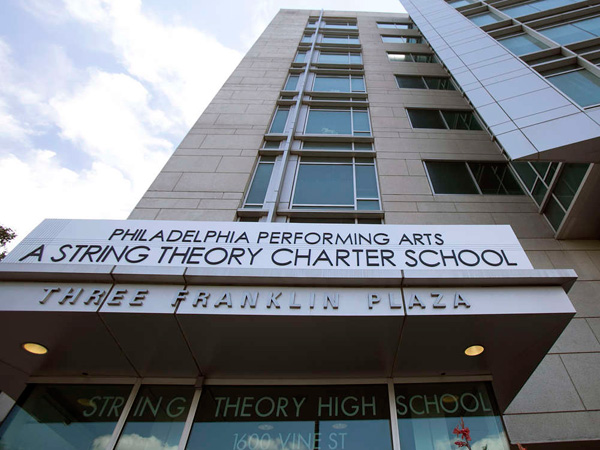
But instead of partnering with existing colleges, String Theory, the education management organization that runs PPACS, is in the process of openingits own degree-granting institution.
String Theory College will focus on design, technology, and entrepreneurship, offering PPACS students more flexibility than prior dual-enrollment partners had, said Jason Corosanite, the college president. Students won’t have to leave the school’s Vine Street campus to attend classes, either.
“The whole goal is to get all kids prepared for college, with as many college credits as possible,” Corosanite said.
The college already has Pennsylvania Department of Education approval, and its Middle States Commission on Higher Education accreditation vote is scheduled for March, commission officials said. Once schools are candidates for accreditation, that opens up college transferability, student loans, and Pell grant opportunities, though PPACS students pay no tuition because the school is a publicly funded charter.
Corosanite said he is confident the school will gain Middle States approval and ultimately be able to offer students associate’s degrees.
With Philadelphia’s crowded higher education market and a looming college enrollment cliff, it’s fair to question whether the city needs more degree-granting institutions, said Shaun Harper, a professor of education, public policy, and business at the University of Southern California. Some would say it does not.
But, Harper said, “if this new creation is going to expand access and make higher ed more affordable, I think that is a spectacular thing. We need more innovative models in education that create more seamless pipelines from high school to college.”
Harper’s research once centered on the experiences of high-achieving Black and Latino boys in New York schools who, once in college, “suddenly they realized that they were not as prepared for college as they had been led to believe by their high school teachers and by the grades they received in high school.”
That makes Harper consider whether String Theory students “are really going to be pushed to do college-level work, and perform like college students would otherwise be able to perform? I think that is a thing to be concerned about.”
Ultimately, Harper said, he is intrigued by the model.
“There’s a real opportunity for [String Theory] to ensure that they are providing the right kinds of professional learning and professional development experiences for these educators, so they amass the skills that will be able to make the curriculum much more complex, much more college-level,” Harper said. “They may have a real shot here at teaching the rest of the nation something that ultimately becomes replicable.”
High school and college in one stop
The seeds of the idea trace back to PPACS’ first high school graduates — the Class of 2017.
When Corosanite and other String Theory officials tracked those students, “some of our best and brightest kids were dropping out of college because of cost,” he said. “It wasn’t because they couldn’t do it. They were looking at the value proposition of these schools and dropping out. I felt the burden of, ‘We’re telling all these kids, yeah, you have to go to college,’ and then they graduate and can’t afford life. How do we solve for that?”
Enter String Theory College.
Theprogram is already underway — about 40 students who participated in a pilot program are on track to graduate with college credits in June, and about 40 more are in 11th grade now.
The college will initially be open only to students enrolled in PPACS. Going forward, every 11th- and 12th-grade honors and Advanced Placement course at the school will be a college-level course, and the PPACS faculty who teach the courses are college faculty.
Course offerings include multivariable calculus, linear algebra, biotechnology, entrepreneurship, anddesign.
Students still have access to the trappings of high school: All non-honors classes are still within the PPACS confines. And students must still meet state requirements for their high school diplomas — they are learning math, but it might be a design-focused math class, for instance.
“Kids still have their high school experience — they still come to school on time, they still go to the lunchroom with everybody they go to school with,” Corosanite said. “They still see their friends, they still have prom, but they also have college. It makes it a lot easier.”
There is no budget impact for PPACS, Corosanite said. The school,which as a charter is independently run and publicly funded, pays the college a per-credit hour rate that is roughly equivalent to community college, and that money covers teachers’ salaries and benefits.
“We’re trying to be as efficient as possible with the classes the teachers have, and the college is in our building,” he said. “We’ve designed it to be cost-neutral. This is not a moneymaker — it’s mission-driven.”
Going forward, Corosanite dreams of a graduate school of education — String Theory already offers continuing education for teachers — and offering college courses to other schools and districts.
‘This is a good opportunity’
Hasim Smith, a PPACS senior, was pitched on the idea of taking college classes in high school when he was a 10th grader.
Smith’s dad had heard about the pilot program and urged his son to go for it.
“He said, ‘This is a good opportunity. I don’t want you to miss out on it,’” Smith said. “I like to challenge myself and do things that other people see as hard. And I like that it’s free — it helps with college costs.”
Smith was game and now, at age 18, he’s looking forward to collecting his high school diploma and transferring dozens of credits to another college. (He’s already been accepted to 10 and is awaiting more decisions.)
The courses are challenging, he said, but manageable, especially with his teachers’ support. He’s enjoyed the design challenges in particular, Smith said.
“We had to learn a lot — it gets really deep. We have to learn about design, and different theories, and entrepreneurship,” Smith said.
He had always thought he might want to pursue nursing as a career, but his String Theory college experience has him also considering architecture, he said.
How to apply
The college-in-a-high-school program has a limited number of slots for students who will be in 10th through 12th grade for the 2026-27 school year, and is accepting applications for those seats and for its incoming ninth-grade class.
They compete with banks to make loans but aren’t bound by the rules that govern banks. The managers bundle the loans into private credit funds and offer them to investors as an alternative.
“Everyone has shifted to private credit,” which should make investors extra careful, warns Richard Vague, chairman of Pennsylvania’s $80 billion school pension system, PSERS.
As private credit funds have grown, analysts warn that limited information about the loans makes it hard to know what the credit funds are worth or how they would respond to a slowing economy.
For example, Philadelphia-based FS KKR Capital Corp., one of the largest and oldest private credit funds, and two of its rivals have won unwelcome attention for posting very different prices for their investments in the same Silicon Valley private-equity takeover loan.
Such ambiguity doesn’t exist in publicly traded securities such as stocks, where investor assumptions are reflected in the market price at any given time. The conflicting private-credit valuations suggest analysts aren’t certain about how likely the private credit funds are to get their money back or to lose money if loans default.
“Risk is on the move. We’re talking trillions‚” Mark Pinto, head of private credit at Moody’s Investors Service, told clients in a recent report.
Different from banks
While banks have rules for measuring and publicly reporting loan losses and late payments — and private credit managers say they, too, apply strict internal standards — Moody’s analysts in that report called private credit loan reporting “opaque.” They cited private credit risk as a rapidly growing area of concern to financial systems.
The rapid growth is new, but private credit has long history.
That fund is marketed by FS, but its investments are managed by staff at FS’s partner, private-equity giant KKR. It invests about $20 billion of FS’s total $86 billion in client assets, FS reported last year.
While FS KKR paid shareholder dividends of 70 cents a share — or most of its profits in recent quarters — shares have lately traded around $15, down from the low $20s last year, a sign that investors are concerned about prospects in a slowing economy.
SEC records show a third private credit fund run by real estate giant and private-credit pioneer Blackstone listed the Medallia loan at an 18% discount.
How can the same loan have three different values?
Detailed public reporting on Medallia’s finances had almost stopped since yet another private-equity and private-credit investor, Chicago-based Thoma Bravo, paid $6.1 billion in 2021 for the company. Thoma Bravo took Medallia private and borrowed from FS KKR, Apollo, Blackstone and others to help fund the deal, Leyla Kunimoto, a former KPMG auditor noted in a post on her credit review platform, Accredited Investor Insight.
That leaves investors trying to glean intelligence from limited information or trusting fund managers with their differing views and valuations.
So what’s the loan really worth?
KKR partner Daniel Pietrzak, who is both president and chief investment officer for FS KKR Capital Corp. and head of Global Credit at KKR, said pricing differences “can arise naturally” for loans that aren’t publicly traded.
Factors include “variations in valuation providers, timing, policy nuances and available information,” he added in a statement. So, for example, one of the investors might know something others don’t.
Pietrzak said KKR pays “independent third-party valuation providers as part of a robust and consistent process, which helps ensure valuations fairly represent asset value across our portfolio.”
The Medallia loan totaled $1.8 billion at 6.5% interest. Many of the other loans in the funds are smaller and are used to finance midsized businesses, potentially spreading the risk if a few borrowers go broke, or compounding it in case of a widespread financial recession.
FS KKR, like some other private-credit funds, “should incorporate higher discount rates for stressed credits,” including lower valuations for loans by companies with other outstanding loans that aren’t getting paid on schedule, said Rob Dubitsky, a former Credit Suisse managing director and Moody’s analyst who now heads The People’s Economist, a financial-analytics start-up.
“These valuation and disclosure issues are not unique” to the FS KKR fund but are reflected in private credit funds’ recent weak share performance and low credit ratings from Moody’s and other agencies, Dubitsky wrote in a recent article.
FS KKR was rated Baa3 by Moody’s last year and BBB- by Fitch. Those are the lowest investment-grade ratings above junk bonds. Lower ratings are for entities analysts expect are more likely to default, which would discourage many investors.
While Moody’s analysts and other observers expect private credit funds to continue their recent rapid growth, investors watch their opportunities closely, and may shift course.
For example, private equity has generally “underperformed” compared to public investments for most of the past five years, PSERS chief investment officer Ben Cotton told trustees at the board’s annual reorganization meeting Jan. 9. So he said he’s thinking it may be time to consider new private equity investments: “We are getting to where we may have opportunities and want to be ready.”
On a recent wintry evening at Queen Village’s Moon and Arrow, a group of 10 women poured essential oils into beakers, mixing them with carrier oils.
They’d gathered for a workshop led by Tasha Gear, founder of local brand Linear Beauty, who instructed as they created a formula for body oils.
The 10 women took a whiff of each other’s potions, commented on their notes, and took in the smells.
Here was a perfect picture of Philadelphia’s beauty scene, which is having a moment — not the glossy, influencer-backed boom of coastal cities, but something scrappier, smarter, and deeply local.
Across the city, indie founders are hand-batching serums, mixing skincare in one-kilogram beakers, and designing products meant to withstand SEPTA, summer humidity, and long work shifts.
Leila McGurk (left) laughs with Leah Antonia at a DIY body oil workshop organized by local skincare brand Linear Beauty at Moon and Arrow, a boutique in Queen Village on Thursday, Dec. 4, 2025.
They are united by a commitment to science, transparency, and community,
At the center of this shift is Indie Shelf in Grays Ferry and Malvern, where cosmetic scientist Sabeen Zia helps customers navigate an often confusing clean-beauty landscape.
“Clean beauty goes beyond ingredient lists,” the Main Line resident said. “It’s how a product is developed, packaged, and the values behind it.” Zia doesn’t draw up fear-based “toxic ingredient” lists. Instead, she relies on science-backed safety standards and direct conversations with product founders.
“People come in because they want to support small businesses, but they stay because they’re stunned by the changes in their skin,” she said.
Sabeen Zia runs Indie Shelf, which stocks a bunch of indie beauty brands. She also runs a brand called Muskaan that she sells at the store, in Philadelphia, December 11, 2025.
Before opening the shop in 2019, Zia ran her own makeup line, Muskaan Beauty, which was cruelty-free, vegan, gluten-free, and halal. It struggled to get visibility — a challenge she realized many indie founders shared. “Philly didn’t have many clean beauty shops at the time,” she said. “It felt like a real gap in the market.”
A gap that Indie Shelf aims to fill.
Other local founders, too, swear by that community-first ethos.
A former professor of English at Stockton University, Adeline Koh of Sabbatical Beauty, hand-batches high-concentration, K-beauty–inspired products, often using ingredients from neighborhood businesses, like Câphe Roasters and Baba’s Brew.
“I wanted formulas that actually deliver what they promise,” she said. “Philly has so much pride in Philly-owned businesses. That made me feel this would be a really good market to build in. People here show up for their community.” She’s based in the Bok building.
As for what feels uniquely “Philly” in Sabbatical Beauty’s identity, she doesn’t hesitate when asked.
“We’re unapologetic about who we are, and that shows up in our emphasis on diversity: skin tones, body sizes, age. We want to expand what beauty means, not narrow it.”
Sabeen Zia runs Indie Shelf, which stocks a bunch of indie beauty brands. She also runs a brand called Muskaan that she sells at the store, in Philadelphia, December 11, 2025.
The brand is sold at local shops and spas.
Sabbatical Beauty also pours back into the city’s maker ecosystem — donating masks and sanitizer during COVID, hosting holiday toy drives, running small-business markets, and partnering with the Equitable Skincare Project to fund donation facials for the trans community.
It’s a similar story with brow artist Tara Giorgio.
When the Lancaster native grew frustrated by the discontinuation of her favored brow beauty products, she created Brow Gang — her line of high-pigment brow mousse and powders that are, as she says, made “for real life.”
Her products are sold in her two salons — in West Chester and Northern Liberties — and online.
Essential oils and an instruction sheet are pictured before Linear Beauty’s DIY body oil workshop at Moon and Arrow, a boutique in the Queen Village section of Philadelphia, on Thursday, Dec. 4, 2025. Linear Beauty is an independent Philadelphia-based botanical skincare brand founded by Tasha Gear.
Philly’s beauty customers, she said, are unique because this city is “a true melting pot — all cultures, all backgrounds, all brow textures, all lifestyles. We don’t like fluff in Philly and we want things that work and are priced reasonably.”
People here are busy and “they want products that make their lives easier — fast routines, long-lasting wear, and formulas that hold up through humidity, work shifts, SEPTA, the gym, real everyday life.”
Cosmetic chemist Tina D. Williams feels “there’s still a real lack of handmade, natural skincare” in the local market to feed that need.
Her Center City-based DVINITI Skincare crafts small-batch, food-grade blends of natural oils like argan, jojoba, and almond, which are designed for customization. Her philosophy, too, is rooted in the city: “The first ingredient in every DVINITI product is love — and this City of Brotherly Love is the perfect home for a brand built on self-care.”
Williams, who grew up in the Olney area and graduated from the Philadelphia High School for Girls, is all too familiar with the city’s cold winters and hot summers. “I grew up here, so I understand the kind of skincare [Philly] people need,” she said. She also sees the city’s scientific backbone as a natural fit for a chemistry-driven brand. “Philly is a tech hub and a leader in research and development. DVINITI is positioned well to scale and grow with the local resources here to support our clients’ needs.”
Linear Beauty founder Tasha Gear poses for a portrait at a DIY body oil workshop hosted by the beauty brand at Moon and Arrow, a boutique in the Queen Village section of Philadelphia, on Thursday, Dec. 4, 2025.
Another brand shaping the city’s beauty identity is Haiama Beauty, a Black woman–owned haircare line built in Philadelphia “because I love this city wholeheartedly,” said founder Allison Shimamoto.
Haiama’s Grow & Strengthen Elixir takes four months to make and uses premium, organic argan oil — not because it’s the most profitable, but because it’s the right way to make it.
Small-batch production allows the brand to source intentionally from BIPOC, LGBTQIA+, and women-owned suppliers and to design products that work across all curl patterns— from the Leona red-light scalp stimulator to the multipurpose Everything Cream.
What resonates with her Philly consumers, Shimamoto said, is connection. “People here want to know who’s behind the brand.”
Linear Beauty products are pictured at a DIY Body Oil Workshop hosted by the brand at Moon and Arrow, a boutique in the Queen Village section of Philadelphia.
Markets like Made@Bok and Art Star have helped Haiama meet customers face-to-face, build community, and grow within the city’s tight-knit maker ecosystem.
Philadelphia’s indie founders agree that the city’s beauty identity is defined by three traits: creative, authentic, community driven.
“The passion for high-quality products and supporting small business truly sets Philly brands apart,” said Zia. Even small details — easy drop-offs, quick restocks, face-to-face conversations with founder-formulators — become part of the city’s distinctive customer experience.
Local customers meet founders in person, pick up their products, return for refills, and show up at pop-ups and farmers markets.
Products at Indie Shelf, which stocks a bunch of indie beauty brands.
Despite challenges like tariffs, supply-chain delays, and seasonal slowdowns, Zia remains hopeful. Her dream? “For Philly to be known as the city for indie beauty — a place where founders can scale without losing their authenticity.”
Gear, who moved to Philadelphia in 2019 after spending a decade working in New York City’s Package Free Shop, agrees.
“Philly is a pretty no-B.S. city,” she said. “That shows up in everything I make.”
At Penn Medicine’s clinic where adults receive genetic counseling and testing, about 9% of patients are Black.
By contrast, one in four patients at the cardiology and endocrinology clinics located in the same facility in West Philadelphia are Black, while nearly 40% of cityresidents are. Those from low-income neighborhoods are also less likely to be seen at the genetics clinic, yet more likely to have positive results when tested, a recent Penn study found.
These findings line up with what Theodore Drivas, a clinical geneticist and the study’s senior author, had long suspected about the impact of racial disparities based on his own experience seeing patients at Penn’s clinic.
The study, published this month in the American Journal of Human Genetics, found that Black patients were also less likely to be represented at adult genetics clinics at Mass General Brigham, a Harvard-affiliated health system in Massachusetts.
There’s no biological reason why rates of testing should differ, Drivas said. The overall rate of genetic disease should be similar regardless of race, even though certain diseases are more prevalent in some populations.
“Genetic disease doesn’t favor one group or another,” he said.
That means if one group isn’t getting tested as much, they’re probably missing out on key diagnoses.
Racial disparities are an ongoing concern in medicine and have been attributed to a wide range of causes, including socioeconomic factors, unequal access to care, implicit bias, and medical mistrust due to historic injustices.
In a study published last August, Drivas’ team found that the chances of a genetic condition being caught varied widely by race. Among patients admitted to intensive care units across the Penn health system, 63% of white patients knew about their genetic condition, compared to only 22.7% of Black patients.
To address these disparities, Drivas is calling for changes to how the medical field approaches genetic testing, such as by integrating testing into standard protocols and improving national guidelines.
“It’s not just a Penn problem or a Harvard problem. It’s a genetics problem in general,” Drivas said.
Diving into the disparities
Drivas’ team analyzed data from 14,669 patients who showed up at adult genetics clinics at Penn and Mass General Brigham between 2016 and 2021. The findings are limited to the two major academic centers on the East Coast, which tend to see sicker patients compared to community medical centers.
Black patients were 58% less likely to be seen at Penn’s genetics clinic than would be expected based on the overall University of Pennsylvania Health System patient population.
At Mass General Brigham, Black patients were 55% less likely than would be expected based on that system’s population.
Some literature has suggested that Black patients and others from minority groupsare less likely to agree to genetic testing because of an inherent distrust in the medical system due to historic injustices. “But we don’t see that in our data,” Drivas said.
Once evaluated at Penn’s clinic, Black patients were 35% more likely to have testing ordered than white individuals.
His team also found disparities affecting lower-income individuals. Each $10,000 increase in the median household income of a person’s neighborhood was associated with a 2% to 5% higher likelihood of evaluation at a genetics clinic.
Meanwhile, patients from neighborhoods with lower median socioeconomic status were more likely to get positive results from testing than those from wealthier neighborhoods.
“We’re relatively over-testing the people from higher socioeconomic brackets and under-testing the people from lower socioeconomic brackets,” Drivas said.
The solution is not to stop testing the wealthier people, he clarified, but to improve access to testing for others.
Undoing disparities
People who want to get a genetic diagnosis often have to go to major medical centers.
The University of Pennsylvania health system comprises sevenhospitals across Pennsylvania and New Jersey. Its Perelman Center for Advanced Medicine, adjacent to the Hospital of the University of Pennsylvania in West Philadelphia, is the only one that has an adult genetics clinic.
Drivas has many patients who drive two or three hours to be seen for genetic testing.
The current wait time at his clinic is around three or four months, which he said is “pretty good” compared to others.
He thinks part of the solution to reducing disparities requires expanding the size and diversity of the genetics workforce so more patients can be seen.
Geneticists also need to better educate doctors in other fields about when to refer patients, he said. Creating better guidelines would help.
Notably, Black patients in the study were more likely to be evaluated than white individuals for genetic risk factors of cancer — an area where there are clear clinical practice guidelines recommending genetic testing.
They need to come up with similar guidelines for other conditions, such ascardiovascular and kidney diseases, he said.
Another idea he had was to make genetic testing more integrated into standard care in the hospital.
His earlier study found a surprising number of adults in ICUs at Penn had undiagnosed genetic conditions. Such testing is now widely available and often costs as little as a few hundred dollars.
“It costs money, but I think there are cost savings and life-saving interventions that can come from it,” Drivas said.