Blog

  • Supreme Court seems likely to uphold state bans on transgender athletes in girls and women’s sports

    Supreme Court seems likely to uphold state bans on transgender athletes in girls and women’s sports

    WASHINGTON — The Supreme Court on Tuesday appeared ready to deal another setback to transgender people and uphold state laws barring transgender girls and women from playing on school athletic teams.

    The court’s conservative majority, which has repeatedly ruled against transgender Americans in the past year, signaled during more than three hours of arguments it would rule the state bans don’t violate either the Constitution or the federal law known as Title IX, which prohibits sex discrimination in education.

    More than two dozen Republican-led states have adopted bans on female transgender athletes. Lower courts had ruled for the transgender athletes who challenged laws in Idaho and West Virginia.

    The legal fight is playing out against the backdrop of a broad effort by President Donald Trump to target transgender Americans, beginning on the first day of his second term and including the ouster of transgender people from the military and declaring that gender is immutable and determined at birth.

    The justices are evaluating claims of sex discrimination lodged by transgender people versus the need for fair competition for women and girls, the main argument made by the states.

    Justice Brett Kavanaugh, who coached his daughters in girls basketball, seemed concerned about a ruling that might undo the effects of Title IX, which has produced dramatic growth in girls and women’s sports. Kavanaugh called Title IX an “amazing” and “inspiring” success.

    Some girls and women might lose a medal in a competition with transgender athletes, which Kavanaugh called a harm “we can’t sweep aside.”

    The three liberal justices seemed focused on trying to marshal a court majority in support of a narrow ruling that would allow the individual transgender athletes involved in the cases to prevail.

    A ruling for West Virginia and Idaho would effectively apply to the other two dozen Republican-led states with similar laws.

    But the justices soon might be asked to decide about the laws in an additional roughly two dozen states, led by Democrats, that allow transgender athletes to compete on the teams that match their gender identity.

    The outcome also could influence separate legal efforts by the Trump administration and others seeking to bar transgender athletes in states that have continued to allow them to compete.

    The transgender athletes’ cases

    In the Idaho case, Lindsay Hecox, 25, sued over the state’s first-in-the-nation ban for the chance to try out for the women’s track and cross-country teams at Boise State University in Idaho. She didn’t make either squad because “she was too slow,” her lawyer, Kathleen Hartnett, told the court Tuesday, but she competed in club-level soccer and running.

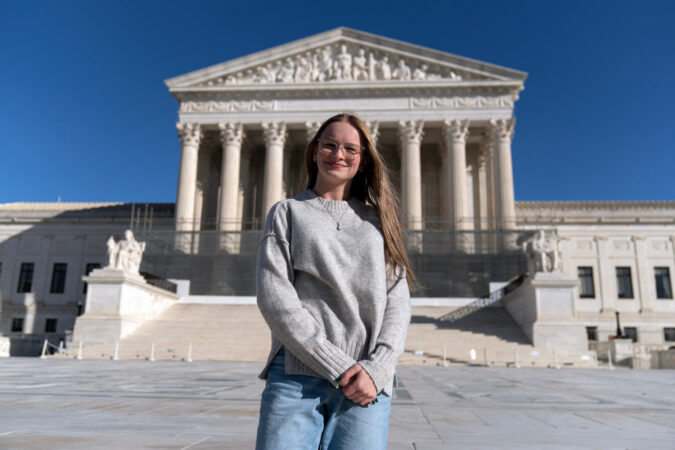
    Becky Pepper-Jackson, a 15-year-old high school sophomore, was in the courtroom Tuesday. She has been taking puberty-blocking medication, has publicly identified as a girl since age 8 and has been issued a West Virginia birth certificate recognizing her as female. She is the only transgender person who has sought to compete in girls sports in West Virginia.

    Pepper-Jackson has progressed from a back-of-the-pack cross-country runner in middle school to a statewide third-place finish in the discus in just her first year of high school.

    Prominent women in sports have weighed in on both sides. Tennis champion Martina Navratilova, swimmers Summer Sanders and Donna de Varona and beach volleyball player Kerri Walsh-Jennings are supporting the state bans. Soccer stars Megan Rapinoe and Becky Sauerbrunn and basketball players Sue Bird and Breanna Stewart back the transgender athletes.

    In 2020, the Supreme Court ruled LGBTQ people are protected by a landmark federal civil rights law that prohibits sex discrimination in the workplace, finding that “sex plays an unmistakable role” in employers’ decisions to punish transgender people for traits and behavior they otherwise tolerate.

    But last year, the six conservative justices declined to apply the same sort of analysis when they upheld state bans on gender-affirming care for transgender minors.

    Chief Justice John Roberts signaled Tuesday he sees differences between the 2020 case, in which he supported the claims of discrimination, and the current dispute.

    The states supporting the prohibitions on transgender athletes argue there is no reason to extend the ruling barring workplace discrimination to Title IX.

    Idaho’s law, state Solicitor General Alan Hurst, said, is “necessary for fair competition because, where sports are concerned, men and women are obviously not the same.”

    Lawyers for Pepper-Jackson argue that such distinctions generally make sense, but that their client has none of those advantages because of the unique circumstances of her early transition. In Hecox’s case, her lawyers want the court to dismiss the case because she has forsworn trying to play on women’s teams.

    NCAA president Charlie Baker told Congress in 2024 that he was aware of only 10 transgender athletes out of more than a half-million students on college teams. But despite the small numbers, the issue has taken on outsize importance.

    Baker’s NCAA and the U.S. Olympic and Paralympic Committees banned transgender women from women’s sports after Trump, a Republican, signed an executive order aimed at barring their participation.

    The public generally is supportive of the limits. An Associated Press-NORC Center for Public Affairs Research poll conducted in October 2025 found that about 6 in 10 U.S. adults “strongly” or “somewhat” favored requiring transgender children and teenagers to only compete on sports teams that match the sex they were assigned at birth, not the gender they identify with, while about 2 in 10 were “strongly” or “somewhat” opposed and about one-quarter did not have an opinion.

    About 2.1 million adults, or 0.8%, and 724,000 people age 13 to 17, or 3.3%, identify as transgender in the U.S., according to the Williams Institute at the UCLA School of Law.

    A decision is expected by early summer.
  • Actor-director Timothy Busfield turns himself in to face child sex abuse charges in New Mexico

    Actor-director Timothy Busfield turns himself in to face child sex abuse charges in New Mexico

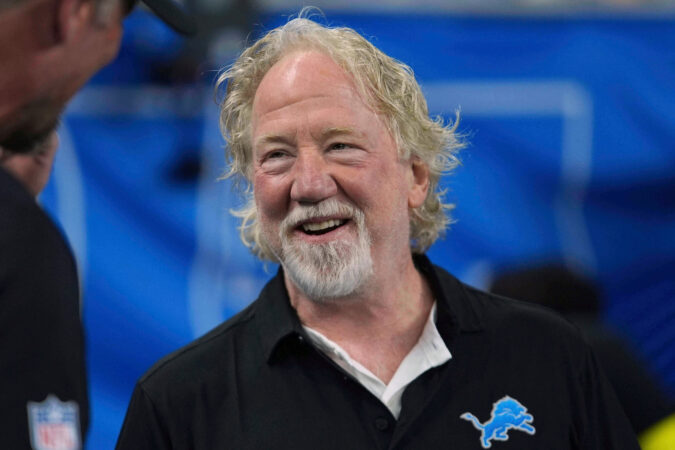
    ALBUQUERQUE, N.M. — Director and Emmy Award-winning actor Timothy Busfield turned himself to authorities on Tuesday to face child sex abuse charges in New Mexico.

    His apprehension comes after authorities in Albuquerque issued a warrant for his arrest on Jan. 9 on two counts of criminal sexual contact of a minor and one count of child abuse. The charges stem from allegations that Busfield inappropriately touched a young boy on the set of the TV series The Cleaning Lady that he was directing.

    Busfield was being booked by Albuquerque police on the charges, said Gilbert Gallegos, spokesperson for the city police department.

    A criminal complaint filed by an investigator with the Albuquerque Police Department says the boy reported that he was 7 years old when Busfield touched him three or four times on private areas over his clothing. Busfield allegedly touched him five or six times on another occasion when he was 8, the complaint said.

    The child was reportedly afraid to tell anyone because Busfield was the director and he feared he would get mad at him, the complaint said.

    The boy’s twin brother told authorities he was touched by Busfield but did not specify where. He said he didn’t say anything because he didn’t want to get in trouble.

    Busfield denied the allegations last fall when interviewed by authorities as part of the investigation, the complaint said. He suggested that the boys’ mother was seeking revenge for her children being replaced on the series. He also said he likely would have picked up and tickled the boys, saying the set was a playful environment.

    Busfield’s attorney did not immediately return a message seeking comment Tuesday. A video obtained by TMZ showed Busfield in front of a window with the Albuquerque skyline in the backdrop. He said he arrived in the city after driving 2,000 miles.

    “I’m going to confront these lies. They’re horrible. They’re all lies,” Busfield said.

    The mother of the twins — who are identified only by their initials in court records — reported to Child Protective Services that the abuse occurred between November 2022 and spring 2024, the complaint said.

    The investigation began in November 2024, when the investigator responded to a call from a doctor at the University of New Mexico Hospital in Albuquerque. The boys’ parents had gone there at the recommendation of a law firm, the complaint said.

    According to the complaint, one of the boys has been diagnosed with post-traumatic stress disorder and anxiety. A social worker documented him saying he has had nightmares about Busfield touching him.

    The Cleaning Lady aired for four seasons on Fox, ending in 2025. The show was produced by Warner Bros., which according to the complaint conducted its own investigation into the abuse allegations but was unable to corroborate them.

    Busfield, who is married to actor Melissa Gilbert, is known for appearances in The West Wing, Field of Dreams, and Thirtysomething, the latter of which won him an Emmy for outstanding supporting actor in a drama series in 1991.

  • U.S. plane used in boat strike was made to look like civilian aircraft

    U.S. plane used in boat strike was made to look like civilian aircraft

    The Trump administration’s first deadly strike on an alleged drug smuggling boat, in early September, was conducted by a secretive military aircraft painted to look like a civilian plane, multiple officials confirmed to The Washington Post on Monday.

    The crewed aircraft did not have any weapons showing when the attack occurred, two officials said, speaking, like some others, on the condition of anonymity to discuss a sensitive matter. Instead, the munitions were fired from a launch tube that allows them to be carried inside the plane, not mounted outside on the wing.

    Use of the plane prompted legal debate after the Sept. 2 operation over whether the concealment of its military status amounted to a ruse that violated international law, said current and former officials familiar with the matter. Eleven people were killed, including two who survived the initial attack by U.S. forces but died in a controversial follow-on strike.

    Feigning civilian status and then carrying out an attack with explicit intent to kill or wound the target is known as “perfidy” under the law of armed conflict, a war crime, according to legal experts.

    “If you arm these aircraft for self-defense purposes, that would not be a violation” of the law of war, said Todd Huntley, a former military lawyer who advised U.S. Special Operations forces for seven years at the height of the Pentagon’s counterterrorism campaign that followed 9/11. “But using it as an offensive platform and relying on its civilian appearance to gain the confidence of the enemy is.”

    The Trump administration has claimed that its lethal strikes on alleged drug boats in the waters around Latin America are lawful because President Donald Trump has determined the United States is in an “armed conflict” with drug cartels. That contention is widely disputed by legal experts, who say the U.S. is not at war with drug traffickers and that killing suspected criminals in international waters is tantamount to murder. Several analysts and former national security officials have said the entire campaign is, at its foundation, unlawful.

    “This isn’t an armed conflict,” said Huntley, director of the national security law program at Georgetown Law. “But what makes this so surprising is that even if you buy their argument, it’s a violation of international law.”

    The Pentagon did not immediately respond to requests for comment. A spokesperson for U.S. Special Operations Command, which carried out the Sept. 2 operation, declined to comment.

    The New York Times first reported the plane’s civilian paint scheme earlier Monday.

    The Sept. 2 military strike was the first of almost three dozen to date. The attacks have killed more than 100 people.

    The initial strike raised questions — among Democrats and law of war experts, principally — about whether a crime was committed when U.S. forces returned to the boat wreckage after the first strike to fire again and kill the two survivors as they clung to the hull.

    While the “double tap” to kill the survivors has drawn scrutiny on Capitol Hill, the military has closely guarded specifics of the aircraft involved in the operation.

    According to multiple officials, the plane is part of a fleet of crewed U.S. Air Force aircraft painted in civilian schemes and used in situations where it would not be advantageous for the military’s typical gray paint scheme to be seen. One official said the plane was already painted to look like a civilian aircraft before the Sept. 2 operation — it was not painted specifically for the boat strike, this person said.

    Firing on the alleged drug boat from an aircraft that looked like a civilian plane and had no visible weapons on it raised debate among some Pentagon officials after the strike, as well as concern that a classified capability was being “burned” in an operation targeting “civilians in a boat who pose no threat,” a former official said.

    “It’s not like they’re infiltrating downtown Tehran to kill some IRGC leader or something,” said the former official, referring to Iran’s military, the Islamic Revolutionary Guard Corps.

    Those familiar with the matter said the aircraft was broadcasting as a military aircraft. However, unless the men on the boat had technology on board to receive those transmissions, they would not have known it was a U.S. military plane.

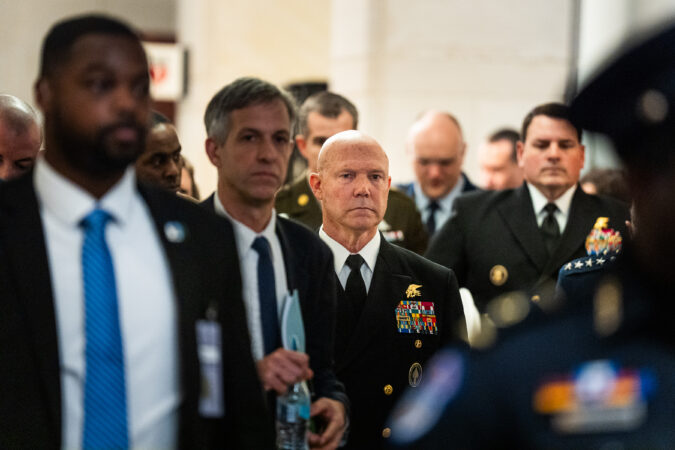
    The Post reported late last year that Defense Secretary Pete Hegseth gave his approval ahead of the Sept. 2 operation to kill the passengers, sink the boat and destroy the drugs it was suspected of carrying. As the two survivors clung to the wreckage, Adm. Frank M. Bradley, the strike commander, determined they were still viable targets and, after consulting with a military lawyer, ordered a second strike that killed them, people familiar with the matter said.

    Shortly before the second strike, real-time surveillance video showed the two men waving their arms and looking skyward, people who saw the footage told The Post in December. But Bradley explained to lawmakers scrutinizing the operation that it was unclear why they were doing so, people familiar with his account said then.

    During multiple meetings with lawmakers after news of the double tap surfaced, Bradley said he looked for signs the men were surrendering, such as waving a cloth or holding up their arms, people familiar with his account have said. The admiral noted that he saw no such gesture, and did not interpret their wave as a surrender, people familiar with his interviews have said.

  • As the Union begin their preseason, the World Cup puts Danley Jean Jacques in an even bigger spotlight

    As the Union begin their preseason, the World Cup puts Danley Jean Jacques in an even bigger spotlight

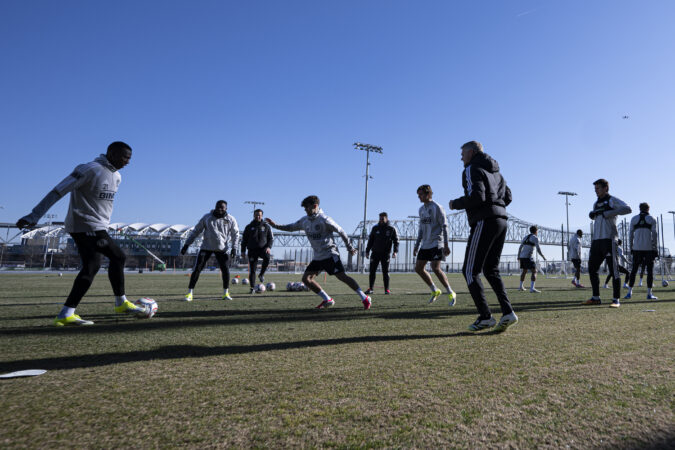
    When the Union took the field Monday for their first preseason practice, it had been exactly 50 days since their 2025 season ended.

    If you think that isn’t much time, you aren’t alone. But it was enough for a lot to happen.

    Tai Baribo, Jakob Glesnes, and Kai Wagner were sold, while Mikael Uhre, Chris Donovan, and others found new homes as free agents. Striker Ezekiel Alladoh and centerbacks Japhet Sery Larsen and Finn Sundstrom arrived, with Larsen’s signing announced Tuesday for a transfer fee of around $938,000. (There’s likely to be another new centerback too, in Geiner Martínez.)

    Some returning players have new numbers, including new homes for soccer’s most famous numbers of all. Milan Iloski got the No. 10, becoming the first player to wear it since Dániel Gazdag and the 10th in team history; and Bruno Damiani got the No. 9, the 11th player to wear that shirt.

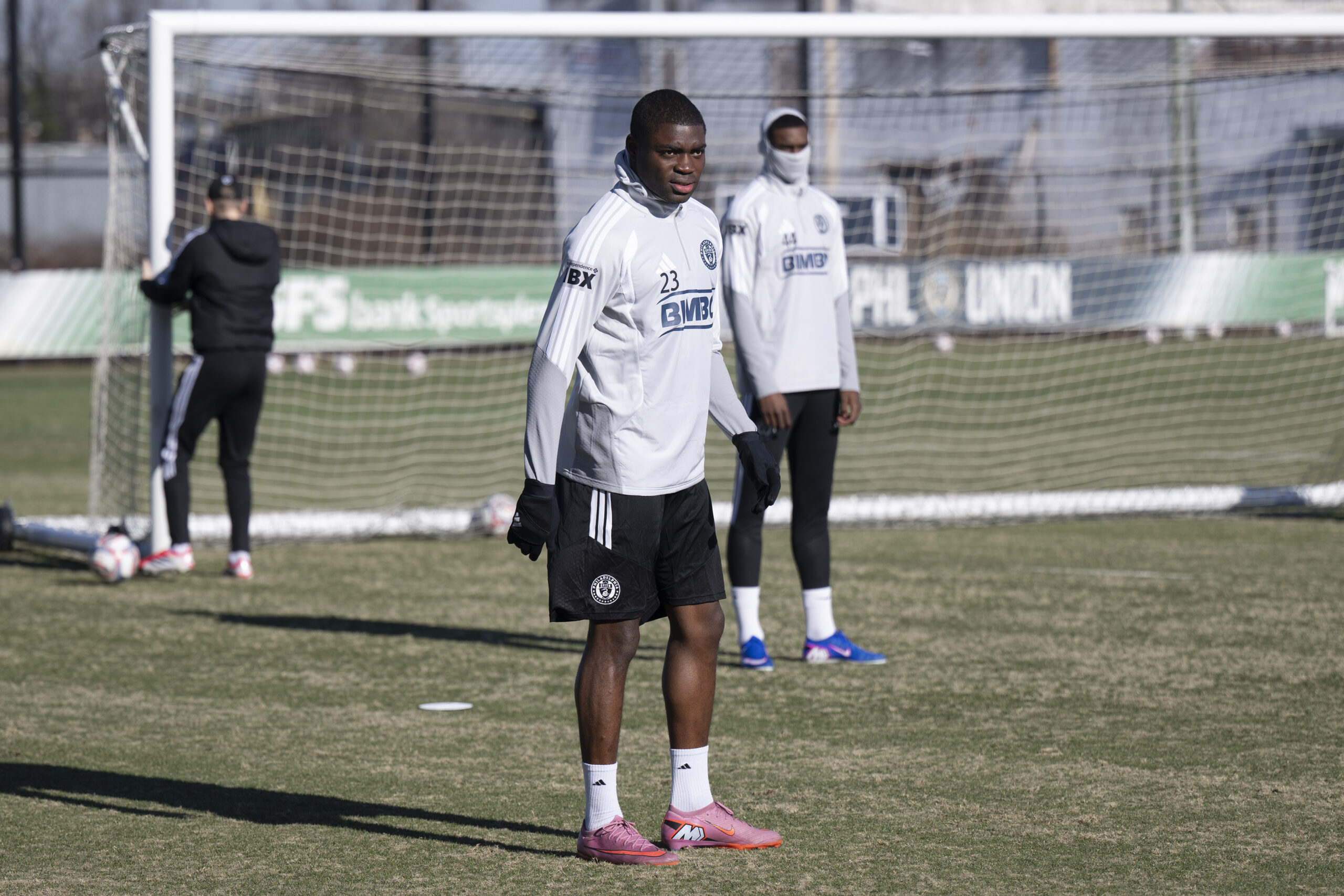
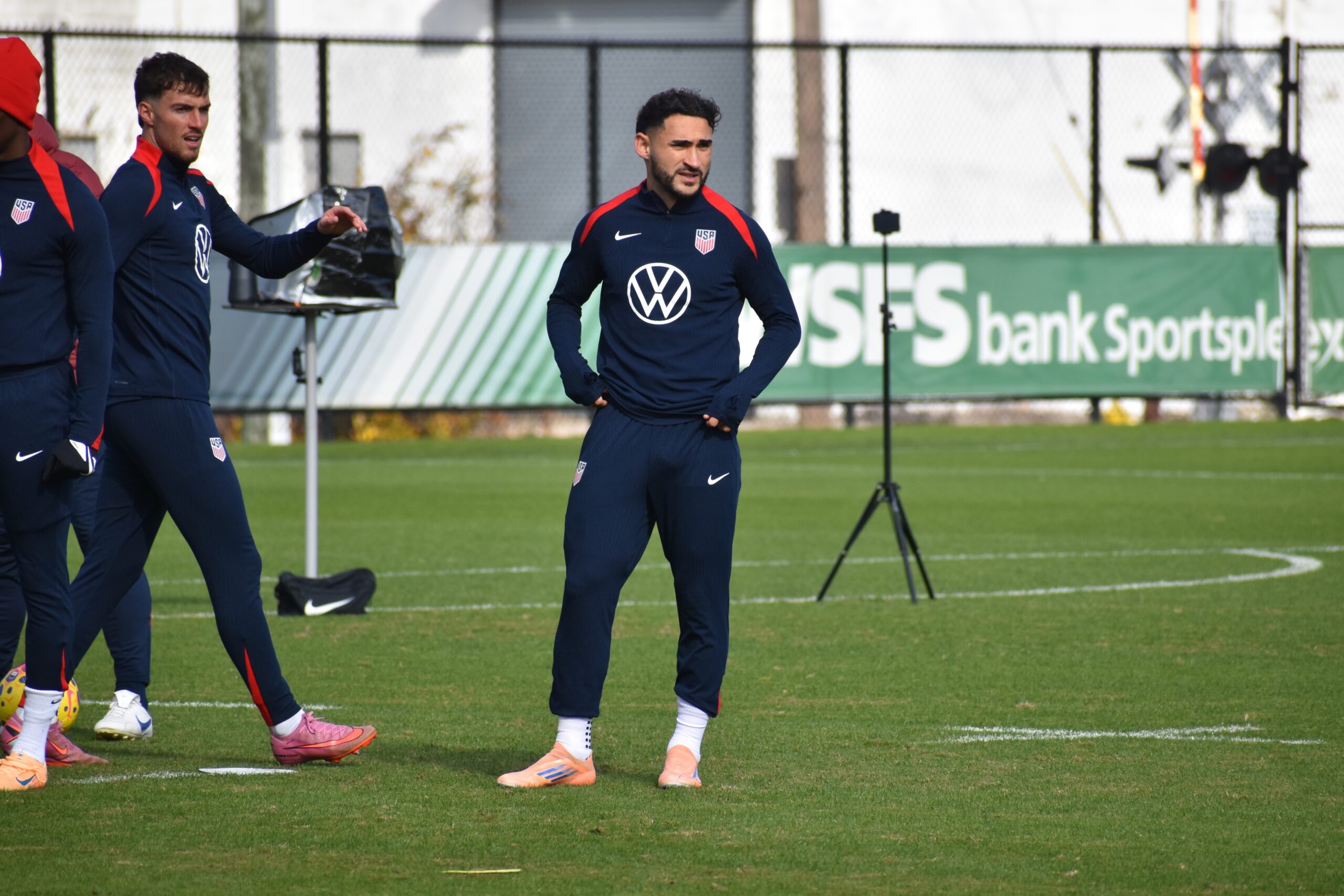
    Offseason signing Ezekiel Alladoh at practice with the Union at Subaru Field in Chester on Tuesday.

    Alladoh, meanwhile, is the Union’s first No. 23 since Kacper Przybylko in 2021, and the ninth in team history. Larsen got No. 5, which had been Glesnes’ — one of a few signs the 25-year-old Denmark native is ticketed to start.

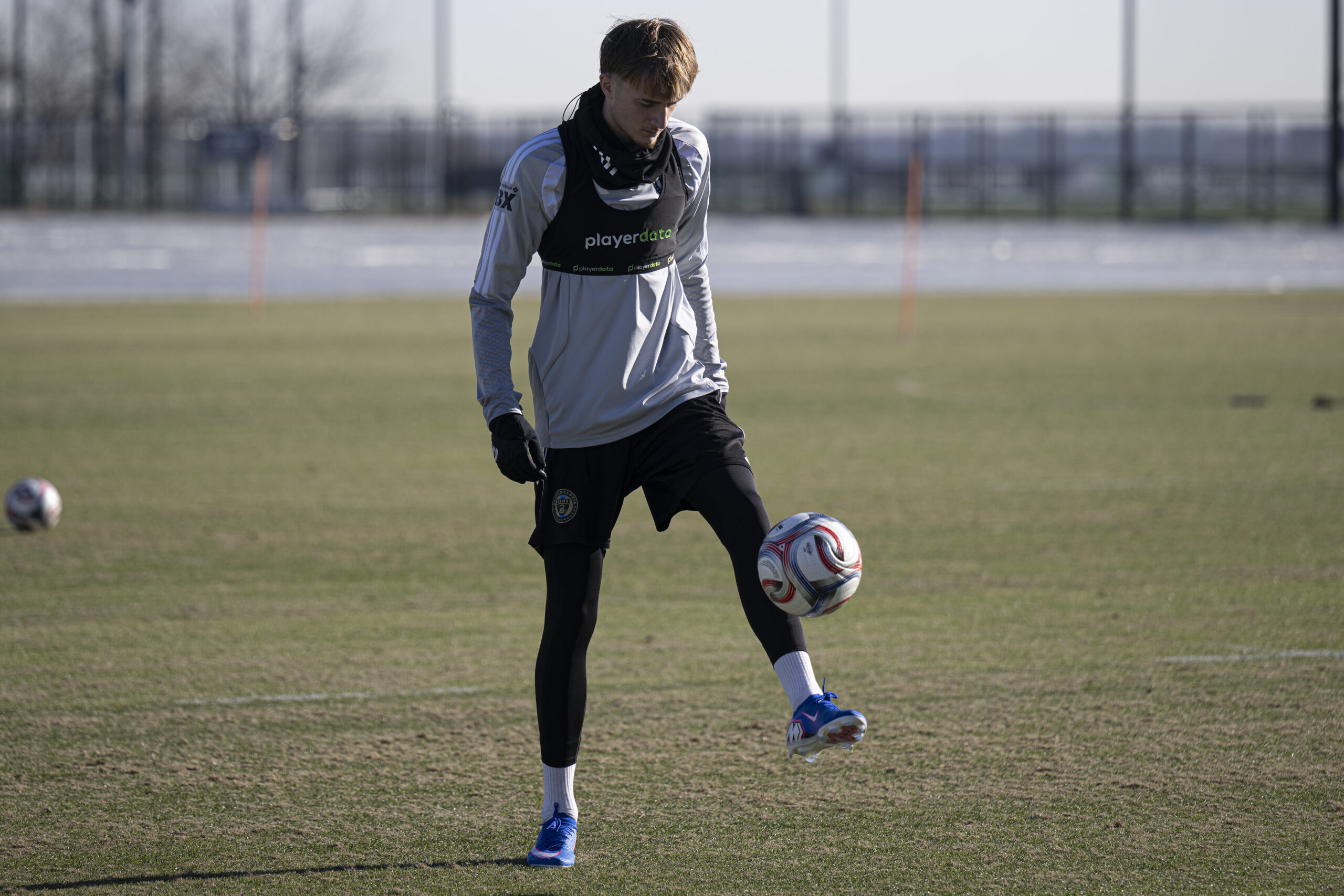
    Tuesday was the first day that practice in Chester was open to the media, and it brought another interesting sight: 16-year-old forward Malik Jakupovic, a much-touted striker prospect, training with the first team. He’s on a reserve team contract right now, but a promotion this year would be welcomed by many observers.

    A few other reserve players were also out there, including striker Stas Korzeniowski and centerback Rafael Uzcategui. Korzeniowski, a central New Jersey native and former Penn player, earned praise last year for scoring 12 goals in his first pro season with Union II.

    One thing that hasn’t changed is sporting director Ernst Tanner’s status. Major League Soccer’s investigation into his alleged misconduct remains open, and he still is on administrative leave. The latter isn’t expected to change until the former does, and no one involved has put forth a timetable for a resolution.

    Malik Jakupovic dribbles a ball during a Union practice at Subaru Field in Chester.

    The Union’s sporting decisions continue to be made by a committee of manager Bradley Carnell, director of academy and professional development Jon Scheer, assistant sporting director Matt Ratajczak, and scouting director Chris Zitterbart. Carnell and Scheer will meet the press on Friday, a day before the team heads to Spain for two weeks.

    Then there’s something else that has happened since November, not directly about the Union, but certainly connected to them: the World Cup draw.

    Jean Jacques hopes for Philly’s support

    Danley Jean Jacques knew then that he would have a chance to play on soccer’s biggest stage, but he didn’t know exactly where or against whom.

    Now we all know: Haiti will play Scotland, Brazil, and Morocco, and the game against Brazil will be in Jean Jacques’ adopted hometown.

    Union midfielder Danley Jean Jacques on the ball against Toronto FC at Subaru Park on Aug. 9.

    “I’m very happy to be playing here in Philly because I know the atmosphere,” he told The Inquirer. “I think all the fans in Philly will come to support me, and it will be a pleasure to play here.”

    Brazil and Haiti have some shared cultural ties, including in soccer. Indeed, for many Haitian soccer fans, Brazil is their second national team. Memories live on in Port-au-Prince, Haiti’s capital, of the Seleçao’s 2004 visit for a friendly to help push for peace in the country.

    Jean Jacques was only 4 years old then. But he knows the history, and how much his home country wanted to draw Brazil in Les Grenadiers’ first men’s World Cup appearance since 1974.

    “I know that the Haitian people like Brazil, but they’re going to root for us,” he said. “It will be fun to play against Brazil because the Haitian people like Brazil — but I think they like us more than Brazil.”

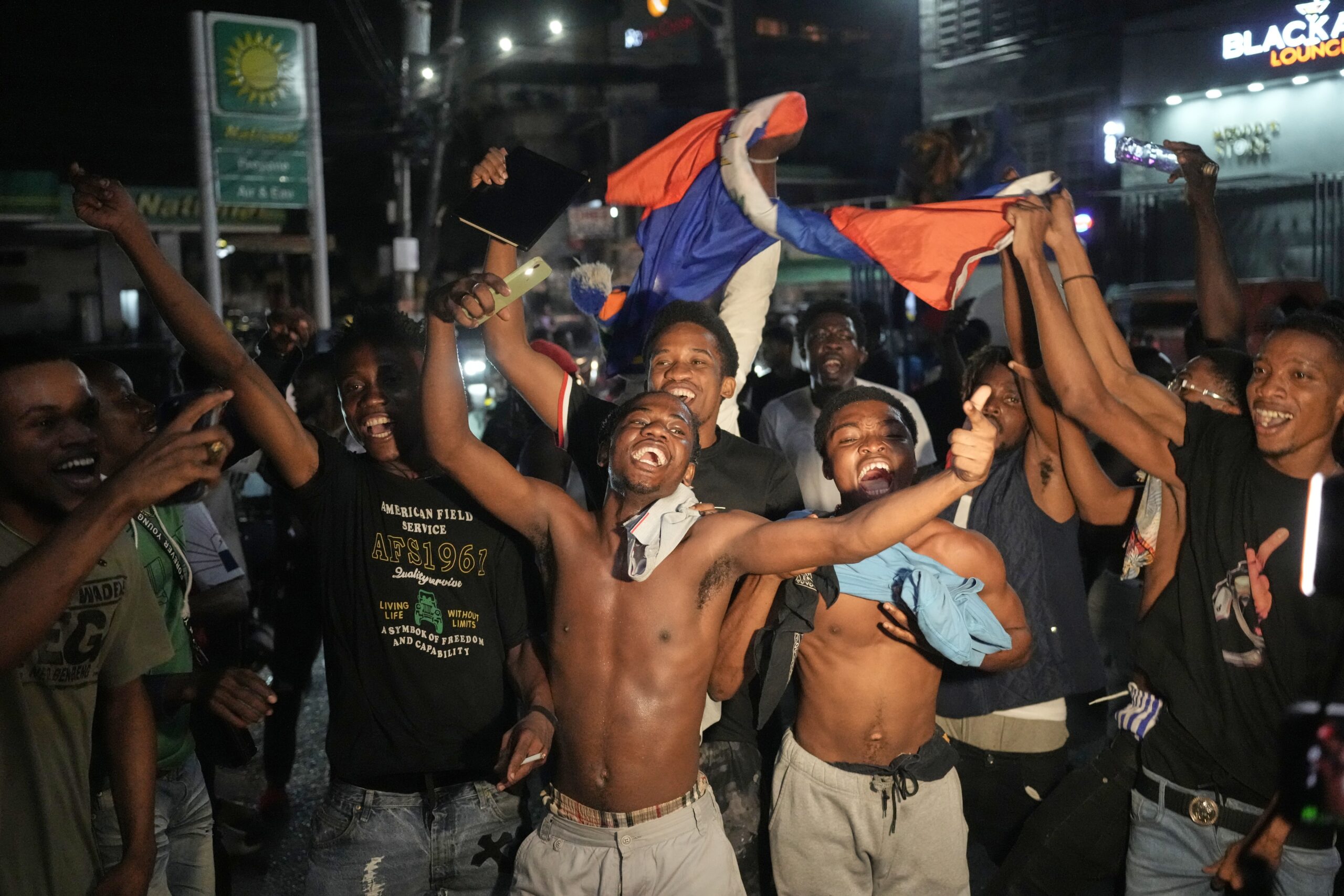
    Fans in Haiti celebrating their team’s qualification for the World Cup in November.

    That will be borne out in the stands here, for what should be the most fun atmosphere of Philadelphia’s five World Cup group games.

    “I know they will all be behind us, supporting us to play well, and we will give everything to give joy to the people,” Jean Jacques said.

    And how about dueling with players like Vinícius Júnior, the star of Brazil and Real Madrid?

    “Yes, that would feel good,” Jean Jacques said. “To play against players like that is a pleasure. I’ll be preparing well to play against them and give it my all.”

    Vinícius Júnior played for Real Madrid at Lincoln Financial Field in the Club World Cup last summer.

    A place in soccer history

    It’s pretty rare for players to be able to play a World Cup game for their country in their club team’s home city. It’s even rarer for players from Concacaf, the region that spans North and Central America.

    The last time anyone from around here came close was in 2006 in Germany. Kasey Keller played for the United States in Gelsenkirchen, about an hour’s drive from his club home in Mönchengladbach.

    It didn’t happen in 1994, when the U.S. last hosted, because the U.S. didn’t have a major professional league. That year’s national team did most of its tournament prep in a long residency camp.

    To land all the way on the nose, you have to go back to 1986 in Mexico. The hosts had many players on clubs in Mexico City and Monterrey, where El Tri held its games that summer.

    Mexico City’s famed Estadio Azteca will host a men’s World Cup for the third time this summer.

    The closest modern equivalent arguably comes from women’s soccer: U.S. captain Lindsey Heaps played a 2024 Olympics semifinal in Lyon as a player from OL Lyonnes.

    “It’s a very comforting feeling,” Heaps said. “As a player, you get an extra boost of confidence.”

    Jean Jacques could end up being one of many players who get the honor in this tournament, and not the first chronologically. Mexico and Canada play their first two group games before Brazil-Haiti kicks off, El Tri in Mexico City and Guadalajara and the Canucks in Toronto and Vancouver.

    The United States’ Cristian Roldan could also beat Jean Jacques by a few hours if he makes the team and plays in Seattle against Australia, on the same day as Brazil-Haiti.

    Cristian Roldan could play for the United States against Australia in Seattle, his longtime club home with the Sounders.

    It’s still a rare honor over soccer’s full history, so there should be no playing it down. But Jean Jacques has plenty to do before the summer, as the Union start their season in just over a month with a return to the Concacaf Champions Cup.

    For now, that is at the front of Jean Jacques’ mind. After spending some time off in Miami and with friends in France, he says he’s ready to get back to work.

    “We focus on the new season that’s going to start soon,” he said. “We have the Champions Cup in the near future, and we’re going to prepare well for that to start the year well.”

  • Ena Widjojo, owner and longtime celebrated chef at Hardena in South Philadelphia, has died at 73

    Ena Widjojo, owner and longtime celebrated chef at Hardena in South Philadelphia, has died at 73

    Ena Widjojo, 73, of Philadelphia, owner and longtime celebrated chef at the Hardena restaurant in South Philadelphia, mentor, and mother, died Wednesday, Dec. 24, of cancer at her home.

    Born and reared in Java, Indonesia, Mrs. Widjojo came to the United States in 1969 when she was 17. She opened a cantina at the Indonesian Consulate in New York in 1977, worked as a caterer in the 1990s after the cantina closed in 1989, and moved to Philadelphia in 2000 to open Hardena with her husband, Harry.

    Over the next decade and a half, until she retired in 2017, Mrs. Widjojo grew Hardena, described by the Daily News in 2007 as “a postage-stamp-size luncheonette at Hicks and Moore Streets in a gritty section of South Philly,” into a culinary and cultural connection for thousands of local Indonesians and other diners who enjoyed her homemade Southeast Asia cuisine.

    The corner restaurant’s name is a blend of their names, Harry and Ena, and features Indonesian specialties such as golden tofu, goat curry, saté chicken, beef rendang, and tempeh. “It’s the best Indonesian food in Philadelphia, a great mix of Indian and Chinese flavors,” elementary schoolteacher Aaron MacLennan told the Daily News in 2007.

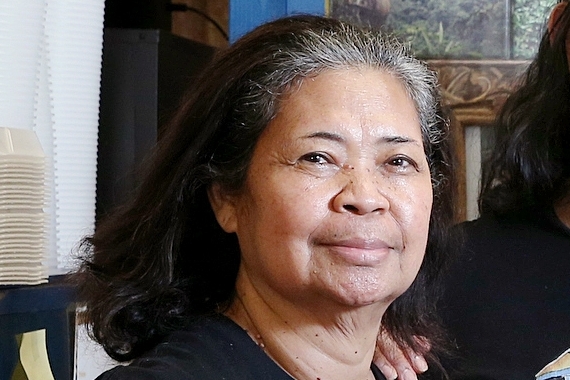
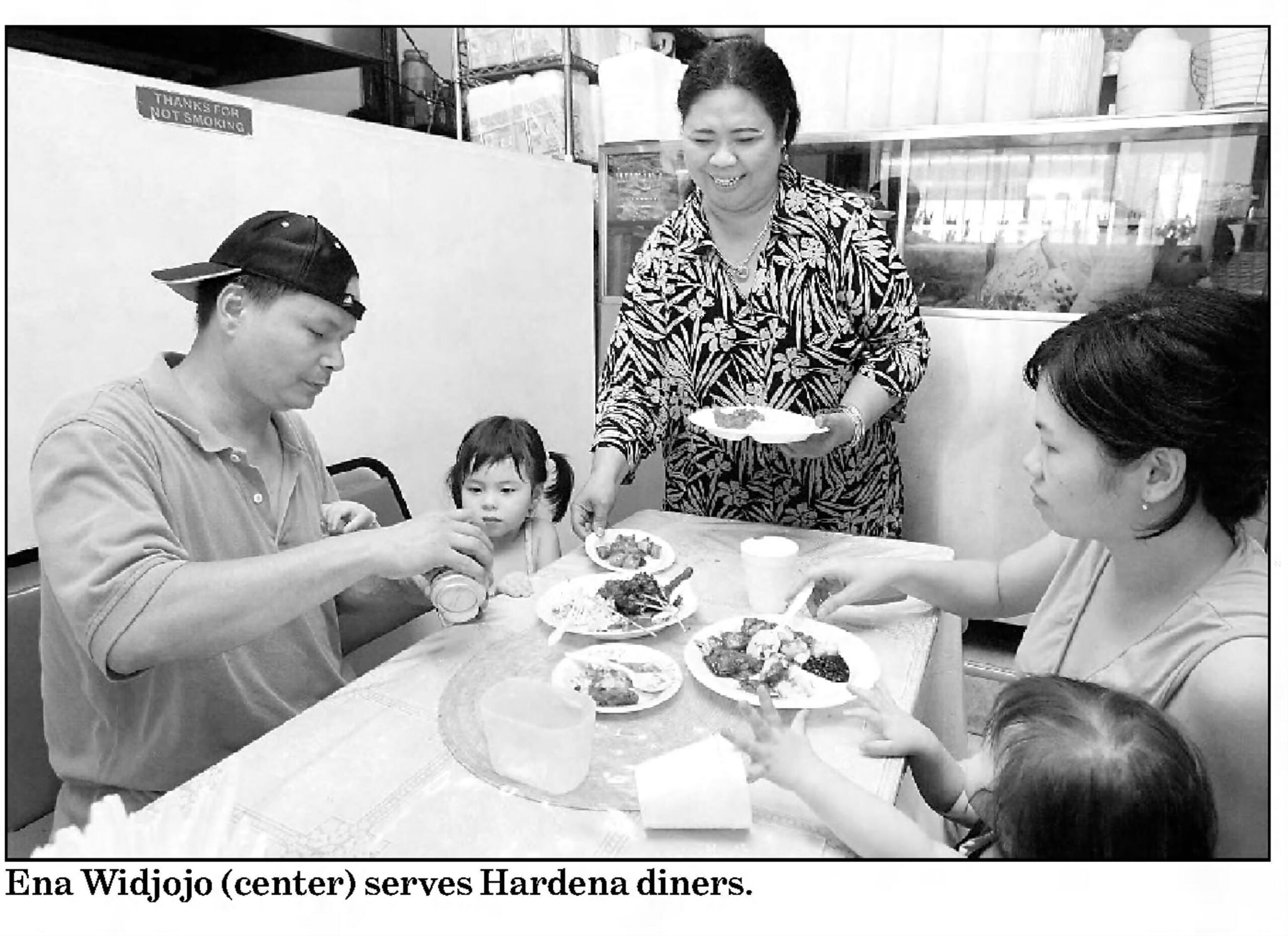
    This photo of Mrs. Widjojo appeared in the Daily News in 2007

    In 2012, Philadelphia Magazine named Hardena one of its Best of Philly Indonesian restaurants, calling it a “no-frills, high-flavor buffet.” In February 2018, Mrs. Widjojo and two of her three daughters were named semifinalists for the James Beard Foundation’s best chef award for the Mid-Atlantic states. In October 2018, Inquirer food critic Craig LaBan praised the restaurant’s “aromatic steam table of homestyle cooking that’s been a well-priced anchor of Indonesian comfort for 18 years.”

    Friendly and ever present at the lunch and dinner rushes, Mrs. Widjojo was known as Mama to many of her customers and friends. She learned how to bake and cook from her mother, a culinary teacher in Java, and later incorporated many of her mother’s recipes into her own memorable melting pot of Indian, Chinese, Arab, Portuguese, Spanish, English, and Dutch dishes at Hardena.

    “She served me greens once, and I felt like I was at home,” a friend said on Instagram.

    She and her husband traveled weekly between Philadelphia and Queens while their daughters — Diana, Maylia, and Stephanie — finished school in New York. Maylia and Diana assumed control of Hardena when Mrs. Widjojo retired, and Diana opened the restaurant Rice & Sambal on East Passyunk Avenue in 2024.

    Earlier, at the consulate in New York, Mrs. Widjojo made meals for former Secretary of State Henry Kissinger and former Indonesian President Suharto and his large entourage. “I cooked for all the diplomats.” she told The Inquirer in 2018.

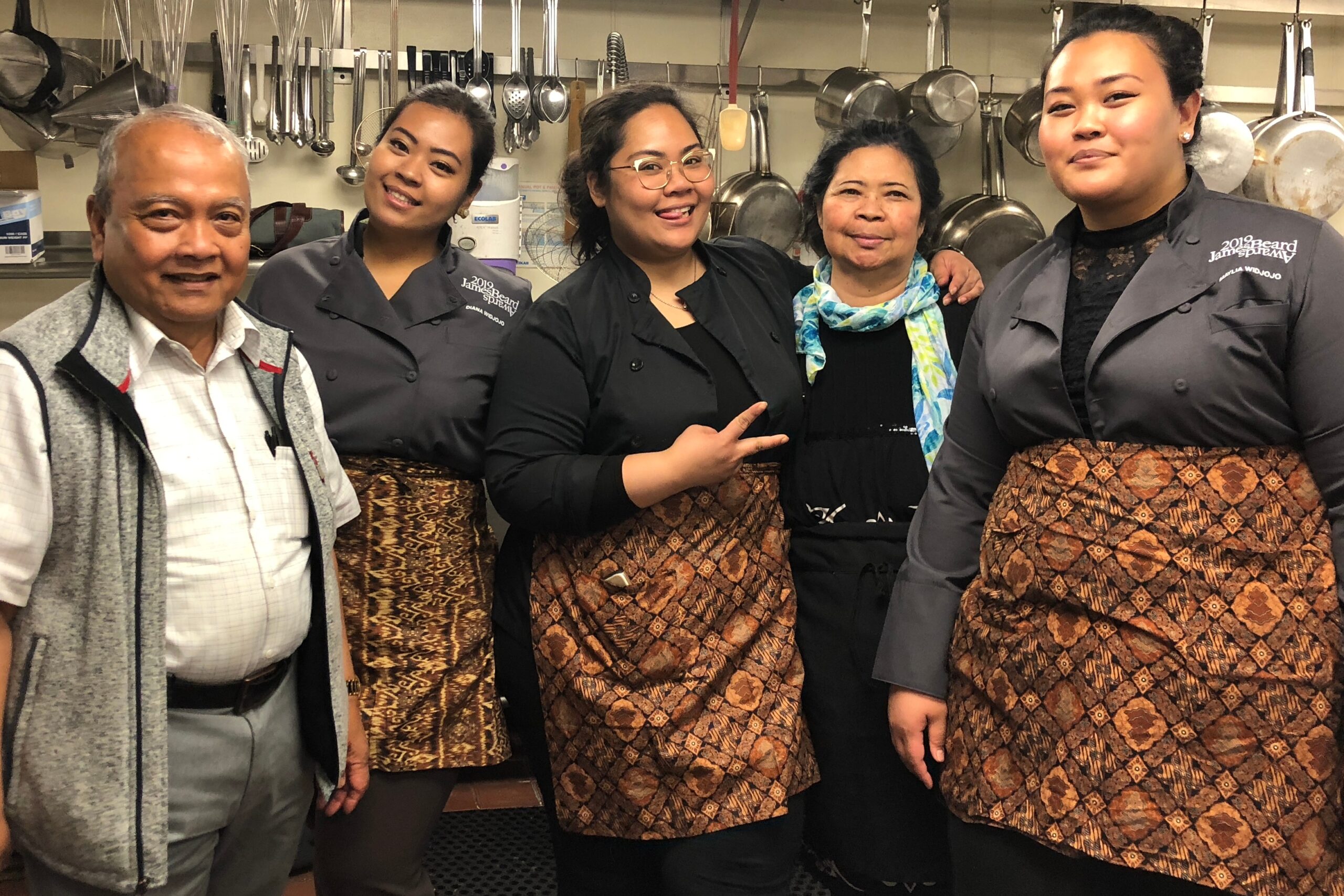
    Mrs. Widjojo (second from right) smiles with her husband and three daughters.

    She grew chili peppers and lime trees in her South Philly backyard, was happy to share kitchen tips and cultural traditions with visitors and cooking classes, and helped her daughters cater the 2019 James Beard Foundation’s annual Media Awards in New York.

    She worked six days a week for years and told edible Philly in 2017 that her retirement was good for her daughters. “If I’m cooking all the time,” she said, “they’re not learning.”

    Ena Djuneidi Juniarsah was born April 24, 1952. She baked cakes in a charcoal oven for her mother in Java and sold cookies and pastries after school when she was young. “

    Her mother was strict about cooking, Mrs. Widjojo said in 2018, and discarded any and all imperfect creations. “Like me, with my kids’ cooking,” she said, “if you’re not good, that’s no good.”

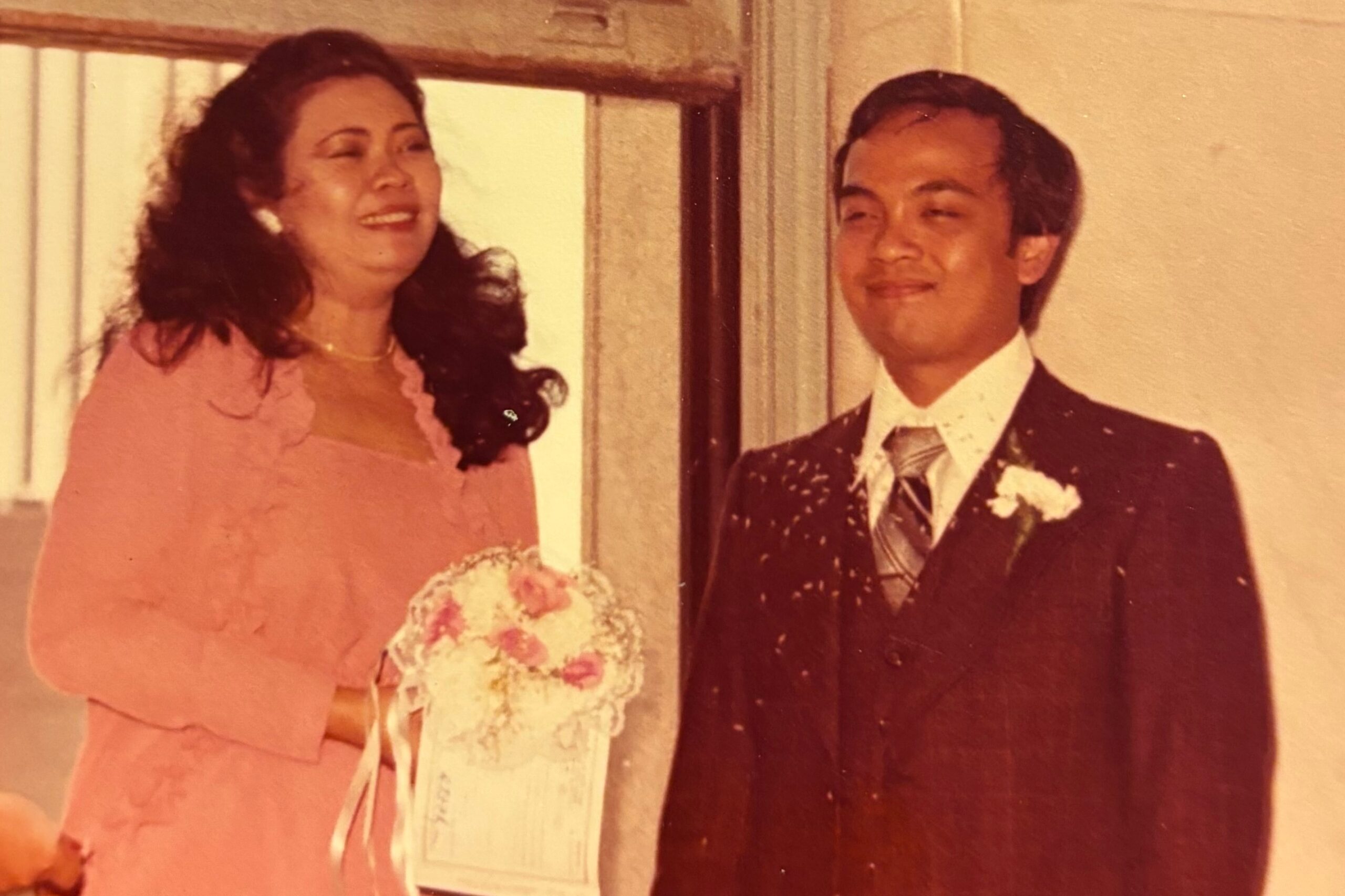
    She married fellow restaurateur Harry Widjojo in New York and spent time as a singer, beautician, florist, and nanny before cooking full time. Away from the restaurant, she enjoyed drawing, painting, crocheting, and family strolls in the park.

    Mrs. Widjojo and her husband, Harry, were married in New York.

    She could be goofy, her daughters said. She sang “You Are My Sunshine” when they were young and served as their lifelong mentor and teacher.

    Friends called her “sweet,” “amazing,” “a beautiful soul,” and “warm and welcoming” on Instagram. She was diagnosed with cancer in 2015.

    “Her life, generosity, and talent enriched the hearts of all who met her,” her family said in a tribute. “She taught us that feeding people is one of the purest ways to show love, have pride in our culture, and support our family.”

    Maylia said: “She was always giving.”

    Stephanie said: “She was always there for me.”

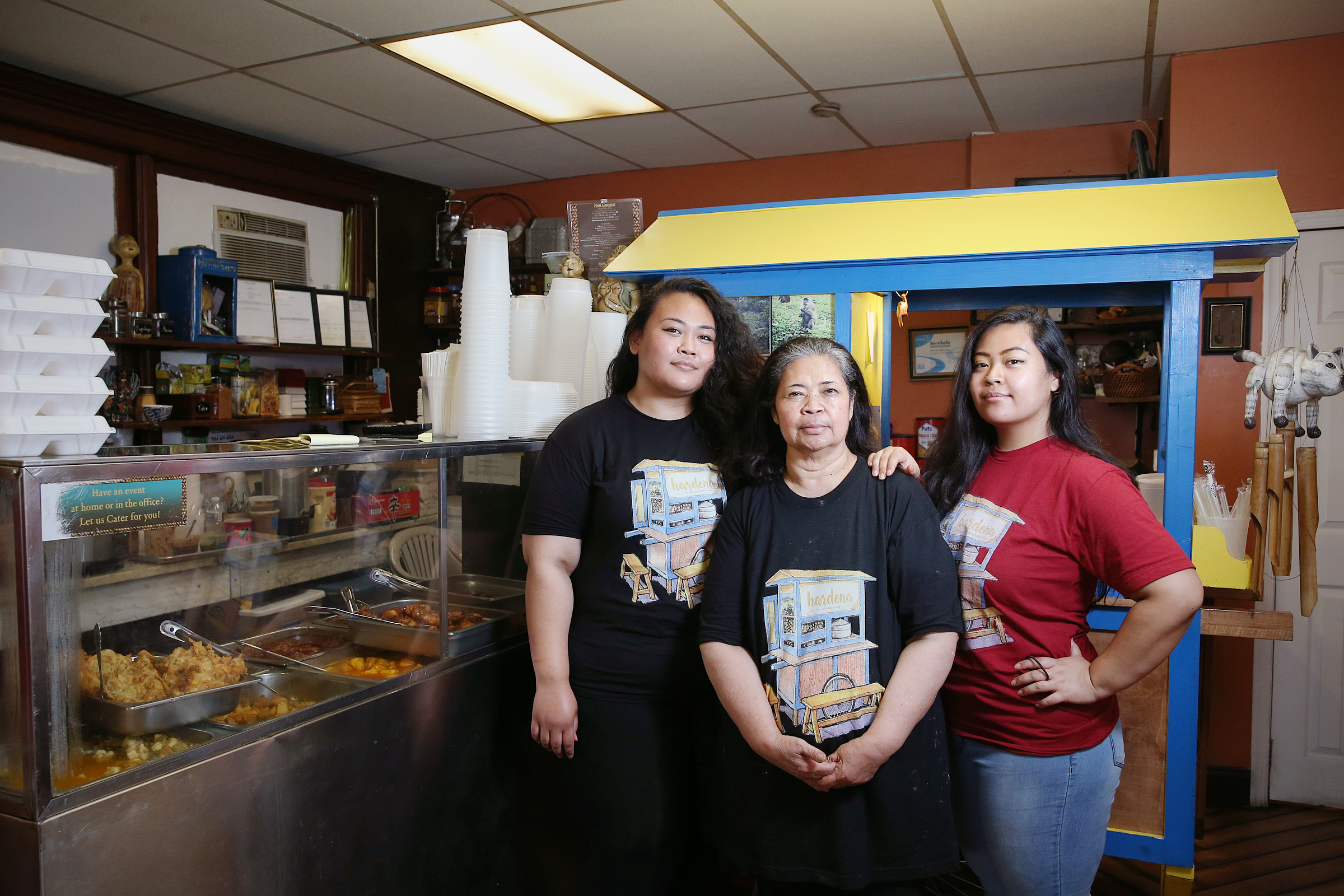
    Mrs. Widjojo (center) stands in Hardena with her daughters Maylia (left) and Diana in 2020.

    Diana said: “She saw the world with open arms and an open heart. She was a wonder woman.”

    In addition to her husband and daughters, Mrs. Widjojo is survived by two grandchildren, a sister, two brothers, and other relatives. A sister and two brothers died earlier.

    A celebration of her life was held Dec. 27.

    Donations in her name may be made to Masjid Al Falah Mosque, 1603 S. 17th St. Philadelphia, Pa. 19145.

    Mrs. Widjojo came to the United States from Java when she was 17.
  • Trump cancels meetings with Iranian officials and tells protesters ‘help is on its way’

    Trump cancels meetings with Iranian officials and tells protesters ‘help is on its way’

    WASHINGTON — President Donald Trump said on Tuesday that he’s cutting off the prospect of talks with Iranian officials amid a protest crackdown, telling Iranian citizens “help is on its way.”

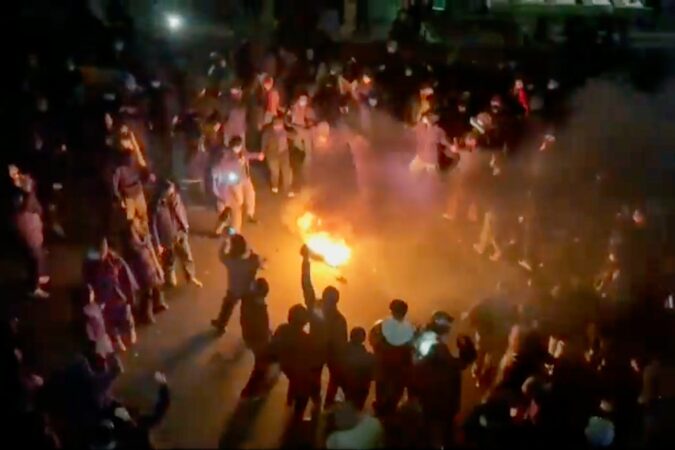
    Trump did not offer any details about what the help would entail, but it comes after the Republican president just days ago said Iran wants to negotiate with Washington after his threat to strike the Islamic Republic, where the death toll from nationwide protests has spiked to more than 2,000, according to human rights monitors.

    But Trump, with his latest message on social media, appeared to make an abrupt shift about his willingness to engage with the Iranian government.

    “Iranian Patriots, KEEP PROTESTING – TAKE OVER YOUR INSTITUTIONS!!!” Trump wrote in a morning post on Truth Social, which he later amplified during a speech at an auto factory in Michigan. “Save the names of the killers and abusers. They will pay a big price. I have cancelled all meetings with Iranian Officials until the senseless killing of protesters STOPS. HELP IS ON ITS WAY.”

    Trump, in an exchange with reporters during the factory visit, demurred when asked what kind of help he would provide.

    “You’re going to have to figure that one out,” he said.

    He also said he didn’t have accurate numbers on the death toll in Iran but added: “I think it’s a lot. It’s too many, whatever it is.”

    The president has repeatedly threatened Tehran with military action if his administration found the Islamic Republic was using deadly force against antigovernment protesters. Trump on Sunday told reporters he believed Iran is “starting to cross” that line and has left him and his national security team weighing “very strong options” even as he said the Iranians had made outreach efforts to the U.S.

    And on Monday, the president’s team offered guarded hope that a diplomatic solution could be found.

    “What you’re hearing publicly from the Iranian regime is quite different from the messages the administration is receiving privately, and I think the president has an interest in exploring those messages,” White House press secretary Karoline Leavitt told reporters Monday. “However, with that said, the president has shown he’s unafraid to use military options if and when he deems necessary, and nobody knows that better than Iran.”

    Also on Monday, Trump said he would slap 25% tariffs on countries doing business with Tehran “effective immediately,” but the White House has not provided details on that move. China, the United Arab Emirates, Turkey, Brazil and Russia are among economies that do business with Tehran.

    Vice President JD Vance, Secretary of State Marco Rubio and key White House National Security Council officials began meeting Friday to develop options for Trump, ranging from a diplomatic approach to military strikes.

    Iran, through the country’s parliamentary speaker, has warned that the U.S. military and Israel would be “legitimate targets” if Washington uses force to protect demonstrators.

    More than 600 protests have taken place across all of Iran’s 31 provinces, the Human Rights Activists News Agency reported Tuesday. The activist group said about 1,850 of the dead were protesters and 135 were government-affiliated. It said more than 16,700 people had been detained.

    Understanding the scale of the protests has been difficult. Iranian state media has provided little information about the demonstrations. Online videos offer only brief, shaky glimpses of people in the streets or the sound of gunfire.

    Iranian state television appeared to acknowledge the high death toll on Tuesday. A TV report said the country had ‘a lot of martyrs’ in the nationwide protests and quoted Ahmad Mousavi, the head of the Martyrs Foundation.

    The anchor read a statement that laid blame on “armed and terrorist groups, which led the country to present a lot of martyrs to God.”

    Trump’s push on the Iranian government to end the crackdown comes as he is dealing with a series of other foreign policy emergencies around the globe.

    It’s been just over a week since the U.S. military launched a successful raid to arrest Venezuela’s Nicolás Maduro and remove him from power. The U.S. continues to mass an unusually large number of troops in the Caribbean Sea.

    Trump is also focused on trying to get Israel and Hamas onto the second phase of a peace deal in Gaza and broker an agreement between Russia and Ukraine to end the nearly four-year war in Eastern Europe.

    But advocates urging Trump to take strong action against Iran say this moment offers an opportunity to further diminish the theocratic government that’s ruled the country since the Islamic revolution in 1979.

    Russia’s Foreign Ministry on Tuesday called the threats “categorically unacceptable.”

    The ministry warned in a statement that any such strikes would have “disastrous consequences” for the situation in the Middle East and global security. It also criticized what it called “brazen attempts to blackmail Iran’s foreign partners by raising trade tariffs.”

    The statement noted that the protests in Iran had been triggered by social and economic problems resulting from Western sanctions. It also denounced “hostile external forces” for trying to “exploit the resulting growing social tension to destabilize and destroy the Iranian state” and charged that “specially trained and armed provocateurs acting on instructions from abroad” sought to provoke violence.

    The ministry voiced hope that the situation in Iran will gradually stabilize and advised Russian citizens in the Islamic Republic not to visit crowded places.

    The demonstrations are the biggest Iran has seen in years — protests spurred by the collapse of Iranian currency that have morphed into a larger test of supreme leader Ayatollah Ali Khamenei’s repressive rule.

    Iran appeared to ease some restrictions on its people and, for the first time in days, allowed them to make phone calls abroad via their mobile phones on Tuesday. It did not ease restrictions on the internet or permit texting services to be restored as the death toll from days of bloody protests against the state rose to at least 2,000 people, according to activists.

    Although Iranians were able to call abroad, people outside the country could not call them, several people in the capital told The Associated Press.

    The witnesses, who spoke on condition of anonymity, said SMS text messaging still was down and internet users inside Iran could not access anything abroad, although there were local connections to government-approved websites.

    It was unclear if restrictions would ease further after authorities cut off all communications inside the country and to the outside world late Thursday.

    United Nations officials said Tuesday that the more than 500 U.N. staff members in Iran are safe and accounted for as of Monday.

    Stephane Dujarric, the U.N. spokesperson, told reporters that many staff were working from home given the unrest that has spread throughout the country and killed hundreds of protesters.

    The U.N. country team in Iran has 46 international staff and 448 national staff.

  • Kevin Patullo out as Eagles offensive coordinator

    Kevin Patullo out as Eagles offensive coordinator

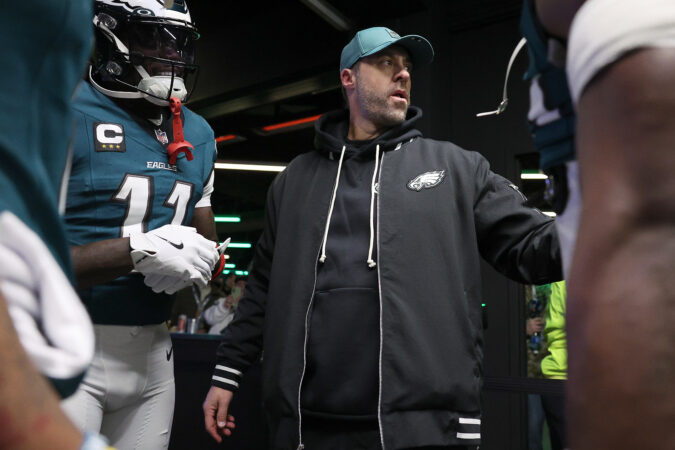
    The Eagles fell from eighth in total offense in 2024 to 24th in 2025. Their historic running game from 2024 fell off despite returning 10 of 11 starters. And in the end, it is first-year offensive coordinator Kevin Patullo who will face the consequences.

    The Eagles announced Tuesday that Patullo had been removed as offensive coordinator two days after they were knocked from the NFL playoffs with a 23-19 home defeat to the San Francisco 49ers, a game that was a microcosm of the season for the Eagles and their offense.

    It is possible that Patullo could remain on the staff in another role, according to a source.

    The Eagles managed just six points in the second half against a banged-up and below-average 49ers defense that seemed there for the taking. Their playoff hopes ended and Patullo’s fate was sealed when Jalen Hurts threw an incomplete pass into triple coverage on fourth-and-11 from San Francisco’s 21-yard line with 40 seconds left in the game.

    The Eagles kept things in house when they elevated Patullo, who has been with the team since head coach Nick Sirianni was hired in 2021, from passing game coordinator to offensive coordinator a year ago after Kellen Moore left to become the head coach of the New Orleans Saints. But continuity on the coaching staff did not result in continued offensive success for the Eagles.

    In a statement, Sirianni said he “met with Kevin today to discuss the difficult decision.”

    “He has been integral to the team’s success over the last five years, not only to the on-the-field product but behind the scenes as a valued leader for our players and organization,” Sirianni said.

    “Ultimately, when we fall short of our goals, that responsibility lies on my shoulders.”

    Some of the Eagles’ issues were out of Patullo’s control. A once-elite offensive line, for example, was rarely if ever at full strength. But other things were in his control, like the play-calling and the scheming of an offense that couldn’t force teams out of stacked boxes with a dynamic enough aerial assault. Or scheming a running offense that found ways to utilize Saquon Barkley’s skill set and find him more space.

    Kevin Patullo talks with Jalen Hurts on fourth down late in the fourth quarter against the 49ers.

    To Patullo’s credit, the Eagles had the most efficient red zone offense in the league and turned opportunities into touchdowns at a higher rate (70.45%) than any other team. Getting into the red zone, however, was an issue. The Eagles had a higher three-and-out percentage than even the New York Jets and too often were stagnant offensively.

    Patullo’s removal as coordinator marks the second time the Eagles internally hired and then removed a first-year offensive coordinator in the last three seasons. They elevated Brian Johnson from quarterbacks coach to coordinator in 2023 and then fired him after a smaller regression than the one Patullo oversaw.

    Patullo, 44, spent time with Sirianni on the Indianapolis Colts coaching staff and was brought to the Eagles with Sirianni in 2021 as the passing game coordinator. Patullo added an associate head coach title in 2023 before becoming offensive coordinator. Before the Eagles, Patullo was a passing game specialist with the Colts and also spent time as the team’s wide receivers coach.

    The Eagles’ next offensive coordinator will be the seventh play-caller Hurts has had in the NFL in what will be his seventh NFL season. Before Patullo, Hurts had Doug Pederson, Sirianni, Shane Steichen, Johnson, and Moore. Hurts also had six play-callers in college.

    The next one will be a critical hire charged with revamping a high-priced offense. The Eagles are likely to cast a wide net.

    This is a developing story that may be updated.

    Staff writer Jeff McLane contributed to this article.

  • New minor league hockey team in Trenton will be named the Ironhawks

    New minor league hockey team in Trenton will be named the Ironhawks

    It’s been about four months since it was announced that pro hockey was returning to Trenton after a 13-year hiatus. On Tuesday, that hockey team officially got a name: the Ironhawks.

    The Ironhawks, who will begin play next season in the ECHL, the third tier of North American professional hockey, announced the name and unveiled the team’s logo on Tuesday at CURE Insurance Arena in Trenton. The team, which will serve as the ECHL affiliate of the Colorado Avalanche, landed on the name after a two-month name-the-team contest that featured over 2,000 entries.

    “Today marks an important milestone as we officially announce our franchise name, the Trenton Ironhawks, and prepare to bring a new era of professional ECHL hockey to Trenton,” team president Bob Ohrablo said.

    “The hawk symbolizes strength and spirit, while the iron industry and its workers remain vital to Trenton’s economy through their grit and determination. By combining these elements into Ironhawks, we honor Trenton and reflect the team we are building, representing the city and the surrounding region, including Central New Jersey and Bucks County, Pennsylvania.”

    Trenton was officially awarded the franchise, which was previously based in Utah, in September, with new owner Pro Hockey Partners moving the team. The city was previously home to the Titans, who played in the ECHL from 1999 until they folded in 2013. The Titans won their lone Kelly Cup in 2005.

    “The return of ECHL hockey to Trenton is extremely exciting as we welcome the market back to our North Division for the 2026-27 Season amidst new teams and rivalries in the region,” ECHL Commissioner Ryan Crelin said in September. “The original ECHL team served as a catalyst to the opening of CURE Insurance Arena back in 1999 and growing the hockey community in New Jersey, and we look forward to reinvigorating the live entertainment experience in the marketplace with an ownership and operating group that is experienced in developmental league sports.”

    The Ironhawks’ primary colors will be blue, gray, and red, while the logo is a silver iron-coated hawk with blue and red accents that is landing on a hockey stick. The hawk’s eyes are red to represent the fire and intensity in his eyes, according to the team’s release.

    “The arrival of the Trenton Ironhawks is an exciting moment for our city,” Trenton Mayor Reed Gusciora said. “This team brings new energy to the CURE Insurance Arena and creates opportunities for residents, visitors, and local businesses alike. The name Ironhawks reflects Trenton’s industrial roots and the strength and resilience that define this community. This is a proud new chapter for Trenton sports.”

  • A massive, first-ever Dry January bar crawl launches in Philly this weekend

    A massive, first-ever Dry January bar crawl launches in Philly this weekend

    From inventive cocktails at bars to interactive bartender-led classes, it’s easy to be alcohol-free in Philadelphia this month and still leave the house. And now, sober-curious drinkers can hop from one bar to the next in the city’s first-ever Dry January bar crawl.

    Together, Northern Liberties Business Improvement District and Fishtown District are hosting a massive, two-day bar crawl of more than two dozen restaurants, bars, breweries, wineries, distilleries, and hospitality spots offering discounted zero-proof cocktails. The event runs Saturday, Jan. 17 and Sunday, Jan, 18, allowing participants to explore the two neighborhoods at their own pace. No tickets or check-in are required.

    “We are excited to kick off 2026 with our close friends in Fishtown for a post-holiday reset,” said Sydney Rexroad, Northern Liberties Business Improvement District executive director. “The Dry January Crawl … is a great opportunity to see a different side of creativity from your favorite spots.”

    Bar Palmina will participate in the Northern Liberties/Fishtown Dry January Bar Crawl.

    “This is the perfect way to start 2026,” said Marc D. Collazzo, Fishtown District executive director. “Our close connection provides a full, fun wellness experience in the hottest neighborhoods in the city. Come join us to sip, savor and smile.”

    Along with a slate of regularly priced nonalcoholic cocktails or specialty beverages, folks can expect each participating establishment to have one or more special happy hour-priced nonalcoholic beverage, from $6 to $10.

    Bar1010 will offer strawberry matcha mocktails for $10, beers and Moscow mules will run $6 to $8 at Bar Palmina, and smoked mixed berry spritz will go for $10 at Jerry’s Bar, just to name a few.

    But remember: “Mocktails are what you’ll see mostly on menus — they’re made up of syrups, shrubs, soda, juices, and the ABV falls at 0.0,” according to Nikki Graziano, owner of Bar Palmina. “Zero-proof cocktails are made with complex nonalcoholic spirits and bitters. They provide the same balance and craft as a regular alcoholic drink and their ABV ranges from 0.0-0.5% ABV.”

    “There’s no better or worse, but the distinction is important to note for sensitivities as well as price points,” she said.

    Front Street Cafe will participate in the Northern Liberties/Fishtown Dry January Bar Crawl.

    In Northern Liberties:

    • Amina: 1102 Germantown Ave., 11 a.m. to 4 p.m.
    • Bar1010: 701 N. Second St., 11:30 a.m. to 4 p.m.
    • Bourbon and Branch: 705 N. Second St., 11 a.m. to 4 p.m.
    • El Camino Real: 1040 N. Second St., 11 a.m. to 4 p.m.
    • Jerry’s Bar: 129 W. Laurel St., 11 a.m. to 4 p.m.
    • Standard Tap: 901 N. Second St., 11 a.m. to 4 p.m.
    • The 700: 700 N. Second St., 2 p.m. to 5 p.m.
    • Urban Village Brewing: 1001 N. Second St., noon to 5 p.m.
    • Yards Brewing Co.: 500 Spring Garden St., 11:30 p.m. to 5 p.m.
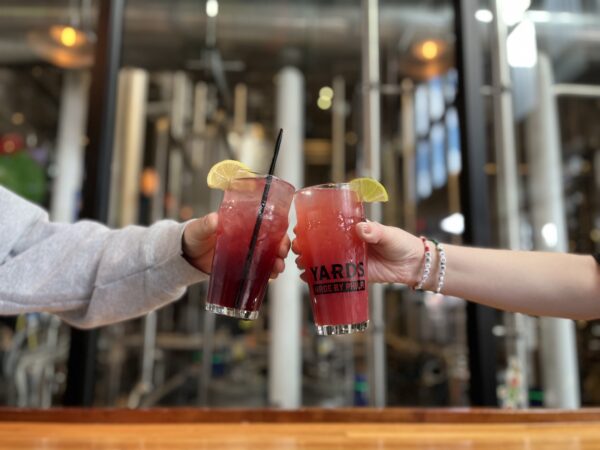
    Expect nonalcoholic cocktails like this one, from Bar Palmina, at happy hour prices on Northern Liberties-Fishtown’s inaugural Dry January bar crawl.

    In Fishtown:

    • Bar Palmina: 1306 N. Front St., 2 p.m. to 6 p.m.
    • Brewery ARS: 2223 Frankford Ave., 3 p.m. to 6 p.m.
    • Evil Genius Beer Company: 1727 N. Front St., noon to 5 p.m.
    • Fette Sau: 1208 Frankford Ave., noon to 5 p.m.
    • Fishtown Social: 1525 Frankford Ave., noon to 5 p.m.
    • Frankford Hall: 1210 Frankford Ave., noon to 5 p.m.
    • Front Street Cafe: 1253 Front St., 11 a.m. to 4 p.m.
    • Garage Fishtown: 100 E. Girard Ave., noon to 5 p.m.
    • Johnny Brenda’s: 1201 Frankford Ave., 11 a.m. to 4 p.m.
    • Mamajuana Cafe Philly: 1000 Frankford Ave., noon to 5 p.m.
    • Meyers Brewing: 436 E. Girard Ave., noon to 5 p.m.
    • Mural City Cellars: 1831 Frankford Ave., noon to 5 p.m.
    • Nut Hut Saloon: Corner of Frankford Ave. and E. Norris St., 11 a.m. to 4 p.m.
    • Pearl’s Fishtown: 1444 Frankford Ave., 1 p.m. to 5 p.m.
    • Percy Diner & Bar: 1700 N. Front St., Saturday 11 a.m. to 4 p.m. and Sunday 11 a.m. to 3 p.m.
    • Stateside Vodka Bar: 1700 N. Hancock St., noon to 5 p.m.
    • The INTL: 1642 N. Front St., noon to 4 p.m.
  • Wawa is closing another Philly store after its new format fell flat

    Wawa is closing another Philly store after its new format fell flat

    Wawa is closing a store on Drexel University’s campus, nearly three years after remodeling to a digital-order-only concept with no products on shelves.

    The 3300 Market St. location, which has been open since 2018, is set to close Jan. 21.

    It was remodeled in 2023 to test the new store format, which required customers to order all items on a touch screen, with no shelves of product to browse. The pilot was not a success, leading to the store’s planned closure, said a company statement shared by Wawa spokesperson Lori Bruce Tuesday.

    Prior to the pandemic, this store saw more food-service than any other Wawa, CEO Chris Gheysens previously told the Philadelphia Business Journal.

    “Over the years, we have made several attempts to address business and operational challenges at this location,” said the company statement shared by Bruce, which did not provide details about those challenges.

    That effort “includes partnering with property owner, Drexel University, in an attempt to address some of these issues, and most recently making investments in our store design to test a fully digital format. Unfortunately, this test did not adequately improve performance or deliver an enhanced customer experience, which ultimately led to the decision to close the store‚” Wawa’s statement said.

    Wawa had informed Drexel about its plans to close the location, university spokesperson Niki Gianakaris confirmed Tuesday in a statement from the university. Drexel did not respond to a question about what will occupy the space going forward.

    Employees will be offered positions at other nearby Wawas. Nearby stores include those at 36th and Chestnut Streets, and 38th and Spruce Streets.

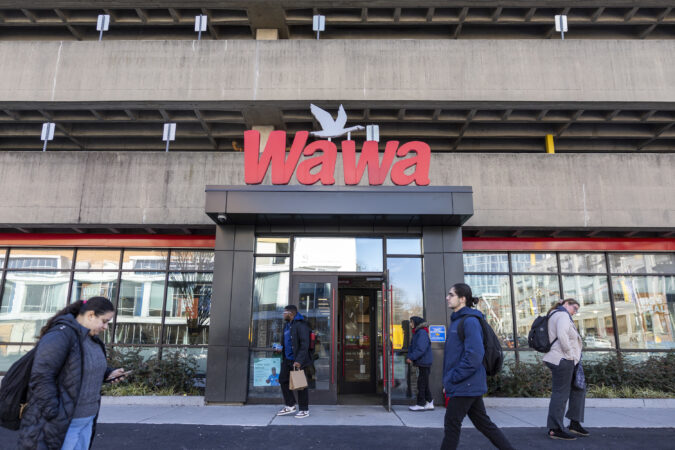
    The Wawa at the corner of 34th and Market Streets near Drexel University will close this month.

    Wawa has closed a number of stores in the city in recent years.

    Wawa closed two locations in the Northeast last year.

    In 2024, the company closed a Port Richmond store that was one of its oldest, a Cherry Hill location that had been operating for 51 years, and a store near the Philadelphia Art Museum, as well as a Center City location at 16th and Ranstead Streets that had been testing a small-store concept.

    Meanwhile, Wawa competitor Sheetz recently announced it will open its first Philadelphia-area outpost, in Montgomery County, next month.