Blog

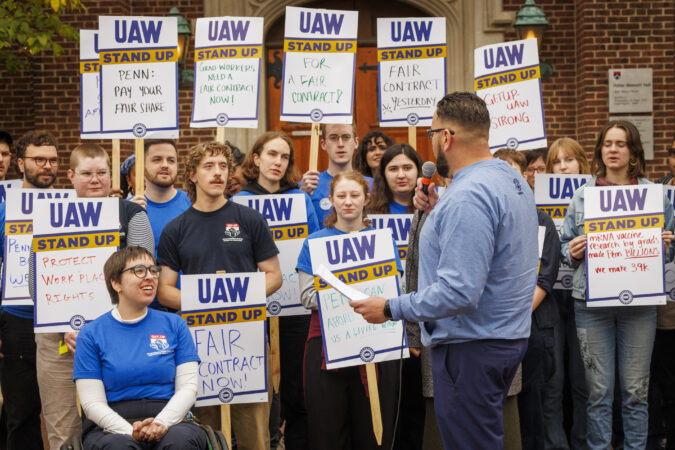
  • Penn graduate student workers could strike next month

    Penn graduate student workers could strike next month

    The union that represents about 3,400 University of Pennsylvania graduate student workers says they will go on strike Feb. 17 if they do not reach a contract deal with the university by then.

    “We love our jobs, but Penn’s administration is leaving us no choice but to move forward with a strike,” said Nicolai Apenes, a Ph.D. candidate and research assistant in immunology, in a statement shared by the union Tuesday. “We are ready to stand up and demand that our rights are respected.”

    Penn’s graduate student workers voted to unionize in 2024. The union has been negotiating with the university since October 2024 for a first contract, and some tentative agreements have been reached on a number of issues.

    Sticking points in bargaining include wages, healthcare coverage, and more support for international student workers.

    In November the teaching and research assistants voted to authorize a strike if called for by the union, which is known as Graduate Employees Together-University of Pennsylvania (GET-UP) and is part of the United Auto Workers (UAW).

    A spokesperson for the University of Pennsylvania said in a statement Tuesday that Penn has engaged in good faith negotiations with the union, and has reached 23 tentative agreements through 39 bargaining sessions with additional sessions planned.

    “We believe that a fair contract for the Union and Penn can be achieved without a work stoppage, but we are prepared in the event that the Union membership strikes,” said the Penn spokesperson. “Efforts are underway to ensure teaching and research continuity, and the expectation is that classes and other academic activities will continue in the event of a strike.”

    “While we hope that Penn comes to the table and negotiates a fair contract for these essential workers, we know that these workers are a powerful force that Penn cannot break,” said Daniel Bauder, Philadelphia AFL-CIO president, in a statement Tuesday. “We are proud to stand with them and the broader Coalition of Workers at Penn as they fight the biggest employer in the region and bring union power to the University of Pennsylvania.”

    Penn, the largest employer in Philadelphia, has seen a wave of student-worker organizing in recent years, including resident assistants, graduate students, postdocs and research associates, as well as training physicians in the University of Pennsylvania Health System.

    The region has also seen a couple other university strikes in recent years. In 2023 graduate workers at Temple University walked off the job for 42 days amid contract negotiations, and in a separate action at Rutgers University, educators, researchers, and clinicians went on strike for a week.

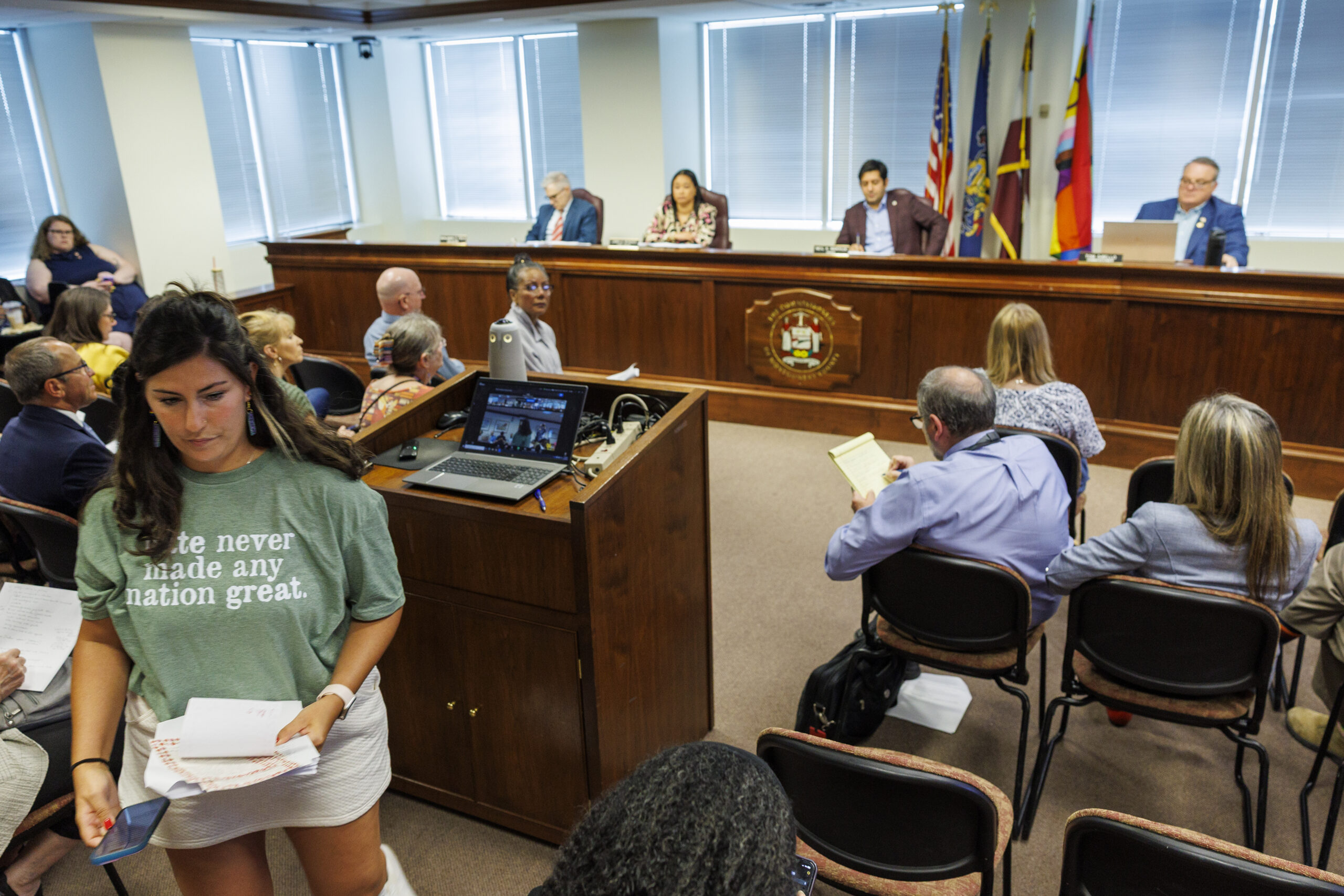
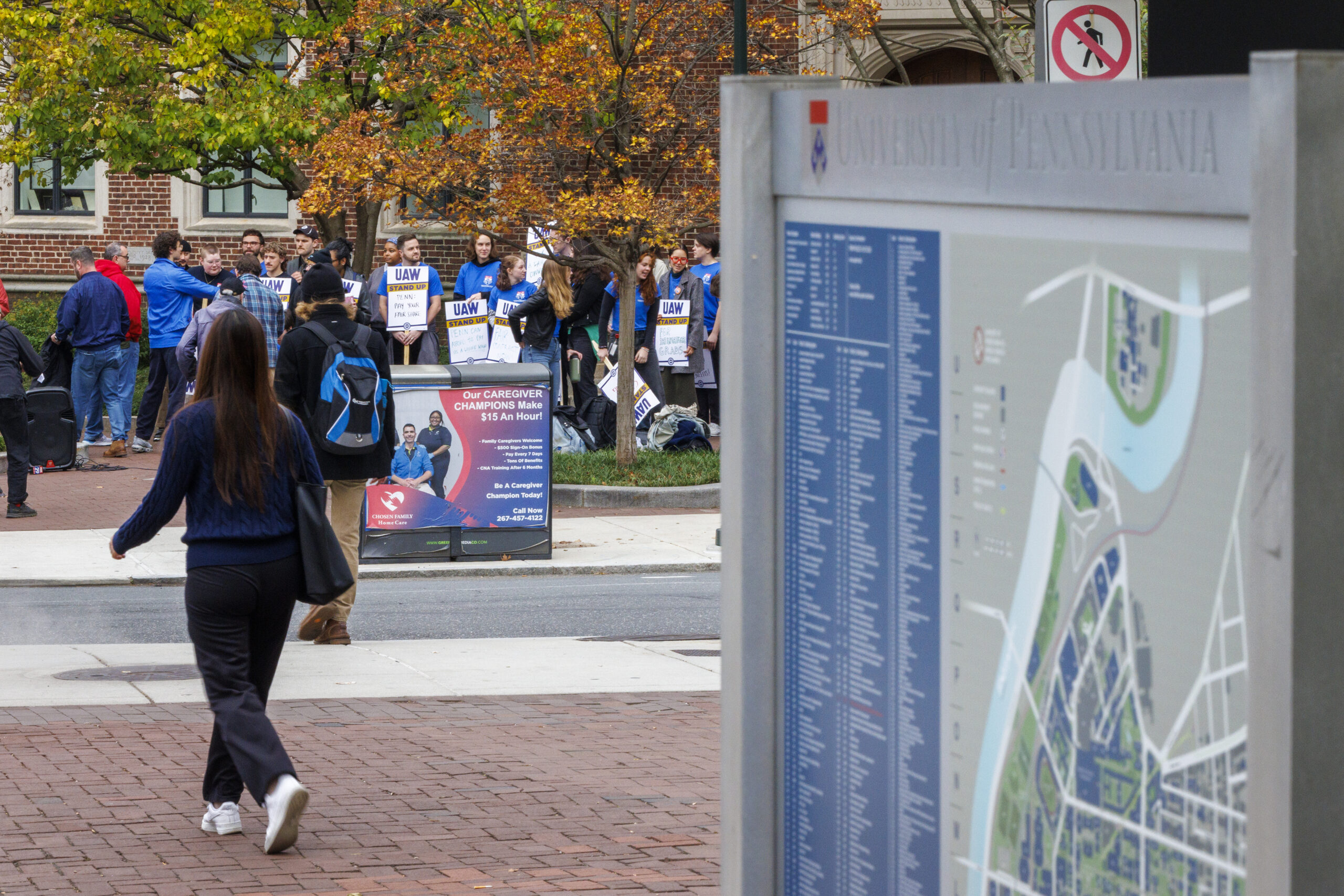
    University of Pennsylvania graduate students hold a press conference and rally calling for a strike vote against the university at the corner of South 34th and Walnut Street, Monday, Nov. 3, 2025.
  • The United Soccer Coaches Convention returns to Philly, with extra interest in a World Cup year

    The United Soccer Coaches Convention returns to Philly, with extra interest in a World Cup year

    Like so much of life, the year in soccer has raced out of the blocks without waiting for the starter’s gun.

    The Union’s preseason started Monday, while the English Premier League’s winter circus played at full blast. While their fellow Americans were vacationing, Medford’s Brenden Aaronson and the rest of the circuit’s U.S. players spent the holidays working not just to win games, but to earn places on the World Cup team.

    They’re at a sprinter’s pace in women’s soccer, too. Gotham FC will play in the inaugural FIFA women’s Champions Cup later this month in London and has already been in Spain for a week preparing.

    Next week, U.S. manager Emma Hayes will convene the annual January camp with 26 NWSL players, but that headline was overtaken by Sam Coffey’s impending move to Manchester City.

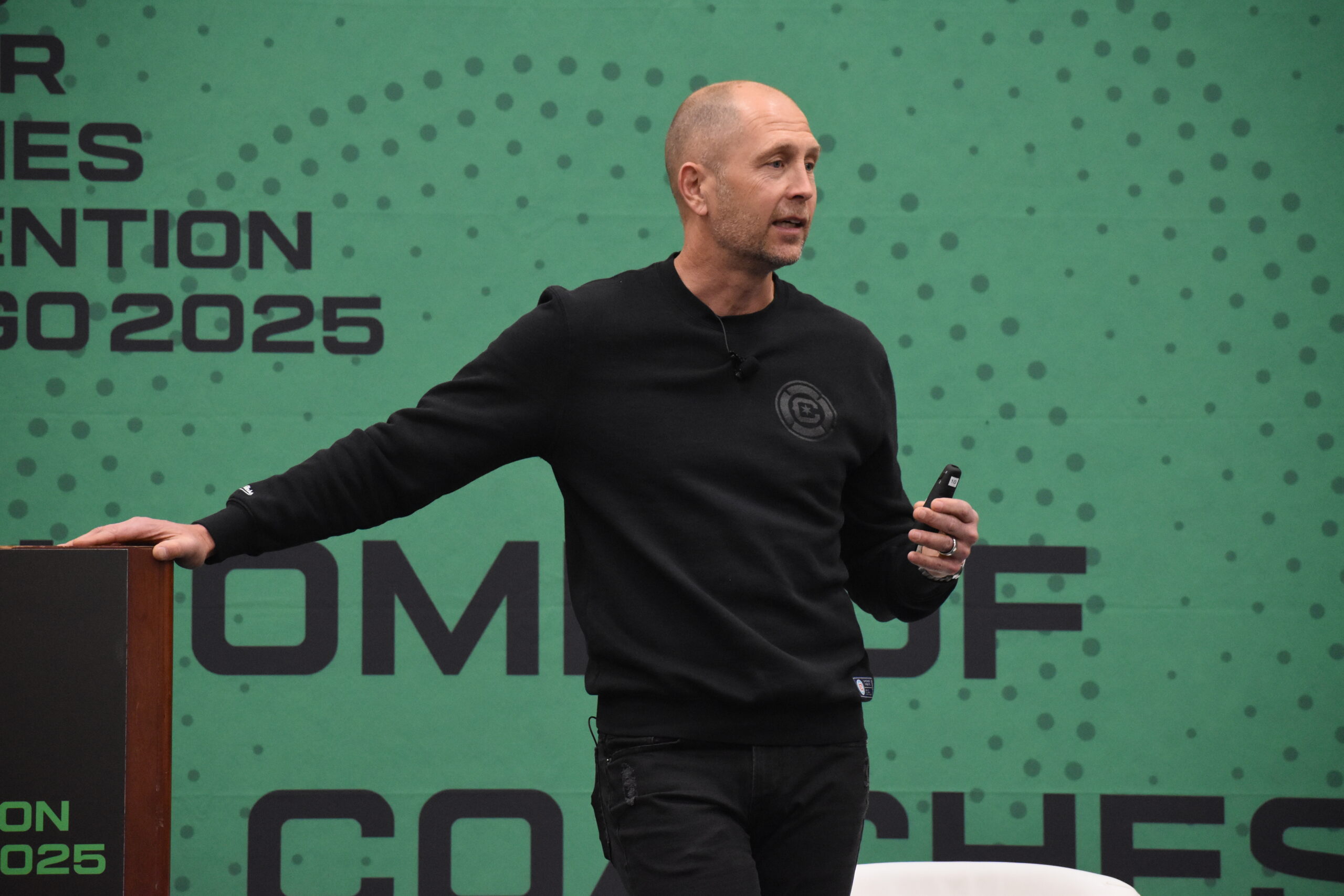
    Former U.S. men’s national soccer team manager Gregg Berhalter, now in charge of the Chicago Fire, speaking at last year’s coaches’ convention in Chicago.

    Amid all this, the event that’s usually American soccer’s annual curtain-raiser will take place in Philadelphia this week. From Wednesday to Saturday, the United Soccer Coaches Convention will draw thousands to the Pennsylvania Convention Center for the traditional festival of speeches, exhibits, and All-America honors.

    The association has organized conventions in almost all of its 85 years, and Philadelphia has been a frequent host. It was last here in 2023, and this will be the 11th time since 1989. That history has also been profitable for the organization, which is headquartered in Kansas City, Mo., but has many members in this part of the country.

    There’s always a little extra shine when the convention happens in a World Cup year, and this one will be no exception. Nor will it be lost on anyone that it’s in a World Cup host city.

    On top of that, Paul Payne, who became the association’s president in April, has strong Philadelphia ties. He grew up in the region and coached soccer at Conestoga High School, the University of Scranton, then Bloomsburg for more than 20 years.

    “I think it’s a great way for us as an association to kick off, with our connection with U.S. Soccer [and] our national teams,” said Payne, who noted that he delivered The Inquirer for two years as a child. “The World Cup doesn’t start in June — to me, it’s started already. And I think you’re going to see that ramp up with a lot of the activities of U.S. Soccer, and, obviously, the United Soccer Coaches Convention in Philly this year.”

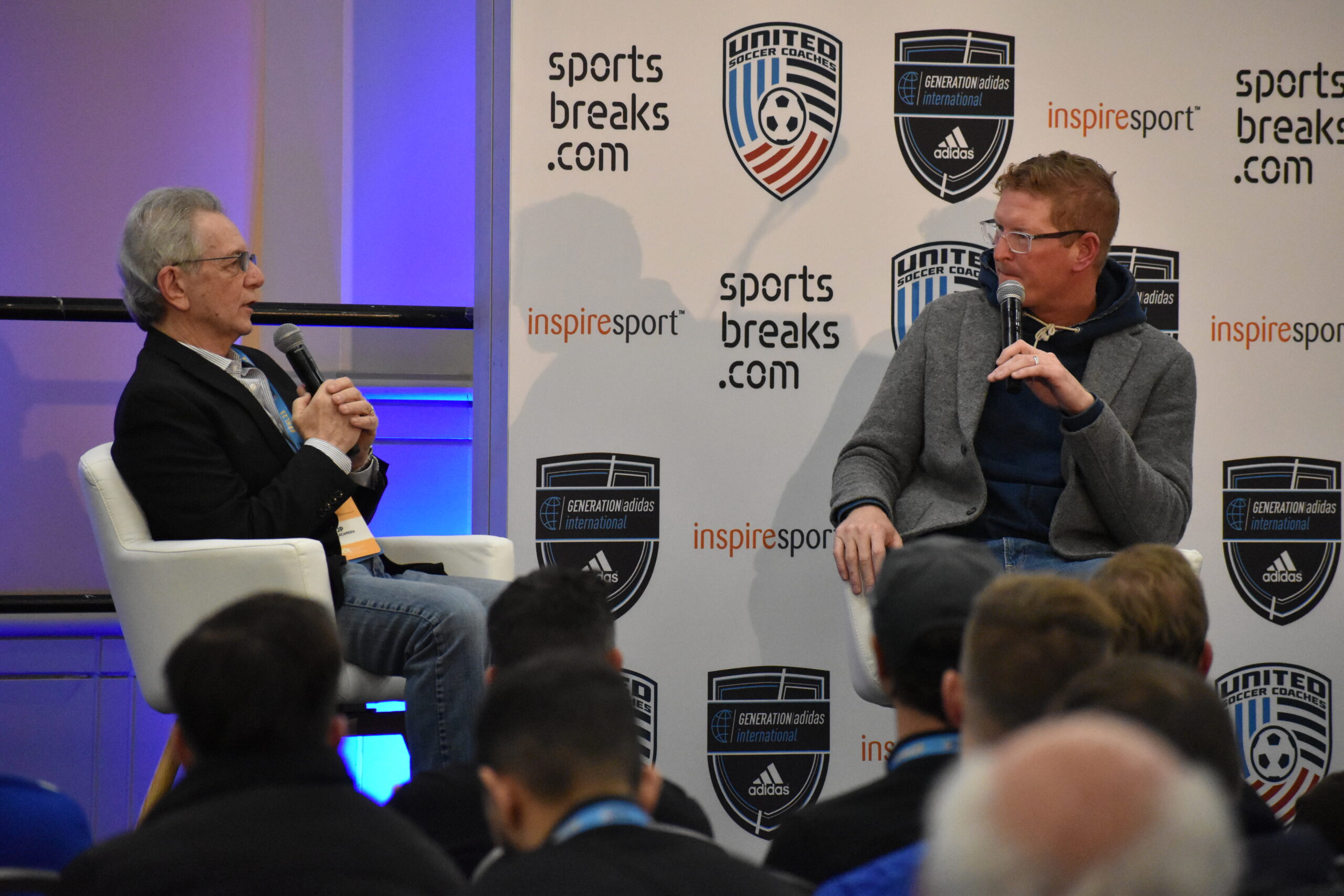
    Former Union manager Jim Curtin (right) with longtime soccer broadcaster JP Dellacamera at the 2023 coaches’ convention in Philadelphia.

    Star players and coaches on stage

    As usual, the speakers will span the range of the sport. Amid the dozens of high school, college, and youth coaches, famous ex-players on stage will include Tab Ramos, John Harkes, Jozy Altidore, Jay DeMerit, and Delran’s Peter Vermes.

    Heather Mitts will share the stage with her husband, former Eagles quarterback A.J. Feeley, on Friday, while her former teammates, Lori Lindsey and Heather O’Reilly, have an event on Thursday.

    Lindsey also will join Carli Lloyd, Alexi Lalas, and JP Dellacamera for a Fox Sports panel on Friday previewing the network’s coverage of this summer’s World Cup.

    Guests from abroad will include former Manchester United player Nicky Butt, former England women’s manager Mark Sampson, and Portugal men’s manager Roberto Martínez. Expect Martínez to draw a big crowd — and perhaps face a few questions about playing the United States in March.

    Roberto Martínez (right) with superstar Cristiano Ronaldo at Portugal’s UEFA Nations League title game win last summer.

    The Union will be well-represented, with manager Bradley Carnell, academy director Jon Scheer, reserve team head coach Ryan Richter, and goalkeeper coach Phil Wheddon scheduled to speak.

    U.S. Soccer also will have lots of dignitaries there: from president Cindy Cone to CEO JT Batson, sporting director Matt Crocker, vice president of strategy Emily Cosler, and Soccer Forward Foundation executive director Lex Chalat. A number of coaches from across national teams will hold seminars, though Mauricio Pochettino and Hayes won’t be there because of other commitments.

    “It will be great to get insight into the preparation for the World Cup,” Payne said. “The youth coaches in Ardmore, they want to know what’s going on with the big shots. It’s neat to hear. … All of a sudden, you’re connected to the highest level, and you have a personal seat there to what’s going on.”

    Saturday night will bring the annual Walt Chyzowych lifetime achievement awards, named for one of Philadelphia’s soccer legends, at the Marriott next door on Market Street. Former U.S. men’s star goalkeeper Tony Meola is this year’s honoree, and it’s always special when the event is in Chyzowych’s adopted home.

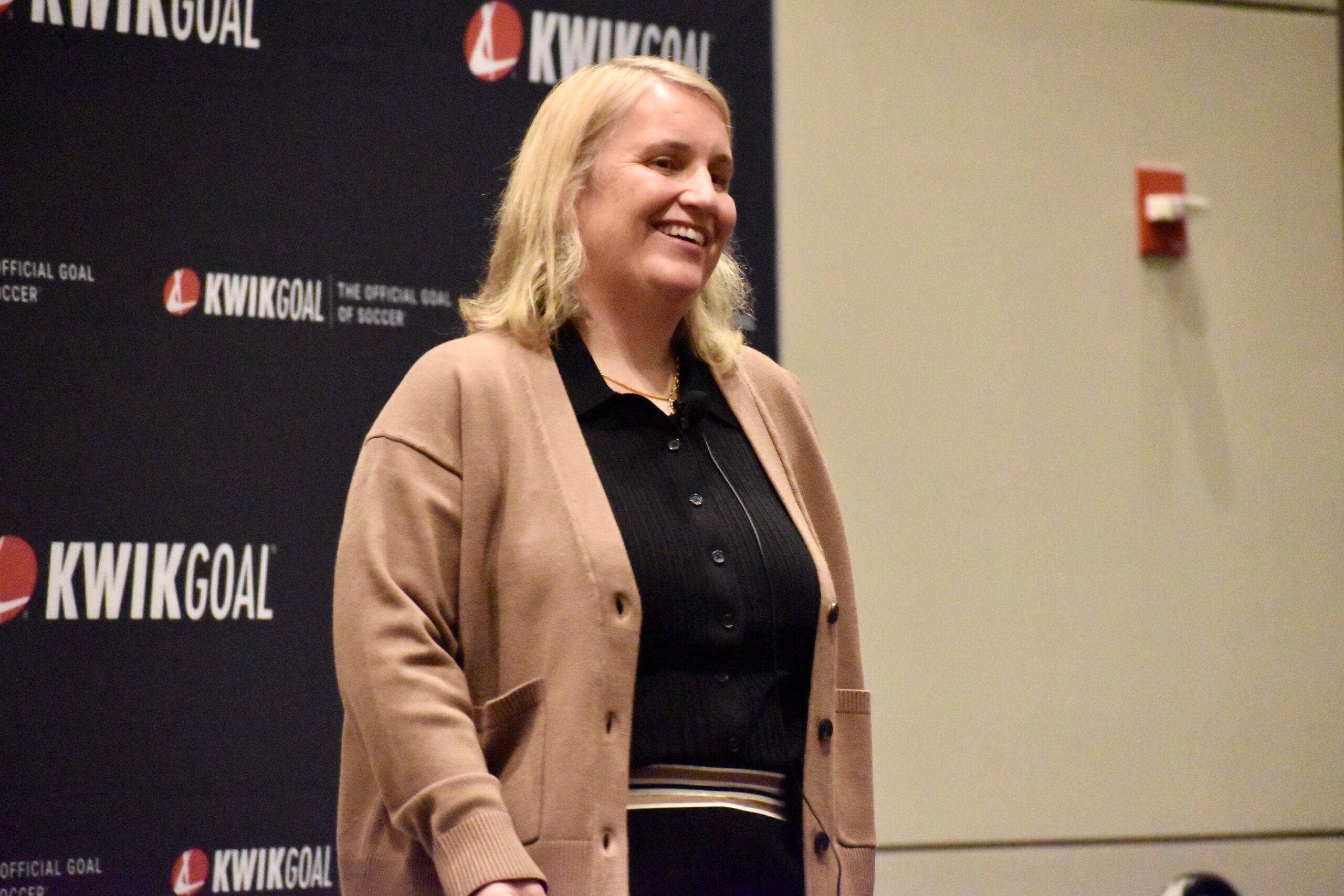
    Emma Hayes has long been a regular at the coaches’ convention, but she won’t be there this year because of the U.S. women’s team’s January camp.

    The public can attend the convention, though it has never been cheap. It’s $665 for the week this year for nonmembers, with extra outlays for some of major ceremonies. (The Chyzowych event doesn’t cost extra, but its regulars often fill the room.) Most attendees will have already registered when they arrive.

    There are day passes available from Wednesday through Saturday for $250 each. There also are tickets just for the exhibit hall, $50 for Thursday night and $75 for the day Friday or Saturday. It’s quite a scene, with vendors hawking everything from newfangled soccer balls to travel packages for youth tournaments.

    Day passes haven’t always existed for the convention, but Payne wanted them to expand the audience — particularly to youth coaches who don’t have the money to pay for the whole thing.

    “If they’re unsure what this is really about, it gives them a chance to get a glimpse of it and experience what this convention is,” he said. “And hopefully it whets their appetite, so they say next year, ‘You know, what I’m going to ask my club to fund me to go all four days,’ or ‘I’m going to ask my high school for professional development money.’”

  • Temple assistant men’s basketball coach Bill Courtney dies

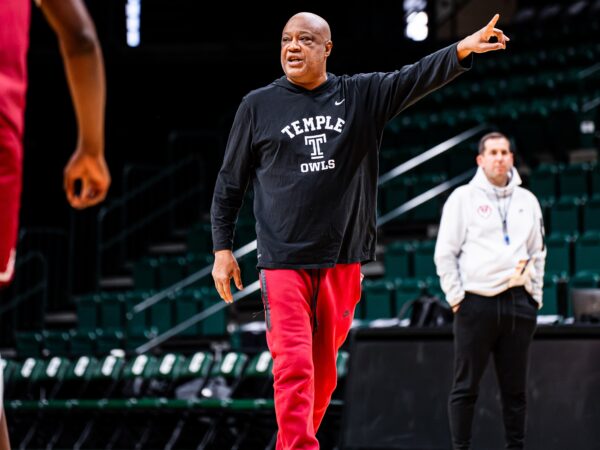
    Temple assistant men’s basketball coach Bill Courtney dies

    Temple assistant men’s basketball coach Bill Courtney died suddenly at the age of 55, the school announced Tuesday morning.

    “I am shocked and heartbroken by the tragic news and passing of my close friend Bill Courtney,” Temple coach Adam Fisher said in a statement. “Bill made such a big impact on our program in such a short time. He was one of the most respected coaches in the country — thoughtful, prepared, and deeply committed to the game and to winning the right way. Bill made every program he touched better, and his loss is felt profoundly by everyone who knew him. Our thoughts and prayers go out to Bill’s family during this extremely difficult time.”

    Mr. Courtney was in his first season with the Owls. He joined Fisher’s staff after spending six seasons in assistant and associate head coaching roles at Miami. He stepped in as Miami’s interim head coach for 19 games last season after Jim Larrañaga retired. Mr. Courtney was the head coach at Cornell from 2010 to 2016, and before that, he spent time as an assistant at Virginia Tech, Virginia, Providence, George Mason, Bowling Green, and American.

    “We are deeply saddened by the passing of Temple men’s basketball assistant coach Bill Courtney,” said Tim Pernetti, commissioner of the American Conference. “In over 30 years as a basketball coach, Courtney had a profound impact on his colleagues and student-athletes.

    “He helped lead Miami to the Final Four and programs to nine postseason tournaments, but his [effect] on the lives of the student-athletes and coaches who worked with him will be his ultimate legacy.”

    A native of Alexandria, Va., Mr. Courtney played at Bucknell University, where he was inducted into the school’s Athletics Hall of Fame in 2007 and remains among the program’s all-time leaders in points and assists. He graduated from Bucknell in 1992 with a degree in education.

    Temple (11-5, 3-0 American) traveled to Memphis Tuesday afternoon as scheduled, according to a source, and will play Wednesday night’s game vs. the Tigers.

    “In the short time that he has been part of the Temple family, I saw the impact that he had on our program with the joy that exuded from him on and off the court,” Temple athletic director Arthur Johnson said in a statement. “He will be missed by his immediate family, his Temple basketball family, and the greater basketball community.”

    Mr. Courtney is survived by his wife, Gina, and two sons, Billy and Derek.

    The school said information regarding memorial services will be announced later.

  • Scott Adams, the ‘Dilbert’ creator who poked fun at bad bosses, dies at 68

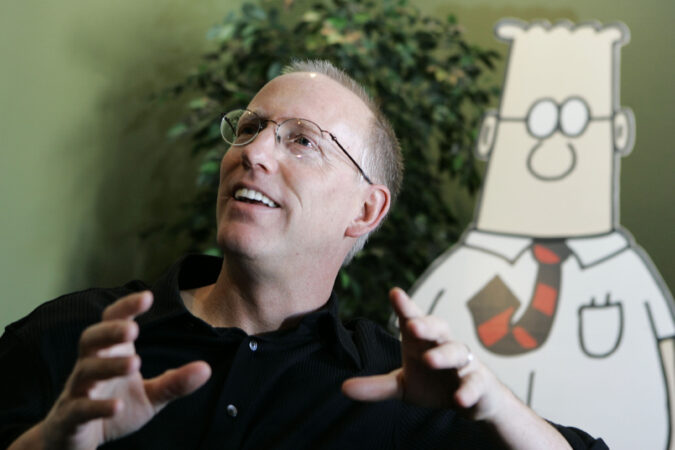
    Scott Adams, the ‘Dilbert’ creator who poked fun at bad bosses, dies at 68

    Scott Adams, who became a hero to millions of cubicle-dwelling office workers as the creator of the satirical comic strip Dilbert, only to rebrand himself as a digital provocateur — at home in the Trump era’s right-wing mediasphere — with inflammatory comments about race, politics, and identity, died Jan. 13. He was 68.

    His former wife Shelly Miles Adams announced his death in a live stream Tuesday morning, reading a statement she said Mr. Adams had prepared before his death. “I had an amazing life,” the statement said in part. “I gave it everything I had.”

    Mr. Adams announced in May 2025 that he had metastatic prostate cancer, with only months to live. In a YouTube live stream, he said he had tried to avoid discussing his diagnosis (“once you go public, you’re just the dying cancer guy”) but decided to speak up after President Joe Biden revealed he had the same illness.

    “I’d like to extend my respect and compassion for the ex-president and his family because they’re going through an especially tough time,” he said. “It’s a terrible disease.”

    Mr. Adams was working as an engineer for the Pacific Bell telephone company when he began doodling on his cubicle whiteboard in the 1980s, dreaming of a new, more creatively fulfilling career as a cartoonist. Before long, he was amusing colleagues with his drawings of a mouthless, potato-shaped office worker: an anonymous-looking man with a bulbous nose, furrowed pate, and upturned red-and-white striped tie.

    His doodles evolved into Dilbert, a syndicated comic strip that debuted in 1989 and eventually appeared in more than 2,000 newspapers around the world, rivaling Peanuts and Garfield in popularity.

    Years before the film comedy Office Space and TV series The Office satirized the workplace on-screen, Dilbert poked fun at corporate jargon, managerial ineptitude, and the indignities of life in the cubicle farm.

    In one strip, the title character is awarded a promotion “with no extra pay, just more responsibility,” because “it’s how we recognize our best people.” In another, he’s presented with an “employee location device” — a dog collar.

    Other Dilbert cartoons could be crassly funny. Seeking to improve the company’s image, Dilbert’s pointy-haired boss hires an ad agency that uses a computer program to come up with a new “high-tech name” for the firm, using random words from astronomy and electronics. Their suggestion: “Uranus-Hertz.”

    Mr. Adams proved adept at growing his audience during the tech boom of the 1990s, creating a Dilbert website long before most other cartoonists took to the internet. He also became the first major syndicated cartoonist to include his email address in his comic strip, an innovation that allowed readers to contact him directly with ideas. Their feedback convinced him to focus the cartoon entirely on the workplace, after some of the strip’s early installments explored Dilbert’s home life.

    Interviewed by the Wall Street Journal in 1994, Mr. Adams observed that “the universal thread” uniting the strip’s readers “is powerlessness. Dilbert has no power over anything.”

    By the end of the decade, Dilbert seemed to be everywhere, appearing on the cover of business magazines and in book-length compendiums. Mr. Adams signed off on the creation of a Dilbert Visa card and a Ben & Jerry’s ice cream flavor, branded as Totally Nuts; licensed his cartoon characters for commercials; and partnered with Seinfeld writer Larry Charles to develop an animated Dilbert television series, which aired for two seasons on the now-defunct UPN network.

    Capitalizing on the cartoon’s success, he also put out a shelfful of satirical business books, beginning with the 1996 bestseller The Dilbert Principle. Inspired by the Peter Principle, a management concept in which employees are said to be promoted to their level of incompetence, Mr. Adams argued that “the most ineffective workers are systematically moved to the place where they can do the least damage: management.”

    He wasn’t entirely joking. As he saw it, the people who spouted inane ideas, sucked up to management and pretended they knew more than they did were the ones who got promoted. The workplace was a mess, he suggested, but by calling out bosses’ bad behavior, Dilbert could be a force for good.

    “I heard from lots of people who told me, ‘My boss started to say something that was ridiculous — management fad talk, buzzwords — but he stopped himself and said, “OK, this sounds like it came out of a Dilbert comic,’ and then started speaking in English again.’

    “There is a fear of being the target of humor,” Mr. Adams told the Harvard Business Review.

    Companies such as Xerox incorporated the character into communications and training programs. But some critics found the cartoon’s sarcasm more corrosive than entertaining. Author and progressive activist Norman Solomon, who wrote a book-length critique of the comic, argued that Dilbert was hardly subversive, saying that it offered more for bosses than workers.

    Dilbert does not suggest that we do much other than roll our eyes, find a suitably acid quip, and continue to smolder while avoiding deeper questions about corporate power in our society,” Solomon wrote.

    Mr. Adams scoffed at the criticism, lampooning Solomon by name in his books and comic strips. “My goal is not to change the world,” he told the Associated Press in 1997. “My goal is to make a few bucks and hope you laugh in the process.”

    In interviews, he was often self-deprecating, declaring that his comic strip was “poorly drawn” and noting that long before he made Dilbert he “failed at many things,” including computer games he attempted to program and sell. His other failures included the Dilberito, a line of vitamin-filled veggie wraps that ended up making people “very gassy,” and his short-lived attempt at managing an unprofitable restaurant, Stacey’s at Waterford, that he owned in the Bay Area.

    “Certainly I’m an example of the Dilbert Principle,” he told the New York Times in 2007, a few months into his stint as a restaurant boss. “I can’t cook. I can’t remember customers’ orders. I can’t do most of the jobs I pay people to do.” (Employees told the newspaper that Mr. Adams was loyal and kind, yet totally clueless. “I’ve been in this business 23 years, and I’ve seen a lot of things,” the head chef said. “He truly has no idea what he’s doing.”)

    On the side, Mr. Adams blogged about fitness, politics, and the art of seduction — drawing, he said, on his training as a certified hypnotist, which he learned before becoming a cartoonist. He also wrote about his struggles with focal dystonia, a neurological disorder, which caused spasms in his pinkie finger that made it difficult to draw. Mr. Adams said he developed tricks to get around the issue, holding his pen or pencil to the paper for just a few seconds at a time, and underwent experimental surgery to treat a related condition, spasmodic dysphonia, that hindered his ability to speak.

    Politically, he cast himself as an independent, saying he didn’t vote and was not a member of any party. But he also veered into far-right political terrain on his blog, including in a 2006 post in which he questioned “how the Holocaust death total of 6 million was determined.” A few years later, writing about “men’s rights,” he compared society’s treatment of women to its treatment of children and people with mental disabilities.

    “You don’t argue with a 4-year old about why he shouldn’t eat candy for dinner. You don’t punch a mentally handicapped guy even if he punches you first. And you don’t argue when a woman tells you she’s only making 80 cents to your dollar. It’s the path of least resistance,” he wrote.

    Mr. Adams made headlines with his prediction that Donald Trump, whom he considered a master of persuasion, would win the 2016 presidential election. He was later invited to the White House after publishing the 2017 nonfiction book Win Bigly: Persuasion in a World Where Facts Don’t Matter. (The book’s cover art featured an orange-hued drawing of Dogbert, Dilbert’s megalomaniacal pet dog, with a Trumplike swoosh of hair.)

    “He was a fantastic guy, who liked and respected me when it wasn’t fashionable to do so,” Trump said Tuesday in a Truth Social post, referring to Mr. Adams as “the Great Influencer.” “My condolences go out to his family, and all of his many friends and listeners.”

    Amid a national reckoning on race in the 2020s, Mr. Adams sparked a backlash for his criticisms of diversity, equity, and inclusion programs, and for social media posts in which he joked that he was “going to self-identify as a Black woman” after President Joe Biden vowed to nominate an African American woman to the Supreme Court. In 2022, he introduced Dilbert’s first Black character, an engineer named Dave who announces to colleagues that he identifies “as white,” ruining management’s plan to “add some diversity to the engineering team.”

    The following year, Dilbert was dropped by hundreds of newspapers, including The Philadelphia Inquirer and Daily News, after Mr. Adams delivered a rant that was widely decried as hateful and racist. Appearing on his YouTube live-stream show, Real Coffee With Scott Adams, he discussed a controversial Rasmussen poll asking people if they agreed with the statement “It’s OK to be white,” a slogan associated with the white supremacist movement. About a quarter of Black respondents said “no.”

    Mr. Adams was appalled by the results. He declared that African Americans were “a hate group,” adding: “I don’t want to have anything to do with them. And I would say, based on the current way things are going, the best advice I would give to white people is to get the hell away from Black people.”

    Within a week his syndicate and publisher, Andrews McMeel Universal, cut ties with the cartoonist. Mr. Adams defended his comments, saying he had meant the remarks as hyperbole, and found support from conservative political activists as well as billionaire Tesla executive Elon Musk.

    In a follow-up show on YouTube, he disavowed racism against “individuals” while also telling viewers that “you should absolutely be racist whenever it’s to your advantage.” Weeks later, he relaunched Dilbert on the subscription website Locals, vowing that the comic would be “spicier” — less “PC” — “than the original.”

    “Only the dying leftist Fake News industry canceled me (for out-of-context news of course),” he tweeted in March 2023. “Social media and banking unaffected. Personal life improved. Never been more popular in my life.”

    From bank teller to cartoonist

    Scott Raymond Adams was born in Windham, N.Y., a ski town in the Catskills, on June 8, 1957. His father was a postal clerk, and his mother was a real estate agent who later worked on a speaker-factory assembly line.

    Growing up, Mr. Adams copied characters out of his favorite comic strips, Charles M. Schulz’s Peanuts and Russell Myers’ Broom-Hilda. He applied for a correspondence course at the Famous Artists School but was rejected, he said, because he was only 11. The minimum age was 12.

    Mr. Adams eventually took a drawing course at Hartwick College in Oneonta, an hour’s drive from his hometown. He received the lowest grade in the class and decided to focus instead on economics, receiving a bachelor’s degree in 1979. He moved to San Francisco, got a job as a bank teller at Crocker National Bank and, in his telling, was twice robbed at gunpoint while working behind the counter.

    At night, he took business classes at the University of California at Berkeley. He earned an MBA in 1986 and joined PacBell as an applications engineer, though he found himself deeply unhappy. “About 60 percent of my job at Pacific Bell involved trying to look busy,” he wrote in a 2013 book, How to Fail at Almost Everything and Still Win Big: Kind of the Story of My Life.

    After watching a public television series, Funny Business: The Art in Cartooning, he decided he had found his calling. Mr. Adams struck up a correspondence with the show’s host, cartoonist John “Jack” Cassady, who encouraged him to submit to major magazines like Playboy and the New Yorker.

    All his cartoons were rejected. But with Cassady’s encouragement, Mr. Adams continued to draw, waking up at 4 a.m. and sitting down with a cup of coffee to work on doodles of Dilbert and other characters. He stayed motivated in part by writing an affirmation: “I, Scott Adams, will become a famous cartoonist.”

    Even after he signed a contract to publish Dilbert through United Feature Syndicate, Mr. Adams continued to work at his day job, making $70,000 a year and gathering ideas for his strip while sitting at cubicle No. 4S700R. He left the company in 1995, and two years later he won the National Cartoonists Society’s highest honor, the Reuben Award for cartoonist of the year.

    Mr. Adams was twice married and divorced, to Shelly Miles and Kristina Basham. Information on survivors was not immediately available.

    Looking back on his career, Mr. Adams said he was especially proud of two novellas he had written, God’s Debris (2001) and the sequel The Religion War (2004). The latter was set in 2040 and revolved around a civilizational clash between the West and a fundamentalist Muslim society in the Middle East.

    Discussing the plot in a 2017 interview with Bloomberg Businessweek, Mr. Adams said that the Muslim extremists are defeated after the hero builds a wall around them and “essentially kills everybody there.”

    “I have to be careful, because I’m talking about something pretty close to genocide, so I’m not saying I prefer it, I’m saying I predict it,” he added.

    The magazine reported that Mr. Adams believed the novellas, not Dilbert, would be his ultimate legacy.
  • The other ‘insane’ thing about Trump and Venezuela | Will Bunch Newsletter

    The Eagles are who we thought they were. A team that consistently disappointed its fans despite winning the NFC East in defense of its Super Bowl crown put in a disappointing one-and-done playoff performance under a clueless offensive coordinator, with a banged-up O-line and some stars (cough, cough…A.J. Brown) perhaps past their peak. But this is what Philly fandom is all about: one battle after another.

    If someone forwarded you this email, sign up for free here.

    Dirty, toxic oil from Venezuela is the last thing that America needs

    John Beard drives near a liquid natural gas facility in Port Arthur, Texas. In addition to LNG facilities, Port Arthur is surrounded by oil refineries and petrochemical plants. Beard says Black and brown communities like Port Arthur are having to bear much of the risk posed by the facilities.

    You could say that crude oil is in John Beard Jr.’s blood. His dad worked for more than 44 years at a giant Gulf Oil refinery in the heady 20th-century days of the South Texas energy boom, and Beard then followed his father’s footsteps by working 38 years at a rival Exxon facility in Beaumont, before heading home to sleep in the shadow of Port Arthur’s own dense row of dozens of refineries.

    But today, Beard — a longtime civic activist and political leader in Port Arthur’s large Black community — is fighting to keep oil out of his neighbors’ blood, literally.

    “It was nothing to wake up the next morning and find a yellow stain against the side of your house with something had been released in the air,” Beard told me last week on the phone as he talked about growing up surrounded by tall refinery stacks. “You may have smelled it, or you may have slept through it and all and come to find out that it stained your house or whatever.”

    Although the Gulf Coast city of 55,000 was dubbed Texas’ “cancer belt” decades ago, it wasn’t until 2010 — when Beard heard about a report that Port Arthur residents are 40% more likely to develop cancer than similar towns just 25 miles upwind — that Beard became a tireless environmental activist.

    “You know how you say when the refinery has a sneeze, we get pneumonia?” he asked. “But no, we don’t get pneumonia. We get cancer.” The most-feared disease has touched pretty much every family that Beard knows in the economically struggling town.

    This was all before last week’s lightning bolt of news: that the U.S. military had bombed Venezuela and seized its indicted strongman leader Nicolás Maduro. It was quickly followed by Donald Trump announcing a scheme to bring some 30-to-50-million barrels of oil to the United States — meaning the backyards of Beard and his neighbors.

    Indeed, experts have tagged Valero’s big refinery in Port Arthur that towers over Beard’s home — heavily invested in specialized equipment to process the sour, heavy crude that comes from Venezuela — as most likely to benefit from Trump’s proposed gambit.

    Environmentalists say any new refinery jobs and U.S. corporate profits will be swamped by increased pollution of both the toxic chemicals that have already sickened Port Arthur, and greenhouse gases that threaten us all through climate change.

    When America woke up 10 days ago to news that Trump had ordered the dead-of-night assault on Venezuela and seized Maduro, there was one word that echoed among Democratic lawmakers asked for a comment. “Is anyone going to just stop for a second and be honest?” U.S. Rep. Seth Moulton of Massachusetts told CNN. “This is insane. What the hell are we doing?”

    But the first wave of critics like Moulton focused mainly on the rank illegality of Trump’s maneuver — failing to get congressional approval or even consult its leaders, over an act of unlawful aggression that killed as many as 100 people on the ground, and which seemed to lack any planning for how to deal with the aftermath of taking Maduro.

    Those problems have been amplified in the days since Moulton and others branded the operation as “insane.” It is indeed insane when Trump declares to the world that the United States is “in charge” of Venezuela and a few days later his State Department says the country is unsafe for Americans because of violent roving gangs. For that matter, it’s also meshugana to upend the global order that has reigned since the end of World War II, when the U.S. led efforts to ban wars of aggression.

    But we’re not talking nearly enough about what’s maybe most whacked-out about Trump’s splendid little war in Latin America — that by making his operation all about taking the oil, he seeks to endanger the entire planet by accelerating climate change. One expert told the Associated Press that increasing production of Venezuela’s thick, dirty crude by a target of 1 million barrels a day would also add roughly 360 million metric tons of carbon dioxide a year from the production process — a significant spike in the gases that are warming our planet.

    That Trump made it clear that his goal in making war against Venezuela was all about grabbing its oil on the one-year anniversary of the deadly Los Angeles wildfires — perhaps the most dramatic of the floods, amped-up hurricanes, and other weather catastrophes exacerbated by a hotter planet — was especially disgusting.

    Michael E. Mann, director of the Center for Science, Sustainability and the Media at the University of Pennsylvania, told me that while Trump’s initial target for Venezuelan oil seems modest, experts believe the South American nation could harbor a whopping 300 billion barrels under ground. He has written that Trump aims to make America a “petrostate,” allied with other bad actors such as Russia and Saudi Arabia in working to undermine any global consensus around fighting climate change.

    Less than a week after the Venezuela strike, the New York Times reported that Trump’s U.S. Environmental Protection Agency is dropping its longtime requirement to weigh the cost on human lives — early deaths, or chronic diseases like asthma — in regulating key air pollutants, including those from oil refineries. As a matter of policy, the U.S. government now values the dollars that Valero or Exxon can make from burning dirty oil over the very existence of Beard and his Texas community. That’s not surprising from the crew that’s dismantled an entire generation of EPA programs that once targeted the environmental racism that dumps pollutants on disadvantaged Black and brown communities like Port Arthur.

    Indeed, the 100 fatalities caused by the Trump regime’s militarism against Venezuela — although a human-rights outrage — will likely pale over time against the canopy of death and destruction that historians will blame on the president’s obsession with doubling down on fossil fuels while other nations focus on green energy such as wind or solar.

    A preview of the world’s coming attractions is arguably taking place right now on the blood-soaked streets of Tehran, where experts believe months of severe drought that sometimes left poorer neighborhoods in the Iranian capital with little or no running water has been a key trigger for the collapse of social order.

    While foreign policy experts aren’t wrong to worry about U.S. expansionism triggering World War III, Trump’s backward-looking energy policies could cause a similar or worse toll through civil war and mass migration. While top energy officials — including the Exxon Mobil CEO who called Venezuela “uninvestable” — say Trump’s Venezuela dreams are economically unrealistic, the time lost for America to reduce its greenhouse gas pollution is a clear and present danger for civilization.

    History is almost sure to judge that “insane” was far too generous a word to describe it.

    Yo, do this!

    • I’ve written about this before but I can’t say enough about the essentialness of Andrew Hickey’s long-running podcast, A History of Rock Music in 500 Songs, which currently is up to around 1969 on its long, strange trip. His latest episode — about Jimmy Cliff, “Many Rivers to Cross,” and the invention of reggae — proved unexpectedly prescient when Cliff died at age 81 just before its release. Now, the passing of the Grateful Dead’s Bob Weir has me dredging up his recent episode about the Dead, “Dark Star,” and the rise of an almost spiritual cultural phenomenon.
    • In the world of media, the mid-2020s will be remembered as the moment that intrepid independent journalists stepped up and did the work that traditional newsrooms are suddenly too cowed or too compromised to perform. Since ICE and the Border Patrol amped up their immigration raids last summer, I’ve become a big fan of Amanda Moore (@noturtlesoup17.bsky.social on Bluesky), who has birddogged Greg Bovino and his goon squad from the Big Easy to the frigid streets of Minneapolis. Check out her coverage of the far right for Mother Jones.

    Ask me anything

    Question: Please explain how the “anti-elite” [MAGA] base can continue to support all the elite personnel in charge of America’s economy in this regime? Just ONE recent example: [Pennsylvania Sen. Dave] McCormick’s wife’s Facebook promotion in charge of….“sovereign relations concerning AI…“. — @tim215.bsky.social via Bluesky

    Answer: Tim, I think the ascension of Dina Powell McCormick — the former Trump 45 aide who is also married to Pennsylvania’s Republican junior senator — to the job of president of Facebook’s parent company Meta has profoundly troubling implications. This is neither to say that Mark Zuckerberg’s new hire lacks qualifications, nor that Senate spouses should be barred from the private sector. But the move surely reflects Silicon Valley’s determination to curry favor with the personalist Trump regime by any means necessary. What bothers me even more, as a Pa. voter, is that I see the issues surrounding Meta — especially the currently unchecked rise of artificial intelligence, or AI — as requiring clear-eyed leadership. How can anyone now expect Sen. McCormick to be an honest broker?

    What you’re saying about…

    Last week’s question about the attack on Venezuela drew a robust response, as I expected, and — also as I expected — almost unanimous opposition to Trump’s policy for the troubled country. Most of you saw the military operation as illegal and unconstitutional, and share my befuddlement (see above) on the president’s assertion that taking Venezuela’s oil was the prime reason, except for Jon Elliott, who wrote: “I absolutely endorse Trump’s Pirates of the Caribbean excursion with one proviso — he performs Maduro redux in North Korea.” More typical was Tom Lees: “I was born in June 1945, two months before the dropping of the atomic bombs. The world order that has prevented WWIII seems to be in the process of being dismantled by people who should be imprisoned (Donald Trump) or institutionalized (Stephen Miller).”

    📮 This week’s question: Given the uproar over the killing of Renee Good, is “Abolish ICE” now the mainstream position, and do you support it? If so, how should the U.S. enforce its immigration laws? Please email me your answer and put the exact phrase “Abolish ICE” in the subject line.

    Backstory on the end of Newsom’s WH dreams

    California Gov. Gavin Newsom speaks during his State of the State address Thursday in Sacramento, Calif.

    One of the most anticipated stories of 2026 isn’t supposed to happen until the waning weeks of the year, when the votes from the midterm election have been counted and top Democrats beginning lining up for their shot at following Donald Trump as the 48th president. But the most consequential early moment in that Dem primary race may have already happened. On Monday, California Gov. Gavin Newsom faced a career-defining choice between the growing populism of his party’s anxious voters, or the Silicon Valley moguls who’ve been there for him in the past.

    Newsom chose the billionaires.

    At issue is a citizen initiative to place a wealth tax on California’s richest of the rich — those with a net worth of more than $1 billion — to pay a one-time levy equal to 5% of their assets, with most of the revenue targeted toward keeping troubled hospitals open and other healthcare costs. Backed by a powerful labor union, the Service Employees International Union-United Healthcare Workers West, the ballot measure reflects growing global rage over economic inequality and the current zeitgeist among Democrats likely to vote in the 2028 primaries. Not surprisingly, the push has angered Silicon Valley’s increasingly right-wing tech titans and investors like Peter Thiel or Google co-founder Larry Page who’ve threatened to move to red states like Florida or Texas.

    Newsom, who is term-limited and leaves the governor’s mansion at year’s end, has long walked a tightrope between boosting his White House ambitions by relentlessly needling Donald Trump on social media while — with considerably less fanfare — catering to the high-tech poobahs who’ve funded his campaigns and who, Newsom insists, would damage the Golden State economy by leaving. On Monday, the governor told the New York Times that he firmly opposes the proposed wealth tax and will use his bully pulpit to fight the measure if it reaches the ballot.

    “Hey idiots: You’re rich,” the independent journalist Hamilton Nolan wrote in a riposte to Thiel and Co. posted hours before Newsom’s decision. “Enjoy your lives. Pay your taxes and count your blessings. Is this the perfect life that you dreamed of for yourself — performatively kissing the ass of a dictator, giving up your home to flee the taxman, earning the enmity of your fellow man, all in service of money you will never spend?”

    Nolan’s piece may have targeted the 0.1%, but it also seemed to carry a message that Newsom and any other Democratic presidential hopefuls need to hear. Running as a performative kind of center-left Trump with viral social media posts will get you attention but not the White House. The core of rank-and-file Democrats — especially the 7 million who took to the streets last summer for the No Kings protest — wants radical changes they’re not seeing in Newsom’s California. These include limits on artificial intelligence, a major overhaul of the Supreme Court, and — especially — an end to the gross unfairness of economic inequality. Hopefully Newsom’s pals in Silicon Valley can find him new work, because 1600 Pennsylvania Ave. already looks above his future pay grade.

    What I wrote on this date in 2019

    One of the many similarities between today and the United States seven years ago is that Democrats and other progressives were already deeply divided over how best to respond to Donald Trump and threats against democracy. On this date in 2019, I put forth my own idea that I’m not sure I’d endorse in hindsight: that Bernie Sanders was the most inspiring figure in U.S. politics, yet should stand down from the 2020 election. I wrote about “a sense that white dudes from the baby-boomer-and-older generation have been running things for far too long, and that America needs some new blood.” Instead, we got the two oldest presidents in American history. Read the rest: “Bernie Sanders is the leader America needs now. Just NOT by running for president in 2020.”

    Recommended Inquirer reading

    • Late last year, I predicted that Trump’s plummeting popularity would cause him to double down on autocracy. For once, I was right. In my Sunday column, I wrote about the shocking ICE Minneapolis murder of 37-year-old poet and mom Renee Nicole Good and the broader war for the truth that was defined by the Trump regime’s instant smears against the victim. Over the weekend, I looked at how 2026’s shocking start from Caracas to the Twin Cities was punctuated by Trump’s jarring comments to the New York Times — that nothing can stop him but “my own mind” and “my own morality.” I stressed that he can and will be stopped — by our morality.
    • The nation remains on edge nearly one week after the ICE agent gunned down Good in the streets of Minneapolis, and already the resistance movement to ICE has seen some twists and turns. None has been more dramatic in Philadelphia than the unexpected return of the Black Panther Party for Self Defense, an iconic social movement that thrived in the late 1960s and early ‘70s before a government crackdown. When several armed members of the Black Power group demonstrated against ICE near City Hall on Thursday, The Inquirer’s Brett Sholtis jumped on the story and followed up with an in-depth profile of the small group, whose Philly leader, Paul Birdsong, said Good’s killing “wouldn’t have happened if we were there.” Sholtis is part of the paper’s jacked-up weekend news coverage that is supported by your subscription dollars. Local journalism is a bulwark against tyranny. Become a part of it by subscribing to The Inquirer today.

    By submitting your written, visual, and/or audio contributions, you agree to The Inquirer‘s Terms of Use, including the grant of rights in Section 10.

  • Don Was will celebrate Bob Weir and play the Grateful Dead’s ‘Blues for Allah’ with his new band in Ardmore

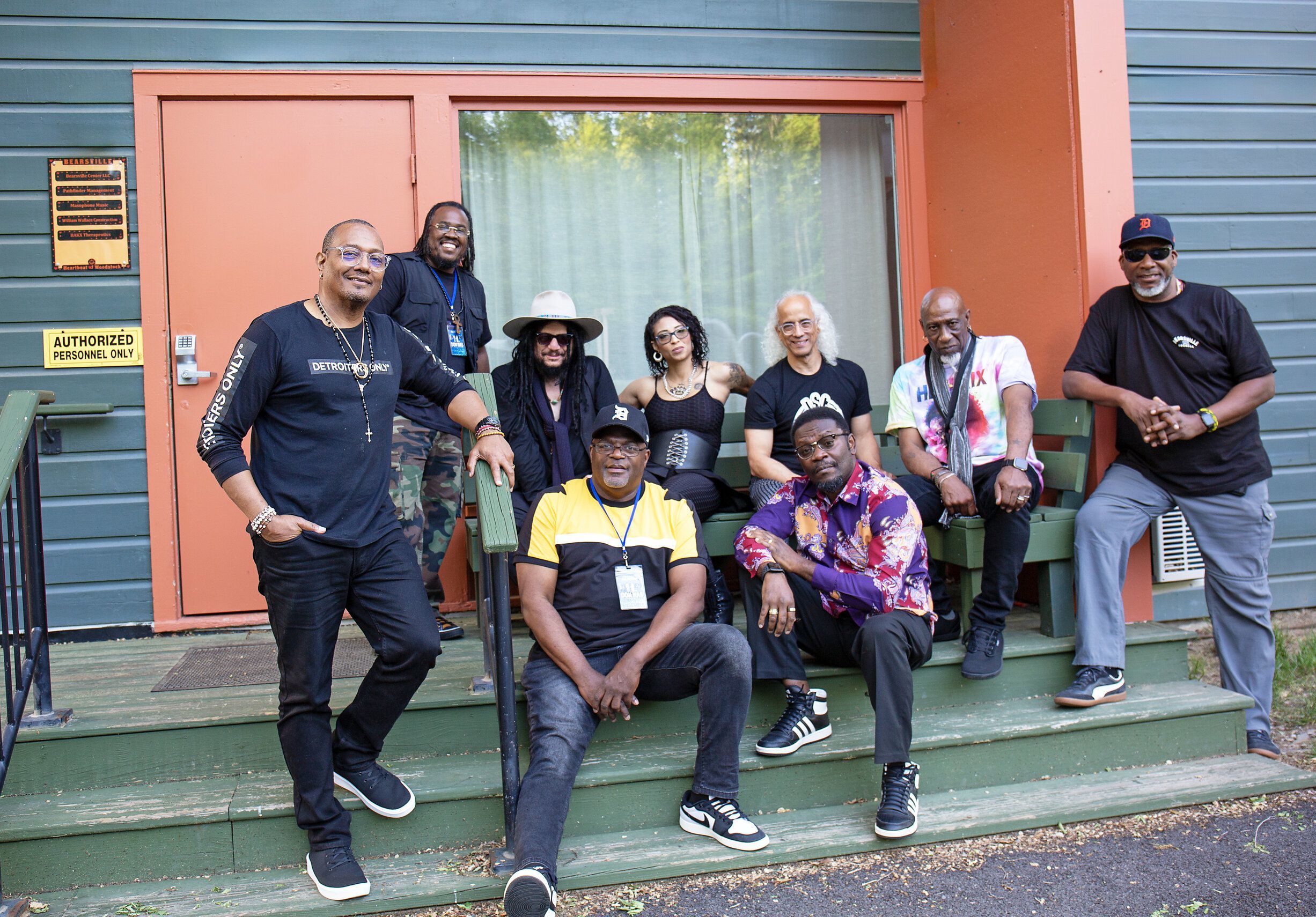
    Don Was will celebrate Bob Weir and play the Grateful Dead’s ‘Blues for Allah’ with his new band in Ardmore

    Don Was’ show with the Pan-Detroit Ensemble at Ardmore Music Hall on Wednesday was always going to be, in part, a tribute to the music of the Grateful Dead.

    Along with digging deep into the rugged, funky sounds of their hometown — as the bassist and Grammy-winning producer and his bandmates do on their new album, Groove in the Face of Adversity — the date will also include a performance of the Dead’s 1975 album, Blues for Allah, in its entirety.

    But now the Dead community is reeling from the loss of Bob Weir, the singer-guitarist who cofounded the Dead in 1965 and became a torch bearer for the band’s music in the decades since Jerry Garcia died in 1995.

    So when Was and his eight-piece band return to the Main Line venue where they played in June at the Music Hall’s annual “Unlimited Devotion” Dead celebration, the show will be an opportunity for Philly Dead fans to mourn Weir, who died Saturday at 78.

    It will also serve as a celebration of the short-shorts-wearing rhythm guitarist and vocalist who sang many of the psychedelic rock band’s most beloved songs, including “Sugar Magnolia,” “Truckin’,” and Blues for Allah’s “The Music Never Stopped.”

    Was is president of the esteemed Blue Note Records jazz label and the former coleader of art-pop band Was (Not Was), best known for the hit “Walk the Dinosaur.” His long list of production credits includes Bonnie Raitt, the Rolling Stones, Willie Nelson, Bob Dylan, and many others.

    He also toured extensively with Weir, playing double bass with Wolf Bros, the band formed in 2018 whose repertoire mixed country and jazz with the Dead’s mystical roots-music blend.

    Don Was (at right) with Bob Weir performing together as Wolf Bros in 2018.

    Weir played Philadelphia stages with the Dead or one of their many offshoots over 70 times — including a record 57 concerts at the Spectrum in South Philly before it closed in 2009. His last Philly show was a Wolf Bros gig at the Met in September 2023.

    Was learned of Weir’s death shortly before going on stage in Ann Arbor, Michigan, on Saturday, and broke the news to a crowd full of Deadheads.

    “I told them the story Bobby told me about the night Jerry died,” Was said, talking on Monday from New York, where he and the stellar Pan-Detroit Ensemble, which includes saxophonist David McMurray and powerhouse vocalist Steffanie Christi’an, were set to play the Blue Note before heading to Philly.

    “Bobby was in New Hampshire with [his side project] Ratdog [in 1995]. He told me, ’You go up there and play, man. The way you deal with grief is you go up there and make some good music for everybody.’

    “So that’s what we’re going to do for Bobby. We’re going to play a soulful show, as soulful as we can. [In Ann Arbor] I hung out with the audience afterwards, and everybody had their story about some encounter with Bob over the last 60 years. It was almost like a wake. It might just be that this tour is about bringing some comfort to people who suffered a loss. Even if you’re just a fan. Bobby is like a family member to people.”

    Was first saw the Dead in Detroit in 1972. “I always dug them,” he says, “and being a jazz head, I understood the method of improvisation. But I never got in a car and followed them around, so I don’t think you could have called me a Deadhead then.”

    You could now, as well as a key player in the enduring band’s long, strange post-Garcia afterlife. In 2015, while producing guitarist John Mayer in Los Angeles, Was introduced Weir and Dead drummer Mickey Hart to Mayer, who was boundlessly enthusiastic about Garcia and the band.

    “John waxed eloquent about his love of the Grateful Dead,” recalls Was, 73. “And those guys were just kind of bowled over by it. … And that turned into Dead & Company.”

    Wolf Bros was inspired by a dream of Weir’s. The singer and guitarist was a frequent collaborator with bassist Rob Wasserman, who had introduced Weir to Was in the 1990s.

    After Wasserman died in 2016, Weir called Was. “He said he had a dream where Wasserman said the reason he had introduced Bobby to me,” said Was, “was so I could take Rob’s place after he was gone. So he asked me if I wanted to start a trio with him and [drummer] Jay Lane. And I said, ‘Yeah, of course.’”

    Playing with Wolf Bros “changed everything for me,” Was says. Weir was “utterly fearless about suspending self-consciousness and playing freely in the moment without regret.”

    “There’s a tremendous allure to those songs, and to play them the way Bobby wanted to, which was with a beginner’s mind every night and just have a completely different adventure with a song every time you play it.”

    Don Was and the Pan Detroit Ensemble play Ardmore Music Hall on Wednesday, performing music from their album “Groove in the Face of Adversity” and also playing the Grateful Dead’s 1975 album “Blues for Allah” in its entirety.

    As head of Blue Note, Was is excited about the young artists on the storied home of Herbie Hancock and Wayne Shorter. He name-checks Joel Ross, Melissa Aldana, Paul Cornish, and Upper Darby native saxophonist Immanuel Wilkins.

    “They all have records coming out this year, and they’re all blowing my mind,” Was said. “People who see Immanuel Wilkins will be talking about seeing him the way they talk about seeing Coltrane. They still be listening 60 or 70 years from now.”

    On Groove in the Face of Adversity, Was and the PDE bring a loose, expansive sensibility to a wide range of material, from Hank Williams’ honky-tonk “I Ain’t Got Nuthin’ But Time“ to Cameo’s 1978 funk workout “Insane.”

    Most powerful is “This Is My Country,” the Curtis Mayfield title track from a 1968 album by the Impressions that stands as a statement of defiant patriotism in the face of oppression. “I realized it’s tragically more relevant now than it was in 1968,” Was said.

    “I feel an urgency” about playing with the PDE, “especially after Saturday night,” Was said. “I feel like I’m just starting to crack the code about playing bass. I want to play while I can” — he laughs — “while my fingers still work.”

    The PDE sound is more muscular and R&B-powered than the acoustic-based style he played with Weir in Wolf Bros. But Was says they’re connected in not-obvious ways.

    “When I first started to play with Bobby, I was haunted by Phil,” he said, speaking of bassist Phil Lesh, who died in 2024. “But I can’t play like Phil. Nobody can play like Phil. It was putting me in stylistic limbo. And then I quickly realized the most Grateful Dead thing you can do with a song is be yourself. Be who you are.

    “So that’s what our band does. We play like us. In the music business, we tend to think of anything that’s different as a marketing problem. But in fact, being different is your superpower. I’ve tried to impart that to artists on Blue Note and people I’ve produced. To be as different as you can be: That’s the only chance you’ve got!”

    Don Was and the Pan-Detroit Ensemble at Ardmore Music Hall, 23 E. Lancaster Ave., Ardmore, at 8 p.m. Wednesday. ardmoremusichall.com.

  • Boy, 16, fatally shot inside Chipotle bathroom near Temple University

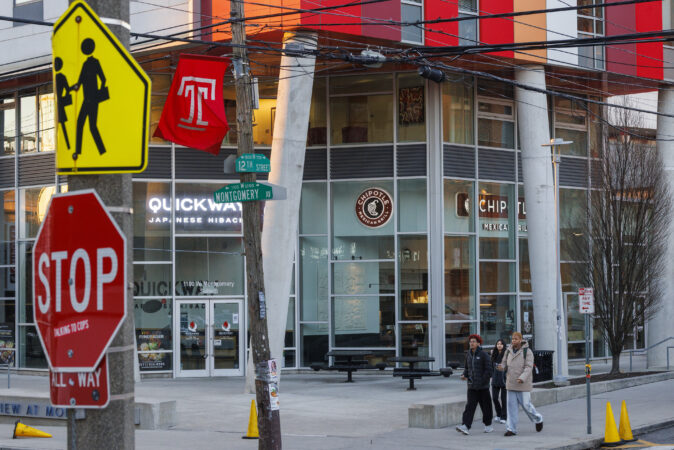
    Boy, 16, fatally shot inside Chipotle bathroom near Temple University

    A 16-year-old boy died Monday evening after he was found with a gunshot wound inside a Chipotle restaurant bathroom in an off-campus residential building used by Temple University students.

    Around 5:15 p.m., police responded to a report of a shooting victim inside the Chipotle on the ground floor of the The View at Montgomery apartments on Montgomery Avenue at 12th Street.

    The victim, who was shot in the chest, was found in the bathroom by an employee, police said. The teen was pronounced dead at the scene at 5:24 p.m.

    Police on Tuesday identified the teen as Khyon Smith-Tate, of the city’s Hartranft section.

    Chief Inspector Scott Small said the teen was in the bathroom with at least one other juvenile when he was shot. Police found one spent shell casing inside the bathroom, Small said.

    “The place was very crowded with customers as well as employees,” but music was being played loudly so it was unclear if anyone heard the gunshot, Small said.

    A possible suspect wearing all dark clothing and a backpack was seen on surveillance video fleeing the restaurant, Small said.

    A person of interest was detained a few blocks away, Small said. No arrests were reported.

    Temple University officials issued a statement notifying the university community about the shooting.

    “The loss of life to gun violence is a profound tragedy and there are no words that can make sense of it. Our thoughts are with the victim’s family and loved ones,” John Fry, the university’s president, and Jennifer Griffin, vice president for public safety and chief of police, said in a joint statement.

  • Inside Sixers: Kyle Lowry’s Toronto curtain call, Joel Embiid’s All-Star push and more from a 2-1 road trip

    Inside Sixers: Kyle Lowry’s Toronto curtain call, Joel Embiid’s All-Star push and more from a 2-1 road trip

    TORONTO — Photos from Kyle Lowry’s fabulous Raptors tenure lined the hallway leading to Scotiabank Arena’s visitors’ locker room. No. 7 jerseys peppered the home crowd. And Tyrese Maxey told Lowry at the start of Monday’s matchup that his 76ers teammates would “do whatever we’ve got to do to get you in tonight.”

    Maxey kept his word by spearheading the Sixers’ 115-102 victory, allowing Lowry to check in late and soak in (potentially) one last ovation from an adoring crowd that watched the North Philly native become a six-time All-Star and 2019 NBA champion.

    “Probably one of the greatest basketball moments of my personal career,” Lowry said after the game.

    Lowry, who now is primarily a veteran mentor with his hometown team in his 20th NBA season, received that joyous curtain call because of the Sixers’ scorching offensive start to build a 33-point cushion. They dropped a season-high 80 first-half points on 73% shooting from the floor, making 13 of 20 shots from three-point range. It was a resounding response to the previous night, when the Sixers collapsed in regulation before falling in overtime against this same opponent.

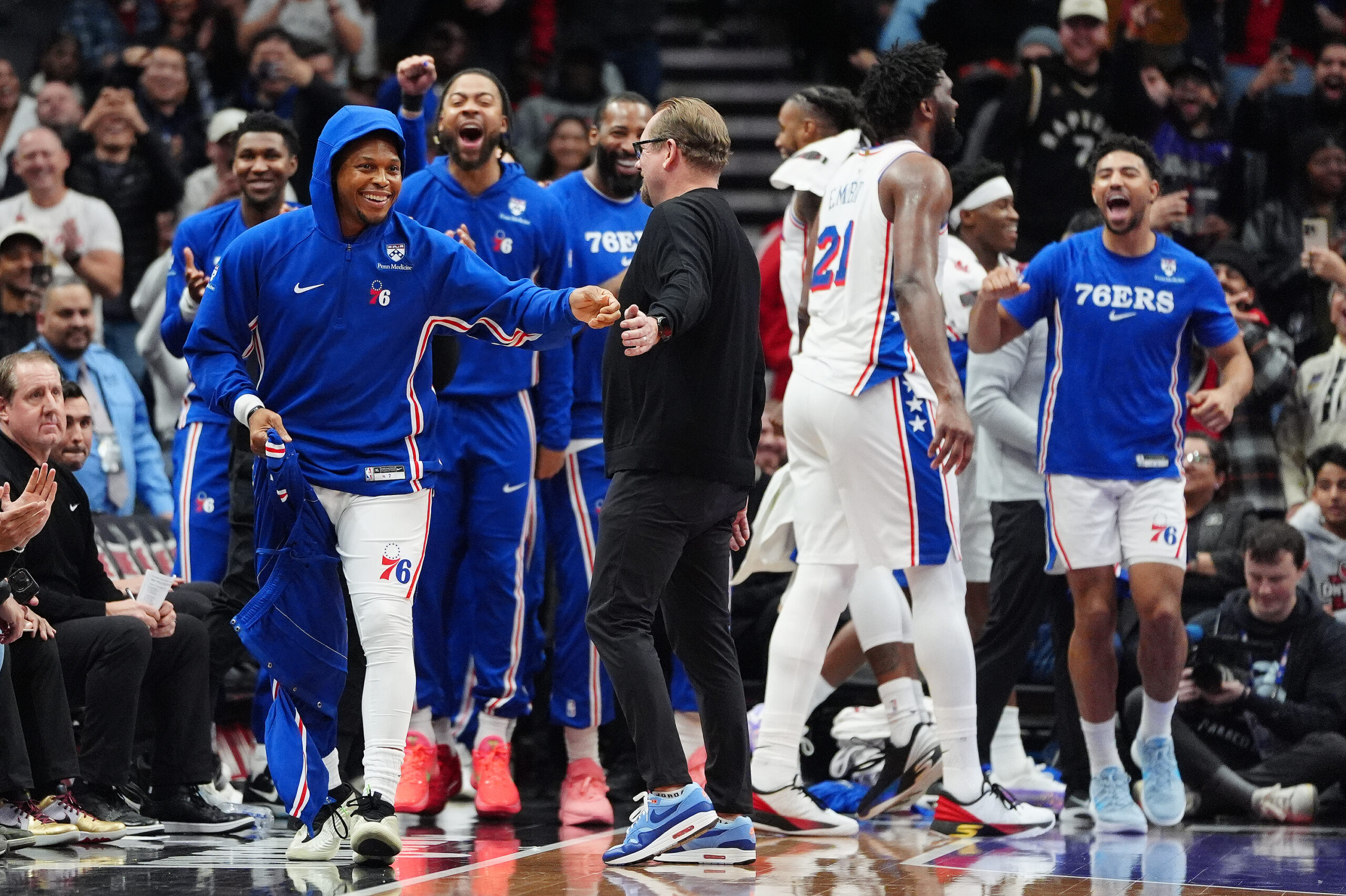
    So as the fourth quarter progressed, a faint “We want Lowry!” chant turned boisterous. Teammates encouraged the crowd from the bench before, at coach Nick Nurse’s command, Lowry finally unzipped his blue hoodie.

    Maxey swung his arms in support as Lowry took the floor. Nurse drew up a play to get Lowry a three-point look on his first possession, which he left well short. Teammates kept getting the ball into his hands for shooting opportunities, before his third and final long range-attempt rimmed out. Lowry held onto the ball as the final seconds ticked down in the Sixers’ win.

    “A lot of neat [moments] up here,” said Nurse, who coached Lowry with the Raptors and Sixers. “And that was another one.”

    The sentimental emotions were complemented by spicy ones, however. As Maxey poured in 18 first-quarter points, he visibly barked at the Raptors’ bench multiple times. Joel Embiid said after the game that he was displeased with Toronto’s Alijah Martin pointing at Maxey as the Raptors finished off Sunday’s overtime thriller, and used that as an extra dash of motivation in his return from a one-game absence because of knee/groin injuries.

    “They were talking a lot last night after they won,” Embiid said at his locker. “With just me sitting on the bench, that kind of rubbed me the wrong way. So just wanted to make sure we came out aggressive and set the tone. …

    “I don’t know about everybody else, but I didn’t like the way [Martin] was pointing at Tyrese last night. So that’s why, tonight, I had to make sure everybody was on point.”

    Sixers players cheer as teammate Kyle Lowry (left) enters what could be his final game in Toronto.

    Following this unique road back-to-back, the regular-season series between the Sixers and Raptors is over at 2-2. But if the playoffs began Tuesday, they would face each other in the matchup between the Nos. 4 and 5 seeds.

    Sign us up for at least four more of these games, eh?

    Here are some more observations from the Sixers’ 2-1 road trip.

    Get well soon, Bill Kennedy

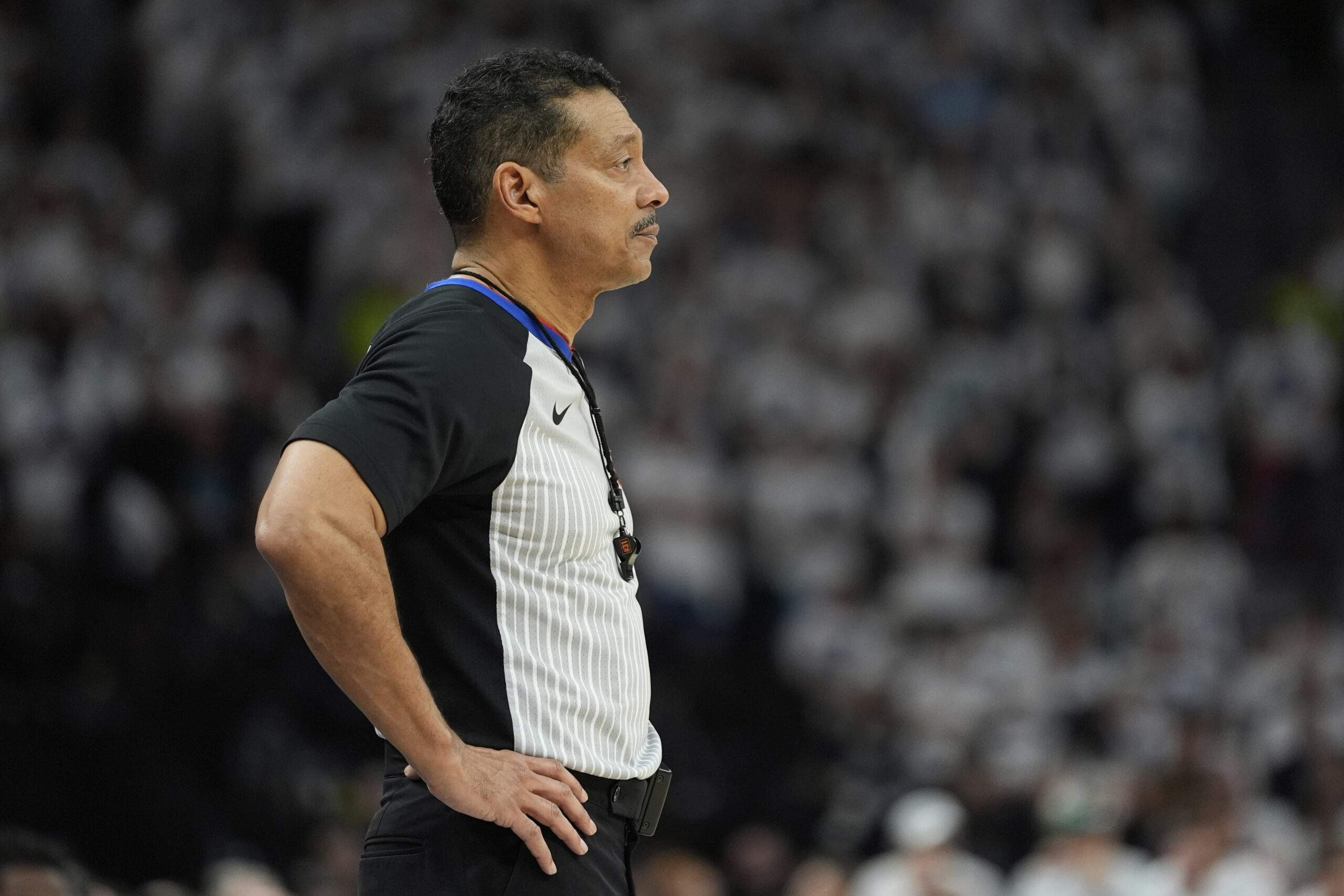
    Early in the victory against the Magic on Friday in Orlando, Nurse heard referee Bill Kennedy scream and grab his leg along the baseline near the Sixers’ bench. Then Kennedy yelled again and went to the floor.

    Kennedy’s reported hamstring injury, which will keep him out indefinitely, captured the attention of the most dialed-in NBA followers. He is a rare example of an official fans actually like because of his entertaining explanations of replay reviews and coaches’ challenges.

    Referee Bill Kennedy suffered an injury during the Sixers’ game against the Orlando Magic.

    Several Sixers players and staff members displayed concern for Kennedy when he hit the floor. Embiid and fellow center Andre Drummond were among those who helped Kennedy into a wheelchair to leave the court.

    “I’ve had some of the most unfortunate injuries,” Embiid said after that game. “So every single time I see someone struggling or getting hurt, I know that kind of hits me a little bit. … Hopefully it’s nothing too bad. I’ll be praying for him.”

    Embiid, the All-Star?

    In Orlando, Embiid was asked about the new All-Star Game format, and whether he would play for the U.S. or World team.

    “Am I going to make it?” Embiid quipped. “I think I should. I don’t think we’re pushing it enough, but I’ve been playing a lot and I think I’ve got pretty good stats. You guys should start putting the word out that Joel Embiid is back.”

    Such consideration would have seemed outlandish even a few weeks ago. But Embiid has played in six of the last seven games, including logging 40 minutes for the first time since the 2024 playoffs. He has progressed from a ho-hum late-game dunk in a Jan. 3 win at the New York Knicks to a nasty one-handed flush in traffic Monday night in Toronto. He is contesting shots at the rim and taking center court for jump balls. He is averaging 23.7 points, 7.1 rebounds, and 3.3 assists, and on Monday surpassed the number of games he played in during the entire 2024-25 season (20).

    And Embiid meshed Friday’s playful trolling with expressing genuine emotion about looking — and feeling — more like himself in recent weeks.

    “I know I usually say, ‘Got to keep building,’” Embiid said. “But this is a moment where I’m like, ‘Wow.’ A lot of people, I think, never thought this would happen again. So got to keep praying and put in the work to keep that going.”

    But … back to a potential All-Star choice.

    Though Embiid played for the U.S. in the 2024 Olympics, he reiterated that he is “always going to be from Cameroon.”

    “I’m part of the whole world,” Embiid said with a grin. “I wasn’t planning on [being an All-Star], but I guess since you’re talking about it, maybe there’s a chance.”

    Get your popcorn ready

    As Maxey packed up his belongings at his locker in Toronto, he spotted a staffer with a bag of popcorn and asked for his own.

    This is no surprise. A box of popcorn is often found in his locker at Xfinity Mobile Arena. Whenever the Sixers visit Chicago, an attendant brings Maxey a trash bag filled with it.

    It’s not just his go-to locker-room snack, but a go-to snack, period. For a simple reason: It’s what his mother, Denyse, used to give him most often as a child.

    “She said it had good fiber in it,” he said.

    Where’s Watford?

    Nearly three hours before each game’s tipoff, Lowry is always the first Sixer to go through his pregame shooting routine. But Monday evening, Trendon Watford had joined him on the floor.

    The versatile forward has not cracked the rotation since returning from a 17-game absence with an adductor strain in his thigh. When asked about remaining steps to reintegrate and potentially earn more minutes, Nurse said Watford still has “a ways to go” with his conditioning.

    The coach also wants to exercise extra caution because, after Watford also missed training camp and the preseason with a hamstring issue, he does not want to risk another injury.

    “I want to kind of take some baby steps with him,” Nurse said. “Because I want him to be in for a while. I don’t want to see three games and then not see him for three weeks again.”

    Watford is averaging 7.4 points, 4 rebounds, and 3.1 assists in 17 games, including a triple-double against the Raptors in November. He checked in at the stoppage in play with Lowry on Monday, recording one rebound in 1 minute, 27 seconds.

    And when Lowry detoured from the locker room for a formal postgame news conference, Watford sneaked into the back of the room to take in the scene.

    Tip-ins

    • Eric Gordon pulled out his cell phone as soon as he returned to his locker following Friday’s win in Orlando. The former Indiana star and Indianapolis native needed to catch the end of the Hoosiers’ blowout win over Oregon in the College Football Playoff semifinals to continue that program’s magical ascension.
    • Quentin Grimes donned appropriate game-day attire in Toronto, wearing half brother Tyler Myers’ Vancouver Canucks and Buffalo Sabres hockey jerseys to the arena. Myers, a defenseman, also played for the Winnipeg Jets.
    • While reminiscing Sunday about Lowry’s tenacious playing style, Nurse mentioned that the three most relentless players he has ever coached were part of the current Sixers’ locker room. The other two are player development coaches Fabulous Flournoy, whom Nurse coached with the Birmingham Bullets of the British Basketball League, and Curtis Stinson, whom Nurse coached with the then-D League’s Iowa Energy.

    Quotable

    Embiid on Lowry’s legacy in Toronto: “When you play this game, that’s the respect you want at the end of your career. I loved it. I know Philly’s tough, but hopefully one day I’m in that position, too.”

    Maxey on Lowry’s legacy in Toronto: “Any time I ask him to set up reservations for me [in this city], he gets me in wherever I need to get in like that.”

  • The Montco office ‘kind of like DOGE’ | Morning Newsletter

    The Montco office ‘kind of like DOGE’ | Morning Newsletter

    Hi, Philly. Expect a sunny Tuesday.

    A new Montgomery County office helped the suburb identify $14 million in savings over the past year. County commissioners are proud the team has “outlived DOGE” while prioritizing efficiency and avoiding layoffs.

    And another day removed from the Eagles’ loss that crushed the city’s repeat-Super Bowl dreams, we have plenty of analysis on what went wrong, as well as reactions from the team’s true bosses: angry Philadelphians.

    — Julie Zeglen (morningnewsletter@inquirer.com)

    If someone forwarded you this email, sign up for free here.

    Lessons from Montco

    In its first year, Montgomery County’s Office of Innovation, Strategy, and Performance has helped the county find $14 million in savings and reduce the deficit by half, officials say.

    The 11-person office’s goals may sound familiar.

    “It’s kind of like DOGE,” said Montco Commissioner Vice Chair Neil Makhija, referring to Elon Musk’s Department of Government Efficiency, which upended federal agencies and haphazardly slashed jobs in the name of cost cutting during its peak last year. “We didn’t just take the richest person in the county and tell them to cut, you know, benefits for poor people, which is what the federal DOGE was.”

    The Montco version is also here to stay, with a focus on finding repeatable savings. Next up: assessing where artificial intelligence could fit into county services.

    Politics reporter Fallon Roth has the story on the blue suburb’s efficiency efforts, and the lessons they could offer other cash-strapped local governments.

    ‘We had higher hopes’

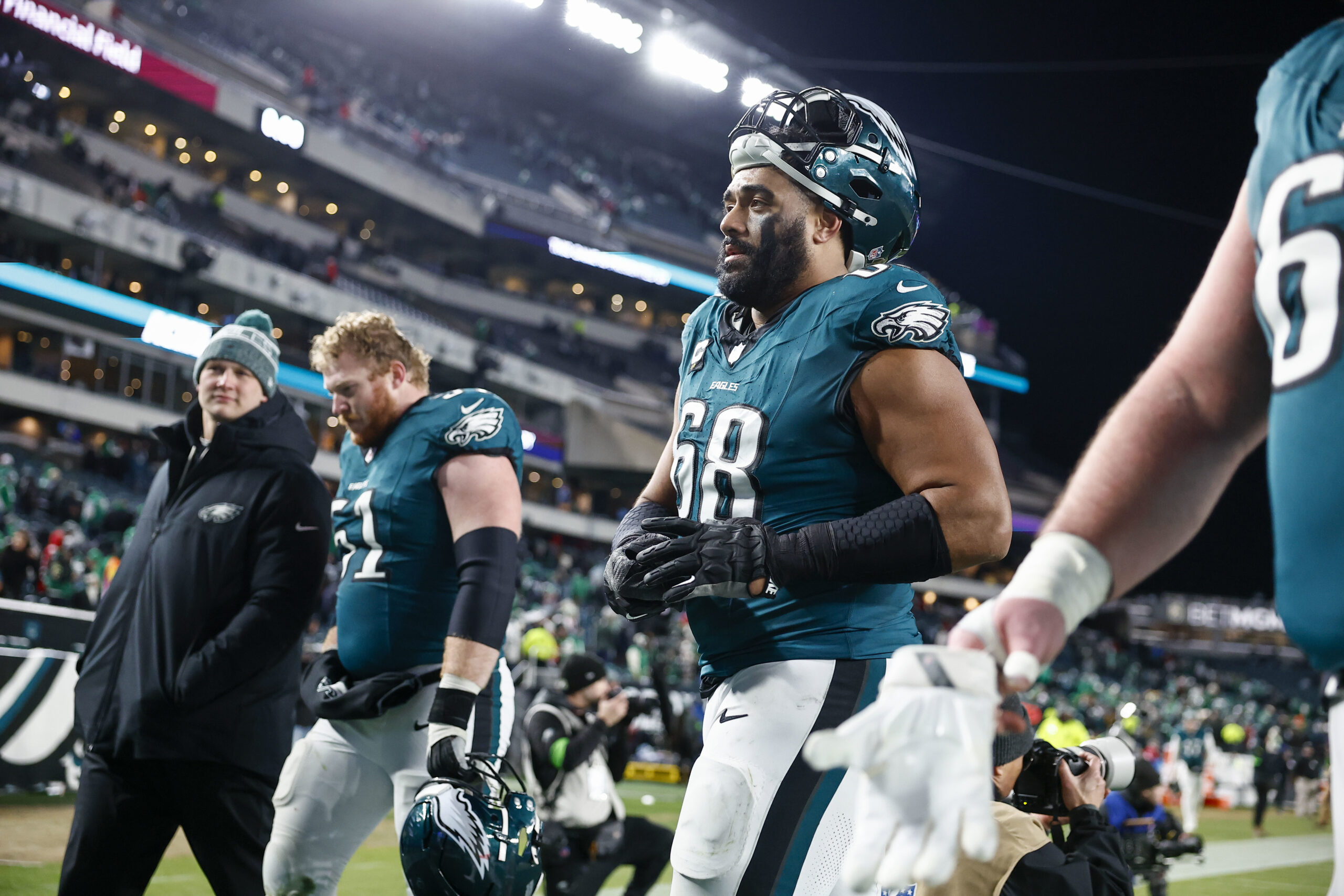
    The Eagles’ hunt for a second consecutive Super Bowl ended Sunday with a 23-19 loss to the San Francisco 49ers at home. So, after a frustrating season, now what?

    🦅 What the pros are saying: Offensive coordinator Kevin Patullo and receiver A.J. Brown each face a possible end to their time with the team, but head coach Nick Sirianni and quarterback Jalen Hurts aren’t going anywhere, Inquirer reporters predict.

    🦅 What fans are saying: Everyone is being very calm, kind, and understanding. Just kidding! Fans immediately after the game and on Monday were shaking their heads in disbelief, analyzing failed plays, and calling for mass firings.

    🦅 What comes next: This offseason brings plenty of questions about roster shake-ups, the team’s salary cap, draft picks, and the efficacy of the Tush Push. Plus, we rounded up key dates to know, from free agency to opening kickoff of the 2026 season. Because there’s always next year, right?

    What you should know today

    Quote of the day

    Bella Vista’s acclaimed Mawn is among the hard-to-get-into eateries where customers have tried to auction off reservations. Frustrated restaurant owners are doing what they can to stop the practice, but it may be tough to ban the sellers from making future bookings.

    🧠 Trivia time

    A rare “classic” location — red plastic cups and all — of which popular chain can you find in Northeastern Pennsylvania? (Hint: It’s the only one in the state.)

    A) Roy Rogers

    B) Pizza Hut

    C) White Castle

    D) Wendy’s

    Think you know? Check your answer.

    What we’re …

    🃏 Anticipating: The Mummers string band competition at the Linc on Jan. 31.

    🥃 Entering: Pennsylvania’s lottery for rare whiskeys.

    🔥 Watching: The Philly region’s hot housing market, according to Zillow.

    🥾 Planning: A trip full of antiques, river hikes, and cozy inns in Lambertville and Stockton.

    🚶 Considering: Why keeping seniors fit in Philly takes a citywide effort.

    🧩 Unscramble the anagram

    Hint: Hollywood-famous sandwich shop in North Philadelphia

    TEXAS MASKS

    Email us if you know the answer. We’ll select a reader at random to shout out here.

    Cheers to Barbara Byrne, who solved Monday’s anagram: Pennsylvania Farm Show. This year, the annual Harrisburg event features a 1,000-pound butter sculpture honoring America’s 250th (and, amazingly, a mullet contest).

    Photo of the day

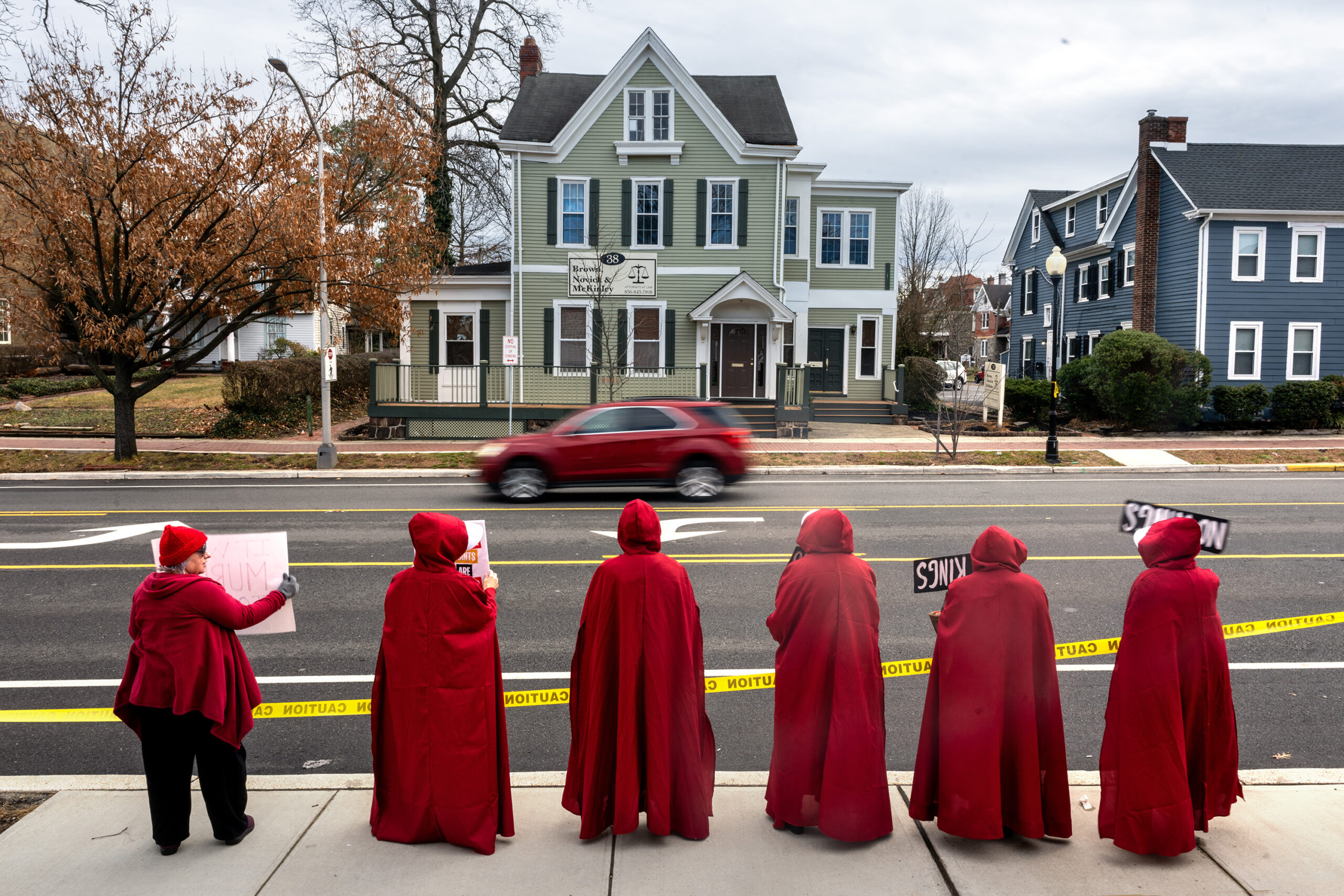
    Protesters dressed as handmaids join with Mi Casa Woodbury and Cooper River Indivisible at a “roadside rally” in downtown Woodbury, N.J., on Sunday in support of immigrants and to protest the Trump administration. The red costumes became a worldwide political protest symbol during President Donald Trump’s first term, inspired by outfits from Margaret Atwood’s 1985 dystopian novel, “The Handmaid’s Tale.”

    Wishing you an easy Tuesday. I’ll be back to bring you more news tomorrow morning.

    By submitting your written, visual, and/or audio contributions, you agree to The Inquirer’s Terms of Use, including the grant of rights in Section 10.

  • A Montgomery County office that’s ‘outlived DOGE’ has helped save the suburb $14 million

    A Montgomery County office that’s ‘outlived DOGE’ has helped save the suburb $14 million

    A Montgomery County office — which one county commissioner described as a far less controversial version of Elon Musk’s Department of Government Efficiency — has helped the county find $14 million in savings within the past year and reduce the deficit by half.

    Montgomery County’s Office of Innovation, Strategy, and Performance (OISP), announced in February 2025, spent the last year meeting with department heads to identify areas for cost cutting and streamlining services, such as eliminating almost a dozen vacant positions worth hundreds of thousands of dollars, saving $1.5 million on a prescription benefits provider, and conserving half a million dollars by bringing some county legal services in house.

    In 2026, the office could consider integrating artificial intelligence into county services, with the support of all three commissioners, aimed at cutting red tape for residents and county employees.

    “It’s kind of like DOGE,” said Commissioner Vice Chair Neil Makhija, a Democrat, noting that the office has “outlived” DOGE’s period of high activity when Musk was in charge before he stepped away last spring.

    “We didn’t just take the richest person in the county and tell them to cut, you know, benefits for poor people, which is what the federal DOGE was,” Makhija said.

    Also unlike DOGE — which under Musk’s leadership was responsible for the haphazard slashing of thousands of federal workers’ jobs during the first year of President Donald Trump’s second term — the office does not envision layoffs becoming part of its mission.

    The office’s work comes on the heels of the county’s $632.7 million operating budget and a roughly $25.5 million deficit, resulting in a 4% property tax increase for residents.

    Republicans have made looking for inefficiencies in government part of their brand. But Democratic leaders in Pennsylvania have also started taking on streamlining government. Gov. Josh Shapiro has touted how he’s cut processing time for licenses and accelerated the permitting process for building projects.

    And in blue Montgomery County, a bipartisan group of leaders says that responsible government efficiency should be a pillar of good government, regardless of political party.

    “What happened with DOGE at the federal level was hard to watch and certainly not the approach that we’re going to take in Montgomery County, but, any leader … has to go through this exercise of are we optimizing our resources?
Are we leaving money on the table? Are there opportunities to improve the performance of our people?” said County Commissioner Chair Jamila Winder, a Democrat.


    “Like all of those are just disciplines that are industry agnostic, and so I don’t think it’s a Republican or a Democrat thing,” Winder added.

    Commissioner Tom DiBello, the only Republican on the board, agrees, saying that he has high expectations for the office and its ability to oversee the adequate spending of taxpayer dollars.

    “I mean, that’s our job. It has nothing to do with Republican or Democrat. My feeling, it has to do with taxpayer money,” DiBello said. “We’re supposed to be stewards of taxpayer money.”

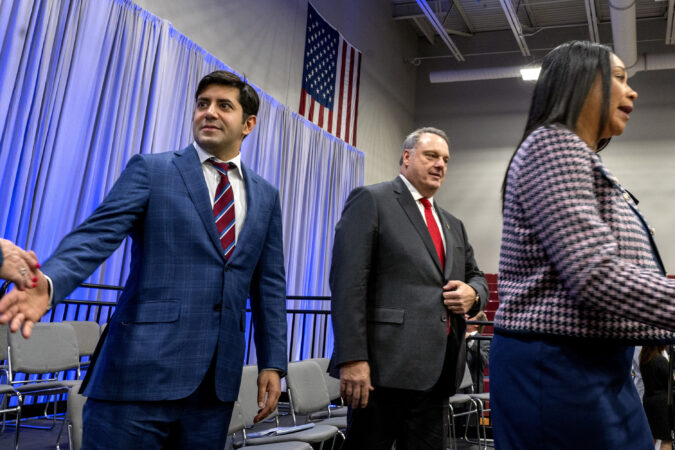
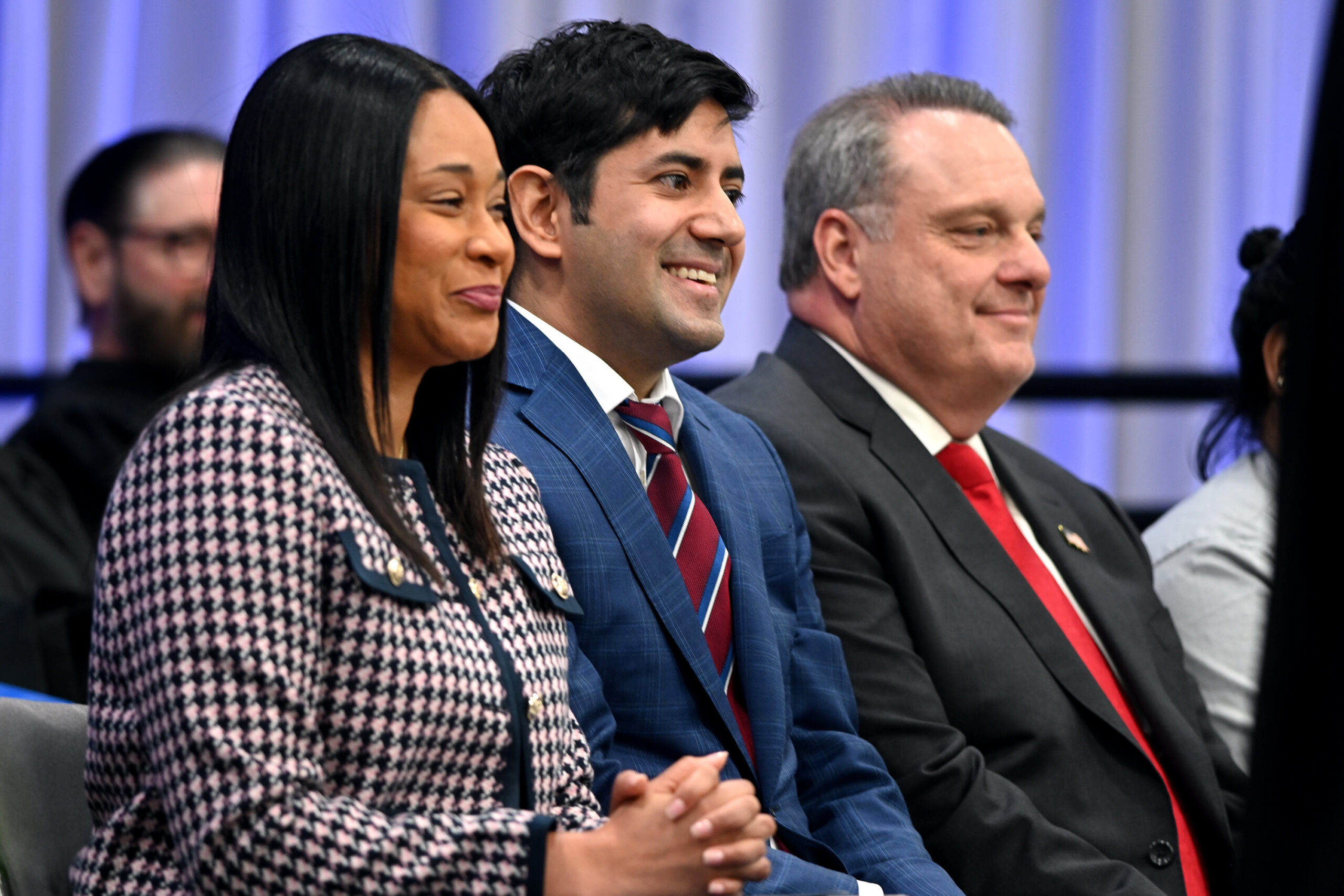
    Jamila H. Winder (from left), Neil Makhija, and Thomas DiBello are seated together on stage at the Montgomery County Community College gymnasium Wednesday, Jan. 3, 2024, during ceremonies before they were sworn in as Montgomery County’s new Board of Commissioners.

    Is artificial intelligence the next step?

    The OISP was launched in February 2025 after the office previously served as the county COVID-19 pandemic “Recovery Office,” ensuring approximately $161 million in funds from the American Rescue Plan Act were being used appropriately.

    When Stephanie Tipton, deputy chief operating officer, was hired in Montgomery County in September 2024 after more than 16 years in leadership in Philadelphia, county officials started discussing how to translate that oversight practice at the “Recovery Office” to every facet of county spending and performance.

    That mentality helped the OISP cut the county deficit in half and focus on ways to reduce it in the long term, such as eliminating longstanding vacant positions around the county, including on the board of assessment, which does real estate evaluations. The office also helped develop performance management standards for departments.

    “What we were really interested in is finding things that we could make repeatable year after year, and that would move forward, whether that was restructuring positions and eliminating vacancies that we don’t carry forward” to doing a trend analysis on spending, said Eli Gilman, project director of the 11-person office. He noted that the team was “kind of building a plane while we were flying.”

    County governments are always trying to be efficient with taxpayer dollars, said Kyle Kopko, executive director of the County Commissioners Association of Pennsylvania, especially in the aftermath of last year’s state budget impasse. But Montgomery County’s decision to have a dedicated office for efficiency is fairly unique, he said.

    “This is something that has become more and more of a focus of counties everywhere just because we’re not sure if we’re going to have the consistency of on-time state funds,” Kopko said.

    The next phase for the office? Cutting red tape for residents. And part of that may be through enlisting artificial intelligence, something the county has been examining through the commissioners’ “Advisory Council on Artificial Intelligence for Public Good” established in April 2025.

    “The goal here is like, how can we leverage this new and emerging technology to help us make it easier for residents to access services,” Tipton said. “Make it easier, reduce the burden on our frontline staff, so they can spend more time in sort of customer-facing, client-facing activities.”

    AI will be something that many counties across Pennsylvania will be grappling with moving forward, Kopko said. Though some counties are wary of using it for sensitive information.

    Everyone has a different idea as to what they would want to see AI used for in Montgomery County.

    Makhija wants to make court documents accessible by chatbot. Winder says she wants to see AI help county employees be more efficient in their roles. And DiBello, who worked in tech software, said as long as accuracy is prioritized, AI could one day be used in situations where residents don’t have to speak directly to someone.

    But first, Tipton said, the county wants to internally test AI tools to “make sure that we have the right sort of governance and guardrails” before launching it to the public.

    When Tipton joined Montgomery County she said she had a “clear mandate from the commissioners” to look at department spending. She also wants it to be a transparent process for residents and the office plans to launch an open data site to the public in the second half of 2026.

    “We want to make sure that moving forward, when we are making investments in the budget we can really understand more clearly how that is impacting service delivery, so we can tie that more directly to work that we’re doing,” Tipton said.