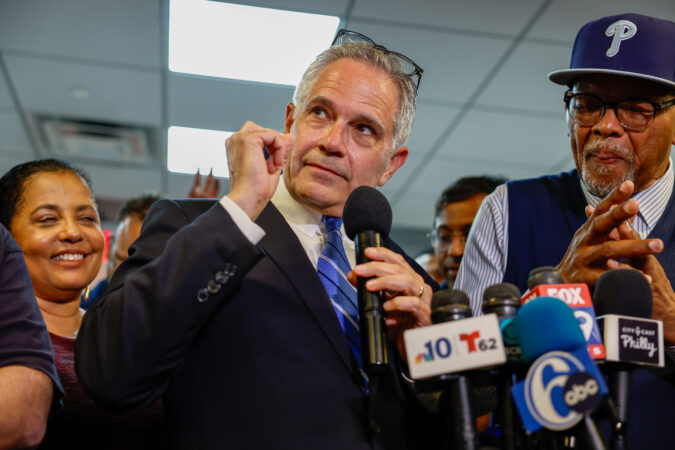
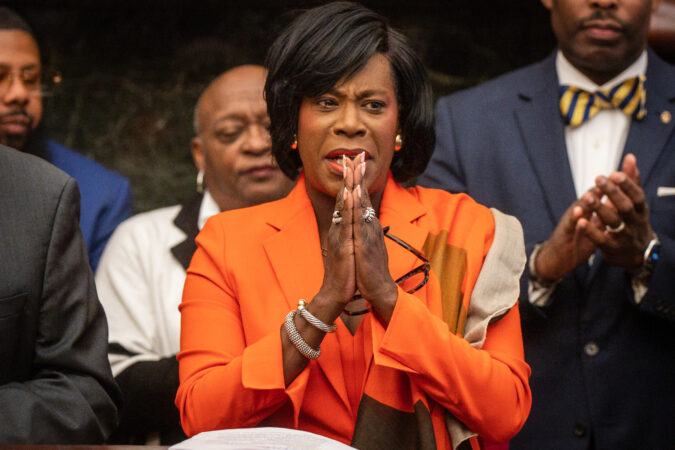
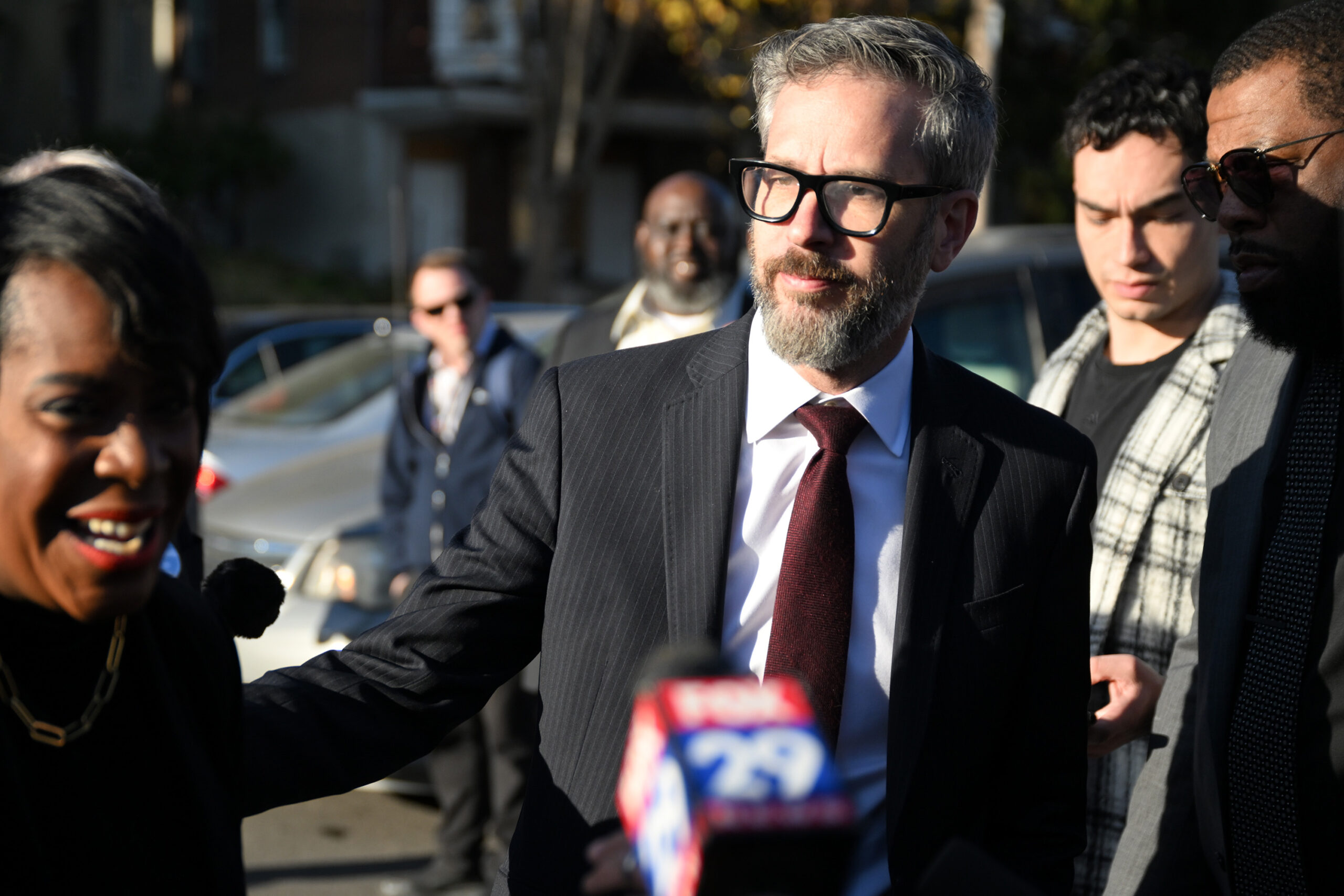
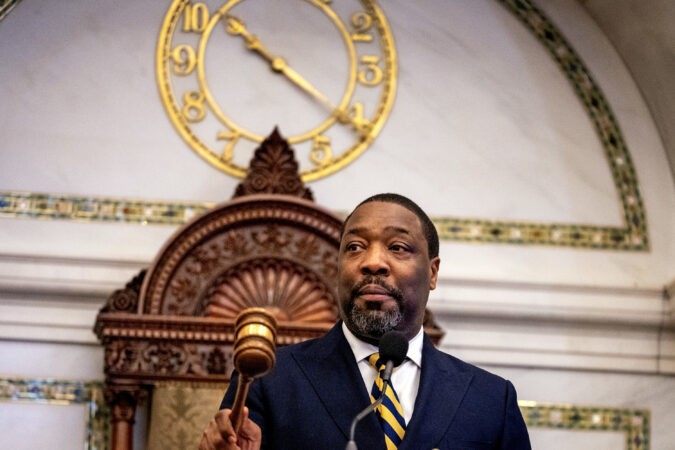
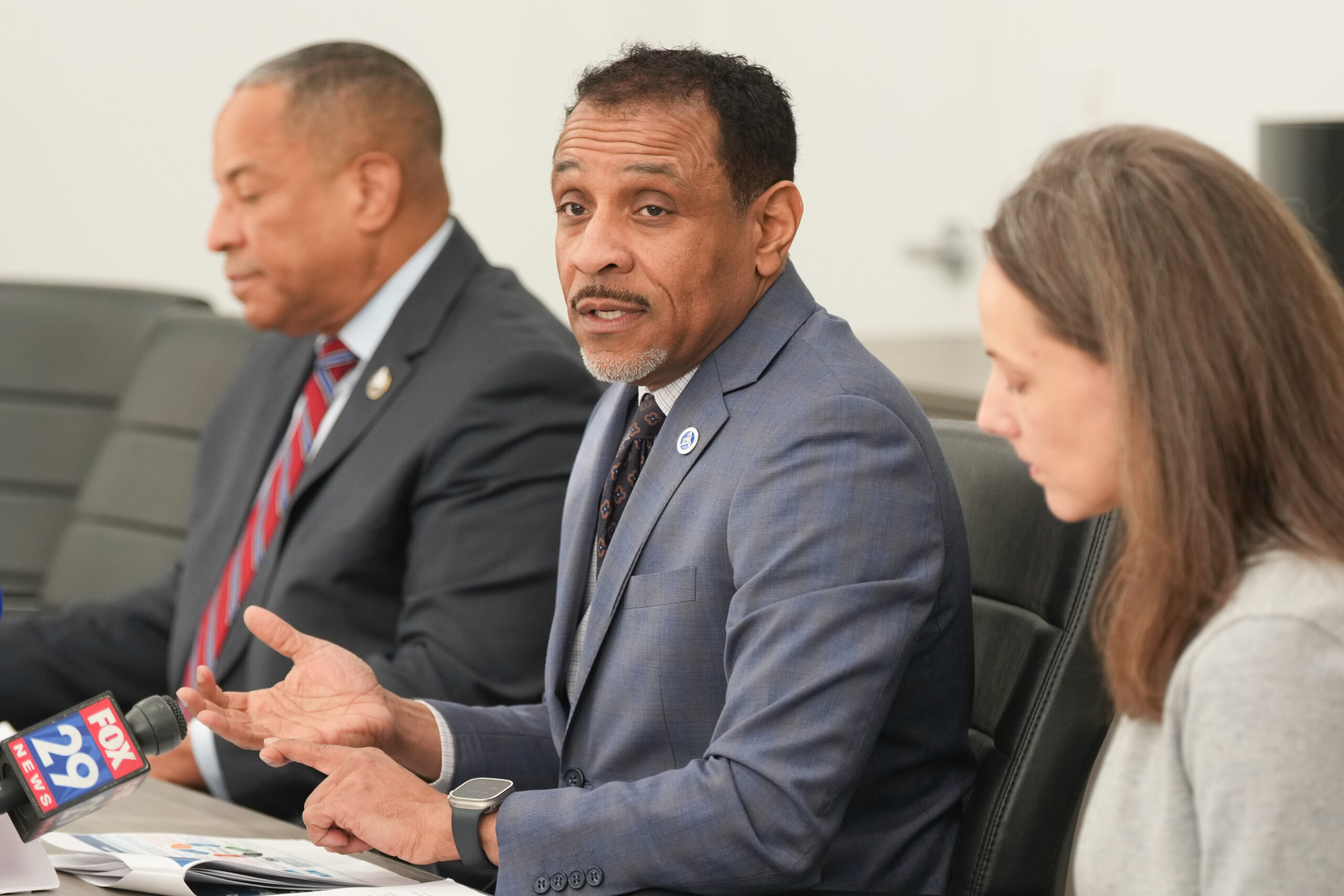
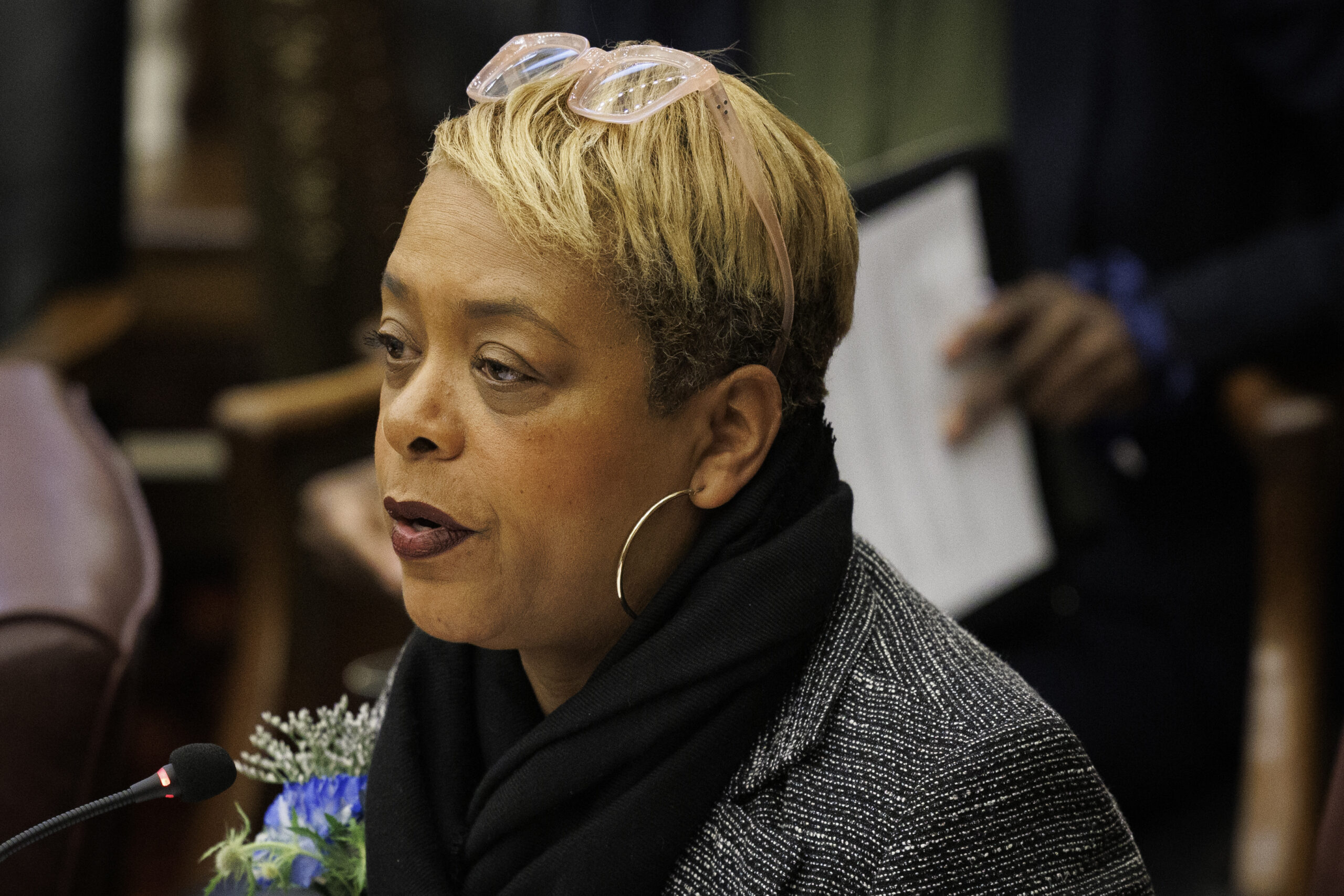
Philadelphia District Attorney Larry Krasner on Wednesday dismissed rumors that he may challenge Mayor Cherelle L. Parker when she will face reelection next year, and he said in a statement that he is focused on his job as the city’s top prosecutor.
Krasner, who last year won his third term as district attorney and has cultivated a national brand,told The Inquirer that talk he might challenge the incumbent divides the city’s leadership.
His statement came after the news website Axios Philly reported that some political insiders were floating Krasner’s name as a potential mayoral contender.
“Especially in these times, all Philadelphia residents need to stand together and work together for Philly,” Krasner said. “Not sure whose agenda this narrative serves, but there’s nothing new about insiders stirring things up to benefit themselves at the expense of everyone else.”
Talk of Parker facing a potential primary challenge ramped up in recent days after the mayor’s political action committee filed a campaign finance report showing she had raised $1.7 million last year, a striking sum for a sitting mayor two years out from a reelection bid.
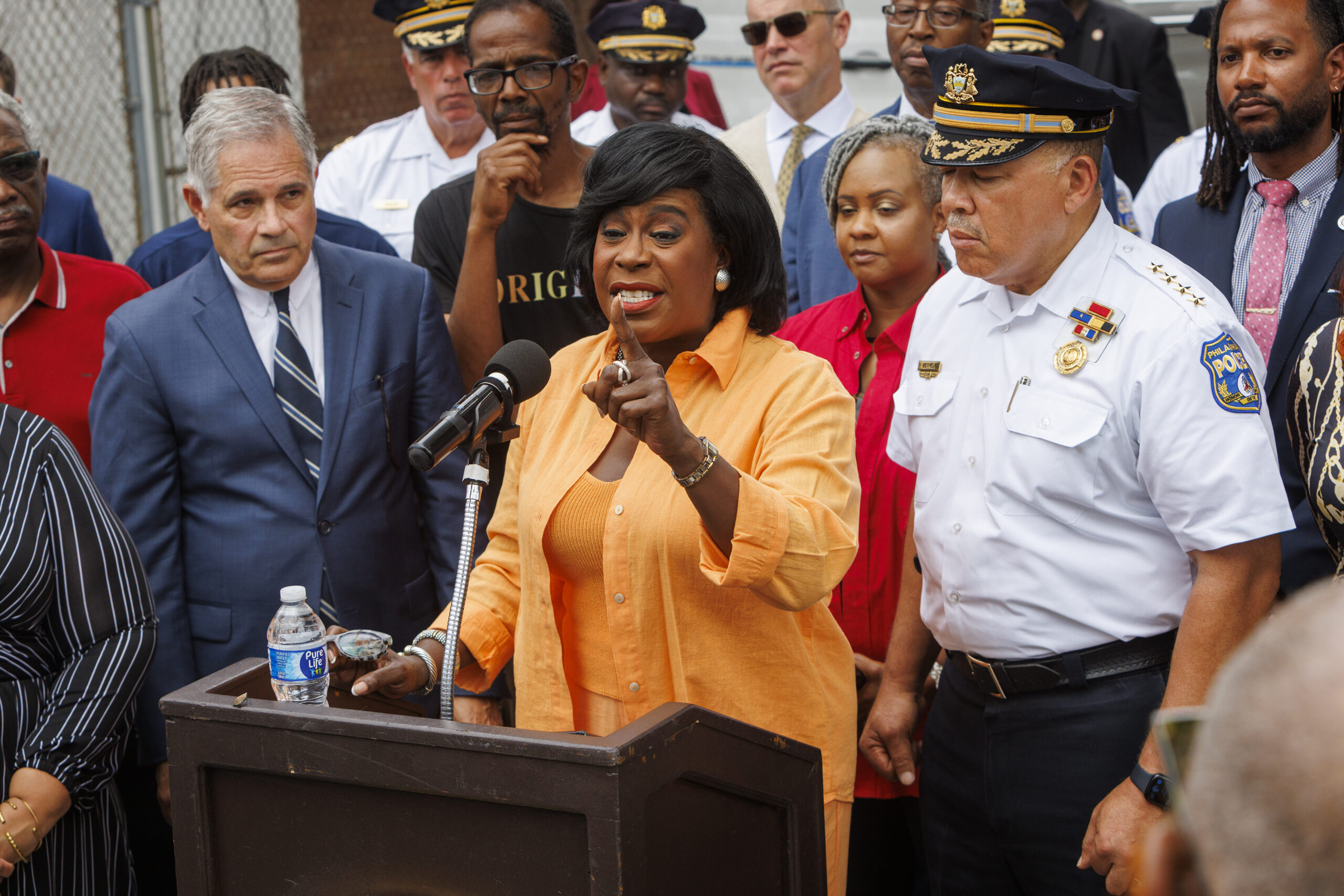
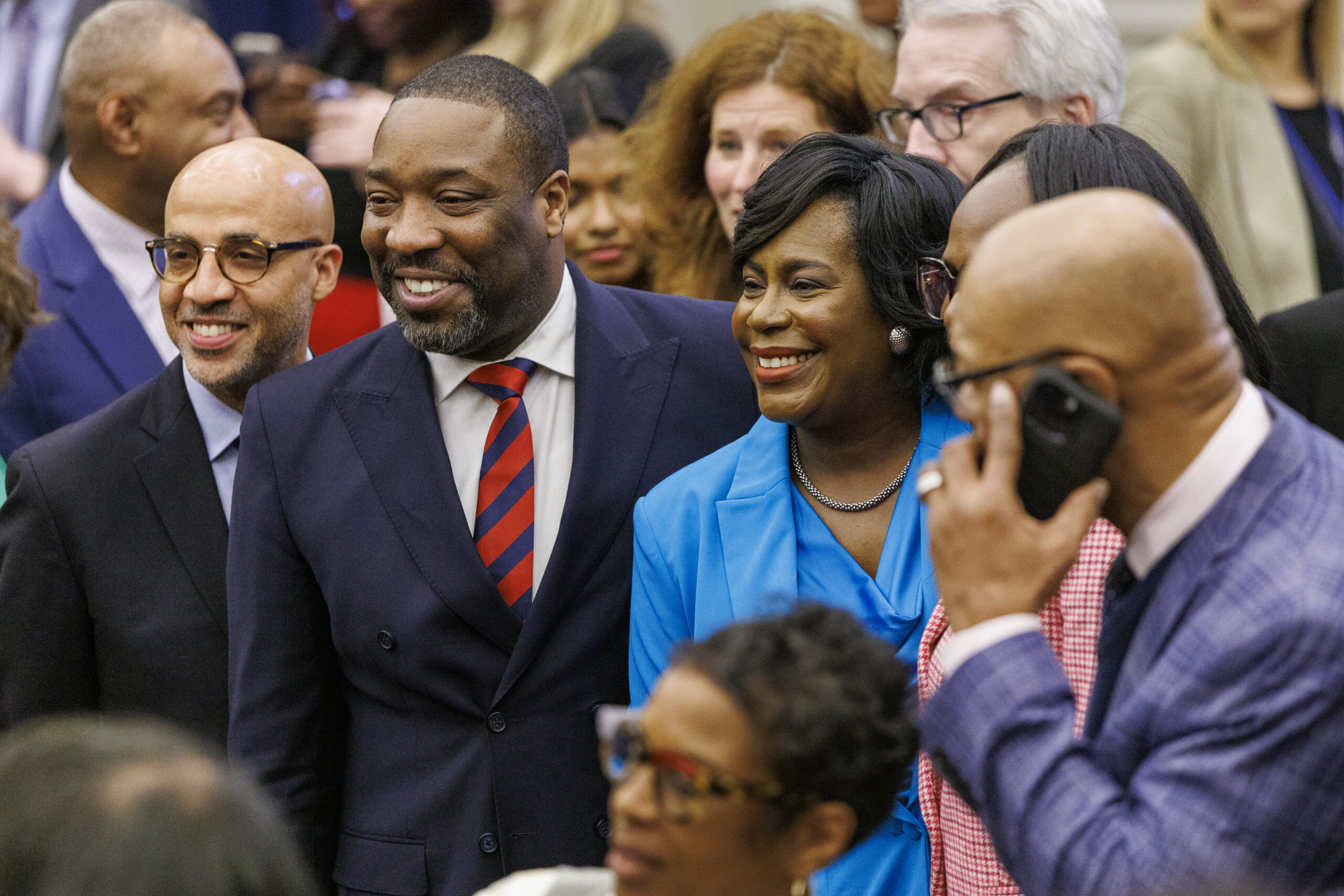
In this 2024 file photo, Philadelphia Mayor Cherelle L. Parker is flanked by Police Commissioner Kevin Bethel and District Attorney Larry Krasner during a news conference.
The fundraising report fueled speculation among the city’s political class that Parker, a centrist Democrat who is backed by much of the party establishment, may be expecting a challenge in the primary.
Krasner, 64, is the most prominent progressive in the city. He won reelection last year in landslide fashion, and he has positioned himself as the city’s most vocal Trump opponent, often drawing comparisons between the federal government and 20th-century fascism.
And several past district attorneys have run for mayor, including Ed Rendell, who went on to serve two terms in City Hall and then was elected governor of Pennsylvania.
But for Krasner, any run at Parker would be tricky.
Krasner, who is white, has been successful in electoral politics in large part because of support from the city’s significant bloc of Black voters, politicians, and clergy. Those groups are also key to the base of support that has backed Parker, who comes from a long line of Black politicians hailing from the city’s Northwest.
Allies of the district attorney say a better fit — if he decided to seek higher office — could be running for a federal seat.
Political observers have suggested a handful of Democrats, including Krasner, could run for the U.S. Senate seat currently occupied by Sen. John Fetterman. The Democratic senator, who will be up for reelection in 2028, has an independent streak and has angered many in the party for at times siding with Republicans.
Several other Democrats have been floated as potential contenders for the seat, including U.S. Reps. Brendan Boyle, of Philadelphia, and Chris Deluzio, whose Western Pennsylvania district includes Allegheny County. Some have also speculated that former U.S. Rep. Conor Lamb, also of Western Pennsylvania, could run.
Mayor Cherelle L. Parker on Wednesday unveiled PHL PRIME, a new service in Philadelphia that has nothing to do with Amazon — although the e-commerce giant could potentially sign up for it.
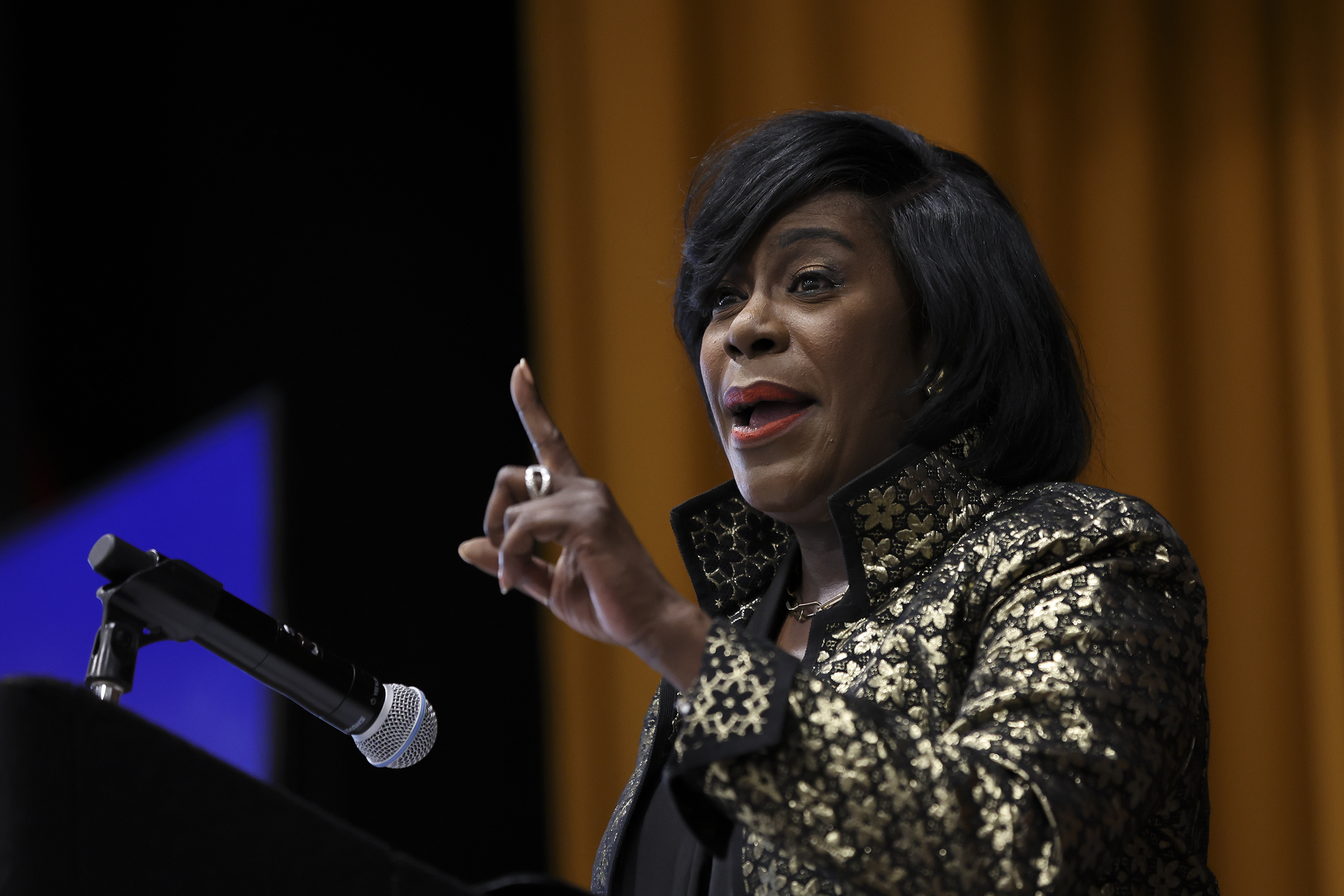
At her annual address to the Chamber of Commerce for Greater Philadelphia, Parker signed an executive order to establish PHL PRIME, which stands for Project Review and Infrastructure Made Easy. The new program is designed to draw “high-impact economic development projects that generate quality jobs” by helping businesses that are considering investing in Philadelphia to navigate city rules and regulations, according to the mayor’s office.
“I‘m the mayor, and I’m not absolving myself of the responsibility of making sure that bureaucracy is working effectively and efficiently,” Parker said during her annual speech at the Convention Center. “We’re not going to burden business with the ‘time tax.’ We’re going to work at the speed of business.”
Parker told reporters the new program will not involve hiring any new staff. Instead, it’s meant to bring various city departments together into a “PHL PRIME Tiger Team“ to coordinate a streamlined approach and lay out the welcome mat for investment.
In her wide-ranging speech, Parker also said the city was committed to helping major development plans from the Market East corridor and the South Philadelphia Stadium Complex to the port and shipyard.
But Parker did not speak at length about two measures she included in last year’s city budget deal that some have said shows the city is not as welcoming to business as it could be. Both relate to the city’s business income and receipts tax, or BIRT.
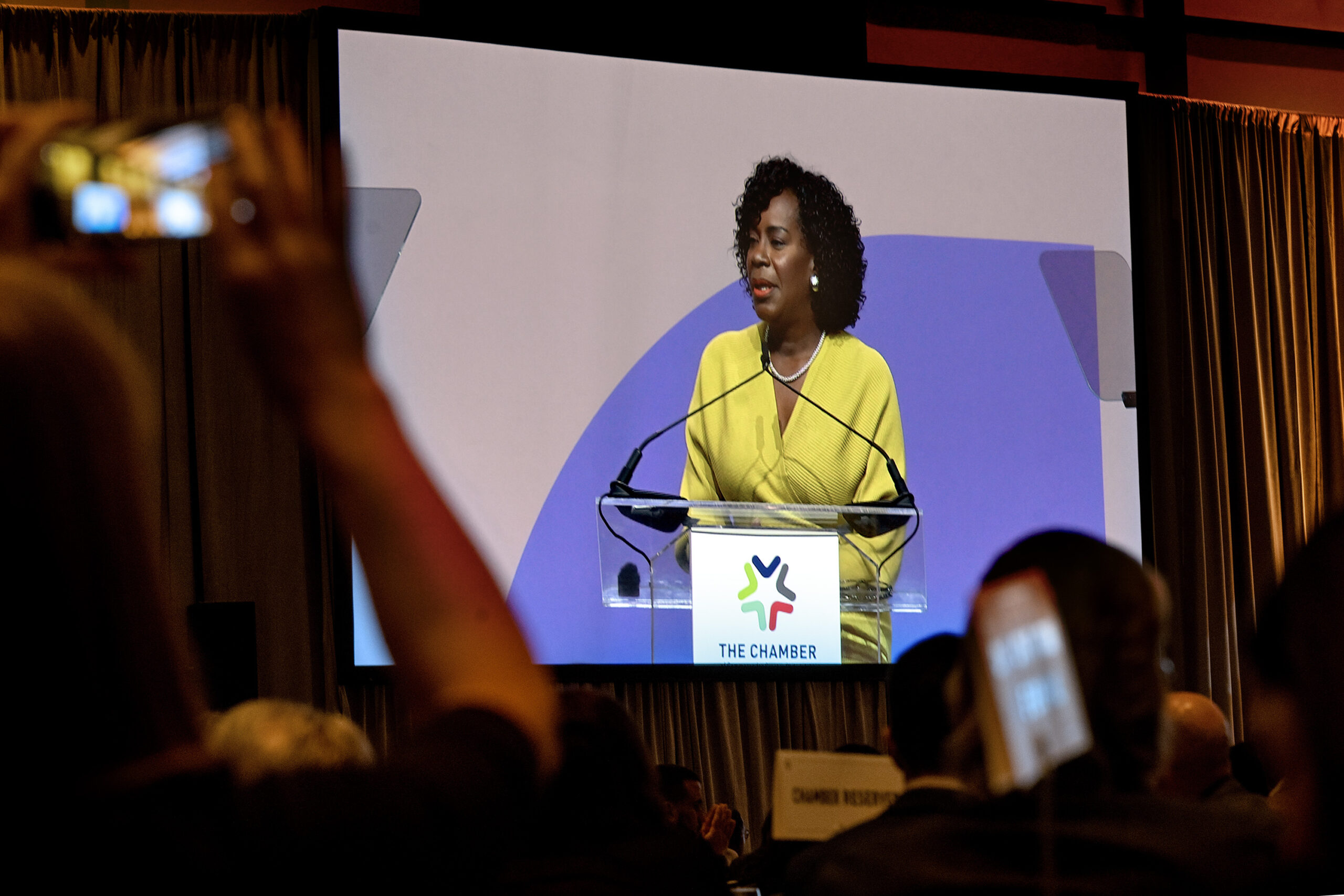
Attendees record Mayor Cherelle L. Parker on the big screen as she delivers her keynote address at the Chamber of Commerce for Greater Philadelphia’s Annual Mayoral Luncheon at the Convention Center Wednesday, Feb. 11, 2026.
Parker on Wednesday briefly mentioned a law she and City Council adopted last year that bakes in annual incremental cuts to the two BIRT tax rates over 13 years. And she thanked the Tax Reform Commission for guidance on making the city’s tax structure more business-friendly.
“I am proud to affirm that we proposed and codified into law $210 million in tax investments to provide the kind of predictability that the business community told us that it needs,” Parker said. “I hope that was a direct sign to each of you in this room that the executive and the legislative branches are listening.”
But she did not mention that the enacted tax cuts — the steepest of which will likely take effect after she leaves office — are far less aggressive than the commission’s recommendations, which called for completely eliminating BIRT within eight to 12 years.
Parker also did not address the elimination of an important tax break that allowed businesses to exempt their first $100,000 in revenue when calculating their BIRT liabilities. That policy — which lasted about a decade before Council approved a Parker bill to end it last year — effectively eliminated BIRT for the tens of thousands of businesses that take in less than $100,000 per year from commerce in the city.
Parker has said she supports the exemption but was forced to get rid of it after the city was sued by Massachusetts-based Zoll Medical Corp., which does business in Philadelphia and argued that the tax break violated the Pennsylvania Constitution.
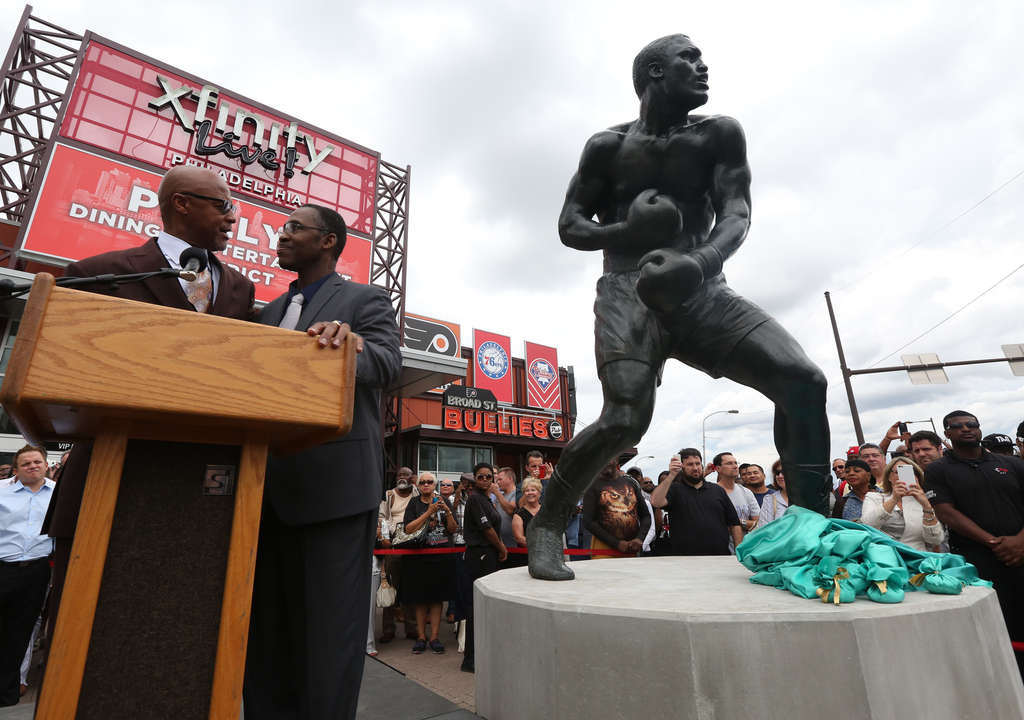
“Smokin’” Joe Frazier is heading to the Philadelphia Museum of Art.
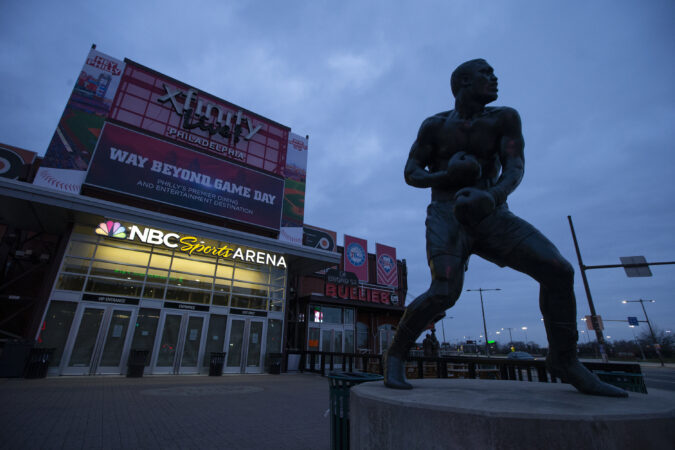
Philly’s statue of the famed heavyweight boxing champion is slated to be installed at the base of the museum’s steps later this year following a Philadelphia Art Commission vote Wednesday that approved the move. All five commissioners present Wednesday voted in favor of the statue’s relocation from its longtime home at the sports complex in South Philadelphia.
The proposal, presented by Creative Philadelphia, the city’s office for the creative sector, will see the Frazier statue installed where Philly’s original Rocky statue stands today. The Rocky statue, meanwhile, will be installed at the top of the museum’s steps.
“Placing the Joe Frazier statue at the Art Museum allows us to share a more complete history about Philadelphia’s spirit,” Marguerite Anglin, the city’s public art director, said Wednesday. “One rooted in real people, real work, and real pride in this city.”
The Frazier statue should move to the Art Museum sometime this spring, Anglin said. That relocation coincides with the move of the Rocky statue currently at the base of the steps, which is slated to be temporarily installed inside the museum for the first time as part of the forthcoming exhibition “Rising Up: Rocky and the Making of Monuments.” That Rocky statue will then be installed at the top of the museum’s steps in the fall, while the Rocky statue now at the top of the steps will go back into actor Sylvester Stallone’s private collection.
Created by sculptor Stephen Layne, the Frazier statue was unveiled in 2015 at what is now Stateside Live! at the sports complex in South Philadelphia. Its debut came years after Frazier’s death in 2011, which kicked off a campaign to erect the statue in his memory. Standing at 12 feet tall, it depicts the boxer moments after knocking down Muhammad Ali during the “Fight of the Century” — a famed March 1971 bout in which Ali suffered his first professional loss after a brutal 15-round skirmish.
For years before its creation, Frazier’s supporters lamented the fact that Philadelphia had long had a Rocky statue, but lacked one showing its own real-life champion. Our Rocky statue, in fact, has been around for more than 40 years, and has stood outside the Art Museum for two decades — about twice as long as the Frazier statue has even existed.
Creative Philadelphia’s plan featured widespread support from leaders including Mayor Cherelle L. Parker, as well as Frazier’s family and friends. It received little pushback at Wednesday’s meeting, with Gabrielle Gibson, a granddaughter of Frazier’s, asking what is perhaps the most obvious question about the placement: Shouldn’t the Frazier statue be at the top?
He was, after all, a real person, a real Philadelphian, and a real champion. Rocky, meanwhile, is a fictional character who appears to be an amalgamation of several real-life boxers’ stories — Frazier included, according to Creative Philadelphia. Many speakers Wednesday noted that, like Rocky, Frazier was known to run up the Art Museum’s steps and was said to have boxed sides of beef during his training, among other parallels.
And then there is the symbolism of where the Rocky and Frazier statues will stand.
“During Black History Month, I think we need to understand the new placement,” Gibson said. “A real boxer and a Black man’s image and likeness would be placed at a lower position beneath the fictional white character whose story was inspired by real boxers.”
The Frazier statue’s placement at the bottom of the steps, Anglin said, was for two main reasons. First, she said, having Frazier at the bottom makes it the first statue visitors will encounter at the Art Museum — even if they are there expressly to see Rocky — which will provide “an opportunity to be grounded in history.”
Second, the Rocky statue’s footprint is roughly half the size of the Frazier statue, which would not be “safe or feasible” to install on high, Anglin said. Putting Rocky at the top, Anglin said, allows for better circulation around the monument, and avoids the potential logistical and code-related issues putting Frazier there could present.
His son, and former heavyweight boxer Marvis Frazier (right), and Rev. Blane Newberry from Enon Tabernacle Baptist Church bless a 12-foot-tall 1,800-pound bronze statue of “Smokin’ Joe” Frazier after it was unveiled in 2015.
Jacqueline Frazier-Lyde, Frazier’s daughter, a retired professional boxing champion and a Municipal Court judge, expressed support for the move Wednesday, calling the statue a reminder that “we can overcome any obstacle and achieve.” She also recounted her father’s feelings on the Rocky statue, specifically when he would see tourists taking photos with Stallone’s character.
“At times,” she said, “he would say, ‘Don’t they understand that I’m the heavyweight champion?’”
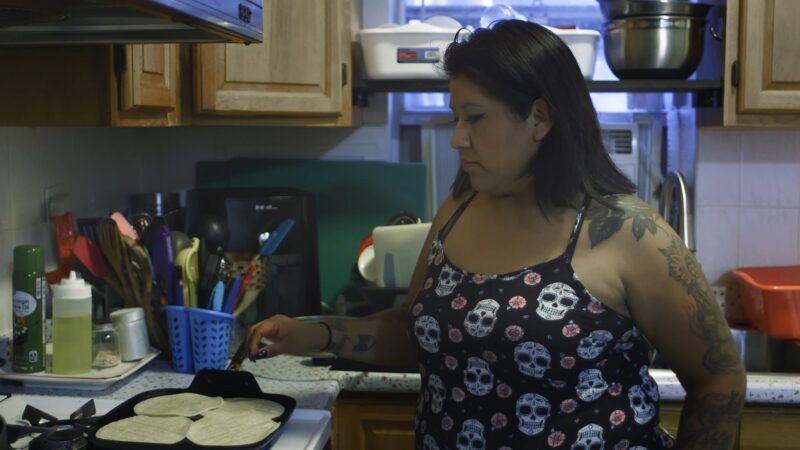
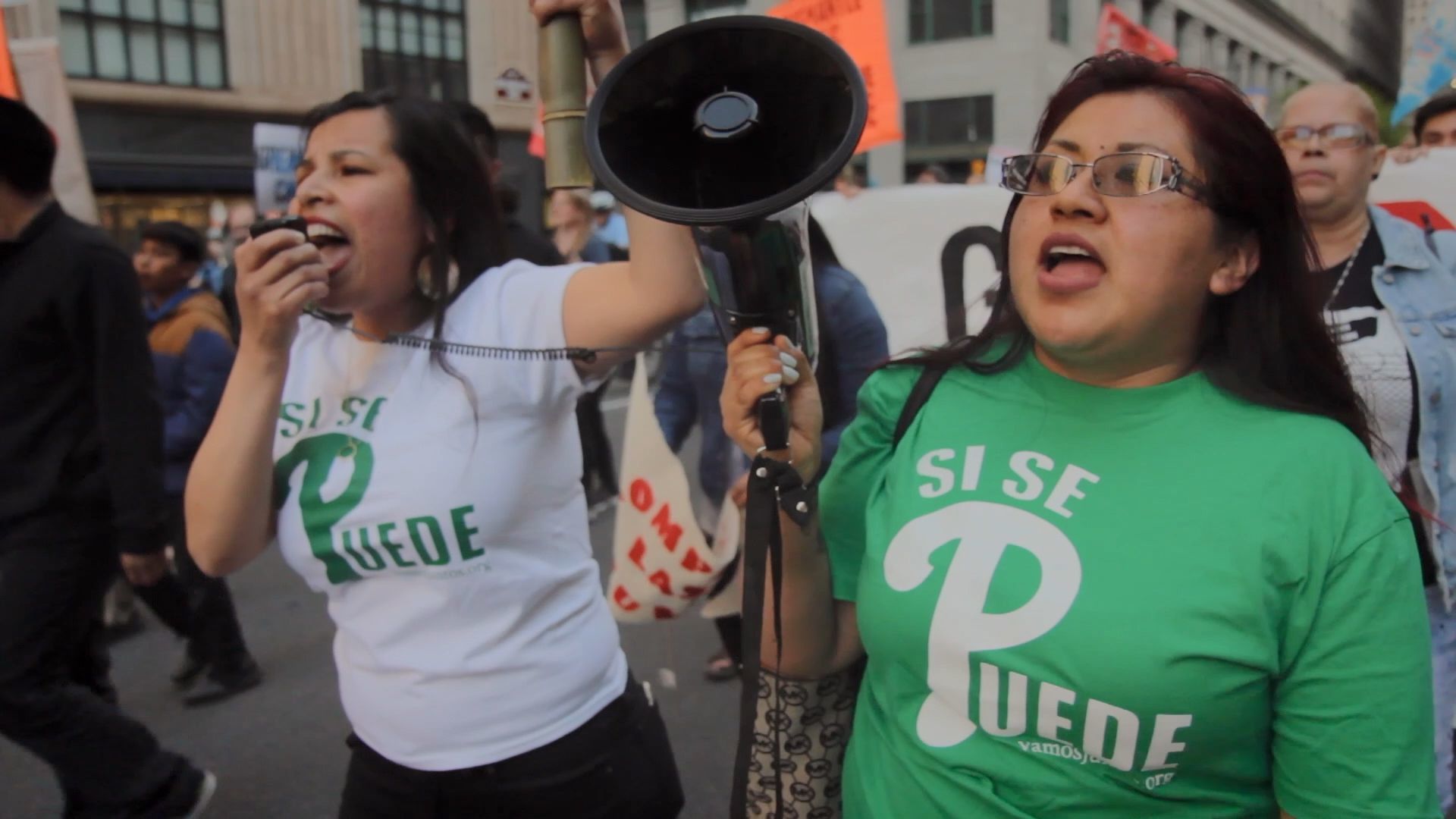
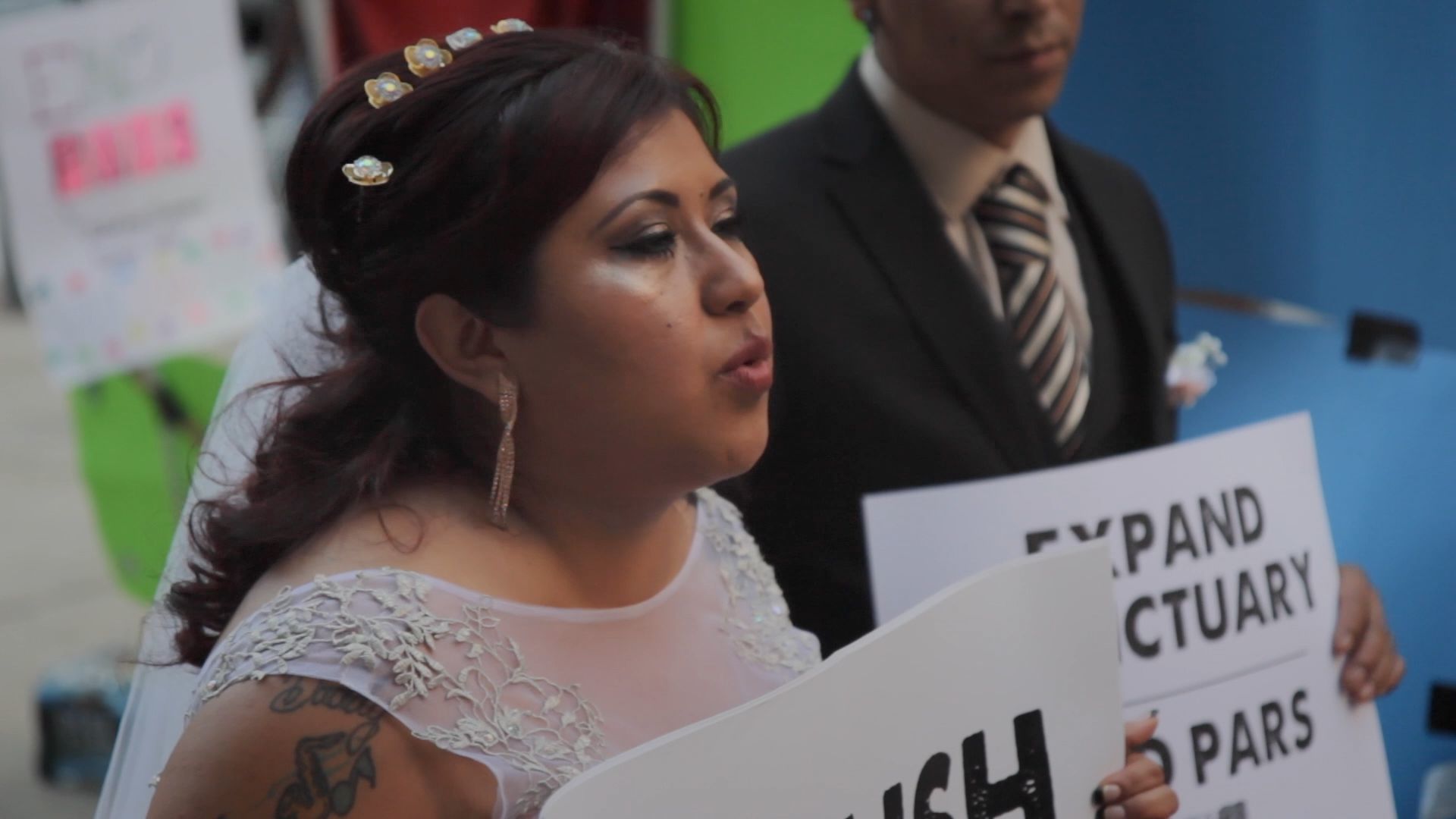
A still image from the documentary “Expanding Sanctuary” by Philadelphia filmmaker Kristal Sotomayor. The 2024 BlackStar award-winning short film will have a virtual screening on Wednesday, Feb. 11, and a local screening on April 29 and 30, as part of the Table Sessions at Bartram’s Garden.
For anyone viewing Philadelphia filmmaker Kristal Sotomayor’s short film, Expanding Sanctuary, for the first time at a free virtual screening and Q&A on Wednesday at 8 p.m., the issues depicted as impacting the lives of Philadelphia’s unauthorized immigrants will seem both meaningfully the same, and poignantly different, than they are today.
Philadelphia immigrants haven’t changed really — they still fall in love, get married, tend to their children, work hard, and look out for neighbors in need. They still give their time to building strong and loving communities.
Legislation, like the Laken Riley Act, has passed with bipartisan support, essentiallytreating immigrants accused of a criminal offense as if they had already been found guilty of it — codifying the violation of their constitutionally protected rights. Plus, thanks to Trump’s “Big Beautiful Bill,” ICE now has an extraordinary amount of funding to do with what it will.
A still image from the documentary, Expanding Sanctuary, by Philadelphia filmmaker Kristal Sotomayor. The 2024 BlackStar award-winning short film will have a virtual screening on Wed. Feb. 11, and a local screening on April 29 and 30, as part of the Table Sessions at Bartram’s Garden.
So, I asked Sotomayor: Why release the film now, into a U.S. that speaks more frequently in virulent terms about immigrants, when the national justice picture is grimmer, and our municipal leaders have chosen to stay more silent than before?
“Yeah, many things have changed,” Sotomayor told me via email. “Politically in Philadelphia, you are right that there is now a mayor who is less willing to push back against the federal government to protect immigrant rights. The mayor has not been willing to uphold sanctuary status or sanctuary policies. We are also dealing with far more mass surveillance than there was in 2018 … ICE now has access to everything from tax records to hospital records to things we probably are not even fully aware of yet.”
“I also do not think immigrant rights are as much of a national issue as they were in 2018,” Sotomayor added, “when the photo of the young boy in a detention center (essentially a cage) sparked widespread national outrage. I am not really seeing that same level of response right now [even though] there are protests around the country against the ramping up of ICE enforcement.”
Kristal Sotomayor, the award-winning, nonbinary, Philadelphia-area Peruvian American director and producer of “Expanding Sanctuary” will lead a Q&A after the film’s virtual screening on Feb. 11.
But, Sotomayor added: “For me, it is vital that this film is circulating now. Expanding Sanctuary is a hopeful story. In many ways, the film feels like it could have been shot last week. It shows how communities organized, changed policy, and protected their families during the first Trump presidency, and [it] reminds us that collective action is still possible now.”
“At a time when so many people are feeling overwhelmed and hopeless, this film offers a success story,” they added. “It demonstrates that change is possible, that policy can be shifted, and that families can be protected, not just in the past, but moving forward into the future.”
The Wednesday virtual screening of the documentary, which was honored at the 2024 BlackStar Film Festival, will be followed by a Q&A. Featured speakers are scheduled to include Sotomayor, Linda Hernandez, the Philadelphia-based community leader and holistic wellness practitioner who is the protagonist of Expanding Sanctuary, and Katie Fleming, an immigration lawyer and the director of public education and engagement at the Acacia Center for Justice.
I’ll be honest, I came away from my most recent viewing of Sotomayor’s film feeling a bit nostalgic. Not only was it filled with the faces of beloved community members — some of whom have recently stepped away from decades of work helping people see immigrants as human beings, not abstractions — but also because of the intimate specificity of what Expanding Sanctuary celebrates.
There on the soundtrack are the musicians who once told me that making space for convivencia is making space for life, for community, and, yes, for resistance. There on screen is the Philadelphia I adore — where James Beard winners feed desperate families living in sanctuary, where people show up to protest in their wedding dresses, where sidewalks become sign-making studios, and where mothers raise their families on both tortillas and hope.
The huge anti-ICE protests these days are amazing, but they should never obscure the fact that while we must always fight against injustice and the weakening of democratic norms, we cannot forget who we are fighting for — real people, real neighborhoods and communities, real cities whose civic leaders may have forgotten their voices, but whose residents never will.
For their part, Sotomayor is hopeful. “I think we are ramping up toward something that could be just as strong and just as powerful as what is portrayed in Expanding Sanctuary,” they told me.
“It may take some time for immigrant rights to become a national talking point again, as it was in 2018, but I do believe that moment will come with larger protests, deeper outrage, and, ultimately, real change.”
To attend the virtual screening and Q&A on Feb. 11, click here. For more information about the Table Sessions at Bartram’s Garden on April 29 and 30, click here.
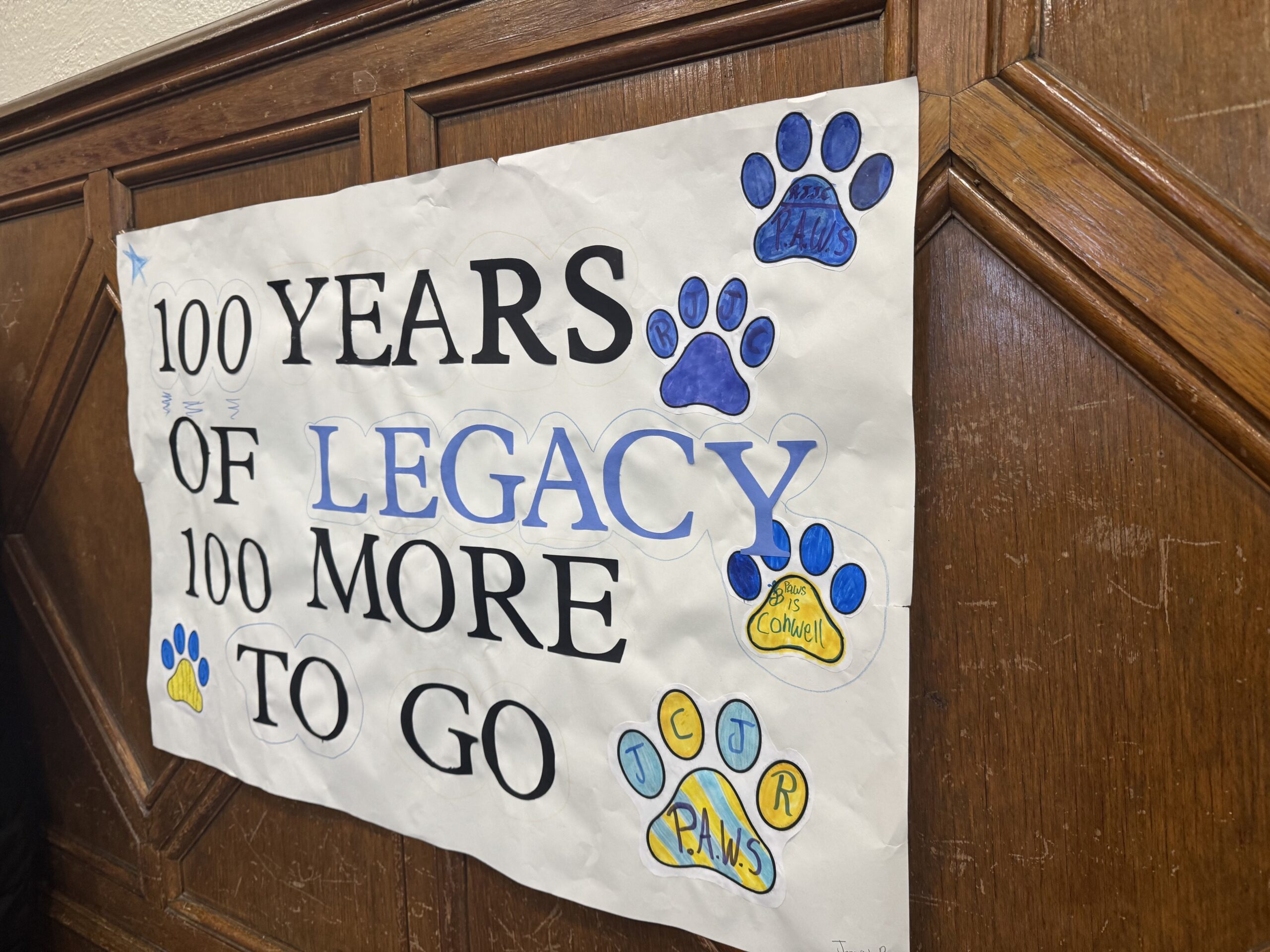
A student-made sign hangs in the Conwell Middle School auditorium. The Philadelphia School District is attempting to close Conwell, a magnet 5-8 school in Kensington, and 19 other schools. The community is fighting the closure.
Conwell, in Kensington, is a very small school by any standard. This year, just 109 students are enrolled in a building that holds 500. That’s down from 490 students in the 2015-16 school year and 806 in 2009-10. The school used to occupy two buildings; it has since shrunk to one.
But it is also a rarity — a standalone magnet middle school. Community members and local officials are mounting a fight against closing the school, which they say has committed teachers and staff members who help students excel against the odds.
The district’s plan, which the school board is expected to vote on this winter, calls for Conwell students to move to AMY at James Martin, another citywide admissions magnet in Port Richmond, which just opened in a new building with only 200 students. Meanwhile, the district has proposed closing its only other free-standing magnet middle school, AMY Northwest. No changes have been proposed for Philadelphia’s four other magnet middle schools, all of which are attached to high schools.
Neighborhood issues, enrollment declines
Conwell’s enrollment issues are tied closely to its setting.
The building sits on Clearfield Street in the heart of Kensington. Fewer and fewer parents have been choosing to send their kids into ground zero of the city’s opioid epidemic, despite Conwell’s myriad partnerships, the outside investments it has attracted into its facility in recent years, and the school’s long history of excellence.
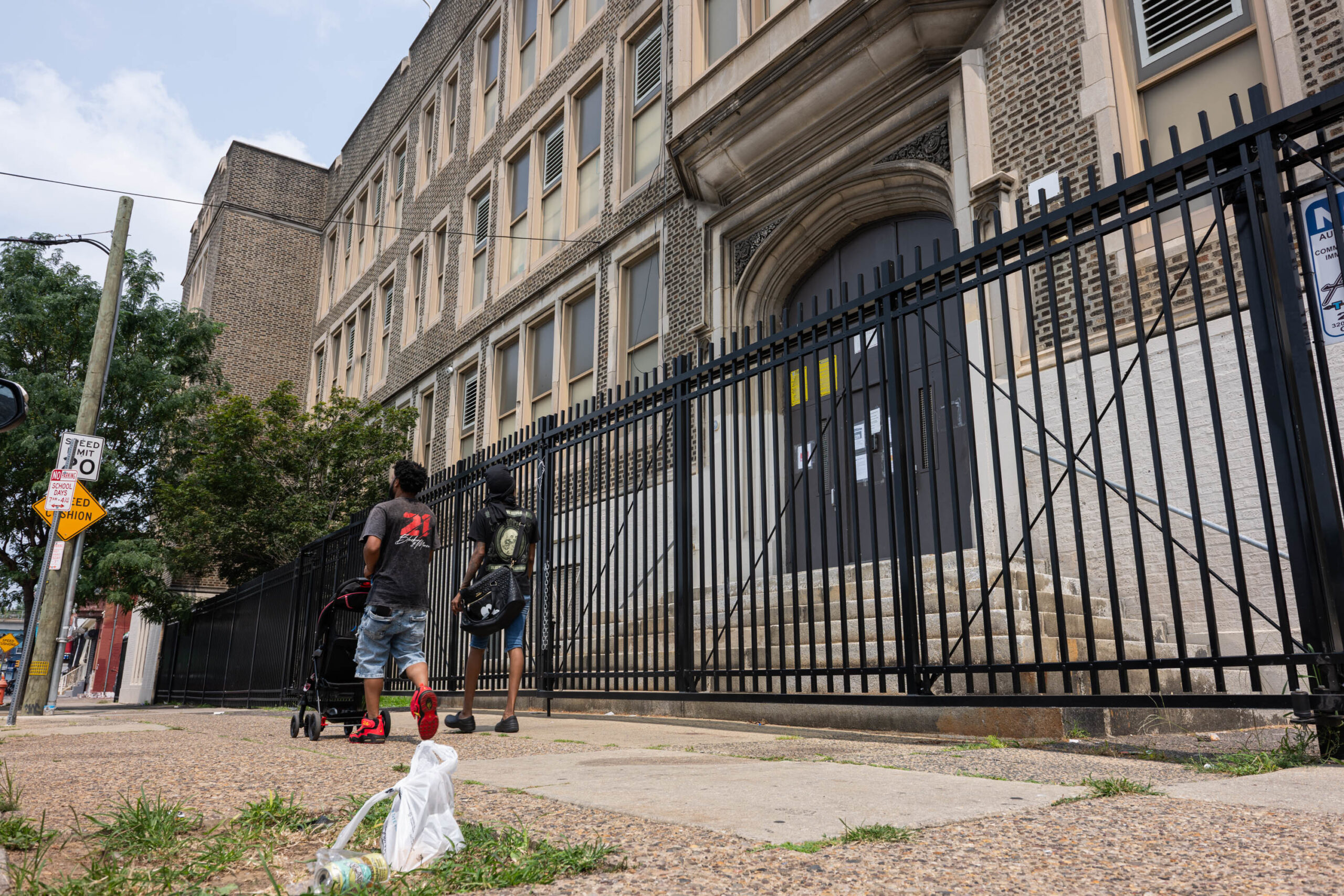
The exterior of Conwell Middle School in Kensington, photographed in August.
Parents, neighbors, students, and politicians, however, are furious that the district is choosing to abandon Conwell and the neighborhood.
“If this school closes, it won’t just be students who feel the loss,” Conwell student Nicolas Zeno told officials at a district meeting Thursday. “It’ll be the community. If the concern is safety, then invest. If the concern is environment, then repair.”
Community member Vaughn Tinsley, who runs Founding Fatherz, a nonprofit mentoring group, suggested closing Conwell would harm its students.
“These students have been victims,” Tinsley said. “These students have seen and witnessed things they shouldn’t have witnessed. Most adults haven’t seen some of the things that these kids have seen, and yet still they come here, yet they’re still committed to excellence, yet they still stand up and still do what they’re supposed to do in the classroom. How dare we take that away from them?”
Watlington has proposed using Conwell as “swing space” — district property that other schools can move into temporarily if their buildings require repairs.
Tosin Efunnuga, Conwell’s nurse, wiped tears from her eyes as she beseeched district officials to keep the school open.
“To have those doors close would be such a disservice,” Efunnuga said. “We need 100 years more.”
Councilmember Quetcy Lozada, whose district includes Conwell, said she was “angry” and “frustrated” by the recommendation to close the school.
“It’s underutilized because of what’s happening on the outside,” Lozada said at the Conwell meeting. “There’s nothing wrong with what is happening on the inside other than successful academic learning, support for families. We are saying to these families, we are punishing them because as a city, we can’t respond to the public safety issues that we have on the outside, and that is just not fair.”
‘What are y’all doing?’
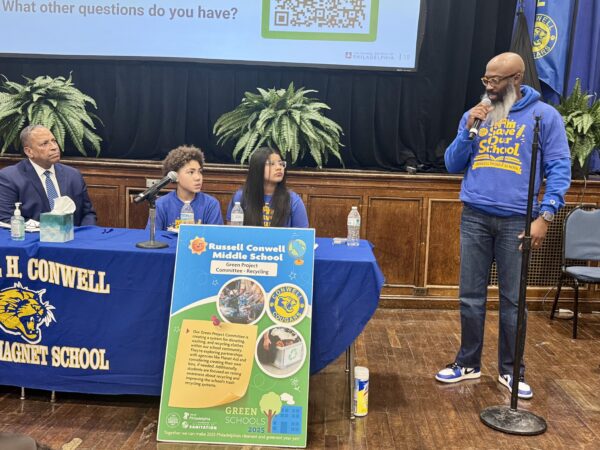
Emotions ran high inside the Conwell auditoriumlast week.
Even before Deputy Superintendent Oz Hill finished his presentation about the rationale for the closures and the specific plan for Conwell, parents burst out with concerns.
“What are y’all doing? Y’all making a mess,” one parent shouted. “You say the building is old. So what? It’s clean in here.”
Another said her child would not be going to AMY at James Martin, formerly known as AMY5.
“I don’t think you understand how much of a battle there is between Conwell and AMY5,” the parent said. “You don’t know the battles these kids have with each other.”
Conwell has a strong alumni network — a rarity for a middle school — that has turned out in force to support the school since the proposed closure was announced.
Alexa Sanchez, Class of 2017, grew up in Kensington and came to Conwell as a bright but unruly student — sheacknowledges that she got in fights, egged the school, and disrespected teachers. But Conwell is rooted in its neighborhood, Sanchez said, with dedicated staff who helped her rise to earn a college degree and a good job in business.
“They didn’t give up on students like me,” Sanchez said. “My future didn’t look promising at first, but in the long run, it did. You shouldn’t really close the school on a community that doesn’t look promising if you’re not from here.”
Other alumni, including Robin Cooper, president of the district’s principals union, and Councilmember Isaiah Thomas, chair of Council’s Education Committee, have spoken out for Conwell.
Conwell “shows up” for Kensington and the city, running a food pantry, hosting Police Commissioner Kevin Bethel’s swearing-in ceremony and an event marking Cherelle L. Parker’s 100th day as mayor, noted Erica Green, the school’s award-winning principal. Staff and students participate in neighborhood cleanups and advocate for help amid the opioid crisis.
“We are what the city needs,” Green told the school board recently. During Green’s tenure, she has helped win money for a new schoolyard, a new science, technology, engineering, and math lab, and more.
“These investments were made for Kensington students,” Green said. “We owe it to them, to their neighborhood. Do not push them out once the neighborhood changes and thrives. Conwell’s success is rooted in its people, its history, and its impact.”
Mayor Cherelle L. Parker speaks during an event to mark her 100th day in office at Conwell Middle School in Kensington in April 2024.
Despite Philadelphia being a deep-blue city dominated by Democrats, local officials have been somewhat cautious in how they talk about President Donald Trump’s administration.
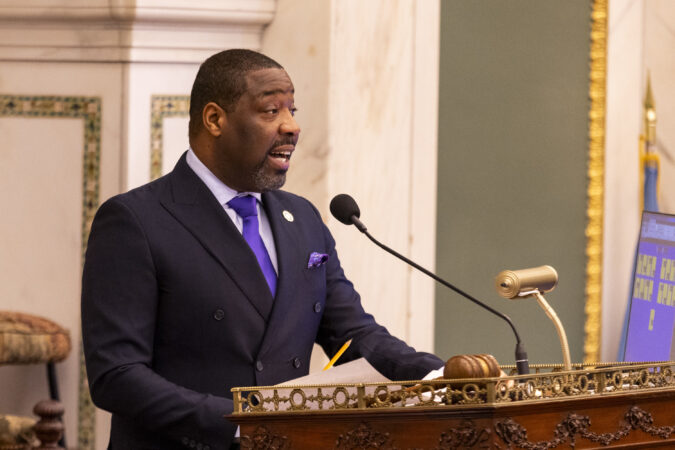
That has included the top legislator, City Council President Kenyatta Johnson, who has largely taken a measured approach on national politics, opting to convene task forces and hold public hearings rather than go scorched-earth on Trump.
That was until last month, when Johnson, like the rest of the country, watched video footage on the news showing federal immigration enforcement agents bearing down on Minneapolis and fatally shooting two United States citizens.
He said in an interview Friday that he now sees City Council differently: as an “activist body” that is obligated to take legislative action in opposition to the Trump administration.
And Johnson said he questions the purpose of his position if not to stand up for the city’s most vulnerable — and right now, he said, that’s immigrants.
“It’s my responsibility to step up in this space and be more vocal,” he said over lunch in South Philadelphia’s Point Breeze neighborhood, the section of the city where he grew up and still lives. “It’s just the evolution of me really not addressing it from a political standpoint, but from a moral standpoint of advocating and fighting for individuals who really need a voice.”
That reflects a shift for Johnson, the centrist Democrat who is entering his third year as Council president. He considers himself pro-law enforcement, and he typically takes an understated approach to leadership, preferring to dissent with others privately rather than duke it out in public.
In employing a more assertive approach, Johnson has also over the last several months started to diverge from Mayor Cherelle L. Parker, a close ally.
“The mayor can respond how she chooses to respond,” he said. “For me, it’s a moral issue.”
Philadelphia Mayor Cherelle L. Parker stands beside Council President Kenyatta Johnson (left) after she finished her budget address to City Council, City Hall, Thursday, March 13, 2025.
Larry Ceisler, a public affairs executive and longtime City Hall observer, said he has watched Johnson rise from community activist to lawmaker.
He said the Council president, in his latest evolution, might have calculated that a majority of the 16 other members want the city’s legislative body to take a more active role.
“He is an activist at heart, and he has a tremendous amount of empathy for people,” Ceisler said. “At the same time, he’s a pretty good politician and he can count votes. It’s very difficult for him at this point to push back on the will of his members.”
But Ceisler said that Parker might have more to lose, and that she will “be on the hook for all this if there is retribution from Washington.”
A ‘shameful’ episode at the President’s House
Through the first eight months of the second Trump administration, Johnson largely kept focused on local policymaking.
When a reporter asked Johnson in January 2025 how he saw his role responding to the Trump administration, he noted that he had convened two working groups to study how Trump-backed policies would affect Philadelphia residents.
Other Council members introduced more than a dozen resolutions to condemn the Trump administration’s efforts that they said would harm Philadelphians, like cutting food assistance and prohibiting some diversity-hiring initiatives. One resolution opposed the federal government’s deployment of the National Guard as a crime-fighting measure in major American cities; another said Trump’s cabinet members were wholly unqualified.
Those measures, almost entirely symbolic, were largely spearheaded by progressive members. They passed the overwhelmingly Democratic Council with little debate and not much acknowledgment from the Council president.
But by September, Johnson began to speak up.
He was incensed when word spread that the Trump administration was seeking to alter some content related to slavery on federal properties, including at Independence National Historical Park. The National Park Service was reportedly looking to edit panels at the President’s House Site in Center City that memorialize the nine people whom George Washington enslaved.
Last month, federal workers removed the exhibit and relocated the panels to the National Constitution Center, where they are in storage. Parker’s administration filed a lawsuit immediately, and the issue remains the only Trump initiative that Parker has vocally opposed over the last year.
“This history is a critical part of our nation’s origins, and it deserves to be seen and heard,” she said in a video posted on social media.
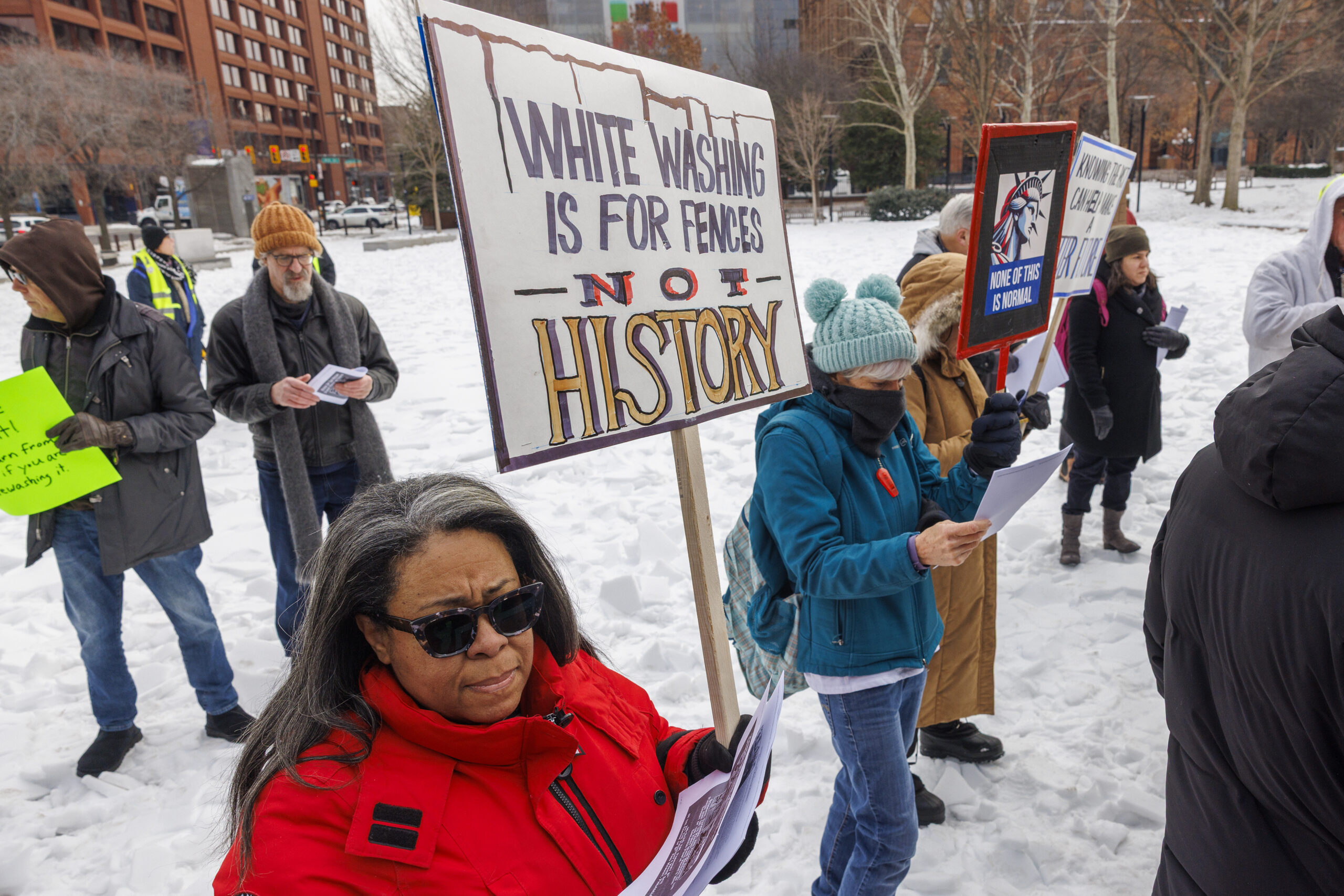
Veronica Chapman-Smith, concerned citizen was present at the history lesson and protest, Presidents house, Independence National Historical Park, Philadelphia, Friday, Feb. 6, 2026. The community is coming together to protest the removal of slavery exhibit at the President’s House site.
The Council president said he wants the panels returned in time for an expected influx of tourists this year for several major events, including World Cup games and the 250th anniversary of the founding of the nation.
“It’s shameful that during this celebration of our country, the birthplace of America, here in the city of Philadelphia, we have to deal with a Trump administration trying to whitewash our history,” Johnson said last week.
A Minneapolis-like ICE surge on ‘any given day’
Over the next five months, Johnson will juggle advocating for the return of the panels as he manages other high-profile local matters. Council must approve a city budget by the end of June, and its members are expected to play a crucial role in the Philadelphia School District’s closure and consolidation plan that will affect dozens of schools.
The “ICE Out” legislation that Johnson has already backed is also expected to be a major undertaking over the coming weeks. The seven bills that make up the package already have support from 15 of Council’s 17 members, which constitutes a veto-proof majority.
City Councilmember Rue Landau, a Democrat who is one of the prime sponsors of the immigration legislation, said Johnson “fully realizes the importance of this moment.”
“His support,” she said, “is a recognition that local government has a pivotal role to play in moments like these.”
Prior to this year, Johnson rarely talked about immigration. He has spent most of his career focused on public safety, gun violence prevention, and quality-of-life issues.
Bloomberg reported that the building, about 85 miles outside Philadelphia, is one of two dozen across the nation that ICE has identified for conversion into detention centers. ICE purchased another warehouse in Schuylkill County, about 110 miles from Philadelphia.
Together, the two facilities could hold 9,000 beds.
To Johnson, it was like the federal government was saying: “We want to set up shop right in your backyard.”
ICE is already operating in the city. But Johnson said the warehouse purchases are a sign that Philadelphia should prepare for a greater surge of immigration enforcement like the operation in Minneapolis, where more than 3,000 federal agents were deployed and large-scale protests ensued.
Countless Minnesotans have said they were harassed, racially profiled, and unlawfully arrested by ICE agents during the operation this year.
“Who’s to say that won’t happen to any of my constituents that I represent from Liberia? From Sierra Leone? From Cambodia?” Johnson said. “It can happen on any given day here in the city of Philadelphia.”
After Sharif Street Jr. got into a highly public fight at Mayor Cherelle L. Parker’s 2024 inauguration ceremony, his boss, City Councilmember Jim Harrity, extended him some grace.
Harrity, who credits Street Jr.’s father, State Sen. Sharif Street (D., Philadelphia), with giving him a second chance earlier in his own career, kept the junior Street on staff as a special assistant, saying the incident was a lapse in judgment.
But according to another staff member in Harrity’s office, it was not the only transgression.
Shanelle Davis, a former constituent services representative, filed a federal lawsuit last week against the city claiming that she told supervisors months before the inauguration fight that Street Jr. had sexually harassed her while she was at work, including twice grabbing her and making sexualized comments about her body.
She said in the suit, filed in the U.S. District Court for the Eastern District of Pennsylvania, that no action was taken and Street Jr. remained on staff.
Davis is seeking unspecified damages from the city, which she claims violated state and federal laws related to gender-based discrimination. Street Jr. is not named as a defendant in the suit, but he is mentioned throughout the 13-page filing.
Davis’ complaint portrays a dysfunctional workplace environment in the City Hall office, including an alleged physical altercation between Street Jr. and another staffer for which no one was reprimanded. Davis, who is Black, claimed another colleague in Harrity’s office made racist comments, including hurling the N-word toward her.
Davis, who was hired in late 2022, said in the lawsuit that she was fired for underperforming at her job about a year later, after Harrity won reelection.
Her attorney did not respond to a request for comment Monday. Street Jr. did not respond to calls seeking comment.
Harrity, a Democrat who represents the city at-large and was a longtime aide to the elder Street, said in a statement that he “categorically denounce[s] workplace harassment, or any conduct that undermines a respectful and professional work environment.”
He declined to comment further, citing the ongoing legal proceedings. A spokesperson for the city law department also declined to comment.
The lawsuit is the latest legal trouble involving Sharif Street Jr., 26, who over the last three years has pleaded guilty to criminal offenses in Philadelphia, Montgomery, and Delaware Counties. In August, his employment with the city was terminated the week he pleaded guilty to charges in connection with the inauguration assault and another incident.
City Councilmember Jim Harrity speaks to colleagues on during a Council session in September.
Street Jr. comes from one of Philadelphia’s most well-known political families. His grandfather is former Mayor John F. Street, his mother is Common Pleas Court Judge Sierra Thomas Street, and his father is a state senator and the former head of the state Democratic Party who is now running for a seat in Congress.
Anthony Campisi, a spokesperson for the elder Sharif Street’s congressional campaign, said the state senator had “no knowledge” of the sexual harassment allegations.
“Sharif loves his son unconditionally and has supported his son through personal troubles, like so many parents across Philadelphia,” Campisi said. “That being said, Sharif unequivocally condemns sexual harassment in all its forms and is looking for the legal process to play out.”
City Council President Kenyatta Johnson, who took over as leader of the chamber in 2024, declined to comment. Under City Council rules, individual members are responsible for hiring and terminating their own employees.
State Senator Sharif Street (D., Phila.)is in the state House chamber as Gov. Josh Shapiro makes his annual budget proposal Feb. 3, 2026.
Street Jr. was arrestedseveral times over three years while working in City Hall as an assistant in Harrity’s office, court records show. Davis’ lawsuit comes about six months after Street Jr.’s employment in Harrity’s office ended, according to payroll records.
In January 2024, Street Jr. punched a security guard at the entrance to Parker’s inauguration ceremony at the Met Philadelphia on North Broad Street. He told The Inquirer at the time that he was defending his grandfather, the former mayor, whom he said the guard had grabbed because they were trying to enter at a back entrance without waiting in line.
“I saw my grandfather get grabbed and I just sort of blacked out,” Street Jr. said. His father defended him at the time, saying the security guard had initiated the altercation.
Later that month, Street Jr. was charged in connection with a hit-and-run from the previous August that left a 14-year-old injured.
The two cases were consolidated in Common Pleas Court, and Street Jr. pleaded guilty in August to charges of assault and causing an accident that resulted in an injury. According to prosecutors, he was sentenced to 60 days in jail.
Four months later, when he was no longer working in city government, Street Jr. was briefly jailed in Delaware County following what police in Upper Darby described as a “prolonged struggle” during a traffic stop. He pleaded guilty to disorderly conduct, a summary offense.
Philadelphia’s Democratic Party has endorsed State Sen. Sharif Street for the city’s open congressional seat.
The endorsement Monday came as no surprise, given Street’s insider connections. He previously chaired the Pennsylvania Democratic Party and is close to party leaders in the city. And Bob Brady, who chairs the Democratic City Committee, said last fall that he expected his fellow ward leaders to vote to endorse Street.
But it nonetheless strengthens Street’s status as the favorite in the race among the local Democratic establishment. Street, the son of former Mayor John F. Street, was endorsed by the politically powerful unions in the Philadelphia Building & Construction Trades Council last year.
“I am deeply honored to have received the overwhelming support of the grassroots leaders who power our party,” Street, who represents a North Philadelphia district in the state Senate, said in a statement. “This endorsement is more than just a vote of confidence — it is a demonstration that we are building a broad-based coalition.”
Street has also emerged as the front-runner in the financial race. Recently disclosed campaign reports showed he raised $348,000 from donors in the last quarter of 2025, the largest haul among the candidates.
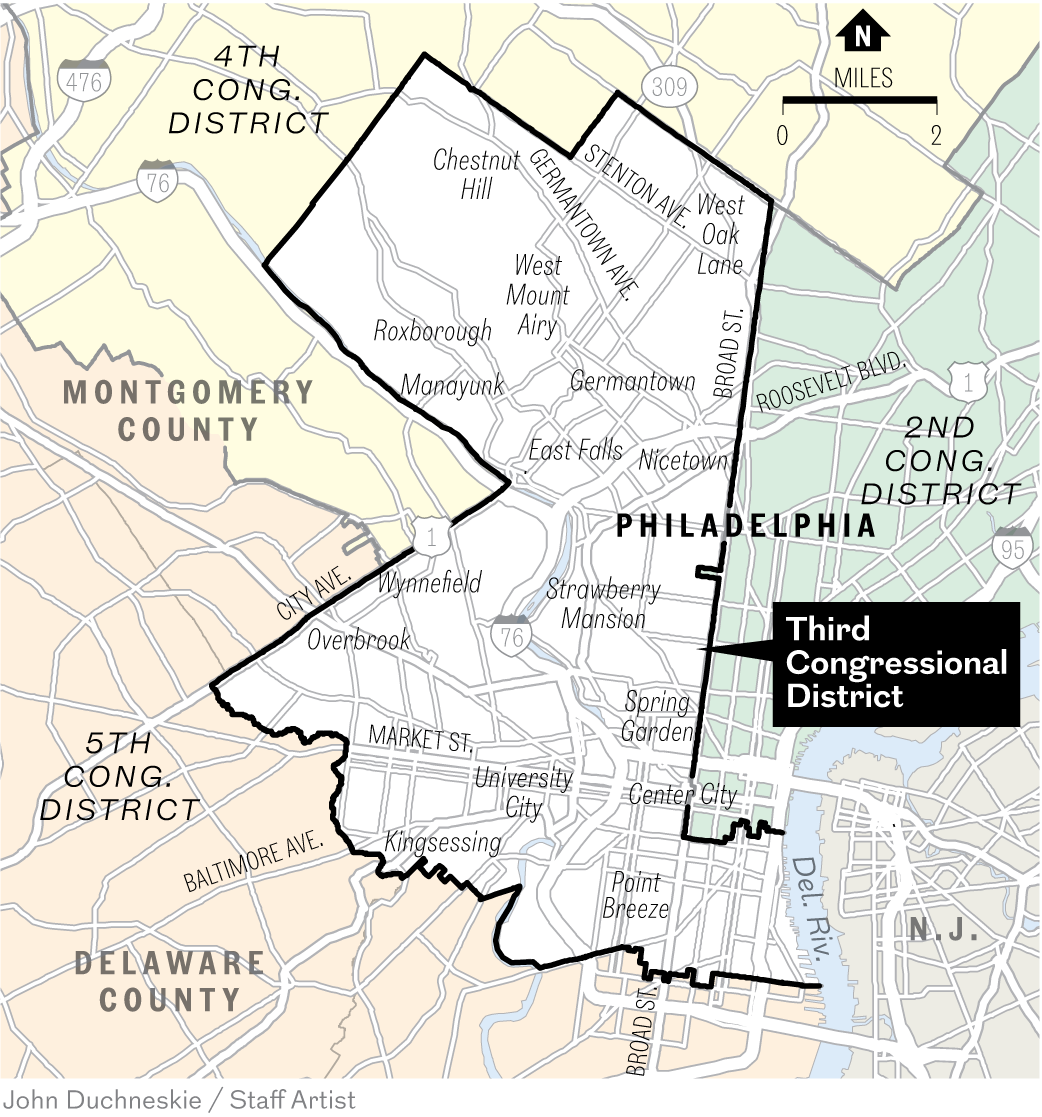
The 3rd Congressional District is, by some measures, the most heavily Democratic district in the U.S. House, and includes West and Northwest Philadelphia and parts of Center City, Southwest, South, and North Philadelphia.
The winner of the Democratic primary in May is all but guaranteed victory in November. Democrats hold a 7-to-1 voter registration edge over Republicans in Philadelphia.
Map of Pennsylvania’s Third Congressional District.
Earning the party nod may help Street stand out in a crowded field and will bolster his ground game for campaigning, activating the party’s hundreds of committeepeople to get out the vote for him.
But it doesn’t guarantee victory. Insurgent candidates have defied the party’s dominance several times in recent city elections, and the district includes several progressive pockets that could open the door for a candidate who can coalesce the left against Street.
The endorsement followed a vote by the Democratic ward leaders in the district. A candidate must receive at least 50% of the vote to win the party endorsement.
If no candidate reaches that mark, each ward prints its own sample ballots with its preferred candidates, which often happens in open contests like this year’s primary.
The party’s endorsement of Street means all ward leaders are now encouraged to include him in the literature distributed to voters before and on election day. Some wards, however, choose to print their own slates anyway.
The party did not immediately disclose the final vote tally at the endorsement meeting.
Northwest Philadelphia’s 50th Ward, which is led by Mayor Cherelle L. Parker, has not yet made an endorsement in the race, said Aren Platt, executive director of the mayor’s campaign, People for Parker.
Top candidates in the race, including Street, were scheduled to face off at a candidates forum hosted by the Center City Residents Association on Monday night.
Mayor Cherelle L. Parker’s campaign raised almost $1.7 million last year despite her not facing reelection until 2027, according to a new campaign finance report.
That is the most any Philadelphia mayor has raised during their second year in office since at least the early 2000s, when the city’s current ethics and campaign finance rules took effect, according to Parker’s campaign. She is also the only mayor in that time frame to avoid a dip in fundraising after her first year in office, when many donors shell out to support the city’s new leader.
“The Mayor has strong support from across the City and the region,” Aren Platt, the executive director of the mayor’s campaign committee, People for Parker, said in a written statement. “These numbers equate to people investing in her vision as Mayor for the City and supporting the work that she is doing.”
Her campaign also spent $812,000 in 2025, a huge sum for a nonelection year. Parker entered 2026 with nearly $1.6 million in the bank — a significant haul two years out from a municipal election cycle. (For context, Parker’s campaign in 2023 raised almost $3.4 million, and spent just over $3.2 million en route to winning the mayor’s race.)
State law gives politicians wide latitude in how they spend their campaign donations beyond traditional election expenses like buying TV ads and printing fliers.
Parker’s campaign expenditures last year included airfare to Colorado for a mayoral roundtable at the Aspen Institute, and almost $20,000 to cover costs for a constituent’s funeral.
Parker’s hefty off-year fundraising is reflective of the increasingly constant and professionalized world of political fundraising in Philadelphia. Local politicians no longer wait until challengers emerge to press donors for cash or host major fundraisers.
“Philadelphia elections keep getting more expensive, so now all the candidates have professional fundraisers, which means the frequency of their events and calls has risen dramatically as well,” said John Hawkins, a City Hall lobbyist.
City Council President Kenyatta Johnson, for instance, last year raised about $960,000 and entered 2026 with more than $1.1 million in the bank. Johnson, who, like Parker, will not face reelection until 2027, said he raises money in off years so that he can support other Council members and fund community programs.
“I am blessed to support 16 other hardworking members of Council,” he said Friday. “I always support different community initiatives that come before me, individuals always seeking support for a variety of different initiatives.”
Philadelphia Mayor Cherelle L. Parker stands beside Council President Kenyatta Johnson (left) after she finisher her budget address to City Council, City Hall, Thursday, March 13, 2025.
Johnson, a close ally of the mayor, is also seen as a potential contender in the race to succeed Parker, which would happen in 2031 if she wins reelection. Racking up money between now and then could allow him to enter the race in a strong financial position.
“My focus is being the best City Council president that I can be,” Johnson said when asked if he was considering the city’s top job.
Using the rules to their advantage
Philadelphia’s campaign finance laws rules limit contributions to $3,700 per calendar year from individual donors, and cap political committees and businesses allowed to make political donations at contributions of $14,800 per year.
That means incumbents can collect the maximum amount from donors in each of the four years in their terms before running for reelection. That is not possible in federal elections, where contribution limits apply to the entire election cycle.
The city’s rules give incumbents a potential advantage over new candidates, who typically have the opportunity to raise money over only one or two calendar years after they enter a race.
Incumbents do not always maximize that opportunity. But Parker last year set a new standard.
She is also among the growing number of Philly elected officials taking advantage of a rule that allows politicians to accept donations larger than the city’s contribution limits if they do not spend the excess money on electioneering activities, such as buying ads or paying canvassers to knock on doors.
The electricians union, the politically active Local 98 of the International Brotherhood of Electrical Workers, for instance, gave $50,000 to Parker’s campaign in 2025. At most $14,800 of that can be spent on persuading city voters to support Parker during her next campaign. The remaining $35,200 will be deposited into a separate bank account known as a Segregated Pre-candidacy Excess Contribution, or SPEC, account.
While SPEC accounts are nothing new, more Philly elected officials are using them. In addition to Parker, at least a half dozen Council members, including Johnson, now have SPEC accounts, said Shane Creamer, executive director of the Philadelphia Board of Ethics.
“We haven’t seen this in the lead-up to past elections, certainly not in this number,” Creamer said, adding that the trend shows that politicians are being conscientious about the city’s rules. “I think it suggests that, fundraising aside, there’s an effort to comply with the contribution limits.”
How Parker raises money
Parker hosts major fundraising events, such her annual birthday party, which last September took place at the Live! Casino & Hotel. She also calls donors to ask for contributions, and her supporters sometimes host smaller fundraisers to collect money for her campaign.
Labor unions gave more than $330,000 to Parker last year, campaign finance reports show. That includes $50,000 from the electricians union, $64,800 from the Carpenters union, and $45,000 from the Laborers District Council.
Organized labor — especially the Philadelphia Building and Construction Trades Council, the Carpenters union, and Local 32BJ of the Service Employees International Union — fueled Parker’s victory in the 2023 mayor’s race.
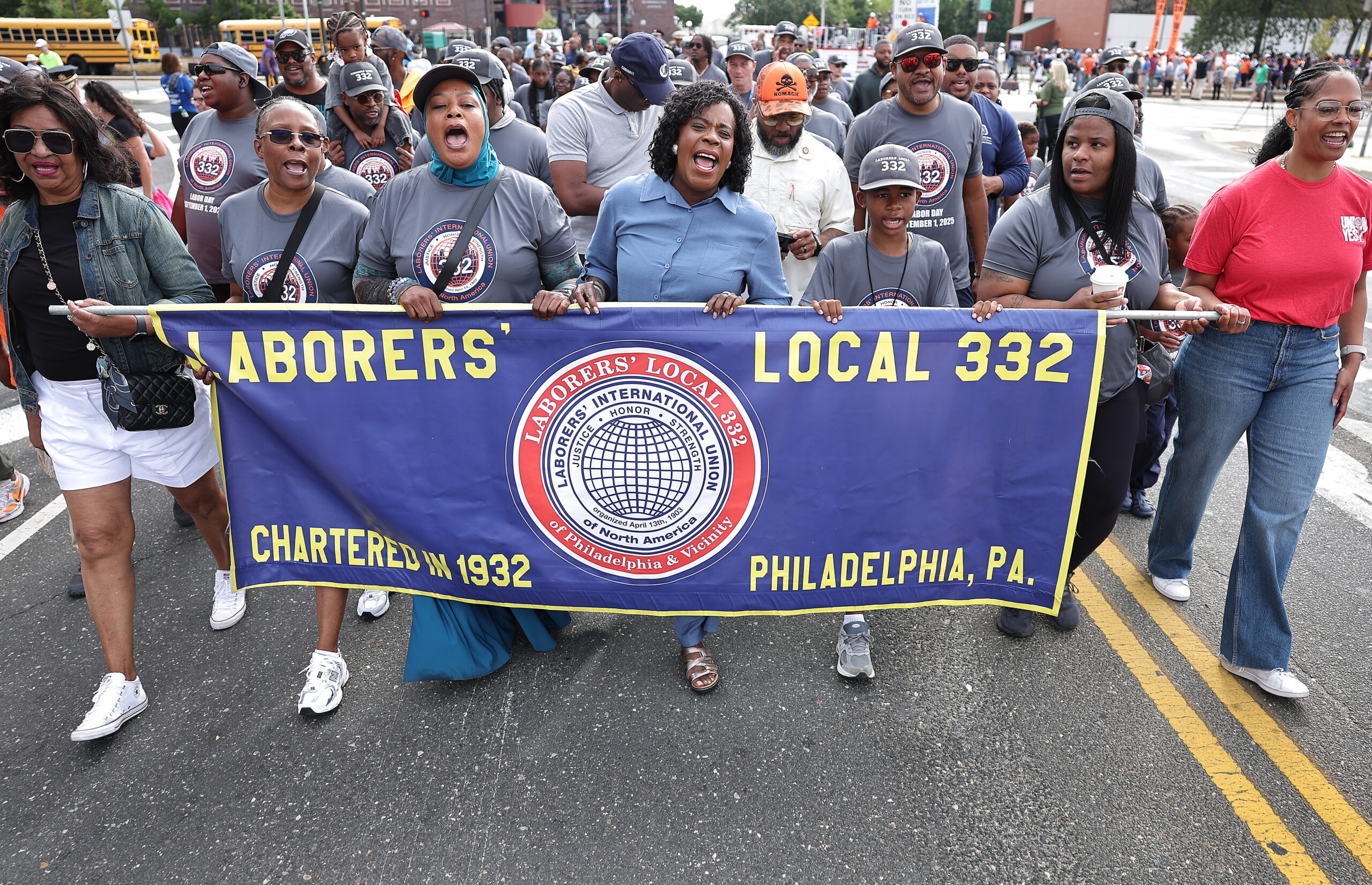
Mayor Cherelle L. Parker (center) joins the chant as she marches with Local 332 during the annual Tri-State Labor Day Parade in Philadelphia on Monday, Sept. 1, 2025.
“We’re very aligned on policy, and if you look at her campaign promises, she is doing fairly well. She’s made some progress on all of them,” said Brown, who serves on the mayor’s business roundtable and an advisory panel providing input on the city’s efforts to revitalize Market East. “I’m invested in the city, and I want to see a functional, good mayor who can lay out a vision and get things done.”
Corporate interests also donated heavily to Parker in 2025. Her campaign contributions from law firms last year included $10,000 from Ballard Spahr, $11,000 from Duane Morris, $5,000 from Buchanan Ingersoll, and $11,000 from Cozen O’Connor. She also received $5,000 from Comcast, $1,000 from Independence Blue Cross, and $4,700 from the Chamber of Commerce for Greater Philadelphia.
Wealthy individuals shelled out big bucks, too. Investor Richard Vague gave $16,000; developer Carl Dranoff contributed $15,000; former Aramark CEO Joseph Neubauer gave $30,000; and Firstrust Bank executive chair Richard J. Green gave $15,000.
How Parker spends campaign money
Although campaign donors may imagine their contributions pay for yard signs and radio spots, the money also often covers strategy meetings held at expensive restaurants, gifts for constituents, and costs related to officeholders’ public duties.
Elected officials are prohibited from using political donations for personal expenses. But beyond that, the rules for spending campaign cash are famously lax and rarely enforced.
Parker’s expenditures on the recently filed reports included a $1,200 tab at Vernick Fish, and 14 more modest purchases from Shanghai Gourmet in Chinatown, totaling $424.
In addition to the Aspen Institute roundtable, Parker’s campaign helped her pay for trips to Miami for a tour of wellness and homeless centers that are part of the Florida judicial system, to Martha’s Vineyard, Mass., for a Black Economic Alliance gathering, to Puerto Rico for a National League of Cities event, and to Harvard University’s Bloomberg Center for Cities.
Aren Platt (right) executive director of Mayor Cherelle L. Parker’s political committee is with her after a Kamala Harris campaign event in Germantown Nov. 3, 2024. Platt was senior campaign adviser in Parker’s run for mayor, and served briefly as deputy mayor before leaving her administration.
The campaign paid $112,000 in consulting fees for ALP Impact Strategies, Platt’s firm; and $30,000 to 215 Bears, the private security company owned by Shawntee Willis, whom Parker has hired as a special assistant in the mayor’s office and who works closely with her police detail.
It also paid $158,563.73 to Rittenhouse Political Partners, the fundraising firm founded by well-known political consultant Aubrey Montgomery and used by Parker, Johnson, and five other members of Council who saw large fundraising hauls last year.
Rittenhouse’s clients include some of the most aggressive off-year fundraisers in Philly politics and some of the most prominent adopters of SPEC accounts.
Montgomery declined to comment.
Staff writer Anna Orso contributed to this article.
Philadelphia’s top lawmaker said he’s willing to hold up city funding to the Philadelphia School District over concerns about the recently released closure and consolidation plan, a warning that signals City Council intends to leverage its biggest bargaining chip as members fight to keep schools in their neighborhoods open.
City Council President Kenyatta Johnson said in an interview Friday that multiple members oppose proposed closures in their districts, and some want more robust investments in schools slated for consolidation in exchange for their support.
Johnson’s primary concern, he said, is “making sure that the issues and concerns that we would like to see addressed with the facilities plan are reflected in the final recommendations.”
Asked if he’d be willing to hold up the city’s contribution to the school district if their concerns are not met, Johnson said: “If need be.”
Schools Superintendent Tony B. Watlington Sr. has proposed sweeping changes to schools across the city, including closing 20 schools, ordering six others to share buildings, and modernizing 159 buildings. His plan is subject to approval by the school board, which will likely vote sometime this winter.
Oz Hill (left), Superintendent Tony B. Watlington Sr. (center), and Claire Landau at a news conference to announce plans for the first draft of the Philadelphia facilities master plan during a news conference at the Philadelphia School District Headquarters in Philadelphia on Jan. 20.
Johnson’s public insistence that Council members exercise veto power over parts of the district’s long-awaited facilities master plan is notable, and it raises the stakes ahead of a Feb. 17 hearing, during which every Council member will have the opportunity to question district officials about the proposal.
The Council president — a Democrat who is typically even-keeled and does not often speak publicly about legislative strategies — wields significant control over the fate of the city budget, which members must pass by the end of June. Mayor Cherelle L. Parker will unveil her proposed budget in March.
Local revenue and city funding made up about 40% of the district’s budget this year, or nearly $2 billion. Most of that is the district’s share of city property taxes which, unlike other school systems in Pennsylvania, are levied by the city and then distributed to the district.
In addition, the city makes a separate, direct contribution to the district, which this year was nearly $285 million.
Johnson’s opposition to elements of the plan could also position lawmakers somewhat at odds with Parker and Watlington. The pair have operated in lockstep since Watlington last month unveiled his proposal.
The plan did not appear to go over well in Council, with several members expressing immediate concerns. The day the plan was released publicly, Johnson endorsed another member’s legislation to amend the city’s governing document and grant Council power to remove members of the school board at will.
Councilmember Cindy Bass at City Council’s first session of the year on Jan. 23, 2025, in City Hall.
Some Council members said they plan to fight proposed closures and advocate for more investment in struggling schools.
Speaking at a meeting at Lankenau High School in Upper Roxborough last week, Councilmember Cindy Bass pushed back against the notion of closing Lankenau, a well-regarded magnet outside of her district, and other strong schools, including Fitler Academics Plus and Parkway Northwest in her district.
“When budget time comes up, I’ll be asking about these decisions that the school district is making,” Bass, a Democrat who represents parts of North and Northwest Philadelphia, told an emotional crowd of more than 100. “We don’t support them and we don’t understand them. They have not been rationalized.”
At Conwell Middle School in Kensington, Councilmember Quetcy Lozada, a Democrat who represents the neighborhood, said she was “having a really hard time understanding how the decisions were made.”
Closing Conwell, a magnet school whose enrollment has fallen to just over 100 because of parent concerns over neighborhood safety, was particularly galling, Lozada said.
“We are saying to these families, ‘We are punishing them because, as a city, we can’t respond to the public safety issues that we have on the outside,’” Lozada said. “And that is just not fair.”
Johnson said he wanted to see a clear safety plan for students being asked to travel to schools in new neighborhoods.
He also floated rebuilding consolidated schools as “all-in-one” campuses that are co-located with parks, recreation centers, and other city services.
“It would be in the best interest of the school district and the school board to think outside the box in terms of how they move forward, besides just saying, ‘We’re going to be closing down schools,’” Johnson said. “And those are conversations that we’re having right now.”