Tag: Cherelle L. Parker

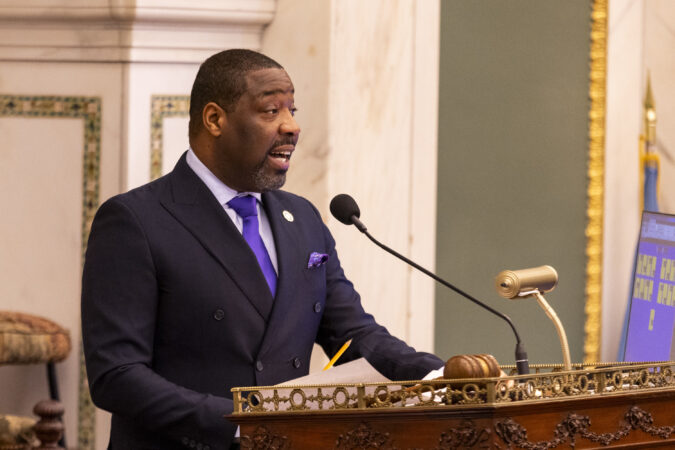
  • Council President Kenyatta Johnson says Philadelphia can’t sit out Trump’s immigration fight anymore

    Council President Kenyatta Johnson says Philadelphia can’t sit out Trump’s immigration fight anymore

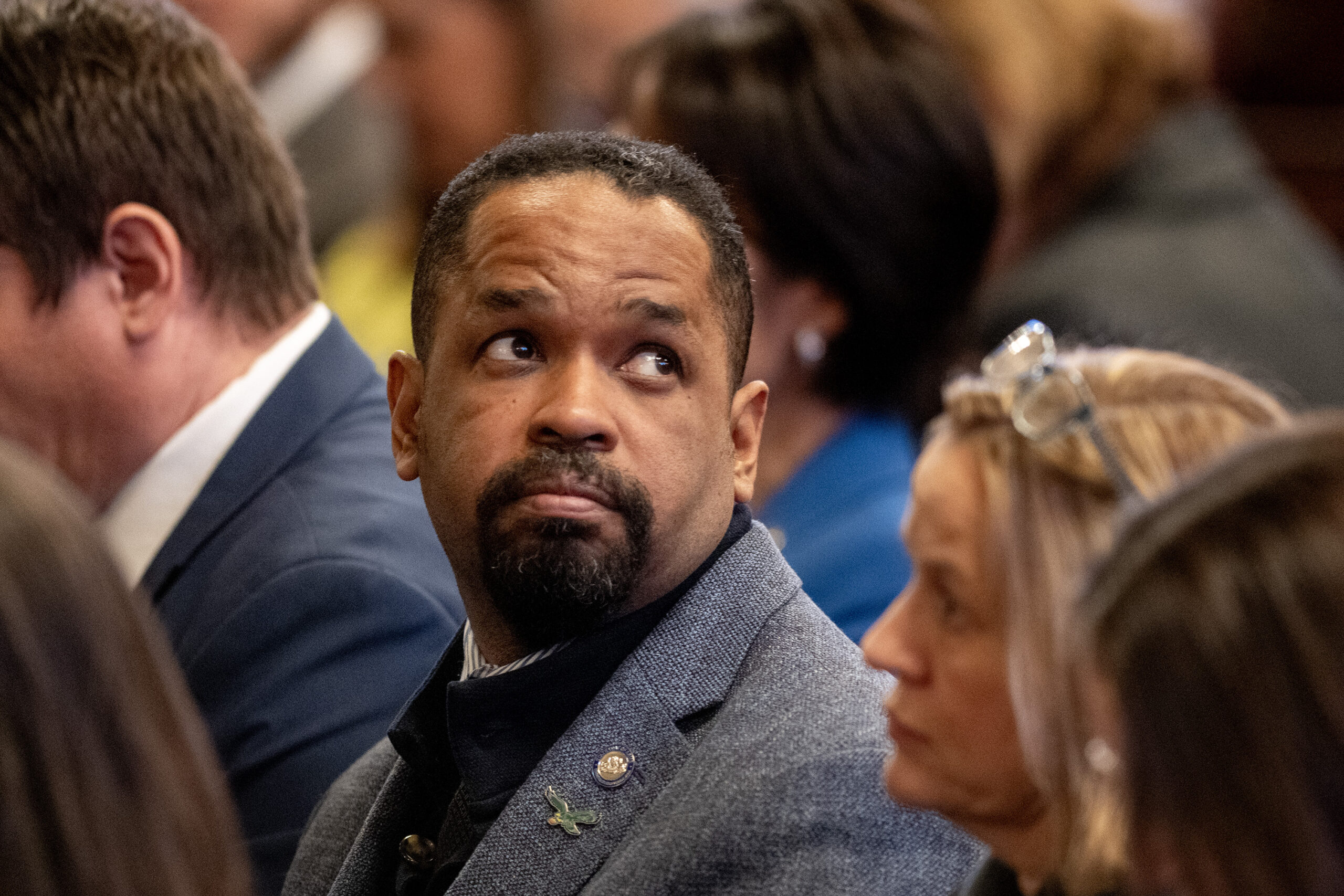
    Despite Philadelphia being a deep-blue city dominated by Democrats, local officials have been somewhat cautious in how they talk about President Donald Trump’s administration.

    That has included the top legislator, City Council President Kenyatta Johnson, who has largely taken a measured approach on national politics, opting to convene task forces and hold public hearings rather than go scorched-earth on Trump.

    That was until last month, when Johnson, like the rest of the country, watched video footage on the news showing federal immigration enforcement agents bearing down on Minneapolis and fatally shooting two United States citizens.

    Johnson said he was horrified by the tactics, and he quickly backed a package of legislation that would limit how immigration enforcement is conducted in Philadelphia.

    He said in an interview Friday that he now sees City Council differently: as an “activist body” that is obligated to take legislative action in opposition to the Trump administration.

    And Johnson said he questions the purpose of his position if not to stand up for the city’s most vulnerable — and right now, he said, that’s immigrants.

    “It’s my responsibility to step up in this space and be more vocal,” he said over lunch in South Philadelphia’s Point Breeze neighborhood, the section of the city where he grew up and still lives. “It’s just the evolution of me really not addressing it from a political standpoint, but from a moral standpoint of advocating and fighting for individuals who really need a voice.”

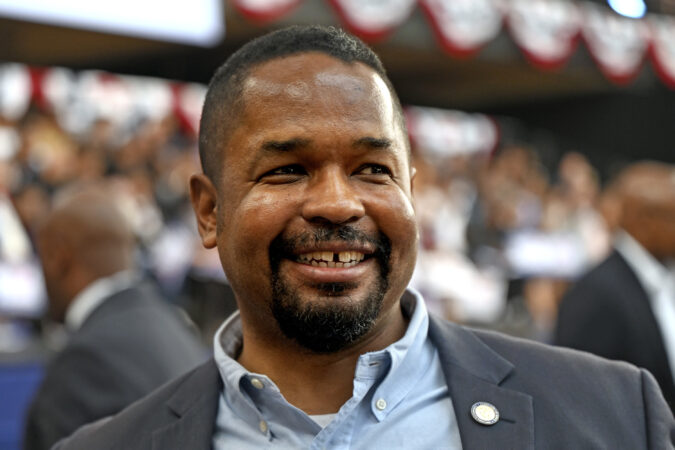
    That reflects a shift for Johnson, the centrist Democrat who is entering his third year as Council president. He considers himself pro-law enforcement, and he typically takes an understated approach to leadership, preferring to dissent with others privately rather than duke it out in public.

    In employing a more assertive approach, Johnson has also over the last several months started to diverge from Mayor Cherelle L. Parker, a close ally.

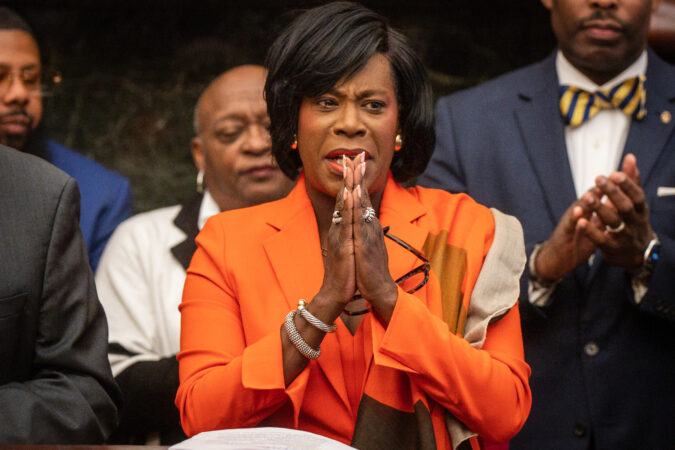
    Parker has carefully avoided attacking Trump and his administration publicly since he took office for his second term more than a year ago. She says often that she is focused on executing on her own agenda, and people close to her say her strategy is aimed at protecting the millions of dollars Philadelphia receives each year in federal aid.

    Johnson — who is seen as a potential future mayoral candidate himself — does not criticize Parker’s style.

    “The mayor can respond how she chooses to respond,” he said. “For me, it’s a moral issue.”
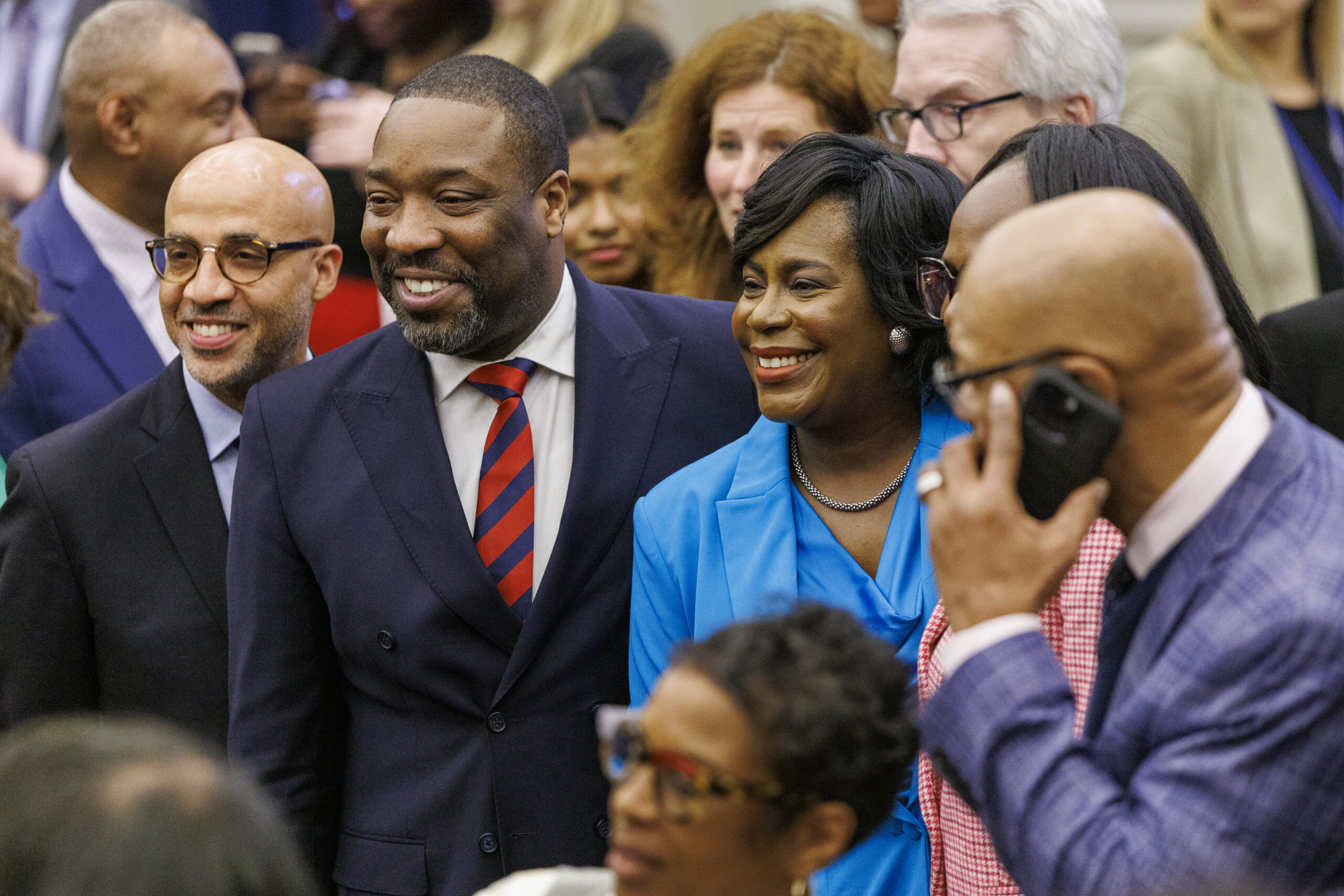
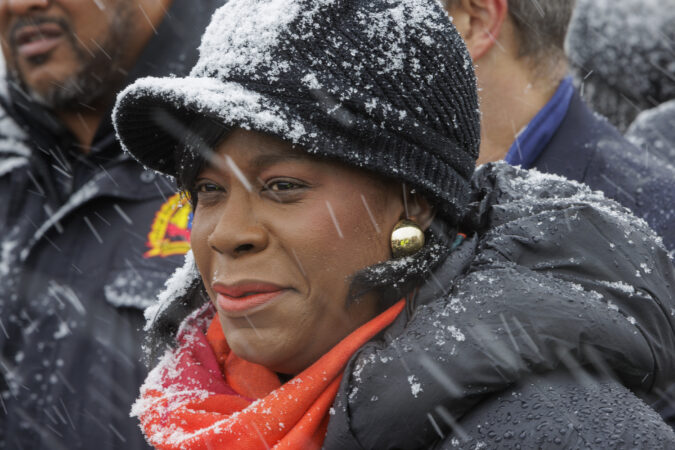
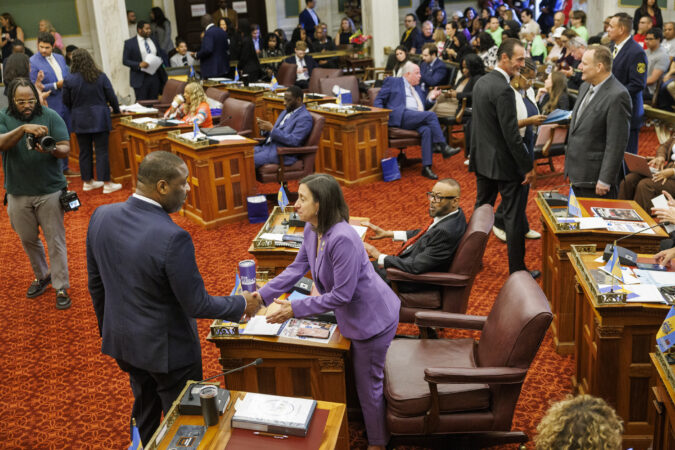
    Philadelphia Mayor Cherelle L. Parker stands beside Council President Kenyatta Johnson (left) after she finished her budget address to City Council, City Hall, Thursday, March 13, 2025.

    Larry Ceisler, a public affairs executive and longtime City Hall observer, said he has watched Johnson rise from community activist to lawmaker.

    He said the Council president, in his latest evolution, might have calculated that a majority of the 16 other members want the city’s legislative body to take a more active role.

    “He is an activist at heart, and he has a tremendous amount of empathy for people,” Ceisler said. “At the same time, he’s a pretty good politician and he can count votes. It’s very difficult for him at this point to push back on the will of his members.”

    But Ceisler said that Parker might have more to lose, and that she will “be on the hook for all this if there is retribution from Washington.”

    A ‘shameful’ episode at the President’s House

    Through the first eight months of the second Trump administration, Johnson largely kept focused on local policymaking.

    When a reporter asked Johnson in January 2025 how he saw his role responding to the Trump administration, he noted that he had convened two working groups to study how Trump-backed policies would affect Philadelphia residents.

    Other Council members introduced more than a dozen resolutions to condemn the Trump administration’s efforts that they said would harm Philadelphians, like cutting food assistance and prohibiting some diversity-hiring initiatives. One resolution opposed the federal government’s deployment of the National Guard as a crime-fighting measure in major American cities; another said Trump’s cabinet members were wholly unqualified.

    Those measures, almost entirely symbolic, were largely spearheaded by progressive members. They passed the overwhelmingly Democratic Council with little debate and not much acknowledgment from the Council president.

    But by September, Johnson began to speak up.

    He was incensed when word spread that the Trump administration was seeking to alter some content related to slavery on federal properties, including at Independence National Historical Park. The National Park Service was reportedly looking to edit panels at the President’s House Site in Center City that memorialize the nine people whom George Washington enslaved.

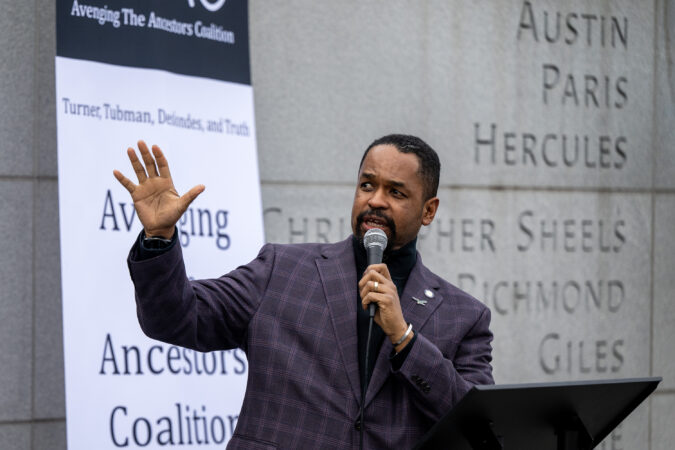
    Johnson at the time accused Trump of trying to “rewrite American history,” and he quickly allied himself with the Avenging the Ancestors Coalition, the group that helped shape the site.

    Last month, federal workers removed the exhibit and relocated the panels to the National Constitution Center, where they are in storage. Parker’s administration filed a lawsuit immediately, and the issue remains the only Trump initiative that Parker has vocally opposed over the last year.

    “This history is a critical part of our nation’s origins, and it deserves to be seen and heard,” she said in a video posted on social media.

    A judge is currently weighing the case.
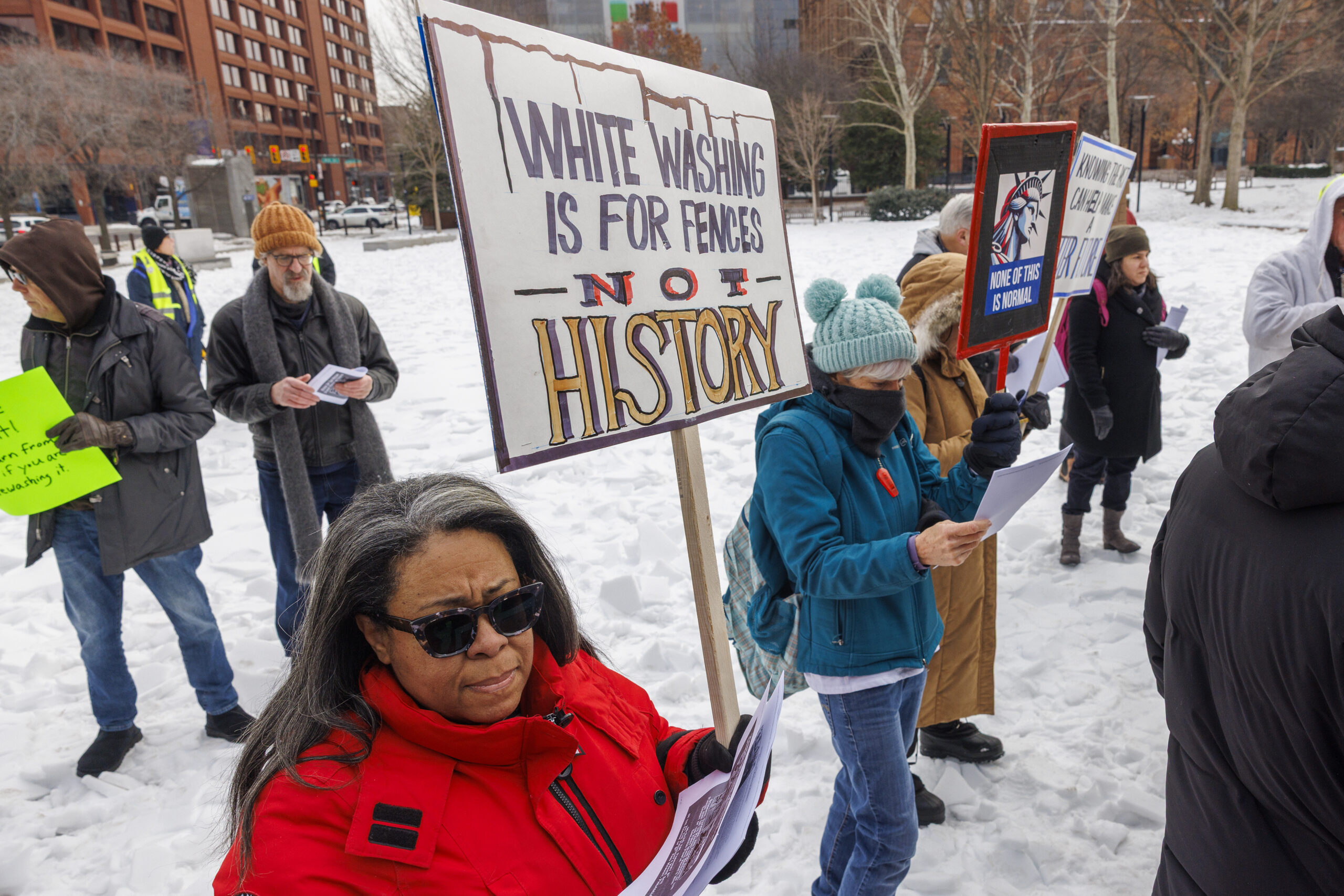
    Veronica Chapman-Smith, concerned citizen was present at the history lesson and protest, Presidents house, Independence National Historical Park, Philadelphia, Friday, Feb. 6, 2026. The community is coming together to protest the removal of slavery exhibit at the President’s House site.

    The Council president said he wants the panels returned in time for an expected influx of tourists this year for several major events, including World Cup games and the 250th anniversary of the founding of the nation.

    “It’s shameful that during this celebration of our country, the birthplace of America, here in the city of Philadelphia, we have to deal with a Trump administration trying to whitewash our history,” Johnson said last week.

    A Minneapolis-like ICE surge on ‘any given day’

    Over the next five months, Johnson will juggle advocating for the return of the panels as he manages other high-profile local matters. Council must approve a city budget by the end of June, and its members are expected to play a crucial role in the Philadelphia School District’s closure and consolidation plan that will affect dozens of schools.

    The “ICE Out” legislation that Johnson has already backed is also expected to be a major undertaking over the coming weeks. The seven bills that make up the package already have support from 15 of Council’s 17 members, which constitutes a veto-proof majority.

    City Councilmember Rue Landau, a Democrat who is one of the prime sponsors of the immigration legislation, said Johnson “fully realizes the importance of this moment.”

    “His support,” she said, “is a recognition that local government has a pivotal role to play in moments like these.”

    Prior to this year, Johnson rarely talked about immigration. He has spent most of his career focused on public safety, gun violence prevention, and quality-of-life issues.

    Today, he said, his top priorities include the safety of the nearly quarter of a million immigrants who make up an estimated 15% of the city’s population.

    Johnson said he is especially concerned that the Trump administration quietly spent $87 million on warehouse space in Berks County, which records show will be used by U.S. Immigration and Customs Enforcement.

    Bloomberg reported that the building, about 85 miles outside Philadelphia, is one of two dozen across the nation that ICE has identified for conversion into detention centers. ICE purchased another warehouse in Schuylkill County, about 110 miles from Philadelphia.

    Together, the two facilities could hold 9,000 beds.

    To Johnson, it was like the federal government was saying: “We want to set up shop right in your backyard.”

    ICE is already operating in the city. But Johnson said the warehouse purchases are a sign that Philadelphia should prepare for a greater surge of immigration enforcement like the operation in Minneapolis, where more than 3,000 federal agents were deployed and large-scale protests ensued.

    Countless Minnesotans have said they were harassed, racially profiled, and unlawfully arrested by ICE agents during the operation this year.

    “Who’s to say that won’t happen to any of my constituents that I represent from Liberia? From Sierra Leone? From Cambodia?” Johnson said. “It can happen on any given day here in the city of Philadelphia.”
  • An ex-Philly City Council aide from a prominent political family is accused of sexual harassment

    An ex-Philly City Council aide from a prominent political family is accused of sexual harassment

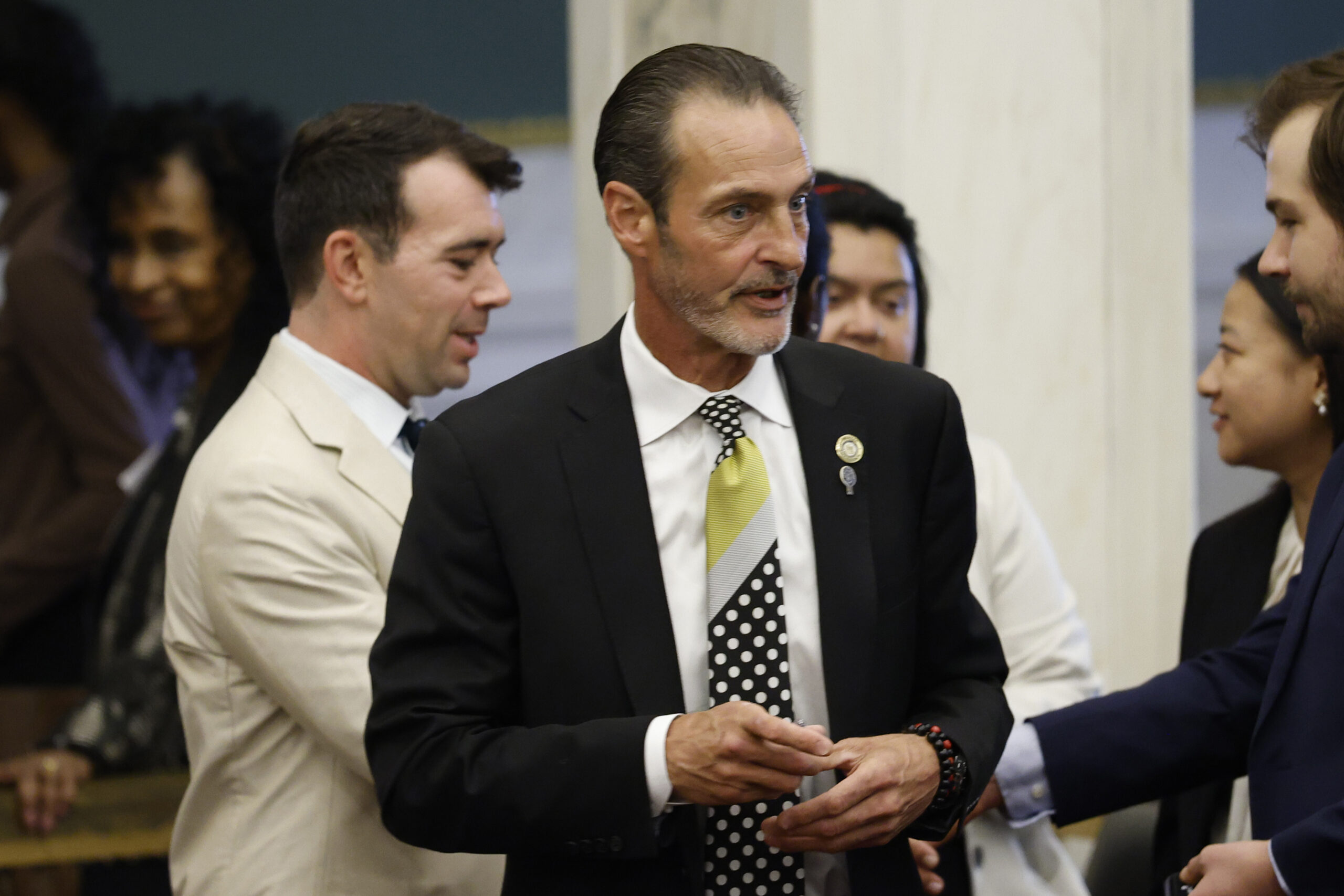
    After Sharif Street Jr. got into a highly public fight at Mayor Cherelle L. Parker’s 2024 inauguration ceremony, his boss, City Councilmember Jim Harrity, extended him some grace.

    Harrity, who credits Street Jr.’s father, State Sen. Sharif Street (D., Philadelphia), with giving him a second chance earlier in his own career, kept the junior Street on staff as a special assistant, saying the incident was a lapse in judgment.

    But according to another staff member in Harrity’s office, it was not the only transgression.

    Shanelle Davis, a former constituent services representative, filed a federal lawsuit last week against the city claiming that she told supervisors months before the inauguration fight that Street Jr. had sexually harassed her while she was at work, including twice grabbing her and making sexualized comments about her body.

    She said in the suit, filed in the U.S. District Court for the Eastern District of Pennsylvania, that no action was taken and Street Jr. remained on staff.

    Davis is seeking unspecified damages from the city, which she claims violated state and federal laws related to gender-based discrimination. Street Jr. is not named as a defendant in the suit, but he is mentioned throughout the 13-page filing.

    Davis’ complaint portrays a dysfunctional workplace environment in the City Hall office, including an alleged physical altercation between Street Jr. and another staffer for which no one was reprimanded. Davis, who is Black, claimed another colleague in Harrity’s office made racist comments, including hurling the N-word toward her.

    Davis, who was hired in late 2022, said in the lawsuit that she was fired for underperforming at her job about a year later, after Harrity won reelection.

    Her attorney did not respond to a request for comment Monday. Street Jr. did not respond to calls seeking comment.

    Harrity, a Democrat who represents the city at-large and was a longtime aide to the elder Street, said in a statement that he “categorically denounce[s] workplace harassment, or any conduct that undermines a respectful and professional work environment.”

    He declined to comment further, citing the ongoing legal proceedings. A spokesperson for the city law department also declined to comment.

    The lawsuit is the latest legal trouble involving Sharif Street Jr., 26, who over the last three years has pleaded guilty to criminal offenses in Philadelphia, Montgomery, and Delaware Counties. In August, his employment with the city was terminated the week he pleaded guilty to charges in connection with the inauguration assault and another incident.

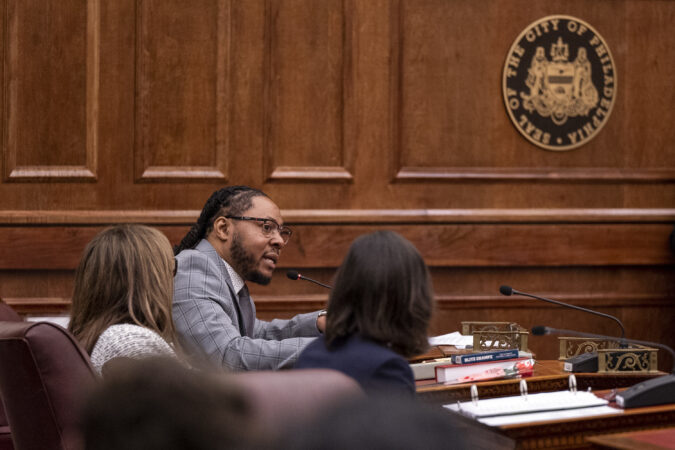
    City Councilmember Jim Harrity speaks to colleagues on during a Council session in September.

    Street Jr. comes from one of Philadelphia’s most well-known political families. His grandfather is former Mayor John F. Street, his mother is Common Pleas Court Judge Sierra Thomas Street, and his father is a state senator and the former head of the state Democratic Party who is now running for a seat in Congress.

    Anthony Campisi, a spokesperson for the elder Sharif Street’s congressional campaign, said the state senator had “no knowledge” of the sexual harassment allegations.

    “Sharif loves his son unconditionally and has supported his son through personal troubles, like so many parents across Philadelphia,” Campisi said. “That being said, Sharif unequivocally condemns sexual harassment in all its forms and is looking for the legal process to play out.”

    City Council President Kenyatta Johnson, who took over as leader of the chamber in 2024, declined to comment. Under City Council rules, individual members are responsible for hiring and terminating their own employees.

    State Senator Sharif Street (D., Phila.)is in the state House chamber as Gov. Josh Shapiro makes his annual budget proposal Feb. 3, 2026.

    Street Jr. was arrested several times over three years while working in City Hall as an assistant in Harrity’s office, court records show. Davis’ lawsuit comes about six months after Street Jr.’s employment in Harrity’s office ended, according to payroll records.

    In January 2024, Street Jr. punched a security guard at the entrance to Parker’s inauguration ceremony at the Met Philadelphia on North Broad Street. He told The Inquirer at the time that he was defending his grandfather, the former mayor, whom he said the guard had grabbed because they were trying to enter at a back entrance without waiting in line.

    “I saw my grandfather get grabbed and I just sort of blacked out,” Street Jr. said. His father defended him at the time, saying the security guard had initiated the altercation.

    Later that month, Street Jr. was charged in connection with a hit-and-run from the previous August that left a 14-year-old injured.

    The two cases were consolidated in Common Pleas Court, and Street Jr. pleaded guilty in August to charges of assault and causing an accident that resulted in an injury. According to prosecutors, he was sentenced to 60 days in jail.

    Four months later, when he was no longer working in city government, Street Jr. was briefly jailed in Delaware County following what police in Upper Darby described as a “prolonged struggle” during a traffic stop. He pleaded guilty to disorderly conduct, a summary offense.

  • Democratic ward leaders endorse Sharif Street for Congress, solidifying him as Philly’s establishment favorite

    Democratic ward leaders endorse Sharif Street for Congress, solidifying him as Philly’s establishment favorite

    Philadelphia’s Democratic Party has endorsed State Sen. Sharif Street for the city’s open congressional seat.

    The endorsement Monday came as no surprise, given Street’s insider connections. He previously chaired the Pennsylvania Democratic Party and is close to party leaders in the city. And Bob Brady, who chairs the Democratic City Committee, said last fall that he expected his fellow ward leaders to vote to endorse Street.

    But it nonetheless strengthens Street’s status as the favorite in the race among the local Democratic establishment. Street, the son of former Mayor John F. Street, was endorsed by the politically powerful unions in the Philadelphia Building & Construction Trades Council last year.

    “I am deeply honored to have received the overwhelming support of the grassroots leaders who power our party,” Street, who represents a North Philadelphia district in the state Senate, said in a statement. “This endorsement is more than just a vote of confidence — it is a demonstration that we are building a broad-based coalition.”

    Street is one of about a dozen Democrats vying to succeed retiring U.S. Rep. Dwight Evans in Pennsylvania’s 3rd Congressional District. Other contenders include State Reps. Morgan Cephas and Chris Rabb and physicians Ala Stanford and Dave Oxman.

    Street has also emerged as the front-runner in the financial race. Recently disclosed campaign reports showed he raised $348,000 from donors in the last quarter of 2025, the largest haul among the candidates.

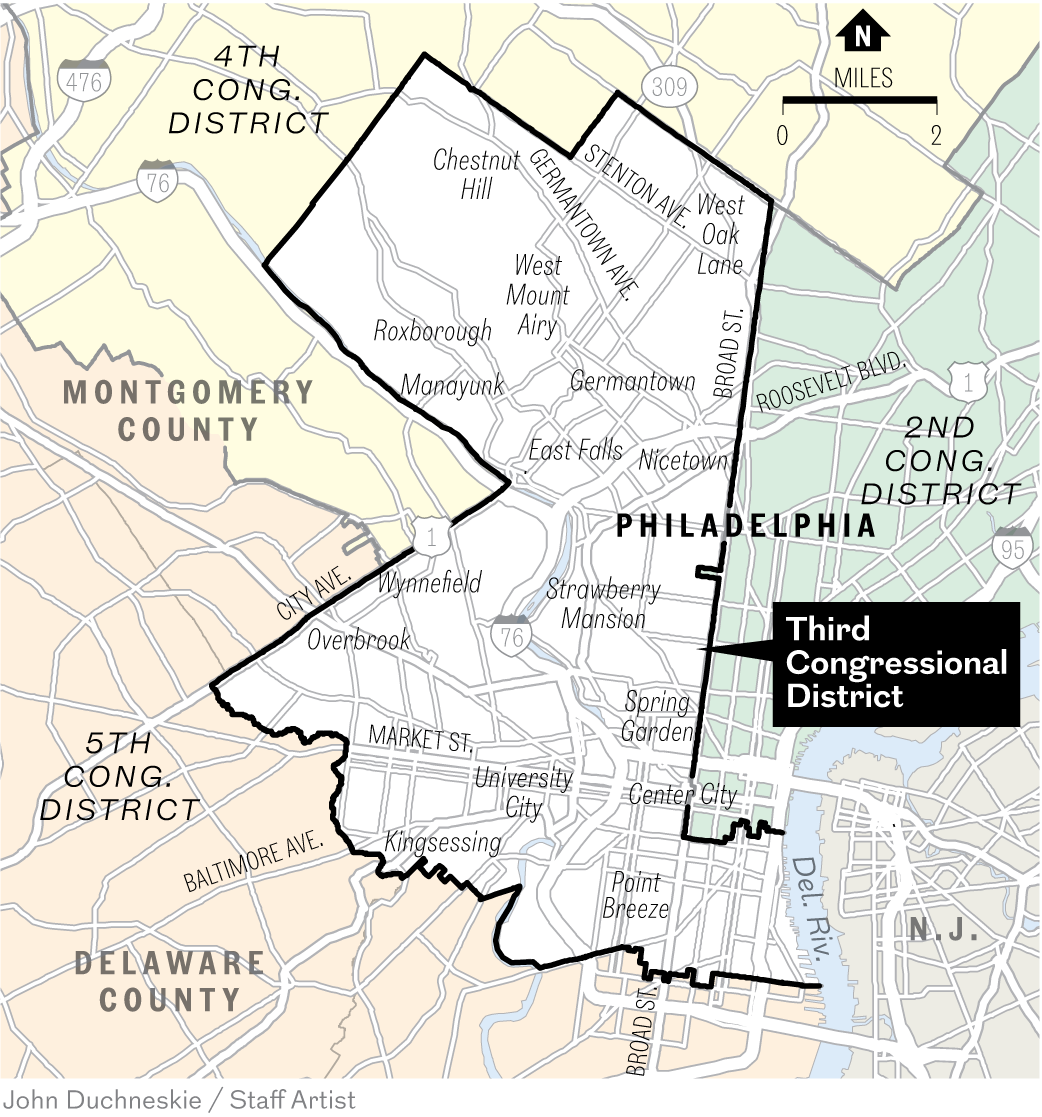
    The 3rd Congressional District is, by some measures, the most heavily Democratic district in the U.S. House, and includes West and Northwest Philadelphia and parts of Center City, Southwest, South, and North Philadelphia.

    The winner of the Democratic primary in May is all but guaranteed victory in November. Democrats hold a 7-to-1 voter registration edge over Republicans in Philadelphia.

    Map of Pennsylvania’s Third Congressional District.

    Earning the party nod may help Street stand out in a crowded field and will bolster his ground game for campaigning, activating the party’s hundreds of committeepeople to get out the vote for him.

    But it doesn’t guarantee victory. Insurgent candidates have defied the party’s dominance several times in recent city elections, and the district includes several progressive pockets that could open the door for a candidate who can coalesce the left against Street.

    The endorsement followed a vote by the Democratic ward leaders in the district. A candidate must receive at least 50% of the vote to win the party endorsement.

    If no candidate reaches that mark, each ward prints its own sample ballots with its preferred candidates, which often happens in open contests like this year’s primary.

    The party’s endorsement of Street means all ward leaders are now encouraged to include him in the literature distributed to voters before and on election day. Some wards, however, choose to print their own slates anyway.

    The party did not immediately disclose the final vote tally at the endorsement meeting.

    Northwest Philadelphia’s 50th Ward, which is led by Mayor Cherelle L. Parker, has not yet made an endorsement in the race, said Aren Platt, executive director of the mayor’s campaign, People for Parker.

    Top candidates in the race, including Street, were scheduled to face off at a candidates forum hosted by the Center City Residents Association on Monday night.

  • Mayor Cherelle Parker’s campaign raised an eye-popping $1.7 million last year though she won’t face reelection until 2027

    Mayor Cherelle Parker’s campaign raised an eye-popping $1.7 million last year though she won’t face reelection until 2027

    Mayor Cherelle L. Parker’s campaign raised almost $1.7 million last year despite her not facing reelection until 2027, according to a new campaign finance report.

    That is the most any Philadelphia mayor has raised during their second year in office since at least the early 2000s, when the city’s current ethics and campaign finance rules took effect, according to Parker’s campaign. She is also the only mayor in that time frame to avoid a dip in fundraising after her first year in office, when many donors shell out to support the city’s new leader.

    “The Mayor has strong support from across the City and the region,” Aren Platt, the executive director of the mayor’s campaign committee, People for Parker, said in a written statement. “These numbers equate to people investing in her vision as Mayor for the City and supporting the work that she is doing.”

    Her campaign also spent $812,000 in 2025, a huge sum for a nonelection year. Parker entered 2026 with nearly $1.6 million in the bank — a significant haul two years out from a municipal election cycle. (For context, Parker’s campaign in 2023 raised almost $3.4 million, and spent just over $3.2 million en route to winning the mayor’s race.)

    State law gives politicians wide latitude in how they spend their campaign donations beyond traditional election expenses like buying TV ads and printing fliers.

    Parker’s campaign expenditures last year included airfare to Colorado for a mayoral roundtable at the Aspen Institute, and almost $20,000 to cover costs for a constituent’s funeral.

    Parker’s hefty off-year fundraising is reflective of the increasingly constant and professionalized world of political fundraising in Philadelphia. Local politicians no longer wait until challengers emerge to press donors for cash or host major fundraisers.

    “Philadelphia elections keep getting more expensive, so now all the candidates have professional fundraisers, which means the frequency of their events and calls has risen dramatically as well,” said John Hawkins, a City Hall lobbyist.

    City Council President Kenyatta Johnson, for instance, last year raised about $960,000 and entered 2026 with more than $1.1 million in the bank. Johnson, who, like Parker, will not face reelection until 2027, said he raises money in off years so that he can support other Council members and fund community programs.

    “I am blessed to support 16 other hardworking members of Council,” he said Friday. “I always support different community initiatives that come before me, individuals always seeking support for a variety of different initiatives.”

    Philadelphia Mayor Cherelle L. Parker stands beside Council President Kenyatta Johnson (left) after she finisher her budget address to City Council, City Hall, Thursday, March 13, 2025.

    Johnson, a close ally of the mayor, is also seen as a potential contender in the race to succeed Parker, which would happen in 2031 if she wins reelection. Racking up money between now and then could allow him to enter the race in a strong financial position.

    “My focus is being the best City Council president that I can be,” Johnson said when asked if he was considering the city’s top job.

    Using the rules to their advantage

    Philadelphia’s campaign finance laws rules limit contributions to $3,700 per calendar year from individual donors, and cap political committees and businesses allowed to make political donations at contributions of $14,800 per year.

    That means incumbents can collect the maximum amount from donors in each of the four years in their terms before running for reelection. That is not possible in federal elections, where contribution limits apply to the entire election cycle.

    The city’s rules give incumbents a potential advantage over new candidates, who typically have the opportunity to raise money over only one or two calendar years after they enter a race.

    Incumbents do not always maximize that opportunity. But Parker last year set a new standard.

    She is also among the growing number of Philly elected officials taking advantage of a rule that allows politicians to accept donations larger than the city’s contribution limits if they do not spend the excess money on electioneering activities, such as buying ads or paying canvassers to knock on doors.

    The electricians union, the politically active Local 98 of the International Brotherhood of Electrical Workers, for instance, gave $50,000 to Parker’s campaign in 2025. At most $14,800 of that can be spent on persuading city voters to support Parker during her next campaign. The remaining $35,200 will be deposited into a separate bank account known as a Segregated Pre-candidacy Excess Contribution, or SPEC, account.

    While SPEC accounts are nothing new, more Philly elected officials are using them. In addition to Parker, at least a half dozen Council members, including Johnson, now have SPEC accounts, said Shane Creamer, executive director of the Philadelphia Board of Ethics.

    “We haven’t seen this in the lead-up to past elections, certainly not in this number,” Creamer said, adding that the trend shows that politicians are being conscientious about the city’s rules. “I think it suggests that, fundraising aside, there’s an effort to comply with the contribution limits.”

    How Parker raises money

    Parker hosts major fundraising events, such her annual birthday party, which last September took place at the Live! Casino & Hotel. She also calls donors to ask for contributions, and her supporters sometimes host smaller fundraisers to collect money for her campaign.

    Labor unions gave more than $330,000 to Parker last year, campaign finance reports show. That includes $50,000 from the electricians union, $64,800 from the Carpenters union, and $45,000 from the Laborers District Council.

    Organized labor — especially the Philadelphia Building and Construction Trades Council, the Carpenters union, and Local 32BJ of the Service Employees International Union — fueled Parker’s victory in the 2023 mayor’s race.

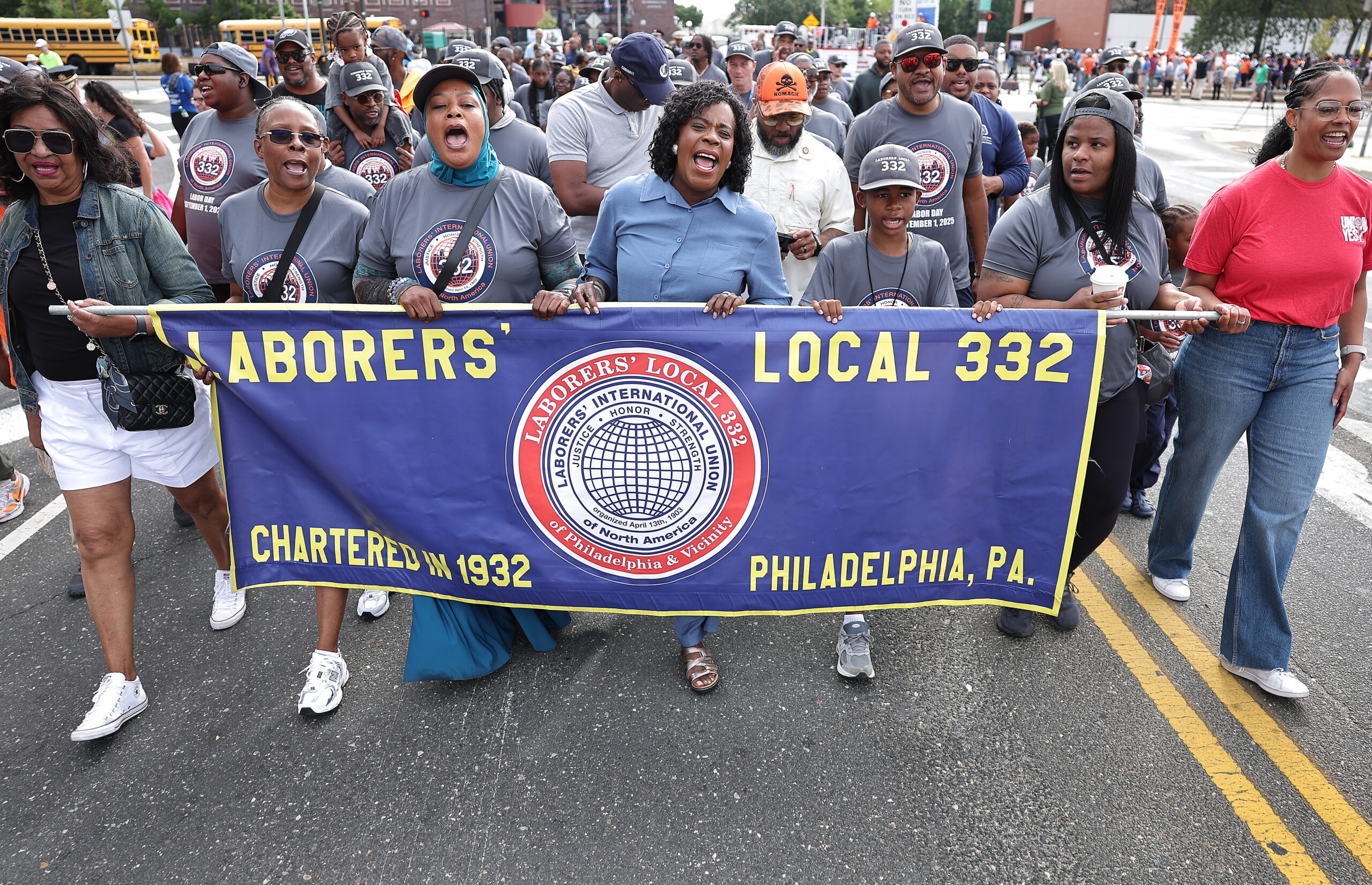
    Mayor Cherelle L. Parker (center) joins the chant as she marches with Local 332 during the annual Tri-State Labor Day Parade in Philadelphia on Monday, Sept. 1, 2025.

    Campaign finance records also show Parker last year accepted a $10,000 donation from one of her rivals in the 2023 Democratic primary: Jeff Brown, the owner of Brown’s Super Stores.

    “We’re very aligned on policy, and if you look at her campaign promises, she is doing fairly well. She’s made some progress on all of them,” said Brown, who serves on the mayor’s business roundtable and an advisory panel providing input on the city’s efforts to revitalize Market East. “I’m invested in the city, and I want to see a functional, good mayor who can lay out a vision and get things done.”

    Corporate interests also donated heavily to Parker in 2025. Her campaign contributions from law firms last year included $10,000 from Ballard Spahr, $11,000 from Duane Morris, $5,000 from Buchanan Ingersoll, and $11,000 from Cozen O’Connor. She also received $5,000 from Comcast, $1,000 from Independence Blue Cross, and $4,700 from the Chamber of Commerce for Greater Philadelphia.

    Wealthy individuals shelled out big bucks, too. Investor Richard Vague gave $16,000; developer Carl Dranoff contributed $15,000; former Aramark CEO Joseph Neubauer gave $30,000; and Firstrust Bank executive chair Richard J. Green gave $15,000.

    How Parker spends campaign money

    Although campaign donors may imagine their contributions pay for yard signs and radio spots, the money also often covers strategy meetings held at expensive restaurants, gifts for constituents, and costs related to officeholders’ public duties.

    Elected officials are prohibited from using political donations for personal expenses. But beyond that, the rules for spending campaign cash are famously lax and rarely enforced.

    Parker’s expenditures on the recently filed reports included a $1,200 tab at Vernick Fish, and 14 more modest purchases from Shanghai Gourmet in Chinatown, totaling $424.

    In addition to the Aspen Institute roundtable, Parker’s campaign helped her pay for trips to Miami for a tour of wellness and homeless centers that are part of the Florida judicial system, to Martha’s Vineyard, Mass., for a Black Economic Alliance gathering, to Puerto Rico for a National League of Cities event, and to Harvard University’s Bloomberg Center for Cities.

    Aren Platt (right) executive director of Mayor Cherelle L. Parker’s political committee is with her after a Kamala Harris campaign event in Germantown Nov. 3, 2024. Platt was senior campaign adviser in Parker’s run for mayor, and served briefly as deputy mayor before leaving her administration.

    The campaign paid $112,000 in consulting fees for ALP Impact Strategies, Platt’s firm; and $30,000 to 215 Bears, the private security company owned by Shawntee Willis, whom Parker has hired as a special assistant in the mayor’s office and who works closely with her police detail.

    It also paid $158,563.73 to Rittenhouse Political Partners, the fundraising firm founded by well-known political consultant Aubrey Montgomery and used by Parker, Johnson, and five other members of Council who saw large fundraising hauls last year.

    Rittenhouse’s clients include some of the most aggressive off-year fundraisers in Philly politics and some of the most prominent adopters of SPEC accounts.

    Montgomery declined to comment.

    Staff writer Anna Orso contributed to this article.

  • Philly Council president says he’ll hold up school funding over the closure and consolidation plan ‘if need be’

    Philly Council president says he’ll hold up school funding over the closure and consolidation plan ‘if need be’

    Philadelphia’s top lawmaker said he’s willing to hold up city funding to the Philadelphia School District over concerns about the recently released closure and consolidation plan, a warning that signals City Council intends to leverage its biggest bargaining chip as members fight to keep schools in their neighborhoods open.

    City Council President Kenyatta Johnson said in an interview Friday that multiple members oppose proposed closures in their districts, and some want more robust investments in schools slated for consolidation in exchange for their support.

    Johnson’s primary concern, he said, is “making sure that the issues and concerns that we would like to see addressed with the facilities plan are reflected in the final recommendations.”

    Asked if he’d be willing to hold up the city’s contribution to the school district if their concerns are not met, Johnson said: “If need be.”

    Schools Superintendent Tony B. Watlington Sr. has proposed sweeping changes to schools across the city, including closing 20 schools, ordering six others to share buildings, and modernizing 159 buildings. His plan is subject to approval by the school board, which will likely vote sometime this winter.

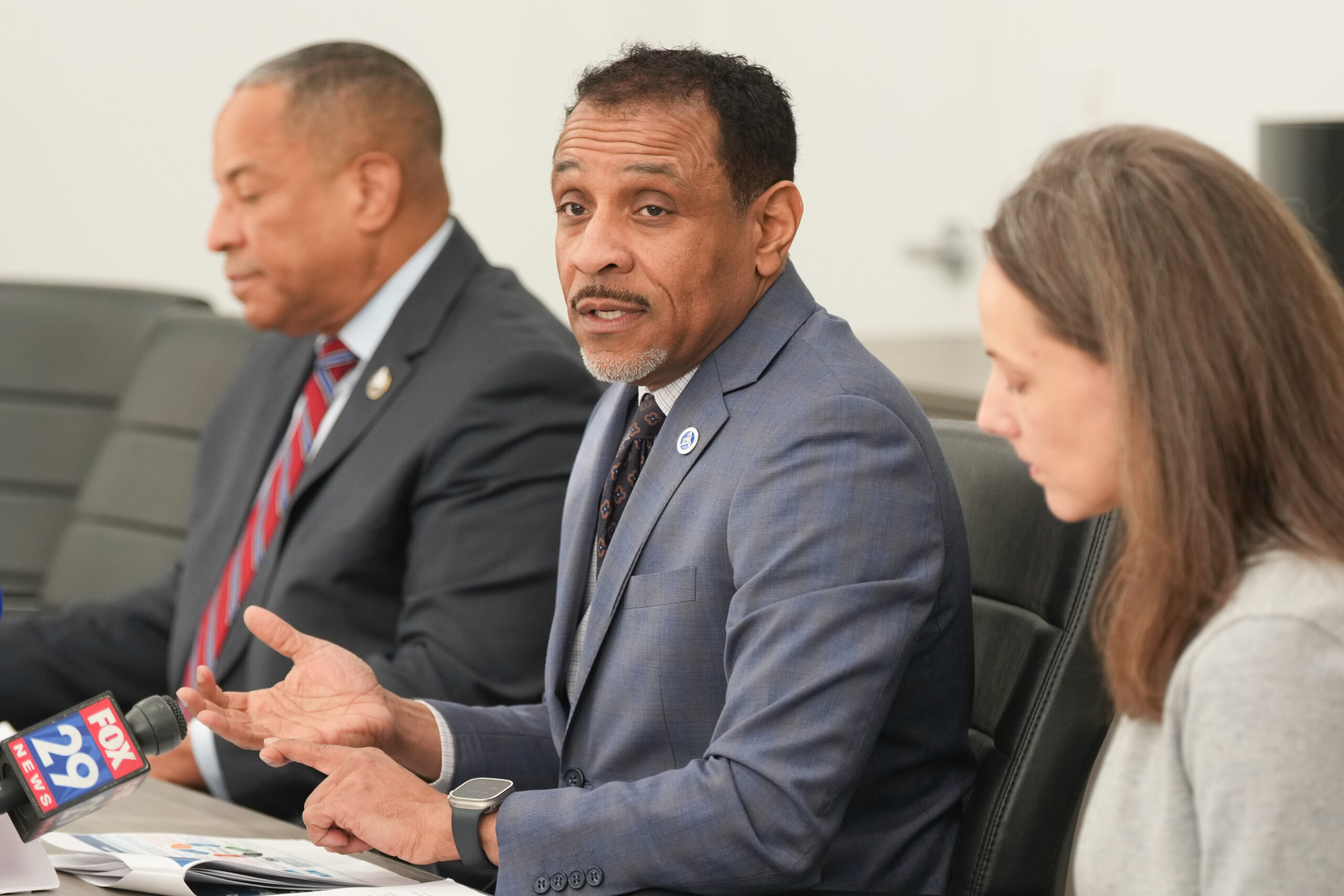
    Oz Hill (left), Superintendent Tony B. Watlington Sr. (center), and Claire Landau at a news conference to announce plans for the first draft of the Philadelphia facilities master plan during a news conference at the Philadelphia School District Headquarters in Philadelphia on Jan. 20.

    Johnson’s public insistence that Council members exercise veto power over parts of the district’s long-awaited facilities master plan is notable, and it raises the stakes ahead of a Feb. 17 hearing, during which every Council member will have the opportunity to question district officials about the proposal.

    The Council president — a Democrat who is typically even-keeled and does not often speak publicly about legislative strategies — wields significant control over the fate of the city budget, which members must pass by the end of June. Mayor Cherelle L. Parker will unveil her proposed budget in March.

    Local revenue and city funding made up about 40% of the district’s budget this year, or nearly $2 billion. Most of that is the district’s share of city property taxes which, unlike other school systems in Pennsylvania, are levied by the city and then distributed to the district.

    In addition, the city makes a separate, direct contribution to the district, which this year was nearly $285 million.

    Johnson’s opposition to elements of the plan could also position lawmakers somewhat at odds with Parker and Watlington. The pair have operated in lockstep since Watlington last month unveiled his proposal.

    The plan did not appear to go over well in Council, with several members expressing immediate concerns. The day the plan was released publicly, Johnson endorsed another member’s legislation to amend the city’s governing document and grant Council power to remove members of the school board at will.

    Councilmember Cindy Bass at City Council’s first session of the year on Jan. 23, 2025, in City Hall.

    Some Council members said they plan to fight proposed closures and advocate for more investment in struggling schools.

    Speaking at a meeting at Lankenau High School in Upper Roxborough last week, Councilmember Cindy Bass pushed back against the notion of closing Lankenau, a well-regarded magnet outside of her district, and other strong schools, including Fitler Academics Plus and Parkway Northwest in her district.

    “When budget time comes up, I’ll be asking about these decisions that the school district is making,” Bass, a Democrat who represents parts of North and Northwest Philadelphia, told an emotional crowd of more than 100. “We don’t support them and we don’t understand them. They have not been rationalized.”

    At Conwell Middle School in Kensington, Councilmember Quetcy Lozada, a Democrat who represents the neighborhood, said she was “having a really hard time understanding how the decisions were made.”

    Closing Conwell, a magnet school whose enrollment has fallen to just over 100 because of parent concerns over neighborhood safety, was particularly galling, Lozada said.

    “We are saying to these families, ‘We are punishing them because, as a city, we can’t respond to the public safety issues that we have on the outside,’” Lozada said. “And that is just not fair.”

    Johnson said he wanted to see a clear safety plan for students being asked to travel to schools in new neighborhoods.

    He also floated rebuilding consolidated schools as “all-in-one” campuses that are co-located with parks, recreation centers, and other city services.

    “It would be in the best interest of the school district and the school board to think outside the box in terms of how they move forward, besides just saying, ‘We’re going to be closing down schools,’” Johnson said. “And those are conversations that we’re having right now.”

  • Unmasking ICE in Philly could test the limits of local power over federal agents

    Unmasking ICE in Philly could test the limits of local power over federal agents

    One of the lasting images of President Donald Trump’s mass deportation campaign will be the masks worn by federal immigration agents.

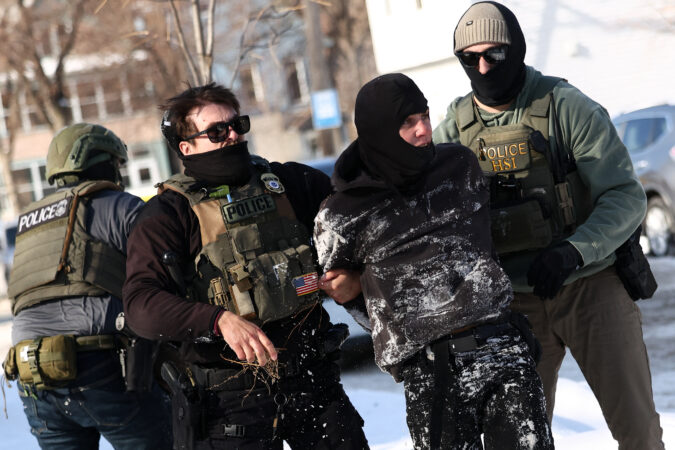
    The widespread use of facial coverings by U.S. Immigration and Customs Enforcement officers is among the suite of tactics — agents dressed in plainclothes, wearing little identification, jumping out of unmarked cars to grab people off the street — that have fueled immigration advocates’ use of terms like “kidnappings” and “abductions.”

    Now Philadelphia lawmakers appear poised to pass legislation that would ban all officers operating in the city — including local police — from concealing their identities by wearing masks or conducting enforcement from unmarked cars.

    The question is whether the city can make that rule stick.

    Legal hurdles loom for municipalities and states attempting to regulate federal law enforcement. Local jurisdictions are generally prohibited from interfering with basic federal functions, and Trump administration officials say state- and city-level bans violate the constitutional provision that says federal law reigns supreme.

    Experts are split on whether the bill proposed by Philadelphia City Council members last week would survive a lawsuit.

    There are also practical concerns about enforcement. Violating the mask ban would be a civil infraction, meaning local police would be tasked with citing other law enforcement officers for covering their faces.

    “No doubt this will be challenged,” said Stanley Brand, a distinguished fellow at Penn State Dickinson Law. “This ordinance will be a protracted and complicated legal slog.”

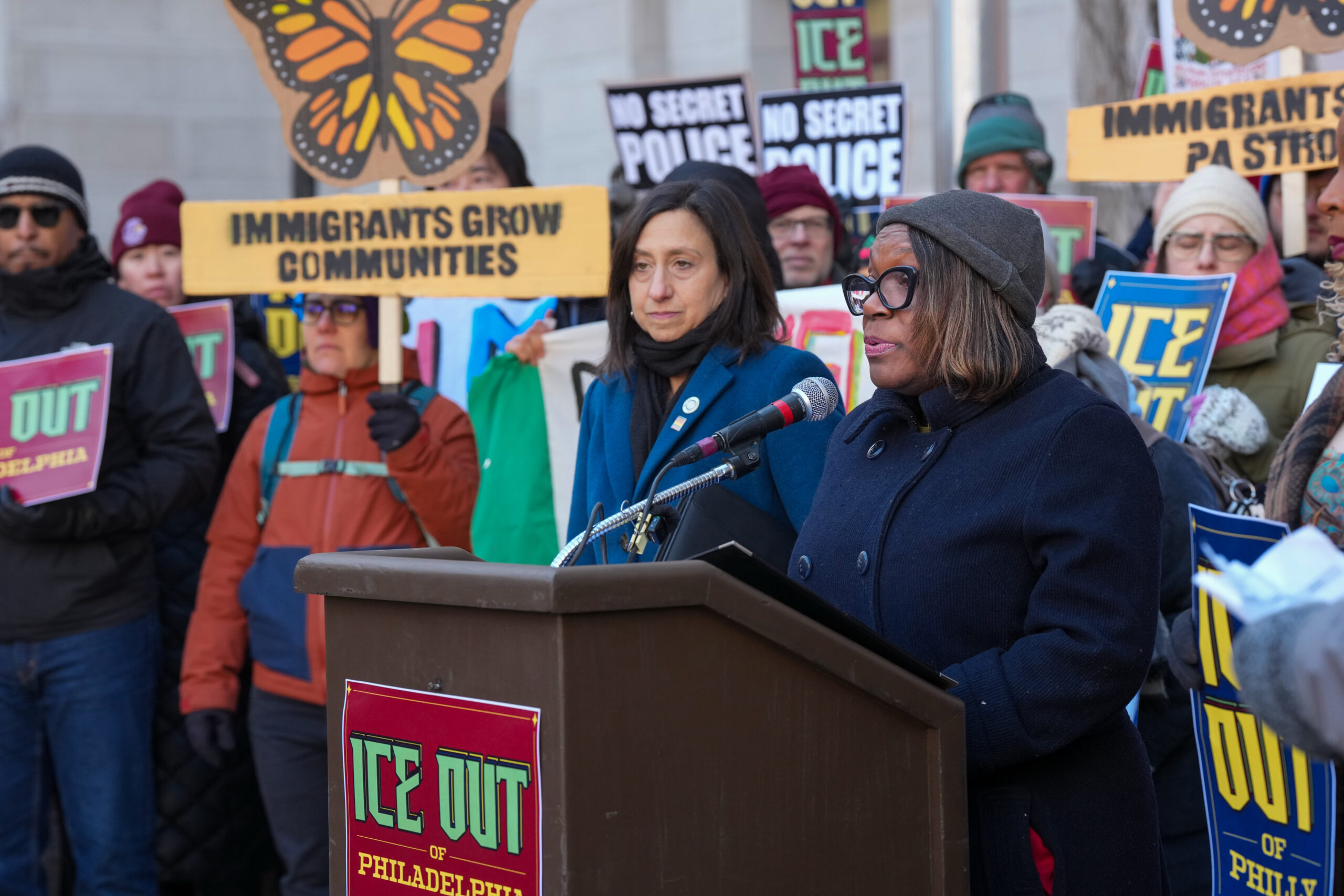
    Councilmember Kendra Brooks speaks during a news conference at City Hall to announce a package of bills aimed at pushing back against ICE enforcement on Jan. 27.

    Advocates for immigrants say that unmasking ICE agents is a safety issue, and that officers rarely identify themselves when asked, despite being required to carry badges.

    Mask use can also spur impersonators, they say. At least four people in Philadelphia have been arrested for impersonating ICE officers in the last year.

    “You see these people in your community with guns and vests and masks,” said Desi Bernette, a leader of MILPA, the Movement of Immigrant Leaders in Pennsylvania. “It’s very scary, and it’s not normal.”

    Democrats in jurisdictions across America, including Congress and the Pennsylvania General Assembly, have introduced legislation to ban ICE agents from concealing their faces. California is the furthest along in implementing a mask prohibition, and a judge is currently weighing a challenge filed by the Trump administration.

    Senate Democrats negotiating a budget deal in Washington have asked for a nationwide ban on ICE agents wearing masks in exchange for their votes to fund the Department of Homeland Security.

    And polling shows getting rid of masks is popular. A recent Pew Research Center survey found that 61% of Americans believe federal agents should not wear face coverings to conceal their identities while on duty.

    ICE officials say agents should have the freedom to conceal their faces while operating in a hyperpartisan political environment.

    Last year, ICE head Todd Lyons told CBS News that he was not a proponent of agents wearing masks, though he would allow it. Some officers, he said, have had private information published online, leading to death threats against them and their families.

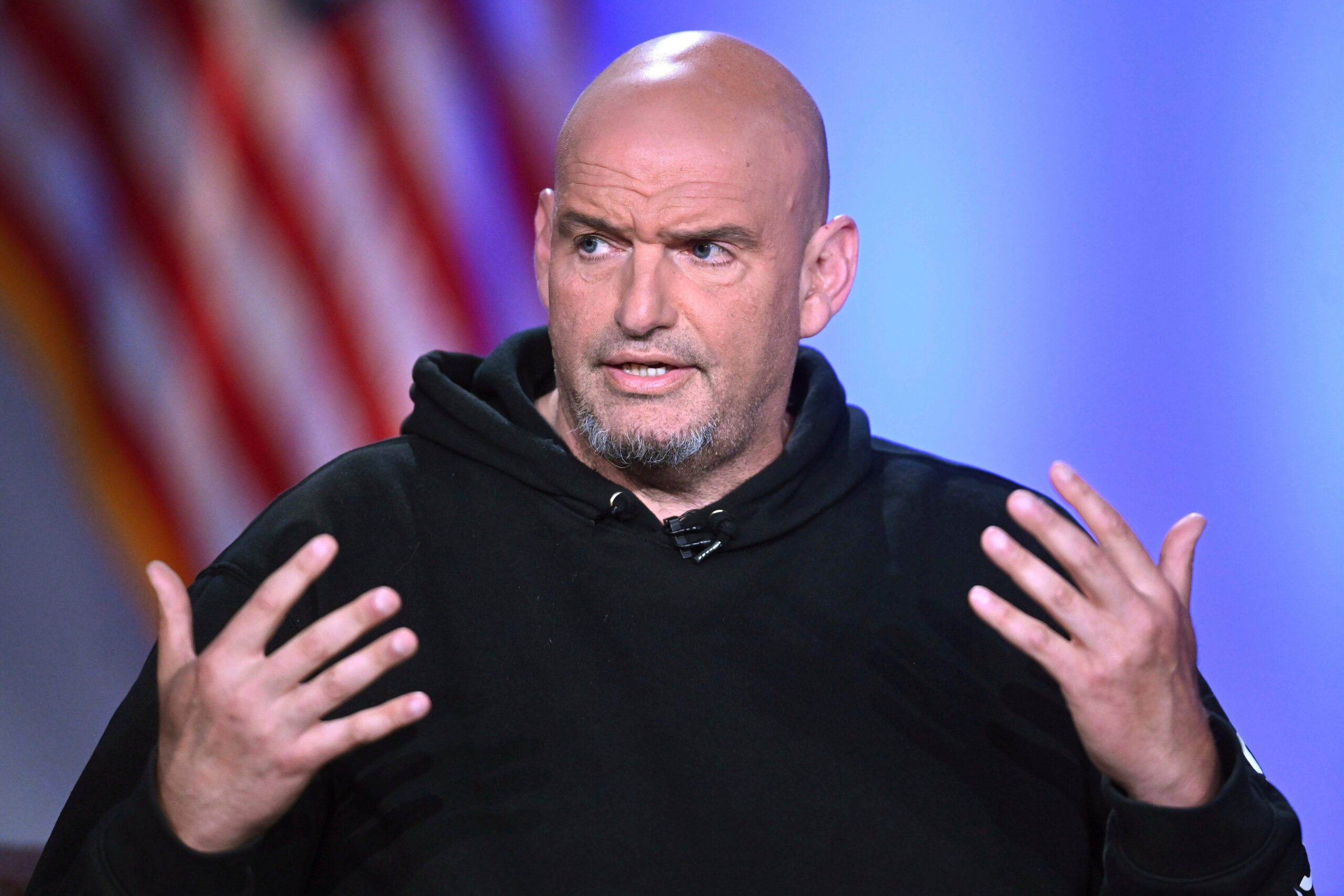
    On Sunday, U.S. Sen. John Fetterman, a Pennsylvania Democrat, defended ICE officers who wear masks and said doxing is a “serious concern.”

    “They could target [agents’] families,” Fetterman said in an interview on Fox News, “and they are organizing these people to put their names out there.”

    Sen. John Fetterman, D-Pa., participates in a debate on June 2, 2025, in Boston.

    The Council authors of the Philadelphia bills say they are responding to constituents who are intimidated by ICE’s tactics, and they believe their legislation can withstand a legal challenge.

    “Our goal is to make sure that our folks feel safe here in the city,” said City Councilmember Kendra Brooks. “We are here to protect Philadelphians, and if that means we eventually need to go to court, that’s what would need to happen.”

    The constitutional limits on unmasking ICE

    The bill introduced last week by Brooks and Councilmember Rue Landau is part of a package of seven pieces of legislation aimed at limiting how ICE operates in Philadelphia. The proposals would bar Philadelphia employees from sharing information with ICE and ban the agency from using city property to stage raids.

    Fifteen of Council’s 17 members signed on to the package of legislation, meaning a version of it is likely to become law. Passing a bill in City Council requires nine votes, and overriding a mayoral veto takes 12. Mayor Cherelle L. Parker has said her team is reviewing the legislation, which can still be amended before it becomes law.

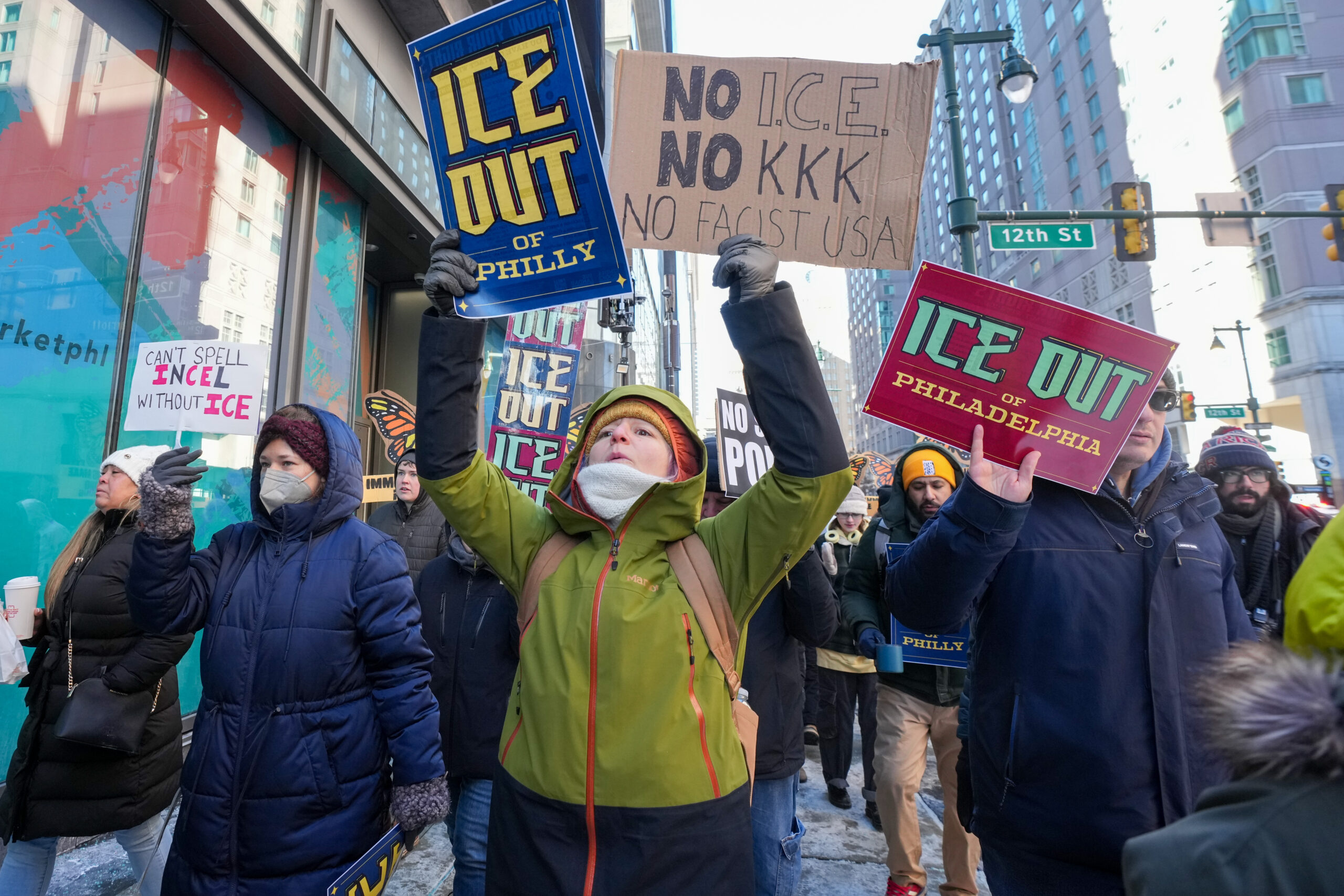
    Anti-ICE activists demonstrate outside U.S. Sen. John Fetterman’s Philadelphia office, Jan. 27, calling for an end to federal immigration enforcement policies.

    One of the two members who did not cosponsor the package was Councilmember Mike Driscoll, a Democrat who represents parts of Lower Northeast Philadelphia. He indicated that he had concerns about whether the “ICE Out” legislation would hold up in court.

    Brooks said Council members worked with attorneys to ensure the legislation is “within our scope as legislators for this city to make sure that we protect our folks against these federal attacks.”

    Brand, of Dickinson Law, said the legislation is a classic example of a conflict between two constitutional pillars: the clause that says federal law is supreme, and the 10th Amendment, which gives states powers that are not delegated to the federal government.

    He said there is precedent that the states — or, in this case, cities — cannot interfere with laws enacted by Congress, such as immigration matters.

    “If I were betting, I would bet on the federal government,” Brand said.

    But there is a gray area, he said, and that includes the fact that no law — or even regulation — says federal law enforcement agents must wear masks.

    Kermit Roosevelt, a law professor at the University of Pennsylvania who is an expert on the Constitution and conflict of laws, said if there is no agency policy, that is “free space” for states and cities to regulate.

    Roosevelt said Brooks’ legislation steers clear of other constitutional concerns because it applies to all police officers, not just federal agents.

    “If they were trying to regulate only federal agents, the question would be, ‘Why aren’t you doing that to your own police officers?’” he said. “If you single out the federal government, it looks more like you’re trying to interfere with what the federal government is doing.”

    Applying the law to local police

    Experts say part of the backlash to ICE agents covering their faces is because Americans are not used to it. Local police, sheriff’s deputies, and state troopers all work largely without hiding their faces.

    “Seeing law enforcement actions happening with federal agents in masks, that’s extremely jarring,” said Cris Ramon, an immigration consultant based in Washington. “Why are you operating outside of the boundaries of what every other law enforcement agency is doing?”

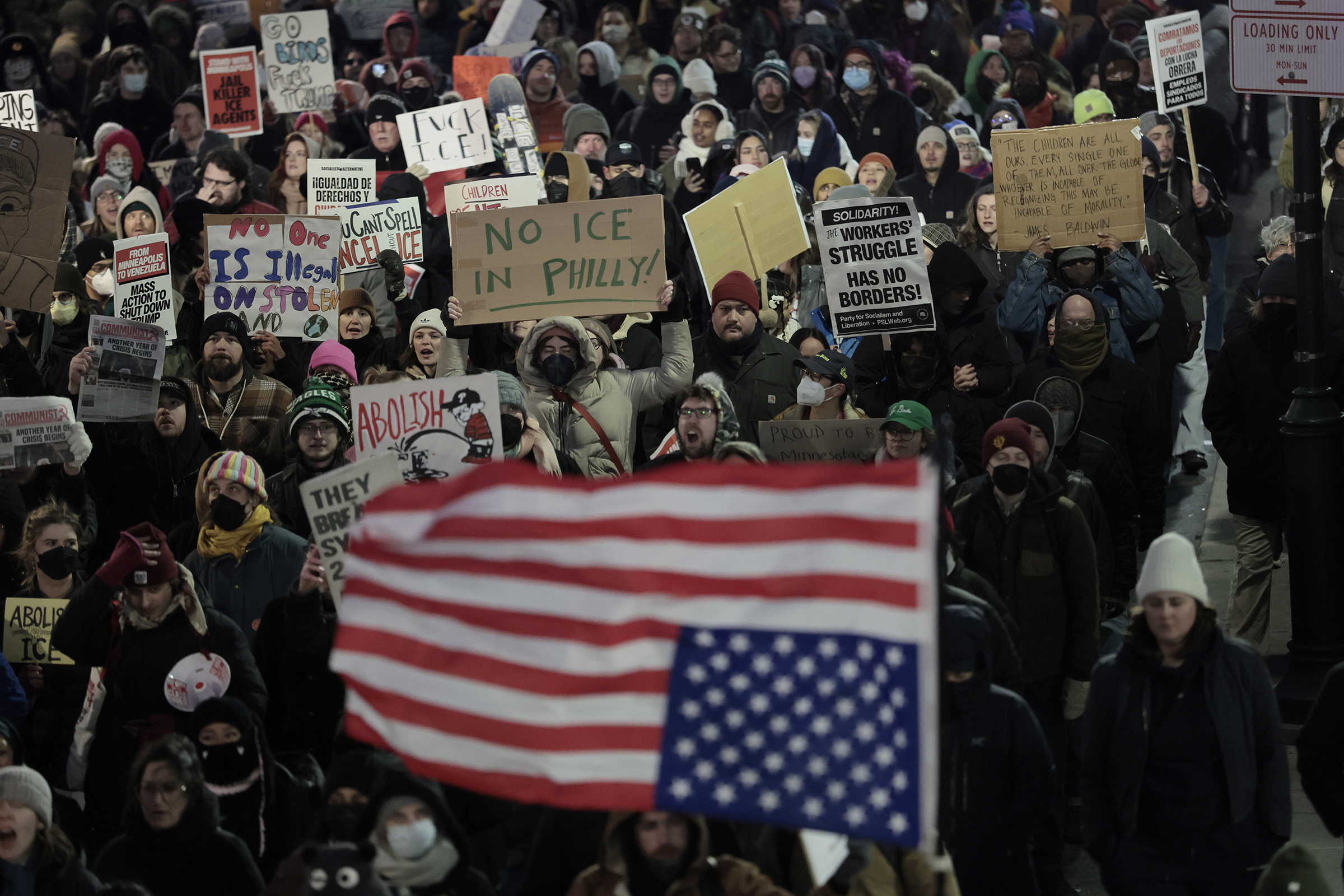
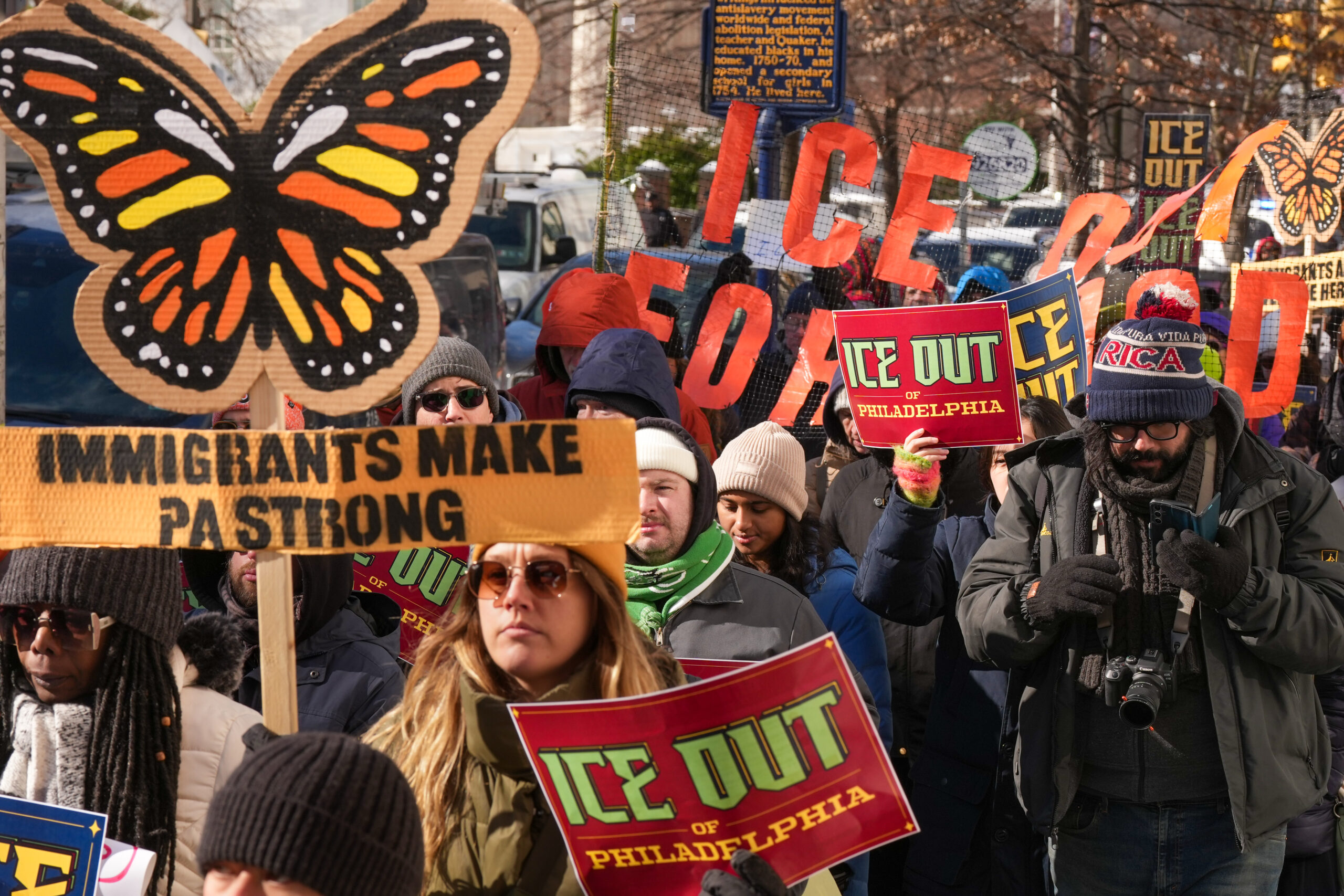
    Protesters march up Eighth Street, toward the immigration offices, during the Philly stands with Minneapolis Ice Out For Good protest at Philadelphia City Hall on Jan. 23.

    The Council legislation includes exceptions for officers wearing medical-grade masks, using protective equipment, or working undercover. It also allows facial coverings for religious purposes.

    However, the federal government could still raise First Amendment concerns, said Shaakirrah R. Sanders, an associate dean at Penn State Dickinson Law.

    The administration, she said, could argue that the city is only trying to regulate law enforcement officers and claim that would be discriminatory.

    Sanders said defending the legislation could be “very costly” and the city should consider alternatives that fall more squarely within its authority. She pointed to efforts like New Jersey Gov. Mikie Sherrill’s announcement that the state would create a database for residents to upload videos of ICE interacting with the public.

    “It looks like the city wants to wield big legislative power,” Sanders said. “My alternative is more in the grassroots work, where you are the first ear for your citizens, not the regulator of the federal government.”

  • Philadelphians are frustrated with the city’s snowstorm cleanup. What does that mean for Mayor Cherelle Parker?

    Philadelphians are frustrated with the city’s snowstorm cleanup. What does that mean for Mayor Cherelle Parker?

    Mayor Cherelle L. Parker often says she isn’t a fan of “Monday-morning quarterbacks” and “expert AOPs” — her shorthand for so-called articulators of problems who don’t offer solutions.

    Now she has a city full of them.

    After a heavy snowfall followed by a week of below-freezing temperatures, Philadelphia’s streets are still laden with snow, slush, and ice; SEPTA buses are packed; and numerous cars are still stuck in the spots residents left them in 11 days ago.

    The mayor acknowledged residents’ exasperation at a news conference at the Pelbano Recreation Center in Northeast Philadelphia on Wednesday, her first appearance dedicated to the city’s snow response since Jan. 26, the day after the storm walloped the region.

    “For anyone who is frustrated right now about the ice, about the ability for all of the streets to be fully cleared, I want you to know that I understand,” she said. “Everybody can Monday-morning quarterback. … That’s cool. We can’t stop people from feeling the way they feel. But let me tell you something: We were prepared.”

    Parker said the city deployed 1,000 workers and 800 pieces of snow-removal equipment to deal with the emergency.

    “We don’t promise to be perfect, Philadelphia,” she said. “We promise to go to war with the status quo and to fix things, to be doers. … We’re going to continue doing everything that we can to make sure all of this work is done.”

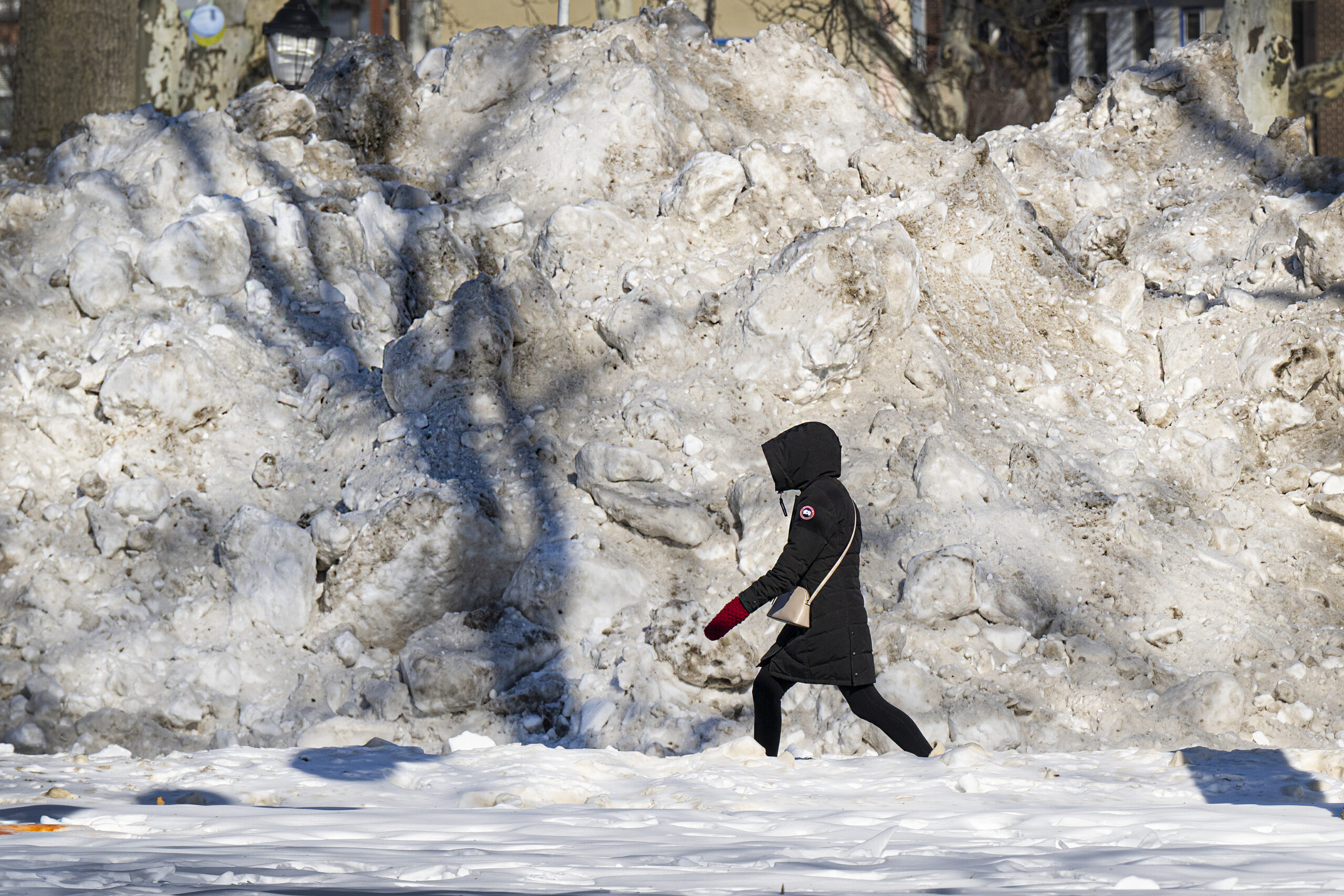
    A pedestrian walks past a large pile of snow and ice along the Benjamin Franklin Parkway days after a fierce winter storm dropped up to 9 inches of snow and sleet, with freezing temperatures leaving large banks of ice and snow on streets and sidewalks in Philadelphia, Monday, Feb. 2, 2026.

    Snowstorms are infamous for their ability to undermine constituents’ faith in their mayors. Over the years, they have been credited with ending political careers in Denver, New York, Chicago, and Seattle.

    The risk of political fallout could be heightened for Parker, who campaigned on a promise to upgrade city services. When Parker ceremonially dropped the puck at Tuesday night’s Flyers game, she was greeted with boos from many fans at Xfinity Mobile Arena.

    “Parker has pitched herself as the can-do mayor. ‘I’m not gonna deal with ideology. I’ve got principles, but I’m here to get the job done,’” said Randall M. Miller, a political historian and professor emeritus at St. Joseph’s University. “There’s that expectation you’re going to get this thing done.”

    Parker also faced questions about her administration’s commitment to delivering core services during the eight-day city workers strike last July, when “Parker piles” of trash mounted around Philadelphia in the hot summer sun. She escaped that ordeal relatively unscathed after winning what she called a “fiscally responsible” contract largely in line with her goals.

    But Miller said the mobility issues associated with snow removal have unique psychological effects for constituents.

    “You’re cold, you’re miserable, and you’re trapped. You’re looking around like, ‘Who is confining me?’” Miller said. “You get angry at the mayor because the mayor said, ‘I’m here to provide public services,’ and public service isn’t being provided.”

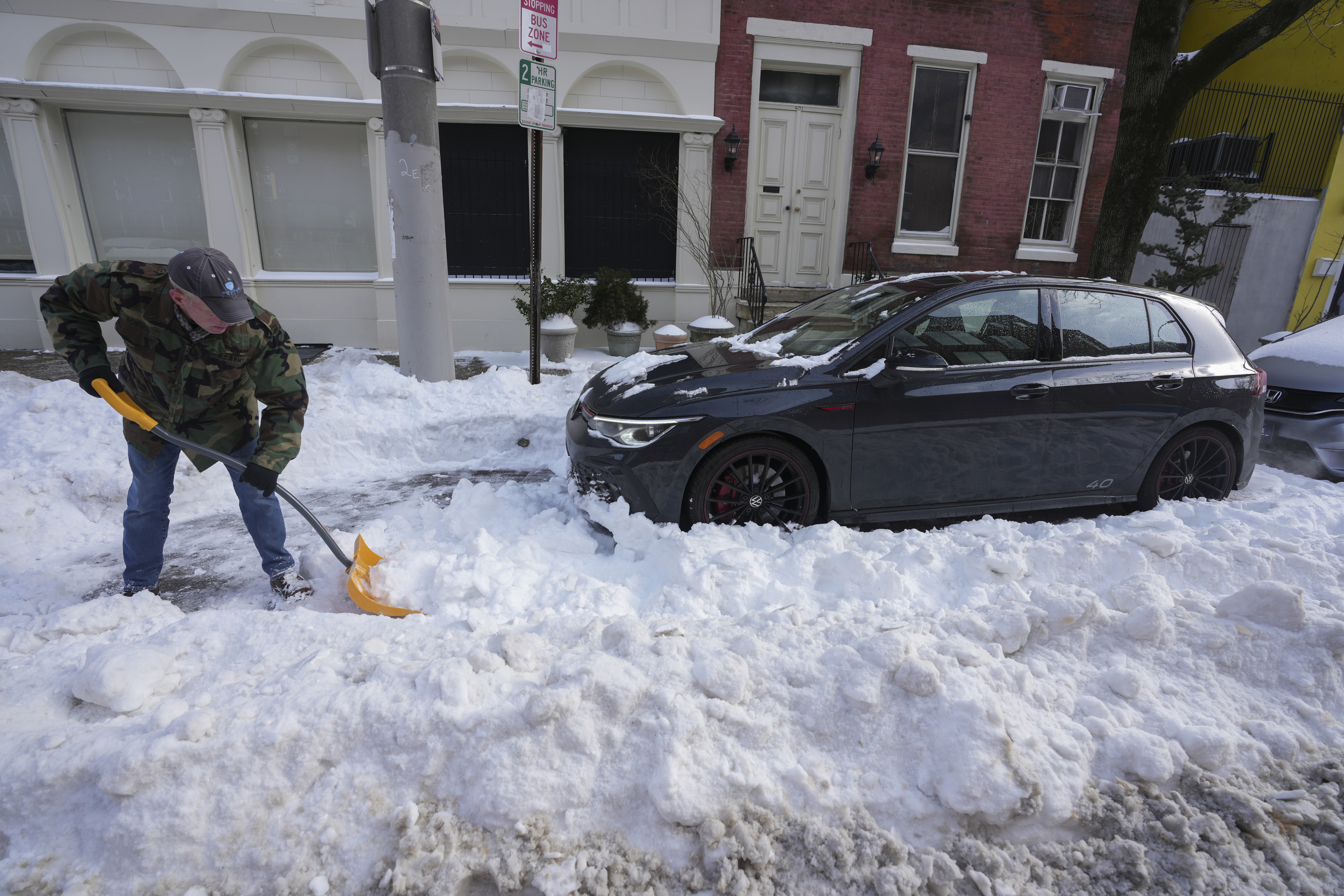
    Fred Scheuren shovels snow at 12th Street, near Waverly Street, in Center City, Philadelphia, Monday, Jan. 26, 2026.

    The circumstances of this year’s winter weather emergency could also give Parker some breathing room. Municipal leaders in Pittsburgh, New York, Washington, D.C., and Providence, R.I., are all feeling the heat amid the polar temperatures, thanks to an unusually persistent cold snap that has hampered snow-removal operations.

    A slight reprieve in the weather this week, with highs peaking above freezing Tuesday and Wednesday, could help the city’s cleanup efforts. But officials warned Wednesday that temperatures are forecast to fall again by the end of the week.

    “It’s not hyperbole to consider that we’re still under emergency conditions,” Dominick Mireles, who leads the Philadelphia Office of Emergency Management, said Wednesday.

    Lessons from past Philly storms

    By some measures, the city threw more resources at the latest storm than in the past, but got fewer returns.

    After the legendary blizzard of Jan. 7, 1996, then-Mayor Ed Rendell deployed more than 540 snowplows, dump trucks, and other vehicles to clear away the record 30.7 inches of snow that fell over two days, according to an Inquirer report from that year. Officials bragged at the time that the fleet eclipsed the 300 vehicles marshaled by former Mayor W. Wilson Goode Sr. for the last major blizzard, in 1987.

    Four days after the 1996 storm, the city said it hauled away 50,000 tons of snow, including truckloads famously dumped directly into the Delaware River and the Schuylkill. Officials also said that day that about 71% of roadways were passable, including around half of all side streets.

    In February 2003, the city got walloped with 19 inches of snow, followed by days of subfreezing temperatures. Four days after that storm, the city said it had cleared 75% to 80% of city streets.

    In 2016, Mayor Jim Kenney used 10,000 tons of salt and 1,600 city workers to clear away 22.5 inches of snow, clearing 92% of residential streets by day four — with a major assist from warmer temperatures a few days after the storm.

    The 800 pieces of snow-removal equipment Parker cited that were used in the most recent storm are far more than even in the blizzard of 1996. She also said the city brought in a snow-melting machine from Chicago, saying workers had melted about 4.7 million pounds of snow, while scattering 30,000 tons of salt.

    The result: More than a week after the end of the snowfall, about 85% of city streets had been “treated,” which includes salting, plowing, or both, according to the city.

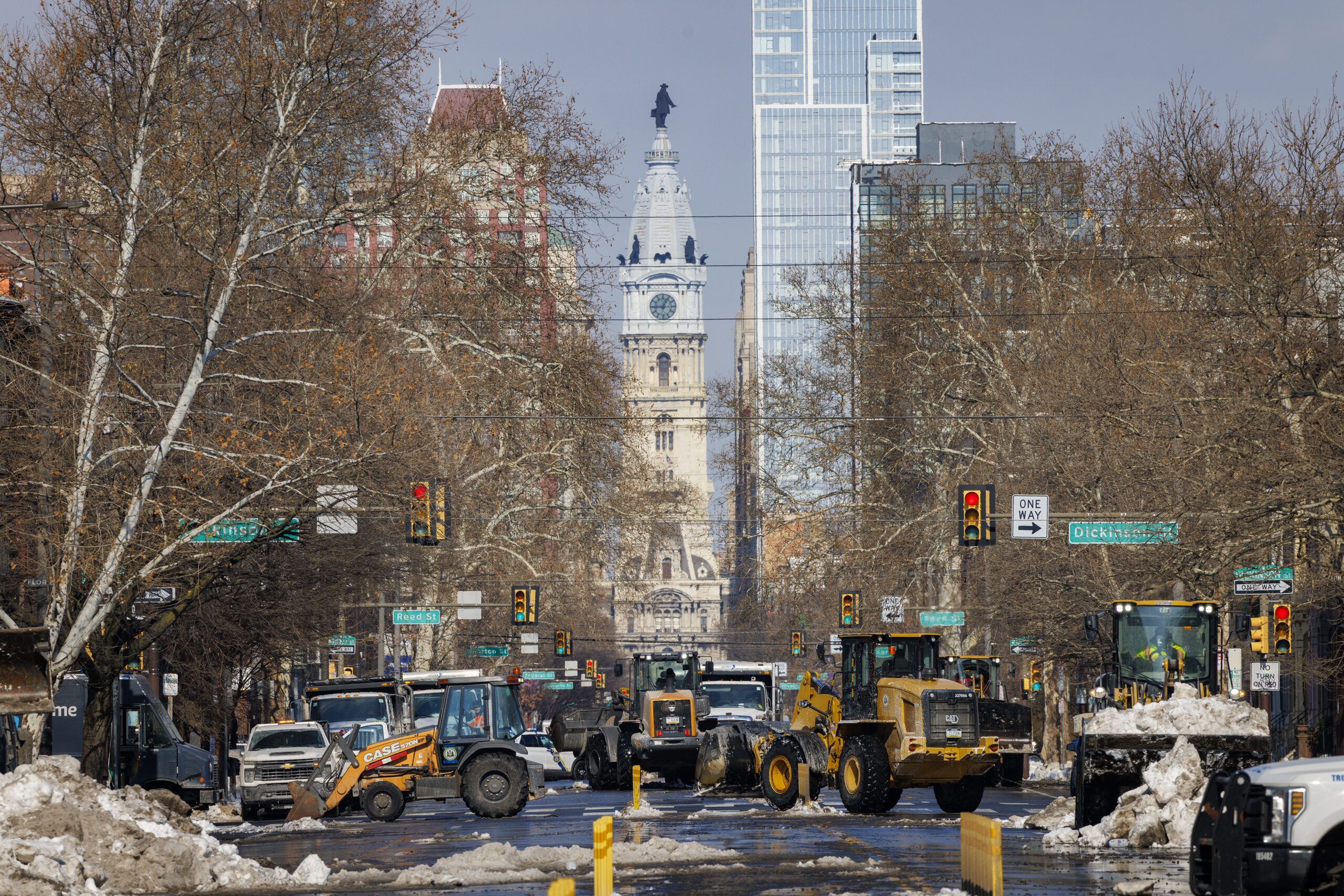
    Heavy equipment clearing snow along S. Broad Street at Dickinson Street, Philadelphia, Tuesday, Feb. 3, 2026.

    But mobility nonetheless remains limited in much of the city, and officials pointed to the lingering icy conditions.

    The prolonged freeze is “not unheard of, but it is unusual, and that stresses and makes the potential for a lot of not-great things to happen,” Mireles said. “It’s affecting the snow-fighting operation.”

    An analysis of city plowing data shows that after the conclusion of the storm on Jan. 25, vehicles reached about 70% of city streets by the end of Monday. As the snow hardened, activity slowed by about a third on Jan. 27. Some parts of the city — including neighborhood-size chunks of South Philly — saw little plowing until five days after the storm or longer.

    The psychology of snow

    One reason voters punish mayors more harshly for failing to remove snow than for other problems is because of its omnipresence, from getting around the city to small talk about the weather, Miller said.

    Even trash-collection problems tend not to get under residents’ skin to the same degree because they don’t shut the city down, he said.

    “You are furious, and it’s day in, day out,” Miller said. “You’re constantly reminded.”

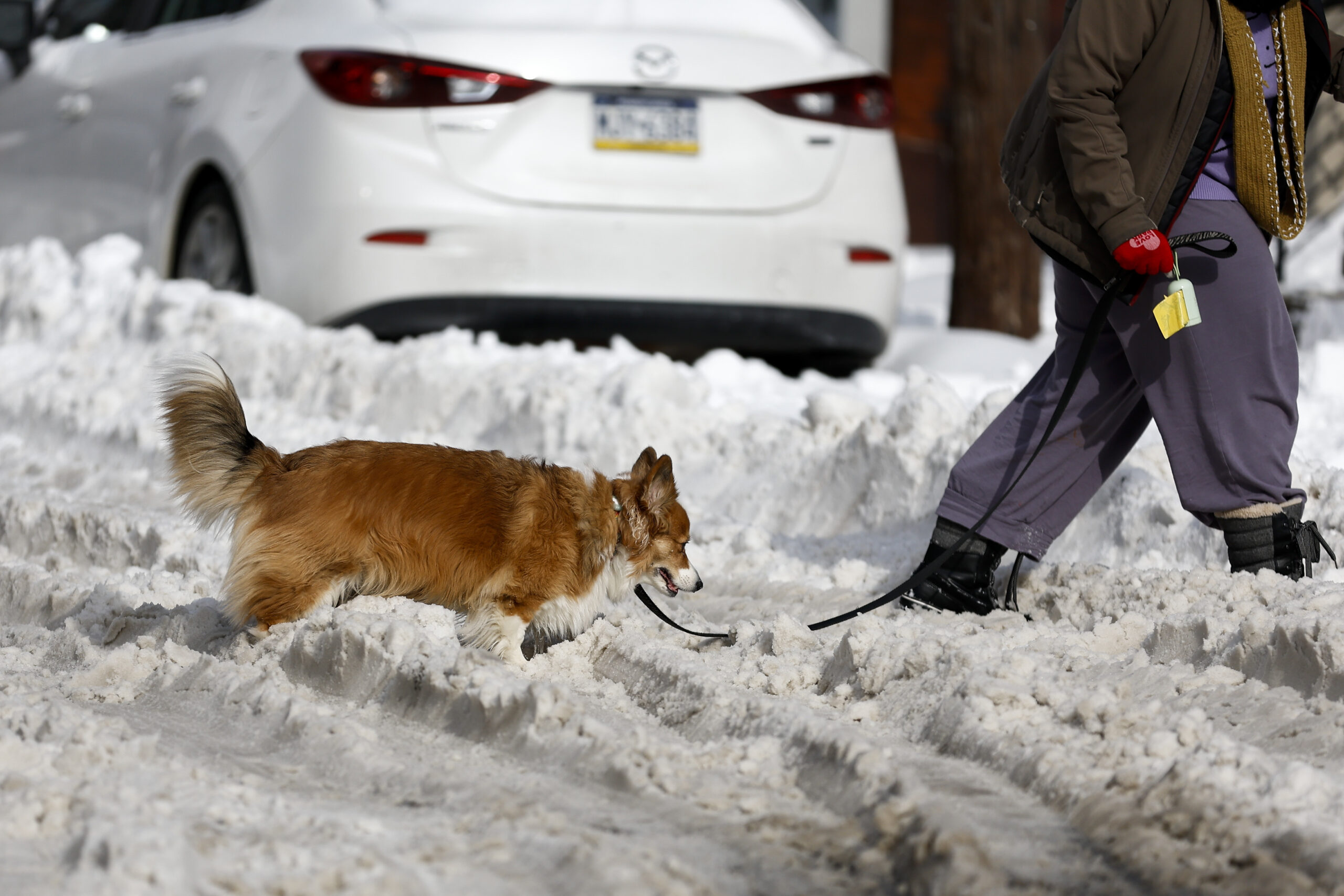
    Trisha Swed walks with her dog Alberta Einstein at North 30th Street and Girard Avenue in Brewerytown on Monday, Jan. 26, 2026 in Philadelphia. In Philadelphia, 9.3 inches of snow fell, the most in a decade.

    Parker has turned to private contractors to help with the snow-removal operation. And at Wednesday’s news conference, she touted the city’s efforts to deploy 300 “same-day pay and work” laborers earning $25 per hour to help manually clear streets and sidewalks.

    Those moves drew criticism Wednesday from the city’s largest union for municipal workers, District Council 33 of the American Federation of State, County and Municipal Workers, which went on strike for higher wages last summer.

    “District Council 33 is deeply concerned by the City’s decision to bring in outside laborers for snow‐removal operations without any consultation or collaboration with our union,” DC 33 president Greg Boulware said in a statement. “Our members deserve better, and the residents of Philadelphia deserve a snow‐removal strategy rooted in safety, foresight, and respect for the workforce that keeps this city running.”

    Miller said those efforts show the city is doing everything it can to clear the city’s streets and sidewalks.

    “There’s been a great effort to try to deal with it, but Philadelphia is a very difficult place to manage in terms of snow because it’s got so many older streets,” he said.

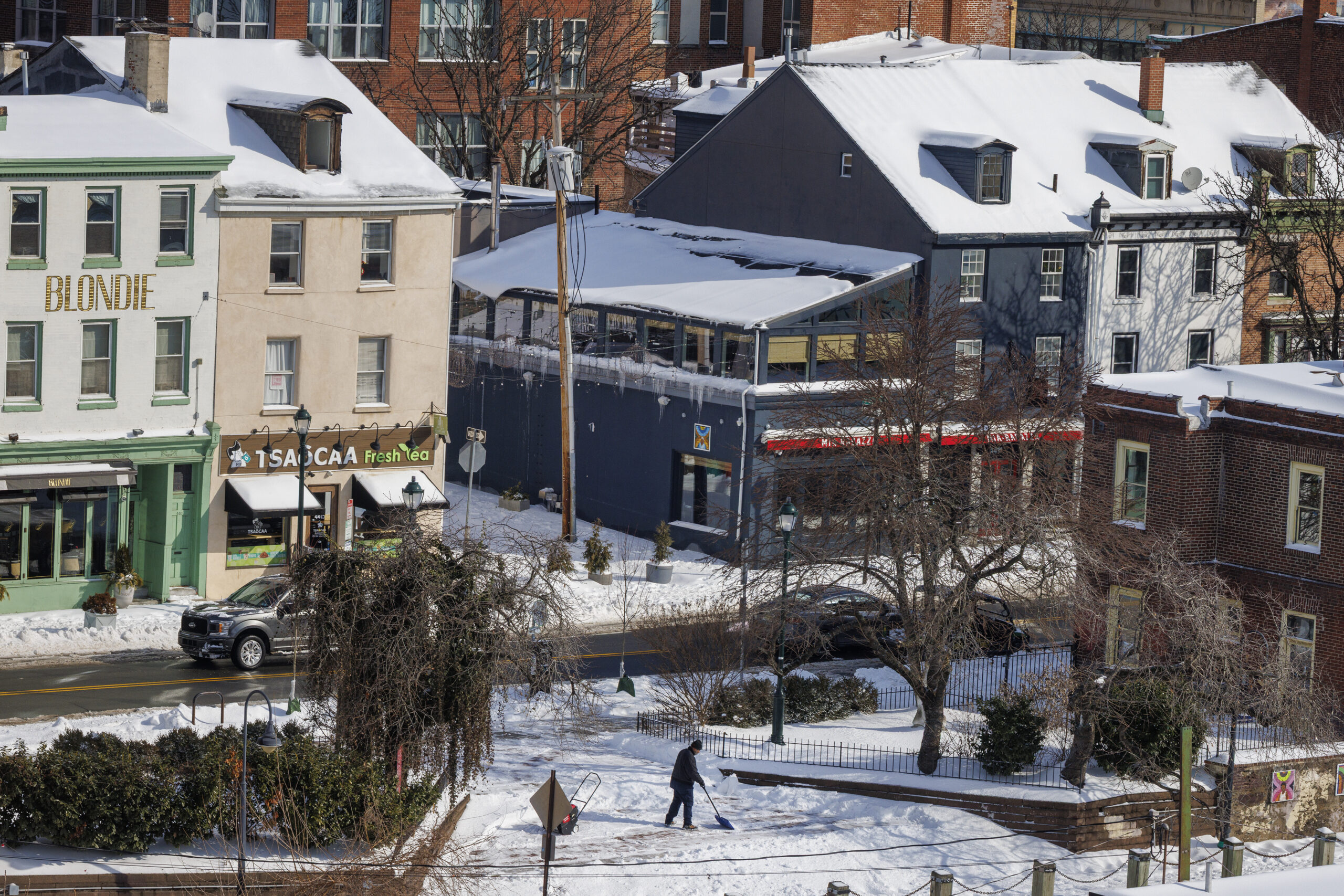
    Man with shovel clearing snow from small park on Main Street in Manayunk on Monday, Jan. 26, 2026.

    But, he said, hearing about the city’s efforts is cold comfort to residents struggling to navigate their neighborhoods.

    “The major thoroughfares, they’ve done a pretty good job. But folks are concerned with their neighborhoods. They’re not concerned with if they go down to Fourth and Market,” he said. “Once you start to hear those kinds of complaints, it’s hard to contain it.”

    Parker said complaints will not deter her team. “Whenever we’ve been dealing with something challenging in government … there are some people who are expert articulators for problems,” she said.

    Her staff, she said, “is not a team of expert AOPs.”

    “This is a team of subject-matter experts who are doers and they are fixers, and we don’t cry,” she said. “Our job won’t be done until every street in the city of Philadelphia is walkable.”

    Staff writers Ximena Conde and Anna Orso contributed to this article.

  • Here’s who is funding Philly’s crowded race for Congress

    Here’s who is funding Philly’s crowded race for Congress

    The race to fill Philadelphia’s open congressional seat is the marquee election in the city this year, but with less than four months left until primary election day, it has yet to attract much money from political action committees or donors outside the region.

    Most of the campaign thus far has been funded by big checks from individual donors, and several of the top contenders to represent Pennsylvania’s 3rd Congressional District — the most Democratic in the nation — have raised most of their money from people who live in Pennsylvania.

    That’s according to an Inquirer analysis of recently filed campaign finance reports that break down contributions to each candidate between October and December.

    The filings, coupled with previous financial reports, provide a snapshot of who is contributing to each Democrat’s campaign heading into the election year, and how capable each contender is of powering their operations and advertising.

    While money is not the only factor in a political campaign, fundraising prowess can be used as a predictor of viability, and it can persuade other donors to contribute. Ten candidates announced they are running for the seat held by retiring U.S. Rep. Dwight Evans, but it’s likely that not all of them will make it onto the May 19 primary election ballot.

    Overall, the reports showed that State Sen. Sharif Street, the son of a former mayor, holds a financial advantage over the rest of the field.

    However, the two physicians in the contest, Ala Stanford and David Oxman, have each dedicated six-figure loans to their own campaigns, and progressive State Rep. Chris Rabb is expected to draw donations from left-leaning groups.

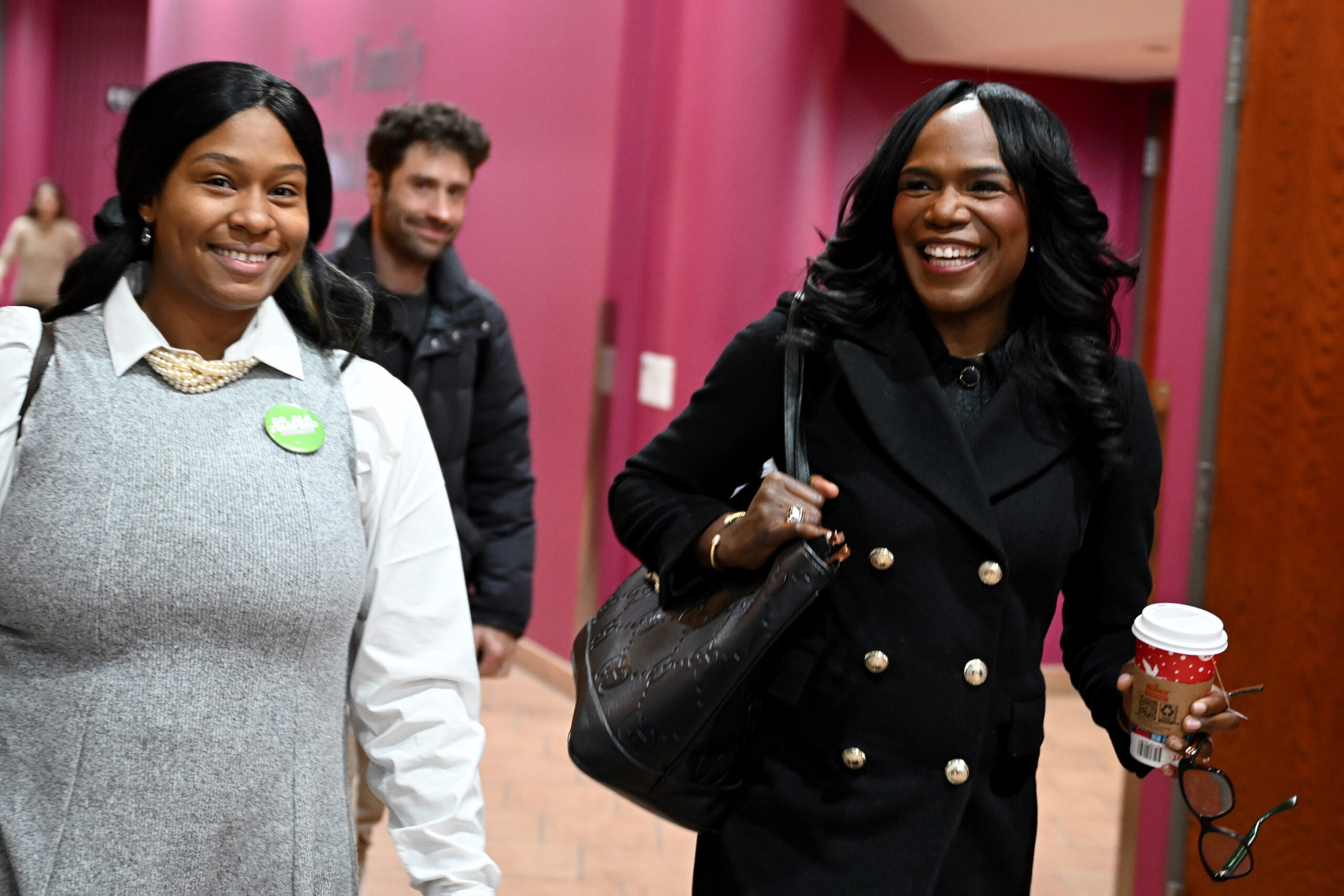
    Physician Ala Stanford (right) arrives at a forum hosted by the 9th Ward Democratic Committee Dec. 4, 2025. She is a Democratic candidate running to represent Philadelphia’s Third Congressional District.

    Interest from outside Philly will also likely rise as the primary election draws near.

    If national political figures weigh in on the race, they can lean on their vast networks of donors across the country to keep their preferred candidates’ campaigns afloat.

    And deep-pocketed special-interest groups with their eyes on influencing Congress may seek to sway the race in its final months.

    Not much PAC money — yet

    Under decades-old campaign finance law, corporations cannot give directly to candidates for federal office. But their executives, board members, and employees can fund PACs that are used as vehicles to prop up their supported candidates.

    As the role of money in politics has drawn scrutiny over the years, so has the reliance on so-called corporate PACs. That is especially true among some Democrats who see accepting money from them as a litmus test of their working-class bona fides.

    Rabb has hammered the issue in public forums and debates. He says he has never accepted corporate PAC money since his first run for office in 2015, and has repeatedly called on the other contenders to refuse corporate PAC funding.

    None of the candidates for the 3rd District has thus far leaned on corporate PAC money, according to the campaign finance reports.

    window.addEventListener(“message”,function(a){if(void 0!==a.data[“datawrapper-height”]){var e=document.querySelectorAll(“iframe”);for(var t in a.data[“datawrapper-height”])for(var r,i=0;r=e[i];i++)if(r.contentWindow===a.source){var d=a.data[“datawrapper-height”][t]+”px”;r.style.height=d}}});

    However, PACs associated with labor unions have gotten involved.

    Street raised about $40,000 in the last period from PACs associated with labor groups. He is backed by the deep-pocketed Philadelphia Building and Construction Trades Council, an umbrella organization of unions that endorsed him last fall.

    In the past, the trades have also funded super PACs, outside spending groups that can raise unlimited amounts of money but must follow strict rules largely barring them from coordinating directly with the campaigns they support.

    In 2023, the building trades funded a super PAC that supported Cherelle L. Parker’s successful run for mayor. And in 2018, Local 98 of the International Brotherhood of Electrical Workers, the most cash-flush building trades union in the state, funded a super PAC to support unsuccessful congressional candidate Rich Lazer.

    Ryan Boyer, head of the Philadelphia Building & Construction Trades Council, was one of the first to speak at Cherelle Parker’s election night party at the Sheet Metal Workers Local 19 on Nov. 7, 2023.

    But no such super PAC has materialized so far, according to campaign finance reports. Rather, the bigger financial factor in this race — at least through the end of last year — was candidates lending money to their own campaigns. Stanford put up $250,000 on Dec. 31, the last day of the reporting period. And Oxman has lent his campaign $175,000.

    Small vs. big-dollar donors

    While the candidates relied largely on donations from individuals, the size of the checks they brought in varied. Under campaign finance limits, individuals can give up to $3,500 to a candidate per election.

    The average contribution to State Rep. Morgan Cephas since she announced her campaign was $596 — about half of Street’s and Rabb’s average contributions. Individual donors gave the most to Stanford, on average, with the average contribution to her campaign totaling $1,737.

    That analysis includes only donors who contributed more than $200 through the course of the year. Campaigns are required to itemize only contributions above that threshold.

    State Rep. Chris Rabb at a forum hosted by the 9th Ward Democratic Committee Dec. 4, 2025. He is a Democratic candidate running to represent Philadelphia’s Third Congressional District.

    Small donations, or contributions under $200, have made up a tiny fraction of the money brought in by the top contenders so far, according to the latest filings. About 11.5% of the money Rabb raised was from small-dollar donors. Such contributions made up less than 5% of all funding for Stanford, Oxman, and Street.

    The one outlier was Pablo Iván McConnie-Saad, an ex-Treasury Department official under former President Joe Biden. His campaign has been somewhat low-profile so far; however, small-dollar contributions made up a quarter of his total of $119,000 raised.

    His campaign said in a statement that the filings are evidence that his run is “entirely people powered.”

    Stanford’s campaign manager, Janée Taft-Mack, noted that the pediatric surgeon has been campaigning for a shorter amount of time than several of her opponents. She announced her campaign in October, several months after Street and Rabb.

    Taft-Mack added that the range of donors “underscores a coalition that crosses income levels, neighborhoods, and communities.”

    Where the money came from

    While every candidate vying for Evans’ seat has touted grassroots support, it appears that Cephas and Street raised the most money from donors who live in Philadelphia.

    About half of the individual donors who gave more than $200 to Street and Cephas are city residents. Both candidates have also raised the most money from donors living in Pennsylvania.

    window.addEventListener(“message”,function(a){if(void 0!==a.data[“datawrapper-height”]){var e=document.querySelectorAll(“iframe”);for(var t in a.data[“datawrapper-height”])for(var r,i=0;r=e[i];i++)if(r.contentWindow===a.source){var d=a.data[“datawrapper-height”][t]+”px”;r.style.height=d}}});

    Street, who formerly led the state Democratic Party and has connections to donors across Pennsylvania, raised 81% of his individual contributions, or about $488,000, from in-state residents. For Cephas, the share was 78%, or about $162,000.

    Anthony Campisi, a spokesperson for Street, said the latest finance report “highlights the entire point of our campaign.”

    “Sharif is running to represent Philadelphians from across an incredibly diverse district,” he said, “and is building the coalition needed to both win and effectively serve in Congress.”

    Cephas’ campaign manager, Salvatore Colleluori, said her fundraising within the city shows she has a “broad base of support, especially in Philadelphia.”
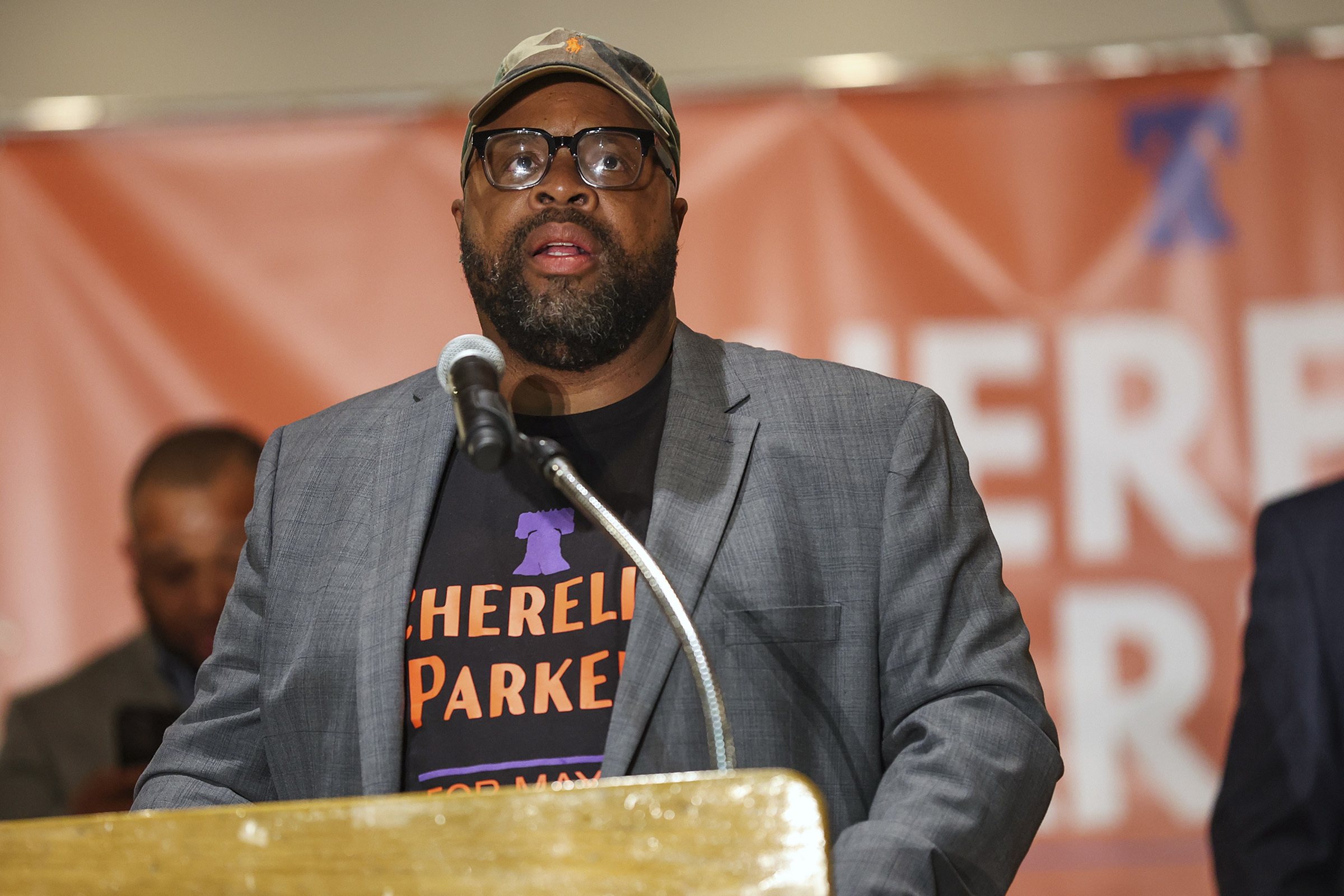
    “She has been a champion for Philadelphia in the state House, and people know that,” he said. “They want to support that work.”

    Rabb, a progressive who has support from left-leaning organizations and activists outside the region, had among the lowest share of contributions from Philly-based donors, according to The Inquirer’s analysis.

    He said in a statement that when small-dollar donations are accounted for, he believes he will have “more Philly donations than any of the establishment candidates.”

    Rabb said he will soon be rolling out endorsements from progressive organizations “that will significantly grow our donor base.”

    Staff writer Sean Collins Walsh contributed to this article.

  • Housing ban on former Hahnemann campus is on hold in City Council as concerns mount

    Housing ban on former Hahnemann campus is on hold in City Council as concerns mount

    Councilmember Jeffery Young pushed pause Tuesday on his highly controversial housing ban for the former Hahnemann hospital campus.

    Young has proposed a “Vine Street Expressway” zoning overlay that would cover the shuttered medical center and its surroundings and block residential development from its largely empty buildings and lots.

    Although developers have struggled to find new office or healthcare tenants for the area, Young initially described his legislation as a means to preserve the former campus as a jobs hub.

    However, an apartment development is proposed in the former Hahnemann patient towers by New York-based developer Dwight City Group — which is why most observers were stunned when Young introduced his last-minute bill banning all housing development from the area.

    Then in a sudden reversal at a City Council hearing Tuesday, Young said he was not advancing the bill.

    “We’re holding it so we can further [communicate] with all the community stakeholders that are involved,” Young said in an interview after the hearing. “We want to make sure that this project represents the best interest of the city of Philadelphia, and by continuing dialogue, we’ll achieve that goal.”

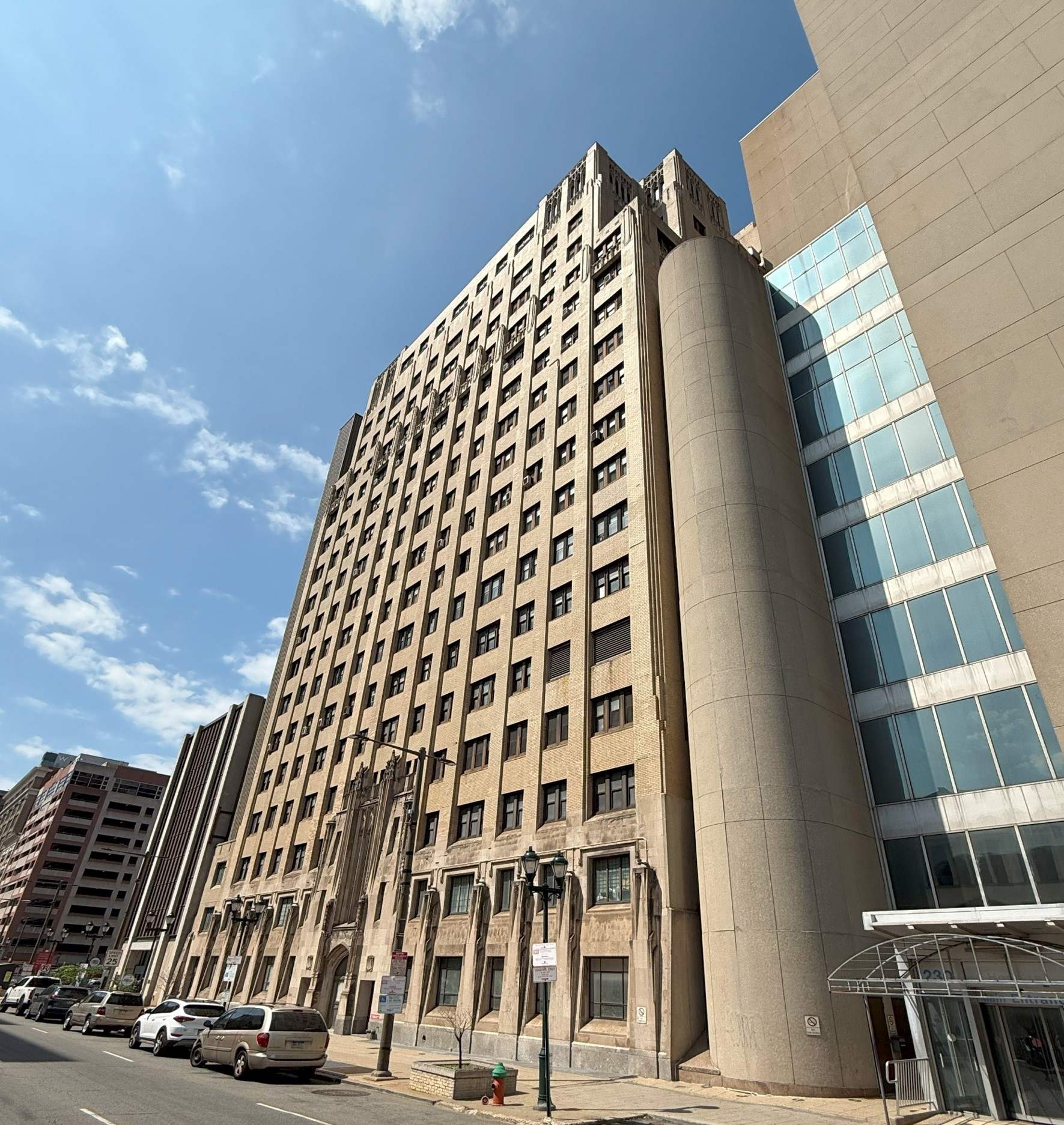
    The art-deco style South Tower of the former for Hahnemann hospital complex, which is almost 100 years old.

    No interest groups have officially come out in favor of the legislation. Pro-housing groups, the Logan Square Neighborhood Association, and the building trades unions have all expressed concerns about it.

    Property owners who would be affected include influential local institutions including Brandywine Realty Trust and Drexel University. Mayor Cherelle L. Parker’s administration was also concerned, especially as the administration pushes to get 30,000 units of housing built or repaired during her term through the Housing Opportunities Made Easy (H.O.M.E.) plan.

    “This bill conflicts with the goals of the comprehensive plan and the goals of the H.O.M.E. plan to support residential development,” said testimony prepared for Paula Brumbelow Burns of the City Planning Commission.

    Ironically, as a result of Young’s anti-housing legislation, permits have been secured for 824 units of housing on the former hospital site, as property owners rushed to secure the right to develop apartments before the feared ban would be enacted.

    With the exception of Dwight City Group’s proposal, it is not clear that many of those permits will quickly result in housing.

    The application for 300 units at Martinelli Park and 163 units at the Brandywine-owned Bellet building do not appear to signify new projects in the immediate future, but instead an effort to preserve value and flexibility of use.

    Young argued that the legislation has been successful in that it compelled property owners to talk with his office about their plans.

    “People need to understand what’s happening when you have large properties where potentially thousands of units will be developed there,” Young said. “We have properties that as a former hospital that’s filled with asbestos and other types of issues, no one knows what’s going on.”

  • A veto-proof majority of Philadelphia City Council members have signed onto the ‘ICE Out’ proposal

    A veto-proof majority of Philadelphia City Council members have signed onto the ‘ICE Out’ proposal

    All but two of Philadelphia’s 17 City Council members have sponsored a package of legislation aimed at limiting ICE operations in the city, a level of support that could ensure the measures become law even if they are opposed by the mayor.

    The 15 cosponsors, confirmed Thursday by a spokesperson for Councilmember Kendra Brooks, indicate a potentially veto-proof majority of lawmakers back the sweeping “ICE Out” effort.

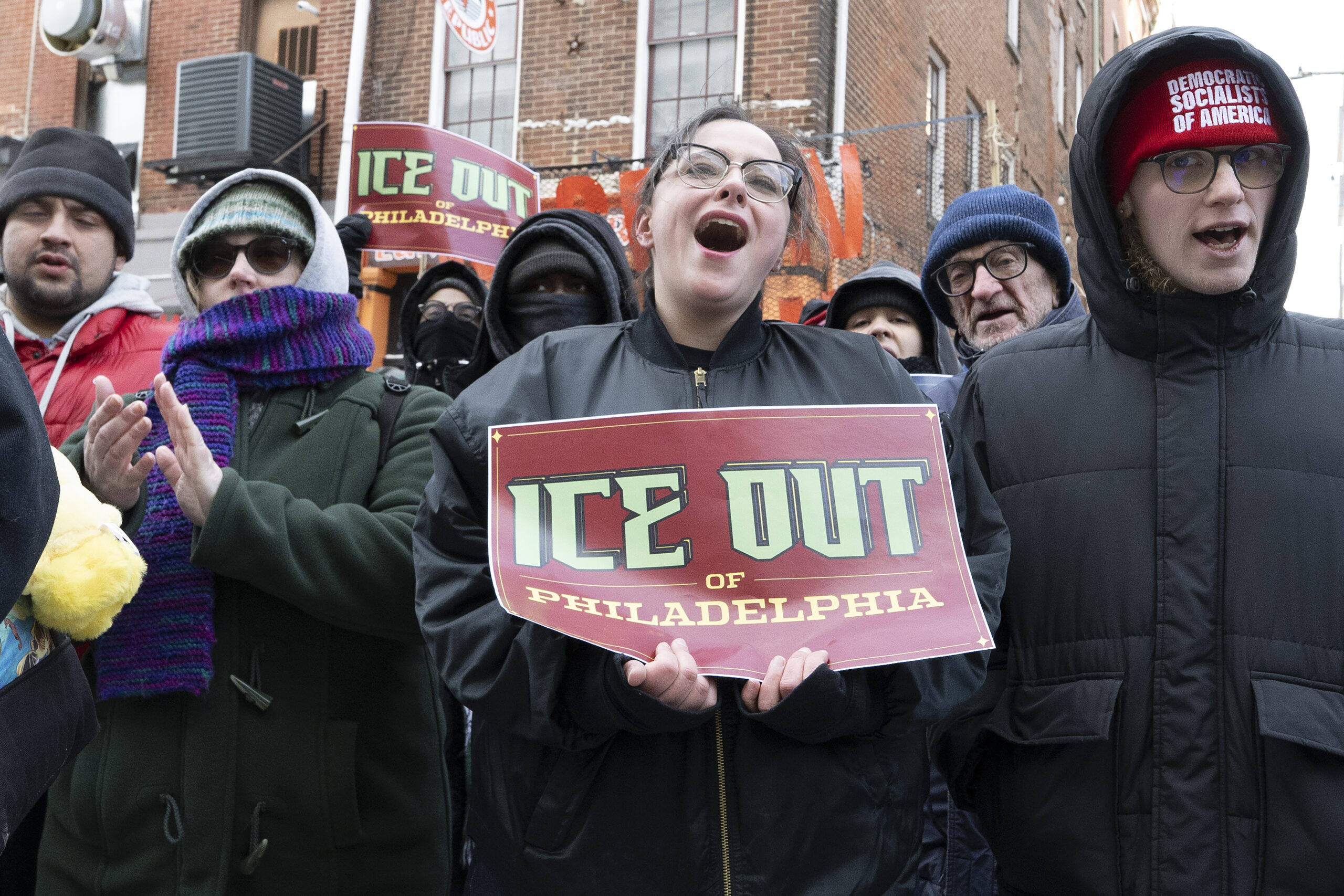
    Brooks and Councilmember Rue Landau, the proposal’s authors, on Thursday formally introduced the seven bills in the package, which includes measures that would codify Philly’s “sanctuary city” status, ban U.S. Immigration and Customs Enforcement from operating on city-owned property, and prohibit employment discrimination on the basis of immigration status.

    Landau said that “reaching a majority sends a clear message.”

    “Philadelphia stands with our immigrant communities,” she said in a statement. “At a moment when the federal government is using fear and violence as governing strategies, this level of support shows that Council will do everything we can to protect our immigrant neighbors.”

    Advocates and protesters call for ICE to get out of Philadelphia, in Center City, January 27, 2026.

    The 15 lawmakers on board with Brooks and Landau’s proposal have each cosponsored all seven bills, Brooks’ spokesperson Eric Rosso said. Only Councilmembers Mike Driscoll, a Democrat, and Brian O’Neill, Council’s lone Republican, declined to cosponsor the legislation, he said.

    Driscoll, who represents lower Northeast Philadelphia, said in a statement that the shootings of Renée Good and Alex Pretti by federal agents in Minneapolis this month “caused real pain and fear” and “deserve serious attention.”

    But he indicated that he had concerns about whether the “ICE Out” legislation would hold up in court. Similar legislation, including a California ban on law enforcement officers wearing masks, has faced legal challenges.

    “Locally, we should aim for immigration policies that are focused, proactive and aimed at practical, long-term solutions that ultimately hold up in court,” he said.

    Driscoll said he is open to amended versions of the legislation.

    O’Neill, whose district covers much of Northeast Philadelphia, could not immediately be reached for comment.

    The developments Thursday prompted Mayor Cherelle L. Parker to make one of her first public comments about President Donald Trump’s mass deportation campaign, saying in a statement that her administration “understand[s] the public’s fear of the unknown as it relates to federal policy associated with immigration.”

    “We have a comprehensive approach to public safety, and we will always be prepared for any emergency, as we have consistently demonstrated and will continue to demonstrate,” Parker said. “I have a great deal of faith in our public safety leaders — our subject matter experts — who I asked to be a part of this team and we’re going to do our best to work in an intergovernmental fashion, along with City Council, to keep every Philadelphian safe.”

    Parker said she and her team are reviewing the legislation.

    Advocates and protestors call for ICE to get out of Philadelphia, in Center City, January 27, 2026.

    The mayor has largely avoided confrontation with Trump’s administration over immigration policy, a strategy some have speculated has helped keep Philadelphia from the National Guard deployments or surges of ICE agents seen in Minneapolis, Chicago, Los Angeles, and elsewhere.

    But the popularity of the “ICE Out” package among Council members may force her to wade into the issue. Administration officials will testify when the bills are called up for committee hearings. If they are approved, Parker will have the choice of signing the bills into law, vetoing them, or letting them become law without her signature.

    Council bills require nine votes for passage, and 12 votes are needed to override mayoral vetoes. With 15 Council members already signaling their approval for the bills, chances appear strong that the city’s legislative branch has the numbers to override any opposition.

    Mayor Cherelle L. Parker has avoided confrontation with the White House on immigration issues.

    In a Council speech, Brooks addressed the debate over whether the legislation would draw Trump’s ire.

    “Staying silent is not an option when people are being publicly executed in the streets and the federal government is covering up their murders,” Brooks, of the progressive Working Families Party, said. “I want to be clear: ICE is already here. We don’t want a Minneapolis situation, but I reject the claim of those who are pretending we don’t already have a problem.”

    Council President Kenyatta Johnson, a centrist Democrat and an ally of Parker, shared a similar view.

    “From my perspective, the Trump administration has already been looking at the city,” Johnson told reporters. “Overall, the majority of members of City Council support the legislation, and so we see this legislation being successfully voted out of committee.”

    ICE agents have been arresting suspected undocumented immigrants in the city before and during Trump’s tenure, and his administration has canceled grants for the city and educational and medical institutions in Philadelphia. But the city has not seen a mass deployment of ICE agents or federalized troops.

    Councilmember Anthony Phillips, also a centrist and Parker ally, represents the 9th District, from which the mayor hails.

    “What the ’ICE Out’ legislation ultimately says to Donald Trump,” Phillips said, “is that no matter what you try to do to undermine the health and safety and well-being of Philadelphia citizens, we will stand up to you.”

    Johnson suggested potential legal issues could be ironed out through amendments if needed.

    “The reality is this: This is a moral issue, right?” he said. “And if there are any legality issues that has to be addressed as a body, we’ll work with our members to address it.”

    Next, Johnson will refer the legislation to committee, where members will hold one or more hearings featuring testimony from administration officials, experts, stakeholders, and the public. Council members can also amend the bills in committee.

    Kendra Brooks shown here during a press conference at City Hall to announce a package of bills aimed at pushing back against ICE enforcement in Philadelphia, January 27, 2026.

    Supporters of the legislation packed Council chambers Thursday morning, and many spoke during public comment, ranging from leaders of advocacy organizations to a former immigration judge to immigrants who tearfully pleaded for Council to pass the package swiftly.

    Several Spanish-speaking residents spoke through interpreters; other residents testified on behalf of friends or family members who are undocumented and were fearful to come to City Hall themselves. A school nurse told Council members that her students have asked her what tear gas feels like.

    “The traumatic effects of these [ICE] raids on our children and our families and our communities will last for years and generations to come,” said Jeannine Cicco Barker, a South Philadelphia psychologist who said she is the daughter of immigrants. “These times call for bold, brave new measures to protect our community, and you have a chance to do some of that here. Philly urgently needs these protections.”

    Ethan Tan, who said he is an immigrant and a father of two, said he is fearful for his family and community.

    “To this administration, fear is the point. Alienation is the point. Isolation is the point,” he said. “The ‘ICE Out’ package says to me and immigrants that we may be afraid, but we can show solidarity and resolve anyway.”