Tag: Cherelle L. Parker

  • Philadelphia’s Managing Director Adam Thiel was once everywhere. Now, he’s largely faded from public view.

    Philadelphia’s Managing Director Adam Thiel was once everywhere. Now, he’s largely faded from public view.

    When Mayor Cherelle L. Parker stood in the city’s emergency management center last month and announced that her administration was preparing for the worst winter storm Philadelphia had seen in years, she was flanked by the police commissioner, the head of public schools, and a dozen other deputies.

    Missing from the news conference of Philadelphia’s top officials was Managing Director Adam K. Thiel, whose job it is to oversee the delivery of city services.

    It wasn’t the only time over the last year that Thiel, Philadelphia’s No. 2 public official, was noticeably absent.

    Thiel, who is effectively the city’s chief operating officer, was out of office last year for a total of nearly five months, much of which he spent on military leave, according to 2025 payroll register records obtained by The Inquirer. His increasingly low profile in Philadelphia City Hall has generated frustration and fueled questions about his job performance among some lawmakers, especially as the city faced criticism over the recent snow cleanup.

    Almost half of Thiel’s $316,200 city salary last year was for paid time off, according to payroll records. He is one of the highest-paid officials in the government and made more than Parker, who last year earned $280,000.

    In addition to his top city role, Thiel is a major in the U.S. Army Reserves. He joined the reserves in August 2024, eight months after beginning his job as managing director.

    Thiel also holds other positions outside government. In 2024, while he was managing director, he made more than $300,000 working as a consultant, according to financial disclosures. He is an adjunct faculty member at two universities and sits on several nonprofit boards.

    Five City Council members told The Inquirer that it has been months since they interacted directly with Thiel.

    “The managing director of the city is an extremely important job,” said Councilmember Jamie Gauthier, a Democrat from West Philadelphia. “I do not understand how someone who is absent as much as Thiel is able to carry out this job effectively.”
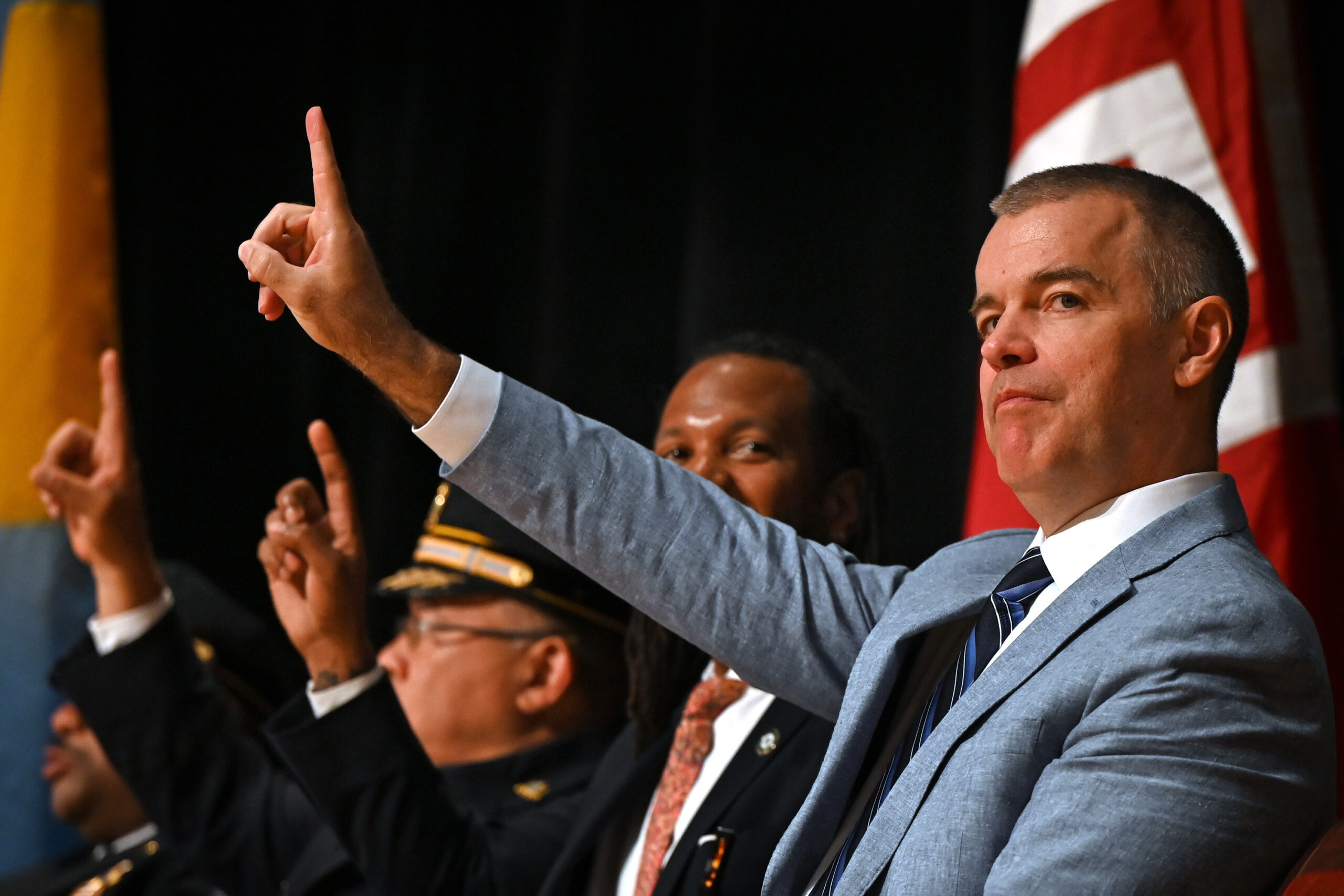
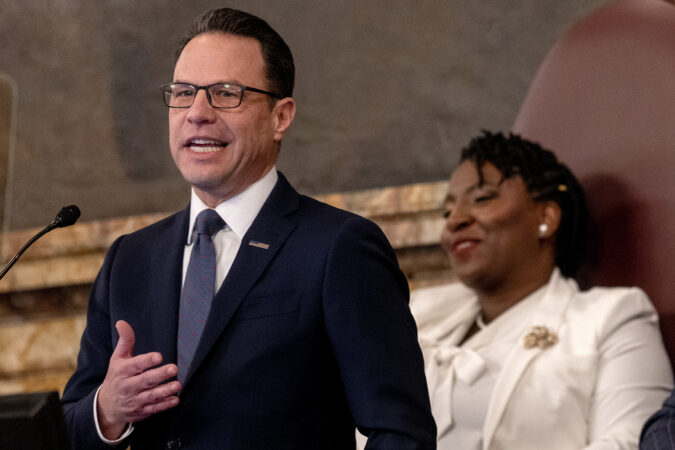
    Managing Director Adam Thiel during graduation ceremonies for the police academy Class #402 of the Philadelphia Police Department and Temple University Police Department at Temple University Performing Arts Center June 17, 2024.

    The administration declined requests to interview Thiel and Parker for this article. In a statement, Thiel thanked Parker for her “continued support of our city of Philadelphia employees who also serve the United States of America.”

    Sharon Gallagher, a spokesperson for the managing director’s office, said in a statement that Thiel has been employed by the city for nearly 10 years and “earns leave offered by the city the same way as other city employees accrue vacation, sick days, family, medical, military and other leave categories.”

    Payroll records show that Thiel logged six weeks of military leave time last year — the maximum amount the city offers employees. Gallagher said he also used 11 weeks of accrued vacation time to cover additional military assignments.

    The administration declined to answer questions about Thiel’s military service, including details about his location and unit. His LinkedIn page says he “helps provide emergency management subject matter expertise to combatant commands and partner nations.”

    Thiel is also founding partner of one consulting firm and the president of a second, though the specific nature of that work is not known and he has declined to disclose his clients publicly.

    In 2024, Thiel said his consulting work took fewer than 10 hours per week. Gallagher said Tuesday that “nothing has changed” since then.

    The Parker administration did not publicly announce when Thiel was on leave last year, but officials acknowledged it once asked by reporters last summer. At the time, Deputy Managing Director Michael Carroll filled in on an interim basis.

    Thiel, 53, is a nationally recognized expert in emergency management. He held a variety of firefighting, public safety, and disaster preparedness roles across the country before coming to Philadelphia in 2016 to serve as fire commissioner and deputy managing director under former Mayor Jim Kenney.

    Despite that, he did not appear alongside the mayor at multiple briefings the city conducted to update residents on the response to last month’s snowstorm. Instead, the face of the snow emergency response was Carlton Williams, the head of the city’s Office of Clean and Green Initiatives, a position Parker created.

    Thiel said in a statement Tuesday that Williams was “the best choice to lead our city’s unified response to the recent snowstorm operation and is the right leader for future snow and ice events.”

    Gauthier said the city’s handling of the storm “needed a higher-level emergency response.” She said while she respects Thiel’s military service, she raised his consulting work as a concern.

    “A decision needs to be made what he wants to do. Does he want to serve locally, or does he want to do other things?” Gauthier said. “We need a managing director who will serve full time.”

    The administration did not answer questions about whether Thiel was in town through the duration of the city’s 26-day winter emergency response.

    Parker’s chief of staff, Tiffany W. Thurman, said in a statement that the city is proud to offer benefits such as military and administrative leave that support employee well-being and professional development.

    Thurman said Thiel “is always reachable and fulfills the responsibilities of his position as needed based on the situation.”

    “His leadership — as is the case with the leadership team of any large city — is not limited by time designated as leave,” she said.

    The purpose of the Philadelphia managing director

    The authors of the 1950s-era Philadelphia Home Rule Charter created the position of managing director to serve as a barrier between the mayor’s political appointees and the city’s operational departments.

    The idea was that having a bureaucrat at the helm would ensure city service delivery would be apolitical, and the mayor cannot fire the managing director without cause.

    In reality, different mayors have granted their managing directors varying levels of power.
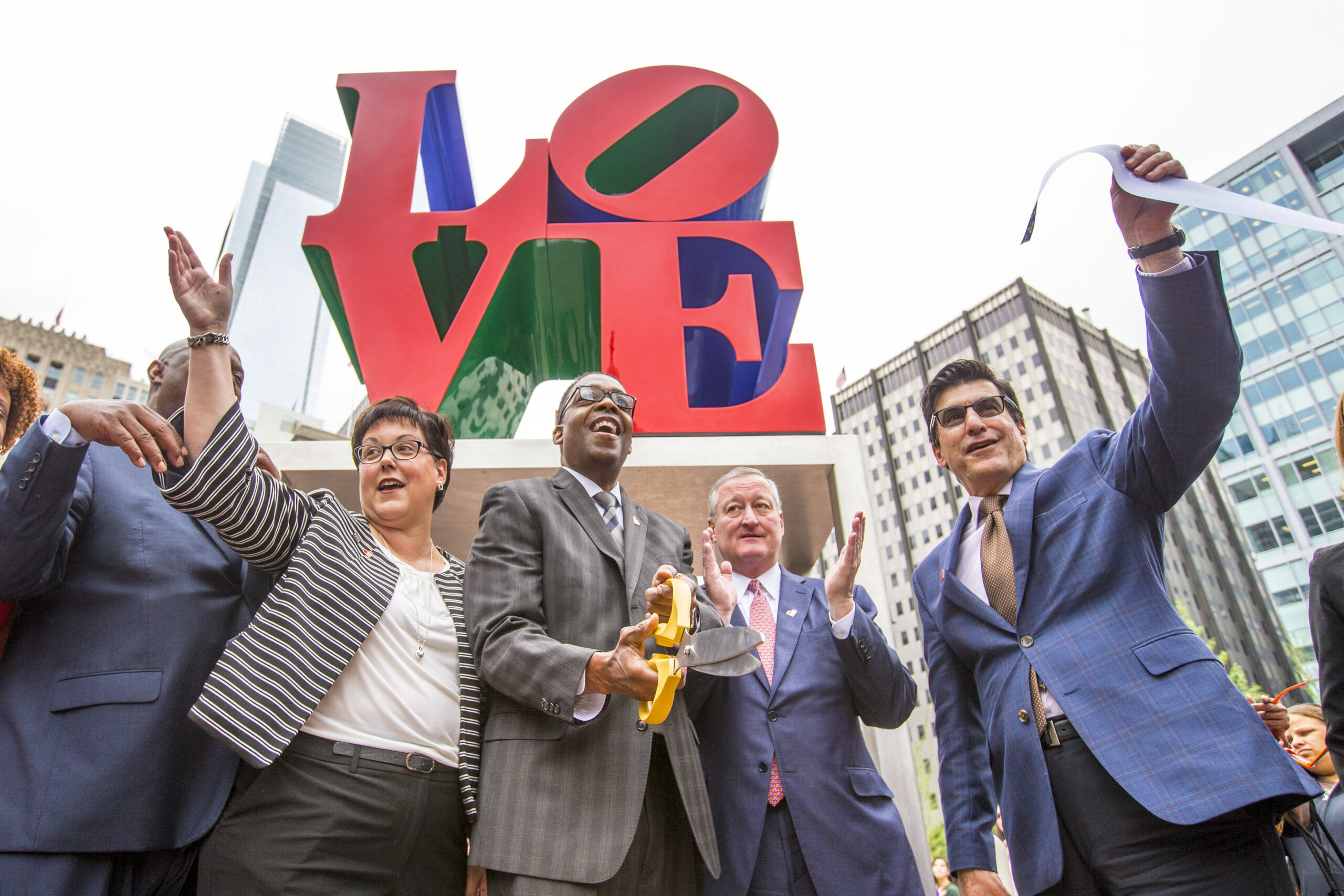
    In this 2018 file photo, LOVE Park is by (left to right) then-Philadelphia Parks and Recreation Commissioner Kathryn Ott Lovell, former City Council President Darrell Clarke, former Philadelphia Mayor Jim Kenney and then-Managing Director Michael DiBerardinis.

    For example, former Mayor Michael Nutter dispensed with decades of tradition and assigned robust portfolios to several deputy mayors. While his managing directors were important figures in his administration, they oversaw fewer operating departments than their predecessors.

    Nutter’s first managing director, Camille Barnett, left the administration after facing criticism for going on a two-week vacation in 2009 while the Phillies made a World Series run and SEPTA workers went on strike.

    Kenney, Parker’s immediate predecessor, sought to re-empower the city’s managing director position, while his deputy mayors took on advisory roles. He reassigned almost all departmental oversight to the managing director’s office.

    “We’re going to have a managing director that’s actually a managing director,” Kenney said before he took office.

    Council members who were in office before Parker’s 2024 swearing-in became used to the managing director being accessible. Several lawmakers said that under Kenney’s administration, they routinely communicated about constituent services matters with ex-Managing Director Tumar Alexander and his predecessor, Brian Abernathy.

    That hasn’t been the case with Thiel in the role.

    “Since the beginning of this administration, I have gone to Carlton Williams,” said Councilmember Jeffery “Jay” Young Jr., a freshman Democrat who represents parts of North Philadelphia.
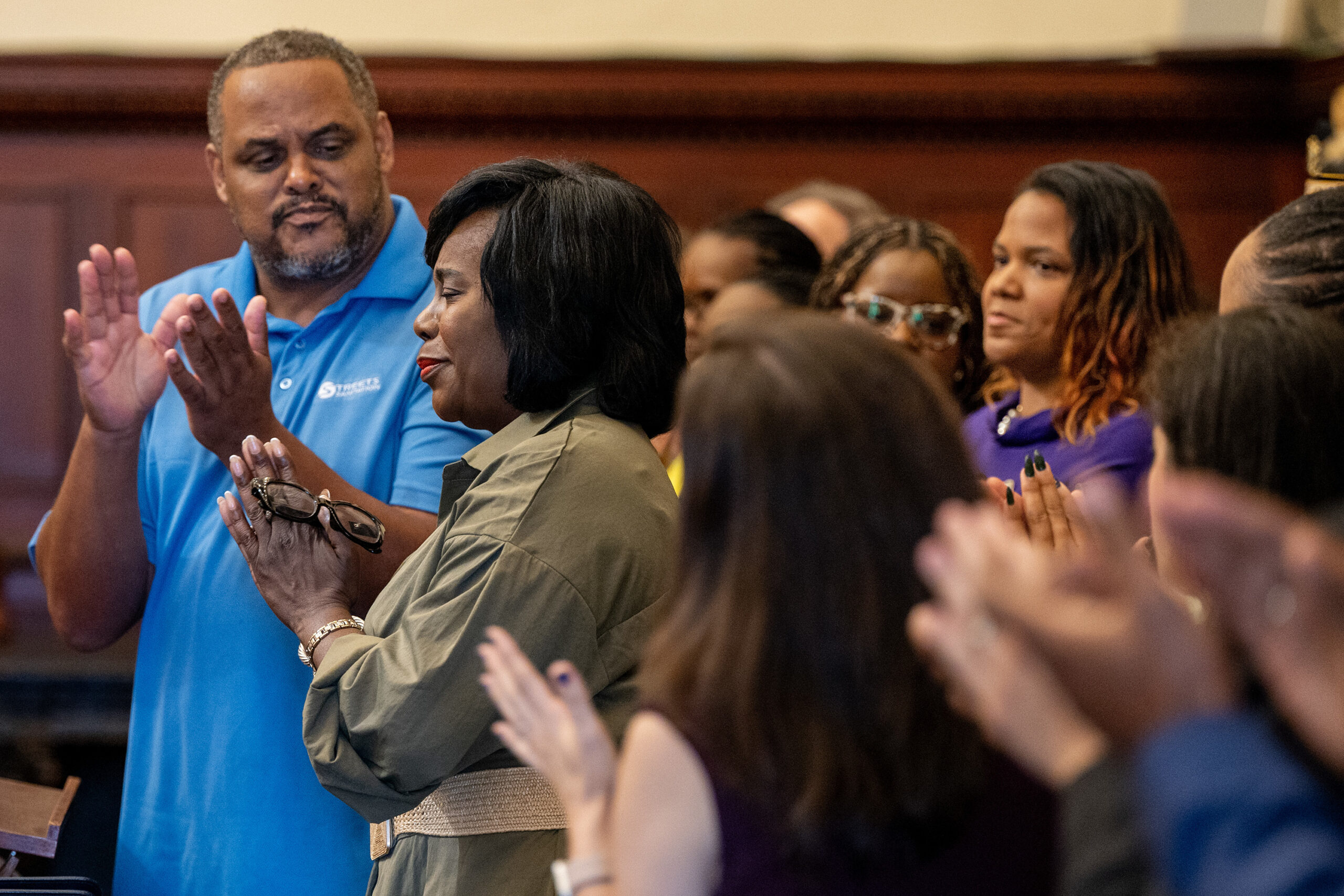
    Mayor Cherelle L. Parker is applauded by members of her administration at City Hall Wednesday, Jul. 9, 2025, hours after reaching a tentative contract agreement with District Council 33 leaders overnight, ending the workers’ strike. At left is Carlton Williams, director of the Office of Clean and Green Initiatives and Chief Deputy Mayor Sinceré Harris is behind the mayor at right.

    Several other members said that instead of going to the managing director’s office, they take administrative needs to legislative affairs staff, agency heads, or Thurman.

    “Almost everything goes through Tiffany, and she’s able to get things done,” said one Council member who spoke on the condition of anonymity to preserve relationships with the administration.

    Parker doesn’t deny that little happens at the top rungs of city government without Thurman’s involvement. The mayor has come to see her chief of staff as the central figure in her administration and calls her the city’s “chief air traffic controller.”

    Phil Goldsmith, who served as managing director for two years under former Mayor John F. Street, said Thiel’s minimized public role may be because Parker appears to favor “a very strong mayor’s office.”

    “It seems to me that the managing director may have to go through more hoops to get things done than, for example, I had to do,” Goldsmith said. “That’s just a function of what a mayor wants and feels comfortable with.”

    Fading out of public view

    Thiel’s lack of public appearances over the last year has been unusual for a managing director.

    It has been 10 months since he testified before City Council, despite the managing director in previous administrations being a mainstay in hearings to answer lawmakers’ questions about city services ranging from street repaving to emergency preparation.

    And in December, when a half-dozen top Parker administration officials spoke during the mayor’s State of the City event, Thiel was not on the roster.

    The decrease in visibility marks a departure from his first year in office, when Thiel had a more consistent public presence and was often seen beside the mayor.

    Ahead of a snowstorm in January 2024, Thiel stood with Parker during a news conference about preparations. He donned a suit while snowflakes fell, and he reassured the city that the administration was ready for the service disruptions that bad weather can bring.
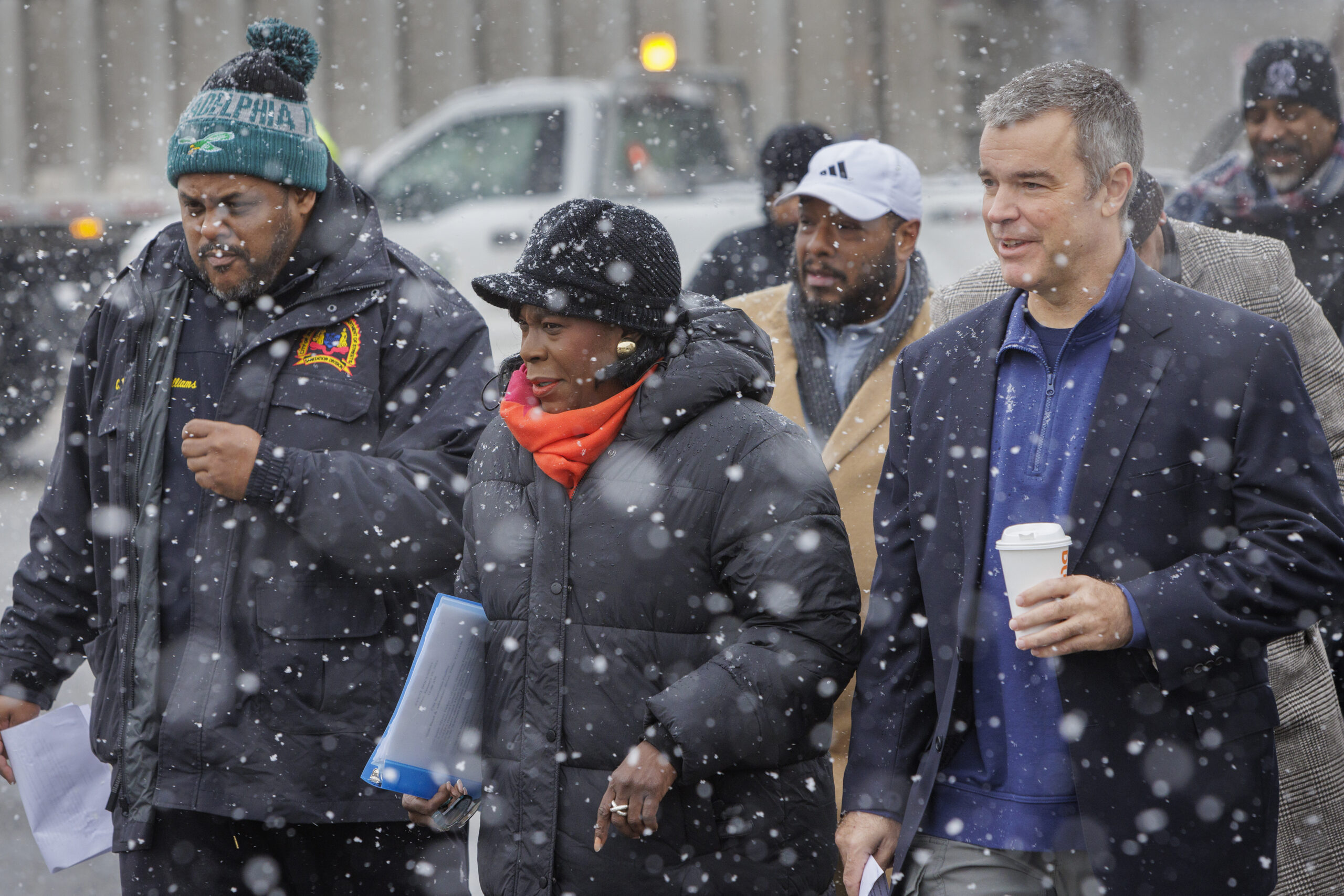
    Mayor Cherelle L. Parker (center) with Managing Director, Adam Thiel (right) and at left Carlton Williams, Director of Clean & Green Initiatives, at a news conference with city officials in Northeast Philadelphia on Friday, Jan. 19, 2024 to share the city’s response to the snowstorm.

    Through his first year in the position, Thiel also faced scrutiny as the face of some of the mayor’s most controversial initiatives.

    He took a leading role in Parker’s efforts to end the open-air drug market in the city’s Kensington neighborhood, and he oversaw the development of the Riverview Wellness Center, a new city-owned recovery house for people with substance use disorder.

    Today, much of Kensington initiative is overseen by the public safety director, who reports directly to Parker. A new head of community wellness is leading development at Riverview, and Williams was the face of the storm response.
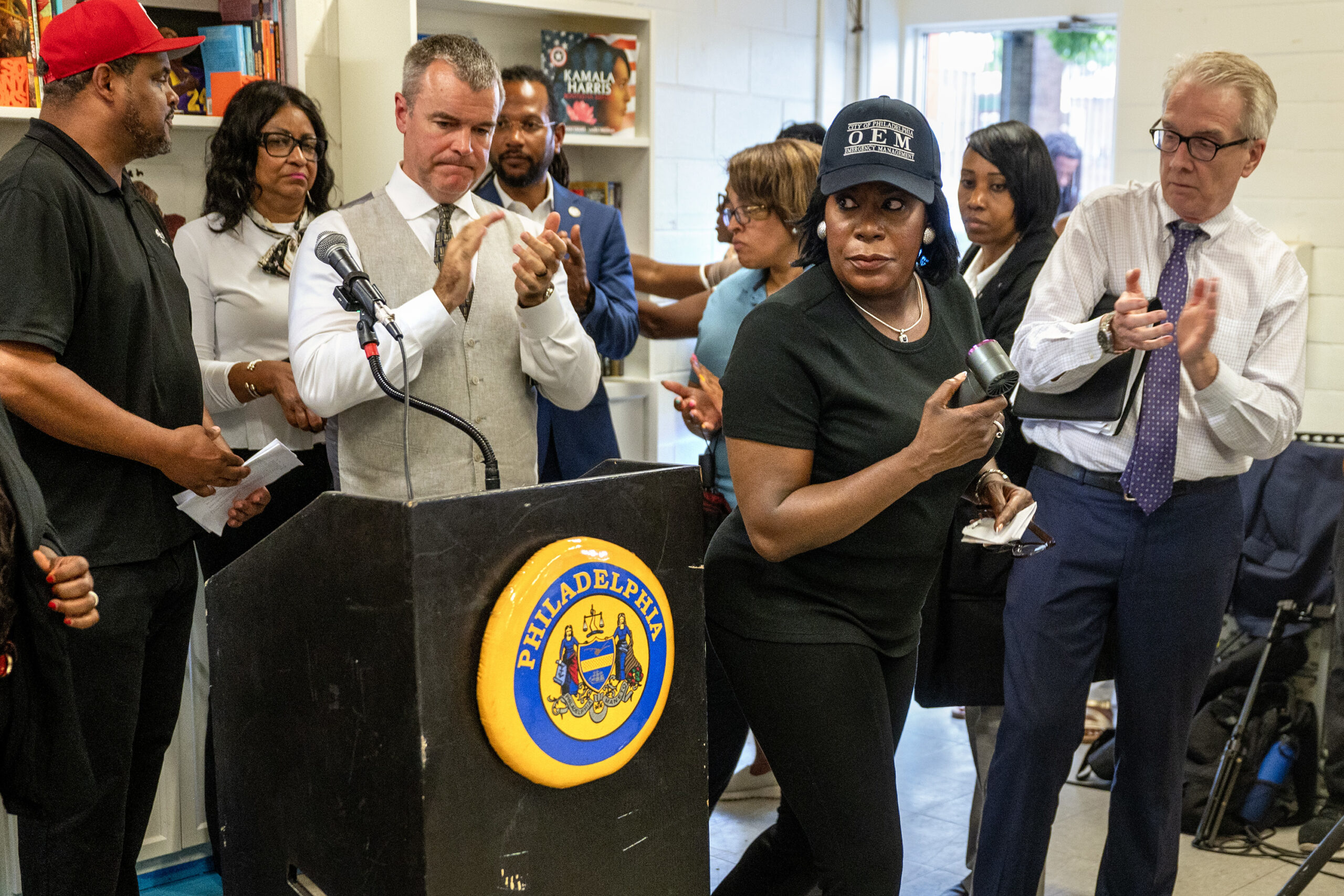
    Mayor Cherelle L. Parker finishes a news media briefing with her leadership team at the Tustin Playground at 60th St. and W Columbia Ave. Tuesday, Jul, 1, 2025, on the first day of the strike by District Council 33. At left are Carlton Williams (Phillies cap), Director of Clean and Green Initiative with the Dept. of Streets Sanitation Division; and Managing Director Adam Thiel (at lectern).

    Last summer, during the eight-day strike by municipal workers that brought city services to a halt for the first time in 40 years as trash piled on sidewalks and streets, Thiel initially spoke nearly every day at news conferences to update citizens on the crisis.

    But by the time the strike was resolved, Thiel had faded from public view, departing from his city job for one of his stints on military leave. After Parker reached an agreement with the union, she held a news conference with 20 top deputies and thanked each of them by name.

    Thiel, absent from the City Hall news conference, was not one of them.

    Staff writers Ryan W. Briggs and Sean Collins Walsh contributed to this article.
  • City Council members grill school district officials on plan to close 20 schools — and superintendent says he could have closed 40

    City Council members grill school district officials on plan to close 20 schools — and superintendent says he could have closed 40

    Philadelphia City Council may not have a vote on Superintendent Tony B. Watlington Sr.’s sweeping facilities plan, but it indicated Tuesday that it will have a say in school closings.

    As a packed hearing began in Council’s chambers Tuesday morning, both Council President Kenyatta Johnson and Isaiah Thomas, chair of the Education Committee, said Council refused to be a “rubber stamp” to Watlington’s proposal to close 20 schools, colocate six, and modernize 159.

    Though only the school board gets to vote directly on the plan, Johnson has indicated he is willing to hold up city funding to the district over the school closure plan. And his colleagues echoed that sentiment Tuesday.

    “I’m infuriated that we don’t get a say,” Councilmember Jimmy Harrity said, warning the district officials who appeared before him. “But, Council president, you and I both know we do get a say, because budget’s coming. And we will be looking. Mindful is the word I would use for today — be mindful.”

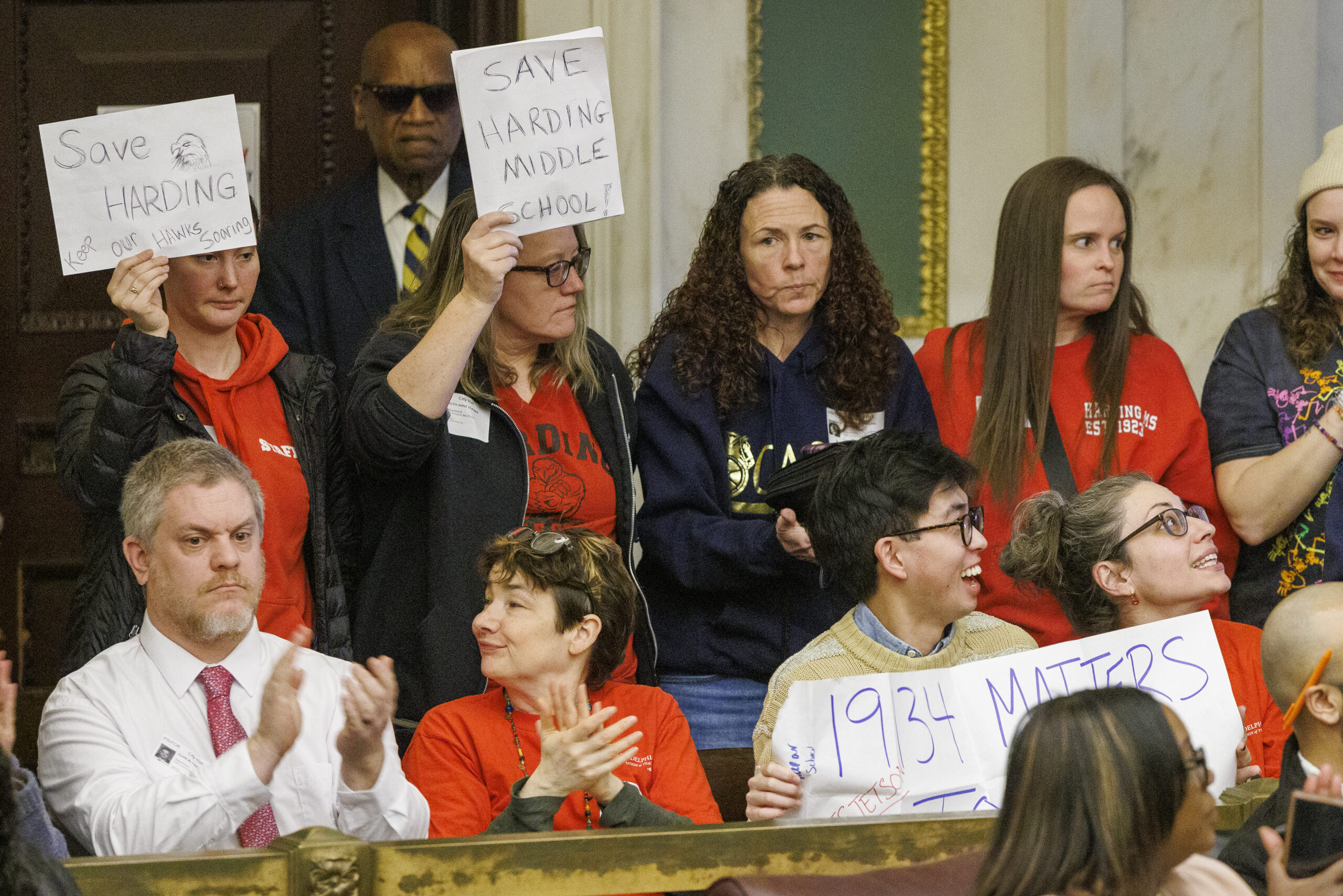
    Concerned citizens stand with signs in support of Harding Middle School before the start of a Philadelphia City Council hearing Tuesday at City Hall on the school district’s plan to close 20 schools.

    About 40% of the district’s nearly $5 billion budget comes from local revenue and city funding, which City Council and Mayor Cherelle L. Parker must approve in the annual city budget by the end of June.

    Harrity, an at-large Council member, said he was “tired that every time cuts come, they come from a certain neighborhood. You know, I live in Kensington, in the 7th District. I talk to these kids. They’re good kids. They deserve everything that other kids in other neighborhoods are getting. … You can see that this isn’t what our people want.” Watlington has proposed closing four schools in the 7th District.

    More than 100 community members holding babies and waving signs opposing the facilities plan filled Council chambers on the fourth floor of City Hall on Tuesday as Council members spent hours grilling Watlington and other district officials.

    Watlington, meanwhile, stood by his plan in testimony to Council on Tuesday, saying that 20 closings was a much smaller number than he could have settled on.

    “We could have come here and presented a plan that closed twice as many schools and been able to defend it,” Watlington said.

    A once-in-a-lifetime opportunity?

    District officials have said the facilities process is not about saving money, but about optimizing education and equity for the city’s 115,000 students.

    But it was clear Tuesday that finances played a part: The district has lost 15,000 students in the last 10 years, and over 80,000 since 1997, when charter schools were first authorized in Pennsylvania. It has 300 buildings, many of them 75 years and older and in poor repair, and some schools with more than 1,000 empty seats, while others are overcrowded.

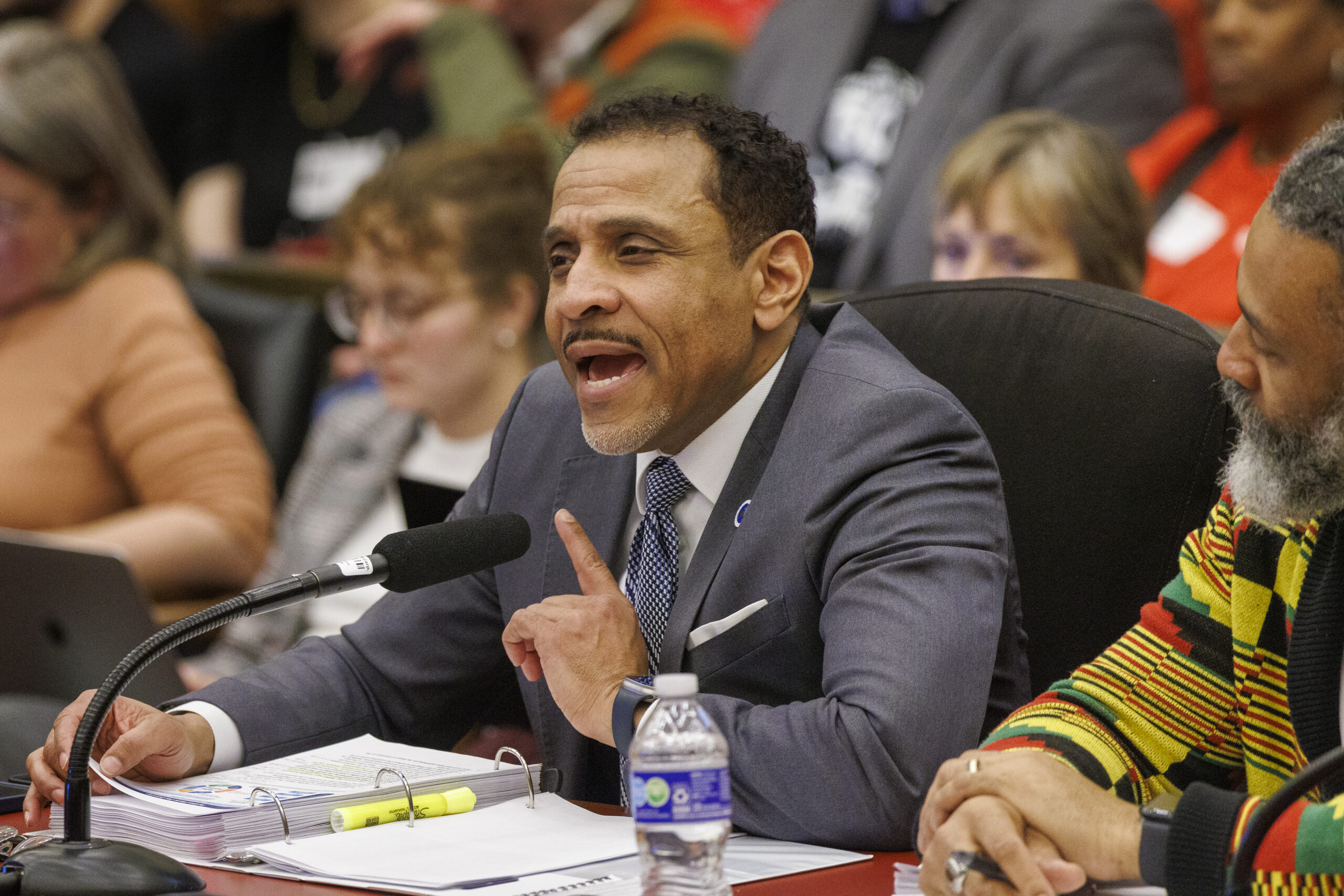
    Tony B. Watlington Sr., superintendent of School District of Philadelphia, speaks at a City Council hearing Tuesday on his proposal to close 20 schools.

    “We’ve got to be very careful with our limited resources in a historically underfunded district,” Watlington told Council.

    Watlington and board president Reginald Streater, who also testified, pitched the plan as a way to add things the district cannot now offer — Advanced Placement courses in every high school, the opportunity for all eighth graders to take algebra, more prekindergarten, and career and technical education programs.

    “I do not believe we’ll get this opportunity again in our lifetime,” Watlington said.

    The superintendent dropped a few previously undisclosed facts about the facilities road map, indicating that his recommendations could shift slightly before he presents the plan to the school board on Feb. 26. No date has been set for the board’s final vote, which is expected later this winter.

    “It’s premature to say how the final recommendations will land,” Watlington said.

    But, the superintendent said, “if there are schools that Council wants me to take off the list, and add others on that list, we are open to you telling me what those are, but we cannot get to a place where we address our 35% non-utilization rate in buildings if no changes are made.”

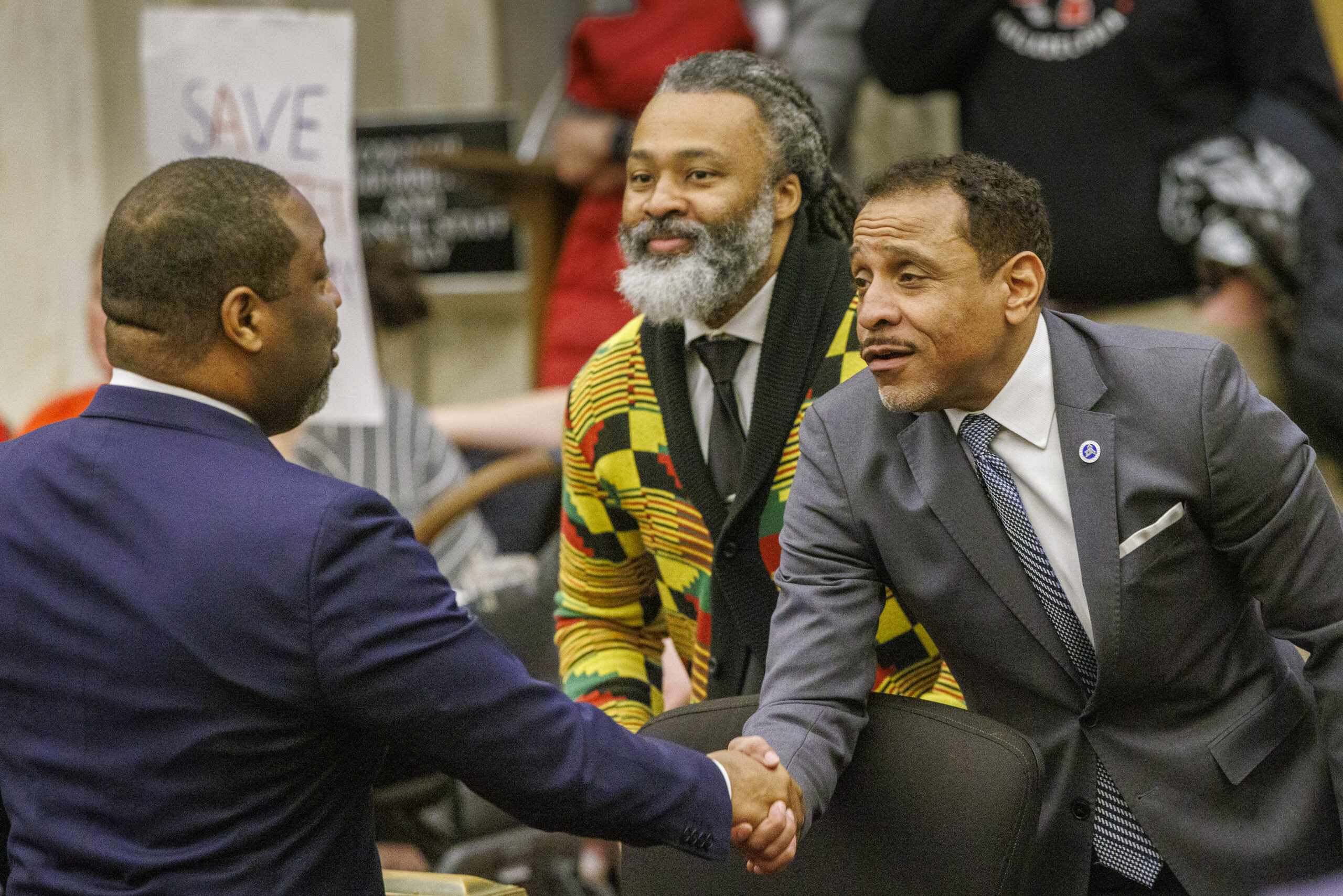
    Philadelphia City Council President Kenyatta Johnson (left) greets Dr. Tony Watlington, Superintendent of School District of Philadelphia Philadelphia City Council holds hearing with board members of School District of Philadelphia, Tuesday, Feb. 17, 2026. Reginald L. Streater, Esq., President Board of Education. (center)

    Debora Carrera, the city’s chief education officer, who spent three decades as a district teacher and administrator, told Council that Parker believes “the current district footprint is unsustainable.”

    Carrera said her own experience as principal of Kensington High School for Creative and Performing Arts shows that it is right for the district to focus resources on neighborhood high schools.

    “My high school was a small high school,” Carrera said. “I could only offer my children two AP courses, when other schools like Central — where my son went — could offer them over 20-plus AP courses.“

    ‘Breaking down of public education’

    The hearing got tense at times.

    “I feel like this is the breaking down of public education in Philadelphia,” said Councilmember Cindy Bass, who said some of the district’s own decisions had led to closures.

    Several members of Council raised questions about the plan’s price tag. Prior district and city estimates put the cost just under $8 billion, but members of Watlington’s team said they could they could actually do the work for $2.8 billion — $1 billion from district capital funds, and $1.8 from yet-unpromised state and philanthropic sources.

    In the past, the district had made public detailed facilities condition assessments for every school in the district, Councilmember Rue Landau noted.

    Residents could look up their school and see exactly what the condition of every system in the building was, and how much money would be required to fix those that needed repair.

    “We don’t have any of those details,” said Landau, who went so far as to say she believed the district should be spending more than $2.8 billion on the plan. “What is the increased investment, and why don’t we have any of those details? They are not out there in the public for us, so none of us have any understanding as to why this is happening, This should all be public so all of the public can see.”

    Jerry Roseman, the Philadelphia Federation of Teachers’ longtime environmental director, who has had a first-row seat to district facilities conditions for decades, said he believed the $2.8 billion figure was not realistic.

    “You need much more money than that,” Roseman told Council. “We need more money than this plan comes close to.”

    Some Council members pushed the district and the board on the plan’s timing.

    The city has been asking for a long-range facilities plan for years, Councilmember Quetcy Lozada pointed out.

    “It’s taken us all this time,” Lozada said. “Now, you guys have come up with a plan, and now we want to rush through it. Now all of a sudden there’s this urgency to get through this plan, which I don’t understand.”

    Streater said the board is moving forward with hearing Watlington’s plan on Feb. 26, but won’t vote until it hears more feedback.

    But ultimately, he said, the board will vote on “a plan that is dynamic, that can evolve over time. … I think that we all understand that things change, facts change, funding changes, enrollment trends change.”

    And, Streater said, there will also likely be policy changes based on redrawing some catchment areas, or boundaries that determine which neighborhood schools children attend.

    Streater, who introduced himself at the beginning of the hearing as “Reggie from Germantown,” underscoring his history as a graduate of two district schools that closed — Germantown High and Leeds Middle School — said that changes must be made.

    “I think if we continue doing the same thing, expecting a different result — which I would argue is chronic underachievement — we are doomed.”

  • Philly’s teachers union has raised an alarm with City Council about school closing plan

    Philly’s teachers union has raised an alarm with City Council about school closing plan

    The city’s teachers union has significant concerns with the Philadelphia School District’s sweeping facilities plan, and it has taken them to a City Council committee.

    Superintendent Tony B. Watlington Sr.’s $2.8 billion proposal “does not provide sufficient detail or data to inform binding decisions about school closures, co-location, re-purposing, or widespread impact and disruption that will be incurred,” Philadelphia Federation of Teachers president Arthur Steinberg wrote in a letter to Council’s education committee obtained by The Inquirer.

    The appeal, sent late last week, comes as the district prepares for a Tuesday Council hearing on the school blueprint, which currently calls for 20 school closings, six colocations, and 159 modernization projects.

    The stakes are high as district officials prepare to appear before Council members, who have raised alarm about several proposed closures.

    Council members are not the decision-makers — Philadelphia’s school board will ultimately vote on the plan sometime this winter — but as one of the district’s main funders, “you hold powerful levers that may be used to encourage the district to craft a more equitable [plan] that achieves our shared goals of improving student learning conditions and educators’ working conditions,” Steinberg wrote.

    Council President Kenyatta Johnson has said he’s willing to hold up city funding to the district if Council’s concerns are not adequately addressed.

    About 40% of the district’s nearly $2 billion budget comes from local revenue and city funding, which City Council and Mayor Cherelle L. Parker must approve in the annual city budget by the end of June.

    What does the PFT letter say?

    Before any decisions are made about what to do with the district’s buildings, the PFT wants system officials to do better by “showing their work and providing all data used to reach their determinations and recommendations for school improvement,” Steinberg wrote.

    The teachers union also flagged compliance inconsistencies with the district’s own standards, implementation questions, and “substantial problems with data interpretation and application.”

    The conclusions came after Jerry Roseman, the PFT’s longtime director of environmental science, scrutinized the plan. Roseman has decades of experience working with district officials on environmental issues.

    The PFT and Roseman want access to all data. The district has released some details officials used to make their calls, but some remain opaque.

    “How is the district ensuring that decisions regarding closing and receiving schools are based on comprehensive, up-to-date, and easily verifiable facility data (e.g., lead, asbestos, ventilation, overall condition)?” Steinberg wrote.

    The PFT also wants to “definitively show that the facility condition of receiving schools is not, in fact, worse than the facilities that are slated to close. If students are moving to a facility with worse current conditions, what will happen at the facility to improve it prior to students being moved there?”

    District officials outlined some modernization and renovation plans ahead of Tuesday’s Council hearing, but some remain a mystery to the public. Watlington has promised all projects will be detailed before Feb. 26, when he’s scheduled to formally present the plan to the school board.

    Don’t close schools or displace students based on incomplete data, PFT says

    The school system’s own data contains some inconsistencies, Steinberg said — including some schools judged to be in “good” or “fair” building condition by the district’s metrics that have “severely inadequate” critical systems, such as roofing, windows, or electrical and plumbing systems.

    And though the district said it could modernize all 85 school buildings currently in poor or unsatisfactory condition for $2.8 billion, the PFT questioned that price tag as overly optimistic. (City and district officials had previously put the system’s total deferred maintenance cost at $7 billion or more.)

    “The cost to fully repair poor-inadequate buildings and systems could actually exceed $3.5 billion,” the PFT said.

    The teachers union also highlighted the inequitable distribution of adverse conditions, noting that “Black and brown children and children from economically disadvantaged families are more vulnerable — to health risks, learning disruptions, and the long-term effects of instability and displacement.”

    While the information the district has made public is “useful and has value as a ‘baseline,’ it is insufficient for its use in supporting the proposed conclusions, recommendations and other plan details released,” Steinberg said.

  • What’s in Gov. Josh Shapiro’s new housing plan: Protections for Pa. renters, $1 billion for infrastructure, homebuyer support, and more

    What’s in Gov. Josh Shapiro’s new housing plan: Protections for Pa. renters, $1 billion for infrastructure, homebuyer support, and more

    Gov. Josh Shapiro unveiled a broad plan Thursday meant to grow and preserve Pennsylvania’s housing supply as the state faces a shortage of homes residents can afford.

    The plan aims to expand residents’ access to homes, connect Pennsylvanians to resources to keep them housed, make homebuilding faster and less costly, and improve coordination of housing efforts across agencies and levels of government.

    Recommendations and reforms in the state’s Housing Action Plan, which is meant to guide Pennsylvania into 2035, are embedded in the governor’s proposed budget, Shapiro said.

    “And now, the ball is in the court of the legislature to carry this forward and to get it done,” he said at a news conference in Philadelphia.

    The plan is the culmination of a process that started in September 2024, when Shapiro signed an executive order directing state officials to create it.

    In the plan, Shapiro highlights that more than a million Pennsylvania households are spending more than 30% of their income on housing. These households are “cost burdened,” according to the U.S. Department of Housing and Urban Development’s definition. Building more can lower housing costs.

    Shapiro called the plan a long-term housing strategy that “brings together all different groups who are doing this work, builds on their expertise, and tackles housing access and affordability from every single angle.”

    Here are key takeaways from Shapiro’s proposed housing action plan, the first of its kind in Pennsylvania.

    Enacting the plan

    Much of the plan relies on action from lawmakers in the state’s split legislature and other stakeholders rather than Shapiro’s administration exclusively. It does not assign dollar amounts to proposals, but calls on local governments to allow more housing and housing types, on builders to build more, and on both to work together to remove barriers to housing construction.

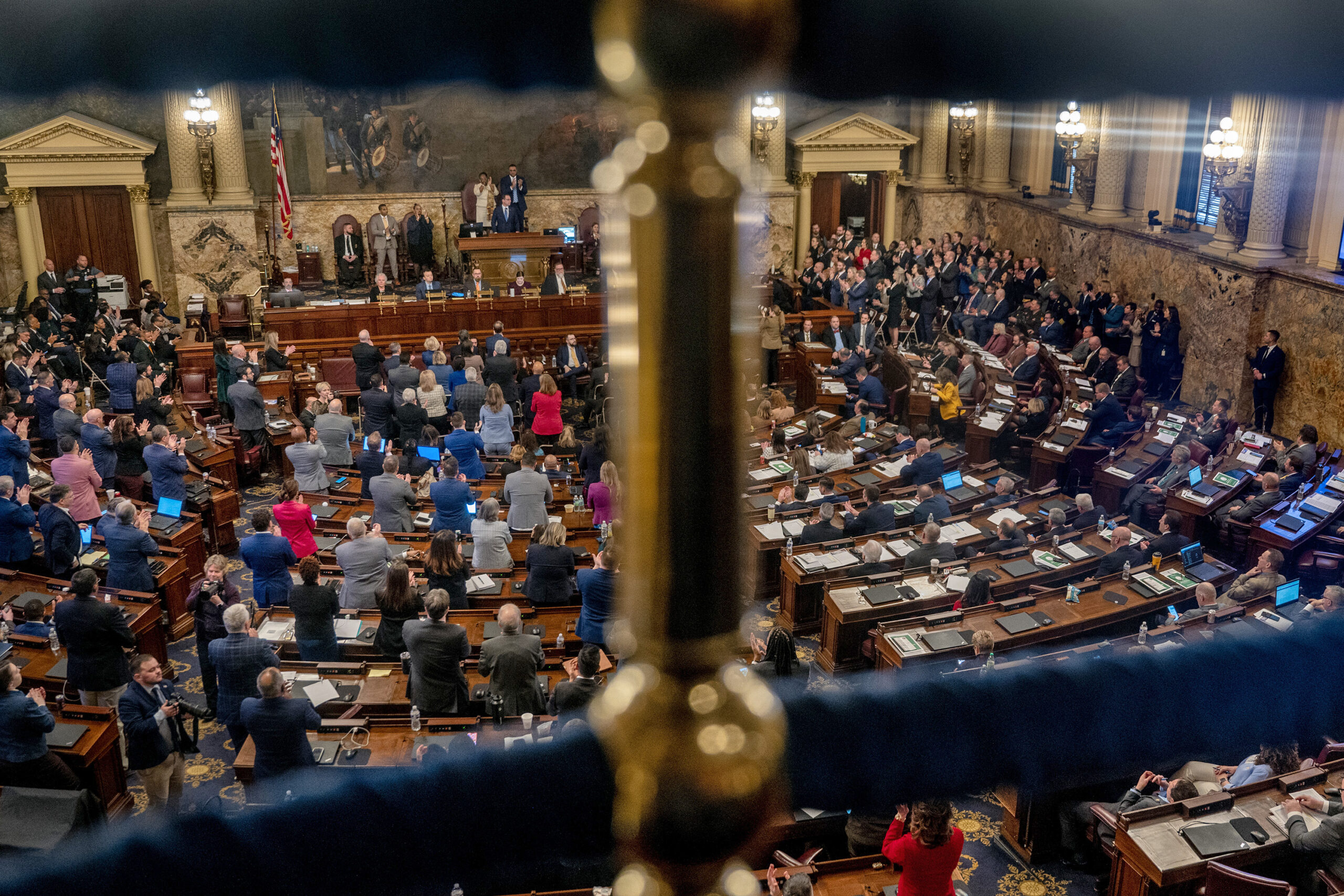
    Democrats (left) stand to applaud a tax cut proposal while Republicans (right) remain seated as Gov. Josh Shapiro delivers his third budget address to a joint session in the House chambers at the State Capitol Tuesday, Feb. 4, 2025.

    When Shapiro was asked how he intends to make sure the housing plan is implemented, he said he can take some actions through executive orders but “a lot does require the legislature to act and to work in concert with local government.”

    “I hear in rural, urban, suburban communities, districts led by Democrats and Republicans, the need for more housing,” Shapiro said. “… And I would say to any lawmaker that doesn’t like my idea, ‘What’s yours?’ Because we can no longer wait. We have got to get this done. We’ve got to build more housing.”

    $1 billion fund

    In his budget address last week, Shapiro previewed his housing priorities, calling for a $1 billion fund, supported by the issuing of bonds, to pay for infrastructure projects that include housing.

    Shapiro’s budget proposal includes no requirements on the proportion of funding that goes to each infrastructure need, leaving the possibility that the majority of funds could be spent on projects other than housing.

    While Shapiro said Thursday that divvying up the $1 billion will be subject to negotiation with lawmakers, he said he hoped “the lion’s share of it would go to housing.”

    Pennsylvania needs more housing

    If Pennsylvania takes no action to build and preserve more housing, it will be short about 185,000 homes by 2035, according to the plan. To keep up with anticipated demand, the state needs to add 450,000 homes to its supply by then.

    The housing plan has a stated goal of turning Pennsylvania into a leader in home construction.

    Construction work on a home at Bancroft and Reed Streets in South Philadelphia, Pa. on Friday, May 1, 2020.

    As it stands now, Pennsylvania is one of the states that have allowed the least new housing. It ranked 44th for the share of homes approved to be built from 2017 to 2023, the Pew Charitable Trusts said in a report released last year. Pew said Pennsylvania’s lack of housing supply is hiking prices for homeowners and renters.

    Shapiro’s housing plan recommends that Pennsylvania:

    • Expand programs to repair and preserve existing homes.
    • Create a tax credit to incentivize home building in underinvested areas.
    • Invest in small residential developers who can help boost housing production.
    • Eliminate outdated or unnecessary state development regulations.
    • Direct funding to help homebuilders pay land development costs, developers convert former commercial buildings into homes, and property owners create mixed-use developments that include housing.
    • Appoint a deputy secretary of housing and create a “housing one-stop shop” to help residents and builders access the state’s existing housing resources.

    Protection for renters

    The housing plan calls for Pennsylvania to bolster protections for households that either rent their homes or rent the land their homes sit on, including protections Shapiro called for in his budget address.

    Suggestions include:

    • More eviction protections.
    • Restrictions on how much landlords can collect as a security deposit.
    • A statewide cap on rental application fees. (Philadelphia City Council members passed their own cap on application fees last year.)
    • Explicitly banning landlords from denying housing to people because they use public assistance or any other lawful source of income. (New Jersey enacted a law last month that does this.)

    Security for manufactured-home owners

    Manufactured homes are single-family dwellings often built off-site and placed on a lot. These households own their homes, but many of them rent the land.

    Manufactured homes represent one of the most affordable forms of homeownership. But homeowners are often left vulnerable because they have no other option than to pay increased rent costs if they want to keep the homes they own. Manufactured-home communities are increasingly being bought by private equity companies and other institutional investors, and rent hikes tend to follow.

    The housing plan says Pennsylvania should:

    • Limit the rent increases that landowners can charge.
    • Make financing easier for buyers of manufactured homes.
    • Give residents of manufactured-home communities the right of first refusal when a landowner decides to sell.

    Recent laws in New Jersey limit annual rent increases for manufactured-home lots and make it easier for residents to buy their communities.

    Across Pennsylvania, 56,000 households live in manufactured-home communities, Shapiro said in his budget address last week.

    Homebuyer help

    The plan calls for Pennsylvania to pursue new ways to help residents become homeowners, including creating programs to reduce home-buying costs and allowing local governments to exempt first-time homebuyers from local realty transfer taxes.

    It also calls for the state to impose a transfer tax when corporate investors buy single-family and certain other types of homes to help households compete for properties.

    Untangling titles

    To protect Pennsylvanians’ generational wealth, the plan calls for the state to allow transfer-on-death deeds to provide a streamlined process for passing down homes. This would help prevent cases of tangled title — or unclear legal ownership of property. This mostly occurs when a homeowner dies and the deed is not transferred to a new owner.

    Tangled titles keep people from qualifying for help to repair their homes and can prevent them from being able to sell properties.

    In Philadelphia alone, tangled titles threaten more than $1 billion in generational wealth, according to a 2021 report from the Pew Charitable Trusts.

    The plan also calls for funding for legal services to help low-income Pennsylvanians resolve tangled titles. In 2022, Philadelphia officials pledged to give $7.6 million over four years to legal-aid groups that are tackling this problem.

    Rachel Gallegos, a divisional supervising attorney for the homeownership and consumer rights unit at Community Legal Services of Philadelphia, called Shapiro’s plan “ambitious.”

    “And I like that,” she said. “I think it has to be in order to keep progress moving forward.”

    The legal-aid nonprofit routinely helps low-income clients with tangled titles, and Gallegos said she was glad to see the plan call for additional support for the work.

    “We want to preserve homeownership for our clients,” she said.

  • Philadelphians deserve safe and healthy homes

    Philadelphians deserve safe and healthy homes

    The Department of Licenses and Inspections didn’t mince words when it declared the 144-unit Upsal Gardens complex an “unsafe structure.”

    Foundation separation. Cracked masonry. Failing floor joists. A building so compromised that city officials said it posed “immediate danger” to human life.

    That violation is just the tip of the iceberg. I know this because I have lived it. On Aug. 23, my wife noticed a large crack forming in our living room ceiling. We alerted management through their portal, and I went to their on-site office to report it. Less than 24 hours later, at 12:06 a.m., the entire ceiling collapsed.

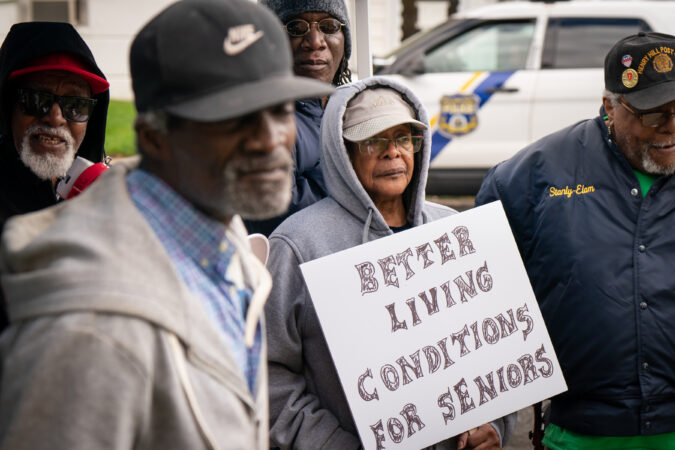
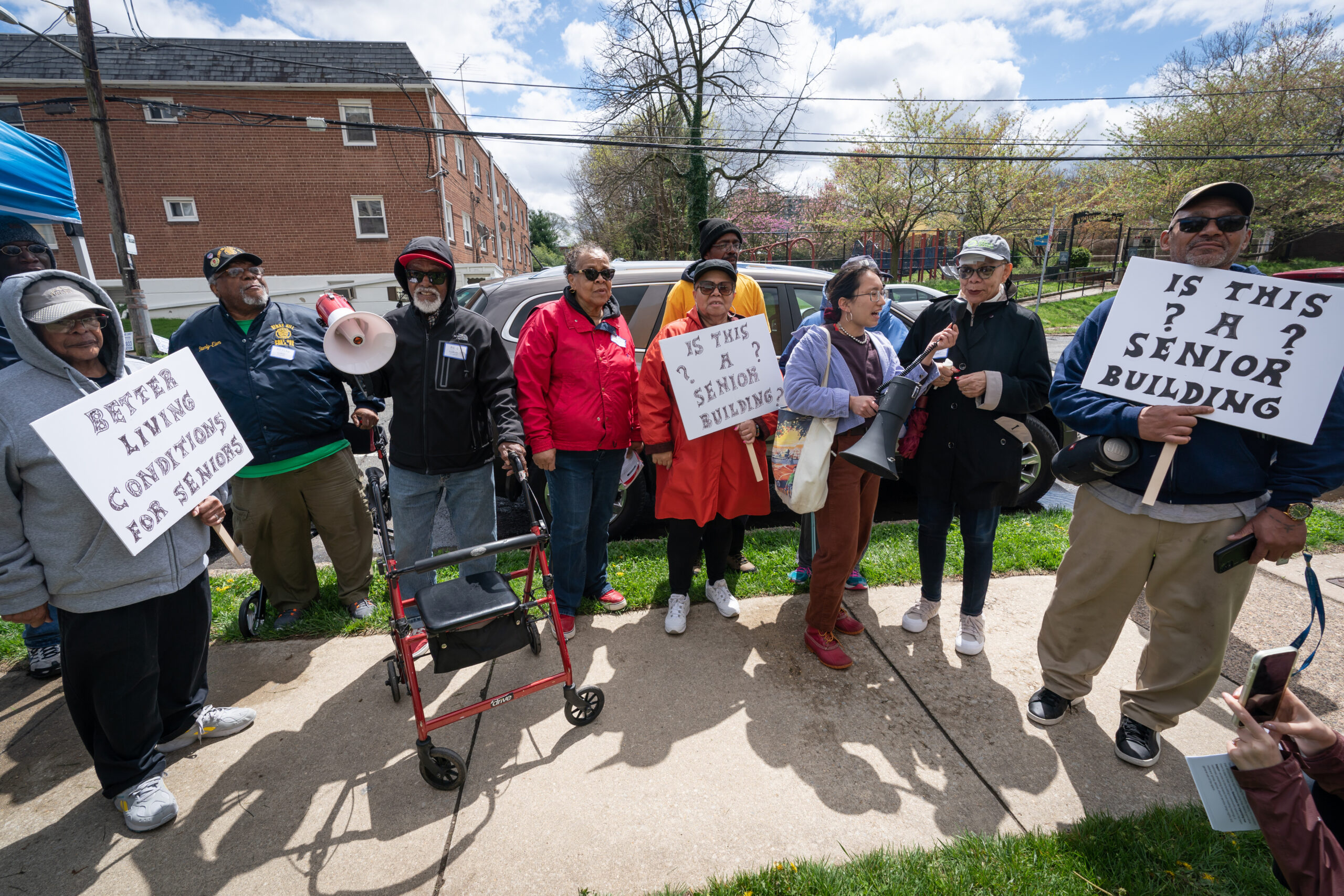
    Residents speak during a demonstration organized to protest against the living conditions at Brith Sholom House apartments in Philadelphia in April 2024.

    Fortunately, we had renters’ insurance. While management took their time deciding what to do, we stayed in the apartment under the exposed ceiling until our insurance finally booked us a hotel. After two days of waiting, we were moved temporarily so repairs could be made. But that displacement came with costs: For eight days, we paid out of pocket for meals and essentials while living in the hotel.

    Nevertheless, when we returned home, a notice was taped to our door: “Overdue rent.”

    Management knew we were displaced because of conditions they failed to address. And still, they badgered us for late rent — as though the collapse was an inconvenience to them, rather than a danger to us.

    A citywide crisis

    Unfortunately, my story isn’t unusual. My neighbors have filed a class-action lawsuit against the owners and managers of the property due to the complex-wide dangerous conditions described in an “unsafe structure” L&I violation. This lawsuit reflects a mounting rental safety crisis across Philadelphia.

    In West Oak Lane, tenants at Bentley Manor filed a similar lawsuit after their building was deemed unsafe while rent was still being collected. Upsal Gardens, Bentley Manor, Brith Sholom, Phillip Pulley and SBG Management, 8500 Lindbergh Blvd., ABC Capital. These are different buildings with different owners, managers, and business models, but nonetheless an all too similar story: Tenants forced to live in deplorable conditions while predatory landlords keep turning a profit.

    Philadelphians deserve safe and healthy homes, tenants deserve roofs and ceilings that are secure, floors that don’t buckle, and air that doesn’t make their children sick. We have laws on the books intended to address these issues.

    But a combination of loopholes, insufficient funding, and lack of enforcement leaves renters without a clear means to enforce those laws, placing many renters between a rock and a hard place: pay for unsafe housing, risk retaliation for withholding rent, or absorb the costs of displacement.

    Renters aren’t completely powerless, though. This year, we’ve seen that when renters come together, they win. This spring, City Council took the first steps toward addressing the city’s rental safety crisis by creating a fund for tenants displaced because of unsafe conditions. But that fund sat empty for months, until a coalition of housing justice advocates successfully lobbied for Mayor Cherelle L. Parker’s H.O.M.E. Plan to fund it.

    Dangerous, uninhabitable

    Still, there is much more work to be done. The vast majority of renters continue to live in units that have never been inspected. Landlords continue to demand rent for rental units with dangerous, uninhabitable conditions. Renters continue to acquiesce to those conditions out of fear of retaliation.

    The Safe Healthy Homes (SHH) campaign, led by OnePA, Renters United Philadelphia, Philly Thrive, and the office of Councilmember Nicolas O’Rourke, provides commonsense answers to these issues: protecting renters who speak up about unsafe conditions from landlord retaliation, authorizing proactive L&I inspections, and requiring proof of code compliance to evict or collect rent. These are all things we would assume are happening already, but this package adds the critical enforcement provisions that have been missing.

    Safe housing is not a perk — it is the bare minimum, and City Council’s Housing Committee had a long-overdue hearing for the SHH package tentatively scheduled for Tuesday.

    I encourage you to let the members of the committee know how you feel about having safe and healthy homes for tenants across our city.

    B. Cincere Wilson is the chief operations officer of Myra’s Kids Inc., a nonprofit serving justice-impacted and high-risk youth. He lives in Philadelphia and works in New York City.

  • Philly DA Larry Krasner casts doubt on running against Mayor Cherelle Parker

    Philly DA Larry Krasner casts doubt on running against Mayor Cherelle Parker

    Philadelphia District Attorney Larry Krasner on Wednesday dismissed rumors that he may challenge Mayor Cherelle L. Parker when she will face reelection next year, and he said in a statement that he is focused on his job as the city’s top prosecutor.

    Krasner, who last year won his third term as district attorney and has cultivated a national brand, told The Inquirer that talk he might challenge the incumbent divides the city’s leadership.

    His statement came after the news website Axios Philly reported that some political insiders were floating Krasner’s name as a potential mayoral contender.

    “Especially in these times, all Philadelphia residents need to stand together and work together for Philly,” Krasner said. “Not sure whose agenda this narrative serves, but there’s nothing new about insiders stirring things up to benefit themselves at the expense of everyone else.”

    Talk of Parker facing a potential primary challenge ramped up in recent days after the mayor’s political action committee filed a campaign finance report showing she had raised $1.7 million last year, a striking sum for a sitting mayor two years out from a reelection bid.

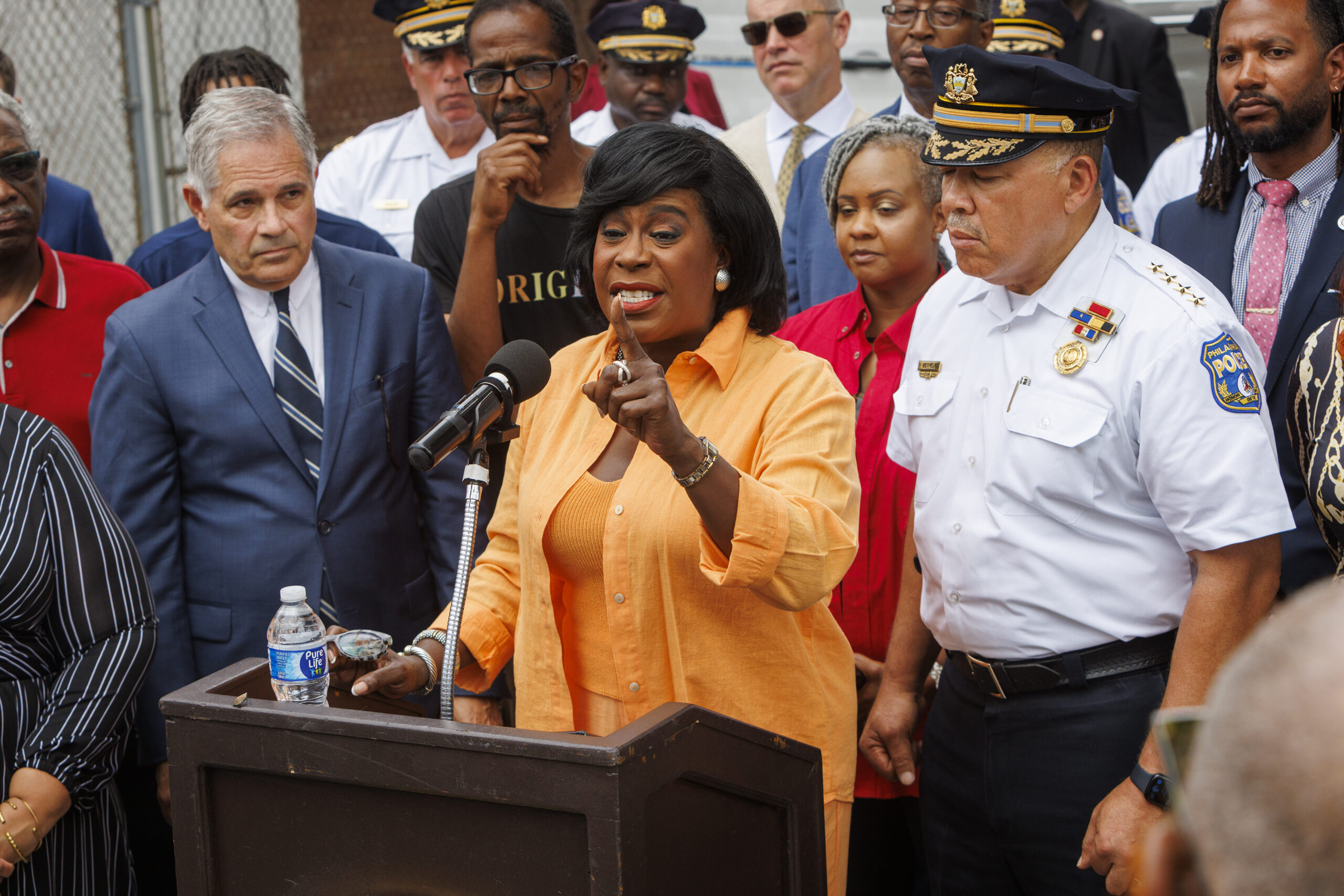
    In this 2024 file photo, Philadelphia Mayor Cherelle L. Parker is flanked by Police Commissioner Kevin Bethel and District Attorney Larry Krasner during a news conference.

    The fundraising report fueled speculation among the city’s political class that Parker, a centrist Democrat who is backed by much of the party establishment, may be expecting a challenge in the primary.

    A progressive would be a natural fit for a challenger. The city’s left has opposed some of Parker’s initiatives, including her law enforcement-driven plan to address the Kensington drug market. Activists have also been critical of Parker’s cautious approach to President Donald Trump, whom she generally avoids attacking directly.

    Krasner, 64, is the most prominent progressive in the city. He won reelection last year in landslide fashion, and he has positioned himself as the city’s most vocal Trump opponent, often drawing comparisons between the federal government and 20th-century fascism.

    And several past district attorneys have run for mayor, including Ed Rendell, who went on to serve two terms in City Hall and then was elected governor of Pennsylvania.

    But for Krasner, any run at Parker would be tricky.

    Krasner, who is white, has been successful in electoral politics in large part because of support from the city’s significant bloc of Black voters, politicians, and clergy. Those groups are also key to the base of support that has backed Parker, who comes from a long line of Black politicians hailing from the city’s Northwest.

    Allies of the district attorney say a better fit — if he decided to seek higher office — could be running for a federal seat.

    Political observers have suggested a handful of Democrats, including Krasner, could run for the U.S. Senate seat currently occupied by Sen. John Fetterman. The Democratic senator, who will be up for reelection in 2028, has an independent streak and has angered many in the party for at times siding with Republicans.

    Several other Democrats have been floated as potential contenders for the seat, including U.S. Reps. Brendan Boyle, of Philadelphia, and Chris Deluzio, whose Western Pennsylvania district includes Allegheny County. Some have also speculated that former U.S. Rep. Conor Lamb, also of Western Pennsylvania, could run.

    Fetterman has not said whether he intends to run for reelection. Left-leaning organizations have already pledged to back a primary challenger against him.

  • ‘We’re going to work at the speed of business’: Mayor Cherelle Parker launches PHL PRIME to help firms navigate Philly’s red tape

    ‘We’re going to work at the speed of business’: Mayor Cherelle Parker launches PHL PRIME to help firms navigate Philly’s red tape

    Mayor Cherelle L. Parker on Wednesday unveiled PHL PRIME, a new service in Philadelphia that has nothing to do with Amazon — although the e-commerce giant could potentially sign up for it.

    At her annual address to the Chamber of Commerce for Greater Philadelphia, Parker signed an executive order to establish PHL PRIME, which stands for Project Review and Infrastructure Made Easy. The new program is designed to draw “high-impact economic development projects that generate quality jobs” by helping businesses that are considering investing in Philadelphia to navigate city rules and regulations, according to the mayor’s office.

    “I‘m the mayor, and I’m not absolving myself of the responsibility of making sure that bureaucracy is working effectively and efficiently,” Parker said during her annual speech at the Convention Center. “We’re not going to burden business with the ‘time tax.’ We’re going to work at the speed of business.”

    Parker told reporters the new program will not involve hiring any new staff. Instead, it’s meant to bring various city departments together into a “PHL PRIME Tiger Team“ to coordinate a streamlined approach and lay out the welcome mat for investment.

    In her wide-ranging speech, Parker also said the city was committed to helping major development plans from the Market East corridor and the South Philadelphia Stadium Complex to the port and shipyard.

    But Parker did not speak at length about two measures she included in last year’s city budget deal that some have said shows the city is not as welcoming to business as it could be. Both relate to the city’s business income and receipts tax, or BIRT.

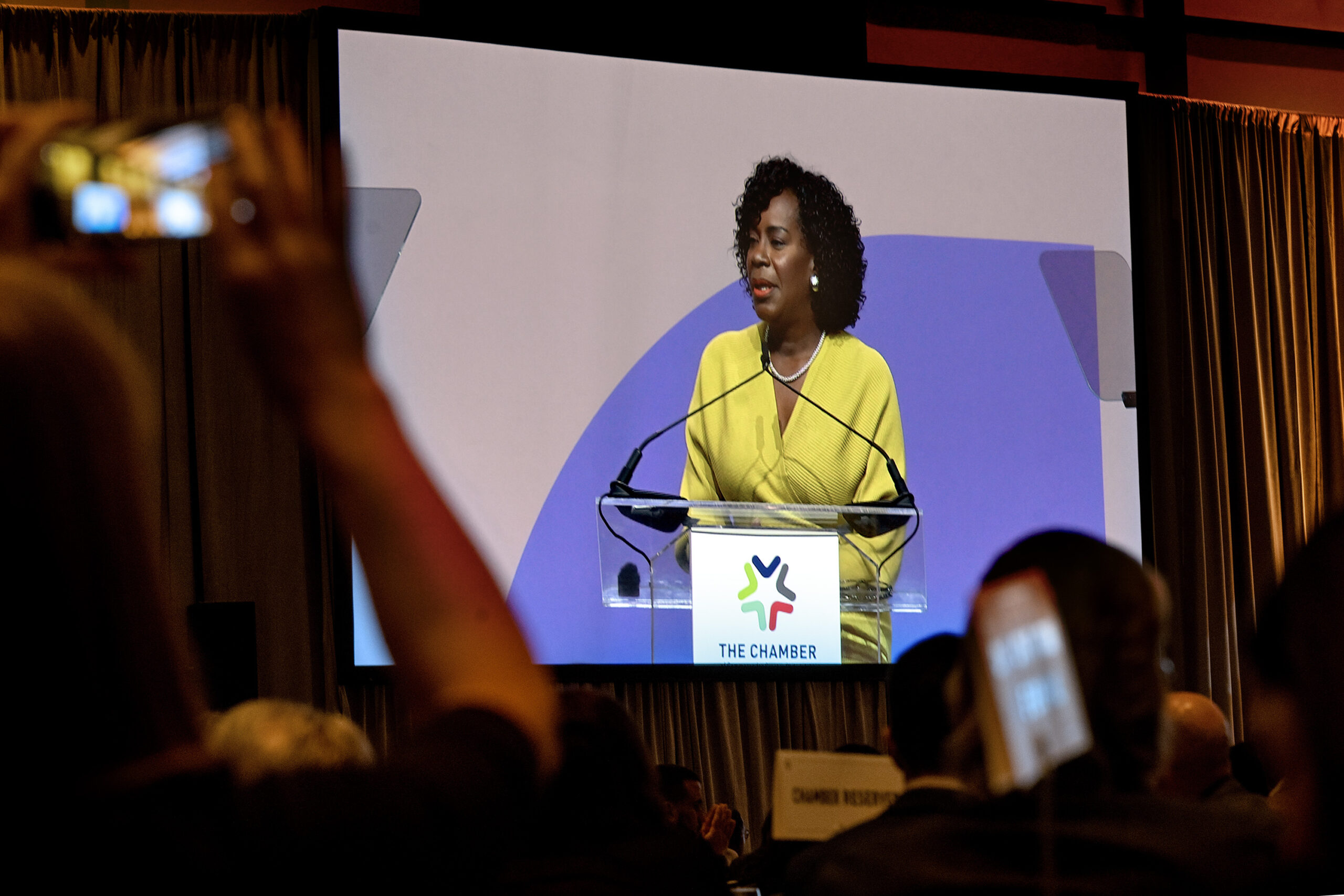
    Attendees record Mayor Cherelle L. Parker on the big screen as she delivers her keynote address at the Chamber of Commerce for Greater Philadelphia’s Annual Mayoral Luncheon at the Convention Center Wednesday, Feb. 11, 2026.

    Parker on Wednesday briefly mentioned a law she and City Council adopted last year that bakes in annual incremental cuts to the two BIRT tax rates over 13 years. And she thanked the Tax Reform Commission for guidance on making the city’s tax structure more business-friendly.

    “I am proud to affirm that we proposed and codified into law $210 million in tax investments to provide the kind of predictability that the business community told us that it needs,” Parker said. “I hope that was a direct sign to each of you in this room that the executive and the legislative branches are listening.”

    But she did not mention that the enacted tax cuts — the steepest of which will likely take effect after she leaves office — are far less aggressive than the commission’s recommendations, which called for completely eliminating BIRT within eight to 12 years.

    Parker also did not address the elimination of an important tax break that allowed businesses to exempt their first $100,000 in revenue when calculating their BIRT liabilities. That policy — which lasted about a decade before Council approved a Parker bill to end it last year — effectively eliminated BIRT for the tens of thousands of businesses that take in less than $100,000 per year from commerce in the city.

    Parker has said she supports the exemption but was forced to get rid of it after the city was sued by Massachusetts-based Zoll Medical Corp., which does business in Philadelphia and argued that the tax break violated the Pennsylvania Constitution.

    Philly’s smallest businesses are now scrambling to comply with the rule change. Tax bills are due April 15.

  • Art Commission votes to move Joe Frazier statue from South Philly to the Art Museum

    Art Commission votes to move Joe Frazier statue from South Philly to the Art Museum

    “Smokin’” Joe Frazier is heading to the Philadelphia Museum of Art.

    Philly’s statue of the famed heavyweight boxing champion is slated to be installed at the base of the museum’s steps later this year following a Philadelphia Art Commission vote Wednesday that approved the move. All five commissioners present Wednesday voted in favor of the statue’s relocation from its longtime home at the sports complex in South Philadelphia.

    The proposal, presented by Creative Philadelphia, the city’s office for the creative sector, will see the Frazier statue installed where Philly’s original Rocky statue stands today. The Rocky statue, meanwhile, will be installed at the top of the museum’s steps.

    “Placing the Joe Frazier statue at the Art Museum allows us to share a more complete history about Philadelphia’s spirit,” Marguerite Anglin, the city’s public art director, said Wednesday. “One rooted in real people, real work, and real pride in this city.”

    The Frazier statue should move to the Art Museum sometime this spring, Anglin said. That relocation coincides with the move of the Rocky statue currently at the base of the steps, which is slated to be temporarily installed inside the museum for the first time as part of the forthcoming exhibition “Rising Up: Rocky and the Making of Monuments.” That Rocky statue will then be installed at the top of the museum’s steps in the fall, while the Rocky statue now at the top of the steps will go back into actor Sylvester Stallone’s private collection.

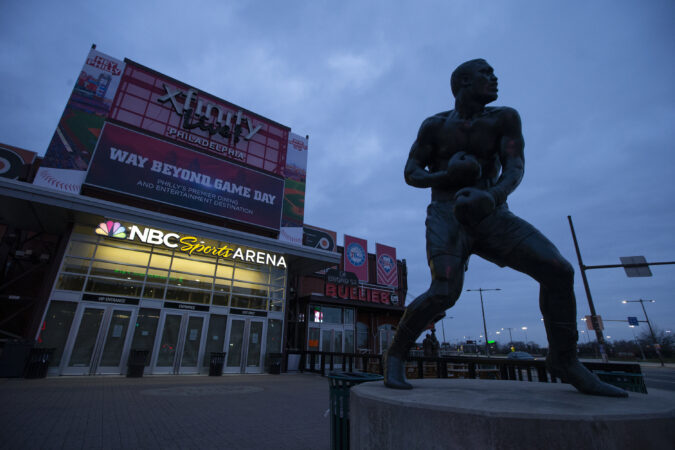
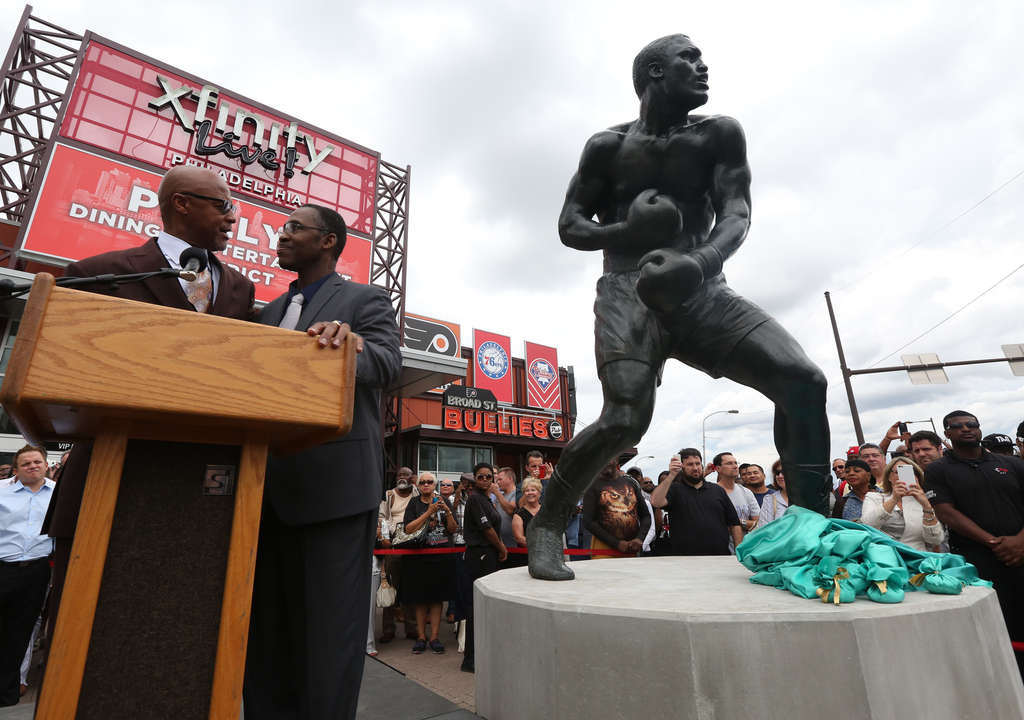
    Created by sculptor Stephen Layne, the Frazier statue was unveiled in 2015 at what is now Stateside Live! at the sports complex in South Philadelphia. Its debut came years after Frazier’s death in 2011, which kicked off a campaign to erect the statue in his memory. Standing at 12 feet tall, it depicts the boxer moments after knocking down Muhammad Ali during the “Fight of the Century” — a famed March 1971 bout in which Ali suffered his first professional loss after a brutal 15-round skirmish.

    For years before its creation, Frazier’s supporters lamented the fact that Philadelphia had long had a Rocky statue, but lacked one showing its own real-life champion. Our Rocky statue, in fact, has been around for more than 40 years, and has stood outside the Art Museum for two decades — about twice as long as the Frazier statue has even existed.

    “Tell them Rocky was not a champion, Joe Frazier was,” the Rev. Jesse Jackson famously said at Frazier’s funeral. “Tell them Rocky’s fists were frozen in stone. Joe’s fists were smokin’.”

    Creative Philadelphia’s plan featured widespread support from leaders including Mayor Cherelle L. Parker, as well as Frazier’s family and friends. It received little pushback at Wednesday’s meeting, with Gabrielle Gibson, a granddaughter of Frazier’s, asking what is perhaps the most obvious question about the placement: Shouldn’t the Frazier statue be at the top?

    He was, after all, a real person, a real Philadelphian, and a real champion. Rocky, meanwhile, is a fictional character who appears to be an amalgamation of several real-life boxers’ stories — Frazier included, according to Creative Philadelphia. Many speakers Wednesday noted that, like Rocky, Frazier was known to run up the Art Museum’s steps and was said to have boxed sides of beef during his training, among other parallels.

    And then there is the symbolism of where the Rocky and Frazier statues will stand.

    “During Black History Month, I think we need to understand the new placement,” Gibson said. “A real boxer and a Black man’s image and likeness would be placed at a lower position beneath the fictional white character whose story was inspired by real boxers.”

    The Frazier statue’s placement at the bottom of the steps, Anglin said, was for two main reasons. First, she said, having Frazier at the bottom makes it the first statue visitors will encounter at the Art Museum — even if they are there expressly to see Rocky — which will provide “an opportunity to be grounded in history.”

    Second, the Rocky statue’s footprint is roughly half the size of the Frazier statue, which would not be “safe or feasible” to install on high, Anglin said. Putting Rocky at the top, Anglin said, allows for better circulation around the monument, and avoids the potential logistical and code-related issues putting Frazier there could present.

    His son, and former heavyweight boxer Marvis Frazier (right), and Rev. Blane Newberry from Enon Tabernacle Baptist Church bless a 12-foot-tall 1,800-pound bronze statue of “Smokin’ Joe” Frazier after it was unveiled in 2015.

    Jacqueline Frazier-Lyde, Frazier’s daughter, a retired professional boxing champion and a Municipal Court judge, expressed support for the move Wednesday, calling the statue a reminder that “we can overcome any obstacle and achieve.” She also recounted her father’s feelings on the Rocky statue, specifically when he would see tourists taking photos with Stallone’s character.

    “At times,” she said, “he would say, ‘Don’t they understand that I’m the heavyweight champion?’”

  • Why a film about the fight for immigrant rights in Philly during Trump 1.0 feels so relevant now

    Why a film about the fight for immigrant rights in Philly during Trump 1.0 feels so relevant now

    It’s 2018 in Philadelphia.

    Donald Trump is president. Cristina Martinez, immigration advocate and chef of South Philly Barbacoa, is featured on Netflix’s Chef’s Table and is one year away from her first James Beard Award nomination. The U.S. Immigration and Customs Enforcement office in Philadelphia is one of the busiest in the nation, arresting around 3,000 people in the first six months of the year alone.

    The community organization Juntos — in its signature green-and-white “Sí Se Puede” T-shirts — is visible at rallies and meetings to convince city officials to limit ICE access to the Philadelphia Police Department’s Preliminary Arraignment Reporting System database.

    A still image from the documentary “Expanding Sanctuary” by Philadelphia filmmaker Kristal Sotomayor. The 2024 BlackStar award-winning short film will have a virtual screening on Wednesday, Feb. 11, and a local screening on April 29 and 30, as part of the Table Sessions at Bartram’s Garden.

    For anyone viewing Philadelphia filmmaker Kristal Sotomayor’s short film, Expanding Sanctuary, for the first time at a free virtual screening and Q&A on Wednesday at 8 p.m., the issues depicted as impacting the lives of Philadelphia’s unauthorized immigrants will seem both meaningfully the same, and poignantly different, than they are today.

    Philadelphia immigrants haven’t changed really — they still fall in love, get married, tend to their children, work hard, and look out for neighbors in need. They still give their time to building strong and loving communities.

    But Philadelphia’s current mayor, Cherelle L. Parker, is markedly less defiant about Trump’s anti-immigrant efforts than then-Mayor Jim Kenney was. And in this second term, the Trump administration’s direction of ICE has pushed the agency to become more gleefully militaristic and violent.

    Legislation, like the Laken Riley Act, has passed with bipartisan support, essentially treating immigrants accused of a criminal offense as if they had already been found guilty of it — codifying the violation of their constitutionally protected rights. Plus, thanks to Trump’s “Big Beautiful Bill,” ICE now has an extraordinary amount of funding to do with what it will.

    A still image from the documentary, Expanding Sanctuary, by Philadelphia filmmaker Kristal Sotomayor. The 2024 BlackStar award-winning short film will have a virtual screening on Wed. Feb. 11, and a local screening on April 29 and 30, as part of the Table Sessions at Bartram’s Garden.

    So, I asked Sotomayor: Why release the film now, into a U.S. that speaks more frequently in virulent terms about immigrants, when the national justice picture is grimmer, and our municipal leaders have chosen to stay more silent than before?

    “Yeah, many things have changed,” Sotomayor told me via email. “Politically in Philadelphia, you are right that there is now a mayor who is less willing to push back against the federal government to protect immigrant rights. The mayor has not been willing to uphold sanctuary status or sanctuary policies. We are also dealing with far more mass surveillance than there was in 2018 … ICE now has access to everything from tax records to hospital records to things we probably are not even fully aware of yet.”

    “I also do not think immigrant rights are as much of a national issue as they were in 2018,” Sotomayor added, “when the photo of the young boy in a detention center (essentially a cage) sparked widespread national outrage. I am not really seeing that same level of response right now [even though] there are protests around the country against the ramping up of ICE enforcement.”

    Kristal Sotomayor, the award-winning, nonbinary, Philadelphia-area Peruvian American director and producer of “Expanding Sanctuary” will lead a Q&A after the film’s virtual screening on Feb. 11.

    But, Sotomayor added: “For me, it is vital that this film is circulating now. Expanding Sanctuary is a hopeful story. In many ways, the film feels like it could have been shot last week. It shows how communities organized, changed policy, and protected their families during the first Trump presidency, and [it] reminds us that collective action is still possible now.”

    “At a time when so many people are feeling overwhelmed and hopeless, this film offers a success story,” they added. “It demonstrates that change is possible, that policy can be shifted, and that families can be protected, not just in the past, but moving forward into the future.”

    The Wednesday virtual screening of the documentary, which was honored at the 2024 BlackStar Film Festival, will be followed by a Q&A. Featured speakers are scheduled to include Sotomayor, Linda Hernandez, the Philadelphia-based community leader and holistic wellness practitioner who is the protagonist of Expanding Sanctuary, and Katie Fleming, an immigration lawyer and the director of public education and engagement at the Acacia Center for Justice.

    The in-person screening of the film at the Table Sessions at Bartram’s Garden on April 29 and 30 will include live music from Mariposas Galácticas and food by South Philly Barbacoa’s Martínez.

    I’ll be honest, I came away from my most recent viewing of Sotomayor’s film feeling a bit nostalgic. Not only was it filled with the faces of beloved community members — some of whom have recently stepped away from decades of work helping people see immigrants as human beings, not abstractions — but also because of the intimate specificity of what Expanding Sanctuary celebrates.

    There on the soundtrack are the musicians who once told me that making space for convivencia is making space for life, for community, and, yes, for resistance. There on screen is the Philadelphia I adore — where James Beard winners feed desperate families living in sanctuary, where people show up to protest in their wedding dresses, where sidewalks become sign-making studios, and where mothers raise their families on both tortillas and hope.

    The huge anti-ICE protests these days are amazing, but they should never obscure the fact that while we must always fight against injustice and the weakening of democratic norms, we cannot forget who we are fighting for — real people, real neighborhoods and communities, real cities whose civic leaders may have forgotten their voices, but whose residents never will.

    For their part, Sotomayor is hopeful. “I think we are ramping up toward something that could be just as strong and just as powerful as what is portrayed in Expanding Sanctuary,” they told me.

    “It may take some time for immigrant rights to become a national talking point again, as it was in 2018, but I do believe that moment will come with larger protests, deeper outrage, and, ultimately, real change.”

    To attend the virtual screening and Q&A on Feb. 11, click here. For more information about the Table Sessions at Bartram’s Garden on April 29 and 30, click here.

  • This beloved Kensington middle school just celebrated its 100th year. It may not be open much longer.

    This beloved Kensington middle school just celebrated its 100th year. It may not be open much longer.

    Russell H. Conwell Middle School celebrates its 100th anniversary this year.

    It may not remain open to see many more.

    The Philadelphia School District has proposed closing Conwell and 19 other schools as part of its facilities planning process, which will shake up schools citywide.

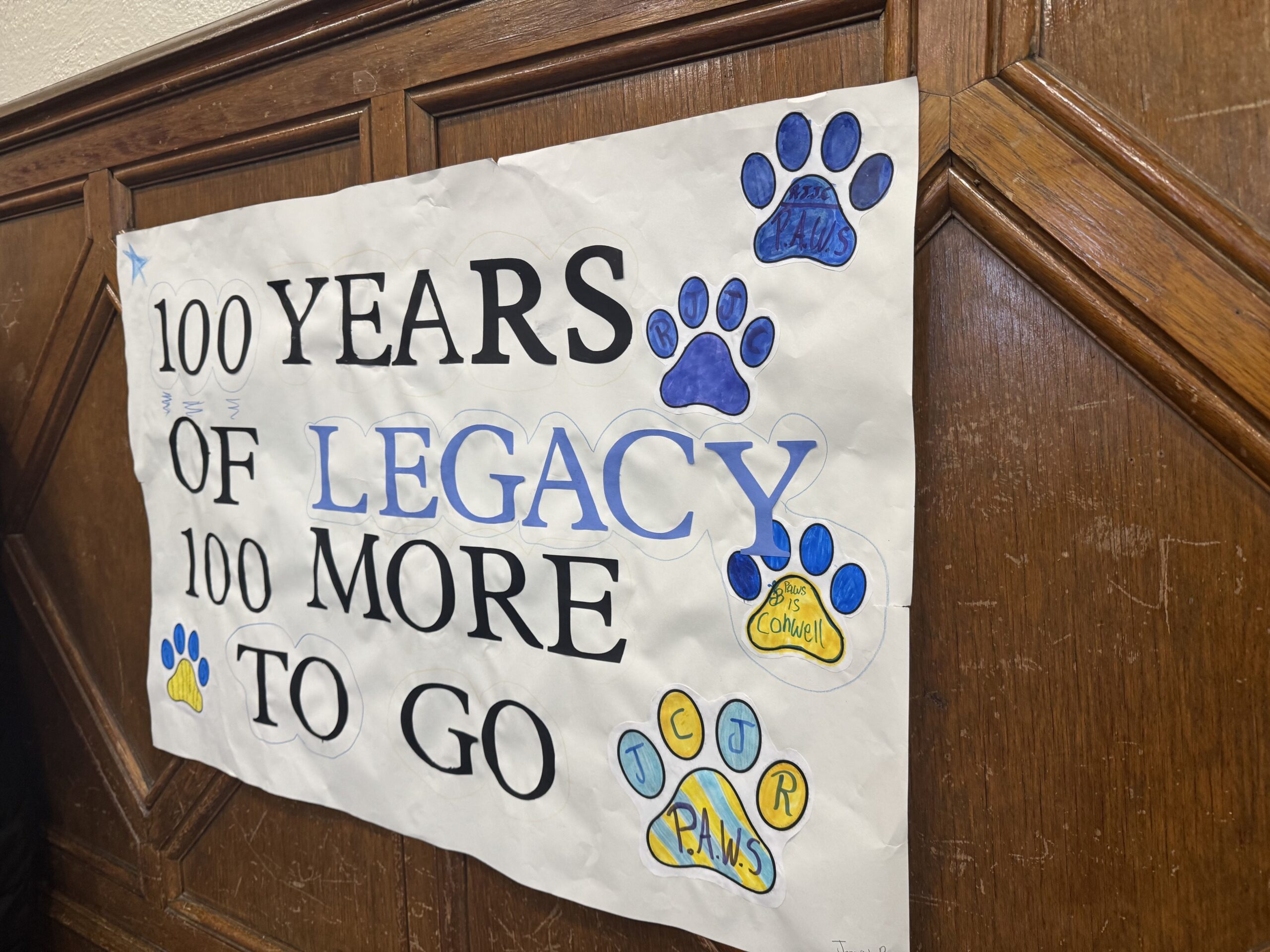
    A student-made sign hangs in the Conwell Middle School auditorium. The Philadelphia School District is attempting to close Conwell, a magnet 5-8 school in Kensington, and 19 other schools. The community is fighting the closure.

    Conwell, in Kensington, is a very small school by any standard. This year, just 109 students are enrolled in a building that holds 500. That’s down from 490 students in the 2015-16 school year and 806 in 2009-10. The school used to occupy two buildings; it has since shrunk to one.

    But it is also a rarity — a standalone magnet middle school. Community members and local officials are mounting a fight against closing the school, which they say has committed teachers and staff members who help students excel against the odds.

    The district’s plan, which the school board is expected to vote on this winter, calls for Conwell students to move to AMY at James Martin, another citywide admissions magnet in Port Richmond, which just opened in a new building with only 200 students. Meanwhile, the district has proposed closing its only other free-standing magnet middle school, AMY Northwest. No changes have been proposed for Philadelphia’s four other magnet middle schools, all of which are attached to high schools.

    Neighborhood issues, enrollment declines

    Conwell’s enrollment issues are tied closely to its setting.

    The building sits on Clearfield Street in the heart of Kensington. Fewer and fewer parents have been choosing to send their kids into ground zero of the city’s opioid epidemic, despite Conwell’s myriad partnerships, the outside investments it has attracted into its facility in recent years, and the school’s long history of excellence.

    The exterior of Conwell Middle School in Kensington, photographed in August.

    Parents, neighbors, students, and politicians, however, are furious that the district is choosing to abandon Conwell and the neighborhood.

    “If this school closes, it won’t just be students who feel the loss,” Conwell student Nicolas Zeno told officials at a district meeting Thursday. “It’ll be the community. If the concern is safety, then invest. If the concern is environment, then repair.”

    Community member Vaughn Tinsley, who runs Founding Fatherz, a nonprofit mentoring group, suggested closing Conwell would harm its students.

    “These students have been victims,” Tinsley said. “These students have seen and witnessed things they shouldn’t have witnessed. Most adults haven’t seen some of the things that these kids have seen, and yet still they come here, yet they’re still committed to excellence, yet they still stand up and still do what they’re supposed to do in the classroom. How dare we take that away from them?”

    Watlington has proposed using Conwell as “swing space” — district property that other schools can move into temporarily if their buildings require repairs.

    Tosin Efunnuga, Conwell’s nurse, wiped tears from her eyes as she beseeched district officials to keep the school open.

    “To have those doors close would be such a disservice,” Efunnuga said. “We need 100 years more.”

    Councilmember Quetcy Lozada, whose district includes Conwell, said she was “angry” and “frustrated” by the recommendation to close the school.

    “It’s underutilized because of what’s happening on the outside,” Lozada said at the Conwell meeting. “There’s nothing wrong with what is happening on the inside other than successful academic learning, support for families. We are saying to these families, we are punishing them because as a city, we can’t respond to the public safety issues that we have on the outside, and that is just not fair.”

    ‘What are y’all doing?’

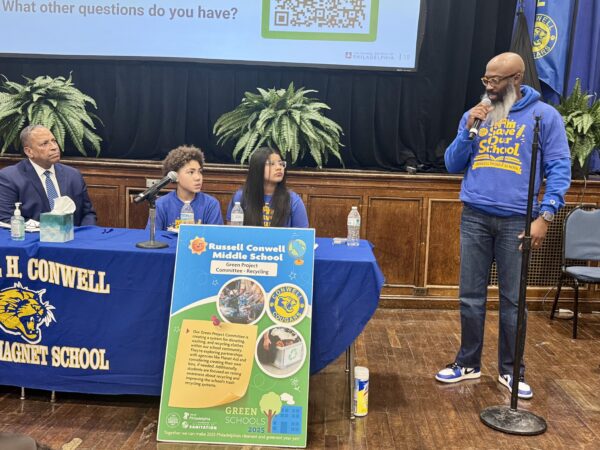
    Emotions ran high inside the Conwell auditorium last week.

    Even before Deputy Superintendent Oz Hill finished his presentation about the rationale for the closures and the specific plan for Conwell, parents burst out with concerns.

    “What are y’all doing? Y’all making a mess,” one parent shouted. “You say the building is old. So what? It’s clean in here.”

    Another said her child would not be going to AMY at James Martin, formerly known as AMY5.

    “I don’t think you understand how much of a battle there is between Conwell and AMY5,” the parent said. “You don’t know the battles these kids have with each other.”

    Conwell has a strong alumni network — a rarity for a middle school — that has turned out in force to support the school since the proposed closure was announced.

    Alexa Sanchez, Class of 2017, grew up in Kensington and came to Conwell as a bright but unruly student — she acknowledges that she got in fights, egged the school, and disrespected teachers. But Conwell is rooted in its neighborhood, Sanchez said, with dedicated staff who helped her rise to earn a college degree and a good job in business.

    “They didn’t give up on students like me,” Sanchez said. “My future didn’t look promising at first, but in the long run, it did. You shouldn’t really close the school on a community that doesn’t look promising if you’re not from here.”

    Other alumni, including Robin Cooper, president of the district’s principals union, and Councilmember Isaiah Thomas, chair of Council’s Education Committee, have spoken out for Conwell.

    Conwell “shows up” for Kensington and the city, running a food pantry, hosting Police Commissioner Kevin Bethel’s swearing-in ceremony and an event marking Cherelle L. Parker’s 100th day as mayor, noted Erica Green, the school’s award-winning principal. Staff and students participate in neighborhood cleanups and advocate for help amid the opioid crisis.

    “We are what the city needs,” Green told the school board recently. During Green’s tenure, she has helped win money for a new schoolyard, a new science, technology, engineering, and math lab, and more.

    “These investments were made for Kensington students,” Green said. “We owe it to them, to their neighborhood. Do not push them out once the neighborhood changes and thrives. Conwell’s success is rooted in its people, its history, and its impact.”

    Mayor Cherelle L. Parker speaks during an event to mark her 100th day in office at Conwell Middle School in Kensington in April 2024.