Tag: Delaware County

  • Penn expert says whether to take antidepressants during pregnancy is a ‘risk-risk conversation’

    Penn expert says whether to take antidepressants during pregnancy is a ‘risk-risk conversation’

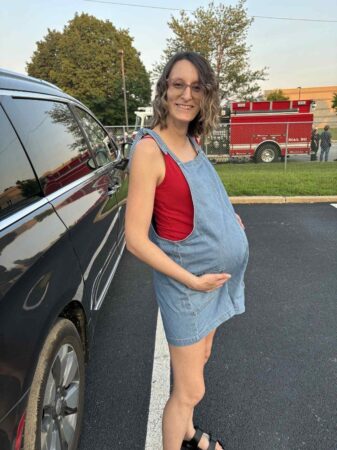
    When Sarah Bynum was pregnant with her first child in 2017, her primary care doctor suggested she stop taking her antidepressant.

    He told her there wasn’t enough research to justify staying on the medication.

    By the time she delivered her daughter, the Delaware County woman’s anxiety was so bad that she decided never again to go through a pregnancy without her antidepressant.

    Bynum, who has taken medication for anxiety since she was a teenager, is one of the nearly 18% of women in the U.S. on an antidepressant. She takes a drug known as an SSRI, the most common class of antidepressants, which medical societies generally consider safe to use during pregnancy.

    Still, roughly half of women taking an antidepressant discontinue their use of the medication while pregnant, according to a 2025 study in the medical journal JAMA Network Open.

    Kelly Zafman, an OB-GYN at the Hospital of the University of Pennsylvania, decided to research the issue that has also recently been under discussion on the federal level. She’s observed that patients often get mixed-messaging from providers.

    “The other side of the conversation that gets missed is this risk of not continuing medications,” said Zafman, who is in her final year of fellowship training in maternal-fetal medicine.

    Preliminary findings from her research showed the risk of a mental health emergency nearly doubled in women who discontinued SSRIs or SNRIs (another popular type of antidepressant), compared to those who stayed on their medication. She presented the unpublished results this month at the meeting of the Society for Maternal-Fetal Medicine.

    The analysis used data from 1,462 privately insured Pennsylvania women with active antidepressant prescriptions who gave birth between 2023 and 2024. While pregnant, 81% of them stopped or interrupted usage.

    Zafman said the highly personal decision comes down to factors such as the patient’s prior pregnancies, mental health history, and how well-controlled their symptoms are.

    Ultimately, the potential risks have to be weighed against those of untreated depression or anxiety.

    “It’s really a risk‑risk conversation,” Zafman said.

    Evolving research

    The American College of Obstetrics and Gynecologists discourages discontinuing antidepressants based on pregnancy alone, highlighting the risks of untreated mental health conditions. Studies have linked uncontrolled depression during pregnancy with preterm birth, low birth weight, higher suicide risk, and impaired mother-infant attachment.

    Research on the safety of antidepressants in pregnancy continues to evolve. Some potential risks identified in older research appear overstated when compared with more recent, better-designed studies, Zafman said.

    She cited as an example a rare but serious condition called persistent pulmonary hypertension — which causes a breathing issue — for which scientific evidence remains conflicting.

    “There’s definitely an association, but it’s not totally clear how causative it is,” Zafman said.

    Another concern, neonatal adaptation syndrome, tends to involve mild difficulties with feeding and breathing that resolve within days. Medical intervention is rarely required, and the treatment essentially is to cuddle and feed your baby, Zafman said.

    While antidepressants potentially pose risks in pregnancy, she said, overall, the risks of long lasting effects are “extraordinarily low.”

    A personal decision

    Bynum, a patient at Penn Medicine, was not on antidepressants during her first pregnancy. (She was not part of this particular study but has participated in other research with Zafman.)

    Five months into the pregnancy, she learned her daughter would be born with a congenital heart defect that would require monitoring, and later, surgery.

    Family and friends tried to help her, but they weren’t able to calm her heightened anxiety the way her medication usually would.

    When she became pregnant with her second child, she knew she wanted to have a “more mentally healthy pregnancy.”

    “I needed to be mentally and physically present not just for myself, but my daughter,” she said.

    She asked her OB-GYNs if she could continue on her antidepressant, Paxil. They weren’t sure.

    She turned to the fetal heart experts at Children’s Hospital of Philadelphia, who looked into the medical evidence and told her it was fine to continue taking her antidepressant.

    Sarah Bynum decided she would not go without her antidepressant for future pregnancies.

    Bynum has since had three healthy pregnancies while taking the antidepressant.

    She felt it was the right decision.

    “I need to focus on having a healthy pregnancy with as minimal stress as possible,” Bynum said. “And if that means taking a medication, that’s what’s gonna work.”

    Editor’s note: This story has been updated to clarify a quote by the researcher.
  • Nearly a year after Crozer-Chester Medical Center closed, Chester residents still struggle to access healthcare

    Nearly a year after Crozer-Chester Medical Center closed, Chester residents still struggle to access healthcare

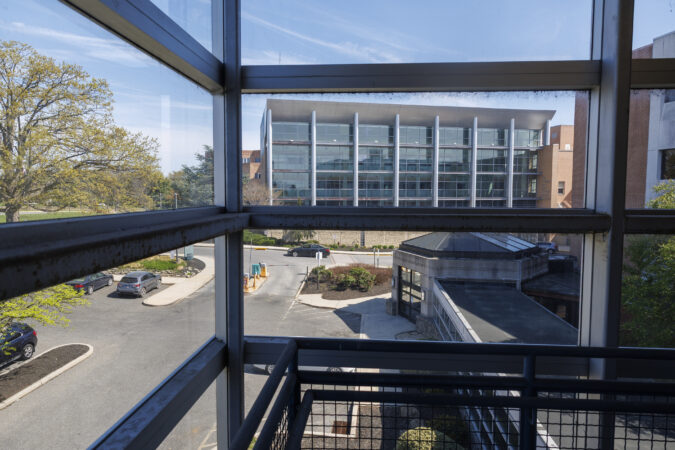
    Dawn Pierce felt heartbroken last spring when she learned that Crozer-Chester Medical Center was closing.

    The hospital had long been a lifeline in a city with limited healthcare services. Many Chester residents, like Pierce, were unsure where to turn for care when the hospital’s for-profit owner, California-based Prospect Medical Holdings, declared bankruptcy and shut down Crozer and Taylor Hospital in Ridley Park last spring.

    “I don’t think of myself as one that will sit around and watch things happen, but I felt hopeless,” Pierce said.

    Nearly a year later, Pierce and other residents say the community was left with major healthcare gaps: There are no primary care doctors or pediatricians in town. Locals who received routine care at the hospital had to switch to doctors outside the city, dealing with long drives or rides on public transportation. Some are going without care.

    And many worry about whether they can make it to another hospital in time during a medical emergency.

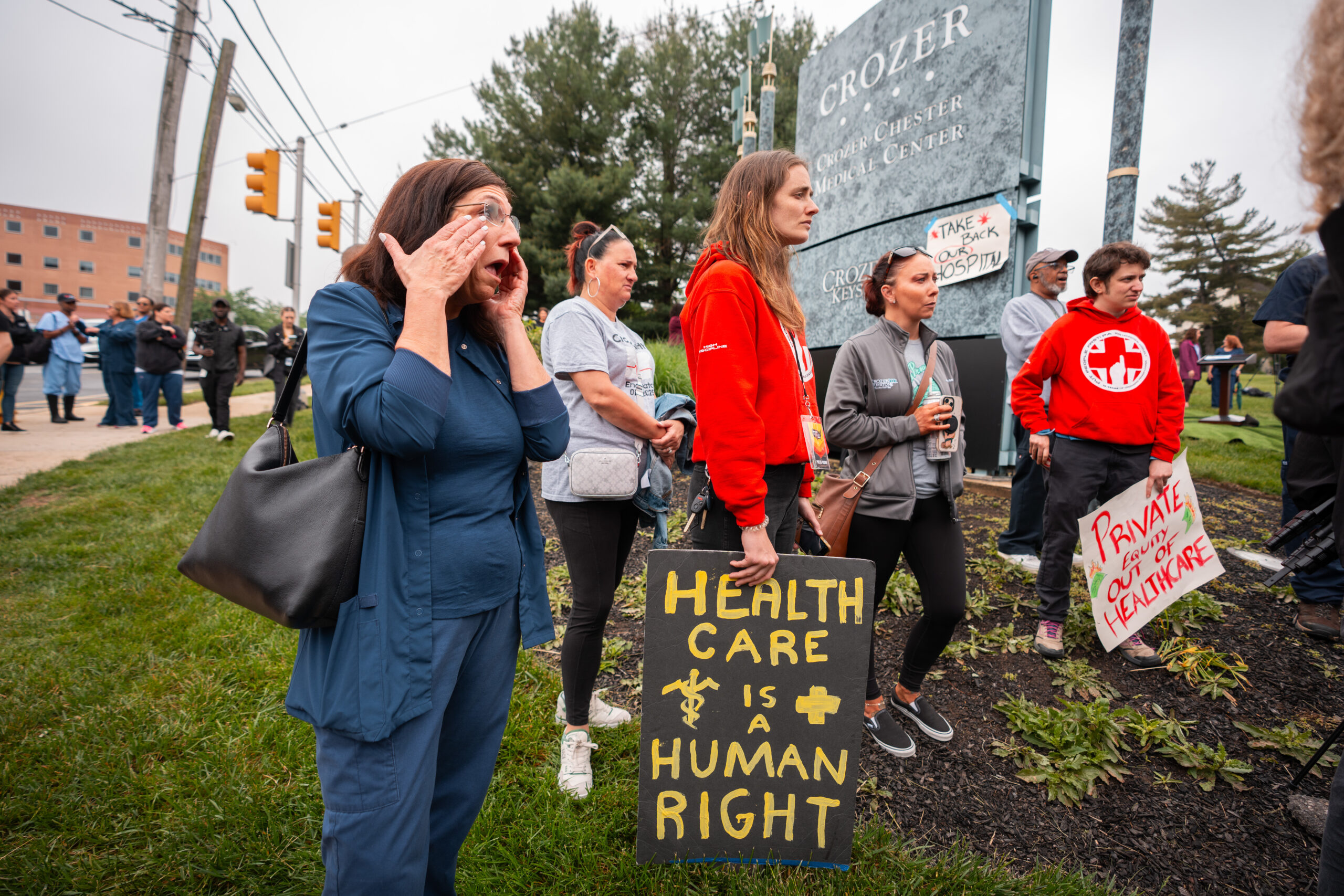
    Janice Cimabue, left, and Jamie Blair, center, with Put People First PA, after a news conference outside of the recently closed Crozer Medical Center in Delco, in Philadelphia, May 15, 2025.

    These concerns have emerged through grassroots canvassing by One Pennsylvania, which shared its findings at a news conference this month. In recent months in Chester, organizers have knocked on 4,300 doors to gauge residents’ thoughts on Crozer’s closure and encourage them to advocate for better healthcare options in the city.

    The membership group focuses on issues including housing rights and environmental justice. Originally founded as part of a 2011 Pittsburgh campaign by the labor union SEIU, it became an independent organization in 2015 and expanded into the Philadelphia area in 2016.

    Pierce, who heads its Chester chapter, counts herself relatively lucky: While she saw specialists at Crozer, her primary care physician was at a different health system. But her brother and his significant other spent most of last year looking for a new doctor after Crozer closed.

    “I do think they finally found someone, but at this point those visits are not near Chester. They’re 20 to 30-plus minutes away,” Pierce said.

    Residents told One Pennsylvania organizers they felt relief that Chester officials did find a solution for EMS services lost in the closure. The city contracted with VSMC, an ambulance company, for higher-level care on the go, including blood transfusions.

    “The restoration of EMS services and ambulance for our city — this matters,” Pierce said at the event held outside a downtown church on a recent Saturday. “However, EMS is a bridge. It’s not the final destination.”

    (function() {
    var l2 = function() {
    new pym.Parent(‘he_chester’,
    ‘https://media.inquirer.com/storage/inquirer/projects/innovation/arcgis_iframe/he_chester.html’);
    };
    if (typeof(pym) === ‘undefined’) {
    var h = document.getElementsByTagName(‘head’)[0],
    s = document.createElement(‘script’);
    s.type = ‘text/javascript’;
    s.src = ‘https://pym.nprapps.org/pym.v1.min.js’;
    s.onload = l2;
    h.appendChild(s);
    } else {
    l2();
    }
    })();

    Chester Mayor Stefan Roots told residents at the news conference that he met recently with representatives from the Crozer property’s new owner, for-profit Chariot Equities, which says it wants to restore medical services to the campus.

    Roots said he couldn’t provide many details about a plan for the 64-acre campus that straddles Chester and Upland Township in Delaware County, which Chariot purchased last month for $10 million. Chariot said at the time it planned to operate a “right-sized” hospital and emergency department at the facility.

    The new ownership comes after government-supported efforts failed to convince other local health systems last year to form a new nonprofit to run Crozer-Chester and other Crozer Health facilities.

    Chester Mayor Stefan Roots told city residents that he met recently with representatives from the Crozer property’s new owner, for-profit Chariot Equities, which says it wants to restore medical services to the campus.

    Roots said the new owner has impressive plans, but it could take years to bring back medical services, if successful. “It’s going to take some time, it’s going to take some money, and all we can do right here is to readjust,” he said.

    Delaware County Council voted Wednesday to end a disaster declaration over lost EMS services in the wake of Crozer’s closure, since communities left without services, like Chester, had been able to contract with other EMS providers, WHYY reported.

    Chester resident Andrea Robinson say she’s still feeling the impact of the lost medical services.

    Robinson had to find new doctors after the closure, and a family member is now traveling farther to receive care for a mental health condition once treated at Crozer. And while other area hospitals are taking patients from Chester, the influx of new patients has at times led to long wait times elsewhere.

    “We are truly in need of medical services now,” she said.

  • Wawa has expanded far beyond Philly. But hometown fans still fuel the chain’s success

    Wawa has expanded far beyond Philly. But hometown fans still fuel the chain’s success

    Wawa customers have been able to order roasted chicken on sandwiches, salads, burritos, and more since summer 2024. Hoagie-loving Philadelphians may scroll past the high-protein option on Wawa’s trademarked built-to-order screens, while others tap its icon instinctively in their rush to order lunch.

    Wawa CEO Chris Gheysens said he sees the chicken breast differently.

    From idea to inception, “that was a labor of love for quite a long time,” Gheysens said in a recent interview. “It’s 37 grams of protein, something consumers are really looking for today.”

    And, he added, “it’s still highly customizable, which our customers love doing at Wawa.”

    To Gheysens, the menu addition shows how the Delaware County-based company responds to consumer demand. Just as it did decades ago when Philly-area store managers began brewing coffee for customers on the go, and in 1996, when Wawa executives decided to start selling gasoline.

    Even now, with nearly 1,200 stores in 13 states and Washington, D.C., Wawa is still listening to consumer feedback, Gheysens said. And despite expanding as far away as Florida and Kentucky, the CEO said, the convenience-store giant remains especially in tune with its hometown fans.

    “For a lot of people, it’s their daily routine,” said Gheysens, a South Jersey native. “It becomes a part of their neighborhood. It’s a relationship that’s built on consistency, on trust” — and on getting customers out the door in five minutes or less, depending on the time of day.

    (function() { var l = function() { new pym.Parent( ‘wawa-stats__graphic’, ‘https://media.inquirer.com/storage/inquirer/ai2html/wawa-stats/index.html’); }; if(typeof(pym) === ‘undefined’) { var h = document.getElementsByTagName(‘head’)[0], s = document.createElement(‘script’); s.type = ‘text/javascript’; s.src = ‘https://pym.nprapps.org/pym.v1.min.js’; s.onload = l; h.appendChild(s); } else { l(); } })();

    Customers say they are drawn to the homegrown chain for its convenience, consistency, quality, and wide-ranging menu of grab-and-go and made-to-order items (even though some miss the old Wawa delis where lunch meat was sliced on the spot).

    In Runnemede, 78-year-old Barbara MacCahery said she goes to her local Wawa at least a couple of times a week — “sometimes for breakfast, sometimes for a sandwich, a lot of times for coffee.”

    In MacCahery’s mind, she said, the chain has proven itself time and time again for decades: “It’s very rare that you’ll have a bad experience.”

    Wawa’s ‘secret sauce’ for success

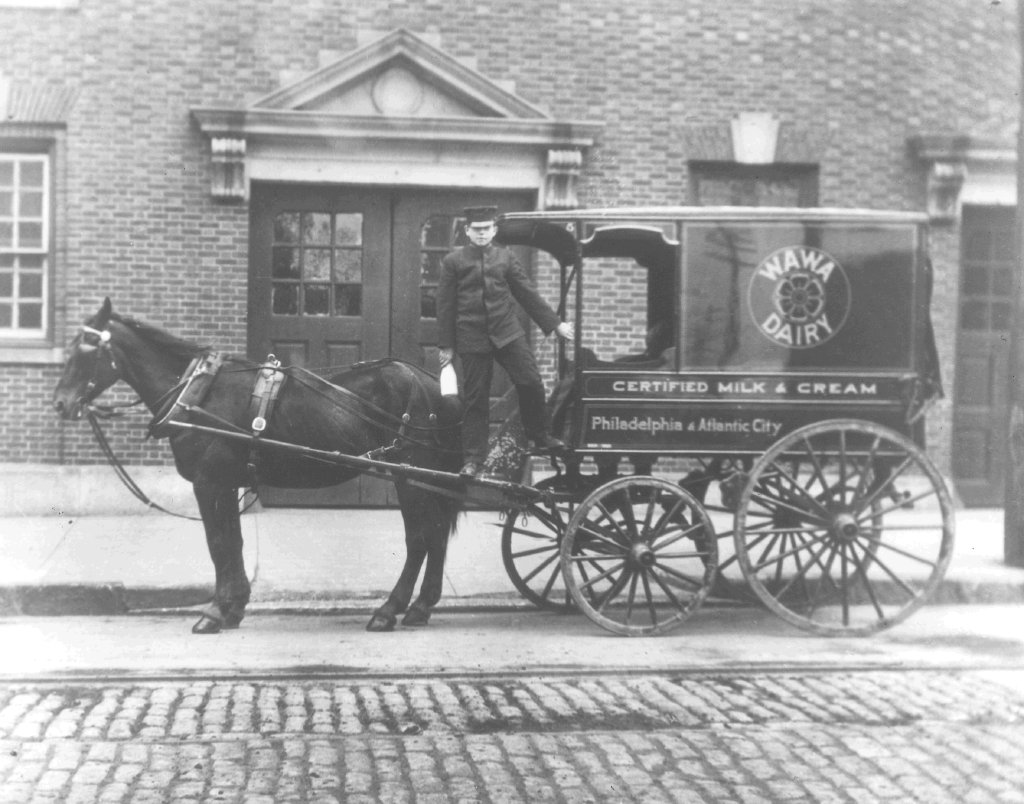
    More than 100 years ago, Wawa started out as a dairy, delivering milk to Philadelphia-area households.

    Wawa has set a national standard for success in the convenience-store industry, said Z. John Zhang, a marketing professor at the Wharton School of the University of Pennsylvania.

    “It really is some kind of a secret sauce,” said Zhang, who studies retail management. “For many people, Wawa has become a destination store,” one that combines “speed, customization, and perceived high quality” with near-constant availability — many Wawa stores are open 24/7.

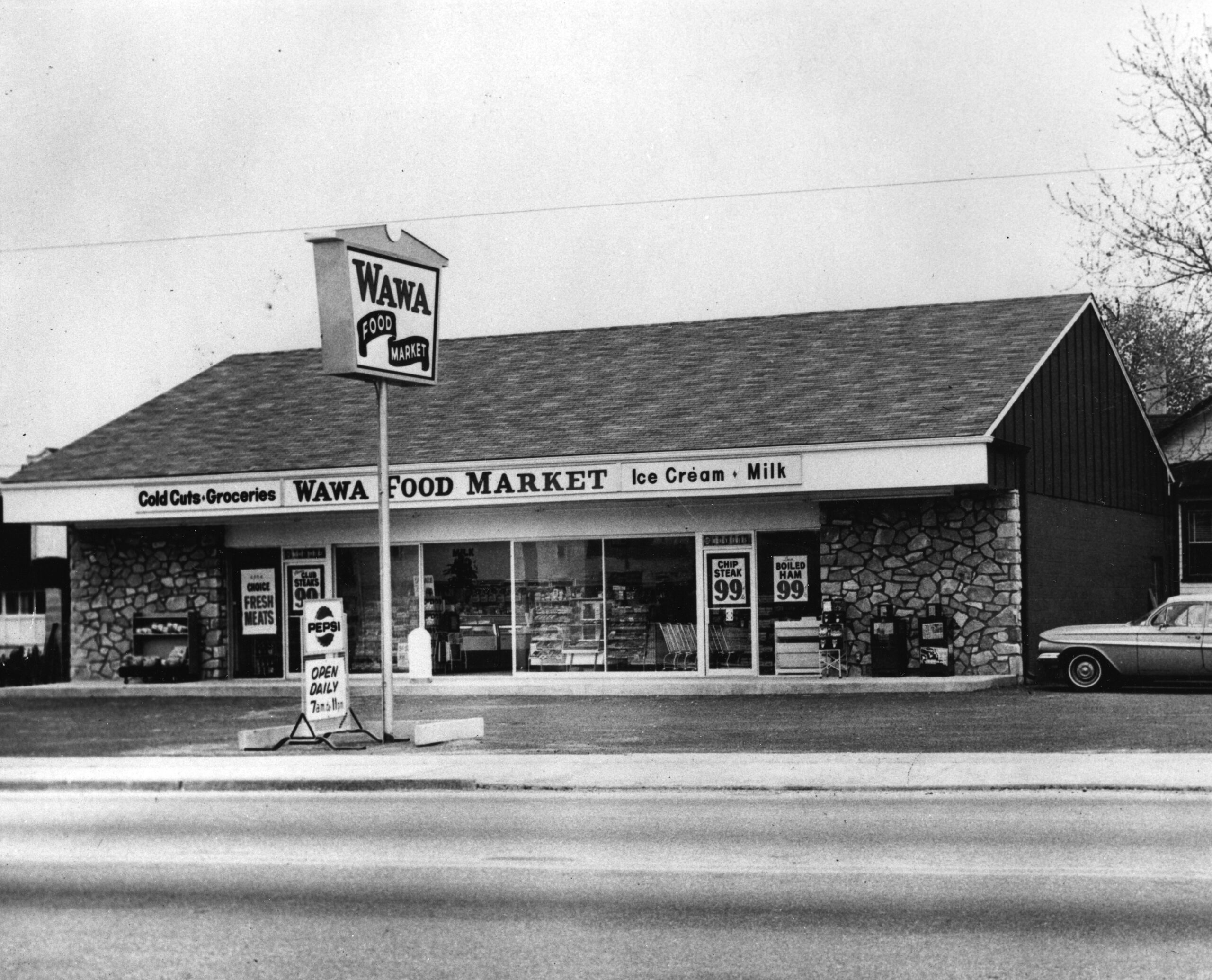
    The company got its start as a dairy, delivering milk to Philly-area households. In 1964, it opened its first store in Folsom. Soon, the family-owned company expanded into New Jersey and Delaware, and established a reputation for quality and speed, with slogans like “People on the Go — Go to Wawa Food Markets.”

    Wawa’s first convenience store opened in Folsom, Delaware County in 1964.

    Wawa is privately held, owned in part by workers who get a percentage of their earnings contributed to an employee stock-ownership plan. Zhang said this program likely leads to more-invested employees who provide better customer service.

    Because Wawa is not public, it is not required to disclose its finances, and company executives declined to discuss them.

    But by many appearances, Wawa seems to be doing well: Over the last decade, the company has increased its store count by about 65% and doubled its workforce to about 50,000 associates.

    Philly-area Wawas are often crowded, too, which is key to making money in the convenience-store industry.

    A gas attendant fills up a customer’s tank at a Wawa in Pennsauken in 2020.

    Consumers spend about $7 on average when they stop at a convenience store, said Jason Zelinski, vice president of convenience and growth accounts for NielsenIQ.

    “We think it’s high-impulse, but 80% of all people who walk into a convenience store pretty much know what they want,” said Zelinski, who consults with retailers. (He declined to discuss specific companies and said he has never worked for Wawa.)

    Successful operators have encouraged customers to spend more by adding seating and improving their food service, Zelinski said. And stores with better food see higher profit margins.

    “Once you have somebody that’s addicted to your food service program, they’re more likely to come back to your store vs. a competing store,” he said.

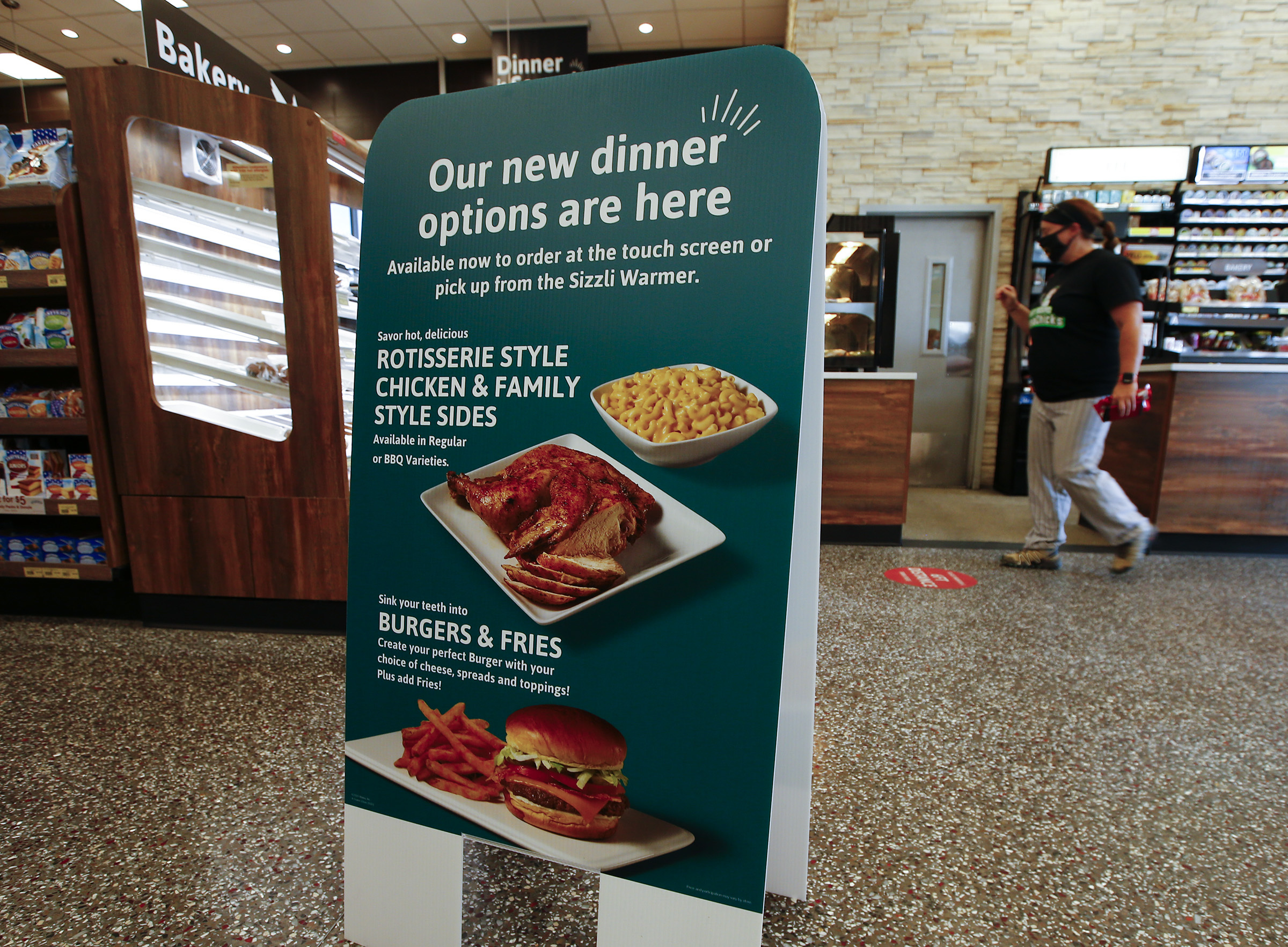
    In 2020, Wawa debuted new menu offerings, including hamburgers, pot roast, rotisserie chicken, pasta alfredo, and kids meals, at a tasting in Media.

    Wawa has certainly gotten people hooked on their coffee, hoagies, and ever-expanding menu, Zhang said. Options added in recent years include pizza, wraps, protein-packed “power meals,” limited-edition coffee flavors, and smoothies “boosted” with protein, vitamins, and minerals.

    Yet Wawa has not expanded in all areas.

    The company recently closed several stores in Center City, citing “safety and security concerns” in some cases. In January, it closed its Drexel University location after its test of a digital-order-only format was not successful.

    In the Philly suburbs, smaller-format Wawas have also shuttered, often in communities that already have multiple larger Wawas.

    This older Wawa in Cherry Hill closed in 2024. The township has six remaining Wawas.

    Despite Wawa’s best efforts, not all stores thrive, Gheysens said. But “luckily for us, we’re still in growth mode, and don’t have to worry about closures in a broad way.”

    Gheysens said he sees room for more Wawas in the Philadelphia market — even as convenience-store competitors like Maryland-based Royal Farms and Altoona-based Sheetz have opened new stores in the region.

    Wawa executives want “to make sure that we are the number-one convenience store in the area, that’s important to us,” Gheysens said. “These are our hometown counties.”

    What keeps Philly-area consumers going to Wawa

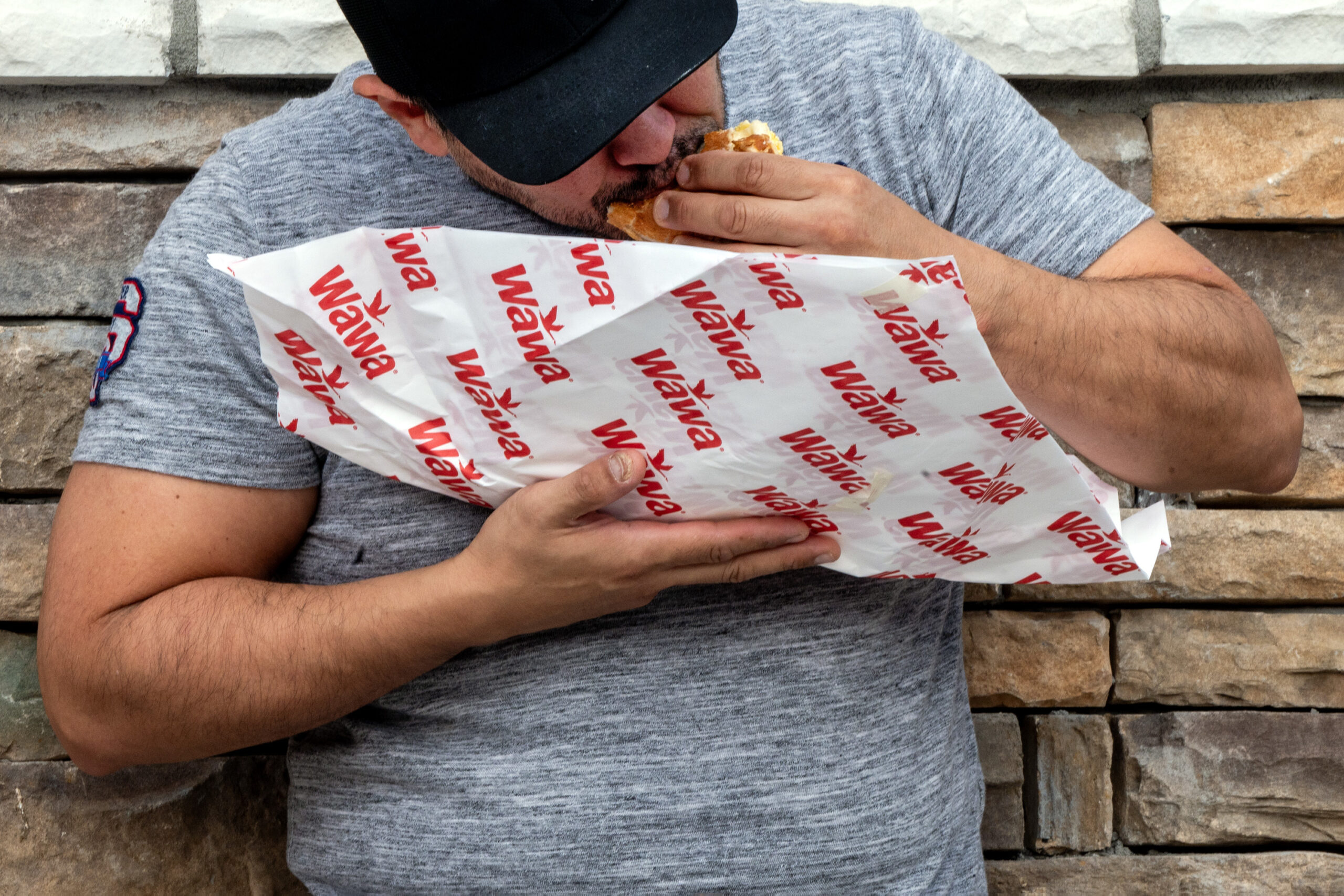
    A Wawa customer eats a breakfast Sizzli during the 2024 grand opening of the company’s first central Pennsylvania store.

    Many Philly-area consumers grew up alongside Wawa.

    In interviews with nearly a dozen of them, some were quick to reminisce about early memories of their local stores, such as the distinct smell of coffee and deli meat or the excitement of a Wawa run with high school friends. Others bemoan what has changed with the company’s expansion, including more congested parking lots.

    Most have a quick answer when asked what their Wawa order is.

    Rick Gunter, 45, of Royersford, misses the Wawa of his youth. Back in the day, he said, the Wawa hoagies “hit different,” with lunch meat fresh off the slicer.

    Contrary to some customers’ beliefs, most stores still bake Amoroso rolls — a custom recipe made exclusively for Wawa — fresh in store multiple times a day, Gheysens said. As for the deli meat, the CEO said that was another decision rooted in customer preference.

    When customers have participated in blind tests of the pre-sliced meat Wawa uses today against a fresh-sliced alternative, “they can’t tell the difference,” Gheysens said. “They would choose our pre-sliced meats, because of what we’ve done in terms of quality and the supply chain and the ability to deliver them at such a pace.”

    A sandwich maker at Wawa wraps a hoagie with turkey, provolone, tomato, and lettuce in this 2020 file photo.

    Some customers disagree.

    “It was way better when it was kind of also a deli. Now they try to make everything for everybody,” said Bill Morgan, 79, of East Coventry Township. “I’m within five miles of three Wawas, but I rarely eat their food. Only under extreme duress.”

    Morgan acknowledged he must be in the minority, given how crowded Wawas are at lunchtime. And despite his distaste for much of their food, he said he still gets gas there and loves their coffee. And he can’t help but admire their business model.

    “I wish they’d sell stock,” Morgan said.

  • A $105-million mixed-use complex with apartments set to rise in the shadow of Willow Grove mall

    A $105-million mixed-use complex with apartments set to rise in the shadow of Willow Grove mall

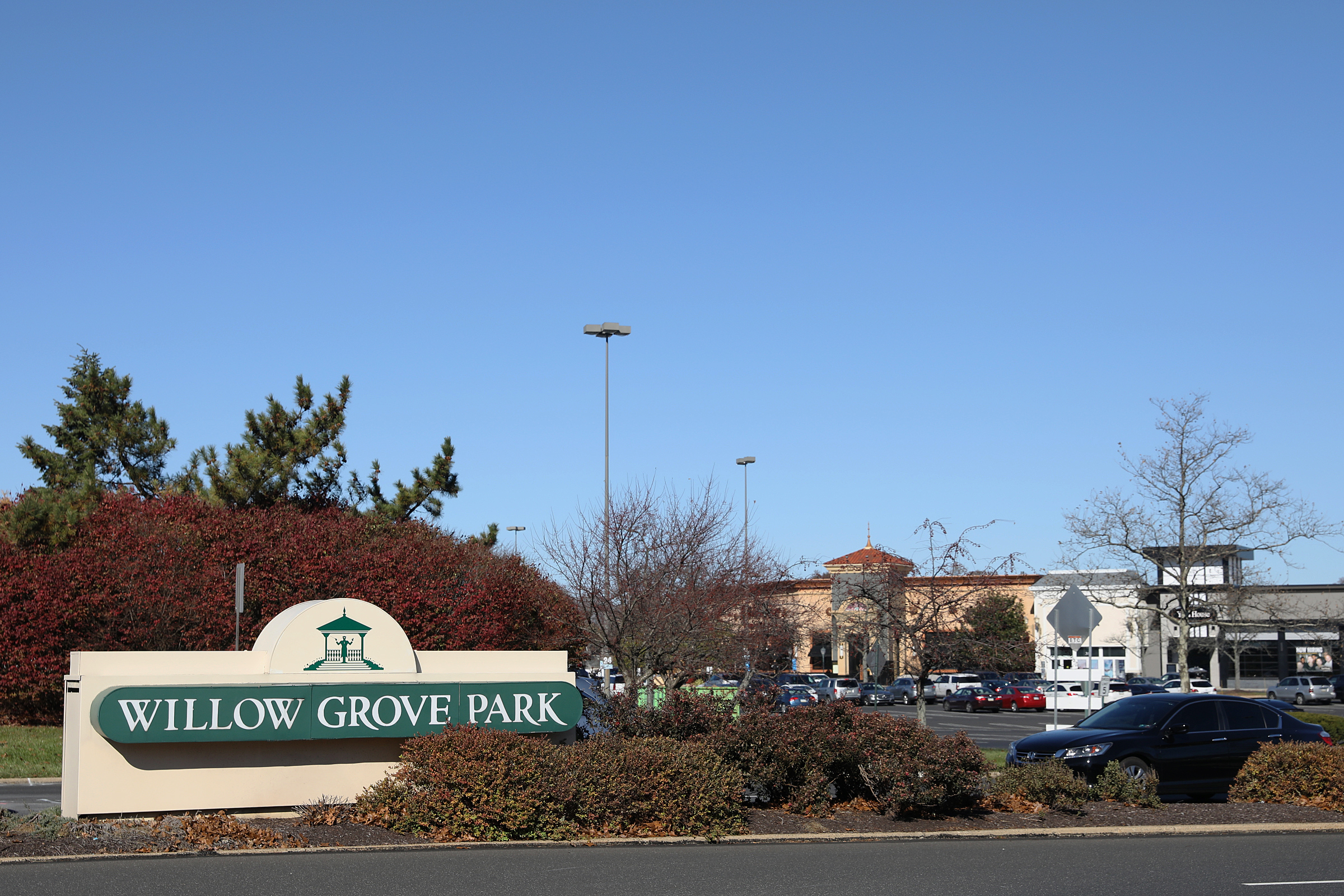
    A shopping center in the shadow of Willow Grove Park Mall will soon undergo a $105-million “transformation” with new apartments and shops, says the developer behind the project.

    Starting this summer, about 130,000 square feet of the Willow Grove Shopping Center will be demolished to build a mixed-used complex with 261 residential units and 35,000 square feet of new retail space, said Mark Brennan, vice president of regional development for Federal Realty Investment Trust.

    It will mark the latest stage in a multiphase redevelopment of the outdoor center, which is located across the street from the mall.

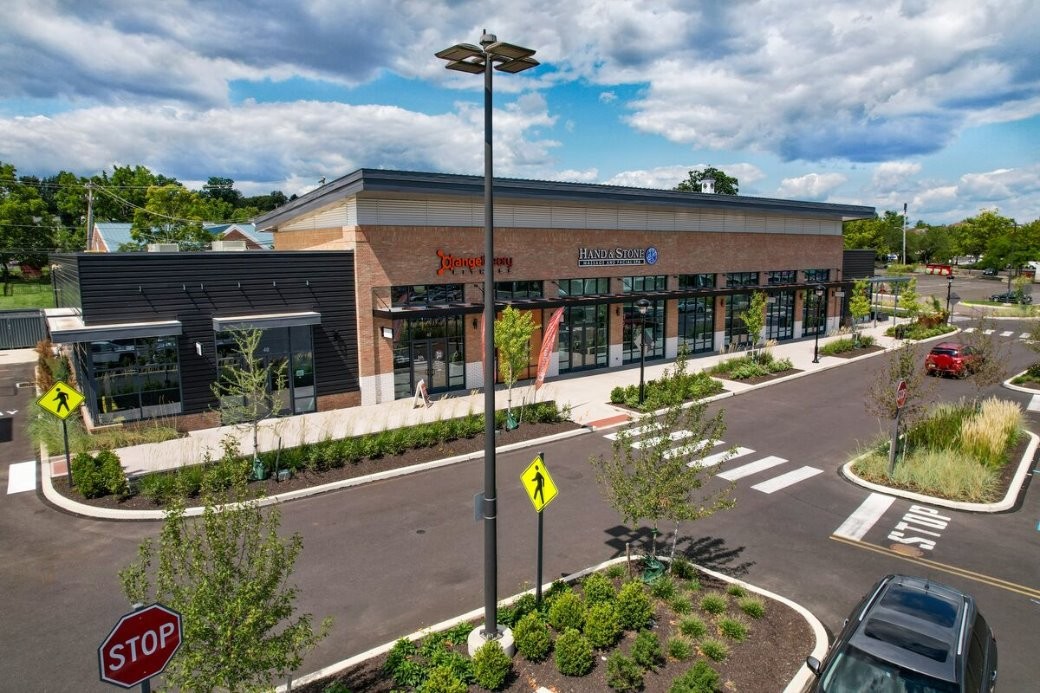
    A rendering of what Federal Realty Investment Trust plans to build at the Willow Grove Shopping Center.

    Across the Philadelphia region, similar mixed-use complexes have increasingly been built around thriving shopping destinations, such as King of Prussia, where thousands of new apartments have risen in recent years.

    Elsewhere, town-center-like developments have replaced dead malls. In Delaware County, a $120-million complex with apartments, restaurants, and shops sits on the site of the former Granite Run Mall, which was demolished a decade ago.

    Mixed-use projects have also been proposed for the Exton Square Mall and at the old Echelon Mall in Voorhees. (In both locations, apartments have already been built on other parts of the property.)

    A spokesperson for PREIT, which owns Willow Grove Park Mall, did not return a request for comment. In a 2022 shareholders’ report, PREIT executives called the complex “one of our leading suburban Philadelphia assets,“ with an occupancy rate of more than 96%.

    The Willow Grove Park Mall is pictured in 2019.

    Across Moreland Road, Brennan is confident his shopping-center redevelopment will be met with high demand.

    Since the pandemic, the Montgomery County community has “really come alive,” due in part to its proximity to the city and to suburban employment centers, said Brennan, who is based in Wynnewood. And people who are moving out of the city or looking to downsize are particularly interested in moving to mixed-use developments, he said.

    The center’s proximity to SEPTA’s Willow Grove train station, and major highways, including the Pennsylvania Turnpike, will make it particularly appealing, as will its mix of “highly curated” shops, Brennan said.

    Across the street from the mall, the Willow Grove Shopping Center is set to undergo a $105-million transformation with apartments and new retail.

    The center’s existing tenants, which include Marshalls and Five Below, will remain open during construction, Brennan said.

    He expects the project to be complete sometime in 2028.

    “These sort of multifaceted, multiphased development projects do take quite a bit of time and planning,” Brennan said. “We’re really excited to get to the next phase of this transformation.”

  • ‘I was vulnerable’: Women testify against head of Delco addiction nonprofit accused of trading money for sexual favors

    ‘I was vulnerable’: Women testify against head of Delco addiction nonprofit accused of trading money for sexual favors

    The woman, then battling an addiction to heroin, said she sought help at the Opioid Crisis Action Network, a beacon of hope for those struggling with substance abuse disorder in Delaware County.

    But instead of providing compassionate care, Larry Arata, the nonprofit’s founder, offered her gift cards in exchange for oral sex in his car in 2024, the woman testified Thursday in a Delaware County courtroom.

    The experience traumatized her, she said, and within a month she had dropped out of recovery and overdosed.

    “I was still on heroin, and I needed help,” the woman said, her voice breaking as she recalled the encounter. “I didn’t expect to have to do that.”

    As she spoke, Arata, 65, sat in the courtroom for a preliminary hearing in a sweeping prostitution and trafficking case that Delaware County prosecutors brought against him late last year.

    He has denied any wrongdoing, and his lawyers said Thursday that they would present a robust defense at trial.

    In emotional testimony, six women took the stand and accused Arata of criminal behavior. The Inquirer is not naming the women because the newspaper does not identify victims of sex crimes without their permission

    One woman said Arata hired her to clean the Opioid Crisis Action Network’s office as she was trying to get sober. Almost immediately, she said, he began complimenting her appearance. Eventually, they began having sex in Arata’s private office at the nonprofit and at a nearby hotel, she said, where he sneaked her in a back door.

    Afterward, she said, Arata would give her a $300 paycheck, as well as extra cash and gift cards.

    Other women who sought the Action Network’s help said Arata made comments about their appearance and offered them financial incentives after sexual encounters in parks, hotels, and in one case, his father’s home.

    Arata founded the Opioid Crisis Action Network after his son died of an overdose in 2017, and he became something of a figurehead for issues surrounding addiction in the suburban county.

    But Arata abused his position of influence, prosecutors said in November as they charged him with multiple counts of trafficking, patronizing prostitutes, promoting prostitution, obstruction, and one count of harassment.

    They said Arata twisted his nonprofit’s mission, using cash, gift cards, and rent payments to elicit sex from vulnerable women who relied on him for help.

    In one case, a woman testified that Arata told after a sexual encounter that “secrets are meant to be kept.” Others said he worried that his wife would find out about the sexual encounters and asked them to delete sexually explicit images they had texted him.

    And one woman — who said Arata had cornered her in his office and tried to kiss her — said that when he later learned that she had spoken to county investigators about the incident, called her a liar and told her to recant.

    Arata’s attorneys did not call any witnesses. They told the judge their client’s alleged behavior did not meet the legal standards for many of charges against him, including trafficking and obstruction.

    After hearing nearly four hours of testimony, Delaware County Court Judge Benjamin Johns said prosecutors had presented sufficient evidence for all charges against Arata to stand.

    Brandi McLaughlin, an attorney for Arata, told reporters that her team would try the case in a “courthouse, not the media.”

  • Some Delco SEPTA riders will have 15 minutes added to their commutes, beginning Monday

    Some Delco SEPTA riders will have 15 minutes added to their commutes, beginning Monday

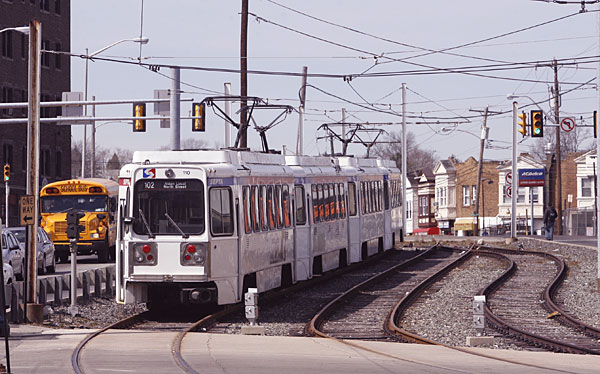
    Rides on the two trolley lines serving Delaware County promise to be safer but longer with a modern signal system scheduled to go live on Monday, SEPTA said.

    The upgraded signals on the D1 and D2 trolley lines will require operators to make more gradual accelerations and decelerations. They will also enforce speed limits and stop signals with automatic braking if needed.

    “It will reduce the possibility of operator error,” SEPTA general manager Scott A. Sauer said. “They won’t be able to speed and risk derailment. They won’t be able to violate stop signals or misaligned switches.”

    But the computer won’t replace the judgment of the people operating a trolley, Sauer said. Operators will get an alert, and the system provides backup if they cannot correct it in time, he said.

    Trips will be up to 15 minutes longer on the D1 route and 10 minutes on the D2 route, depending on where a passenger boards and gets off the trolley.

    The trolleys operate between Media and the 69th Street Transportation Center in Upper Darby, and between Sharon Hill and the transit hub. They were formerly called Routes 101 and 102.

    The transit agency also is releasing new spring schedules for all elevated-subway and bus transit, using the new “Metro” way-finding nomenclature, which uses letters for the various services.

    SEPTA accounted for the increased Delaware County trolley travel times in the new schedules, which begin Monday.

    It took about a decade and $75 million to install the system, called Communications-Based Train Control, on the Delco trolleys, said John Frisoli, SEPTA’s top rail signals engineer. Radios communicate between the control system and the trolleys.

    A similar system has operated in the Center City trolley tunnel since 2005. SEPTA has been adding safety features to its rail-signal systems for about 20 years, including the installation of Positive Train Control on Regional Rail, which controls train speed and applies automatic brakes to prevent crashes caused by human error.

  • Upper Darby Council passes resolution to restrict cooperation with ICE following resident’s death in the agency’s custody

    Upper Darby Council passes resolution to restrict cooperation with ICE following resident’s death in the agency’s custody

    The Upper Darby Township Council passed a resolution Wednesday to restrict cooperation with U.S. Immigration and Customs Enforcement in response to growing concerns about the agency’s activities in the diverse township.

    The 11-member council, made up entirely of Democrats, voted unanimously to pass a resolution saying the town will not use its resources to assist ICE with non-criminal immigration enforcement. But the largely symbolic resolution nearly mirrors the municipality’s existing guidelines, leading to criticism that it does not go far enough.

    The resolution’s passage comes after Parady La, an Upper Darby resident struggling with addiction, died last month in a hospital while in ICE’s custody. It also follows the chaotic scenes in Minneapolis, where federal agents fatally shot Renee Good and Alex Pretti last month as President Donald Trump’s administration targeted the city with a massive immigration enforcement operation.

    Those events have fueled anxiety in Upper Darby, where nearly a quarter of the population is foreign-born, compared with 15% in Philadelphia. Armed ICE agents wearing masks have become a familiar sight in the township, prompting residents to question why their community is suddenly under pressure, including high school students who held a walkout earlier this month.

    Council President Marion Minick called the resolution a chance to show immigrants in the community “they are not alone.”

    “We can demonstrate through our votes and through our voices that Upper Darby Council will do everything within our legislative power to shield our residents and their families from this climate of intimidation,” he said.

    The council’s resolution comes as local governments across the country and in the Philadelphia area try to curb ICE’s impact on their residents. Last month, Haverford passed a similar measure and Bucks County ended its agreement with the agency that allowed sheriff’s deputies to act as immigration enforcement.

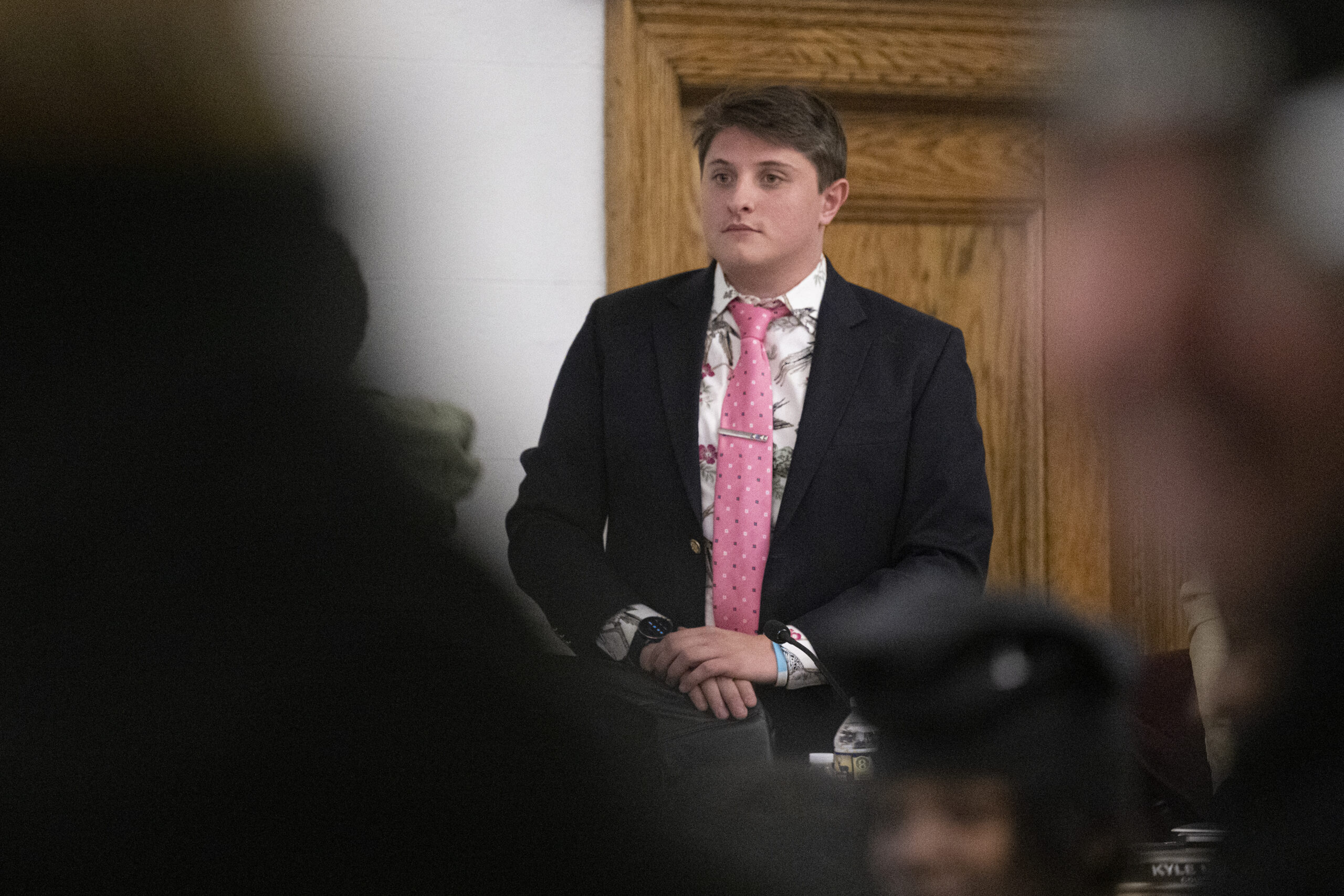
    Council member Kyle McIntyre, a progressive community organizer who began his term last month, emphasized that the resolution is “just the start.”

    “There is so much more than we can do, and we will be doing, and I make that solemn promise to the community right now,” he said before the vote.

    “If we don’t do more, hold us accountable,” he added.

    Kyle McIntyre, an Upper Darby Township council member, listens to residents’ comments during a township meeting on Wednesday, Jan. 21, at the Upper Darby Municipal Building in Upper Darby, Pa.

    Township solicitor Mike Clarke said that police will cooperate with ICE if the agency has a criminal warrant signed by a judge.

    “Local law enforcement is not supposed to be in the immigration enforcement business, and essentially that’s what this resolution is saying … but if it’s a criminal warrant, they will be involved,” Clarke said.

    A list of frequently asked questions about ICE on the township’s website already stated that Upper Darby does not participate in civil immigration enforcement or ask residents their immigration status, though it does cooperate with lawfully issued criminal warrants and court orders. Township spokesperson Rob Ellis confirmed that the resolution reaffirms the town’s existing internal policy.

    The lack of cooperation seems to be going both ways.

    Upper Darby Mayor Ed Brown said earlier this month that ICE would no longer communicate with local police to tell them when agents are operating in the township, calling the change “scary.” ICE did not immediately respond to a request for clarity on Thursday.

    Some residents at the meeting expressed concern about the reaffirmed policy getting in the way of public safety, and McIntyre later said the policy ensures anyone in Upper Darby can feel comfortable reporting crimes to the police. He said “anybody that commits a crime in Upper Darby Township will be held accountable,” regardless of immigration status.

    Jennifer Hallam, who said she has worked with immigrants in Upper Darby for almost a decade, urged the council to postpone its vote and instead pursue legislation that has more teeth.

    “The current resolution really just preserves the status quo,” she said.

    She called for a resolution that would restrict ICE from municipal property without judicial warrants, prohibit the collection and sharing of immigration status among municipal employees, and prohibit ICE from wearing masks. Philadelphia lawmakers are attempting to ban ICE from wearing masks, though experts are split on whether the measure would be legally sound.

    McIntyre said in an interview that Wednesday’s resolution puts the council’s values down on paper and provides clarity to the community, but he acknowledged that a resolution is not enforceable.

    A death in ICE custody close to home

    The community has been grappling with the death of La, a 46-year-old Cambodian immigrant and Upper Darby resident who, according to his widow, Meghan Morgan, struggled with addiction. La came the United States in 1981 as a refugee around the age of 2. He became a lawful permanent resident a year later but lost his legal status after committing a series of crimes over two decades, ICE said.

    ICE said agents arrested La outside his home last month before he received treatment for severe withdrawal in a Philadelphia detention center. He was admitted to the hospital in critical condition, where his condition worsened and he died, the agency said.

    Morgan and La’s daughter Jazmine La said they believe he was not given proper medical treatment and the Pennsylvania ACLU filed a Freedom of Information Act request surrounding his detention and death.

    McIntyre last month called on Delaware County District Attorney Tanner Rouse and Philadelphia District Attorney Larry Krasner to investigate La’s death.

    Rouse said at the time that Delaware County law enforcement was not involved or aware of La’s detainment when it happened, and that his office would investigate it. He said Thursday that surveillance footage showed La was detained “without violence” but that his death in Philadelphia should be addressed by “investigating authorities” in the city.

    Krasner’s office declined to comment, saying it was a federal matter.

    Staff writer Jeff Gammage contributed to this article.

  • Racism in a restaurant spurred a woman’s life mission | Inquirer Greater Media

    Racism in a restaurant spurred a woman’s life mission | Inquirer Greater Media

    Hi, Greater Media! 👋

    The co-founder of Media Fellowship House is being recognized this month by the local branch of the NAACP. Here’s why. Also this week, Sheetz is looking to plant its flag in the heart of Wawa country, a new stir-fry and salads eatery is coming to Granite Run, plus, we’re keeping an eye on another potential snowstorm this weekend.

    If someone forwarded you this email, sign up for free here.

    The local NAACP branch is remembering a woman who championed inclusion in Media

    A mural of Marie Whitaker and Dorothy James, co-founders of Media Fellowship House.

    It’s been 82 years since Marie Whitaker co-founded Media Fellowship House and 73 years since the organization opened on South Jackson Street, but its founding principles of inclusion, resilience, and courage live on.

    She and another woman, Dorothy James, launched the organization after Whitaker was denied service at the Tower Restaurant at the corner of State and Olive Streets. James, a white Quaker woman, witnessed the interaction and approached a worker there, who said the waitresses did not serve Black people. Whitaker and James left the restaurant soon after and became fast friends. They later formed the Media Fellowship as a place where residents of all races and religions could gather.

    Its mission has since expanded, but remains rooted in “bringing people together and having people speak across what seems now to be a chasm of our differences,” said Whitaker’s son, Bill, a 60 Minutes correspondent for CBS.

    Read more about Whitaker’s legacy and why the NAACP Media Branch is spotlighting her this Black History Month.

    💡 Community News

    • Cross-state rival convenience chain Sheetz is looking to enter the heart of Wawa country and has submitted a proposal to open a store just five miles from Wawa’s corporate campus. The Altoona-based competitor wants to put its first Delaware County location in the Village at Painters’ Crossing, with plans to build a 6,000-square-foot store at the site of the vacant Carrabba’s Italian Grill and Wells Fargo. Plans call for indoor and outdoor seating, two mobile-order pickup windows, and six gas pumps, but still require approvals.
    • Swarthmore’s planning and zoning committee will discuss Swarthmore College’s Cunningham Fields proposal at tonight’s meeting. The college is looking to redevelop its aging facilities at College Avenue and North Chester Road.
    • After dropping for four consecutive years, underage drinking offenses picked back up in Delaware County in 2024, according to the latest available data, which was released this month. The county had 192 offenses of individuals under 21 purchasing, consuming, possessing, or transporting alcohol in 2024, accounting for about 3% of the statewide total. It’s among the top 10 counties in the state with the highest percentage of offenses. Locally, Montgomery and Philadelphia Counties surpassed Delco at 4% each, and Chester County had the region’s highest total, accounting for 8% of cases statewide.
    • Lingering snow from the storm a few weeks ago is melting, but there’s a chance for even more white stuff this weekend. Here’s what we know about a possible snowstorm on Sunday.
    • Five couples who live at Upper Providence Township retirement community Rose Tree Place renewed their vows last week. Each of the couples have been married for at least 50 years and some for over 70 years. 6abc’s Alicia Vitarelli spoke to two of them. See the segment here.
    • Swarthmore College has thrown its support behind Harvard University, which is suing the Trump administration for its efforts to block international students from enrolling at U.S. colleges and universities. Twenty-seven percent of Swarthmore’s latest incoming class consisted of international citizens, people with dual citizenship, or permanent residents. (WHYY)

    🏫 Schools Briefing

    • In Rose Tree Media, there’s a districtwide technology presentation from 6:30 to 8 p.m. tonight at Springton Lake Middle School. Tomorrow night is Penncrest High School’s choir cabaret, and Saturday is the high school’s sports fest and jazz night. See the district’s full calendar here.
    • Wallingford-Swarthmore School District is hosting eighth grade orientation tonight from 7 to 8 p.m. It’s also the Strath Haven Middle School student-faculty basketball game. On Monday, there’s a board of education meeting at 7 p.m. See the district’s full calendar here.
    • Yan Weng, an eighth grader at Mother of Providence Regional Catholic School in Wallingford, won first place in the National Society Sons of the American Revolution’s Sergeant Moses Adams Memorial Brochure Contest for her design of the Bill of Rights. The contest was open to middle school students, who designed brochures based on the United States’ foundational documents. (Daily Times)

    🍽️ On our Plate

    • A new fast-casual restaurant is coming to the Promenade at Granite Run later this year. Honeygrow, the Philadelphia-born eatery known for its made-to-order stir-fries and and salads, plans to open at 1127 West Baltimore Pike this summer, a company spokesperson said. Honeygrow is looking to expand its footprint this year as part of a push to become a more national brand.
    • If this week’s great thaw has you hankering for summer, good news: Scooped Ice Cream & Gelato has reopened for the season, and it has more than just sweets on offer. The shop in the heart of Media has added an outpost of Backroom Records, which buys, sells, and trades vinyl records.
    • Taste and Sea is hosting a four-course winter wine tasting dinner next Thursday at 6 p.m. The meal at the Glen Mills restaurant is $99 per person.

    🎳 Things to Do

    🗓️ Lunar New Year Celebration and Lion Dance: Celebrate the Lunar New Year by catching a lion dance that will loop through the borough of Media. ⏰ Saturday, Feb. 21, 2-4 p.m. 💵 Free 📍Downtown Media

    🇨🇴 Colombian Festival: Learn more about Colombian culture through dancing, music, food, and crafts. ⏰ Saturday, Feb. 21, 5:30 p.m. 💵 Suggested donation of $5 per person or $25 per family 📍Park Avenue Community Center, Swarthmore

    🎭 Rapunzel! Rapunzel!: See the classic fairy tale come to life on stage. ⏰ Sunday, Feb. 22, 11 a.m., and Saturday, Feb. 28-Sunday, March 1, 11 a.m. and 3 p.m. 💵 $13.50-$18.50 📍Players Club of Swarthmore

    🌱 Winter Gardening: Vegetable Seed Starting: Learn how to get a jump-start on your vegetable gardening. Registration is required. ⏰ Sunday, Feb. 22, 1-2:30 p.m. 💵 $21.25-$25 📍Tyler Arboretum, Media

    🗓️ A Celebration of Black History Month: Delaware County Council is celebrating the 100th anniversary of Black History Month with music, art, and a keynote address. Registration is required. ⏰ Thursday, Feb. 26, noon-2 p.m. 💵 Free 📍Towne House, Media

    🏡 On the Market

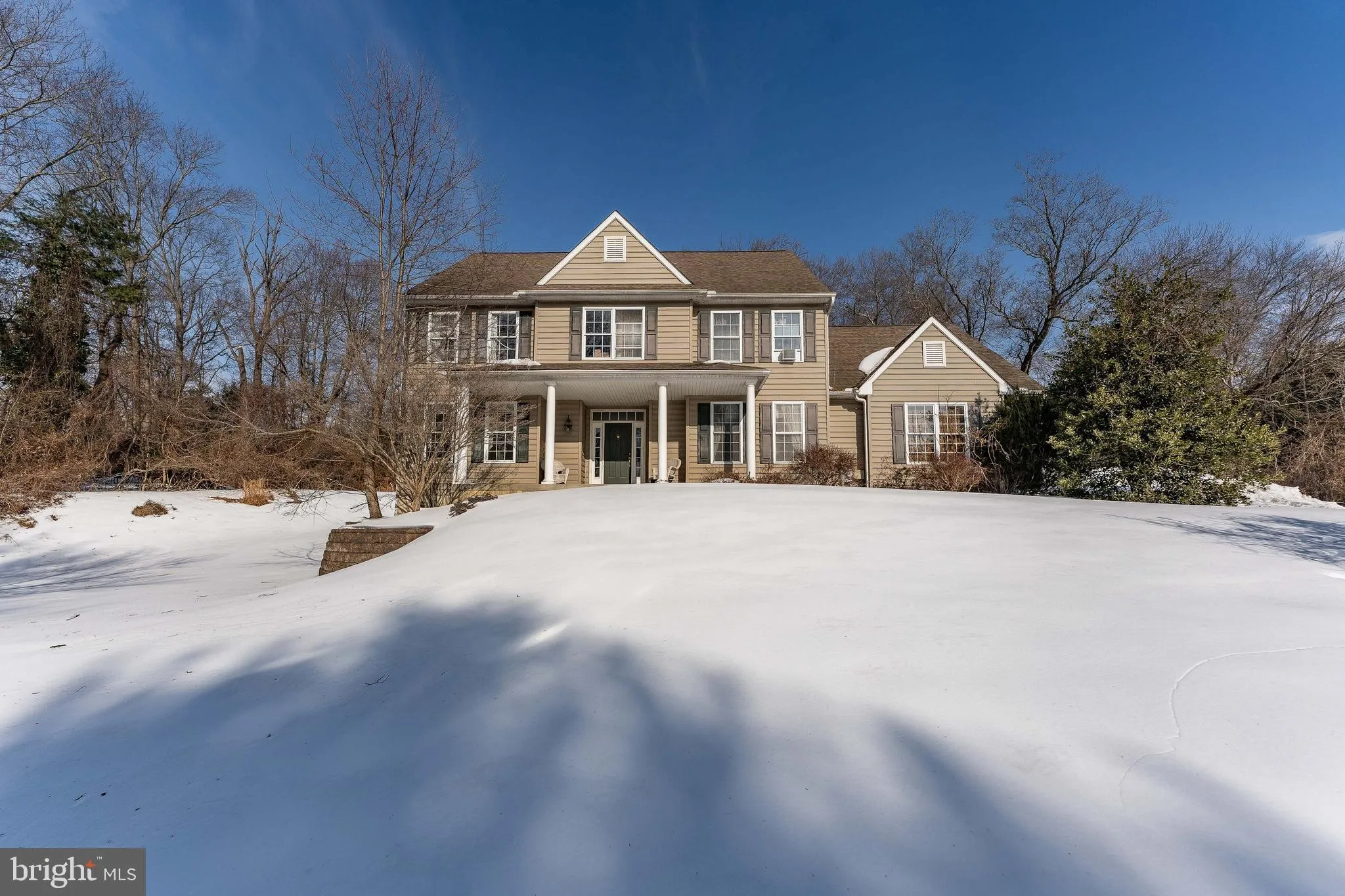
    A four-bedroom Media home with a covered porch

    The home spans over 4,700 square feet and sits on more than an acre.

    Built in 2006, this four-bedroom, three-and-a-half-bathroom Middletown Township home has had just one owner. It features hardwood across part of the first floor, including the foyer, a living room, and a dining room. It also has a family room with a gas fireplace, a home office, an eat-in kitchen with stainless steel appliances, and a wet bar area in a hallway. The bedrooms are upstairs, including the primary suite, which has a walk-in closet, a jetted tub, dual vanities, and a separate sitting room. The home also has a partially finished basement and a three-car garage.

    See more photos of the home here.

    Price: $800,000 | Size: 4,756 SF | Acreage: 1.02

    🗞️ What other Greater Media residents are reading this week:

    By submitting your written, visual, and/or audio contributions, you agree to The Inquirer’s Terms of Use, including the grant of rights in Section 10.

    This suburban content is produced with support from the Leslie Miller and Richard Worley Foundation and The Lenfest Institute for Journalism. Editorial content is created independently of the project donors. Gifts to support The Inquirer’s high-impact journalism can be made at inquirer.com/donate. A list of Lenfest Institute donors can be found at lenfestinstitute.org/supporters.

  • In the 1940s, she was denied service at a Delco restaurant. She spent the rest of her life bridging racial divides in Media.

    In the 1940s, she was denied service at a Delco restaurant. She spent the rest of her life bridging racial divides in Media.

    When the Media-area NAACP was selecting a few Black figures to spotlight throughout Black History Month, adding Marie Whitaker to the list was a no-brainer, said Cynthia Jetter, president of Media’s NAACP chapter.

    Within the community, “I think most people know the story,” Jetter said.

    The story, that is, of when Whitaker sat down for a meal at the Tower Restaurant at the corner of State and Olive Streets with her baby in her arms and her sister by her side in 1943.

    No one waited on them.

    This bothered Dorothy James, a white Quaker woman who was dining at the restaurant. So she approached a worker there who explained that the waitresses did not serve Black people, James recounted in a letter she wrote a few days after the incident.

    Whitaker soon left the restaurant with her baby and sister and went elsewhere. Soon, James joined them, she wrote.

    Whitaker and James became fast friends and cofounded Media Fellowship House the following year. The goal was to bring together Media residents of all races and religions for events and meals. It grew over the course of its first decade, and in 1953, they raised enough money from community members to buy a property on South Jackson Street, where the organization flourished.

    Whitaker died in 2002, but the fellowship house lived on. In its 82 years, it has gone from hosting sewing circles and childcare events to helping Black people buy homes in restricted neighborhoods to now offering assistance to first-time homebuyers and helping those facing foreclosure.

    For Amy Komarnicki, who now runs the Media Fellowship House, the values Whitaker championed — inclusion, resilience, and courage — are always guiding her.

    “I think you have to move toward the injustice that you see and not ignore it,” Komarnicki said.

    That is especially difficult to do when you’re on the receiving end of the injustice, she added.

    “Being willing to accept an invitation to talk about it takes enormous bravery and trust,” Komarnicki said. “It’s good to be uncomfortable. It’s good to make people uncomfortable for the greater good. It opens up space for dialogue.”

    Whitaker’s legacy stretches beyond the bounds of Media. Her daughter, Gail Whitaker, once the infant with her at the restaurant where she did not get served, became the first Black woman to practice law in Delaware County and served on the Media Borough Council. She died in 2024. Her son, Bill Whitaker, is a 60 Minutes correspondent for CBS.

    Living in Media and going to Fellowship House growing up exposed him to people from all kinds of demographics and religions, Bill Whitaker said. And that was no accident; it was something his mother and Fellowship House helped lay the groundwork for.

    “She was resolute and knew what she wanted, not just for her family, but for her community and for her world,” Whitaker said. “She had a vision of what Fellowship House stands for, bringing people together and having people speak across what seems now to be a chasm of our differences — she wanted people to speak across that, to reach across that and come together.”

    As long as Fellowship House stands, that work, just as important now as then, will continue, Bill Whitaker said.

  • Sheetz wants to move into Delaware County, home of Wawa

    Sheetz wants to move into Delaware County, home of Wawa

    Sheetz could soon stake a claim in Delaware County, extending its reach into the Philadelphia region.

    The Altoona-based convenience store chain, which opened its first store in the Philly suburbs last week, has submitted a sketch plan application to build a 6,000-square-foot location in Chadds Ford.

    It would be Sheetz’s first outpost in Wawa’s home county.

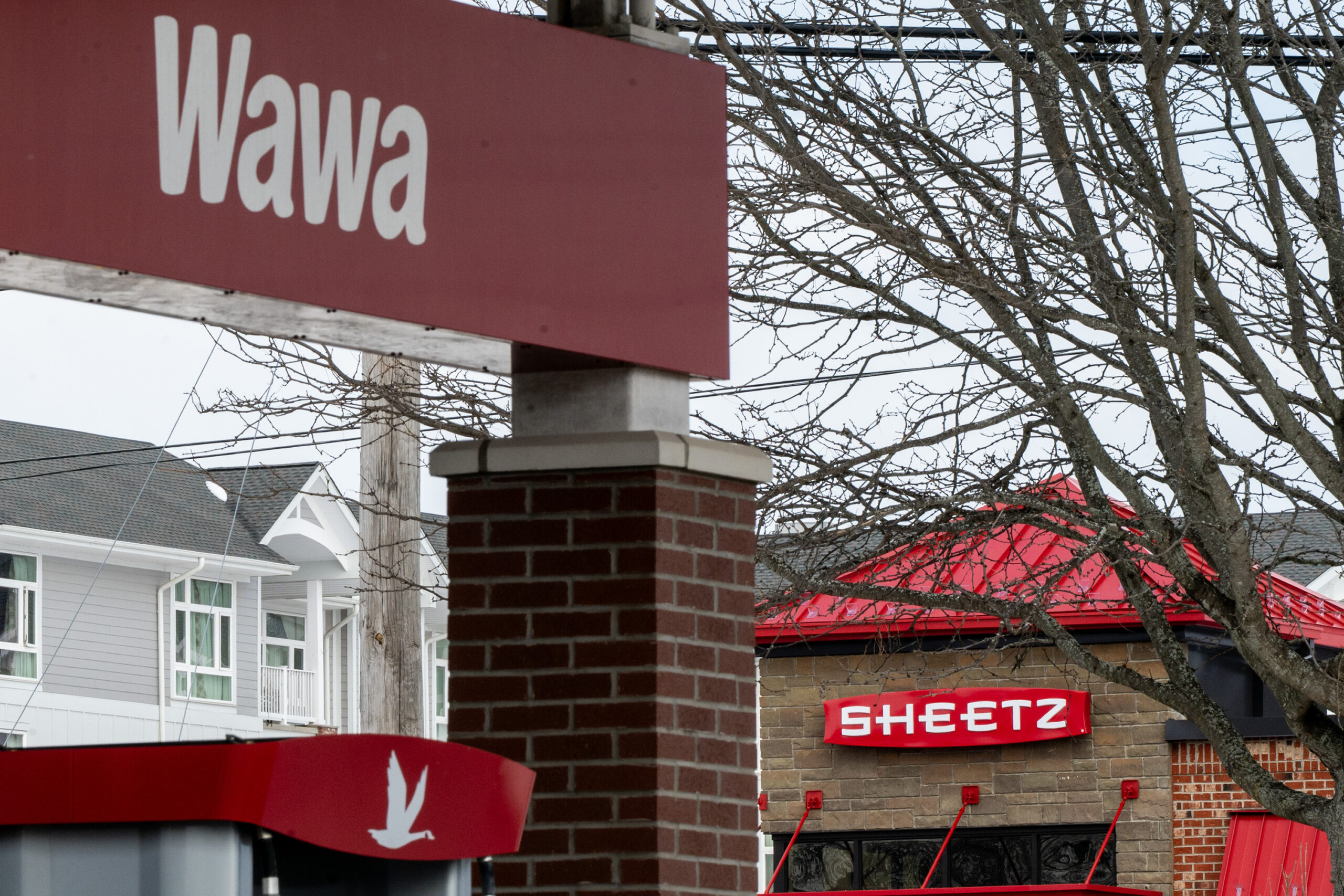
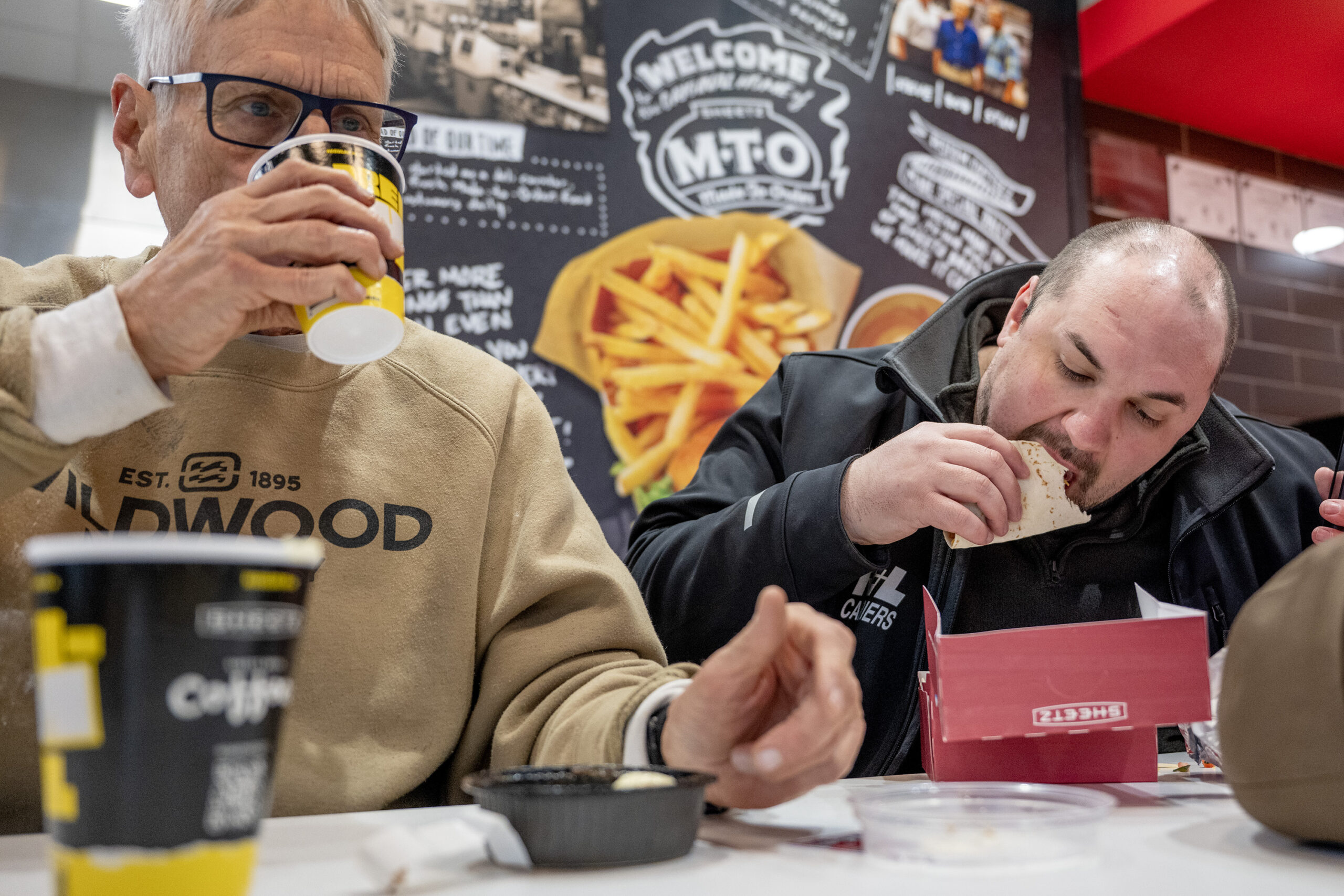
    A Sheetz and Wawa now sit across the street from each other in Limerick Township, Montgomery County.

    If approved, the store would be constructed about five miles down the road from Wawa’s corporate headquarters, and across the county from the site of Wawa’s first store, in Folsom.

    The Sheetz would be in the Village at Painters’ Crossing shopping center near the intersection of U.S. Routes 1 and 202, according to the application. Sheetz would take over a parcel in the northeast corner of the complex that is currently occupied by a vacant former bank and a closed Carrabba’s Italian restaurant.

    Along with Sheetz’s usual offerings of made-to-order food, grab-and-go snacks, and drinks, the outpost would include indoor and outdoor seating, two mobile-order pickup windows, and six gas pumps, according to the application. It would not include a drive-through.

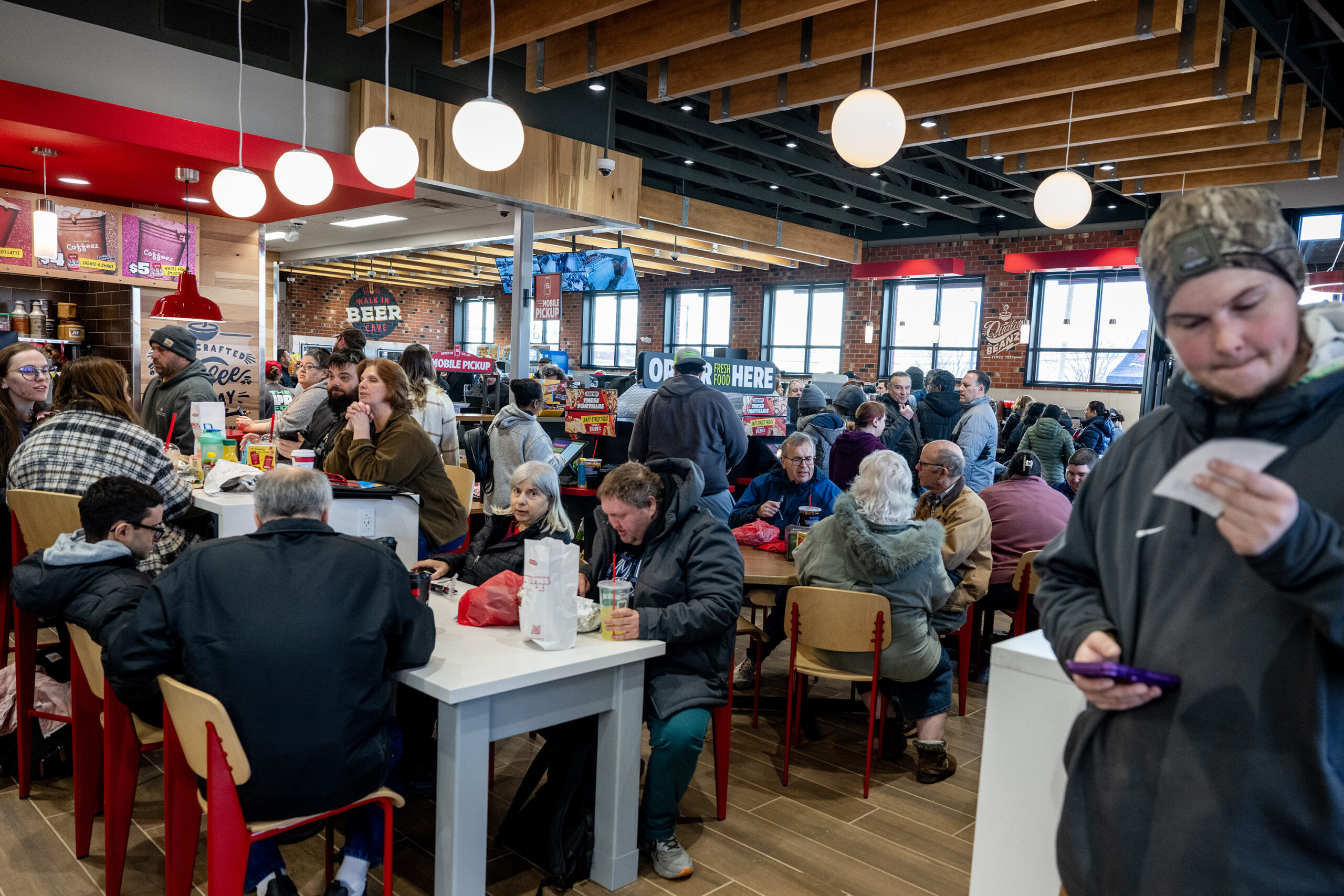
    Customers crowd into the indoor dining area at the new Sheetz in Limerick Township that opened last week.

    Nick Ruffner, Sheetz public affairs manager, declined to provide additional information about the proposal, saying in a statement that “it is still very early in the process.”

    Zoning changes and other approvals would be required before anything is built, Chadds Ford Township solicitor Michael Maddren said. As of Tuesday, Sheetz had only submitted the sketch plan, which was discussed at a planning commission meeting earlier this month, Maddren said.

    At the meeting, township officials did not express strong opinions about the sketch, Maddren said: “We need a little more detail.”

    Craig Scott (left) of Wayne and Dave Swartz (right) of Collegeville had breakfast at last week’s grand opening of the first Sheetz in the Philadelphia suburbs.

    If the Chadds Ford project moves forward, Sheetz could establish a foothold in three of Philly’s four collar counties: Along with its new Limerick, Montgomery County location, Sheetz also has expressed interest in building a store in Chester County.

    In the fall, company officials submitted a sketch plan to Caln Township officials, proposing a location at the site of a shuttered Rite Aid on the 3800 block of Lincoln Highway in Downingtown, according to the township website.

    After years of Sheetz opening stores in Western and central Pennsylvania, and Wawa expanding closer to Philly, Sheetz and Wawa’s footprints have increasingly overlapped in recent years.

    A Wawa opened outside Harrisburg in 2024, marking the chain’s first central Pennsylvania location. It is down the street from a Sheetz.

    Wawa made the first move: In 2024, it opened its first central Pennsylvania location within eyesight of a Sheetz. Since then, Wawa has opened 10 stores in the region, with plans to add 40 more there in the next five years.

    Both chains also have expanded beyond Pennsylvania.

    Sheetz now has more than 800 stores in seven states. Wawa has nearly 1,200 stores in 13 states.