Tag: no-latest

  • Trump says change in power in Iran ‘would be the best thing that could happen’

    Trump says change in power in Iran ‘would be the best thing that could happen’

    WASHINGTON — President Donald Trump said Friday that a change in power in Iran “would be the best thing that could happen” as the U.S. administration weighs whether to take military action against Tehran.

    Trump made the comments shortly after visiting with troops in Fort Bragg, N.C., and after he confirmed earlier in the day that he’s deploying a second aircraft carrier group to the Mideast for potential military action against Iran.

    “It seems like that would be the best thing that could happen,” Trump said in an exchange with reporters when asked about pressing for the ouster of the Islamic clerical rule in Iran. “For 47 years, they’ve been talking and talking and talking.”

    The president has suggested in recent weeks that his top priority is for Iran to further scale back its nuclear program, but on Friday he suggested that’s only one aspect of concessions the U.S. needs Iran to make.

    Israeli Prime Minister Benjamin Netanyahu, who traveled to Washington this week for talks with Trump, has been pressing for any deal to include steps to neutralize Iran’s ballistic missile program and end its funding for proxy groups such as Hamas and Hezbollah.

    “If we do it, that would be the least of the mission,” Trump said of targeting Tehran’s nuclear program, which suffered significant setbacks in U.S. military strikes last year.

    Iran has insisted its nuclear program is for peaceful purposes. Before the June war, Iran had been enriching uranium up to 60% purity, a short, technical step away from weapons-grade levels.

    Trump’s comments advocating for a potential end to Ayatollah Ali Khamenei’s rule come just weeks after Secretary of State Marco Rubio said a potential change in power in Iran would be “far more complex” than the administration’s recent effort to oust Venezuelan President Nicolás Maduro from power.

    Rubio, during a Senate hearing last month, noted that with Iran “you’re talking about a regime that’s in place for a very long time.”

    “So that’s going to require a lot of careful thinking, if that eventuality ever presents itself,” Rubio said.

    Trump said the USS Gerald R. Ford, the world’s largest aircraft carrier, is being sent from the Caribbean Sea to the Mideast to join other warships and military assets the U.S. has built up in the region.

    The planned deployment comes just days after Trump suggested another round of talks with the Iranians was at hand. Those negotiations didn’t materialize as one of Tehran’s top security officials visited Oman and Qatar this week and exchanged messages with U.S. intermediaries.

    “In case we don’t make a deal, we’ll need it,” Trump told reporters about the second carrier. He added, “It’ll be leaving very soon.”

    Already, Gulf Arab nations have warned any attack could spiral into another regional conflict in a Mideast still reeling from the Israel-Hamas war in the Gaza Strip. Meanwhile, Iranians are beginning to hold 40-day mourning ceremonies for the thousands killed in Tehran’s bloody crackdown on nationwide protests last month, adding to the internal pressure faced by the sanctions-battered Islamic Republic.

    The Ford, whose new deployment was first reported by the New York Times, will join the USS Abraham Lincoln and its accompanying guided-missile destroyers, which have been in the region for over two weeks. U.S. forces already have shot down an Iranian drone that approached the Lincoln on the same day last week that Iran tried to stop a U.S.-flagged ship in the Strait of Hormuz.

    Trump in exchanges with reporters on Friday still offered measured hope that a deal can be struck with Iran.

    “Give us the deal that they should have given us the first time,” Trump said about how U.S. military action can be avoided. ”If they give us the right deal, we won’t do that.”

    Ford had been part of Venezuela strike force

    It would be a quick turnaround for the Ford, which Trump sent from the Mediterranean Sea to the Caribbean last October as the administration built up a huge military presence in the lead-up to the surprise raid last month that captured then-Venezuelan President Nicolás Maduro.

    It also appears to be at odds with the Trump administration’s national security and defense strategies, which put an emphasis on the Western Hemisphere over other parts of the world.

    In response to questions about the movement of the Ford, U.S. Southern Command said U.S. forces in Latin America will continue to “counter illicit activities and malign actors in the Western Hemisphere.”

    “While force posture evolves, our operational capability does not,” Col. Emanuel Ortiz, spokesperson for Southern Command, said in a statement. U.S. “forces remain fully ready to project power, defend themselves, and protect U.S. interests in the region.”

    The Ford strike group will bring more than 5,000 additional troops to the Middle East but few capabilities or weapons that don’t already exist within the Lincoln group. Having two carriers will double the number of aircraft and munitions that are available to military planners and Trump.

    Given the Ford’s current position in the Caribbean, it will likely be weeks before it is off the coast of Iran.

    Trump has repeatedly threatened to use force to compel Iran to agree to constrain its nuclear program and earlier over Tehran’s bloody crackdown on nationwide protests.

    Iran and the United States held indirect talks in Oman a week ago, and Trump later warned Tehran that failure to reach an agreement with his administration would be “very traumatic.” Similar talks last year ultimately broke down in June as Israel launched what became a 12-day war on Iran that included the U.S. bombing Iranian nuclear sites.

    Asked by a reporter about the new negotiations, Trump said Friday that “I think they’ll be successful. And if they’re not, it’s going to be a bad day for Iran, very bad.”

    Long carrier deployments affect crews and ships

    The USS Ford, meanwhile, first set sail in late June 2025, which means the crew will soon have been deployed for eight months. While it is unclear how long the ship will remain in the Middle East, the move sets the crew up for an unusually long deployment.

    The Navy’s top officer, Adm. Daryl Caudle, told reporters last month that keeping the Ford longer at sea would be “highly disruptive” and that he was “a big nonfan of extensions.”

    Carriers are typically deployed for six or seven months. “When it goes past that, that disrupts lives, it disrupts things … funerals that were planned, marriages that were planned, babies that were planned,” Caudle said.

    He said extending the Ford would complicate its maintenance and upkeep by throwing off the schedule of repairs, adding more wear and tear, and increasing the equipment that will need attention.

    For comparison, the aircraft carrier USS Dwight D. Eisenhower had a nine-month deployment to the Middle East in 2023 and 2024, when it spent much of its time engaged with the Iran-backed Houthi rebels in Yemen. The ship entered maintenance in early 2025 as scheduled, but it blew past its planned completion date of July and remains in the shipyard to this day.

    Caudle told the Associated Press in a recent interview that his vision is to deploy smaller, newer ships when possible instead of consistently turning to huge aircraft carriers.

  • Gifts and soup from ‘Uncle Jeffrey’: The Epstein ties that ended Kathy Ruemmler’s run at Goldman

    Gifts and soup from ‘Uncle Jeffrey’: The Epstein ties that ended Kathy Ruemmler’s run at Goldman

    NEW YORK — Goldman Sachs general counsel Kathy Ruemmler has had a storied legal career. As a federal prosecutor, she helped successfully prosecute Enron executives including Ken Lay and Jeffrey Skilling. She was part of President Barack Obama’s administration, working in various roles for much of his two terms in office, including as White House counsel.

    She was even briefly considered by President Obama as a candidate for attorney general.

    On Thursday, Ruemmler, 54, announced that she plans to resign from the top legal post at Goldman after a trove of emails and correspondence between her and disgraced financier Jeffrey Epstein showed the two individuals were especially close, years after Epstein’s 2008 conviction on sex crimes charges, when he became a registered sex offender.

    Ruemmler previously downplayed her relationship with Epstein. She called him a “monster” and said she regretted ever knowing him. Ruemmler has repeatedly described their relationship as professional, citing her job as a private defense attorney before she ever joined Goldman Sachs.

    But documents released in recent weeks and reviewed by the Associated Press depict a deeper relationship than had previously been characterized by Ruemmler and Goldman Sachs. These included intimate email exchanges, social plans and gifts that went beyond formal legal work.

    Roughly 8,400 documents involved Ruemmler or referenced her. Some correspondence shows that Ruemmler was aware of the extent of the allegations that Epstein had faced involving underage girls in Florida. In some instances, she advised Epstein on how he might go about trying to repair his image and defend himself publicly against new claims of misconduct.

    The gifts Epstein gave to Ruemmler have been documented in news reports: the spa treatments, the handbags from Hermes, an Apple Watch, a Fendi coat, among many others. But some of the interactions between Epstein and Ruemmler described throughout their correspondence indicates that Epstein and Ruemmler did not simply have a lawyer-client transactional relationship, as Ruemmler previously attested to.

    “It makes him happy to see you happy,” Epstein’s assistant wrote to Ruemmler in 2016, after Epstein prepaid for a spa treatment for her.

    In October 2018, Epstein directed one of his assistants to send flowers and chicken soup to Ruemmler because she has “not been feeling well.” It would not be the first time that Epstein would send her a small token of appreciation when she was sick. They talked about dating issues, made jokes about both the wealthy and everyday people, and shared laments about their careers and dating lives.

    They would message each other about mundane things like their mutual distaste for seeing babies in business class on flights and would repeatedly plan to have dinner or drinks in various places. Epstein even had Ruemmler as a backup executor of his will at one point.

    Setting aside the immense wealth and privilege and Epstein’s legal troubles, many of the emails between the two would look no different from the banter that many Americans would share to in their own text messages, emails, or group chats.

    “Well, I adore him. It’s like having another older brother!” she wrote in an email in 2015.

    During her time in private practice after she left the White House in 2014, Ruemmler received several expensive gifts from Epstein, including luxury handbags and a fur coat. The gifts were given after Epstein had already been convicted of sex crimes in 2008 and was registered as a sex offender. Ruemmler was also involved in Epstein’s legal defense efforts after he was arrested a second time for sex crimes in 2019 and later killed himself in a Manhattan jail.

    “So lovely and thoughtful! Thank you to Uncle Jeffrey!!!” Ruemmler wrote to Epstein in 2018.

    She later joined Goldman Sachs in 2020 and became the investment bank’s top lawyer in 2021.

    The firm’s leadership backed her publicly amid the revelations. But the embarrassing emails raised questions about Ruemmler’s judgment. Historically, Wall Street frowns on gift-giving between clients and bankers or Wall Street lawyers, particularly high-end gifts that could pose a conflict of interest. Goldman Sachs requires its employees to get pre-approval before receiving gifts from or giving them to clients, according to the company’s code of conduct, partly in order to not run afoul of anti-bribery laws.

    Bloomberg News, the Wall Street Journal, and other media outlets reported that Goldman’s partners, who are the firm’s most senior and well-regarded members going back to when the investment bank was privately held, had begun to question why the firm was holding Ruemmler in such high regard when other lawyers were just as qualified to hold the top legal job.

    In her statement Thursday, Ruemmler said: “Since I joined Goldman Sachs six years ago, it has been my privilege to help oversee the firm’s legal, reputational, and regulatory matters; to enhance our strong risk management processes; and to ensure that we live by our core value of integrity in everything we do. My responsibility is to put Goldman Sachs’ interests first.”

    Goldman CEO David Solomon said he respected Ruemmler’s decision to resign. The firm isn’t rushing Ruemmler out the door, saying in a statement that she would wind down her work at the bank “to ensure a smooth transition,” before her last day on June 30.

  • Trump pardons 5 former NFL players for crimes ranging from perjury to drug trafficking

    Trump pardons 5 former NFL players for crimes ranging from perjury to drug trafficking

    WASHINGTON — President Donald Trump on Thursday pardoned five former professional football players — one posthumously — for various crimes ranging from perjury to drug trafficking.

    The pardons were announced by White House pardon czar Alice Marie Johnson. Ex-NFL players Joe Klecko, Nate Newton, Jamal Lewis, Travis Henry, and the late Billy Cannon were granted the clemency.

    “As football reminds us, excellence is built on grit, grace, and the courage to rise again. So is our nation,” Johnson wrote on the social media site X, as she thanked Trump for his “continued commitment to second chances.”

    Klecko, a former star for the New York Jets, pleaded guilty to perjury after lying to a federal grand jury that was investigating insurance fraud.

    A defensive lineman, Klecko played high school football at St. James Catholic High School for Boys in Chester and at Temple. He was inducted into the Pro Football Hall of Fame in 2023. He was a two-time Associated Press All-Pro player and a four-time Pro Bowler.

    Johnson said Dallas Cowboys owner Jerry Jones “personally” shared the news with Newton, who won three Super Bowls with the team.

    The White House did not return a request for comment Thursday night on why Trump, an avid sports fan, pardoned the players.

    Dallas Cowboys offensive lineman Nate Newton is in action against the Philadelphia Eagles during the NFC divisional playoffs in Irving, Texas, Jan. 7, 1996.

    Newton, an offensive lineman, pleaded guilty to a federal drug trafficking charge after authorities discovered $10,000 in his pickup truck as well as 175 pounds of marijuana in an accompanying car driven by another man. Newton was a two-time All-Pro player and six-time Pro Bowler.

    Lewis, formerly of the Baltimore Ravens and the Cleveland Browns, pleaded guilty in a drug case in which he used a cellphone to try to set up a drug deal not long after he was a top pick in the 2000 NFL draft. Lewis, a running back, was named an All-Pro once and was a one-time Pro Bowler. He was named the 2003 AP Offensive Player of the Year.

    Henry, who played for the Denver Broncos, pleaded guilty to conspiracy to traffic cocaine for financing a drug ring that moved the drug between Colorado and Montana. He was a running back for three teams and a one-time Pro Bowler.

    And Cannon — who played with the Houston Oilers, Oakland Raiders, and Kansas City Chiefs — admitted to counterfeiting in the mid-1980s after a series of bad investments and debts left him broke.

    Cannon was a two-time All-Pro player and a two-time Pro Bowler. Cannon also won the 1959 Heisman Trophy while starring for Louisiana State University, where he had one of the most memorable plays in college football history: an 89-yard punt return for a touchdown against Ole Miss. He died in 2018.

  • Transfer of ISIS suspects concludes as Trump pursues Syria exit

    Transfer of ISIS suspects concludes as Trump pursues Syria exit

    The U.S. military has completed the transfer of thousands of suspected Islamic State fighters to the Iraqi government, setting the stage for the expected withdrawal of many — perhaps even all — American troops from Syria within months despite concerns about the Syrian government’s ability to prevent a resurgence of the group, officials familiar with the issue said.

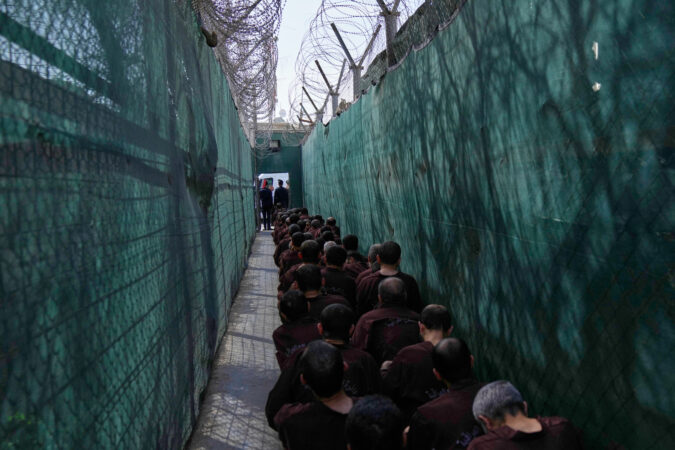
    The movement of 5,700 detainees, underway for weeks, was completed Thursday night with a flight from northeastern Syria to Iraq, U.S. military officials said in a statement. The effort signals a forthcoming end to a yearslong mission overseen by the U.S.-backed Syrian Democratic Forces (SDF), a Kurdish militia group that had managed the detention facilities in territory it controlled in northeastern Syria.

    The transfer began Jan. 21 as U.S. troops teamed with SDF and Iraqi counterparts to move the detainees using aircraft and armed ground convoys. It marks one of the most significant developments in years for the remnants of the Islamic State, the militant group whose bloody campaign across Syria and Iraq resulted in a multinational military intervention beginning in 2014. A smaller number of Syrians, fewer than 2,000, are expected to remain in Syria in the SDF-run detention centers until they are turned over to the Syrian government.

    Many of the detainees who have been transferred are expected to be held at the Al-Karkh prison, an Iraqi facility near Baghdad International Airport, said U.S. officials, who like some others spoke on the condition of anonymity to discuss sensitive military operations. It was once called Camp Cropper and used by the U.S. military to house detainees during the Iraq War. Iraq’s supreme judicial council said Friday that about 3,000 Syrians are among the detainees transferred.

    In a statement, the White House said Trump is committed to a Syria that is “stable, unified and at peace with itself and its neighbors.” That requires Syria not being a base for terrorism or to pose a threat in the region and beyond, it says.

    The United States is monitoring the situation in Syria and working with all sides, the statement says, to ensure that “ISIS detainees remain in detention,” including an organized transition of other detention centers in Syria to Syrian government control.

    The shift underscores a major shift in U.S. policy toward Syria, as President Donald Trump, who has aligned himself with Syrian President Ahmed al-Sharaa, seeks to extricate the roughly 1,000 American troops who have remained there functioning as a backstop to prevent a resurgence by the Islamic State.

    A report by the Director of National Intelligence last year said that the Islamic State will attempt to “reconstitute its attack capabilities,” including plotting against the West, and free prisoners to rebuild its ranks. Three U.S. troops were ambushed and killed by a suspected Islamic State member in Syria in December, prompting Trump to approve retaliatory airstrikes days later.

    Sharaa, a former al-Qaeda militant who broke with the group in 2016, has sought to unify his country since his forces forced the December 2024 ouster of Syrian President Bashar Assad, a dictator whose 24-year rule was marked by mass atrocities and a civil war that killed hundreds of thousands of people. The Islamic State has repeatedly attempted to assassinate Sharaa over the last year, according to a United Nations report released this week.

    One step in the withdrawal occurred Wednesday, as U.S. troops at the Tanf garrison in the southeastern part of Syria turned control over to Sharaa’s forces. Adm. Brad Cooper, the top officer overseeing U.S. operations in the region, said in a statement that U.S. forces retain the ability to respond to any threats posed by the Islamic State in the region.

    Other bases could be transferred to Sharaa’s forces in coming days or weeks as conditions warrant, two officials familiar with the issue said. Doing so could allow Trump to fully end the U.S. mission there, a goal since his first administration that consistently collided with challenges posed by Syria’s fractured state.

    Trump has downplayed Sharaa’s past as a jihadist, telling reporters in January that the Syrian leader was “working very hard.” He’s characterized him as a “tough guy” with a “pretty tough resumé.”

    “You’re not gonna put a choir boy in there and get the job done,” Trump said at the time.

    Still, U.S. officials said, Washington had privately delivered warnings to their Iraqi counterparts about Sharaa’s ability to ensure security over the ISIS detention camps. One senior U.S. official said in an interview with the Washington Post that the Trump administration had told Baghdad in the fall that it was “entirely likely” that if Sharaa’s government took control of the alleged terrorism suspects, they could be freed or break loose at some point and attack Iraq again.

    Sharaa could not be reached for comment.

    Iraqi officials acknowledged then that there was cause for concern, the senior U.S. official said. But those anxieties accelerated last month, as Sharaa’s forces pressed forward with an armed offensive into SDF-held territory, forcing the group to abandon two major facilities, the Shaddadi prison and al-Hol camp, allowing about 200 detainees to escape on Jan. 19.

    The detainees were considered “low-level” fighters, and dozens were later recaptured, U.S. officials said. But the episode triggered alarm in Washington and Baghdad and prompted numerous phone calls from senior U.S. officials to Sharaa, officials said, including at least one by Cooper on Jan. 21 and one by Trump on Jan. 27, these people said.

    Abdulkarim Omar, a representative with the SDF’s civilian government, called the moves of Sharaa’s forces in the region “aggression.” The Kurdish people, he said, “became victims of international arrangements concluded over their heads” and have seen “international silence.”

    Cooper also made a visit to northeastern Syria on Jan. 22, as his team attempted to ensure that Sharaa’s forces and the SDF adhered to a ceasefire as the detainees were transferred from Syria to Iraq, according to a U.S. military statement at the time.

    “It definitely could have gone completely sideways, to be completely honest with you,” a senior U.S. official told the Post, noting that U.S. soldiers remained in the region as tensions were high between the SDF and Sharaa’s fighters.

    Trump acknowledged calling Sharaa, saying his team had “solved a tremendous problem in conjunction with Syria and saved many lives.” He did not elaborate.

    The undertaking has triggered mixed feelings in the region, even as officials there appear to cooperate with U.S. desires.

    Hussein Allawi, an Iraqi security adviser, said his government is urging other governments to take back ISIS suspects from their countries so that Iraq is not overwhelmed. Iraq, he said is “totally capable” of handling the issue, but will face infrastructure challenges.

    Jiwan Soz, a Kurdish researcher, said that “despite the interference of the Americans” in the dispute between the SDF and Sharaa’s fighters, the Syrian president “cannot control the situation.” The armed groups Al-Sharaa relies on have a variety of tribal affiliations and allegiances, he said, and armed skirmishes have continued.

    “There are huge challenges there, and I don’t believe al-Sharaa can succeed,” he said.

    Nawar Rahawie, a Syrian official, said the ceasefire is fragile and will require persuasion. Tribal fighters who aligned with both the SDF and the Syrian government have kept their fighters out of the fray, he said, and Sharaa has “a certain level of control over the tribes and fighters.”

    He added that people of all kinds were “harmed by the Assad regime,” and credited Sharaa’s government for offering a new way. Syrian officials are investigating “crimes and murder” that have emerged, and will seek accountability, he said.

    James Jeffrey, a former U.S. ambassador who focused on Syria during the first Trump administration, told the House Foreign Affairs Committee this week that he is “wary” of Sharaa, but has watched him push Iranian influence away from Syria and combat Islamic State fighters who remain — both core U.S. goals.

    U.S. troops in Syria have worked with both the SDF and Sharaa’s forces in recent months, Jeffrey said, and Washington will have a better understanding of what occurs in the region the longer they remain.

  • Justice Department sues Harvard for data as it investigates how race factors into admissions

    Justice Department sues Harvard for data as it investigates how race factors into admissions

    WASHINGTON — The Trump administration is suing Harvard University, saying it has refused to provide admissions records that the Justice Department demanded to ensure the Ivy League school stopped using affirmative action in admissions.

    In a lawsuit filed Friday in federal court in Massachusetts, the Justice Department said Harvard has “thwarted” efforts to investigate potential discrimination. It accused Harvard of refusing to comply with a federal investigation and asked a judge to order the university to turn over the records.

    Harmeet Dhillon, who leads the department’s Civil Rights Division, said Harvard’s refusal is a red flag. “If Harvard has stopped discriminating, it should happily share the data necessary to prove it,” Dhillon said in a statement.

    A statement from Harvard said the university has been responding to the government’s requests. It said Harvard is in compliance with the Supreme Court decision barring affirmative action in admissions.

    “The University will continue to defend itself against these retaliatory actions which have been initiated simply because Harvard refused to surrender its independence or relinquish its constitutional rights in response to unlawful government overreach,” the university said.

    The suit is the latest salvo in President Donald Trump’s standoff with Harvard, which has faced billions of dollars in funding cuts and other sanctions after it rejected a list of demands from the administration last year.

    Trump officials have said they’re taking action against Harvard over allegations of anti-Jewish bias on campus. Harvard officials say they’re facing unconstitutional retaliation for refusing to adopt the administration’s ideological views. The administration is appealing a judge’s orders that sided with Harvard in two lawsuits.

    The Justice Department opened a compliance review into Harvard’s admissions practices last April on the same day the White House issued a series of sweeping demands aligned with Trump’s priorities. The agency told Harvard to hand over five years of admissions data for undergraduate applicants along with Harvard’s medical and law schools.

    It asked for a trove of data including applicants’ grades, test scores, essays, extracurricular activities and admissions outcomes, along with their race and ethnicity. It asked for the data by April 25, 2025. The lawsuit said Harvard has not provided that data.

    Justice Department officials said they need the data to determine whether Harvard has continued considering applicants’ race in admissions decisions. The Supreme Court barred affirmative action in admissions in 2023 after lawsuits challenged it at Harvard and the University of North Carolina.

    Trump officials have accused colleges of continuing the practice, which the administration says discriminates against white and Asian American students.

    The White House is separately pressing universities across the U.S. to providing similar data to determine whether they have continued to factor race into admissions decisions. The Education Department plans to collect more detailed admissions data from colleges after Trump signed an action suggesting schools were ignoring the Supreme Court decision.

    Trump’s dispute with Harvard had appeared to be winding down last summer after the president repeatedly said they were finalizing a deal to restore Harvard’s federal funding. The deal never materialized, and Trump rekindled the conflict this month when he said Harvard must pay $1 billion as part of any deal, double what he previously demanded.

  • ICE plans to spend $38.3 billion turning warehouses into detention centers

    ICE plans to spend $38.3 billion turning warehouses into detention centers

    U.S. Immigration and Customs Enforcement expects to spend $38.3 billion on its plan to acquire warehouses across the country and retrofit them into immigrant detention centers that can hold tens of thousands of immigrants, according to documents the agency provided to New Hampshire’s governor and published on the state’s website Thursday.

    ICE plans to buy and convert 16 buildings across the country to serve as regional processing centers, each holding 1,000 to 1,500 immigrant detainees at a time, according to one of the documents, an overview of the detention plan. Another eight large-scale detention centers will hold 7,000 to 10,000 detainees at a time, and serve as “the primary locations” for international removals.

    Detainees would spend an average of three to seven days at the processing sites before being transported to the larger facilities, where they would be held about 60 days before being deported, according to the document. The additional detention space is necessary, the document states, due to ICE’s hiring of more agents and an expected surge in arrests.

    The documents offer the most complete picture to date of the Trump administration’s plan to overhaul immigrant detention using buildings that were originally designed for industrial purposes — an expansive effort aimed at boosting ICE’s ability to arrest more immigrants and deport them faster. Rather than moving people around the country to any detention center with available beds, the new system of warehouses is designed to funnel them into a series of large-scale holding centers where they will await deportation, ICE documents show.

    They also demonstrate the scale and resources the Trump administration has devoted to building a mass deportation network. The plan’s $38 billion budget is more than the total annual spending for 22 states, according to state budget data.

    The Washington Post first reported on an earlier, draft solicitation document in December. Warehouses in Berks and Schuylkill Counties would be converted into detention centers as part of the plan.

    ICE has offered little information about the effort, prompting concern from state and local officials who have cited several logistical and humanitarian concerns of building large-scale detention centers in their regions.

    New Hampshire Gov. Kelly Ayotte said in a news release that the Department of Homeland Security shared the documents for the first time with her office on Thursday. Her statement appeared to contradict a claim made by Todd M. Lyons, ICE’s acting director, who testified at a Senate hearing earlier that day that DHS officials had previously spoken to the governor about the project and provided “an economic impact summary” to her.

    A spokeswoman for DHS did not immediately respond to an email seeking comment. The ICE document says all new facilities will need to comply with federal detention standards and provide for the “safe and humane civil detention of aliens.”

    In recent weeks, ICE has spent more than $690 million acquiring at least eight industrial buildings in Maryland, Arizona, Georgia, Texas, Pennsylvania, and Michigan, according to real estate deeds and internal ICE records reviewed by the Post. The agency has confirmed its interest in at least four additional buildings in Georgia, New Hampshire, New York, and New Jersey, according to statements made by local officials in those places.

    The government plans to hire contractors to carry out extensive renovations, turning vacant shells into holding facilities featuring lobbies, recreational space, dormitories, courtroom spaces, and cafeterias. At a building ICE plans to acquire in Merrimack, N.H., the agency expects to spend $158 million retrofitting the facility, according to an ICE economic impact assessment Ayotte posted to her website.

    It’s not clear which companies will be hired to renovate and operate the new facilities. George Zoley, the founder and executive chairman of ICE detention contractor Geo Group, said on a quarterly earnings call with Wall Street analysts Thursday that his company wants to be supportive of the new initiative, but cautioned that renovating warehouses would be “more complicated than you may think.”

    Geo Group once converted a warehouse into a holding center for 500 people about 30 years ago — nothing like the enormous size of the facilities being proposed now, Zoley said. “The operational implications of how you manage such a facility, particularly a large-scale facility, is going to be concerning,” Zoley said.

    The Post previously reported that some warehouses are expected to accept detainees as soon as April. ICE appears to have given multiple deadlines for when it expects the centers to be operational, according to the overview document. The agency will “fully implement a new detention model” by Sept. 30 and will “activate” all facilities by Nov. 30.

    Manchester Ink Link, a local news outlet, reported earlier on some of the details in the Manchester documents.

    Details of the expensive warehouse renovation effort have come to light as Democratic lawmakers in Washington have blocked bills to fund DHS in an attempt to force lawmakers to include new restrictions on federal immigration agents. Though the federal government was hurtling toward a partial shutdown beginning this weekend, the closures would not impact ICE’s funding because Republicans sent the agency tens of billions of dollars last year — including a historic $45 billion for immigrant detention.

    In several of the towns targeted for the project, local officials have said their water and sewer infrastructure would not be sufficient for a new facility holding thousands of people. For example, in Social Circle, Ga., a town with a population of 5,000, the town is permitted to pump up to 1 million gallons of water per day, and for much of the year, its peak usage is already above 800,000 gallons, according to data the city’s manager shared with the Post.

    In the project overview document, ICE says it reviewed the water supply at all of the proposed buildings, and found that “the capacities currently at the sites are sufficient to support the new facilities.” However, at the larger sites, the document said, “additional infrastructure” would be needed to support wastewater systems, and “numerous solutions” will be implemented. The document did not providing any more details.

    Federally owned real estate is often exempt from local permitting and zoning rules, but elected officials in some of the locations have pressed DHS to adhere to these requirements anyway. The detention plan overview states that the department will comply with the National Environmental Policy Act, federal law that requires environmental review of federal real estate projects before they can be built.

    DHS is pitching the New Hampshire project as “a major economic investment” that will help create 1,252 jobs during renovations and 265 jobs each year of operation, according to the economic impact document. The department said it expects to spend $146 million on the first three years of the facility’s operation.

    The analysis for New Hampshire contained what appeared to be a copy-and-paste error in describing “ripple effects to the Oklahoma economy.” ICE’s plans to buy a warehouse in Oklahoma City were scrapped last month, after the building’s owner decided not to sell.

    At least two other proposed deals — in Kansas City, Mo., and in Virginia — have also fallen through.

    These cancellations have revealed how the agency has pursued the projects. The owner of the Kansas City warehouse, a firm called Platform Ventures, said Thursday that it had begun negotiating a deal to sell its warehouse after being approached by a “third-party private enterprise” that it did not name.

    Platform Ventures said it learned DHS was the buyer only once the deal got closer. When the public also learned about the buyer, the city council quickly passed a five-year ban on all new nonmunicipal detention facilities. The company said Thursday that it exited negotiations because it said “the terms no longer met our fiduciary requirements for a timely closing.”

    The federal government also plans to take ownership of 10 existing detention centers where ICE currently operates in buildings owned by private contractors or local governments, the overview document said, without providing more detail.

    These facilities, combined with the new warehouses, would accommodate a total of 92,600 detainees at a time, the documents said.

  • DOJ’s targeting of Trump critics ramps up with attempt to indict lawmakers

    DOJ’s targeting of Trump critics ramps up with attempt to indict lawmakers

    The Justice Department’s efforts to prosecute President Donald Trump’s critics entered a new phase this week, when federal prosecutors failed to indict six Democratic lawmakers who recorded a video reminding military service members of their duty to refuse illegal orders.

    Department lawyers, under pressure from the president, previously targeted several of Trump’s most outspoken foes, including former FBI director James B. Comey and New York Attorney General Letitia James. Both faced since-dismissed charges last year over alleged conduct unrelated to their political views.

    But the case federal prosecutors put before a grand jury Tuesday — seeking to charge Sens. Mark Kelly (D., Ariz.), Elissa Slotkin (D., Mich.) and four others over their 90-second video message — marked the first time the department has directly sought to classify critical speech from prominent Trump detractors as a crime.

    The other lawmakers who participated in the video included Reps. Jason Crow, a former Army ranger from Colorado, and Maggie Goodlander, a Navy veteran from New Hampshire, as well as Chrissy Houlahan, a former Air Force officer, and Chris Deluzio, a former Navy officer, both from Pennsylvania.

    Grand jurors roundly rejected the effort, the Washington Post reported. But legal observers and the lawmakers at the center of the probe have argued in the days since that the panel’s decision is almost beside the point.

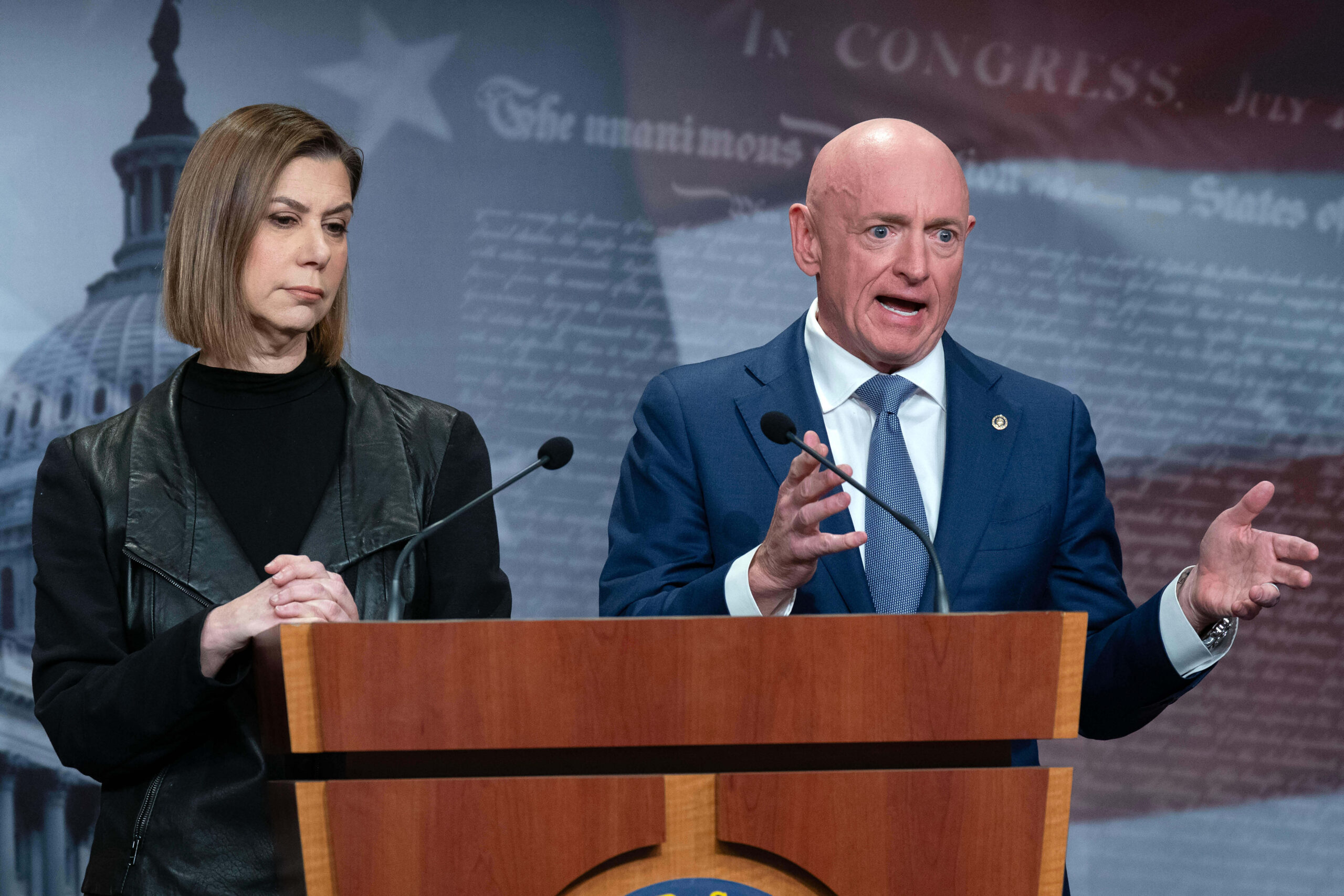
    Rep. Elissa Slotkin (D., Mich.) and Sen. Mark Kelly (D., Ariz.) speak during a news conference Wednesday on Capitol Hill.

    “This is not a good news story,” Kelly, a retired Navy captain and astronaut, told reporters during a news conference this week. “This is a story about how Donald Trump and his cronies are trying to break our system to silence anyone who lawfully speaks out against them.”

    The attempt to charge the lawmakers represents an evolution of the campaign that began last year with cases against James and Comey, said Brendan Nyhan, a professor of government at Dartmouth College.

    “Prosecuting people for speech criticizing the president is in some ways even more dangerous,” Nyhan said, “especially given these are legislators acting in their public role and especially given that they were calling for the military and national security state to follow the law.”

    Still, some Trump allies in Congress, including House Speaker Mike Johnson (R., La.), defended the administration’s efforts. He told reporters that Slotkin, Kelly, and the others “probably should be indicted.”

    “Any time you’re obstructing law enforcement and getting in the way of these sensitive operations, it’s a very serious thing, and it probably is a crime,” he said.

    The Justice Department’s criminal investigation into the lawmakers began after the video organized by Slotkin, a former CIA analyst, was posted online in November. In it, she and the others, all of whom served in the military or with intelligence agencies, reminded service members of their duty, spelled out in the Uniform Code of Military Justice, to resist unlawful directives.

    “This administration is pitting our uniformed military and intelligence community professionals against American citizens,” the lawmakers said. “Our laws are clear. You can refuse illegal orders.”

    The video did not single out any specific Trump administration policies. But Slotkin and Kelly, both of whom serve on the Senate Armed Services Committee, have sharply criticized the president for military strikes he authorized on alleged drug trafficking boats in the Caribbean Sea and Pacific Ocean and his decision to deploy the National Guard to cities run by Democratic officials.

    Their video drew an immediate reaction from Trump, who demanded on social media that the lawmakers face prosecution for sedition and suggested they should even, perhaps, be punished with execution.

    “SEDITIOUS BEHAVIOR, punishable by DEATH!” Trump wrote in one social media post soon after the video was posted. He said in another: “IT WAS SEDITION AT THE HIGHEST LEVEL, AND SEDITION IS A MAJOR CRIME.”

    Rep. Chrissy Houlahan, a former Air Force officer and a Democrat who represents Chester County, was one of six lawmakers targeted over a 90-second video message.

    The messages echoed another Trump post from last year in which he, in a missive addressed to “Pam,” an apparent reference to Attorney General Pam Bondi, insisted the Justice Department move swiftly to prosecute Comey, James, and others.

    “We can’t delay any longer, it’s killing our reputation and credibility,” he wrote then, adding, “JUSTICE MUST BE SERVED, NOW!!!”

    Within months, James was indicted on counts of mortgage fraud, while Comey was charged with lying to Congress. Both denied the accusations and their cases were later dismissed by a federal judge over technical issues with the appointment of the prosecutor who had charged them.

    Slotkin, Kelly, and the other lawmakers have maintained they did nothing wrong — even as top administration officials have accused them of using the video to encourage service members to take actions tantamount to mutiny.

    Earlier this month, four of the lawmakers in the video disclosed that they had been approached by FBI agents and declined to give voluntary interviews to prosecutors.

    “It was clearly, when our lawyers sat down with them, just about checking a box and doing what the president wanted them to do,” Slotkin said Wednesday. “Their heart wasn’t even in it.”

    It is not clear whether the FBI took other steps to investigate. But on Tuesday, prosecutors under the supervision of D.C.’s U.S. Attorney Jeanine Pirro, a former Fox News host and staunch Trump ally, presented a case against the lawmakers to the grand jury.

    Two political appointees led that presentation, according to two people familiar with the matter who spoke on the condition of anonymity to describe sealed court proceedings.

    The prosecutors — Steven Vandervelden, a former colleague of Pirro’s in the district attorney’s office in Westchester, New York, and Carlton Davis, a former staffer for House Oversight Committee Chairman Rep. James Comer (R., Ky.) — sought to charge the lawmakers with a felony crime that makes it illegal to “interfere with, impair, or influence the loyalty, morale, or discipline of the military or naval forces of the United States,” the people said.

    But when it came time to vote, none of the grand jurors agreed there was sufficient probable cause to charge any of the lawmakers with a crime, one of the people familiar said.

    Spokespeople for the Justice Department and for Pirro have declined to comment on the matter in the days since. Amid that silence, the effort has drawn an impassioned response from Capitol Hill.

    “The fact that they failed to incarcerate a United States senator should not obviate our outrage,” Sen. Brian Schatz (D., Hawaii) said during a heated session Wednesday in which Democratic senators implored their Republican colleagues to openly condemn the Justice Department’s actions. Senate Democrats held a special caucus meeting Thursday morning to further discuss the situation.

    “They tried to incarcerate two of us,” Schatz said. “I am not entirely sure the United States Senate can survive this if we do not have Republicans standing up.”

    Sen. Thom Tillis (North Carolina) has emerged as one of the few Republicans to publicly rebuke the department. He described the failed attempt to prosecute as exactly the type of weaponization of the justice system that the Trump administration has said it is fighting against.

    “Political lawfare is not normal, not acceptable, and needs to stop,” Tillis wrote in a post to X.

    At their news conference Wednesday, Kelly told reporters that he and Slotkin learned about the attempt to indict them Tuesday through media reports.

    “If things had gone a different way, we’d be preparing for arrest,” Slotkin said.

    Since then, lawyers for several of the targeted lawmakers have sent letters to Pirro and Bondi seeking assurances that the investigation is over and that prosecutors will not seek to indict them again. They’ve also instructed the department to retain all records of the investigation threatening potential legal action for violating the lawmakers’ free-speech rights.

    In a separate suit filed by Kelly, a federal judge Thursday halted Defense Department efforts to formally censure the senator over his video remarks, saying the effort to do so “trampled on Senator Kelly’s First Amendment freedoms and threatened the constitutional liberties of millions of military retirees.”

    “The intimidation was the point — to get other people beyond us to think twice about speaking out,” Slotkin said Wednesday. “But the real question is if the president can do this to us — sitting senators — who else can he do it to?”

  • U.S. spending millions to send migrants to third countries, report says

    U.S. spending millions to send migrants to third countries, report says

    The Trump administration spent more than $40 million last year to send hundreds of migrants to at least two-dozen countries that are not their own, a tactic Senate Democrats described in a report Friday as a costly strategy aimed at sowing fear and intimidation in the president’s mass deportation campaign.

    The 30-page analysis from the minority members of the Senate Foreign Relations Committee accuses the administration of entering into opaque financial agreements with foreign governments — including some with poor records on corruption and human rights — to rapidly expand a program for “third country” removals that once had been reserved for exceptional circumstances.

    Its authors contend that the State Department has failed to conduct sufficient oversight to ensure that payments to those countries are not being misspent and that migrants transferred to their custody are not being abused or mistreated.

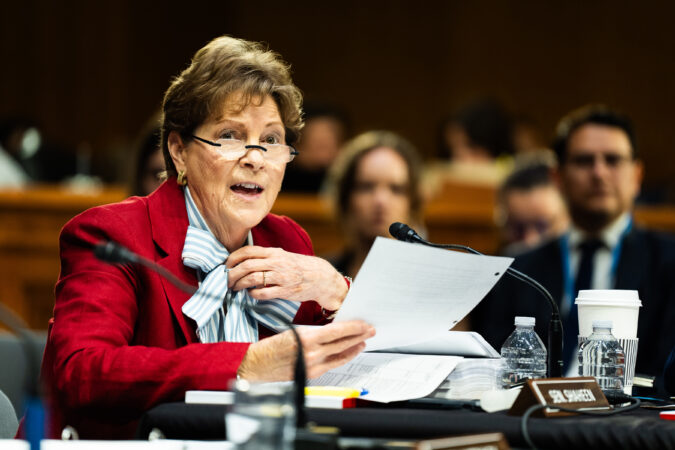
    The administration “has expanded and institutionalized a system in which the United States urges or coerces countries to accept migrants who are not their citizens, often through arrangements that are costly, inefficient and poorly monitored,” Sen. Jeanne Shaheen of New Hampshire, the top Democrat on the committee, wrote in a letter to colleagues. “Deporting migrants to countries they have no connection to … has become a routine instrument of diplomacy.”

    Administration officials have said they have no choice but to partner with foreign governments that are willing to accept undocumented immigrants whose native nations are not willing to take them back. In most cases, the migrants have criminal records, authorities said, though public records have shown that some have not been convicted of crimes in the United States.

    The report from Senate Democrats, which provides the most comprehensive look at the administration’s third-country removal program, found that the U.S. government has sent migrants to two-dozen third countries. The analysis focused primarily on five nations — El Salvador, Equatorial Guinea, Rwanda, Eswatini, and Palau — with which the Trump administration has entered into direct financial payments totaling $32 million, a committee member involved in the report said. The person spoke on the condition of anonymity to discuss the analysis ahead of its release.

    Under those agreements, U.S. authorities sent about 250 Venezuelan migrants to a maximum-security prison in El Salvador last spring, while 29 migrants have been deported to Equatorial Guinea, 15 to Eswatini, and seven to Rwanda, the report said. None has been sent to Palau.

    The report also estimated that the administration has spent more than $7 million in costs related to deportation flights to 10 of the third countries.

    “Millions of taxpayer dollars are being spent without meaningful oversight or accountability,” Shaheen wrote in her letter. “And speed and deterrence are being prioritized over due process and respect for human rights.”

    Tommy Pigott, a State Department spokesman, said the report shows the “unprecedented” work the administration has undertaken in its first year to enforce immigration laws.

    “Astonishingly, some in Congress still want to go back to a time just 14 months ago when cartels had free rein to poison Americans and our border was open,” Pigott said in a statement. “Make no mistake, President Trump has brought Biden’s era of mass illegal immigration to an end, and we are all safer for it.”

    The third-country strategy has provoked public blowback and legal challenges that have slowed the administration’s efforts and, in some instances, forced it to change course.

    Last spring, President Donald Trump invoked the Alien Enemies Act, a rarely used law targeting enemy combatants, which provided the administration’s legal rationale to send the Venezuelan migrants to El Salvador. Administration officials accused many of being members of the Tren de Aragua transnational gang, though some of their families and attorneys disputed that contention.

    The men were later transferred from El Salvador to Venezuela under a prisoner swap. On Thursday, a federal judge in Washington ruled that the administration must bring some of the Venezuelan deportees back to the United States as they pursue legal challenges to their removals.

    “It is worth emphasizing that this situation would never have arisen had the Government simply afforded Plaintiffs their constitutional rights before initially deporting them,” Chief U.S. District Judge James E. Boasberg wrote in his ruling.

    The analysis from the Senate Foreign Relations Committee minority was put together over a period of more than eight months, based on conversations with foreign government and U.S. government officials, attorneys for deportees and immigrant rights organizations, according to the committee staffer.

    The staffer said the goal of the report is to highlight the costs of the administration’s approach at a time when Democrats are concerned that the U.S. government is “entering a new phase” of speeding up the number of third-country agreements, along with the pace of deportations.

    The report faults the administration for pursuing its deportation policies at the expense of other U.S. interests, including promoting human rights and punishing corrupt foreign regimes.

    The authors said the Trump administration’s payment of $7.5 million to Equatorial Guinea to accept immigrants was more than the amount of foreign assistance the United States provided to that country in the previous eight years. They cited a 2025 State Department report on human trafficking that cited U.S. concerns about “corruption and official complicity in trafficking crimes” in that country.

    The report also said the Trump administration was moving hastily to carry out third-country removals without trying to negotiate with the home countries of some deportees. In one case, a man initially deported to Eswatini was later sent to his home nation of Jamaica, where government officials said they had never told the United States that they were unwilling to accept him.

    “As a result, the Trump Administration has, in some cases, paid twice for migrants’ travel — once to remove them to a third country and then again to fly them to their home country,” the report says.

  • A Homeland Security shutdown seems certain as funding talks between White House and Democrats stall

    A Homeland Security shutdown seems certain as funding talks between White House and Democrats stall

    WASHINGTON — A shutdown for the Department of Homeland Security appeared certain Thursday as lawmakers in the House and Senate were set to leave Washington for a 10-day break and negotiations with the White House over Democrats’ demands for new restrictions had stalled.

    Democrats and the White House have traded offers in recent days as the Democrats have said they want curbs on President Donald Trump’s broad campaign of immigration enforcement. They have demanded better identification for U.S. Immigration and Customs Enforcement and other federal law enforcement officers, a new code of conduct for those agencies and more use of judicial warrants, among other requests.

    The White House sent its latest proposal late Wednesday, but Trump told reporters on Thursday that some of the Democratic demands would be “very, very hard to approve.”

    Democrats said the White House offer, which was not made public, did not include sufficient curbs on ICE after two protesters were fatally shot last month. The offer was “not serious,” Senate Democratic Leader Chuck Schumer of New York said Thursday, after the Senate rejected a bill to fund the department.

    Americans want accountability and “an end to the chaos,” Schumer said. “The White House and congressional Republicans must listen and deliver.”

    Lawmakers in both chambers were on notice to return to Washington if the two sides struck a deal to end the expected shutdown. Sen. Patty Murray, the top Democrat on the Senate Appropriations Committee, told reporters that Democrats would send the White House a counterproposal over the weekend.

    Impact of a shutdown

    Senate Majority Leader John Thune, R-S.D., said after the vote that a shutdown appeared likely and “the people who are not going to be getting paychecks” will pay the price.

    The impact of a DHS shutdown is likely to be minimal at first. It would not likely block any of the immigration enforcement operations, as Trump’s tax and spending cut bill passed last year gave ICE about $75 billion to expand detention capacity and bolster enforcement operations.

    But the other agencies in the department — including the Transportation Security Administration, the Federal Emergency Management Agency, the Secret Service and the Coast Guard — could take a bigger hit over time.

    Gregg Phillips, an associate administrator at FEMA, said at a hearing this week that its disaster relief fund has sufficient balances to continue emergency response activities during a shutdown, but would become seriously strained in the event of a catastrophic disaster.

    Phillips said that while the agency continues to respond to threats like flooding and winter storms, long-term planning and coordination with state and local partners will be “irrevocably impacted.”

    Trump defends officer masking

    Trump, who has remained largely silent during the bipartisan talks, noted Thursday that a recent court ruling rejected a ban on masks for federal law enforcement officers.

    “We have to protect our law enforcement,” Trump told reporters.

    Democrats made the demands for new restrictions on ICE and other federal law enforcement after ICU nurse Alex Pretti was shot and killed by a U.S. Border Patrol officer in Minneapolis on Jan. 24. Renee Good was shot by ICE agents on Jan. 7.

    Trump agreed to a Democratic request that the Homeland Security bill be separated from a larger spending measure that became law last week. That package extended Homeland Security funding at current levels only through Friday.

    Schumer and House Democratic leader Hakeem Jeffries of New York have said they want immigration officers to remove their masks, to show identification and to better coordinate with local authorities. They have also demanded a stricter use-of-force policy for the federal officers, legal safeguards at detention centers and a prohibition on tracking protesters with body-worn cameras.

    Democrats also say Congress should end indiscriminate arrests and require that before a person can be detained, authorities have verified that the person is not a U.S. citizen.

    Thune suggested there were potential areas of compromise, including on masks. There could be contingencies “that these folks aren’t being doxed,” Thune said. “I think they could find a landing place.”

    But Republicans have been largely opposed to most of the items on the Democrats’ list, including a prohibition on masks.

    Sen. Eric Schmitt, R-Mo., said Republicans who have pushed for stronger immigration enforcement would benefit politically from the Democratic demands.

    “So if they want to have that debate, we’ll have that debate all they want,” said Schmitt.

    Judicial warrants a sticking point

    Thune, who has urged Democrats and the White House to work together, indicated that another sticking point is judicial warrants.

    “The issue of warrants is going to be very hard for the White House or for Republicans,” Thune said of the White House’s most recent offer. “But I think there are a lot of other areas where there has been give, and progress.”

    Schumer and Jeffries have said DHS officers should not be able to enter private property without a judicial warrant and that warrant procedures and standards should be improved. They have said they want an end to “roving patrols” of agents who are targeting people in the streets and in their homes.

    Most immigration arrests are carried out under administrative warrants. Those are internal documents issued by immigration authorities that authorize the arrest of a specific person but do not permit officers to forcibly enter private homes or other nonpublic spaces without consent. Traditionally, only warrants signed by judges carry that authority.

    But an internal ICE memo obtained by The Associated Press last month authorizes ICE officers to use force to enter a residence based solely on a more narrow administrative warrant to arrest someone with a final order of removal, a move that advocates say collides with Fourth Amendment protections.

    Far from agreement

    Thune, R-S.D., said were “concessions” in the White House offer. He would not say what those concessions were, though, and he acknowledged the sides were “a long ways toward a solution.”

    Schumer said it was not enough that the administration had announced an end to the immigration crackdown in Minnesota that led to thousands of arrests and the fatal shootings of two protesters.

    “We need legislation to rein in ICE and end the violence,” Schumer said, or the actions of the administration “could be reversed tomorrow on a whim.”

    Simmering partisan tensions played out on the Senate floor immediately after the vote, as Alabama Sen. Katie Britt, the chairwoman of the Senate Appropriations subcommittee that oversees Homeland Security funding, tried to pass a two-week extension of Homeland Security funding and Democrats objected.

    Britt said Democrats were “posturing” and that federal employees would suffer for it. “I’m over it!” she yelled.

    Connecticut Sen. Chris Murphy, the top Democrat on the Homeland spending subcommittee, responded that Democrats “want to fund the Department of Homeland Security, but only a department that is obeying the law.”

    “This is an exceptional moment in this country’s history,” Murphy said.

  • Inflation measure falls to nearly five-year low, but consumer prices are still about 25% higher

    Inflation measure falls to nearly five-year low, but consumer prices are still about 25% higher

    WASHINGTON — A key measure of inflation fell to nearly a five-year low last month as apartment rental price growth slowed and gas prices fell, offering some relief to Americans grappling with the sharp cost increases of the past five years.

    Inflation dropped to 2.4% in January compared with a year earlier, down from 2.7% in December and not too far from the Federal Reserve’s 2% target. Core prices, which exclude the volatile food and energy categories, rose just 2.5% in January from a year ago, down from 2.6% the previous month and the smallest increase since March 2021.

    Friday’s report suggests inflation is cooling, but the cost of food, gas, and apartment rents have soared after the pandemic, with consumer prices still about 25% higher than they were five years ago. The increase in such a broad range of costs has kept “affordability,” a topic that helped shape the most recent U.S. presidential election, front and center as a dominant political issue.

    And on a monthly basis, consumer prices rose 0.2% in January from December, while core prices rose 0.3%. Core inflation was held down by a sharp drop in the price of used cars, which fell 1.8% just in January from December.

    “Inflation continues to decelerate and is not threatening to move back up, and that will enable more rate cuts by the Fed,” said Luke Tilley, chief economist at Wilmington Trust.

    There were signs in the report that retailers are passing on more of the costs of President Donald Trump’s tariffs to consumers for goods such as furniture, appliances, and clothes. But those increases were offset by falling prices elsewhere. In other areas, Trump has delayed, scrapped, or provided exemptions to his duties.

    Furniture prices jumped 0.7% in January from the previous month and are up 4% from a year ago. Appliances rose 1.3% in January though are only slightly more expensive than a year earlier. Clothing price rose 0.3% in January from December and have increased 1.7% in the past year.

    Some services prices also rose: Airline fares soared 6.5% just in January, after a 3.8% jump in November, though they rose only 2.2% from a year earlier. Music streaming subscriptions increased 4.5% in January and are 7.8% higher than a year ago.

    Yet those increases were largely offset by price declines, or much slower price growth, in other areas, including many that make up a greater share of Americans’ spending.

    The cost of used cars, for example, plunged 1.8% in January, the biggest decline in two years. Gas prices fell 3.2% last month, the third drop in the past four months, and are down 7.5% from a year earlier. Grocery prices rose just 0.2% in January, after a big 0.6% rise in December, and are up 2.1% from a year ago. Hotel prices ticked down 0.1% in January and have fallen 2% from last year.

    Rental prices and the cost of owning a home, which make up a third of the inflation index, both rose just 0.2% in December, while rents increased only 2.8% from a year earlier. That is much lower than during the pandemic: Rents rose by more than 8% in 2022.

    The tariffs have increased some costs and many economists forecast companies will pass through more of those increases to consumers in the coming months. A study released Thursday by the Federal Reserve Bank of New York found that U.S. companies and consumers are paying nearly 90% of the tariffs’ costs, echoing similar findings in studies by Harvard and other economists.

    Yet the increases haven’t been as broad-based as many economists feared.

    Tilley said that the higher tariffs have pulled some consumer spending away from other services, which has forced companies to keep those prices a bit lower as a result.

    “We don’t think consumers are in a place to take on price increases across the board, so you’re not seeing those price increses,” he said. Hiring was particularly weak last year, slowing wage growth, and many Americans remain gloomy about the economy.

    Some economists note that the rental figures were distorted by October’s six-week government shutdown, which interrupted the Labor Department’s gathering of the data. The government plugged in estimated figures for October which economists say have artificially lowered some of the housing costs.

    Companies are still grappling with the higher costs from Trump’s duties, though some have benefited from tariffs being delayed or scrapped.

    Arin Schultz, chief growth officer at Naturepedic, which makes organic mattresses in Cleveland, breathed a sigh of relief when Trump postponed import duties on upholstered furniture until 2027. They would have substantially pushed up the cost of the headboards the company imports.

    Schultz welcomed the decision to lower tariffs on imports from India to 18%, from 50%. Naturepedic sources a lot of the cotton fabrics and bedding that it sells from India. When that reduction kicks in, he said, the company could even cut some prices.

    Still, Naturepedic’s costs jumped because of duties on imports from Vietnam and Malaysia, where it sources its organic latex, which can’t be grown in the United States. Naturepedic makes its mattresses in the United States at a factory in Cleveland and employs about 200 workers.

    “We’re paying more now for that,” he said, and the company raised its prices about 7% last year as a result. “Tariffs are awful. We are less profitable now as a company because of tariffs.”

    If inflation gets closer to the Federal Reserve’s target of 2%, it could allow the central bank to cut its key short-term interest rate further this year, as Trump has repeatedly demanded. High borrowing costs for things like mortgages and auto loans have also contributed to a perception that many big-ticket items remain out of reach for many Americans.

    Inflation surged to 9.1% in 2022 as consumer spending soared as supply chains snarled after the pandemic. It began to fall in 2023 but leveled off around 3% in mid-2024 and remained elevated last year.

    At the same time, measures of wage growth have declined as hiring has cratered. With companies reluctant to add jobs, workers don’t have as much leverage to demand raises.