A 19-year-old man was arrested and will be charged with homicide in the fatal shooting of another man in Southwest Philadelphia on Wednesday night, according to police.
The shooting occurred at 66th Street and Dicks Avenue just after 10 p.m.
The suspect, whom police did not immediately identify, had just stolen a bicycle from a SEPTA bus at a nearby intersection, police said, when he encountered the man he later shot, also a 19-year-old whom police did not identify.
Police responded to the scene to find the victim unresponsive with a gunshot wound to the throat. He was taken to Penn Presbyterian Medical Center and pronounced dead around 10:20 p.m.
The shooter fled after robbing a second person of an electric bicycle, police said.
Investigators tracked the shooter to 84th Street and Bartram Avenue, where they took him into custody and recovered a firearm, police said.
After Penn’s disappointing 6-4 finish in football, which resulted in the departure of longtime coach Ray Priore, the program saw several upperclassmen enter the transfer portal as they ran out of Ivy League eligibility.
Some of those players moved on to bigger programs. As of now, seven former Quakers are committed to other schools.
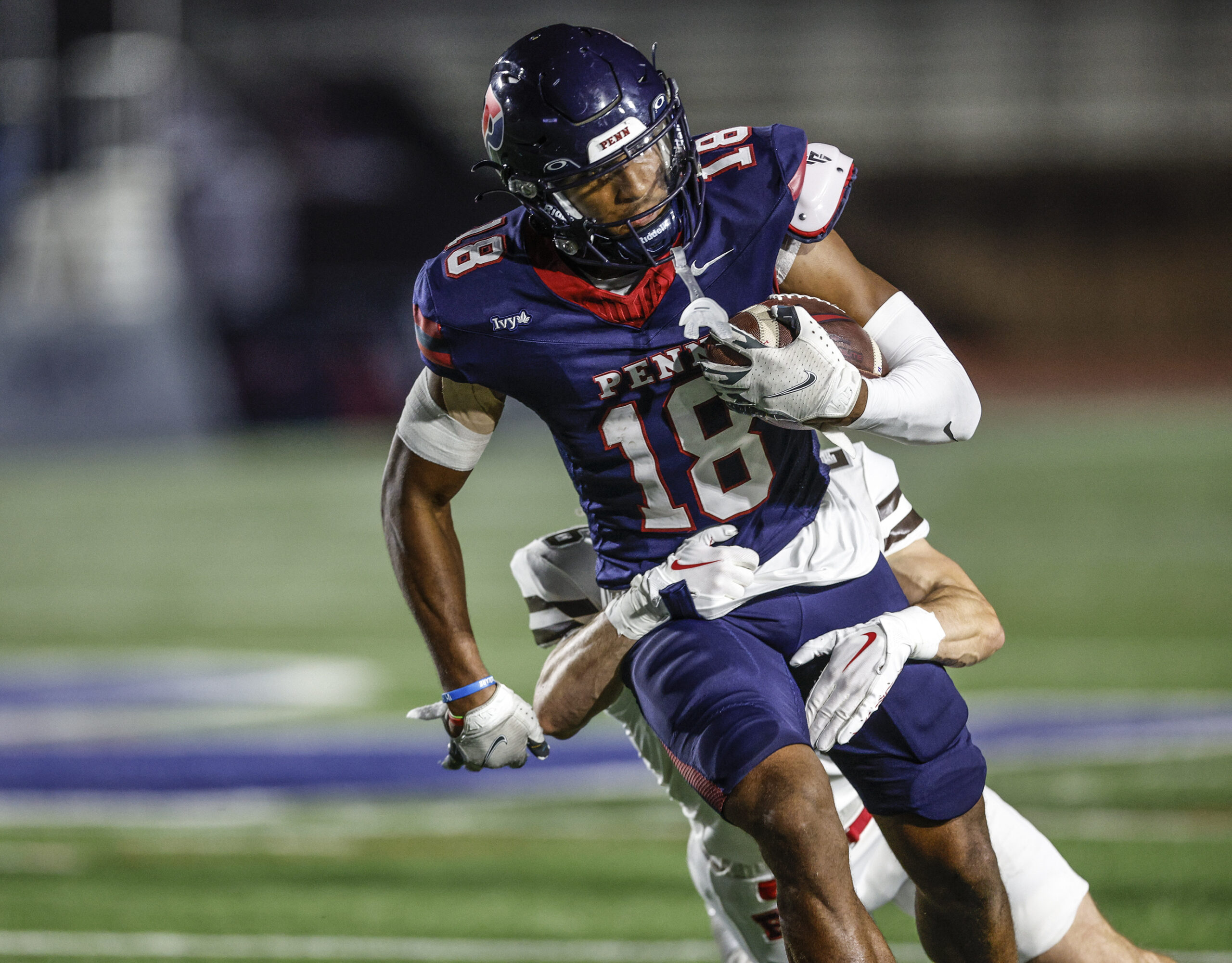
Headlining those transfers is a trio on offense: quarterback Liam O’Brien and wide receivers Jared Richardson and Bisi Owens.
O’Brien is heading to Cincinnati, Richardson looks to make an impact at Duke, and Owens will join Purdue.
“Having an opportunity at Penn to showcase what I could do and that translating into an opportunity like this,” O’Brien said, “I mean, the way college football is nowadays — it’s pretty much like the minor leagues to the pros. It’s almost like a childhood dream.”
The trio grew close in the summer after their freshman season at Penn but had to wait much longer before taking the field together.
Richardson and Owens excelled during their sophomore year, while O’Brien battled injuries and served as a backup to Aidan Sayin. O’Brien didn’t get his opportunity on the field until his junior year, when Sayin suffered a season-ending elbow injury against Yale in 2024.
“Penn is not a football-first school,” O’Brien said. “But you can make it one. The one thing Penn does is it provides you [with] opportunities to succeed in whatever you do, and both on and off the field. All of us have really taken advantage of that for good.”
In 2024, Liam O’Brien broke Penn’s record for passing touchdowns and total touchdowns in a game.
In his second start, O’Brien broke Penn’s record for passing touchdowns (six) and total touchdowns in a game (seven).
After a full offseason, O’Brien, Richardson, and Owens powered the Quakers offense in 2025, finishing third in the Ivy League in passing yards per game and second in offensive efficiency.
Richardson and Owens combined for the most yards (1,729) and touchdowns (17) among Ivy League wide receiver duos. Richardson ranked 13th in receiving yards (1,033), first in receptions per game (eight), and fourth in total receiving touchdowns (12) across all of the Football Championship Subdivision.
“We came in together,” Richardson said. “We worked our tails off. All of us being successful, it’s nothing short of special. It’s a blessing for each and all of us.”
New opportunity
O’Brien is already on Cincinnati’s campus, preparing for spring ball. He’ll be competing for the starting job as the Bearcats also brought in quarterback JC Frenchfrom Georgia Southern.
“The quarterback room is seeing a big change-up,” O’Brien said. “They lost their starter last year, lost their backup from last year. So they brought me in and brought in the quarterback from Georgia Southern. Right now, it’s an open job, and may the best man win.”
For Richardson, a quick exploration of Duke’s campus made him eager to cancel his other planned visits. He hopes to carve out a role for himself on a star-studded team that won an ACC championship this past season.
He also still has dreams of playing in the NFL.
Next season, Jared Richardson will play for Duke, which won the ACC Championship in 2025.
“It’s not going to be easy,” Richardson said. “I’m embracing that. I don’t want it to be easy. I want to leave a legacy. That’s my goal behind playing football. I want to provide my family with a life that they never got to have. So that’s what drives me. I’m not afraid of working hard, sweating a little bit. I just embrace the grind.”
For Owens, the chance to lead a young Purdue receiving corps was too good an opportunity to pass up. Plus, he wanted to make the leap to the Big 10.
“Getting to play in front of at least 60,000 people every week,” Owens said, “it’s a lot different than playing at Franklin Field, which gets 7,000 on a good day. It’s been a complete whirlwind the past couple of weeks, but all trending in the right direction, and definitely more excited than worried or nervous, because this is another challenge for me to take on.”
Goodbye, Penn
The three will be leaving Penn with Ivy League degrees, but according to them, the most valuable part of their experience in West Philadelphia was the relationships they formed.
“These Penn brothers are ones I will have for a lifetime,” Owens said. “I’m never going to forget that. So at the end of the day, Penn will always be my home.”
O’Brien and Richardson echoed that statement and emphasized how special their bond is.
“Building a relationship with these guys, it was awesome these past four years,” Richardson said. “It was a pleasure playing with Bisi and Liam, and these guys are my best friends. So I can’t wait to see what they do. I’ll be in their corner rooting for them.”
“It’s going to be fun to keep in touch with everyone after and throughout this year,” O’Brien added. “After this year, and after the fall season, and just compare experiences. See what it was like. See who does what at the next level. Because I think some of the guys are going to do big things.”
New Jersey Gov. Mikie Sherrill supports cementing the state’s sanctuary state policy into law — as it’s already written.
The Immigrant Trust Directive, commonly called a sanctuary policy, restricts state law enforcement from cooperating with U.S. Immigration and Customs Enforcement (ICE). Enshrining the policy into law would ensure future governors of either party could not unilaterally take it away. As of now, the directive could be undone with a flick of a pen.
Immigrant rights groups in New Jersey have pushedfor several years to make the policy permanent with a new law, a move they say is increasingly urgent amid President Donald Trump’s immigration crackdown in Minneapolis, which has reverberated across the country. But those activists want to expand protections, which could clash with Sherrill’s approach.
“Gov. Sherrill supports a bill to codify the directive,” her spokesperson Sean Higgins said. “What she does not support is anything that undermines the ability to defend our protections in court, which puts people at risk.”
Sherrill has said making changes to the directive while making it law could invite lawsuits andrisk the whole policy, which was enacted during Trump’s first presidency and has survived federal judges appointed by both Trump and former President George W. Bush.
“New Jersey’s directive has already withstood judicial review — and that additional action, if not precise, could undo important protections which we cannot risk under the Trump administration,” Sherrill said during her primary campaign.
Higgins said those concerns “have not changed.”
Immigrant rights groups nearlyreached the finish line late last year after the state legislature passed a bill that included some of the changes they wanted to make.
But former Gov. Phil Murphy rejected the bill in his final hours in office. Like Sherrill, he said the policy could be in jeopardy if it changed and could invite lawsuits.
Amol Sinha, the executive director of ACLU New Jersey, disagrees.
The bill Murphy vetoed — which Democraticlawmakers have already signaled they will reintroduce in the new session—would remove an exception for law enforcement to work with federal immigration authorities on final orders of removal and prohibit law enforcement from providing money to federal immigration authorities.
Sinha and others who support the bill say those changes would be on solid legal ground. Since the courts previously found federal law does not preempt the state’s immigration policy, and the state has the right to determine where its resources go, he said, he believes Murphy’s veto was overly cautious.
“We cannot be in a situation where we’re constantly afraid of lawsuits and therefore we don’t pass any laws,” Sinha said. “There is legal risk to every law that passes in New Jersey. You’re going to get sued, and if you don’t want to get sued, then you shouldn’t be in government.”
Sherrill’s stance on the matter has, at times, been ambiguous.
After a general election debate in late September, she said she was “going to focus on following the law and the Constitution” when pressed by reporters on whether she would keep the directive in place. In October, she said she supported aspects of the policy but also suggested she wanted to revisit it.
During the primary contest, her spokesperson said Trump “is changing the rules rapidly” and Sherrill would “address the circumstances as they exist,” but she had also signaled support for keeping the policy.
Since taking office last week, Sherrill has taken other steps to try to shield the state from ICE. She announced Thursday that her administration plans to launch a state database for New Jerseyans to upload videos of ICE operations in the state after two fatal shootings in Minnesota.
But the pressure to work with legislators on making the sanctuary directive law remains.
Assemblymember Balvir Singh, a Burlington County Democrat and cosponsor of the bill Murphy rejected, said part of the urgency is concern over Trump’s threats to withhold federal funding from Democratic-led states over policy disagreements.
Even though Sherrill has kept the policy in place, a directive carries less weight than a statute backed by two branches of government.
“Our executive can be put under a tremendous amount of pressure where they have to figure out how they’re going to fund our social services systems that rely on federal funding,” Singh said.
Just last week, Trump directed federal government agencies to review funding for several Democratic states, including New Jersey, almost all of which were on a list of sanctuary jurisdictions produced by his administration.
The one exception was Virginia, where new DemocraticGov. Abigail Spanberger rescinded a directive that instructed law enforcement to work with ICE. The previous week, Trump said he planned to cut off federal funding for states with sanctuary cities.
Singh, whose district includes communities with large immigrant populations, said preserving the seven-year-old policy through law is “the very minimum.”
‘I take Gov. Sherrill at her word’
Sherrill declined to comment on the specifics of the bill that reached Murphy’s desk, and the question will be whether lawmakers are able to enact changes to the current directive or if she will only sign a carbon copy of what already exists.
The sanctuary bill was one of three pieces of legislation aimed at protecting immigrants that Murphy weighed in his final days in office. He signed one about creating model policies for safe spaces in the state and vetoed another aimed at limiting data collected by government agencies and health centers, citing a “drafting oversight.”
As she waited anxiously for Murphy’s decisions on the bills earlier this month, Nedia Morsy, the executive director of immigrant advocacy group Make the Road New Jersey, said that New Jersey should not “make policy based on fear” and that immigrants in the state were experiencing a “collective feeling of suffocation.”
She criticized Murphy’s vetoes, saying legal experts had already vetted the bills.
Sherrill has repeatedly promised to fight Trump and recently said that ICE agents are “occupying cities, inciting violence, and violating the Constitution” and need to be held accountable “for their lawless actions.”
Her comments have given some activists hope that she will be willing to work with them.
And while a single bill cannot stop ICE from sweeping New Jersey communities, Sinha said, the state can “put up safeguards and guardrails” through policies like the ones Murphy rejected.
“I take Gov. Sherrill at her word that she wants to push back against authoritarianism,” he added, “and to me, that means doing whatever we can to protect immigrants in our state.”
It’s finally happening, Eagles fans. It took eight years, but ESPN’s 30 for 30 documentary series is set to relive one of the most memorable moments in Eagles history: the Philly Special.
ESPN released the official trailer for the documentary, which is appropriately set to Boyz II Men’s “Motownphilly.” The film, titled The Philly Special, was produced by NFL Films and directed by Angela Zender and Shannon Furman. It will debut on Feb. 6 at 9 p.m. on ESPN and the ESPN app.
“Everybody loves the Rocky movies, but they were fiction,” Zender said in a release. “The amazing thing about The Philly Special is that it’s a real-life Rocky story. A group of five underdogs went up against the greatest dynasty in NFL history and pulled off an upset worthy of Hollywood. That underdog mentality is something that will resonate with people all over the country.”
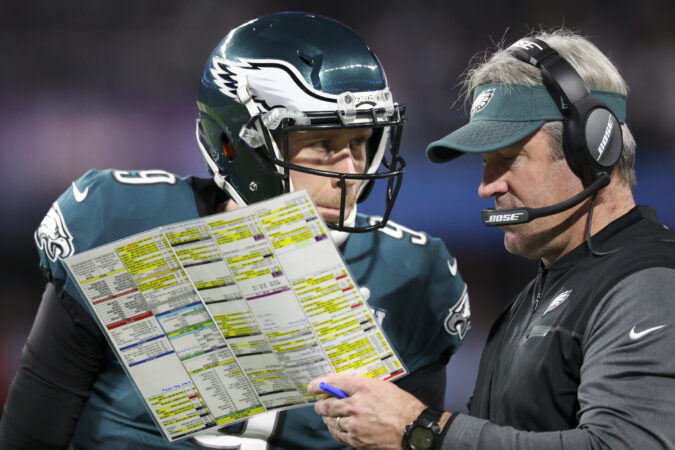
The film features several familiar faces to Philly fans, including former head coach Doug Pederson and the four Eagles players who touched the ball on that play in Super Bowl LII: Jason Kelce, Corey Clement, Trey Burton, and Nick Foles.
But there are many others: owner Jeffrey Lurie, former safety Malcolm Jenkins, former coach Chip Kelly, and former offensive coordinator Frank Reich. Several local and national media members also appear, including Angelo Cataldi, Ray Didinger, Sal Paolantonio, and Kyle Brandt.
With all that Philly flavor, it’s no surprise one of the directors is a Birds supporter.
“I grew up an Eagles fan, so The Philly Special has been a dream project,” Furman said in a release. “It was surreal to stand in front of the statue of Doug Pederson and Nick Foles at the Linc with the five men who made one of the most iconic plays in NFL history happen. There’s no doubt fans will enjoy reliving the Eagles’ first Super Bowl as much as I did.”
While it’s been the better part of a decade since the play helped lead the 2017 Eagles past Tom Brady and the New England Patriots dynasty — capping an improbable run for Foles, who took over as the starter less than two months earlier — it’s not hard to find reminders around the Philadelphia area, from the statue outside Lincoln Financial Field to a multistory mural to the name of a holiday band featuring Kelce and a pair of current Eagles players.
“It’s been everywhere and on everything, transcending football to become part of Philadelphia’s cultural identity,” ESPN said in its release describing the film. “It’s not just a play; it’s a rallying cry for a city used to being overlooked. While Philadelphia might be the birthplace of America, the sixth-most populous city in the country lives and dies with an underdog mentality — one epitomized by the Founding Fathers, Rocky Balboa … and the Philly Special.”
Two days before Super Bowl LX, there will likely be a few more reminders, as fans across the area tune in to relive the play — and learn the story behind it — one more time.
Philadelphia is ready to get its first taste of professional women’s basketball with Unrivaled hosting a doubleheader Friday at Xfinity Mobile Arena. In front of a sold-out crowd, the three-on-three tournament is set to have plenty of spectators for its first event outside the Miami area — making this the perfect time for Jordan Brand to debut its Heir Series 2 sneaker.
On Thursday, Jordan Brand unveiled the women’s basketball shoe with Minnesota Lynx forward Napheesa Collier as the face. The sneaker will make its on-court debut during Friday’s Unrivaled doubleheader in Philly with Jordan Brand athletes Dana Evans and Dominique Malonga.
The low silhouette is similar to the Heir Series 1, which is the lowest shoe in Jordan Brand’s basketball lineup. The sneaker was first introduced in 2024 and put emphasis on the running and cutting that’s central to women’s basketball.
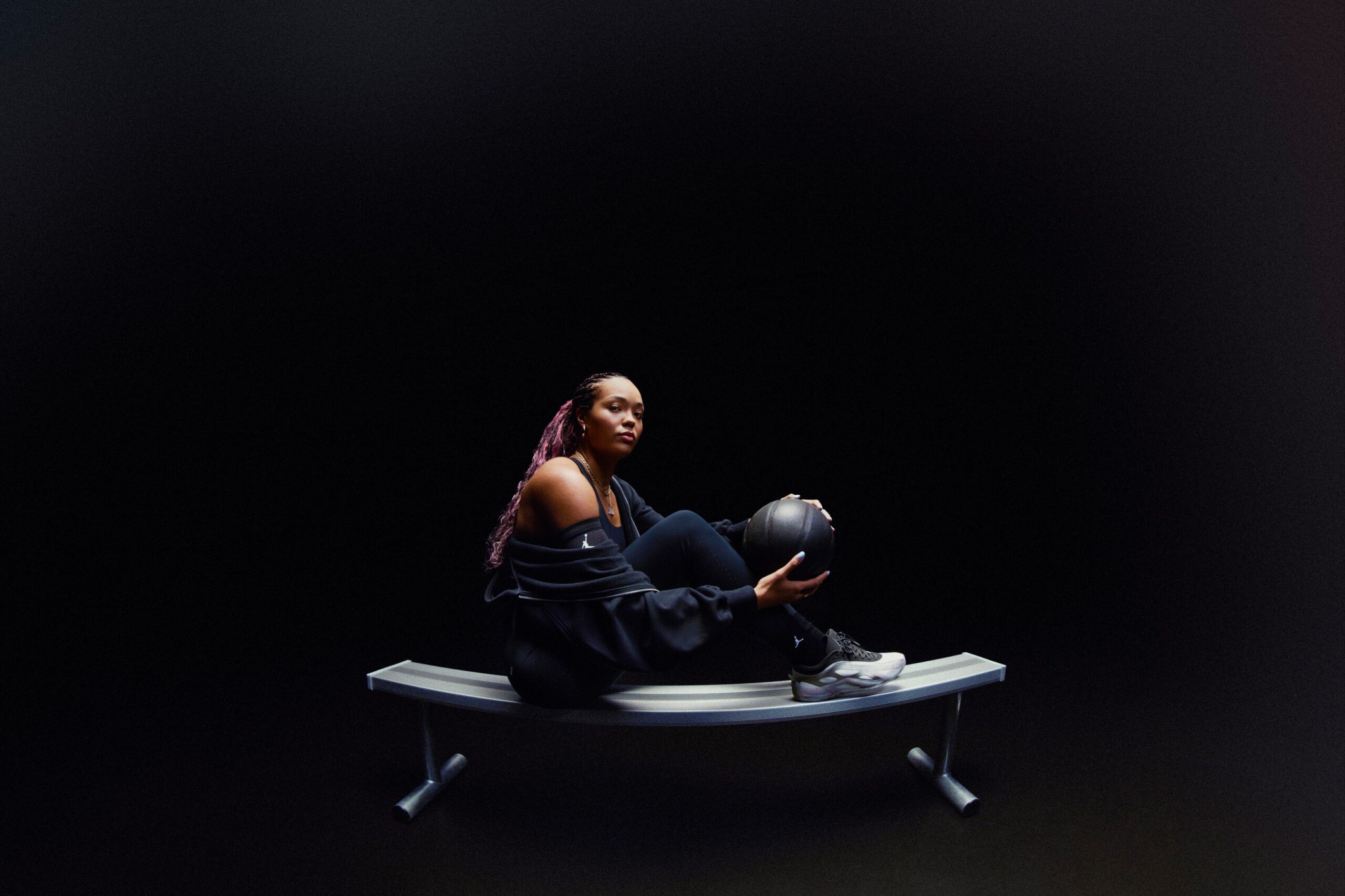
Five-time WNBA All-Star Napheesa Collier wearing Jordan Brand’s Heir Series 2 sneaker.
While the Heir Series 2 continues to share the same focus as its predecessor, it adds key improvements to enable more quickness in every step.
“With my footwork being an important part of my game, the Heir Series 2 is a performance shoe that provides the flexibility and stability for me to be a force on both ends of the floor,” said five-time WNBA All-Star Collier in a press release. “Everyone who follows my game knows I was a fan of the Heir Series, but the innovation in the Heir Series 2 has exceeded my expectations.”
Some of its new features include a forefoot Air Zoom unit to provide standout responsiveness for speed, a thicker drop-in Cushlon 3.0 midsole that is wrapped in an additional layer of foam cushioning above the outsole for more comfort, a translucent TPU cage, and a rubber herringbone traction pattern for greater quickness and control.
The sneaker also includes a removable hair tie attached to the heel and features a series of bold colorways — including a pink, yellow, and green colorway, a white, black, and red colorway, and a gray and black colorway that includes speckled pink paint along the midsole.
The Jordan Heir Series 2 comes in three different colorways.
“Women’s basketball has a very important place in the sports landscape, and Jordan Brand is committed to helping the next generation of hoopers reach their greatness. We titled this series of footwear ‘Heir’ knowing that these amazing athletes are next up — here to claim the basketball throne as their own,” said Leo Chang, the senior creative director of Jordan Brand basketball and sport, in a press release.
“The Heir Series 2 is the next iteration of the basketball sneaker designed for her, by her. The new forefoot Air Zoom unit enables even more support and responsiveness, tailored to the beautiful playing style of the women’s game.”
The sneaker will be available globally on Feb. 20 at jordan.com and select retail locations.
The rollout of so-called virtual nurses in hospitals remains a mixed bag, University of Pennsylvania researchers have found in the largest survey to date on nursing care delivered remotely through a screen.
One hospital staffer said virtual nurses are a huge help getting patients checked in.
Another said they worry hospitals are trying to cut corners by keeping floors fully staffed by using virtual nurses.
And sometimes, patients think the virtual nurse is a television advertisement and try to press fast forward, researchers were told.
A new study out of University of Pennsylvania School of Nursing surveyed 880 registered nurses in 10 states, including Pennsylvania, about the virtual nursing programs that have sprung up at health systems across the country.
About half — 57% — of the nurses surveyed said virtual nurse programs did not reduce their workload, with some saying they felt virtual nurses created more work.
But similar numbers also said they thought virtual nurse programs improved the quality of care patients received.
Others said they didn’t think the technology had any impact — positive or negative — on quality of care, according to a study of results published online in December in JAMA Open Network.
“It can be beneficial or a headache,” one nurse interviewed by Penn researchers summed up.
Virtual nursing programs became more widespread during the COVID-19 pandemic, when health systems needed to limit physical interaction to protect patients and medical staff, and have continued to expand in Philadelphia and across the country. Administrators embracing technology and artificial intelligence say they can help streamline administrative responsibilities that can burden staff, provide extra patient oversight, and improve how quickly clinicians can respond to emergencies.
Local examples include Penn Medicine’s use of virtual nurses to monitor patients at risk of falling or pulling out tubes and wires. Jefferson Health assigns a virtual nurse to patients who doctors have decided need to be monitored around the clock.
And virtual nurses handle administrative work, like reviewing medications and giving discharge instructions at Virtua Health hospitals in New Jersey.
The new study from Penn is among the largest to date to evaluate how well the programs are meeting goals, and the mixed results should be a warning to hospital administrators to proceed cautiously, researchers say.
“Virtual nursing programs have been heralded as an innovative silver bullet to hospitals’ nurse staffing challenges, but our findings show that most bedside nurses are not experiencing major benefits,” said lead author K. Jane Muir, an assistant professor of nursing in the university’s Department of Family and Community Health.
Virtual nursing on the rise
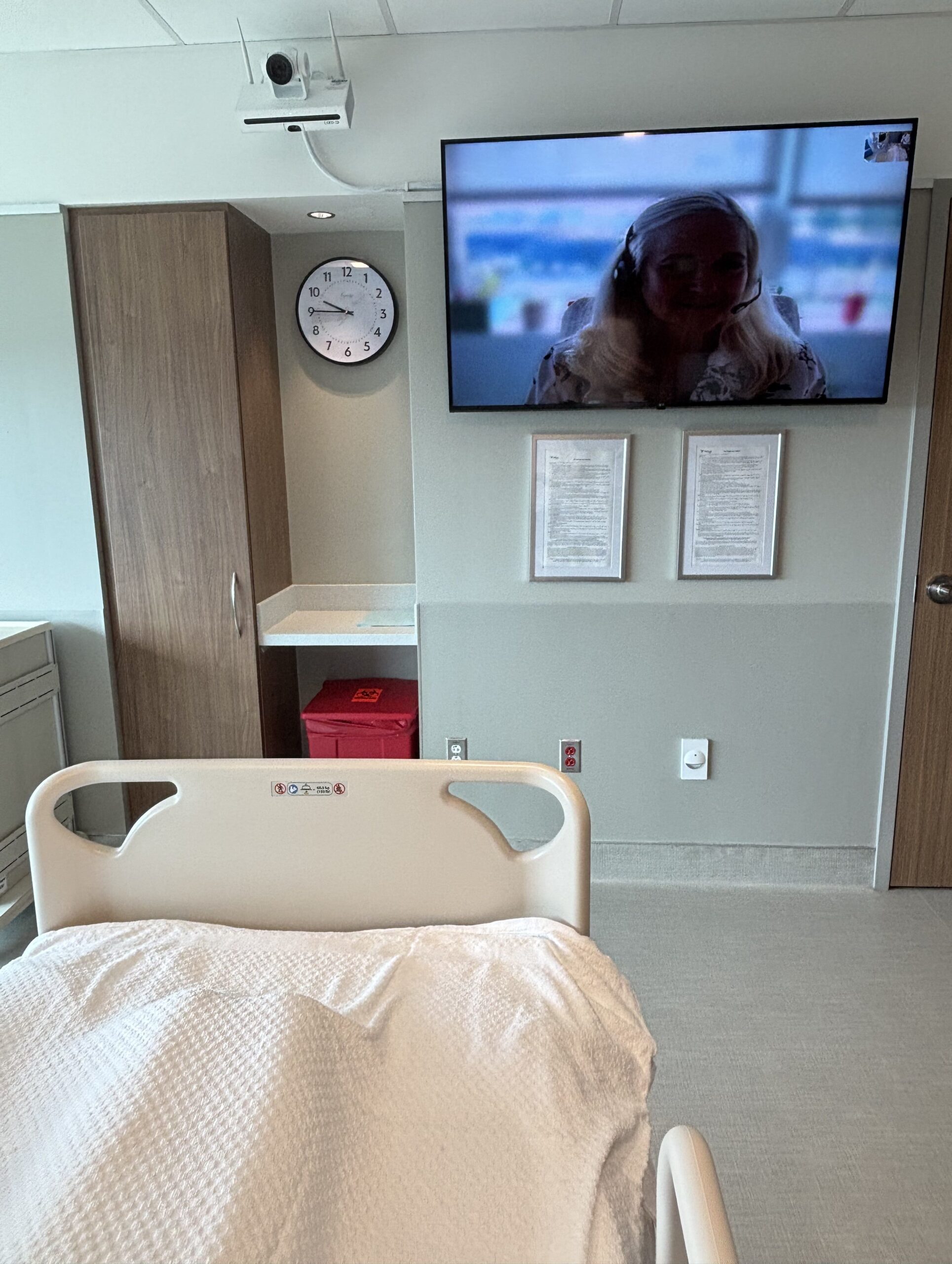
Virtual nurses at Virtua Health appear on the television in a patient’s room.
Virtual nursing refers to patient-care responsibilities managed by a team of nurses stationed at a remote hub, where they monitor screens and electronic information feeds.
They are not intended to replace bedside care, but rather to serve as an extra set of eyes to monitor patients.
If a patient who is known to be unsteady on their feet moves as if to get up from bed, a virtual nurse could speak through a screen or sound system asking if they need something and call a nurse on the floor to help them. If the patient falls, a virtual nurse can quickly alert medical staff.
Virtua Health officially launched its program last year.
Virtual nurses make sure patients have the appropriate medications before going home, know their discharge instructions, and have a follow-up appointment scheduled. They work in partnership with the bedside nurse, who focuses on the physical tasks in caring for a patient, while the virtual nurse handles the majority of the discussion.
“It’s something that our patients are requesting and they’ve come to expect,” said Kristin Bloom, a nurse by training who serves as assistant vice president of clinical operations for Virtua’s Hospital at Home program.
Virtua also uses virtual nurses in its intensive care units to help monitor and identify early signs of deterioration. These nurses have access to bedside cameras and can view the patient’s heart rhythms, lab results, and vital signs.
Participants in the Penn survey, conducted in late 2023 and early 2024, did not include nurses working in New Jersey, where Virtua’s hospitals are based.
Virtual nursing challenges
Nurses surveyed by Penn’s researchers said they appreciated the extra set of eyes on patients, but not all were convinced that the virtual monitor was any more effective than bed alerts that can sound when they sense a patient leaving, according to the study.
Karen Lasater, an associate professor of nursing and co-author of the study, urged health systems to include in-hospital nurses when shaping their virtual care programs.
She said including bedside nurses in the conversation about what’s working and not working is “imperative.”
“It’s important that nurses have a seat at the table,” Lasater said.
Nurses surveyed also expressed concern that health systems were using virtual workers to avoid hiring more on-site staff.
Bedside nurses questioned why they were being asked to take on more responsibility because administrators said they couldn’t afford to hire more staff, yet still found funding to build virtual programs.
“They felt like investments in virtual nursing was a workaround,” Lasater said. “Why did they have money to invest in virtual nurses who couldn’t do all the work of the bedside nurses, but couldn’t invest in more bedside nurses?”
At Virtua, administrators have turned to veteran bedside nurses to staff their virtual nursing program.
“It’s an avenue to retain our experienced nursing staff,” Bloom said.
Philadelphia-area hospitals have seen some virtual nursing challenges. In 2024, for instance, Jefferson Abington Hospital was cited by the Pennsylvania Department of Health after inspectors said the power cords attached to the monitors for virtual nursing created a strangulation risk for behavioral health patients.
The hospital treated the incident as a learning experience, adjusting how the mobile monitors are used.
The technology can also be confusing for some patients, who may not grasp the concept of a virtual nurse or may get conflicting instructions from their virtual and bedside nurses, Lasater said.
Penn initially planned to use virtual nurses to help monitor behavioral health patients, who often require one-on-one monitoring around the clock.
But staff found that patients who were experiencing behavioral or mental health challenges were too often confused or unsettled by virtual nurses, and unable to follow their instructions, Bill Hanson, Penn’s chief medical information officer, told The Inquirer in 2024.
“We’re all learning as we go,” he said at the time.
FRISCO, Texas — Four days after a heartbreaking College Football Playoff national championship game loss, Levittown native David Blay was back in football pads.
Last week, Blay, whose five-year career spanned three schools and two levels of college football, practiced against some of the other draft-eligible prospects at the East-West Shrine Bowl.
His college career began locally at Division II West Chester, where he spent two years, then spanned two years at Louisiana Tech before he finished this past season with national runner-up Miami. Blay, a defensive lineman, played 22 snaps against Indiana in the College Football Playoff title game and finished with one tackle in the 27-21 loss.
Blay, a graduate of Harry S. Truman High School, gained a unique perspective in all three stops along the way, which included two years (his first at West Chester and first at Louisiana Tech) when he didn’t see the field much.
“For West Chester, time management, the process of doing things at certain times [at] the correct time, and doing the correct things,” Blay said about what he learned.
“And then for [Louisiana] Tech, they taught me the brotherhood aspect, because when I transferred into Louisiana Tech, about six or seven defensive linemen alone transferred in there at the same time. So it was like everybody had the same vision, the same goal. So it was easy to play against somebody I can call my brother.
“[With Miami], having camaraderie with the team wasn’t that hard. They’re outgoing guys, so bringing me in wasn’t that hard. Me, I’m more of — I guess you could say a quiet guy.”
Miami and David Blay (11, at rear left) got past Jeremiah Smith (4) and Ohio State in the CFP quarterfinals on their way to an appearance in the title game.
At Miami, snaps weren’t easy to come by for Blay, with potential first-round NFL draft picks Rueben Bain and Akheem Mesidor manning the edge rusher positions and Ahmad Moten and Justin Scott starting in the interior.
Blay was on the field with Miami’s defense on 412 plays, according to Pro Football Focus. He played 443 defensive snaps in one fewer game in 2024 for Louisiana Tech.
But Blay, who amassed 95 tackles (23½ for losses) and 11½ sacks in four seasons at Louisiana Tech and West Chester, carved out a consistent rotational role on Miami’s D-line during a playoff run that Blay “will remember for the rest of my life.”
The 6-foot-2 and 302-pound lineman credits his discipline for refining his skills, which helped get him on the field at the Power Four level.
“In terms of getting on the field and playing, I just really had to be real technically sound,” said Blay, who had 28 tackles (2½ for losses) in 13 games with Miami. “Like I feel as if going to Miami, the big thing there was [to be] technical, technical, technical. That’s the difference between the levels in my head.”
Blay was joined by Indiana safety Louis Moore and Miami linebacker Wesley Bissainthe as players who appeared in the national championship game and also practiced at least one day at the Shrine Bowl. Indiana tight end Riley Nowakowski also traveled to Frisco to interview with NFL teams but did not practice.
Throughout his practice sessions at the Shrine Bowl, which wrapped up with the game on Tuesday night — the West won, 21-17, on a touchdown with 6 seconds left — Blay showed his strength capable of pushing the pocket as a pass rusher and standing his ground as a run defender against double-team blocks.
“I give those guys a lot of credit,” Shrine Bowl director Eric Galko said. “And Wesley [Bissainthe] and David [Blay] are coming in like everyone else, they’re banged up, but they just played 16 games, right? Not 12, like other guys have.
“And David’s done great, in the practice he had and in the interviews he has had, too. … I think David showed a lot of character — especially with the way the season ended, not on a victory, but on a loss — and he still said, ‘You know what? Now I’m on [to] the NFL.’ And to be focused here, I give the guy a lot of credit.”
Added Blay: “Just the aspect that we’re getting better every day [motivates me]. You’re never at your best; in a sense you can always get better. And I also say to my mom, I’m trying to get her to understand the aspects of the game and how it could change your life.”
Blay played his high school and the beginning of his college career about 30 miles from Lincoln Financial Field. An opportunity to play for his hometown Eagles would be “a dream scenario.”
“Being around the crib, I could go work out, go practice, go do my job, and then essentially come home to the people I’ve seen my whole entire life,” Blay said.
Another weekend snow chance and more cold are in the forecasts. But the big difference between last week and this one in the Philadelphia region is a matter of degrees — about 10 of them.
A coastal “bomb cyclone” could form during the weekend with significant impacts, at least at the Shore. Computers were still sorting out what effects, if any, it would have in Philly. On Thursday, however, they favored snow staying to the south and east, with only a 40% chance they got to I-95.
In the meantime the cold will be epical by Philly standards.
If the forecast holds, in addition to coming close to ending a 32-year zero-less streak, Philadelphia would have daily minimums of 5 degrees Fahrenheit or lower on the next two mornings.
And it appears the city will have its first nine-day stretch in which the temperature failed to reach 30 degrees since 1979, based on analysis of temperature data from the Pennsylvania state climatologist.
In issuing a cold weather advisory for wind chills as low as 10 below zero, the National Weather Service in Mount Holly noted that “it is exceedingly rare to get this combination of length and magnitude of an arctic airmass for this area.”
Heading into the weekend, that subtly laminated lunar landscape with the one-horse-open-sleigh look in the fields and parks is almost certain to persist while bedeviling road-clearing efforts.
Some snow is possible late Saturday or Sunday — and this is becoming a habit — in time for the rising of the full “Snow Moon,” which may be a problem for the Jersey Shore. The full moon will likely contribute to tidal flooding.
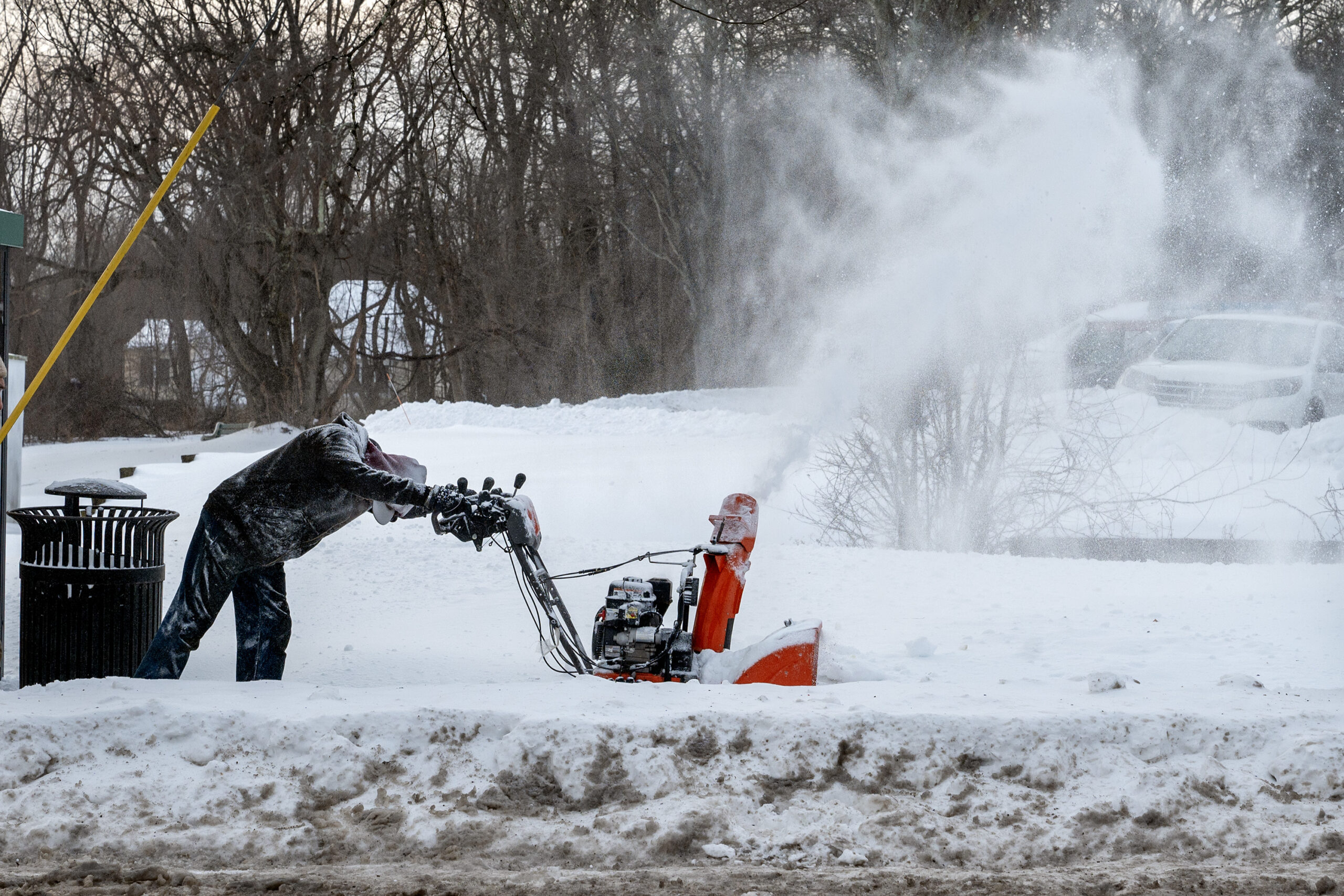
Snow removal contractor Jordan Harlow clears the sidewalk in front of an apartment building on Main Street in Doylestown Wednesday, Jan. 28, 2026, following Sunday’s snowstorm. He said the layer of ice made it twice as difficult to use the snow blower.
The snow outlook for the weekend
On Wednesday only two things were certain about the latest threat: A major coastal storm is going to blow up during the weekend, and it’s not going to rain.
“Everything looks like it’s going to come together,” said Paul Pastelok, the long-range forecaster for AccuWeather Inc.
AccuWeather said it may intensify enough to qualify as a “bomb cyclone.”
An early consensus among computer models was that the storm would stay too far offshore to generate a major snowfall in the immediate Philly area. Pastelok said it was looking for Philly to get “sideswiped” with a 1- to 3-inch event. However, that was very much subject to change.
The weather service would not be making a first guess at potential accumulations until Thursday afternoon, said Alex Staarmann, a National Weather Service meteorologist in Mount Holly. In its forecast discussion Wednesday, it said that based on a consensus of the models, the Shore had a 35% to 50% chance of 6 inches of snow or more, with a 20% chance along I-95.
More certain was the potential coastal flooding threat at the Shore with potent onshore winds coinciding with Sunday’s full moon.
And while it may seem the atmosphere enjoys ruining weekends, it’s not uncommon for weather systems to fall into 3½- and seven-day cycles. That has to do with the spacing between weather systems, meteorologists say.
Regardless of what happens during the weekend, the region is going to begin the workweek with snow on the ground.
The snow is going to have more staying power than the average computer-model snow forecast.
It’s not going to get a whole lot warmer anytime soon
Even though it’s ice cold, as if developing a slow leak, the depth of the snow pack is actually decreasing, but ever so ponderously.
That 9.3 inches of snow and sleet that accumulated Sunday was down to 6 inches at Philadelphia International Airport on Wednesday morning, Staarmann said.
Compaction and sublimation, which is similar to evaporation, are lowering the depth, despite the cold. But Wednesday’s depth report was the same as Tuesday’s.
And after what does or doesn’t happen Sunday, temperatures are forecast to remain below freezing at least until Feb. 4.
No significant warm-up is in sight, and the National Oceanic and Atmospheric Administration’s Climate Prediction Center has odds strongly favoring below-normal temperatures until Feb. 11.
The upper-air pattern continues to favor cold pouring into the Northeast.
And more cold air is possible later in the month with a visit from the polar vortex, Pastelok said.
Average temperatures in Philly finished 3.6 degrees below normal in December, and despite a 10-day warm spell earlier in the month, January is projected to finish at least 2 degrees below long-term averages.
Bradley Carnell can be pretty reserved in public. It’s not that he doesn’t like being on camera, but you aren’t always going to get too much from him in a news conference.
At the United Soccer Coaches convention a few weeks ago, the Union’s manager got a different opportunity. It was his first time at the longstanding event, and he spent an hour on stage talking about his coaching methods.
Carnell’s journey has taken him a lot of places. The Johannesburg, South Africa, native turned pro at age 16 in his home country, then at 21 moved to the first of four clubs he played for in Germany. He played 40 times for the Bafana Bafana, including at the World Cup in 2002.
After hanging up his cleats in 2011, Carnell started his coaching career at the University of Johannesburg. From there, he had two assistant jobs with South African pro clubs, then moved to the U.S. in 2017 to join the New York Red Bulls’ staff. He’s been in this country ever since, and the Union are his third coaching stop in MLS.
Bradley Carnell (left) playing for South Africa against Paraguay in the 2002 World Cup.
What has stayed constant over the years? One thing is how he sees the sport.
“Überzeugungstäter,” he said, a word learned while living in Germany. “A perpetrator. I’m a criminal of the game model that I’m presenting today.”
This produced some amused looks, and not just because of the multiple languages involved. Carnell was not surprised.
“I believe in it so much, and this is who I am,” he said. “Not because I’ve learned the game that way. It’s just because I live my life in a certain way.”
Bradley Carnell giving instructions to his players during a game last year.
You can get that sense at an average Union practice, where Carnell, 49, often is right in the middle of the fray.
“When setting up a game model, one, it’s based on previous experiences of your playing days: caching influences, but also DNA, how I live my life every single day,” he said. “Fast, energetic, proactive, on the front foot — these are all terms that are coming to life now because it’s just who I am. If I’m playing Monopoly with my family, I’m trying to win the game in the quickest way possible.”
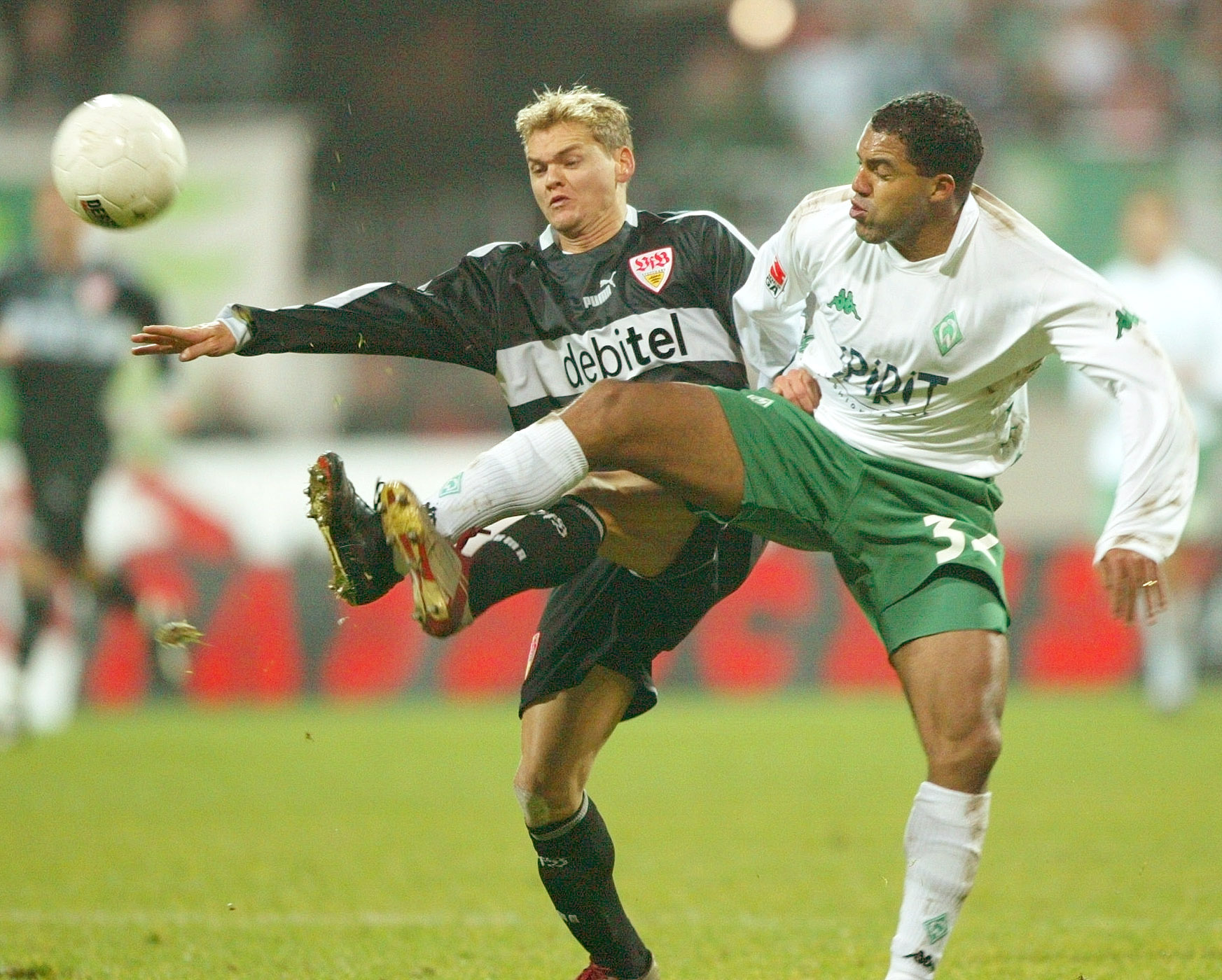
The manager who had the most influence on Carnell was Ralf Rangnick, who coached the young left back at German club VfB Stuttgart from 1999 to 2001. Ragnick is known as one of the founding fathers of “gegenpressing,” the high-octane tactics that spread all over Germany and eventually worldwide.
Those ideas have stayed in Carnell’s mind for a quarter of a century.
Bradley Carnell (left) during his playing days with German club VfB Stuttgart in 2002.
Inside the playbook
Carnell put up a slide that laid out four principles: “Hunting” to gain possession high up the field; “swarming” to regain the ball after losing it; “striking” to try to get to the opponent’s goal within 10 seconds; and “waves” of attacking moves.
He talked a lot over the course of his session about the defensive side of things, especially “rest defense”: how the centerbacks position themselves when their teammates have the ball up the field.
He also took an interesting question from the audience about man-to-man vs. zone defending.
“I don’t mind going one-for-one at the back,” Carnell said. “It’s not man-marking. So if they cross over the center back axis, I’m not going to say to you, ‘Go with him and track him all over the field.’”
If this brought the term “matchup zone” to anyone’s mind, it hasn’t been used much in soccer. But if it ever was going to be, the city that produced John Chaney would be an appropriate place to start.
The Union won the Supporters’ Shield and reached the second round of the playoffs in Bradley Carnell’s first year at the helm.
But the most interesting stuff, as it is for Union fans, was what he said about attacking.
Quality on the ball is valued over time on the ball, a point Union fans have certainly learned by now. And Carnell laid out his “baseline” for how he wants his team to score: 60% in transition, 30% on set pieces, and 10% in possession.
“We can go quick — I say [with] quality on the ball, you can always get quicker,” Carnell said. “But if you try to go too quick, then there’s going to be turnovers. So, progressive quality over speed. We can always learn to get quicker in this transitional phase of the game.”
Last year, the Union scored around 50% of their goals in transition, 30% from set pieces, and 20% in possession. That wasn’t quite what Carnell had aimed for. How did he react?
“We don’t see it as a failure,” he said. “We just see it as an adaptation. To every team you inherit, or every team you go to in terms of me joining here a year ago at the Philadelphia Union, we see certain trends, character traits in players, in how we can get this effectiveness.”
Bruno Damiani with the finish and @PhilaUnion takes the lead in a rainy D.C. ⚡️
The Union ranked well in some stats he likes. They were second leaguewide in shots taken within 10 seconds of gaining possession, at 2.84 per 90 minutes. They were also second in percentage of first passes of a possession that went forward in transition, at 45.5%. And they had the fewest passes per shot sequence, at 2.3 per 90 minutes.
“Reactions quicker than the opponent can get themselves organized against,” Carnell said.
He put up some tactical graphics on his slides to illustrate the plays he wants. He also showed some videos of notable plays that the Union made last year, and they really made the point.
Carnell said “one of my favorite moments of last year” was a goal the Union scored on May 30 at Montreal: a counterattacking dash that covered almost the entire field in 12 seconds in just the second minute of the game.
What a strike! Indiana Vassilev gives @PhilaUnion the early lead on the road!
Another goal Carnell liked came on April 19 at home against Atlanta. The visitors had the ball, but only briefly: Kai Wagner and Jovan Lukić teamed up to jam Brooks Lennon just short of the midfield line.
Danley Jean Jacques was nearby, and started dashing upfield. Three passes in eight seconds later, he had his first goal in a Union jersey.
“In our game model we’re saying, ‘Go put out the fire,’” Carnell said. “’Go win the ball as high as you can. Be brave. Be brave and hunt in numbers.”
St. Joseph’s built a 10-point lead with less than six minutes to play in an Atlantic 10 women’s game against La Salle on Wednesday night at John E. Glaser Arena.
Then the Hawks offense went silent and La Salle began to mount a comeback. An and-one layup plus a pair of free throws from Explorers guard Aryss Macktoon made it a four-point game with less than two minutes remaining.
But St. Joe’s (14-6, 5-4 A-10) warded off a La Salle comeback to earn a 69-65 victory. The Hawks outscored the Explorers by 26-3 in bench points and shot 44.8% from the field.
“I think what you saw was a game of runs,” St. Joe’s coach Cindy Griffin said. “There was a lot of great offense out there. Not a whole lot of defense at times. But I was really pleased with how we came out in the second half, especially in the third quarter. We got a little space and we were able to make plays down the stretch.”
Statistical leaders
St. Joe’s had a balanced scoring effort with seven players scoring at least seven points. Guard Gabby Casey led the way with 14 points, with 10 coming in the second half. Emily Knouse added 11 points on 3-for-5 shooting in three-pointers. Forward Cecilia Kay had a team-high seven rebounds.
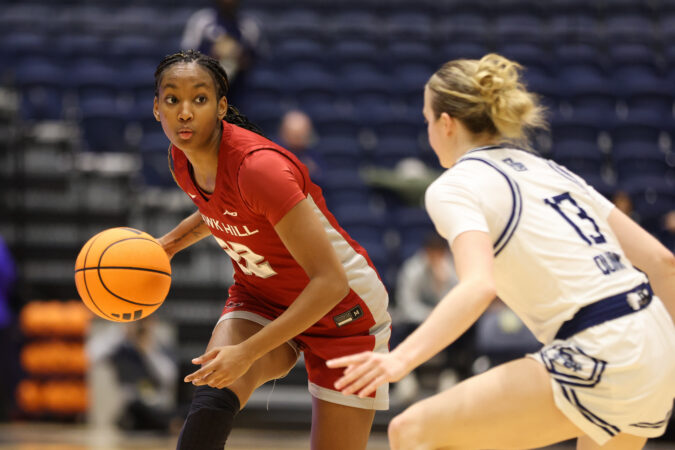
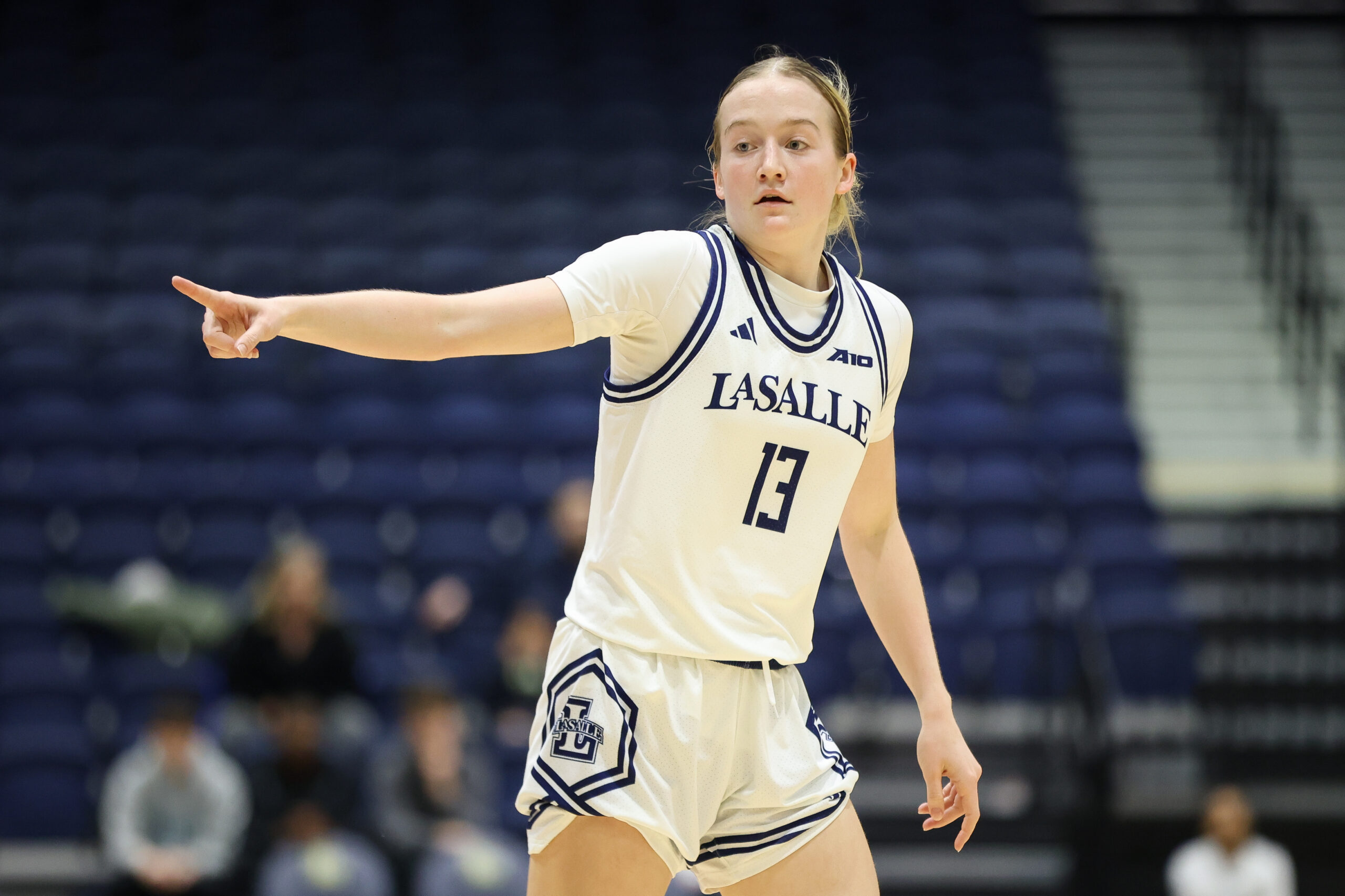
La Salle guard Joan Quinn finished with a game-high 18 points against St. Joe’s on Wednesday.
Guard Joan Quinn made 4 of 7 three-pointers and scored a game-high 18 points for La Salle (11-10, 4-6). Forward Kiara Williams contributed 17 points on 7-for-11 shooting and six rebounds. Macktoon, the Explorers’ leading scorer, was well guarded but managed 11 points and seven rebounds.
Stinson comes up clutch
After Macktoon’s and-one layup to cut St. Joe’s lead to four points, the Hawks were in desperate need of a basket to stunt the Explorers’ momentum. They turned to a player who was quiet offensively all game.
Forward Faith Stinson did not score for the first 38 minutes but scored her first points when it mattered most. She got free on a cut and guard Rhian Stokes (11 points) delivered a perfect pass that Stinson converted to halt La Salle’s run.
“You saw a senior post who had been there, done that,” Griffin said. “She came up big in the first game [against La Salle], and at the end of the day, we went to her, we found her. Rhian found her in the first game and I think that kind of sealed the game and it was just the same situation today.”
Big second half
The Hawks built a 24-17 lead with back-to-back three-pointers from Knouse, a freshman. However, the Explorers did not stay down long, thanks to Williams. She made two straight jumpers to cap an 11-2 run, which gave La Salle a two-point lead. The teams traded baskets to enter halftime tied at 32.
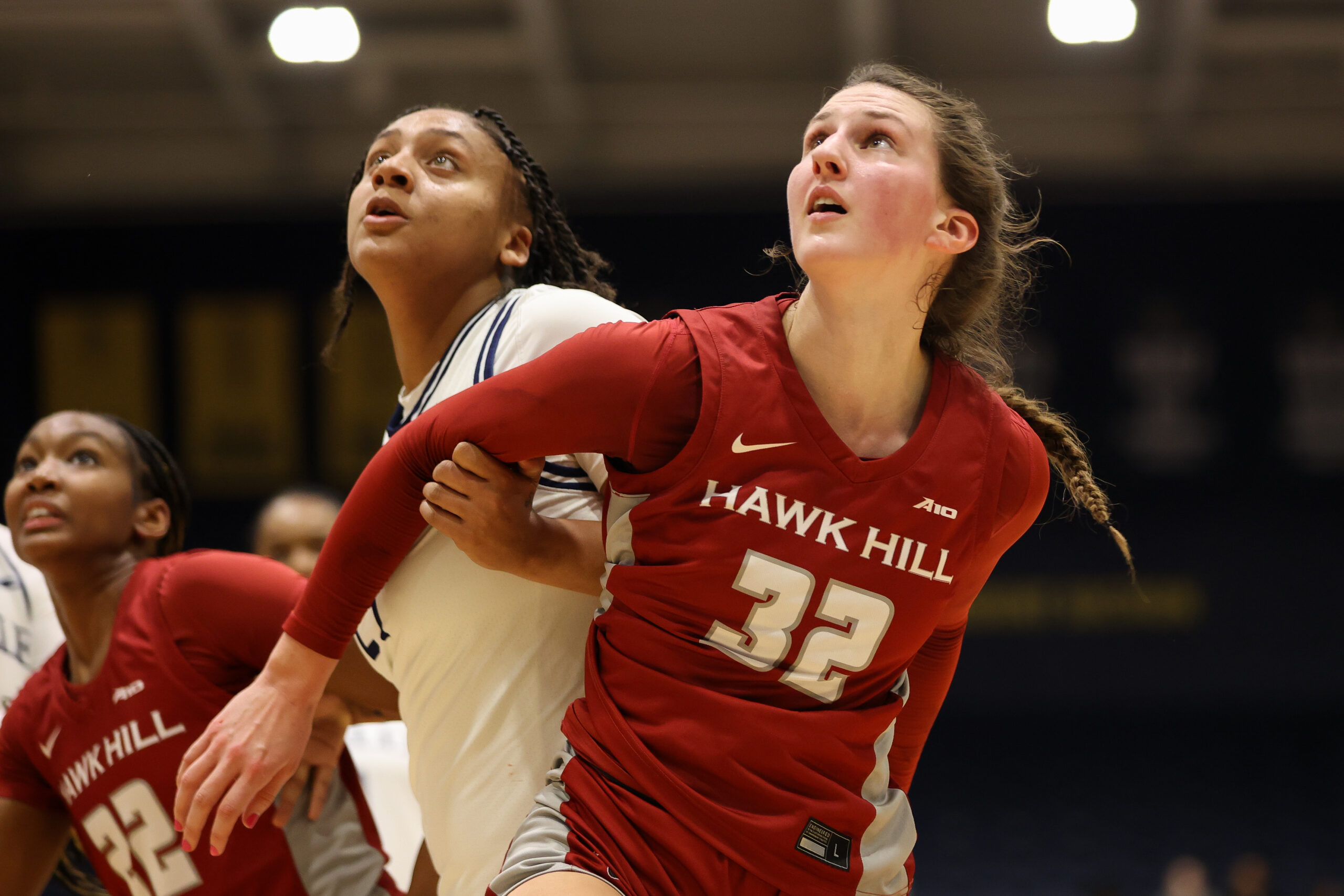
St. Joe’s forward Cecilia Kay (32) battles La Salle forward Kiara Williams for a rebound.
St. Joe’s jumped out to a 38-34 lead to open the third frame and never allowed La Salle to retake the lead. That lead ballooned to 10 halfway through the fourth quarter, and the Hawks’ strong second half helped them prevail.
“I think we came out and it didn’t really go our way, but then we showed up in the second half with our grit, our toughness and staying composed and staying together to really come out and take a force in the first three minutes of the second half,” Casey said. “I think that was just really great, and that gave us momentum throughout the game.”
Up next
St. Joe’s returns home to take on Davidson (15-7, 7-2) on Sunday (1 p.m., ESPN+), while La Salle will travel to face Duquesne (7-14, 0-10) on Saturday (2 p.m., ESPN+).