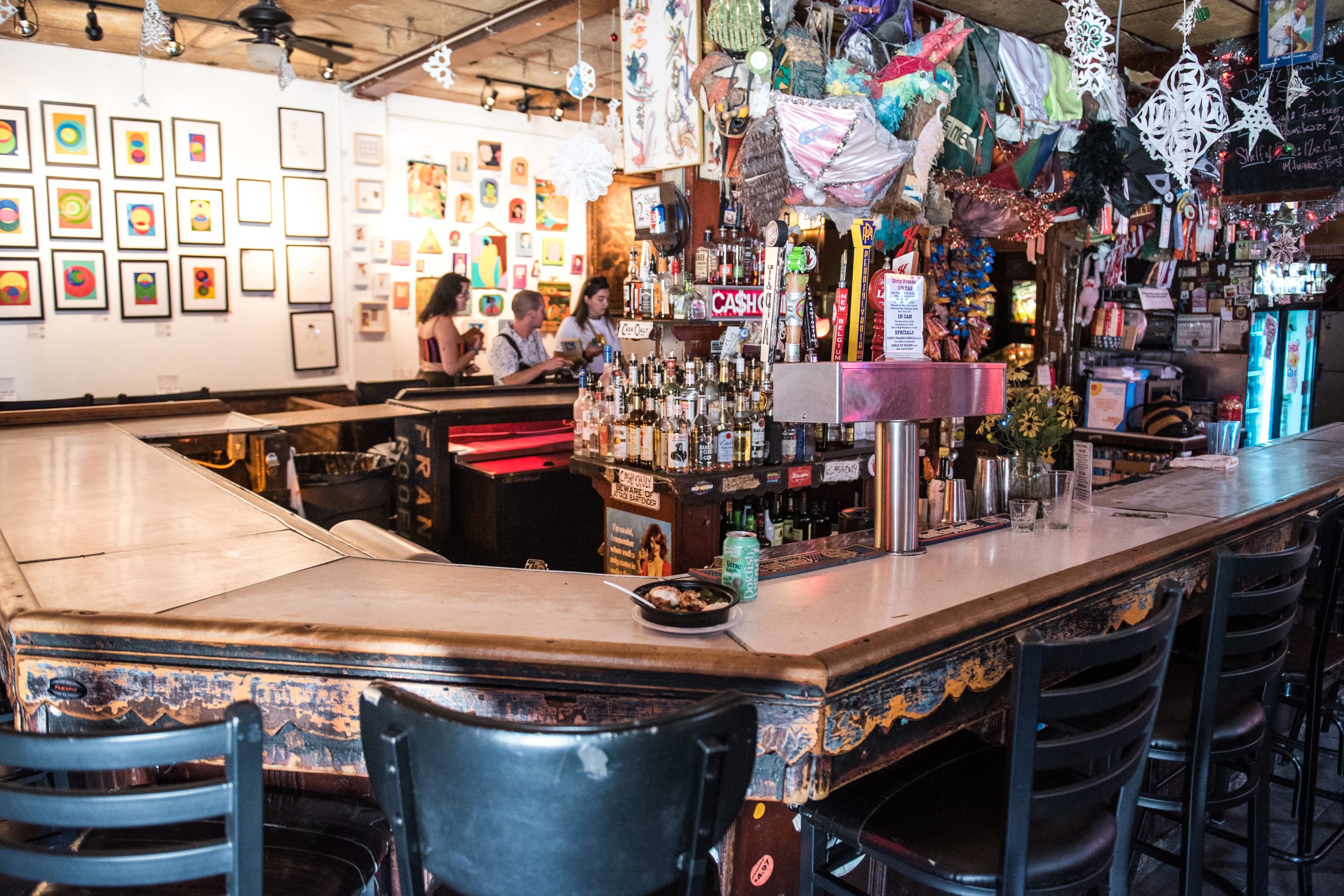
Elaborate fake IDs and the influx of underage people using them to crowd into the Center City bar has led Sweitzer to impose a new rule: To enter, customers must be at least 25.
The new policy went into effect about two weeks ago.
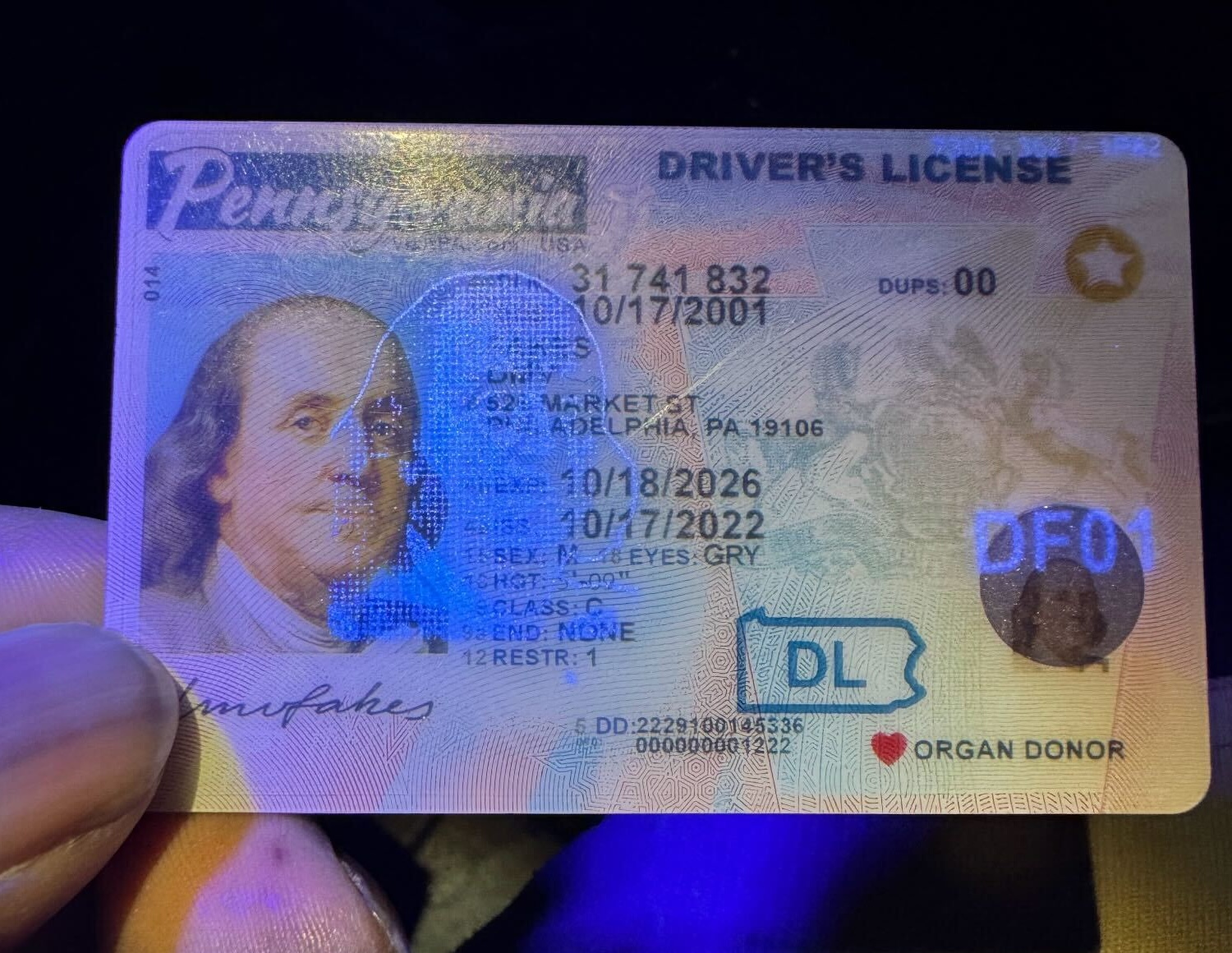
The fake ID that successfully scanned when checked for legitimacy and caused Dirty Franks to institute an 25-year-old age minimum.
Sweitzer said the age minimum is temporary. “Until we can actually acquire a system that’s capable of determining what’s a fake ID,” she said. “[After that,] we’ll go back to 21 and over.”
For years, Dirty Franks has routinely scanned patrons’ drivers licenses and ID cards at the front door, but Sweitzer cited a rise of falsified documentation — as well as customers vaping and even a few who brought in their own booze — as giving her cause for concern that her business could be thrown into jeopardy.
“I want to stay open,” she said in an interview Wednesday.
In online forums and in conversation, older Dirty Franks patrons had recently reported that, on weekends especially, the bar at 13th and Pine Streets was so packed with young patrons that the college-age crowd pushed out a lot of regulars.
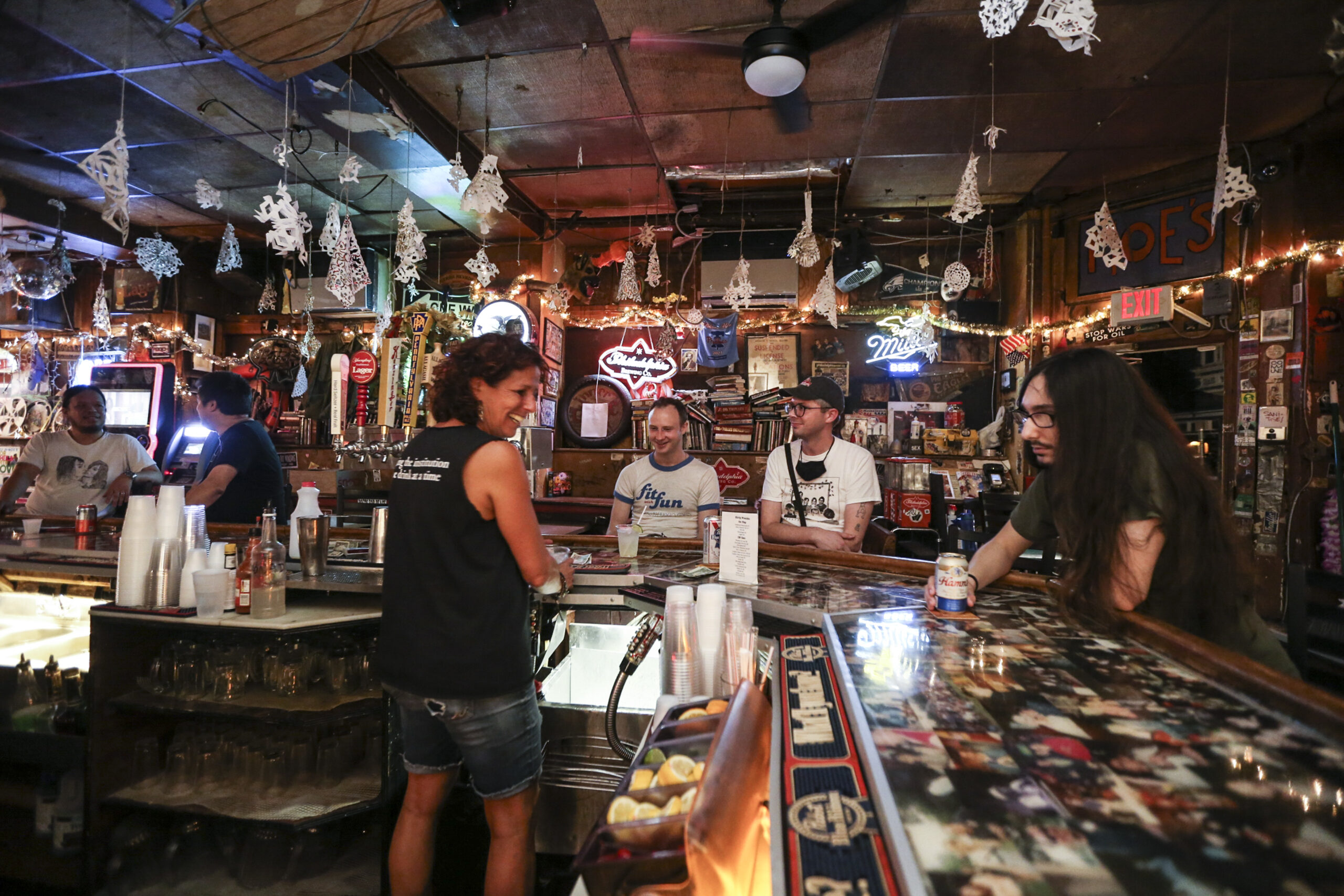
Bartender Patty waits on customers at Dirty Franks, at 347 S. 13th St., in 2021.
Sweitzer said she and the bar’s staff noticed the uptick in younger patrons with scannable IDs with official holograms after the pandemic. Often, she said, those customers would post photos and TikToks of themselves at the bar at 347 S. 13th St. — leading to Franks’ rising popularity among the younger set. (Historically, the bar has attracted plenty of postgrads, creative types, and a deep bench of mixed-age regulars.)
“We’ve always been a dive bar,” Sweitzer said. “Anyone who calls us a college bar is vastly misguided.”
She said that the surge in volume resulted in an overall sales bump at first, but that it leveled off shortly thereafter. “It was quantity over quality,” she said. “So [revenue] stayed the same. You just had to work harder.”
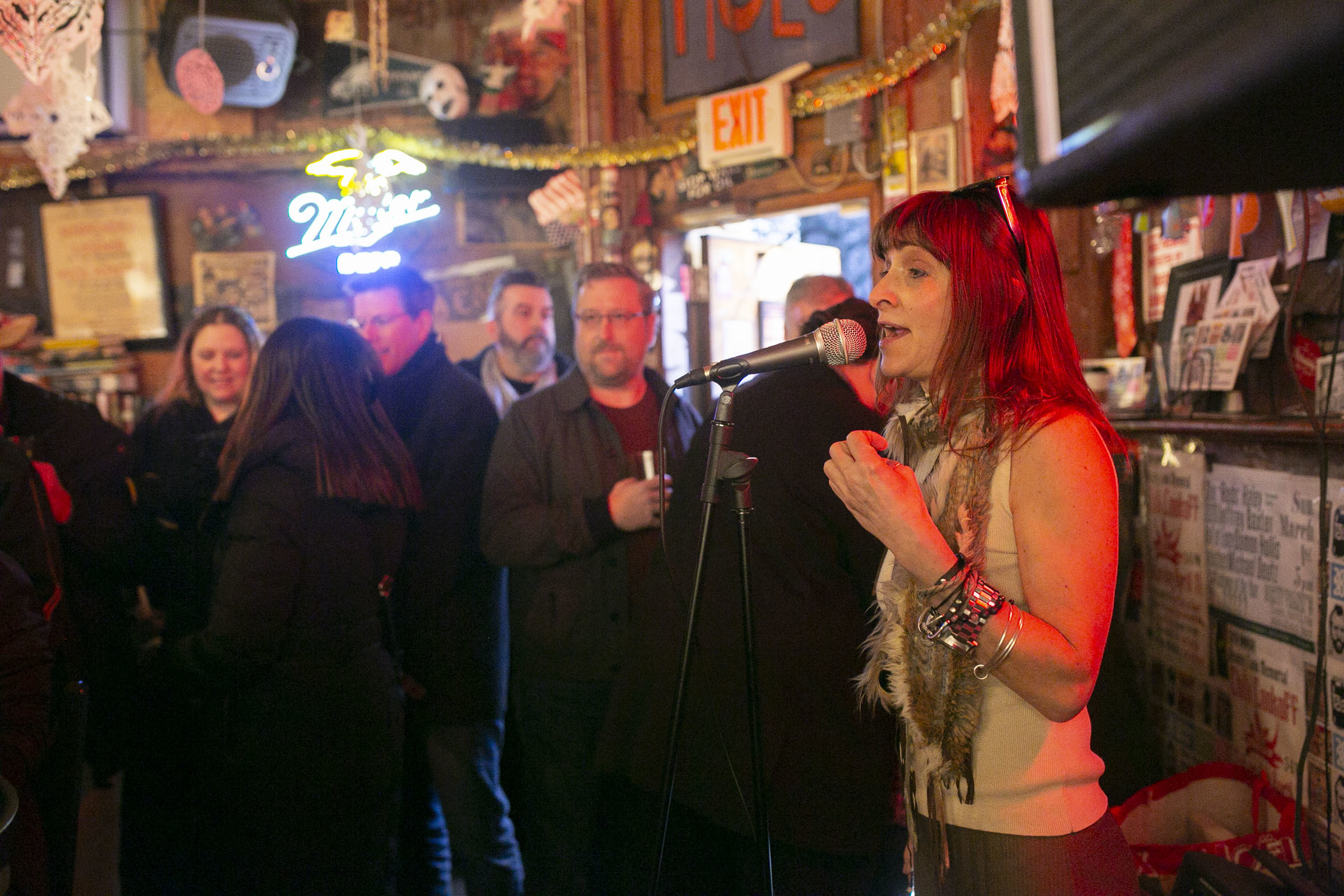
Jody Sweitzer, co-owner of Dirty Franks, offers remarks during their annual customers celebration on March 1, 2020.
Late last year, Sweitzer contacted the Tavern Association in Harrisburg and asked if she could change the age limit, something she had heard another Philly bar had done in the past. She learned that she was OK to make house rules.
Then the ID featuring a 24-year-old Ben Franklin came along. “That was the straw that broke the camel’s back,” Sweitzer said, adding that she’s spoken with scanner manufacturers but hasn’t yet found a higher-tech alternative.
“If you can find a scanner that can’t be fooled,” Sweitzer said, “I will buy it.”
Those affected by the age policy are less than thrilled. Nate Weinberg, 22, and a recent Temple graduate who has enjoyed visiting Franks, found the policy change “kind of peculiar.”
“I know a lot of people are not happy,” he said. “I never witnessed any issues the times that I had been there.”
Dirty Franks
The new age limit, however, seems to have gone over well with Franks regulars, who say they now enjoy a roomier bar and are excited to have a place to sit again.
Lance Saunders, a longtime patron, said he is in favor of the change.
“Hell yeah,” said Saunders, 41, “I am a Dirty Franks faithful and I appreciate whatever Jody and her team has to do to make the staff and valued regulars feel welcome in their own damn bar.”
Baseball is almost back. Spring training will officially start on Wednesday when pitchers and catchers are due to report to the Phillies’ facilities in Clearwater, Fla. Phillies writer Lochlahn March took to Reddit to answer all your questions before camp starts.
Here are a few highlights …
(Questions have been lightly edited for clarity and brevity.)
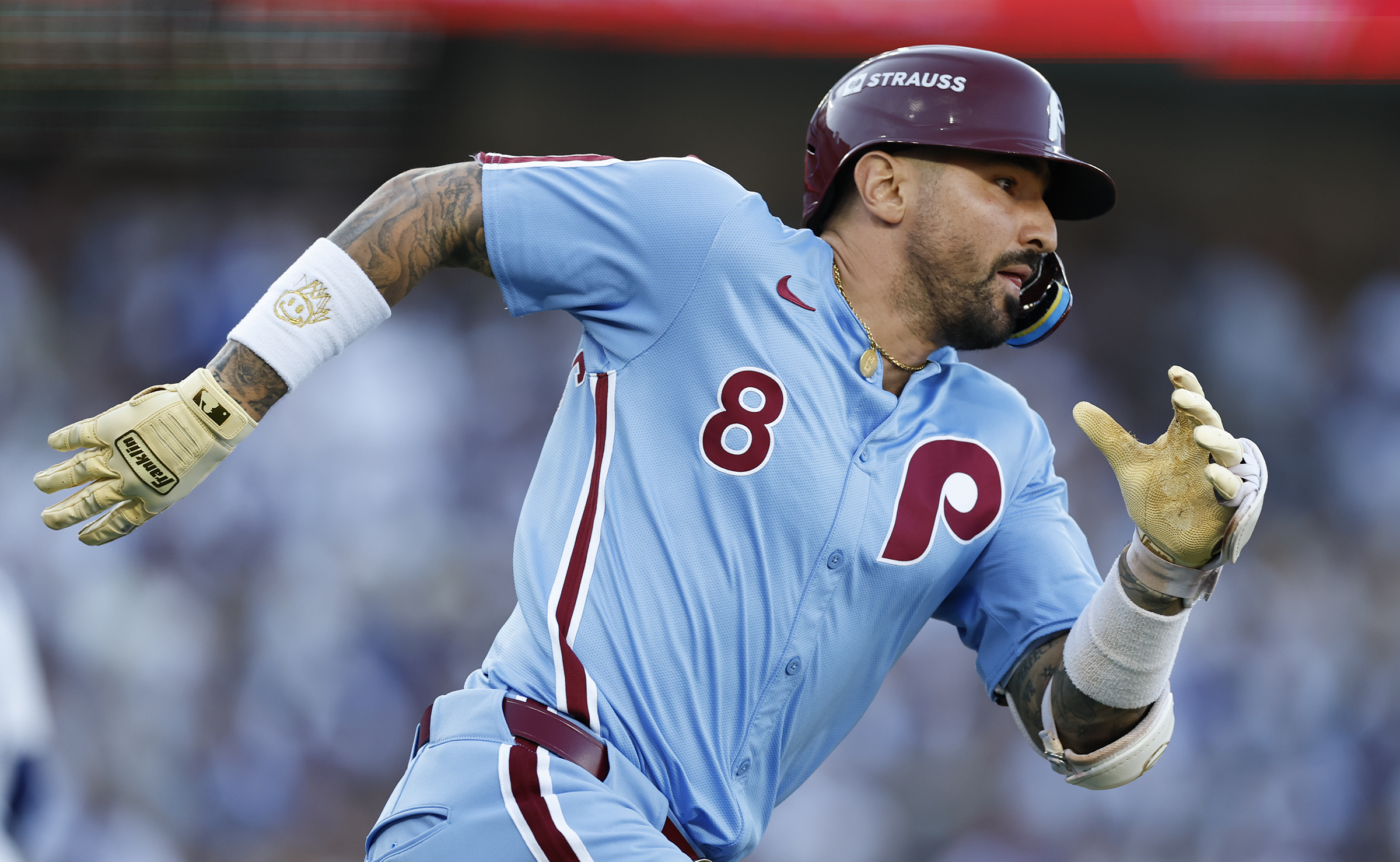
The Phillies are expected to move on from Nick Castellanos going into the last year of his contract.
Q: Any surprises for the opening day roster? What moves are left before spring training?
A: The Phillies still need to find a resolution for Nick Castellanos. They’ve been open about finding a change of scenery for him, which should happen soon through a trade or release. Other than that, I think other additions before spring training, if any, would be depth minor-league signings.
As far as surprises, I think the battle for the last two bullpen spots could get interesting. The Phillies have some newcomers from trades, minor league signings, and a Rule 5 selection, who will all be in contention.
Q: Is Aidan Miller expected to be up this year?
A: It’s possible. After Trea Turner’s improvements defensively last year, I don’t see him moving off shortstop any time soon, but the Phillies are planning to get Miller some reps at other infield positions — third base and possibly some second — this spring.
If he starts this season the way he ended last season, I’d expect him to be at the top of the list in triple A in the event of an injury or other opening on the major league infield.
It’s important to remember that if Miller is on the major league team, he will be playing every day. He won’t be called up to sit on the bench, so even if the Phillies deem him ready, they will wait for the right opportunity.
Q: What does Crawford’s skill set and rookie season look like? Could he be the throwback leadoff hitter this team needs?
A: Lots has been made about Justin Crawford’s high ground-ball rate, and it remains to be seen how that will translate to the major league level, and whether his speed — which is one of his best attributes — can offset that. He’s an aggressive hitter and makes a lot of contact.
I would be very surprised to see him at leadoff to start the season. It’s already a lot of pressure to hand him the keys to the outfield, not to mention sticking him at the top of the order right away. It’s also a good thing to have a guy with that hitting profile who can steal a lot of bases in the lower half of the order to lengthen the lineup.
Q: What are the internal expectations for Jean Cabrera and Michael Mercado?
A: The Phillies have pretty thin starting depth in the minors at the moment, and Jean Cabrera would likely be one option in case of an injury to the rotation this year. Mercado is relief depth. He was non-tendered this winter but re-signed to a minor league deal. They both will be at major league camp next week, and I expect both to likely wind up in triple A.
Q: Who might be this year’s Weston Wilson/Kody Clemens/Brad Miller/Otto Kemp emerging role player type?
A: I think the Phillies hope Dylan Moore could occupy a similar role that Weston Wilson did last season, and he provides a ton of versatility defensively.
As far as emerging players, one name to keep an eye on is Gabriel Rincones Jr. The Phillies like the pop in his bat, but he has a real drawback at the plate against left-handed pitching. I could see him getting his feet wet in the majors at some point this year, but it would most likely have to be in a platoon role.
Q: Who do you expect to get an increased role on the team this season?
A: I’m going to go with Otto Kemp. His name is one that Dave Dombrowski has brought up a lot this offseason. I expect him to get a chance to play some more left field, probably as a platoon partner for Brandon Marsh. Kemp had some offseason surgeries to clean up his shoulder and address a bone fragment in his knee that he’d been playing through since June, but he should be ready to go for spring training. I’m interested in seeing what he can do when he’s fully healthy.
Q: On a scale of minor inconvenience to major life-altering issue, how concerned should we feel about Bryce Harper and his possible decline?
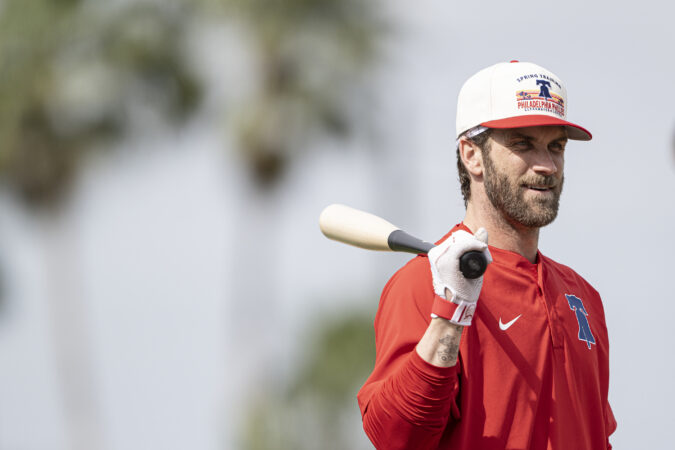
A: I think Bryce Harper is extremely motivated this season. He started hitting this winter earlier than he normally does — part of that is because he’s preparing to play for Team USA in the World Baseball Classic, but I think there’s another part, too. His 2025 didn’t live up to his (very high) standards, and he’s an extremely competitive person. Also remember: He was dealing with a wrist injury for part of last season. I wouldn’t be concerned about a decline just yet.
Q: … Knowing Zack Wheeler won’t be ready for the start of the season, what are the odds he just retires before returning and we’ve already seen the last of him?
A: Wheeler has been open about expecting to retire at the end of his contract, which runs through 2027. It would be a major surprise if Wheeler didn’t return before then. His rehab this offseason by all accounts has been going well. The latest update from a couple of weeks ago was that he was throwing up to 90 feet.
Q: Will Garrett Stubbs be back as the third catcher in triple A?
A: This year, the backup catching battle isn’t as cut-and-dried, as Stubbs and Rafael Marchán are out of options. Whoever does not make the team will have to be designated for assignment and pass through waivers to report to triple A.
How do you live down a mistake that will stick with you for, well, probably forever? Laughing at yourself isn’t a bad place to start, at least after all the initial feelings and impulses — anger, disappointment, self-flagellation — washed over you.
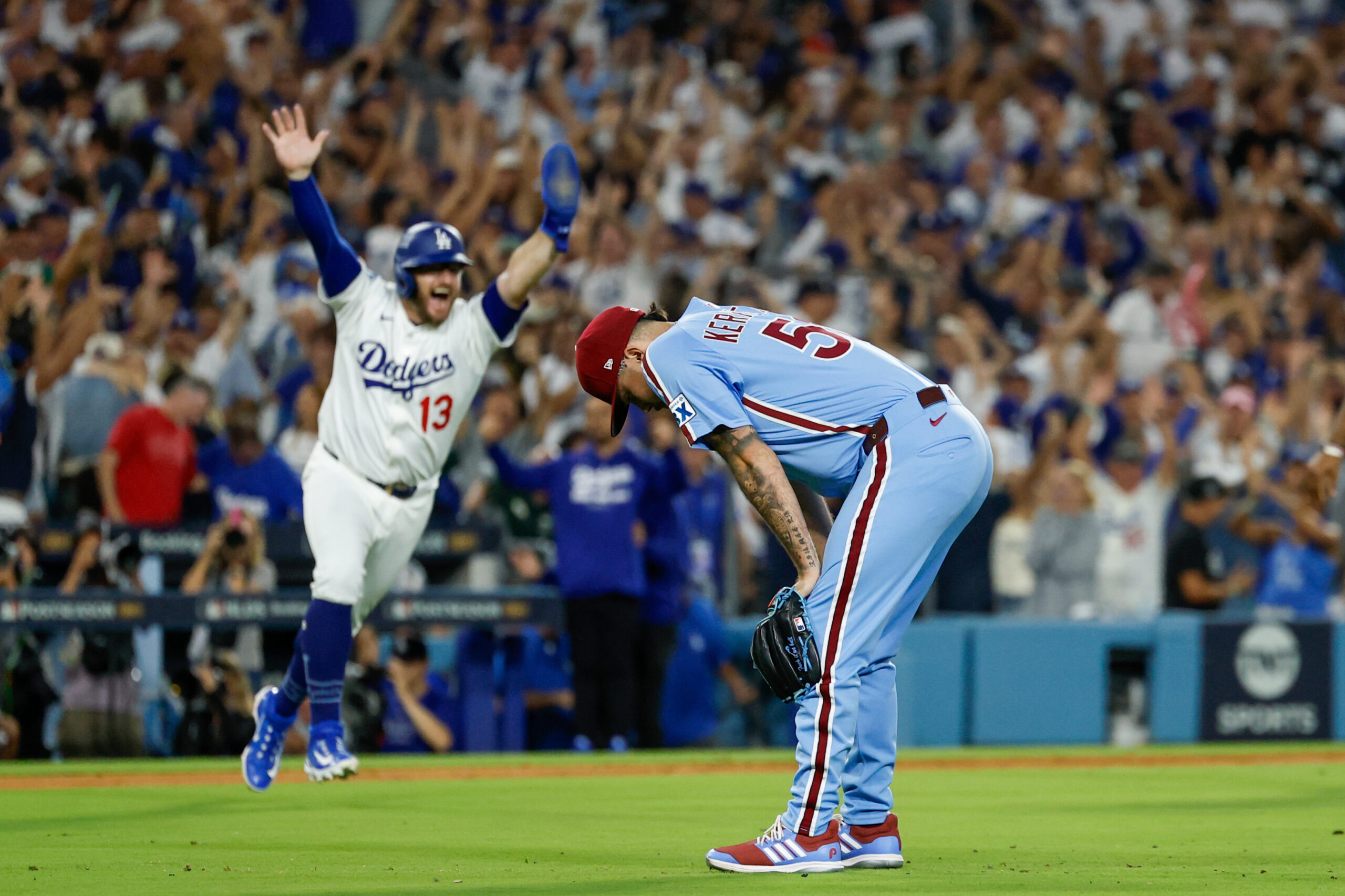
When Phillies pitchers and catchers hold their first official workout Wednesday in Clearwater, Fla., it will have been 125 days since Kerkering bobbled a comebacker at his feet, tried to get an out at home instead of at first base, and lobbed it over Realmuto’s outstretched mitt, ending the Phillies’ season in the 11th inning of the fourth game of the division series.
It wasn’t the reason they lost to the Dodgers. It probably wasn’t even among the top 10 reasons. But it was only the second time ever that a playoff series ended on an error, and in the age of social media, clips of Kerkering’s blunder were everywhere.
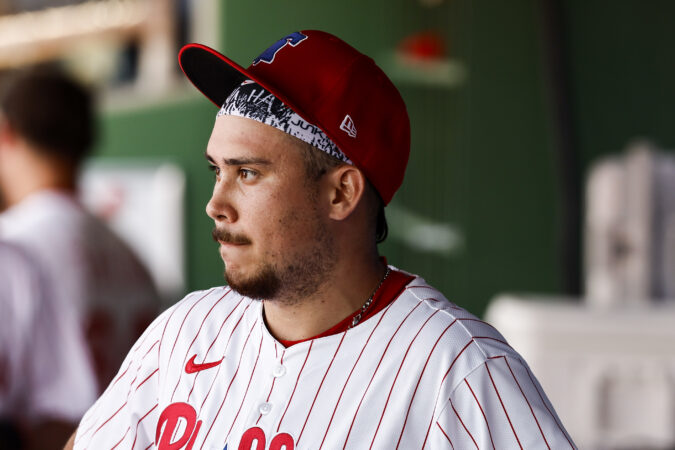
Orion Kerkering’s errant throw to home plate ended the Phillies’ playoff run in Game 4 of the divisional round last season.
“No matter what you do, whether it’s the internet, just basic browsing — even looking up a recipe or something — it’s going to be there. It’s like the first thing,” Kerkering said this week on The Inquirer’s Phillies Extra podcast. “It’s going to always be brought up. You can’t get around it. It’s always going to be stuck there.
“But I don’t want it to like define who I am as a ballplayer in the future.”
It shouldn’t define Kerkering, who has already made 136 appearances in the majors despite not turning 25 until April. But relievers, like football kickers, tend to be remembered for their missteps. Ask Mitch Williams. Brad Lidge, too.
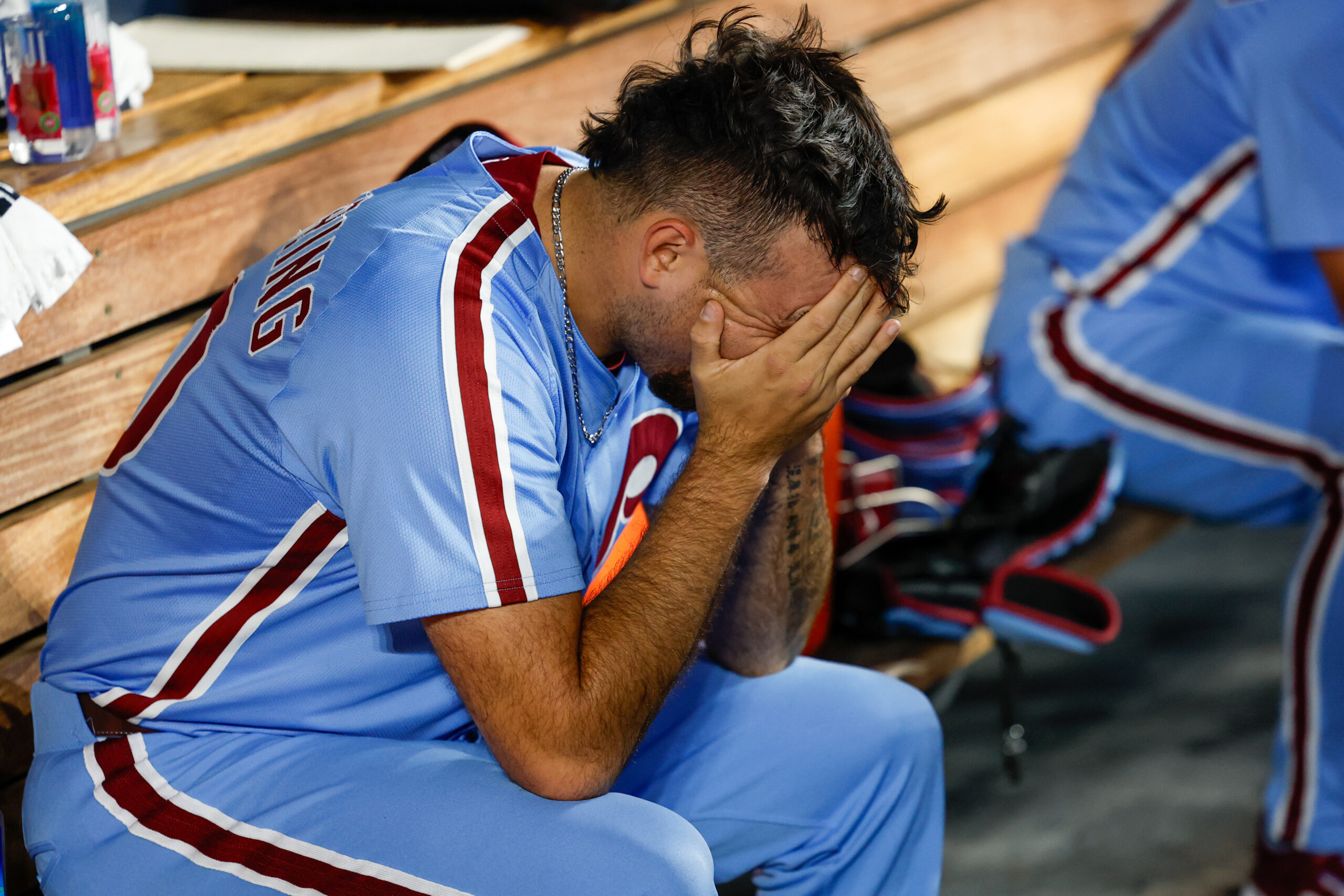
Kerkering faced his head-on. After the game, he stood before a wall of cameras and, with red and swollen eyes, broke down what happened. Then, rather than jetting off to an island in the middle of the ocean to get a respite from seeing his errant throw over and over, he stayed in South Jersey until the week before Thanksgiving.
“I thought it was just important to kind of embrace what happened a little bit and just try to be in the area and not run away from your problems,” Kerkering said. “Just trying to understand why everything happened and try to digest everything in that moment.”
Kerkering didn’t know how people who recognized him in Wawa or at the gym would react. He found it to be quite the opposite of Williams, who received death threats after the Joe Carter homer in 1993, and recently deposed Eagles offensive coordinator Kevin Patullo, whose South Jersey house was egged in the midst of a December losing streak.
“It was just like, ‘Hey, you’re all good; we believe in you,’ and stuff like that,” Kerkering said. “What kind of took me off-guard is how many people, they know you messed up, they know you can do better next time, but how kind of supportive they are.”
Support came from other sources. Dave Dombrowski said the Phillies would offer the pitcher “whatever assistance he needs,” and Kerkering said the team’s mental health staff checked in on him. He heard from friends and former teammates and coaches.
At first, Kerkering avoided looking at his phone. But his dad, a sniper for 20 years in the Marines before becoming the emergency manager for the police department in Sarasota, Fla., has a saying that resonated.
“You’ve got to rip the Band-Aid off,’” Kerkering said. “It’s going to hurt, obviously. But the slower you do it, the more it’s going to be painful.”
After a week, Kerkering rewatched the play. He realizes now that he had more time than he thought after bobbling the ball and should’ve taken the easier out at first base. He has been told that he tends to rush things on the mound. It’s a flaw. It’s also correctable.
Lidge reached out, too, almost immediately. Although he and Kerkering hadn’t previously met, Lidge could relate. Three years before throwing the clinching pitch of the 2008 World Series for the Phillies, while with the Astros he gave up a crushing playoff homer to Albert Pujols. In 2009, he blew a save in the World Series against the Yankees.
“We had a good conversation, just kind of him explaining his experiences,” Kerkering said. “Everyone takes their time of getting over that hump. Some days are good, some days are bad. It’s how you get over that hump, even just in regular day-to-day life where it’s like, ‘What can you do to get over it?’
“Because it’s going to linger no matter what. But how can you internally fix it or fix that mindset moving forward?”
“We’ve all made mistakes. Mine just so happened to be in front of whatever, 10 million people,” says Orion Kerkering.
But Kerkering remains. He dominated in May and June, looking like a future closer. But the Phillies traded for star closer Jhoan Duran at the deadline in July, and Kerkering struggled through the summer. He regained his mojo late in the season and appeared in all four playoff games against the Dodgers.
“I don’t think I really had that good of a year,” said Kerkering, who finished with a 3.30 ERA in 60 innings. “It’s like, be more consistent with the heater, be more consistent with the sinker, get the sweeper back to what it was in ’23, ’24, how dominant it was, and kind of get more guys to swing.”
Team officials believe in Kerkering’s stuff. As important, they believe in his head.
Kerkering is aware of his reputation within the clubhouse as “a goofy kind of kid.” Former Phillies reliever Jeff Hoffman once described him as having “no filter” and keeping everyone on their toes with what comes out of his mouth next.
Teammates say Kerkering takes his job seriously, but not himself. So, rather than dwelling on a season-ending mistake, he’s intent on learning from it — and occasionally making light of it.
“You just kind of live and forget with it,” Kerkering said. “We’ve all made mistakes. Mine just so happened to be in front of whatever, 10 million people, between watching it, hearing about it around the whole country. However you want to look at it, it [stinks].
“But I think, just overall, it’s like, if that’s how someone wants to define you, then let them. But I’m not going to let it define me.”
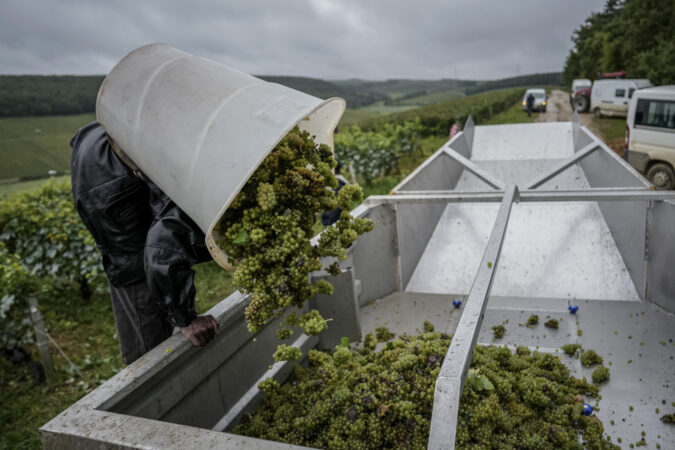
While it may not be in the average American’s vocabulary, the wine trade term “unoaked” — found on this wine’s label — is now formally recognized as a word by most dictionaries. It refers to wines or spirits that do not come into contact with wood in the winemaking process and therefore do not feature the constellation of sensory traits that are traditionally imparted to wine through either fermentation or aging in oak barrels.
Oaky wines feature the distinctive tastes and smells of toasted oak — a nutty, caramelized quality reminiscent of vanilla, bourbon, and dessert spices. While oakiness is present in the vast majority of premium red wines, it doesn’t stand out as vividly as it does in white wines, so is rarely mentioned by the winery. As a result, the word unoaked is almost invariably used as a white wine descriptor, since in this category it has both a useful descriptive meaning and positive connotations from a marketing perspective. Chardonnay is the main white grape whose wines become more desirable when they are oaked, so it is also the main style where customers may be actively seeking an unoaked version.
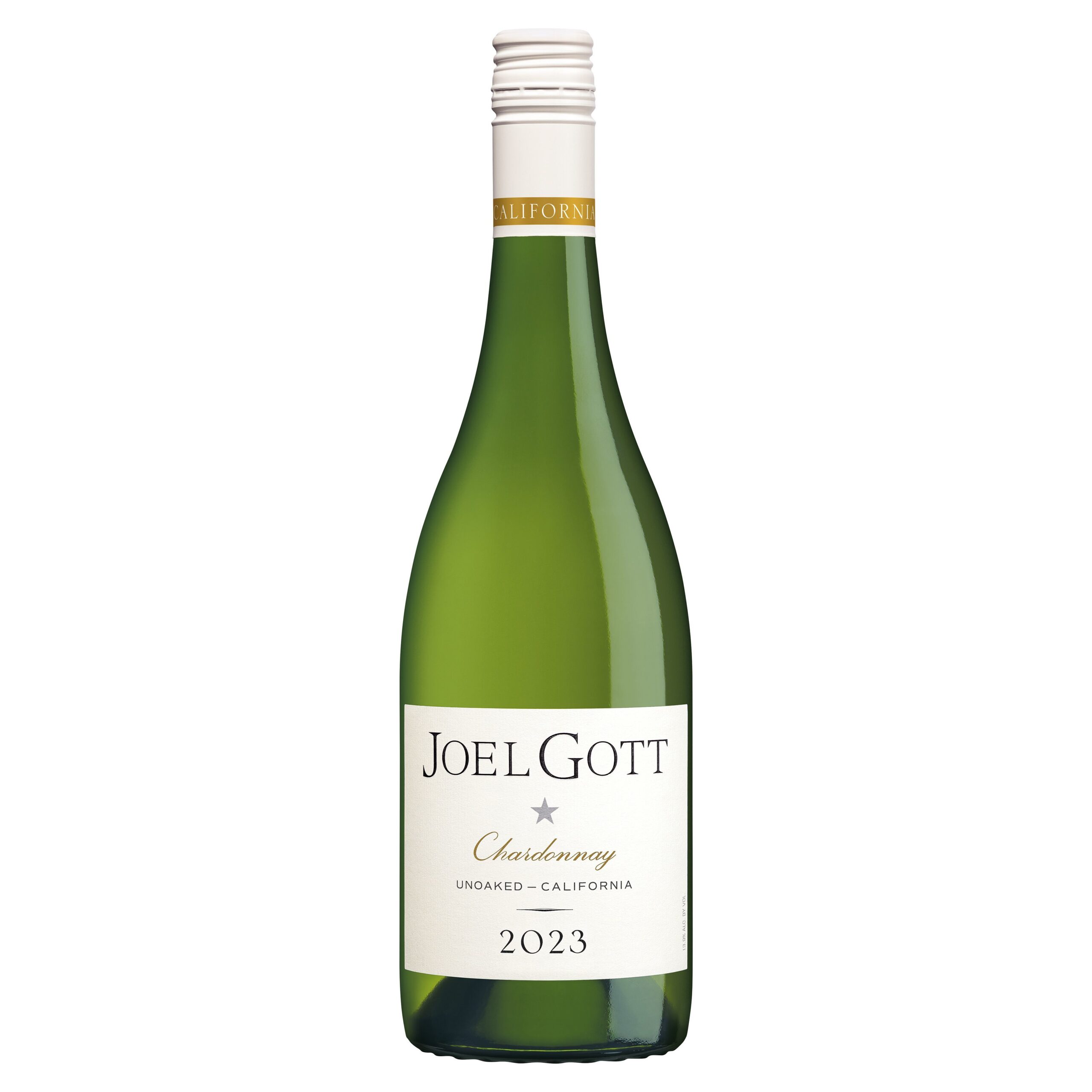
This unoaked chardonnay from California is an atypical example in that it is both lighter bodied and fresher tasting than the winery’s premium, barrel-fermented offering. Made entirely in stainless steel tanks, it is also decidedly more refreshing, with more prominent snappy acidity. Its flavor profile is of fresh-picked orchard fruits like golden apples and ripe green pears, with a juicy touch of cantaloupe.
Joel Gott Unoaked Chardonnay
Joel Gott “Unoaked” chardonnay
California; 13.8% alcohol
PLCB Item #4010 — on sale for $14.99 through March 1 (regularly $16.99)
Trading McCain is a big risk, especially since the Sixers didn’t make any other significant moves, according to columnist David Murphy.
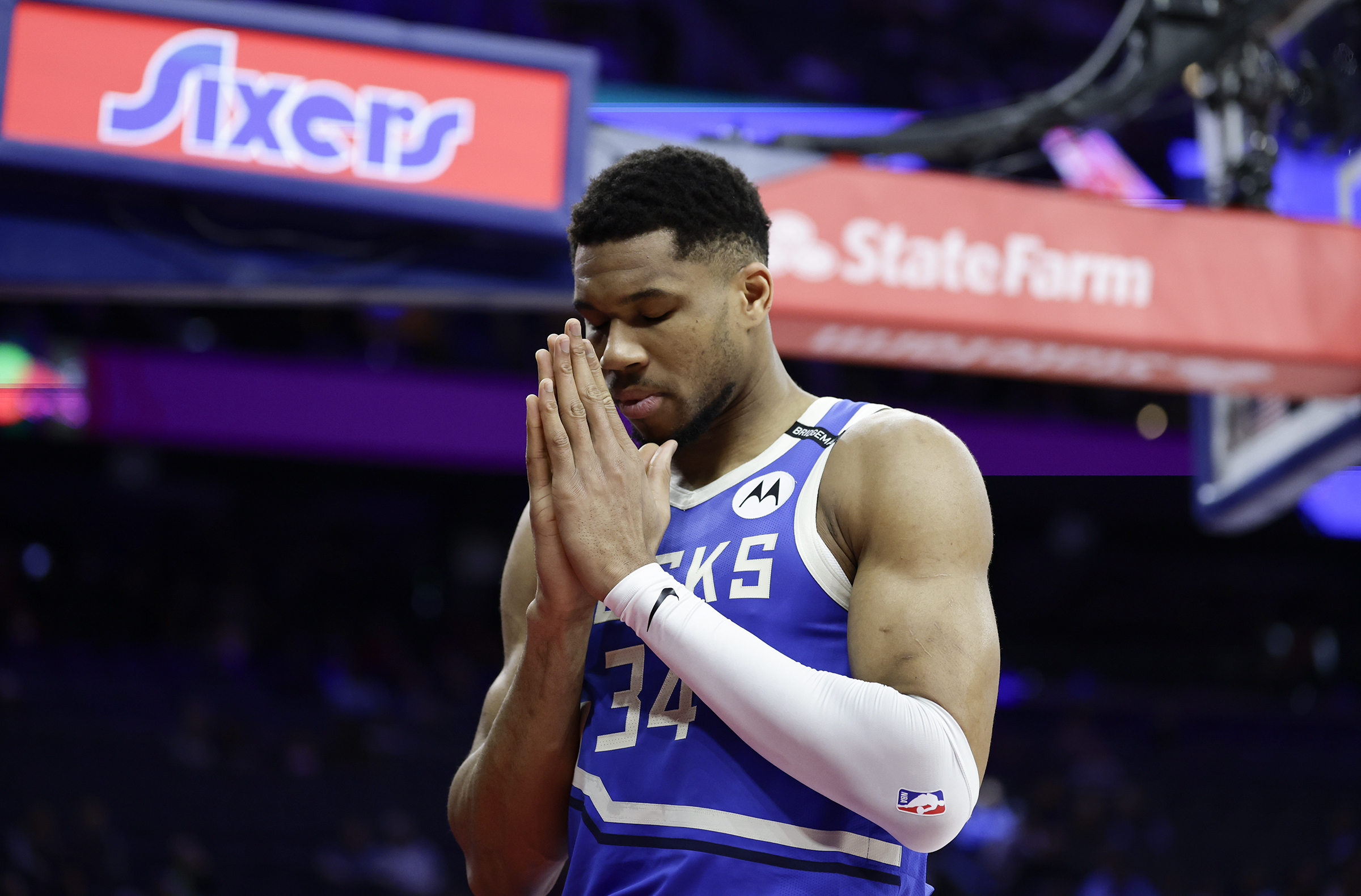
After drawing all the attention, Giannis Antetokounmpo remains with the Milwaukee Bucks, who will consider trading him in the offseason.
Next up on the calendar is the NBA All-Star game, which will take place on Sunday, Feb. 15. Tyrese Maxey will be a starter.
// Pinned
// Timestamp 02/05/26 3:01pm
Trade deadline passes with Sixers making two minor moves
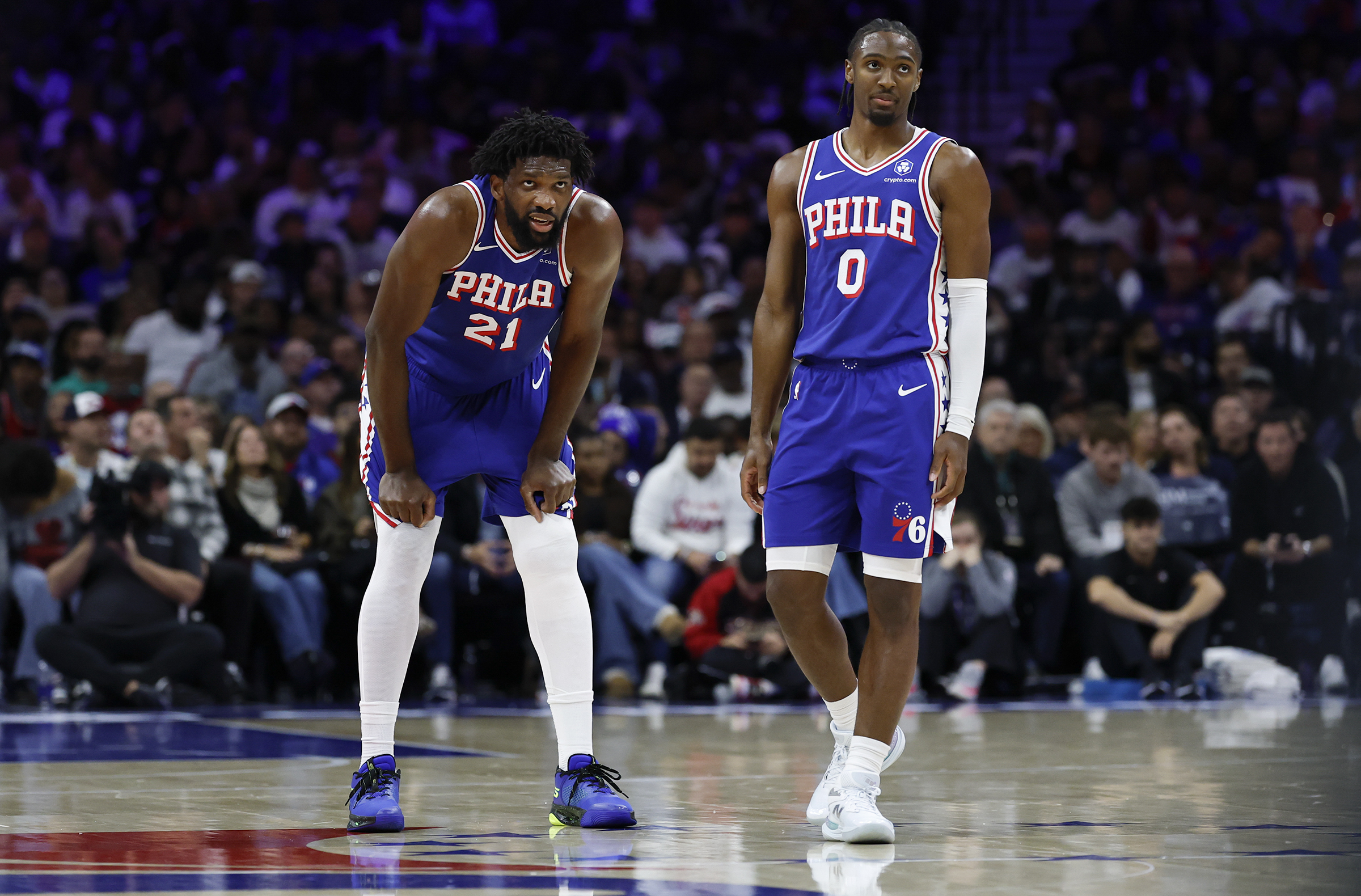
Joel Embiid and Tyrese Maxey didn’t get any help at the trade deadline.
The NBA trade deadline has come and gone without the Sixers making any additions to their roster, not even to fill in during Paul George’s 25-game suspension.
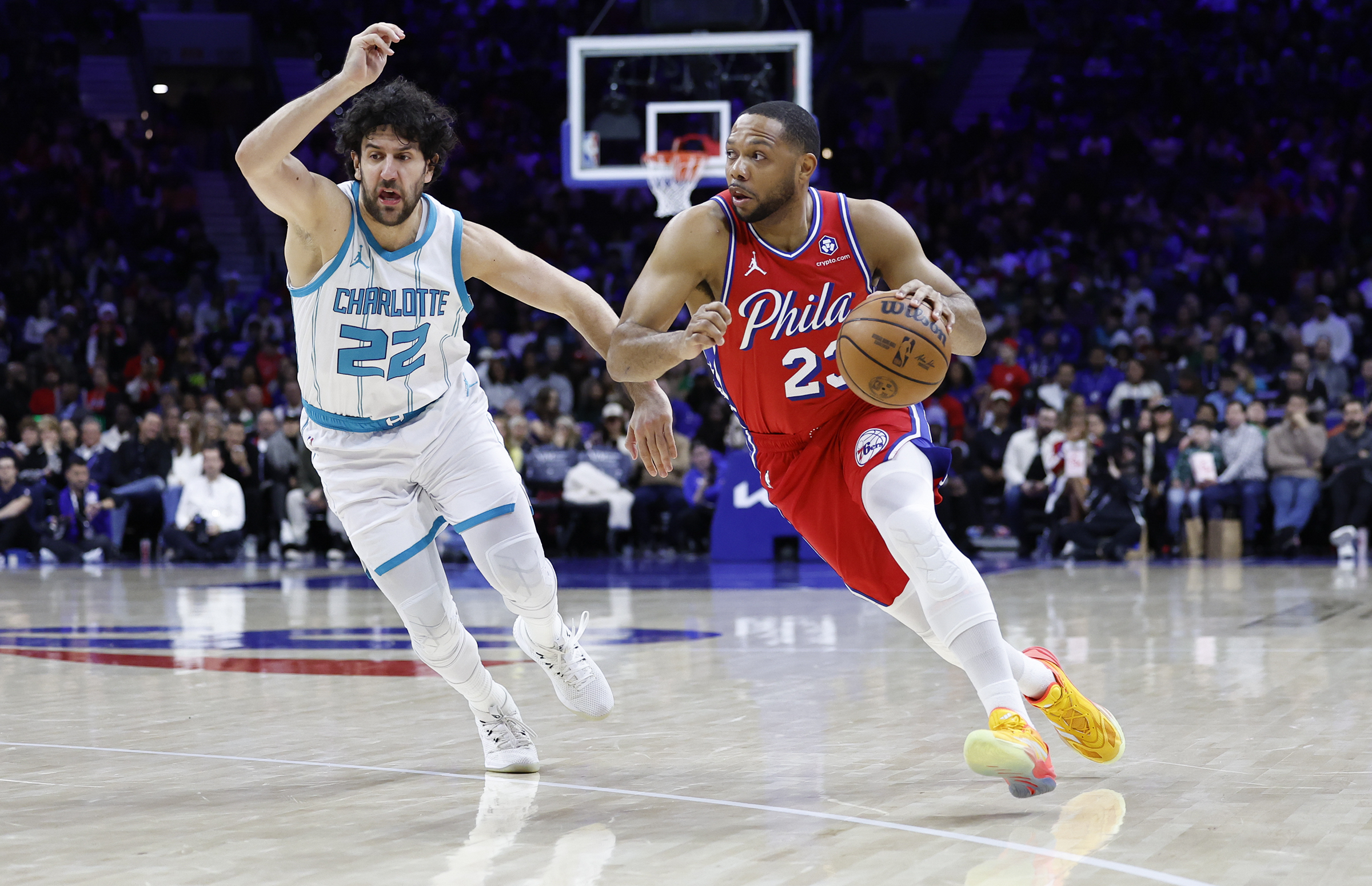
Earlier Thursday, the Sixers traded Eric Gordon to the Memphis Grizzlies in a salary dump. Wednesday they parted ways with Jared McCain, the 2024 No. 16 overall pick, for draft picks.
The Sixers did create some roster spots that could be used to sign Dominick Barlow and Jabari Walker to a standard NBA contracts. They could also still sign a player waived by another team, and are now $5.3 below the luxury tax.
The Brooklyn Nets are waiving Cam Thomas, allowing the scoring guard to enter free agency, sources tell ESPN. The Nets made the decision to allow Thomas to find a new home. pic.twitter.com/sK75uB6ZV1
Sixers sign Charles Bassey to another 10-day contract
Charles Bassey will remain with the Sixers, at least for another 10 days
The 76ers signed Charles Bassey to a second 10-day contract.
The 6-foot-11 center was not active for any games with the team during the initial 10-day deal that he signed on Jan. 26. However, he excelled for their NBA G League affiliate, the Delaware Blue Coats.
This extends Bassey’s second stint with the Sixers.
The team initially selected him with the 53rd pick in the 2021 draft out of Western Kentucky. He appeared in 23 NBA games as a rookie, averaging 3.0 points on 63.8% shooting along with 2.7 rebounds, 0.7 blocks, and 7.3 minutes.
Bassey became expendable when the Sixers added reserve center Montrezl Harrell to the roster in September 2022. The Nigerian player was waived on Oct. 13, 2022.
Tyrese Maxey thought Jared McCain trade was a joke
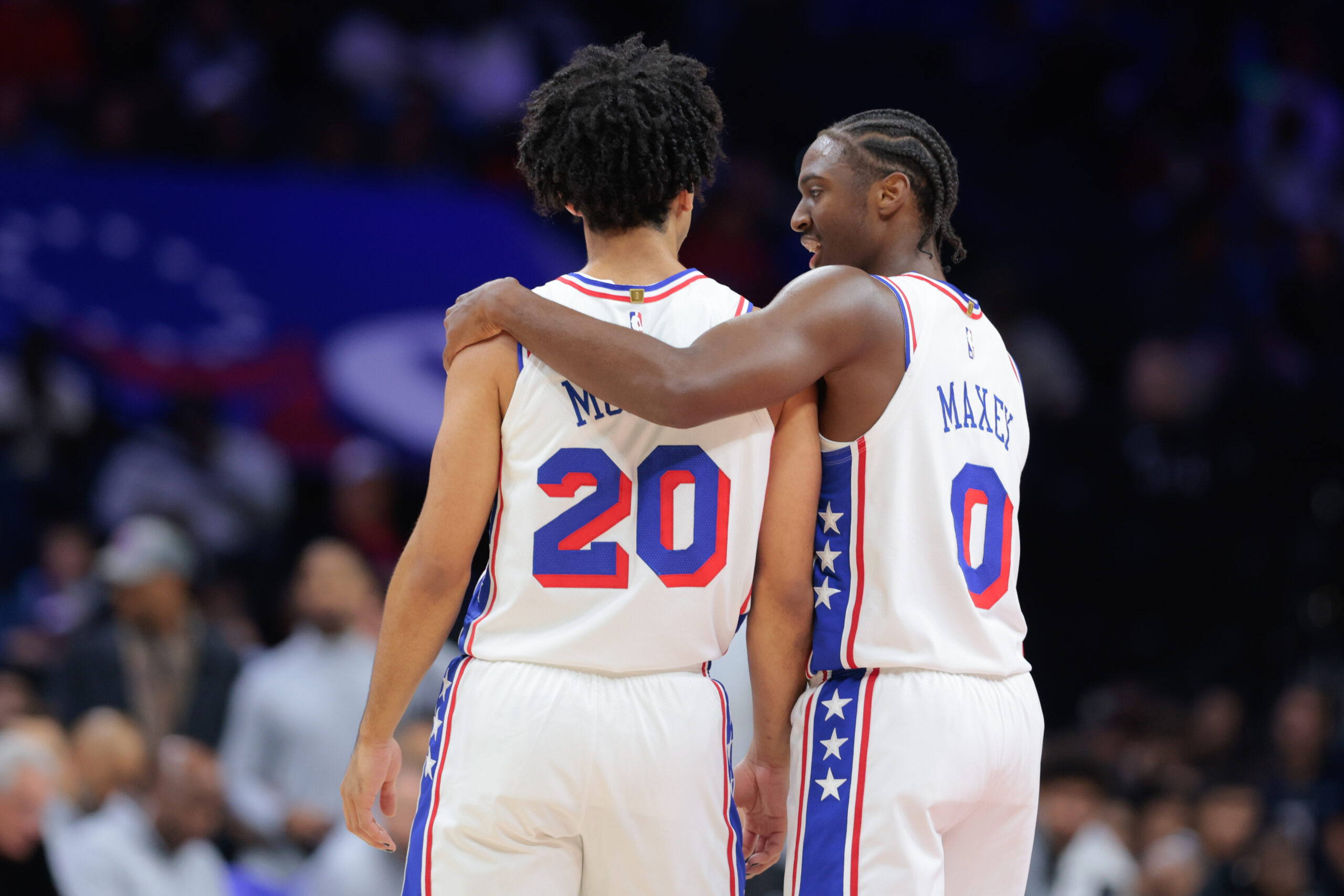
Tyrese Maxey with Jared McCain, who was traded Wednesday to the Oklahoma City Thunder.
LOS ANGELES – While on the team bus as the 76ers traveled from San Francisco to Los Angeles, Jared McCain approached the group to share that he had been traded.
“It was just like, ‘All right, whatever. He’s just joking,’” All-Star point guard Tyrese Maxey recalled. “Calls start coming in, and then you realize it’s real.”
McCain had been sent to the Oklahoma City Thunder for a first-round pick and additional draft compensation. The “part of the business” cliche has been uttered by players and coaches throughout the league leading up to Thursday’s trade deadline. But this particular deal was emotional for Maxey, who called McCain a “little brother” as part of his first rookie-veteran NBA relationship.
“I’m happy for him,” Maxey said from the Sixers’ shootaround at Crypto.com Arena ahead of Thursday’s game at the Los Angeles Lakers. “Hopefully he gets an even better opportunity over there to succeed. He’s got a fan in me for life, a brother in me for life.”
McCain quickly endeared himself to the Sixers fan base because of his impact play and colorful personality, before knee and thumb surgeries led to struggles in his second season. Maxey experienced those qualities day-to-day, saying McCain “just cared” about people and his craft.
“Anybody that worked that hard for me is going to be somebody that I probably gravitate to,” Maxey said. “He was a good person, as well. He treated everybody with respect. A lot of people in this organization were sad to see him go.”
The emotions hit Maxey again this morning, when he woke up and realized “Man, I’m not going to see ‘JMac’ downstairs.”
“It’s just unexpected,” Maxey said. “That’s really all I got to say. You just never know.”
Then Maxey headed to shootaround, which began about two hours before the deadline. Veteran guard Eric Gordon was present, before reportedly being traded to the Memphis Grizzlies. So was veteran center Andre Drummond, who is viewed as another potential contender to be moved by the deadline.
Eric Gordon is heading to Memphis in a salary dump by the Sixers.
As expected, the 76ers parted ways with Eric Gordon.
Sources confirm the Sixers traded the reserve shooting guard on Wednesday to the Memphis Grizzlies for a 2032 second-round pick swap. This move gives the Sixers various options.
It opens up a roster spot to convert Dominick Barlow’s two-way contract into a standard deal. It also gives them a little over $7.6 million in salary cap space under the first apron. And they can sign players on the buyout market in addition to using up to $8 million in trade exception to acquire a player.
Gordon only played in six games, with his last appearance coming Dec. 23 against the Brooklyn Nets.
The 37-year-old, in his 18th season, signed a one-year, $3.63 million contract on July 1 after declining his $3.47 million player option. Gordon’s deal created a $2.3 million cap and a $2.3 million dead cap value, which was considered a good, low-risk expiring salary for potential trades.
The thought was the Sixers could entice a team with a lot of cap space, with a second-round pick, just to take on Gordon’s contract for the remainder of the season. It turns out they found a trade partner in the Grizzlies.
The Denver Nuggets are trading Hunter Tyson and a 2032 second-round pick to the Brooklyn Nets for the lesser favorable of a Clippers/Hawks 2026 second, sources tell ESPN. Denver creates an open roster spot for the buyout market and gets out of the luxury tax.
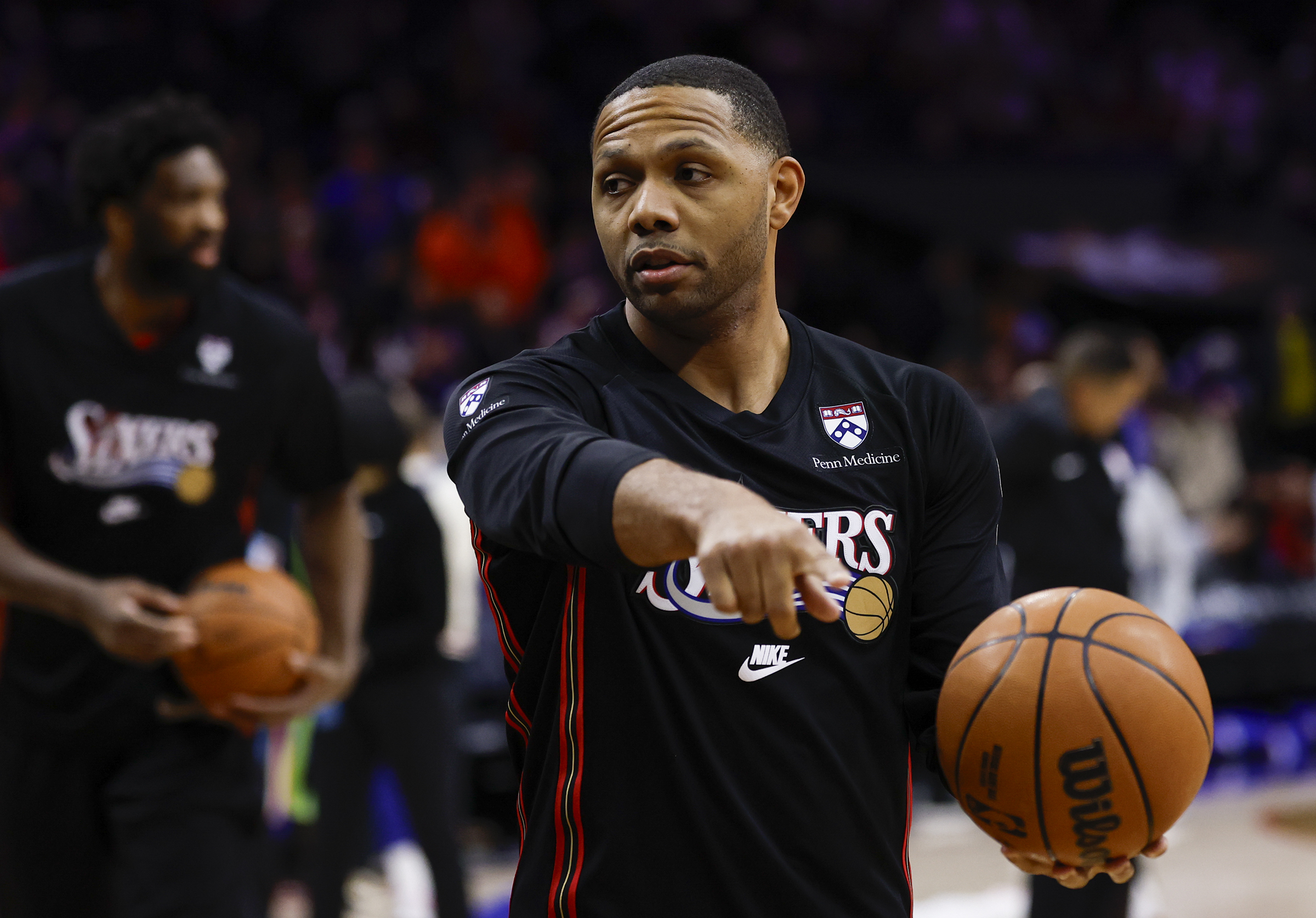
Eric Gordon, seen during warm ups before a game against the Knicks last month.
The Sixers are in talk to move veteran guard Eric Gordon before the trade deadline, according to The Athletic’s Tony Jones.
The Philadelphia 76ers are working to find a landing spot for veteran guard Eric Gordon, according to League Sources. Multiple teams are involved in that discussion
Gordon, on the tail end of a successful career, has played in only six games in his second season as a Sixer. Trading the 37-year-old and his $3.6 million contract in a salary-dump move would open up an additional roster spot that could be used to sign Dominick Barlow and Jabari Walker to a standard NBA contract.
The Sixers already created one spot when they traded Jared McCain to the Orlando Thunder Wednesday.
Bucks won’t trade Giannis Antetokounmpo before deadline: ESPN
Giannis Antetokounmpo won’t be part of any blockbuster trade ahead of Thursday’s deadline.
So much for that.
The Milwaukee Bucks have told teams they won’t be trading two-time MVP Giannis Antetokounmpo ahead of Thursday’s deadline, according to ESPN’s Shams Charania.
"They were never serious," said one team executive who was discussing a Giannis Antetokounmpo trade with Milwaukee.
The Milwaukee Bucks have indicated to teams that they are keeping Giannis Antetokounmpo through the trade deadline and will start making other trades, sources tell ESPN.
The Bucks are currently in 12th place in the Eastern Conference, 9 games below .500 and completely out of the playoff picture. Hopes for a second-half turnaround seem fleeting under Doc Rivers, who’s barely been a .500 coach (85-82) in his two-and-a-half seasons with the Bucks.
If the Bucks try to move him in the offseason, Antetokounmpo will have more leverage over his destination, since he could opt for free agency following the 2026-27 season.
Lakers find a sharpshooter on the wings for Luka Doncic, Austin Reaves and LeBron James while the Hawks land a veteran guard, create a $11 million trade exception and pick up an asset. https://t.co/GIY8HNo0Zp
Minnesota traded Rob Dillingham, Leonard Miller and four second-round picks to Chicago for Dosunmu and Julian Phillips, sources said. https://t.co/bVhLA9Sb3f
Giannis trade not looking likely before the deadline, says ESPN’s Brian Windhorst
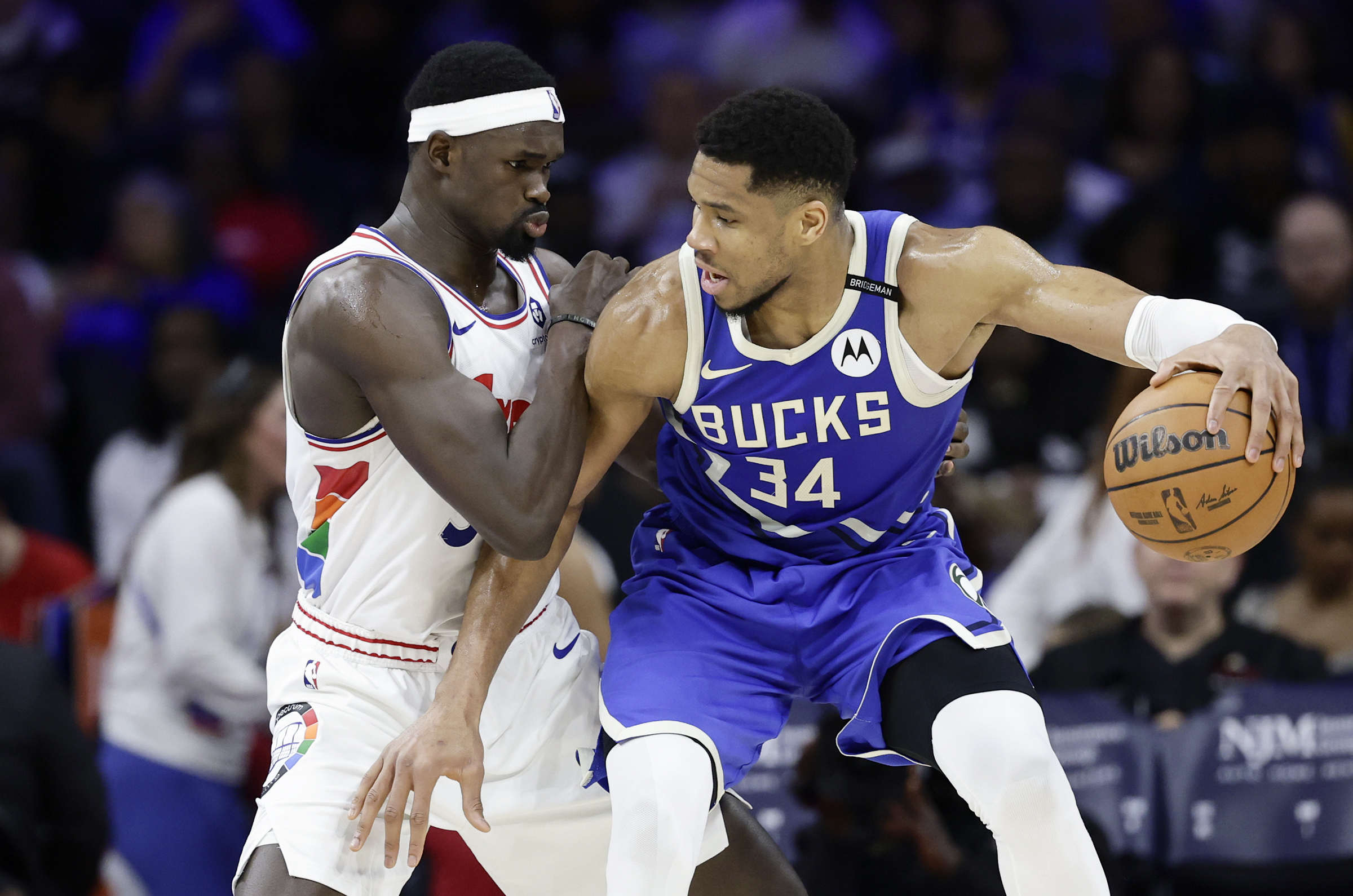
Giannis Antetokounmpo dribbles against Adem Bona during a game against the Sixers last season.
All eyes remain fixed on the Milwaukee Bucks as the contemplate trading two-time MVP Giannis Antetokounmpo.
The teams most often mentioned in trade talks have been the Golden State Warriors, Minnesota Timberwolves, and Miami Heat, and one distant report about Antetokounmpo being intrigued about playing for the Sixers.
But according to ESPN NBA insider Brian Windhorst, it looks more likely Antetokounmpo will remain with the Bucks past the deadline, pegging the chances around 60% a trade won’t happen.
“Minnesota is still out there, but I’ll be honest with you: I don’t think Minnesota’s offer was as good as Golden State’s,” Windhorst said on ESPN’s Get Up Thursday morning. “And if Golden State’s offer wasn’t good enough and Minnesota can’t make a trade to improve their offer, I don’t think Minnesota’s realistic.”
“Miami is making a player and semi-draft pick offer – it’s a decent offer but I don’t think it’s something that [Milwaukee] would stop everything for Giannis,” Windhorst added.
Looking back at previous Sixers’ trade deadline deals under Daryl Morey
Sixers team President of Basketball Operations Daryl Morey.
LOS ANGELES — Nick Nurse briefly chatted with Daryl Morey Tuesday about the looming trade deadline.
At that point, the 76ers coach and president of basketball operations had not had a conversation in a couple days. Nurse added he had not yet had “any discussions” with players about potential moves or speculation.
“I mostly let him do his thing,” Nurse said of Morey and the front office. “They’re obviously working long hours.”
Another phone call was certainly worthy by Wednesday afternoon, when the Sixers got into the deadline mix by trading second-year guard Jared McCain to the Oklahoma City Thunder for a 2026 first-round draft pick and additional draft compensation. It is unclear if that is a precursor for another deal before 3 p.m. Thursday, or a way to get under the luxury tax threshold while also acquiring assets.
Either way, the typically aggressive Morey has already fulfilled the expectation that he will always do something this time of year. He is entering his sixth trade deadline with the Sixers, where his moves have ranged from pulling off a blockbuster to executing a straight salary dump.
Here is a look back at each deadline move for the Sixers since Morey joined the organization in 2020:
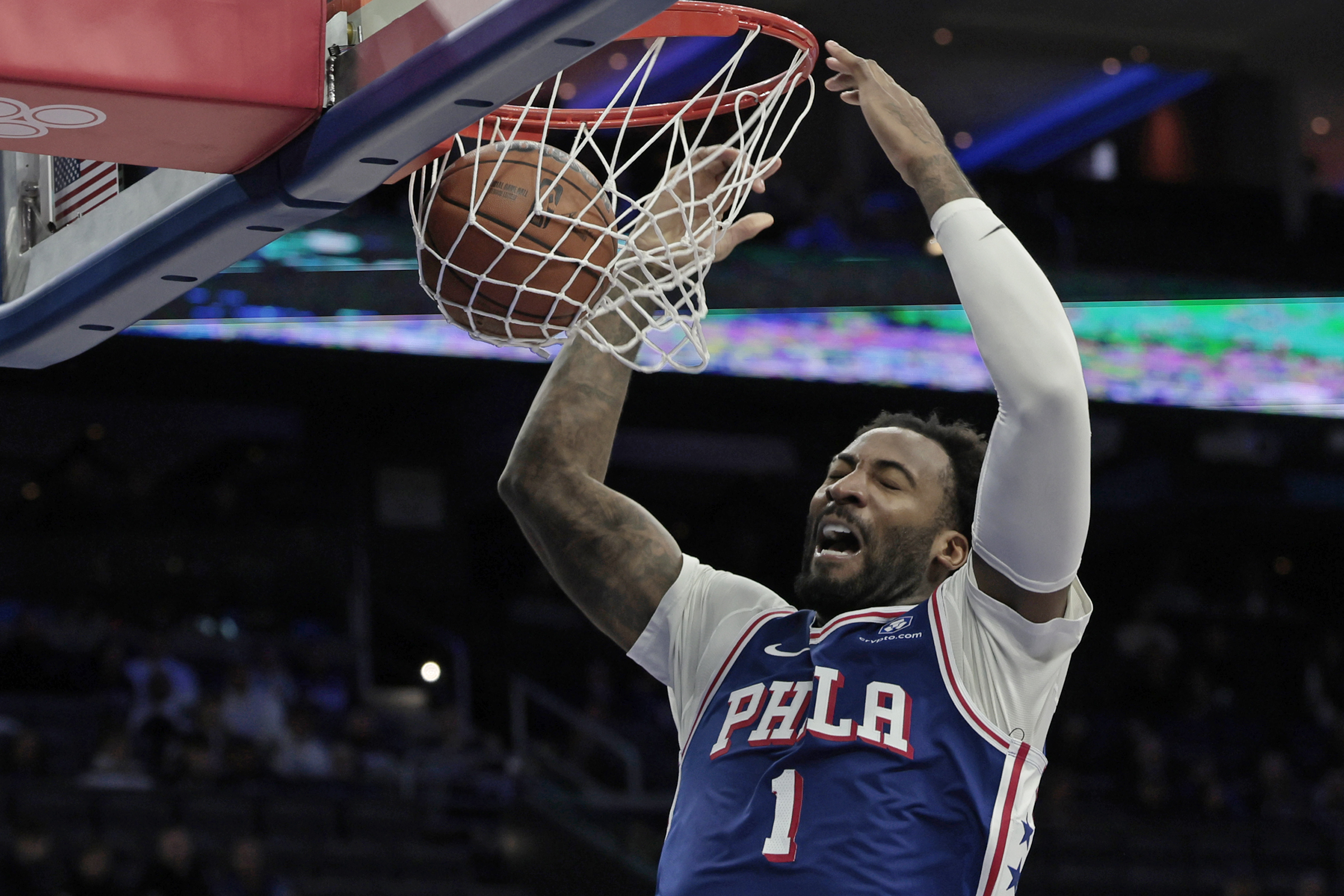
Andre Drummond is the Sixers’ best rebounder and has 12 double-doubles this season.
Could we see another alteration to the 76ers‘ roster before they face the Los Angeles Lakers at 10 p.m. Thursday at Crypto.com Arena?
There was always a belief that the Sixers would shed some salary before the 3 p.m. Thursday trade deadline to get below the luxury tax threshold. They also needed to free up a roster spot to sign two-way players Dominick Barlow and Jabari Walker to standard deals.
And the squad might have accomplished both by trading Jared McCain to the Oklahoma City Thunder in exchange for the Houston Rockets’ 2026 first-round pick and three second-rounders. One of the second-rounders is the 2027 most favorable pick from Oklahoma City, Houston, the Indiana Pacers, and Miami Heat. The others are the 2028 Milwaukee Bucks and 2028 Thunder picks.
The Sixers are now $3 million below the luxury tax threshold after trading away McCain’s $4.2 million salary for draft assets.
But is there another deal to be made? There’s a sense that this roster, as it’s currently constructed, has a chance to position itself for an Eastern Conference title.
Multiple sources insist that the Sixers are still willing to trade reserve center Andre Drummond.
But while McCain battled inconsistent play during his return from last season’s knee surgery, Drummond is the team’s best rebounder and has 12 double-doubles this season.
Parting ways with Drummond would be a blow to the Sixers’ depth. With Joel Embiid resting on the second night of a back-to-back, Drummond started his 18th game of the season Tuesday night against the Golden State Warriors. The 6-foot-11, 279-pounder had 12 points, 12 rebounds, one steal, and a block in the 113-94 victory.
If there’s a Giannis trade, maybe the Sixers could land someone like ex-Villanova star Donte DiVincenzo.
As of Wednesday night, there were no indications the Sixers were gearing up to make a legitimate run at acquiring Milwaukee Bucks star Giannis Antetokounmpo, who was previously reported to be intrigued by the possibility of teaming up with Tyrese Maxey and the Sixers. Such a move would almost certainly require the Sixers to part with rookie star V.J. Edgecombe. That’s a move they almost certainly will not do.
But the Sixers could easily end up involved on the periphery of the Giannis talks.
If Minnesota is determined/desperate to add Giannis, then it would presumably need to be desperate/determined to acquire the first-round picks that the Bucks would require (the Timberwolves don’t have much in the way of draft capital to trade). Minnesota’s determination/desperation creates some intriguing possibilities for a third team that does have first-round picks it can trade.
The dream scenario would be someone like young sweet-shooting big man Naz Reid becoming available. A more realistic opportunity could come in the form of former Villanova-turned-Knicks-turned-Timberwolves grinder Donte DiVincenzo.
I’m throwing those names out there mostly as for-instances. The world remains Daryl Morey’s oyster until the clock strikes 3 p.m. EST on Thursday.
Kristaps Porzingis traded to the Warriors; ex-Sixer Buddy Hield headed to the Hawks
Kristaps Porzingis
The Golden State Warriors found their dependable big man by acquiring Kristaps Porzingis from Atlanta and granted forward Jonathan Kuminga his wish to be traded while also dealing guard Buddy Hield to the Hawks, according to a person with knowledge of the swap.
The person spoke to The Associated Press on condition of anonymity Wednesday night because the trade had not yet been approved by the league.
Kuminga sat out Tuesday night’s 113-94 loss to the Philadelphia 76ers because of a bone bruise in his left knee, his fifth straight missed game.
The Hawks had listed Porzingis — who has recently missed time with an Achilles tendon injury — as questionable for Thursday’s game against Utah because of an illness. Atlanta also acquired center Jock Landale from the Jazz, a person with knowledge of the trade told the AP.
In mid-January, Warriors coach Steve Kerr spoke with Kuminga about being out of the rotation for more than a month and the expectation that he would be traded. However, general manager Mike Dunleavy said on Jan. 20 after Jimmy Butler’s season-ending knee injury that there wasn’t an immediate indication other teams were interested in Kuminga.
“As far as the demand, I’m aware of that,” Dunleavy said, referencing Kuminga’s trade request. “I think when you, in terms of demands, when you make a demand, there needs to be a demand on the market. So we’ll see where that unfolds.”
Kerr discounted any issues between him and Kuminga as the reason the high-flying forward requested a trade after not being used in 17 of 18 games — though he has been listed as injured for nine games this season.
— Associated Press
// Timestamp 02/05/26 7:35am
Trading Jared McCain is a big risk, unless something bigger is in play
Patience will be needed to determine whether the Sixers were smart to jettison their 2024 first-round pick, guard Jared McCain.
Curious.
Suggestive.
Dangerous.
Most of all, unfortunate.
Those are the only sorts of words you can use right now when evaluating the Sixers’ decision to trade Jared McCain to the Thunder on Wednesday afternoon in exchange for a 2026 first-round pick and some ancillary draft capital.
To judge the move in more definitive terms would be irresponsible given the amount of time that still remains between now and Thursday’s NBA trade deadline. The final verdict depends on what happens next.
If nothing happens next, then, yeah, the Sixers’ decision to jettison their promising 2024 first-round pick will rank somewhere on a spectrum between “underwhelming” and “foolish.” If their primary motivation was to duck below the luxury tax yet again, it will be a level beyond foolish. It will be criminal.
That being said, there are a lot of other ifs in play, many of them more plausible than Daryl Morey viewing a legitimate asset as a cost-savings vehicle.
The NBA trade deadline is today. The Sixers have a mixed track record.
The NBA trade decline is Thursday at 3 p.m.
This year’s NBA trade deadline is Thursday at 3 p.m., the annual cutoff for trades during the season.
It’s generally a busy day in the league. Last year, 45 players changed teams on deadline day, including big names like Luka Dončić, Jimmy Butler, and De’Aaron Fox.
The Sixers have also been active in recent years, with varying degrees of success since Daryl Morey was named the team’s president of basketball operations at the start of the 2020-21 season.
Last season, they acquired Quentin Grimes and Jared Butler, both of whom remain on the roster. In 2024 they landed Buddy Hield, only to later trade him to the Golden State Warriors.
In 2023 the Sixers traded Matisse Thybulle to the Portland Trailblazers. In 2022, they dealt Ben Simmons to the Brooklyn Nets in a deal that brought James Harden to Philly, who was later traded to the Los Angeles Clippers.
LOS ANGELES — Nick Nurse briefly chatted with Daryl Morey on Tuesday about the looming trade deadline.
At that point, the 76ers coach and the president of basketball operations had not had a conversation in a couple of days. Nurse said he had not yet had “any discussions” with players about potential moves or speculation.
“I mostly let him do his thing,” Nurse said of Morey and the front office. “They’re obviously working long hours.”
Another phone call was certainly worthy by Wednesday afternoon, when the Sixers got into the deadline mix by trading second-year guard Jared McCain to the Oklahoma City Thunder for a 2026 first-round draft pick and additional draft compensation.
On Thursday, the Sixers sent veteran shooting guard Eric Gordon and a second-round pick swap to the Memphis Grizzlies, opening a roster spot to convert Dominick Barlow’s two-way contract into a standard deal and creating additional salary cap space under the first apron.
Morey thus fulfilled the expectation that he will always do something this time of year. This was Morey’s sixth trade deadline with the Sixers, where his moves have ranged from pulling off a blockbuster to executing a straight salary dump.
Here is a look back at previous deadline moves for the Sixers since Morey joined the organization in 2020.
Quentin Grimes came to the Sixers in a trade with the Mavericks at the trade deadline in 2025.
2025
Deal 1: Acquired Quentin Grimes and a second-round draft pick that became Johni Broome from the Dallas Mavericks for Caleb Martin.
Deal 2: Acquired Jared Butler and draft capital from the Washington Wizards for Reggie Jackson.
Deal 3: Traded KJ Martin to the Detroit Pistons for cash considerations.
Even amid a miserable season, Morey found a way to upgrade the roster. The Sixers nabbed Grimes from the Mavericks for an injured Caleb Martin, a slick deal that still flies under the radar because of Dallas’ disastrous trade of superstar Luke Doncic a couple of days earlier. Grimes was a breakout player during the Sixers’ tank job down the stretch of last season and is now their sixth man who can impact both ends of the floor. Martin entered Thursday averaging 3.7 points in 57 games across parts of two seasons with Dallas.
Butler got a tryout as a young reserve guard but became expendable when the Sixers drafted VJ Edgecombe third overall last summer. KJ Martin now plays in the Chinese Basketball Association.
2024
Deal 1: Acquired Buddy Hield in a three-team deal with the Indiana Pacers and San Antonio Spurs, which sent out Furkan Korkmaz, Marcus Morris Sr., and draft compensation.
Deal 2: Traded Jaden Springer to the Boston Celtics for a second-round draft pick that became Adem Bona.
Deal 3: Traded Patrick Beverley to the Milwaukee Bucks for Cameron Payne and a second-round draft pick.
Deal 4: Traded Danuel House Jr. to the Detroit Pistons for a second-round draft pick.
Morey said then that he believed Hield was the best player moved on the actual deadline day. The sharpshooting Hield theoretically should have been a smooth fit as a floor spacer, but he did not get much chance to play off an injured Joel Embiid. Hield eventually slipped out of the starting lineup and the playoff rotation, other than his Game 6 breakout against the New York Knicks.
Payne was a clear upgrade over Beverley and part of the playoff rotation before joining the Knicks in free agency.
2023
Deal 1: Acquired Jalen McDaniels and a second-round draft pick in a four-team trade with the Charlotte Hornets, Portland Trail Blazers, and New York Knicks that sent out Matisse Thybulle.
Though Thybulle had not proved himself to be offensively reliable enough to play in the postseason, McDaniels also fell out of the rotation in the Sixers’ second-round series against Boston that season.
2022
Deal 1: Acquired James Harden and Paul Millsap from the Brooklyn Nets for Ben Simmons, Seth Curry, Andre Drummond, and two first-round draft picks.
Harden led the NBA in assists during Embiid’s MVP season, and helped the Sixers get to Game 7 of the second round against the Celtics in 2023. But he was in Philly for less than two seasons, forcing his way out early in the 2023-24 season after the Sixers would not offer him a long-term extension. The losses of Drummond and Curry were also sneaky important during the Sixers’ second-round playoff exit in 2022.
Simmons has never been the same player, primarily due to health issues. He last played for the Los Angeles Clippers in 2024-25 and has not been on an NBA roster this season.
2021
Deal 1: Acquired George Hill and Ignas Brazdeikis in a three-team trade with the Oklahoma City Thunder and New York Knicks, while sending out Tony Bradley and Terrance Ferguson.
The Sixers brought in Hill to attempt to shore up their backup point guard position down the stretch. Waiting in the wings that season: a rookie named Tyrese Maxey.
When you hear the word faith in relation to the history of African Americans in the United States, what do you imagine? Do you see a preacher, or a gospel choir, or imagine a church mother in a resplendent hat?
These images, while valid depictions of the Black church, are not the only measures of how faith informs and shapes the history of African American life.
For African Americans, faith has not been simply about belief in a deity. By necessity, it has also been about having the faith to fight for freedom, faith in showing the shortcomings of democracy, faith in finding hope during struggle, and protecting the community. It was also the only way, for many years, to organize and establish places of worship or set up businesses.
In the American context, many equate African American religion with Protestant Christianity. Yet, faith isn’t limited to a particular religious tradition or organized religion. It is an intentional practice of believing. The history of African Americans’ personal faith and organized faith traditions is what has sustained them in their tumultuous history in America.
It is impossible to speak about the history of faith and African American life without speaking of the brutal realities of the Atlantic slave trade and slaveholding in America. Africans who were captured and sold into slavery from ports in West Africa came to the Americas from rich traditions steeped in different African religious practices, like Vodun.
Some of the enslaved, like Omar Ibn Said, were Muslim, and still others were from places like Congo and had been introduced to Christianity in Africa. Examples of the longevity of these religious traditions can be seen in the practices of the Gullah people in South Carolina, who have shared their traditions like rice growing, ring shouts, and burial practices from enslavement to the 21st century.
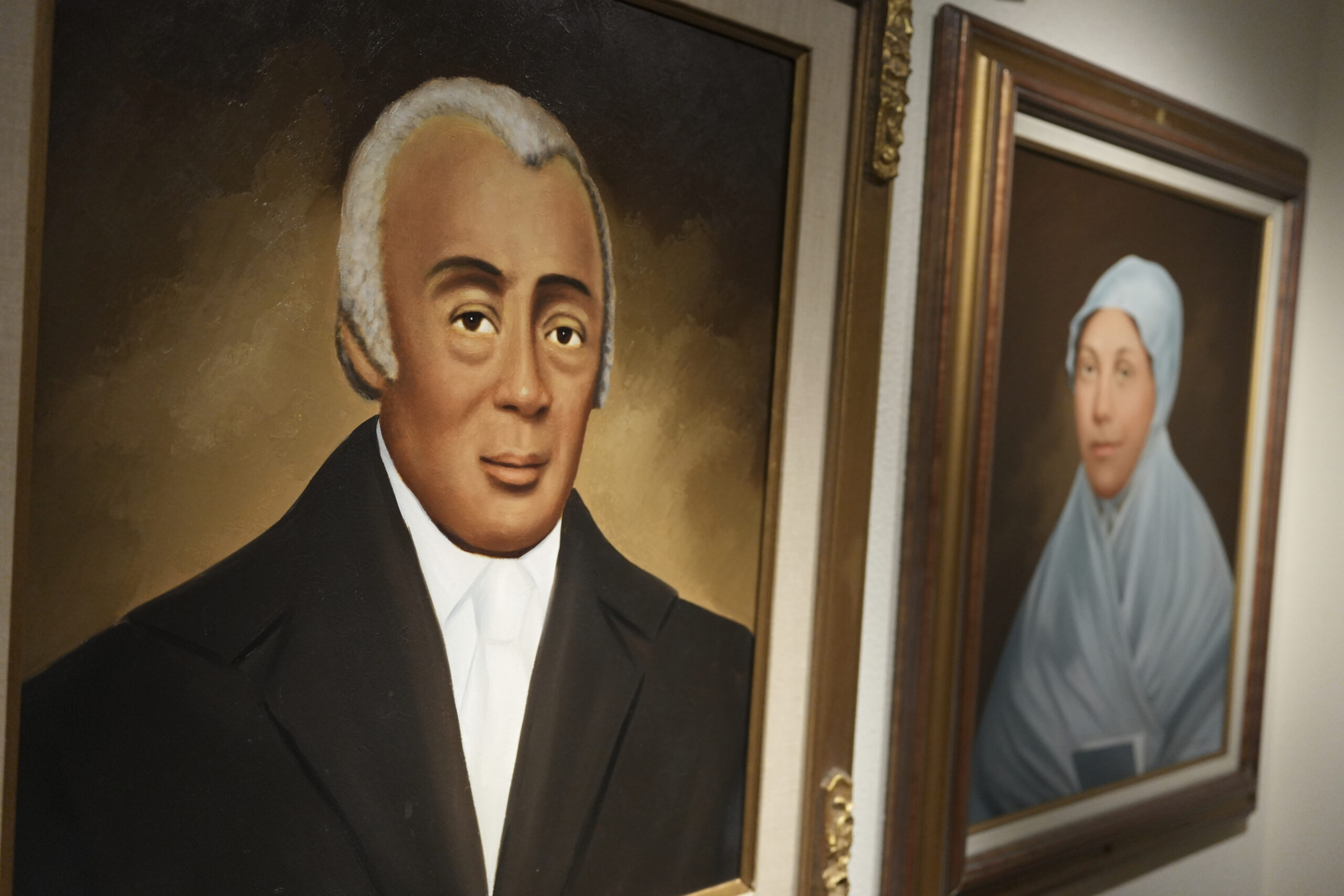
Portraits of Mother Bethel AME Church founder, the Rev. Richard Allen, and his wife, Sarah, are displayed on a wall at the church’s museum in Philadelphia.
Faith also defined the involvement and influence of African Americans in the struggle for equality and freedom. Richard Allen and Absalom Jones, both important members of the freed Black community in Philadelphia, left St. George’s United Methodist Church over the racism there. Both Allen and Jones would establish churches: Allen starting Mother Bethel African Methodist Episcopal Church and Jones establishing the African Episcopal Church of St. Thomas.
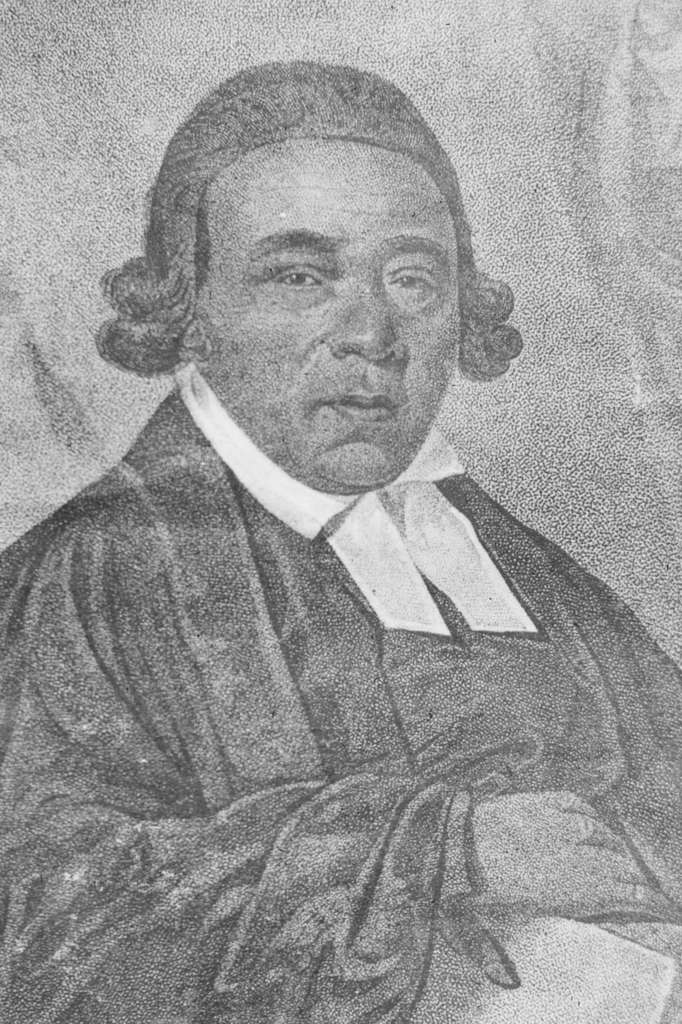
The Rev. Absalom Jones was a priest in the African Episcopal Church of St. Thomas.
To wrest Mother Bethel from the attempts of the white Methodist group to gain control over it, Allen would use the legal system, incorporating the church in 1796 and then fighting to keep control of it from the larger white Methodist denomination. Faith, as well as acumen, would give him the determination to see the legal process through to incorporation in Pennsylvania.
Today, the AME denomination is a worldwide church, estimated to have more than two million members.
Faith would also play a role in establishing organizations within the African American community.
Schools in the 19th and early 20th century found their formation in religious organizations post-Civil War. Clergy would pair with white denominations to form schools such as Spellman and Morehouse. Other organizational structures formed by religious communities would include insurance organizations, funeral homes, fraternities, and sororities. The best-known organization, the National Association for the Advancement of Colored People, would also find pastors and religious figures in the initial call for its formation.
Faith leaders from various religious communities were also instrumental in reminding and challenging white leadership of the promises of democracy and freedom in our founding documents.
In the 20th century, new religious movements such as Garveyism, Moorish Science Temple, the Nation of Islam, and Father Divine’s peace movement would all organize as a counternarrative to the harsh conditions of racism and Jim Crow in American life. All these movements offered an alternative narrative of not only uplift but also promoted different visions of race through religion that drew followers who questioned the merits of white Protestantism for African Americans.
Of course, we cannot forget the role of faith in the civil rights movement. While it is obvious to think of the Rev. Dr. Martin Luther King Jr., it is important to remember that King not only found his voice through Christianity, but through the principle of satyāgraha, soul force, coined by Mohandas Gandhi, the famous Hindu leader who promoted nonviolent struggle that formed the foundations of the civil rights movement. Diane Nash, who was Catholic and considered being a nun before becoming an activist while at Fisk College in Nashville, would become an important part of the movement — along with figures like the late U.S. Rep. John Lewis, who was enrolled in divinity school before joining the movement.
All of these are very brief examples from a very diverse history of faith in the African American community that was not only about individual belief, but many times served as a counter to the racism of religious communities in America that treated African Americans as second-class citizens.
Suppressing this history by altering it or calling it DEI does an injustice to the history of faith-based organizing in America.
African Americans’ faith, and the challenges they brought to bear on the racial issues of America, highlighted the promises of the Declaration of Independence and the Constitution. Now, more than ever, we need that faith to sustain us during the 250th anniversary of America.
Anthea Butler is the Geraldine R. Segal Professor in American Social Thought at the University of Pennsylvania.
A North Jersey developer has plans to finally transform the long-dead Echelon Mall, saying he’d spend more than $250 million to create a “regional destination” with high-end restaurants, entertainment venues, sports retailers, housing, and perhaps even an “upscale supermarket.”
“We’re going to try to make it Voorhees’ main street” inside the old mall building, said George Vallone, president of the Hoboken Brownstone Co. “Just sort of reinvent the whole thing.”
But Vallone said his plans aren’t set in stone: The revitalization of the former mall, now called the Voorhees Town Center, depends on whether Hoboken Brownstone can get financial help from the state.
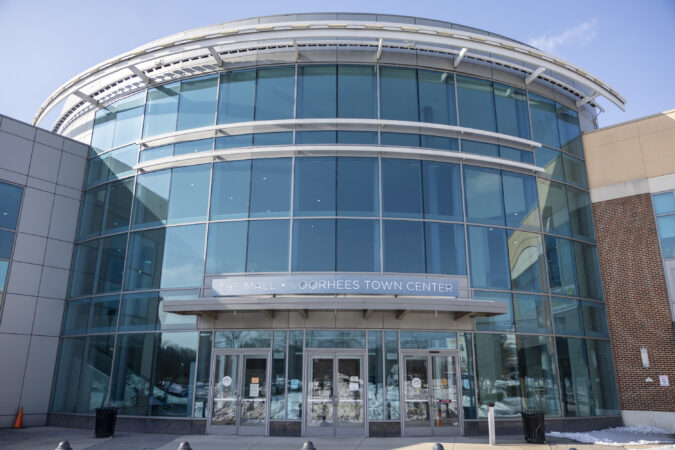
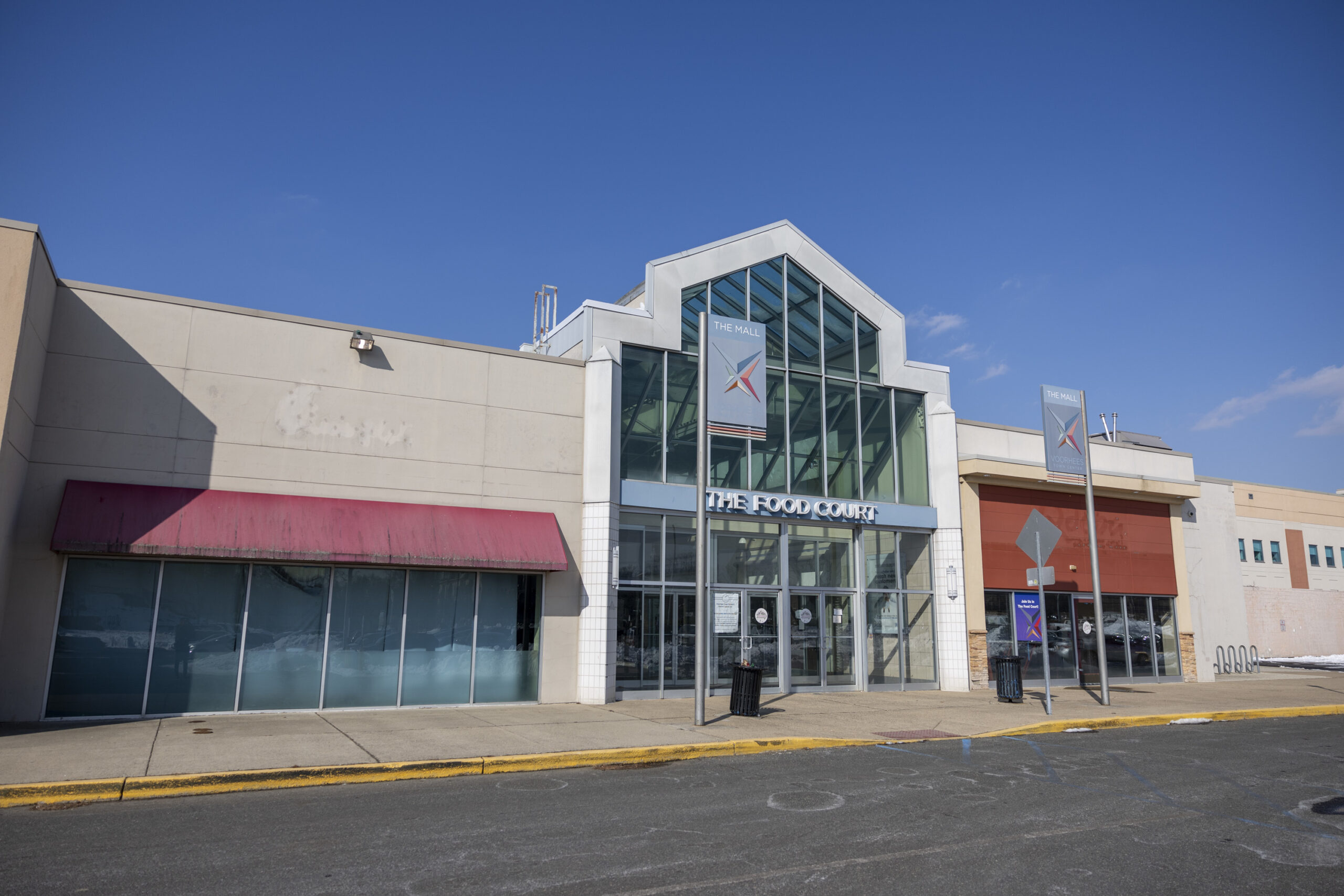
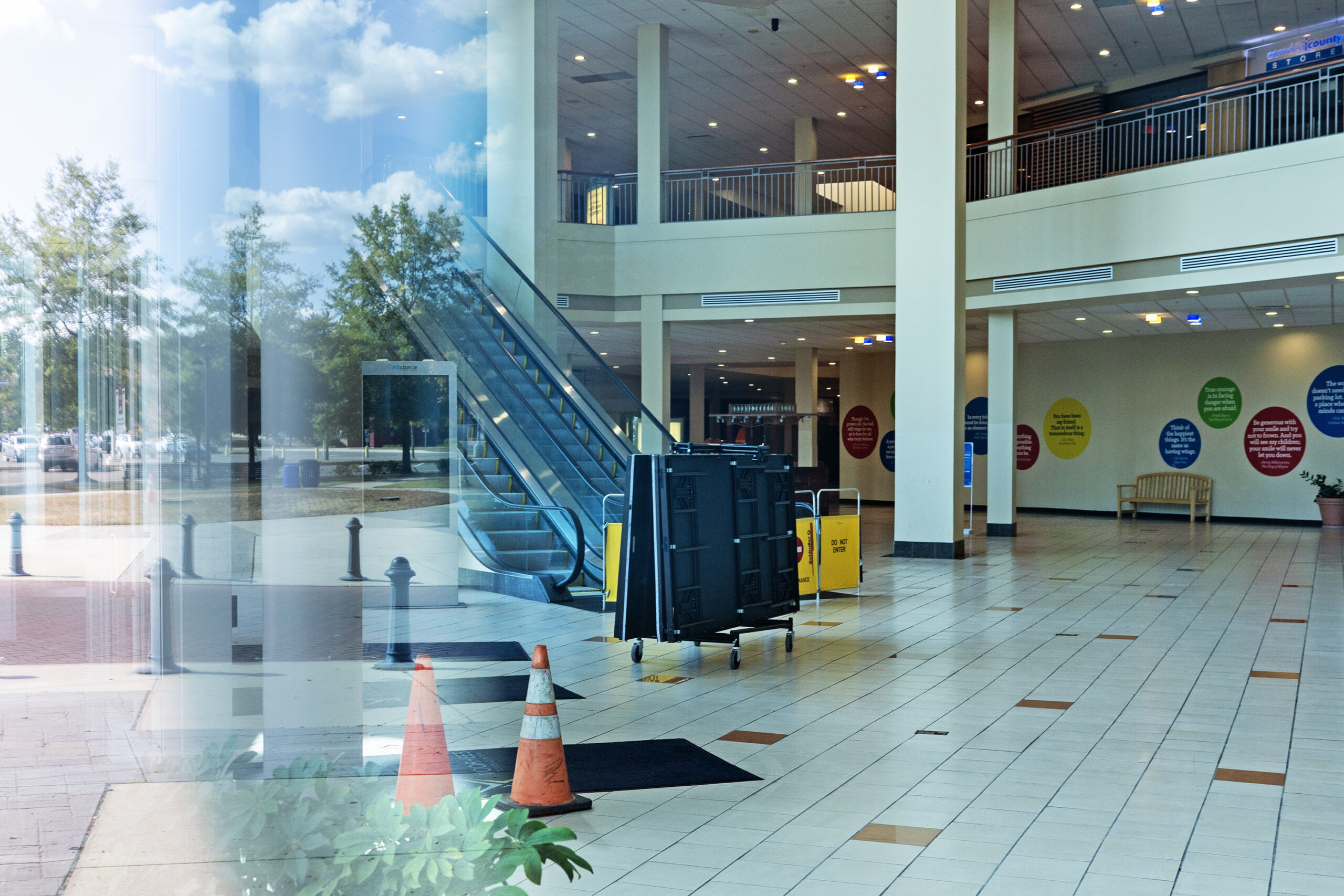
The entrance to the food court at the Voorhees Town Center, which has been closed for nearly two years after a fire.
Vallone said his company is applying for a $90 million tax credit for development projects and expects to hear in the coming months whether it is approved. If not, he said, “we walk.”
Vallone made similar statements in a Philadelphia Business Journal report earlier this week.
Voorhees Township Mayor Michael Mignogna said he supports “the thoughtful redevelopment of the former Echelon Mall site” as proposed by Hoboken Brownstone.
“Throughout the process, the township has worked collaboratively with Hoboken Brownstone and Namdar in their private transaction to advocate for the rejuvenation of Town Center, specifically a strong business and retail presence that will restore the site as the center of Voorhees tradition and community,” Mignogna said in a statement.
He noted that a state tax credit would not affect the developer’s local tax responsibilities.
The uncertainty represents the latest hurdle in the long quest to revive the sprawling complex off Somerdale Road. Over the years, the 400-acre property, one of the Philadelphia region’s many lifeless malls, has been redeveloped in fits and starts under multiple owners.
Recently, transformations have begun at nearby malls, including Moorestown and Burlington Center, as the old Echelon Mall languishes.
What $250 million could do for dead Voorhees mall
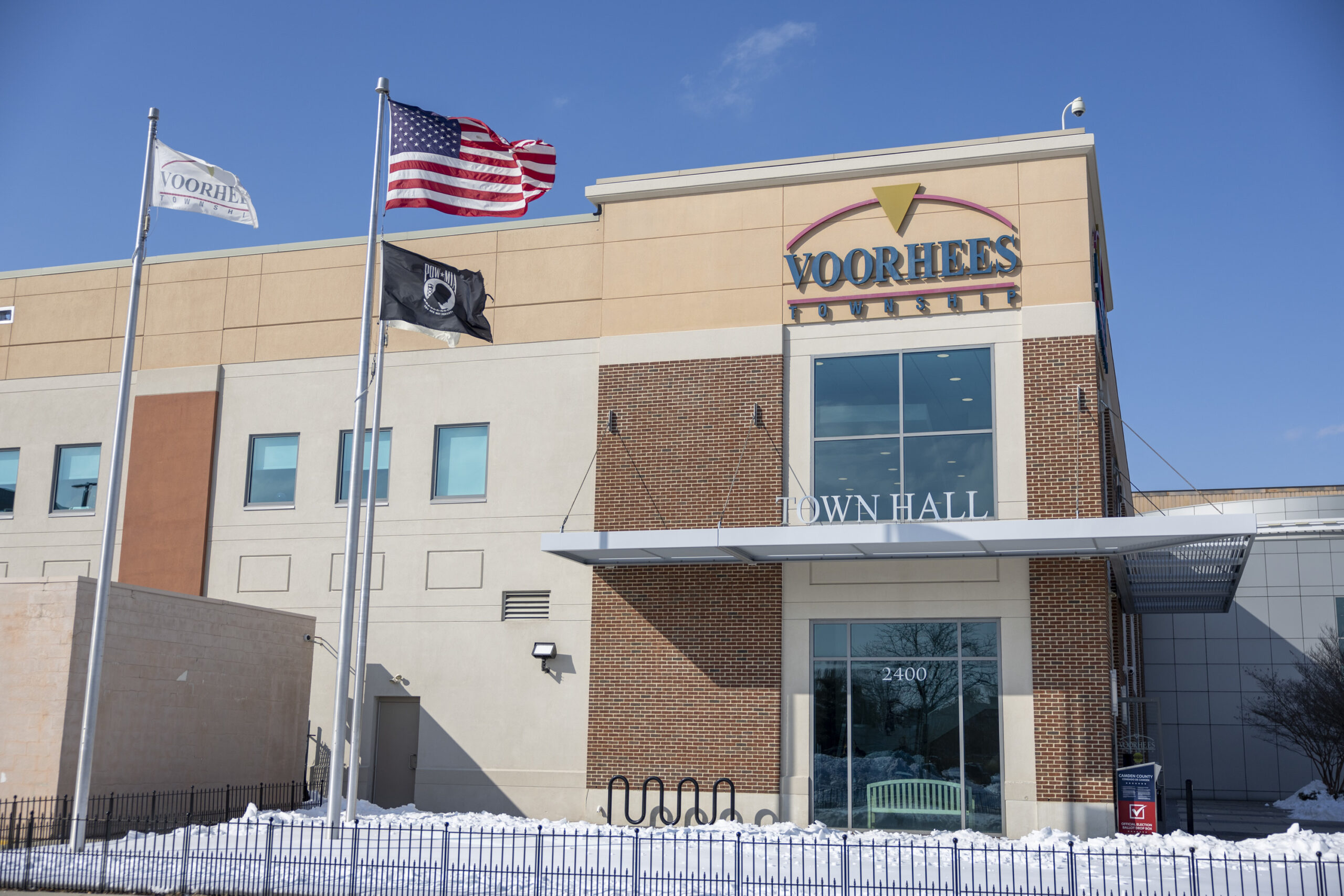
The Voorhees Township Town Hall would not be included in a potential sale of the closed mall building.
In an attempt to turn the mall around, it was partially demolished, and a Main Street-style mixed-use development was built on part of the property in 2008. After this makeover, which cost an estimated $150 million, the complex was rebranded as the Voorhees Town Center.
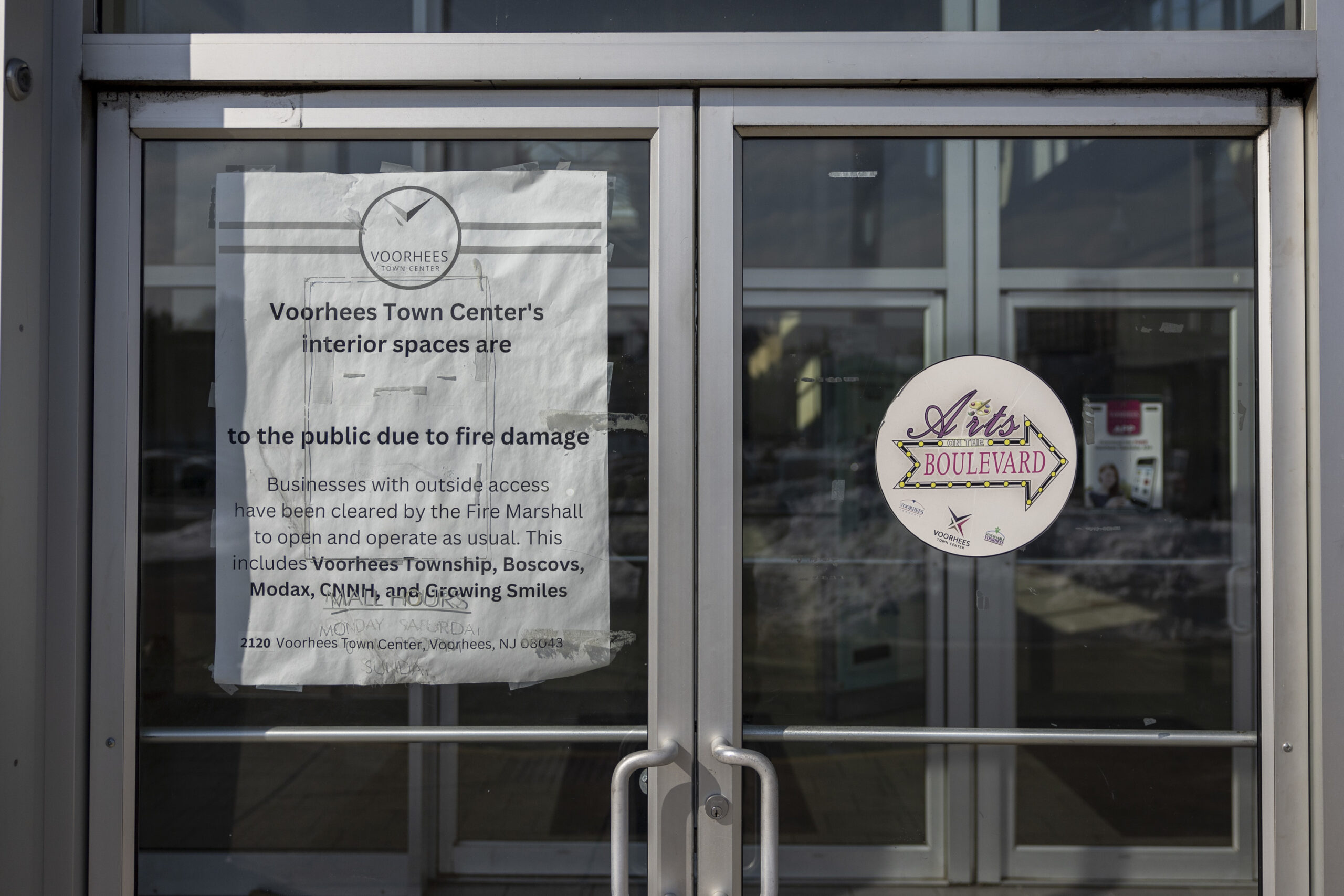
A sign on the door of the Voorhees Town Center, which has been closed for nearly two years due to fire damage.
Hoboken Brownstone plans to buy the mall building from Namdar in a pending sale, dependent on the tax break, Vallone said. He declined to disclose how much he would pay for the property, and Namdar executives could not be reached.
The sale would not include the Voorhees Town Hall, which occupies 22,000 square feet of the mall and cost the township $5.5 million.
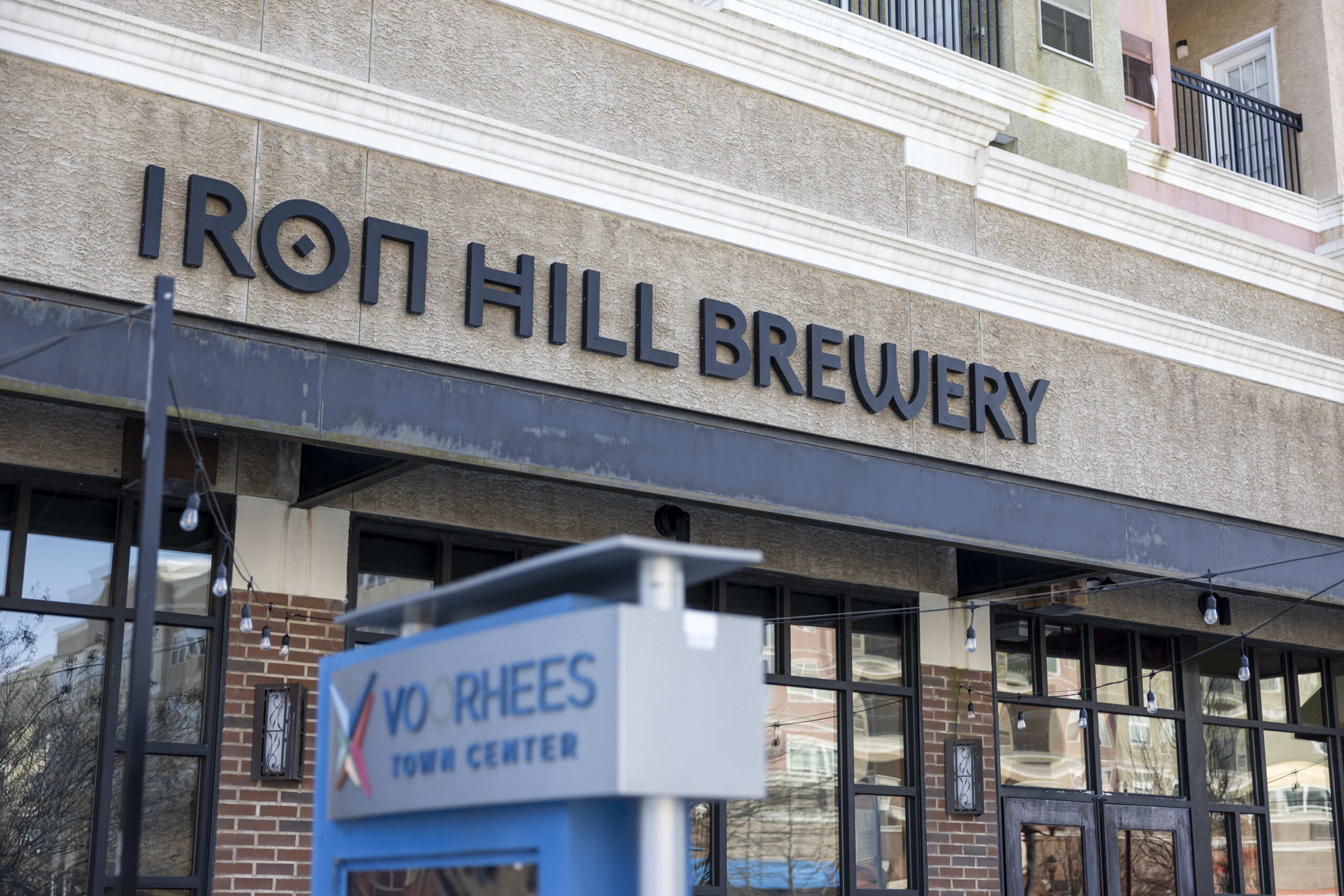
Nor would it include the property’s existing mixed-use section, Boulevard Shoppes, which had been home to an Iron Hill Brewery until the company filed for bankruptcy and closed all locations this fall. (Township administrator Stephen Steglik said Voorhees hasn’t heard anything from Namdar about what’s next for the Iron Hill space.)
Voorhees Township officials are in the dark about the future of the closed Iron Hill Brewery.
If the sale goes through, Vallone said, construction could begin in early 2027.
The company plans to build more than 200 market-rate townhouses; more than 100 units of affordable housing, including for-sale townhouses and rental apartments; and a parking garage with at least 1,300 spaces.
As for the retail space inside the mall, “we’re going to invest a lot of money because there has been very little maintenance done on that thing for the last 20 years,” Vallone said. The mall building will not be torn down, he said, and may look largely the same from the outside.
Why this developer invests in dead New Jersey malls
The former Echelon Mail, as seen through a window in October 2024, after a fire damaged the building. The mall has not reopened since.
In Voorhees, Hoboken Brownstone’s plan differs from its other major mall redevelopment in New Jersey.
After buying Liberty Village from Namdar, Vallone said he reached back out to the real estate company to inquire about other mall properties for sale. That’s how he became interested in the Voorhees Town Center.
Vallone said he believes dead and dying malls can make good investments.
“Here we have a substantial amount of infrastructure that is feeding the mall,” including plumbing and electric, Vallone said. “That de-risks the project quite a bit.”
And he said he thinks customers will come to malls-turned-town-centers if they are developed thoughtfully.
After all, retailers like Amazon can’t deliver everything same-day, Vallone said, and shopping online doesn’t offer the same experience as browsing at a store.
In-person entertainment, fine dining, and even grocery shopping are also hard to replicate at home, he said: “Certain things, you have to go somewhere to do.”
Joi Washington’s first challenge as mayor came in the form of a winter weather emergency.
On Jan. 5, Washington was sworn in as Media’s first new mayor in three decades. On Jan. 25, 9.3 inches of snow fell on Philadelphia, setting off a snow emergency declaration. Washington monitored the storm and worked toput parking restrictions and plowing operations into effect.
It was “fascinating” — a headfirst dive into running a municipal government, she said.
A graphic designer by trade and former borough council member, Washington moved to Media from Philadelphia in 2013 and fell in love with its walkability and tight-knit community of 6,000. As she learns on the job, friends and colleagues say her intelligence and ability to work across the aisle make her the right person for the role. For Washington, learning how to be a good mayor is all about “being a good neighbor.”
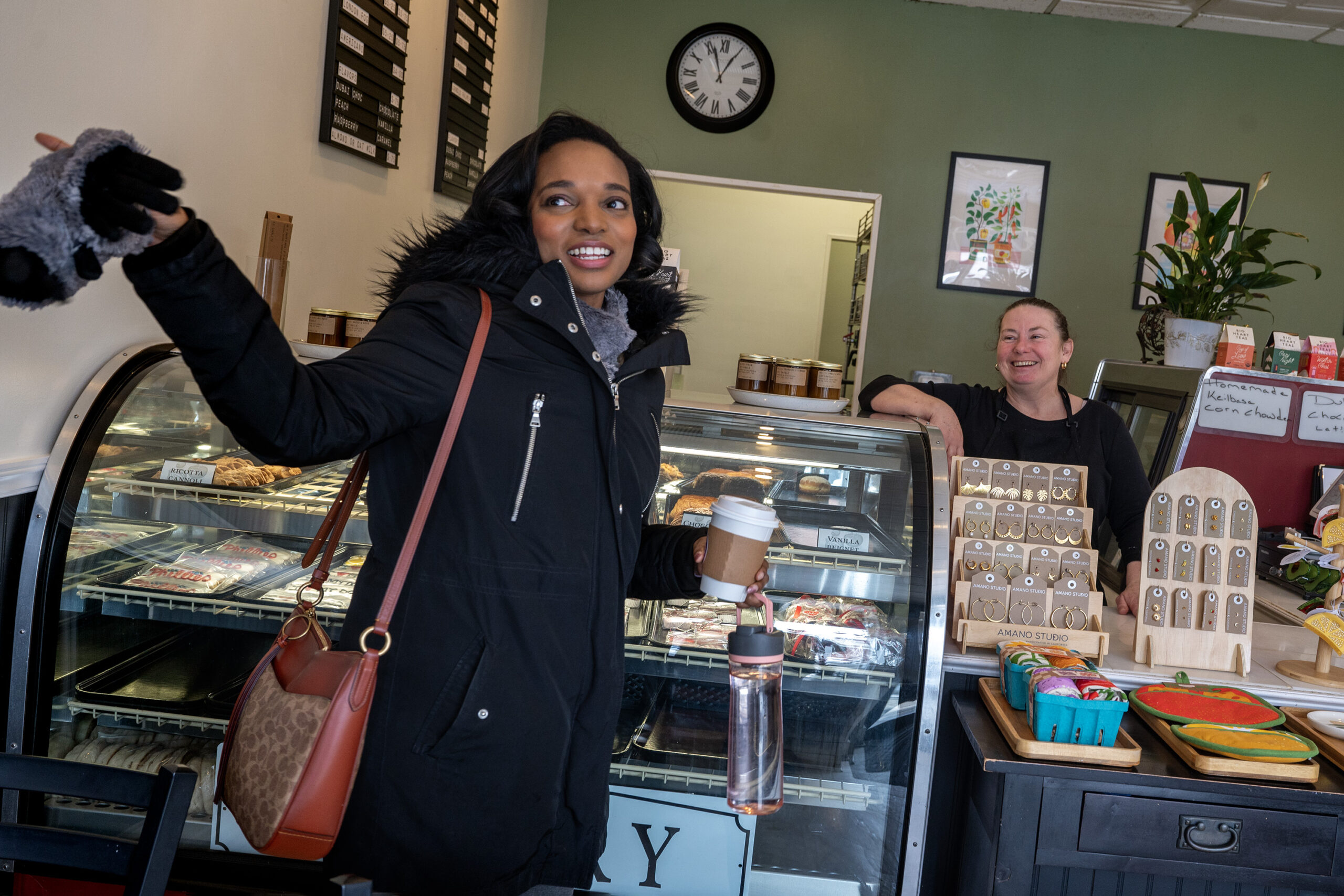
Media Mayor Joi Washington talks with Garden Café owner Willow Culbertson in downtown Media on Sunday, Feb. 1.
Who is Joi Washington?
Washington, 39, was born and raised in Germantown. She graduated from Moore College of Art and Design in 2008 with a bachelor of fine arts in illustration. She has worked for numerous Philly-area companies doing graphic design, digital asset management, and storyboarding.
Around a decade ago, Washington took a graphic design job in Media. The long commute from Roxborough, where she lived at the time, quickly became tiresome, so she packed up and moved. She met her husband at work, and the two have lived in Media since.
Washington, a Democrat, was elected to Media’s borough council in 2021, serving until she became mayor last month.
Katey McVerry, Media’s tax collector, was impressed with Washington as a borough council member. She described Washington as civically and politically engaged, “well known by her neighbors,” and able to work across the aisle.
Children played as folks dined on State Street during Media’s Dine Under the Stars event on Wednesday, June 4, 2025.
A ‘resounding’ win
Washington campaigned for mayor on expanding public transit options, supporting local businesses, and working with law enforcement to make streets safer for drivers, cyclists, and pedestrians. She was elected with 77% of the vote, beating out Republican Kevin Kellogg.
Democrats swept local races in Media and Delaware County in November, winning seats on the Rose Tree Media school board, borough council, and Delaware County Council.
Mary Tonita Austin helped campaign for Washington last year. Austin and Washington met at a Juneteenth celebration when Washington was still on borough council. Last year, when Austin ran for the Rose Tree Media school board, they found themselves in similar spots — Black women running for office in a county that remains largely white (Washington is the first woman and first person of color to be elected mayor of Media).
Austin gladly handed out Washington’s campaign fliers along with her own.
“She’s both intelligent and creative, which I think is so important for us to have,” Austin said of Washington.
Malcolm Yates, a convener of the Delaware County Black Caucus, said Washington’s win was “resounding.”
Media is 82% white, according to the most recent census estimates — a percentage nearly 1.5 times higher than the Philly metro area at-large. Before Democrats won three seats on the Delaware County Council in 2019, the body had been controlled by Republicans since the Civil War.
“It shows that the county has been moving and progressing forward to be more of a melting pot,” Yates said of Washington’s win. “You don’t necessarily have to always look or identify a certain way to be a leader.”
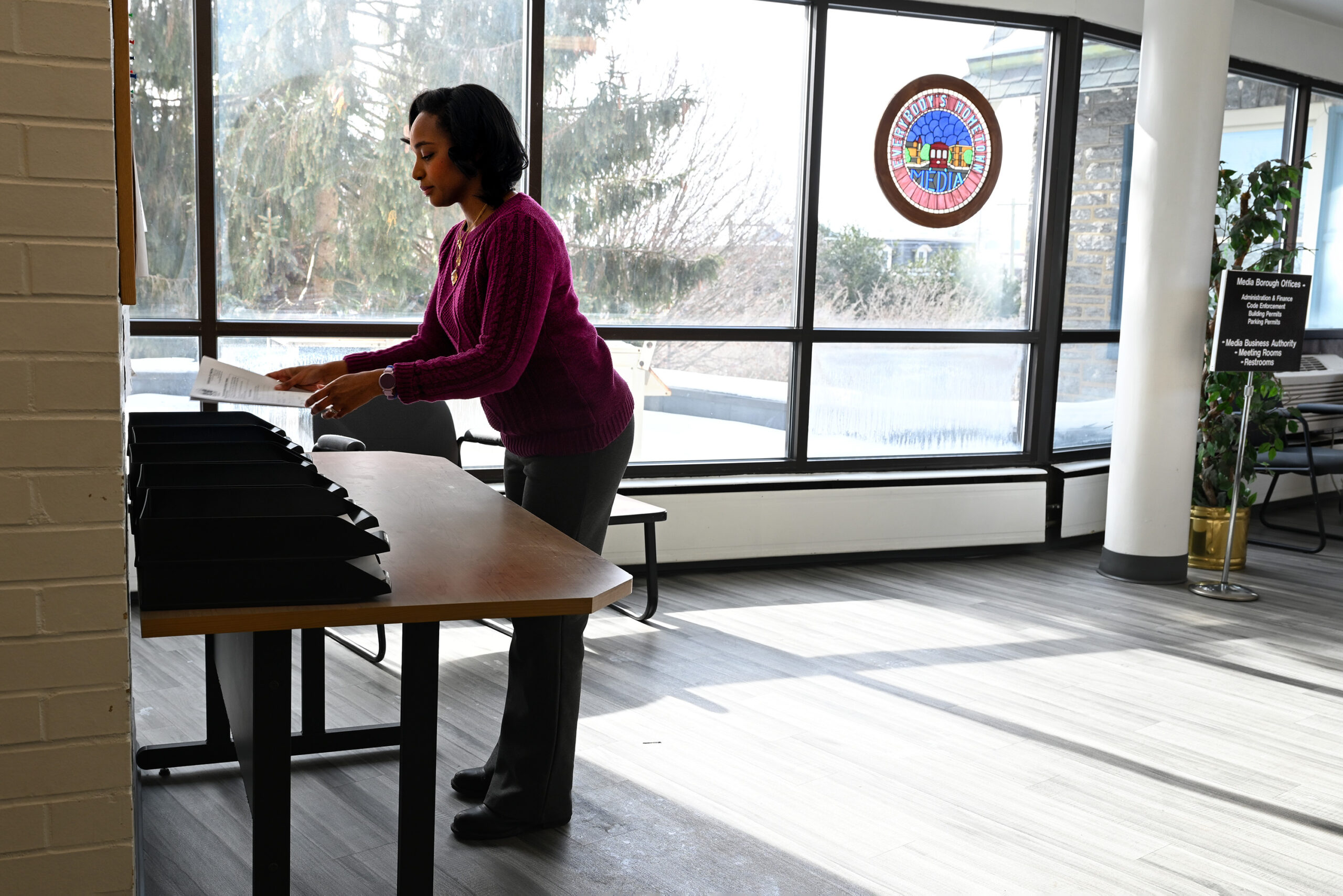
Media Mayor Joi Washington at Media Borough Hall Sunday, Feb. 1, 2026.
Becoming the mayor
Washington describes the first few weeks of being mayor as a “whirlwind.” There are webinars to watch, police reports to study, hands to shake, and nuggets of advice to glean from McMahon, now retired, whom Washington has stayed in touch with.
There’s a lot to look forward to, as well. Mediarecently secured grants to purchase a new ambulance, enhance walkability within the borough, and improve Barrall Community Park. Washington hopes to bring in visitors to shop and dine at Media’s small businesses, continuing the borough’s ascent as a Delco destination. Washington rattled off a list of forthcoming events with excitement: Dining Under the Stars, the completion of Plum Street Park, and the Media Spring Arts Show.
As for her personal life, Washington said she is trying to find balance as mayor, which is a part-time gig in Media. Washington is still working as a freelance illustrator and graphic designer. She is also a natural introvert learning to manage an increasingly busy social calendar.
“I’m also glad that I have two cats to keep me sane. My husband’s very supportive. I think it’s really good to have a life outside of politics,” she said.
This suburban content is produced with support from the Leslie Miller and Richard Worley Foundation and The Lenfest Institute for Journalism. Editorial content is created independently of the project donors. Gifts to support The Inquirer’s high-impact journalism can be made at inquirer.com/donate. A list of Lenfest Institute donors can be found at lenfestinstitute.org/supporters.
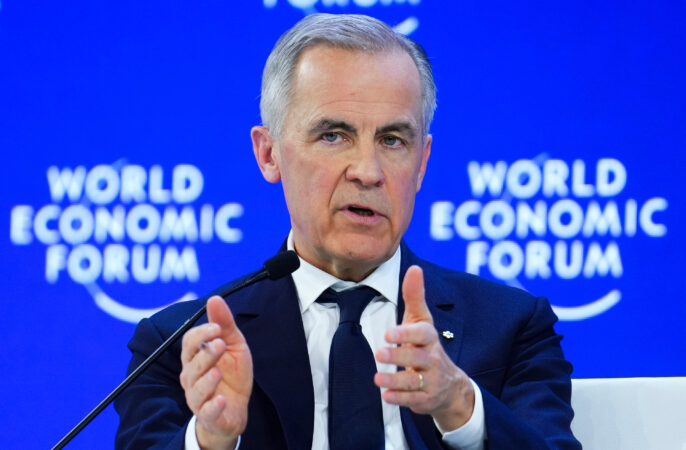
Canadian Prime Minister Mark Carney may have given the most important economic speech of all the attendees at the World Economic Forum in Davos, Switzerland.
In it, he addressed the changing face of world economic relationships with a clear, challenging conclusion: “Let me be direct: We are in the midst of a rupture, not a transition.”
His statement made it clear that the imposition of rules by the world’s most powerful nations will no longer be accepted quietly.
On behalf of Canada, the tenth largest economy, Carney threw down the gauntlet, saying the pattern of trade and economic relationships that has persisted for decades will undergo great changes, led not by the world’s superpowers, but by the midsize nations who trade with them.
The potential economic consequences for the U.S. are massive, though it could take many years before the impacts are clearly understood.
Many countries will alter their U.S. trade
While trade is a country-to-country activity, it is no different from a business-to-business relationship.
If your business partners work well with you, the relationship is long-lasting. But if your partner becomes abusive, a change in the nature of the collaboration is inevitable. You diversify.
After all the tariffs and threats, our trading partners realize they cannot remain overly dependent on the U.S. They must spread their exports and imports across a larger number of nations.
Already, Canada, Britain, and the European Union are discussing or finalizing deals with China and India on a variety of goods. These are just the start.
Agriculture in the crosshairs
China has cut back on soybean purchases from U.S. farmers. For the five months ending in October 2025, China bought no soybeans.
Given that China has been purchasing about 55% of U.S. production, U.S. soybean farmers have been devastated, requiring a multibillion-dollar bailout.
And to make it clear this is not a one-time reduction, China is working to expand its agricultural relationships with South American nations to more permanently diversify its farm supply chain.
The Canadian call to arms indicates other nations will likely follow the Chinese playbook to escape the political/tariff consequences of disagreeing with U.S. policy.
There is no coming back from that, to the long-term detriment of U.S. farmers.
Other key industries at risk
The military industrial complex is one. Europe purchases a significant amount of U.S. military products because its defense industry cannot supply the continent with enough weapons to go it alone. Instead, it has been hiding behind the U.S. defense shield.
With U.S. support for NATO in question, Europe now understands it must expand its domestic defense production and diversify its military supply chain.
While in the near-term, much of the growing European military demand might be met by U.S. suppliers, over the next five to 10 years, a whole new European defense industry is likely to be developed, putting sales to NATO nations by U.S. manufacturers at risk.
In China, EV sales topped 50% of the market last year, while in Europe, EV demand exceeded gasoline-powered vehicles in December for the first time. Sales growth in areas such as South Korea and South and Central America were up by about 50% in 2025.
Placing tariffs on products being embraced by the rest of the world, while disincentivizing their purchases domestically, is shifting the EV supply chain to countries where it is welcomed.
Similarly, the antagonism toward renewable energy is also creating competitive issues for U.S. companies.
Europe blew it badly when it decided to depend on Russian oil and natural gas for a significant portion of its energy needs. That has changed dramatically.
Europe is in a race to diversify its energy supply chain. But instead of ramping up demand for U.S. petroleum products, it is making agreements with energy companies based in the Middle East, North Africa, and Canada, and is rushing into renewable energy sources such as wind and solar.
As long as the U.S. wants to dictate to foreign countries how they should behave, the search for more dependable trading partners will continue. That will affect not just the industries highlighted but the entire economy.
The delinking of Europe and other countries from the U.S. will, over time, reduce foreign demand for our exports. They will have other sources of supply. That slows growth.
Prices and interest rates may rise
Interestingly, this change in the world’s trade patterns could force some manufacturers to return to the U.S.
That may sound positive, but it’s not. The reason goods aren’t produced domestically is that they can be produced more cheaply outside the U.S.
The only way previously imported products can be manufactured here is if the tariffs are high enough to make foreign goods more expensive than the domestically produced ones.
If the price we pay for the made-in-America goods is higher than what we paid when they were imported, replacing imported goods with tariff-protected domestic production is inflationary.
Higher prices also reduce consumer spending power.