Tag: UniversalPremium

  • What the Sean Mannion hire as Eagles offensive coordinator says about Nick Sirianni’s future

    What the Sean Mannion hire as Eagles offensive coordinator says about Nick Sirianni’s future

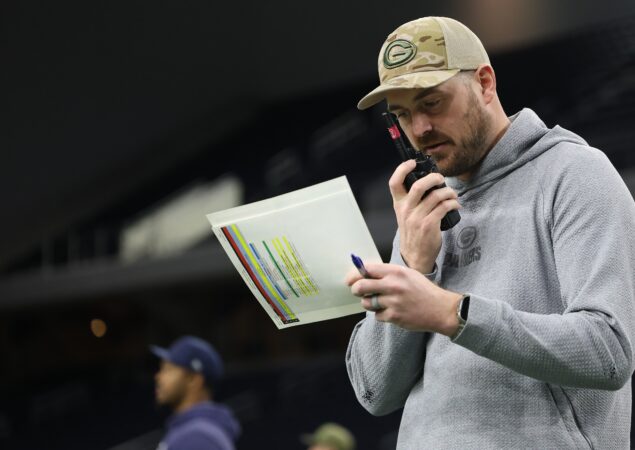
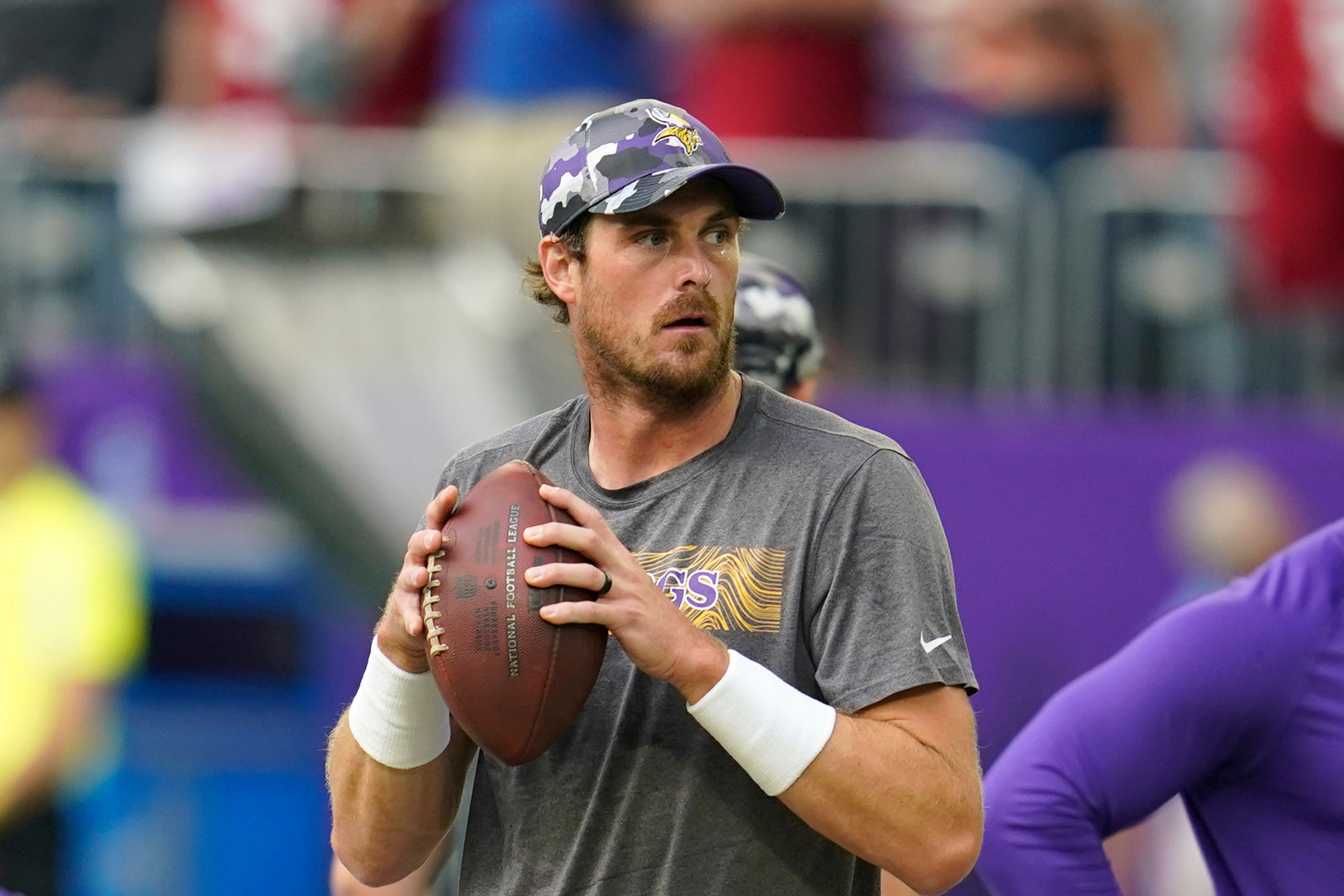
    Sean Mannion, for all intents and purposes, is an unknown. The Eagles’ new offensive coordinator has been a coach for just two seasons. The 33-year-old has never devised or implemented a scheme. He’s never authored a game plan. And he’s never called plays.

    He could end up the next Bill Walsh or the next Tom Walsh. More than likely the former backup quarterback will end up somewhere between those polar extremes when it comes to offensive minds of the last four decades. But it’s nearly impossible to assess with any certainty how the neophyte will fare in Philadelphia.

    The hire says more about Nick Sirianni’s future than it does about almost anything related to Mannion or the Eagles offense. Whether he made the ultimate decision or not, the coach will have to take ownership for selecting one of the least experienced coordinators in the NFL, if not the least experienced.
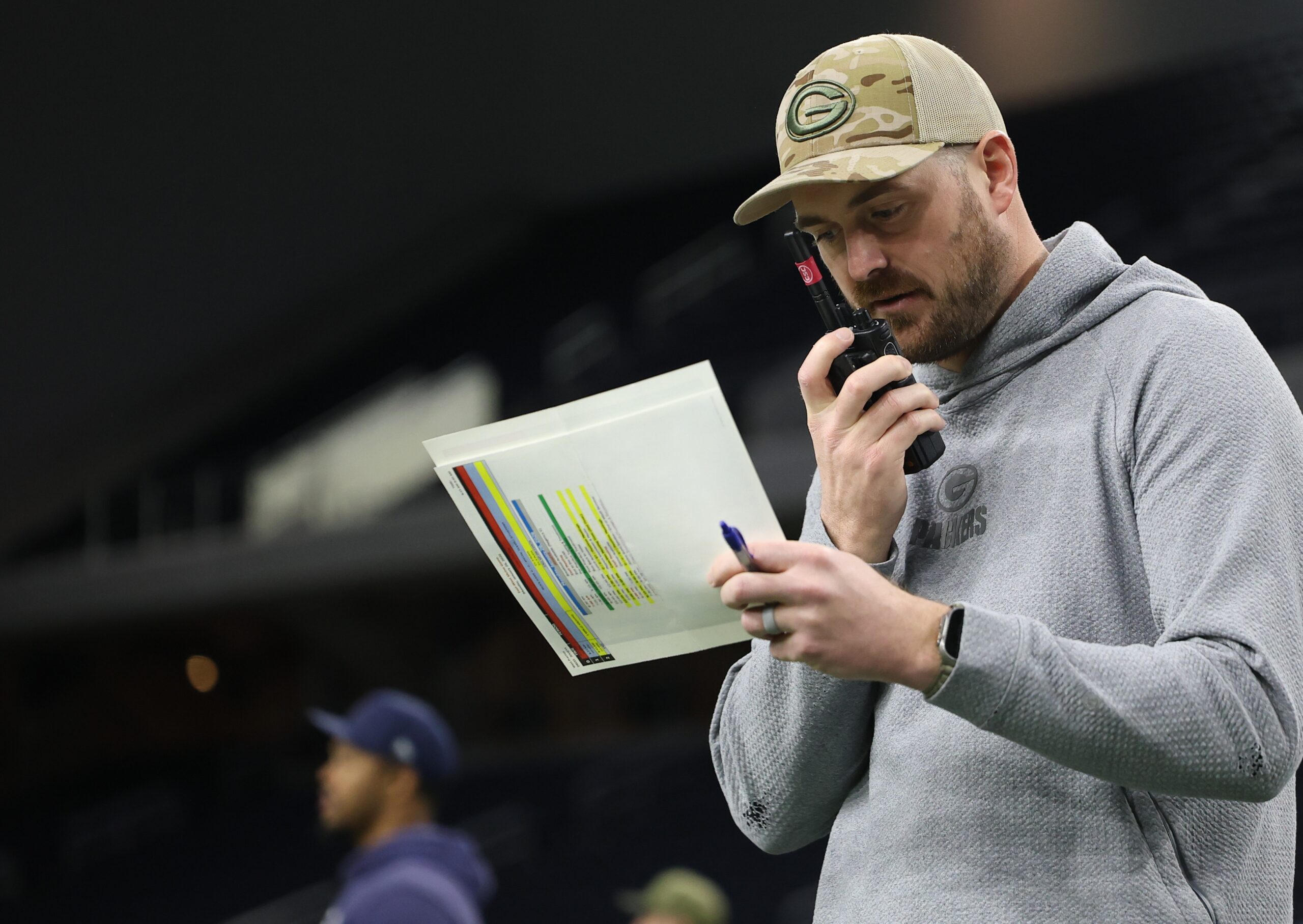
    Sean Mannion will have a major challenge as he sorts out the Eagles’ offensive issues.

    Sirianni could be rewarded with immediate success. The Eagles could even have marginal offensive improvement that would allow Sirianni to maintain Mannion for more than one season. But if there is further regression, or even sudden failure, the gamble could push Sirianni into a firing line that saw nine coaches lose their jobs over the past several months.

    And here’s why: The line between success and failure for Sirianni is thinner than for most because he doesn’t have a discernible offensive philosophy or calls plays. He does a lot as a CEO-type coach, more than some on the outside are willing to concede.

    But winning here is suddenly not like winning at most places. Sirianni helped raise those expectations. But clearing that bar or falling short of it would both seemingly have him back where he’s been four times before: having to replace an offensive coordinator.

    Shane Steichen and Kellen Moore became head coaches, while Brian Johnson and Kevin Patullo ended up either fired or demoted. That disparity explains varying perceptions of the job, but ultimately Sirianni chose a candidate who didn’t interview for any of the other 14 coordinator openings.

    That doesn’t mean the Eagles didn’t find a diamond. Mannion played under some of the brightest offensive minds in the game today. He rose to quarterbacks coach in Green Bay in just his second season and became an assistant the Packers didn’t want to lose.

    “He’s seen as a climber,” said an agent who represents coaches, “and Nick might have gotten in on the ground floor.”

    But the Eagles are again making a projection — one even bigger than those they made with first-time play callers Johnson and Patullo.
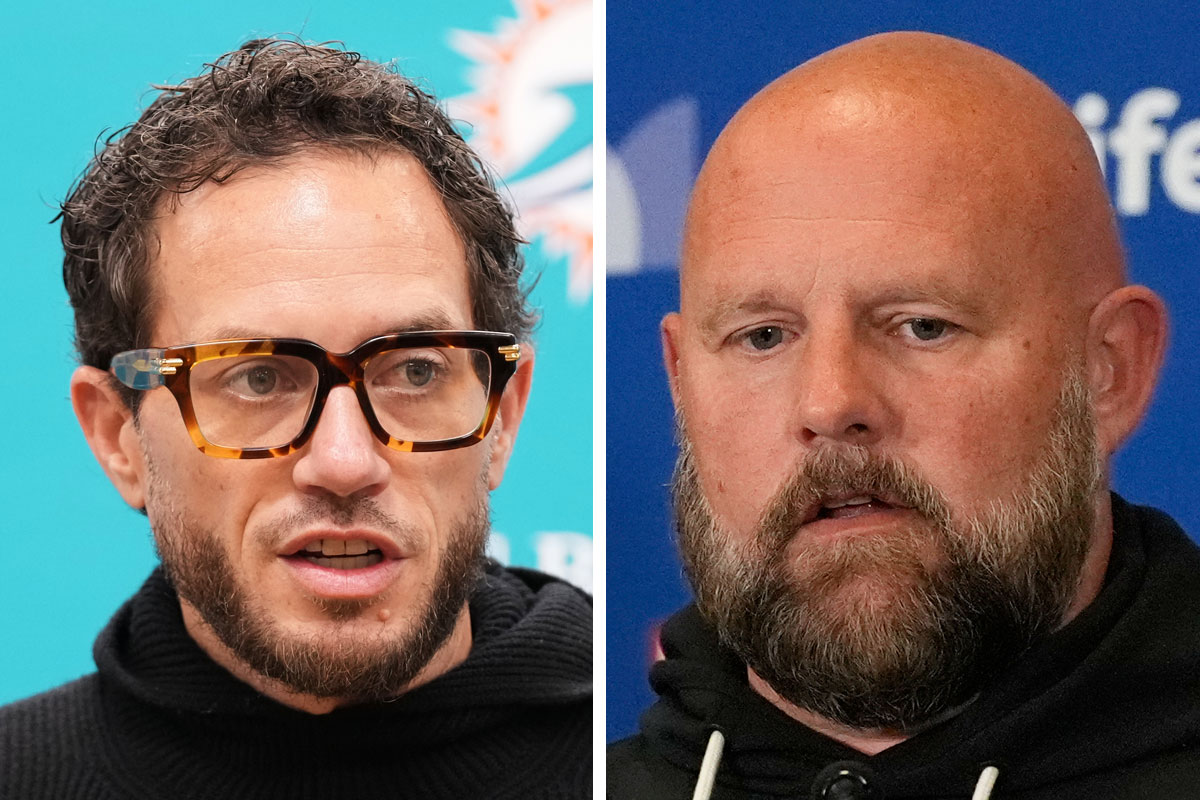
    Former Dolphins coach Mike McDaniel (left) and former Giants coach Brian Daboll became offensive coordinators elsewhere.

    They opened their search with former head coaches Mike McDaniel and Brian Daboll at the top of their list, sources said. That doesn’t mean the Eagles were ready with offers. They had an informal conversation with McDaniel over a video call and met in person with Daboll for a more formal interview.

    McDaniel and Daboll eventually took coordinator jobs with the Los Angeles Chargers and Tennessee Titans, respectively. The Eagles interviewed others around the same time, but the search expanded and included more than a dozen coaches interviewed and others in which some form of contact was made.

    Some made it clear they wanted to pursue other opportunities. Some declined to be interviewed and opted to stay in their current positions. And some the Eagles deemed not the right fit. Aside from Mannion, Indianapolis Colts offensive coordinator Jim Bob Cooter, former Tampa Bay Bucs offensive coordinator Josh Grizzard, and Houston Texans quarterbacks coach Jerrod Johnson met with the Eagles for a second time. A source told The Inquirer on Friday that Grizzard will join the Eagles as the team’s new pass game coordinator.

    “Some came with years of experience running an offense and calling plays. Others were young, sharp, and dynamic coaches on the rise,” Sirianni said in a statement. “I felt it was important to be patient and thorough to allow the right fit to reveal himself to us. Sean did just that.”

    Sirianni led the process, as he should. But general manager Howie Roseman was heavily involved. And owner Jeffrey Lurie, despite maintaining his winter residence in Florida, was conferenced into the interviews.

    The Eagles will say that Sirianni made the final call, but recent history shows Lurie has asserted himself or Roseman’s connections when he has deemed it necessary. The Eagles’ track record in plucking head coaches from relative anonymity — e.g. Andy Reid, Doug Pederson, and Sirianni — is strong.

    Sirianni did well with his first coordinator hires: Steichen, who had prior experience, and defensive coordinator Jonathan Gannon, who did not. He struck out with their replacements: Johnson and Sean Desai.
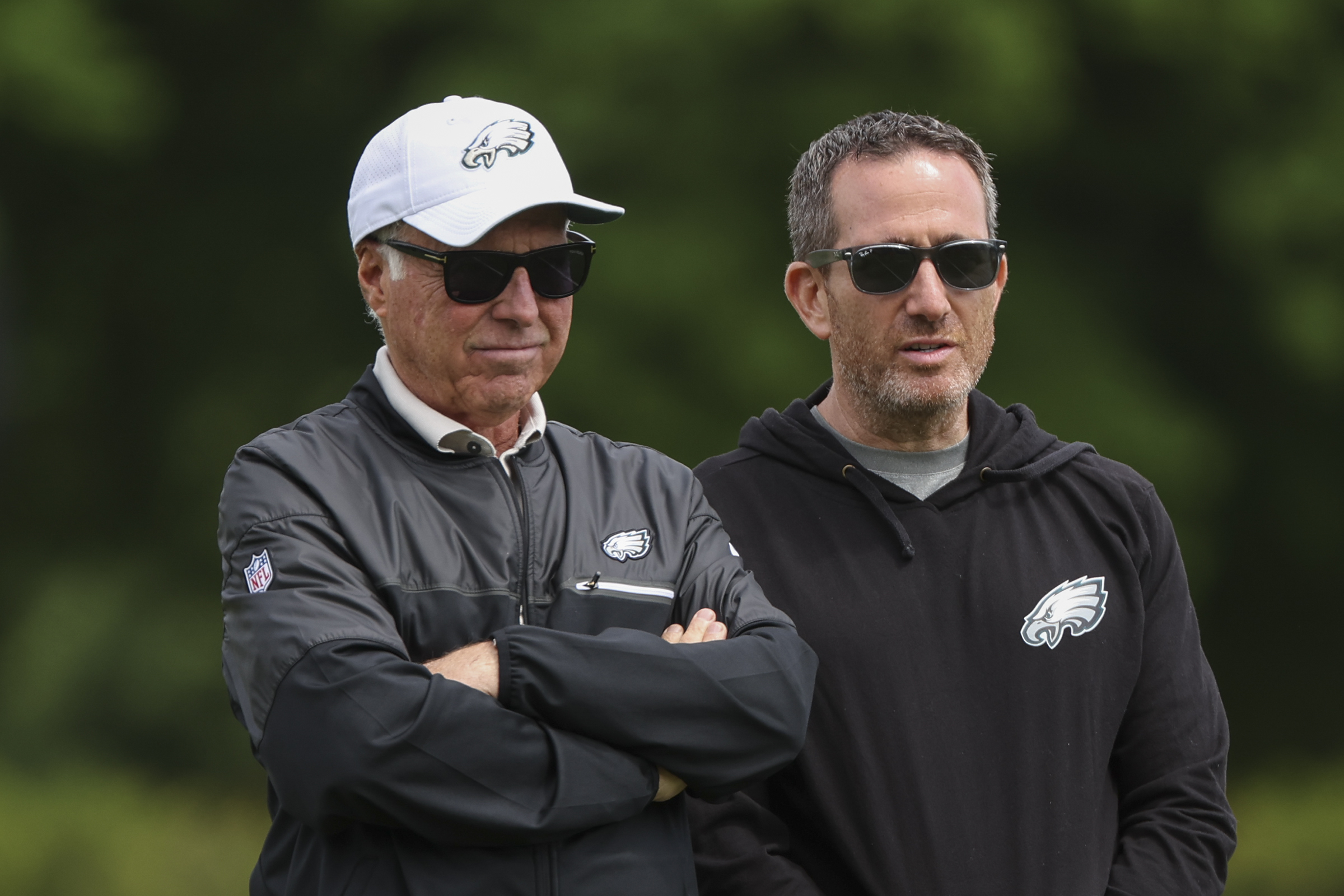
    How much input did Jeffrey Lurie (left) and Howie Roseman have into the Sean Mannion hire? That answer could inform what happens after 2026.

    Moore and Vic Fangio have been viewed as Lurie-Roseman-led correctives, and understandably so. The owner and GM interviewed Moore for the head coaching job in 2021, and Roseman made the initial calls to Fangio when the Eagles first tried to hire him in 2023 and when they finally did a year later.

    They don’t have an obvious link to Mannion. Sirianni may have been permitted to make the decision all on his own. He did win a Super Bowl just a year ago, and earned a contract extension as a result. Lurie and Roseman may also be giving him all the rope he needs.

    There are many unknowns at this stage, beyond Mannion’s qualifications. He will call plays, a source said. But will he have autonomy over the offense or will Sirianni oversee the operation? Will the scheme and terminology be his or will there be a meshing?

    The Eagles aren’t planning to hold a news conference. Sirianni’s next media availability will probably be at the NFL scouting combine next month. Mannion will be shielded until the spring. They likely see little reason to divulge their plans unless required.

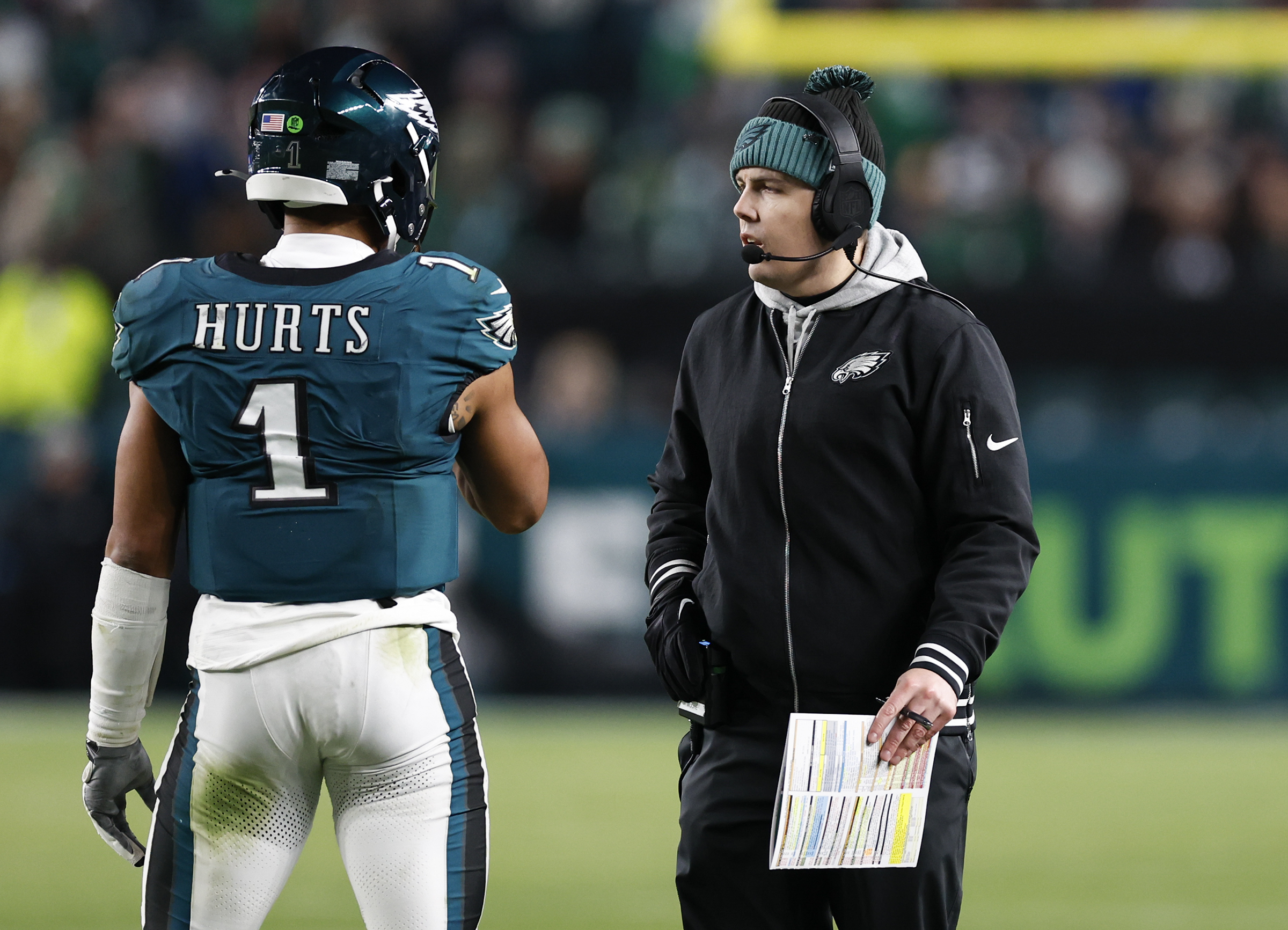
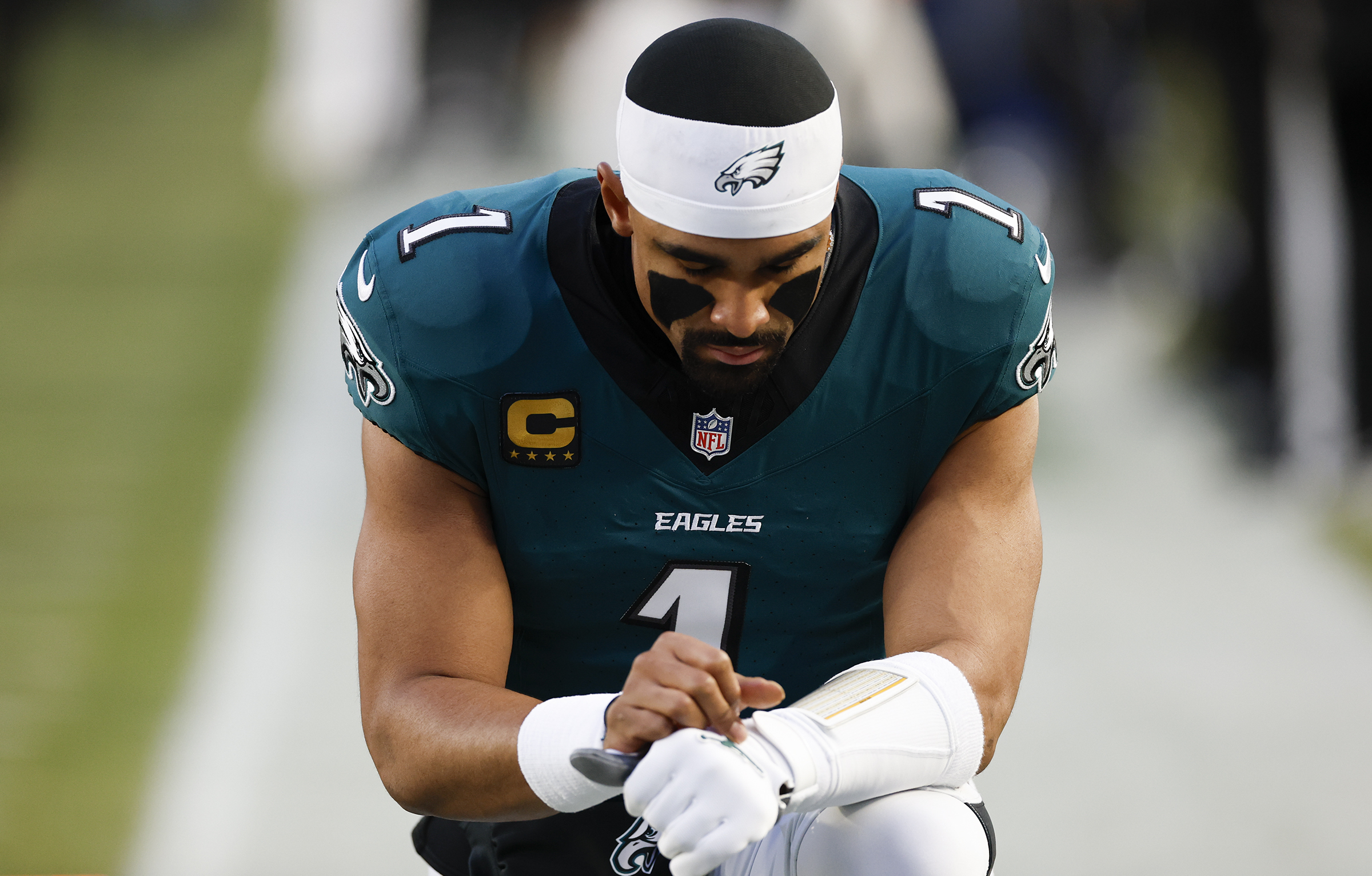
    There’s also a lot to figure out. Beyond the Xs and Os, there’s the coaching staff and the roster. The Eagles do know who their quarterback will be, barring something unforeseen. It’s hard not to view the inability to snag a proven name as an indictment on Jalen Hurts, just as much as it was on Sirianni.

    Locals may view Hurts through the prism of his excellence in the biggest games, but consensus from the rest of the league isn’t as generous. Of course, many of them don’t have his ring or Super Bowl MVP.

    Mannion will be charged with elevating Hurts into being more consistent in the dropback game. He has been credited with helping Packers starter Jordan Love and backup Malik Willis advance and with helping them become better pocket passers.
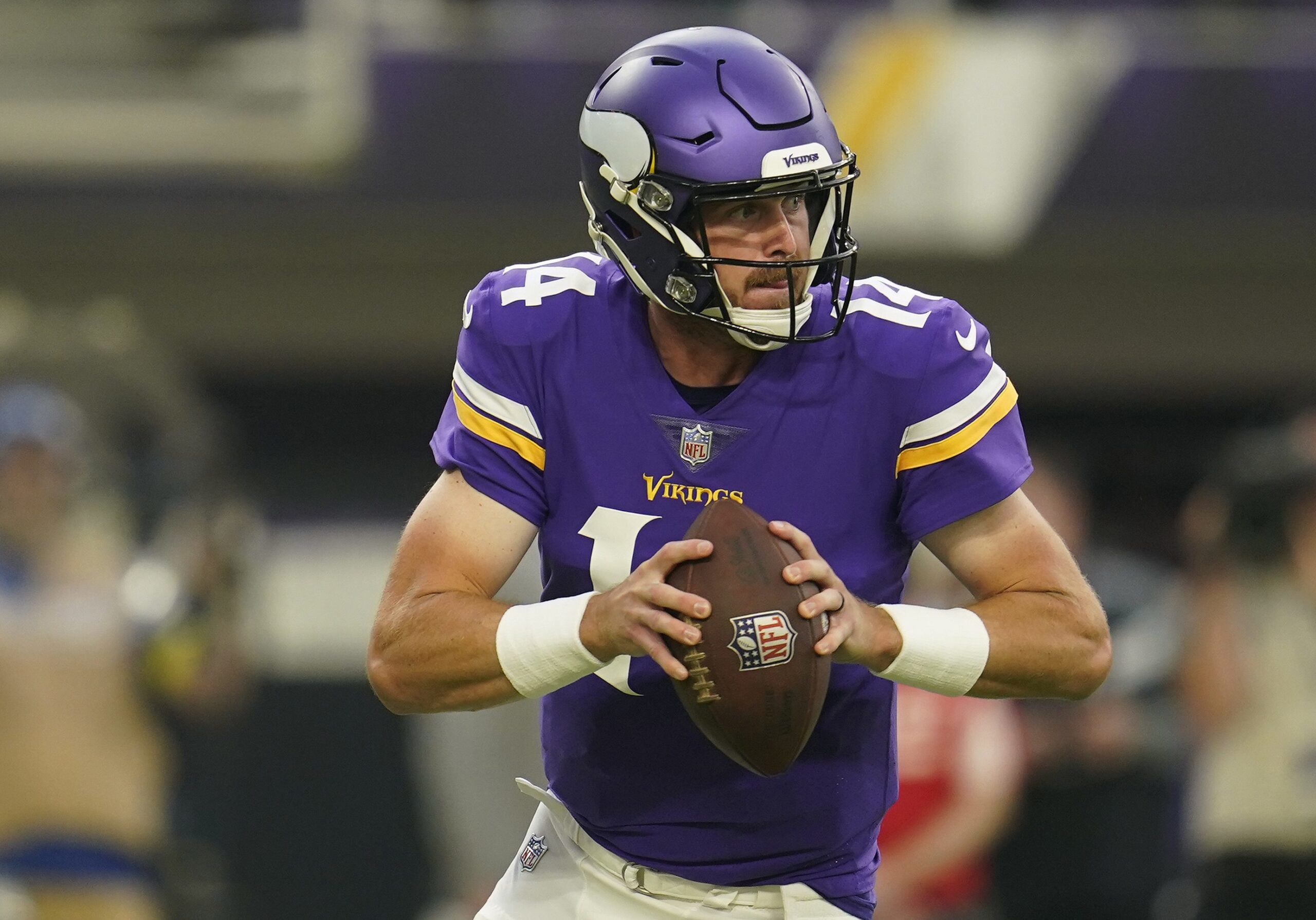
    Will Sean Mannion’s chops as a former QB help him win Jalen Hurts over?

    It should matter that Mannion played the position and that he’s done it recently. But there could be the question of whether he has enough gravitas for the stoic old soul in Hurts. Sirianni might have suggested two weeks ago that he would include the quarterback in the coordinator search, but his involvement was minimal at best, sources close to the situation said.

    Sirianni needs a modern passing game that utilizes under-center play action, not just for Hurts, but for the entire offense, especially the wide receivers. A.J. Brown may be more inclined to want to stay if he sees the possibility of an explosive air attack.

    Mannion spent most of his formative playing years with Los Angeles Rams coach Sean McVay, but he also spent time with Kevin Stefanski, Matt LaFleur, Kevin O’Connell, Zac Taylor, Gary Kubiak, Klint Kubiak, Dave Canales, and Grant Udinski.

    Most have fallen under the Kyle Shanahan umbrella. They’ve all deviated from the core principles in some form, but the marrying of the run and pass through under-center play action has been one of the foundations of its success.

    Hurts has had to learn to play under center in the NFL and has made incremental improvements, but the Eagles have been far behind the curve. There are other facets as important in modern offenses, but that change should be coming to the Eagles.

    It could affect offensive line coach Jeff Stoutland’s role. He has long been the run game coordinator, but he didn’t have as much input last season when the Eagles shifted their game planning and play calling to offset the early struggles on the ground, NFL sources said.
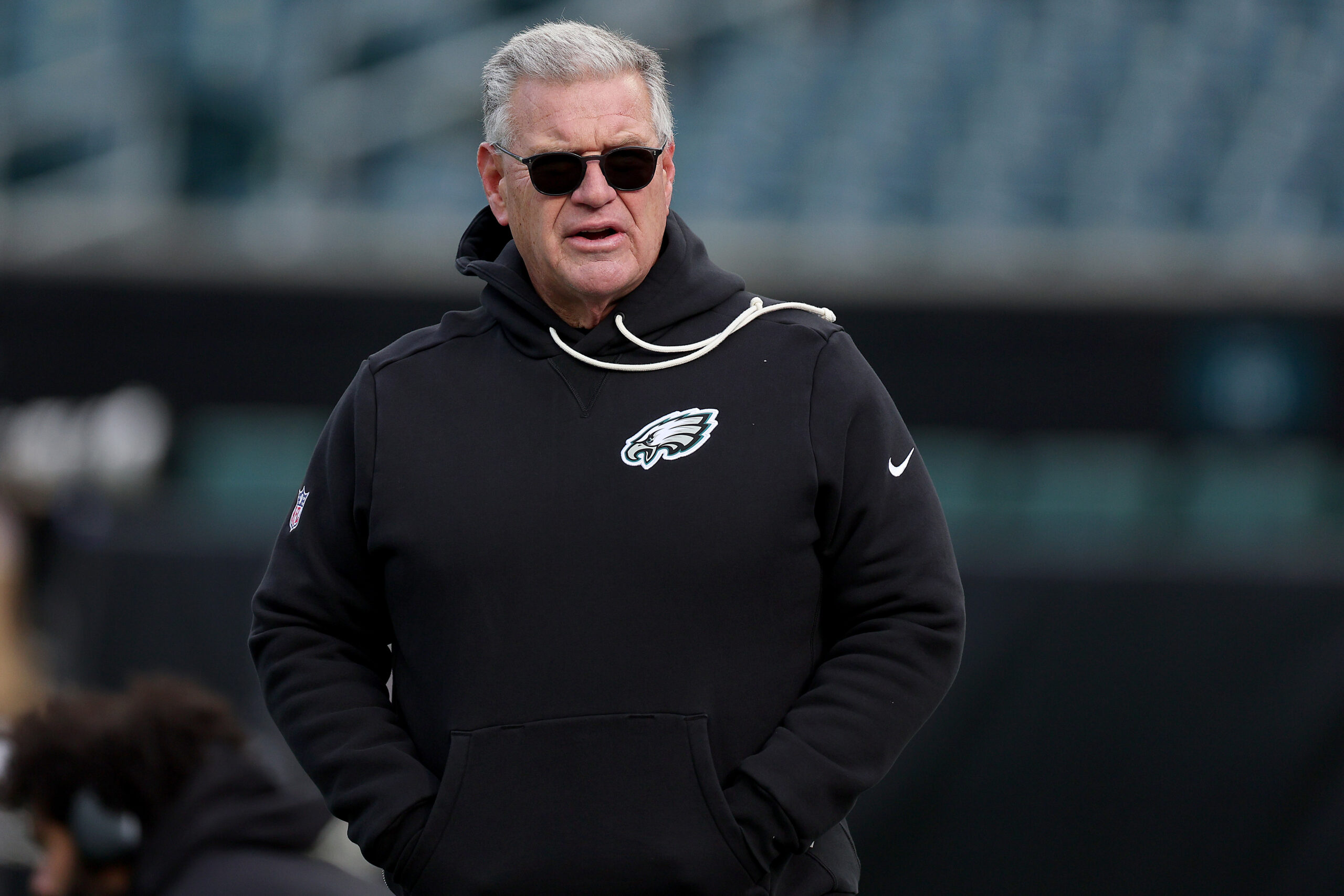
    How does revered offensive line coach Jeff Stoutland fit into a Sean Mannion-guided staff?

    Mannion could be allowed to bring in his own staff, but it’s unlikely he has assistants at the ready. Sirianni could use the new coordinator as an opportunity to make a few changes. It seems unlikely that the esteemed Stoutland would be one, although the new scheme could allow him to focus exclusively on the O-line.

    In question is how involved Sirianni will be in the offense. He could act as a senior consultant to Mannion, or he could hire a trusted veteran to help the young coordinator. Sirianni might want to avoid someone who could be considered a threat or a break-glass-in-case-of-emergency alternative.

    Or maybe he just reassigns Patullo to that role. There may not be anyone better suited to understand the rigors of being the Eagles’ offensive coordinator — both inside the building and out. Patullo had little margin for error.

    Mannion should be granted a longer grace period. But how long is Sirianni’s? They’re likely bound together.
  • Meet Jefferson hoops freshman Chris Cervino, a rising social media influencer

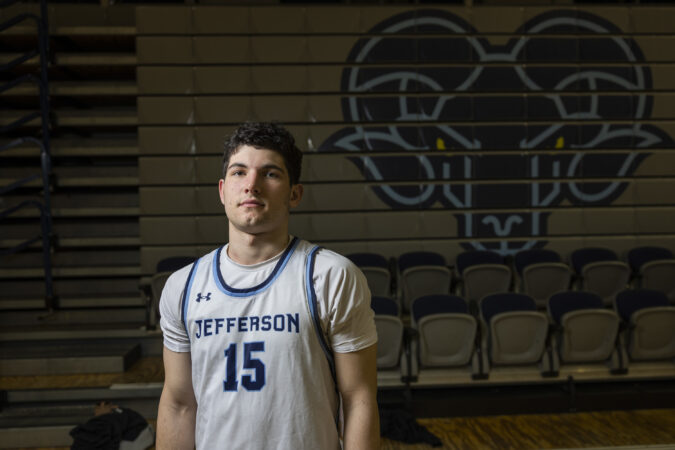
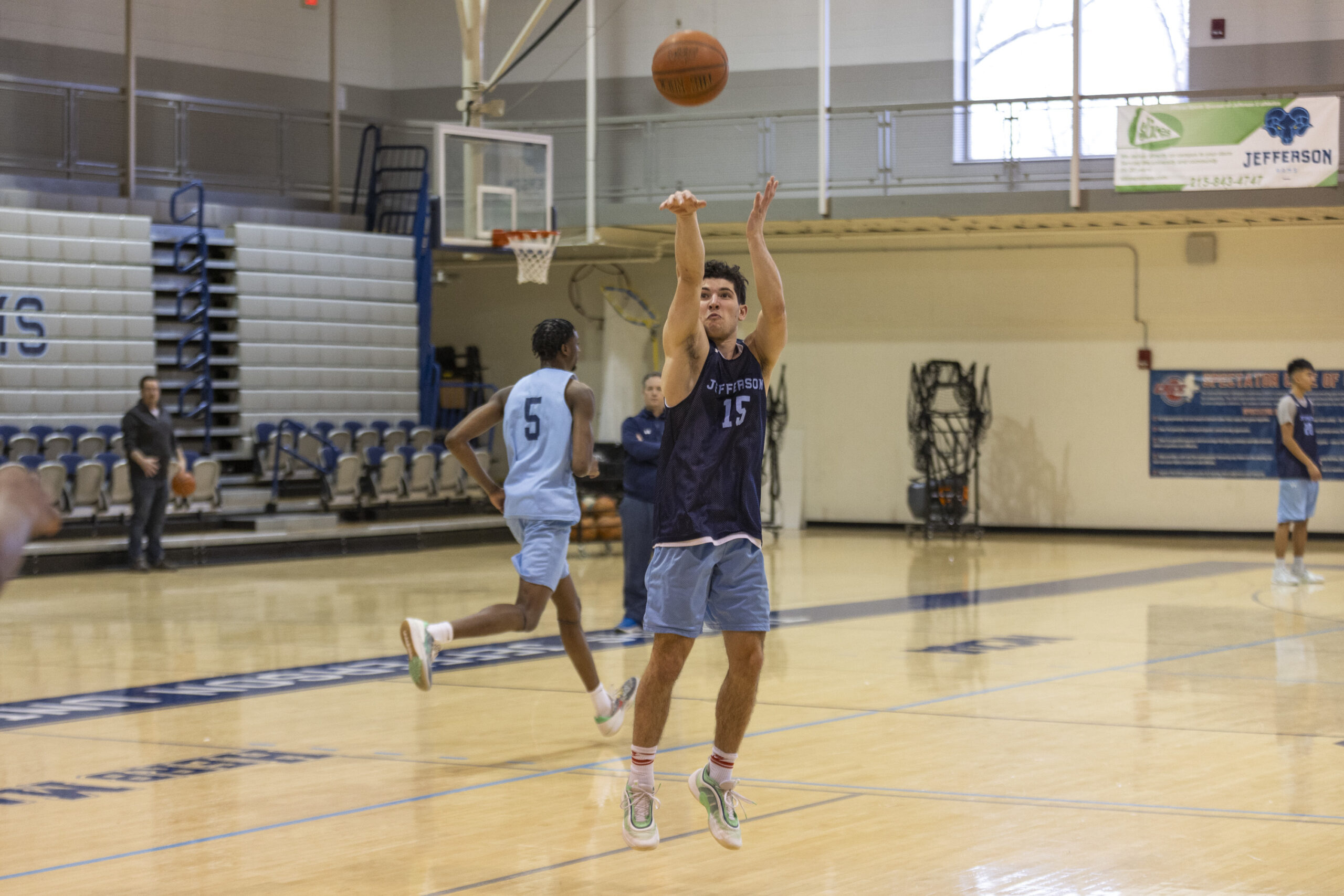
    Meet Jefferson hoops freshman Chris Cervino, a rising social media influencer

    Chris Cervino wasn’t trying to become a TikTok influencer. He just wanted to make a “funny, trolling” video to get in his opponents’ heads before a game last year. That was until he went viral.

    “I made this video, it was called, ‘Road to D2,’” said the Thomas Jefferson freshman guard. “There’s this kid, his name [online] is ‘Road to D1,’ and we were going to play against his team. … I made the video, it blew up. And then in that game, I actually ended up having a really good game. There were a bunch of videos posted about me [afterward]. One actually got like 2 million views and like 700,000 likes.

    “It was a lot happening all at once, but it was a really cool experience. That’s kind of how it took off just from that moment right there.”

    “Road to D1” is Troy Hornbeck, a 2026 recruit who has documented his journey to play Division I basketball and gained a large following doing so. He has more than 466,900 followers on his TikTok and is attending IMG Academy in Bradenton, Fla.

    The two played against each other in the Overtime Elite league last year when Cervino’s YNG Dreamerz beat Hornbeck’s Diamond Doves en route to an OTE championship. The Atlanta-based league acts similar to a professional league, offering high-level training for athletes ages 16 to 20 years old. It also claims to boost athletes’ brand and social media presence.

    So Cervino took advantage of the traction he gained on social media and continued to post videos — from dancing to highlighting moments in his basketball career — while playing at Jefferson. He’s the only player on the men’s basketball team with an NIL deal and has gained 9,090 followers on TikTok.

    “On social media, I like to just display myself,” he said. “I don’t really care about what other people think of me, even in basketball games. I wear gray socks. I don’t care what people think of me. People have looked down on me my whole life. … I’m happy with myself and who I am as a person.”

    But the most interesting aspect of Cervino’s journey is how he got there.

    The Franklin Lakes, N.J., native grew up playing basketball with San Antonio Spurs rookie Dylan Harper, who was drafted second overall in June. The two became close friends while playing AAU ball for Brick City, a team coached by Harper’s mother, before high school.

    “In my backyard, we would go at it one-on-one almost every day, because we lived so close to each other,” Cervino said. “We would just play one-on-one in the backyard, talk smack to each other. I would run away with a bloody nose; it was a lot of fun. We would always challenge each other when we were young, and seeing him grow up to play where he is now, it’s crazy.”

    While Harper played for Don Bosco Prep, Cervino won back-to-back state championships at Ramapo.

    As a junior, he was part of the team’s first state title in program history. During his senior year, Cervino eclipsed 1,000 career points after he scored 34 in the state final. Playing in college was always the dream, he said. It didn’t matter the level.

    Before arriving at Jefferson, Chris Cervino had a stop at Moravian Prep in North Carolina, which is an affiliate of Overtime Elite.

    Coming out of high school, he had interest from one school, Felician University, which competes with Jefferson in the Central Atlantic Collegiate Conference.

    However, he didn’t know if he was ready yet. Instead, he decided to opt for a prep year.

    “If I got an extra year, I would be much more developed,” Cervino said. “So I took the extra year. I went to a really good school, played in the Overtime Elite League, played against five stars every single day, got my body better, developed myself as a player, and then that eventually led me to come here.”

    He attended Moravian Prep in North Carolina, which is considered one of the top high school basketball programs in the nation. The school is also an affiliate with Overtime Elite, meaningit plays two schedules during the year: a national high school schedule and an OTE schedule, where the team is called YNG Dreamerz.

    “Moving to North Carolina, it was a crazy jump,” he said. “But I learned a lot about life there, and how basketball could open up opportunities for me. For example, with social media, basketball opened that up for me, so I learned a lot from there.”

    Through Overtime, Cervino was exposed to a social media agency called Press Upload, which gave him pointers on how to monetize his name. He eventually signed with an agency that finds brand deals on his behalf — like VKTRY insoles, which he partnered with and noted “it was really cool” since he grew up wearing those in his shoes.

    @ccswish

    Need a gift for the holidays? Get VKTRY insoles today!🎁🔥 #vktrypartner @VKTRY Gear

    ♬ original sound – Chris.cervino

    Cervino, a 6-foot shooting guard, is still learning the ropes in his first year at Jefferson. He has played in three games this season and tries to be a sponge in practice under coach Jimmy Riley, who spent 15 seasons on Hall of Famer Herb Magee’s staff.

    When it comes to his social media platform, Cervino is not chasing a number of followers or views; it’s about having fun with it while “living in the moment and seeing what happens next.” He also hopes other athletes at the Division II level see that they can have a platform, too.

    “There’s always going to be people overlooking you,” Cervino said. “You only can control what you can control, which is how much work you put in, the effort you put into it, and all that stuff. Focus on yourself, focus on what you need to do.”

  • One year of inspections at Thomas Jefferson University Hospital: November 2024 – October 2025

    One year of inspections at Thomas Jefferson University Hospital: November 2024 – October 2025

    Thomas Jefferson University Hospital was cited by the Pennsylvania Department of Health in the last year for failing to keep a patient from setting fire in their hospital bed, turning away a person who came to the emergency department, and neglecting to monitor a patient’s vital signs.

    The incidents were among nearly three dozen times health department inspectors visited Jefferson Health’s flagship hospital in Center City to investigate potential safety violations between November 2024 and October 2025.

    Here’s a look at the publicly available details:

    • Dec. 3, 2024: Inspectors visited for a monitoring survey and found the hospital was in compliance.
    • Dec. 3: Inspectors followed up on a citation from August 2024 and found the hospital was in compliance. The hospital had been cited for failing to properly document details from cardiac monitoring for a patient with septic shock.
    • Jan. 24, 2025: The hospital was cited with immediate jeopardy, one of the state’s most serious warnings and a sign of potentially life-threatening safety problems, after a patient suffered first- and second-degree burns in their room. Inspectors found that the patient had attempted to light a cigarette while receiving treatment that involved supplemental oxygen, which can cause materials near it to catch fire. Inspectors found that Jefferson staff had failed to check the patient for smoking paraphernalia and educate them about no-smoking rules, as required by hospital protocol. The hospital posted more “No Smoking” signs, retrained staff, and updated its policies requiring smoking screening for all patients.
    • Jan. 30: Inspectors came to investigate a complaint but found the hospital was in compliance. Complaint details are not made public when inspectors determine it was unfounded.
    • Feb. 3: Inspectors came to investigate a complaint but found the hospital was in compliance.
    • Feb. 6: Inspectors came to investigate a complaint but found the hospital was in compliance.
    • Feb. 11: Inspectors came to investigate four complaints but found the hospital was in compliance.
    • Feb. 11: The Joint Commission, a nonprofit hospital accreditation agency, renewed the hospital’s accreditation, effective November 2024, for 36 months.
    • Feb. 12: Inspectors came to investigate a complaint but found the hospital was in compliance.
    • Feb. 14: Inspectors came to investigate two complaints but found the hospital was in compliance.
    • March 11: The hospital was cited for violating rules that require emergency departments to evaluate all patients who arrive seeking care. Inspectors found that a person walked into the emergency department saying they needed to use the restroom, and was asked to leave because the hospital does not have a public restroom. The patient said they were having an emergency and planned to check into the emergency department, but were still told to leave. Inspectors found that the dismissal violated Jefferson’s emergency department policies designed to comply with the federal Emergency Medical Treatment and Labor Act (EMTALA) — anti-patient dumping laws that require hospitals to evaluate and stabilize any patient who seeks emergency treatment. Administrators retrained staff on EMTALA protocol and updated their system for recording security incidents to better document when a provider is called by security to assess a patient who has a non-medical request, such as needing to use the restroom.
    • April 15: Inspectors followed up on the immediate jeopardy citation from January and found the hospital was in compliance.
    • April 29: Inspectors came to investigate a complaint but found the hospital was in compliance.
    • May 5: The hospital was cited for failing to follow protocol designed to prevent patient falls. In December 2024, an 80-year-old patient with impaired vision was admitted to the emergency department and given a drug known to cause patients to need to urinate more often. Inspectors found that the patient was initially evaluated to have a low risk of falling, but was not re-evaluated after being prescribed the medication that could increase how often they needed to get up to use the bathroom and their risk of falling. In response to the complaint, which was reported in December 2024 and finalized in May 2025, hospital administrators retrained staff on fall risk protocols and said they would monitor patient charts.
    • May 28: Inspectors came to investigate a complaint but found the hospital was in compliance.
    • May 30: Inspectors came to investigate a complaint but found the hospital was in compliance.
    • Aug. 14: Inspectors came to investigate a complaint but found the hospital was in compliance.
    • Aug. 19: Inspectors came to investigate a complaint but found the hospital was in compliance.
    • Aug. 19: The hospital was cited for failing to properly monitor a patient’s vital signs. Inspectors found that a provider had ordered continuous pulse oximeter monitoring for a patient, and instructions to report when the blood oxygen levels dropped below 90%. A staff member assigned to the patient could not find a pulse oximeter machine for the patient and told inspectors that they reported the issue to another provider, “but she never got back to me.” Hospital administrators acquired more pulse oximeters, retrained staff on medical supplies protocol, and said they would monitor patient hand-offs between nursing shifts.
    • Oct. 3: Inspectors came to investigate a complaint but found the hospital was in compliance.
  • Sean Mannion needs to be a Jalen Hurts whisperer. Play-calling is only part of that.

    Sean Mannion needs to be a Jalen Hurts whisperer. Play-calling is only part of that.

    It almost surely did not escape Jeffrey Lurie’s notice that his offense turned out OK the last time he hired a Packers quarterbacks coach.

    It shouldn’t escape ours, either.

    Sean Mannion may not be the next Andy Reid. The Eagles didn’t hire the 33-year-old Green Bay assistant with the thought that he would become Reid. But Reid was Mannion at one point in time: an under-the-radar position coach without play-calling experience who was hired for a big boy job well ahead of schedule. This was back when Mannion was six years old, of course.

    Has it really been 27 years?

    It has. Mannion and Reid don’t have much of a connection apart from having both sat at the same desk (figuratively … although, knowing Lambeau Field, maybe literally, too). Matt LaFleur is not Mike Holmgren. Sean McVay is not Bill Walsh. The lineage of Packers quarterbacks coaches who became offensive coordinators includes one Ben McAdoo. Having occupied the position is a trait neither prescriptive nor predictive. It is descriptive in one sense, though. A lack of play-calling experience should not be a deal-breaker for a team that is looking to overhaul its offensive identity.

    In fact, play-calling isn’t the thing that will determine Mannion’s success or failure as Eagles offensive coordinator. It is the thing that we will focus on, no doubt. For a variety of reasons. First, because play-calling is the only part of the job that we actually get to see. Second, because guys like Walsh and Reid and McVay (and Mike Martz, Kyle Shanahan, etc.) have led us all to believe that football games are won the same way Jimmy Woods won video games in The Wizard. Which is silly, when you stop and examine the time card. Even at 70 plays per game and a full 40 seconds between plays, an offensive coordinator spends less than an hour of his work week calling the plays. The bulk of the job is the 79 hours that precede it.

    Can Sean Mannion have the same strong working relationship with Jalen Hurts that Kellen Moore (right) experienced?

    The Eagles need Mannion to be a good coach. Jalen Hurts needs Mannion to be a good coach. Those two things are one and the same. Because Jalen Hurts is the Eagles. Where they go from here as an offense depends almost entirely on who he is as a quarterback. Rather, it depends on who Hurts can be. Who he is? That isn’t good enough. All of us saw that this season. Not all of us understood what we saw. But we saw it. Plain as unflavored yogurt.

    That’s not to say the Eagles’ disappointing 2025 campaign was all on Hurts’ shoulders. Seven months isn’t nearly long enough to transform from a player capable of winning a Super Bowl MVP to a player who simply isn’t good enough. His advocates are correct in that. Hurts would have been equally capable of winning the honor this season as he was in 2024, assuming the rest of the offense was also as capable as it had been. Therein lies the disconnect. You’ll make a you-know-what out of yourself if you’re assuming Hurts’ supporting cast will ever be as good again.

    It’s funny. Nick Sirianni’s detractors constantly portray him as the unwitting beneficiary of a world-class roster. He is the dim-witted only son bequeathed an empire, a head coach who happened to stay at a Holiday Inn Express last night. He showed up in board shorts at his interview and then rode the wave of Howie Roseman’s roster. But a roster that good doesn’t stay it for long.

    Rarely is the same rubric applied to the quarterback. No, A.J. Brown wasn’t the same singularly dominant receiver he has been, which compounded his general malaise. No, the offensive line didn’t manhandle opponents the way it had in previous seasons. Yes, Saquon Barkley was a little less dynamic than he was when he was jumping backward over erect defenders. Each of those claims is perfectly valid. As is the rebuttal: welcome to life as most NFL quarterbacks live it.

    Hurts can’t be the same as he was. He needs to be better. That’s going to take some very good coaching, provided he is no longer willing and/or capable of being the freewheeling scrambler he was in 2022. Being that player afforded Hurts the luxury of not needing to do the things that most other championship quarterbacks must do. He didn’t need to parallel process his pocket navigation, feeling pressure subconsciously while focusing downfield. He didn’t need to recognize that the deep crosser would clear before settling for the hitch in his foreground. He didn’t need to wait for a defense to man-up Brown on a vertical route to generate an explosive play.

    It’s probably time to acknowledge that Jalen Hurts’ supporting cast isn’t going to suddenly revert to its 2024 form.

    Hurts needs to do those things now. That’s the problem. Those things aren’t sustainable. Lane Johnson isn’t going to play forever. Even if he does, he won’t always be the same player. And the four guys alongside him won’t all remain healthy as consistently as he has.

    Same goes for the pass-catchers. Here’s a quick a thought exercise. In the four years since the Eagles traded a first-round pick for Brown on draft day, has any other team managed to swing a move at the position that was even 75% as impactful? The Chiefs have spent five off-seasons trying to replace Tyreek Hill. The Patriots haven’t had a receiver of that caliber since Randy Moss. A great quarterback makes the most of what he has.

    Just to reiterate: Hurts doesn’t need to be Tom Brady. He needs to be better than he was in 2025 in order to win with the supporting cast most quarterbacks have, which is the supporting cast he is likely to have moving forward. Mannion will play a significant role. His profile is intriguing.

    Nobody can understand a quarterback like somebody who has played the position. Kellen Moore was a quarterback. His quarterbacks coach was a quarterback (former NFL backup Doug Nussmeier). Shane Steichen was a quarterback. None of them were as good as Hurts. But they understood what quarterbacks see, how they process, what they need. Sirianni and Kevin Patullo were wide receivers. So were McVay and Shanahan. Again, neither prescriptive nor predictive. But we are talking about Mannion.

    Mannion is a quarterback, and he has played the position in lots of different settings, under lots of different coaches, including McVay and Kevin O’Connell, as well as Klint Kubiak and Kevin Stefanski. He has coached under LaFleur, who has won a lot of games with a quarterback (Jordan Love) who lacks a lot of what Hurts brings to the table. Mannion’s coaching profile is about as ideal as you can draw up for a guy who has only been a coach for two seasons.

    Sean Mannion understands quarterbacks because he was one… very recently, in fact.

    It is also a vote of confidence in Sirianni. The Eagles could easily have opted for a coach who possessed the play-calling experience that Patullo lacked. Jim Bob Cooter, Matt Nagy, Bobby Slowik — any would have made a fine interim-head-coach-in-waiting. Instead, they went with a coach who lacks anything close to the political capital that Moore brought to the table when they hired him to replace Brian Johnson after 2023.

    Will it work? Who knows. It is the only honest answer. All we can say: it is a sensible move. In the end, it all depends on the quarterback.

  • The Philadelphia Orchestra next season premieres a ‘new’ piece by Leonard Bernstein. Plus, Simon Rattle is coming back.

    The Philadelphia Orchestra next season premieres a ‘new’ piece by Leonard Bernstein. Plus, Simon Rattle is coming back.

    Simon Rattle is returning to the Philadelphia Orchestra after a decade. New works are being unveiled by Spirited Away composer Joe Hisaishi. And a major orchestral piece by Leonard Bernstein is receiving its world premiere — sort of.

    The Philadelphia Orchestra’s 127th season will be a mix of standard repertoire, newly minted scores, film music, family concerts, and guest artists new and familiar.

    Emanuel Ax has been dubbed “artist of distinction” for the season, the orchestra said in its announcement of 2026-27 artists and repertoire unveiled Thursday. The much-loved pianist makes both recital and concerto appearances to celebrate his half-century-plus history with the orchestra.

    Several big, ambitious pieces anchor the season in Marian Anderson Hall.

    The Philadelphians will perform their first-ever complete Bach Christmas Oratorio. Following on the heels of last season’s Tristan und Isolde, the orchestra takes on Wagner’s Lohengrin for the first time. Beethoven’s Symphony No. 9 is on the roster, as are four Mahler symphonies — Nos. 1, 3, 5, and 7.

    Soprano Elza van den Heever.

    Lohengrin, like the Tristan, will be led by music and artistic director Yannick Nézet-Séguin.

    “He’s always able to attract the people that are known for these roles,” Jeremy Rothman, chief programming officer for the Philadelphia Orchestra and Ensemble Arts, said of the cast of singers. Tenor Stanislas de Barbeyrac takes the role of Lohengrin, with soprano Elza van den Heever as Elsa.

    “It’s the kind of thing that really only the Philadelphia Orchestra can do — attracting this talent with Yannick conducting with this level orchestra,” said Rothman.

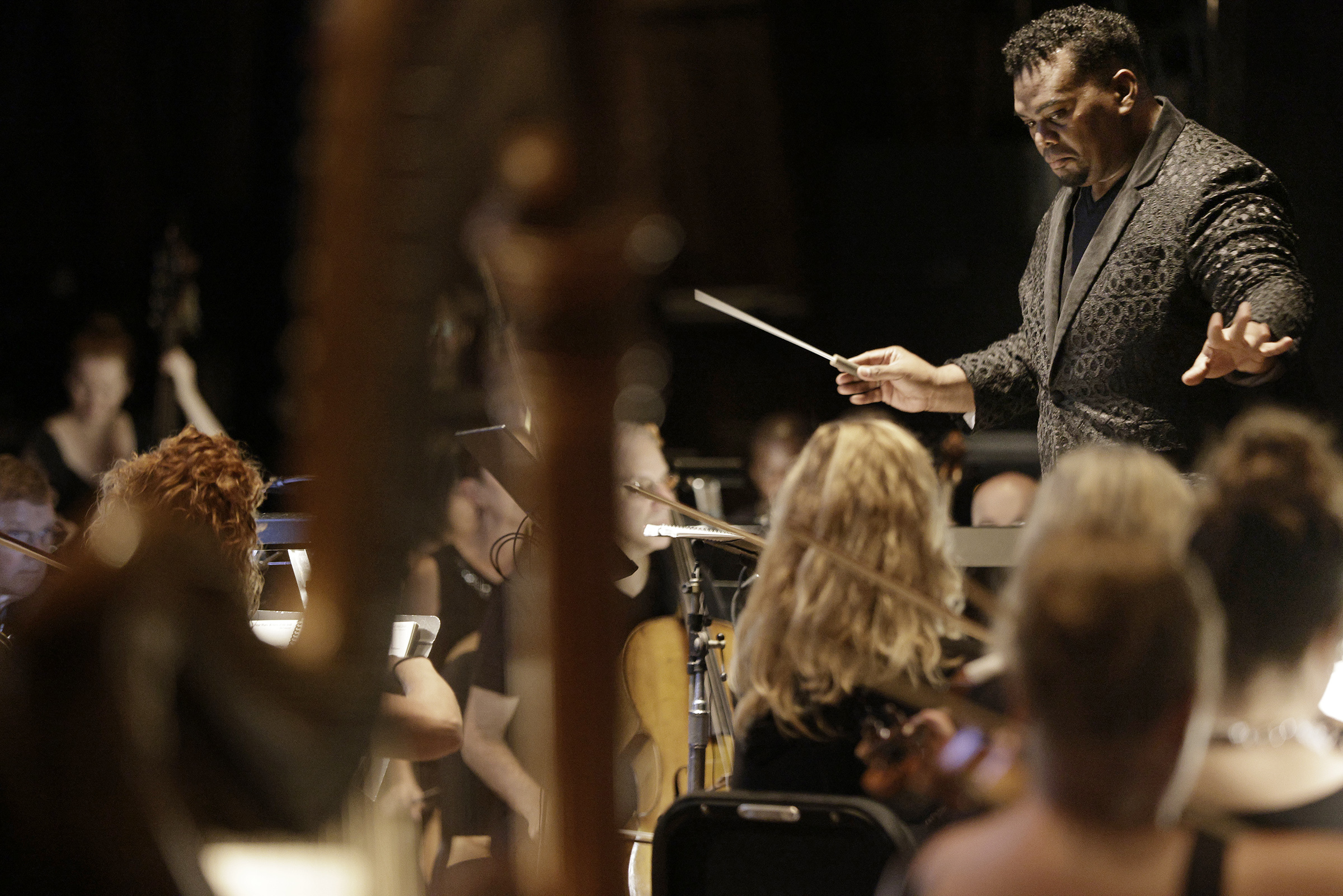
    Conductor Anthony Parnther leading the Philly Pops in a live orchestra-to-screen performance of “Star Wars: Return of the Jedi” at the Mann Center on Aug. 11, 2022.

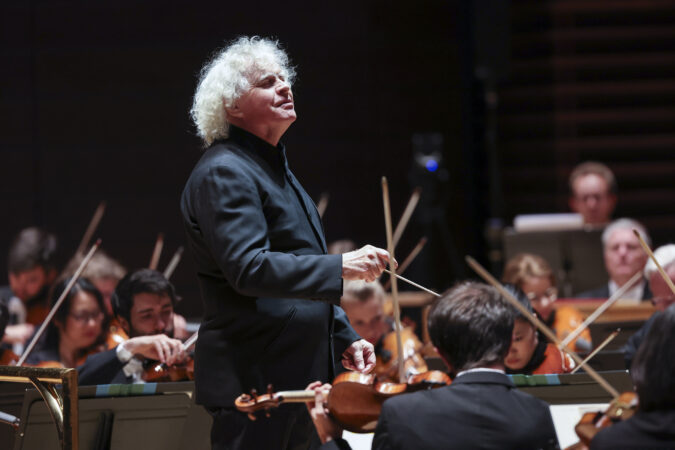
    Nézet-Séguin will lead 12 weeks of programs in 2026-27 (plus special concerts), with podium appearances by Esa-Pekka Salonen, Anthony Parnther, Dima Slobodeniouk (his debut here), Jane Glover, Fabio Luisi and others.

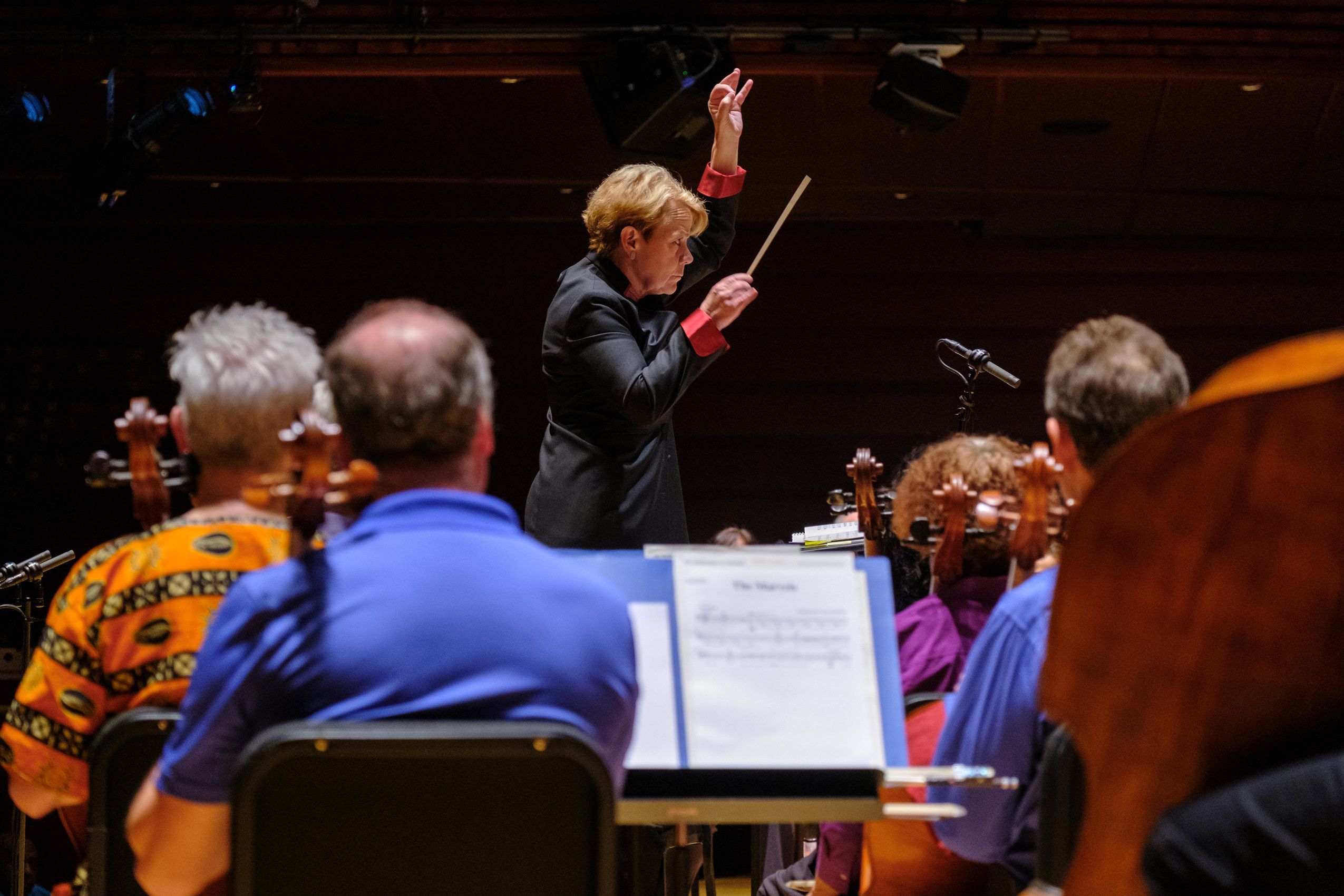
    Marin Alsop, the orchestra’s principal guest conductor, leads three weeks of programs plus special concerts.

    Violinist Arabella Steinbacher.

    Guest soloists include pianists Yunchan Lim and Seong-Jin Cho in Rachmaninoff, Nikolaj Szeps-Znaider as both violinist and conductor, violinist Arabella Steinbacher in Beethoven, Yefim Bronfman in Schnitke and Liszt, Daniil Trifonov performing Prokofiev, and Yuja Wang in Beethoven.

    The Spotlight recital series continues with artists like Yo-Yo Ma, Yuja Wang, and Itzhak Perlman.

    Composer Gabriela Ortiz.

    Among the premieres, or first performances by the Philadelphia Orchestra, are works by Reena Esmail, Julia Wolfe, Unsuk Chin, Anna Meredith, Erkki-Sven Tüür, Gabriela Ortiz, and Caroline Shaw.

    Film music once again threads throughout the season, with live orchestra-to-screen presentations of Star Wars: A New Hope and Harry Potter and the Prisoner of Azkaban. Film concerts are often a sell-out for the orchestra, but they are also a lure for new audiences who later buy tickets to regular orchestra concerts, said Ryan Fleur, president and CEO of the Philadelphia Orchestra and Ensemble Arts.

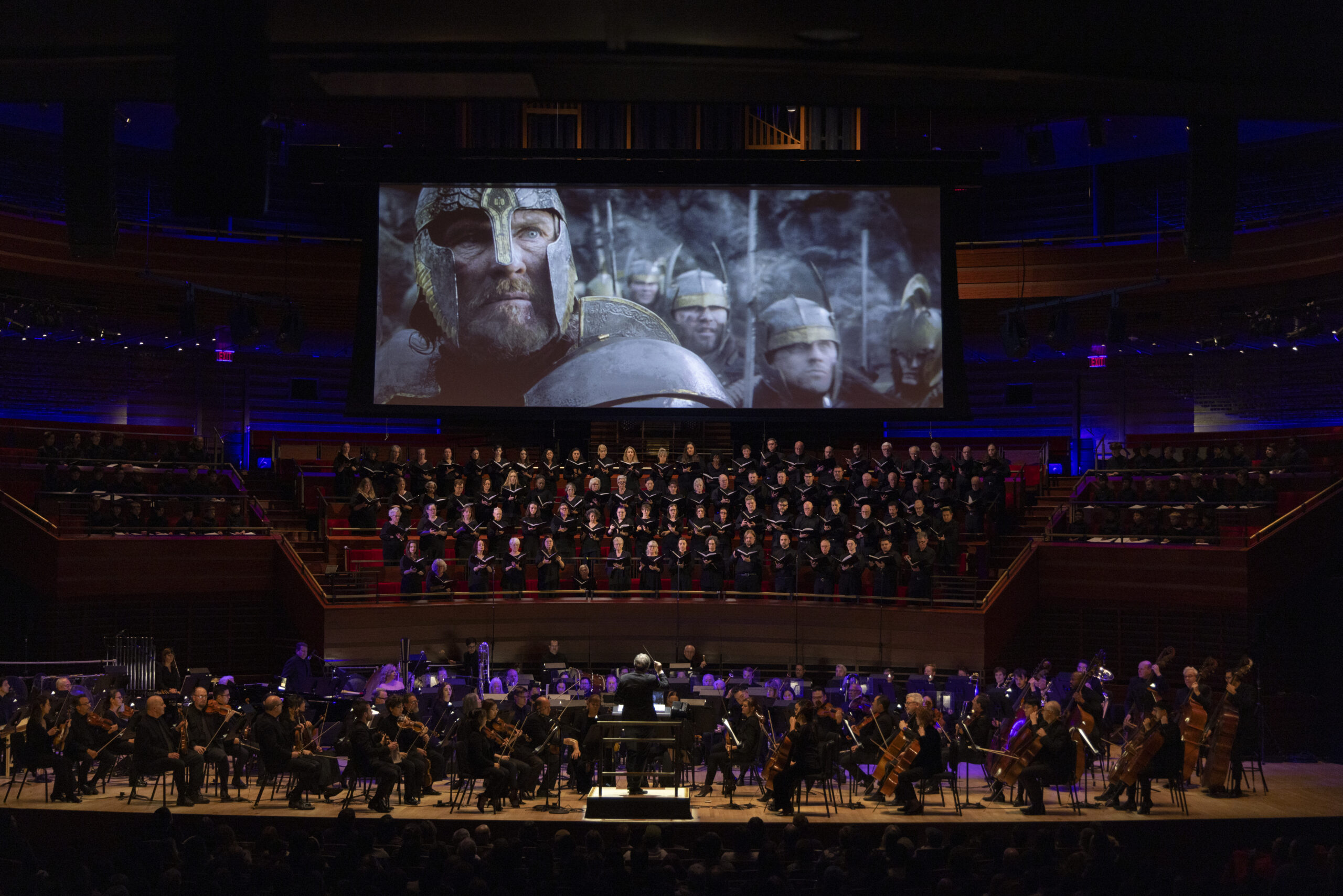
    Howard Shore’s score for “Lord of the Rings: The Fellowship of the Ring” was performed live by the Philadelphia Orchestra and guest conductor Ludwig Wicki to a packed house at Marian Anderson Hall, Dec. 5, 2025.

    If past statistics are a reliable guide, the orchestra will sell 6,000 tickets to next season’s Star Wars program. About 4,000 of those listeners will be people who had not bought an orchestra ticket previously. Of those, 20% will come back for a straight orchestra concert in the following year and a half.

    “It’s pretty consistent data now that we’ve seen over the last few years,” said Fleur.

    “Gateway” is the word the orchestra uses to describe concerts like those with film, or the shorter, informal Orchestra After 5 concerts, which also continue next season.

    “It’s programs that are accessible as a first date,” said Fleur.

    The season-wide average ticket price next season is increasing about 2.5% due to a higher share of premium, or special, programs, a spokesperson said.

    Composer and conductor Joe Hisaishi performing with the Philadelphia Orchestra at Marian Anderson Hall, June 26, 2025.

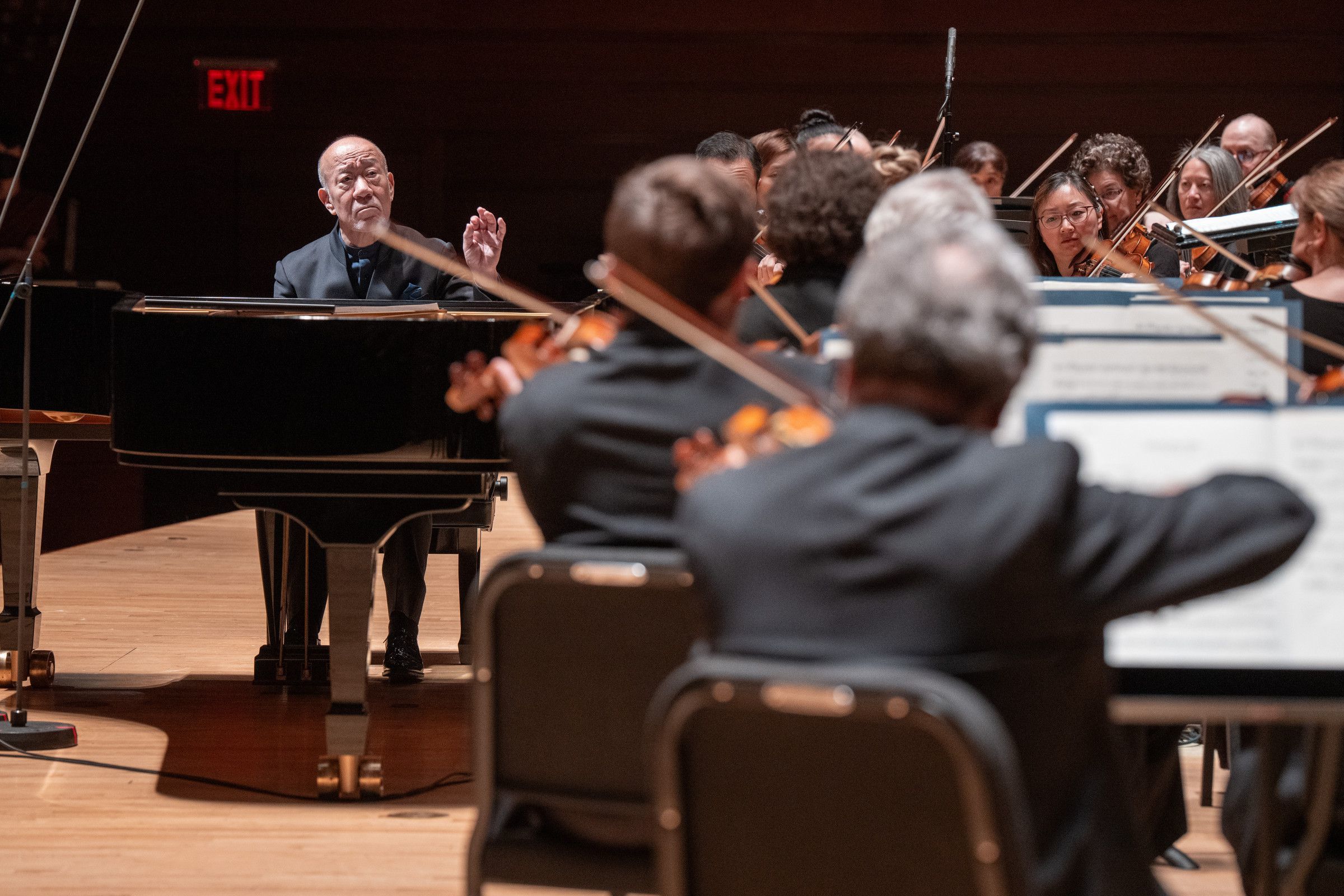
    Another film-adjacent presence next year is Joe Hisaishi, the orchestra’s composer in residence best known for his work on the animated films of Hayao Miyazaki (My Neighbor Totoro, Castle in the Sky). Hisaishi’s Orbis is the very first work heard next season, prefacing Beethoven’s Symphony No. 9 on opening night, Sept. 24. In the spring, Hisaishi leads the world premiere of his own Piano Concerto with Alice Sara Ott as soloist on a program with his Concerto for Orchestra.

    Rattle’s concerts, in January 2027, feature familiar territory: John Adams’ propulsive and emotional landmark work from 1985, Harmonielehre; Debussy’s La Mer; and the Ravel Daphnis et Chloé Suite No. 2.

    Why these particular pieces?

    “We didn’t have an in-depth discussion about it,” said Rothman. “When Simon wants to bring a program here, we trust him with what he knows [is] going to work really well with this ensemble.”

    Marin Alsop conducting the Philadelphia Orchestra at its Pride Concert at the Kimmel Center in June 2023.

    More novel for both performers and audience is a Marin Alsop program that includes the world premiere of The Party, a collaboration between composer Austin Fisher and conceptual artist Alex Da Corte. The artistic forces include the orchestra, a cast of singers, and life-size sculptures inspired by 1960s artist Marisol Escobar in a stop-motion film.

    Rothman calls the work, which was commissioned by the orchestra, “a really novel way to present opera, where you have the singers and the orchestra live on stage, but all the action is taking place up on the screen.”

    The Party is on a program with Pacific 231, Arthur Honegger’s classic 1923 depiction of a train accelerating, then grinding to a halt; and Haydn’s Symphony No. 101, “the Clock.

    “It’s a way of exploring the depiction of time,” said Rothman of the three pieces.

    A scene from the Philadelphia Orchestra’s performance in April 2015 – in what was then named Verizon Hall – of Bernstein’s “Mass.”

    Rothman was responsible for the creation of one of the season’s most intriguing creations: a “new” work by Leonard Bernstein.

    “I was thinking about how Mass has some of his most beautiful music in it,” said Rothman, “but just the scope of that work means that music is rarely ever heard live because of the forces that are required to mount it.”

    He conceived of a symphonic suite made of material from Mass, the musical-theatrical piece commissioned by Jacqueline Kennedy that premiered in 1971 at the opening of the John F. Kennedy Center for the Performing Arts.

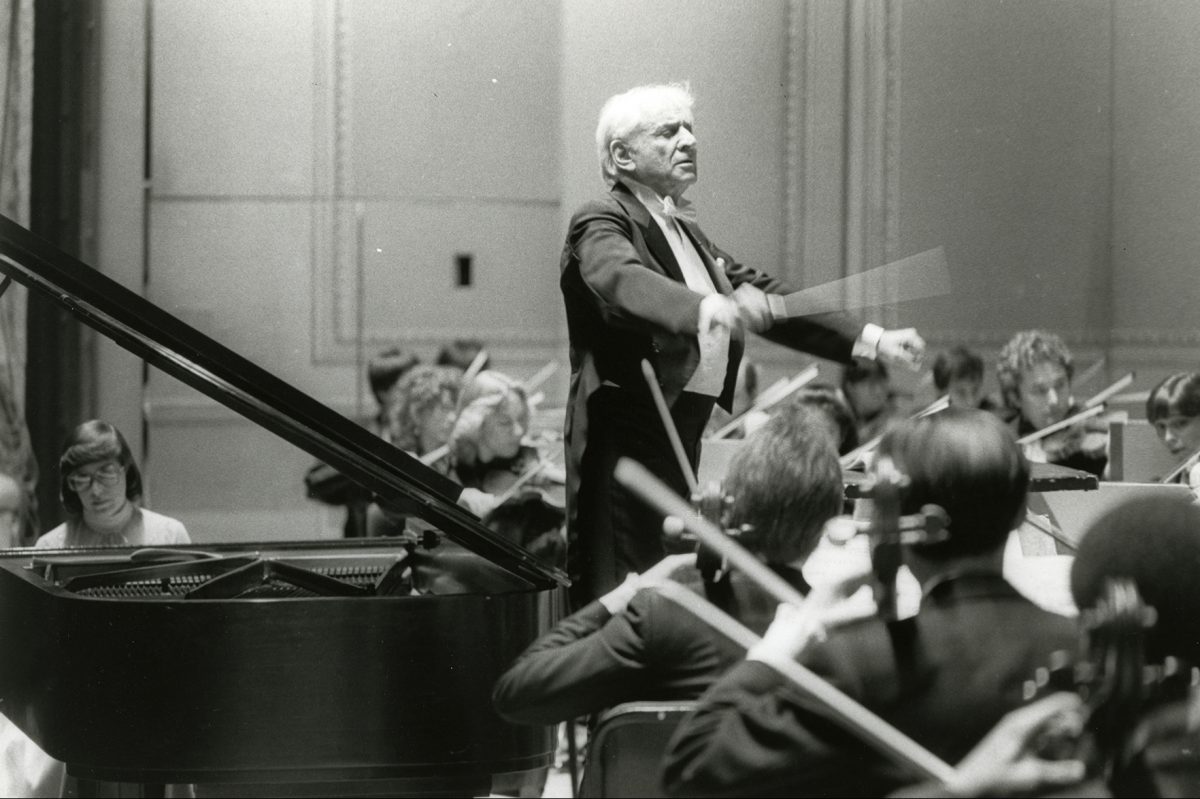
    Leonard Bernstein conducts the Curtis Symphony Orchestra with soloist Susan Starr in a 1984 performance at the Academy of Music.

    “So I reached out to the kids,” said Rothman, referring to Bernstein’s three children, “and I said, ‘What do you think of this idea?’ And I got back like an immediate, ‘Oh my God, we love it. Let’s do it.’”

    Garth Edwin Sunderland, a composer and vice president of creative projects at the Leonard Bernstein Office, was engaged to create Symphonic Rituals from Mass, which contains about 40 minutes of music — a “new” work drawn from Bernstein’s original colorful, groovy score.

    “It’s still paying homage to the sacred nature and the ritual of the piece, but bringing all that fantastic musical material into the orchestra, so no vocalists, no choirs,” said Rothman. “There will be a little bit of a rock band because that’s so essential to the core essence of the piece.”

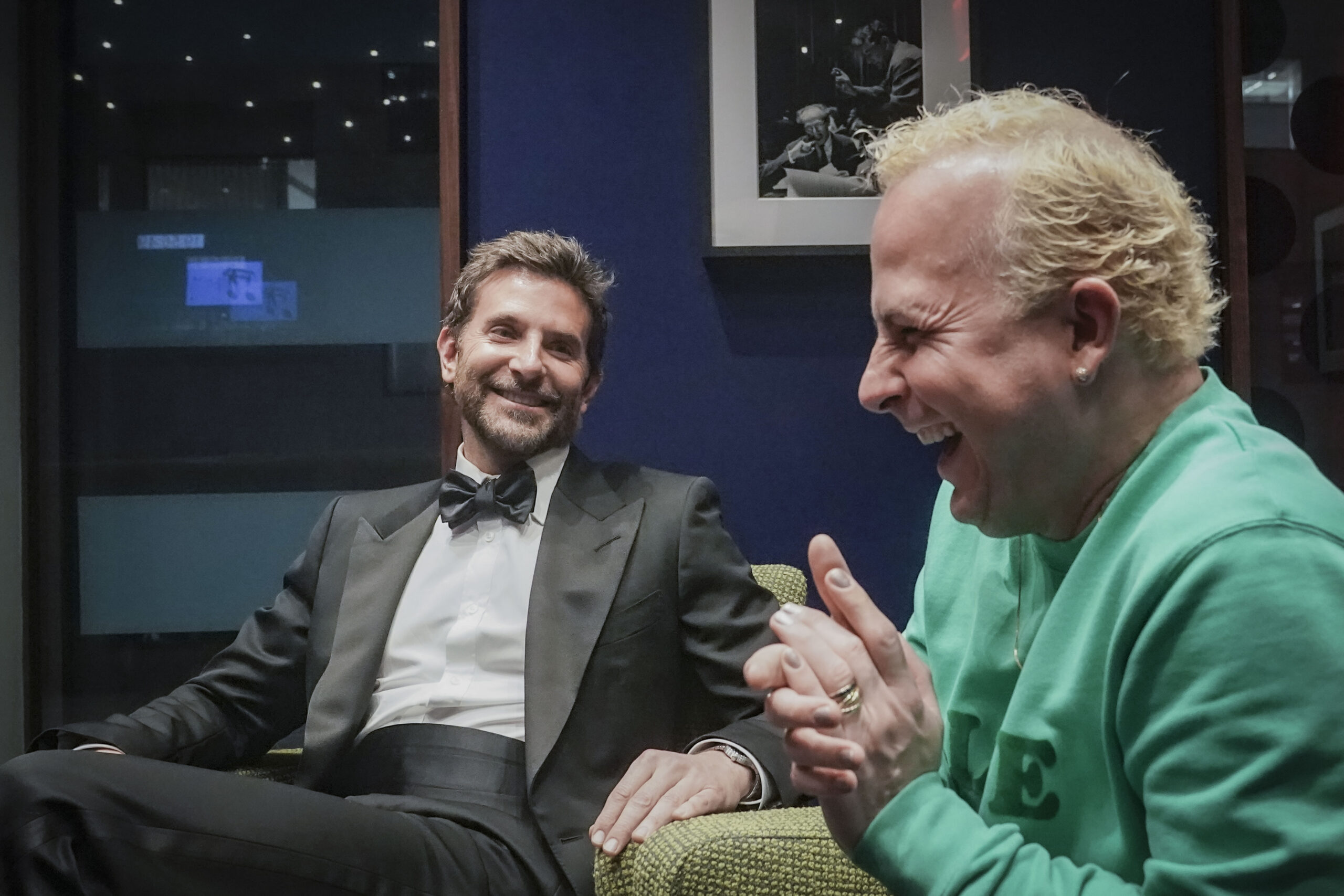
    Actor and director Bradley Cooper (left) and Yannick Nézet-Séguin speak during an interview, Feb. 14, 2024, in New York.

    Nézet-Séguin was, of course, the perfect choice to conduct. He’s been an enthusiastic champion of Bernstein’s music and was involved in the Bradley Cooper movie about Bernstein, Maestro.

    “I texted Yannick,” said Rothman, “and I said, ‘Yannick, how would you like to give the world premiere of a piece by Leonard Bernstein?’ And he goes, What? What are you talking about?’”

    Philadelphia Orchestra 2026-26 subscriptions go on sale at noon Thursday, with single tickets available July 30. ensembleartsphilly.org, 215-893-1955.

  • Penn lost significant talent to NCAA transfer portal, including this offensive trio

    Penn lost significant talent to NCAA transfer portal, including this offensive trio

    After Penn’s disappointing 6-4 finish in football, which resulted in the departure of longtime coach Ray Priore, the program saw several upperclassmen enter the transfer portal as they ran out of Ivy League eligibility.

    Some of those players moved on to bigger programs. As of now, seven former Quakers are committed to other schools.

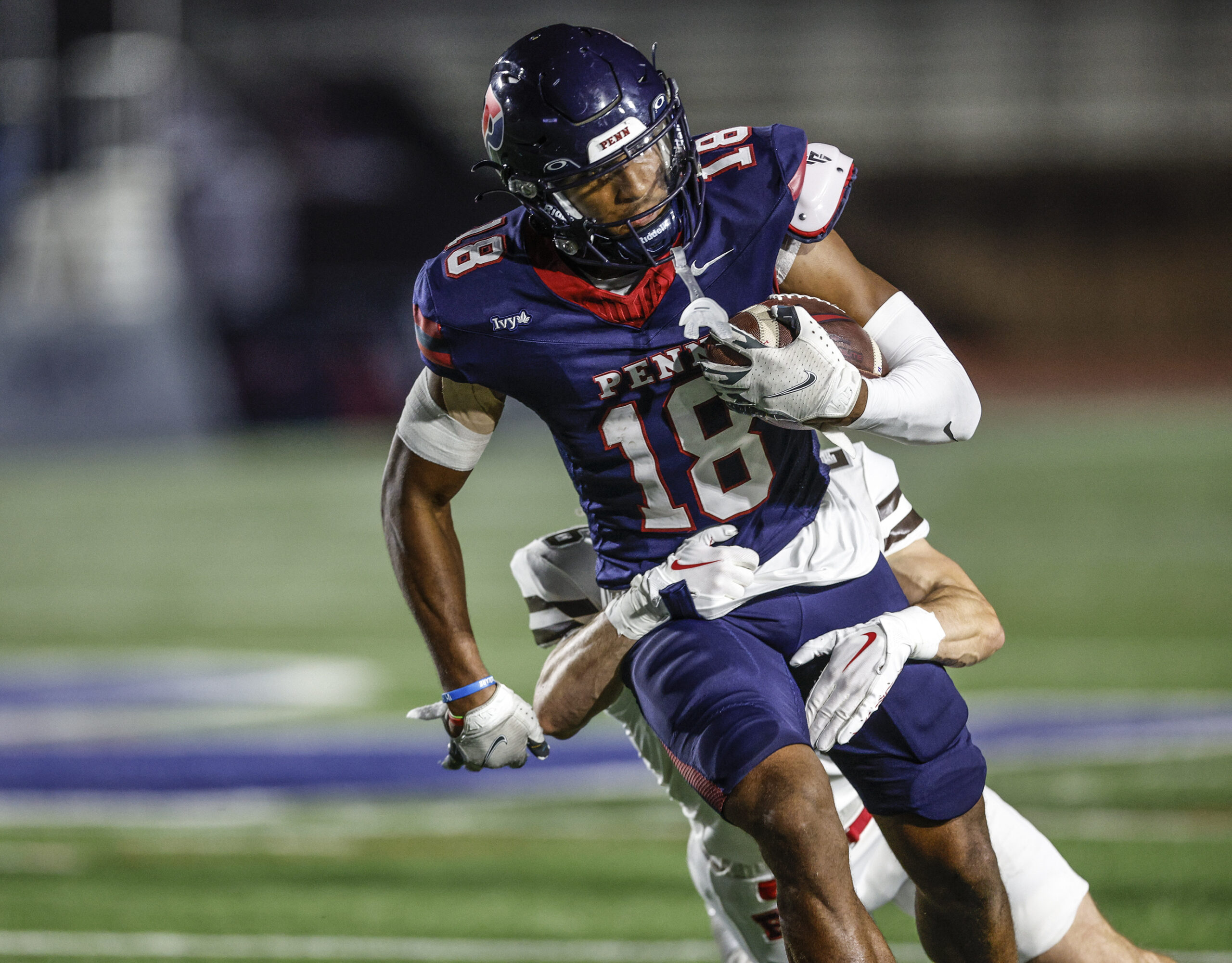
    Headlining those transfers is a trio on offense: quarterback Liam O’Brien and wide receivers Jared Richardson and Bisi Owens.

    O’Brien is heading to Cincinnati, Richardson looks to make an impact at Duke, and Owens will join Purdue.

    “Having an opportunity at Penn to showcase what I could do and that translating into an opportunity like this,” O’Brien said, “I mean, the way college football is nowadays — it’s pretty much like the minor leagues to the pros. It’s almost like a childhood dream.”

    Meet the family

    The trio grew close in the summer after their freshman season at Penn but had to wait much longer before taking the field together.
    Richardson and Owens excelled during their sophomore year, while O’Brien battled injuries and served as a backup to Aidan Sayin. O’Brien didn’t get his opportunity on the field until his junior year, when Sayin suffered a season-ending elbow injury against Yale in 2024.

    “Penn is not a football-first school,” O’Brien said. “But you can make it one. The one thing Penn does is it provides you [with] opportunities to succeed in whatever you do, and both on and off the field. All of us have really taken advantage of that for good.”

    In 2024, Liam O’Brien broke Penn’s record for passing touchdowns and total touchdowns in a game.

    In his second start, O’Brien broke Penn’s record for passing touchdowns (six) and total touchdowns in a game (seven).

    After a full offseason, O’Brien, Richardson, and Owens powered the Quakers offense in 2025, finishing third in the Ivy League in passing yards per game and second in offensive efficiency.

    Richardson and Owens combined for the most yards (1,729) and touchdowns (17) among Ivy League wide receiver duos. Richardson ranked 13th in receiving yards (1,033), first in receptions per game (eight), and fourth in total receiving touchdowns (12) across all of the Football Championship Subdivision.

    “We came in together,” Richardson said. “We worked our tails off. All of us being successful, it’s nothing short of special. It’s a blessing for each and all of us.”

    New opportunity

    O’Brien is already on Cincinnati’s campus, preparing for spring ball. He’ll be competing for the starting job as the Bearcats also brought in quarterback JC French from Georgia Southern.

    “The quarterback room is seeing a big change-up,” O’Brien said. “They lost their starter last year, lost their backup from last year. So they brought me in and brought in the quarterback from Georgia Southern. Right now, it’s an open job, and may the best man win.”

    For Richardson, a quick exploration of Duke’s campus made him eager to cancel his other planned visits. He hopes to carve out a role for himself on a star-studded team that won an ACC championship this past season.

    He also still has dreams of playing in the NFL.

    Next season, Jared Richardson will play for Duke, which won the ACC Championship in 2025.

    “It’s not going to be easy,” Richardson said. “I’m embracing that. I don’t want it to be easy. I want to leave a legacy. That’s my goal behind playing football. I want to provide my family with a life that they never got to have. So that’s what drives me. I’m not afraid of working hard, sweating a little bit. I just embrace the grind.”

    For Owens, the chance to lead a young Purdue receiving corps was too good an opportunity to pass up. Plus, he wanted to make the leap to the Big 10.

    “Getting to play in front of at least 60,000 people every week,” Owens said, “it’s a lot different than playing at Franklin Field, which gets 7,000 on a good day. It’s been a complete whirlwind the past couple of weeks, but all trending in the right direction, and definitely more excited than worried or nervous, because this is another challenge for me to take on.”

    Goodbye, Penn

    The three will be leaving Penn with Ivy League degrees, but according to them, the most valuable part of their experience in West Philadelphia was the relationships they formed.

    “These Penn brothers are ones I will have for a lifetime,” Owens said. “I’m never going to forget that. So at the end of the day, Penn will always be my home.”

    O’Brien and Richardson echoed that statement and emphasized how special their bond is.

    “Building a relationship with these guys, it was awesome these past four years,” Richardson said. “It was a pleasure playing with Bisi and Liam, and these guys are my best friends. So I can’t wait to see what they do. I’ll be in their corner rooting for them.”

    “It’s going to be fun to keep in touch with everyone after and throughout this year,” O’Brien added. “After this year, and after the fall season, and just compare experiences. See what it was like. See who does what at the next level. Because I think some of the guys are going to do big things.”

  • Virtual nursing programs get mixed reviews in Penn Nursing study

    Virtual nursing programs get mixed reviews in Penn Nursing study

    The rollout of so-called virtual nurses in hospitals remains a mixed bag, University of Pennsylvania researchers have found in the largest survey to date on nursing care delivered remotely through a screen.

    One hospital staffer said virtual nurses are a huge help getting patients checked in.

    Another said they worry hospitals are trying to cut corners by keeping floors fully staffed by using virtual nurses.

    And sometimes, patients think the virtual nurse is a television advertisement and try to press fast forward, researchers were told.

    A new study out of University of Pennsylvania School of Nursing surveyed 880 registered nurses in 10 states, including Pennsylvania, about the virtual nursing programs that have sprung up at health systems across the country.

    About half — 57% — of the nurses surveyed said virtual nurse programs did not reduce their workload, with some saying they felt virtual nurses created more work.

    But similar numbers also said they thought virtual nurse programs improved the quality of care patients received.

    Others said they didn’t think the technology had any impact — positive or negative — on quality of care, according to a study of results published online in December in JAMA Open Network.

    “It can be beneficial or a headache,” one nurse interviewed by Penn researchers summed up.

    Virtual nursing programs became more widespread during the COVID-19 pandemic, when health systems needed to limit physical interaction to protect patients and medical staff, and have continued to expand in Philadelphia and across the country. Administrators embracing technology and artificial intelligence say they can help streamline administrative responsibilities that can burden staff, provide extra patient oversight, and improve how quickly clinicians can respond to emergencies.

    Local examples include Penn Medicine’s use of virtual nurses to monitor patients at risk of falling or pulling out tubes and wires. Jefferson Health assigns a virtual nurse to patients who doctors have decided need to be monitored around the clock.

    And virtual nurses handle administrative work, like reviewing medications and giving discharge instructions at Virtua Health hospitals in New Jersey.

    The new study from Penn is among the largest to date to evaluate how well the programs are meeting goals, and the mixed results should be a warning to hospital administrators to proceed cautiously, researchers say.

    “Virtual nursing programs have been heralded as an innovative silver bullet to hospitals’ nurse staffing challenges, but our findings show that most bedside nurses are not experiencing major benefits,” said lead author K. Jane Muir, an assistant professor of nursing in the university’s Department of Family and Community Health.

    Virtual nursing on the rise

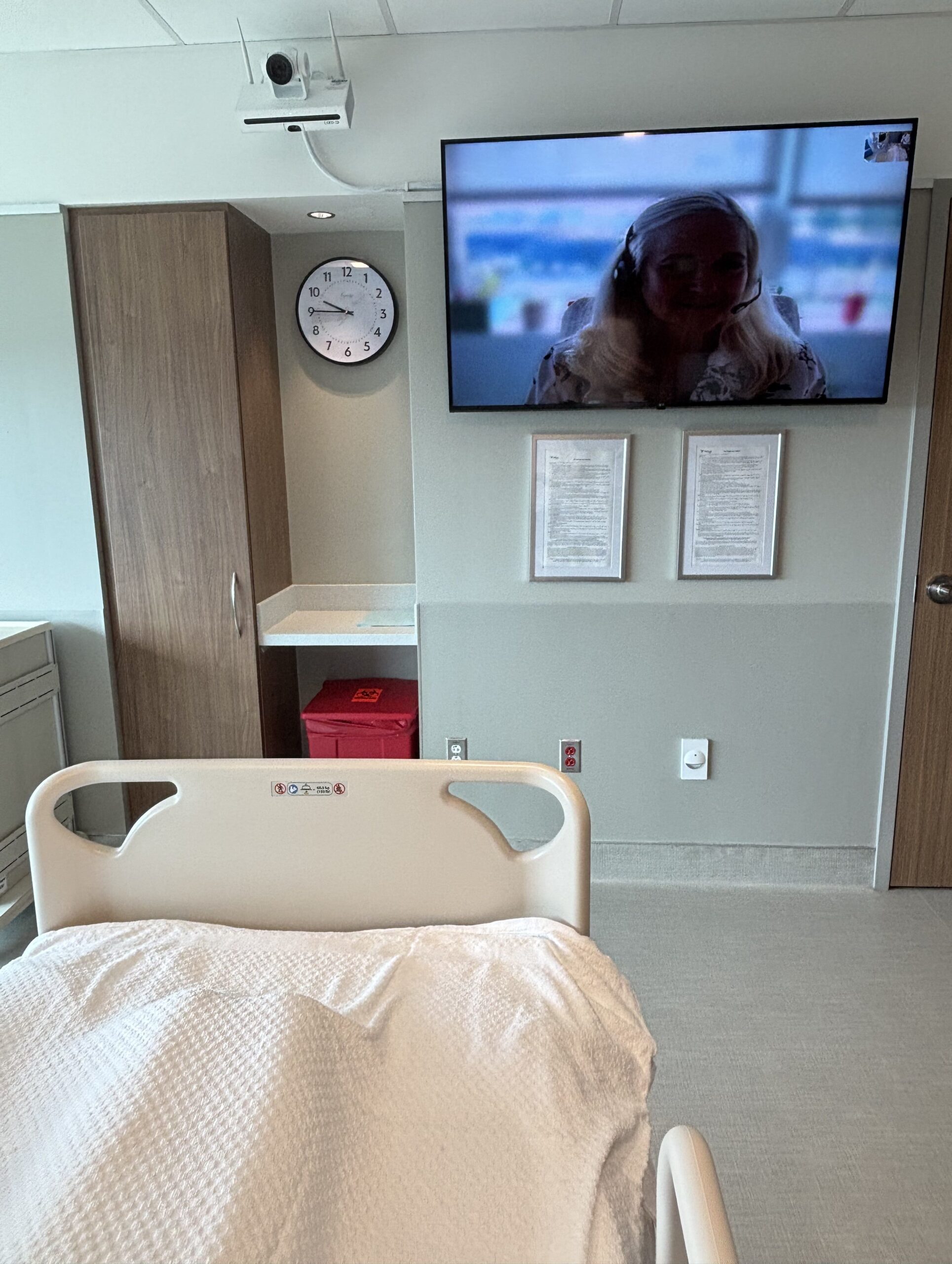
    Virtual nurses at Virtua Health appear on the television in a patient’s room.

    Virtual nursing refers to patient-care responsibilities managed by a team of nurses stationed at a remote hub, where they monitor screens and electronic information feeds.

    They are not intended to replace bedside care, but rather to serve as an extra set of eyes to monitor patients.

    If a patient who is known to be unsteady on their feet moves as if to get up from bed, a virtual nurse could speak through a screen or sound system asking if they need something and call a nurse on the floor to help them. If the patient falls, a virtual nurse can quickly alert medical staff.

    Virtua Health officially launched its program last year.

    Virtual nurses make sure patients have the appropriate medications before going home, know their discharge instructions, and have a follow-up appointment scheduled. They work in partnership with the bedside nurse, who focuses on the physical tasks in caring for a patient, while the virtual nurse handles the majority of the discussion.

    “It’s something that our patients are requesting and they’ve come to expect,” said Kristin Bloom, a nurse by training who serves as assistant vice president of clinical operations for Virtua’s Hospital at Home program.

    Virtua also uses virtual nurses in its intensive care units to help monitor and identify early signs of deterioration. These nurses have access to bedside cameras and can view the patient’s heart rhythms, lab results, and vital signs.

    Participants in the Penn survey, conducted in late 2023 and early 2024, did not include nurses working in New Jersey, where Virtua’s hospitals are based.

    Virtual nursing challenges

    Nurses surveyed by Penn’s researchers said they appreciated the extra set of eyes on patients, but not all were convinced that the virtual monitor was any more effective than bed alerts that can sound when they sense a patient leaving, according to the study.

    Karen Lasater, an associate professor of nursing and co-author of the study, urged health systems to include in-hospital nurses when shaping their virtual care programs.

    She said including bedside nurses in the conversation about what’s working and not working is “imperative.”

    “It’s important that nurses have a seat at the table,” Lasater said.

    Nurses surveyed also expressed concern that health systems were using virtual workers to avoid hiring more on-site staff.

    Bedside nurses questioned why they were being asked to take on more responsibility because administrators said they couldn’t afford to hire more staff, yet still found funding to build virtual programs.

    “They felt like investments in virtual nursing was a workaround,” Lasater said. “Why did they have money to invest in virtual nurses who couldn’t do all the work of the bedside nurses, but couldn’t invest in more bedside nurses?”

    At Virtua, administrators have turned to veteran bedside nurses to staff their virtual nursing program.

    “It’s an avenue to retain our experienced nursing staff,” Bloom said.

    Philadelphia-area hospitals have seen some virtual nursing challenges. In 2024, for instance, Jefferson Abington Hospital was cited by the Pennsylvania Department of Health after inspectors said the power cords attached to the monitors for virtual nursing created a strangulation risk for behavioral health patients.

    The hospital treated the incident as a learning experience, adjusting how the mobile monitors are used.

    The technology can also be confusing for some patients, who may not grasp the concept of a virtual nurse or may get conflicting instructions from their virtual and bedside nurses, Lasater said.

    Penn initially planned to use virtual nurses to help monitor behavioral health patients, who often require one-on-one monitoring around the clock.

    But staff found that patients who were experiencing behavioral or mental health challenges were too often confused or unsettled by virtual nurses, and unable to follow their instructions, Bill Hanson, Penn’s chief medical information officer, told The Inquirer in 2024.

    “We’re all learning as we go,” he said at the time.

  • After a journey from Division II to the CFP title game, Levittown’s David Blay sets his sights on the NFL

    After a journey from Division II to the CFP title game, Levittown’s David Blay sets his sights on the NFL

    FRISCO, Texas — Four days after a heartbreaking College Football Playoff national championship game loss, Levittown native David Blay was back in football pads.

    Last week, Blay, whose five-year career spanned three schools and two levels of college football, practiced against some of the other draft-eligible prospects at the East-West Shrine Bowl.

    His college career began locally at Division II West Chester, where he spent two years, then spanned two years at Louisiana Tech before he finished this past season with national runner-up Miami. Blay, a defensive lineman, played 22 snaps against Indiana in the College Football Playoff title game and finished with one tackle in the 27-21 loss.

    Blay, a graduate of Harry S. Truman High School, gained a unique perspective in all three stops along the way, which included two years (his first at West Chester and first at Louisiana Tech) when he didn’t see the field much.

    “For West Chester, time management, the process of doing things at certain times [at] the correct time, and doing the correct things,” Blay said about what he learned.

    “And then for [Louisiana] Tech, they taught me the brotherhood aspect, because when I transferred into Louisiana Tech, about six or seven defensive linemen alone transferred in there at the same time. So it was like everybody had the same vision, the same goal. So it was easy to play against somebody I can call my brother.

    “[With Miami], having camaraderie with the team wasn’t that hard. They’re outgoing guys, so bringing me in wasn’t that hard. Me, I’m more of — I guess you could say a quiet guy.”

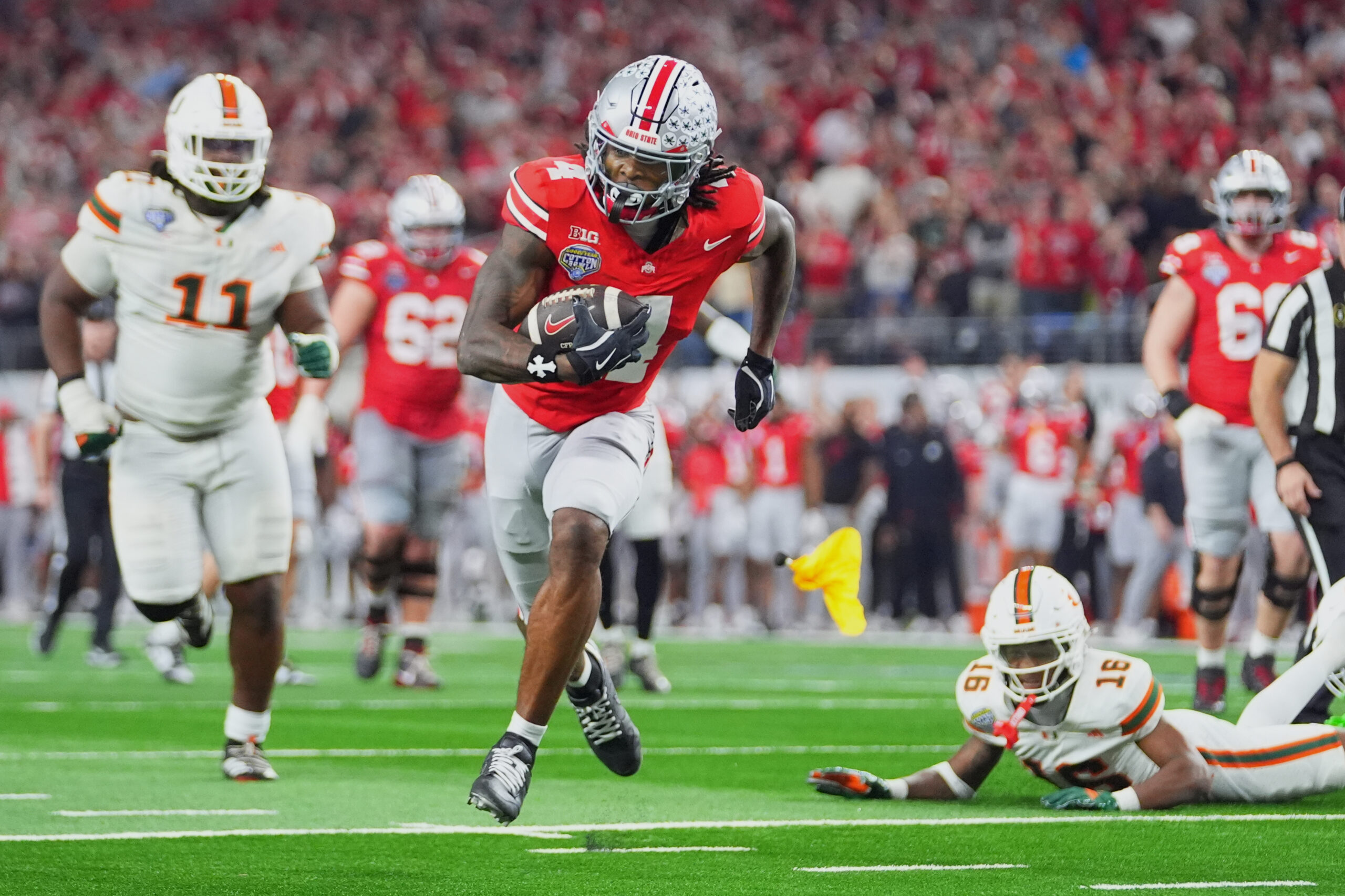
    Miami and David Blay (11, at rear left) got past Jeremiah Smith (4) and Ohio State in the CFP quarterfinals on their way to an appearance in the title game.

    At Miami, snaps weren’t easy to come by for Blay, with potential first-round NFL draft picks Rueben Bain and Akheem Mesidor manning the edge rusher positions and Ahmad Moten and Justin Scott starting in the interior.

    Blay was on the field with Miami’s defense on 412 plays, according to Pro Football Focus. He played 443 defensive snaps in one fewer game in 2024 for Louisiana Tech.

    But Blay, who amassed 95 tackles (23½ for losses) and 11½ sacks in four seasons at Louisiana Tech and West Chester, carved out a consistent rotational role on Miami’s D-line during a playoff run that Blay “will remember for the rest of my life.”

    The 6-foot-2 and 302-pound lineman credits his discipline for refining his skills, which helped get him on the field at the Power Four level.

    “In terms of getting on the field and playing, I just really had to be real technically sound,” said Blay, who had 28 tackles (2½ for losses) in 13 games with Miami. “Like I feel as if going to Miami, the big thing there was [to be] technical, technical, technical. That’s the difference between the levels in my head.”

    Blay was joined by Indiana safety Louis Moore and Miami linebacker Wesley Bissainthe as players who appeared in the national championship game and also practiced at least one day at the Shrine Bowl. Indiana tight end Riley Nowakowski also traveled to Frisco to interview with NFL teams but did not practice.

    Throughout his practice sessions at the Shrine Bowl, which wrapped up with the game on Tuesday night — the West won, 21-17, on a touchdown with 6 seconds left — Blay showed his strength capable of pushing the pocket as a pass rusher and standing his ground as a run defender against double-team blocks.

    “I give those guys a lot of credit,” Shrine Bowl director Eric Galko said. “And Wesley [Bissainthe] and David [Blay] are coming in like everyone else, they’re banged up, but they just played 16 games, right? Not 12, like other guys have.

    “And David’s done great, in the practice he had and in the interviews he has had, too. … I think David showed a lot of character — especially with the way the season ended, not on a victory, but on a loss — and he still said, ‘You know what? Now I’m on [to] the NFL.’ And to be focused here, I give the guy a lot of credit.”

    Added Blay: “Just the aspect that we’re getting better every day [motivates me]. You’re never at your best; in a sense you can always get better. And I also say to my mom, I’m trying to get her to understand the aspects of the game and how it could change your life.”

    Blay played his high school and the beginning of his college career about 30 miles from Lincoln Financial Field. An opportunity to play for his hometown Eagles would be “a dream scenario.”

    “Being around the crib, I could go work out, go practice, go do my job, and then essentially come home to the people I’ve seen my whole entire life,” Blay said.

  • Bradley Carnell opens up about what drives him and his tactics as Union manager

    Bradley Carnell opens up about what drives him and his tactics as Union manager

    Bradley Carnell can be pretty reserved in public. It’s not that he doesn’t like being on camera, but you aren’t always going to get too much from him in a news conference.

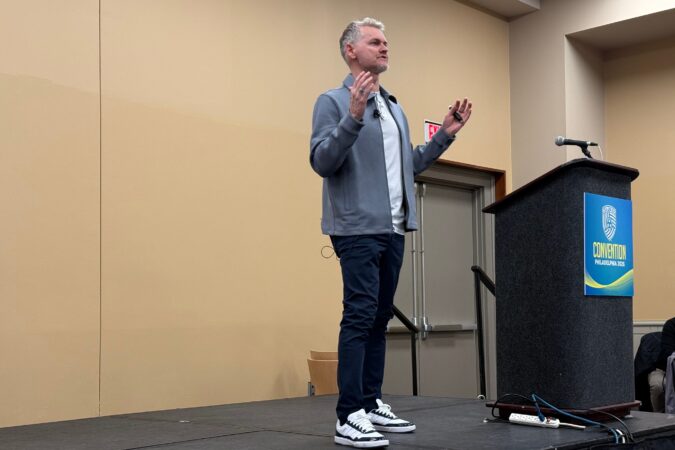
    At the United Soccer Coaches convention a few weeks ago, the Union’s manager got a different opportunity. It was his first time at the longstanding event, and he spent an hour on stage talking about his coaching methods.

    Carnell’s journey has taken him a lot of places. The Johannesburg, South Africa, native turned pro at age 16 in his home country, then at 21 moved to the first of four clubs he played for in Germany. He played 40 times for the Bafana Bafana, including at the World Cup in 2002.

    After hanging up his cleats in 2011, Carnell started his coaching career at the University of Johannesburg. From there, he had two assistant jobs with South African pro clubs, then moved to the U.S. in 2017 to join the New York Red Bulls’ staff. He’s been in this country ever since, and the Union are his third coaching stop in MLS.

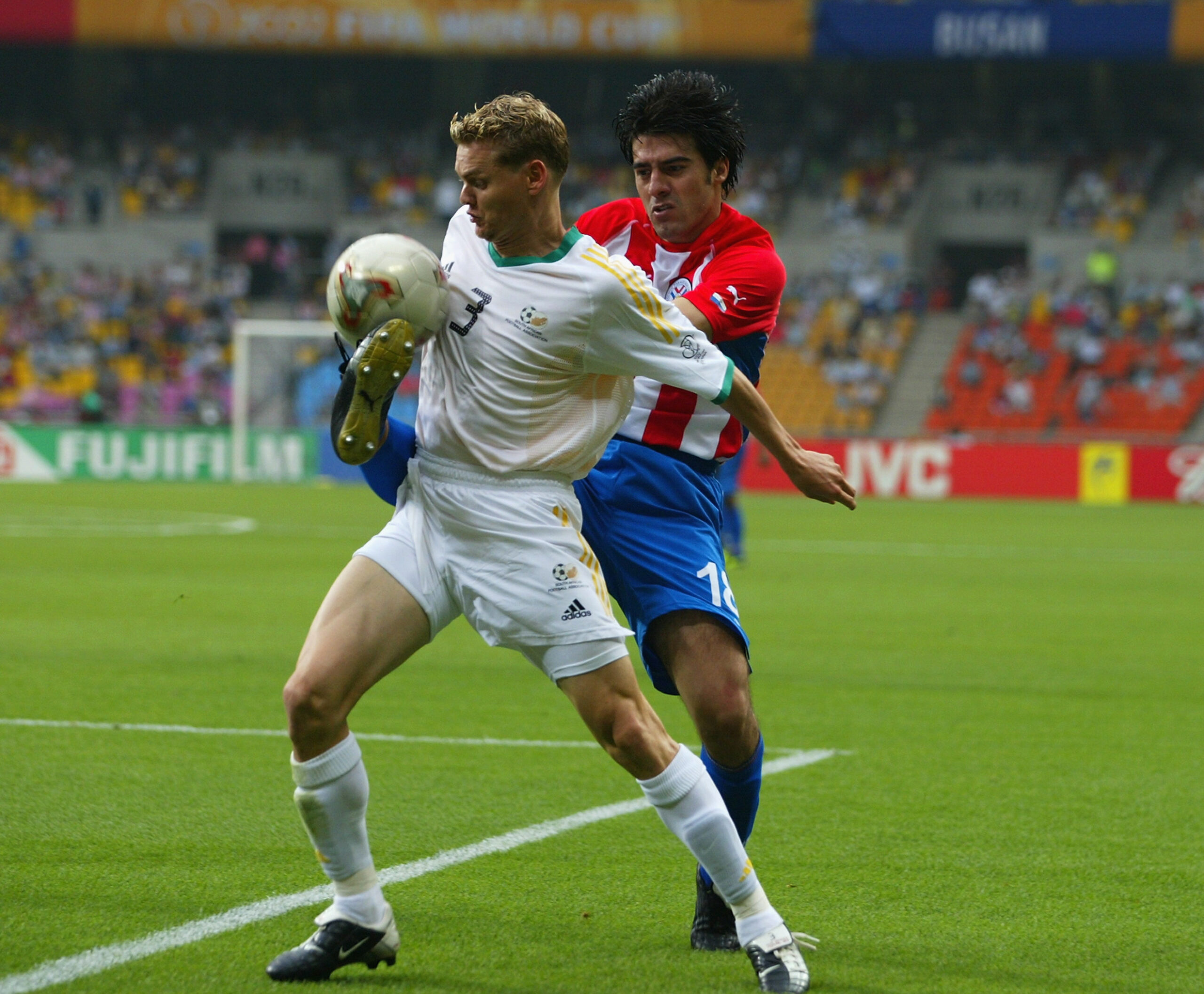
    Bradley Carnell (left) playing for South Africa against Paraguay in the 2002 World Cup.

    What has stayed constant over the years? One thing is how he sees the sport.

    Überzeugungstäter,” he said, a word learned while living in Germany. “A perpetrator. I’m a criminal of the game model that I’m presenting today.”

    This produced some amused looks, and not just because of the multiple languages involved. Carnell was not surprised.

    “I believe in it so much, and this is who I am,” he said. “Not because I’ve learned the game that way. It’s just because I live my life in a certain way.”

    Bradley Carnell giving instructions to his players during a game last year.

    You can get that sense at an average Union practice, where Carnell, 49, often is right in the middle of the fray.

    “When setting up a game model, one, it’s based on previous experiences of your playing days: caching influences, but also DNA, how I live my life every single day,” he said. “Fast, energetic, proactive, on the front foot — these are all terms that are coming to life now because it’s just who I am. If I’m playing Monopoly with my family, I’m trying to win the game in the quickest way possible.”

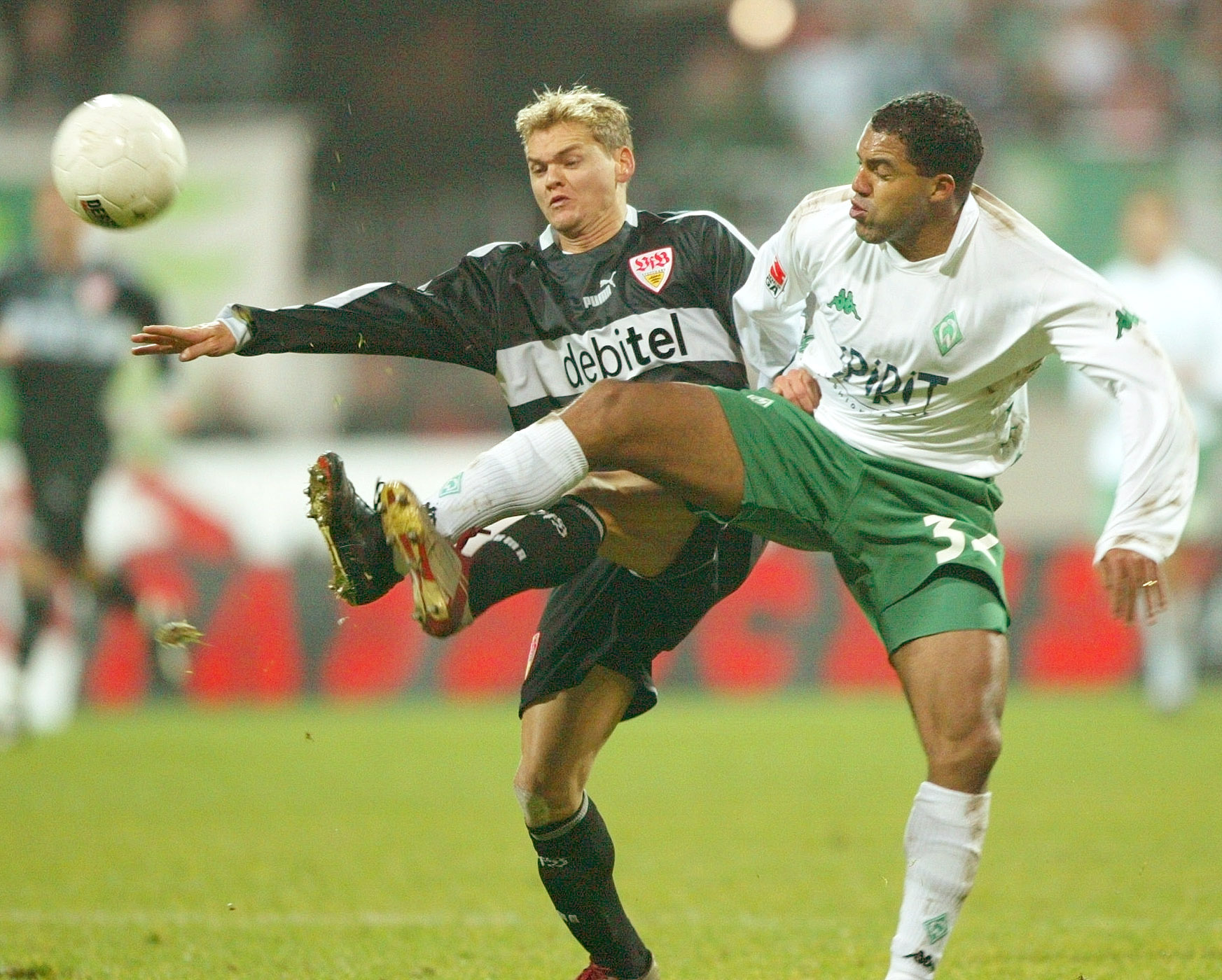
    The manager who had the most influence on Carnell was Ralf Rangnick, who coached the young left back at German club VfB Stuttgart from 1999 to 2001. Ragnick is known as one of the founding fathers of “gegenpressing,” the high-octane tactics that spread all over Germany and eventually worldwide.

    Those ideas have stayed in Carnell’s mind for a quarter of a century.

    Bradley Carnell (left) during his playing days with German club VfB Stuttgart in 2002.

    Inside the playbook

    Carnell put up a slide that laid out four principles: “Hunting” to gain possession high up the field; “swarming” to regain the ball after losing it; “striking” to try to get to the opponent’s goal within 10 seconds; and “waves” of attacking moves.

    He talked a lot over the course of his session about the defensive side of things, especially “rest defense”: how the centerbacks position themselves when their teammates have the ball up the field.

    He also took an interesting question from the audience about man-to-man vs. zone defending.

    “I don’t mind going one-for-one at the back,” Carnell said. “It’s not man-marking. So if they cross over the center back axis, I’m not going to say to you, ‘Go with him and track him all over the field.’”

    If this brought the term “matchup zone” to anyone’s mind, it hasn’t been used much in soccer. But if it ever was going to be, the city that produced John Chaney would be an appropriate place to start.

    The Union won the Supporters’ Shield and reached the second round of the playoffs in Bradley Carnell’s first year at the helm.

    But the most interesting stuff, as it is for Union fans, was what he said about attacking.

    Quality on the ball is valued over time on the ball, a point Union fans have certainly learned by now. And Carnell laid out his “baseline” for how he wants his team to score: 60% in transition, 30% on set pieces, and 10% in possession.

    “We can go quick — I say [with] quality on the ball, you can always get quicker,” Carnell said. “But if you try to go too quick, then there’s going to be turnovers. So, progressive quality over speed. We can always learn to get quicker in this transitional phase of the game.”

    Last year, the Union scored around 50% of their goals in transition, 30% from set pieces, and 20% in possession. That wasn’t quite what Carnell had aimed for. How did he react?

    “We don’t see it as a failure,” he said. “We just see it as an adaptation. To every team you inherit, or every team you go to in terms of me joining here a year ago at the Philadelphia Union, we see certain trends, character traits in players, in how we can get this effectiveness.”

    Some highlights of the year

    The Union ranked well in some stats he likes. They were second leaguewide in shots taken within 10 seconds of gaining possession, at 2.84 per 90 minutes. They were also second in percentage of first passes of a possession that went forward in transition, at 45.5%. And they had the fewest passes per shot sequence, at 2.3 per 90 minutes.

    “Reactions quicker than the opponent can get themselves organized against,” Carnell said.

    He put up some tactical graphics on his slides to illustrate the plays he wants. He also showed some videos of notable plays that the Union made last year, and they really made the point.

    Carnell said “one of my favorite moments of last year” was a goal the Union scored on May 30 at Montreal: a counterattacking dash that covered almost the entire field in 12 seconds in just the second minute of the game.

    Another goal Carnell liked came on April 19 at home against Atlanta. The visitors had the ball, but only briefly: Kai Wagner and Jovan Lukić teamed up to jam Brooks Lennon just short of the midfield line.

    Danley Jean Jacques was nearby, and started dashing upfield. Three passes in eight seconds later, he had his first goal in a Union jersey.

    “In our game model we’re saying, ‘Go put out the fire,’” Carnell said. “’Go win the ball as high as you can. Be brave. Be brave and hunt in numbers.”

  • Brooks Koepka’s prodigal return from LIV begins the healing the PGA Tour needs

    Brooks Koepka’s prodigal return from LIV begins the healing the PGA Tour needs

    If you’ve never heard the parable of the “Prodigal Son,” you can watch it unfold in real time over the next few months on the PGA Tour.

    LIV defector Brooks Koepka is back.

    It’s the biggest moment in golf since Phil Mickelson announced he was joining the renegade league on June 6, 2022. Koepka, a five-time major championship winner, an all-American success story, is the first LIV player to kneel and beg forgiveness of the men that he betrayed.

    This is biblical, if you will, in its importance to the golf world.

    Briefly: Jesus, in Luke 15: 13-31, tells a tale in which the younger son of a rich man asks to have his inheritance immediately, so he can seek his fortune in the world. The son soon squanders the money, the economy collapses, and he hits rock bottom feeding pigs (sorry, LIV fans). The son then crawls back home, hoping his father will hire him as a servant. Instead, the father rejoices at his son’s return and calls for a feast, featuring a fatted calf.

    In this analogy, Koepka is the son. New PGA Tour CEO Brian Rolapp is the father — or, perhaps the stepfather, considering Jay Monahan ran the Tour when Koepka followed dozens of other LIV defectors, all of whom Monahan banned, and who remain banned by Rolapp.

    The feast of the fatted calf? That would be the Farmers Insurance Open, Koepka’s first tournament during his season of mild penance. It begins Thursday at Torrey Pines in San Diego. Harris English is the defending champion. Two-time major winner Xander Schauffele, ranked sixth, and U.S. Open champion J.J. Spaun, ranked seventh, lead a 147-player field that includes 25 of the top 50 players in the world.

    But make no mistake: This is Brooks Koepka’s party.

    But he’s bringing guests.

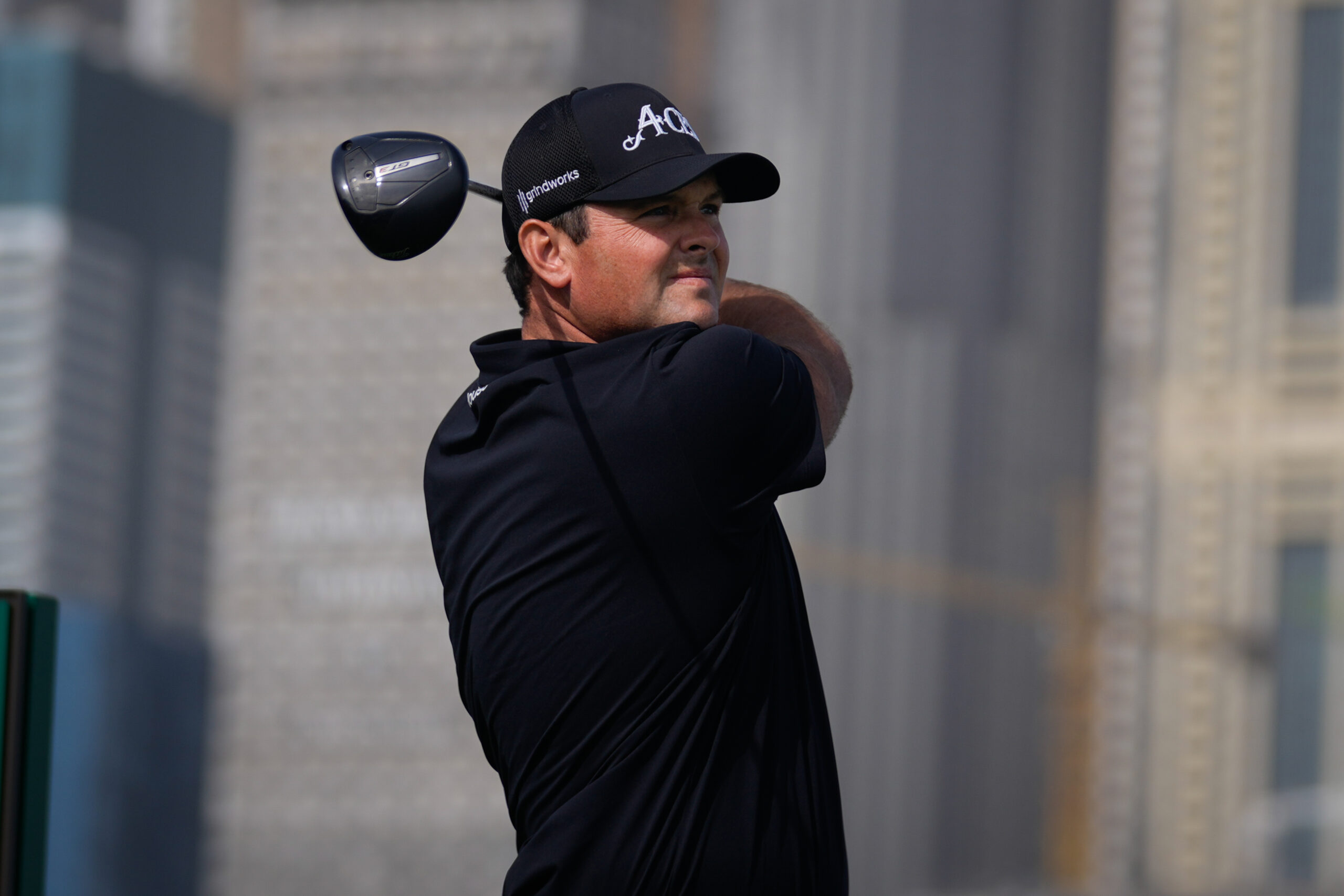
    About 24 hours before Koepka’s marquee comeback tee time, golf’s biggest brat, LIV dud Patrick Reed, announced that he will return to the PGA Tour, too. Reed, who won just once on LIV, on Wednesday said in a statement that he will leave LIV and compete on the DP World Tour until Aug. 25, when he will be eligible to play in PGA Tour events. His DP performances have him ranked 29th in the world, which, along with his lifetime exemption as a Masters champion, virtually assures him entry to all four majors this year.

    The parameters of Reed’s imminent return are murky, and he has applied to return to the PGA Tour in 2027 as a past champion (he has nine wins), but he is not subject to the hastily constructed Returning Player Program (RPP) that Koepka’s interest spurred and targets only the biggest names on LIV.

    One of the facets of the program produced a 147-player field at the Farmers. It would have been a 144-player field, but according to Rolapp’s RPP, the Tour couldn’t kick out an actual qualifier to add Koepka. However, adding Koepka made it necessary to add two other players to balance out the three-player groups. That meant alternates Lanto Griffin and Jackson Suber got spots.

    The eventual return of Reed indicates that Rolapp is eager to build his business and to siphon talent from LIV, no matter how bad the optics or how minor the love. Reed, who won the Dubai Desert Classic last week on the DP World Tour, is a far less formidable presence than Koepka. Further, he has a reputation as a longtime cheater with a bad temper, a potty mouth, and little time for fellow competitors.

    Patrick Reed, who won just once on LIV, is returning to the PGA Tour.

    Rolapp might not kill the fatted calf for Reed, but, as Rolapp knows from his NFL days dealing with Bill Belichick and Tom Brady, every sport needs villains.

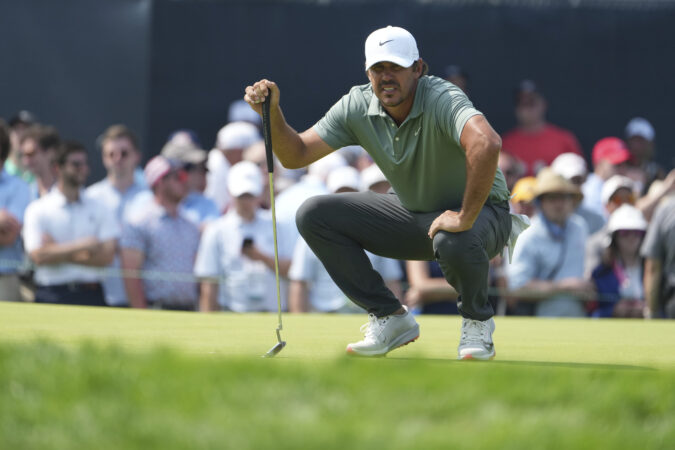
    With a 12:32 p.m. EST tee time Thursday and a 1:38 p.m. tee time Friday, Koepka will be part of the featured group with Ludvig Åberg, an inoffensive rising Eurostar, and Max Homa, the PGA Tour’s social media genius.

    The program is open to any LIV player who won a major from 2022-25 and has been away from the PGA Tour for at least two years, a group that includes only Koepka, Jon Rahm, Bryson DeChambeau, and Cameron Smith, all of whom have, so far, decided to stay with LIV. They have until Monday to change their minds, and then the application window closes.

    So, for the foreseeable future, it’s the Brooks Koepka Returning Player Program.

    As a punitive measure, the program restricts Koepka earning power from ancillary means, such as FedEx Cup bonus money and the Player Equity Program, for varied periods of time; makes sure that Koepka doesn’t bump anyone from any field; requires that he plays in at least 15 events this season; and demands a $5 million donation to charity.

    None of this is especially “punitive” for the likes of Koepka, who reportedly made $165 million in signing bonus and winnings on LIV, added to his $43 million he made on the Tour.

    Why does this matter?

    Because it is the first real, tangible, important step into reconciling the best LIV players with the best players in the world, which is what fans deserve.

    The Tour suffered from the absences of superb players in their primes such as Koepka, Rahm, DeChambeau, young Chilean star Joaquin Niemann, who has been the cream of the LIV Tour, and even Mickelson, whose game is garbage but whose name still would sell tickets on both the PGA and Champions tours.

    The careers and games of all of the LIV players suffered, playing benign, inferior courses in 54-hole tournaments against laughable competition.

    The game also lost personalities to LIV obscurity: Koepka’s surliness, Rahm’s earnestness, Dustin Johnson’s goofiness, Mickelson’s buttery condescension, and DeChambeau’s energetic petulance which, thanks to YouTube, has somehow transformed into energetic affability.

    None of the LIV stars has sworn to never return to the PGA Tour, but no one is better suited to begin reconciliation than Koepka.

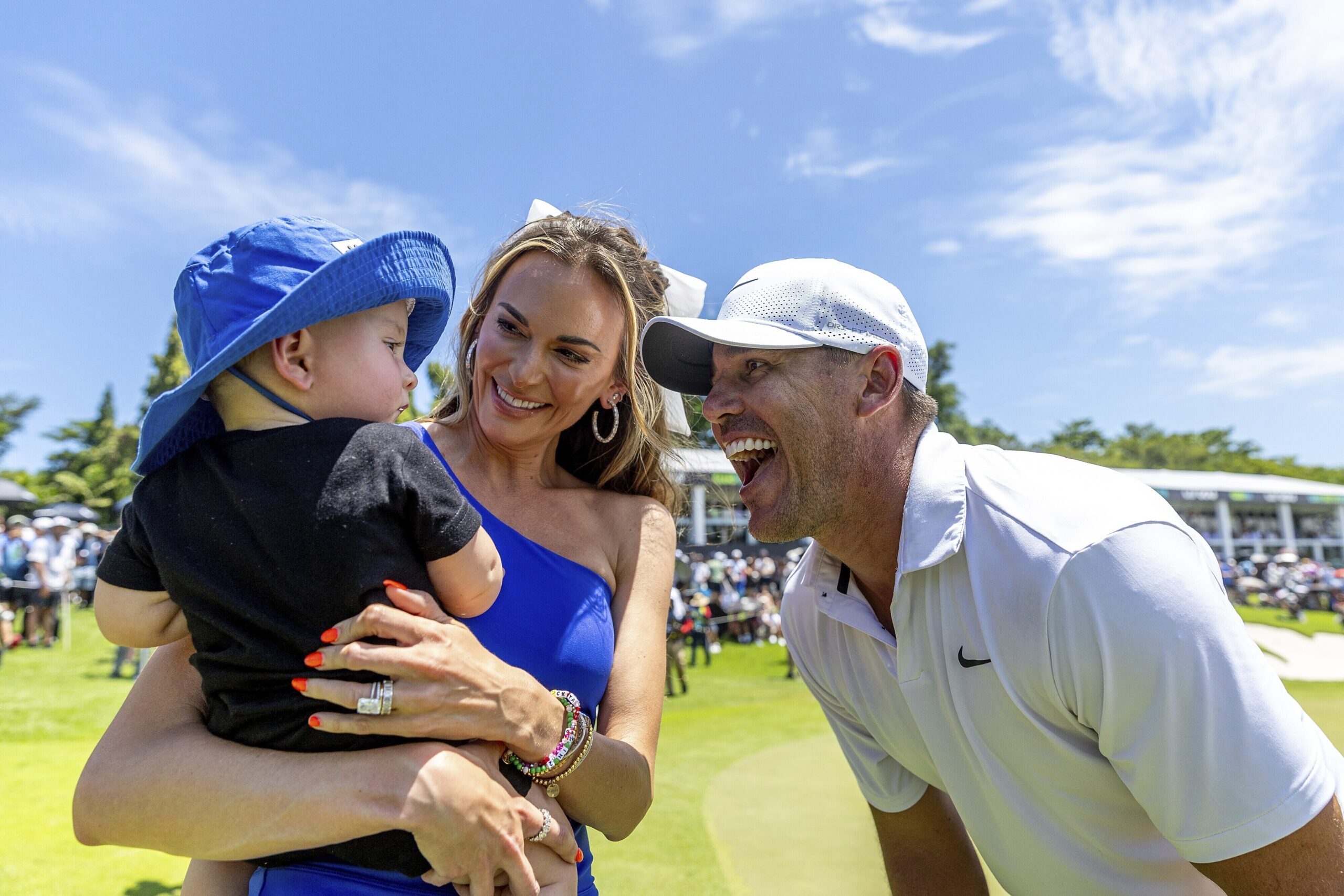
    Brooks Koepka celebrates after a LIV win in 2024 with his wife, Jena Sims, and son Crew.

    When he joined LIV in 2022, in contrast to most players who were clearly interested in only the sportswashing money offered by the Saudi-backed rival tour, Koepka was cast as a reluctant defector — a massive talent who feared that the injuries he’d been dealing with for months might derail the career of the most promising player since Rory McIlroy.

    Koepka, mellowed by years of insignificance and decline, seemed repentant when he addressed his return at a Farmers news conference Tuesday. He was less like the Koepka who belligerently denied cheating at the 2023 Masters, when his caddie told Koepka’s playing partner which club Koepka had used, and more like the Koepka who, in 2018 at Shinnecock, won a second consecutive U.S. Open: reflective, appreciative, mature.

    There are reasons for that.

    Since winning the 2023 PGA Championship, which keeps him qualified for all majors, Koepka has finished inside the top 25 of his last eight majors just once. In 2025, he finished tied for 30th in the LIV rankings among just 52 regular players, many of them the definitions of “washed” and “obscure.” Koepka’s game is poor, and, at 35, time is running out.

    His family life has changed, too. His wife, Jena Sims, suffered a miscarriage last fall.

    Koepka, who has a 2½-year old son named Crew, enjoys fatherhood, and the international nature of the LIV Tour, combined with playing DP World Tour events in Europe to accumulate world golf ranking points, made a normal family life more difficult than he’d imagined.

    “Just having my family around’s really important. I’ve grown up a lot over the last few years, and especially the last few months,” he said.

    The timeline of his decision seems dubious on its face, both from him and the PGA Tour.

    Koepka said Tuesday that he negotiated his release from LIV, finalized on Dec. 23, before contacting any PGA Tour entities regarding reinstatement. He said only then did he contact Tiger Woods, the chairman of the PGA Tour’s competition committee, and, voilá, just 19 days later, over the busiest holiday season of the calendar year, the PGA Tour had devised a comprehensive Return to Play protocol for the Koepka crowd.

    It took five years for these guys to agree on how to limit golf ball flight. So, yeah.

    The machinations that led to Koepka’s return are far less important than the reality of Koepka’s return. In many ways, Koepka was the PGA Tour’s biggest loss to LIV.

    Rahm was more dynamic, DeChambeau was more interesting, Koepka was the best player, was the best athlete, was American, and was a major championship-winning machine.

    Does McIlroy win eight times in Koepka’s absence? Does he complete the career Grand Slam last April if Koepka’s in good form?

    More significantly, does Scottie Scheffler win 17 times, including three majors, if Koepka’s not honing his skills against Pat Perez on a burned-out course in Indiana? (Notably, Perez, Kevin Na, and Hudson Swafford also have been reinstated, sort of, pending unspecified penalties. Perez plans to join the Champions Tour when he turns 50 in March, pending penalties and fines.)

    Maybe Koepka delays Scottie’s ascension, and maybe he slows Rory’s roll. Maybe not.

    He isn’t likely to make much noise any time soon, especially at Torrey, where he’s missed four of five cuts at the Farmers.

    At any rate, the game will be better for the presence of Koepka’s talent. His penalties aren’t nearly harsh enough, considering the hundreds of millions of dollars players like Sheffler, McIlroy, Rickie Fowler, Jordan Spieth, and Justin Thomas left on the table by declining LIV offers, but that isn’t Rolapp’s main objective.

    Rolapp, the NFL’s former chief media and business officer, oversaw much of the growth of the most lucrative league in the history of the planet. Don’t expect Monday to be the last chance for the biggest LIV stars to return. Rolapp clearly will do anything he needs to do to accommodate the return of any player who can help the PGA Tour heal.

    Just after noon on Thursday, Koepka, the prodigal son, begins that healing.