At Manong, chef Chance Anies’ bustling, casual Filipino steakhouse in Francisville, customers are feasting. They’re going all in and ordering 1-pound burgers on puffy, house-baked Hawaiian buns for themselves. (“I love that. Such a bold move,” Anies says.) The charcoal-grilled chicken — a half-chicken marinated in soy, calamansi, lemongrass, annatto, and butter — is selling well, too.
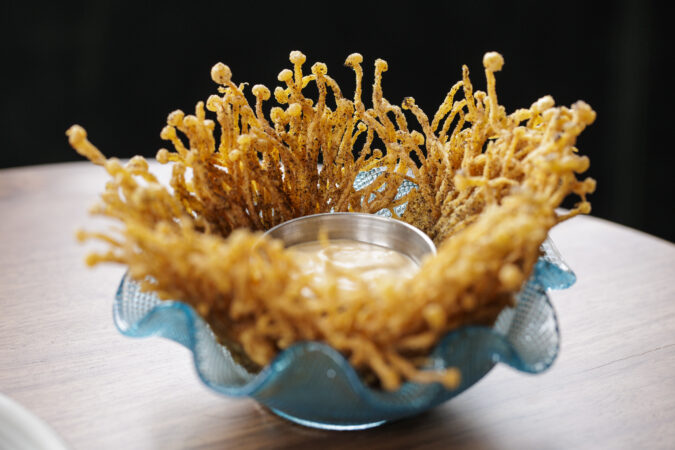
Everybody, it seems, orders a bloom shroom. As Manong is Anies’ homage to Outback Steakhouse, he chose to hold the onion for his crunchy, photo-worthy appetizer — one of Manong’s few vegan offerings.
The kitchen skewers a package of enoki mushrooms at the base to keep them uniform and flat, macerates them in a salt cure for about 20 minutes to get them to sweat, and then dredges them in a mix of cornstarch and ground dehydrated garlic. After a few minutes in the fryer, they get a hit of furikake — nori, brown sugar, chili powder, and dehydrated orange peel. You get a side of what Anies calls “salsa rosada,” a mix of banana ketchup and house-made vegan mayo.
You know what they say: “No rules, just right.” Manong, 1833 Fairmount Ave., 445-223-2141, manongphilly.com
— Michael Klein
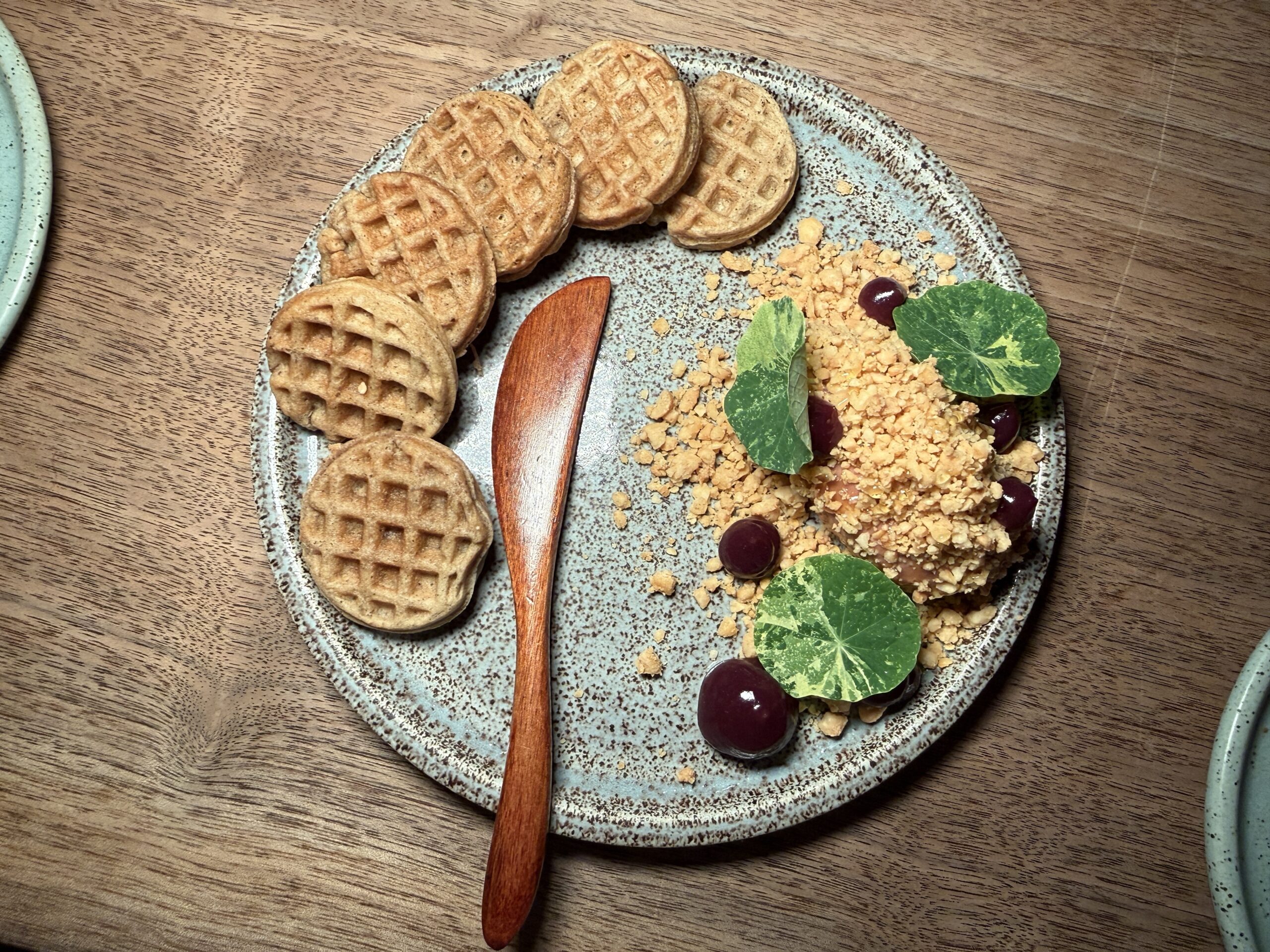
The chicken liver mousse at Emmett comes with some awfully convincing mini Eggo waffle dupes.
Chicken liver mousse at Emmett
I giggled when the chicken liver mousse at Emmett was placed in front of me. Six doll-sized, rosewater-scented Eggo-like waffles — but most certainly not actual Eggo waffles — are arranged around a silken quenelle of chicken liver mousse. The dish is both adorable and delicious, the mousse simultaneously light and unctuous, covered in a generous rain of crumbled smoked peanuts. Spheres of concord grape jelly add balance and nasturtium leaves bring a tart freshness. It’s a great interpretation of chicken and waffles, and one I can’t wait to go back in for. Emmett, 161 W. Girard Ave., 215-207-0161, emmettphilly.com
— Kiki Aranita
The octopus at Apricot Stone.
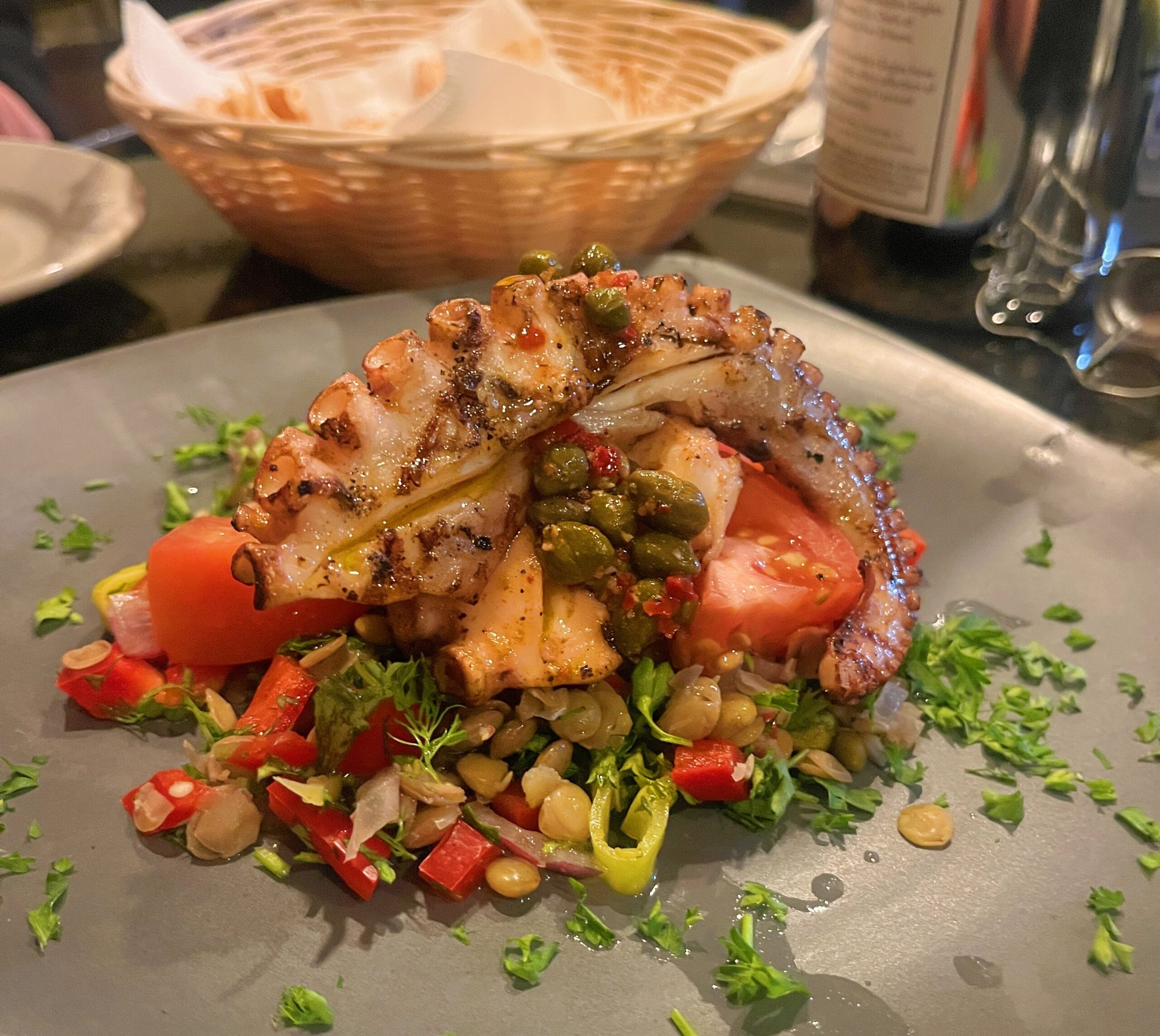
Charred octopus from Apricot Stone
For my 25th birthday, I cracked open a celebratory bottle of Eagles Super Bowl LIX bubbly and tucked into a smorgasbord of Apricot Stone’s shareable plates: crisp pita chips with bowls of nutty muhammara and whipped red pepper-feta dip, flaky cheese boreks, and tabbouleh. The star of the spread, however, were three charred octopus tentacles plated on a bed of lentils with juicy beefsteak tomato slices. The octopus was succulent and meaty, with evenly spaced grill marks that gave it a smoky aftertaste. Combined with the lentils and tomatoes, the dish was bright and transporting: If I closed my eyes, I was feasting on a beach in the Mediterranean, not a table with a clear view of Girard Avenue’s dirty, hardly melted snowdrifts. Apricot Stone, 428 W. Girard Ave., 267-606-6596, apricotstonephilly.com
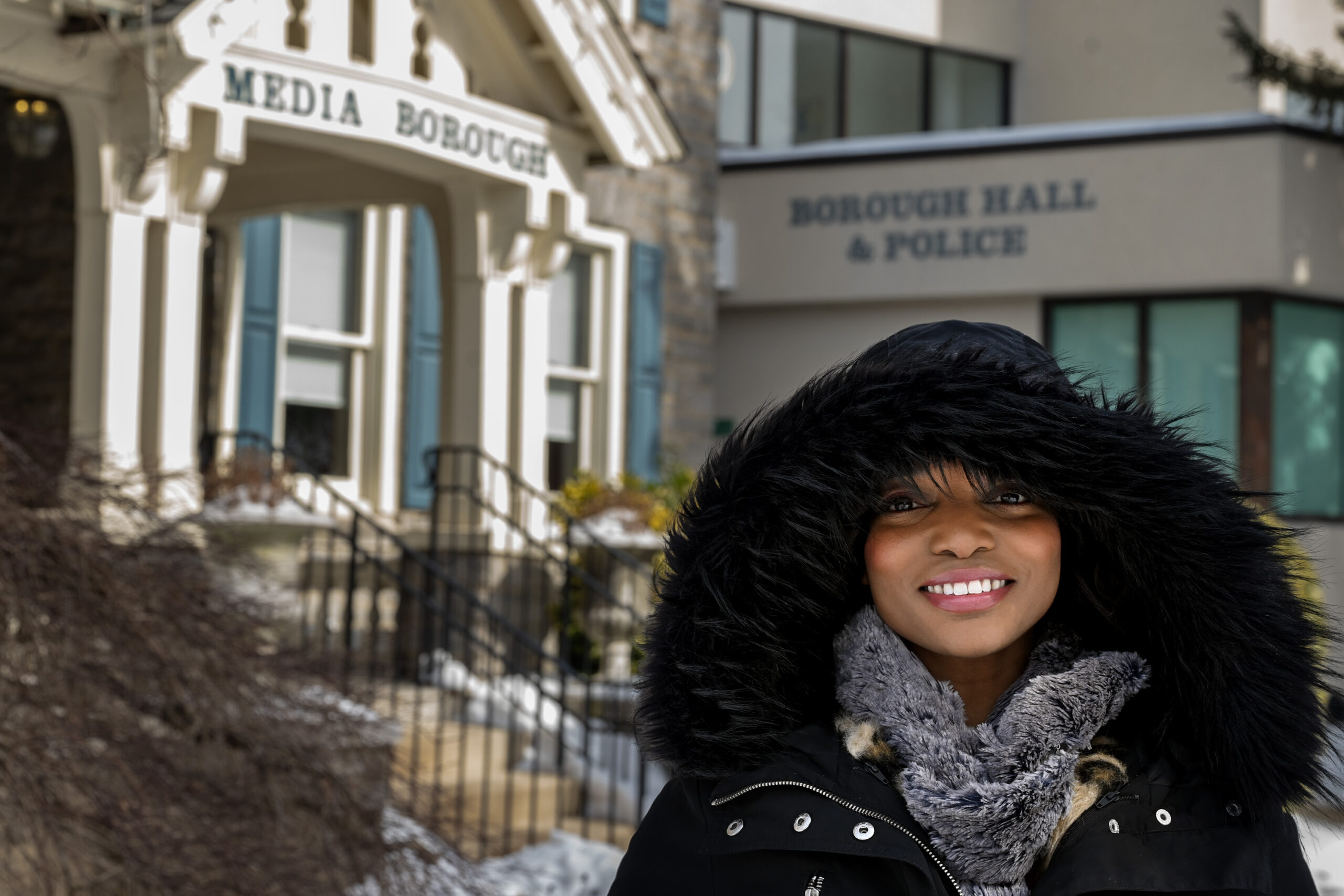
My assignment that day was pretty typical for a newspaper photographer: show the reader what the person a reporter is profiling looks like. And maybe what they do and where they do it.
Newly-inaugurated Mayor Joi Washington at Media Borough Hall.
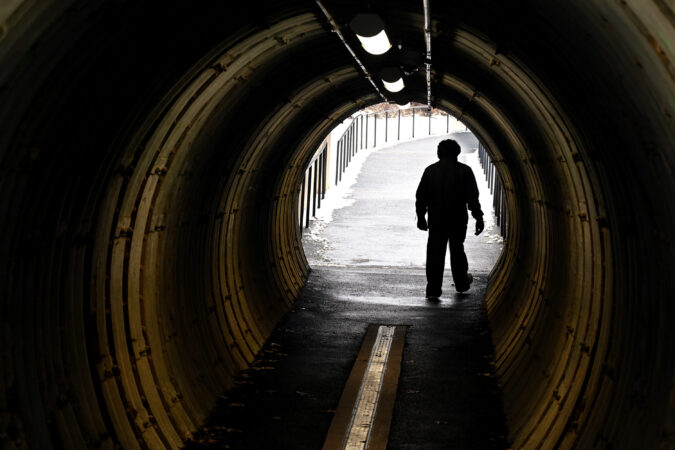
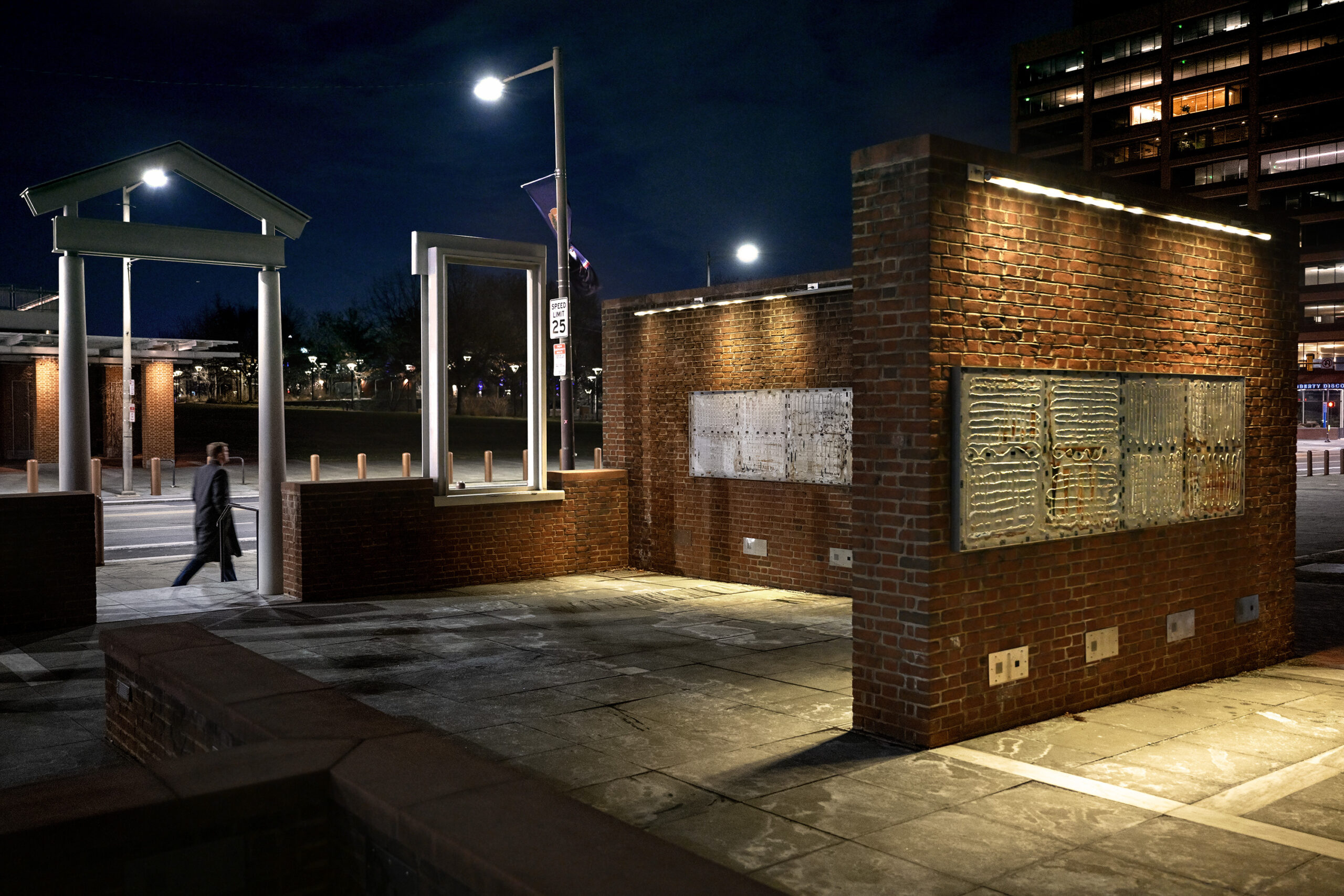
Having accomplished that task, I headed out looking for something else to photograph in the snow, and ended up at a pedestrian passage way.
As I made a picture of a person silhouetted in the corrugated metal culvert, the first thing I thought of was an old friend and photo editor Joe Elbert who famously said there are four categories in the “hierarchy” of newspaper photographs, lowest to highest: informational, graphic, emotional, and intimate.
In just a few hours I had knocked out his “lower” two types.
I made a few pictures that report “just the facts” without much flavor or fanfare. Then I found a visually appealing scene and waited until I could turn it into a well composed, interesting image. Graphic, even.
Joe was the photo editor at the Post from 1988 through 2007. Under his direction the paper won four Pulitzer Prizes, and many other awards, all for work that epitomizes that highest category of intimate photographs.
It’s easy to feel nostalgic for those “glory days,” but I mourn that almost an entire section of the newspaper is now gone.
Post photographers were still creating those most intimate images of Joe’s hierarchy. They were still making the reader feel something that allows us to connect with lives beyond our own, to empathize, and to care.
Since 1998 a black-and-white photo has appeared every Monday in staff photographer Tom Gralish’s “Scene Through the Lens” photo column in the print editions of The Inquirer’s local news section. Here are the most recent, in color:
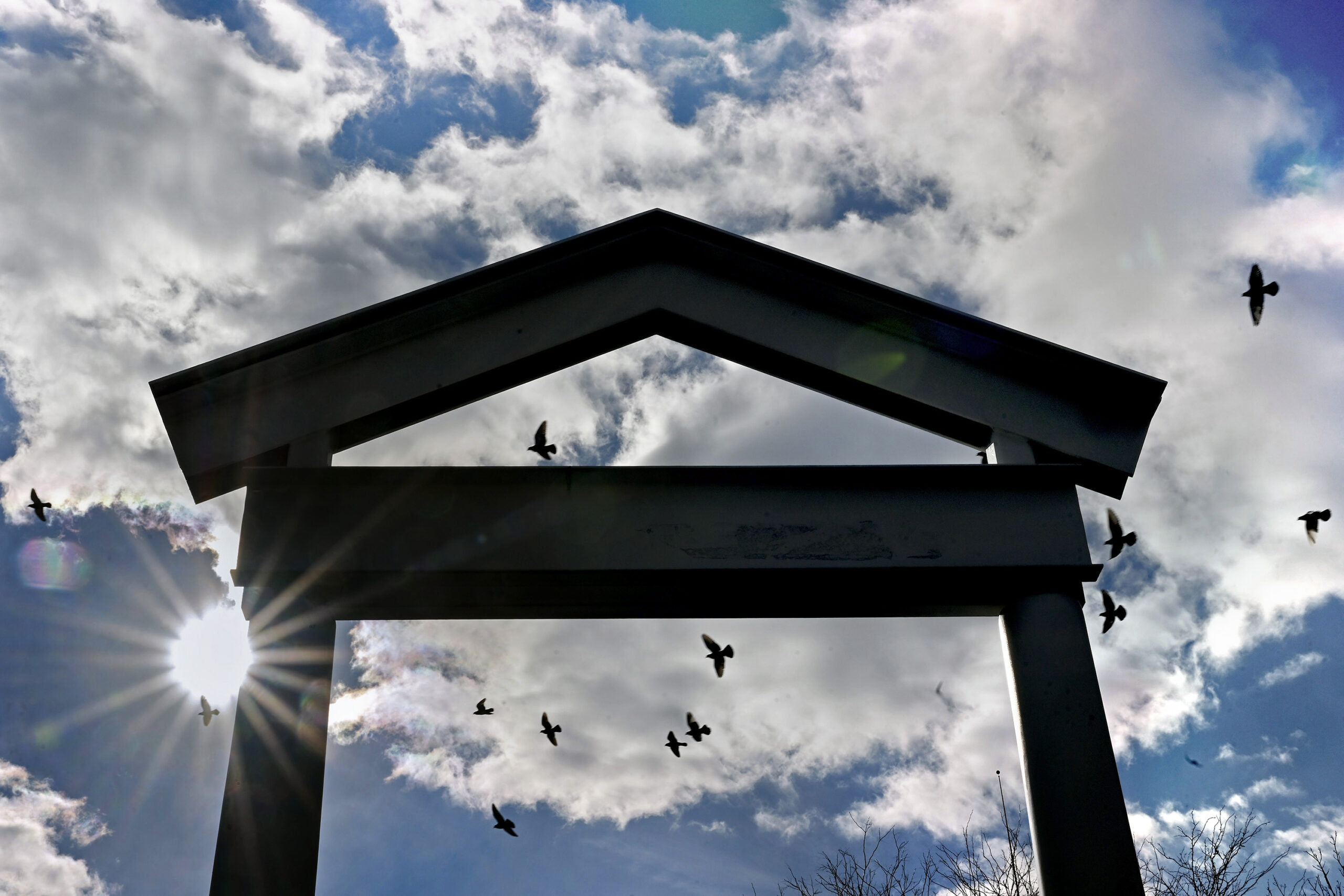
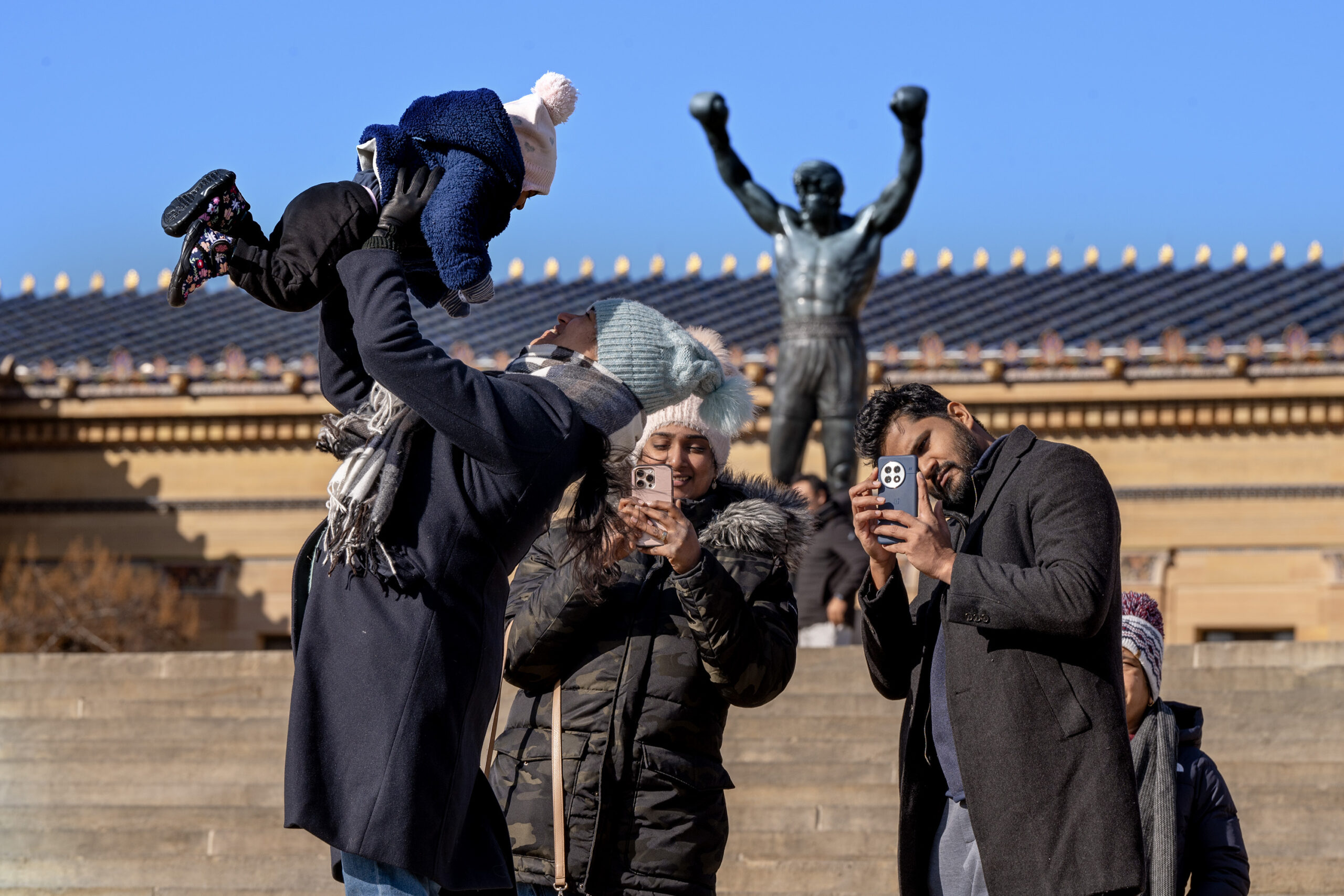
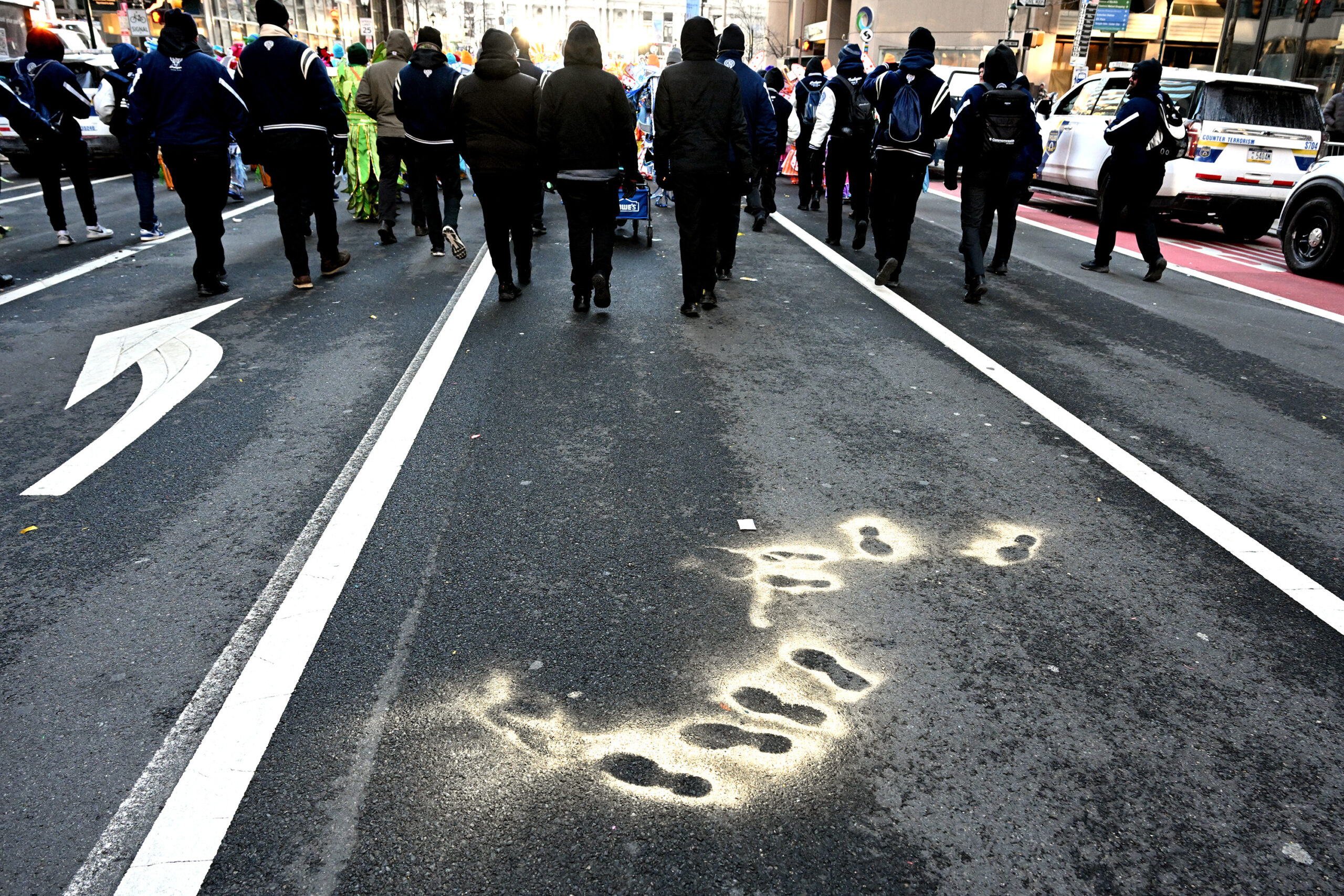
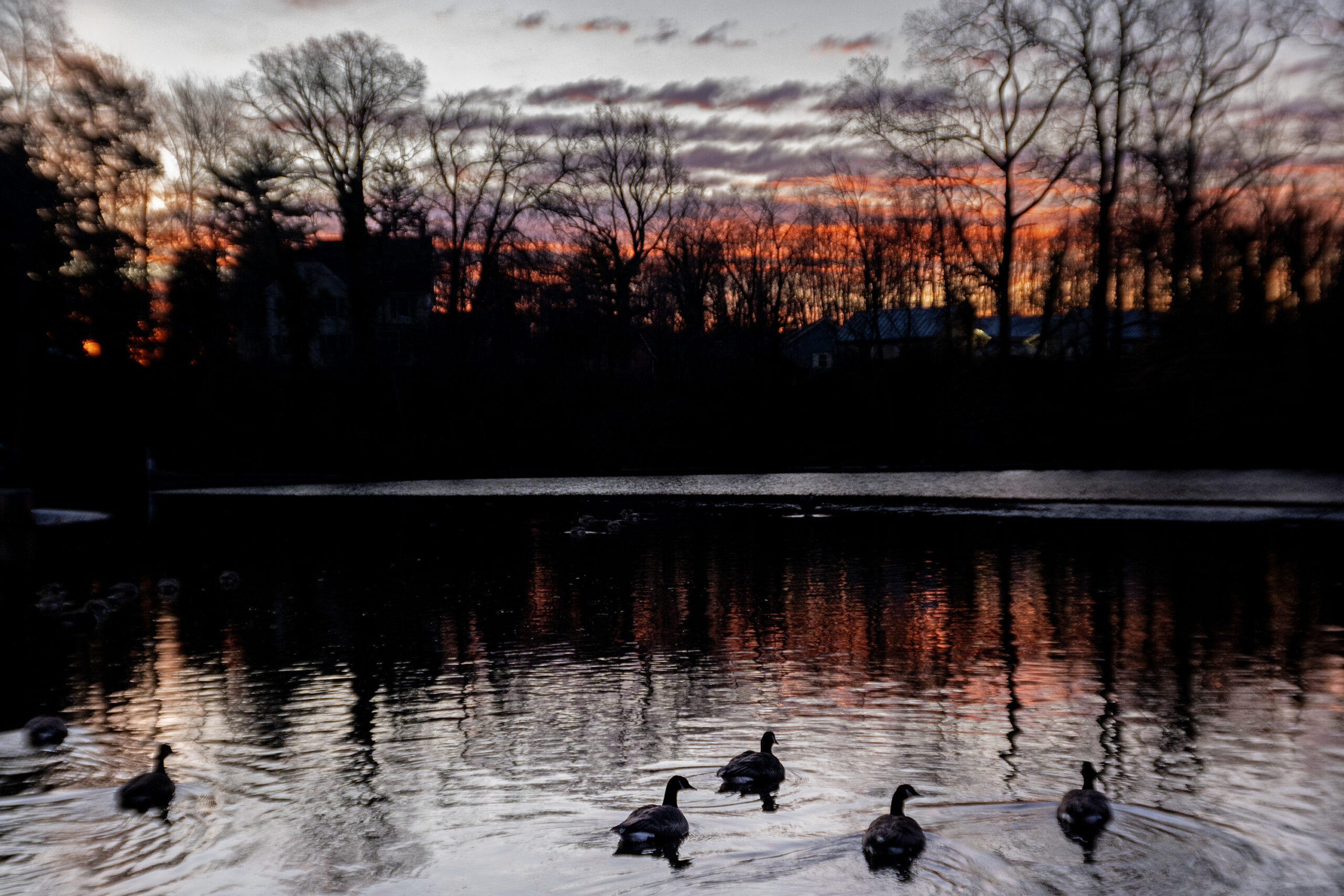
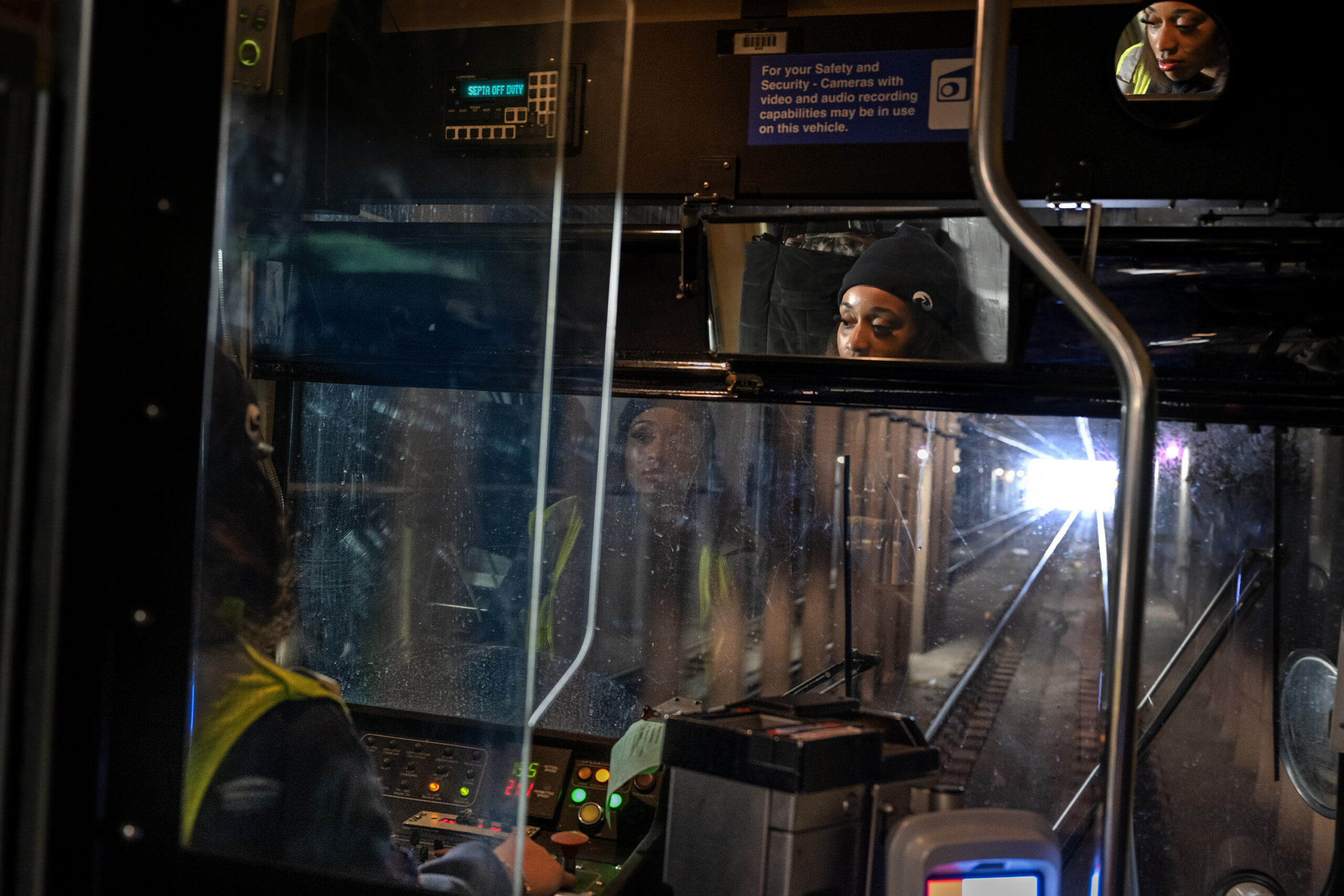
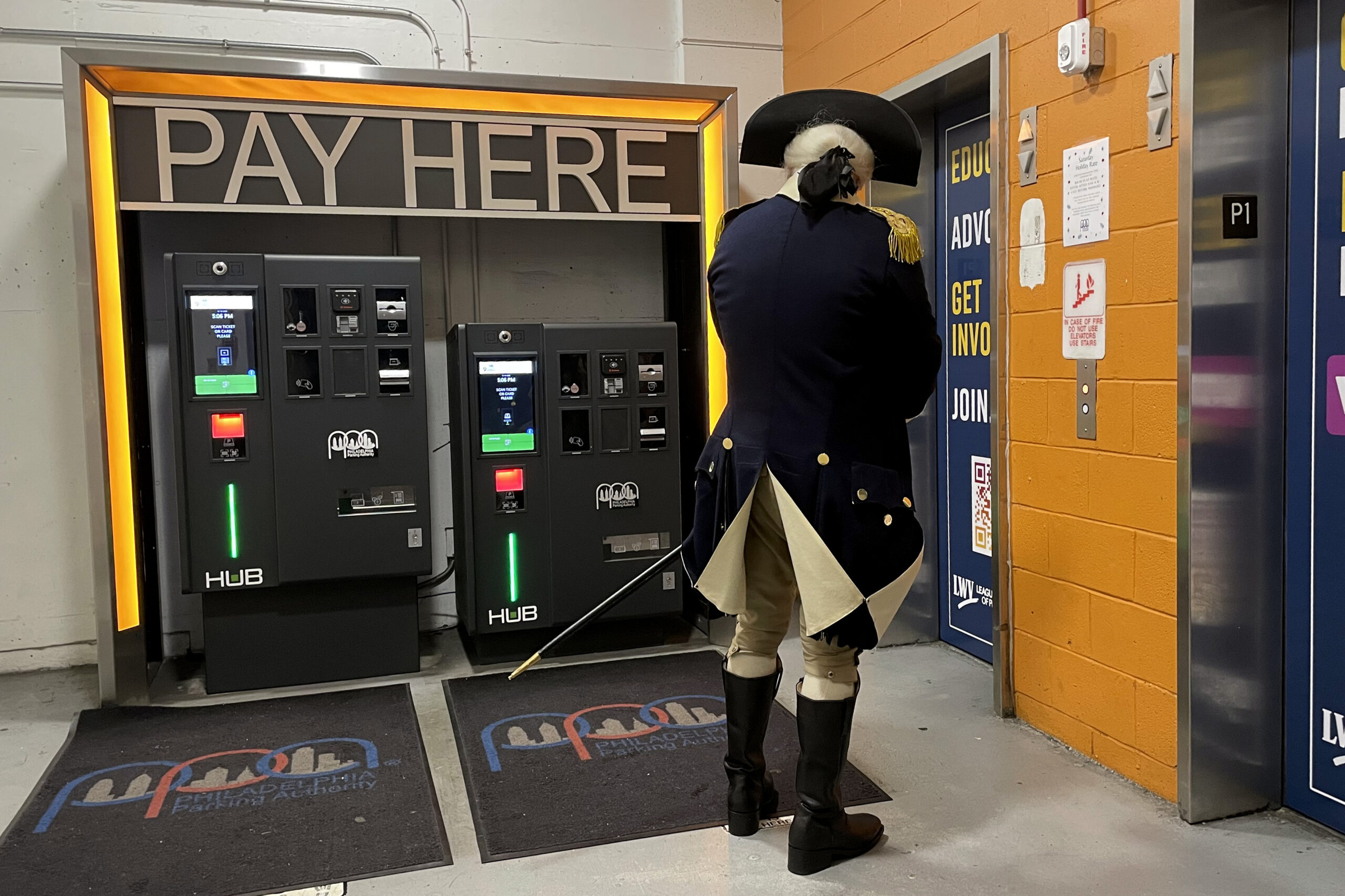
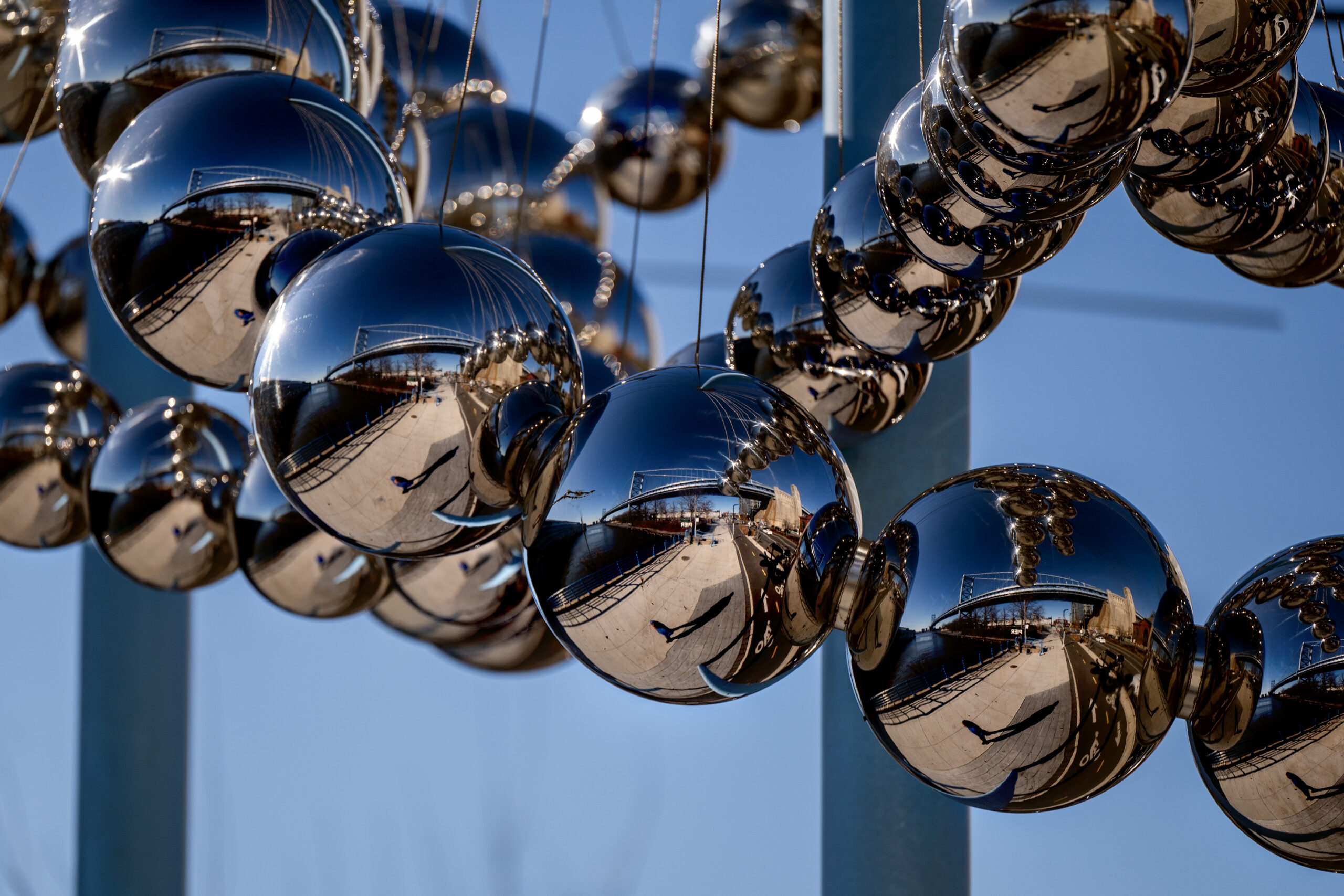
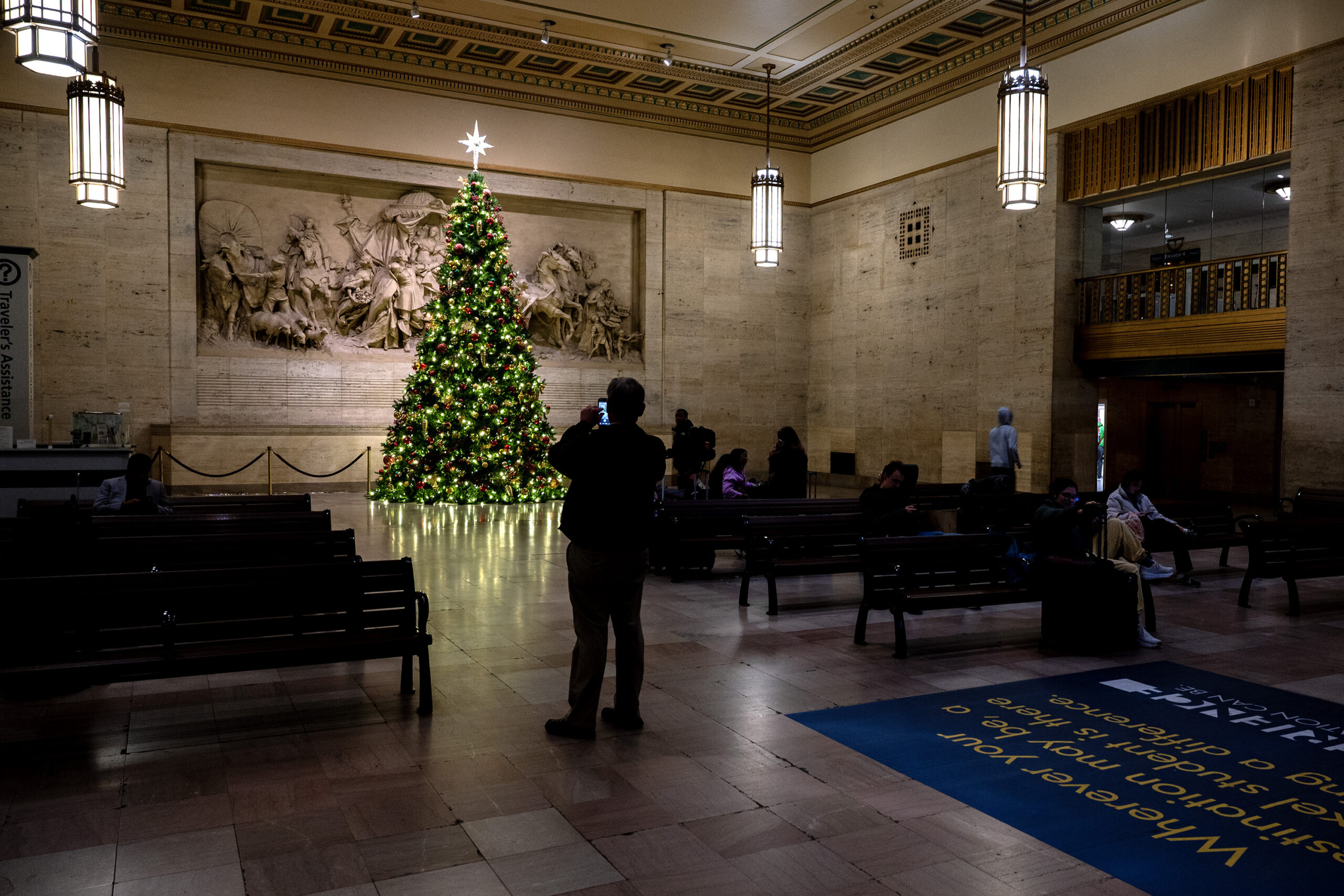
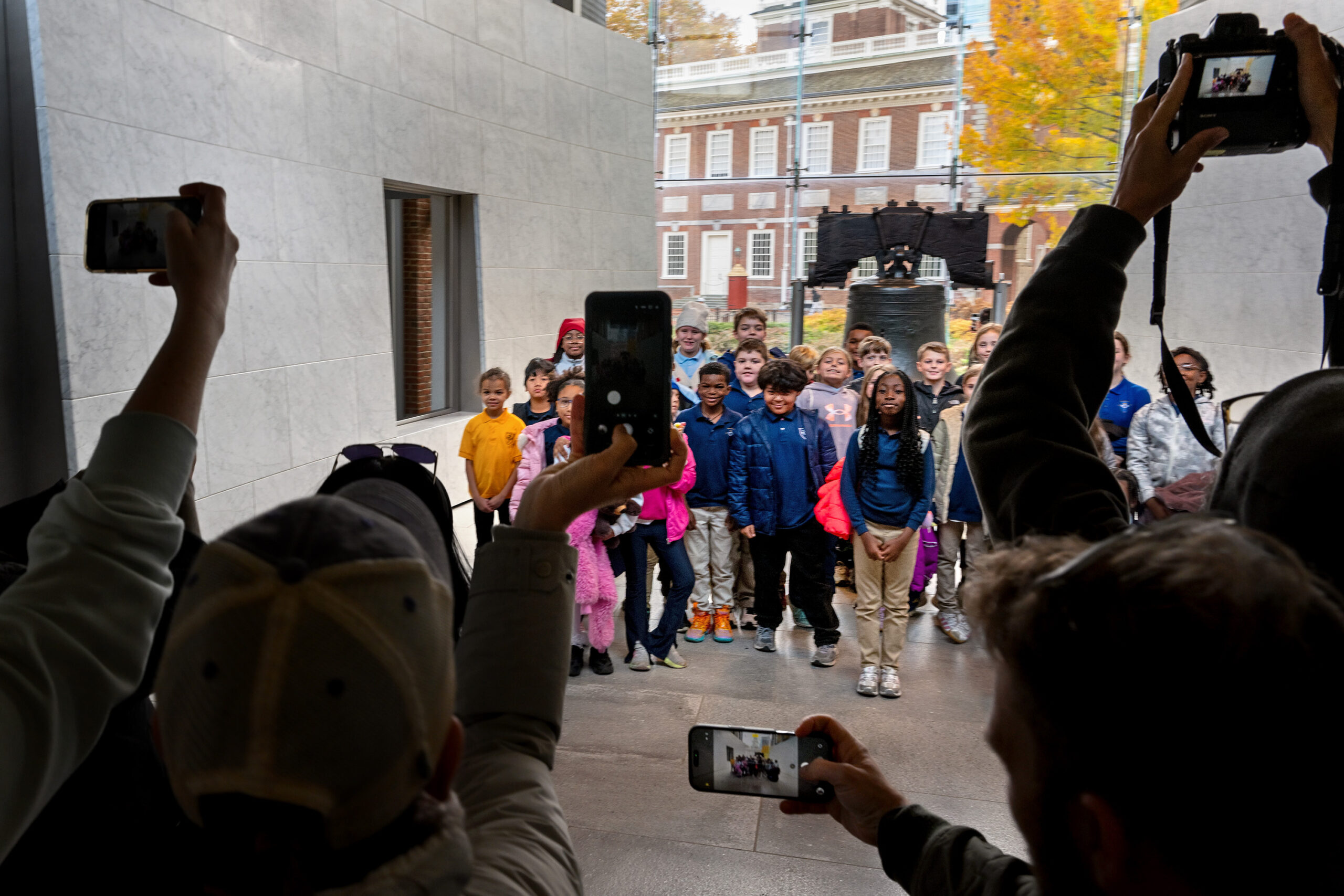
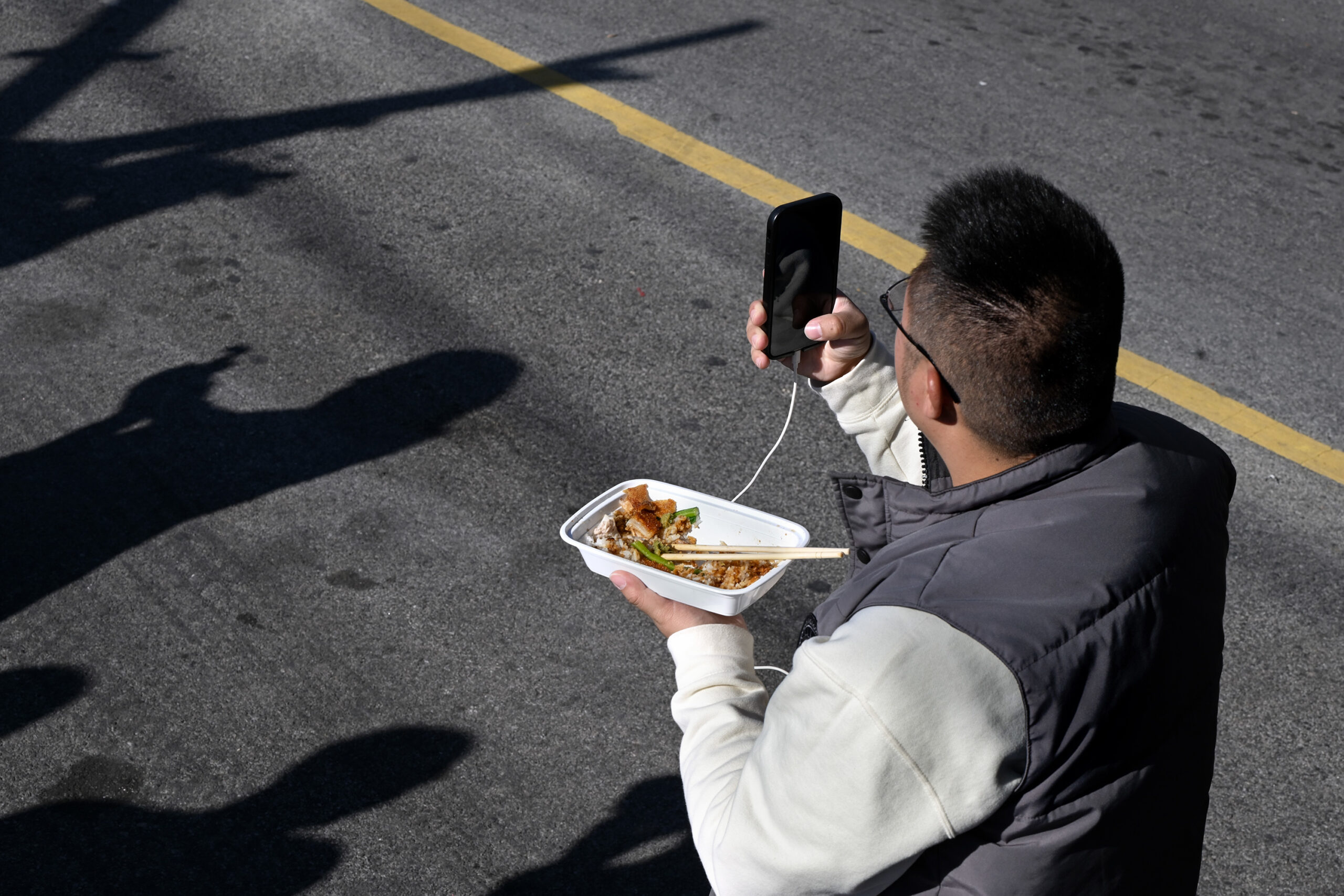
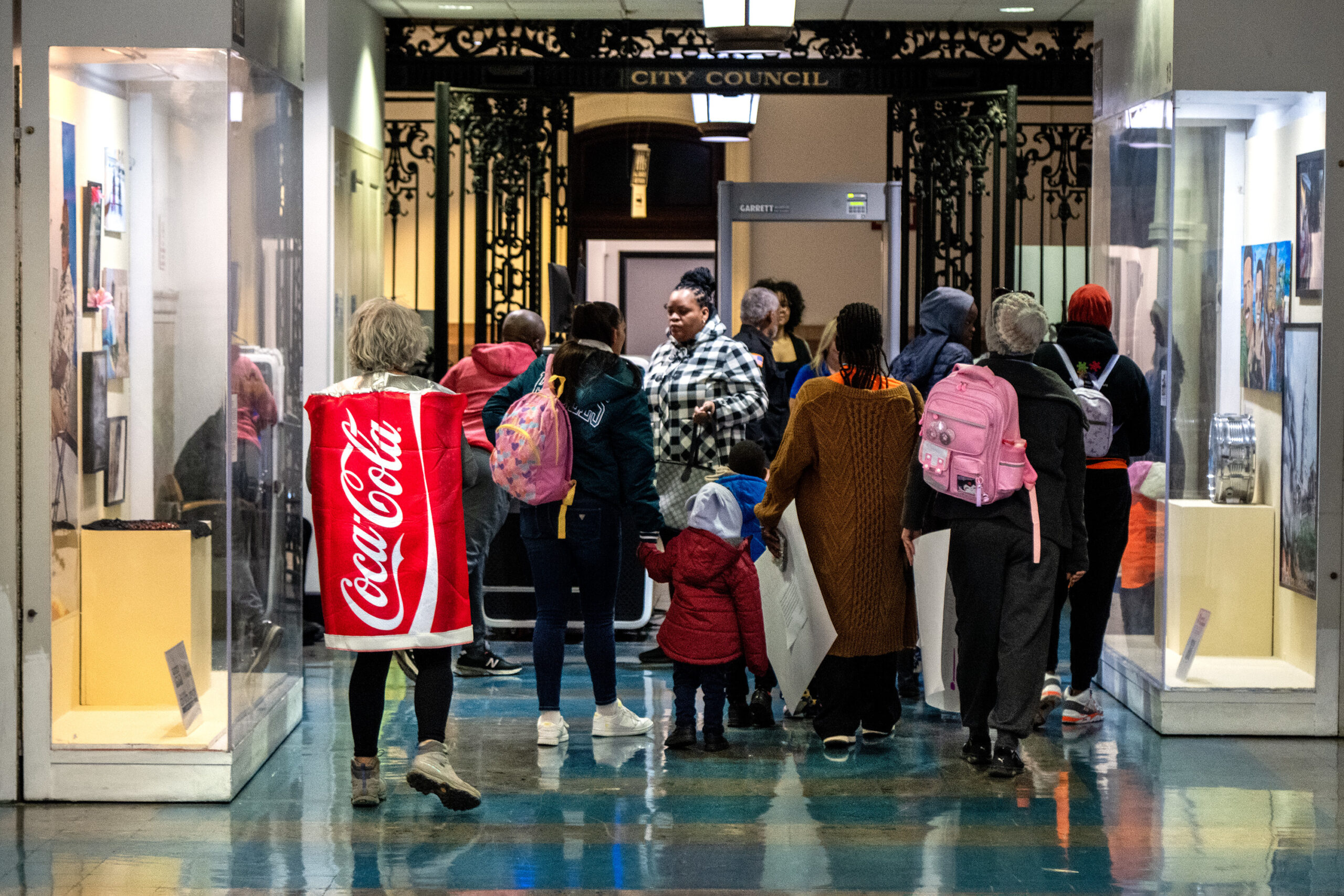
February 2, 2026: A light-as-air Elmo balloon rolls along a sidewalk in Haddonfield, propelled by the wind as Sunday’s heavy snow starts to turn to ice and sleet. January 26, 2026: The President’s House in Independence National Historical Park hours Jan, 22, after all historical exhibits were removed following President Trump’s Executive Order last March that the content at national parks that “inappropriately disparage” the U.S. be reviewed. The site, a reconstructed “ghost” structure titled “Freedom and Slavery in the Making of a New Nation” (2010), serves as a memorial to the nine people George Washington enslaved there during the founding of America.January 19, 2026: A low-in-the-sky winter sun is behind the triangular pediment of the “front door” of the open-air President’s House installation in Independence National Historical Park. The reconstructed “ghost” structure with partial walls and windows of the Georgian home known in the 18th century as 190 High St. is officially titled, “Freedom and Slavery in the Making of a New Nation” (2010). It is designed to give visitors a sense of the house where the first two presidents of the United States, George Washington and John Adams, served their terms of office. The commemorative site designed by Emanuel Kelly, with Kelly/Maiello Architects, pays homage to nine enslaved people of African descent who were part of the Washington household with videos scripted by Lorene Cary and directed by Louis Massiah. Deepika Iyer holds her niece Ira Samudra aloft in a Rockyesque pose, while her parents photograph their 8 month-old daughter, in front of the famous movie prop at the top of the steps at the Philadelphia Art Museum. Iyer lives in Philadelphia and is hosting a visit by her mother Vijayalakshmi Ramachandran (partially hidden); brother Gautham Ramachandran; and her sister-in-law Janani Gautham who all live in Bangalore, India.January 5, 2026: Parade marshals trail behind the musicians of the Greater Kensington String Band heading to their #9 position start in the Mummers Parade. Spray paint by comic wenches earlier in the day left “Oh, Dem Golden Slippers” shadows on the pavement of Market Street. This year marked the 125th anniversary of Philly’s iconic New Year’s Day celebration.Dec. 29, 2025: Canada geese at sunrise in Evans Pond in Haddonfield, during the week of the Winter Solstice for the Northern Hemisphere. December 22, 2025: SEPTA trolley operator Victoria Daniels approaches the end of the Center City Tunnel, heading toward the 40th Street trolley portal after a tour to update the news media on overhead wire repairs in the closed tunnel due to unexpected issues from new slider parts.December 15, 2025: A historical interpreter waits at the parking garage elevators headed not to a December crossing of the Delaware River, but an event at the National Constitution Center. General George Washington was on his way to an unveiling of the U.S. Mint’s new 2026 coins for the Semiquincentennial, December 8, 2025: The Benjamin Franklin Bridge and pedestrians on the Delaware River Trail are reflected in mirrored spheres of the “Weaver’s Knot: Sheet Bend” public artwork on Columbus Boulevard. The site-specific stainless steel piece located between the Cherry Street and Race Street Piers was commissioned by the City’s Public Art Office and the Delaware River Waterfront Corporation and created and installed in 2022 by the design and fabrication group Ball-Nogues Studio. The name recalls a history that dominated the region for hundreds of years. “Weaver’s knot” derives from use in textile mills and the “Sheet bend” or “sheet knot” was used on sailing vessels for bending ropes to sails. November 29, 2025: t’s ginkgo time in our region again when the distinctive fan-shaped leaves turn yellow and then, on one day, lose all their leaves at the same time laying a carpet on city streets and sidewalks. A squirrel leaps over leaves in the 18th Century Garden in Independence National Historical Park Nov. 25, 2025. The ginkgo (Ginkgo biloba) is considered a living fossil as it’s the only surviving species of a group of trees that existed before dinosaurs. Genetically, it has remained unchanged over the past 200 million years. William Hamilton, owner the Woodlands in SW Phila (no relation to Alexander Hamilton) brought the first ginkgo trees to North America in 1785.November 24, 2025: The old waiting room at 30th Street Station that most people only pass through on their way to the restrooms has been spiffed up with benches – and a Christmas tree. It was placed there this year in front of the 30-foot frieze, “The Spirit of Transportation” while the lobby of Amtrak’s $550 million station restoration is underway. The 1895 relief sculpture by Karl Bitter was originally hung in the Broad Street Station by City Hall, but was moved in 1933. It depicts travel from ancient to modern and even futuristic times. November 17, 2025: Students on a field trip from the Christian Academy in Brookhaven, Delaware County, pose for a group photo in front of the Liberty Bell in Independence National Historical Park on Thursday. The trip was planned weeks earlier, before they knew it would be on the day park buildings were reopening after the government shutdown ended. “We got so lucky,” a teacher said. Then corrected herself. “It’s because we prayed for it.” November 8, 2025: Multitasking during the Festival de Día de Muertos – Day of the Dead – in South Philadelphia.November 1, 2025: Marcy Boroff is at City Hall dressed as a Coke can, along with preschoolers and their caregivers, in support of former Mayor Jim Kenney’s 2017 tax on sweetened beverages. City Council is considering repealing the tax, which funds the city’s pre-K programs.
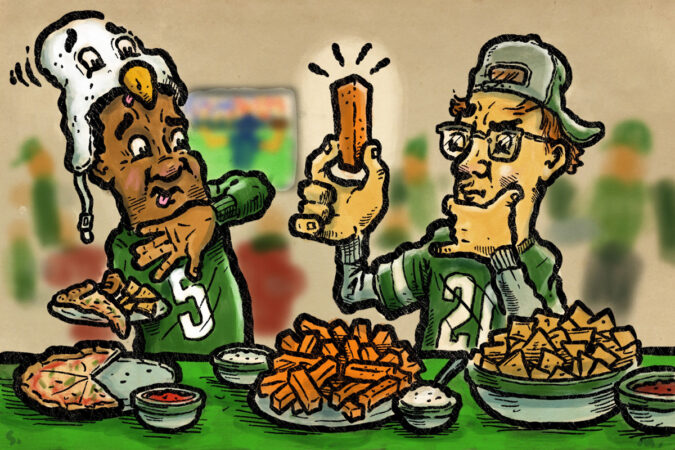
The Super Bowl is Sunday, so I’ve asked two reporters — one vegetarian, one not — to help solve this dilemma.
Evan Weiss, Deputy Features Editor
The question is…
My friend assigned me to bring wings for our Super Bowl potluck, but I’m a vegetarian. Can I bring tofu wings?
Zoe Greenberg, Life & Culture Reporter
I want to start by saying I’m also a vegetarian, and the idea of tofu wings disturbs me deeply.
Abigail Covington, Life & Culture Reporter
Who asked the vegetarian to make the wings? Vegetarians should make nachos or dips.
Evan Weiss
Yeah, I think this is on the friend who asked. Why would you ask your vegetarian friend to make wings???
Zoe Greenberg
The problem with tofu for this is that the texture and the flavor (nothing) is completely wrong.
But I do love buffalo cauliflower wings. Personally I would say that’s OK to bring.
Abigail Covington
However, if you regularly eat chicken wings, you will be disappointed by cauliflower wings. So, if you can stand to make a batch of both, maybe consider it. The meat-eaters will be very grateful. Not that you owe them anything.
Zoe Greenberg
Ah, true. You don’t have to make the chicken wings from scratch do you?!
That’s a horrifying prospect, too.
Abigail Covington
Just buy them! But is that still asking too much of a vegetarian?
Evan Weiss
Yes!
I’m not a vegetarian, but I can’t imagine asking a vegetarian friend to bring meat! I would never ask a nondrinking friend to bring wine.
Zoe Greenberg
Maybe they truly meant, “Wings, as interpreted by a vegetarian.”
Abigail Covington
I think the vegetarian has every right to assume that’s what they meant. But please, like Zoe said, not tofu.
Food may be what Kalaya’s Chutatip “Nok” Suntaranon is best known for, but her real love is spending time with her Pomeranians, Titi and Gingi, whom she lovingly calls “the boys.”
That, and spending time at her Queen Village home. For former flight attendant Suntaranon, who travels to Thailand (where she was born) two or three times a year, her home is her “happy place.” When she is not traveling, this is where she spends most of her time — cooking, eating, taking meetings, gathering friends, and, of course, playing with the boys and their friend, Wolfie.
She lets her routines be flexible and often goes with the flow, keeping two things constant: time with the boys and a daily visit to her Fishtown restaurant named after her mother.
Those are the two things that define her perfect Philly day, and her everyday.
Kalaya’s chef Chutatip “Nok” Suntaranon poses in Lobo Mau’s exclusive Pom jacket. The acclaimed chef collaborated with local designer Nicole Haddad for the jacket. Styled by Nicole Haddad and Miranda Martel; jewelry by Feast and Forge and Finish; shoes by Elena Brennan; Hair and makeup by Tarah Yoder.
7:30 a.m.
I wake up whenever I want to. If I stay up late, I stay in bed until 10:30 a.m. But usually, I wake up at 7:30. The first thing I do is read [Kalaya’s] Resy reviews from the night before. After that, I wake up the boys and play with them on the deck a little bit. Then I either run back to bed and read my emails with them by my side, or go downstairs.
9 a.m.
I go down to the kitchen and feed the boys. Pomeranians are very picky eaters so I make scrambled eggs for them and me. Then, I’ll either make green tea or coffee with beans from McNulty’s Tea & Coffee Co. in New York’s West Village. Some days, it’s espresso. Others, Americano, or flat white.
I often invite my next door neighbor, Yas, to have coffee with me. We just sit on the couch and chat for an hour. Sometimes more than one neighbor stops by. We have our group of women, we live in the same neighborhood, and we hang out all the time. We get coffee, talk, and sometimes we plan lunch together, and then we spread out and do whatever we need to do for our jobs.
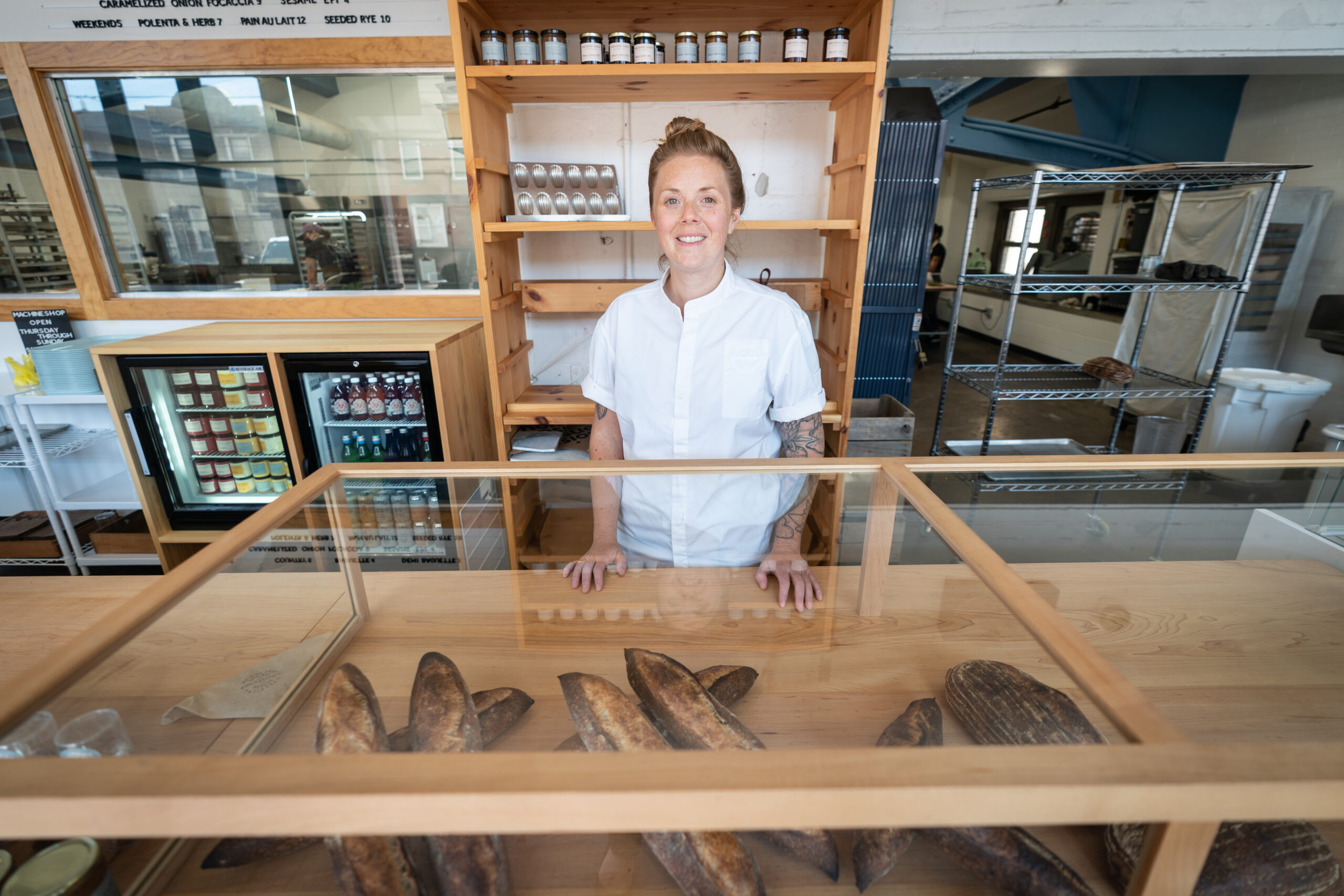
Emily Riddell at the Machine Shop, a bakery, in Philadelphia, Friday, September 9, 2022.
10:30 a.m.
If I don’t drink coffee at home, I love going to Machine Shop with Mike and Lizzy, my good friends who also have a Pomeranian, Wolfie. We coparent our dogs. At Machine Shop, we get coffee and wait for canelé to come out of the oven.
11:30 a.m.
On our way back, the boys and I will take a walk in the neighborhood. We have a community garden that we might stop by. Then I come home and take my morning meetings after I give the boys a turkey tendon treat.
12:30 p.m.
If I can find some time, I go to the gym. I sneak in a Pilates class once a week at Movement Source Pilates Studio in Passyunk or the Sporting Club at the Bellevue. If I need a haircut, I go to Whirligig salon in Queen Village. If I’m not doing any of those things, I will go to Kalaya to check on whatever is going on. I mostly take the boys with me. I leave by 3 p.m. because that’s when they have the staff meal. I come home and fix myself some quick lunch.
The fettucini at Fiore Fine Foods in Philadelphia on Thursday, Aug. 29, 2024.
2:30 p.m.
I prefer to eat at home during the day. Sometimes all my friends who dropped in the morning will come back and we all eat lunch together. I love congee. Usually we will eat that with a simple, healthy vegetable or protein. I also eat lunch at Fiore sometimes because pasta for lunch is a good idea. Then, depending on how busy my calendar is, I will try and sneak a bath in. I love having a bath. Then skincare and getting ready takes about an hour.
4:30 p.m.
I get changed and go back to the restaurant for service. For clothes, I mostly shop online. I rent from Real Real, Rent the Runway, Nuuly. And I have my buyer in Thailand who buys Issey Miyake pieces for me. I get a lot of stuff from Thailand where I have a designer who does custom-made stuff for me. My friend Yas often gets me stuff to wear or my other friend, Michelle, works at Urban Outfitters. It’s a community that is very sweet, because they are always gifting me with very cute stuff to wear.
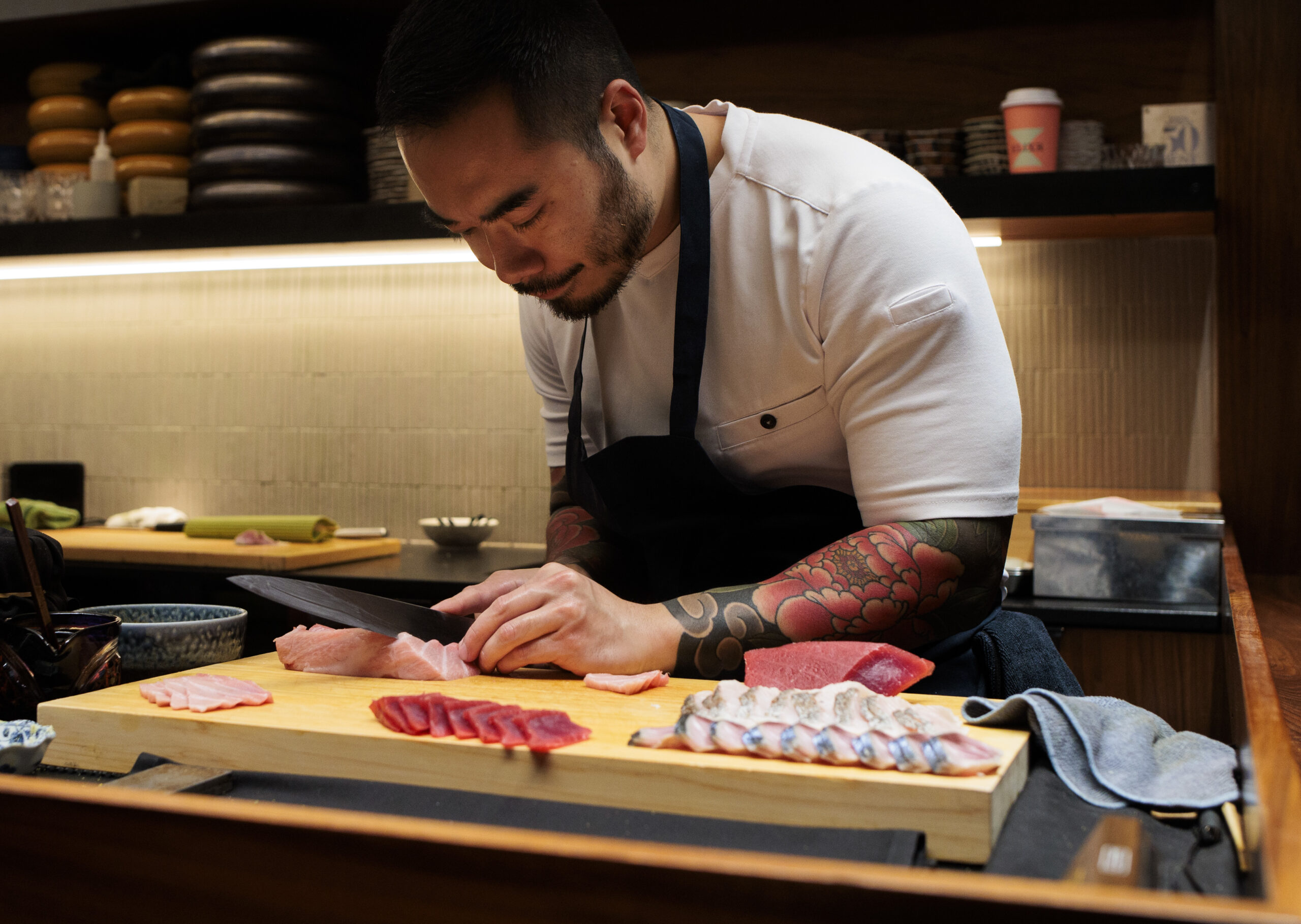
Chef Jesse Ito prepares a course during the omakase at Royal Sushi and Izakaya on Tuesday, Oct. 28, 2025 in Philadelphia.
7 p.m.
On Tuesdays, I usually eat dinner at Royal Sushi & Izakaya. I love his Royal Chirashi, the miso soup. His fried chicken is good, and I love all of his rolls.
Once or twice a week, I order half the menu at Kalaya. I invite friends and we eat, talk about food and our lives. That’s how I inspect the food in the restaurant, and give the team feedback immediately.
Organic produce from Blooming Glen Farm of Perkasie for sale at the Headhouse Farmers’ Market.
On Sundays, I try to cook dinner and have friends over. I buy my produce and organic protein from Headhouse Farmers Market and Riverwards Produce.
Sometimes, my friends and I do Sunday Gravy. Someone makes dessert, I make gravy. I buy the meatballs because you don’t need to make meatballs yourself as long as your gravy tastes good. Someone makes the pasta, and we all eat together. Michelle may make a salad, and Mike brings a bottle of Champagne. So we hang out and chat.
Chef Chutatip “Nok” Suntaranon at her restaurant Kalaya in Fishtown on August 22, 2024.
8:30 p.m.
If I don’t go to the restaurant, I normally get to bed by 8:30 p.m. I groom the boys, hang out with them, watch Netflix or read as they play next to me. I like to be quiet at home. I am a homebody. I would say, 70% of my time is me staying home. That’s kind of pretty much my day.
Dirty Franks says ’25 and up’ — and the regulars reclaim the bar: B+
Dirty Franks banning 24-year-olds and under sounds, on paper, like the plot of a generational culture war. In reality, it’s a dive bar doing what dive bars have always done: protecting the room.
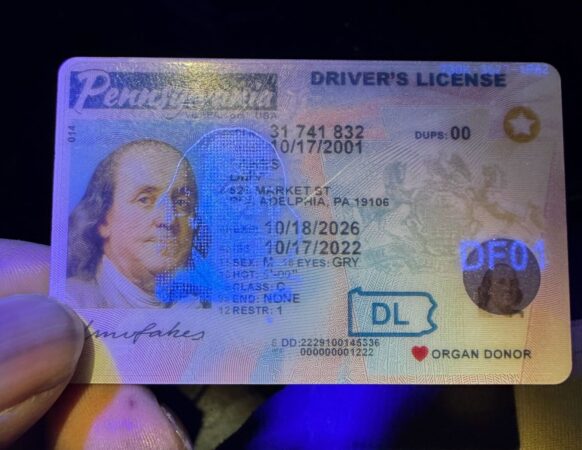
The catalyst? A fake ID featuring Ben Franklin that successfully scanned. Over the past year, Franks has been overrun by increasingly bold fake IDs, TikTok-fueled crowds, and behavior that doesn’t match the unspoken social contract of a place where regulars expect to sit, talk, and not babysit a bar.
This isn’t about hating young people. It’s about a bar that has never been a college bar suddenly being treated like one. Quantity over quality, as owner Jody Sweitzer put it. More bodies, same money, harder nights.
The temporary 25-plus rule is blunt, maybe even unfair to the responsible 22-year-olds who just want a cheap beer and a dart board. But Philly bars have always operated on feel as much as fairness. When something’s off, you fix it first and argue about it later.
And by most accounts, it worked. The room is calmer. Regulars are back. People can sit again. Staff aren’t playing bouncer-scanner-detective every five minutes, trying to outsmart IDs that look like they came straight out of a CIA prop department.
Is it sustainable? Probably not. Is it extremely Philly to say “we’ll relax when the nonsense stops”? Absolutely.
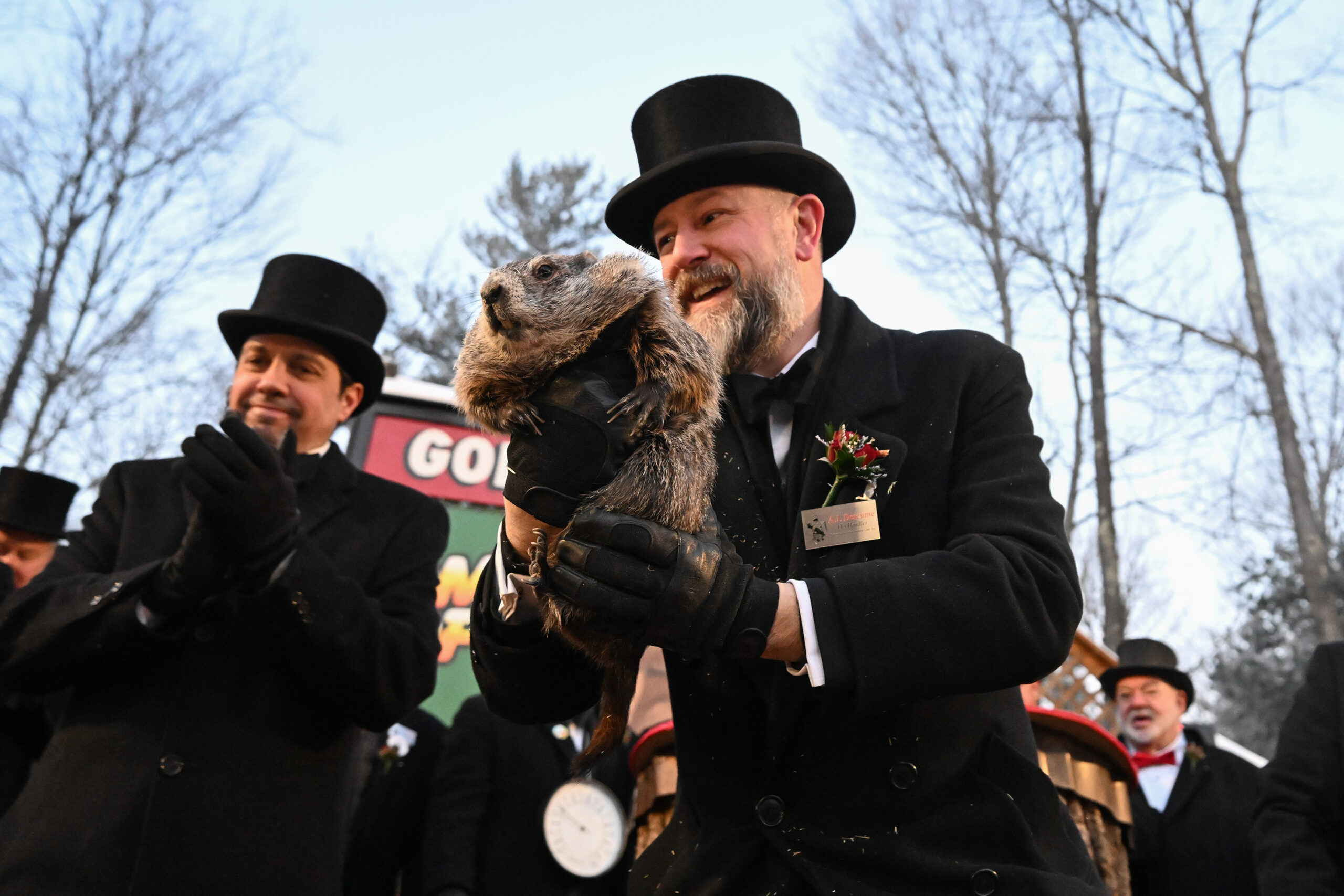
Groundhog Club handler A.J. Dereume holds Punxsutawney Phil, the weather prognosticating groundhog, during the 140th celebration of Groundhog Day on Gobbler’s Knob in Punxsutawney, Pa., Monday, Feb. 2, 2026. Phil’s handlers said that the groundhog has forecast six more weeks of winter. (AP Photo/Barry Reeger)
Punxsutawney Phil sees his shadow, condemning Philly to six more weeks of this: D
Six more weeks of winter doesn’t mean snowflakes and cozy vibes in Philadelphia. It means gray piles of ice that never melt, sidewalks that double as obstacle courses, and that specific kind of cold that seeps through gloves.
Phil seeing his shadow wasn’t news. The snow is still here. The side streets are still a mess. The wind is still disrespectful. And now we’re being told to mentally prepare for another month and a half of bundling up just to take out the trash.
Phil’s track record doesn’t help his case. He’s been wrong more often than right, but somehow still gets the power to set the emotional tone for an entire region. And the tone this year is simple: exhausted, sore, and deeply over it.
We don’t hate Phil. We just resent him for reminding us that winter in Philadelphia isn’t a season: It’s a long, drawn-out test of patience, balance, and civic infrastructure.
Six more weeks? Fine. We’ll survive. But we’re not happy about it.
Heavy equipment clears snow and ice from South Broad Street near Tasker Street in South Philadelphia, Tuesday, Feb. 3, 2026.
Philly sends in ‘snow ambassadors’ because the cleanup still isn’t done: C
At this point, the storm itself is old news. What isn’t: frozen crosswalks, ice-packed corners, and a city that still feels stuck in cleanup mode.
So now comes the next phase of winter in Philadelphia: improvisation.
The city is deploying 300 “snow ambassadors” to manually chip away at ice piled up at crosswalks and corners. We’re well past the point where plows and salt were enough, and if the choice is between stubborn ice lingering for weeks or sending people out with tools to break it up, the latter is the only real answer.
But it also says a lot about how this cleanup has gone.
The city is now in hand-to-hand combat with the leftovers of a storm that dropped 9.3 inches and then immediately locked them in place with days of deep cold. The fact that crosswalks still need this level of attention, days later, underscores how uneven the original response was, especially on side streets and pedestrian infrastructure.
Calling them “ambassadors” doesn’t change the reality: This is a workaround. A necessary one but still a sign that the system didn’t fully deliver the first time around.
That said, credit where it’s due. The city didn’t just shrug and tell people to wait for a thaw. It adjusted. It added manpower. It acknowledged that what’s left isn’t just inconvenient but dangerous. And focusing on crosswalks and ADA ramps is exactly where the effort should be right now.
This isn’t a win. It’s a course correction.
Phillies designated hitter Kyle Schwarber celebrates his solo home run with teammate J.T. Realmuto against the Kansas City Royals on Saturday, Sept. 13, 2025, in Philadelphia.
Phillies spring training hope (and the kids knocking): A
This is the part of the calendar where Philly collectively exhales.
Spring training is just getting started, and already the Phillies feel lighter. Not because anything’s been won. Not because the roster is flawless. But because February baseball is where optimism still gets the benefit of the doubt.
Clearwater represents a reset. New grass. Fresh routines. The annual illusion that this version of the team will be the one where everything clicks at the right time. It doesn’t matter how last season ended, spring training always feels like permission to believe again.
And for the first time in a while, the kids are actually coming. Justin Crawford looks like the opening-day center fielder. Andrew Painter is finally healthy enough to matter again. Aidan Miller is looming. The Phillies’ farm system has spent years as a drip-feed; now it feels like a faucet that might finally turn on.
That matters for a team that’s been built around a veteran core for so long. Bryce Harper and Kyle Schwarber anchoring things in Clearwater feels familiar in the best way, but the real intrigue is whether the next wave can actually stick. Whether this spring is the start of something sustainable, not just another “run it back.”
Spring training is baseball’s softest sell. No standings. No scoreboard pressure. Just story lines, roster battles, and enough sun to trick you into thinking October is guaranteed. Philly knows better than to fully trust it, but we still show up every year.
Because hope is part of the ritual. And for now, it’s earned.
If nothing else, pitchers and catchers reporting means one undeniable thing: Winter is losing leverage, and baseball is back in the conversation. Around here, that’s worth an A all by itself.
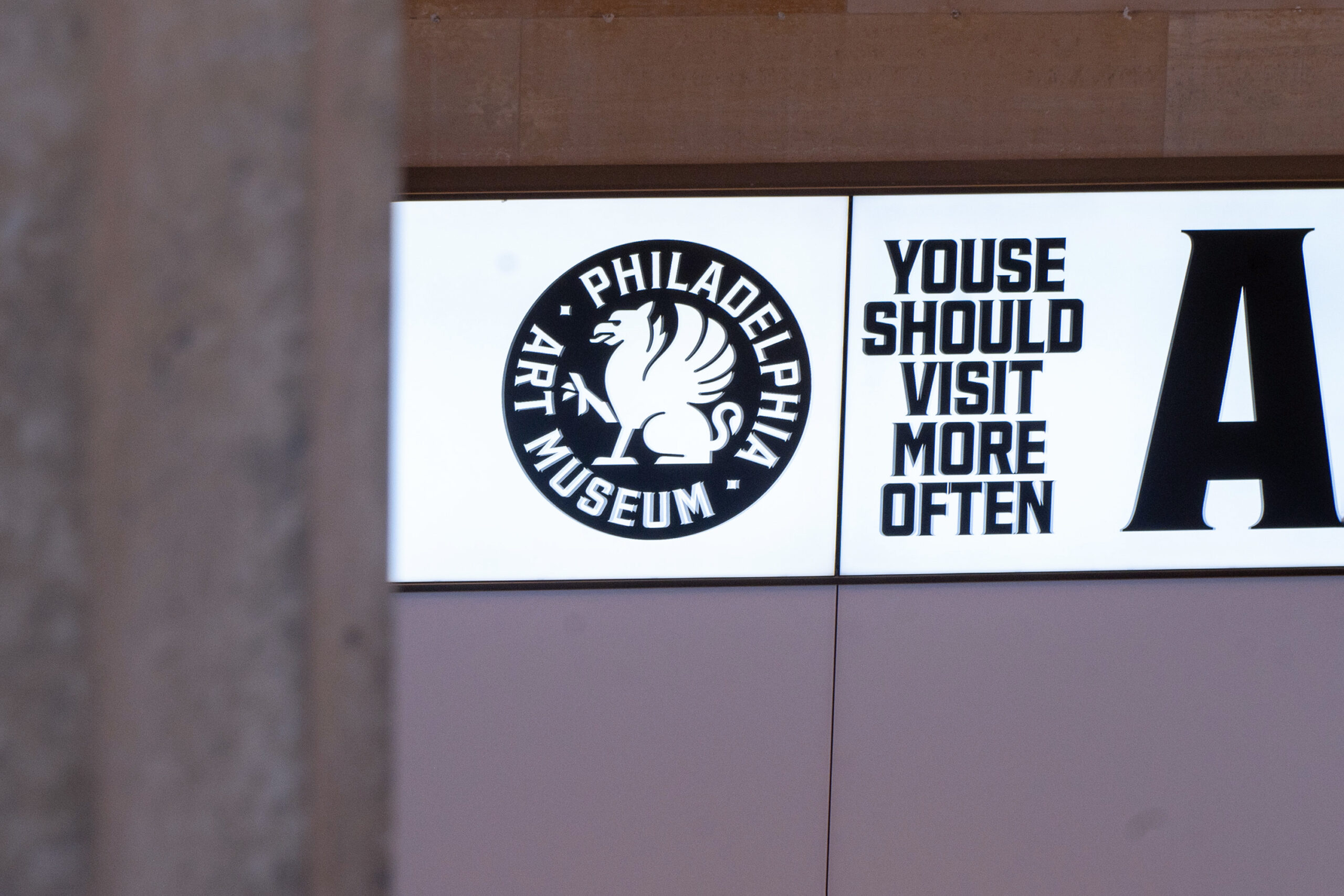
A rolling video screen above the admissions counter at the West Entrance at the Philadelphia Museum of Art Monday, Oct. 6, 2025, features a “youse should visit” slide and a new logo. The name change was eventually reversed back to its original – Philadelphia Museum of Art – but the griffin was kept.
The Art Museum walks it back (somewhat): B+
Four months after trying to rename itself the Philadelphia Art Museum, the Philadelphia Museum of Art has decided to do what Philadelphians do best: Stop pretending and call it what everyone was calling it anyway.
But this wasn’t a full rewind. The museum kept the updated look — the bold fonts, the sharper visual identity, the griffin logo pulled from the building’s roofline. The feedback was clear and consistent: People who know the institution (members, donors, staff) felt alienated by the name change.
The Philadelphia Museum of Art isn’t just branding; it’s muscle memory. You don’t casually swap that out without expecting pushback. But surveys also showed that the broader public didn’t hate the new look itself. So the museum split the difference.
It kept the visual refresh. It dropped the name change, which felt unnecessary and confusing. And it signaled, intentionally or not, that listening matters more than doubling down.
Philly gets its own Monopoly board, and the arguments have already started: A
A Philadelphia edition of Monopoly is coming this fall, and honestly, the game itself almost feels beside the point. The real action is happening now, in the collective act of imagining what would, and absolutely would not, be allowed on a Philly board.
The gaming company behind the project is soliciting public nominations for landmarks, businesses, and nonprofits, which means we’re about two seconds away from the most Philly fight imaginable: not about what belongs on the board, but what deserves Boardwalk money and what gets stuck near Baltic Avenue out of spite.
Picture it. Pass GO at City Hall. Community Chest immediately fines you for blocking a crosswalk. Chance card sends you directly to SEPTA delays — do not collect $200. Jail is the Roundhouse. Free Parking is somehow still under construction.
Some squares feel obvious: the Art Museum steps, LOVE Park, Independence Hall. Others are going to be chaos picks. Wawa utilities. Delco railroads. A corner bar that hasn’t changed since 1987 somehow costing more than Center City. Someone will nominate their neighborhood dive and mean it sincerely. Someone else will nominate their rowhouse just to prove a point.
And that’s where this gets interesting. A Philly Monopoly board isn’t really about the game. It’s about which places people think matter, and which ones they’ll argue should’ve made the cut.
‘We’ll shew ya whereta gew in the snew’: Visit PA leans into accents — and Philly winter energy: B+
If you’re going to tell Philadelphians to leave the house in February, you’d better sound like someone we trust. Preferably someone who says “youse.”
The Pennsylvania Tourism Office seems to get that, according to WHYY. Its new winter “Snow Day Hotline” is staffed by prerecorded Philly and Pittsburgh accents, plus live comedians during select hours.
Call the number and you’re greeted by exaggerated but affectionate regional voices walking you through things to do around the state, from museums to indoor hangs. It’s intentionally old-school, phone only, no app.
The Philly side of the operation is handled by comedian Betsy Kenney, whose accent isn’t natural but feels familiar anyway: a composite of neighbors, aunts, and the person behind you in line at Wawa explaining why something is “not worth it, but also maybe worth it.” The advice isn’t groundbreaking. The delivery is the point.
So when a highly accomplished Jeopardy! champion (16-game winner, nearly half a million dollars in earnings) visibly struggled to pronounce “Schuylkill” on national television this week, Philly collectively leaned forward and went, here we go.
To Scott Riccardi’s credit, he got the answer right. The river that runs through Pottsville, Reading, and Philadelphia? Yes. Correct. No notes. But the pronunciation (Skol-kull) sent Ken Jennings into referee mode, which is never where you want to be when the clue involves Pennsylvania geography.
For the record (again): it’s Skoo-kl. Two syllables. No drama. No extra letters pronounced.
Riccardi walks away with a B: smart, successful, and close enough to get partial credit. But full points are reserved for anyone who can say Schuylkill on the first try without breaking eye contact.
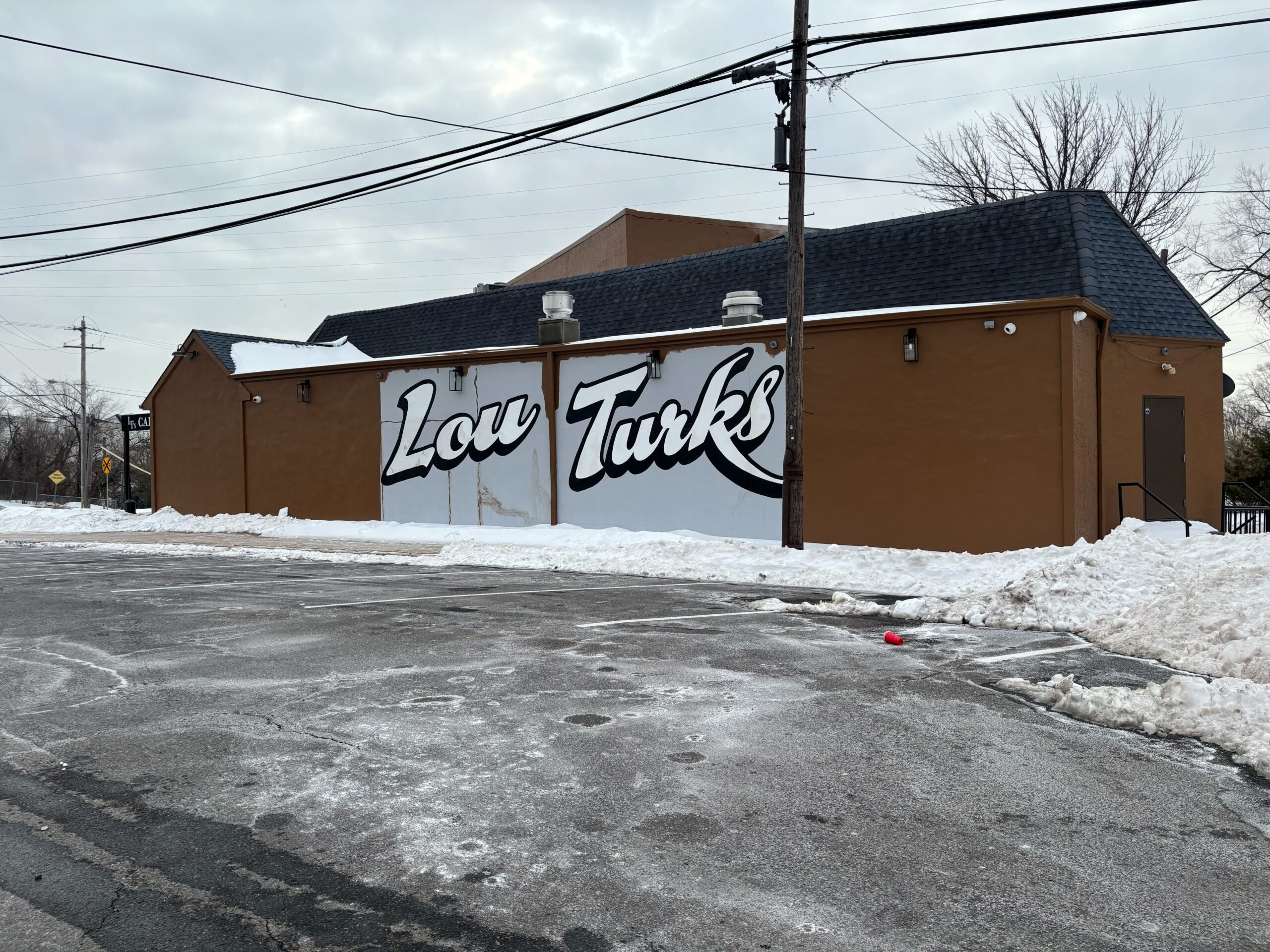
Lou Turk’s, a Delaware County strip club with more than 50 years in business, announced it will change its name to the Carousel Delco.
Lou Turk’s rebrands, Delco shrugs: A
Only in Delco could a strip club rebrand spark genuine cultural concern. Not about the name, but about whether Mother’s Day flower sales would survive.
Lou Turk’s, Delaware County’s lone strip club and one of its most stubborn institutions, announced it’s changing its name to the Carousel Delco. The response was immediate disbelief, light outrage, and a collective understanding that no one is actually calling it that. Ever. This is Gallery/Fashion District math.
Stephanie Farr laid it out perfectly: Lou Turk’s isn’t just a business, it’s a landmark. A place that exists in the Delco imagination as much as it does off Route 291, wedged between a Wawa and an Irish pub like it was placed there by a zoning board with a sense of humor.
The new name raises questions (mostly “why?”), but Delco culture is resilient. The club can swap signage, management, and branding buzzwords all it wants. It will still be Lou Turk’s. And more importantly, it will still sell flowers on Mother’s Day, preserving one of the county’s most unhinged and beloved traditions.
A tiny state, more than a third of which represents conserved land, Vermont has done things its own way since the colonial era. Its Green Mountain Boys militia once fended off land claims from New York and New Hampshire, and for a brief moment, Vermont even functioned as its own republic. That don’t-tread-on-me energy still lingers today, blended with a deep respect for the arts, outdoors, history, and small business. In southern Vermont, less than five hours from Philly, the village of Manchester is a microcosm of that personality. Slung between the Green Mountains, the glowing town looks like something straight out of a Hallmark movie — especially in winter, when snow this time of year is nearly guaranteed.
Stone fireplaces, leather chairs, plaid wallpaper, draft-blocking drapes, a grand front porch … Kimpton Taconic hits the winter-in-New-England vibes hard. The 86-room boutique hotel sits right on Main Street, close to everything in town, and has a solid on-site tavern, the Copper Grouse (think cider-brined chicken and maple crème brulée). The hotel also offers seamless equipment rentals through a Ski Butlers partnership. Bookings also include two free adult tickets to Hildene.
📍 3835 Main St., Manchester, Vt. 05254
Visit: Hildene
Just south of town, surrounded by woods and snow, Hildene was built at the turn of the 20th century by Mary and Robert Lincoln, the only son of Abraham and Mary Todd Lincoln. Run as a museum nonprofit since 1978, the Georgian Revival estate, gardens, and 12 miles of trails are open to visitors, making it a must-stop whether you’re into history, architecture, design, or horticulture. Train buffs will love Sunbeam, the restored Pullman carriage from Robert Lincoln’s tenure as president of the Pullman Co. from 1897 to 1911.
Take a short detour off Main Street into the forest and you’ll find Southern Vermont Arts Center. This estate includes classrooms, museum galleries, performance space, a yoga studio, and a café. Originally built in 1917 as a summer estate for an Ohio socialite and philanthropist, the property was acquired by the arts center in 1950. Grab a coffee at the café and walk — or snowshoe, or cross-country ski — through their epic sculpture park.
📍 860 Southern Vermont Arts Center Dr., Manchester, Vt. 05254
Shop: Northshire Bookstore
Northshire Bookstore is almost a caricature of Vermont: a rambling country house riddled with cozy alcoves. Opened in 1976 and now run by three sisters who grew up shopping there, the store leans hard into its indie roots — staff bios list genre specialties and years of service. They’ve got the bestsellers, sure, but it’s their rare-books collection that’s really special. A signed Jimmy Carter autobiography, for example, or an alternatively illustrated British edition of Harry Potter and the Chamber of Secrets.
Located only 10 minutes from town, Bromley Mountain’s 47 trails represent a solid mix of expertise levels. If you’re skiing experience begins and ends with the Poconos, maybe start with a few runs on the family-friendly Chase-It trail before leveling up to the Lord’s Prayer, the Plunge, and Havoc.
📍 124 Bromley Lodge Rd., Peru, Vt. 05152
Relax: Spa at the Equinox
After a day on the slopes, soothe those boot-bound feet and sore hammies at the Spa at the Equinox. Deep-tissue massage, Ayurveda treatments, cupping therapy, maple sugar scrubs — get one, get them all. You won’t want to leave the spa. It’s got cozy relaxation lounges, a huge indoor pool stretching out beneath an open-beam ceiling, and an outdoor hot tub perpetually cloaked in steam.
Points for the name alone. The Reluctant Panther, whose moniker nods to Vermont’s resistance to outside rule in the late 1700s, has been operating as a bed-and-breakfast since the 1960s — but its restaurant is open to the public. The food is exactly what you want to eat in the winter here: a Vermont cheese board, thick pork chops with German potato salad and smoked maple gastrique, venison osso buco, all served in a fireplace-warmed dining room. The wine list has earned Wine Spectator recognition four years straight. Meow.
Scott Harmon and Mark Williams met each other in a maximum-security prison in the heart of Pennsylvania coal country in 2012.
They had both grown up in the Philly area; both were in their early 20s, at the very beginning of life sentences without the possibility of parole for homicide convictions. Both had sons.
They were also both desperate to leave State Correctional Institution (SCI) Greene, the isolated prison where they met and which they described as harrowing. They aimed to appeal their convictions and get free.
They clicked as lifelong friends.
In 2018, Williams was transferred to the more desirable SCI Phoenix, in Montgomery County, and soon Harmon was transferred there as well. Both saw the reunion as an unexpected gift, and they became cellmates, or “cellies.”
While organizing with the activist group the Coalition to Abolish Death by Incarceration and working with the same attorney to appeal their separate cases, they maintained a similar mindset: Despite what the courts said, their sentences would not last the length of their lives.
“When you’re sentenced to life, there’s really very little reason to hope that you’re ever going to get out again,” said Catherine Trama, an attorney with Wiseman, Schwartz, Cioschi & Trama who represented both men. They showed “a positivity that would be impossible for most people.”
Harmon was 22 when he was arrested for killing a 24-year-old man, Timothy Haines, in North Philadelphia. In 2011, he was convicted and given a mandatory life sentence without the possibility of parole. He maintained his innocence for the next decade-plus.
In 2024, his murder convictionwas overturned. The District Attorney’s Office stopped short of endorsing his innocence but offered him a plea deal, in which he pleaded guilty to third-degree murder and firearms violations to get out of prison in April 2025. (“When that opportunity is offered to you: you can go home today, or you can take a chance fighting the system again, you don’t fight the system again,” Harmon, 39, said).
Harmon and Williams, who call each other chosen brothers, had been working toward the same goal, but now one had achieved freedom and the other had not.
“It was really difficult for a while. I didn’t want him to feel as though I was upset that he was leaving, or wasn’t happy for him,” Williams, 36, said.
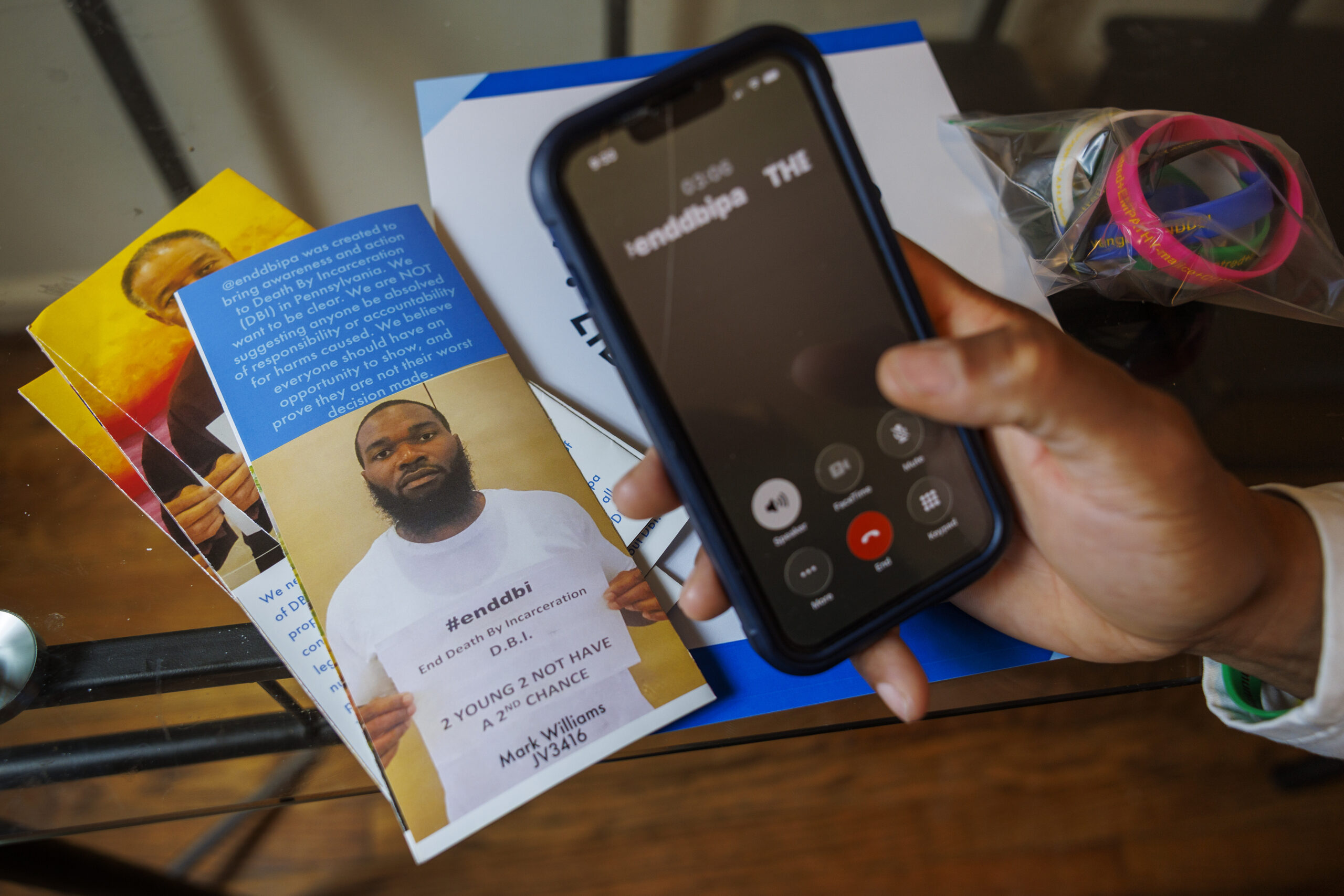
Mark Williams, 36, is currently incarcerated at SCI Phoenix, and challenging his conviction through the Post Conviction Relief Act. He and Scott Harmon call each other chosen brothers.
Williams is still incarcerated at SCI Phoenix, and is currently challenging his conviction through the Post Conviction Relief Act, claiming the state violated his right to due process. He was 21 when he was convicted of killing a 21-year-old man, Isaiah McLendon, in Darby Borough and also given a mandatory life sentence without the possibility of parole.
Harmon is now a utility worker at a country club and lives in the Philadelphia suburbs. He has a girlfriend who he met as a teenager and reconnected with while in prison.
It is against state Department of Corrections policy for Harmon and Williams to meet in person because Harmon was formerly incarcerated, a spokesperson for the PA DOC said. Instead, they speak almost every day by phone.
The following, as told to Zoe Greenberg in separate interviews, has been edited for length and clarity and combined.
On meeting at a maximum-security prison in southwestern Pa.
Mark: Everybody calls Scott “Slim.” I met Slim when he came upstate in 2012. We were young. Just seeing the shock of our new reality setting in with him, I had just experienced that a year ago. I could share how I made it through and hopefully it could help.
Scott: He seemed like a cool dude. We didn’t dive into each other’s cases, we just both knew that we were sentenced to die at such a young age. We call it death by incarceration, or a “DBI” sentence.
We had the same intention, which was getting out of prison.
On boiling water in buckets and grueling workouts together
Scott: We ate together all the time. The commissary is extremely limited — for the bags of instant rice that they sell, you need really hot water, which we figured out ways to make.
We would buy an extra bucket, put water and baking soda or denture tabs in it with an extension cord, and it heats up. You put your food inside a trash bag, you put a trash bag over the bucket, and you set your food on it, and it cooks.
Scott Harmon, who is now a utility worker at a country club, pictured at home.
We also started working out together. In prison, we work out so hard because it’s stress relief. We punish our bodies physically: 100 burpees may be a warm-up.
On the outside, I tried to do 10 sets of 10 pull-ups. Mark laughed at me when I told him I couldn’t.
On being transferred to the same prison, 35 miles from Philly
Mark: SCI Greene was in a very, very racist part of the state. That environment kind of makes tighter bonds in people.
I transferred to SCI Phoenix [35 miles from Philly] maybe six months before Slim did. When I got transferred, it was an emotional time. It was hard. I didn’t really understand how close we were, until it was severed in that way.
Scott: You can’t choose what prison you go to. It’s like rolling a dice.
For those that were sentenced to “death by incarceration,” you have to stay seven years write-up free to get transferred. Now, mind you, you can get a write-up for having the thing that I just told you that we used to cook with. [The state DOC confirmed this.]
Mark: When he got here, that was a huge relief. To have someone back where it’s like, I know this is one of my brothers. It’s something I wasn’t expecting.
At the time, I think I was collecting trash on the walk. He was coming around the walk. And I saw him. We just were yelling and hugging.
On becoming cellies at SCI Phoenix
Mark: As soon as he got to Phoenix, we start pulling strings to get in the cell together.We had to talk to the unit managers, talk about why we wanted to be cellmates, how it would make sense for our incarceration. Our argument was all about compatibility: I’m compatible with this person, and I won’t keep asking you to move me from cell to cell to cell.
Scott: We had bunk beds — two grown men. It’s not normal for two fully grown men to be in such a small space: maybe eight steps to the door, and four steps sideways.
We talked about being free, and what that freedom will look like, and reaching back for each other. He would say, “If I get out, you don’t have to worry, I’m not gonna be like other guys,” and I’m saying the same thing.
On trying to stay connected to the outside together
Scott: I was trying to build a relationship with my son. Mark told me, “Just keep at it, just keep writing, just keep calling.”
It is extremely frustrating when you want to be there, and you’re not being allowed. Had Mark not been there to advise me about the best way to go about it, I may not have the relationship I have with my son today.
Mark: Going through COVID was one of the hardest times. We were locked down all the time — we were getting out less than an hour a day.
The person that you were living with, you had to really be able to tolerate. We were in there, tight, every day, annoying each other, annoyed with what was going on.
You don’t know what your relationship will be with somebody until you’re actually trapped in a small space with them for a year.
On freedom — for one of them
Scott: I get on the phone and my attorney is like, “We heard back from the judge, and they overturned your conviction.”
I lost my breath, got nauseated, I started crying. Mark is two phones down. He started hugging me. It was a moment, man. I couldn’t even talk to him, snot was running down my nose. He was just happy for me, man. So happy for me.
Mark: It was a shock to me, just like it was a shock to him.Immediately I just felt joy, and excitement.
Then as time passed, it was more complicated. It wasn’t anger or jealousy. It was more of maybe sadness, and trying to reconcile the feelings of gain and loss at the same time. The situation was bringing up all types of feelings.
Scott: It’s never a conversation about him not getting out. The conversation is always like, “You’ll be out here soon.”
On saying goodbye
Mark: I think I probably did have a fear that we wouldn’t be as close as we are. Over the years, we experienced a lot of people that we built bonds with who went home. We might still be close with them, but we don’t talk as frequently. It’s not what it was.
Scott: We both worked in hospice, so the nurse allowed us to come down to the hospital and say goodbye to each other a day or two before I left.
I left him all my property. I left my TV to him. I left the books and stuff that he wanted, any clothes or sneakers that I had that he might want. I didn’t take anything out with me.
On keeping in touch now
Scott: I talk to him every day. I know intimately what type of support he needs. Our conversations have changed in that it’s not about our freedom, it’s about his freedom.
The experience is like how guys are in theArmy: because I was dead to the world. I was maybe in contact with 10 people out of the billions and billions of people on the Earth. He talks to maybe 20 people outside of prison. That’s nothing.
Scott Harmon takes a call from Mark Williams at his home in the Philadelphia suburbs.
Mark: We talk about the new realities that he’s facing, and some of the ones that I have to look forward to.
It might have been harder for me to leave him behind. Survivor’s remorse — that can be tough to deal with.
Yes, I want my freedom, but it’s not much more than I wanted him to have his freedom.
This story is part of a new series about life partners across the Philadelphia area.
If you want to share your story about who you’re navigating life with romantically or otherwise, write to lifepartners@inquirer.com. We won’t publish anything without speaking to you first.
We’ll show you a photo taken in the Philly-area, you drop a pin where you think it was taken. Closer to the location results in a better score. This week is all about shiny, classic, and infamous automobiles! Good luck!
Round #19
Question 1
Where is this show room?
Loading…
ClickTap on map to guess the location in the photo
ClickTap again to change your guess and hit submit when you're happy
You will be scored at the end. The closer to the location the better the score
Jose F. Moreno / Staff Photographer
Pretty good/Not bad/Way off! Your guess was from the location.Spot on! Your guess was exactly at the location. Here's also where a random selection of Inquirer readers guessed.
This photo was taken during the 2022 Philly Auto Show at the Pennsylvania Convention Center. This year’s show runs until February 8, once again at the Convention Center. Organized by the Auto Dealers Association of Greater Philadelphia, it spans nearly 700,000 square feet.
Quiz continues after ad
Question 2
Where is this famously frozen car?
Loading…
Joe Lamberti / For The Inquirer
Pretty good/Not bad/Way off! Your guess was from the location.Spot on! Your guess was exactly at the location. Here's also where a random selection of Inquirer readers guessed.
Pretty good/Not bad/Way off! Your guess was from the location.Spot on! Your guess was exactly at the location. Here's also where a random selection of Inquirer readers guessed.
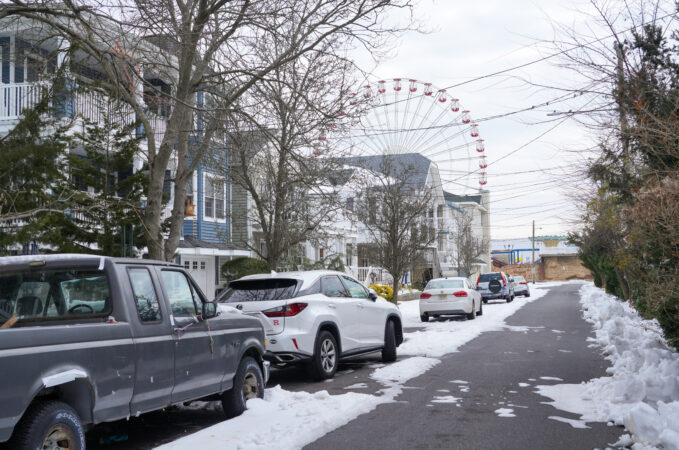
OCEAN CITY, N.J. — Marie Crawford was immediately charmed in 2021 when she and her soon-to-be-surfer husband Rich moved into their historic house in the literal shadow of Gillian’s Wonderland Pier.
They’d come from Blue Bell, Pa., to live year-round by the ocean, and landed with an amusement park right up the street.
“The ball drop, that was what we heard from my house,” she said, referring to the 130-foot-high Drop Tower ride. “It was, ‘Ah, ah, ahhhhhhhh,‘” she said, imitating the screams she would sometimes hear.
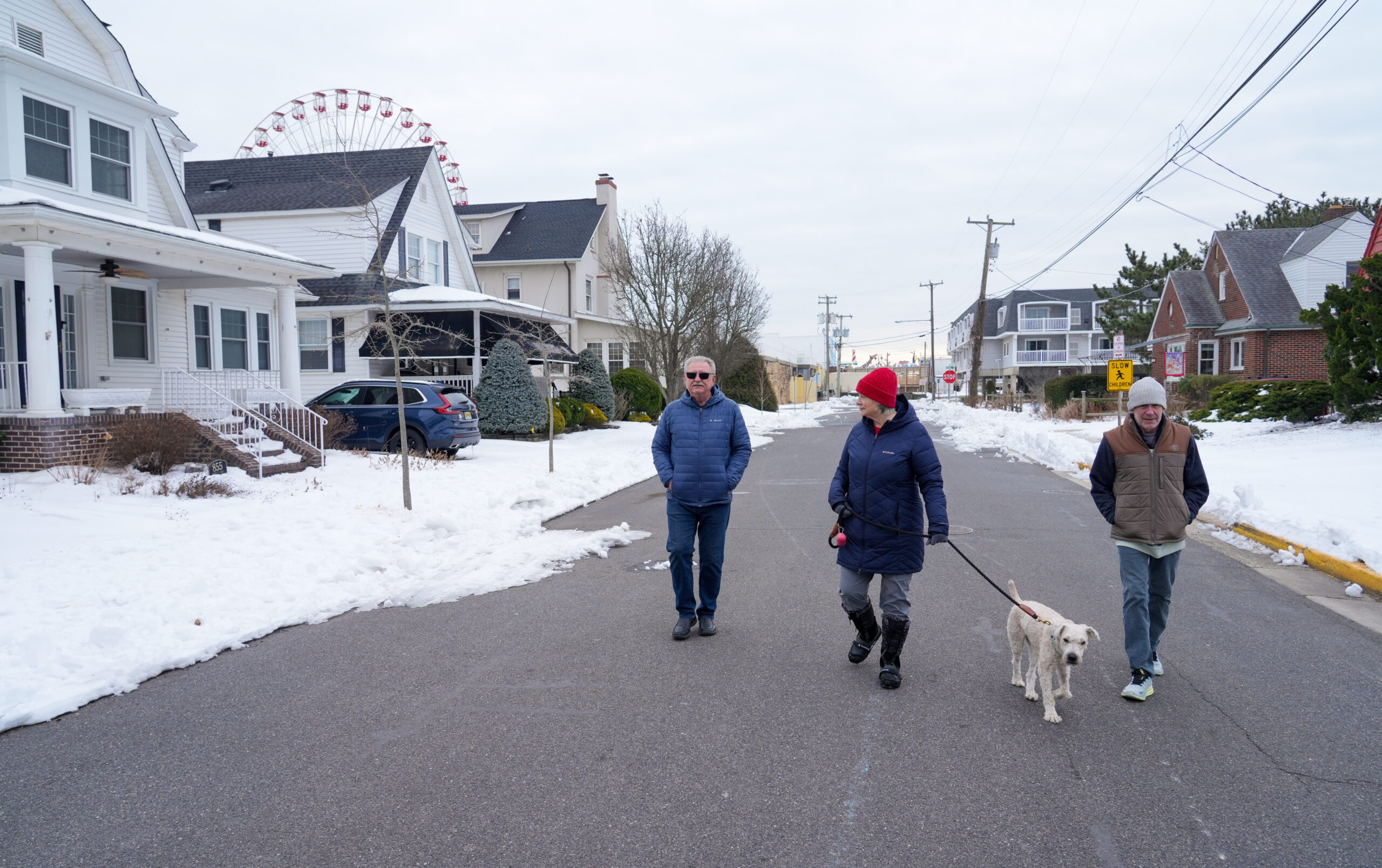
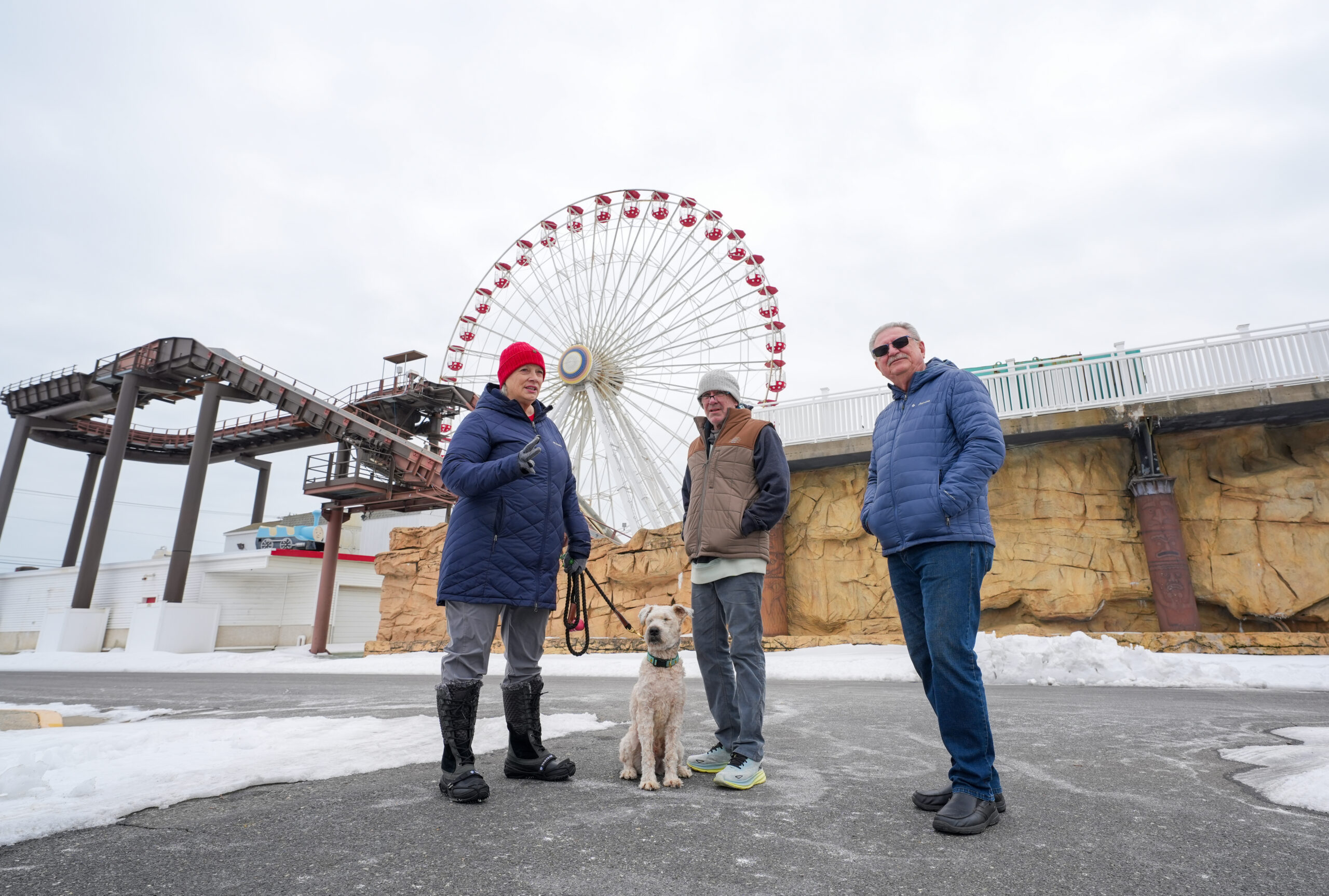
Jack Gutenkunst, left, Marie Crawford and her husband Richard with Shiloh, a 9-year-old soft coated wheaten terrier, walk along Plaza Place, in Ocean City, Tuesday, Feb. 3, 2026.
“It was so beautiful and romantic. On our porches, we would hear the ocean, not the amusement park. There were families, babies in strollers, coming up the street, flowing up to Wonderland. We were kind of ambassadors.”
Now, more than a year after the closing of Gillian’s, the residents are faced with the possibility of a seven-story hotel they fear will block their sun, bring traffic to their streets, and threaten the small-town charm they found in their little pocket of Ocean City.
“It’s just another example of maximizing, pushing,” said Rich Crawford, Marie’s husband, who programs music for his family’s Christian radio station, WDAC, located in Lancaster, Pa. In his 60s, Rich fell in with Ocean City’s surfing crowd and unexpectedly grew to love his little community.
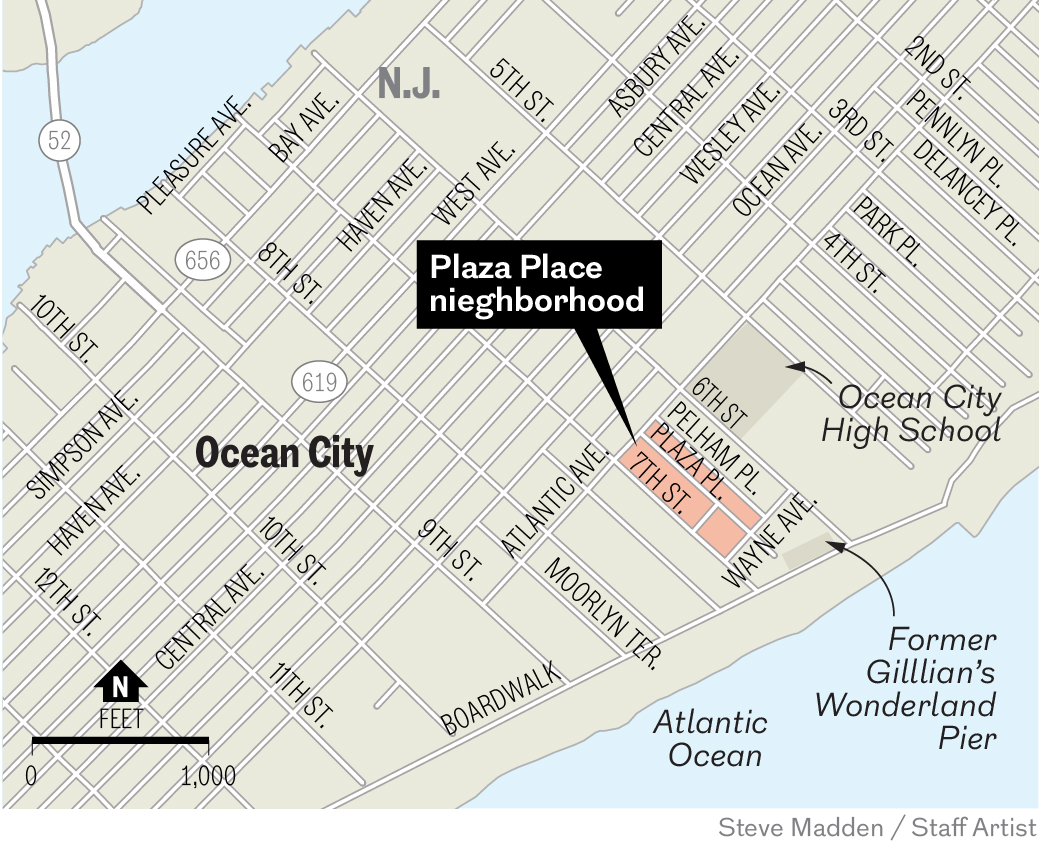
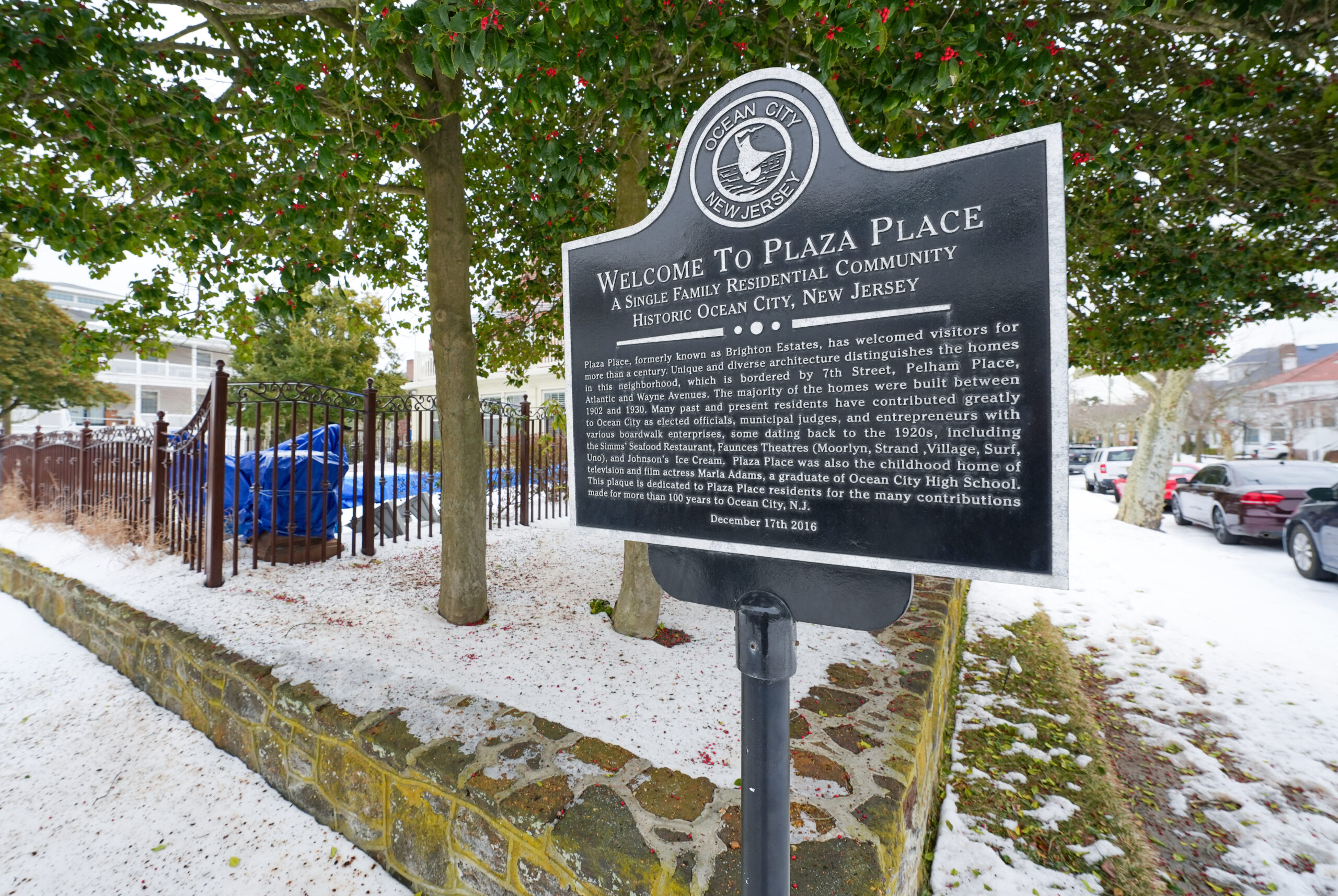
The Crawfords’ neighborhood of 100-year-old homes and 153 trees is called Plaza Place, which is one block each of Pelham Place, Plaza Place, and the north side of Seventh Street, between Wayne Avenue and Atlantic.
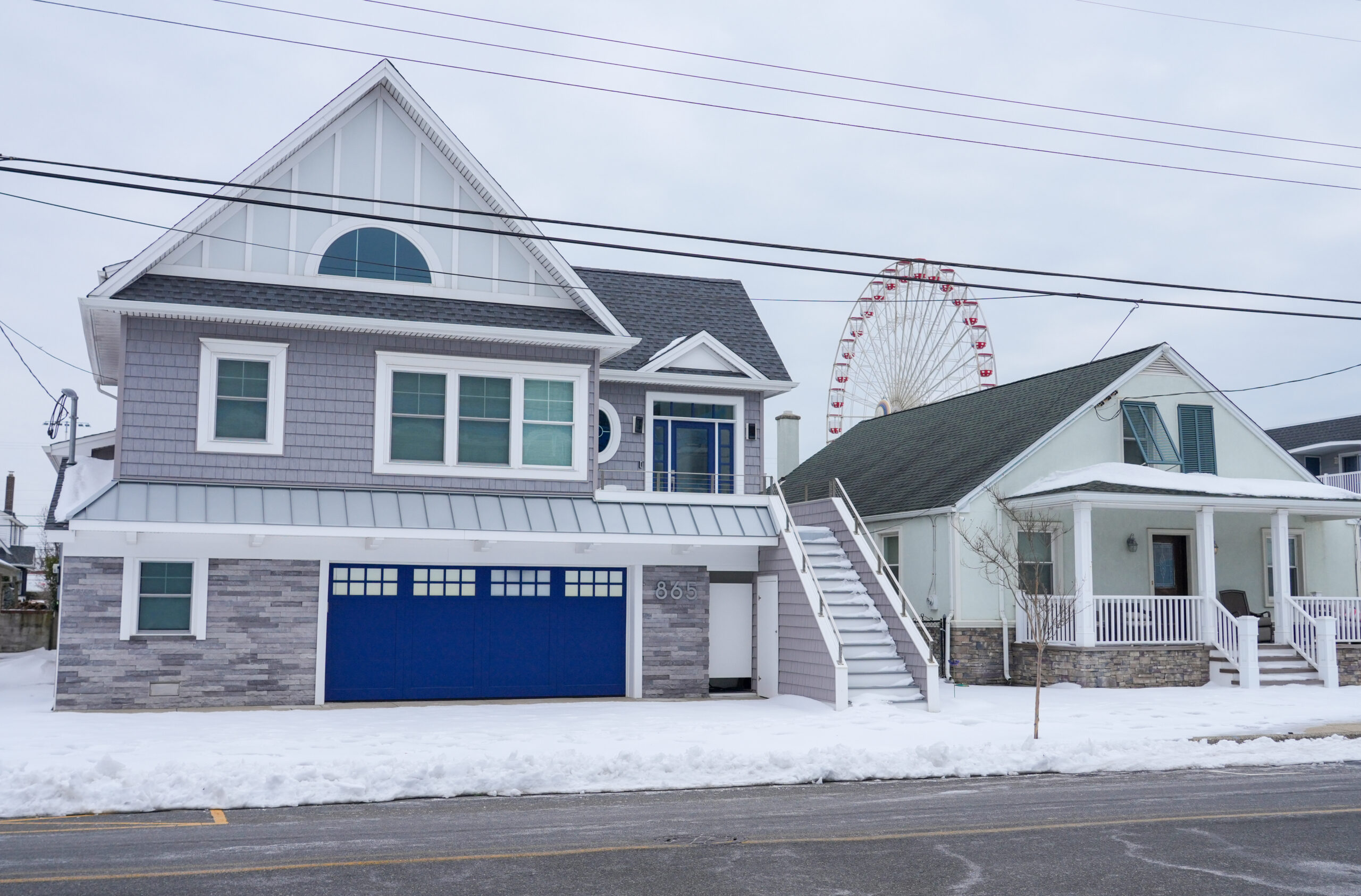
Across Wayne Avenue, toward the ocean, was Wonderland. On a clear day, a red ball of sun creeps up above the boardwalk and peeks into their little neighborhood.
On Pelham Place, residents each also own a two-foot- wide stretch of land across the street from their houses, a quirk of their deeds originally designed to prevent the rooming houses on Plaza Place that backed up against Pelham Place from using Pelham as an alleyway for their trash. There are dedicated gardeners on the streets who turn those strips into showpieces.
The sun sets behind the Ferris wheel on the final day for the beloved Wonderland Pier in Ocean City Sunday, Oct. 13, 2024.
Neighbor Barb Doctorman, whose family owns the Islander store on the boardwalk, said she used to take her children up on the Ferris wheel and peer down at their neighborhood. So lush, it looked like a forest, she said.
“I looked up the impact of a high-rise,” said Doctorman. “We’re going to lose some sun. The airflow is going to be totally changed from what it was. There’s a heat radiant that comes off it.”
Her husband, Doc, said: “We want something up there, but we know there could be more of a draw to that boardwalk than just the hotel.”
Marie Crawford (left) holds the leash of Shiloh, a 9-year-old soft-coated wheaten terrier, while standing with her husband Richard (center) and neighbor Jack Gutenkunst at the end of Pelham Place in Ocean City.
The land is owned by developer Eustace Mita, who has proposed Icona in Wonderland, a 252-room hotel that would preserve the Ferris wheel, carousel, and some kiddie rides.
So far, the city has not declared the site in need of rehabilitation, as Mita has requested, or otherwise moved to rezone the area to allow a hotel.
Merchants have begged the city to allow the hotel, and described how their businesses have suffered since the closure of Wonderland. Some residents have clung to the idea that an amusement park can return, though those numbers are dwindling.
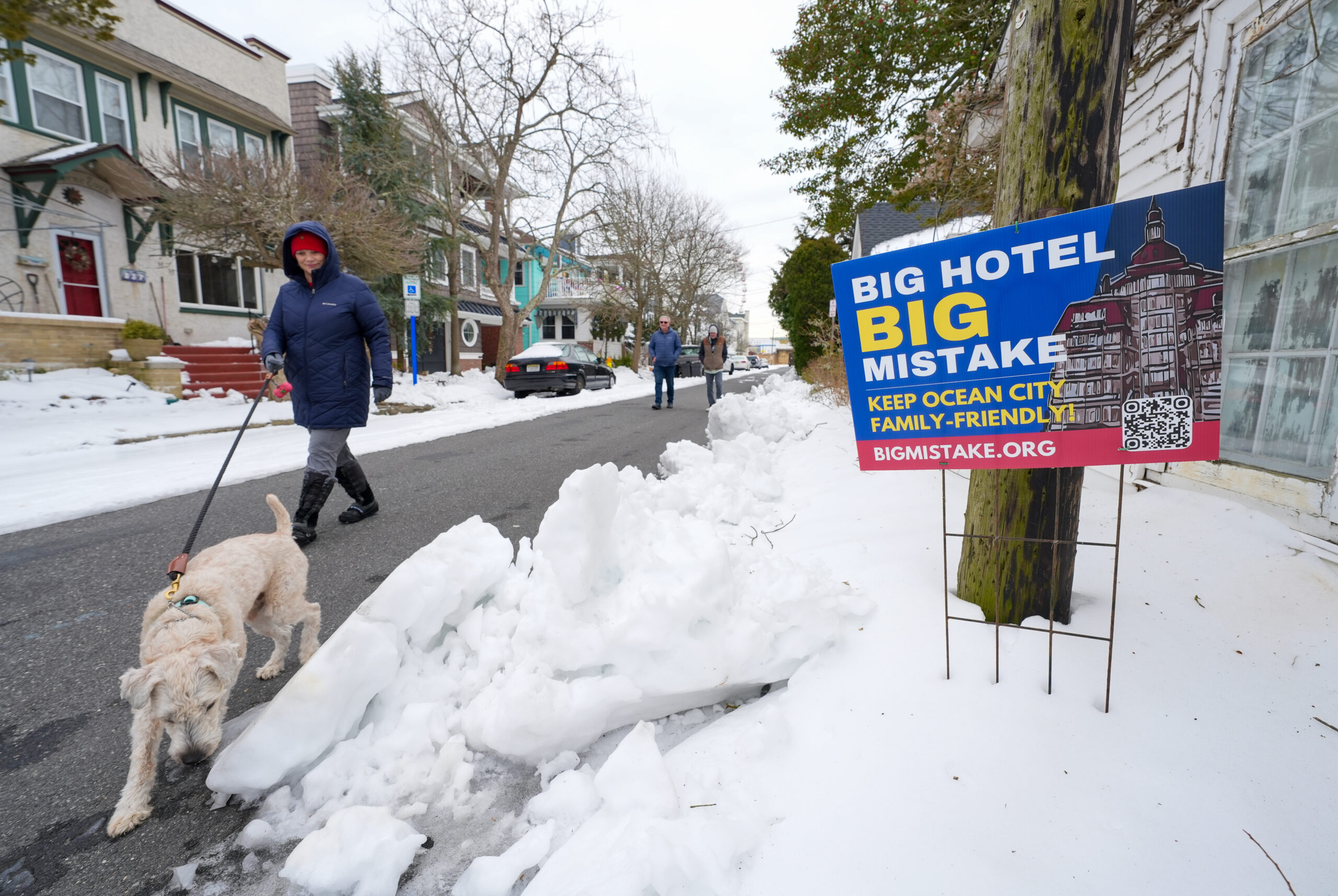
Marie Crawford, her husband Richard, right, along with Shiloh, a 9-year-old soft coated wheaten terrier, and their neighbor Jack Gutenkunst, walk past a sign against the development of a hotel at the site of the old Wonderland Pier on the boardwalk in Ocean City, Tuesday, Feb. 3, 2026.
In Plaza Place, the opposition is less sentimental, more practical. They fear traffic, and the shadow from a neighboring seven-story hotel. Like residents in other towns who fought dunes, they fear the loss of the ocean breeze, or a shift in wind patterns that will affect surfing at the popular Seventh Street Beach.
“It’s got that old feel to it, and everybody’s house is different,” said Marie Crawford, who bought her Craftsman Colonial on the north side of Pelham for $905,000 in 2021. She estimates it’s worth $2.5 million now. There are about 60 homes in the Plaza Place civic association.
The association is one of several groups that are prepared to go to court if the city tries to change the zoning to allow a hotel, without going through a thorough master plan process, said Jack Gutenkunst, the Plaza Place Association president.
While Wonderland brought thousands of people on a summer night, the pier itself had no parking. So people parked elsewhere and excitedly walked through their neighborhood on their way to the rides. People on their porches called out, “Have a blessed evening,” and chatted the night away, said Crawford. The hotel proposal calls for parking underneath the structure.
A sign stands near the historic neighborhood behind the old site of the Wonderland Pier in Ocean City, Tuesday, Feb. 3, 2026. Residents are against the development of a hotel at the boardwalk site.
Crawford stressed that it’s not a case of selfish NIMBY, Not In My Backyard. Despite Ocean City’s decades-old pattern of replacing single-family homes with duplexes, there are nearly 1,400 homes over 100 years old still left in Ocean City, said Bill Merritt, president of Friends of OCNJ History & Culture.
Being a block from the boardwalk, and living in a beach town, does not mean the neighborhood’s purpose is primarily hospitality, said Crawford. Its distinct, increasingly rare Jersey Shore character deserves to be valued, she said.
“It’s height. It’s chaos. It’s the change in culture,” she said, when asked what specifically worries her about the hotel. “It’s a transient population coming through here for three nights at a time. That’s in the hospitality district. We are not the hospitality district.”
The neighborhood behind the old Wonderland Pier site on the boardwalk in Ocean City, Tuesday, Feb. 3, 2026. Residents are against the development of a hotel at the boardwalk site.
The demolish-and-rebuild mania that took over a lot of the rest of the island has mostly left Plaza Place alone, though residents acknowledge that is also a threat to their way of life. They also fear a hotel will prompt Plaza Placeans to sell.
“It’s a Norman Rockwell painting, it just is,” Councilman Keith Hartzell says in the documentaryPlaza Place: The Enigmatic Street, a locally made short film about the neighborhood. “It’s right here in Ocean City, and you kind of don’t expect it, when there’s two streets away a bunch of duplexes.”
Hartzell, who is running for mayor against incumbent Jay Gillian, the former owner of Wonderland who sold to Mita, says he hopes to negotiate with Mita over height, parking, and other issues before considering any kind of zoning allowance or rehabilitation designation. A city council-appointed subcommittee tasked with assessing the boardwalk’s usage as a whole is holding a public meeting at 10 a.m. on Feb. 7 at the city’s library.
The residents of Plaza Place worry about the survival of the hidden little neighborhood by the beach they fell in love with. “The neighborhood is so beautiful and so old,” said Marie Crawford. “If the hotel goes in, the dramatic change that will be for all of us with the traffic, the tone of the neighborhood — you’re going to see people sell. That threatens the neighborhood. The people won’t want to stay.”
The house: A 1,590-square-foot rowhouse in West Philly with three bedrooms and two bathrooms, built in 1925.
The price: listed for $425,000; purchased for $410,000
The agent: Benjamin Camp, Elfant Wissahickon
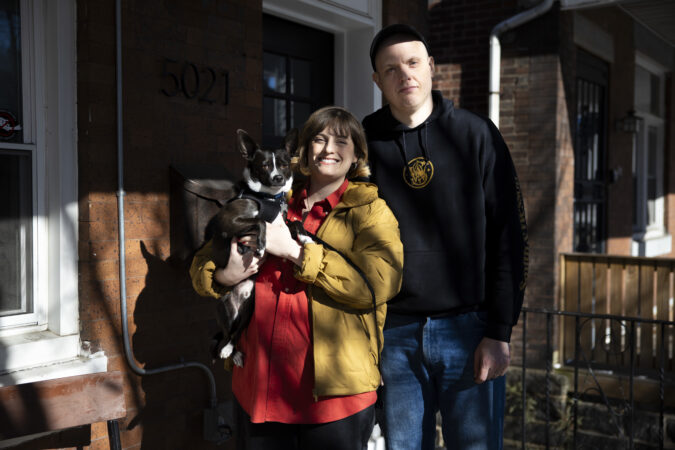
Rhiannon and Malcolm Critcher bought their West Philly home after a very short search. They saw only two other homes.
The ask: After a few years in Tucson, Ariz., Malcolm and Rhiannon Critcher knew they wanted to return to the East Coast. They tested a few cities first. Washington felt “a little too nerdy,” Malcolm Critcher said. New York swung too far in the other direction: “a little too main character.” Philadelphia felt just right. “It was a Goldilocks situation,” Critcher said. “We both came here and instantly fell in love.”
They moved in 2023 and rented in Center City for a year to get their bearings and explore neighborhoods. They fell in love with South and West Philly, but the latter’s parks and tree-lined streets ultimately won them over. They wanted to start a family soon, and West Philly‘s “green, verdant life,” Critcher said, “just felt like a really cool place to be a kid.”
Their must-have list was short but specific: a kitchen meant for hosting, an open-concept floor plan, and a basement big enough for Critcher, who is 6-foot-4, to stand in.
The search: One morning in November 2024, after getting breakfast in West Philly, they decided to walk to nearby open houses. They saw three houses. The third was a recently renovated semi-detached twin with light pouring in from multiple sides.
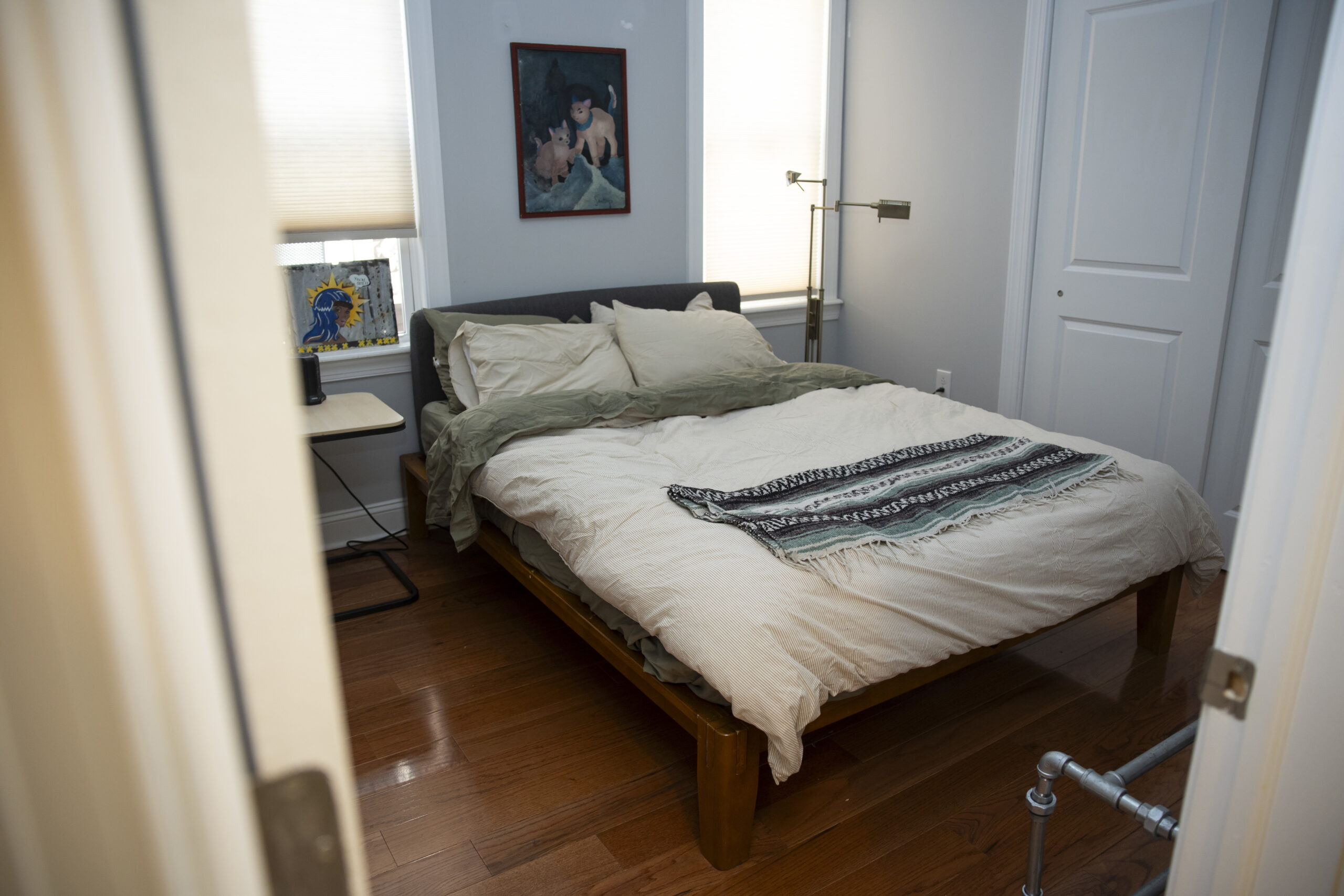
One of three bedrooms in Malcolm and Rhiannon Critcher’s home.
They both wanted to buy it right away, but worried they were being impulsive, so they decided to test the walk to the train. The couple doesn’t have a car and relies heavily on public transportation. It took less than five minutes. On the ride home, they realized they weren’t interested in delaying for the sake of process. “If you find the perfect thing early on, it’s still the perfect thing,” Critcher said.
Having previouslybought and sold three houses, Critcher had the confidence to move quickly. “I know what I’m looking for and what I want,” he said. They called their agent and made an offer that afternoon.
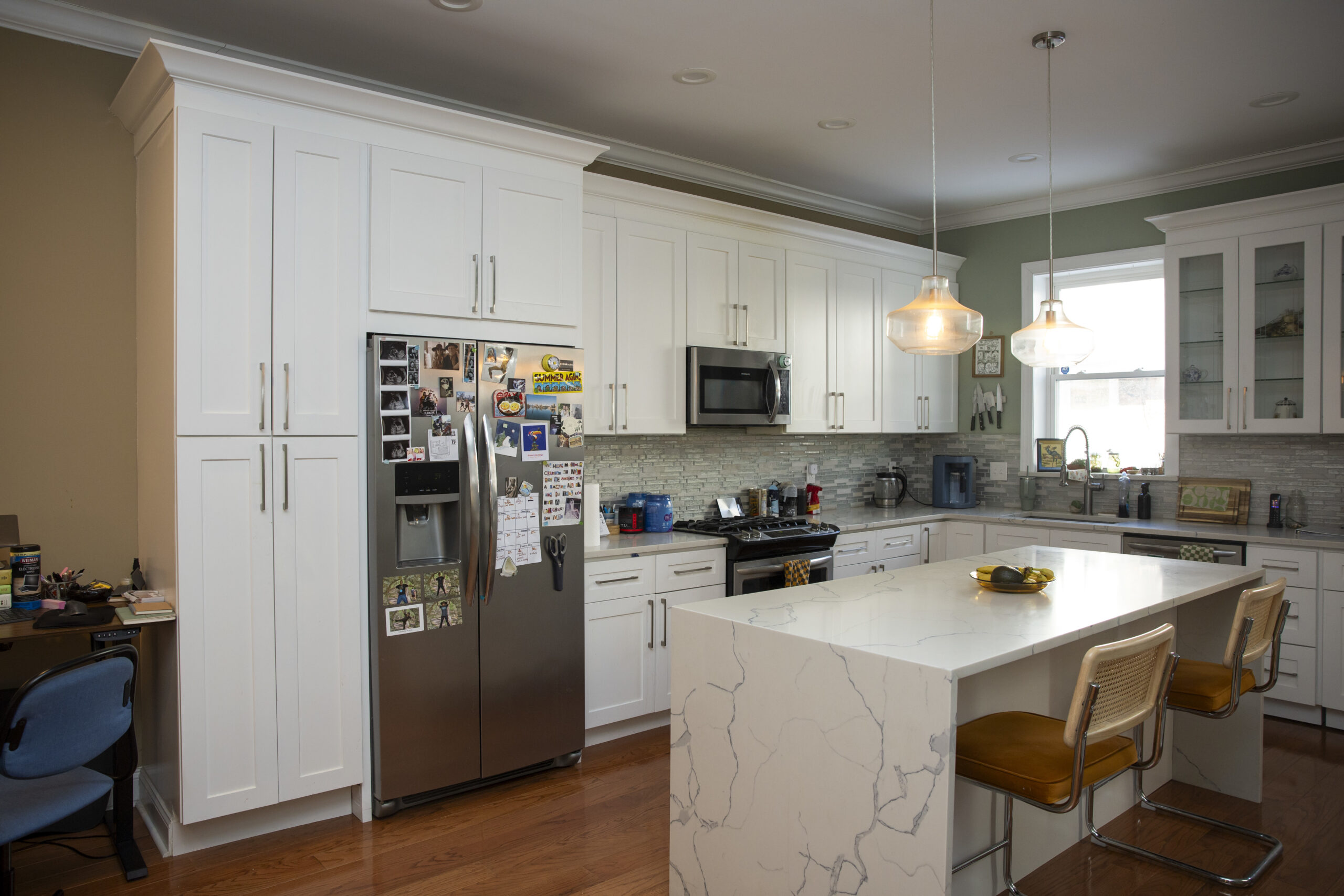
The appeal: The layout was the first draw. The open first floor flowed naturally from the living room to the kitchen, making it feel larger than its footprint. Then there was the renovation. Unlike the gray-floored, hastily flipped houses they had seen elsewhere, this one felt considered, as if the sellers had remodeled it for themselves, not for resale. They liked the finishes, the flow, and little design choices like the kitchen backsplash. “My wife walked into the kitchen and was just like, ‘Wow, this is my favorite kitchen I’ve ever been in,’” Critcher said.
The couple wanted a kitchen that would be great for hosting.
For him, the basement stole the show. It was finished, spacious, and didn’t require him to duck.
The deal: The house was listed at $425,000 — the very top of the couple’s budget. It had been on the market for justone day when they saw it. They decided to offer $25,000 below the asking price, but they promised to take it as-is, as long as the inspection didn’t reveal anything concerning. The sellers agreed to the terms but requested $410,000, which the couple agreed to.
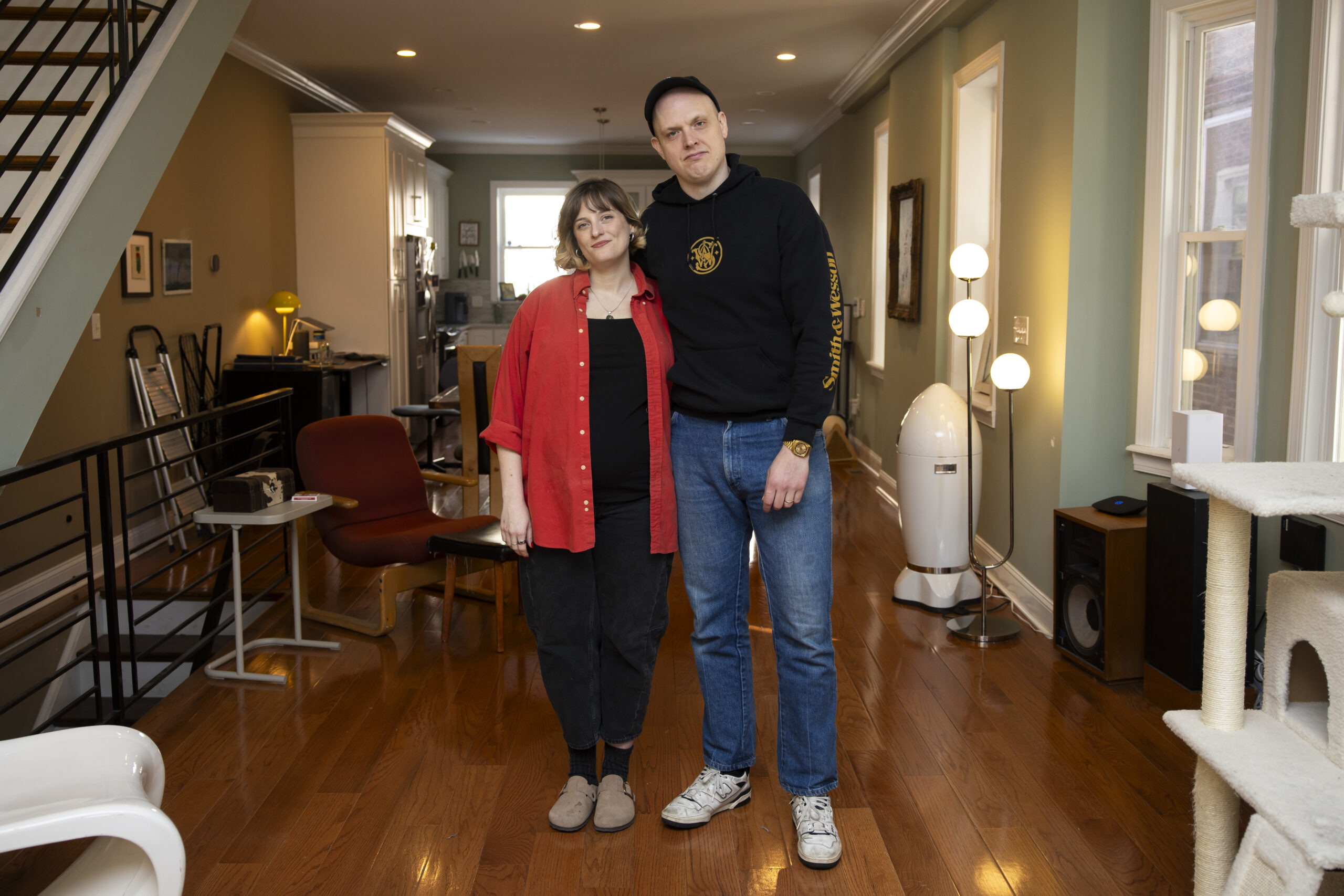
Light pours in from multiple sides of the Cratchers’ semi-detached twin.
The inspection came back spotless. The appliances had all been replaced in 2018. The sewer line had recently been redone. There were no structural issues. “Literally the most perfect housing inspection possible,” Critcher said.
The money: All told, Critcher and his wife brought a little over $100,000 to closing. Most came from the sale of their previous home in Tucson. They bought that house in early 2020 for $179,000 and sold it in 2024 for $300,000. The proceeds went straight into a high-yield savings account and remained untouched until the couple was ready to buy again.
The couple’s dog, Pablo, likes to hang out in the second bedroom.
The down payment on their new house came in just under 20% — about $82,000 — and closing costs were $26,000.
For Critcher, the exact breakdown mattered less than the total. He approached the purchase with a fixed pot of money and trusted their lender and agent to structure the details responsibly.
The couple loved the open floor plan on the first floor.
The move: The couple closed in mid-December 2024 while they were out of town. A notary in Arizona helped them file the necessary paperwork. The move itself happened in mid-January. Compared to moving across the country a year earlier, moving from Center City to West Philly wasn’t too bad. They hired movers to load a U-Haul from their sixth-floor apartment, then unloaded it themselves at the new house. Packing took about a week. The move took two days. Unpacking stretched on for a month.
Any reservations? Critcher wouldn’t recommend their approach to first-time homebuyers. “It was very impulsive,” he said. “But we both just fell deeply in love with it.”
Life after close: They’ve kept things simple since moving in. They haven’t undertaken any major renovations or upgrades. “We’re just kind of floating,” Critcher said.