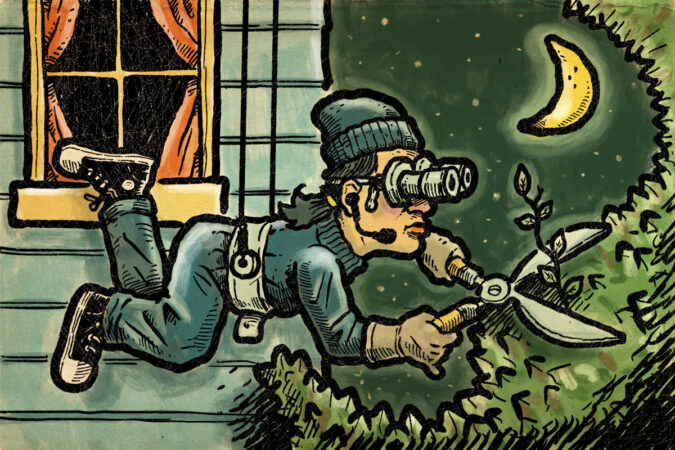
This week’s question is… My neighbor and I don’t get along. A tree from her yard is starting to brush up against my house. I know I’m allowed to trim it, but how do I go about doing it without starting another feud?
Elizabeth Wellington, Features Columnist
Start with asking her. Politely, of course.
Abigail Covington, Life & Culture Reporter
But what if she says you can’t? As a non-confrontational person, I would simply melt.
Elizabeth Wellington
I would melt, too. But she can’t tell me that I can’t. Right? Because it is on my property. If she says that I can’t, I guess it’s time to play hard ball. I’d have to break out the law that says, “I can.”
Abigail Covington
Evidently, under Pennsylvania law, you can trim any part of a neighbor’s tree or shrub that crosses your property line. But you must stay on your side of the property line and trimming must not kill the tree or bush, or you could be liable for damages.
Evan Weiss, Deputy Features Editor
So are you asking the neighbor or telling?
Elizabeth Wellington
I’d start by asking if they minded. And then I’d have to tell them what’s happening as nicely as I could, of course.
Abigail Covington
Would you ask them to trim it or would you offer to do it for them?
Elizabeth Wellington
So maybe we ask them if they can trim their tree back first. And if they say no, then perhaps we offer to do it for them?
Evan Weiss
And if they say they don’t want it either way, you just do it anyway, right?
Elizabeth Wellington
I guess so. But also I need to know how much this foliage is disrupting my life. Like, is it messing up my view? Is it ruining my swimming pool activity? Are me and my kids brushing up against it and it’s scratching me? Or is this just a run-of-the-mill aesthetic thing?
I would need to weigh these things and then figure or not whether it’s worth raising heck. Having an angry neighbor can ruin a homeowning experience. But if Pennsylvania law is on my side and this is really working my nerves, I’ll just have to snip, snip, snip.
Abigail Covington
I’m with you. Having an actively angry neighbor is more unpleasant than a tree branch dangling in your yard. At some point, the city will step in if it gets to be too much.
But if it’s really bothering you, the law is on your side.
Elizabeth Wellington
The question is, do we do the hacking in the middle of the night? Or boldly in broad open daylight?
Abigail Covington
Dressed in all black. Middle of the night. Like it never happened. Repeat after me: You were never there.
Elizabeth Wellington
Hahaha. You mean like, “Oops… How did this ever happen?”
Evan Weiss
“Wow, I can’t believe someone did that! I loved that tree!”
Elizabeth Wellington
Hahaha. Right.
That’s kind of taking a punk’s way out. We should say it with our chest. (Sheepishly…)
Abigail Covington
100%. “Must’ve been that darn barn owl I’ve seen flying around here!”
Elizabeth Wellington
An owl, Abigail? Really.
Go with a raccoon. Blame everything on raccoons.
Evan Weiss
Start by being straightforward.
“This tree is hitting my house and I don’t like it because of XYZ, so I’m going to trim it. Thank you for understanding.”
Abigail Covington
“Thank you for understanding” is what you say when you know someone is mad, but you don’t want them to be mad. I get it.
Elizabeth Wellington
Would bringing a tiny gift make things better? Like a bottle of wine, a gift card to Starbucks? Sweeten the deal. Let them know it’s not personal?
Abigail Covington
Tiny little treats make everything better. Something for their garden? A small plant?
Evan Weiss
A bouquet of freshly-cut branches.
Abigail Covington
Hahahaha.
“Thank you for understanding.”
Elizabeth Wellington
Now, Evan. You are cruising for a bruising.
Evan Weiss
I kid, I kid.
I don’t think a gift is necessary, but it wouldn’t hurt if that eases the asker’s anxiety.
Elizabeth Wellington
It’s kind of like you have to ask them, and already know what you plan to do anyway.
Evan Weiss
Any last words of advice for the asker?
Elizabeth Wellington
Be sheepish on the outside. But know what you are going to do on the inside. It’s easy to be swayed in these situations. Stand your ground. With a gift.
Abigail Covington
Be polite but bold. You got this.
Have a question of your own about a relationship? Philly life? Annoying neighbors? Or an opinion? Email me.
The pitch is familiar: plenty of hotel rooms, an arena in South Philly, SEPTA ready to move thousands of delegates around, and a city that knows how to handle the logistical chaos of a major convention. We did it in 2016, after all. And these days, we’re basically hosting everything. World Cup matches. The MLB All-Star Game. The country’s 250th birthday.
But the real strategy is the soft sell. When the selection committee visits, they’ll get the full Philly treatment: Reading Terminal, skyline views, maybe a rooftop party, definitely a cheesesteak.
Because every big event bid in this city eventually comes down to the same argument: Look how fun we are.
And clearly, it’s been working.
Philadelphia Phillies center fielder Johan Rojas takes the field before the game against the Washington Nationals at BayCare Ballpark on Thursday, Feb. 26, 2026 in Clearwater, Fla. The Philadelphia Phillies defeated the Washington Nationals 7 to 3.
Rojas isn’t exactly an offensive powerhouse, but he plays defense in a spot where the roster is otherwise thin. Take him out of the mix and the Phillies are left juggling a few spring-training options and hoping someone looks like a center fielder by opening day.
That’s the baseball problem.
The smaller but still tragic loss is the walk-up song. Every time Rojas stepped to the plate, Citizens Bank Park got “Oh Oh Oh (Veo Veo),”which was extremely fun and made you want to shimmy on a random Tuesday night.
The Phillies will figure out center field eventually, but the stadium is at risk of losing one of its best vibes.
Jeffrey Epstein vs. the Penn vs. Penn State mix-up: A
Newly released emails show the disgraced financier repeatedly claimed he funded a “Quantum Gravity Program” at Penn. The problem: The research program he actually helped fund was at Penn State.
To outsiders, that might sound like a harmless mix-up. Technically both are universities, sure. But socially it lands closer to mixing up Wawa and Sheetz. People will notice.
Few things irritate University of Pennsylvania alumni more than being mistaken for Penn State. The Ivy League school has spent decades correcting people on this, to the point that alumni sell novelty shirts that read, “Not Penn State.”
Reddit planning a Philly itinerary for a Midwesterner: B+
A visitor from Columbus popped into Reddit after a first trip to Philadelphia to rave about the walkability, Chinatown food, and an Angelo’s cheesesteak — and ask locals what to do next time.
Naturally, the internet responded by assembling a pretty respectable itinerary.
One commenter suggested the Barnes: Another recommended the Schuylkill River Trail and neighborhood hopping through Fishtown, Manayunk, and the Italian Market. A third pushed the visitor farther west for food: “Some great Ethiopian and other African restaurants.”
There was also the very Philly observation that the tourist somehow skipped the city’s most predictable cheesesteak stop. “It is so rare when a tourist does not stop at a Pats or Genos. They can’t help themselves.”
The thread is mostly right. But if you want the full Philly experience, we’d add a few more essentials: a Phillies game at Citizens Bank Park, a wander down the Italian Market, and a long, aimless walk through one of the city’s rowhouse neighborhoods where every block looks a little different.
Also, credit where it’s due. The guy went to Angelo’s on his first trip. Some visitors take years to figure that one out.
Johnny Garbarino hitting his opponent Apostle Spencer with an overhand right at the Wells Fargo Center during BKFC’s KnuckleMania V event.
A Flyers fight coach starting a fight outside Barstool: F
The Flyers once brought Johnny “Cannoli” Garbarino, an undefeated bare-knuckle boxer, in to teach players how to handle themselves in hockey fights.
Video shows Garbarino punching the bar’s plexiglass vestibule, threatening onlookers, and setting off a multiperson street fight after destroying someone’s phone. Police are investigating an assault complaint.
Hiring a professional fighter to teach hockey players how to fight makes a certain kind of sense. Being surprised when that same fighter gets into a fight outside a bar at 2 a.m. makes a little less.
Not exactly the kind of player development the Flyers had in mind.
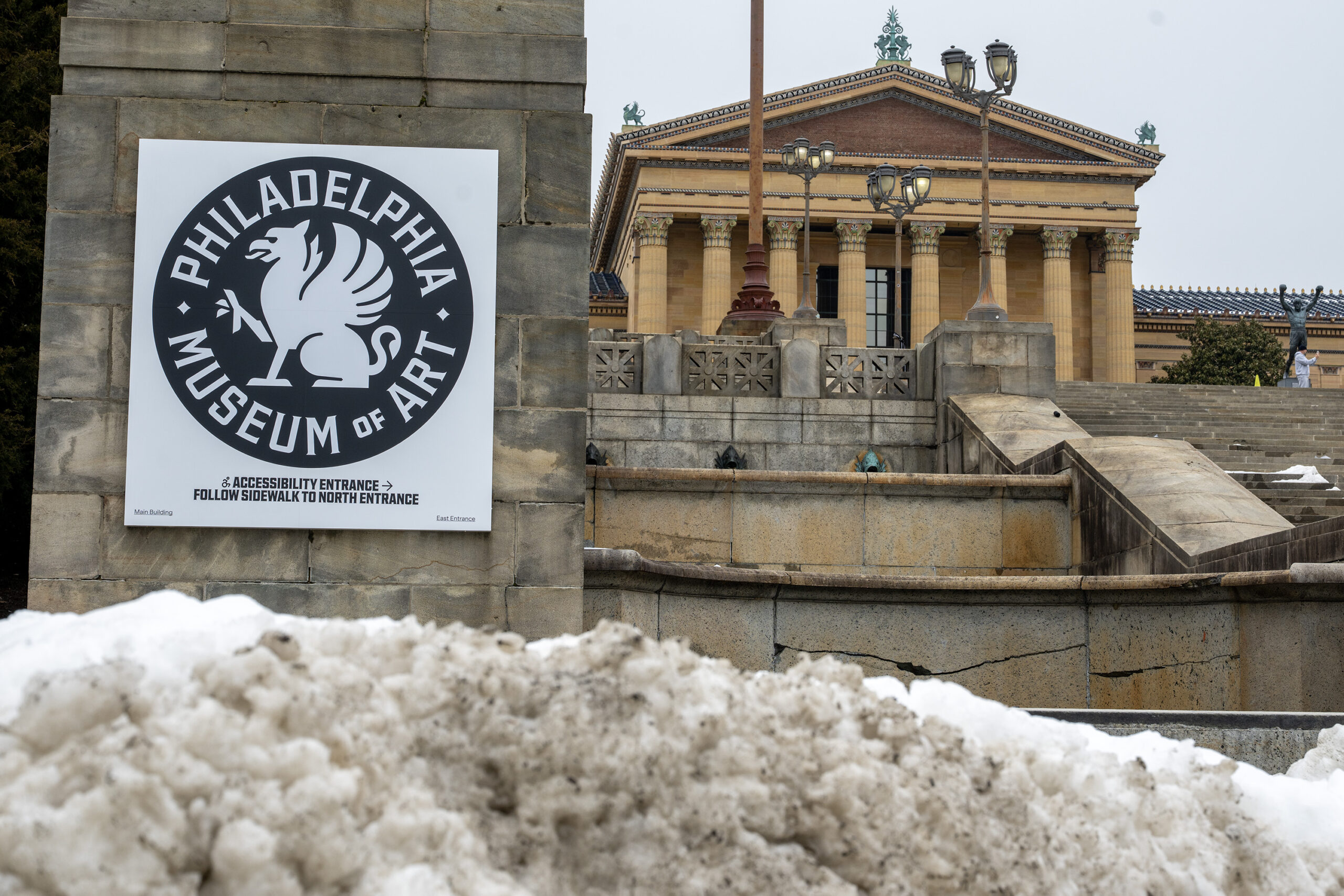
One of the newly-installed signs for the recent old/new name change at the Philadelphia Museum of Art, on Thursday, Feb. 26, 2026.
Considering a full-price ticket can run up to $30, that’s not a small change. Museums love to talk about accessibility but removing the price barrier is one of the few ways to actually make that happen.
The timing is also convenient. After months of headlines about leadership drama, rebrands, and legal disputes, the museum seems eager to remind people that the actual point of the place is, you know, art.
And if letting people decide what to pay gets more Philadelphians wandering the galleries on a Friday night, that’s probably a pretty good reset.
Ivan, a drug-sniffing K-9 dog working for the Pennsylvania State Police, made a 40-pound drug bust in Delaware County last month.
From a law enforcement perspective, that’s a pretty significant drug bust.
From a public relations perspective, it’s also a reminder that every police department should have at least one extremely good dog on staff.
Ivan alerted troopers to the scent of narcotics in the vehicle, leading to a search warrant and the eventual discovery of boxes and buckets full of marijuana.
Which means somewhere in Delaware County, a very good boy probably got a treat and a lot of praise — as he should.
We’ll show you a photo taken in the Philly-area, you drop a pin where you think it was taken. Closer to the location results in a better score. This year’s Flower Show theme, “Rooted: Origins of American Gardening,” inspired this week’s quiz. Good luck!
Round #
Question 1
Where can you catch this reflective view?
Loading…
ClickTap on map to guess the location in the photo
ClickTap again to change your guess and hit submit when you're happy
You will be scored at the end. The closer to the location the better the score
Tom Gralish / Staff Photographer
Pretty good/Not bad/Way off! Your guess was from the location.Spot on! Your guess was exactly at the location. Here's also where a random selection of Inquirer readers guessed.
Calder Gardens is the newest addition to the Benjamin Franklin Parkway. The space dedicated to the work of Philadelphian-born sculptor Alexander Calder. It opened in 2025.
Quiz continues after ad
Question 2
Where can you find this mural next to an urban farm?
Loading…
Tom Gralish / Staff Photographer
Pretty good/Not bad/Way off! Your guess was from the location.Spot on! Your guess was exactly at the location. Here's also where a random selection of Inquirer readers guessed.
Sanctuary Farm Phila, located in North Philadelphia, transforms abandoned lots into agricultural spaces. The farm hosts nine community garden locations that provide free, organically grown produce and programs for children and adults.
Quiz continues after ad
Question 3
This Philadelphia garden was recently renovated. Where is it?
Loading…
Tom Gralish / Staff Photographer
Pretty good/Not bad/Way off! Your guess was from the location.Spot on! Your guess was exactly at the location. Here's also where a random selection of Inquirer readers guessed.
Last spring, Prince Edward attended a ceremony in Benjamin Rush Garden to rededicate the Bicentennial Bell, originally given to the United States by Queen Elizabeth II in 1976.
Your Score
ARank
🪴 Amazing work. You ex-seed-ed expectations.
BRank
🪴 Good stuff. You ex-seed-ed expectations.
CRank
🪴 C is a passing grade, but you have room for growth.
DRank
🥀 D isn’t great. I wouldn’t say you “rose” to the occasion.
FRank
🥀 We don’t want to say you failed, but you withered under pressure.
You beat % of other Inquirer readers.
We’ll be back next Saturday for another round of Citywide Quest.
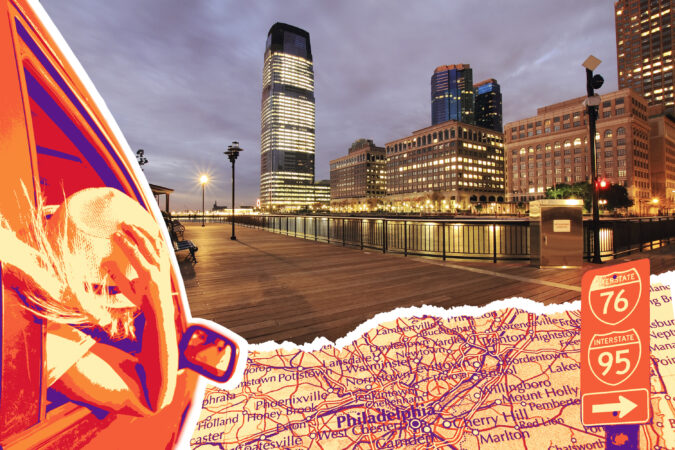
Most Philadelphians’ experience with Jersey City begins and ends at the mouth of the Holland Tunnel on the way into Lower Manhattan. Except for those who know food.
Jersey City is one of the state’s best towns for eating and drinking, supported by long-standing immigration and cross-river relocation from New York. Between meals, you’ll find a city that’s at turns gritty and lovely, neighborly and human-scale in a way that makes it feel, to Philadelphians, as warm and familiar as a Champion sweatsuit. (It also has a really nice waterfront from which we could learn a thing or two.)
It’s only 90 miles and about 90 minutes away, depending on traffic. And if you must, you can easily pair it with a visit to New York.
A hotel with a story to tell — whether it’s luxurious or eccentric or charming — is always ideal for a weekend getaway. But when corporate keys are what’s available, you can do much worse than Hyatt’s Hyatt House sub-brand. Jersey City’s Hyatt House is relatively new and reliably clean, with great beds, a rooftop deck, and a modicum of style. What more could you ask for? How about a skyline view? Upgraded rooms facing Manhattan are bookable in April for under $300.
“Bakery” is a limiting descriptor for what Rick Easton does at Bread and Salt on Palisade Avenue, opposite the Hoboken border. Sugared bomboloni, esoteric Italian cookies and crostadas, suppli, thin-crusted pizzas, cups of stewy beans begging for a heel of crusty bread, curly punatarelle salad, Lent-friendly fish specials on Fridays. It’s an inspiring operation. Get more than you think you need. Then get more to bring home.
📍 435 Palisade Ave., Jersey City, N.J. 07307
Stroll: Liberty State Park
Hemmed in by the NJ Turnpike extension and the Hudson River, Liberty State Park encompasses 1,200 acres of greenspace (about half under ongoing revitalization) and miles of scenic waterfront trails perfect for spring strolling. Pause at the 9/11 Empty Sky Memorial. If you’re traveling with kids (or adult dinosaur fans), check out the immersive T. Rex Experience at Liberty Science Center, whose planetarium dome you’ve probably seen from the Turnpike driving home from New York.
Ellis Island and the Statue of Liberty are typically associated with New York, not New Jersey, but the sites actually fall under an unusual joint-custody arrangement. It’s also much less of a headache to visit from Jersey City; no downtown traffic to get through, way thinner crowds. The ferry departs right from the Liberty State Park and visits both islands in a single ticketed experience.
No one: You know what we really need in Jersey City? An Irish-Mexican cocktail bar. The acclaimed Dead Rabbit crew: Bienvenidos a San Patricios. Open last year, the cantina/pub celebrates the little-known 19th-century brotherhood between Ireland and Mexico. Stop in before dinner for something thematic: a palmona spiked with Irish moonshine, frozen horchata café con leche with Lost Irish Whiskey, or the Countess, a rum-and-Guinness hibiscus mule.
📍 8 Erie St. A, Jersey City, N.J. 07302
Dine: Razza
At Razza, Dan Richer makes some of the best pizzas in the county, a mix of reliables (the fermented chile-flamed Calabrese; the yellow-and-red tomato pie dusted in 36-month-old Parm-Reg) and hyperseasonal creations like last spring’s mosaic of mozzarella, asparagus, nettles, spinach, and ramp pesto. Bread and butter might seem redundant when you’re having pizza for dinner, but you cannot miss the tawny, crusty sourdough, served with tangy house-cultured butter made from grass-fed Pennsylvania cows.
Family-owned and spanning three generations, Torico Ice Cream is the charming scoop shop every neighborhood wishes it had. Towering atop house-made waffle cones, you’ll find classics like chocolate-marshmallow, mint-chip, and a notably excellent strawberry, but Torico’s secret sauce is the tropical ice creams and sorbet like passionfruit, guava, and soursop that nod to the Berrios clan’s native Puerto Rico.
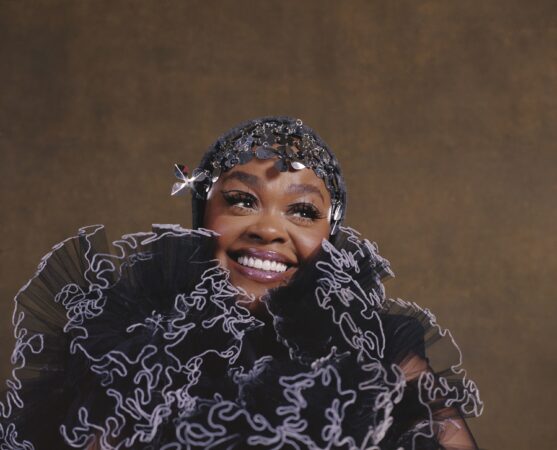
Jill Scott’s sixth studio album To Whom This May Concernis a tapestry of Scott’s familiar easy rhythms with lyrics equal parts sweet longing and self-love.
But on this 19-track project — Scott’s first collection of new music in more than a decade — she isn’t just telling us she plans to live her life like it’s golden the way she did 22 years ago. She’s also telling us about the great life she has right now. And she’s urging us to join her in the present moment with funky beats, powerful lyrics, and tight rhymes.
“You might as well go ahead and be great,” Scott said in a recent video chat. “There’s literally nothing stopping you from being all of yourself.”
Album cover of Jill Scott’s sixth studio “To Whom This May Concern” is a portrait of Jill Scott by muralist Marcellous Lovelace
To Whom This May Concern is Scott’s assertion of self-love especially evident in the album cover’s illustration — by Chicago-based muralist Marcellous Lovelace — of the 53-year-old multi-hyphenate wearing big gold earrings and her natural hair in a top knot. “I’m free” is written in block letters across her forehead.
“I’m pushing and supporting all of the art we have created as Black people in America,” Scott said. “I support that. [But this album is not for] limited ears. It’s definitely not limited music.”
Scott, who lives in Nashville, Tenn., recorded most of the album in Philly with Grammy winning producer — and her cousin — Carvin Haggins. She has traveled all over the world and says there is no place like Philadelphia.
“The people at home are so dear and warm,” Scott, who often goes by Jilly from Philly, said. “I was grateful to find that again.”
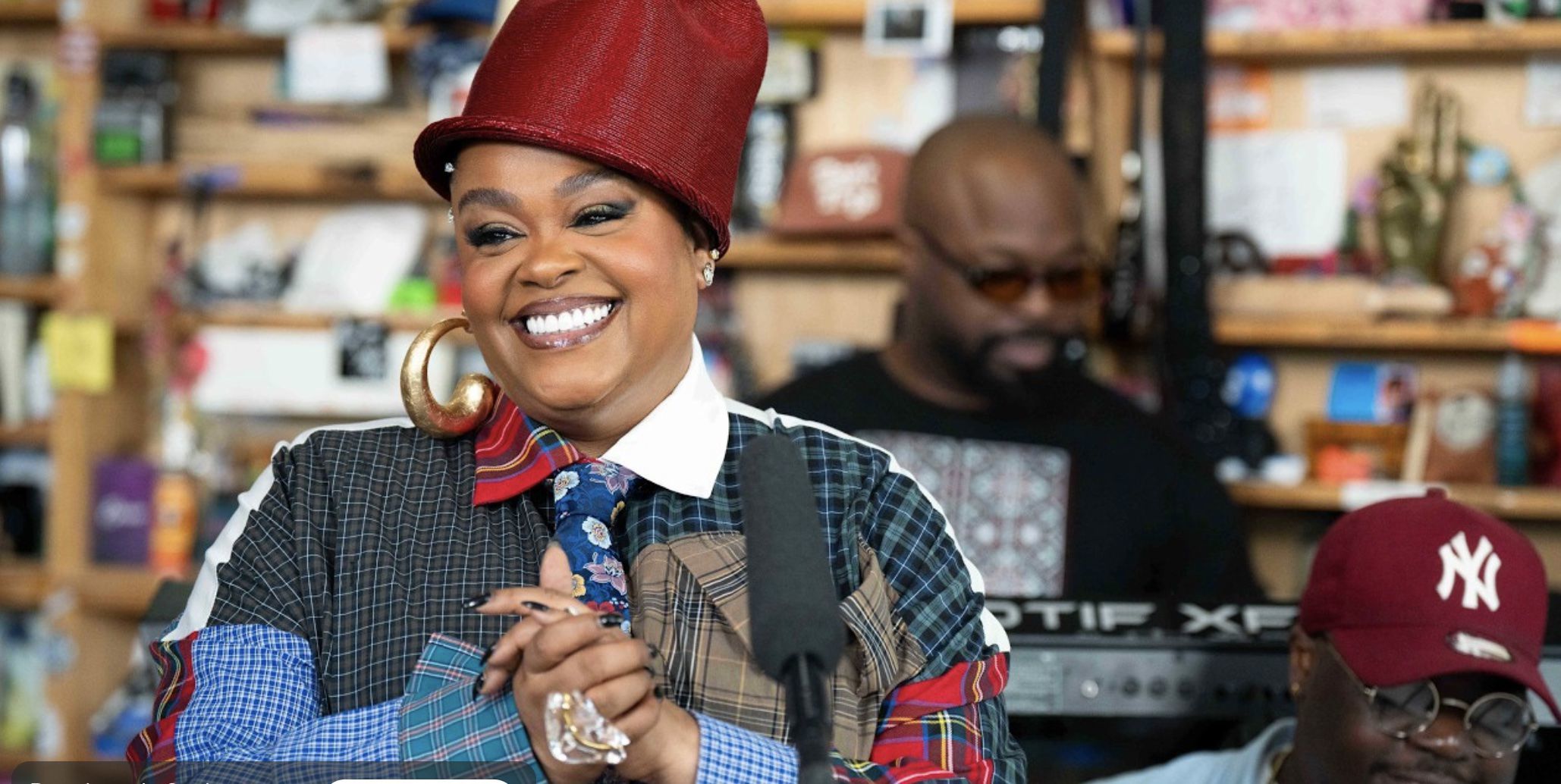
Jill Scott performing on NPR Music Tiny Desk Concert series. The North Philly singer’s new album is ‘To Whom This May Concern.’
Scott loves every nook and cranny of her hometown, but she still pours an extra bit of love for the “Norf Side,” to borrow from the lyrically sound rap she performs with Tierra Whack on the new album.
“So often people have shunned me, making me feel less than because I come from North Philadelphia,” Scott said. “I wanted to shout out my area and remind [that people from] North Philly, we can do anything.”
Here is the songstress’s idea of a perfect Philly day.
7 a.m.
If I lived in an apartment or condo in Philly near a park I’d get up and take a long walk, first thing.
9:30 a.m.
In the summer, I’d go over to the Blues Babe offices on North Broad and greet the kids at summer camp [Blues Babe is Scott’s nonprofit that sends children from Philadelphia and Camden to free summer camp]. The children gather there before taking trips all over the city. It’s important that I tell these kids that came from the same place I do, that they can do anything.
12:30 p.m.
I’d have lunch atContinental Midtown on Chestnut Street. (I’m really sad they closed the one in Old City.) I just love their turkey burger. Then I’d walk over to Rittenhouse Square and sit at the park. I love watching nature. On my perfect day, the artisans would be out selling jewelry and art and I’d find a good deal because you know I like to save money.
2:30 p.m.
From there, I’d go to the Philadelphia Museum of Art and maybe catch the Noah Davis show. Then, I’d go to the African American Museum of Art before making my way down to Ishkabibbles on South Street. There, I’d order a pizza steak with fried onions and mustard and pickles. (Nobody has to understand your cheesesteak.)
“Untitled Girls” This painting by Noah Davis will be on display in the Philadelphia Art Museum’s 2026 exhibition named after the late artist
5:30 p.m.
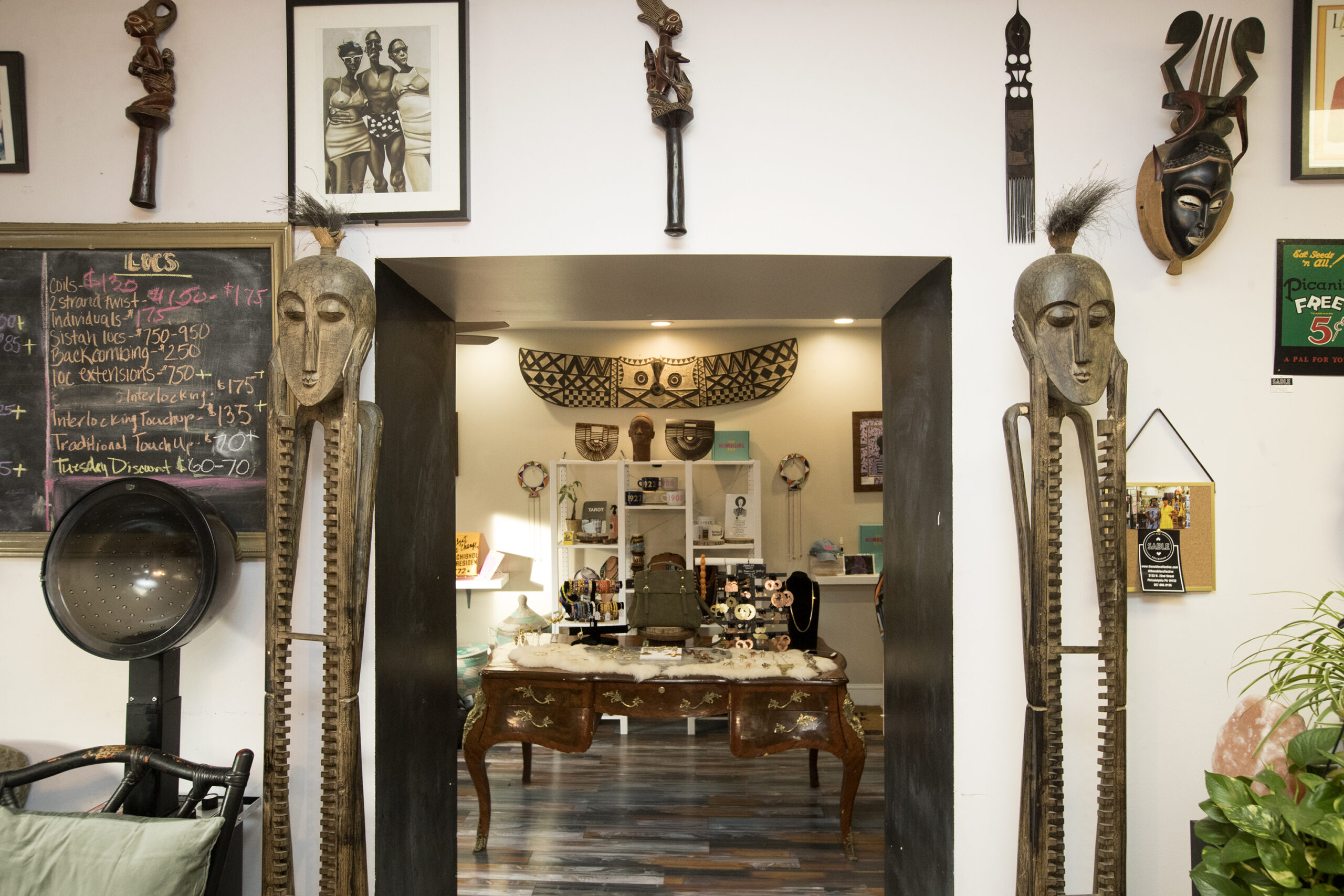
I’d make my way back up to North Philly and visit my friend Syreeta Scott at the natural hair salon Duafe. She has such beautiful art work in there. It’s so peaceful. The energy is so good. We would go out, or she might cook something amazing. I would raid her closet and just chill.
Inside Duafe Holistic Hair Care.
7:30 p.m.
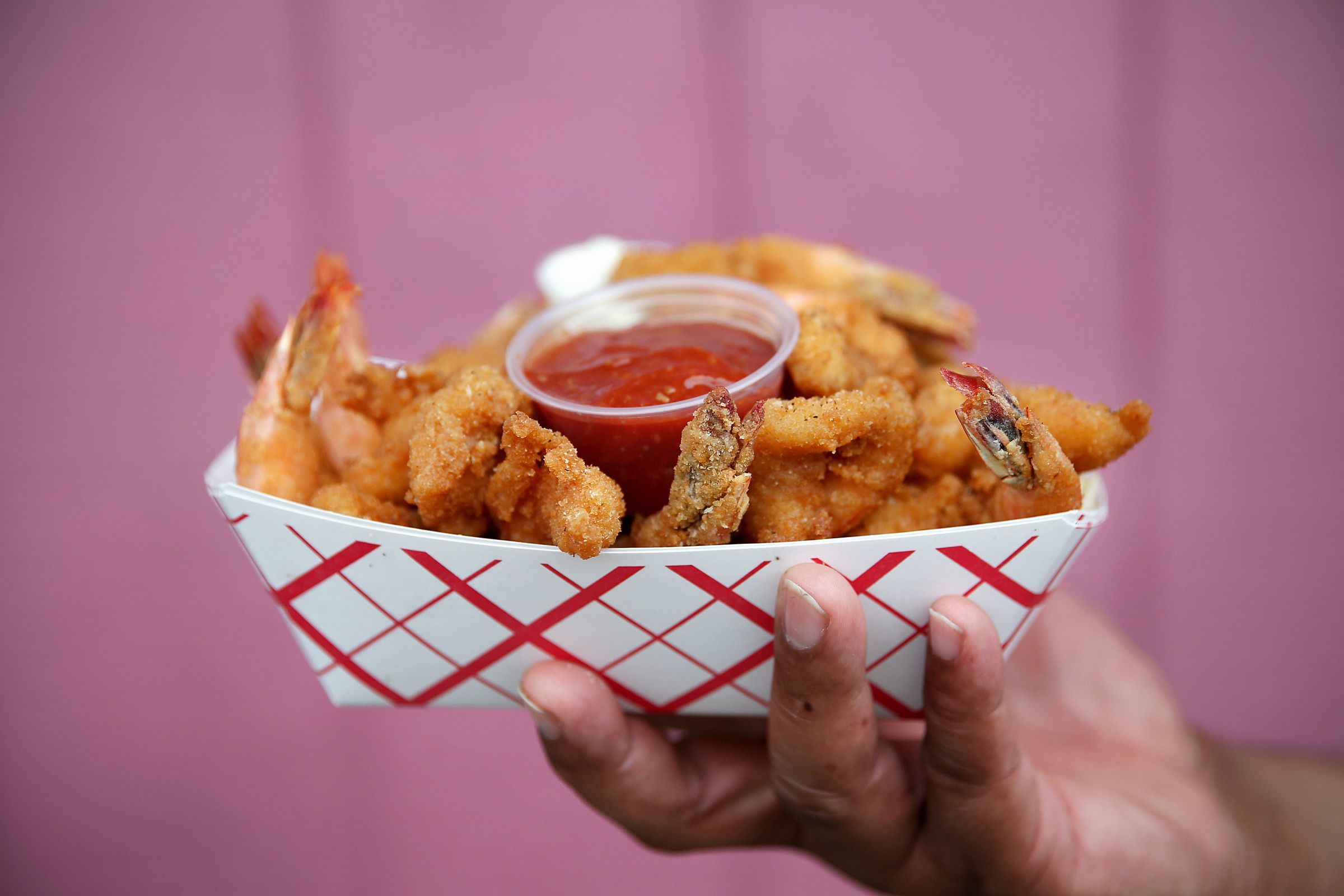
If Syreeta isn’t cooking, we’d make our way to Sid Booker’s. I got to have it. Let me give you the deal: When you go to Sid Booker’s, you have to eat it in the car. There is no such thing as waiting until you get home. You are wasting it. You will ruin it. And if you like ketchup and hot sauce you have to get it on your shrimp, not on the side. But on your shrimp.
Fried shrimp are pictured at Sid Booker’s Shrimp Corner in North Philadelphia on Friday, Sept. 14, 2018.
10:30 p.m.
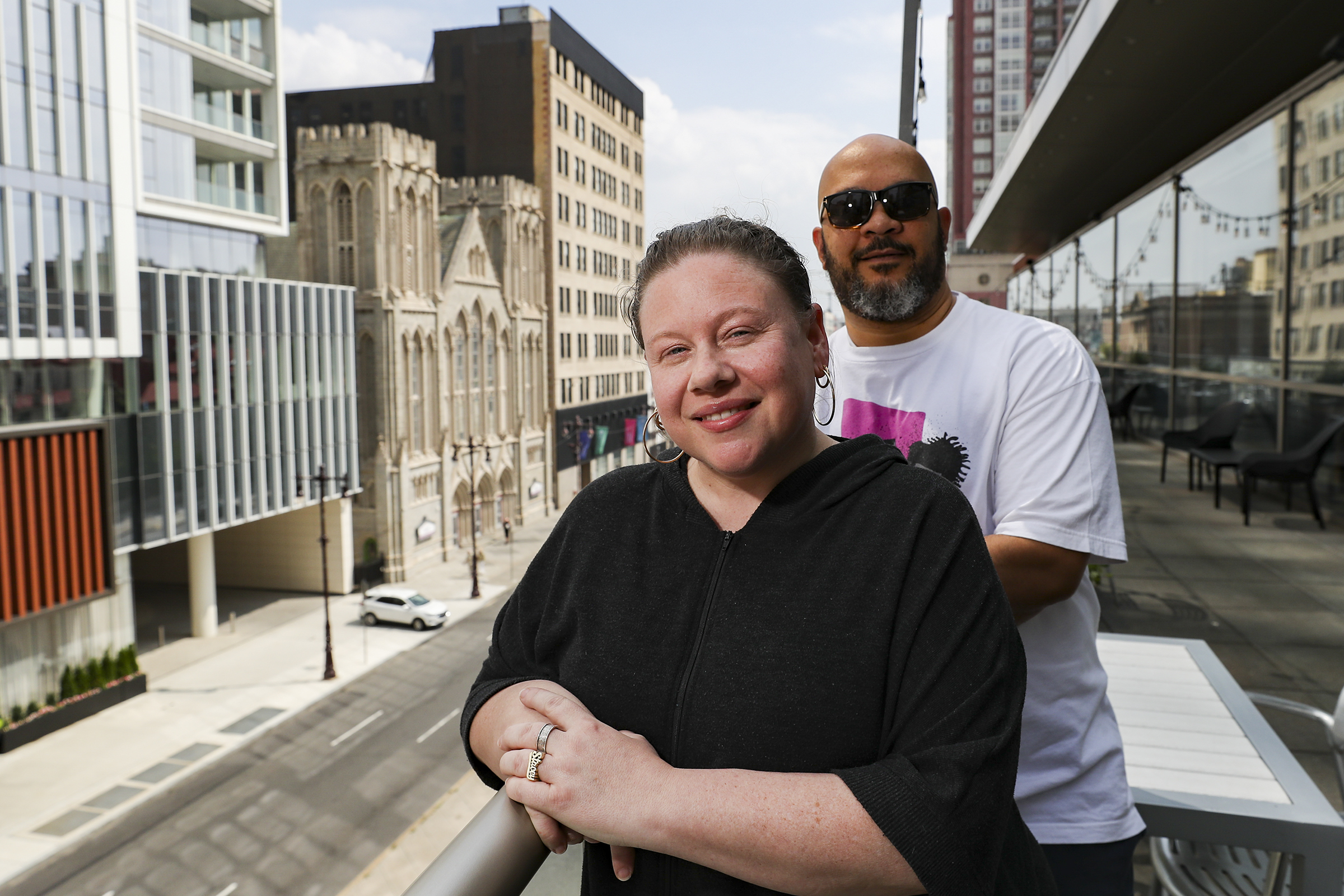
I’d hope that Stacy “Flygirrl” Wilson is having a party with Mike Nyce, I would definitely go there. That is always a good time.
Stacey “Flygrrl” Wilson and DJ Mike Nyce at the Kimmel Center during a summer happy hour.
To be a privy digger in Philadelphia is to be part excavator, part flea market authority, and part pirate. First, you must be able to dig — sometimes 30-plus feet in rocky soil — to get to the bottom of a centuries-old outhouse. Whatever you find buried in the organic waste there, you must research. And much of this digging and discovery takes place in secret in the middle of the night, on open construction sites across the city where you’re not exactly supposed to be.
“Obviously, it’s sketchy. We would have the police come,” said Matt Waholek,39, a longtime Philadelphia privy digger who now lives on Long Island. “They would be like, ‘Alright, you’re not burying bodies, right?’”
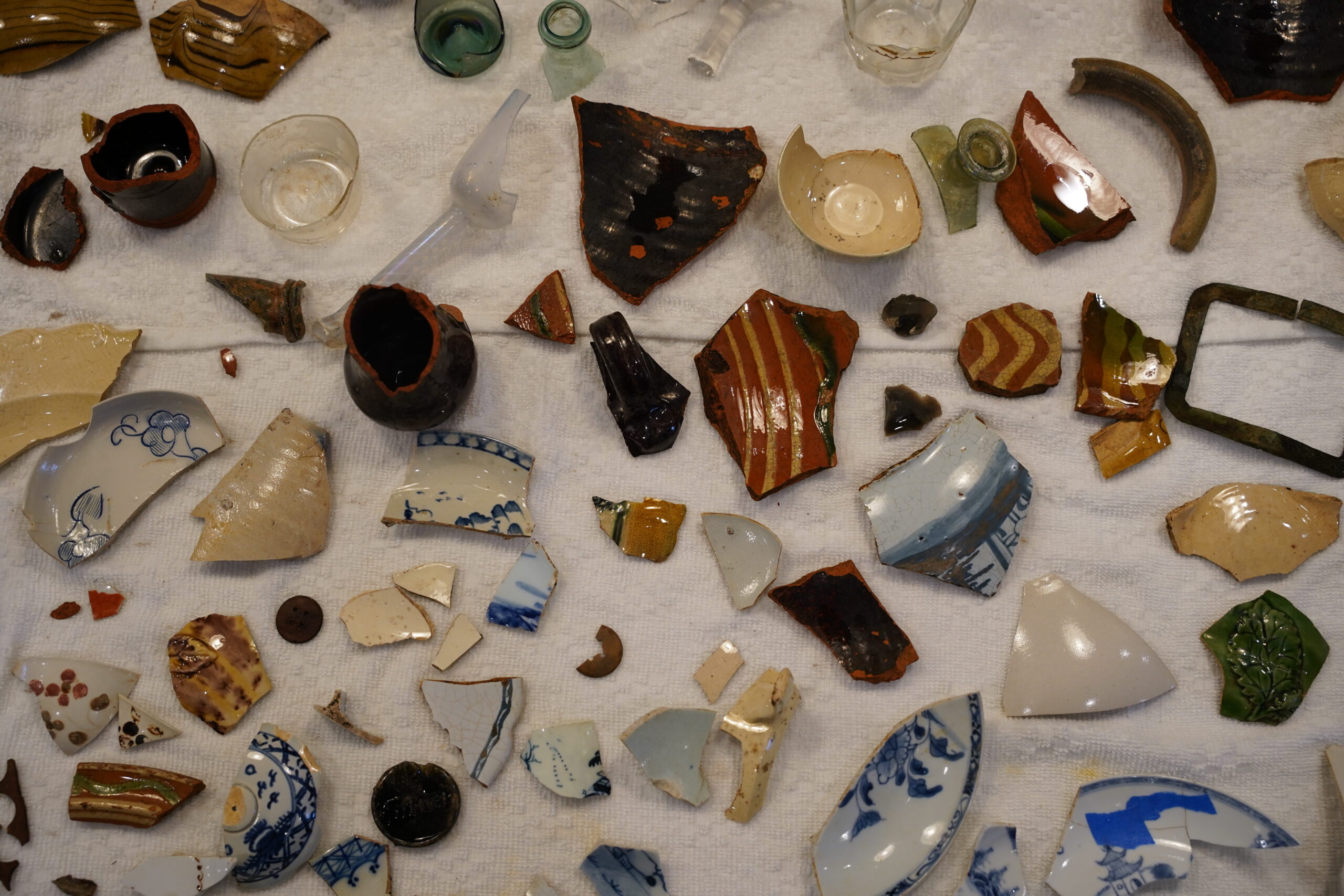
Privy diggers are not burying bodies. Instead, Waholek and his fellow diggers are hobbyistsprobing for a certain kind of treasure — ceramic cups and bowls, clay pipes, glass bottles — that long-ago Philadelphians threw into their outhouses before the existence of citywide trash collection.
Most of the diggers are only interested in land that was developed before 1880, when the rise of factory production led to fewer handmade objects. One digger described finding half a dozen handblown glass devices from the mid-19th century that turned out to be early breast pumps.
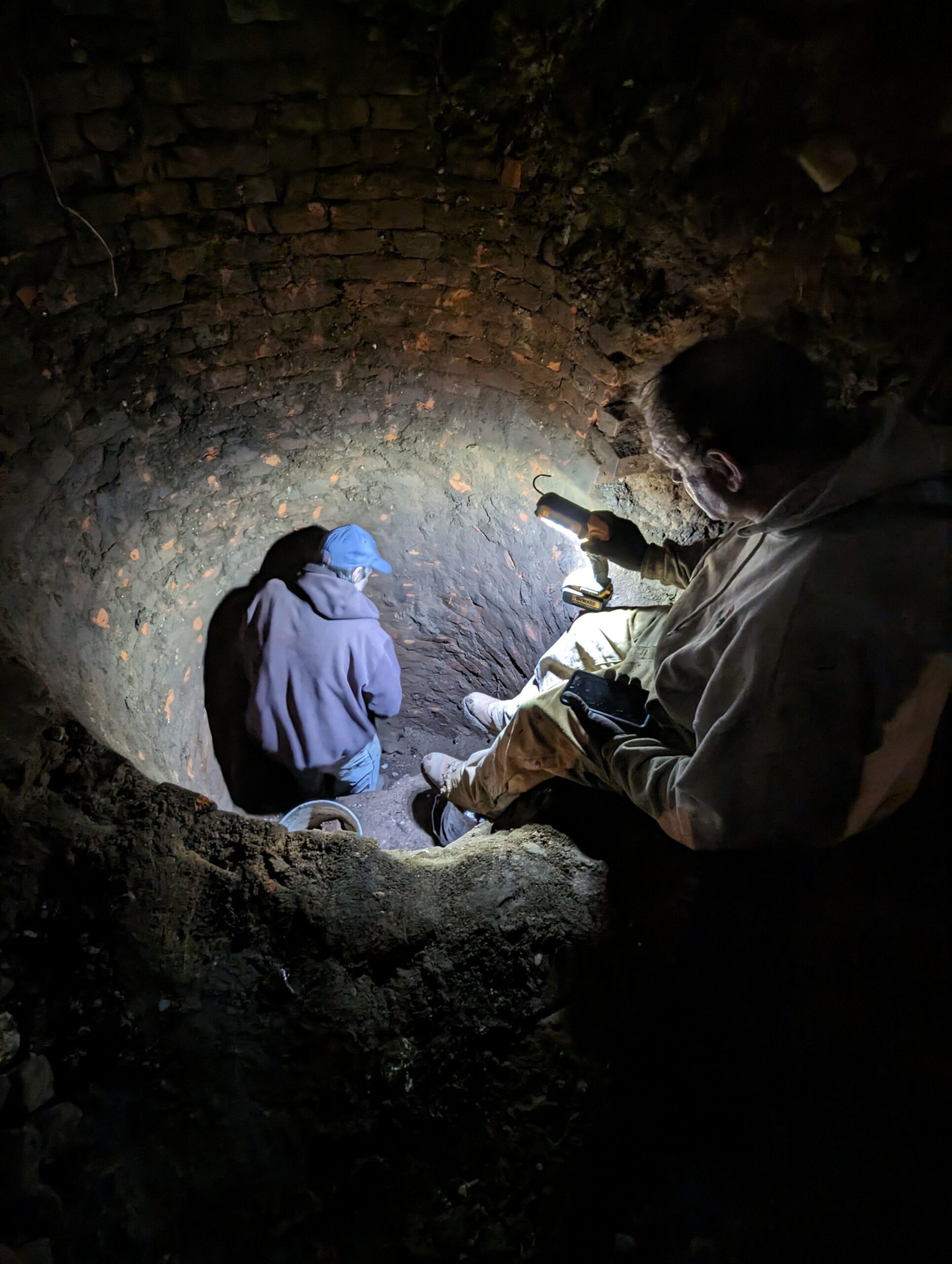
Privy digging is often done at night, when construction workers are not on-site, and diggers often work in pairs or teams because the digging itself can be dangerous. This photo was taken during a dig in Old City in November 2023.
It’s a largely male, macho subculture, rife with big characters and rumors of those who are not to be trusted because they absconded with their fellow diggers’ treasure.
“One guy was checking his car for pipe bombs ‘cause he thought I was gonna blow his car up,” said George Mathes, owner of the thrift store Thunderbird Salvage in Kensington, who has dug about 1,000 privies over the years. (He said he did not blow up anyone’s car.) He estimated there are about 15 privy diggers excavating today in the city.
As America’s 250th birthday approaches, Philadelphia is in the national spotlight, being counted on to reflect the country’s history back to itself. The question of how to preserve and tell that history has become more pressing than ever.
With its 300-year-old neighborhoods and relatively lax oversight, Philly is alsoa center of clandestine digging. People are legally allowed to keep almost anything they find under the ground on their own properties; privy diggers describe legally digging on someone else’s property as being “on a permission.”
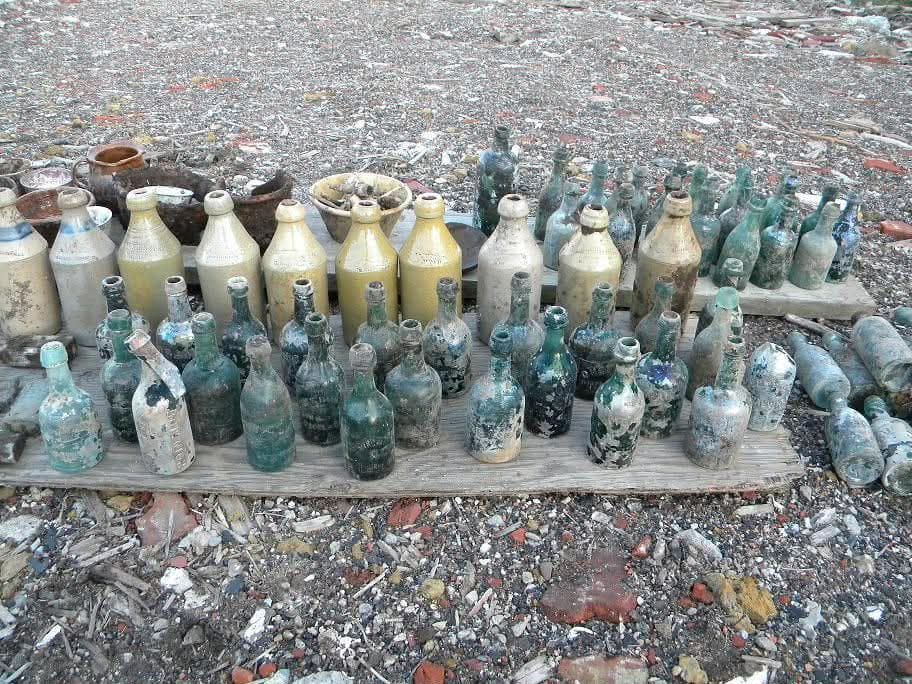
A collection of bottles from the 1850s, dug out by Matt Waholek and other diggers from a privy in Queen Village in 2015. The collection includes pontil soda and beer bottles, as well as stoneware beer bottles. The clay used to make the bottles was sourced in Philadelphia, and most of the glass was probably produced here.
But there’s also a fair amount of trespassing, and some of the privy diggers sell what they find. (Prosecution is rare, though Mathes was arrested and sentenced to 24 hours community service for digging on someone else’s property in Old City in 2010, he said.)
All of this has frustrated professional archaeologists, whose job is not just to remove particularly interesting relics from the earth, but to document exactly where they were found and what relation they had to one another, in an attempt to tell a whole, contextualized story about the past.
They say Philadelphia has done little to protect its buried history. Unlike other historic cities, such as Boston or Alexandria, Va., Philadelphia does not have a city archaeologist, who would be responsible for guiding the city’s historical commission and offering insight to residents.
Into that breach, some see the amateurs — “whether you want to call them looters or private collectors,” as Doug Mooney, president of the nonprofit Philadelphia Archaeological Forum, put it — as taking and selling collective artifacts while recklessly destroying historical sites in the process.
Much of what professional archaeologists are interested in is not glamorous, said Jed Levin, an archaeologist for more than 50 years and the vice president of the forum. They are just as compelled by the preserved remains of human intestinal parasites and hundreds-year-old pollen grains as they are by whole glass bottles. Such microscopic information can reveal what Philadelphians were eating and growing hundreds of years ago.
Yet that kind of detail is lost to amateur diggers, who are far more interested in removing intact artifacts, some of which might net them hundreds or thousands of dollars.
“They dig indiscriminately through soil layers,” said Levin. “Once you dig through a site, you’ve destroyed it. It’s gone.”
Matt Dunphy digs a privy pit near his home in Old City in May 2021. The dark column of soil in the right corner is indicative of the nitrogen-rich soil (also called “night soil”) found in a privy pit. This particular pit was 7 feet wide and 20 feet deep, likely dating to the 1740s.
The code of the privy pirates
Privy digging as a hobby surged in Philadelphia in the late 1960s, when the construction of Interstate 95 uprooted miles of soil across the city.
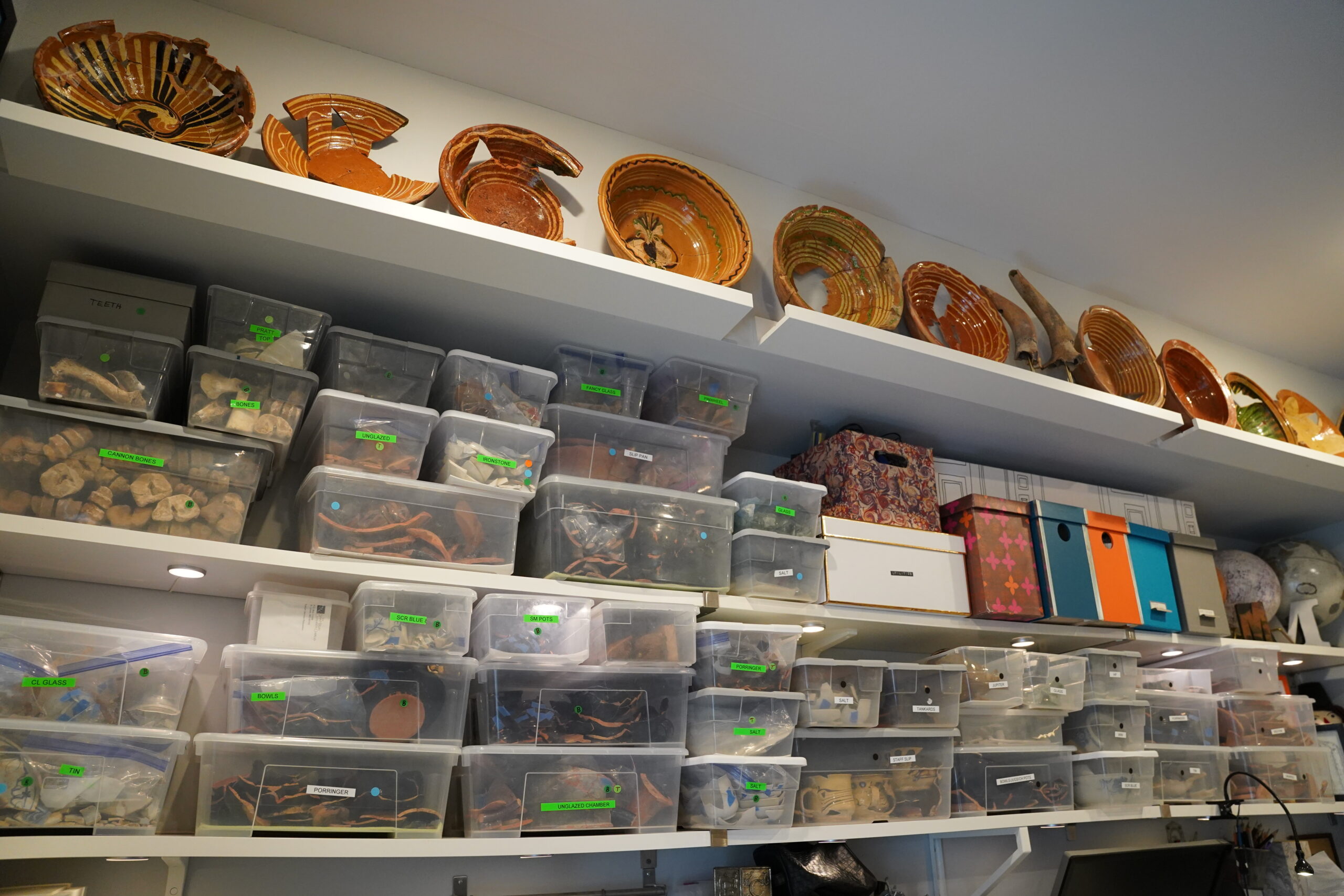
Over the decades, it became a passionate pursuit and then an underground industry. It’s driven largely by obsession: Diggers might find treasure, but they also might find nothing at all. Some end up with hundreds or thousands of broken pottery pieces. When I asked Waholek what he did with all the things he found over two decades, he replied, “Do you want some of it?”
Both the city’s amateur diggers and the professional archaeologists contend that they’re the ones working in the public interest, aiming to make their findings available to the most people.
“I don’t like the word ‘amateur.’ I probably know a lot more than some archaeologists. They focus mainly on one topic,” said Waholek, who calls himself an “avocational archaeologist.”
Some privy diggers say they are particularly moved to preserve objects that otherwise might be forgotten. Mathes, of Thunderbird Salvage, said he had found spearheads and Native American artifacts in his digs, objects which he does not sell. (Repatriation laws don’t apply to private property owners).
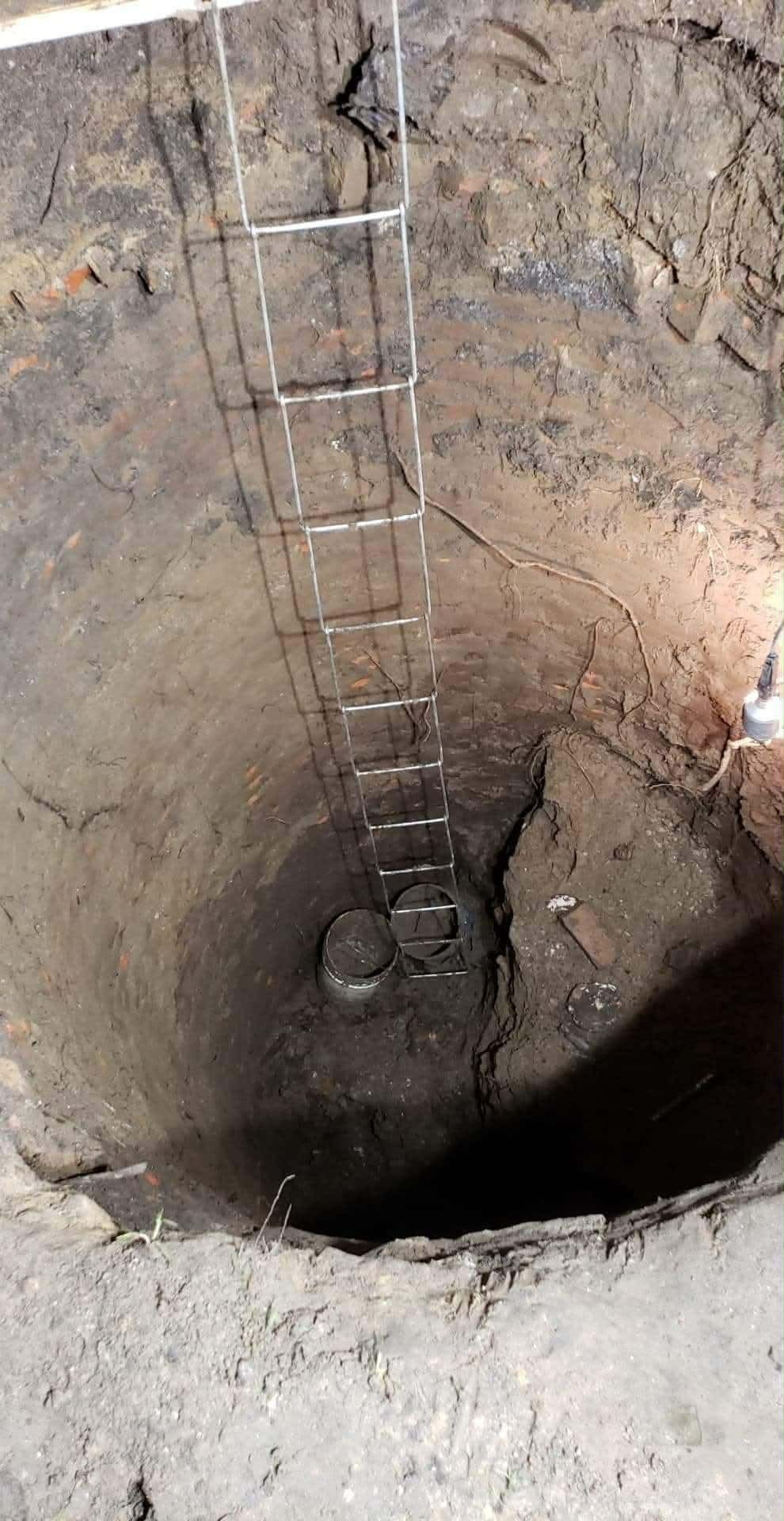
A brick-lined privy in North Philadelphia, pictured here in 2015. The ladder is an antique fire escape salvaged from a demolition on Frankford Avenue.
“To me, they’re more spiritual. I display those with the greatest of respect. I show them off to people, I like to hold them,” he said. “To donate them to a museum, most of the time they’re going to get put in a drawer and not displayed because there’s limited space.”
Over the years, some diggers have formed relationships with construction workers and police. One local developer described learning about the hobby when he encountered a group of men trespassing on his construction site carrying what he believed to be spears. (They were actually handmade metal probes, which the diggers use alongside shovels, clam rakes, pickaxes, and tripods and pulleys.) The developer was disturbed until he, too, became fascinated.
As with any subculture, there are rules about how to dig with integrity, said Michael Frechette, 60, an artist and veteran privy digger who lives in Kensington. Among them: Always ask permission; never dig on federal land where archaeologists are already working; fill in the hole you make; respect other diggers’ claims; and maintain honor within your own group — equal work should lead to equal bounty.
But, of course, as Mathes put it: “There’s pirates that work with you and there’s pirates that’ll work against you.”
Melissa Dunphy, pictured here in 2022, stands in the ground level of her Old City property. It was here that Dunphy and her husband, Matt, discovered two privies filled with 18th century artifacts.
Who gets to call themselves an archaeologist
The non-sketchy, wholesome representatives of the privy digging community in Philadelphia are Melissa and Matt Dunphy, who call themselves “citizen archaeologists.” She’s a composer with a doctorate in music; he’s an e-commerce engineer.
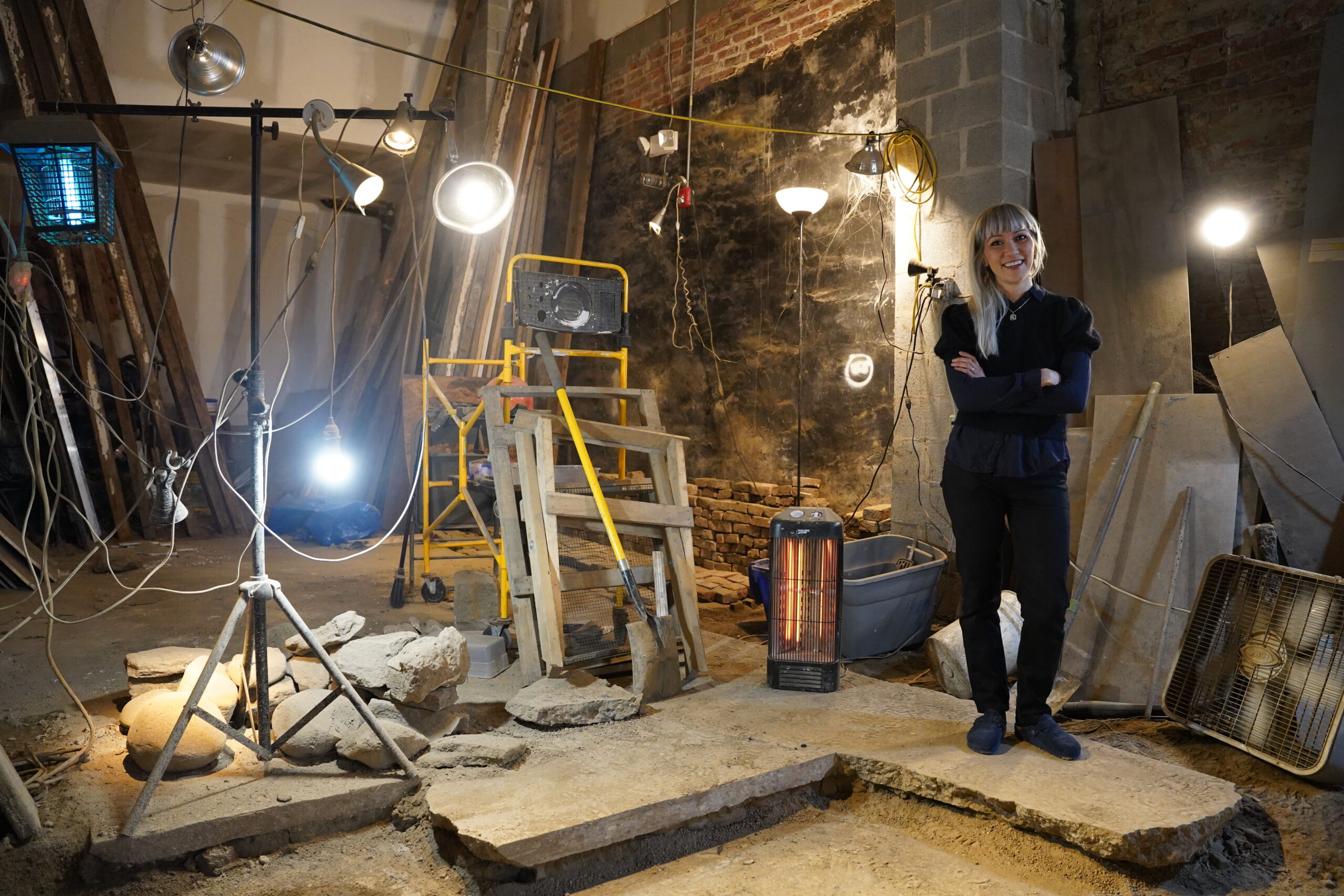
They fell down the rabbit hole of privy digging about a decade ago after they bought a shuttered magic theater in Old City with a deed dating back to 1745 and began to renovate.
The construction workers uncovered two privies on their property, one of which the Dunphys excavated right away. Since then, they’ve dug six more privies in the vicinity and launched a podcast, The Boghouse, about their discoveries.
Every inch of the Dunphys’ walls are taken up by artifacts they’ve dug up in privies near their home in Old City.
The two have become “obsessed at the level that now we give talks at Colonial Williamsburg,” Matt Dunphy said.
Their apartment, on the third floor of the former magic theater, is packed floor to ceiling with thousands upon thousands of shards of pottery and other artifacts. The bathroom has relics displayed on every wall, and the glass cabinets in the kitchen are filled not with matching plates but with broken teapots, chamber pots, punch bowls, and cups, each with their own carefully researched backstory.
The Dunphys are amateurs whohave not formally studied archaeology, but they are brimming with intellectual curiosity and knowledge about what they’ve found.
They mostlydon’t sell their discoveries (Melissa Dunphy has sold some found teeth) and are instead working to build a museum on the ground floor of the theater, which they hope to open by July. They want to call it “The Necessary Museum,” because privies were often called necessaries.
“These objects — even something as simple as a bowl — tell you something about the people who used them, the people who made them, the journey that that object took,” Melissa Dunphy said. “This is like a passing of stewardship of this little postage stamp-sized corner of the world.”
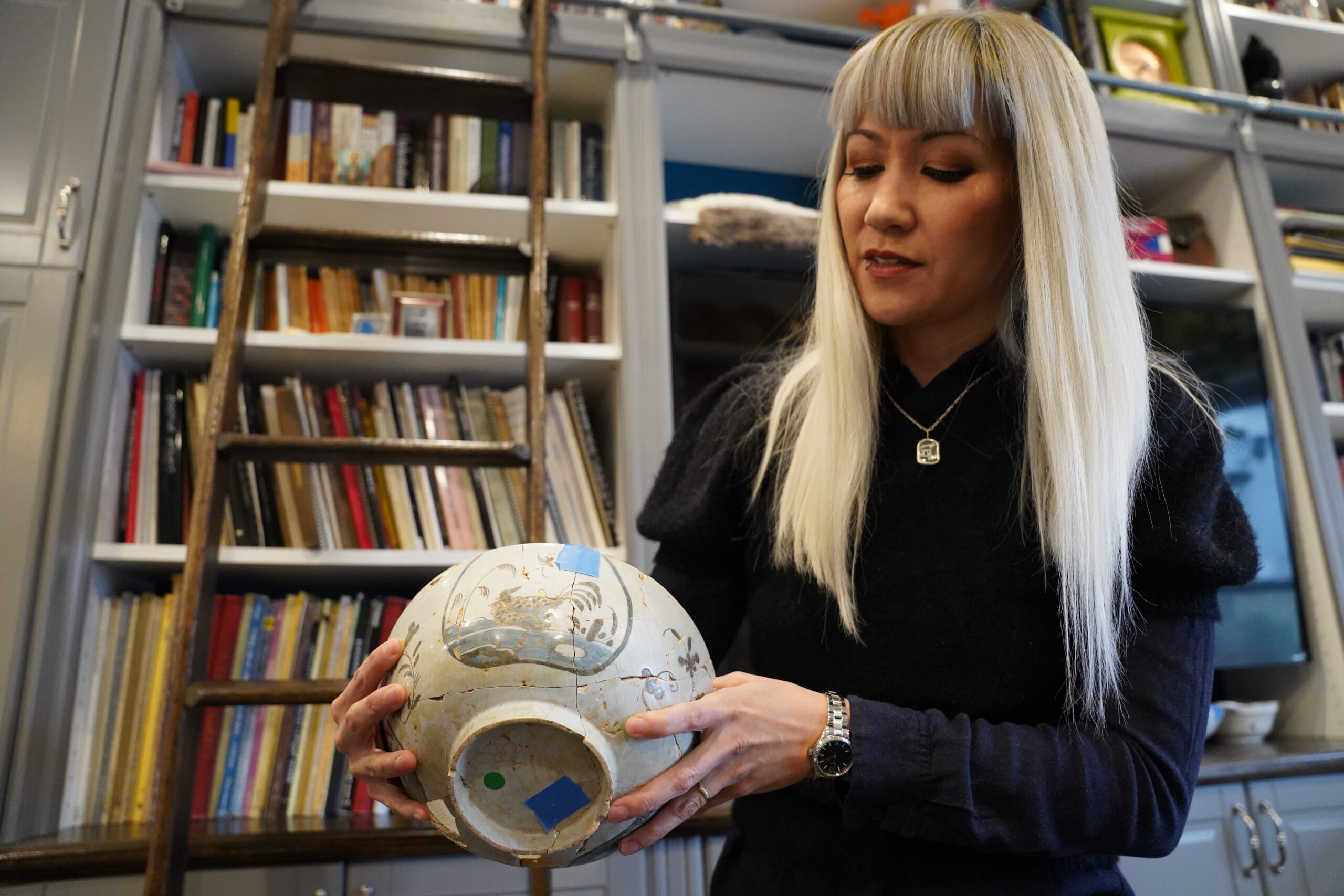
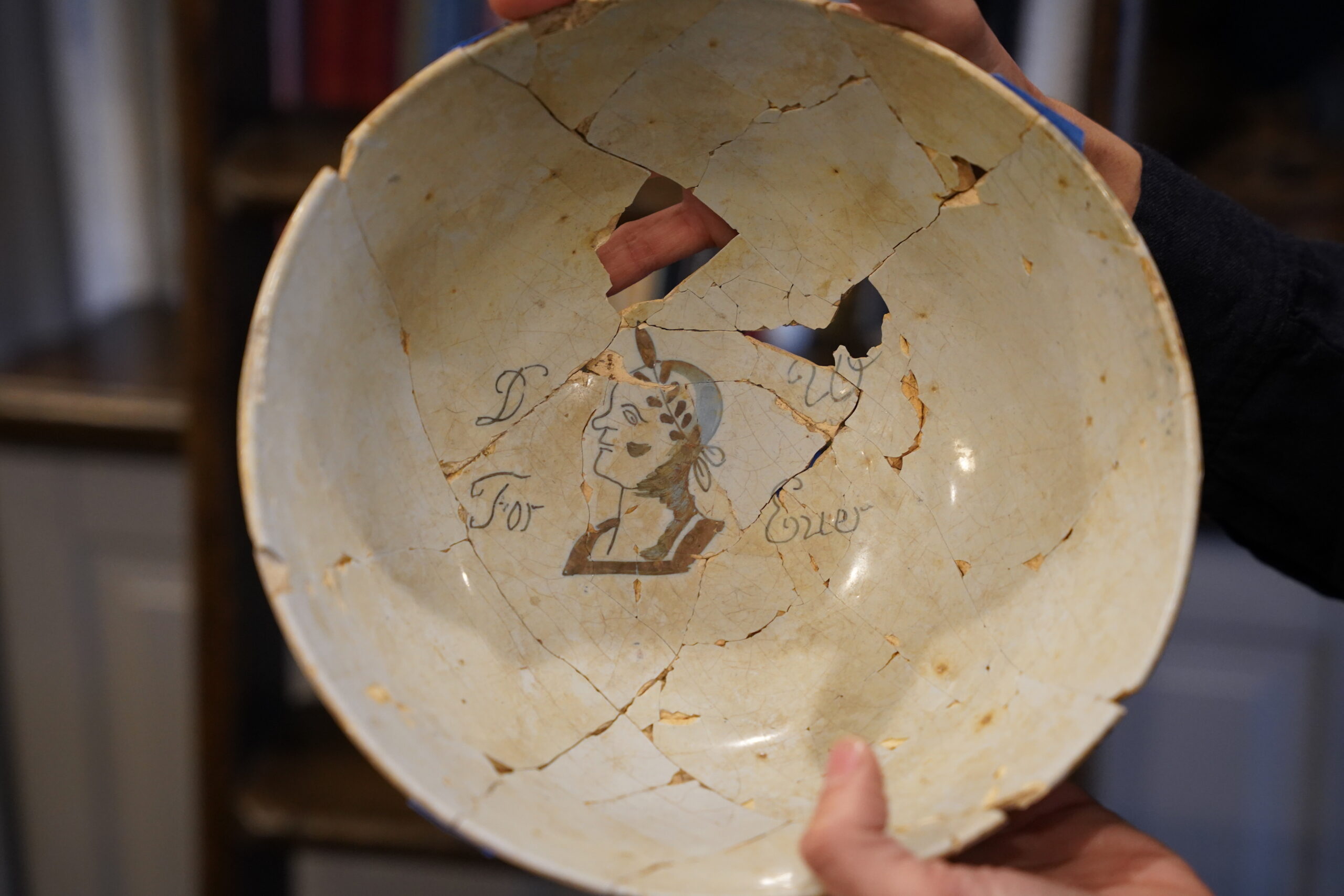
Melissa Dunphy, pictured here in 2022, holds a delft punch bowl which she pieced together from pieces found in the privies below her house. The bowl commemorates Britain’s victory over the Scottish Jacobite Army at The Battle of Culloden in 1746.
“What an anti-Jacobite bowl is doing in my privy is such an exciting question to me,” Dunphy said.
Melissa Dunphy, pictured here in 2022, holds a bowl at the Dunphy’s home.
Unlike those who work in secret, the Dunphys are in close touch with archaeologists at the National Park Service and local museums, speak at archaeology conferences, and regularly text with the editor of the academic journal Ceramics in America, whom they consider a mentor.
When they first found glass bottles in the privy in their backyard back in 2016, they tried reaching out to various archaeologists and museums in the city asking how they should proceed, they said. But no one was particularly helpful, and they only had a week before the hole would be filled in.
So they set about trying to “rescue” as much as they could themselves.
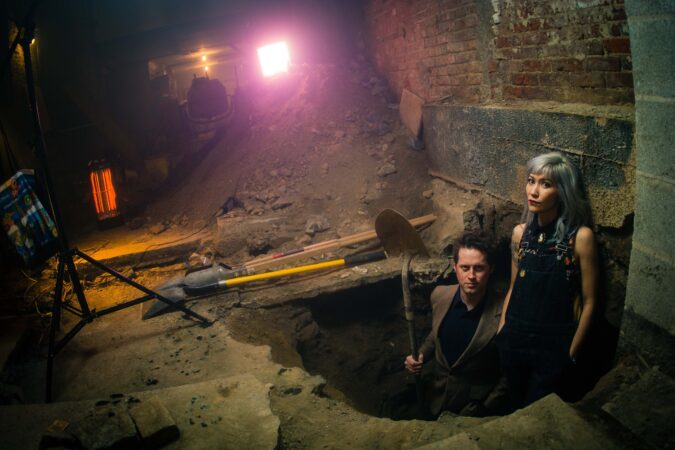
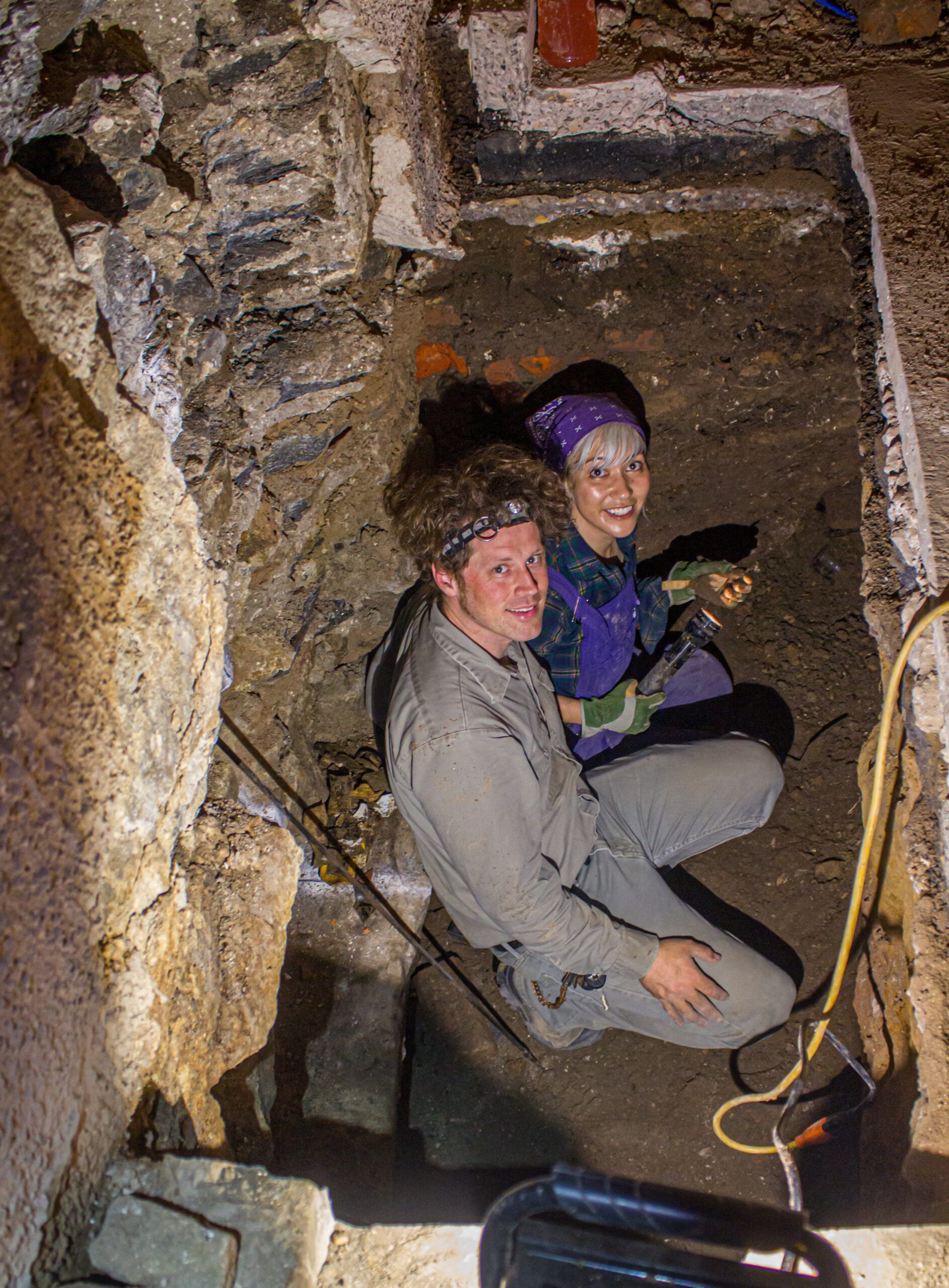
Matt and Melissa Dunphy pose in their first privy dig, in this photo from July 2016. While foundation work was being done on the shuttered magic theater they had just bought, workers unearthed two colonial-era privy pits. The Dunphys excavated them, fueling a decade-long obsession.
“My assumption then was that this archaeology is probably everywhere in Philly, and it’s probably not that important. So I don’t have to feel academically guilty about doing it myself, without any real expertise,” Melissa Dunphy said. She descended the privy hole in a cobbled-together archaeological outfit: Duluth Trading Co. coveralls, a “Rosie the Riveter” scarf, a camping headlamp.
The couple fashioned screens from chicken wire they bought at Home Depot to sift pottery from dirt, and Matt Dunphy photoshopped a picture of a ruler he saw at the Museum of the American Revolution to measure the objects they uncovered.
Scott Stephenson, president of that museum, who in the years since has gotten to know the Dunphys well, said he supports people doing “citizen archaeology” alongside professionals.
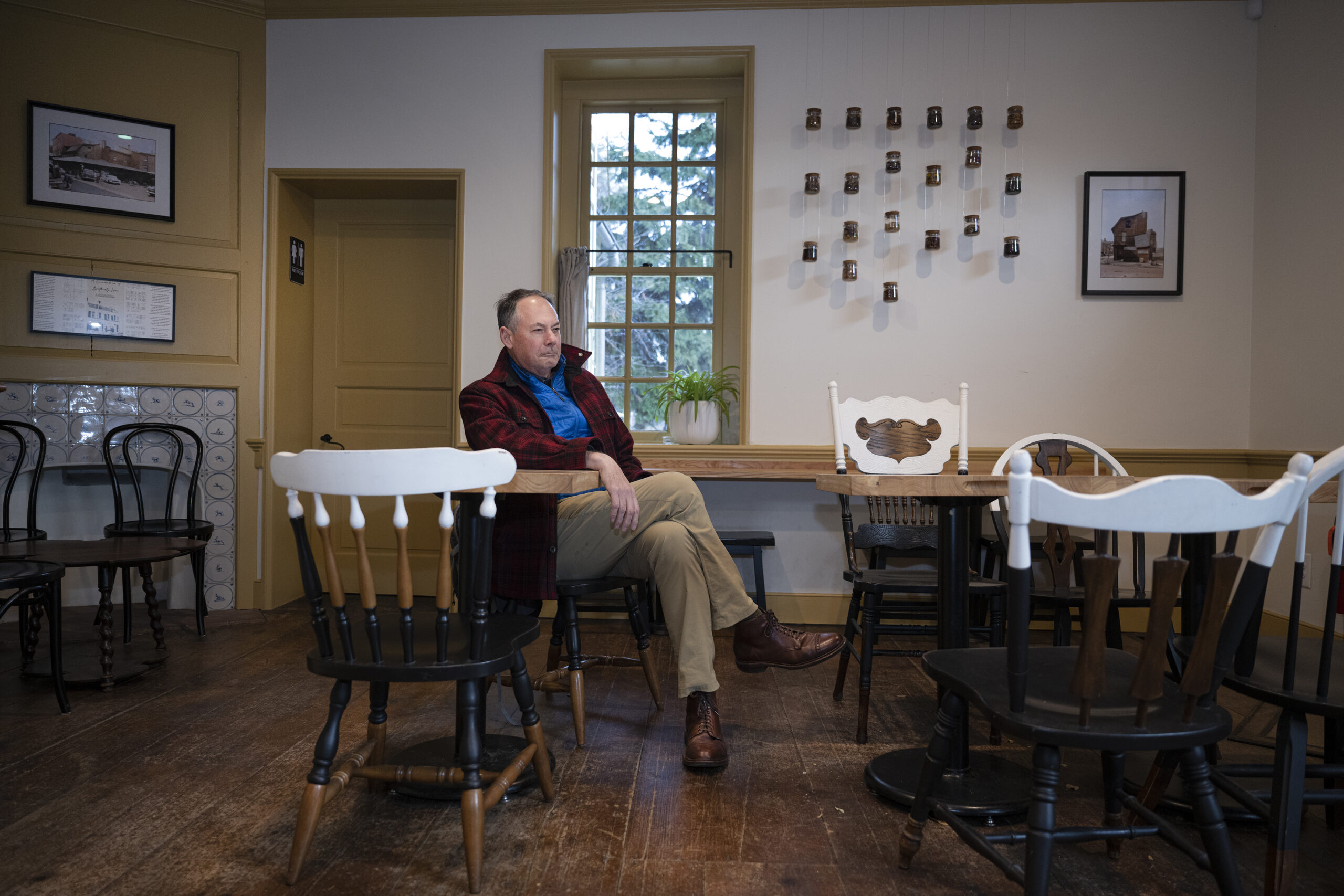
Museum of the American Revolution head Scott Stephenson, pictured here at Philly’s Revolutionary-era tavern, A Man Full of Trouble, likens each archeological site to a diary that can only be read once.
But he likens each archaeological site to a diary that you can only read once, because the story is as much about the objects that are buried as it is about the relationship between them. When amateurs “read the diary,” it’s like they’re “only recording three words off of an entire page,” he said.
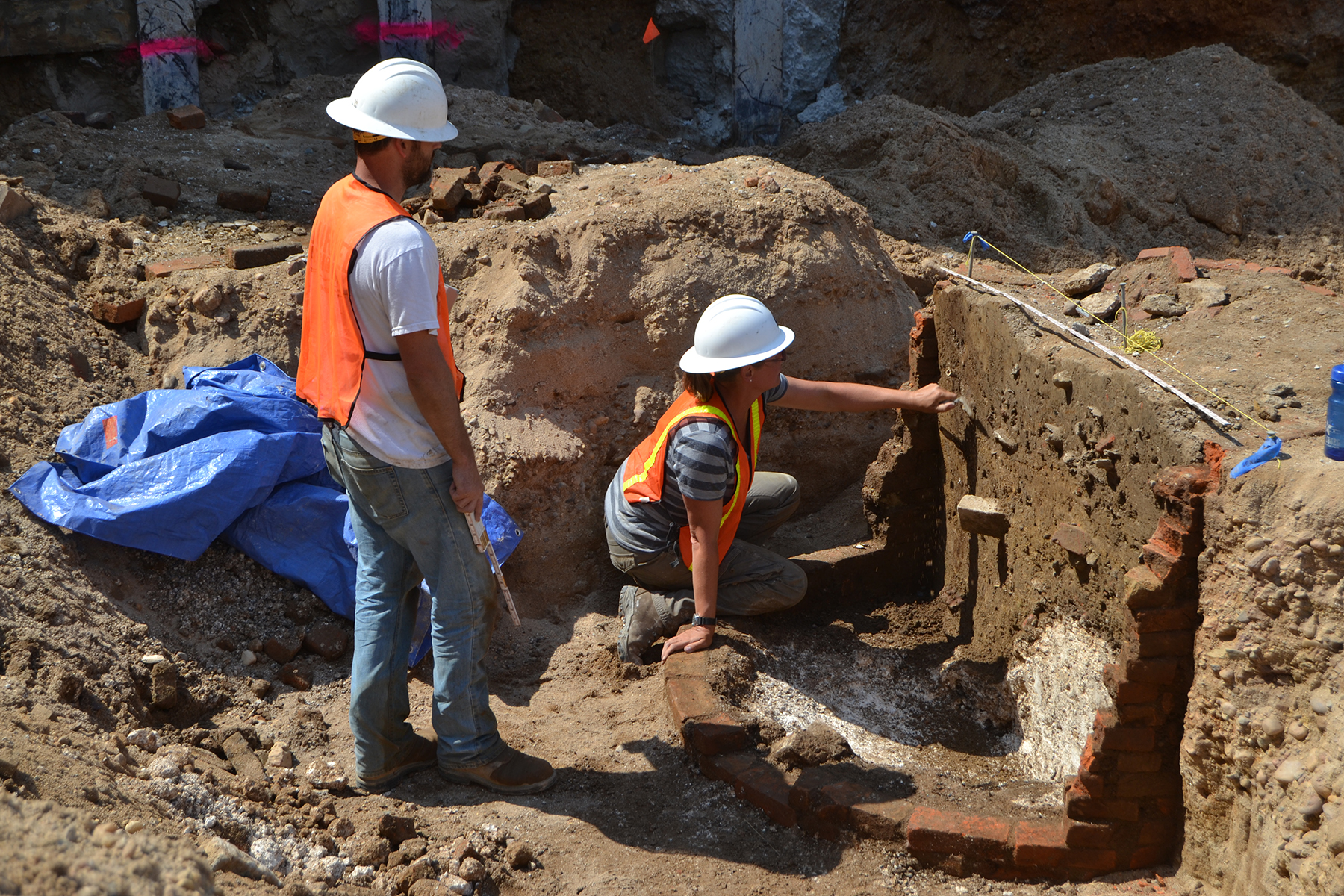
Before the Museum of the American Revolution opened, it conducted a massive archaeological dig on its site that included multiple privies. The recovered artifacts are part of a display at the museum called “Trash Tells the Truth.”
Before opening, the Museum of the American Revolution conducted its own privy dig with professional archeologists.
The Dunphys acknowledge that they don’t document the stratigraphy, or the exact chronological layering, of the privies they have dug. But they also see themselves as democratizing an important effort, saving bits of the past that would otherwise be wholly lost. It’s not as if the city’s professional archaeologists have the time or ability to carefully dig every backyard under construction across Philadelphia.
“We have watched with our own eyes archaeological features being crushed up and destroyed during construction in our neighborhood,” Melissa Dunphy said.
Some archaeologists are frustrated by the very notion of “citizen archaeology.”
“Would we talk about an ‘amateur doctor?’ No. Medicine takes training and following a set of techniques and ethics. Archaeology, the same thing,” said Levin of the Archaeological Forum. Of privy diggers, he said, “They are not amateur archaeologists. They are no stripe of archaeologist.”
Pieces of artifacts at the Dunphys’ home, pictured here in 2022.
Piecing the past back together
On a recent afternoon, Matt Dunphy donned black rubber gloves, filled an Ikea strainer with sudsy water in the sink, and began to scrub pottery shards with a small denture brush. Centuries-old dirt trickled down the drain.
Next to him, pieces of clean pottery lay on a towel to dry. Many privy diggers don’t take the time to piece together the hundreds of broken pieces they find, because it can seem like a nearly impossible task. But Melissa Dunphy sees it as puzzle-making “boss level.” To repair a single ceramic bowl might take a week of 16-hour days, she said.
She uses painters tape to keep related pieces together, and when they seem to fit, she uses archival-grade museum glue diluted with a syringe full of acetone to seal them back together.
The thrill of bringing something back to life — it’s like nothing else.
“This is the first time that someone has seen this bowl,” she said, “the way that it’s supposed to be, in hundreds of years.”
The recent heavy snowfall brought snowmen and sledding to parks across the city. It also brought snowball fights. I invited two Inquirer staffers to answer this week’s doozy of a question.
Have a question of your own? Or an opinion? Email me.
Evan Weiss, Deputy Features Editor
OK, so the question this week is also a bit of a tale…
Two random teenagers threw snowballs at me, a grown man. One hit me in the face and knocked off my glasses. Was I, a grown man, allowed to throw the world’s fastest revenge snowball? Or should I have just yelled a few expletives and moved on (what I actually did)?
Jason Nark, Life & Culture Reporter
Phew, he’s a better person than me.
You’re certainly allowed to throw a revenge snowball, or worse, in my opinion. An unprovoked snowball throwing is fraught with peril.
Mike Newall, Life & Culture Reporter
I think we need to start coming up with cool names for these reader questions. Like, Frozen in Time.
But yes, Frozen in Time, you gotta get revenge. Just be an adult about it.
Evan Weiss, Deputy Features Editor
You’re not worried about a person (or phone) only seeing a grown man throw a hard snowball at kids?
Jason Nark
Again, it’s a perilous situation. Snowballs aren’t fun and games to me.
Mike Newall
That’s why I said be adult about it. As the father of a 6-year-old, I can tell you that a child’s first reaction when they’ve done something wrong is to fight or run. You don’t need that. You’ll either slip — or, worse, the kids will just double down and snowball-light-you-up.
You have to think of it calmly, analytically. “Who are these kids? When will I likely see them again?” Put some snow aside in the shade, and then prepare to surprise them when that moment comes.
And try to throw from behind the cover of a wall or fence or car, just so you don’t run into the whole mean adult thing Evan was talking about.
Painful, I think. No one likes a snowball to the face.
But I guess, being the adult, you can’t really retaliate too much or you’ll have an angry dad knocking at your door.
Mike Newall
Yeah, obviously doesn’t need to be said: but, Frozen in Time, you shouldn’t aim at the face. No faces.
But you’re one of the fittest people I know, Jason. I’d put my money on you.
Jason Nark
I’d like to not put myself in the environment at all. If there’s a snowball fight happening, I hope I’m inside with a coffee, petting my dog.
Mike Newall
OK. Me too.
Jason Nark
I need to move to Southern Arizona or New Mexico.
Evan Weiss
So your advice is really “don’t get hit in the face by a snowball.”
I’m going to take the unpopular stance here: I wouldn’t retaliate. Nothing to gain, plenty to lose. Shouting is fine though.
Mike Newall
Revenge would be fun. Make you feel a kid again.
Jason Nark
I agree. I don’t think I’d retaliate either, now that I think of it. Who knows. The anger might compel me.
Mike Newall
The best advice on parenting I ever got was from my old vet: she said (about dogs, mind you) that all they want (again dogs) is for you to be happy when you come home and see them and stop what you’re doing and give them attention. All kids ever want is our attention. Who am I to deny that by withholding a surprise snowball to the back or legs or shoulder area (above the neck strictly off-limits)?
Evan Weiss
You’re holding strong for vengeance!
Mike Newall
For the children. I am.
Evan Weiss
Any last words of wisdom for Frozen in Time?
Mike Newall
Do it for the kids, Frozen in Time. For the kids.
Jason Nark
I say take a deep breath, breathe out the rage, and search on Zillow for desert properties in the Southwest.
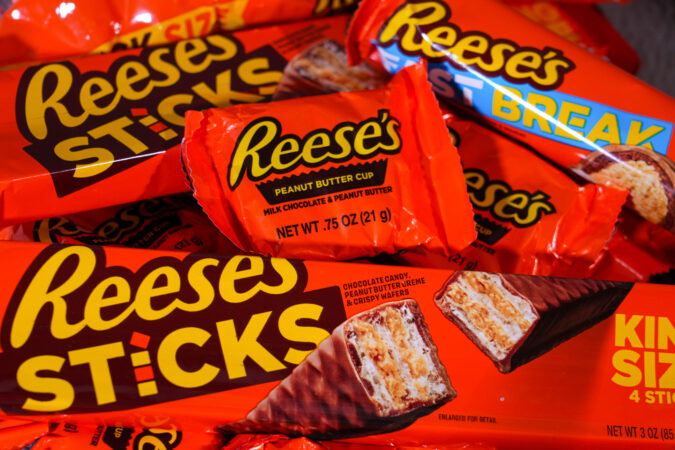
On Reddit, the top comments were ones of vindication. People were comparing batches, debating texture and arguing over when it changed. “They’re waxy, oily, and extra sweet.” “The filling tastes like sawdust.” “I thought maybe my taste buds just changed.”
One user wrote simply: “I KNEW IT.”
Hershey says the original cups haven’t changed, though some holiday shapes use different coatings to allow for new sizes and shapes.
But who are you going to believe: a corporate statement, or your lying taste buds?
United States’ Dylan Larkin (21) holds Johnny, the son of the late player Johnny Gaudreau while posing with teammates after the men’s ice hockey gold medal game against Canada at the 2026 Winter Olympics, in Milan, Italy, Sunday, Feb. 22, 2026. (AP Photo/Petr David Josek)
The Olympic dream, carried across the ice: A
Johnny Gaudreau wanted to make the Olympics. But like so many other things he was denied after being killed by a suspected drunk driver at age 31, he never got to skate in Milan.
The tribute to Gaudreau, who played for the Columbus Blue Jackets when he died and had been training to make the Olympic team, wasn’t just a quick nod during a ceremony. It happened in the loudest, grandest moment of the tournament. In the biggest moment of these athletes’ own careers, they made sure the person missing was still present.
And for a family that has spent a year and a half worrying the world would eventually move on, that decision said otherwise.
He understands the concerns — that the Phils are “largely the same team,” that the media and unhappy fans are pressing a negative narrative — but inside, he says, they’re “still as hungry as we’ve ever been because we haven’t been able to finish the job.”
That’s the right answer … and the only answer.
“We have the pieces to win a championship,” Realmuto said. “It’s just a matter of putting it together and playing our best baseball at the right time.”
In Philadelphia, “the right time” has a very specific definition.
It is not May. It is not 95 regular-season wins. It is not “a couple plays” in a 3-1 series loss.
This city doesn’t question whether the Phillies are talented. It questions whether this group, THIS EXACT GROUP, can clear the last hurdle. Philly can’t handle another almost.
Hunger is great, chemistry is great, enjoying each other is great. But: banner or it didn’t happen.
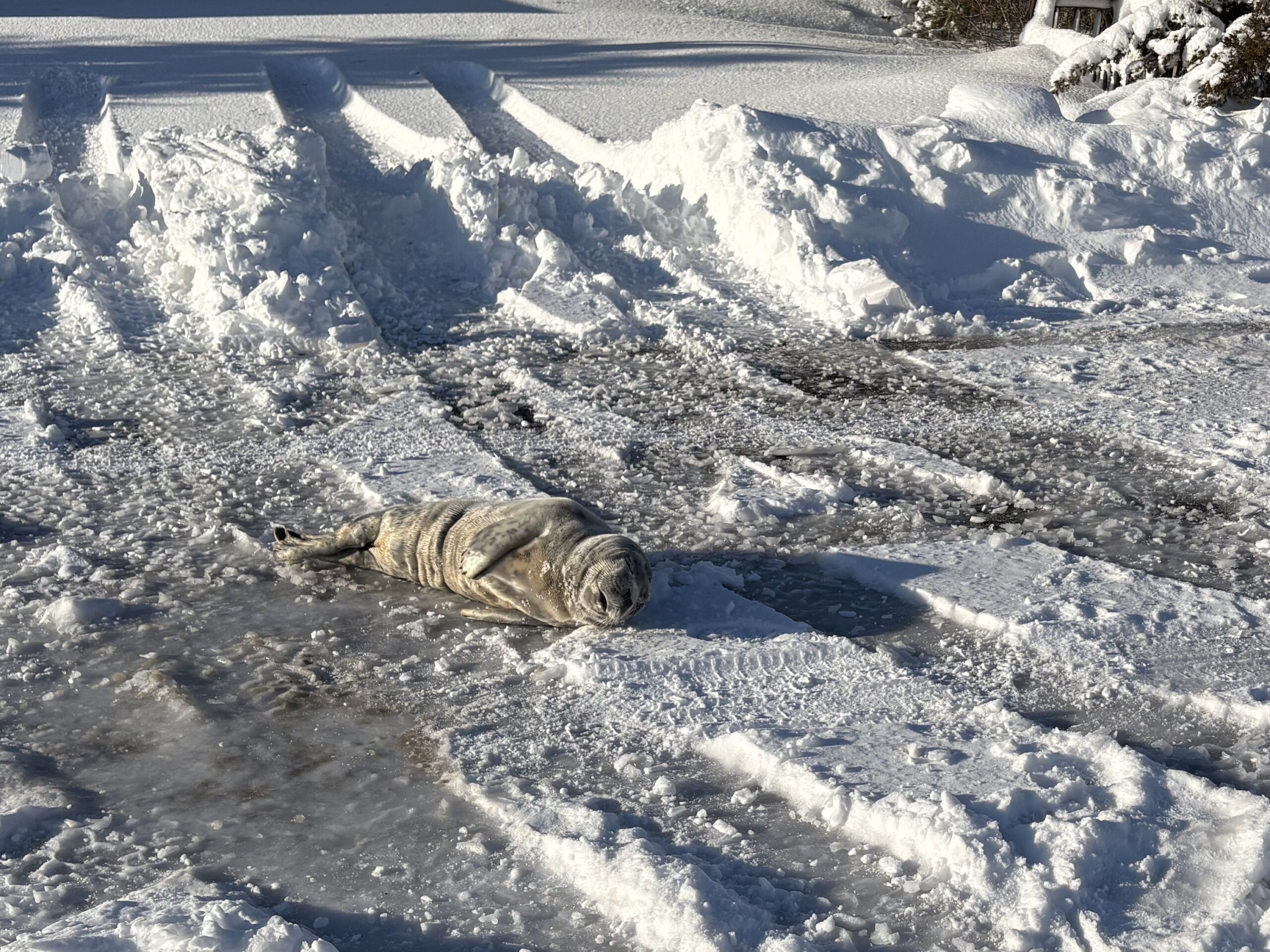
A gray seal pup wandered off the beach in Harvey Cedars and onto the middle of Long Beach Boulevard on Tuesday, Feb. 24, 2026, a day after a snowstorm dropped a foot and a half of snow on the island.
A seal pup shutting down Long Beach Boulevard: A-
Not only did the Jersey Shore get hit hard by what we’ll now remember as the Blizzard of ‘26, they also got a seal napping in the slow lane.
Traffic stalled while a Public Works worker bundled her in his jacket and moved her to safety. The Marine Mammal Stranding Center arrived soon after, captioning the moment: “POV: When your nap shuts down a whole street.”
She wasn’t injured, just thin and apparently tired of the Atlantic.
Seal beachings aren’t rare, but them laying in the slow lane are.
Eighteen inches of snow, plows out, Long Beach Boulevard barely cleared, and marine wildlife is treating it like a sun deck. Welcome to late February at the Shore.
The tiny slash through the number zero, added to distinguish it from the letter O, is confusing automatic license plate readers, which are now struggling to tell the difference between 0 and 8.
So in some cases, drivers are getting tolls that don’t belong to them.
This is deeply on brand.
We added a design tweak to make things clearer. It made things worse. Now the technology needs “time to learn.” It’s a license plate, not Duolingo.
The Turnpike says it’s working on it, but in the meantime, if your patriotic plate racks up charges from roads you’ve never seen, you can call a hotline and sort it out.
Nothing says “Let Freedom Ring” like disputing tolls over a misread zero.
Phillies also released a pic of their Father’s Day hat giveaway (June 21)
The Phillies unveiled their Father’s Day giveaway hat, and it is exactly what you think a Father’s Day hat would be.
Light gray, white logo, mesh back. It’s giving cargo shorts energy. It’s dad sneakers, but make it a hat.
Apparently, dads have earned subtlety.
This is the franchise that leans into powder blue throwbacks and maroon nostalgia, and yet for Father’s Day, we get something that looks like it came free with a new grill.
The internet noticed too. One commenter joked that Bryce Harper must have “used up all the color in Philadelphia for his new cleats.”
It’s not bad, just aggressively dad. Safe and practical. Which, depending on your father, might be the most accurate tribute of all.
Newspapers do many service stories, letting readers know about upcoming events.
The “things to do” pieces are usually illustrated either with pictures provided by the organizations or their public relations partners or, in the case of annual events, our own staff’s file photos from previous years.
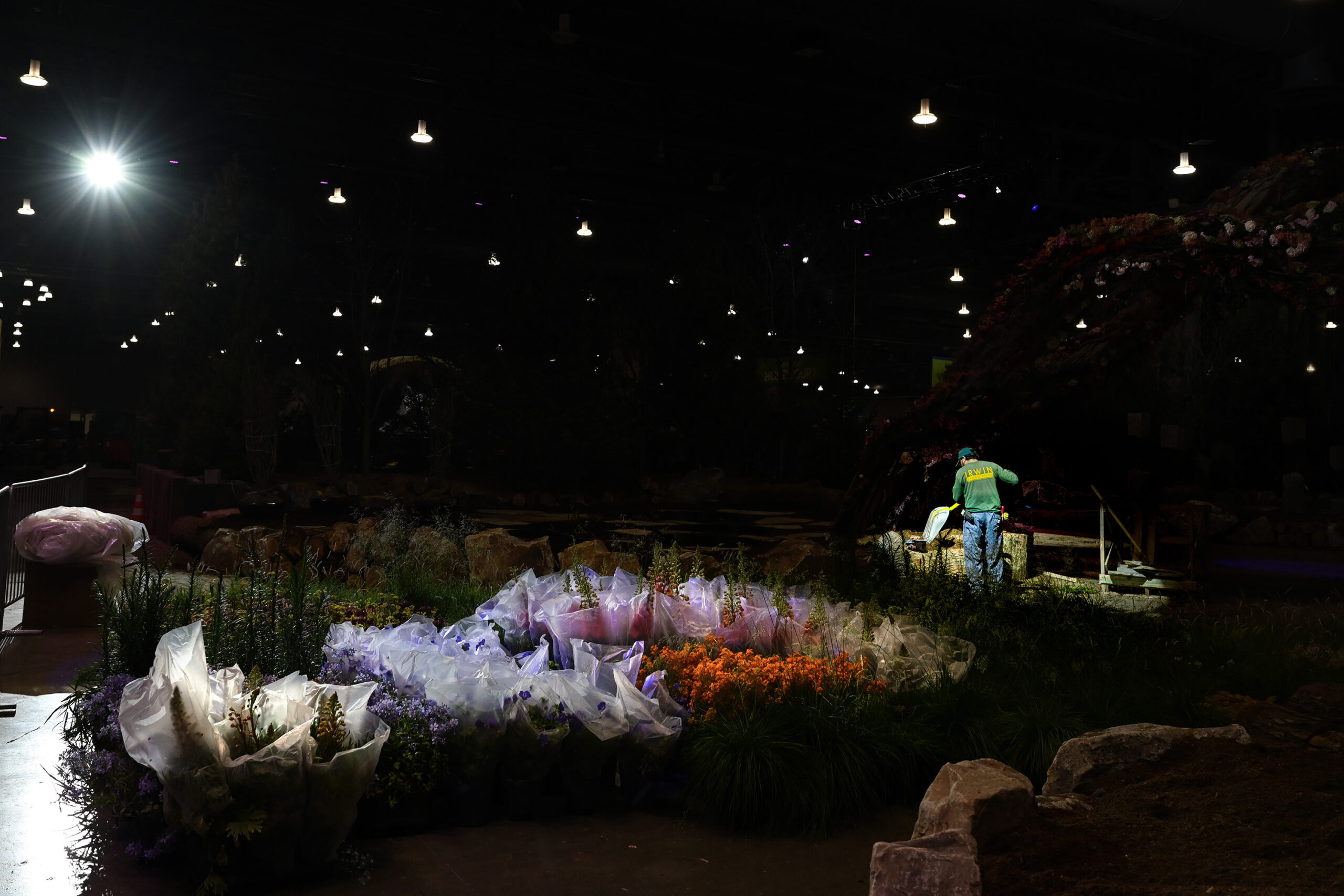
Technicians adjust the lighting as Andres Ceballos with Irwin Landscaping in Hockessin, Delaware is setting up for the PHS Philadelphia Flower Show Tuesday, Feb. 24, 2026.
I was at the Convention Center earlier this week to photograph preparations for the nation’s largest and longest-running horticultural event. As with similar preview assignments, the stars of the show — the flowers in this case — were not quite ready for prime time.
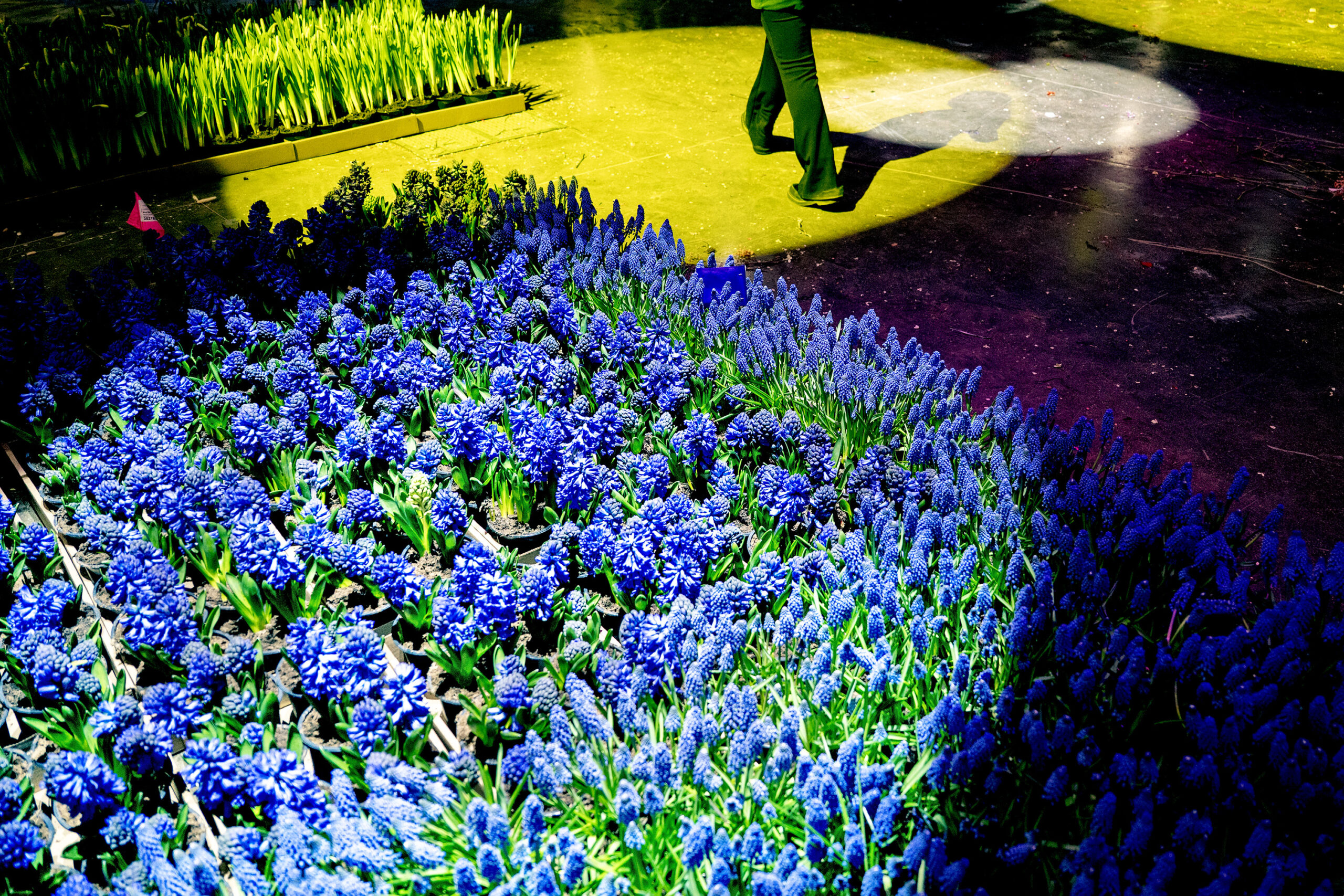
Most of the blooms are waiting to be unloaded from refrigerated trucks, and those inside the Convention Center are still wrapped in plastic. So I rely on close-ups, or take advantage of the play of color and light.
Awaiting placement in the entrance garden, hyacinths are in the spotlight during light testing.
It is hard enough to convey the perfumes of thousands of blooms in the air with mere photos — or the vibrant color of the petals in the meticulously designed displays. Imagine trying to showcase it all in black-and-white.
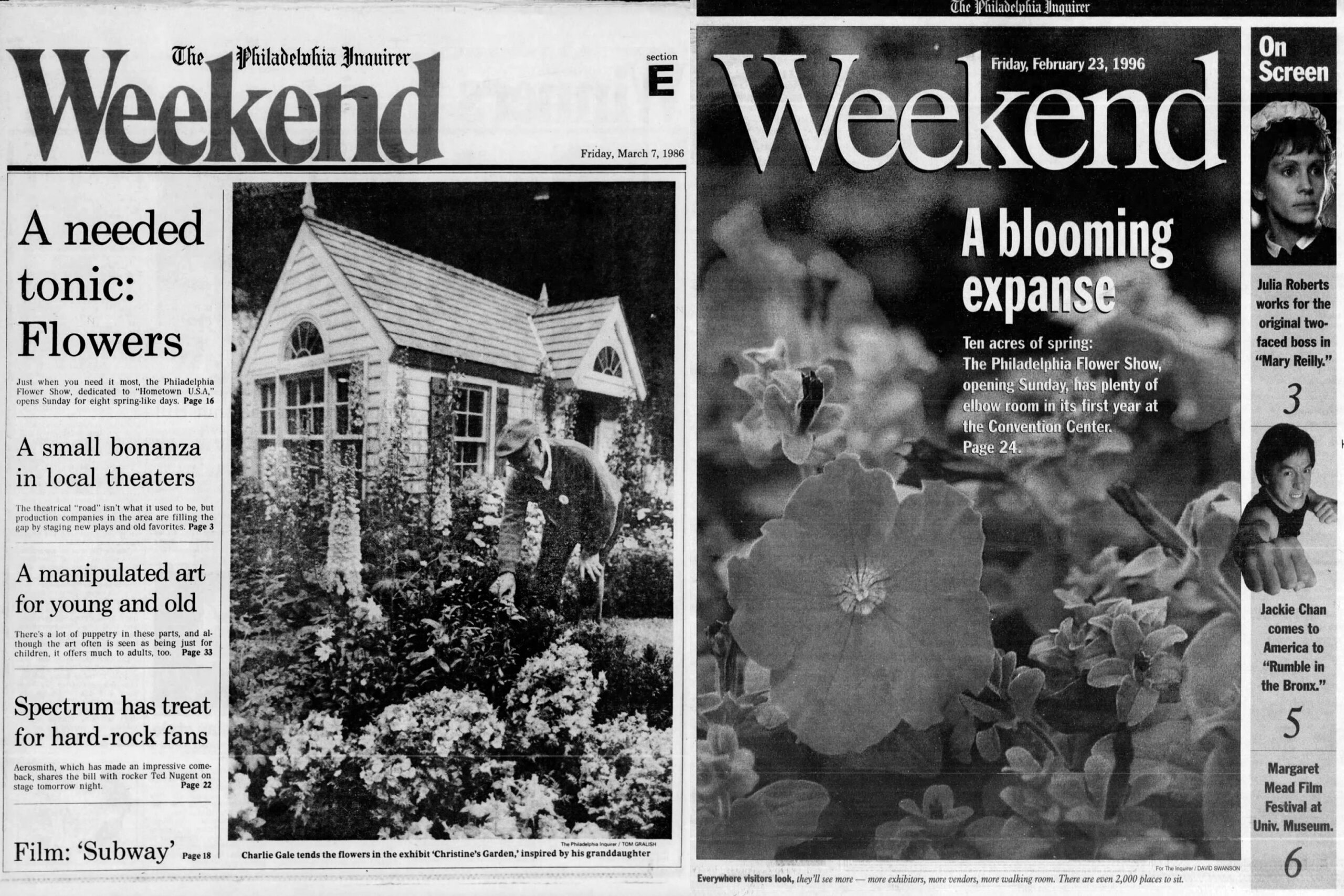
LEFT: March 7, 1986. RIGHT: February 23, 1996.
That’s my photo on the cover of The Inquirer Weekend section on the left, from 40 years ago when the Flower Show was at the Philadelphia Civic Center in University City. David Swanson made the close up on tje right 30 years ago, the year the show moved to the new Pennsylvania Convention Center.
When The Inquirer and Daily News knew we were switching from black-and-white to color presses a forward-thinking photo editor had us pop in a roll of color negative film while covering some events so we’d have some color photographs in the files when the time came. (That finally happened in March of 1993. In a focus group a few years earlier, loyal readers “were horrified” when they were shown a prototype of a possible color Inquirer.)
I don’t know yet if I’ll be back at the Flower Show this week, or if another photographer will be assigned, but you can count not only on seeing live coverage, but some of the photos again before the 2027 show.
Favorite assignment anniversary
Speaking of anniversaries and black-and-white photography, I am often asked if I have a favorite assignment.
It was 40 years ago this week that I made the Weekend Flower Show cover photo above — days after returning from six weeks in the Philippines. I was there as millions of Filipinos took to the streets in a “People Power” revolution (also known as the EDSA Revolution).
The nonviolent revolution led to the ouster of President Ferdinand Marcos as Corazon “Cory” Aquino became the country’s 11th president. It was seen as a model for similar uprisings that occurred around the world in the following years, from the occupation of Tiananmen Square to the Fall of Communism and the Arab Spring.
These images are the original prints — developed in a hotel bathroom I converted into a darkroom — transmitted back to The Inquirer in January and February of 1986.
Since 1998 a black-and-white photo has appeared every Monday in staff photographer Tom Gralish’s “Scene Through the Lens” photo column in the print editions of The Inquirer’s local news section. Here are the most recent, in color:
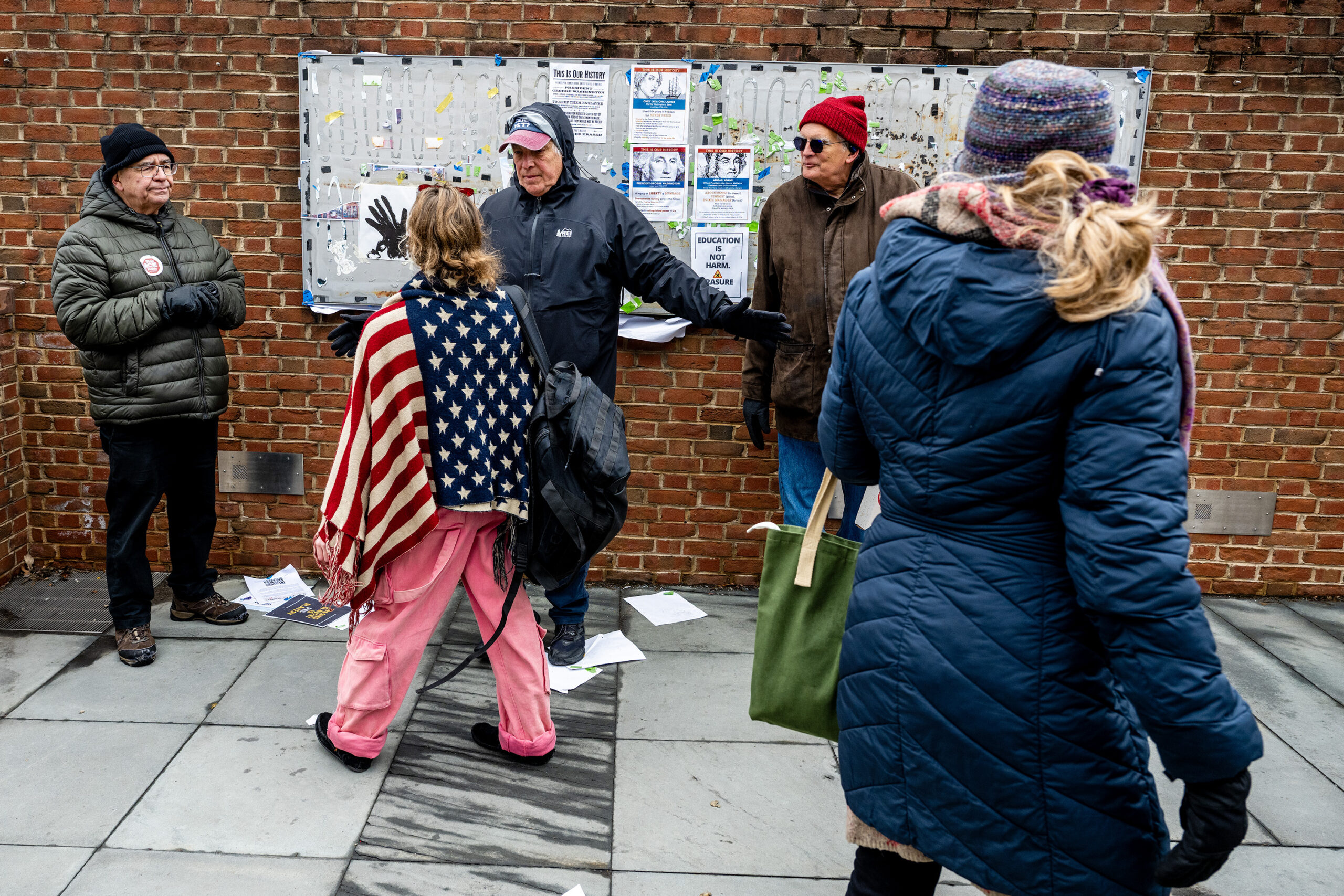
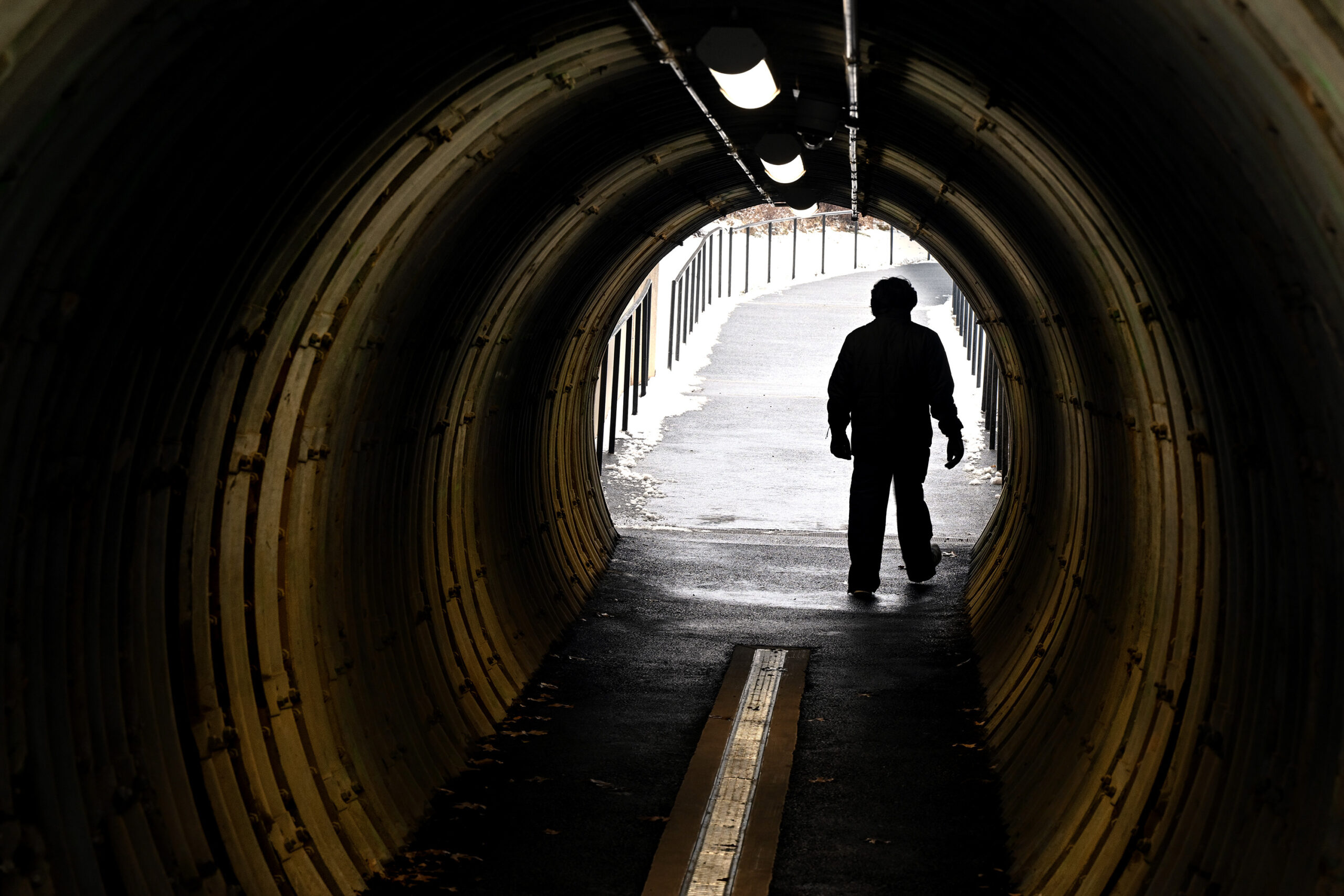
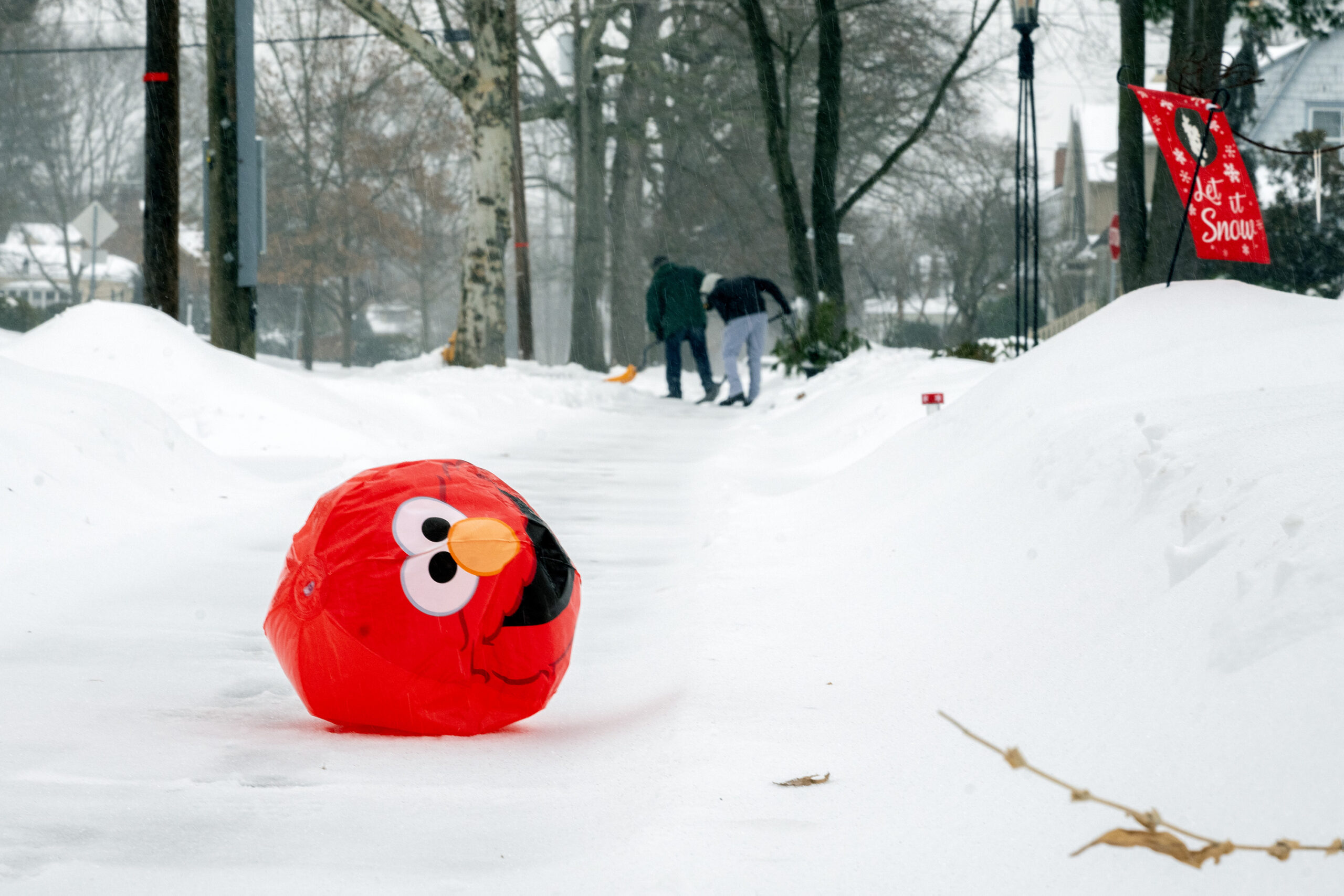
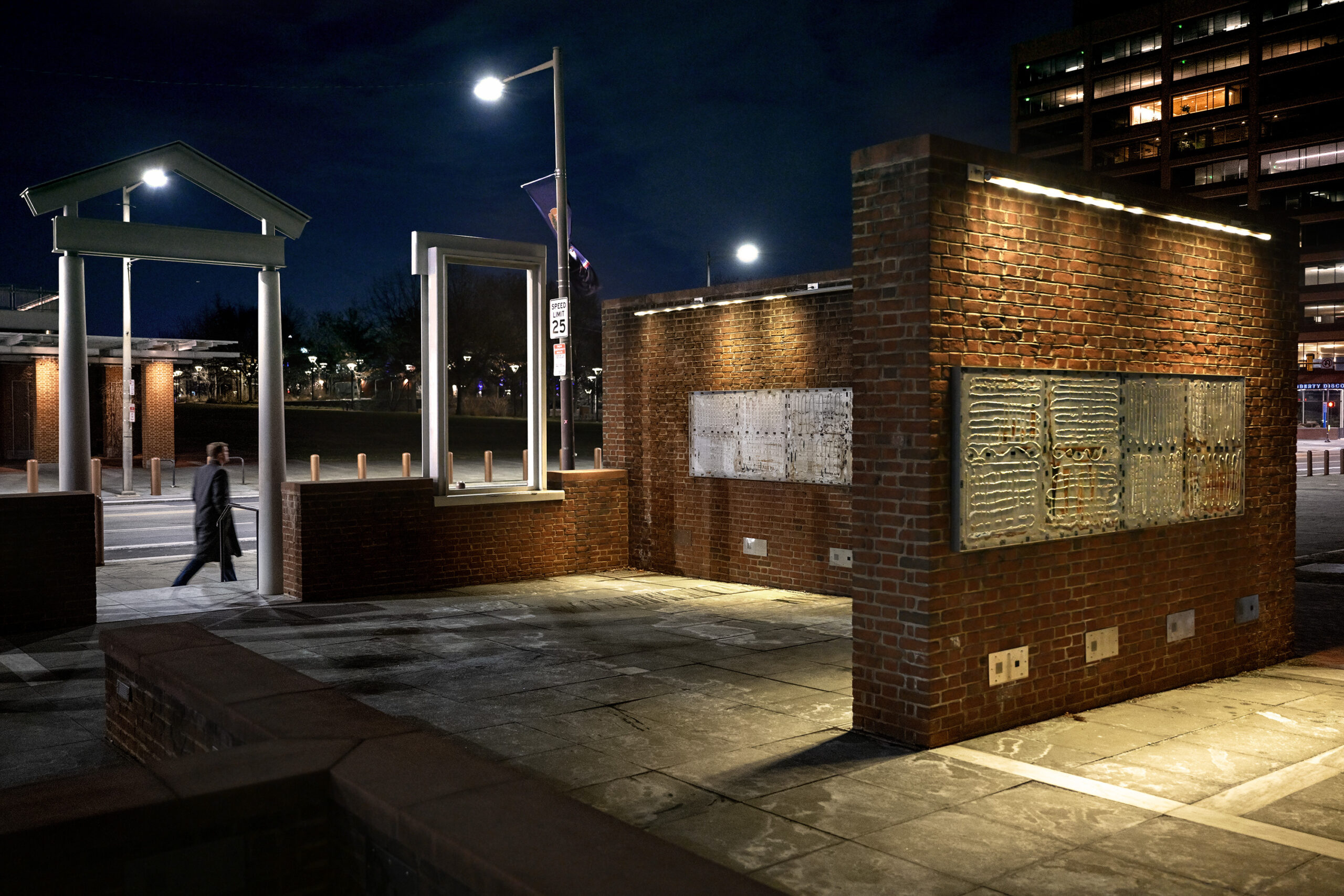
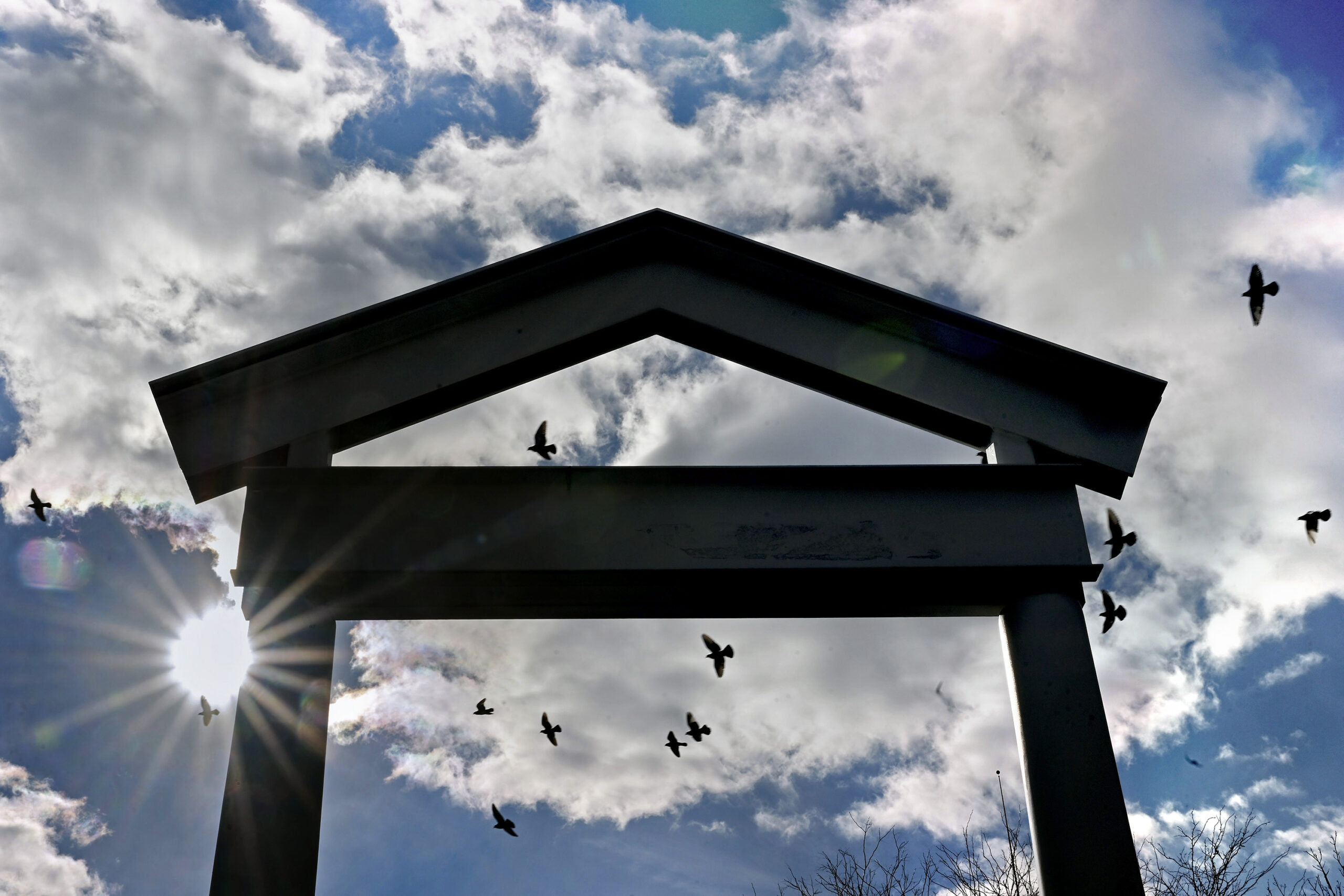
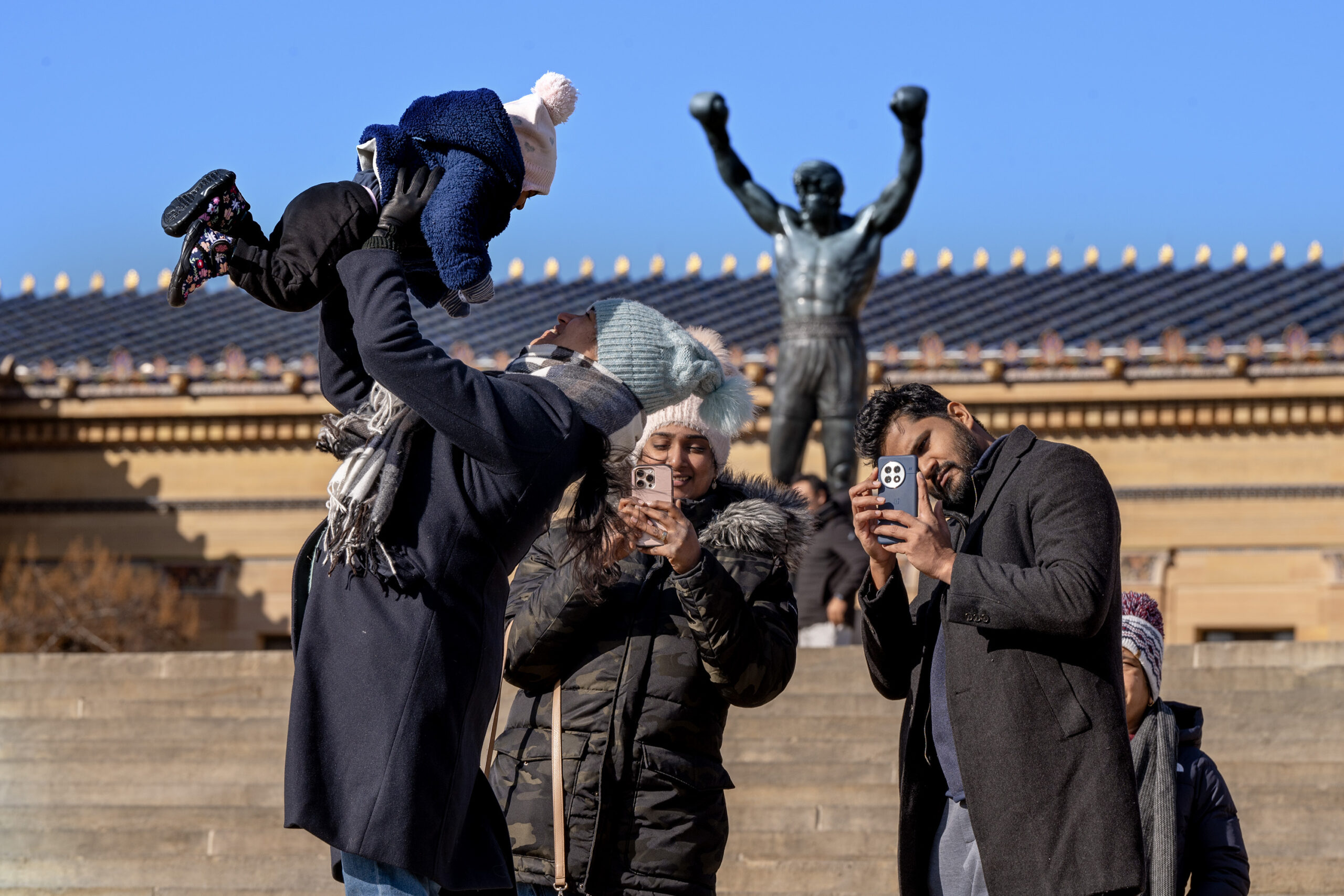
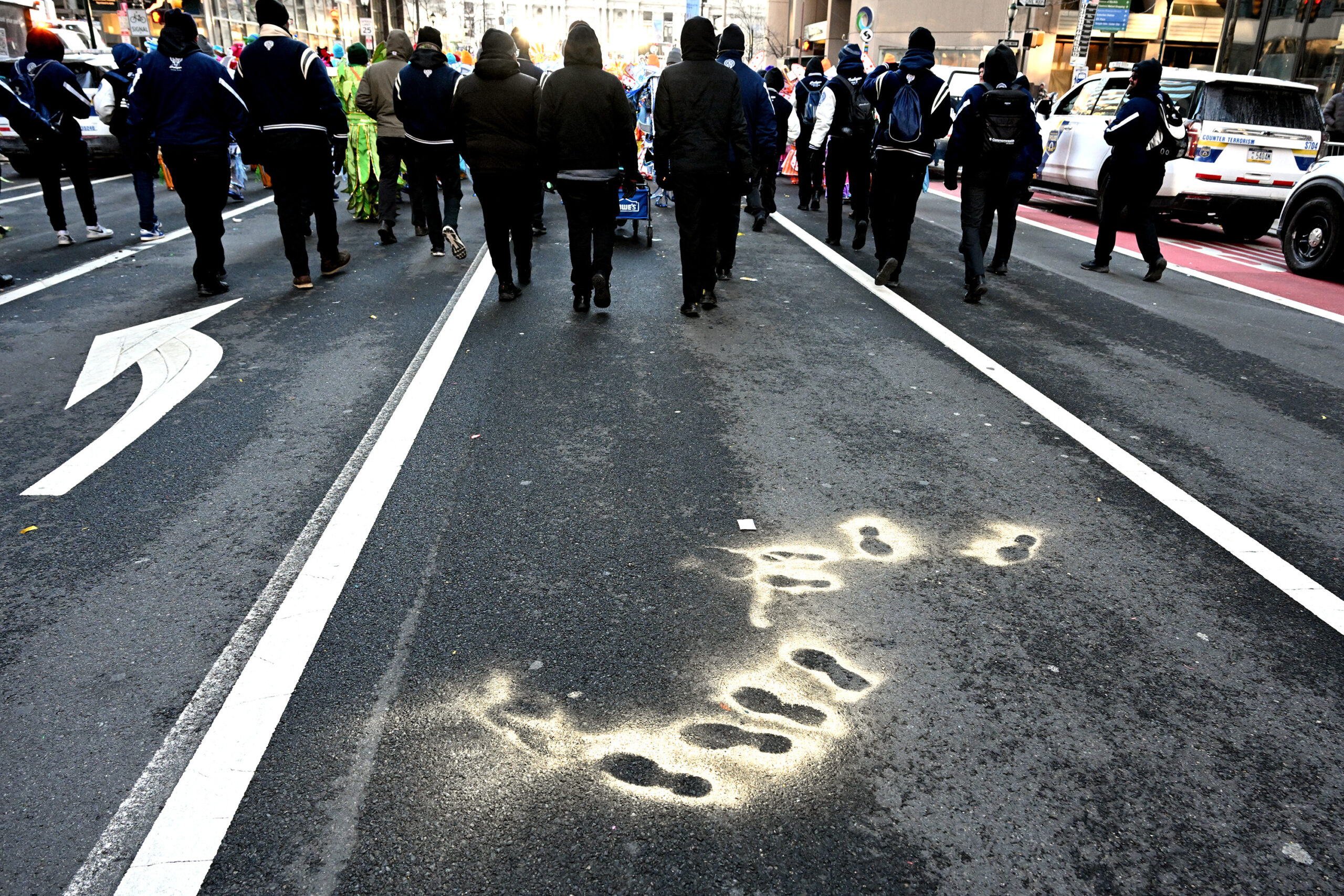
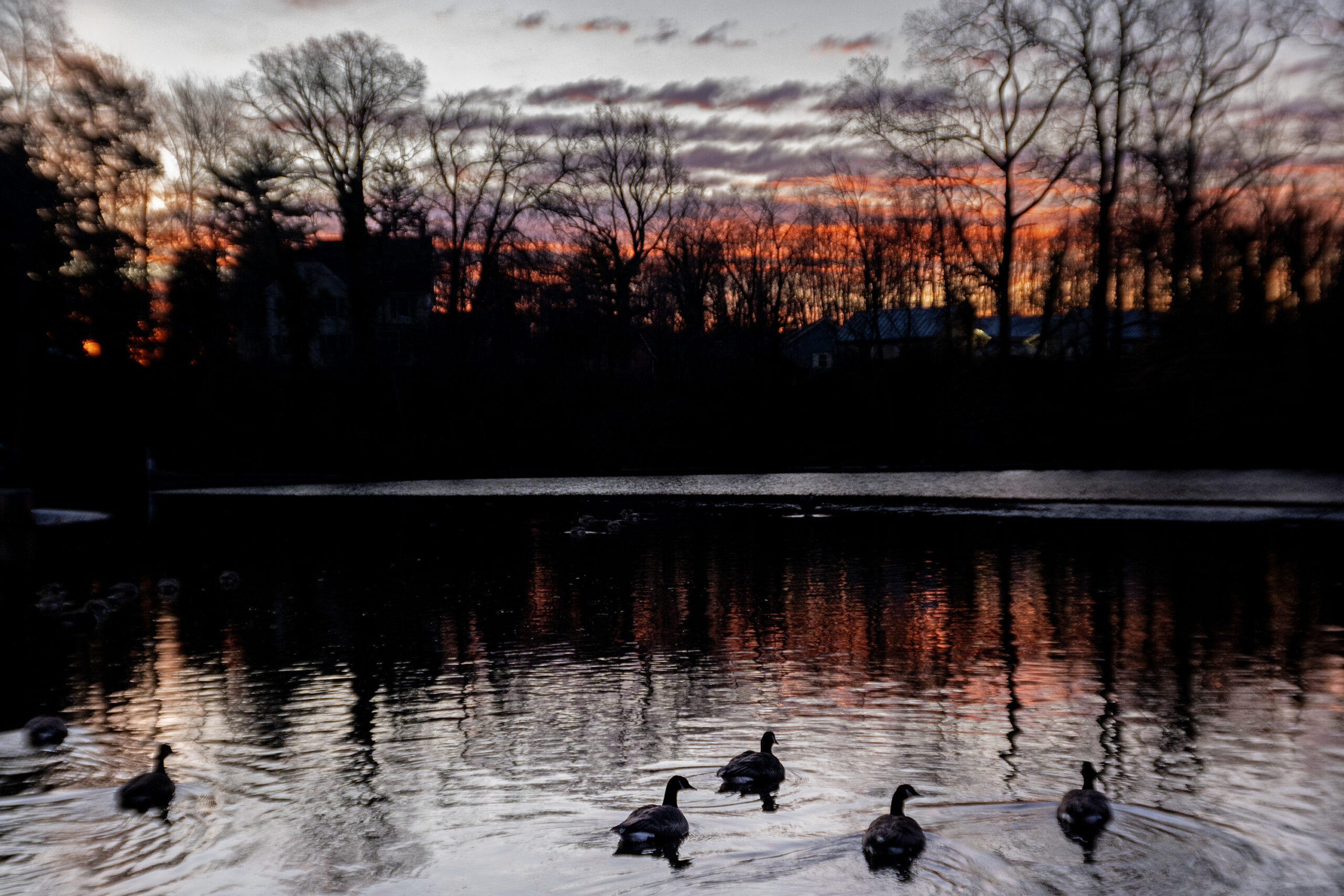
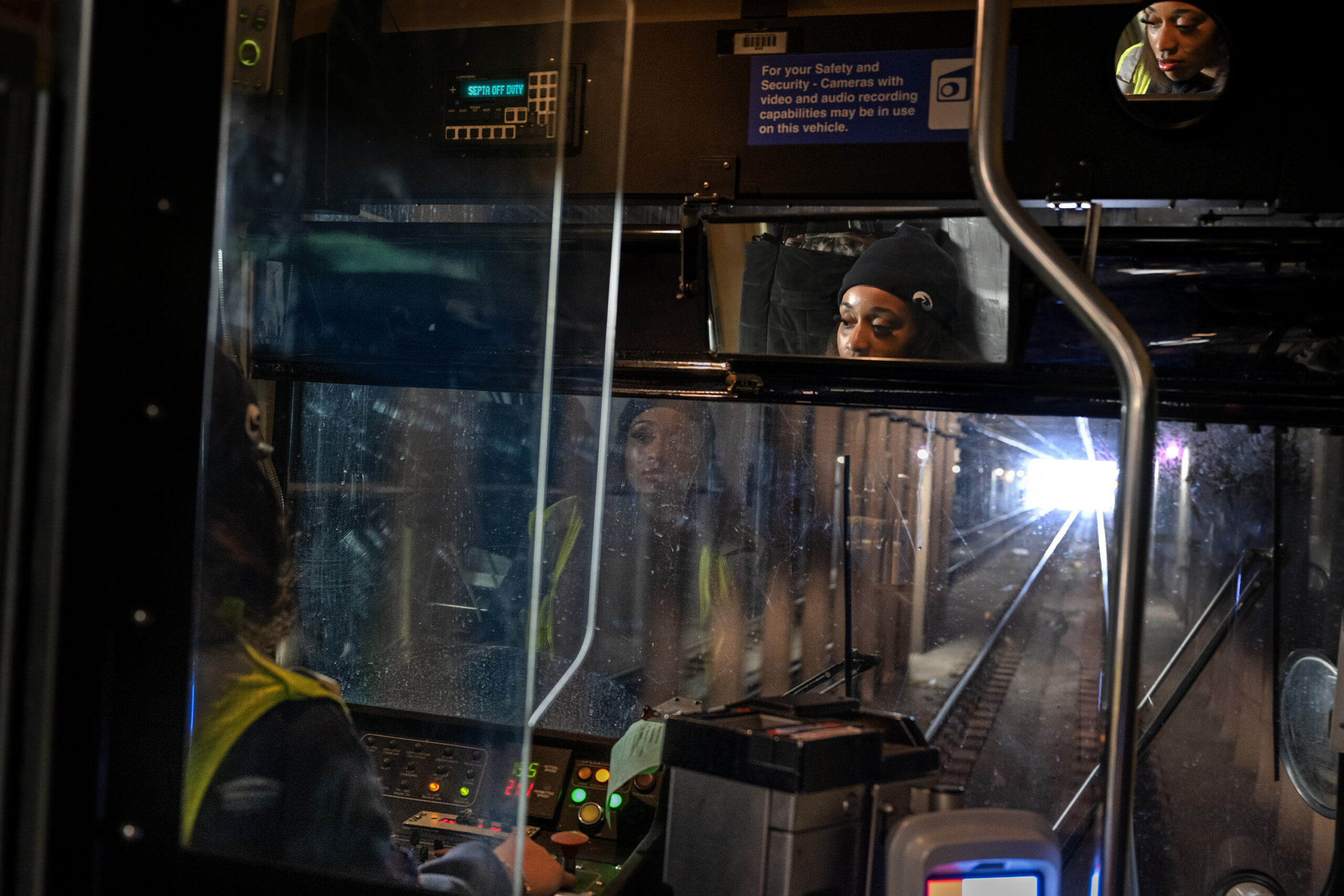
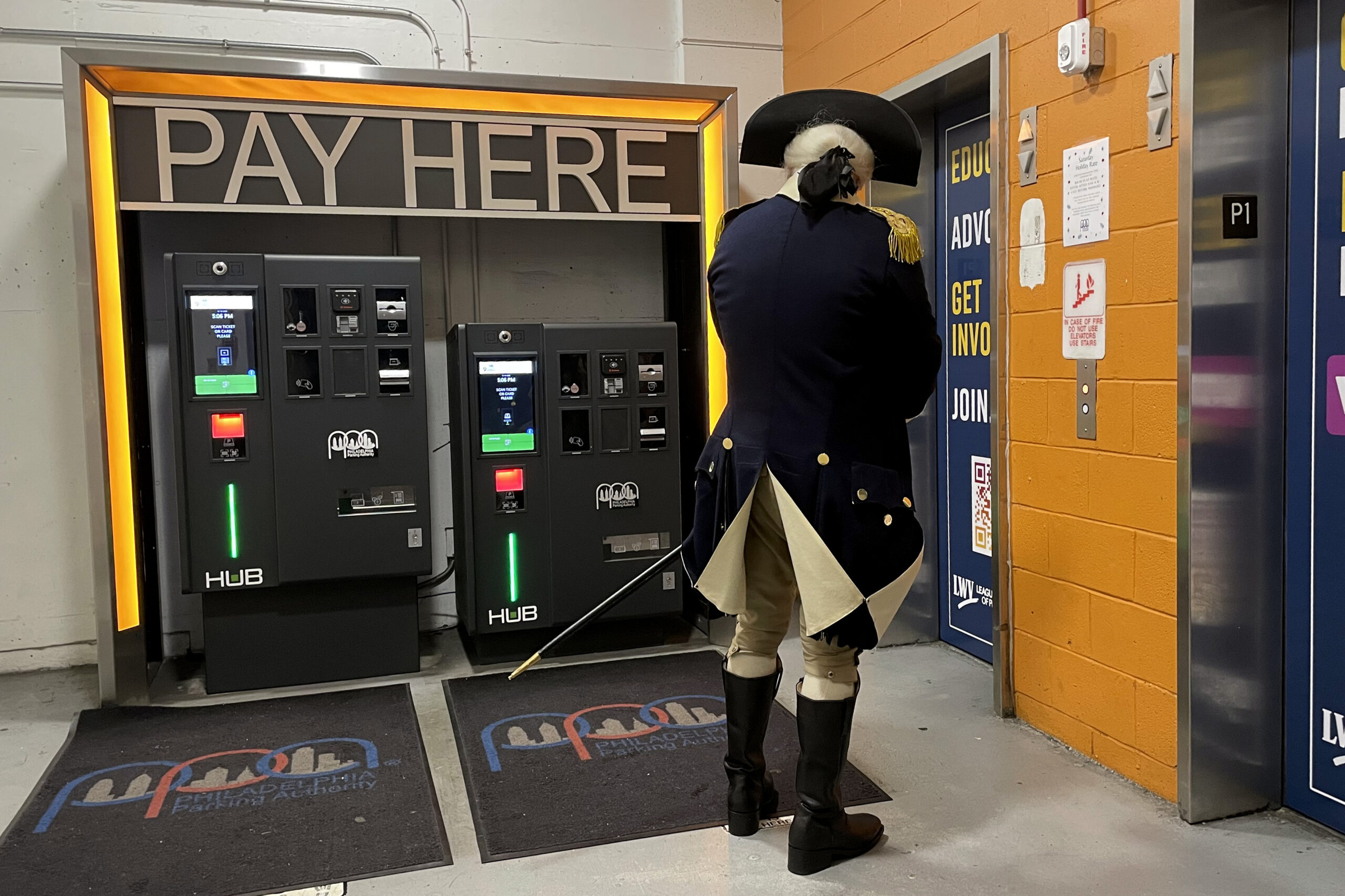
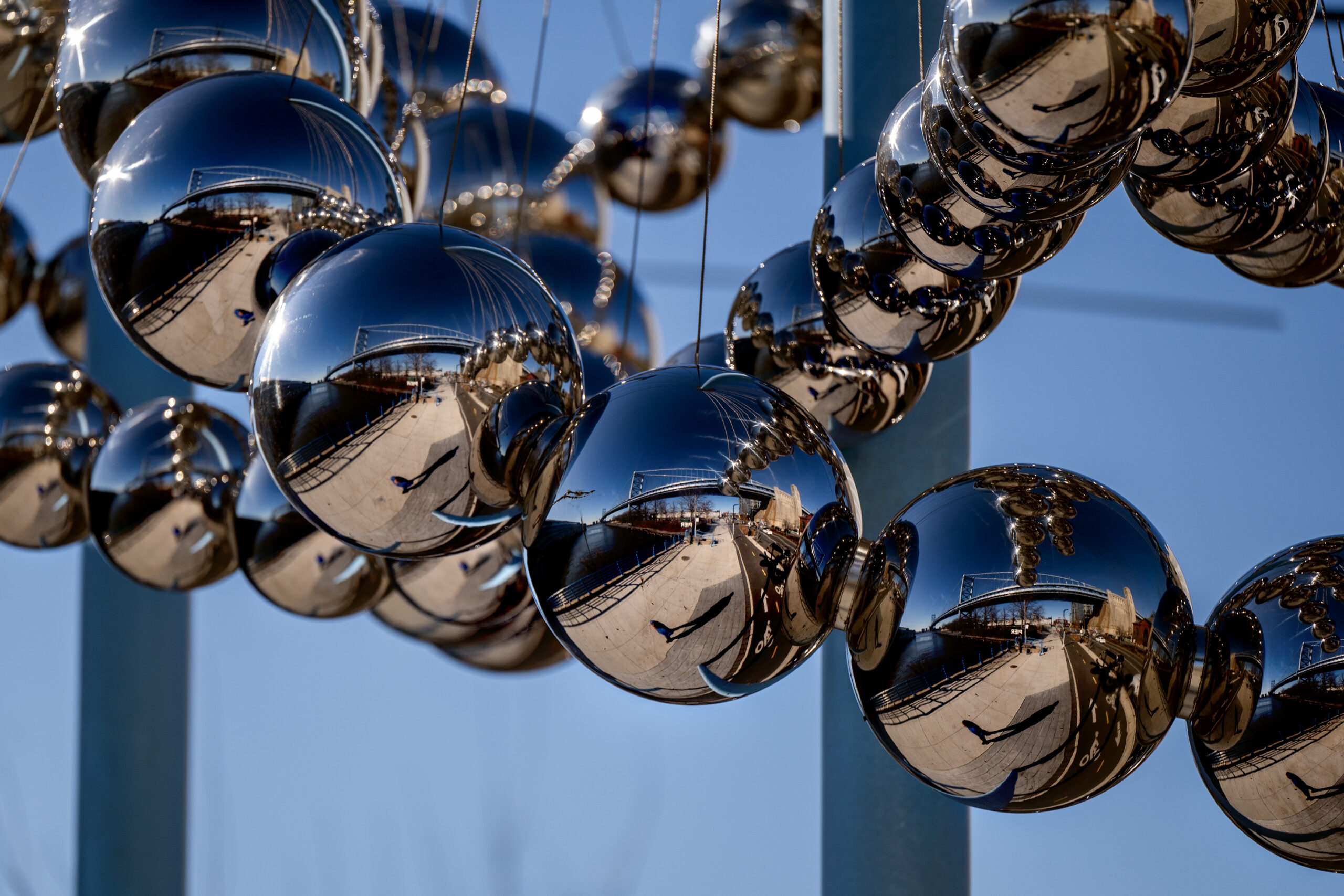
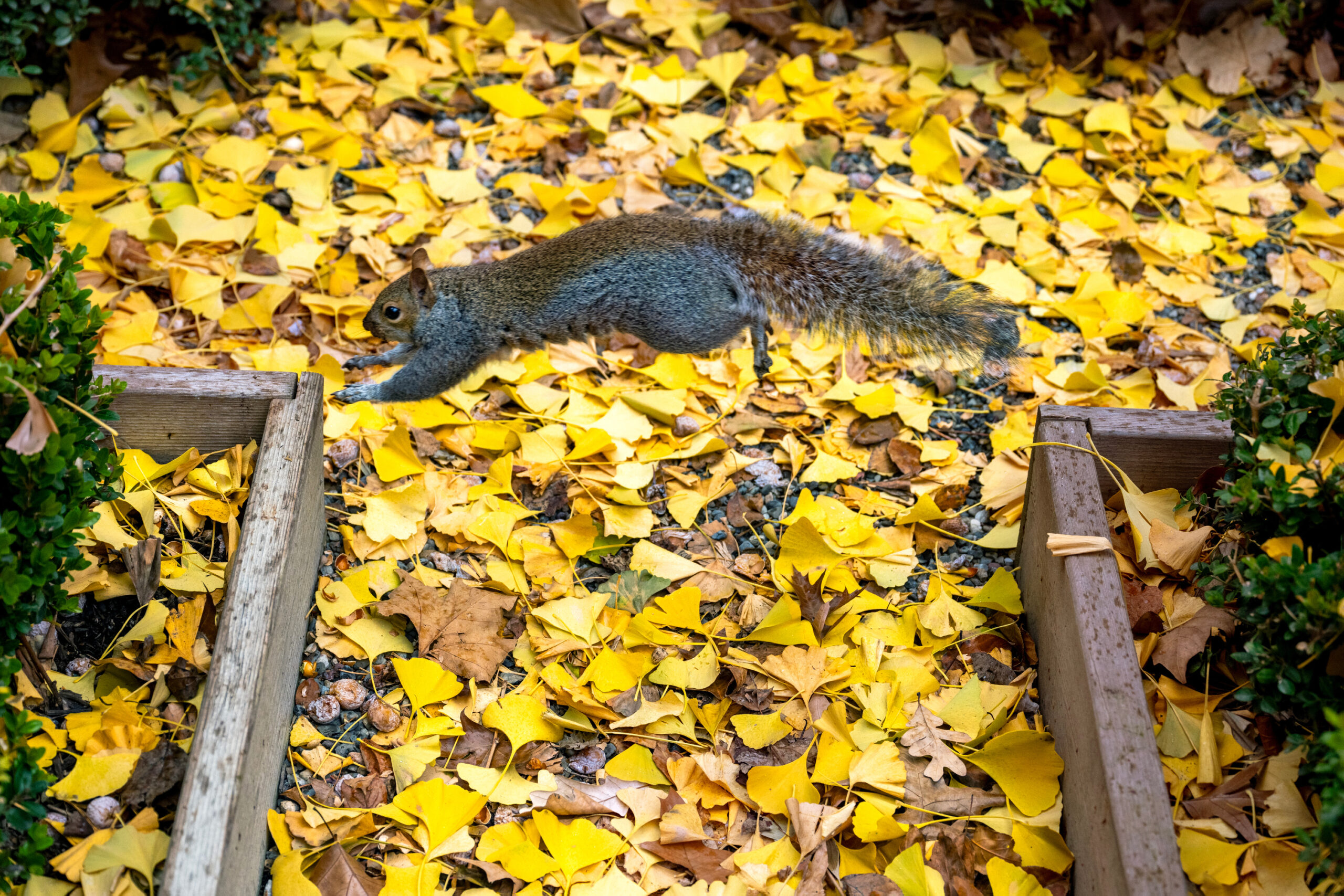
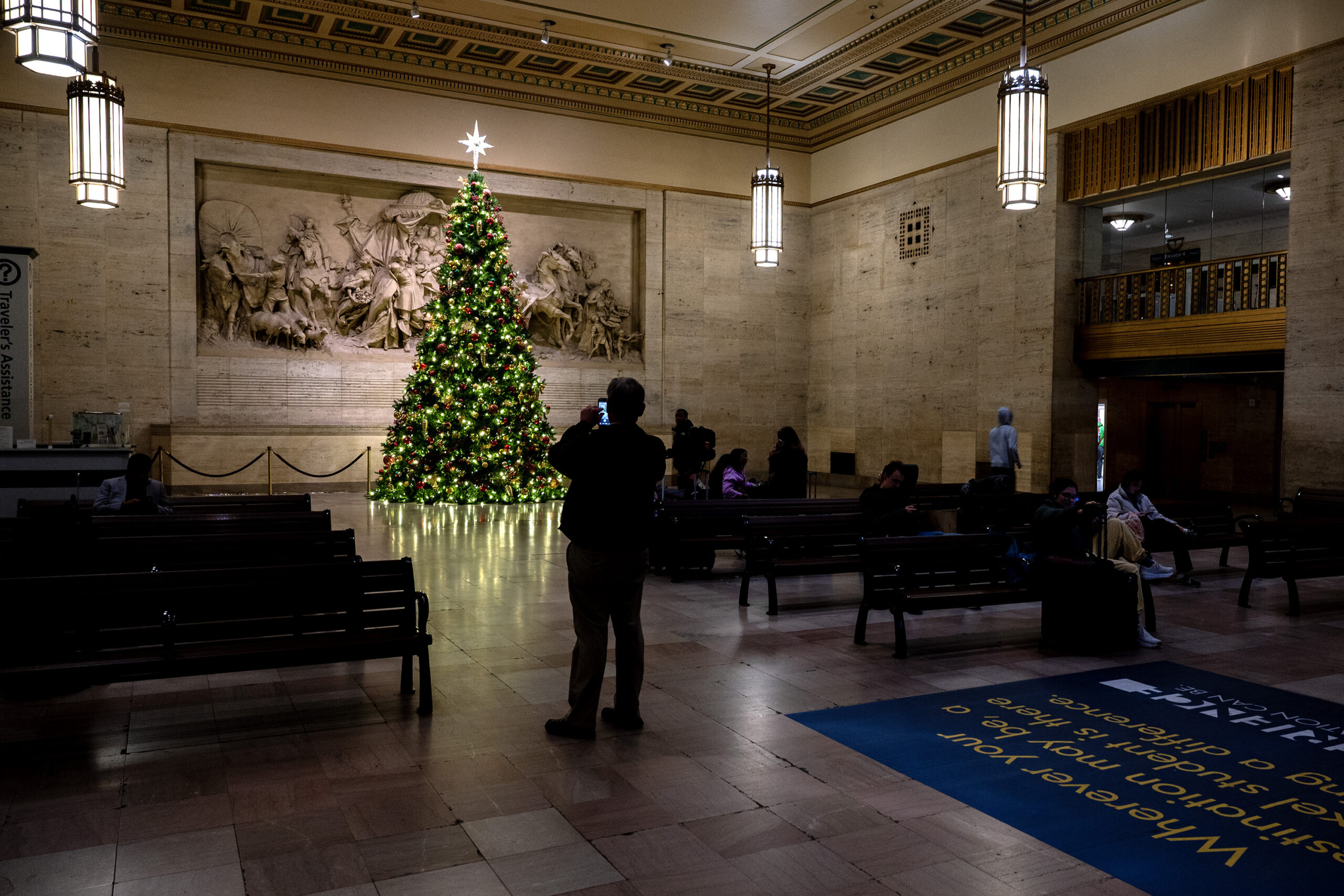
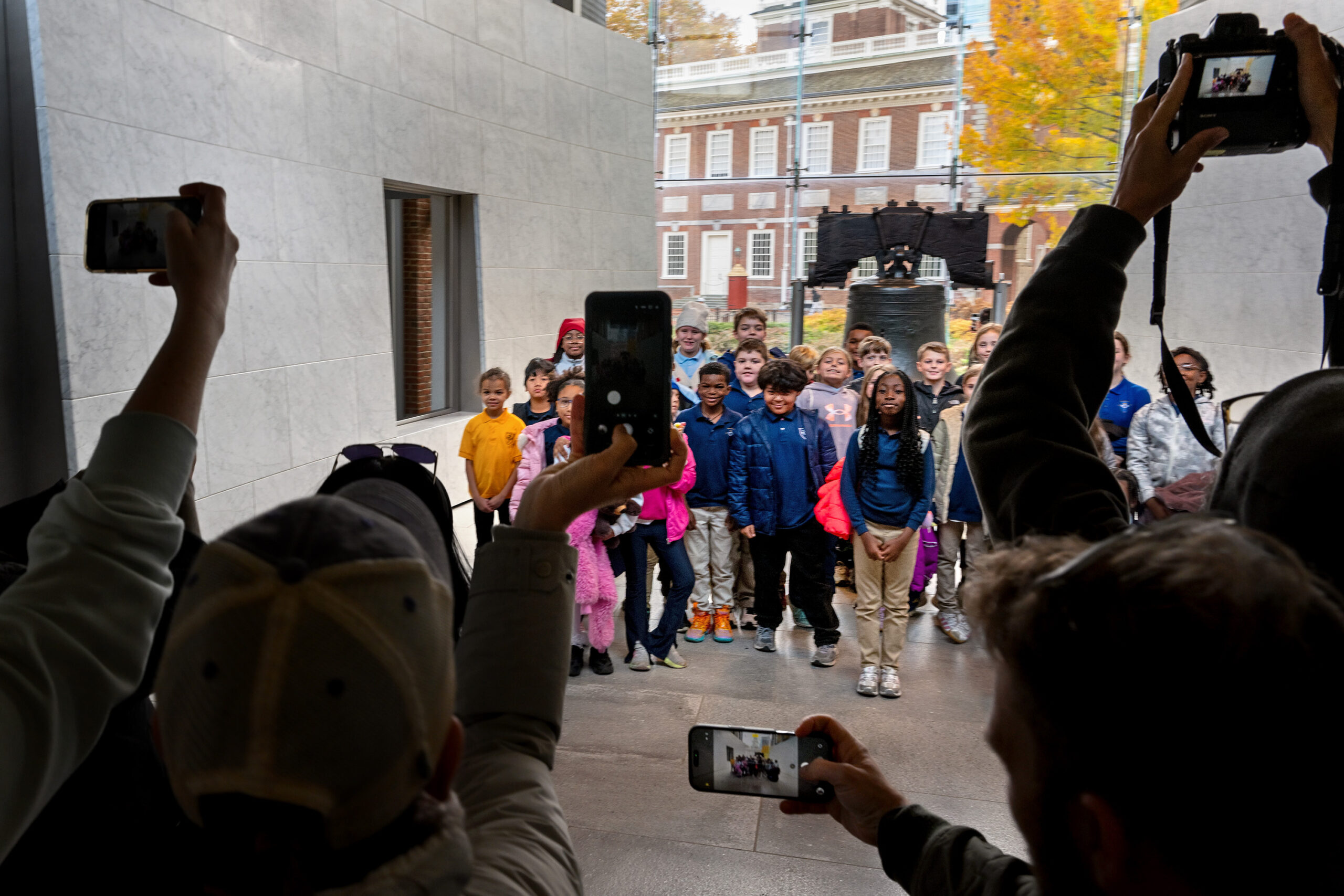
February 23, 2026: Bystanders at the President’s House try to prevent a “counter-protester” from ripping off notes posted by visitors where panels about slavery had been removed by President Donald Trump’s administration.February 16, 2026: What came first? The dirty snowpacked berm of frozen slush or the graffiti? February 9, 2026: Walking through a corrugated metal culvert called the “Duck Tunnel,” a pedestrian navigates the passageway under the SEPTA tracks on the Swarthmore College campus. February 2, 2026: A light-as-air Elmo balloon rolls along a sidewalk in Haddonfield, propelled by the wind as Sunday’s heavy snow starts to turn to ice and sleet. January 26, 2026: The President’s House in Independence National Historical Park hours Jan, 22, after all historical exhibits were removed following President Trump’s Executive Order last March that the content at national parks that “inappropriately disparage” the U.S. be reviewed. The site, a reconstructed “ghost” structure titled “Freedom and Slavery in the Making of a New Nation” (2010), serves as a memorial to the nine people George Washington enslaved there during the founding of America.January 19, 2026: A low-in-the-sky winter sun is behind the triangular pediment of the “front door” of the open-air President’s House installation in Independence National Historical Park. The reconstructed “ghost” structure with partial walls and windows of the Georgian home known in the 18th century as 190 High St. is officially titled, “Freedom and Slavery in the Making of a New Nation” (2010). It is designed to give visitors a sense of the house where the first two presidents of the United States, George Washington and John Adams, served their terms of office. The commemorative site designed by Emanuel Kelly, with Kelly/Maiello Architects, pays homage to nine enslaved people of African descent who were part of the Washington household with videos scripted by Lorene Cary and directed by Louis Massiah. Deepika Iyer holds her niece Ira Samudra aloft in a Rockyesque pose, while her parents photograph their 8 month-old daughter, in front of the famous movie prop at the top of the steps at the Philadelphia Art Museum. Iyer lives in Philadelphia and is hosting a visit by her mother Vijayalakshmi Ramachandran (partially hidden); brother Gautham Ramachandran; and her sister-in-law Janani Gautham who all live in Bangalore, India.January 5, 2026: Parade marshals trail behind the musicians of the Greater Kensington String Band heading to their #9 position start in the Mummers Parade. Spray paint by comic wenches earlier in the day left “Oh, Dem Golden Slippers” shadows on the pavement of Market Street. This year marked the 125th anniversary of Philly’s iconic New Year’s Day celebration.Dec. 29, 2025: Canada geese at sunrise in Evans Pond in Haddonfield, during the week of the Winter Solstice for the Northern Hemisphere. December 22, 2025: SEPTA trolley operator Victoria Daniels approaches the end of the Center City Tunnel, heading toward the 40th Street trolley portal after a tour to update the news media on overhead wire repairs in the closed tunnel due to unexpected issues from new slider parts.December 15, 2025: A historical interpreter waits at the parking garage elevators headed not to a December crossing of the Delaware River, but an event at the National Constitution Center. General George Washington was on his way to an unveiling of the U.S. Mint’s new 2026 coins for the Semiquincentennial, December 8, 2025: The Benjamin Franklin Bridge and pedestrians on the Delaware River Trail are reflected in mirrored spheres of the “Weaver’s Knot: Sheet Bend” public artwork on Columbus Boulevard. The site-specific stainless steel piece located between the Cherry Street and Race Street Piers was commissioned by the City’s Public Art Office and the Delaware River Waterfront Corporation and created and installed in 2022 by the design and fabrication group Ball-Nogues Studio. The name recalls a history that dominated the region for hundreds of years. “Weaver’s knot” derives from use in textile mills and the “Sheet bend” or “sheet knot” was used on sailing vessels for bending ropes to sails. November 29, 2025: t’s ginkgo time in our region again when the distinctive fan-shaped leaves turn yellow and then, on one day, lose all their leaves at the same time laying a carpet on city streets and sidewalks. A squirrel leaps over leaves in the 18th Century Garden in Independence National Historical Park Nov. 25, 2025. The ginkgo (Ginkgo biloba) is considered a living fossil as it’s the only surviving species of a group of trees that existed before dinosaurs. Genetically, it has remained unchanged over the past 200 million years. William Hamilton, owner the Woodlands in SW Phila (no relation to Alexander Hamilton) brought the first ginkgo trees to North America in 1785.November 24, 2025: The old waiting room at 30th Street Station that most people only pass through on their way to the restrooms has been spiffed up with benches – and a Christmas tree. It was placed there this year in front of the 30-foot frieze, “The Spirit of Transportation” while the lobby of Amtrak’s $550 million station restoration is underway. The 1895 relief sculpture by Karl Bitter was originally hung in the Broad Street Station by City Hall, but was moved in 1933. It depicts travel from ancient to modern and even futuristic times. November 17, 2025: Students on a field trip from the Christian Academy in Brookhaven, Delaware County, pose for a group photo in front of the Liberty Bell in Independence National Historical Park on Thursday. The trip was planned weeks earlier, before they knew it would be on the day park buildings were reopening after the government shutdown ended. “We got so lucky,” a teacher said. Then corrected herself. “It’s because we prayed for it.”
Chef Kenjiro Omori chuckles when asked about his bourbon chicken, a dinner mainstay at Ripplewood Whiskey & Craft in Ardmore. While Omori says he loves the saucy chunks sold at better mall food courts, his bourbon chicken is nothing like that. This rich, homey entree feels ready-made for a cold night.
He breaks down whole birds, deboning them while keeping the breast, thigh, and drum intact, then lightly cures and air-dries the meat for four days. In tribute to Ripplewood’s extensive whiskey collection, Omori sprays the chicken with bourbon before cooking to give it a lacquered finish. Essentially, this is Peking duck meets dry-aged chicken. Executive chef Biff Gottehrer designed the accompanying set, which changes seasonally. The winter mix includes lacinato kale, sweet potato, broccolini, and a sweet-tart mix of apricot and pomegranate, balancing comfort with cheffiness. Ripplewood Whiskey & Craft, 29 E. Lancaster Ave., Ardmore, 610-486-7477, ripplewoodbar.com
— Michael Klein
Oyster House’s seasonal snapping turtle soup, a riff on a historical Philadelphia delicacy that once involved cooking whole turtles.
Snapper soup at Oyster House
A friend visiting Philadelphia recently told me she’d never guess that Oyster House has been around for half a century — a feat of longevity celebrated this week by the James Beard Foundation, which named the Mink family’s restaurant an “America’s Classic.” And at first glance, I could understand. The raw bar is alive with diners of all ages, sipping some of the city’s best martinis alongside icy platters of expertly shucked oysters sourced from locales from Cape May to Pemaquid, Maine. There are standard dishes you might find at any tradition-minded fishhouse — a luxurious lobster roll, clam bakes, and creamy chowders. But there are also several modern moves from chef Joe Compoli that would be at home on a creative modern American menu: vibrant crudos, octopus ramen, black garlic-glazed halibut over black rice.
If you look a little closer, however, you can see ties to local history that make Oyster House a Philadelphia classic, like the museum-worthy collection of antique oyster plates scattered like a gilt-edge porcelain constellation across the whitewashed walls. Key standbys on the menu itself function the same way. The fried oysters and chicken salad is one, a seemingly odd but absolutely delicious combo that dates to at least the 19th century, when the city was saturated with oyster houses.
Fried oysters with chicken salad from Oyster House.
But the most iconic (and endangered) of Oyster House’s historical specialties is the snapper turtle soup. This dish has roots in Philadelphia’s colonial past, when 70-pound live green sea turtles would step off ships carrying all manner of tropical produce, just arrivedfrom the West Indies to the city’s docks. Much smaller snapping turtles from the South are the norm now, says third-generation Oyster House owner Sam Mink, but you can still taste the echoes of the Caribbean spice trade — a heady current of allspice and clove — swirling through the mahogany broth the restaurant steeps with whole turtles (shell and all) for nearly four hours.
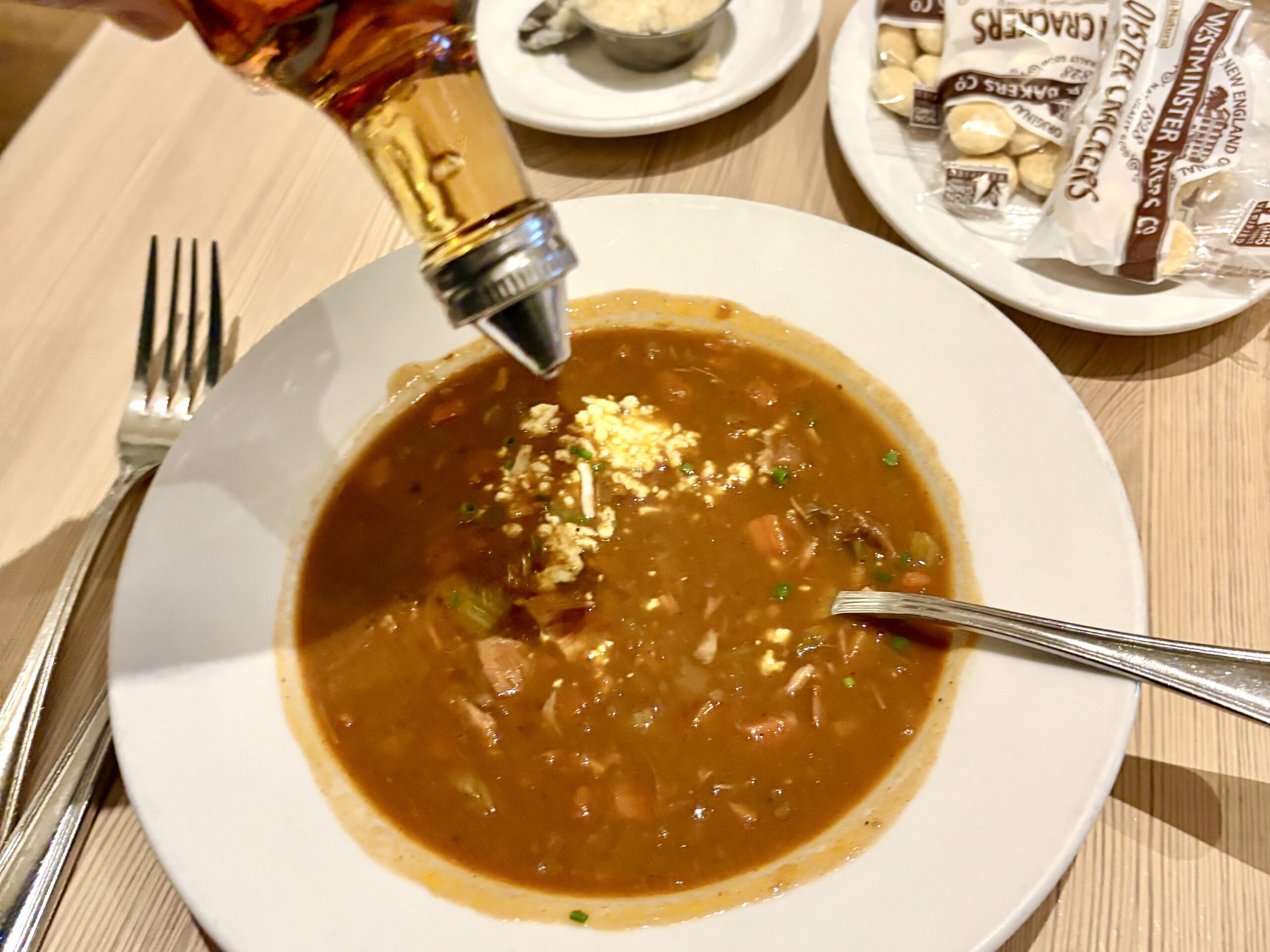
There are some other differences in Oyster House’s current snapper soup, which is a cold-weather staple here, and the style that was once standard across Philly in places like the (now long-gone) Bookbinder’s restaurants. Oyster House’s version is considerably thinner than the sludgy brown soup of yore. It’s still enriched with buttery brown roux, but missing the extra cornstarch that once thickened it until a spoon could stand up straight. I can taste all the slow-cooked flavors of this soup even more, as well as the velvety softness of the tender meat, thanks to a habitual splash of dry sack sherry, shaken from the tableside cruet. But traditionalists, no doubt, still complain.
“Oh, there were certainly more people that grumbled at first in 2009,” when this modified recipe was first introduced, says Mink. “But if we’d kept things so traditional and didn’t move forward with our recipes, at least a little bit, I don’t think we’d be here today.” Oyster House, 1516 Sansom St., 215-567-7683, oysterhousephilly.com
— Craig LaBan
The cinnamon bun from Vibrant Coffee Roasters, which also sold at their sister shop Function Coffee Labs.
Cinnamon bun from Vibrant Coffee Roasters
Sometimes the only thing that can cure the snowstorm blues is a ginormous cinnamon bun slathered in cream cheese frosting.
Vibrant Coffee Roasters’ are pretty hefty. They’re roughly 4 inches in diameter and heaped with so much frosting it drips down the side, just the way I like. The key to creating giant and soft buns, according to Vibrant co-owner Ross Nickerson, is to let them merge together on the tray while they bake. That way, you lock in the moisture and avoid a cardinal sin: a dry cinnamon bun that tastes stale once it cools.
Vibrant uses a hybrid sourdough-brioche dough, and Nickerson said that the staff avoids doing anything too fancy with the filling or frosting. The result is a classic cinnamon bun that’s pillowy, not too sweet, and ultra-comforting. The buns are available at Vibrant’s locations in Rittenhouse and at Sixth and Lombard, plus their sister shop, Function Coffee Labs (1001 S. 10th St.). I’d trek through snow to any of them for chance to get a gooey bun fresh from the oven. Vibrant Coffee Roasters, 222 W. Rittenhouse Square First Floor, 267-534-3608, vibrantcoffeeroasters.com