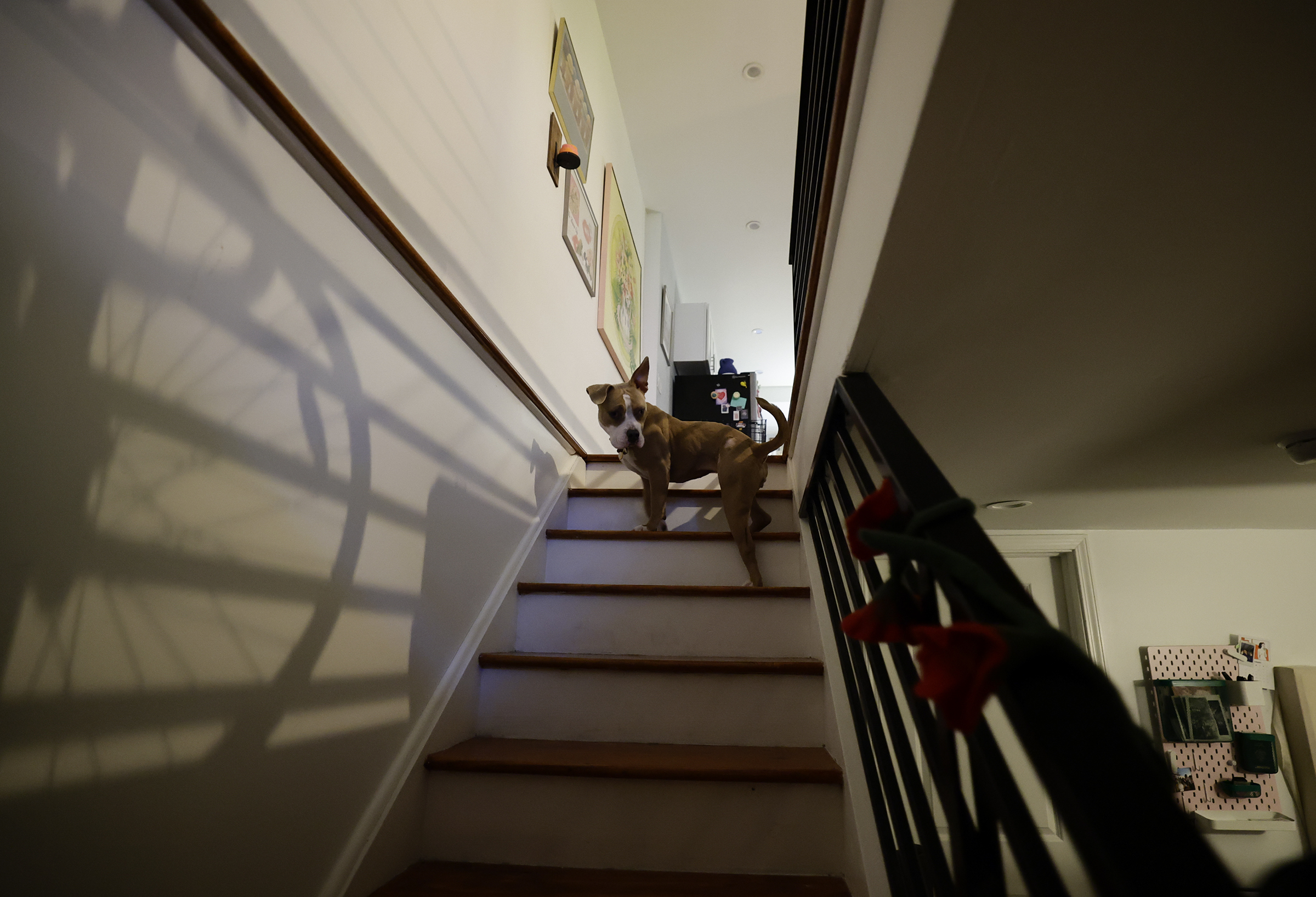
Mooshy the dog stands on the steps leading to the basement of the South Philadelphia home of Sam Gellerstein and Sara Sarmiento on Friday, Feb. 27, 2026.
The ask: Sam Gellerstein wanted space.
He’d been in South Philly for the better part of a decade, and he loved the area. But his one-bedroom off East Passyunk Avenue was starting to feel small. What’s more, after a three-year long-distance relationship, his partner, Sara Sarmiento, was moving to Philadelphia from South Florida. He needed a place big enough for both of them — and big enough to support a future family.
The one-bedroom “was cool for me as a person living by myself,” said Gellerstein, who cofounded and plays bass for Philly band Snacktime. “But wanting to have a dog and start a family, we wanted to have a nice, big house, and we wanted to be around cool stuff.”
It was important to stay in South Philly and to be able to have friends and family visit, too — so extra living spaces were a must. He and his partner also wanted something they could make their own.
“My girlfriend’s an amazing artist, and I like to think I have some style myself, so it was really important to have a place we could put our touches on,” Gellerstein said. “We didn’t want to just hang up the pictures and be like, ‘This is our place.’ We wanted to be able to put our personality into it.”
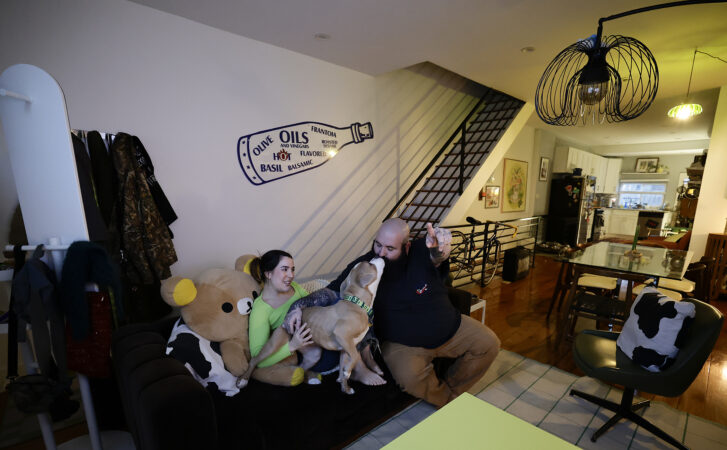
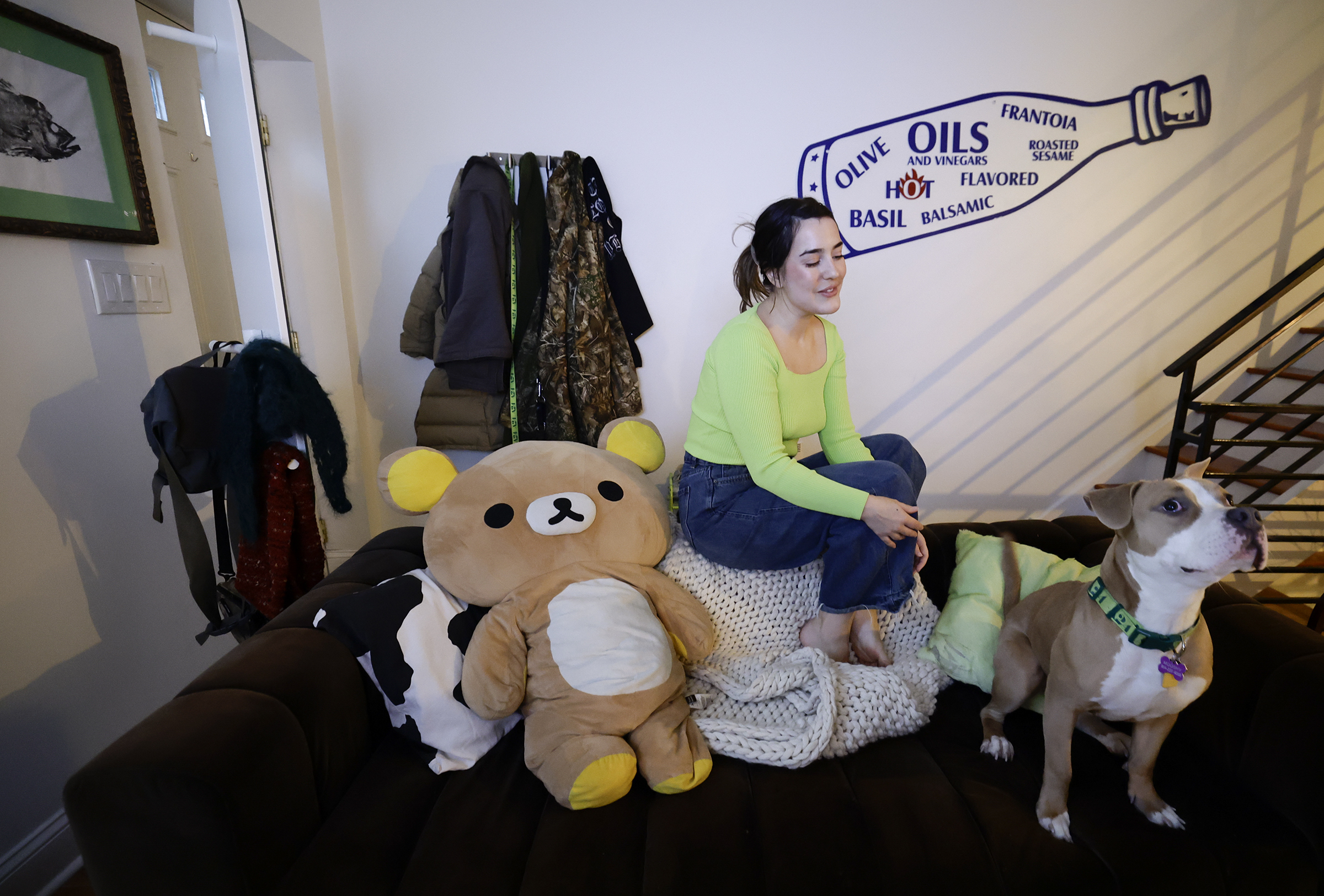
Sara Sarmiento sits with Mooshy in the South Philadelphia home on Friday, Feb. 27, 2026. She and boyfriend Sam Gellerstein closed on the home in August.
The search: Their search began last June. Gellerstein estimates that they looked at about 15 houses — pretty much all of them south of WashingtonAvenue. One, near 13th and West Ritner Streets, seemed promising. “It was a really beautiful house with one of the craziest backyards I’ve ever seen in Philly,” he said. “Really amazing high ceilings. It was really special.” The downside was that it didn’t have central air, and the basement was in need of significant work. So when they submitted an offer and didn’t get it, it wasn’t the end of the world. Not long after, they found The One.
The appeal: Unlike the previous house, this one had central air as well as a mostly finished basement. They liked that this house didn’t need a ton of work and that the money they’d save on renovations could be used on other things. Gellerstein loved the standalone bathtub. It also had a backyard and was next to Wharton Square Park.
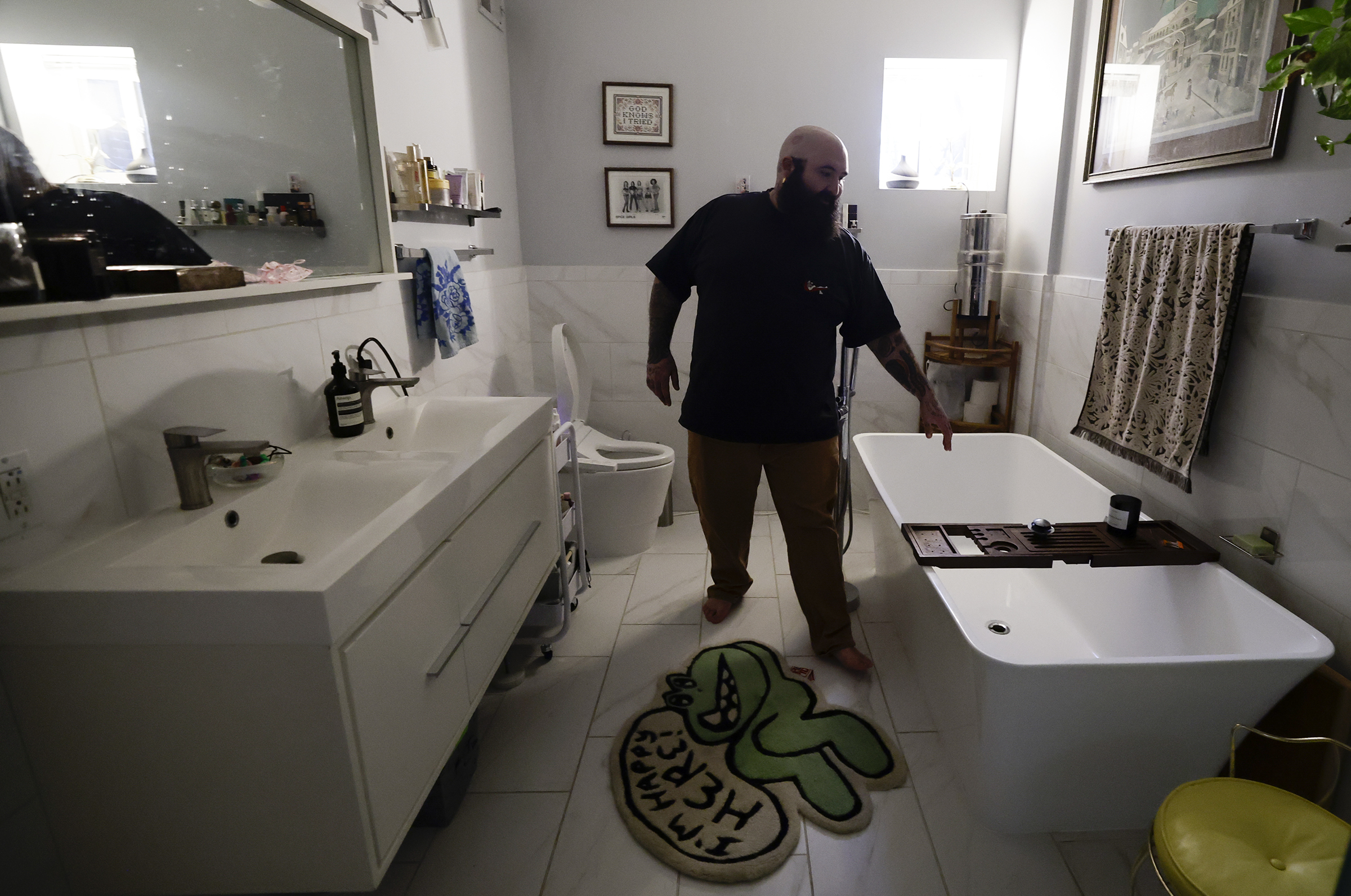
Sam Gellerstein in the second-floor bathroom of his South Philadelphia home on Friday, Feb. 27, 2026. The bathtub was one of his favorite features when considering the home.
The decision to make an offer was easy. “There wasn’t too much drama in selecting the house,” Gellerstein said.
The deal: The home had multiple offers, so the couple put in a bid over asking price. Ultimately, they offered $346,000, and the bid was accepted. As part of the negotiation, the couple agreed to informational inspection, and the seller offered $11,000 to help with closing costs.
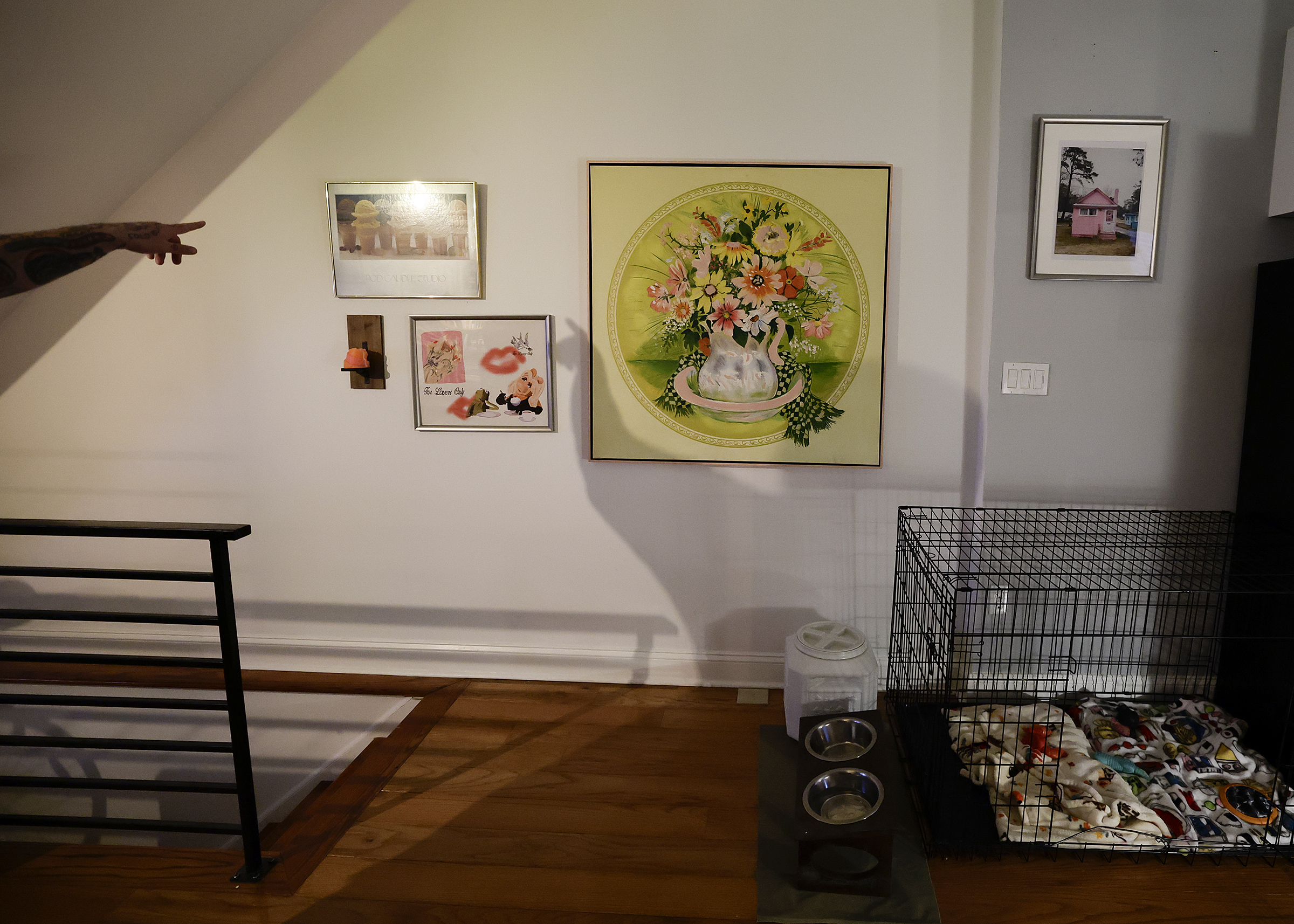
Art work hangs in the South Philadelphia home of Sam Gellerstein and Sara Sarmiento on Friday, Feb. 27, 2026. They wanted a home that would allow them to put some of their own personality into the space.
The money: “I had some money that I found in a couple different accounts that I’d been saving up in, and I used some of my old retirement money from a previous job,” Gellersteinsaid. All told, they put $19,000 down and were able to secure a monthly mortgage payment of $2,375.
The move: Gellerstein hired movers to take his belongings from the one-bedroom to the new home, and the couple used a moving van to get his partner’s things from Florida to Philly.
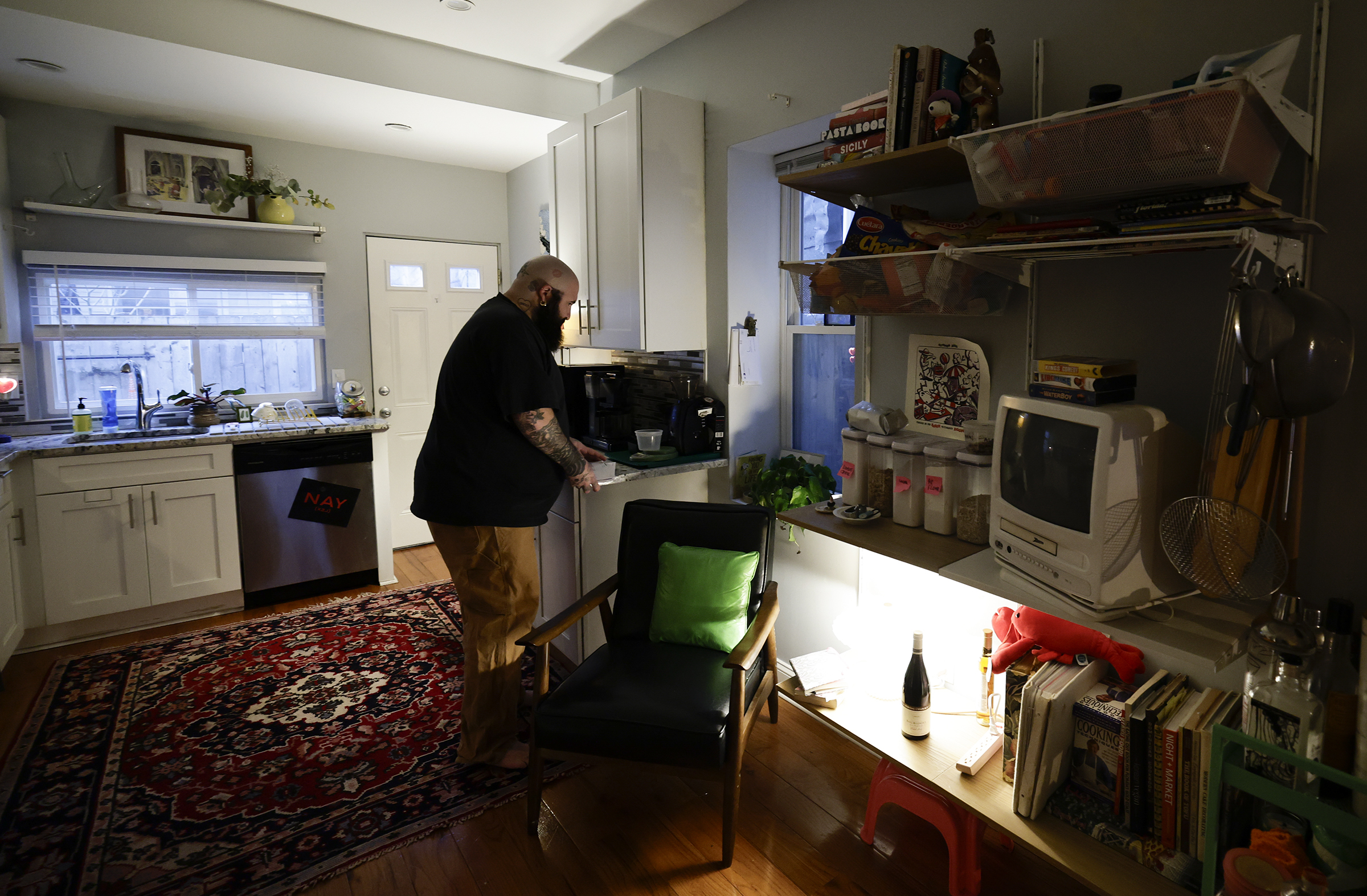
Sam Gellerstein in the kitchen of his South Philadelphia home on Friday, Feb. 27, 2026.
Any reservations? With the exception of a dryer that needed replacing shortly after moving in, “the house has been very good to us,” Gellersteinsaid. “It held up through these cold winter months, nothing crazy happened, so we’re really grateful.”
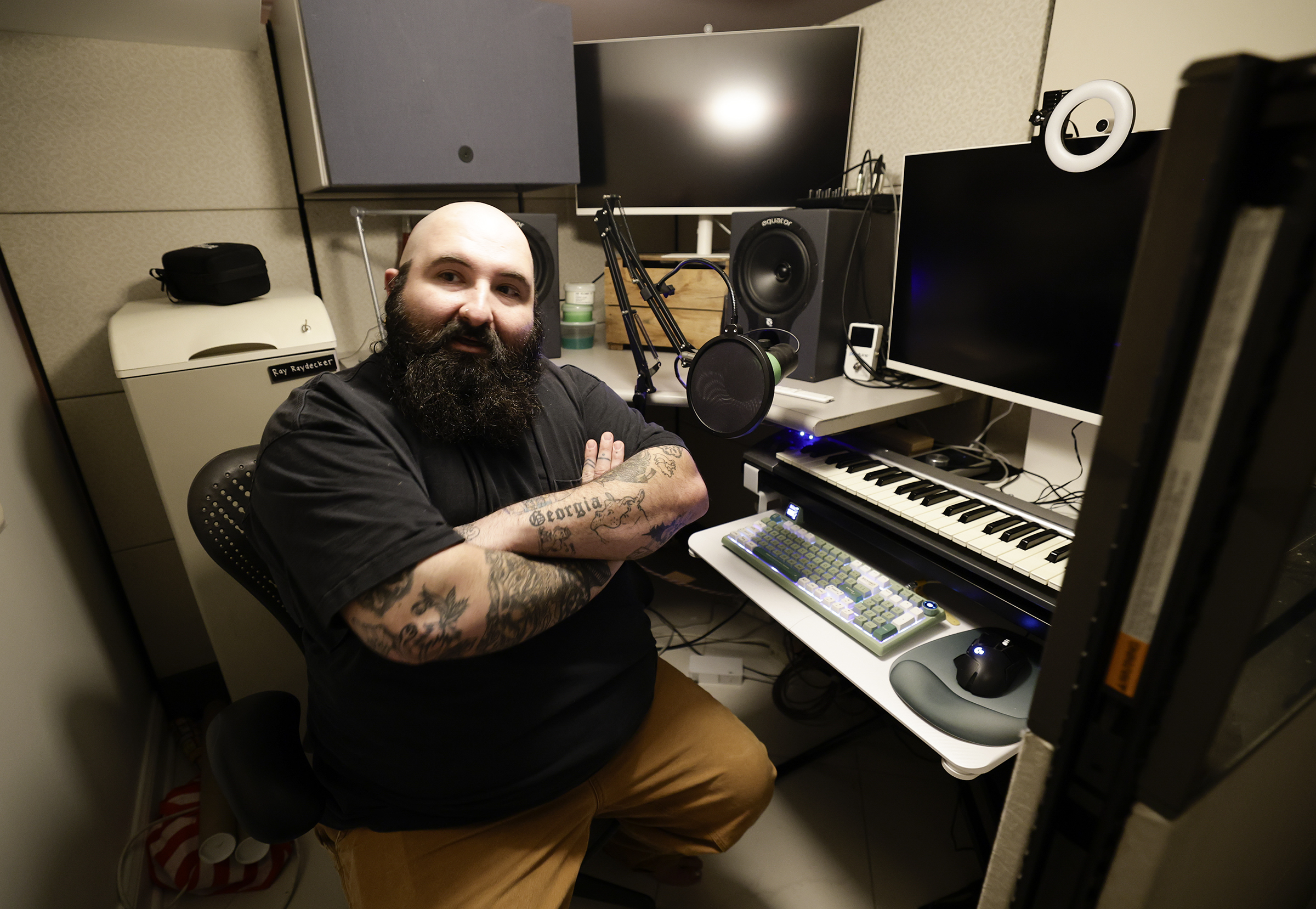
He’s loving the basement, particularly. “We put a [vintage] Herman Miller cubicle down in the basement and separated it off from the den so it almost functions as another little tiny room,” he said. And after years spent working in a cramped bedroom, the added space has been revelatory.
Sam Gellerstein sits at his basement music work area in his South Philadelphia home on Friday, Feb. 27, 2026.
“It’s really nice to be able to work and write music and compose and get my emailing done,” he said.
Having a fenced-in backyard has been great for the couple’s new pit bull, Mooshy, on mornings when a long walk isn’t possible. Next on their to-do list is turning an unfinished portion of the basement into an additional bathroom.
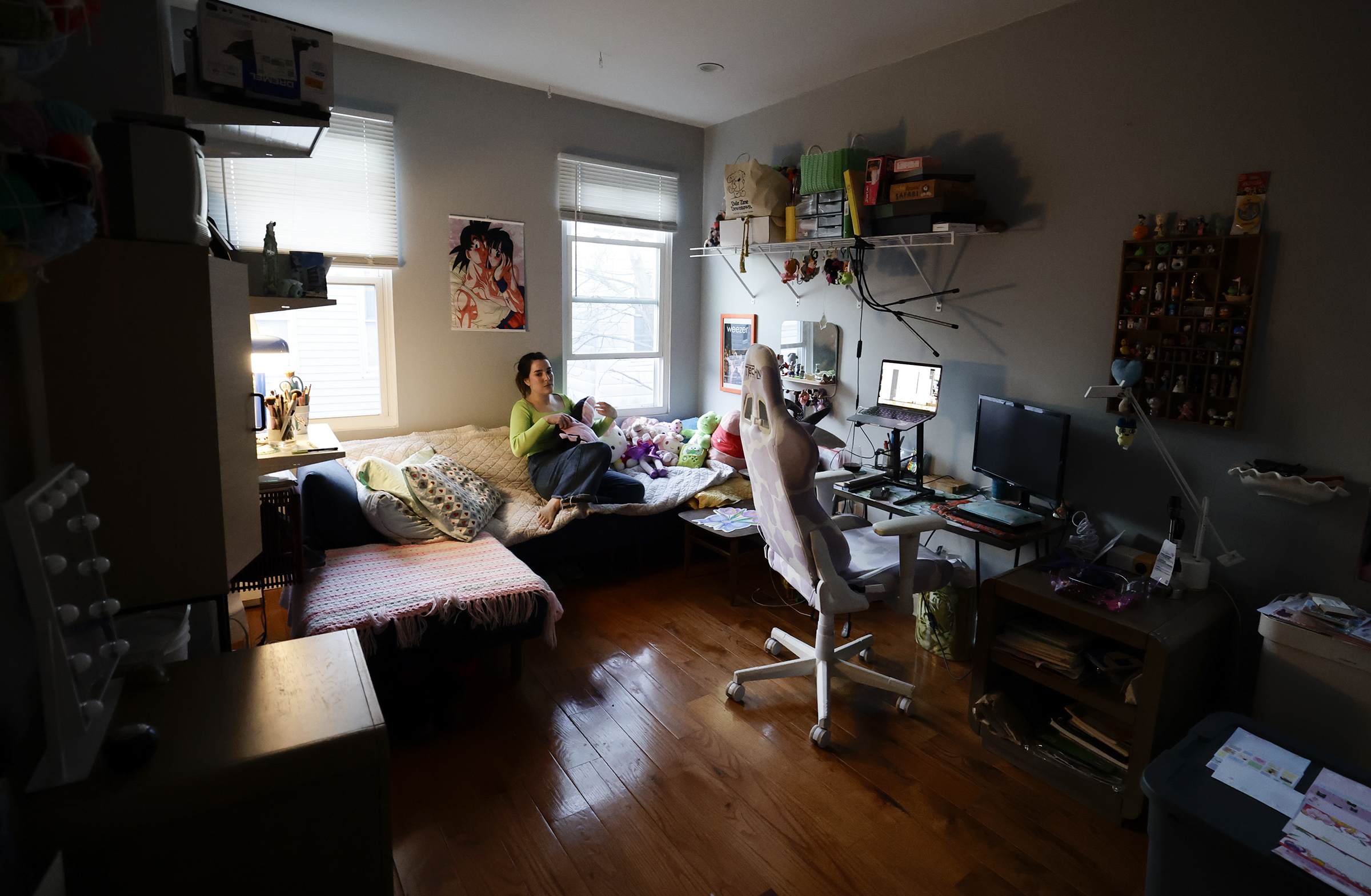
Sara Sarmiento sits in her second-floor office in the South Philadelphia home she shares with boyfriend Sam Gellerstein. She recently moved to Philadelphia from Florida.
Life after close: They’ve quickly fallen in love with the neighborhood, which they’ve found incredibly welcoming. “The block is super tight,” Gellerstein said. Meanwhile, a collection of nearby restaurants and coffee shops offers plenty to do.
“We put a lot of work into getting this house that’s perfect for us,” he said. “Who knows what the future might hold? But we don’t view this as a starter house — we view this as our house.”
Did you recently buy a home? We want to hear about it. Email darnett@inquirer.com.
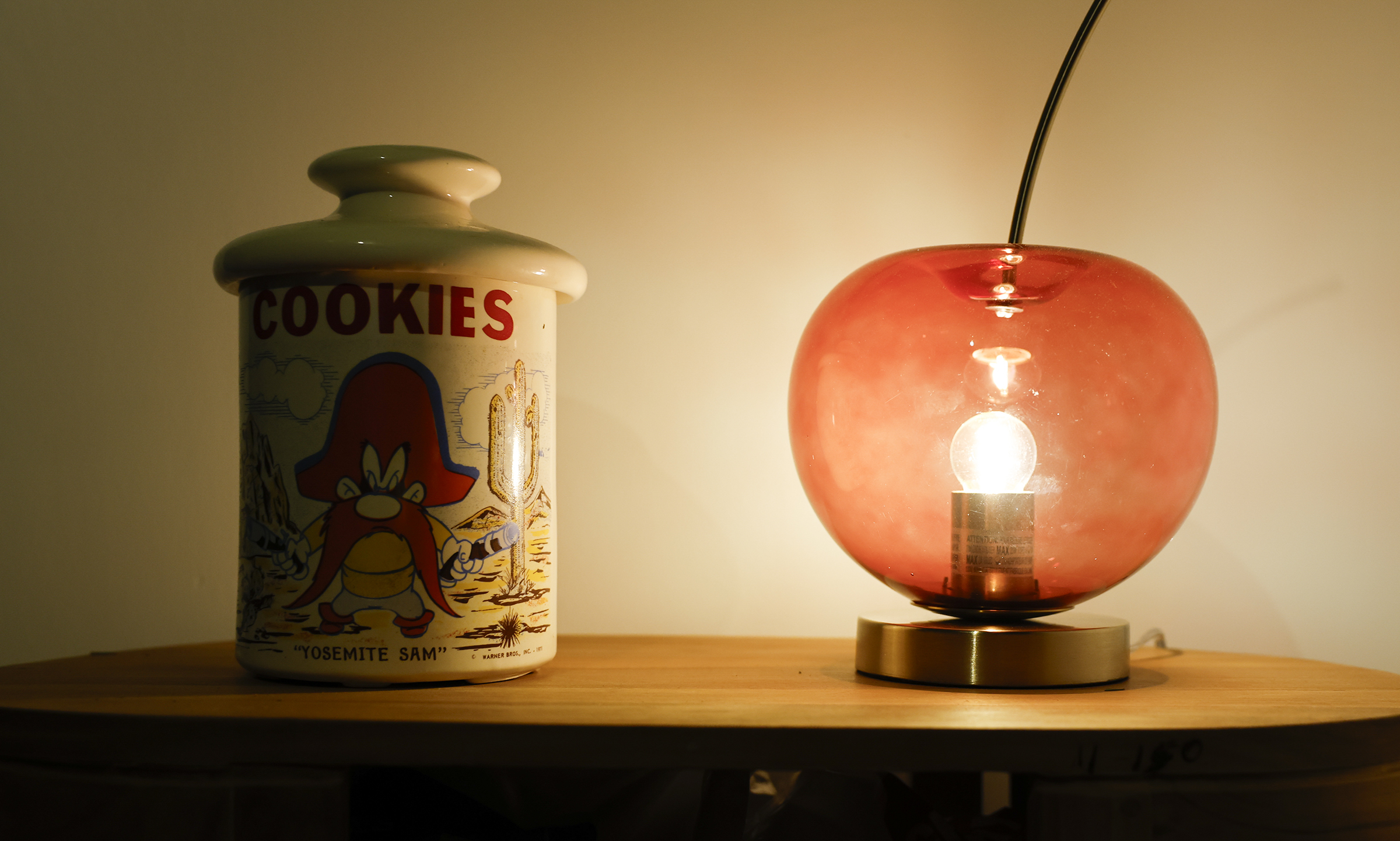
A cookie jar and lamp in the South Philadelphia home of Sam Gellerstein and Sara Sarmiento. Purchasing a home that didn’t need significant work allowed them to save money for additions they wanted to make, rather than needed.
We’ll show you a photo taken in the Philly-area, you drop a pin where you think it was taken. Closer to the location results in a better score. This week’s theme is about the art of the late Isaiah Zagar. Good luck!
Round #22
Question 1
Where can you find this mosaic by Isaiah Zagar?
Loading…
ClickTap on map to guess the location in the photo
ClickTap again to change your guess and hit submit when you're happy
You will be scored at the end. The closer to the location the better the score
Jose F. Moreno / Staff Photographer
Pretty good/Not bad/Way off! Your guess was from the location.Spot on! Your guess was exactly at the location. Here's also where a random selection of Inquirer readers guessed.
Isaiah Zagar, the renowned mosaic artist from Philadelphia, died recently at 86.
Located near the Magic Gardens, Zagar’s nonprofit organization and gallery, this 2004 mural “Anthony's Eyes” sits next to another mural, “Julia’s Birthday Card," and is displayed at a private residence on Bainbridge Street.
Quiz continues after ad
Question 2
This mosaic is on the exterior of a former coffee shop. Where is it?
Loading…
Tom Gralish / Staff Photographer
Pretty good/Not bad/Way off! Your guess was from the location.Spot on! Your guess was exactly at the location. Here's also where a random selection of Inquirer readers guessed.
This East Passyunk mural is located on the former Black N Brew building. It was recently announced that Love & Honey Fried Chicken would take over the space.
Quiz continues after ad
Question 3
The mural seen here is controversially being torn down. Do you know its location?
Loading…
Tom Gralish / Staff Photographer
Pretty good/Not bad/Way off! Your guess was from the location.Spot on! Your guess was exactly at the location. Here's also where a random selection of Inquirer readers guessed.
The Painted Bride mural located at the former Painted Bride Art Center building is in the process of being torn down after years of legal battles to save the mosaic.
Your Score
ARank
Amazing work. You know your mosaics.
BRank
Good stuff. You’re almost perfect.
CRank
C is a passing grade, but you could do better.
DRank
D isn’t great. Try again next week!
FRank
We don’t want to say you failed, but you didn’t not fail.
You beat % of other Inquirer readers.
We’ll be back next Saturday for another round of Citywide Quest.
HONESDALE, Pa. — In waiting rooms all over America, millions of children found something to stave off the impending needles and drills, a magical world of puzzles, games, and stories written just for them.
For many kids, Highlights was the first magazine they ever read, and, perhaps, the one that mattered most when they look back on their childhoods, decades later.
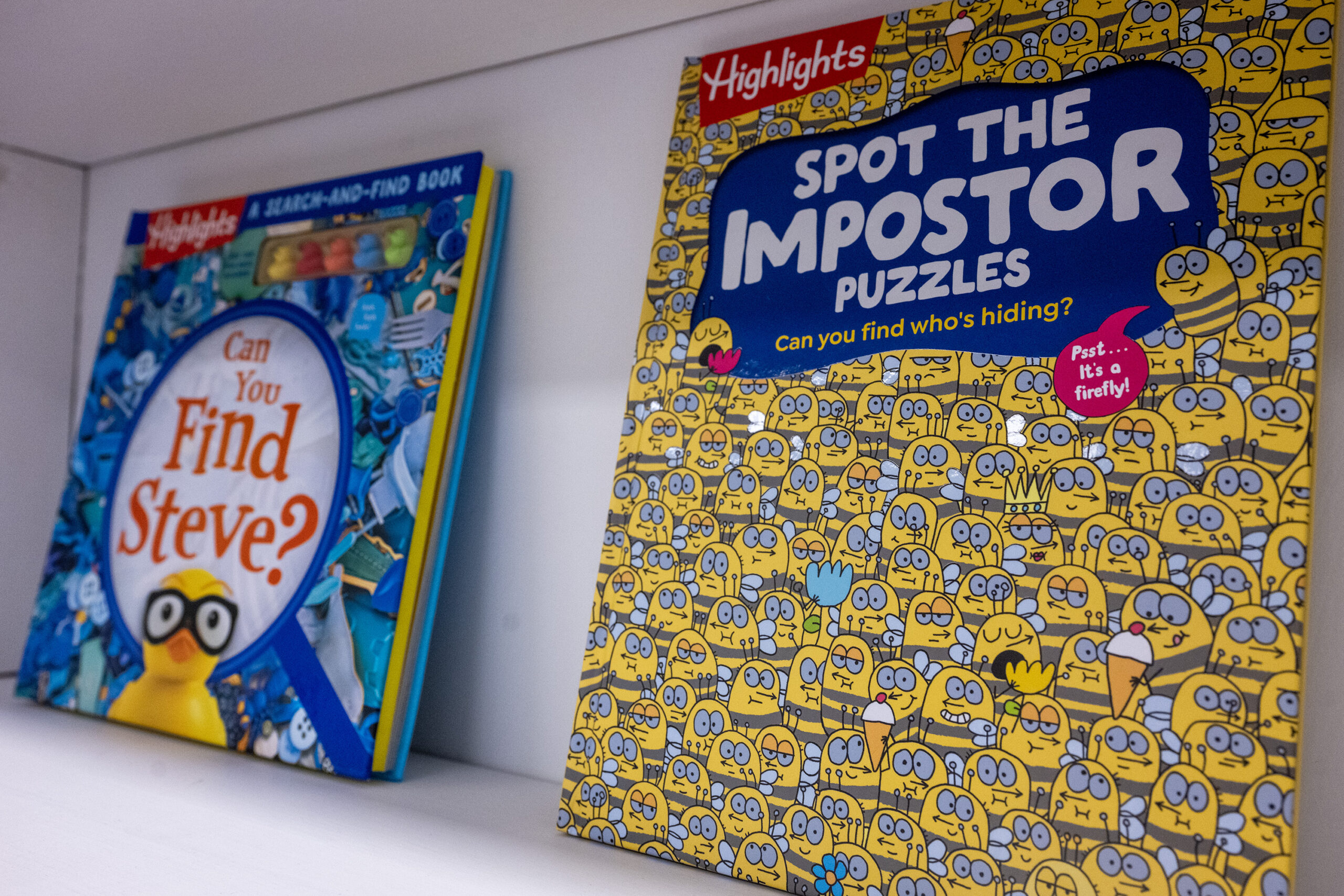
Books published by Highlights on a shelf at the magazine’s editorial offices in Honesdale.
In an era when print circulation — magazines, newspapers, and even the phone book — steadily declines, it’s easy to look back on Highlights, which was first published in 1946, with a glowing nostalgia. Every issue was full of intricately illustrated hidden-picture puzzles, the beloved duo of Goofus and Gallant making disparate decisions, and child-authored “Dear Highlights” questions that were often silly, serious, and tender.
“I let my friends borrow one of my stuffed animals. She’s going to give it back next time we meet, but I’m afraid she’s going to lose it,” a girl named Ramona, from California, wrote to Highlights.
The magazine may get some Generation Xers feeling wistful, but Highlights and its handful of offshoots are alive and well and, perhaps, more crucial than ever in an era where children’s attention spans are pulled in every direction. Highlights turns 80 this year, and its editorial offices remain in a cozy pre-Civil War, Italianate house in downtown Honesdale, Wayne County.
“We are as relevant as we were 80 years ago,” said Marlo Scrimizzi, senior editorial director for Highlights for Children. “Our future is expansion. We want to bring Highlights to more homes and families.”
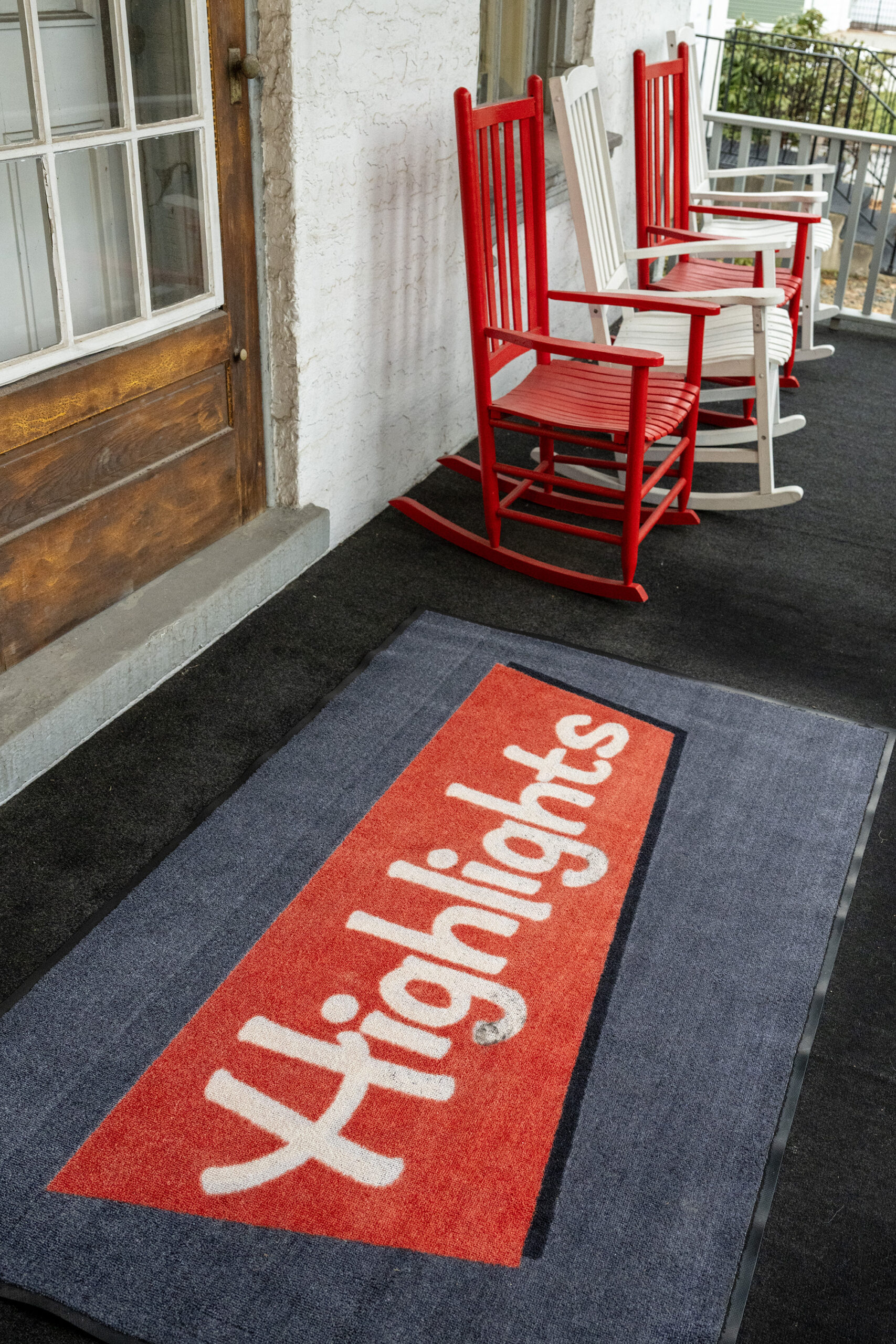
Front porch of the Highlights magazine editorial offices in Honesdale Jan. 14, 2026.
Today, Highlights for Children publishes six magazines, with a combined circulation of one million a month, all while remaining family-owned. It’s still full of old favorites, like Goofus and Gallant, plus dinosaurs, outer space themes, animals, and unicorns, the mythical beast that’s made a big comeback in recent years.
“Dinosaurs will always be in,” Scrimizzi said.
Outside of the flagship magazine, which targets children 6 to 12, the company publishes Hello (ages 0-2), Highlights CoComelon (ages 1-4), High Five (ages 2-6), High Five Bilingüe (ages 2-6), and brainPLAY (ages 7 and up).
On a recent January afternoon in Honesdale, the editorial crew was laying out its latest issue, which featured a Japanese artist who practices kintsugi, the art of repairing broken objects by filling cracks with lacquer mixed with powdered gold, silver, or platinum.
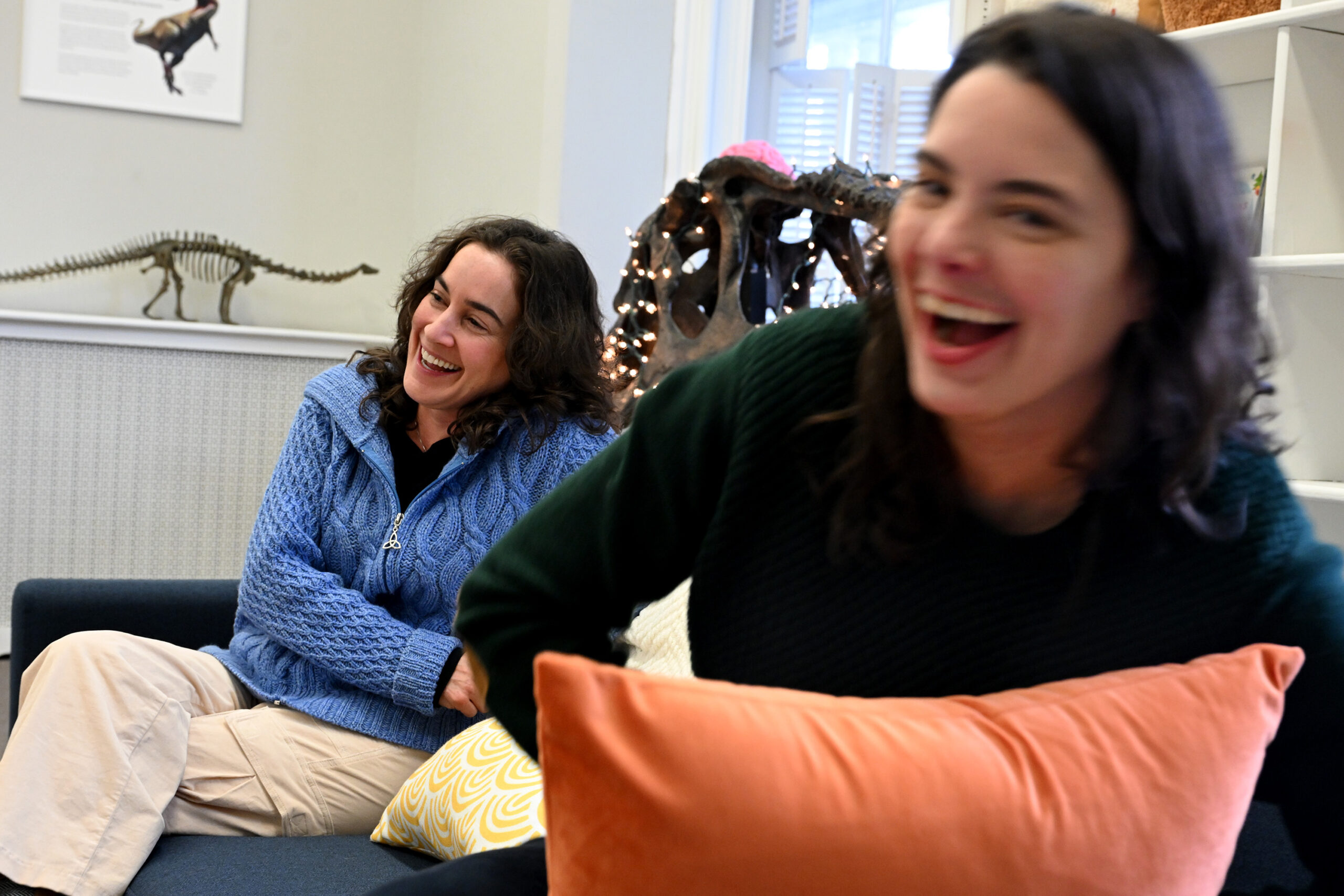
Highlights magazine editor Judy Burke (left) and editorial director Marlo Scrimizzi at the magazine’s editorial offices in Honesdale.
In the 1940s, a husband and wife duo from Pennsylvania, Garry Cleveland Myers and Caroline Clark Myers, made an unlikely decision to create a magazine focused on and for children, with the motto “Fun with a purpose.” Garry Cleveland Myers had a Ph.D. in psychology from Columbia, and Caroline Clark Myers was a schoolteacher in Wayne County.
“They really wanted kids to know that they had it in themselves to be creative, to think through problems, to be empowered and have the confidence to really come up with the creative solutions and think through answers to questions,” said Judy Burke, the magazine’s editor.
The Myerses, who had worked for another children’s magazine before starting their own, had a groundswell of support from parents and built a clientele base through old-fashioned door-knocking. By 1950, however, the business model was lagging.
“They were editors, not business people, really. They were educators,” Burke said. “They were in really dire straits, financially, and almost had to close, so they kind of rallied some troops.”
The business didn’t fully take off, however, until their son Garry Myers Jr. quit his job as an aeronautical engineer and took a look at the books. It was Garry Myers Jr. who decided to send the magazine to doctors’ and dentists’ offices, which sparked a rush of subscriptions from parents.
By 1960, Highlights had a half-million subscribers, and the relationship between the magazine and the waiting room was forever sealed.
“Parents would see their kids amusing themselves with this magazine in the waiting room and think, ‘What is this product?’” Burke said. “There wasn’t a ton of magazines for kids back then.”
Dipesh Navsaria, a professor of pediatrics at the University of Wisconsin, said the competition for children’s attention extends to the waiting room in 2026. Some have arcade games. Others have televisions. Every parent has a phone, he said, which is an easy salve for a sick child.
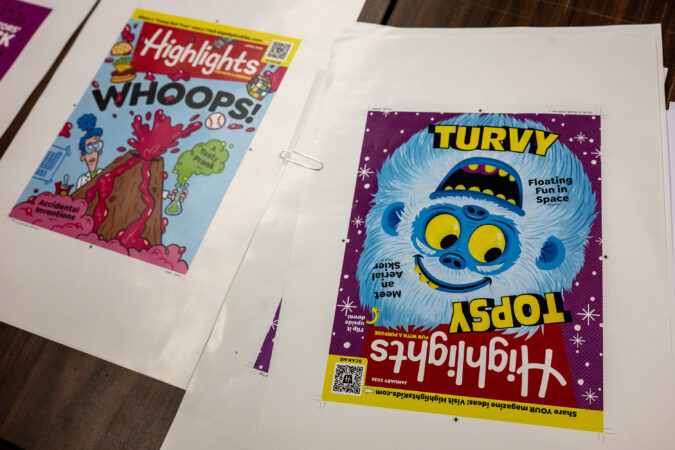
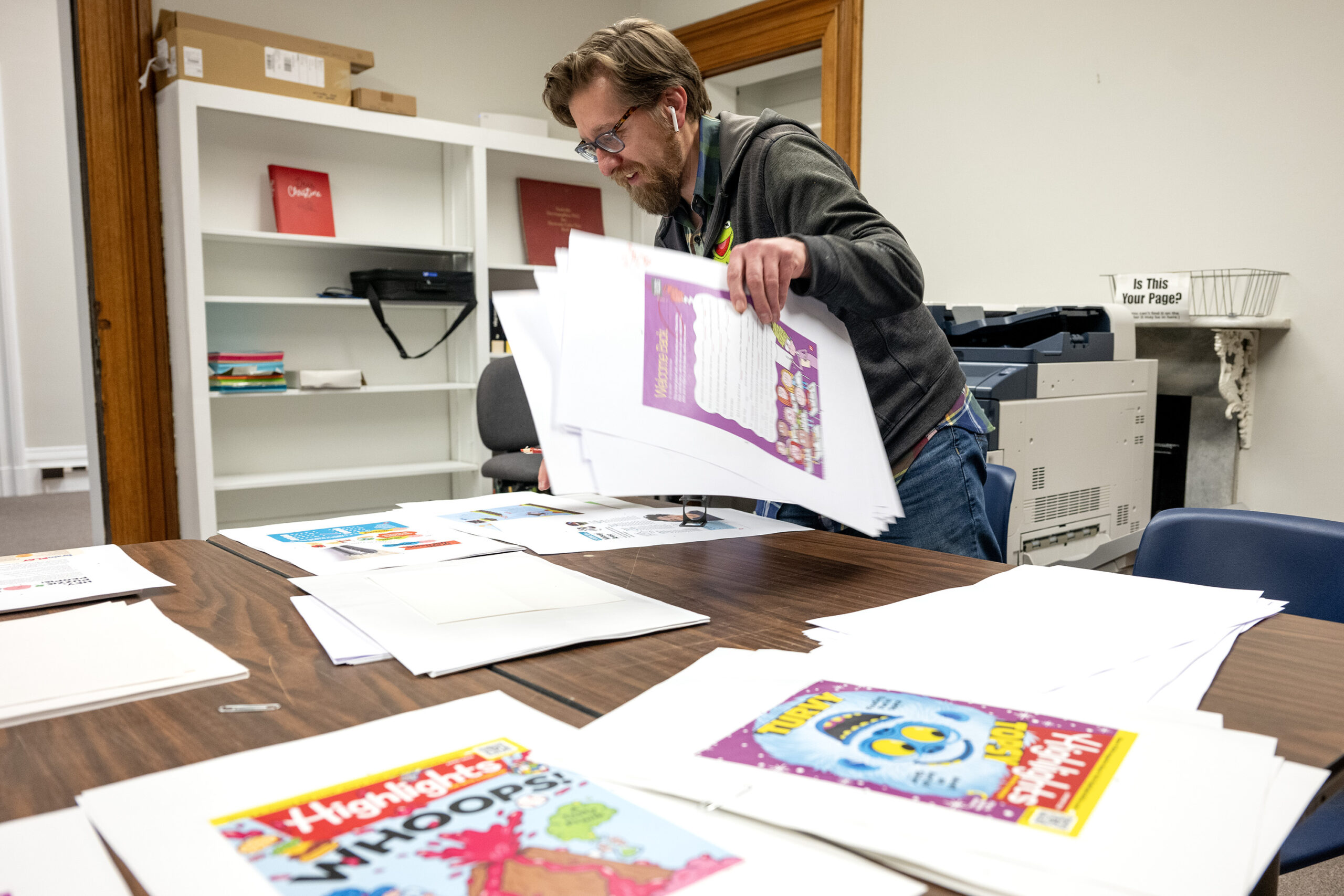
Senior production artist Dave Justice looks through proofs of forthcoming Highlights magazines in the editorial offices in Honesdale.
Still, as a supporter of Highlights, he believes the timeless magazine still matters there.
“Families should expect and perceive that the most important thing we care about is that child’s health and well-being. That extends to what’s on the walls, in the exam rooms, and the waiting room,” he said. “With Highlights, there’s a long history of trust. Highlights doesn’t have advertising, and parents can know their kids aren’t going to be marketed to.”
Burke was one of those kids in the waiting room, reading Highlights at a doctor’s appointment 20 miles west of Honesdale.
“I’d see how much of the magazine I could read before they called me in,” she said. “I didn’t want to miss a page.”
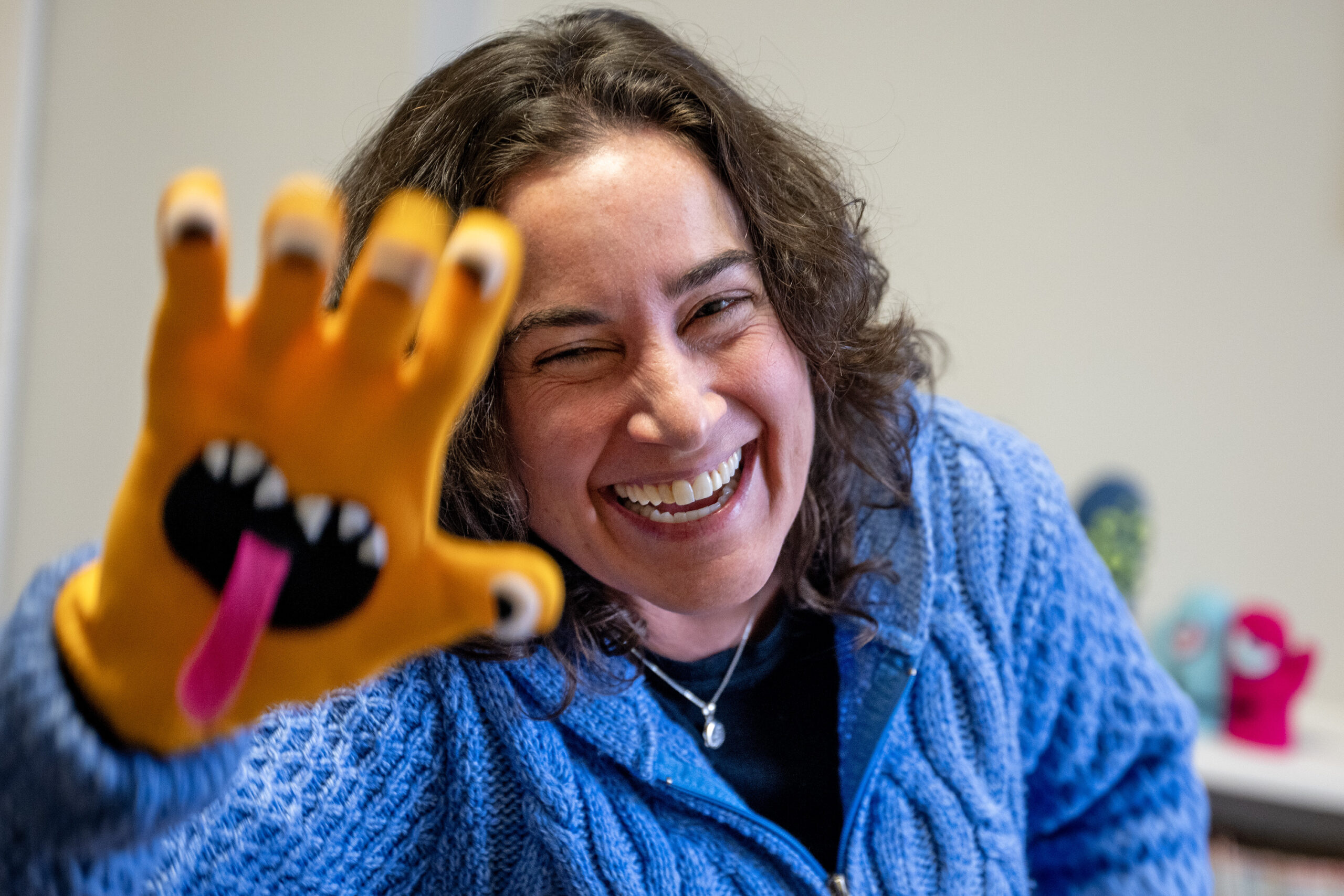
Highlights magazine editor Judy Burke with a hand puppet at the magazine’s editorial offices in Honesdale on Jan. 14, 2026.
Decades later, Burke was in a Pennsylvania dentist’s office during a break from college and picked up Highlights again. That inspired her to reach out to the company, and she’s now been there for 31 years.
“A girl wrote in recently and said, ‘I love your magazine so much, I just feel like I could curl up with it,’” Burke said. “Those words warm my heart.”
Honesdale has seen an uptick in population and tourism, along with more breweries, artists, restaurants, and short-term rentals moving into the once sleepy Poconos town. Burke, Scrimizzi, and a small crew who anchor the Honesdale editorial offices are in the middle of it all, downtown. Other editorial staff members work remotely, and the company’s business offices are in Ohio.
A “Can You Find Steve?” duck, the subject of a new book published by Highlights on a shelf at the magazine’s editorial offices in Honesdale Jan. 14, 2026.
The Honesdale offices aren’t the location of an amusement park, but there’s a large dinosaur head in a meeting area and vintage children’s books that the Myerses wrote for, along with other children’s memorabilia.
Burke’s office is filled with monster puppets, and just outside it, on a wall, is a large wooden motif of the magazine built by a fan, a testament to how beloved it is.
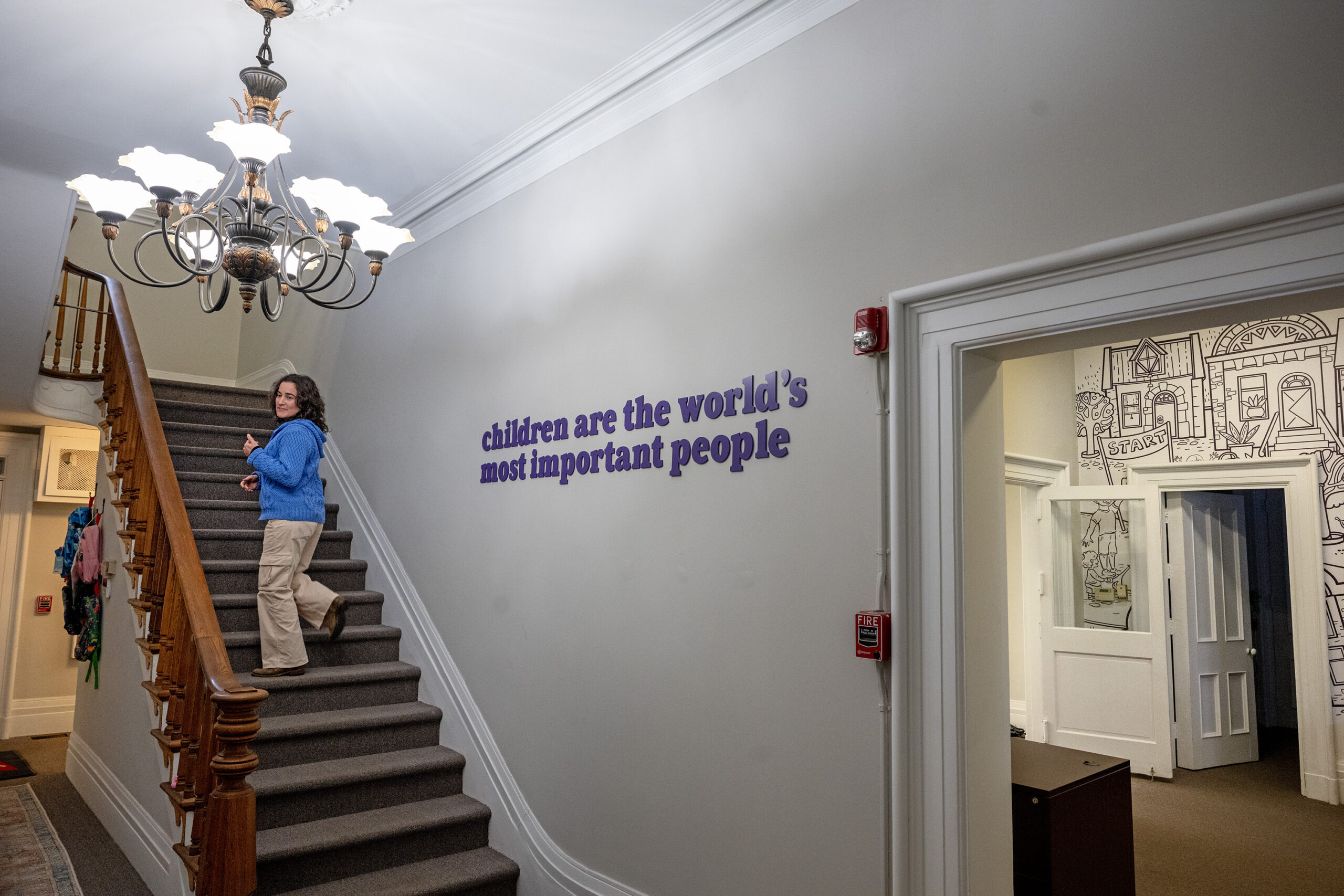
Along the staircase, Highlights’ guiding principle is affixed to the wall: “Children are the world’s most important people.”
Highlights magazine editor Judy Burke in the former mansion that is the magazine’s editorial offices in Honesdale Jan. 14, 2026. The beloved children’s publication began as a small operation in the town in 1946 and the editorial offices are still there, even as it has grown into one of America’s most respected educational magazines for kids.
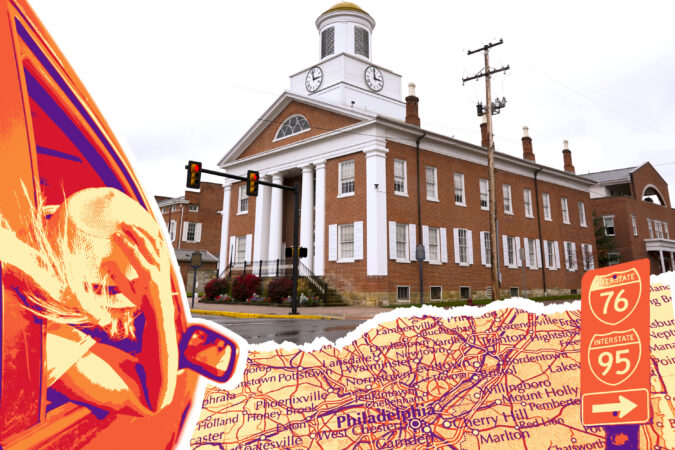
In the 1790s, a coterie of Western Pennsylvanians rose up against a federal tax on whiskey. Unlike the Boston Tea Party, these protesters had representation in our young nation, but they still didn’t appreciate the taxation on the valuable product made from their excess grain. President George Washington rode in and staged a 13,000-strong militia outside Bedford — a settlement that had already played a vital role in the French and Indian War andwas in its infancy as a tourism destination thanks to its salubrious mineral springs — and squashed what became known as the Whiskey Rebellion.
For such a small town (less than 3,000 residents), Bedford casts an outsize historical shadow in Pennsylvania. Add one of America’s oldest luxury resorts still in operation, robust trout fishing, and pristine wilderness, and you’ve got an ideal spring road trip, about three and a half hours west of Philly.
Bedford is a one-horse town when it comes to hotels, but that’s no diss on Omni Bedford Springs Resort & Spa. A bucolic compound of Greek Revival and Victorian buildings, this National Historic Landmark got its start in the late 1700s, when local doctor John Anderson bought the land and began building accommodations around its mineral-rich springs. (Thomas Jefferson was a fan.) Today, it’s a sprawling resort with more than 200 rooms, a botanical-inspired spa, two pools — the indoor one ranks among the oldest in the country — and grand lawns studded with firepits where families gather with s’mores and mountain pies.
📍 2198 Sweet Root Rd., Bedford, Pa. 15522
Fish: Yellow Creek
Dozens of streams and creeks slice through the woods of Bedford County, making it a hugely popular fly-fishing spot in the spring. Yellow Creek, a trout-stocked limestone tributary of the Raystown Branch of the Juniata River, runs 10 miles through Loysburg and Hopewell, just northeast of Bedford. If you’ve got your own gear, you can fish independently, but for more of a guided experience, book a tour with local outfitter Trout Yeah.
📍Yellow Creek, Bedford County, Pa.
Cross: Hall’s Mill Covered Bridge
Historic covered bridges crisscross the waterways of Bedford, and you can visit nine of them in the county’s Covered Bridge Driving Tour. Not officially on the tour but near Yellow Creek, the circa-1884 Hall’s Mill Covered Bridge spans the water in a charming white-and-red Burr Truss design that looks like it could’ve taken out the Maitlands in Beetlejuice.
Hundreds of millions of years ago, an inland sea covered this land. When the water receded, it left behind the Coral Caverns, a subterranean limestone labyrinth under the town of Manns Choice, just west of Bedford. The fossil-rich complex includes a little museum on the site’s history and artifacts uncovered in the cave. Tours are private and available by appointment only.
📞 Call or text 814-977-9570 to book.
📍 Coral Caverns Private Driveway, Manns Choice, Pa. 15550
Visit: Fort Bedford Museum
Opened in 1958 and modernized into an impressive institution between 2015 and 2025, the Fort Bedford Museum presents the history of the titular 1758 fortification (a key site in the French and Indian War), and offers context on the area of Bedford and beyond. A quick walk from the museum takes you to the actual footprints of the original fort, tucked between the historic Anderson House and the river.
📍 110 Fort Bedford Dr., Bedford, Pa. 15522
Drink: Whiskey River Pub
Before dinner, cosplay a thirsty member of the Whiskey Rebellion at the Whiskey River Pub, a low-slung, family-owned tavern that sits right on the water. Locals and tourists sit on swiveling barstools at the long bar, and a mural of whiskey barrels covers one wall. There’s a pool table, live music, and a deep cocktail menu that includes the Whiskey Rebellion Smash, Smoked Old Fashioned, and Bedford Blackberry Whiskey Sour. For a snack, don’t miss the house-made potato chips covered in blue cheese and balsamic.
📍 537 E. Pitt St., Bedford, Pa. 15522
Dine: Horn O Plenty
Horn O Plenty calls itself a “freshtaurant,” which would be incredibly concerning if this old-timey, log-and-stone cabin on the outskirts of downtown were not so dedicated to local sourcing and from-scratch cooking. Many of the menu’s items have a “house” in front of them: house-made sodas (Italian vanilla cream, orange rosemary), house-blended teas, house-fermented kimchi. The beef for the burgers and steaks is pasture-raised. The restaurant uses its own eggs, grows stone fruit, and forages for wild goodies.
Since his 2012 mixtape, Straight From The Kur, the Mount Airy native has transformed his past experiences into emotionally raw music that has drawn an impassioned fan base.
Over the years, his fiery lyrics and hard-nosed delivery have become sharper, and his fan base and influence have grown. After striking hot with street anthems like “Peach Snapple” and an acclaimed release with 2024’s THURL, Kur has become a national mainstay.
The 31-year-old rapper, born Chauncey Ellison, continues the momentum with his new album ARD, released in late February.
Kur said the project, which stands for both the Art of Release and Discipline and a shortened version of alright, marks a return to form.
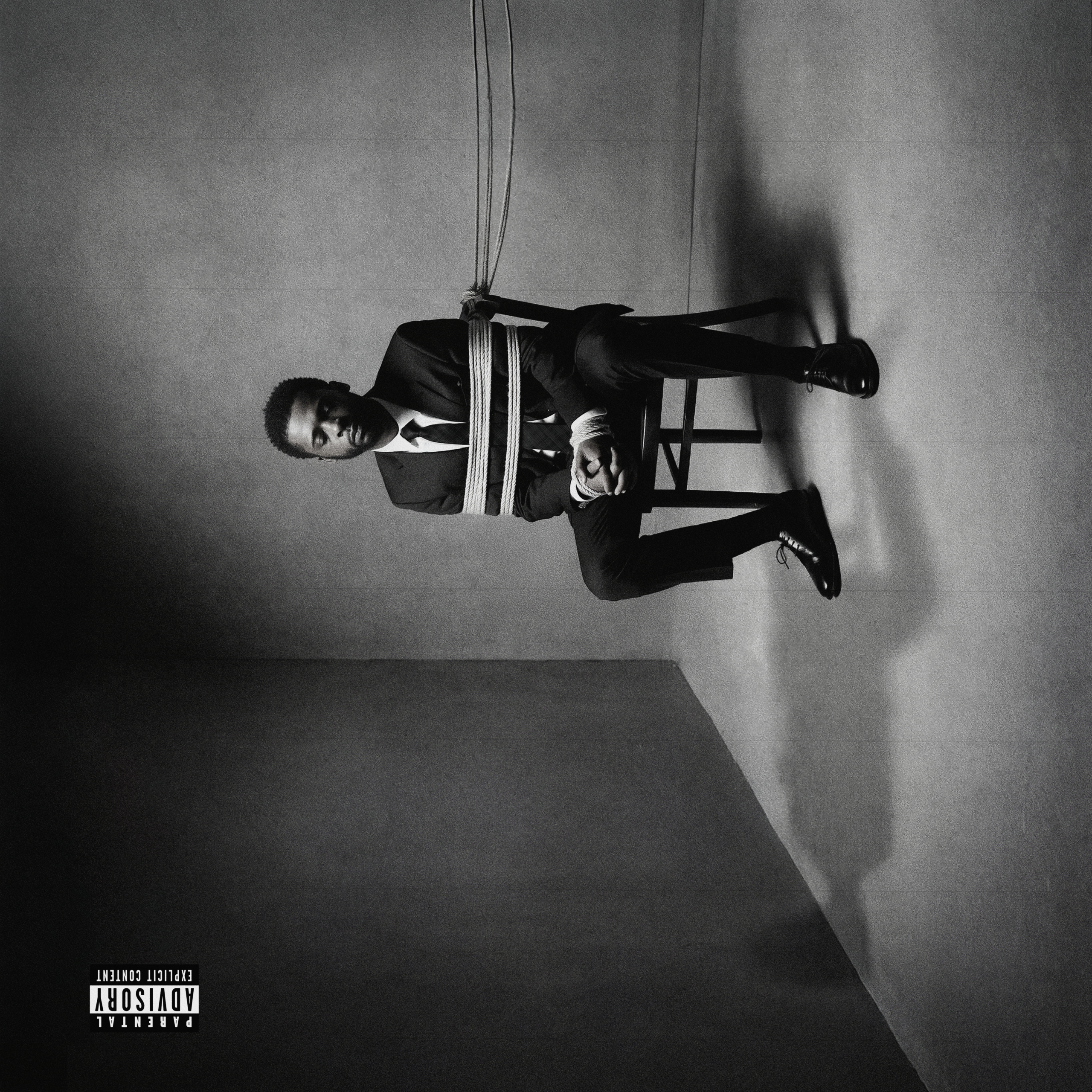
After 2025’s “Skip Da 8,” North Phjilly rapper Kur releases his newest album, “ARD.”
“I was super transparent and vulnerable when I first came out. I think as the years went on, I started to put a filter on and shut [fans] out from certain things,” he said. “I think that was a contradiction because people were actually supporting me because I was transparent. I tried to get back to it as much as I could on ARD.”
He’s peeling back the layers, letting fans in on his own personal struggles, in hopes that the two parties find a path of self-reclamation and healing.
“When you dig a little deeper, everybody has built up trauma that they’re not releasing. And I think that people don’t hear, ‘Yo, you will be alright or you will be OK.’ Somebody may not have anybody to tell them that they will be OK. I think just to see it may change their perspective. I’m coming from a healing point.”
We asked him about his perfect day in Philly. Here’s how he’d spend it.
10 a.m.
It’s different in the summer than the winter. If it’s summertime, I’m waking up and going to Kelly Drive, then stopping by Rita’sfor a mango water ice. Or, I’m going to get aPhilly Pretzel Factory.
Noon
I had to fall back on cheesesteaks, so I’m going to go to Bistro SouthEast on South Street. It’s not a heavy Philly staple, but that’s my kind of day in Philly.
2 p.m.
Look at clothes at Status andCreme on Second and Race Street. Or go to King of Prussia Mall. There’s also a place called Bullseye on 15th and Walnut Street. They have some good stuff in there. And there’s Common Ground[in Midtown Village] and [Center City’s] Lapstone & Hammer.
6 p.m.
I go to a smoothie truck in Fishtown and then I usually go to the studio. I’m telling you what I do, so I don’t want to make nothing up. I can’t lie.
3 a.m.
I leave the studio at 2 or 3 a.m. I go to Healthy Picks in Center City because it’s 24 hours. It’s the only place in Philly where you can get fresh fruit at 3 a.m. That changed my whole jawn. Nothing against Wawa, but when you go there and you get fruit, it isn’t really how you want it. To have a jawn where they chop it up and it’s fresh and super icy.
TOKYO — You have to wake up early in the morning to catch the world’s largest fish market at its peak. You also need to keep your head on a swivel.
“Careful here! These drivers can be crazy!” said our market escort, yanking me back from a warehouse lane wet with fish blood and water as several electric forklifts zoomed past. Piled high with styrofoam boxes bearing some of the most coveted seafood on the planet, these silent-but-speedy carts were designed for Toyosu Fish Market, a state-of-the-art facility built in 2018 on reclaimed land in Tokyo Bay.
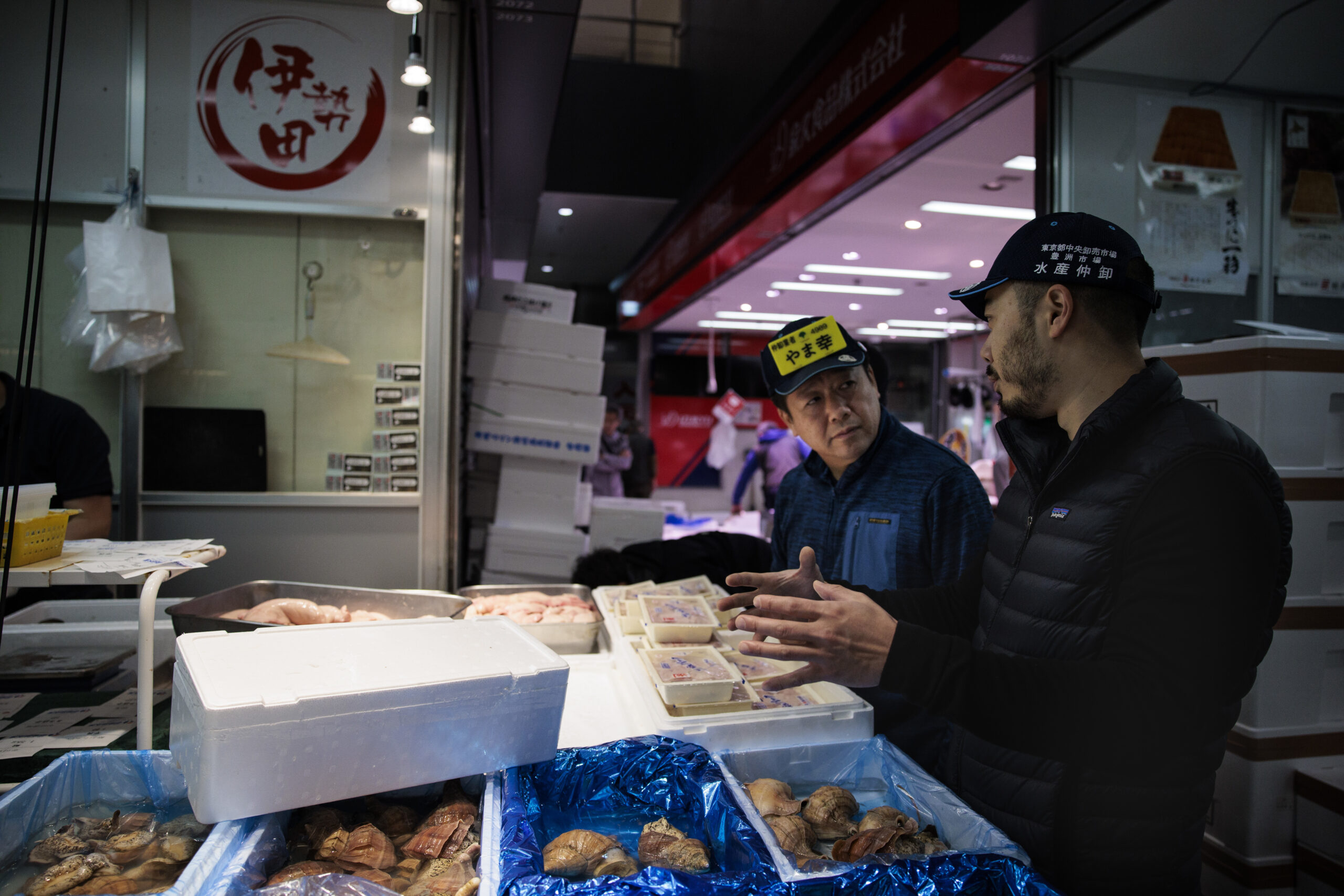
The massive refrigerated halls were already humming with activity before dawn on a November morning as Philadelphia chefs Jesse Ito and his father, Masaharu “Matt” Ito, walked through vast aisles of whole fish on ice toward the live-seafood hall, where an acre of ocean creatures bobbed in gurgling tanks flanked by an ike jime station. Thrashing madai red snappers there were deftly dispatched with two strokes of a knife and a wire spike to the brain — a swift death considered both humane and, from a culinary perspective, optimal.
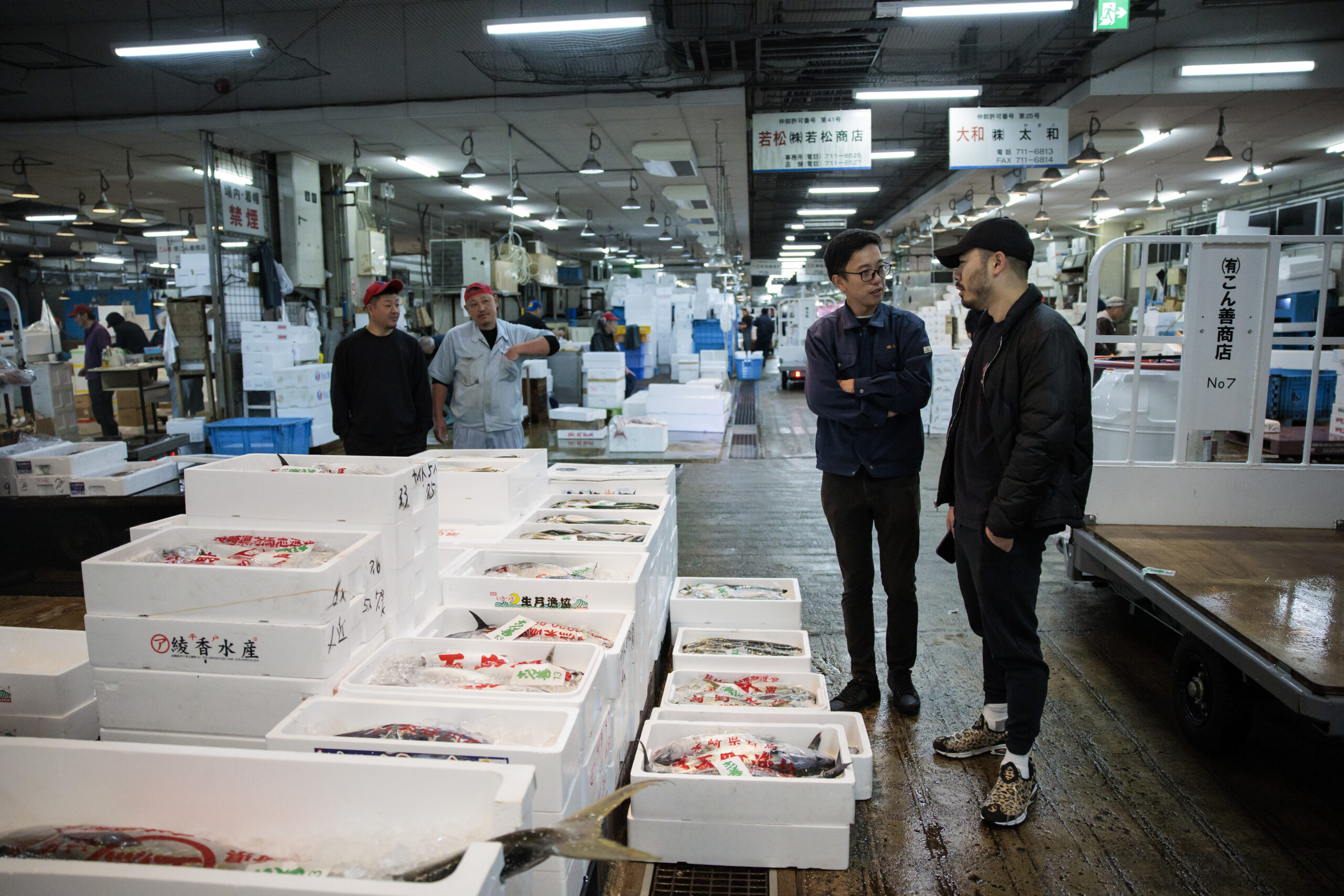
Hirokatsu Takeda talks with Jesse Ito in a stall at Toyosu Market on Tuesday, Nov. 4, 2025, in Tokyo, Japan.
“It instantly disables the nervous system from producing chemicals that degrade the fish and keeps the meat fresh,” said Jesse, of Royal Sushi & Izakaya, whose industry contacts had lent us official hats and white rubber boots to accompany them to areas of this seafood paradise where tourists are not permitted.
At 5:30 a.m. sharp, the hand bells began to chime: Tokyo’s famous tuna auction was underway! We turned into a frigid hall where hundreds of tunas, some as big as couches, were laid atop the jade-green floor. Prospective buyers pried their bellies open with pikes to inspect the fatty pink flesh inside. Auctioneers from five different houses simultaneously launched into a rapid-fire sing-song pattermet with the cries of replying bidders, the chaotic burst of noise transforminginto a haunting, rhythmic chant that resonated in our chests.
“It sounds almost tribal — and you feel it,” said Jesse, 36, who buzzed with excitement from the auction floor. “Japan is so futuristic, and there’s probably a much more efficient way to do this. But this is about culture and preserving tradition. This is part of what it means to be Japanese.”
One of the most respected sushi chefs in the U.S., Jesse was not buying tuna on this day in November, but taking in this time-honored ritual alongside his father.
“I’m so glad we got a chance to experience that together,” Jesse said.
Matt, 72 and Japanese-born, taught a teenage Jesse the fundamentals of making sushi at Fuji, the family’s long-running restaurant in South Jersey. He and Jesse sold it before opening Royal Sushi & Izakaya in Queen Village together with partners in 2016, when Jesse was 26.
Jesse grew up in Cherry Hill and worked at Fuji from childhood. Before age 27, he’d never flown on an airplane, let alone travelled to Japan — a curiosity for a talent who’s risen to national acclaim as an eight-time finalist for the James Beard award, aMichelin-recognized chef, andthe face of the 32nd best restaurant in North America as ranked by World’s 50 Best. He finally made it to Japan in 2024 on a research trip for his new restaurant, dancerobot, with business partner and chef Justin Bacharach. This secondvisit, in late 2025,would also be full of nonstop eating in search of inspiration, found at street stalls, yakitori grills, sushi counters, and world-renowned kaisekis.
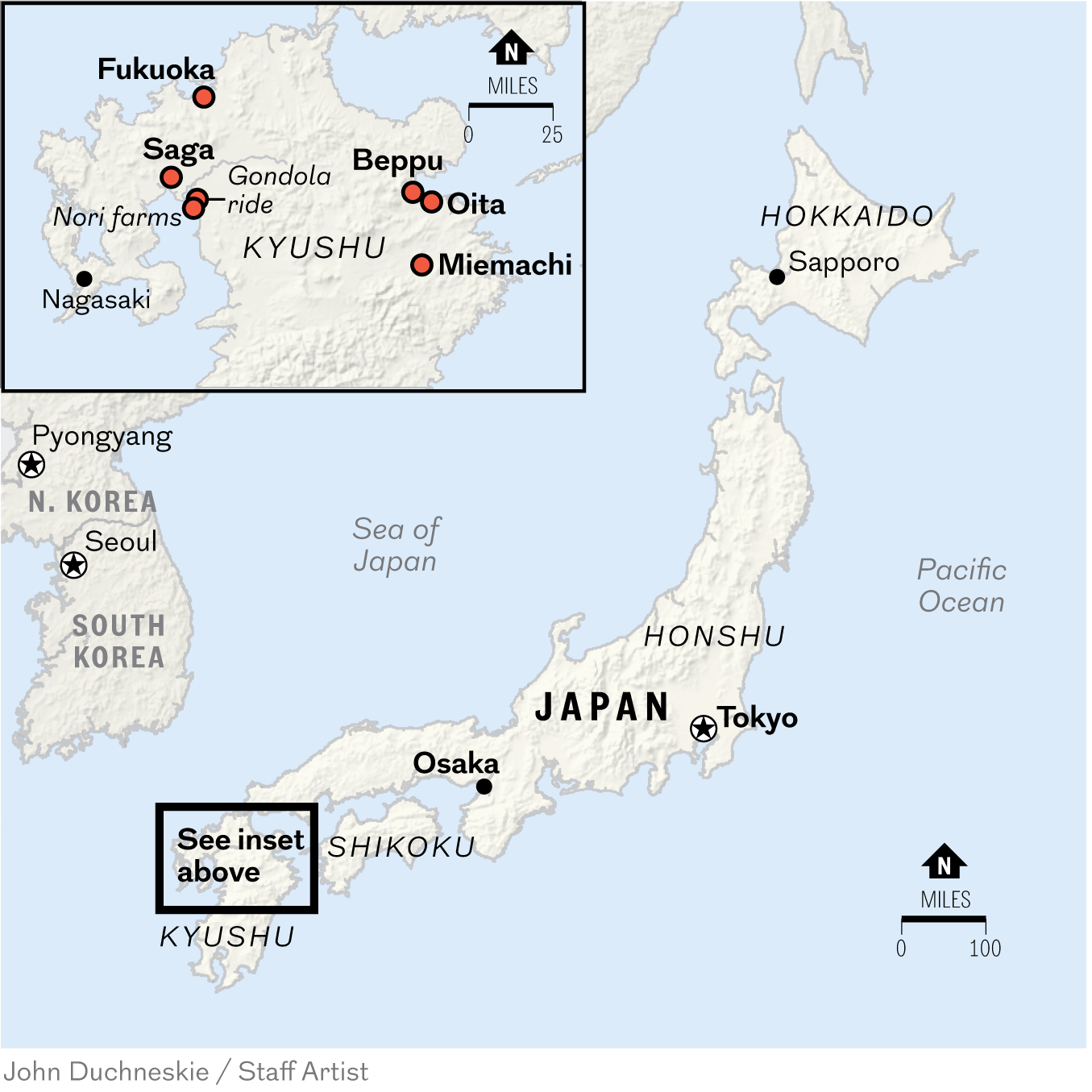
But this journey was especially personal: We were boarding a plane later that morning to the southernmost Japanese island of Kyushu, to visit the village where Matt was born.
Map of Craig LaBan’s travels in Japan with Philadelphia chef Jesse Ito and his father, Matt.
Matt, who lives alone in Pennsauken with his two macaws, Sakura and Ichiro, had not been back to Japan in 25 years and, before last year, had no imminent plans to return. Jesse thought it important for his father to go while he was still physically able, and paid Matt’s way.
“I never thought I’d get a chance to go to Japan with him,” Jesse said.
The prospect of a father-son jaunt was hardly a given. The last time they took a family vacation? “Jesse was 3 years old,” said Matt, recalling a trip to Florida before his world got “caught up in work, work, work … I regret that.”
There were other complications. Matt’s visa needed to be updated. Jesse had also been reluctant in previous years to relinquish two weeks of revenue from his omakase, an expensive experience for 16 diners each night (almost entirely regulars) that’s one of the toughest reservations in America.
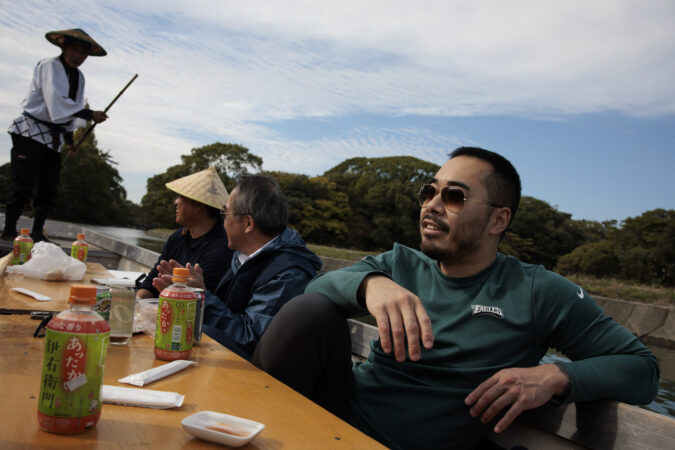
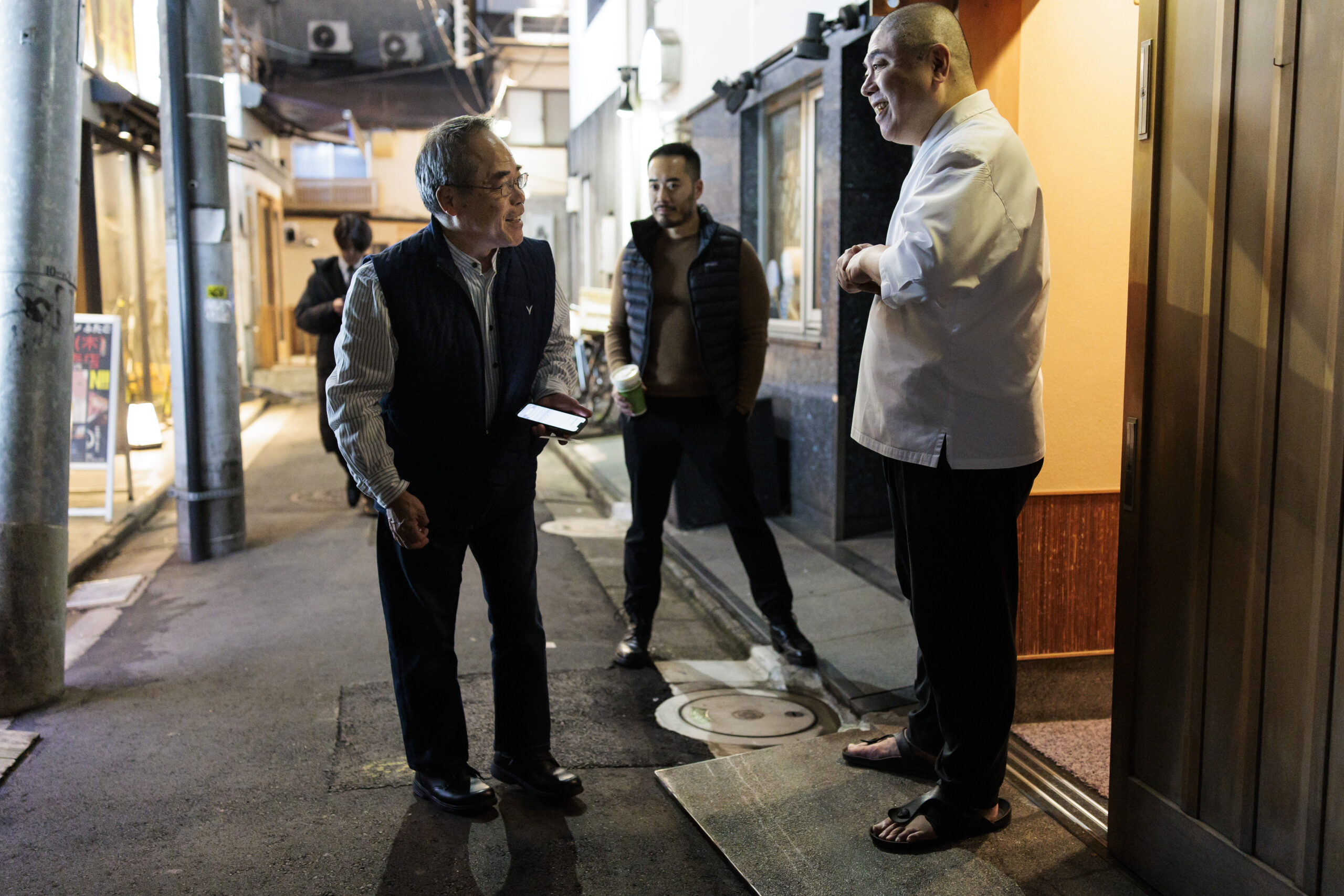
Matt Ito and Jesse Ito talk with Chef Kunihiro Shimizu outside of his restaurant, Shimbashi Shimizu, on Sunday, Nov. 2, 2025, in Tokyo, Japan. No photos or video are allowed during the omakase at Shimbashi Shimizu, and international visitors are only permitted when accompanied by someone who understands Japanese.
Even more daunting was the prospect of so much time together. Despite working in the same restaurants every day for the past 22 years, the two rarely interact. There’s been challenging history between them: Jesse watching his parents’ divorce as a teen, financial struggles at Fuji, and a shifting power dynamic in the kitchen at Royal as Jesse took the lead and became a star — all while publicly grappling with alcoholism.
With Jesse now five years sober, the air between them has been cleared. “I had a sit-down with my dad and there were a lot of raw emotions,” Jesse said. “I apologized, and he spoke, too. We’ve made amends. We’re on good terms now.”
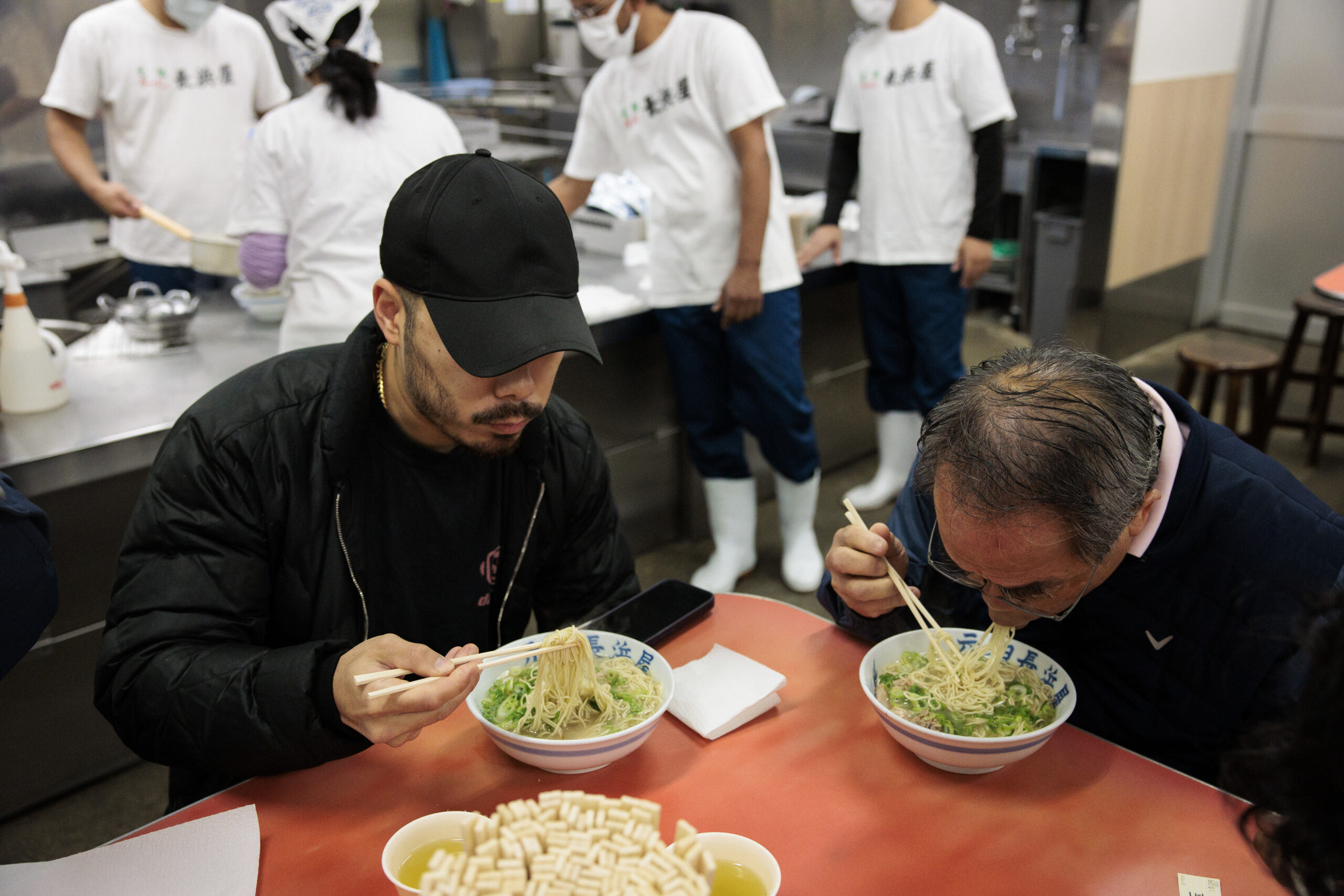
Jesse Ito and Matt Ito eat Tonkotsu ramen at a shop across from the Nagahama Fish Market on Thursday, Nov. 6, 2025, in Fukuoka, Japan.
For Matt, the chance to journey to his homeland for the first time in a quarter-century with his son was an unexpected gift: “This is the first time I’ve spent this much time alone with Jesse since he was in junior high.”
After leaving the tuna auction, Jesse hustled to introduce himself to several suppliers that handle prime ingredients he wanted to bolster his menus.
“Next time I order,” he said as we walked to lunch, “they’ll know who I am and give me the good stuff. ‘That’s Jesse-san, send him the best!’”
Matt trailed behind, reveling in the beauty of all that gorgeous seafood, including live snapping turtles that gave him flashbacks to his teenage years as a fish-market butcher: “Be careful or you’ll lose one of these!” he said, wiggling his fingers.
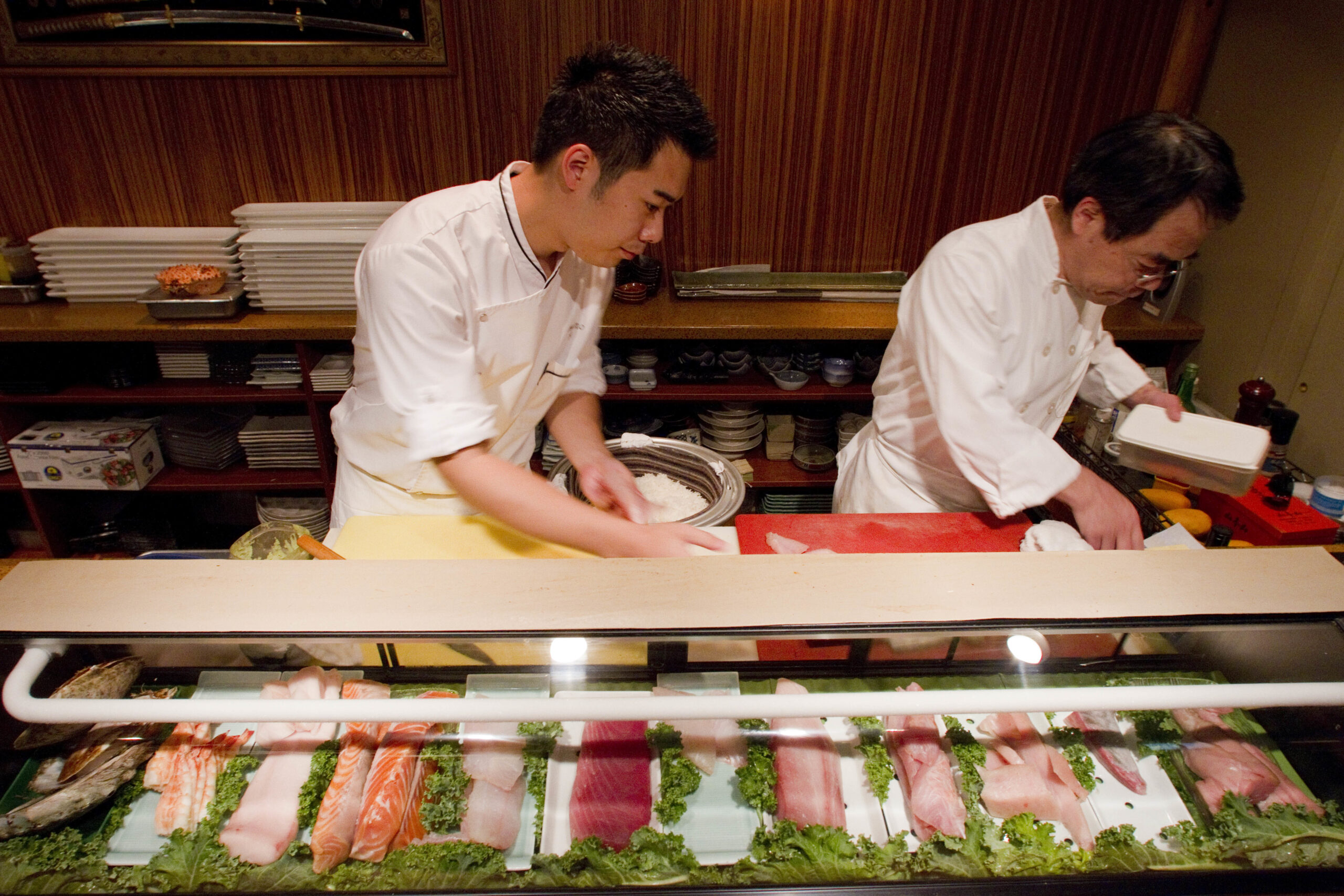
We were famished by the time we arrived at Iwasa, a small restaurant in the market serving sushi for breakfast. We devoured the freshest pink toro, tender abalone, blood clams carved into snappy pompoms, and the sweetest shrimp over nubs of warm rice. It was just 6 a.m. We still had a late-morning plane to catch. The longest day of Matt and Jesse Ito’s big adventure had only begun.
An inauspicious beginning
Matt Ito arrived in Philadelphia almost exactly 50 years ago, just as an epic snowstorm in February 1976 froze the Schuylkill River solid. The 21-year-old chef was having regrets. The sandwich on the plane — roast beef on dry rye bread — was shocking. “I’d never seen such terrible food,” he said. When the owners of Sagami picked him up at JFK airport, he gazed out the windows of their Datsun with dismay as the wintry New Jersey Turnpike rolled by with “no mountains, just flat land, ice, and snow.”
He’d been recruited through a friend in Kyushu to this still-fledgling restaurant in Collingswood, where he lived upstairs for the first two weeks. He was in charge of making sushi at a moment in American culture when tuna rolls, raw salmon, and even tempura-fried shrimp were still novelties. “A lot of people had never seen this before. I had to teach people how to eat it,” Matt said.
But owners Chizuko and Shigeru Fukuyoshi were wonderful, he said, and Sagami was a fortuitous landing spot. That’s where he met Jesse’s mother, Korean-born Yeonghui Choi, who was a server. When he decided to open Fuji in 1979, she joined him there, building the business while his English was still limited.
Despite its out-of-the-way location in a Cinnaminson strip mall, Fuji became a cult favorite of gourmet societies like La Chaîne de Rotisseurs thanks to Matt’s lyrical kaiseki. By the time I first encountered it in 1999 — writing a rave review about the tuna-wrapped foie gras, curry-spiced squab, and bundles of lobster crisped inside translucent tempura crusts — I could not fathom how such a talent had remained largely unknown to Philadelphia’s wider public for nearly two decades. When the Itos were forced through eminent domain to move their restaurant to Haddonfield in 2007, Matt’s cooking was better than ever. But the restaurant remained under the radar.
Jesse worked his way up from dishwasher to head sushi chef at Fuji by 2008, getting more involved in the business.He graduated Rutgers-Camden with a business marketing degree in 2011. The decision to sell the restaurant after 37 years in 2016 came down to the unforgiving limitations of a family-run BYOB. “It’s not like we were failing. But we worked so hard for so little return, and there was no way for my parents to stop working,” Jesse said.
Jesse Ito (left) and his father, Matt Ito work at the raw bar at Fuji, Haddonfield, June 9, 2011.
They leveraged the sale of Fuji to allow his mother to retire, and to build something bigger. He and Matt partnered with restaurateurs Stephen Simons and David Frank — who own Royal Tavern and Cantina Los Caballitos, among severalothers — to open Royal Sushi & Izakaya.
“I wanted to take care of my parents financially and also do something for myself,” Jesse said. “It’s a classic immigrant story: The first generation works hard and lays the groundwork, the second generation either takes it to the next level or goes a different route to become a doctor or go into finance. I grew up in that struggle, and as a teenager, life was not always nice.”
Jesse has clearly taken it to the next level. Half a century after Matt helped usher in the dawn of sushi for Philadelphians, his son is now redefining the genre’s boundaries with his ever-evolving omakase. Bridging and building that legacy is no small feat considering there are now over 17,000 sushi restaurants in America, according to Nobu Yamanashi, of Yama Seafood in Jersey City, which distributes fish to over 800 restaurants around the country, including Royal Sushi.
“All the iconic Japanese chefs with global reach are in their 70s,” says Yamanashi. “The next Nobu [Matsuhisa] or Morimoto doesn’t exist yet. It’s up for grabs. But there are a handful of Japanese chefs right now that have a chance to lay that claim. Jesse has the ability.”
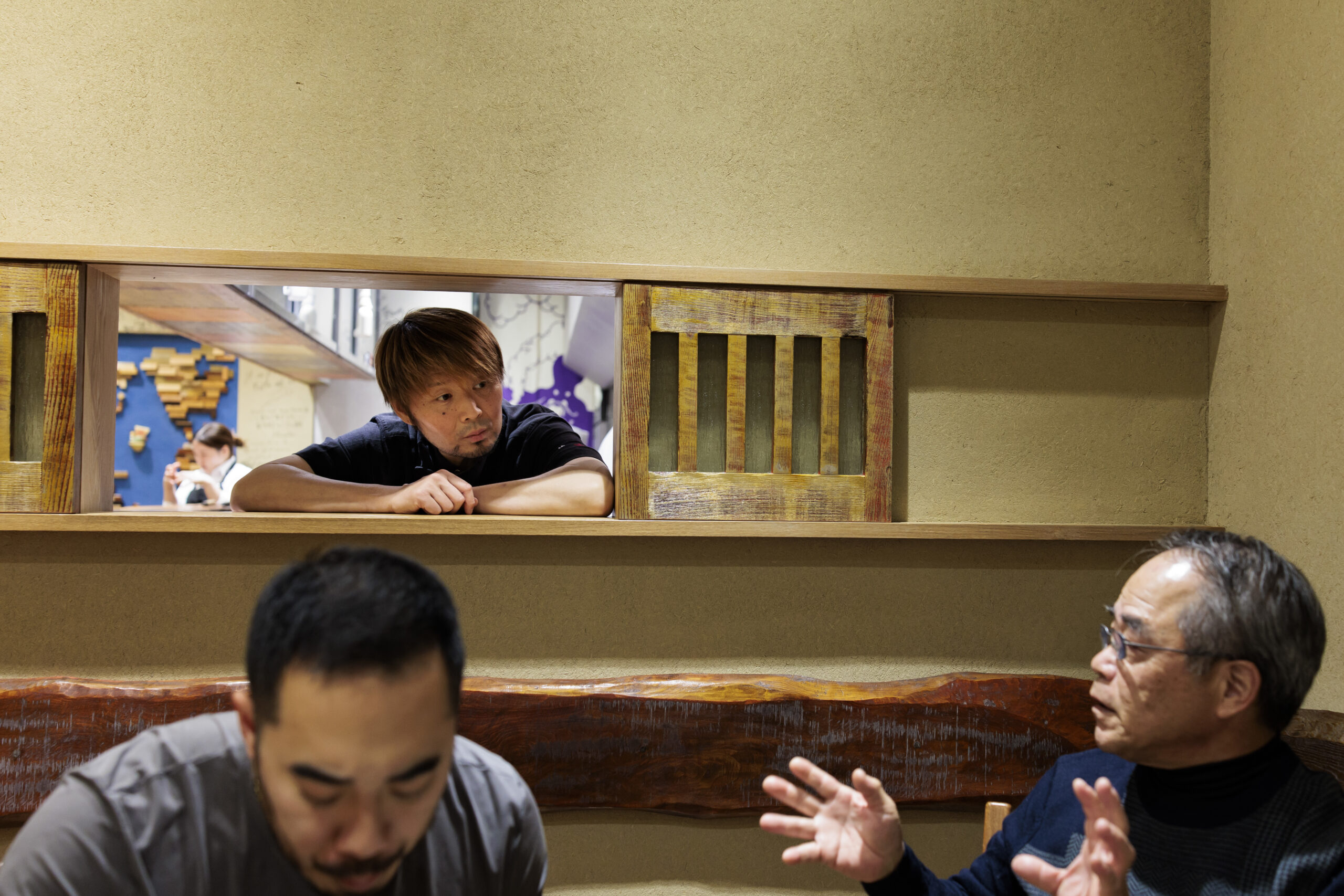
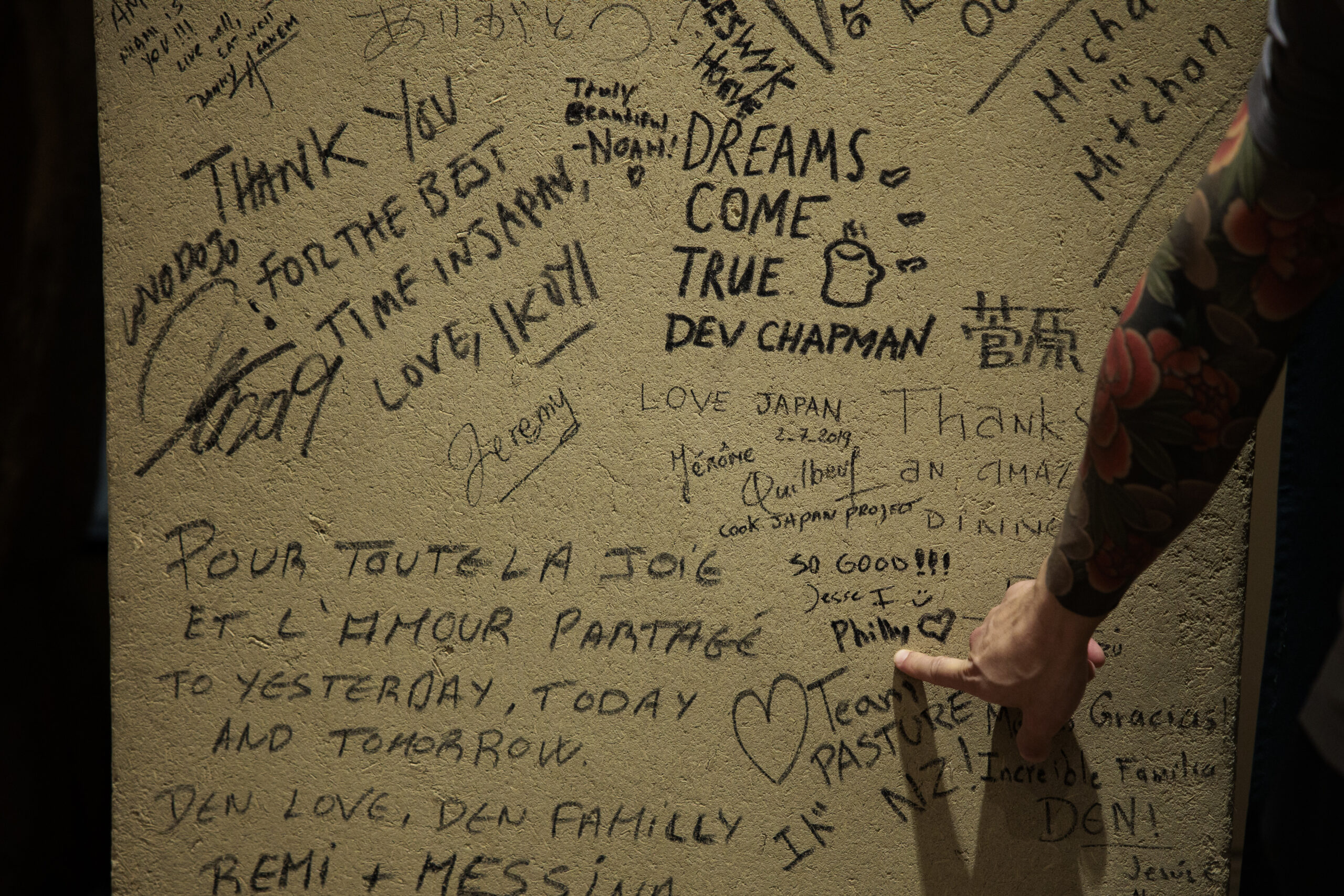
The potential for such recognition was already evident on Matt and Jesse’s trip. In Tokyo, atDen, a renowned kaiseki destination (No. 32 on World’s 50 Best Restaurants), Jesse took pride in signing the wall at the restaurant’s invitation, joining the names of famous chefs who’d visited from around the world. Jesse was also caught completely off-guard at Yohaku in Osaka when chef Yoji Arakawa asked him for a picture after our meal. “I was nervous when you walked in because I follow you on Instagram,” Arakawa told him.
Chef Zaiyu Hasegawa talks with Matt Ito during dinner service at Den on Monday, Nov. 3, 2025, in Tokyo, Japan. Den has two Michelin stars.Jesse Ito points out his message on the wall at Den on Monday, Nov. 3, 2025, in Tokyo, Japan.
That his growing social media profile had somehow reached halfway around the world both stunned and delighted Jesse: “That was super-validating,” he admitted.
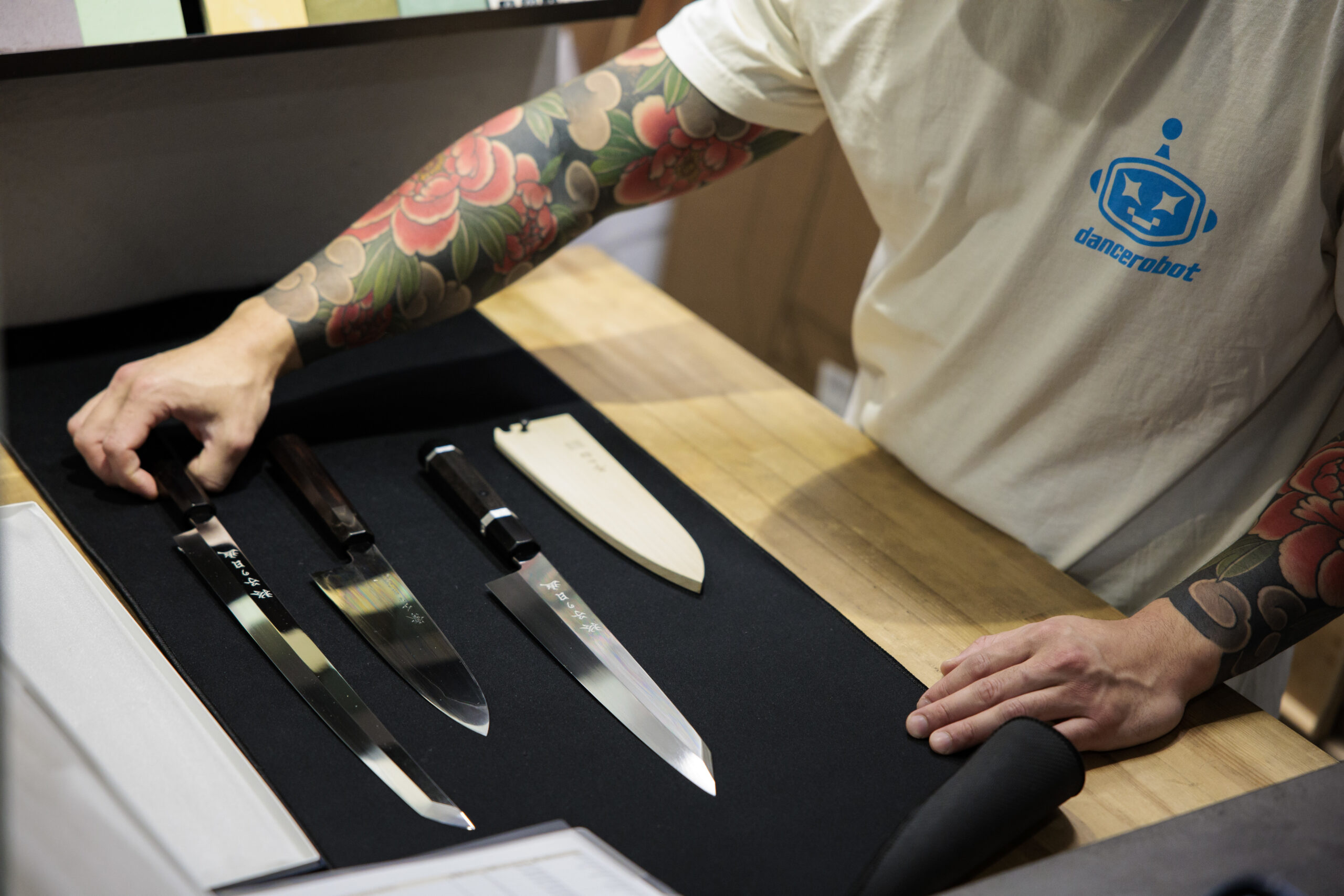
Jesse denies he has ambitions of global renown. But he’s certainly embraced the trappings of superstar chefdom. He has flown to London half a dozen times over the past few years to tattoo his arms with sleeves of colorful peonies and jetted to Los Angeles to tattoo his chest with a coiling dragon. On our field trip to Tokyo’s Kappabashi kitchen-supply district (“It’s Toys ‘R’ Us for chefs!”), he splurged on $1,000 worth of hand-blown sakeware for Royal’s omakase. A visit to the famed Nenohi knife store in Tsukiji Market bolstered his collection of high-end knives, including a gleaming broad blade with an emerald-lacquered scabbard that ran him a cool $2,700.
Jesse Ito checks out the knives at Nenohi Cutlery Co. at the Tsukiji Market on Monday, Nov. 3, 2025 in Tokyo, Japan.
“The omakase is a performance, so it’s nice to have a great knife,” he said as lights danced across his face from the sword-like curve of another sujihiki slicer he was considering.
His father was quietly shaking his head in the corner. Matt, who’s so thrifty he brought his own onigiri rice balls from South Jersey to snack on while in Japan, said he could not relate his son’s knife obsession.
“If a knife cuts well, that’s all I need,” he said. “And don’t tell his mother he spent so much on a knife. She hates this.”
The sun sets during a drive on Wednesday, Nov. 5, 2025 in Japan.
A detour, and then a discovery
We arrived at Oita Hello Kitty Airport around 1 p.m., and when we stepped outside, Matt took a deep breath of the ocean air hugging the rocky coast of Kyushu Island.
“It’s a homecoming!” he said. “I can smell it!”
We’d come to visit Miemachi, Matt’s hometown on the outskirts of Oita. And Jesse was visibly concerned. He’s accustomed to being in control of every logistical detail, both at his restaurants and for the itinerary of this trip, and our time in Kyushu was the only leg of the journey he’d delegated to his father. But he grimaced when he saw his father’s gameplan for transit between the airport and Miemachi. Matt’slegal pad was scrawled with a series of connecting trains and buses that would get us there in three hours if all went smoothly.
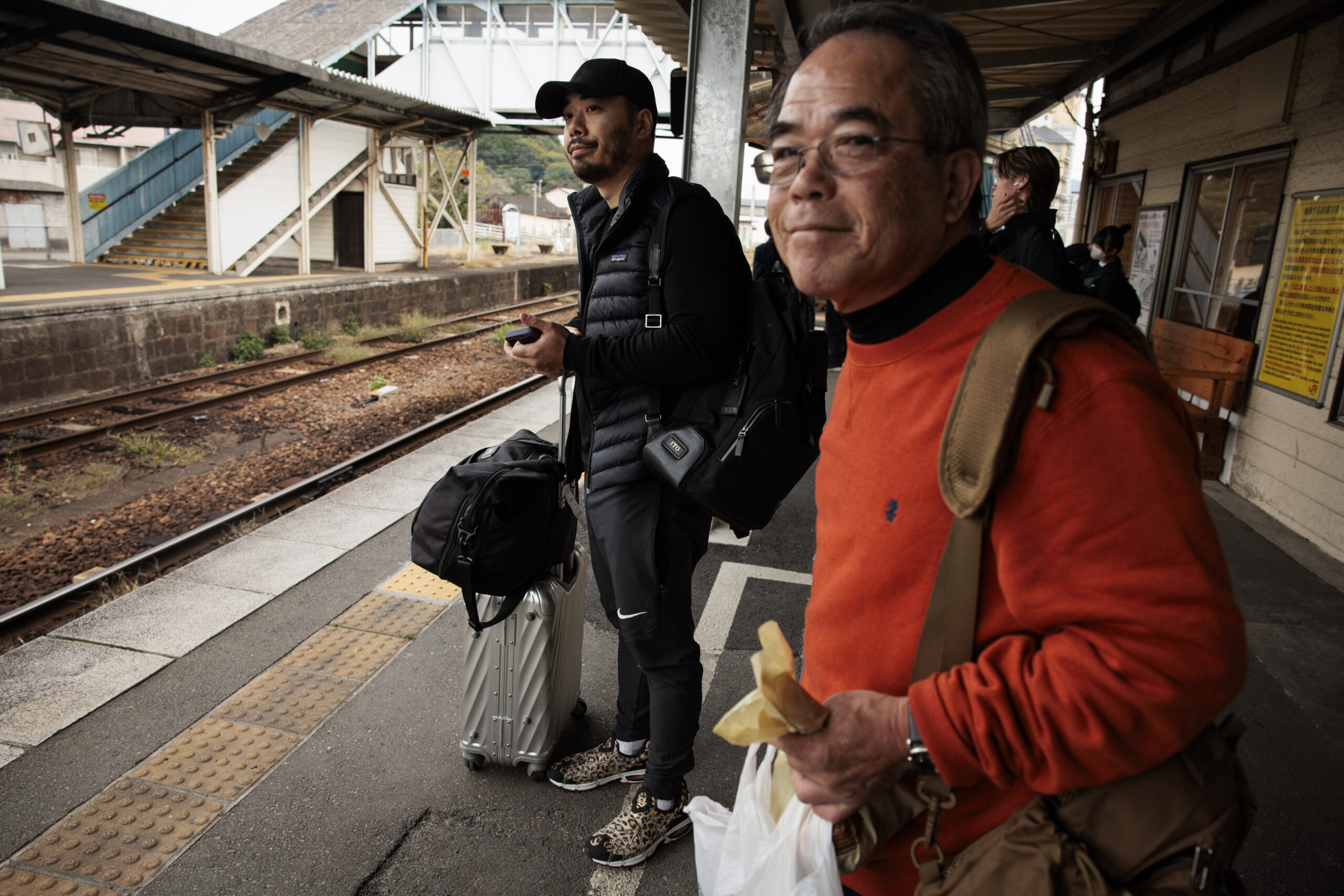
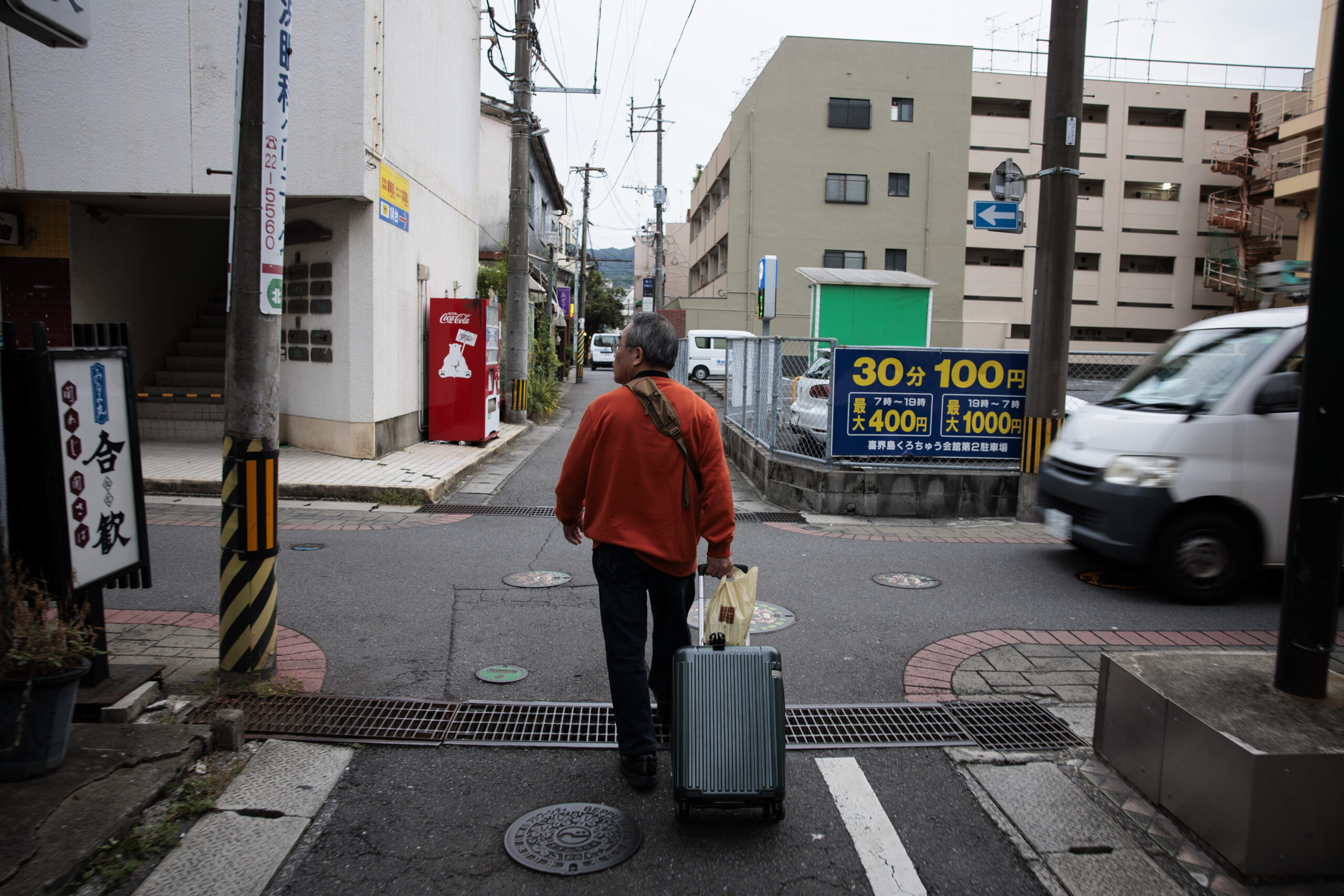
Jesse Ito and Matt Ito wait on the train platform at Miemachi Station on Tuesday, Nov. 4, 2025, in Miemachi, Japan.
“Do we really need to go there?” asked Jesse, clearly drained after waking at 3:30 a.m. for our tour of Toyosu and then rushing to board a flight. “Nothing’s going to be open. What are we even going to see?”
I insisted we follow through: This was one of the main goals of our trip! Matt, sensing Jesse’s unease, surprised his son by hiring a cab to take us there directly.
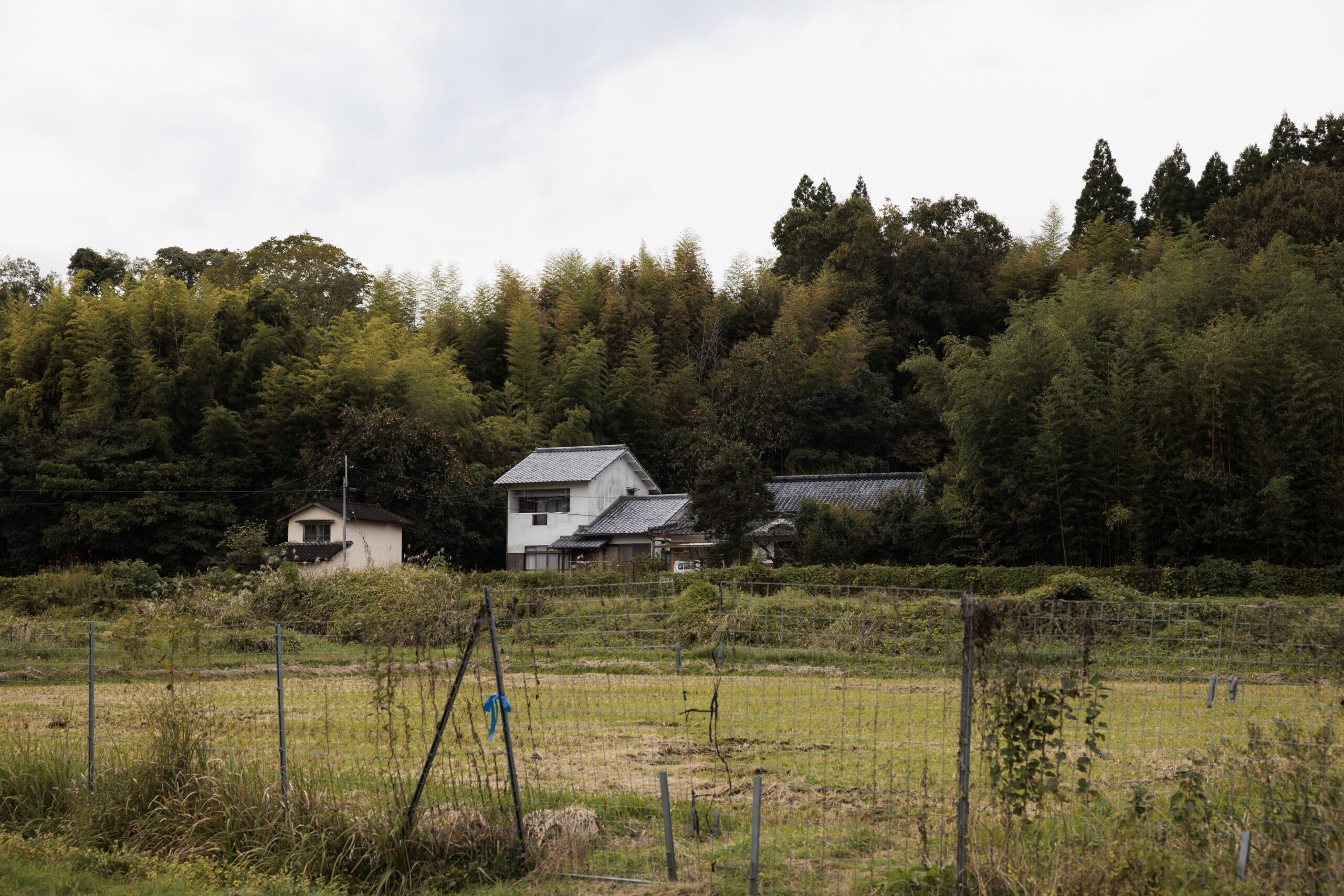
Ninety minutes later, we rolled through the small town of Bungo-Ōno and up into the sparsely populated hills of Miemachi, an agricultural patchwork of rice paddies framed by the jagged triple peaks of Mount Katamuki. The cab moved slowly toward a cluster of houses, then drifted to a stop on Matt’s cue. Jesse was certain we were lost.
“Dad, what’s the plan to get back? They don’t have Uber here.”
Matt did not reply. Instead, he exited the car and walked down the road until he disappeared around the bend. The cab driver got out and smoked a cigarette against the car hood. Minutes ticked by and Jesse began to panic.
“This is why I can’t let my dad plan things. Let’s be proactive, rally my dad and get out of here!” he said, suddenly shaking his phone. “I can’t get a signal. There’s no internet. I can’t use Google Translate to communicate with the driver!”
At that moment, Inquirer photographer Monica Herndon, who had followed Matt, came jogging back to the cab: “He found it!”
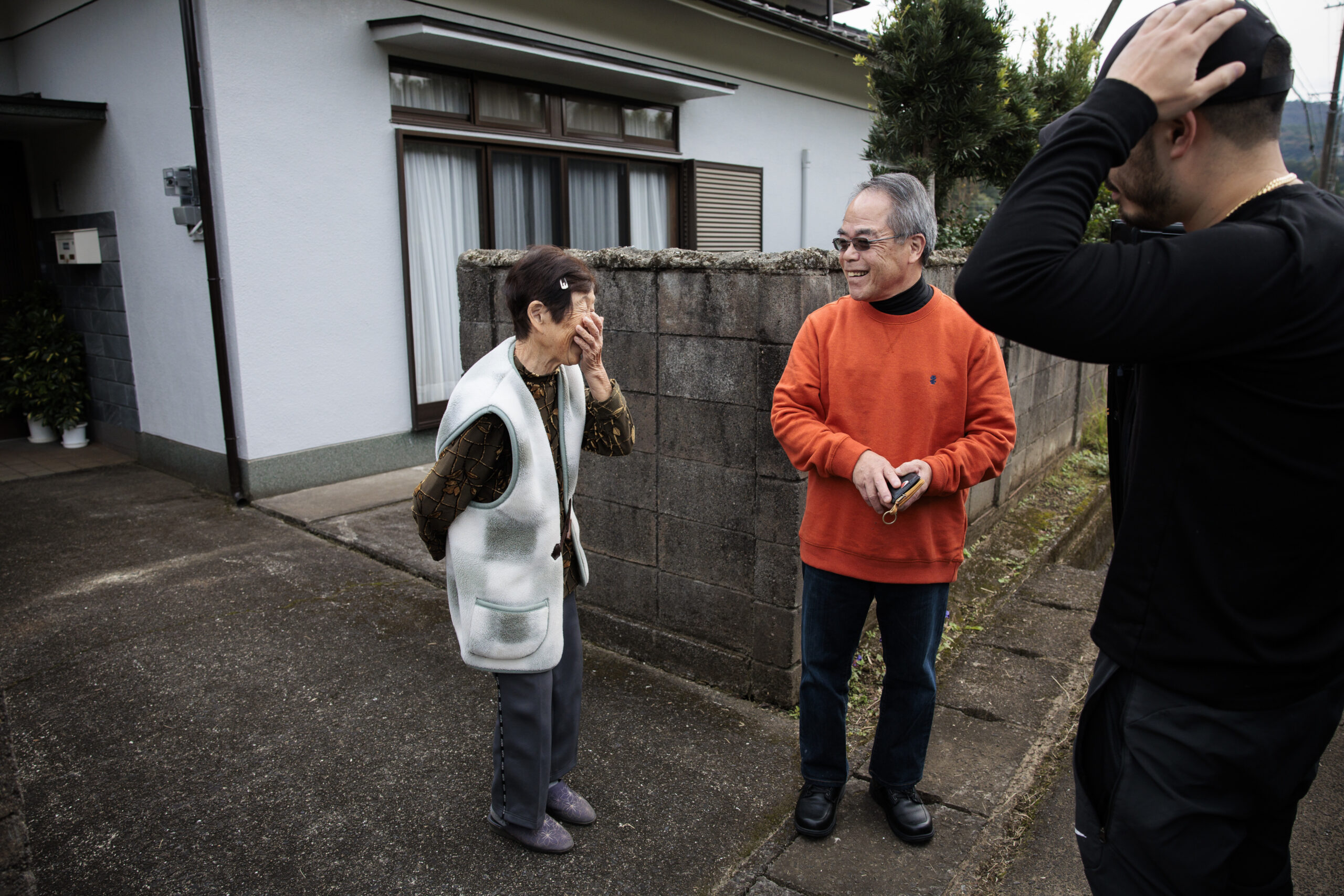
Fukiko Ito talks with Matt Ito and Jesse Ito, outside of her home on Tuesday, Nov. 4, 2025, in Miemachi, Japan.The area where Matt Ito used to live on Tuesday, Nov. 4, 2025, in Miemachi, Japan. The home he used to live in is no longer standing.
Just over the rise, we found Matt at a low-slung house happily chatting with Fukiko Ito, 84, a cousin he’d not seen in decades who answered the door by pure luck. She was living in the house Matt’s father, Hideo, had built for his grandfather in 1967.
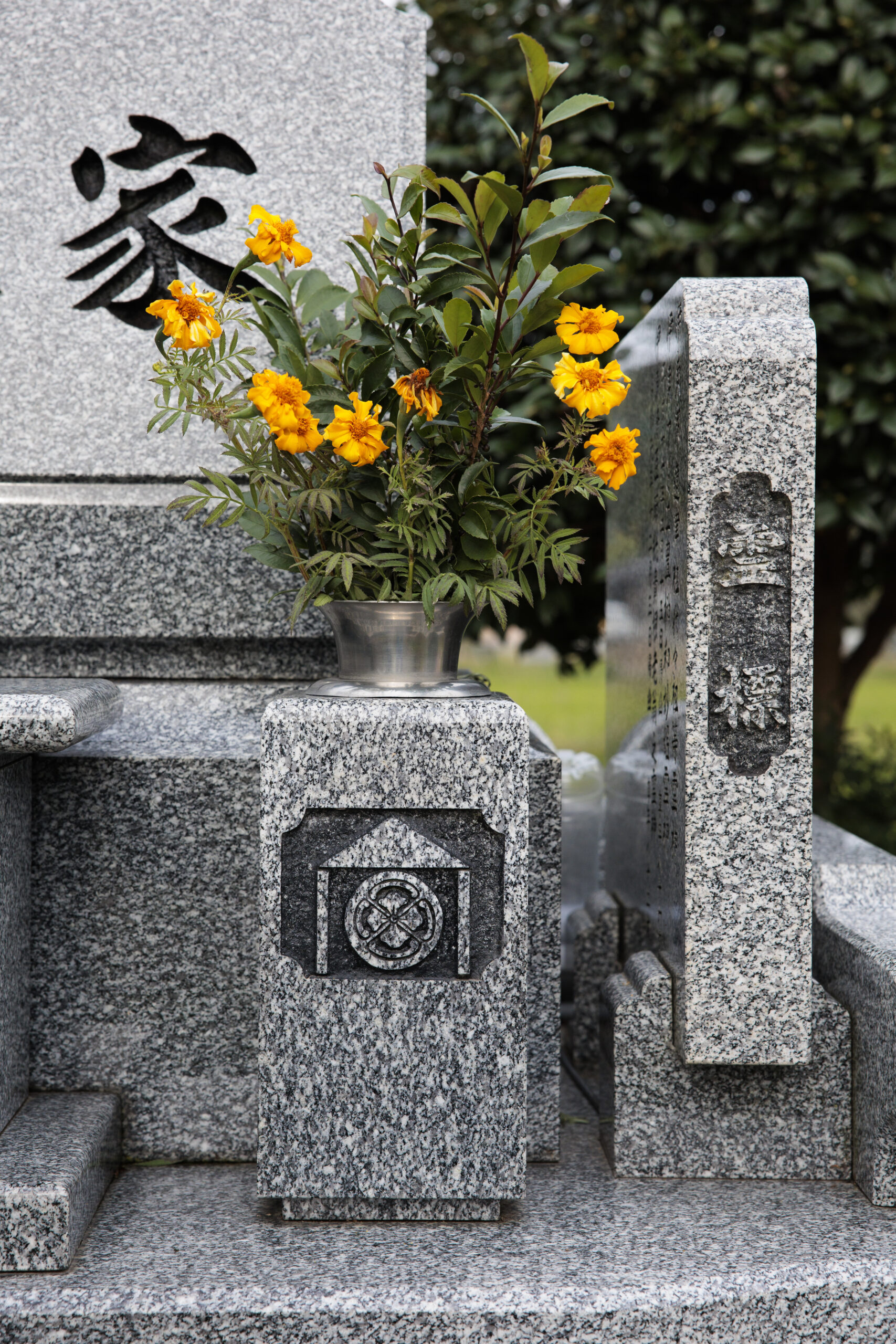
“Wow! Wow! Wow!” Matt said, proudly introducing Fukiko to his son. We followed her into the backyard and discovered another surprise: a granite altar with blooming yellow flowers that marked the family grave.
“My mother and father are buried here,” Matt told Jesse, whose anxious edge had instantly softened into one of quiet awe. “Your great-grandparents are buried here.”
As a falcon circled overhead, Jesse quietly gazed at the monument and spotted his family crest etched into granite. It was the same patterned quince flower, descended from a branch of the Ito samurai clan, that he’d used for Royal’s logo. He now realized that he’d transcribed it incompletely.
The Ito family crest is seen on the family grave in the backyard of Fukiko Ito’s home on Tuesday, Nov. 4, 2025, in Miemachi, Japan. Jesse Ito uses the family crest as the logo for his Royal Sushi omakase in Philadelphia.
“I’m missing the house that goes around the outside of the flower,” he said, noting it for correction.
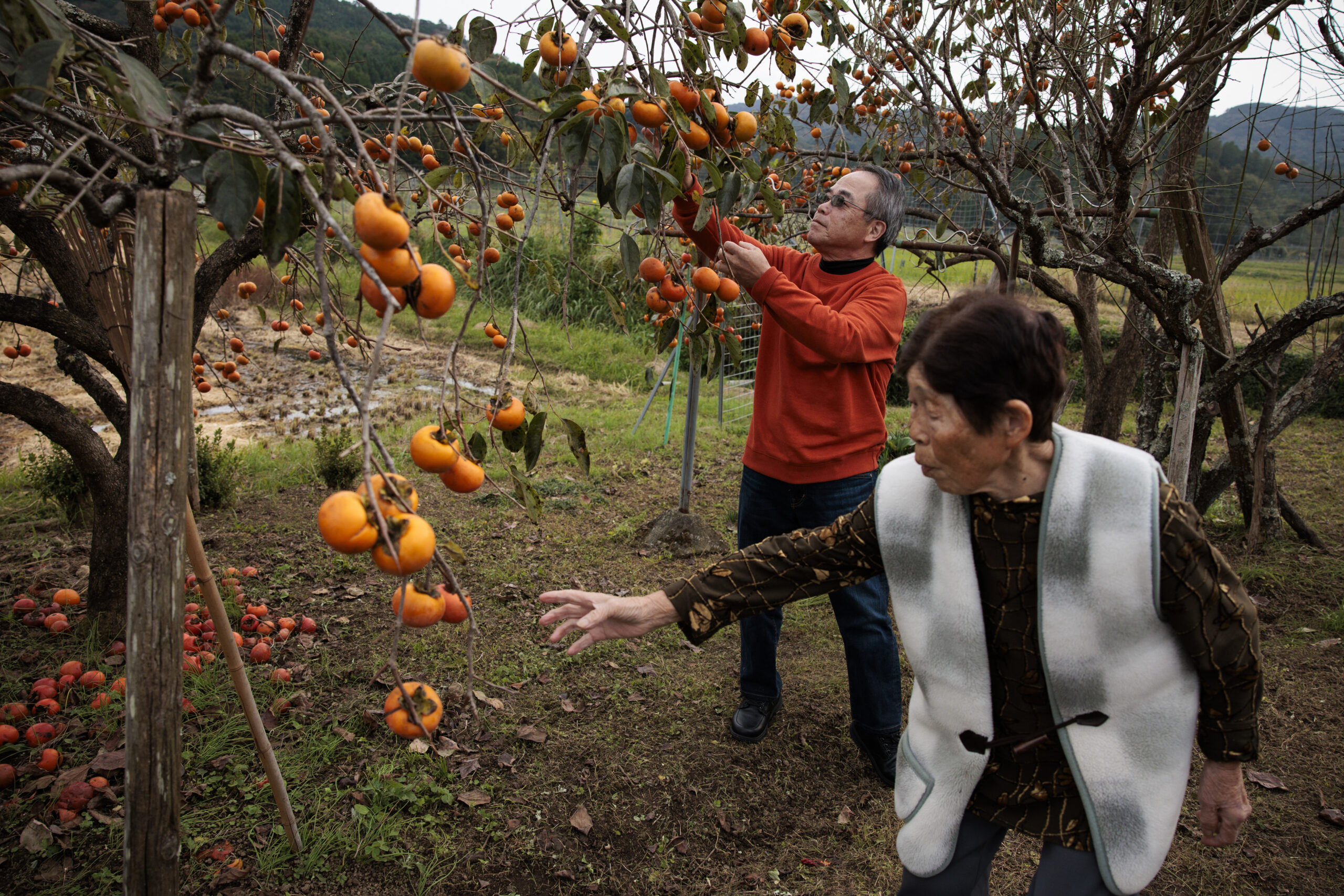
Matt had been giddily wandering the yard’s garden, picking fragrant sudachi citrus and orange persimmons off the trees. He caught Jesse’s eye and then — “here, catch!” — tossed him a piece of the family fruit.
Days later, Jesse would regard this as one of most powerful episodes of the trip, a direct connection to a heritage that rooted him to ancestral land that, since he was young, had felt like a distant concept not only as an American who’d never traveled, but as the product of a mixed-culture marriage who wasconstantly confronting impostor syndrome.
“For most of my life I felt that way, like a misfit — an American-Japanese-Korean kid who was not accepted by either group,” Jesse said.
He took heart in the pure delight that bloomed across his father’s face, an unfamiliar expression: “I’ve never seen him so happy — maybe ever.”
In the moment, though, Jesse later said, when he saw that persimmon arc across the yard, he thought of his childhood in Cherry Hill, a lonely latchkey-kid existence with his parents always at the restaurant. He’d microwave himself a dinner of buttered rice and seaweed. His dad was never around to actually play catch.
Matt Ito and his cousin Fukiko Ito pick persimmons in the backyard of her home on Tuesday, Nov. 4, 2025, in Miemachi, Japan.
Letting Jesse run the show
A flood of parallel emotions was soon to overwhelm Matt, too.
As he and I sat alone togetheron the commuter train to the nearby spa town of Beppu following the unplanned family reunion, he recalled his own childhood. He was an indifferent student who spent time farming at age 14 to help care for the family when his father, a Japanese calligraphy teacher and former Army cook, fell ill. His father only gave Matt his blessing to become a chef on his deathbed one year later: “Under one condition: Just be the best.”
Fifteen-year-old Matt started his careerin a fish market, butchering the local delicacy of fugu blowfish, learning to massage the deadly poison out of its liver underwater. His mother found him a kitchen job at the New Tsaruta Hotel, a resort where, in fact, we were staying that night. It was there Matt learned the art of kaiseki, a multi-course tribute to the seasons that employs different cooking techniques with every course. Matt also befriended a mentor there who gave him words to live by: “You have to make your own life. There are opportunities floating by you in the air. You just have to grab them!”
After two more years training in Osaka, the same mentor presented him with his big shot: the position at Sagami.
“I figured I’d go to America for two years,” Matt said. But he kept grasping at the opportunities. A wife. Their own restaurant. Two children — Jesse and his older sister, Naomi. Devoted customers and a lifetime of work. Too much work.
“I had a plan until I was 45, but then I messed up after that,” Matt said as the train rattled towards Oita. “I should have been a better father. I should have been a better man at the house. Instead I was always working, and as a result I lost my wife. I still feel bad about it, but we’re still friends and I talk to her every day. And every day before this trip, she’s so worried and tells me: ‘Don’t let Jesse eat fugu!’”
Matt’s still a partner at Royal Sushi & Izakaya, but he’s content to watch Jesse run the show, admiring his son’s creativity (“sometimes I think he’s a genius”). He comes in for a couple hours early each day to make the tamagoyaki, the delicate, lightly sweetened rolled omelet customers often order to finish their meal.
“[The cooks] just know me as the grumpy old man there making rolls. I’m Ito-san, that’s all. A funny old man.”
Matt Ito walks towards the New Tsaruta Hotel on Tuesday, Nov. 4, 2025, in Beppu, Japan. Matt once worked in the kitchen at the New Tsaruta Hotel in Beppu.
But he’s also observed closely as Jesse pours himself into the restaurant with a determination and focus he recognizes all too well.
“He works too hard, and I worry about him. I want him to have a life, too. I hope he finds someone to get married to, like any parent would.”
Is he worried his own story is repeating itself with his son?
Matt nods as the train pulls into Beppu station. Finally, 16 hours after rising to watch the morning tuna auction in Tokyo, we shuffled like zombies into the lobby of the New Tsaruta Hotel.
The aging tower overlooking Beppu Bay — known for sixth-floor open-air baths fed by the town’s famous hot springs — had lost some of its grandeur over the past half-century, Matt conceded. But when an exhausted Jesse opened the door to his room, he was not prepared for the culture shock of the spare traditional Japanese accommodations, with little more than a tatami mat visible. “There’s no bed!” he thought to himself, unaware of the futon in the closet. He turned around and, not wanting to offend his father, quietly left New Tsaruta and checked himself into a cushy new hotel nearby.
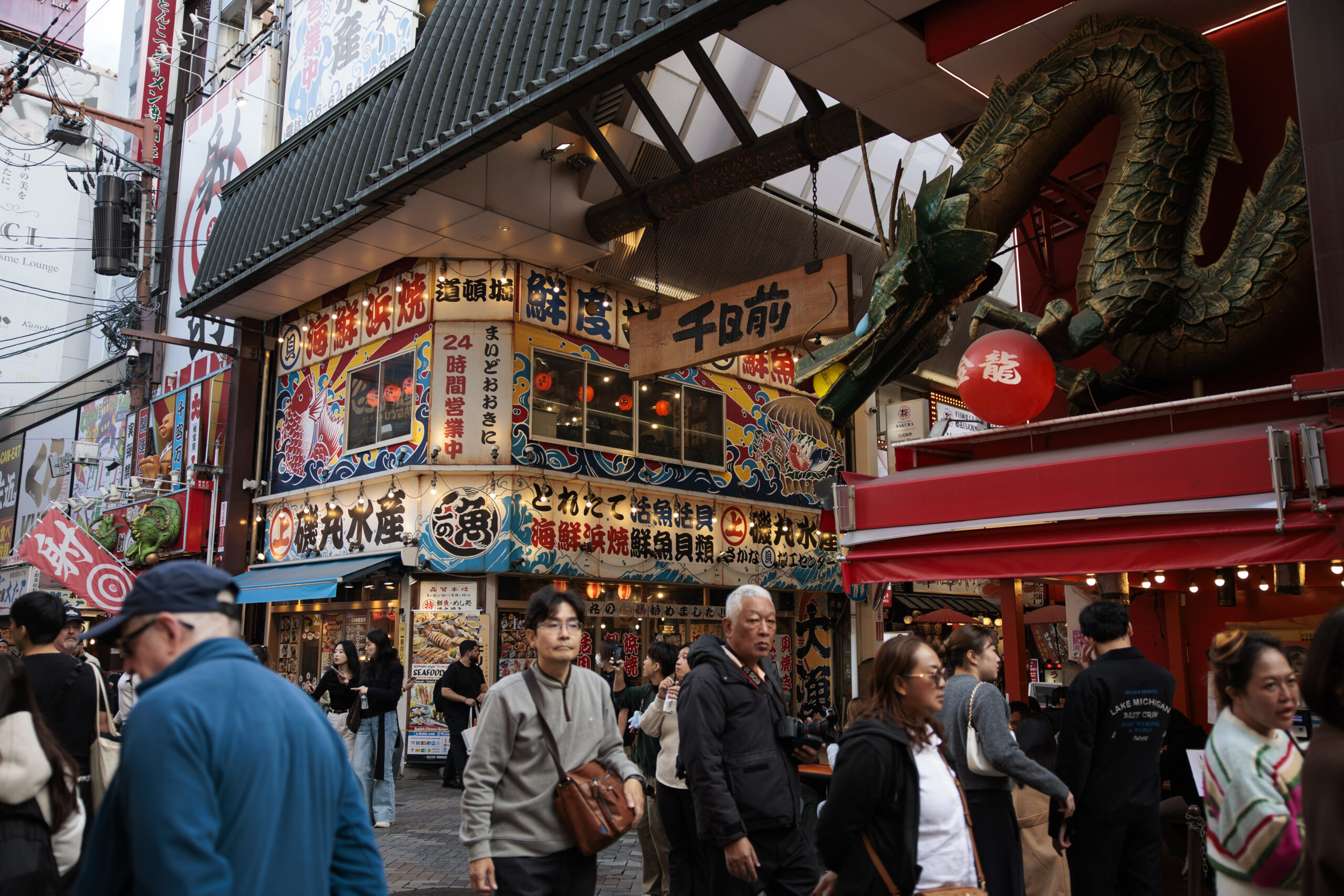
Colorful shops line the street in Dotonbori on Thursday, Nov. 6, 2025, in Osaka, Japan.
Small improvements every day
“I’m sorry if I was cranky last night,” apologized Jesse the next morning as we boarded an early train to Fukuoka. A soft mattress had helped him recover his good spirits. Our previous day had been special. “I saw how happy my dad was and I felt like I’d done my duty as his son,” he said.
But today brought another adventure on Kyushu that we’d all been looking forward to: nori day!
We had come to Japan to eat, of course, and our nine days were filled with extraordinary flavors. We devoured luscious king crab legs for breakfast at Tsukiji Market, soulful curry-drenched pork katsu worth the 90-minute wait in Osaka, and the legendary Pizza Y topped with bluefin tuna and wasabi at Savoy Tomato & Cheese in Tokyo. We marveled at the poetic wonders of the modern kaiseki at Den, where chef Zaiyu Hasegawa’s food married culinary mastery with a sense of humor that resonated with Jesse as a model for his own restaurants.
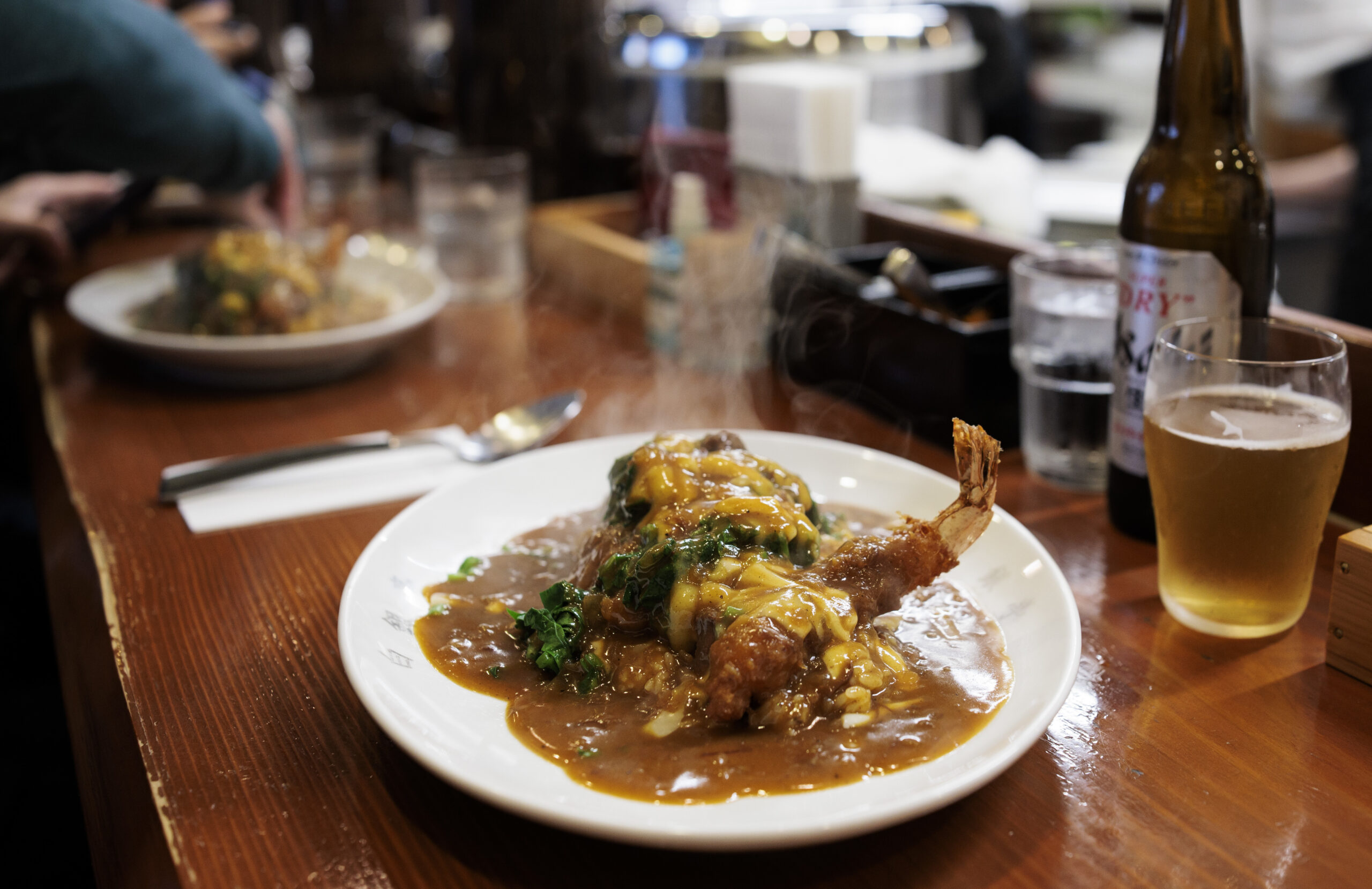
Curry with shrimp, spinach, and cheese at Hakugintei on Friday, Nov. 7, 2025, in Osaka, Japan.
But Jesse had also come to Japan on a quest to further his pursuit of kaizen, the Japanese philosophy of making small improvements every day. And our field trip for day two in Kyushu — a visit to an artisan nori producer — had the potential to tangibly elevate his food. Quality fish takes center stage at any great sushi restaurant. But the difference between “good” and “extraordinary” can often come down to unsung supporting ingredients like nori and vinegar, whose varying qualities dramatically impact the final bite.
That’s why we found ourselves standing atop the seawall in Yanagawa, peering out at the breezy Ariake Sea, where 50% of Japan’s nori is farmed. The seaweed grows in-season there likemoss-green netting between poles that punctuate the water all the way to Nagasaki across the bay, whose tidal rhythms undulate between the wash of ocean water and the warmth of drying sun, fostering a coveted flavor that’s deep and complex.
Maruho — the manufacturer that hosted our tour — arguably makes the best, according to Nobu Yamanashi, the Jersey City seafood distributor. Jesse was clearly impressed as we tasted myriad varieties, crunching through piles of crispy seaweed snacks speckled with spicy pollock roe (mentaiko), then nibbling through ascending grades of plain nori — the kind commonly used to wrap maki, temaki hand rolls, and onigiri — until he finally landed on the coveted No. 1.
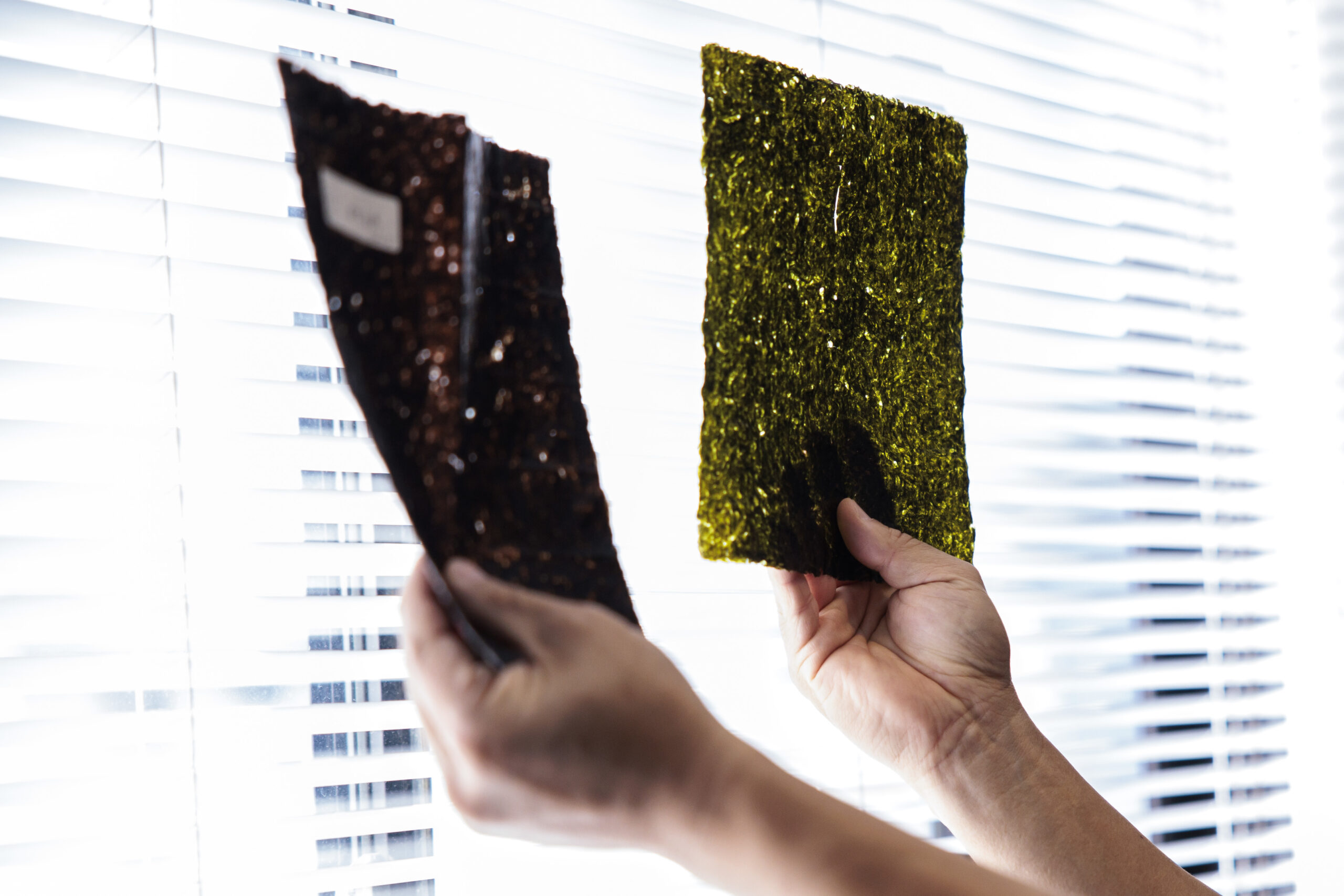
“This is so good!” said Jesse, holding a deep green sheet to the light, its denser weave pressed with flecks of aonori, another seaweed variety known for its color and fragrance. Its flavor was deeply oceanic. Its texture so crisp, it snapped cleanly when Jesse folded it in half, already imagining its effect wrapped around a fatty tuna handroll or a morsel of mackerel pressed over cubes of warm rice back in Philadelphia. “It’s like a cracker … I just hope I can afford it.”
Nori is shown untoasted, left, and after toasting, right, at Maruho on Wednesday, Nov. 5, 2025, in Yanagawa City, Japan.
This is the most expensive nori on the market. At $3.50 per sheet wholesale, it was twice the cost of the already top-market seaweed Jesse was currently using, and exponentially more than common sushi-bar nori. If Yamanashi had his way as Maruho’s exclusive importer, Jesse was about to become the first sushi chef in America to use it — “He’s a top-10 customer and he pays his bills.”
Jesse Ito listens during a tour about the vinegar making process at Saga Vinegar on Wednesday, Nov. 5, 2025, in Saga City, Japan.
Success becomes a balancing act
Indeed, Jesse’s omakase — already one of the priciest dining experiences in Philly at $300 per person as of last October — had been scheduled to rise to $355 by the time we returned home in November, to accommodate all the new treasures he’d found. The top-shelf uni he’d begun buying from Toyosu was $350 a tray. The creamy lobes of plump monkfish liver from Hokkaido he planned to marinate in shoyu before gently steaming them into a silky pâté cost 10 times more than the ankimo he’d previously used. The Maruho nori, he’d later report, “has been a real game-changer. That stuff is amazing.”
As we walked briskly through Fukuoka’s Nagahama Market, a calmer scene than Toyosu but still the second-largest fish market Japan, Jesse gave his Kyushu-based fish buyer, Takahiro Hirota, a wish list. Luminous pink madai sea breams. Silvery shima aji jacks. Translucent yare ika, or spear-tipped squid.
“This is hard to find, can I get one for next week?” he said, gesturing at the squid, which becomes silky-soft and sweet when sliced just right.
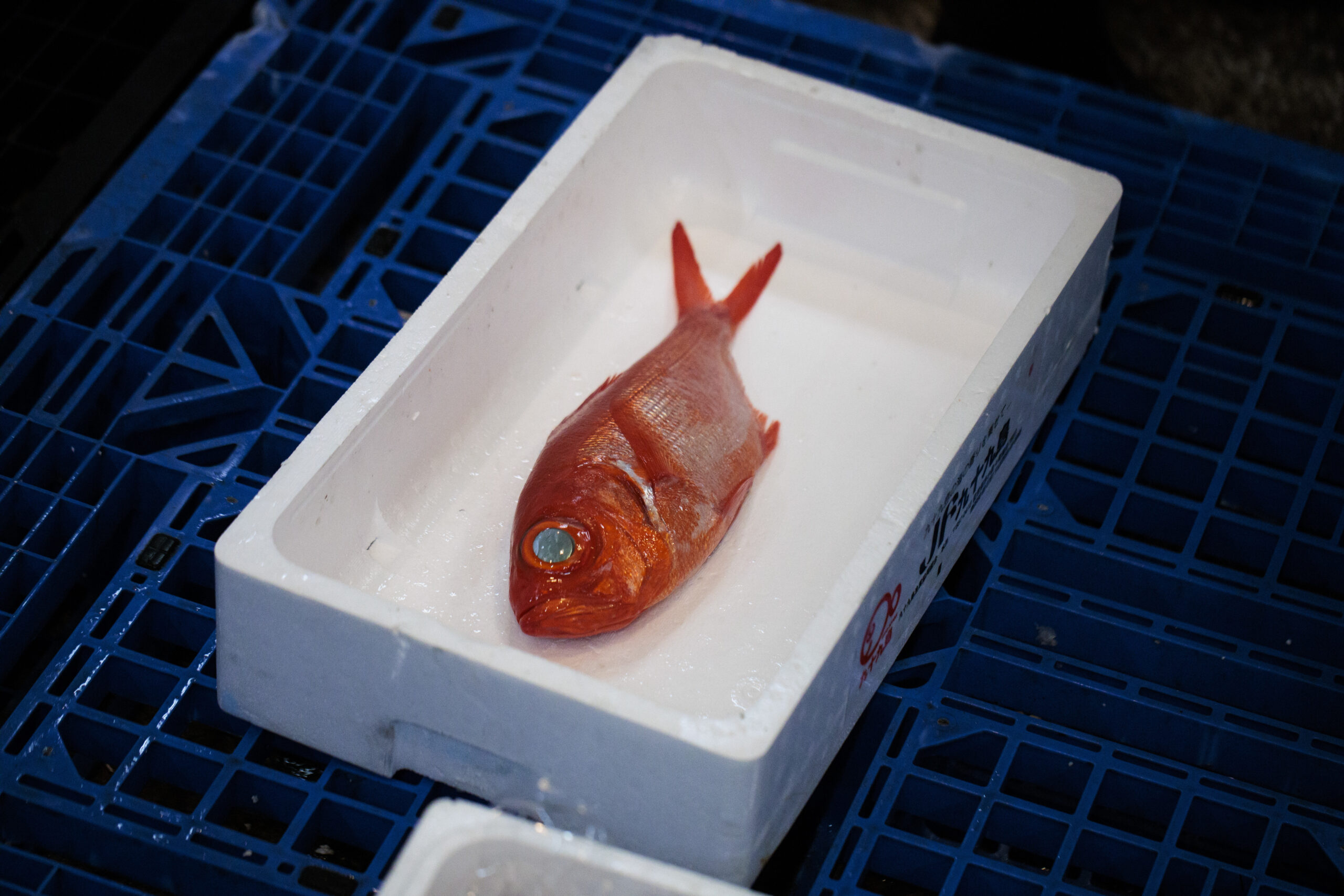
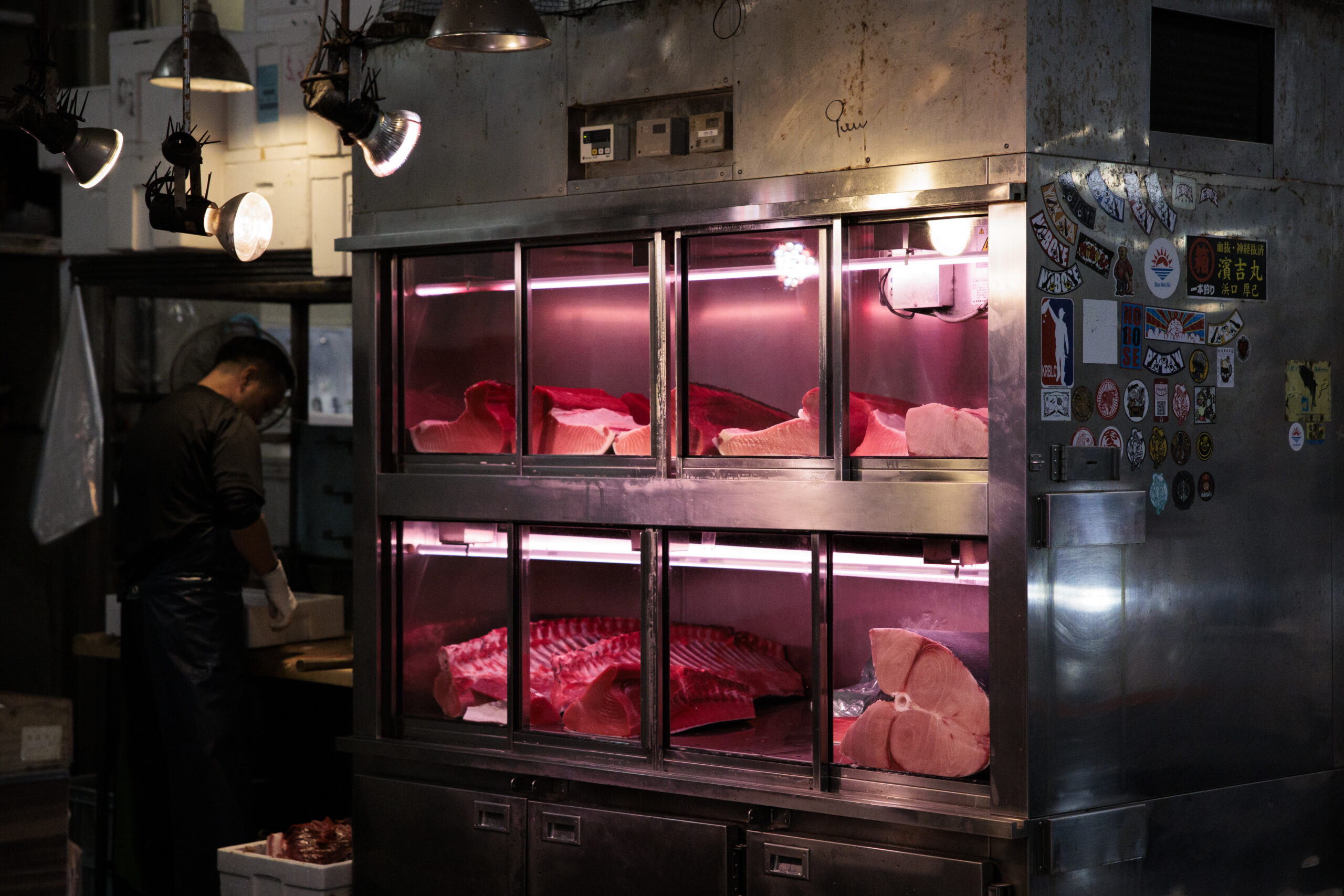
Takahiro Hirota talks with Jesse Ito at Nagahama Market on Thursday, Nov. 6, 2025, in Fukuoka, Japan.A kinmedai or golden eye snapper, at Nagahama Market on Thursday, Nov. 6, 2025, in Fukuoka, Japan.Large cuts of tuna in a refrigerator at Nagahama Market on Thursday, Nov. 6, 2025, in Fukuoka, Japan.
The omakase — and Jesse himself — have come a long way since Royal Sushi & Izakaya first earned four bells from The Inquirer in 2018, when Jesse’s tasting menu was (just!) $130.
The omakase’s ingredients, place settings, and techniques have continuously leveled up. And the storytelling its 18 courses now convey — including the extraordinary bibimbap with uni and toro that’s inspired by Jesse’s Seoul-born mother and composed over buttered seaweed rice (a childhood throwback, albeit now truffled)— has transformed the meal into something deeper than just a luxury splurge. Even as its fee rises, it remains hundreds of dollars less than similar experiences in New York and beyond.
“After eating at multiple sushi omakases in Tokyo and Kyoto, from multiple Michelin stars to none, the best sushi omakase I have ever eaten is from Jesse Ito right here in Philadelphia,” says Marc Vetri, the Spruce Street pasta maestro who also owns a restaurant in Kyoto.
Much of Jesse’s restaurant world is, in fact, accessible and relatively affordable to the wider public, both at dancerobot, where live jazz and karaoke nights keep it lively, as well as the izakaya portion of Royal, a walk-in experience Michelin noted with a Bib Gourmand as a “good value.” But it’s little wonder regulars guard their standing reservations to the omakase like courtside tickets for a Sixers game, ahead ofa 1,000-person Resy waitlist that occasionally shakes a couple seats loose for newcomers. The seemingly impossible scrum shows no signs of abating.
Jesse sympathizes with the notion of trying to make the omakase more accessible, but he simply doesn’t know how to achieve that without sacrificing the valuable personal relationships he’s forged over a decade to the murky forces of the anonymous internet, where valued seats risk becoming little more than a resale-market commodity.
“If I was dumb enough to get rid of all my regulars, people with access to bots would just buy up everything and resell them,” he said.
As with so much in Jesse’s life, hiskeen sense of how to navigate the challenges of success has been shaped by periods of struggle, alongside his parents and on his own.
The pandemic presented an existential threat to Royal’s business and halted the omakase for over a year while the izakaya kept the lights on with takeout and a la carte. On the brink of losing his house, Jesse was also compelled by the crisis to finally confront his relationship with alcohol, which he’d long relied on to numb his anxieties and fears.
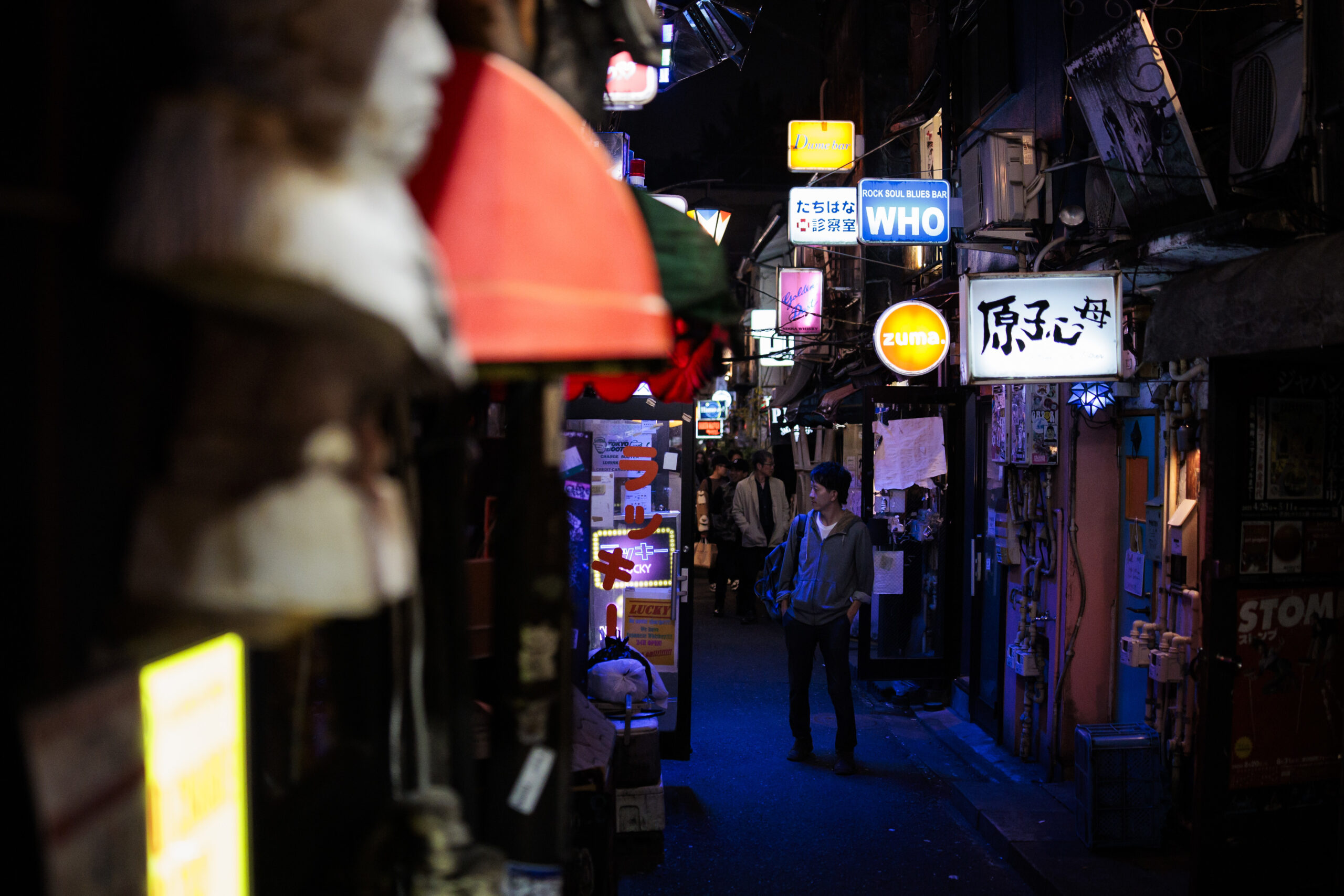
Tiny bars fill the narrow streets in Shinjuku Golden Gai on Saturday, Nov. 8, 2025, in Tokyo, Japan.
He became sober on Dec. 1, 2020, a status he’s maintained since, regularly attending support groups and talking publicly about his recovery. The shift reshaped his workplace, paring Royal’s hours back to five nights a week, closing at 11 p.m. for a more sustainable environment. Sobriety has helped him cope with setbacks. (“Part of losing the Beard award eight times … you come away with the ability to enjoy the moment,” he said.) It has also given him the clarity to build healthier relationships, “to be a better partner, a better friend, and a better son.”
Jesse still gets a rush from the performance of slicing pristine fish and the intimacy of entertaining a handful of customers from behind his counter.
“I’m going to keep it this way for as long as I can because it’s a moment in time when I get to do this,” he said. “It’s like a show every night.”
Over the course of our time in Japan, however, Jesse succeeded in making his biggest impression on an audience of one: his father.
“This was the best trip I’ve ever had and I’m really appreciative,” said Matt, who’s now planning a return trip on his own to travel to Miemachi with his Tokyo-based sister.
Matt could typically be found lingering several paces behind us on our fast-paced visit, soaking in the sights, sounds, and flavors of the land he’d left 50 years ago. But he was also looking forward, enjoying the rare opportunity to observe his son out in the world as he forged new business relationships and soaked in inspiration at every turn: “I’m so proud of the mature person he’s become. He’s made his own life.”
Matt also relished this opportunity to simply be with Jesse, even if conversation between the two was often sparse.
“It’s funny because I don’t have to say more than one word,” Matt said. “I know he understands.”
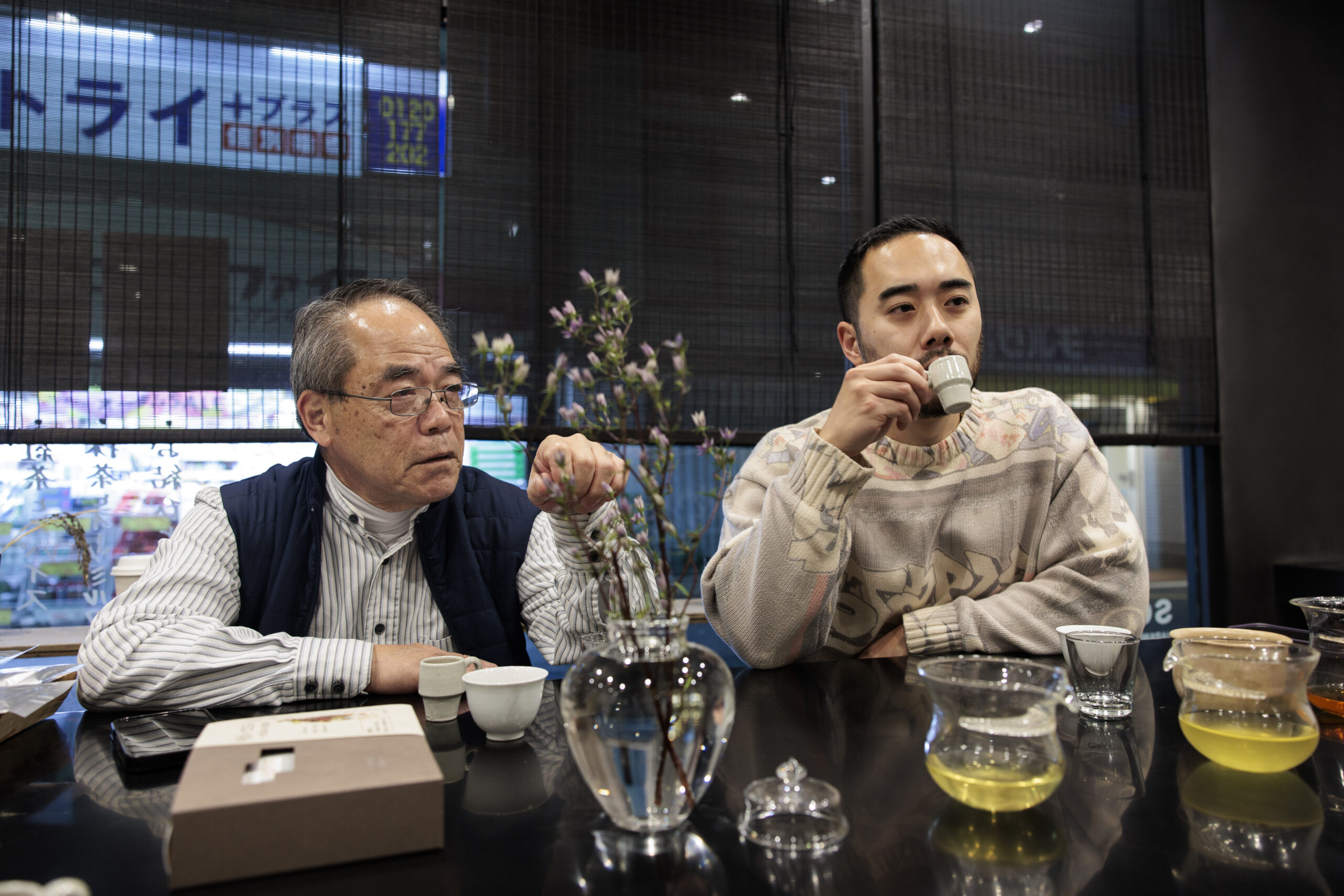
Matt Ito and Jesse Ito enjoy a tea tasting at Souen on Saturday, Nov. 8, 2025, in Tokyo, Japan.
We’ll show you a photo taken in the Philly-area, you drop a pin where you think it was taken. Closer to the location results in a better score. This week is all about Lunar New Year of the Horse! Good luck!
Round #21
Question 1
Where is this lion grazing?
Loading…
ClickTap on map to guess the location in the photo
ClickTap again to change your guess and hit submit when you're happy
You will be scored at the end. The closer to the location the better the score
Margo Reed / Staff Photographer
Pretty good/Not bad/Way off! Your guess was from the location.Spot on! Your guess was exactly at the location. Here's also where a random selection of Inquirer readers guessed.
The lion dance, most often performed by two dancers in a single costume, is a traditional Chinese ceremonial dance performed during festive occasions such as Lunar New Year. The dance, along with firecrackers and fireworks that are set off during the celebrations, is thought to bring prosperity and ward off malevolent spirits.
Quiz continues after ad
Question 2
Another lion! Where’s this one?
Loading…
Jessica Griffin / Staff Photographer
Pretty good/Not bad/Way off! Your guess was from the location.Spot on! Your guess was exactly at the location. Here's also where a random selection of Inquirer readers guessed.
These lion dancers were performing outside Bo De Temple, a Vietnamese Buddhist temple at 13th and Washington that is a center of Vietnamese life in South Philadelphia. Lunar New Year is celebrated by many East and Southeast Asian cultures, including but not limited to the Chinese, Vietnamese, and Korean communities across Philadelphia.
Quiz continues after ad
Question 3
Not a lion but a horse! Where is it?
Loading…
Steven M. Falk / Staff Photographer
Pretty good/Not bad/Way off! Your guess was from the location.Spot on! Your guess was exactly at the location. Here's also where a random selection of Inquirer readers guessed.
It’s the Year of the Horse, after all! The Chinese zodiac follows a 12-year cycle based on the lunar calendar, with each year represented by a different animal. This horse is Freeway, who lives at the Fletcher Street Urban Riding Club in Strawberry Mansion. Freeway made news two years ago when he escaped his residence and ended up galloping down I-95.
Your Score
ARank
🧨 A crackling job! A result worth celebrating.
BRank
🧧 B is a job well done. An auspicious start of the year.
CRank
🐎 C is a passing, stable grade, but you could do better.
DRank
🐴 D isn’t great, best saddle up to do better next time!
FRank
We don’t want to say you failed, but you were definitely horsing around.
You beat % of other Inquirer readers.
We’ll be back next Saturday for another round of Citywide Quest.
For R. Scott Stephenson, the ghosts of the Revolution are easily conjured. They are found on every block and every corner of his daily walk from his 18th-century home in Queen Village to the Museum of the American Revolution in Old City, where Stephenson has served as president and CEO since 2018.
“If you close your eyes, you can feel it,” Stephenson wrote about “The Declaration’s Journey,” the museum’s ongoing grand exhibit celebrating America’s 250th anniversary. “Over there, irascible John Adams and taciturn George Washington stroll to their first meeting. Down the street, brooding Thomas Jefferson takes a break from drafting a declaration to stretch his legs and find a nice pint of cider.”
R. Scott Stephenson has been president and CEO of the Museum of the American Revolution since 2018. This year, as the nation turns 250, the museum takes center stage.
As Philadelphia takes center stage in 2026 for the national milestone, also known as the Semiquincentennial, Stephenson will no doubt have a little less time to stretch his legs. This year, it falls to him to conjure the spirits of those fiery days of rebellion for the more than 1.5 million visitors Philadelphia is expecting in 2026.
It is a moment of celebration and introspection the museum has been planning for since before it opened in 2017. With the lauded exhibit exploring the history and global impact of the declaration, and their most robust slate of programming and exhibitions ever, the museum and its staff of about 100 historians and researchers, is ready, said Stephenson.
“It’s akin to a playwright,” he said. “You’ve written the play, you’ve cast all the characters, you’ve made all the costumes, you built the stage and been through endless rehearsals. We feel so supremely confident to meet the visitors that are coming.”
A Pittsburgh native, who earned a PhD in American History at the University of Virginia, Stephenson and his wife, a physician, and two adult children, have lived in the Philly area for 25 years. His perfect Philly day would include coffee before dawn, Italian Market shopping and exploring with his daughter, oysters and bookstores, Philly’s only Colonial-era tavern, and a home-cooked meal with the family. And all, with those ghosts trailing close behind.
Stephenson, 60, a Pittsburgh native, lives in Queen Village with his wife and daughter.
This interview has been condensed and edited for length.
5:30 a.m.
Our beloved adopted Philadelphian, Benjamin Franklin, said, “Early to bed, early to rise makes a man healthy, wealthy and wise.” So far, I’m just healthy, the other two may have not necessarily come (laughter). But I think maybe with the thousands of years of farmers in my past, my circadian clock has never changed. I am up without an alarm between 4:30 a.m. and 5:30 a.m. I start my day with a pot of really strong black coffee. Those first couple of hours before anyone is up is golden time for me. I read my periodicals, my newspapers. I still like the sound of paper wrinkling.
7:30 a.m.
We are a cooking family. On weekends, we are all about ending the day with a big meal that we make together. So a perfect day is my daughter and I walking to the Italian Market to browse around at the various shops, figuring out what protein we’re going to build dinner around. And nosing around the produce stands and cheese stops. At Fante’s Kitchen Shop are great reproductions of 18th-century German cookie molds for making gingerbreads.
I do not have one path to get from Point A to Point B anywhere in Philadelphia, so I’m usually going to want to zigzag around a bit. We like to do a little exploration as we bring the groceries back to the house.
11:30 a.m.
My wife and I love to walk over to Rittenhouse. Lunch at the Oyster House. I love that block of Sansom. It’s a street that feels like a previous era. There’s an original oyster house in Pittsburgh. That was a place both of my grandfathers ate lunch often. My father would go there. I was taken there as a kid. Although ironically, I have a great grandfather who died from eating, what was called on his death certificate, a “poisoned oyster.” He ate a bad one and died in 1905 when he ate a bad one that was a little too far from the Jersey Shore when it was consumed.
1 p.m.
I’d definitely pop into Sherman Brothers Shoes right next door. Incredible shoe store. I am sort of obsessed with Alden shoes, these great, super sturdy, American made, old school leather shoes. So I am at least going to go drool a little bit, and think, “Oh, when I wear this pair out, what’s my next pair of Alden’s going to be?”
2 p.m.
On a perfect day, I’m popping into the museum, and trying to remain anonymous. Just for an hour, and go wander around the galleries or sit through a showing of “Washington’s Tent” — and just talk to guests. A lot of my job is storytelling. Being able to talk about the impact we have on people — the best way to do that is to actually tell a story that happened to me.
3 p.m.
Our other routine would be to go to Plough & the Stars in Old City. We absolutely love Plough & the Stars, particularly in the winter, to be able to sit in front of the fire there. Have a shephard’s pie or fish and chips and a Guinness.
4:30 p.m.
I’m gonna spend some time up at the Book Trader on Second Street. I’m not actually allowed to buy any more books. My library is mostly in storage right now. We just don’t have the room. But I do love a bookstore, particularly a used one.
Stephenson said of Man Full of Trouble tavern and museum: “That’s the only surviving tavern in Philadelphia from the 18th century, where you can literally sit in a room where rum punch and revolution was the game.”
5:30 p.m.
Walking home, and frankly whether or not I have been to Center City or Old City, I am almost certainly going to stop, and this a new addition since it just reopened, but at the Man Full of Trouble tavern and history museum. That’s the only surviving tavern in Philadelphia from the 18th century, where you can literally sit in a room where rum punch and revolution was the game. To me, it’s just another reason why this is the greatest city in the nation. Being a few blocks from the Man Full of Trouble, creates a lot of trouble (laughter).
6:30 p.m.
It’s probably time to start dealing with those groceries at this point (laughter). At least one weekend day every weekend is family dinner day, where we’re all going to be cooking. So my son and his girlfriend will be in — my daughter’s there, my wife’s there, and we’ll have figured out what’s on the menu. We have a long table. We love to have candles and a candlestick on the table, and turn the lights down. A no device moment, where we really are in each other’s presence.
8 p.m.
We are probably going to be playing Wingspan, it’s a board game. There’s a new one called Finspan, which is all about fish in the ocean. We are almost exactly a two minute walk from Queen & Rook Game Cafe. So we’re kind of in a board game neighborhood. We’ll be right at our dining room table and we’ll be playing for a while and drinking a little wine.
9 p.m.
Going back to Franklin for a minute, and you remember his aphorism was “Early to bed, early to rise.” I am not the life of a party. Most nights by 9 p.m., my eyes are closed and I am sawing wood (laughter).
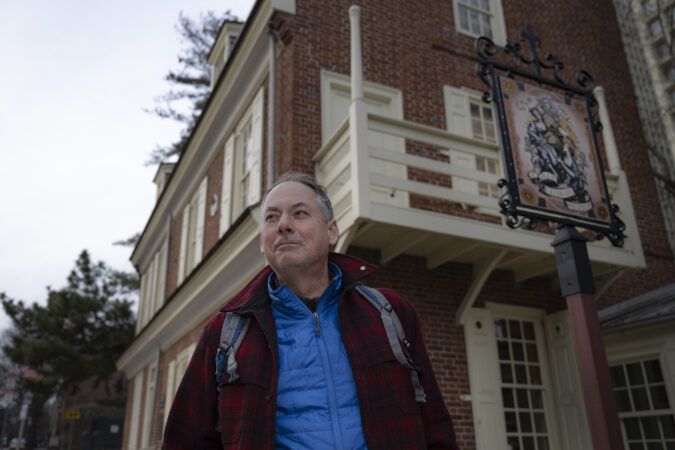
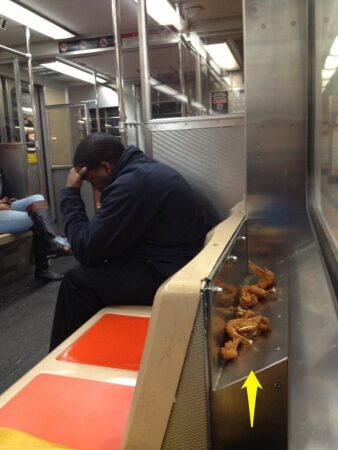
There are two architects of Philadelphia’s chicken-bone temple. One has whiskers. The other has hands.
Curious Philly asked why there were so many chicken bones on the streets of our city. Turns out it’s a whole circle of life testament to gross urban living. Rats rip into trash bags, raccoons drag leftovers into the street, and yes, sometimes humans just … drop them.
Somewhere in Philly, a squirrel is dragging a drumstick across a crosswalk like it just led the Mummers Parade down Broad. A raccoon is performing minor surgery on a Hefty bag. And a rat is simply responding to the opportunity. Philadelphia is the eighth-rattiest city in America (which feels relevant here), and twice-weekly trash pickup means an extra day of opportunity. A ripped bag on the curb is an open invitation.
Meanwhile, dog owners are performing full-contact tug-of-war in the middle of the Gayborhood because their shih tzu refuses to give up a chicken bone that is just as likely to choke them to death.
So please, put a tight lid on the trash cans. Until then, the sidewalk wing night continues.
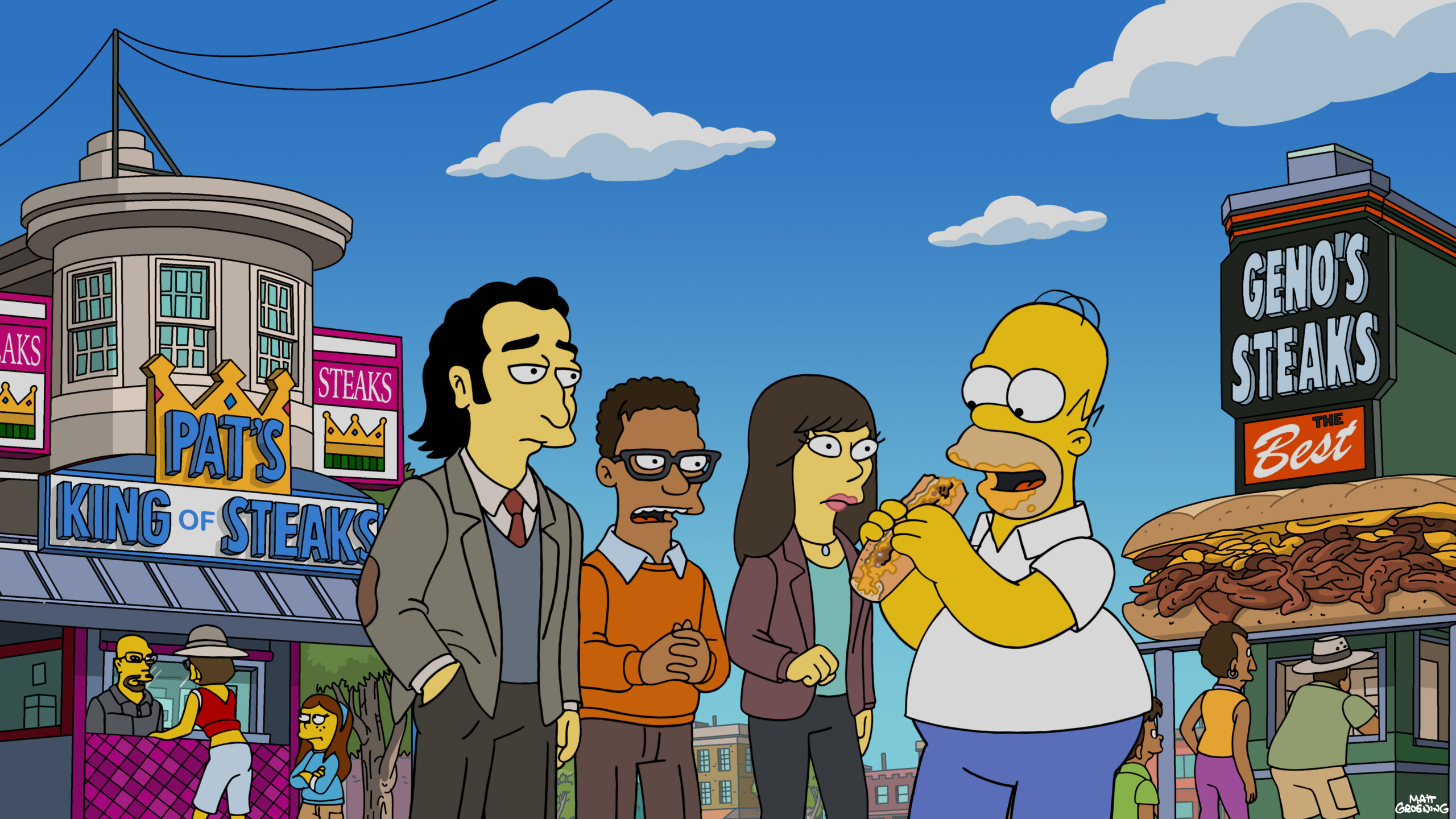
Homer (Dan Castellaneta) eats a cheesesteak in South Philly in an upcoming episode of ‘The Simpsons.’
They covered the obvious beats. Rocky, Wawa, cheesesteaks, the whole “wooder” universe. That’s low-hanging fruit.
But tucked into the background of the episode was a joke that wasn’t obvious, wasn’t tourist-friendly, and absolutely wasn’t generic: a fictional dog park called Michael Vick Reparation Park, “the best dog park in the world.” That’s a deep-cut, morally messy, and very-Philly sports memory.
Vick arrived here after serving prison time for running a dogfighting ring. His signing split the fan base and forced years of uncomfortable conversations about redemption, talent, and how much winning smooths things over. He rebuilt his career in Eagles green. Some fans forgave, while others never did. The tension is the punchline.
It works because it’s The Simpsons. And it lands because this episode wasn’t written by someone skimming Wikipedia. It was written by Christine Nangle, Oxford Circle-raised, Penn-educated, and still passionately Philly. You don’t make that joke unless you remember how complicated that era was.
The episode even found space to include a nod to the late Dan McQuade in the Roots concert scene. Blink and you’d miss it, but it’s a tribute that meant something if you knew.
So the moral of the story is anyone can animate the Liberty Bell. It takes a local to slip in a joke that sharp and trust the audience to understand it.
Bruce Springsteen and Max Weinberg performing during the Bruce Springsteen and the E Street Band 2024 World Tour at Citizens Bank Park in Philadelphia on Wednesday, August 21, 2024.
As in, windows-open, water-ice-in-hand, skyline-glowing, baseball-season May.
And instead of Citizens Bank Park, where he played two summers ago under actual sky, the “Land of Hope and Dreams” tour is landing at Xfinity Mobile Arena.
Indoors.
This is not anti-arena slander, but May in Philadelphia is outdoor concert weather. It’s built for a ballpark.
The tour includes 19 arena dates and one baseball stadium finale in Washington. Which makes it feel even more criminal that Philly — a city that will scream every word to “Born to Run” — is getting the indoor version.
(We’ll still go, obviously.)
A car slams into the edge of a large pothole on the 700 block of South 4th Street in Philadelphia on Wednesday, March 12, 2025.
Pothole season officially begins: F
The snow is melting, which means two things in Philadelphia. People are wearing shorts in 42 degrees and the roads are about to betray us.
As the ice pulls back, the damage reveals itself. Broad Street suddenly looks like it survived a minor asteroid shower. A harmless bump from January is now a cavity. That thin crack you ignored all winter? Now you slow down for it instinctively.
You can tell the season has arrived by the driving alone. Traffic doesn’t flow in straight lines anymore, it zigzags. Group texts start circulating with hyper-specific intersection warnings. A single traffic cone materializes in the middle of the street and quietly becomes semi-permanent infrastructure.
Some craters get patched fast. Others linger long enough to earn neighborhood lore. “Turn left at the one that swallowed the Camry.”
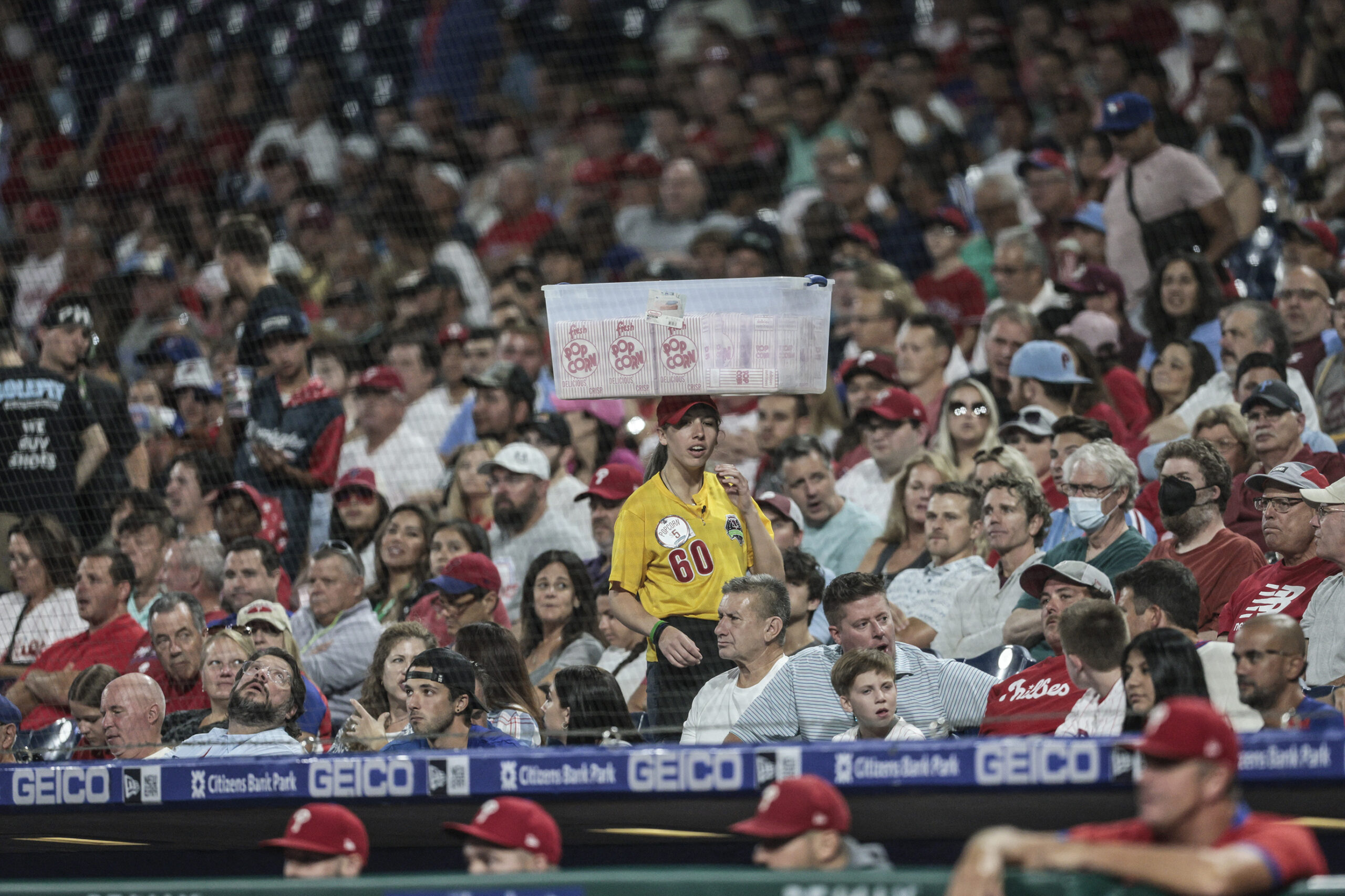
Samantha DiMarco, a popcorn vendor at Citizen Bank Park sells popcorn by balancing the box on her Tuesday, September 20, 2022
Citizens Bank Park without Sam the Popcorn Girl: F
The Phillies will still play. The popcorn will still be sold.
But one of the ballpark’s most recognizable faces won’t be in the aisles for most of the season.
Sam the Popcorn Girl is a minor celebrity at Citizen’s Bank Park, balancing popcorn on her head, popping up on Phanavision, and playfully sparring with Mets fans.
Over the last decade, she’s become an essential part of the atmosphere at the ballpark. Sure, she’s not on the roster, but she was part of the team. And this summer, she’ll be working on a Carnival cruise ship instead.
It’s temporary, and she promises she’ll be back. But this is Philadelphia. We’ve seen how this goes. First it’s a cruise contract. Next thing you know, the bullpen collapses in June.
Remove one of the ballpark’s regulars and suddenly everything feels off, and it’s way too early to be testing the baseball gods.
Booking the Shore before the snow melts: A-
There are still snowbanks clinging to street corners in Philadelphia.
And yet Margate agents are fielding multiple rental calls before lunchtime.
Last year, people waited, booking shorter stays and trying to read the market. This year, they’re locking in weeks while there’s still salt on the sidewalk.
The Shore has always been a seasonal reset button. But booking it in February (before anyone has even vacuumed the sand out of last year’s trunk) feels like a quiet shift.
After a few summers of sticker shock, people are now less afraid of being priced out then they are of being too late.
Soon we’ll be arguing over beach tags and debating Avalon vs. Sea Isle. Soon someone will be panic-buying Wawa hoagies on the Parkway.
We thought it was still winter. But summer, apparently, starts when the snow is still melting.
This week’s question is… Has Wawa’s food changed too much?
Stephanie Farr, Features Columnist
In my 19 years here I’ve found that Wawa has remained a consistent standard in my life, both in terms of quality and in terms of how often I eat it. I don’t think anyone would argue that it’s the best food in a very foodie town, but it’s never let me down.
Tommy Rowan, Programming Editor
Wawa lost something when they took out the meat slicers and stopped having bread delivered. In the early 2000s, at least to me, the sandwiches tasted fresher. It still had the spirit of a deli. Now it’s just like Subway. Which, hey, fine in a pinch. But I’m not going out of my way to stop anymore.
Jenn Ladd, Deputy Food Editor
I am a Montco native, so Wawa was a big part of my teenage years. Like most kids in this area, I thought of it as sort of a third space in high school — have many fond memories of sitting in or around my car or a friend’s car in Wawa parking lots in Flourtown, Wynnewood, Ocean City — and then when I went to college in Baltimore, that tether remained.
I’d drive 25 minutes each way from the northern edge of Baltimore City to a Wawa in like Parkville, Md., or something. I’d get gas, coffee, and a breaded chicken sandwich or the protein snack pack (grapes, cheese, crackers). Often, I’d round up the other Philly-area kids and we’d all go together at like 11 p.m. on a weeknight. It was a ritual.
All of that is to say, I once held deep-seated affection for Wawa.
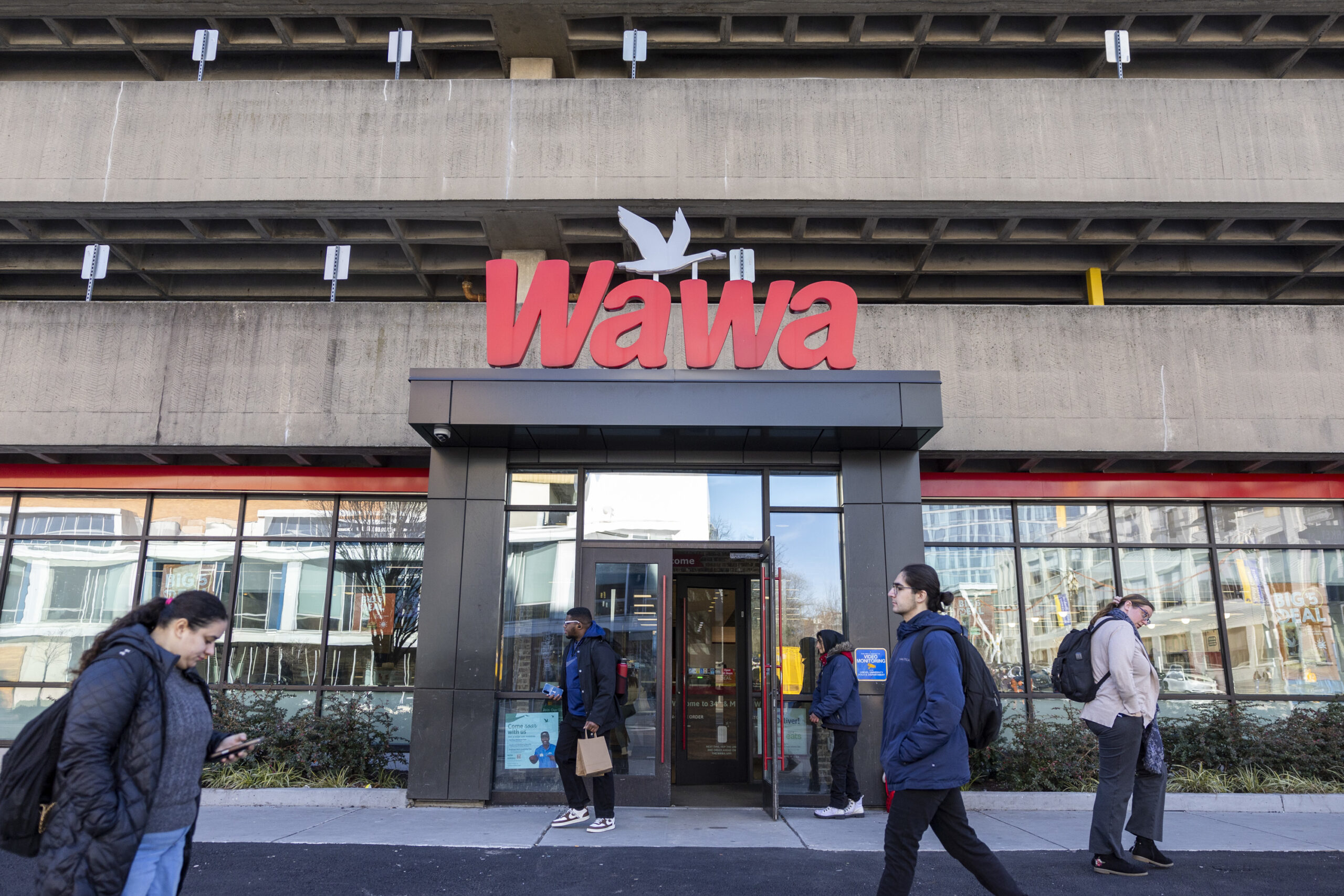
The Wawa at the corner of 34th and Market Street near Drexel University will be closing in Philadelphia, on Tuesday, Jan. 13, 2026.
But it has lost that spot in the past three or four years.
I used to commence each long-distance road trip with a Wawa breakfast hoagie — the scrambled eggs used to be so rich that you really didn’t need cheese because they were that good and plentiful; the sausage was really flavorful; the portion so abundant that you could drive for hours without feeling the need for a snack. The last time I got a breakfast sandwich from Wawa, I gotta tell you, it was sad.
I was sad.
Stephanie Farr
A road trip still doesn’t start for me until I get a Wawa Sizzli — croissant, egg, turkey sausage, and cheese — and I’ve never been disappointed. That being said, I recently got a breakfast sandwich at the flagship Wawa at Sixth and Market and that one came with scrambled eggs and it was a mess! I much prefer the egg mold.
What has gone downhill for you guys?
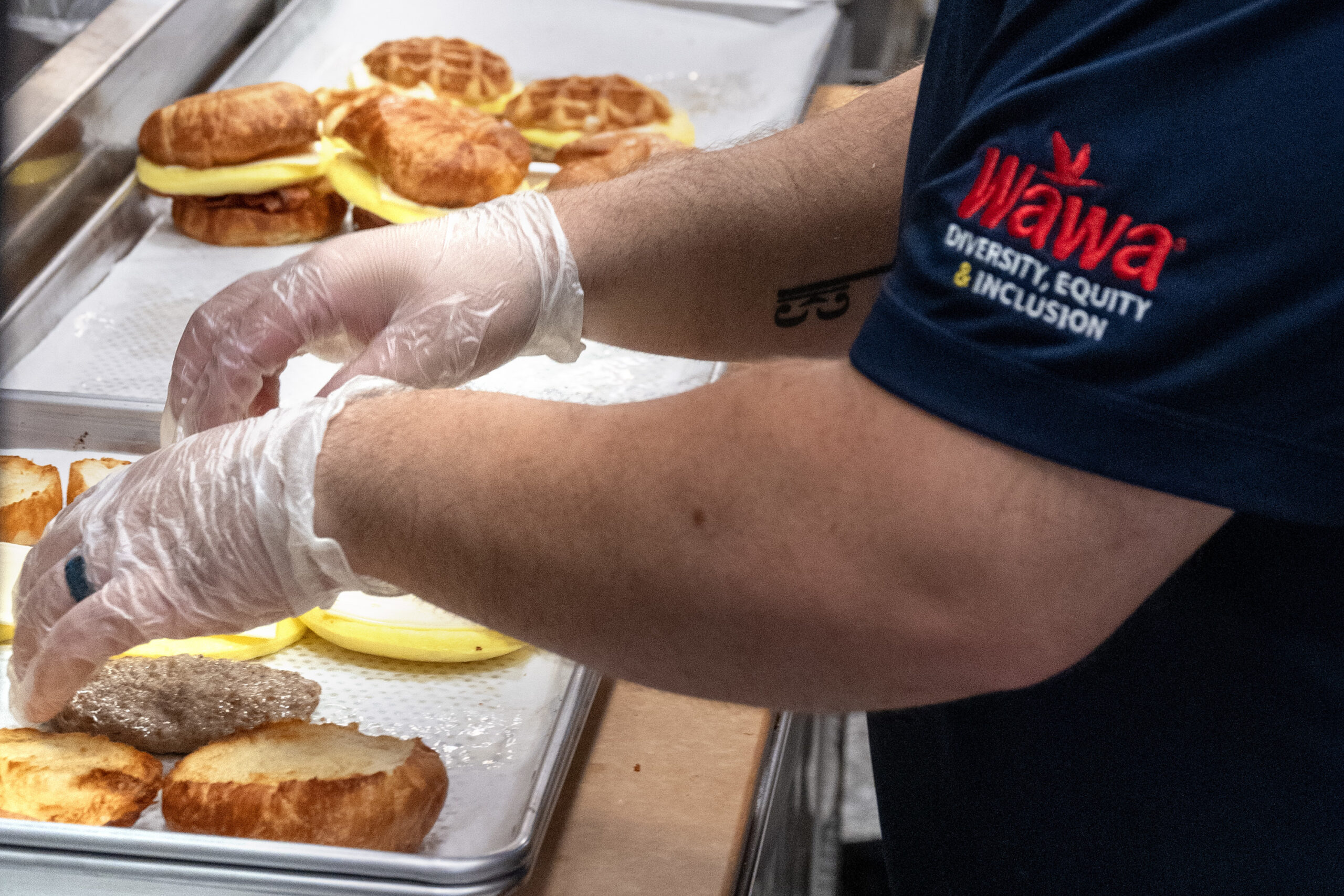
A worker assembles breakfast Sizzlis during the grand opening on Sept. 19, 2024, of the first Wawa in Central Pennsylvania — solid Sheetz territory — in the Dauphin County borough of Middletown.
Jenn Ladd
I’ve noticed that the portions have gotten kinda puny for the custom-ordered stuff, which was my jam for years. And now I think you’re better off with the grab-and-go things — the Sizzlis.
I think Wawa putting so much focus on the “Super Wawa” format and then constantly “innovating” with the food menu has really been its downfall. Like, just keep it simple.
Tommy Rowan
I still think about the old Buffalo Blue Breaded Chicken Sandwich. It was a robust and crispy chicken patty. And it was slathered in that bright orange buffalo-blue cheese sauce that brought the heat and the tang. It was unmistakable and worth the price of admission. And it came on a fresh kaiser roll, to boot.
They have introduced new lines of chicken sandwiches in recent years, but they’re not the same.
Jenn Ladd
I used to love those chicken sandwiches. They had my heart over a hoagie almost every time.
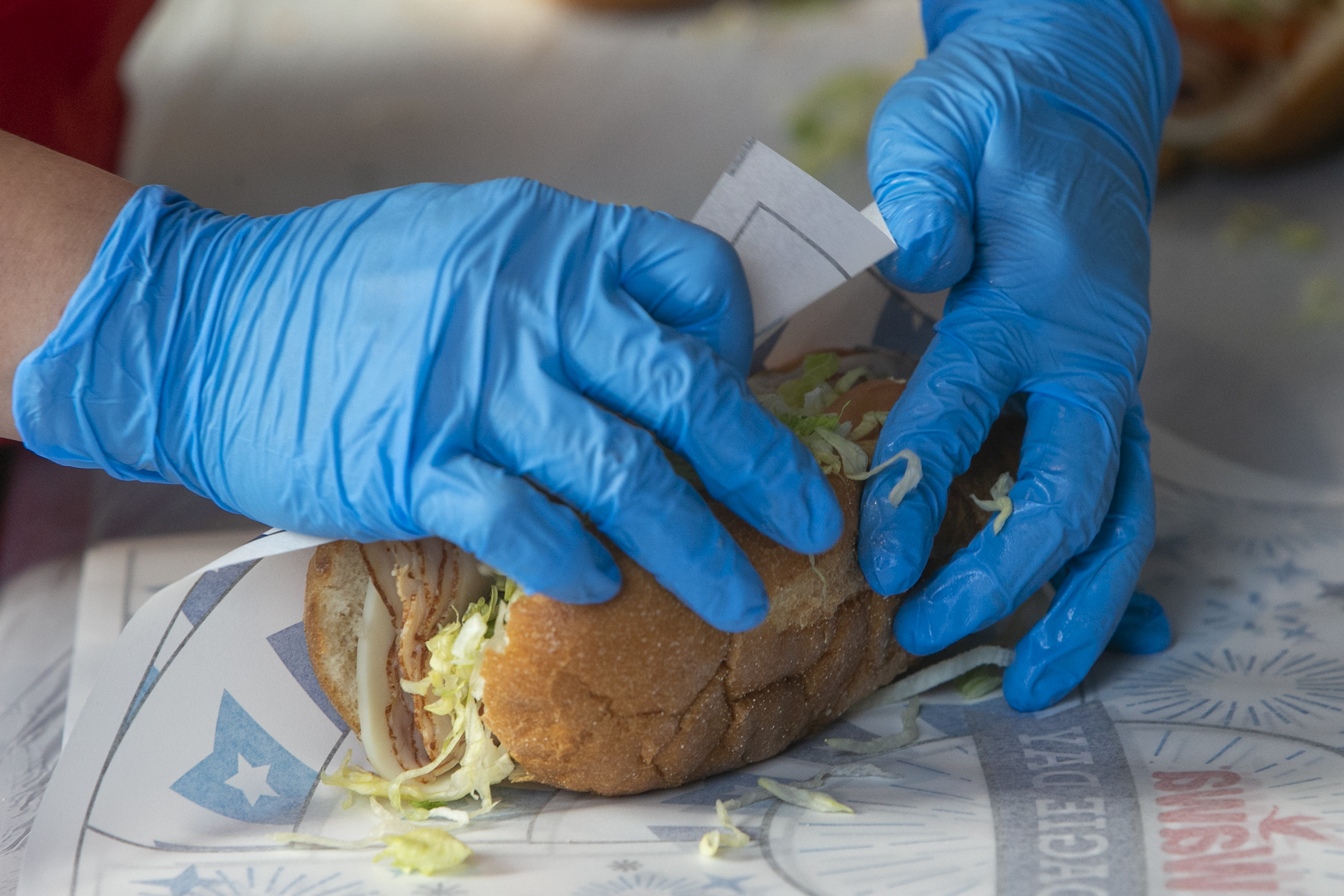
A worker at the Wawa at Sixth and Chestnut Streets wraps a turkey hoagie with provolone cheese and lettuce and tomato for Wawa Welcome America Hoagie Day in 2020.
Stephanie Farr
I’ve actually never tried one of their chicken sandwiches, but I am mad they took the spicy cherry pepper relish off the menu. That is a GOAT hoagie topping.
Personally, I like Wawa’s soups, particularly the chicken noodle and tomato bisque. I’m sure they come out of a bag, but they taste pretty good, and it’s not something you find at similar places, like Sheetz.
Jenn Ladd
[shudder at the thought of bagged soup]
Stephanie Farr
As I assumed you would, foodie. lol. It doesn’t bother me, but my standards are pretty low.
Evan Weiss, Deputy Features Editor
If you all could tell Wawa to change two things back, what would they be?
Stephanie Farr
Just give me back my spicy cherry pepper relish for the love of all that is holy please! Also, they better never get rid of the garlic aioli. Get that on a hoagie and bring it into a public place and everyone will ask you what smells so good. (It’s happened to me in the newsroom!)
Tommy Rowan
Bring back the slicers and the fresh bread. It would make a huge difference.
Jenn Ladd
I’d have them remember their roots as opposed to coming up with novelties and/or trying to compete with other convenience store chains on selection. (See Wawa pizza, a repeated failure.) They used to have great sandwiches and snacks. I’ll forever cherish the memory of a boss in Baltimore putting a Wawa pretzel on my desk because she had been in the Philly area earlier in the day. It was like a little love note from home. They’ve gotten too corporate, so I basically just treat it like a gas station now.
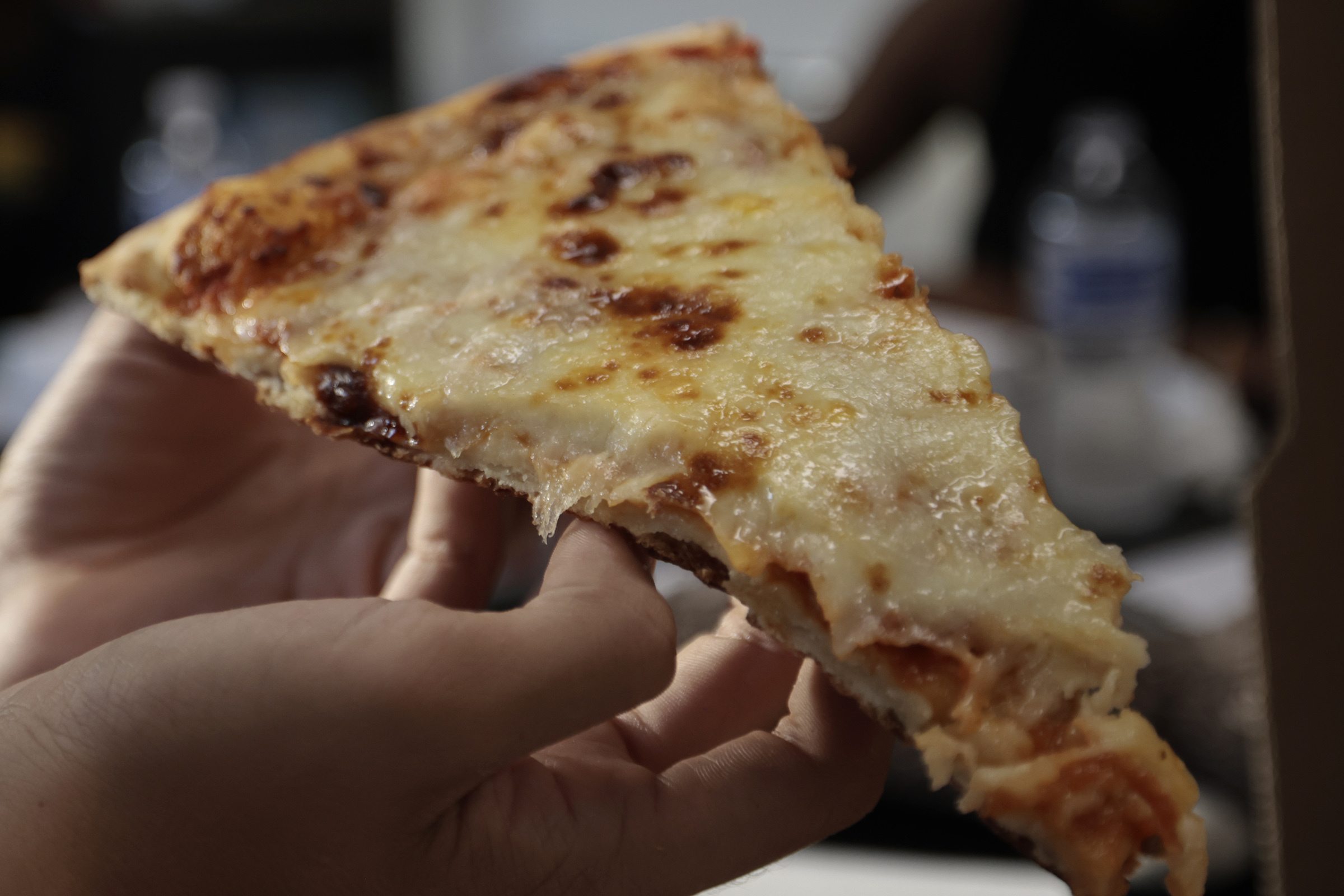
A slice of Wawa cheese pizza at Science Leadership Academy in Philadelphia in 2023.
Stephanie Farr
I was talking to someone about Wawa last week, after covering the first Sheetz opening in Montco, and they said while Sheetz may have more food offerings, Wawa will still remain supreme in the Philly region because: “We’re loyal and it has nothing to do with quality.”
Honestly, I think that’s one of the reasons I love Philly so much. Tommy and Jenn, are you bucking that trend, have you forsaken your Wawa loyalty?
Jenn Ladd
I don’t believe in blind allegiance.
But also, I don’t think we should just keep giving money to an entity that doesn’t seem to be minding the quality of what it’s putting out to customers.
Just because we are fond of it.
Stephanie Farr
So I take it you’re not a Phillies or Flyers fan, either?
Jenn Ladd
Ahahaha, well I’m not giving them any money, that’s true.
Tommy Rowan
Hahaha. I will always have a special place in my heart for Wawa. And I hope it comes back around. I’m going to be thinking of that chicken sandwich for the rest of the week now.
Jenn Ladd
I won’t even get into how Wawa has betrayed Philadelphia proper, but that’s another reason I’m loathe to be blindly loyal to them.
I’d love for Wawa to make a quality comeback, too, truth be told, but I don’t know that I’d realize that without this conversation.
Have a question of your own? Or an opinion? Email us at eweiss@inquirer.com.