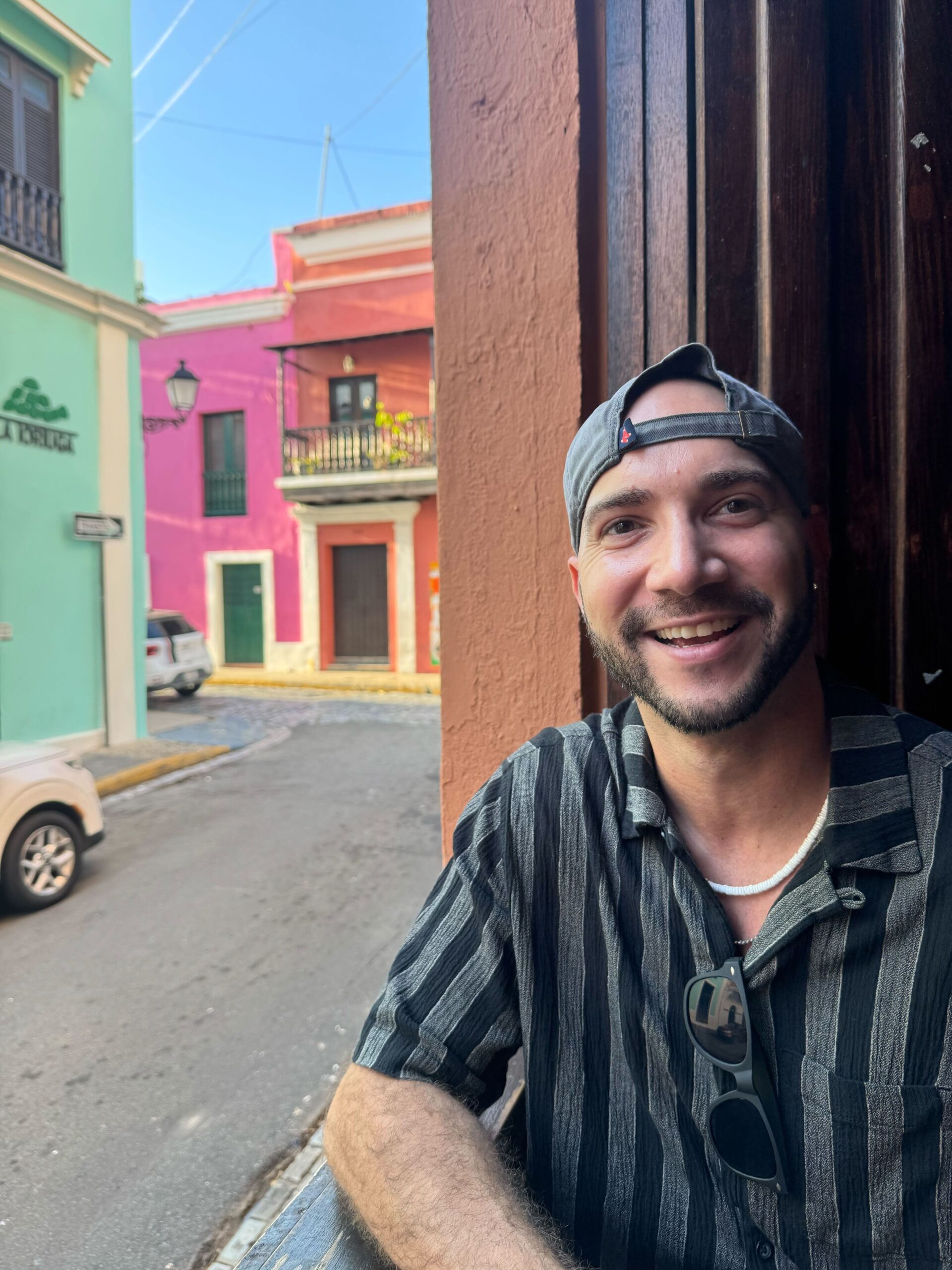
After a night of dancing and laughter in San Juan, Puerto Rico, Kelly Crispin and her fiance, Omar Padilla Vélez, were driving back to his family’s home when they made a wrong turn off the popular Calle Cerra nightlife strip.
It was about 1:45 a.m. on Jan. 3. The side street that the South Philadelphia couple had turned onto, which they thought led to the highway, was nearly pitch-black. Then suddenly, Crispin said, roughly a dozen masked men carrying AR-15-style rifles appeared in the road and quickly surrounded the car.
Padilla Vélez tried to press forward and drive around the crew, she said, when the men opened fire. She remembers the glass exploding around her and the pain in her shoulder and hand as bullets tore through the car. And then the words from her fiance: “I’ve been shot.”
Padilla Vélez, a 33-year-old chemist for DuPont, was shot in the head. He was rushed to a hospital, where he died days later.
Omar Padilla Vélez, of South Philadelphia, was shot and killed in San Juan on Jan. 3.
Crispin, 31, recounted the attack in a phone interview from her South Philadelphia home this week as she struggled to come to terms with what she said San Juan police believe was a random attack by a gang controlling a small stretch of road near a popular tourist area.
After the shooting stopped, at the intersection of Calle Blanca and Calle La Nueva Palma, Crispin said, one of the men appeared at the side of the car and took her phone as she was calling 911.
She said she heard some of the men yelling at one another that there was a woman in the car and urging others not to shoot, as if realizing they had made a mistake. They searched her purse, she said, but returned her phone. They took nothing.
Crispin and a friend,who was with them in the car and was unharmed, pulled Padilla Vélez into the back seat. As she held pressure on his wounds, her friend took the wheel, and the gunmen told them to leave and told them how to get out of the neighborhood.
It was surreal, she said, to be shot and then have one of the gunmen explain how to leave safely.
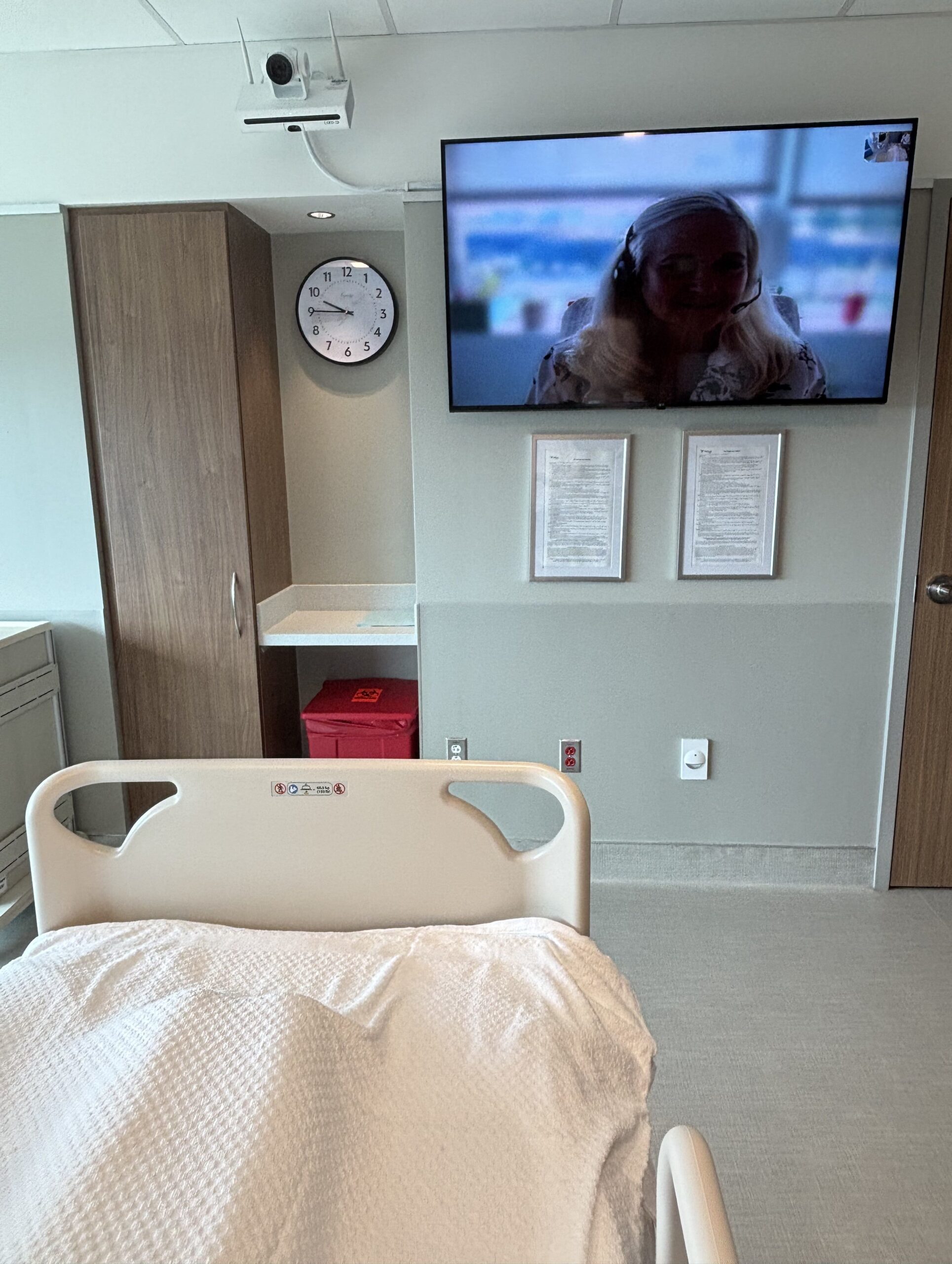
They called 911 again as they left, and met an ambulance at a nearby gas station and were rushed to Centro Médico de Puerto Rico.
About two days later, Padilla Vélez was briefly stable enough for Crispin to visit him.
“He told me that he loved me, and I told him that I loved him, too,” she said. “And he said, ‘I’m so sorry.’ Then he fell asleep.”
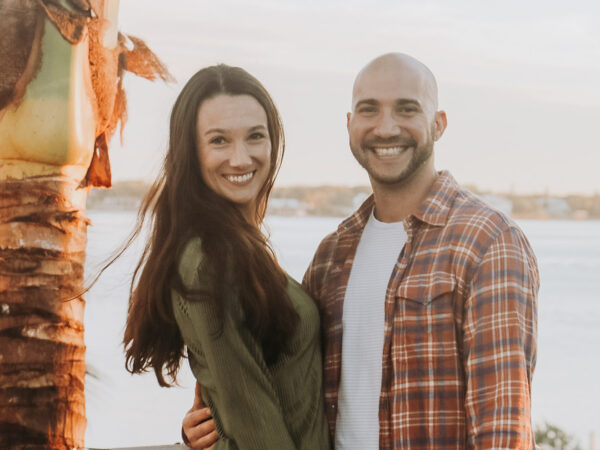
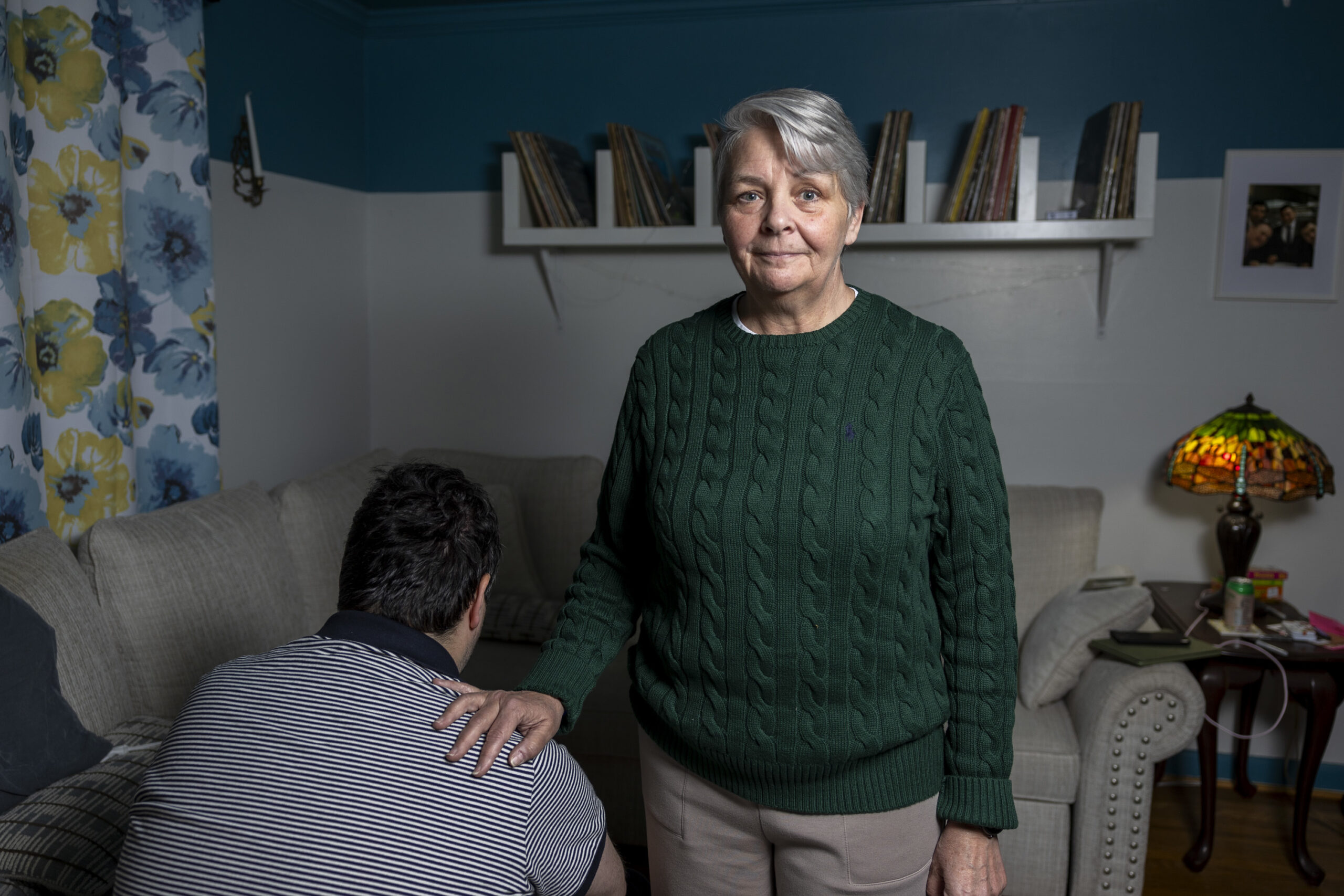
Kelly Crispin and Omar Padilla Vélez got engaged in the fall and were looking forward to getting married.
Later that day, she said, he suffered a catastrophic stroke. Days later, he was declared brain-dead. He was an organ donor, she said, and doctors were able to use his organs to save several lives.
Padilla Vélez was Puerto Rican, she said, and came to the mainland U.S. in 2015 to earn a Ph.D. in chemistry at Cornell University. He moved to Philadelphia in 2022 and worked as a senior scientist for DuPont in Wilmington.
The couple met about three years ago at their best friends’ wedding. Crispin, who works as a project manager for an electrical vehicle company, moved to Philadelphia about a year into their relationship. In September, they got engaged.
They often returned to San Juan to visit Padilla Vélez’s relatives. This trip, which began Dec. 30, was meant to ring in the new year.
Crispin said she has been frustrated with San Juan police, who she said did not appear to have visited the scene of the shooting until five days later, after her fiance died and the case was assigned to a homicide detective. She said she was not interviewed until Jan. 21 and worries those delays could hamper the investigation.
No arrests have been made.
Police in San Juan did not respond to several requests for comment about the case.
Crispin said the homicide detective assigned to the investigation told her that residents in the area, fearful of retaliation, have refused to provide information. Police, she said, told her that a gang operates on the street where they were ambushed, and that she and her fiance were likely shot in a case of mistaken identity.
Crispin said the city should warn people to avoid the area, especially since it’s so close to a popular tourist district.
Omar Padilla Vélez earned a doctorate in chemistry from Cornell, before moving to South Philadelphia, where he lived with his fiancée.
Since returning to Philadelphia last week, she has struggled to make sense of her new reality. The bones in her hand were shattered and will require multiple surgeries to repair. The bullet passed through her shoulder, and she will need months of physical therapy.
But that is nothing, she said, compared to the searing heartache of what she has lost.
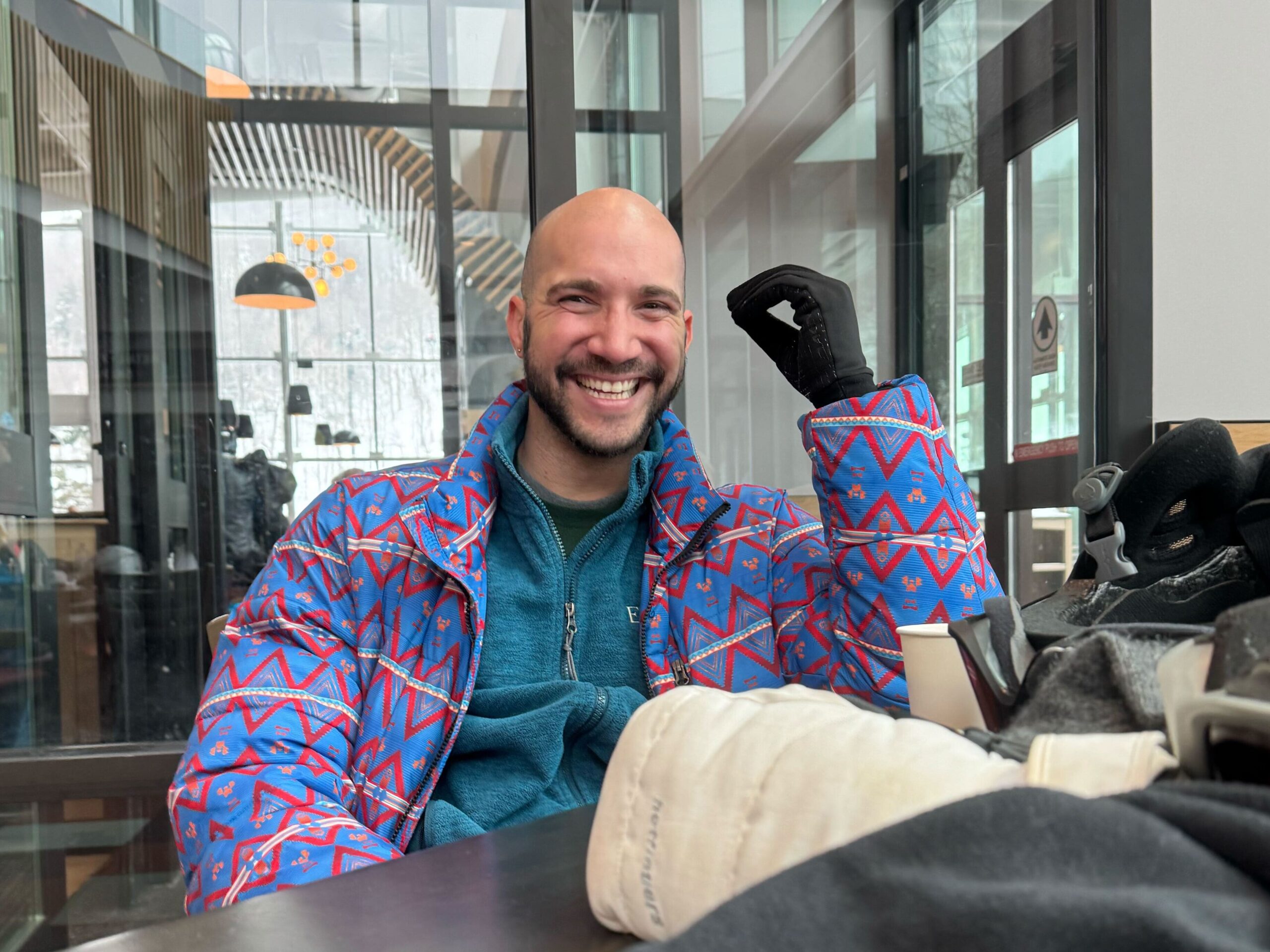
Padilla Vélez, she said, was intelligent and funny. To meet him was to feel like you’d known him for years.
He had a booming laugh that was often the loudest in the room.
“I thought it was mortifying at first, how loud it was,” she said. “Then I just began to love it.”
She recalled sitting with him on their couch one night and laughing so hard that their stomachs ached. She can’t remember what started the laughing fits, she said, but she remembers thinking: I am so lucky.
“I would see other couples and wonder if they laugh like Omar and I do,” she said.
“We had just made this decision to spend the rest of our lives together, forever,” she said. “It just feels so cruel that this was taken away.”
New Jersey Gov. Mikie Sherrill supports cementing the state’s sanctuary state policy into law — as it’s already written.
The Immigrant Trust Directive, commonly called a sanctuary policy, restricts state law enforcement from cooperating with U.S. Immigration and Customs Enforcement (ICE). Enshrining the policy into law would ensure future governors of either party could not unilaterally take it away. As of now, the directive could be undone with a flick of a pen.
Immigrant rights groups in New Jersey have pushedfor several years to make the policy permanent with a new law, a move they say is increasingly urgent amid President Donald Trump’s immigration crackdown in Minneapolis, which has reverberated across the country. But those activists want to expand protections, which could clash with Sherrill’s approach.
“Gov. Sherrill supports a bill to codify the directive,” her spokesperson Sean Higgins said. “What she does not support is anything that undermines the ability to defend our protections in court, which puts people at risk.”
Sherrill has said making changes to the directive while making it law could invite lawsuits andrisk the whole policy, which was enacted during Trump’s first presidency and has survived federal judges appointed by both Trump and former President George W. Bush.
“New Jersey’s directive has already withstood judicial review — and that additional action, if not precise, could undo important protections which we cannot risk under the Trump administration,” Sherrill said during her primary campaign.
Higgins said those concerns “have not changed.”
Immigrant rights groups nearlyreached the finish line late last year after the state legislature passed a bill that included some of the changes they wanted to make.
But former Gov. Phil Murphy rejected the bill in his final hours in office. Like Sherrill, he said the policy could be in jeopardy if it changed and could invite lawsuits.
Amol Sinha, the executive director of ACLU New Jersey, disagrees.
The bill Murphy vetoed — which Democraticlawmakers have already signaled they will reintroduce in the new session—would remove an exception for law enforcement to work with federal immigration authorities on final orders of removal and prohibit law enforcement from providing money to federal immigration authorities.
Sinha and others who support the bill say those changes would be on solid legal ground. Since the courts previously found federal law does not preempt the state’s immigration policy, and the state has the right to determine where its resources go, he said, he believes Murphy’s veto was overly cautious.
“We cannot be in a situation where we’re constantly afraid of lawsuits and therefore we don’t pass any laws,” Sinha said. “There is legal risk to every law that passes in New Jersey. You’re going to get sued, and if you don’t want to get sued, then you shouldn’t be in government.”
Sherrill’s stance on the matter has, at times, been ambiguous.
After a general election debate in late September, she said she was “going to focus on following the law and the Constitution” when pressed by reporters on whether she would keep the directive in place. In October, she said she supported aspects of the policy but also suggested she wanted to revisit it.
During the primary contest, her spokesperson said Trump “is changing the rules rapidly” and Sherrill would “address the circumstances as they exist,” but she had also signaled support for keeping the policy.
Since taking office last week, Sherrill has taken other steps to try to shield the state from ICE. She announced Thursday that her administration plans to launch a state database for New Jerseyans to upload videos of ICE operations in the state after two fatal shootings in Minnesota.
But the pressure to work with legislators on making the sanctuary directive law remains.
Assemblymember Balvir Singh, a Burlington County Democrat and cosponsor of the bill Murphy rejected, said part of the urgency is concern over Trump’s threats to withhold federal funding from Democratic-led states over policy disagreements.
Even though Sherrill has kept the policy in place, a directive carries less weight than a statute backed by two branches of government.
“Our executive can be put under a tremendous amount of pressure where they have to figure out how they’re going to fund our social services systems that rely on federal funding,” Singh said.
Just last week, Trump directed federal government agencies to review funding for several Democratic states, including New Jersey, almost all of which were on a list of sanctuary jurisdictions produced by his administration.
The one exception was Virginia, where new DemocraticGov. Abigail Spanberger rescinded a directive that instructed law enforcement to work with ICE. The previous week, Trump said he planned to cut off federal funding for states with sanctuary cities.
Singh, whose district includes communities with large immigrant populations, said preserving the seven-year-old policy through law is “the very minimum.”
‘I take Gov. Sherrill at her word’
Sherrill declined to comment on the specifics of the bill that reached Murphy’s desk, and the question will be whether lawmakers are able to enact changes to the current directive or if she will only sign a carbon copy of what already exists.
The sanctuary bill was one of three pieces of legislation aimed at protecting immigrants that Murphy weighed in his final days in office. He signed one about creating model policies for safe spaces in the state and vetoed another aimed at limiting data collected by government agencies and health centers, citing a “drafting oversight.”
As she waited anxiously for Murphy’s decisions on the bills earlier this month, Nedia Morsy, the executive director of immigrant advocacy group Make the Road New Jersey, said that New Jersey should not “make policy based on fear” and that immigrants in the state were experiencing a “collective feeling of suffocation.”
She criticized Murphy’s vetoes, saying legal experts had already vetted the bills.
Sherrill has repeatedly promised to fight Trump and recently said that ICE agents are “occupying cities, inciting violence, and violating the Constitution” and need to be held accountable “for their lawless actions.”
Her comments have given some activists hope that she will be willing to work with them.
And while a single bill cannot stop ICE from sweeping New Jersey communities, Sinha said, the state can “put up safeguards and guardrails” through policies like the ones Murphy rejected.
“I take Gov. Sherrill at her word that she wants to push back against authoritarianism,” he added, “and to me, that means doing whatever we can to protect immigrants in our state.”
The rollout of so-called virtual nurses in hospitals remains a mixed bag, University of Pennsylvania researchers have found in the largest survey to date on nursing care delivered remotely through a screen.
One hospital staffer said virtual nurses are a huge help getting patients checked in.
Another said they worry hospitals are trying to cut corners by keeping floors fully staffed by using virtual nurses.
And sometimes, patients think the virtual nurse is a television advertisement and try to press fast forward, researchers were told.
A new study out of University of Pennsylvania School of Nursing surveyed 880 registered nurses in 10 states, including Pennsylvania, about the virtual nursing programs that have sprung up at health systems across the country.
About half — 57% — of the nurses surveyed said virtual nurse programs did not reduce their workload, with some saying they felt virtual nurses created more work.
But similar numbers also said they thought virtual nurse programs improved the quality of care patients received.
Others said they didn’t think the technology had any impact — positive or negative — on quality of care, according to a study of results published online in December in JAMA Open Network.
“It can be beneficial or a headache,” one nurse interviewed by Penn researchers summed up.
Virtual nursing programs became more widespread during the COVID-19 pandemic, when health systems needed to limit physical interaction to protect patients and medical staff, and have continued to expand in Philadelphia and across the country. Administrators embracing technology and artificial intelligence say they can help streamline administrative responsibilities that can burden staff, provide extra patient oversight, and improve how quickly clinicians can respond to emergencies.
Local examples include Penn Medicine’s use of virtual nurses to monitor patients at risk of falling or pulling out tubes and wires. Jefferson Health assigns a virtual nurse to patients who doctors have decided need to be monitored around the clock.
And virtual nurses handle administrative work, like reviewing medications and giving discharge instructions at Virtua Health hospitals in New Jersey.
The new study from Penn is among the largest to date to evaluate how well the programs are meeting goals, and the mixed results should be a warning to hospital administrators to proceed cautiously, researchers say.
“Virtual nursing programs have been heralded as an innovative silver bullet to hospitals’ nurse staffing challenges, but our findings show that most bedside nurses are not experiencing major benefits,” said lead author K. Jane Muir, an assistant professor of nursing in the university’s Department of Family and Community Health.
Virtual nursing on the rise
Virtual nurses at Virtua Health appear on the television in a patient’s room.
Virtual nursing refers to patient-care responsibilities managed by a team of nurses stationed at a remote hub, where they monitor screens and electronic information feeds.
They are not intended to replace bedside care, but rather to serve as an extra set of eyes to monitor patients.
If a patient who is known to be unsteady on their feet moves as if to get up from bed, a virtual nurse could speak through a screen or sound system asking if they need something and call a nurse on the floor to help them. If the patient falls, a virtual nurse can quickly alert medical staff.
Virtua Health officially launched its program last year.
Virtual nurses make sure patients have the appropriate medications before going home, know their discharge instructions, and have a follow-up appointment scheduled. They work in partnership with the bedside nurse, who focuses on the physical tasks in caring for a patient, while the virtual nurse handles the majority of the discussion.
“It’s something that our patients are requesting and they’ve come to expect,” said Kristin Bloom, a nurse by training who serves as assistant vice president of clinical operations for Virtua’s Hospital at Home program.
Virtua also uses virtual nurses in its intensive care units to help monitor and identify early signs of deterioration. These nurses have access to bedside cameras and can view the patient’s heart rhythms, lab results, and vital signs.
Participants in the Penn survey, conducted in late 2023 and early 2024, did not include nurses working in New Jersey, where Virtua’s hospitals are based.
Virtual nursing challenges
Nurses surveyed by Penn’s researchers said they appreciated the extra set of eyes on patients, but not all were convinced that the virtual monitor was any more effective than bed alerts that can sound when they sense a patient leaving, according to the study.
Karen Lasater, an associate professor of nursing and co-author of the study, urged health systems to include in-hospital nurses when shaping their virtual care programs.
She said including bedside nurses in the conversation about what’s working and not working is “imperative.”
“It’s important that nurses have a seat at the table,” Lasater said.
Nurses surveyed also expressed concern that health systems were using virtual workers to avoid hiring more on-site staff.
Bedside nurses questioned why they were being asked to take on more responsibility because administrators said they couldn’t afford to hire more staff, yet still found funding to build virtual programs.
“They felt like investments in virtual nursing was a workaround,” Lasater said. “Why did they have money to invest in virtual nurses who couldn’t do all the work of the bedside nurses, but couldn’t invest in more bedside nurses?”
At Virtua, administrators have turned to veteran bedside nurses to staff their virtual nursing program.
“It’s an avenue to retain our experienced nursing staff,” Bloom said.
Philadelphia-area hospitals have seen some virtual nursing challenges. In 2024, for instance, Jefferson Abington Hospital was cited by the Pennsylvania Department of Health after inspectors said the power cords attached to the monitors for virtual nursing created a strangulation risk for behavioral health patients.
The hospital treated the incident as a learning experience, adjusting how the mobile monitors are used.
The technology can also be confusing for some patients, who may not grasp the concept of a virtual nurse or may get conflicting instructions from their virtual and bedside nurses, Lasater said.
Penn initially planned to use virtual nurses to help monitor behavioral health patients, who often require one-on-one monitoring around the clock.
But staff found that patients who were experiencing behavioral or mental health challenges were too often confused or unsettled by virtual nurses, and unable to follow their instructions, Bill Hanson, Penn’s chief medical information officer, told The Inquirer in 2024.
“We’re all learning as we go,” he said at the time.
An Inquirer analysis of the decisions and the data behind them shows the proposed closures would disproportionately affect Black students. And despite efforts to minimize the impact, schools in the most vulnerable sections of Philadelphia would also be disrupted.
The closures would mostly address buildings with hundreds of unused seats, though some largely empty buildings were spared. And eight of the closures would affect schools given the district’s worst building condition rating — though 30 more buildings in that category would stay open and receive upgrades of some kind.
Monique Braxton, district spokesperson, said the facilities plan was “designed to provide access to high-quality academic and extracurricular programs across every neighborhood regardless of zip code.”
Most affected students — 90% — would be reassigned to schools with similar or better academic outcomes, and all would be reassigned to schools with either similar or better academics or comparable or better building conditions. Receiving schools will get additional supports, Braxton said.
Overall, the proposal would shake up at least 75 schools, with 20 closing entirely, four leaving their current buildings to colocate within other schools’ buildings, and three moving to new buildings. It would create new schools and, in one case, result in a new building. Nearly50 other district schools would take in displaced students from the closing schools, with some adding grades and others modernizing to fit new programming needs.
Collectively, about 32,000 district students learn in the 75 affectedschools — more than a quarter of the district’s total enrollment — not counting children in pre-K programs.
And those are just the changes Watlington introduced this month. Other shifts, some of them major, district officials said, are expected to be announced by the time he presentsthe planto the school board next month. A final vote is planned for later this winter.
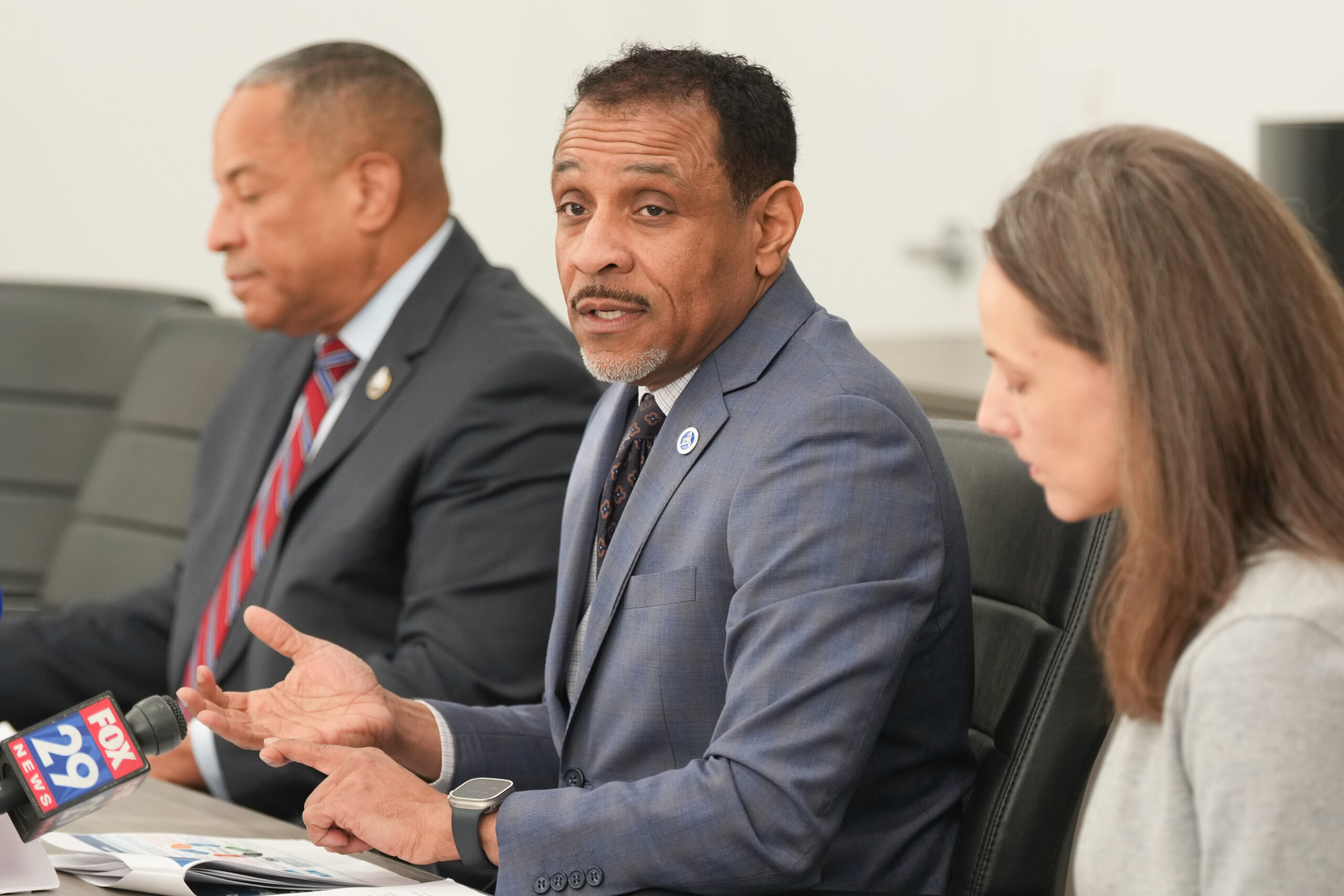
Superintendent Tony B. Watlington (center) speaks about his proposal this month for the Philadelphia school facilities master plan.
The racial impact
The 20 schools that could close have twice as many empty seats as the district’s other schools. But The Inquirer’s analysis found that the closures will hit Black students disproportionately.
Among the closing schools, about 68% of the student population is Black, compared with 40% for the rest of the district’s schools — not including disciplinary or other specialized schools.
window.addEventListener(“message”,function(a){if(void 0!==a.data[“datawrapper-height”]){var e=document.querySelectorAll(“iframe”);for(var t in a.data[“datawrapper-height”])for(var r,i=0;r=e[i];i++)if(r.contentWindow===a.source){var d=a.data[“datawrapper-height”][t]+”px”;r.style.height=d}}});
Of the district’s schools where at least 90% of the students are Black, more than half are scheduled to close or take in more students from the closures.
Overall, amajority of students in the 75 schools that could close, take in students, or change in some way are Black, at about 54% of enrollment.
Some majority-Black schools, however, are earmarked for upgrades. Bartram High would get a modern athletics facility after nearby Tilden Middle School in Southwest Philadelphia is closed and upgraded for that purpose.
Nysheera Roberts is the parent of multiple children who attend Waring Elementary, in Spring Garden, which landed on the closure list. Waring now educates under 200 students; its pupils would be sent to Bache-Martin.
Roberts is stunned that her school — which educates mostly Black students like her kids — could close.
She worries about the logistics of getting her kids to school safely further away, then getting to her job in home care in Frankford on time. She worries what will happen to her children, including the niece and nephew she now raises who have lived through significant trauma and have behavioral and learning needs, if they have to adjust to a new and larger school.
“It’s not fair,” Roberts said. “They’re hurting Black kids more.”
Paying attention to vulnerable neighborhoods
In deciding which schools to close or expand, the district considered the vulnerability of the surrounding neighborhood.
Two dozen neighborhood elementary schools were labeled “very high risk,” meaning they have likely dealt with a previous school closure, or the community is otherwise vulnerable to high poverty, housing concerns, or other factors.
(function() {
var l2 = function() {
new pym.Parent(‘school_closing1’,
‘https://media.inquirer.com/storage/inquirer/projects/innovation/arcgis_iframe/school_closing1.html’);
};
if (typeof(pym) === ‘undefined’) {
var h = document.getElementsByTagName(‘head’)[0],
s = document.createElement(‘script’);
s.type = ‘text/javascript’;
s.src = ‘https://pym.nprapps.org/pym.v1.min.js’;
s.onload = l2;
h.appendChild(s);
} else {
l2();
}
})();
Welsh, in North Philadelphia, was the only school building in a neighborhood labeled “very high risk” to land on the closing list.
Bethune in North Philadelphia and Martha Washington in West Philadelphia will colocate with other schools.
But three schools with building conditions considered unsatisfactory, poor programming options, and “very high risk” neighborhood ratings were left off the closure list. Those schools are Philadelphia Military Academy in North Philadelphia, Sheppard in West Kensington — which has successfully fought off closure in the past — and Francis Scott Key in South Philadelphia, the district’s oldest building, constructed in 1889. Sheppard and Francis Scott Key are both majority-Hispanic schools.
Sheppard Elementary School in West Kensington has faced the threat of closure in the past but was spared in the latest proposal.
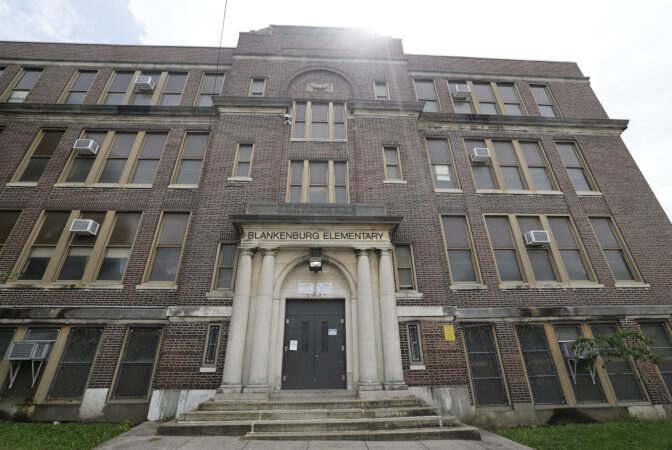
The district plan calls for closing five schools in neighborhoods it deemed to have a “high risk” of vulnerability, the level below “very high”: Blankenburg, Harding, Stetson, Tilden, and Wagner.
Watlington has made it clear that the district is phasing out middle schools when possible, in favor of the K-8 model — and of that list, four are middle schools. Only Blankenburg, in West Philadelphia, is an elementary. Also, of those schools in vulnerable neighborhoods, four of the five are rated as having “unsatisfactory” buildings, the district found.
Perhaps no section of the city faces as much disruption from the recommendations as the lower part of North Philadelphia.
Fourteen schools with a combined enrollment of 5,400 students could be affected, including the closures of Ludlow, Morris, Penn Treaty, and Waring.
“If you are closing schools during a literacy crisis, then you should be held directly accountable to the people you serve,” Young said last week.
Right sizing mostly empty buildings
Underused space was a factor in the district’s decision-making, an Inquirer analysis found.
Data released by the district last year identified about 60 schools that were more than half empty. The recommendations attempt to realign some of these schools by taking significant action on 31 of the 60 half-empty schools.
Of the 20 schools the district wants to close, 14 are currently at less than half capacity.
window.addEventListener(“message”,function(a){if(void 0!==a.data[“datawrapper-height”]){var e=document.querySelectorAll(“iframe”);for(var t in a.data[“datawrapper-height”])for(var r,i=0;r=e[i];i++)if(r.contentWindow===a.source){var d=a.data[“datawrapper-height”][t]+”px”;r.style.height=d}}});
AMY Northwest, Conwell, Robert Morris, Motivation, Tilden, and Welsh are all recommended for closure, with each educating fewer than a quarter of the students they have room for.
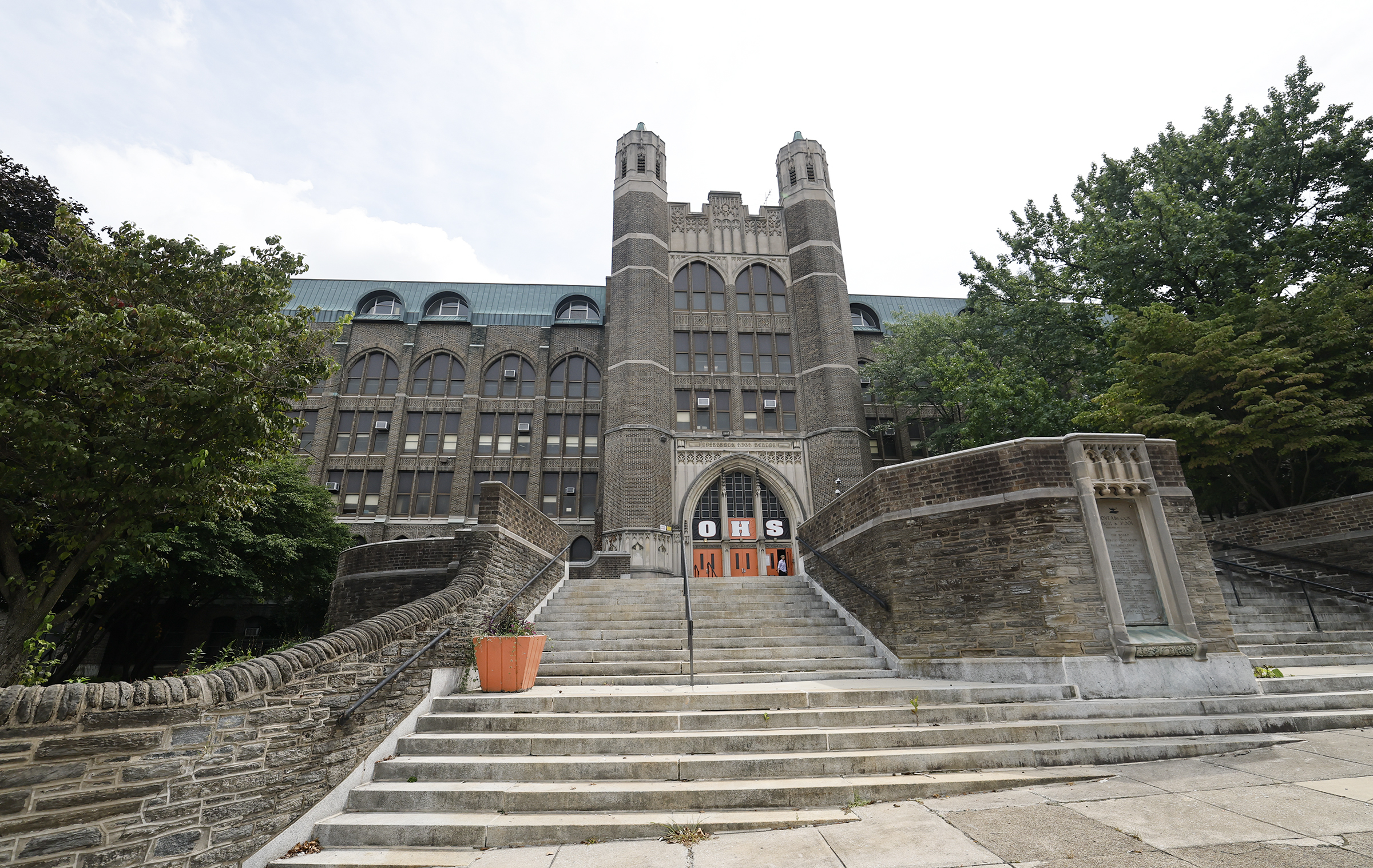
Overbrook High in West Philadelphia — a 100-year-old school with roughly one in four seats filled — would remain open but begin sharing space with the Workshop School, a small, project-based high school located nearby.
Overbrook has received millions in funding from the state for remediation and a new roof. It also has a strong alumni association.
Overbrook High School in West Philadelphia has thousands of empty seats but was not tapped for closure. Instead, The Workshop School, a small, project-based high school now located in another West Philadelphia building, will colocate with Overbrook.
Having a more robust enrollment, however, did not save some schools from landing on the closure list. Harding, Parkway Northwest, Pennypacker, Robeson, and Stetson operate at 50% to 74% of capacity but would still close.
Besides shutting down underused schools, the plan would alter an additional 17 half-empty schools by moving them into colocations, adding grades, or otherwise expanding their use by taking in students from the closing schools.
To make it work, the district’s recommendations often involve a series of logistical steps. A pair of North Philadelphia neighborhood schools built in the 1960s are one example.
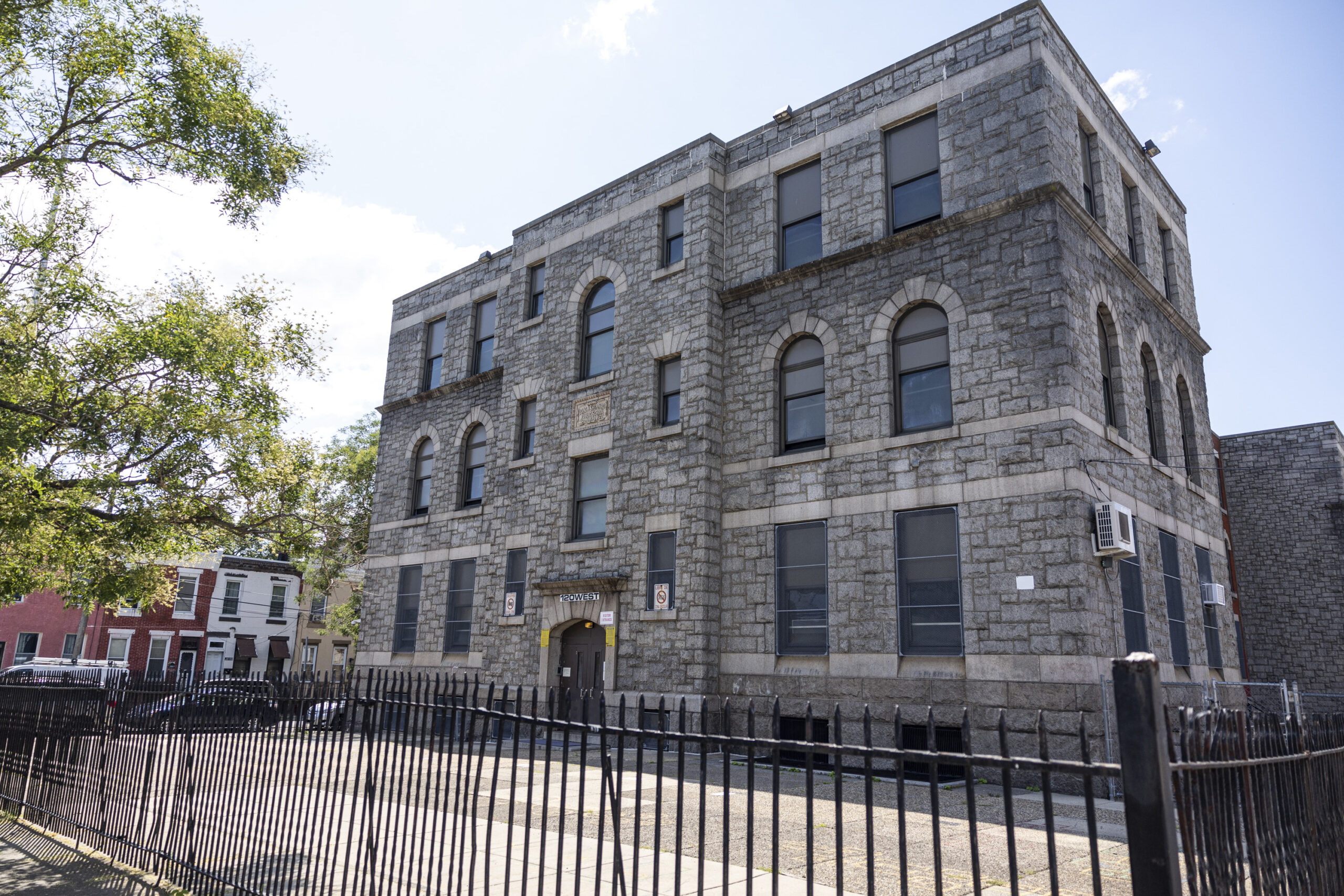
Hartranft, a K-8 school in North Philadelphia with a building rated in “good” condition but only 37% occupied, would take in students from Welsh, a school marked for closure. Welsh teaches the same grades but in a building rated “poor” about a half a mile away. The district would then convert the Welsh building into a new year-round high school.
John Welsh Elementary school is on the list of 20 schools proposed to close by the 2027-28 school year.
Getting students out of (some) fatigued buildings
By one city estimate, district schools need about $8 billion in repair costs for 300-plus buildings that are about 75 years old on average. Watlington’s plan calculates the district could do it for $2.8 billion.
Even with some investments over the last decade, many schools still have asbestos, lead, or mold issues. And many schools that don’t have bad building quality ratings still need improvements.
Eight schools recommended for closure are in buildings rated “unsatisfactory” by the district, its lowest score.
An additional 30 schools also rated “unsatisfactory” would remain open under the plan, including some expected to see an increase of students.
window.addEventListener(“message”,function(a){if(void 0!==a.data[“datawrapper-height”]){var e=document.querySelectorAll(“iframe”);for(var t in a.data[“datawrapper-height”])for(var r,i=0;r=e[i];i++)if(r.contentWindow===a.source){var d=a.data[“datawrapper-height”][t]+”px”;r.style.height=d}}});
Watlington wants the district to pay for $1 billion of the plan’s price tag with its own capital funds over the next decade. That would leave $1.8 billion unfunded, and he wants the state and philanthropic funders to cover the rest.
If the full $2.8 billion plan is funded, Watlington said, the district could improve every building labeled “poor” or “unsatisfactory.”
To achieve this, some buildings could get the same kind of treatment Frankford High received — a $30 million major renovation project to remedy significant asbestos damage. Students had to relocate into an annex and another building for two years while the work was done.
The district plan calls for some of the buildings in the worst shape to receive more students. Bache-Martin, Catharine, Howe, John Marshall, and Middle Years Alternative are in buildings that need significant upgrades, according to the district’s analysis, but all would take on more pupils.
In the case of Howe, the district wants to add grades to keep students who would have attended Wagner, a middle school that is proposed to close.
The district has said Bache-Martin would receive upgrades if the plan is adopted. For other schools, neither the timeline nor the fixes they would receive are clear.
The recommendations so far only mention a handful of schools set to modernize.
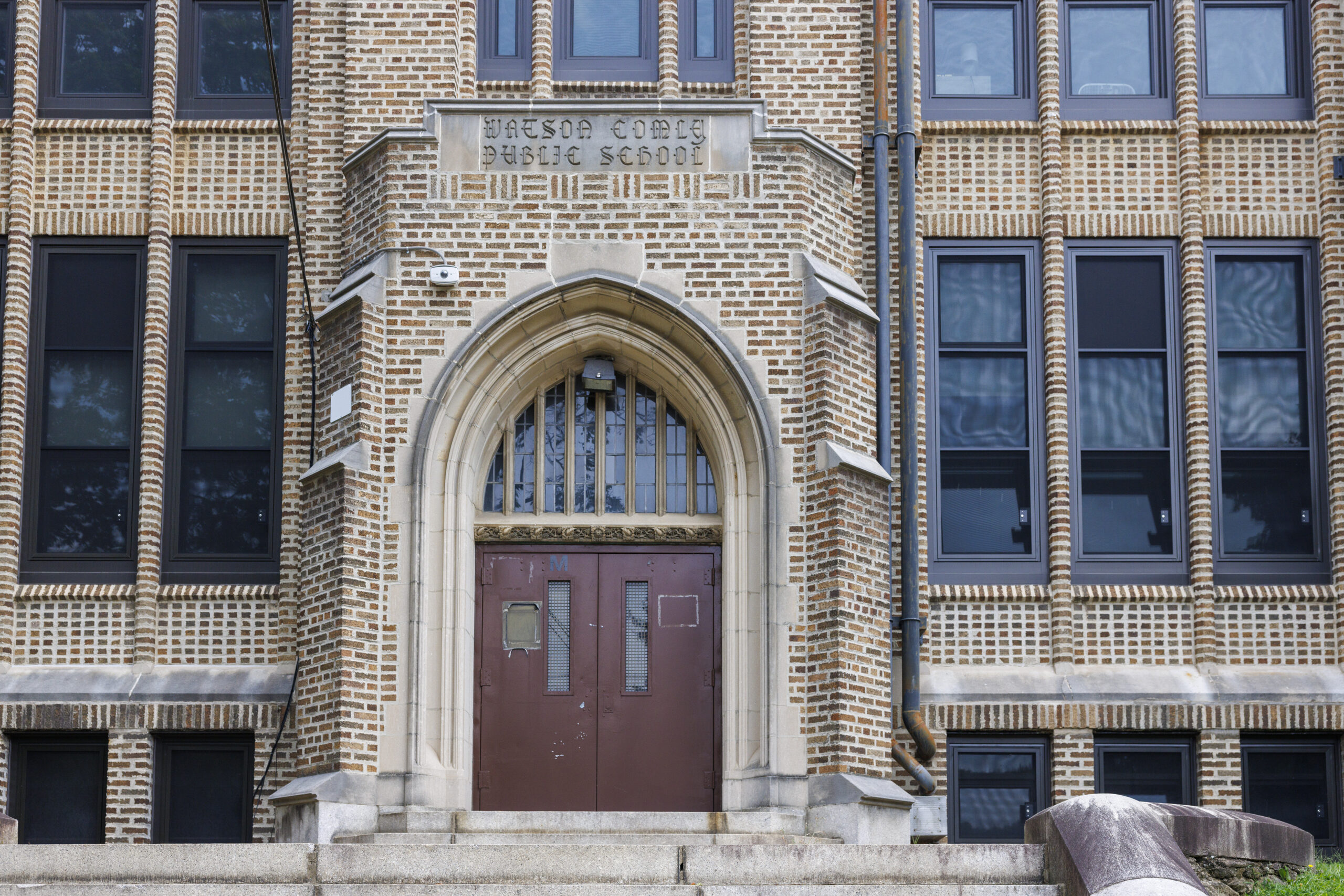
Among them is Comly, a K-5 in the Somerton neighborhood.
Comly now has 660 students enrolled, putting it at 107% of its capacity. But the district recommends modernizing the school and accepting middle grades students from the Comly and Loesche catchments. Students who now attend Loesche, another K-5, go to Baldi Middle School, which is also overcrowded.
Watson T. Comly Elementary School in Somerton. It’s slated to be modernized and accept more grade levels under the district’s proposed plan.
What appears to set schools like Bache-Martin apart from some of the closures is higher occupancy. Together, about two dozen schools that are more than half occupied would remain open, even though the buildings are “unsatisfactory.”
Schools on this list — like Barton Elementary, which runs at about 80% of its capacity — are harder to shutter or colocate if no nearby school has low attendance. That makes building upgrades a more logical solution.
But those two dozen schools are not the only ones in need of significant building upgrades.
An additional 45 schools currently operate in buildings rated slightly better at “poor,” the category just above “unsatisfactory.” The district recommends closing seven of them and colocating two.
And beyond that large number of fatigued schools, many others in poorly rated buildings will remain unchanged for now, with about 10 even taking in more students.
Watlington has said that in total, 159 schools would modernize over a decade if the plan is approved and fully funded, but absent extra state and private money, that number could drop.
On Jan. 8, Andre Golsorkhi, founder and CEO of design firm Haldon House, presented plans for a revitalized town center, complete with historic architecture, green spaces, and businesses that “fit the character” of the area. Golsorkhi told a packed school auditorium that Haldon House plans to bring in boutique shops, open an upscale-yet-approachable restaurant, and create spaces for communal gathering.
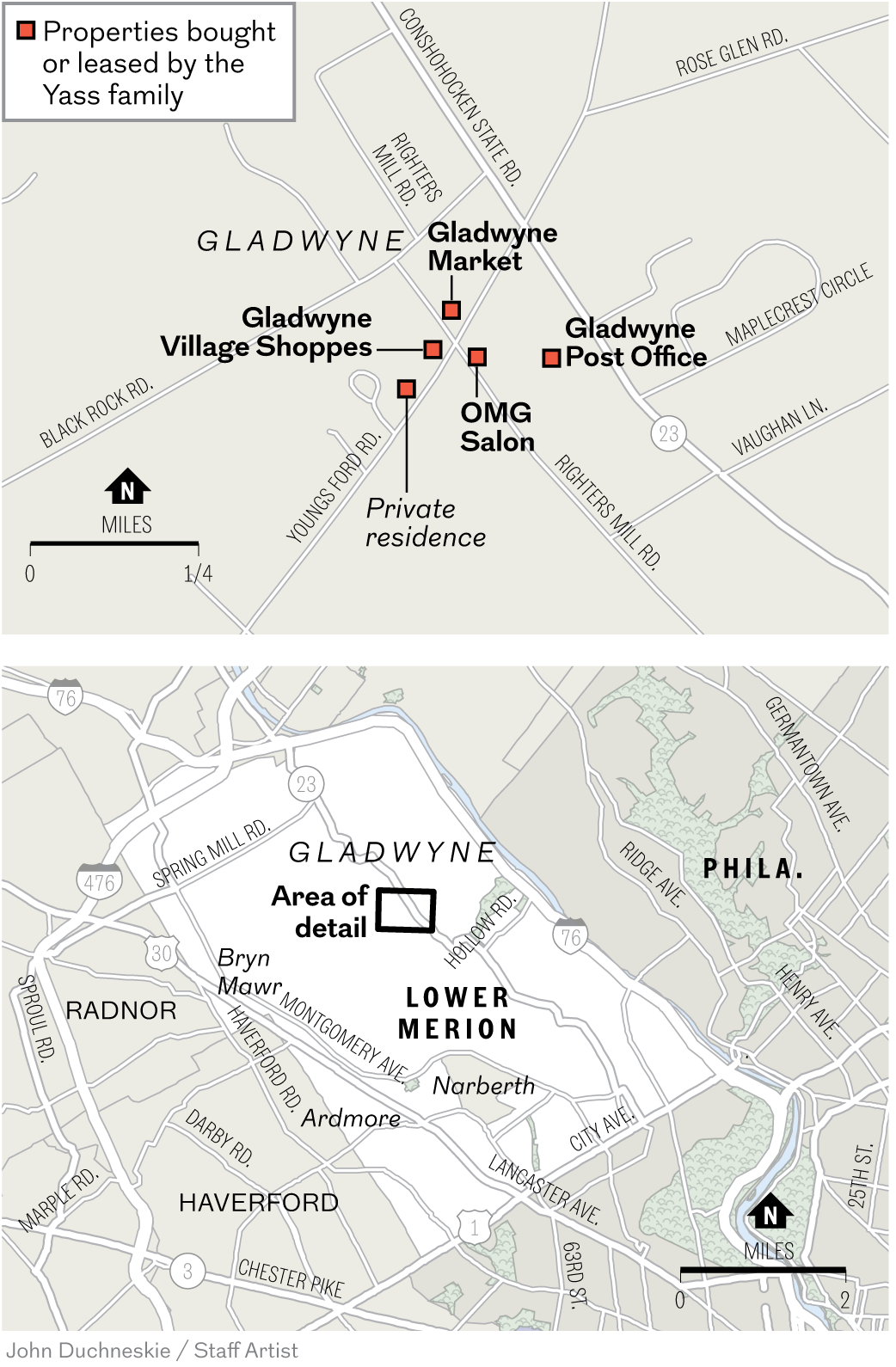
At the meeting, Golsorkhi also revealed that the project was backed by Jeff Yass, Pennsylvania’s richest man, and his wife, Janine. Golsorkhi said the Yasses want to revitalize Gladwyne as part of a local “community impact project.” Haldon House and the Yasses, who live near Gladwyne, have spent over $15 million acquiring multiple properties at the intersection of Youngs Ford and Righters Mill Roads.
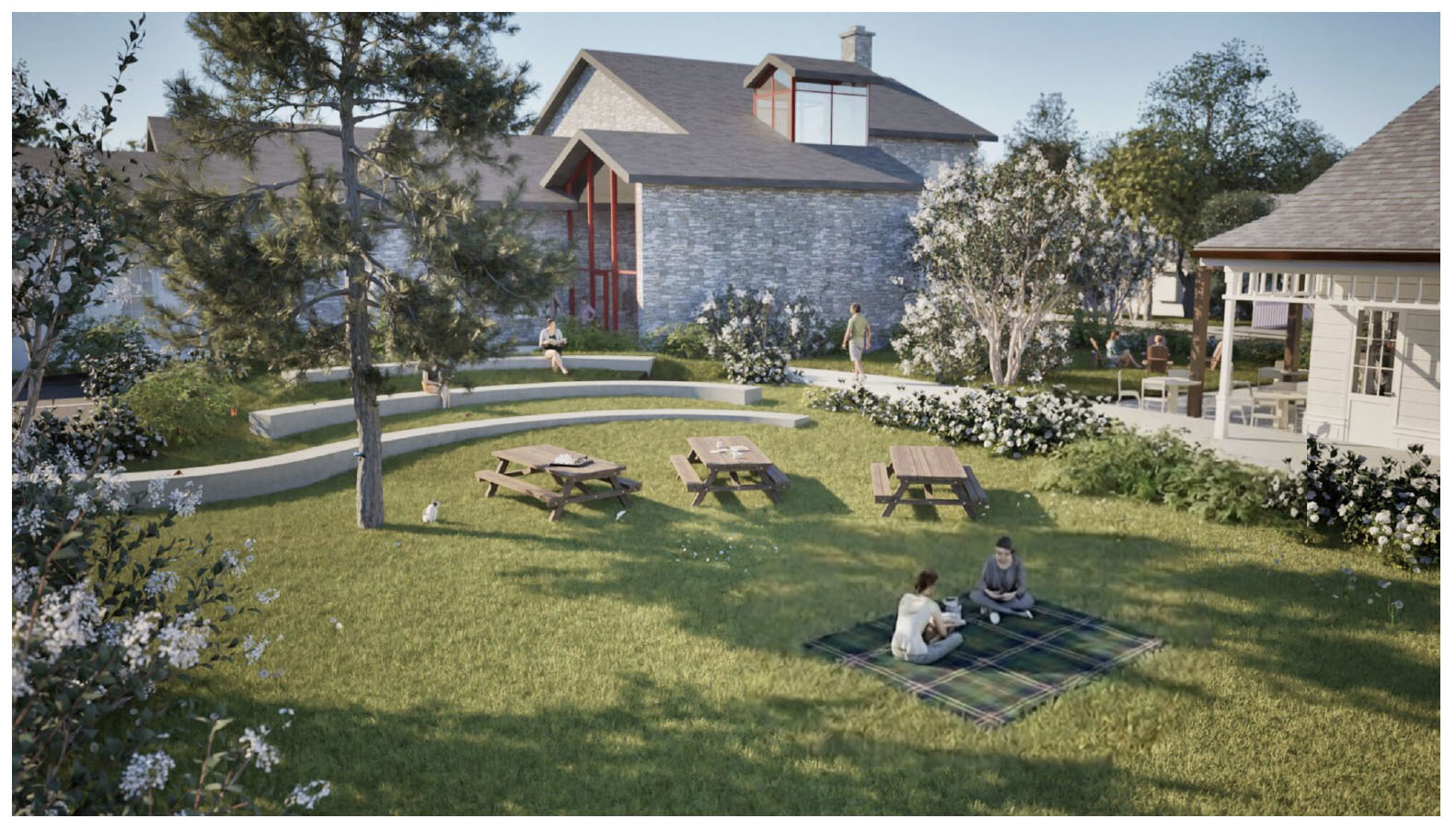
Renderings of a proposed revitalization project in Gladwyne, Pa. Design firm Haldon House is working with billionaire Jeff Yass to redevelop the Main Line village while preserving its historic architecture, developers told Gladwyne residents at a Jan. 8 meeting.
What is, and isn’t, allowable?
For some residents, one question has lingered: Is one family allowed to redevelop an entire village?
A petition calling on Lower Merion Township to hold a public hearing and pass protections preventing private owners from consolidating control of town centers had gathered nearly four dozen signatures as of Friday.
Around 4,100 people live in the 19035 zip code, which encompasses much of Gladwyne, according to data from the 2020 U.S. Census.
“Residents deserve a say before their town is transformed.No one family, no matter how wealthy, should unilaterally control the civic and commercial core of a historic Pennsylvania community,” the petition reads.
Yet much of Haldon House’s plan is allowable under township zoning code, said Chris Leswing, Lower Merion’s director for building and planning.
Plans to refurbish buildings, clean up landscaping, and bring in new businesses are generally permitted by right, meaning the developers will not need approval from the township to move forward. Gladwyne’s downtown is zoned as “neighborhood center,” a zoning designation put on the books in 2023 that allows for small-scale commercial buildings and local retail and services. The zoning code, which is currently in use in Gladwyne and Penn Wynne, ensures commercial buildings can be no taller than two stories.
The developers’ plans to open a new restaurant in the former Gladwyne Market and renovate buildings with a late-1800s aesthetic, including wraparound porches and greenery, are generally within the bounds of what is allowed, once they obtain a building permit.
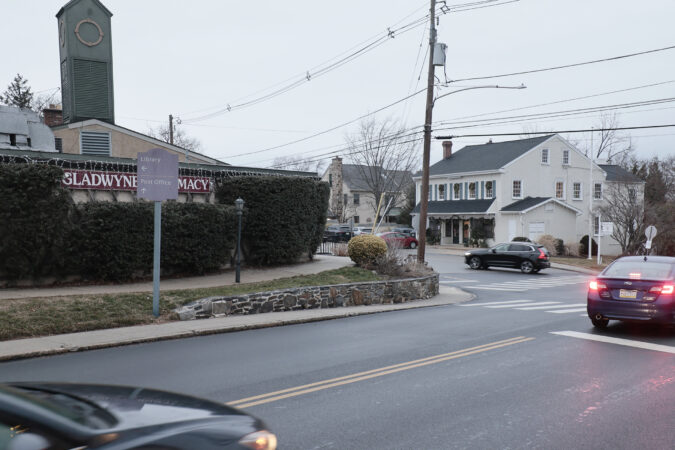
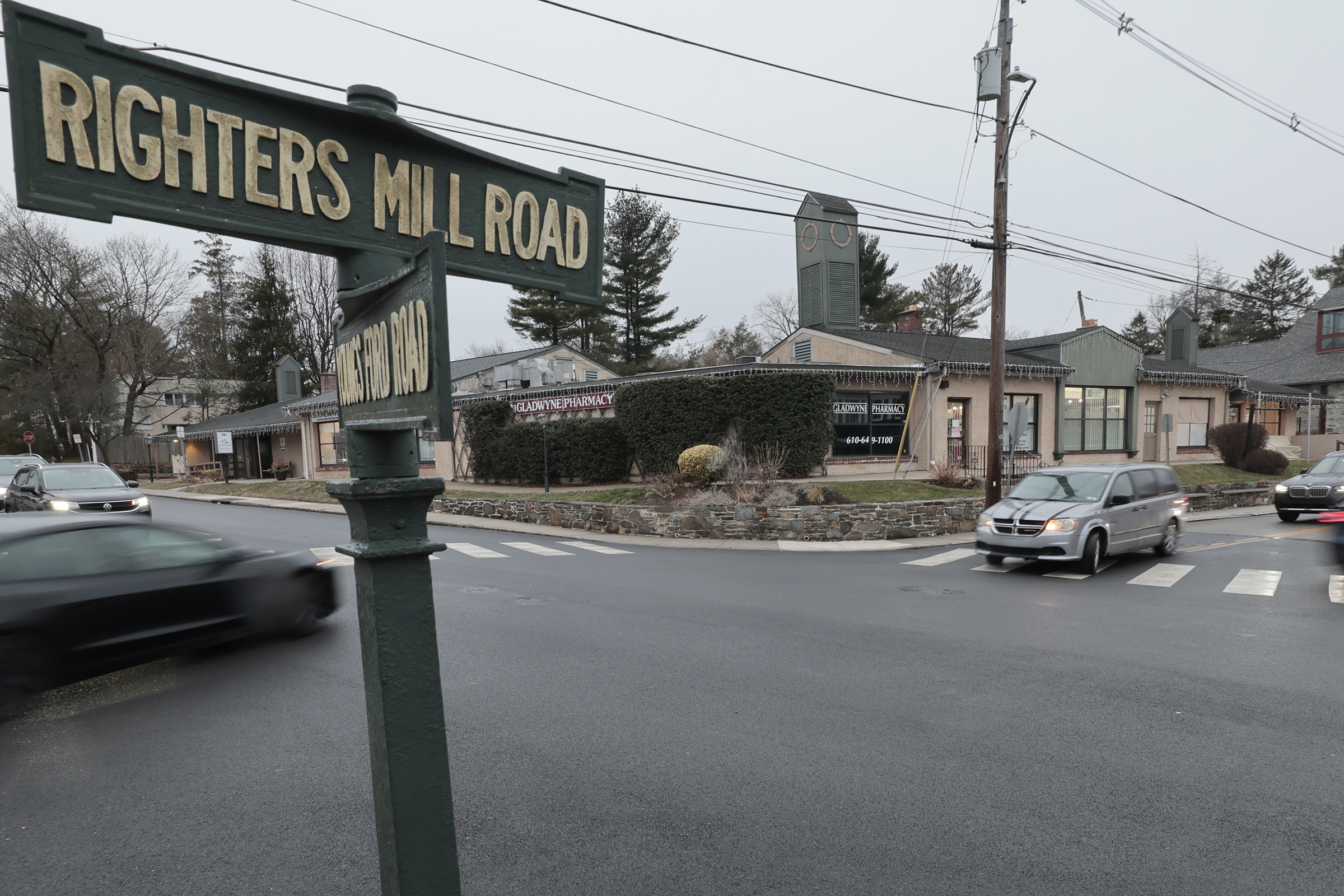
The Village Shoppes, including the Gladwyne Pharmacy, at the intersection of Youngs Ford and Righters Mill Roads in Gladwyne on Friday, Jan. 9, 2026.
More ambitious plans, however, like converting a residential home into a parking lot or burying the power lines that hang over the village, would require extra levels of approval, Leswing said.
The developers hope to convert a residential property on the 900 block of Youngs Ford Road into a parking lot. Lower Merion generally encourages parking lots to be tucked behind buildings and does not allow street-facing parking, a measure designed to avoid a strip mall feel, Leswing said. In order to turn the lot into parking, the developers would need an amendment to the zoning code, which would have to be approved by the board of commissioners.
Various approvals would also be needed to put Gladwyne’s power lines underground, an ambitious goal set by the Haldon House and Yass team.
Leswing clarified that no official plans have been submitted, making it hard to say how long the process will take. It will be a matter of months, at least, before the ball really gets rolling.
Leswing added the developers have been “so good about being locked into the community” and open to constructive feedback.
Golsorkhi said it will be some time before his team can provide a meaningful update on the development, but expressed gratitude to the hundreds of residents who have reached out with questions, support, and concerns.
Map of properties in Gladwyne bought or leased by the Yass family.
From ‘110% in favor’ to ‘a tough pill to swallow’
Fred Abrams, 65, a real estate developer who has lived in Gladwyne for seven years, said he and his wife are “110% in favor” of the redevelopment, calling it an “absolute no-brainer.”
Many Gladwyne residents live in single-family homes that keep them in their own, sometimes isolating, worlds, his wife, Kassie Monaghan Abrams, 57, said.
“Here’s an opportunity for being outside and meeting your neighbors and, to me, getting back to spending time with people,” she said of the proposal to create communal gathering areas.
“I think it’s a very thoughtful, beautiful design,” Monaghan Abrams added.
Some social media commenters called the proposal “charming” and “a fantastic revitalization.”
Others were more skeptical.
Ryan Werner, 40, moved to Gladwyne in 2012 with his wife, who grew up in the town.
“One of the things I’ve kind of fallen in love with about Gladwyne is the sense of community,” said Werner, who has a background in e-commerce sales and is transitioning to work in the mental health space.
“I’m less opposed to just the commercial side of it and more grossed out by the involvement of certain people in it,” Werner said.
Gladwyne is a Democratic-leaning community that voted overwhelmingly for former Vice President Kamala Harris in the 2024 election.
On social media, some griped about the changes.
“The Village will be just like Ardmore and Bryn Mawr. Can’t undo it once they build it,” one commenter wrote in a Gladwyne Facebook group.
Golsorkhi said in an email that the “enthusiasm, excitement and support” from the community have been “overwhelming.”
This suburban content is produced with support from the Leslie Miller and Richard Worley Foundation and The Lenfest Institute for Journalism. Editorial content is created independently of the project donors. Gifts to support The Inquirer’s high-impact journalism can be made at inquirer.com/donate. A list of Lenfest Institute donors can be found at lenfestinstitute.org/supporters.
Michael Chain Jr.oncehad to exit the Pennsylvania Turnpike at Downingtown and drive a zigzag pattern on State Routes 100, 113, 401, and 29 to reach his hotel.
So did his customers.
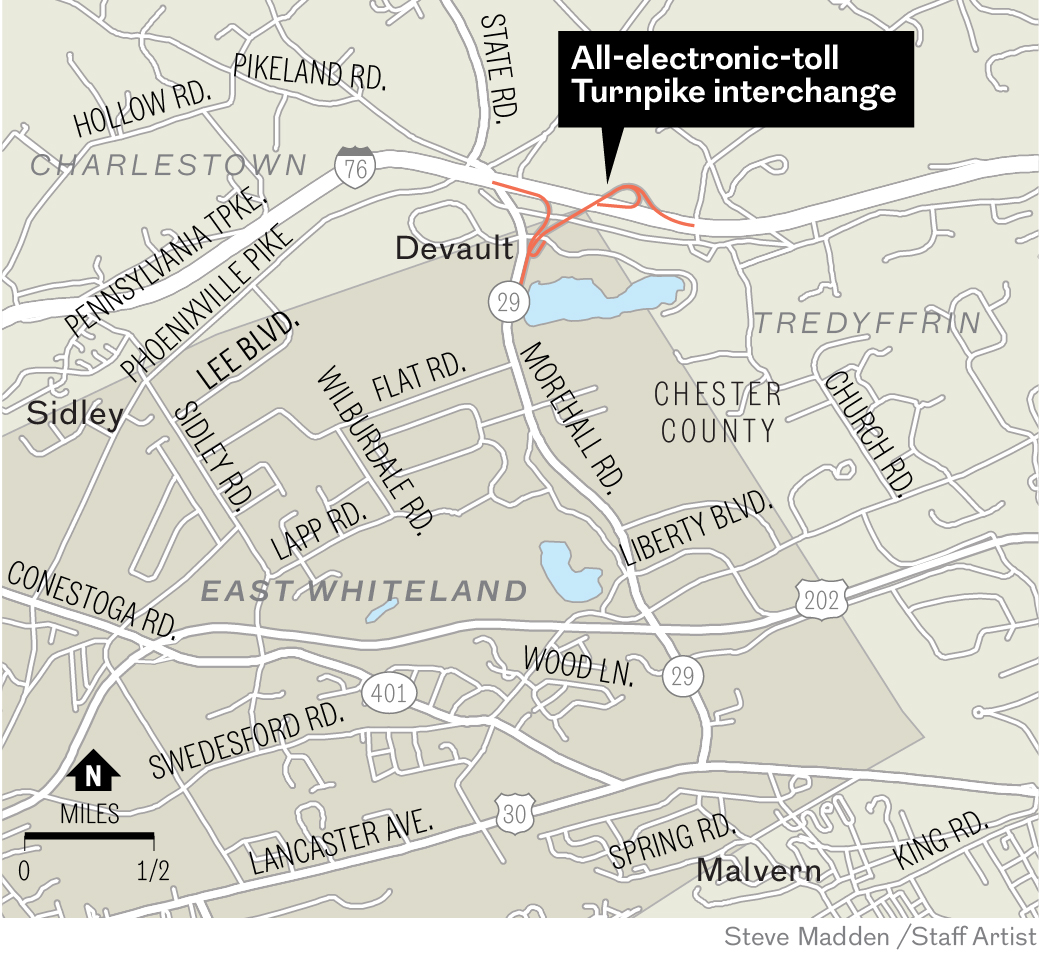
But thenthe turnpike built Exit 320, an all E-ZPass interchange thatconnects to Route 29 and brings traffic right to the family-owned Hotel Desmond Malvern, a DoubleTree by Hilton.
“It would easily take 20 minutes,” said Chain, general manager of the property. “Now you cut that in half, if not more.”
When it opened in December 2012, the interchange helped spur billions in new commercial and residential development in Chester County’s Great Valley.
Michael Chain, general manager at a hotel in Great Valley, says the Route 29 ramp has transformed his business.
Corporate office parks expanded and new ones sprouted. Vanguard relentlessly expanded its campus for its 12,000 workers. Pharmaceutical and biotech companies moved there. Pfizer, Johnson & Johnson, Teva, and other pharmaceutical companies planted offices and research laboratories there.
Thousands of people moved in to take advantage of the new jobs or a suddenly more convenient commute to Philadelphia and its inner-ring suburbs, Berks County, Lancaster, or even Harrisburg.
More than 10 years later, the effects of the turnpike’s project are evident, but the real estate market is evolving to meet a lower post-pandemic demand for traditional office space and a higher demand for more housing.
Through American history, transportation and development have been yoked. Towns and cities have grown around navigable rivers, post roads, national highways, railroads, interstates, turnpikes, and public transit.
“This new interchange was explosive in terms of the economic impact in that particular region in a way I’m not even sure we had anticipated,” said Craig R. Shuey, chief operating officer of the Pennsylvania Turnpike.
The key to success
Experts caution it would be a mistake to attribute too much of the growth in the Great Valley solely to the turnpike exit.
The area’s transition from agricultural and industrial to commercial mixed-use was already well underway when it opened. Real estate developersRouse & Associates acquired land in 1974 and began building the Great Valley Corporate Center, a 700-acre business park.
As the Pennsylvania 29 interchange was under construction, the U.S. 202 widening project occurred, helping ease the flow of traffic, although it stillgets congested at peak hours.
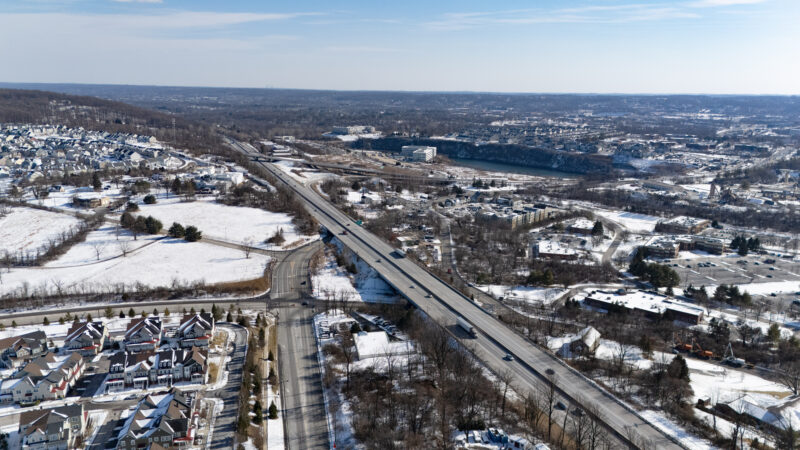
The Route 29 electronic toll interchange.
The exit “plays well with an improved Route 202,” said Tim Phelps, executive director of the Transportation Management Association of Chester County.
It’s also served by SEPTA Regional Rail Service and Amtrak, and there’s a connection to the 18.6-mile Chester Valley trail for biking, running, and walking.
“The key isall the multimodal access to the area from different points,” Phelps said. “You move goods and freight along corridors and people to jobs; transportation is economic development.”
New rise in residences
Growth hasn’t been linear.
”Since COVID the office market has been struggling everywhere, and a couple of years ago the funding for biotech became harder to get,“ said John McGee, a commercial real estate broker and developer. ”Both of these events had a negative impact on demand for [office] space in Great Valley.”
Other signs of a softer market in commercial space:
Malvern Green, a 111-acre office park owned by Oracle, is up for sale, marketed as a redevelopment opportunity. It has 759,000 square feet in four buildings on Valley Stream Parkway, off Route 29.
A 10.3-acre office property on Swedesford Road is slated to be demolished and turned into a mixed-use campus, with 250 apartments and about 6,700 square feet of retail and dining.
With the pandemic rewriting the rules of work beginning five years ago, residential development has picked up, driven by housing scarcity and lack of affordability.
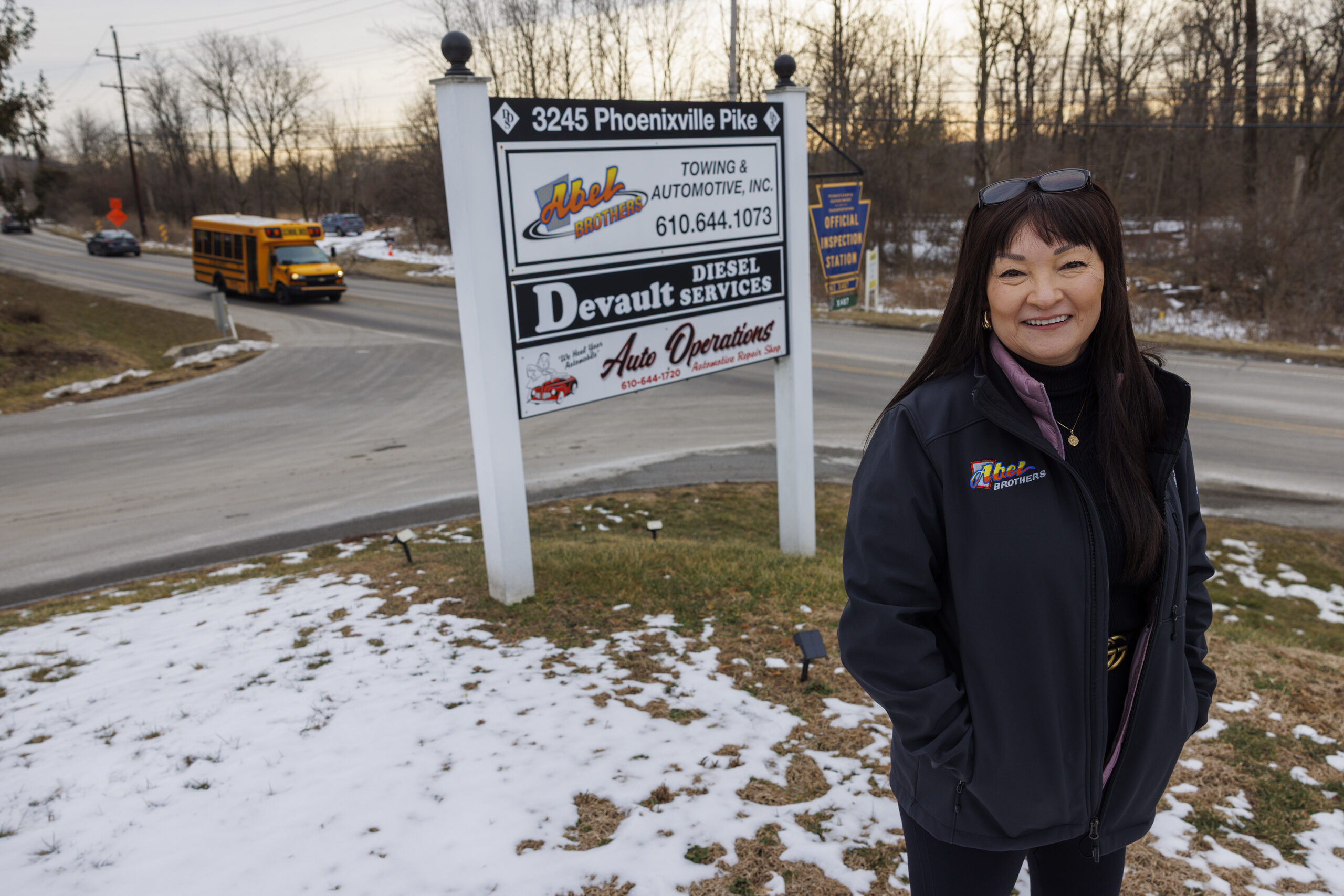
Deb Abel, president of Abel Brothers Towing & Automotive, has seen the area evolve from her position as chair of the East Whiteland Planning Commission and as a member of the Chamber of Business & Industry.
Deb Abel, chair of the East Whitefield Planning Commission, says workforce development is key to the area’s growth.
“We talk all the time about workforce development,” Abel said. “People don’t want to come to work where they can’t afford to live.”
More — and more affordable — housing is key both for current and future staffing needs. Workers shouldn’t have to commute from other areas with more housing options, Abel said.
‘A tangible asset’
To Chain, the hotelier, travel time saved by the interchange is a tangible asset.
“It improves the quality of life on a personal level, and [in business] I’m a beneficiary of people staying on the turnpike,” he said.
As corporate travel budgets waxed and waned in the Great Recession and pandemic years, the Hotel Desmond beefed up other lines of business. An events space at the resort-like hotel now provides about half the revenues, Chain said.
The interchange has helped him draw conference business from statewide associations, most of them in Harrisburg.
And in recent years, youth sports travel teams from New York and New Jersey attending weekend tournaments in the region have filled rooms while using the interchange for easy access. Hockey teams are big.
‘A natural progression’
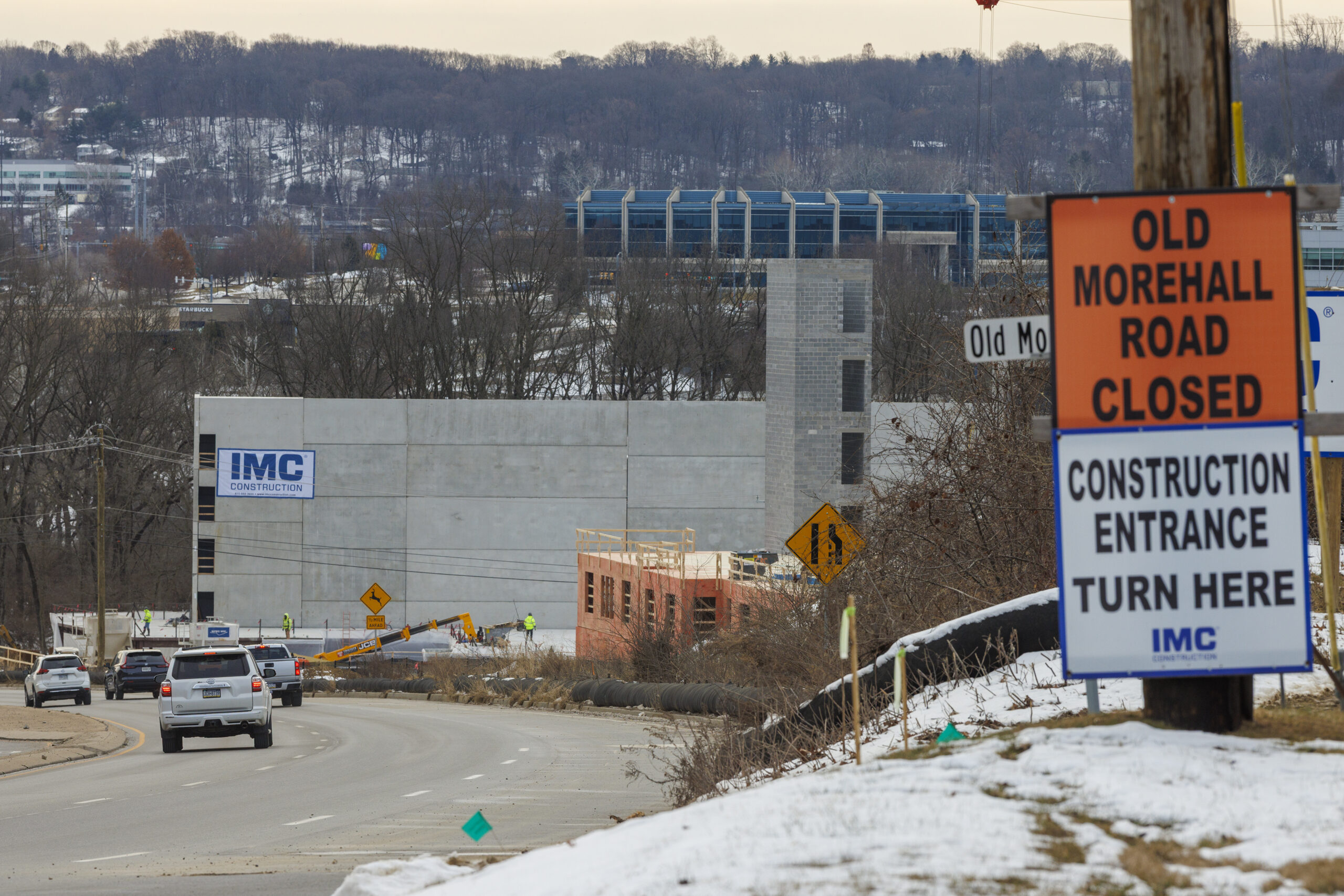
A new multifamily project for Greystar Real Estate Partners is rising next to Route 29 on undeveloped land.
IMC Construction is building a five-story, 267-unit apartment building featuring a rooftop lounge, fitness center, coworking space, pool courtyard, grilling stations, and more.
IMC Construction signs and traffic markers along North Morehall Road in Malvern.
A 133-unit “active adult” apartment building for people who are 55 and older is also under construction.
Project manager Bob Liberato grew up in the area when Route 29 was a country road with one traffic light between Phoenixville and Route 30.
It seems ironic now, but he remembers a petition circulating among fellow students at Great Valley High School to oppose the turnpike’s interchange proposal. Pretty much everybody signed.
“We wanted to stop the turnpike because we liked our life,” Liberato said. “It was open, mostly fields and trees. Being able to go outside, have parties in the woods — all of that was great.”
So what he’s doing now is, in a way, part of the circle of life.
“We’re seeing a shift toward more residential projects, and there is a runway for more in the Great Valley,” said Liberato. With a scarcity of new development, ”it’s a natural progression in a lot of Philly suburbs.”
Temple University on Wednesday released its plans for the school’s future, including a new 1,000-bed residence hall, STEM complex, quad with green space, and more attractive and defined entrances to its North Philadelphia main campus.
That’s just part of the 10-year strategic plan, which will take the more than 33,000-student university through its 150th anniversary in 2034 and includes supports for students and learning, a campus development plan, and a new vision for Broad Street both near and beyond its campus.
It emphasizes the student academic experience, with plans to elevate its honors program to an honors college, implement systems to identify and help students who are at risk of failing early on, increase online offerings to accommodate non-traditional students, and require career development and experiential learning for all students.
And the 20-year campus development plan, which is part of the strategic plan, also reiterates President John Fry’s desire to create an “innovation corridor” stretching from the recently acquired Terra Hall at Broad and Walnut Streets in Center City to Temple’s health campus, a little more than a mile north of main campus on Broad Street.
Temple is in the quiet phase of a $1.5 billion capital campaign — itslargest to date — to raise money for faculty support and student financial aid, but also for initiatives outlined in the plan.
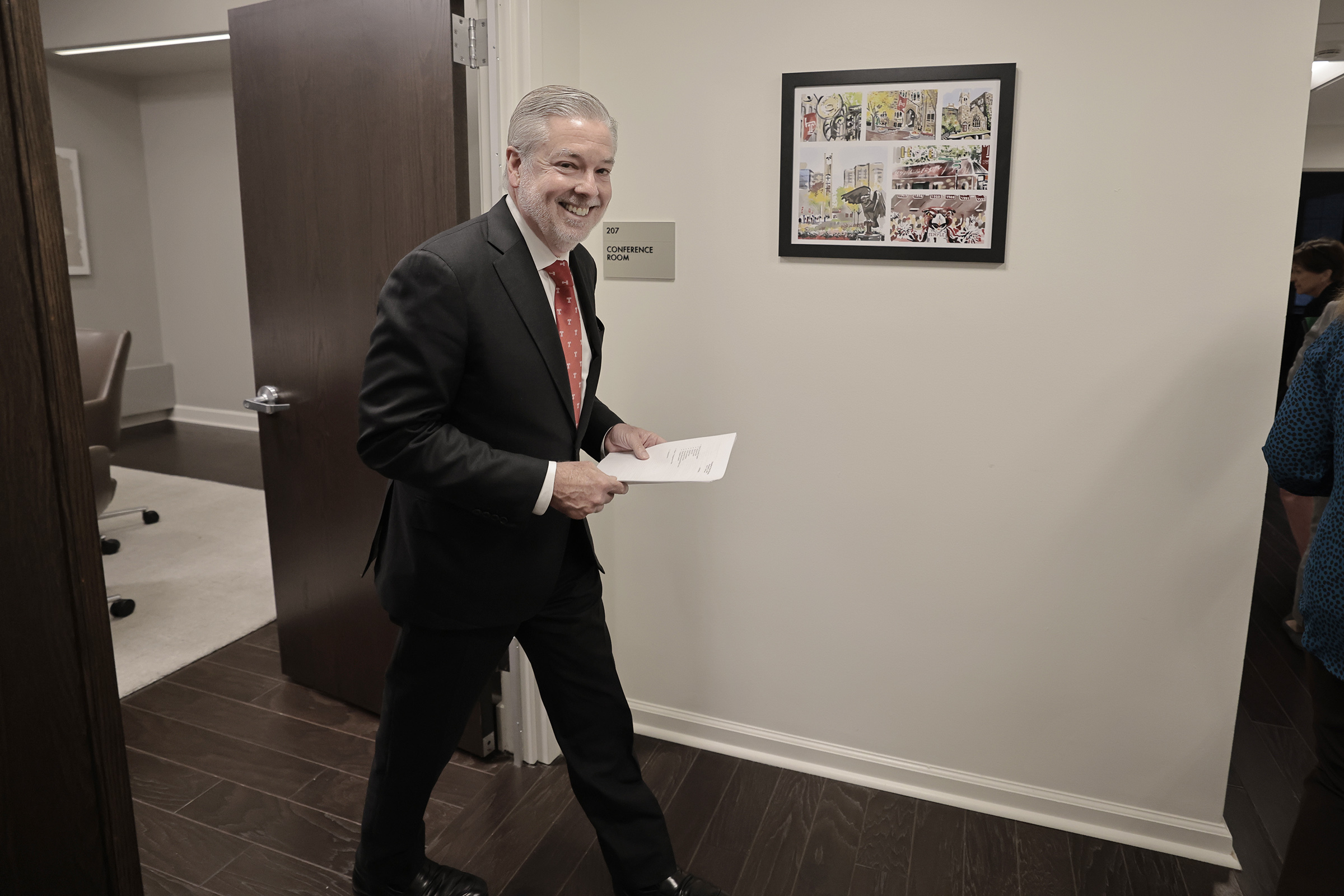
“What we’re trying to do is build on the momentum we think we have right now as already one of the most consequential urban research universities that wants to go to the next level,” said Temple President John Fry.
“What we’re trying to do is build on the momentum we think we have right now as already one of the most consequential urban research universities that wants to go to the next level,” Fry said in an interview before trustees approved the plan Wednesday. “This is a very ambitious plan that I think honestly will be a very big lift for us. But I think it’s achievable.”
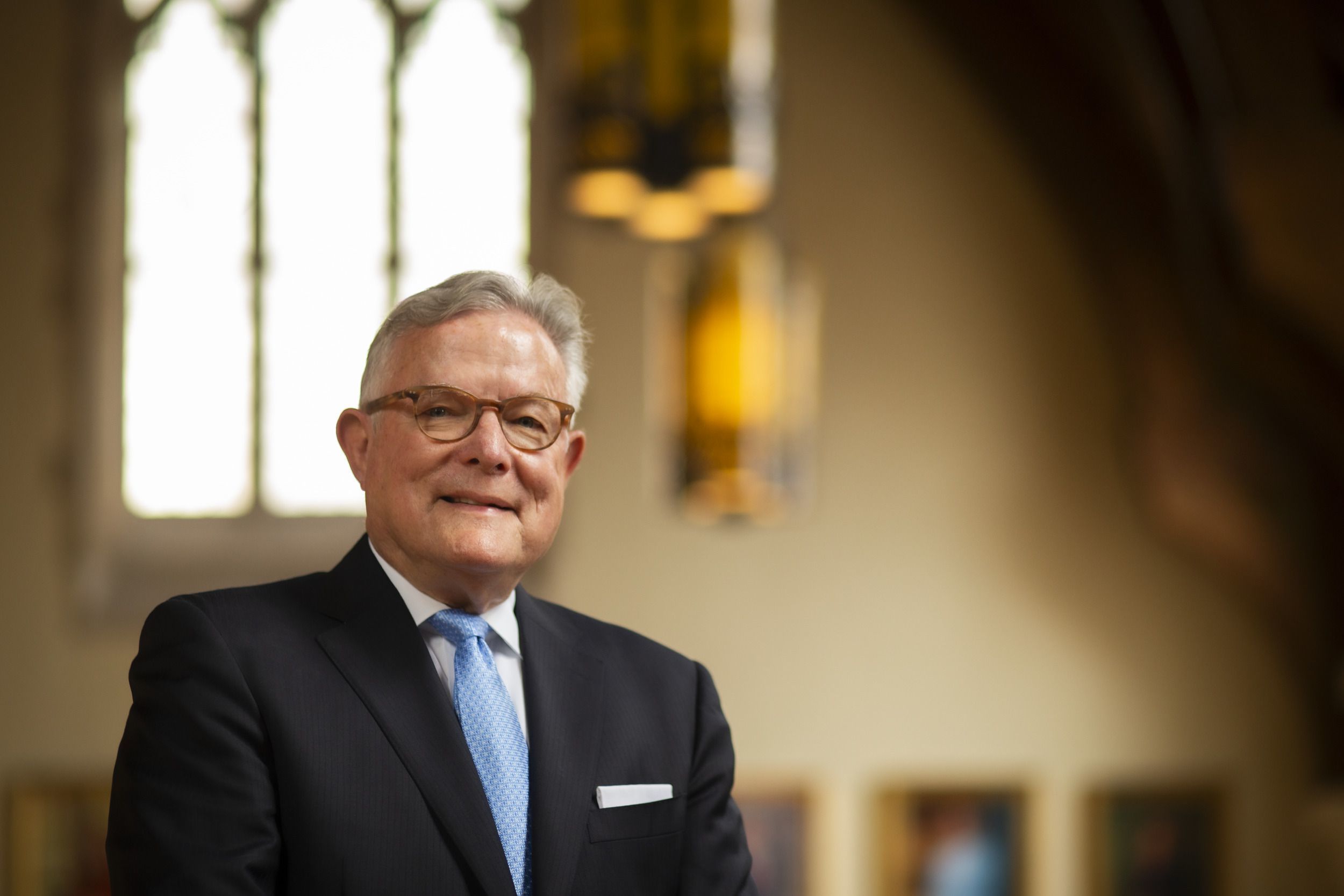
Interim Provost David Boardman, who led the strategic planning effort, emphasized that the top priority is student success and new buildings and development are meant to support that.
“That, more than anything, is the heart of what we do,” Boardman said. “This is about providing meaningful research … It’s about us becoming the most important academic institution and partner in this community and really partnering for the future of Philadelphia and the region and the Commonwealth.”
David Boardman, Temple University’s interim provost
The planning effort, which included input from more than 2,000 Temple faculty, staff, students, and community members, started as an update of the 2022 plan that Fry initiated after becoming president in November 2024. But Temple officials realized a newplan was needed, Fry said.
Fry envisions more green space for recreation and events and for making North Broad Street more aesthetically pleasing.
“It is a really harsh streetscape,” Fry said. “It’s really not inviting. Traffic is moving very quickly. …That street needs to be calmed down, and the best way … is to create medians, plants — both sides of Broad Street — making it a much more civilized area than it is now.”
The effort, he said, is modeled after the recently announced $150 million streetscape plan to make the Avenue of the Arts in Center Citygreener. Temple also is involved with that through its ownership of Terra Hall, which will become Temple’s Center City campus, he said.
“But we can’t do that without other public and private partnerships,” he said. “It’s beyond the institution’s capacity to fund that.”
To start, Temple will fund “significant greening” around the entrance to the under-construction Caroline Kimmel Pavilion for Arts and Communication, he said. More green work is planned at Burk Mansion at Broad and Oxford, which Temple owns, as development occurs there, he said.
With a large green lawn and courtyards, a quad is planned for the campus center, surrounded by Paley Hall, Tyler School of Art, the Charles Library, and the biology life sciences building.
Temple in December purchased the former McDonald’s site at 1201-1219 N. Broad St., by Girard Avenue, which is adjacent to the Temple Sports Complex. Fry envisions using that property to create a major campus gateway.
“Right now, you don’t really know when you come onto the Temple campus,” he said. “We would like Broad and Girard to announce you’re starting to enter Temple’s campus district.”
More on-campus student housing
Temple wants more on-campus residential space to improve the student experience and safety, Fry said.
“We think we’re at a minimum several thousand beds short of where we need to be,” he said. “A stronger residential experience really does make for a much more fulfilling undergraduate experience. The more kids living on campus, the more dense campus is, I think the better we’re going to do on safety.”
The plan calls for beginning to build a 1,000-bed residence hall along Broad Street on the former Peabody Hall site, south of Johnson and Hardwick Halls, in 2027. That would increase the current 5,000-bed capacity on the main campus by 20%. When that opens, Temple would upgrade Johnson and Hardwick, which have another 1,000 beds, he said.
The Annenberg Hall/Tomlinson Theater building, which will relocate to the new arts and communication building in 2027, could also be converted into more residential space if needed, Fry said.
An emphasis on STEM
Temple intends to upgrade facilities for science, technology, engineering and math.
“We just don’t have the research space, the wet lab space in particular, to accommodate the work that our faculty are doing,” Fry said.
Several buildings, including the biological life sciences facility, will be renovated, and the school plans a new STEM building, perhaps behind the engineering building, or the conversion of an existing facility, Fry said. The decision on whether to build new will come within six months, he said.
Temple needs to close some current science facilities to gain more space, he said.
The Beury building, next to the Bell Tower and across from the new Barnett College of Public Health, will begin to be demolished this summer, he said.
“Think of that as sort of the first down payment on this quad,” he said.
That would be the first step toward developing an innovation district, Fry said. While not on the scale of University City’s, it would be “a very good attempt to begin to build that capacity in North Philadelphia,” he said.
Terra Hall will nurture an arts hub, and both would contribute to creating an innovation corridor, he said.
The plan also calls for anew ambulatory care center to better serve North Philadelphia. Fry said those plans are in very early stages.
“A lot of outpatient care is occurring within the hospital right now,” Fry said. “It’s not great for patients… It also puts a real strain on our capacity to serve people who need inpatient services.”
A new academic home for star students
Temple aspires to make its honors program into an honors college, like Pennsylvania State University’s popular Schreyer Honors College, though with different parameters.
Boardman said that effortwould require major fundraising. Currently, the programexists within the college of liberal arts and enrolls more than 2,200 students.
Elevating it to a college would require more programming, study-abroad and research stipends, experiential learning opportunities, and an option for those enrolled to live together in a residential community.
Temple’s college would consider more than grade-point averages and SATs for admission, Boardman said. Various talents and leadership potential would be considered, with interdisciplinary studies and public service infused, he said.
Staff writer Peter Dobrin contributed to this article.
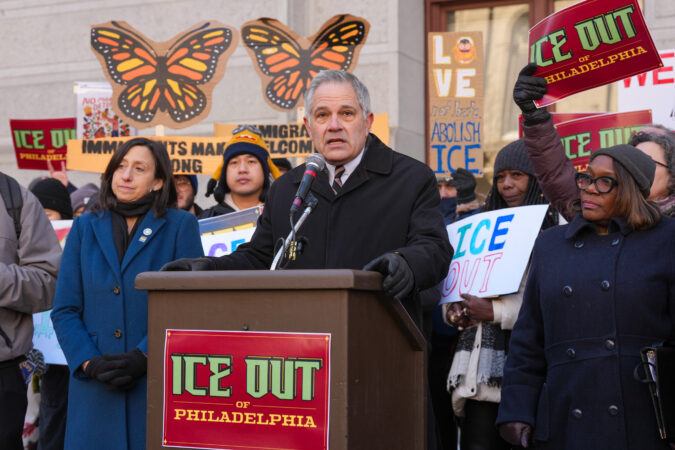
District Attorney Larry Krasner on Wednesday announced the formation of a new coalition of progressive prosecutors committed to charging federal agents who violate state laws.
Krasner joined eight other prosecutors from U.S. cities to create the Project for the Fight Against Federal Overreach, a legal fund that local prosecutors can tap if they pursue charges against federal agents.
The move places Krasner at the center of a growing national clash between Democrats and the Trump administration over federal immigration enforcement and whether local law enforcement can — or should — charge federal agents for actions they take while carrying out official duties.
It is also the latest instance in which Krasner, one of the nation’s most prominent progressive prosecutors, has positioned himself as Philadelphia’s most vocal critic of President Donald Trump. He has made opposing the president core to his political identity for a decade, and he said often as he was running for reelection last year that he sees himself as much as a “democracy advocate” as a prosecutor.
Krasner has used provocative rhetoric to describe the president and his allies, often comparing their agenda to World War II-era fascism. During a news conference Tuesday, he said federal immigration-enforcement agencies are made up of “a small bunch of wannabe Nazis.”
The coalition announced Wednesday includes prosecutors from Minneapolis; Tucson, Ariz.; and several cities in Texas and Virginia. It was formed to amass resources after two shootings of U.S. citizens by federal law enforcement officials in Minnesota this month.
Renee Good, 37, was shot and killed in her car by an ICE officer on Jan. 7 as she appeared to attempt to drive away during a confrontation with agents. The FBI said it would not investigate her killing.
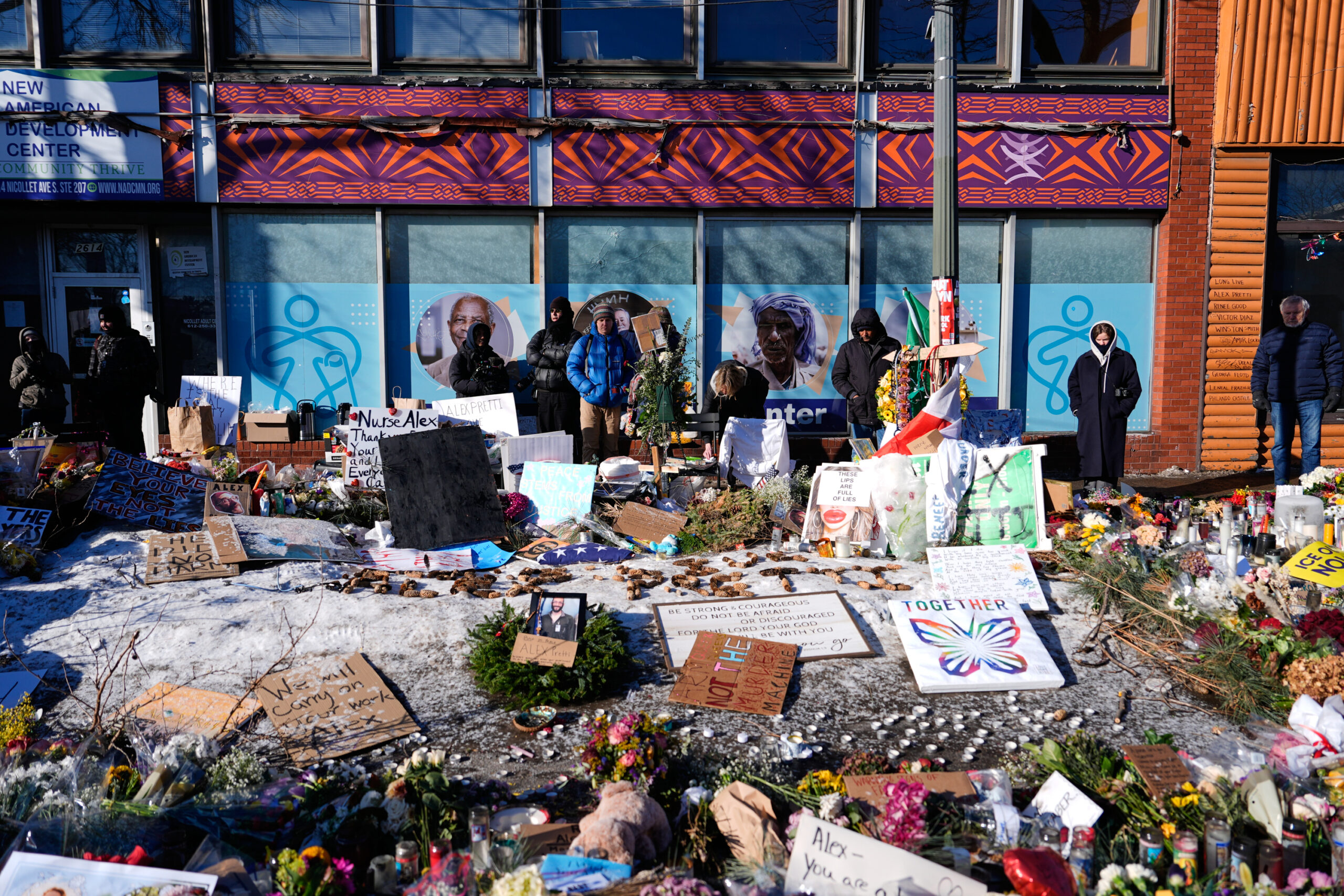
People visit a memorial for Alex Pretti at the scene in Minneapolis where the 37-year-old was fatally shot by a U.S. Border Patrol officer.
Then, on Saturday, Alex Pretti, 37, was killed after similarly confronting agents on a Minneapolis street. Video of the shooting, which contradicted federal officials’ accounts, appeared to show Border Patrol agents disarming Pretti, who was carrying a legally owned handgun in a holster. They then shot him multiple times. Federal authorities have attempted to block local law enforcement from investigating the shooting.
Krasner said that, despite Vice President JD Vance’s recent statement that ICE officers had “absolute immunity” — an assertion the Philadelphia DA called “complete nonsense” — prosecutors in FAFO are prepared to bring charges including murder, obstructing the administration of justice, tampering with evidence, assault, and perjury against agents who commit similar acts in their cities.
“There is a sliver of immunity that is not going to save people who disarm a suspect and then repeatedly shoot him in the back from facing criminal charges,” Krasner said during a virtual news conference Wednesday. “There is a sliver of immunity that is not going to save people who are shooting young mothers with no criminal record and no weapon in the side or back of the head when it’s very clear the circumstances didn’t require any of that, that it was not reasonable.”
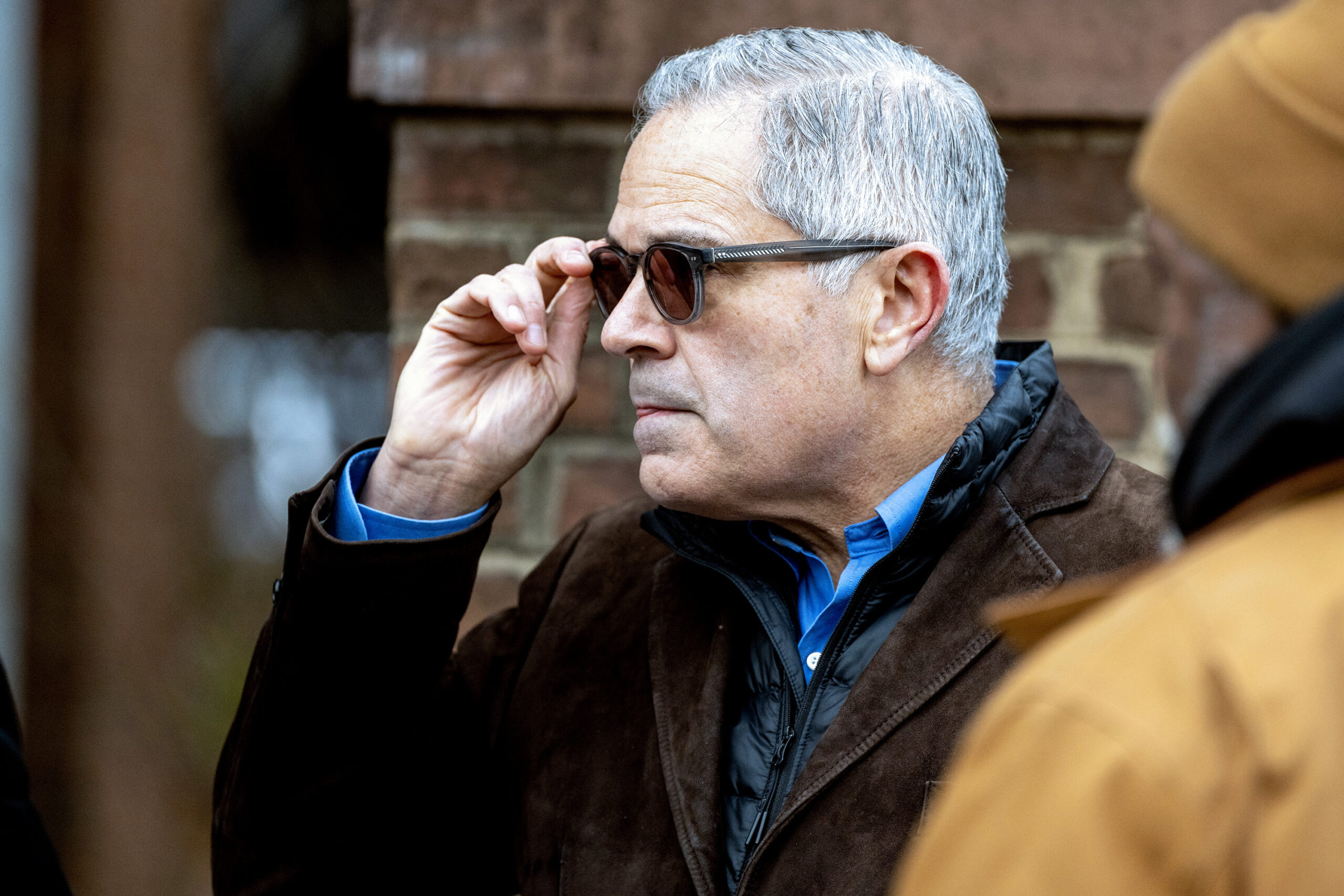
Philadelphia District Attorney Larry Krasner attends an event at Independence National Historical Park on Dec. 21, 2025.
How will FAFO work?
The coalition has created a website, federaloverreach.org, and is soliciting donations.
Prosecutors who spoke during the news conference said those donations would be toward a legal fund that would allow prosecutors to hire outside litigators, experts, and forensic investigators as they pursue high-profile cases against federal agents.
“This will function as a common fund,” said Ramin Fatehi, the top prosecutor in Norfolk, Va., “where those of us who find ourselves in the tragic but necessary position of having to indict a federal law enforcement officer will be able to bring on the firepower necessary to make sure that the federal government doesn’t roll us simply through greater resources.”
The money raised through the organization will not go to the individual prosecutors or their political campaigns, they said Wednesday.
Scott Goodstein, a spokesperson for the coalition, said the money will be held by a “nonpartisan, nonprofit entity that is to be stood up in the coming days.” He said the prosecutors are “still working through” how the fund will be structured.
Krasner said it would operate similarly to how district attorneys offices receive grant funding for certain initiatives.
Most legal defense funds are nonprofit organizations that can receive tax-deductible donations. Those groups are barred from engaging in certain political activities, such as explicitly endorsing or opposing candidates for office.
Goodstein said the group is also being assisted in its fundraising efforts by Defiance.org, a national clearinghouse for anti-Trump activism. One of that group’s founders is Miles Taylor, a former national security official who, during the first Trump administration, wrote under a pseudonym about being part of the “resistance.”
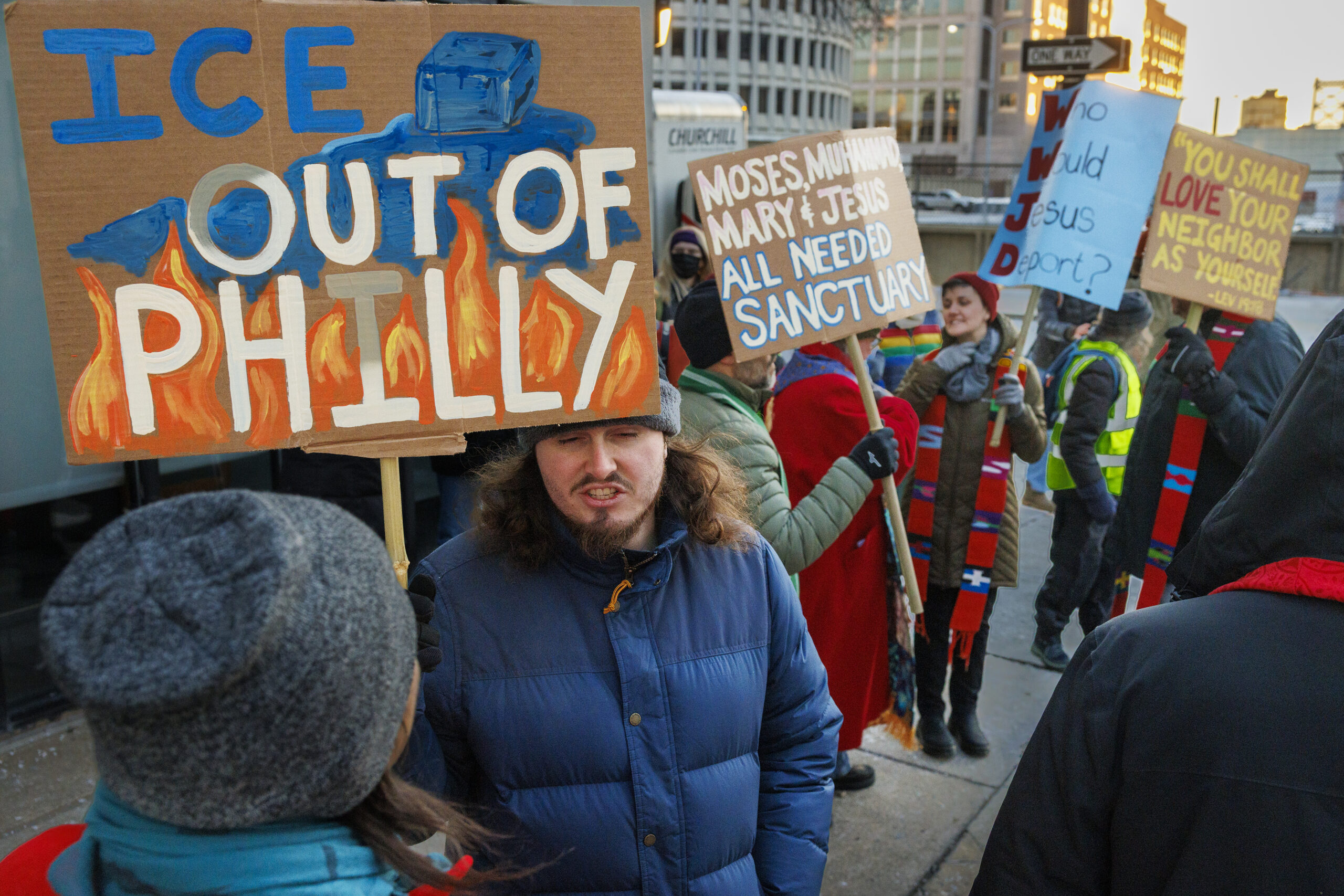
Demonstrators from No ICE Philly gathered to protests outside the U.S. Immigration and Customs Enforcement, office at 8th and Cherry Streets, on Jan. 20.
‘Who benefits?’
In forming the coalition, Krasner inserted himself into a national controversy that other city leaders have tried to avoid.
His approach is starkly different from that of Mayor Cherelle L. Parker, a centrist Democrat who has largely avoided criticizing Trump. She says she is focused on her own agenda, and has not weighed in on the president’s deportation campaign.
Members of the mayor’s administration say they believe her restraint has kept the city safe. While Philadelphia has policies in place that prohibit local officials from some forms of cooperation with federal immigration enforcement, the Trump administration has not targeted the city with surges of ICE agents as it has in other jurisdictions — such as Chicago and Los Angeles — where Democratic leaders have been more outspoken.
Parker and Police Commissioner Kevin Bethel have at times been frustrated with Krasner’s rhetoric, according to a source familiar with their thinking who spoke on the condition of anonymity to discuss internal communications.
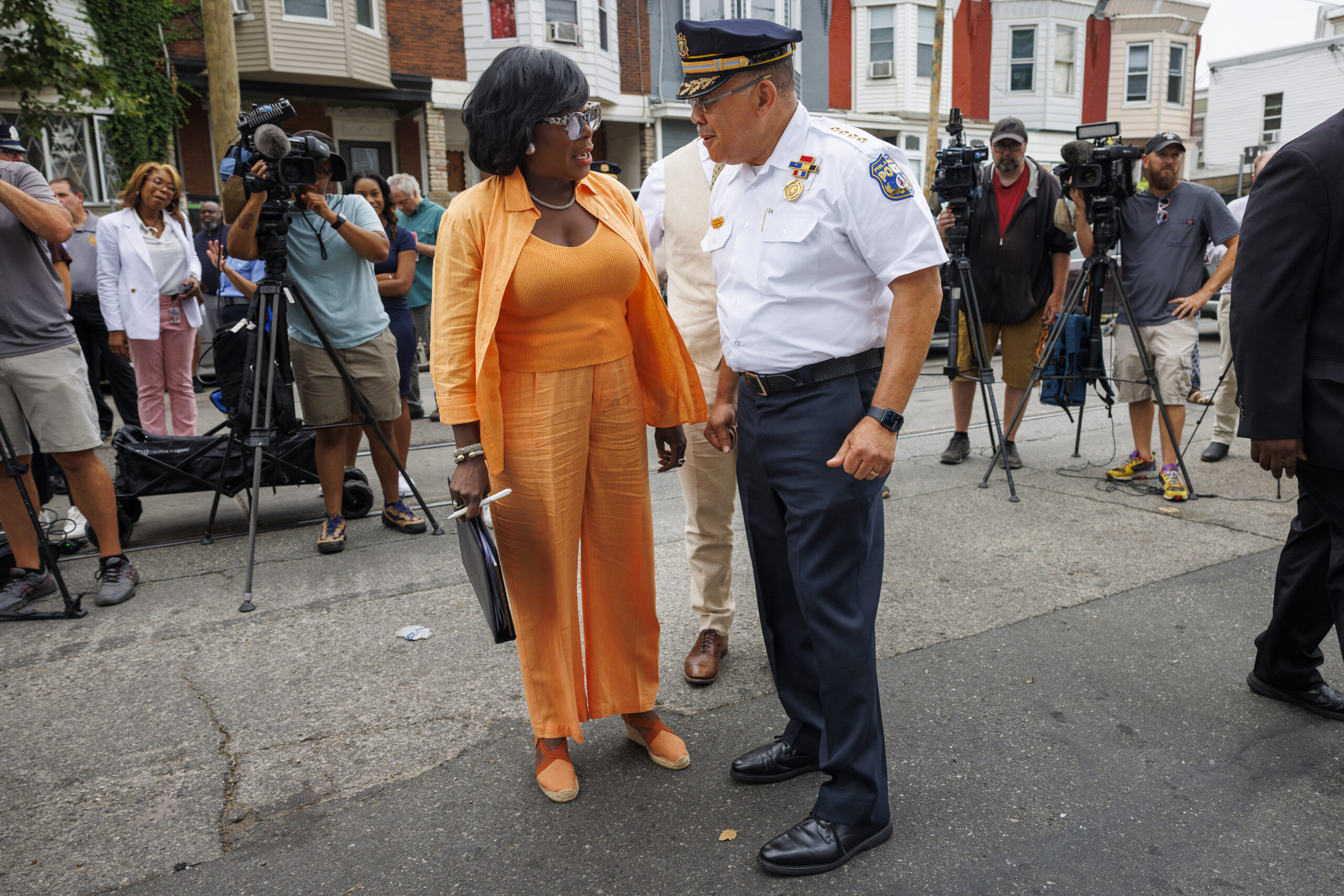
Philadelphia Mayor Cherelle Parker and Police Commissioner Kevin Bethel speaking ahead of a July 2024 press conference.
That was especially true this month when Krasner hosted a news conference alongside Sheriff Rochelle Bilal. The pair made national headlines after Krasner threatened to prosecute federal agents — something he has vowed to do several times — and Bilal called ICE a “fake” law enforcement agency.
Bethel later released a statement to distance the Police Department from the Sheriff’s Office, saying Bilal’s deputies do not conduct criminal investigations or direct municipal policing.
The police commissioner recently alluded to Parker’s strategy of avoiding confrontation with the federal government, saying in an interview on the podcast City Cast Philly that the mayor has given the Police Department instruction to “stay focused on the work.”
“It is not trying to, at times, potentially draw folks to the city,” Bethel said. “Who benefits from that? Who benefits when you’re putting out things and trying to… poke the bear?”
As for Krasner’s latest strategy, the DA said he has received “zero indication or communication from the mayor or the police commissioner that they’re in a different place.”
“I feel pretty confident that our mayor and our police commissioner, who are doing a heck of a lot of things right,” he said, “will step up as needed to make sure that this country is not invaded by a bunch of people behaving like the Gestapo.”
While preparing her four sons to take a dream family vacation in the Caribbean last month, Carolyn Piro carefully reviewed every detail to get them ready.
She also contacted the Royal Caribbean cruise line about accommodations for her children, because heroldest, Sean Curran, has autism, and two other sons also have developmental disabilities.
The trip ended abruptly when Curran, 31, was kicked off the Celebrity Cruise ship in Cozumel on Christmas Eve after an incident that his family says was mishandled by cruise officials who lacked understanding of his disability.
“Worst Christmas ever. Horrible,” Curran said. “I’m never going on a cruise again.”
Piro, a trauma therapist, is now on a mission to increase awareness and acceptance for people with autism. About 1 in 31 children in the United States are diagnosed with autism, according to the Centers for Disease Control and Prevention, and that number is 1 in 29 in New Jersey, according to the group Autism New Jersey.
“They have a place in our society. They have a place in our community,” Piro said.
Royal Caribbean, which advertises an “autism friendly” environment, said it had reviewed the incident and “concluded we could have been more sensitive to their needs during the debarkation process.” The company, which owns Celebrity Cruises, will provide additional training for employees, a spokesperson said.
‘Just trying to be nice’
Curran livesas independently as possible at home, Piro said. He participates in job training at Ability Solutions in Westville, has a girlfriend, sings with the Pine Barons Chorus, volunteers at an animal hospital, and enjoys dancing.
The Cherry Hill family was having a great time on a seven-day Caribbean cruise in December to celebrate Piro’s 60th birthday. It was Curran’s fourth cruise, and he knew the ropes and was allowed to roam unaccompanied.
Four days into the cruise,Curran was in a pool lounge when, he said,a teenage girl asked him to purchase her a Long Island iced tea. He said he bought the drink, unaware that it contained alcohol. His mother and brothers were not with him at the time.
According to Curran, the girl touched his chest and stomach, used profanity, and followed him to a hot tub, where he lifted her like Shrek did when he rescued Princess Fiona from a dragon in one of his favorite movies.(Piro said Curran enjoys swimming and playing in the water.)
The girl’s parents arrived and her mother began screaming, Curran said. Ship personnel escorted Curran to a security office, where he was asked to give a statement, he said.
“I have autism and I was just trying to be nice,” he wrote in the statement, given to ship personnel and provided to The Inquirer. The statement was only a few sentences of explanation Curran wrote about what happened.
Piro arrived during the questioning and saidCurran offered an apology to the girl’s parents. Curran said he asked for patience and repeated what his mother taught him to say about having autismwhen he encountered difficulty explaining.
Curran was given 90 minutes to pack and leave the ship, his mother said. She accompanied him, along with another son. Other passengers gawked and pointed as security escorted them off the ship, she recalled, saying, “Look at them: They’re getting kicked off the ship.”
“It was just so shameful,” Piro said.
Piro said shebelieves ship officials had other options, such as restricting Curran to his room, rescinding his room cardthat allowed him to buy drinks, or allowing him to disembark at their next port of call, she said.
“With all of the information about autism, there was no compassion. They treated him as a fully functioning adult,” the mother said.
Piro said the family was given only a security incident report and told that the FBI and Homeland Security would be notified. She was not allowed to speak with the girl’s family, whose full name she does not know. She said no charges were filed.
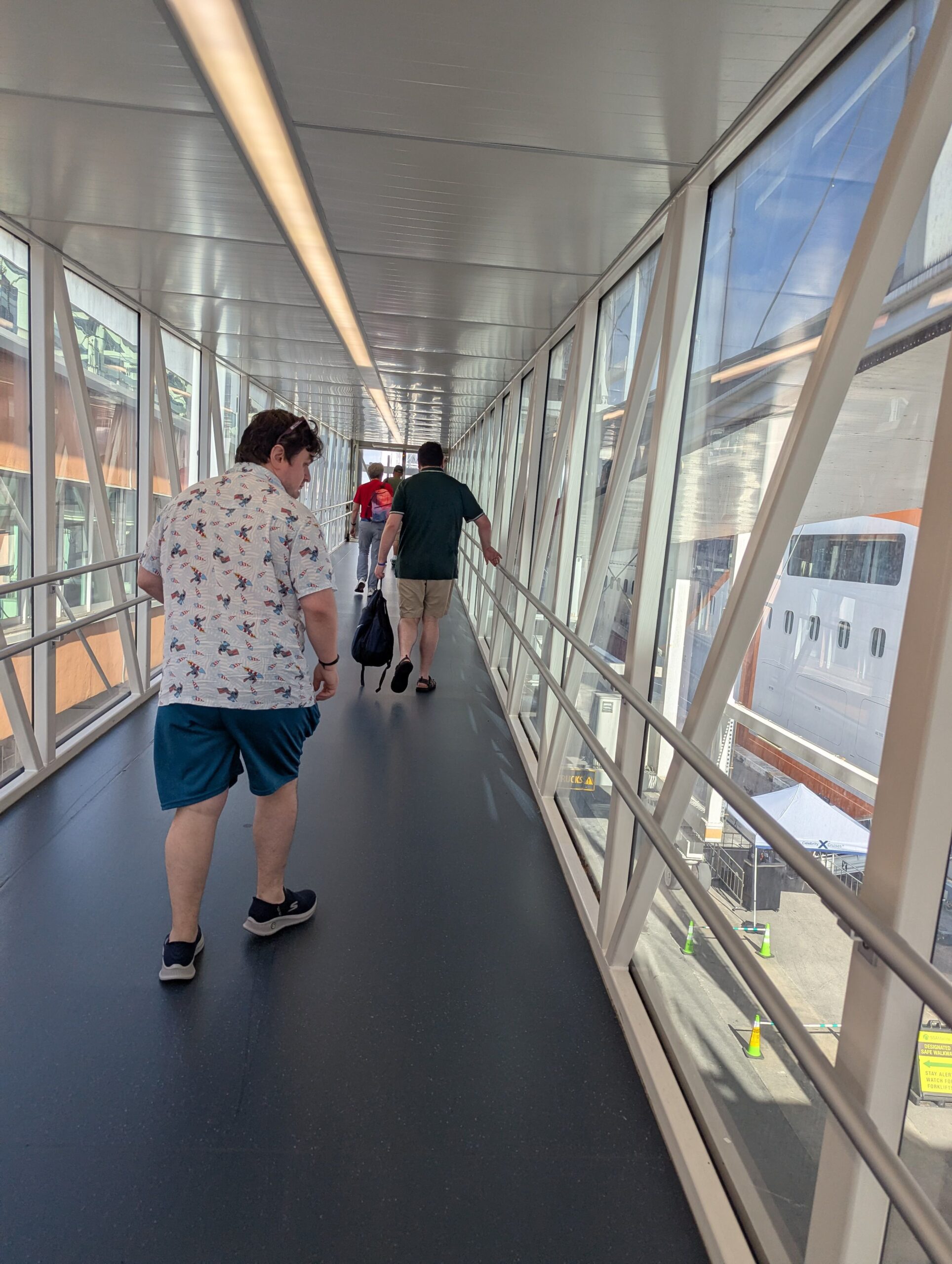
Sean Curran, 31, of Cherry Hill, boarding a Celebrity cruise ship in December for a family vacation. He has autism and was evicted from the ship after a misunderstanding.
Piro,Curran, and another of her sons who left the cruisewere reunited with two other family members several days later when the ship docked in Florida.
Piro said she accepted an apology from Royal Caribbean after returning home, complaining about the incident, and sharing her story publicly. She also said she had askedto be reimbursed for the $20,000 she spent on the cruise and expenses. Royal Caribbean declined to comment on the request.
A spokesperson said Royal Caribbean’sadditional training for its staff will “ensure this experience doesn’t happen again.” She declined to comment further.
Stacie Sherman, a spokesperson for Autism New Jersey, declined to comment about the specific incident but agreed there is a need for more awareness. She has had similar experiences as the mother of two on the autism spectrum.
“Education and awareness is key,” Sherman said.
Sherman said acceptance is slowly growing. Her daughter used to get nasty looks and comments for making loud noises or having a tantrum in public places, she recalled.
“I get way more smiles and nods, even praise and offers of help. It gives me hope,” Sherman said.
Sean Curran, 31, of Cherry Hill, plays with a dolphin during a cruise excursion in Cozumel, Mexico in December.
Seeking change to the system
When the family arrived home, Piro said, she reprimanded Curran and limited his activitiesfor a month. Piro said sheacknowledges that he did something wrong but said his intent was not malicious.
She said she contacted the cruise line a month before their vacation about her children’s special needs. In addition to Curran, two younger sons have mosaic Down syndrome and fragile X syndrome.
Piro said she requested special seating, for example, to isolate the family in the dining area from noise andlarge groups. During an excursion, she rented a cabana away from other guests, she said.
“We don’t go anywhere where people don’t stare, giggle, or make a comment,” Piro said.
Piro said she plans to monitor whether Royal Caribbean implements the additional trainingthat it has promised. She wants changes “in the system so that this doesn’t happen again.”
Carolyn Piro, of Cherry Hill, poses for a portrait with her son Sean, who has autism, in their home this month.
Curran said telling his story was “making me feel better.” He wants to better advocate for himself and others with autism.
“I want people to treat other people with dignity and respect, compassion, and kindness,” he said.
In the span of a roughly an hour and a half, years of hard work from a group of artists, architects, historians, attorneys, and writers who helped create the President’s House in the early 2000s were ripped off the walls and hauled into the back of a pickup truck to be dropped off who-knows-where.
This brazen demise of the exhibits,which memorialized the nine people George Washington enslaved at the site, was never supposed to happen, said Troy C. Leonard, partner and principal at the Philadelphia-based Kelly Maiello Architects, who helped design the President’s House almost two decades ago.
“Because the panels were not meant to be removed, they were very violently taken down, you know, ripped from their backgrounds,” Leonard said in an interview Monday.
“I would suspect that they did a lot of damage, physical damage, to the site in taking those panels down,” he added.
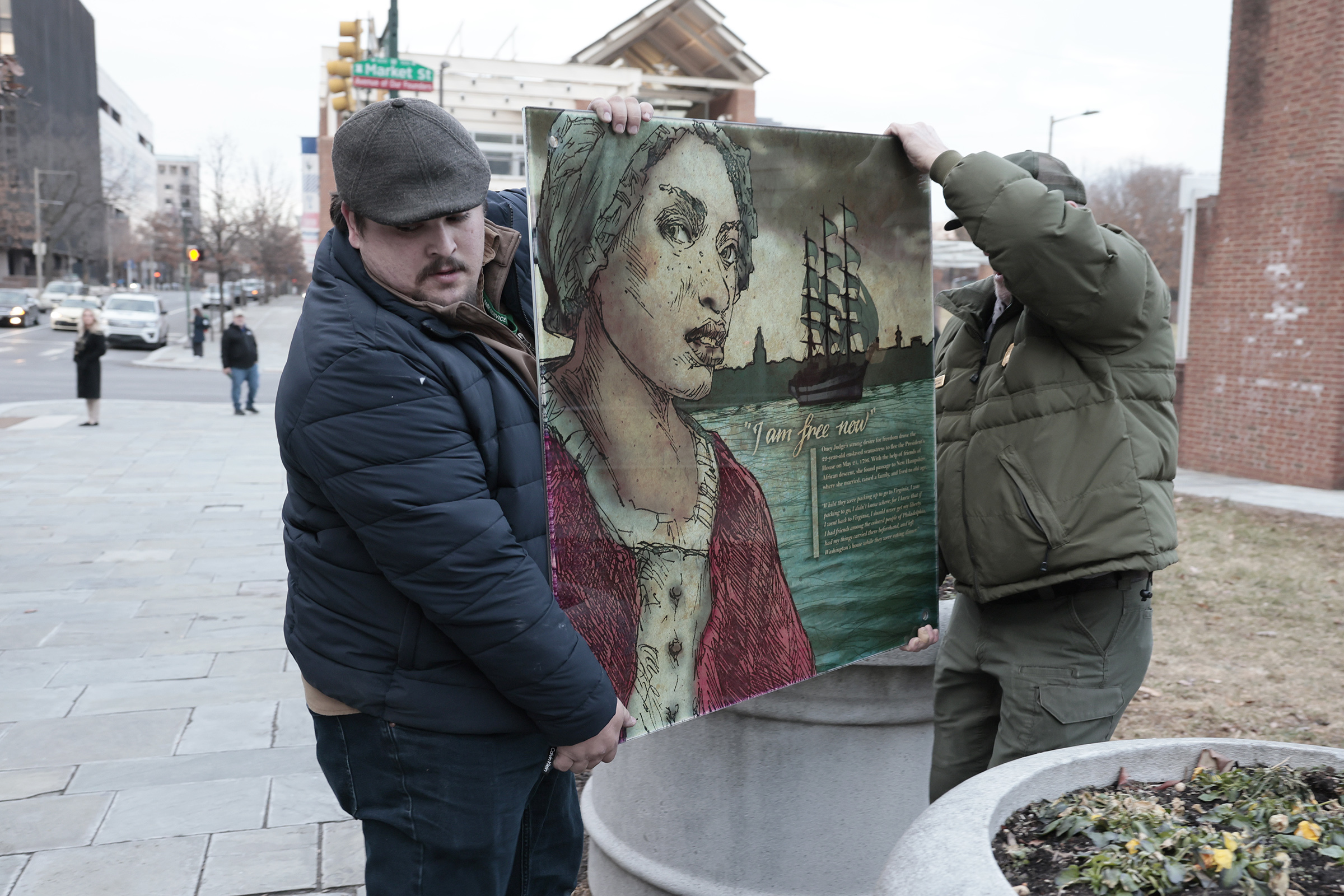
Workers remove the displays at the President’s House site in Independence National Historical Park Thursday, Jan. 22, 2026.
Leonard is one of many stakeholders who helped create the President’s House and are now grappling with its sudden removal last week after a monthslong review by President Donald Trump’s administration.
In the early 2000s, the site was developed at Independence National Historical Park as a memorial intended to highlight the horrors of slavery that took place during the founding of a nation based on liberty. It featured numerous educational exhibits. Everything at the site was historically accurate.
“Just sort of slithering onto the site was a very cowardly way of doing it without any mention that it was going to happen, notifying anyone, just coming in and starting to take the panels down,” Leonard said.
It’s all in connection with orders from Trump and Interior Secretary Doug Burgum, who called for the review and potential removal of content at national parks that could “inappropriately disparage Americans past or living.”
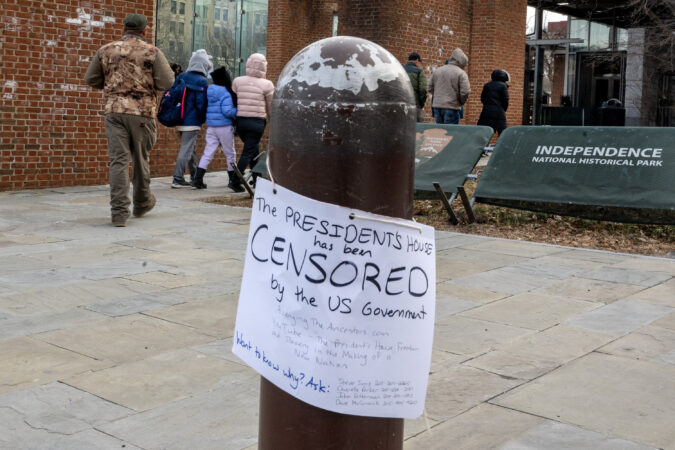
Independence Park employees were also given talking points that evade visitors’ questions about the site.
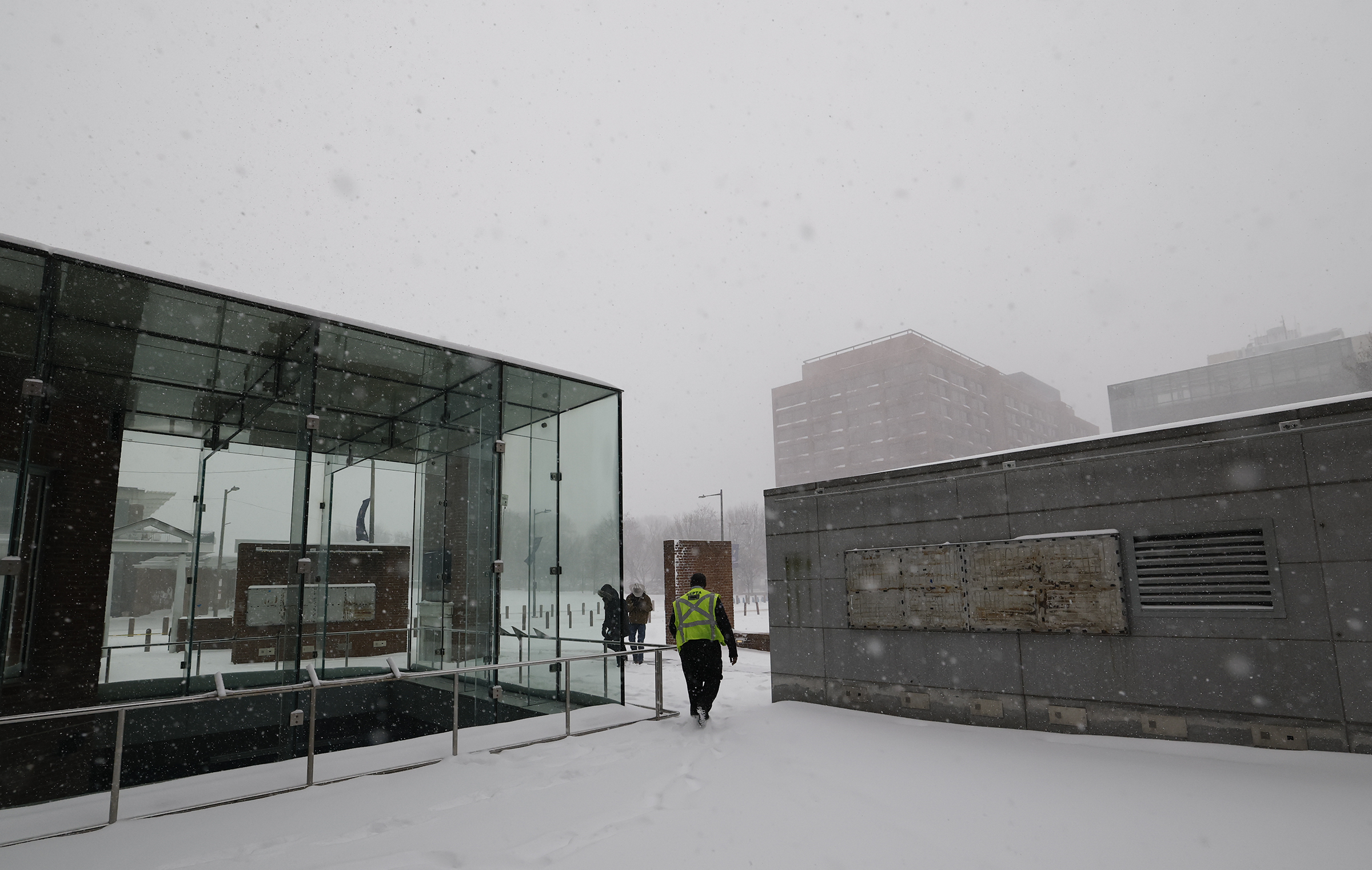
At Independence Park, Leonard said he is concerned about the future of the site. After last week’s takedown, the open-air exhibit is now a bunch of blank, faded brick walls. All that is left of the memorial is the site’s original archaeological dig from the 2000s and a wall with the engravings of the names of the nine people Washington enslaved.
The City of Philadelphia has sued Burgum, acting National Park Service Director Jessica Bowron, and their respective agencies to restore the panels. Gov. Josh Shapiro’s office filed an amicus brief in support of the city’s suit Tuesday.
“To leave it the way that it is, I mean, to me, it’s sort of now a memorial to the death of democracy and truth,” Leonard said. “That’s what it is now. It’s sort of just these blank walls that are just sitting there. It’s sort of a ruin, but it’s a pathetic ruin because part of its heart has been ripped out.”
Snow falls at the Presidents House on Sunday, January 25, 2026, after the National Park Service took down slavery exhibits several days earlier.
History is ‘lost and found’
Around two decades ago, more than 1,000 miles away from the Sixth and Market home of the President’s House, a Kansas City-based exhibit design firm crafted the illustrations and graphics seen throughout the site.
All of which were torn down last week.
Gerard Eisterhold, president of the firm, Eisterhold Associates Inc., said in an interview that he got a slew of texts and emails when the exhibits were taken down. He said this incident proves a “thesis” that designers were trying to portray to the public through the President’s House — that history goes through cycles of being lost and then found.
“There were the history of the enslaved that was sort of forgotten for a long, long, long, long time, and that’s a conscious thing that people do. … There’s a heck of a lot more people that are aware of the history of President’s House this week than there was last week,” Eisterhold said.
In fact, there was a sign at the President’s House called “History Lost + Found,” which outlined the juxtaposition of liberty and slavery during the early days of the United States.
“History is not neat,” the History Lost + Found panel at Independence Park read. “It is complicated and messy.”
This panel was one of dozens that were taken down last Thursday. Others were titled “Life Under Slavery” and “The Dirty Business of Slavery.” And there were illustrations of important figures, like Oney Judge, who was enslaved as Martha Washington’s personal maid before she escaped. Hercules Posey, who was enslaved as a cook, also later self-emancipated.
“But here we are. Because how dare we write their names, the nine enslaved Africans at the first American presidential residence. … How dare we encode instructions to the future by writing about the two who escaped?” author Lorene Cary, who helped with storytelling at the President’s House along with documentary filmmaker Louis Massiah, wrote on her Substack last week. “The names are still there, carved into stone.”
National Park Service workers remove the displays at the President’s House site in Independence National Historical Park in Philadelphia on Thursday, Jan. 22, 2026.
The creation and display of these panels were the product of collaboration across disciplines, Cary wrote.
“So many people — scholars and passionate non-scholars — worked, argued, met, studied, wrote, agitated, and created art for this unique and necessary American project.”
Leonard said his firm has been working with Michael Coard, attorney and leader of the Avenging the Ancestors Coalition, which has been helping leadefforts to defend the President’s House from the Trump administration. The coalition, through its advocacy, helped shape the President’s House roughly 20 years ago.
If the city wins its lawsuit and the panels are restored, the site will likely needa refurbishment and stakeholders will need to ensure that the panels are still in good condition.
Ted Zellers (right) wears a sandwich board with a replica of one of the removed slavery panels as people visit and protest at the President’s House site in Independence National Historical Park Saturday, Jan. 24, 2026.
Some Philadelphians have floated the idea of moving the displaced panels to another location if the site faced the ire of the Trump administration. But for Leonard, Sixth and Market is the rightful, historically important home for the exhibits.
“The place is equally important,” Leonard said. “It is not complete without being located at that site. So it’s important to the fight to make sure that that memorial is restored at that location. It cannot be relocated.”