City Councilmember Jamie Gauthier said the Philadelphia School District showed “just a complete lack of thought and consideration for really important programs” when crafting its long-anticipated facilities plan, released Thursday.
Council President Kenyatta Johnson said his members had “a lot of concerns.”
And City Councilmember Jeffery “Jay” Young Jr. went so far as to propose amending the city Home Rule Charter to allow Council to remove the school board members who will consider the proposed closures.
“If you are closing schools during a literacy crisis, then you should be held directly accountable to the people you serve,” Young said.
In many ways, it’s unsurprising Council members would speak out against a plan that would close or consolidate schools in their districts. But the pushback from lawmakers Thursday was notably strong, and Young’s proposal to allow Council to remove school board members could dramatically reshape the politics of the district.
(function() {
var l2 = function() {
new pym.Parent(‘school_closing1’,
‘https://media.inquirer.com/storage/inquirer/projects/innovation/arcgis_iframe/school_closing1.html’);
};
if (typeof(pym) === ‘undefined’) {
var h = document.getElementsByTagName(‘head’)[0],
s = document.createElement(‘script’);
s.type = ‘text/javascript’;
s.src = ‘https://pym.nprapps.org/pym.v1.min.js’;
s.onload = l2;
h.appendChild(s);
} else {
l2();
}
})();
Currently, the mayor appoints the nine members of the school board, and Council votes to confirm them. Allowing lawmakers to remove board members would shift the balance of power toward the legislative branch and effectively leave the district’s leaders with 18 bosses — the mayor and the 17 Council members.
Significantly, Johnson immediately endorsed Young’s plan, which would have to be approved by city voters in a ballot question.
“It’s a good check-and-balance in terms of the process, and also allows us to have the ability and the opportunity to make sure that anything that the school board does is done with transparency,” Johnson told reporters. “I‘m always for, as members of City Council and this body in this institution, having the opportunity to provide accountability.”
Left unsaid was that the long-awaited facilities plan did not come from the school board — its members have yet to approve the proposal, which was presented to lawmakers this week by Superintendent Tony B. Watlington Sr.
Still, the pushback was notable in part because it came from lawmakers who are often on opposite sides of debates about education policy. Johnson is an advocate for charter schools, while Gauthier is a progressive ally of the teachers union who is often critical of the so-called school choice movement.
Gauthier said the plan would limit opportunities in her West Philadelphia-based 3rd District. She pointed to changes including Robeson High School and Parkway West ceasing to exist as standalone schools (Robeson would merge into Sayre and Parkway West into SLA Beeber), and the Workshop School colocating with Overbrook High. (The Workshop, however, would remain a distinct school, just in a new location.)
“What are people supposed to do for good high school options in West Philadelphia?” Gauthier said in an interview.
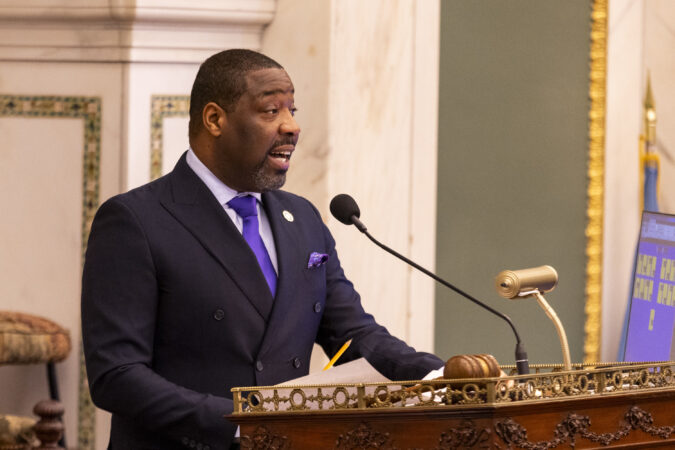
Jamie Gauthier. First day of fall session, Philadelphia City Council, Thursday, September 11, 2025.
Gauthier added that while Watlington has talked at length about the district avoiding the mistakes of its widely criticized 2012 school closure plan, it appears doomed to repeat that history.
“That’s a great thing to hold up every time we have this conversation, but how are you solving for it?” Gauthier said. “You can’t state all of the things that went wrong and then present a plan that seems to lack care in the same way as the plan in 2012.”
Johnson said the discussion over the plan was far from complete.
“I’m sure it’s going to be a very, very robust process,” he said. “These are only recommendations. This isn’t the final product.”
Watlington’s plan will touch every part of the city. It includes 20 school closures, six colocations, with two separate schools existing inside a single building, and more changes. It also includes modernizing more than 150 schools over 10 years, though officials have not yet revealed which buildings will get the upgrades.
In total, the blueprint would cost $2.8 billion — though the district is proposing funding only $1 billion of that with capital borrowing. The rest of the money would come from the state and from philanthropic sources, and if those dollars don’t come through, fewer repairs could happen.
Nearly all Council members on Thursday said they understood the need to consolidate schools, but each had concerns about how individual closures would affect the communities they serve.
Councilmember Curtis Jones Jr., whose district includes parts of West and Northwest Philadelphia, said some of the changes are encouraging, including an expansion of career and technical education planned for some schools, including Overbrook High.
But, he said, others could combine students who come from different neighborhoods and backgrounds, and the district must consider the social impacts of merging those populations.
“The places where the kids come from, that is always a dynamic that is under-considered,” Jones said. “If I live in this neighborhood and got to travel to that neighborhood, what are the historical dynamics?”
And Councilmember Cindy Bass, who represents parts of North and Northwest Philadelphia, said two of the schools in her district slated for closure — Fitler Academics Plus School and Parkway Northwest High School — “are models of great public education.”
“I don’t understand why they are targeted when they are very well-regarded and lots of kids want to go there,” Bass said. “If it’s not broken, why are we trying to fix this?”
It’s unclear how much sway members will have over where the district ultimately lands. Councilmember Isaiah Thomas, who chairs the Education Committee and represents the city at-large, warned of a “long and emotional” journey ahead.
“There’s always an emotional attachment to schools,” he said. “They are a pillar in a lot of neighborhoods.”
Staff writer Jake Blumgart contributed to this article.
The National Park Service dismantled exhibits about slavery at the President’s House Site in Independence National Historical Park, provoking a lawsuit from Philadelphia Mayor Cherelle L. Parker’s administration.
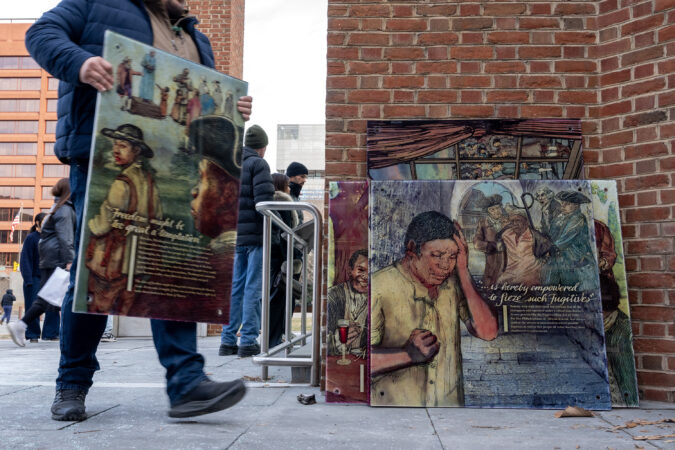
Around 3 p.m. Thursday, an Independence Park employee who would not give his name told an Inquirer reporter that his supervisor had instructed him to take down all the displays at the iconic site earlier that day. Three other individuals later joined the employee to help remove the educational exhibits. The final display was removed at 4:30 p.m. The displays were then loaded into the back of a white Park Service pickup truck.
“I’m just following my orders,” the employee repeatedly said, not acknowledging if he was tasked with removing the displays because of the executive order.
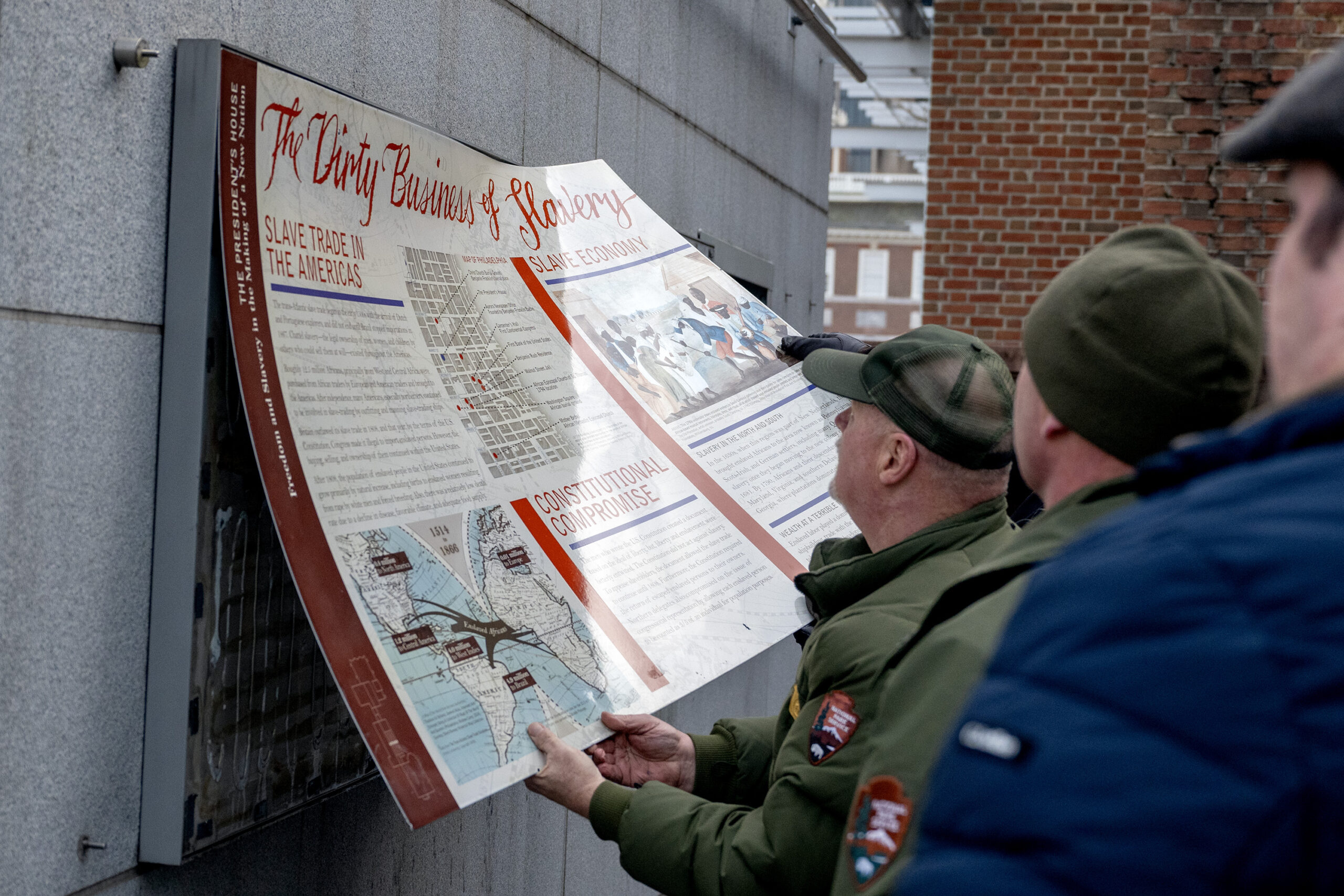
Workers remove the display panels about slavery at the President’s House site in Independence National Historical Park Thursday, Jan. 22, 2026. The fate of exhibits at the site, which serves as a memorial to the nine people George Washington enslaved there during the founding of America, had been in limbo since President Trump’s executive order, “Restoring Truth and Sanity to American History,” directed the Department of the Interior to review over 400 national sites to remove or modify interpretive materials that “inappropriately disparage Americans past or living.”
One by one, the exhibits — including those titled “Life Under Slavery” and “The Dirty Business of Slavery” — were taken down.
The demolition Thursday, with wrenches and crowbars, elicited questions — and exclamations, like “this is crazy” and “damn shame” — from a few passersby.
At least one asked if the exhibits are coming down “because of this administration.”
Another, Jali Wicker, 74, was walking through Independence Mall when he stopped and asked why the content wasbeing removed.
Wicker, who recorded as NPS workers unscrewed bolts from the brick walls, said the sight overwhelmed and disturbed him.
“You can try to erase our history, but we’re still going to survive,” Wicker said. “History has shown that, slavery has shown that. … And you want to go back?”
Michael Coard, leader of the Avenging the Ancestors Coalition, which has helped lead an effort to protect the President’s House from the Trump administration, said in an interview Thursday that the removal of the displays is an “abomination” and called Trump a “monstrosity in the White House.”
“It’s a disgrace, and that’s an understatement,” Coard said. “I cannot say what I’m thinking, because as a criminal defense attorney, I know better. What’s going on now is absolutely unheard of in the history of the United States of America.”
Jack Williams, 47, shouted at NPS workers as they loaded the panels into the bed of a department pickup truck.
“It’s absolutely sickening,” Williams said. He took issue with workers complying with the executive order, and urged defiance by federal employees.
Williams’ message: “Take a day off, call in sick. Don’t be the one on the news … whitewashing history.”
Mijuel Johnson, a community organizer who leads the Black Journey: African American History Walking Tour and works with Avenging the Ancestors, called the action “outrageous.”
“We see how brave [NPS employees] are,” Johnson said. “My ancestors were brave enough to run from tyranny and these guys can’t be brave enough to oppose an order to take down some plaques.”
Johnson added: “Our history will be taught — it’ll be taught as it should be, warts and all.”
Representatives of the Department of the Interior and the National Park Service did not immediately return a request for comment.
The move comes in advance of the 250th anniversary of the founding of the United States on July Fourth, when Philadelphia and its historic exhibits will be in the national spotlight.
The fate of exhibits at the President’s House has been in limbo for months since the Department of the Interior signaled it would review and potentially remove flagged displays.
More than a dozen displays about slavery were flagged for the Trump administration’s review, with the President’s House coming under particular scrutiny, The Inquirer reported. Removal of noncompliant displays was initially slated to come on Sept. 17.
Parker on Thursday, after her administration filed its lawsuit, said that the city and federal government in 2006 signed a cooperative agreement that may require advance notice for changes to the site. The city is reviewing its options, she said.
“We are right now researching and reviewing the cooperative agreement between the City of Philadelphia and federal government that dates back to 2006,” she said. “It requires parties to meet and confer if there are any changes to be made to any exhibit, so anything that is outside that agreement, it requires that our Law Department review it.”
Parker, the city’s first Black female mayor, has avoided confrontation with Trump since he took office last year. Asked what her personal feelings are about the federal government removing material on slavery, Parker demurred.
“In moments like this, it requires that I be the leader that I need to be for our city, and I can’t allow my pride, ego, or emotions to dictate what my actions will be,” she said.
The city’s lawsuit names Interior Secretary Doug Burgum and acting National Park Service Director Jessica Bowron. The complaint asks a judge to order that the removal of “interpretive panels referencing slavery” was an “arbitrary and capricious” act, making it unlawful.
There is no dispute over the fact that slaves resided at the President’s House or that Washington owned slaves, the suit says.
Furthermore, the President’s House has been designated a National Underground Railroad Network to Freedom site pursuant to a 1998 act of Congress. In removing exhibits referencing slavery, the Trump administration acted without statutory authority, the city argues.
“Defendants have provided no explanation at all for their removal of the historical, educational displays at the President’s House site, let alone a reasoned one,” the lawsuit says.
Independence Park employees were tasked with evaluating displays for content that “inappropriately disparage Americans past or living,” according to Trump’s March 2025 executive order.
A total of 13 items across six exhibits at the President’s House were initially flagged for the Trump administration’s review, but on Thursday everything was taken down.
This included parts of displays titled: “Life Under Slavery,” “History Lost & Found,” “The Executive Branch,” “The Dirty Business of Slavery,” “The House and the People Who Worked & Lived In It,” and an illustration with the words “An Act respecting fugitives from Justice.”
Other exhibits across the park were flagged for review, but it is unclear if there are plans for park employees to also remove those displays.
Staff writers Abraham Gutman and Sean Collins Walsh contributed to this article.
The University of Pennsylvania has received an $8 million gift to redesign how it trains doctors at the Perelman School of Medicine, Penn officials announced Thursday.
Incorporating technology, AI, and data to create customized learning pathways for Penn medical students is an overarching goal. The effort comes at a time when increasingly easyaccess to medical information and changes in care delivery are leading medical schools nationwide to revamp their curricula.
The gift to Penn is from New York-based RTW Foundation, a philanthropy associated with the life sciences investment firmfounded by Perelman School graduate and Penn Medicine board member Rod Wong. Penn said the gift from Wong, and his wife, Marti Speranza Wong, is the largest single donation to support curriculum innovation at the medical school, which dates back to 1765.
At a news conference announcing his donation Thursday, Wong recalled his time atthe medical school right after its last major overhaul of the curriculum in 1998. One update underPenn’s “Curriculum 2000” revamp was recording and making lectures available online — a relatively innovative move at the time (YouTube wouldn’t be created for another several years).
“Technology has changed, and obviously we’re at this same inflection point because of AI and data science,” said Wong, who is managing partner and chief investment officer at RTW Investments LP.
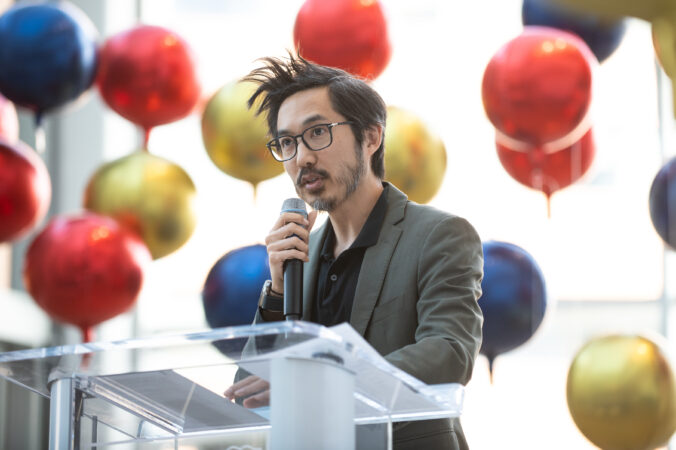
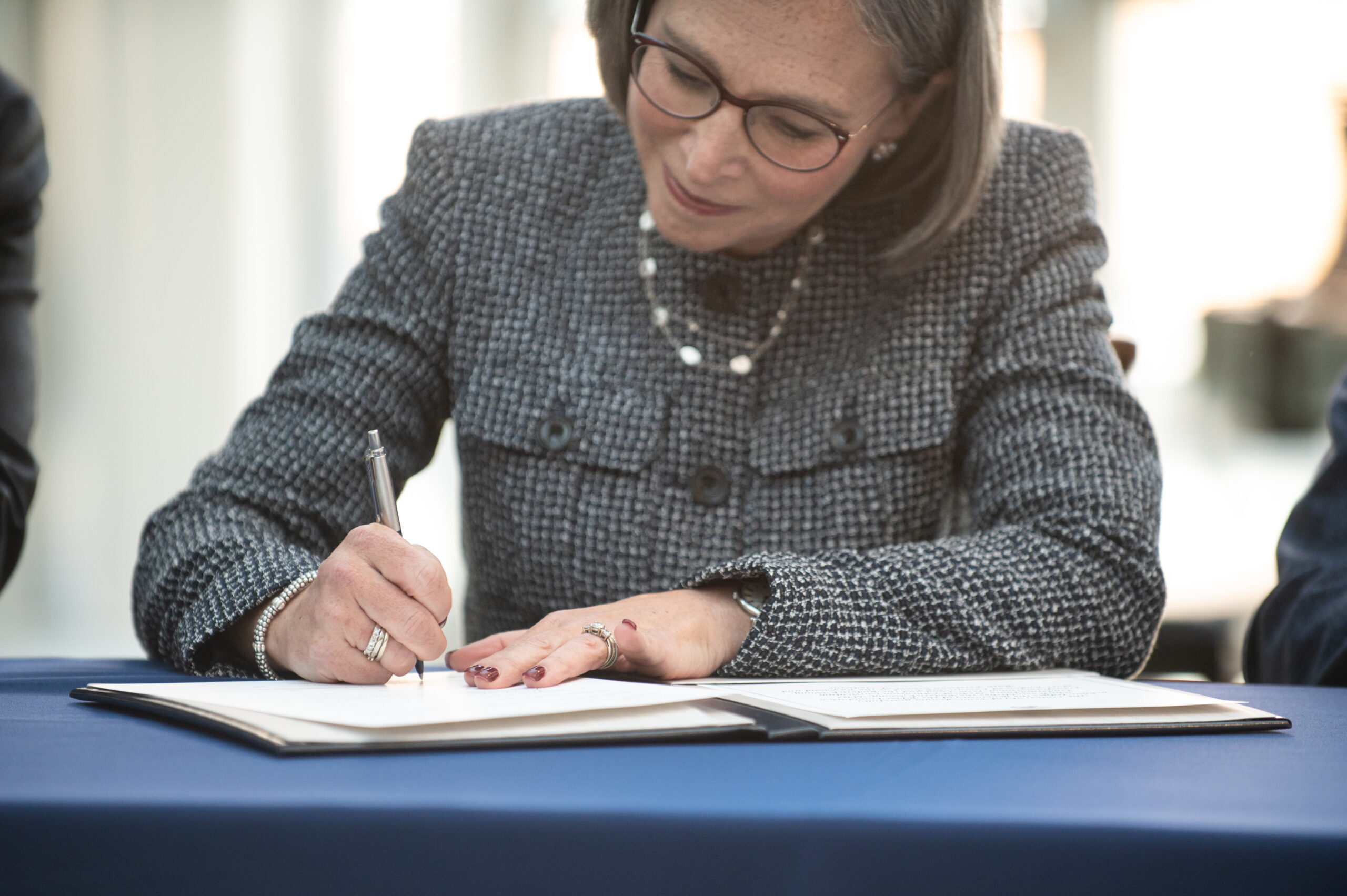
Penn alumnus Rod Wong (center) sits with dean of Perelman School of Medicine Jonathan A. Epstein (left) after signing the gift agreement.
The vast majority of the $8 million gift will go toward hiring data scientists and engineers, supporting faculty, and building and acquiring the platforms needed to deliver the new curriculum.
Technology will be incorporated into new training techniques, such as byusing augmented or virtual reality to assist in learning anatomy, developing knowledge needed to diagnose illnesses and develop treatment plans, and mastering clinical skills such as IV placement and suturing.
For example, students can practice taking a person’s medical history or doing a physical exam on a virtual patient, while an AI agent is there to give feedback in real time.
“It’s really adaptive to the individual learner, but you do it at your own pace, on your own time,” said Lisa Bellini, executive vice dean of the medical school and a leader on the project.
The redesign will take place over the next three years as school leaders consult with stakeholders and work on building the platform.
Some of Wong’s gift will be used to create a biannual endowed lecture in business and entrepreneurship that will bring leaders in medicine and healthcare innovation to campus. The gift will also establish the Roderick Wong Entrepreneurship Pathway, which will provide mentorship, workshops, and project-based learning to students with business interests.
“We really need to incorporate the fundamentals of how best to use technology responsibly within the practice of medicine and create something incredibly enduring, because you’re not going to go through this exercise every three years,” Bellini said.
The Perelman School of Medicine is embarking on its curriculum revamp at a time when medical education is evolving at many schools.
Some medical schools have concentrated the traditional two years spent learning science into one year to give students more time to learn how to interact with patients and collaborate with other medical professionals.
A three-year medical school option is offered at institutions such as the Pennsylvania State University College of Medicine to speed doctors into the clinic and reduce students’ debt loads.
Jennifer Kogan, vice dean for undergraduate medical education at the Perelman School of Medicine, is a leader in the curriculum revamp.
Faster, flexible learning
Like most medical schools, Perelman has a standard curriculum where students take foundational science courses for a stretch of time and then transition to the hospital to gain clinical experience.
This can lead to some students repeating courses that they already mastered in college.
“If you were a biochemistry major as an undergrad, do you really have to take biochemistry again?” said Jennifer Kogan, vice dean of undergraduate medical education and a leader on the redesign project. “How could you better use that time to achieve whatever your career goals are?”
Leaders at Penn want to give students the flexibility to adjust their timelines based on their skill sets and goals.
Instead of setting a fixed time for how long a class or rotation will take, a student who masters a skill more quickly should be able to move on and devote their time to other interests, such as research or entrepreneurship.
Many students at Penn pursue dual degrees or research fellowships that end up adding a fifth year of medical school. Penn leaders hope adding flexibility to the curriculum could enable students to instead finish in four years or “maybe even three,” Kogan said. (The possibility of a three-year path is not yet guaranteed but will be explored.)
“It will be better set up to support students like me who have had to use significant federal loans to finance their way through medical school and might have benefited from the condensed training timeline,” said Alex Nisbet, a fourth-year medical student at Perelman who spoke at the signing event.
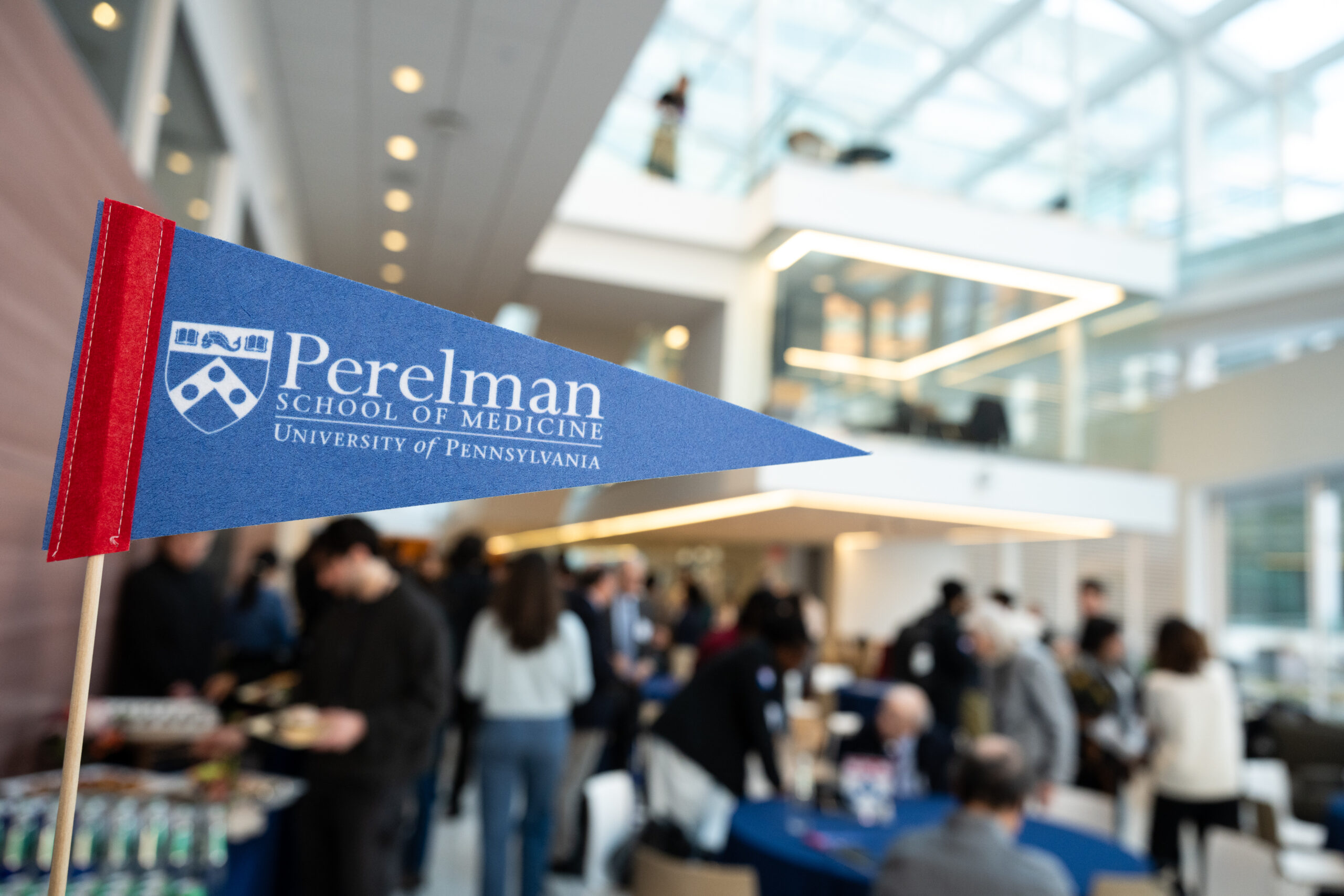
An attendee holds a pennant flag representing the Perelman School of Medicine.
The school will leverage data and AI to assess how individual students are progressing in what they’re calling a “precision education model.”
Though parts of the program will be piloted over the next three years, the first class to see the full implementation of the curriculum will be in the fall of 2029.
The school system would see sweeping changes: 20 school closures, six co-locations, more than 150 modernization projects and one brand-new building.
All parts of the city would be affected under the blueprint, which will be formally presented to the school board Feb. 26 and is not final.
The $2.8 billion project is necessary, officials said, because of 70,000 extra seats across the district, poor building conditions in many schools, and disparities in program offerings.
Here’s a breakdown of Watlington’s plan:
If you are reading this story and cannot see the charts, click here.
window.addEventListener(“message”,function(a){if(void 0!==a.data[“datawrapper-height”]){var e=document.querySelectorAll(“iframe”);for(var t in a.data[“datawrapper-height”])for(var r,i=0;r=e[i];i++)if(r.contentWindow===a.source){var d=a.data[“datawrapper-height”][t]+”px”;r.style.height=d}}});
window.addEventListener(“message”,function(a){if(void 0!==a.data[“datawrapper-height”]){var e=document.querySelectorAll(“iframe”);for(var t in a.data[“datawrapper-height”])for(var r,i=0;r=e[i];i++)if(r.contentWindow===a.source){var d=a.data[“datawrapper-height”][t]+”px”;r.style.height=d}}});
window.addEventListener(“message”,function(a){if(void 0!==a.data[“datawrapper-height”]){var e=document.querySelectorAll(“iframe”);for(var t in a.data[“datawrapper-height”])for(var r,i=0;r=e[i];i++)if(r.contentWindow===a.source){var d=a.data[“datawrapper-height”][t]+”px”;r.style.height=d}}});
Wholesale changes are coming to the Philadelphia School District, with Superintendent Tony B. Watlington Sr. poised to propose a massive reshaping of the system, including closing 20 schools.
The plan, years in the making, would touch the majority of the district’s buildings and bring change to every part of the city: over a decade, 159 would be modernized, six colocated inside existing schoolbuildings, 12 closed for district use, and eight closed and given to the city.
At least one new building would be constructed.
The 20 closures, which would not begin to take effect until the 2027-28 school year, would be scattered through most of Philadelphia, with North and West Philadelphia hardest hit.
Watlington released some details of the blueprint Thursday — including the list of proposed school closures—and acknowledged that the changes will roil some communities.
Watlington is scheduled to present his proposal to the school board next month, with a board vote on the plan expected this winter.
(function() {
var l2 = function() {
new pym.Parent(‘school_closing1’,
‘https://media.inquirer.com/storage/inquirer/projects/innovation/arcgis_iframe/school_closing1.html’);
};
if (typeof(pym) === ‘undefined’) {
var h = document.getElementsByTagName(‘head’)[0],
s = document.createElement(‘script’);
s.type = ‘text/javascript’;
s.src = ‘https://pym.nprapps.org/pym.v1.min.js’;
s.onload = l2;
h.appendChild(s);
} else {
l2();
}
})();
Philadelphia, the nation’s eighth-largest school system, now has 216 schools in 307 buildings, the oldest of which was constructed in 1889. It has 70,000 empty seats citywide, though some of its schools, especially those in the Northeast, are overcrowded.
But, Watlington said, “this is not just about old buildings.” Philadelphia’s academics are improving, and faster than most big-city districts, but most of its students still fail to meet state standards — just 21% hit state goals for math, and 35% for English.
“We must find ways to more efficiently use all of our resources so that we can push higher-quality academic and extracurricular programming and activities into all of our schools across all the neighborhoods of Philadelphia, while at the same time addressing under- and overenrolled schools,” the superintendent said.
If the school board adopts Watlington’s plan as proposed, the number of empty space in school buildings would decrease, with district schools going from a 66% utilization rate to 75%. The changes would also allow for the district to offer more students prekindergarten, algebra in eighth grade, and career and technical education and Advanced Placement courses, officials said.
“Part of the problem here is there’s so much disparity in the School District of Philadelphia,” said Watlington, who suggested the plan will improve equity.
Every building judged in “poor” or “unsatisfactory” condition — there are now 85 citywide — would either close or be upgraded within a decade, though the information released Thursday did not include details on upgrade plans.
There are no guarantees, however. The plan comes with a $2.8 billion price tag — only $1 billion of which the district will cover with its capital funds. The rest of the money is dependent on state and philanthropic support, neither of which is a given.
If the extra funding does not come through, Watlington said, fewer schools in disrepair could be modernized, or the district would have to make other revisions to the plan.
Officials said a backup plan would take longer to complete — 16 years, instead of a decade. The $1 billion version would not allow the school system to upgrade all schools currently rated unsatisfactory or poor. Instead, it would have 45 buildings in the those categories in 2041.
A possible closure list
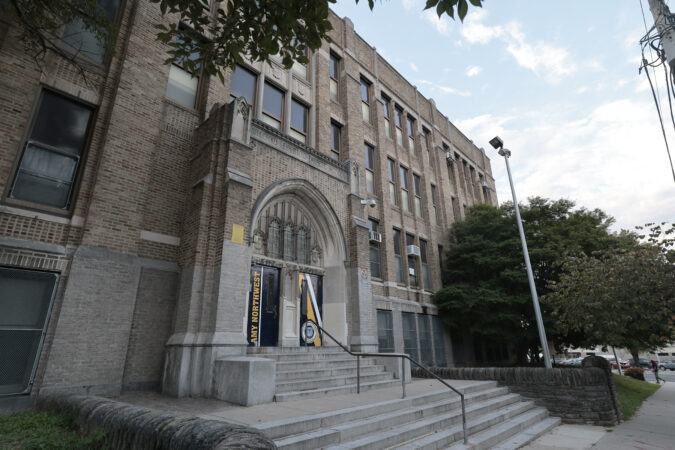
Watlington indicated he wants to close these schools: Blankenburg, Fitler, Ludlow, Robert Morris, Overbrook Elementary, Pennypacker, Waring, and Welsh elementary schools; Conwell, AMY Northwest, Harding, Stetson, Tilden, and Wagner middle schools; and Lankenau Motivation, Parkway Northwest, Parkway West, Penn Treaty, and Robeson high schools. (Some of those schools, like Lankenau and Robeson, would become programs inside other schools — Roxborough High would use Lankenau, and Sayre would useRobeson. Others would close outright, with students assigned elsewhere.)
And he named six schools that would move into other school buildings while maintaining their individual structure and identity: Martha Washington, Building 21, the Workshop School, the U School, a new Academy at Palumbo Middle School, and a new K-8 year-round school.
Students at the affected schools will all move into schools with similar or better academic outcomes or building conditions, or schools that are better by both measures, Watlington said. Transition resources will be available for schools, students, and families from closing schools and for schools that take in new students.
The changes will also affect far more students than those in the 20 schools being shut down or in those sharing locations; closures mean the district would eventually need to redraw at least some school catchment boundaries, which dictate the neighborhood school each child attends.
Watlington said he did not anticipate job losses as a result of the closures.
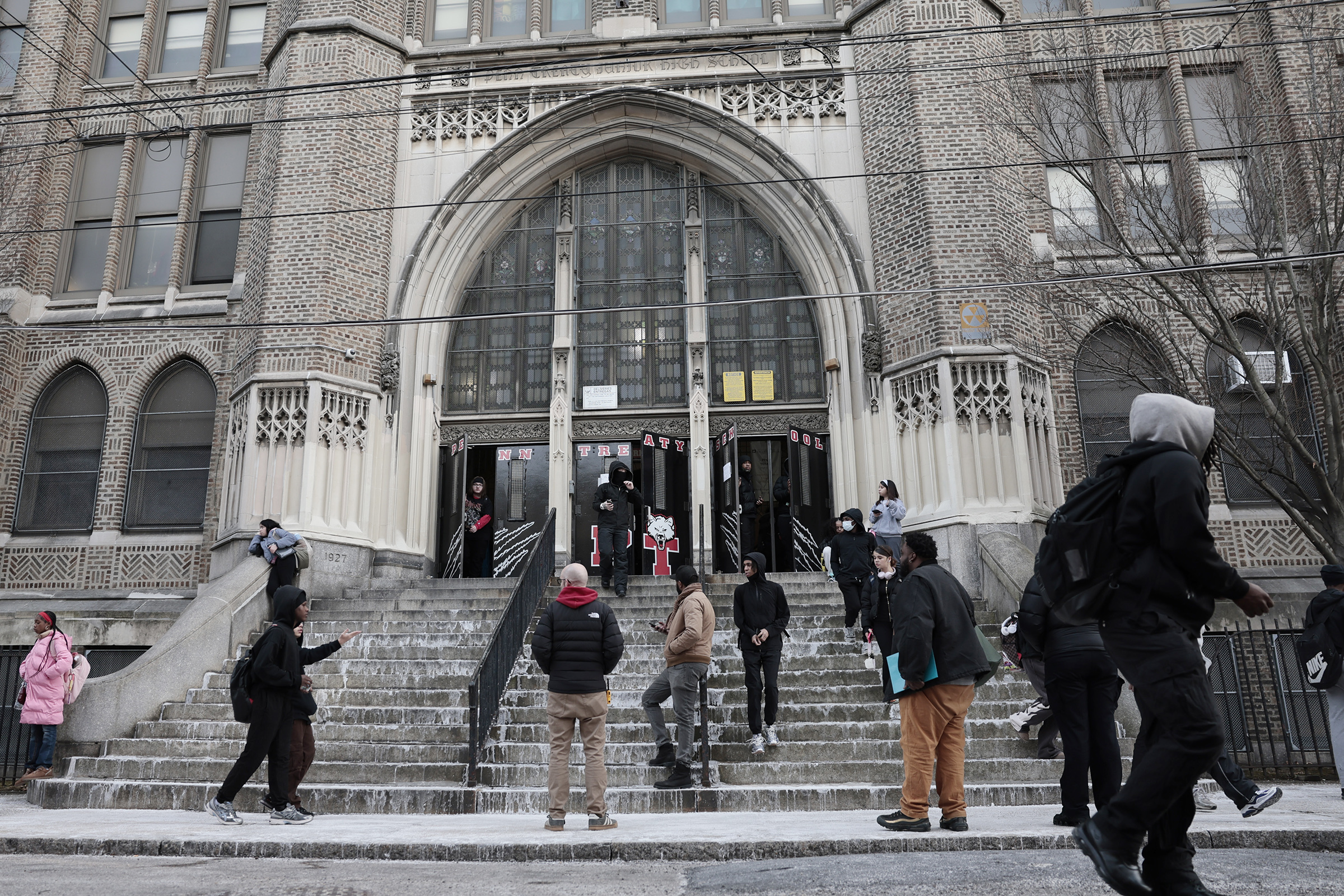
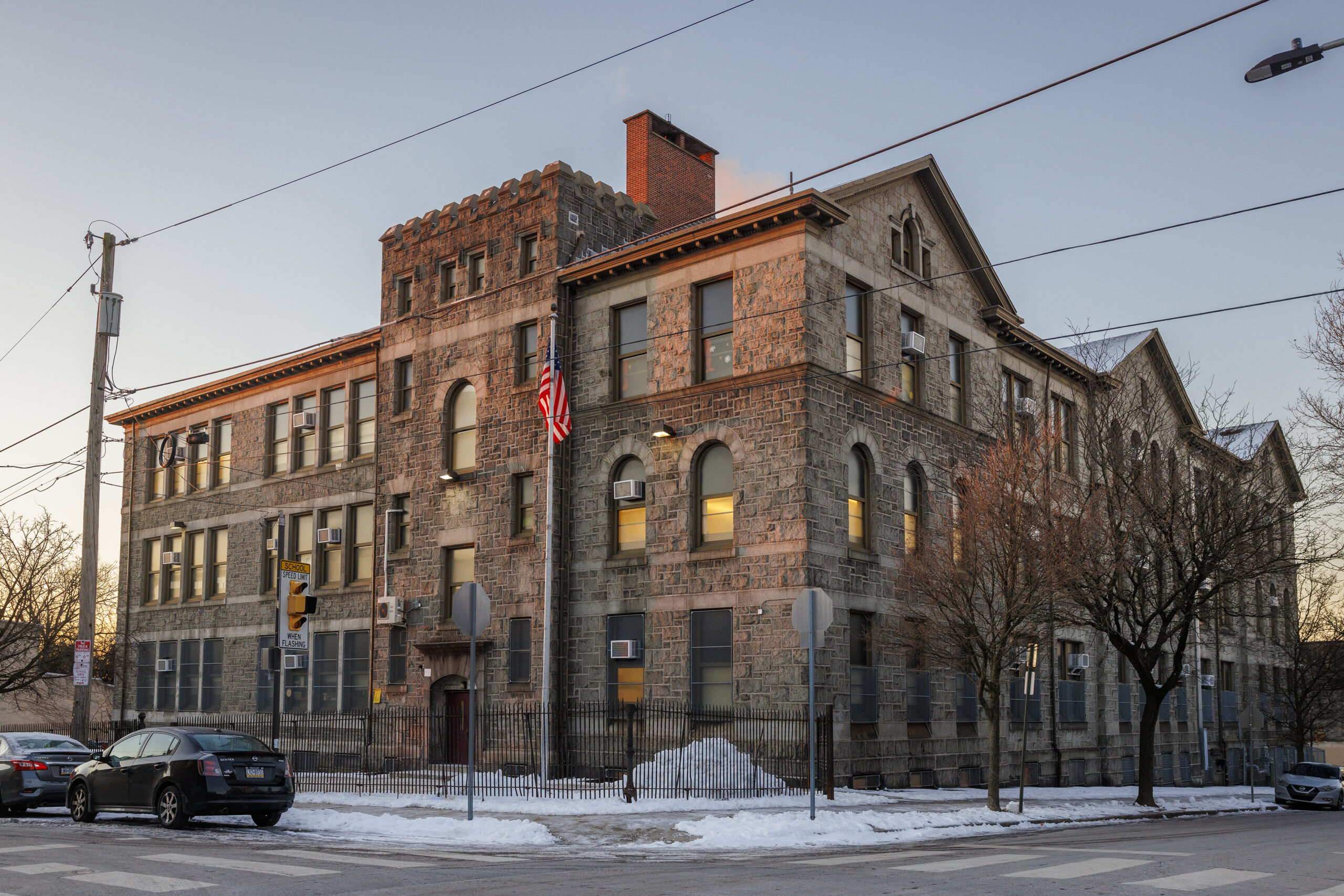
School officials stand by outside for afternoon dismissal at Penn Treaty Middle School, 600 East Thompson Street, in Philadelphia on Thursday, Jan. 22, 2026.
Fewer transitions, more standard grade configurations
Officials said they arrived at the blueprint after analyzing data and gathering feedback across the city — in meetings and surveys, and based on wisdom from advisory panels and a planning team. (Some advisory panel members said they had real concerns about the process, felt they got too little information, and saidtheir input was not seriously considered. Some had called for a pause in the process and a plan with no closings.)
Parents, staff, and community members identified four main themes that informed the recommendations, Watlington said: strengthening K-8 schools, reinvesting in neighborhood high schools, reducing school transitions for students, and expanding access to grades 5-12 criteria-based high schools.
The plan dramatically shrinks the number of grade spans in the district.
Currently, there are 13 different kinds of school configurations. Going forward, there be just six grade bands: K-4, K-8, K-12, 5-8, 5-12, and 9-12. (Six schools will be exceptions, however.)
Philadelphia is leaning into a “strong K-8 model,” Watlington said. He recommended closing six middle schools, with some elementary schools adding grades to accommodate.
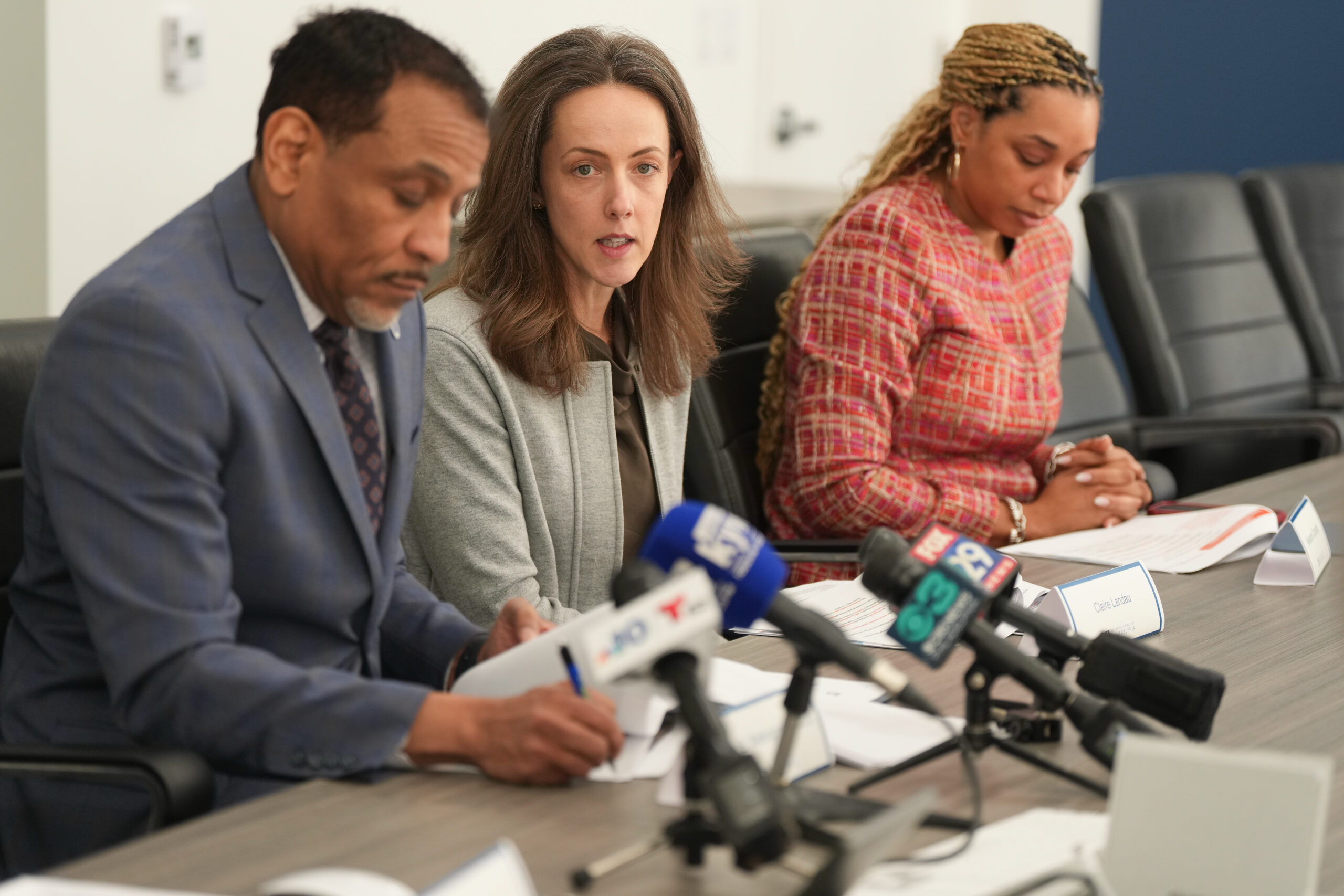
From left to right, Superintendent Tony B. Watlington, senior adviser Claire Landau, and chief of communications and customer service Alexandra Coppadge speak to reporters on Tuesday about their proposed master plan for Philadelphia schools.
It is also turning some high schools that now house four grades into middle-high schools, with 5-12 spans. South Philadelphia High will get investments to its career and technical education space and add fifth through eighth grades, for instance. A new Palumbo Middle School will open, colocated with Childs Elementary in Point Breeze; its students will get preference for admission to the Academy at Palumbo, a South Philly magnet.
Investments in the Northeast, and elsewhere
The single from-scratch construction announced will be in the Lower Northeast — a new Arts Academy at Benjamin Rush, a popular magnet now in the Far Northeast. That new building, which will house students in fifth through 12th grades, would rise on the site of the old Fels High School in Oxford Circle.
A new neighborhood high school will open in the current Rush Arts building, if the plan is approved.
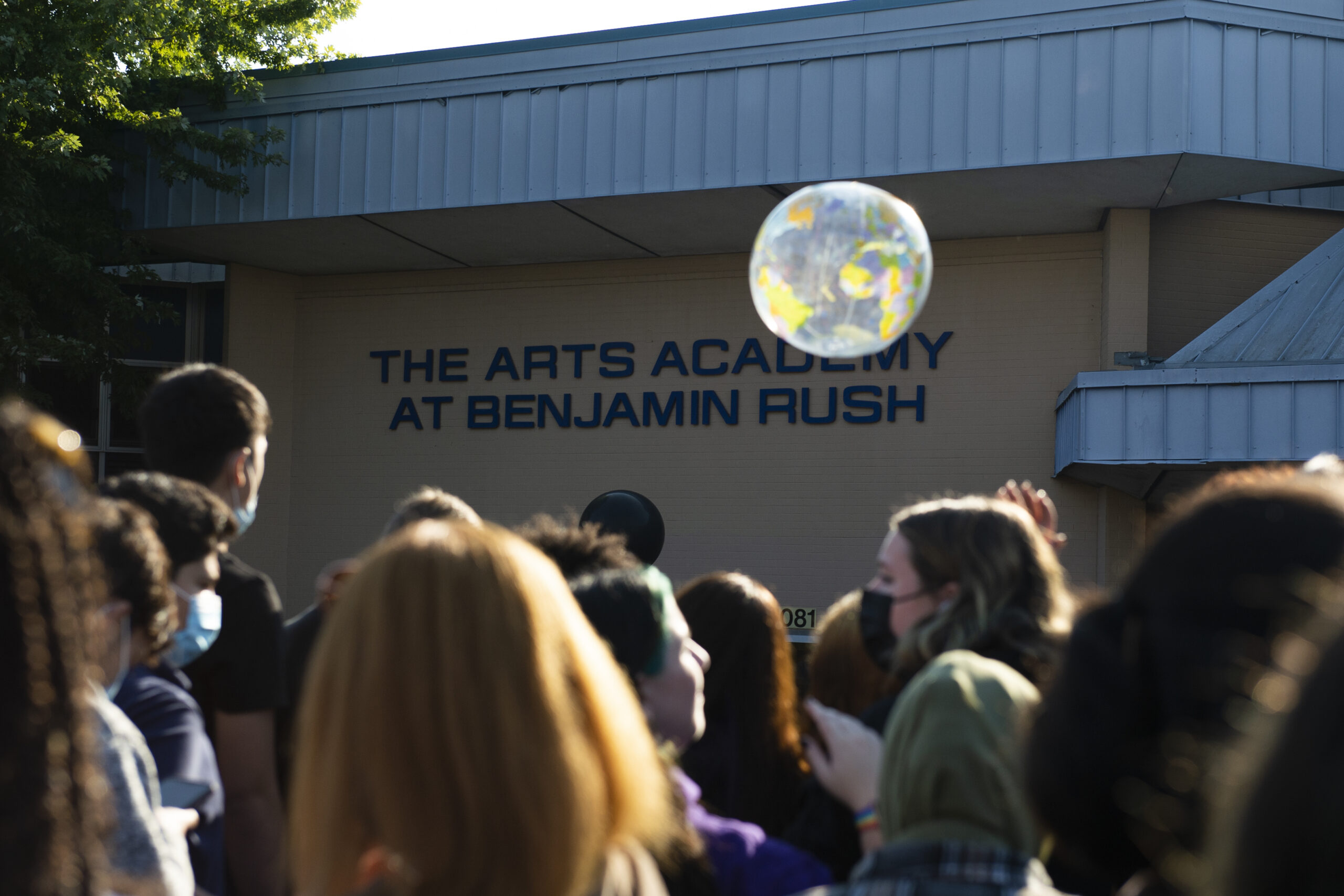
The Arts Academy at Benjamin Rush, shown in this 2022 file photo, will move to a new building constructed in the lower Northeast under the facilities master plan now under consideration. A new catchment high school would open in the Rush Arts building.
Comly, Forrest, and Carnell — all Northeast schools — would be modernized and get additional grades to relieve overcrowding.
Masterman, one of the city’s top magnets, has long been overcrowded — its middle school would move to Waring, in Spring Garden, one of the closing schools.
“It’s really important to note this is not a plan to just funnel resources into the Northeast part of Philadelphia, where the population is increasing faster or in a different way than other parts of the city,” Watlington said. “This is not just build out, invest in some areas, divest in others.”
Learning from past mistakes
Watlington said he knows the plan will be difficult for some to swallow, and does not achieve every aim.
But, he said, “we are not going to make good the enemy of perfect.”
Still, Watlington and others vowed this closure process — the first large-scale closures in more than a decade — would not repeat the mistakes of 2012 and 2013, when 30 schools were shut to save money.
A new transition team will focus on what students and schools need, from social and emotional supports to safety and academic help.
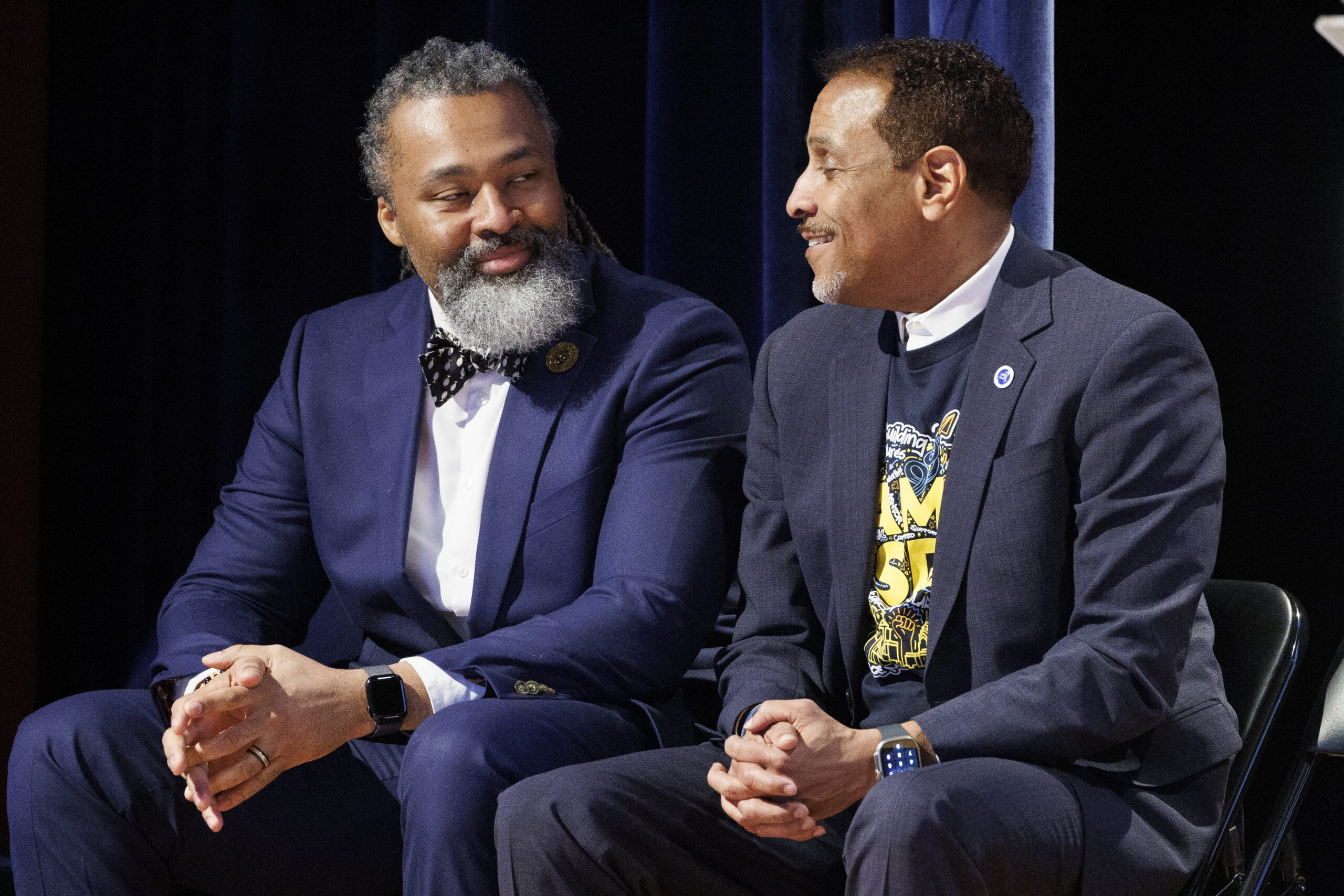
School board president Reginald Streater and Superintendent Tony B. Watlington Sr. are shown in this 2025 file photo.
“These families will get gold-standard, red-carpet treatment directly from the superintendent’s office,” Watlington said.
The superintendent said he will urge the board to “strongly consider” his recommendations.
“We have one shot to get this right,” Watlington said. “We believe this is as good a plan as we can bring to the board, and so we’re going to recommend strongly that the board adopt these recommendations.”
School board president Reginald Streater said the facilities planning process was “critical” to bettering student outcomes.
Watlington, Streater said in a release, has led “meaningful community engagement with families, educators, and community members across our city. The board looks forward to receiving the full set of recommendations and carefully considering them as we work together to ensure all of our school facilities and student rostering practices best support access to high-quality educational experiences and opportunities for all students.”
Mayor Cherelle L. Parker gave good marks to the plan.
“It is ambitious, it’s thorough, and it’s grounded in what I believe matters most, and that’s achieving the best outcomes for our students,” Parker told reporters. “I’m proud that the district has taken what I would describe as a clear-eyed look at really what matters for our children.”
‘It feels like a family member is dying’
Outrage mounted for some Thursday as district officials began notifying affected communities and groups.
“It’s heartbreaking,” said Sharee S. Himmons, a veteran paraprofessional at Fitler Academics Plus, a K-8 in Germantown. “It feels like a family member is dying.”
Himmons is enrolled in the district’s Pathways to Teaching program, taking college courses to earn her degree and teacher certification. She was sitting in her math class at La Salle University when she found out Fitler was slated for closure. She began crying. She failed a test she was taking because her concentration was shot, she said.
Fitler Academics Plus Elementary School in Germantown is among the 20 schools that would close under the proposed plan.
“This school is such a staple in the neighborhood,” she said. Fitler is a citywide admissions school, but draws many students from the area. Himmons’ own sons attended Fitler, and she wanted to teach there after her college graduation.
“This isn’t over,” she said. “We’re going to fight — hard.”
Arthur Steinberg, president of the Philadelphia Federation of Teachers, said he is waiting to see more granular details of the plan, including the list of schools that will be upgraded and what fixes are promised, and hopes for information about how much weight was given to every factor that went into the decisions.
But, Steinberg said, “it is devastating for any community to lose their school — the parents, the kids, and the staff.”
As for the process that led the district to this moment, Steinberg said it was abundantly clear even to advisory panel members that their viewpoints were just points of information for Watlington’s administration, that no promises about heeding any advice were made.
Either way, the closure of 20 schools and more changes that will have ripples across the city for years to come all lead back to one factor, he said.
“Without the chronic underfunding of the district,” Steinberg said, “we wouldn’t have gotten to this point.”
Robin Cooper, president of the union that represents district principals, said the announcement was destabilizing, even though officials had warned closings were coming.
“It’s a loss of history, a loss for Philadelphia,” Cooper said. “Schools are a family, and some families are breaking up.”
Staff writer Sean Collins Walsh contributed to this article.
A lifeline for Montgomery County’s low-income and homeless residents is running out of time.
The Norristown Hospitality Center, a nonprofit day shelter offering free meals, showers, laundry, legal aid, and other services, must move out of its home by the end of January.
Last year, the Hospitality Center offered services to 1,400 people, roughly a third of whom lacked housing, according to executive director Sunanda Charles. No other similar day shelters offer the same array of services in the immediate area.
“The community would be losing a very vital resource,” Charles said.
The Norristown Hospitality Center, which provides services for the homeless, is looking for a new location.
The Hospitality Center, which opened in 1992, has been heading toward this inflection point since it vacated its home of over two decades at 530 Church St. by the end June 2025.
It arranged a six-month lease with the Senior Adult Activities Center of Montgomery County, originally set to expire on Dec. 31. The center was granted a one-month extension, but is still searching for its next temporary and permanent home.
Zoning woes
The Hospitality Center’s search for a new location has been complicated by the organization’s needs and vocal NIMBYism.
The Hospitality Center’s longtime Church Street home was owned by St. John’s Episcopal Church, which notified the center in 2024 it needed to vacate the building. Charles said the church told them it was because of concerns about the optics of visitors loitering outside. The notice came as a surprise, she said, but they were given a year to find their next location.
St. John’s Rev. Christopher L. Schwenk disputed Charle’s characterization of why the church required the Hospitality Center to vacate the building, and said the center did not report property damage in 2023 that required renovations, and failed to pay rent on time for seven months of that year.
“After months of conversation with Director Sunanda Charles, and then the Center’s Board, we made the difficult decision to end their lease due to breach of contract. Director Charles’ characterization of this decision as rooted in ‘the optics of loitering’ is as disappointing as it is false. We see Christ in the faces of our neighbors living in homelessness and are proud to continue serving them right here on Church St.,” he said in a statement.
The Hospitality Center only shut down for three days as staff moved operations to the Senior Activities Center, but they knew this home would be temporary. Charles said the Senior Activities Center received funding for extensive renovations through the American Rescue Plan Act, which would expire if they don’t begin construction soon.
After a process of careful planning and community outreach, the Hospitality Center identified a new building at 336 E. Moore St. and entered a purchasing agreement for it in December 2024.
Mike Kingsley, program manager at the Norristown Hospitality Center, greets clients as they enter the center for breakfast Friday.
But doing so required a zoning variance request, which brought the matter before the Norristown Zoning Hearing Board in May. The proposed building was located in a residential area, which ignited the public. Norristown residents testified for hours both for and against the Hospitality Center’s move, with some speaking about the essential services the center provides, while others worried about those suffering from substance abuse loitering where their children are.
The board ultimately voted 2-1 against the center’s request.
“I get to see firsthand those who are truly living on the margins of the city of Norristown. It is extremely disappointing — the whole ‘not-in-my-backyard’ attitude — it’s disheartening,” the Rev. Andrea Gardner, board president of the Norristown Hospitality Center, told The Times Heraldfollowing the vote.
Charles said that the Hospitality Center has learned important lessons about the regulatory process and building community support from that experience as it searches for other options.
But most potential properties in Norristown would require a similar variance request or special exemption for the Hospitality Center to move in. When that time comes, Charles anticipates needing to argue again for the center’s existence in the heart of Norristown.
“These are people in the community. It is the community’s responsibility as well. Everyone can make a difference. And sometimes, the difference may be in the perspective of how you view people,” she said.
Staying in position
Until the Hospitality Center’s future is settled, Brian Van Scoyoc plans to keep spending every day there that he can.
Van Scoyoc, 54, has been homeless for about five years, since the Norristown home he shared with his ex-girlfriend caught fire and burned down. His ex had to pull him back from jumping into the blaze to rescue his dog, Loggie, who died in the fire.
“I got sort of displaced and didn’t know where to go or what to do,” he said.
He’s worked odd jobs here and there, spending his nights at a shelter or in a tent in the woods. But his visits to the Hospitality Center have been a welcome reprieve.
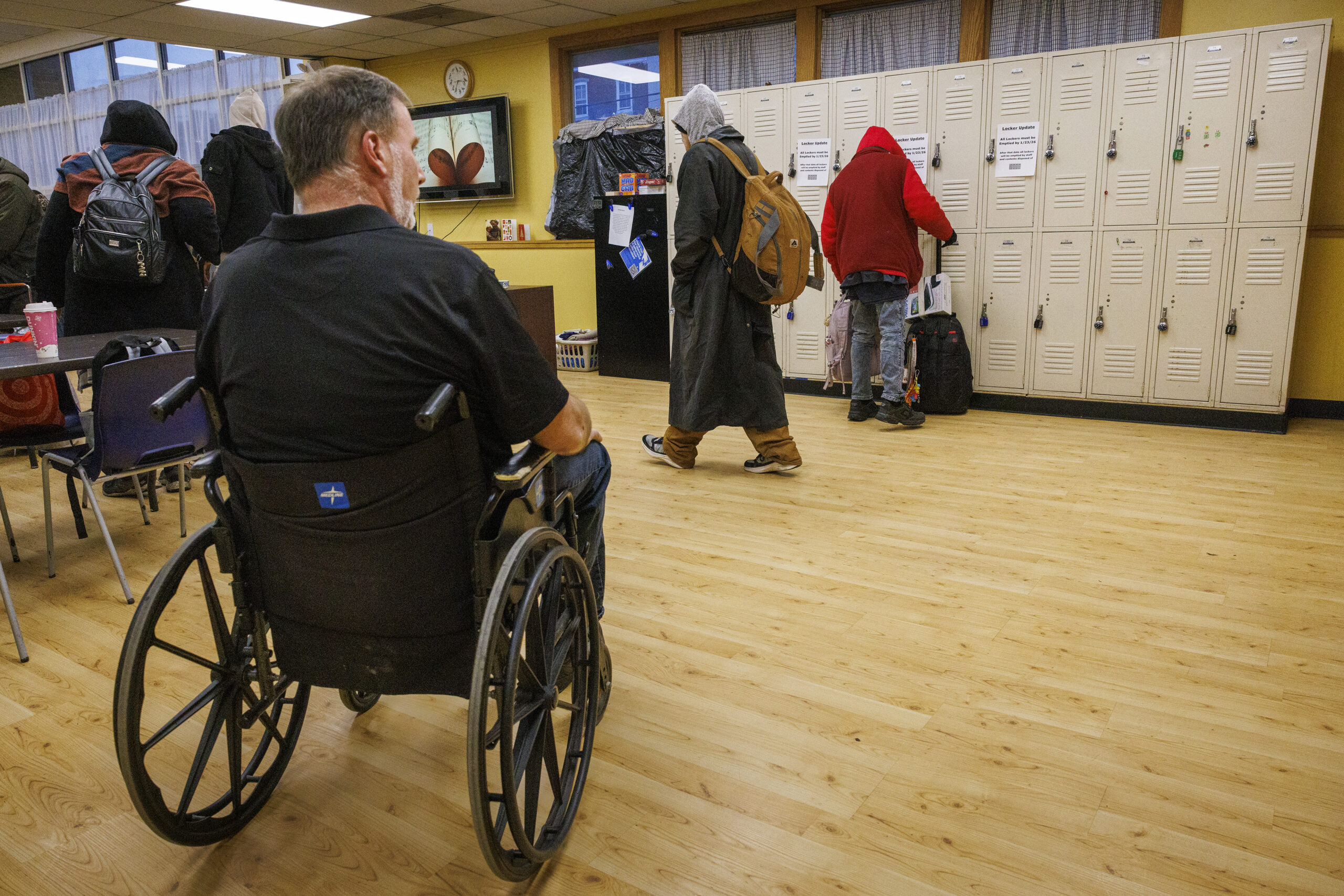
He comes for coffee and breakfast to start his day, a pleasant escape from the cold early mornings after the overnight shelter closes its doors. He enjoys the chance to chat, watch TV, and play games with the other visitors, and appreciates the center’s laundry and legal aid services. Having a place to plug in his phone and store his belongings in a locker are helpful too, he said.
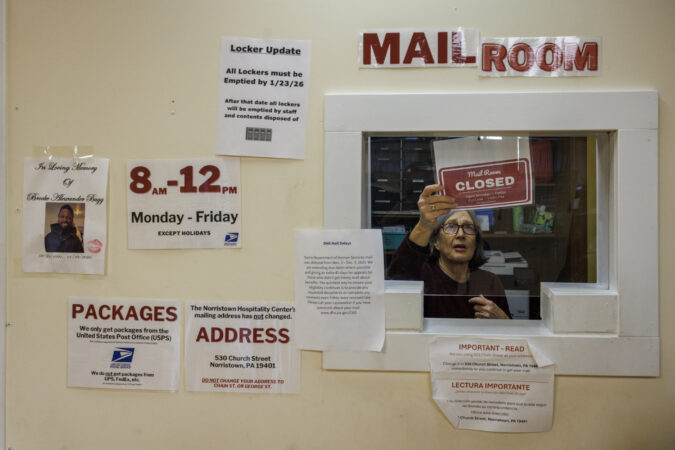
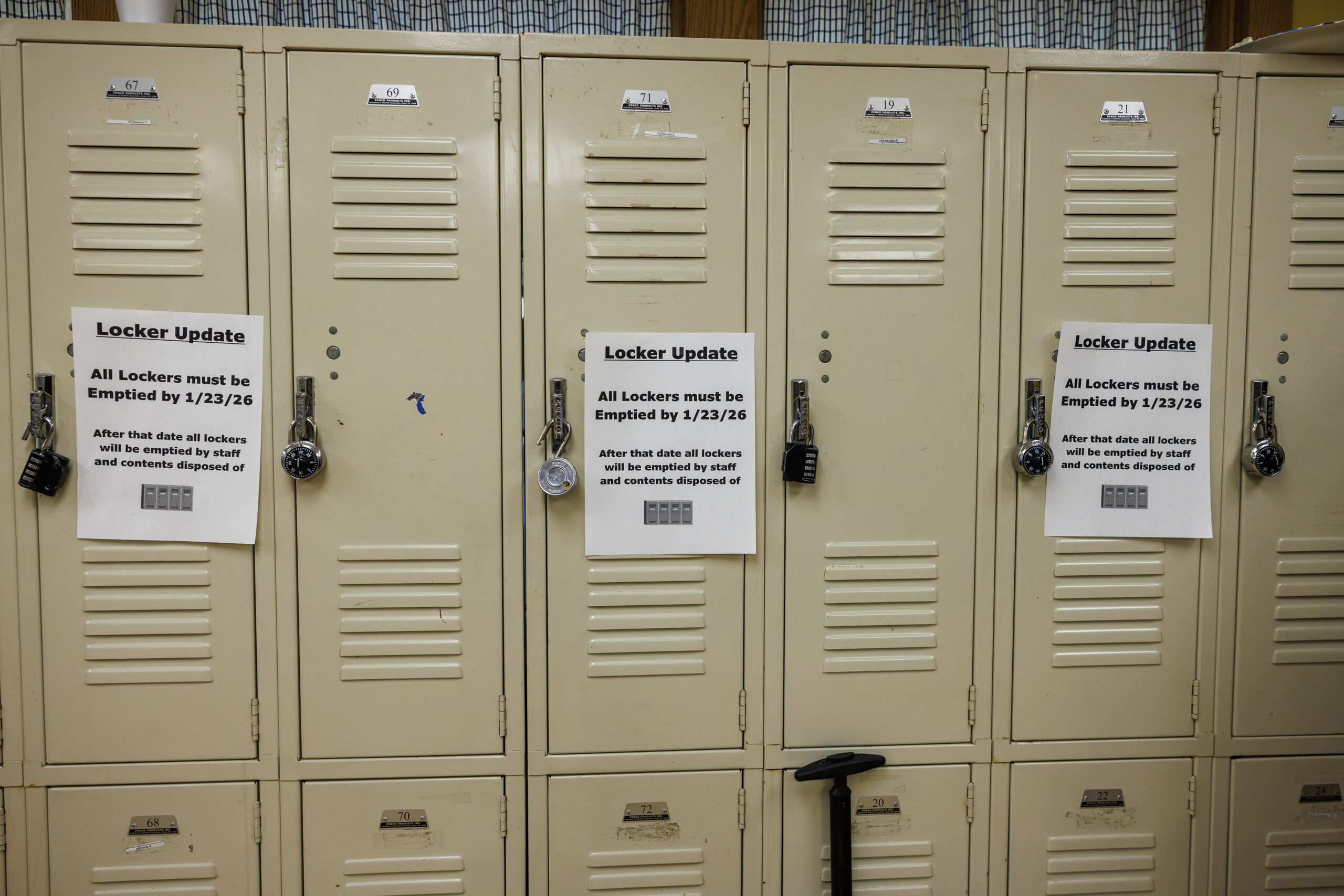
Lockers at the Norristown Hospitality Center have been posted so clients know to empty them by Jan. 23.
Van Scoyoc recently picked up frostbite after spending a night in his tent when he believes he didn’t let his wet feet dry properly. It’s difficult and painful for him to walk, so the center has helped arranged rides for him to get around.
If the Hospitality Center were to close for an extended period time, Van Scoyoc said it would be a great distress.
“It’s a great place to be. You should go check it out,” he said.
As news has spread of the center’s plight, Charles said she’s received countless calls and emails from people who used its services in the past. They’ve expressed their support and gratitude, as well as their sadness at hearing that the center is up against the clock.
One voicemail in particular has kept Charles motivated. A woman who spent time at the center in 2009 called her to share that she has been sober since connecting them, and is no longer homeless. She said in her message: “God is going to do a wonderful thing for you. Stay in position,” according to Charles.
“We do believe there is a plan for us. And we are excited about it,” Charles said.
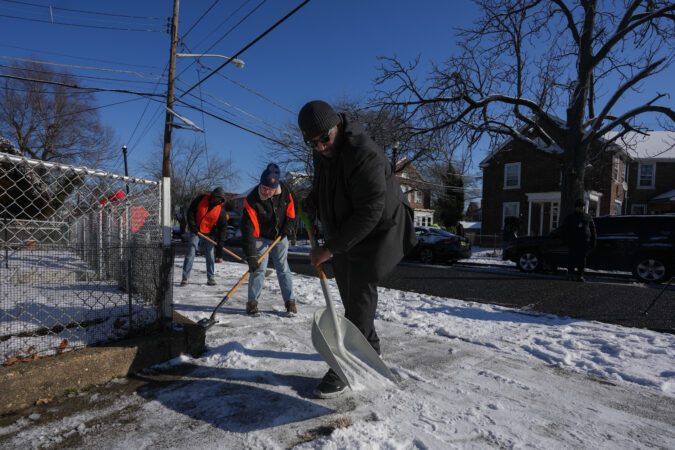
As soon as the snow stops falling, it’s time to get shoveling. In Philadelphia, you have six hours to clear the sidewalks in front of your home before facing potential fines, according to city rules.
For residents, whether you rent or own, here’s what you need to know.
Can I get fined for not shoveling my sidewalks?
Yes. Fines range from $50 to $300 for those who violate city snow-removal rules.
How much time do I have to clear my sidewalks?
You have six hours after the snow stops falling to clear your sidewalks.
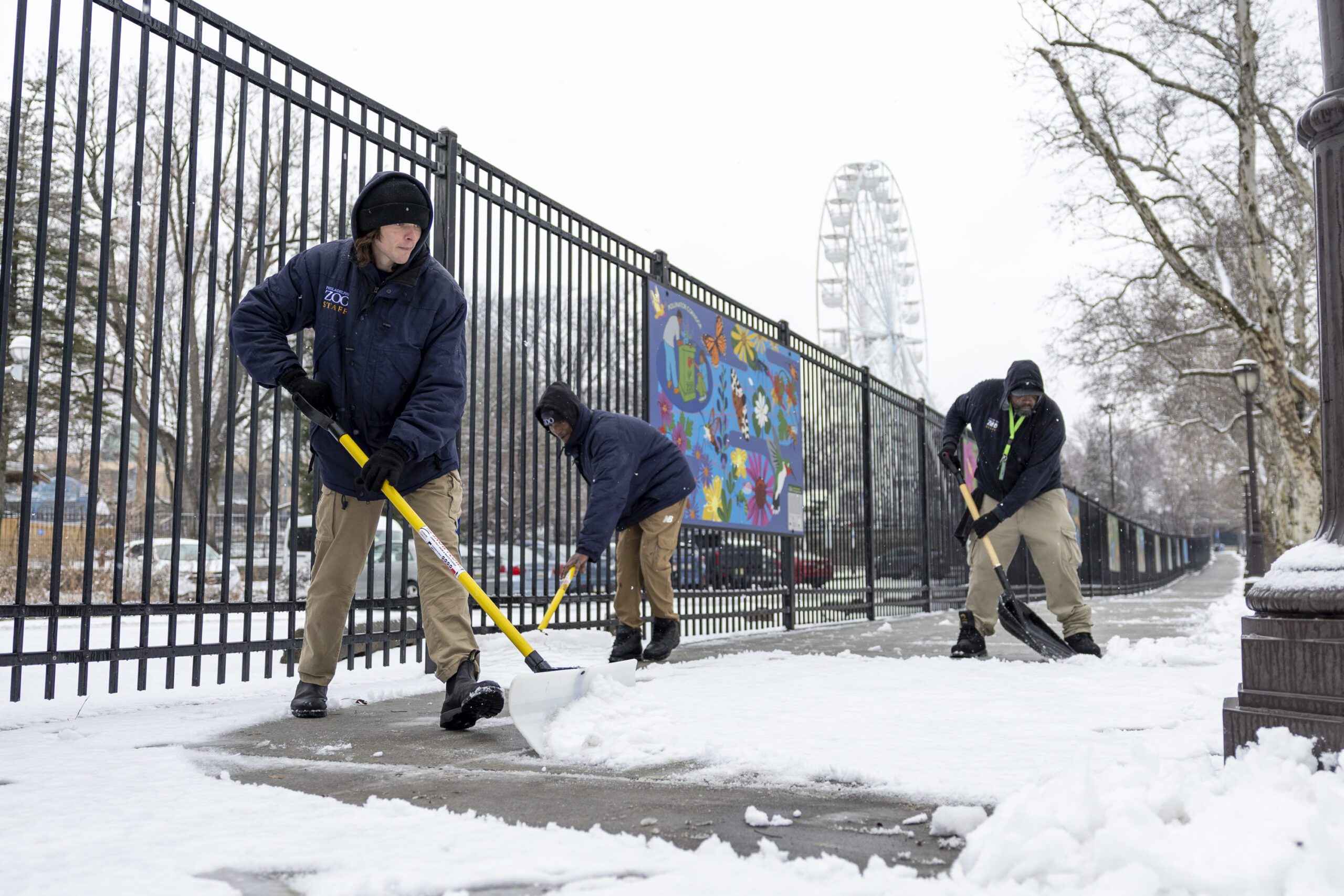
From left: Philadelphia Zoo Garden service workers Joseph Mineer, of Fairmount, Naeem Price, of North Philadelphia, and David Wallace, of Southwest Philadelphia, clear snow from the sidewalks near the bus drop-offs in Philadelphia on Saturday, Jan. 17, 2026.
Who’s responsible for clearing the sidewalks? What if I’m a renter?
Whether you rent or own, you’re responsible for clearing a path, unless you live in a multifamily dwelling, like an apartment building or a building with more than one unit. In this case, the building owner or agent is responsible for snow removal.
What about businesses?
For businesses, clearing sidewalks and parking lots is the responsibility of the property owner, said Chris Young, communications manager for the Streets Department.
The city is responsible for clearing sidewalks at city facilities.
How wide do I need to make the path?
A path must be at least 3 feet wide, unless the width of the pavement from your property line to the curb is less than that. In that case, your path can be narrower but has to be at least one foot wide. Paths must be thoroughly cleared, and you can’t dump the snow and ice into the street. Pro tip: Push and clear snow toward your building.
You can use a commercial deicer to salt your sidewalk or driveway, and it’s a good idea to apply it as soon as you see a light layer of snow. If you don’t have a deicer, you can use kitty litter for temporary traction.
Can I report someone who hasn’t shoveled their sidewalk?
If you want to report a sidewalk that has not been cleared, call 311 or report the issue online through the 311 portal.
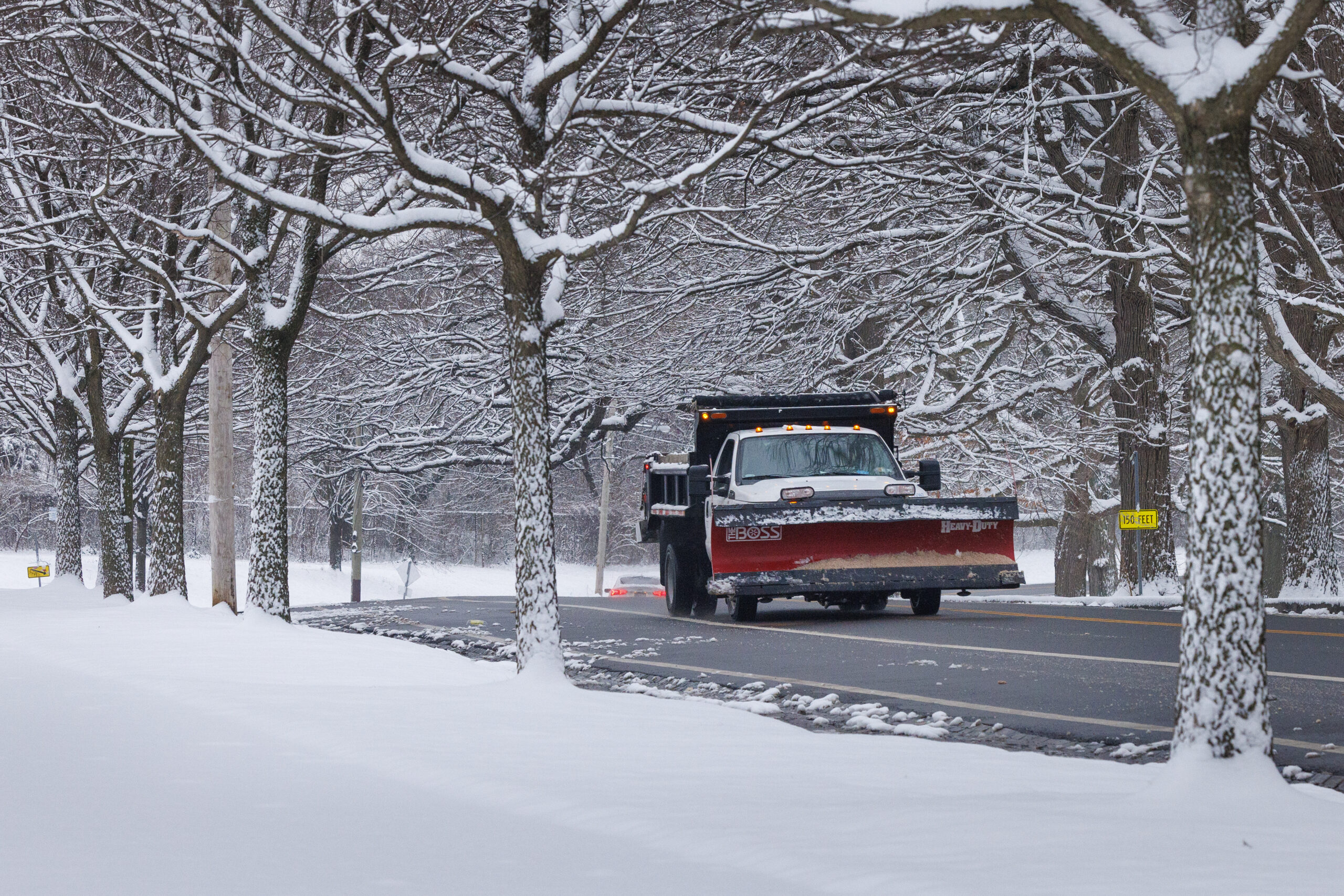
A Philadelphia Parks and Recreation plow truck heads along Reservoir Drive, Fairmount Park near Diamond Street, after overnight snowfall, Philadelphia, Wednesday morning Feb. 12, 2025.
What happens if I’m parked along a snow emergency route?
When a snowstorm hits, the city may declare a snow emergency. When that happens, the city plows 110 miles of snow emergency routes from curb to curb, which means vehicles and dumpsters within those areas must be moved or you face fines of up to $130. If you can’t get to your car, or if your car can’t be moved, it doesn’t matter. Your car will be towed and ticketed if you don’t move it.
You can view a list of snow emergency routes at bit.ly/3YSMeDm/.
If you live, own a business, or frequently park in these areas, you’re advised to plan ahead as winter weather approaches. Large signs reading “Snow Emergency Route” in white letters on a red background will be posted along the streets once a snow emergency is declared.
If your vehicle was towed from a snow emergency route, call 215-686-SNOW (7669) and be prepared to provide information to identify your vehicle.
What if I live in the suburbs?
If you live outside of the city, the rules vary by township. These include how quickly you have to remove snow and how wide the pathway must be.
In most towns, property owners and tenants can face fines if sidewalks aren’t cleared. Check with your township for specific details.
A video of a former WHYY intern yelling expletives and pepper-spraying a local influencer on a SEPTA bus is going viral on conservative media.
During the encounter on Monday afternoon, 22-year-old Paulina Reyes called 22-year-old Francis Scales a “fascist” and “racist.” Reposts of the video capturing the incident have since garnered millions of views on social media.
The video depicts Reyes accusing Scales of insulting Muslim people, Black people, and Latino people in posts on his website. Reyes then proceeds to pepper-spray him in the face while Scales’ friend and colleague films.
Scales runs a website called Surge Philly on which he posts videos of himself interviewing people at protests. He became known for provoking District Attorney Larry Krasner at a town hall and organizing a protest against him.
Social media accounts, including I Meme Therefore I Am, which has more than 842,000 followers on X, and Libs of TikTok, which has 4.5 million X followers, launched the video and its two subjects into the national spotlight in the days following the encounter. Both social media accounts are known for posting and reposting content geared toward conservative audiences.
“BREAKING: Antifa agitator attacked two conservative independent journalists on a Philly bus, pepper spraying them, punching them, and trying to grab their phone. She needs to be identified and arrested!” I Meme Therefore I Am posted on X alongside the video on Monday night.
By Wednesday afternoon the post had 2.3 million views and 8,600 reposts.
Billionaire Elon Musk got involved, commenting “She has violence issues” on Surge Philly’s X post containing the video of the incident. His comment attracted 222,000 views.
Soon, the social media posts were linking Reyes to WHYY. Reyes interned there over the summer but neglected to update her LinkedIn profile to reflect that her internship had ended months ago. The lapse led people on social media to post about her as if she were still employed there and led to criticism of the public radio station.
“Hi @WHYYNews, why are your reporters pepper spraying independent journalists on the bus??” Libs of TikTok posted Tuesday morning.
Scales has capitalized on the attention, reposting several tweets from popular social media accounts containing the video and messages supporting him and condemning Reyes.
Meanwhile, Reyes said she has received “nonstop” phone calls from strangers around the country and has gotten private messages from people threatening to rape or kill her.
Reyes and Scales were peers at Community College of Philadelphia, where Reyes is still a full-time student studying communications and media. Scales was studying biology and got partway through his degree before leaving school and transitioning to full-time content creation, he said. He plans to go back and finish his degree eventually.
The two had crossed paths a few times at school and were familiar with each other at the time of the encounteron the Route 7 bus, they both said.
Reyes said she had an overall positive impression of Scales on their first few meetings, and felt he was trying to do right by the students in his capacity as student government president.
But her attitude changed during his tenure as president. She said she observed him condescend tostudents and staff of color and carried that behavior over to the content on his Surge Philly website once he left school.
When she saw him on the bus in South Philly, her initial intention was to have a civil conversation, she said. She planned on asking him why his videos do not offer multiple viewpoints on the issues discussed.
“I did not want to pepper-spray someone on a public bus,” she said. “This is not something I wanted to do.”
Scales soon started filming the confrontation “for my own safety,” he said, because “she was attacking me.”
Reyes said she asked him to stop filming and felt the anger building as he kept the camera rolling. Especially as it started to dawn on her that he would likely post this video online.
“I got mad and I wanted to defend myself because he wasn’t listening,” Reyes said. “I did what I thought was the safest thing to protect myself. I pepper-sprayed him in the face.”
Scales said he managed to dodge the first spray. Reyes then got off the bus.
Knowing this video was likely to reach Scales’ followers, Reyes returned to the bus and came at Scales again with insults about his videos.
“I wanted to make a message that the content he was making was harmful and it was hurting people,” Reyes said. “It was hurting communities that are trying to feel safe right now.”
She concluded her tirade by pepper-spraying him again, this time getting him in the eyes.
SEPTA is investigating the incident, which took place at 23rd Street and Washington Avenue, according to agency spokesperson Andrew Busch.
Philadelphia police did not respond to a request for comment. Nor did Community College of Philadelphia.
Scales said he posted the video online partly because it was such a shocking incident, but also, in part, because it felt aligned with the rest of the content on his website.
“I thought it was relevant,” Scales said. “She was calling me a racist and a fascist and then she committed violence because of what she thought I was.”
This was not Scales’ first time getting attacked for his interviews and posts, he said. He attributes the attacks to the lines of questioning he often pursues when interviewing people at protests. The protesters seem to sense he’s not “in their circle,” he said.
Some of Scales’ recent videos consist of him interviewing people at protests and on the street. He typically homes in on one question, such as “Do you think people have a right to disrupt ICE operations?” or “Do you believe in the concept of having a border?”
“They react aggressively and violently to anybody who they feel may not have their same worldview,” he said. “I think it’s a sign that what I’m doing is good and that I need to stay on this path.”
As for Reyes’ journalistic aspirations, she said she is nervous.
“My entire life has been feeling like it’s falling down now,” she said. “I’m just worried about how this would affect my future as a journalist.”
WHYY spokesperson Gary Bramnick responded to the incident with a statement clarifying Reyes “has no current affiliation, employment, or contractual relationship with our organization.”
Reyes said she has undergone years of treatment for borderline personality disorder and depression. She has been working on managing her emotions better, she said, but, in this moment, they got the best of her.
“I’m not a perfect person and I’m learning how to self-regulate better,” she said.
For Scales’ part, he said he does not feel safe returning to campus until the college makes a public statement in an effort to “denounce political violence.”
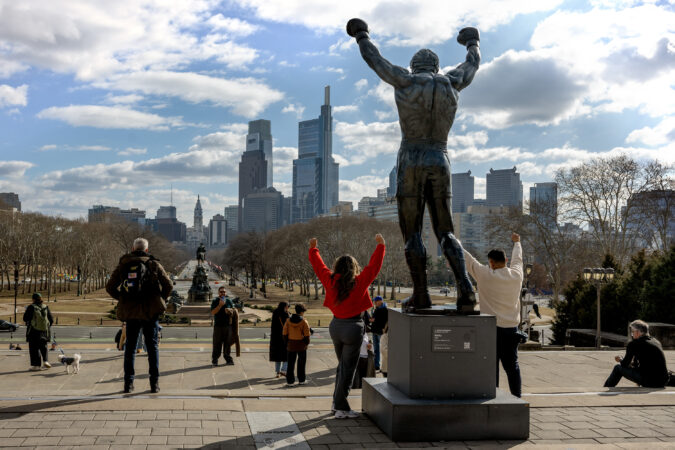
To hear the Parker administration officials tell it, moving the Rocky statue from the bottom of the Philadelphia Art Museum steps to the top is a victory for the underdog.
The new location, which received a green light from the Art Commission on Jan. 14, will certainly create a dramatic, Instagrammable moment for tourists, and further elevate the Rocky brand (and value).
But it’s no victory for Philadelphia residents, who remain the true underdog in this saga. Allowing the old movie prop to dominate the Parkway’s iconic vista is simply the latest in a series of decisions that have privatized the Art Museum’s gorgeous, landscaped grounds.
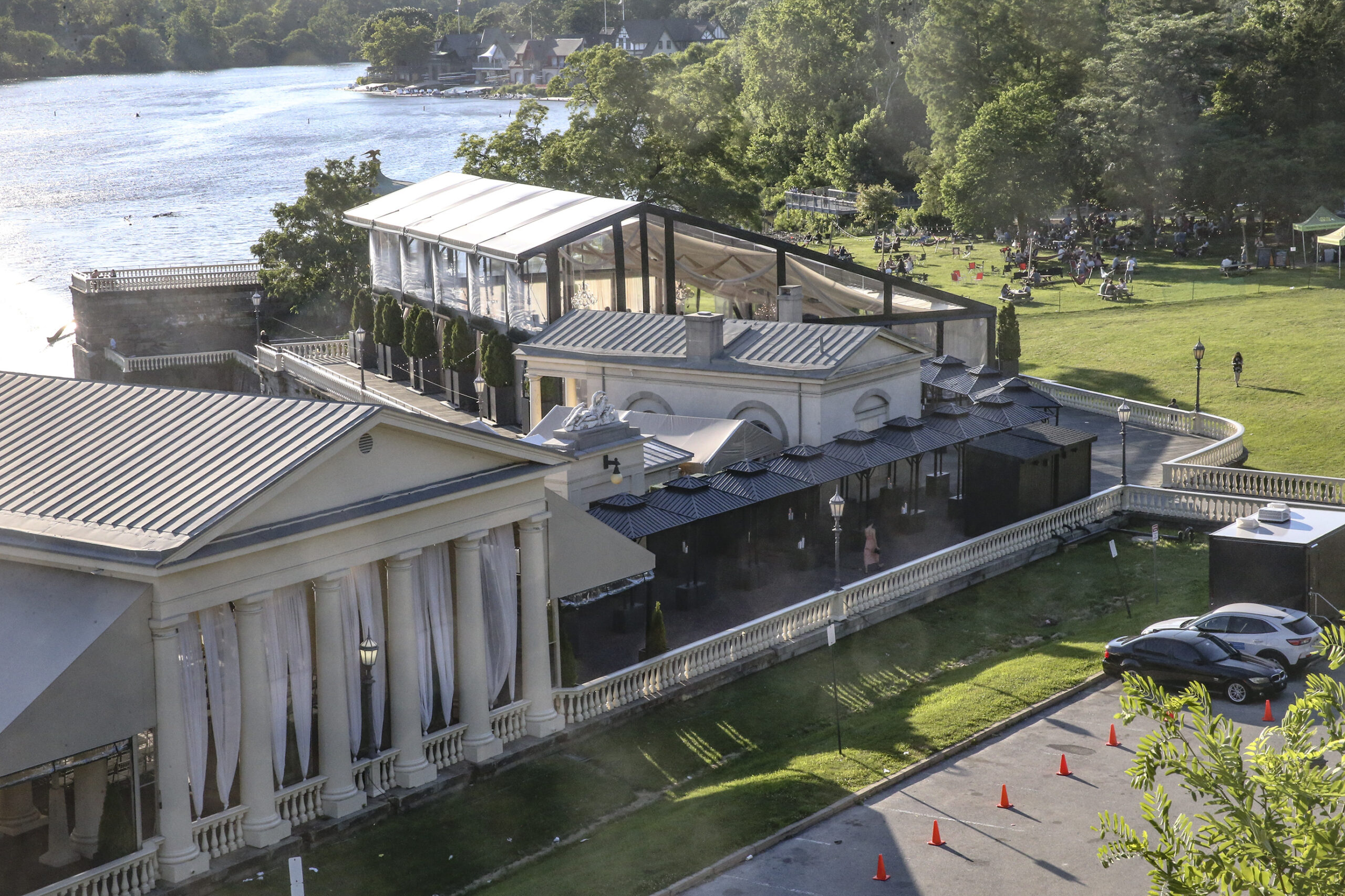
If you walk to the back of the museum, you’ll find the most egregious example of Philadelphia’s zeal for monetizing public space: the sprawling Cescaphe banquet operation at the Fairmount Water Works.
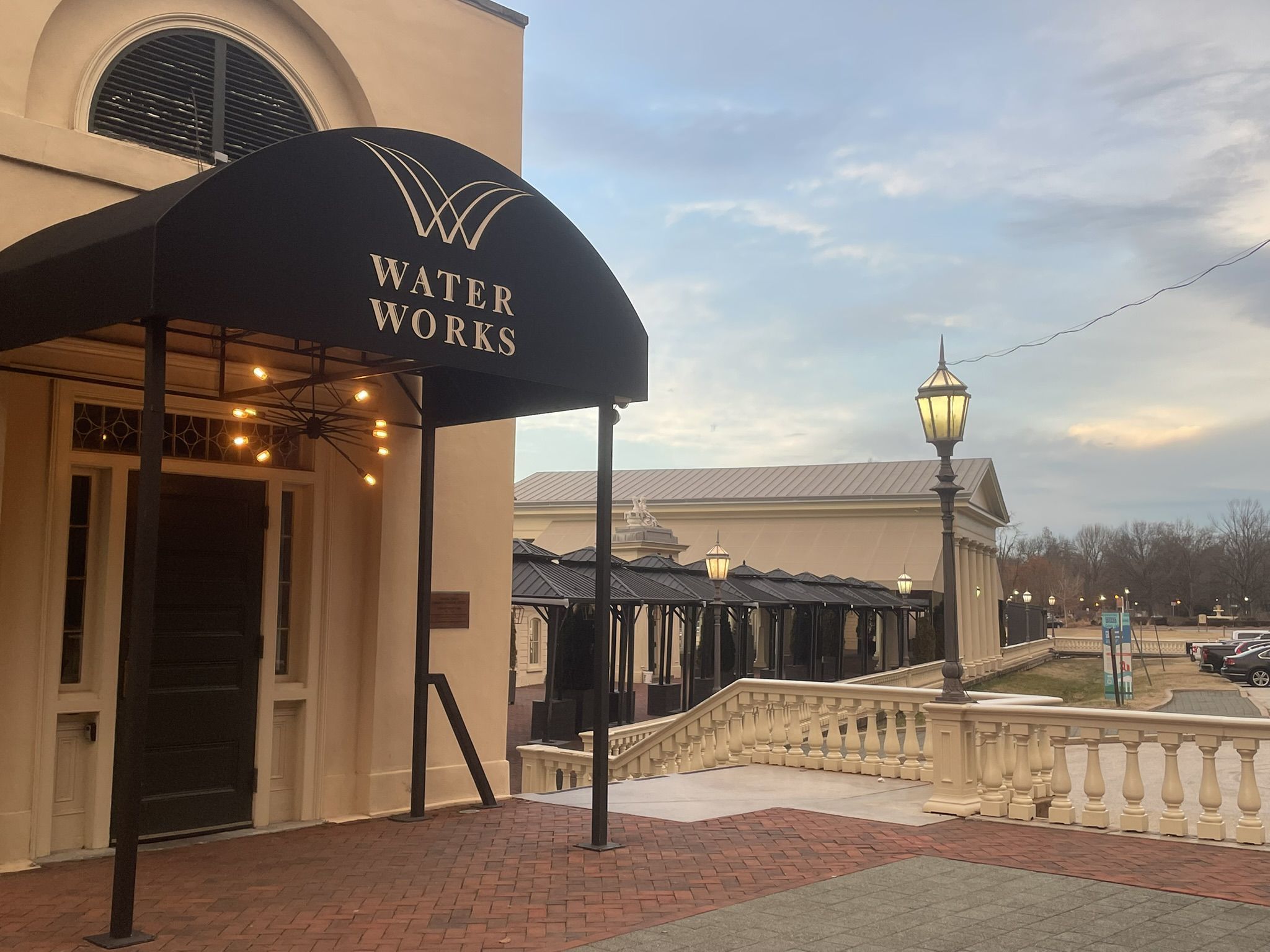
While the main Engine House had been used as a restaurant in the past, the city allowed Cescaphe to take over the entire complex in 2021. Today, the Water Works is surrounded with a cordon of server stations, portable restrooms, and covered walkways.
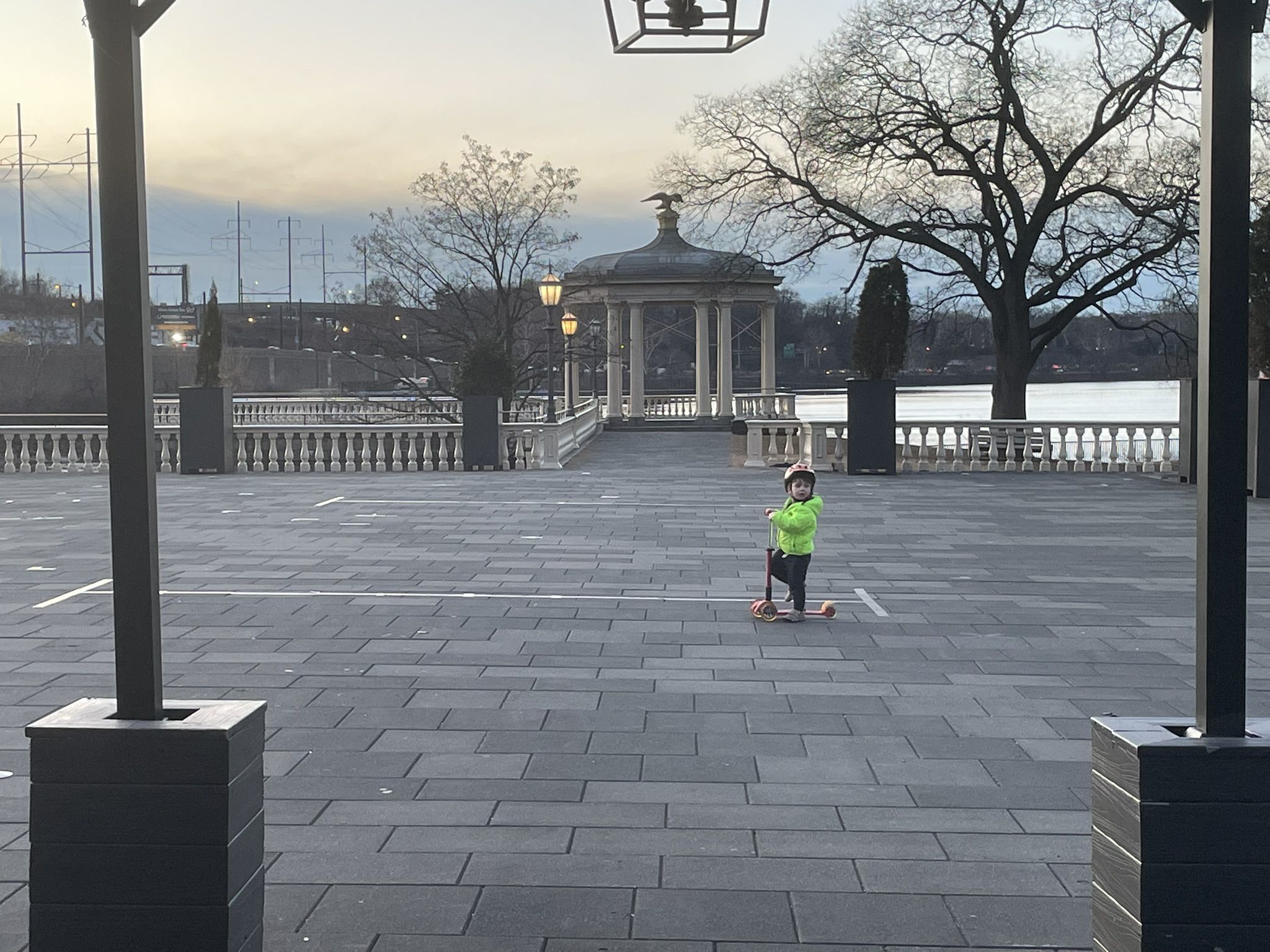
Since 2021, the historic Fairmount Water Works has been surrounded by a cordon of server stations and covered walkways. A glass party room prevents the public from enjoying the Mill House Deck, a pier overlooking the Schuylkill.
Cescaphe’s presence has drastically limited the public’s access to this historic landmark, a scenic spot where generations have come to stroll and take in views of the Schuylkill. Although visitors are permitted to wander though the Water Works’ classically inspired temples and colonnades when no events are going on, who would know that, given the messaging conveyed by Cescaphe’s formidable barricades?
Preparations for evening events often start in the afternoon, further limiting access. Every spring, Cescaphe installs an enormous glass party room on the pier known as the Mill House Deck. It remains in place until late fall, which means the public gets to use the overlook only during the coldest months of the year.
Rocky already has a good spot
Moving the Rocky statue to the top of the steps might seem like a modest imposition by comparison, but the new location will interfere considerably with the public’s enjoyment of the space.
Since people with mobility limitations will have trouble climbing the 72 steps to the top of the museum’s grand staircase, they’ll need transportation. The Philadelphia Visitor Center — the initial advocate for the new location — has offered to run a shuttle bus around the museum apron every 15 minutes. Better watch out when you’re taking that selfie!
During the recent Art Commission hearings, the city’s two top cultural officials, Valerie V. Gay and Marguerite Anglin, argued that the Rocky statue deserves a higher profile perch because it’s a unique tourist attraction. They noted that the statue has been the subject of books and podcasts and will soon be the focus of a major Art Museum exhibition, “Rising Up: Rocky and the Making of Monuments,” curated by Monument Lab’s Paul Farber.
Yet, given the added complications, it’s hard to understand what the city gains by changing the statue’s location.
Rocky’s current home — a shady grove at the bottom of the steps — has been a huge success. The statue was installed there in 2006, after years of shuttling around Philadelphia, from the museum to the sports complex and back. In a typical year, 4 million people make the pilgrimage to see Rocky, the same number who visit the Statue of Liberty annually.
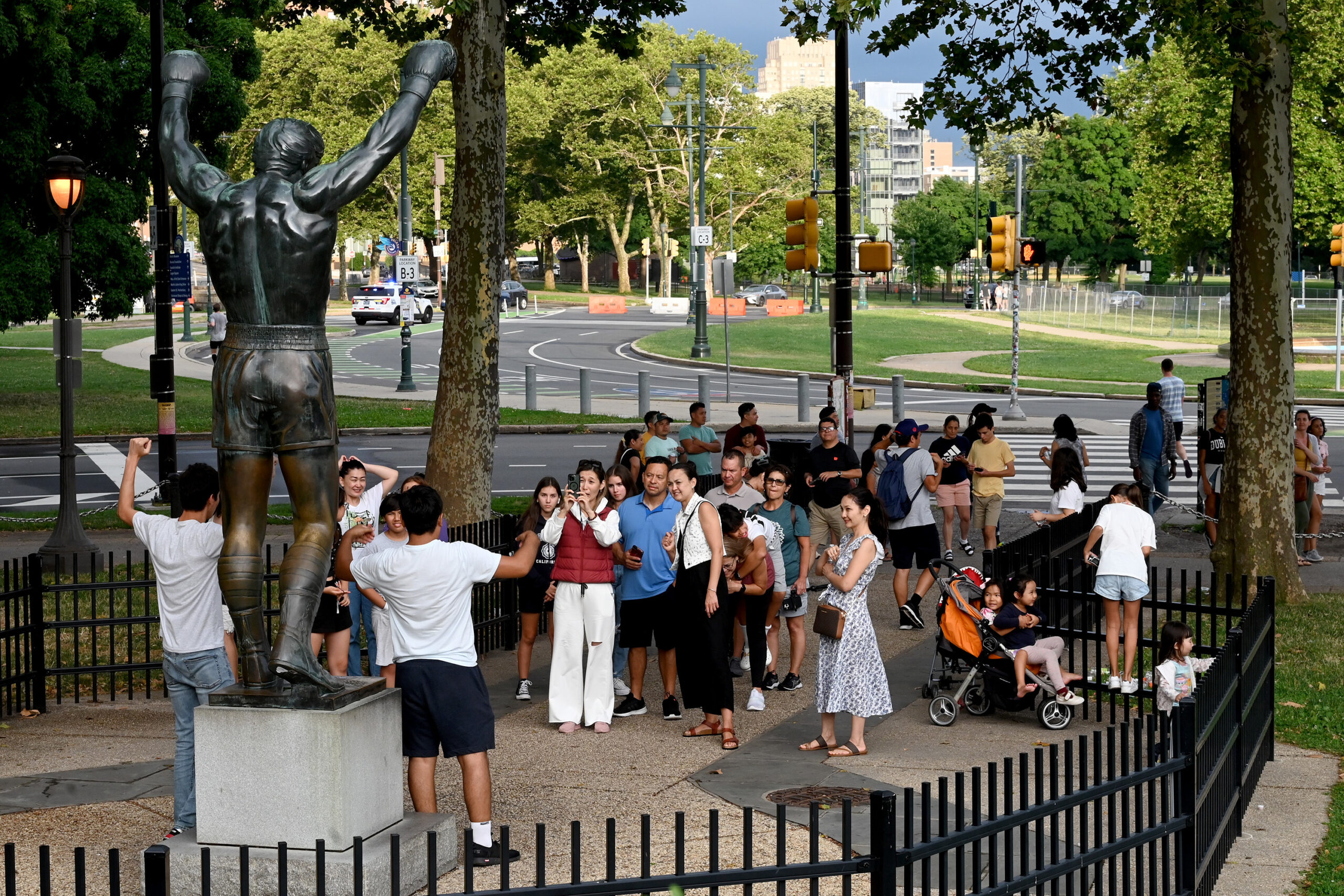
The Rocky statue, currently at the base of the Art Museum steps, is easily accessible to visitors and tour groups.
Because the grove is so close to the street, there are no accessibility issues. Tour buses and cars can pull up to the curb, allowing people to jump out for a quick selfie. Sometimes there’s a line for photos, but the mood is always festive, with visitors and locals mingling along the sidewalk. Anyone who wants to reenact the fictional boxer’s run up the museum stairs can do that, too.
Yes, this site occupies a piece of the museum’s grounds. But the intrusion is relatively discreet. Considering how well this location works, why change it? It’s not like there was a huge public clamor to give Rocky more prominence. When Inquirer columnist Stephanie Farr polled readers in September, most respondents said they were happy to keep the statue in its current location — or get rid of it entirely.
Only a single person testified at the Art Commission’s Jan. 14 hearing — and he argued against the move. Several civic organizations, including the Design Advocacy Group (DAG), sent written statements urging the city to reject the proposal.
“All we’re doing is glorifying Sylvester Stallone, who sells merchandise at bottom of the steps,” complained David Brownlee, a member of the DAG board and a renowned University of Pennsylvania art historian who has written a history of the Art Museum.
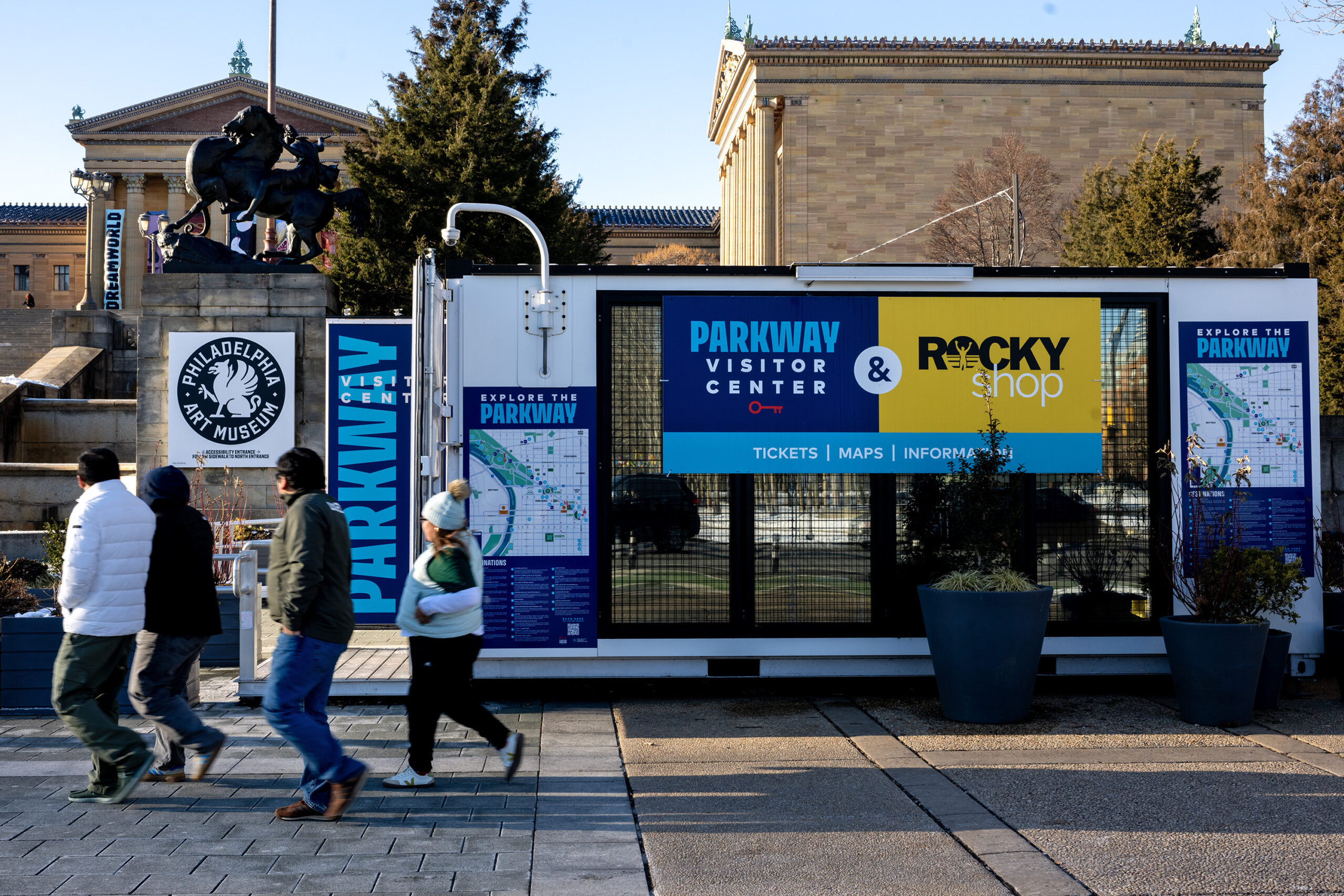
Those Stallone-licensed souvenirs are sold in the “Rocky Shop,” a metal shipping container that was allowed to encroach on the plaza at the base of the museum steps in 2023. Although the metal structure doesn’t take up as much public land as Cescaphe’s banquet operation, it clunks up the approach to the museum’s elegant stone staircase.
The Parkway Visitor Center & Rocky Shop at the base of the Philadelphia Art Museum steps Jan. 20, 2026. In 2023, the city allowed Sylvestor Stallone to set up the metal shipping container at the base of the Philadelphia Art Museum steps.
Initial reports said the Visitor Center, which pushed for the shop, would get a cut of the sales. Yet when I asked how much money that partnership had yielded, a spokesperson for the independent tourism agency declined to answer. The Visitor Center is now run by Kathryn Ott Lovell, who was parks commissioner when the department signed off on Cescaphe’s 2021 expansion at the Water Works.
The exorbitant cost of moving
What jumped out at me during the Art Commission hearing was the cost of moving the bronze sculpture and setting it up on a new base.
Creative Philadelphia, the city department overseeing the move, originally estimated the job would run about $150,000. Now it says the price could rise to $250,000. Those figures don’t include the cost of operating the shuttle, which will be borne by the Visitor Center.
To put those numbers in context, consider the basepayment the city receives from Cescaphe annually for operating a banquet hall at the Water Works: $290,000.
When Cescaphe was given permission to occupy the Water Works complex in 2021, the city said the arrangement was necessary because the parks department could no longer afford to adequately maintain the property. In addition to rent, the agreement generated about $187,000 annually in concession fees between 2015 and 2022 for the city.
That income isn’t peanuts, but is it really worth severely limiting public access to such an iconic Philadelphia landmark? What’s the point of monetizing our parks if the businesses prevent us from enjoying them?
Except for a few months during the winter, the Mill House Deck pier at the Fairmount Water Works is covered with Cescaphe’s glass party room, making it impossible for Philadelphians to enjoy the space.
The privatization of such beloved sites is the direct result of city government’s unwillingness to properly fund its parks. For years, Philadelphia has spent far less than peer cities on green space. Maintenance declined to the point where some parks became unusable.
Rather than devote more money to this basic public amenity, the city has increasingly outsourced its parks to private managers. Enormously popular destinations, such as Dilworth Park and Franklin Square, are run by independent groups.
Cescaphe, a banquet company, has surrounded the Fairmount Water Works with a cordon of arcades, server stations and portable restrooms since it began holding events there in 2021.
But there’s a crucial difference between those private managers and the likes of Cescaphe. First, they’re nonprofits, not businesses. They exist to serve the public. While it’s frustrating when they close their parks for private fundraising events, all the money they raise goes back into improving the parks for the public’s use.
With the Cescaphe deal, the city has crossed a line. Cescaphe is a money-making business that runs the Water Works for its own benefit. In theory, the rent and concession fees are supposed to be invested in the maintenance of the complex, which was considered one of the wonders of the world when it opened in 1815. But it’s Cescaphe, not the public, that benefits from the improvements.
It’s not even clear that Cescaphe is doing the promised maintenance. The Engine House suffered a serious fire in November, and the company still has several outstanding building code violations.
When asked about the citations, a spokesperson for Parks & Recreation described the infractions as minor. “Cescaphe has been a great partner,” Commissioner Sue Slawson said in a statement.
To be clear, there is a big difference between leasing a public building to a restaurant concession and privatizing public space for the sole use of a single business. Restaurants are open to everyone. They also provide services, such as restrooms, that the public can use. It’s a win-win: The city makes a little money on the deal, and the public gets a nice amenity.
The city had the right idea when it leased the Water Works’ Engine House to a restaurateur in the early 2000s. But instead of finding a replacement when that restaurant shut down in 2015, the city turned the complex over to Cescaphe. This April the banquet company’s lease will come up for renewal. It’s time to go back to the original model.
Wouldn’t it be great to grab a sandwich at a Water Works cafe after a long walk or bike ride along the Schuylkill River Trail? The trail, which just completed a spectacular extension, does not have a single cafe between its new Grays Ferry terminus and the museum, apart from a small snack bar at Lloyd Hall. Philadelphia has plenty of great restaurateurs who would jump at the chance to operate in a prime spot like the Water Works.
People have framed the Rocky discussion as a clash between elites, who object to the glorification of a movie prop as art, and the mass of fans who believe the statue embodies their aspirations.
The reality is, there’s nothing less democratic than turning over the public’s land to private companies driven by their own gain.
An earlier version of this column listed FDR Park as one of several city parks that are run by private managers. The Philadelphia Department of Parks & Recreation operates the park and provides workers to staff it.
This story has been updated to remove the Schuylkill River Trail from a list of private managers because the Schuylkill River Development Corp. has a different type of contractual agreement with Philadelphia’s Department of Parks & Recreation and does not lease the land it oversees.
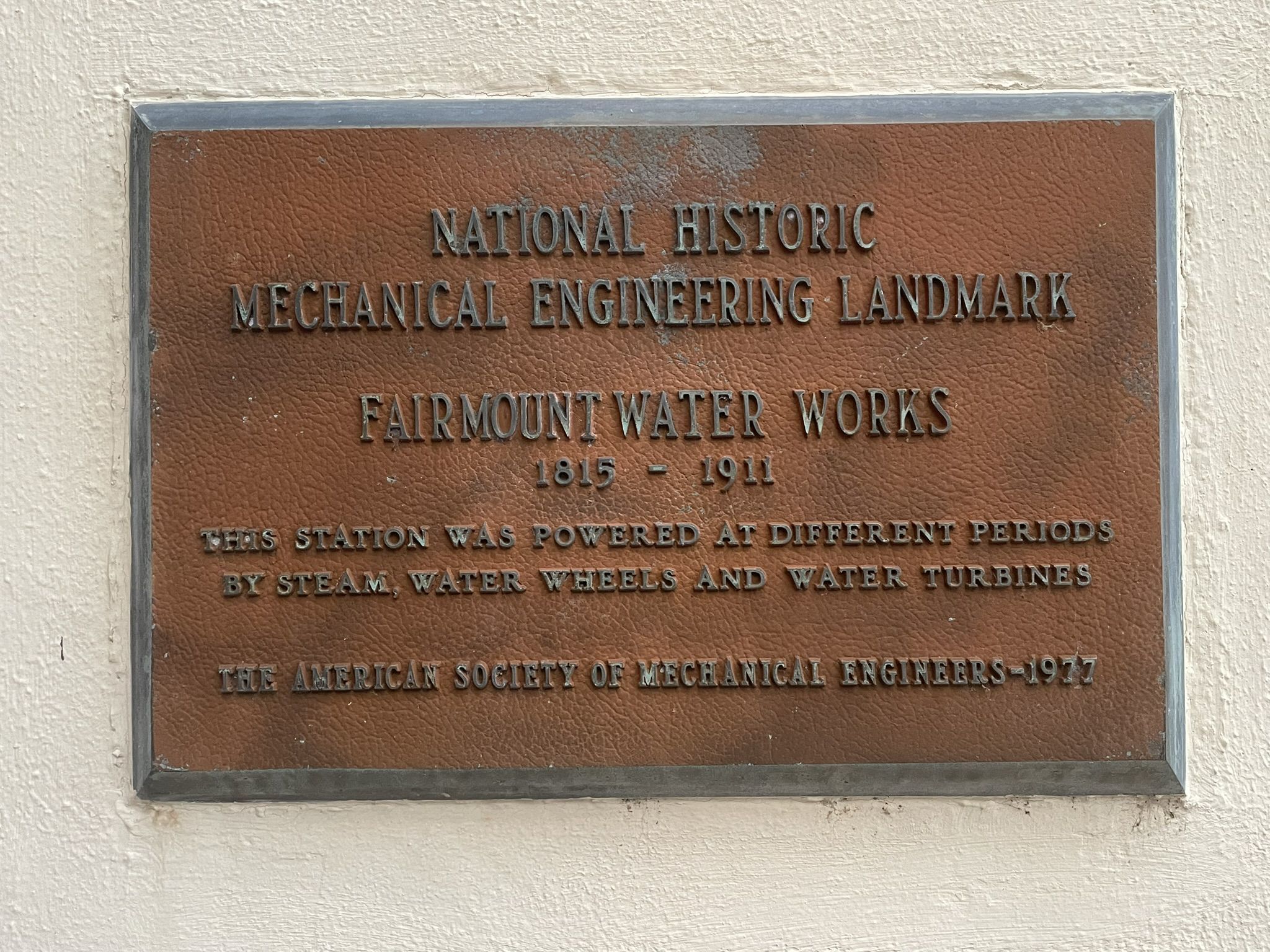
When it opened in 1815 to provide the growing city with a reliable supply of drinking water, the Fairmount Water Works was a major engineering advance and was considered one of the wonders of the world.
Conlen Booth doesn’t typically like to be in the spotlight.
Booth considers himself a “behind-the-scenes” guy who typically shies away from the limelight. Yet on Jan. 6, surrounded by friends, family, and colleagues, Booth was sworn in as Swarthmore’s mayor.
Booth, 42, brings more than two decades of emergency management experience to the job, including overseeing emergency services for major hospitals and governments. He’s also spent the past 25 years with Swarthmore’s fire department, most recently as chief. Booth is Delco-bred — a Nether Providence kid, a graduate of Strath Haven High School, and a cheerleader for his home borough of Swarthmore.
As the borough contends with the fallout of last year’s shuttering of Crozer-Chester Medical Center and Taylor Hospital, budget shortfalls, and potential fire department consolidation, Booth believes his background in emergency services and deep ties to Swarthmore make him the right guy for the job.
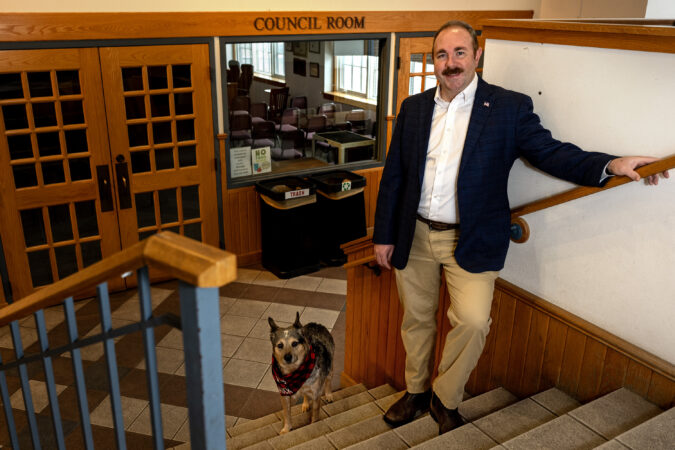
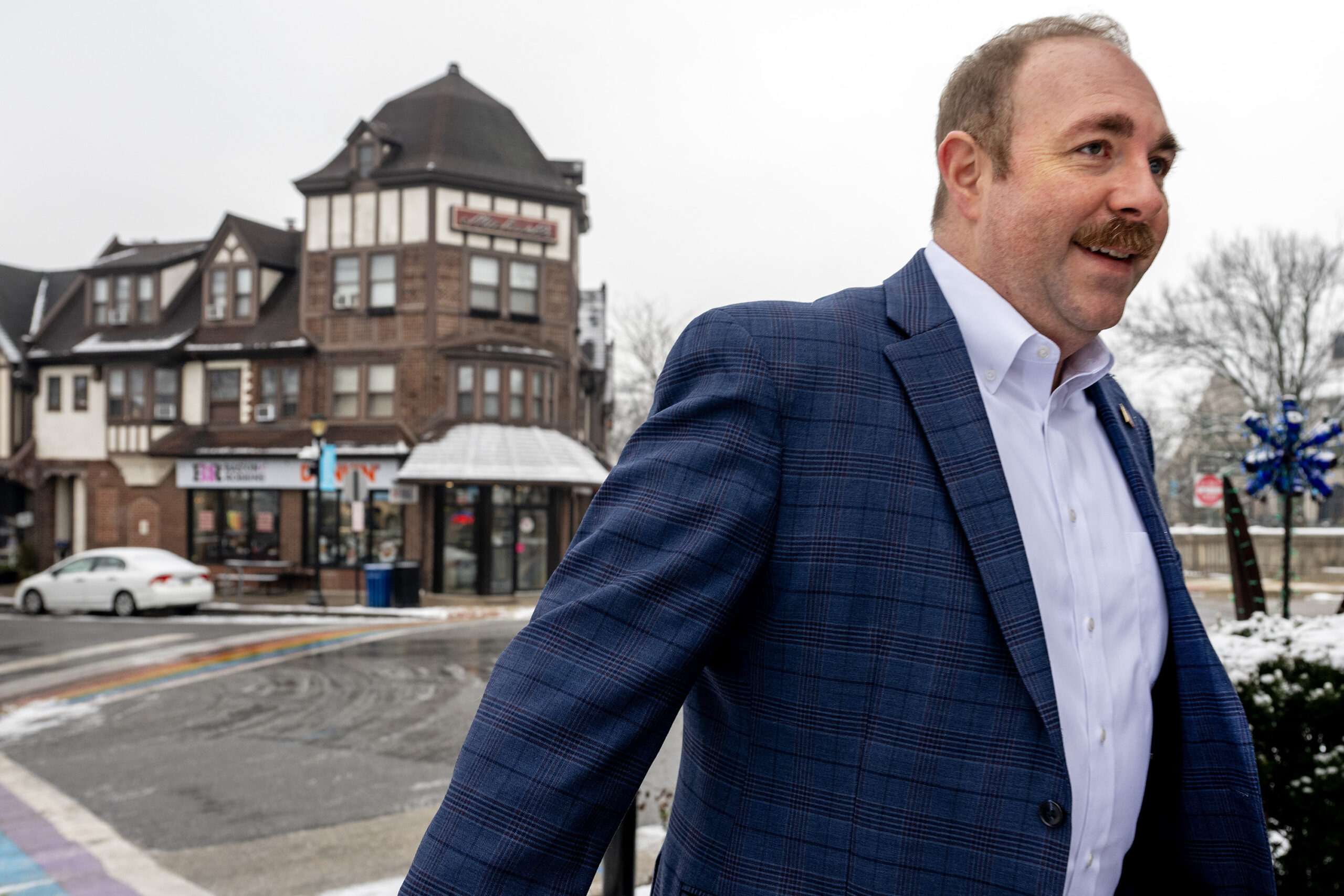
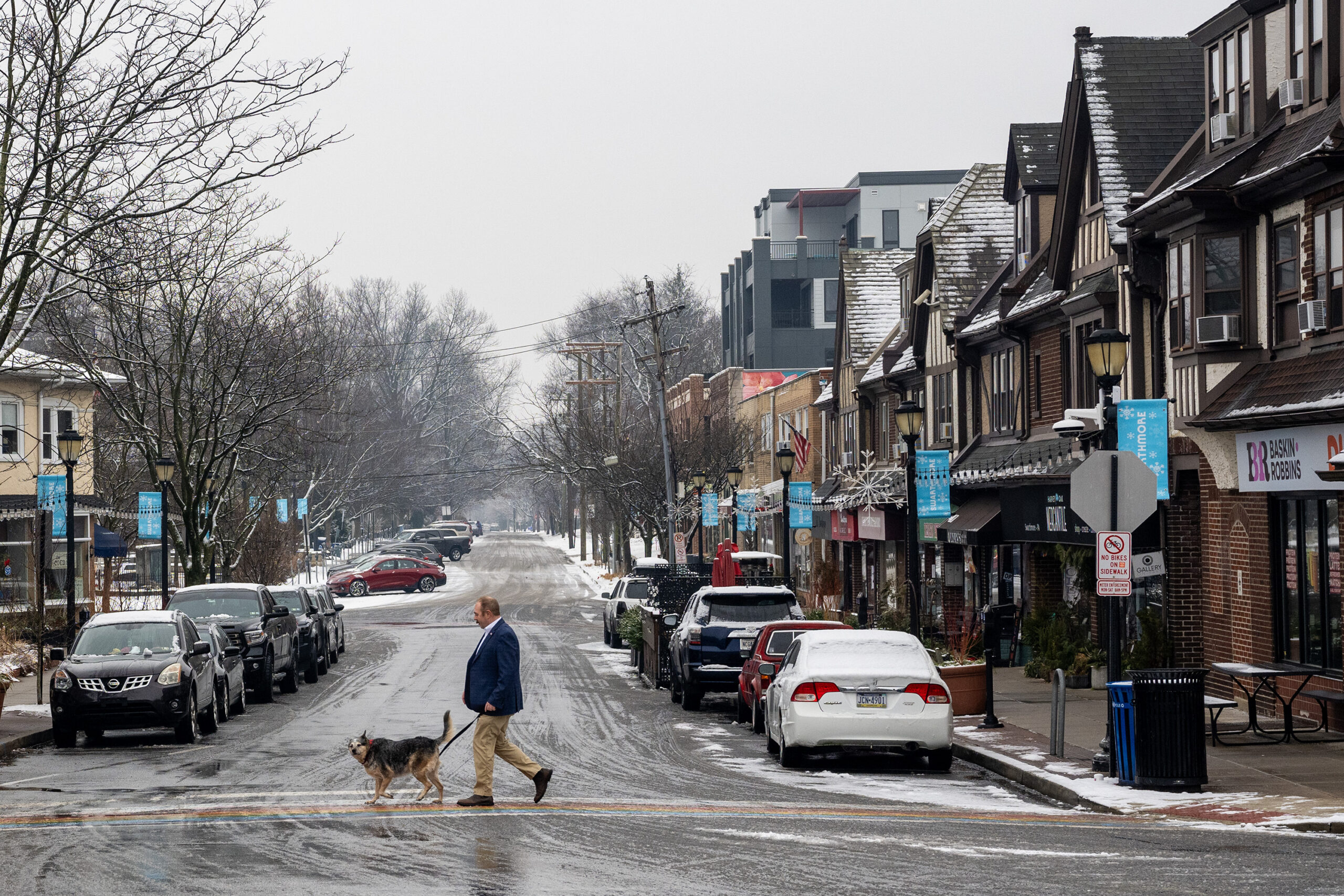
Mayor Conlen Booth in downtown Swarthmore on Sunday, Jan. 18, 2026.
‘If not me, then who?’
Booth got into local politics the way many do — reluctantly.
It took nudging from friends and family to step into the mayoral race. But the COVID-19 pandemic revealed a need for municipal leaders who understand emergency management and can govern in a crisis, Booth says.
An age-old phrase kept circulating in his mind: “If not me, then who?”
Booth competed against borough council members Kristen Seymore and David Boonin in the Democratic primary. Boonin dropped out of the race in January 2025. In February, the borough’s Democratic committee voted to endorse Booth’s candidacy 15-4, and Seymore dropped out.
The committee’s endorsement is powerful in Swarthmore. Democratic candidates who do not receive an endorsement are discouraged from running, and in the liberal-leaning town, there are seldom competitive general elections. Booth replaced Marty Spiegel, who had led the borough since 2019.
Who is Mayor Booth?
Booth was born in Harrisburg and moved to Delaware County at age 2. He grew up down the street from Nether Providence Elementary School and spent summers down the Shore with his close-knit extended family and collection of family dogs.
His maternal grandfather, Joseph Labrum, was a longtime judge and attorney in Media. Booth remembers visiting him in his chambers and watching him in the courtroom.
“I think seeing him in his role as a judge was always something that fascinated me,” he said.
Booth and his partner, Tracy, met working in healthcare and have been together for around 15 years. They live with Huckleberry, their Australian cattle dog.
Booth became interested in emergency services in high school. He set his sights on becoming a doctor and spent his teenageyears working on an ambulance.
Four days before he moved into his freshman dorm at the University of Pittsburgh, he watched a good friend die in front of him. The goal changed from enrolling in medical school to just making it through college.
“It just sort of rattled things,” he said.
Mayor Conlen Booth with his dog, Huckleberry, in downtown Swarthmore on Sunday, Jan. 18, 2026.
Booth graduated from Pitt in 2005 with a bachelor’s degree in emergency medicine, an emerging field at the time. He earned his paramedic certification and learned the business-side of managing emergency medical teams.
He returned home and took a job with the now-shuttered Delaware County Memorial Hospital, his first role in what would become a long career in emergency medicine. In 2019, he was anemergency response shift supervisor at the Philadelphia Energy Solutions refinery during the massive explosion that left five people hurt and ended up shuttering the facility (Booth describes it as a “pretty insane period” in his life). Booth later spent four years as the senior director of emergency preparedness and emergency medical services at Crozer. He most recently worked as a consultant helping get supplies and meals to recently arrived refugees and asylum-seekers in New York City.
In tandem with his career in emergency management, Booth has served as a volunteer in Swarthmore’s fire department since 2000, working his way up from rookie firefighter to chief. Last year, hehelped developthe Advanced Life Support ambulance partnership with neighboring communitiesthat has filled gaps for residentsafter the Crozer closures.
Pat Francher, a longtime Swarthmore resident and community organizer, said Booth has the “awareness and perspective” that comes from a “real in-depth involvement in community welfare.”
“I’m terrible about saying no to people when they ask me to do something,” Booth joked.
This summer, Booth suffered a serious, non-work-related injury. He’s been in recovery since, and has come a long way.
“It could have been so much worse,” Booth said. “I have a lot to be thankful for.”
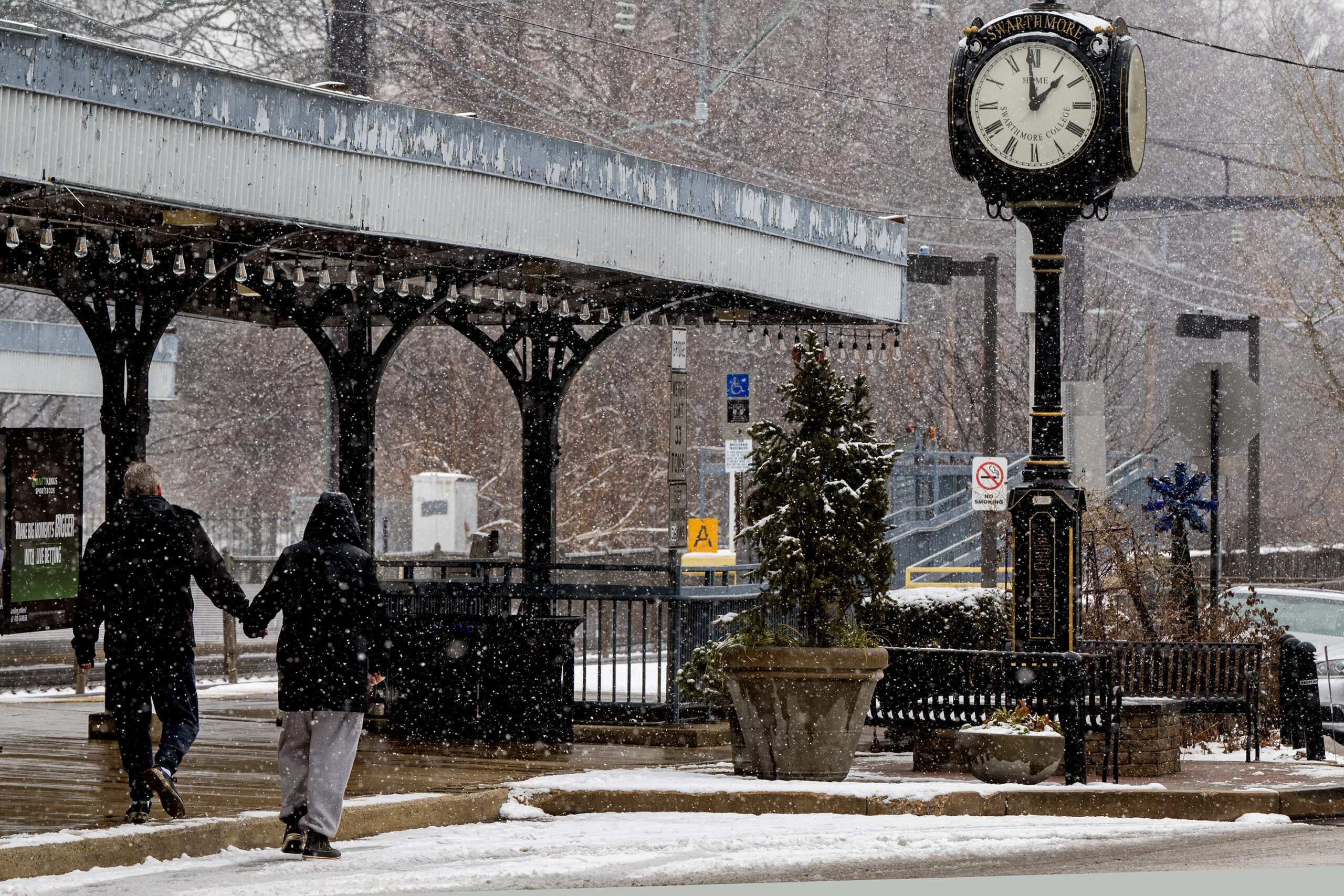
The SEPTA Regional Rail station in Swarthmore on Sunday, Jan. 18, 2026, during the second snowfall of the weekend. The station is between downtown Swarthmore and Swarthmore College and serves the Media/Wawa Line.
What’s next for Swarthmore?
Booth sees educating borough council about the community’s emergency medical needs as a large part of his job as mayor.
Jill Gaeski, borough council president, called Booth “the perfect guy” to help the 6,200-person borough navigate the challenges that lie ahead.
The shuttering of Crozer’s hospitals continues to impact access to medical care. At the same time, the Garden City (Nether Providence and Rose Valley), South Media, and Swarthmore fire companies are in discussions about a possible merger.
“[Booth] can really help us understand the pain points and where the sweet spots are,” Gaeski said.
Booth says he wants to be a cheerleader for the borough, bringing in tourism and economic growth in a way that maintains Swarthmore’s small-town feel.
He also hopes to reengage Swarthmore College’s student body, which he says has become less civically involvedas the years have passed.
“I already feel sentimental about this town,” Booth said, citing the people, restaurants, traditions, and community events that make his hometown special.
“How do we bolster all of these things and how do we engage more people?”
This suburban content is produced with support from the Leslie Miller and Richard Worley Foundation and The Lenfest Institute for Journalism. Editorial content is created independently of the project donors. Gifts to support The Inquirer’s high-impact journalism can be made at inquirer.com/donate. A list of Lenfest Institute donors can be found at lenfestinstitute.org/supporters.