Tag: Weekend Reads

  • 70,000 Pennie customers have dropped their plans as price hikes loom for health insurance

    70,000 Pennie customers have dropped their plans as price hikes loom for health insurance

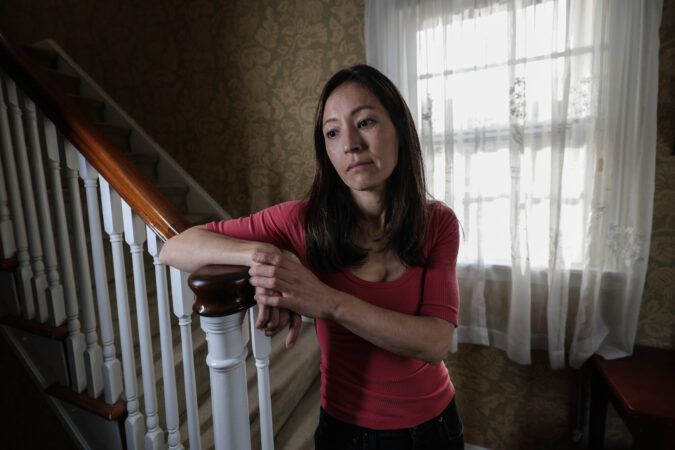
    Sasha Kinney fears she cannot afford the $750 a month it will cost to keep her Affordable Care Act health plan in 2026. But she will put the insurance bill on a credit card before risking a medical emergency without access to the doctors she sees regularly.

    The 42-year-old Drexel Hill resident’s insurance costs soared this year, after Congress did not extend a federal incentive program that ensured that no one paid more than 8.5% of income on health coverage.

    She earns enough doing freelance work for nonprofits, while serving as her mother’s primary caregiver, that she is not eligible for Medicaid, the publicly funded health program for low-income people.

    A private health plan through Pennsylvania’s Obamacare marketplace, Pennie, was a major expense, but one she prioritized to help manage her chronic headaches and stress-related pain. But the incentive program expired at the end of last year, leading to skyrocketing ACA insurance costs in Pennsylvania and across the country. Kinney will now pay an extra $250 without the added tax credit.

    “I will go into debt because of these increasing costs,” she said. “But it still seems better than not having coverage.”

    Congress has failed so far to strike a deal to bring back tax credits that have helped record numbers of Americans get health insurance. The U.S. House of Representatives approved legislation last week that would renew the program for three years, but it is unclear if the Senate will act.

    President Donald Trump on Thursday announced a healthcare plan that White House officials said would help address rising healthcare costs by creating new drug price controls and sending health subsidies directly to consumers. The sparsely detailed plan is intended to serve as a framework for Congress, though officials did not say which lawmakers are actively working on new healthcare legislation, the Associated Press reported.

    Meanwhile, people who are covered by Obamacare plans are running out of time to decide how to handle massive price hikes that doubled the average cost of the health plans in Pennsylvania.

    The deadline to enroll in a plan for 2026 in Pennsylvania and other states is Jan. 31. After that date, people can drop their coverage if they find it is too expensive, but they will not be able to select a new plan until the fall enrollment period.

    In Pennsylvania, about 70,000 people who bought Pennie plans in 2025 have decided they cannot afford the price increase and dropped their coverage. The dropout rate is unprecedented — about 1,000 people a day, said Devon Trolley, Pennie’s executive director.

    Nationally, about 800,000 fewer people have selected Obamacare plans compared with this time last year, a 3.5% drop in total enrollment so far, according to the AP.

    With just weeks to go in the enrollment period, marketplace leaders are urging people to think carefully about whether they can afford their plan for the full year and to look at other Pennie plan options. If Congress ultimately renews the enhanced tax credits, they have said, they would work quickly to adjust prices.

    “At this point, we are telling people they should make the best decision for their family based on the current cost,” Trolley said. “We want to make sure people who currently have coverage aren’t staying with a plan they can’t afford.”

    Trolley worries that people will stick with a plan they like, not realizing they can no longer afford it, only to be forced to drop the coverage and become uninsured partway through the year.

    window.addEventListener(“message”,function(a){if(void 0!==a.data[“datawrapper-height”]){var e=document.querySelectorAll(“iframe”);for(var t in a.data[“datawrapper-height”])for(var r,i=0;r=e[i];i++)if(r.contentWindow===a.source){var d=a.data[“datawrapper-height”][t]+”px”;r.style.height=d}}});

    Congress considering tax credit extension

    The add-on tax credits that expired at the end of 2025 were introduced in 2021 and have been renewed by Congress annually since then.

    In Pennsylvania, the federal incentive program ensured the vast majority of enrollees qualified for at least some amount of financial help, driving peak marketplace enrollment of 497,000 in 2025.

    The program became a major sticking point in federal budget discussions last fall, with Democrats forcing a government shutdown after Republicans refused to include the tax credits without significant restrictions.

    The budget ultimately passed without the tax credits after key Senate Democrats, including Pennsylvania’s John Fetterman, voted with Republicans to end the shutdown.

    Last week, 17 House Republicans — including Pennsylvania Reps. Brian Fitzpatrick, Robert Bresnahan, and Ryan MacKenzie — sided with Democrats to approve legislation that would reinstate the tax credits for three years. The measure must be approved by the Senate, and would need to return to the House to consider any changes.

    While the incentive program’s expiration is a major blow to the Obamacare marketplaces, Trolley, Pennie’s executive director, urged people not to rule out finding affordable coverage.

    President Barack Obama’s landmark health law also included income-based tax credits for people who earn less than 400% of the federal poverty level — about $60,000. These tax credits cannot expire because they are part of the law.

    “We have been encouraging people to not assume it’s too expensive,” Trolley said.

    Devon Trolley, executive director of Pennie, has been outspoken about how cuts to ACA tax credits are affecting people who buy Pennie health plans. Pictured during a 2025 roundtable with Pennsylvania lawmakers, stakeholders, health systems at the University City Science Center in Philadelphia.

    Health insurance decisions

    While some parts of Pennsylvania are seeing prices three to four times higher than in 2025, Philadelphia’s collar counties are seeing more moderate cost increases, ranging from an average 46% price hike in Chester County to a 70% average increase in Delaware County.

    Other factors that affect cost include household size, age, and income. People who are generally healthy and use insurance sparingly may be able to save money by opting for a plan that has a low monthly cost and a higher deductible (the amount of money spent out-of-pocket before the plan begins covering a greater share of costs).
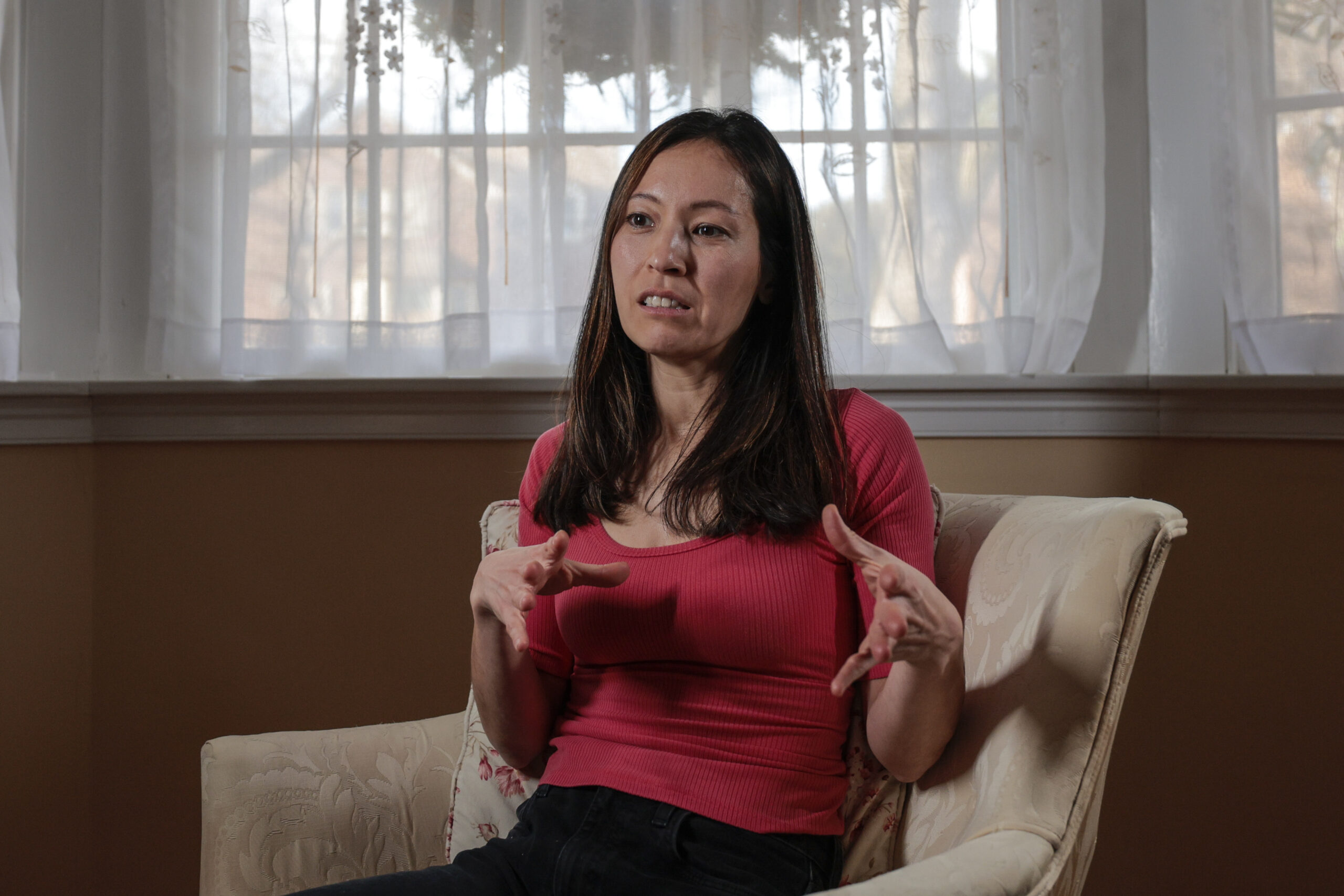
    Sasha Kinney, 42, of Drexel Hill, considered switching to a high-deductible health plan to lower her monthly premium, but ultimately stuck with her old Pennie plan because it offered better coverage.

    In Drexel Hill, Kinney considered switching to a cheaper plan when she saw how much it would cost to keep her current coverage.

    Her current plan has a low deductible, and even so, Kinney said, she still spends hundreds on co-pays and other costs not covered.

    She worried that if she switched to a plan with even higher out-of-pocket costs, she would end up skipping appointments and avoiding needed care.

    She routinely sees doctors and physical therapists, and didn’t want to risk having to find new providers.

    “In the end I think it washes out — you can lower your monthly cost, but if the deductible and co-pays are higher, you’re paying the same,” she said. “There’s basically no way to save money.”


  • Here are the Philly ties to the new basketball gambling scandal

    Here are the Philly ties to the new basketball gambling scandal

    Philadelphia had a moment in the global spotlight this week as the U.S. Attorney’s Office said it had charged 26 people — including 20 basketball players — with participating in a wide-ranging, international scheme to rig games on behalf of gamblers.

    U.S. Attorney David Metcalf said bettors bribed players on teams in the Chinese professional league, as well as in NCAA games from Texas to New York.

    So why was the case charged here? And what role did Philadelphia play in the allegations?

    Below are three takeaways about the local ties of the sprawling investigation — the latest high-profile case to target alleged corruption in sports.

    U.S. Attorney David Metcalf announced charges against 26 people in what prosecutors described as a point shaving operation to benefit gamblers.

    Why was the case charged in Philadelphia?

    Federal prosecutors have wide latitude to pursue criminal investigations as long as some aspect of the alleged wrongdoing took place in their jurisdiction, and if a suspect’s actions could be considered a violation of federal law.

    In this case, prosecutors have alleged that the bets and payoffs that impacted games amounted to a criminal conspiracy between the so-called fixers and players, and also that the actions violated federal bribery and wire-fraud laws.

    In addition, the indictment contends one of the key organizers of the point-shaving scheme — professional gambler Shane Hennen — lived partially in Philadelphia at the time of his alleged crimes.

    And even though most of the games he gambled on took place elsewhere, Hennen is accused of placing huge bets at Rivers Casino’s sportsbook in Fishtown. One of the wagers was a $198,300 bet against a Chinese team called the Jiangsu Dragons, court documents say. Hennen had allegedly recruited one of the Dragons’ best players, Antonio Blakeney, to play poorly in exchange for bribes.

    (A spokesperson for Rivers Casino declined this week to comment on the case and did not respond to questions about why Hennen was allowed to place such large wagers on relatively obscure games.)

    The indictment says several other crimes took place in Philadelphia as well, including Jalen Smith — a basketball trainer and alleged organizer of the scheme — traveling to the Philadelphia International Airport to pay an unnamed player his bribe money.

    Were any Philadelphia schools part of the scheme?

    The indictment paints a limited portrait of connections between the point-shaving operation and Philadelphia schools or universities.

    In one of the more detailed local episodes in the document, prosecutors said Smith and Blakeney in 2024 attempted to recruit players from the La Salle men’s basketball team to take bribes and underperform in a game against St. Bonaventure.

    Hennen and a codefendant apparently thought the plan had succeeded — the indictment said they went on to place nearly $250,000 in bets on St. Bonaventure for that game.

    But none of the bets won, prosecutors said. And no La Salle players were named or accused of accepting the bribes in relation to the contest.

    A La Salle spokesperson said in a statement this week that it was aware of the allegations in the case, adding: “Neither the university, current student-athletes, or staff are subjects of the indictment. We will fully cooperate as needed with officials and investigations.”

    What about any Philadelphia-based players?

    The role of Philadelphia-based players was similarly limited.

    While several players accused of participating in the scheme spent time in the area, none was accused of accepting bribes while playing for a Philadelphia-based school.

    Former Temple University forward Elijah Gray, for example — who played for the Owls in the 2024-2025 season — participated in the scheme the year before, while he was playing at Fordham. Prosecutors said he was offered $10,000 to $15,000 to underperform on the court, and said he later recruited a teammate to participate in the point-shaving operation as well.

    Gray left Temple and transferred this academic year to the University of Wisconsin, but he was dismissed from the team in the fall over what the program said were “events preceding his enrollment.” He has pleaded guilty to one count of bribery, court records show, and is scheduled to be sentenced in March.

    Micawber “Mac” Etienne — who played for La Salle last year — was also bribed before he came to Philadelphia. Fixers approached Etienne in 2024, prosecutors said, while he was playing at DePaul. He agreed to help throw games, prosecutors said, which led Smith to give him and three teammates $40,000 in cash.

    Etienne has also pleaded guilty to a bribery count, court records show, and is scheduled to be sentenced in April.

    One current Philadelphia-based player is facing charges: C.J. Hines, a guard who transferred to Temple this year. But prosecutors said he took bribes in 2024, when he was playing at Alabama State.

    Hines has been charged by information, which typically indicates a defendant intends to plead guilty.

    A Temple spokesperson said the university had “previously received notice from the NCAA that Hines had potential eligibility concerns, and for that reason, he has not participated in any athletic competition since enrolling at Temple.”

    What happens now?

    The prosecutions will now proceed through Philadelphia’s federal courthouse in Center City.

    Some defendants — such as Gray, Etienne, and Hines — will likely have their cases wrapped up relatively quickly, as they’ve already pleaded guilty or indicated an intent to do so.

    Hennen has not yet entered a formal plea in the case, according to court records. If he or any other defendants plans to take the case to trial, it could be many months before the case is put before a jury.

    Staff writer Isabella DiAmore contributed to this article.

  • Who is Shane Hennen, the high-stakes Philly gambler at the center of the latest sports-betting indictment?

    Who is Shane Hennen, the high-stakes Philly gambler at the center of the latest sports-betting indictment?

    For Shane Hennen, the house of cards keeps folding.

    A federal indictment unsealed Thursday accuses the Philadelphia-based professional gambler of acting as a ringleader in a sweeping sports-betting conspiracy now involving the NCAA and the Chinese Basketball Association. Hennen was first arrested last January in connection with a gambling case involving a former Toronto Raptor, and was also charged separately in an October indictment in New York focused on the NBA.

    The latest charges against Hennen, known as “Sugar Shane,” brought an international angle to the existing portrait of a high-stakes gambler who prosecutors allege was willing to bribe athletes to throw games, provide devices to fix backroom card games tied to the New York mafia, and use insider betting information to place fraudulent wagers.

    In all, federal prosecutors have accused Hennen of conspiring to place fraudulent bets on ex-Raptors forward Jontay Porter and NBA guard Terry Rozier, bribing the top-scoring player in the CBA to throw games, and recruiting college basketball trainers to help rig dozens of NCAA games — much of it orchestrated from Hennen’s favorite Philly casino, Rivers. On top of it all, he is also alleged to have participated in the rigging of mob-linked poker games in New York City.

    And while the list of implicated players and conspirators continues to grow by the dozens, Hennen has remained a central figure to the bet-fixing scandals that have rocked the sports world over the past year.

    Rise of a “betfluencer”

    On social media, Hennen has cast himself as rising from a hard-luck Pennsylvania town to a self-styled “betfluencer,” flying on private jets from Las Vegas to Monte Carlo and gambling up to $1 million a week on sports and card games.

    But Hennen’s earlier record for criminality came into clearer view as result of the federal investigations. While growing up in the Pittsburgh area, he did time for drug and gambling related charges that now serve as a kind of prelude to his role in the bet-fixing scandals.

    In 2006, the Washington, Pa., native received probation in Allegheny County for charges linked to a gambling scheme. According to court records, Hennen and an accomplice rented adjacent rooms in a Pittsburgh area hotel to hold underground dice games. While gambling in one room, a partner in the next room employed a magnetic device to flip loaded dice to preferred numbers.

    Then, early one morning in 2009, a former Duquesne University basketball player was found bleeding from a stab wound in Pittsburgh’s South Side neighborhood, a popular nightlife area. The man survived and later told police that Hennen had stabbed him in the neck after the athlete confronted him about cheating in a card game. Hennen was also picked up on a DUI less than two weeks later, but was released.

    Not long afterward, Hennen was charged with two more felonies after he was caught in a parking lot with 500 grams of cocaine down the street from the Meadows Casino, near Pittsburgh.

    In subsequent court filings, Hennen revealed that he had been working with a local drug dealer for more than a year. Facing well over a decade of jail time between the drug and assault charges linked to the stabbing, Hennen agreed to testify against his dealer and participated in a federal drug sting involving a different narcotics supplier based in Detroit, court records show.

    He served just less than two-and-a-half years in prison, plus four years of supervised release.

    According to court transcripts published by Sports Illustrated in October, Hennen admitted five times under oath that he cheated other people out of money.

    During a cross-examination, Lee Rothman, an attorney for his associate drug dealer he was testifying against, stated bluntly that Hennen made “a living out of cheating people out of things.”

    “That’s correct,” Hennen said.

    After his release in 2013, Hennen traveled to Pensacola, Fla., purportedly to work as a sales rep for a seafood wholesaler. Court records show he almost immediately went back to gambling, even violating his probation to travel out of state to participate in the 2014 World Series of Poker in Las Vegas.

    When Hennen landed in Philadelphia in 2015, it was seemingly to start over. He leased an apartment near the Rivers Casino in Fishtown.

    The small casino would become Hennen’s unlikely staging ground for a new, more lucrative gambling scheme that would come to span the globe.

    From Philly to China

    Local gamblers said Hennen worked the poker and baccarat tables at Rivers, using the action to build a reputation with the house and pave the way for six-figure sports bets, the kind only gamblers with money and a track record at the casino are allowed to make.

    By 2022, Hennen had launched an online betting consultancy via an Instagram page called “Sugar Shane Wins.” On social media, Hennen posted his sportsbook picks along with glamorous photos jetting around to Vegas or Dubai, or sitting courtside at Sixers games.

    Although he marketed bets on teams familiar to U.S. gamblers, his focus — and income — was overseas, according to federal prosecutors.

    He posted courtside photos of himself at Sixers games with a Mississippi-based sports handicapper named Marves Fairley, who prosecutors say connected the gambler with Antonio Blakeney, a former Louisiana State University shooting guard who had done a brief stint on the Chicago Bulls.

    Blakeney had subsequently bounced around different international teams, including Hapoel Tel Aviv, in Israel, and the Nanjing Monkey Kings and Jiangsu Dragons, both in China. According to a federal indictment, while playing for the Dragons, Hennen and Fairley bribed Blakeney to underperform in Chinese basketball games in order to fix high-stakes bets against the team and recruit others to do the same.

    Suddenly, the slots parlor on the Delaware was seeing six-figure bets placed on multiple Chinese basketball games through its sportsbook, BetRivers, sometimes for upward of $200,000. Representatives for the casino declined to comment Thursday on the latest federal indictment.

    The gambit proved reliably lucrative. In a 2023 text message obtained by federal authorities, Hennen reassured an accomplice who had placed big bets against Blakeney’s team.

    “Nothing gu[a]rantee[d] in this world,” Hennen wrote, ”but death taxes and Chinese basketball.”

    The model would also serve as a template for a similar racket the duo would orchestrate within the NCAA.

    By 2024, the duo had recruited basketball trainers Jalen Smith and Roderick Winkler to help convince dozens of college basketball players to rig matches on their behalf.

    Ultimately, 39 players on more than 17 Division 1 NCAA teams would participate, with bettors wagering millions on at least 29 rigged games.

    Hennen took a behind-the-scenes role, authorities alleged, texting a network of straw bettors who placed big wagers on games featuring star players bribed by the trainers, and sometimes moving bribe money or splitting up winnings back in Philly.

    His rising profile started to draw unwanted attention.

    Shortly after Hennen relocated to Las Vegas in 2023, he was accused of rigging poker matches by Wesley “Wes Side” Fei, another professional gambler who claimed in social media posts that Hennen had scammed him out of millions.

    The next year, gambling industry watchdog Integrity Compliance 360 began flagging bets placed on six Temple University basketball games. One, against Alabama-Birmingham in March 2024, saw the Borgata, in Atlantic City, cancel bets for the game due to suspicious betting activity. Before the end of 2024, the National Collegiate Athletic Association had launched an investigation into the games, as rumors swirled that federal authorities were questioning Temple player Hysier Miller as part of an alleged point-shaving scheme.

    Then Porter, the Raptors center, was banned for life from the NBA, after it emerged that the league was investigating yet another bet-rigging scheme. A few months later, Porter pleaded guilty to gambling charges — the first hint at the true scope of a sprawling federal investigation that went on to consume the NCAA and NBA.

    Beginning of the end

    In January 2025, Hennen’s luck ran out.

    Authorities stopped him in Las Vegas as he was boarding a one-way flight to Panama, en route to Colombia. He had $10,000 in his pocket and claimed he was headed to South America for dental treatment.

    But investigators had already zeroed in on Hennen as the main orchestrator of the prop betting scheme involving Rozier, the former Miami Heat guard. In October, federal prosecutors in the U.S. District Court for the Eastern District of New York unsealed an indictment, accusing Hennen of working with Fairley to have Rozier throw games for a profit, sometimes using Philadelphia as a meeting point to dole out the proceeds to other bettors.

    Court records show that since then, Hennen has entered plea negotiations with federal prosecutors and relocated to a residence in South Philadelphia. (His attorney did not respond to a request for comment.)

    During the Thursday news conference unveiling the latest indictment, Wayne Jacobs, a special agent in charge of the FBI Philadelphia field office, said that Hennen and his conspirators’ actions had undermined faith in professional sports writ large.

    “We expect athletes to embody the very best of hard work, skill, and discipline, not to sell out to those seeking to corrupt the games for their own personal benefit,” he said. “The money that’s used as a tool to influence outcomes does not just taint a single game, it tears up the trust and the results that we cherish.”

  • ‘Some sort of connection’: Police investigating whether three Philly slayings tied to towing industry are related

    ‘Some sort of connection’: Police investigating whether three Philly slayings tied to towing industry are related

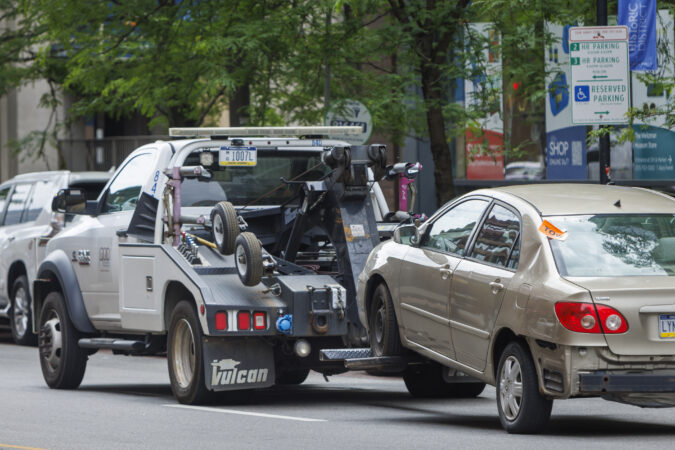
    Philadelphia police are investigating whether the separate slayings of three men, all of whom worked in the city’s towing industry, are connected, authorities said this week.

    Two of the men, who were shot and killed in December and January respectively, worked as truck operators for the Jenkintown-based company 448 Towing and Recovery, according to police.

    The other man, who was shot and killed in November, is connected to a different towing company and worked as a wreck spotter.

    Investigators began looking at a possible connection between the killings after the shooting death of 25-year-old Aaron Whitfield Jr. on Sunday, according to Lt. Thomas Walsh of the department’s homicide unit.

    “On the surface, there’s obviously some sort of connection,” Walsh said.

    Whitfield was in a tow truck with his girlfriend outside of a Northeast Philadelphia smoke shop near Bustleton Avenue and Knorr Street that evening when two men pulled up in another vehicle. They fired at least a dozen shots at the truck before speeding off.

    Whitfield died at the scene, while the woman was hospitalized with gunshot wounds to the leg.

    The shooting came after another 448 Towing and Recovery driver, David Garcia-Morales, was shot on Dec. 22 while in a tow truck on the 4200 block of Torresdale Avenue, according to police.

    Police arrived to find Morales, 20, had been struck multiple times. They rushed him to a nearby hospital, where he died from his injuries on Dec. 26.

    While Walsh could not conclusively say whether investigators believe the killings were carried out by the same person or by multiple individuals, he noted that two different vehicles had been used in the crimes.

    One of those vehicles, a silver Honda Accord used in the shooting of Whitfield, was recovered earlier this week after police found it abandoned in West Philadelphia, Walsh said.

    Meanwhile, police are investigating whether the shooting death of 26-year-old Aaron Smith-Sims in November may also be connected to the killings of Whitfield and Garcia-Morales.

    Smith-Sims, who Walsh said was connected to a different towing company, died after he was shot multiple times on the 2700 block of North Hicks Street in North Philadelphia the morning of Nov. 23.

    Investigators are now looking to question the owners of both towing companies involved, according to Walsh.

    So far, they have failed to make contact with the owner of 448 Towing and Recovery.

    “Obviously the victims’ families are cooperating,” Walsh said. “They’re supplying all the information that they have.”

    An industry that draws suspicion

    Philadelphia’s towing industry can appear like something out of the Wild West, with operators fiercely competing to arrive first at car wrecks and secure the business involved with towing or impounding vehicles.

    Police began imposing some order on the process in 2007, introducing a rotational system in which responding officers cycle through a list of licensed towing operators to dispatch to accident scenes.

    But tow operators often skirt that system, employing wreck spotters — those like Smith-Sims — to roam the city and listen to police scanners for accidents, convincing those involved to use their service before officers arrive.

    The predatory nature of the industry and, in some cases, its historic ties to organized crime make it rife with exploitative business practices and even criminal activity.

    But Walsh cautioned the public against jumping to conspiracy theories about the killings, which have proliferated on social media in the days after Whitfield’s death and the news of a possible connection between the murders.

    Those suspicions aren’t entirely unwarranted.

    In 2017, several employees who worked for the Philadelphia towing company A. Bob’s Towing were shot within 24 hours of one another — two of them fatally.

    Police and federal investigators later arrested Ernest Pressley, 42, a contract killer who was sentenced to life in prison after pleading guilty to killing six people between 2016 and 2019.

    Pressley admitted to accepting payment in exchange for killing one of the towing employees, 28-year-old Khayyan Fruster, who had been preparing to testify as a witness in an assault trial.

    Pressley shot Fruster in his tow truck on the 6600 block of Hegerman Street, killing him and injuring one of his coworkers.

    And in an effort to mask the killing — and to make it appear as if it had been the result of a feud between towing operators — Pressley earlier shot and killed one of Fruster’s coworkers at A. Bob’s Towing at random, according to prosecutors.

  • Philly students are posting their best math performance in years

    Philly students are posting their best math performance in years

    Philadelphia students are performing the best they have in math in years, showing steady improvement since the pandemic.

    Still, just a quarter of city third through eighth graders passed Pennsylvania math assessments, with 25.1% of students scoring proficient or advanced on the 2024-25 exam, up from a 22% pass rate the prior year and 18.9% in 2016-17.

    That means the district surpassed the school board’s goal of a 22.2% pass rate for last school year — but fell well below the 2029-30 target of 52% proficiency.

    Philadelphia students still lag Pennsylvania averages considerably, though — for the 2024-25 year, 41.7% of students in grades three through eight statewide passed math tests.

    Scores are slightly stronger in the lower grades. Overall, 33.7% of Philadelphia third graders passed the state test, compared to 27.4% the prior year. The board’s third-grade target is 57.5% for 2029-30; it was 28% last year, a nod to prior performance.

    Officials said the jumps are due in part to the new math curriculum the district adopted in 2023-24.

    The school board devoted its full Thursday night progress monitoring session to examining math goals. The highlighted findings include:

    Attendance correlates with math scores

    Students’ attendance generally correlates to their math performance. Of pupils who attended school 90% of the time or more, the highest percentage of students were at or above benchmark (29%) and the lowest percentage needed the most intense interventions (24%).

    The reverse is true for students who are considered “chronically absent” — those who attend school less than 80% of the time. In that category, more than half of students — 52% — needed intense interventions, and just 7% scored proficient or above.

    Improvements for students learning English

    English language learners’ math skills are improving, as measured by Star tests, which the district gives periodically throughout the school year to measure student learning.

    The math proficiency of third grade English learners, for example, was up year-over-year as marked by the winter Star exam. This school year, 23% of English learners passed the test, compared with 18% at the same point in 2024-25.

    Slight improvements for students with disabilities

    Students with disabilities scored lower. Overall, 11% of students with disabilities passed the winter Star exam, up slightly from 10% last year.

    Focus on early math skills

    Officials said gains were made in part because of a focus on building foundational math skills.

    Students in kindergarten and first and second grades all saw jumps from fall to winter in mastering skills such as numeral recognition, addition to 10, and subtraction to 10, as measured by Star tests. The district showed significant gains in third grade performance this year.

  • Center City District Restaurant Week, now once a year, debuts Sunday with 120 options

    Center City District Restaurant Week, now once a year, debuts Sunday with 120 options

    Center City District Restaurant Week returned Sunday for the first time in a year, with 120 restaurants offering fixed-price lunches and dinners — the largest lineup since the pandemic.

    This also will be 2026’s only restaurant week. After running both fall and winter editions since September 2003, a district spokesperson told The Inquirer that it will not return this fall and will remain an early-winter promotion “at this time.”

    The fall edition disappeared last September as the district said it had shifted its focus to newer programs, such as Open Streets and Let’s Do Lunch, while keeping its popular Center City District Sips series. Restaurateurs had also been pushing back on the September restaurant week, arguing that it landed during an already busy month and that promotional dollars were better spent in January, traditionally the slowest stretch of the year.

    For the 2026 restaurant week, running through Jan. 31, some restaurants will offer $20 two-course lunches in addition to three-course dinners priced at $45 or $60. (The lower-tier dinners were $40 last year.)

    The list, online at centercityphila.org, includes five restaurants on The Inquirer’s 76, the summation of the region’s most essential restaurants: Bolo, Château Rouge, High Street, Oyster House, and Tequilas, as well as Michelin-recommended Dizengoff.

    More than 100 of the participating restaurants are repeats from last January, including such popular destinations as a.kitchen, Barbuzzo, Del Frisco’s, Estia, Fork, Forsythia, Gran Caffe L’Aquila, Harp & Crown, Loch Bar, and Wilder.

    Additions this year include the yearlings Rockwell & Rose (attached to P.J. Clarke’s on Washington Square) and Rhythm & Spirits (at One Penn Center, above Suburban Station), as well as established restaurants Ambrosia, Bar Bombon, Charlie was a sinner., Cry Baby Pasta, Farina Pasta Bar, Grandma’s Philly, Hi-Lo Taco Co., Kanella, Kirin House, La Fontana Della Citta, Miss Saigon, the Mulberry on Arch, Pub & Kitchen, Radicchio Cafe, Superfolie, Trattoria Carina, Umami Steak & Sushi Bar, and Vita.

    Some 2025 participants are not returning, such as the shuttered Banh Mi & Bottles, Del Frisco’s Grille, Flambo, Iron Hill Brewery, Kook Burger & Bar, and Mulherin’s Pizzeria.

    The district has arranged discount parking for $10 or less at participating BexPark by Brandywine Realty Trust, LAZ Parking, and Philadelphia Parking Authority parking facilities from 4:45 p.m. to 1 a.m.

  • A car accident derailed his education 25 years ago. Now he’s returning to college alongside others with physical disabilities.

    A car accident derailed his education 25 years ago. Now he’s returning to college alongside others with physical disabilities.

    In 2000, Aaron Deede was an 18-year-old Delaware college student who enjoyed acting and had dreams of becoming a playwright.

    But a car accident left him paraplegic with a traumatic brain injury that upended his plans.

    “It was a little detour,” Deede said.

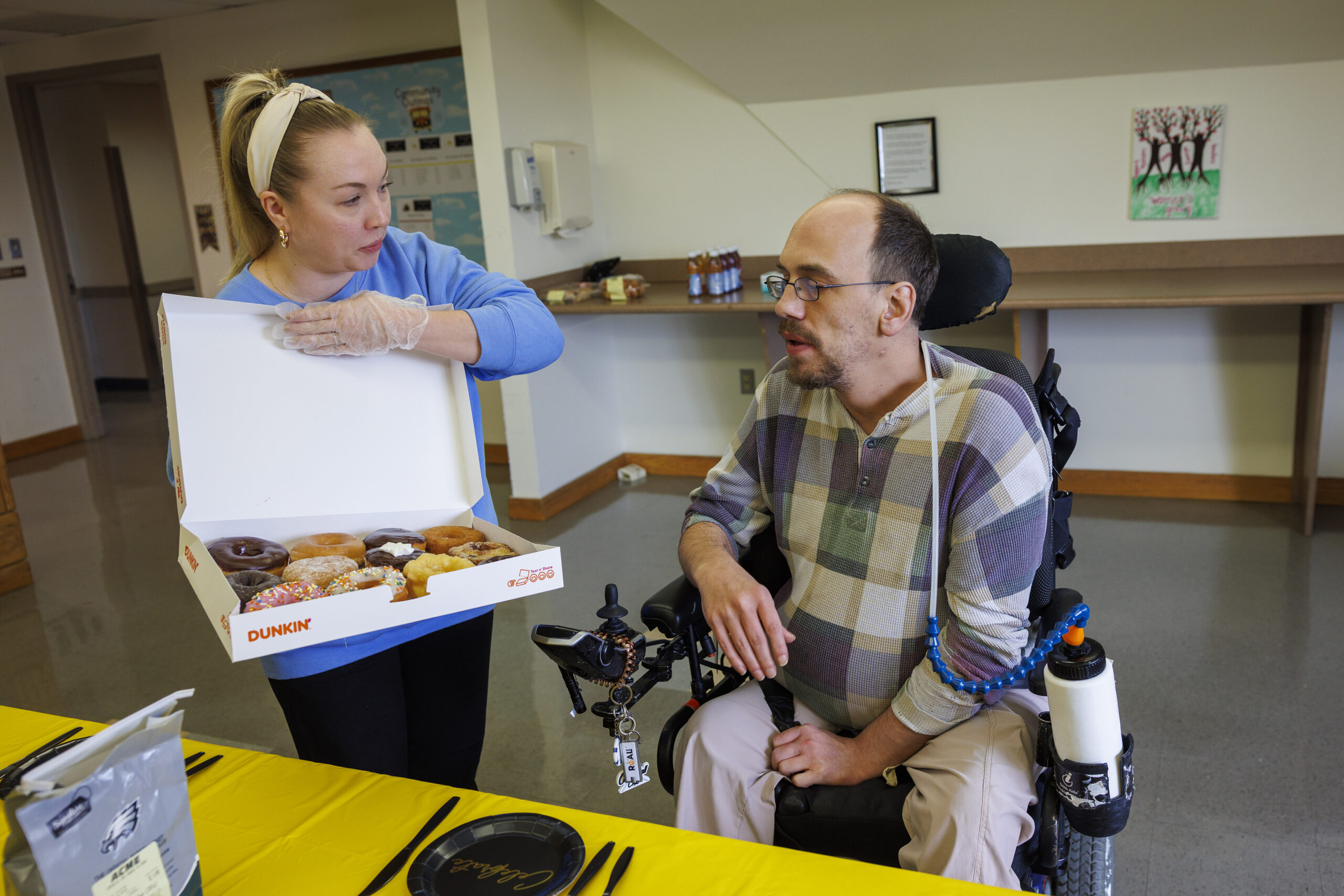
    Now, at 43, he is returning to college along with four other residents of Inglis House, a nursing facility in Philadelphia’s Wynnefield section for people with severe physical disabilities who use wheelchairs and have conditions such as multiple sclerosis, cerebral palsy, spinal cord injuries, or challenges following strokes.

    Deede and three other Inglis residents on Monday started online classes — some may go in person in subsequent semesters — at Community College of Philadelphia, with a fifth student scheduled to start this summer. Inglis pays for the students’ education from a donor-supported fund.

    “I love it. I can’t wait,” Deede said Friday during a celebration Inglis held for the new students at its Belmont Avenue complex, giving each of them a backpack to start their journey.

    At right is Aaron Deede a resident of Inglis House. He is starting to take classes at Community College of Philadelphia. At left, Jaclyn Monaco, director of Therapeutic Life Enrichment, offers treats during the celebration for students.

    Dozens of Inglis residents — who range in age from 18 to their 70s — have taken college classes over the years, and some have earned degrees. But this is the largest group to start together since the 1990s, said Jacklyn Monaco, Inglis’ director of therapeutic and life enrichment.

    “Things sort of ebb and flow as far as the types of resident who move in and their personal goals,” she said. “Sometimes they’re recreational goals. Sometimes they’re physical goals. Sometimes they’re educational goals. At this point in time we have a lot of younger folks who are really interested in pursuing higher education.”

    Nikos Rapach, 21, had been planning to join either the Army or the Coast Guard when he was in a car accident and lost the use of his legs and the mobility of his fingers.

    Nikos Rapach, a resident of Inglis House, sets up at his workstation in the computer lab.

    “I’m not going to be able to swing a hammer, so I have to start using my brain more,” said Rapach, who is from Hazleton.

    He is taking English and trigonometry classes at CCP. He will use the computers at Inglis that have adaptive technology to assist with note-taking.

    “Everything here is a stepping stone for me,” said Rapach, who moved to Inglis in May. “I want to go back home. I want to get a job. I basically want to get my life back on track.”

    He aspires to become a history teacher, he said.

    “Like they say, if you don’t know your history, you are doomed to repeat it,” he said.

    Deede, who came to Inglis in 2023, also would like to become a teacher, preferably at the elementary level.

    Another resident who is taking classes at CCP aims to become a social worker at Children’s Hospital of Philadelphia, said Jeremy Ault, Inglis’ therapeutic education instructor. Another hopes to become an Urdu-to-English translator.

    Stephanie Shea, 59, who is from Maryland and has a genetic neuromuscular condition, is taking liberal arts classes with the goal of getting a degree.

    “It’s kind of a bucket-list thing,” said Shea, who recently got married to another resident. “It’s something I’ve always wanted to have.”

    Founded in 1877, Inglis House currently serves about 180 residents, nearly 40% of whom are involved in educational activities — not just college. Classes are offered at Inglis in subjects such as history, law, science, poetry, and creative writing, as well as foundational skills like reading and personal finance.

    Aaron Deed (right) and Nikos Rapach are starting taking classes at Community College of Philadelphia.

    Inglis staff accompanied the students to CCP’s campus to take their placement tests, register for classes, and visit’s CCP’s Center on Disability, the office that helps students with disabilities.

    “We suggest accommodations based on their needs,” said Lisa Papurt, coordinator of disability services at the center, which typically serves 400 to 500 students with disabilities per semester.

    Those services could include extra time for tests or technology to assist with note-taking or assistance in communicating with professors.

    Papurt said she is excited to see the Inglis students start their educational journey.

    “I hope to be able to support them through getting degrees, graduating, and moving on to a four-year institution,” she said.

    When students entered their surprise celebration Friday, Ault, the therapeutic education instructor, told them it was time for them to celebrate.

    “I’m so proud of you guys for doing so well this past year,” he said. “You guys have been such a pleasure to teach and be part of your lives really.”

    Ault is helping students prepare for entry into college.

    “I’m working on my writing skills and grammar,” Rapach said. “Jeremy has been giving me essay prompts to help me be a better writer so that when I get to college, I’m not trying to relearn everything.”

    He said he’s excited to get started.

    “I feel good,” he said. “I’m ready for it.”

  • What’s open and closed in the Philly area on Martin Luther King Day 2026: Grocery stores, postal services, trash pickup, and more

    What’s open and closed in the Philly area on Martin Luther King Day 2026: Grocery stores, postal services, trash pickup, and more

    Martin Luther King Jr. Day, a federal holiday honoring the civil rights leader’s legacy, is Monday and it brings with it changes to schedules across the Philadelphia region. From government offices and post offices to trash collection and banks, many services will operate on adjusted hours or close entirely.

    Here’s what you need to know so you can plan your Monday with confidence.

    GROCERY STORES

    Acme Markets

    ✅ Acme Markets locations will be open for normal hours. Check your local store’s hours at local.acmemarkets.com.

    Whole Foods

    ✅ Whole Foods will be open during normal business hours. Check your local store’s hours at wholefoodsmarket.com/stores.

    Giant Food Stores

    ✅ Giant locations will be open regular hours. Check your local store’s hours at giantfoodstores.com/store-locator.

    South Philly Food Co-op

    ✅ South Philly Food Co-op will be open during its normal hours.

    Sprouts Farmers Market

    ✅ Sprouts will be open regular business hours.

    Trader Joe’s

    ✅ Trader Joe’s stores will be open.

    Aldi

    ✅ Aldi will be open for normal hours. Use the store locator at aldi.us/stores/ to check your local store’s hours.

    Reading Terminal Market

    ✅ Reading Terminal Market will be open.

    LIQUOR STORES

    Fine Wine & Good Spirits

    ✅ Fine Wine & Good Spirits will be open. Check your local store’s hours on the Fine Wine & Good Spirits store locator online.

    MAIL AND PACKAGES

    U.S. Postal Service

    ❌ Post offices are closed and the USPS will not be delivering regular mail.

    UPS, FedEx, and DHL

    UPS services will operate normally.

    FedEx will work regular hours, except for FedEx Express and Ground Economy.

    DHL will operate as normal.

    BANKS

    ❌ TD Bank, Bank of America, Wells Fargo, and Chase bank will be closed.

    PHARMACIES

    CVS

    ✅ CVS locations will operate on normal business hours. Call your local store before visiting or view its hours at cvs.com/store-locator/landing.

    Walgreens

    ✅ Walgreens locations will be open for regular business hours. Check your local store’s hours at walgreens.com/storelocator.

    TRASH COLLECTION

    ❌ There is no trash or recycling pickup on MLK Day. But trash pickup will resume a day later than scheduled. To find your trash and recycling collection day, go to phila.gov.

    BIG BOX RETAIL

    Target

    ✅ Target locations will be open for regular business. Check your local store’s hours at target.com/store-locator/find-stores.

    Lowe’s

    ✅ Lowe’s stores are open for normal business hours. Check your local store’s hours at lowes.com/store.

    Home Depot

    ✅ Home Depot locations will be open during normal business hours. Check your local store’s hours at homedepot.com/l/storeDirectory.

    SHOPPING MALLS

    ✅ The Shops at Liberty Place, Fashion District Philadelphia, Franklin Mall, Cherry Hill Mall, and King of Prussia Mall will be open for their regular hours.

    TRANSIT

    SEPTA

    ✅ SEPTA subways, trolleys, buses, the Norristown High Speed Line, and Regional Rail will run on a regular Monday schedule. Visit septa.org.

  • Federal substance abuse and mental health grants were cut and then restored with little explanation

    Federal substance abuse and mental health grants were cut and then restored with little explanation

    Physicians Zsofi Szep and Judy Chertok have spent the last three years working to connect Penn Medicine patients with addiction treatment — with the help of a federal grant that they learned was terminated in a form letter Tuesday.

    They rushed to find a way to keep caring for their patients, many with HIV or hepatitis C and needing supports such as housing and food after treatment. The salaries of two staffers helping to connect people with such resources had been entirely grant-funded.

    “To stop this from one day to the next was obviously devastating,” Szep said. “It’s not possible to stop patient care. We continued to do what we were doing.”

    The Substance Abuse and Mental Health Services Administration had abruptly rescinded funding for thousands of grants dealing with mental health and addiction treatment, only to reverse itself a day later with little explanation.

    NPR reported that some $2 billion in grants were cut off, and grantees like Szep and Chertok received form letters that said only that their projects no longer aligned with agency priorities.

    The move sparked immediate outrage from providers and legislators alike. U.S. Rep. Madeleine Dean (D., Montgomery) helped marshal 100 congressional representatives to sign a bipartisan letter to Health and Human Services Secretary Robert F. Kennedy Jr., demanding the funding be restored.

    By Wednesday night, it had been, The Associated Press reported — still with little explanation from federal officials. HHS did not return a request for comment Thursday. The agency also declined to answer questions about the reasons for the rescissions from The Associated Press.

    But providers at the programs affected by the whiplash of rescinded, then restored, funding said they were shaken by a chaotic 24 hours and worried about what the move signaled.

    Since President Donald Trump took office last January, his administration has fired thousands of federal workers and attempted to slash federal grants at unprecedented levels, creating chaos among researchers, health providers, and nonprofits.

    As of late Thursday, one Philadelphia provider who receives SAMHSA grants said she had not yet received notice from the agency that funding had been restored.

    “It’s a message that what we’re doing is not important,” said Barbara Schindler, the medical director of the women’s addiction treatment program Caring Together.

    “The people that work day to day on the front lines, we’re dealing with folks that are living on the edge and need all the help they can get. To feel like your rug can get pulled out from underneath you at any one point, both as a provider as well as a participant, is very upsetting.”

    Uncertainty amid attempted cuts

    It’s unclear how many programs in the Philadelphia area were affected.

    Gaudenzia, an addiction treatment provider with locations across Pennsylvania, Maryland, and Delaware, had grants rescinded, then restored, that were related to expanding treatment access, addiction prevention, and support services, a spokesperson said.

    Gaudenzia’s president and CEO, Deja Gilbert, said she understood the need for “fiscal responsibility at the federal level,” but funding changes should be made in collaboration with providers.

    “Abrupt funding actions — even when reversed — create uncertainty for providers and the people we serve,” she said in a statement.

    Szep and Chertok’s program at Penn, which has served about 125 patients over the last few years, is aimed at some of the health system’s most vulnerable patients, connecting patients in the hospital or outpatient clinics with addiction treatment.

    “It’s a very sick and complicated group of patients, who are specifically referred to an extra-specialized team,” Chertok said.

    They were relieved when their funding was restored on Thursday but remain worried about the future.

    “So many other people have similar grants in our city through SAMHSA — the amount of people that are getting care through these types of programs is really dramatic, and we don’t have other ways of getting them care,” Chertok said.

    Schindler, a professor of psychiatry and pediatrics at Drexel University, said SAMHSA funding through two grants allows her 36-year-old clinic to support medication for women with opioid use disorder and a reentry program for women incarcerated for drug-related crimes.

    “It allows us to have more addiction counselors and staff that can address the incredible needs these ladies have,” she said. “It really enhances the program.”

    She said she was “on pins and needles” waiting to hear that her funding had been restored.

    ‘Incompetence and cruelty’

    Dean said she learned of the cuts when a staffer pulled her aside to share a news article, reporting that SAMHSA had abruptly rescinded $2 billion in funding from more than 2,000 grants. Almost immediately afterward, the head of a Pennsylvania network of addiction treatment providers called her.

    They began working to determine how many local grants had been affected, an effort that’s still ongoing.

    “Immediately, what I thought was, this will cost lives. People will die as a result of this level of incompetence and cruelty,” Dean said.

    She said she had not received answers from the administration on the reasoning behind the cuts.

    Dean called the terminations hypocritical, noting that President Donald Trump has justified military operations in Venezuela as an effort to combat drug trafficking even as his administration attempted to cut billions in drug treatment funding at home.

    “It’s incompetent, illegal, unconstitutional, and we got no notice,” she said.

    Dean said she was pleased that programs were seeing their funding restored, although she was still unsure what had prompted the decision, and was concerned about the precedent the move set.

    “I’m of the mind that it will happen again. And there is real harm — I don’t care if the interruption is 24 hours,” she said. “Interruptions can have large impacts.”

  • Gov. Josh Shapiro sued a vendor for failing to deliver 3.4 million letters from state agencies, calling it ‘unacceptable’

    Gov. Josh Shapiro sued a vendor for failing to deliver 3.4 million letters from state agencies, calling it ‘unacceptable’

    HARRISBURG — Gov. Josh Shapiro’s administration has sued a former vendor for failing to deliver 3.4 million pieces of state agency mail to residents, resulting in a statewide debacle with some residents losing access to their public benefits.

    Shapiro called the situation “absolutely unacceptable” in his first public remarks on the matter during a Wednesday appearance at the Pennsylvania Farm Show.

    The Pennsylvania Department of General Services earlier this month filed suit in Dauphin County Court against the Harrisburg-based Capitol Presort Services, a mail presort company, for damages totaling more than $220,000 for its failure to deliver critical state agency communications from the Department of Human Services, Department of Transportation, and more.

    The lawsuit alleges that the owner of Capitol Presort Services told the state he had been forced to reduce staff due to the 135-day state budget impasse, during which outside vendors were not paid. But the owner, Phil Gray, never told the state his company could not fulfill its contractual obligations, according to the state’s filing.

    Gray “systematically reviewed the mail entering his facility and elected to process the mail that was most easily traced, to hide that he was falling behind,” according to a letter sent to lawmakers last week by DGS Secretary Reggie McNeil.

    The unsent mail went undetected by the state for one month before it was discovered, and Capitol Presort Services was swiftly fired. The state found another vendor through an emergency contract with technology solution company Pitney Bowes for $1 million.

    Shapiro said his administration has been “working overtime” to ensure no benefits were lost, and if they were, “we’re going to make it right.”

    “The vendor failed. It was caught, it was addressed, we’re suing them, and we’re going to do everything we can to recover for the people of Pennsylvania,” Shapiro said. “It’s not OK.”

    The mail delay has become an early point of attack against Shapiro as he runs for reelection and is likely to face Treasurer Stacy Garrity, the Pennsylvania Republican Party’s endorsed candidate. Following Shapiro’s reelection campaign announcement last week, the state GOP claimed that Shapiro has “even failed at the easy stuff, like sending out millions of letters from state agencies, causing vulnerable residents to lose their healthcare without notice.”

    Why the state sued

    The state hired Capitol Presort in 2021 to tray and sort some of the state’s mail, in order to save money on postage. Its latest purchase order for 2024-25, according to the suit, totaled nearly $5.3 million to deliver millions of state agency communications to residents.

    The state alleges in the suit that the vendor continued to deliver trackable mail while not delivering untracked mail, arguing that this was evidence of an “active and fraudulent concealment and an affirmative misrepresentation that it was performing its obligations under the contract.”

    Capitol Presort Services allegedly continued to pick up mail daily throughout the month of November, and Gray did not communicate to the state when asked on Dec. 4 that he could not meet his contractual obligations, McNeil said in his letter to lawmakers.

    However, Gray allegedly told the state that he had reduced his staff since July due to the impact of the budget impasse, which lasted 135 days, or nearly five months. Outside vendors are not paid during budget impasses but are expected to meet their contractual obligations.

    “Many critical contractors continued to provide services to the commonwealth, without payment, throughout the lengthy budget delay, but this vendor hid the problem and at no point advised DGS or worked cooperatively to resolve it,” McNeil told the lawmakers.

    Gray could not be reached for comment Thursday and did not have an attorney listed on the lawsuit.

    Ongoing impact

    Community Legal Services reported last month that the failure to deliver state agency mail, which went undetected from Nov. 3 to Dec. 3, had resulted in approximately two dozen clients losing access to their benefits. The total number of residents affected by the mail delay remains unclear.

    The Pennsylvania Department of Human Services has said it is extending its appeal deadlines by 45 days, while any Medicaid, CHIP, or TANF cash assistance recipients whose benefits were reduced or ended are getting their cases reopened.

    SNAP recipients who lost access to their food assistance due to the mail delay must file an appeal, submit missing documents, or reapply to become eligible again under federal rules.

    PennDot, for its part, has received few reports of issues due to the mail delay and does not anticipate much of an impact on residents, Transportation Secretary Mike Carroll said in a letter to legislators sent last week. All of its legal and time-sensitive mailings, like suspension notices, were not affected.

    The state will likely ask for more than $220,000 in damages, adding in the suit that the full cost for the failure to deliver a month’s worth of agency mail cannot yet be determined. As of last week, DHS alone has spent that much on unplanned communications and mailing costs to notify affected Pennsylvanians, according to a letter from DHS Secretary Val Arkoosh to state lawmakers.