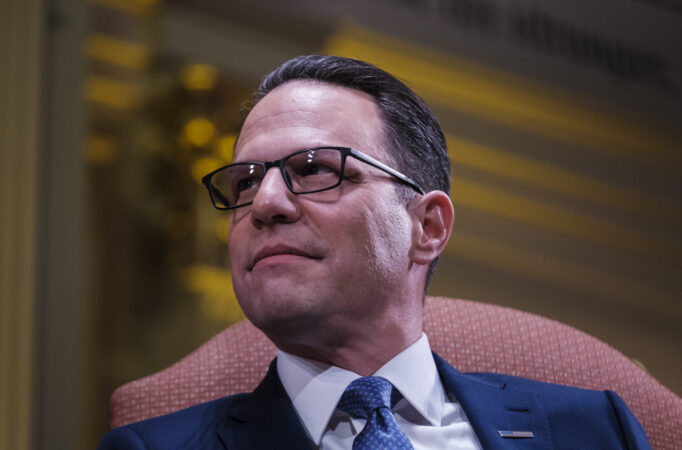
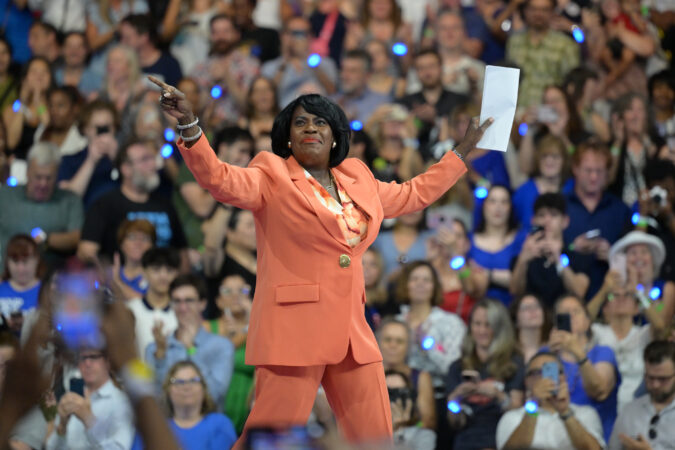
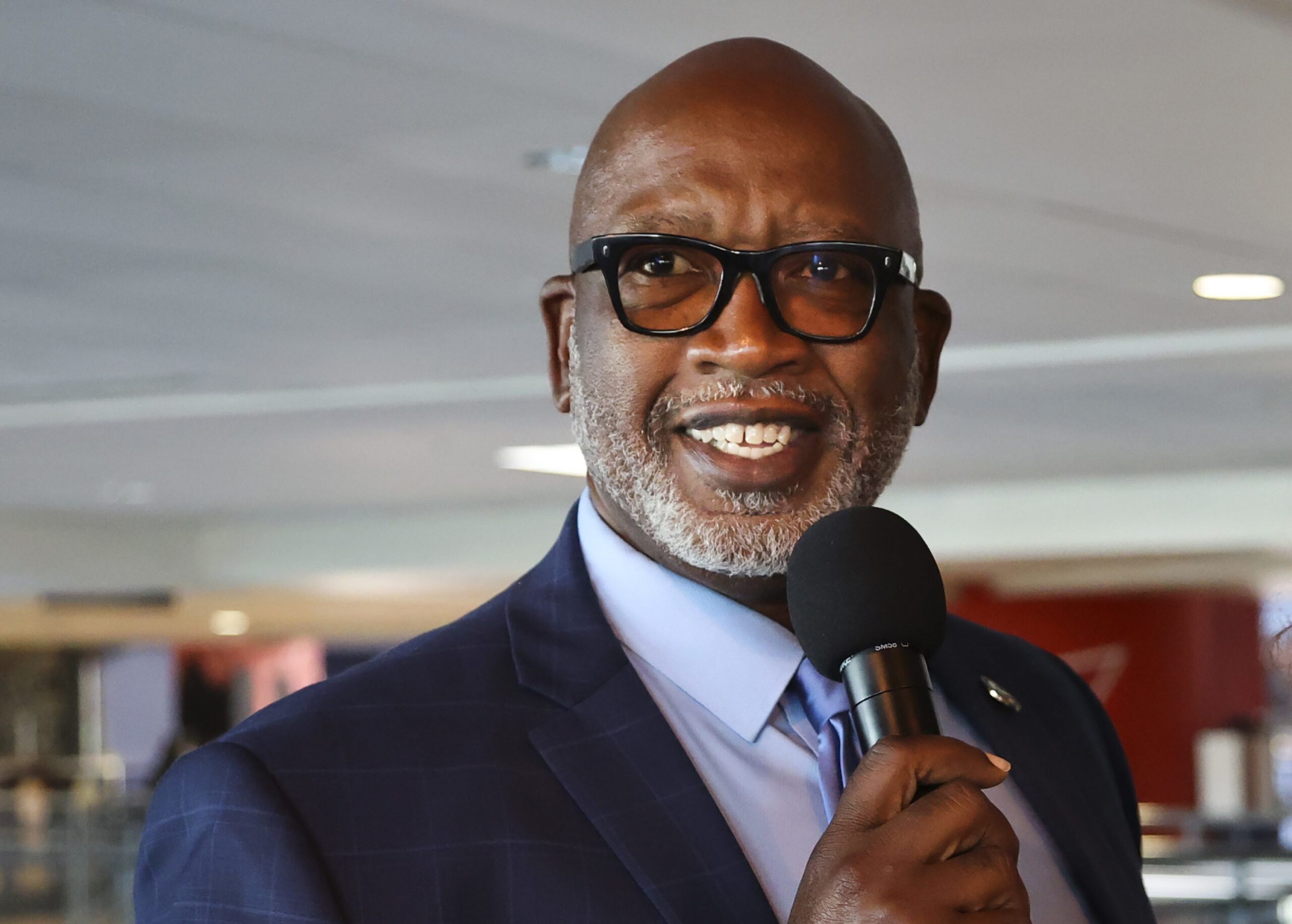
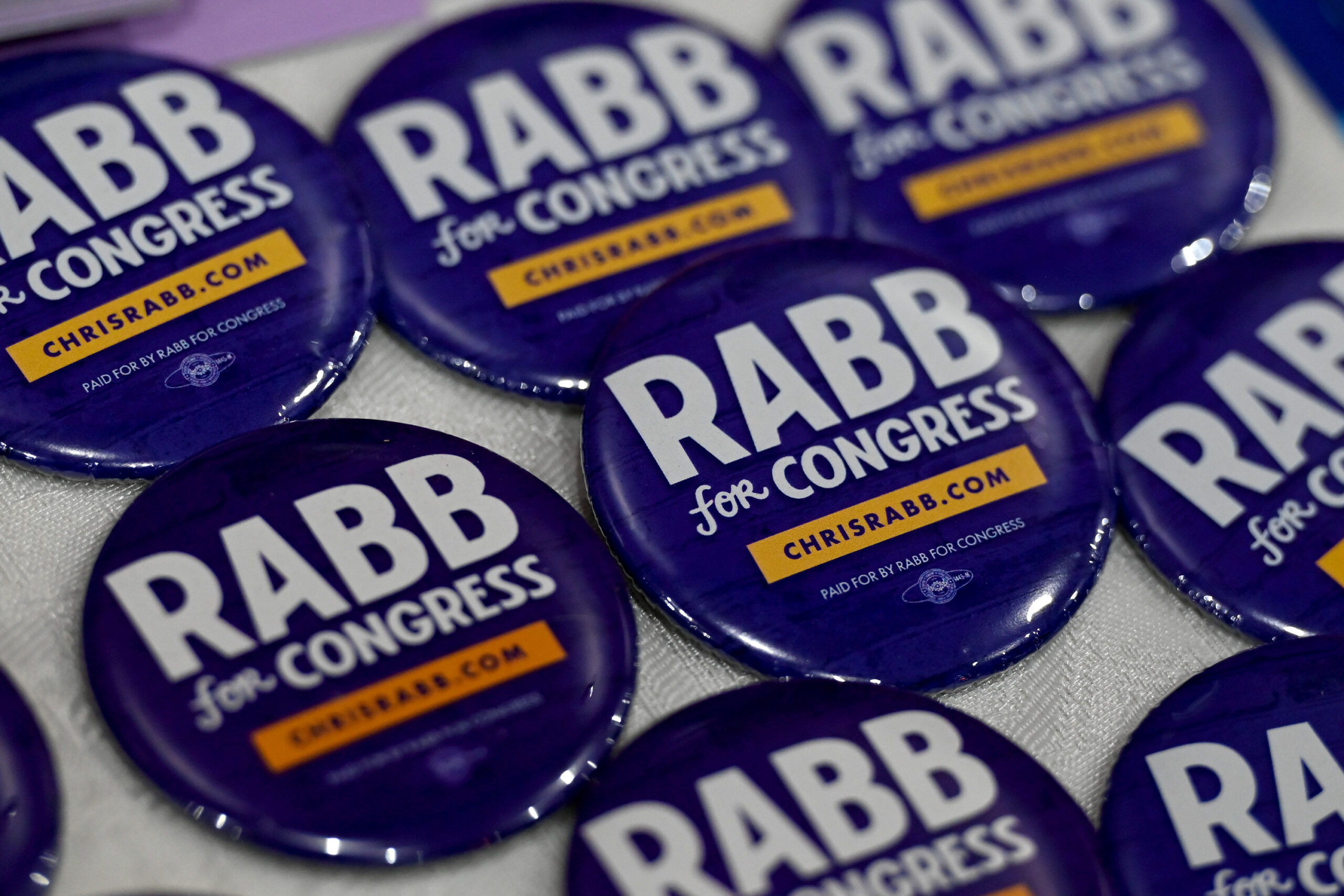
A Florida developer who is building data centers in Pennsylvania. A Chicago crypto trader whose company was sued by the Biden administration. And a Southwestern Pennsylvania coal magnate whose firm received a permit from state regulators last year to expand operations — and is now seeking approval to open a new mine.
Shapiro’s gubernatorial campaign raised at least $8.5 million last year from nearly 240 CEOs, founders, business owners, and other top executives, according to an Inquirer analysis of campaign-finance records that were made public last month.
That includes the single biggest donation to the campaign: $2.5 million from billionaire and former New York City Mayor Michael Bloomberg. Shapiro’s haul from top executives represents 50.8% of the $16.8 million he raised from donors who listed their occupation in campaign finance filings.
window.addEventListener(“message”,function(a){if(void 0!==a.data[“datawrapper-height”]){var e=document.querySelectorAll(“iframe”);for(var t in a.data[“datawrapper-height”])for(var r,i=0;r=e[i];i++)if(r.contentWindow===a.source){var d=a.data[“datawrapper-height”][t]+”px”;r.style.height=d}}});
During his first three years in office, Shapiro, 52, has sought to build a profile as a pragmatic, business-friendly governor, focusing on speeding the permitting process and promoting economic development through government grants and tax breaks.
At the same time, the governor has proven adept at raising campaign cash from people who have business interests before state government in Harrisburg. Those include a skill game developer who staved off a major policy defeat this year and a waste coal power plant owner who gave $100,000 to Shapiro two days before the governor pulled out of a multistate program that requires such facilities to pay for their greenhouse gas emissions.
It’s a contrast with the rising populism on both the left and right, marked by a “Fighting Oligarchy” tour by progressive leaders and the MAGA movement’s deep suspicion of elites.
It’s not unusual for corporate executives to make contributions to candidates from both parties. But the practice could invite scrutiny for Shapiro in a White House run — particularly among voters and activists who are dismayed by the role of money in politics.
“We are concerned about any elected leaders taking monetary donations from corporate interests, regardless of who they are,” said Ashley Funk, executive director of the Mountain Watershed Association, a nonprofit that opposes a Shapiro donor’s coal mining expansion.
“I think that it influences decision-making,” she said.
‘The speed of business’
For now, Shapiro’s pledge to make Pennsylvania’s government run “at the speed of business” appears to have won over many executives, helping him build a massive fundraising advantage in his reelection bid. Shapiro raised $23.2 million overall in 2025, compared with the $1.5 million reported by his likely Republican opponent, State Treasurer Stacy Garrity.
“I’ve long admired the way the commonwealth approaches economic development and innovation, and I have deep respect for Gov. Shapiro’s leadership,” said Bob Clark, executive chairman and founder of Clayco, a Chicago-based real estate and construction firm that is redeveloping a site at the industrial hub known as the Bellwether District in South Philadelphia.
Clark gave Shapiro’s campaign $100,000 last year. “I consider him both a trusted colleague and an effective leader,” he said.
In recent weeks, the governor has celebrated pledges by pharmaceutical companies to invest billions of dollars in new facilities in Montgomery County and the Lehigh Valley, secured with tens of millions of dollars in state incentives. And last year, Amazon said it would spend $20 billion in Pennsylvania to build two new artificial intelligence data centers, in what officials called the single largest private investment in state history.
Shapiro’s allies say he stands up to big business, too, highlighting how he successfully prodded PJM Interconnection LLC — the Valley Forge-based regional electric grid operator whose voting members largely consist of companies in the electricity industry — to impose and extend a price cap. He has also received support from organized labor.
Shapiro argues that the way to restore faith in institutions is not by railing against billionaires but by showing that the government can fix real problems — “get s— done,” in his parlance.
Garrity, the Republican state treasurer, says Shapiro’s actions don’t live up to the hype.
“Liberal national donors may be investing in Josh Shapiro’s political vanity project, but hardworking Pennsylvanians are seeing nothing in return,” she said in a statement.
Garrity received nearly $380,000 from more than 60 CEOs and other top business executives. That figure represents about 41% of her contributions from donors who listed their occupation in campaign-finance filings.
Shapiro’s campaign said his coalition is “reflective of a governor who is delivering for all Pennsylvanians — and of a campaign that is fighting to win up and down the ballot.”
window.addEventListener(“message”,function(a){if(void 0!==a.data[“datawrapper-height”]){var e=document.querySelectorAll(“iframe”);for(var t in a.data[“datawrapper-height”])for(var r,i=0;r=e[i];i++)if(r.contentWindow===a.source){var d=a.data[“datawrapper-height”][t]+”px”;r.style.height=d}}});
The governor has “focused on growing our economy and creating jobs, and he has delivered — creating tens of thousands of jobs, winning major deals, and building the only growing economy in the Northeast,” campaign spokesperson Manuel Bonder said in a statement.
Shapiro highlighted one such deal in July, when he appeared alongside executives at defense contractor Rhoads Industries at the Navy Yard in South Philly to announce the firm’s $100 million plan to build a new manufacturing facility, create 450 jobs, and boost production of submarine parts.
“One of the things that Rhoads is known to do is get things done. … We want to turn out product; we want to turn it around; we want to get it done,” president Mike Rhoads said.
Looking toward Shapiro, he said, “Somebody standing to my left has the kind of same attitude.”
Gov. Josh Shapiro (right) with Rhoads Industries CEO Dan Rhoads in July 2025 at the Navy Yard.
Taking his turn at a lectern that read “Rebuilding America’s Fleet,” Shapiro said Rhoads’ investment — with help from the state — would “ensure the future of submarine manufacturing, shipbuilding, and all things important to securing our freedom is going to run right through the Philadelphia Shipyard.”
Three months later, in October, CEO Dan Rhoads contributed $10,000 to Shapiro’s campaign — the single largest donation he made to a candidate for state office in the last decade, records show. Rhoads did not respond to requests for comment.
Data centers and ‘skill games’
Shapiro donors’ business interests include everything from data center construction to state regulation of slot machine-style games and approvals for a nuclear reactor.
Dan Hilferty, CEO of Philadelphia-based Comcast Spectacor — which owns the Flyers and the Xfinity Mobile Arena in South Philly — gave $40,000. A political action committee affiliated with parent company Comcast also gave $50,000. Comcast Spectacor and the 76ers are building a new arena at the South Philadelphia sports complex, and Shapiro last year did not rule out offering state incentives. Hilferty, a former CEO of Independence Blue Cross, previously gave Shapiro’s campaigns $27,500 over the last decade. Other Comcast Spectacor executives contributed about $95,000 during that period.
Top executives at Pace-O-Matic, the Georgia-based developer of so-called skill games that have proliferated across convenience stores and bars, gave $50,000. Operators for Skill, a PAC affiliated with the firm, contributed $10,000. The company successfully fended off a push in 2025 by Shapiro and lawmakers to tax the games at a level the industry considered too high. The governor has renewed a push to regulate the games, which some Philadelphia lawmakers say they would prefer to see banned. Pace-O-Matic contributes to both parties and remains “committed to fighting for fair regulation and taxation of Pennsylvania skill games,” said Mike Barley, chief public affairs officer for Pace-O-Matic.
Joseph Dominguez, president of Baltimore-based Constellation Energy, gave $25,000. The company is seeking to restart a nuclear reactor at Three Mile Island, just outside Harrisburg, and needs state and federal approvals. The plant would supply power to Microsoft to support the tech company’s data centers. “Constellation executives contribute to policymakers on both sides of the aisle who, like Gov. Shapiro, prioritize results and pragmatic solutions over politics,” a company spokesperson said.
Brian Patten, CEO of Next Generation Land Co. LLC, gave $10,000. He is a Florida data center developer who says he is pursuing projects in Pennsylvania. Data centers that power companies’ cloud storage and computing needs have drawn backlash across the U.S. over fears of rising electricity rates. In his February budget address, Shapiro said he wants data centers to supply their own energy and pay for any new generation they need. He has also said the U.S. needs to win the AI race against China.
Justin Thompson, CEO of Iron Senergy, a coal operator, gave $10,000. His firm owns the Cumberland Mine in Greene County. When Pennsylvania applied to the U.S. Environmental Protection Agency for a $400 million grant, it mentioned several firms — including Iron Senergy — that could use the money for decarbonization projects, the Pittsburgh Post-Gazette reported in 2024. The EPA awarded the grant, and the Pennsylvania Department of Environmental Protection is tasked with administering it. The state is now reviewing applications, which it says are confidential.
The Cumberland Coal Mine in Greene County seen in 2020.
Local and national donors
Shapiro drew on a mix of executives from local and national firms. In Pennsylvania, he raised money from health system CEOs (Joseph Cacchione of Thomas Jefferson University, $10,000), bankers (Richard J. Green of Philly-based Firstrust Bank, $125,000), and a home remodeler (Asher Raphael of Power Home Remodeling in Chester, $100,000). Josh Kopelman — founder of First Round Capital and chairman emeritus of The Inquirer’s board of directors — and his wife, Rena, each gave $50,000.
There were private equity investors (San Francisco billionaire John Pritzker, cousin of Illinois Gov. JB Pritzker, $50,000), Hollywood producers (Jimmy Miller of talent management and production firm Mosaic, $75,000), professional sports team owners (telecom billionaire Robert Hale, minority owner of the Boston Celtics, $50,000), and a Massachusetts sports betting executive (Jason Robins of DraftKings, $10,000).
For his part, Bloomberg is “a big fan of Gov. Shapiro and a big believer in his leadership, and thinks he’s done a great job for Pennsylvania,” adviser Howard Wolfson told Axios.
At least one donor had ties to President Donald Trump, whom Shapiro often criticizes.
Don Wilson Jr., CEO of Chicago-based trading firm DRW Holdings LLC, gave $10,000 to Shapiro in September.
The Securities and Exchange Commission filed civil charges against a unit of Wilson’s firm while President Joe Biden, a Democrat, was in office. The SEC accused it of operating as an unregistered cryptocurrency dealer.
Biden-era regulators said that firms were dodging that rule by claiming crypto was a commodity, not a security. The enforcers argued this exposed investors to extra risks associated with digital currencies.
Then last March, a couple of months after Trump took office, the new administration dropped the charges against Wilson’s firm. Nine weeks later, Wilson invested $100 million into a Trump bitcoin project, the Financial Times reported.
The company told the newspaper it engages in a “variety of strategies in the crypto ecosystem” and saw value in holding bitcoin. “This transaction was viewed purely through that lens,” it said.
Trump denies having conflicts of interest.
That didn’t stop the Democratic National Committee from flagging the news on its “CORRUPTION WATCH” page.
The Trump administration, the Democrats’ post said, “now appears to be engaged in blatant pay-to-play politics.”
Power plants and coal mines
Among corporate executives, two of the eight biggest donors to Shapiro’s campaign last year were the father-and-son owners of privately held Robindale Energy Services, which owns about 20 companies involved in waste coal reclamation, power generation, mining, and logistics. Robindale’s assets include multiple power plants fueled by waste products from abandoned coal mines.
CEO Scott Kroh and his son Judson, the Latrobe-based company’s president, gave a total of $271,000.
That included a $100,000 contribution from Scott Kroh two days before Shapiro signed the annual budget, which came after a monthslong stalemate. The deal with Senate Republicans included language pulling the state out of the Regional Greenhouse Gas Initiative, a multistate effort to generate cleaner power that Robindale had vocally opposed.
Robindale’s executives did not respond to requests for comment.
In June 2023, Judson Kroh spoke out against RGGI at a public hearing, telling Pennsylvania lawmakers that Robindale’s power plants have enough capacity to power 500,000 homes. “Our main concern is you’ll see a significant decrease in power exports out of the state due to RGGI, as well as a significant decrease in coal production,” Kroh said.
Other energy industry firms, Republican lawmakers, and building trades unions have also long opposed the initiative, which requires power plants to buy allowances to cover their carbon emissions. They call it a job killer and an electricity tax. Environmental groups say it has reduced pollution and led to investments in clean energy in other states.
Shapiro had for years expressed concerns about the greenhouse gas initiative, which Pennsylvania joined under his predecessor but never implemented due to litigation. Shapiro said in 2021 during his first run for governor that “it’s not clear to me” that the program protected jobs, addressed climate change, or ensured energy reliability.
The Kroh family donated a total of $55,000 to his 2022 campaign and $21,000 the following year. Judson Kroh was among the more than 300 people who served on Shapiro’s transition team.
Many of Robindale’s operations are regulated by the state, and the company spent $150,000 lobbying state government officials last year, records show. Company executives in recent years have largely donated to Republicans in Harrisburg, though they have also supported some Democrats, including Shapiro.
window.addEventListener(“message”,function(a){if(void 0!==a.data[“datawrapper-height”]){var e=document.querySelectorAll(“iframe”);for(var t in a.data[“datawrapper-height”])for(var r,i=0;r=e[i];i++)if(r.contentWindow===a.source){var d=a.data[“datawrapper-height”][t]+”px”;r.style.height=d}}});
In addition to its power generation business, Robindale owns coal mines that are subject to state inspections and oversight. When two people died in a Somerset County mine operated by subsidiary LCT Energy, DEP required the company to update its safety protocols. The deaths in 2022 and 2023 came during a time in which there were 20 coal mining fatalities nationwide, according to federal data.
Johnstown-based LCT is currently expanding.
About 30 miles west of Maple Springs, LCT opened another mine in 2018 in Westmoreland County called Rustic Ridge 1, which produces 600,000 tons of coal a year.
The state renewed the permit for the 2,800-acre underground mine in January last year, and from that month through March, the Kroh family donated $70,000 to Shapiro’s campaign.
In April, after a yearslong review, the Pennsylvania Department of Environmental Protection approved a permit authorizing LCT to expand its operations there, adding 1,400 acres under the Pennsylvania Turnpike — the equivalent of 93 Lincoln Financial Fields. The permit allows LCT to mine coal up to 600 feet underground. The company sells the coal for production of steel.
The nonprofit Mountain Watershed Association is appealing the DEP’s approval to the Pennsylvania Environmental Hearing Board — whose judges are appointed by the governor, subject to confirmation by the state Senate — arguing that the expansion could harm groundwater and streams.
Others say the mine supports jobs and helps the local economy. Before opening, the company said in 2014 that it would invest $50 million to develop the mine, according to local news reports.
The state budget Shapiro signed in November expanded a program for expedited permitting involving approvals from the DEP, which reviews 40,000 permits a year. Introduced in 2024, the program is currently available for eligible permits such as air quality, dam safety, and oil and gas erosion and sediment control.
The budget legislation — cheered by Shapiro and GOP lawmakers — added more permit types, including one for mining, “which DEP is in the process of adding to the program,” a department spokesperson said.
Funk — the executive director of the watershed association, which has spent millions of dollars over the last 30 years repairing the environmental damage of legacy coal mining — said she is concerned the Krohs’ political giving “might be having an influence over Shapiro and his administration as we work to permit some of Robindale’s projects such as LCT Energy.”
Shapiro says permitting reform reflects his governing ethos.
“When you think about getting stuff done … it requires focus and speed,” he said in December at a National Governors Association event. “We’ve gotta be speedier as a country.”
Artificial intelligence presents a mixed bag of risks and benefits for children that vary by age, according to Children’s Hospital of Philadelphia researchers who reviewed dozens of academic studies onthe emerging technology.
For young children, an AI chatbot could help with language development, yet it could also distorttheir perceptions ofsocial interactions.
For adolescents, the technology could help with career exploration, but its record of inappropriate responses to mental health matters raises concerns.
The researchers summarized the current evidence on generative AI — tools that imitate human intelligence to produce content in the form of text, audio, images, or videos — in a review article published Wednesday in the medical journal Pediatrics. They reviewed 55 published works largely released in the last five years, including nearly three dozen peer-reviewed studies and a mix of news articles, blog posts, and pending legislation.
They separated the potential effects across early childhood (ages 0 to 5), middle childhood (6 to 11), and adolescence (12 and older) to lay out the considerations for families.
Guidance for parents on how AI might reshape childhood remains limited, despite its rapid spread into children’s learning and play, said Robert Grundmeier, a primary care pediatrician at the Children’s Hospital of Philadelphia and thelead author.
Nearly two-thirds of teens use chatbots, like ChatGPT or Gemini, with 28% doing so daily, according to a Pew Research Center survey last year. They are using the tools for everythingfrom searching for information to getting help on homework and having a digital companion to chat with.
“Our children are getting exposed to AI at incredibly young ages, well before they have a smartphone,” Grundmeier said.
The article was what’s called a “state-of-the-art review,” meaning it covers a topic that is rapidly changing, and for which there’s not yet a lot of rigorous research, he said.
He hopes other researchers willdig deeper into the area “so that we can actually start to, in the future, make some concrete recommendations about best practices.”
The Inquirer spoke with Grundmeier about what parents should know about children’s use of generative AI in a conversation lightly edited for clarity and length.
Robert Grundmeier is a pediatrician at CHOP and lead author on the recent article
What are the takeaways of your review?
There’s a lot of opportunity, clearly in the educational domain, in helping to really creatively tailor and customize educational materials.
One of the biggest concerns that came up had to do with the reliance on artificial intelligence as a companionship tool. You can interact with it in a way that you might a friend. And there are some nice things about that, in terms of being able to explore ideas in a non-judgmental way. But I think there’s a tremendous concern, especially from a child development perspective, that children could learn incorrect mental models of human interaction.
How might interacting with AI differ?
AI tools are typically designed to promote engagement. While a human might challenge your ideas and push back — friends do it all the time — an AI tool is typically a little less likely to push back and challenge you in a way that might make you unhappy with the interaction.
There’s more nuance in the human interaction.
What are the potential risks and benefits of AI in early childhood?
There’s a lot of opportunity for creativity, storytelling, and supporting language development that could be a really nice benefit of AI in preschool-aged children. The concern regarding incorrect mental models and not correctly understanding what a human interaction is meant to be like is really most notable, however, in this age category.
It’s really essential that a parent always remains involved in any AI interactions, looking at the output from AI alongside their child, and preferably pre-screening what’s being generated to make sure their young child is not accidentally exposed to any harmful content.
What about for school-age children?
There’s a lot more opportunity to personalize education to people’s different learning styles.
But similarly, there are definitely school rules that have to be followed on the appropriate use of AI. To the extent parents can start to promote an idea of AI literacy and make sure that their child is not handing over their learning to the AI, then I think there’s a lot of good opportunity there.
We want to promote skill development, not cause people to have their skills atrophy because they’re relying on the AI to do their homework.
What are the considerations for adolescents?
There are social interaction concerns. We reference some of the news related to problems with teenagers using AI tools as a companion or a friend. In particular, there was some research that showed that AI tools may respond very inappropriately to questions about mental health topics, including suicide. There really needs to be a lot of guardrail development on the part of the AI vendors to make sure that teenagers do not have harmful interactions with AI.
What are potential benefits of adolescents using AI?
AI is here to stay as part of our futures and our professional careers. To the extent that AI literacy can be supported in the adolescent age group, so that they can enter the workforce as a professional who knows how to use AI appropriately, I think that’s a worthwhile educational effort.
It can also be a valuable tool for career exploration and college choice. There’s a lot of information about different colleges and career paths, and AI tools are good at summarizing, synthesizing, and interpreting something in light of what you might say are your priorities.
Is there anything that you feel is still uncertain or needs to be clarified through future research?
The manner of interacting with AI keeps changing. For example, various household ambient AI tools (devices that passively listen to us) have been in existence for a while, but now the types of interaction have become much more complicated. We need to understand what are safe and effective ways to use these tools in the household in a way that’s supportive of child development.
Another category of research that is really important is developing guardrails, evaluating them, and making sure that they’re adapted appropriately for different age stages.
As a pediatrician, what have you been hearing about AI from parents?
I was chatting with the family of an elementary school-aged child about school performance, and the mom indicated some difficulties supporting his reading comprehension. They had discovered, with support from his school, that they could use AI tools to create reading comprehension paragraphs that they could practice with at home to help their child learn how to really focus on their reading. I thought that was actually a fantastic example.
What I’m struck by is really the creativity that families are approaching this with. There’s a lot of good opportunity there, as long as we pay attention to the risks and make sure guardrails are in place appropriately.
It was at the end of last year in the hazy stretch between Christmas and New Year’s when time doesn’t feel real, and some of Philly’s top Democrats were huddled around a secret proposal, racing to meet a deadline.
The group — convened by Mayor Cherelle L. Parker, her aides, and some key Philadelphia boosters — was preparing a lengthy bid to bring the Democratic National Convention back to the city in either 2028 or 2032, a potential economic boon and a chance to show off in front of lawmakers, celebrities, and international media.
The confidential proposal to the Democratic National Committee included everything from the city’s hotel space to police outfitting to nitty-gritty details about the electrical grid and voltage capacity at Xfinity Mobile Arena. SEPTA officials drafted a section about the public transportation Philadelphia could offer visitors, and tourism agencies chipped in with insights on hotels and restaurants.
David L. Cohen, a longtime Democratic fundraiser and the president of the recently formed nonprofit host committee called Pick Pennsylvania, said that while the mayor led the effort, the bid also emphasized the “unity of the region and the commonwealth.”
“She wanted it to be really clear this is more than a Philadelphia bid,” he said. “This is a unified Pennsylvania bid.”
It appears the Democratic National Committee was impressed. On Monday, the DNC announced that it is considering five cities, including Philadelphia, to host the 2028 convention, where a Democratic presidential nominee will be coronated. The party is also looking closely at Atlanta, Denver, Chicago, and Boston to hold the early August event.
What comes next is a campaign to lure the convention to Philly, complete with a carefully coordinated public relations effort and a significant fundraising push. Philadelphia’s host committee for 2016, the last time the city held a presidential nominating convention, raised more than $85 million.
The DNC has asked host cities to raise $5 million before being selected. Philly’s fundraising, Cohen said, “will be substantially higher than that number.”
In this 2021 file photo, David L. Cohen speaks as Philadelphia Soccer 2026, the city’s World Cup 2026 bid committee, launched an interactive exhibit at the Independence Visitors Center in Philadelphia. He is now heading an effort to bring the Democratic National Convention to Philadelphia.
Cohen, a former Comcast executive and erstwhile chief of staff to former mayor Ed Rendell, is leading the effort alongside Daniel J. Hilferty, now the CEO of Comcast Spectacor.
Hilferty and Cohen have worked together repeatedly over the last two decades to bring major events to Philadelphia, including a successful bid to become one of a handful of North American cities to host World Cup games this year.
Also involved in coordinating the DNC proposal was Erin Wilson, a Philadelphia native who was a top aide to former Vice President Kamala Harris. She was the national political director for former President Joe Biden’s campaign and planned his 2021 inauguration.
When the DNC comes to town
DNC officials are expected to make a final decision on the 2028 site later this year. That call will likely be made by chair Ken Martin in consultation with top advisers and the committee’s Technical Advisory Group, which assesses logistics and operational matters.
Philadelphia could also have an advocate in State Rep. Malcolm Kenyatta, who represents parts of North Philadelphia and is a DNC vice chair. He is known to have a close relationship with Martin.
Committee officials and the advisory group will tour each of the five finalist cities for a yet-to-be-scheduled site visit this spring.
If history is any indication, the city will roll out the red carpet. In 2014, when 18 members of the DNC came to Philly to check out the city ahead of the 2016 convention, the host committee spent six figures to charm them.
The trip included a tour of Philly’s most popular sites, like Reading Terminal Market and the Philadelphia Museum of Art, as well as a swanky rooftop party and a breakfast at the Comcast Center. Predictably, cheesesteaks were also involved.
“The site visits are as much about feel as they are about technical details,” Cohen said. “After site visits, the teams who are making choices leave here and they have their socks knocked off. They can’t believe how vibrant the city is.”
In this 2014 file photo, Congressman Bob Brady, left, talks with DNC CEO Amy Dacey, center, as they have lunch at Pat’s Steaks in South Philadelphia.
Ryan Boyer, the head of the Philadelphia Building and Construction Trades Council and a close Parker ally, said one of Philadelphia’s best assets might be its mayor. Parker is an unabashed cheerleader for the city and is leading preparations for several major events this year, including World Cup games, the MLB All-Star Game, and the commemoration of America’s 250th anniversary.
“She’s the most effective advocate for bringing people together,” Boyer said, “with just her level of passion, her love of the city, and her love of the job.”
Cohen said he spoke to Parker last year about the potential to bid for the convention, and when she asked him to lead the host committee, he said yes because the city has “a serious chance.”
“As a friend and longtime supporter of hers, if I didn’t think we had a legitimate shot, I would try to talk her out of it,” Cohen said. “If anything, I have poured gasoline on her flames of enthusiasm and said, ‘We should be all in for this.’
”I said, ‘Do what you do best,’” he added. “Get everyone excited about this.’”
That means there is a chance that Shapiro, who was raised in Montgomery County and whose family still lives there, could be nominated in what is essentially his hometown.
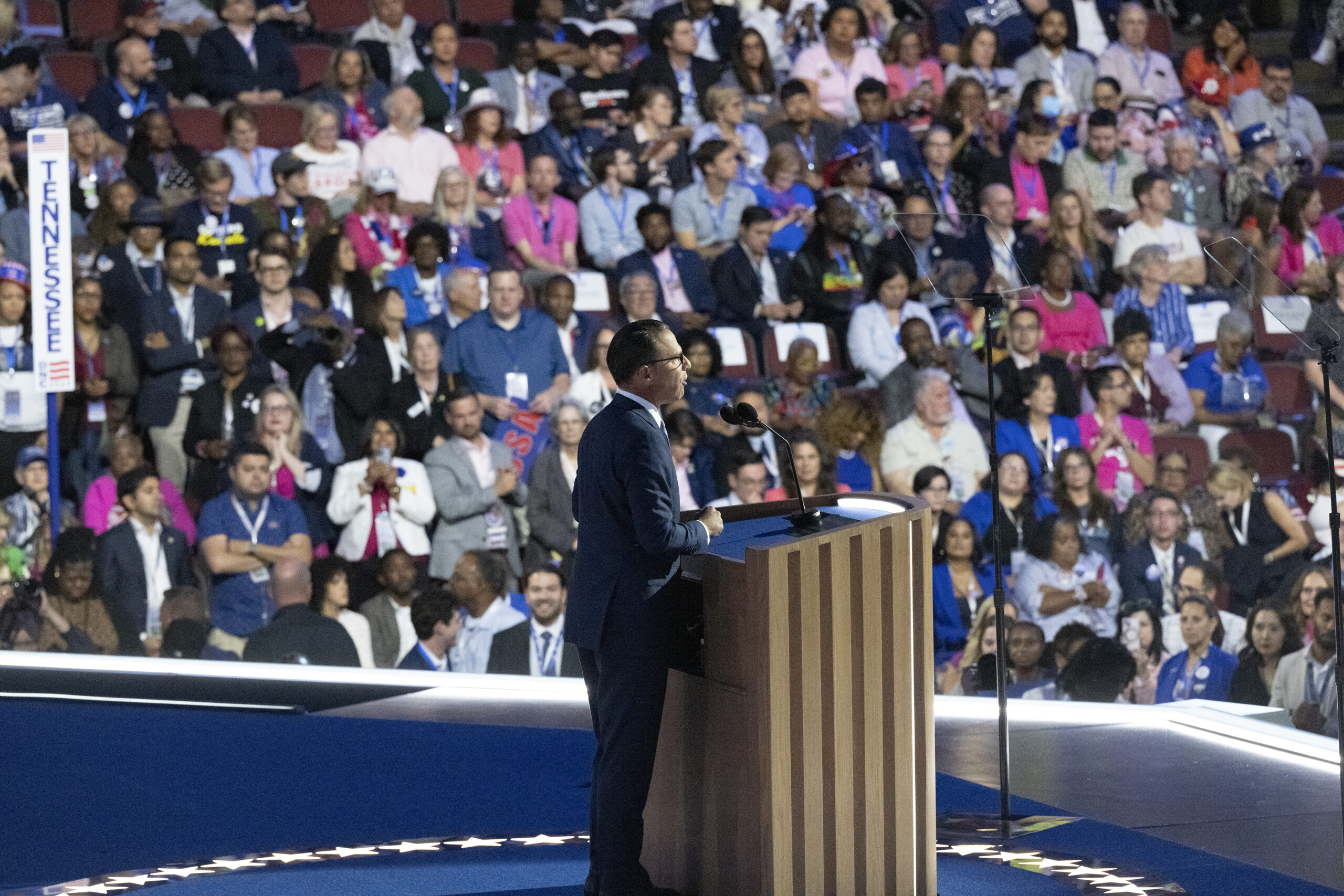
Pennsylvania Gov. Josh Shapiro speaks during the Democratic National Convention Aug. 21, 2024, in Chicago.
In a letter to Martin, Shapiro wrote that Philadelphia “would see substantial economic benefits” from hosting the convention and vowed that the state would be “prepared to ensure our infrastructure, public safety agencies, workforce, and business community are equipped to host thousands of delegates and attendees.”
What’s next: a close look at security and logistics
Behind the pomp of the DNC’s spring site visit will be a serious evaluation of security, transportation, hotels, and arena logistics.
The DNC said in a statement Monday that it will value “new and innovative approaches” to hosting a large-scale event that is likely to bring thousands of tourists. In 2016, the convention drew more than 5,000 attendees and an additional 29,000 visitors — nearly 20,000 of whom were media members.
Nominating conventions are typically designated as National Special Security Events, meaning the federal government leads security because the event is deemed at high risk for terrorism or other criminal activity. That means planners need to know specifics about law enforcement staffing, gear, and other capabilities.
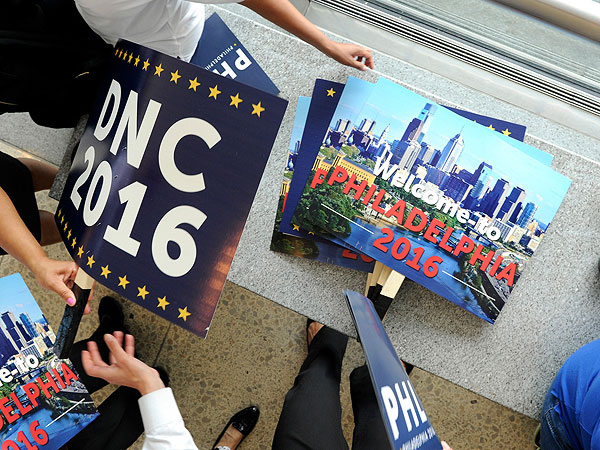
Placards promoting Philadelphia as the host city of the Democratic National Convention in 2016, while the Democratic National Committee was touring the city in August.
Support will also have to come from outside the city. During past conventions, federal law enforcement teamed up with Philadelphia police to secure the venue, and they were joined by officers from across the region.
The DNC also said in its announcement Monday that the committee would prioritize “the importance of forging a strong partnership between the DNC and the host city, including its community, political, and business leaders.”
To that end, the host committee and Parker asked elected officials and civic leaders from across the state to write letters of support that accompanied the city’s bid.
Authors ranged from City Council President Kenyatta Johnson, whose district includes the South Philadelphia stadium complex, to labor leaders to Democrats from the Philadelphia collar counties.
Montgomery County Commissioner Neil Makhija, who wrote a letter to the DNC boosting the bid, said it is important for the committee to see that local governments and law enforcement agencies outside the city are willing to offer support, because “pulling something like this off requires a lot of cooperation on many different fronts.”
“A real concern now when you’re thinking about hosting a political convention is ‘How are we going to manage public safety and a threat environment?’” he said. “There are a number of reasons to point to our region and see a level of collaboration that inspires confidence.”
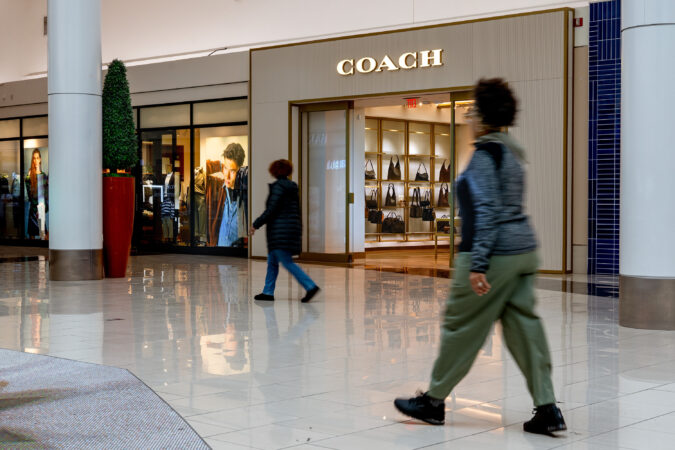
When Coach opened a store at the Cherry Hill Mall in November, mall executives were ecstatic — even though it’s been 85 years since the high-end retailer was founded.
Coach is as hot as ever. And its new shop in Cherry Hill is just another sign of the South Jersey mall’s success, according to leaders with Pennsylvania Real Estate Investment Trust (PREIT), which owns the complex.
“Cherry Hill is clearly a dominant fashion property,” Paula Charles, PREIT’S first vice president of leasing, said in a recent interview.
In the competitive Philadelphia market, “the better retailers have gravitated toward the better assets,” including Cherry Hill, added Joe Aristone, PREIT’s chief revenue officer.
They noted that top-tier retailers increasingly include legacy brands — long-established companies like Coach, Zara, and Levi’s, that are making a nostalgic, social media-fueled comeback with younger consumers.
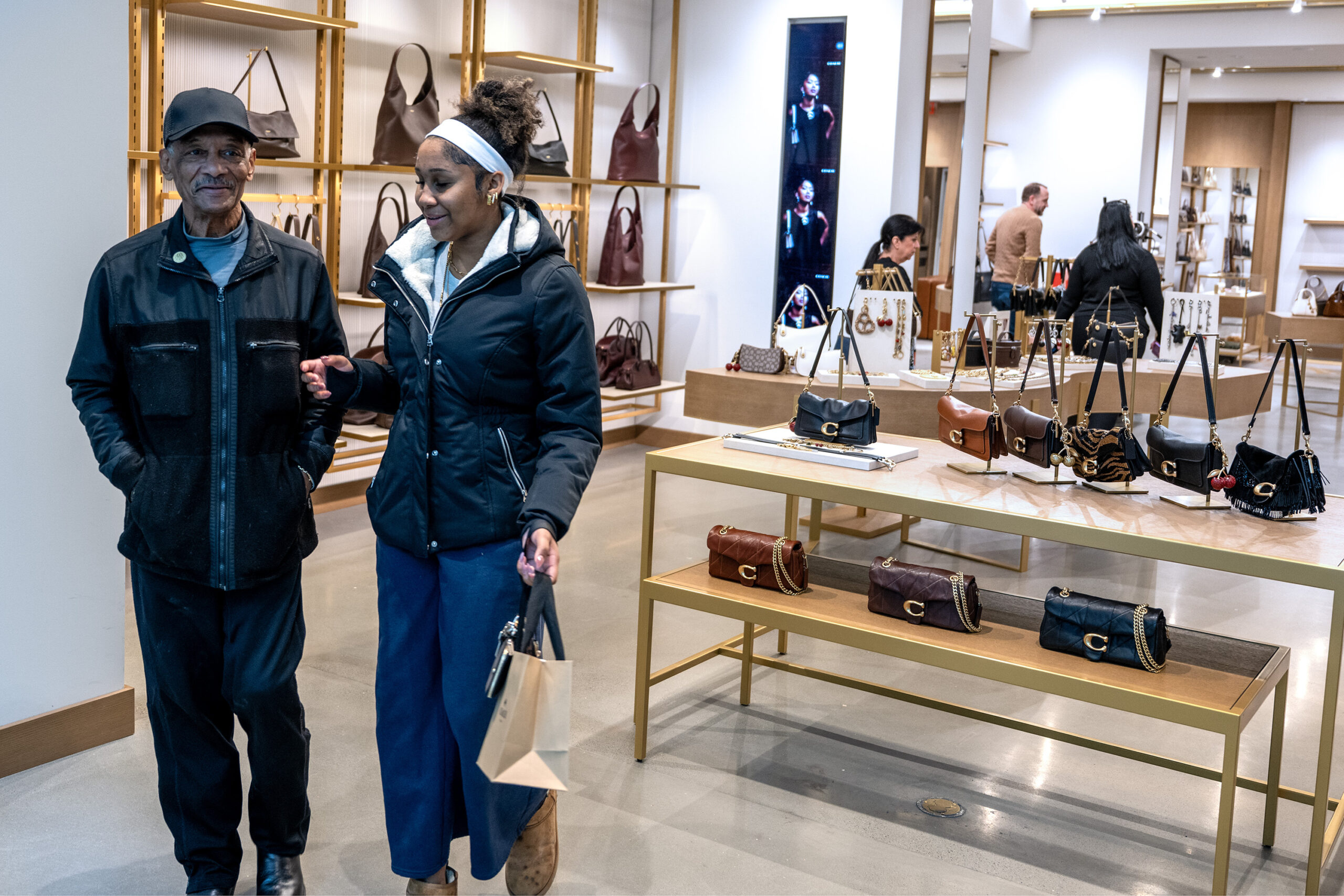
Employee Alex Costa (right) assists Alessandra Bruno as she shops for purses with husband, Luke Baur, and their 20-month-old daughter, Rosalina, at the Coach store at the Cherry Hill Mall.
In the Philadelphia area, these retailers have maintained a presence along shopping corridors in Center City and at higher-performing malls like Cherry Hill and King of Prussia, which is owned by Simon Property Group.
Prior to the Cherry Hill opening, Coach operated shops in King of Prussia and Marlton, as well as off-price locations at the Philadelphia Premium Outlets near Pottstown, the Gloucester Premium Outlets in Blackwood, and the Tanger Outlets in Atlantic City. The brand also has an outpost at the Philadelphia International Airport.
Coach spokespeople did not return requests for comment about their investment in the region.
PREIT executives declined to comment on sales so far at their new Coach store, but said brand and mall executives are pleased with how the store is doing — and what that means going forward.
“Coach has had a strategy to make sure that they capture Gen Z,” a demographic that PREIT executives also want to attract and retain as they age, Charles said.
Why Gen Z and millennials love Coach
Joe Williams, of Magnolia, N.J., buys a handbag for his daughter, Samantha Williams, at the Coach store at the Cherry Hill Mall.
About two years ago, Breana Stringer, now 26, noticed that many of her friends were going out with Coach bags. And when she’d open TikTok, she said, the platform’s algorithm showed her videos of other users’ Coach collections.
Up until that point, the Fishtown resident had been an accessory minimalist: “I was very much an ‘if it doesn’t fit in my pocket, I’m not bringing it’” type of person.
But Stringer said she was influenced by her friends and TikTok to start buying Coach bags, mostly secondhand (though she has received new Coach bags as gifts). She has come to enjoy styling them with her outfits.
To Stringer, Coach’s appeal to Gen Z consumers is simple, she said: “They’re affordable in terms of a luxury name brand, and they’re vintage styles.”
New Coach bags start at $95 for a short shoulder bag, while larger purses can cost $500 or more. At outlet stores and secondhand shops, prices are lower.
In South Philly, Stephanie Gonzalez, 33, has restored and resold dozens of vintage Coach bags, mostly to Gen Z and millennial women.
She said these women see the Coach brand as “timeless.”
For Gen Z, “what is happening is they are really into Y2K, late-’90s, early-’90s nostalgia,” Gonzalez said. “TikTok has been a big hub for people” to share their love of Coach and brands that were popular in those years.
As for other legacy brands, Stringer said some of her Gen Z friends have also started wearing Cartier rings, which have been around since the mid-1800s and can cost more than $1,000. It’s a trend Stringer has yet to get behind, she said, because she has a tendency to lose small accessories: “I’m less likely to lose a bag.”
How legacy brands are boosting Philly-area malls
Products are displayed at the Coach store at the Cherry Hill Mall.
Cherry Hill Mall isn’t the only local shopping center to have welcomed new legacy retailers recently.
In the past six months, Abercrombie & Fitch, Columbia Sportswear, Lacoste, and New Balance have opened new stores at the King of Prussia Mall, and an Adidas outpost is also set to open there soon.
At the Philadelphia Premium Outlets, Hugo Boss, Marc Jacobs, and New Balance have opened stores in the past year, while the Gloucester Premium Outlets in Blackwood have added New Balance and Columbia locations. Like the King of Prussia Mall, both outlet malls are owned by Simon Property Group.
Typically, these re-energized brands are attracted to places where other similar companies have already set up shop, say the PREIT executives who help shape the tenant mix at the Cherry Hill Mall.
And they said this cyclical effect further cements the region’s dominant retail centers as shopping destinations.
“There is so much media out there as it relates to closed malls,” said Aristone, the chief revenue officer. Many of the surviving malls, however, are thriving, he said, thanks in part to these legacy brands.
In a city replete with food peddlers and grocery proprietors, a Canadian chain would find a footing in Philadelphia.
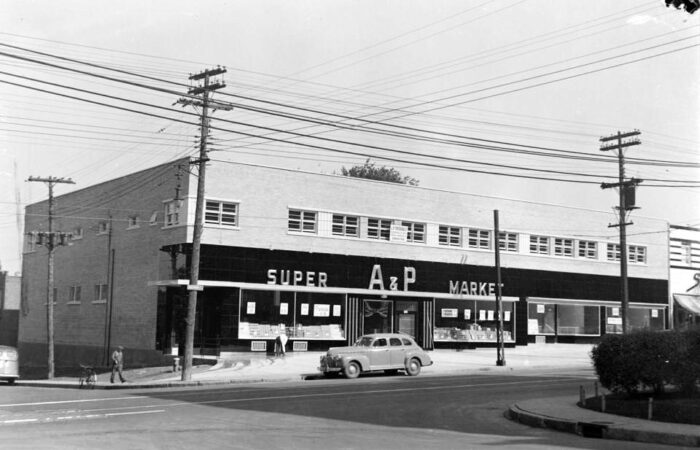
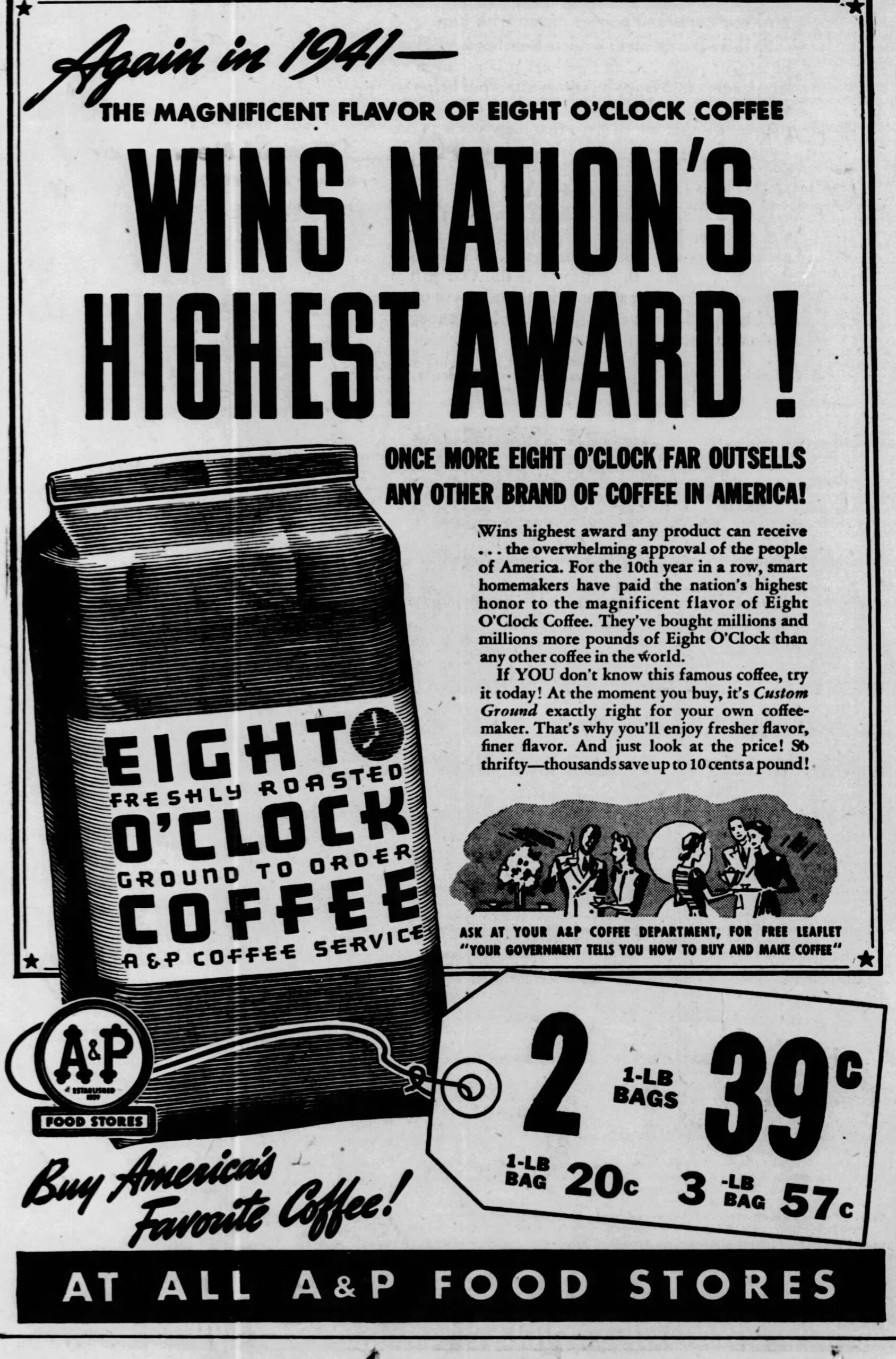
The Great Atlantic & Pacific Tea Company Inc., better known as A&P, was where shoppers could get their chain-brand of Eight O’Clock Coffee beans freshly ground in-store and in their preferred style.
An advertisement for Eight O’Clock Coffee that ran in The Inquirer in 1941.
For a healthy stretch of the 20th century, a majority of U.S. residents shopped for groceries in an A&P store. The chain was foundedin 1859 and by the 1940s, counted more than 16,000 locations spread between the Atlantic andPacific.
But by the spring of 1982, the grocery chain empire only had 70 stores in the Philadelphia region, and it was struggling to cover expenses.
On March 1, 1982, the chain announced it would be pulling out of Philadelphia. A&P would close 29 stores in the region, including all 11 left in the city. More than 2,000 people would be out of work amid a historic recession and rising energy costs.
It was the conclusion of a reorganization plan that resulted in the closure of 350 stores across the country at the end of 1981 and beginning of 1982. It would leave the chain with a little more than 1,000 stores, including more than 100 in Canada.
The long and drawn-out end for the once-vast grocery empire had begun.
In May ’82, the chain announced that the stores would reopen as Super Fresh Food Centers, and laid-off A&P workers would get first crack at the upcoming job openings.
But the chain’s inability to evolve with changing market conditions would continue to hamper its progress, and eventually lead to its demise, according to Business Insider.
A&P and its nearly 300 stores would hang on until 2015, when it filed for Chapter 11 bankruptcy for a second time, and sold off the rest of its catalog. The Super Fresh locations were absorbed by Acme, the South Philadelphia-based grocery group that, according to Philly Mag, had assumed the crown of Philly’s top food provider.
This is a satellite photo of Philadelphia taken on Jan. 4. The city had trace amounts of snow on rooftops following a brief snow shower in mid-December.
Two weeks later, on Jan. 19, Philly would be covered by a 4-inch dusting of snow. A gentle prelude to wrathful winter weeks that were to come.
One week later, the biggest snowstorm in 10 years left Philly with up to 8 inches of snow on the ground. This photo taken on Jan. 29 shows that any remaining parts of the city that weren’t already snowy were now covered.
As temperatures dipped down to single digits, the Schuylkill River down to the Passyunk Avenue Bridge was completely frozen over.
The Schuylkill froze first because it is relatively shallow and still compared to the Delaware. “Shallow water freezes faster than deeper water because water that cools at the surface becomes more dense and sinks and is replaced by warmer water from below,” said Jonathan Edwards-Opperman, a physical scientist for the U.S. National Ice Center.
Edwards-Opperman also said that ice will form faster in “parts of the river that are more sheltered from winds or if currents are weaker near parts of the shoreline.”
This explains why inland waters like the Cooper River and shielded water like that around Petty Island froze quickly.
By Feb. 8, the mountains of snow would solidify. With such sustained cold temperatures, the rest of the Delaware began to freeze as well.
Before Feb. 13, the U.S. Coast Guard’s cutting operations cleared a lot of ice around the Port.
Ray Kruzdlo, senior service hydrologist at the National Weather Service in Mount Holly, hypothesizes that “as the cargo ships or tankers worked through the ice, the ice broke up and then moved around or got flushed out.”
Meanwhile, the Delaware began to freeze between the Walt Whitman and Ben Franklin Bridges. Though it may seem the downstream ice drifted north, the new ice likely formed as relatively frigid upstream water flowed downriver.
According to Amy Shallcross, Delaware River Basin Commission manager of water resource operation, U.S. Geological Survey data from temperature gauges at Chester, and Fort Mifflin, Trenton ↗ shows that the lower end of the river warmed earlier first. Chester recorded above-freezing temperatures a full week before upstream waters at Trenton did.
“Water in the bay or in the lower part of the river is not as deep, and so it can freeze [and thaw] easier. If we got colder water from upstream, that might be why there was more freezing in the Philadelphia area,” said Shallcross.
After almost two weeks of overcast weather that obscured satellite imagery and a brief whiteout that left an additional 12 inches of snow on the ground, the city is finally clear. The recent snow melted almost immediately due to warm winter weather, and by Feb. 28, Philly had finally recovered from its long-lasting freeze.
Explore what the region looked like in the past few weeks.
January 4January 19January 29February 8February 13February 28
NaturalInfrared
story continues after advertisement
According to Shallcross, the last time Philadelphia’s rivers froze over was in 2018. However, it was nowhere as cold or severe, as the temperature was just below freezing.
“I don't think we've experienced that long of a cold snap that came about that quickly. And so it really was an unusual situation that we've just experienced,” said Shallcross.
The major freeze following the late January snowstorm meant that snow stuck around for three weeks. In contrast, the storm of late February was an example of how even larger snowfalls in Philadelphia can disappear quickly if the weather cooperates in the days following the storm. 12 inches of snow on the ground melted away in just a few days, as temperatures hovered in the 40s following the storm.
Fair to say that it’s been a harsh winter. After all, Punxsutawney Phil did see his shadow, and so far he’s been proven right. Thankfully, we’re not far away from spring.
Staff Contributors
Design, Development, and Reporting: Jasen Lo
Editing: Sam Morris
Photography: European Space Agency Copernicus Satellite Imagery
Copy editing: Brian Leighton
Subscribe to The Philadelphia Inquirer
Our reporting is directly supported by reader subscriptions. If you want more journalism like this story, please subscribe today
No matter what folks in Boston tell you, Philadelphia is America’s most historic big city. So why is architectural preservation increasingly under attack here, especially as Philadelphia gets ready for its star turn in the nation’s 250th birthday celebrations?
The movement to protect Philadelphia’s rich and varied architectural heritage was thrown into disarray Feb. 26 when a Court of Common Pleas judge invalidated the historic district created in 2024 to protect Washington Square West, a neighborhood that includes both Colonial-era masterpieces and nationally important infill buildings from the 1960s urban renewal period.
Judge Christopher R. Hall’s decision primarily focused on procedural issues and could be reversed if it’s appealed. Yet it is just one of several existential threats facing the preservation regimen that has guided the city for the last 40 years.
His decision is likely to encourage a group of developers who are challenging the Spruce Hill historic district, which also was created in 2024. It could similarly embolden Councilmember Mark Squilla, a former preservation champion who once created a controversial zoning carve-out to protect a one-story supermarket in Society Hill. Having jumped on the anti-preservation bandwagon, he’s now pushing legislation that many believe would gut the powers of the Historical Commission.
While the issues driving each of these challenges vary, it’s no accident that they’re happening at a time when people are increasingly concerned about rising housing costs. For years, pro-development activists have argued that there is a link between the city’s historic preservation laws and the scarcity of affordable housing. By adding an extra layer of regulation, they contend, those laws restrict where people can build, limit new construction, and raise maintenance costs for homeowners.
There’s no doubt that the city’s preservation laws require owners of historic properties to go through an extra step in the approval process. That takes time and can sometimes add to the cost of a project.
Yet it seems odd that pro-development activists have cast historic preservation as the main villain when so many factors influence the city’s housing supply: zoning regulations, interest rates, availability of labor, cost of construction materials. President Donald Trump’s tariffs alone sent the price of lumber soaring in the last year.
In an effort to put things in perspective, the nonprofit Preservation Alliance recently commissioned an economic analysis to explore its impact on housing prices. The report made two interesting observations: Apartments in older buildings rent for less than those in new ones. And protecting those older buildings actually helps maintain a supply of “naturally occurring affordable housing.”
The study, prepared by the Washington-based Place Economics, also examined claims that historic districts are enclaves for the wealthy and exclude renters. Data show the opposite: Historic districts continue to gain new residents long after they been designated. In fact, between 2010 and 2020, the population of Philadelphia’s historic districts grew almost five times as fast as the city as a whole, which suggests new housing is being built despite the additional oversight.
Not all that construction takes the form of new buildings, however. Even in the best of economic times, erecting a new apartment building in Philadelphia is far more expensive than fixing up an old one. As a result, the city has come to rely on older buildings to provide new housing. Without them, Philadelphia would be a much less affordable place.
In the past, the city’s obsolete offices and factories were the main targets for housing conversion. Those buildings are relatively easy to adapt because they have large, rectangular footprints.
But what about smaller, more irregularly shaped historic buildings? Are the city’s preservation and zoning laws flexible enough to allow more density in old townhouses, which, after all, constitute the bulk of Philadelphia building stock?
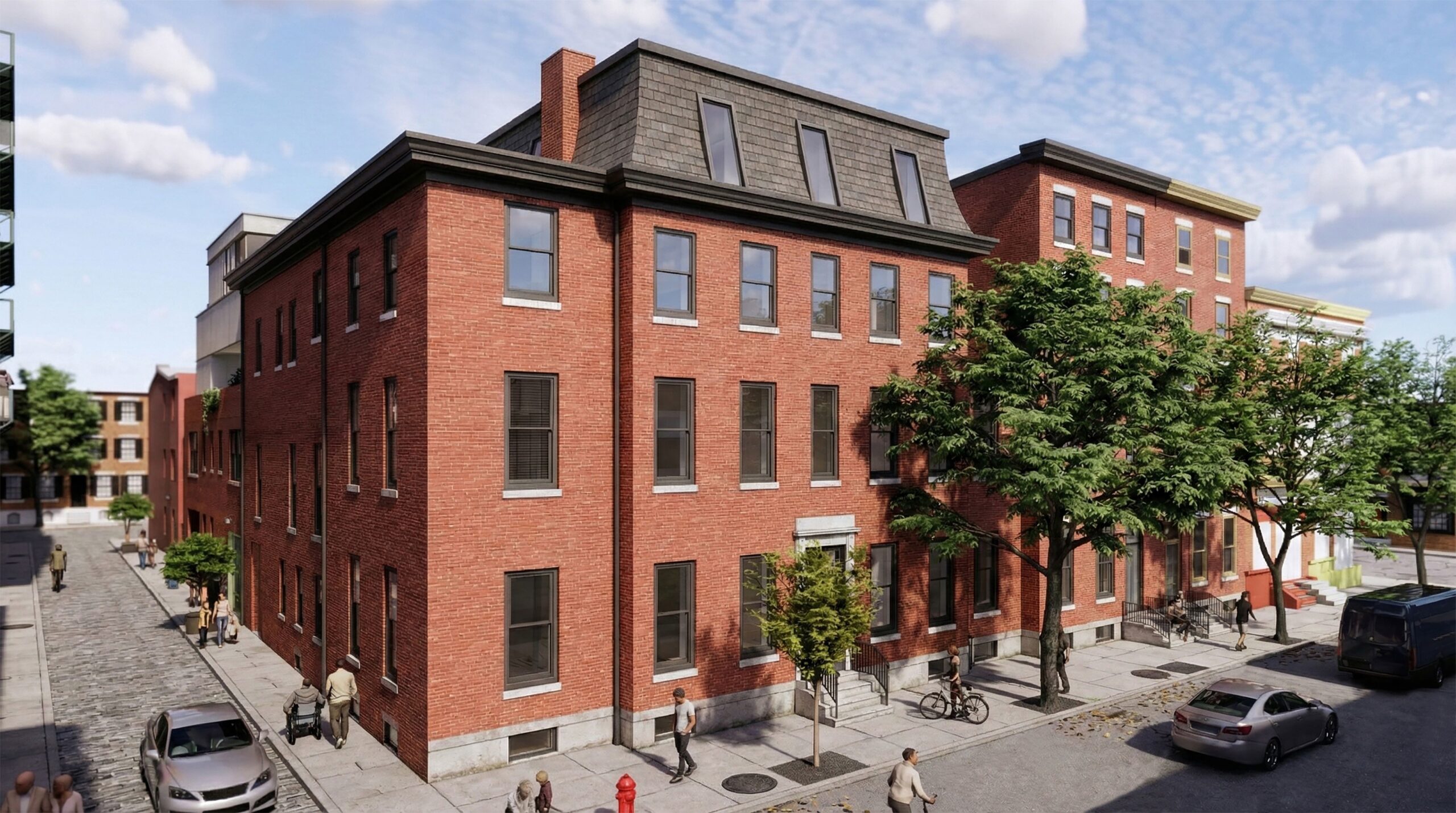
This sprawling complex of 19th-century buildings at 15th and Waverly Streets is being converted to a 32-unit apartment building by Lo Design for developer Keith Alliotts. By installing a penthouse level over the former stable (rear left), the architects will be able to improve the interior circulation and increase the density.
Converting townhouses into apartments
To understand the role those buildings can play in the great Yimby-Nimby debates, I reached out to Lea and Evan Litvin, who run Lo Design, an award-winning firm that has its offices in the Rittenhouse-Fitler historic district. Lo Design started out doing single-family homes for developers, but lately they’ve taken on commissions to turn large townhouses into apartments.
Small conversions are more labor-intensive than erecting a new townhouse on an empty site, but they allow the Litvins to do work that aligns with their architectural ideals. The conversions create more housing for less money, using fewer natural resources. “Saving an old building is the most sustainable form of construction,” Evan explained.
Since Philadelphia’s historic townhouses were never meant for multiple tenants, and often have awkward layouts, the Litvins have developed architectural tricks to make them function as apartment buildings. Sometimes that means attaching a new wing on the back. In other cases, they’ve built freestanding structures in backyards.
Their current project at 15th and Waverly Streets used a little of everything to transform a historic Greek Revival mansion into a 32-unit building.
The brick building began its life in 1860 as a private home, complete with a stable. At some point, someone popped on a mansard roof to create a fourth story and added wings on the sides. Then, in the early 20th century, the mansion, stable, and a neighboring townhouse were fused into a single building that served as offices for what was then known as the Society to Protect Children from Cruelty.
For the project’s developer, Keith Alliotts, the building’s main attraction was its size — 26,000 square feet, significantly larger than a typical townhouse, which might be 6,000 square feet. He also liked that the location, a few steps from the former University of the Arts’ Hamilton Hall, felt like part of the Rittenhouse Square neighborhood.
Yet the challenges of transforming the awkward amalgamation into a coherent, multifamily residence soon became clear. None of the floors in the different buildings lined up. The U-shaped footprint complicated the flow through the building. The interior was a mashup of Victorian and post-modern details. On top of everything else, the project would need a zoning variance and approval from the Historical Commission.
Lo Design plans to create an internal courtyard at the center of a new residential building at 15th and Waverly. The project will turn a group of historic 19th-century buildings into a 32-unit apartment building.
Getting those permits turned out to be the easy part, the Litvins said. Because the complex had been empty for years and was starting to deteriorate, the neighborhood enthusiastically embraced the idea of using it for apartments.
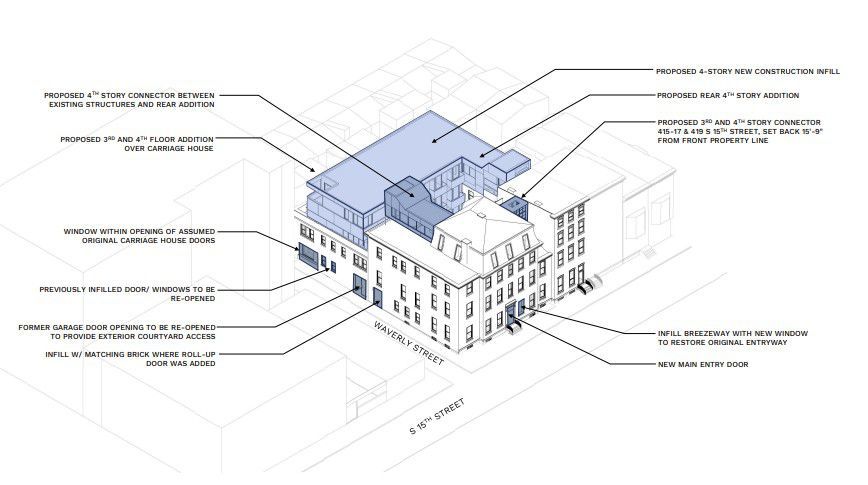
From the start, the Litvins knew they would have to expand the already sprawling complex to ensure the apartment layouts weren’t too eccentric. Fortunately, there was a large yard behind the house where they could add a new wing to turn the U into an O. They decided to install a large penthouse on top of the stable and insert several connecting passages to improve the interior circulation.
This diagram shows how LoDesign plans to turn an awkward amalgamation of 19th century buildings at 15th and Waverly Streets into a coherent, multifamily building with 32 apartments. The portions in blue will be added during construction.
While reusing these buildings was no easy feat, the project is a good example of “gentle density.” The neighborhood gets more rental housing, yet the look of the 19th-century mansion remains substantially the same.
By comparison, the first collaboration between the Litvins and Alliotts was a breeze. Alliotts had spent most of his career developing single-family housing in North Jersey before “discovering” Philadelphia during the pandemic. Coming from such a pricey environment, he said, “I was really taken aback by the city’s affordability.” After studying the market here, he fell for an early 20th-century brownstone on the 2000 block of West Girard Avenue in Francisville.
The townhouse could have been torn down
Despite the house’s impressive architecture, it wasn’t listed on the city’s historic register. That meant Alliotts could have demolished the building for something new, an approach taken by several other developers on that once-elegant stretch of Girard Avenue.
Alliotts liked the house too much to destroy it. And since the site was unusually deep, he knew he could fit the equivalent of a second house in the yard. But rather than build another stand-alone house, he asked the Litvins to fit a 12-unit condo building in the same space. Alliotts envisioned the condos — now called The Francis — as starter homes, so he wanted to keep the prices below $300,000 for a two-bedroom unit.
Still, 12 units is a lot of density, even for a generous townhouse yard that was 200 by 31 feet. By making a donation to the city’s Housing Trust Fund, Alliotts was able to get a zoning bonus that allowed him to raise the structure’s height to 45 feet, enough for a fourth story.
To avoid jamming the new, metal-clad building against the old brownstone, the Litvins decided to push the condos toward Cambridge Street, which was once a service street lined with carriage houses. That gave the architects space to create a landscaped courtyard between the two buildings.
Lo Design was able to create nine apartments in the Spring Garden neighborhood by replacing a small garage with a three-unit apartment building in the garden of an early 20th-century townhouse at 2313 Green St. The project’s density was the result of a compromise with neighbors and the Philadelphia Historical Commission.
After the success of the Francis, the Litvins had hoped to replicate the model for a new project at 2313 Green St. in the Spring Garden neighborhood. The main house there had already been divided into five apartments, but the site at 238 feet was even deeper than the Girard Avenue property. They proposed a five-unit stand-alone building in the garden, accessed from alley off Wallace Street.
But this time the Historical Commission and neighbors rejected the proposal.
So, the Litvins reduced the size of the building and turned it into a carriage-house-sized structure with three units. They offset the loss of units by adding a sixth apartment to the main house for a total of nine units.
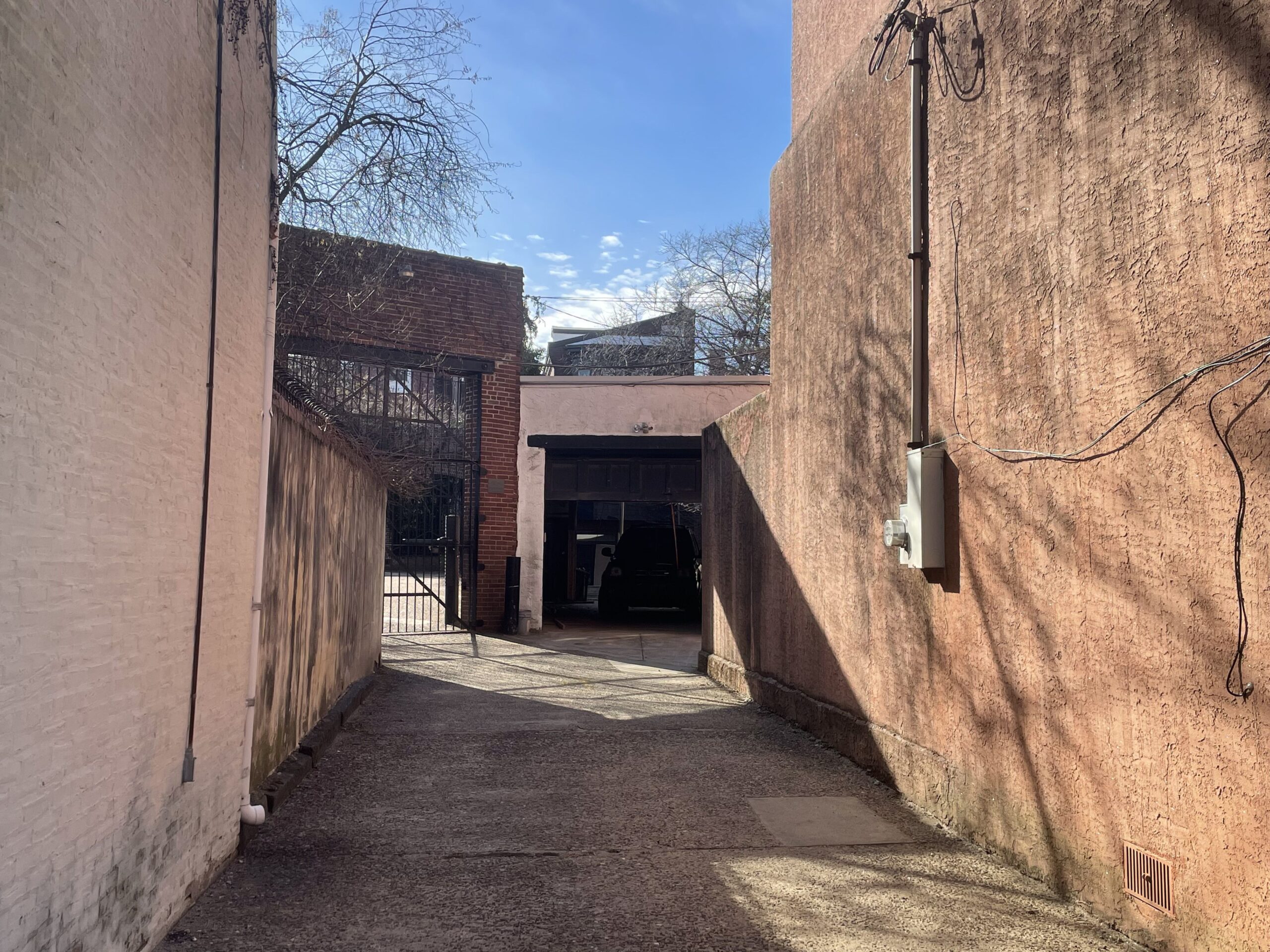
The garage on the right will be replaced by a three-unit building that is part of the redevelopment of 2313 Green St. It will be accessed through an alley off Wallace Street in the Spring Garden neighborhood.
Some preservation opponents may see the outcome as an example of the nickel-and-diming that occurs when developers attempt to add density to historic properties.
But the fact that a former single-family house will soon accommodate nine apartments reveals the untapped density in Philadelphia’s historic buildings. These conversions prove more housing can be created without sacrificing the city’s heritage.
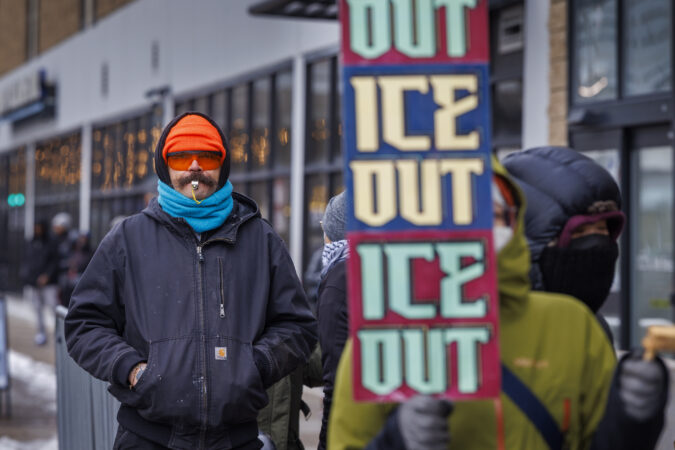
The eastern sky is aglow with dawn streaks of orange when the cry of a whistle sounds outside of ICE headquarters in Philadelphia.
The noise pierces amid an improvised orchestra of protest, as chanting demonstrators shake tambourines, rattle jingle sticks, and beat drums ― one person banged on a kitchen colander ― to create a clamor that makes it challenging to concentrate.
That’s part of the goal of the weekly “Noise Demo” organized by No ICE Philly to raise awareness among morning commuters but also to try to disrupt the work of Immigration and Customs Enforcement agents at the Eighth and Cherry Street office.
“We’re interrupting them,” said a protest leader who asked to be identified only as a member of No ICE Philly out of fear of repercussion from the government.
For advocacy groups here and across the county, the whistle has become both a tool and symbol of the anti-ICE movement.
On the streets, it’s the means to alert neighbors and warn immigrants when ICE arrives on the block, and to try to distract and confuse officers who may already be operating in an unfamiliar neighborhood.
A blast from a standard pea whistle can carry half a mile, and the sound from a specialized emergency whistle can travel a mile or more, depending on conditions.
ICE officials in Philadelphia said last week they had nothing to add on the noise demonstrations or on the use of whistles, beyond what the agency had already said: “Your whistles won’t stop or hinder ICE from arresting criminal illegal alien sex abusers, murderers, gang members, and more,” the agency told Minnesota protesters on social media.
In November, President Donald Trump issued a ban ― so far blocked by the courts ― on creating “loud or unusual noises” at federal facilities in the U.S. That hasn’t slowed No ICE Philly, which gathers to make noise on Mondays, though the snowfall pushed a recent action to Thursday.
“Maybe,” said activist Huston West, who blasted a steady beat on his whistle as ICE officers arrived at work on Thursday, “it makes them think about their life choices.”
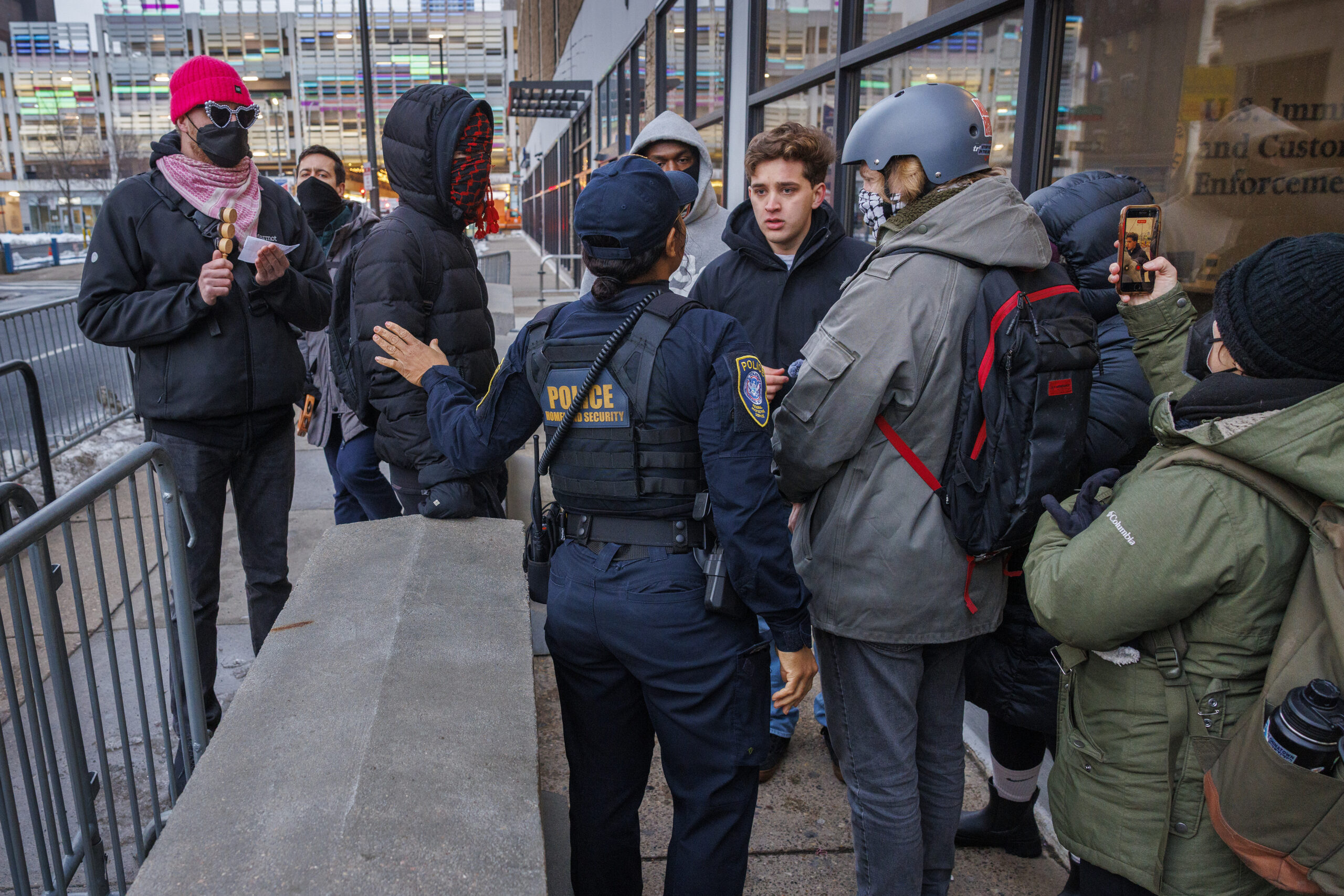
A man who tried to confront demonstrators is engaged by a Homeland Security officer during a No Ice Philly “Noise Demo” outside the U.S. Immigration and Customs Enforcement office at 114 N. Eighth Street in Center City.
Why have whistles become so popular among immigration protesters?
Many reasons.
Whistles are light, portable, reliable ― and cheap, about 20 cents each when bought in bulk. They don’t need batteries or recharging, have no buttons or controls. Everyone knows how to make it work.
To him, protesters’ use of whistles carries symbolism, summoning images of referees calling penalties during sports events. Maybe the activists are saying ICE has broken the rules or needs to stop.
“Like throwing a penalty flag,” he said, “against ICE agents who they deem are acting unlawfully.”
The whistle ranks among the oldest human inventions, the first ones crafted from bone, wood, or clay, used for hunting, signaling, and religious rites.
Englishman Joseph Hudson is considered the inventor of the modern pea whistle ― the tiny ball in the air chamber produces the trill ― in the 1880s. He created the Metropolitan Police whistle for British bobbies and the Acme Thunderer for soccer referees, who to that point had waved handkerchiefs to signal fouls.
Today, hundreds of thousands of whistles have been distributed to ICE protesters around the country ― more than 150,000 sent from Chicago alone, according to the Chicago Sun-Times.
In Minneapolis, activists have used 3D printers to crank out supplies. In Philadelphia, whistles have been given out by the handful at organizing meetings. Temple Beth Zion-Beth Israel ordered 300 whistles for distribution, so neighbors can quickly signal that ICE is present and warn immigrants to seek safety.
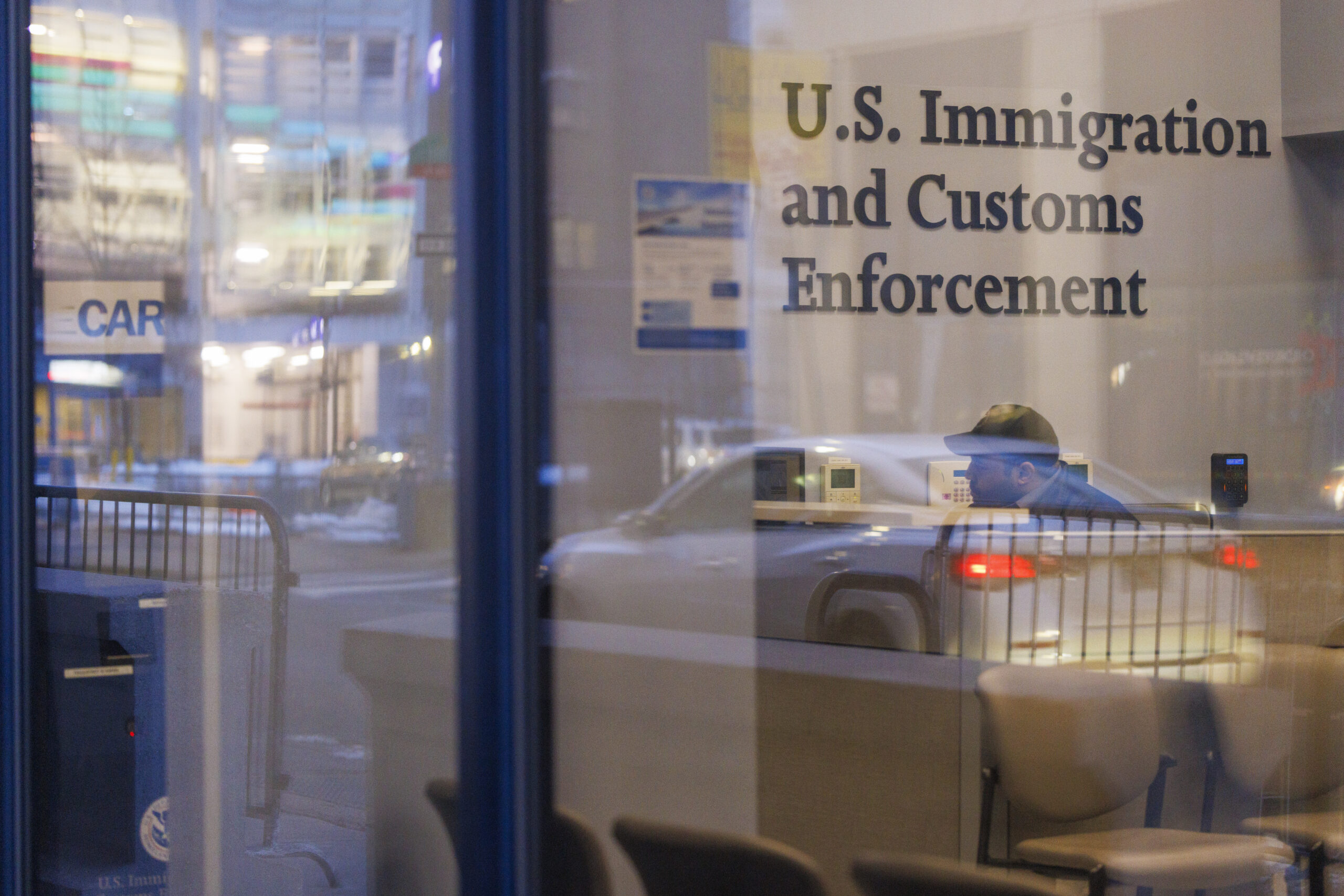
The interior lobby of U.S. Immigration and Customs Enforcement at 114 N. Eighth St. in Center City.
The Trump administration wants to ban loud noises outside federal facilities, a move widely seen as an effort to halt protests at ICE offices. A federal judge in Oregon temporarily blocked the restrictions, saying they said could violate the First Amendment by criminalizing free speech.
But even among pro-immigration activists, not everyone sees whistles as consistently beneficial.
Some think the noise adds to the confusion at the scenes of ICE arrests, increasing fear and anxiety among families during what are already tense and sometimes violent encounters.
New Sanctuary Movement of Philadelphia, a major advocacy organization, has begun talking to other groups about finding alternatives to whistles, said co-director Blanca Pacheco.
Yes, she said, it’s important that arrests not be permitted to be carried out in silence. But “what is the kind of noise that people can come up with that is supportive, instead of adding to the trauma?”
Not all in immigrant communities understand the purpose of the whistles, she said. And for those who have survived war or torture the noise can be triggering.
One option may be that people could shout, “ICE is here!” Perhaps two or three people on a block could be designated to blow whistles, rather than everyone at once. Even singing could work, she said.
“I think that Chicago and Minnesota and other places that have used the whistles had to come up with tactics and strategy very quickly,” said Pacheco, who noted Philadelphia is not in that position. “We can learn from other places what has worked and what has not. I think whistles can be used in some scenarios, not all the scenarios.”
Outside the ICE office on Thursday, two ICE agents heading into the building jawed with demonstrators who yelled at them to quit their jobs. Whistle calls and drum beats continued on, toward an 8 a.m. conclusion.
“ICE operates from the very early morning into early afternoon,” said the demonstration leader who declined to give his name. “We just want to make sure that we’re here when they’re here.”
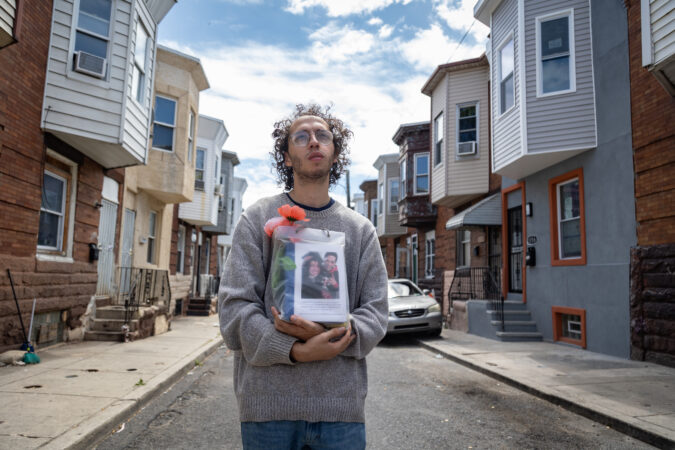
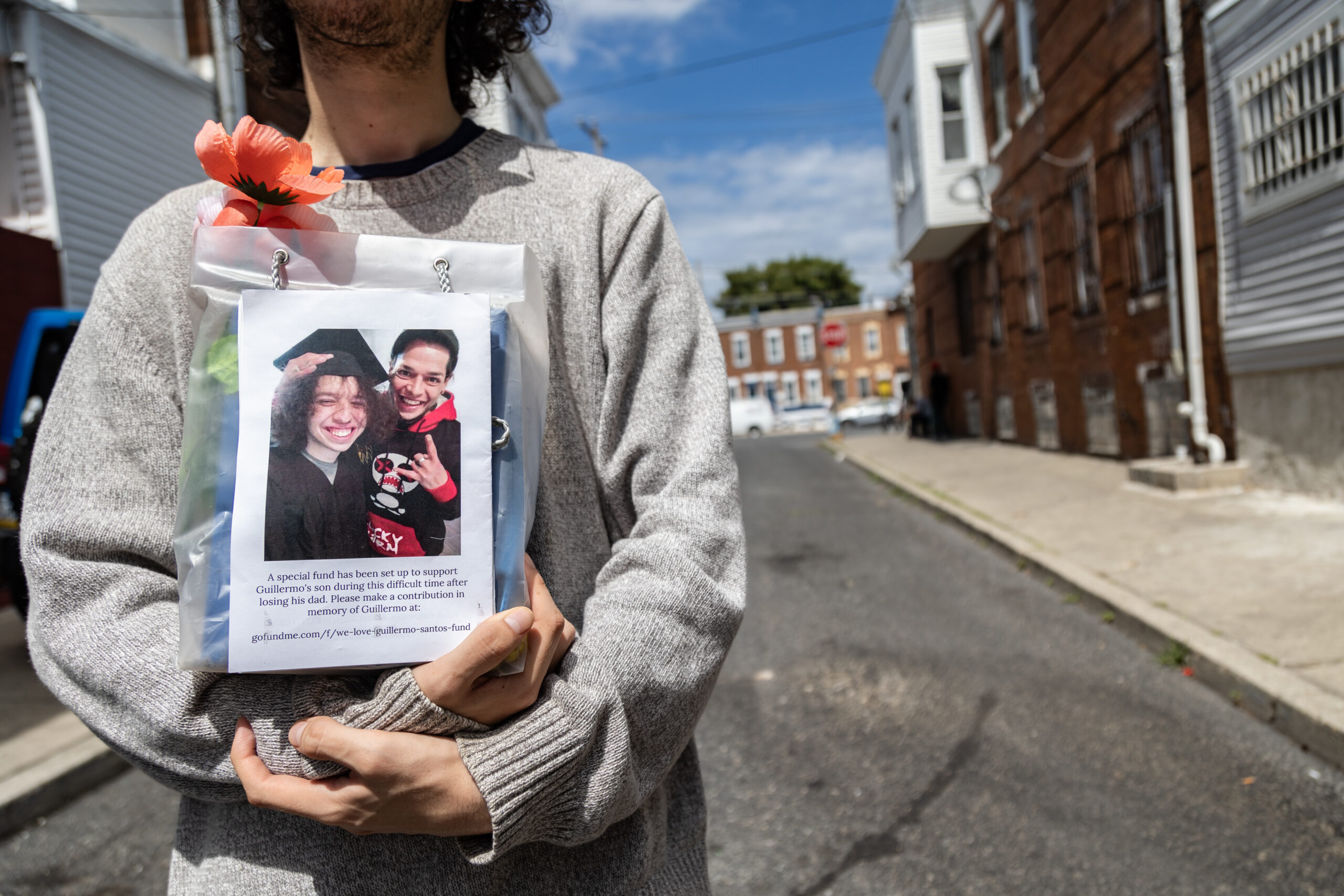
The box is heavier than he thought it would be. Outside his childhood home, Guillermo Santos Jr. looks down.
“This is the longest I’ve ever held him,” Santos says.
His father — Guillermo Santos Sr. — died of a fentanyl overdose in 2021, months after his virtual high school graduation. The elder Santos moved from Puerto Rico to Philadelphia after his father sent him to the city to learn English. There, he met Cheri Honkala and, soon after, Guillermo Santos Jr. was born.
Raised in the heart of Kensington, a working-class Philadelphia neighborhood with a longstanding Puerto Rican community, the younger Santos recalls the caw of his neighbor’s roosters waking him for school. Walking to Market-Frankford Line, the city’s elevated train known locally as “The El,” he passed people lying out on the sidewalks.
“It wasn’t odd to me that my father was a heroin addict because everyone around me was, because of my neighborhood,” Santos said.
He describes Kensington as tight-knit. Although gunshots were constant, neighbors knew his mom, a housing rights activist, and protected their home.
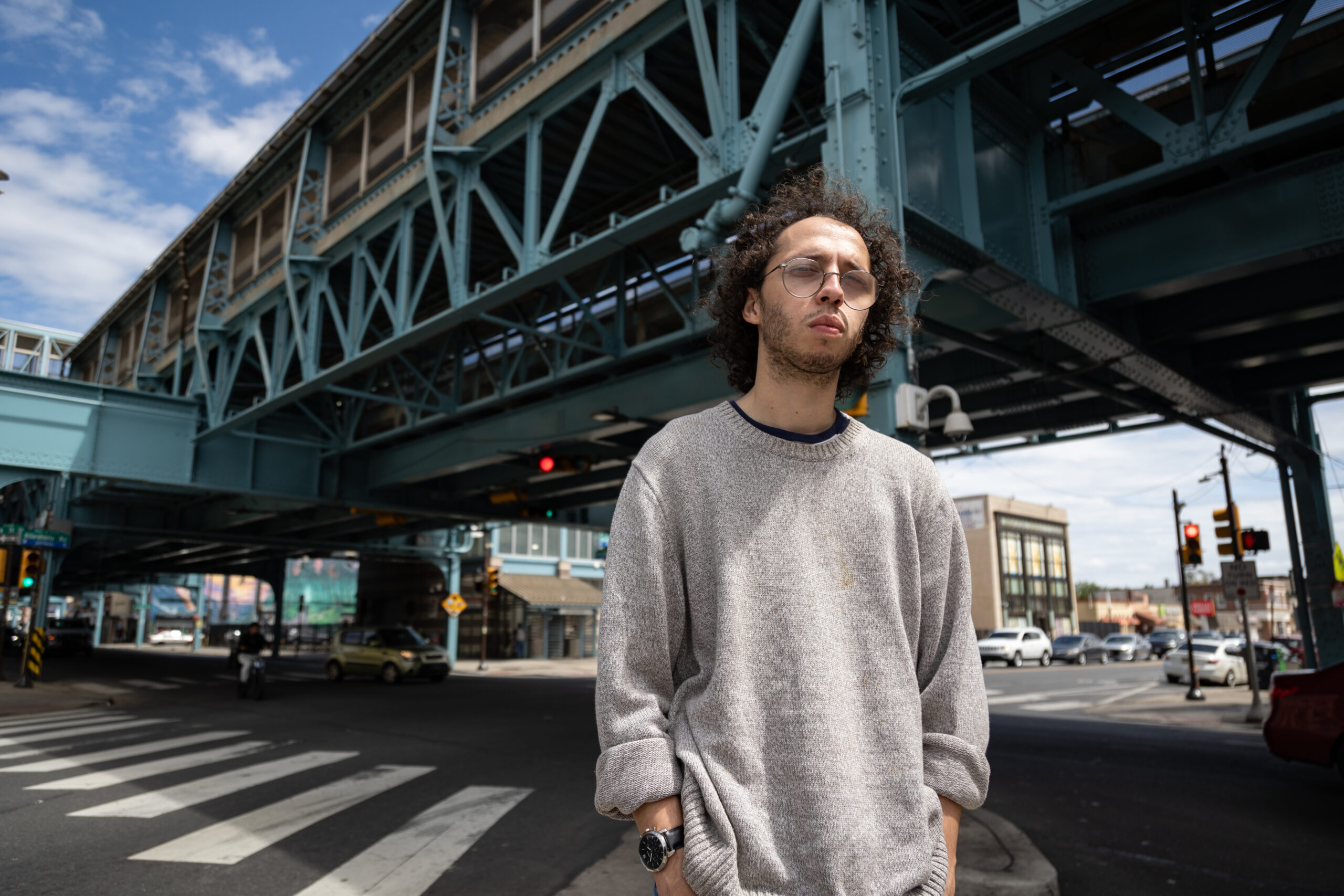
Guillermo Santos Jr. stands at the intersection of Kensington and Allegheny, near his childhood home, on Aug. 19, 2025.
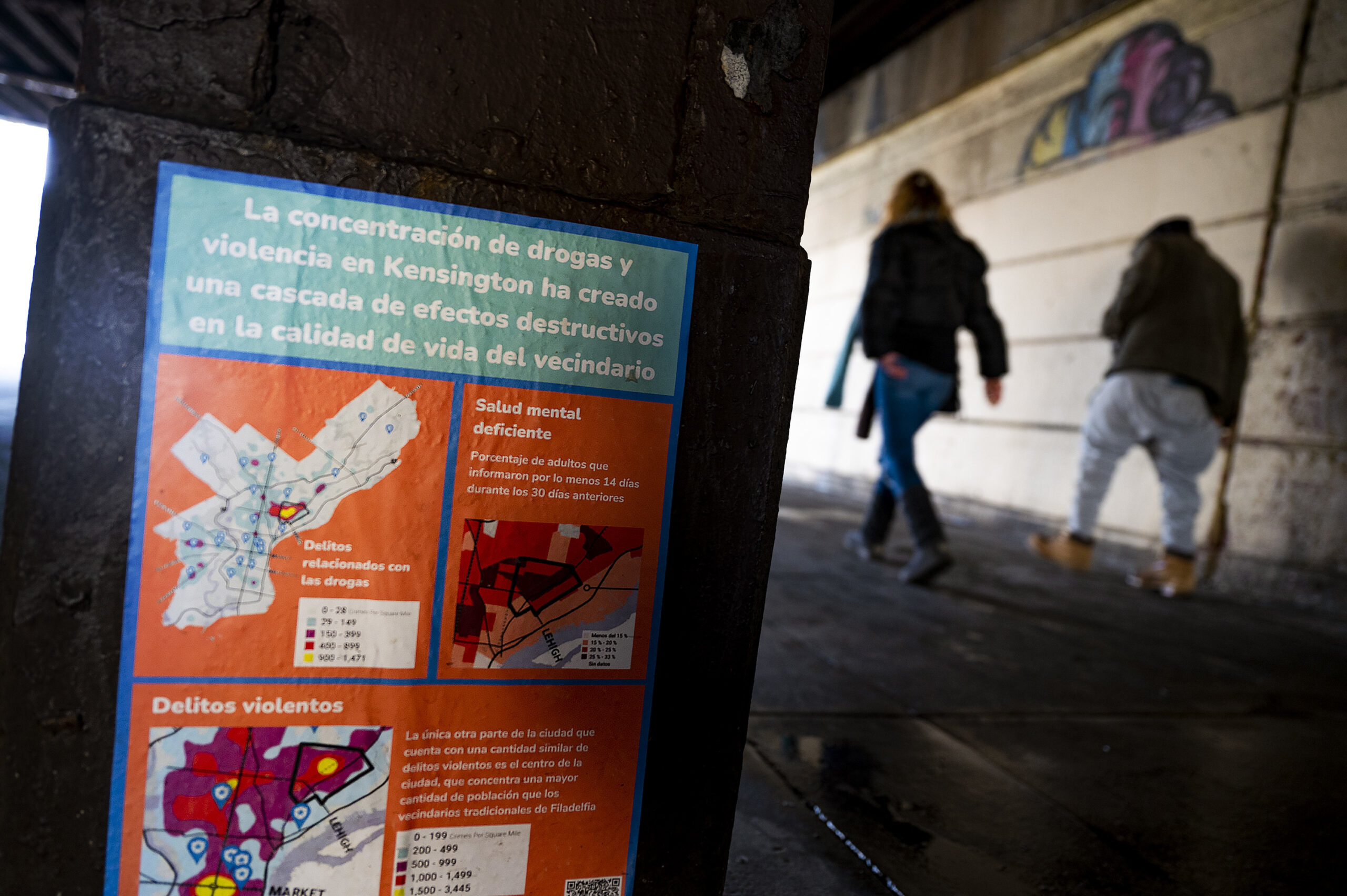
Guillermo Santos Jr. is among the roughly 33% of people in Philadelphia who personally know someone who has died by overdose, according to Pew Heritage Trust’s most recent data. The Pennsylvania Department of Health’s tally from 2024 reveals that Latinos make up 9.7% of total overdose deaths; city public health data from 2023 put the overdose death rate at 77.9 per 100,000 residents. Nationwide, more than 42% of people have been impacted in some way by an overdose death.
Today, the young Philadelphian lives in New York City. During visits to Philly, he notices that his neighborhood is in the same condition as when he left, while new development crops up.
“The way that Philadelphia keeps itself frozen and doesn’t actually deal with a lot of the issues that are torturing its residents is so mind-boggling to me,” he added. “It is really devastating.”
His mom agreed.
“I raised a son after his dad died from an overdose in a city that didn’t have s— to offer,” Honkala said.
The city’s death certificate data reveal that unintentional overdoses were the second-leading cause of death among Puerto Rican residents for two years in a row. An analysis by Centro de Periodismo Investigativo (CPI) of 2023 public health data reveals men die of overdoses at double the rate of their female counterparts — across all racial and ethnic groups.
window.addEventListener(“message”,function(a){if(void 0!==a.data[“datawrapper-height”]){var e=document.querySelectorAll(“iframe”);for(var t in a.data[“datawrapper-height”])for(var r,i=0;r=e[i];i++)if(r.contentWindow===a.source){var d=a.data[“datawrapper-height”][t]+”px”;r.style.height=d}}});
Within the last 10 years, drug overdose deaths were highest among Puerto Rican men ages 45 to 54, according to a research paper in the International Journal of Drug Policy.
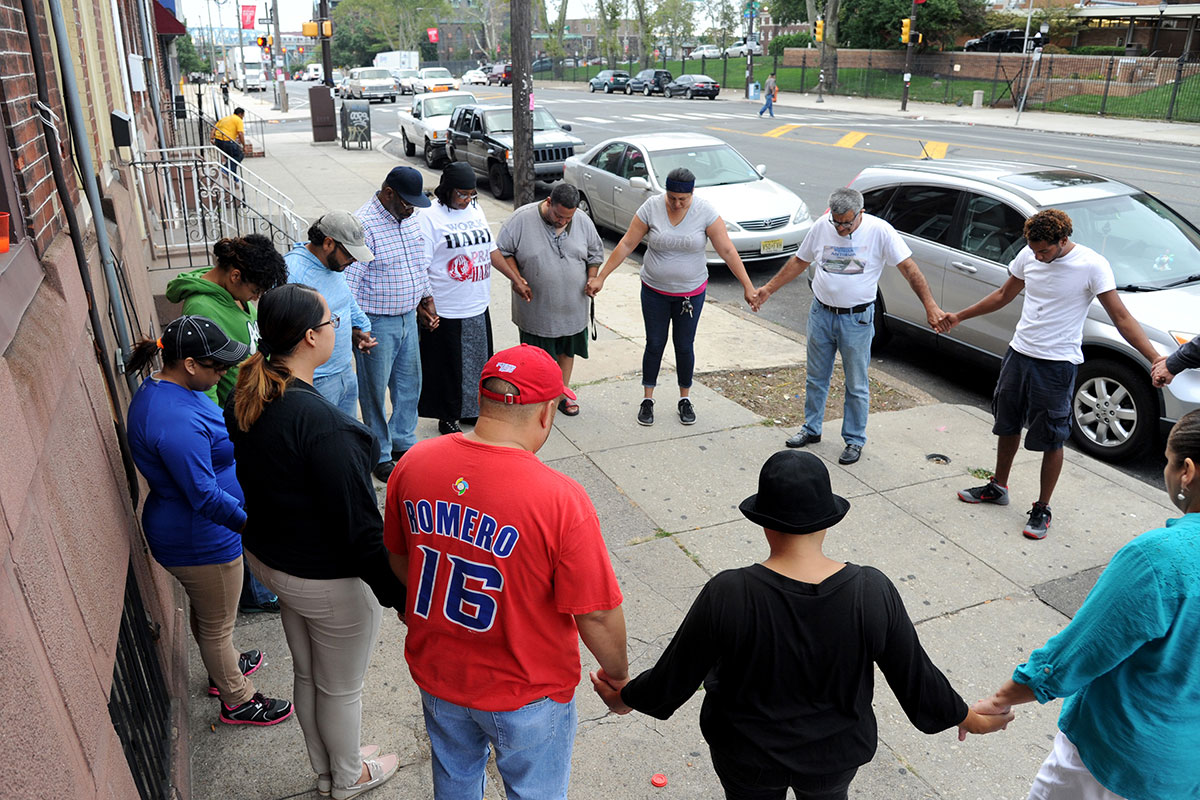
Charito Morales praying in 2016 with a group on Lehigh Avenue in Kensington, before heading into “El Campamento,” along the Conrail tracks where many heroin addicts lived.
Air Bridge: One-way tickets and promises of rehabilitation
This crisis isn’t new. Its roots trace back to the city’s economic crisis in the 1970s, which disproportionately impacted Black and Latino residents of industrialized neighborhoods like Kensington. In the 1980s, North Philadelphia became a hub for open-air drug markets.
“The drug economy was a very real financial attraction for young people whose families had few options for survival,” according to American Quarterly, a journal published by Johns Hopkins University Press.
When factories shut down in the late 1980s, unemployment rates soared, hitting racially segregated and economically disadvantaged areas the hardest. What began as a way out of poverty drew younger generations into drug use and homelessness.
In the 1990s, a movement known as “Air Bridge,” run by pastors and government officials, gave people with substance use disorders one-way tickets from Puerto Rico to cities such as New York, Chicago, and Philadelphia.
In Philadelphia, Air Bridge areas included Kensington and Fairhill, which compose the zip codes 19125, 19133, and 19134, some of the city’s poorest. A 2017 BBC report estimated that thousands landed in Philly from Puerto Rico through the Air Bridge movement.
Charito Morales, a community advocate in Philadelphia, witnessed Air Bridge’s false promises in real time when her brother was sent for rehab 30 years ago, but the care never came.
Morales’ family sent her brother, Alvin Luis Morales-Soto, to the U.S. under the guise of quality rehabilitation and medical care that did not exist in Puerto Rico and Air Bridge promised. When the family lost contact, she went undercover on her own and experienced the living conditions firsthand.
An Inquirer investigation from 2016 illuminated harrowing practices. People living in squalor, 20 men stuffed into tiny bedrooms in a small rowhouse that should fit no more than 10. SNAP benefits held hostage. No phones.
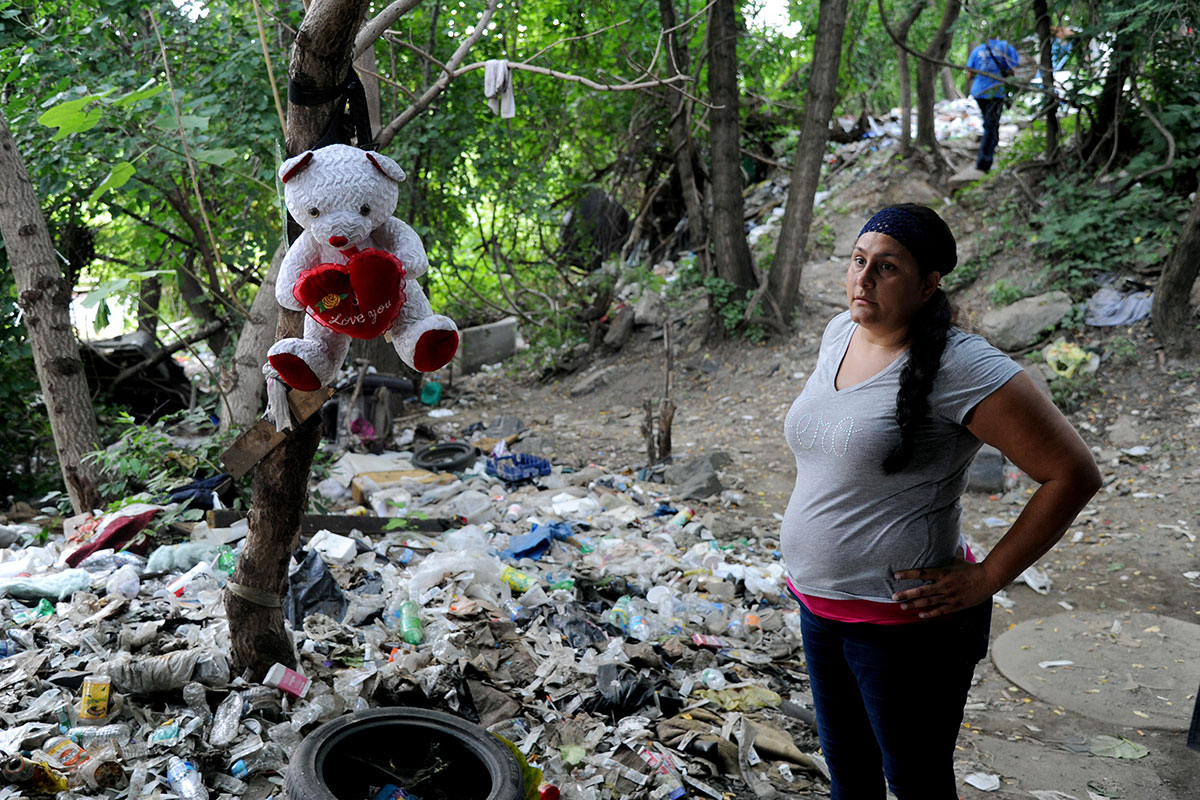
Charito Morales, a registered nurse and advocate for addicts, photoraphed in 2016 at “El Campamento,” a camp of homeless drug users along the Conrail tracks in Fairhill.
Morales served as a key source for The Inquirer, motivated to understand what happened to her brother.
“They brought him here — what did they offer him? Rehabilitation and all sorts of things,” Morales said. “My family, unaware and uninformed, believed this was the ideal place because it was the United States, and there are so many benefits, so many resources compared to Puerto Rico, and he would have everything within reach.”
He died of an overdose on June 18, 1998.
A former outreach worker with Asociación de Puertorriqueños en Marcha (APM), a nonprofit organization dedicated to Latino health and community services, identified as “AJ” for privacy purposes, told CPI that some unregulated recovery house managers connected to Air Bridge were driven by greed, as they intercepted and pocketed government benefits.
“Well, there was money to be made,” he told CPI.
AJ recalls a specific case involving a Christian ministry that operated as a recovery house. He said that one day, when the pastor was away, he found mail tucked above a cabinet in the church’s administrative office. The letters, he said, were addressed to program participants. AJ said he suspected that the mail may have been redirected from the recovery house to another address. In his view, that could have made it easier for third parties to access public benefits.
Tracy Esteves Camacho, a harm reductionist who met with Puerto Ricans who arrived by way of Air Bridge, heard the same thing firsthand.
“A lot of people were telling me the same story,” she said. “No one knows exactly if it’s the recovery houses here or if it’s someone in Puerto Rico trying to move these people around. A lot of them would end up here with nobody.”
With nowhere to go, many program participants ended up unhoused, some living beneath a bridge, covering themselves with cardboard boxes to stay warm in the winter. AJ said these conditions worsened the substance use issues they had left the island hoping to fix.
The few who found legitimate help, however, recovered and found stable housing. Today, AJ said, wraparound services such as housing and regulated addiction treatment seem out of reach, or less of a priority, particularly for Spanish-speakers.
“It’s a human disaster, the result of human error, an error by the Department of Health. A failure to classify narcotics use as a mental illness; instead, they criminalize it and continue to criminalize it,” Morales said.
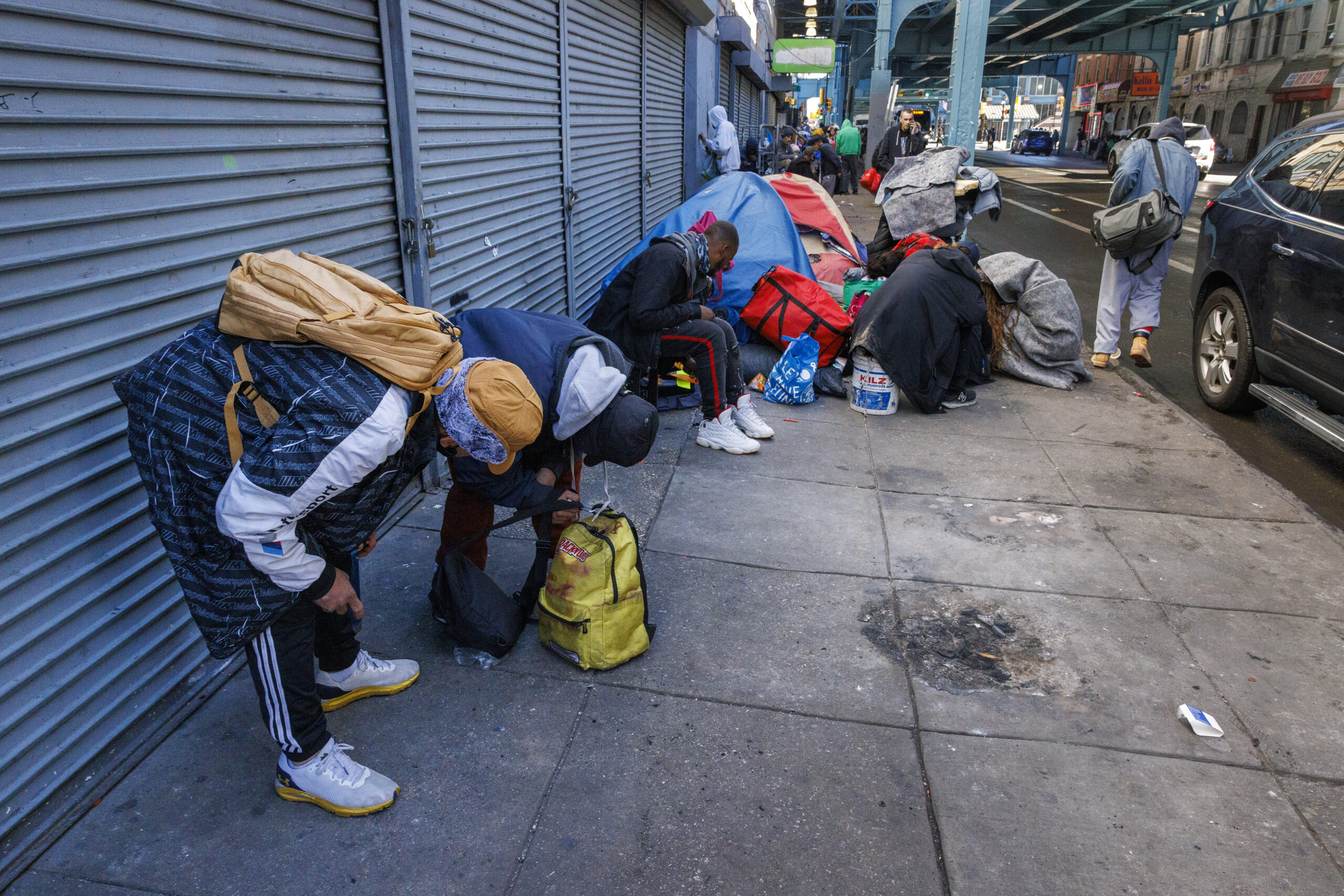
People near Allegheny Station at Kensington and Allegheny Avenue. Philadelphia Councilperson Quetcy Lozada (not shown) held a news conference October 16, 2023 in front of the Russell Conwell Middle School. She spoke about neighborhood clean up and the opioid epidemic.
A neglected crisis
Overdose deaths have steadily increased over the years in Philadelphia, disproportionately impacting Black and Hispanic residents, deemed to be an overlooked health crisis since 2023.
Guillermo Santos Jr. says the barriers his father faced in the ’90s persist today.
“We’re not doing anything about it because throughout my entire childhood, he kept wanting to get better. He was putting in active steps and he was shown that there was no place to go except back under the El train,” he said, referring to the bridge area where some unhoused people would go.
Honkala, his mom and a licensed medical care provider, agreed. She runs a rehab program part-time. Santos’ father is one of many who have been failed by disconnected social and health networks.
He was on and off city housing lists for 18 years, survived nine overdoses, and lived with worm-infested infections on his limbs. He was also HIV-positive.
Cheri Honkala poses for a portrait at McPherson Square Park in Kensington on Sept. 3, 2025. The park holds memories of her late husband, Guillermo Santos Sr., who died in 2021.
“He had a lot of people around him that tried to get him whatever was available to get him the help that he needed, and there was nothing,” she said. “Every time that he was sick and he was going into withdrawal and he’d go to Episcopal or Kensington Hospital, he would have to sit in the waiting room for 13 hours, s— himself, throw up on himself, and convince himself that, ‘Oh, yeah, I want to stay here and get clean.’”
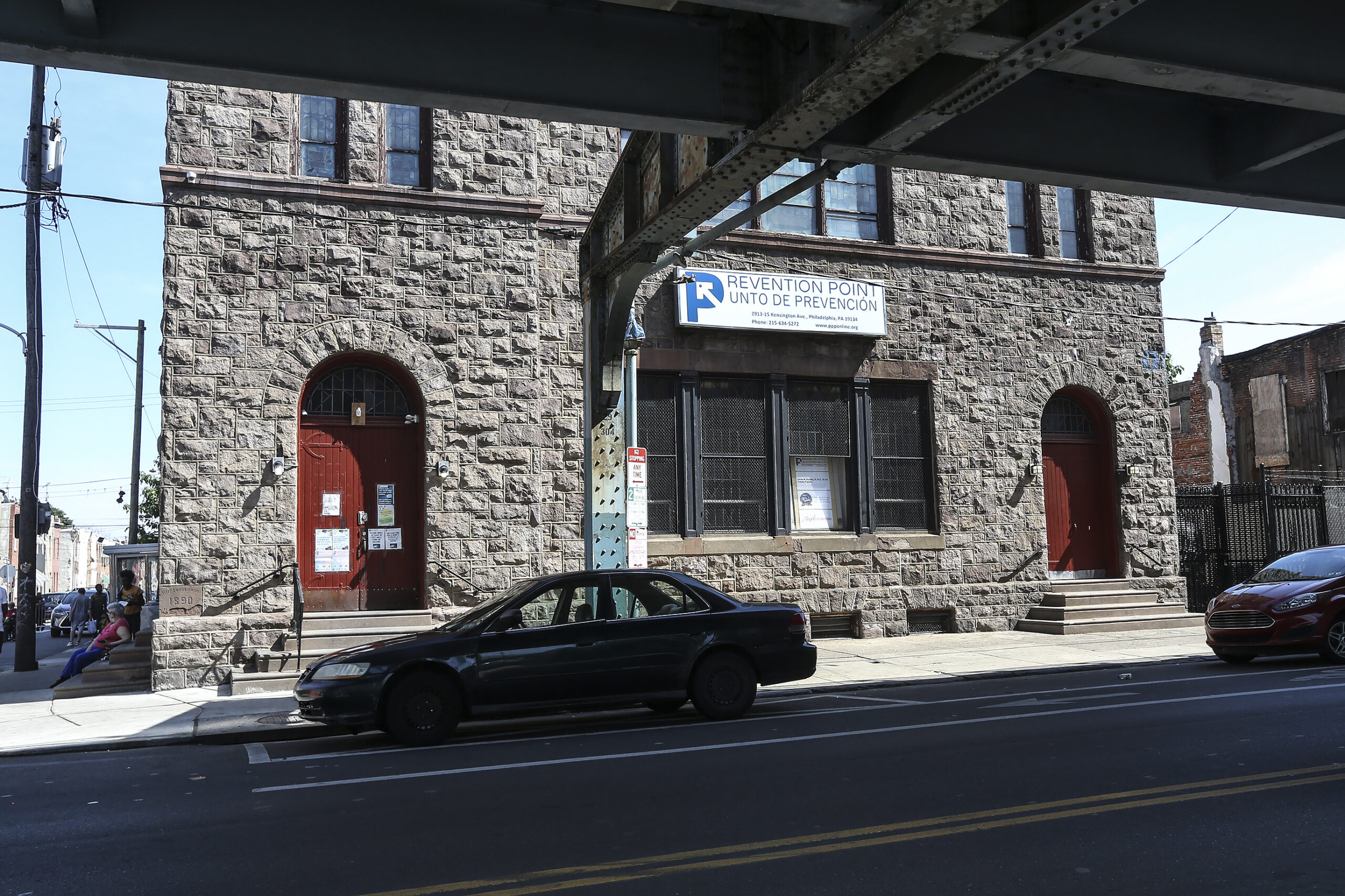
In 2020, Esteves Camacho worked closely with Puerto Rican communities living with HIV who use intravenous drugs, providing care in a medical clinic integrated within a syringe exchange program at Prevention Point Philadelphia.
She knew Guillermo Santos Sr. and recalled him showing her photos of his son. The elder Santos had plans to become a barber in the future.
“It makes me want to cry. He was such a good person,” Esteves Camacho said.
He began using drugs again after his girlfriend’s overdose death, and his visits to the addiction treatment center, Prevention Point, became more unpredictable.
“It wasn’t his personality. He was hurting,” she added. “It was really heartbreaking when he passed away, knowing he had a son and that now this person is going to have to live without their father.”
Kenneth A. Divers, SEPTA’s Director of Outreach Programs (left), walking across Kensington Avenue with Councilperson Quetcy Lozada in 2023. She spoke at a news conference about neighborhood clean-up and the opioid epidemic.
‘No one is turning a blind eye now’
The needs of the community in the throes of the opioid crisis are colliding with local and federal funding cuts.
On Jan. 13, the Trump administration abruptly canceled, then 24 hours later restored, nearly $2 billion for mental health and addiction treatment. In July 2025, the Trump administration issued an executive order to reevaluate and halt discretionary Substance Abuse and Mental Health Services Administration grant funds for harm reduction programs or “safe consumption” sites. Despite public health reports lauding their benefits, the administration falsely claimed that these methods “only facilitate illegal drug use and its attendant harm.”
Instead, federal dollars will be prioritized for drug courts and mental health courts. This is happening in Philadelphia already. In June 2024, Philadelphia Mayor Cherelle L. Parker ceased funding needle exchange programs, deferring to local nonprofits and philanthropic groups. Parker’s administration opted for a law-enforcement-heavy approach and changed how opioid settlement funds are distributed.
In the last two years, Philadelphia City Councilmember Quetcy Lozada, who represents the 7th District, has introduced resolutions and new bills that limit certain efforts, such as safe injection sites, and where mobile care units can provide services. The 7th District includes neighborhoods hardest hit by the opioid epidemic, such as Harrowgate, Kensington, and Olde Richmond.
She told CPI that she believes safe injection sites “keep them in that vicious cycle.”
Research shows that safe injection sites help reduce HIV transmission, infections, and other diseases caused by sharing needles. Public health experts explain that harm reduction is one tool to reduce health risks and overdose deaths.
Advocates warn that limiting where outreach workers and mobile care units can operate will delay critical care, putting more people at risk of infection or medical crises. Lozada told CPI her office is working with providers and community organizations to better understand what she can do to support the people in her district.
“No one is turning a blind eye now,” Lozada said. “Folks need to understand that this is not a ‘Let’s have a conversation today’ type of situation. It is very much still a crisis and we are still ground zero. That has not changed. The focus has been, and continues to be, prevention and education and making sure that everybody’s on the same page and that we continue to grow in the same direction.”
Roz Pichardo, founder of Sunshine House, a resource hub on Kensington Avenue, sees nearly 80 people by 9 a.m. on some days. Recently, Pichardo doubled the number of nurses on site, prompted by confusion surrounding the mobile care unit operation. People searched for her.
“We already feel like we’re triage here. There’s too much red tape,” Pichardo said. “How do we reduce stigma in a community that’s plagued with addiction? Just keep talking, keep showing people what empathy and compassion look like. Maybe they will pick up on it.”
She reiterates that care is not one-size-fits-all.
Roz Pichardo with Operation Save Our City holds her bible on March 7, 2024, with names of 2232 people she saved with narcan since 2018. Harm reduction activists gathered outside Philadelphia City Hall to ask for seat at table and funding for the opioid crisis.
Some reports suggest that programs like Police Assisted Diversion and Case Management, Assessment, Re-entry and Empowerment Services (PAD CARES) and “wellness courts” may not be working as intended.
Lozada proposes government-run medical programs, such as triage centers and “stabilization centers,” that address the physical symptoms and barriers to recovery, including open wounds.
“For a long time, the voices of those who were on substance abuse or those who are living in substance abuse were prioritized over those who are just trying to live day by day in that community,” Lozada told CPI.
She says residents want a better quality of life, for children not to be exposed to people with gaping wounds, and for elders in the neighborhood to feel safe walking around.
“The government created this. Government needs to respond to it,” she added.
In a follow-up interview, Lozada told CPI: “We’re constantly meeting and having conversations about what is working, what is not working. What needs to be adjusted? Where do we need more services? Who are the providers that are actually providing the work and the services and who are not? And those who are not, how do we reallocate or readjust values to those programs that are actually having a positive impact?”
City officials’ plans remain unclear, but Lozada said partnerships are still evolving.
Philadelphia Councilperson Quetcy Lozada listens to public comment on her bill limiting medical providers in Kensington during public comment, City Council Chambers Philadelphia, Thursday, May 8, 2025.
Policy shifts and the limits of enforcement
Yet, researchers like Luis Valdez, an assistant professor in community health and prevention at Drexel University and founder of the GANAS Health Initiative, have concerns.
“Can we stop looking at this as a wasted budget line item?” Valdez asked. “People are dying. Those people are also constituents, folks that have families and hopefully futures, and people that grew up in these districts, right? The problem wasn’t created by drug use. The drug use is a symptom of all these other things that are happening.”
Some experts say officials’ decisions to restrict certain programs have complicated outreach efforts. Multiple harm reduction advocates claim city leaders are disregarding medical advice on addiction care.
“Our own health and human services [department] is not using evidence-based practices. We’re on a really s— trajectory from the top down,” said Nicole O’Donnell, a peer recovery specialist with the Center for Addiction Medicine and Policy (CAMP) at the University of Pennsylvania Health System. CAMP provides patients with a prescription for buprenorphine via telehealth services.
“People view substance use as a choice instead of an illness. The people out there using are also victims of the opiate problem, and so is the neighborhood. We’re trying to figure out … how do we support both?” added O’Donnell, who is in recovery and lost a sister to an overdose.
She testified before City Council in May, explaining that CAMP prioritizes connecting people to low-barrier rehabilitation treatment options and to a physician for continued care.
Meanwhile, new mixtures of street drugs, like xylazine, have complicated treatment and harm reduction efforts. In August 2024, a city health alert reported the emergence of an even more potent substance: medetomidine. Mixed with fentanyl, this drug can trigger potentially life-threatening symptoms — such as muscle rigidity and slowed breathing — that require admission to an intensive care unit.
Those shifts in the drug supply are showing up in hospitals. In the last two years, healthcare workers have experienced a sharp increase in emergency room visits related to substance use injuries and withdrawals, according to city data. Patients have also exhibited complications with wound infections and severe withdrawal symptoms.
“[That data is] a sign and symptom of other things that we’re tracking,” said Jeannmarie Perrone, an emergency room physician and director of medical toxicology and addiction medicine at the University of Pennsylvania.
Perrone presented this data to City Council’s Kensington Caucus in May. Between January and September of 2024, more than 200 patients with addiction were admitted to intensive care units at Temple University Hospital, Penn Medicine, and Jefferson Health.
“[That] is really unheard of for opioid withdrawal,” Perrone told City Council.
This packet, distributed by the Center for Addiction Medicine and Policy, contains Narcan, a medication used to reverse opioid overdoses.
Language barriers, access gaps
Spanish-speaking Puerto Rican populations already struggled to access healthcare, a previous CPI investigation found. Latino providers are even rarer in substance use programming.
Esteves Camacho, who is from Caguas, Puerto Rico, was one of those providers. She was raised in Philadelphia and saw people lit up when she spoke in their language.
“It’s important to have the cultural context of being Puerto Rican,” she said.
But language is not the only barrier. After Hurricane María, Puerto Rican migration to Philadelphia increased, driven in part by people seeking medical care and social services. Experts told CPI that some arrivals include people with substance abuse problems, often low-income and eligible for Medicaid, a pattern also reflected in multiple studies.
In those cases, access to treatment often depends on Medicaid, the public program that funds a significant share of behavioral health services, and one that is now under threat. Government medical assistance covers nearly half the cost of treatments for people with substance use disorder, according to the Kaiser Family Foundation (KFF).
A 2017 state hearing revealed that 1,626 Hispanic Philadelphia residents from Air Bridge neighborhoods sought drug or alcohol treatment programs through the city’s Medicaid-funded behavioral health service, Community Behavioral Health (CBH). Today, residents in those same areas are more likely to use Medicaid-funded centers, especially for substance use disorder.
In 2021, 114,268 Pennsylvanians with substance use disorder relied on the aid, KFF data show. As of July 2025, Philadelphia topped the list for total Medicaid behavioral health spending, tallying $151,422,117, according to Pennsylvania health department data.
However, Latinos in the city are more likely to be underinsured or enrolled in Medicaid.
Medicaid funding hangs in the balance as the Trump administration slashes budgets dedicated to harm reduction services and raises barriers to enroll or renew benefits.
Pennsylvania is expected to be among the hardest-hit states, with an estimated $46 billion decrease over the next decade, according to KFF. Peer support, inpatient and outpatient rehabilitation, and mental health support could be destabilized for nearly 18 million people across the U.S.
“La cuerda parte por lo más finito [The rope always breaks at its weakest point]. Who are those 18 million Americans? Are they drug users? Probably. People who are on methadone. People who are using drugs,” sociologist Camila Gelpí-Acosta said.
Prevention Point 2913 Kensington Avenue on June 14, 2022.
‘A blueprint of what not to do’
Puerto Rico, along with the Dominican Republic, has some of the highest rates of injection drug use in the Caribbean. Those areas also see increased demand for selling and buying drugs, says Josh Romig, assistant special agent in charge at the Drug Enforcement Administration’s Philadelphia field office, who has tracked drug trafficking for 26 years.
“Puerto Rico is positioned closely to the Dominican Republic, [which] sees Puerto Rico as a very viable and much easier option to import drugs, especially small amounts,” he said.
The drug trade has collided with a layered public health crisis, Gelpí-Acosta said.
“We’re talking about these six decades of using Puerto Rico as a launch pad toward the Northeast,” Gelpí-Acosta said. “It’s created a humongous drug-using population on the island in the archipelago.”
Limited addiction programs in Puerto Rico have pushed people to relocate to cities like Philadelphia, while drug trafficking organizations thrive on demand, as documented by an academic study in Centro Journal. Gelpí-Acosta and her wife founded El Punto en La Montaña, one of the few syringe exchange programs in Puerto Rico, seeing how drug use contributes to other health conditions such as HIV and hepatitis C. She underscored that weakened healthcare systems act as a catalyst for migration.
“They left the island because there were no services, because of many other complicated reasons,” Gelpí-Acosta said. “And here in the United States, they find services, but they end up homeless anyway, and they continue to use drugs. And then the HIV, overdose, and hepatitis C vulnerabilities remain unaddressed.”
Without treatment, people living with HIV or hepatitis C face chronic health complications, cancer, and death. Advocates and scholars say that failing to treat these conditions overlooks critical pieces of harm reduction.
“It’s not just an opioid crisis. … It’s a syndemic of overdose displacement. It’s structural neglect,” Valdez said.
The GANAS Health Initiative supports Latino men in Philadelphia, addressing overlapping needs such as housing, education and poverty.
A recent major drug bust illuminates those connections. In late October 2025, federal and state officials indicted 33 alleged members of a prominent drug trafficking ring in Kensington, led by dealers from Puerto Rico based in Philadelphia.
Allegedly, the head of the trafficking group allowed members to sell drugs “in exchange for rent,” according to the Department of Justice.
The drug economy in North Philadelphia persists in the zip codes with the highest poverty rates and the least social services funding.
“We have a blueprint of what not to do with alcohol from 1920 to 1932,” sociologist Gelpí-Acosta said, referring to the Prohibition era. “And yet, here we are. We continue to illegalize drugs, creating more dangerous drugs out there, not under our control. [Except] they’re not trafficking whiskey, they’re trafficking fentanyl.”
Valdez said health conditions that arise from substance use disorders emerge from what he calls “maladaptive coping skills” to stress. For example, suppressed trauma and limited access to Latino providers can exacerbate issues leading to self-medication.
Latinos often face complications with providers who are unfamiliar with their migration stories, family values, or cultural taboos around mental health and addiction.
“Language and cultural competency or responsiveness is not there,” Valdez said, rattling off other complications such as health insurance limitations and poor-quality housing. “Folks in power, whether we like it or not, would prefer an easy solution to a problem that’s really complex.”
“Culture is such a big part of our health context,” Seeburger said. “To not have that, we are not equipped in the city to provide adequate healthcare.”
Kensington Avenue on Feb. 22, 2024. Mayor Cherelle L. Parker vowed to end Kensington’s open-air drug market for good.
`No other way’
In Portugal, addiction specialists have identified possible solutions such as decriminalizing drugs, aiming to eliminate barriers to housing and jobs. Portugal’s program changed how law enforcement interacts with users: Rather than arrest people who use or have drugs on them, police officers work as social workers do and connect people to treatment options. In addition, the government provides free healthcare to expand access to methadone treatment.
“If we are dealing with a chronic relapsing disease, we must keep the investment that equates to this situation,” Portugal’s drug policy pioneer, João Goulão, said in a 2023 panel discussion at Georgetown University. He acknowledged doubt of the policy’s effectiveness and decreased participation in the program but blamed a lack of government-backed funding in social services.
Unintentional overdoses and long-term rehabilitation efforts require a health-first approach, he insisted.
This stands in stark contrast to Mayor Parker’s strategies.
“The single biggest risk factor for drug overdose death is a period of incarceration,” Seeburger said. “We’re not telling the whole story if we’re looking at acute overdose.”
Despite multiple requests, Parker remained unavailable for comment.
In 2024, Lozada told CPI the city must “respond aggressively” to address addiction.
“There are people we are allowing to die on those streets because we are afraid of what the optics will look like. We have to bring people into our system. There’s no other way,” she said. “We have to make people healthy in our system. … In a way, the optics are not going to look good.”
Pichardo, who helps people living on the streets and reverses multiple overdoses weekly, called these methods “retraumatizing.”
“They’re going to relapse because there’s no real structure. There’s no desire. It was forced upon them,” she said. “Twenty years of addiction does not equal 16 days of treatment.”
Luis Soto, a peer specialist, agrees. While he applauded Lozada’s efforts, he rejected the idea of coercing people into treatment.
“We cannot force recovery to no one,” he said. “That’s not the way.”
After his infant son died in 1995, Soto began using drugs. Between 1996 and 2011, he was incarcerated off and on, becoming entrenched in the drug trade along Kensington Avenue. For a few years, he was unhoused, until an outreach worker — whom he calls a mentor — helped him.
“In 2011, that’s when I opened my eyes,” Soto recalled.
The following year, Soto began working as a peer specialist. But he noticed a lack of Latino-focused services and shelters.
“There are no substance use treatment [or] resources specifically for women who speak Spanish. There is nowhere in the city of Philadelphia,” Seeburger confirmed. “There is one program for men who speak Spanish.”
“The city [doesn’t] have the background to provide services to this population,” he said.
But Roz Pichardo, Luis Valdez, and Luis Soto do, and they aim to fill that gap. Soto wants city officials to invest in more Latino peer specialists who can reach people where they are.
Guillermo Santos Jr. holds the ashes of his father, Guillermo Santos Sr., who died of a fentanyl overdose in 2021, outside his childhood home near Kensington and Allegheny on Aug. 19, 2025.
In August, Santos prepared to move into a new apartment with friends in New York City. He has been away from home for two years, during which cycles of addiction lured in a new wave of people, some of them his friends in their early 20s.
Determined, he won’t give up. Santos says he draws strength from the solidarity he sees in Kensington, where his mother, families, neighbors, and advocates keep pushing for help that matches the scale of the crisis.
“That plea for unity is what keeps me so alive to this kind of stuff,” Santos said.
With the sun setting, he strategizes how to get his record collection to his new home.
As he closes the door to his childhood home, his father’s ashes remain on the mantle above the fireplace.
This article was produced by Centro de Periodismo Investigativo, a nonprofit center for investigative reporting in Puerto Rico, and made possible by a fellowship from the Centro de Periodismo Investigativo’s Journalism Training Institute.
Weeks earlier, Brown was accused of robbing campaign donations from another Democrat more than a thousand miles away in Florida.
Brown, a Florida-based finance manager and campaign consultant who works primarily with Democrats and social justice groups, has over the last decade faced criminal charges for embezzlement and other allegations of financial fraud in at least four states totaling in excess of half a million dollars, according to an Inquirer review of hundreds of pages of court documents, campaign finance filings, and business records.
The misdeeds Brown, 46, has been accused of range from shaving money from campaign accounts to setting up sham jobs and billing nonprofits for work that was never performed. Two years ago, Brown paid $330,000 after pleading no contest to felony embezzlement in California, where prosecutors said she stole from a nonprofit and set up a fake loan under the name of a consultancy where she previously worked.
Through it all, she avoided jail time and, using three different surnames, continued to work on political campaigns from Florida to Philly, persuading candidates to trust her with access to their bank accounts and thousands of dollars in donations to their causes.
Khambrel Davis, a Florida-based criminal defense attorney representing Brown, says this is all a misunderstanding. He said that Brown is the victim, and that a rogue employee of Brown’s firm stole from the PACs in Philadelphia and St. Petersburg and then disappeared “in the wind.”
Davis said Brown reached out to law enforcement but has not heard back.
“[Brown] just can’t locate her, and now it’s kind of all coming back on her,” Davis saidin a phone interview Saturday. “Her history is coming up, so everyone’s just assuming she must have done this. They’re kind of putting together this narrative that she’s just this habitual thief.”
Records show Brown as the only employee of her firm who ever filed campaign finance paperwork for the campaigns now accusing her of theft.
Today, Brown’s whereabouts are unknown to the campaigns she once worked for.Her firm’s address listed in campaign finance filings is a mailbox rental shop, and her website went dark in February. She is registered to vote in Coral Springs, Fla., a suburb of Fort Lauderdale.
Davis, who said he has been in contact with Brown, declined to say where she is. He insisted she has been “transparent and forthcoming with everyone.”
Several other campaign consultants based in Florida told The Inquirer that they have identified suspicious transactions made last year while Brown had access to their accounts. And multiple law enforcement agencies are investigating Brown’s accounting, including the FBI, according to two sources who requested anonymity because they were not authorized to discuss the ongoing probe.
State Rep. Chris Rabb at a forum hosted by the 9th Ward Democratic Committee on Dec. 4, 2025. He is a Democratic candidate running to represent Philadelphia’s 3rd Congressional District.
Before Brown joined Rabb’s campaign in August, she worked with high-profile Democrats in New York, Illinois, and Florida — at times using her married name, Yolanda Rumph.
Her clients included former Tallahassee Mayor Andrew Gillum, who waged a closely watched campaign for Florida governor against Ron DeSantis in 2018. Gillum was indicted for making fraudulent transactions out of the same political action committee that Brown worked for — but prosecutors dropped the charges in 2023 after a jury deadlocked and the court declared a mistrial.
Rabb, a progressive who is considered among a handful of front-runners in the race to replace outgoing U.S. Rep. Dwight Evans, has said he is committed to continuing his campaign for the 3rd Congressional District seat, despite losing money that heis unlikely to see returned before the May 19 primary.
In January, before allegations of the missing money became public, Rabb was already significantly trailing the financial front-runner in the race. Records show he had about $100,000 in his campaign account at the start of the year, while State Sen. Sharif Street reported having more than five times that amount.
Rabb’s campaign declined to say how much money was taken, citing the ongoing law enforcement investigation.
Abe White, Rabb’s spokesperson, said in a statement that the campaign identified the unauthorized withdrawals after finding errors in its most recent campaign finance filing, which encompasses fundraising and spending activity from October to December.
He said the campaign had protocols in place to reconcile accounts and “immediately took action” after coming across the suspicious activity.
“The campaign’s former treasurer manipulated every campaign safeguard in place,” White said. “It’s what these people do.”
Davis, Brown’s attorney, said his client intends to pay back the funds he alleges were stolen by the employee.
“She’s just going to take responsibility,” he said, “and try to remedy the situation.”
No warning signs until it was too late
Very few people working on political campaigns have access to the bank accounts powering their efforts. The accounts see thousands — and sometimes millions — of dollars flowing in and out in a relatively short period of time.
That means candidates put significant trust in their treasurers, who are official designees responsible for ensuring campaigns comply with finance laws.
Matthew Haverstick, a managing partner with Kleinbard LLC, a Philadelphia-based law firm that often works with political campaigns and causes, said it is essential that campaigns thoroughly vet campaign treasurers and compliance consultants.
“This is why you work hard at the front end of this stuff in campaigns,” Haverstick, who is not working for any candidate in the race, said of Rabb’s situation. “When you’re deep into a campaign and a problem like this blows up, it has the potential to end the campaign. So the right time to spend a little more money and try a little harder is before you hire somebody.”
Rabb, a five-term Pennsylvania state representative, entrusted his account to Brown shortly after launching his run for Congress in July. Rabb had not worked with Brown before, and records show no other campaign in Pennsylvania has paid her or her firm for work.
The three other candidates who have so far raised the most money in the 3rd Congressional District race have treasurers based in Philadelphia. But it’s not unheard of for candidates to use consultants and staff from out of state, especially when they are seeking federal office.
White, Rabb’s spokesperson, said Brown “came highly recommended”and “there was no reason for concern” when she was hired.
Elsewhere, other Democrats who hired Brown said they similarly saw no warning signs until it was too late.
In January, the chairperson of a PAC backing St. Petersburg Mayor Ken Welch said she had reported Brown to law enforcement for misspending $207,000.
Brown had worked with the group, called the Pelican PAC, for about a year. Campaign finance records show that last fall, several transactions were made to transfer money from the PAC account into O’Reilly Business LLC, a separate entity that Brown controls.
Davis said Brown’s employee also had access to that LLC, and said it was the employee who moved the money.
Adrienne Bogen, who heads the Pelican PAC, said Brown was removed as the PAC’s treasurer in January.
She was hired following “standard onboarding practices,” Bogen said.
“Nothing was identified that raised concerns,” she added.
In this 2023 file photo, St. Petersburg Mayor Ken Welch greets the audience during a Suncoast Tiger Bay Club meeting at Tropicana Field in St. Petersburg, Fla.
In reality, Brown had been under indictment on 10 criminal charges in Alameda County, Calif., where she worked as a finance manager for Oakland-based consultancy BMWL & Partners. She was charged under the name “Yolanda Cheers.”
In 2019, prosecutors in court documents accused Brown — referring to her as “Cheers” — of routing money belonging to a nonprofit client of the consultancy to herself and then, years after being fired, taking out unauthorized loans in BMWL’s name. She faced charges of aggravated white-collar crime, grand theft by embezzlement, forgery, and identity theft, and could have faced years in prison.
The same year she was indicted in California, Brown faced legal trouble elsewhere. Authorities in Washington, D.C., accused her of fraud, allegations that came to light after she filed for bankruptcy in Minnesota.
Brown had previously worked as a grants manager for the local government in D.C. and owed the city $52,700 while filing for bankruptcy, the D.C. attorney general wrote in court papers. Authorities alleged that in 2014 and 2015, Brown asked two city contractors to hire her fiance,and she billed them for work that he supposedly completed — even though he was on an active-duty military assignment at the time.
The Minnesota bankruptcy case moved forward. Much of Brown’s debt was erased, but not the money that she owed in Washington.
On the other side of the country, the criminal case in California languished for nearly five years.
In February 2024, Alameda County District Attorney Pamela Price announced that her office had reached a plea deal. Brown pleaded no contest to one count of grand theft by embezzlement andwas required to pay $330,000 in restitution. She served no jail time.
Davis cast the no-contest plea as Brown’s attempt to put the charges behind her — not as an admission of guilt.
“Court could be kind of dragging on people,” he said. “It’s a very big burden.”
‘Some people will inevitably give in to temptation’
After the campaign allegations against Brown in St. Petersburg and Philadelphia trickled out this year, others who have worked with her said they reported activity they think is suspicious to law enforcement.
Jamie Jodoin, a Florida-based political and financial consultant, said she worked on a PAC last year that hired Brown as its treasurer. She said Brown wired $25,000 out of the PAC’s bank account and later closed the account without notifying the candidate.
“We have no idea where that went,” Jodoin said.
Political campaigns, which are small and short-lived entities, often don’t carry insurance against internal theft. But they do usually have review processes.
The Federal Election Commission recommends candidates put in place internal controls such as risk assessment and monitoring in order to prevent the misappropriation of funds. The guidance says that bank statements should be reviewed by someone who is not also writing the checks.
“Absent some basic checks and balances,” the commission says in its recommendations, “some people will inevitably give in to temptation.”
Campaign buttons for State Rep. Chris Rabb Dec. 4, 2025. A Democratic candidate running to represent Philadelphia’s 3rd Congressional District.
White said the Rabb campaign had safeguards in place. But he added that, after the unauthorized withdrawals were identified, the campaign newly established “airtight financial protocols” such as “strengthening oversight and internal controls.”
The campaign recently named a new treasurer and hired a new compliance firm.
Bogen, of Welch’s PAC in St. Petersburg, said Brown’s access to internal systems and bank accounts was “immediately revoked” once it was discovered that she had made suspicious transactions.
Brown, Bogen said, “has not been heard from since.”