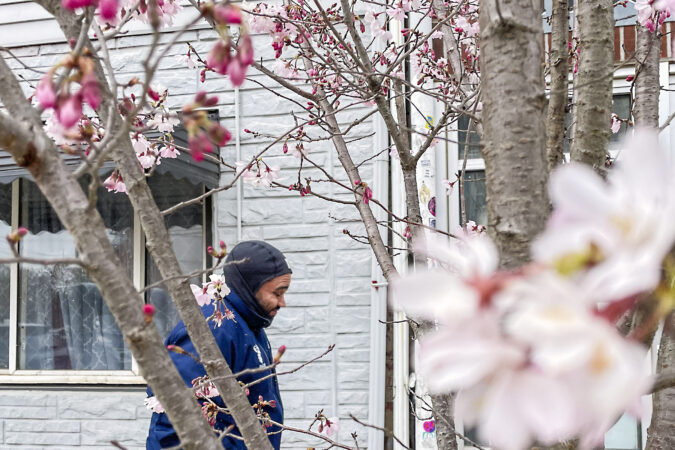
Temperatures in the Philly region may not visit freezing again until the end of next week, with a run of 70-degree days possible in the interim. And after some substantial winter napping, the region’s plant life is going to notice.
They allow that while it wasn’t exactly a vacation, spending five weeks and change under a glacier and snowpacks hasn’t been all bad for the plant life.
But as the great thaw accelerates, they have cautionary words for home gardeners: Watch your step.
And meteorologists warn that if you expect the thaw to be linear, you clearly have wandered into the wrong part of the country. Winter and spring are still in a nasty turf war that can turn ugly in March in the Northeast.
Five weeks under the covers had benefits for Philly’s plant life
Officially, Philadelphia has logged 36 days of snow cover of at least one inch, including 23 consecutive days after the Jan. 25 snow-and-ice fest. The timing of that snowpack was fortuitous in that it “insulated the ground, protecting perennials, grasses, and marginally hardy bulbs” from the Arctic freezes that followed, said Lisa Roper, horticulturalist at Chanticleer Garden in Wayne.
Horticulturist Lisa Roper tends to echinacea Tennesseensis at the Gravel Garden at Chanticleer in this file photo. She says the snow offered a measure of protection for the plants.
Said Sky Deswert, garden educator with the Norris Square Neighborhood Project in Philly, “Without the snow, there is a greater risk that dormant plants and roots will suffer from the cold.”
The snow was beneficial “to things like blue hydrangeas, insulating the stems from the cold,” said Bill Cullina, executive director of the University of Pennsylvania’s Morris Arboretum & Gardens in Chestnut Hill.
Overall, said Roger Davis, a landscape manager at Longwood Gardens in Chester County, “Snow cover does not typically cause any problems for most plants in our home gardens.”
Unfortunately, it also typically doesn’t cause problems for voles, those plant-nibbling so-called field mice that evidently had a field day.
But the winter also offered significant challenges
“Voles have been active underground, eating roots and even the crowns of grasses and perennials,” said Cullina. Snow has given voles ideal cover from an impressive lists of predators, including owls, foxes, raccoons, and cats.
They can kill shrubs and small trees by chewing at ground level, said Chanticleer’s Roper.
Deer also have been nuisances. “Heavy snow cover makes it difficult for deer to find food,” she said. “The deer will start to eat plants they typically leave alone.”
At Morris Arboretum, Cullina said, “They have been browsing needled evergreens that they normally ignore.”
Bill Cullina shown here in this file photo in front of a a red oak tree at the Morris Arboretum. Beware of “mud time,” he advises.
He added that frost-heaving, in which soil expands and contracts with fluctuating temperatures, is back after taking off much of this century. “This can force recently planted perennials and even shrubs as well as bulbs out of the ground.”
Said Roper, “Keep your eye out for plants pushed out of the ground; you can stick them back in if you see them.”
Some of the broad-leaved evergreens, such as rhododendron and hollies, may have suffered from “the combined effects of sun reflecting off the snow and frozen ground that prevents water uptake,” said Cullina. That can lead to leaf burn and defoliation.
“Not much you can do at this point except wait until the plants leaf out …and then prune off any dead branches,” he said.
Shrubs planted near the eaves of houses may have suffered from another hazard — rooftop snow, said Theresa Smith, senior vice president of NaturLawn, a national lawn service company with several outlets in the region. “When you have snow falling off in heavy pieces, it’s definitely going to damage some of those softer plants.”
And beware of salt damage on lawns, particularly near well-salted roads and driveways, said Smith. Salt can dehydrate vegetation. She also warned that prolonged snow cover can yield bumper crops of “snow mold,” a fungus that thrives in cold, moist conditions.
If you see those unsightly straw-colored mold patches, rake them out and put down grass seed on the bare spots, Roper said.
‘Mud season’ has arrived in Philly. Watch where you step.
The ground has assumed a certain spongelike quality now that most of the snow is melted, and it’s going to take some time to wring out the sponge.
Cullina said that reminiscent of his native Maine, it “feels like Philly is getting a little taste of mud season this year.”
Smith strongly advises gardeners to keep off the mud as much as possible. “You don’t want to add to the compaction that’s already there,” she said.
The tighter the soil gets, said Longwood’s Davis, the more it reduces the air spaces. “Foot traffic has more effect on wet soil than you might think.”
And beware the moods of March
Smith cautions against yielding to an agricultural spring fever, despite the promising temperature forecast for the next several days. Starting Sunday, the high temperatures could reach 70 degrees on four or five days, said Bob Larsen, a senior meteorologist with AccuWeather Inc.
Smith votes for harnessing planting ambitions during March, a notorious transitional month when the aggressive warm air masses clash with the retreating winter.
Her birthday is in March, and she recalls receiving snow as a not necessarily welcome birthday present more than once.
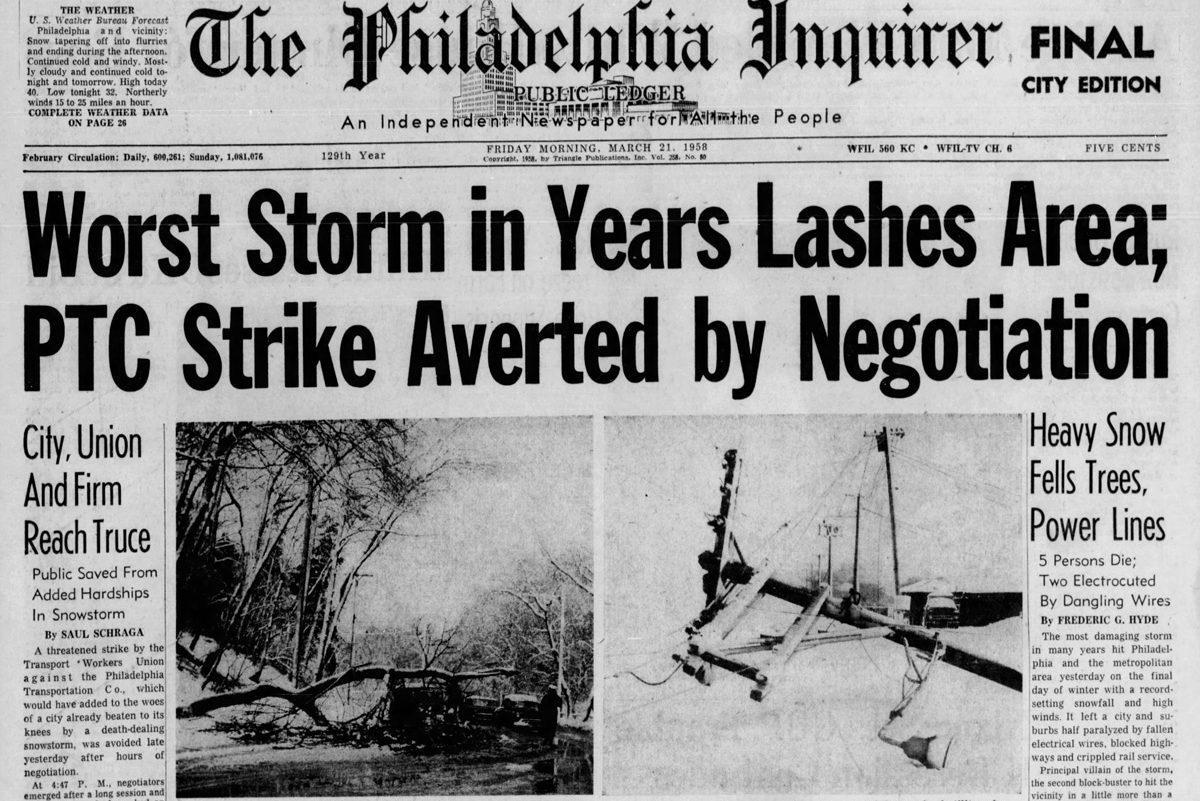
Philadelphia’s last verified blizzard occurred in March, in 1993; in 1958 over 50 inches of snow fell upon Morgantown, Chester County, during the so-called equinox storm, and 20 inches fell in Philly on April 1, 1915.
Our coverage of the 1958 Equinox Storm.
“Home gardeners just need to relax a little bit,” she said, “and wait for the weather patterns to become more consistent.”
From the moment her rambunctious preschoolers arrive, instructional assistant Angela Feliciano tends to their every need, doling out lessons and discipline.
Affectionately known as Miss Angie at the Riletta Twyne Cream Early Childhood Center in Camden, Feliciano has been a classroom assistant for nearly 30 years. She is also working to become a teacher soon.
Feliciano has received accolades for her dedication and was recently recognized by the New Jersey Education Association as its Educational Support Professional of the Year for 2025-26.
She is the first instructional assistant from Camden schools to get the recognition. She will represent New Jersey later this month at the National Education Association’s ESP conference in Anaheim, Calif.
“She’s the first from Camden. It’s a proud moment,” said Camden Education Association president Pamela Clark, who represents about 1,050 teachers and support staff, including secretaries, clerks, bus drivers, custodians, and security officers.
Clark nominated Feliciano, a childhood friend, for the award. Feliciano is well-liked by students and respected by parents in the community, and puts in extra effort to encourage learning, she said.
Nominees were considered based on professional practices, advocacy and association involvement, community engagement, personal achievement, and how well they advance the image of support professionals.
“I’m representing Camden. Not just bad things happen in Camden,” Feliciano said.
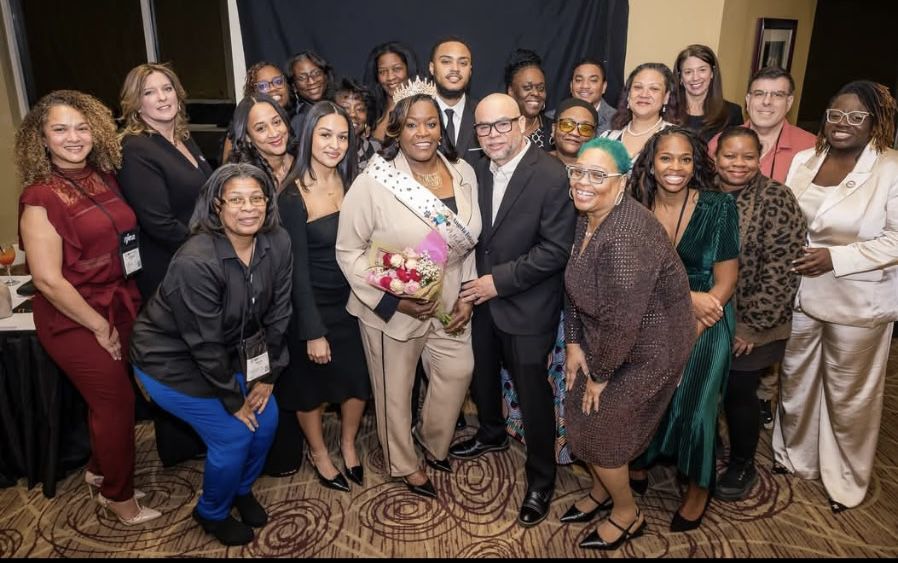
Angela Felicano (center, third from left) celebrates her award with Camden Education Association members.
Principal Medinah Dyer credited Feliciano with boosting preschool enrollment at Cream from about 120 students to 350 in three to four years. Feliciano attended weekend events to encourage parents to enroll their children.
Feliciano purchases toiletries and items for students in need, and has been an advocate for children who experienced trauma or have behavioral issues, Dyer said. She is the first to arrive at school, and the last to leave, she said.
“She is a role model for both students and staff, and her contributions have made our school a better place for everyone,” Dyer wrote in her nomination letter.
Teaching assistant Angela Feliciano with students in the pre-K classroom of teacher Carey Hiatt at the Riletta Twyne Cream Early Childhood Center in Camden last month.
During a recent morning at Cream, located in the city’s Centerville section, Feliciano and teacher Carrie Hiatt were in full swing with 15 preschoolers. The students are 3to 5 years old.
Feliciano and Hiatt crisscrossed the room, working with small groups of students for music instruction and reading. Feliciano sat on the floor with her charges or in tiny chairs to talk with them at eye level.
In one corner, Feliciano played a game with a boy, pretending it was her birthday.
“How old are you?” he asked.
“I’m 7years old,” she replied with a smile.
Teaching assistant Angela Feliciano “spies” students as they clean up in a pre-K classroom at the Riletta Twyne Cream Early Childhood Center in Camden last month.
Feliciano moved to different stations, engaging in dramatic play with a student, donning miniature clothes. At one point, she used a puppet for a letter exercise.
“I just come to work and do what I do,” Feliciano said. “They’re my kids from 8:40 a.m. to 3 o’clock.”
The entire class stood in place for a lively round of “Head, shoulders, knees and toes,” an exercise song that had the giggling preschoolers and Feliciano huffing and puffing.
“That was so hard,” a preschooler gasped.
The preschoolers spend the entire day in the classroom with Feliciano and Hiatt. The pair served lunch — chicken, rice, and plantains — while jazz played softly in the background.
“She goes out of her way to make this place special for the kids,” Hiatt said. “She is excellent, an amazing teammate.”
Feliciano was born and raised in Camden. After graduating from Camden County Technical School, she workedfor two years as a data processor.
It was always her dream to become a teacher, and she got a chance in 1989 when she joined the district as a paraprofessional. She has worked with older children, but enjoys the little children the best.
“I love to see them grow,” she said. “I love when they grasp things, and they look at me and smile.”
Feliciano, 53,now lives in Pennsauken andhas acquired the credentials to become a teacher,earning bachelor’s and master’s degrees from Wilmington University.
She still needs to pass the New Jersey Praxis exam to obtain her teaching certification, which has been a challenge. She has taken the exam three times and failed — the last time by a single point.
Feliciano plans to take the exam again this spring. She has been studying vigorously and getting coaching from Hiatt. She hopes to inspire other paraprofessionals.
“We are the core of the building. If it wasn’t for us, teachers wouldn’t be able to teach,” Feliciano said.
Hiatt said Feliciano has already demonstrated an ability to prepare lessons, manage the classroom, and reach students. She believes she will be a great teacher, but would miss having her in her classroom.
Married and the mother of two adult sons, Feliciano said she wants to remain in the classroom for many years, hopefully as a teacher.
“I’m not ready to go. I don’t want to leave the babies yet,” she said.
Teaching assistant Angela Feliciano helps students eat lunch in her pre-K classroom at the Riletta Twyne Cream Early Childhood Center in Camden one day last month.
Pennsylvania’s minimum wage hasn’t budged from the $7.25 federal minimum that was set in 2009. But the number of Pennsylvanians actually making that much per hour is small and shrinking.
That’s about a 9% decline from 2024. This group makes up less than 1% of all Pennsylvania workers. The state’s population of minimum-wage workers has dropped by roughly 42% in the last five years.
Still, hundreds of thousands who make more than minimum wage would see their wages rise if the Pennsylvania’s wage floor was set to $15 an hour.
Last year, 189,900 people in Pennsylvania (6.4% of hourly workers) earned at least $7.26 and up to $12 per hour.
Another 320,900 (10.8% of hourly workers) earned between $12.01 and $15 per hour.
Each of these groups making low wages in Pennsylvania — up to $7.25, up to $12, and up to $15 per hour — was smaller in 2025 than the year before.
That’s due in part to increasing wages across the state, the report said, as well as a lower number of hourly wage earners and a shrinking workforce overall. Pennsylvania’s median wage rose to $20.95 per hour last year — roughly a $1 increase from 2024.
The report is based ondata from a U.S. Census Bureau survey. Last year’s data is missing October figures due to the government shutdown, the report noted.
Some are exempt from federal and state minimum wage such as farmworkers, some seasonal workers, and newspaper delivery people. Workers who make much of their money in tips have a lower minimum wage. Workers from these categories were not excluded from data in the report.
Pennsylvania’s minimum wage is not enough money to cover a person’s basic needs, according to a living wage calculator developed at the Massachusetts Institute of Technology. It estimates that the living wage for a single adult without a child in Pennsylvania is $23.32 per hour.
Mayor Cherelle L. Parker speaks during a rally in support of raising the minimum wage and also freeing the city to set its own minimum wage separate from the state, at City Hall, in Philadelphia, April 29, 2025.
Who actually made minimum wage last year?
In 2025, workers who made at or below the minimum wage in Pennsylvania were predominantly women. While they make up roughly 51% of the state’s workingpopulation, they represent a disproportionate 81% of workers who earned $7.25 or less last year.
Nearly 79% of these workers are white, and roughly half have a high school diploma or less education.
window.addEventListener(“message”,function(a){if(void 0!==a.data[“datawrapper-height”]){var e=document.querySelectorAll(“iframe”);for(var t in a.data[“datawrapper-height”])for(var r,i=0;r=e[i];i++)if(r.contentWindow===a.source){var d=a.data[“datawrapper-height”][t]+”px”;r.style.height=d}}});
Nearly three-quarters of them work in food preparation and serving jobs. Though it should be noted that tips and overtime for restaurant workers are not accounted for in the report’s data, and tipped restaurant workers’ minimum wage is $2.83 by law.
Unmarried people and young workers aged 16 to 24 also make up a disproportionately large segment of Pennsylvanians making minimum wage or less, the report says.
Working full time at the minimum wage, a worker would make $15,080 annually. But 80% of Pennsylvania workers who made minimum wage or less last year worked part-time.
Other sectors that employ these low-wage workers in Pennsylvania include hotels and lodging, retail, art and entertainment, hospitals, educational services, construction, and manufacturing.
window.addEventListener(“message”,function(a){if(void 0!==a.data[“datawrapper-height”]){var e=document.querySelectorAll(“iframe”);for(var t in a.data[“datawrapper-height”])for(var r,i=0;r=e[i];i++)if(r.contentWindow===a.source){var d=a.data[“datawrapper-height”][t]+”px”;r.style.height=d}}});
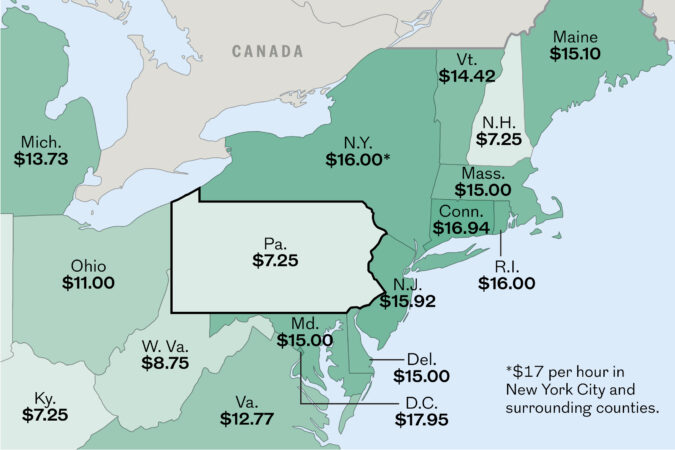
Pennsylvania’s neighboring states have higher minimum wages
Despite efforts to raise Pennsylvania’s minimum wage, it lags behind that of neighboring states.
New Jersey’s minimum wage, which increased in January to $15.92per hour, is over double that of Pennsylvania’s, and 22 states are soon increasing their minimum wage or have done so already this year. In Delaware, the minimum hourly wage has risen from $9.25 in 2021 to $15 in 2025, thanks to legislation mandating the gradual increase.
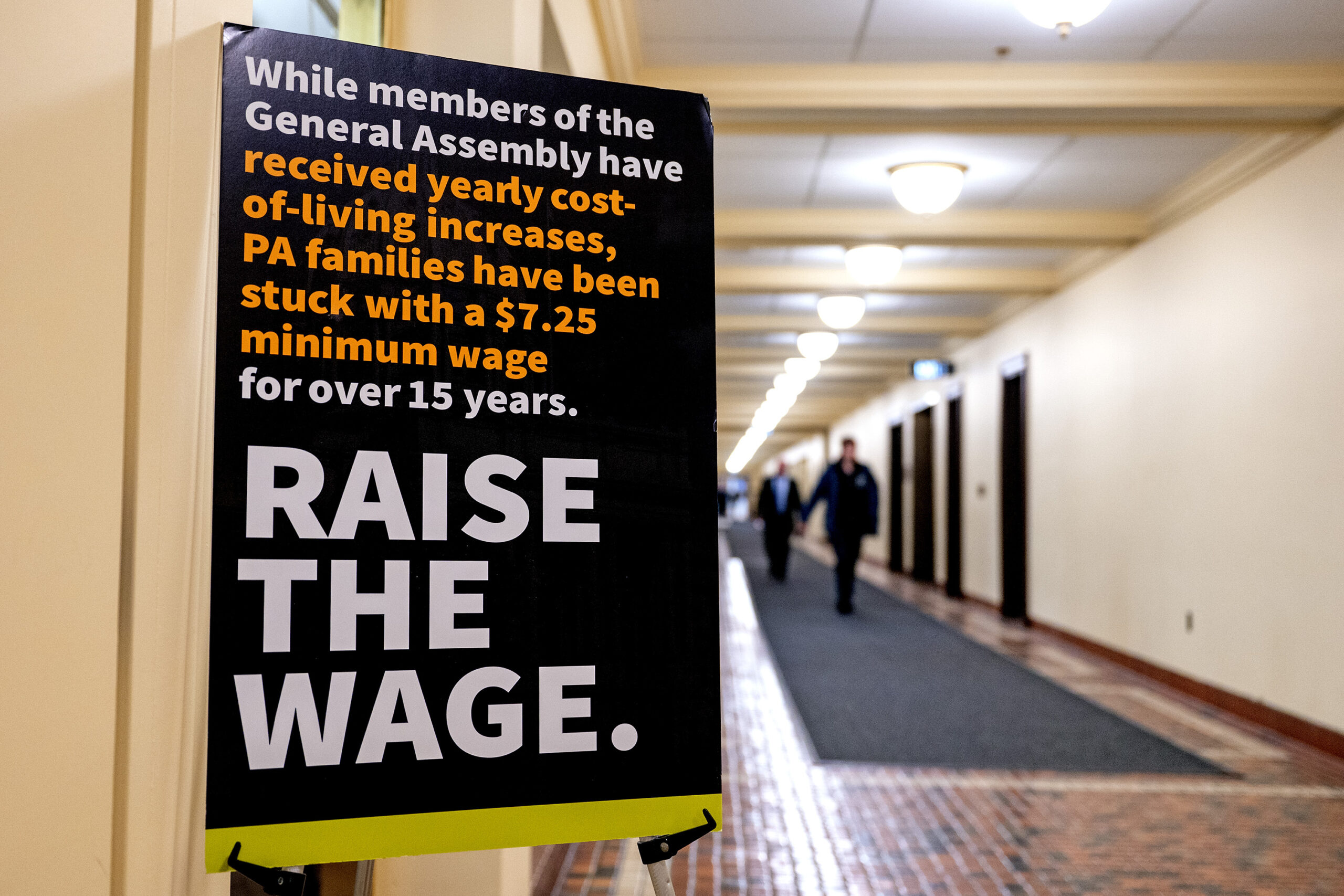
A sign in support of an increase in the state’s minimum wage in the state Capitol Feb. 3, 2026.
Gov. Josh Shapiro has backed raising the minimum wage at every annual state budget address since he was elected. In February he called on the General Assembly to advance minimum wage legislation, adding that raising it to $15 an hour would save the state millions on entitlement programs like Medicaid.
“If you aren’t going to do this because it’s the right thing to do, or because it would let more families put food on the table for their kids, then do it because it’s going to save us $300 million, shrink our entitlement budget by growing our workforce and putting more money back in workers’ pockets,” he said.
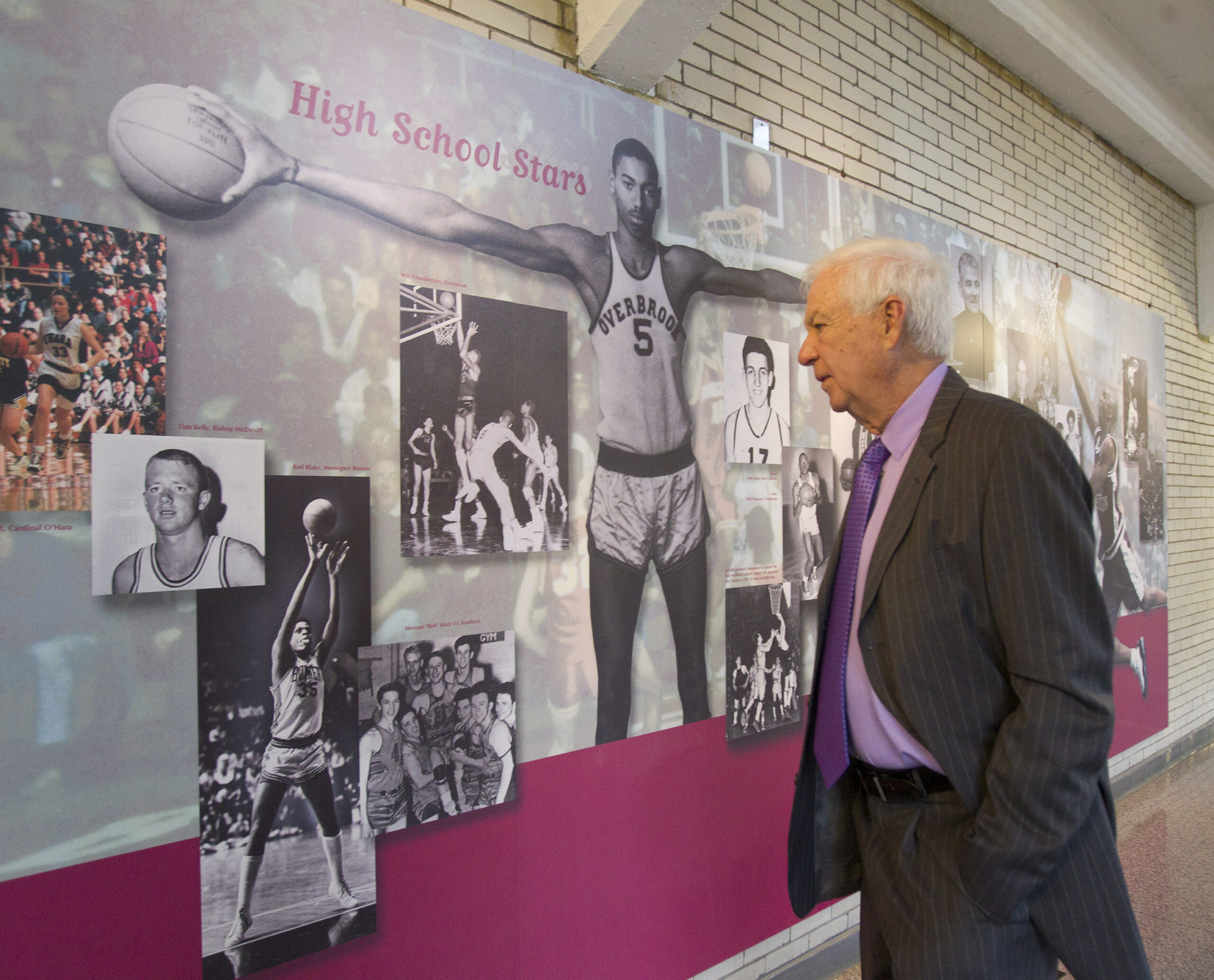
One afternoon in early December, Bill Raftery and Tim Legler, both La Salle alumni, returned to campus for an hourlong panel discussion about their careers in sports media, only to have the conversation shift to a topic with broader implications.
It was a point of pride for the university to welcome back Raftery, who has been college basketball’s preeminent analyst for more than a quarter-century, and Legler, who has reached a comparable status at ESPN with his insights into the NBA. But 33 minutes into the event, the first question from an audience member wasn’t about the origins of Raftery’s trademark catchphrases (The kiss! … Onions! … Laundry on the deck!) or Legler’s game-film breakdowns.
Bill Raftery, now broadcaster, graduated from La Salle and was inducted into the Big 5 Hall of Fame.
“Can we bring the Big 5 back to its glory?” a man in the auditorium asked. “Because it was a national thing, right? It wasn’t just a Philly thing.”
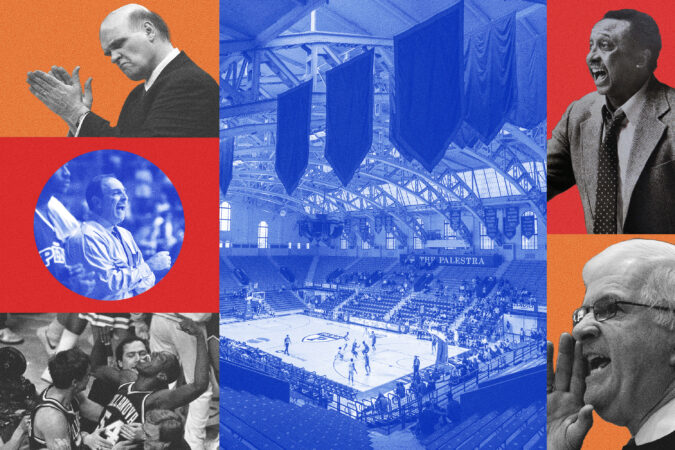
These days, most people who follow college basketball, if they’re being honest, have to acknowledge that the Big 5 isn’t much of anything anymore. The round-robin rivalries among La Salle, Penn, St. Joe’s, Temple, Villanova, and more recently Drexel have lost most of their juice.
That white-hot competition, fueled by the benign hatred that only proximity and familiarity can ignite, used to define Philadelphia hoops. It has cooled. Now, just one school, Villanova, enters each season with the baseline expectation that it will qualify for the NCAA Tournament, and the pipeline of local recruits that once sustained these programs has all but dried up.
window.addEventListener(“message”,function(a){if(void 0!==a.data[“datawrapper-height”]){var e=document.querySelectorAll(“iframe”);for(var t in a.data[“datawrapper-height”])for(var r,i=0;r=e[i];i++)if(r.contentWindow===a.source){var d=a.data[“datawrapper-height”][t]+”px”;r.style.height=d}}});
Three of the six schools — Drexel, La Salle, and Penn — don’t have a Philadelphia native on their rosters. Interest in the city series has plummeted. A 2022 doubleheader at the Palestra drew an official attendance of just 3,300 people. And the Big 5 Classic, conjured in the aftermath of that alarming display of indifference, hasn’t revitalized the rivalries or restored any prestige to them.
While this season has seen an uptick in the programs’ quality of play — Villanova is virtually assured of an at-large bid, and Penn, St. Joe’s, and perhaps Drexel could be strong enough to win their conference tournaments — that improvement hasn’t been enough to stem the dismal tide.
Tim Legler, who led La Salle to the 1988 NCAA Tournament, said the Big 5 was once a “transformative” environment to play in.
For their part, the panelists at La Salle mustered some nostalgia but weren’t optimistic. Legler, who grew up in Richmond, Va., remembered attending a Palestra doubleheader on a recruiting trip and marveling at the atmosphere: the streamers, the cheering, the chanting.
“I turned to my parents and said, ‘This is the environment I want to play college basketball in,’” he said. “It was literally that transformative.”
Still, he had no solution for salvaging the Big 5, and neither did Raftery, who suggested that smaller programs throughout the NCAA would soon be casualties of this new era of college basketball.
“They’re trying to freeze [out] a lot of programs and leagues,” he said, “and I can envision maybe two or three conferences. They’ll run the whole thing, and the networks will pay for it. That’s the way it is.”
It’s convenient to point to the sport’s lurch into modernity — into the era of Name, Image, and Likeness; of pay-for-play; of the permeable membrane of the transfer portal — as the cause of the decline. And it’s true: With the exception of Villanova, which is ensconced in the Big East and supported by engaged donors with deep pockets, college hoops’ evolution has made everything more difficult for the other, more vulnerable programs in the city. But this train has been rumbling down the tracks for a while, and its arrival should compel a reevaluation of the Big 5’s history, of the decisions and unstoppable forces that led it here, to the brink.
To those Baby Boomers and GenXers weaned on the Big 5’s traditions, it’s surely incomprehensible and saddening to hear Raftery contemplate a world without it. But if the institution as Philadelphia knew it is fading away — and it appears to be, if it hasn’t already — the proper question isn’t Can it be saved? That one has been asked and is on its way to being answered.
No, the better questions to chew on are these: How did the Big 5 survive, and at times thrive, as long as it did? And did any of the attempts over the years to preserve it and its identity actually contribute to its downfall?
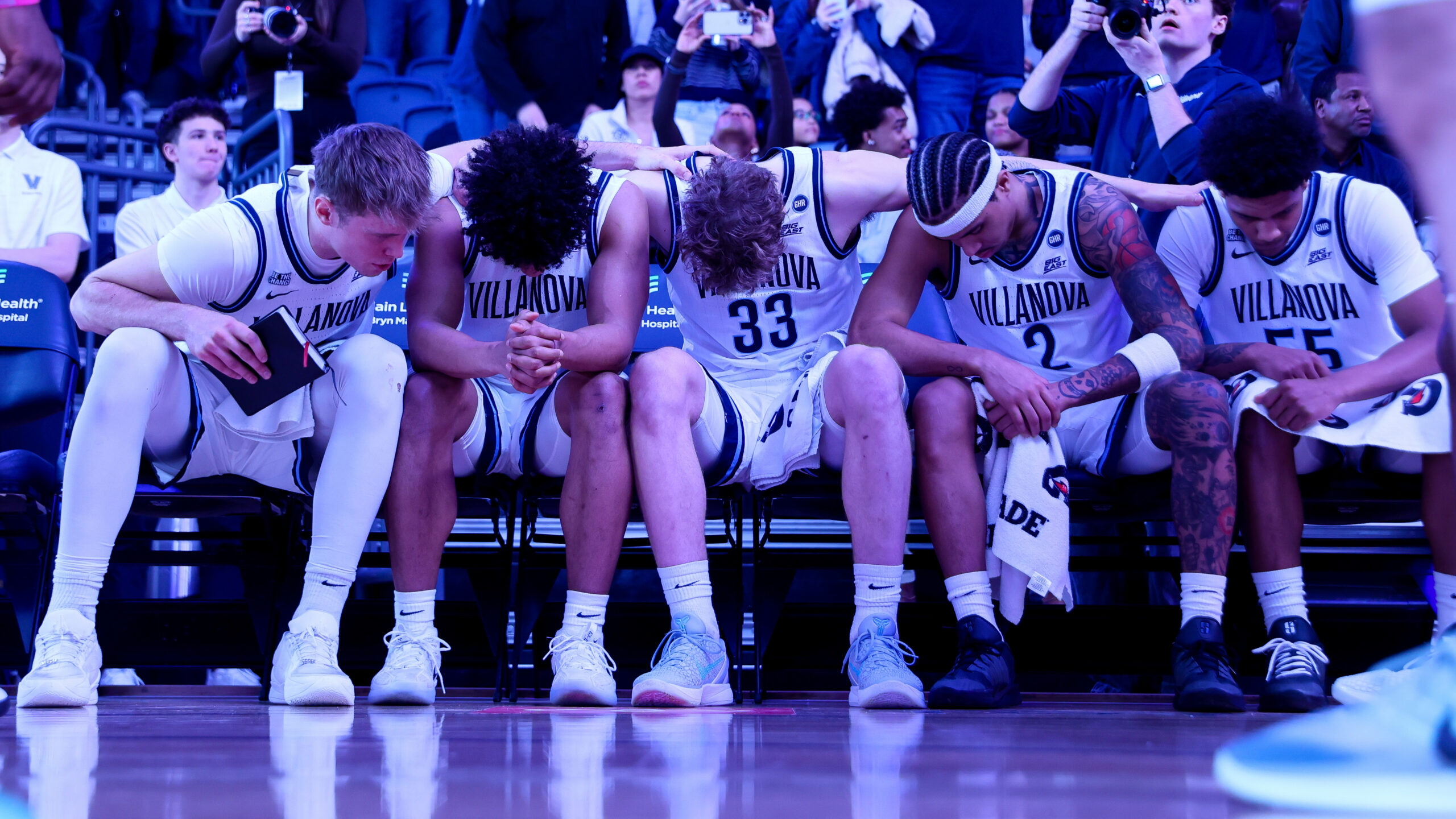
Villanova has become the only school in the Big 5 that enters each season with the baseline expectation that it will qualify for the NCAA Tournament.
The seeds of rebirth and decline
It’s tempting to picture the Big 5’s history as an unbroken string of unforgettable nights at the Palestra, great teams playing great games inside a gym packed to its uppermost corners with 9,000 people, give or take a few rascals who managed to sneak in for free. There were hundreds of such nights, to be sure. But it’s striking to put that past into a wider context and see how much certain changes and trends fostered and then jeopardized everything that made the Big 5 wonderful and unique.
Those fond memories often gloss over a relatively fallow period for the Big 5 during the 1970s. Villanova had three consecutive losing seasons from 1972 to 1975. Temple went 16-37 over the ’74-75 and ’75-76 seasons and qualified for the NCAA Tournament once in an 11-year span from 1972 to 1983. St. Joe’s went 8-17 in ’74-75, the first of six straight seasons in which the Hawks missed the NCAAs. Penn was the exception, and La Salle held its own, but a Daily News back-page photo captured the overall listlessness perfectly: Harry “Yo-Yo” Shiffern, the lovable vagrant who was the city series’ unofficial mascot, fast asleep during a Palestra doubleheader.
The Big 5 was in a collective funk, and it took a few pivotal developments to snap it back to prominence and position it to flourish further.
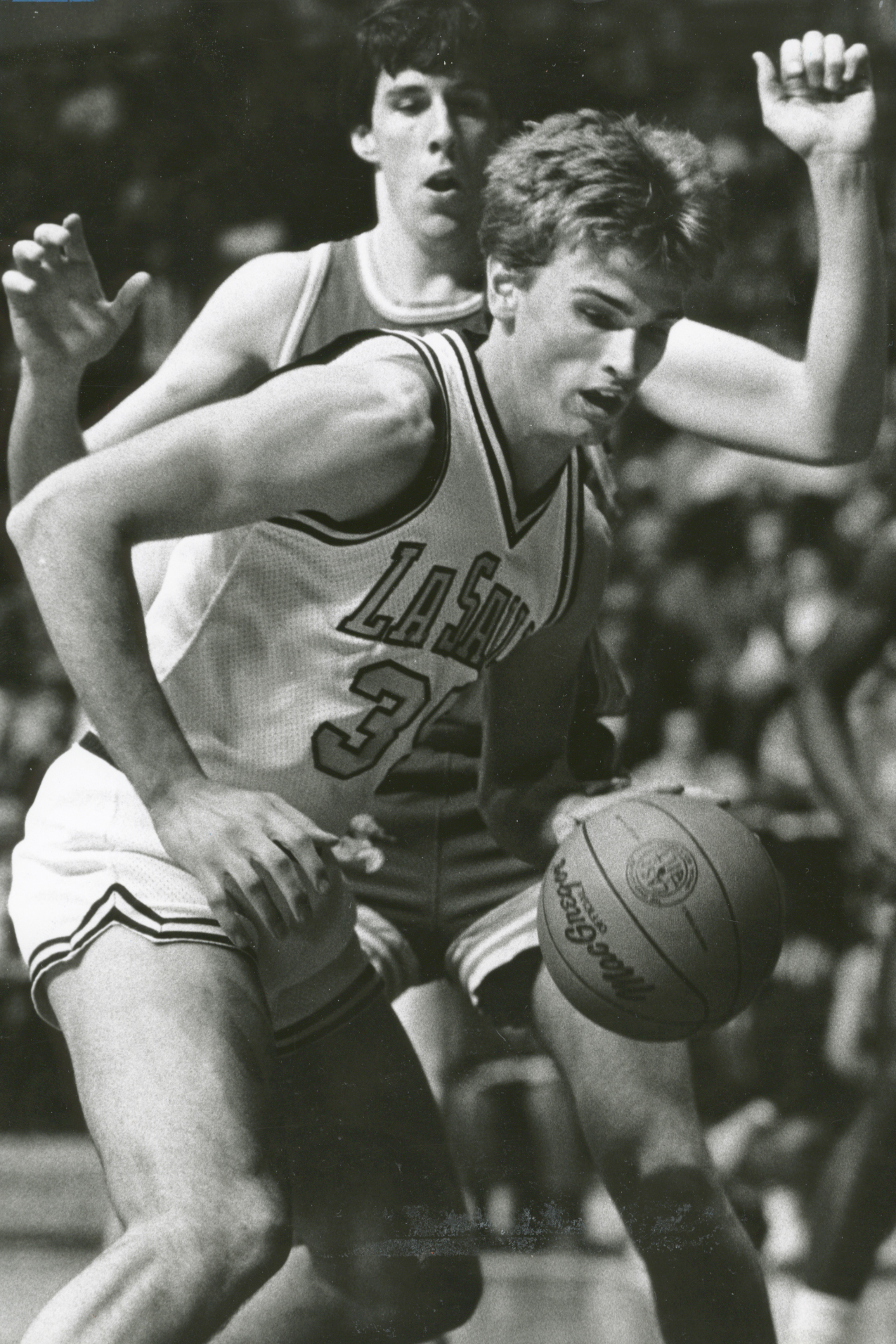
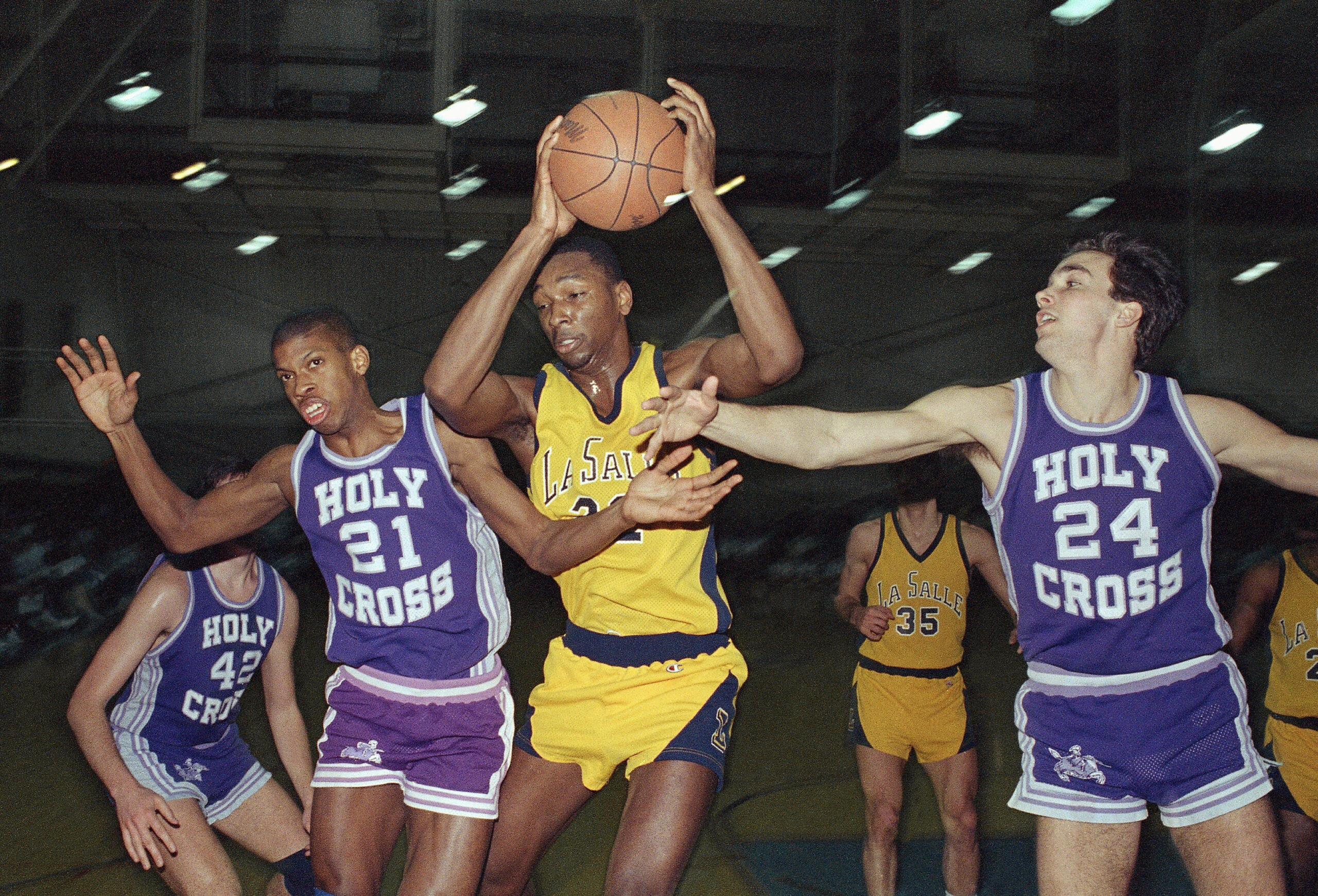
Lionel Simmons (center) is the Big 5’s all-time leading scorer and fifth in NCAA history with 3,217 career points.
College basketball’s landscape was flatter then. The NCAA Tournament went to 32 participants in 1975 and to 40 in 1979, and many of the qualifying programs were mid-majors. During the ’70s, each of these teams reached the Final Four: Jacksonville, St. Bonaventure, New Mexico State, Western Kentucky, Marquette, UNC Charlotte — and, in ’79, Penn. The Quakers upset North Carolina, Syracuse, and St. John’s before Magic Johnson and Michigan State pulverized them in the national semis. But their run was the most improbable of the decade, and their timing was impeccable.
The following season, after a star turn at the Pan-American Games in Puerto Rico, La Salle’s Michael Brooks was named the Kodak National Player of the Year. As terrific as Brooks’ senior campaign was — he averaged more than 24 points and 11 rebounds, scoring 51 points in a triple-overtime loss at BYU — his candidacy for the honor was buoyed by Indiana’s Bob Knight, who had coached him at the Pan-Am Games and touted him to reporters.
“If I were allowed to start my own team tomorrow,” Knight said in January 1980, “the first person I would pick would be Michael Brooks.”
Such praise from the best, the most famous, and the most temperamental coach in the country carried weight, and Knight’s words elevated the reputations of both Brooks and Philadelphia basketball. That ascendance continued in March 1981, when St. Joe’s, under Jim Lynam, won the East Coast Conference tournament, knocked off top-ranked DePaul in the second round of the NCAAs, and advanced to the regional final before losing to the eventual national champs: Knight, Isiah Thomas, and the Hoosiers.
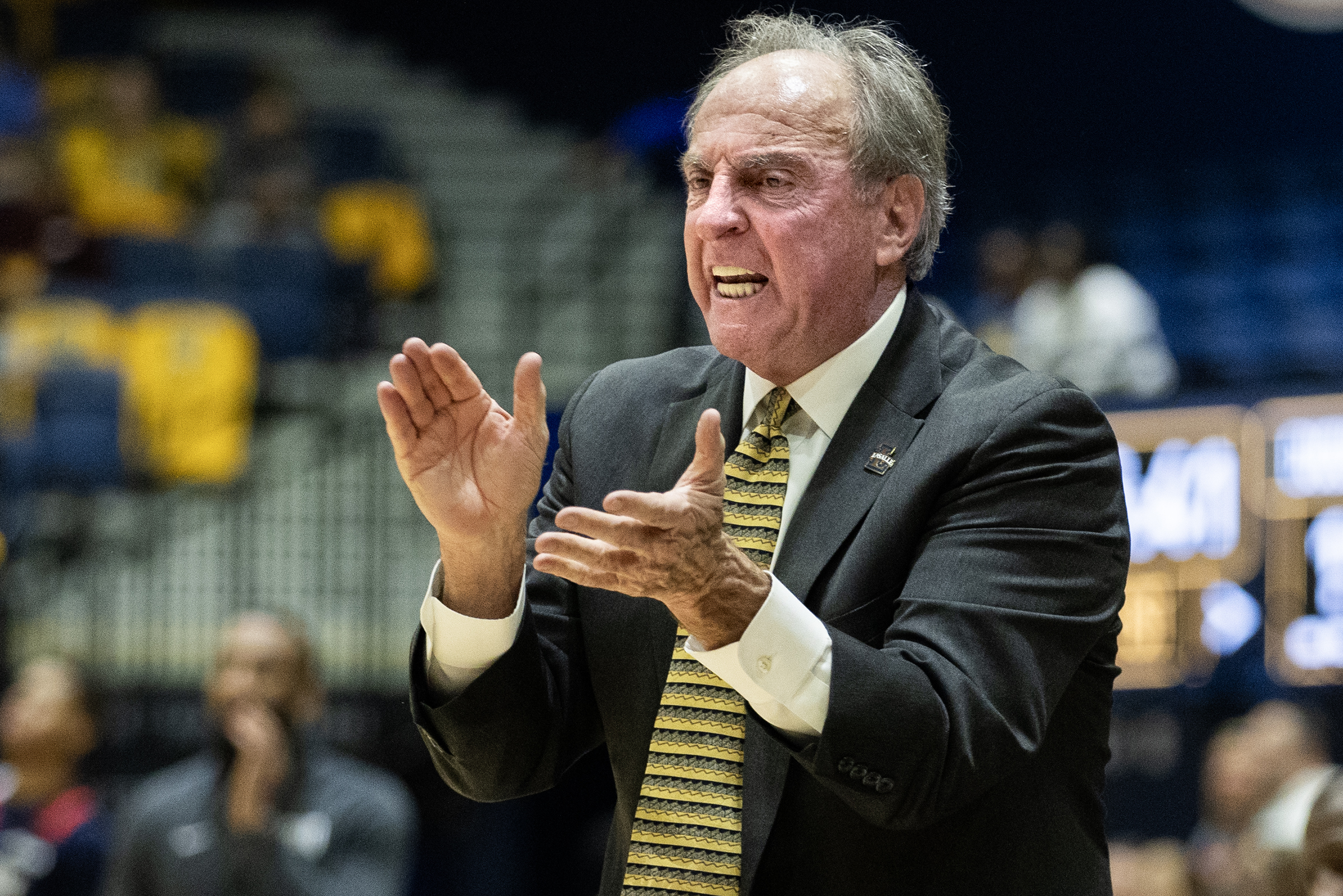
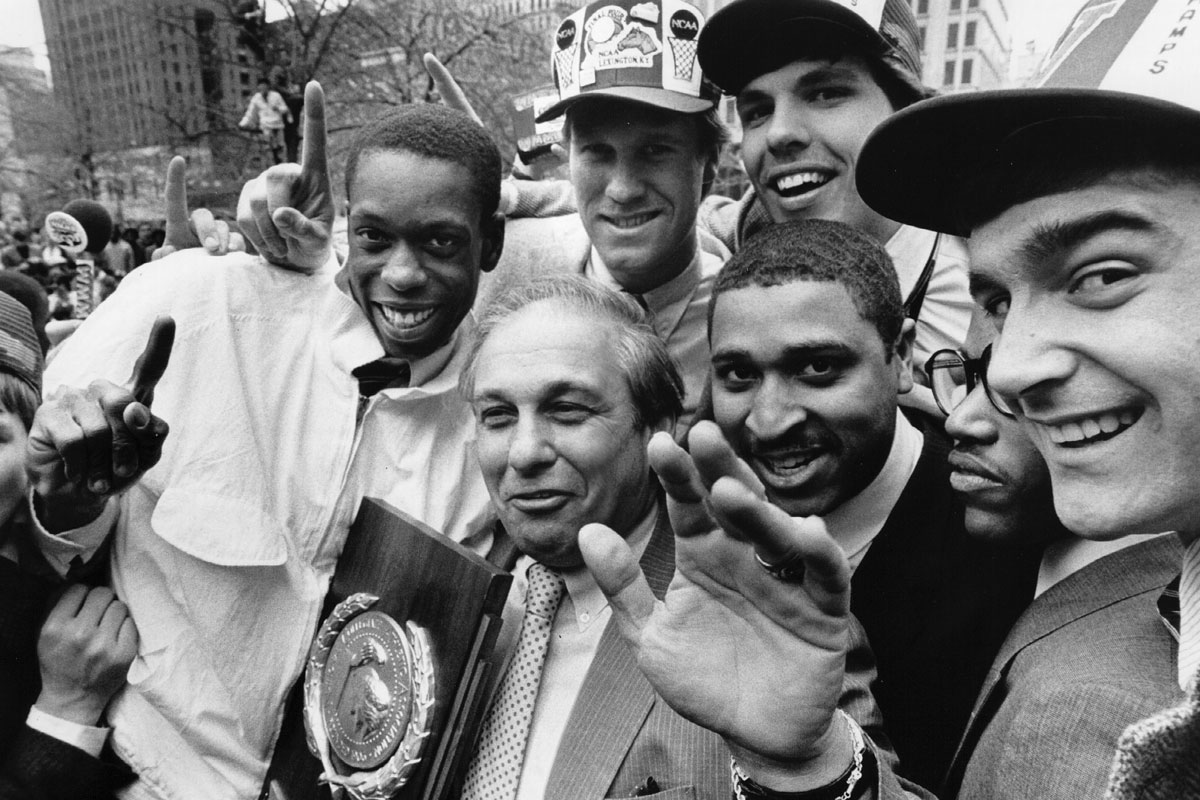
Fran Dunphy coached more than 1,000 games as a Division I head coach.Villanova coach Rollie Massimino gathers in Center City with players Ed Pinckney, Wyatt Maker, Chuck Everson, Dwight Wilbur, Veltra Dawson, and Brian Harrington in 1985 after winning the national title.
So the Big 5 was on its way back, regaining relevance among casual college hoops fans and among the sport’s cognoscenti. The two most significant factors in its renaissance, though, happened off the court. In March 1980, Villanova left the Eastern Eight and jumped to the Big East. And in August 1982, Temple hired John Chaney as its head coach.
Those moves and the rewards they wrought thrust those two programs, and in turn the entire Big 5, into a higher realm. Villanova won the national championship in 1985 — an underdog triumphant, a marvelous story enhanced by the Wildcats’ status as a program in a major conference in a sport whose vast national reach was still expanding: Magic vs. Larry Bird in ’79, North Carolina State surviving and advancing in ’83, Dick Vitale, CBS, ESPN, Big Monday, Selection Sunday, March Madness consuming a month’s worth of America’s attention.
Chaney was this wild-eyed, lesson-teaching, justice-preaching wizard, confounding opponents with his matchup-zone defense, crafting the hardest schedule in the nation every year to battle-test his teams, leading the Owls to a No. 1 ranking in 1988 and three Elite Eight appearances in a six-year span.
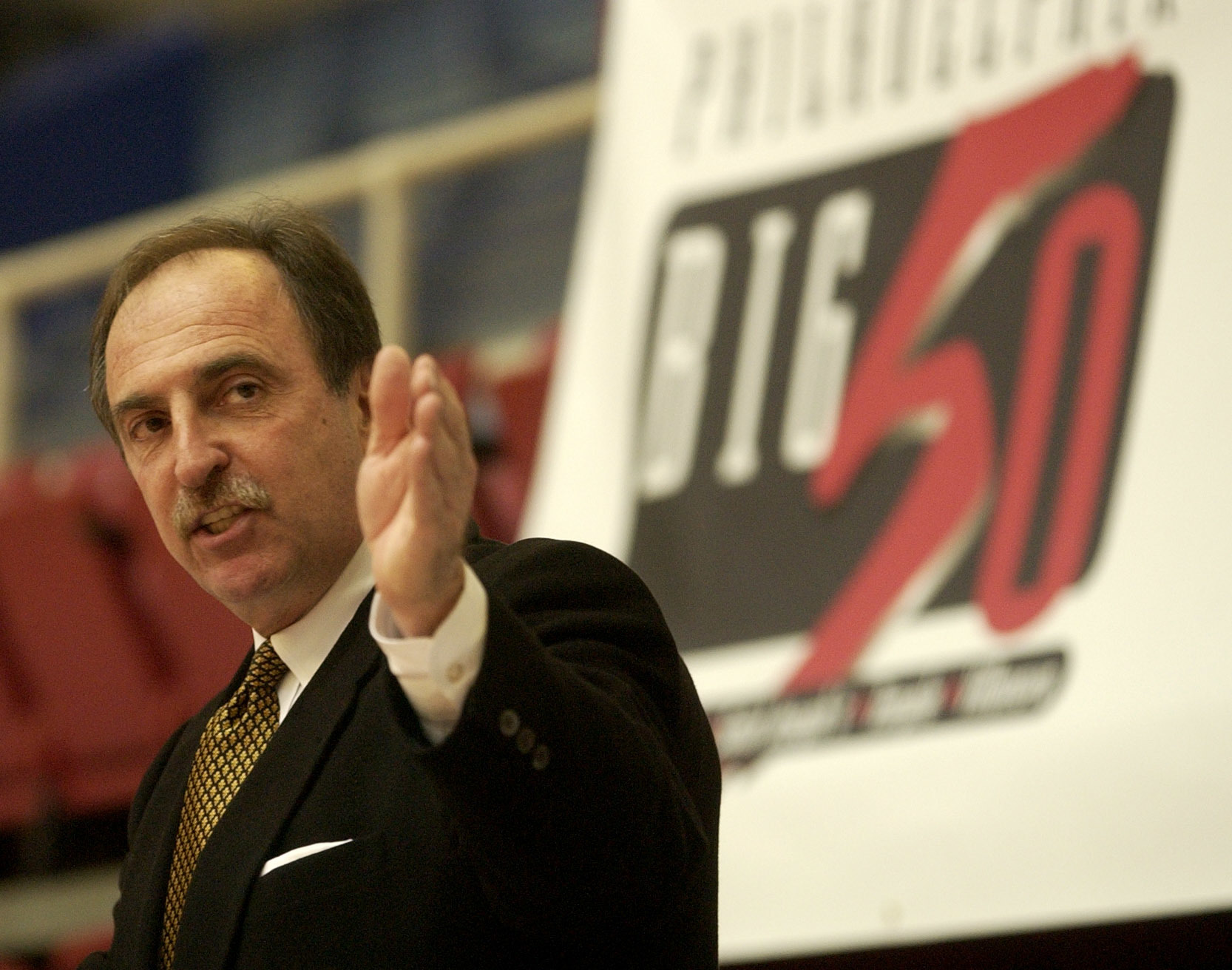
Fran Dunphy led Penn to a 69-14 record and three NCAA Tournament appearances from 1992 to 1995.
Nestled in the Metro Atlantic Athletic Conference (MAAC) with schools of similar profiles, La Salle went to the NCAA Tournament four times and the NIT twice in Speedy Morris’s first six years as head coach and had another national player of the year: Lionel Simmons. From 1992 to 1995, Penn dominated the Ivy League under Fran Dunphy: a 69-14 record, three NCAA Tournament appearances and a first-round victory over Nebraska, Jerome Allen and Matt Maloney forming one of the best backcourts in the country. St. Joe’s went 26-7 and advanced to the Sweet 16 in 1996-97, the season that introduced that notorious wallflower Phil Martelli to the rest of the country.
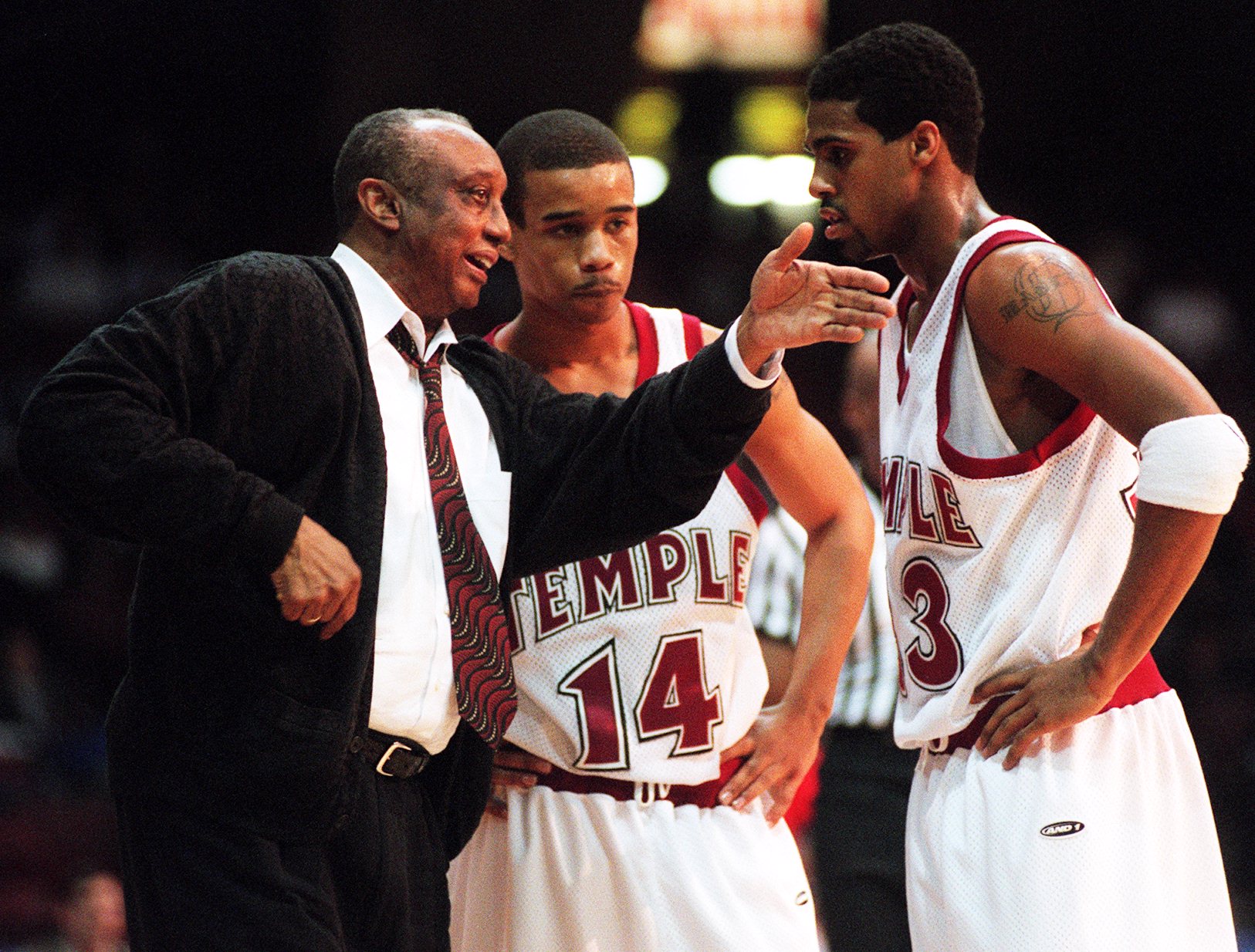
Former Temple coach John Chaney with players Lynn Greer and Quincy Wadley.
Hard circumstances and poor decisions
The factors that damaged the Big 5 were legion. Some applied to just one or two programs. Some applied to all of them. Some were mistakes, bad choices. Some were unavoidable and beyond the programs’ control.
Start with La Salle. Given an opportunity in 1990 to build an 8,000-seat on-campus basketball arena — Tom Gola offered to raise the funding for it — the university said no. Then its leadership made what is commonly considered the disastrous decision to relocate from the MAAC to the Midwestern Collegiate Conference. The program has never recovered.
Look at Temple. Chaney, a singular presence and attraction, retired in 2006. Though Dunphy, his successor, guided the Owls to six consecutive NCAA Tournament appearances, the university’s quest for football dollars led it to leave the Atlantic 10 for the American Athletic Conference — and abandon its basketball-first identity.
Again: individual schools, individual issues. But those problems were byproducts of college basketball’s overall reshaping during the 1980s and ’90s. In retrospect, the most infamous moment in Big 5 history — the dissolution of the round-robin, at the insistence of Villanova and coach Rollie Massimino, after the 1990-91 season — was an acknowledgment of those changes, and the attempts to preserve the Big 5 as it had always been would inevitably fail.
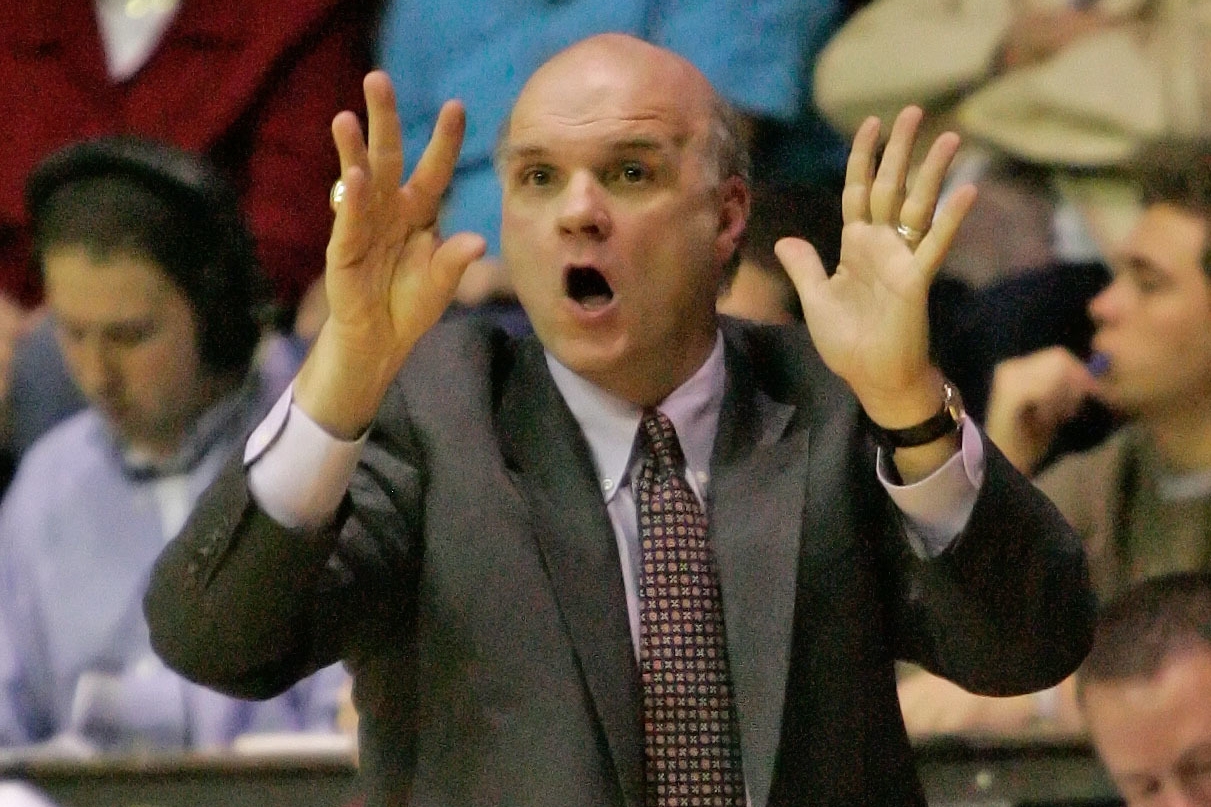
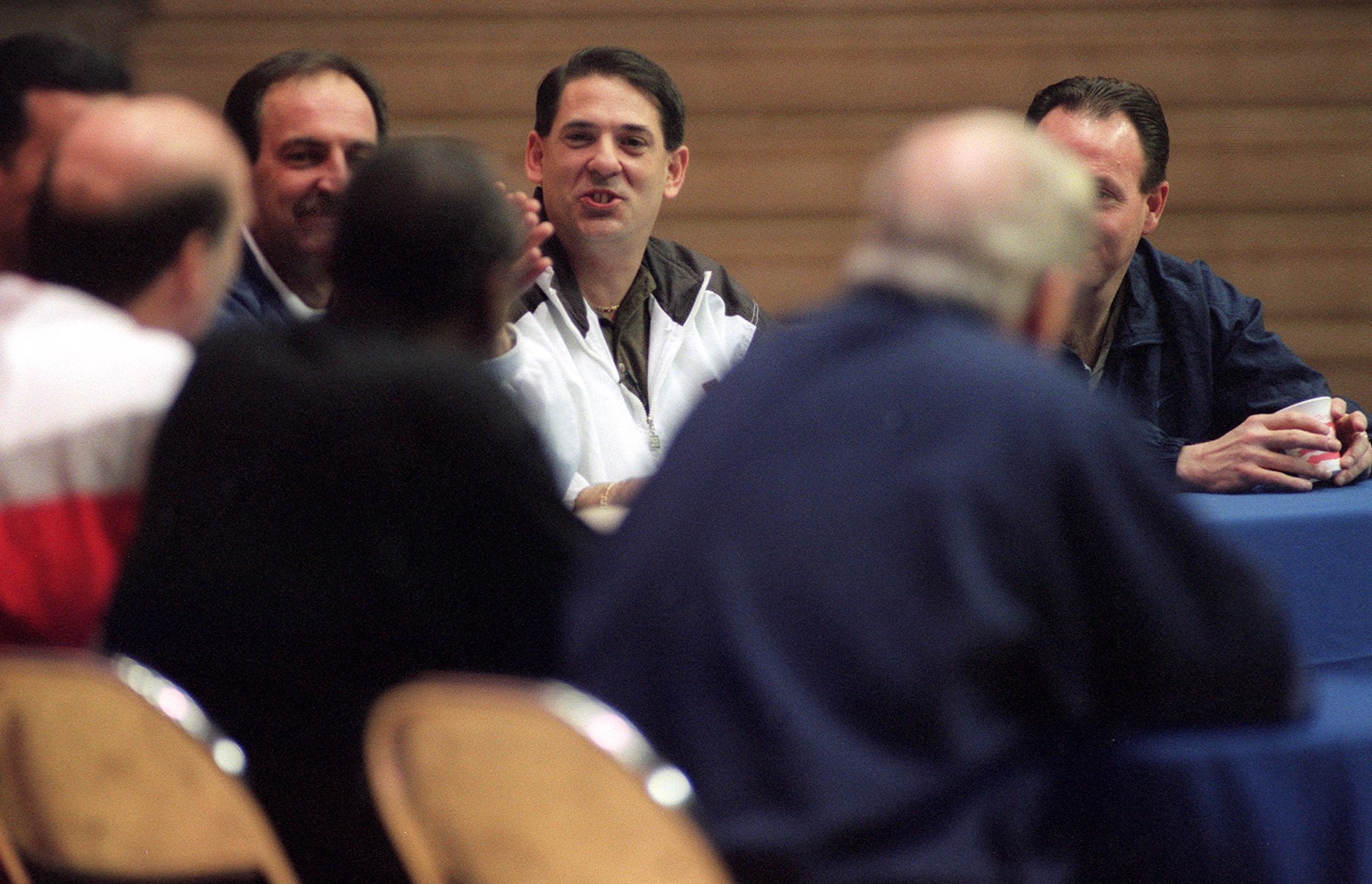
Phil Martelli led St. Joe’s to go 26-7 and advanced to the Sweet 16 in 1996-97.Former Villanova coach Steve Lappas jokes with the other Big 5 coaches during a taping of the Comcast basketball show in 1997.
When Villanova pushed to cut back on city series games and Temple pushed for more of those matchups to be played at campus sites other than the Palestra, they weren’t merely trying to make things easier for themselves. They were responding and reacting to college basketball’s new conditions for success.
Sneaker companies had begun financing all-star camps, AAU programs, and college programs. Now coaches didn’t have to rely on local high school teams to find players, and great Philly players were no longer making their names solely in the Public League, the Philadelphia Catholic League, or the Sonny Hill League. They were traveling to play AAU. They were seeing other cities, meeting other coaches. They weren’t as likely to stay home to play college ball.
“The most important recruiting device is recognition,” Chaney told author Bob Lyons in Palestra Pandemonium: A History of the Big Five, “and recognition comes from national TV. … They don’t know what the Big 5 is outside of this area. They knew who Villanova was when they won the national championship, so you could always attach yourself to them. But it wasn’t going to get you very far because no one knew the history and tradition of the Big 5.”
In that way and others, the inherent parochialism of the Big 5 worked against it. For instance, Dave Gavitt, the founding commissioner of the Big East, struck a deal in 1980 with ESPN, then a fledgling sports network hungry for programming, for the exclusive rights to televise the conference’s games. That arrangement made it difficult, if not impossible, for Villanova and any other Big East school to be involved in a 7 p.m./9 p.m. Palestra doubleheader and for a national television audience to watch that doubleheader.
“We needed the game between Villanova and Georgetown at 8 p.m. to go on our network,” Gavitt told Lyons. “We couldn’t clear games at 7 p.m. because of the game shows that all the local stations carried.”
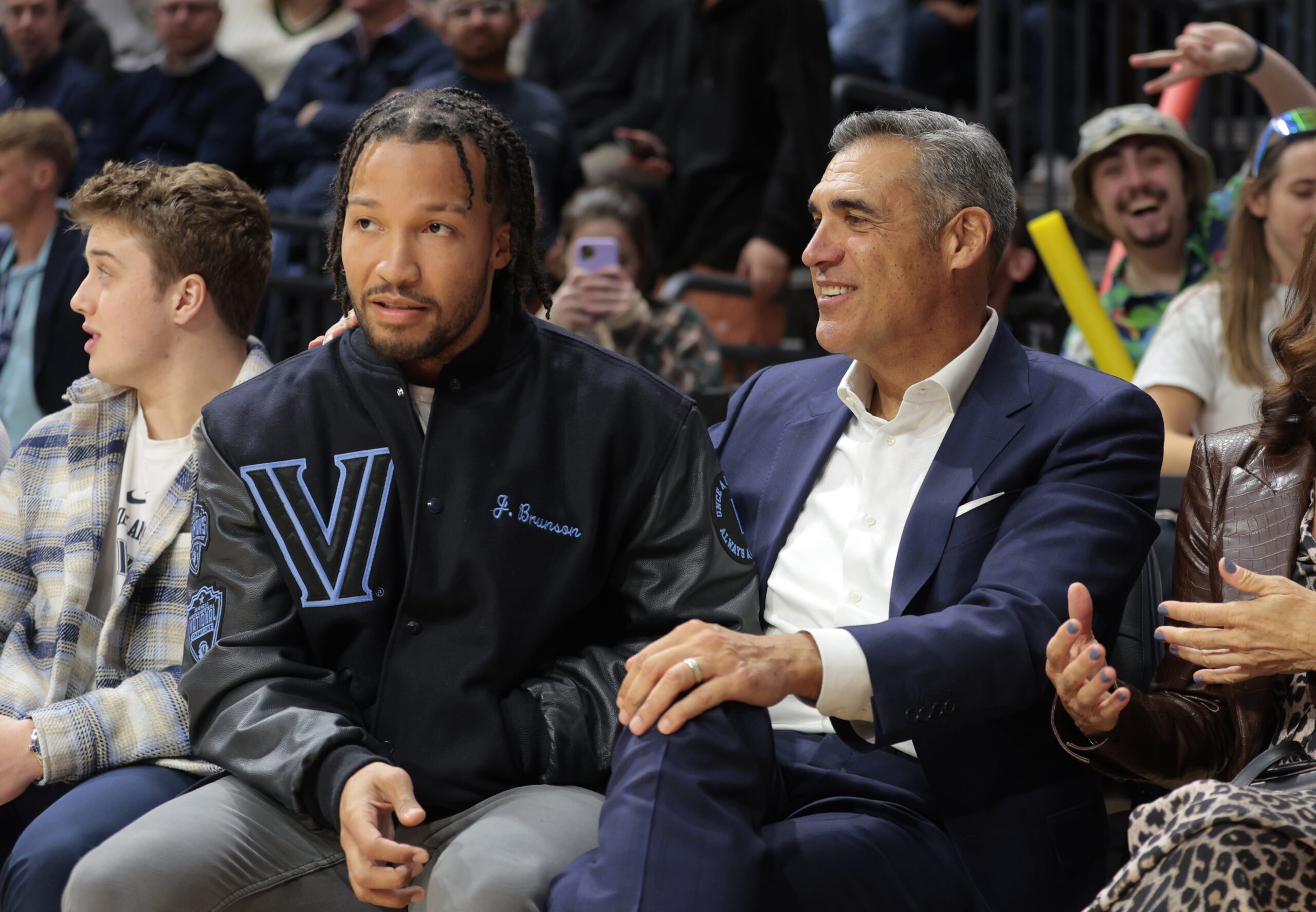
Jalen Brunson and former Villanova coach Jay Wright at the Finneran Pavilion on Feb. 8, 2023.
As it was, the Big 5 had a TV deal of its own, with the Philly-based premium cable channel PRISM, starting in 1978. Yet the PRISM commitment actually limited the exposure of some of the Big 5’s schools.
During the 1989-90 season, as one example, the Atlantic 10 wanted to place a Temple-La Salle game on ESPN so that it would be telecast nationally. “ESPN,” Lyons wrote, “subsequently refused to carry it, however, because it did not want to black it out in PRISM’s trading area.”
So hoops fans in the Delaware Valley could watch the game at home, but no one else could. At a time when college basketball was becoming more accessible, the Big 5 was cutting itself off from everyone who wasn’t already familiar with it.
That history might seem ancient. It’s not. Wright’s tenure and the economics of the sport have placed Villanova on a separate tier from the other programs. And now that he, Chaney, Dunphy, Martelli, and Morris — the local legends who were the backbone of the Big 5 — aren’t coaching anymore, the remaining infrastructure hasn’t been strong enough to restore the teams to excellence and maintain the intensity of the rivalries.
It’s a shame, but it was only a matter of time. Yes, the Big 5 was a Philly thing. Yes, it was a national thing. Yes, it was a glorious thing. And now it’s gone, and all the wistfulness and wishful thinking in the world won’t change the hard and inescapable truth: That glory isn’t coming back.
Pennsylvania voters broadly oppose some of President Donald Trump’s immigration enforcement tactics — but there’s a stark partisan split, according to a new statewide poll of registered voters.
Franklin & Marshall College’s Center for Opinion Research released a wide-ranging poll Thursday that tracked registered Pennsylvania voters’ opinions on America’s 250th anniversary, ICE enforcement tactics, and other issues facing the state and nation ahead of the midterm election.
Trump’s approval ratings have remained consistently low since returning to office last year, with a majority of Pennsylvanians disapproving of his job as president.
Democratic Gov. Josh Shapiro maintains a 50% approval rating heading into the midterm elections later this year.
Pollsters at Franklin & Marshall College surveyed 834 registered Pennsylvania voters, including 353 Democrats, 347 Republicans and 134 independents. The sample error is +/- 4.1 percentage points.
Here are three takeaways from the poll of registered Pennsylvania voters, conducted Feb. 18 through March 1 by phone or online.
Trump is consistently unpopular in Pennsylvania
Trump’s approval ratings among registered Pennsylvania voters remain low, with 61% of voters rating him as doing a “poor” or “fair” job, according to the statewide poll, which also assessed Trump’s performance on immigration, the economy, and other issues.
Trump maintained a net negative approval rating throughout his first term in 2017-2021 and so far in his second term, according to the poll.
Despite winning the state in 2024, he remains divisive with 51% of respondents rating him as doing a “poor” job, and only 10% who rate him as doing a “fair” job. Approximately 39% of registered Pennsylvania voters view Trump as doing an “excellent” or “good” job, according to the poll.
window.addEventListener(“message”,function(a){if(void 0!==a.data[“datawrapper-height”]){var e=document.querySelectorAll(“iframe”);for(var t in a.data[“datawrapper-height”])for(var r,i=0;r=e[i];i++)if(r.contentWindow===a.source){var d=a.data[“datawrapper-height”][t]+”px”;r.style.height=d}}});
Trump’s low approval numbers could have a drag effect on Republicans’ performance in the midterm election, said Berwood Yost, the director of Franklin & Marshall’s poll.
“While there’s still a long way to go until November, [Trump has] got to figure out a way and his party has to find a way to prevent that and earn those voters back,” Yost said.
Trump’s low numbers align with those of former President Barack Obama or George W. Bush’s approvals at the same point in their second term, Yost added. Both of their parties lost seats in the midterms elections those years.
However, Trump’s approval ratings are not the lowest they have been in the state. His approval ratings dropped to their lowest, 70% disapproval, during his first term in September 2017.
Josh Shapiro is still popular
Gov. Josh Shapiro remains popular ahead of his reelection contest this year: 50% of Pennsylvania voterssayhe is doing an “excellent” or “good job,” while another 44% believe he is doing a “fair” or “poor” job leading the nation’s fifth most populous state.
Shapiro is the most popular governor since 2000, when comparing his approval ratings to those of other Pennsylvania governors at the same point during their first terms, Yost said.
Shapiro also maintains a significant lead over his likely GOP challenger, State Treasurer Stacy Garrity. If the midterm elections were to happen today, 48% of voters said they would reelect Shapiro, while 28% said they would vote for Garrity. Another 7% of voters said they would vote for a different candidate, while 17% were undecided or refused to answer the question.
Shapiro’s approval ratings have remained steadily high since taking office in January 2023. A Quinnipiac Universitypoll released last month found similar public opinion toward Shapiro’s reelection, while some voters said they were unsure whether they wanted the rumored 2028 presidential candidate to run for higher office.
Pa. voters broadly oppose some of ICE’s enforcement actions, but are split on others
Approximately three-fourths of Pennsylvania voters believe ICE should not be able to use deadly force against protesters or enter a home without a warrant, in a major pushback to Trump’s immigration enforcement tactics.
Pennsylvania voters’ opinions on immigration enforcement varies significantly based on a person’s political party: While nine in 10 Republicans support ICE tactics, only two in five independents and one in 10 Democrats support them.
Protesters march up Eighth Street, towards the immigration offices, during the Philly stands with Minneapolis Ice Out For Good protest at Philadelphia’s City Hall on Friday, Jan. 23, 2026.
Republicans support ICE’s use of unmarked vehicles to detain people and their use of masks to hide an agent’s identity at much higher rates than Democrats, while independents are split. On the use of masks, 77% of Republican voters believe agents should be able to wear them, while 40% of independents and only 10% of Democrats do.
“There’s a lot of consensus about the fundamental principles that protect our individual rights like entering a home without a warrant or using force against protesters, whereas there’s a little more partisanship in others,” Yost said.
window.addEventListener(“message”,function(a){if(void 0!==a.data[“datawrapper-height”]){var e=document.querySelectorAll(“iframe”);for(var t in a.data[“datawrapper-height”])for(var r,i=0;r=e[i];i++)if(r.contentWindow===a.source){var d=a.data[“datawrapper-height”][t]+”px”;r.style.height=d}}});
There is also overwhelming support among Pennsylvania voters that non-citizens who are in the U.S. legally — whether by visa,green card, asylum or other protected statuses, or in the process of becoming a citizen — should not be targeted by Immigration and Customs Enforcement for deportation, according to the poll.
However, a majority of Republicans and independent voters believe undocumented immigrants who have been in the United States illegally for any amount of time and have no criminal record should be targeted for deportation, while less than a quarter of Democrats believe they should.
Pennsylvania voters want the 250th anniversary to acknowledge the positives and negatives from American history
As Trump tries to reframe American history for the nation’s 250th anniversary, most Pennsylvanians want the celebrations to acknowledge its positive and negative parts.
Approximately 73% of Pennsylvania voters believe any retelling of American history should include the upsides and downsides of the nation’s founding, while 24% believe only positive aspects should be celebrated.
“Most people, they want to see historical interpretations that include the whole picture,” Yost said.
This finding is of particular interest in Pennsylvania, following the Trump administration’s removal of an exhibit that memorialized the enslaved people who lived in George Washington’s home from the historic President’s House site in Independence National Historical Park. A federal judge ordered the restoration of the exhibit, but the Trump administration is appealing the decision.
The first time Philly hosted a major presidential nominating convention was in 1848, when the Whig Party, meeting in Sansom Street’s long-gone Chinese Museum building, nominated Zachary Taylor, who went on to win the White House.
The 10th and most recent time, Democrats in 2016 made Hillary Rodham Clinton the first woman to be nominated for president by a major party.
Mayor Cherelle L. Parker and other local leaders are hoping to make more history by landing Philly’s 11th convention in 2028. And part of the appeal is the promise of a boost to the local economy as thousands of conventiongoers buy up hotel rooms, spend money at restaurants, and visit the city’s attractions.
Philadelphia “would see substantial economic benefits,” Gov. Josh Shapiro recently wrote to the Democratic National Committee, which this week named the city as one of five finalists to host the party’s next convention, alongside Atlanta, Boston, Chicago, and Denver.
But how much do cities really benefit from hosting political conventions? Here’s what you need to know about what Philly stands to gain from hosting another DNC.
Conventions’ economic impact debatable
Tourism bureaus and convention planners often make lofty claims about the economic benefits of major events like political conventions.
Visit Philly, for instance, in 2016 commissioned the consulting firm Tourism Economics to examine that year’s DNC, and the firm found the event brought 54,300 visitors to the region and provided a $230.9 million injection into the local economy.
But economists who have studied conventions are skeptical of such claims. A 2018 study of both parties’ conventions in 2008 and 2012 found that “political conventions do not seem to have the large economic impact that is usually suggested by traditional economic impact studies.”
Officials at the time often claimed economic impacts north of $150 million for conventions. But estimates that high rely on unrealistic assumptions about how much money conventiongoers spend each day, according to the study, which was published in the journal Papers in Regional Science.
“Cities and states often tout mega events as vehicles for economic growth,” economists Lauren R. Heller, Victor A. Matheson, and E. Frank Stephenson wrote in the paper. “Hosting national political conventions generates a large inflow of overnight visitors and increases hotel revenue. However, the cumulative effect of approximately 29,000 additional room nights of lodging services and $20 million of hotel revenue imply that traditional economic impact estimates may be unrealistically large.”
Hotels are big winners
Although conventions’ overall economic impact is debatable, there is little disagreement about their benefits to one industry in particular: hotels.
“I’ve seen a lot of different large events come through [over] the years, and the DNC was one that definitely delivered,” said Ed Grose, president and CEO of the Greater Philadelphia Hotel Association. “I can think of a few of examples of hotels making their annual budget based on the DNC alone.”
Grose said the benefits are widespread in the lodging industry when a convention rolls into town.
“It’s not just Center City hotels, but the airport area, the suburban hotels — everyone benefits from the DNC,” Grose said. “It’s especially good for our frontline team members; it’s good for our restaurants; it’s good for our bars. It is an event that delivers a huge economic hype.”
Minimal tradeoffs
Debates over economic impact are often centered on situations in which officials must weigh tradeoffs, such as whether to provide tax breaks to businesses promising new jobs.
For cities, political conventions are a different story. While hosting another DNC would likely require taxpayer resources from the state and federal governments, there would be little downside for Parker and the city budget.
Conventions are funded primarily through private contributions. In 2016, the DNC host committee raised about $85 million — $10 million of which came from taxpayers in the form of a state grant.
Much of the cost incurred by local governments related to security is reimbursed by the federal government. Congress has appropriated grant funding for presidential nominating convention host cities since 9/11.
In 2024, the localities hosting both the DNC and the Republican National Convention were each eligible to receive about $75 million in reimbursements.
Beyond dollars and cents
For some, the value proposition of a convention coming to town is as much about getting attention as it is boosting the economy. The 2016 DNC drew roughly 19,000 media members from around the world, according to the Philadelphia Convention and Visitors Bureau.
Labor leader Ryan Boyer, who heads the Philadelphia Building and Construction Trades Council and is a close Parker ally, said conventions like the DNC that bring major donors and corporations to town have the potential to result in “longitudinal jobs,” meaning they could lay the groundwork for future investments by potential employers.
He said a convention is an opportunity to showcase spots of the city ripe for investment — such as the Navy Yard, the industrial hub known as the Bellwether District, and the life sciences corridor in University City — to corporate figures who might not otherwise travel here.
“It’s a chance to show off Philadelphia,” Boyer said. “We’re a good business proposition.”
Grose said there were indirect, long-term impacts from hosting conventions.
“We get a lot of exposure from being on TV for a week. There’s a lot of things that happen during the DNC that we can’t buy,” he said. ”It’s great to see we are back in the mix after a relatively short time since hosting the DNC. That just shows what a great job we did as a city.”
David L. Cohen, the longtime Democratic fundraiser who is leading the recently formed host committee called Pick Pennsylvania, noted another reason revisiting Philadelphia could be an appealing pick for Democrats: It allows the party to dominate the biggest media market in a critical swing state.
“You own the media market for the week that you’re there,” said Cohen, a former Comcast executive who served as U.S. ambassador to Canada under former President Joe Biden. “The party couldn’t afford to pay for the positive advertising the party would get for holding its convention in Philadelphia.”
Two prominent Jewish day schools in the Philadelphia suburbs are set to merge, a decision school leaders say will keep the institutions competitive in the region’s strong educational market.
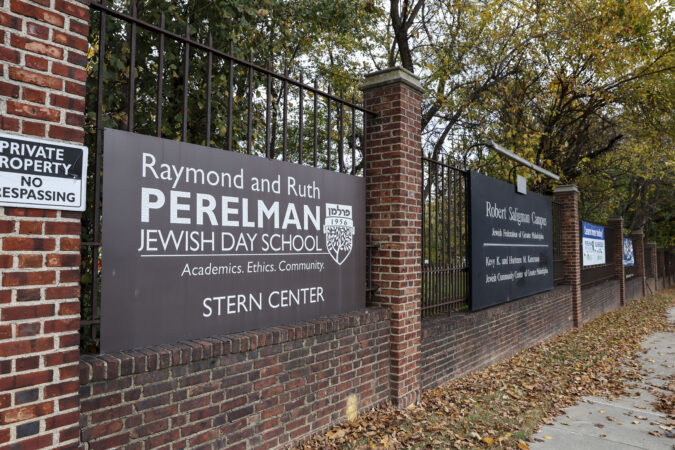
Perelman Jewish Day School, a private Jewish pre-K and elementary school located in Melrose Park and Wynnewood, and Jack M. Barrack Hebrew Academy, a Jewish middle and high school located in Bryn Mawr, will merge next year to become the only unified pre-K through twelfth-grade Jewish day school in the Philadelphia area.
Perelman and Barrack will maintain their current operations for the 2026-27 school year, while beginning to combine their admissions and development programs. Faculty, staff, and students will come under the unified school umbrella beginning in fall 2027. Perelman and Barrack will continue to operate on all three campuses.
School officials say the merger will help streamline curriculum development and strategic planning while bringing more families into the Jewish day school system by offering a consistent, pre-K-through-high-school experience.
Perelman Jewish Day School was founded in 1956 as the Solomon Schechter Day School of Greater Philadelphia. The school operates across two campuses, one in Melrose Park, which serves parts of Philadelphia County, eastern and northern Montgomery County, and Bucks County, and another in Wynnewood, which serves Center City and Philadelphia’s western suburbs.
Jack M. Barrack Hebrew Academy, originally Akiba Hebrew Academy, was the nation’s first pluralistic Jewish secondary day school when it opened in Center City in 1946. The school moved to Merion Station in 1956, then Bryn Mawr in 2008. Barrack boasts numerous notable alumni, including Gov. Josh Shapiro and CNN anchor Jake Tapper.
Perelman and Barrack completed a partial merger in 2012, when the schools combined their middle schools into a single sixth-through-eighth-grade program on Barrack’s campus.
Tuition at Perelman ranges from $21,500 to $32,300 per year, and tuition at Barrack ranges from $34,900 to $42,700. Both schools offer tuition assistance. Perelman says it awards over $3 million in tuition assistance each year to families earning up to $500,000.
School leaders say the merger will ensure Perelman and Barrack are an attractive option for families in Philadelphia’s rich educational ecosystem, where parents can choose from dozens of strong public and private schools. Often, families choosing private education are looking for continuity from pre-K through high school, something that Perelman and Barrack have not been able to provide until this point.
The ability to have students “become part of an educational system from their earliest years and grow within that system” will be academically and socially “deeper and more impactful,” said Rabbi Marshall Lesack, Barrack’s head of school and a Barrack alumnus. Lesack will lead the unified school beginning in 2027.
Daniel Eisenstadt, a member of the Perelman board of directors who will chair the new, combined board, said the merger will also allow for more cohesive planning. The schools will be able to align their vacation calendars, external messaging, and curriculum plans.
Though the overwhelming majority of Perelman students already matriculate to Barrack, bringing the schools under one system will allow for more parity in what to teach and when to teach it. Elementary, middle, and high school teachers will be able to sit in the same room and plan best practices for everything from math to art to Jewish studies, considering the arc of a student from ages 5 to 18, Eisenstadt said.
Both schools’ enrollment has been “stable to growing” in the past few years, said Eisenstadt. Both he and Lesack were clear that the merger is not in response to a souring financial outlook, as can be the case when educational institutions merge.
“We’re both coming from a place of strength,” Lesack said.
Barrack reported revenue of $20.9 million in 2024, an increase of $3.4 million over 2023, according to tax records. Perelman reported a revenue of $13.4 million in 2024, up $400,000 from 2023.
However, Eisenstadt said, “there is a recognition that we operate in an environment where there are excellent other independent schools, and excellent public schools. Rather than waiting for a moment where we see a dip in enrollment or where there are challenges, I think the general feeling from a leadership point of view was, ‘Let’s be proactive.’”
When it comes to growing enrollment at Barrack and Perelman, however, Eisenstadt said there’s no one cause. He is “a little bit skeptical about the generic narrative” that the Israel-Hamas war and rising antisemitism have solely drivenincreased interest in Jewish education. He says Perelman and Barrack can’t rest on the assumption that larger forces will inevitably push families toward the Jewish day school experience. In a “dynamic world,” the schools need to continue to evolve, he said.
In Eisenstadt’s words, Barrack and Perelman can’t “assume that any one thing that’s occurred, any one event, or any one trend is the future.”
Lesack and Eisenstadt said many of the merger’s details are still up in the air and will be decided by the board. However they noted that there are plans for major investments across all of Perelman and Barrack’s facilities. Plans have long been in the works to find a new home for Perelman’s Melrose Park campus. School leaders say they are committed to having a continued presence in Philly’s northern suburbs.
Lesack and Eisenstadt acknowledged the challenges of merging two schools with different campuses and cultures. Yet there’s “an unbelievably strong foundation” upon which to build, Lesack said, citing the many families, values, and traditions that the schools already share.
This suburban content is produced with support from the Leslie Miller and Richard Worley Foundation and The Lenfest Institute for Journalism. Editorial content is created independently of the project donors. Gifts to support The Inquirer’s high-impact journalism can be made at inquirer.com/donate. A list of Lenfest Institute donors can be found at lenfestinstitute.org/supporters.
Both schools would still close under the plan, which is now in the school board’s hands. Instead of merging into large neighborhood high schools, however, the small, selective-admission schools would be absorbed by magnets.
Watlington said the tweaks would still allow the district to bring more high-quality academic and extracurricular opportunities into neighborhood schools while acknowledging the need to manage limited resources.
Butstudents, staff, parents — and some powerful allies at both schools — say Watlington’s counter-proposalisn’t enough. Both communities are still fighting.
Under the revised plan, Lankenau would merge with Saul, not Roxborough, and Robeson would merge into Motivation, not Sayre.
State Rep. Morgan Cephas (D., Phila.) recently visited the Philadelphia Flower Show, where she and other officials marveled at Lankenau students’ exhibit, which examines abundance, roots, and connections through culturally important plants. The display won a gold medal and the prestigious Alfred M. Campbell Memorial Trophy.
The dichotomy struck Cephas, she said. Lankenau students “are at the Flower Show, and [the district] is trying to close the school?”
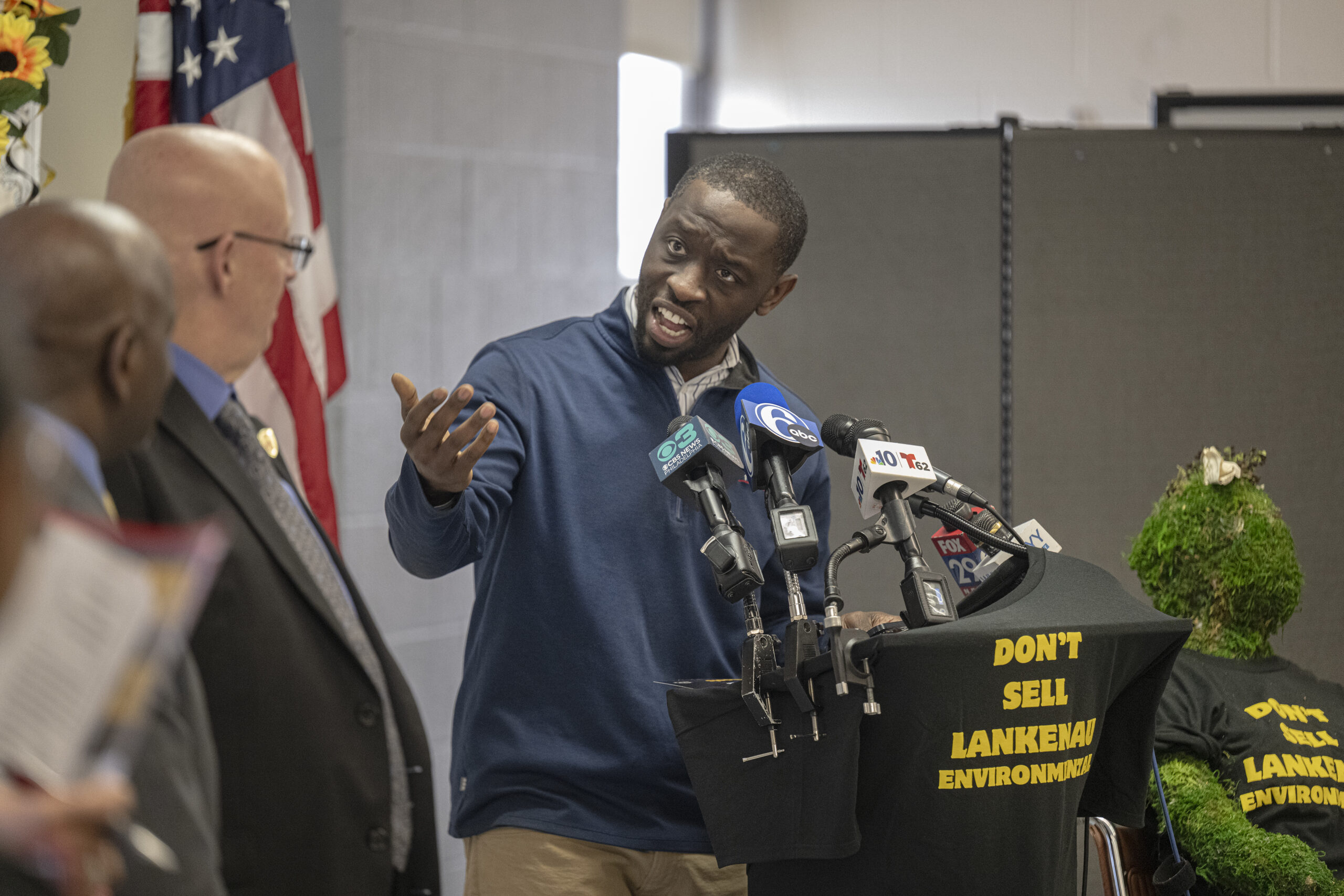
On Wednesday, students, parents, lawmakers, and Philadelphia Federation of Teachers officials gathered at Lankenau to drum up support for Gov. Josh Shapiro’s budget proposal. But really, it was another save-our-school rally.
A ‘prime example of a successful school’
Lankenau “is a prime example of a successful school,” said Messiah Stokes, an 11th grader at the Upper Roxborough school. The school has a 100% graduation rate, and is Pennsylvania’s only three-year agriculture, food, and natural resources career and technical education program.
The school itself sits on 17 acres,which district officials have proposed giving to the city — though a 1970s legal agreement could foil that plan. Lankenau is also adjacent to 400 more wooded acres via the Schuylkill Center for Environmental Education. The environmental center shares its land and its opportunities with students, who hold bird-watching clubs on breaks and hold classes outside when weather permits, and have abundant internship opportunities.
“My school is a prime example of a successful school,” said Stokes.
Watlington has said that Saul — the city’s agricultural magnet on a working farm on Henry Avenue — has a mission that’s closely aligned with Lankenau’s, but supporters say Lankenau’s success is closely tied with its wooded campus, its streams, and its ecosystems.
Councilmember Isaiah Thomas speaks at Lankenau High School during a gathering to support the efforts to fight closing recommendations on Wednesday.
Councilmember Isaiah Thomas, chair of City Council’s education committee, is incredulous that the district is attempting to close the school, which educates mostly Black students.
“I wonder if Lankenau did everything that it currently does: graduation rate … community involvement, the educators’ participation — I wonder if Lankenau was 98% white, will we be closing Lankenau?” Thomas said.
Still, “small schools are worth the investment,” said Amy Szymanski, a special-education teacher at the school. “Shutting down a school doesn’t just impact one community, it shakes other schools that have to absorb the impact as well.”
Szymanski urged district officials and decision makers to come up with different plans.
‘Culture is not transferable’
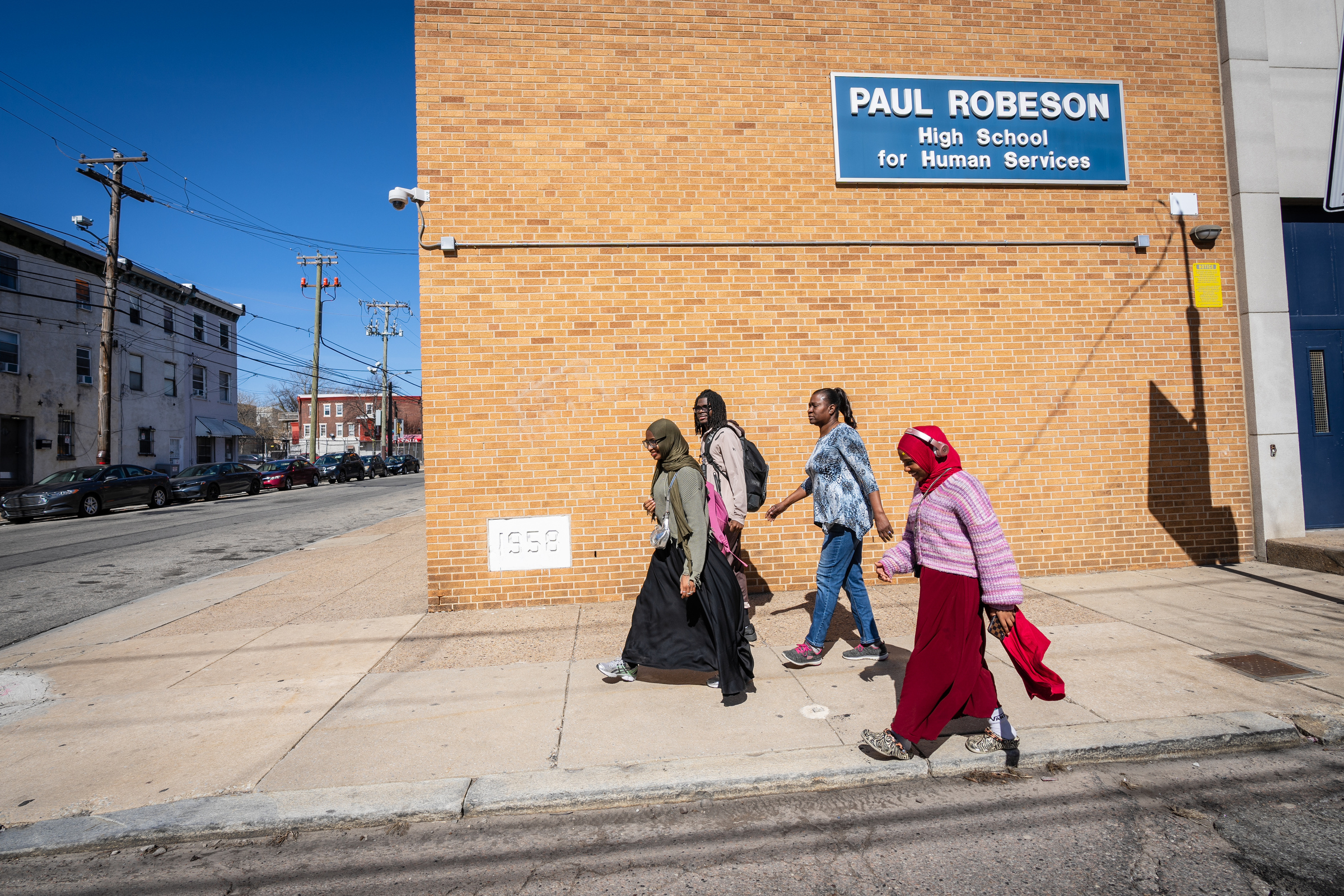
Robeson did everything the district asked it to do and then some, said Elana Evans, a longtime educator at the West Philadelphia school.
The school was heralded as a model for other Pennsylvania public schools by former Gov. Tom Wolf. It won citywide prizes and sent a student to Harvard University. Its students successfully petitioned district leaders for air-conditioning in their building. And its staff secured donations to have a major cafeteria renovation, though its building is still judged in “poor” condition by district standards.
“Why can’t Paul Robeson have a new school?” said Evans, who previously taught at University City High, closed by the district in 2013. “Haven’t we proved ourselves, haven’t the kids sacrificed enough? Haven’t they shown what they can do and what they’re willing to do?”
Students walk outside Paul Robseon High School with Elana Evans, a Robeson teacher (in blue) in this 2025 file photo.
And though moving to Motivation, in Southwest Philadelphia, may be slightly more palatable for some Robeson parents, for most, it won’t, said Evans.
“Students would still have to go to 60th Street, traveling a distance,” said Evans. “If those parents wanted them to go toMotivation, they would have picked Motivation.”
The district has said it wants to preserve the successful Robeson culture, just elsewhere, but Kyana Hopkins, said that won’t work.
“Culture is not transferable,” Hopkins said. “Make it make sense.”
Samantha Bromfield, president of Robeson’s Home and School Association, said the district will lose families if Robeson goes away.
“Understand that a parent like me will send my child back to being homeschooled” if Robeson closes, Bromfield said. “Your choice doesn’t fit my criteria of what I’m looking for my children.”
Inheritance, and questions
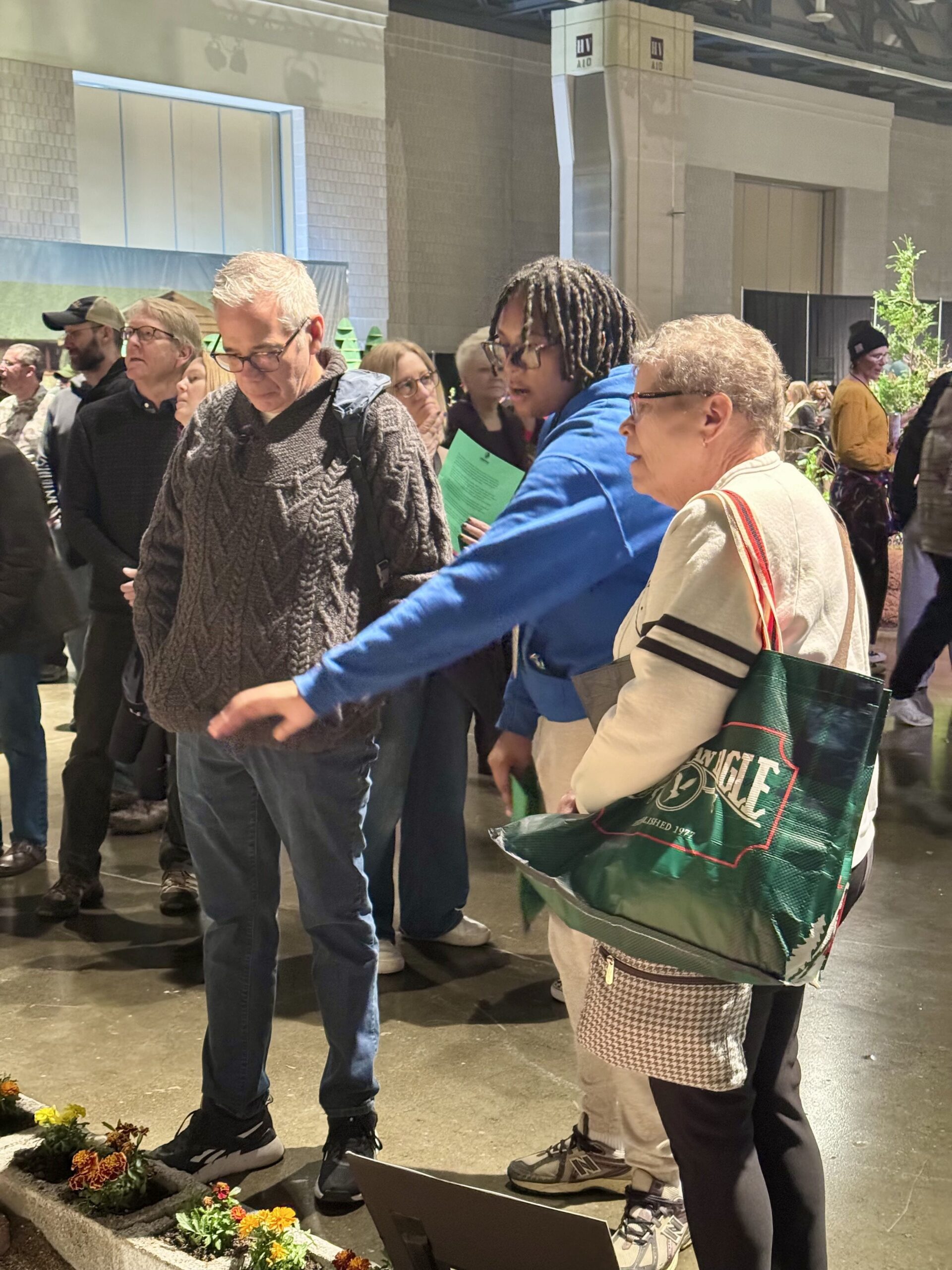
The Flower Show was abuzz Wednesday, with a crowd hovering around the Lankenau exhibit. “Inheritance” — a verdant wonderland showcasing plants grown from local seeds, set around a weathered wooden table — asked viewers to think of the question, “What tastes like home to you?”
Lankenau High senior Sasha John (blue hoodie) explains her prize-winning school’s Philadelphia Flower Show exhibit to visitors on Wednesday.
Several Lankenau students staffed the exhibit, answering questions — and showing visitors green “Keep LANK Open” fliers, encouraging passersby to share words of support for the school with the school board and City Council.
“It doesn’t make sense to me,” said Amelia Pennycooke, a Lankenau senior, of the proposed closing. “We have so many opportunities at Lank.”
Lankenau High School’s exhibit, which the school’s eco art class worked on all school year, won a gold medal and the Alfred M. Campbell Memorial Trophy at the Philadelphia Flower Show. “Inheritance” examines the question “what plants taste like home to you?” It was designed and built by Lankenau students.
Noel Alford, a Lankenau parent, said the school needs to remain open, its land not used for any other purpose. The amendment to Watlington’s plan falls short, she said.
“Saul is a mistake,” said Alford. “Saul is an agricultural school. They are two different magnet schools.”
While elected officials have no say in which schools close, Thomas said it’s up to them to keep pressuring the board to rethink some closures, including Lankenau’s.
“This is a legacy moment for us as elected officials,” said Thomas. No one “wants to add that black mark on their career that says you were the person that was in charge when this injustice took place.”
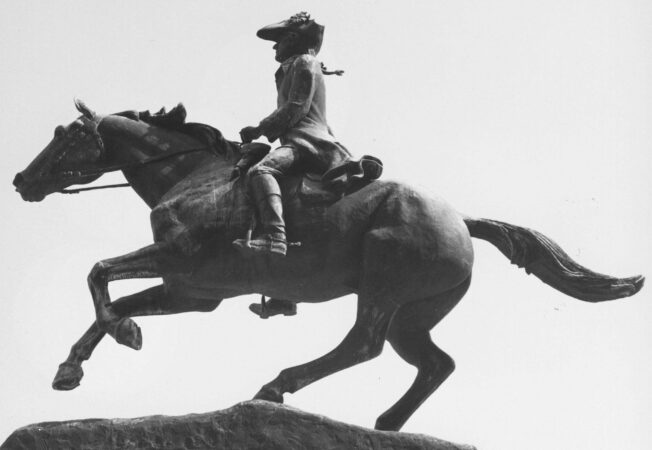
The statue of a founding father who enslaved Black people in Delaware is moving from a New Castle storage facility to a venerated spot in Washington’s Freedom Plaza as part of President Donald Trump’s celebration of America’s 250th birthday.
Wilmington officials took down the statue of Caesar Rodney in 2020 amid Black Lives Matter protests and a national reckoning over racism in America, taking it out of public view at the same time as the city removed a statue of Christopher Columbus for similar reasons.
It wasn’t clear when the bronze monument of Rodney on a horse will be put on temporary display in the plaza on Pennsylvania Avenue, near the White House, according to the New YorkTimes, which learned of the story from a Feb. 3 National Park Service memo.
The statue had stood in Wilmington’s Rodney Square for around 100 years.
Rodney’s legend includes a partially disputed story about riding two horses 82 miles from Dover to Independence Hall to sign the Declaration of Independence — a trip five times longer than Paul Revere’s more famous ride a year earlier.
Rodney arrived spent and mud-spattered on July 2, 1776, to sign the Declaration before its formal adoption on July 4, breaking the tie between two other Delaware delegates, one of whom wouldn’t sign, said Dick Carter, chairman of the Delaware Heritage Commission. The near last-minute inscribing is true, Carter and others say, but it’s possible that Rodney, who suffered from facial cancer and was quite ill, may have covered some of the mileage in a carriage.
Giving his life to public service, Rodney was a brigadier general in the Continental Army, a sheriff, a justice on the Delaware Supreme Court, and a delegate from Delaware to the Continental Congress.
Rodney was also among the 41 out of 56 Declaration signers who enslaved people. He was a complex and contradictory figure, especially when viewed through a 21st-century lens, Carter said, adding that it is not fair to“judge historical figures by the norms and mores of the present day.”
Rodney enslaved anywhere from 20 to 200 people on his estate near Dover. But his legacy also includes a bill he introduced in the state legislature to end the practice of importing enslaved people into Delaware. And upon his death, he freed the 18 people he’d enslaved at the time.
Trump, during his first term in 2020, praised Rodney in a proclamation issued on the founding father’s birthday.
In the proclamation, Trump condemned the removal of Rodney’s statue “as part of an ongoing, radical purge of America’s founding generation.”
Trump said it was a “re-education attempt” and the “end result of an extreme anti-American historical revisionism,” generated by “critical race theorists … [and] mobs on city streets” who say that America is not an exceptional country “but an evil one.”
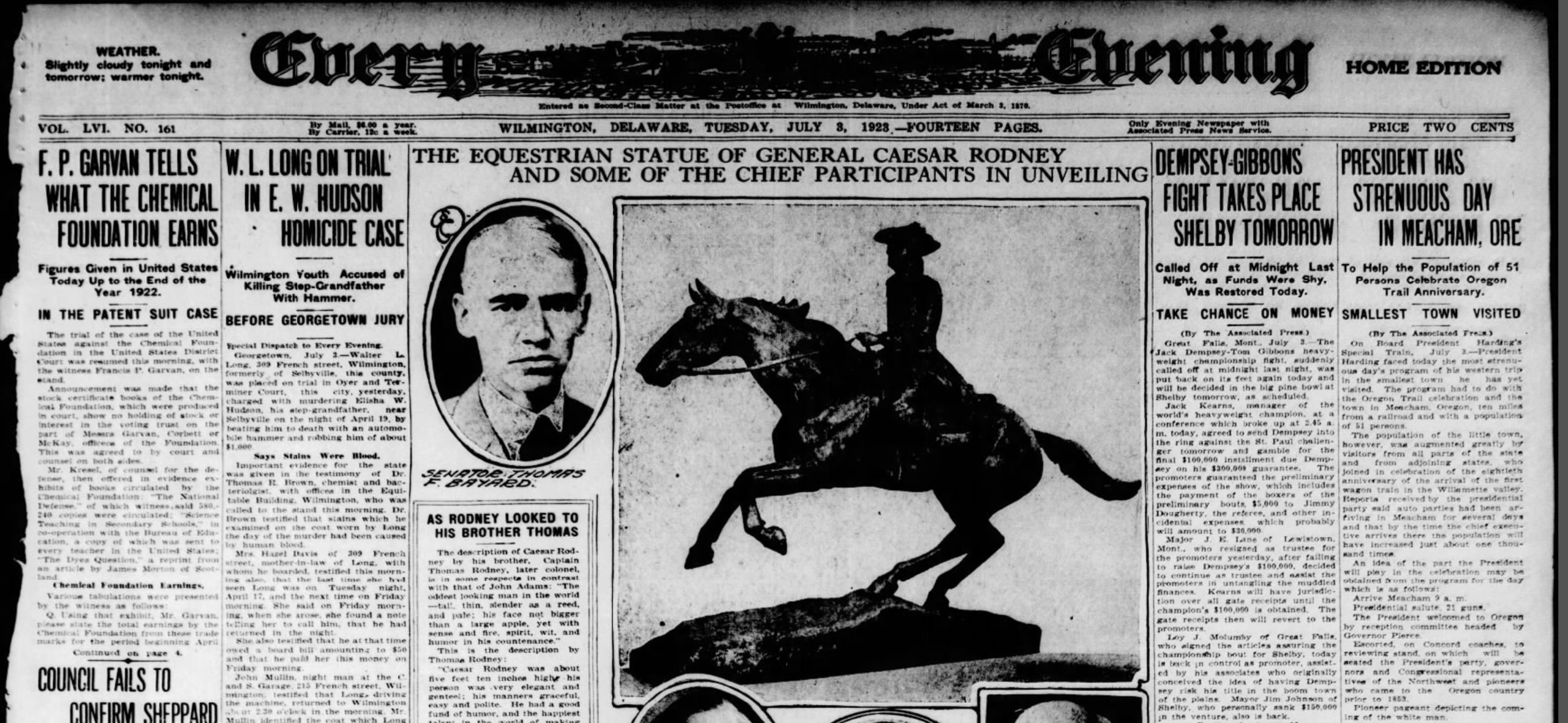
An image of the front page of the July 3, 1923, edition of the News Journal of Wilmington, Del., which makes note of the dedication of the Caesar Rodney statue on the following day.
Trump has expressed similar views during his second term and taken steps to change the way Americans are educated about the nation’s history.
In January, the administration ordered the removal of exhibits depicting slavery at the President’s House in Independence National Historical Park. The U.S. Department of Interior said that the slavery-related materials were being reviewed “to ensure accuracy, honesty, and alignment with shared national values.” Last month, a federal judge ordered the exhibit’s restoration, though the administration is still pursuing the matter.
In the summer of 2025, the administration restored two statues in the D.C. area that commemorated the Confederacy. One was a statue of Confederate Gen. Albert Pike, the only outdoor statue of a Confederate military leader in the nation’s capital.
“We see a pattern of celebrating enslavers while reducing teaching about slavery in the United States and limiting diversity, equity, and inclusion,” said Timothy Wellbeck, director of the Center for Anti-Racism at Temple University. “Caesar Rodney has components of character not worth celebrating despite his contributions to America’s founding.”
Shané Darby, a councilwoman from Wilmington, told the Times that glorifying Rodney was “a slap in the face of Black and brown people of this city… . You can have him, D.C.”
That’s a view shared by other people in the Black community, said Syl Woolford, a member of the Delaware Heritage Commission. “Some folks in Wilmington are saying, ‘Get that white boy out of here,’” Woolford said. “They tell you there’s no place here for the statue of a slave owner.”
But, he and other historians say, Rodney’s place in history shouldn’t be completely ignored. Even with the statue gone, elements of Rodney remain. He still appears on the quarter that honors Delaware. And his square continues to bear his name, although there’s discussion it’ll be renamed after President Joe Biden, whose ties to Delaware run deep, Carter said.
The Department of Interior didn’t answer a request from The Inquirer to comment on criticism from Wellbeck and others that the Trump administration is exalting an enslaver. Instead, a spokesperson said, “Rodney’s journey itself reflected extraordinary courage.”
“By telling the full story … we strengthen our shared understanding and ensure that future generations inherit not just the land we love, but the truth of the journey that brought us here,” the spokesperson added.
To avoid further consternation in Wilmington, there’s a plan to send Rodney’s statue to Dover, not Wilmington, after the 250th celebration is over, said Republican State Sen. Eric Buckson.
“Dover is Rodney’s birth and resting place,” Buckson said.
He added, however, that “in this climate, folks are rightfully concerned about having monuments minimizing slavery.”
So, whenever Rodney comes back, his statue will be amended, Buckson said.
“It’ll include a plaque,” he added, “and that will have the story that, along with everything else, Caesar Rodney was a slave holder.”
George Ball stood at the W. Atlee Burpee & Co. booth at the Philadelphia Flower show last week and lifted the company’s artfully designed 150th anniversary seed collection from a wooden rack.
Ball, 74, traced a finger down the list of nine packets of “Historic Breakthroughs” and told stories about some of them: Iceberg lettuce (1894). Big Boy tomatoes (1949). Snowbird sugar snap peas (1978).
Golden Bantam sweet corn (1902) wasn’t an instant hit, Ball noted, despite its sweet, buttery flavor. Americans were accustomed to white corn.
“This is the first yellow sweet corn. Before that, yellow corn was hog feed. The kernels were hard,” Ball said. “This yellow corn was a totally new taste. It’s delicious. But for two years, nobody bought it because to them it was hog feed.”
Only when an assistant coined the phrase “Looks like butter, tastes like butter” did the variety take off.
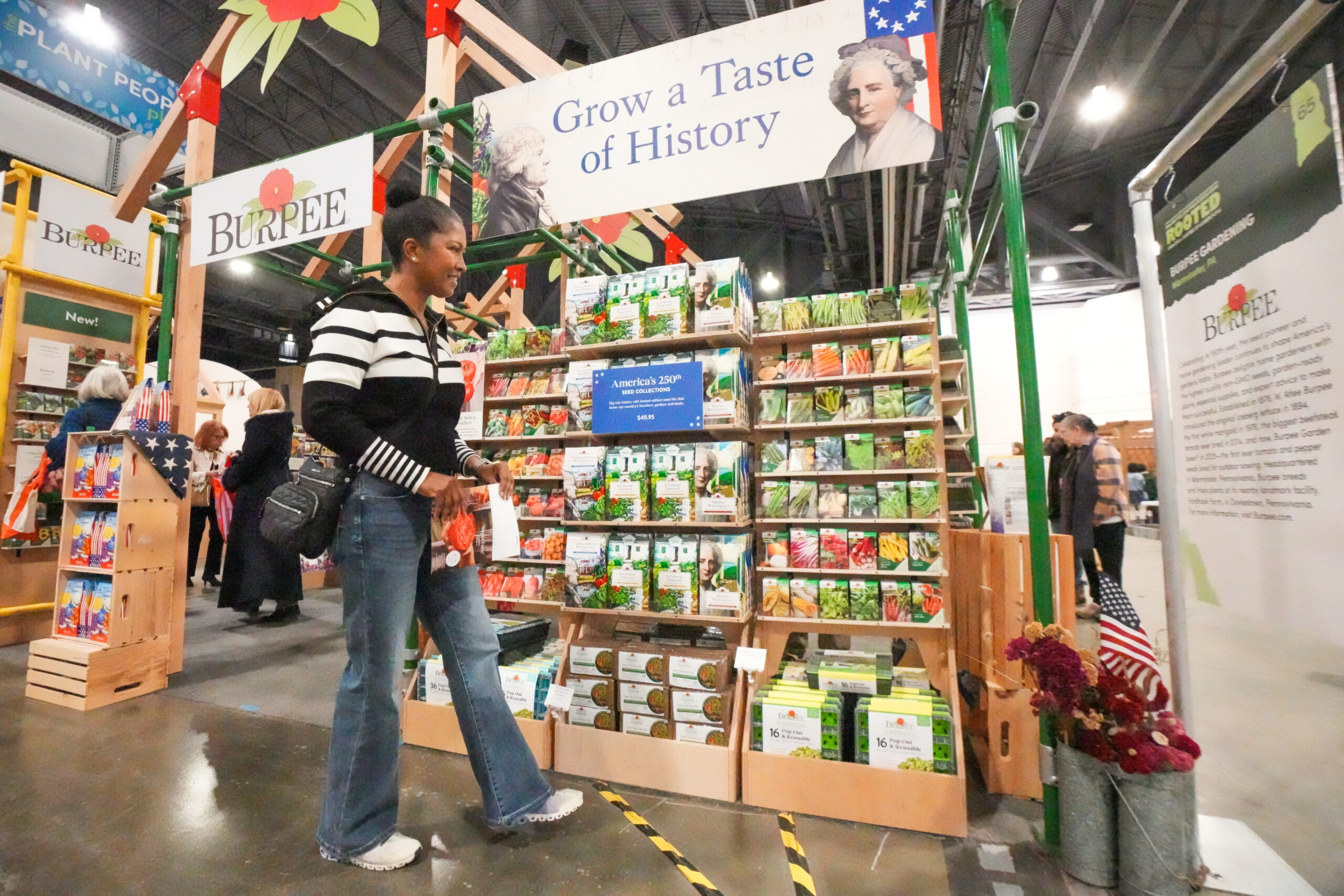
Burpee’s display at this year’s Philadelphia Flower Show highlighted the brand’s historical roots.
Burpee has been rooted in the Philadelphia area since its founding by W. Atlee Burpee in 1876. Now, more than a century later, having once teetered on the brink, it’s again thriving and positioned for the future with seed, plant, and product sales in big box stores and online.
“We’re celebrating our 150th” and still selling those same seeds, Ball said.
Regrowing Burpee
When Ball came to buy Burpee in the 1980s, the company was in serious financial trouble, and its staying power was anything but certain.
“Burpee was going to be padlocked,” Ball recounted. It had fallen 240 days behind on payments, some of which were owed to his family’s company, Ball Horticultural.
Ball had become president of PanAmerican Seed, a Ball Horticultural company, by the mid-1980s and was breeding plants in Costa Rica. When he returned to the United States, he read a story in the Wall Street Journal that industry giant Burpee was teetering.
Sensing an opportunity, Ball moved to buy the historic brand for a fraction of its value, or as he phrased it, for “kind of a poem.”
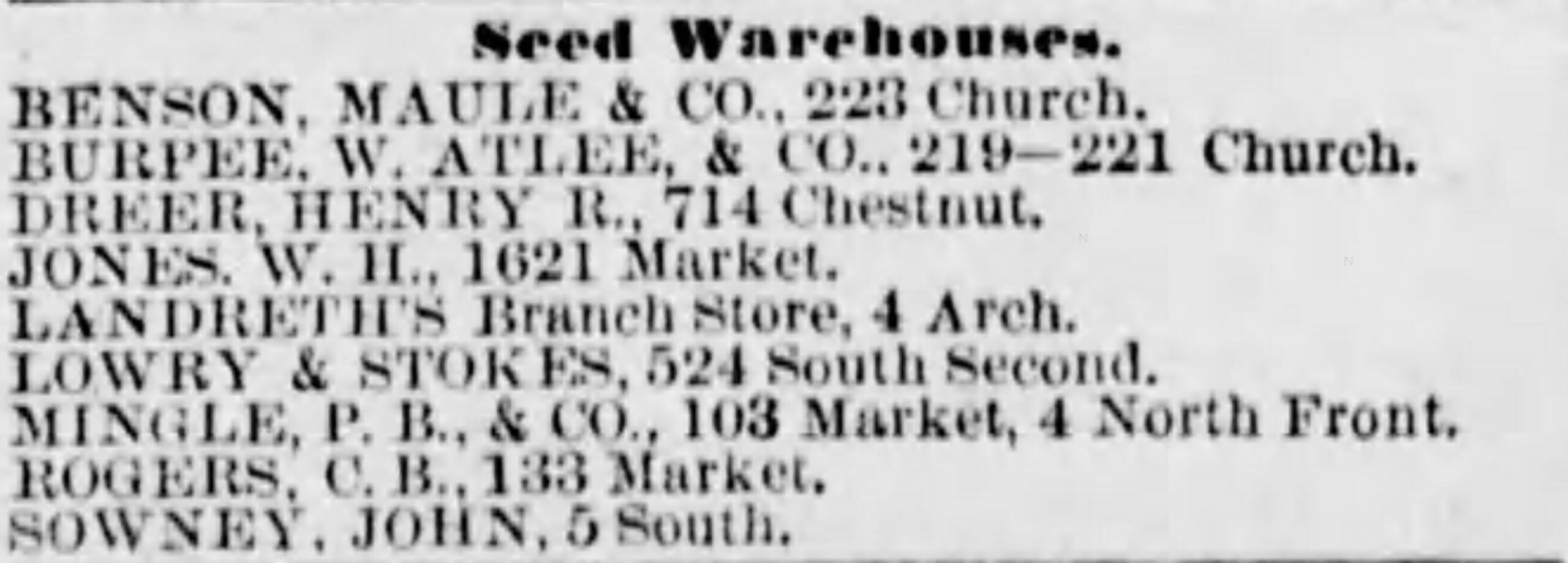
More than a century before that,W. Atlee Burpee, scion of a prominent Philadelphia medical family, started his seed company in 1876, the same year he visited the Centennial Exposition in Philadelphia. It featured robust agricultural and horticultural displays. By 1881, a notice for the company’s Old City warehouse appeared in The Inquirer.
The first mention of W. Atlee Burpee & Co. in The Philadelphia Inquirer on Jan. 3, 1881.
Burpee seized on the emerging power of mail-order catalogs — the era’s version of the internet — and the catalog became a rural household staple since most of his customers were originally farmers.
In 1888, Burpee bought a farm on New Britain Road in Doylestown. He named it Fordhook and transformed it into the company’s experimental garden and began conducting thousands of seed trials. The 60-acre property still opens to the public once a year.
Burpee died in 1915, leaving the business to his 22-year-old son, David, who expanded the company’s flower offerings and cemented a reputation for innovation. The company soon found a market for its seeds with home gardeners.
Christopher DeMairo, a former archivist for the Smithsonian Institution and the author of a book on the history of Burpee, calls W. Atlee Burpee, “a really fascinating man, and one of the most prolific businessmen in American history.”
DeMairo credits David Burpee as a visionary who steered the company through the turbulent 20th century when many competitors went bankrupt. Under David’s leadership, Burpee pushed hard on innovation, pioneering hybrid vegetables through controlled pollination experiments.
“Even if you may not know Burpee now, your ancestors certainly did,” DeMairo said. “It is still really important when you think of where agriculture and gardening are today.”
In 1970, David Burpee sold to General Foods, and the corporate headquarters moved from Philadelphia to Warminster, where it remains.
Eventually, ownership passed to a private equity firm,and the company fell into financial trouble.
Then Ball, who views himself as a turnaround specialist, stepped in to save Burpee,officially becoming its sole owner in 1991. He’s run the companyever since and still lives at Fordhook Farm.
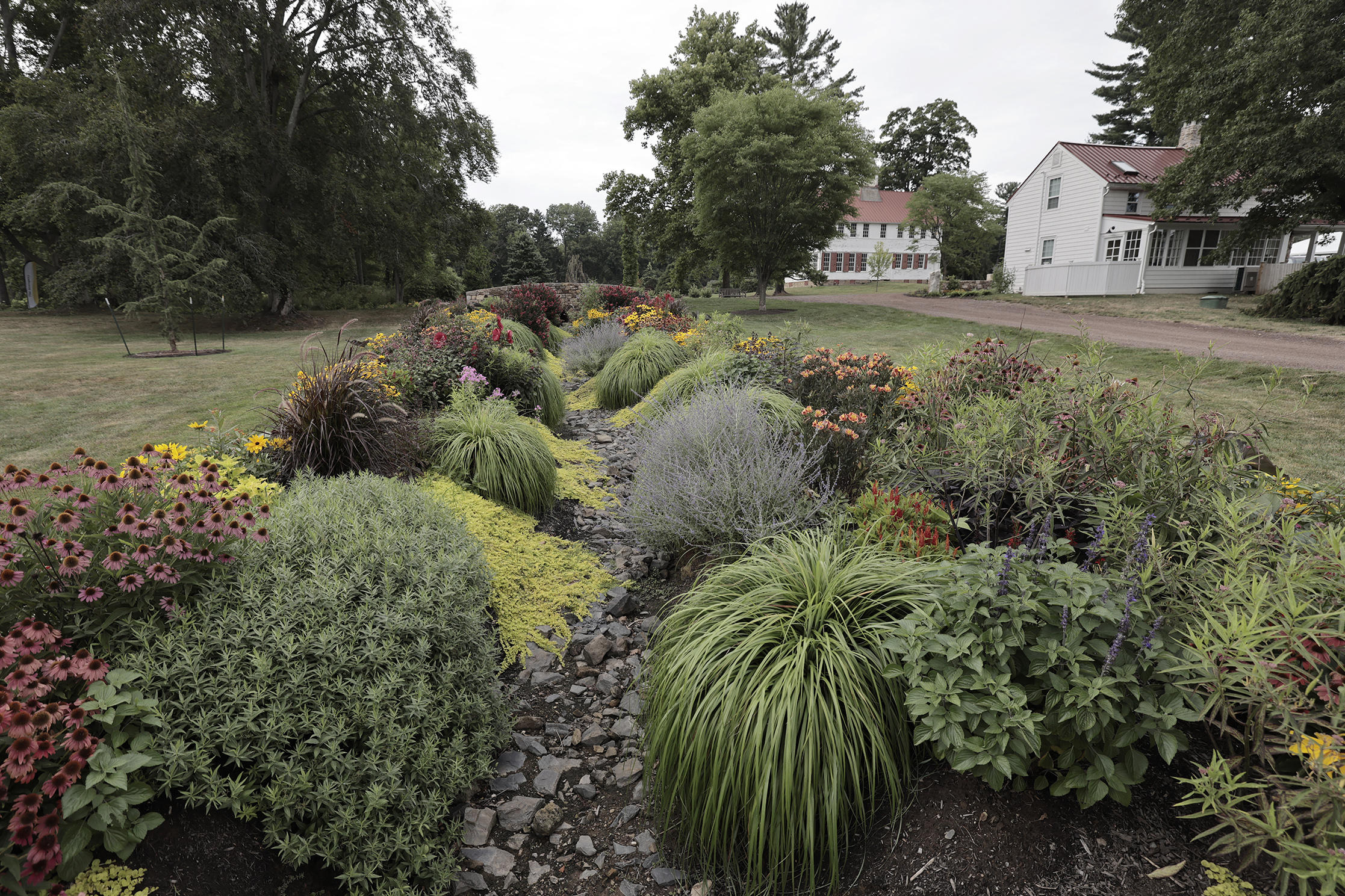
The Creekbed Garden at Fordhook Farm in Doylestown in 2024. The seed barn is second building from the right.
“I was very interested in the basic virtues and values of life,” Ball said, and felt that the nursery business fit with that essence.
DeMairo, the archivist, believes the founding Burpee family would be relieved to know the company is privately held by Ball, who has no plans to sell.
“I can almost say for a fact that both David and Atlee would be very happy to know that the company is in the hands of a true gardener,” DeMairo said, “and not a boardroom.”
Burpee today
Under Ball’s leadership, Burpee expanded into retail aisles and into the digital age.
When COVID-19 hit in 2020, Burpeeexperienced a surge in demand, CEO Jamie Mattikow said, and the companyhas retained much of that momentum.
He declined to share financial details or an employee count. But, he said, consumers spent $242 million on Burpee products last year, a 120% jump from 2019. Growth, he added, is in the “mid-single digits.”
“Fortunately, seeds have proven to be a recession-resistant type of category,” Mattikow said, “so the growth is pretty steady.”
Burpee president and CEO Jamie Mattikow (left) with owner George Ball at the Burpee Seed display at this year’s Philadelphia Flower Show.
Burpee has long focused on home gardeners. Its products appear in major chains including Walmart, Target, Home Depot, and Tractor Supply.
Mattikow describes Burpee as a full-service “gardening company” rather than simply a seed supplier, offering live plants and supplies like soil and cages. Online sales through Burpee.com and Amazon continue to expand.
The company also maintains a niche business sellingseeds to small growers who supply farmers markets and restaurants.
The company has leveraged social media to reach younger customers. It has about 725,000 followers across Meta’s Facebook and Instagram platforms, and offers advice such as “the easiest tomatoes to grow for beginner gardeners.”
Burpee relies on its own horticulturists and traditional seed breeders to adapt to changing customer preferences.
For example, a seven-year breeding process resulted in the company’s new line of “garden sown” tomatoes and peppers — seeds hardy enough to be planted in ground after the last frost, bypassing indoor tray-starting.
That painstaking breeding process has been with the company since the beginning. In his history of Burpee, DeMairo cites a Life magazine article describing the painstaking work behind developing seed varieties.
The company, the article noted, “hired 60 girls from Vassar, Smith, Bryn Mawr and other colleges to spend the summer with tweezers and brushes” to control pollination and create new hybrids.
Mattikow said Burpee faces typical challenges such as supply chain issues, tough competition, and tariffs.
“We do a great balance of holding on to a loyal base of customers, and every year we bring in new customers,” Mattikow said.