Tag: Weekend Reads

  • Philadelphia Museum of Art hires a new chief financial and operating officer

    Philadelphia Museum of Art hires a new chief financial and operating officer

    Philadelphia Museum of Art director and CEO Daniel H. Weiss has hired a longtime associate to be the museum’s new executive vice president and chief financial and operating officer.

    Mitchell Lee Wein will oversee finances, facilities, operations, risk management, and strategic initiatives, the museum announced Friday.

    Weiss and Wein worked together in similar roles when Weiss was president of Haverford College and, before that, at Lafayette College. Wein, 63, has extensive experience on the financial and operations side of nonprofit organizations, but has never worked in a museum.

    A Philadelphian for more than three decades, he takes up the new post April 22.

    “It’s such an important institution that I’m happy to play a role for as long as I can and leave it better for the future. I think the mission is critical,” said Wein. “When I was in the private sector I thought about how we attract firms to Philadelphia, how people can have a great experience here, and the museum plays a role in that. I smile when I think about the opportunities.”

    Mitchell Lee Wein, newly named CFO and COO of the Philadelphia Museum of Art.

    Wein is currently senior vice president for finance and COO at the Brookings Institute, the Washington, D.C.-based think tank. He was senior vice president for administration and finance at Haverford College and held a similar position at Lafayette College. Previously, he was managing director in investment banking with UBS Investment Bank/UBS PaineWebber, and, before that, at PNC Capital Markets.

    Weiss took over the museum in December and has been making a series of changes in the executive leadership team as he determines how to close the operating deficit and revive attendance. He must decide what to do about paused expansion plans and much-needed maintenance on existing buildings. And he will consider whether to re-open to the public the Ruth and Raymond G. Perelman Building, the museum’s major addition that closed during the pandemic.

    Among Weiss’s early moves: he reversed the name change that had been unveiled months earlier as part of the museum’s widely-panned rebranding.

    Wein says he has been following coverage of the museum’s challenges and reading financial statements in preparation for his start. He said he looked forward to developing a plan for the museum “in support of what Dan has outlined along with other colleagues.”

  • Grocery Outlet is closing stores in South Jersey, Philadelphia, and Kennett Square

    Grocery Outlet is closing stores in South Jersey, Philadelphia, and Kennett Square

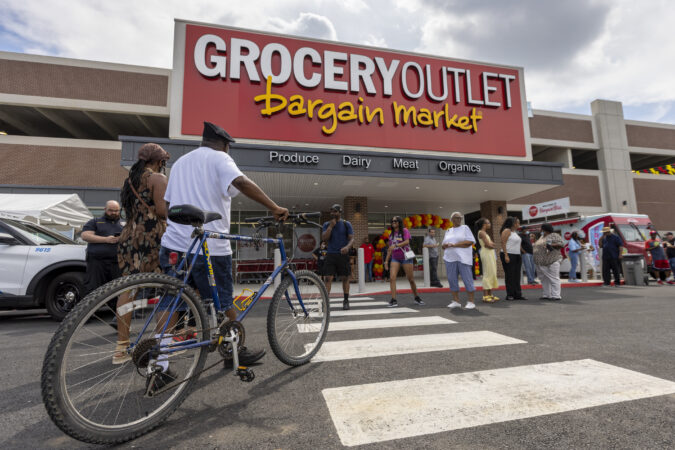
    Grocery Outlet bargain market is closing dozens of stores nationwide, including eight in the Philadelphia area.

    The closures were first referenced earlier this week in the company’s earnings report. The California-based grocer recorded an operating loss of $221.7 million last year, much of which it attributed to “certain underperforming stores” that will now close.

    These include five Grocery Outlets in South Jersey, two in Philadelphia, and one in Kennett Square, according to real estate marketing released Thursday.

    A company spokesperson did not return a request for comment about when the stores would close.

    The impacted Philly-area stores are located at:

    • 4004 U.S. Route 130, Delran
    • 401 Harmony Rd., Gibbstown
    • 345 Scarlet Rd., Kennett Square
    • 190 Hamilton Commons Dr., Mays Landing
    • 2017 W. Oregon Ave., Philadelphia
    • 2524 Welsh Rd., Philadelphia
    • 3174 U.S. Route 9 S., Suite 5, Rio Grande
    • 677 Berlin-Cross Keys Rd., Sicklerville
    People shop at a Grocery Outlet in Philadelphia in 2022.

    Gordon Brothers, a Boston investment firm, is looking to sublease all 36 closing Grocery Outlets. The Philadelphia-area properties range in size from 14,000 to 21,000 square feet.

    After the closures, the chain will still have several locations in the city, collar counties, and South Jersey.

    Grocery Outlet calls itself an “extreme value retailer.” It was founded in 1946, and has expanded from 128 stores to 570 stores over the past two decades. Many locations are operated by entrepreneurs who live nearby.

    In recent months, Grocery Outlet’s bottom line was impacted by economic uncertainty, as well as the November suspension of SNAP benefits that tens of millions of U.S. consumers rely on, according to president and CEO Jason Potter.

    “Consumer pressure intensified, federally funded benefits were delayed, and competition grew more promotional in the fourth quarter,” Potter said in a statement. “In response, we have begun to sharpen our focus on what matters most: delivering clearer value and a better in-store experience.”

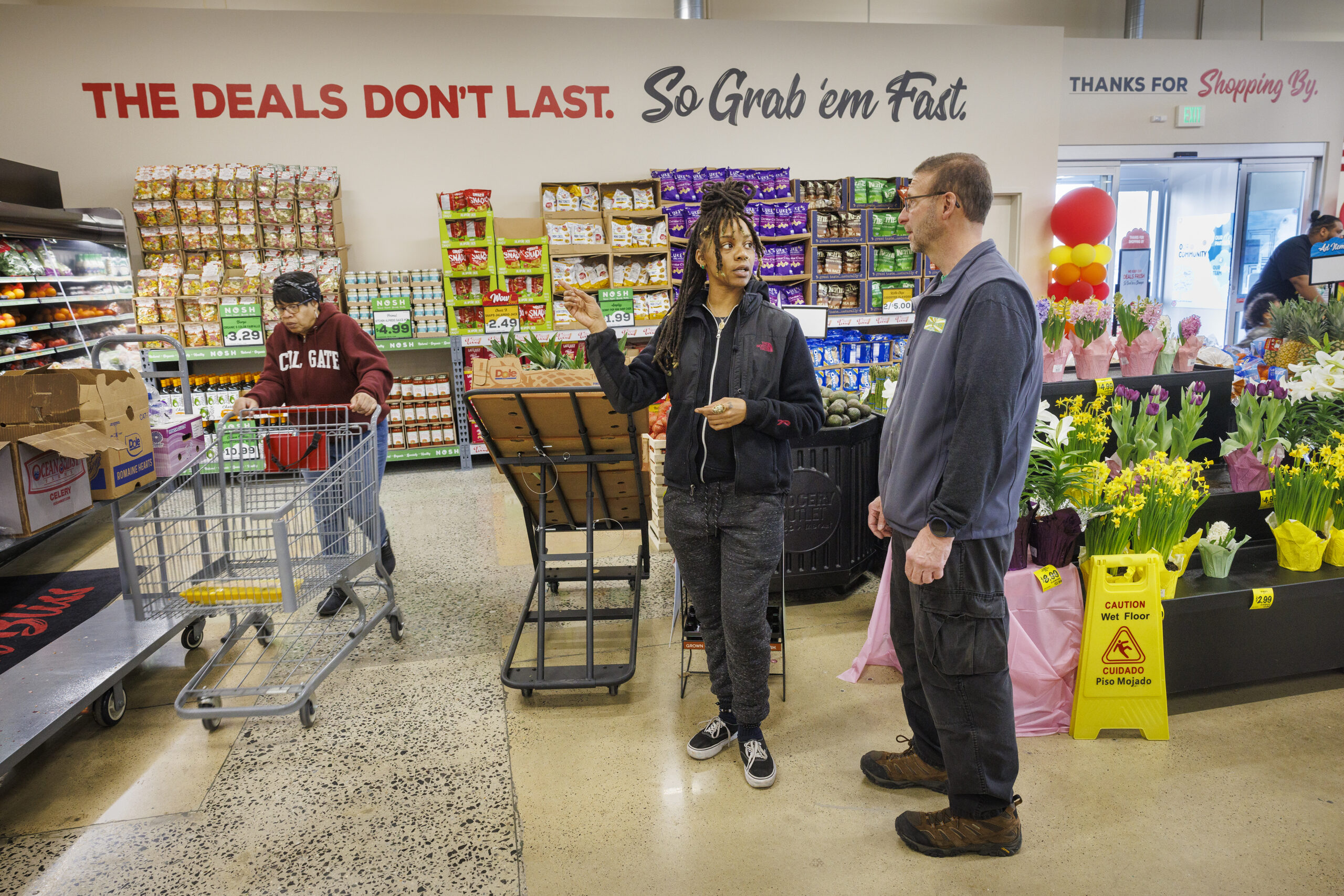
    Customers and employees inside a Grocery Outlet in Philadelphia in 2023.

    While the grocery industry remains relatively resilient, it has faced a challenging few years with persistent inflation, tariffs that further drove up prices on some products, and continued competition from other retailers and restaurants.

    In recent weeks, Amazon closed all of its brick-and-mortar Amazon Fresh stores, including six in the Philadelphia region. The company says it plans to expand grocery-delivery services and open more Whole Foods markets, to the dismay of some Amazon Fresh customers who said they were drawn to the low prices at the smaller-format stores.

    Gourmet markets have been impacted, too. Three Di Bruno Bros. locations in Ardmore and Wayne closed last month, two years after being acquired by Wakefern Food Corp., the North Jersey-based supermarket cooperative that operates ShopRite.

    A Wakefern spokesperson said the company planned to refocus on its flagship stores in South Philadelphia and Rittenhouse, as well as its growing online business. The move, spokesperson Maureen Gillespie said, would be “a positive reset that allows us to preserve and elevate the in‑store tradition while growing the brand’s reach in meaningful new ways.”

  • As Trump shrank the federal workforce, Pennsylvania hired hundreds of former federal employees

    As Trump shrank the federal workforce, Pennsylvania hired hundreds of former federal employees

    More than 800 former federal workers have been hired by the Pennsylvania government in the last year, as thousands of Pennsylvania-based federal government employees quit or lost their jobs.

    Pennsylvania’s Office of Administration announced the count this week. It’s been one year since Gov. Josh Shapiro signed an executive order streamlining the hiring of former federal workers to state-government positions.

    At that time, the Trump administration had just offered federal workers a deferred resignation program to leave their positions with the promise of several months’ pay. The Trump administration had also begun laying off workers across agencies, touting plans for further workforce reductions.

    Pennsylvania employment data showed roughly 4,800 fewer federal government jobs in October, as the deferred resignation program took effect. From January through November last year, the U.S. overall cut 271,000 federal jobs.

    “Federal employees bring world-class training and a deep commitment to public service,” Neil Weaver, secretary of the Office of Administration, said in a statement this week. “By tapping into their expertise, we’ve strengthened our workforce and improved the delivery of programs and services that Pennsylvanians depend on every day.”

    window.addEventListener(“message”,function(a){if(void 0!==a.data[“datawrapper-height”]){var e=document.querySelectorAll(“iframe”);for(var t in a.data[“datawrapper-height”])for(var r,i=0;r=e[i];i++)if(r.contentWindow===a.source){var d=a.data[“datawrapper-height”][t]+”px”;r.style.height=d}}});

    The 800 former federal employees who now work for Pennsylvania are in law enforcement, public safety, human services, health care, and other areas.

    The Office of Administration said it had “moved at the speed of business to implement the executive order and capitalize on the opportunity to hire displaced federal workers to fill existing, funded vacancies in state agencies.”

    Pennsylvania partnered with Civic Match, a job-seeking platform focused on state and local government positions, and which hosts virtual job fairs. The platform is managed by national nonprofit Work for America. Since it launched in 2024, the platform has shown almost 900 Pennsylvania job listings.

    As of Thursday afternoon, Pennsylvania’s own online job board showed 657 vacancies. They include an aquatic biologist, police cadet, accountant, and an air monitoring equipment specialist.

  • Closing this North Philly school would be ‘severing a lifeline’ for special-education students, supporters say

    Closing this North Philly school would be ‘severing a lifeline’ for special-education students, supporters say

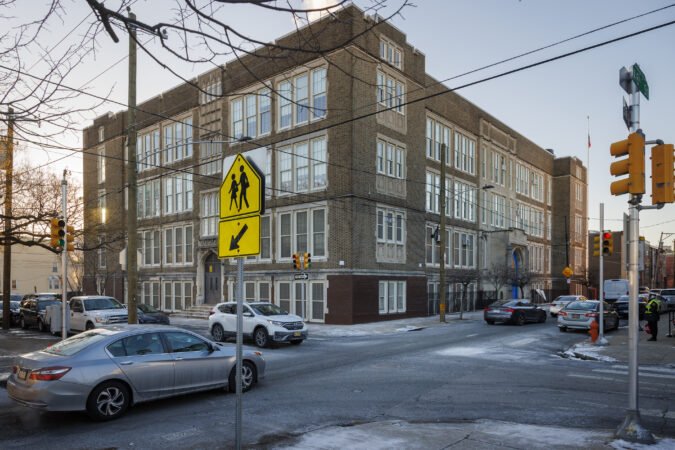
    James R. Ludlow Elementary School in North Philadelphia educates a substantial population of special-education students.

    And the learning environment for those students would be upturned by the school district’s recommendation to close Ludlow after next school year, teachers say.

    “For our children in special education, that consistency isn’t a luxury, but a requirement for them to learn. If we relocate our students, we aren’t just changing their school address; we’re breaking their routines and undoing their progress,” Vanessa Martin, an autistic support teacher in kindergarten through second grade at Ludlow, said at a community meeting last month with school district officials.

    “This building isn’t just a facility. It’s the one predictable place where our students feel safe and supported every single day,” she said.

    The district says Ludlow was slated for closure because of an “unsatisfactory” building quality score, a lack of appropriate space for programming, and only utilizing 47% of its capacity. Ludlow has 237 students enrolled across general and special education, of whom 75% are Black and 20% are Hispanic.

    The K-8 school will celebrate its 100th anniversary in what could be its final school year of operation. The district, which has proposed closing 18 schools, plans to convey the building at 550 Master St. to the city so it could be converted into affordable housing or used for job creation. Ludlow students would be reassigned to one of three schools: Paul L. Dunbar School, Spring Garden School, and Gen. Philip Kearny School.

    ‘Severing a lifeline’

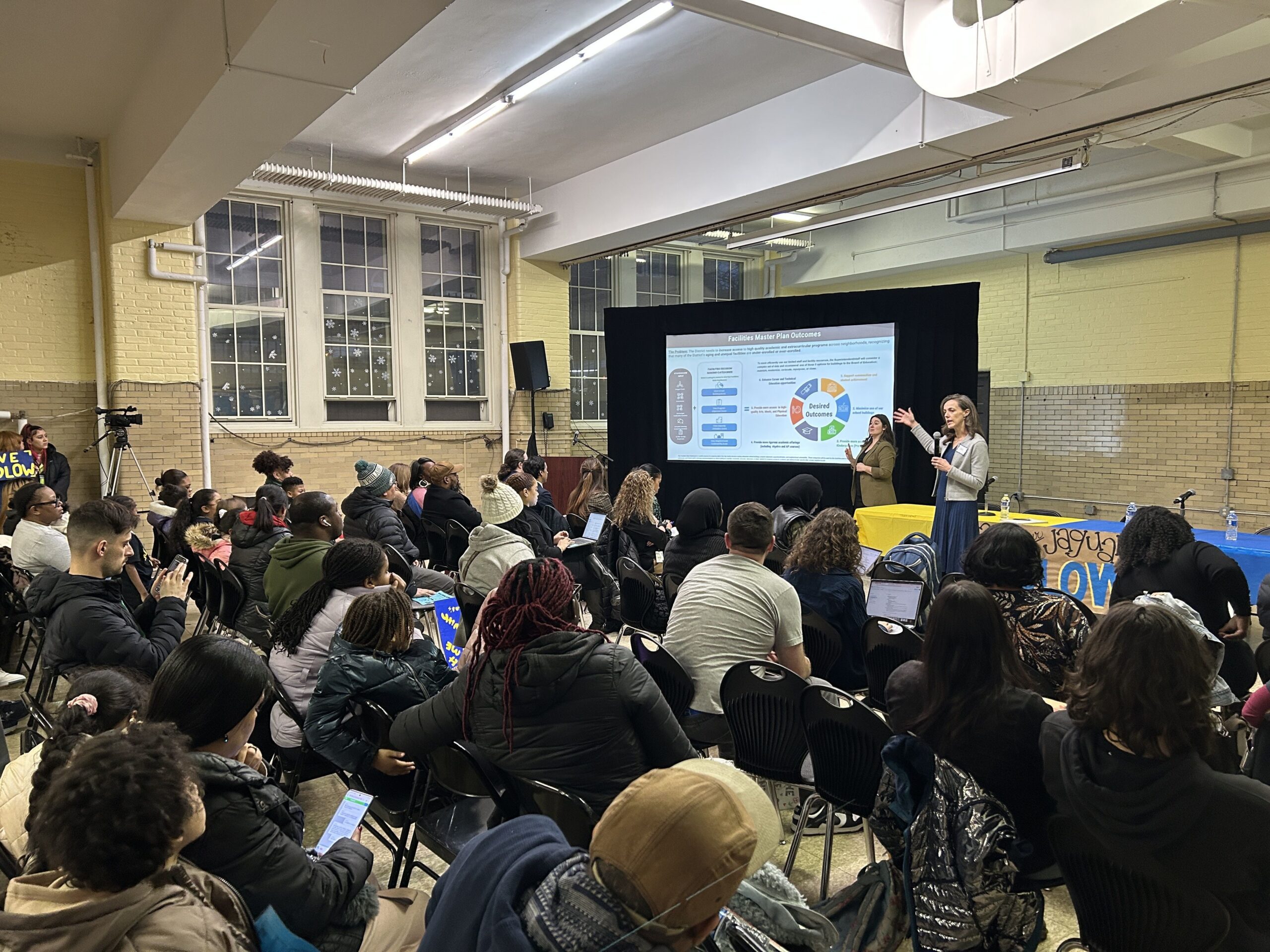
    The Ludlow community is strong and connected, and about a hundred people packed the school’s cafeteria for the community meeting on a recent Thursday evening to show their support for the school and fight against the district’s plan.

    District officials present their plan for closing Ludlow at the February community meeting.

    “I felt very angry. I felt upset. I felt like they were taking something away that was a part of me,” said Deilyhanix Vazquez, a Ludlow eighth-grade student who has attended the school since kindergarten. She said her teachers “feel like home,” and she had been planning to continue visiting the school even after she graduates.

    “I’m worried that the students will have to travel far just to get an education. Something they have to do on the daily starts to feel like a burden,” said Savannah Lindsay, another Ludlow eighth grader.

    Another young student broke down into tears as she spoke into the microphone, saying she had planned to attend Ludlow for “my whole life.”

    If the plan goes forward, she said, she may have to split up from her friends as they get assigned to one of three different schools.

    “I don’t want to leave them,” she said, as others in the room clapped and cheered her on.

    Should Ludlow close, the neighborhood and the wider school district would lose a valuable special-education resource and hub. Its offerings include autistic and other learning support for all grades, and emotional support for grades three through eight.

    Ludlow often receives student referrals from other schools and catchments across the district, staff members said, including from the schools that would take in Ludlow students in the closure plan. It can feel like the district dumps its most difficult students on Ludlow, Martin said, but those children are accepted and become like family.

    District officials have said that in addition to closing buildings that are not operating at full capacity, another goal is focusing on K-8 schools over middle schools to reduce transitions. That goal especially doesn’t square with the plan to close Ludlow, critics said.

    “Ludlow is an exceptional school that works. By moving forward with this proposal, the district would be doing more than just closing Ludlow’s doors — it would be severing a lifeline and dismantling a support system that children and families depend on for their stability,” Martin said.

    Affordable for whom?

    Community members questioned the plan to turn Ludlow into affordable housing. They doubted whether those units would actually be affordable for the people living in the neighborhood, where the annual median household income is about $58,000.

    The area sits next to Fishtown and Olde Kensington, where gentrification has made living more expensive for longtime residents.

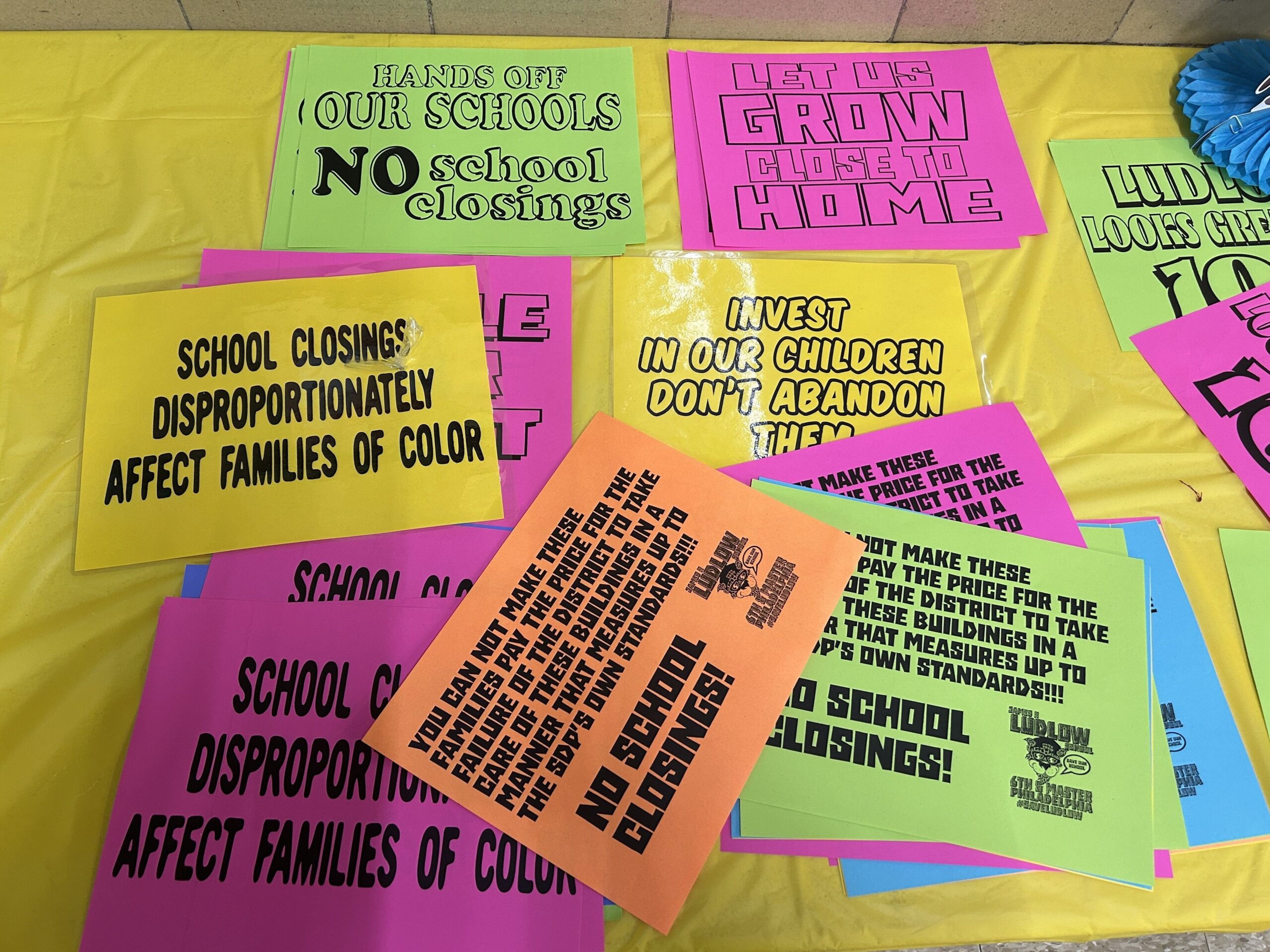
    Various signs protesting the closure of James R. Ludlow School, available at a community meeting with district officials in February.

    Ludlow community members said they did not want or need more housing. They wished the district would instead invest in the building for learning purposes, and said the district had let it fall into its poor condition.

    “It’s money before our kids,” said Valerie Johnson, known better as Valerie Brown, a beloved former Ludlow staff member who worked at the school for more than 30 years.

    While housing may bring new residents and investment to the neighborhood, the loss of Ludlow could drive some to leave, one mother said.

    “I stay in this neighborhood because of Ludlow,” said Darlene Abner, a mother of six whose children have attended the school, including a kindergartner enrolled this school year.

    Abner herself was born in the neighborhood, and she said she does not want her children to attend any school but Ludlow.

    She wears a nearly full face-covering niqab, and credited the school and its teachers for never letting that be a barrier to building a relationship with her and caring for her children.

    “They know me. They see me,” she said.

  • William Way will demolish its historic LGBT Community Center and construct a building with affordable apartments

    William Way will demolish its historic LGBT Community Center and construct a building with affordable apartments

    After months of varying reports about the future of the William Way LGBT Community Center’s headquarters in Philadelphia, a firm plan is finally emerging.

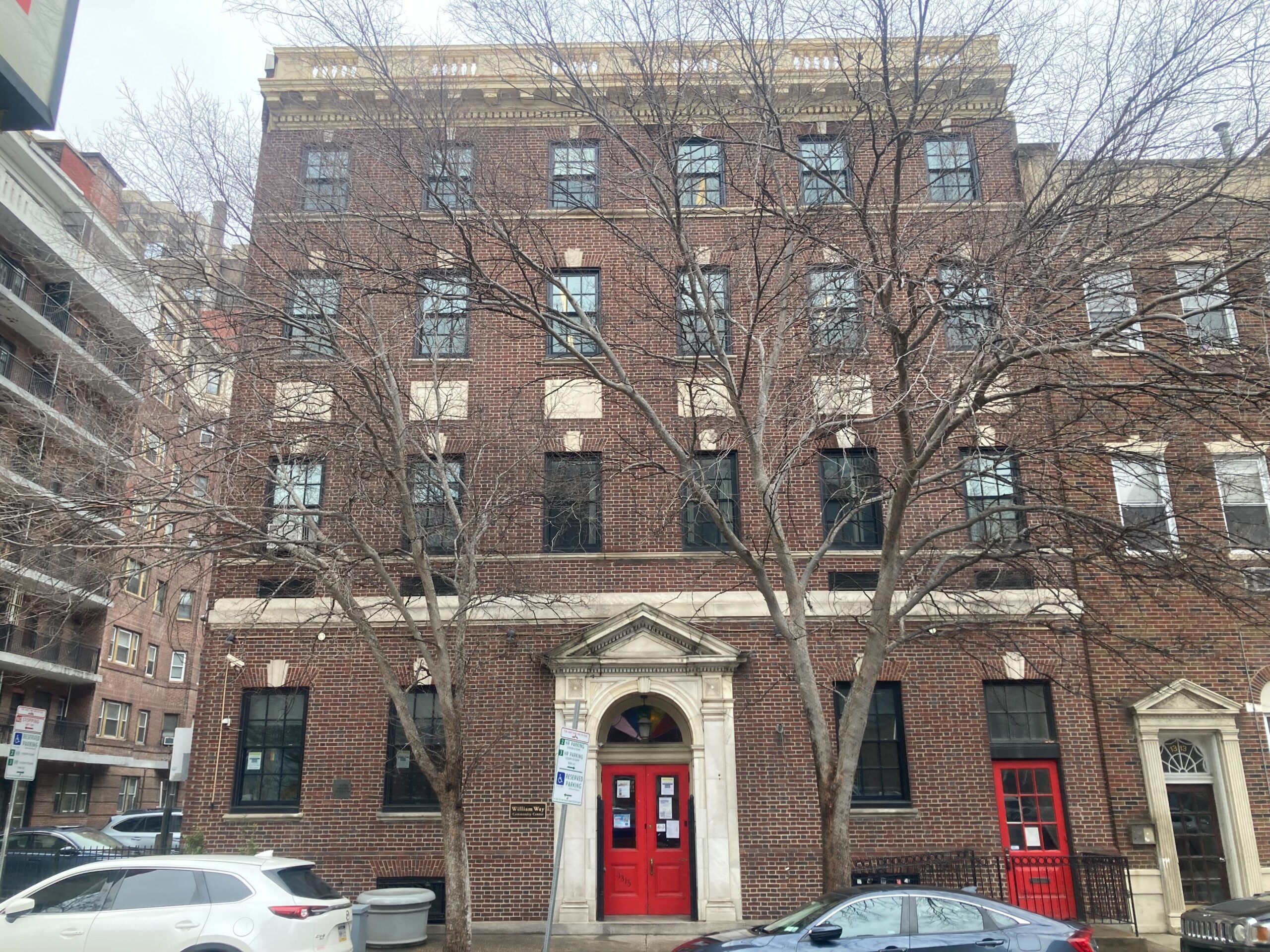
    The 176-year-old building at 1315 Spruce St. will be torn down and replaced with a new headquarters, which will include up to 42 new affordable apartments for seniors, according to the development team.

    The existing four-story, 14,000-square-foot building is expected to be replaced by a six-story structure. The apartments would be on the top four floors and William Way’s community center on the bottom two.

    The idea is to give the storied organization more space, while providing housing for people who might not otherwise be able to live in Philadelphia’s historic Gayborhood.

    “We want to make sure that people are given the opportunity to live in all areas of the city, including areas like Washington Square West that have a lot of higher income folks,” said Dan Anders, a vice chair of Dr. Magnus Hirschfeld Fund (DMH Fund), a group that also developed the celebrated John C. Anderson apartments, half a block away.

    The DMH Fund is partnering with HELPDevCo, an affordable-housing builder. William Way Center referred all questions about the proposed building to those two groups.

    The William Way Center is not likely to demolish the building in the immediate future, as the project will need funding from the federal Low Income Housing Tax Credit, which will not disperse funds again until late this year. The community center is currently still open.

    The property is within the recently designated Washington Square West historic district, which was overturned in court last week. The timing of the announcement was coincidental, however. Plans have been in the works for months.

    The facade of the William Way LGBT Community Center, located at 1315 Spruce St.

    William Way purchased 1315 Spruce St. in 1996, and over the last 10 years, the LGBTQ community has been trying to raise money to stabilize and redevelop the historic headquarters.

    Last June, the group announced that even after a fundraising drive, $3.5 million was still required for “immediate repairs.”

    Swathes of the building are currently unusable, although the structure is not imminently dangerous. There are holes in the floor of some rooms, roof leaks, and standing water often fills the basement.

    “It sounds like a really good plan,” said Councilmember Mark Squilla, who represents the area. “The building is in really, really bad shape. It’s been hard to maintain. The reason why it hasn’t been fixed is because the cost to fix it has been astronomical.”

    In late November, William Way announced that it would shutter the building and disperse its operation to other locations, raising concerns about clients maintaining access to services.

    But a week later, the community center said it planned to rehabilitate the historic building and would return to the existing structure.

    “We know that there are questions regarding the future of the building and acknowledge that messaging has been confusing,” William Way board chairs Laura Ryan and Dave Huting said in a January email to supporters. “We understand the frustration and will be sharing more information soon.

    Last week Philadelphia Gay News reported that William Way would be demolishing its building and moving forward with a comprehensive redevelopment.

    The announcement occurred at a gala for the publication’s 50th anniversary, with Gov. Josh Shapiro and Mayor Cherelle L. Parker in attendance and expressing support for the proposal.

    “I strongly support the restoration of the William Way Community Center, as an essential part of the LGBTQ+ community in Philadelphia,” said Mayor Parker in a statement, “and will commit resources through our H.O.M.E. initiative to support this vital project.”

    Historic preservation advocates have expressed concern and sadness over the proposed demolition.

    “We are alarmed by the news that the historic William Way building would be demolished in the recently announced plans for the future of the real estate,” said Paul Steinke, head of the Preservation Alliance. “We hope they will be willing to incorporate historic preservation into their plans.”

    Steinke served on William Way’s board for six years and helped lead a pre-pandemic fundraising drive to replace the windows and HVAC system and conduct other repairs. (In the end, that plan did not move forward.)

    Steinke said he has reached out to William Way for more information on its proposal. He also hopes that the city will appeal the ruling against the Washington Square West historic district.

    “I understand the frustration of some folks that the building will be demolished, but it’s in such a state that it’s not feasible to renovate it,” Anders said.

    “It is a sad reality, but that’s where we are. We will honor the tradition of that location and the William Way Center and build a building that celebrates our community and that everyone can be proud of,” he said.

    The Washington Square West Civic Association declined to comment on William Way’s plans.

    The property is in one of Philadelphia’s most flexible zoning categories, so land use regulations will not pose a barrier to the community center’s proposal.

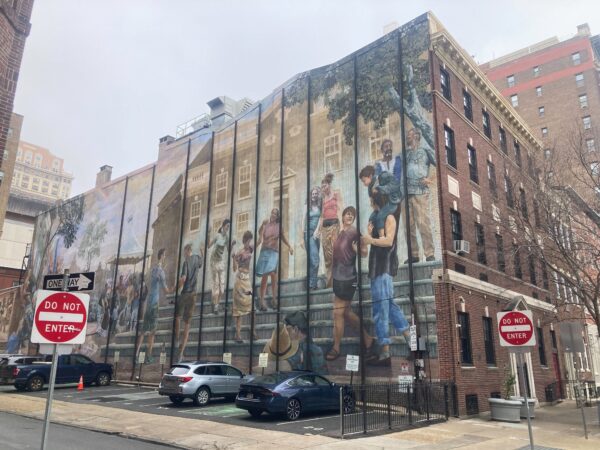
    The prominent mural on the side of William Way’s building is crumbling. Anders said the new structure would be designed to advertise the community center’s mission.

    “The artist herself acknowledged that the mural was never intended to be permanent,” Anders said. “What we want to do when we’re designing the building is very clearly communicate with passersby and the community itself that something LGBT is going on inside, and to celebrate that.”

  • Philly Parks & Rec introduces summer camp lotto at five in-demand locations, causing headaches for some parents

    Philly Parks & Rec introduces summer camp lotto at five in-demand locations, causing headaches for some parents

    At some Philadelphia Parks and Recreation centers, a grim tradition has developed over the years amid the winter scramble to secure some sort of summer programming for kids: Parents wait in line hours before enrollment even begins to snag a first-come, first-served camp spot.

    This year, the city hopes to remedy that with the introduction of a lottery system at a handful of the most in-demand camps.

    “We’re just learning from past years, trying to be flexible and give parents more time to come in,” said Rob Jackson, the department’s deputy commissioner of programs.

    Yet some parents bemoaned what they described as a poorly communicated change, hearing about it a week before enrollment began with no explanation as to why, becoming just one more logistical quirk to navigate in the summer camp enrollment chaos.

    That’s because, as with daycare, snagging a spot in any daylong summer program can feel like building a plane midflight. Applying to multiple summer camps is a must, setting aside a pool of money for application fees is necessary, and, oh, you’ll likely have to make a quick decision on whether to accept a spot despite not having heard back from everyone.

    Even applying to the Philadelphia Parks and Recreation-run summer camps, one of the most affordable options in the city for kids ages 6 to 12, has its quirks. Because weekly rates start at $90, compared with the hundreds some other camps charge, spots in the department-run programs are some of the most coveted in the city.

    Some rec centers are so popular that parents have resorted to waiting in line for hours on enrollment day to secure a spot. It’s a system that the city has heard feels unfair to families that cannot afford to take a morning off from work to do that.

    In an attempt to make the registration process more equitable, the city rolled out a lottery system this week for potential first-time campers at some of the hardest-to-get-in sites: Fishtown, Northern Liberties, Shissler, Hancock, and Towey Recreation Centers. These sites are in the Fishtown, Northern Liberties, and South Kensington sections of the city.

    Jackson said the change was inspired by staff, who described coming into work with long lines of parents already formed. If a parent could not make it on that day, it was one less summer camp option. And because younger siblings were given priority in an attempt to keep siblings together, one family could take up multiple camp spots in one go. With the lottery system, younger siblings have the same odds as other new registrants. Jackson recognized that might mean multiple camp drop-offs for some families, but he said the change was to “accommodate as many families in the community as possible.”

    The lottery system has allowed sites like Hancock and Shissler to extend registration for new campers over the course of four days, giving all kids the same chance of snagging whatever few spots are available within the program as children age out or choose to go elsewhere.

    One Fishtown parent this week, who asked to remain anonymous so as not to hamper their kid’s chances of snagging a spot, described the change as poorly communicated. The parent was left deflated by submitting applications at various locations, paying $50 per application, unsure what the odds were for getting into any of these camps.

    Asked if the city has ever considered moving the applications online, Jackson said the city has not gotten to that point. So for now, the in-person site-by-site registration is the best the department can do for the more than 7,000 kids who attend camps across 120 to 130 host recreation centers.

    The city could not say just how many camp spots would be freeing up this year, as it depends on how many children from what are considered “returning families” claim spots.

    The summer childcare scramble

    Even if a child can secure a spot in a city-run summer camp, it does not fully solve summer childcare needs for families.

    The camps run for six weeks and have age restrictions. Parents often have to shell out hundreds more to fill in gaps in care.

    Other summer camp operators have issues of their own. This year, the Academy of Natural Sciences of Drexel University and the Penn Museum announced they will not host their popular summer camps, citing budget constraints.

    Dena Ferrara Driscoll, a mother of two who lives in South Philadelphia, has been a public advocate for more investment in summer camps and after-care programs. Her children attended city-run camps and now her son works at one in the summer.

    Driscoll was not surprised by the continued demand for camp spots. The programs are “affordable, safe, and deeply loved,” she said.

    “A lottery might change who gets a spot, but it doesn’t address the real issue: Families need more affordable camp options provided by the city, not just a new system to distribute the ones we already have,” she said.

  • Philly school officials want to close this Frankford middle and replace it with a K-8. Teachers worry programs will be lost.

    Philly school officials want to close this Frankford middle and replace it with a K-8. Teachers worry programs will be lost.

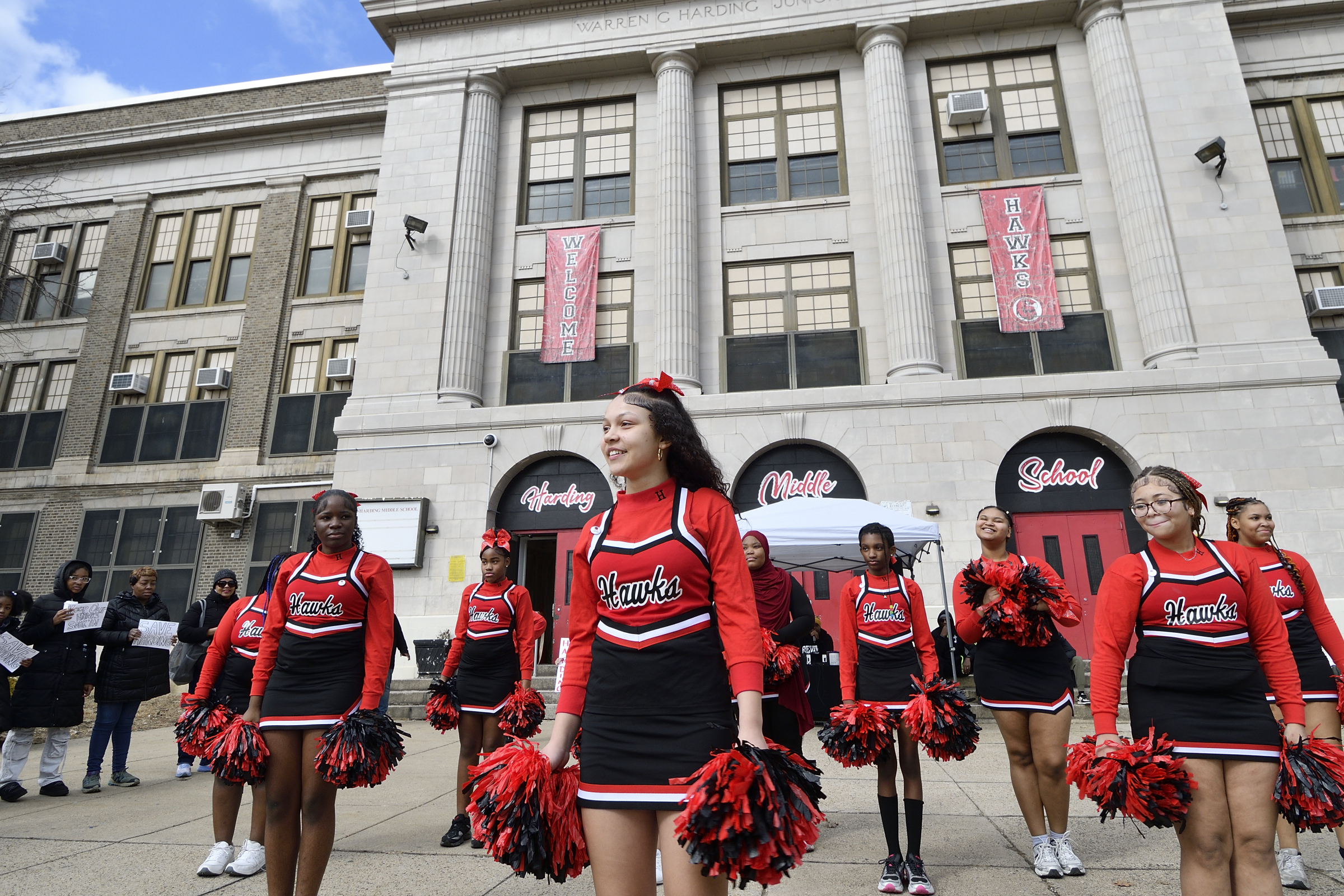
    From sports like soccer, football, and cheerleading to Model United Nations and unified programs for students with and without special needs, Harding Middle School’s offerings reflect its diverse enrollment.

    Of the Frankford school’s 570 students, more than 150 — nearly 27% — receive special-education services. About one quarter of students are English learners — with languages ranging from Spanish and Portuguese to Pashto and Ewe.

    Teachers say the school will not be able to offer the same depth of programming if the Philadelphia School District moves forward with a plan to close Harding, which serves grades six through eight. The district is proposing to move Sullivan Elementary School into the Harding building, and expand that school into a K-8 as part of a sweeping facilities plan.

    “We offer something for everybody,” said Beth Ann Dufner, a Harding teacher who coordinates the school’s English learner programs and has worked at Harding for six years.

    Because transitioning the building from a 6-8 school to a K-8 would mean fewer students per grade, Dufner said, she does not think the school’s programs for middle school kids could be replicated in the district’s plan — “not on a large scale like we have at Harding.” Teachers say students would have to travel to other schools to compete on some sports teams.

    Harding, which has capacity for 1,110 students, is one of five middle schools recommended for closure under the plan. In total, the district proposes to close 18 schools, pitching the plan as a better use of limited resources.

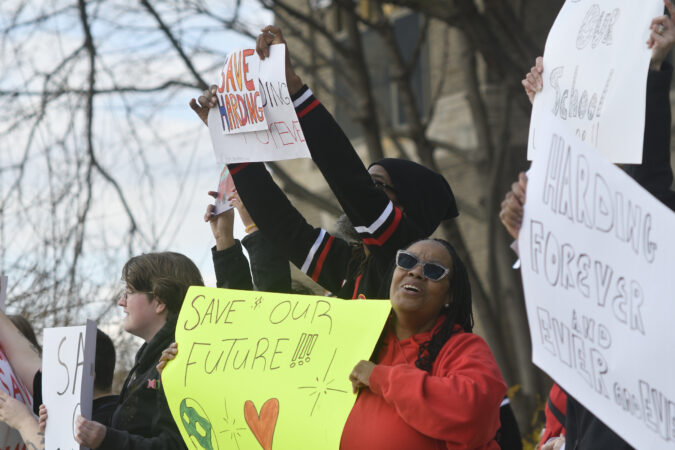
    Harding teachers disagree with the district’s shift away from standalone middle schools — saying that surveys did not give community members the option to voice support for the model.

    Arianna DeJesus (front, center), 8th Grader and captain of the Harding Hawks cheerleading squad, during a rally in support of the middle school in the Frankford neighborhood last month.

    “I’ve never heard any parents we’ve had enrolled say, ‘We hate middle schools,’” said Jessica Peruso, an autistic support teacher at Harding. “That was a theme — but where did that come from?”

    A hub for special-education students

    Teachers also dispute the rationale for closing Harding specifically — questioning how the district scored Harding as “poor” for program alignment on a rubric for determining which schools to close.

    At one session, teachers were told the school did not have enough closet space, according to Dufner.

    “The things they said they based their score on — we have all of those things,” Dufner said, noting that Harding has two gyms, media and technology labs, and dedicated spaces for English learners and special-needs students.

    Like other teachers, Dufner faulted the district for Harding’s underenrollment, saying its decision to allow charter schools had drawn students away.

    But she also questioned whether Harding — which the district rated as only half utilized — was being penalized for its large population of students receiving special-education services. Autistic support classrooms, for instance, are required to have no more than eight students, far smaller than a standard class size.

    That “creates the appearance of underutilized space,” but it’s not, Dufner said.

    A district spokesperson said building utilization scores are not adjusted to account for smaller class sizes for special-needs students.

    The spokesperson, Monique Braxton, said numerous factors resulted in Harding scoring poorly on program alignment, from gym facilities in disrepair to lack of appropriate spaces for music and art classes.

    Harding serves as a hub for special-education students from a range of neighborhoods beyond the Harding catchment, teachers said. They described the school’s culture as particularly inclusive of kids with special needs.

    “That makes me the most nervous for closing,” said Peruso, who has taught at Harding since 2014 and was recently named the district’s Teacher of the Month. “I’m concerned about my kids. I’ve been teaching autistic support here forever. I don’t want them to get lost.”

    Under the district’s plan, Harding would have a phased closure, starting in the 2027-28 school year. Students previously assigned to Harding would instead attend Sullivan, John Marshall, Lawton, or Carnell schools. Meanwhile, the Harding building — rated by the district as in “unsatisfactory” condition — would receive upgrades before the expanded Sullivan school moves in.

    “You’re going to come here and fix the building for Sullivan students? Why aren’t the Harding students worth that investment?” Peruso said.

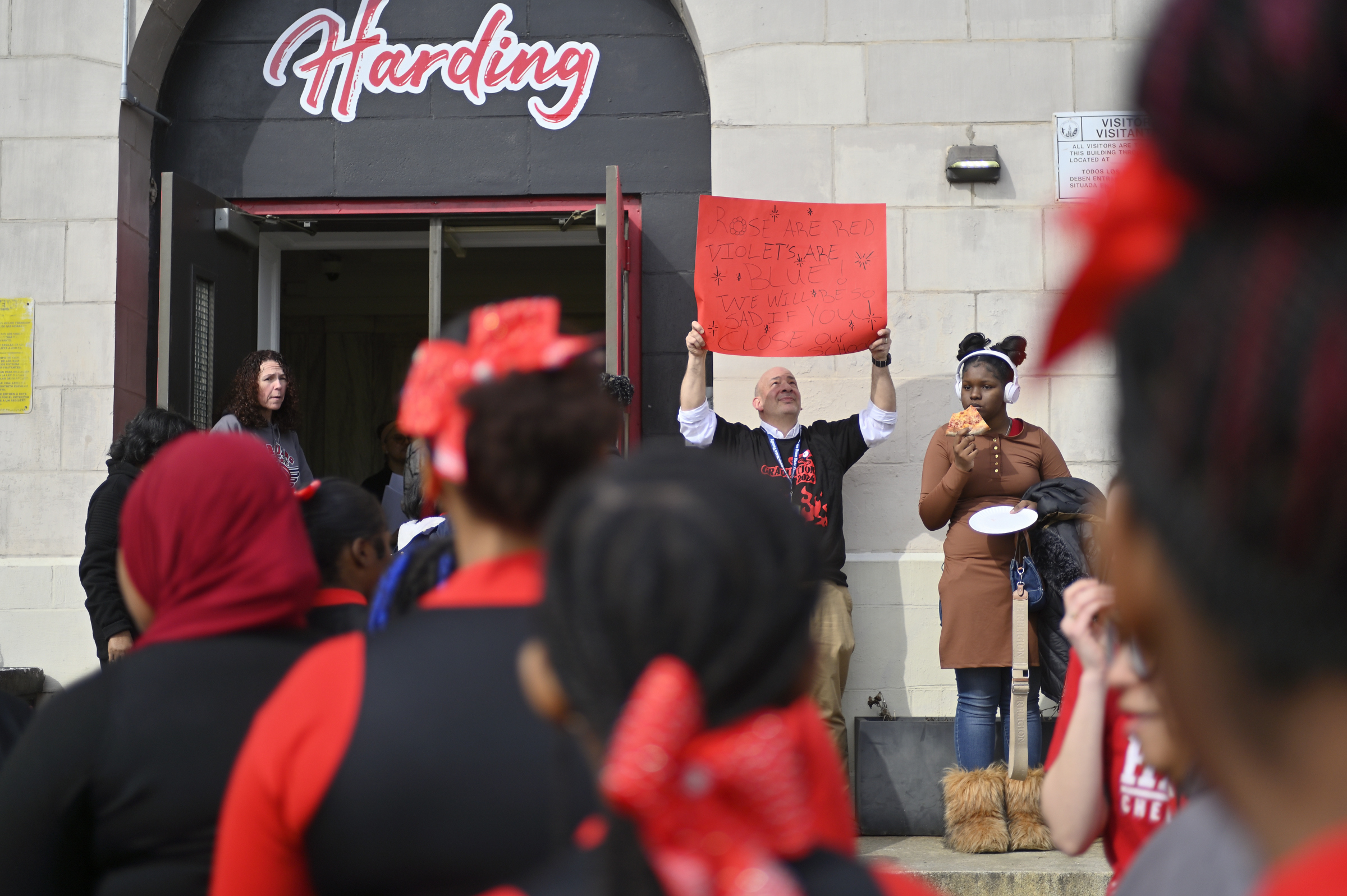
    Harding Middle School Principal Mary Sanchez stands at the front door as students, staff, community members, and elected officials rally to support the school last month in the Frankford neighborhood. It’s one of 18 the district has proposed closing.

    A ‘tight knit’ community

    While current students would not be affected by the closure, some have expressed dismay that they would not be able to return to the school and visit their teachers, said Amanda Chandler, who teaches English language arts at Harding.

    Chandler, who has taught at Harding for seven years, called it “very tight knit.” Every year, she said, former students have come back to see her or her colleagues.

    Compared with past teaching jobs, “I have never had kids more loyal to me, my well-being … than I have at Harding Middle School,” Chandler said.

    In letters shared by Peruso, several students said they wanted Harding to stay open because of its welcoming environment. “Everyone is united like a big family,” one sixth grader wrote. Another sixth grader said that teachers “let me know that I am safe and that everything will be okay.”

    Amarika Thomas, a paraprofessional at Harding who has lived in the community for 20 years, had been working in the school’s cafeteria when principal Mary Sanchez noticed her strong connections with students.

    Sanchez “pushed me to come out of the cafeteria,” said Thomas, who hopes to become a special-education teacher.

    While Thomas’ daughter attends a K-12 charter, she had hoped to possibly send her daughter to Harding for middle school, citing its array of activities.

    The district should invest in Harding, Thomas said: “Harding literally just needs a fighting chance.”

  • ICE can’t use Montgomery County’s property or resources in civil immigration operations under new resolution

    ICE can’t use Montgomery County’s property or resources in civil immigration operations under new resolution

    The Montgomery County commissioners further limited the county’s cooperation with ICE on Thursday when they passed a resolution restricting federal immigration enforcement from using county property or resources for noncriminal investigations.

    The measure approved by the Democratic-controlled board bars U.S. Customs and Immigration Enforcement from using county resources for various purposes, including as staging areas, processing locations, or operations bases related to civil immigration operations.

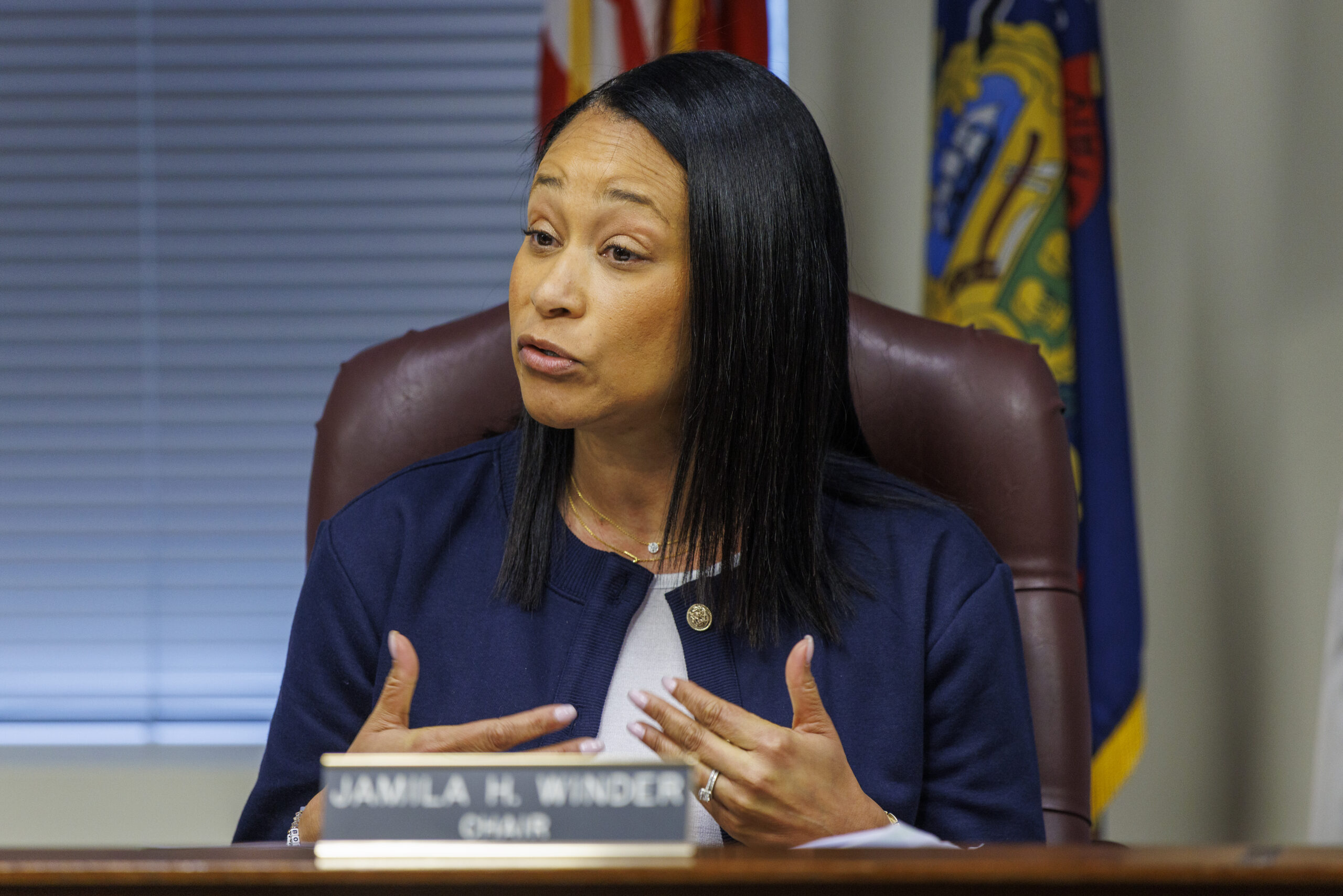
    “We’ve seen it elsewhere — the violence, the fear, the separation of families. We want to make sure that here in Montgomery County, we’re doing everything we can to make sure all of our residents can continue to access essential services and live their lives safely,” said Commissioner Jamila Winder, the Democrat who chairs the board.

    Jamila H. Winder, Chair, Montgomery County Commissioners on Thursday, March 5, 2026.

    The resolution comes as immigration stakeholders in the county have been pushing the commissioners to take further action to protect residents from ICE enforcement as President Donald Trump’s deportation agenda continues to escalate.

    Much of the tension occurred under the leadership of Kristi Noem, the Department of Homeland Security secretary whom Trump fired Thursday.

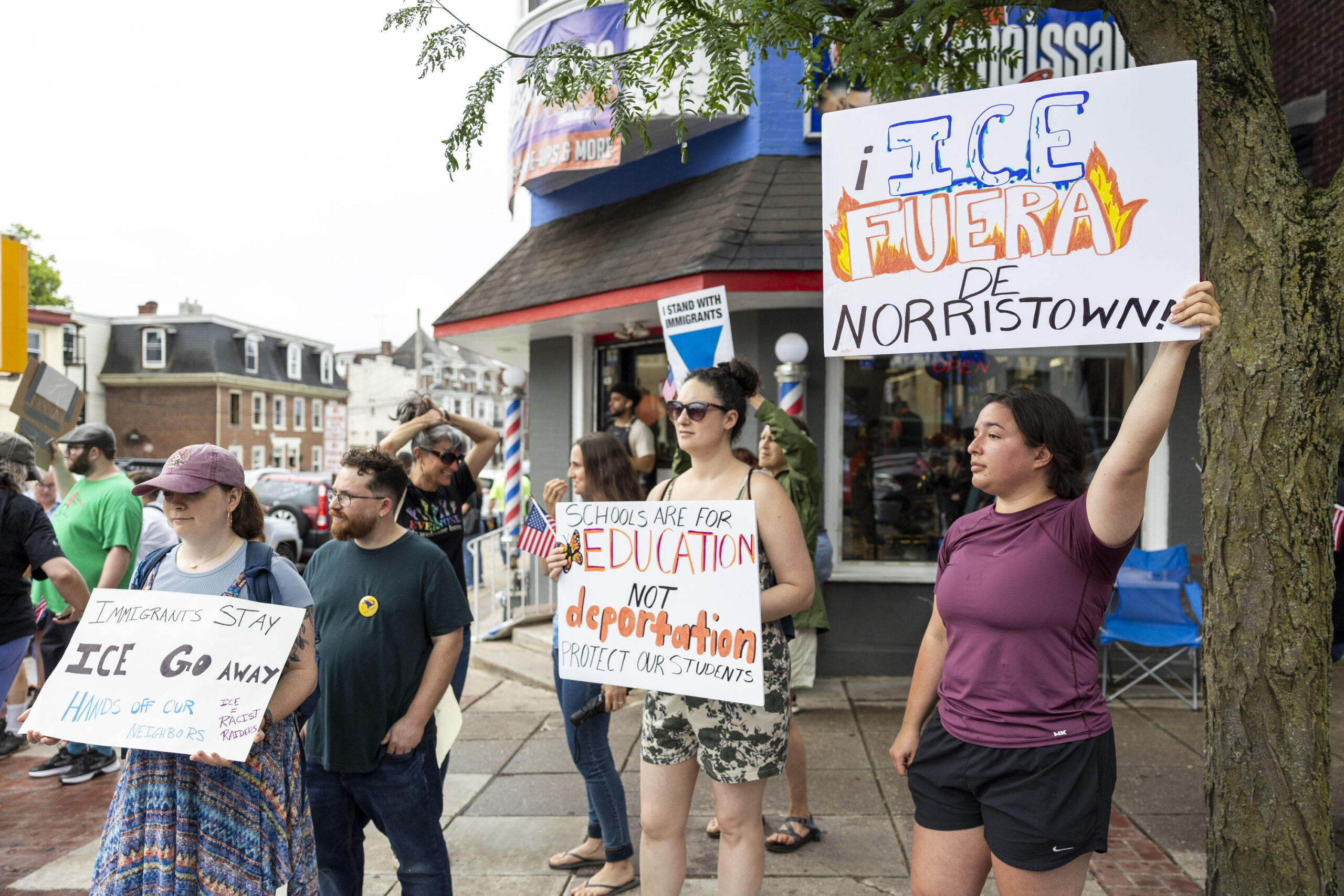
    Calls for action escalated nationally in January after federal agents killed U.S. citizens Renee Nicole Good and Alex Pretti in Minnesota. In Montgomery County, ICE has carried out numerous operations, especially in communities with high numbers of Latino residents, such as Norristown, the county seat.

    “Let me be clear: The county does not have authority over the federal government’s actions over civil immigration enforcement, and we still do not have the authority over the courts, other elected officials, municipalities, townships, or their law enforcement officers,” Winder said. “That remains unchanged, but what has changed is the environment we’re in.”

    The policy to block ICE from using county resources passed 2-1 with Commissioner Tom DiBello, the board’s sole Republican, voting no.

    The measure codifies that the county will not enter into a 287(g) agreement, which would allow ICE to use county resources, and that county employees will not comply in federal civil immigration operations without a judicial warrant or subpoena.

    Lydia Villalba, 27, of Souderton, Pa., (right), holds a sign saying “Ice Fuera De Norristown” meaning Ice out of Norristown, during a rally to support immigrants in Norristown, Pa., on Saturday, June 7, 2025.

    It does not prohibit ICE from purchasing warehouses for detention centers, as the agency has done in Berks and Schuylkill Counties.

    Democratic Gov. Josh Shapiro has blasted the warehouse purchases as being conducted in secret and promised to pursue avenues to block the plan from moving forward. Bucks County in February passed a unanimous resolution opposing any potential purchases there.

    Montgomery County’s resolution denying ICE access to its buildings and lands follows a national trend among Democratic-led jurisdictions. The move has both symbolic and practical impacts.

    First, it enables the county government to publicly make clear its opposition and noncooperation. And second, ICE can need big spaces to set up officers, cars, and equipment for operations; banning the use of potential staging areas can complicate the agency’s logistics.

    Montgomery County’s Department of Assets and Infrastructure will post signage on county-owned property noting that the area cannot be used for purposes not approved by the county, according to the resolution. Private property owners who wish to restrict civil immigration enforcement activity on their properties can request signs for free.

    Megan Alt, a spokesperson for the county, said the hope is that ICE will comply with county law. But if not, the county is prepared to handle violations as it would for any other instances of trespassing.

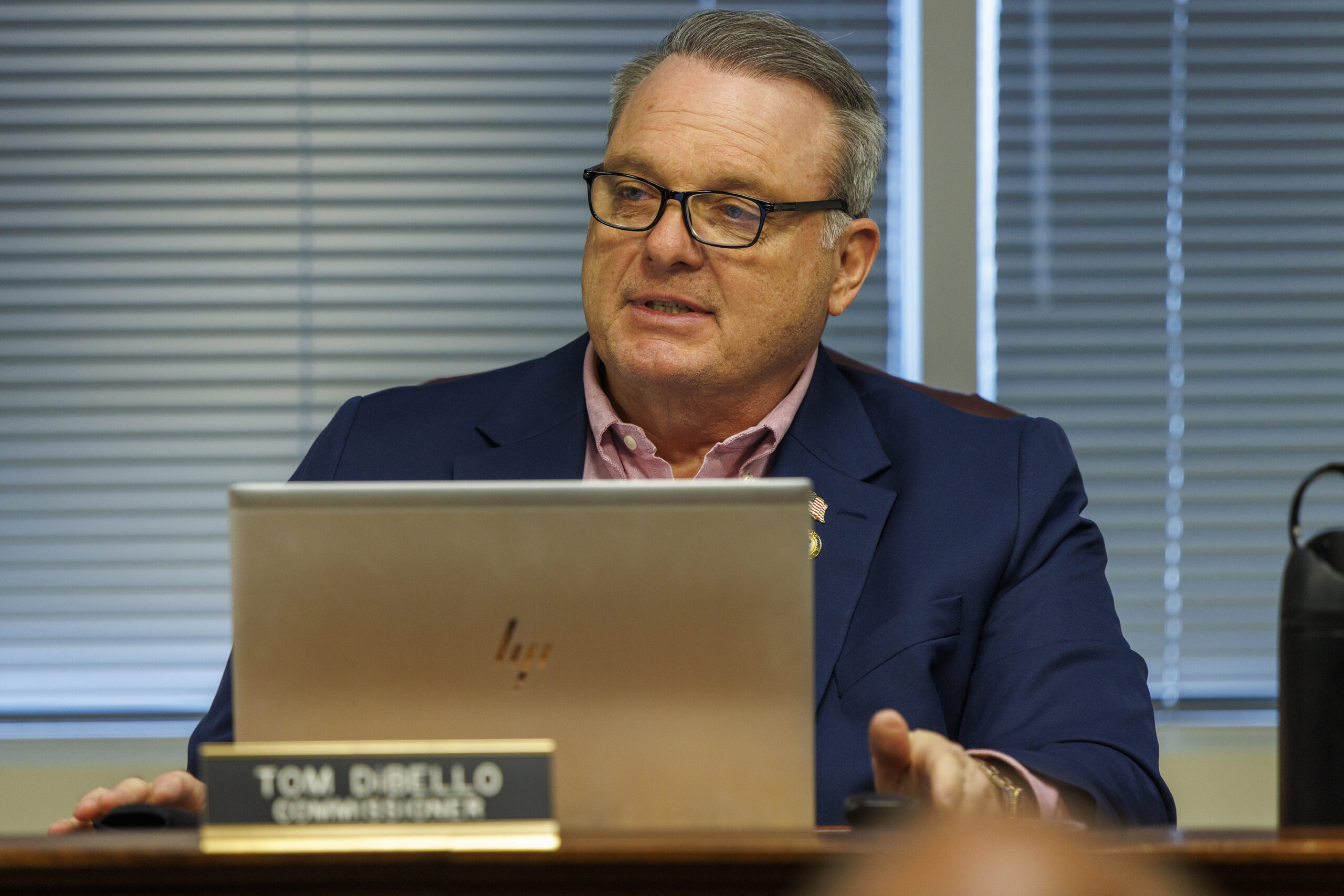
    Thomas DiBello, Commissioner, Montgomery County Commissioners on Thursday, March 5, 2026.

    DiBello, the lone GOP commissioner, said his opposition has “nothing to do with politics” and criticized the resolution’s references to ICE-related incidents that took place outside Montgomery County. He also said he was concerned that private property owners who do not post signs restricting ICE action on their properties will be targeted as a consequence.

    “What’s going to happen then? Is there doxing going to occur? Is there protests outside of businesses?” he asked.

    Commissioner Neil Makhija, the board’s vice chair, said the resolution “has nothing to with immigration policy,” but rather was about limiting cooperation with an agency that has used extreme tactics. He cited an ICE arrest last month in Lower Providence Township in which agents broke down a family’s front door.

    DiBello responded that Makhija was engaging in “political positioning.”

    In the Philadelphia region and elsewhere, ICE’s use of government property has long rankled immigration advocates, who say it amounts to cooperation on the part of local leaders.

    For instance, Philadelphia City Council is poised to consider a package of “ICE Out” legislation that would bar the agency from staging or conducting enforcement on property owned or controlled by the city — including garages, parking lots, vacant land, buses, playgrounds, and schools.

    Winder said Thursday that Montgomery County’s resolution is not some “newfound desire” to limit cooperation.

    “Yes, we have our political affiliations, but we also know the difference between right and wrong, good and evil,” she said.

  • Mayor Parker backs legislation to boost housing development around SEPTA stations

    Mayor Parker backs legislation to boost housing development around SEPTA stations

    Mayor Cherelle L. Parker’s administration sent City Council a bill on Thursday to encourage more apartment construction around SEPTA stations, in hopes of boosting ridership.

    The proposal expands an existing law. Currently, if a SEPTA station is made a “transit-oriented development” district — a designation City Council must adopt — then most properties within a 500-foot radius receive a variety of benefits that allows developers to build more housing with less parking than otherwise allowed.

    The legislation sent to Council by the Parker administration would expand that radius to 1,320 feet, or a quarter of a mile.

    The bill is part of a package of zoning legislation meant to boost Parker’s effort to build or repair 30,000 homes in the coming years.

    “Zoning is how we turn housing ambition into housing reality,” said Angela D. Brooks, chief housing and urban development officer. “These bills help us put more homes where our infrastructure can support them, near transit, near jobs, and near opportunity, while respecting the character of the neighborhoods Philadelphians already love.”

    The hope is that SEPTA will benefit from a ridership boost if more housing is built close to transit, and more people will be able to afford to live near public transportation — which, in some areas, is in more expensive and sought-after neighborhoods.

    The zoning overlay grants different types of development benefits depending on the existing zoning around transit stations.

    In a bid to avoid controversies that have undermined similar laws in other cities, land zoned for single-family housing would not be given any development advantage under the law.

    But properties already zoned for dense housing would be allowed to build many more units, with additional benefits given if they provide affordable housing or environmentally friendly design.

    “This package will also increase ridership, reduce costly trips to the [zoning board], and allow more investment in transit stations,” Brooks said. “Zoning may sound technical to some, but investments in transit are something residents can see, touch, and feel every day.”

    Projects that have benefited from the existing transit-oriented development overlay include The Noble, with 360 units, near the Spring Garden stop on the Market-Frankford Line, and a proposal for a 134-unit mixed-income development at the Frankford Transportation Center.

    Land zoned for more modest density would be allowed to build 50% more units. That means if developers could build four units under normal conditions, in a transit-oriented development district, they could build six.

    The overlay requires that the ground floor of commercially zoned buildings have active uses. Curb cuts, parking garages, and one-story buildings are not allowed.

    Parker’s bill further eases some parking requirements, although the requirement for developers building in such areas is already less than under normal zoning rules.

    The bill was circulated to City Council on Wednesday. Members wanted more time to review it before it was formally introduced.

    “In general, I’ve been a proponent of the basic concept of increasing density around our transit stops,” said Councilmember Jamie Gauthier, who chairs City Council’s housing committee.

    “It makes our neighborhoods more lively, more livable,” Gauthier said. “We have a great transit system, and we should be trying to help it be as successful as possible.”

    Because City Council must pass legislation to include transit stations in the zoning overlay, district Council members are given effective control over how many stations will be included in the law’s benefits.

    Both the Broad Street and Market-Frankford Lines run between Council districts, which means half of many stations are under one Council member’s purview while the other half are in another’s control.

    Transit advocates have long hoped for legislation that would automatically apply to all major transit stations, but that idea could prove difficult to get through City Council.

    Gauthier is one of the few Council members who have embraced transit-oriented development. All of the Market-Frankford Line stations in her district are covered by the overlay.

    No stations on the Broad Street Line are included so far.

    “I don’t want to speak about areas of the city that are not mine,” Gauthier said. But in her transit-rich West Philadelphia district, “I do think we can consider expanding that radius more. We know that less people are driving nowadays.”

    City Councilmember Jamie Gauthier is one of the most enthusiastic proponents of transit-oriented development on City Council.

    The urbanist advocacy group 5th Square says that Parker’s bill should be broader.

    The group called for the elimination of parking minimums near transit, an even larger coverage radius, and for multifamily housing to be allowed on land zoned for single-family homes near stations.

    “These bills are a welcome step toward more housing near transit, but their scope doesn’t quite address our massive housing shortage,” said Fae Ehsan, board member with 5th Square Advocacy.

    The other housing-related bill Parker sent to Council includes legislation that would make it easier to build more apartments above commercial buildings on the ends of some rowhouse blocks, which are currently allowed to have only one unit above ground-floor retail.

    The bill would allow owners to convert the ground floor to residential uses if they cannot fill the storefront. The administration believes 7,000 to 12,000 more housing units could be allowed under the change.

  • Flyers fight coach and bare-knuckle brawler Johnny ‘Cannoli’ Garbarino sparked a melee outside Barstool Sansom. It was caught on video.

    Flyers fight coach and bare-knuckle brawler Johnny ‘Cannoli’ Garbarino sparked a melee outside Barstool Sansom. It was caught on video.

    Last offseason, the Flyers brought in John Garbarino to help younger players hold their own during fights on the ice. He had an ideal resume for the job: The South Philly native is an undefeated middleweight in the Bare Knuckle Fighting Championship.

    But early Sunday morning, the fight venue was a narrow street in Center City, where the closing-time bar crowd watched Garbarino pummel the plexiglass vestibule of Barstool Sansom Street and scream obscenities at people inside.

    Garbarino, aka “Johnny Cannoli,” then destroyed an onlooker’s cell phone, sparking a seven-person fracas in the middle of the street.

    Part of the incident was captured in a two-minute video obtained by The Inquirer on Wednesday.

    The video shows that there were at least two uniformed officers at the scene, but they did not make any arrests. Instead, according to one eyewitness, an officer gave Garbarino a fist bump after the altercation.

    A police spokesperson said the incident is under investigation.

    Reached by phone Tuesday, before video of the incident surfaced, Garbarino denied hitting anyone and said that he was not the aggressor.

    “If anything, I broke it up,” he said.

    Although the police fist bump is not seen on video, Garbarino confirmed that it occurred and that the officer is a friend of his.

    Garbarino, 30, did not immediately return messages left Thursday morning about the video footage.

    After this story was published online, a Flyers spokesperson said Garbarino was retained for a one-time training last summer and was never paid by the team. “There is no ongoing relationship,” the spokesperson said.

    On Tuesday, Garbarino said that he had been a “special guest” at Barstool on Saturday night, and that he left for an hour before deciding to return “for another reason.” He declined to elaborate.

    According to a Barstool employee working that night, Garbarino and a group of associates were asked to leave the establishment at 2 a.m. because they had become unruly and it was closing time. Barstool management did not respond to a request for comment.

    The Barstool employee said once the group was outside, Garbarino and an unknown associate began violently pounding on the door to get back in — which is where video shot from across the street picks up. Garbarino can be seen unsuccessfully trying to force the door open.

    Marques Reed, who was working at a nearby bar, said people on the street started to film the two men thrashing at Barstool’s winter vestibule, causing the whole structure to shake.

    The video shows Garbarino — a former sous-chef at Del Frisco’s who later worked at Michelin-rated Alinea in Chicago — unloading on the vestibule with a half dozen punches and elbow strikes while yelling at Barstool staffers or bar patrons watching from behind wobbling plexiglass.

    After failing to break into Barstool, Garbarino stalks over to a group of onlookers.

    “Garbarino comes across the street and says, ‘I’ll knock you the f— out,’” Reed said.

    Garbarino then grabs an onlooker’s phone and spikes it onto Sansom Street, obliterating the device. That man goes after Garbarino as he is walking away, but a Garbarino associate grabs the man by the shirt collar. The man responds by throwing a punch at Garbarino’s associate.

    A third member of Garbarino’s group then punches the man whose phone was destroyed, and he falls down. He punches him again when he attempts to get up, sending him reeling backward and out of frame.

    Garbarino then appears to show restraint as he is face-to-face with a man he had shoved, and he seems to be trying to de-escalate the situation before walking away.

    Moments later, though, someone yells an obscenity at Garbarino, who reengages with the man with the broken cell phone. That man pushes Garbarino and takes a swing at him, missing. Garbarino tackles him to the ground.

    “John, don’t hurt him!” one of the men with Garbarino yells. Then, a woman with Garbarino kicks the man while he’s down.

    After they get up, Garbarino shoves another man in the face, then sucker punches the man he had tackled while he appears to be arguing with the woman.

    Garbarino on Tuesday vehemently denied throwing any punches and disputed a since-deleted Reddit post on the incident that described him as the aggressor. He said he was trying to defuse a situation he characterized as a “little scuffle.”

    “I can’t control the world,” he said. “I’m not a referee.”

    He did confirm one aspect of the Reddit post.

    “The only thing that was accurate was the fist bump from a cop,” Garbarino said. “He was a friend of mine.”

    Reed said he was troubled by the attack and the lack of action by police.

    “Why is this sanctioned bare-knuckle boxer wildin’ out at a bar, beating on a door, then beating people up? Didn’t he just have a fight not that long ago?” Reed asked.

    (He did, in fact: KnuckleMania VI, last month at the Xfinity Mobile Arena. Garbarino is now 4-0, having defeated Kaine Tomlinson Jr. by TKO in the fifth round.)

    “This dude was a maniac. He was going crazy,” one witness said of Garbarino. He asked not to be named because it could adversely affect his employment.

    The witness said he was shocked that police laughed it off and walked away.

    “Everybody was like, ‘You’re just letting him go?’” the man recalled bystanders asking police. “The cops kind of thought it was funny. That’s a very old-school Philly thing that I didn’t think was a thing anymore.”

    Eric Gripp, a police spokesperson, said that a complainant reported being assaulted shortly after 2 a.m. Sunday, and that the case is being investigated by Central Detectives. He declined to provide any additional details about the complainant or the alleged perpetrator, or comment on the police response at the scene.

    Garbarino, who grew up playing hockey, said given his “position with the Flyers” and his recent success in the Philadelphia-based Bare Knuckle Fighting Championship, he is trying to do “damage control” this week over the allegations in the Reddit post. He dismissed the claim that he knocked someone out as “a joke.”

    A representative for the Bare Knuckle Fighting Championship did not immediately respond to a request for comment.

    Garbarino said he would like to put the situation “to bed” as he pursues a world title.

    “I’m obviously a popular guy in Philly,” he said. “I know violence pretty well. Nobody got beaten severely.”