Tag: Weekend Reads

  • Jewish students and faculty at Penn ask that their names not be turned over in federal antisemitism investigation

    Jewish students and faculty at Penn ask that their names not be turned over in federal antisemitism investigation

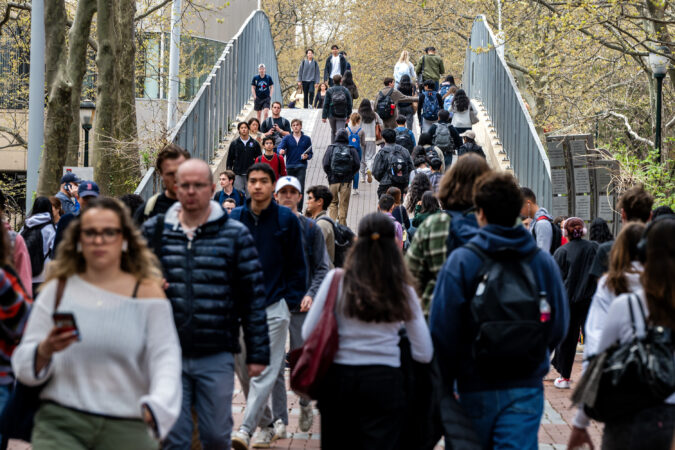
    Several groups at the University of Pennsylvania representing Jewish students, faculty, and staff are seeking to protect their names and personal information from being turned over to the U.S. Equal Employment Opportunity Commission, which is suing Penn for the data.

    The EEOC filed suit in November after the Ivy League university refused to comply with a subpoena seeking information for an investigation it began in 2023 over the school’s treatment of Jewish faculty and other employees regarding antisemitism complaints.

    In its quest to find people potentially affected, the commission demanded a list of employees in Penn’s Jewish Studies Program, a list of all clubs, groups, organizations, and recreation groups related to the Jewish religion — including points of contact and a roster of members — and names of employees who lodged antisemitism complaints.

    In a legal filing in federal court this week, several groups argued that their personal information should be kept private.

    “In effect, these requests would require Penn to create and turn over a centralized registry of Jewish students, faculty, and staff — a profoundly invasive and dangerous demand that intrudes deeply into the freedoms of association, religion, speech, and privacy enshrined in the First Amendment,“ the groups charged in the filing.

    The motion was filed on behalf of the American Academy of Jewish Research — the oldest organization of Jewish studies scholars in North America — Penn Carey Law School’s Jewish Law Students Association, the national and Penn chapters of the American Association of University Professors, and the Penn Association of Senior and Emeritus Faculty. All the groups include Jewish students, faculty, and staff whose information could be affected, according to lawyers involved in filing the motion.

    No matter the EEOC’s motives, “creating a list of Jews in an era where data security is questionable, against the backdrop of rising antisemitism … and white supremacy, is terrifying,“ Amanda Shanor, a Penn associate professor of legal studies and business ethics and one of the lawyers who filed the motion, said in an interview.

    The groups argued that providing the personal information to the commission could harm future membership.

    “The prospect that the subpoena or a similar future subpoena could be enforced will chill the Jewish community members’ willingness to join and participate in these organizations for years to come,” the filing said.

    And while Penn has resisted compliance, the groups worry that could change if President Donald Trump’s administration applies financial or other pressure, according to the filing.

    Penn last summer entered into an agreement with the Trump administration over transgender athletes after $175 million in federal funding was paused. Penn agreed to apologize to members of its women’s swim team who were “disadvantaged” by transgender swimmer Lia Thomas’ participation on the team in the 2021-22 season and remove Thomas’ records, giving them instead to swimmers who held the next-best times. The school also agreed to abide by Title IX — the civil rights law that prohibits sexual harassment and discrimination — “as interpreted by the Department of Education” in regard to athletics and state that all its practices, policies, and procedures in women’s athletics will comply with it.

    Lawyers for the groups in the EEOC case pointed to that settlement in their filing.

    “The proposed intervenors cannot leave their rights to chance and must be permitted to protect their rights,” lawyers for the groups said in their filing this week.

    Shanor said while Penn “has been very firm on this in a way that I am very struck by and impressed with,” it is important for the faculty and students to “assert those interests directly and explain to the court from the people who actually would be harmed by this why this is unconstitutional.”

    Steven Weitzman, a professor of religious studies at Penn, said he got involved in part because the EEOC was seeking the names of faculty and staff who participated in confidential listening sessions as part of Penn’s task force on antisemitism.

    “We promised the participants it would be confidential,” said Weitzman, who, as a member of the task force, helped set up the listening sessions.

    Penn provided notes from the sessions, but not participants’ identities, he said.

    As part of the Jewish studies program, his information also would have been vulnerable to the EEOC’s demand. He said even though Penn did not provide the information, the commission somehow got his personal cell number and called last week. He does not intend to call back, he said.

    Asking the university to compile a list of Jewish faculty and staff is wrong, he said.

    “Even if their motives are perfectly benign, they can’t guarantee they will always control that information, and it’s setting a dangerous precedent,” he said.

    Penn declined to comment on the groups’ filing, but in a statement in November, the school said it had cooperated extensively with the EEOC, including providing more than 100 documents and over 900 pages.

    But the private university refused to disclose the personal information.

    “Violating their privacy and trust is antithetical to ensuring Penn’s Jewish community feels protected and safe,” Penn said.

    Penn provided information on employees who complained and agreed to be contacted, the school said, and offered to reach out to employees and make them aware of the EEOC’s request to speak with them.

    The original complaint was launched by EEOC Commissioner Andrea Lucas, now chair of the body, on Dec. 8, 2023, two months after Hamas’ attack on Israel that led to unrest on college campuses, including Penn, and charges of antisemitism. It was also just three days after Penn’s then-president, Liz Magill, had testified before a Republican-led congressional committee on the school’s handling of antisemitism complaints; the testimony drew a bipartisan backlash and led to Magill’s resignation days later.

    Lucas, whom Trump appointed chair last year, also brought similar antisemitism charges against Columbia University that resulted in the school paying $21 million for “a class settlement fund.”

    EEOC complaints typically come from those who allege they were aggrieved. Lucas, according to the complaint, made the charge in Penn’s case because of the “probable reluctance of Jewish faculty and staff to complain of harassing environment due to fear of hostility and potential violence directed against them.“

    The EEOC’s investigation ensued after Lucas’ complaint to the commission’s Philadelphia office that alleged Penn was subjecting Jewish faculty, staff, and other employees, including students, “to an unlawful hostile work environment based on national origin, religion, and/or race.”

    The allegation, the complaint said, is based on news reports, public statements made by the university and its leadership, letters from university donors, board members, alumni, and others. It also cited complaints filed against Penn in federal court and with the U.S. Department of Education over antisemitism allegations and testimony before a congressional committee.

    “Penn has worked diligently to combat antisemitism and protect Jewish life on campus,” Penn said in its November statement about the EEOC lawsuit.
  • Is ICE still in Philly? As Bucks ends its alliance, here’s how local officials are (or aren’t) working with federal agents.

    Is ICE still in Philly? As Bucks ends its alliance, here’s how local officials are (or aren’t) working with federal agents.

    Top officials across the Philadelphia region are taking a stand against partnerships with ICE.

    On Wednesday, newly inaugurated Bucks County Sheriff Danny Ceisler terminated a 287(g) agreement with ICE initiated by his Republican predecessor that enabled deputies to act as immigration enforcement officers. Haverford Township also passed a resolution barring participation in a 287(g) agreement.

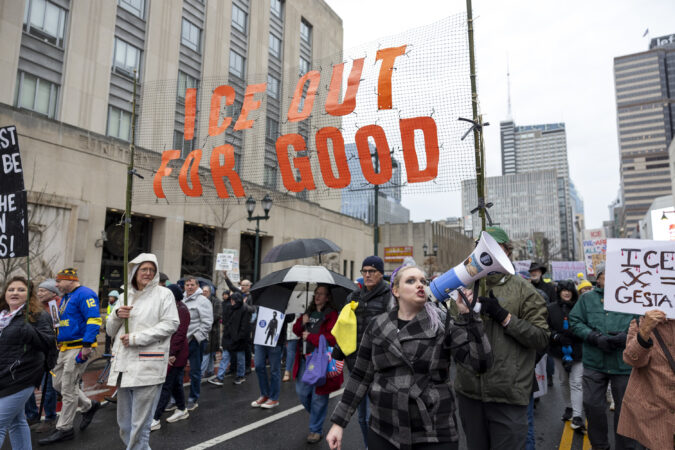
    And in Philadelphia, elected officials in the so-called sanctuary city have been continuously pushing back against ICE’s presence, with some on Wednesday calling for federal immigration agents to get out of the city.

    These developments come as protests escalate against President Donald Trump’s deployment of U.S. Immigration and Customs Enforcement agents to U.S. cities, after an agent shot and killed Renee Nicole Good in Minneapolis last week. Good, a poet and mother of three, was in her SUV when the agent fired into the vehicle.

    Also on Wednesday, Trump said on his social media platform, Truth Social, that federal funding would be cut from any states that have sanctuary cities. These jurisdictions, which limit local law enforcement cooperation with ICE, have been increasingly targeted by the president’s administration.

    As local leaders continue to grapple with the ever-changing and escalating Trump immigration policy, here’s what to know about how local governments are interacting with federal immigration authorities:

    Philadelphia

    Is ICE still in Philadelphia?

    Yes, ICE is still active in Philadelphia, but Trump has not sent troops or a large swaths of federal immigration agents as he has to other major, Democratic-led cities across the U.S.

    Everyone has a theory as to why that might be: Could Trump be avoiding the largest city in the most important swing state? Has Mayor Cherelle L. Parker’s decision to refrain from publicly criticizing Trump played a role?

    Is Philadelphia still a sanctuary city?

    Yes, but city officials have formally started calling Philadelphia a “welcoming city,” as sanctuary has become an increasingly toxic word because of Trump’s intention to target cities with that label.

    But regardless of the name, a 2016 executive order signed by former Mayor Jim Kenney on ICE cooperation remains in place under Parker’s administration. The directive orders city authorities to not comply with ICE-issued detainer requests to hold people in custody unless there is a judicial warrant.

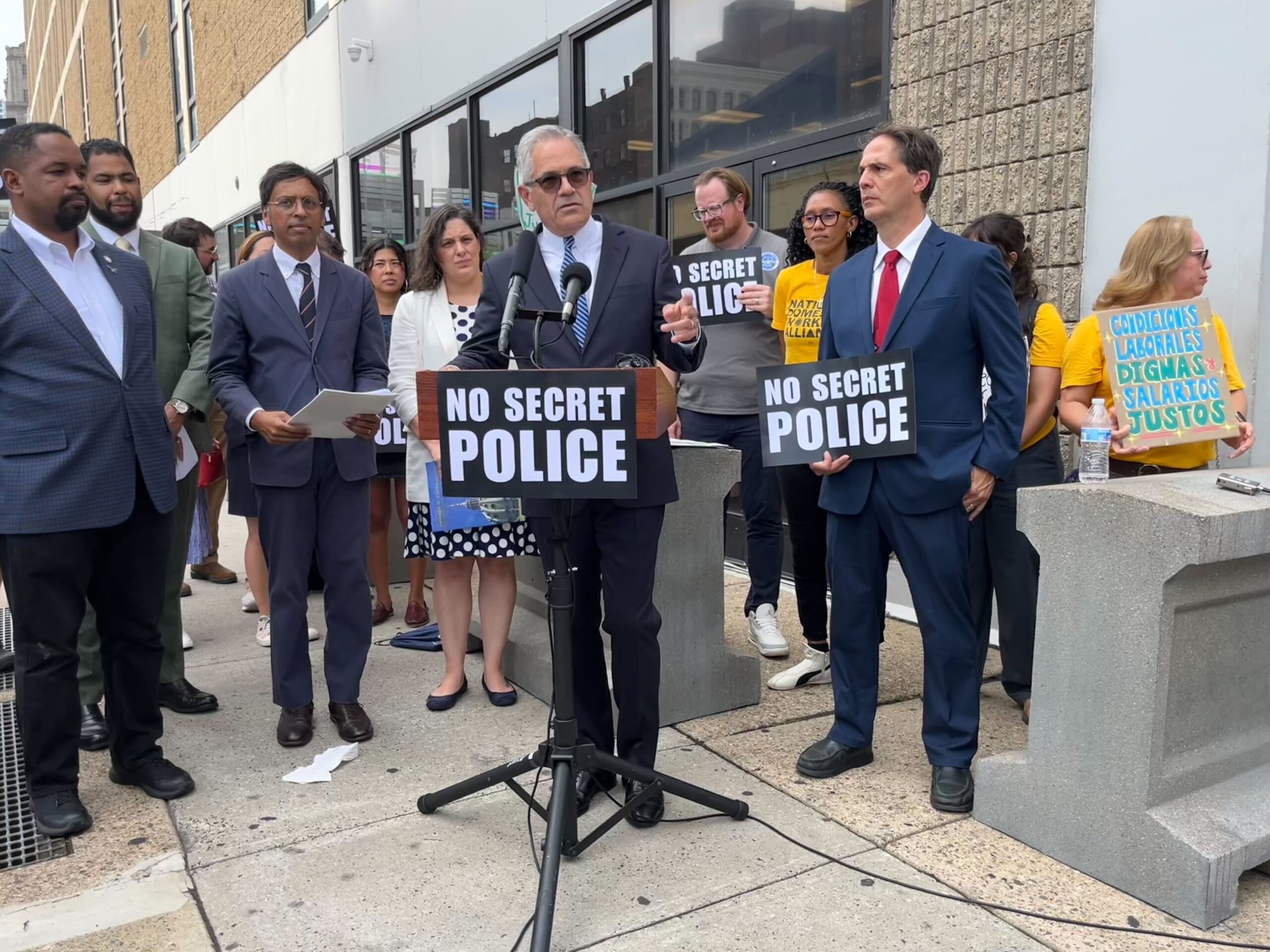
    Philadelphia District Attorney Larry Krasner speaks at a news conference outside the Philadelphia Field Office for Immigration Customs Enforcement in Center City in August.

    What are local leaders saying about ICE?

    District Attorney Larry Krasner, a progressive in his third term, and members of Philadelphia City Council have been among the most routinely outspoken opponents of ICE deployments. But comments by Sheriff Rochelle Bilal went viral last week when she called ICE “fake, wannabe law enforcement.”

    Bucks County

    The sheriff terminated a 287(g) agreement with ICE — what does that mean?

    Essentially, it means that sheriff deputies are no longer allowed to act as immigration authorities.

    Last April, Ceisler’s predecessor, Fred Harran, a Trump-aligned Republican, signed on to the partnership with ICE, stirring up controversy in the swing county. Ceisler, a Democrat who defeated Harran in November, made terminating the agreement a focal point of his campaign.

    No one in Bucks had been detained under the 287(g) agreement, Ceisler said.

    On Wednesday, Ceisler signed another order that prohibits deputies from asking crime victims, witnesses, and court observers their immigration status.

    Does Bucks County still work with ICE?

    Yes. Bucks County is not a sanctuary county and, in the words of Ceisler, “will never be.”

    The Bucks County Department of Corrections will continue to share information with law enforcement agencies, including ICE. The federal agency will also continue to have access to county jails and Bucks will honor judicial warrants from immigration enforcement.

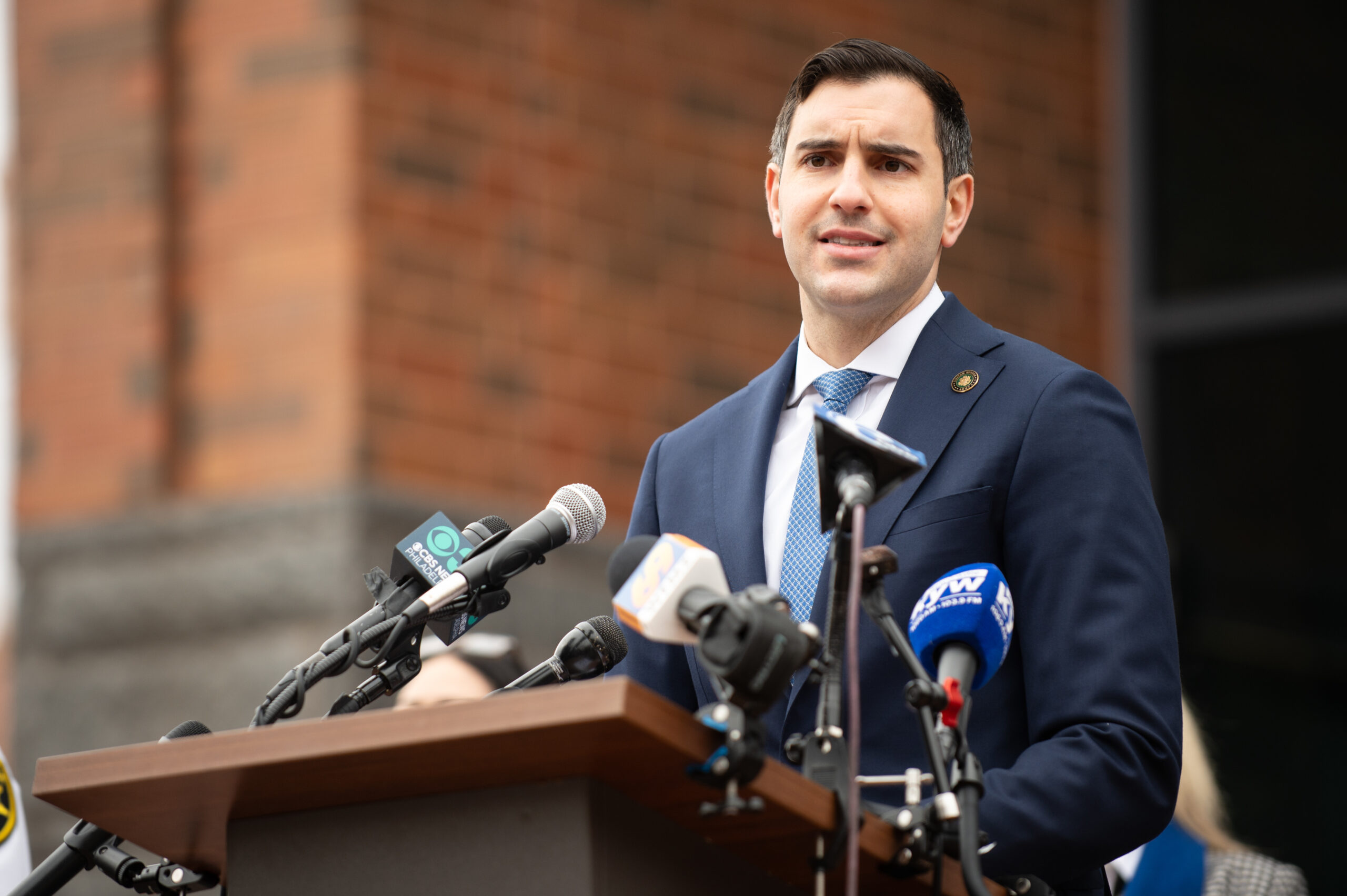
    Bucks County Sheriff Danny Ceisler announces the termination of the county’s partnership with ICE, an agreement formally known as 287(g), during a press conference at the Bucks County Justice Center in Doylestown, Pa., on Wednesday, Jan. 14, 2026.

    “It’s sporadic, it’s reports,” Ceisler said of ICE’s presence in Bucks.

    “I can’t get ICE out of Bucks County,” he added. “I have no authority over them. All I can do is prevent 16 deputies from participating in a program that enables them to perform immigrant enforcement in the community.”

    Bucks County was the only county in the Philadelphia region that did not appear on an initial list published by the Trump administration of sanctuary jurisdictions that could have federal funding at risk. That list was later deleted. The most recent list, published by the administration in August, also does not feature Bucks.

    Haverford Township

    Will Haverford Township participate in a 287(g) agreement?

    On Monday evening, township commissioners in the Delaware County suburb approved a resolution that said Haverford police officers and resources would not be used to give local law enforcement immigration authority. Other municipalities in the county, like Radnor, have also passed resolutions limiting cooperation with ICE.

    While the police department has not requested to enter an alliance with ICE, township commissioners passed the resolution as a preventive measure.

    Montgomery County

    What is Montgomery County’s policy on immigration?

    Montgomery County’s Democratic commissioners have not passed a formal ordinance or a resolution labeling Montco a sanctuary or welcoming county, citing limits to their power, concerns about creating a false sense of security, and a preference for internal policy changes.

    In early 2025, county officials approved a policy that limits communication between county employees and ICE officials and said they would not answer prison detainer requests without warrants.

    Montgomery County activists hold a news conference about ICE incidents in the county last month.

    What do Montco residents think about it?

    County residents have urged individual municipalities within the county to limit collaboration with ICE, especially as the county has become a hot spot for immigration enforcement. Norristown, a heavily Latino community, has specifically become a target for ICE.

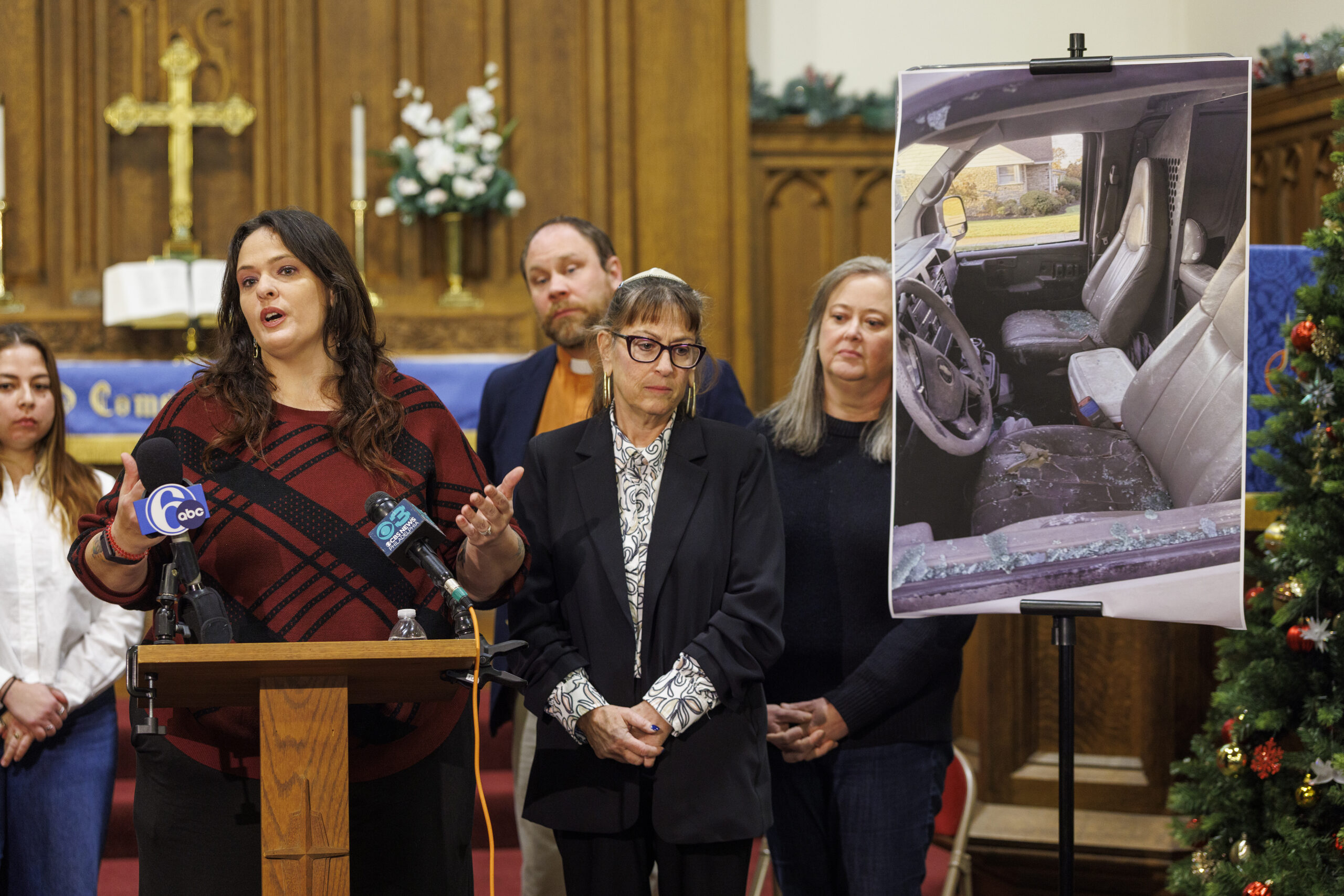
    “ICE has created a crisis in our neighborhoods, and we cannot afford silence, mixed signals, or leadership that only reacts once harm has already happened,” Stephanie Vincent, a resident and leader of Montco Community Watch, said last month during a news conference at a West Norriton church.

    As of early December, local organizers estimated that only six out of 62 municipalities had enacted policies, though they consider some to be lackluster.

    Staff writer Katie Bernard contributed to this article.

  • Frantic families, unidentified bones: A week after alleged grave robber’s arrest, loved ones have questions without answers

    Frantic families, unidentified bones: A week after alleged grave robber’s arrest, loved ones have questions without answers

    A week after authorities arrested Jonathan Christian Gerlach on charges of stealing human remains from Mount Moriah Cemetery, the consequences of the case continue to unfold — from a small police department fielding frantic pleas from families to a coroner’s office now responsible for safeguarding more than 100 unidentified bones and body parts.

    Since the arrest, the Yeadon Police Department has been inundated with calls and emails from relatives fearful that the graves of their loved ones were disturbed, Police Chief Henry Giammarco said. The remains recovered during the investigation — including skulls, bones, and other human fragments — were seized from Gerlach’s basement and from a separate storage unit, both in Ephrata, and are now in the custody of the Lancaster County Coroner’s Office.

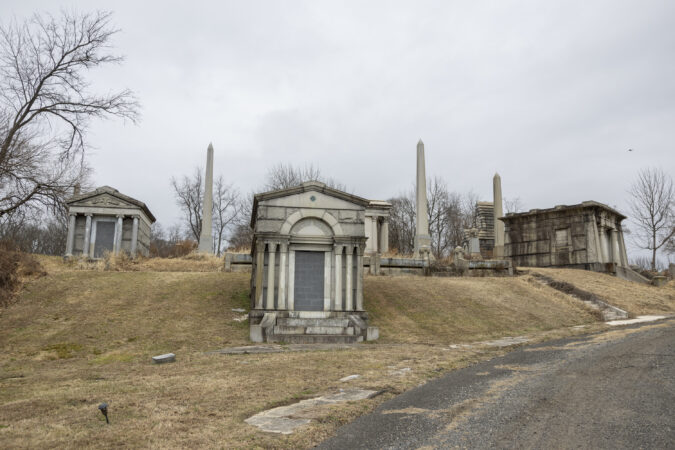
    Gerlach is accused of systematically removing skulls and bones from graves at Mount Moriah, a sprawling historic cemetery that spans Philadelphia and Yeadon Borough. The case has drawn national attention, prompting widespread media coverage and intensifying concern among families with relatives buried at the cemetery.

    (function() {
    var l2 = function() {
    new pym.Parent(‘bones’,
    ‘https://media.inquirer.com/storage/inquirer/projects/innovation/arcgis_iframe/bones.html’);
    };
    if (typeof(pym) === ‘undefined’) {
    var h = document.getElementsByTagName(‘head’)[0],
    s = document.createElement(‘script’);
    s.type = ‘text/javascript’;
    s.src = ‘https://pym.nprapps.org/pym.v1.min.js’;
    s.onload = l2;
    h.appendChild(s);
    } else {
    l2();
    }
    })();

    As of Wednesday afternoon, Giammarco said, his department had received more than 200 calls and emails from people across Pennsylvania and from as far away as Montreal and Hawaii, many asking whether authorities could confirm whether specific graves had been disturbed or whether their loved ones’ remains were among those recovered.

    Inside the coroner’s office, the remains have been cataloged and placed in secure storage, Coroner Stephen Diamantoni said. They will remain there until Gerlach’s criminal case is resolved.

    Diamantoni said his office does not plan to attempt to identify the remains — a task he described as virtually impossible given their age, their condition, and the circumstances in which they were recovered.

    When the bones were seized from Gerlach’s home and storage unit, Diamantoni said, they were not labeled or organized in any way that would indicate where they came from or whom they belonged to. In many cases, he said, remains from different individuals were mixed together, a condition known as commingling, “on a scale that I’ve never encountered.”

    Compounding the challenge, some of the remains are believed to be hundreds of years old, Diamantoni said, and are in advanced states of decay. Even under ideal conditions, identifying such remains would be difficult. In this case, he said, it would be “a herculean task” to attempt to match the bones to specific burial sites — let alone to determine whose remains they were.

    Even if that were somehow possible, Diamantoni said, identifying a living family member would present another nearly insurmountable hurdle, given the age of the remains.

    Back in Yeadon, Giammarco said he has tried to provide as much clarity as possible to families reaching out in distress. While the investigation is ongoing, he said, authorities have identified thefts only from mausoleums and underground vaults — structures that are larger and deeper than standard graves and are constructed differently. He spent much of the weekend returning calls and responding to emails, he said, hoping to ease fears.

    “If it would have been my family,” Giammarco said, “I would have wanted someone to contact me.”

    Delaware County District Attorney Tanner Rouse, whose office is prosecuting Gerlach, said Wednesday the investigation into the crimes was ongoing.

  • Charles Dickens, who called the city ‘distractingly regular,’ visited on this week in Philly history

    Charles Dickens, who called the city ‘distractingly regular,’ visited on this week in Philly history

    Philadelphia’s favorite Victorian novelist made his second, and final, visit to the City of Brotherly Love on this week 158 years ago.

    Charles Dickens, a few weeks away from his 56th birthday, arrived near midnight in Philadelphia on Jan. 12, 1868.

    He would stay at the Continental Hotel, and most notably, would give readings at the Concert Hall on Chestnut Street to sold-out audiences.

    His first visit here, in March 1842, Dickens had mixed feelings.

    He was horrified of how prisoners were treated at the “solitary prison” Eastern State Penitentiary, but delighted at meeting Philly’s other literary hero, Edgar Allan Poe.

    He also called Philly “distractingly regular” in his 1842 memoir, American Notes.

    He also called the city “handsome,” and “What I saw of its society, I generally liked.”

    In December 1843, he would publish his most seminal work, A Christmas Carol, in England. Philadelphia publisher Carey & Hart would publish the first notable U.S. edition of the story, which could help explain why the city fell in love with the author and his penchant for highlighting working-class and underdog characters.

    Dickens’ second visit was most notable for his readings from A Christmas Carol and his first novel The Pickwick Papers to “unbounded enthusiasm and loud applause,” according to an Inquirer report from the time.

    “The rude and boisterous mob which, with flaunting banners, tossing hats and loud cries, follows the horse of some victorious general,” The Inquirer wrote.

    Dickens died in 1870, at age 58. And while the whole world mourned his death, the city he so enraptured would take it a step further.

    In 1905, Philadelphia became the first city to build a statue of him, despite explicit wishes written into Dickens’ will against the honor.

    The statue now sits in Clark Park.

    Throughout the years, Philly has continued its Dickens tradition.

    In 2012, the 200th anniversary of Dickens’ birth, the Free Library held a yearlong celebration of the literary icon.

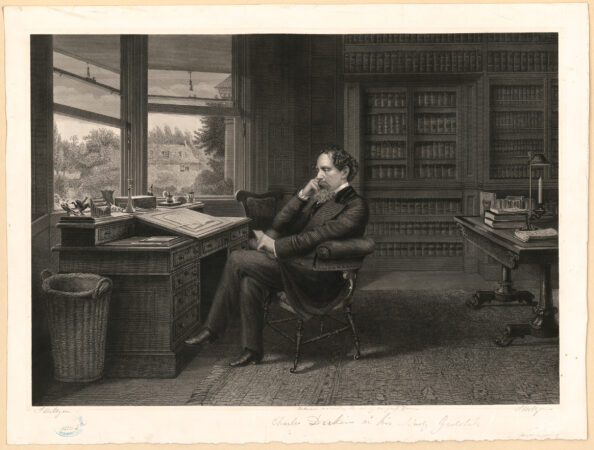
    And the library boasts an extensive collection of his artifacts, including his writing desk.

    One of its prized attractions is the taxidermied body of Grip, Dickens’ pet raven, which famously inspired Poe.

  • Temple, Villanova, and Penn State are among local schools beginning to pay athletes. Here’s how it’s going so far.

    Temple, Villanova, and Penn State are among local schools beginning to pay athletes. Here’s how it’s going so far.

    At local colleges with major sports programs, some student athletes are now getting paychecks — from their athletic departments.

    Pennsylvania State University, Temple, Villanova, St. Joseph’s, Drexel, and La Salle are among the Pennsylvania schools that have begun to directly pay athletes following a settlement last year in federal class-action lawsuits over student athlete compensation.

    The move arguably ends college athletes’ status as amateurs and begins to address long-standing concerns that players haven’t fairly profited from the lucrative business of some college sports.

    It also raises questions about how schools will fund the athletes’ pay and whether equity complaints will arise if all athletes are not comparably awarded. Some also question how it will impact sports that are not big revenue makers.

    Locally, most colleges have been mum on how much they are paying athletes, and some have also declined to say which teams’ athletes are getting money through revenue sharing, citing competitive and student privacy concerns. Villanova, a basketball powerhouse that has 623 athletes across 24 sports, said it will provide money primarily to its men’s and women’s basketball teams.

    Erica Roedl, Villanova’s vice president and athletic director, speaks during a news conference at the school’s Finneran Pavilion in 2024.

    “Our objective is to share revenue at levels which will keep our basketball rosters funded among the top schools in the Big East [Conference] and nationally,” Eric Roedl, Villanova’s vice president and director of athletics, said in a June message after the court settlement.

    St. Joe’s, another basketball standout, said its arrangement is also with men’s and women’s basketball athletes, like its peers in the Atlantic 10 Conference.

    Temple University established Competitive Excellence Funds that allow all of its 19 teams to raise money for revenue sharing, but declined to say which teams are currently distributing money to athletes.

    “Donors could, if they wanted to, make sure their money went to a certain sport,” said Arthur Johnson, Temple’s vice president and director of athletics. “They have that ability.”

    Other local colleges, including St. Joseph’s and Villanova, also launched funds to help raise money for revenue sharing. And all three schools also plan to use athletic revenue.

    Under the revenue-sharing framework established by the court settlement, each college can pay its athletes up to a total of $20.5 million this academic year. Football powerhouse Penn State, which has about 800 athletes, has said it intends to reach the cap, according to a June 7 statement from athletic director Pat Kraft.

    “This is a rapidly evolving environment that we are monitoring closely to ensure our approach remains consistent with applicable rules, while supporting the well-being and academic success of our student-athletes,” said Leah Beasley, Penn State’s deputy athletic director for strategic engagement and brand advancement.

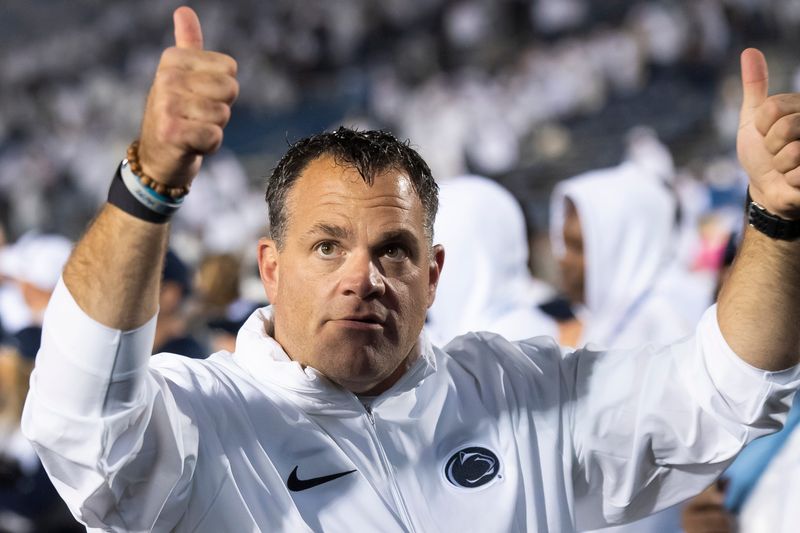
    Penn State athletic director Pat Kraft gives two thumbs up to the student section following a 31-0 win in a football game against Iowa in 2023.

    ‘It’s a job’

    To athletes, revenue sharing seems only fair, given many are so busy practicing and playing through summers and other breaks that they don’t have time to work.

    “It is a job at the end of the day,” said former Villanova University basketball player Eric Dixon, who holds the Wildcats’ record as all-time leading scorer. “You put a lot of time into it every single day, every single week.”

    Players get hurt and can see their sports careers harmed or halted, said Dixon, who grew up in Abington and played at Villanova from 2020 to 2025. College may be their only time to earn money for their sports prowess.

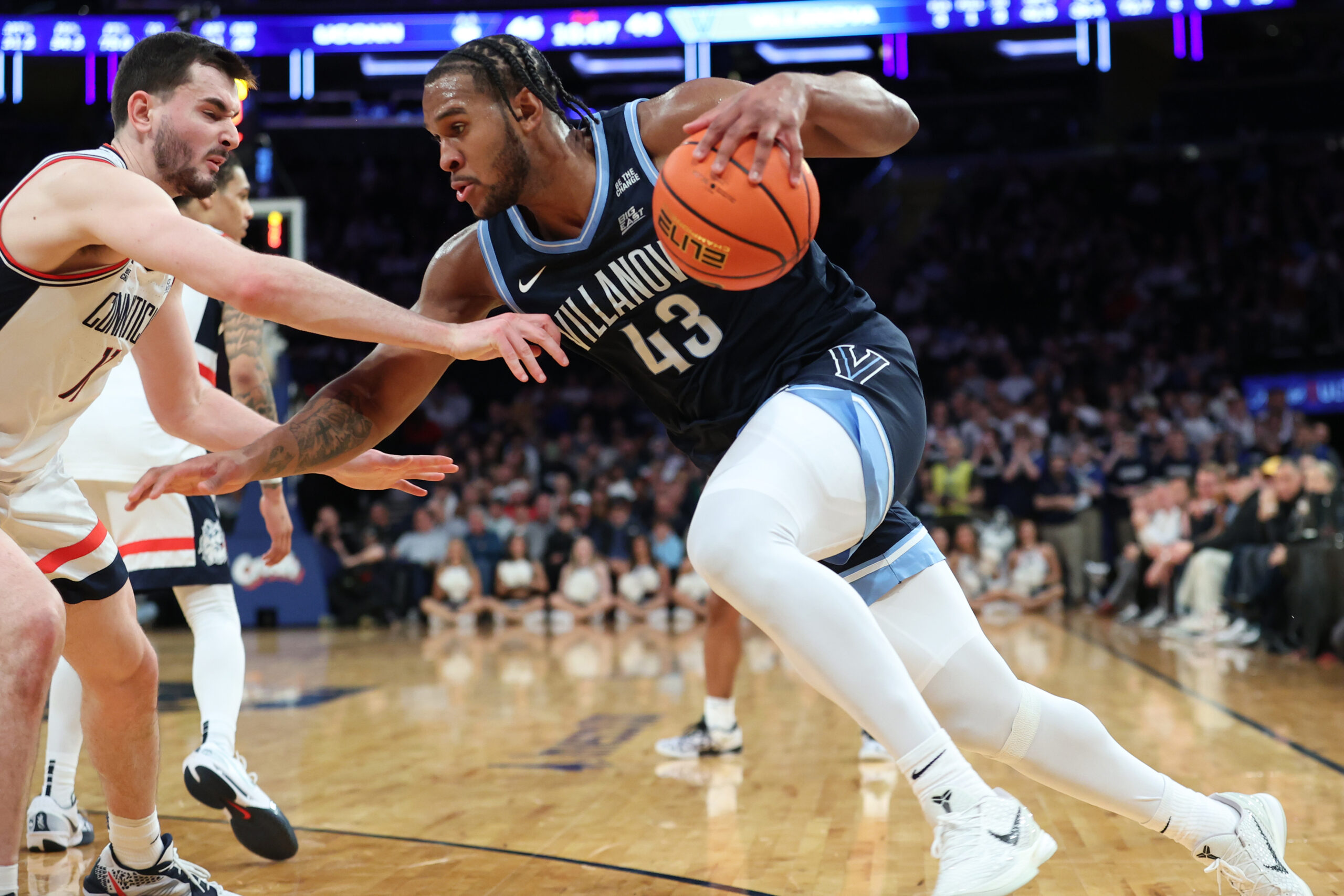
    Villanova’s Eric Dixon drives against Alex Karaban of UConn during the 2025 Big East Tournament at Madison Square Garden in New York.

    Dixon didn’t benefit from revenue sharing. But he got money through external name, image, and likeness (NIL) endorsements and sponsorships that the NCAA began allowing in 2021. Dixon declined to specify how much he received, but said it was “seven figures” over four years and allowed him to help his family.

    Like some other schools, Villanova, he said, provided players with financial guidance so they could make wise decisions on how to use their money.

    External NIL arrangements, though, he said, were a little “like the Wild West.” (NIL compensation is allowed to continue under the lawsuit settlement, but deals of more than $600 have to be reported.) Revenue sharing from colleges will offer athletes more predictable income, said Dixon, who now plays for the Charlotte Hornets’ affiliated team in the G League.

    Tyler Perkins, a Villanova junior from Virginia, currently plays for the Wildcats, who won national championships in 1985, 2016, and 2018. While he declined to say how much he is receiving, he said revenue sharing is helping him prepare for his future and “set up for the rest of my life.”

    Maddy Siegrist, also a former Villanova basketball player who now plays for the Dallas Wings in the WNBA, is pleased universities are able to share revenue directly with athletes.

    “It will be interesting to see how it all plays out,” said Siegrist, the Big East’s all-time leading scorer in women’s basketball and Villanova’s overall highest scorer, of men’s and women’s basketball.

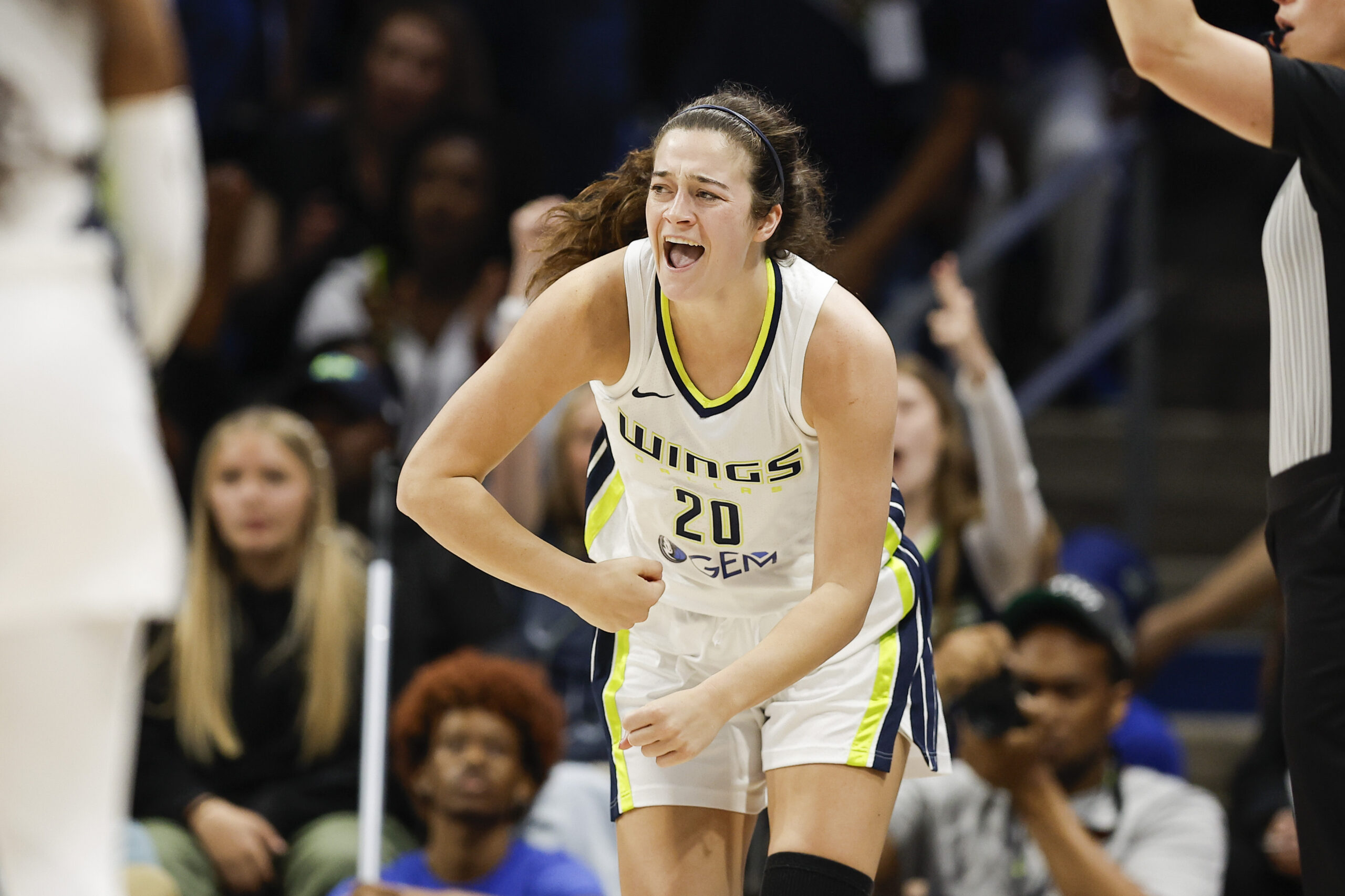
    Dallas Wings forward Maddy Siegrist celebrates a three-point shot during a WNBA basketball game against the Chicago Sky in 2024 in Arlington, Texas.

    While the big revenue sports are likely to see the money first, she said, “I would hope there will be a trickle-down effect where almost every sport is able to benefit.“

    A lawsuit spurs changes

    For years, there have been growing concerns that athletes were not getting their fair share of the profits from college sports, which make money on broadcast rights, ticket sales, and sponsorships. Meanwhile, coaches can be among the highest paid in a university’s budget.

    In 2020, former Arizona State swimmer Grant House became the lead plaintiff in House vs. NCAA, a class-action antitrust lawsuit that argued athletes should be able to profit from the use of their name, likeness, and image and schools should not be barred from paying them directly.

    The settlement approved in June of that suit and two others against the NCAA requires the NCAA and its major conferences to pay $2.8 billion in damages to current and former Division 1 athletes. Another provision gave rise to the revenue sharing.

    It initially applied to the major sports conferences: the Big Ten, Atlantic Coast Conference, Southeastern Conference, and the Big 12. Penn State belongs to the Big Ten and the University of Pittsburgh to the Atlantic Coast.

    But other athletic conferences, along with many of their members, decided to opt in to the agreement to remain competitive in select sports. St. Joseph’s, La Salle, Villanova, Drexel, and Temple all are part of conferences participating in revenue sharing with athletes this year.

    “We support student-athletes’ ability to pursue value among their peers and to leverage commercial opportunities that may benefit them or the institution,” said Maisha Kelly, Drexel’s vice president and director of athletics and recreation.

    Temple belongs to the American Athletic Conference, which said its members must agree to pay at least $10 million over three years to its athletes. Johnson, Temple’s athletic director, noted that total also includes new scholarships, not just pay.

    No tuition, state dollars to be used

    Pitt alumnus J. Byron Fleck has called on the Pennsylvania State Board of Higher Education to advise three state-related colleges — Penn State, Temple, and Pitt — not to use tuition dollars, student fees, or state appropriations to fund athlete payments. He also asked lawmakers to take action.

    “It doesn’t relate to any educational or academic purpose,” said Fleck, a 1976 Pitt alumnus and lawyer in California.

    Fleck said he was especially concerned about how Pitt could afford it. Pitt had a $45 million deficit in its athletics department budget in 2023-24, according to Pittsburgh’s Public Source.

    Karen Weaver, an expert on college athletics, higher education leadership, and public policy, said the same concerns about public funds being used to pay athletes have risen in other states, including Michigan and Washington.

    But Penn State, Temple, and Pitt all said in statements that they would not use tuition, student fees, or state appropriations to fund revenue sharing with athletes.

    “Penn State Intercollegiate Athletics is a self-sustaining unit of the university,” said Beasley, Penn State’s deputy athletic director.

    Pitt said it would use athletic revenues.

    In addition to donations, Temple, too, is using athletic department revenues, such as ticket sales, but it is also looking at other “nontraditional ways” to raise money, Johnson said.

    “We’re turning over every stone,” he said.

    Weaver, an adjunct professor at the University of Pennsylvania, said she worries that as the caps on revenue sharing get higher and costs grow, schools, especially those tight for cash, may start raising recreation and other student fees. The University of Tennessee added a 10% student talent fee for season ticket renewals, according to the Associated Press, while Clemson is charging a $150 per semester student athletic fee, according to ESPN.

    Roedl, the Villanova athletic director, said in a statement that it had launched the Villanova Athletics Strategic Excellence (VASE) Fund to raise money for the payments.

    “Additionally, we are looking for other ways to maximize revenue through ticketing, sponsorships, and events, and identifying cost efficiencies throughout our department,” he said.

    St. Joe’s, which has about 450 student athletes, said that it started a Basketball Excellence Fund to raise revenue and that payments also are funded by the basketball program. Athletes that receive funds “serve as brand ambassadors for the university,” the school said in a statement. “… These efforts have included community engagement — particularly with youth in the community — and marketing initiatives that directly support the Saint Joseph’s University brand.”

    La Salle declined to say how much student athletes receive or in what proportion.

    “We can share that any funds provided to students come from external sources and not tuition dollars,” said Greg Nayor, vice president for enrollment management and marketing.

    Weaver, author of a forthcoming book, Understanding College Athletics: What Campus Leaders Need to Know About College Sports, said plans that call for the bulk of revenue sharing to go to football and basketball players would lead to legal action, charging that female athletes are not being treated equally.

    “Any day now I expect we’ll see a huge Title IX lawsuit,” she said.

  • Federal prosecutors have requested documents tied to the Ellen Greenberg case, sources say

    Federal prosecutors have requested documents tied to the Ellen Greenberg case, sources say

    The U.S. Attorney’s Office is seeking documents and information from those connected to the case of Ellen Greenberg, whose 2011 death remains shrouded by questions about whether it was properly investigated by authorities, according to sources.

    The sources, who asked not to be identified, said federal prosecutors recently sent out subpoenas in the matter, and that the investigation does not appear to be focused on the manner of Greenberg’s 2011 death by 20 stab wounds — which was initially ruled homicide then switched to suicide. Instead, the sources said, the probe appears to be centered on questions about how a variety of agencies handled the case in the years after she died, and whether any of those missteps might amount to criminal corruption.

    Still, the scope of the potential inquiry was not clear Wednesday.

    Multiple city and state agencies have been involved in Greenberg’s case in the last 15 years, including the Philadelphia Police Department, the Philadelphia Medical Examiner’s Office, the Philadelphia District Attorney’s Office, the Philadelphia Law Department, and the Pennsylvania Attorney General’s Office.

    Spokespeople for all of those city offices would neither confirm nor deny they have received subpoenas.

    A spokesperson for the U.S. Attorney’s Office said they could “neither confirm nor deny the existence of an investigation.”

    Joseph Podraza Jr., the attorney for Greenberg’s parents, said he and his clients are “ecstatic.”

    “If that is in fact correct and accurate, that the federal government is going to investigate … this is exactly what we’ve wanted all along,” he said. “It’s unfortunate it’s taken more than seven years to get to this point but we are really grateful and thankful to the U.S. attorneys and, of course, are available to assist in any way we can in helping their investigation.”

    From homicide to suicide

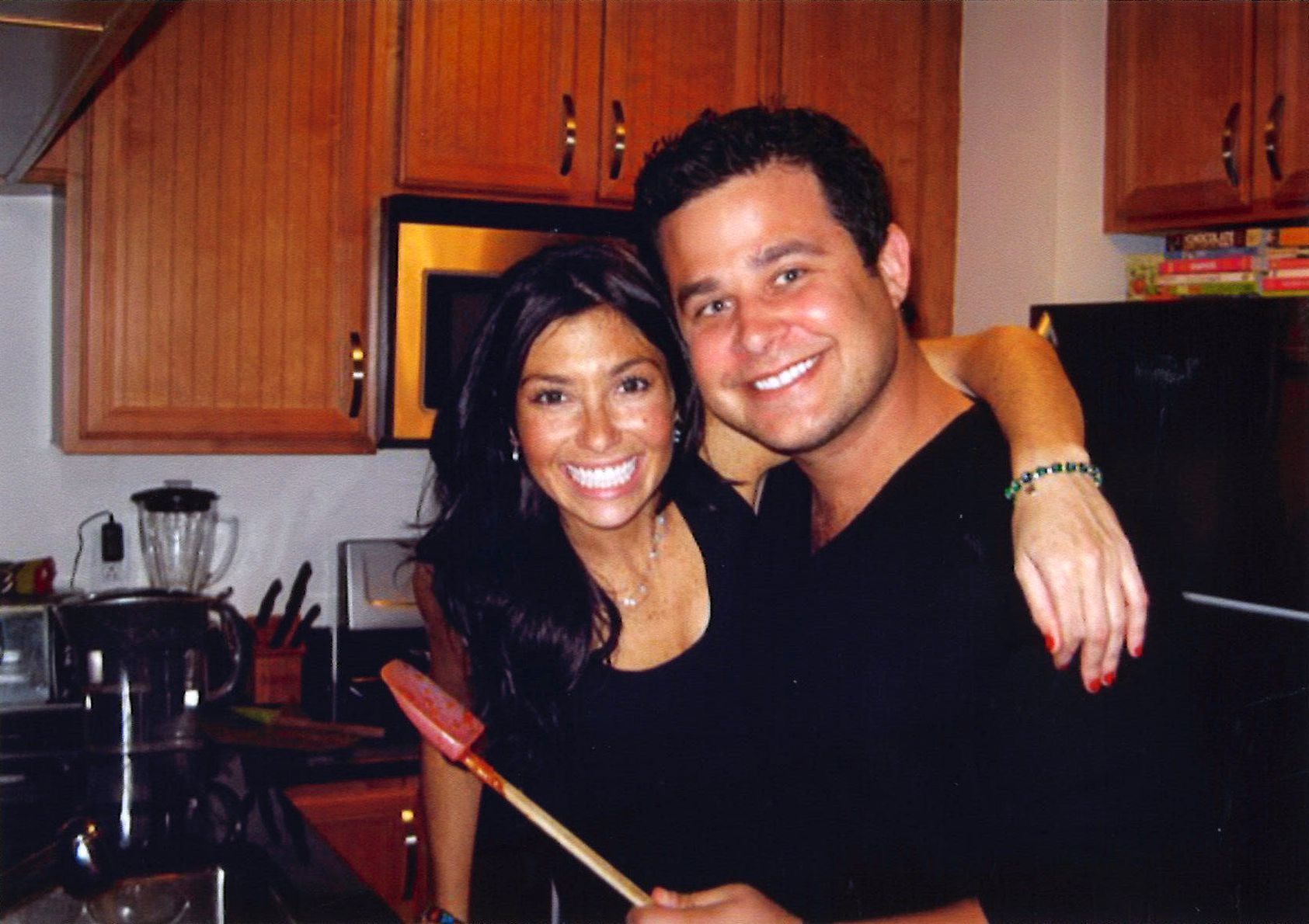
    Ellen Greenberg and Samuel Goldberg in the kitchen of the Manayunk apartment they shared.

    Greenberg, 27, was found by her fiancé, Samuel Goldberg, in the kitchen of their Manayunk apartment with a 10-inch knife lodged four inches into her chest on Jan. 26, 2011.

    Investigators on the scene treated her death as a suicide because Goldberg told them the apartment door was locked from the inside and he had to break it down to get in. There were no signs of an intruder and Greenberg had no defensive wounds, police have said.

    During an autopsy the next morning, then-assistant medical examiner Marlon Osbourne noted a total of 20 stab wounds to Greenberg’s body, including 10 to the back of her neck, along with 11 bruises in various stages of healing, and ruled her death a homicide.

    By the time homicide investigators returned to the scene to conduct their investigation, the apartment was already professionally cleaned and electronic devices belonging to Greenberg had been removed by a member of Goldberg’s family.

    Shortly after the homicide ruling, police publicly disputed the findings, citing “mental issues” Greenberg may have had. Osbourne later changed his ruling to suicide, with no explanation to Greenberg’s parents, Joshua and Sandra.

    Greenberg was dealing with anxiety, had met with a psychiatrist, and was prescribed anti-anxiety and sleep aid medications. Her psychiatrist told police Greenberg felt overwhelmed at work, but “there was never any feeling of suicidal thoughts,” and according to the medical examiner’s investigation report at the time, there was nothing indicative of suicide found on Greenberg’s computers.

    She did not leave behind a note.

    The Greenbergs subsequently retained numerous independent forensic experts who have questioned authorities’ findings, as first detailed in a March 2019 Inquirer report.

    Ellen Greenberg’s parents, Joshua and Sandra, hold a photo album of their daughter.

    In their search for answers, the Greenbergs hired then-civil rights attorney Larry Krasner in 2012. He convened a meeting for the Greenbergs with police officials and the district attorney’s office in an effort to get the investigation reopened, but nothing happened, the Greenbergs said.

    When Krasner became district attorney in 2018, the Greenbergs reached out to see if he’d reopen the investigation. Krasner referred the matter to the state Attorney General’s Office, then helmed by now Gov. Josh Shapiro, to avoid the appearance of a conflict of interest.

    Shapiro’s office had the case for more than a year. It was only when The Inquirer pressed the office for answers that Shapiro’s spokesperson at the time, Joe Grace (now spokesperson for Mayor Cherelle L. Parker), said in a 2019 statement that they had conducted a “thorough investigation,” the “evidence supports ‘Suicide’ as the manner of death,” and that the office had closed the investigation.

    Grace pointed to search history on Greenberg’s computer that included the search terms “suicide methods,” “quick suicide,” and “painless suicide.”

    When asked why the medical examiner’s 2011 report said nothing indicative of suicide was found on Greenberg’s computer, Grace said his office didn’t find the analysis in the file, so “we cannot say if anyone, police or prosecutor, ever looked at it.”

    The lawsuits

    Following the Attorney General Office’s review, the Greenbergs filed a lawsuit against the Medical Examiner’s Office and Osbourne in 2019 seeking to have the manner of their daughter’s death changed back to homicide or undetermined.

    The city law department fought to have the case dismissed and a lengthy appeals process followed. In the Commonwealth Court’s 2-1 decision in 2024, judges wrote they had “no choice under the law” but to grant the city’s appeal but added that “… this court is acutely aware of the deeply flawed investigation of the victim’s death by the City of Philadelphia Police Department (PPD) detectives, the City of Philadelphia District Attorney’s Office (DAO), and the MEO [Medical Examiner’s Office].”

    Ellen Greenberg

    While that case was ongoing, the Greenbergs filed a second suit in 2022, based on additional details about the case that came to light through the first suit, including new information about the process around how Greenberg’s death was classified.

    In the new suit, Podraza alleged the investigation into Greenberg’s death was “embarrassingly botched” and resulted in a “cover-up” by Philadelphia authorities. It sought monetary damages for intentional infliction of emotional distress.

    The city law department fought both suits until February, when Osbourne — the pathologist who initially ruled Greenberg’s death a homicide then switched it to suicide — signed a sworn statement saying he now believes her death should be categorized as something other than suicide.

    Within days, and shortly before the second case was to go to trial, the city offered to settle with the Greenbergs. The settlement included $650,000, which was paid, and an agreement that the Medical Examiner’s Office conduct an “expeditious” review of the manner of Greenberg’s 2011 death.

    Sandra and Joshua Greenberg

    As part of the settlement, the Greenbergs agreed to withdraw both of their lawsuits against the city. The first suit had been slated for a hearing before the Supreme Court of Pennsylvania last year.

    In October, Philadelphia Chief Medical Examiner Lindsay Simon delivered her review of the case, in which she said she discovered 20 additional bruises and three additional “perforations in the skin” never before documented on Greenberg’s body, raising the total number of bruises to 31 and stab wounds to 23, up from 20.

    Simon concluded that Greenberg “would be capable of inflicting these injuries herself,” and that her death “is best classified as ‘Suicide.’”

  • Women in tight uniforms and maggots in the soft serve: Two ex-employees sue Trump’s N.J. golf club

    Women in tight uniforms and maggots in the soft serve: Two ex-employees sue Trump’s N.J. golf club

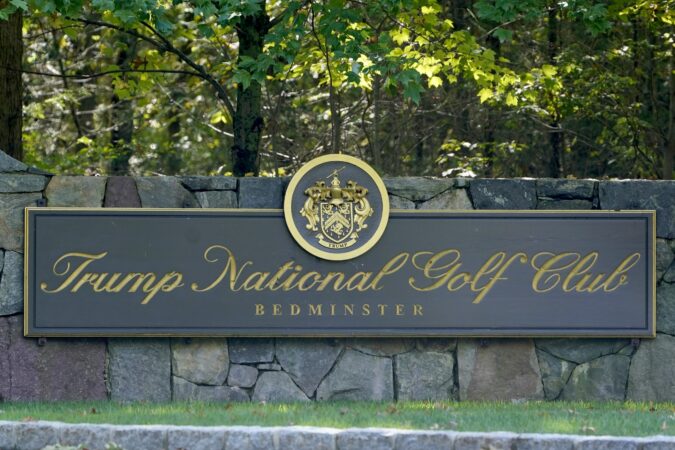
    Women working at Trump National Golf Club in New Jersey were required to wear tight uniforms that were too small and told to “smile more,” as they endured “sexist remarks about their bodies and menstruation,” according to two lawsuits by former employees.

    Both complaints describe a similar pattern: A female employee at the Bedminster club, working in a culture hostile to women, reported safety issues and was penalized for doing so.

    Maria Hadley, a former banquet server who worked at the private club, owned by President Donald Trump, from February until she resigned in August, says she suffered from a retaliation campaign after she reported a manager who spiked the drink of an underage employee with vodka. And Justine Sacks, who was hired as clubhouse manager in 2023, says that she was demoted and ultimately fired in May for reporting health and safety violations, including maggots and mold in the soft-serve machine.

    The lawsuits describe a hyper-sexualized work environment, in which female staffers were expected to endure sexual harassment from workers and guests.

    Both Hadley and Sacks are represented by the New Jersey-based McOmber McOmber & Luber law firm. Their attorneys did not respond to a request for comment.

    The Bedminster club is operated by the Trump Organization, which is led by the president’s sons Eric Trump and Donald Trump Jr. Neither the club nor general manager David Schutzenhofer responded to requests for comment.

    In this July 15, 2017 file photo, President Donald Trump turns to wave to the people gathered at the clubhouse as his walks to his presidential viewing stand during the U.S. Women’s Open Golf tournament at Trump National Golf Club in Bedminster, N.J.

    Vodka-spiked Shirley Temple

    Hadley, a banquet server, says women were treated as “a prop” andwere expected to look pleasing, work without complaint, and stay quiet,” according to the lawsuit filed Monday in New Jersey Superior Court in Camden. Male managers and coworkers harassed their female peers, and called teenage guests “sexy.” When a guest inappropriately touched Hadley, a manager advised “they pay a lot of money to come here, just ignore it.”

    Hadley reported in June that a bartender poured vodka into the Shirley Temple of an underage employee without the employee’s consent, saying it would give her energy.

    The bartender was temporarily fired, but the club’s management launched a retaliation campaign against Hadley, the complaint says. She was denied a $1,000 bonus, isolated by her peers, and received worse hours and assignments.

    Hadley resigned via email in August, the suit says, writing to the club’s human resources representative that her employment became “unbearable.” The club accepted her resignation, which the suit calls “effectively forcing her out,” and rehired the fired bartender.

    That man went on to make sexual comments about 12-year-old guests with braces in September, according to a message Hadley sent to Eric Trump, the executive vice president of Trump National, which is included in the complaint.

    Maggots and mold

    Sacks joined Trump National in January 2023 and was told from the onset to expect “gender differences” in treatment, according to the suit, which was filed last month in Monmouth County Superior Court. She was instructed to hire women based on their looks, and received complaints from multiple direct reports about offensive, gender-based comments from male managers and peers.

    The complaints were dismissed by Schutzenhofer, who told Sacks to “vote the mean girls off the island,” the suit says.

    The club’s management slowly stripped Sacks’ authority and stopped inviting her to leadership meetings, in what the suit says was retaliation for elevating the complaints of female staffers.

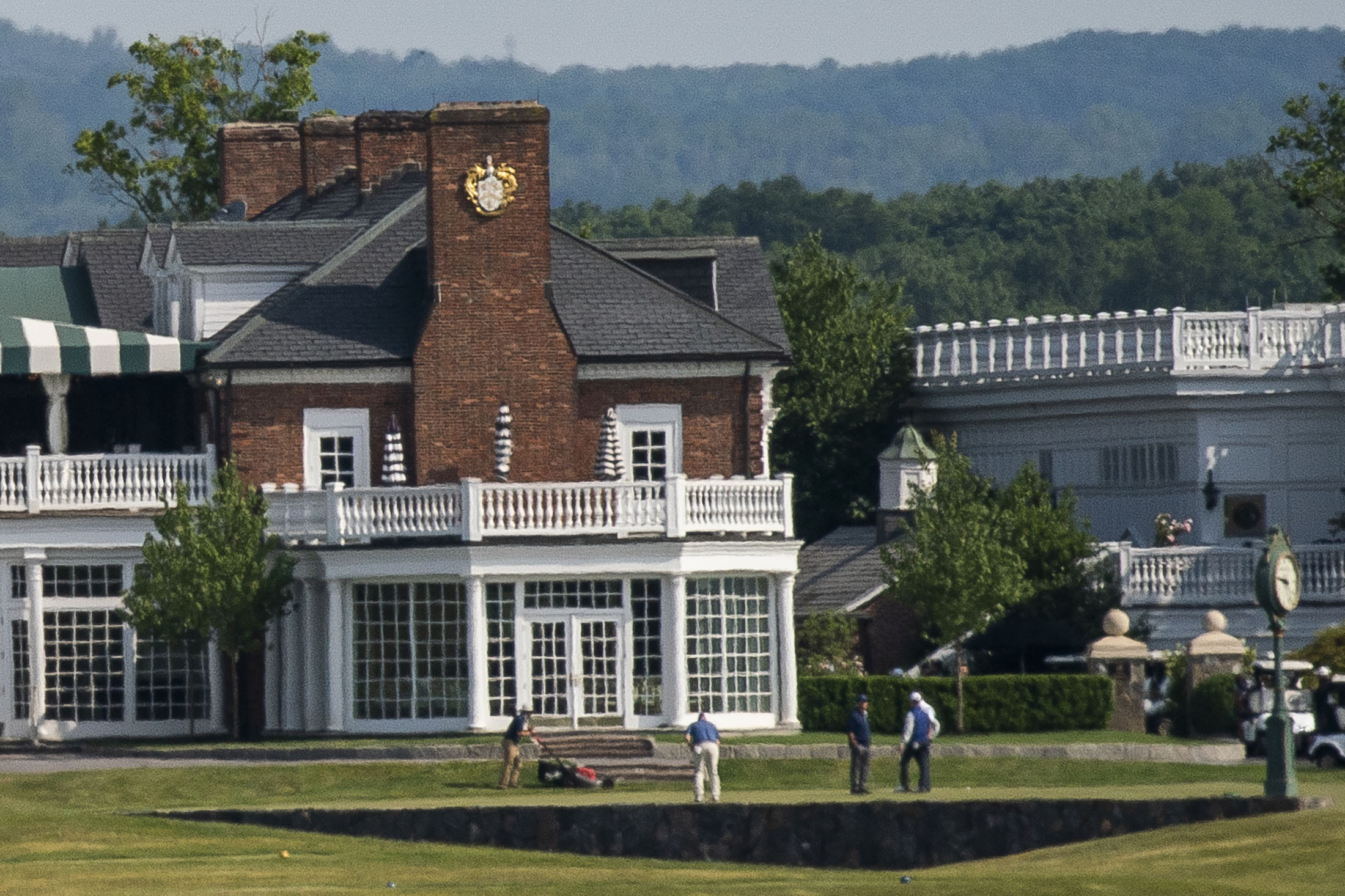
    People play golf next to the Trump National Golf Club Bedminster’s clubhouse in Bedminister on Friday, June 9 , 2023, in New Jersey.

    Sacks was also retaliated against for reporting unsanitary conditions at the club’s kitchens, which included expired and unlabeled food, and the bistro operating without running water, the complaint says. There were flies all over the clubhouse in the fall of 2023, which even Donald Trump complained about, according to the lawsuit.

    Management told Sacks that she was new to working at golf clubs and was “wrapped too tight” when she complained about the sanitation conditions, as well as employees drinking and vaping on the job. But even Eric Trump asked the club’s management team to make sanitation a “huge focus” because a few health inspectors are “eager and politically motivated to try and embarrass us,” according to a copy of an email sent by the executive vice president in January 2024.

    The clubhouse’s bistro-area became more unsanitary, and by September 2024 the soft-serve machine was filled with maggots and mold, the suit says.

    Sacks was placed on a 90-day performance improvement plan in December 2024 for, among other issues, being “off-putting,” the complaint says. In April, Sacks was reassigned from clubhouse manager to managing the bistro, which the lawsuit calls a clear demotion.

    Schutzenhofer terminated Sacks in May, the lawsuit says, shortly after the club “failed miserably” a state health inspection.

  • The Avenue of the Arts to break ground on an ambitious $150 million streetscape to make Broad Street greener

    The Avenue of the Arts to break ground on an ambitious $150 million streetscape to make Broad Street greener

    Lush landscaping and public art will soon line Broad Street, impromptu performances may pop up, and vehicular traffic will be calmed with a new Avenue of the Arts south streetscape about to take shape.

    The project — estimated to take $150 million and a decade to realize — will begin modestly.

    The groundbreaking ceremony was held Wednesday morning in front of the Kimmel Center and was attended by more than 200 dignitaries, including Mayor Cherelle L. Parker, City Council President Kenyatta Johnson, and other members of City Council, state representatives, and officials from groups along the Avenue of the Arts.

    The actual construction is slated to start at the end of January on a small portion of the project: remaking the median strip between Spruce and Pine Streets. That phase is expected to be completed by June.

    In 2027, after the end of an anticipated swell in tourism and street activity during the Semiquincentennial, sidewalk beautification will begin on both the east and west sides of that block.

    Eventually, pending funding, all of the blocks between City Hall and Washington Avenue will be remade.

    Looking north toward City Hall, a rendering shows the completed first phase of a South Broad Street streetscape project slated to break ground in January 2026.

    The current streetscape of planters, pavers, and retro light fixtures was designed and installed more than three decades ago. In addition to the wear and tear of the existing scheme, the thinking around public space has evolved since then, said Carl Dranoff, board chair of Avenue of the Arts, Inc., which is overseeing the project.

    “It’s become somewhat aged and dog-eared,” said Dranoff. “In 1993 you didn’t need to have outdoor cafes. We need to activate the street, not just make it palatable. We have the opportunity to really elevate the Avenue of the Arts into one of the world’s great streets.”

    The project was announced in July 2024 at $100 million, but inflation and a more detailed cost analysis has now put the total price tag at about $150 million — $15 million per block. These numbers include not just the planters, lighting, public art, street furniture, and aesthetic elements, but also infrastructure work beneath the surface, said Dranoff.

    “A lot of it is things you don’t see. There’s a lot of underground construction,” he said. “Right now water is leaking from the median strip into the subway concourse. One of the reasons we got support from SEPTA and PennDot and [the Philadelphia] Streets [Dept.], is as we are building the median strips, we are improving deficiencies in the street in each block.”

    In addition, some utilities will have to be moved. One PECO relocation, for instance, will cost the project $250,000, he said.

    Dranoff has a vested interest in the vitality of the Avenue of the Arts. He has led several development projects on South Broad Street, including Arthaus, which is on the same block as the first phase of the new streetscape, and, one block south, Symphony House. He compares the investment in the new streetscape to the ones made in the Pennsylvania Convention Center, Philadelphia Navy Yard, Kimmel Center, and Schuylkill River Trail.

    “If we don’t make investments in the future, which are going to increase revenue and population, we are relegating ourselves to second-place status.”

    The new $15 million streetscape in the block from Spruce to Pine, which includes a $1 million endowment fund to underwrite maintenance, native-species plants, a rainwater-collection cistern, lighting, curved raised planting beds, public art, seating, way-finding devices, and artist-designed banners.

    Of the $15 million needed, $5 million has been raised so far: $3 million from the city over two budget years, $1 million from the state, and $1 million from private donors. Other funding requests are pending, which planners call “very promising.”

    A sidewalk garden on the east side of Broad Street between Pine and Spruce Streets is planned for installation in 2027 as part of a new Avenue of the Arts streetscape.

    Dranoff says that construction of the median between Spruce and Pine — which is the block occupied by the Kimmel Center and defunct University of the Arts — won’t cause “a lot of disruption. They’re only working business hours, not on weekends.” Any blocked lanes will be reopened after work is done for the day, he said.

    The next block to be redesigned hasn’t been decided, but it will likely be north of Spruce Street, Dranoff said. “Part of it will depend on funding. If we get a donor, someone whose offices are near the Academy of Music and is donating $15 million for that block to be next, we might accommodate that,” he said.

    Funding for the entire project is expected to be a mix of public money, corporate and individual donations, and foundation support, he said.

    The goal isn’t to have the mile-plus between City Hall and Washington Avenue end up with a streetscape that looks uniform, Dranoff said. Instead, design firms Gensler and OJB Landscape Architecture may come up with different ideas for different blocks.

    “You don’t need a master plan that’s set for 10 blocks. Every block is different, the institutions are different. It lends itself to block-by-block planning tied together by a common theme.”

    Dranoff said once the block from Spruce to Pine is done, it will show the potential, which he expects will spur fundraising to complete the streetscape for the entire Avenue of the Arts south.

    “The difference between now and the first block being finished is, you’re going to be driving down a tree-lined boulevard.”

    The article has been updated with details from the groundbreaking ceremony.

  • Stacy Garrity says she’s ‘talking to a lot of people’ about being her running mate. Only two have stepped up.

    Stacy Garrity says she’s ‘talking to a lot of people’ about being her running mate. Only two have stepped up.

    HARRISBURG — State Treasurer Stacy Garrity has been the Pennsylvania Republican Party’s endorsed candidate for governor since September, but few candidates have stepped up to run alongside her for lieutenant governor.

    Only two candidates have officially thrown their hats in the ring for Republican lieutenant governor, as Garrity faces the uphill battle of running against a popular incumbent in Democratic Gov. Josh Shapiro. And despite amassing unusually early support from the state party, recruiting someone to run as her No. 2 has proven challenging, as some potential candidates have declined to run.

    Garrity said Monday at the Pennsylvania Press Club luncheon she’s in talks with “a lot of people,” and she’s confident she’ll find a running mate “perfect for the ticket.”

    But time is of the essence, as she has less than a month until the state GOP meets for its winter meeting, where the party is expected to endorse a lieutenant governor candidate. Whomever she picks is likely to get the nod.

    “In many respects, it’s up to Stacy Garrity,” said GOP strategist Charlie Gerow. “The lieutenant governor candidate has to not only be a good political fit, but has to be a good personal fit for her. Otherwise, the ticket falls apart before you get to Election Day.”

    So far, the only two GOP candidates to formally announce their campaigns for lieutenant governor are State Sen. Cris Dush (R., Jefferson), who is one of the most conservative members of the Senate GOP caucus, and Bucks County businessman and political newcomer Brian Thomas. Dush said he’d likely pursue the GOP primary nomination even if he isn’t endorsed by the state party, while Thomas announced his candidacy last week in a press release and said he is now reaching out to party leaders seeking their support.

    And more far-right Republicans have publicly floated a run, teeing up a potential battle among some of the state’s most conservative members to run alongside Garrity on the November ballot.

    In Pennsylvania, candidates for lieutenant governor face their own primary races separate from the candidates for governor. After the primary, the winners are joined onto one ticket and run together in the general election.

    Shapiro announced his reelection campaign with his running mate, Lt. Gov. Austin Davis, at two campaign rallies last week. Davis was the nation’s youngest lieutenant governor when he took office in 2023, and the first Black person elected to the state’s executive branch.

    The lieutenant governor’s main duty is to preside over the state Senate and break tied Senate votes on nonlegislative matters, a job that may become more important as Democrats attempt to tie or flip the state Senate in the midterms.

    Former State Rep. Rick Saccone, who previously ran for lieutenant governor and was on U.S. Capitol grounds during the Jan. 6, 2021 riot but did not face criminal charges, has publicly stated his interest in the role. Saccone said he would not enter the race if the state party backed another candidate.

    And State Sen. Doug Mastriano, a far-right Republican who lost to Shapiro in 2022 and last week ruled out a second run for the GOP nomination, later claimed on a local radio station that Garrity would need him as her running mate if she wants to win.

    Few more moderate options have emerged.

    Montgomery County Commissioner Tom DiBello, a Republican from Shapiro’s home county, said in an interview that he had been approached about pursuing the role. DiBello said he received a positive reception when he traveled the state contemplating a run, but he implied Monday that he’d moved on. On Tuesday night DiBello lost his bid to be the next chair of the county party to his former running mate, Liz Ferry.

    “I had a lot of support out there as far as potentially running for lieutenant governor, but I’m right now very dedicated to Montgomery County,” DiBello added.

    A number of other officials are rumored to have withdrawn themselves from consideration or are still in talks with Garrity’s campaign, several Republican insiders said.

    Statewide appeal

    When the state GOP declined to endorse in the 2022 primary in a crowded, nine-person field for governor, Mastriano won the Republican nomination. However, his lieutenant governor pick did not win in a nine-candidate field for the No. 2 role, and he instead ran alongside the voters’ choice, former State Rep. Carrie DelRosso (R., Allegheny). DelRosso was much more moderate compared to Mastriano, and would often sidestep questions about his more extreme views.

    This time around, the sense among Pennsylvania state party members is that Garrity should be given leeway to choose her running mate and party faithful will endorse her choice.

    Many hadn’t even heard who might be in the running. But several Republicans who spoke to The Inquirer said they think Garrity needs to pick someone who will appeal to Democrats and independents who voted for Shapiro four years ago.

    “We’re a purple state, and my sense is a more moderate candidate that appeals to a bigger swath of the electorate would be, if I were selecting, would be a preference here,” said Jason Richey, the chair of the Allegheny County GOP.

    Or, as Val Biancaniello, a Republican state committeewoman from Delaware County, put it, a candidate needs “statewide appeal.”

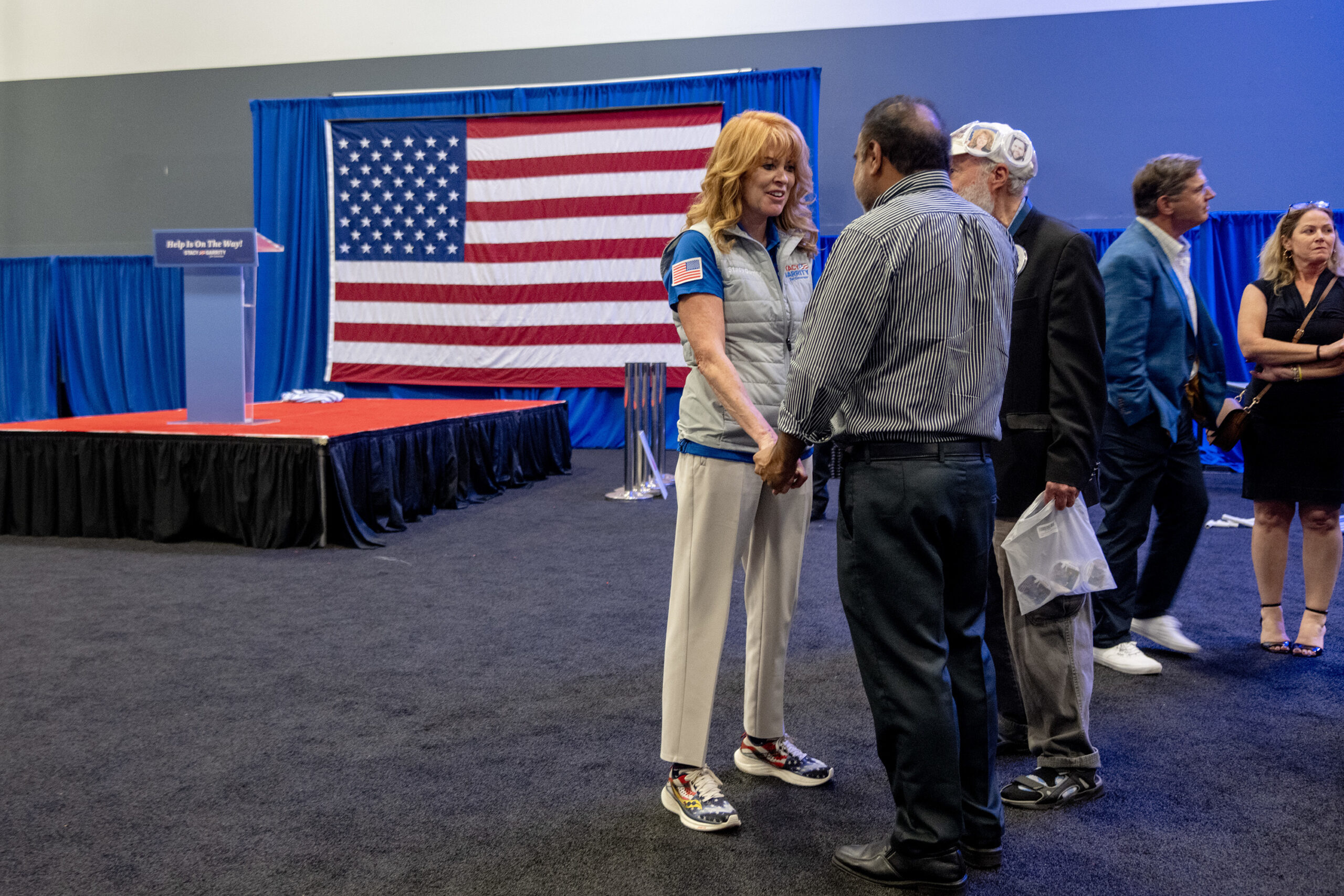
    State Treasurer Stacy Garrity greets supporters following a campaign rally in Bucks County on Sept. 25, 2025. The GOP gubernatorial candidate visited the Newtown Sports & Events Center, in one of Pennsylvania’s top swing counties.

    DiBello argued that Garrity’s running mate needs corporate and government experience, though he refused to name anyone else being considered behind the scenes. Garrity said she believed that DiBello was no longer “in the mix” for the job, but she did not expand further.

    “I’m not putting my finger on the scale,” DiBello said before joking: “I’ve heard this Montgomery County commissioner would be awesome. I’ll put my finger on that scale.”

    Garrity largely declined to comment on the candidates whose names have been circulating for her running mate, except for Mastriano.

    “I didn’t even know he wasn’t running for governor until last week,” Garrity told reporters, noting her friendship with Mastriano. “We’re in discussion with a number of people, and I know that we will have the absolute best partner as lieutenant governor when the time is right.”

    Garrity, who previously denied the 2020 election results and has a history of opposing abortion that she has softened since announcing her run for governor, has sought on the campaign trail to present herself as more mainstream.

    In his campaign launch Thursday, Shapiro tied Garrity to the extremes of her party, asking voters to choose between “getting stuff done” and “chaos.” A far-right running mate will make that message easier for Democrats as they work to secure the governor’s mansion for another four years.

    Despite this, Mastriano was bullish Friday morning speaking on WEEO News Talk 103.7 FM in central Pennsylvania.

    “That’s a possibility,” Mastriano said about a potential lieutenant governor run. “To be honest, that probably [is] the only way to generate some excitement for the Garrity ticket, and we know Garrity being on top of the ticket, that’s probably the only way the party would win if I did that.”

  • More Philadelphia police live outside the city than ever before

    More Philadelphia police live outside the city than ever before

    When Cherelle L. Parker was a City Council member, she championed a strict residency rule that required city employees to live in Philadelphia for at least a year before being hired.

    Amid protest movements for criminal justice reform in 2020, Parker said stricter residency requirements would diversify a police force that has long been whiter than the makeup of the city, and ensure that officers contribute to the tax base.

    “It makes good common sense and good economic sense for the police policing Philadelphia to be Philadelphians,” she said then.

    But today, under now-Mayor Parker, more police live outside Philadelphia than ever before.

    About one-third of the police department’s 6,363 full-time staffers live elsewhere. That share — more than 2,000 employees — has roughly doubled since 2017, the last time The Inquirer conducted a similar analysis.

    (function() {
    var l2 = function() {
    new pym.Parent(‘ppd_zips’,
    ‘https://media.inquirer.com/storage/inquirer/projects/innovation/arcgis_iframe/ppd_zips.html’);
    };
    if (typeof(pym) === ‘undefined’) {
    var h = document.getElementsByTagName(‘head’)[0],
    s = document.createElement(‘script’);
    s.type = ‘text/javascript’;
    s.src = ‘https://pym.nprapps.org/pym.v1.min.js’;
    s.onload = l2;
    h.appendChild(s);
    } else {
    l2();
    }
    })();

    Today, the percentage of nonresidents is even higher among the top brass: Nearly half of all captains, lieutenants, and inspectors live outside the city, according to a review of the most recent available city payroll data.

    Even Commissioner Kevin Bethel keeps a home in Montgomery County, despite officially residing in a smaller Northwest Philadelphia house that he owns with his daughter.

    Most municipal employees are still required to live within city limits. Across the city’s 28,000-strong workforce, nearly 3,200 full-time employees listed home addresses elsewhere as of last fall. Most of them — more than 2,500 — are members of the police or fire departments, whose unions secured relaxed residency rules for their workers in contract negotiations. About a quarter of the fire department now lives outside the city.

    Philadelphia Mayor Cherelle L. Parker and Police Commissioner Kevin Bethel speak before the start of a news conference.

    Proponents of residency rules in City Hall have long argued they improve rapport between law enforcement and the communities they serve, because officers who have a stake in the city may engage in more respectful policing.

    But experts who study public safety say there is little evidence that residency requirements improve policing or trust. Some say the rules can backfire, resulting in lesser quality recruits because the department must hire from a smaller applicant pool.

    A survey of 800 municipalities last year found that residency requirements only modestly improved diversity and had no measurable effect on police performance or crime rates.

    “It’s a simple solution thrown at a complex problem,” said Fritz Umbach, an associate professor at John Jay College of Criminal Justice. “It doesn’t have the impact people think it will.”

    Parker, a Philadelphia native who lives in the East Mount Airy neighborhood, says she would still prefer all municipal employees live in the city.

    “When I grew up in Philadelphia, it was a badge of honor to have police officers and firefighters and paramedics who were from our neighborhood,” she said in a statement. “They were part of the fabric of our community. I don’t apologize for wanting that to be the standard for our city.”

    ‘Where they lay their heads at night’

    What qualifies as “residency” can be a little pliable.

    Along with his wife, Bethel purchased a 3,600-square-foot home in Montgomery County in 2017 for over a half-million dollars. Although he initially satisfied the residency rule by leasing a downtown apartment after being named commissioner by Parker in late 2023, he would not have met the pre-residency requirement the mayor championed for other city employees while she was on Council.

    Today, voter registration and payroll data shows that Bethel resides in a modest, 1,800-square-foot rowhouse in Northwest Philadelphia, which he purchased with his daughter last year. While police sources said it was common for Bethel to sleep in the city given his long work hours, his wife is still listed as a voter in Montgomery County.

    Police Commissioner Kevin Bethel speaks during the 22nd District community meeting at the Honickman Learning Center on Dec. 2, 2025.

    Sgt. Eric Gripp, a spokesperson for the department, said in a statement that Bethel is a full-time resident of Philadelphia, and that while he owns a property outside the city, his “main residence” is the home in Northwest Philly.

    Although sources say it was not unheard of for rank-and-file officers to use leased apartments to satisfy the requirement on paper, Gripp said “only a small number” of residency violations had required formal disciplinary action following an investigation by the department’s Internal Affairs Division.

    That likely owes to officers’ increasing ability to reside elsewhere legally. The Fraternal Order of Police Lodge 5, which represents thousands of active and retired Philadelphia Police officers, won a contract provision in 2009 allowing officers to live outside the city after serving on the force for at least five years.

    The union didn’t respond to a request for comment.

    Few of the cops who left the city went very far.

    While Northeast Philly and Roxborough remain the choice neighborhoods for city police, the top destinations for recent transplants were three zip codes covering Southampton, and Bensalem and Warminster Townships, according to city payroll data.

    A few officers went much farther than the collar counties.

    Robert McDonnell Jr., a police officer in West Philadelphia’s 19th district with 33 years on the force, has an official address at a home in rural Osceola Mills, Pa., about 45 minutes north of Altoona in Centre County.

    A person who answered a phone number associated with McDonnell — who earned $124,000 last year between his salary, overtime, and bonus pay — declined to speak to a reporter.

    Asked about the seven-hour round-trip commute McDonnell’s nominal residence could entail, Gripp said the department doesn’t regulate the manner in which employees travel to and from work.

    “Our members serve this city with dedication every day,” he said, “regardless of where they lay their heads at night.”

    A long and winding history

    Versions of residency rules can be found as far back as the 19th century, when police recruits were required to live in the districts they sought to work in.

    But when Mayor Joseph S. Clark pushed to reform the city charter in the 1950s, he sought to abolish the rules as an impediment to hiring, saying “there should be no tariff on brains or ability.”

    Instead, City Council successfully fought to expand the restrictions. And, for more than five decades, the city required most of its potential employees to have lived in Philadelphia for a year — or obtain special waivers that, in practice, were reserved for the most highly specialized city jobs, like medical staff.

    Many other big cities enacted similar measures either to curb middle-class flight following World War II or to prioritize the hiring of local residents. But the restrictions were frequently blamed for causing chronic staff shortages of certain hard-to-fill city jobs.

    Officers Azieme Lindsey (from left), Charles T. Jackson, and Dalisa M. Carter taking their oaths in 2023.

    Citing a police recruit shortage in 2008, former Mayor Michael A. Nutter successfully stripped out the prehiring residency requirement for cadets. Recruits were required only to move into the city once they joined the force.

    A year later, the police union attempted to have the residency requirement struck from its contract entirely.

    Nutter’s administration objected. But an arbitration panel approved a compromise policy to allow officers to live elsewhere in Pennsylvania after five years on the job. By 2016, firefighters and sheriff’s deputies secured similar concessions.

    Then, in 2020, Parker and then-Council President Darrell L. Clarke successfully fought to have the one-year, prehire residency requirement reinstated. They said it would result in a more diverse force and an improved internal culture.

    But experts say there’s little research showing that to be true.

    “I am unsure if requiring officers to reside in the city is a requirement supported by evidence,” said Anjelica Hendricks, an assistant law professor at the University of Pennsylvania who worked for the city’s Police Advisory Commission. “Especially if that rule requires a city to sacrifice something else during contract negotiations.”

    Residency requirements have been a point of contention for organized labor over decades.

    FOP leaders have long opposed the rule and said it was partly to blame for the department’s unprecedented recruitment crisis and a yearslong short-staffing problem that peaked in the aftermath of the COVID-19 pandemic.

    In 2022, facing nearly 1,500 unfilled police jobs, former Mayor Jim Kenney loosened the prehire residency rule for the police department again, allowing the force to take on cadets who lived outside the city, so long as they moved into Philadelphia within a year-and-a-half of being hired.

    Since then, recruiting has rebounded somewhat, which police officials attribute to a variety of tactics, including both the eased residency rules and hiring bonuses. The force is still short 20% of its budgeted staffing and operating with 1,200 fewer officers than it did 10 years ago.

    Umbach, the John Jay professor, said the impact on recruiting is obvious: Requiring officers to live in a city where the cost of living may be higher than elsewhere amounts to a pay cut, which shrinks candidate pools.

    “Whenever you lower the standards or lower the appeal of the job, you’re going to end up with people who cause you problems down the road,” he said. “A pay cut is just that.”