Tag: Weekend Reads

  • 93-year-old, Mummer-obsessed Welsh grandma was banned from Instagram, part of a growing fight with Meta’s use of AI

    93-year-old, Mummer-obsessed Welsh grandma was banned from Instagram, part of a growing fight with Meta’s use of AI

    Avril Davidge, a 93-year-old Welsh grandmother, captured the hearts of Philadelphians on New Year’s Day as she lived out a yearslong dream to see a Mummers Parade in person.

    During her visit, Davidge posed with the string band captains from her wheelchair, collected an assortment of beads, made a TV appearance, had lunch at Marathon Grill, and drove by the Philadelphia Art Museum to see the Rocky statue.

    “I fell in love with Philadelphia and would love to go back,” she said from her Swansea flat, marveling at how total strangers stopped her during the parade asking if she was “the grandma from Wales.”

    “I will never ever forget it and I would love to go back tomorrow,” she said.

    Still, Davidge’s granddaughter, Fiona Smillie-Hedges, reports not all is well back home. Davidge’s Instagram account, “grandmas.adventures,” was suspended for allegedly failing to follow the platform’s “community standards on account integrity.”

    The family has inadvertently found itself among thousands of people who claim to have been erroneously banned thanks to faulty and overzealous artificial intelligence models. Like so many before her, Smillie-Hedges has not been able to get hold of a human.

    At stake for the grandmother, who jokes about never leaving her flat and the possibility of death with the slightest illness, is her window to the world, specifically Philadelphia. She had amassed about 400 followers who shared her passion for the Mummers.

    Meta, the company that owns Facebook and Instagram, did not respond to requests for comment.

    The whole ordeal has been a blow to the family. Instagram was how the family was able to connect with Mummers in the first place and touch base with other Philadelphians who offered parade advice.

    “She wouldn’t have been in the paper, or gone to the Mummers Museum, or met [Quaker City String Band captain] Jimmy Good, or had any of the other captains,” Smillie-Hedges said. “It would have been a completely different trip.”

    The family doesn’t know how to broach the subject with Davidge, though they feel they can’t keep her in the dark much longer. While Davidge doesn’t know how to navigate the platform, she likes to hear what people are saying and have her niece respond to comments. For now, she’s still responding to her TikTok followers.

    Smillie-Hedges doesn’t want to tarnish the Philadelphia experience and she doesn’t know how to relay Instagram’s reason for the ban. She’s not quite sure she understands herself.

    “We don’t allow people on Instagram to pretend to be someone well known or speak for them without permission,” read a standard explanation from Instagram, which also said no one would be able to see the account and Davidge’s information would be permanently deleted.

    The only peccadillo Smillie-Hedges can think of is calling Davidge “Queen Mumm” on some posts, a nickname given to her by Jim Donio, host of the String Band Sessions podcast. To the British, Queen Mum can be a reference to Queen Elizabeth, who was also known as the Queen Mother, and is long dead.

    While the stakes are somewhat low for Davidge and her granddaughter, they have found themselves in what Reddit forums claim is becoming a growing problem. Meta artificial intelligence models are inaccurately flagging and disabling accounts with little recourse for users.

    Smillie-Hedges can’t get past the automated responses to request another review of the decision.

    According to the BBC, paying for Meta Verified is one way to speak to a human, but even that is not a surefire way to address account issues.

    Businesses have reported losing thousands of followers after years of building their platform and in extreme cases, parents report being banned and accused of violating Meta’s child sexual exploitation policies.

    Reports of the bans extend to Meta’s other platforms Facebook and WhatsApp. A Change.org petition with more than 54,000 signatures demands the tech company address the AI banning issues across its platforms.

    For now, Smillie-Hedges made a quick post on TikTok telling people about the suspension and letting fans know the family was trying to get it back. She also began uploading some of Davidge’s videos on Facebook as an additional way to connect with people.

    “I was worried people were going to think something bad had happened,” Smillie-Hedges said. “Some people are really invested in her.”

    Donio, who first connected with Smillie-Hedges and Davidge on Instagram and made much of the VIP visit to Philly possible, said he has tried to spread the word of the account mishap. He can now communicate with Smillie-Hedges and Davidge through email and video calls but he understands their frustration.

    “I think the frustration that a lot of people feel is if you do something wrong or if you’ve miscommunicated something and then you want to resolve it, it’s virtually impossible to try to resolve it and explain your situation to a live person,” he said.

    Smillie-Hedges is still hopeful that something can be done to change Meta’s mind about the account. In the meantime, she and her grandmother continue to reminisce and upload snippets of video from the visit.

    Of the highlights there are many. There was the moment she met Good, who leads the Quaker City String Band. He surprised her while she visited the Mummers Museum.

    Davidge woke up in her Center City hotel overlooking Broad Street just in time to greet 2026. Down below she saw two children play-fighting with Mummers umbrellas.

    Then there was the parade itself, where Davidge was treated like a VIP. Though the string band competition was postponed because of heavy winds that led to performer injuries, she still got to see bands show off their costumes and perform. The string bands were the main draw when Davidge discovered the Mummers weeks after her longtime husband’s death. She felt it was something they would have enjoyed together.

    And who could forget the freezing cold, joked Davidge, adding people could hardly see her face because she was bundled deep in layers of blankets at certain points.

    “I wouldn’t have missed it for the world,” she mused. “What a wonderful opportunity to be able to go there and see it myself.”

  • Camden’s planned 25-story Beacon Building could get a boost from new N.J. tax credit bill

    Camden’s planned 25-story Beacon Building could get a boost from new N.J. tax credit bill

    New Jersey lawmakers on Monday approved a bill that would make it easier for development projects in Camden to qualify for hundreds of millions of dollars in tax credits.

    That could be a boon to the Beacon Building — a planned 25-story office tower downtown whose backers have said they intend to seek state incentives — among other projects, according to the bill’s supporters.

    Under current law, most commercial real estate developers must show their projects would generate more dollars in economic activity than they would receive in subsidies in order to qualify for tax credits under New Jersey’s gap-financing program, known as Aspire.

    The new legislation — which was introduced late last month and approved by the Democratic-led Legislature days before Democratic Gov. Phil Murphy is to leave office — would exempt certain projects from the program’s so-called net benefit test.

    Lawmakers on Monday also passed a bill increasing the cap on the size of the Aspire tax-credit program from $11.5 billion to $14 billion and authorized $300 million in tax breaks to renovate the Prudential Center in Newark, home of the New Jersey Devils hockey franchise. The team is owned by Harris Blitzer Sports & Entertainment, which also owns the Philadelphia 76ers.

    ‘Competitive market’

    Supporters of the Camden bill, A6298/S5025, said it would make South Jersey more competitive in the Philadelphia market, while critics contended it would weaken a provision of a 2020 economic development law signed by Murphy that was intended to ensure fiscal prudence.

    The test has impeded big projects in South Jersey, said Assembly Majority Leader Louis Greenwald (D., Camden), a sponsor of the bill. Since the law was signed, the region hasn’t attracted a single “transformative project” — a designation in the Aspire program for developments that have a total cost of $150 million and are eligible for up to $400 million in incentives over 10 years, Greenwald said.

    “We started to ask people, what’s the barrier?” he said. “And when you look at the competitive market of what [developers] can get in Philadelphia or Pennsylvania compared to other areas in the state that don’t have to compete with that, that net operating loss test, that net benefits test, is a barrier.”

    The legislation was not drafted with a specific project in mind, Greenwald said, but he acknowledged that one that might benefit is Beacon, which would feature 500,000 square feet of office space.

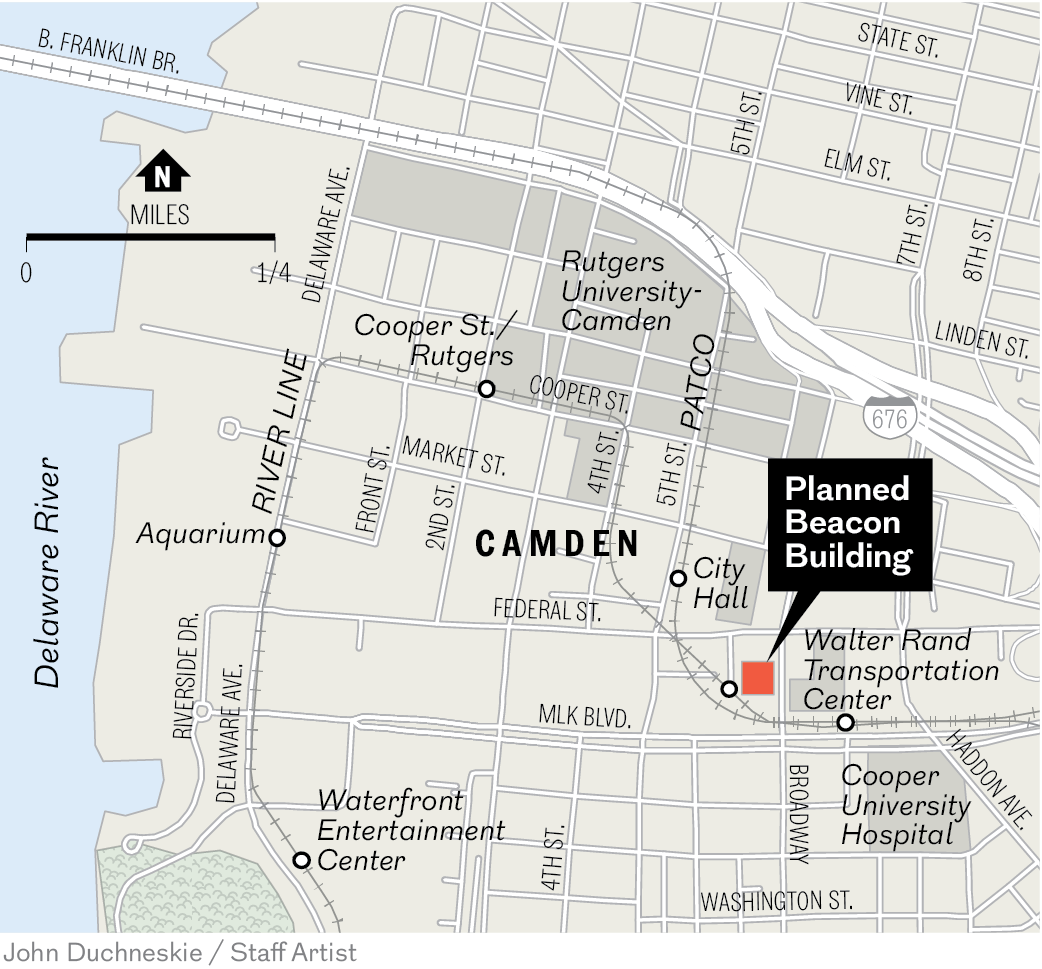
    Developer Gilbane is leading the project with the Camden County Improvement Authority at a vacant site on the northwest corner of Broadway and Martin Luther King Boulevard across the street from the Walter Rand Transportation Center and Cooper University Hospital.

    Map of the planned Beacon Building in Camden.

    “The goal is to attract projects, maybe like Beacon Tower, to capitalize off of the growth that we’ve seen in Camden city,” Greenwald said.

    Any project seeking Aspire subsidies must apply to the Economic Development Authority.

    Camden County officials have said they expect tenants to include Cooper University Health Care, which has said it needs additional office space to accommodate its $3 billion expansion. They also hope to entice civil courts to relocate there.

    County Commissioner Jeff Nash said last year that tenants had yet to commit, in part because the development team was still working on an application for Aspire tax credits.

    The incentives will help determine rent, he told the Cherry Hill Sun. The land is owned by the Camden Parking Authority, and Nash has said officials are still trying to determine who will own the site and the building going forward, according to Real Estate NJ.

    County spokesperson Dan Keashen said that those talks remain ongoing and that the improvement authority may issue a request for proposals for a new developer. Gilbane, the current master developer, didn’t respond to a request for comment.

    Wendy Marano, a spokesperson for Cooper University Health Care, said she didn’t have an immediate answer to a question about whether the hospital network planned to obtain an equity stake in the development.

    In 2014 the state awarded $40 million in tax credits to incentivize Cooper Health’s relocation of suburban office jobs to Camden, and Cooper later bought a stake in the development.

    The possible new state investment in Camden comes after Murphy’s administration separately allocated $250 million to renovate the state-owned Rand center — which serves two dozen NJ Transit bus lines and the River Line, and includes PATCO’s Broadway station.

    Construction on the transit center is expected to begin soon, according to county officials. While that renovation is underway, the Beacon site will serve as a temporary bus shelter, Keashen said, adding that possible construction on an office tower is still years away.

    Fast track

    Critics of the bill said that it was rushed through the Legislature with minimal public input and outside the normal budget process, and that it appeared to be designed to benefit specific projects. The bill passed the Assembly, 48-25, and the Senate, 24-14. It now heads to Murphy’s desk. The governor’s second term ends on Jan. 20, when he is to be succeeded by fellow Democrat Mikie Sherrill.

    The legislation applies to redevelopment projects located in a “government-restricted municipality” — language included in the Aspire program’s statute — “which municipality is also designated as the county seat of a county of the second class.” The project must also be located in “close proximity” to a “multimodal transportation hub,” an institution of higher education, and a licensed healthcare facility that “serves underrepresented populations.”

    “I say to you that there’s going to be one project that fits all those criteria,” Assemblyman Jay Webber (R., Morris) said on the floor of the chamber during debate Monday.

    “The net benefits test was put in as an accountability measure to make sure these projects were at least by some measure benefiting the taxpayer,” Webber added in an interview.

    “And now apparently one or more projects can’t meet that test,” he said. “And so rather than stick to the rules that they agreed to and pull the credits, they’re going to change the rules, lower the bar so that somebody can step over it. It’s wrong.”

    Greenwald said the legislation has “nothing to do with [Beacon] in particular,” adding that he hopes it is one of many projects that could benefit. Possible developments in Trenton and New Brunswick could also qualify for incentives under the bill, he said.

    Assembly Majority Leader Louis Greenwald in 2019.

    The net benefit test

    The test relies on economic modeling based on data such as projected jobs and wages. Under current law, most commercial projects seeking Aspire credits must demonstrate a minimum net benefit to New Jersey of 185% of the tax credit award — meaning, for instance, an applicant that receives $100 million in credits must generate $185 million in economic activity.

    The credits can be sold to the state Treasury Department for 85 cents on the dollar.

    Projects located in “government-restricted municipalities” — a half-dozen cities, including Camden, selected by the Legislature — already face a lower threshold of 150%, according to the state Economic Development Authority.

    Some projects, including residential and certain healthcare centers, are exempt from the net benefit test.

    The test was strengthened in the Economic Recovery Act of 2020, signed by Murphy, because “we saw in previous iterations of the tax credit program that if the guardrails weren’t strong enough … then companies could simply not meet the test, or, you know, not follow through on their promises, and nonetheless collect the funds,” said Peter Chen, senior policy analyst at New Jersey Policy Perspective, a liberal-leaning think tank.

    The 2020 law changed that, he said. “It’s one of the most important guardrails of the entire corporate tax credit program,” Chen said in an interview last week. “So exempting any project from the net benefit test requires a pretty large, pretty strong reason for doing so, and in this case, no reason was given.”

    Criminal case

    The renewed push for tax credits in South Jersey comes as a criminal case involving an earlier round of corporate subsidies continues to play out in court.

    Democratic power broker George E. Norcross III — founder of a Camden-based insurance brokerage and chairman of Cooper Health — and five codefendants were indicted in 2024 on racketeering charges related to development projects on the city’s waterfront.

    A judge dismissed the charges last year, and the state Attorney General’s Office is appealing the decision. Norcross has denied wrongdoing. He and his allies say state incentives have helped revitalize the city.

    During his floor speech on Monday, Webber alluded to “incredible allegations of corruption” in the earlier economic development program and noted that Murphy had previously championed reform of the system.

    The governor’s spokesperson, Tyler Jones, declined to comment on pending legislation.

  • A Montgomery County office that’s ‘outlived DOGE’ has helped save the suburb $14 million

    A Montgomery County office that’s ‘outlived DOGE’ has helped save the suburb $14 million

    A Montgomery County office — which one county commissioner described as a far less controversial version of Elon Musk’s Department of Government Efficiency — has helped the county find $14 million in savings within the past year and reduce the deficit by half.

    Montgomery County’s Office of Innovation, Strategy, and Performance (OISP), announced in February 2025, spent the last year meeting with department heads to identify areas for cost cutting and streamlining services, such as eliminating almost a dozen vacant positions worth hundreds of thousands of dollars, saving $1.5 million on a prescription benefits provider, and conserving half a million dollars by bringing some county legal services in house.

    In 2026, the office could consider integrating artificial intelligence into county services, with the support of all three commissioners, aimed at cutting red tape for residents and county employees.

    “It’s kind of like DOGE,” said Commissioner Vice Chair Neil Makhija, a Democrat, noting that the office has “outlived” DOGE’s period of high activity when Musk was in charge before he stepped away last spring.

    “We didn’t just take the richest person in the county and tell them to cut, you know, benefits for poor people, which is what the federal DOGE was,” Makhija said.

    Also unlike DOGE — which under Musk’s leadership was responsible for the haphazard slashing of thousands of federal workers’ jobs during the first year of President Donald Trump’s second term — the office does not envision layoffs becoming part of its mission.

    The office’s work comes on the heels of the county’s $632.7 million operating budget and a roughly $25.5 million deficit, resulting in a 4% property tax increase for residents.

    Republicans have made looking for inefficiencies in government part of their brand. But Democratic leaders in Pennsylvania have also started taking on streamlining government. Gov. Josh Shapiro has touted how he’s cut processing time for licenses and accelerated the permitting process for building projects.

    And in blue Montgomery County, a bipartisan group of leaders says that responsible government efficiency should be a pillar of good government, regardless of political party.

    “What happened with DOGE at the federal level was hard to watch and certainly not the approach that we’re going to take in Montgomery County, but, any leader … has to go through this exercise of are we optimizing our resources?
Are we leaving money on the table? Are there opportunities to improve the performance of our people?” said County Commissioner Chair Jamila Winder, a Democrat.


    “Like all of those are just disciplines that are industry agnostic, and so I don’t think it’s a Republican or a Democrat thing,” Winder added.

    Commissioner Tom DiBello, the only Republican on the board, agrees, saying that he has high expectations for the office and its ability to oversee the adequate spending of taxpayer dollars.

    “I mean, that’s our job. It has nothing to do with Republican or Democrat. My feeling, it has to do with taxpayer money,” DiBello said. “We’re supposed to be stewards of taxpayer money.”

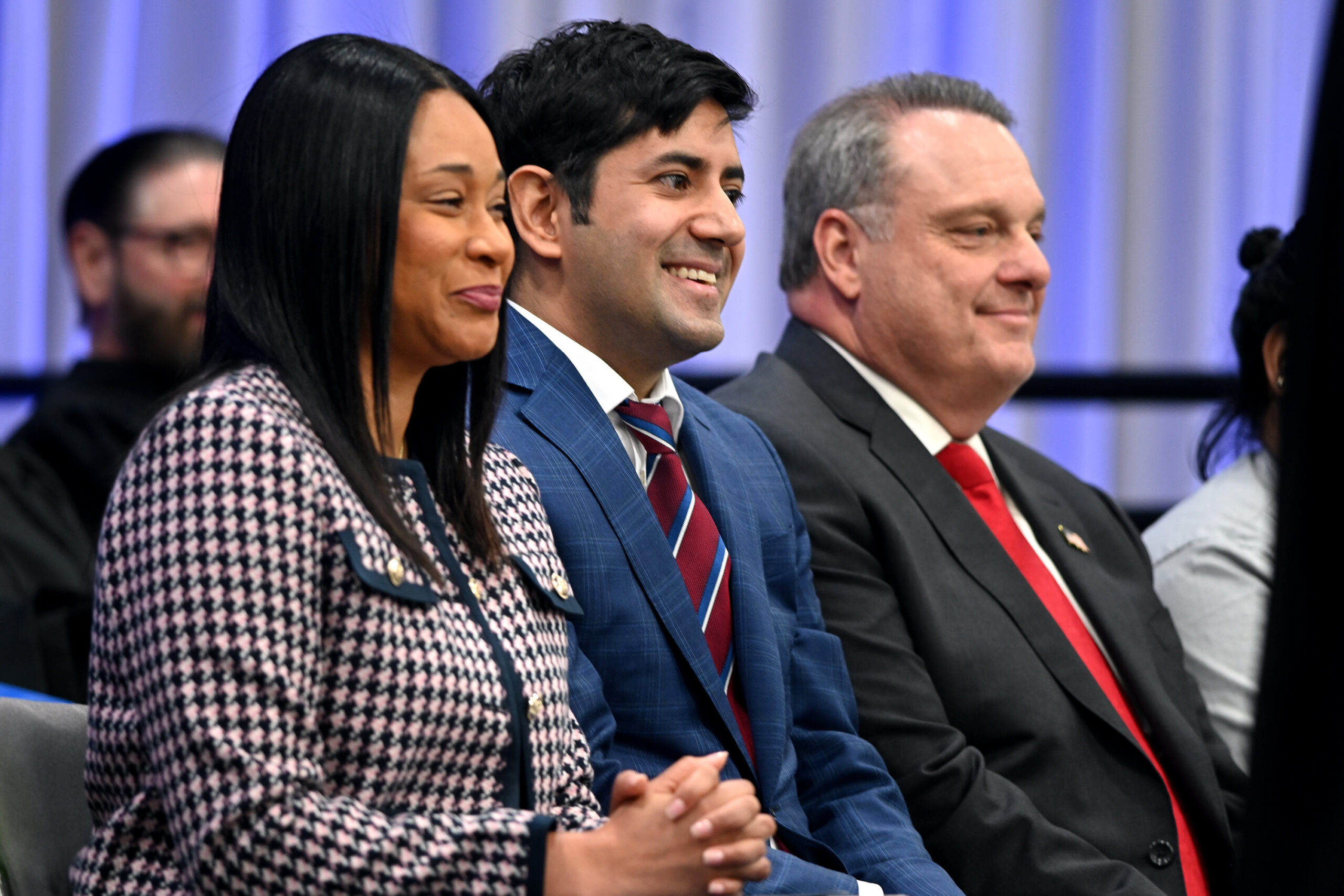
    Jamila H. Winder (from left), Neil Makhija, and Thomas DiBello are seated together on stage at the Montgomery County Community College gymnasium Wednesday, Jan. 3, 2024, during ceremonies before they were sworn in as Montgomery County’s new Board of Commissioners.

    Is artificial intelligence the next step?

    The OISP was launched in February 2025 after the office previously served as the county COVID-19 pandemic “Recovery Office,” ensuring approximately $161 million in funds from the American Rescue Plan Act were being used appropriately.

    When Stephanie Tipton, deputy chief operating officer, was hired in Montgomery County in September 2024 after more than 16 years in leadership in Philadelphia, county officials started discussing how to translate that oversight practice at the “Recovery Office” to every facet of county spending and performance.

    That mentality helped the OISP cut the county deficit in half and focus on ways to reduce it in the long term, such as eliminating longstanding vacant positions around the county, including on the board of assessment, which does real estate evaluations. The office also helped develop performance management standards for departments.

    “What we were really interested in is finding things that we could make repeatable year after year, and that would move forward, whether that was restructuring positions and eliminating vacancies that we don’t carry forward” to doing a trend analysis on spending, said Eli Gilman, project director of the 11-person office. He noted that the team was “kind of building a plane while we were flying.”

    County governments are always trying to be efficient with taxpayer dollars, said Kyle Kopko, executive director of the County Commissioners Association of Pennsylvania, especially in the aftermath of last year’s state budget impasse. But Montgomery County’s decision to have a dedicated office for efficiency is fairly unique, he said.

    “This is something that has become more and more of a focus of counties everywhere just because we’re not sure if we’re going to have the consistency of on-time state funds,” Kopko said.

    The next phase for the office? Cutting red tape for residents. And part of that may be through enlisting artificial intelligence, something the county has been examining through the commissioners’ “Advisory Council on Artificial Intelligence for Public Good” established in April 2025.

    “The goal here is like, how can we leverage this new and emerging technology to help us make it easier for residents to access services,” Tipton said. “Make it easier, reduce the burden on our frontline staff, so they can spend more time in sort of customer-facing, client-facing activities.”

    AI will be something that many counties across Pennsylvania will be grappling with moving forward, Kopko said. Though some counties are wary of using it for sensitive information.

    Everyone has a different idea as to what they would want to see AI used for in Montgomery County.

    Makhija wants to make court documents accessible by chatbot. Winder says she wants to see AI help county employees be more efficient in their roles. And DiBello, who worked in tech software, said as long as accuracy is prioritized, AI could one day be used in situations where residents don’t have to speak directly to someone.

    But first, Tipton said, the county wants to internally test AI tools to “make sure that we have the right sort of governance and guardrails” before launching it to the public.

    When Tipton joined Montgomery County she said she had a “clear mandate from the commissioners” to look at department spending. She also wants it to be a transparent process for residents and the office plans to launch an open data site to the public in the second half of 2026.

    “We want to make sure that moving forward, when we are making investments in the budget we can really understand more clearly how that is impacting service delivery, so we can tie that more directly to work that we’re doing,” Tipton said.

  • Her youngest son was killed in a mass shooting. Now, her eldest is charged with committing one.

    Her youngest son was killed in a mass shooting. Now, her eldest is charged with committing one.

    Two mass shootings, just years apart, forever altered Nyshyia Thomas’ life.

    In July 2023, her 15-year-old son, DaJuan Brown, was shot and killed when a mentally ill man dressed in body armor gunned down five people at random on the streets of Kingsessing.

    Then, two years later, almost to the day, police say Thomas’ son, Daquan Brown, was one of at least 15 people who fired guns aimlessly down the 1500 block of Etting Street, leaving three dead and 10 others wounded.

    It’s a symmetry almost too painful for the mother to reconcile: one son killed in a mass shooting, another behind bars, charged with committing one.

    Last month, Thomas, 37, sat inside the Philadelphia courthouse and faced the man who killed her youngest son and set in motion the crumbling of her family.

    From left to right: Daquan Brown, Nyshyia Thomas, Tyejuan Brown, and Nesiyah Thomas-Brown, at the funeral for 15-year-old DaJuan Brown in July 2023.

    This week, she will return, but to sit on the other side of the room — to see her eldest son in shackles, seated behind plexiglass, charged with three counts of murder, nine counts of attempted murder, and causing a catastrophe and riot.

    She said her 21-year-old son feared for his life when he fired his legally owned gun twice down Etting Street the night of July 7, and that prosecutors have charged him with killings he didn’t commit.

    But she also feels for the families of the victims — one of them her son’s close friend — and imagines that, if she were in their shoes, she would want everyone who fired a gun to face consequences.

    “From being on both sides of this, it’s overwhelming, it’s unfair,” she said. “But I understand.”

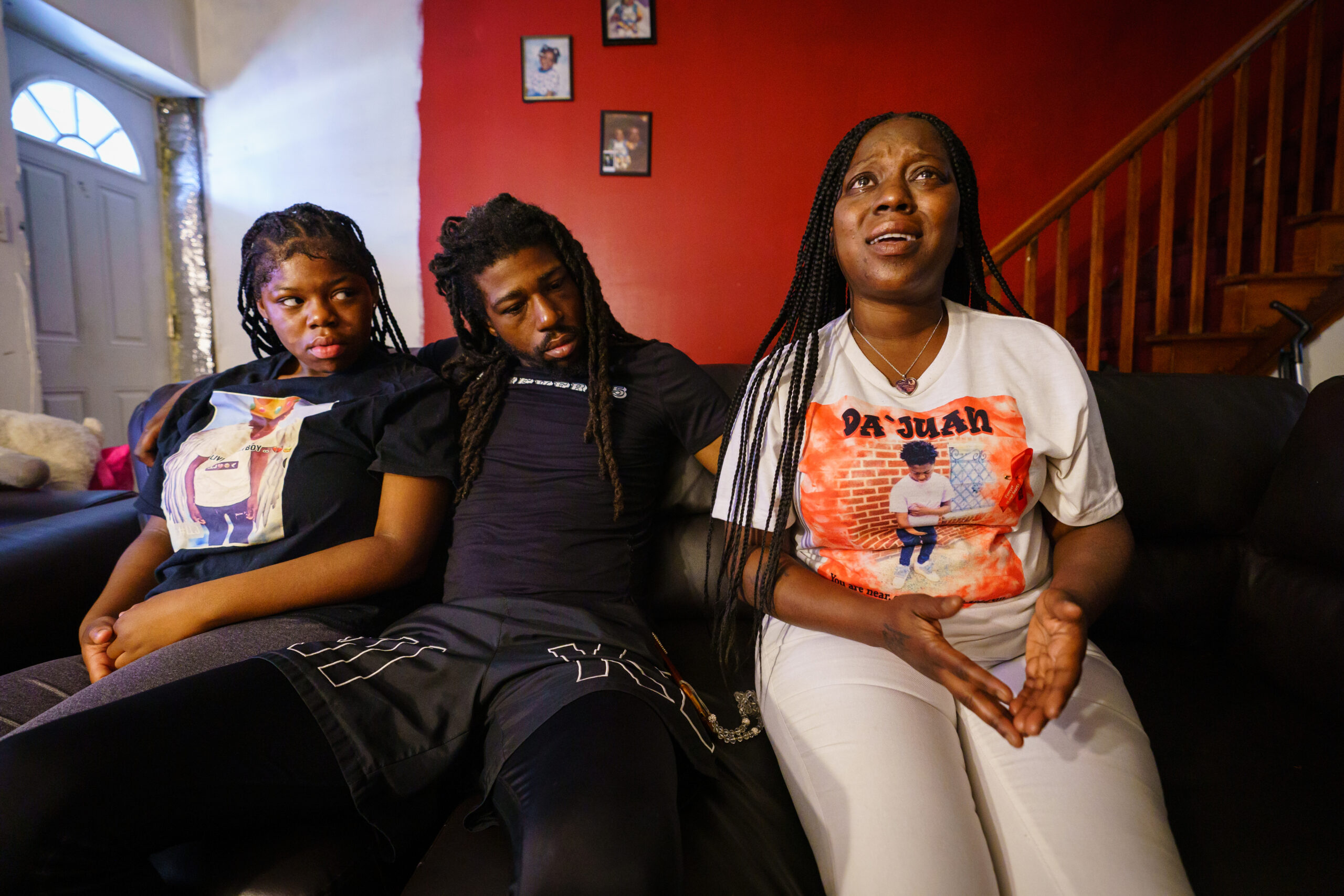
    Nyshyia Thomas (right) with Tyejuan Brown and Nesiyah Thomas-Brown inside their South Philadelphia home.

    The July 7 party on Etting Street was one of two on the block that weekend celebrating the July Fourth holiday and the lives of some young men from the neighborhood who had been killed in recent years. Daquan Brown grew up about a block away and went to see childhood friends, his mother said.

    Shortly after 1 a.m., police said, gunfire erupted. Officers responded to find that more than 120 bullets had been fired down the street in nearly all directions, striking neighbors’ homes and cars — and 13 partygoers.

    Three men died. Zahir Wylie, 23, was struck in the chest, and Jason Reese, 19, was shot in the head. Azir Harris, 27, who used a wheelchair after being paralyzed in an earlier shooting, was struck in the back.

    Initially, police thought someone had shot up the party in a targeted attack. But after reviewing video footage, interviewing witnesses, and analyzing ballistics, detectives now believe the partygoers may have unintentionally shot each other.

    Police investigate a mass shooting on the 1500 block of South Etting Street on July 7, 2025.

    After people heard what they thought was the sound of gunfire — someone at the gathering may have shot once into the air or a car passing by may have backfired — at least 15 people pulled out their weapons and sprayed dozens of shots down the block, police said.

    Brown, police said, was among them. As gunfire erupted, he took cover between cars and fired two shots down the block, according to two law enforcement sources who asked not to be named to discuss an ongoing investigation.

    Investigators don’t know whether any of the shots Brown fired struck or killed anyone, the sources said. A full ballistics report is still pending, though it may never be able to determine whose bullets struck each victim.

    Four other men have also been charged with murder and related crimes.

    Thomas has tried to come to terms with the police narrative. She is adamant that her son, having fired only two shots, shouldn’t be charged with three counts of murder and 10 counts of attempted murder. He feared for his life and acted in self-defense, she said.

    At the same time, she said, had it been her son who was shot and killed that night, she would not want to hear from anyone trying to make sense of it.

    Tyejuan Brown and a family member hold Nyshyia Thomas at the funeral of their son, DaJuan Brown, on July 15, 2023. DaJuan’s brother, Daquan, stands to right of Tyejuan.

    Still, she finds herself doing that. Brown, who worked as a security guard and has no criminal record, only started carrying the 9mm handgun because of what happened to his brother, she said.

    She remembered talking to him before he bought the weapon last year.

    “Mom, I lost my brother,” Thomas said he told her. “Y’all not burying me.”

    “I kissed him,” she said. “I told him I respect it.”

    Brown’s father, Tyejuan, is also jailed with him.

    On the night of July 7, she and Tyejuan, the father of her three children, were talking on the porch of her home when they heard dozens of gunshots coming from Etting Street. Tyejuan Brown, she said, took off running toward the party where his son was gathered.

    When Thomas reached the block, she said, she found Tyejuan and Daquan covered in blood from carrying bodies to police cruisers.

    But police said that when they reviewed surveillance footage from that night, they saw Tyejuan Brown rushing down the street holding a gun, which he is barred from owning because of drug, gun, and assault convictions.

    He was arrested in early August and charged with illegal gun possession.

    Nyshyia Thomas holds Tyejuan Brown during an interview in 2023 about the loss of their youngest son, DaJuan.

    Four days later, they came for his son.

    Until recently, Daquan Brown and his father were housed in the same block at Curran-Fromhold Correctional Facility and would speak to each other through a shared cell wall.

    Brown is held without bail. Thomas said her family has gathered the $25,000 necessary for the father’s bail, but he has told them not to post it.

    “I’m not coming out without my son,” Thomas said he told her.

    On the outside, Thomas and her 15-year-old daughter, Nesiyah, are left to grapple with the absence of the three men in their lives they love most.

    “I lost one son to gun violence,” Thomas said. “I’ll be damned if I let the system take my other one from me.”

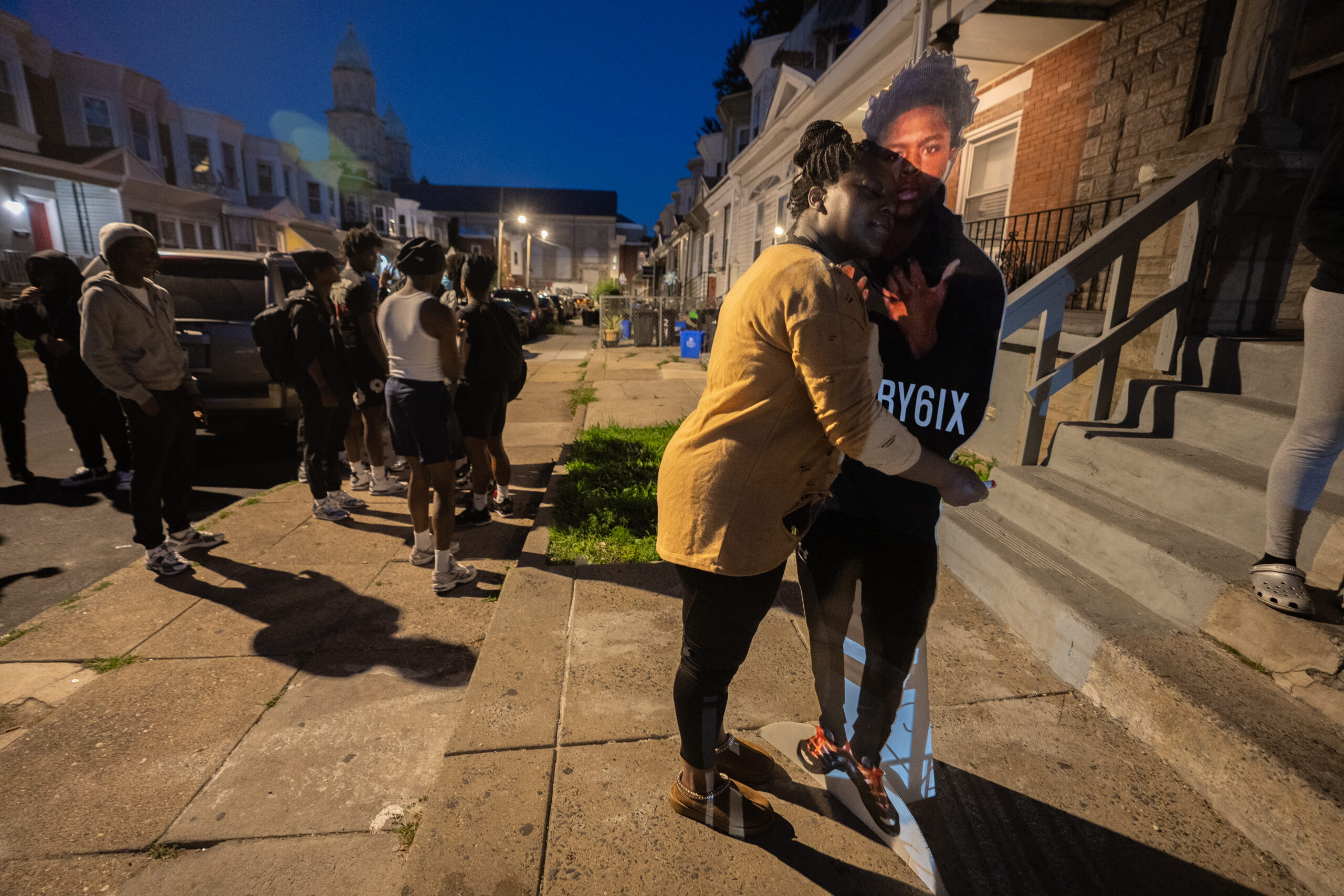
    Nyshyia Thomas hugs a photo of her son, DaJuan Brown, on what would have been his 18th birthday in September. Brown was shot and killed in a random mass shooting in July 2023.
  • ‘Seeking Experienced Witch’: A woman asked for help hexing her ex. She’s part of a long cathartic tradition.

    ‘Seeking Experienced Witch’: A woman asked for help hexing her ex. She’s part of a long cathartic tradition.

    Driving to visit a friend, a Philadelphia woman had time to mull her recent breakup. She thought about all the things her ex hated: spiders, moth-bitten sweaters, overly soft avocados. She typed them on her phone, as curses.

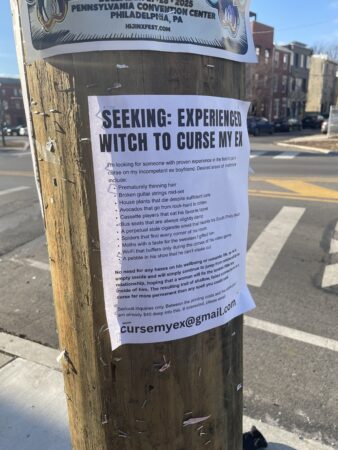
    It became a flier: “Seeking: Experienced Witch to Curse My Ex.” She set up an email — for serious inquiries only.

    You may have seen her handiwork. The fliers dot telephone poles, originating in downtown Phoenixville, around where our witch-seeker was visiting family for the holidays. They now paper neighborhoods across Philadelphia — hung with a staple gun on New Year’s Eve while barhopping. (The 29-year-old asked to remain nameless for this story, so as to not affect future job prospects. It also, in a way, protects her ex.)

    And though it might seem a bit out of the ordinary, it’s part of a great tradition of cursing your ex that goes back to antiquity. Plus, it’s a way to regain a sense of power, experts say.

    So, it’s no surprise that the fliers have seeped online, circulating neighborhood groups and on socials, striking a chord. When the fliers appeared in Chester County, a Phoenixville community group sounded off: “I hope she gets him. Good for her,” one commenter wrote under a Facebook post about it. “I think I know the ex,” said another. “It’s a great idea,” writes another. (The witch-seeker also has her detractors: “That man dodged a bullet!” one commenter wrote.)

    The flier lays out her desired curses: his hair thinning, house plants withering, his bus seats feeling damp, his Wi-Fi buffering during video games, shoe pebbles remaining unshakeable — and the aforementioned too-ripe avocados, copious spiders, and hole-y sweaters (among other ill wishes).

    But, the flier requests no hexes on his well-being or romantic life.

    Across relationship research, one of the most consistent findings is that breakups produce a “profound sense of powerlessness,” said Jenn Pollitt, a professor of gender, sexuality, and women’s studies at Temple University.

    But how do you get from a list on your phone to asking witches to please curse your ex-boyfriend?

    It’s not that far a leap.

    “Witchcraft has become a more socially legible way to express rage,” Pollitt said. “If you’ve got someone who wants to curse their ex, really what they want to be able to say is, ‘I was harmed. I’m allowed to be angry about this, and my anger deserves to be acknowledged.’ The public posting of this is really like a deep desire and craving to have that person’s hurt and heartbreak be born witness to.”

    The witch-seeker said she needed a place to put her pent-up anger and frustration.

    It’s not all maliciousness to her ex, she said. It’s mostly catharsis: She thinks of her ex as a lovely person in a lot of ways. But she said when she expressed her emotional needs, he’d withhold affection, he’d disappear for a few days or block her number. Then he would return, with words of affirmation and promises of marriage. It became cyclical over the two-year relationship. She swallowed up her frustrations. But several months ago, they parted ways. And despite the turbulence, it was pretty amicable, she recalls.

    She grieved. She went to therapy. She journaled. She meditated.

    And then she logged on to social media, and saw he was in a new serious relationship that had started within weeks of them breaking up.

    “It felt like a slap in the face, and that was my impetus for doing this,” she said. “I couldn’t yell at him, and I didn’t want to yell at him, but I had to yell at someone.”

    She’s not alone. For millennia, people have pursued love magic, said Kristine Rabberman, a professor at the University of Pennsylvania who teaches about witchcraft and sexuality. Roughly 600 Latin curse tablets have survived from the Roman empire, with both men and women calling on various deities to curse their close relations, she said.

    These mystical beliefs served social functions, too, she said, addressing people’s lack of agency and control. They channel deep wells of emotion: anger, longing, frustration, hatred.

    “Having recourse to love magic could be one approach somebody could take to try to both find expression for those feelings and to also have a sense of agency and being able to act on them,” she said.

    Dating culture has changed rapidly, Pollitt added. There’s now a digital component: blocked numbers, social media handles unfollowed. A breakup by a thousand cuts, she noted.

    “Breakups often can be intensely private and deeply isolating. Any public display, even this — which is a little bit out of the ordinary — function as a way to reinsert personal pain into a shared social space,” Pollitt said.

    The community came fast. As the witch-seeker hung the fliers in Phoenixville, several people high-fived her, she said. Then the emails rolled in: A Caribbean witch who offered a hex. A bruja. A kitchen witch who practices herbalism and herbal manifestations. A helper who sent along a few shops and books, so she could do the curse herself (so it carries the appropriate “oomph”).

    But to her surprise, beyond the witches, there were others: People who wanted to know how the story would end. Someone boldly asking her out on a date. And the women who simply could relate.

    They wished her a happy new year, they told her they’d also had messy breakups, they told her they supported her.

    She did not expect the outpouring of support, or the attention. As a writer and a creative person, it was mostly a way to tap into that, in a way that felt a little more empowering.

    “It has made me feel so much better,” she said.

    She is thankful for the witches who offered their services, though she feels conflicted about going through with a hex. She won’t be papering the city with more witch requests, either, she said.

    The process has let her accept some of her bad, not totally socially acceptable feelings — and create something positive with it, by connecting with others, she said — as people reeling from heartbreak have done for centuries before her.

  • Pa. loggers want a bailout for Trump tariff damage. Without it, they say layoffs could be next

    Pa. loggers want a bailout for Trump tariff damage. Without it, they say layoffs could be next

    In Pennsylvania — Penn’s Woods — centuries after settlers began cutting native forests, decades after once-thriving furniture makers like Pennsylvania House and Home Line shut or moved away — lumber remains a basic industry. Upstate sawmills send logging crews to buy and cut walnut, cherry, and other hardwoods to export to global flooring and furniture enterprises.

    But dozens of the state’s remaining mills, loggers, and industry groups, long accustomed to blights and other natural disasters, say they now face a plague made in Washington, D.C. — and would welcome a government bailout.

    Some 48 of the state’s surviving mills, lumber companies, and industry groups joined 400 other U.S. forest-based businesses last month to ask President Donald Trump for relief payments to ease the impact of his U.S. import taxes and foreign retaliatory tariffs, which they say have slowed export demand for their products, while boosting the cost of buying and operating their machinery.

    These and other “rural, almost entirely family-owned businesses” and the workers and contractors who depend on them want to be included alongside farmers, whom Trump has promised a $12 billion tariff bailout, according to a statement by the Heartwood Heartland coalition formed to make their case. The U.S. Census counts more than 10,000 logging and sawmill firms, not counting lumber truckers and other related businesses.

    Earlier tariffs and foreign competition had already hurt U.S. hardwood exporters, who were excluded from a farm tariff compensation program in the previous Trump administration, according to the coalition.

    U.S. hardwood lumber sales dropped 20%, to around $2.7 billion, in 2022-2024, according to the coalition. Log sales fell 11% to around $1.8 billion, and employment in U.S. woods shrunk 10%, to around 360,000, as more sawmills closed, over the same period.

    The U.S. remains a leading exporter of hardwoods, but its share of the China market shriveled, from $1.5 billion or a third of the market in 2017, to around $700 million or one-fifth of the market in 2024, since the “trade war” during Trump’s first term drove importers to rival nations.

    Chinese manufacturers are buying more wood from Russia, Southeast Asia, and other regions. This threatens a collapse in the U.S. forest industry echoing the earlier “collapse of the U.S. furniture sector,” the coalition said in a December letter to the president and cabinet members.

    Further sales losses will result in the U.S. “losing the skilled workforce” and relying on more imports, predicts Dana Lee Cole, the federation’s executive director. That’s the opposite of the president’s stated goal in boosting protective tariffs.

    Among the signers were several businesses in Southeastern Pennsylvania, including Stoltzfus Forest Products LLC in Lancaster County. Philip Smith, chief operating officer of business and its affiliate, Stoltzfus Hardwoods, agreed to answer questions about his enterprise and the impact of tariffs. Edited for brevity and clarity.

    How old is your company and who works there?

    The parent company built a sawmill in 1990. We moved the location when we had a large expansion in 2016. We employ about 65 people at the two companies. We have three of our own logging crews, two mechanized and one that’s hand cutters. We use a subcontractor logger and trucker as well. The owners and a majority of the workers are Amish.

    What do you harvest and where?

    We take Appalachian hardwoods from up to about 175 miles of our location — white oak, poplar, walnut, hickory, a little soft maple, and cherry. We go down to the Eastern Shore of the Chesapeake, out toward Chambersburg, up into the Lehigh Valley and Schuylkill County.

    And the Philadelphia area, we just did a golf course. It got bought [by a developer], and we ended up harvesting the trees.

    We bring the trees to the mill [and make boards and trim-sized pieces]. We sell to molding companies, flooring companies, and to companies that make furniture and cabinets.

    What would be affecting us with the tariffs, we have material that will go to China and to Germany and [other] EU countries.

    Why don’t foreign importers pay the tariffs?

    To get an order, we have to agree, if the tariff went above a level, we pay part of the cost.

    In China, they made temporary agreements for when our lumber got ready. If it was on the ocean before the tariff dates, we weren’t affected.

    So we had a scare last spring [when Trump proposed punishing increases to wood tariffs]. And we had a scare again in the fall.

    So the full tariffs haven’t actually been implemented?

    The biggest thing we notice with tariffs is the uncertainty. The economy was already crappy. Now the tariffs bring another factor into the way people interpret [costs].

    For some reason, the U.S. sells logs to Vietnam, and then Vietnam is [milling] American walnut, selling it as American walnut, and undercutting finished American walnut [from the U.S.]. Vietnam is paying their people almost nothing. Add the tariffs, we are less competitive.

    Has that uncertainty cost you orders?

    It has affected how people perceive costs. It has affected cash flow. Some items are moving slower.

    There’s another thing: Equipment in the forest industry, a lot of it comes out of Canada. Log trucks. Specialty trailers.

    With the uncertainty, truckers that focus on logging tell us they have canceled stuff on order.

    And we use Leadermac wood-moulder machines that come out of Taiwan. There’s a tariff there, too. We were told there’s a 24% increase in price.

    Have you canceled equipment orders as a result?

    We have put the brakes on making some decisions.

    Despite the squeeze you are in today, can tariffs help move wood industry to the U.S. over time?

    With the tariffs, it’s not so much we are against the idea of leveling the playing field. There’s definitely countries abusing America. We are pro trying to fix this stuff.

    But there is pain in doing it. We are paying the tariff on equipment, but I don’t see any tax break. They are just adding another tax on us. You need to give us a break that we can recoup that money.

  • Philly public defender launches new immigration unit amid growing federal arrests and deportations

    Philly public defender launches new immigration unit amid growing federal arrests and deportations

    The Defender Association of Philadelphia has launched a new initiative to help people facing immigration consequences both inside and outside the criminal-justice system.

    The move comes as the Trump administration pursues aggressive new enforcement, where even minor legal cases can put undocumented city residents at risk of detention, family separation, or deportation.

    The agency’s Immigration Law Practice is expected to grow to up to 11 staff members. Its creation is to be officially announced at a news conference on Wednesday.

    “This is necessary right now,” Chief Defender Keisha Hudson said in an interview. “We’re going to have to sustain this work and expand this work if we’re going to meet the moment.”

    The practice will be led by veteran immigration attorney Lilah Thompson, who often represents migrants facing complex legal challenges. She said the work would be done in collaboration with trial attorneys, social workers, and mitigation specialists to shape defense strategies that protect clients and their families.

    One area of concentration will be on clients who are in immigration detention despite having no criminal charges, another on people who could face serious immigration repercussions because of what are often minor offenses.

    In Philadelphia, attorneys say, people have been arrested by Immigration and Customs Enforcement as they’re enrolling in diversionary programs or heading to court to plead not guilty.

    The Trump administration maintains it is arresting dangerous immigrants, though figures show 74% of all those held in detention have no criminal convictions.

    The Defender Association also expects to handle more cases that push back against Trump administration efforts around mandatory detention. Federal judges in Philadelphia have ruled dozens of times against an administration policy that mandates detention for nearly all undocumented immigrants, joining a nationwide wave of decisions criticizing the government.

    A challenge is that those cases must be filed individually, and many of those in detention have neither a lawyer nor the money to hire one.

    The new practice consolidates and builds on work that was done at the Nationalities Service Center and the Pennsylvania Immigrant Family Unity Project, or PAIFUP.

    Thompson said the immigration practice will make sure that clients have accurate information, strong advocacy, and a chance to protect their futures.

    “The work changes every day, with the twists and turns of this administration, and the cruelty it inflicts on noncitizens,” she said. “We have to respond to the moment.”

  • Kids get free dental care at this Philly school. Officials say it’s a model that could be replicated in schools with empty space.

    Kids get free dental care at this Philly school. Officials say it’s a model that could be replicated in schools with empty space.

    Crystal Edwards didn’t see a dentist until she had a deep cavity at age 10: growing up in a struggling Philadelphia family, the resources to access dental checkups just weren’t there.

    So she jumped at the opportunity to locate a dental clinic in the school where she is now principal, W.D. Kelley, a K-8 in North Philadelphia.

    “This dental clinic is saving lives,” said Edwards.

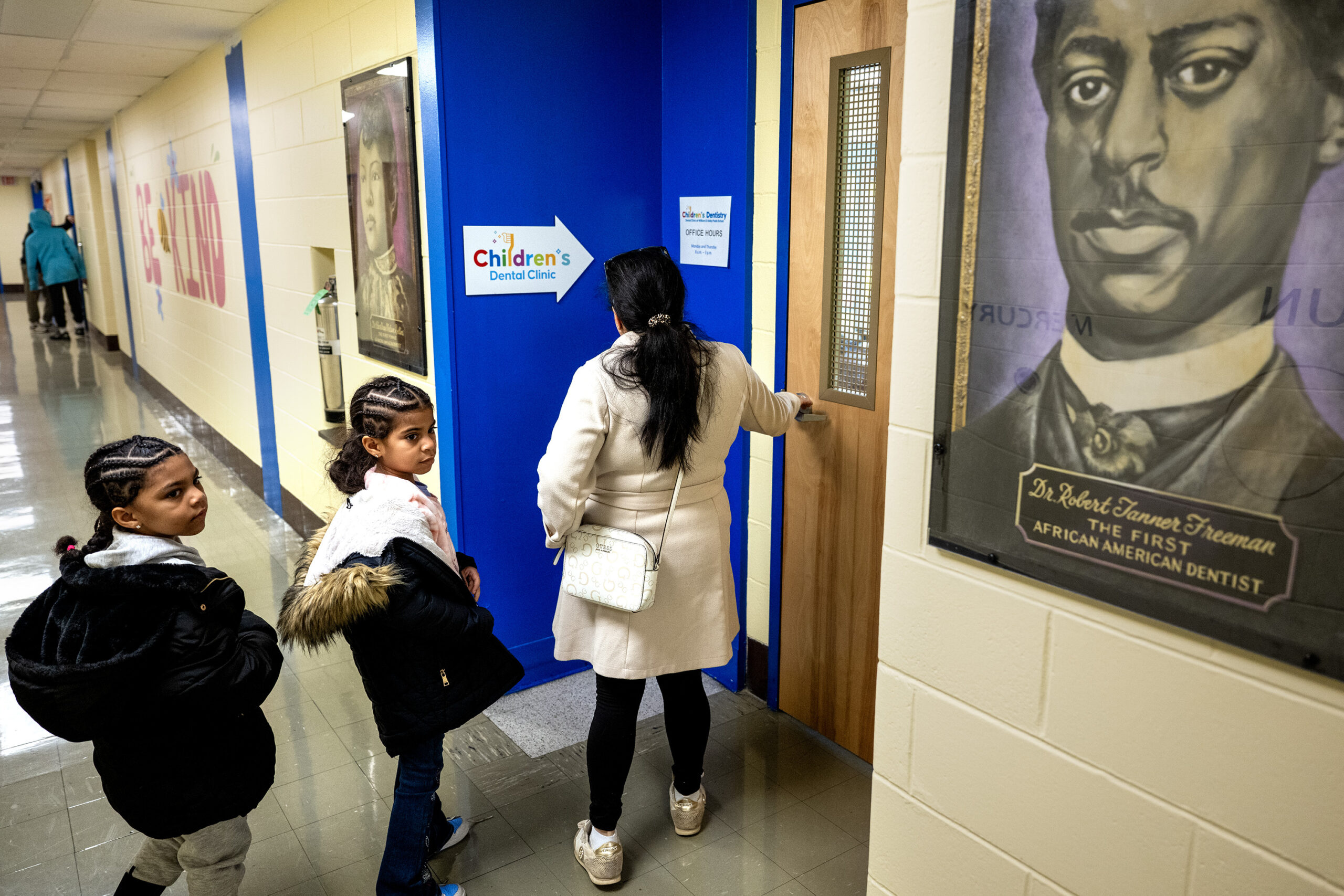
    Tucked into a converted science lab on the school’s third floor, the Dental Clinic at William. D. Kelley, operated by Temple University’s Maurice H. Kornberg School of Dentistry, is nearing its third year of operation. It is open to all Philadelphia children, including those who do not attend Kelley, regardless of insurance status.

    School district officials have pointed to the Kelley clinic as a model as it prepares to make facilities master plan decisions, which will result in closing, combining, and reconfiguring some school buildings. The clinic is an example, they say, of how the system could use available space in some of its schools for public good.

    Soribel Acosta arrives at the Dental Clinic at William D. Kelley public school on Thursday, with her children, Andrea Jimenez (left), 6. And Sayra Jimenez, 7.

    “This is certainly a great example of what can happen when a university partners with a school district to create life-changing opportunities and outcomes for young people,” Superintendent Tony B. Watlington Sr. said in a statement in 2023, when the clinic opened.

    Temple dental school officials said more clinics could follow elsewhere in the city.

    Taking care of every child

    The underlying concept is simple, said Eileen Barfuss, the Temple dental professor who leads the clinic.

    “If your tooth hurts, if you’re not feeling well, you’re not going to learn,” said Barfuss. “In the past, there have been a lot of barriers to care for dentistry that weren’t there for medicine, but preventative care is so important so it doesn’t get to the point of pain.”

    The clinic accepts all comers, including those who are uninsured or underinsured, and sometimes treats students’ parents. (Most, but not all, patients have Medicaid dental, and grants help cover treatment for those without insurance.)

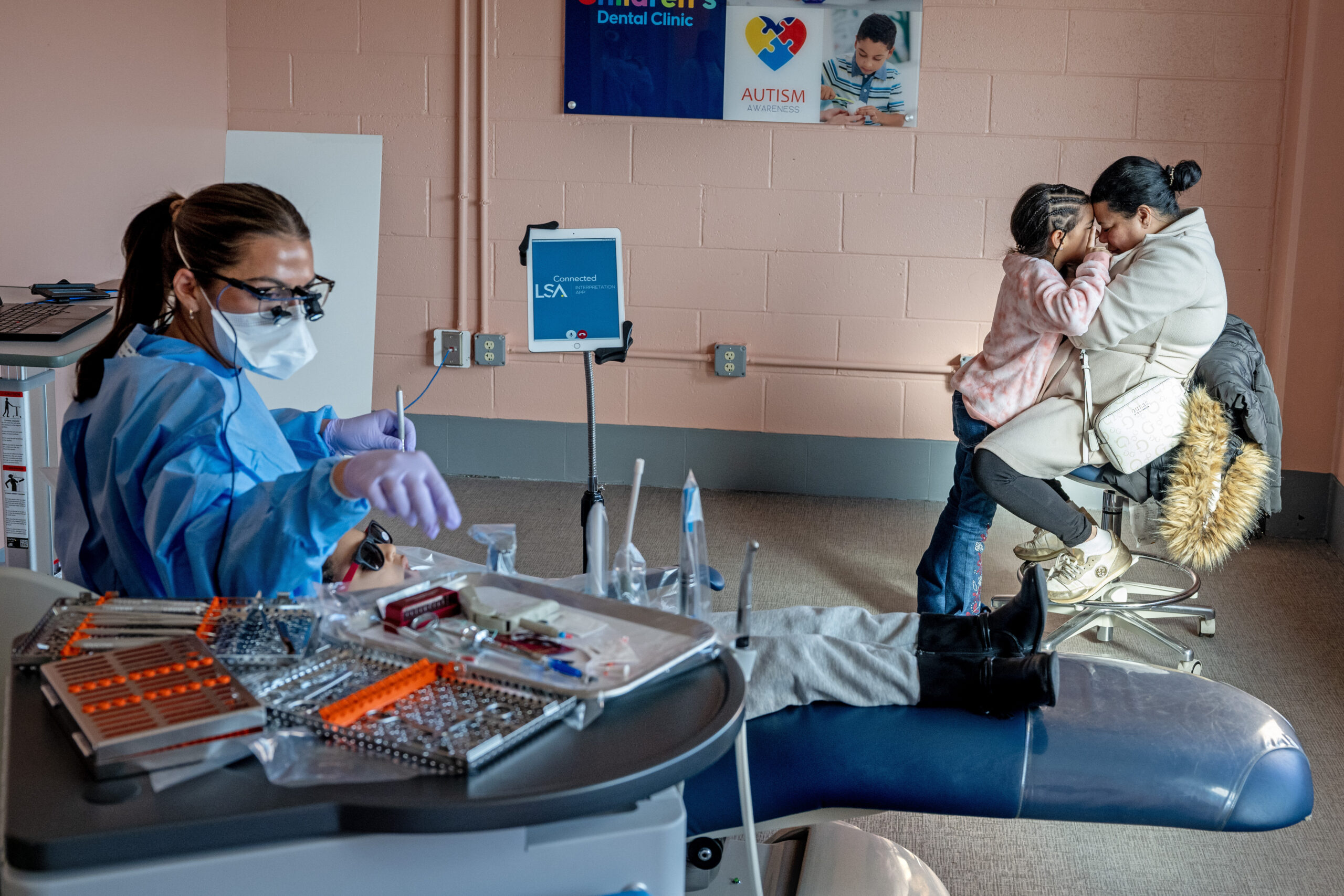
    Temple dentistry student Carly Pandit works on the teeth of Andrea Jimenez, 6, as her mother, Soribel Acosta, entertains sister Sayra Jimenez, 7, waiting her turn in the char at the dental clinic at William D. Kelley public school on Thursday.

    “We try to take care of every child in the Philadelphia School District,” said Barfuss. “There’s a place that they can come and get comprehensive care and establish a dental home.”

    To date, the clinic has seen nearly 700 patients, some of whom are repeat visitors. Patients are treated both by Barfuss and dental students she supervises.

    Students do come from other schools to the clinic; Barfuss said her team does outreach at community events and spreads the word through the district’s school nurses, who often send patients to the clinic. And staff teach lessons in Kelley classrooms on oral health and the importance of seeing a dentist twice a year.

    Being in a school helps normalize the dentist for many kids, who might poke their heads into the clinic to look around and see the friendly dental staff in their scrubs in the hallways, Barfuss said.

    ‘This is a good dentist’

    On Thursday, Fatoumata Bathily, a fourth grader with pink glasses and a bright smile, swung her legs down from a Kelley clinic dentist chair after a successful checkup.

    Eileen K. Barfuss (left), a pediatric dentist and Temple dentistry instructor consults with Fily Dramera after her daughter Fatoumata Bathily (rear), 9, was seen by a Temple student dentist at the Dental Clinic at William D. Kelley public school on Thursday.

    “It’s good here,” said Fatoumata, who attends nearby Robert Morris Elementary, and came for preventive care along with her brother, Abubakr. “This is a good dentist. I like that it’s colorful, and the people are nice.”

    Amid Ismail has wanted to bring such a model to the city since he became dean of Temple’s dental school in 2008. Decades ago, some schools offered dental care via city services, but as funding dried up, those clinics went away, Ismail said.

    Ismail raised the idea of a Temple-district partnership, but it took several years to get off the ground. Edwards, an award-winning principal who takes pride in bringing the community into Kelley, got the vision intuitively, he said.

    Temple paid to transform a large science lab into the dental clinic; the district provides the space and does not charge rent. There are four chairs, including one in a space specifically designed for patients with autism who might need a quieter environment and more room. Rooms are bright and modern.

    “The message to the parents and caregivers is that this is a nice place where all treatment is provided,” Ismail said. “A lot of children do have dental problems, but here we can treat them easily — they miss one class, max, and they don’t have to stay a long time.”

    Soribel Acosta waits for their appointment with her children, Sayra Jimenez (left), 7; and Andrea Jimenez (right), 6, at the Dental Clinic at William D. Kelley public school on Thursday.

    The clinic, which is about to celebrate its third anniversary, just expanded its schedule — it’s open four days a week, and officials eventually hope it will be open five days.

    Edwards fought for the clinic to come to Kelley, and it’s been just the boon she had hoped, she said.

    “This is a historic community that was really devastated and hard hit by the crack and drug pandemic,” said Edwards. “The dental office has really given us leverage on how to serve the community better.”

  • The Trump administration is targeting ultra-processed foods. A Penn researcher explains why that might be complicated. | Q&A

    The Trump administration is targeting ultra-processed foods. A Penn researcher explains why that might be complicated. | Q&A

    On the same day President Donald Trump’s administration targeted ultra-processed foods in its new federal nutrition guidelines, Penn researcher Alyssa Moran published an academic journal article explaining why they’re hard to regulate.

    For starters, there’s no consensus on how policymakers should define the term, she and two coauthors said in a Nature Medicine commentary piece. (The publication timing was a coincidence, but she welcomed the attention to an underestimated challenge.)

    Ultra-processed foods are generally understood to be those with industrially produced ingredients not found in home cooking, but experts have long debated how best to classify the foods for regulation. The wording would need to encompass all the possible variations, without being so rigid that the industry finds loopholes.

    The U.S. Food and Drug Administration and the Agriculture Department have said they are working on developing a federal definition to provide “increased transparency to consumers about the foods they eat.” It’s a key goal of the nation’s top health official, Robert F. Kennedy Jr., who blames ultra-processed foods for the United States’ “chronic disease epidemic.”

    Roughly 60% of an American child’s daily calorie intake is estimated to come from ultra-processed foods, which comprise up to 70% of the U.S. food supply. Studies have linked their consumption to a higher risk of obesity, diabetes, cancer, heart disease, and other harms.

    This is the first time U.S. dietary guidelines have explicitly called out ultra-processed foods, also called highly processed foods, and told Americans to limit consumption, Moran said. The guidance was part of a broader update by the Trump administration the first week of January that flipped the longstanding food pyramid on its head to promote consumption of whole foods, proteins, and some fats.

    Though health experts questioned changes, such as the vague guidance on drinking alcohol, the crackdown on ultra-processed foods mirrors what many health organizations and consumer advocacy groups have been saying for years.

    “I thought it was a bold move, and I was glad to see it,” she said.

    Moran talked with The Inquirer about what people should know about ultra-processed foods and the challenges that remain in regulating the products.

    This conversation has been lightly edited for length and clarity.

    Health & Human Services Secretary Robert F. Kennedy Jr. speaks during a press briefing with leading health officials and nutrition advisors at the White House in early January.
    What are ultra-processed foods?

    It’s a term that’s been used for decades and has been used, I think, interchangeably with ‘the Western diet’ or ‘junk foods’ or ‘highly processed foods.’

    Most foods are processed in some form, whether it’s physical processing, like slicing fruit before you eat it, or adding some chemical preservatives to foods that increase food safety. What changes with ultra-processing is the intent of the processing.

    With ultra-processing, the intent isn’t just to make the food safer or to extend shelf-life. It is to make it more cosmetically appealing and more likely to be overconsumed by individuals. They’re formulated in a way that makes them addictive, and they’re also aggressively marketed.

    What does it mean to make a food ‘cosmetically appealing’?

    It’s the overall sensation of eating the product.

    Companies are manipulating levels of highly palatable ingredients like sugar, salt, and fat to be at levels that are not naturally occurring and that are extremely palatable to consumers.

    They also add additives that enhance the naturally rewarding properties of things like sugar, salt, and fat. Some additives are added to food, for example, to mask a bitter flavor or prevent an aftertaste. They also add emulsifiers to change the mouth feel of a product. They pay attention to how the product sounds — even the crunch of a product when you’re chewing it — and add dyes to make them more visually appealing, especially to kids.

    There are all kinds of strategies that can take advantage of all of the senses to make the product almost irresistible.

    Why is there so much debate over how to define the products?

    The current administration has talked more than any prior administration about potentially limiting the production, marketing and sale, and availability of ultra-processed products. So, to be able to formulate policy to limit intake of these products, we have to be able to identify them.

    Many people have proposed going down the route of defining ultra-processed foods according to a list of additives. And there are many reasons why I don’t think that’s a good approach.

    What are the reasons?

    We need to really be thinking about how companies are going to respond to whatever definition we create.

    If we use a list of specific additives that makes something ultra-processed, companies are going to look at that list and they’re going to say, ‘How can we get around this. How can we skirt regulation?’ They’re either going to increase their use of additives that exist already but aren’t on that list, or they’re going to create new additives with very similar structures and functions as the existing additives.

    We see this happen all the time with commercially regulated products. When policies tax sugar, we see that companies increase their use of non-nutritive sweeteners, so the food supply is just as sweet, if not more. When Red Dye No. 2 was banned (in 1976), companies created Red Dye No. 3, which is almost identical and was also banned (in 2025), but 50 years later.

    Plus, we have hundreds of thousands of products on the marketplace and there are constantly new ones being added. And currently under FDA policy, companies don’t even need to notify the FDA when they add new ingredients to the food supply. So we don’t even have a complete list of every single additive in the food supply right now.

    What approach did you propose in your Nature article on this topic?

    Right now, it has been proposed to use a list of ingredients that would make a food ultra-processed. Everything else is non-ultra-processed.

    Our recommendation is really to flip that.

    We would say, ‘Here are all of the ingredients that make a food non-ultra-processed. Everything else is ultra-processed.’

    There are very few additives that make a food non-ultra-processed. The purpose (of the additive) would have to be for food safety or preservation, and that’s one reason why this is also a much simpler approach. Our approach is saying, for example, your yogurt is considered non-ultra-processed if it contains things like milk, live cultures, fruit, nuts, seeds, and honey, as well as some preservatives, vitamins, and minerals.

    If it has anything else, it’s an ultra-processed food and is in scope for regulation. Then, if companies introduce new additives, they’ll still be considered ultra-processed because they still fall into the ‘everything else’ bucket.

    Are there any other challenges that you see in terms of regulating the industry?

    The biggest one is the pushback from the food industry. They spend a lot of money fighting against policies to regulate production, marketing, and sale. We see it with sweet and beverage taxes that have been enacted in Philadelphia and other places. We see it with front-of-package labeling, which the FDA had been trying to pass.

    The lack of resources at our federal agencies is another barrier. This administration, early on, really dismantled the FDA, which I think would be the main regulatory body involved in creating this definition and potentially developing policy to regulate these products.

    If we don’t have people at those agencies, and they don’t have the resources they need to do their work, you could have a law on the books, but it’s not going to go anywhere.

    What are your tips for consumers?

    Shop on the grocery store perimeter and avoid the center aisles. Avoid ingredients that aren’t familiar to you.

    Classic examples of ultra-processed foods are box macaroni and cheese, many frozen pizzas or frozen prepared meals, and many boxed cookies, candies, cakes, and packaged foods.

    I would never tell consumers in this environment that you have to avoid every single ultra-processed food to be healthy. These products are everywhere. They’re cheap. They’re super convenient. Many people don’t have access to minimally processed whole foods.

    That’s why I think policy is so important — policies that both put limits on ultra-processed foods, but also promote and incentivize the production and sale and marketing of non-ultra-processed products.

  • As the NFL playoffs begin, remembering a Pa. pro football champion that wasn’t

    As the NFL playoffs begin, remembering a Pa. pro football champion that wasn’t

    POTTSVILLE, Pa. — Because I love Pennsylvania and football (and not always in that order), I drove 90 miles recently to this coal-region city of 13,300 to take a peek at a bronzed football shoe, a trophy carved from coal, and a battered football, its laces askew.

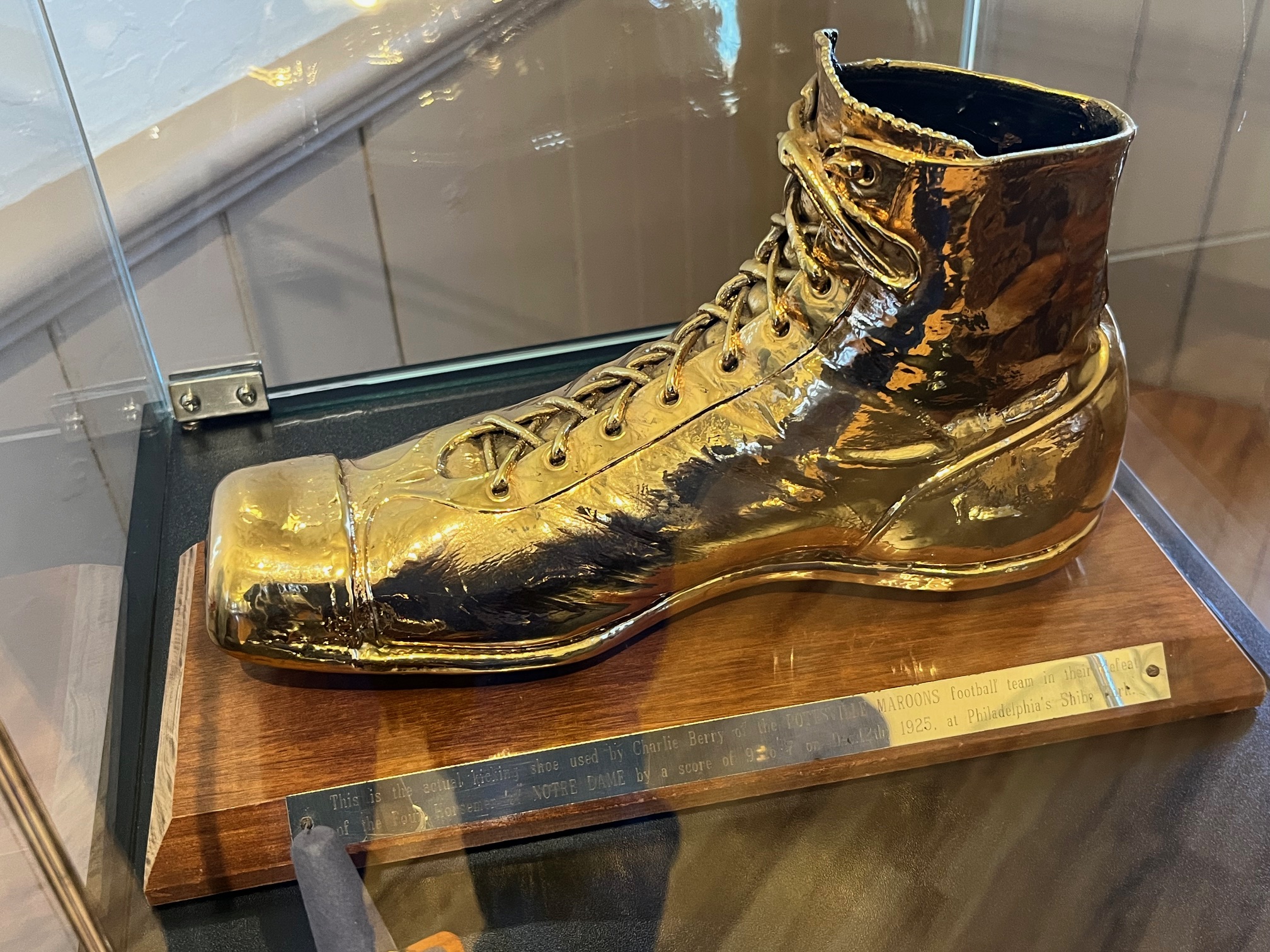
    On Dec. 12, 1925, 100 years ago last month, a 23-year-old kid named Charlie Berry — who also played baseball for the Philadelphia Athletics and later became an American League umpire — used that high-top shoe to kick that ball to lift the Pottsville Maroons to a huge victory.

    The Maroons got that trophy, emblazoned with the words “TRUE WORLD CHAMPIONS,” after beating a squad of former Notre Dame players, 9-7, in an exhibition game at Shibe Park in Philadelphia. But the Maroons were true world champions only in sentiment. They did not even win their own league.

    That would be the National Football League — the same NFL that now includes the Eagles and opens its annual playoffs this weekend, ending with Super Bowl LX. The NFL would deny the Maroons the league championship despite clearly having the best team, having disposed of the Chicago Cardinals a week earlier in icy Chicago, 21-7.

    The shoe that Pottsville Maroons kicker Charlie Berry used to kick the winning field goal in the 9-7 victory over the Notre Dame All-Stars on Dec. 12, 1925. The shoe was bronzed in 1961.

    The exhibition game turned out to be a big problem. Long story short: Although the Maroons had requested (and, they said, been granted) permission to play the Notre Dame team, they were treading on the turf of the city’s NFL team, the Frankford Yellow Jackets. The Maroons were thrown out of the league.

    You have probably heard of the Yellow Jackets, who folded in 1931 and whose remnants were purchased in 1933 by Bert Bell and Lud Wray for $2,500 and relaunched as the Eagles. The Maroons have faded, like a photograph in an album. That is a shame. The Maroons were a town team that climbed through a primitive organizational ladder to reign supreme over a sport.

    “There are so many reasons why this thing still smells funny,” said Jeffery Payne, a historian who coauthored a 2025 book with Darin L. Hayes, Marooned: The Rise, the Fall, and the Redemption of the NFL’s Pottsville Maroons, which adds detail and perspective to the story.

    Payne, who had not heard of the Maroons while growing up in Erie, acknowledged that the NFL is unlikely to declare the Maroons as 1925 champions, saying, “It would take a higher force for this to happen.” And it is old news: The last Maroons player died in 2003, at age 101.

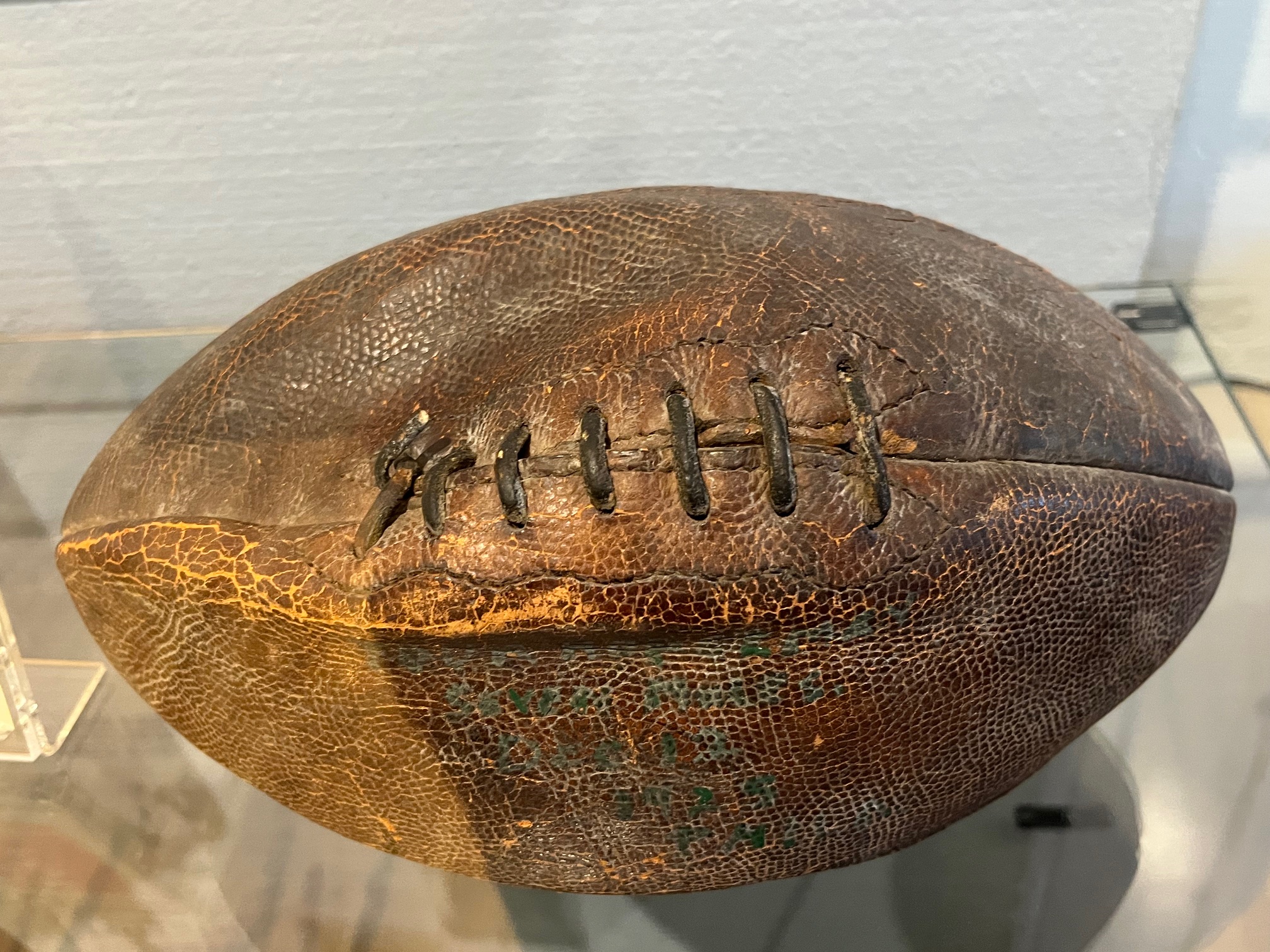
    The ball used in the Maroons’ win over the Notre Dame All-Stars.

    The NFL has examined the controversy a few times, most recently in 2003, when Ed Rendell, the former Philadelphia mayor and Pennsylvania governor (not to mention a rather vociferous Eagles fan), wrote a letter petitioning the NFL to award the 1925 title to Pottsville.

    Rendell wrote that he did not intend “to have any more communications with the cowardly barons that run the National Football League, including their extremely well paid leader, until they relent and grant the gallant Pottsville Maroons what is rightfully theirs.”

    (He added that the vast majority of NFL owners lack “cojones.”)

    But Rendell only had two NFL teams behind him: those from Pennsylvania, the Eagles and the Pittsburgh Steelers. So that Tush Push, of sorts, failed to reach the line to gain. The NFL still places the Cardinals atop its official 1925 standings, with the Maroons second.

    Plus, the Cardinals padded their final winning percentage — used then to determine the champion — by beating teams with some high school kids. They refused to accept the trophy (the one not made of coal) until years later, after the team had been sold to Charley Bidwill.

    The last name may ring a bell. The Cardinals, now in Arizona, are still owned by the Bidwill family. How interesting it is that the team has won only one NFL championship since — way back in 1946. They have played in just one Super Bowl, losing in 2009 to the Steelers.

    Some “Skooks,” those from Pottsville and surrounding Schuylkill County, still enjoy claiming the Cardinals have been afflicted by the Curse of the Maroons. “And that 1925 championship was stolen. Never forget,” says a Skook friend of mine, still seeking retribution.

    “It’s just so tragic and cruel. What should have been a watershed moment by winning such a big game ruined Pottsville and their football team,” David Fleming, who wrote an astonishing book in 2007 about the controversy, Breaker Boys: The NFL’s Greatest Team and the Stolen 1925 Championship, told me recently. “Pottsville put the NFL on the map.”

    The NFL of 1925 was prehistoric compared with the NFL of 2025. Salaries were meager, from $100 to $300 a game, and players had to hold down second jobs to pay the bills. Moreover, college football was far more popular and considered to be a far better product.

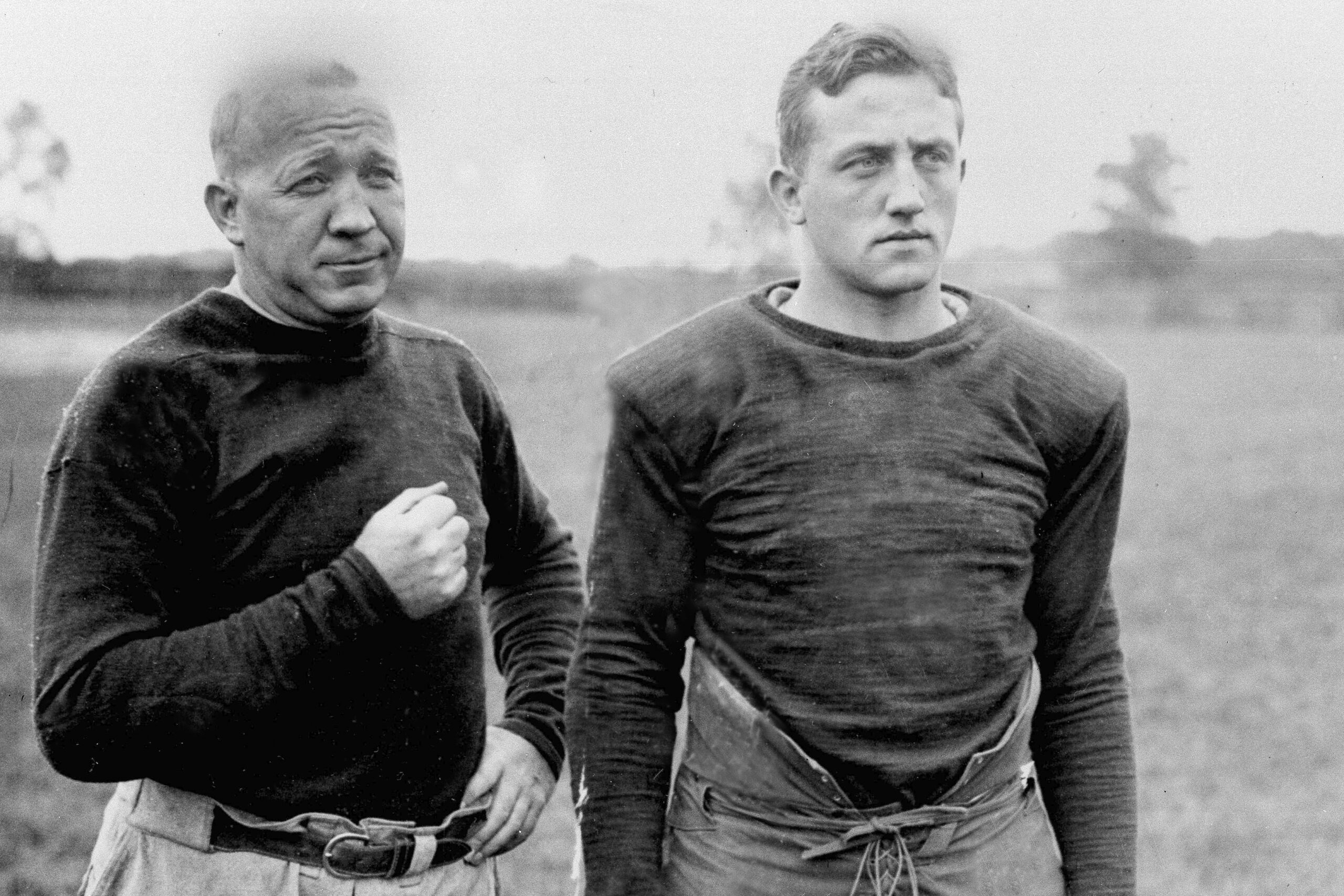
    Notre Dame football coach Knute Rockne (left) and team captain Clem Crowe watch the team practice in 1925 — the same year a group of former Fighting Irish players fell to the Maroons, 9-7.

    Pottsville sort of ignored the Pennsylvania “Blue Laws,” so the Maroons often played at home on Sundays against opponents that played in Philadelphia the day before. The Maroons set trends that last to this day: For example, the coach insisted his players live in town.

    Pottsville was among the smallest cities with an NFL team, but the city more than made up for it by adoring the Maroons — even during a contentious miners’ strike that nearly broke the town. For the exhibition at Shibe Park, as Fleming wrote, several Maroons fans playfully wore coal-miner garb to distinguish themselves from the overwhelming majority of Notre Dame fans.

    Even after both teams had arrived at Shibe Park, the exhibition game was nearly canceled because only about 8,000 had paid to see the game, some 10,000 fewer than expected, leading Notre Dame star Harry Stuhldreher, one of the legendary “Four Horsemen,” to push for $25,000 upfront — which is worth about $450,000 today — for his team to play in the game.

    (The gate was surely smaller than expected because the Yellow Jackets suddenly scheduled a game at the same time in Frankford, beating Cleveland, 3-0, before 7,000.)

    In this 1924 file photo, Notre Dame’s infamous backfield known as “The Four Horsemen,” from left, Don Miller, Elmer Layden, Jim Crowley, and Harry Stuhldreher, pose on the practice field in South Bend, Ind. Stuhldreher asked for $25,000 up front for his team to play against the Maroons.

    At the same time, the Maroons were holding out for $10,000 upfront, or about $181,000 today (the pay disparity underscores the difference in perception then between the college and pro games), so the kickoff was delayed. Then Notre Dame took a 7-0 lead on an Elmer Layden touchdown. But the Maroons rallied — gallantly.

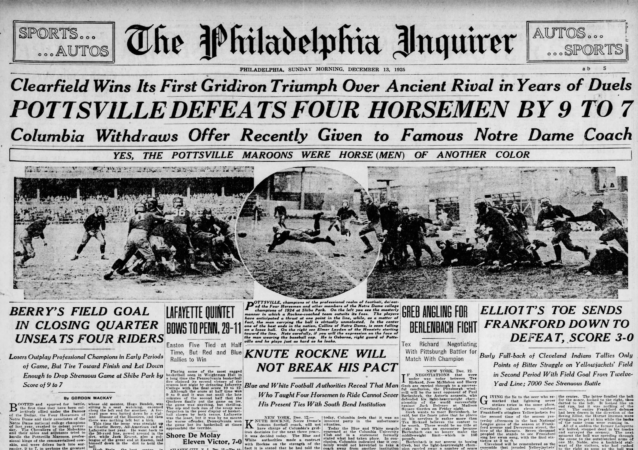
    “YES, THE POTTSVILLE MAROONS WERE HORSE(MEN) OF A DIFFERENT COLOR,” The Inquirer gasped the next morning. Gordon Mackay, the reporter, labeled it “perhaps the greatest football battle that this Quaker City has known in years and years.”

    The Maroons had put in 28-year-old Tony Latone, the “Human Howitzer,” after halftime. Latone’s story was mythic: He began working in nearby coal mines to support his family when he was 11, after his father died.

    At first, he was a “breaker boy,” working 70-hour weeks picking slate and debris from the valuable anthracite coal. (After a week or two, the skin on the tops of a breaker boy’s fingers would peel off.) Later, he strengthened his legs by pushing loaded coal carts from the mines.

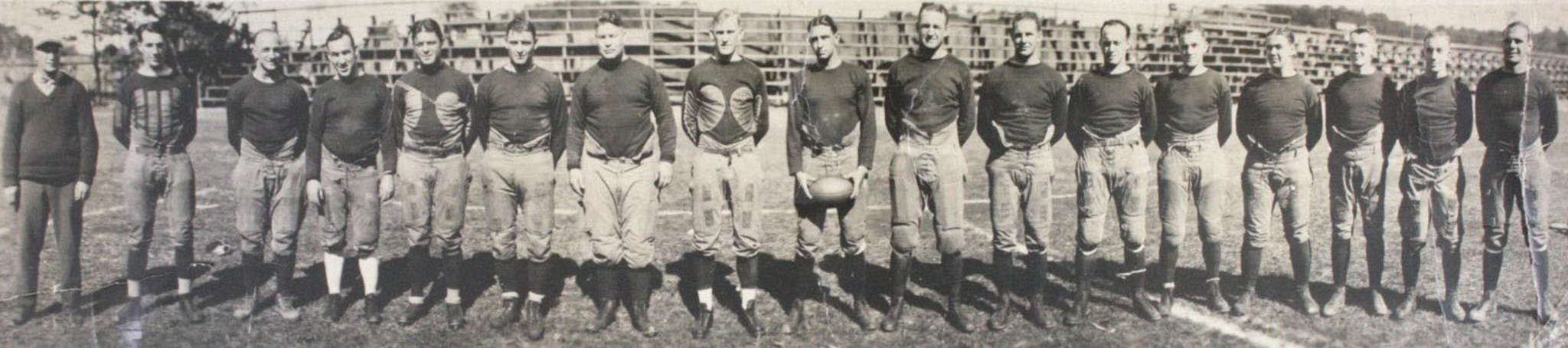
    The Pottsville Maroons of 1925, a squad that was comprised of miners from Schuylkill and Luzerne Counties.

    Berry, already a catcher for the A’s, hit the crossbar on an extra-point attempt after Latone scored a touchdown late in the third quarter, so Notre Dame still led, 7-6. But Latone, playing on a sore right heel, gained five first downs on another brutal, physical drive.

    “He just ripped the Notre Dame team to shreds,” Payne told me of Latone, who ran for more yardage in the NFL in the 1920s than the legendary Harold “Red” Grange.

    The drive stalled at the Notre Dame 18-yard line, so Berry tried a 30-yard field goal, which was hardly automatic back in those days. He’d made only three of nine attempts in the season to that point, none past 29 yards.

    But, as Mackay so colorfully wrote in The Inquirer the next morning: “He swung that agile hoof. There was a crash of ball and foot, and the crowd, awed into silence, held their breaths as the sphere soared and soared and skipped straight through the crossbar.”

    As Fleming wrote in 2007: “Most of the fans at Shibe Park, even the ones from Pottsville, had come out for a fun day of football and a glimpse at the famous Four Horsemen. Instead, they were witness to a watershed moment in the history of American sports: the very moment that professional football surpassed college ball.”

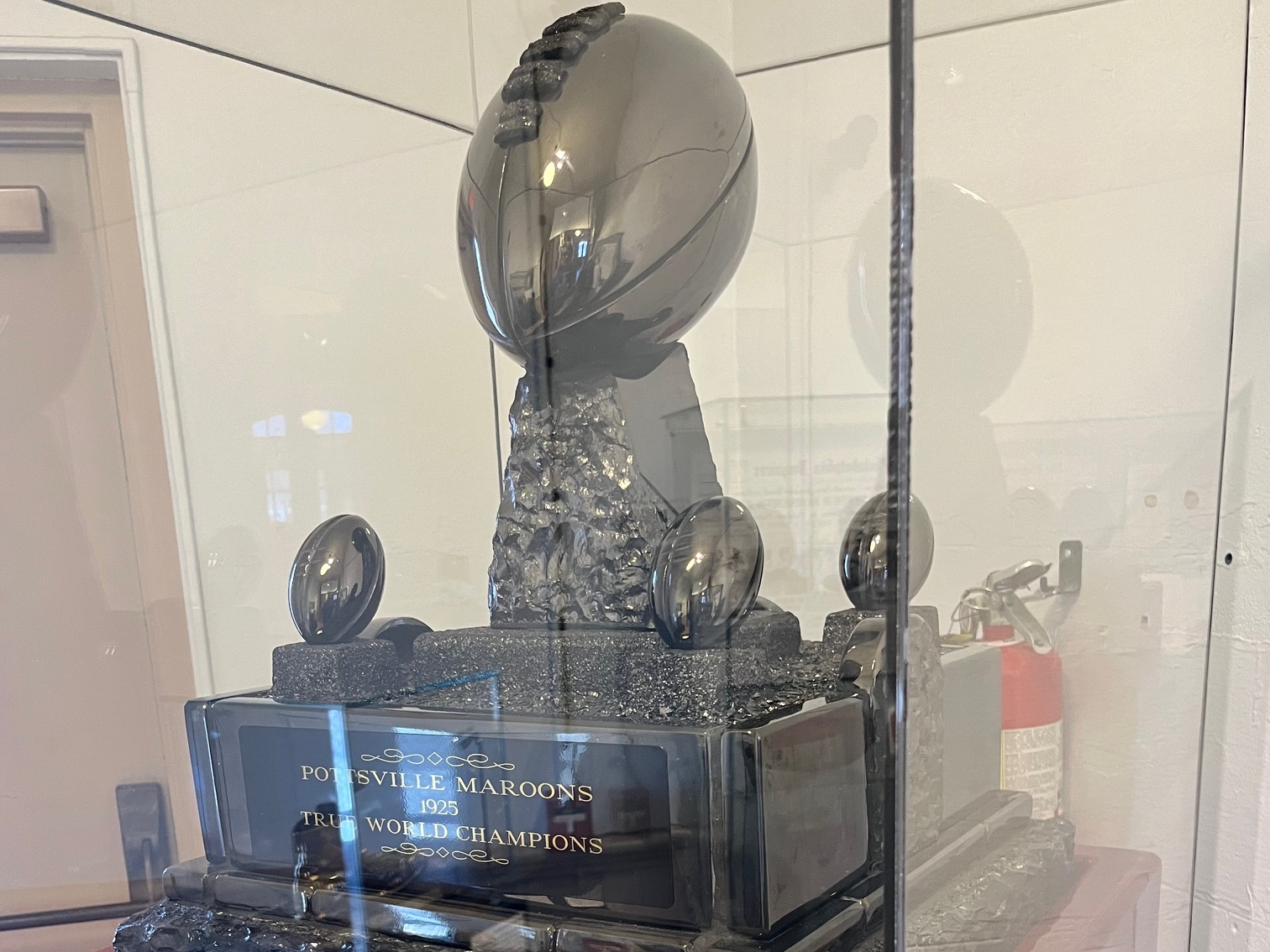
    A replica of the trophy — which, like the original, is carved from coal — that the Maroons received for winning the “true” championship resides at the Schuylkill County Historical Society in Pottsville, Pa. The original is in the Pro Football Hall of Fame.

    Books about the Maroons, including Fleming’s and the recent release by Payne and Hayes, are on sale at the museum’s gift shop (and online, as well), as are $18 maroon T-shirts with “The Real Champions.” A 100th anniversary celebration was held in August. Students at nearby Nativity BVM High School premiered a documentary, MaRooned.

    Fleming, whose book, A Big Mess in Texas, about the antics of the ill-fated 1952 Dallas Texans, was published in October, had Breaker Boys reissued before the 100th anniversary, with a new cover: a photo of the trophy made of silver, not anthracite coal.

    “I just wanted to give them the title that they were denied,” he said.

    Well, more like, robbed of. Payne and Hayes make a six-premise thesis in their book for the NFL to award the 1925 NFL title to the Pottsville Maroons. They write, “Until the NFL corrects the situation, the Pottsville championship status remains, very simply, marooned.”

    Until that day comes, and as a native Pennsylvanian and football fan, the matter should at least be considered; there is only memorabilia from a bygone age in a second-floor alcove at the Schuylkill County Historical Society, a cozy museum in a former school on Centre Street.

    Joe Zacko, the late sporting goods store owner and die-hard fan who ordered the jerseys that gave the Maroons their name, had Berry’s shoe bronzed after a 1961 reunion. The goal was to present it to the Pro Football Hall of Fame, then under construction.

    The shoe is still in Pottsville. I am not a Skook, but, as I said, I love Pennsylvania and football, and I say a real NFL trophy belongs right next to that shoe, coal trophy, and old ball.

    Dave Caldwell, an Inquirer sports writer from 1986 to 1995, grew up in Lancaster County and lives in Manayunk.