Tag: Weekend Reads

  • Philly violence prevention groups say they were flourishing. Then the Trump DOJ cut their funding.

    Philly violence prevention groups say they were flourishing. Then the Trump DOJ cut their funding.

    In Kensington, a program to mitigate street violence was hitting its stride.

    After joining the New Kensington Community Development Corporation in 2023, outreach coordinators with Cure Violence began responding to shootings in the neighborhood, connecting folks with mental health services and other wellness resources.

    They hosted men’s therapy groups, safe spaces to open up about the experience of poverty and trauma, and organized a recreational basketball league at residents’ request. Their team of violence interrupters even intervened in an argument that they said could have led to a shooting.

    Cure Violence Kensington was funded by a $1.5 million federal grant from the Department of Justice, part of a Biden-era initiative to combat the nation’s gun violence epidemic by awarding funds to community-based anti-violence programs rather than law enforcement agencies.

    One year after a political shift in Washington, however, federal grants that Philadelphia’s anti-violence nonprofits say allowed them to flourish are disappearing.

    In the spring, New Kensington CDC received a letter from the Justice Department, saying that under the leadership of Attorney General Pam Bondi it had terminated the grant that would have funded Cure Violence for the next three years.

    The work, the letter said, “no longer effectuates the program goals or agency priorities.” In the future, it said, the department would offer such grants exclusively to local law enforcement efforts.

    “It was a heavy hit,” said Bill McKinney, the nonprofit’s executive director.

    The cuts come amid a Trump administration crackdown on nonprofits and other organizations it views as either wasteful or focused on diversity and DEI.

    It spent 2025 slashing funds for programs that supplied aid abroad, conducted scientific research, and monitored climate change. At the Justice Department, cuts came for groups like McKinney’s, which aim to target the root causes of violence by offering mental health services, job programs, conflict mediation, and other alternatives to traditional policing.

    In Philadelphia, organizations like the Antiviolence Partnership of Philadelphia and the E.M.I.R. Healing Center say they, too, lost federal funding last year and expect to see further reductions in 2026 as they scramble to cover shortfalls.

    A Justice Department spokesperson said changes to the grant program reflect the office’s commitment to law enforcement and victims of crime, and that they would ensure an “efficient use of taxpayer dollars.”

    “The Department has full faith that local law enforcement can effectively utilize these resources to restore public safety in cities across America,” the spokesperson said in an email.

    Nonprofits may appeal the decisions, the spokesperson said, and New Kensington CDC has done so.
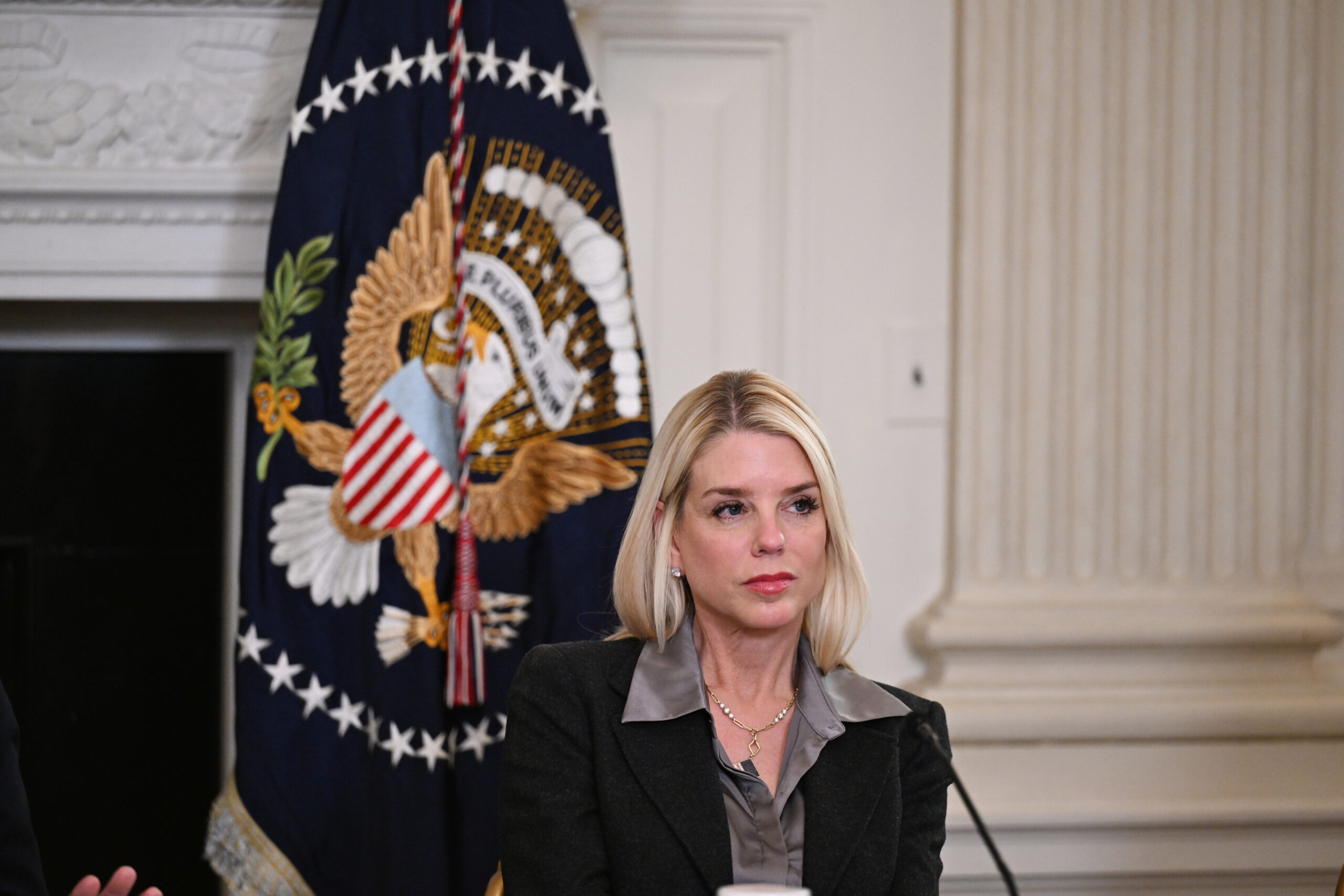
    Attorney General Pam Bondi takes part in an event at the White House on Oct. 23.

    Philadelphia city officials, for their part, say they remain committed to anti-violence programs, in which they have invested tens of millions of dollars in recent years.

    “There are always going to be things that happen externally that we have no control over as a city,” said Adam Geer, director of the Office of Public Safety.

    The reversal in federal support comes at a time when officials like Geer say the efforts of anti-violence programs are beginning to show results.

    Violent crime in Philadelphia fell to historic lows in 2025, a welcome relief after the sharp upturn in shootings and homicides that befell the city at the height of the pandemic.

    A variety of factors have contributed, from shifting policing tactics in Kensington to investigators solving homicides at record rates, putting more violent offenders behind bars. But advocates say local, state, and federal investments in anti-violence programs have played a significant role.

    In 2021, the city announced a large-scale campaign to combat gun violence that, in the past year, included nearly $24 million for anti-violence programs.

    That was on top of the Biden administration’s Community Based Violence Intervention and Prevention Initiative. Since launching in 2022, the DOJ program awarded more than $300 million to more than 120 anti-violence organizations nationwide.

    In April, many of those groups, including New Kensington CDC, lost funds. And in September, a larger swath learned they were now barred from applying for other Justice Department grants that would have arrived this spring.

    “We’ve seen enormous dividends” from the work of such groups, said Adam Garber, executive director of CeaseFirePA, a leading gun violence prevention group in the state. “Pulling back now puts that progress at risk — and puts lives on the line.”

    Philadelphia feels the squeeze

    Federal grants helped Natasha McGlynn’s nonprofit thrive.

    McGlynn, executive director of the Antiviolence Partnership of Philadelphia, said a DOJ grant called STOP School Violence allowed her organization to launch a counseling program for young people who had been victims of violence or otherwise exposed to it in some of the city’s most violent neighborhoods.

    The nonprofit used the grant to hire therapists to help students develop healthier attitudes around conflict and trauma, she said.

    The $997,000 grant was cut in April, and when McGlynn went to apply for another round of funding in the fall, she learned that nonprofits were no longer eligible. The lost funding means some services, like counseling, could now be eliminated, she said.

    “I would say several positions are in question,” McGlynn said. “I would say the program is in question.”

    Chantay Love, the director of Every Murder is Real, said her Germantown-based victim services nonprofit also lost Justice Department funding in 2025.

    Federal grants are not the nonprofit’s only source of income, Love said, but she along with other nonprofit leaders in the city are considering whether they’ll need to cut back on programs this year.

    Record-setting investment

    The decade before the pandemic saw gun-related deaths in the state climb steadily, spiking during the lockdown as social isolation, school closures, shuttered community services, and higher levels of stress contributed to a spate of gun homicides and shootings that began to ease only in 2024.

    Two years earlier, the state began dispersing more than $100 million to community-based anti-violence programs, much of the money coming from the American Rescue Plan, a sweeping Biden administration pandemic recovery package that also sought to reduce rising gun violence. And when those funds expired, state lawmakers continued to invest millions each year, as did Philadelphia city officials.

    Garber, of CeaseFirePA, said those efforts “get a lot of heavy-lifting credit” for Philadelphia’s historic decrease in violence.

    A report compiled by CeaseFirePA cites studies that found outreach programs like Cure Violence helped reduce shootings around Temple University, as well as in cities like New York and Baltimore, where homicides and shootings in some parts of the city fell by more than 20%.

    While it’s too early for data to provide a full picture on how such funding has contributed to overall violence reduction, officials like Geer, the Philadelphia public safety director, agreed that programs like Cure Violence have helped crime reach record lows.
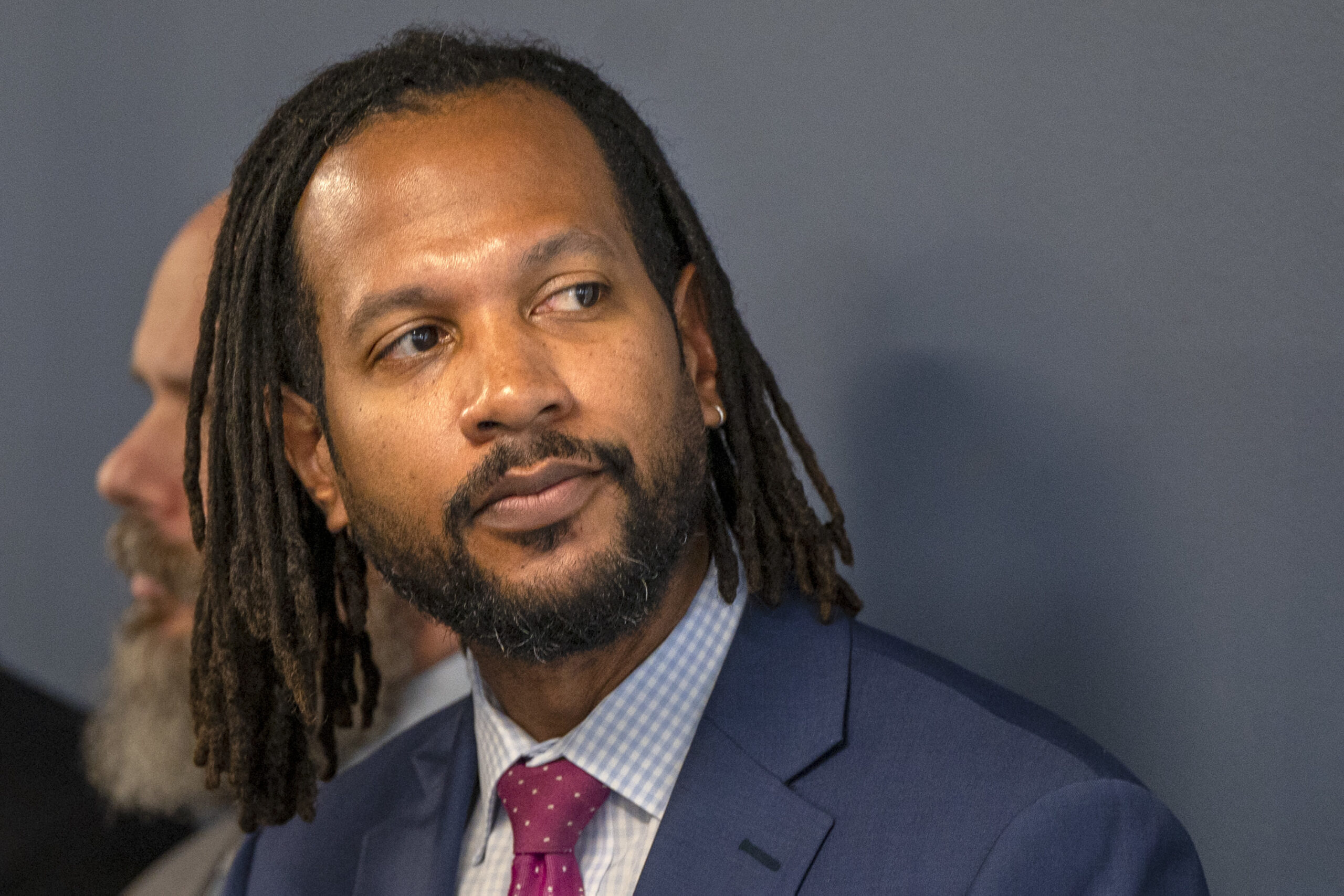
    Philadelphia acting chief public safety director Adam Geer attends a news conference on Jan. 30, 2024, about a shooting that left an officer wounded and a suspect dead.

    Outreach workers with the city-supported Group Violence Intervention program made more than 300 contacts with at-risk residents in 2025, according to data provided by Geer’s office, either offering support or intervening in conflicts.

    And they offered support to members of more than 140 street groups — small, neighborhood-oriented collectives of young people that lack the larger organization of criminal gangs — while more than doubling the amount of service referrals made the previous year.

    In practice, a program’s success looks like an incident in Kensington in which Cure Violence workers intervened in a likely shooting, according to members of New Kensington CDC.

    In April, a business owner called on the nonprofit after seeing a group of men fighting outside his Frankford Avenue store and leaving to return with guns. Members of the outreach team spoke with both parties, de-escalating the conflict before it potentially turned deadly.

    “Each dollar cut is ultimately a potential missed opportunity to stop a shooting,” Garber said.

    Cutting off the ‘spigot’

    Even as community-based anti-violence programs have risen in popularity, they are not without their critics.

    While some officials champion them as innovative solutions to lowering crime, others say the programs can lack oversight and that success is difficult to measure.

    In 2023, an Inquirer investigation found that nonprofits with ambitious plans to mitigate gun violence received millions in city funds, but in some cases had no paid staff, no boards of directors, and no offices.

    A subsequent review by the Office of the Controller found some programs had not targeted violent areas or had little financial oversight. But by the next round of funding, the city had made improvements to the grant program, the controller’s office found, adding funding benchmarks and enhanced reporting requirements.

    Meanwhile, as Philadelphia continued its support these programs, President Donald Trump’s Justice Department began a review of more than 5,800 grants awarded through its Office of Justice Programs. It ultimately made cuts of more than $800 million that spring.

    Among programs that lost funding, 93% were “non-governmental agencies,” including nonprofits, according to a letter DOJ officials sent to the Senate explaining the decision.

    The balance of remaining funds in the violence prevention grant program — an estimated $34 million — will be available for law enforcement efforts, according to a DOJ grant report. In addition to fighting crime, the money will help agencies improve “police-community relations,” hire officers, and purchase equipment, the document says.

    Agencies conducting immigration enforcement are also eligible for grants, the report says, while groups that violate immigration law, provide legal services to people who entered the country illegally, or “unlawfully favor” people based on race are barred.

    One group lauding the cuts is the National Rifle Association, which commended the Trump administration in November for cutting off the “spigot” to anti-violence nonprofits.

    ‘[T]he changes hopefully mean that nonprofits and community groups associated with advocating gun control will be less likely to do it at the expense of the American taxpayer and that real progress can occur on policing violent criminals,” the NRA’s legislative arm wrote in a blog post that month.

    Nate Riley disagrees.

    Riley, an outreach worker with Cure Violence Kensington, said the cuts threaten to reverse the progress New Kensington CDC has made since he joined the program early last year.
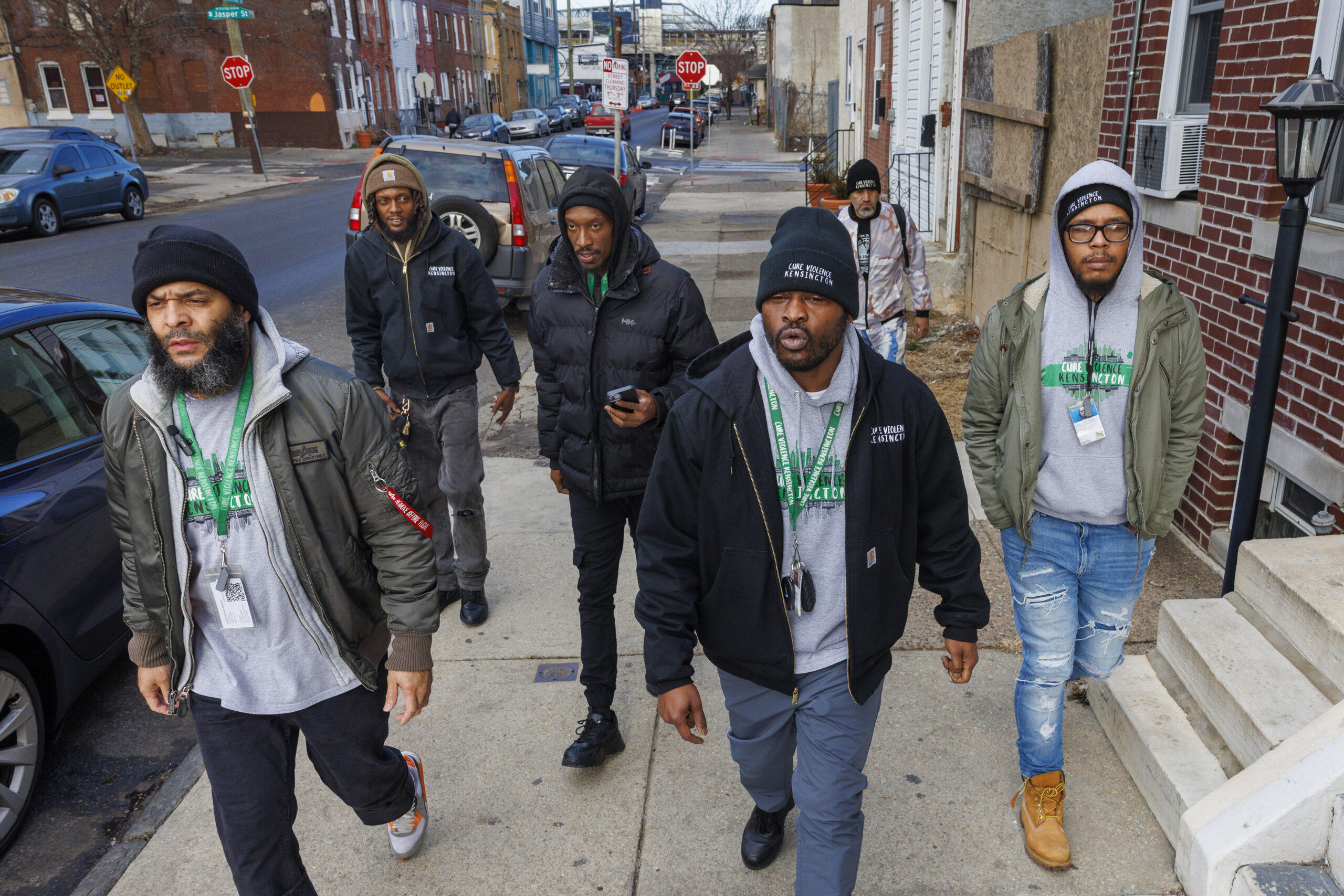
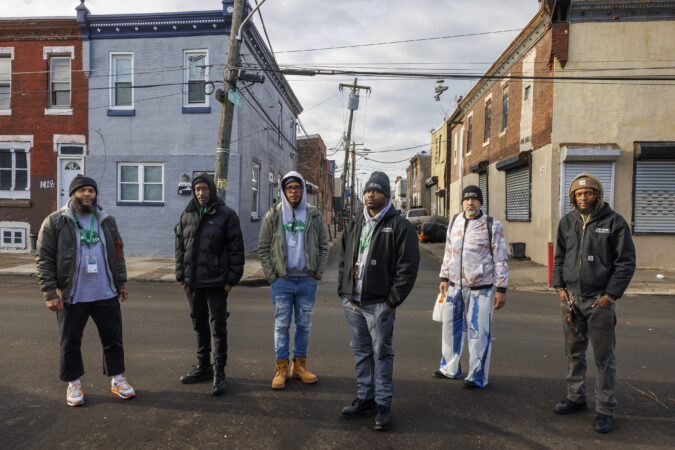
    Nate Riley (from left), Tyree Batties, Dante Singleton, Tyreek Counts, Ivan Rodriguez, and Jamall Green-Holmes, outreach workers with New Kensington Community Development Corporation, making their rounds on Wednesday.

    Cure Violence’s six-person outreach team is made up of people like Riley, who grew up in North Philadelphia and says he is well-versed in the relationship between poverty, trauma, and violence and brings that experience to Kensington.

    “This is a community that’s been neglected for decades,” Riley said. “For lack of a better term, you’ve got to help them come in outside of the rain.”

    In a recent month, Cure Violence outreach workers responded to 75% of shootings in the Kensington area within three days, a feat Riley is particularly proud of.

    He said the program is not meant to supplant the role of police.

    Instead, Riley sees street outreach as another outlet for those whose negative experiences with authorities have led them to distrust law enforcement.

    Those people may alter their behavior if they know police are present, he added, giving outreach workers embedded in the community a better chance at picking up on cues that someone is struggling.

    From Kensington to Washington

    McKinney, with New Kensington CDC, said the group was still expecting about $600,000 from the Justice Department when the grant was cut short.

    The nonprofit has since secured a patchwork of private donations and state grants that will keep Cure Violence running through much of 2026, he said.

    After that, the program’s future is uncertain.

    In the wake of the cuts, national organizations like the Community Justice Action Fund are advocating for federal officials to preserve funding for community-based anti-violence programs in future budgets. Adzi Vokhiwa, a federal policy advocate with the fund, said the group has formed a network of anti-violence nonprofits dubbed the “Invest in Us Coalition” to do so.

    The group petitioned congressional leadership in December to appropriate $55 million for anti-violence organizations in the next budget — a figure that both Democrats and Republicans in the Senate have previously agreed on and that Vokhiwa views as a sign of bipartisan support for such programs.

    McKinney, with New Kensington CDC, said it was impossible to ignore that the nonprofit and others like it provide services to neighborhoods where residents are overwhelmingly Black and brown. In his view, the cuts also reflect the administration’s “war on cities.”

    He was bothered that the Justice Department did not seem to evaluate whether New Kensington CDC’s program had made an impact on the neighborhood before making cuts.

    “We’re in a situation where the violence isn’t going away,” he said. “Even if there’s been decreases, the reality is that Kensington still leads the way. As those cuts get deeper, we are going to see increases in violence.”

  • St. Luke’s Health Network uses AI tool to reduce cardiac arrests and ICU transfers

    St. Luke’s Health Network uses AI tool to reduce cardiac arrests and ICU transfers

    Anna Stone was doing the first rounds of her nursing shift at St. Luke’s Upper Bucks Campus when she noticed a patient’s heart rate was elevated, a sign that they could be at risk of a cardiac emergency.

    Before she could look into the patient’s chart and decide whether to call for help, a critical care doctor came rushing to the patient’s bedside.

    A drop in the patient’s oxygen levels had been detected by a monitor that uses artificial intelligence to continuously evaluate vital signs. This triggered an automatic alert for the hospital’s critical care team to send help.

    The AI tool is intended to help doctors and nurses more quickly identify patients whose condition is deteriorating — often before signs of distress are visible to medical staff — and intervene sooner.

    The approach contributed to a 34% decline in cardiac arrests, and a 12% drop in patients crashing so hard and fast that they required rapid response transfers to the ICU between 2022 and 2024, according to St. Luke’s.

    Survival rates among cardiac arrest patients rose from 24% to 36%.

    St. Luke’s experiment with a program called the Deterioration Index, created by healthcare software giant Epic, is among the latest ways hospitals are bringing artificial intelligence into their patients’ rooms.

    In other Philadelphia-area initiatives, Jefferson Health and Penn Medicine recently debuted an ambient listening tool that records conversations between doctors and patients, distilling the critical details into a well-organized visit note.

    St. Luke’s has been using its AI monitoring system across all 16 of its campuses, including Quakertown, Upper Bucks, and Grand View, which the health system acquired in July.

    The health system’s initiative was recognized by The Hospital and Healthsystem Association of Pennsylvania, the region’s largest industry group for hospitals, with an award honoring safety and quality initiatives that improved patient care while reducing hospital costs.

    Using AI to predict emergencies

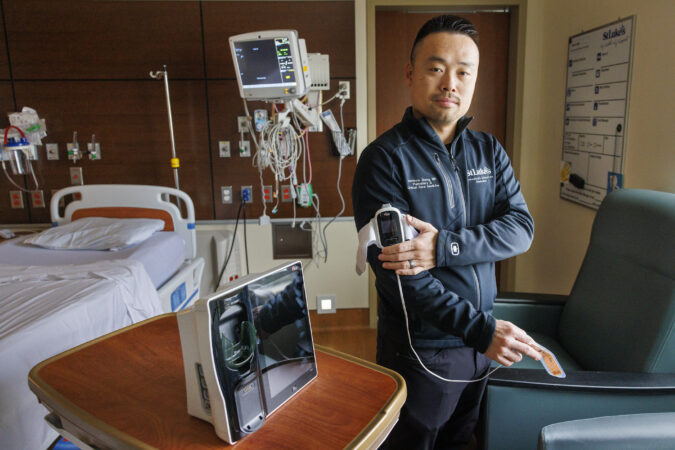
    The monitoring device, which attaches to a patient’s finger, records and continuously updates patients’ electronic medical records with vital metrics such as heart rate, blood pressure, and lab work results.

    Using this matrix of data points, it assigns each patient a “deterioration index” — a score between 0 and 100 indicating their overall stability — and automatically alerts critical care when the score rises too high.

    Matthew Zheng, a doctor at St. Luke’s Upper Bucks, holds the monitoring device used to continuously track patients’ vital signs.

    It is not intended to replace in-person monitoring, but serves as an extra set of eyes when nurses are away from their bedside.

    What’s more, the sophisticated technology is capable of picking up on nuanced changes in a patient’s status before they show physical signs of distress.

    “We would ideally like to intervene on these patients before they reach a point where the intervention isn’t that helpful,” said Matthew Zheng, a critical care doctor at St. Luke’s Hospital — Upper Bucks. “Our nurses work very hard, but they can’t be in the same room all the time.”

    When a patient’s “deterioration index” rises above 60, the device sends an alert to the hospital’s virtual response center — a remote hub where a nurse monitors three screens showing the status of all patients.

    Alerts may also be sent directly to a patient’s care team or the rapid response unit, if the AI monitoring detects that a patient is quickly deteriorating and needs emergency care.

    “What that’s allowed is for us to have a proactive response instead of being reactive to patients,” said Charles Sonday, an associate chief medical information officer at St. Luke’s who leads AI initiatives.

    Stone, the Quakertown nurse, said having the tool to constantly watch over patients while she’s out of their room is reassuring.

    Doctors like that it enables them to quickly get up to speed on the status of a patient they transferred out of the ICU, and respond more immediately to their new medical needs, said Zheng, the critical care doctor.

    St. Luke’s plans to continue fine-tuning the technology, and customize it to meet the unique patient profiles of each of its campuses, which span 11 counties and two states, from the Lehigh Valley to New Jersey.

    The social and economic factors that affect patient health, such as pollution, and illness rates, vary significantly across the health system’s sprawling network, Sonday said.

    The system will also explore customizing the tool for specialty services, such as pediatrics and behavioral health.

  • Radnor moves to acquire 14 acres of Valley Forge Military Academy by eminent domain

    Radnor moves to acquire 14 acres of Valley Forge Military Academy by eminent domain

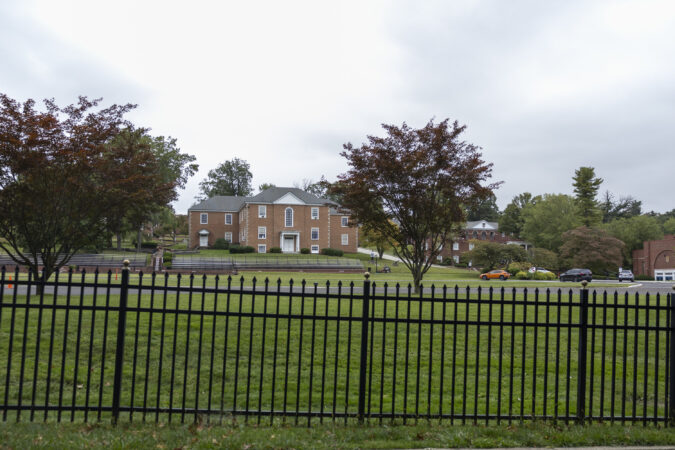
    The Radnor Township Board of Commissioners is moving to use eminent domain to take 14 acres owned by the Valley Forge Military Academy, which has said it will close this year.

    A motion Monday by the board authorized township solicitor John Rice to draw up legal paperwork to use eminent domain — a process that allows municipalities to take a property from owners, whether they want to sell or not — by paying an appraised value for the land.

    The Board expects to introduce an eminent domain ordinance at its Jan. 24 meeting. The ordinance would have to be approved after a second hearing and public reading. No date is set for that.

    It’s likely the township would use the land to build a new recreation center and park.

    Valley Forge Military Academy spans about 70 acres in Wayne in Delaware County. The board said its goal is to prevent more development in the area around North Wayne.

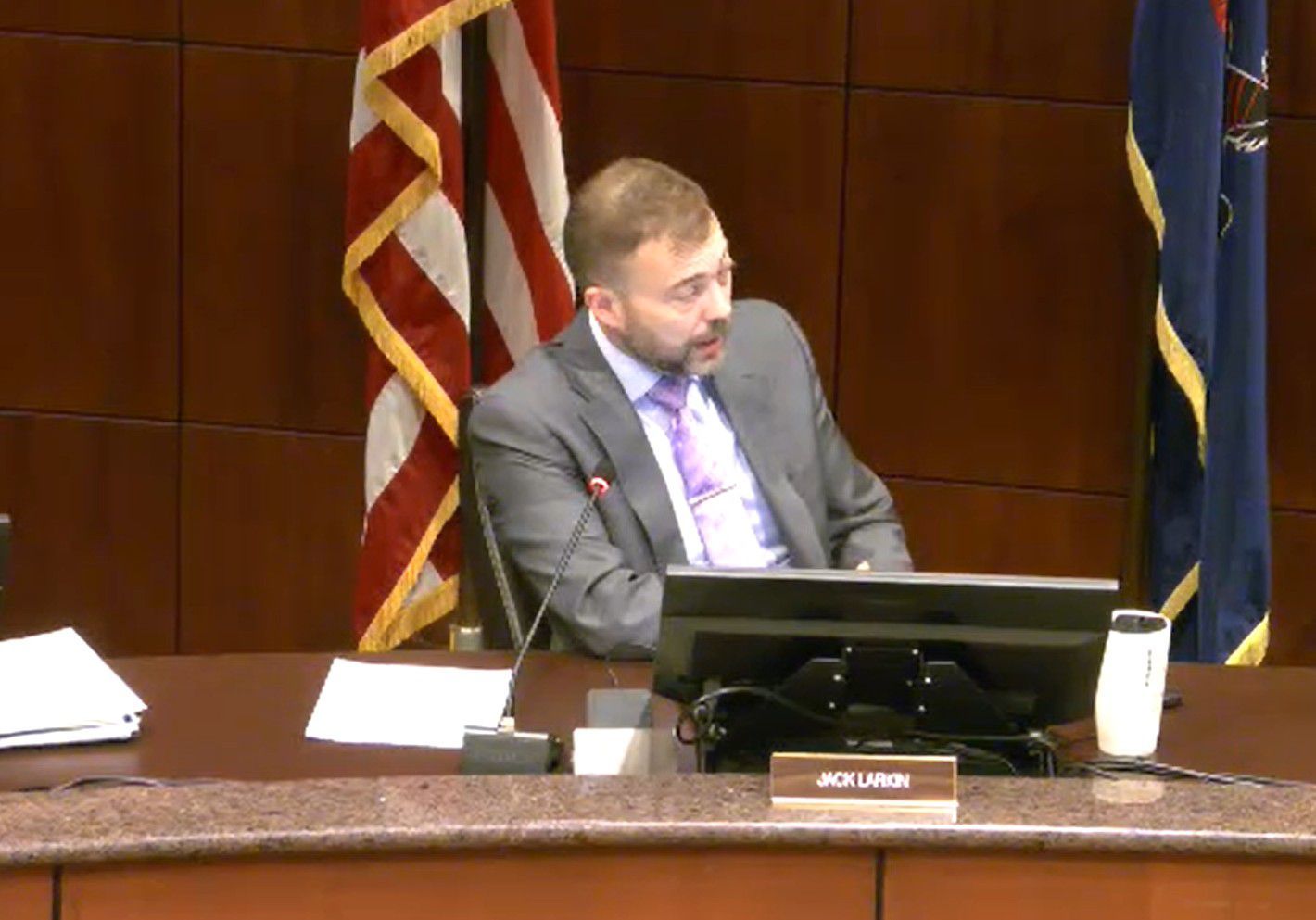
    Commissioner Jack Larkin cited a number of developments in recent years that have raised concern about overdevelopment and increased traffic.

    A video still of Radnor Commissioner Jack Larkin speaking at a Jan. 5, 2026, township meeting regarding the possible taking of 14 acres of Valley Forge Military Academy through eminent domain.

    He said the township has reached out to academy officials but have not heard back.

    “We would need to get this started, to ideally negotiate in good faith, a friendly arrangement, which we started to do,” Larkin said. “And we just haven’t really heard anything back from the school.”

    He said the school has not turned down a deal or set a price.

    “They just kind of went radio silent,” Larkin said at the meeting, and added that, as a result, the township decided to move ahead with a plan that would allow it to use eminent domain.

    However, a representative of the Valley Forge Military Foundation said said Thursday the school was unaware the township planned to move so fast.

    Plans for the 14 acres

    Larkin said in a separate interview Wednesday that the township is eyeing the land as a solution to the township-run Sulkisio Gym on Wayne Avenue.

    The gym needs major repairs, and its lease will be up in coming years. So the township needs to consider whether it’s worth putting more money into the facility, given that it might not remain a tenant when the lease expires.

    As a result, the township is considering a new gym and park for the 14 acres, which are bounded by Eagle Road to the south, the Oak Hill development to the east, and the buildings of the academy’s main buildings to the west.

    “We’re on the hunt for another alternative,” Larkin said. “This would be the place we would hope to build a replacement rec center. But that’s not going to take the entire 14 acres. So we would favor the balance would have some flavor of a park.”

    Larkin said whether the park has trails, a playground, or a community garden will be subject to public input.

    He said the township knows the value of real estate in the area and has a ballpark price per acre it’s willing to pay, but he would not disclose a total figure.

    “My real hope,” he said, “is that we end up negotiating a deal and this is not an exciting process. They want to sell, and we want to buy.”

    Larkin did not believe the 14 acres would conflict with land being eyed for a charter school.

    Currently, a group seeking to open Valley Forge Public Service Academy Charter School on land at the closing military school is already equipped with a leadership team and board, but it cannot open as a publicly funded charter school without approval from the local school board.

    Radnor school board officials are now considering the plan for a charter school that could open in the fall.

    What can eventually be built on the land is restricted by the current institutional zoning to educational, medical, religious, and museum uses, although zoning variances can always be sought.

    Valley Forge Military Foundation’s responds

    John English, board chair of the Valley Forge Military Foundation, said Thursday that the academy was aware Radnor had expressed interest in buying some of the property.

    “We were not aware that the Township believes it needs to proceed as quickly as it is,” English said in an email statement. “While Valley Forge Military Academy is closing, the Valley Forge Military College is still very much active and thriving on our campus as it continues its national security mission of training and commissioning future officers for the United States Army.”

    English said the trustees are, “undergoing a thorough analysis and evaluation of the future needs of the Foundation and the College.”

    Once they establish a path forward, English said, they would be “pleased to share those plans with Radnor Township.”

    What happened to Valley Forge Military Academy

    The rush to buy the land stems from the school’s imminent closure.

    The academy announced in September that it planned to close at the end of the 2025-26 academic year amid declining enrollment, financial challenges, and lawsuits over alleged cadet abuse. Its college would continue to operate on the main campus.

    In December, Eastern University entered an agreement to buy nearly half the Valley Forge Military Academy property, which is less than a mile from the Christian university’s St. David’s campus in Delaware County.

    The planned purchase by Eastern includes 33.3 acres encompassing the football stadium, track, and athletic field house, as well as multiple apartment buildings that will be used to house students.

    In the academy’s closing announcement, school leaders cited declining enrollment and rising insurance premiums, in part tied to the school’s extensive legal battles.

    The Inquirer has reported that even with the school’s finances in a tailspin, board members in recent years personally lent $2 million to cover operating costs, financial disclosure records show.

    They tried other methods to drum up revenue, including franchising the academy’s brand to an Islamic private school in Qatar and unsuccessfully attempting to open a charter school on campus.

    They leased out their buildings for private events and authorized the sale of nearly one-third of the campus to luxury home developers, according to federal filings and emails obtained by The Inquirer.

    Even so, enrollment in 2025 fell to 88 cadets, down from more than 300 a decade ago, the school said.

  • The story behind a colonial-era grave site hidden in residential Cherry Hill

    The story behind a colonial-era grave site hidden in residential Cherry Hill

    Giancarlo Brugnolo moved to Cherry Hill’s Woodcrest neighborhood in 2014, but it wasn’t until last year that he heard about the centuries-old cemetery just a stone’s throw away from his house. When friends first mentioned it, he assumed they were joking.

    “I was like, ‘What are you talking about? What graveyard?’” he remembers saying. “We live in a residential neighborhood, there’s no way there’s a graveyard.”

    Yet tucked away under sassafras trees and in the shade of neighboring houses, members of one of South Jersey’s first colonial families are laid to rest.

    The Matlack Family Cemetery is located on the 500 block of Cherry Hill’s Balsam Road. At the small grave site lie the remains of William and Mary Matlack, some of their descendants, and an unspecified number of servants and enslaved people. William Matlack is believed to have died in 1738, at around age 90, and Mary Matlack in 1728, at around age 62.

    Wanting to know more about the cemetery, Brugnolo took his question to Curious Cherry Hill, The Inquirer’s forum for answering local questions. Who was the Matlack family, and how did their grave site end up in a residential neighborhood?

    » ASK US: Have something you’re wondering about in Cherry Hill? Submit your Curious Cherry Hill question here.

    William Matlack, a carpenter, came to New Jersey in 1677 from Cropwell Bishop in Nottinghamshire, England. He traveled to the Americas on a ship named the Kent as an indentured servant to Thomas Ollive and Daniel Wills. Wills was appointed as the commissioner of West Jersey and sent to make deals with the Lenni-Lenape people who had long lived on the land. Many of the Kent’s travelers, including Matlack, were Quakers. The ship traversed the Atlantic Ocean from England, ultimately heading up the Delaware River to present-day Burlington County. Matlack is said to have been the first European settler to put his foot on the shore of what is now the city of Burlington (however some historians believe Swedes settled there a half-century earlier).

    At the time Matlack and Wills arrived in South Jersey, the spot was “a bleak haven” from their English homes, covered in dense forest and impenetrable at night, according to a 1970 article in the Courier-Post. Yet South Jersey stood out as a “long-sought destination thousands of miles from the brutality of bigots” in England who persecuted them for their Quaker practices.

    Matlack owed Wills four years of servitude and, in 1681, was granted 100 acres of land in return. While working for Wills, Matlack helped build two of the first houses and the first corn mill in the area.

    The headstone in the Matlack Family Cemetery on the 500 block of Balsam Road in Cherry Hill.

    Matlack would become the patriarch to one of the largest families in colonial South Jersey. In the early 1680s he married Mary Hancock, who had recently come to New Jersey from England with her brother, Timothy. At the time of their marriage, William Matlack was 34 and Mary Matlack was 16. The Matlacks lived between two branches of Pennsauken Creek in present-day Maple Shade. William Matlack would come to own around 1,500 acres of land across South Jersey. The couple had six sons, three daughters, and an estimated 40 grandchildren.

    Though Quakers became one of the first religious movements to reject slavery, many Quakers in early America, including the Matlacks, enslaved people. Research turned up little information about the enslaved people buried at the Matlack grave site. Birth and death records for enslaved people were often poorly kept in the age of chattel slavery, making it difficult to conduct genealogical research and historical inquiries into the lives of people held in slavery.

    We do know, however, that slavery was pervasive in Philadelphia’s suburbs during and after the colonial era. Despite abolitionist activism, much of which was driven by Quakers in the Philadelphia region, thousands of people remained enslaved in New Jersey through the turn of the nineteenth century. New Jersey was the last Northern state to officially abolish slavery in 1866, when Gov. Marcus Ward signed a state constitutional amendment outlawing the institution. The amendment followed the 1865 ratification of the 13th Amendment to the U.S. Constitution, which New Jersey had initially rejected.

    The Matlack Family Cemetery is a small graveyard in a residential neighborhood.

    One well-known descendant of the Matlacks was Timothy Matlack, a politician and delegate to the Second Continental Congress who inscribed the Declaration of Independence. In Facebook groups and blog posts, dozens of residents of the Mid-Atlantic region say they are descendants of the first New Jersey Matlacks — likely claims given the expansive Matlack family tree, but difficult to prove.

    William and Mary Matlack were not originally buried at the Balsam Road site, according to archival materials from the Rancocas Valley Chapter of the National Society of The Colonial Dames of America. They were initially buried on their son Richard’s farm near Springdale and Evesham Roads and were moved to the Balsam Road grave site in the late 1800s.

    The grave was discovered by a Girl Scout troop on a camping trip in what was then an apple orchard, according to a Courier-Post article from 1990. The housing development surrounding the grave site went up in 1972, but the graveyard was left in tact due to its historical value. Today, it’s owned and maintained by the township.

    This suburban content is produced with support from the Leslie Miller and Richard Worley Foundation and The Lenfest Institute for Journalism. Editorial content is created independently of the project donors. Gifts to support The Inquirer’s high-impact journalism can be made at inquirer.com/donate. A list of Lenfest Institute donors can be found at lenfestinstitute.org/supporters.

  • Parents and teachers want smaller classes and no school closures. Here’s what else they said in Philly’s facilities planning survey.

    Parents and teachers want smaller classes and no school closures. Here’s what else they said in Philly’s facilities planning survey.

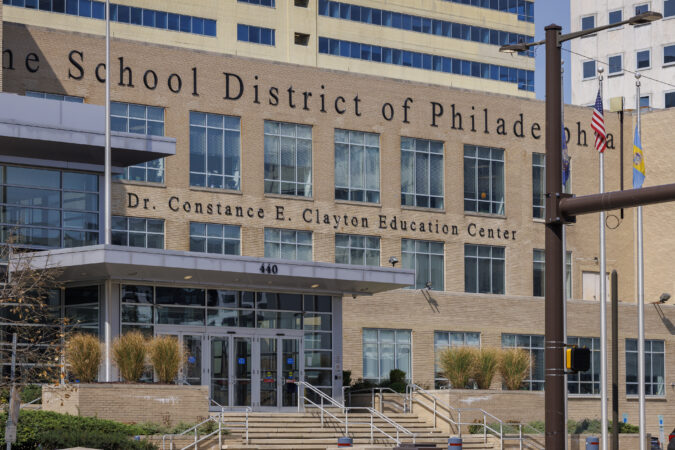
    The Philadelphia School District now has the feedback officials said they needed before making decisions about school closings and reconfigurations.

    The topline result: Philadelphians don’t want their local schools closed.

    Some urged prioritizing small classes. Others suggested adding more magnets, like Masterman; pouring more resources into neighborhood K-8s and high schools, and modernizing facilities.

    But while Superintendent Tony B. Watlington Sr. promised to use the feedback to shape the district’s plan, he and other district leaders have said school closings are a given — the district has 70,000 excess seats in schools across the district of 113,000, and dozens of buildings that are in poor shape.

    That process is expected to play out this year. It initially was to have yielded decisions in December, but Watlington said his administration needed more time to analyze data and reach out to school communities before ordering sweeping changes that they say are necessary.

    Watlington now says he will present a draft facilities plan sometime this winter, with more feedback and revisions to come before a board vote. The timeline for a final vote is not clear.

    In an email, he thanked those who participated in the survey and other parts of the planning process. “We have, and will continue to take your feedback very seriously, as we know these will be difficult decisions that could impact many families,” he wrote, adding that there will be additional “community conversations” before the final plan goes to the board.

    The district last engaged in a similar process in 2012, closing 30 schools by 2013, a hugely controversial process that officials later said did not improve academic outcomes for students or yield significant long-lasting savings for the district. Officials have said they will undertake the process more deliberately and with different aims in this incarnation.

    More than 8,000 parents, teachers, students, and community members participated in Watlington’s survey, sharing their priorities for the long-awaited facilities master planning process.

    Boosting neighborhood high schools, strengthening K-8s

    The new survey data, released by officials as winter break began, did not yield surprises, but reiterated themes that will be tough for the cash-strapped district to balance.

    Officials had previously identified four main topics that have emerged from more than a year of analyzing data and gathering feedback — strengthening K-8 schools, reinvesting in neighborhood high schools, reducing school transitions for students, and expanding access to grades 5-12 criteria-based high schools.

    Survey respondents rated each of those “important” or “very important” — with reinvesting in neighborhood high schools (85%) and strengthening K-8 schools (81%) at the top of the priority list.

    Overall, those who responded to the survey support their local schools, want strong schools close to where they live, and want the buildings closest to where they live to be renovated, not shut down.

    Respondents raised concerns around several topics districtwide: overcrowding, inadequate staffing, school safety, insufficient supports for students with disabilities, student behavior issues, facilities quality and cleanliness, and support for libraries, recess, and extracurricular activities.

    Some also expressed worries about transparency in the facilities planning process, and worries that when the district says its goal is “better use of space” it means that it will close schools.

    They outlined fears about potential hardships that closing schools could create, such as longer walks to school or tough bus rides in unfamiliar or unsafe areas. And they flagged worries about merging more than one school into a single building and having large grade spans in a single building. (Though some said they relished the idea of having many grades in one spot.)

    In their own words

    Respondents had plenty of ideas for officials as they plan steps that will have implications for the city for years to come. Here are some excerpts from survey responses:

    “I believe that we should stop closing schools and update areas so that we can utilize small class sizes. The ONLY way to accomplish meeting the needs of students, emotionally, physically, psychologically, and educationally is to have SMALL class sizes,” one person wrote.

    By closing buildings and combining schools, some children will have to walk an additional distance, most likely making them late or just deciding on certain days that the travel distance is just not worth it,” another respondent said.

    We need new high schools, middle schools, especially with vocational training. Current year textbooks, technology, air-conditioning, and programs for Tech and Art,” said another writer.

    Many [Philadelphia high schools] currently lack basic college-preparatory opportunities — few or no Honors or AP courses, limited world languages, and minimal enrichment options. This pushes academically motivated students into magnet schools, leaving neighborhood schools underenrolled and concentrated with students who have the highest support needs,” wrote one commenter.

    More schools like Masterman will prevent families from leaving the city if their child cannot get in through the lottery. It is beneficial to Philadelphia as a whole to keep these parents/families in the city instead of fleeing to the suburbs,” wrote one person.

  • Philadelphia-area blood banks call for donations as shortages loom

    Philadelphia-area blood banks call for donations as shortages loom

    Blood banks across the Philadelphia region say donations are urgently needed this week as they brace for anticipated post-holiday blood shortages.

    New Jersey Blood Services, whose coverage area includes South Jersey, declared a blood emergency on Tuesday, stating they had less than a two-day supply for the more than 200 hospitals they serve across New Jersey, New York, and Connecticut.

    The American Red Cross of Southeastern Pennsylvania separately said Philadelphia and South Jersey, as well as the nation at large, are on the cusp of a blood shortage.

    January is a difficult time for blood donations — so much so that President Richard Nixon signed a proclamation in 1969 declaring it “National Blood Donor Month.”

    This year, a trifecta of seasonal illness, severe weather, and holiday disruptions has resulted in a significant decline in donations, said Chelsey Smith, a spokesperson for New Jersey Blood Services.

    Flu cases surged in recent weeks. Meanwhile, Christmas and New Year’s Day both fell midweek, on days when the organization normally sees high collection. Blood donation levels dropped to almost 40% below what is needed to meet hospital demand.

    “We essentially experienced a mere total loss of midweek collections for two straight weeks, and that adds up very quickly,” Smith said.

    The most urgent needs are for red blood cells and platelets.

    The group urges people to donate at least once per season, emphasizing that blood is a perishable product. Red blood cells only last about 42 days after a donation. Platelets, which are especially critical for cancer patients going through chemotherapy, have a shelf life of just five to seven days.

    “When those donations drop, it directly impacts our blood supply, and hospitals usually feel the effects of that pretty quickly,” Smith said.

    Blood shortages are becoming more frequent

    Blood shortages and emergencies have become more common following the pandemic, Smith said.

    Fewer young people are donating, for starters, which she attributes to the loss of school collections during the height of COVID-19.

    “We weren’t able to go into high schools and instill those lifelong values of donating blood when they’re young,” she said.

    More people are also working from home, a challenge for the New Jersey organization that used to rely heavily on corporate workplace blood drives.

    New Jersey Blood Services declared a blood emergency last summer as well.

    “Pre-COVID, blood emergencies were not quite as common. Post-COVID, they’re almost routine,” Smith said.

    The American Red Cross also saw a lower number of people donate over the holidays than anticipated, according to Alana Mauger, a spokesperson for the Southeastern Pennsylvania chapter.

    Organizers released calls this week for donations in hopes of preventing a shortage, which they’re on the cusp of.

    The group also partnered with the National Football League this month to offer a chance at winning a trip to Super Bowl LX to those who donate.

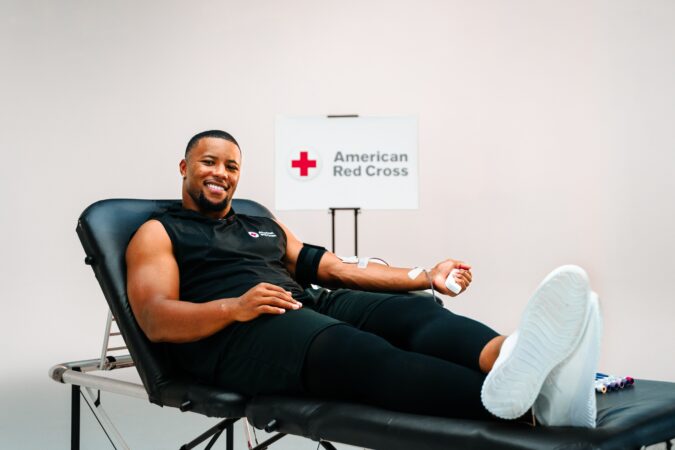
    Saquon Barkley is participating in the campaign, sharing his own experiences as a blood donor.

    “It only takes about an hour and once you realize in that short amount of time how much help it can bring — it’s a beautiful thing,” the Eagles running back said in a Monday news release.

    New Jersey’s acting health commissioner, Jeff Brown, urged donors not to wait to donate.

    “Schedule an appointment today or visit a walk-in center this week. Your donation can save a life,” he said in a statement.

    For information on donating to the American Red Cross, go to: redcross.org/local/pennsylvania/southeastern-pennsylvania.html

    For New Jersey Blood Services, which is a division of New York Blood Center Enterprises, go to: nybc.org/donate-blood/donation-locations/

  • RFK Jr. is upending U.S. vaccine policy. A Philly expert says child hospitalizations and deaths will rise as a result.

    RFK Jr. is upending U.S. vaccine policy. A Philly expert says child hospitalizations and deaths will rise as a result.

    Sweeping changes to the United States’ childhood vaccine schedule announced Monday by federal officials will decrease the number of recommended childhood immunizations from 17 to 11.

    Outraged pediatricians and infectious disease experts say the move will increase cases of preventable illnesses, hospitalizations, and deaths. Among the vaccines affected is an immunization for rotavirus whose co-inventor, Paul Offit, directs the Vaccine Education Center at the Children’s Hospital of Philadelphia.

    Now, vaccination for the serious gastrointestinal illness is among those no longer universally recommended by the Centers for Disease Control and Prevention.

    The guidance change also affects immunizations for flu, respiratory syncytial virus (RSV), meningococcal disease, hepatitis A, and hepatitis B. The CDC now recommends them for children at high risk of serious illness, or when parents of otherwise healthy children decide with their doctor to give their child vaccines for these diseases.

    The CDC’s move is the latest in a chaotic upheaval of the nation’s vaccine policy overseen by Health and Human Services Secretary Robert F. Kennedy, Jr.

    “I think the goal of RFK Jr. is to make vaccines optional,” said Offit, a longtime critic of Kennedy, saying the anti-vaccine activist “is doing everything he can to make vaccines less available, less affordable, and more feared.”

    Other experts said the decision was made without transparency and had little scientific backing. It comes at a time when more Americans are refusing vaccines; in Pennsylvania kindergarteners’ measles vaccination rates have dipped below the critical 95% threshold required to prevent the disease from spreading widely.

    The Infectious Disease Society of America called the move “the latest reckless step in Secretary Kennedy’s assault on the national vaccine infrastructure that has saved millions of lives.”

    Ronald G. Nahass, a New Jersey-based physician and IDSA’s president, said in a statement that Kennedy’s actions “put families and communities at risk and will make America sicker.”

    The American Academy of Pediatrics, a leading professional medical society, said it would continue to recommend that all children be vaccinated against rotavirus, hepatitis, and other diseases removed from the CDC’s routine immunization list.

    Under the new guidelines, the CDC will continue to recommend that all children get vaccinated for diphtheria, tetanus, whooping cough or pertussis, haemophilus influenzae type b, pneumococcal conjugate, polio, measles, mumps, rubella, human papillomavirus or HPV, and chickenpox.

    The agency will also recommend that children at high risk for serious complications receive vaccines for respiratory syncytial virus (RSV), hepatitis A, hepatitis B, dengue, and two meningococcal diseases.

    <iframe title="U.S. Childhood Immunization Schedule Overhauled" aria-label="Table" id="datawrapper-chart-Yz6OU" src="https://datawrapper.dwcdn.net/Yz6OU/1/" scrolling="no" frameborder="0" style="width: 0; min-width: 100% !important; border: none;" height="848" data-external="1"></iframe><script type="text/javascript">window.addEventListener("message",function(a){if(void 0!==a.data["datawrapper-height"]){var e=document.querySelectorAll("iframe");for(var t in a.data["datawrapper-height"])for(var r,i=0;r=e[i];i++)if(r.contentWindow===a.source){var d=a.data["datawrapper-height"][t]+"px";r.style.height=d}}});</script>

    Previously, an independent committee that advises the agency in November recommended delaying hepatitis B vaccines for newborns.

    “This framework empowers parents and physicians to make individualized decisions based on risk, while maintaining strong protection against serious disease,” said Mehmet Oz, a physician and administrator of the Centers for Medicare & Medicaid Services, in a statement.

    Federal officials said that insurance will continue to cover vaccinations, the Associated Press reported.

    President Donald Trump is joined by Health and Human Services Secretary Robert F. Kennedy Jr., left, and Centers for Medicare & Medicaid Services administrator Dr. Mehmet Oz in the Roosevelt Room of the White House in September.

    Vaccine policy around the world

    Offit spent 26 years developing a rotavirus vaccine after treating children with the illness during his medical residency in Pittsburgh — including one patient who died. Rotavirus causes vomiting and diarrhea that can lead to dehydration and is particularly dangerous for young children. There are two vaccines available, one of which Offit helped to develop.

    “I try not to take this personally,” he said of the new federal guidance.

    Before rotavirus vaccines were recommended by the CDC in 2006, up to 70,000 children were hospitalized with rotavirus each year, he noted.

    Within a decade, hospitalizations plummeted.

    “But what we hadn’t eliminated was the virus,” he said.

    HHS officials said that their review of worldwide vaccination policies found that the United States vaccinates for more diseases than other developed countries.

    But, they said, many countries that recommend fewer vaccines still achieve “strong child health outcomes” and “maintain high vaccination rates through public trust and education rather than mandates.”

    Trump has touted Denmark, which recommends routine vaccinations for 10 diseases, as a potential model for the U.S.

    Denmark may have better health outcomes, but it also has a national healthcare system, a lower childhood poverty level, and free childcare, Offit noted in a recent blog post.

    And, he said, Denmark — which does not recommend routine rotavirus or RSV vaccination — sees children hospitalized from those viruses at higher rates than the United States.

    “Denmark is nothing to emulate. They should be emulating us,” Offit said.

    Likewise, AAP president Andrew Racine said in a statement that America is a “unique country” with different health risks and public health infrastructure than Denmark.

    “This is no way to make our country healthier,” Racine said.

    Pennsylvania Gov. Josh Shapiro said that the state will “continue to rely on evidence-based guidance” including vaccine recommendations from the AAP.

    “RFK Jr. is once again trying to sow chaos and confusion among parents — but know this: these changes at the federal level do not affect Pennsylvanians’ access to vaccines in our Commonwealth,“ he said in a statement. ”Pennsylvanians should continue to consult with their doctors and make informed decisions based on the best scientific evidence.”

    New Jersey’s Acting Health Commissioner Jeffrey A. Brown said in a statement that the state sets vaccine requirements for school and childcare, and that those have not changed despite shifts at the federal level. He added vaccines in the state remain covered by insurance and the state is committed to protecting residents’ health.

    “Federal efforts to reduce the number of vaccines recommended for all children in the United States are not supported by the available data nor the consensus of public health and medical experts,” Brown said. “Instead, deterring participation in vaccination risks leaving children vulnerable to serious and preventable infections.”

    Changing public attitudes

    In a December survey, the Annenberg Public Policy Center at the University of Pennsylvania found that more than a third of 1,006 Americans polled were more likely to trust the American Medical Association, a leading professional medical society, over the CDC if the two conflicted on vaccine policy.

    At the time of the survey, the CDC had recently changed its website to suggest — against decades of evidence showing otherwise — that there could be a link between vaccines and autism.

    Asking the public to make their own decisions on whether to vaccinate their children can make people vulnerable to misinformation, Annenberg director Kathleen Hall Jamieson said in an interview with The Inquirer last week.

    “The public doesn’t have time to do research on its own, on average, and in the process, they can get lost in a mire of misinformation and confusion very easily,” she said. “It’s easy to think one is doing one’s research when one is way down the rabbit hole.”

    In the poll, the preference to trust the AMA over the CDC held true across political parties and was particularly pronounced among older Americans. The only age group more likely to accept the CDC over the AMA in the event of conflicting vaccine advice was 18- to 29-year-olds.

    “The fact that, as the CDC began to change statements, the public shifted its trust to other organizations on consequential issues — that’s a statement that says the public intelligence is real,” Jamieson said.

    The AAP’s Racine reiterated Monday that the society will continue to publish its own vaccine recommendations and help physicians to advise parents.

    “Your child’s pediatrician has the medical training, special knowledge, and scientific evidence about how to support children’s health, safety, and well-being. Working together, you can make informed decisions about what’s best for your child,” Racine said.

    Offit cautioned parents against avoiding vaccinations, as high rates do not just protect healthy children — they’re also vital for children with immune disorders who cannot be vaccinated.

    And, he said, parents shouldn’t discount the risks of hospitalization or death from vaccine-preventable diseases.

    “There’s this sort of myth of invulnerability — you never think it’s going to happen to you, until it happens to you,” he said.

  • Penn researchers gamified walking to boost heart health, and won a $25 million grant

    Penn researchers gamified walking to boost heart health, and won a $25 million grant

    University of Pennsylvania researchers recently won a $25 million grant to see if they can fight heart disease with a game that promotes a healthy behavior — walking.

    The intervention works by tracking how many steps a person takes each day and assigning points and levels accordingly. Participants get text messages with their daily tally.

    The Penn team previously tested the concept in a clinical trial with 1,062 patients and found the approach increased participants’ activity by an average of nearly 2,000 steps daily.

    Now, with funding from the nonprofit Patient-Centered Outcomes Research Institute, they hope to show that their game cannot only promote exercise, but can also reduce the incidence of heart events.

    Dozens of studies have already shown that people who take more steps a day experience fewer heart attacks and strokes. However, these findings have largely been based on observational data, which is not proof of a cause-and-effect relationship.

    The Penn team will be using the $25 million grant to pursue the gold standard for establishing scientific causality: a randomized controlled trial. Patients will get divided into two groups — one gets to play the game, and the other does not — so researchers can compare their outcomes.

    The clinical trial involving 18,000 participants will launch in a year and a half and run for roughly five years. Patients will be recruited through a partnership with the private healthcare system Ascension, which spans 15 states and the District of Columbia.

    Scientists theorize that walking could help by reducing blood pressure, blood sugar, and inflammation. Activity may also improve the way muscles get oxygen from the blood, “so that your heart doesn’t have to work as hard,” said Alexander Fanaroff, a Penn cardiologist and one of the lead researchers on the project.

    The research team will see whether the participants who had access to the game sustained significantly fewer instances of stroke, heart attack, or heart failure.

    Only people with an elevated risk of heart disease can take part in the trial.

    Making walking into a game

    As a cardiologist, Fanaroff spends a lot of time telling patients to exercise more.

    It doesn’t always work.

    “The hardest thing for people to do is change their behavior,” he said.

    The Penn team has spent the last decade using concepts from behavioral economics — a field that combines psychology and economics to understand human decision-making — to hone an intervention to promote exercise.

    The current program design, which works like a game, is the product of three previous clinical trials that showed the potential of Penn’s game-based approach to improving physical activity.

    Here’s how it works: First, participants establish their baseline step count over two weeks, and then set a goal to increase their daily steps by 33% to 50%.

    Each week, patients are given 70 points — that’s 10 per day. Every day that they meet their goal, they keep their points. If they fail to keep up, they lose 10 points.

    They move up or down levels each week, based on the cumulative points.

    Patients need only to own a smartphone to participate, since their steps are tracked by the built-in sensors now in most devices.

    Daily results are delivered through text.

    “If you have an app on your phone, you might not look at it, but if you’re getting a text message every day, you’re engaged,” Fanaroff said.

    Participants also identify a support partner, such as a family member or friend, who will get weekly email updates on how the person is doing in the game.

    The study is entirely remote, with patients enrolling via a web platform.

    Participants who are not sorted into the game approach will receive “usual care,” which consists of medical providers simply telling patients to be more physically active. They will also download a standard exercise app, which normally monitors their steps without turning it into a game.

    Trying to improve health and reduce costs

    The trial will enroll adults who have a 10% or higher chance of a cardiovascular event over the next 10 years, as determined by the American Heart Association’s PREVENT calculator.

    This includes anybody who has ever had a heart attack or stroke, or received a stent, Fanaroff said. It also includes almost all people over 65 with multiple cardiovascular risk factors such as high blood pressure, high cholesterol, obesity, or diabetes.

    “It’s not everybody, but it is a good-sized chunk of the population,” he said.

    If successful, he hopes the evidence could convince insurers to fund programs that increase physical activity.

    The Penn team estimates the game could be delivered for less than $50 per person.

    “If it’s effective at reducing cardiovascular events, it would actually probably be cost-saving to the health system,” Fanaroff said.

    He also hopes the results can guide doctors to better counsel patients.

    “We just don’t know the best way to get people to increase physical activity at all, so all we wind up doing is telling people, ‘Physical activity is important for your health,’” he said.

  • Survivors recount persistent gas smell, lack of concern by staff and a smoke break before explosion rocked Bristol nursing home

    Survivors recount persistent gas smell, lack of concern by staff and a smoke break before explosion rocked Bristol nursing home

    Robert Flesch was sitting in his first-floor room at the Bristol nursing home shortly after 9 a.m. on Dec. 23 when a staffer poked her head in to tell him he should go to the activity room. There was a gas leak near his room, the staffer told him, and Peco had been notified.

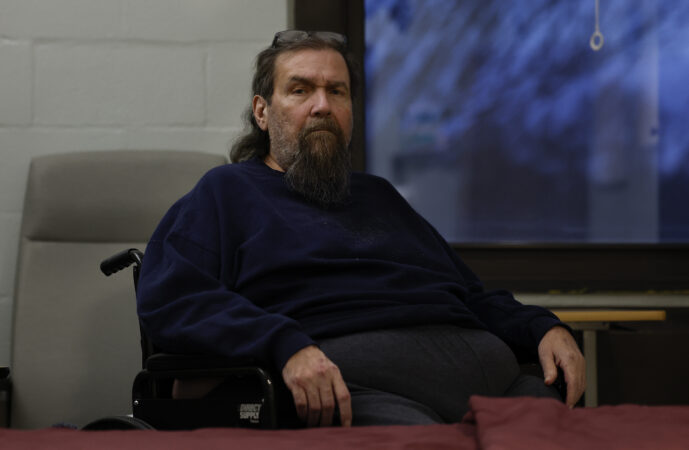
    Flesch, who is 64 and an amputee, rolled his wheelchair into the hallway. “The whole hall smelled like gas,” he recalled.

    Peco workers had already arrived, but nobody mentioned the possibility of needing to evacuate the 174-bed facility, Flesch said. Staffers did not seem concerned about the gas smell, and it was otherwise a typical Tuesday at the Bristol Health & Rehab Center, formerly known as Silver Lake Nursing Home.

    Around 1:30 p.m., Flesch said he was told Peco had fixed “a pretty big leak” and that he could go back to his room. But the hallway outside his room had the same strong odor. “I’m telling you I still smell gas,” he said he told three staffers. He was reassured that it was just residual odor from the repaired leak.

    Just after 2 p.m., another resident, Susie Gubitosi, was back inside after joining several other residents on the patio for a cigarette break. Gubitosi — known to friends as Susie Q — had become blind three years ago from glaucoma and was waiting for a staffer to help her remove old nail polish.

    That’s when the place exploded.

    “Suddenly I heard this loud boom,” Gubitosi, 71, said.

    The blast knocked her out of her wheelchair, and debris slammed against her “as fast and hard as it could,” she said. “Next thing I’m on the floor, and I’m laying on my right-hand side, and I’m like, ‘Oh my God.’”

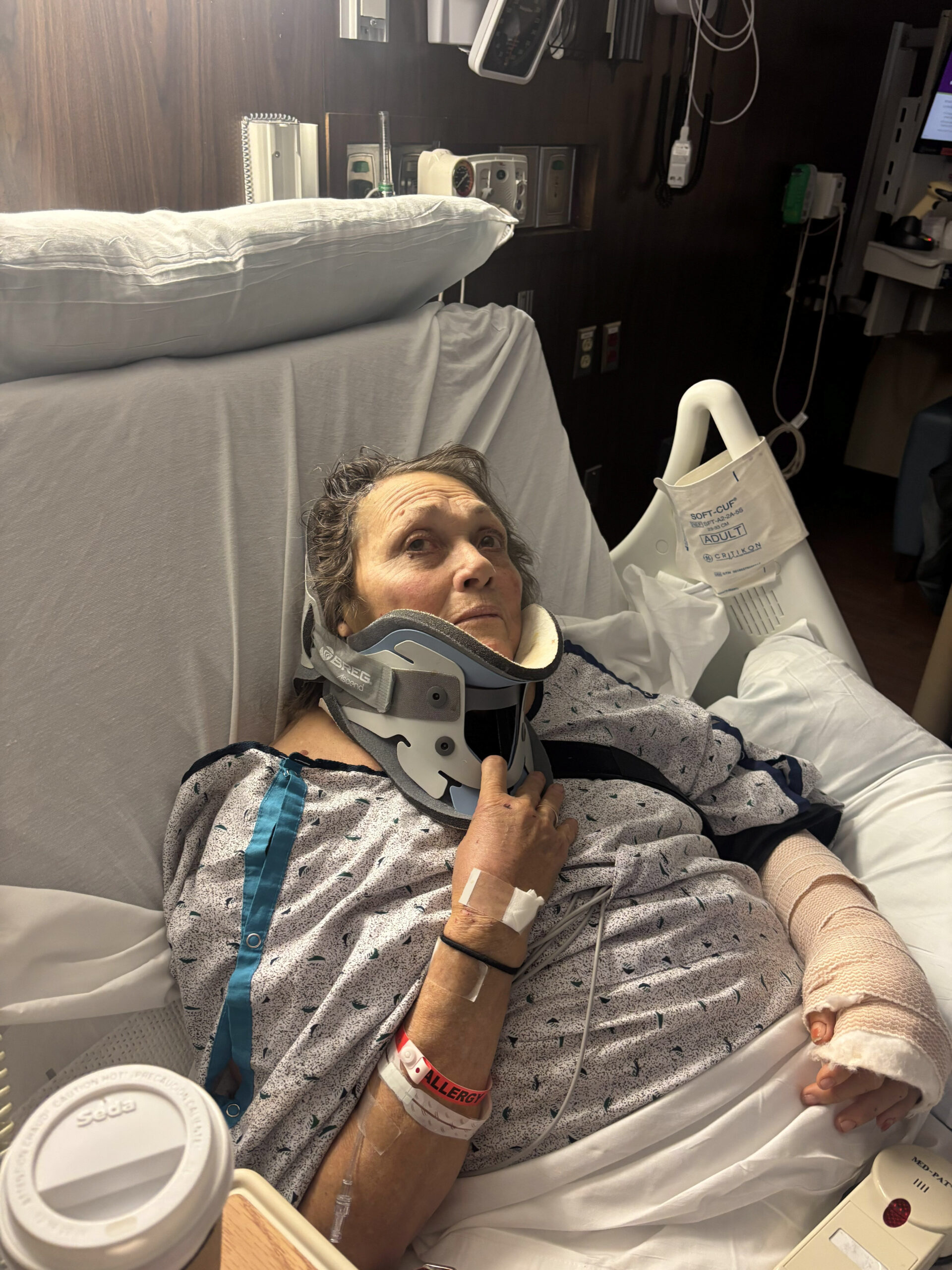
    Susie Gubitosi was severely injured in a gas explosion and fire at the Bristol Health & Rehab Center in Bristol Township Dec. 23. She has staples in her head from where a brick fell on her. Her back, sternum, neck, elbow, and hand were broken.

    The explosion, just after 2:15 p.m., killed Muthoni Nduthu, a 52-year-old nurse at the facility and mother to three sons. A second person who died, a resident, has not been identified. Twenty others were injured.

    Flesch’s and Gubitosi’s accounts, told to The Inquirer in interviews over the last few days, give an expanded timeline of events before two explosions rocked the center. Their recollections underscore the key questions facing investigators from multiple agencies as they seek to determine the cause of the explosion and assess whether Peco, the nursing home, or both may have been negligent.

    Robert Flesch at the Gracedale Nursing Home in Nazareth.

    Peco officials initially said their workers arrived at the nursing home around 2 p.m. They subsequently acknowledged their workers had been on site for several hours.

    On Friday, Peco said in a statement that since the National Transportation Safety Board (NTSB) is leading the investigation, “we are not permitted to comment on this matter.”

    The NTSB said it didn’t have any additional information but expects to release a preliminary report in about three weeks. In an earlier statement, it said investigators would test the natural gas service line that runs from the street to the basement of the impacted building, gather records, and interview witnesses, first responders, nursing home staff, and Peco employees.

    Saber Healthcare Group, a privately run for-profit company that acquired the Bristol nursing home three weeks before the explosion and rebranded it, did not respond to requests for comment Friday. Saber has relocated about 120 residents to local hospitals and other assisted living facilities. It says it is reevaluating its evacuation procedures.

    The previous owners, Ohio-based CommuniCare Health Services, had received numerous citations for unsafe building conditions and substandard care.

    ‘Am I dying?’

    Recuperating in St. Mary’s Medical Center in Langhorne, Gubitosi said she felt as if her life was over.

    Immediately, the former Bethlehem resident knew it was a gas explosion. “I heard shouting, screaming, moaning, and sirens,” she said.

    “This place just blew up. And I thought, ‘Am I dying?’ I didn’t know,” she said. She was relieved when she could wiggle her toes. “I think I’m all in one piece,” she thought.

    “Because I’m blind, it scared me even more. I felt ice cold water on me. The sprinkler system must have come on and I was drenched. But I was glad because I had dust, cement dust, soot all in my mouth, on my face, in my eyes and nose. And I was just trying to breathe.”

    She cried repeatedly for help. “I heard all these voices and things moving. It was pandemonium. I could hear the EMT guys saying, ‘They’re in here! We’ve got to get them out! The building is going to collapse!’”

    She heard one EMT, as he lifted her up, say, “This is the first patient that’s been crushed.”

    Doctors in the hospital used staples to close a gash on her hairline. Her back, neck, and sternum are broken. She had surgery last week to repair fractures in her elbow and hand.

    The pain, she said, is at times unbearable, even with medication. “It’s hard to breathe,” she said, lying in her hospital bed with her neck in a large brace, bandages that run from her hand to elbow, and IVs.

    “It feels literally like an elephant put his foot on me and crushed me,” she said. “I was probably this close to death.”

    She doesn’t know yet how long she’ll be hospitalized or where she will be placed next.

    “Lawsuits are coming,” said Jordan Strokovsky, an attorney representing Gubitosi. ”There will be answers. There will be accountability.”

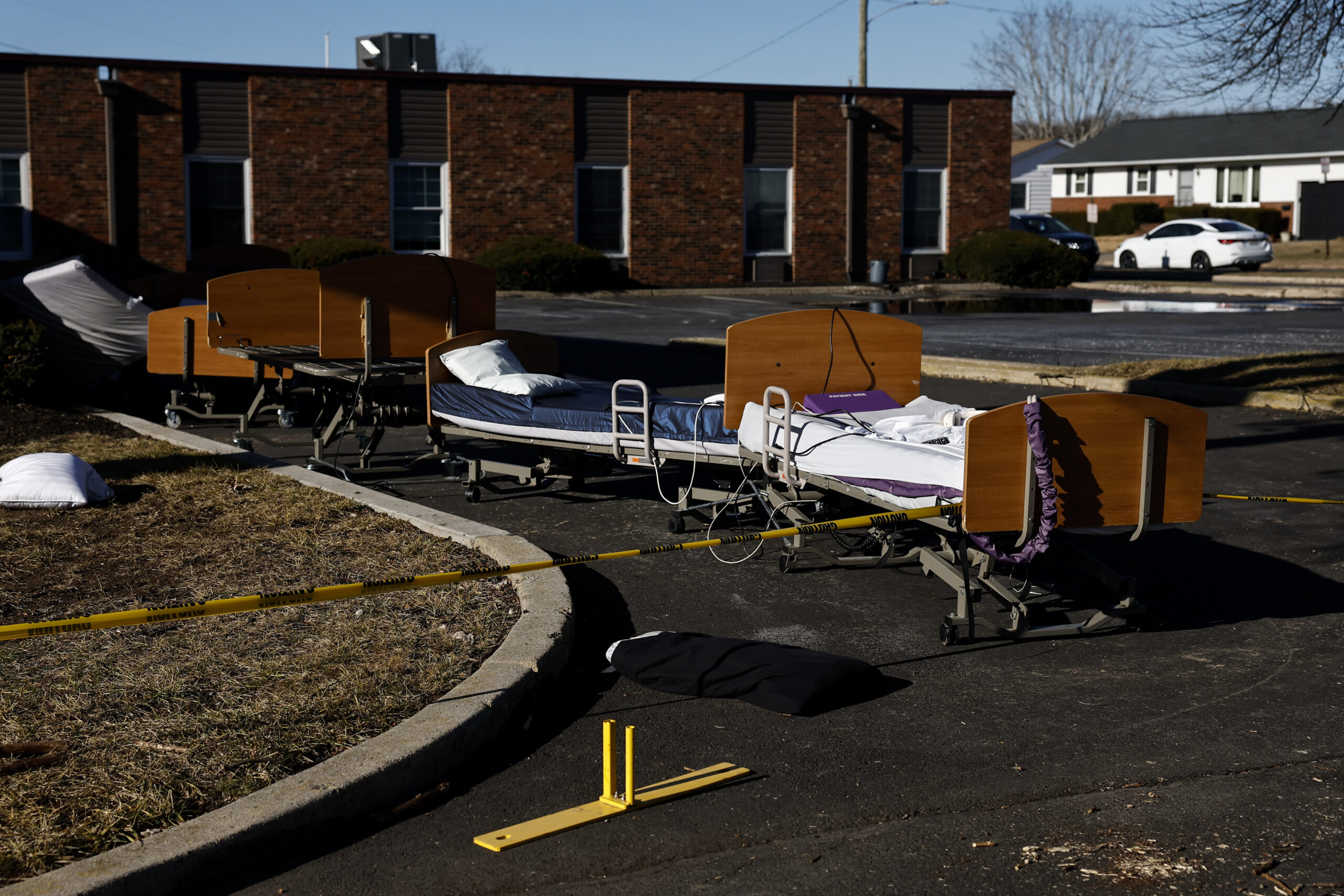
    Hospital beds remain outside at Bristol Health & Rehab Center on Wednesday, Dec. 24, 2025, in Bristol Township, Pa. Two people were killed and 20 were injured in the explosion on Dec. 23.

    ‘The wall was coming down’

    Flesch, who lost his left leg from a brown recluse spider bite, said he doesn’t understand why he was given the green light to return to his room.

    A former pool and spa tradesman from Levittown, he had been a Bristol resident a short time, sifting through a file he kept of apartments he could possibly call his next home.

    “Suddenly, there was this loud boom!,” he recalled.

    “I’ve never been in anything like that in my life,” he said. “I was in shock because all the glass from my windows came flying out. Then the ceiling was coming down. The wall was coming down.”

    Glass shards piled a foot deep in his room, even deeper in the hallway. Crumpled furniture was hurtled everywhere. Flesch maneuvered his wheelchair through glass to check on the bedridden man across the hall. He was OK.

    The facility’s part-time psychologist helped Flesch and many others get outside safely.

    “It was complete chaos,” he said.

    The explosion left Flesch, now staying in a nursing home in Nazareth, Pa., with nothing more than scratches on his arms.

    “I am still asking myself how I survived,” he said. “It must be God. I can’t explain it any other way.”

  • Passional Boutique on South Street gets warning letter from FDA for selling breast binders for gender-affirming care

    Passional Boutique on South Street gets warning letter from FDA for selling breast binders for gender-affirming care

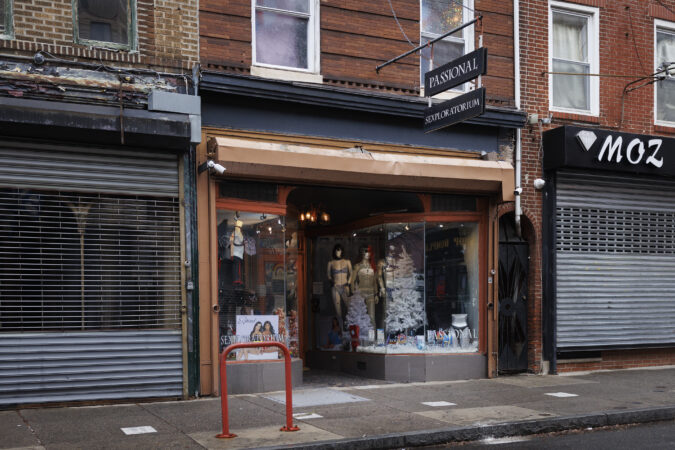
    Passional Boutique & Sexploratorium displays mannequins in leather handcuffs, vibrators, and posters of women in lingerie in its storefront windows along one of Philadelphia’s main shopping drags.

    But the adult store — a South Street staple of fetish and fantasy fashion and sex toys for about two decades — is now under scrutiny by President Donald Trump’s administration for selling an undergarment tucked away on the shop’s second floor: breast binders.

    On Dec. 16, the U.S. Food and Drug Administration sent a warning letter to Passional stating it was illegally selling breast binders. Most purchasers are trans men — individuals who are assigned female at birth but identify as male.

    The FDA classifies breast binders, which compress chest tissue, as a medical device. Businesses that distribute them in the United States must be registered with the FDA or face fines and other enforcement action.

    Passional’s operations manager, Ashly Booth, said it’s “a paperwork issue” that pertains to the overseas manufacturer, not to the Center City retailer. Passional will continue to sell those breast binders in its store but not online, she said.

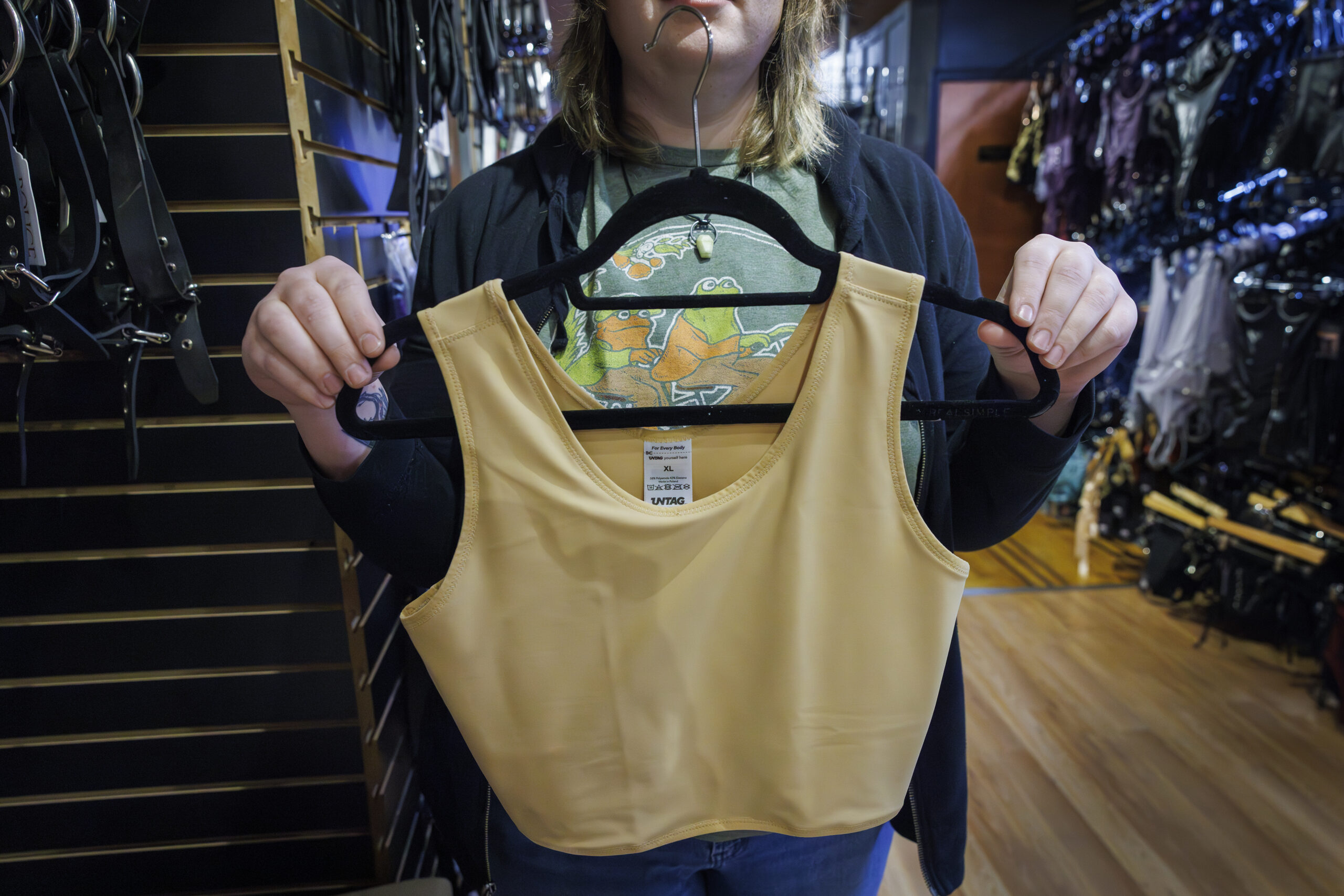
    An employee at Passional Boutique displays a breast binder for sale at the South Street store. Breast binders are garments that compress chest tissue.

    The FDA’s warning sparked outrage within the region’s transgender community.

    Naiymah Sanchez, 42, who described herself as “a proud woman of transgender experience,” said she believes the Trump administration wants to ban gender-affirming care for everyone, not just children and teens.

    Breast binders can help treat gender dysphoria, a medical condition in which a person’s body does not match their gender identity.

    “This is an adult store, so now you’re attempting to restrict our access — adult access — to the things we need so that we can exist‚” said Sanchez, a senior organizer for the ACLU’s Pennsylvania chapter. “They are trying to double down on making it illegal to be trans in the United States.”

    Protecting ‘children’?

    Passional was one of only 12 businesses across the nation and overseas, including companies in Singapore and the Netherlands, that received a warning letter. All 12 companies sell, distribute, or manufacturer breast binders to buyers in the United States, primarily through online sales. They included Seattle-based Tomboyx, which uses the tagline “Be Exactly Who You Were Born to Be — No Apologies,” and Manhattan-based For Them, a queer and trans-owned company.

    The language in each FDA letter was largely boilerplate.

    During a Dec. 18 news conference, FDA Commissioner Martin Makary said the 12 companies were illegally marketing breast binders for children as treatment of gender dysphoria.

    “Pushing transgender ideology in children is predatory, it’s wrong, and it needs to stop,” Makary said.

    However, none of the violation letters specifically mention children or marketing of breast binders to minors. The FDA declined to comment Friday, referring a reporter to the letter sent to Passional.

    Passional employees said they do not market breast binders to minors. Customers must be 18 or older to shop there. A teen may enter and try on a breast binder, but only when accompanied by a parent or guardian, they said.

    Makary’s comments were part of a Trump administration announcement of proposed rules to cut off federal Medicaid and Medicare funding from hospitals that provide gender-affirming care to children. The administration wants to restrict the use of puberty blockers, hormone therapy, and surgical interventions for transgender people under the age of 18.

    “It’s based on a medical dogma, sadly, that the normal, sometimes stressful experiences of boys and girls growing up is a pathology that requires medical intervention,” Makary said.

    Several states have prohibited gender-affirming care for minors, but it remains legal in Pennsylvania, New Jersey, and Delaware. The American Academy of Pediatrics and other major medical associations, citing research, widely accept such care as safe, effective, and medically necessary for the patients’ mental health.

    Makary said breast binders are a “Class 1 medical device” designed to help women recover from cancer-related mastectomies.

    “These binders are not benign,” he said. “Long-term usage has been associated with pain and compromised lung functions.”

    ‘A paperwork issue’

    Passional carries a line of breast binders distributed by UNTAG, originally Trans-Missie B.V., a company based in the Netherlands. UNTAG says on its website that “chest binding plays a vital role in reducing gender dysphoria” and it offers “kids binders.” Passional does not sell child sizes.

    “We offer a selection of domestic and imported binders from sizes XS through 3XL,” Passional’s website says. “Whether you are binding for gender identity, cosplay, drag performance or nonsurgical body sculpting, we offer a range of styles and price points to help you achieve your desired expression.”

    Under FDA regulations, manufacturers and distributors of Class 1 — generally meaning low risk — medical devices must register annually with the government. The regulation is designed to help the FDA track devices and quickly respond to safety concerns or recalls.

    The FDA defines medical devices, including breast binders, as “intended for use in the diagnosis of disease or other conditions or in the cure, mitigation, treatment, or prevention of disease, or to affect the structure or any function of the body.”

    The FDA issued warning letters to both Passional and the Dutch company. The letters say separate government reviews of Passional and UNTAG’s websites found “various breast binders for sale” with claims to help “reduce gender dysphoria” in violation of the Federal Food, Drug, and Cosmetic Act.

    The letters gave each 15 business days to respond and provide corrective measures.

    In an email to The Inquirer on Wednesday, UNTAG, based in Amsterdam, replied that it would keep a reporter informed of any next steps.

    Booth, Passional’s operations manager, said the regulations do not apply to in-store retail sales. However, Passional will stop selling UNTAG breast binders on its website, she said.

    “One specific producer of the binders that we have here in Passional now did not register themselves as a medical device company,” Booth said. “It was more of a paperwork issue on the side of the manufacturer.”

    Passional, she added, would not pull breast binders from its brick-and-mortar store “for the simple fact that there is a need for them.”

    Teens need parental consent

    Passional customers must be 18 or older to enter the store. Employee Aizlyn Kraus said she will ask for identification if a patron looks under age.

    However, teens who want to get fitted for a breast binder and possibly purchase one may come in, but they must be accompanied by a parent or guardian. In those cases, Passional temporarily closes the store so the teen can quickly get upstairs, where there’s a dressing room. Typically, parents call or email ahead of time to set up an appointment, according to Kraus and Booth.

    “We can get them up there without them seeing anything they don’t need to see, without them knowing anything they don’t need to know, and they walk out with something that helps them in their lives,” Kraus said.

    Kraus, who is transgender and identifies as a woman, said “dysphoria affects everyone differently. Some people know at a really early age and when they begin to go through puberty, it’s really distressing. There are so many trans kids who either think about self-harm or engage in self-harm. It’s disheartening.”

    In the last six months, “two or three parents” have come in separately with their teens to try on breast binders, Booth said.

    Kraus said Passional does not market or advertise breast binders to minors, and the majority of purchasers are adults. Passional employees are trained how to properly fit people in breast binders, making sure they are not too tight and advising customers not to wear them for longer than eight hours a day.

    Kraus, 33, said breast binders offer an alternative to top surgery. “It’s a whole lot cheaper and easier to do, rather than just jump right into surgery,” Kraus said.

    Passional, known for its queer and trans inclusivity, sells many items to help people “feel better about their body,” including waist-tightening corsets, penis “extenders,” and “tucking” or “gaff” undergarments to minimize penile bulge — all forms of gender-affirming care, Kraus said.

    Kraus added that some men with gynecomastia, or an enlargement of breast tissue in males due to hormone imbalance, will buy breast binders.

    ‘It’s just insane’

    Prior to undergoing top surgery, 34-year-old Simon Parsons wore a breast binder for a flattened appearance, likening it to Spanx body-sculpting wear.

    Parsons, who identifies as a nonbinary transgender Philadelphian, said: “This is going to create a chilling effect for anyone who needs a breast binder. It’s all just to open the door to eventually say, ‘Trans people are not allowed to exist.’”

    Parsons said after breast-removal surgery, the hospital provided a chest compression vest to reduce swelling, but it looked nothing like the ones sold by Passional. It had a padded front zipper and Velcro shoulder straps for easy release.

    Passional’s breast binders look like sports bras or nylon crop tops.

    Parsons and others described the FDA action as a government overreach at best and erosion of civil rights at worst.

    “It’s just insane,” said Corie Bosman, 34, of Bensalem.

    Bosman, who is nonbinary transgender and whose stage name is “Mister Right,” has worn breast binders while performing as a drag king. Bosman was the 2025 winner of Mr. Philly Drag King, or Mr. PDK, a pageant-style competition organized by the Philly Dyke March.

    Corie Bosman, whose stage name is “Mister Right,” was the 2025 winner of the Mr. Philly Drag King (Mr. PDK) pageant competition, organized by Philly Dyke March. Bosman uses breast binders or special “trans tape” for chest flattening.

    Bosman and Parsons, who had purchased their breast binders online, said they are concerned that transgender people, especially minors, will resort to potentially harmful practices, like binding their chests with duct tape, if the Trump administration restricts access to breast binders.

    “It opens up the window for people to hurt themselves by just trying to be themselves,” Bosman said.