Tag: Weekend Reads

  • Library warming centers strained workers and left people without help for complex issues, staff say

    Library warming centers strained workers and left people without help for complex issues, staff say

    The bitter and persistent cold of recent weeks was so dangerous that various Philadelphia agencies coalesced around one mission: Get the city’s most vulnerable off the streets.

    Philadelphia libraries became a key piece in these efforts, with some branches doubling as so-called warming centers for more than 20 days straight in an effort to provide a respite to people who would otherwise be living outside.

    The mobilization of what can exceed 10 branches during life-threatening cold snaps is largely, though not universally, welcomed by library staff, the community groups that support the workers, and the people who use the spaces.

    As outdoor deaths mount in places like New York City, where at least 18 people have died on the streets since Jan. 19, Philadelphia library workers see the initiative as a way to prevent similar outcomes here, where there have been three cold-related deaths since Jan. 20.

    But employees say the warming center initiative, in only its second year as a formalized network, leaves branch staff, from librarians to security, unequipped to help some of the people walking through their doors with complex mental and physical health needs.

    “People are feeling tired, feeling very burnt out, the physical, the emotional, and the mental load of not just doing our regular work, but having like this critical service, like lifesaving service, being offered on top of that for 12-plus hours a day has been really, really hard to sustain,” said Liz Gardner, a library worker, speaking as a union steward in the American Federation of State, County and Municipal Employees District Council 47’s Local 2186, which represents first-level supervisors, including those at libraries.

    There’s the “little stuff,” like how an online map sometimes listed the wrong information in December. Last-minute location changes among the South Philly branches made it confusing for even the self-described information professionals to direct people where to go. At one point, a branch that was not Americans with Disabilities Act-accessible was cast as a warming center, to the chagrin of many.

    Library workers and community groups described having to lobby the Free Library to crowdsource snacks and water. The transportation that transfers people to nighttime warming centers after the libraries close has often been late, meaning staff have to decide between staying after their shift or leaving people outside, which they don’t want to do.

    What’s more, library workers and volunteers say, some people require more than a warm space. People in mental health crises, struggling with substance abuse issues, and requiring wound care need medical support, workers say.

    “What [the city is] continuing to do is take advantage of a group of people that care so deeply about the city of Philadelphia and the communities that they serve, and they’ll continue to do it, regardless of if they have the support or not,” said Brett Bessler, business agent for DC 47 Local 2186.

    Altogether, the concerns surrounding the warming center system yield existential and moral quandaries: Is this system the best and most humane way to treat some of the city’s most vulnerable people?

    Crystal Yates-Gale, the city’s deputy managing director for health and human services, acknowledged some of the challenges described by library staff and volunteers. Many logistical issues, such as location changes, food, and transportation woes, were improving or had been resolved, she said. Some of the concerns regarding staffing might be a matter of miscommunication, she said.

    “I think everybody’s exhausted. It’s like Groundhog Day,” Yates-Gale said. “It’s the same thing: Every day you wake up, they’re all just quite exhausted, but everybody’s working toward the same goal.”

    Kelly Richards, president and director of the Free Library of Philadelphia, echoed the sentiment that staff have been saving lives. In a statement, he said he appreciated staff efforts and feedback as the Free Library continues “making improvements to better serve our communities.”

    ‘They need more than a warm building’

    Details of who uses the warming centers are limited. Visitors are not asked if they are at a library to escape the cold or for regular library programming.

    Three library workers from various corners of the city described some of the daily challenges they have faced at warming centers to The Inquirer under the condition that they remain anonymous, fearing professional repercussions.

    One worker who has lived through various iterations of heating and cooling operations involving libraries described a catatonic man being brought into their branch by first responders, left for staff to figure out his care.

    “They need more than a warm building,” the worker said. “These are human beings, and we’re the wrong department to help.”

    A worker at a different branch described trying to persuade a man with a festering wound to seek medical intervention. In another instance, when staff told a man he could not set up his sleeping bag on the library floor, he began shouting, telling workers they had to accommodate him.

    Library staff say one of the biggest challenges is the lack of consistent support for people with complex medical issues.

    Yates-Gale said the Philadelphia Department of Behavioral Health and Intellectual disAbility Services staff focuses support on what are considered “high-volume” warming centers, including the Central Library and the Northeast Regional and Nicetown branches. Mobile teams are available by request.

    In other cases, through a partnership with Project HOME, the city’s homeless services office assigns what is called a restroom attendant.

    Library workers and volunteers say the current setup is unfair to all involved.

    At the South Philadelphia Library on a recent Friday afternoon, a woman yelped in pain as she rubbed a blackened, possibly frostbitten toe. Children played with blocks in a corner as others checked out books.

    Library staffers maintain similar scenes have played out at the various warming centers, with workers left to balance the comfort and safety of people there to check out books and use their computers with those of people who might die if kicked out and sent to the streets.

    The worker who told of trying to persuade a man to seek medical attention noted that staffers are behind on work and programming has taken a hit.

    Kelsey Leon, a harm reductionist who regularly works with homeless Philadelphians with addiction, has been visiting libraries during the cold snap after hearing concerns from librarians, and working to deliver wound care kits to the centers so people there can treat themselves.

    Librarians “are so clearly beyond their capacity to handle this,” she said.

    The city says it’s listening to feedback

    A battle for snacks, workers and volunteers say, has become emblematic of the disconnect between what the Free Library and the city want warming centers to be and what they actually are.

    Most people using the service do not bring their own food.

    The city initially provided snacks at the overnight warming centers in recreation centers but made no such offerings at the daytime ones at libraries.

    When staff and volunteers noted this would mean people going 12 hours without sustenance and offered to fill that gap with crowdsourced snacks and drinks, they faced resistance.

    “We were told repeatedly that warming centers at libraries are distinct from shelters, and that is the reason they couldn’t provide food,” said a third library worker, adding the Free Library and the city eventually allowed the outside snacks to come in.

    Part of the initial hesitation, according to Yates-Gale, was based on logistical considerations, including protecting library materials and adding cleanup to the plate of security officers who handle maintenance.

    The city provided library leadership with lists of food sites, the idea being that people could leave the libraries, get a meal close by, and come back.

    Still, Yates-Gale said, the city is listening and adjusting in real time.

    Last week, after two weeks of operations, the city brought water and cereal to warming centers. The city says people also have access to water fountains.

    The city said it is not giving up on improving warming center conditions. Yates-Gale said that starting Tuesday, the Philadelphia Office of Homeless Services would send reinforcement teams to daytime warming centers to get people to connect to additional services.

    The backup cannot come fast enough.

    Ibrahim Banch, 26, has been homeless before, but the cold he has experienced recently is something different.

    “The air feels solid. It stands your hair up,” he said. He knew he couldn’t stay outside, so he sought out the warming centers as temperatures dropped. Recently released from prison, he said, he is waiting to be placed in an emergency shelter bed. But the warming centers are a last resort.

    He said the city should staff all centers with workers equipped to deal with the mental health needs that many clients have.

    “People at the library shouldn’t have to take this responsibility,” Banch said. “It’s not a shelter or a caregiving place.”

    Volunteers still eager to help

    Erme Maula, with the Friends of Whitman Library in South Philadelphia, echoed the challenging conditions described by workers. She believes it doesn’t have to be this way.

    The city’s 54 branches are full of supporters who can coalesce around the warming centers with donations, she said. Volunteers continue to collect toiletries and other essential items for people using the branches for warmth.

    As an advanced practice community health nurse, she could see healthcare workers organizing to help people and ease the load of librarians. But it is the sort of effort that would need support from the city.

    “People are kind and want to be generous, but they didn’t know you have to take care of what they expected the city to be able to take care of,” Maula said.

    Maula and others who spoke to The Inquirer emphasized they want the warming centers to be improved — not to go away.

    As with the snack issue, Yates-Gale said the city is responding to feedback in real time.

    “Now that we know that there needs to be an adjustment for support staff, we’re ready and able to immediately begin staffing the libraries,” she said.

    But that might not be felt by library staff until the next warming center activation. With daytime temperatures finally warming up, the city is slated to begin winding down warming center operations at libraries; nighttime centers will remain open until those temperatures similarly rise.

    “I’m really hopeful that we see substantial improvements to make this a more sustainable practice that helps more people in a more meaningful way,” Local 2186’s Gardner said.

  • A pitching laboratory helped this 16-year-old throw 101.7 mph. But he’s ‘not just a baseball player.’

    A pitching laboratory helped this 16-year-old throw 101.7 mph. But he’s ‘not just a baseball player.’

    Andrew Kuhn dropped the final score of Ancillae-Assumpta Academy’s seventh- and eighth-grade basketball game into the family group chat last month. He wanted to make sure his 16-year-old son Cole knew that 13-year-old Gavin played well.

    The older son responded with an update of his own: a video of him throwing a 101.7-mph fastball.

    “New Year’s resolution,” Cole Kuhn texted the family.

    Kuhn went to St. Joseph’s Prep on a partial music scholarship — he has played the double bass since the fourth grade — and failed to make the JV baseball team as a freshman. Now he was showing his family that he could throw a fastball harder than most major leaguers.

    The teenager from Elkins Park is one of the nation’s top high school pitchers with a scholarship to Duke University and is already being scouted for the 2027 Major League Baseball draft. He’s pitched in just a few varsity high-school games but a triple-digit fastball is enough for scouts to dream on.

    And it all happened so rapidly; about as fast as the pitches the 6-foot-6 teenager fires from his right hand.

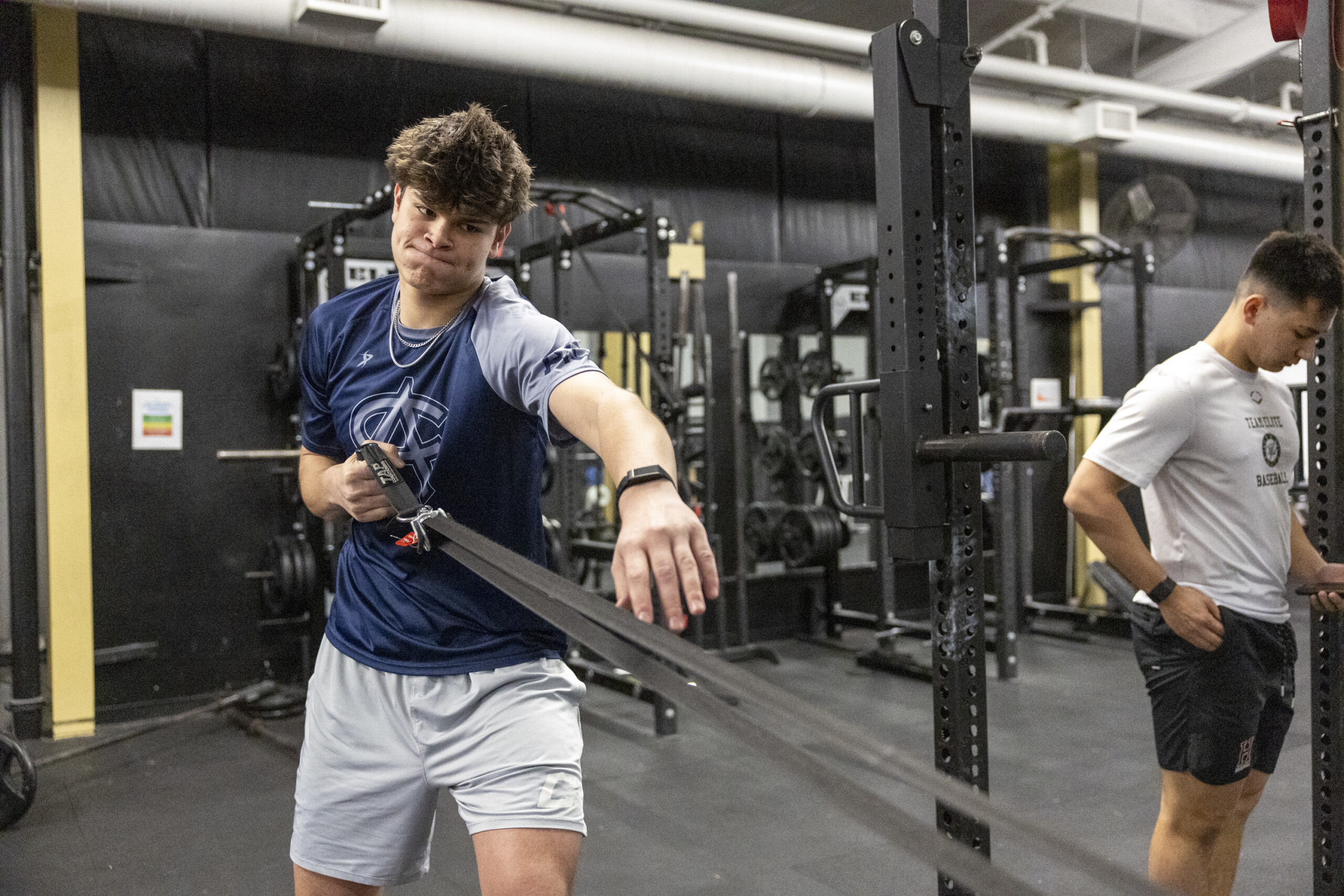
    Kuhn was throwing 90 mph in January 2025 when he enrolled at Ascent Athlete, a training center in Garnet Valley that looks like a baseball laboratory. High-tech cameras measure Kuhn’s movements on the mound, a team of coaches studies his mechanics, and he learns in real time how many RPMs his fastball registers. Big league players work out in the morning before high schoolers filter in in the afternoon.

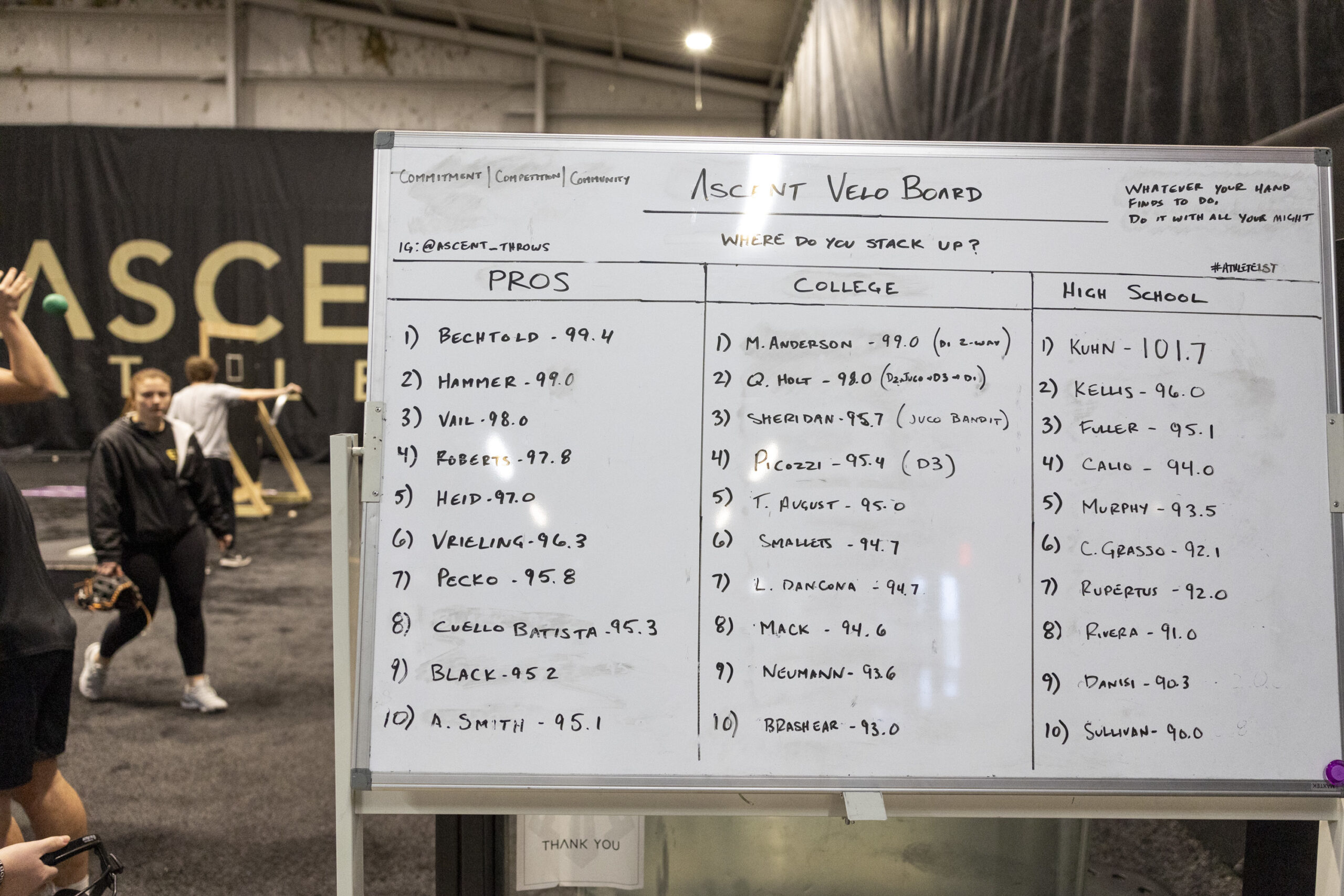
    A fitness center upstairs is focused on plyometrics and a computer connected to the batting cages allows a hitter to see how his swings would fare in a big-league park. A dry-erase board near the entrance lists the fastest pitches thrown at Ascent divided into three categories: pro, college, and high school.

    “Where do you stack up?” the board says.

    A whiteboard shows the top pitching speeds at Ascent Athlete in Garnet Valley, with Cole Kuhn on top at 101.7.

    Kuhn, first in the high school column by more than 5 mph, has the fastest pitch.

    The facility is open six days a week and Kuhn is there nearly every day, often finding someone on Sundays to unlock the door when the lab is closed. His 101.7-mph fastball did not happen by accident.

    “Without question, that place is the single biggest driving force behind his major jumps over the last eight months,” said Kuhn’s mother, Tonya Lawrence. “They’re comprehensive, they’re involved, and they know what they’re doing.”

    Scott Lawler, the general manager of Ascent, called Kuhn “a unicorn.” Lawler, who played at Bishop Kenrick High in the 1990s, has never seen a high school arm like this. There is no denying the promise of Kuhn’s right arm, but he is also just a kid who does not yet have a driver’s license.

    Andrew Kuhn picked his son up from a friend’s house after Cole threw that 101.7-mph fastball and shook his hand. Two years earlier, Kuhn was nervous to tell his father that he wanted to play winter baseball instead of freshman basketball at the Prep. His parents played college hoops and he thought he’d disappoint them if he didn’t play.

    This was not their journey, Andrew told him. This was Cole’s. The son has led the way ever since as he charted his path to that fastball. Dad was proud.

    “I said good job,” Andrewsaid. “Then that was about it. Then it’s get home, walk the dogs, have dinner. You’re not all that. You still have chores. Who knows? This whole thing might fall apart at some point. You have to be prepared. You’re not just a baseball player.”

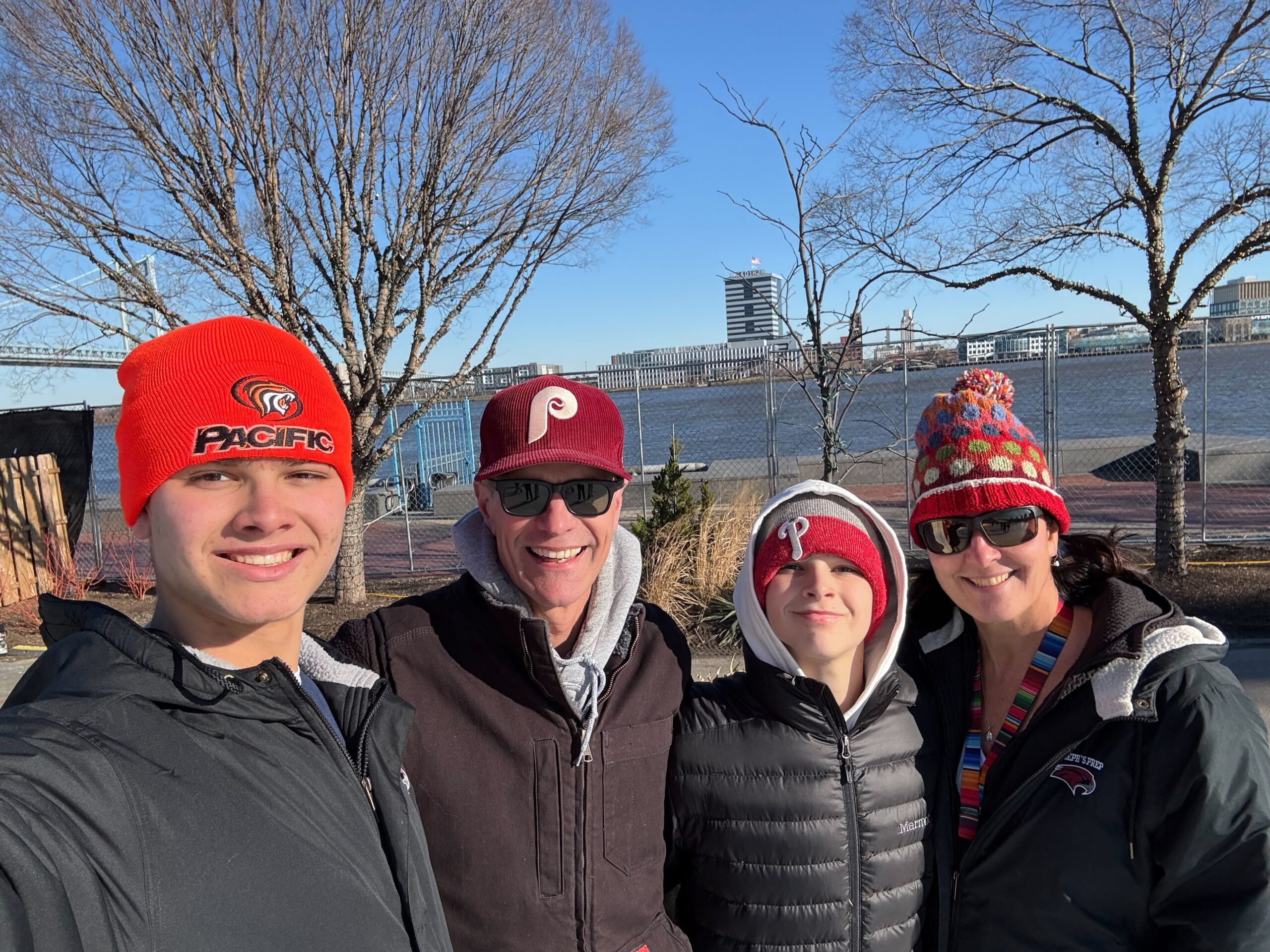
    From left: Cole Kuhn with his father, Andrew, brother, Gavin, and mother, Tonya Lawrence.

    Ballet to baseball

    The letter in Cole Kuhn’s folder as a second grader at Myers Elementary School advertised a ballet class for boys in Jenkintown.

    “He was always the kind of kid who if you said, ‘Do you want to try this?’ He would say, ‘Sure,’” Tonya said.

    So they signed their son up for ballet at the Metropolitan Ballet Academy where the teachers were strict and timeliness was prudent.

    “Six years later, it was clear that he benefited from it,” Tonya said. “Discipline, core strength, grace under pressure. This studio was serious. It was the real deal and we didn’t know that. It just came home in the afternoon packet.”

    Kuhn started playing the piano in kindergarten, picked up the double bass in elementary school, and took six years of ballet. He played baseball in the spring, swam in the summer at a public pool, played soccer in the fall and basketball in the winter.

    “We tried to get our kids to do everything and then decide what sticks,” Tonya said. “We believe that variety is good for the brain and the body and the mind.”

    Andrew and Tonya never intended to build a baseball prodigy. But perhaps keeping him well-rounded — from ballet to baseball — helped Kuhn blossom into the pitcher he is now. He was 15 years old when his fastball reached 90 mph and Tonya said that moment was like an “epiphany” for her son. He now believed he could do this. Kuhn told his parents he wanted to focus solely on baseball.

    “It’s not like we’ve been pushing him or somehow training him to hit 90 mph. It wasn’t even on our radar. It just happened,” Andrew said. “In the big picture, it’s really about exercise, friendship, and competition. Then, who knows? Hopefully it’s intriguing enough and interesting enough that kids want to stick with it. We want our kids to be well-rounded and respectful and to try their best.”

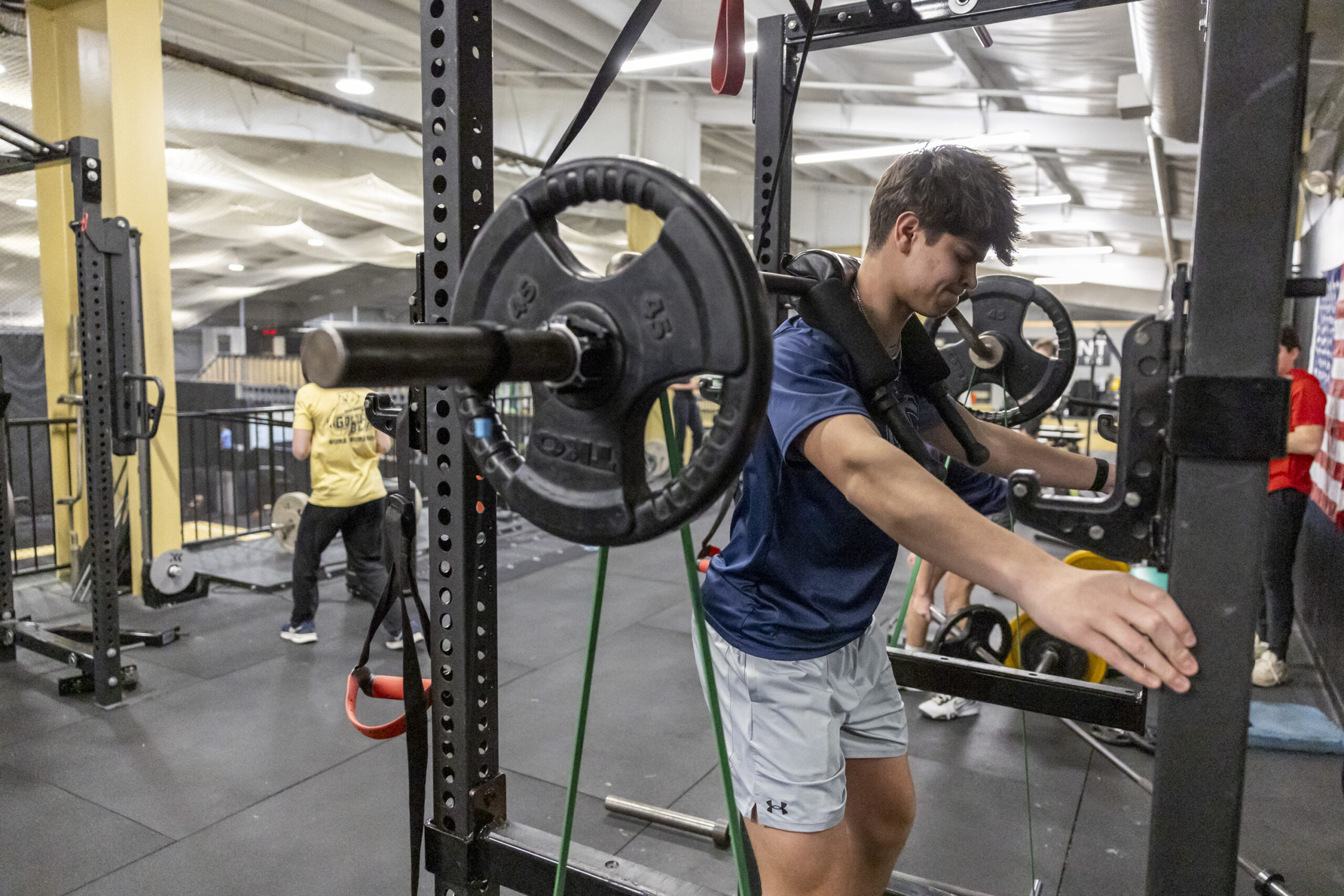
    Cole Kuhn trains at Ascent Athlete.

    Charting his path

    Kuhn told his father last year that he wanted to train at Ascent after meeting Lawler at an event. Many of Kuhn’s Prep teammates were already there and the pitcher thought it was where he needed to be.

    Lawler played minor-league ball and coached in college. Jeff Randazzo, Ascent’s owner, was a star at Cardinal O’Hara and is now an agent for major league ballplayers. They have a glistening facility and the connections a player needs to reach the next level.

    “This whole world ties together between how you train, who you play for, and who you play in front of,” Lawler said.

    Andrew said OK but told his son that he would have to inform his coach in Ambler that he was leaving.

    “Ambler did so much for him so you can’t just send a text that you’re leaving,” Andrew said.

    So Andrew stood with his son after the team’s final practice and listened to Cole break the news. Andrew played basketball at Franklin & Marshall and Tonya played hoops and lacrosse at Yale before playing basketball professionally overseas. They want their son to make his own decisions, which means working up the courage to explain to someone why you’re leaving.

    “That was taking responsibility for the choices you’re making,” Andrew said. “He did it face-to-face. It was hard and emotional for him to leave, but he knew in his own mind that that was the path for him. Cole told him, ‘My dream is to get to MLB and I think the best path for me to get there is to switch to Ascent.’ I was like, ‘Oh, Cole. You sure you want to say all that to this?’”

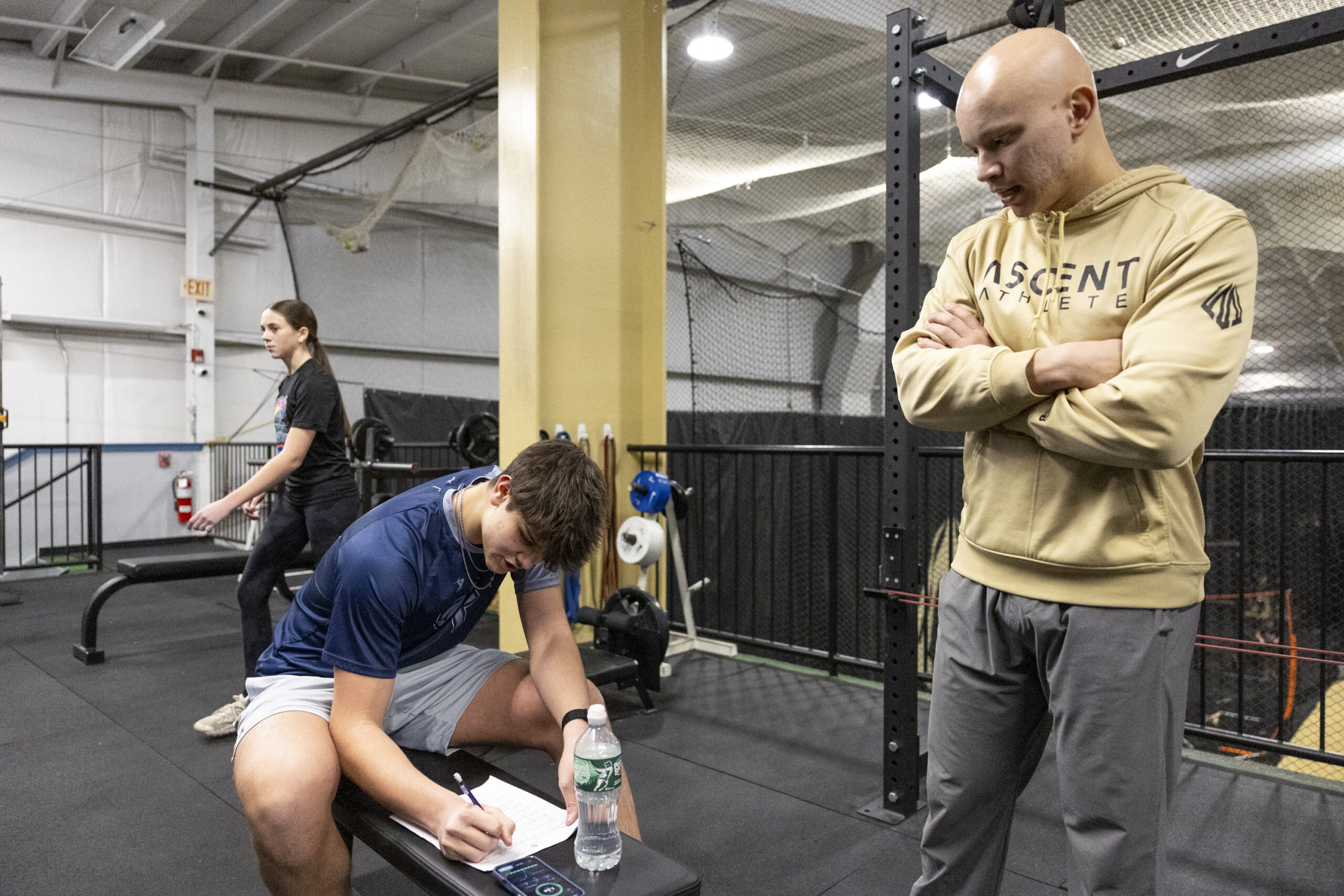
    Kuhn was paired at Ascent with David Keller, the facility’s director of pitching development. Keller pitched at Lock Haven University, where he delved into the data-driven methods that have overtaken baseball since the early 2000s. He put Kuhn on a throwing program and told him that his work upstairs in the weight room was just as important.

    Cole Kuhn works with Francisco Taveras, the assistant director of Sports Performance at Ascent Athlete.

    Kuhn gets a ride after school to Ascent from Prep senior Mihretu Rupertus — “I tell him, ‘You treat that dude to anything he wants at Wawa,’” Tonya said — and is given a checklist of exercises to do. He gained 35 pounds from working at Ascent, filling out his towering frame.

    Kuhn’s fastball took off as he hit 95 mph last July at an event in Georgia. He pitched six innings, showing he could do more than just light up radar guns. The college coaches watching took notice. The pitcher who studied ballet was suddenly a can’t-miss prospect.

    “That was for me when I said, ‘This kid is going to be really, really good,’” Lawler said.

    Facing adversity

    Kuhn’s phone buzzed exactly at midnight last summer when college coaches were first allowed to contact him. First was Miami. Then Texas Tech. More than 30 schools called that day. A few months earlier, Kuhn was hoping to play college ball at a small school with strong academics. Now the big programs were chasing him. It was a whirlwind.

    He flew the next weekend with Tonya to California for the Area Code Games, a premier showcase event for the nation’s top players. It was Kuhn’s chance to show how special his arm was.

    “He couldn’t get out of the first inning,” said Andrew, who watched from home on a livestream.

    Kuhn, pitching in perhaps the biggest event of his career, struggled. The same coaches who contacted him days earlier were now backing off. Tonya told him afterward to forget about them.

    “My line of work may be particularly suited to what was happening, but I am his mom,” said Tonya, who is a child psychiatrist. “It’s hard to watch, but it’s so much part of the game and part of life. I appreciate that that’s what happened. Maybe not at that moment, because seeing your kid struggle is hard. But I knew he was going to be fine. If people see an outing and say they’re no longer going to be behind the kid, then I don’t want my kid playing for that program. That was easy for me. In a weird way, I’m glad it happened. Not only for mental toughness but to kind of weed out people.”

    Kuhn returned home, took a few days off, and then returned to Ascent. He kept working. There are going to be some bad days, his father reminded him.

    “I always tell him that I’m happy for him when things go well,” Andrew said. “But really I’m only proud of the work that he does on a weekly basis. And because he’s such a grinder, it’s going to work out. And if it doesn’t at some point? Yeah, you can pivot. He has battled through tough things along the way.”

    Cole Kuhn’s father, Andrew, says he’s “proud of the work that [Kuhn] does on a weekly basis. And because he’s such a grinder, it’s going to work out.”

    Staying healthy

    They didn’t measure launch angles or even know how hard an opposing pitcher was throwing when Lawler was playing at Kenrick.

    “It was ‘I hit the ball hard. Everyone is swinging and missing against this guy who looks like he’s throwing hard,’” Lawler said. “But we didn’t know how hard it was or how far it went.”
    The new ways of instruction are great, Lawler said, as the real-time information provides instant feedback and allows for coaches and players to make corrections in the moment. He can study the movement on Kuhn’s fastball and tell the catcher where to keep his glove. But there’s also a need to manage the information that players see.

    “We have to train the kids to not obsess over it,” Lawler said.
    Kuhn said he likes to know how many RPMs his fastball has so he knows if he’s generating enough spin on his pitches. But he doesn’t chase the numbers. On the day he threw 101.7, Kuhn was actually working on developing a cutter. The triple-digit fastball just happened. On the mound, he said, he’s focused on the batter and not the data.

    “It’s mental,” Kuhn said.
    Major league evaluators — including Phillies general manager Preston Mattingly — came to Ascent last month to watch Kuhn pitch. Kuhn said it was exciting but the attention didn’t faze him. He’s committed to Duke, but things could change before he’s eligible to be drafted in July 2027. He’ll likely have a choice to make: Go to college or turn pro. First, he has to stay healthy.

    “I don’t want him to feel like he has this golden arm and that’s the only thing that matters,” Andrew said. “But it is concerning. The whole thing about how many Tommy John surgeries there are and using the technology input to throw faster and faster, it’s a little worrisome. But it’s just, ‘Slow down.’”


    Randazzo said it was no surprise that Kuhn hit triple digits as he has the frame (6-6 and 230 pounds) and arm speed to do so. But it was a slight surprise that it all came together nearly two years before he could get drafted. Now what?

    “It’s very common these days with Tommy John surgery and injury in general,” Randazzo said. “You do have to find that balance with still being a normal 16-year-old kid. You want to tread lightly with it, but you also don’t want to put him into a bubble. You just have to be methodical about it with arm care and rest. It’s not a carnival game that this kid is throwing hard. It’s real. There’s no crystal ball with it.”

    Cole Kuhn has committed to Duke, but things could change before he’s eligible to be drafted in July 2027.

    Kuhn’s fastball has spiked at Ascent, but he said the facility does not simply try to build velocity. The pitcher said it’s instead a result of everything else. He has a nutritionist, follows a workout regimen, and is already built like a major leaguer. The facility limits how often he can throw, knowing that overextending him as a teenager could hurt him in the future.

    “You can never 100% prevent injury or setbacks,” Keller said. “But it is important that every day, everything we do contributes to his long-term health. We track all his volume, his intensity, his velocity, and how many times he throws. We want him to get to where he wants to be as safely as possible while also challenging him.”

    Big-league dreams

    A few days after Kuhn hit 101.7 mph, he marveled to his father how his fastball was nearly as fast as pitches thrown by Phillies closer Jhoan Duran.

    “Yeah, it’s cool,” Andrew said. “But it’s not just a carnival trick. You have to make sure you’re doing everything to stay healthy.”

    Three years ago, Kuhn failed to make the JV baseball team. And now he’s able to compare himself to big leaguers. It all happened so fast. He’ll pitch this spring for St. Joe’s Prep and spend the summer playing with Ascent’s travel team. He’ll have the chance to prove he can harness his triple-digit fastball. The attention, Kuhn said, has been fun.

    “This is like the best part of my life, honestly,” Kuhn said. “It’s only up from here. I’m really excited.”

    In just a few years, he could be pitching in the majors. Maybe they’ll even turn the lights off like they do for Duran when Kuhn comes to the mound with a triple-digit fastball. It’s easy to imagine it all when you’re throwing 101.7 mph. First, he has to get his driver’s license. And that will be something he can text the family group chat about.

    “He has a lot of supporting characters helping him get to where he’s hoping to go,” Tonya said. “For many boys in the world, it’s MLB, the NBA, or the NFL. I can’t even believe that this might happen. I’m still in awe. I continue to just be incredibly proud of the kinds of things that he’s doing and setting goals and reaching them left and right.”

  • This beloved Kensington middle school just celebrated its 100th year. It may not be open much longer.

    This beloved Kensington middle school just celebrated its 100th year. It may not be open much longer.

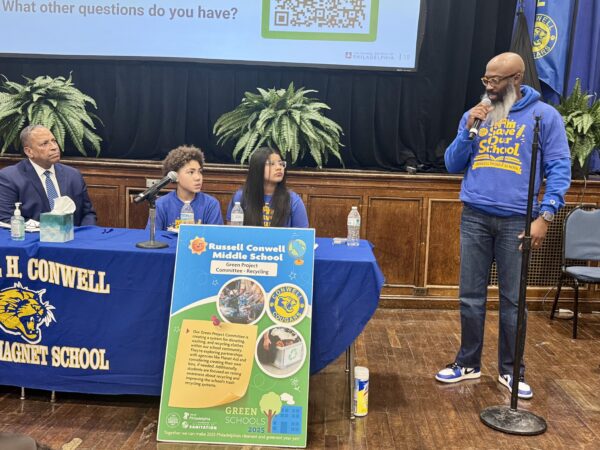
    Russell H. Conwell Middle School celebrates its 100th anniversary this year.

    It may not remain open to see many more.

    The Philadelphia School District has proposed closing Conwell and 19 other schools as part of its facilities planning process, which will shake up schools citywide.

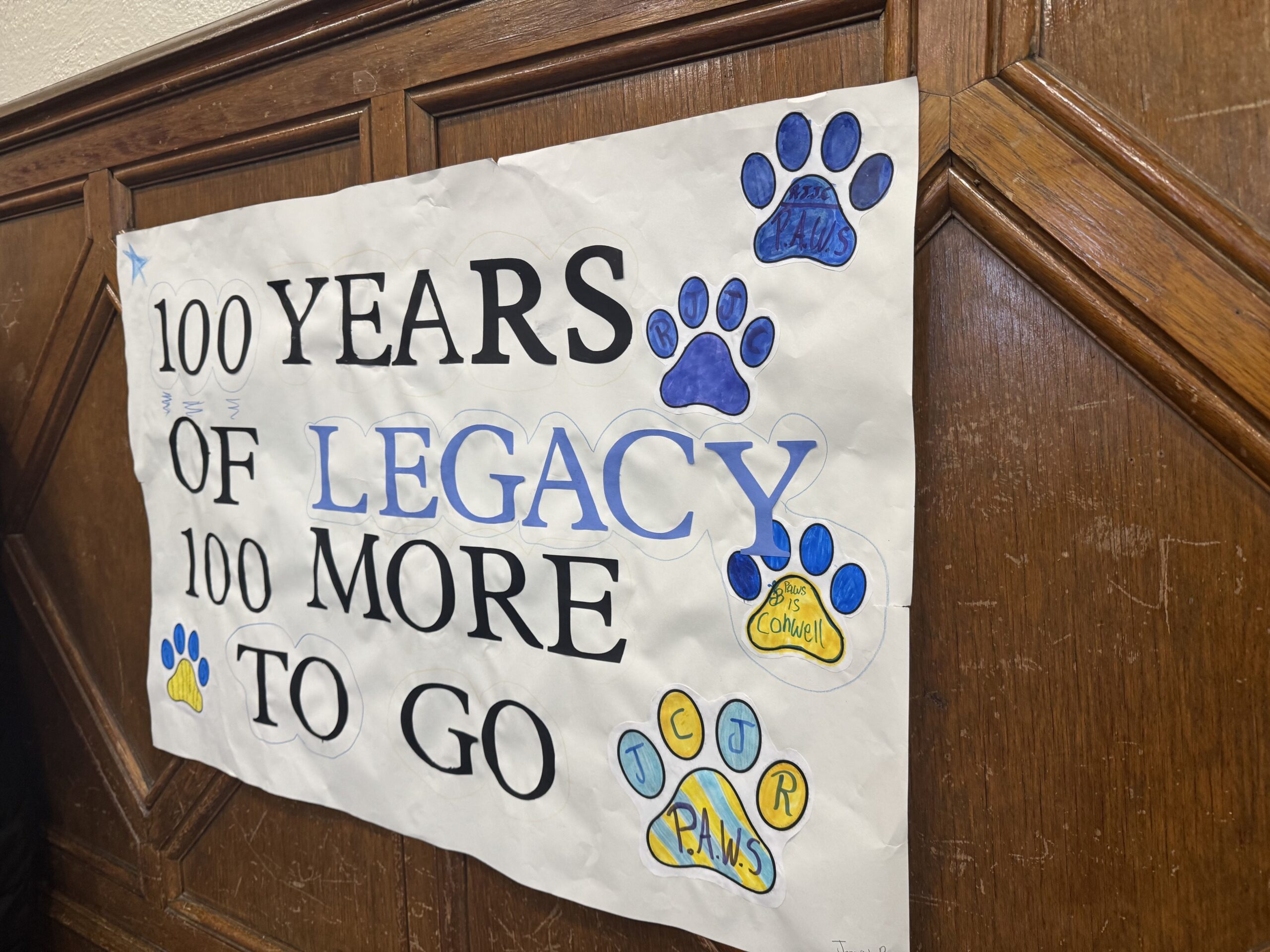
    A student-made sign hangs in the Conwell Middle School auditorium. The Philadelphia School District is attempting to close Conwell, a magnet 5-8 school in Kensington, and 19 other schools. The community is fighting the closure.

    Conwell, in Kensington, is a very small school by any standard. This year, just 109 students are enrolled in a building that holds 500. That’s down from 490 students in the 2015-16 school year and 806 in 2009-10. The school used to occupy two buildings; it has since shrunk to one.

    But it is also a rarity — a standalone magnet middle school. Community members and local officials are mounting a fight against closing the school, which they say has committed teachers and staff members who help students excel against the odds.

    The district’s plan, which the school board is expected to vote on this winter, calls for Conwell students to move to AMY at James Martin, another citywide admissions magnet in Port Richmond, which just opened in a new building with only 200 students. Meanwhile, the district has proposed closing its only other free-standing magnet middle school, AMY Northwest. No changes have been proposed for Philadelphia’s four other magnet middle schools, all of which are attached to high schools.

    Neighborhood issues, enrollment declines

    Conwell’s enrollment issues are tied closely to its setting.

    The building sits on Clearfield Street in the heart of Kensington. Fewer and fewer parents have been choosing to send their kids into ground zero of the city’s opioid epidemic, despite Conwell’s myriad partnerships, the outside investments it has attracted into its facility in recent years, and the school’s long history of excellence.

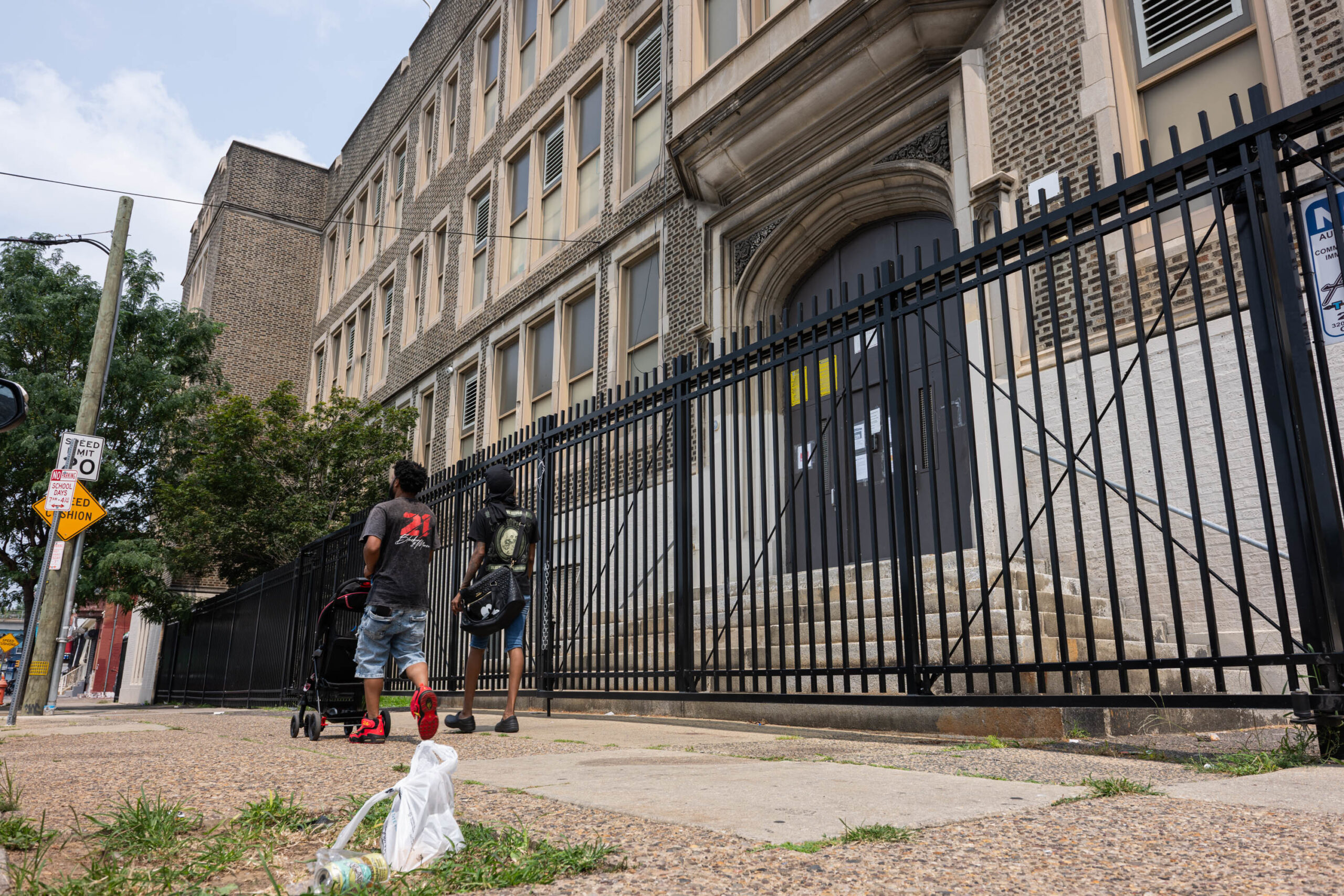
    The exterior of Conwell Middle School in Kensington, photographed in August.

    Parents, neighbors, students, and politicians, however, are furious that the district is choosing to abandon Conwell and the neighborhood.

    “If this school closes, it won’t just be students who feel the loss,” Conwell student Nicolas Zeno told officials at a district meeting Thursday. “It’ll be the community. If the concern is safety, then invest. If the concern is environment, then repair.”

    Community member Vaughn Tinsley, who runs Founding Fatherz, a nonprofit mentoring group, suggested closing Conwell would harm its students.

    “These students have been victims,” Tinsley said. “These students have seen and witnessed things they shouldn’t have witnessed. Most adults haven’t seen some of the things that these kids have seen, and yet still they come here, yet they’re still committed to excellence, yet they still stand up and still do what they’re supposed to do in the classroom. How dare we take that away from them?”

    Watlington has proposed using Conwell as “swing space” — district property that other schools can move into temporarily if their buildings require repairs.

    Tosin Efunnuga, Conwell’s nurse, wiped tears from her eyes as she beseeched district officials to keep the school open.

    “To have those doors close would be such a disservice,” Efunnuga said. “We need 100 years more.”

    Councilmember Quetcy Lozada, whose district includes Conwell, said she was “angry” and “frustrated” by the recommendation to close the school.

    “It’s underutilized because of what’s happening on the outside,” Lozada said at the Conwell meeting. “There’s nothing wrong with what is happening on the inside other than successful academic learning, support for families. We are saying to these families, we are punishing them because as a city, we can’t respond to the public safety issues that we have on the outside, and that is just not fair.”

    ‘What are y’all doing?’

    Emotions ran high inside the Conwell auditorium last week.

    Even before Deputy Superintendent Oz Hill finished his presentation about the rationale for the closures and the specific plan for Conwell, parents burst out with concerns.

    “What are y’all doing? Y’all making a mess,” one parent shouted. “You say the building is old. So what? It’s clean in here.”

    Another said her child would not be going to AMY at James Martin, formerly known as AMY5.

    “I don’t think you understand how much of a battle there is between Conwell and AMY5,” the parent said. “You don’t know the battles these kids have with each other.”

    Conwell has a strong alumni network — a rarity for a middle school — that has turned out in force to support the school since the proposed closure was announced.

    Alexa Sanchez, Class of 2017, grew up in Kensington and came to Conwell as a bright but unruly student — she acknowledges that she got in fights, egged the school, and disrespected teachers. But Conwell is rooted in its neighborhood, Sanchez said, with dedicated staff who helped her rise to earn a college degree and a good job in business.

    “They didn’t give up on students like me,” Sanchez said. “My future didn’t look promising at first, but in the long run, it did. You shouldn’t really close the school on a community that doesn’t look promising if you’re not from here.”

    Other alumni, including Robin Cooper, president of the district’s principals union, and Councilmember Isaiah Thomas, chair of Council’s Education Committee, have spoken out for Conwell.

    Conwell “shows up” for Kensington and the city, running a food pantry, hosting Police Commissioner Kevin Bethel’s swearing-in ceremony and an event marking Cherelle L. Parker’s 100th day as mayor, noted Erica Green, the school’s award-winning principal. Staff and students participate in neighborhood cleanups and advocate for help amid the opioid crisis.

    “We are what the city needs,” Green told the school board recently. During Green’s tenure, she has helped win money for a new schoolyard, a new science, technology, engineering, and math lab, and more.

    “These investments were made for Kensington students,” Green said. “We owe it to them, to their neighborhood. Do not push them out once the neighborhood changes and thrives. Conwell’s success is rooted in its people, its history, and its impact.”

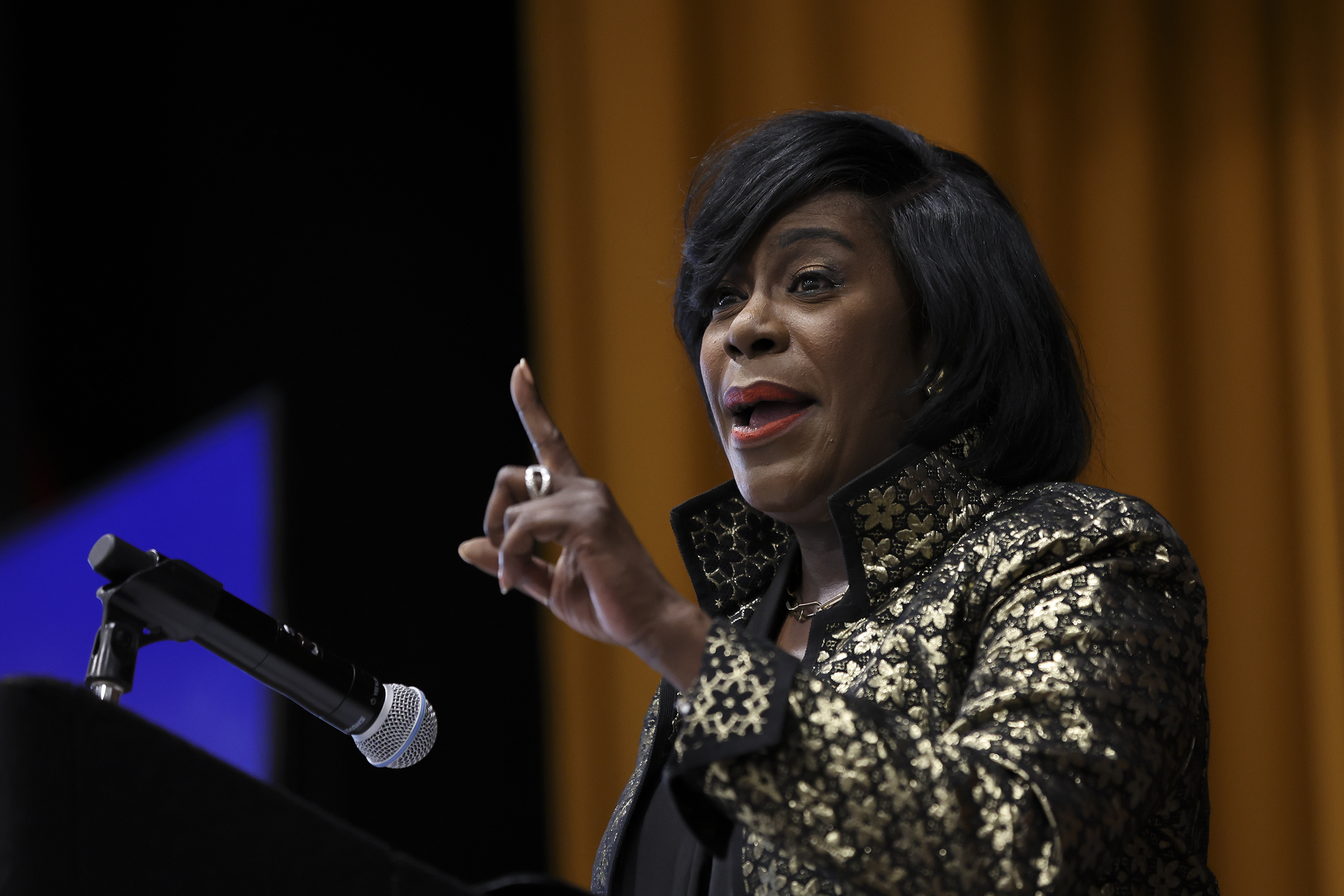
    Mayor Cherelle L. Parker speaks during an event to mark her 100th day in office at Conwell Middle School in Kensington in April 2024.
  • The city spent millions to grow one anti-violence nonprofit. Instead, it nearly imploded.

    The city spent millions to grow one anti-violence nonprofit. Instead, it nearly imploded.

    Philadelphia and state officials awarded more than $6 million in taxpayer funds over the last five years to a politically connected but financially unstable anti-violence nonprofit, despite repeated warnings from city grant managers about improper spending and mismanagement, an Inquirer investigation has found.

    The group — New Options More Opportunities, or NOMO Foundation — received city and state anti-violence grants and locally administered federal dollars to expand its youth programs and launch a new affordable housing program. The money fueled NOMO’s rapid rise from a small, grassroots outfit into a sprawling nonprofit that took on expenses it ultimately could not afford.

    Mayor Cherelle L. Parker has publicly touted NOMO’s work in the community, and she further boosted its profile by naming its director to her transition team upon taking office. But behind the scenes, Parker administration staffers watched NOMO face mounting financial pressures over the last two years.

    In that time, the organization has been hit with multiple eviction filings and an IRS tax lien, and had to lay off staff and suspend programming. Most significantly, NOMO had to terminate its housing initiative last year — displacing all 23 low-income households that had been its tenants.

    The warning signs were evident years earlier. Records obtained under Pennsylvania’s Right to Know Law show that city grant managers expressed concerns as far back as 2021 about NOMO’s lack of financial controls, incomplete balance sheets, and chronic inability to provide basic documents. As recently as last year, the city was unaware who sat on the group’s board.

    Yet records show city officials kept propping up the group with more funds, without successfully putting in place the kind of structural support that might have kept it from foundering. Last year, the city sought to award a $700,000 federal homelessness prevention contract to NOMO, but the nonprofit was unable to meet the conditions of the contract and the funds were never disbursed. Officials also proposed writing more funding to NOMO into last year’s city budget as a last-minute line item. That effort failed.

    In a September interview, NOMO executive director Rickey Duncan blamed city officials for funding delays.

    “I was breaking my back to make sure those young people were getting housed,” Duncan said. “We built a tab that was so big we couldn’t pay no more, because the city didn’t pay.”

    Rickey Duncan surprised a group of young women with apartments in a December 2022 file photograph. Last year, NOMO gave up the leases for the apartments citing a lack of funding.

    Much of the money awarded to NOMO came via Philadelphia’s Community Expansion Grant (CEG) program, launched in 2021 to respond to record gun violence and support alternatives to policing. NOMO was one of only two initial grantees to receive the maximum $1 million award, which was meant to help the group scale up its operations and serve more at-risk youth.

    A series of Inquirer investigations has shown that the CEG program’s politicized selection process awarded grants to fledgling nonprofits sometimes ill-equipped to manage the funds. The city controller in 2024 corroborated many of The Inquirer’s findings, and late last year the Philadelphia District Attorney’s Office charged nine police officers with conspiracy and theft of CEG funds.

    NOMO’s financial records detail spending that quickly led to trouble after it received the first city grant, starting with the decision to devote most of the funds to launching a costly housing initiative while opening sprawling new youth centers to expand its after-school programs to new neighborhoods.

    Duncan signed annual building leases totaling $750,000, and increased his own salary from $48,000 in 2021 to $144,000 the next year. (Duncan said that his pay — now $165,000, according to the most recent tax filing — is below average for an organization of NOMO’s size and was previously lower because he was volunteering half his time.)

    The records contain no evidence that city grant managers questioned the lease expenses or conducted an evaluation of whether the upstart housing program was an appropriate addition to the organization’s core mission of offering after-school programming.

    By the start of last year, a tax lien and lawsuits over unpaid rent threatened NOMO’s existence. Still, Duncan asked the city in January 2025 to reimburse the roughly $9,000 cost of two Sixers season tickets he purchased a year earlier. He explained in a memo that the tickets were “an innovative tool for workforce development.”

    “Season tickets to the Sixers are not an acceptable programmatic expense,” the grant program manager responded in an email.

    Records show that city officials discovered in April that a $35,000 IRS lien, filed four months earlier, had rendered NOMO ineligible for grant funding. Grant administrators sent an email to NOMO staffers with a warning written in all-caps: “CEASE ALL SPENDING.”

    Duncan said that the lien was the result of a missing signature on a tax form, and that it was eventually resolved at no cost. But in a June email to Public Safety Director Adam Geer and other city officials, he accused the city of pushing his organization to the brink of collapse.

    “I am respectfully requesting a written response detailing how a tax [lien] escalated into a comprehensive investigation into the NOMO Foundation’s financial health,” Duncan wrote. “NOMO has been disrespected, attacked, and harassed, by members of this office on this and previous occasions.”

    The funding was eventually restored last August.

    Duncan and his nonprofit have maintained support from the city’s top elected leaders. Parker name-checked NOMO in her first-ever budget address, and City Council President Kenyatta Johnson appointed Duncan last year to an anti-violence task force.

    City Council President Kenyatta Johnson, speaking on Jan. 20. Regarding NOMO, he says, “It is crucial that any concerns are taken seriously.”

    In a statement responding to The Inquirer’s findings, Johnson praised NOMO and credited the organization with “working with children throughout Philadelphia, intervening in cycles of violence, and literally saving lives in our community.”

    Johnson, who was listed as a reference on the group’s most recent grant application, added: “Regarding any allegations raised against Mr. Duncan and NOMO, I am confident that the City of Philadelphia’s Office of Public Safety will review these matters thoroughly, fairly, and professionally. It is crucial that any concerns are taken seriously and examined through the proper channels, with facts guiding the outcome.”

    A spokesperson for Parker referred questions to the Philadelphia Office of Public Safety, which manages CEG grants.

    In a written response, a spokesperson for the department, Jennifer Crandall, praised NOMO’s efforts.

    Rickey Duncan (left) and then Mayor-elect Cherelle Parker at a news conference that outlined Parker’s transition team and the plans that she had for her administration on Nov. 9, 2023.

    “Not only has NOMO delivered on grant-funded programs, it has become an important partner on city initiatives like interventions with at-risk youth,” Crandall wrote. She cited evaluations by an unnamed third party that credited NOMO for providing “holistic support to participants … beyond the immediate program activities” and “addressing the broader social determinants of violence.”

    Crandall did not respond to a follow-up request for the evaluation.

    Duncan gave The Inquirer a 2023 report prepared by four nonprofit partners that evaluated CEG recipients in their first year, with the intention of documenting program goals and activities. The report states that the evaluation was based on a single site visit, interviews with staff, and a youth focus group, and that it was then too soon to evaluate impact. It noted that NOMO had retained more than half its participants over the grant cycle and had created “an environment that is welcoming and comfortable, so that participants willingly show up.”

    The assessment did not address the viability of the housing program, nor did it cite any metrics that might be used to gauge whether NOMO’s programs had reduced community violence.

    Duncan also sent The Inquirer written statements from two landlords indicating that their court cases against him had been resolved, and that they support NOMO’s mission.

    He says NOMO is now financially stable, despite three years of tax returns showing the nonprofit in the red. He said NOMO’s programs now serve about 140 children a year across its three locations — about the same as when it was operating in just one location in 2019 and before the city awarded the expansion grants.

    Laura Otten, a nonprofit consultant and former director of La Salle University’s Nonprofit Center, said it was clear the city’s grant awards to NOMO had not fulfilled their stated goals.

    “It obviously didn’t work if they ended up having to evict people,” she said. “Where is the evidence that this grant has improved the capacity of the organization?”

    Dawan Williams (left), vice president of restorative justice for the Nomo Foundation, and Rickey Duncan, Nomo CEO and executive director, in one of the student spaces at the foundation on South Broad Street on April 13, 2023.

    ‘Significant weaknesses noted’

    When Parker laid out her priorities in her first budget address before City Council in spring 2024, she mentioned Duncan and NOMO by name as she praised the grassroots anti-violence organizations “working each day to lessen the pain and the trauma caused by gun violence.” She also promised to reward the various groups with an additional $24 million in grant funding.

    It was another highlight of Duncan’s well-documented redemption story. By his own account, he dropped out of South Philadelphia High School in 1994 to sell drugs and promote concerts, earning the nickname “Rickey Rolex” for his flashy style. He was arrested the next year for robbery and spent more than a decade in prison. After he was released in 2015, Duncan began volunteering with NOMO, then a fledgling nonprofit, and eventually took the reins.

    “My vision started off, to be honest, just wanting to help kids and give back to a city that I took from,” Duncan said in a 2023 interview with The Inquirer.

    NOMO began as a largely volunteer-run effort operating in borrowed space on less than $50,000 a year, tax returns show.

    In 2019, the tiny nonprofit submitted a grant application to Philadelphia Works, the city’s workforce development board, which was tasked with distributing about $6 million in federal Temporary Assistance for Needy Families (TANF) grants. NOMO proposed after-school programs that would teach up to 125 kids everything from neuroscience to software development to road construction.

    Philadelphia Works awarded NOMO $209,000, skipping the standard financial review in order to disburse funds that would have otherwise expired.

    “It breathed life into us,” Duncan said.

    Rickey Duncan speaks with kids at a NOMO after-school program in a 2021 file photograph.

    By 2021, NOMO was receiving half a million dollars annually in TANF money — enough to lease a 7,000-square-foot office space on North Broad Street and support programs for more than 100 young people. And Duncan’s star was rising as a charismatic and credible voice who came up from the same streets that he and others were working to rid of violence. Elected officials and news media alike turned to him for quotes and photo ops amid a surge in shootings.

    In December 2021, then-Mayor Jim Kenney announced a $155 million investment in gun violence prevention funding. The plan included a $22 million grant program, with more than half that focused on “supporting midsized organizations with a proven track record” to “expand their reach, deepen their impact, and achieve scale.”

    Duncan’s scrappy, homespun nonprofit was exactly the type of group city officials had in mind when they created the CEG program, and his grant application cited support from State Reps. Danilo Burgos and Elizabeth Fiedler. Although 30 other nonprofits received funding, NOMO was one of only two organizations awarded the maximum grant of $1 million — a transformative sum that would roughly triple NOMO’s operating budget.

    In his first application for the CEG funds, Duncan pledged to expand his “trauma informed” after-school program to South Philadelphia by offering paid work experience, academic support, and intensive case management. The $1.4 million proposed budget projected the organization would spend about $1 million annually on staff salaries and participation incentives for teens, while spending $94,000 a year to cover added lease costs.

    NOMO devoted just one sentence of its 15-page grant application to describing a new affordable housing initiative “to combat youth homelessness.” The proposal did not include what metrics would be used to judge that program’s success.

    Despite the brief mention, the housing initiative would become the organization’s largest single budget item, by far.

    After securing the city grant money, NOMO took on a $552,000 annual lease for a newly built 27,000-square-foot West Philadelphia apartment complex near 40th Street and Lancaster Avenue. It also signed a $192,000-per-year lease for a 17,000-square-foot former culinary school on South Broad Street.

    The deals left NOMO with youth centers in North, South, and West Philly, each with large event spaces that could host its programming. Duncan also planned to market the venues for private events — such as weddings and Eagles watch parties — to generate additional revenue.

    NOMO students bounced a basketball in the ballroom at the nonprofit’s South Broad Street youth center. The space is offered for event rentals, which Duncan said can generate crucial unrestricted income.

    If city officials had concerns about NOMO’s costly expansion strategy or the viability of his plan to lease out the youth centers for parties, they are not reflected in the available records.

    However, staffers at the Urban Affairs Coalition — a nonprofit the city had contracted to manage the first round of the grant program — flagged NOMO’s general lack of financial controls in a December 2021 fiscal assessment of prospective grantees.

    “Significant weaknesses noted,” an Urban Affairs staffer wrote of NOMO in an email to then-anti-violence director Erica Atwood and other city officials. “No audited financials. No balance sheets presented even in the [IRS Form] 990s. Separation of Authority: Basically non-existent.”

    That month, the city instructed Urban Affairs to proceed with the scheduled grant advance of $200,000 and to work with NOMO to establish a remediation plan. Instead, grant administrators wrote that they were reassured after NOMO installed a new chief operating officer — who left the organization the following year.

    By the end of the grant cycle, Duncan was able to deliver a public relations win for NOMO. He appeared on Good Day Philadelphia in December 2022 to launch the housing plan with a surprise giveaway of the first of 23 brand-new apartments for young women, many of them single mothers.

    Duncan said NOMO’s housing program would cover 70% of rent costs for 18 to 24 months while enrollees seek employment and eventually move out on their own.

    “They’ll be getting their credit together so they can prepare to become a homeowner,” he told Fox 29. “We need money to finish doing this.”

    Rickey Duncan, CEO and executive director, at Nomo on South Broad Street on April 13, 2023.

    Billion-dollar dream

    The city renewed NOMO’s grant in January 2024, this time for $850,000. But a tax return the same year showed the organization was already $710,000 in the red.

    Months later, the nonprofit faced its first eviction suit, targeting its North Broad headquarters, and had to cut a check for $275,000 in back rent — the equivalent of one-third of its city grant money for that year.

    By the fall of 2024, records show NOMO had spent only about 5% of the $150,000 initially budgeted for youth incentives, outside activities, equipment, or program supplies. The city withheld most of NOMO’s fourth-quarter grant funding, reducing the nonprofit’s award by $170,000 to a total of $680,000 for that year.

    Still, the city re-upped the group for a third grant in 2025, this time for $600,000.

    By January 2025, financial records show NOMO had virtually stopped spending on youth programming. It laid off most of its staff as landlords for all three youth centers took legal action against the nonprofit over hundreds of thousands of dollars of back rent.

    NOMO sought to justify the expense of Sixers season tickets with a narrative submitted to the city, which denied the expense. Duncan said the majority of the tickets went to youth participants and members of the community.

    Around then, NOMO received an infusion of support in the form of a $950,000 grant from the Pennsylvania Commission on Crime and Delinquency. But the TANF funds had run out, and the organization’s problems continued. City officials had NOMO submit a formal “performance enhancement plan” last July.

    Duncan said in September that NOMO had cut costs, hired a new accounting firm, and was working toward “full financial stability.” It resolved two eviction cases by reducing its real estate footprint — downsizing its North Philly headquarters into basement offices and terminating its affordable housing program. Duncan said the former tenants moved in with family members or were transferred to the nonprofit Valley Youth House, which provides transitional housing.

    After The Inquirer asked Duncan about the most recent lawsuit over back rent, this one for $312,000, his landlord filed notice in court that the matter was resolved. Duncan said keeping three youth centers and marketing the NOMO spaces for special events are key parts of his business plan as the organization continues to settle its debts.

    The spate of lawsuits has not dampened the city’s enthusiasm for Duncan’s nonprofit. Crandall, the spokesperson for the Philadelphia Office of Public Safety, said NOMO remains eligible to receive funds when a new round of grants are awarded this year.

    And with the housing initiative scrapped, NOMO is left pursuing its original mission — anti-violence programming for city youth. The organization’s renegotiated leases for its three youth centers now total $360,000 a year, roughly half what NOMO had been paying.

    In a 2023 interview, Duncan acknowledged that he underestimated the financial demands of running an organization on a citywide scale.

    “As a kid you think, … ‘If I can get a million dollars, I’ll be rich.’ And then you’re broke again,” he said then. “I had a billion-dollar dream. I didn’t realize it was a billion-dollar dream.”

    ACKNOWLEDGMENT
    The Inquirer’s journalism is supported in part by The Lenfest Institute for Journalism and readers like you. News and Editorial content is created independently of The Inquirer’s donors. Gifts to support The Inquirer’s high-impact journalism can be made at inquirer.com/donate. A list of Lenfest Institute donors can be found at lenfestinstitute.org/supporters.

  • What makes someone love their grocery store? Ask the Philadelphians who are already missing their Amazon Fresh.

    What makes someone love their grocery store? Ask the Philadelphians who are already missing their Amazon Fresh.

    When Justin Burkhardt heard that his neighborhood grocery store was closing, just months after it had opened, he felt a pang of sadness.

    The emotion surprised him, he said, because that store was the Northern Liberties Amazon Fresh.

    “Amazon is a big corporation, but [with] the people that worked there [in Northern Liberties] and the fact that it was so affordable, it actually started to feel like a neighborhood grocery store,” said Burkhardt, 40, a public relations professional, who added that he is not a fan of Jeff Bezos, Amazon’s billionaire owner.

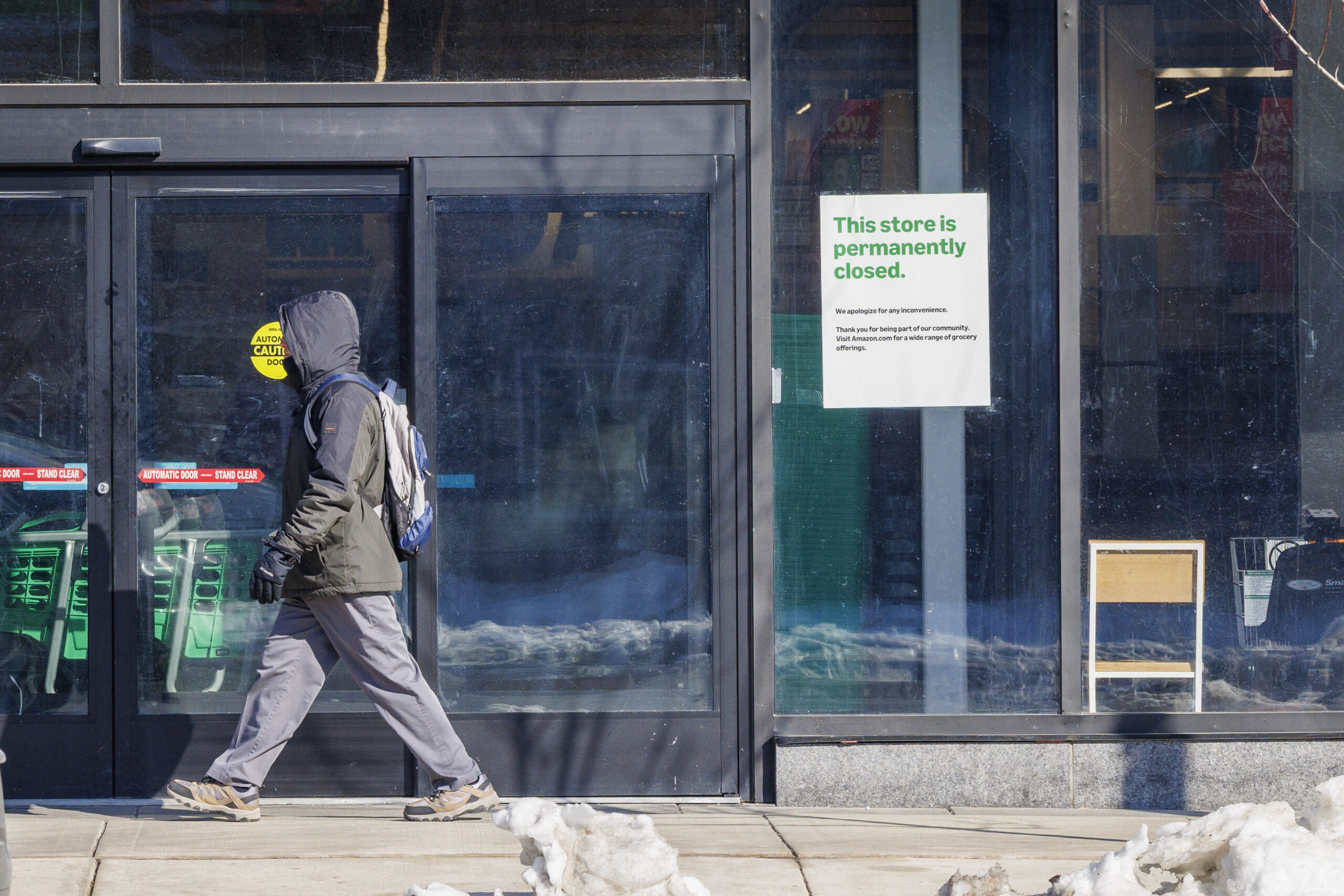
    The e-commerce giant announced last month that it was closing all physical Amazon Fresh stores as it expands its Whole Foods footprint. In the Philadelphia area, the shuttering of six Amazon Fresh locations resulted in nearly 1,000 workers being laid off. Local customers said their stores closed days after the company’s announcement.

    “I don’t feel bad for Amazon,” said Burkhardt, who spent about $200 a week at Amazon Fresh. “I feel bad for the workers. … I feel bad for the community members.”

    Burkhardt said he and his wife have been forced to return to their old grocery routine: Driving 20 minutes to the Cherry Hill Wegmans, where they feel the prices are cheaper than their nearby options in the city.

    Last week, signs informed customers that the Northern Liberties Amazon Fresh was permanently closed.

    In Philadelphia and its suburbs, many former Amazon Fresh customers are similarly saddened by the closure of neighborhood stores where they had developed connections with helpful workers. Several said they are most upset about the effects on their budgets amid recent years’ rise in grocery prices.

    “I wasn’t happy about it closing for the simple fact that it was much cheaper to shop there,” said Brandon Girardi, a 30-year-old truck driver from Levittown (who quit a job delivering packages for Amazon a few years ago). Girardi said his family’s weekly $138 grocery haul from the Langhorne Amazon Fresh would have cost at least $200 at other local stores.

    At the Amazon Fresh in Broomall, “they had a lot of organic stuff for a quarter of the price of what Giant or Acme has,” said Nicoletta O’Rangers, a 58-year-old hairstylist who shopped there for the past couple years. “They were like the same things that were in Whole Foods but cheaper than Whole Foods.”

    She paused, then added: “Maybe that’s why they didn’t last.”

    In response to questions from The Inquirer, an Amazon spokesperson referred to the company’s original announcement. In that statement, executives wrote: “While we’ve seen encouraging signals in our Amazon-branded physical grocery stores, we haven’t yet created a truly distinctive customer experience with the right economic model needed for large-scale expansion.”

    Workers could be seen inside the closed Amazon Fresh in Northern Liberties last week.

    What makes a Philly shopper loyal to a grocery store?

    Former Amazon Fresh customers say they’re now shopping around for a new grocery store and assessing what makes them loyal to one supermarket over another.

    Last week, one of those customers, Andrea “Andy” Furlani, drove from her Newtown Square home to Aldi in King of Prussia. The drive is about an hour round trip, she said, but the prices are lower than at some other stores. Her five-person, three-dog household tries to stick to a $1,200 monthly grocery budget.

    As she drove to Aldi, she said, she’d already been alerted that the store was out of several items she had ordered for pickup. That’s an issue Furlani said she seldom encountered at the Amazon Fresh in Broomall, to which she had become “very loyal” in recent years.

    “It was small, well-stocked,” said Furlani, 43, who works in legal compliance. “I don’t like to go into like a Giant and have a billion options. Sometimes less is more. And the staff was awesome,” often actively stocking shelves and unafraid to make eye contact with customers.

    “Time is valuable to me,” Furlani said. At Amazon Fresh, “you could get in and out of there quickly.”

    Shoppers learned how to use the Amazon Dash Cart at an Amazon Fresh in Warrington in 2021.

    Girardi, in Levittown, said he is deciding between Giant and Redner’s now that Amazon Fresh is gone. The most cost-effective store would likely win out, he said, but product quality and convenience are important considerations, too.

    “We used to do Aldi, but Amazon Fresh had fresher produce,” Girardi said. “I used to have a real good connection with Walmart because my mom used to work there. But I don’t see myself going all the way to Tullytown just to go grocery shopping.”

    Susan and Michael Kitt, of Newtown Square, shopped at the Broomall Amazon Fresh for certain items, such as $1.19 gallons of distilled water for their humidifiers and Amy’s frozen dinners that were dollars cheaper than at other stores.

    But Giant is the couple’s mainstay. They said they like its wide selection, as well as its coupons and specials that save them money.

    “I got suckered by Giant on their marketing with the Giant-points-for-gas discounts. I figured if I’m going to a store I may as well get something out of it,” said Michael Kitt, a 70-year-old business owner who has saved as much as $2-per-gallon with his Giant rewards. “I really at the time didn’t see that much of a difference between the stores.”

    How Whole Foods might fare in Amazon Fresh shells

    The Whole Foods store on the Exton Square Mall property is shown in 2022.

    If any of these local Amazon Fresh stores were to become a Whole Foods, several customers said they’d be unlikely to return, at least not on a regular basis.

    Amazon said last month that it plans to turn some Amazon Fresh stores into Whole Foods Markets, but did not specify which locations might be converted.

    Amazon bought Whole Foods in 2017. The organic grocer is sometimes referred to as “Whole Paycheck,” but the company has been working to shed that reputation for more than a decade.

    Some Philly-area consumers, however, said Whole Foods prices would likely be a deterrent.

    Natoya Brown-Baker, 42, of Overbrook, said she found the Northern Liberties Amazon Fresh “soulless,” and she didn’t “want to give Jeff Bezos any more money.” But the prices at Amazon Fresh were so low, she said, that she couldn’t resist shopping there sometimes.

    Brown-Baker, who works in health equity, said she came to appreciate that it represented an affordable, walkable option for many in the neighborhood, including her parents, who are on a fixed income.

    If a Whole Foods replaces the store at Sixth and Spring Garden Streets, which was under construction for years, Brown-Baker said the area would be “back at square one.”

    Burkhardt, who also lives in the neighborhood, noted that Northern Liberties has a mix of fancy new apartment complexes and low-income housing.

    “The grocery store should be for everyone,” he said. Whole Foods “doesn’t feel like it’s for the neighborhood. It feels like it’s for a certain class of people.”

  • Changes to Philly’s special-admission process exacerbated low enrollment at some magnets. Now, the district is trying to close them.

    Changes to Philly’s special-admission process exacerbated low enrollment at some magnets. Now, the district is trying to close them.

    Lankenau High’s 11th-grade class is tiny — just 25 students.

    That’s one of the reasons why closing the school is for the best, Philadelphia School District Associate Superintendent Tomás Hanna said at a community meeting last week.

    At small schools, Hanna said, programming options are limited and “what’s left behind is very difficult environment for young people.”

    The district proposes merging Lankenau into Roxborough High as an honors program — a move that officials say will maximize opportunities for students at both schools. That proposal has been met with fierce opposition from the Lankenau community, whose members say stripping the school of its identity and removing it from its unique location on 400 wooded acres is unjustifiable.

    But the district is responsible for some of the enrollment issues at Lankenau and some of the other 20 schools that Superintendent Tony B. Watlington Sr. has recommended for closure. Schools with large numbers of empty seats were targeted under the plan, which the school board is expected to vote on this winter.

    When the school system dramatically revamped its special-admissions process in 2021, moving to a centralized lottery from a system where principals had discretion over who got into the district’s 37 criteria-based schools, enrollment dropped at some magnets.

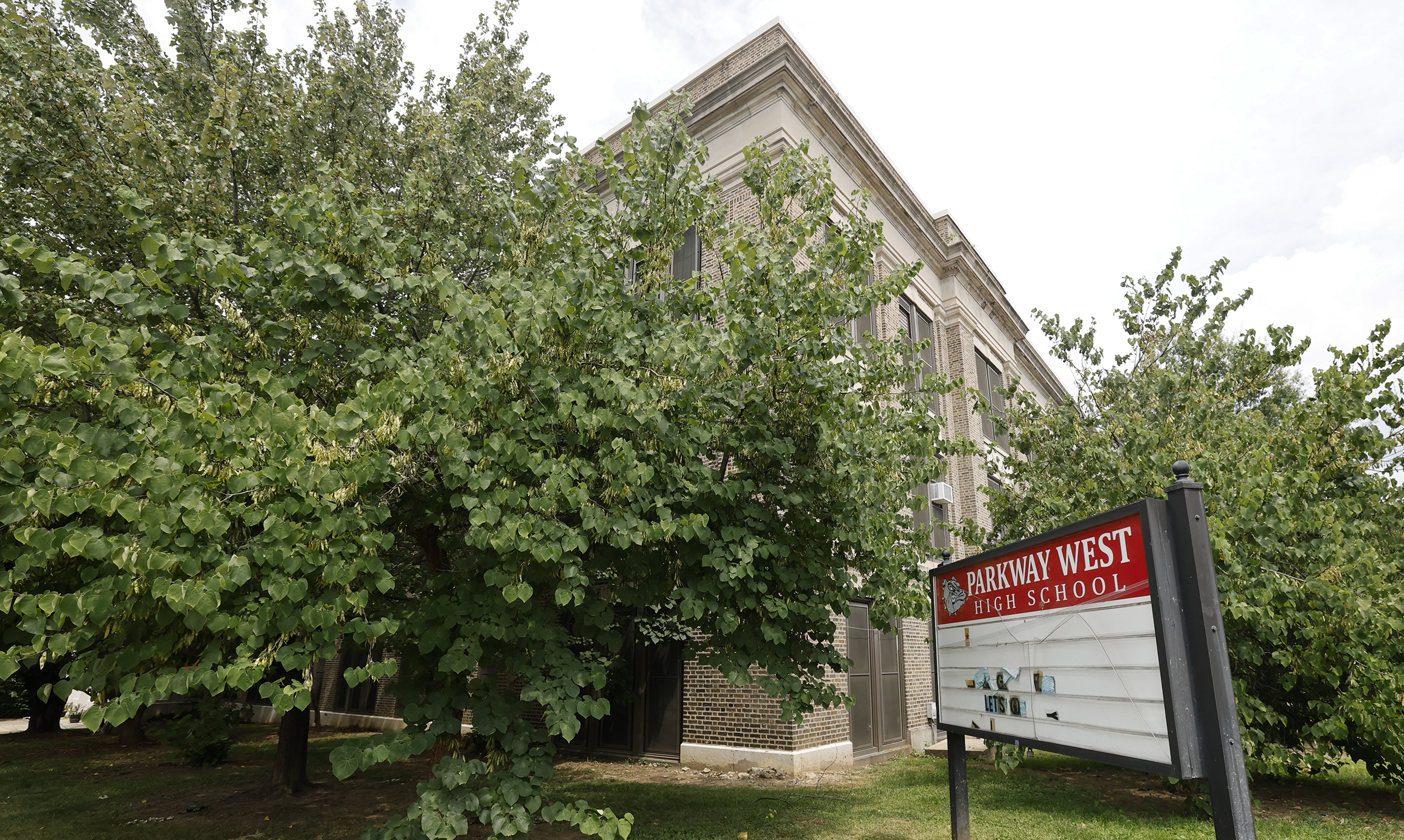
    For the 2022-23 school admissions cycle, Lankenau, Motivation, Parkway West, and Parkway Northwest — four of the 20 schools tagged to close — had dozens of unfilled seats in their ninth-grade classes.

    window.addEventListener(“message”,function(a){if(void 0!==a.data[“datawrapper-height”]){var e=document.querySelectorAll(“iframe”);for(var t in a.data[“datawrapper-height”])for(var r,i=0;r=e[i];i++)if(r.contentWindow===a.source){var d=a.data[“datawrapper-height”][t]+”px”;r.style.height=d}}});

    The district set academic standards for admission to those schools, and stopped allowing schools to admit students who were close to meeting academic requirements and who demonstrated they would be a good fit for the individual schools, as had been done in the past. (Officials said they wanted to centralize admissions to avoid demographic imbalances at schools; those four magnets did not have a history of them.)

    The district’s using Lankenau’s tiny now-junior class to justify closings infuriated many, including Matthew VanKouwenberg, a science teacher at the school.

    Lankenau’s size “is a district-designed and district-created problem,” VanKouwenberg said. Though the lottery was begun for equity reasons, “the result is disastrous.”

    But Tonya Wolford, the district’s chief of evaluation, research, and accountability, said Lankenau, Motivation, Parkway West, and Parkway Northwest had declining numbers of students applying prior to the lottery changes.

    And for years, those schools accepted large numbers of students who didn’t meet the district’s criteria, Wolford said.

    Dramatic enrollment drops after district orders

    The data are clear: After the district pushed changes to the admissions process, the four schools all saw dramatic drops in enrollment — and some of them never recovered.

    Motivation, in West Philadelphia, had a freshman class of 83 students and a total enrollment of 336 in 2022-23. It saw a 77% drop in its ninth- grade class — just 19 freshman in 2023-24. The school now has 151 students, and the district wants to close it and make it an honors program inside Sayre High School. It is operating at only 15% of its full capacity.

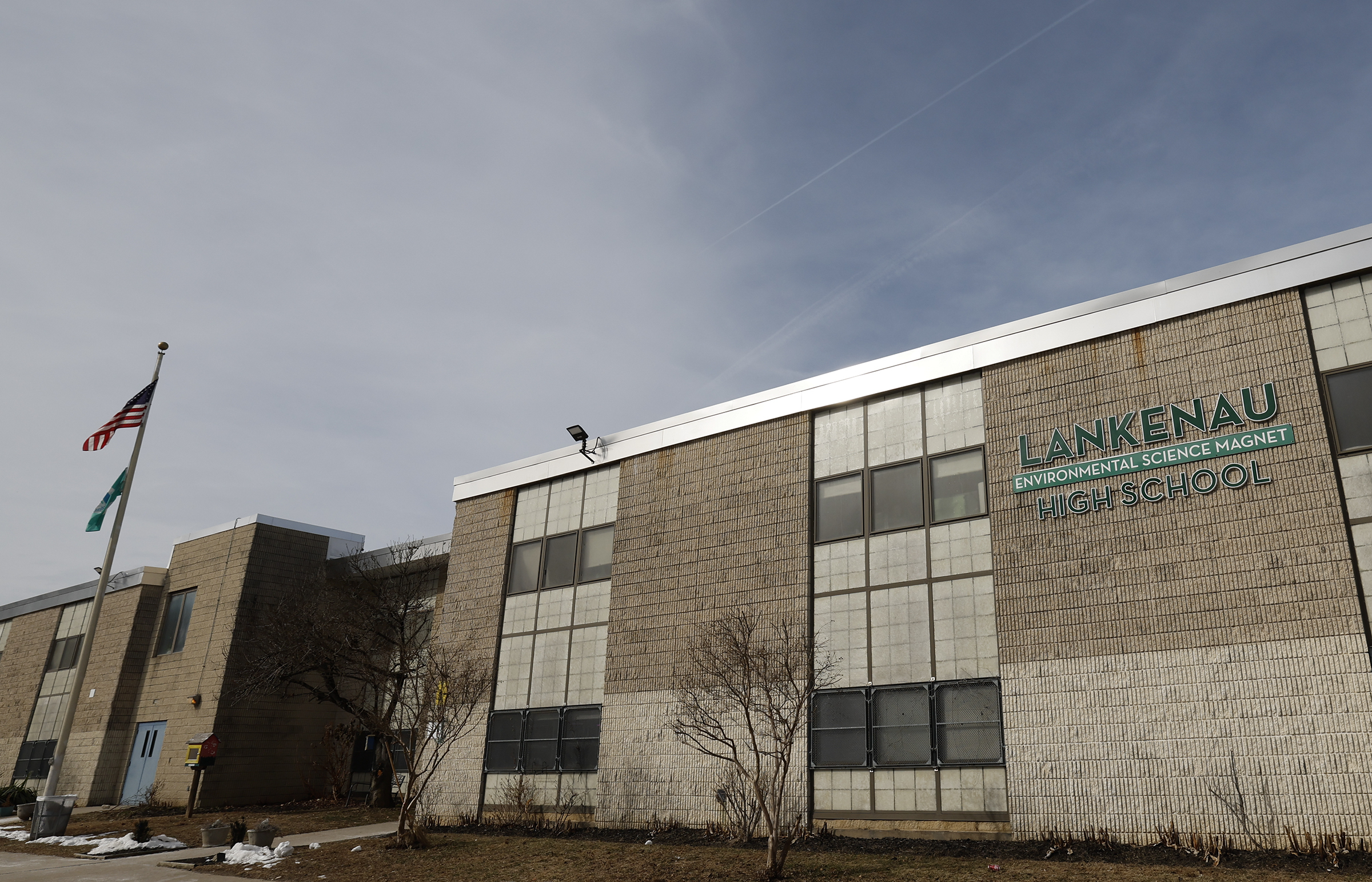
    The Lankenau Environmental Science Magnet High School in Roxborough.

    Lankenau, in Upper Roxborough, had 91 freshman in 2022-23, then 31 in 2023-24, a 66% decline. It now enrolls 225 students. The school is using 49% of its capacity.

    Parkway Northwest had 77 ninth graders in 2022-23, then dropped to 30 in 2023-24, a 61% decrease, and is 60% full. It’s got 248 students this year, and the district wants to close it and make it an honors program of Martin Luther King High.

    And Parkway West had 54 freshman in 2022-23, then 19 the following year, a 65% decrease. It now has just 140 students, and is using 40% of available seats. It’s proposed to close and become part of Science Leadership Academy at Beeber.

    A staffer who worked at Parkway West as the special-admissions process changes rolled out said they were devastating to the school, which typically filled three-quarters of its slots for incoming ninth graders with students who qualified on every measure, and a quarter by feel.

    Parkway West High School, in West Philadelphia, is proposed to close under a Philadelphia School District facilities proposal.

    “We found kids who maybe missed one criteria, but they were good kids, and had strong recommendations,” said the staffer, who asked not to be identified because they were not authorized to speak to a reporter.

    When Parkway West lost that ability, its enrollment tumbled, and never recovered.

    Lankenau community members say interest in their unique school has never waned, but the size of their incoming classes continues to be limited by the district — even beyond the admissions changes.

    For the applicant class set to start high school in the fall, 107 students listed Lankenau as their first choice, staff said, and 95 have accepted Lankenau’s school board offer.

    But since 2022-23, district officials have limited Lankenau to two sections of ninth graders, and with class sizes capped at 33. So despite having interest and students enough for 99 freshmen, it won’t have staff for more than 66.

    In the last few years, staffers said, more than 66 students show up at the start of the school year. But with only enough teachers for 66, classes are overcrowded and some students end up transferring out.

    “That is the only reason we lose enrollment,” said Erica Stefanovich, a Lankenau teacher. “We wouldn’t be in this situation if they hadn’t put us in it. This is an artificial problem.”

    But, Wolford said the trend lines were clear for Lankenau and other schools.

    In 2019-20, for instance, the prior to the district’s admissions changes just 34 students met Lankenau’s criteria, but 81 students accepted offers for the ninth-grade class, Wolford said. That same year, eight students qualified for Parkway Northwest on paper, but 34 were admitted, according to district data.

    Schools like Lankenau and Parkway Northwest “were existing without following the criteria,” said Wolford.

    Trees, bees, and a Lorax

    Lankenau is putting up a spirited battle to stay open.

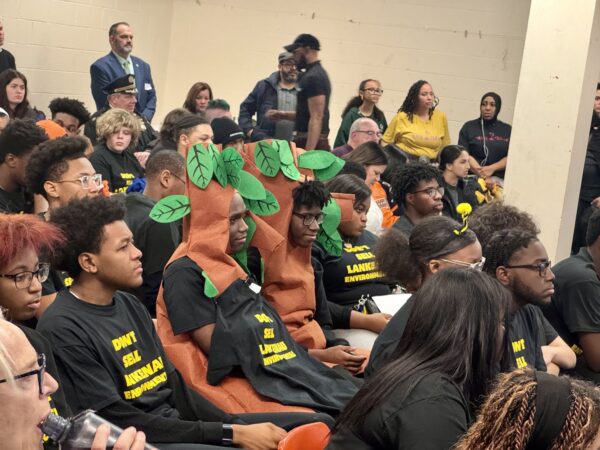
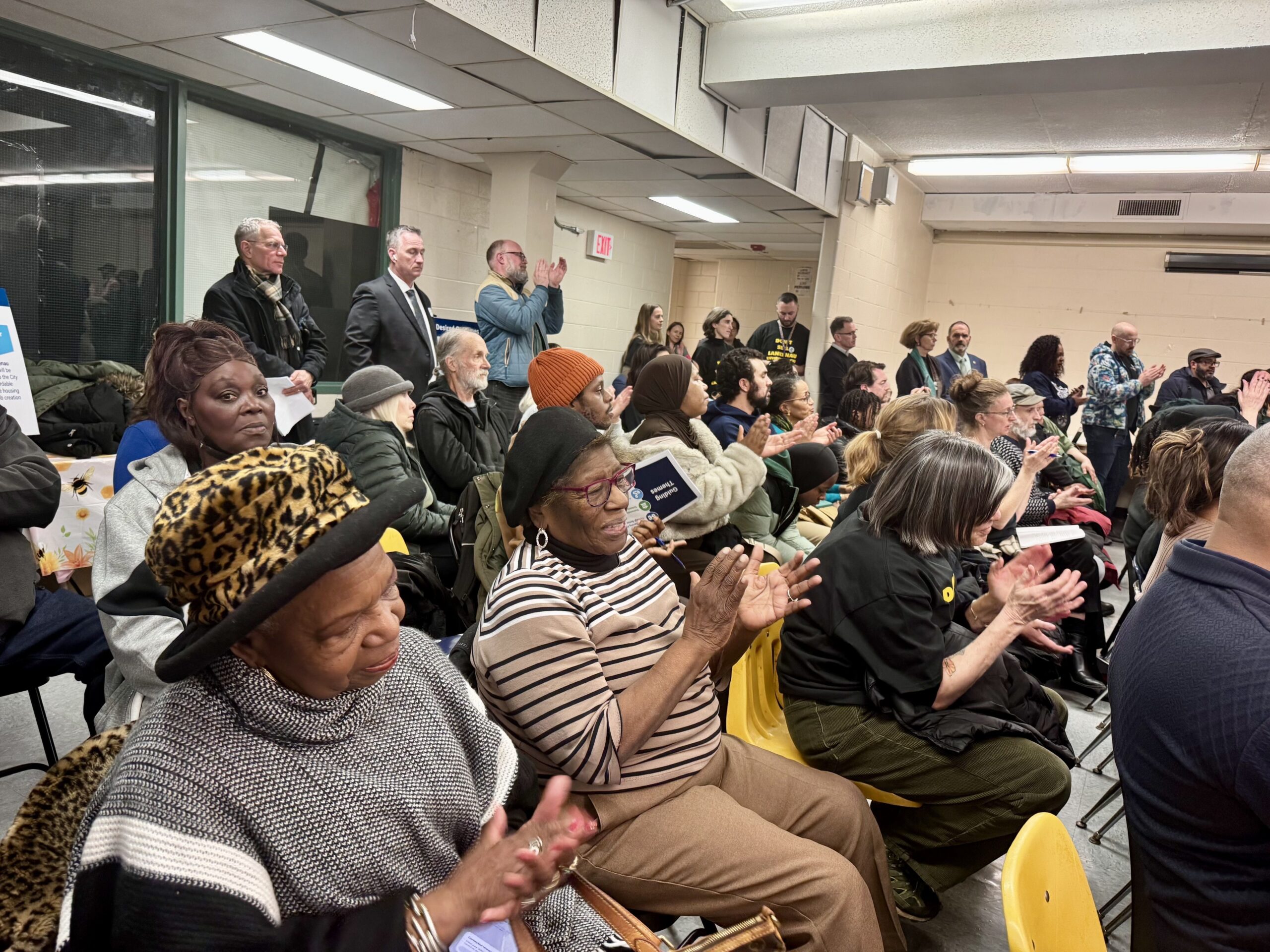
    Last week, an overflow crowd — more than 100 students, staff, parents, representatives from Lankenau’s many partner organizations, and community members — packed the school for a student showcase and district-led meeting about the closure. Some students dressed as trees, bees, and a Lorax, the Dr. Seuss character who “speaks for trees” — to emphasize the importance of their school’s setting amid 400 acres of woods.

    Community members at Lankenau High School applaud a student telling district officials why the school should not close. Lankenau is one of 20 Philadelphia School District schools proposed for closure.

    First, Lankenau students wowed visitors with presentations — about their study of natural resources, about the experience of foraging for ingredients to brew their own artisan teas — and then, it was down to business. Lankenau is too small, officials said, and the district must find ways to offer a more equitable experience for all students.

    “I don’t discount that there is magic inside of these walls,” Deputy Superintendent Oz Hill said. “What I’m sharing with you is if we can take that magic and enhance it with more extracurricular activities, more expanded academic programming, the sky’s the limit.”

    The parents, students, and staff in the audience weren’t having it.

    Lankenau was just certified to become the state’s only three-year agriculture, food, and natural resources career and technical education program — a designation that took years to achieve, and cannot transfer to a new building.

    Officials are proposing closing Lankenau a year and a half from now; that’s not enough time for the district to reapply for the designation for a new Lankenau-inside-Roxborough CTE program.

    District officials said at the meeting that they believe their “close relationship” with the state education department will give them enough time to get a new Roxborough program certified in time for the Lankenau closing.

    Multiple parents told district leaders they would not send their children to Roxborough High.

    And Akiraa Phillips, a Lankenau ninth grader, said she couldn’t imagine attending school in another setting.

    In Lankenau’s current setting, “learning doesn’t stop at the desk. Our campus is the classroom,” Akiraa said. “We learn science by being in it. Here, we don’t just talk about ecosystems, climate, and sustainability, we walk through it. That kind of learning sticks with you. You can’t stick this into any random building and expect it to work.”

    The community turned out in full force, but politicians and other decision-makers were in the room, too. Three school board members, including president Reginald Streater, attended the meeting.

    State Sen. Sharif Street (D., Philadelphia), the front-runner to replace U.S. Rep. Dwight Evans in Congress, said he “was against closing the school,” but noted that the decision didn’t rest with him, and said the state needed to better fund schools “because we have not met our obligation to fully fund the program.”

    And Councilmember Cindy Bass said she was particularly incredulous that the district was attempting to close a successful magnet — Lankenau has a 100% graduation rate.

    “If it works, why are you breaking it?” Bass said. “I do not understand what the logic and the rationale is that we are making these kinds of decisions. We’re not just closing a school, we’re disrupting the lives of young people.”

  • Philly’s port has a problem with the ‘Buy America’ law: The cranes they need aren’t made in the U.S.

    Philly’s port has a problem with the ‘Buy America’ law: The cranes they need aren’t made in the U.S.

    In an effort to reduce air pollution and modernize U.S. ports, the Biden administration in 2024 announced $3 billion in grants for zero-emission equipment — including tens of millions earmarked for Philadelphia’s port to buy two new electric cranes to help unload ships.

    Ports have embraced the clean energy push, but some have run into a problem. U.S. law requires federally funded infrastructure projects to use American-made products. But according to industry groups, no U.S. firm makes the giant ship-to-shore gantry cranes like the ones Philly is hoping to buy.

    So now the Philadelphia Regional Port Authority (PhilaPort), the state agency that owns terminals and logistics facilities along the Delaware River, is asking the Trump administration for a waiver from so-called Build America, Buy America rules.

    Those rules — included in a 2021 law that had bipartisan support in Congress — reflect a push under both Republican and Democratic administrations to revive American manufacturing, especially in industries such as semiconductor production and shipbuilding, where continued U.S. deference to China is seen as a potential security risk.

    But there are practical constraints to so-called onshoring, from the cost of materials to a shortage of skilled labor. The U.S. manufacturing sector has lost more than 200,000 jobs since 2023.

    In the case of the cranes, PhilaPort says that even if it could procure them in the U.S., it would still face risks because of a lack of “a reliable domestic supply chain for spare parts and service.”

    The Environmental Protection Agency said it is reviewing PhilaPort’s application. It might not be a slam dunk: President Donald Trump’s administration has slashed billions of dollars in funding for Biden-era clean energy initiatives — and early last year, PhilaPort’s grant appeared to be briefly suspended.

    Yet Trump has also expressed support for union dockworkers like the ones who would operate new cranes at Tioga Marine Terminal in Port Richmond. The International Longshoremen’s Association has celebrated the initiative, known as the Clean Ports Program, saying it protects jobs against automation.

    If the EPA does sign off on the request, the port authority will have to navigate a geopolitical minefield.

    Grant recipients are prohibited from using the funds to buy equipment made in China, whose state-owned Shanghai Zhenhua Heavy Industries Co. Ltd. (ZPMC) produces 70% of the world’s ship-to-shore cranes, including the vast majority in use at U.S. ports.

    American reliance on Chinese-made critical port infrastructure has raised national security concerns, magnified by the FBI’s 2021 discovery of “intelligence gathering equipment” onboard a ship that was delivering ZPMC cranes to Baltimore’s port, according to a congressional investigation.

    Only three companies outside China, two in Europe and one in Japan, make ship-to-shore cranes available for international buyers, according to the American Association of Port Authorities. Each firm’s cranes would likely be subject to tariffs imposed by the Trump administration.

    Another wrinkle: As PhilaPort has sought support for the waiver from Pennsylvania’s congressional delegation, some lawmakers have expressed reservations that even cranes made by a non-Chinese manufacturer might include parts made in China. Limiting that exposure could be challenging, given China’s dominance in these intermediate goods.

    It remains to be seen whether lawmakers will ultimately back the request. Labor unions such as United Steelworkers have broadly opposed exemptions from domestic production requirements. A spokesperson for United Steelworkers said the union is “still reviewing the specifics of this case.”

    U.S. Rep. Brendan Boyle (D., Pa.) said he “fought hard” to include the Build America Buy America provision in the 2021 law. “So I’m naturally quite concerned any time an entity is attempting to circumvent these important provisions that protect American jobs and industries,” he said in a statement.

    “PhilaPort’s management needs to do a much better job explaining why a waiver in this case is absolutely necessary,” said Boyle, whose district includes the Tioga terminal.

    Spokespeople for U.S. Sens. John Fetterman (D., Pa.) and Dave McCormick (R., Pa.) did not respond to messages seeking comment.

    Those restrictions will likely increase the cost. Of the $80 million awarded to PhilaPort by the EPA, the port authority had budgeted $47 million for two cranes at Tioga Marine Terminal.

    Now, “it’s unclear if we can do two [cranes] for that price,” said Ryan Mulvey, the port authority’s director of government and public affairs.

    Replacing diesel-powered cranes

    The 2022 Inflation Reduction Act passed by Congress and signed by President Joe Biden presented an opportunity for PhilaPort’s Tioga Marine Terminal, which was built in the 1960s and until recently was still using two diesel-powered cranes that had been installed in the late ‘60s and early ’70s.

    The cranes reached the end of their useful life and were recently dismantled, and the port authority has installed electrical infrastructure to support zero-emission equipment at Tioga, which handles cargoes such as forest products, containers, and steel.

    President Joe Biden speaks at PhilaPort’s Tioga Marine Terminal in Philadelphia on Oct. 13, 2023.

    Cranes can lift two 20-ton cargo containers off a ship at a time. Without them, “it really restricts the amount of cargo you can put through the terminal,” said Andrew Sentyz, president of operator Delaware River Stevedores, which leases the terminal from the port authority.

    About 100 to 200 union longshoremen work at the site, depending on cargo volumes, he said.

    When PhilaPort started reaching out to vendors, at least three — Konecranes of Finland, Phoenix-based Stafford Crane Group, and Swiss-German firm Liebherr’s U.S. affiliate — indicated they were working toward making ship-to-shore cranes that would meet domestic content requirements under the Build America, Buy America Act, a provision of Biden’s 2021 bipartisan infrastructure law. (Stafford is a new entrant in the STS crane market.)

    But when the port authority proceeded to bid for the project last spring, four potential bidders said they were not able to deliver cranes meeting PhilaPort’s technical specifications within its schedule or budget, according to the application it filed with the EPA in September.

    One firm said Buy America rules would increase the cost of the project as much as threefold. It would take three to five years to build the manufacturing facilities needed to comply with the law and a further 36 months to complete production. By comparison, cranes that are not subject to those rules can be completed within 28 months, the vendor said.

    “In the absence of continuing federal incentives toward onshore crane manufacturing, the vendor advised there is not sufficient market demand to continue to scale up its domestic manufacturing of cranes,” PhilaPort’s application says.

    Another vendor told the port authority that “the low volume of current demand for BABA-compliant cranes makes domestic manufacturing currently uneconomical.”

    To comply with Buy America regulations, more than 55% of the total cost of components in a manufactured product must be from U.S.-made parts.

    The EPA has acknowledged the limited domestic production of zero-emission port equipment and in 2024 temporarily lowered that requirement to 25% for certain items. But to take advantage of that reduced threshold, installation of the STS cranes would have to begin by the end of the year — a timeline PhilaPort says is not realistic.

    ‘Nonexistent for decades’

    PhilaPort’s findings were consistent with broader industry research.

    American crane manufacturing “has been nonexistent for decades,” Cary Davis, president and CEO of the American Association of Port Authorities, told the U.S. trade representative last May in comments opposing Trump’s proposed 100% tariff on Chinese-made cranes.

    Barriers to reviving domestic industry include a shortage of welders and the fact that “American steel is significantly more expensive than European or Asian alternatives,” Davis said.

    Holt Logistics Corp. cranes lift containers off vessels docked at the Packer Avenue Marine Terminal in South Philadelphia.

    Likewise, the National Association of Waterfront Employers told the Biden administration in 2024 that domestic crane manufacturing is years, “if not decades, away from being a reality.”

    The EPA is aware of the industry input, and as part of its review of PhilaPort’s application, the agency is now conducting its own market research to assess the availability of American-made cranes, a spokesperson said.

    There have been signs of some incremental progress toward diversifying supply chains. In September, California-based PACECO Corp., a subsidiary of Japanese firm Mitsui E&S, said it had secured a contract to supply two ship-to-shore cranes to a terminal at the Port of Long Beach in California. The cranes will be built in Japan, the companies said, and include “American-made components supplied by U.S. companies.”

    “This order underscores the shift now underway in the U.S. container handling market,” Troy Collard, general manager of sales at PACECO, said in a news release announcing the order. He said the order shows there are “reliable alternatives” to Chinese manufacturers “that both meet the needs of U.S. ports and support broader national security and supply chain resilience goals.”

    Scrutiny of China

    The focus on domestic production comes as Congress and federal law enforcement have in recent years stepped up scrutiny of potential security risks associated with Chinese equipment at U.S. ports.

    China’s ZPMC built about 80% of the ship-to-shore cranes in use at U.S. ports — including several bought by PhilaPort for the Packer Avenue Marine Terminal in South Philadelphia. The firm has close ties to the Chinese Communist Party, according to two Republican-led House committees that investigated the company.

    ZPMC cranes were installed at Packer Avenue Marine Terminal in 2018.

    In 2024, three years after the FBI’s discovery in Baltimore, the committees said their investigation found that ZPMC had installed communication devices on crane components and other maritime infrastructure at two U.S. seaports. These cellular modems, not included in contracts with U.S. ports, were “intended for the collection of usage data on certain equipment,” constituting “a significant backdoor security vulnerability that undermines the integrity of port operations,” the investigation found.

    China has called concerns about spying “overly paranoid.”

    But under Beijing’s “highly acquisitive data governance regime and comparatively high levels of control over PRC firms,” Chinese-made equipment and software in port systems enable surveillance and “may cause delay or disruption to the critical operations of U.S. maritime transport systems,” Isaac Kardon, senior fellow for China Studies at Carnegie Endowment for International Peace, told Congress last year.

    It is not easy to completely remove China from the supply chain, however. In response to a request from lawmakers, PhilaPort asked prospective bidders if they could produce the cranes without Chinese parts, Mulvey said. Only one firm said it could source “100% without Chinese components,” he said.

    PhilaPort noted in the waiver application that it is considered by the Pentagon as one of 14 “strategic military seaports.” During the Iraq War, that enabled the port to handle Army shipments.

    “These cranes enable the efficient handling of heavy, oversized, and mission-critical military cargo, directly supporting the Department of Defense’s logistical and deployment capabilities,” the application says.

  • Philly-area bariatric surgery programs face upheaval amid growing GLP-1 use for weight loss

    Philly-area bariatric surgery programs face upheaval amid growing GLP-1 use for weight loss

    At Roxborough Memorial Hospital in Philadelphia, surgeon Piotr Krecioch has his hands full launching a program offering surgical interventions to treat obesity.

    One in three Philadelphians are living with obesity, putting them at higher risk of chronic conditions like diabetes and heart disease, but these days fewer are seeking the bariatric surgical procedures long considered a leading medical treatment for the condition.

    “I’m trying to start a bariatric program at probably the worst possible time you can ever imagine because everybody’s losing patients, and I don’t even have a patient to begin with,” Krecioch said.

    Tower Health’s Reading Hospital recently closed its bariatric surgery program, and other local health systems have seen declines in weight-loss operations approach 50%.

    Independence Blue Cross, the Philadelphia region’s largest insurer, said the number of bariatric surgeries it paid for dropped by half in the five years ended June 30.

    Those shifts in the bariatric surgery landscape have followed the meteoric national rise in the use of GLP-1s and related drugs for weight loss.

    So far, the drugs have benefited patients by allowing them to avoid an invasive surgery. With bariatric surgery, people lose weight because the procedures restrict the amount of food a person can eat. Drugs in a class known as GLP-1s make people feel full longer.

    For hospitals, the upheaval in treatment options cuts into a profitable business line and adds to the financial pressure health systems have been experiencing since the pandemic.

    Despite the ever-increasing popularity of GLP-1s for weight loss like Novo Nordisk’s Ozempic and Wegovy and Eli Lilly’s Mounjaro and Zepbound, it’s too soon to write off bariatric surgery as an option, some doctors say.

    Insurers are imposing limits on coverage because of the long-term cost of the drugs compared to surgery, and doctors are watching for side effects that may emerge as more people take the drugs for longer periods of time.

    It’s not the first time a new technology has reduced surgical volumes.

    Whenever a less-invasive treatment has come along, “surgical volumes always have taken a beating,” said Prashanth R. Ramachandra, a bariatric and general surgeon at Trinity Health Mid-Atlantic’s Mercy Fitzgerald Hospital. Declines in peptic ulcer and open heart surgeries are past examples of the phenomenon, he said.

    Such industrywide moves away from profitable procedures can create financial challenges for individual clinics or independent hospitals, said Daniel Steingart, who leads the nonprofit healthcare practice at Moody’s, a major credit ratings agency.

    “But I also see it as an opportunity, because there’s other patients out there, there’s other services that can be provided. This is a matter of the management team being nimble,” he said.

    Sharp decline in bariatric surgeries

    National data show a 38% decline in bariatric surgeries from the beginning of 2024 through September, according to data firm Strata Decision Technology. Comparable local data were not available.

    A substantial portion of the drop is from patients who previously had bariatric surgery but regained weight, physicians say. In the past, they would have had a type of surgery called a revision. Now, those patients are more likely to start taking GLP-1s, local doctors said.

    Prashanth R. Ramachandra is a general and bariatric surgeon at Trinity Health Mid-Atlantic’s Mercy Fitzgerald Hospital in Darby.

    Only two Philadelphia-area health systems provided details on changes in bariatric surgery volumes in recent years as GLP-1s for weight loss took off.

    At the University of Pennsylvania Health System’s three Philadelphia hospitals, the annual number of bariatric surgeries has fallen by more than half, from a peak of 850 three or four years ago to around 400 in the year that ended June 30, said Noel Williams, a physician who leads Penn’s bariatric surgery program.

    At Mercy Fitzgerald in Darby, the number fell from an annual peak in the 220-230 range to about 125 last year, Ramachandra said.

    The volume at Mercy Fitzgerald was likely buoyed by the closure of the bariatric surgery program at nearby Crozer-Chester Medical Center in Upland.

    Tower did not provide details on the Reading closure, which was part of cutbacks Tower announced in early November. The program closed last month after a 60-day notice to the state health department.

    Main Line Health, which only offers bariatric surgery at Bryn Mawr Hospital, said surgeries have declined, but provided no details.

    Virtua Health did not provide comparable data but said that its Virtua Complete Weight Management Program, which opened in spring 2024 to expand into medication treatments, experienced a 35% increase in visits last year.

    The number of bariatric procedures is also down at Temple University Health System, but patients with complex conditions and more severe obesity are still coming to Temple for surgery, said David Stein, who is surgeon-in-chief at Temple University Hospital.

    To adapt to this rapid change in medicine, Temple is adopting a multidisciplinary approach to the disease, building on what is done in cancer care, Stein said.

    Jefferson Health did not respond to requests for information about its bariatric surgery program.

    How health systems are responding

    While full-scale closures like Reading’s are unusual, cutbacks are occurring broadly.

    When the bariatric surgeon at Penn Presbyterian Medical Center retired amid declining numbers of surgeries across the entire system, Penn did not replace him, Williams said.

    Penn does the procedures locally at the Hospital of the University of Pennsylvania and at Pennsylvania Hospital.

    “If the numbers were to continue the way they are now,” Williams said, “we may want to consolidate into one of our hospitals in the city.”

    Outside of Philadelphia, Penn has bariatrics programs at Lancaster General Hospital and Penn Princeton Medical Center.

    After Jefferson Health acquired Einstein Healthcare Network in late 2021, it consolidated bariatric procedures at Jefferson Abington Hospital, according an Inquirer analysis of inpatient data through 2024 from the Pennsylvania Health Cost Containment Council.

    Jefferson did not respond to a request for information about the changes.

    Piotr Krecioch is a bariatric and general surgeon at Roxborough Memorial Hospital in Philadelphia.

    Not the end for bariatric surgery

    GLP-1s don’t mean the end of bariatric surgery, even though the procedures are not likely to return to previous peaks, physicians said.

    Some patients don’t respond to GLP-1s and others can’t tolerate them, which means they remain candidates for surgery, Williams said. Surgery is still recommended for patients who are considered severely obese, with body-mass indexes over 50, he added.

    Outcomes cannot yet be compared over the long-term. Ramachandra and other doctors are keeping their eye on the ratio of fat loss and muscle loss in patients taking GLP-1s compared to those who have bariatric surgery. Losing muscle can lead to falls and fractures.

    A study published last month in the Journal of the American Medical Association found that bariatric surgery is associated with a favorable ratio of fat loss.

    At Roxborough Memorial Hospital, Krecioch, who also works as a general surgeon, sounds optimistic as he works on his new program. He became a Roxborough employee in April 2024 after eight years at Mercy Fitzgerald, where he worked with Ramachandra.

    Krecioch’s strategy for years has been to offer weight management services in addition to surgery. Patients come for a GLP-1, giving him a chance to build a long-term relationship.

    “I have a feeling that these people are going to come back to my office,” he said. ”I’m gonna keep seeing them, and that they will actually convert to bariatric surgery at some point.”

    Editor’s note: This article has been updated with information from Temple University Health System.

  • Moore College will consider opening undergraduate programs to men

    Moore College will consider opening undergraduate programs to men

    Moore College of Art and Design will consider opening its undergraduate programs to men for the first time in its 177-year history.

    The Philadelphia school, which touts its role as “the first and only historically visual arts college for women in the nation,” cited the need to make arts programs more accessible in the region and the expected national decline in the available pool of high school graduates.

    The college, which enrolls about 500 students, will study and discuss with its community the prospect of admitting men over the next four months and make a decision by June, the school announced in emails to alumni, faculty, and students Monday. If the school decides to admit all genders, the first class admitted would be for 2027.

    “We will explore all of this together in an inclusive way for students, faculty, staff, and alumni,” wrote Moore president Cathy Young and Frances Graham and Art Block, chairs of the school’s board of trustees and board of managers, respectively. “Your voices are essential. No decision has been made at this time. The boards want your feedback.”

    Moore College of Art and Design president Cathy Young.

    If Moore goes coed, Bryn Mawr College would be the only remaining women’s school in the Philadelphia region. (In Allentown, Cedar Crest College remains primarily a women’s college.)

    Several other colleges in the region that were formerly for women have gone coed over the last decades, including Rosemont on Philadelphia’s Main Line in 2008, Immaculata University in Chester County in 2005, and Chestnut Hill College in Philadelphia in 2003.

    Nationally, the number of women’s colleges has been declining from a high of over 200 to just 31 as of 2022, according to a 2025 report by the Pew Research Center.

    It wouldn’t be the first change in Moore’s admissions policy in recent years.

    In 2015, Moore began admitting “all qualified students who live as women and who consistently identify as women at the time of application.”

    Then in 2020, Moore also began accepting nonbinary and gender-nonconforming students. Since then, the number of those students has been growing. They made up 6% of the first freshman class under the new policy in 2021. By fall 2022, they accounted for 21%, and by fall 2023, 26%. Last fall, that grew to one-third of the freshman class.

    Moore’s graduate programs and most of its continuing education programs already include men.

    Moore officials said they are making the decision from a position of financial and academic “strength.” The school has had operating surpluses for the last 24 consecutive years, a school spokesperson said. Many small schools have faced financial strain in recent years, but Moore fared among the top small private colleges in the Philadelphia region for financial health in a 2024 Inquirer review.

    Moore’s net tuition climbed from $10.8 million to $12.7 million in fiscal 2024 and to $16.5 million in fiscal 2025, financial records show. The school also saw a big gain in private gifts and grants last year to $2.2 million, up from $885,383 the year before.

    This year’s enrollment is the school’s second highest behind fall 2024, when the college accepted 112 students from the University of the Arts, which abruptly closed in June 2024. The school also took 12 students that year from the Delaware College of Art and Design, which closed that year, too.

    Moore opened a new residence hall in Rittenhouse Square last fall, which is just a seven-minute walk from campus and will allow the school to guarantee students housing for all four years.

    In announcing the possibility of accepting all genders, Moore officials noted UArts’ closure and the end of degree-granting programs at the Pennsylvania Academy of Fine Arts.

    “There is a void in Philadelphia’s higher ed creative landscape, and that begs the question: Shouldn’t all creatives, regardless of gender, have access to Moore …” they wrote. “The answer doesn’t have to be “yes,” but it is our responsibility to explore it.”

    College surveys of applicants have shown that the school’s status as a women’s college isn’t a big draw. Only 6% cited it as important to their decision out of 885 survey respondents over the last dozen years, the school said. Meanwhile, a quarter said it was one of the important reasons they didn’t choose Moore.

    Moore officials also cited the expected drop in the high school graduate population beginning this year because of declining birth rates. A decline of 10% is expected by 2037, they noted.

    “There are simply fewer students,” they wrote. “No responsible institution can ignore factors like these. And we won’t.”

    They said they will discuss ways “to preserve and activate in new ways” Moore’s history and legacy as part of the exploration.

    Between February and April, Moore plans to host about 20 sessions for faculty, staff, and alumni to share their thoughts, as well as providing an opportunity for online comments.

    Staff writer Harold Brubaker contributed to this article.

  • Philadelphia Museum of Art’s chief of staff and CFO have resigned

    Philadelphia Museum of Art’s chief of staff and CFO have resigned

    Two more Philadelphia Museum of Art senior staffers are departing as the museum continues to plot out its path after a period of institutional turmoil.

    Maggie Fairs, who was promoted to chief of staff last year by former director and CEO Sasha Suda, will leave the museum at the end of the month. CFO Valarie McDuffie has also resigned, with her last day this Friday.

    Previously, the museum parted ways with its marketing chief Paul Dien as of Feb. 1. Days later, the museum announced that it was reversing course on a renaming while keeping its new logo. Both changes were unveiled four months earlier in a rebranding overseen by Suda and Dien.

    No other immediate departures are expected, though the museum is working on an “organizational review,” with more changes possible later, a spokesperson said.

    Suda announced the arrival of both Fairs and McDuffie in May 2023, saying that “these two colleagues reflect the future of the institution.” Fairs was hired as vice president of communications after having worked in the United States, United Kingdom, and Canada. McDuffie had previously held several senior financial posts in secondary education.

    Fairs was promoted by Suda to chief of staff in May 2025. A replacement will not be hired, as the museum is restructuring the director’s office without that position.

    A pile of snow and ice sits on Eakins Oval in front of the Philadelphia Museum of Art on Feb. 2.

    Suda was dismissed from the museum in November and subsequently filed a lawsuit alleging that her dismissal was “without a valid basis.” The matter is now headed to arbitration.

    Director and CEO Daniel H. Weiss, who took over in December, said in January that the staff of the museum was “the heart and soul of the place and they need to be treasured and supported and also held accountable,” and that the museum needed “a senior management team that is available to them and transparent in its processes and also accountable.”

    Asked at the time whether there would be a reorganization, he said:

    “With our ambition and our mission, and as that evolves a little bit under each new leader, there needs to be careful review of how the organization serves the needs of the moment. So that’s underway.”

    The museum on Monday also announced Katherine Anne Paul as new curator of Indian and Himalayan art. Paul was most recently curator of Asian Art at the Birmingham Museum of Art since 2019, and held earlier positions at the Newark Museum, the American Museum of Natural History, and the Textile Museum in Washington, D.C. She holds a Ph.D. in languages and cultures of Asia from the University of Wisconsin–Madison.

    Weiss, in Monday’s announcement, singled out Paul’s scholarship and her extensive knowledge of the Philadelphia Museum of Art’s collection. She was assistant and associate curator of Indian and Himalayan art at the museum from 2002 to 2008.

    A previous version of the headline misrepresented the terms of the employees’ work termination. They resigned.